


Abstract
Microarray patches (MAPs) demonstrate potential to improve pandemic preparedness by supporting rapid and large-scale vaccine distribution and administration, particularly in settings with limited cold-chain capacity or health workforce resources. This narrative review synthesises preclinical and clinical MAP vaccine research alongside literature on product development, manufacturing, regulation, implementation, acceptability, and equitable access, and reports encouraging early-phase tolerability and immunogenicity findings for influenza, Japanese encephalitis, measles–rubella, and SARS-CoV-2 MAP vaccines. Notable advantages include improved thermostability, antigen dose sparing, simplified application, the possibility of self- or layperson administration, reduced reliance on trained vaccinators, and suitability for outreach and low-resource settings. Advancing MAP technology requires selection of target vaccines, development of stable, antigen-specific formulations, confirmation of dose delivery, completion of phased clinical trials and regulatory assessments, establishment of scalable, quality-controlled manufacturing systems, and integration into immunization programmes. Challenges involve antigen compatibility, dose consistency, formulation stability, manufacturing scale-up, regulatory requirements, uncertain costs and commercial incentives, public acceptance, and equitable access. Following licensure, Phase IV surveillance and effectiveness studies will be needed to evaluate real-world safety and performance. Investment across research, manufacturing, regulation, and delivery is essential to position MAPs as complementary tools to conventional vaccines, thus broadening the speed, reach, and flexibility of pandemic immunization responses.
1. Introduction
Pandemics cause significant morbidity and mortality and disrupt healthcare, economies, education, and social systems. The COVID-19 pandemic showed that outcomes depend, in part, on the speed at which safe, effective, and accessible vaccines are developed, manufactured, and distributed. Despite the rapid production of COVID-19 vaccines, considerable illness and death occurred before large-scale vaccination was possible, with access remaining highly unequal within and between countries [1,2]. These experiences have driven efforts to shorten vaccine development timelines while maintaining evaluation of quality, safety, and efficacy. The Coalition for Epidemic Preparedness Innovations’ (CEPI) “100 Days Mission” aims to develop vaccines ready for initial authorization and manufacturing at scale within 100 days of identifying a pandemic threat [3]. Realizing this objective requires adaptable platforms, prototype vaccines for high-priority pathogens, sustained manufacturing capacity, harmonized regulatory approaches, and delivery technologies that support rapid and equitable coverage [3,4].
Pandemic preparedness must extend beyond antigen discovery and clinical development. Needle-and-syringe vaccination relies on trained personnel, cold-chain management, ancillary equipment (i.e., needles and syringes), sharps disposal, and access to vaccination sites. In public health emergencies, these requirements may exacerbate workforce shortages, limit throughput, and delay access in remote or low-resource settings [5]. Novel strategies are needed across the vaccine continuum, including accelerated vaccine development and delivery methods that enable resilient, decentralized, and scalable administration. Microarray patches (MAPs) are minimally invasive devices composed of micro-projections that penetrate the stratum corneum to deliver vaccine into the epidermis and upper dermis. For example, one investigated Vaxxas high-density microarray patch (HD-MAP) is a ~1 cm2 solid polymer patch bearing 3,136 vaccine-coated micro-projections, each approximately 250 µm long [6]. These specifications describe this device rather than all HD-MAPs. The epidermis and upper dermis contain antigen-presenting cells that facilitate both humoral and cellular immune responses [7,8]. The two MAP designs most commonly used in clinical trials have been solid-coated patches, which release dried vaccine from their projections after insertion, and dissolving patches, whose antigen-containing biodegradable projections dissolve in the skin [7]. Microarray patch and microneedle patch are overlapping terms; this review focuses on solid-coated and dissolving vaccine delivery formats. Nanoporous ceramic arrays are discussed separately because their materials and vaccine-loading mechanism differ [9].
Clinical trials have mainly assessed coated and dissolving MAPs containing inactivated influenza antigens, inactivated Japanese encephalitis vaccine, live-attenuated measles–rubella vaccine, and recombinant SARS-CoV-2 spike protein [6,8,10,11,12,13]. Early-phase studies indicate that MAP vaccination is immunogenic and well tolerated. Some products also demonstrate antigen dose sparing, enhanced temperature stability, high acceptability, or feasibility of supervised self-administration [6,8,10,11,12,13]. Previous reviews have synthesised human evidence on MAP immunogenicity, safety, usability, and acceptability [8], reviewed preclinical and clinical applications [7], examined manufacturing investment for epidemic preparedness [14], and considered dissolving patches for SARS-CoV-2 and future pandemics [15]. Building on these contributions, this narrative review examines when MAP characteristics could relieve pandemic constraints in vaccine supply, distribution, and administration, distinguishing product-level findings from anticipated programme-level benefits.
This narrative review draws on selected peer-reviewed preclinical and clinical studies, trial-registry records, and relevant gray literature. No systematic literature search was performed.
2. MAP Vaccination
2.1. Current Evidence from Clinical Trials
Clinical evidence largely derives from early-phase trials reporting acceptable tolerability and promising immunogenicity [8]. Examples include an influenza dissolving-patch trial with 100 participants and safety follow-up to 180 days [10], an influenza Vaxxas HD-MAP trial with 210 participants in the main safety and immunogenicity analysis and follow-up to 60 days [6], and a measles–rubella dissolving-patch trial with 285 participants and follow-up to 180 days [12]. These totals include comparator groups. Such studies cannot establish general safety or reliably detect rare or delayed adverse events. Influenza vaccines provide the most robust clinical data. Early studies found that trivalent inactivated influenza vaccine delivered by dissolving MAPs was well tolerated and elicited antibody responses similar to subcutaneous vaccination [8]. A randomized phase I trial showed haemagglutination-inhibition responses similar to intramuscular administration, with no treatment-related serious adverse events [10]. Further findings noted comparable antibody quality, with some enhancement of neuraminidase-inhibition and cellular responses [16]. Vaxxas’ earlier solid-coated silicon Nanopatch also elicited H1N1 immune responses similar to intramuscular injection [17]. A dose-ranging study found that antibody titres following a 2.5 µg MAP dose were not significantly different from those following a 15 µg intramuscular dose, supporting antigen dose-sparing potential without establishing equivalent clinical protection [6]. More recently, a phase I trial of Vaxess Technologies’ MIMIX dissolving MAP platform, which uses slowly dissolving vaccine-containing tips, produced robust H1N1 antibody responses persisting for six months, with no vaccine-related serious adverse events [18].
Clinical evidence also encompasses other vaccine antigens. A phase I trial of Japanese encephalitis vaccination demonstrated seroconversion following reduced-dose MAP administration, supporting further antigen dose sparing, although variability in delivered dose was observed [11]. For measles–rubella vaccination, a phase I trial of Vaxxas’ HD-MAP in adults reported acceptable safety and immune responses similar to subcutaneous vaccination [19]. Additionally, a phase I/II trial of Micron Biomedical’s dissolving MAP involving adults, toddlers, and infants in The Gambia demonstrated that MAP vaccination produced high measles seroconversion and rubella seroprotection, with no vaccine-related serious adverse events [12]. Evidence for SARS-CoV-2 vaccination is more variable. A study using a nanoporous ceramic microneedle array loaded with fractional-dose mRNA-1273 did not elicit an anamnestic antibody response and produced weaker cellular responses than intramuscular vaccination; the investigators identified poor vaccine loading as a likely explanation [9]. In contrast, a recent phase I study of a recombinant SARS-CoV-2 spike-protein booster delivered with Vaxxas’ HD-MAP reported acceptable tolerability and rapid antibody responses, including neutralizing activity against multiple variants [13].
2.2. Logistics and Cold-Chain Management
Pandemic vaccine distribution is often limited by the need for temperature-controlled storage, specialized transport, ancillary supplies, and trained staff. These limitations are especially evident during mass vaccination or in areas lacking robust cold-chain infrastructure. Coated and dissolving MAPs offer advantages by incorporating vaccines in dried, single-dose, ready-to-use formats, thereby reducing the need for reconstitution, needles, syringes, and sharps disposal [20]. Thermostability is critical for pandemic preparedness. In a phase I influenza vaccine trial, a dissolving MAP formulation remained stable for at least one year at 40 °C, supporting storage and distribution outside traditional cold chains [10]. Similar findings have emerged for the HD-MAP measles–rubella vaccine, remaining viable for at least 24 months at 2–8 °C and retaining potency after a three-day excursion to 40 °C following prolonged refrigeration [19]. A recombinant SARS-CoV-2 spike-protein HD-MAP has remained stable for up to 12 months at 40 °C [13].
In pandemic settings, greater tolerance for elevated temperatures can improve flexibility in stockpiling and distribution, reduce vulnerability to cold-chain failures, and facilitate last-mile delivery in remote or resource-limited contexts [20]. Modelling of the Australian influenza vaccine supply chain suggests that thermostable MAPs could lower cold-chain and administrative costs, although these benefits depend on specific product features and implementation strategies [21]. Thermostability is not intrinsic to all MAP vaccines; it depends on the antigen, formulation, MAP design, packaging, humidity, and storage conditions. Therefore, cold-chain requirements must be determined for each vaccine MAP product rather than generalized across platforms. Developing MAP formulations that tolerate extended storage or temperature excursions could substantially improve supply chain resilience and reach during future pandemics [14,20].
3. Potential Roles of MAPs in Pandemic Preparedness
Simplified administration and an expanded pool of vaccinators are potential advantages of MAPs for both routine and mass immunization. These benefits are especially relevant during pandemics, when large populations must be vaccinated rapidly and healthcare resources are strained [20,22]. MAPs are proposed for use by minimally trained personnel and in settings beyond traditional clinics, supporting decentralized vaccination during peak demand [20,22]. Self-administration could further reduce reliance on healthcare professionals, though clinical evidence remains limited [22]. In one study, 91 adults successfully self-administered placebo microneedle patches after brief instruction; offering self-administration increased the intention to receive influenza vaccination from 44% to 65% [23]. The strongest evidence with an active vaccine is a randomized phase I influenza trial, where participants self-administered dissolving MAPs under supervision, achieving immunogenicity comparable to healthcare worker or intramuscular administration [10].
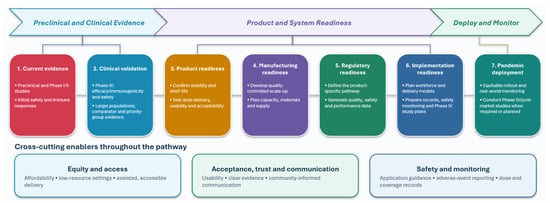
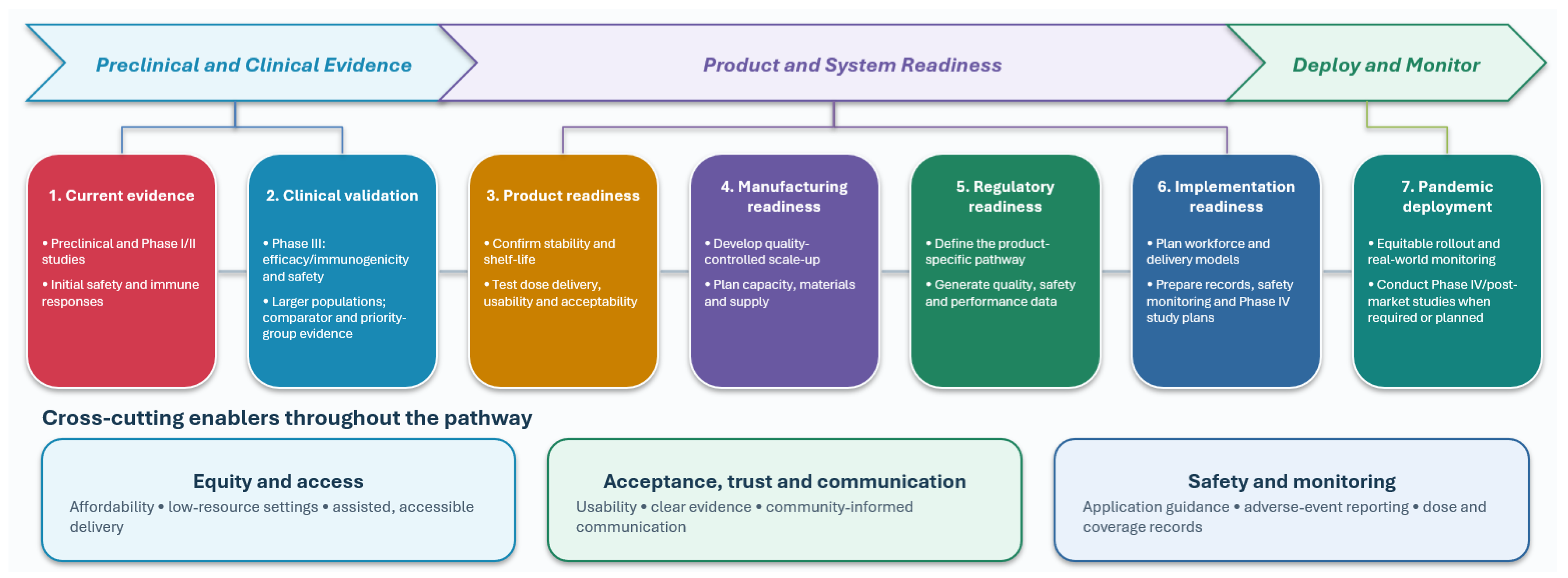
Further studies have assessed usability, though not with active vaccines. In one study, 20 adults achieved similar skin engagement and delivery with self-administered HD-MAPs as with trained-user application [24]. Among 44 adults aged ≥50 years, self- and trained-user administration resulted in comparable outcomes; all participants found the applicator easy to use, 82% preferred MAP vaccination if efficacy matched intramuscular injection, and 98% favoured unsupervised home administration for convenience [25]. These findings support pandemic delivery models such as supervised self-administration at vaccination centres and, with further evidence, pharmacy or home distribution [22]. Unsupervised self-administration with active vaccines has not yet been demonstrated at scale, and implementation would require systems for appropriate use, administration verification, documentation, and adverse event monitoring [22]. In this context, MAPs could expand vaccination capacity through minimally trained personnel and supervised self-administration. Benefits would be greatest where distribution or vaccinator capacity constrains delivery; antigen dose sparing would increase available doses only if patch production and delivery capacity were sufficient. Manufacturing, regulatory, and delivery readiness must therefore be established before an outbreak or pandemic [14]. Current evidence does not quantify the resulting increase in pandemic coverage or reduction in time to vaccination. Figure 1 summarises the requirements for MAP pandemic preparedness.
Figure 1.
Roadmap towards pandemic-ready MAP vaccination.
4. Implementation Challenges and Considerations
4.1. Regulatory Pathways
A principal regulatory challenge for vaccine MAPs is their integration of a biological vaccine with a delivery device, necessitating assessment of both components. Beyond standard requirements for vaccine quality, safety, and immunogenicity, regulators must evaluate device-specific factors such as mechanical integrity, skin insertion, dose uniformity, applicator performance, stability, manufacturing consistency, and human factors [26,27]. The lack of internationally harmonized MAP-specific standards and testing protocols creates uncertainty for developers and may result in divergent evidence requirements across jurisdictions [26]. International regulatory collaboration offers a promising path forward. Mechanisms such as the Access Consortium, which includes regulators from Australia, Canada, Singapore, Switzerland, and the United Kingdom, provide models for regulatory work-sharing and alignment [28]. While a dedicated Access pathway for vaccine MAPs does not yet exist, similar collaborative approaches could enable joint scientific advice, consensus on MAP-specific quality and clinical criteria, and coordinated review. Establishing internationally agreed standards for quality attributes and performance testing is essential to ensure clear and predictable licensure pathways [26].
The WHO–UNICEF measles–rubella MAP target product profile provides a product-specific benchmark for safety, immunogenicity, stability, and usability requirements [29]. Following licensure, surveillance should link vaccine and device identifiers and monitor administration errors, incomplete dose delivery, device-related events, and persistent local reactions, including skin discolouration [12,26]. Follow-up across skin tones is important because small early-phase studies cannot characterise these outcomes adequately. Effectiveness studies should also assess protection under routine delivery conditions.
4.2. Scaling up and Manufacturing
Scaling up manufacturing is a considerable challenge for commercializing vaccine MAPs. Unlike conventional fill-and-finish processes, MAP production requires additional steps, including micro-projection fabrication, antigen coating or incorporation, drying, assembly, and individual packaging. These processes vary considerably between solid-coated and dissolving platforms [27,30]. An industry assessment identified key obstacles to full-scale production: lack of standardization in manufacturing, uncertainty about sterility requirements, limited quality control, and a shortage of contract manufacturers with MAP-specific expertise [30].
Platform differences affect both manufacturing and use. Solid-coated MAPs require control of coating uniformity, antigen loss, and release from intact projections. Dissolving MAPs require control of matrix composition, mechanical strength, dissolution, delivered dose, and the safety of materials deposited in skin. Loading capacity, stability, wear time, and costs depend on the specific formulation and device; findings should not be transferred between platforms without validation [26,27,30].
Large-scale production must deliver consistent micro-projection geometry and mechanical performance, preserve antigen potency, and ensure accurate dose delivery [30]. Standardizing production equipment and implementing automated quality control systems may increase efficiency and facilitate scale-up. Investment is risky when approval and routine demand remain uncertain [14,27]. Beyond construction and equipment, maintaining pandemic capacity requires continued expenditure on personnel, maintenance, and quality systems during periods of low production. Flexible facilities producing multiple MAP products, pilot-scale investment, and standardised processes may reduce risk [14]. Routine immunization products could provide baseline demand, while public–private investment, purchase commitments, and minimum-volume guarantees could improve revenue predictability [14,31]. Routine demand may nevertheless be insufficient to sustain pandemic surge capacity. Capacity-reservation agreements could fund continuing readiness, drawing on arrangements for other vaccine platforms such as EU FAB [32].
Higher manufacturing costs may be partly offset by delivery savings [33]. For example, modelling across measles–rubella, HPV, and typhoid use cases estimated operational savings of US$0.24–0.61 per dose delivered [33]. These estimates concern routine or campaign delivery, exclude the vaccine procurement price, and do not establish pandemic-specific total cost savings.
Public programmes illustrate investment approaches: BARDA’s Patch Forward Prize supported patch-based RNA vaccine development but concluded in 2025 [34]. In 2026, HERA-backed EU procurement supported a consortium developing influenza vaccines using Vaxxas’ HD-MAP delivery [35]. Such development support does not itself guarantee sustained commercial demand or pandemic-ready capacity.
4.3. Workforce Planning and Training
MAPs can simplify vaccine administration and expand the pool of individuals qualified to deliver vaccines. Human factors and usability studies show that healthcare professionals, trained users, and lay participants can effectively apply MAPs, with high ease of use ratings and similar performance between trained users and self-administration [23,36,37]. A phase I influenza trial found that supervised self-administration of a dissolving MAP produced immune responses similar to those from healthcare worker administration [10]. Nevertheless, simplified administration does not obviate the need for appropriate training or professional supervision. A multi-national study involving healthcare workers, community health volunteers, caregivers, and other stakeholders supported initial administration by skilled professionals, with possible expansion to trained community-based personnel [38]. Healthcare professionals rated HD-MAP applicators as highly usable, but emphasized the importance of education and training for confident use [37]. Older adults viewed trained lay administration as a way to reduce demands on healthcare professionals, while expressing concerns about adverse event management and dose verification [39]. Parents generally found MAPs easy to use and supported non-health personnel administering them with clear instruction, but preferred healthcare professional administration for their children [40].
These issues are particularly relevant during pandemics, when rapid mass vaccination requires workforce mobilization alongside ongoing healthcare delivery. Experience from COVID-19 mass vaccination centres highlighted the need for staffing, clearly defined roles, training, supervision, and workflow coordination [41,42]. WHO reviews similarly identified workforce capacity, training, community health workers, and decentralized delivery as key factors in successful vaccination programs [43]. MAPs may increase flexibility by enabling administration by trained personnel and, where appropriate, supervised self-administration, thus reducing dependence on highly trained vaccinators [22]. Older adults specifically identified trained lay administration and self-administration as strategies to reduce workforce burden during mass vaccination [39]. Workforce planning must include structured, product-specific training rather than assuming MAP administration requires no preparation. Training should cover device placement, confirmation of dose delivery, recognition of errors, and established vaccination skills such as recipient assessment, documentation, and adverse event management [22,37]. Because MAP platforms differ in applicator design and dose delivery mechanisms, competency requirements should be tailored to each product and administrator [8].
4.4. Acceptability and Public Confidence
Acceptability is a key factor in the adoption of MAP vaccination beyond clinical development. Existing literature demonstrates high acceptability among recipients, healthcare professionals, parents, and other stakeholders, although much of the evidence derives from early-phase studies or hypothetical scenarios [8]. A phase I influenza trial reported greater acceptability for MAP vaccination than for conventional injection, primarily due to reduced pain and the experience of receiving or self-administering the MAP [44]. Usability and acceptability studies consistently identify benefits such as reduced pain, needle avoidance, convenience, and ease of use [8,23].
Recent studies reported on MAP acceptability across key populations. A multi-national mixed-methods study of 403 members of the public and 184 healthcare professionals found MAPs were viewed as safe, usable, and acceptable, with particular benefits for children and those with needle-related anxiety [45]. Among adults aged 50 years and older, 82% preferred MAP vaccination if efficacy matched conventional vaccination, although concerns persisted regarding adverse events, dose accuracy, and unsupervised use [25,39]. Parents similarly reported favourable views of MAP safety and usability, but a preference for healthcare professional administration when vaccinating children [40]. A paediatric placebo MAP study also showed high parental acceptability, with healthcare-worker administration increasing parents’ likelihood of accepting recommended vaccination for their child [46].
However, acceptability depends on confidence in MAP technology. Qualitative research among parents found that reduced pain, bleeding, and fear, as well as greater convenience, promoted acceptance, while unfamiliarity, safety concerns, potential allergic reactions (i.e., anaphylactic reactions), and uncertainty regarding dose delivery generated hesitation. Healthcare professional endorsement also increased confidence [47]. In Benin, Nepal, and Vietnam, anticipated acceptability for childhood immunization was high (92.7%) but contingent on evidence of safety and efficacy, with initial introduction preferred through skilled healthcare workers [38]. These findings highlight the importance of product features that confirm dose delivery, clear and accurate communication about local skin reactions, and professional endorsement to maintain public confidence in MAP vaccination.
These issues are particularly salient during pandemics. COVID-19 revealed substantial variation in vaccine acceptance among populations, with confidence influenced by perceptions of safety, effectiveness, and trust in authorities and information sources [48,49,50]. Misinformation further reduced vaccination intentions, highlighting the vulnerability of new vaccination programs to false information [51]. The convenience and reduced needle anxiety of MAPs alone are unlikely to overcome broader vaccine hesitancy. Introducing both a novel vaccine and an unfamiliar delivery device may compound concerns about safety, effectiveness, and dose accuracy. Evidence from MAP acceptability studies indicates that public communication should clearly differentiate the vaccine antigen from the delivery technology, explain MAP administration and evaluation, provide accurate information about local reactions, and involve trusted healthcare professionals in the introduction process [39,45,47].
4.5. Equity and Accessibility
Equitable access is fundamental to MAP implementation. Persistent vaccination disparities exist within countries based on socioeconomic status, education, and geography. The COVID-19 pandemic further exposed global inequities in vaccine production, affordability, allocation, and distribution [1,52]. In the first year of COVID-19 vaccine rollout, high-income countries attained significantly higher coverage than low-income countries, highlighting that vaccine availability alone does not guarantee equitable access [2].
MAPs may reduce coverage gaps in low- and middle-income countries (LMICs) and reach populations underserved by conventional immunization services [20]. National consultations have identified outreach vaccination and administration by community health workers as high-value use cases, especially for populations lacking access to fixed immunization sites [53]. Reviews note MAP applications in hard-to-reach communities, and analyses of measles–rubella MAPs emphasize their usefulness in humanitarian contexts, including for displaced and refugee populations [54,55]. Modelling in 70 LMICs indicates that introducing measles–rubella MAPs could lower disease burden by vaccinating children missed by current services, with cost-effectiveness dependent on product price and coverage gains [56].
These issues are directly relevant to pandemic preparedness. A recent Vaccine Innovation Prioritisation Strategy assessment ranked pandemic influenza and SARS-CoV-2 among the top vaccine targets for MAP development in LMICs, given their potential programmatic impact and role in promoting equity [57]. MAPs could facilitate vaccination of geographically isolated, displaced, or underserved populations when conventional services are disrupted. Nevertheless, the COVID-19 response showed that improvements in vaccine presentation alone cannot address inequities rooted in supply, affordability, manufacturing capacity, or international allocation [1,2].
Equity gains from MAPs cannot be presumed. Economic analyses show that MAP value is sensitive to procurement price, and developers must invest substantially in manufacturing capacity [14,56,58]. Accessibility must address more than geography: design, instructions, administration pathways, and support should consider literacy, language, functional ability, and self-administration capacity. Evidence among some underserved groups, such as people with disabilities, is limited, underscoring the need to assess uptake and accessibility directly rather than inferring benefit from simplified administration [8,59]. Vaccine uptake among underserved populations remains a key implementation research priority. For future pandemics, equitable MAP deployment requires attention to affordability, regional manufacturing, procurement and allocation systems, and delivery models that preserve assisted and community-based options for individuals unable to self-administer [14,57].
5. Research and Policy Priorities
Although clinical findings are promising, vaccine MAP development is largely in its early stages, with several evidence gaps remaining. Larger comparative trials are needed to demonstrate immunological non-inferiority or superiority, detect rare adverse events, assess the durability of immune responses, and evaluate performance across key populations, including children, older adults, pregnant women, immunocompromised persons, and those with chronic conditions [8,60]. The proposed phase III framework for measles–rubella MAPs offers a model for future studies, incorporating comparative immunogenicity and safety, interchangeability with conventional presentations, extended follow-up, and evidence aligned with regulatory approval, WHO prequalification, and policy recommendations [60].
In 2025, WHO development updates described further Phase II evaluation and preparation of the evidence needed for Phase III assessment and future policy decisions [61]. Timelines remain product-specific and contingent on manufacturing, financing, and trial readiness; planned milestones should not be interpreted as completed development or guaranteed availability [60].
5.1. Priority Vaccine Targets
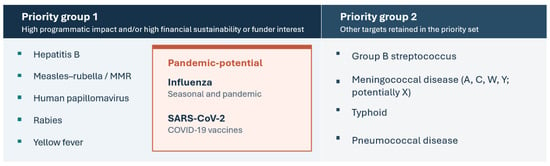
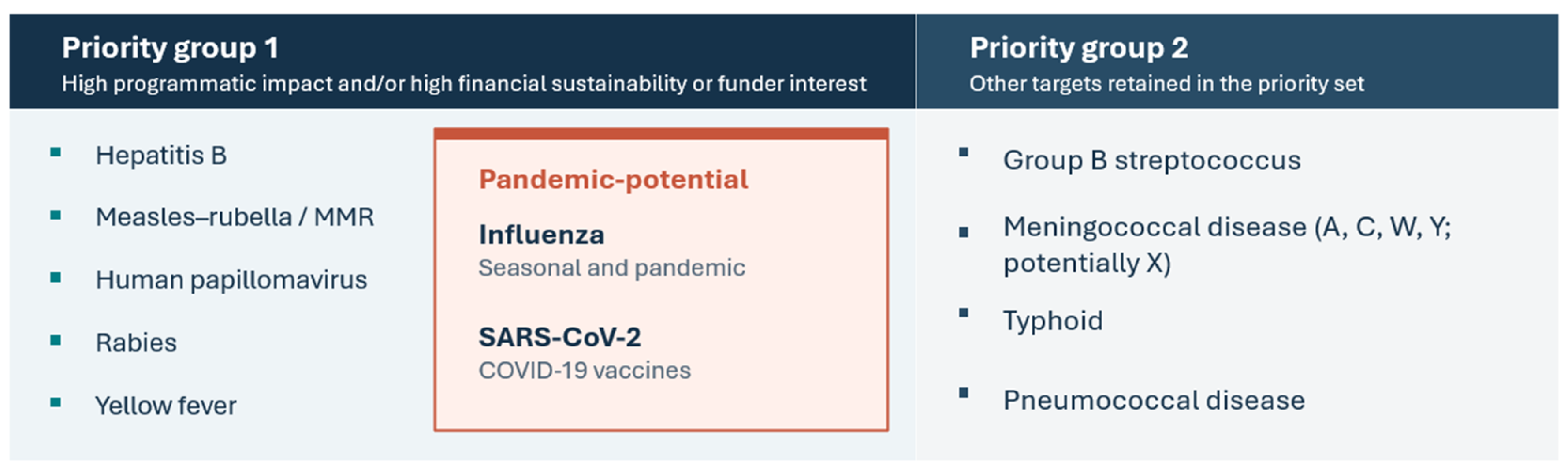
The Vaccine Innovation Prioritisation Strategy (VIPS) Alliance, which includes Gavi, WHO, UNICEF, the Gates Foundation, and PATH, identified 11 priority vaccine targets for MAP development in low- and middle-income countries [57]. Priority group 1 includes hepatitis B, measles–rubella/measles–mumps–rubella, human papillomavirus, rabies, yellow fever, seasonal and pandemic influenza, and COVID-19. Priority group 2 includes Group B streptococcus, meningococcal A, C, W, Y, and potentially X vaccines, Salmonella Typhi, and Streptococcus pneumoniae [57]. VIPS groups reflect anticipated programme value and investment considerations for LMICs rather than clinical maturity or a ranking of pandemic threats [57]. Seasonal and pandemic influenza and COVID-19 are included in the VIPS priorities. A(H7N9) is a development example within pandemic influenza, rather than an additional VIPS category. Its phase I Vaxxas HD-MAP trial (NCT06417853) is listed as completed on 30 January 2026, with 267 participants and no results posted in the registry at the revision check on 31 October 2026 [62]. Ebola and MERS-CoV examples cited here remain preclinical [63,64]. Figure 2 presents the VIPS target groups; these development examples are considered separately.
Figure 2.
VIPS vaccine targets for MAP development in LMICs [57]. Abbreviations: MMR, measles–mumps–rubella.
5.2. Clinical and Platform Development
Another research priority is assessing how effectively established MAP platforms accommodate different vaccine technologies. The nanoporous ceramic mRNA study [9] and the solid-coated recombinant spike-protein study [13] used different devices, antigens, and delivery conditions and therefore do not provide a head-to-head comparison of MAP platforms. Research should determine antigen-specific formulation needs, dose-delivery efficiency, stability, adjuvant compatibility, and immune responses, rather than assuming MAPs are universally applicable. mRNA delivery warrants particular attention due to its relevance for rapid-response vaccines; CEPI has supported preclinical work on dried-formulation mRNA vaccines using Vaxxas’ HD-MAP [65]. Preparedness should address platform development before new pathogens emerge. Current strategies, such as CEPI’s 100 Days Mission, stress technological readiness, established manufacturing, regulatory pathways, and clinical infrastructure prior to outbreaks [3]. For MAPs, this involves pre-emptive characterization of platform materials, applicators, analytical methods, manufacturing, and representative vaccine formulations, though antigen-specific clinical evidence remains necessary. Reviews on MAPs in the context of SARS-CoV-2 and future outbreaks underscore the need for delivery-platform readiness before the next pandemic [15].
5.3. Implementation and Real-World Evidence
Implementation research should advance in parallel with late-stage clinical development. A 2026 international priority-setting exercise involving 139 stakeholders identified key questions for measles–rubella MAP introduction: supply-chain management, strategies for reaching un- and under-vaccinated groups, human-resource needs, use under controlled-temperature conditions, administration approaches, and integration with injectable vaccines [59]. Additional priorities included self- or caregiver administration, error prevention, community health worker training, supervision, waste management, and MAP impacts on service delivery, providing an implementation research agenda relevant beyond measles–rubella vaccination. Country-level research is essential, as optimal MAP use will vary across health systems. Consultations in nine countries revealed differences in preferred use cases, delivery settings, target populations, and product attributes for measles–rubella MAPs [53]. Broader analyses highlight potential roles in routine immunization, outreach, campaigns, outbreak response, and hard-to-reach groups [54].
Comparative studies should assess successfully administered and documented doses per staff-hour and site-day, distribution losses, and total cost per successful vaccination, including procurement, training, supervision, and waste management. Manufacturing readiness could be measured by time from activation, with suitable antigen available, to release of the first quality-compliant batch and to a predefined sustained weekly output. Supply resilience and emergency distribution could be assessed through interruption and recovery times, time from batch release to delivery, and the proportion of priority populations reached within a defined period. These proposed indicators complement broader vaccine readiness assessments, with targets tailored to the product and setting [66].
6. Conclusions
Early clinical studies of influenza, Japanese encephalitis, measles–rubella, and SARS-CoV-2 MAP vaccines report acceptable tolerability and promising immunogenicity within the studied populations [8,11,12,13,19]. Some MAPs offer advantages relevant to large-scale vaccination, such as antigen dose sparing, better thermostability, simplified administration, reduced dependence on injection equipment, and the possibility for use by trained laypersons or recipients themselves [8,20], which may improve the flexibility and resilience of vaccine delivery, especially where cold-chain, healthcare workforce, or conventional access are limited. Nevertheless, available evidence is preliminary and should be interpreted with caution, as most studies to date are small phase I or I/II trials, and MAP benefits are not inherent to all products. Their immunogenicity, dose sparing, thermostability, usability, and suitability for self-administration vary by vaccine, formulation, device, and target population [8,22,25]. Barriers remain to transitioning from proof of concept to widespread adoption, including commercial-scale manufacturing, consistent dose delivery, regulatory requirements for vaccine device products, workforce training, pharmacovigilance, public trust, affordability, and equitable access [14,26]. Vaccine MAPs remain investigational, and no licensed human vaccine MAP was identified in the sources reviewed. MAPs could contribute meaningfully to pandemic preparedness as a complementary delivery option, provided that antigen-specific clinical development, regulatory alignment, manufacturing capacity, and delivery systems are advanced before an outbreak or pandemic situation [14,26,57]. Their contribution will depend on whether these preparations translate into timely and equitable vaccination under real response conditions.
Funding
This review received no external funding.
Data Availability Statement
No new data were created or analyzed in this study. Data sharing is not applicable to this article.
Conflicts of Interest
The author declares no conflicts of interest.
References
- Wouters, O.J.; Shadlen, K.C.; Salcher-Konrad, M.; Pollard, A.J.; Larson, H.J.; Teerawattananon, Y.; Jit, M. Challenges in ensuring global access to COVID-19 vaccines: Production, affordability, allocation, and deployment. Lancet 2021, 397, 1023–1034. [Google Scholar] [CrossRef] [Scilit] [PubMed]
- Pilkington, V.; Keestra, S.M.; Hill, A. Global COVID-19 Vaccine Inequity: Failures in the First Year of Distribution and Potential Solutions for the Future. Front. Public Health 2022, 10, 821117. [Google Scholar] [CrossRef] [Scilit] [PubMed]
- CEPI. The 100 Days Mission. n.d. Available online: https://cepi.net/100-days-mission (accessed on 31 October 2026).
- Graham, B.S. Rapid COVID-19 vaccine development. Science 2020, 368, 945–946. [Google Scholar] [CrossRef] [Scilit] [PubMed]
- World Health Organization; United Nations Children’s Fund; Gavi, the Vaccine Alliance. Deliver, Together: Partnerships to Deliver Vaccines in a Pandemic—Learning from COVID-19 Vaccine Delivery. 2023. Available online: https://www.who.int/publications/m/item/deliver--together--partnerships-to-deliver-vaccines-in-a-pandemic-----learning-from-covid-19-vaccine-delivery (accessed on 31 October 2026).
- Forster, A.H.; Witham, K.; Depelsenaire, A.C.I.; Veitch, M.; Wells, J.W.; Wheatley, A.; Pryor, M.; Lickliter, J.D.; Francis, B.; Rockman, S.; et al. Safety, tolerability, and immunogenicity of influenza vaccination with a high-density microarray patch: Results from a randomized, controlled phase I clinical trial. PLoS Med. 2020, 17, e1003024. [Google Scholar] [CrossRef] [Scilit] [PubMed]
- Choo, J.J.Y.; McMillan, C.L.D.; Young, P.R.; Muller, D.A. Microarray patches: Scratching the surface of vaccine delivery. Expert Rev. Vaccines 2023, 22, 937–955. [Google Scholar] [CrossRef] [Scilit] [PubMed]
- Berger, M.N.; Mowbray, E.S.; Farag, M.W.A.; Mathieu, E.; Davies, C.; Thomas, C.; Booy, R.; Forster, A.H.; Skinner, S.R. Immunogenicity, safety, usability and acceptability of microarray patches for vaccination: A systematic review and meta-analysis. BMJ Glob. Health 2023, 8, e012247. [Google Scholar] [CrossRef] [Scilit] [PubMed]
- Prins, M.L.M.; Prins, C.; De Vries, J.J.C.; Visser, L.G.; Roukens, A.H.E. Establishing immunogenicity and safety of needle-free intradermal delivery by nanoporous ceramic skin patch of mRNA SARS-CoV-2 vaccine as a revaccination strategy in healthy volunteers. Virus Res. 2023, 334, 199175. [Google Scholar] [CrossRef] [Scilit] [PubMed]
- Rouphael, N.G.; Paine, M.; Mosley, R.; Henry, S.; McAllister, D.V.; Kalluri, H.; Pewin, W.; Frew, P.M.; Yu, T.; Thornburg, N.J.; et al. The safety, immunogenicity, and acceptability of inactivated influenza vaccine delivered by microneedle patch (TIV-MNP 2015): A randomised, partly blinded, placebo-controlled, phase 1 trial. Lancet 2017, 390, 649–658. [Google Scholar] [CrossRef] [Scilit] [PubMed]
- Iwata, H.; Kakita, K.; Imafuku, K.; Takashima, S.; Haga, N.; Yamaguchi, Y.; Taguchi, K.; Oyamada, T. Safety and dose-sparing effect of Japanese encephalitis vaccine administered by microneedle patch in uninfected, healthy adults (MNA-J): A randomised, partly blinded, active-controlled, phase 1 trial. Lancet Microbe 2022, 3, e96–e104. [Google Scholar] [CrossRef] [Scilit] [PubMed]
- Adigweme, I.; Yisa, M.; Ooko, M.; Akpalu, E.; Bruce, A.; Donkor, S.; Jarju, L.B.; Danso, B.; Mendy, A.; Jeffries, D.; et al. A measles and rubella vaccine microneedle patch in The Gambia: A phase 1/2, double-blind, double-dummy, randomised, active-controlled, age de-escalation trial. Lancet 2024, 403, 1879–1892. [Google Scholar] [CrossRef] [Scilit] [PubMed]
- McMillan, C.L.D.; Muller, D.A.; Fernando, G.J.P.; Depelsenaire, A.C.I.; Jayashi-Flores, C.; Masterman, K.-A.; Namjoshi, S.; Vyas, K.; Pascoe, D.; Hickling, J.; et al. Booster Immunisation with Skin-Patch-Delivered Unadjuvanted SARS-CoV-2 Spike Protein Vaccine Is Safe and Immunogenic in Healthy Adults. Vaccines 2026, 14, 28. [Google Scholar] [CrossRef] [Scilit] [PubMed]
- Scarnà, T.; Menozzi-Arnaud, M.; Friede, M.; DeMarco, K.; Plopper, G.; Hamer, M.; Chakrabarti, A.; Gilbert, P.A.; Jarrahian, C.; Mistilis, J.; et al. Accelerating the development of vaccine microarray patches for epidemic response and equitable immunization coverage requires investment in microarray patch manufacturing facilities. Expert Opin. Drug Deliv. 2023, 20, 315–322. [Google Scholar] [CrossRef] [Scilit] [PubMed]
- O’Shea, J.; Prausnitz, M.R.; Rouphael, N. Dissolvable Microneedle Patches to Enable Increased Access to Vaccines against SARS-CoV-2 and Future Pandemic Outbreaks. Vaccines 2021, 9, 320. [Google Scholar] [CrossRef] [Scilit] [PubMed]
- Rouphael, N.G.; Lai, L.; Tandon, S.; McCullough, M.P.; Kong, Y.; Kabbani, S.; Natrajan, M.S.; Xu, Y.; Zhu, Y.; Wang, D.; et al. Immunologic mechanisms of seasonal influenza vaccination administered by microneedle patch from a randomized phase I trial. npj Vaccines 2021, 6, 89. [Google Scholar] [CrossRef] [Scilit] [PubMed]
- Fernando, G.J.P.; Hickling, J.; Jayashi Flores, C.M.; Griffin, P.; Anderson, C.D.; Skinner, S.R.; Davies, C.; Witham, K.; Pryor, M.; Bodle, J.; et al. Safety, tolerability, acceptability and immunogenicity of an influenza vaccine delivered to human skin by a novel high-density microprojection array patch (NanopatchTM). Vaccine 2018, 36, 3779–3788. [Google Scholar] [CrossRef] [Scilit] [PubMed]
- Garg, N.; Tellier, G.; Vale, N.; Kluge, J.; Portman, J.L.; Markowska, A.; Tussey, L. Phase 1, randomized, rater and participant blinded placebo-controlled study of the safety, reactogenicity, tolerability and immunogenicity of H1N1 influenza vaccine delivered by VX-103 (a MIMIX microneedle patch [MAP] system) in healthy adults. PLoS ONE 2024, 19, e0303450. [Google Scholar] [CrossRef] [Scilit] [PubMed]
- Baker, B.; Bermingham, I.M.; Leelasena, I.; Hickling, J.; Young, P.R.; Muller, D.A.; Forster, A.H. Safety, Tolerability, and Immunogenicity of Measles and Rubella Vaccine Delivered with a High-Density Microarray Patch: Results from a Randomized, Partially Double-Blinded, Placebo-Controlled Phase I Clinical Trial. Vaccines 2023, 11, 1725. [Google Scholar] [CrossRef] [Scilit] [PubMed]
- Peyraud, N.; Zehrung, D.; Jarrahian, C.; Frivold, C.; Orubu, T.; Giersing, B. Potential use of microarray patches for vaccine delivery in low- and middle- income countries. Vaccine 2019, 37, 4427–4434. [Google Scholar] [CrossRef] [Scilit] [PubMed]
- Bozorgi, A.; Fahimnia, B. Micro array patch (MAP) for the delivery of thermostable vaccines in Australia: A cost/benefit analysis. Vaccine 2021, 39, 6166–6173. [Google Scholar] [CrossRef] [Scilit] [PubMed]
- Hacker, E.; Baker, B.; Lake, T.; Ross, C.; Cox, M.; Davies, C.; Skinner, S.; Booy, R.; Forster, A. Vaccine microarray patch self-administration: An innovative approach to improve pandemic and routine vaccination rates. Vaccine 2023, 41, 5925–5930. [Google Scholar] [CrossRef] [Scilit] [PubMed]
- Norman, J.J.; Arya, J.M.; McClain, M.A.; Frew, P.M.; Meltzer, M.I.; Prausnitz, M.R. Microneedle patches: Usability and acceptability for self-vaccination against influenza. Vaccine 2014, 32, 1856–1862. [Google Scholar] [CrossRef] [Scilit] [PubMed]
- Baker, B.; Hacker, E.; Siller, G.; Lee, M.; Mursaliyev, N.; Forster, A. Evaluation of the self-administration potential of high-density microarray patches to human skin: A preliminary study. Hum. Vaccines Immunother. 2023, 19, 2189409. [Google Scholar] [CrossRef] [Scilit] [PubMed]
- Davies, C.; Baker, B.; Berger, M.N.; Knox, S.L.; Mowbray, E.; Stewart, B.G.; Booy, R.; Hacker, E.; Marmol, A.; Ross, C.; et al. Vaccine microarray patch self-administration: A preliminary study in adults 50 years of age and over. Vaccine 2025, 48, 126699. [Google Scholar] [CrossRef] [Scilit] [PubMed]
- Dul, M.; Alali, M.; Ameri, M.; Burke, M.D.; Creelman, B.P.; Dick, L.; Donnelly, R.F.; Eakins, M.N.; Frivold, C.; Forster, A.H.; et al. White paper: Understanding, informing and defining the regulatory science of microneedle-based dosage forms that are applied to the skin. J. Control. Release 2025, 378, 402–415. [Google Scholar] [CrossRef] [Scilit] [PubMed]
- Forster, A.; Junger, M. Opportunities and challenges for commercializing microarray patches for vaccination from a MAP developer’s perspective. Hum. Vaccines Immunother. 2022, 18, 2050123. [Google Scholar] [CrossRef] [Scilit] [PubMed]
- Health Canada. Access Consortium. 2026. Available online: https://www.canada.ca/en/health-canada/services/drugs-health-products/international-activities/access-consortium.html (accessed on 31 October 2026).
- World Health Organization; United Nations Children’s Fund. Measles-Rubella Microarray Patch (MR–MAP) Target Product Profile; World Health Organization: Geneva, Switzerland; UNICEF: New York, NY, USA, 2020. Available online: https://www.who.int/publications/i/item/9789240000209 (accessed on 31 October 2026).
- Creelman, B.; Frivold, C.; Jessup, S.; Saxon, G.; Jarrahian, C. Manufacturing readiness assessment for evaluation of the microneedle array patch industry: An exploration of barriers to full-scale manufacturing. Drug Deliv. Transl. Res. 2022, 12, 368–375. [Google Scholar] [CrossRef] [Scilit] [PubMed]
- PATH Microarray Patch Center of Excellence; Linksbridge SPC. Measles-Rubella Microarray Patch Vaccines: A Business Case Analysis; PATH: Seattle, WA, USA, 2021; Available online: https://media.path.org/documents/PATH_MR_MAP_business_case_report_2021March.pdf (accessed on 31 October 2026).
- European Health and Digital Executive Agency. Framework Contract Signed Under EU4Health to Guarantee a Fast Response to Future Health Crises. 2023. Available online: https://hadea.ec.europa.eu/news/framework-contract-signed-under-eu4health-guarantee-fast-response-future-health-crises-2023-06-30_en (accessed on 31 October 2026).
- Hagedorn, B.; Frey, K.; Scarna, T.; El Sheikh, F. Microarray patches likely to reduce the operational costs of immunization: A Monte Carlo simulation study. Vaccine 2025, 50, 126840. [Google Scholar] [CrossRef] [Scilit] [PubMed]
- Luminary Labs. Patch Forward Prize. n.d. Available online: https://www.patchforwardprize.com/ (accessed on 31 October 2026).
- Vaxxas Pty Ltd. Vaxxas in Global Consortium Awarded Tender by European Union to Develop Next-Generation Influenza Vaccines. 2026. Available online: https://www.vaxxas.com/news/articles/Vaxxas-in-Global-Consortium-Awarded-Tender-by-European-Union-to-Develop-Next-Generation-Influenza-Vaccines/ (accessed on 31 October 2026).
- Arya, J.; Henry, S.; Kalluri, H.; McAllister, D.V.; Pewin, W.P.; Prausnitz, M.R. Tolerability, usability and acceptability of dissolving microneedle patch administration in human subjects. Biomaterials 2017, 128, 1–7. [Google Scholar] [CrossRef] [Scilit] [PubMed]
- Davies, C.; Taba, M.; Deng, L.; Karatas, C.; Bag, S.; Ross, C.; Forster, A.; Booy, R.; Skinner, S.R. Usability, acceptability, and feasibility of a High-Density Microarray Patch (HD-MAP) applicator as a delivery method for vaccination in clinical settings. Hum. Vaccines Immunother. 2022, 18, 2018863. [Google Scholar] [CrossRef] [Scilit] [PubMed]
- Guillermet, E.; Alfa, D.A.; Phuong Mai, L.T.; Subedi, M.; Demolis, R.; Giersing, B.; Jaillard, P. End-user acceptability study of the nanopatchTM; a microarray patch (MAP) for child immunization in low and middle-income countries. Vaccine 2019, 37, 4435–4443. [Google Scholar] [CrossRef] [Scilit] [PubMed]
- Berger, M.N.; Knox, S.L.; Baker, B.; Stewart, B.G.; Ross, C.; Mathieu, E.; Forster, A.H.; Skinner, S.; Davies, C. Benefits and challenges of high-density microarray patches for vaccination among older adults: A qualitative study. Health Policy Technol. 2025, 14, 101065. [Google Scholar] [CrossRef] [Scilit]
- Berger, M.N.; Mathieu, E.; Davies, C.; Shaban, R.Z.; Bag, S.; Skinner, S.R. Parents’ perceived safety, usability, and acceptability of vaccination through microarray patches: A preliminary multi-national cross-sectional survey. Hum. Vaccines Immunother. 2026, 22, 2642457. [Google Scholar] [CrossRef] [Scilit] [PubMed]
- Shakory, S.; Eissa, A.; Kiran, T.; Pinto, A.D. Best Practices for COVID-19 Mass Vaccination Clinics. Ann. Fam. Med. 2022, 20, 149–156. [Google Scholar] [CrossRef] [Scilit] [PubMed]
- Tennant, R.; Tetui, M.; Grindrod, K.; Burns, C.M. Understanding Human Factors Challenges on the Front Lines of Mass COVID-19 Vaccination Clinics: Human Systems Modeling Study. JMIR Hum. Factors 2022, 9, e39670. [Google Scholar] [CrossRef] [Scilit] [PubMed]
- World Health Organization. Stocktake on COVID-19 Vaccination and Integration: Meeting Report. 2023. Available online: https://www.who.int/publications/m/item/stocktake-on-covid-19-vaccination-and-integration--meeting-report (accessed on 31 October 2026).
- Frew, P.M.; Paine, M.B.; Rouphael, N.; Schamel, J.; Chung, Y.; Mulligan, M.J.; Prausnitz, M.R. Acceptability of an inactivated influenza vaccine delivered by microneedle patch: Results from a phase I clinical trial of safety, reactogenicity, and immunogenicity. Vaccine 2020, 38, 7175–7181. [Google Scholar] [CrossRef] [Scilit] [PubMed]
- Berger, M.N.; Davies, C.; Mathieu, E.; Harmer-Ross, J.; Shaban, R.Z.; Cassidy-Matthews, C.; Wilson, B.; Bag, S.; Skinner, S.R. Perceived safety, usability, and acceptability of microarray patches for vaccination among key populations: A mixed methods study. Vaccine 2025, 61, 127387. [Google Scholar] [CrossRef] [Scilit] [PubMed]
- Kao, C.M.; Rostad, C.A.; Kettle, P.; Tippett, A.; Yi, J.; Yildirim, I.; Stephens, K.; Korski, C.; Pollack, B.P.; Prausnitz, M.R.; et al. Safety, Reactogenicity, and Acceptability of a Placebo Dissolving Microneedle Patch in Children. J. Pediatr. Infect. Dis. Soc. 2026, 15, piag007. [Google Scholar] [CrossRef] [Scilit] [PubMed]
- Marshall, S.; Fleming, A.; Moore, A.C.; Sahm, L.J. Acceptability of microneedle-patch vaccines: A qualitative analysis of the opinions of parents. Vaccine 2017, 35, 4896–4904. [Google Scholar] [CrossRef] [Scilit] [PubMed]
- Lazarus, J.V.; Ratzan, S.C.; Palayew, A.; Gostin, L.O.; Larson, H.J.; Rabin, K.; Kimball, S.; El-Mohandes, A. A global survey of potential acceptance of a COVID-19 vaccine. Nat. Med. 2021, 27, 225–228. [Google Scholar] [CrossRef] [Scilit] [PubMed]
- Solís Arce, J.S.; Warren, S.S.; Meriggi, N.F.; Scacco, A.; McMurry, N.; Voors, M.; Syunyaev, G.; Malik, A.A.; Aboutajdine, S.; Adeojo, O.; et al. COVID-19 vaccine acceptance and hesitancy in low- and middle-income countries. Nat. Med. 2021, 27, 1385–1394. [Google Scholar] [CrossRef] [Scilit] [PubMed]
- Trent, M.; Seale, H.; Chughtai, A.A.; Salmon, D.; MacIntyre, C.R. Trust in government, intention to vaccinate and COVID-19 vaccine hesitancy: A comparative survey of five large cities in the United States, United Kingdom, and Australia. Vaccine 2022, 40, 2498–2505. [Google Scholar] [CrossRef] [Scilit] [PubMed]
- Loomba, S.; De Figueiredo, A.; Piatek, S.J.; De Graaf, K.; Larson, H.J. Measuring the impact of COVID-19 vaccine misinformation on vaccination intent in the UK and USA. Nat. Hum. Behav. 2021, 5, 337–348. [Google Scholar] [CrossRef] [Scilit] [PubMed]
- Ali, H.A.; Hartner, A.-M.; Echeverria-Londono, S.; Roth, J.; Li, X.; Abbas, K.; Portnoy, A.; Vynnycky, E.; Woodruff, K.; Ferguson, N.M.; et al. Vaccine equity in low and middle income countries: A systematic review and meta-analysis. Int. J. Equity Health 2022, 21, 82. [Google Scholar] [CrossRef] [Scilit] [PubMed]
- Hasso-Agopsowicz, M.; Spasenoska, D.; Jansen, M.P.M.; Masresha, B.G.; Pastor, D.; Gebrekidan, A.H.; Silalahi, O.; Woolford, J.; Kisakye, A.; Kahn, A.-L.; et al. Exploring Important Attributes, the Potential Use Cases and Feasibility of Introduction of Measles and Rubella Microarray Patches (MR-MAPs): Insights from Nine Countries. Vaccines 2024, 12, 1084. [Google Scholar] [CrossRef] [Scilit] [PubMed]
- Soble, A.; Ko, M.; Gilchrist, S.; Malvolti, S.; Hasso-Agopsowicz, M.; Giersing, B.; Amorij, J.-P.; Jarrahian, C.; El Sheikh, F.; Menozzi-Arnaud, M.; et al. A review of potential use cases for measles-rubella, measles-mumps-rubella, and typhoid-conjugate vaccines presented on microarray patches. Vaccine 2024, 42, 1230–1246. [Google Scholar] [CrossRef] [Scilit] [PubMed]
- Hasso-Agopsowicz, M.; Crowcroft, N.; Biellik, R.; Gregory, C.J.; Menozzi-Arnaud, M.; Amorij, J.-P.; Gilbert, P.-A.; Earle, K.; Frivold, C.; Jarrahian, C.; et al. Accelerating the Development of Measles and Rubella Microarray Patches to Eliminate Measles and Rubella: Recent Progress, Remaining Challenges. Front. Public Health 2022, 10, 809675. [Google Scholar] [CrossRef] [Scilit] [PubMed]
- Fu, H.; Abbas, K.; Malvolti, S.; Gregory, C.; Ko, M.; Amorij, J.-P.; Jit, M. Impact and cost-effectiveness of measles vaccination through microarray patches in 70 low-income and middle-income countries: Mathematical modelling and early-stage economic evaluation. BMJ Glob. Health 2023, 8, e012204. [Google Scholar] [CrossRef] [Scilit] [PubMed]
- Frivold, C.; Giersing, B.; Amorij, J.-P.; Mvundura, M.; Hasso-Agopsowicz, M.; Mistilis, J.J.; Earle, K.; Jarrahian, C.; Menozzi-Arnaud, M.; Scarna, T. Identification of potential vaccines for use with microarray patches in low- and middle-income countries: An assessment from the Vaccine Innovation Prioritisation Strategy Alliance. Vaccine 2025, 55, 126996. [Google Scholar] [CrossRef] [Scilit] [PubMed]
- Ko, M.; Frivold, C.; Mvundura, M.; Soble, A.; Gregory, C.; Christiansen, H.; Hasso-Agopsowicz, M.; Fu, H.; Jit, M.; Hsu, S.; et al. An Application of an Initial Full Value of Vaccine Assessment Methodology to Measles-Rubella MAPs for Use in Low- and Middle-Income Countries. Vaccines 2024, 12, 1075. [Google Scholar] [CrossRef] [Scilit] [PubMed]
- Sá Silva, S.; Ko, M.; Cherian, T.; Qazi, S.; Chang Blanc, D.; Mvundura, M.; Morgan, C.; Kochhar, S.; Suwantika, A.; Innis, B.; et al. Priority implementation research for measles-rubella microarray patches identified using the Child Health and Nutrition Research Initiative methodology. J. Glob. Health 2026, 16, 04141. [Google Scholar] [CrossRef] [Scilit] [PubMed]
- Zehrung, D.; Innis, B.L.; Suwantika, A.A.; Ameri, M.; Biellik, R.; Birchall, J.C.; Cravioto, A.; Jarrahian, C.; Fairlie, L.; Goodson, J.L.; et al. Measles–Rubella Microarray Patches Phase III Clinical Trial Framework: Proposal and Considerations. Vaccines 2024, 12, 1258. [Google Scholar] [CrossRef] [Scilit] [PubMed]
- World Health Organization. PDVAC General Updates. Product Development for Vaccines Advisory Committee Meeting Presentation. 2025. Available online: https://cdn.who.int/media/docs/default-source/immunization/pdvac/pdvac-2025/day-1/5.-general-updates.pdf (accessed on 31 October 2026).
- Vaxxas Pty Ltd. Influenza A (H7N9) Vaccine Delivered Intradermally by High-Density Microarray Patch (HD-MAP); NCT06417853; updated 27 March 2026; ClinicalTrials.gov: Bethesda, MD, USA, 2026. Available online: https://clinicaltrials.gov/study/NCT06417853 (accessed on 31 October 2026).
- Liu, Y.; Ye, L.; Lin, F.; Gomaa, Y.; Flyer, D.; Carrion, R.; Patterson, J.L.; Prausnitz, M.R.; Smith, G.; Glenn, G.; et al. Intradermal immunization by Ebola virus GP subunit vaccines using microneedle patches protects mice against lethal EBOV challenge. Sci. Rep. 2018, 8, 11193. [Google Scholar] [CrossRef] [Scilit] [PubMed]
- Kim, E.; Erdos, G.; Huang, S.; Kenniston, T.W.; Balmert, S.C.; Carey, C.D.; Raj, V.S.; Epperly, M.W.; Klimstra, W.B.; Haagmans, B.L.; et al. Microneedle array delivered recombinant coronavirus vaccines: Immunogenicity and rapid translational development. eBioMedicine 2020, 55, 102743. [Google Scholar] [CrossRef] [Scilit] [PubMed]
- CEPI. Coming in from the Cold: Needle-Free Patch Technology for mRNA Vaccines Aims to End Need for Frozen Storage and Improve Access. 2023. Available online: https://cepi.net/coming-cold-needle-free-patch-technology-mrna-vaccines-aims-end-need-frozen-storage-and-improve (accessed on 31 October 2026).
- World Health Organization. COVID-19 Vaccine Introduction Readiness Assessment Tool. 2020. Available online: https://www.who.int/publications/i/item/WHO-2019-nCoV-Vaccine-introduction-RA-Tool-2020.1 (accessed on 31 October 2026).
Disclaimer/Publisher’s Note: The statements, opinions and data contained in all publications are solely those of the individual author(s) and contributor(s) and not of MDPI and/or the editor(s). MDPI and/or the editor(s) disclaim responsibility for any injury to people or property resulting from any ideas, methods, instructions or products referred to in the content. |
© 2026 by the author. Licensee MDPI, Basel, Switzerland. This article is an open access article distributed under the terms and conditions of the Creative Commons Attribution (CC BY) license.