


Abstract
Dementia progressively erodes autonomy, personal identity, and the ability to manage everyday life, placing growing demands on the people who provide care. Many AI-based assistive tools respond to this challenge by prioritizing what the algorithm can do, while giving less attention to the autonomy, dignity, and lived experience of the person with dementia. This paper presents MemorIA, a static interface prototype based on the “Technology as Care” paradigm, in which the person’s autonomy, identity, and well-being are the primary goals and visual accessibility is the means to reach them. Three principles guide the prototype: Dynamic Autonomy, Authenticity, and Ethical Transparency. In the interface, these take the form of high colour contrast, simplified typography, brief wording, step-by-step interactions, and pictograms paired with personal photographs. A conversational onboarding phase is designed to calibrate the level of support, while a dedicated caregiver dashboard renders simulated decision rationales through narrative visualisations grounded in Explainable AI principles. An author-conducted, literature-informed design review examined the consistency of the proposed solutions with accessibility and care principles; the prototype has not yet been tested with end users, and an eye-tracking study is planned as a subsequent empirical step. Overall, the prototype argues that ethical AI in dementia care must serve the person before the task.
1. Introduction
The ageing of populations now represents a major social and public-health concern. Over 55 million people worldwide currently live with dementia, a figure that recent estimates project to nearly triple by 2050, approaching 153 million cases [1,2]; the most recent Global Burden of Disease assessment on nervous system disorders confirms this trajectory and ranks dementia among the fastest-growing causes of disability among adults aged 65 and over [3]. Italy is particularly exposed: on 1 January 2025, the country recorded the largest proportion of older residents in the European Union, with 24.7% of the residents aged 65 or above and a median age of 49.1 years [4]. Dementia’s impact, moreover, extends well beyond cognition: quality of life, personal identity, and the fabric of social relationships are all profoundly reshaped as the condition progresses, with direct consequences for families and caregivers [5]. To date, no definitive cure exists, pharmacological treatment remains symptomatic, and non-pharmacological interventions demand continuous personnel and financial resources [6].
AI is already being explored in dementia care for early diagnosis, support at a distance, and cognitive stimulation [7,8]. Technical efficiency alone, however refined, remains inadequate when detached from the human and perceptual dimensions of care. People living with dementia rely heavily on visual cues to navigate everyday environments: visual acuity, contrast sensitivity, and the ability to interpret icons and symbols all degrade with age and with neurodegenerative progression, making interface design a clinically meaningful variable rather than a stylistic one [9,10]. Recent evidence indicates that interface visibility, typographic legibility, and information density directly influence task performance, cognitive load, and adoption among older users [11,12].
This paper introduces MemorIA, a static interface prototype developed on the Genially platform to support people with mild dementia and their caregivers. The proposal places the autonomy, identity, and emotional well-being of the person with dementia at its centre and draws on recent visibility-centred human-computer interaction (HCI) research to treat contrast, legibility, and pictogram salience as the means through which these care goals are pursued, rather than as decorative properties. Drawing on the paradigm of Technology as Care [13,14], the role assigned to AI also changes: no longer a surveillance prosthesis, but a visually accessible cognitive companion that combines a conversational onboarding process, flexible reminders, biographical stimulation, and a caregiver dashboard informed by Explainable AI principles [15,16]. These functions and the principles supporting them are detailed in Section 3.2.
As a design case rather than an empirical study, the paper is guided by three explicit design questions, which the following sections address through a literature-informed design rationale rather than through empirical testing:
RQ1. How can visual accessibility parameters, namely colour contrast, typography, icon concreteness, and information density, be operationalised as care-oriented affordances, rather than purely aesthetic choices, within an AI-based interface for people with Mild Cognitive Impairment or mild dementia?
RQ2. Which interface and interaction strategies, such as negotiated, opt-in reminders and biographically anchored content, can support user autonomy and identity continuity while avoiding prescriptive, surveillance-oriented logics of control?
RQ3. How can a caregiver-facing dashboard render the system’s underlying reasoning legible and trustworthy through narrative, non-technical visualisations consistent with Explainable AI principles?
This paper contributes, first, a static interface prototype and design case, MemorIA, that operationalises visual accessibility as an ethical and care-oriented design dimension rather than a cosmetic one; second, a literature-informed design rationale that links three guiding principles, namely Dynamic Autonomy, Authenticity, and Ethical Transparency, to specific interface mechanisms; and third, an explicit agenda for the empirical evaluation, through planned eye-tracking and co-design work, that the present design-stage contribution does not itself provide.
It should be stated at the outset that MemorIA is a static interface prototype: a set of pre-scripted screens built in the Genially platform. No AI model, adaptive system, biometric sensing, or explainability mechanism has been implemented. Throughout this paper, descriptions of what the system “does”, “asks”, or “decides” refer to intended design behaviour illustrated in the mockup, not to functioning software that has been executed or validated.
2. Theoretical Background and Problem Definition
2.1. The Limits of the Technocentric Approach
The recent expansion of AI-based technologies has reshaped how care for individuals living with dementia is conceived and delivered. Such tools are often presented as practical responses to complex needs that can provide rapid and standardised responses to growing care needs [17]. However, although these systems offer continuity of monitoring and cognitive support, technical efficiency alone is insufficient if disconnected from the human and visual dimensions of care [13,14]. A growing body of literature points to several critical limitations of current solutions, ranging from poor inclusivity of design, reduced personalisation of interventions, and the psychological impact that such technologies can exert on autonomy, sense of agency, and the role of the caregiver [5,18,19].
Many current applications follow a logic of control and behavioural monitoring [20]. This approach risks reinforcing forms of digital heteronomy, in which the person with dementia is treated as a passive recipient of algorithmic instructions [21]. Excessively prescriptive systems substitute individual initiative, fostering technological dependence and contributing to the development of an external locus of control [22]. In users who are already cognitively and emotionally vulnerable, these dynamics can intensify passivity, apathy, and a reduction in self-efficacy [5,23]. Recent interpretative syntheses examining digital support tools used by community-dwelling older adults explicitly document this drift, reporting experiences of feeling controlled, judged, alienated, and powerless when systems fail to align with users’ values and practices [24].
The visual dimension is not neutral in this process: rigid, imperative on-screen messages and visually dense interfaces have been shown to increase extraneous cognitive load in older users, exacerbating the perceptual effort required to extract meaning from the display [12,25].
2.2. Visual Accessibility, Cognitive Load and the Black Box Problem
A second, equally important limitation concerns the operational opacity of algorithmic decisions, frequently referred to as the black box problem [15,26]. In such systems, the processes through which the algorithm reaches a particular decision or recommendation are difficult for users to understand. This lack of transparency compromises trust in the technology and reduces the ability of caregivers and clinicians to interpret, assess, and place in context the system’s outputs [16,27]. A related limitation concerns the limited involvement of end users during the design process, commonly addressed through co-design [28].
Moreover, most dementia-oriented applications are still developed in engineering-driven contexts, with limited participation of patients or families in the definition of needs and interface elements [29]. Conceptually, this mismatch can be understood through the phenomenological notion of the lifeworld [30] and Borgmann’s account of technology in everyday experience [31]: assistive systems may be functionally adequate while remaining visually and culturally disconnected from users’ lived contexts. Empirical research similarly documents non-use and rejection when assistive technologies do not align with older users’ needs, values, and everyday practices [24].
Recent visibility-centred research has highlighted that information density, icon size, colour contrast, and layout choices can modulate the readability and usability of mobile interfaces for older users, with measurable effects on fixation duration, pupil diameter, task performance, and self-reported cognitive effort [11,12]. In parallel, research on typographic presentation and reading media indicates that the design of written instructions remains a relevant variable in visual communication, although its effects on reading speed may be context dependent [32]. Comparative studies on icon design for older adults further show that comprehension improves when icons are concrete, semantically close to their referent, and accompanied by short textual labels [33,34]. Convergent indications emerge from the architectural literature on dementia-friendly design, which has repeatedly emphasised the contribution of visual cues, contrasting colours, simplified layouts, and visible landmarks to wayfinding and autonomy [35,36]. Taken collectively, these findings indicate a single underlying principle: in the contexts involving cognitive vulnerability, visibility constitutes a precondition of usability rather than a matter of preference.
Beyond the user, assistive technologies also reshape the role of the caregiver in contradictory ways.
While such tools promise a reduction in physical and organisational burden, they simultaneously introduce new demands for caregivers involving digital competence, confidence in using the system, and reliable access [37]. In the absence of adequate training and psychological support, the caregiver risks shifting from a relational facilitator to a technical supervisor, experiencing new forms of stress and responsibility, a form of technology-induced caregiver burden that emerges precisely when assistive systems are introduced without adequate human and organisational scaffolding [5,24]. The lack of transparent, visually intelligible feedback from the system reinforces this drift. Conversely, when algorithmic decisions are translated into narrative, readable visualisations grounded in the principles of Explainable AI (XAI), trust and shared decision-making between caregivers and the system are restored [16,38].
3. Materials and Methods: The MemorIA Project
This section presents the MemorIA design case: the design philosophy and methodological framework (Section 3.1), the system’s foundational pillars (Section 3.2), and the literature-informed design rationale that guided the prototype (Section 3.3).
3.1. Design Philosophy: Technology as Care, Visibility as Care
MemorIA, developed on the Genially platform (Genially Web https://genially.com/, S.L., Córdoba, Spain; web-based platform, accessed 1 October 2025) as a static interface prototype, originates from the need to recalibrate the role of Artificial Intelligence: from a logic of behavioural control to one of relational and perceptual care. The aim extends beyond examining what technology can accomplish to considering how it must be designed to respect the person, shifting the focus from algorithmic efficiency alone to the promotion of relational and psychological well-being. Visibility plays a key function within this approach: every visual element, including colour contrast, typographic choice, icon style, and image content, is treated as a care-oriented affordance of the interface and not as a cosmetic addition [32,34].
To ensure that the technological innovation is ethically sustainable and respectful of the user’s dignity, the design process was guided by a multidimensional logical-methodological framework that integrates three interconnected levels, summarized in Table 1.
Table 1.
Methodological framework of the MemorIA prototype: intervention levels, strategic dimensions, and technological mechanisms.
As illustrated in Table 1, the MemorIA framework integrates three interconnected layers. The technical level focuses on usability through adaptive scaffolding, that is, visual and interactive structures of support whose configuration is intended to respond to the user’s cognitive fluctuations and to age-related visual decline. The relational level ensures that the user remains the protagonist of the care process (agency), while the clinical level shifts the focus from the simple detection of vital parameters toward evaluating Quality of Life (QoL) and perceptual accessibility [39].
The prototype is intended to assist individuals living with dementia together with their caregivers in an ethically and visually sustainable manner, targeting three distinct user groups: (i) a primary target comprising individuals with Mild Cognitive Impairment or mild dementia, who possess residual capacities and can benefit from the platform to support autonomy, memory and emotional well-being; (ii) a secondary target of caregivers and family members, who may use the application to monitor activities, reduce care burden and intervene in an informed manner; (iii) an indirect target of healthcare professionals (psychologists, physicians, engineers, and the wider socio-health system) who can leverage the information and patterns produced by the platform to support clinical interventions, personalised assessments and applied research. These clinical categories are treated here as points on a shared continuum rather than as synonyms: Mild Cognitive Impairment denotes a measurable but pre-dementia decline in cognitive functioning with largely preserved everyday autonomy, whereas mild dementia refers to an early stage of dementia syndrome in which functional independence is more noticeably affected. Alzheimer’s disease is not equivalent to dementia in general but is its most common underlying aetiology; where the literature cited below refers specifically to Alzheimer’s disease, this is indicated explicitly, while “dementia” is used as the broader umbrella term.
3.2. Conceptual Structure and Foundational Pillars
MemorIA goes beyond the functions of a monitoring application: the prototype is organised around three core pillars, which are expressed through distinct visual and interactive design choices:
- Dynamic Autonomy: The interface is designed to adapt to the user’s fluctuating capabilities, modulating information density, detail, and the prominence of supportive cues.
- Authenticity and Self-Continuity: The user’s own biography replaces generic material with familiar, emotionally meaningful images, sounds, and stories.
- Ethical Transparency: The system’s reasoning is designed to be made visible to the caregiver through narrative, human-readable visualisations informed by Explainable AI [15,16].
These three pillars jointly determine the design choices and the modalities of interaction between user, technology and caregiver. At the operational level, they translate into a limited set of recurring decisions: information density is kept low, each screen presents a single actionable choice, content is anchored to the user’s biography, and the system’s reasoning is rendered to the caregiver in plain language rather than in numerical or model-internal terms.
3.3. Design Rationale: Literature-Informed Design Rationale
As MemorIA is presented as a static interface prototype, its interface was developed through a literature-informed design rationale rather than evaluated through a formal usability or clinical assessment. The authors reviewed the main screens and functional modules to examine their consistency with accessibility-oriented principles relevant to the intended user groups. No empirical data were collected, and no testing with end users, whether people with dementia or caregivers, was carried out at this stage: the assessment is entirely analytical and literature-based.
The supporting literature was identified through targeted searches of Scopus, Web of Science, and Google Scholar, combining terms related to dementia, Mild Cognitive Impairment, visual accessibility, cognitive load, icon and pictogram design, and Explainable AI, restricted to peer-reviewed journal articles, systematic reviews, and established theoretical sources published predominantly within the last fifteen years. Sources were retained when they provided design-relevant evidence, empirical or theoretical, on at least one of the five dimensions listed below and concerned interface use by older adults or people with cognitive impairment; purely engineering-oriented sources without a human-factors component, and sources unrelated to visual or cognitive accessibility, were excluded. This procedure defines the scope and limits of the design rationale rather than constituting a systematic review.
The design rationale addressed five dimensions: visual legibility and contrast, information density and cognitive load, icon concreteness and text-label support, preservation of user autonomy, and intelligibility of caregiver-facing explanations. The corresponding design criteria drew on studies addressing interface visibility and cognitive load in older adults [11,12], Explainable AI for caregiver-oriented decision support [15,16], and icon comprehension and pictogram design [33,34]. These criteria informed the visual and interaction choices described in Section 4. Accordingly, the design decisions presented in the following section should be read as literature-grounded design hypotheses to be tested empirically, not as validated findings.
Each design decision was thus anchored in the evidence reviewed for the corresponding dimension. The mapping presented below makes this correspondence explicit, relating every design choice to the sources that informed it; where the literature offered no unambiguous guidance, the choice is reported as a design assumption reserved for empirical verification.
The correspondence between each dimension, the associated MemorIA design decision, and its literature support can be summarized as a design rationale mapping (Table 2).
Table 2.
Design rationale mapping: each design dimension and the corresponding MemorIA design choice. The supporting literature is cited in the main text.
Beyond these qualitative dimensions, the design rationale was informed by quantifiable accessibility criteria drawn from the Web Content Accessibility Guidelines (WCAG 2.2) and from gerontechnology recommendations for older and cognitively vulnerable users. Text and background colors were designed to meet or exceed the WCAG Level AA minimum contrast ratio of 4.5:1 for body text and 3:1 for large text and graphical icons [criterion 1.4.3]; interactive targets, such as menu tiles and reminder buttons, were sized at a minimum of approximately 44 × 44 px, consistent with the WCAG 2.5.5 and gerontechnology guidance on target size for users with reduced fine motor control; body text was set at a minimum equivalent of 18–20 pt in sans-serif or clear serif typefaces, in line with legibility recommendations for older readers [9,32]; and information density was constrained to a single primary action or message per screen, avoiding concurrent competing elements. These figures are used here as design targets that informed the prototype’s visual specifications in Genially; because MemorIA has not undergone automated contrast auditing or usability testing, they should be read as intended criteria rather than as measured, verified outcomes.
This process should be understood as an author-conducted, literature-based examination of design coherence. It did not involve clinical testing, direct participation by people living with dementia, quantitative scoring, or assessment of therapeutic efficacy, adoption, or cognitive outcomes. These aspects are reserved for the future empirical phase presented in Section 7.2.
4. The MemorIA Prototype
The following subsections present the prototype as a set of design outcomes. Each functionality is described together with the care-related goal it is intended to serve, namely preserving autonomy, sustaining personal identity, supporting emotional well-being, or enabling transparent cooperation with the caregiver. It should be stated explicitly, before describing these modules, that MemorIA in its current form is a set of static, interconnected screens built in the Genially platform: the conversational onboarding, the reminder negotiation dialogues, the biographical exercises, and the caregiver dashboard all present pre-authored example content and pre-scripted interaction paths, rather than being driven by a functioning natural-language model, a trained machine-learning classifier, or live biometric sensing. Where a function is described below in terms of what the system “does” or “asks”, this refers to the behaviour depicted in the mockup rather than to software that has been implemented and executed; instances in which a described mechanism is not currently realised even at the level of the mockup, such as adaptive biometric monitoring, are flagged individually in the relevant subsection and in Section 7.2.
From a hardware and interaction perspective, MemorIA is specifically designed as a tablet-based application relying exclusively on touchscreen interaction. This choice intentionally bypasses the cognitive and fine-motor load associated with traditional mouse-and-keyboard desktop setups, providing a direct, tactile interface suited for older users with mild dementia.
4.1. Conversational Onboarding and Locus of Control
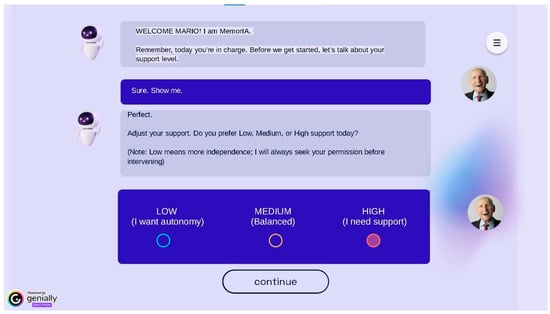
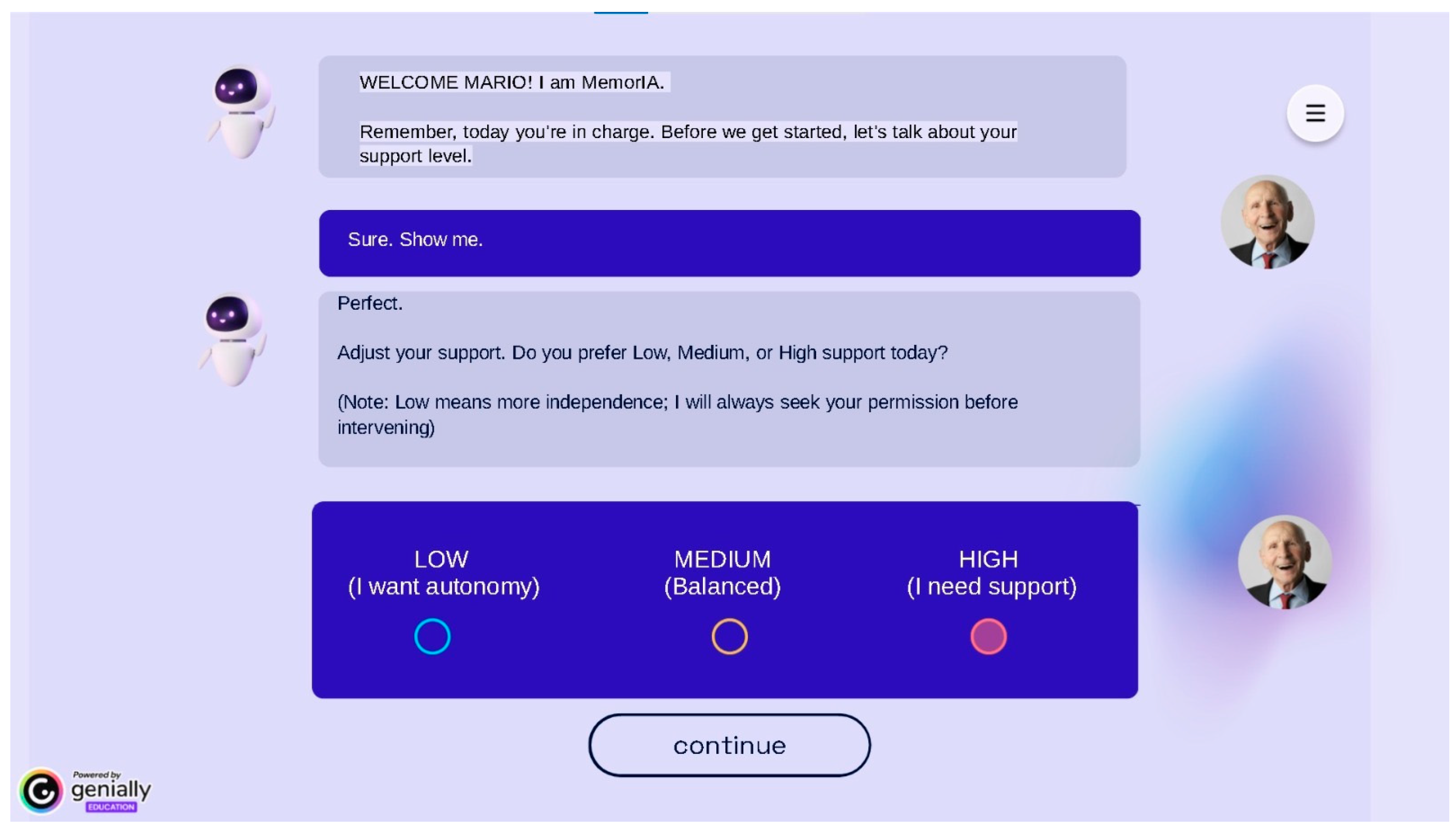
Upon launching the application, the user is not taken to the primary interface directly but is welcomed by a conversational onboarding phase, represented as a rule-based chatbot interaction, that is, an interactive dialogue with a finite set of pre-defined branches anchored to the principles of self-determined choice [21], and not a large-language-model-based conversational agent. In the current prototype, this interaction is simulated as a fixed sequence of static screens built in Genially, rather than implemented as functioning branching software; a working rule-based dialogue engine remains a task for future development. The visual layout is deliberately simplified: a single dialogue stream against a uniform background, a recognizable conversational agent on the left and the user’s personal photograph on the right (Figure 1). The chat guides the user through the selection of the preferred amount of assistance, with three options (low, medium or high), expressed through short sentences, large readable typography, and high contrast colour schemes consistent with current guidelines on legibility for older adults [11,32].
Figure 1.
Conversational onboarding interface (prototype shown in English, the application’s native language for its target English-speaking users). The chatbot (left-aligned bubbles) opens with a welcome message personalised with the user’s name and photograph (right-aligned bubbles), emphasising user agency (“Remember, today you are in charge”). It then negotiates the desired support level (“Adjust your support”), asking the user to choose between Low (“I want autonomy”), Medium (“Balanced”), or High (“I need support”), with an explanatory note clarifying that a Low setting means the system will always ask permission before intervening. This single-decision, high-contrast dialogue format operationalises the Dynamic Autonomy pillar (Section 3.2), letting the user set their own support level rather than having it imposed. Icons and avatars provided by the Genially platform library (Genially Web S.L.).
During the onboarding phase, the user decides how much assistance is appropriate. The system is intended to adjust its support to the person’s present cognitive and emotional condition. In the design, the assistant offers guidance without issuing commands. The level of assistance is not predefined: it is personalised based on the user’s expressed preference, and only at the end of the introductory phase does the user reach the main menu of the application. Under this arrangement, the design supports a choice made by the person; it does not take that choice over.
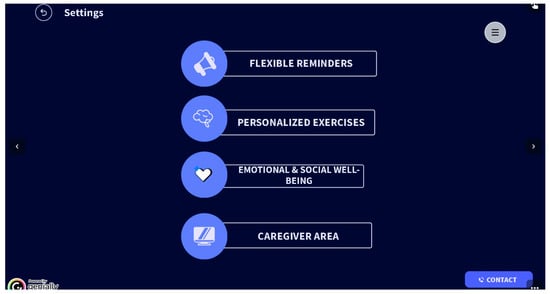
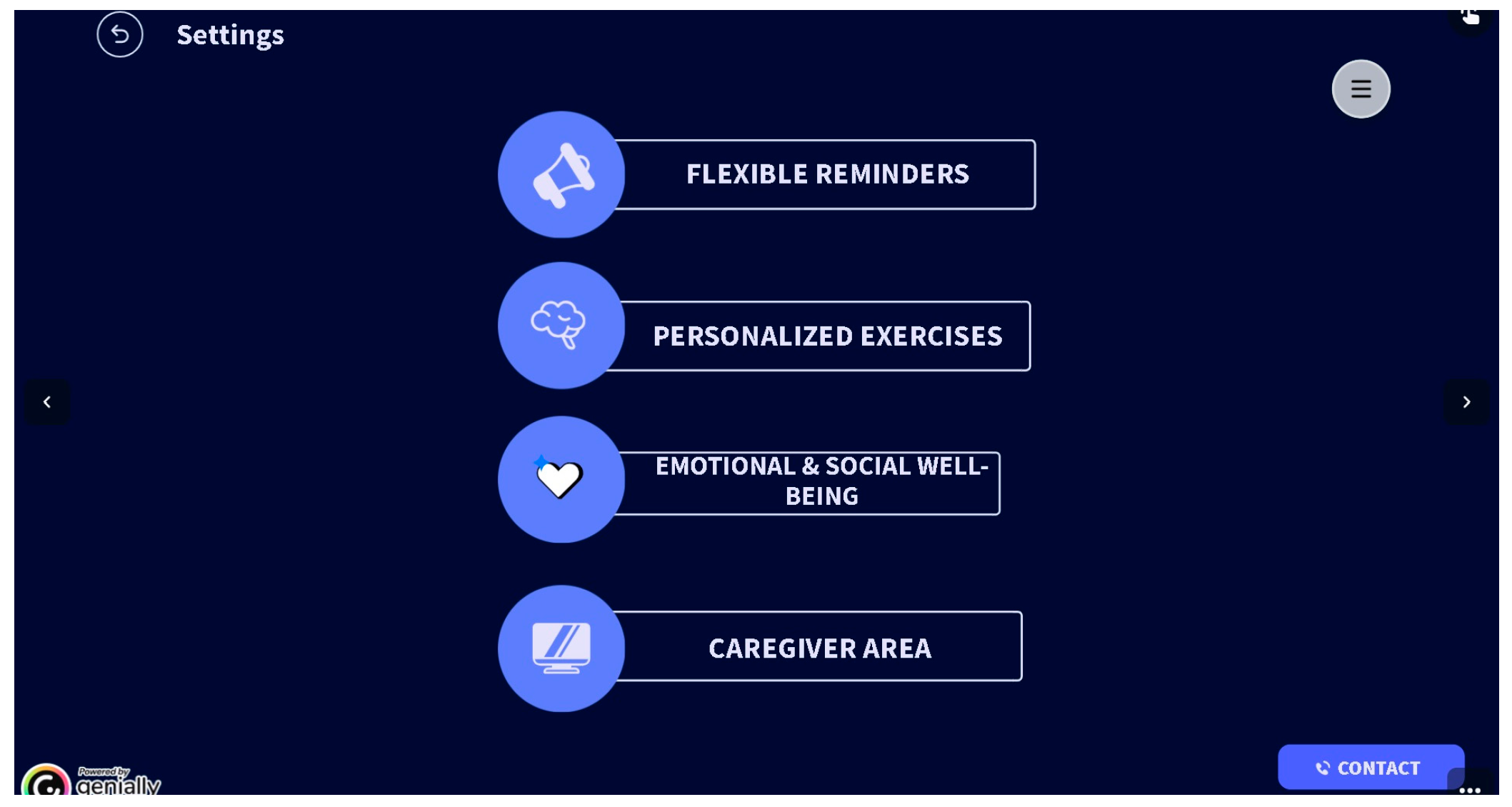
Once this phase is completed, the user accesses the main interface. The menu comprises four sections, each represented by a clickable tile: Flexible Reminders, Personalised Exercises, Emotional and Social Well-Being, and Caregiver Area (Figure 2). Each tile combines a concrete, semantically close icon with a short, legible textual label, in line with evidence indicating that paired icon-plus-label cues significantly improve recognition for older adults [33,34].
Figure 2.
Main menu of the MemorIA prototype with four large clickable tiles (Flexible Reminders, Personalised Exercises, Emotional/Social Well-Being, Caregiver Area), each pairing a concrete pictogram with a high-contrast textual label to support visual recognition. Icons provided by the Genially platform library (Genially Web S.L.).
4.2. Flexible Reminders and Ethical Negotiation
The first key concept, operationalized through the Flexible Reminders section, is referred to here as Dynamic Autonomy. In the context of MemorIA, the term denotes a design strategy in which the level of assistance is adjusted to the user’s expressed preferences and changing support needs rather than fixed in advance. This application draws on autonomy-sensitive approaches to assistive technology [18], principles of self-determined choice [21], and the IDEAL framework, which emphasizes adaptation to changing dementia-related challenges and identifies autonomy, choice, and control as relevant dimensions of living well with dementia [40]. Accordingly, rather than relying on fixed and imperative reminders, MemorIA applies a principle of negotiation. For a routine task such as taking a walk, the design has the system ask: “Would you like me to help you remember the details, or would you prefer to manage the activity independently?”.
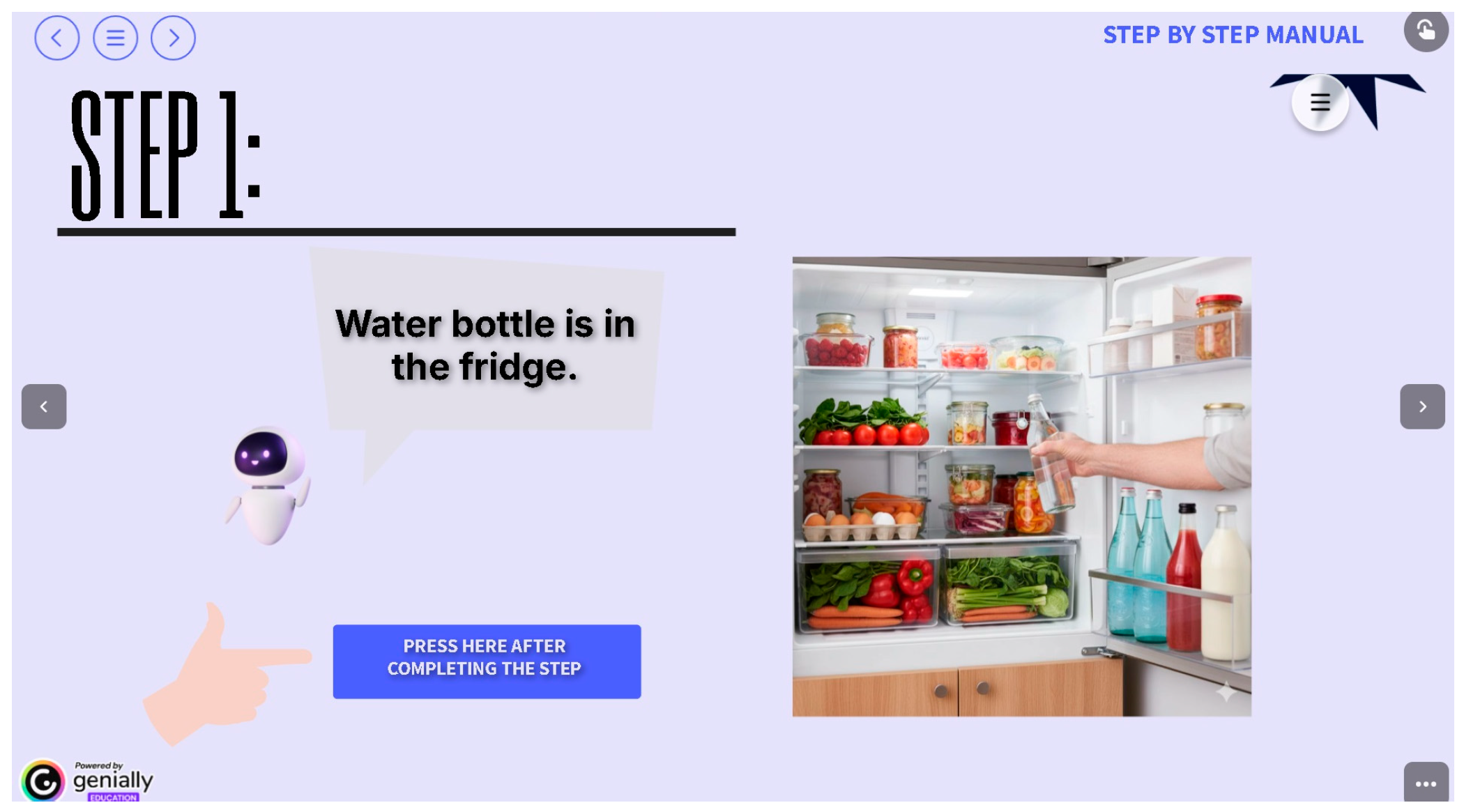
If help is requested, the task is decomposed into a sequence of interactive visual micro-steps, reducing the cognitive load [41]. The task “Going for a walk”, for example, is segmented as follows: take the water bottle from the fridge; take the keys from the hook by the door; put on the grey sneakers; exit through the main door, remembering to set a 20-min timer (Figure 3). Personalised visual elements accompany each micro-step. A clear pictogram (an hourglass for the timer, for instance) is paired with photographic images of the user’s actual belongings, namely their own keys, their own shoes, and their own fridge. The visual specificity is methodologically intentional: pictograms can support communication for older adults when designed according to usability and accessibility principles [42], while dementia-sensitive co-design research highlights the value of personally relevant and contextually appropriate visual cues [43].
Figure 3.
Flexible Reminders: visual micro-step. The mockup displays one step at a time (Step 1: “Water bottle is in the fridge”), pairing a short imperative-free instruction with a personalised photograph of the user’s actual fridge. One high-contrast button allows the user to continue. Icons provided by the Genially platform library (Genially Web S.L.) and image generated using Google Gemini AI (Imagen 3 model), accessed October 2025.
This approach transforms task execution from an externally imposed instruction into a shared, visually scaffolded choice, with the intended, and not yet empirically verified, aim of reducing anxiety and agitation. Crucially, the visual presentation is deliberately spartan: one step per screen, no competing elements, no decorative noise, consistent with research on visual simplification for ageing users [11,12].
4.3. Biographical Stimulation and Personalised Exercises
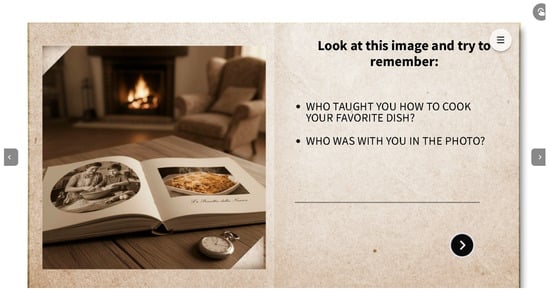
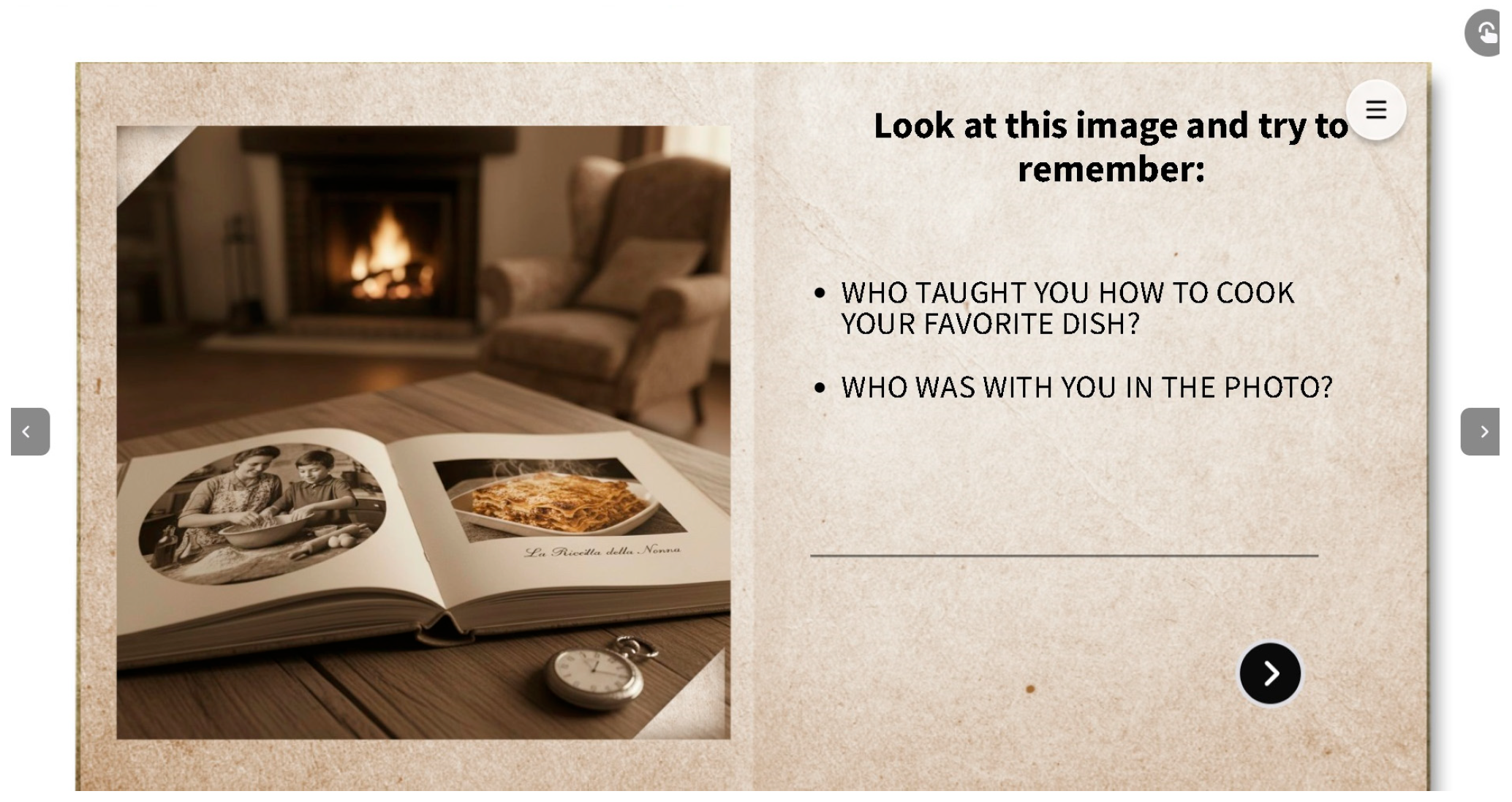
The second pillar, Authenticity and Self-Continuity [44], is embodied in the Personalised Exercises section. MemorIA does not assume that generic exercises hold equal relevance for all users. The section adopts a reminiscence-informed approach centred on personally relevant biographical content: reminiscence interventions commonly employ photographs, familiar objects, music, and life-history prompts, and the available evidence indicates small, context-dependent benefits for cognition, communication, and quality of life in people with dementia [45]. To this end, MemorIA draws on the user’s personalised biographical database. In place of a generic quiz, the application displays a photograph of the user’s own grandmother, or of a meaningful family dish, and poses identity-anchored questions such as: “Who taught you to cook your favorite dish? Who was with you in this photograph?” (Figure 4).
Figure 4.
Personalised biographical exercise. The exercise screen pairs an emotionally resonant photographic stimulus with two short, identity-anchored questions presented in large serif typography. The visual register evokes the user’s autobiographical past while preserving high contrast and minimal information density. Image generated using Google Gemini AI (Imagen 3 model) accessed October 2025.
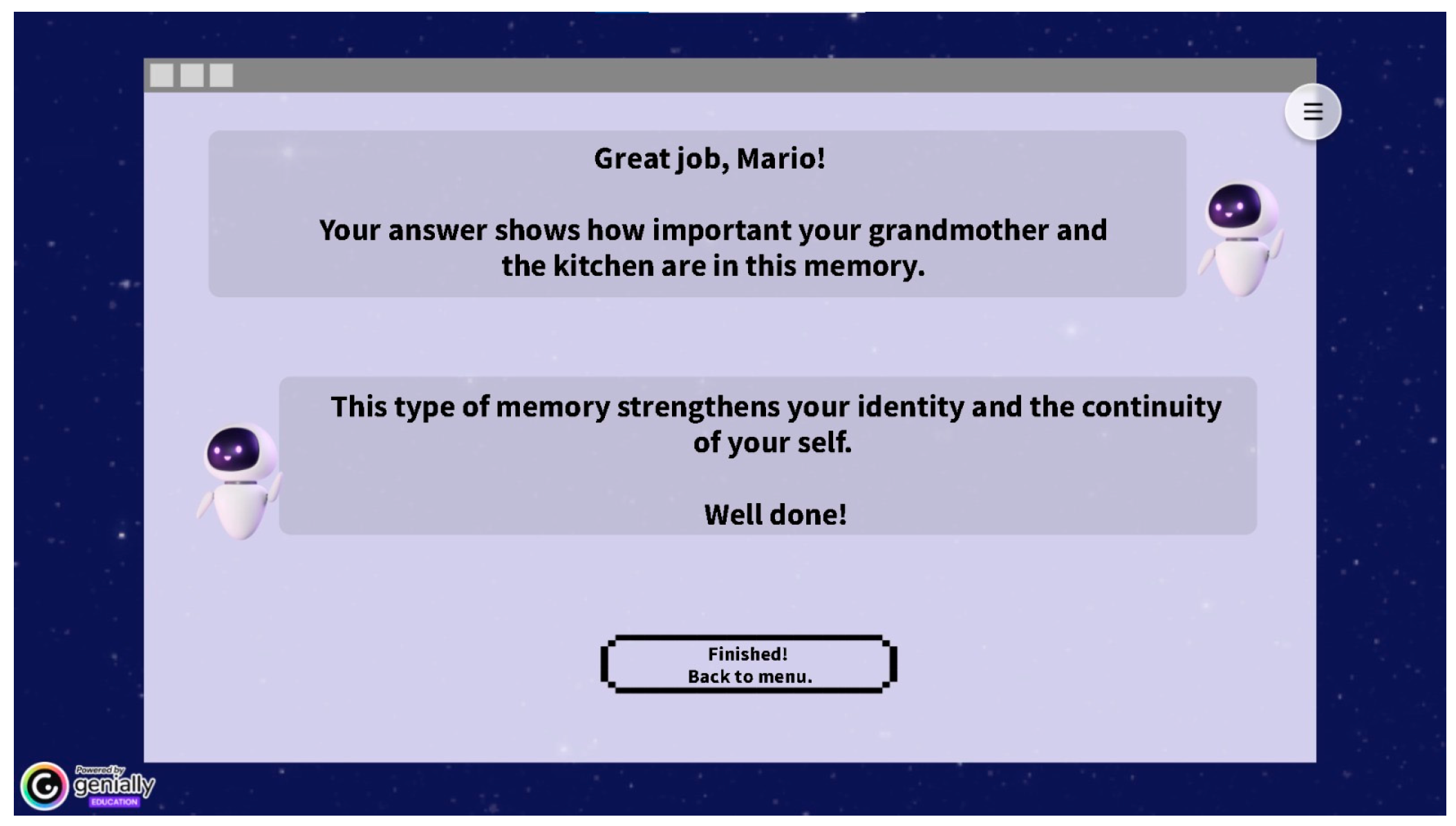
Feedback acknowledges the person’s engagement and the autobiographical meaning of the response instead of assigning a performance score. After a response, whether it matches an expected answer, the application acknowledges the personal connection expressed. It might say, for example: “Your answer shows how important your grandmother and the kitchen are in this memory” (Figure 5). The activity is therefore intended to support identity without confronting the user with a failed test.
Figure 5.
Empathetic feedback screen. After each biographical exercise, the system returns short, validating textual feedback set against a calm dark background. The visual style is consistent with the conversational onboarding screen, reinforcing identity continuity across modules. Icons provided by the Genially platform library (Genially Web S.L.).
Accessibility, in the proposed interface, is understood as functional but also emotional and visual: MemorIA avoids prescriptive or imperative tones, replacing them with collaborative inquiries. The interaction becomes a dialogue of care, opposing the model of unilateral command. The application consistently relies on simple language, short sentences, intuitive icons, and high contrast colors, design choices grounded in the converging evidence on legibility and cognitive load for older users [11,12,33,34].
4.4. Emotional Well-Being Module
In the third menu item, MemorIA includes an Emotional Well-Being module informed by research on technology-supported reminiscence, in which multimedia resources such as personal photographs, audio, and music are used to facilitate the recall and sharing of autobiographical experiences [46].
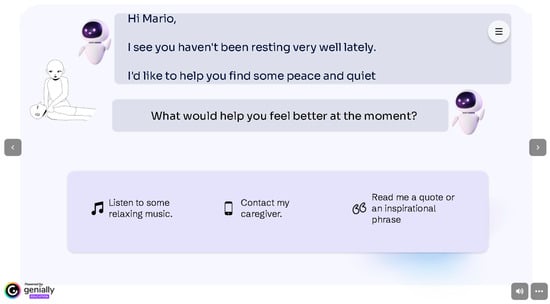
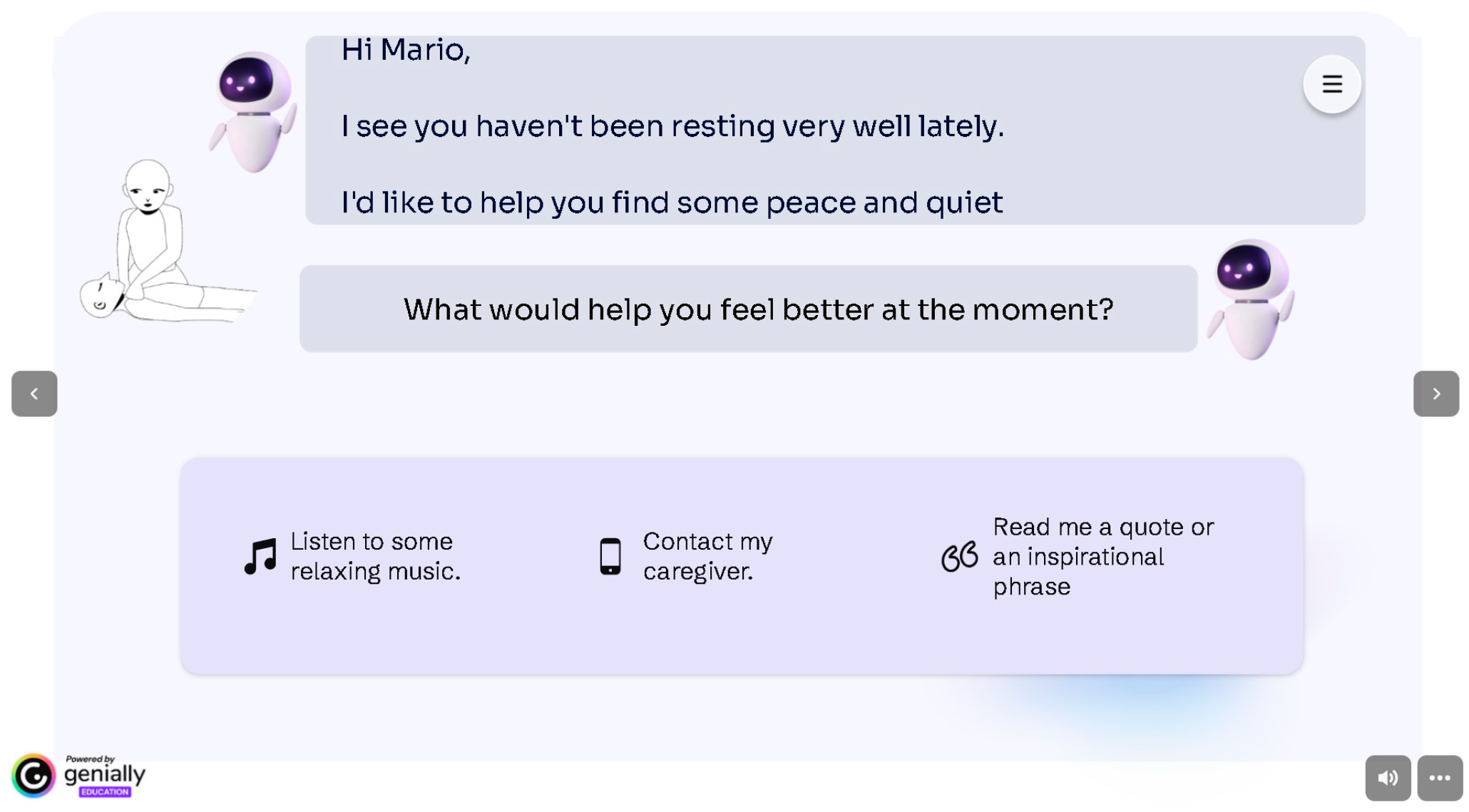
In the envisioned interaction flow, the detection or anticipation of a potential moment of distress does not trigger a diagnostic emotional assessment. The system instead offers non-intrusive support options, rooted in affective memory and in past success experiences. The prototype first asks the user whether they wish to receive support; the available options are then presented visually, on a single, calm screen with three clearly identifiable pictograms (contact caregiver, read a proverb or a phrase, listen to relaxing music), each paired with a short textual label (Figure 6).
Figure 6.
Emotional Well-Being module: entry screen. When possible distress is identified, it offers three visually equivalent options (contacting the caregiver, reading a soothing phrase, or listening to relaxing music), each represented by a familiar pictogram paired with a short label. The user’s freedom of choice is always preserved. Icons provided by the Genially platform library (Genially Web S.L.).
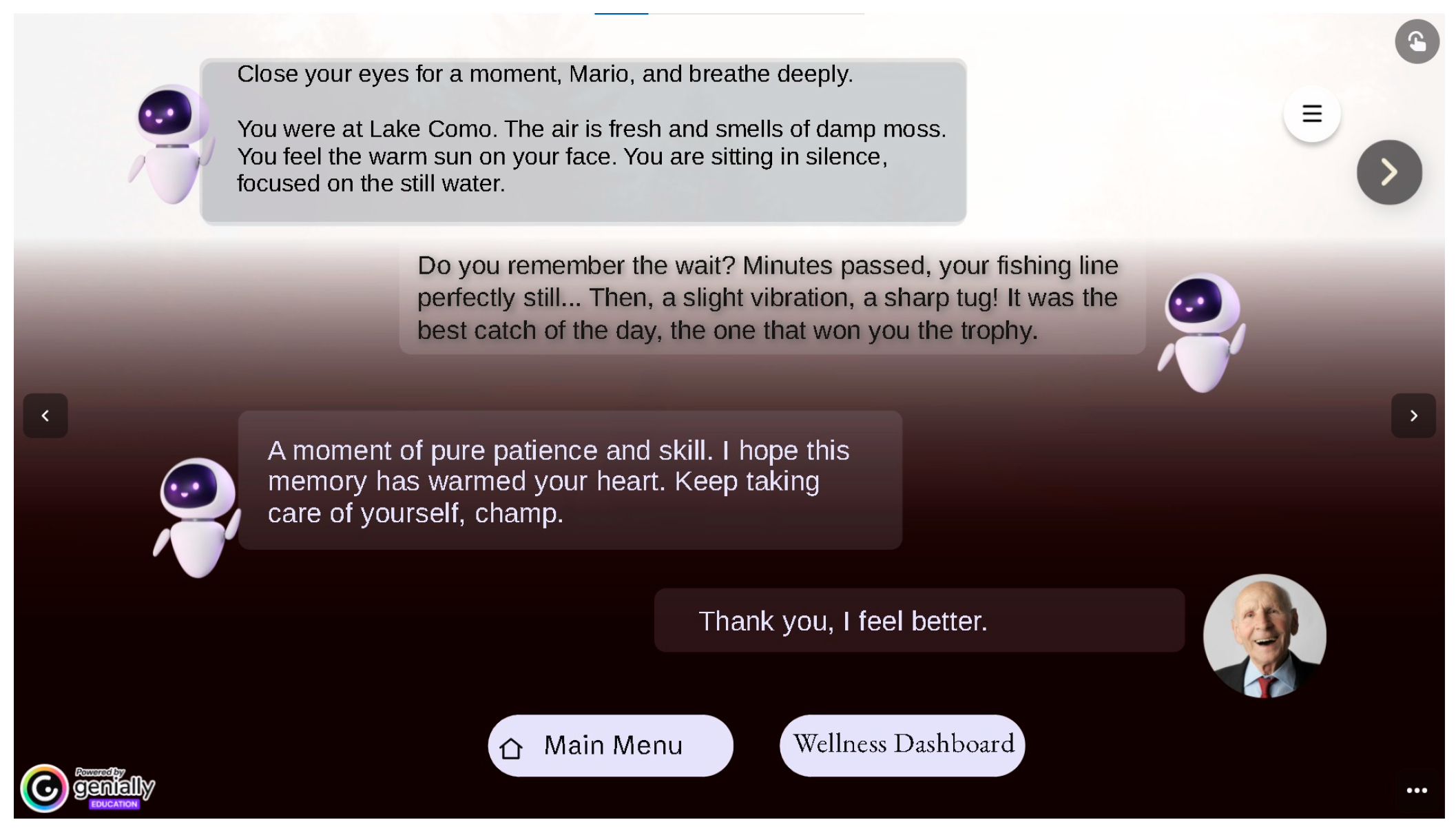
Among these options, the user can choose to reinforce their identity by listening to or reading a positive autobiographical narrative linked to a past success (such as an account of winning a fishing competition) narrated by the system (Figure 7). Alternatively, the application may offer a preferred playlist assembled from the person’s musical preferences and related autobiographical memories. Listening to highly significant songs is intended to function as a tool supporting relational and identity well-being, consistent with evidence on music-based interventions in dementia [47,48]. Finally, the module can also provide immediate relief by reading a soothing proverb or facilitate relational autonomy by enabling a one-touch call to the caregiver.
Figure 7.
Autobiographical narrative for emotional regulation. The screen depicts the presentation of a positive autobiographical event from the user’s personal archive in the form of a short narrative. The use of a low-saturation image and a restrained layout helps distinguish this screen from a clinical assessment interface. Icons and avatars provided by the Genially platform library (Genially Web S.L.).
5. The Caregiver Dashboard: Transparency Through Visual Narrative
The relationship between user and caregiver is conceived as a mediated cooperation: for the caregiver, understanding why the system acts in a certain way is fundamental to building trust and opening the black box [15,16]. The final menu item is therefore the Caregiver Area, a section dedicated exclusively to the person caring for the user with dementia. Selecting this item gives the caregiver access to a dashboard labelled Caregiver Dashboard for Ethical Transparency (Figure 8), whose purpose is twofold: to illustrate how the reasoning behind the system’s suggestions could be made comprehensible and to support informed monitoring. In the current prototype, the dashboard content presented below illustrates this design intent through mocked example scenarios built in Genially.
Figure 8.
Three vertical columns correspond to the macro-sections of the dashboard: Autonomy and Monitoring (left), Ethical Explanation (centre), and Qualitative Feedback (right). Two information tiles per column (Boxes A–F) keep the overall visual density low and the navigation predictable. The dashboard is organised into three informational sections (Boxes A–F), summarised in Table 3; the parameters shown are illustrative example values, not data from an implemented system (see Section 7.2). Icons provided by the Genially platform library (Genially Web S.L.).
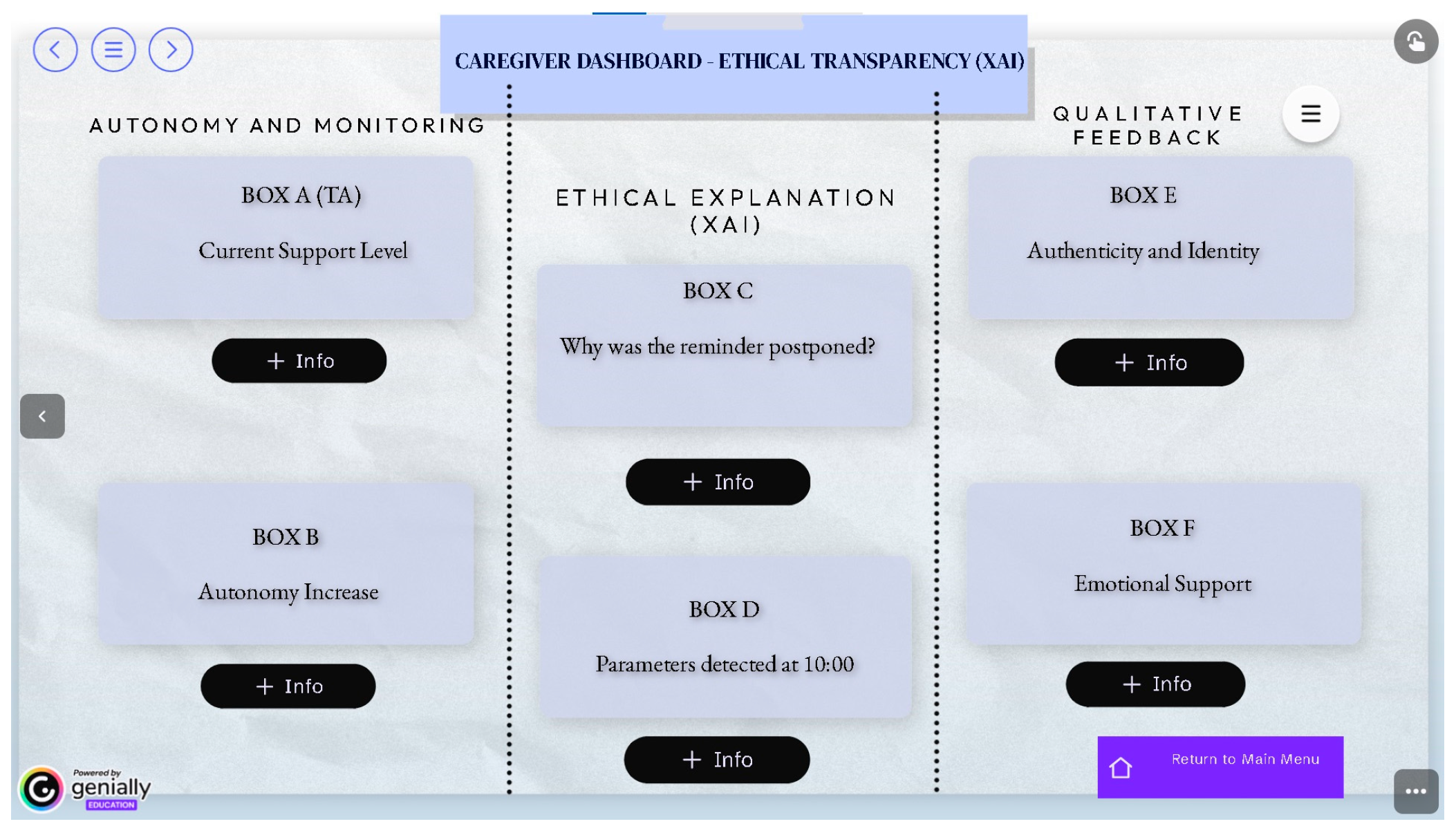
Table 3.
The Caregiver Dashboard: informational sections and their content.
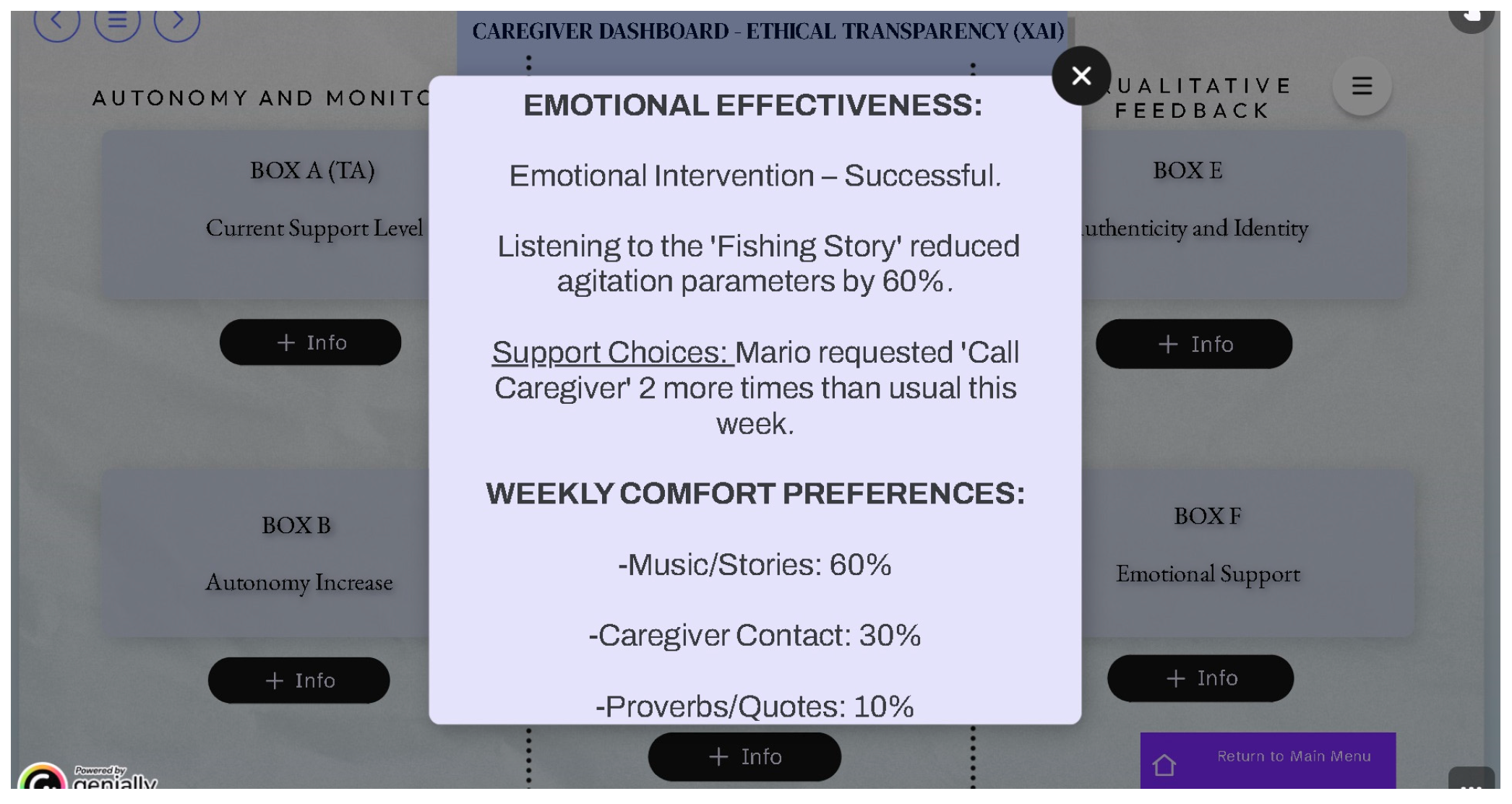
To make this reasoning concrete, the decision logic illustrated by the dashboard can be described schematically in terms of inputs, rule, and output. The inputs are the assistance level chosen by the user during onboarding, the completion or postponement status of a scheduled activity, and illustrative wellbeing indicators such as self-reported mood and a simulated heart-rate value. The illustrative rule applied in the mockup is a simple conditional heuristic: if the user has selected a lower assistance level and the wellbeing indicators fall within an expected range, the scheduled reminder is postponed and logged as an autonomy-preserving choice; otherwise, if the wellbeing indicators fall outside the expected range or the user has selected a higher assistance level, the reminder is issued directly and the caregiver is notified. The output rendered to the caregiver is not this underlying rule itself but a short narrative sentence, of the kind shown in Figure 9, together with the corresponding tile state. This logic is presented here as an illustrative design specification underlying the mockup, not as an implemented system.
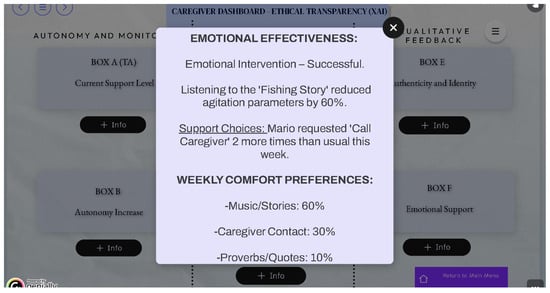
Figure 9.
Caregiver Dashboard: qualitative feedback interface providing emotional support and summarizing the user’s weekly comfort preferences based on interaction patterns. When the caregiver expands a box, a short narrative explanation of the information presented is displayed. The system’s suggestions are thus translated into understandable, contextualised statements that integrate the user’s parameters and the system’s ethical priorities.
Presenting the reason in this form allows the caregiver to discuss the decision in relation to the person receiving care. The explanation is meant to support dialogue without removing the decision-making role of the person with cognitive impairment. Assistance is therefore organized around cooperation with the user. The dashboard also illustrates a requirement that applies beyond MemorIA: an XAI output is useful only when its intended audience can perceive and understand it, regardless of its computational accuracy [16,38,49].
6. Comparative Analysis: Control Logic vs. Care Logic
To identify what differentiates the MemorIA prototype, it is useful to compare its functionalities with those of conventional assistive applications. The algorithmic imposition typical of conventional technologies frequently triggers phenomena of psychological reactance [50]. The user, perceiving a restriction of personal choice, may react with rejection, agitation, or abandonment of the device. A technology that “commands” instead of “suggests” fails in its assistive objective, transforming into a cause of distress for the user, who feels diminished, and for the caregiver, who must manage the oppositional crises triggered by the device; empirical evidence on digital assistive technologies in older populations confirms that non-aligned, prescriptive systems frequently result in misuse, non-use, or outright abandonment [24,51].
The current technological landscape is characterized by an efficiency bias: systems are designed for task optimization (for instance, “the patient must drink”) while neglecting experience optimization (“the patient must feel capable of drinking”) [5,51]. This reductionist view transforms AI into a surveillance prosthesis. Conversely, the transition to a logic of care requires the algorithm to be endowed with contextual sensitivity [18,38]; in MemorIA, this means prioritizing emotional well-being even if this requires delaying the technical execution of a task. MemorIA is designed around a logic of care that negotiates every intervention, respecting the person’s agency and identity. Table 4 summarizes the main functional differences and the underlying ethical principles.
Table 4.
Performance and value comparison between conventional assistive systems and the MemorIA model.
The key element shown in Table 4 lies in MemorIA’s capacity to transform technical data into an act of care. In the case of the caregiver dashboard concept, the system is designed not simply to report whether an activity has been completed; rather, it provides the rationale for a potential postponement, providing the caregiver with a narrative that is coherent with the user’s emotional state. Visibility, once again, is what makes this care possible: without a legible, narrative visualization of the underlying reasoning, transparency would remain a formal claim with no practical traction.
7. Discussion
7.1. Accessibility-Oriented Affordance
Within the MemorIA prototype, visual design parameters that are often treated as aesthetic variables, including colour contrast, typographic configuration, icon style, and image density, are operationalised as accessibility-oriented affordances for users with impaired visual processing and reduced working-memory capacity. Across the functional modules, these principles are combined to establish a coherent visual hierarchy intended to reduce competing perceptual demands and make relevant information and actions more readily identifiable. These choices find support in three strands of evidence: visual complexity and information density modulate cognitive load and task performance in older users [11,12]; icon concreteness and accompanying text labels support comprehension [33,34]; and age-friendly layout, colour, text size, and visual-focus strategies can improve visual attention and usability in this population [52].
A second and broader observation addresses the relationship between visibility and ethics. By making the intended reasoning narratively visible to the caregiver, MemorIA’s design treats XAI as a perceptual achievement and not solely as a computational one. The caregiver does not need to read confidence scores or to inspect model weights; they read a sentence. This shift has implications well beyond dementia care: in any high-stakes domain in which AI mediates between vulnerable users and human supervisors, the design of explanations is itself a form of accessibility design [16,38,49].
7.2. Limitations and Future Empirical Work
The work presented here concerns a static interface prototype. Its interface solutions were examined through the author-conducted, literature-informed design review described in Section 3.3, a process that assessed design coherence, not usability, clinical efficacy, or user experience in empirical terms. Several limitations must therefore be acknowledged. First, the prototype has not yet been evaluated by individuals living with mild dementia, caregivers, or healthcare professionals, and its visual solutions require controlled comparison with alternative design conditions. Second, the Genially-based implementation, while suitable as a conceptual demonstrator, does not currently support the adaptive biometric functions represented in the Caregiver Dashboard. Third, the generalisability of these interface solutions across cultural and linguistic contexts remains to be investigated.
Furthermore, while the current Genially-based prototype demonstrates static high-contrast and large-typography solutions, a fully functional application must accommodate a broader spectrum of visual variability. Future software development will integrate dynamic accessibility settings, including a user-selectable dark mode and a dedicated high-contrast mode to mitigate screen glare, adjustable font scaling and a choice of font type to adapt to fluctuating visual acuity and reading preferences, and specific colour palettes optimized for colour vision deficits. Within the Technology as Care framework, these are not merely technical add-ons, but essential extensions of the Dynamic Autonomy principle, ensuring that the interface continuously adapts to the user’s specific perceptual thresholds.
Future empirical work will address these limitations through an eye-tracking study designed to measure gaze distribution, pictogram salience, fixation duration on key interactive elements, and information visibility for users with mild cognitive impairment. Eye-tracking has become a methodological standard in the evaluation of interfaces for older adults [11,53,54] and, more recently, has been integrated with large language model interaction in reminiscence contexts [55]. Combining gaze data with subjective indicators of perceived mental effort will enable us to test directly whether the visibility-centred choices documented in this paper translate into measurable perceptual and affective gains. Co-design sessions with caregivers and clinicians, following experience-based co-design protocols developed for dementia populations [43,56], will complement the eye-tracking phase.
7.3. Ethical and Privacy Considerations
Because the design rationale in Section 3.3 addressed accessibility and care-related dimensions rather than data governance, the ethical and privacy implications of the proposed design warrant separate discussion. Three issues are particularly salient. The first concerns the biographical material at the core of the Authenticity pillar: personal photographs, names of family members, and life-history details are, by their nature, highly identifying and emotionally sensitive data. Populating MemorIA with such content would require a defined data-management protocol covering secure storage, restricted access, and a clear retention and deletion policy, none of which the present prototype specifies or implements.
The second issue concerns caregiver access to the dashboard described in Section 5. Because the caregiver can view the user’s assistance-level choices, activity patterns, and emotional-state indicators, the design creates an inherent asymmetry of information between the person with dementia and the person monitoring them; without deliberate safeguards, a tool intended to support cooperative care can drift toward covert surveillance, echoing the very control logic that MemorIA is meant to oppose [20]. Mitigating this risk would require the dashboard to disclose to the user, in an accessible form, what the caregiver can see, and to involve the user, to the extent of their capacity, in decisions about what is shared.
The third issue concerns informed consent. Mild Cognitive Impairment or mild dementia does not in itself preclude informed consent: many people in the early stages retain the capacity to understand and agree to how their data are used, and this capacity should be actively supported rather than presumed absent. At the same time, this capacity cannot be taken for granted and may fluctuate over time; accordingly, in any future implementation and evaluation, informed consent should be sought directly from participants who retain decision-making capacity, whereas, where that capacity is absent or has declined, consent should be provided by a legal representative together with the participant’s own assent, following established ethical guidance for assistive technology research with cognitively vulnerable populations [18,29]. In particular, the user should retain the ability to review and, at any time, withdraw the information shared with the caregiver and used by the system, so that consent remains an ongoing and revisable process rather than a one-off authorisation.
Finally, MemorIA is not intended to replace the caregiver; rather, it is designed to act as a relational and perceptual mediator that values the person’s residual capacities and keeps the system’s suggestions visible, intelligible, and negotiable.
These considerations are not resolved by the present design-stage work; they are identified here as constraints that any future implementation, and the planned empirical evaluation described in Section 7.2, would need to address explicitly, including through formal ethical review and data protection impact assessment.
8. Conclusions
MemorIA is a static interface prototype that translates the Technology as Care perspective into concrete interface decisions: activities are divided into visual steps, personal material replaces generic stimuli, each screen asks for a single decision, and caregiver-facing explanations are written as short narratives.
The prototype treats visibility as integral to how the interface works, rather than as an aesthetic concern: contrast, typography, icon form, and the amount of information displayed may determine whether a person with cognitive impairment can locate and understand an action. Accessible visual design is thus positioned as a condition for care rather than as a secondary refinement.
At this stage, the contribution of MemorIA is conceptual: it specifies a coherent set of design principles, an “autonomy prosthesis” combining accessible visual design, biographical content, and understandable explanations to preserve choice and dignity. Because these design choices are literature-grounded hypotheses rather than validated findings, their effectiveness remains to be demonstrated with the intended users through the empirical work outlined in Section 7.2.
By articulating how autonomy, identity, and accessible communication can be embedded in the interface of an assistive system, MemorIA offers a design model in which visual accessibility and the preservation of personhood are treated as inseparable objectives in dementia care.
Author Contributions
Conceptualization, G.D. and S.C.; methodology, G.D.; formal analysis, G.D.; investigation, G.D.; resources, S.C.; writing—original draft preparation, G.D. and M.C.; writing—review and editing, F.D.S., M.C. and S.C.; visualization, G.D.; supervision, S.C.; project administration, F.D.S.; funding acquisition, not applicable. All authors have read and agreed to the published version of the manuscript.
Funding
This research received no external funding.
Institutional Review Board Statement
Not applicable. This paper presents a conceptual, literature-informed design case; it did not involve human participants, patient data, biometric measurement, or any form of clinical or empirical testing. No ethical approval was therefore required for the work reported here.
Informed Consent Statement
Not applicable, as no human subjects were involved in this design-stage work. In the future empirical phase described in Section 7.2, informed consent will be obtained directly from participants who retain decision-making capacity; where such capacity is absent or fluctuating, consent will be provided by a legal representative together with the participant’s own assent, on an ongoing and revisable basis.
Data Availability Statement
No new data were created or analyzed in this study. Data sharing is not applicable to this article.
Conflicts of Interest
The authors declare no conflicts of interest.
References
- Alzheimer’s Disease International. World Alzheimer Report 2022: Life After Diagnosis: Navigating Treatment, Care and Support; Alzheimer’s Disease International: London, UK, 2022; Available online: https://www.alzint.org/resource/world-alzheimer-report-2022/ (accessed on 10 June 2026).
- GBD 2019 Dementia Forecasting Collaborators. Estimation of the global prevalence of dementia in 2019 and forecasted prevalence in 2050: An analysis for the Global Burden of Disease Study 2019. Lancet Public Health 2022, 7, e105–e125. [Google Scholar] [CrossRef] [PubMed]
- GBD 2021 Nervous System Disorders Collaborators. Global, regional, and national burden of disorders affecting the nervous system, 1990–2021: A systematic analysis for the Global Burden of Disease Study 2021. Lancet Neurol. 2024, 23, 344–381. [Google Scholar] [CrossRef] [Scilit] [PubMed]
- Istituto Nazionale di Statistica (ISTAT). Indicatori Demografici—Anno 2025; ISTAT: Rome, Italy, 2026. Available online: https://www.istat.it/wp-content/uploads/2026/03/Report_Indicatori-demografici_Anno-2025.pdf (accessed on 26 May 2026).
- Steijger, D.; Christie, H.; Aarts, S.; IJselsteijn, W.; Verbeek, H.; de Vugt, M. Use of artificial intelligence to support quality of life of people with dementia: A scoping review. Ageing Res. Rev. 2025, 108, 102741. [Google Scholar] [CrossRef] [Scilit] [PubMed]
- Wu, C.-K.; Fuh, J.-L. A 2025 update on treatment strategies for the Alzheimer’s disease spectrum. J. Chin. Med. Assoc. 2025, 88, 495–502. [Google Scholar] [CrossRef] [Scilit] [PubMed]
- Borchert, R.J.; Azevedo, T.; Badhwar, A.; Bernal, J.; Betts, M.; Bruffaerts, R.; Burkhart, M.C.; Dewachter, I.; Gellersen, H.M.; Low, A.; et al. Artificial intelligence for diagnostic and prognostic neuroimaging in dementia: A systematic review. Alzheimer’s Dement. 2023, 19, 5885–5904. [Google Scholar] [CrossRef] [Scilit] [PubMed]
- Kameyama, M.; Umeda-Kameyama, Y. Applications of artificial intelligence in dementia. Geriatr. Gerontol. Int. 2024, 24, 25–30. [Google Scholar] [CrossRef] [Scilit] [PubMed]
- Moreno, L.; Petrie, H.; Martínez, P.; Alarcon, R. Designing user interfaces for content simplification aimed at people with cognitive impairments. Univers. Access Inf. Soc. 2024, 23, 99–117. [Google Scholar] [CrossRef] [Scilit] [PubMed]
- Chen, A.T.; Teng, A.K.; Zhao, J.; Asirot, M.G.; Turner, A.M. The use of visual methods to support communication with older adults with cognitive impairment: A scoping review. Geriatr. Nurs. 2022, 46, 52–60. [Google Scholar] [CrossRef] [Scilit] [PubMed]
- Zhou, C.; Yuan, F.; Huang, T.; Zhang, Y.; Kaner, J. The impact of interface design element features on task performance in older adults: Evidence from eye-tracking and EEG signals. Int. J. Environ. Res. Public Health 2022, 19, 9251. [Google Scholar] [CrossRef] [Scilit] [PubMed]
- Liu, C.; Qu, Q.-X. Research on the influence of interface visual design features of mobile news on cognitive load: A study of elderly users in China. Behav. Sci. 2026, 16, 32. [Google Scholar] [CrossRef] [Scilit] [PubMed]
- Tronto, J.C. Moral Boundaries: A Political Argument for an Ethic of Care; Routledge: New York, NY, USA, 2020. [Google Scholar] [CrossRef] [Scilit]
- Kitwood, T. Dementia Reconsidered: The Person Comes First; Open University Press: Buckingham, UK, 1997. [Google Scholar]
- Adadi, A.; Berrada, M. Peeking inside the black-box: A survey on explainable artificial intelligence (XAI). IEEE Access 2018, 6, 52138–52160. [Google Scholar] [CrossRef] [Scilit]
- Taiyeb Khosroshahi, M.; Morsali, S.; Gharakhanlou, S.; Motamedi, A.; Hassanbaghlou, S.; Vahedi, H.; Pedrammehr, S.; Kabir, H.M.D.; Jafarizadeh, A. Explainable artificial intelligence in neuroimaging of Alzheimer’s disease. Diagnostics 2025, 15, 612. [Google Scholar] [CrossRef] [Scilit] [PubMed]
- Lyall, D.M.; Kormilitzin, A.; Lancaster, C.; Sousa, J.; Petermann-Rocha, F.; Buckley, C.; Harshfield, E.L.; Iveson, M.H.; Madan, C.R.; McArdle, R.; et al. Artificial intelligence for dementia—Applied models and digital health. Alzheimer’s Dement. 2023, 19, 5872–5884. [Google Scholar] [CrossRef] [Scilit] [PubMed]
- Ienca, M.; Wangmo, T.; Jotterand, F.; Kressig, R.W.; Elger, B. Ethical design of intelligent assistive technologies for dementia: A descriptive review. Sci. Eng. Ethics 2018, 24, 1035–1055. [Google Scholar] [CrossRef] [Scilit] [PubMed]
- Greenhalgh, T.; Wherton, J.; Sugarhood, P.; Hinder, S.; Procter, R.; Stones, R. What matters to older people with assisted living needs? A phenomenological analysis of the use and non-use of telehealth and telecare. Soc. Sci. Med. 2013, 93, 86–94. [Google Scholar] [CrossRef] [Scilit] [PubMed]
- Zuboff, S. The age of surveillance capitalism. In Social Theory Re-Wired: New Connections to Classical and Contemporary Perspectives, 3rd ed.; Longhofer, W., Winchester, D., Eds.; Routledge: New York, NY, USA, 2023; pp. 203–213. [Google Scholar] [CrossRef] [Scilit]
- Deci, E.L.; Ryan, R.M. The “what” and “why” of goal pursuits: Human needs and the self-determination of behavior. Psychol. Inq. 2000, 11, 227–268. [Google Scholar] [CrossRef] [Scilit]
- Rotter, J.B. Generalized expectancies for internal versus external control of reinforcement. Psychol. Monogr. Gen. Appl. 1966, 80, 1–28. [Google Scholar] [CrossRef] [Scilit]
- Bandura, A. Self-Efficacy: The Exercise of Control; W.H. Freeman and Company: New York, NY, USA, 1997. [Google Scholar]
- Kruithof, K.; Ruehle, R.C.; Dörenberg, V.; van Etten-Jamaludin, F.; Frederiks, B. Digital assistive technologies to support community-dwelling older adults: An interpretative synthesis of experienced benefits and harms. SSM Qual. Res. Health 2025, 8, 100584. [Google Scholar] [CrossRef] [Scilit]
- Sweller, J. Cognitive load during problem solving: Effects on learning. Cogn. Sci. 1988, 12, 257–285. [Google Scholar] [CrossRef] [PubMed]
- Burrell, J. How the machine ‘thinks’: Understanding opacity in machine learning algorithms. Big Data Soc. 2016, 3, 2053951715622512. [Google Scholar] [CrossRef] [Scilit]
- Floridi, L.; Cowls, J.; Beltrametti, M.; Chatila, R.; Chazerand, P.; Dignum, V.; Luetge, C.; Madelin, R.; Pagallo, U.; Rossi, F.; et al. AI4People—An ethical framework for a good AI society: Opportunities, risks, principles, and recommendations. Minds Mach. 2018, 28, 689–707. [Google Scholar] [CrossRef] [Scilit] [PubMed]
- Sanders, E.B.-N.; Stappers, P.J. Co-creation and the new landscapes of design. CoDesign 2008, 4, 5–18. [Google Scholar] [CrossRef] [Scilit]
- Köhler, S.; Perry, J.; Biernetzky, O.A.; Kirste, T.; Teipel, S.J. Ethics, design, and implementation criteria of digital assistive technologies for people with dementia from a multiple stakeholder perspective: A qualitative study. BMC Med. Ethics 2024, 25, 84. [Google Scholar] [CrossRef] [Scilit] [PubMed]
- Husserl, E. Die Krisis der europäischen Wissenschaften und die transzendentale Phänomenologie: Eine Einleitung in die phänomenologische Philosophie; Ströker, E., Ed.; Philosophische Bibliothek; Felix Meiner Verlag: Hamburg, Germany, 2012; Volume 641. [Google Scholar]
- Borgmann, A. Technology and the Character of Contemporary Life: A Philosophical Inquiry; University of Chicago Press: Chicago, IL, USA, 1984. [Google Scholar]
- Toure, M.; Gabrijelčič Tomc, H.; Možina, K. Speed of reading instructions for creative task performance: Influence of typography and reading media. Appl. Sci. 2024, 14, 11716. [Google Scholar] [CrossRef] [Scilit]
- Song, X.; Lin, Z.; Tang, R. Developing icons for older adults: The roles of icon design categories, text labels, and learning strategies. Int. J. Ind. Ergon. 2024, 102, 103613. [Google Scholar] [CrossRef] [Scilit]
- Ávila-Muñoz, R.; Alonso-González, D.; Arias-Astray, A. Visual design and accessibility settings: An exploratory study on their role in technology adoption among older adults. Front. Commun. 2026, 11, 1808537. [Google Scholar] [CrossRef] [Scilit]
- Ghamari, M.; Suvish; Dehkordi, A.A.; See, C.H.; Sami, A.; Yu, H.; Sundaram, S. Dementia friendly buildings—Approach on architectures. Buildings 2025, 15, 385. [Google Scholar] [CrossRef] [Scilit]
- Alsaggaf, F.; Eijkelenboom, A.; Lugten, M.; Turrin, M. A machine learning framework for early-stage dementia-friendly architectural design evaluation using visual access metrics. ARIN 2025, 4, 11. [Google Scholar] [CrossRef] [Scilit]
- Sun, F.; Jiang, L.; Chen, X.S.; Feng, Y. Interactive AI technology for dementia caregivers: Needs and implementation evidence. J. Technol. Hum. Serv. 2025, 43, 91–116. [Google Scholar] [CrossRef] [Scilit]
- Vilor-Tejedor, N.; van Vorstenbosch, R.; Evans, T.E. Artificial intelligence in dementia care: Challenges, controversies, and policy implications. Front. Dement. 2026, 5, 1791195. [Google Scholar] [CrossRef] [Scilit] [PubMed]
- De Beni, R.; Borella, E. (Eds.) Psicologia dell’invecchiamento e della longevità; il Mulino: Bologna, Italy, 2015. [Google Scholar]
- Clare, L.; Nelis, S.M.; Quinn, C.; Martyr, A.; Henderson, C.; Hindle, J.V.; Jones, I.R.; Jones, R.W.; Knapp, M.; Kopelman, M.D.; et al. Improving the experience of dementia and enhancing active life—Living well with dementia: Study protocol for the IDEAL study. Health Qual. Life Outcomes 2014, 12, 164. [Google Scholar] [CrossRef] [Scilit] [PubMed]
- Paas, F.; van Merriënboer, J.J.G. Cognitive-load theory: Methods to manage working memory load in the learning of complex tasks. Curr. Dir. Psychol. Sci. 2020, 29, 394–398. [Google Scholar] [CrossRef] [Scilit]
- Arias-Flores, H.; Zapata, M.; Sanchez-Gordon, S.; Cedillo, P. Communication support for older adults through pictograms. In HCI International 2023 Posters; Stephanidis, C., Antona, M., Ntoa, S., Salvendy, G., Eds.; Communications in Computer and Information Science; Springer: Cham, Switzerland, 2023; Volume 1833, pp. 411–417. [Google Scholar] [CrossRef] [Scilit]
- Macdonald, A.; Kuberska, K.; Stockley, N.; Fitzsimons, B. Using experience-based co-design (EBCD) to develop high-level design principles for a visual identification system for people with dementia in acute hospital ward settings. BMJ Open 2023, 13, e069352. [Google Scholar] [CrossRef] [Scilit] [PubMed]
- Sabat, S.R. The Experience of Alzheimer’s Disease: Life Through a Tangled Veil; Blackwell Publishers: Malden, MA, USA, 2001. [Google Scholar]
- Woods, B.; O’Philbin, L.; Farrell, E.M.; Spector, A.E.; Orrell, M. Reminiscence therapy for dementia. Cochrane Database Syst. Rev. 2018, 2018, CD001120. [Google Scholar] [CrossRef] [Scilit] [PubMed]
- Lazar, A.; Thompson, H.; Demiris, G. A systematic review of the use of technology for reminiscence therapy. Health Educ. Behav. 2014, 41, 51S–61S. [Google Scholar] [CrossRef] [Scilit] [PubMed]
- Särkämö, T.; Tervaniemi, M.; Laitinen, S.; Numminen, A.; Kurki, M.; Johnson, J.K.; Rantanen, P. Cognitive, emotional, and social benefits of regular musical activities in early dementia: Randomized controlled study. Gerontologist 2014, 54, 634–650. [Google Scholar] [CrossRef] [Scilit] [PubMed]
- Dorris, J.L.; Neely, S.; Terhorst, L.; VonVille, H.M.; Rodakowski, J. Effects of music participation for mild cognitive impairment and dementia: A systematic review and meta-analysis. J. Am. Geriatr. Soc. 2021, 69, 2659–2667. [Google Scholar] [CrossRef] [Scilit] [PubMed]
- Gunning, D.; Stefik, M.; Choi, J.; Miller, T.; Stumpf, S.; Yang, G.-Z. XAI—Explainable artificial intelligence. Sci. Robot. 2019, 4, eaay7120. [Google Scholar] [CrossRef] [Scilit] [PubMed]
- Brehm, J.W. A Theory of Psychological Reactance; Academic Press: New York, NY, USA, 1966. [Google Scholar]
- Panzavolta, A.; Arighi, A.; Guido, E.; Lavorgna, L.; Di Lorenzo, F.; Dodich, A.; Cerami, C. Patient-related barriers to digital technology adoption in Alzheimer disease: Systematic review. JMIR Aging 2025, 8, e64324. [Google Scholar] [CrossRef] [Scilit] [PubMed]
- Ye, J.; Han, Y.; Li, W.; Yang, C. Visual selective attention analysis for elderly friendly fresh e-commerce product interfaces. Appl. Sci. 2025, 15, 4470. [Google Scholar] [CrossRef] [Scilit]
- Castro, J.W.; Madrigal, G.; Rojas, L.A. Eye tracking to evaluate usability with the older adults: A secondary study. In Social Computing and Social Media; Coman, A., Vasilache, S., Eds.; Lecture Notes in Computer Science; Springer: Cham, Switzerland, 2024; Volume 14703, pp. 131–145. [Google Scholar] [CrossRef] [Scilit]
- Li, G.; Tang, T. Online performance and interface design implications among older adults: A systematic review of eye tracking studies. Appl. Ergon. 2025, 128, 104538. [Google Scholar] [CrossRef] [Scilit] [PubMed]
- Han, L.; Wei, M.; Chen, Q.; Wang, A.; Pang, R.; Liu, K.; Chen, R.; Yip, D. Eye2Recall: Exploring the design of enhancing reminiscence activities via eye tracking-based LLM-powered interaction experience for older adults. arXiv 2025, arXiv:2508.02232. [Google Scholar] [CrossRef] [Scilit]
- De Simone, F.; Casillo, M.; Collina, S. AI and inclusivity: Co-designing for disability empowerment. In Intelligent Systems and Applications; Arai, K., Ed.; Lecture Notes in Networks and Systems; Springer: Cham, Switzerland, 2024; Volume 1067, pp. 196–206. [Google Scholar] [CrossRef] [Scilit]

Disclaimer/Publisher’s Note: The statements, opinions and data contained in all publications are solely those of the individual author(s) and contributor(s) and not of MDPI and/or the editor(s). MDPI and/or the editor(s) disclaim responsibility for any injury to people or property resulting from any ideas, methods, instructions or products referred to in the content. |
© 2026 by the authors. Licensee MDPI, Basel, Switzerland. This article is an open access article distributed under the terms and conditions of the Creative Commons Attribution (CC BY) license.