


Abstract
Background: The Testamentary Capacity Assessment Tool (ΤCAT) is a brief instrument with good psychometric properties, specifically designed for the assessment of testamentary capacity (TC) in individuals with dementia. It assesses memory, perception of financial matters, and judgment, as well as cognitive functions, such as theory of mind, not measured by other traditional tools. Additionally, it does not require collateral sources of financial information. The aim of the present study was to provide an updated report on the use of the TCAT in research and systematic review studies. Methods: This narrative review includes studies that have used the TCAT for clinical use, validation in different cultures, and comparison with the two other specialized TC assessment tools. The PubMed database was searched using the keyword “Testamentary Capacity Assessment Tool”. Results: The TCAT has been validated in a healthy Italian population and was found to be a useful adjunct instrument for TC assessments in older adults. Another study demonstrated its clinical utility in patients with acute ischemic stroke. A systematic review compared the TCAT to the other two existing specialized TC assessment tools, namely the Testamentary Capacity Instrument (TCI) and the Testamentary Definition Scale (TDS), highlighting the superiority of the TCAT in clinical practice. Conclusions: The TCAT is a useful, specialized screening tool that is easily applicable in clinical practice by both experts and non-experts. Further studies are recommended across different cultures, in both healthy and cognitively impaired adults, to support its standardized use in forensic and clinical settings.
1. Introduction
Testamentary capacity (TC) refers to the legal ability of a person to make a valid will. In recent decades, courts have increasingly been confronted with an increased number of contested wills related to the alleged lack of TC.
Major factors influencing a person’s TC include undue influence and medical conditions affecting cognitive functions such as judgment within an increasingly aging population. The size of the testator’s estate and the complexity of modern family structures may further contribute to legal conflicts. Even in normal aging without dementia, the cognitive process of composing a will is a complex, higher order functional capacity with many cognitive, behavioral, and emotional factors involved [1].
TC is distinct from financial capacity, which includes a wide range of abilities related to managing finances and assets. Cognitive domains related to TC include memory, especially autobiographical memory; executive functions, such as judgment and intention; and social cognition. The characterization of a person as incapable of making a will solely on the basis of a diagnosis of dementia or a psychiatric disorder can be misleading, as the assessment of TC is a multifunctional process that spans both legal and medical fields and requires a collaborative approach.
Health practitioners are often asked to act as “experts” in evaluating a person’s TC, while the courts remain the final arbiters. Although retrospective evaluations are common, contemporaneous assessments are generally more reliable, as they concern the living testator at or near the time the will was composed, thereby better protecting the individual’s wishes [1]. Determination of TC around the world is guided by specific legal criteria, which are closely related to the Banks v Goodfellow criteria (1870) as follows: the person must know that (a) he/she is making a will; (b) the nature and approximate value of his or her estate; (c) the “natural objects of his/her bounty”, that is, those who are legally entitled to the estate he or she is distributing; and (d) how the assets are distributed through the will [1,2].
TC can be retained in dementia—particularly mild or moderate forms—since dementia and other mental illnesses do not inevitably lead to testamentary or other legal incapacity. Some psychiatric issues associated with dementia, such as impaired perception, impulsiveness and poor judgment, may influence the testator’s appreciation of the consequences of a will and therefore require careful evaluation [3]. When the person has severe cognitive decline, legal professionals may not require the assistance of an expert to assess TC; however, many cases involve subtle cognitive changes that necessitate detailed interpretation, particularly in mild or moderate dementia [4]. At the same time, health professionals should proceed with the evaluation of a patient’s TC by taking into consideration the solicitors’ guidance regarding the legal standards. This approach avoids labeling individuals as incompetent solely on the basis of low scores on screening tests when they may still clearly understand how and to whom they wish to distribute their assets [5].
Therefore, a thorough cognitive evaluation is essential in the context of TC assessment. The clinical interview is the core component in TC assessment, while the neuropsychological instruments serve as valuable complementary tools. The instruments can aid in diagnosing dementia or identifying deficits in several cognitive functions relevant to TC, but only when interpreted by a qualified practitioner, such as a neurologist or a psychiatrist. They do not replace the forensic expert’s judgment, but they can provide supporting evidence for the expert’s evaluation and contribute to a more consistent and structured approach to TC assessment for the courts. Methods used in TC assessments may include formal tests, behavioral checklists, direct observation, and semi-structured interviews [1].
There are limited neuropsychological instruments with established psychometric properties specifically designed for TC assessment in dementia [1,6,7]. As a result, experts often rely on a combination of tools to ensure adequate coverage of the functions required to compose a valid will. The examiner often needs a specialized screening tool to help him or her distinguish between individuals who are clearly capable and those who need forensic expertise [1,7]. In this context, the testamentary capacity assessment tool (TCAT) was developed and published from Papageorgiou et al. [7]. It is a brief, specialized instrument for TC assessment in dementia, with good psychometric properties and no need for special training for its use. It is well structured and can be used as a specialized screening tool.
The aim of the present narrative review study is to provide an updated report of the use of the TCAT as a specialized instrument for TC assessment in dementia in everyday clinical and legal practice. It includes all the research and systematic review studies that have used the TCAT and summarizes the findings, indicating that it is a useful brief clinical screening tool among the existing specialized TC assessment instruments for dementia.
2. Method
The present work is a narrative review of studies that have used the TCAT. A literature review search of PubMed (2018–2025) was conducted using the term “testamentary capacity assessment tool”. Additionally, for the original research study of the TCAT development [7], three papers were included: two research studies—one examining the use of the TCAT in acute ischemic stroke, another validating the TCAT in a healthy Italian population—and one systematic review about the comparison of the TCAT with other existing specialized instruments for the assessment of TC. All included articles were published in English and available as full texts.
3. Results
3.1. Neuropsychological Background of Testamentary Capacity Assessment in Dementia
TC is considered as a complex capacity and an advanced activity of daily living. It requires intact frontal/executive functions in contrast to more basic daily living capacities, such as household tasks. Several cognitive domains are related to the ability to make a will: memory (including free recall and recognition); orientation; expressive and receptive language; and executive functions, such as abstract thinking, impulsiveness, and social judgment [1]. Executive dysfunction may, in fact, be an early feature of dementia.
In dementia, even mild to moderate stages, there may be impairment in patients’ interpersonal relationships due to deficits in executive functioning and autobiographical memory. Suspiciousness and impulsive judgment are frequent symptoms that can affect TC, and personality changes may also occur. These factors, for instance, may lead the patient to exclude from his or her will a person who would normally be expected to be the testator’s heir [5].
In contrast to the limited number of studies on specialized methods for assessing TC in patients with dementia, there are more instruments assessing decision-making capacity in dementia, focusing mainly on the capacity for therapeutic choices (informed consent to treatment), everyday life decisions, and consent to research participation [1,7,8]. In the recent literature, a combination of instruments is often used to assess TC, which can be grouped into the following categories:
A. General ability tests, assessing cognitive functions or independent living skills.
These instruments are useful for screening cognitive impairment, as well as detecting some subtle deficits and monitoring changes over time. Examples include the Mini-Mental State Examination (MMSE) [9], Montreal Cognitive Assessment (MoCA) [10], Frontal Assessment Battery (FAB) [11], and Addenbrooke’s Cognitive Examination Revised (ACE-R) [12], which are often used in legal capacity assessments. However, none of these can specifically evaluate or reliably predict TC in dementia [6].
B. Specific tests, including financial capacity (FC) and decision-making capacity assessment instruments.
Some FC models have been used for the assessment of TC, especially regarding the evaluation of a patient’s understanding of the value of his or her property, such as the Hopemont Capacity Assessment Interview (HCAI) [13] and the Financial Capacity Instrument (FCI) [14,15]. The HCAI and the FCI are considered Forensic Assessment Instruments (FAIs), meaning that they are designed to provide specific and direct answers to legal and clinical questions [16]. Nevertheless, FAIs lack established psychometric properties specifically for the assessment of TC.
The administration of a combination of instruments for TC assessment can be time-consuming and exhausting for patients and impractical for medical practitioners who often require a brief screening tool before referring a case to a forensic expert [1,7]. Despite recommendations for the development of a specialized, medico-legal instrument, there are few relevant studies. This is largely due to significant methodological challenges in standardizing TC assessment, as TC must be evaluated at or near the time of will composition and is highly situation specific.
Furthermore, a multidisciplinary approach is needed for the development of such a tool, since TC lies at the intersection of legal and medical fields and requires a collaborative approach for its assessment [1,17,18]. Even in non-demented older adults, assessing intention in relation to TC is a complex process that requires the expert to take into consideration cognitive, functional, and emotional factors [1,8,19].
3.2. Testamentary Capacity Assessment Tool (TCAT)
For the reasons outlined above, the Testamentary Capacity Assessment Tool (TCAT) was developed [7]. It is a brief specialized neurocognitive instrument for the assessment of TC in patients with dementia, independent of collateral information regarding financial parameters. The TCAT serves as a useful screening instrument for the identification of individuals who may require more extensive evaluations or to reliably determine patients with clear testamentary capacity or incapacity using a cut-off score. Its administration is straightforward, allowing its use by clinicians or other professionals, i.e., attorneys, lawyers, and notary publics. It can also predict expert opinions, guiding decisions on whether to proceed with a more extensive evaluation by an expert [7].
3.3. Structure of the TCAT, Strengths and Limitations
The TCAT was developed through a collaborative effort among professionals with complementary expertise: a behavioral neurologist (Sokratis G. Papageorgiou); a forensic psychiatrist (Athanasios Douzenis); a neuropsychologist (Alexandra Economou); a neurologist specializing in dementia (Panagiota Voskou); a senior court judge (Michalis Margaritis); and a neuropsychologist trained in medical statistics (Ionas Beratis). Given that TC involves a multifunctional process, this collaborative approach was critical to the tool’s development and significance.
The TCAT assesses all key components required for TC: memory, knowledge of financial matters, intention, and the absence of acute psychopathology. The intention of the testator or testatrix regarding how and to whom they wish to distribute their property, as well as their ability to express their choices and wishes rationally, is arguably the most important and more difficult parameter to measure in an objective way [1]. Because making a will requires planning, intact executive functioning is essential.
The TCAT places particular emphasis on the evaluation of autobiographical memory, as impairments in this domain compromise the recall of past relationships and significant life events, including past disputes [20]. Impaired working memory may prevent patients from evaluating relationships in the context of both past and present, rendering them particularly vulnerable to undue influence from frequent contacts or potential heirs [21]. The tool also adjusts its questions according to participants’ family situations and occupational status, and separate forms are based on family configuration.
The assessment of judgment and intention is another major focus, as deficits in these areas may prevent patients from understanding the meaning, significance, or moral implications of another’s behavior, as well as weighing priorities and making reasoned decisions. Consequently, patients may make shallow and impulsive judgments of people and situations or be vulnerable to the influence of those with whom they are in frequent contact [22].
The TCAT uses methods aligned with clinical practice and research. It includes scenarios in the form of vignettes, structured questions to assess judgment and intention, as well as a theory of mind (ToM) scenario to evaluate the patients’ way of thinking and ability to analyze situations.
The importance of vignettes is highlighted in the literature [23,24,25,26,27]. In the TCAT, hypothetical scenarios were created de novo, in the form of vignettes which were simple and realistic to facilitate reliable assessment without overwhelming the participant. The vignettes in the section evaluating judgment (part D) avoid multiple-choice scenarios or subjective interpretations.
Notably, the TCAT does not rely on collateral information from caregivers or relatives regarding financial matters. Informants may provide biased or inaccurate information about patient’s functional skills, including those related to FC [28], especially in cases of family conflict [29]. Patients with mild dementia may overestimate or be unaware of their impairment in financial matters due to cognitive impairment and depression, while informants may misestimate them as well [30,31]. Eliminating the need for collateral sources of information (in part C) is therefore a distinct advantage of the TCAT.
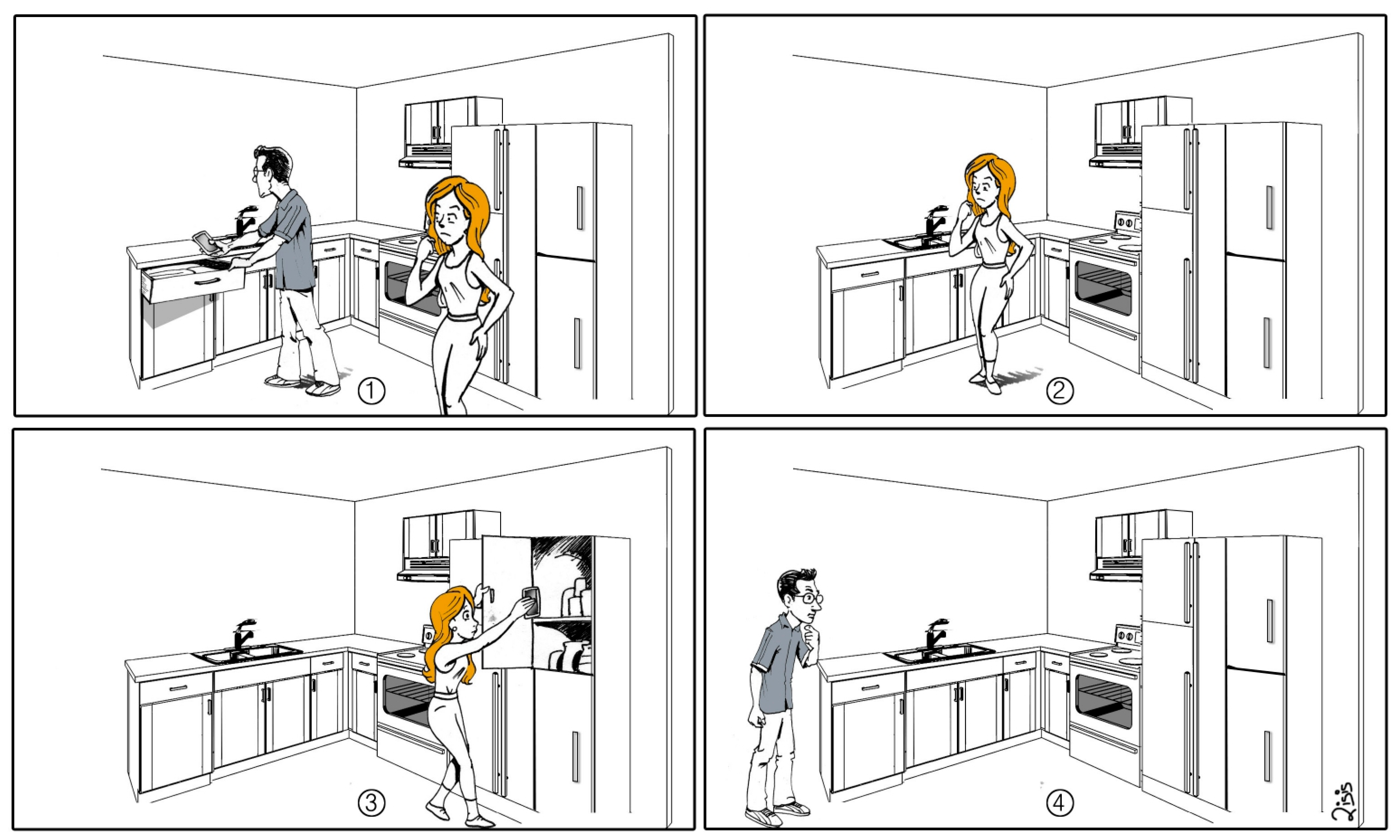
The theory of mind (ToM) scenario assesses the ability to recognize a specific situation [7]. The ToM component was based on “first-order false belief tests”, which are designed to assess the individual’s ability to infer that someone can have a (mistaken) belief that is different from their own. Alzheimer’s disease (AD) patients may have impairments in ToM which cannot be explained by general cognitive decline [32]. The ToM scenario has the form of a figure, which was designed de novo and is included in part D (see Appendix A). The TCAT is brief, requiring approximately 20 min for its administration, and is designed for practical use by non-specialists [7,24]. It includes the following information [7] (see the instrument in Appendix A):
- -
- Demographic data: Sex, age, years of education, and living arrangements.
- -
- Part A: Assessment of autobiographical memory, including questions about the patient’s family and important facts of his/her life, as well as episodic memory with free recall of the four products used in part C.
- -
- Part B: Documenting the patient’s behavior during the assessment. The Patient Health Questionnaire-9 (PHQ-9) [33,34] is administered as an exclusion criterion for patients with severe depressive symptoms. Part B is not included in the TCAT scoring.
- -
- Part C: Assessment of financial knowledge and free recall of the four products given in Part C (scored within of part A). The items of the TCAT in parts C and D were formulated de novo.
- -
- Part D: Assessment of intention and judgment, using vignette-based questions with hypothetical scenarios and a ToM question.
The results from the original research study on the TCAT [7] showed that it is a reliable, valid, and sensitive tool for the evaluation of TC in dementia. It predicts the opinion of the expert regarding the TC of a patient and shows satisfactory levels of sensitivity, specificity, and internal reliability, supporting its criterion-related validity.
A simplified scoring format with a maximum score of 42 (excluding six questions about siblings and children) maintains sensitivity and specificity comparable to the full 45-point version, allowing consistent scoring across participants regardless of the existence of siblings or children. The TCAT is effective for patients with mild to moderate dementia and shows satisfactory psychometric properties in individuals with low educational attainment (≤6 years of education).
Limitations of the TCAT are the following: It has not yet been tested in dementias other than Alzheimer disease dementia, so its validation in dementia cases is unknown. The items used in the part C are culturally specific items (Greek products), so they have yet to be adapted to other cultures. Furthermore, there is lack of testing in illiterate patients [7].
3.4. Other Specialized TC Instruments
Although the MMSE is not a specialized instrument, it is used in legal capacity assessments combined with other tools. The comparison of the TCAT with the MMSE showed a clear advantage of the TCAT in terms of both sensitivity and specificity [7], since it assesses patients’ executive functions and theory of mind which are not tested by other TC tools (described below), supporting the superior validity of the TCAT [6].
The FAIs, which are described above (Section 3.1), have been developed for the contemporaneous evaluation of legal capacity in dementia, including TC. However, the majority of FAIs still lack validation and standardization, limiting their adoption in forensic and clinical settings [1,35]. Bolognini et al. [35] describe three FAIs specialized for TC and applied to clinical population with dementia, namely the Testamentary Capacity Instrument (TCI) [36]; the Testament Definition Scale (TDS) [37]; and the TCAT [7]. They characterize the TCAT as a brief specialized neurocognitive-based FAI for the screening of cognitive functions relevant to TC in dementia. The TCAT is highlighted for assessing cognitive domains critical to TC, including social cognition, and is recommended alongside evaluation for comprehensive assessment [35].
The TDS is a brief, six-item rating scale for the evaluation of the ability to define “testament”, one specific component of TC. This cognitive ability relies on the repository of semantic–lexical and conceptual representations [35,37]. Limitations include partial coverage of TC, the potential bias of the consensus validity, its small and homogenous sample, and the lack of testing in non-demented controls [6,37].
The TCI is a structured, interview-based psychometric tool designed for forensic settings, categorizing individuals as capable, marginally capable, or incapable [38,39]. Limitations of the TCI include the small sample of cognitively intact older adults and AD patients, the fact that the tool is designed for forensic experts and involves a long interview, and the need for collateral information [39].
All three instruments (TDS, TCAT, TCI) have good psychometric properties, but the TDS only partially assesses TC while the TCI is designed for research use rather than clinical practice [6]. The TCAT could supplement the clinical assessment of TC, combined with a standardized examination of cognition [6]. Aravind et al., in their systematic review [6], conclude that while the TDS and TCI have psychometric value, the TCAT is the most practical and specialized instrument for clinical practice, offering rapid assessment of executive functions, social cognition, and TC- relevant cognitive domains as well as cutoff score. The methodological characteristics of each instrument can be found in the systematic review of Aravind et al., 2024 [6].
Table 1 below provides the basic characteristics of the three tools. (A more analytic table and complete review of their psychometric properties can be found in the systematic review of Aravind et al., 2024 [6]).
Table 1.
Specialized testamentary capacity (TC) instruments—basic characteristics.
3.5. Use of the TCAT in Research Studies
Bolognini et al. collected normative data on the TCAT and assessed its convergent validity with standardized cognitive tests and the capacity to define what a ‘testament’ is [35]. They examined 323 neurologically healthy adults of different ages and different educational levels, administering the TCAT along with the Beck Depression Inventory-II (BDI-II, [40]), the MoCA [10], the MMSE [9], the FAB [11] and the TDS [37]. For the Italian adaptation, culturally specific items were replaced with Italian ones (e.g., Greek feta cheese was replaced with parmesan). TCAT scores were influenced by gender, age, education, major depression, with positive correlation to TDS scores, supporting its convergent validity. The normative data in the Italian population highlight the use of the TCAT as a cognitive screening test in the neuropsychological evaluation of TC. Additionally, they propose its use as a complementary screening tool of global cognitive status, since it can provide professionals with a quick yet reliable evaluation of decision-making, social cognition, and financial capacity, which are strongly related to functional status and legal capacity, including TC [35].
Tsiakiri et al. examined TC in first-ever acute ischemic stroke, as well as its relation to demographic and clinical characteristics [41]. TCAT scores correlated positively with education and were largely independent of age or gender. Memory and attention emerged as independent determinants of TCAT scores. The study confirmed the diagnostic validity and clinical usefulness of the TCAT in stroke and, similar to the other studies described above, emphasized its advantage regarding the ToM scenario, the evaluation of executive functions, and its practical and standardized approach to TC evaluation. The authors highlight the instrument’s utility in predicting expert opinion and evaluating dynamic post-stroke TC recovery.
4. Conclusions
The assessment of TC requires collaboration between legal and medical professionals, as courts remain the final arbiters [1]. TC evaluation is complex even for non-demented older adults, and more challenging in dementia, given its situation- and task-specific nature. Key components include intention, judgment, and executive function.
The presence of dementia or psychiatric disorder should not automatically indicate a lack of TC. The neuropsychological instruments may support and strengthen both the clinical interview and the specialized forensic assessment improving reliability and identifying individuals requiring further evaluation [1,6,7,35].
The TCAT is a brief, validated, and psychometrically robust tool for screening TC in dementia. It does not rely on collateral financial information or special training, while it can predict expert opinion and guide referral for forensic assessment. Its unique evaluation of executive function and ToM further strengthens its clinical utility [7,35,41]. It has been proposed as a supplementary tool in the process of TC assessment in everyday clinical practice [6], and for the screening of cognitive status in general (regardless of TC) along with other cognitive tests [35]. The TCAT can also be useful for medical practitioners to consider it as a part of a comprehensive TC assessment [6]. However, in order for the TCAT to be recognized as an international tool for TC assessment in dementia, it should be validated and adapted in various cultures.
Future research should aim to develop a standalone instrument which would incorporate all the significant elements influencing TC, including social cognition, functional abilities of older adults without cognitive impairment, and applicability of the TCAT across different dementias, neurological conditions, psychiatric disorders, cultures, and literacy levels [1,7,35].
Author Contributions
Conceptualization, P.V. and S.G.P.; Methodology, P.V. and S.G.P.; Writing and original draft preparation, P.V.; Writing—revision and editing, P.V.; A.E. and S.G.P.; Supervision, A.D.; A.E. and S.G.P. All authors have read and agreed to the published version of the manuscript.
Funding
This research received no external funding.
Data Availability Statement
No new data were created or analyzed in this study. Data sharing is not applicable to this article.
Acknowledgments
This study did not receive any specific grants from funding agencies in the public, commercial, or not-for-profit sectors.
Conflicts of Interest
The authors declare no conflicts of interest.
Appendix A. The Testamentary Capacity Assessment Tool (TCAT) and the ToM Figure Included in Part D
- Testamentary Capacity Assessment Tool (TCAT)
- (A)
- MEMORY
| SCORE | Μax | |
| ORIENTATION TIME Date…………………………………………………………………… Day…………………………………………………………………….. Month…………………………………………………………………. Year……………………………………………………………………. PLACE Region…………..…………………………………………………….. City……………………………………………………………………. Floor…………………………………………………………………… Building………………………………………………………………. | …….. …….. | 4 4 |
| DATE of BIRTH Date…………………………………………………………………….. Month………………………………………………………………….. Year…………………………………………………………………….. | …….. | 3 |
| ARE YOU MARRIED If yes, when did you marry? Year………….………………………………………………………….. If no, when did you live on your own for the first time? Year……………………………………………………………………... | …….. | 1 |
| OCCUPATION What is your occupation? ..…………………………………………… Last job………………………………………………………………….. Year of retirement……………………………………………………... If woman-not working/household housewife, married What is your husband’s job? ………………………………………. His last job …………………………………………………………. Age/Year of retirement…………….……………………………….. If woman-household, unmarried Which is your father’s job?…………………………………………... His last job……………………….…………………………………… His age/Year of retirement ……………….…………………………. | …….. | 3 |
| DO YOU HAVE CHILDREN If yes, How many………………………………………………………………. Which are their names………………………………………………… What is their occupation (education/job)…………………………….. (If no, no scoring) | ……. | 3 |
| DO YOU HAVE BROTHERS/SISTERS WHO ARE ALIVE If yes, How many………………………………………………………………. Which are their names………………………………………………… What is their occupation (education/job) …………………………….. (If no, no scoring) | ……. | 3 |
| RECALL (Ιnsert score from the question in the end of Part C) Repeat the name of the 4 products of which you told me the cost……… | ……. | 4 |
- (B)
- EXISTENCE OF PSYCHOPATHOLOGY (YES OR NO)
During the interview, whether the patient collaborates with the examiner, has explosive or aggressive behavior, has a behavior of imitation, has delusions or/and uses abusive expressions. Administrating the PHQ-9.
- Not scoring it within the TCAT
- (C)
- PERCEPTION OF FINANCIAL PARAMETRES
| SCORE | Max | |
| Do you live in your own house or do you rent one? …………………… | …… | 1 |
Which factors define the value of a house?
| …… | 2 |
| Which of the following is more expensive: One liter of milk or a small bottle of pure alcohol?………………………………………………………. | …… | 1 |
| What is the basic salary?……………............................................................ | ....... | 1 |
| What is the fixed bimonthly cost of a telephone bill? ………………… | …… | 1 |
| Which is more expensive? One kg of feta cheese or one kg of oranges?………................................................................................................ | …… | 1 |
| What is the cost of a new, small car?………………………………………. | …… | 1 |
| What is the cost of the following 4 everyday life products: a newspaper (with no extras)?...............…………………………………… one kg of bread?........………………………………………………………… one kg of feta cheese?.……………………………………………………….. one kg of oranges?.............…………………………………………………… | …… | 4 |
Suppose that you went to the funeral of your beloved uncle and you wished to donate an amount of money dedicated to his memory. A friend of yours proposes a new (unknown to you) charity organization. What do you do?
| …… ……1 ……0 | 1 |
Repeat the (name of the) 4 (everyday life) products for which you told me their prices …………………………………………………………………………………………………
- (D)
- INTENTION/JUDGEMENT
| SCORE | Max | |
Suppose that a friend of yours with a severe health problem confides in you that he/she has decided to leave his/her house to the person taking care of him/her during the last 6 months. Your friend has a child who visits him/her often. What do you advise him/her to do?
| …… ……1 ……0 | 1 |
Suppose that you have a piece of land/a field which you do not cultivate. One day, your nephew/niece asks you to give it to him/her in order to exploit it. What do you do?
| …… ……2 ……1 ……0 | 2 |
You arrive home and you realize that you do not have your keys. What do you do?
| .…… ……2 ……1 ……0 | 2 |
Suppose that you have an olive grove and you have recently arranged with a person to take care of it. In return, you will give him half of the quantity of olive oil that is produced. He gives you 10 oil containers and tells you that this is the half of the production. What do you do?
| …… ……1 ……0 | 1 |
Theory of Mind figure (see below) Cartoon showing a man entering a kitchen, putting a box into a cupboard and then leaving. While absent, his wife moves the box into a closet and then she leaves. When coming back, where is the man going to look for his box?
| .…… …...1 ……0 | 1 |
Suppose that you have a favorite gold bracelet, a gift from your husband (if a woman)/gold watch, a gift from your wife (if a man). One day when you are wearing it, your friend admires it and asks you to give it to her/him as a gift. What do you do?
| …… ……1 ……0 | 1 |
Assume that you are thinking of putting your money/valuable assets into a safety deposit box in a bank to protect it from thieves. However, your bank has none available. A friend of yours proposes to you to put your money/assets into his/her safety deposit box. What do you do?
| …… ……1 ……0 | 1 |
Suppose that you go every day at work wearing a shirt (if a man)/a dress (if a woman). However, one morning you realize that all your shirts/dresses are dirty. What do you do?
| .…… ……1 ……0 | 1 |
References
- Voskou, P.; Douzenis, A.; Economou, A.; Papageorgiou, S.G. Testamentary Capacity Assessment: Legal, medical and neuropsychological issues. J. Geriatr. Psychiatry Neurol. 2018, 31, 3–12. [Google Scholar]
- Cockburn, J.S. (Ed.) Crime in England; Taylor & Francis: London, UK, 1977; pp. 1550–1800. [Google Scholar]
- Douzenis, A.; Lykouras, E. (Eds.) Psychiatrodikastiki; Medical Editions Pasxalidis: Athens, Greece, 2008. [Google Scholar]
- Shulman, K.; Cohen, C.; Kirsh, F.; Hull, I.; Champine, P. Assessment of testamentary capacity and vulnerability to undue influence. Am. J. Psychiatry 2007, 164, 722–727. [Google Scholar] [CrossRef]
- Jacoby, R.; Steer, P. How to assess capacity to make a will. BMJ 2007, 335, 155–157. [Google Scholar] [CrossRef] [Scilit]
- Aravind, H.; Taylor, M.; Gill, N. Evaluation of testamentary capacity: A systematic review. Int. J. Law Psychiatry 2024, 93, 101969. [Google Scholar] [CrossRef] [Scilit]
- Papageorgiou, S.G.; Voskou, P.; Economou, A.; Beratis, I.; Douzenis, A. Testamentary Capacity Assessment Tool (TCAT): A Brief Instrument for Patients with Dementia. J. Alzheimers Dis. 2018, 61, 985–994. [Google Scholar] [CrossRef] [Scilit]
- Moberg, P.; Rick, J. Decision-making capacity and competency in the elderly: A clinical and neuropsychological perspective. NeuroRehabilitation 2008, 23, 403–413. [Google Scholar] [CrossRef] [Scilit] [PubMed]
- Folstein, M.; Folstein, S.; McHugh, P. Mini-mental state: A practical method for grading the cognitive state of patients for the clinician. J. Psychiatr. Res. 1975, 12, 189–198. [Google Scholar] [CrossRef] [Scilit] [PubMed]
- Nasreddine, Z.S.; Phillips, N.A.; Bédirian, V.; Charbonneau, S.; Whitehead, V.; Collin, I.; Cummings, J.L.; Chertkow, H. The Montreal Cognitive Assessment, MoCA: A brief screening tool for mild cognitive impairment. J. Am. Geriatr. Soc. 2005, 53, 695–699. [Google Scholar] [CrossRef] [Scilit] [PubMed]
- Dubois, B.; Slachevsky, A.; Litvan, I.; Pillon, B. The FAB: A Frontal Assessment Battery at bedside. Neurology 2000, 55, 1621–1626. [Google Scholar] [CrossRef] [Scilit]
- Mioshi, E.; Dawson, K.; Mitchell, J.; Arnoid, R.; Hodges, J.R. The Addenbrooke’s Cognitive Examination Revised (ACE-R): A brief cognitive test battery for dementia screening. Int. J. Geriatr. Psychiatry 2006, 21, 1078–1085. [Google Scholar] [CrossRef] [Scilit]
- Edelstein, B. Challenges in the assessment of decision-making capacity. J. Aging Stud. 2000, 14, 423–437. [Google Scholar] [CrossRef] [Scilit]
- Marson, D.C.; Sawrie, S.M.; Snyder, S.; Mcinturff, B.; Stalvey, T.; Boothe, A.; Aldridge, T.; Chatterjee, A.; Harrell, L.E. Assessing financial capacity in patients with Alzheimer disease: A conceptual model and prototype instrument. Arch. Neurol. 2000, 57, 877–884. [Google Scholar] [CrossRef] [Scilit]
- Marson, D.C. Loss of competency in dementia: Conceptual and empirical approaches. Aging Neuropsychol. Cogn. 2000, 8, 164–181. [Google Scholar] [CrossRef] [Scilit]
- Sousa, L.; Simões, M.; Firmino, H.; Peisah, C. Financial and testamentary capacity evaluations: Procedures and assessment instruments underneath a functional approach. Int. Psychogeriatr. 2014, 26, 217–228. [Google Scholar] [CrossRef] [Scilit]
- Spar, J.; Garb, A. Assessing competency to make a will. Am. J. Psychiatr. 1992, 149, 169–174. [Google Scholar]
- American Bar Association Commission on Law and Aging; American Psychological Association; National College of Probate Judges. Handbook of Judges: Judicial Determination of Capacity of Older Adults in Guardianship Proceedings; American Bar Association: Chicago, IL, USA; American Psychological Association: Washington, DC, USA, 2006. [Google Scholar]
- Amnesty International Ireland. Decision-Making Capacity in Mental Health: Exploratory Research into the Views of People with Personal Experience; Amnesty International Ireland: Dublin, Ireland, 2009; pp. 13–16. [Google Scholar]
- Peisah, C.; Finkel, K.; Shulman, P.; Melding, P.; Luxenberg, J.; Heinik, J.; Jacoby, R.; Reisberg, B.; Stoppe, G.; Barker, A.; et al. The wills of older people: Risk factors for undue influence. Int. Psychogeriatr. 2009, 21, 7–15. [Google Scholar] [CrossRef] [Scilit]
- Masterman, D.; Cummings, J. Frontal-subcortical circuits: The anatomic basis of executive, social and motivated behaviors. J. Psychopharmacol. 1997, 11, 107–114. [Google Scholar] [CrossRef] [Scilit]
- Shulman, K.; Cohen, C.A.; Hull, I. Psychiatric issues in retrospective challenges of testamentary capacity. Int. J. Geriatr. Psychiatry 2005, 20, 63–69. [Google Scholar] [CrossRef] [Scilit]
- Schumand, B.; Gouwenberg, B.; Smitt, J.; Jonker, C. Assessment of mental competency in community-dwelling elderly. Alzheimer Dis. Assoc. Disord. 1999, 13, 80–97. [Google Scholar] [CrossRef] [Scilit]
- Vellinga, A.; Johannes, H.S.; van Leeuwen, E.; van Tilburg, W.; Jonker, C. Instruments to assess decision-making capacity: An overview. Int. Psychogeriatr. 2004, 16, 397–419. [Google Scholar] [CrossRef] [Scilit]
- Defanti, C.A.; Tiezzi, A.; Gasparini, M.; Gasperini, M.; Congedo, M.; Tiraboschi, P.; Tarquini, D.; Pucci, E.; Porteri, C.; Bonito, V.; et al. Ethical questions in the treatment of subjects with dementia. Part I. Respecting autonomy: Awareness, competence and behavioural disorders. Neurol. Sci. 2007, 28, 216–231. [Google Scholar] [CrossRef] [Scilit]
- Lai, J.; Karlawish, J. Assessing the capacity to make everyday decisions: A guide for clinicians and an agenda for future research. Am. J. Geriatr. Psychiatry 2007, 15, 101–111. [Google Scholar] [CrossRef] [Scilit]
- Roof, J. Testamentary capacity and guardianship assessments. Psychiatr. Clin. N. Am. 2012, 35, 915–919. [Google Scholar] [CrossRef] [Scilit]
- Pinsker, D.; Pachana, N.; Wilson, J.; Wilson, J.; Tilse, C.; Byrne, G. Financial capacity in older adults: A review of clinical assessment approaches and considerations. Clin. Gerontol. 2010, 33, 332–346. [Google Scholar] [CrossRef] [Scilit]
- Shulman, K.; Hull, I.; Cohen, C. Testamentary capacity and suicide: An overview of legal and psychiatric issues. Int. J. Law Psychiatry 2003, 26, 403–415. [Google Scholar] [CrossRef] [Scilit]
- Okonkwo, O.C.; Griffith, H.; Belue, K.; Lanza, S.; Zamrini, E.Y.; Harrell, L.E.; Brockington, J.C.; Clark, D.; Raman, R.; Marson, D.C. Cognitive models of medical decision-making capacity in patients with mild cognitive impairment. J. Int. Neuropsych. Soc. 2008, 14, 297–308. [Google Scholar] [CrossRef] [Scilit]
- Wadley, V.; Harrell, L.; Marson, D. Self- and informant report of financial abilities in patients with Alzheimer’s disease: Reliable and valid? J. Am. Geriatr. Soc. 2003, 51, 1621–1626. [Google Scholar] [CrossRef] [Scilit]
- Poveda, B.; Osborne-Crowley, K.; Laidlaw, K.; Macleod, F.; Power, K. Social cognition, behavior and relationship continuity in dementia of the Alzheimer type. Brain Impair. 2017, 8, 175–187. [Google Scholar] [CrossRef] [Scilit]
- Kroenke, K.; Spitzer, R.; Williams, W. The PHQ-9: Validity of a brief depression severity measure. JGIM 2001, 16, 606–616. [Google Scholar] [CrossRef] [Scilit]
- Kroenke, K.; Spitzer, R. The PHQ-9: A new depression and diagnostic severity measure. Psychiatr. Ann. 2002, 32, 509–521. [Google Scholar] [CrossRef] [Scilit]
- Bolognini, N.; Gramegna, C.; Esposito, A.; Aiello, E.; Difonzo, T.; Zago, S. The Testamentary Capacity Assessment Tool (TCAT): Validation and normative data. Neurol. Sci. 2022, 43, 2831–2838. [Google Scholar] [CrossRef] [Scilit]
- Marson, D.C.; Huthwaite, J.S.; Herbert, K. Testamentary capacity and undue influence in the elderly: A jurisprudent therapy perspective. Law. Psychol. Rev. 2004, 28, 71. [Google Scholar]
- Heinik, J.; Werner, P.; Lin, R. How do cognitively impaired elderly patients define “testament”: Reliability and validity of the “testament” definition scale. Isr. J. Psychiatry 1999, 36, 23–28. [Google Scholar]
- Gersteneckerv, A.; Martin, R.C.; Hebert, K.; Triebel, K.; Marson, D. Cognitive correlates of impaired testamentary capacity in Alzheimer’s dementia. Arch. Clin. Neuropsychol. 2022, 37, 1148–1157. [Google Scholar] [CrossRef] [Scilit]
- Martin, R.C.; Gerstenecker, A.; Hebert, K.; Triebel, K.; Marson, D. Assessment of testamentary capacity in older adults: Description and initial validation of a standardized interview instrument. Arch. Clin. Neuropsychol. 2022, 37, 1133–1147. [Google Scholar] [CrossRef] [Scilit]
- Beck, A.T.; Steer, R.A.; Brown, G.K. Manual for the Beck Depression Inventory-II; Psychological Corporation: San Antonio, TX, USA, 1996. [Google Scholar]
- Tsiakiri, A.; Trypsiani, I.; Christidi, F.; Trypsianis, G.; Bakirtzis, C.; Vlotinou, P.; Tsiptsios, D.; Voskou, P.; Papageorgiou, S.G.; Aggelousis, N.; et al. The testamentary capacity in acute stroke. A cross-sectional study. Appl. Neuropsychol. Adult. 2026, 33, 13–23. [Google Scholar] [CrossRef] [Scilit]

Disclaimer/Publisher’s Note: The statements, opinions and data contained in all publications are solely those of the individual author(s) and contributor(s) and not of MDPI and/or the editor(s). MDPI and/or the editor(s) disclaim responsibility for any injury to people or property resulting from any ideas, methods, instructions or products referred to in the content. |
© 2026 by the authors. Licensee MDPI, Basel, Switzerland. This article is an open access article distributed under the terms and conditions of the Creative Commons Attribution (CC BY) license.