


Abstract
Project-Based Learning (PBL) is positioned as a pedagogical approach to support authentic, discipline-rich STEM curricula. However, much of the research has focused on the effectiveness of researcher-created curricula rather than teacher-created curricula. In this manuscript, we seek to illuminate the ways in which teachers create discipline-rich STEM projects. Drawing on the theory of the curriculum enactment process, we analyzed curricular artifacts from our teaching practices that we created as secondary STEM teachers who designed and enacted project-based learning. From the analysis, we propose a framework grounded in disciplinary standards to support teachers in creating discipline-rich STEM projects by attending to (1) the Elements of PBL; (2) Content Storyline; (3) Practice Pathway.
1. Introduction and Presentation of the Problem
To prepare students for a dynamic future, STEM education demands a bold and ambitious vision for math and science education, where all students build deep conceptual understandings and skills in scientific and mathematical thinking through their engagement in rich performance tasks [1,2]. Enacting this vision requires shifts in both curriculum materials and instructional practice, both “what students learn” and “how students learn”. Moreover, deep alignment to these standards involves not only “covering” all the individual components, but also designing learning experiences and tasks that weave components together for coherent and deep learning.
Project-Based Learning (PBL) is a pedagogical approach “in which students learn by actively engaging in real-world and personally meaningful projects” [3] that shows promise for powerfully engaging students in complex work [4]. This approach is seen as a leading instructional model for enacting the vision of NGSS and has been shown to narrow the gap in achievement for children from backgrounds underrepresented in the STEM fields [5,6]. Moreover, research on PBL in math and science suggests that this approach can support students’ content knowledge acquisition, process skill development, ability to apply skills and knowledge in new situations, and ability to draw connections between concepts—all goals underlying the design of new math and science standards [7].
Despite great interest in PBL, science and math educators struggle to utilize PBL in their classrooms, particularly for driving the learning of core disciplinary standards [8,9]. Additionally, previous research has called for increased support for STEM teachers who use a PBL approach to design projects towards disciplinary learning goals [9,10]. As four current and former secondary-school STEM teachers with extensive PBL experience across various contexts in the United States, we have grappled with how projects can be designed to support robust disciplinary learning goals. Across our experiences as classroom teachers, we each have found PBL to be an instructional method that allowed us to engage students in complex tasks and foster profound conceptual understanding and skills in scientific and mathematical thinking among all students. Individually, we each have taught from 5 to 10 years in PBL environments and experienced significant professional learning related to the pedagogical approach. However, each of us found the professional support to engage in PBL in math and science not meeting our needs in relation to unique demands facing STEM teachers. We came together through our shared participation in the Removed for Peer Review Fellowship program. In the spring of 2018, we began our collaborative work around our shared experiences of PBL as a potent pedagogical strategy that provides students with the access to the power of math and science. Our goal was to find a way to support teachers in developing discipline-rich projects for their STEM courses.
Drawing on various bodies of literature related to PBL and the STEM curriculum, in this article, we put forth a conceptual framework for discipline-rich PBL projects in STEM education. We then draw on the theory of the curriculum enactment process [11] to reflect on and refine our framework by analyzing the curriculum we created as PK-12 STEM teachers who employed project-based learning. Taken together, we seek to answer the question: what are the key features of teacher-created, discipline-rich STEM projects?
2. Review of the Literature Related to Discipline-Rich Projects
As we conceptualized the ways in which teachers plan discipline-rich STEM PBL projects, we drew on three different bodies of literature: teaching content standards through content storylines, student learning of disciplinary practices, and PBL in STEM classrooms.
2.1. Teaching Content Standards through Content Storylines
The design of content storylines is an approach to designing learning sequences where the disciplinary content ideas in a lesson or unit are “sequenced and linked to one another and to lesson activities to help students construct a coherent “story” that makes sense to them” [12]. In contemporary science education, storylines represent “coherent units in which engagement in science practices is driven by questions arising from phenomena, and teachers and students work as partners in constructing and managing the trajectory of the resulting investigations and sensemaking” [13]. For example, at the start of a unit, students might encounter a compelling phenomenon or problem that they iteratively work to make sense of and/or solve. Across the sequence of lessons in the unit, teachers elicit and leverage students’ questions about what they need to know next to motivate students’ thinking across the unit and to promote conceptual coherence from the students’ perspective.
While content storylines are not a new concept in curriculum development [11,14,15,16,17,18], this approach has garnered renewed interest as part of current reform efforts in science education, such as the shift towards the Next Generation Science Standards (NGSS), which emphasizes student sensemaking about phenomena and problems to drive deeper understandings of science ideas [2,18]. In particular, scholars have argued that designing storylines is supportive to these science education reform efforts when combined with project-based learning [19,20].
Although the inclusion of content storylines is most prominent in science education, Dietiker has been conceptualizing how mathematical concepts build to create a mathematical storyline [15,21]. As in science, the selection and sequencing of the progression of mathematical ideas that students develop across a unit should similarly promote coherence, a characteristic that previous research suggests is especially critical for learning in mathematics [22,23,24]. In project-based STEM learning, the content storyline describes the logical, coherent sequence of mathematical and/or scientific ideas that students are intended to build and use across the project, articulated as a narrative within the project context. Students’ progress on this sequence of ideas is driven by students’ questions and decisions across the project.
In our framework, we conceptualize the Content Storyline as a tool that teachers develop during the project design process to help themselves design for conceptual coherence within their projects. The Content Storyline anchors teachers’ decisions about the selection and sequencing of project activities to ensure that their project builds towards the intended disciplinary content understandings in a way that is driven by students’ engagement with the project context.
2.2. Disciplinary Practice Standards
Current reform efforts in both science and math education emphasize the importance of students developing skills and knowledge that are important to the practice of the discipline [1,2]. Such practice-oriented standards are intended to emphasize ways that students can participate in scientific, engineering, and mathematical activities and mirror the ways that scientific, engineering, and mathematical knowledge is constructed and used in the broader world [2,25,26] (see Table 1).
Table 1.
Disciplinary practices for science and mathematics.
The term “practices” is used instead of “skills” to emphasize that the development of these competencies requires the simultaneous coordination of both disciplinary knowledge and skill [2,25]. As with disciplinary content knowledge, students need scaffolded opportunities to develop the disciplinary knowledge and skills targeted by these practices as they build their competency with these practices over time [26,27]. Moreover, these practices are not intended to be rote process skills to be taught in isolation, but rather, students’ engagement in these disciplinary practices should be embedded into meaningful contexts, such as making sense of a phenomenon or designing solutions to problems [27]. Thus, the context-situated nature of project-based learning can provide robust opportunities for students to engage in disciplinary practices in STEM.
In our framework, we conceptualize disciplinary practices as the ways that people think and act in scientific and mathematical manner when making or doing things in the broader world—both within and beyond formal science and mathematical contexts. When teachers identify the scientific and mathematical ways that people think and act that are authentically elicited by students’ work towards the End Product, the overall project can be designed to intentionally develop students’ capacity with a key disciplinary practice. In order to highlight the need for students to develop their use of a disciplinary practice over time, we introduce the concept of a Practice Pathway—a component of the curriculum design where teachers select a disciplinary practice or practices that align with authentic task demands of the end product and then sequence opportunities for students to build their capacity with the practice across the project. The Practice Pathway is a conceptual tool to support teachers to sequence and design multiple opportunities for students to iteratively build their use of key disciplinary practice(s) across the flow of project activities.
2.3. Project-Based Learning in STEM Classrooms
PBL is typically characterized as an instructional approach in which the teacher provides a well-defined outcome, within an authentic, real-world context, and guides students as they draw on various disciplines to achieve the desired end goal or product [28]. Other necessary components of PBL include students’ engagement in design work, opportunities for formative assessment and revision, student inquiry of problems they define, and collaboration with peers [29].
Research on PBL in math and science suggests that this approach can support students’ content knowledge acquisition, process skill development, ability to apply skills and knowledge in new situations, and ability to draw connections between concepts —all goals underlying the design of current math and science standards [7]. A meta-analysis of effective strategies for integrated STEM education suggests that using PBL positively impacts student learning and interest in STEM [30]. Recently, studies of PBL curricula used randomized control trials to test the efficacy of a rigorous PBL curriculum and found that students in PBL classrooms outperformed students in control classrooms on a variety of measures [4]. Additionally, Pupik Dean and colleagues examined teachers’ practices in enacting PBL and found that teachers had four goals in their enactment: (1) subject area learning; (2) project authenticity; (3) feedback, reflection, and revision; (4) agency in learning communities [31].
As Pupik Dean and colleagues discussed, there is some ambiguity around the criteria for what makes a high-quality PBL environment [31]. This ambiguity makes for a wide variety in what are considered essential elements of PBL projects. For this paper, we draw on DiMaria and colleagues to describe the essential elements as follows: Entry Events, Knows and Need to Knows, a Focus Statement, Sustained Inquiry, Checkpoints, Scaffolding and Assessment, Student Voice and Choice, Rubrics, and End Product and Presentation [32].
In PBL classrooms, projects often begin with a Project Launch, which incorporates the Entry Event, Knows and Need to Knows, and the Focus Statement [33]. Entry events are designed to engage students in the project from the beginning [34]. These can be real-world scenarios, provocative questions, multimedia presentations, or guest speakers that pique students’ interest and motivate them to explore the project’s topic. Often, during the Entry Event, the project’s rubric is shared with the students. Providing the rubric during the Project Launch not only provides clear expectations and guidelines for the students [33,35], but also is a way to encourage the students to ask about the content standards during the Knows and Need to Knows routine. Knows and Need to Knows are a routine used to organize students’ existing knowledge (Knows) and identify what they need to learn (Need to Knows) in order to complete the project successfully. This helps guide the students’ learning throughout the project. Finally, during the Project Launch, a Focus Statement is shared with the students. The Focus Statement succinctly connects to the purpose, the Content Storyline, and the Practice Pathway of the project. It provides clarity and direction for both students and teachers, guiding them throughout the project’s duration [36].
Across the middle of projects, students engage in a variety of activities which support students to engage in sustained inquiry over the period of the project. Sustained Inquiry includes students “asking questions, finding and using resources and other learning experiences to help develop answers to those questions, then ask deeper questions—and the process repeats” [37]. To support students in this process, teachers create a series of scaffolding activities to support students throughout the project. Some of these scaffolding activities mirror what may have already been done in traditional classrooms (e.g., a favorite lab or math exploration). However, other activities may be classified as Checkpoints. Checkpoints are predetermined moments throughout the project that are necessary to complete the End Product [38]. Checkpoints are critical opportunities for students to reflect on their progress, receive feedback, and make necessary adjustments.
PBL projects end with a cumulative End Product and public Presentation. Krajcik and Shin discuss how meaningful End Products and Presentations provide students with opportunities to demonstrate their learning and communicate their ideas effectively while increasing their motivation for engaging with the disciplinary content [39]. The End Product is an artifact that is the culmination of the students’ work in the project, showcasing their learning and understanding of the topic. These artifacts could be a research paper, a presentation, a multimedia project, a performance, or any other form of output that demonstrates mastery of the project’s objectives. Presentations provide students with the opportunity to share their knowledge with others, receive feedback, and reflect on their learning journey.
In our framework, we conceptualize Elements of PBL as the key aspects of a PBL project that differentiate a project from a more traditional classroom “dessert project” such that engagement in the project drives student learning rather than merely following a learning sequence as a retrospective application [40]. As described above, these elements are spiraled throughout different phases of the project to ensure that students are having authentic touchpoints back to the context.
2.4. Towards an Understanding of Discipline-Rich PBL
A common misconception is that the Elements of PBL are removed from the standards being taught in the classroom; however, that is not the case. Each of the elements are driven by and selected from the standards. For instance, the End Product is selected based on what is authentic for that specific set of standards. If the standards are about human impacts on earth systems, global climate change, and weather and climate, it may not make sense to have students create scale models. However, it would make sense to develop a project that has students researching climate change impacts and using that understanding to create an awareness campaign for the impact on local communities. Additionally, these ideas are not separate from the disciplinary practice standards. For instance, given the early example, it would make sense to select “constructing explanations and designing solutions” as the practice standard, given the project context of an awareness campaign around the impacts of climate change [2].
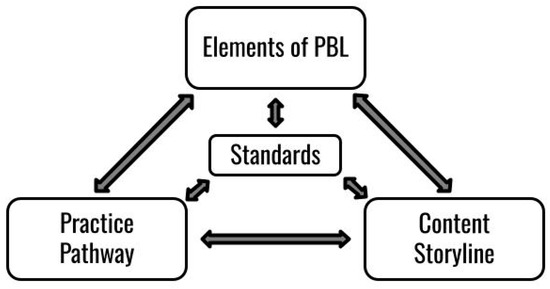
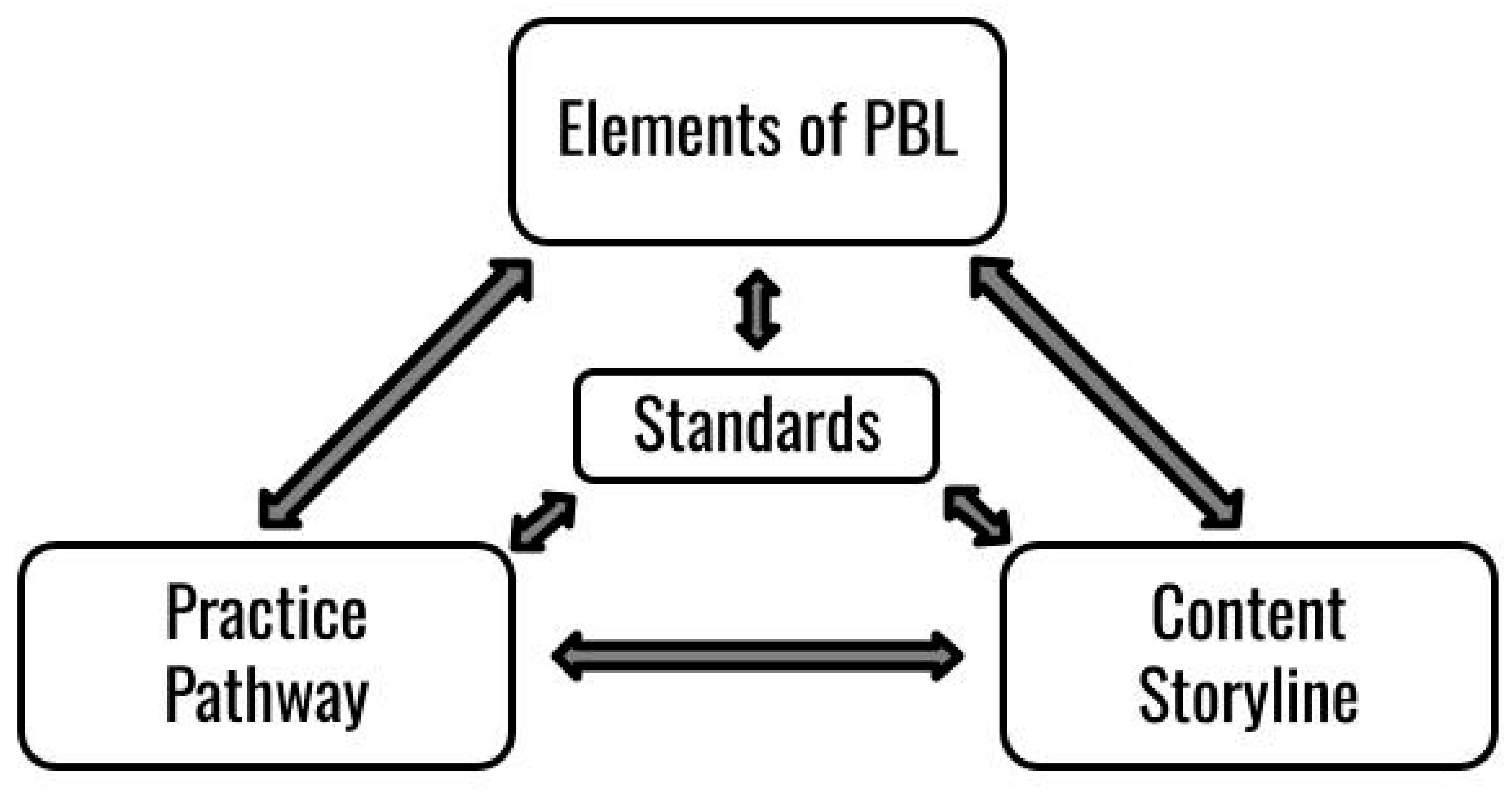
In this paper, we argue teachers need to balance all three aspects (disciplinary practice standards, content standards, and elements of PBL) evenly to create a PBL project that is discipline-rich. To do this, we propose the following PBL Project Planning Pyramid (Figure 1) that explicitly attends to (1) Elements of PBL; (2) Content Storyline; (3) Practice Pathway.
Figure 1.
The Project Planning Pyramid: A Framework to Ensure Discipline-Rich STEM Projects.
Grounded in disciplinary standards, this framework draws attention to the balance and coherence of the disciplinary content and practices threaded throughout the elements of the project. Together, the integration of disciplinary content and practices offers a discipline-rich learning experience. PBL elements give motivation and meaning to this discipline-rich experience. Together, these domains create a discipline-rich PBL project.
3. Context of Framework Refinement
In order to refine our understanding of discipline-rich STEM projects, we drew on the theory of the curriculum enactment process [11] to analyze the curriculum we created as PK-12 STEM teachers who employed project-based learning to answer the question: what are the features of teacher-created discipline-rich STEM projects?
3.1. Theory of the Curriculum Enactment Process
We drew upon the theory of the curriculum enactment process [11] to inform the approach we took to investigate the features of teacher-created discipline-rich STEM projects. The curriculum enactment process is informed by inputs that are within, and outside of, a teacher’s control. Our study is situated within the operational curriculum portion of the curriculum enactment process. Remillard and Heck described the operational curriculum as “the teacher-intended curriculum, the curriculum that is actually enacted with students, and student outcomes” [11]. An enacted curriculum is the ways students and teachers interact with content and tasks in the classroom. Remillard and Heck argued that an enacted curriculum cannot be scripted, because teachers must respond in the moment to student needs. Additionally, a teacher-intended curriculum is created as teachers transform elements of the official curriculum and guidelines from instructional materials into the curriculum that is experienced by students. In this paper, we conceptualize this transformation as happening when teachers engage in curriculum design to develop PBL projects for their classrooms.
Similar to Orr and Bieda [41], we assert that while the teacher-intended curriculum (e.g., teacher-created projects) evolves during the curriculum enactment process, teachers make intentional moves in response to students in order to support the continued development of their understanding. In this paper, we focus on the curricular materials created by teachers to understand what makes discipline-rich projects and to analyze the teacher-intended curriculum. Remillard and Heck remind the reader that the study of the teacher-intended curriculum is often difficult to access, as “it exists in its most detailed state in the teacher’s mind” [11]. Thus, in this paper, we rely on the physical artifacts of our created projects to analyze the teacher-intended curriculum.
3.2. Project Selection
As we sought to determine what makes a strong STEM PBL project, we took a deep dive into our own teacher-created projects from our secondary STEM classrooms. We each brought projects that we found fell short of being a discipline-rich learning experience for our students. We also brought projects that we believed were discipline-rich experiences for our students. In total, there were 20 projects spanning a course content (Algebra I, Geometry, Integrated Physics/Algebra I, Calculus, Biology, and Environmental Science).
3.3. Examination of the Projects
Since our goal was to refine our understanding of discipline-rich STEM projects, we drew on our conceptualization that discipline-rich STEM projects attend to the Content Storyline, Practice Pathway, and the Elements of PBL. To do this, we drew on Lather’s concept of praxis-oriented research [42]. This approach allows for “the interactive, reciprocal shaping of theory and practice”, which “requires a reciprocal relationship between data and theory” [42] (p. 258). According to Lather, this relationship is where the data are viewed through the lens of the literature, but “keeps a particular framework from becoming the container into which the data must be poured” [42] (p. 267). To do this, we iteratively viewed the data and the framework through the lens of the other to build our understanding of both [43]. Given the conceptual nature of this article, the goal was not to provide a detailed analysis of how each project did or did not meet the ideas of discipline-rich projects. Instead, the goal was to highlight the ways some projects fell short, and others provided discipline-rich opportunities for students. In the following sections, we will elaborate and provide illustrative examples.
4. Types of Projects
As we analyzed the selected projects, we identified several ways that these projects, the intended curriculum, diverted from or achieved the goal of reflecting discipline-rich project experiences. In this section, we share the three ways projects fell short and close with an example of a project that engaged all the aspects of discipline-rich projects. We use “broken” images of the Project Planning Pyramid to illustrate several ways that projects can fail when the components of this framework are not attended to in a balanced way across the design of the project.
4.1. Superficial Project Due to Weak Elements of PBL
The Farm Project was an AP Environmental Science project that asked students to justify the best farming practices to use to grow crops for a selected client. Students were assigned the role of deciding which farming practices to use on a fictional farm. Initially, students learned about various agricultural practices. Then, students applied what they learned to design a farming plan that best met the needs and values of one of six predetermined potential clients for their farm (e.g., a large chain grocery store, a local farmer’s market). At the end of the project, students presented and justified their choices to the class.
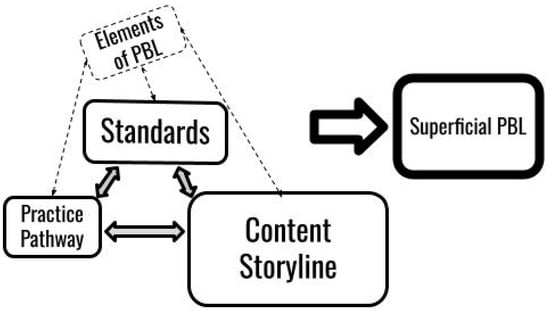
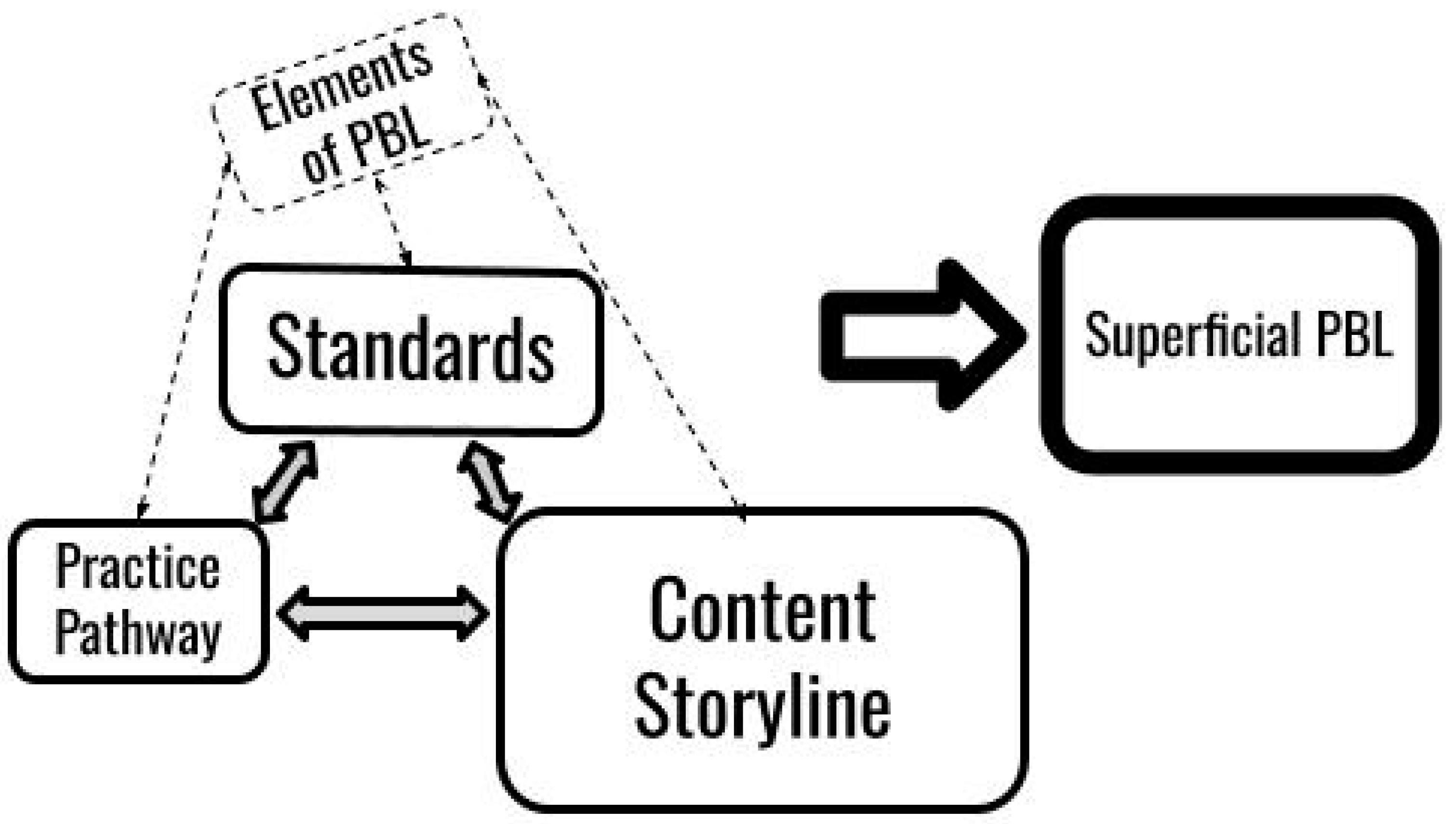
As represented in Figure 2, this project primarily connected content standards and the Content Storyline, as common in more traditional, didactic teaching methods. To some extent, the project moved beyond a singular focus on content by also engaging students in disciplinary practices. However, this largely traditional unit lacked key elements of project-based learning, such as an authentic project context that could support Sustained Inquiry, meaningful Student Voice and Choice, or an authentic End Product. The dotted lines and position of the Elements of PBL in this figure represent the superficial integration of this aspect of the Project Planning Pyramid.
Figure 2.
Superficial project due to weak Elements of PBL. This “broken” Project Planning Pyramid illustrates a project with an imbalanced emphasis on the Content Storyline and content-related standards and limited attention to the Elements of PBL.
The context of this project required students to apply both disciplinary content knowledge and practices to meet the task demands. However, while The Farm Project contained some surface elements of project-based learning, overall, this project failed to embody discipline-rich PBL due to its weak integration of the Elements of PBL. Students demonstrated limited engagement and motivation during the project due to its inauthentic tasks and lack of open-endedness. During the first two weeks of the unit, students wondered aloud about when the project was going to start, as the unit was sequenced to frontload content learning about agricultural methods prior to engaging with the farm design task. After students selected their clients from the pre-set client options, they described feeling as though there was a single “right answer” that they could reasonably justify for each client. Thus, the project context was not designed to drive students’ need to know about the intended content learning, nor did the project offer students opportunities to make meaningful choices as they navigated open-ended challenges. Instead, students seemed to experience the unit as a drawn-out short-answer question with predetermined correct answers. This superficial engagement with the Elements of PBL in the project could have been rectified through adjusting the role that students took on to be more authentic to real-world contexts where the intended content knowledge would be used to inform open-ended decisions. For instance, students could take on the role of advising the director of a farmers’ market tasked with considering the impacts of various farming practices on social and ecological systems to recommend vendor requirements that reflect the needs and goals of their community.
4.2. Gaps in Project Content through a Weak Content Storyline
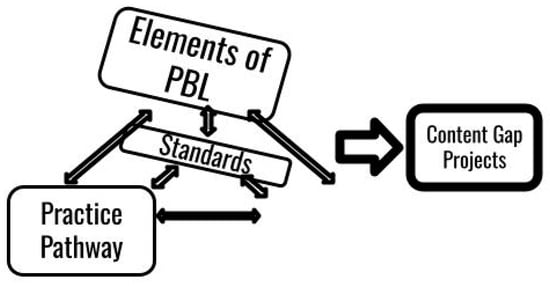
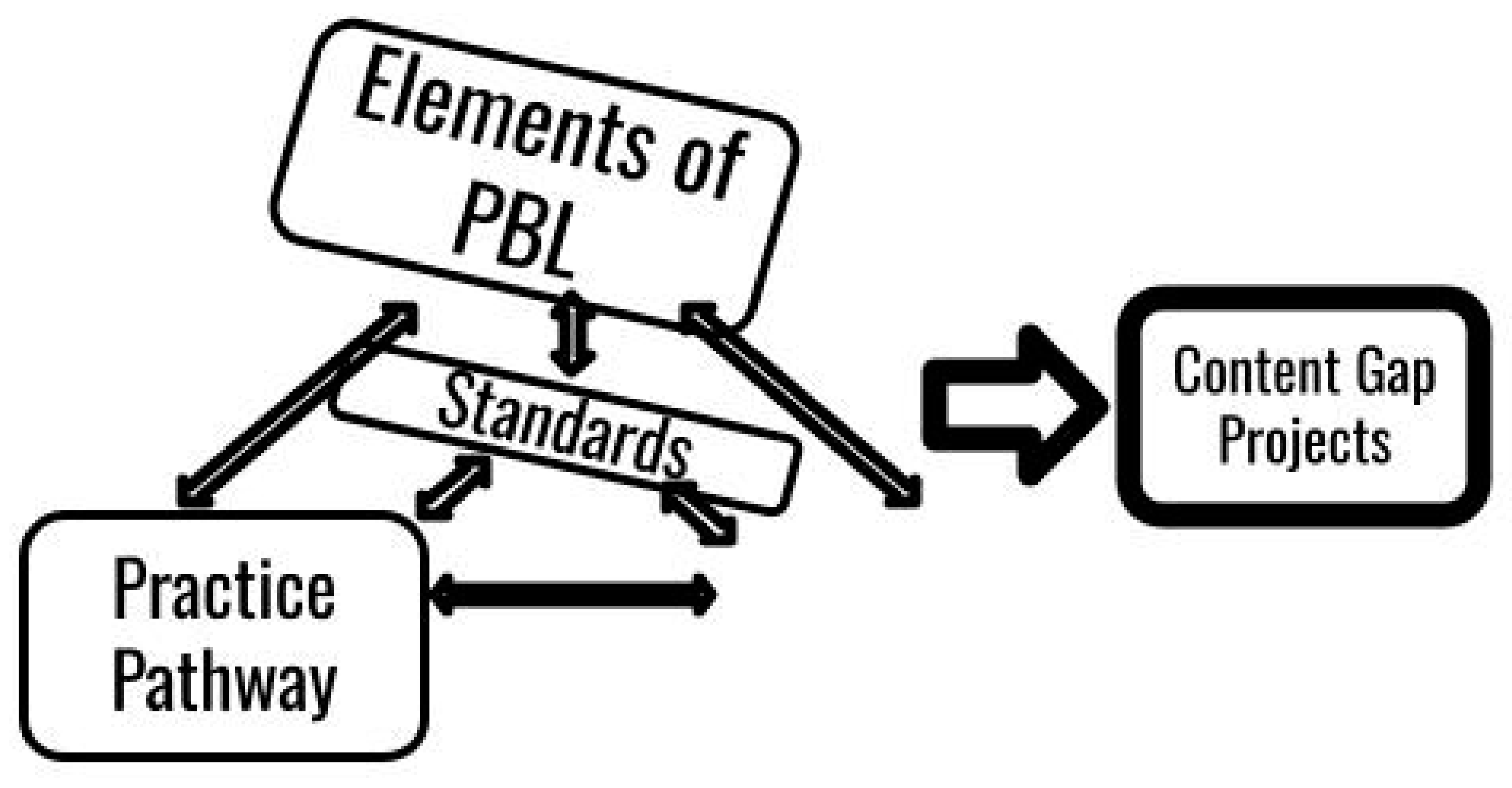
Greeting Card Design is a project from a Geometry course. This project was launched right before Mother’s Day and challenged students to design greeting cards with two-dimensional composite figures. The focus statement was ‘How can we as thoughtful humans, design and create geometric inspired greeting cards so that we can bring joy to others?’ Students started the project by exploring the history of Mother’s Day and greeting cards. They looked at geometric designs and how two-dimensional shapes came together to create larger designs. The project also had constraints in the rubric to ensure that students included the correct shapes from this geometry unit in their End Product. Through the Project Launch, students asked many Need to Know questions about what materials they could use to make the cards, whom they were allowed to send them to, the history of Mother’s Day, and occasionally, the shapes they needed to use. Students were grouped with feedback partners, but each student designed their own card. Although this project engaged many Elements of PBL and supported students in receiving feedback on their work, it still fell short due to a weak Content Storyline. As demonstrated in Figure 3, when the Project Planning Pyramid is missing a strong Content Storyline, the project results in content gaps in the project.
Figure 3.
Content gaps in the project from a weak Content Storyline. This “broken” Project Planning Pyramid represents a project with a missing or underdeveloped Content Storyline.
For this specific project, the gaps showed up as the project progressed. Some of the more artistically driven students had full card designs even before we conducted workshops on composite figures and proportions. Although the instructor designed project activities where students had to discuss the proportions of the card, the area of their design, or the specifics of the shapes, students did not see the connection to the project, asking “How does this connect again?” Although the End Products were beautiful, and students were proud of their work, the videos where students were supposed to describe the mathematics included descriptions of the art but no specifics of the mathematical constructions. The content had been lost along the way, and this became an art project with a separately taught unit of math. This gap in content in the project could have been rectified by spiraling learning activities, so that students created part of their card each day after they learned a new content idea.
4.3. Loss of Coherence from Missing Disciplinary Practices
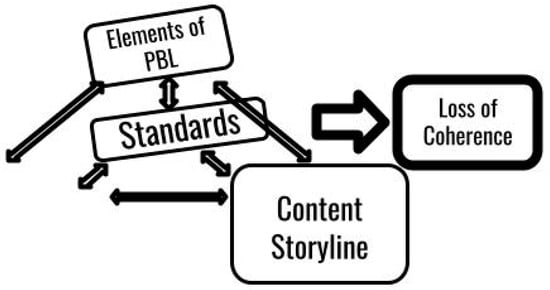
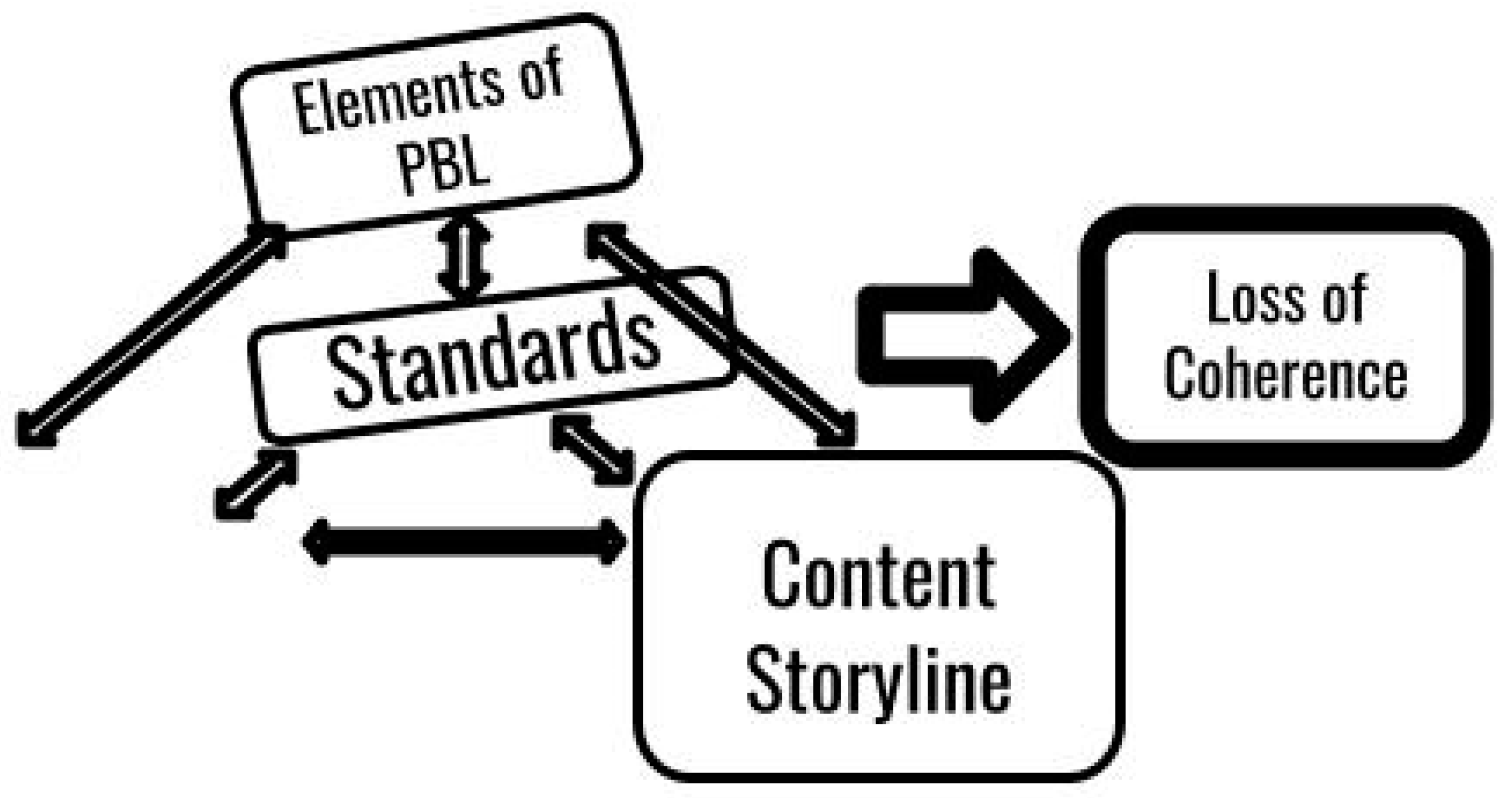
Can You Hear Me Now? was a project from an integrated Algebra 1 and Physics course. The purpose of the project was for students to create the most cost-efficient amplifier for a cell phone, drawing on their knowledge of sound waves and systems of linear equations. Students took on the role of entrepreneurs to design and build an amplifier that was cost-efficient while also producing the loudest sound in decibels. The End Product was a prototype of the amplifier as well as a production report. This report included the materials used to build the amplifier, the cost of the materials, an equation to represent the cost of the amplifier (including the USD 5.50 overhead assigned to every group). Additionally, the report included the amount they would charge for the speaker, with a justification why they believed people would pay for it. Finally, they had to find the breakeven point for the number of amplifiers they needed to sell to break even. Over the course of the three weeks this project spanned, students learned about the relationship between frequency, wavelength, and the speed of waves, as well as how to construct and solve systems of equations with varying constraints. The last few days of the project period involved students engaging in an iterative design process and constructing mathematical models for the cost of their amplifier and potential revenue from sales of their amplifier. Although this project included a strong focus on the content standards, with many workshops to support new learning, and engaged with many of the Elements of PBL, it still ended up falling short because it did not intentionally support a coherent Practice Pathway. As demonstrated in Figure 4, when the Project Planning Pyramid is missing a Practice Pathway, the project results in a loss of coherence.
Figure 4.
Loss of Coherence without a Practice Pathway. This “broken” Project Planning Pyramid represents a project that does not integrate a Practice Pathway.
This project was identified as a “dessert project” because much of the learning happened prior to the construction of the End Product and there were no meaningful Checkpoints along the way, leading to a loss of coherence. Additionally, this project did not have a focus on disciplinary practice standards, even though much of the project required constructing and refining models. This lack of identifying a disciplinary practice standard created loss of coherence from the student perspective because the practice of modeling was not intentionally developed along a Practice Pathway. This lack of coherence could have been rectified with an intentional focusing on modeling throughout the project and having students journal about how this knowledge of modeling would be taken up in their End Product.
4.4. Discipline-Rich Project
An example in our work of a discipline-rich project is The Community Garden Project [44]. In this project, we see an intentional development of the Elements of PBL, the Content Storyline, and the Practice Pathway. This project built on previous work carried out during the academic year, focused on food insecurity in the community where the school was located. This project asked students to take on the role of activists and urban farmers to design a proposal for a community garden on the school campus. The End Product was an oral presentation to the school administration where students presented a scale model of the proposed garden, a budget proposal for how much the garden would cost, and an explanation of how the proposed garden would address food insecurity in their community.
In addition to a community-centered End Product, this project also engaged with several other Elements of PBL. The project was launched through the principal giving the students a charge to propose a way for the students to find a way to address food insecurity in the neighborhood. To focus the learning over the course of the project, the following focus statement was developed:
“We need to understand surface area and volume of three-dimensional shapes and be able to strategically select tools given various limitations in order to create a model to persuade the school administration to approve our community garden proposal” .(Project Materials)
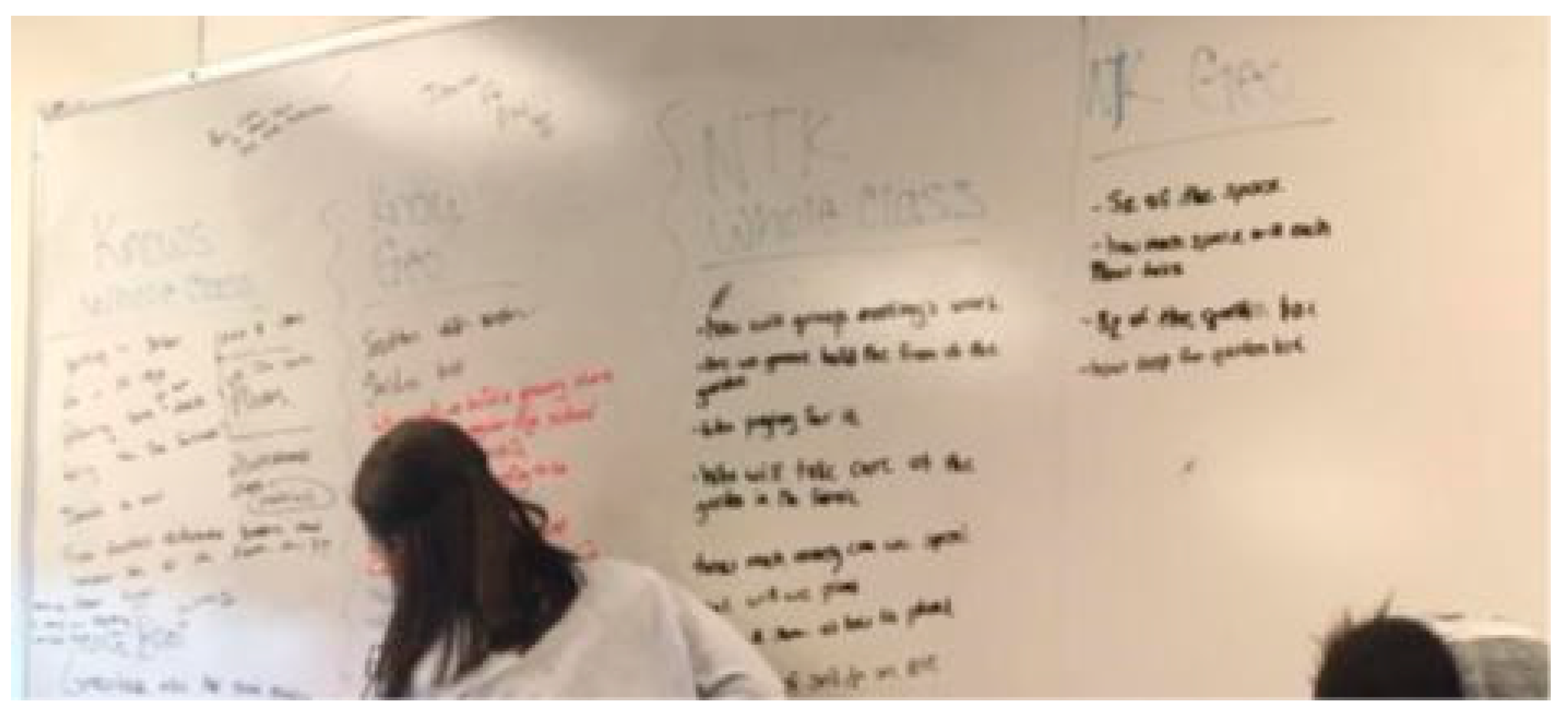
Throughout the Project Launch, students asked many questions (Need to Knows) that both applied in general to how we would create a community garden and were specific to Geometry. These were publicly recorded by the teacher, as shown in Figure 5.
Figure 5.
Sheila Orr recording Knows and Need to Knows during the Project Launch.
Over the course of the project, Checkpoints were used to ensure students were making progress. Some examples of Checkpoints included having a blueprint diagram of the space and calculating the area, a rough draft sketch of a potential garden design, a spreadsheet showing the calculations to support determining the budget for the garden, and a final draft sketch of the garden. These Checkpoints ensured that students were making progress towards designing the scale model and calculating the cost of the garden.
This project was situated in a Geometry classroom, and the Content Storyline was developed to support the standards related to three-dimensional shapes (see Table 2).
Table 2.
Common Core Standards covered in The Community Garden Project.
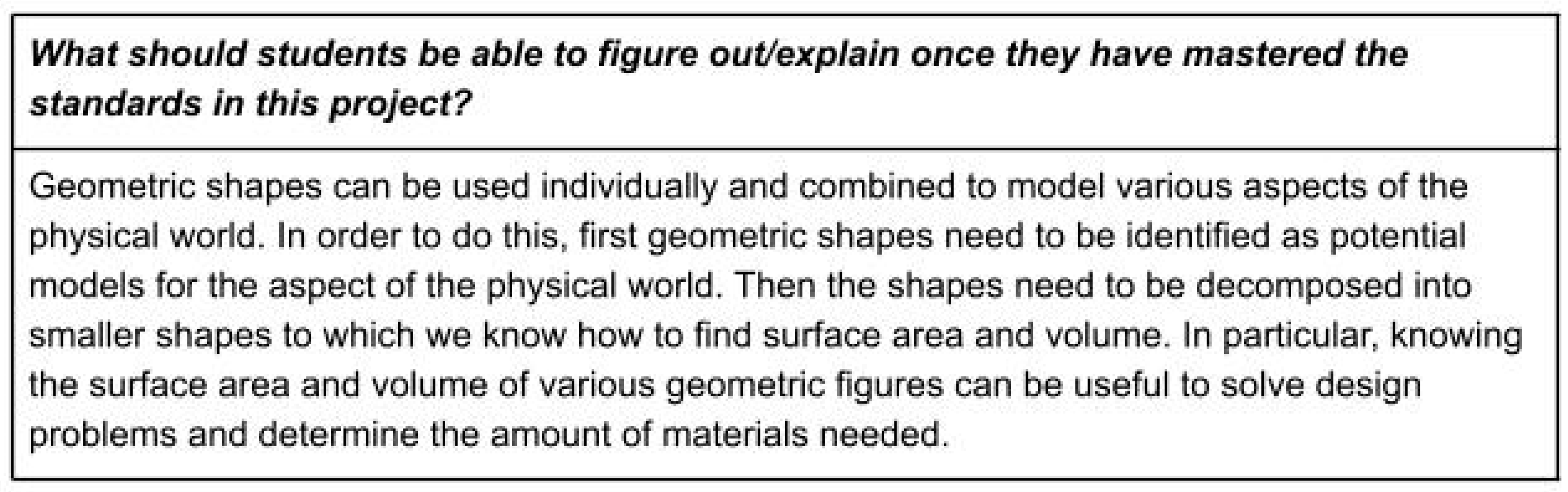
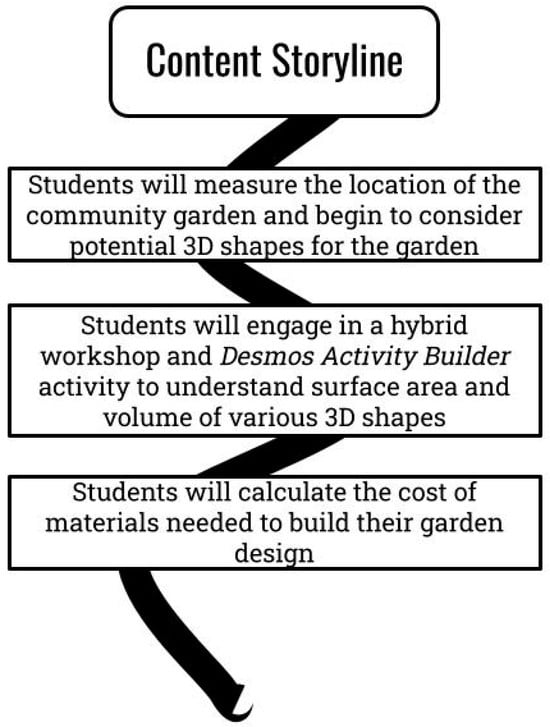
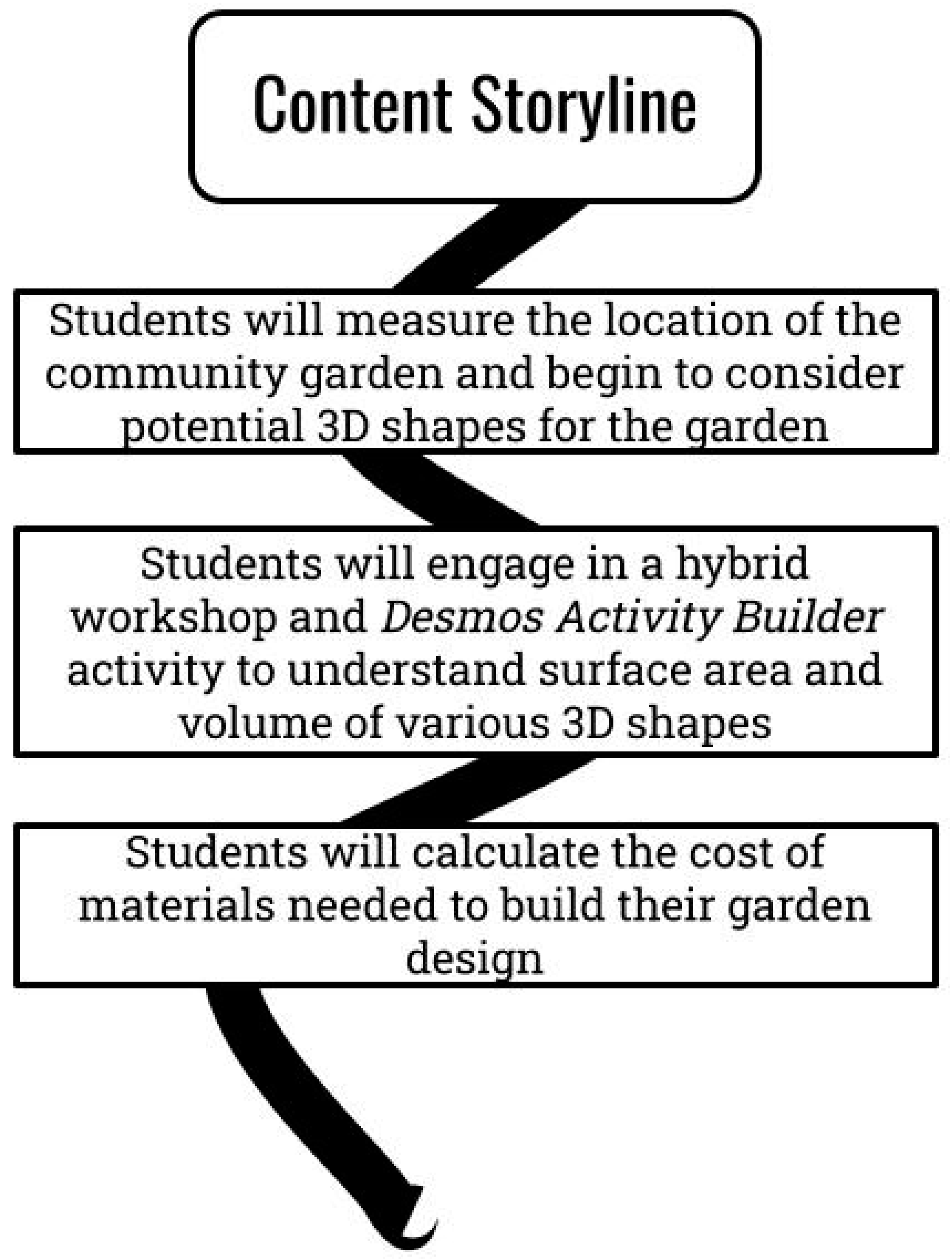
To develop students’ understanding of three-dimensional figures, the standards were used to develop the following Content Storyline for this project (Figure 6).
Figure 6.
Content Storyline for The Community Garden Project.
Through the Content Storyline of this project, students needed to approximate shapes based on objects in the physical world, then use their knowledge of surface area and volume to solve design problems, such as building a community garden. However, instead of just listing the content standards, the Content Storyline was written in a manner that connected to and considered the learning progression for students. It gave purpose to the content and would help with answering questions like “Why do we need to learn this?” and “What are you working on”?
The implementation of a Content Storyline through The Community Garden Project planning can be seen through varied components of the learning process. The snapshot of classroom activities (Figure 7) shows a portion of the progression from the beginning to the end of a project and how the Content Storyline would weave alongside. Through these learning activities, there is an arc of the story of learning in the context that students experienced.
Figure 7.
Opportunities for students to showcase and improve their knowledge of the Content Storyline.
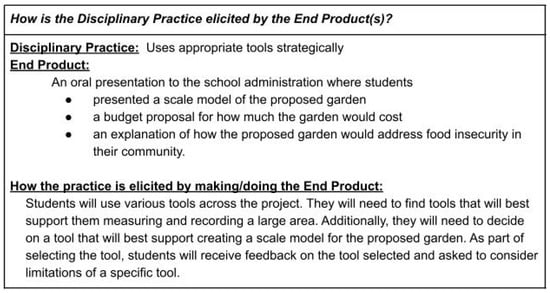
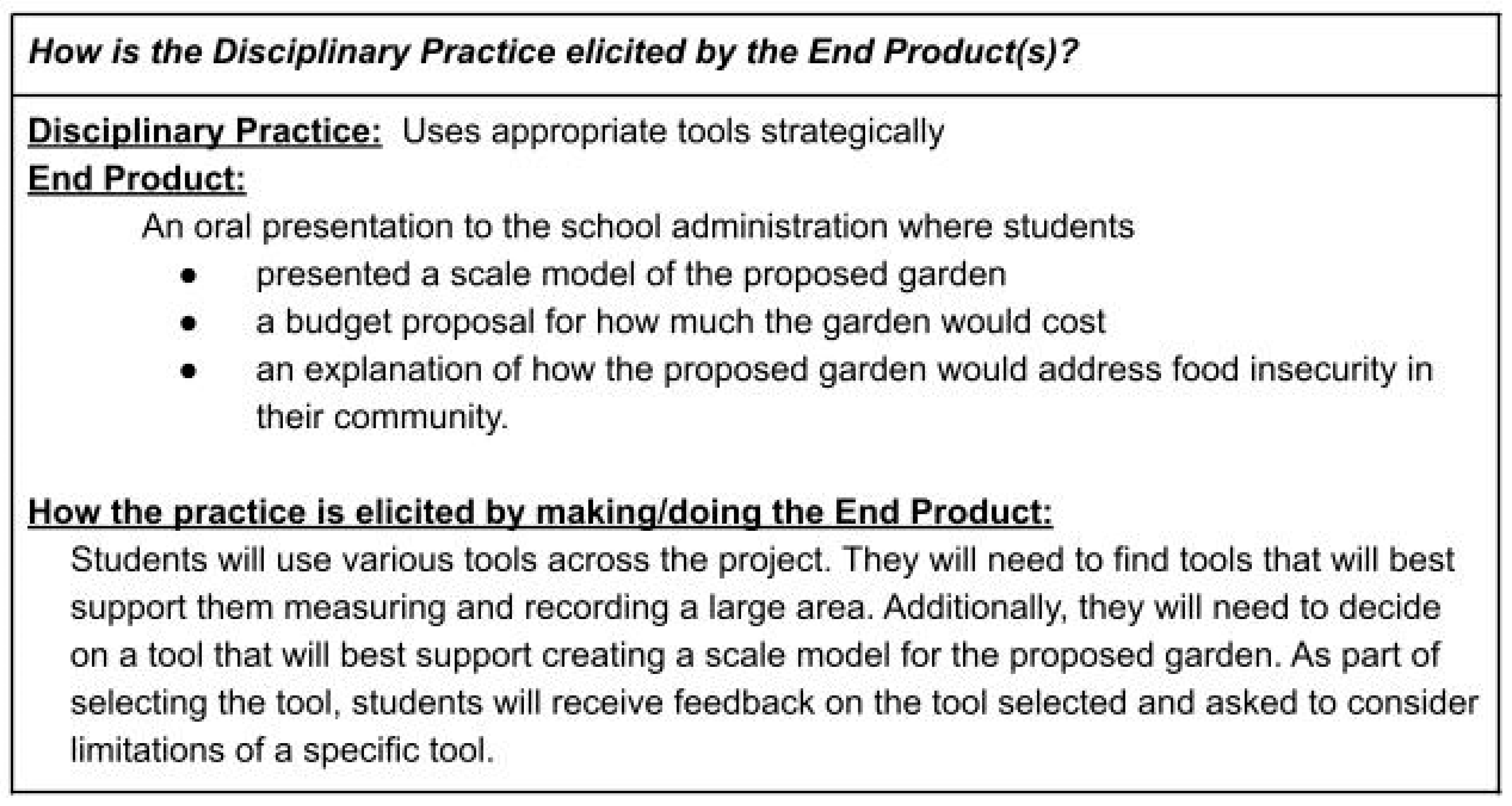
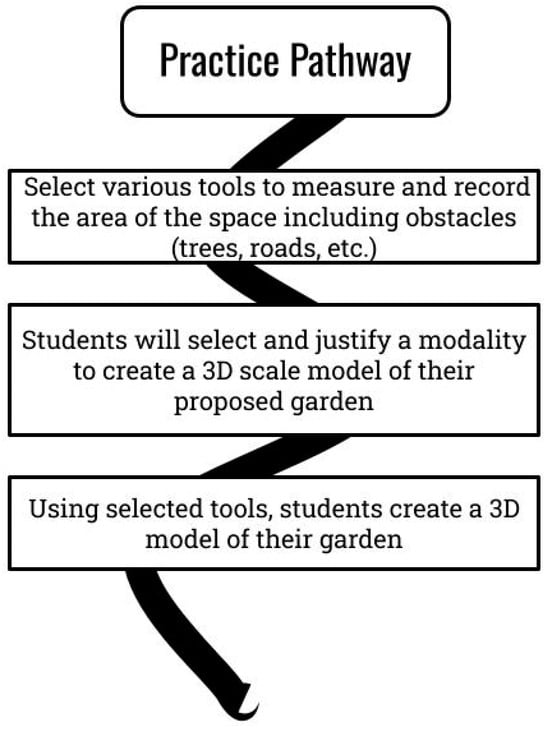
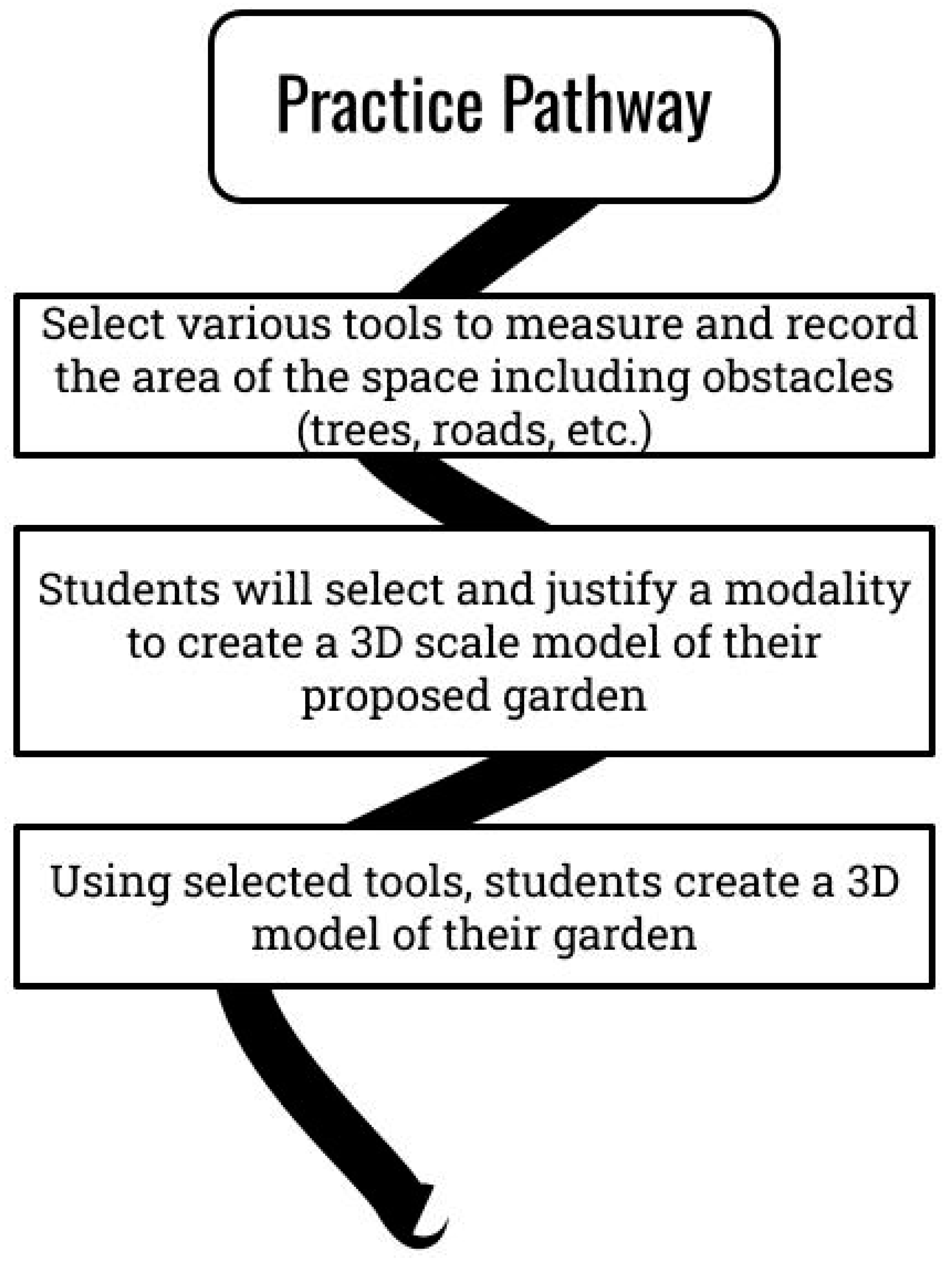
Independently, using a Content Storyline in classroom planning will lead to deeper content understanding; however, weaving together a consistent Content Storyline with the Elements of PBL and a Practice Pathway could generate discipline-rich contextualized learning for all. For The Community Garden Project, the practice “uses appropriate tools strategically” was selected as the practice to intentionally scaffold throughout the project [1]. Specifically, the aspect of the practice that was focused on throughout the project was “students consider the available tools when solving a mathematical problem” and “make sound decisions about when each of these tools might be helpful, recognizing both the insight to be gained and their limitations” [1]. To scaffold this practice, the following Practice Pathway was constructed (Figure 8).
Figure 8.
Practice Pathway for The Community Garden project.
Similar to the Content Storyline, the Practice Pathway builds in natural connection spaces throughout the learning process of a project. The snapshot of classroom activities (Figure 9) shows students’ experiences of engaging in a focal practice from the beginning to the end of a project. This regular surfacing of the focal practice foregrounds to learners their iterative and growing facilities with the practice situated within the real-world context of the project.
Figure 9.
Opportunities for intentional exposure and feedback on the Practice Pathway in The Community Garden Project.
5. Discussion: Revisiting the Framework
As described by the theory of the curriculum enactment process, teachers act upon instructional materials in order to coordinate their multiple goals for the intended curriculum. By putting forth a framework for discipline-rich PBL in STEM, we aim to support teachers in this coordination work. As teachers create project-based STEM learning experiences, they grapple with how their curriculum can advance students’ understandings of disciplinary content and capacity with disciplinary practices in ways that are authentically driven by the project context and reflect strong elements of PBL. We argue that these components of strong STEM PBL design—elements of PBL, disciplinary practices, disciplinary content, and attention to standards—should be interwoven across a STEM project such that they support and strengthen each other in service of student learning. Thus, integrating these multiple components across the design of a project requires iterative and complex decision-making during curriculum development. As our project examples illustrate, failing to attend to any one of these components can result in STEM projects that fail to realize the potential of project-based STEM to generate motivating, authentic project experiences for students that also rigorously advance discipline-specific learning outcomes.
Drawing from the literature and our deep experiences as STEM PBL practitioners, we developed and refined a framework, the Project Planning Pyramid, to capture key components embedded across the design of discipline-rich project-based STEM learning. Building on existing literature on the effective teaching of disciplinary content and practices in STEM education [27,45], we offer the constructs of a Practice Pathway and a Content Storyline as components of a strong STEM PBL design that support teachers to integrate and scaffold rigorous STEM learning outcomes within project-based curriculum materials. We argue that the Project Planning Pyramid has potential as a conceptual tool that aids teachers in substantively attending to and integrating these components as they work to design STEM PBL projects. Moreover, the use of the Project Planning Pyramid as a framework for thinking about project design has the potential to support teachers in analyzing how projects can succeed or fail at balancing these multiple components, aiding teachers in building their capacity to develop what we term “discipline-rich STEM projects”. This use of our framework has potential to support teachers to reflect on and iteratively refine their STEM projects after they have enacted them.
Developing discipline-rich STEM projects requires teachers to develop and coordinate multiple forms of skill and knowledge: disciplinary content knowledge, pedagogical content knowledge for both content ideas and disciplinary practices, knowledge of the elements of PBL, as well as pedagogical design capacity for PBL instructional approaches, to name a few [46,47,48]. We argue that our framework can function as a tool for teachers and teacher educators to think with as they build and use these capacities during project design. However, teachers need opportunities to build their capacities with this framework. We argue that the potential of this framework may be greatest when integrated into sustained professional learning experiences for teachers. Prior research demonstrated that curriculum design frameworks coupled with professional learning can support teachers to design experiences that support students’ learning in STEM disciplines [46]. In this vein, we developed and enacted a sustained professional learning experience for secondary STEM teachers, built around the Project Planning Pyramid, to help scaffold and develop teachers’ capacities to design discipline-rich STEM projects. Although this study was a retroactive analysis of the projects, we see potential in using it to examine the ways in which it supports teachers to create discipline-rich projects from scratch. Additionally, future work with this tool can include examining how teachers take the projects from the intended curriculum to the enacted curriculum [11]. This framework is currently in use as a tool for in-service secondary school teacher learning as part of a sustained professional learning experience. Future teacher education research could examine the extent to which this framework supports the development of teachers’ pedagogical design capacity for STEM projects and how the application of this model might vary across different STEM learning contexts. Furthermore, teacher educators might extend and adapt this work to support in-service and preservice teachers across K-12 education, for example by exploring the Project Planning Pyramid’s potential application in elementary school settings.
Our framework is designed to support teachers’ pedagogical design capacity for discipline-rich STEM PBL by focusing on the alignment between disciplinary content, practices, PBL, and standards during the design of project-based STEM curricula [48]. Nonetheless, we recognize that our framework does not encompass all the components needed for strong PBL or strong STEM teaching. Developing and enacting powerful project-based learning experiences in classrooms requires teachers to utilize additional lenses beyond this framework. For example, teachers will need to consider how to scaffold language and literacy demands within the project and how they will develop aligned assessments. Moreover, our framework does not highlight how decisions about the project might reflect commitments to center culturally sustaining pedagogies or justice-oriented societal issues [49,50,51]. However, the use of this framework may be coupled with additional lenses in order to integrate such commitments into the act of project design. We believe that our framework provides a valuable foundation for thinking about the core components of discipline-rich STEM projects which can be productively extended to reflect additional needs and goals.
6. Conclusions
In this paper, we argue that teachers can coordinate complex goals for project-based STEM learning in order to create discipline-rich projects and we present and illustrate the use of a framework to support such curriculum development efforts. By drawing on the literature related to content storylines, disciplinary practices, and elements of PBL, we put forth the Project Planning Pyramid: A Framework to Ensure Discipline-Rich STEM Projects (see Figure 1). By examining projects from PBL classrooms, we show how this framework can be used as a lens to view PBL projects in order to analyze strengths and growth areas of these curricula, supporting teachers’ capacity building for designing STEM projects and the iterative development of discipline-rich STEM PBL. Through examining teacher-created STEM projects, we have contributed a new perspective to the literature on project-based learning, which previously focused on teacher practices [31], effectiveness for student learning [4,6,8], and dilemmas that arise during PBL [52].
Author Contributions
Conceptualization, M.S., S.O., C.M. and S.D.; methodology, M.S. and S.O.; data curation, M.S., S.O., C.M. and S.D; writing—original draft preparation, M.S. and S.O.; writing—review and editing, M.S., S.O., C.M. and S.D.; funding acquisition, M.S., S.O., C.M. and S.D. All authors have read and agreed to the published version of the manuscript.
Funding
This material is based upon work supported by the Knowles Teacher Initiative. Additionally, this material is based upon work supported by the National Science Foundation Graduate Research Fellowship Program under Grant No. DGE-1656518. Any opinions, findings, and conclusions or recommendations expressed in this material are those of the author(s) and do not necessarily reflect the views of the National Science Foundation.
Institutional Review Board Statement
Not applicable.
Informed Consent Statement
Not applicable.
Data Availability Statement
No new data were created or analyzed in this study. Data sharing is not applicable to this article.
Conflicts of Interest
The authors declare no conflict of interest.
References
- National Governors Association. Common Core State Standards. 2010. Available online: https://preview.fadss.org/resources/webinars/webinar2/FSBAPresentationforCommunities_transcribed.pdf (accessed on 28 January 2024).
- National Research Council. A Framework for K-12 Science Education: Practices, Crosscutting Concepts, and Core Ideas; National Academies Press: Washington, DC, USA, 2013. [CrossRef] [Scilit]
- What is PBL? PBLWorks. Available online: https://www.pblworks.org/what-is-pbl (accessed on 28 January 2024).
- Krajcik, J.; Schneider, B.; Miller, E.A.; Chen, I.-C.; Bradford, L.; Baker, Q.; Bartz, K.; Miller, C.; Li, T.; Codere, S.; et al. Assessing the Effect of Project-Based Learning on Science Learning in Elementary Schools. Am. Educ. Res. J. 2023, 60, 70–102. [Google Scholar] [CrossRef] [Scilit]
- Krajcik, J. Projected-Based Science. Sci. Teach. 2015, 82, 25–27. [Google Scholar]
- Harris, C.J.; Penuel, W.R.; D’Angelo, C.M.; DeBarger, A.H.; Gallagher, L.P.; Kennedy, C.A.; Cheng, B.H.; Krajcik, J.S. Impact of Project-Based Curriculum Materials on Student Learning in Science: Results of a Randomized Controlled Trial. J. Res. Sci. Teach. 2015, 52, 1362–1385. [Google Scholar] [CrossRef] [Scilit]
- Kingston, S. Project Based Learning & Student Achievement: What Does the Research Tell Us? Pbl Evidence Matters; Buck Institute for Education: Novato, CA, USA, 2018; Volume 1, No. 1. Available online: https://eric.ed.gov/?id=ED590832 (accessed on 28 January 2024).
- Diego-Mantecon, J.-M.; Prodromou, T.; Lavicza, Z.; Blanco, T.F.; Ortiz-Laso, Z. An Attempt to Evaluate Steam Project-Based Instruction from a School Mathematics Perspective. ZDM-Math. Educ. 2021, 53, 1137–1148. [Google Scholar] [CrossRef] [Scilit]
- Markula, A.; Aksela, M. The Key Characteristics of Project-Based Learning: How Teachers Implement Projects in K-12 Science Education. Discip. Interdiscip. Sci. Educ. Res. 2022, 4, 2. [Google Scholar] [CrossRef] [Scilit]
- Kokotsaki, D.; Menzies, V.; Wiggins, A. Project-Based Learning: A Review of the Literature. Improv. Sch. 2016, 19, 267–277. [Google Scholar] [CrossRef] [Scilit]
- Remillard, J.T.; Heck, D.J. Conceptualizing the Curriculum Enactment Process in Mathematics Education. ZDM 2014, 46, 705–718. [Google Scholar] [CrossRef] [Scilit]
- Roth, K.J.; Garnier, H.E.; Chen, C.; Lemmens, M.; Schwille, K.; Wickler, N.I.Z. Videobased Lesson Analysis: Effective Science Pd for Teacher and Student Learning. J. Res. Sci. Teach. 2011, 48, 117–148. [Google Scholar] [CrossRef] [Scilit]
- Reiser, B.J.; Novak, M.; Fumagalli, M. Using Storylines to Design or Adapt Curriculum and Instruction to Make It Three-Dimensional. 2016. Available online: https://www.academia.edu/24083676/Using_Storylines_to_Design_or_Adapt_Curriculum_and_Instruction_to_Make_It_Three_Dimensional (accessed on 22 April 2024).
- Arons, A. What Science Should We Teach. In Curriculum Development for the Year 2000; BSCS: Colorado Springs, CO, USA, 1989. [Google Scholar]
- Dietiker, L. Mathematical Texts as Narrative: Rethinking Curriculum. Learn. Math. 2013, 33, 14–19. [Google Scholar]
- Hanuscin, D.; Lipsitz, K.; Cisterna-Alburquerque, D.; Arnone, K.A.; van Garderen, D.; de Araujo, Z.; Lee, E.J. Developing Coherent Conceptual Storylines: Two Elementary Challenges. J. Sci. Teach. Educ. 2016, 27, 393–414. [Google Scholar] [CrossRef] [Scilit]
- Ramsey, J. Developing Conceptual Storylines with the Learning Cycle. J. Elem. Sci. Educ. 1993, 5, 1–20. [Google Scholar] [CrossRef] [Scilit]
- Reiser, B.J.; Novak, M.; McGill, T.A.W.; Penuel, W.R. Storyline Units: An Instructional Model to Support Coherence from the Students’ Perspective. J. Sci. Teach. Educ. 2021, 32, 805–829. [Google Scholar] [CrossRef] [Scilit]
- Nordine, J.; Krajcik, J.; Fortus, D.; Neumann, K. Using Storylines to Support Three-Dimensional Learning in Project-Based Science. Sci. Scope 2019, 42, 86–93. [Google Scholar] [CrossRef] [Scilit]
- Penuel, W.R.; Reiser, B.J.; McGill, T.A.W.; Novak, M.; Van Horne, K.; Orwig, A. Connecting Student Interests and Questions with Science Learning Goals through Project-Based Storylines. Discip. Interdiscip. Sci. Educ. Res. 2022, 4, 1. [Google Scholar] [CrossRef] [Scilit]
- Dietiker, L. Mathematical Story: A Metaphor for Mathematics Curriculum. Educ. Stud. Math. 2015, 90, 285–302. [Google Scholar] [CrossRef] [Scilit]
- Dietiker, L.; Richman, A.S. How Textbooks Can Promote Inquiry: Using a Narrative Framework to Investigate the Design of Mathematical Content in a Lesson. J. Res. Math. Educ. 2021, 52, 301–331. [Google Scholar] [CrossRef] [Scilit]
- Schmidt, W.H.; Houang, R.T. Curricular Coherence and the Common Core State Standards for Mathematics. Educ. Res. 2012, 41, 294–308. [Google Scholar] [CrossRef] [Scilit]
- Tyburski, B. The Meta-Narratives about Function Conveyed by a Commonly Used Multivariable Calculus Textbook. In Proceedings of the 26th Annual Conference on Research in Undergraduate Mathematics Education, Omaha, NE, USA, 22–24 February 2024. [Google Scholar]
- Koestler, C.; Felton, M.; Bieda, K.; Otten, S. Connecting the Nctm Process Standards and the Ccssm Practices, 1st ed.; National Council of Teachers of Mathematics: Reston, VA, USA, 2013. [Google Scholar]
- Osborne, J. Teaching Scientific Practices: Meeting the Challenge of Change. J. Sci. Teach. Educ. 2014, 25, 177–196. [Google Scholar] [CrossRef] [Scilit]
- Schwarz, C.V.; Passmore, C.; Reiser, B.J. Helping Students Make Sense of the World Using Next Generation Science and Engineering Practices; NSTA Press: Arlington, VA, USA, 2017. [Google Scholar]
- Savery, J. Overview of Problem-Based Learning: Definitions and Distinctions. Interdiscip. J. Probl.-Based Learn. 2006, 1, 5–15. [Google Scholar] [CrossRef] [Scilit]
- Barron, B.J.S.; Schwartz, D.L.; Vye, N.J.; Moore, A.; Petrosino, A.; Zech, L.; Bransford, J.D. Doing with Understanding: Lessons from Research on Problem- and Project-Based Learning. J. Learn. Sci. 1998, 7, 271–311. [Google Scholar] [CrossRef] [Scilit]
- Mustafa, N.; Ismail, Z.; Tasir, Z.; Mohamad Said, M.N.H. A Meta-Analysis on Effective Strategies for Integrated STEM Education. Adv. Sci. Lett. 2016, 22, 4225–4228. [Google Scholar] [CrossRef] [Scilit]
- Pupik Dean, C.G.; Grossman, P.; Enumah, L.; Herrmann, Z.; Kavanagh, S.S. Core Practices for Project-Based Learning: Learning from Experienced Practitioners in the United States. Teach. Teach. Educ. 2023, 133, 104275. [Google Scholar] [CrossRef] [Scilit]
- DiMaria, S.; Madis, C.; Orr, S.; Sircar, M. STEM Project-Based Learning: Finding Balance of Content Standards, Disciplinary Practices, and Elements of Project-Based Learning. Kaleidosc. Educ. Voices Perspect. 2024.
- Adams, J.; Grand, D.D. New Tech Network: Driving Systems Change and Equity through Project-Based Learning; Learning Policy Institute: Palo Alto, CA, USA, 2019. [Google Scholar]
- Larmer, J.; Mergendoller, J.R. Eight Essentials for Project-Based Learning. Educ. Leadersh. 2010, 68, 34–37. [Google Scholar]
- Arter, J.; McTighe, J. Scoring Rubrics in the Classroom: Using Performance Criteria for Assessing and Improving Student Performance; Corwin Press: Thousand Oaks, CA, USA, 2001. [Google Scholar]
- Miller, A. How to Write Effective Driving Questions for Project-Based Learning. Edutopia. Available online: https://www.edutopia.org/blog/pbl-how-to-write-driving-questions-andrew-miller (accessed on 1 March 2024).
- Gold Standard PBL: Essential Project Design Elements. PBLWorks. Available online: https://www.pblworks.org/blog/gold-standard-pbl-essential-project-design-elements (accessed on 7 September 2023).
- Dennis, M. Benchmarks: What Are They and Why Do They Matter? Magnify Learning. Available online: https://www.magnifylearningin.org/project-based-learning-blog/2019/10/20/benchmarks-what-are-they-and-why-do-they-matter (accessed on 13 March 2024).
- Krajcik, J.S.; Shin, N. Project-Based Learning. In The Cambridge Handbook of the Learning Sciences; Sawyer, R.K., Ed.; Cambridge Handbooks in Psychology; Cambridge University Press: Cambridge, UK, 2014; pp. 275–297. [Google Scholar] [CrossRef] [Scilit]
- “Doing a Project” vs. Project Based Learning. PBLWorks. Available online: https://www.pblworks.org/doing-project-vs-project-based-learning (accessed on 28 January 2024).
- Orr, S.; Bieda, K. Learning to Elicit Student Thinking: The Role of Planning to Support Academically Rigorous Questioning Sequences during Instruction. J. Math. Teach. Educ. 2023. [Google Scholar] [CrossRef] [Scilit]
- Lather, P. Research as Praxis. Harv. Educ. Rev. 1986, 56, 257–278. [Google Scholar] [CrossRef] [Scilit]
- Augustine, S.M. Living in a Post-Coding World: Analysis as Assemblage. Qual. Inq. 2014, 20, 747–753. [Google Scholar] [CrossRef] [Scilit]
- Harper, F.K.; Kudaisi, Q.J. Geometry, Groceries, and Gardens: Learning Mathematics and Social Justice through a Nested, Equity-Directed Instructional Approach. J. Math. Behav. 2023, 71, 101069. [Google Scholar] [CrossRef] [Scilit]
- Penuel, W.R.; Allen, A.-R.; Henson, K.; Campanella, M.; Patton, R.; Rademaker, K.; Reed, W.; Watkins, D.; Wingert, K.; Reiser, B.; et al. Learning Practical Design Knowledge through Co-Designing Storyline Science Curriculum Units. Cogn. Instr. 2022, 40, 148–170. [Google Scholar] [CrossRef] [Scilit]
- Carlson, J.; Daehler, K.R.; Alonzo, A.C.; Barendsen, E.; Berry, A.; Borowski, A.; Carpendale, J.; Kam Ho Chan, K.; Cooper, R.; Friedrichsen, P.; et al. The Refined Consensus Model of Pedagogical Content Knowledge in Science Education. In Repositioning Pedagogical Content Knowledge in Teachers’ Knowledge for Teaching Science; Hume, A., Cooper, R., Borowski, A., Eds.; Springer Nature: Singapore, 2019; pp. 77–94. [Google Scholar] [CrossRef] [Scilit]
- Davis, E.A.; Krajcik, J.S. Designing Educative Curriculum Materials to Promote Teacher Learning. Educ. Res. 2005, 34, 3–14. [Google Scholar] [CrossRef] [Scilit]
- Brown, M.W. The Teacher–Tool Relationship: Theorizing the Design and Use of Curriculum Materials. In Mathematics Teachers at Work; Routledge: New York, NY, USA, 2009. [Google Scholar]
- Paris, D.; Alim, H.S. What Are We Seeking to Sustain through Culturally Sustaining Pedagogy? A Loving Critique Forward. Harv. Educ. Rev. 2014, 84, 85–100. [Google Scholar] [CrossRef] [Scilit]
- Krajcik, J.S.; Miller, E.C.; Chen, I.-C. Using Project-Based Learning to Leverage Culturally Relevant Pedagogy for Science Sensemaking in Urban Elementary Classrooms. In International Handbook of Research on Multicultural Science Education; Atwater, M.M., Ed.; Springer International Handbooks of Education; Springer International Publishing: Cham, Switzerland, 2022; pp. 913–932. [Google Scholar] [CrossRef] [Scilit]
- Lee, O.; Grapin, S. The Role of Phenomena and Problems in Science and STEM Education: Traditional, Contemporary, and Future Approaches. J. Res. Sci. Teach. 2022, 59, 1301–1309. [Google Scholar] [CrossRef] [Scilit]
- Clark, N. Why Do We Have Such Dilemmas?—An Reflection on Shadowing a PBL Mentor Teacher. J. Educ. 2022, 202, 543–548. [Google Scholar] [CrossRef] [Scilit]

Disclaimer/Publisher’s Note: The statements, opinions and data contained in all publications are solely those of the individual author(s) and contributor(s) and not of MDPI and/or the editor(s). MDPI and/or the editor(s) disclaim responsibility for any injury to people or property resulting from any ideas, methods, instructions or products referred to in the content. |
© 2024 by the authors. Licensee MDPI, Basel, Switzerland. This article is an open access article distributed under the terms and conditions of the Creative Commons Attribution (CC BY) license (https://creativecommons.org/licenses/by/4.0/).