


Highlights
What is the main finding?
- Progressive exercise and symptom-guided load management recur across Achilles, patellar, lateral elbow, and rotator cuff tendinopathy.
- Direct cross-condition comparative evidence is scarce.
What is the implication of the main finding?
- Target-task demands and capacity can guide individualized exercise choices.
- The proposed function-based framework is conceptual and requires prospective testing.
Abstract
Tendinopathies affect tendons exposed to diverse mechanical and functional demands. This structured narrative review examines rehabilitation principles for Achilles, patellar, lateral elbow, and rotator cuff tendinopathy, while distinguishing evidence derived from individual conditions from cross-condition inferences. Progressive exercise and load management are recurring treatment principles, but direct comparisons across tendon locations are scarce. The proposed function-based framework brings together symptom irritability, load tolerance, and the demands of the target activity as prompts for clinical reasoning; it does not prescribe a fixed exercise sequence. The contrast between precision tasks and elastic energy storage is best understood as a continuum. Exercise selection, neuromuscular strategies, and late-stage power work should follow the individual patient’s task demands and the evidence available for that condition. The framework synthesizes existing models rather than establishing a new treatment effect. Its comparative predictions and clinical benefit require prospective testing. Interpretation is limited by heterogeneous evidence and the absence of a completed study-level risk-of-bias assessment in the available review record.
1. Introduction
Tendinopathies constitute one of the most common causes of musculoskeletal pain in both the general population and athletic populations. Traditionally, these conditions were described as tendinitis, implying an inflammatory etiology. However, current scientific evidence indicates that, in most cases, tendinopathies do not represent inflammatory processes but rather degenerative tendon changes associated with mechanical overload and insufficient tissue adaptation to applied loads [1,2].
In recent years, tendinopathies have increasingly been conceptualized as disorders of failed tendon load adaptation rather than as classic inflammatory diseases. This shift in understanding has significantly influenced contemporary rehabilitation approaches, which emphasize gradual, controlled tendon loading [2,3]. Furthermore, modern clinical practice guidelines (CPGs) highlight that patient education regarding the nature of tendon pain is as critical as the exercise itself, as it helps reduce fear-avoidant behaviors that may hinder appropriate loading progression [4].
Using the clinical terminology recommended by the ICON consensus [5], common sites of tendinopathy include lateral elbow tendinopathy, patellar tendinopathy, and Achilles tendinopathy. Although these conditions occur in different anatomical regions, they share similar pathophysiological characteristics and respond to broadly comparable therapeutic principles [1].
Modern rehabilitation strategies primarily rely on progressively loading the tendon through exercise interventions, such as eccentric training and heavy slow resistance programs [6,7]. However, these interventions are not necessarily applied uniformly across all tendinopathies. Functional differences between the upper and lower limbs substantially influence tendon loading patterns during both daily activities and sport, suggesting that rehabilitation strategies may require condition-specific adaptation [3].
Recent advances in tendon rehabilitation have increasingly emphasized criterion-based progression, tendon capacity restoration, and individualized load prescription. Contemporary rehabilitation frameworks highlight that successful tendon adaptation depends not only on load magnitude but also on exercise-specific loading characteristics, recovery periods, tendon irritability, and functional demands. These developments have shifted clinical practice away from rigid protocol-driven approaches toward more individualized rehabilitation models [4,8,9].
Despite the growing literature on individual tendinopathies, relatively few studies have directly compared rehabilitation strategies across anatomical regions. As a result, current clinical practice may rely on the implicit transfer of treatment approaches between upper- and lower-limb tendinopathies, potentially overlooking important functional differences.
Contemporary rehabilitation research considers load magnitude, functional demands, movement strategies, and return-to-sport capacity [3,10,11]. Achilles and patellar tendons may be exposed to energy-storage tasks during running and jumping, while lateral elbow and rotator cuff conditions may affect gripping, reaching, or overhead work [3,12,13,14,15]. These are task-dependent examples along a functional continuum; they do not establish distinct anatomical rehabilitation categories.
Relatively few publications have attempted to integrate current rehabilitation evidence across different tendon locations within a unified functional framework. Consequently, clinicians may unintentionally transfer rehabilitation strategies between upper- and lower-limb tendinopathies without adequately considering their distinct biomechanical and functional demands. Accordingly, this structured narrative review critically integrates current evidence and develops an evidence-informed conceptual framework to support clinical reasoning, rather than providing quantitative evidence synthesis or clinical practice recommendations.
Therefore, this structured narrative review synthesizes current evidence on tendon rehabilitation, critically compares upper- and lower-limb tendinopathies from a functional perspective, and proposes a function-based framework to support clinical decision-making.
2. Methods
2.1. Study Design and Conceptual Framework
This structured narrative review integrates selected evidence on rehabilitation across Achilles, patellar, lateral elbow, and rotator cuff tendinopathy. The recorded PubMed search can be repeated from the stated terms, but a complete multi-database screening audit is unavailable. The review does not estimate pooled effects or claim systematic-review status.
The synthesis focused on progressive tendon loading, tendon function, load tolerance, neuromuscular considerations, kinetic-chain contributions, and return-to-activity demands across Achilles, patellar, lateral elbow, and rotator cuff tendinopathies.
2.2. Search Strategy
PubMed was searched for English-language publications dated 1 January 2000 to 31 May 2026 using the strategy below. Scopus, Web of Science, and Google Scholar were consulted for supplementary citation tracking, but the dates, queries, numbers screened, and deduplication record were not retained for these supplementary searches. The synthesis therefore cannot be described as an exhaustive or reproducible multi-database search.
The PubMed search combined tendon-condition terms with rehabilitation terms as follows: ((“Tendinopathy” [Mesh] OR “tendinopathy” [tiab] OR “tendon rehabilitation” [tiab] OR “Achilles tendinopathy” [tiab] OR “patellar tendinopathy” [tiab] OR “lateral elbow tendinopathy” [tiab] OR “rotator cuff tendinopathy” [tiab]) AND (“eccentric exercise” [tiab] OR “heavy slow resistance” [tiab] OR “load management” [tiab] OR “tendon neuroplastic training” [tiab] OR “kinetic chain” [tiab] OR “plyometric training” [tiab] OR “return to sport” [tiab] OR “neuromuscular rehabilitation” [tiab])). Date and English-language limits were applied during eligibility assessment rather than by altering the conceptual search blocks.
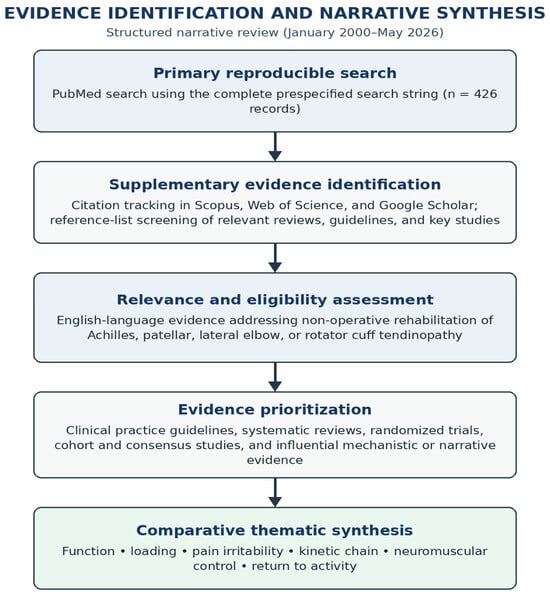
The PubMed search yielded 426 records. This purposive narrative synthesis included 30 cited sources, of which 13 representative sources are summarized in Table 1. This is a count of the sources analyzed in the final manuscript, not a PRISMA screening result. Because the complete screening log was not retained, numbers excluded at each stage cannot be reconstructed reliably.
Table 1.
Representative studies included in the narrative synthesis.
Because this was a structured narrative review, PRISMA compliance is not claimed.
2.3. Study Selection
English-language publications from January 2000 through May 2026 were eligible when they addressed non-operative rehabilitation of Achilles, patellar, lateral elbow, or rotator cuff tendinopathy and contributed directly to at least one prespecified domain: progressive loading, loading parameters, pain-guided progression, tendon capacity, neuromuscular or kinetic-chain rehabilitation, power/energy-storage loading, or return to activity or sport. A pre-2000 landmark study was retained specifically for the biomechanical description of Achilles loading during locomotion [12].
Sources were chosen for their relevance to at least one of the prespecified domains. Guidelines, reviews, randomized trials, observational studies, consensus papers, and selected conceptual papers were considered. This purposive selection may privilege influential publications and does not establish that all eligible studies were retrieved.
Eligible evidence sources comprised the following:
- Randomized controlled trials;
- Systematic reviews and meta-analyses;
- Clinical practice guidelines;
- Cohort studies;
- High-quality narrative reviews.
Studies were excluded if they focused exclusively on surgery, injection, or pharmacological treatment without a rehabilitation component; acute tendon rupture; postoperative rehabilitation; unrelated musculoskeletal disorders; or outcomes not directly relevant to exercise-based tendon rehabilitation.
When sources addressed the same proposition, greater weight was given to direct evidence in the relevant tendon condition and comparative clinical studies than to expert consensus, biomechanical surrogates, or conceptual papers. This weighting was qualitative; no prespecified numerical quality score or formal certainty grade was applied.
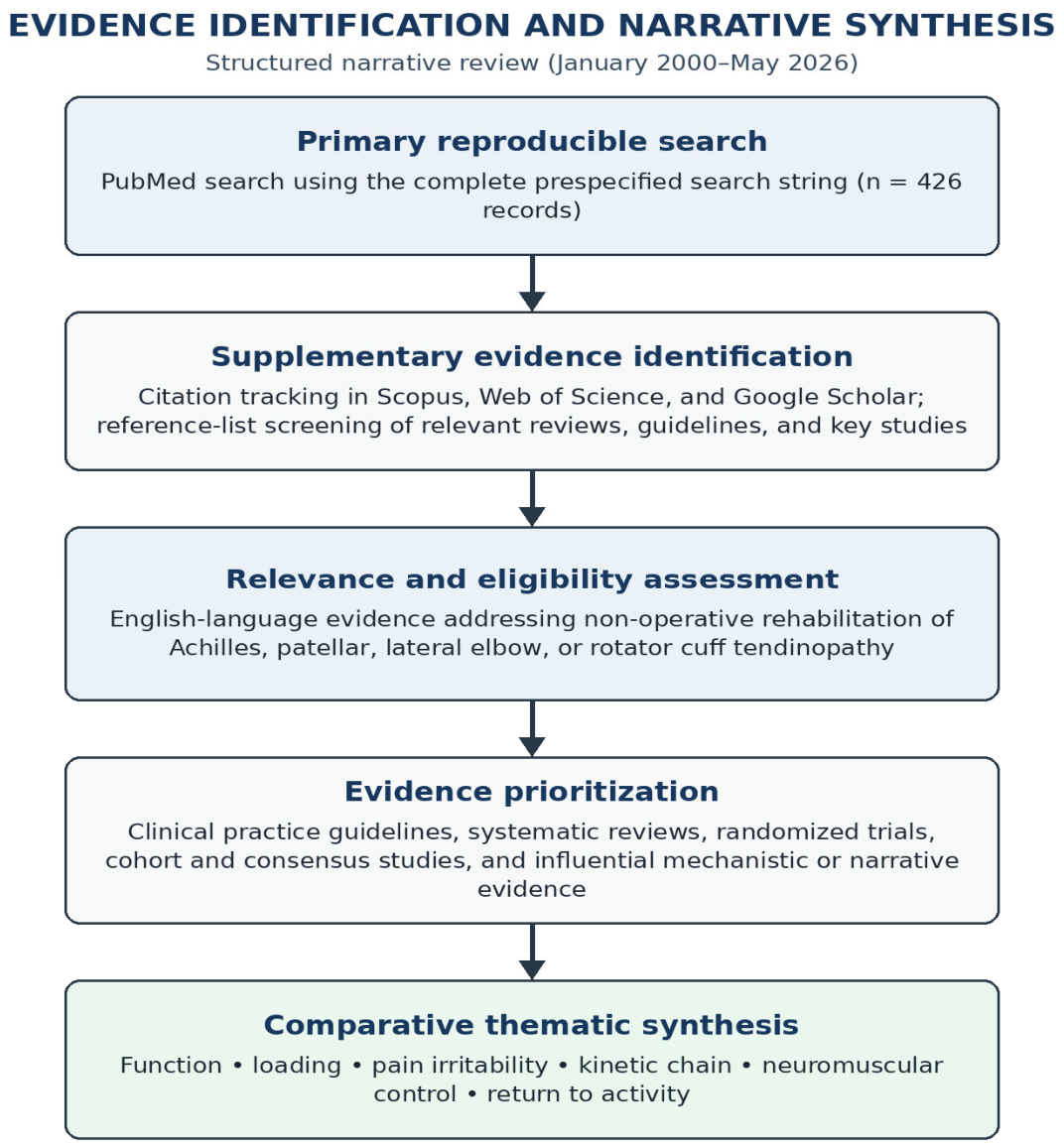
Figure 1 depicts only the recorded identification and conceptual synthesis. It should not be interpreted as a PRISMA flow diagram or a full accounting of inclusion and exclusion decisions.
Figure 1.
Evidence identification and narrative synthesis process. The reproducible PubMed search yielded 426 records; supplementary sources were used to track citations and identify conceptual evidence.
2.4. Data Extraction and Synthesis
Relevant information was extracted regarding:
- Tendon location;
- Rehabilitation strategy;
- Loading parameters;
- Neuromuscular interventions;
- Functional demands;
- Pain response;
- Return-to-sport considerations;
- Clinical outcomes.
Particular emphasis was placed on:
- Tendon function;
- Load tolerance;
- Kinetic-chain interactions;
- Energy-storage demands;
- Neuromuscular control requirements.
A thematic synthesis mapped sources to tendon condition, intervention, loading demands, pain response, neuromuscular considerations, and return-to-activity outcomes. The synthesis distinguished direct clinical findings from extrapolations across tendons and from the proposed clinical framework. Table 1 presents representative sources rather than a complete list of screened and included studies.
2.5. Critical Appraisal of Evidence
Formal study-level risk-of-bias ratings were not performed. This narrative review synthesizes randomized trials, guidelines, systematic reviews, biomechanical studies, and conceptual papers across four conditions, rather than estimating pooled intervention effects. Each proposition was appraised qualitatively for study design, condition-specific directness, consistency, and clinical relevance. Randomized clinical findings were weighted above mechanistic or expert opinion when drawing treatment inferences. This explicit appraisal does not substitute for design-specific risk-of-bias tools and is a limitation of this review. The following aspects were evaluated:
- Study design;
- Methodological rigor;
- Consistency of findings;
- Clinical applicability;
- Relevance to tendon rehabilitation principles.
For each clinical proposition, this review therefore distinguishes direct clinical evidence in the relevant condition, indirect evidence extrapolated from another tendon or biomechanical task, and conceptual inference. These labels describe directness, not formal GRADE certainty. Because systematic risk-of-bias judgments and a complete selection audit are unavailable, certainty cannot be graded reliably, and no claim of high or strong certainty is made.
Two reviewers (A.S. and E.G.) independently verified the eligibility and extracted characteristics of the sources informing Table 1 and the mapping of their findings to the synthesis domains; discrepancies were resolved through discussion with D.S. This verification was not a formal study-level risk-of-bias assessment.
Accordingly, interpret the findings as a structured narrative synthesis intended to support clinical reasoning and hypothesis development, not as a quantitative estimate of comparative treatment effectiveness or a validated clinical guideline.
2.6. Pathophysiology of Tendinopathies
The progression of tendinopathies is often described through the continuum model of tendinopathy [1]. According to this model, the tendon may pass through three main stages:
- Reactive tendinopathy;
- Tendon disrepair;
- Degenerative tendinopathy.
This process is primarily related to the tendon’s inability to adapt adequately to mechanical loading [2]; when loading exceeds the tissue’s capacity for adaptation, structural changes occur, including disorganization of collagen fibers, increased angiogenesis, and alterations in the tendon’s mechanical behavior [1].
These structural alterations are frequently accompanied by increased cellular activity, changes in extracellular matrix composition, and increased vascular and neural ingrowth. Although structural tendon alterations are common, they are not always directly correlated with pain intensity or the degree of functional dysfunction, suggesting that neurophysiological and central mechanisms may also contribute to the clinical presentation of tendinopathies [2,16,21].
Recent evidence also suggests that structural pathology alone cannot fully explain tendon pain and dysfunction. Imaging abnormalities are frequently observed in asymptomatic individuals, whereas pain severity may not correlate directly with the extent of structural tendon changes [21]. Consequently, contemporary models increasingly integrate neurophysiological, biomechanical, and psychosocial factors into the understanding of tendinopathy.
The functional demands of tendons vary along a continuum. The Achilles and patellar tendons may encounter high-rate loading in running and jumping, while elbow and shoulder tendons are often challenged by gripping, reaching, and repeated work tasks. These descriptions are task-dependent: upper-limb tasks can require high force or power, and lower-limb tasks can require precise control.
The pathology continuum is a conceptual model and does not establish that a patient’s exercise prescription can be inferred from an imaging or histological stage alone. Initial exercise and load modification should follow symptoms, capacity, clinical goals, and the relevant condition-specific evidence.
2.7. Common Therapeutic Principles
2.7.1. Progressive Mechanical Loading
Progressive exercise is a recurring rehabilitation principle in Achilles, patellar, lateral elbow, and rotator cuff tendinopathy [3,4,6,7,15]. Improvement in symptoms or function should not be interpreted automatically as proof of collagen remodeling or normalized tendon mechanical properties. Exercise options include the following:
- Isometric exercises [22];
- Eccentric exercises [6];
- Heavy slow resistance (HSR) programs [6].
Several exercise formats can improve symptoms and function in individual tendinopathies, but their comparative effects vary by condition and outcome. Evidence from Achilles and lateral elbow trials should not be generalized automatically to patellar or rotator cuff tendinopathy. Contraction mode is only one prescription variable alongside load, range, tempo, frequency, recovery, and total exposure [6,7,10].
Exercise progression should be matched to the person’s activities. Some patients need to develop tolerance for repeated gripping or reaching, whereas others need to restore running or jumping capacity; neither pattern is exclusive to an anatomical region.
Specific protocols should be presented as examples from particular populations rather than universal doses. Achilles guidelines describe several loading options [4], while patellar rehabilitation studies support progressive tendon loading [3,23]. The appropriate load, tempo, range, and frequency require individual adjustment.
A key emerging concept is Tendon Neuroplastic Training (TNT), which involves using external pacing (e.g., a metronome) during resistance exercise. This approach aims to reduce corticospinal inhibition and improve the precision of neuromuscular activation, highlighting the role of central mechanisms in chronic tendon pain [16].
Exercise tasks impose different tendon demands, but laboratory estimates of load do not by themselves establish superior clinical outcomes [8]. Progression can be adapted to symptoms, capacity, and target activity; high-rate loading is relevant when required by that activity.
2.7.2. Load Management
Successful rehabilitation of tendinopathies depends not only on the exercise program itself but also on the appropriate management of loads applied to the tendon during daily activities and sport. Load management involves modifying activities that provoke excessive tendon loading while maintaining sufficient mechanical stimulus to promote adaptation.
Balancing excessive loading with insufficient stimulation is a fundamental component of effective rehabilitation. In clinical practice, the pain-monitoring model is commonly used, allowing a controlled level of pain during exercise provided that symptoms do not significantly worsen over the following 24 h [17]. This approach maintains adequate loading without exacerbating symptoms.
Load management should consider occupational, sport, and daily activity exposures together with rehabilitation exercise [3,11]. Monitoring symptoms, recovery, and task tolerance can inform progression. A short observational study in adolescent volleyball players found no detectable tendon structural change during five days of tournament loading [24]; this finding does not establish an optimal clinical loading dose or safe return-to-sport threshold.
Recent expert consensus has further emphasized that exercise dosage variables, including intensity, tempo, range of motion, recovery periods, and progression criteria, may significantly influence rehabilitation outcomes. In Achilles tendinopathy, contraction intensity, time under tension, repetitions and sets, contraction type, and—particularly for insertional disease—ankle dorsiflexion range have been identified as influential prescription variables. Clinicians should therefore monitor not only symptom response but also cumulative loading exposure and recovery capacity as rehabilitation progresses [9].
A small lateral elbow trial compared supervised and home exercise programs [20]; its findings should not be taken as proof of universal superiority across tendons or programs. Isometric exercise may be useful for some patients, but immediate analgesia is inconsistent and should not be promised or used as a mandatory entry criterion [22,25]. The UK Defence consensus offers condition-specific conservative management recommendations, but consensus does not establish comparative treatment effectiveness [26].
Importantly, load management strategies should be interpreted within a broader clinical reasoning framework that considers tendon function, pain response, and load tolerance.
2.8. Progressive Return to Activity
The gradual return to activity represents a critical phase of rehabilitation. This process should be guided by the tendon’s ability to tolerate progressively increasing loads and to adapt to the specific demands of the target activity.
Contemporary rehabilitation protocols increasingly include a dedicated phase to restore muscle power and high-rate loading capacity. This includes the introduction of explosive movements and plyometric exercises (e.g., hopping and jumping), particularly for lower-limb tendinopathies, to ensure that the tendon–muscle unit can tolerate the rapid loading conditions encountered in sport [4].
Return-to-sport decision-making should not rely solely on pain reduction but should also incorporate functional performance, load tolerance, movement quality, and sport-specific capacity. Recent rehabilitation models increasingly emphasize criteria-based progression rather than time-based rehabilitation alone [11].
Pain improvement and restoration of physical capacity are related but distinct outcomes. A systematic review identified strength deficits in people with patellar tendinopathy [18]; its predominantly cross-sectional evidence does not demonstrate that deficits persist after successful symptom treatment. Return-to-sport guidance supports assessing relevant strength, endurance, and task tolerance alongside symptoms [11]. Whether such testing reduces recurrence has not been established here.
2.9. Functional Differences Between the Upper and Lower Limbs (Table 2)
Functional demands vary within and across tendon conditions. Table 2 summarizes task-dependent considerations for the four tendinopathies, using condition-specific evidence to inform clinical reasoning rather than to establish a direct upper-versus-lower-limb comparative effect.
Table 2.
Task-dependent considerations for four tendinopathies. Examples derive from condition-specific sources; no row establishes a direct upper-versus-lower-limb comparative effect.
2.9.1. Loading and Weight Bearing
Achilles and patellar tendons may encounter substantial cyclic loading in locomotion and jumping; loading varies with activity and individual technique. Achilles biomechanics demonstrate an energy-storage role during locomotion [12].
Lateral elbow and rotator cuff tendons contribute to a wide range of gripping, lifting, reaching, and overhead activities. These tasks can also require substantial force and rapid loading. Anatomical location alone does not determine load magnitude or the need for motor-control training [13,14,15].
Accordingly, the relevant comparison is between the patient’s target tasks and capacities, rather than a fixed upper-versus-lower-limb hierarchy.
2.9.2. Kinetic Chain
In lower-limb tendinopathies, proximal muscle function plays a critical role in modulating tendon loading. For example, weakness of the hip and gluteal musculature may increase load on the patellar tendon, contributing to symptom persistence [3]. Similarly, lateral elbow rehabilitation increasingly considers shoulder and scapular function because proximal deficits may influence distal loading. This hypothesis has now been examined directly in a 2026 randomized study evaluating the addition of rotator cuff and scapular strengthening to an elbow-focused program [27]. These developments support evaluation of the kinetic chain while avoiding the assumption that proximal training is universally necessary.
Proximal factors may warrant assessment when examination or task analysis identifies a relevant deficit. The evidence does not establish that proximal strengthening is necessary for every patient or that a deficit is the cause of tendon pain [13,27].
Importantly, the influence of the kinetic chain may differ between upper- and lower-limb tendinopathies, depending on the tendon’s functional role and loading characteristics.
3. Discussion
The most consistent clinical theme in the sources reviewed is the use of progressive exercise tailored to the tendon condition and patient goals; the strength and directness of support differ by tendon, intervention, and outcome. No formal certainty rating was undertaken.
Clinical trials and reviews support several loading approaches in specific tendinopathies, including eccentric and heavy slow resistance exercise, but comparative superiority and optimal dosing remain uncertain across conditions [6,10,23].
The terms “precision/control” and “energy storage” describe possible task demands on a continuum rather than mutually exclusive classes of upper- and lower-limb tendons. Direct evidence showing that this classification improves outcomes, or that it generalizes equally to all four conditions, is lacking.
This interpretation supports matching exercise selection to the patient’s loading rates, ranges of motion, and target tasks. This is a clinical proposition drawn from condition-specific evidence and biomechanics, not a demonstrated cross-tendon treatment effect.
Emerging concepts such as tendon neuroplastic training, neuromuscular retraining, and periodized rehabilitation highlight the role of central mechanisms and staged development of strength, power, and motor control. A recent evidence-informed review proposed phasic progression from symptom-guided loading to heavy slow resistance, energy-storage loading, and externally paced, sport-specific tasks, while emphasizing that the periodization concept has not yet been tested in randomized trials [28]. These approaches should therefore be considered promising adjunctive frameworks rather than replacements for progressive mechanical loading.
Restoring task-specific capacity is a proposed clinical objective alongside symptom improvement. A systematic review found lower knee-extensor strength in people with patellar tendinopathy compared with control groups [18]. Because these comparisons were predominantly cross-sectional, they do not establish the time course of recovery or prove persistent deficits after pain resolution. Separate symptom and capacity assessment is consistent with return-to-sport guidance [11], while the additional benefit of the present cross-condition framework remains untested.
Furthermore, recent biomechanical investigations have demonstrated that individuals with tendinopathy may adopt compensatory movement strategies that reduce tendon loading during rehabilitation exercises. This observation suggests that clinicians should consider movement quality and neuromuscular control in addition to prescribed external loading. These findings reinforce the importance of integrating functional assessment and kinetic chain rehabilitation into contemporary tendon rehabilitation programs [19].
In addition, contemporary rehabilitation models increasingly recognize the importance of individualized and criterion-based rehabilitation progression. Rather than applying uniform exercise protocols across all tendinopathies, clinicians should adapt rehabilitation strategies according to tendon function, load tolerance, symptom irritability, and sport-specific or occupational demands.
Taken together, the sources support individualized clinical reasoning. The proposed cross-condition integration remains a hypothesis to test, and the present review cannot determine whether it improves outcomes.
Relationship to existing models: The continuum model addresses tendon pathology and load adaptation [1,2]. Pain-monitoring and criteria-based approaches guide symptom response and progression [4,17], while tendon neuroplastic training emphasizes external pacing and motor output [16]. The proposed framework combines these established considerations into a single set of questions about the individual’s target task, irritability, capacity, and functional endpoint across four tendon conditions. Its contribution is organizational and comparative; it neither establishes a novel biological mechanism nor demonstrates superiority over these models.
Comparative interpretations remain conceptual where direct evidence is lacking. Prospective studies should compare framework-guided care with existing criteria-based management and measure function, symptoms, capacity, and adverse events before claiming clinical benefit.
Although the proposed function-based framework provides a structured approach to clinical decision-making, it remains conceptual and requires further empirical validation. Future research should examine how function-specific loading parameters influence clinical outcomes and whether tailored rehabilitation strategies yield better results than standardized protocols.
3.1. Limitations
This structured narrative review has several limitations. The search audit does not provide a verified included-study count or a full supplementary-database record; neither a study-level risk-of-bias assessment nor a formal certainty appraisal was conducted. Accordingly, source selection bias and uncertain reliability of individual findings remain. Evidence is uneven across conditions, with rotator cuff-specific literature less developed in this synthesis, and direct upper-versus-lower comparisons are scarce. The framework is conceptual and has not been prospectively validated.
3.2. Future Directions
Future research should investigate whether rehabilitation strategies tailored to tendon function and load characteristics produce better clinical outcomes than standardized, protocol-driven approaches. The optimal loading dose also remains unresolved. A 2026 randomized trial protocol comparing moderate-load with high-load Achilles rehabilitation while equalizing training volume illustrates the mechanistic clinical research needed to separate load magnitude from time under tension and total work [29]. Further studies should determine return-to-sport criteria and clarify the contribution of neuromuscular, neuroplastic, and kinetic-chain adaptations.
3.3. Clinical Application of a Function-Based Rehabilitation Framework
To enhance clinical applicability, this review proposes a function-based clinical decision-making framework that prioritizes tendon function, pain response, and load tolerance over anatomical location alone.
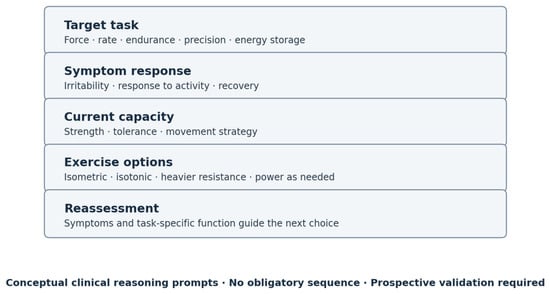
Step 1: Characterize the individual’s target tasks along a continuum of force, rate, endurance, precision, and energy-storage demand.
Step 2: Assess pain irritability: High/Moderate/Low.
Step 3: Select and adjust exercise options (for example, isometric, isotonic, heavier resistance, or task-specific power work) as indicated. These are not obligatory stages: they may overlap, be omitted, or be revisited according to irritability, capacity, and function.
Step 4: Assess proximal strength and movement strategies and address deficits when relevant to the patient’s goals.
Step 5: Assess task-specific capacity, such as repeated gripping and reaching, or running and jumping when applicable.
These steps are prompts for reassessment and shared clinical reasoning, not a validated treatment algorithm. No evidence establishes a single obligatory sequence for all four conditions.
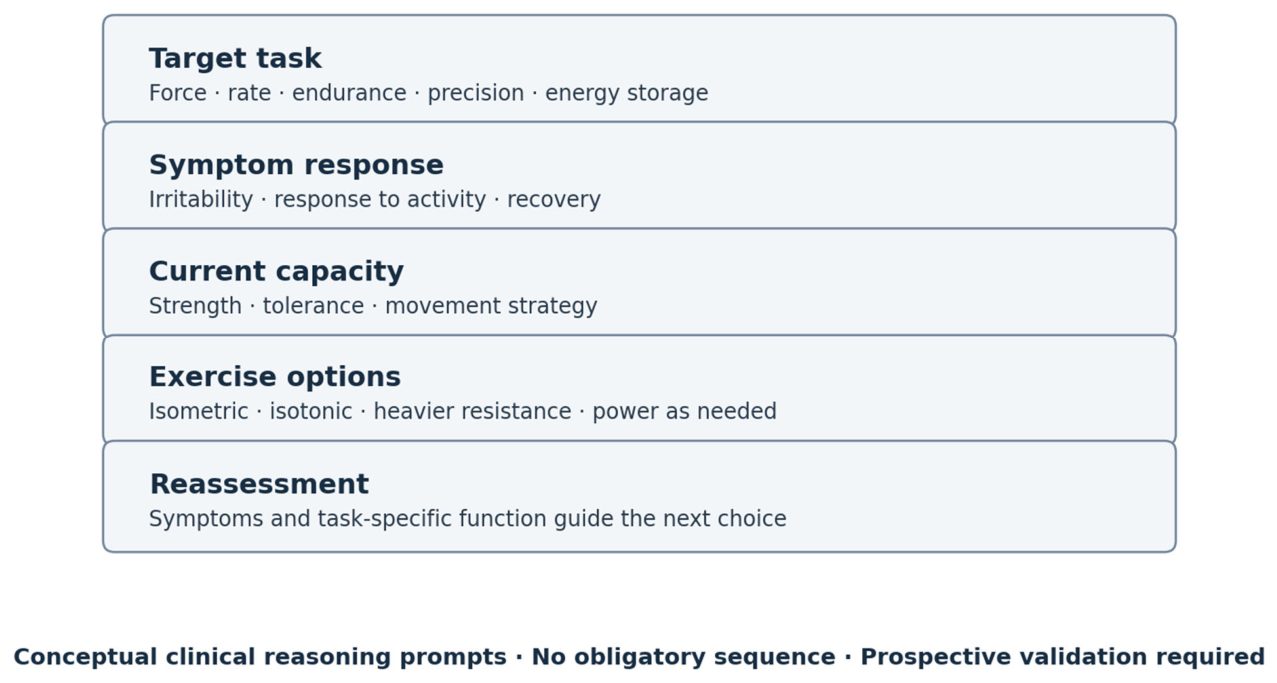
Figure 2 presents a conceptual overview of the proposed function-based rehabilitation framework.
Figure 2.
Conceptual function-based rehabilitation framework. The diagram is a set of adaptable clinical reasoning prompts, not an obligatory sequence. Exercise options may overlap, be skipped, or be revised according to irritability, capacity, and task demands. The framework requires prospective validation.
3.4. Clinical Implications
The findings of the present analysis highlight the importance of individualizing rehabilitation programs in tendinopathies.
Clinicians should avoid indiscriminately transferring rehabilitation protocols across anatomical regions and instead base decision-making on tendon function, pain response, and load tolerance. Failure to consider these factors may contribute to suboptimal outcomes and persistent symptoms.
Depending on the activity, rehabilitation may emphasize repeated upper-limb tasks, high-force lifting, lower-limb energy-storage tasks, or precise movement. These emphases are not anatomical rules and should follow the patient’s goals and condition-specific evidence.
3.5. Clinical Application Examples
3.5.1. Lateral Elbow Tendinopathy
For lateral elbow tendinopathy (LET), clinicians can assess gripping, wrist extension, occupational exposure, and relevant proximal factors [7,13].
For a patient with lateral elbow tendinopathy, repetitive wrist extension, sustained gripping, and object handling may provoke symptoms [13]. The relevant exposure depends on the individual task, force, repetition, and recovery; it cannot be inferred from an upper-versus-lower-limb classification.
Where symptoms are highly irritable, a tolerable isometric or isotonic exercise may be chosen initially. Exercise can then be adapted to grip strength, repeated task tolerance, and patient response; immediate analgesia should not be assumed. Proximal deficits can be addressed when identified clinically [13,27].
This example illustrates a patient whose main functional goal may be tolerance to repeated gripping or work tasks; it applies the conceptual framework rather than providing evidence of its effectiveness.
3.5.2. Insertional Achilles Tendinopathy
Insertional Achilles tendinopathy represents a clinically challenging lower-limb tendinopathy characterized by impaired tolerance to compressive and energy-storage loads.
For a runner with insertional Achilles tendinopathy, progression may ultimately include high-rate energy-storage tasks, while early exercise may need to limit provocative compressive loading in dorsiflexion [30]. These demands differ from those of a patient whose goal is walking.
Early exercise may use tolerable loading ranges that reduce insertional compression. A randomized trial in sport-active adults with insertional Achilles tendinopathy found better pain and functional outcomes with a progressive low-compression program than with a high-compression program at 12 and 24 weeks [30]. The intervention combined exercise-range modification with other measures, so its findings should not be attributed to one exercise component or generalized to every patient.
For a runner or jumping athlete, later exercise may include graded hopping, jumping, and return-to-running tasks when indicated by symptoms, capacity, and sport requirements [30]. The midportion Achilles return-to-sport proposal provides additional reasoning about task-specific progression [11] but should not be treated as direct validation for insertional disease.
Rotator cuff tendinopathy/rotator-cuff-related shoulder pain: For a patient returning to overhead work, rehabilitation may involve tolerable rotator cuff and scapular exercises, gradually increasing the reach height, load, speed, and repetition required by the task [14,15]. Because clinical populations and diagnostic definitions vary, this example is illustrative and cannot establish tendon-specific superiority. It was chosen to show that upper-limb rehabilitation can also require high-force and rapid tasks, challenging a rigid precision-versus-energy-storage dichotomy. The 2025 rotator cuff guideline supplies condition-specific recommendations for assessment, nonsurgical rehabilitation, and return to function or sport [15].
Patellar tendinopathy: In a jumping athlete, progressive quadriceps and tendon loading can be chosen according to symptoms and current strength, with jumping and landing exposures introduced when needed for the sport [3,8,23]. Load estimates from exercise studies should not be read as comparative clinical effectiveness. This example was chosen because repeated energy-storage tasks are common in jumping sports.
This example illustrates task-specific progression; it does not show that the proposed framework produces superior outcomes.
4. Conclusions
Across the four conditions considered, progressive exercise and load management are recurring themes, although the type and directness of evidence vary [10,13,14,15].
The proposed framework organizes established rehabilitation principles around individual task demands, irritability, and capacity. It is a conceptual synthesis, not a validated treatment model.
Direct cross-condition comparisons and prospective evaluation are needed before claiming improved outcomes or reduced recurrence.
Clinical decisions should draw on condition-specific evidence while adapting load characteristics to the patient’s goals.
The framework may be useful for structuring such decisions, but its incremental value over existing criteria-based models remains unknown.
Implications for Physiotherapy Practice
This conceptual synthesis encourages clinicians to assess task requirements and capacity when prescribing progressive loading for tendinopathy.
Load, speed, range, recovery, symptom response, and functional goals can all inform progression. Clinical targets vary within and across upper- and lower-limb conditions.
Neuromuscular or kinetic-chain interventions can be considered when clinically relevant, but this synthesis found insufficient evidence that adding them systematically improves outcomes or prevents recurrence.
Clinicians should therefore view tendon rehabilitation as a dynamic, individualized process that requires continuous adjustment of loading parameters based on symptom response, functional demands, and recovery progression.
Author Contributions
Conceptualization, D.S.; methodology, D.S., A.S. and E.G.; literature identification and synthesis, D.S., A.S. and E.G.; writing—original draft, D.S.; writing—review and editing, D.S., A.S. and E.G.; visualization, D.S. All authors have read and agreed to the published version of the manuscript.
Funding
This research received no external funding.
Institutional Review Board Statement
Not applicable. This literature review involved no new human or animal participants.
Informed Consent Statement
Not applicable. No new participants were enrolled.
Data Availability Statement
No new data were generated. All sources discussed are identified in the reference list.
Acknowledgments
During preparation of the manuscript, the authors used ChatGPT (OpenAI, accessed September 2026) for language editing, structural revision, and drafting assistance. The authors reviewed the output and remain responsible for the content.
Conflicts of Interest
The authors declare no conflicts of interest.
References
- Cook, J.L.; Purdam, C.R. Is tendon pathology a continuum? A pathology model to explain the clinical presentation of load-induced tendinopathy. Br. J. Sports Med. 2009, 43, 409–416. [Google Scholar] [CrossRef] [Scilit]
- Cook, J.L.; Rio, E.; Purdam, C.R.; Docking, S.I. Revisiting the continuum model of tendon pathology: What is its merit in clinical practice and research? Br. J. Sports Med. 2016, 50, 1187–1191. [Google Scholar] [CrossRef] [Scilit]
- Malliaras, P.; Cook, J.; Purdam, C.; Rio, E. Patellar tendinopathy: Clinical diagnosis, load management, and advice for challenging case presentations. J. Orthop. Sports Phys. Ther. 2015, 45, 887–898. [Google Scholar] [CrossRef] [Scilit]
- Chimenti, R.L.; Neville, C.; Houck, J.; Cuddeford, T.; Carreira, D.; Martin, R.L. Achilles pain, stiffness, and muscle power deficits: Midportion Achilles tendinopathy revision—2024. J. Orthop. Sports Phys. Ther. 2024, 54, CPG1–CPG32. [Google Scholar] [CrossRef] [Scilit]
- Scott, A.; Squier, K.; Alfredson, H.; Bahr, R.; Cook, J.L.; Coombes, B.; de Vos, R.J.; Fu, S.N.; Grimaldi, A.; Lewis, J.S.; et al. ICON 2019: International Scientific Tendinopathy Symposium Consensus: Clinical terminology. Br. J. Sports Med. 2020, 54, 260–262. [Google Scholar] [CrossRef] [Scilit]
- Beyer, R.; Kongsgaard, M.; Hougs Kjær, B.; Øhlenschlæger, T.; Kjær, M.; Magnusson, S.P. Heavy slow resistance training versus eccentric training as treatment for Achilles tendinopathy: A randomized controlled trial. Am. J. Sports Med. 2015, 43, 1704–1711. [Google Scholar]
- Stasinopoulos, D.; Stasinopoulos, I. Comparison of effects of eccentric training, eccentric-concentric training, and eccentric-concentric training combined with isometric contraction in the treatment of lateral elbow tendinopathy. J. Hand Ther. 2017, 30, 13–19. [Google Scholar] [CrossRef] [Scilit]
- Scattone Silva, R.; Song, K.E.; Hullfish, T.J.; Sprague, A.; Silbernagel, K.G.; Baxter, J.R. Patellar tendon load progression during rehabilitation exercises: Implications for the treatment of patellar tendon injuries. Med. Sci. Sports Exerc. 2024, 56, 545–552. [Google Scholar] [CrossRef] [Scilit]
- Demangeot, Y.; O’Neill, S.; Degache, F.; Rapin, A.; Asgher, U.; Alfredson, H.; Chester, R.; Chimenti, R.L.; de Vos, R.J.; Escriche-Escuder, A.; et al. Exercise parameters to consider for Achilles tendinopathy: A modified Delphi study with international experts. Br. J. Sports Med. 2025, 59, 1337–1349. [Google Scholar] [CrossRef] [Scilit]
- Malliaras, P.; Barton, C.J.; Reeves, N.D.; Langberg, H. Achilles and patellar tendinopathy loading programmes: A systematic review comparing clinical outcomes and identifying potential mechanisms for effectiveness. Sports Med. 2013, 43, 267–286. [Google Scholar]
- Silbernagel, K.G.; Crossley, K.M. A proposed return-to-sport program for patients with midportion Achilles tendinopathy: Rationale and implementation. J. Orthop. Sports Phys. Ther. 2015, 45, 876–886. [Google Scholar] [CrossRef] [Scilit]
- Komi, P.V.; Fukashiro, S.; Järvinen, M. Biomechanical loading of Achilles tendon during normal locomotion. Clin. Sports Med. 1992, 11, 521–531. [Google Scholar] [CrossRef] [Scilit]
- Coombes, B.K.; Bisset, L.; Vicenzino, B. Management of lateral elbow tendinopathy: One size does not fit all. J. Orthop. Sports Phys. Ther. 2015, 45, 938–949. [Google Scholar] [CrossRef] [Scilit]
- Boland, K.; Smith, C.; Bond, H.; Briggs, S.; Walton, J. Current concepts in the rehabilitation of rotator cuff related disorders. J. Clin. Orthop. Trauma 2021, 18, 13–19. [Google Scholar] [CrossRef] [Scilit]
- Desmeules, F.; Roy, J.-S.; Lafrance, S.; Charron, M.; Dubé, M.-O.; Dupuis, F.; Beneciuk, J.M.; Grimes, J.; Kim, H.M.; Lamontagne, M.; et al. Rotator cuff tendinopathy diagnosis, nonsurgical medical care, and rehabilitation: A clinical practice guideline. J. Orthop. Sports Phys. Ther. 2025, 55, 235–274. [Google Scholar] [CrossRef] [Scilit]
- Rio, E.; Kidgell, D.; Moseley, G.L.; Gaida, J.; Docking, S.; Purdam, C.; Cook, J. Tendon neuroplastic training: Changing the way we think about tendon rehabilitation: A narrative review. Br. J. Sports Med. 2016, 50, 209–215. [Google Scholar] [CrossRef] [Scilit]
- Silbernagel, K.G.; Thomeé, R.; Eriksson, B.I.; Karlsson, J. Continued sports activity using a pain-monitoring model during rehabilitation in patients with Achilles tendinopathy: A randomized controlled study. Am. J. Sports Med. 2007, 35, 897–906. [Google Scholar] [CrossRef] [Scilit]
- Obst, S.J.; Peterson, B.; Heales, L.J. Maximal lower limb strength in patellar tendinopathy: A systematic review with meta-analysis. J. Athl. Train. 2024, 59, 159–172. [Google Scholar] [CrossRef] [Scilit]
- Deroost, F.; Petrella, D.; Mylle, I.; Vanwanseele, B. Patients with Achilles tendinopathy use compensation strategies to reduce tendon load during rehabilitation exercises. Clin. Biomech. 2025, 122, 106403. [Google Scholar] [CrossRef] [Scilit]
- Stasinopoulos, D.; Stasinopoulos, I.; Pantelis, M.; Stasinopoulos, K. Comparison of effects of a home exercise programme and a supervised exercise programme for the management of lateral elbow tendinopathy. Br. J. Sports Med. 2010, 44, 579–583. [Google Scholar] [CrossRef] [Scilit]
- Docking, S.I.; Ooi, C.C.; Connell, D. Tendinopathy: Is imaging telling us the entire story? J. Orthop. Sports Phys. Ther. 2015, 45, 842–852. [Google Scholar] [CrossRef] [Scilit]
- Rio, E.; Kidgell, D.; Purdam, C.; Gaida, J.; Moseley, G.L.; Pearce, A.J.; Cook, J. Isometric exercise induces analgesia and reduces inhibition in patellar tendinopathy. Br. J. Sports Med. 2015, 49, 1277–1283. [Google Scholar] [CrossRef] [Scilit]
- Breda, S.J.; Oei, E.H.G.; Zwerver, J.; Visser, E.; Waarsing, E.; Krestin, G.P.; de Vos, R.J. Effectiveness of progressive tendon-loading exercise therapy in patients with patellar tendinopathy: A randomized clinical trial. Br. J. Sports Med. 2021, 55, 501–509. [Google Scholar] [CrossRef] [Scilit]
- van Ark, M.; Docking, S.I.; van den Akker-Scheek, I.; Rudavsky, A.; Rio, E.; Zwerver, J.; Cook, J.L. Does the adolescent patellar tendon respond to 5 days of cumulative load during a volleyball tournament? Scand. J. Med. Sci. Sports 2016, 26, 189–196. [Google Scholar] [CrossRef] [Scilit]
- Clifford, C.; Challoumas, D.; Paul, L.; Syme, G.; Millar, N.L. Effectiveness of isometric exercise in the management of tendinopathy: A systematic review and meta-analysis of randomised trials. BMJ Open Sport Exerc. Med. 2020, 6, e000760. [Google Scholar] [CrossRef] [Scilit]
- Judd, A.; Wild, K.; Puxley, L.; Barker-Davies, R. UK Defence Rehabilitation consensus agreement for the conservative management of Achilles and patellar tendinopathy: A modified Delphi approach. BMJ Mil. Health 2026, 172, 172–177. [Google Scholar] [CrossRef] [Scilit]
- Tiryaki, P.; Çelik, D. Strengthening of rotator cuff and scapular muscles in patients with lateral elbow tendinopathy: A randomized controlled study. Arch. Phys. Med. Rehabil. 2026, 107, 2755–2765. [Google Scholar] [CrossRef] [Scilit]
- Kakavas, G.; Forelli, F.; Korakakis, V.; Malliaropoulos, N.; Maffulli, N. Neuroplastic periodization in tendinopathy. Br. Med. Bull. 2025, 154, ldaf006. [Google Scholar] [CrossRef] [Scilit]
- Moreno, M.J.; Agergaard, A.S.; Costa, M.A.A.; Svensson, R.B.; Magnusson, S.P.; Scattone Silva, R. Comparison between moderate-load and high-load exercises in the rehabilitation of runners with Achilles tendinopathy: Protocol for a blind randomized controlled trial. PLoS ONE 2026, 21, e0342934. [Google Scholar] [CrossRef] [Scilit]
- Pringels, L.; Capelleman, R.; Van den Abeele, A.; Burssens, A.; Planckaert, G.; Wezenbeek, E.; Vanden Bossche, L. Effectiveness of reducing tendon compression in the rehabilitation of insertional Achilles tendinopathy: A randomised clinical trial. Br. J. Sports Med. 2025, 59, 640–650. [Google Scholar] [CrossRef] [Scilit]

Disclaimer/Publisher’s Note: The statements, opinions and data contained in all publications are solely those of the individual author(s) and contributor(s) and not of MDPI and/or the editor(s). MDPI and/or the editor(s) disclaim responsibility for any injury to people or property resulting from any ideas, methods, instructions or products referred to in the content. |
© 2026 by the authors. Licensee MDPI, Basel, Switzerland. This article is an open access article distributed under the terms and conditions of the Creative Commons Attribution (CC BY) license.