


Abstract
Organisational learning (OL) and work engagement (WE) are related but conceptually distinct constructs. This critical narrative review examines empirical associations between learning-organisation characteristics and engagement, while distinguishing organisational learning capability from employee training and perceived development opportunities. Searches of Scopus, Web of Science, PsycINFO and Google Scholar were undertaken between December 2025 and September 2026; English-language sources were selected by J.M.A.F. and V.G. The synthesis distinguishes direct observational evidence, adjacent research and theoretical mechanisms. Studies from information technology, banking and other sectors generally report positive but dimension-specific associations, and statistical mediation models have linked learning culture, WE and innovative behaviour. More recent findings suggest that employee characteristics may moderate these associations. However, measurement heterogeneity, possible confounding and predominantly cross-sectional designs preclude robust causal or reciprocal inferences. The Job Demands–Resources (JD–R) model proposes an instrumental resource pathway; Social Exchange Theory proposes a complementary perceived-investment and reciprocity pathway. Healthcare is discussed as an applied context, not as the exclusive evidence base: clinical hierarchies, interprofessional coordination, staffing pressures, emotional labour and shift work may change the operation of these pathways. The review identifies priorities for temporally ordered, multilevel and intervention studies, and provides conditional rather than causal practice implications.
1. Introduction
Organisational learning (OL) concerns the acquisition, interpretation, sharing, retention and application of knowledge in ways that may alter collective routines and organisational responses (Crossan et al., 1999; Bontis et al., 2002; Garvin, 1993). It is not interchangeable with individual learning, attendance at training courses, or the aspirational label of a ‘learning organisation’. A workplace may offer extensive employee training yet lack mechanisms to translate lessons into shared procedures and institutional memory. This distinction is central to interpreting claims about learning and staff motivation (Marsick & Watkins, 2003; Tsang, 1997).
The development of OL research was influenced by work on error detection and correction, learning from experience, organisational routines and the institutionalisation of knowledge. Senge’s account of the learning organisation subsequently brought a more prescriptive managerial orientation to this literature (Garvin, 1993; Senge, 1990; Tsang, 1997). These traditions remain informative, provided that desirable attributes of a learning organisation are not confused with demonstrated outcomes of a particular learning process.
Work engagement (WE) is commonly conceptualised as a positive work-related motivational state encompassing vigour, dedication and absorption (Schaufeli & Bakker, 2004, 2010; Bakker & Leiter, 2010). It should be differentiated from organisational commitment, job satisfaction, and the absence of burnout. Kahn (1990) also emphasised the psychological conditions under which individuals invest their physical, cognitive and emotional selves in their work. These perspectives suggest a possible connection between supportive learning conditions and engagement, but they do not establish that one construct causes the other.
The motivational approach to WE emerged alongside a broader interest in positive functioning at work (Seligman & Csikszentmihalyi, 2000; Schaufeli & Salanova, 2007). Importantly, engagement is not simply a synonym for organisational loyalty, job involvement or the absence of occupational exhaustion. Its conceptual and measurement distinctiveness has been examined in primary research and quantitative synthesis (Kahn, 1992; Langelaan et al., 2006; Christian et al., 2011). This distinction is essential when individual engagement is considered as a possible pathway towards organisational outcomes.
The specific research problem is one of conceptual alignment and evidential interpretation, rather than the absence of all prior studies. Existing investigations variously operationalise learning as training access, perceived learning opportunities, knowledge-sharing practices, learning-organisation culture or organisational learning capability; these measures operate at different levels and should not be pooled conceptually without qualification (Bhaskar & Mishra, 2014; Hussain & Ishak, 2017; Lin & Lee, 2017; Malik, 2017). Direct associations are therefore difficult to disentangle from the effects of general job resources, perceived organisational support and common-method measurement. Moreover, mediation models and theoretical proposals concerning reciprocity have sometimes been discussed as though they provided longitudinal or experimental evidence.
This narrative review therefore aims to (i) distinguish the principal forms and levels of learning relevant to WE; (ii) appraise direct empirical studies separately from indirect findings and theoretical propositions; (iii) integrate the Job Demands–Resources (JD–R) model with Social Exchange Theory (SET) while noting their different explanatory roles; and (iv) identify testable research priorities. The review concerns organisational settings generally, with healthcare used as a theoretically informative application because learning must often occur under clinical hierarchies, interprofessional coordination, patient-safety obligations and constrained work schedules. Healthcare-specific implications are presented as conditional and are not represented as conclusions from a healthcare-only evidence synthesis.
2. Narrative Review Approach
2.1. Scope and Conceptual Orientation
We conducted a narrative, conceptually oriented review of the relationship between OL and WE. The purpose was to evaluate definitions, identify directly relevant empirical evidence, and compare proposed pathways rather than to estimate a pooled effect or claim exhaustive retrieval. Empirical and theoretical contributions were considered in separate interpretative categories.
A narrative approach was selected because the relevant literature uses non-equivalent constructs and designs, including organisational learning capability, learning-organisation culture, employee development, knowledge sharing and job resources. The synthesis was structured around construct definition and level of analysis, empirical proximity to the OL–WE association, theoretical mechanism, and sectoral transferability. Because this was not a systematic review, the relative frequency of studies in the narrative should not be interpreted as an estimate of effect consistency or prevalence.
2.2. Literature Identification
Structured, conceptually oriented searches were undertaken between December 2025 and September 2026 in Scopus, Web of Science, PsycINFO and Google Scholar. Empirical publications selected for the synthesis were restricted to English. Search concepts included “organisational learning”, “organizational learning”, “learning organisation”, “learning organization”, “learning culture”, “work engagement”, “employee engagement”, “job resources”, “social exchange theory”, “job demands–resources”, “training and development”, “knowledge sharing” and “innovative behaviour”, combined through AND/OR operators and database-appropriate adaptations. Foundational conceptual works and the reference lists of relevant publications were also consulted to provide theoretical context. The conceptual search framework, eligibility considerations and database-adapted example strings are given in Supplementary Table S2. The last documented search period was September 2026; its exact calendar day was not retained. Targeted bibliographic verification subsequently identified additional relevant publications issued before the September 2026 publication cut-off. Historical search-session dates, exported queries and complete screening logs are not available; the illustrative syntax in Table S2 is not represented as archived verbatim searches.
2.3. Source Selection and Evidence Categories
Publications were selected by J.M.A.F. and V.G. according to their relevance to OL, learning-organisation culture, WE and proposed explanatory pathways. English-language, peer-reviewed empirical research was prioritised for the evidential synthesis. Foundational theoretical sources, academic books, methodological studies and relevant reviews were used to define the constructs and contextualise primary findings; the Portuguese-language contribution by Rebelo and Gomes (2011) was consulted solely for historical/conceptual background and was not included as an eligible empirical study. Sources were differentiated into (a) direct or proximal empirical reports measuring learning-related organisational characteristics and engagement in the same analysis; (b) adjacent empirical or review evidence on training, support, job resources and healthcare context without a direct equivalent OL–WE test; and (c) theory and measurement sources. Twelve direct/proximal empirical reports are examined in Section 3.3 and charted in Supplementary Table S1. These twelve reports constitute the direct/proximal empirical evidence map; other empirical reports and reviews are retained as contextual or theoretical sources. The bibliography contains 69 cited works in total, but it is not a PRISMA-style screening count. No numerical record-retrieval, deduplication or exclusion count is inferred because the historical record-level logs are unavailable; independent duplicate selection and a formal adjudication process are not claimed.
2.4. Thematic Comparison and Evidence Integration
A thematic and comparative synthesis was organised around four linked stages. First, learning-related constructs were mapped to individual development opportunities, team dialogue and knowledge sharing, organisational learning culture, and institutionally embedded learning capability. Second, the twelve direct/proximal empirical studies were charted according to context, design, construct operationalisation, engagement/outcome measures, direction of findings and limitations (Supplementary Table S1). Third, reported correlations and modelled indirect effects were distinguished from hypothesised JD–R resource pathways, SET reciprocity mechanisms and the untested possibility of reverse or reciprocal relationships. Fourth, methodological and contextual limitations were integrated into the cross-study interpretation, including construct equivalence, level of analysis, temporality, measurement overlap, confounding and transferability to healthcare. No quantitative meta-analysis or validated numerical risk-of-bias assessment was undertaken. Supplementary Table S2 explains the interpretative framework; its classifications describe the proximity and limitations of evidence rather than constituting a formally validated rating scale.
2.5. Methodological Boundaries of the Narrative Review
The design of a critical narrative review allows theoretical integration across non-equivalent study measures but is less reproducible than a fully registered systematic review. Although the search interval, databases, eligibility language and two selectors are specified, contemporaneous search exports, exact session dates, deduplication records and exclusion decisions were not retained. The synthesis may therefore be affected by selective retrieval, publication bias and the English-language restriction. Its mapped studies must not be interpreted as an exhaustive denominator for prevalence or effect-size estimation.
3. Conceptual and Empirical Evidence Synthesis
3.1. Organisational Learning: Concepts and Levels of Analysis
OL is best approached as a multilevel process in which individuals acquire or interpret information, teams exchange and negotiate it, and organisational structures preserve and use it in routines, decisions and institutional memory (Argyris & Schön, 1978, 1996; Crossan et al., 1999; Bontis et al., 2002). Organisational learning is descriptive—how learning occurs—whereas the learning-organisation perspective is often prescriptive—how a workplace ought to organise for learning (Tsang, 1997; Rebelo & Gomes, 2011).
Argyris and Schön (1978, 1996) conceptualised organisational learning through organisational theories-in-use, error detection and correction, and the distinction between single-loop and double-loop learning. Their work clarifies why correction of individual performance errors is not necessarily equivalent to questioning and changing the assumptions embedded in shared organisational routines. Early behavioural and cognitive approaches to organisational adaptation likewise emphasised information processing, learning from feedback and changes in organisational routines. Later perspectives increasingly examined cultural conditions that permit experimentation, dialogue and shared knowledge to become part of collective practice (Garvin, 1993; Senge, 1990; Jamali et al., 2009). These traditions suggest several routes through which an individual learning episode may contribute to, but should not be equated with, learning by an organisation.
For the OL–WE question, six dimensions are especially useful: individual and collective learning; knowledge sharing and dialogue; organisational memory and embedded systems; adaptation and feedback; experimentation and innovation; and a learning-supportive culture. Table 1 summarises these analytic dimensions. The dimensions are related but neither empirically equivalent nor necessarily measured at the same level (Marsick & Watkins, 2003; Garvin, 1993).
Table 1.
Conceptual dimensions of organisational learning relevant to work engagement.
Individual training is an exposure or opportunity experienced by a person; team learning concerns collectively developed understandings; and organisational learning capability requires an institution to store, transfer and act upon knowledge beyond one individual. An observed association between an employee’s perception of training and their self-reported engagement cannot, without further evidence, be attributed to organisational-level learning capability. Likewise, aggregation of employee survey scores does not automatically establish that an organisational process has been measured (Crossan et al., 1999; Bontis et al., 2002).
This distinction also matters for causal reasoning: more capable organisations may offer better working conditions overall, while engaged employees may perceive learning environments more favourably. Both mechanisms, alongside common organisational causes, could generate positive cross-sectional associations.
Team-level learning additionally depends on whether employees can raise concerns, question routine practice and discuss errors without interpersonal penalty. In a multimethod field study of 51 work teams, A. Edmondson (1999) associated team psychological safety with learning behaviour, illustrating a collective process that cannot be reduced to individual training attendance. In 16 operating-room teams introducing cardiac-surgery technology, leadership coaching, speaking up and boundary-spanning behaviours were associated with successful implementation (A. C. Edmondson, 2003). Neither study measured the focal OL–WE association; both help specify the interpersonal conditions under which learning may be embedded in practice.
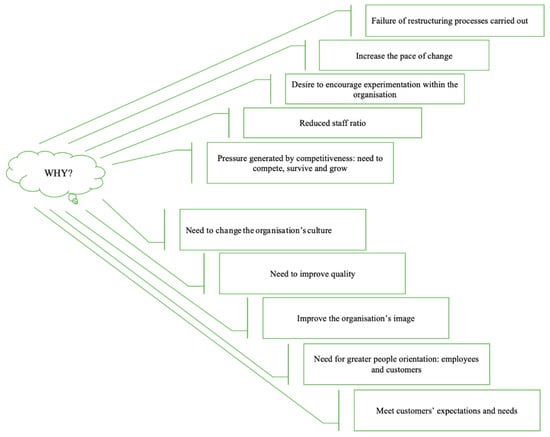
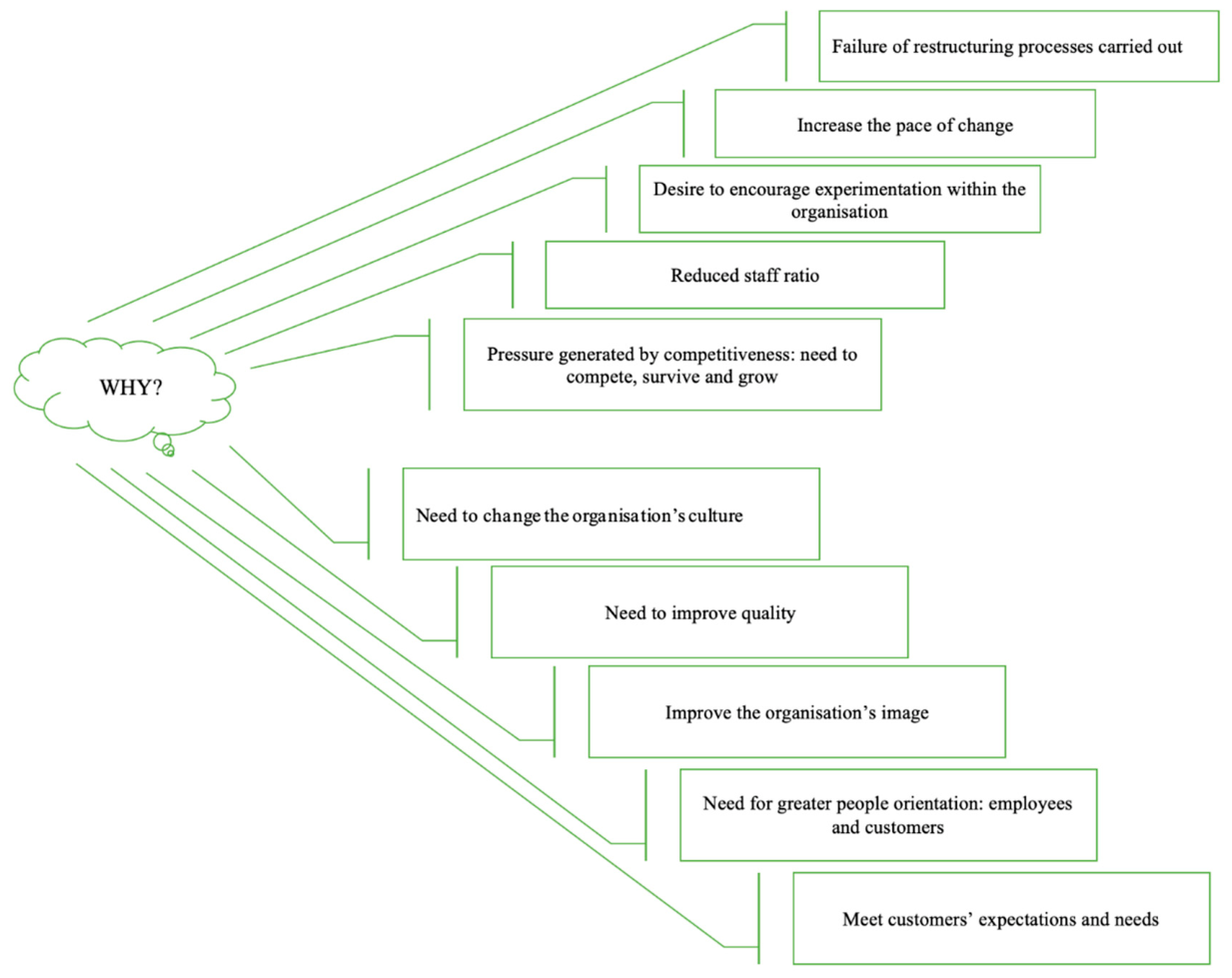
Figure 1 illustrates pressures that can prompt organisational adaptation; it is not empirical evidence for an effect on WE.
Figure 1.
Historical schematic illustrating pressures for organisational change and learning. Based on the conceptual discussion of Rebelo and Gomes (2011); not a test of the OL–WE relationship.
Learning-oriented conditions may offer employees resources, voice and opportunities to develop competence; however, the same practices may be experienced as additional demands when time, staffing or supervisory support are inadequate. Consequently, the existence of a training scheme or knowledge repository is not by itself sufficient to infer better engagement.
Learning-organisation instruments often capture several dimensions simultaneously, including opportunities for continuous learning, inquiry, team learning, empowerment, embedded systems, system connection and strategic leadership (Marsick & Watkins, 2003; Jamali et al., 2009). An aggregate score can therefore obscure distinct associations at individual, group and organisational levels. Training access may be necessary for personal competence development without being sufficient for collective retention of knowledge or sustained changes to routine work.
The conceptual distinction between OL and a learning organisation (Table 2) therefore serves a practical purpose: descriptions of learning mechanisms should not be conflated with normative claims that every learning intervention improves performance.
Table 2.
Distinguishing organisational learning from the learning-organisation perspective.
Operational definitions must specify whether the focal predictor is employee-level perceived opportunity, a team practice or an organisational capability. This requirement becomes especially important when testing cross-level relationships or comparing studies conducted in different industries.
Table 1 prioritises the dimensions needed for interpreting the engagement evidence. It is an organising framework, not a validated new measurement scale; researchers should select established, level-appropriate measures for empirical tests.
The prescriptive–descriptive distinction is retained in Table 2 to emphasise the gap between advocating a learning culture and demonstrating how specific organisational learning processes operate.
3.2. Work Engagement: Definitions and Theoretical Perspectives
WE comprises vigour (energy and resilience while working), dedication (a sense of significance, enthusiasm and pride) and absorption (focused immersion in work) (Schaufeli & Bakker, 2004, 2010). Kahn (1990) additionally described the psychological availability, safety and meaningfulness that may permit individuals to invest themselves in their work roles. These accounts provide a focused basis for considering how learning conditions may be motivationally relevant.
The distinction between WE and burnout is empirically and conceptually consequential. Exhaustion and cynicism may covary with diminished engagement, yet employees may also experience demanding, meaningful work and substantial resource constraints simultaneously (Maslach & Leiter, 1997; Maslach et al., 2001; Langelaan et al., 2006). Research on recovery further suggests variation in engagement across periods and work conditions rather than a fixed personal attribute (Sonnentag, 2003; Sonnentag et al., 2012).
Work engagement is not synonymous with organisational commitment or job satisfaction; nor does the absence of burnout establish the presence of engagement (Maslach et al., 2001; Schaufeli & Bakker, 2004). This separation is particularly relevant in demanding care environments, where staff may remain committed to patient care while experiencing exhaustion or limited opportunities for recovery.
The JD–R model differentiates work characteristics that consume energy from resources that can sustain motivation. Learning opportunities, feedback, autonomy, constructive supervision and access to knowledge may represent resources, depending on whether they are usable under actual workload constraints (Schaufeli & Bakker, 2004; Noe et al., 2014). The extent to which their presence translates into engagement is an empirical question, not a definition of OL.
JD–R theory distinguishes motivational pathways linked to useful resources from health-impairment pathways associated with excessive demands. Meta-analytic evidence indicates that the interpretation of demands is important: hindrance demands and challenge demands may have different associations with engagement (Demerouti et al., 2001; Crawford et al., 2010; Bakker & Demerouti, 2017). Thus, training that creates work intensification or competes with recovery time should not automatically be classified as a net resource.
Empirical JD–R research supports the importance of examining resource availability in conjunction with demands. A study of 2038 Finnish teachers supported distinct motivational and health-impairment pathways, although its cross-sectional model could not establish their causal ordering (Hakanen et al., 2006). In a separate sample of 805 teachers, supervisor support, appreciation and an innovative organisational climate were particularly relevant to engagement under demanding conditions (Bakker et al., 2007). These results provide an empirically grounded rationale for resource-based hypotheses, not evidence that organisational learning itself causes changes in engagement.
SET offers a different, complementary interpretation: employees who perceive developmental opportunities as evidence of organisational care and fair investment may respond with stronger attachment or engagement-related effort (Saks, 2006; Zhong et al., 2016). It does not imply that every learning activity generates reciprocity or that perceived support and organisational capability are interchangeable constructs.
SET focuses on employees’ interpretation of reciprocal obligations: perceived development investment may convey recognition and organisational support, whereas the same training requirement may be perceived as compulsory or inequitable. The institutional provision of a learning opportunity is therefore analytically distinct from its perceived meaning to employees (Blau, 1964; Eisenberger et al., 1986; Saks, 2006). The JD–R and SET accounts are complementary but non-identical; the former concerns whether a learning practice functions as a usable resource, while the latter concerns whether that practice is interpreted as a relational exchange.
The distinction between a resource and the attribution of organisational care is reinforced by research on perceived organisational support. In a review and meta-analysis, Rhoades and Eisenberger (2002) found that fairness, supervisor support and favourable employment conditions were associated with perceived support, which was in turn linked to employee attitudes and performance-related outcomes. Perceived support therefore represents a plausible construct to measure separately from the availability of learning infrastructure; the reviewed evidence does not demonstrate an OL → perceived support → WE causal sequence.
Table 3 summarises the definitions to distinctions required for the central question. Of particular importance, vigour, dedication and absorption describe individual motivational experience; a favourable organisational learning culture is a proposed contextual antecedent, not a dimension of WE.
Table 3.
Core work-engagement concepts retained for the present synthesis.
The presence of resources may be positively associated with engagement, while recovery opportunities, job demands and individual differences can also matter (Schaufeli & Bakker, 2004; Sonnentag, 2003; Xanthopoulou et al., 2009). Consequently, estimates obtained without adequate adjustment for work context should not be interpreted as the independent effects of learning practices.
Observational studies relating WE to perceived organisational support and human-resource practices (e.g., Zhong et al., 2016) provide an account of plausible covariates and pathways, but they do not specifically establish an OL-driven change in WE. Likewise, research on training and commitment (Bartlett, 2001) addresses an adjacent outcome rather than the focal engagement construct.
The distinction is especially pertinent in healthcare: continuing professional development may be mandated, clinical hierarchies may regulate who can share knowledge, and interprofessional coordination can make collective learning essential to safe practice. The presence of these features is a reason to test the framework in healthcare, not proof that the relationships observed in non-clinical organisations generalise there.
A reported association between engagement and reduced turnover intentions should not be equated with a documented reduction in actual turnover, and a cross-sectional association between resources and engagement cannot determine whether resources preceded the motivational state (Alarcon & Edwards, 2011; Schaufeli & Bakker, 2004).
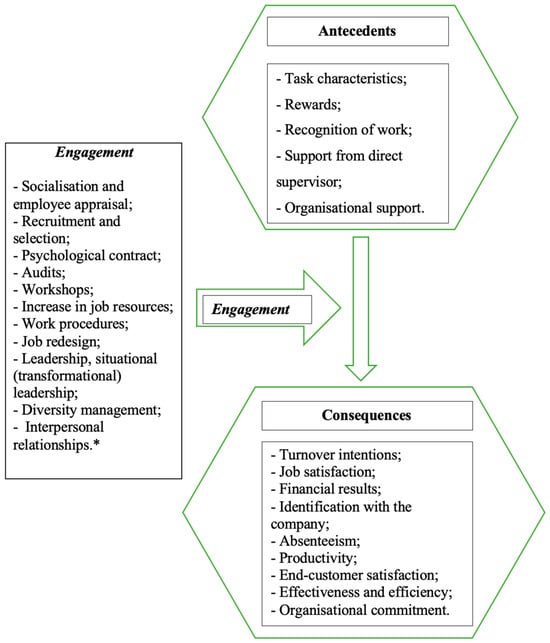
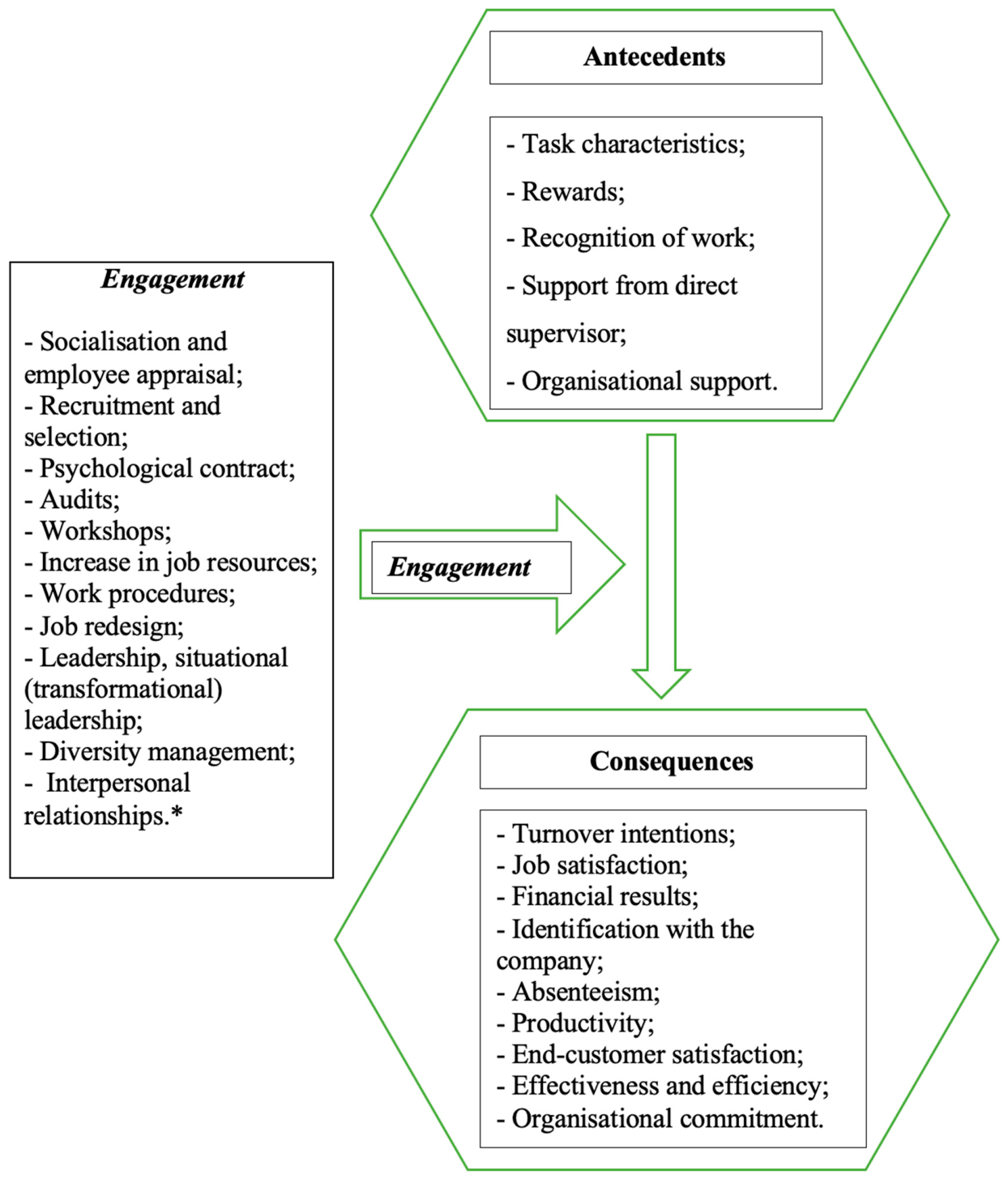
Figure 2 preserves a schematic overview of possible antecedents and correlates of engagement. Its arrows should be interpreted as conceptual directions for investigation; the diagram does not present causal effect estimates.
Figure 2.
Illustrative antecedents and correlates of work engagement. Arrows depict conceptual propositions rather than experimentally established causal pathways; see Saks (2006). * Footnote: According to Schaufeli and Salanova (2007), some possible strategies to enhance work engagement at the organisational level.
3.3. Empirical Links Between Organisational Learning and Work Engagement
The direct evidence is more informative when organised by operationalisation, research design and outcome, rather than presented as an undifferentiated series of positive associations. In this section, ‘direct evidence’ denotes studies that measured a learning-organisation/OL-related construct and engagement in the same empirical analysis; it does not imply causal identification.
A related but distinct literature examines training and development as an organisational investment. For example, Bartlett (2001) identified associations between training and organisational commitment in healthcare, whereas Huang (2001) examined training practices and organisational performance in small and medium-sized firms. These studies contribute contextual evidence about employee development and organisational outcomes, but neither is an equivalent test of collective OL capability as a determinant of WE. Conflating commitment, training participation and work engagement would overstate the direct evidence base.
Bhaskar and Mishra (2014), examining an information-technology organisation using the Dimensions of the Learning Organization Questionnaire, reported that only two of seven learning-organisation dimensions—connecting the organisation to its environment and empowering employees—emerged as significant predictors of WE in their regression model. This dimension-specific pattern argues against treating every aspect of learning culture as an equally effective engagement resource.
In a survey of 100 younger employees in Malaysian commercial banks, Hussain and Ishak (2017) described the perceived value of training, mentoring and coaching in relation to employee engagement. Because the sample was sector- and age-specific, and learning opportunities are not identical to organisational learning capability, its findings require careful qualification in any broader synthesis.
Malik (2017), studying 250 managerial employees in Indian IT firms, found different learning-organisation dimensions associated with different components of engagement: embedded systems and continuous learning opportunities were more salient for vigour and dedication, whereas inquiry and dialogue were more salient for absorption. Together with Bhaskar and Mishra (2014), this suggests construct-specific heterogeneity rather than a single uniform OL–WE relationship.
Malik and Garg (2020) tested a model in a cross-sectional survey of 300 Indian IT professionals and found positive associations among learning-organisation characteristics, employee resilience and engagement, with resilience partially mediating the specified statistical association. The model extends the range of plausible psychological pathways but does not establish the temporal ordering of learning, resilience and WE.
Lin and Lee (2017) analysed paired responses from 54 managers and 511 employees across 21 firms in a Taiwanese science park. Their cross-level model reported full statistical mediation by WE for the association between organisational learning and employees’ innovative behaviours, including idea generation, advocacy and implementation. The paired sampling improves separation of respondents across analytical levels, but mediation estimated from observational data does not by itself establish a causal sequence.
Related survey evidence by Park et al. (2014) also supported a statistical mediation model connecting learning-organisation culture, WE and innovative behaviour. The alignment of these findings is notable, but both studies remain vulnerable to unmeasured confounding and common-method influences to varying degrees; an indirect statistical association is not equivalent to an intervention effect.
More recently, Mohammad et al. (2024) examined learning-organisation characteristics, resilience, WE and innovation among 430 bank employees in Jordan. Their reported positive associations expand the range of settings in which this conceptual network has been investigated; however, the reliance on questionnaire-based structural models again limits conclusions about directionality.
Two 2026 studies extend, without removing, these inferential limitations. Aslam et al. (2026) used a cross-sectional survey of 307 managerial employees from diverse industries and reported a statistical mediating role of WE in associations between learning-organisation disciplines and exploratory/exploitative innovation. Shtembari et al. (2026), in a survey of 228 employees in Albania, reported learning-culture–innovation associations with WE as a statistical mediator and exploratory heterogeneity by age, tenure and organisational position. Their results underscore the value of examining boundary conditions, but their observational designs cannot resolve temporal direction, establish intervention effects or warrant homogeneous effects across employees.
Heterogeneity is also evident in three earlier primary studies. Hussein et al. (2017), studying 150 employees in a Malaysian higher education institution, reported positive associations with WE for four learning-organisation dimensions—empowerment, embedded systems, environmental connection and strategic leadership—rather than all measured dimensions. Sholikhah et al. (2021), in an observational survey of 200 employees at an Indonesian state-owned bank branch, found positive regression associations between learning-organisation characteristics, employee resilience and WE. Blaique et al. (2023) analysed survey responses from 208 Middle Eastern employees during the COVID-19 pandemic and reported associations linking OL, WE, resilience and psychological empowerment; their bootstrap-based indirect effects should not be interpreted as temporally identified causal mediation. Together, these studies broaden sectoral coverage and strengthen the evidence that construct-specific positive associations have been reported, without resolving common-method bias, confounding or reverse causality. Across the directly analysed reports, positive associations recur, while predictor definitions, samples, outcome measures and analytic specifications vary; this is a qualitative observation, not a pooled estimate.
Adjacent literature helps clarify plausible mechanisms without directly establishing the focal association. Noe et al. (2014) reviewed workplace learning, whereas Bartlett (2001) linked training with organisational commitment rather than the three-component WE construct. In healthcare, van Biessum et al. (2025) conceptually mapped the learning-organisation model in nursing homes, and Staniškienė et al. (2026) considered organisational resources and nurses’ engagement within a JD–R perspective. Goula et al. (2021) additionally measured learning-organisation culture among 380 professionals in six Greek public hospitals, without including WE as an outcome. Zhao et al. (2024) used a multilevel study of 175 nurses across 38 Chinese community health centres to examine organisational learning alongside self-directed learning, self-reported care quality, organisational commitment and work stress, but not WE. These contextual sources support sector-specific conceptualisation but must not be counted as independent direct tests of an OL–WE causal link.
Additional findings are relevant to the wider resource–engagement literature while remaining outside the twelve direct/proximal OL–WE reports. Salanova et al. (2005) investigated organisational resources, engagement and service climate across 114 service units, with customer-reported outcomes providing information from a different source. In a two-wave study of Japanese nurses, Nagai et al. (2023) found that personal and professional resources predicted WE three months later among early career nurses, whereas the corresponding resource-to-engagement path was not supported for mid- and later-career nurses. These studies strengthen the rationale for considering both resource conditions and population-specific pathways, but neither isolates institutionally embedded OL as the exposure of interest.
SET and the JD–R model are complementary rather than interchangeable. The JD–R account specifies a resource-related motivational pathway: accessible learning opportunities, task feedback and knowledge support may facilitate goal attainment and engagement when demands are manageable (Schaufeli & Bakker, 2004). SET specifies an attributional and relational pathway: employees may interpret developmental investment as organisational support and respond reciprocally (Saks, 2006; Zhong et al., 2016). An activity can be a useful resource without being perceived as a social exchange, and a perceived investment may not yield engagement if workload prevents its use.
For clarity, the following pathways are proposed mechanisms rather than established findings of this review: learning culture → usable job resources → WE; learning investment → perceived organisational support → WE; and WE → proactive learning participation → stronger collective learning. The first two are compatible with the reviewed theories, while the reverse or reciprocal pathway requires repeated measurements at appropriate levels before it can be tested.
Engaged employees may be more inclined to seek information or participate in learning (Noe et al., 2014; Sonnentag, 2003), but available accounts do not permit the conclusion that WE subsequently increases organisational learning capability. Showing this would require evidence that individual behaviour is shared, institutionalised and retained at the collective level, rather than merely associated with favourable personal attitudes.
Consequently, the evidence does not justify the blanket statement that training inevitably increases engagement or organisational performance. A stronger inference is that certain learning-related conditions are associated with WE in some studies, while the causal, reciprocal and sector-specific implications remain to be established.
Engagement has also been associated with task and contextual performance in broader quantitative research (Christian et al., 2011), and with workplace attitudes and turnover intentions (Alarcon & Edwards, 2011; Einolander, 2016). These relationships help explain why WE is a consequential outcome, but they cannot establish that OL generated the engagement or the distal performance indicators. Likewise, a two-wave study linking WE to subsequent job crafting and changes in person–job fit (Lu et al., 2014) is pertinent to employee proactivity, not a direct longitudinal demonstration that engagement causes organisational learning.
4. Critical Interpretation and Organisational Implications
The studies reviewed report recurring positive associations between selected dimensions of learning-organisation culture and WE, alongside substantial heterogeneity of constructs, outcomes and settings. Bhaskar and Mishra (2014), Hussein et al. (2017) and Malik (2017) found dimension-specific relationships rather than uniformly positive associations for every learning dimension. Studies involving banking and cross-sector employees provide further convergent but observational associations (Sholikhah et al., 2021; Blaique et al., 2023), while recent survey findings emphasise potential employee-level boundary conditions (Shtembari et al., 2026). Models linking learning culture to innovative behaviour through engagement (Park et al., 2014; Lin & Lee, 2017; Aslam et al., 2026) show statistically coherent indirect associations, but these estimates are not causal mediation effects without additional assumptions and temporally appropriate evidence. Direct evidence is largely non-clinical; the healthcare implications consequently remain conditional.
The distinction between proximal motivational outcomes and distal organisational outcomes is particularly important. Positive associations between WE and performance in independent meta-analytic research (Harter et al., 2002; Christian et al., 2011) do not permit a chain of causal attribution from OL, through WE, to performance or retention. Selection into training, workplace climate, leadership behaviour and baseline employee motivation remain plausible alternative explanations for the reported cross-sectional relationships.
Theoretical integration helps specify what future tests should measure. In a JD–R account, the proximal question is whether organisational learning infrastructure provides employees with resources they can actually use (e.g., actionable feedback, protected learning time and reliable knowledge access); findings from resource–engagement research support this pathway as plausible, not as an established OL-specific effect (Salanova et al., 2005; Bakker et al., 2007). In an SET account, the proximal question is whether employees interpret development opportunities as credible investment and support, which should be evaluated independently of resource availability (Rhoades & Eisenberger, 2002; Saks, 2006). These accounts can coexist but make distinguishable predictions: resource utility may matter even without a reciprocity attribution, while perceived care may not be motivationally effective if staff lack time or autonomy to benefit from it. Neither theory directly validates the complete proposed pathway in this corpus.
Statistical mediation models connecting learning culture and innovative behaviour through WE (Lin & Lee, 2017; Park et al., 2014; Mohammad et al., 2024; Aslam et al., 2026; Shtembari et al., 2026) are compatible with hypothesised pathways, not proof that a change to a learning policy improves engagement or innovation. Reverse causation, self-selection into developmental activities, leadership and job-design confounding, measurement overlap and attrition in longer designs all require attention. Lin and Lee (2017) used a cross-level approach with separate managerial and employee respondents, improving some aspects of measurement separation while not eliminating unmeasured confounding or the need for temporal evidence.
Healthcare presents particular conditions for assessing these propositions: clinical hierarchies can restrict upward communication; interprofessional teams rely on reliable knowledge exchange; patient safety requires lessons to become embedded in shared protocols; and emotional labour, staffing constraints and rotating shifts can reduce the practical accessibility of learning resources. A. C. Edmondson (2003) documented how leadership and speaking up relate to implementation learning in operating-room teams, while A. C. Edmondson (2004) analysed organisational barriers to learning from failures in care. Goula et al. (2021) documented variation in learning-organisation culture among Greek hospital professionals, and Zhao et al. (2024) assessed organisational learning and nurse-level outcomes in Chinese primary care without measuring WE. Leufvén et al. (2015) demonstrated the feasibility of assessing learning-organisation dimensions in a low-resource healthcare setting, and van Biessum et al. (2025) examined learning-organisation theory in nursing homes. Evidence on organisational resources and nurses’ engagement (Nagai et al., 2023; Staniškienė et al., 2026) further illustrates JD–R relevance without isolating collective OL as a causal exposure. No reviewed clinical study establishes that increasing OL causally improves WE, patient safety or retention; these relationships require direct prospective evaluation.
Healthcare relevance also derives from the emotional and relational character of care. Studies of burnout, professional hierarchy and interpersonal dynamics in health professionals demonstrate why leadership, psychological safety and recovery opportunities deserve attention in this setting (Fradelos et al., 2014; Giannouli, 2017; Varytis & Giannouli, 2023; Tragantzopoulou et al., 2024). These sources are contextual, not direct demonstrations of an OL–WE effect. Programmes such as clinical debriefings, interprofessional simulation, protected continuing professional development and shared incident-learning systems are therefore proposed as mechanisms for evaluation, not established causal treatments for poor engagement or patient-safety outcomes.
Healthcare-specific evidence further cautions against treating work resources as interchangeable. In a systematic review of 61 studies of nurses’ engagement, Aungsuroch et al. (2024) identified organisational, job-role, individual, work–life and environmental factors, indicating that learning opportunities must be evaluated alongside staffing, job design and workplace conditions. Accordingly, observed resource–engagement associations in nursing cannot be attributed to learning-organisation capability unless the relevant learning constructs are measured and competing predictors are considered.
4.1. Limitations of the Evidence and Review
Several limitations affect the strength and generalisability of this synthesis and of the evidence it discusses. The conclusions are deliberately framed as qualified associations and research propositions.
First, cross-sectional survey designs predominate among the directly pertinent studies. Regression coefficients and cross-sectional mediation models do not determine temporal ordering, eliminate reverse causality or isolate an intervention effect. Accordingly, proposed bidirectional pathways remain hypotheses rather than demonstrated feedback loops.
Second, common-method and construct-overlap concerns arise when the same respondents report the learning culture, organisational support and their own engagement. Even in studies using more than one organisational level, unmeasured leadership quality, job design or organisational resources may confound the focal relationship. Different studies also use non-identical dimensions of OL and engagement, frustrating straightforward comparisons.
Third, direct OL–WE studies have concentrated on information technology, banking and mixed occupational samples, with much less direct evidence from hospitals or long-term care. Clinical team-learning research, hospital learning-culture measurement and nursing engagement studies illustrate important contextual processes, but they examine different constructs (A. C. Edmondson, 2003, 2004; Goula et al., 2021; Nagai et al., 2023; Zhao et al., 2024; Aungsuroch et al., 2024). Professional hierarchies, collective care duties, shift work, staffing and psychologically safe reporting may alter both OL and WE (Ferguson & Dawson, 2012; Fradelos et al., 2014; Leufvén et al., 2015; van Biessum et al., 2025; Staniškienė et al., 2026). These factors have not been established as moderators by a comprehensive healthcare OL–WE evidence base.
Fourth, the present narrative review does not provide a fully reproducible historical screening flow. Although the search months, databases, inclusion language and selection authors are specified, archived query strings, record counts, exclusions and selection decisions were unavailable; nor was a validated study risk-of-bias appraisal performed. The qualitative evidence matrix describes the studies discussed rather than demonstrating exhaustive retrieval. Accordingly, unidentified, non-English or null findings could change the apparent balance of the evidence.
Finally, WE is a proximal individual psychological construct; organisational innovation, actual retention, objective clinical performance and patient safety are distinct distal outcomes. Their causal connection to OL cannot be inferred merely from observed correlations among employee self-reports.
4.2. Priorities for Future Research
Priority 1: Conduct preregistered longitudinal and cross-lagged studies assessing learning culture, specific learning practices and WE at repeated time points, while adjusting for baseline engagement, leadership, workload and resources. Reciprocal OL–WE claims should be tested with designs able to distinguish within-person change from stable between-person differences.
Priority 2: Design multilevel studies in which organisational learning capability is evidenced by team- or organisation-level practices (e.g., documented feedback cycles, shared protocols or knowledge retention), rather than inferred solely from individual perceptions. Distinguish training exposure, learning opportunity, knowledge sharing and organisational memory as separate predictors.
Priority 3: Compare competing and complementary mechanisms directly. Measure usable job resources, perceived organisational support, psychological safety, meaningfulness and resilience, and assess their temporal mediation with transparent assumptions. Test whether resource utility and reciprocity attribution independently explain changes in WE.
Priority 4: Evaluate interventions that alter learning conditions—not only self-reported training satisfaction—using comparison groups, implementation-fidelity measures and prespecified outcomes. Studies should include potential adverse or null effects, such as training burden, reduced recovery time or uneven access to developmental opportunities.
Studies of proposed mechanisms should separately evaluate the training exposure actually received, the employee’s perceived ability to use new knowledge, the embedding of learning in collective routines, and possible opportunity costs. Comparisons should be designed to detect beneficial, neutral and adverse outcomes, including workload redistribution, inequitable learning access and reduced time for rest or patient care.
Priority 5: In healthcare, stratify analyses by professional group, career stage, hierarchy, shift pattern, staffing pressure and unit type. Evaluate whether psychologically safe speaking up, team-based learning, debriefing and protected development time contribute to collective knowledge retention and subsequently to WE (A. C. Edmondson, 2003; Nagai et al., 2023). Measure staff engagement alongside independent process and patient-safety indicators, without conflating those endpoints or assuming that findings from related nursing resources research demonstrate an OL-specific effect.
Priority 6: For future evidence syntheses, retain complete search exports, database-specific queries and dates, deduplication files, screening logs and explicit adjudication procedures, while prespecifying how empirical studies will be distinguished from conceptual and adjacent evidence. Where meta-analysis becomes appropriate, group studies by learning construct, level and design rather than pooling non-equivalent exposure measures. These steps would make the proposed mechanisms more falsifiable and organisational implications more credible.
5. Concluding Synthesis
The evidence reviewed supports a cautious conclusion: selected dimensions of learning-organisation culture and learning-related resources are associated with work engagement in selected occupational contexts. The strength, direction and generalisability of these associations remain uncertain, and survey-based statistical mediation should not be read as proof of causal improvement in engagement, innovation or retention. The JD–R model and SET offer complementary, testable explanations, but their proposed pathways require better temporal and multilevel evidence. For healthcare organisations, protecting time for collaborative learning, enabling constructive knowledge exchange and evaluating accessible developmental resources are plausible strategies for investigation rather than interventions shown here to improve staff or patient outcomes. Progress will depend on precise operational definitions, rigorous comparative designs and outcomes measured independently of the learning climate itself.
Supplementary Materials
The following supporting information can be downloaded at https://www.mdpi.com/article/10.3390/psycholint8040072/s1. Table S1: Study-level evidence traceability, construct comparability and critical interpretation; Table S2: Search strategy, eligibility, selection and qualitative evidence framework.
Author Contributions
Conceptualization, J.M.A.F. and V.G.; methodology, J.M.A.F. and V.G.; investigation, J.M.A.F. and V.G.; formal analysis, J.M.A.F. and V.G.; data curation, J.M.A.F.; writing—original draft preparation, J.M.A.F., V.G. and P.T.; writing—review and editing, J.M.A.F., V.G., P.T., N.S. and M.T.; visualization, J.M.A.F.; supervision, J.M.A.F.; project administration, J.M.A.F. All authors have read and agreed to the published version of the manuscript.
Funding
This research received no external funding.
Institutional Review Board Statement
Not applicable.
Informed Consent Statement
Not applicable.
Data Availability Statement
No participant-level dataset was generated for this narrative review. The studies and interpretative characteristics discussed are identified in the References and Supplementary Table S1. Supplementary Table S2 describes the search concepts, eligibility considerations and qualitative interpretative framework. Historical record-level search exports and screening logs are not available.
Conflicts of Interest
The authors declare no conflicts of interest.
References
- Alarcon, G. M., & Edwards, J. M. (2011). The relationship of engagement, job satisfaction and turnover intentions. Stress and Health, 27, 294–298. [Google Scholar] [CrossRef] [Scilit]
- Argyris, C., & Schön, D. A. (1978). Organizational learning: A theory of action perspective. Addison-Wesley. [Google Scholar]
- Argyris, C., & Schön, D. A. (1996). Organizational learning II: Theory, method, and practice. Addison-Wesley. [Google Scholar]
- Aslam, M. S., Qammar, A., Nawaz, Q., & Ahmed, F. (2026). Leveraging learning organization to foster ambidextrous innovation through work engagement. Journal of the Knowledge Economy, 17, 298–324. [Google Scholar] [CrossRef] [Scilit]
- Aungsuroch, Y., Gunawan, J., Juanamasta, I. G., & Montayre, J. (2024). Updating factors influencing nurse work engagement in the hospital settings: A systematic review. Journal of Healthcare Leadership, 16, 157–176. [Google Scholar] [CrossRef] [Scilit] [PubMed]
- Bakker, A. B., & Demerouti, E. (2017). Job demands–resources theory: Taking stock and looking forward. Journal of Occupational Health Psychology, 22(3), 273–285. [Google Scholar] [CrossRef] [Scilit] [PubMed]
- Bakker, A. B., Hakanen, J. J., Demerouti, E., & Xanthopoulou, D. (2007). Job resources boost work engagement, particularly when job demands are high. Journal of Educational Psychology, 99(2), 274–284. [Google Scholar] [CrossRef] [Scilit]
- Bakker, A. B., & Leiter, M. P. (Eds.). (2010). Work engagement: A handbook of essential theory and research. Psychology Press. [Google Scholar] [CrossRef] [Scilit]
- Bartlett, K. R. (2001). The relationship between training and organizational commitment: A study in the health care field. Human Resource Development Quarterly, 12(4), 335–352. [Google Scholar] [CrossRef] [Scilit]
- Bhaskar, A. U., & Mishra, B. (2014). Organisational learning and work engagement: Study of an IT organization. Indian Journal of Industrial Relations, 49(3), 541–550. Available online: https://www.jstor.org/stable/24546996 (accessed on 13 August 2026).
- Blaique, L., Ismail, H. N., & Aldabbas, H. (2023). Organizational learning, resilience and psychological empowerment as antecedents of work engagement during COVID-19. International Journal of Productivity and Performance Management, 72(6), 1584–1607. [Google Scholar] [CrossRef] [Scilit]
- Blau, P. M. (1964). Exchange and power in social life. Wiley. [Google Scholar]
- Bontis, N., Crossan, M. M., & Hulland, J. (2002). Managing an organizational learning system by aligning stocks and flows. Journal of Management Studies, 39(4), 437–469. [Google Scholar] [CrossRef] [Scilit]
- Christian, M. S., Garza, A. S., & Slaughter, J. E. (2011). Work engagement: A quantitative review and test of its relations with task and contextual performance. Personnel Psychology, 64(1), 89–136. [Google Scholar] [CrossRef] [Scilit]
- Crawford, E. R., LePine, J. A., & Rich, B. L. (2010). Linking job demands and resources to employee engagement and burnout: A theoretical extension and meta-analytic test. Journal of Applied Psychology, 95(5), 834–848. [Google Scholar] [CrossRef] [Scilit] [PubMed]
- Crossan, M. M., Lane, H. W., & White, R. E. (1999). An organizational learning framework: From intuition to institution. Academy of Management Review, 24(3), 522–537. [Google Scholar] [CrossRef] [Scilit]
- Demerouti, E., Bakker, A. B., Nachreiner, F., & Schaufeli, W. B. (2001). The job demands–resources model of burnout. Journal of Applied Psychology, 86(3), 499–512. [Google Scholar] [CrossRef]
- Edmondson, A. (1999). Psychological safety and learning behavior in work teams. Administrative Science Quarterly, 44(2), 350–383. [Google Scholar] [CrossRef] [Scilit]
- Edmondson, A. C. (2003). Speaking up in the operating room: How team leaders promote learning in interdisciplinary action teams. Journal of Management Studies, 40(6), 1419–1452. [Google Scholar] [CrossRef] [Scilit]
- Edmondson, A. C. (2004). Learning from failure in health care: Frequent opportunities, pervasive barriers. Quality & Safety in Health Care, 13(Suppl. 2), ii3–ii9. [Google Scholar] [CrossRef] [Scilit]
- Einolander, J. (2016). Organizational commitment and engagement in two Finnish energy sector organizations. Human Factors and Ergonomics in Manufacturing & Service Industries, 26(3), 408–423. [Google Scholar] [CrossRef] [Scilit]
- Eisenberger, R., Huntington, R., Hutchison, S., & Sowa, D. (1986). Perceived organizational support. Journal of Applied Psychology, 71(3), 500–507. [Google Scholar] [CrossRef]
- Ferguson, S. A., & Dawson, D. (2012). 12-h or 8-h shifts? It depends. Sleep Medicine Reviews, 16(6), 519–528. [Google Scholar] [CrossRef] [Scilit] [PubMed]
- Fradelos, E., Tzitzikos, G., Giannouli, V., Argyrou, P., Vassilopoulou, C., & Theofilou, P. (2014). Assessment of burn-out and quality of life in nursing professionals: The contribution of perceived social support. Health Psychology Research, 2(1), 984. [Google Scholar] [CrossRef] [Scilit] [PubMed]
- Garvin, D. A. (1993). Building a learning organization. Harvard Business Review, 71(4), 78–91. [Google Scholar] [PubMed]
- Giannouli, V. (2017). What do we really know about hubris, culture and health professionals in leadership positions? A methodological recommendation. Asian Journal of Psychiatry, 26, 150–151. [Google Scholar] [CrossRef] [Scilit] [PubMed]
- Goula, A., Stamouli, M.-A., Latsou, D., Gkioka, V., & Kyriakidou, N. (2021). Learning organizational culture in Greek public hospitals. International Journal of Environmental Research and Public Health, 18(4), 1867. [Google Scholar] [CrossRef] [Scilit] [PubMed]
- Hakanen, J. J., Bakker, A. B., & Schaufeli, W. B. (2006). Burnout and work engagement among teachers. Journal of School Psychology, 43(6), 495–513. [Google Scholar] [CrossRef] [Scilit]
- Harter, J. K., Schmidt, F. L., & Hayes, T. L. (2002). Business-unit-level relationship between employee satisfaction, employee engagement, and business outcomes: A meta-analysis. Journal of Applied Psychology, 87(2), 268–279. [Google Scholar] [CrossRef] [Scilit] [PubMed]
- Huang, T.-C. (2001). The relation of training practices and organizational performance in small and medium size enterprises. Education + Training, 43(8/9), 437–444. [Google Scholar] [CrossRef] [Scilit]
- Hussain, I. A., & Ishak, N. A. (2017). The relationship between organizational learning and employee engagement, in the perspective of young employees from commercial banks in Malaysia. Journal of Business and Economic Development, 2(1), 57–62. [Google Scholar] [CrossRef] [Scilit]
- Hussein, N., Abdul Razak, N. A., & Omar, M. K. (2017). Learning organization and work engagement: An empirical evidence of a higher learning institution in Malaysia. Information Management and Business Review, 9(1), 17–22. [Google Scholar] [CrossRef] [Scilit]
- Jamali, D., Sidani, Y., & Zouein, C. (2009). The learning organization: Tracking progress in a developing country: A comparative analysis using the DLOQ. The Learning Organization, 16(2), 103–121. [Google Scholar] [CrossRef] [Scilit]
- Kahn, W. A. (1990). Psychological conditions of personal engagement and disengagement at work. Academy of Management Journal, 33(4), 692–724. [Google Scholar] [CrossRef] [Scilit] [PubMed]
- Kahn, W. A. (1992). To be fully there: Psychological presence at work. Human Relations, 45(4), 321–349. [Google Scholar] [CrossRef] [Scilit]
- Langelaan, S., Bakker, A. B., van Doornen, L. J. P., & Schaufeli, W. B. (2006). Burnout and work engagement: Do individual differences make a difference? Personality and Individual Differences, 40(3), 521–532. [Google Scholar] [CrossRef] [Scilit]
- Leufvén, M., Vitrakoti, R., Bergström, A., Ashish, K. C., & Målqvist, M. (2015). Dimensions of learning organizations questionnaire (DLOQ) in a low-resource health care setting in nepal. Health Research Policy and Systems, 13, 6. [Google Scholar] [CrossRef] [Scilit] [PubMed]
- Lin, H.-C., & Lee, Y.-D. (2017). A study of the influence of organizational learning on employees’ innovative behavior and work engagement by a cross-level examination. Eurasia Journal of Mathematics, Science and Technology Education, 13(7), 3463–3478. [Google Scholar] [CrossRef] [Scilit]
- Lu, C.-Q., Wang, H.-J., Lu, J.-J., Du, D.-Y., & Bakker, A. B. (2014). Does work engagement increase person–job fit? The role of job crafting and job insecurity. Journal of Vocational Behavior, 84(2), 142–152. [Google Scholar] [CrossRef] [Scilit]
- Malik, P. (2017). Learning organization and work engagement: Exploring the nexus in Indian IT sector. Asia-Pacific Journal of Business Administration, 9(3), 166–189. [Google Scholar] [CrossRef] [Scilit]
- Malik, P., & Garg, P. (2020). Learning organization and work engagement: The mediating role of employee resilience. The International Journal of Human Resource Management, 31(8), 1071–1094. [Google Scholar] [CrossRef] [Scilit]
- Marsick, V. J., & Watkins, K. E. (2003). Demonstrating the value of an organization’s learning culture: The dimensions of the learning organization questionnaire. Advances in Developing Human Resources, 5(2), 132–151. [Google Scholar] [CrossRef] [Scilit]
- Maslach, C., & Leiter, M. P. (1997). The truth about burnout: How organizations cause personal stress and what to do about it. Jossey-Bass. [Google Scholar]
- Maslach, C., Schaufeli, W. B., & Leiter, M. P. (2001). Job burnout. Annual Review of Psychology, 52, 397–422. [Google Scholar] [CrossRef] [Scilit] [PubMed]
- Mohammad, S., Sağsan, M., & Şeşen, H. (2024). The impact of ‘learning organizations’ on innovation: The mediating role of ‘employee resilience’ and work engagement. SAGE Open, 14(4). [Google Scholar] [CrossRef] [Scilit]
- Nagai, S., Ogata, Y., Yamamoto, T., Fedyk, M., & Bell, J. F. (2023). A longitudinal study of the impact of personal and professional resources on nurses’ work engagement: A comparison of early-career and mid-later-career nurses. Healthcare, 11(1), 76. [Google Scholar] [CrossRef] [Scilit] [PubMed]
- Noe, R. A., Clarke, A. D. M., & Klein, H. J. (2014). Learning in the twenty-first-century workplace. Annual Review of Organizational Psychology and Organizational Behavior, 1, 245–275. [Google Scholar] [CrossRef] [Scilit]
- Park, Y. K., Song, J. H., Yoon, S. W., & Kim, J. (2014). Learning organization and innovative behavior: The mediating effect of work engagement. European Journal of Training and Development, 38(1/2), 75–94. [Google Scholar] [CrossRef] [Scilit]
- Rebelo, T., & Gomes, D. (2011). Aprendizagem organizacional e organizações aprendentes. Imprensa da Universidade de Coimbra. [Google Scholar] [CrossRef] [Scilit] [PubMed]
- Rhoades, L., & Eisenberger, R. (2002). Perceived organizational support: A review of the literature. Journal of Applied Psychology, 87(4), 698–714. [Google Scholar] [CrossRef] [PubMed]
- Saks, A. M. (2006). Antecedents and consequences of employee engagement. Journal of Managerial Psychology, 21(7), 600–619. [Google Scholar] [CrossRef] [Scilit]
- Salanova, M., Agut, S., & Peiró, J. M. (2005). Linking organizational resources and work engagement to employee performance and customer loyalty: The mediation of service climate. Journal of Applied Psychology, 90(6), 1217–1227. [Google Scholar] [CrossRef] [Scilit] [PubMed]
- Schaufeli, W. B., & Bakker, A. B. (2004). Job demands, job resources, and their relationship with burnout and engagement: A multi-sample study. Journal of Organizational Behavior, 25(3), 293–315. [Google Scholar] [CrossRef] [Scilit]
- Schaufeli, W. B., & Bakker, A. B. (2010). Defining and measuring work engagement: Bringing clarity to the concept. In A. B. Bakker, & M. P. Leiter (Eds.), Work engagement: A handbook of essential theory and research (pp. 10–24). Psychology Press. [Google Scholar]
- Schaufeli, W. B., & Salanova, M. (2007). Work engagement: An emerging psychological concept and its implications for organizations. In S. W. Gilliland, D. D. Steiner, & D. P. Skarlicki (Eds.), Managing social and ethical issues in organizations (pp. 135–177). Information Age Publishing. [Google Scholar]
- Seligman, M. E. P., & Csikszentmihalyi, M. (2000). Positive psychology: An introduction. American Psychologist, 55(1), 5–14. [Google Scholar] [CrossRef] [PubMed]
- Senge, P. M. (1990). The fifth discipline: The art and practice of the learning organization. Doubleday. [Google Scholar]
- Sholikhah, S., Marbun, R. N., & Parimita, W. (2021). The influence of learning organization and employee resilience on work engagement at BUMN bank branch office in bogor. International Journal of Human Capital Management, 5(2), 11–25. [Google Scholar] [CrossRef] [Scilit]
- Shtembari, E., Kasapi, I., Cungu, E., & Cristofaro, M. (2026). When learning culture fails to reach everyone: Work engagement and employee differences in innovative behaviour. International Journal of Organizational Analysis, 34(12), 411–435. [Google Scholar] [CrossRef] [Scilit]
- Sonnentag, S. (2003). Recovery, work engagement, and proactive behavior: A new look at the interface between nonwork and work. Journal of Applied Psychology, 88(3), 518–528. [Google Scholar] [CrossRef] [Scilit] [PubMed]
- Sonnentag, S., Mojza, E., & Demerouti, E. (2012). Reciprocal relations between recovery and work engagement: The moderating role of job stressors. Journal of Applied Psychology, 97(4), 842–853. [Google Scholar] [CrossRef] [Scilit] [PubMed]
- Staniškienė, E., Stankevičiūtė, Ž., Daunorienė, A., & Ramanauskaitė, J. (2026). Fostering resilience among nurses: The impact of organisational resources on work engagement. Sustainability, 18(10), 4855. [Google Scholar] [CrossRef] [Scilit]
- Tragantzopoulou, P., Giannouli, V., Filippou, A., & Demirtzidou, M. (2024). Burnout and coping strategies in integrative psychotherapists: Findings from qualitative interviews. Healthcare, 12(18), 1820. [Google Scholar] [CrossRef] [Scilit] [PubMed]
- Tsang, E. W. K. (1997). Organizational learning and the learning organization: A dichotomy between descriptive and prescriptive research. Human Relations, 50(1), 73–89. [Google Scholar] [CrossRef] [Scilit]
- van Biessum, C., van den Berg, B., van Erp, K., Vermunt, P., Ket, J., Nies, H., & Beersma, B. (2025). Conceptualizing the learning organization in nursing homes: A scoping review. BMC Health Services Research, 25, 621. [Google Scholar] [CrossRef] [Scilit] [PubMed]
- Varytis, A., & Giannouli, V. (2023). Workplace mobbing, group cohesion and intraindividual variables in nurses from a rural hospital in northern greece: A correlation study. Work, 76(3), 1255–1261. [Google Scholar] [CrossRef] [Scilit] [PubMed]
- Xanthopoulou, D., Bakker, A. B., Demerouti, E., & Schaufeli, W. B. (2009). Reciprocal relationships between job resources, personal resources, and work engagement. Journal of Vocational Behavior, 74(3), 235–244. [Google Scholar] [CrossRef] [Scilit]
- Zhao, R., Wang, W., Zhang, J., Li, M., Nicholas, S., Maitland, E., Yang, H., & Mitchell, R. (2024). Organizational learning and primary care nurses’ work performance and well-being: A multilevel linear analysis in a developing country. Journal of Nursing Management, 2024, 2770347. [Google Scholar] [CrossRef] [Scilit] [PubMed]
- Zhong, L., Wayne, S. J., & Liden, R. C. (2016). Job engagement, perceived organizational support, high-performance human resource practices, and cultural value orientations: A cross-level investigation. Journal of Organizational Behavior, 37(6), 823–844. [Google Scholar] [CrossRef] [Scilit]

Disclaimer/Publisher’s Note: The statements, opinions and data contained in all publications are solely those of the individual author(s) and contributor(s) and not of MDPI and/or the editor(s). MDPI and/or the editor(s) disclaim responsibility for any injury to people or property resulting from any ideas, methods, instructions or products referred to in the content. |
© 2026 by the authors. Licensee MDPI, Basel, Switzerland. This article is an open access article distributed under the terms and conditions of the Creative Commons Attribution (CC BY) license.