


Abstract
Mental health awareness is key to the overall wellbeing of university students; therefore, understanding factors that strengthen mental health awareness becomes important for ensuring effective strategies to support students. This study examined the level of mental health awareness as well as the predictive role of social media use on mental health awareness among university students. Gender was also investigated as a boundary condition in the relationship. Between July and August of 2026, a cross-sectional study was conveniently conducted among 300 university students (mean age 22.97 years, σ = 2.75) in north–central Nigeria. Validated self-reported measures were used to collect data on mental health awareness and social media use and were analyzed with the PROCESS macro (version 4.2, model 1) in IBM-SPSS. The results show moderate mental health awareness among university students. The analysis also found social media use to be a statistically significant positive and moderate predictor of mental health awareness, while gender did not moderate the relationship. The study concluded that university students have moderate mental health awareness, and social media use serves as a vital resource toward improving mental health awareness among university students. Therefore, interventions to promote social media use can enhance mental health awareness among university students.
1. Introduction
Mental health is key to overall wellbeing, especially among university students who are faced with constant academic pressures and stressors during their academic sojourn (Ghazali et al., 2024). According to the World Health Organization (World Health Organization, 2018), mental health is a state of subjective wellbeing in which a person is able to recognize their own potential, manage life’s challenges, work well, and contribute significantly to their community. Mental health problems, especially among university students, have heightened across the globe, including in Nigeria, with growing anxiety, stress, and depression (Siddique et al., 2022; Udam et al., 2024; Li et al., 2025; D. Fagbenro et al., 2026).
According to the World Health Organization (2021), mental illness is projected to account for 16% of the global burden of disease. Also, anxiety continues to be the most prevalent mental disorder worldwide, impacting 284 million people, including university students. In Bangladesh, 2.8% of people have depression and 6.7% have associated psychotic illnesses, making mental diseases among the top ten urgent health problems there (World Health Organization, 2019). In Chile, Álamo et al. (2020) reported that 15% of students experience moderate to severe depressive symptoms. The COVID-19 pandemic further heightened the situation with more than 50% of students experiencing depressive and anxiety symptoms in the post-pandemic period (Martínez-Líbano et al., 2023). In Nigeria, mental health challenges have also been reported among university students (Falade et al., 2020; Ayinde et al., 2021) with undergraduate students reported to have a high prevalence of anxiety and depressive symptoms (Adeleke et al., 2025). Recently, Kwarteng et al. (2026) found that 51.1% of Nigerian students experienced depressive symptoms, 36.5% had severe anxiety and 25.1% experienced concurrent symptoms of anxiety, depression, and stress. These psychological problems contribute to lower academic achievement, higher dropout rates and reduced personal development and overall wellbeing (Líbano et al., 2024; Li et al., 2025). Furthermore, untreated mental health problems can have long-term effects that extend beyond the college years (D. Fagbenro et al., 2026).
The continuous increase in mental illness among university students, despite the need to seek professional help, has been attributed to poor attitude and lack of mental health awareness (Shim et al., 2022; Ojewumi et al., 2025). Mental health awareness in this study refers to university students’ adequate understanding that mental health problems exist and a willingness to talk about it openly. The concept differs from mental health knowledge or literacy, which means knowledge to understand, manage, and seek professional help for mental health challenges (Asante et al., 2026). Mental health awareness is essential to health-seeking behavior because it enables students to understand that their emotions are valid and that seeking treatment is crucial when dealing with any mental health issue (Yadav et al., 2026). Awareness not only educates students about common mental health issues but also fosters empathy, self-care, and emotional fortitude, enabling them to better control their emotions and thoughts (Shim et al., 2022). Despite these laudable attributes of mental health awareness, many university students lack such awareness (Abdul Malek et al., 2026).
Previous research has shown that misconceptions, stigma, and discrimination have been attributed to refusal to discuss or share mental health conditions (Líbano et al., 2024). Nigeria, as the most populous country in Africa, has a teeming population of university adolescents faced with cultural stigma and belief systems surrounding mental health conditions. Additionally, a lack of basic health infrastructure, a shortage of medical experts, and restricted access to psychiatric care exacerbate the nation’s mental health situation (Abang, 2019; Ojewumi et al., 2025; D. A. Fagbenro et al., 2025). This has serious consequences for untreated mental illnesses and worsening mental health outcomes among this important population (Cuijpers et al., 2021). It is therefore vital to promote mental health awareness among university students in a bid to sustain the United Nations Sustainable Development Goal 3 (Good Health and Wellbeing). Understanding the level of mental health awareness and its antecedents among university students will provide robust insight regarding the severity of the problem and prompt appropriate strategies that can improve mental health awareness and support systems within the university community.
Available studies on mental health awareness (Dev et al., 2017; Siddique et al., 2022; Uddin et al., 2019) explored only mental health knowledge and awareness of university students rather than factors that explore mental health awareness. In Nigeria, studies (Gbenga, 2023; Nweze & Eze, 2021) concentrated on social media campaigns and mental health. Studies examining the level of mental health awareness, as well as the influence of social media and gender, remain scarce. While recent research conducted in Nigeria by Ojewumi et al. (2025) examines social media use, motivation and mental health awareness, there is limited evidence on the specific relationship between social media use and mental health awareness among university students in Nigeria. More specifically, the extent to which gender may vary in this relationship remains insufficiently examined. Furthermore, while the Uses and Gratifications Theory (UGT) (Blumler & Katz, 1974) has been used to explain individuals’ motivations for using social media and the Health Belief Model (HBM) (Rosenstock, 1974) has been applied to explain health-related perceptions and behaviors, limited attention has been given to their complementary application in explaining the social media use–mental health awareness link among Nigerian university students.
Using the UGT and HBM may therefore provide a theoretically grounded explanation of students’ motivations for social media use and the health-related processes associated with mental health awareness while examining gender as a potential boundary condition. Also, to the researchers’ knowledge, no study has investigated these relationships using robust statistical analysis like the Hayes (2022) regression-based PROCESS macro (model 1). In filling the research gaps, the current study investigates the level of mental health awareness as well as the association between social media use and such awareness and the moderating role of gender in the social media use–mental health awareness relationship, using robust statistics like the Hayes PROCESS macro. This research is very important in the sub-Saharan context, such as in Nigeria, where addressing social media use is relevant in promoting better mental health awareness among university students who are vulnerable to different mental health challenges due to campus stressors (Ghazali et al., 2024).
1.1. Literature Review and Hypotheses Development
1.1.1. Theoretical Frameworks
We employed the Uses and Gratifications Theory (UGT) (Blumler & Katz, 1974) and the Health Belief Model (HBM) (Rosenstock, 1974) as theoretical frameworks to explain the impact of social media use on mental health awareness. The moderating role of gender in this association will be further explained using the empirical lens.
The UGT postulates that individuals vigorously choose media as a means of communication to meet specific goals, like social contact, information, and entertainment (Katz et al., 1973). According to the theory, university students use social media platforms such as Facebook, Instagram and TikTok to obtain insights and knowledge, share experiences and seek support relating to their mental health, which invariably may enhance their mental health awareness. However, male and female students may use social media for different purposes, such as for entertainment or health information. Their motivations to use social media may also differ in terms of the level of mental health-related information they encounter. Studies (Hadjimina & Furnham, 2017; Hassan & Masoud, 2021; Chakraverty et al., 2022; Mahmoodi et al., 2023) have shown that women seek health information more actively and are more health literate than their male counterparts. Based on this empirical standpoint, males and females could differ regarding the link between social media use and mental health awareness.
In addition, the HBM (Rosenstock, 1974) explains that perceived susceptibility, severity, benefits, and barriers shape health-related behaviors among individuals. In the HBM, university students’ exposure to health information may be perceived as being threatened, severe, or beneficial. All these perceptions may influence their health-related awareness and behavior. Gender may influence these processes because male and female students may differ in their social media motivations toward health information seeking, which may impact the level of mental health awareness. Al Azdi et al. (2025) assert that males and females differ in the way they seek health-related information when engaging with social media platforms. This present study therefore applies the UGT and HBM to test how social media use may predict mental health awareness and whether gender moderates this relationship among undergraduates in a sub-Saharan nation like Nigeria.
1.1.2. Social Media Use and Mental Health Awareness
Social media use in this study refers to the moderate use of social media to search for or seek health-related information regarding mental health. Research has established that an excessive use of social media has a negative effect on mental health (Plackett et al., 2023; Maduka, 2025). Research evidence has also shown a positive link between social media use and mental health outcomes and awareness; for instance, Ojewumi et al. (2025) highlighted the positive impact of social media use on mental health awareness among undergraduates. Kagaba’s (2025) mixed-methods study discovered that moderate social media use significantly influences health awareness. Lekgothoane and Kaminer (2023) found that students use social platforms to share emotions, share experiences, and access informal psychological support. Latha et al. (2020) examined the role of social media in mental health awareness and found that social media effectively promotes an awareness of mental disorders among individuals and makes them visit health experts.
Bono et al. (2024) affirmed that social media as a platform was used by many individuals to share and exchange information and feelings as well as to gain new insights regarding mental health. Akinpelu (2022) also reported that the use of Instagram Live and Twitter Spaces by mental health professionals opens expert intervention to students. Yusuf and Adeyemi (2023) examined the role of social media in mental health and how it impacts Nigerian university students’ help-seeking behavior. The study found that students who are exposed to content relating to mental health via social media groups tend to make themselves available for professional guidance as opposed to students who are not exposed to such information on social media. Okon and Bello (2022) investigated the relationship between undergraduate students’ use of social media and mental health literacy and discovered that social media improves awareness of mental illness.
Further related studies on social media use and mental health in the extant literature include a scooping review by Agyapong-Opoku et al. (2025); the majority of studies reviewed found that social media use had an adverse mental health outcome in the form of depression and anxiety. According to Iqbal et al. (2024), university students’ mental health is negatively impacted by social media platforms. In their study on the effects of social media use on mental health among Malaysian university students, Abu et al. (2024) found no effect on the mental health and general wellbeing of the students. In the United Kingdom, Plackett et al. (2023) found a link between increased social media use and poor mental health. In his systematic research, Maduka (2025) discovered that an overuse of social media leads to mental health problems such as addiction, cyberbullying, social comparison, and sleep disturbance. Nweze and Eze (2021) looked at how social media campaigns have helped change the stigma surrounding mental health among Nigerian university students, finding that awareness campaigns by online individuals helped change negative mentalities towards mental health.
Theoretically, this relationship aligns with the UGT and HBM: the UGT emphasizes that university students who use social media for health-related information tend to have better mental health awareness, while the HBM affirms that students who perceive health benefits from social media use tend to have favorable mental health awareness. Drawing from these theoretical perspectives and empirical evidence, we predicted the following:
Hypothesis 1.
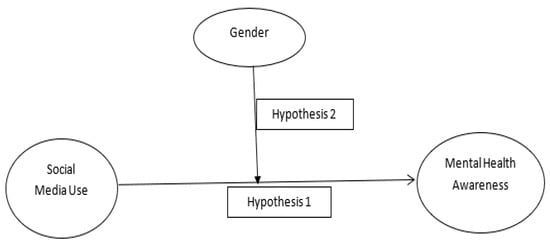
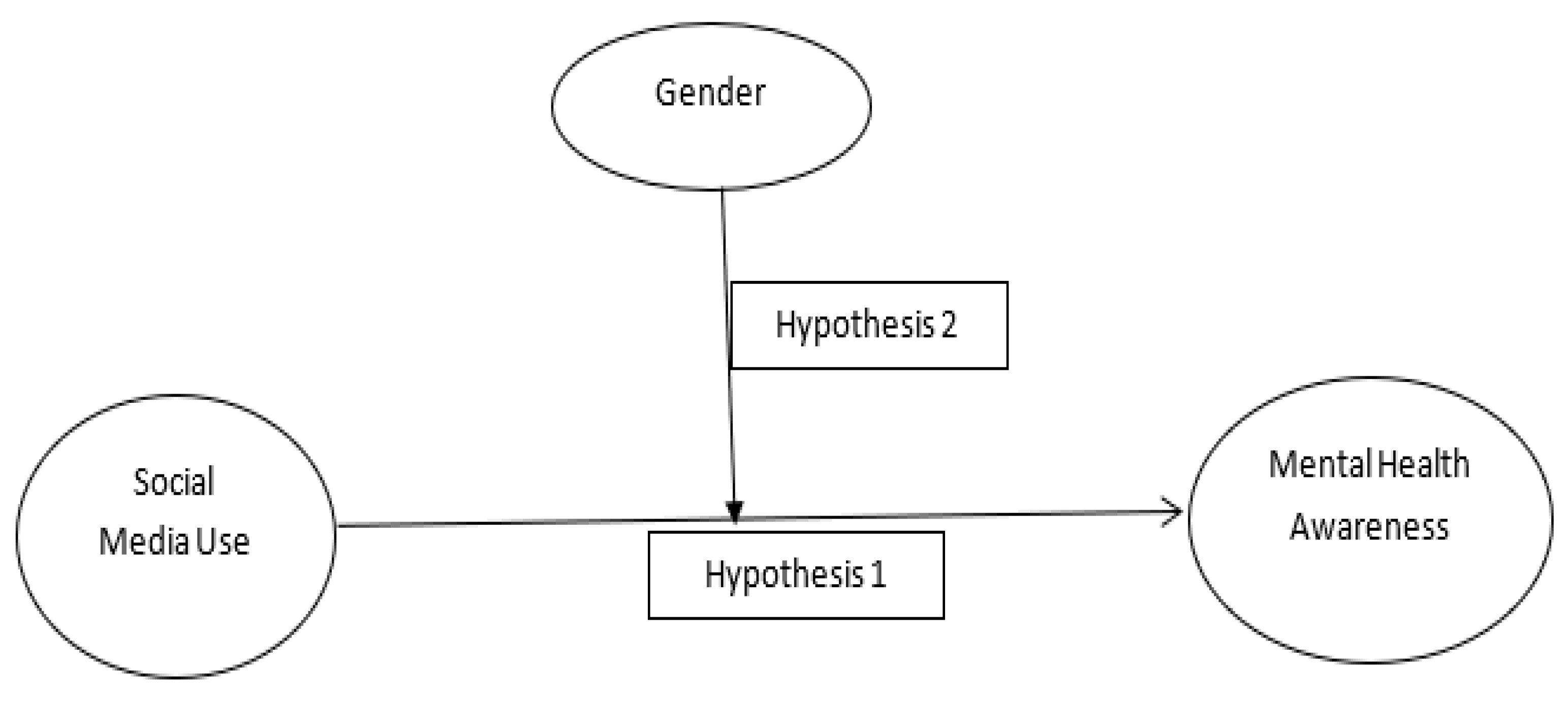
University students who are exposed to higher social media tends to have better mental health awareness.
1.1.3. Gender as a Moderator
Research effort geared toward gender interacting with social media and mental health awareness is unexamined in the literature. Although there are direct studies that have shown variations in gender regarding mental health awareness, most are on mental health; for example, Patel et al. (2024) found significant gender differences in mental health awareness among some sampled respondents. Another study by Dimbulana et al. (2023), found no significant gender differences in mental health awareness among a sample of students. In a study by Vernon et al. (2022), it was discovered that both men and women were eager to receive treatment for mental health issues. Al Azdi et al. (2025) found that females exhibit a higher rate of seeking non-professional support than their male counterparts. Nogueira et al. (2021) found that male undergraduates reported significantly better mental health than female students. Another study by Hadjimina and Furnham (2017) found that females demonstrated higher mental health literacy than males. Studies such as those by Hassan and Masoud (2021), Chakraverty et al. (2022), and Mahmoodi et al. (2023) found that women seek health information more actively and are more health literate than their male counterparts. In their investigation of gender disparities in the use of mental health services, Smith et al. (2013) discovered that women used mental health services at higher rates. Anis-Farahwahida et al. (2024) found that female students have higher levels of mental health issues such as anxiety and depression, while societal pressures inhibit men from seeking help. Based on the aforementioned empirical evidence, we propose the following:
Hypothesis 2.
Gender moderates the relationship between social media use and mental health awareness in such a way that the social media use—mental health awareness link will be higher for female than their male counterparts.
Drawing from the argument above, the conceptual model is presented in Figure 1.
Figure 1.
The hypothesized model of the study.
2. Materials and Methods
2.1. Study Design, Participants and Procedure
We employed a cross-sectional design from July to August 2026 to recruit undergraduate students from the University of Ilorin (one of the second-generation government universities founded about five decades ago) in Kwara State, Nigeria, using a convenient sampling method. The study sample was determined using the power analysis conducted using G*Power 3.1.9.7 software calculation (Faul et al., 2007). The result showed that a sample size of 75 was needed to have 95% power for arriving at a medium effect size (f2 = 0.15) in a multiple regression with 2 predictors in a bid to achieve a desired statistical power of 95% and a significance level of 5%. A relatively large sample size is required for an interaction effect; a medium interaction effect of (f2 = 0.15) at 95% power with tested predictor of 1 and total number of predictors as 3 yielded a sample size of 89. In this regard, the sample size was increased to 330, which is considered adequate to test the hypotheses. This power analysis method has been adopted by past studies (Doğan & Okşaş, 2025; Kanu et al., 2025).
To be included in the study, participants had to be undergraduate students of the University of Ilorin and aged 18 years and above. Students enrolled in postgraduate studies at the university were excluded. Copies of the questionnaire were distributed across lecture halls and recreational arenas. Administration of the questionnaire took an average of 10–15 min per respondent, and the completed questionnaires were retrieved mostly on the spot. Out of the 330 copies of questionnaires distributed, 8 were not returned and 22 were not properly completed. In total, 300 copies of the questionnaire were duly retrieved, showing a valid response rate of 91%. The participants included 45.7% male and 54.3% female students with a mean age of 22.97 years and SD(σ) of 2.75.
2.2. Research Instruments
The study questionnaire has two parts, namely: (1) sociodemographic data, such as age, gender, and level of study, and (2) self-report measures of mental health awareness and social media use.
2.2.1. Mental Health Awareness
We measured mental health awareness with the 12-item Mental Health Awareness Scale developed by Siddique et al. (2022). This scale assesses students’ awareness of mental health problems and their willingness to seek and engage with professional help. Response options for each statement item were rated on a 5-point Likert scale ranging from 1 (Strongly agree) to 5 (Strongly disagree). A sample of items on the scale include “By coming in contact with or living with a mentally ill person, one becomes mentally ill” (this item was reverse coded) and “People who are aware of their psychological problems are willing to seek professional help”. A high score on the scale indicates high mental health awareness, while a low score indicates low mental health awareness. The authors of the scale reported a reliability of 0.85.
2.2.2. Social Media Use
We measured social media use using the 12-item Mental Health Information-Seeking on Social Media Scale developed by Akhther and Sopory (2022), which measures the frequency of using social media for mental health information. Items on the scale were scored in a 5-point Likert scale, ranging from 0 (Never) to 4 (Always). A sample of items on the scale includes “How often have you looked for information/advice about depression on social media?” and “How often have you looked for information/advice about anxiety problems on social media?”. The average score was put into one means index, meaning that a higher score implies higher mental health information seeking on social media, while a low score means lower mental health information seeking on social media. The author reported a Cronbach’s α = 0.95. Although the obtained reliability coefficient of 0.73 meets the commonly accepted minimum criterion for exploratory research, it is lower than the reliability reported by the authors. This difference may reflect variations in sample characteristics, cultural context, interpretation of items, or response patterns among Nigerian university students. These possibilities should be considered cautiously, as the present study did not directly establish the reasons for the difference in reliability.
2.3. Ethical Considerations
The study procedures followed the ethical standards of the research committee on human experimentation and the 1964 Helsinki Declaration (1975, later revised in 2000). The Ethical Review Board of the Department of Psychology, University of Ilorin approved the study with approval number (D.PSY.UNILORIN/REC/2024-1-1RB00041). The researchers explained the purpose of the study to participants, who willingly consented to take part in the study by ticking the consent box at the beginning of the questionnaire. Participants were assured of the confidentiality of their information and of their right to voluntarily withdraw from the study at any point without consequences.
2.4. Data Analysis
Data analysis was conducted using IBM-SPSS version 27.0 (Armonk, NY, USA). Descriptive statistics such as means, standard deviations, frequencies, and percentages were used to describe the demographic information and level of mental health awareness. Pearson correlation analysis was used to examine the relationships between social media use, gender and mental health awareness. Direct and moderation analysis was performed by employing the PROCESS V4.2 macro developed by Hayes (2022). The PROCESS macro is a widely used test especially for moderation and mediation hypotheses, and it is used by different scholars (Onyedire et al., 2021; Simha & Pandey, 2021). It helps estimate coefficients of the model using ordinary least squares linear regression and also produces contingent results over other traditional approaches (Riedel et al., 2022). Model 1 was specifically used to test the moderating role of gender in the link between social media use and mental health awareness. Moderation was said to be significant when the coefficient of the interaction term (e.g., social media use and gender) was statistically significant. The level of significance for testing the hypotheses was set at p < 0.05, two-tailed test. Prior to conducting the statistical tests, preliminary checks were performed on the dataset. At first, there were no missing or out-of-range values in the data (Pallant, 2010). Normality was evaluated using the skewness and kurtosis values, showing an acceptable range of −1 to +1, indicating a normal distribution (Hair et al., 2010). Also, no univariate outliers were discovered using the Tukey’s boxplot criterion (Zhang et al., 2025). Multicollinearity was examined using the Tolerance and Variance Inflation Factor (VIF) values after the independent variables had been mean-centered and the interaction term created. The VIF calculation in the model revealed that there was no multicollinearity issue (Hair et al., 2010).
3. Results
3.1. Common Method Bias
Common method bias (CMB), also called common method variance (CMV), occurs when the same participants respond to questions across multiple variables (Podsakoff et al., 2003). In this current study, the variables were social media and mental health awareness. Utilizing the same respondents for all variables may have biased their responses. To check for CMB, Harman’s single-factor test was conducted using factor analysis (Podsakoff et al., 2003), which revealed that the factor accounted for 30.72% of the variance total, which is below the recommended threshold of 50%. However, this result was interpreted cautiously because Harman’s single-factor test has limited sensitivity and cannot conclusively establish the absence of CMB. Accordingly, the possibility of method-related variance influencing the observed relationships was acknowledged when interpreting the findings.
3.2. Descriptive Statistics of Level of Mental Health Awareness and Bivariate Correlations
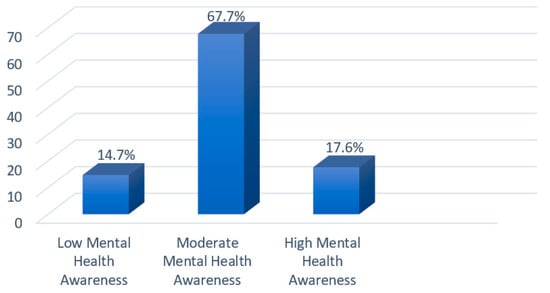
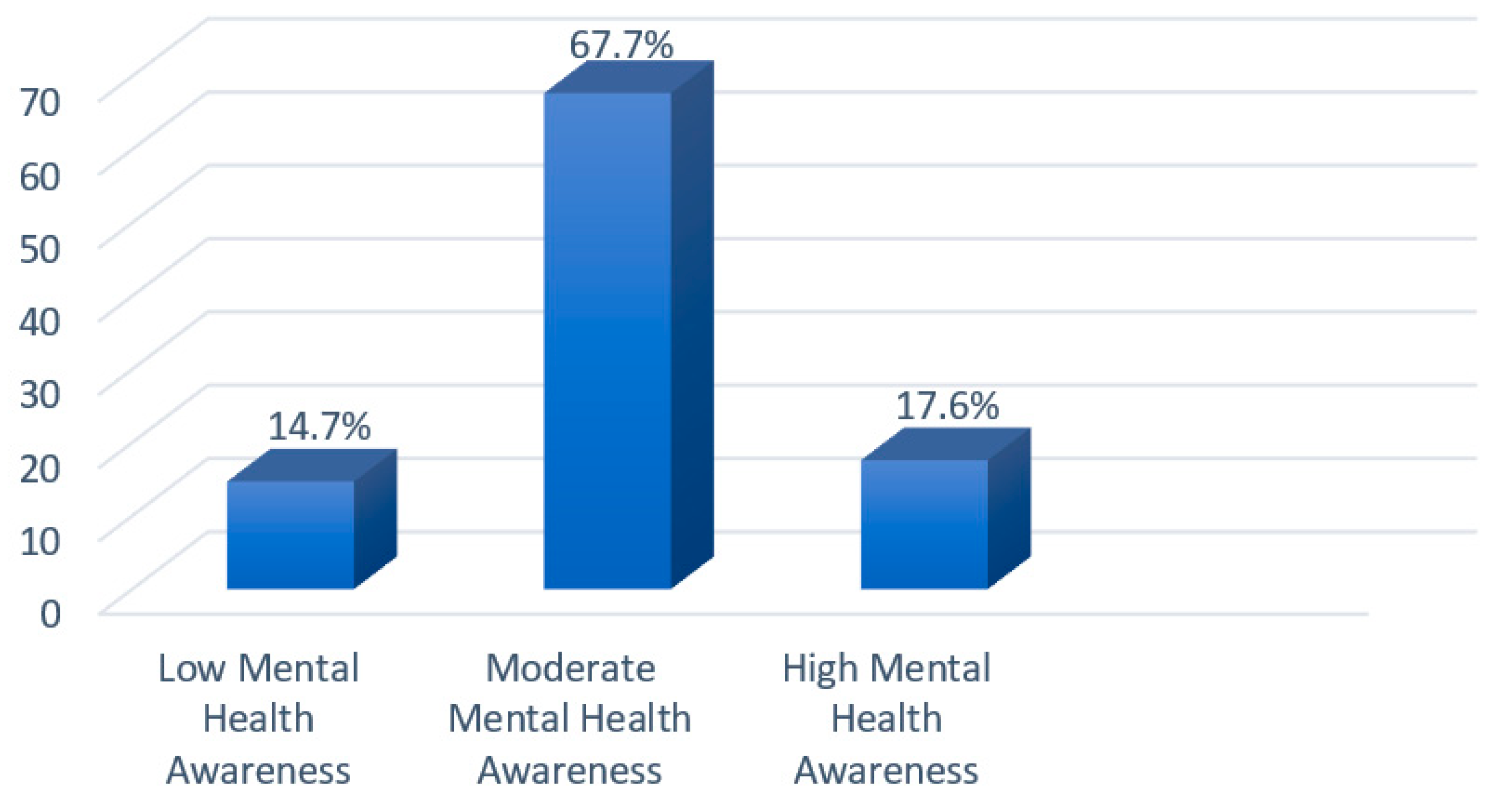
Table 1 presents the level of mental health awareness of the respondents in the study. The statistics of one standard deviation above and below the mean (X ± 1 SD) was used to categorize participants’ mental health awareness into low, moderate and high. According to this procedure, any respondents with a score between 12 and 46 were categorized as having low mental health awareness, while those with a score between 47 and 56 were categorized as has having moderate mental health awareness, and those with a score between 57 and 60 were categorized as having high mental health awareness. The results in Table 1 and Figure 2 show that the majority of respondents (203; 67.7%) have moderate mental health awareness, while 53 (17.6%) have high mental health awareness and 44 (14.7%) have low mental health awareness.
Table 1.
Level of mental health awareness among undergraduates.
Figure 2.
Mental health awareness status of the participants.
As presented in Table 2, gender did not statistically relate to mental health awareness (r = 0.01, p > 0.05). However, social media was statistically, positively and moderately related to mental health awareness (r = 0.34, p < 0.05), implying that an increase in social media use tends to increase mental health awareness among university students.
Table 2.
Descriptive statistics, correlation matrix, cronbach α, skewness and kurtosis (N = 300).
3.3. Direct and Moderating Effect of Gender
With regard to hypothesis 1, social media use demonstrated a statistically positive association with mental health awareness (β = 0.18, p < 0.001), confirming that university students who are exposed to higher social media use tend to have better mental health awareness; hence, hypothesis 1 was confirmed (see Table 3). Regarding hypothesis 2, in Table 3, the interaction of gender and social media use on mental health awareness was insignificant (β = −0.01, p > 0.05), indicating that gender did not moderate the positive relationship between social media use and mental health awareness. Thus, hypothesis 2 was rejected.
Table 3.
Impact of social media use on mental health awareness and the moderating effect of gender.
4. Discussion
The present study investigated the relationship between social media use and mental health awareness and also explored whether gender moderates this association. The study findings provide a robust framework of evidence that adds to the extant literature on mental health awareness using the basic postulations of the Uses and Gratifications Theory (UGT) and Health Belief Model (HBM). The study extends previous studies that have focused on certain segments of mental health issues rather than the level of mental health awareness, and it is guided by robust theoretical and methodological rigor. The result highlights that social media use that is related to health information can help improve the mental health awareness of university students.
One main gap in previous studies is the lack of empirical evidence on understanding the level of mental health awareness among university students. Surprisingly, the present study found that mental health awareness among university students in Nigeria is moderate. These findings call for continuous advocacy and awareness-raising efforts among concerned stakeholders in Nigeria, where university students, who are mostly under 30 years of age, represent 58% of the population (Worldometer, 2025).
This finding is not consistent with the results of a study by Uddin et al. (2019), who found that the majority of respondents were not aware of mental health conditions. The study finding was also not in line with the study by Tye (2024), who found that students have high awareness of referral for mental health issues. Neither was the study finding in line with that of Dev et al. (2017), who found that the majority of respondents had a higher level of awareness of mental disorders. The study finding was also not in accordance with a study by Udam et al. (2024), where they discovered that the majority of students were aware of basic mental health issues. The reason for these findings may be due to the cultural bias that most people in Africa, including students in Nigeria, hold regarding mental health issues (Wao et al., 2025). Many cultures often discourage open discussions or seeking help regarding mental health issues. Because of this predisposition, many students may sometimes have limited awareness, as they often associate mental health challenges with spiritual causes, leading to denial or shame regarding speak about it. (Also, the need to be successful at university coupled with little mental health education may sometimes overshadow students’ awareness of their personal health (Asante et al., 2026)).
Based on hypothesis 1 in this study, we found a statistically significant positive association between social media use and mental health awareness among university students. This means social media use was associated with better student mental health awareness in the university. This study finding aligns with the UGT, which asserts that students make use of social media to obtain information regarding mental health issues and disorders. This awareness may further propel them to have adequate knowledge regarding mental health issues that may serve as a stressor to students. Evidence in the present study also shows that the findings support the HBM in the sense that students use social media as a preventive and beneficial tool toward understanding and being aware of mental health issues.
These findings were in line with other studies (Ojewumi et al., 2025; Lekgothoane & Kaminer, 2023; Bono et al., 2024), which all found that social media use positively influences mental health awareness. The study findings were also in line with those of Kagaba (2025), who discovered that social media significantly influences health awareness. However, the study findings were not in accordance with those of Latha et al. (2020), who revealed that social media effectively promotes the awareness level of mental disorders among individuals and makes them visit health experts. In another direction, the study findings were not similar to those of Plackett et al. (2023), who suggest a relationship between increased time on social media and low mental health. The discrepancy with the aforementioned studies may have arisen because prior studies examined actual mental health outcomes, explored different types of social media use, adopted a different context, or used a population that differed from this present study. The reason for the findings in the current study may be because of the widespread use of smartphones and gadgets among students, which may have given them the opportunity to come across health messages and campaigns via different social media platforms, which may have helped foster understanding and encouraged positive mental health practices.
Hypothesis 2, which proposed that gender will moderate the link between social media use and mental health awareness, was not supported by the data. Contrary to our expectations, the finding indicates that the influence of social media use on mental health awareness did not differ or vary based on gender. This implies that social media use especially to seek health-related information can positively influence mental health awareness for male and female university students. This finding was similar to that of Vernon et al. (2022), who discovered that males and females intend to seek help regarding their mental health concerns. The study finding was also in similar to that of Dimbulana et al. (2023), who found no significant gender differences in mental health awareness among a sample of students. In another direction, studies such as those by Hassan and Masoud (2021), Chakraverty et al. (2022), and Mahmoodi et al. (2023) all found that women seek health information rapidly because they are health literate. Also, the finding was not similar to that of Al Azdi et al. (2025), who found that females exhibit a higher rate of seeking non-professional support than their male counterparts. Also, Nogueira et al. (2021) found that male undergraduates reported significantly improved mental health than the female students. One possible explanation is that male and female university students in the study context may have relatively comparable levels of access to and engagement with digital/social media. This claim has also been empirically established in previous studies (e.g., Hossain & Prodhan, 2020; Karatsoli & Nathanail, 2020). This explanation should therefore be interpreted cautiously because digital access and usage were not directly investigated as part of the moderation analysis. The non-significant interaction may also reflect a genuinely small gender difference, limited statistical power to detect interaction effect size (possibility of a type II error), measurement bias, or other contextual factors that were not accounted for in the study.
4.1. Strengths and Implications of the Study
The present study adds to the pool of knowledge on mental health awareness among university students, particularly in a global context like Nigeria. As revealed in the present study, mental health awareness among Nigerian university students is still moderate, while social media use—especially for seeking health-related information—helps increase mental health awareness. Thus, taking into consideration a moderate use of social media, social media can serve as a resource that can help improve mental health awareness among university students, which is often advocated by the United Nations, the World Health Organization and other healthcare stakeholders. The findings of this study provide useful implications for theory, practice and policy. The outcome of this study corroborated the UGT, which submitted that individuals energetically choose social media as a means to seek mental health-related information, which ultimately enhances their mental health awareness goals. The present study has extended the applicability of the theory to university students in Nigeria, since the study has been able to identify social media as an important predictor of mental health awareness. This means that being aware of mental health issues is highly dependent on university students being able to use social media to seek relevant and authentic health information and advice. Also, the HBM (Rosenstock, 1974) helps explain that perceived susceptibility, severity, benefits, and barriers shape health-related behavior among individuals. The present study has also extended this theory by showing how Nigeria university students use social media to their benefit in order to galvanize health information that will be beneficial toward understanding mental health-related problems with little or no susceptibility and barriers.
In practical terms, university management should collaborate with psychologists, mental health professionals and organizations to continue to provide clear and robust information on mental health issues and disorders, which can be disseminated through appropriate social media platforms. This will highly raise the level of awareness of mental health among university students. For policymakers, the findings can be used to formulate advocacy programs aimed at encouraging social media as an avenue to promote mental health awareness among university students. Also, policies that support access to mental health resources through social media use can help male and female students understand better, different mental health challenges and how to effectively cope with them. Methodologically, despite no moderation presence among the study variables, the study acknowledges the use of a robust statistic known as the Hayes’ PROCESS macro to investigate the moderating role of gender in the link between social media use and mental health awareness, unlike the hierarchical multiple regression often used in past studies to determine moderation. Hayes’ PROCESS macro is better because it helps reduce computational errors and simplify interpretation, and it provides comprehensive output.
4.2. Limitations and Suggestions for Future Study
Even though this study offers insightful information, there are still several limitations that need to be recognized. First, the study was conducted with 300 respondents using one university in Nigeria and using convenience sampling, which may limit the generalizability of the findings to the broader population of university students in Nigeria. Variations in institutional policies, socioeconomic characteristics, academic environments, and students’ patterns of social media use may produce different results across different universities. To improve external validity, robust representativeness and reduce research bias, future research should replicate the study across diverse students in different geopolitical zones within the tertiary institutions in Nigeria using more of a probability technique such as simple random sampling.
The second limitation is that social media use explains only 12% of the variance in mental health awareness, indicating that it is a relatively weak predictor and raising questions about the remaining 88% of unexplained variance. Future research may consider investigating some of these relative unmeasured factors, such as institutional education, family influence, or media literacy. This may provide a more nuanced understanding of factors that influence mental health awareness among university students in a Global South context. Third, the social media use measure utilized in the study did not assess information quality or the accuracy of health content encountered on social media, which is a critical omission, since students may encounter misinformation alongside evidence-based information, which may influence mental health awareness. Future studies should not only examine the extent of university students’ exposure to health information through social media but also the credibility, accuracy, and authenticity of the health information they encounter. Another limitation is that Harman’s single-factor test was below the threshold of 50%; this procedure alone cannot rule out common method bias. The study therefore cannot exclude the possibility that shared measurement methods influenced some of the observed associations between social media use, gender and mental health awareness. Therefore, future studies should consider additional diagnostic approaches, including a theoretically justified marker variable technique or a latent common method factor model, where appropriate. Finally, a quantitative approach was utilized in this study, and hence the study lacks a qualitative exploration of mechanisms explaining how students actually use social media to build awareness or whether gender differences exist in usage patterns and motivations. Therefore, future studies can adopt a mixed-methods approach which may provide more insight into gender differences in digital access, usage intensity, digital literacy, and related behavioral factors directly. Future studies could also test whether these variables help explain the absence of a significant gender moderation effect.
5. Conclusions
The present study contributes to the growing body of research on mental health awareness by using the Uses and Gratifications Theory (UGT) and Health Belief Model (HBM) to understand better the role of social media use on mental health awareness among a sample of university students in a developing nation. The results of the study indicated that there is a moderate level of mental health awareness among university students. Our findings also show that social media was positively linked with mental health awareness, implying that higher social media use tends to improve mental health awareness. We also discovered that gender did not moderate the social media use–mental health awareness relationship. The present findings indicate the need for continuous advocacy and awareness-raising efforts due to the limited mental health awareness of university students. Therefore, in the face of daunting stressors faced by university students on campus, social media use can improve male and female university students’ awareness of mental health issues. Thus, by offering practical insights for future research and implications for developing mental health awareness cultures that put students’ learning and wellbeing first, the study contributes to the larger conversation on mental health awareness and literacy.
Author Contributions
Conceptualization, D.A.F., H.F.O. and L.A.S.; methodology, D.A.F. and H.F.O.; formal analysis, D.A.F. and S.I.A.; writing—original draft preparation, D.A.F. and H.F.O.; writing—review and editing, B.E.A., S.I.A. and D.A.F.; supervision, L.A.S. and H.F.O. All authors have read and agreed to the published version of the manuscript.
Funding
This research received no external funding.
Institutional Review Board Statement
The study was conducted in accordance with the Declaration of Helsinki, and approved by the Institutional Review Board the University of Ilorin (reference number D.PSY.UNILORIN/REC/2024-1-1RB00041 and date of approval 12 March 2026).
Informed Consent Statement
Informed consent was obtained from all subjects involved in the study.
Data Availability Statement
The data presented in this study are available on request from the corresponding author due to legal and ethical reasons.
Acknowledgments
The author appreciates the University of Ilorin undergraduates that served as participants in this study. Also, appreciation goes to the University of Ilorin management for providing the enabling environment for the study to be conducted.
Conflicts of Interest
The authors declare no conflicts of interest.
References
- Abang, M. (2019). Nigeria’s medical brain drain; Healthcare woes as doctors flee. Aljazeera. Available online: https://www.aljazeera.com/features/2019/4/8/nigerias-medical-brain-drain-healthcare-woes-as-doctors-flee (accessed on 8 June 2021).
- Abdul Malek, W., Yaacob, M., & Mohd Saufie, N. (2026). Mental health awareness among University students: A study of knowledge, family influence, media exposure and government initiatives. International Journal of Research and Innovation in Social Science, 10(6), 19532–19550. [Google Scholar] [CrossRef] [Scilit]
- Abu, R., Setiawati, L., Agustina, S., Ramadhan, S., & Khoerunnisa, L. (2024). Exploring the impact of social media usage towards mental health among university student in Malaysia. International Journal of Research and Innovation in Social Science, 8(3), 6354–6362. [Google Scholar] [CrossRef] [Scilit]
- Adeleke, O. T., Opadola, O. A., Rufai, M. M., Samuel, Y. A., Adeleke, O. V., & Adedeji, A. S. (2025). A cross-sectional study of anxiety and depression in a cohort of Nigerian undergraduates. Annual Health Research, 11, 20–28. [Google Scholar] [CrossRef]
- Agyapong-Opoku, N., Agyapong-Opoku, F., & Greenshaw, A. J. (2025). Effects of social media use on youth and adolescent mental health: A scoping review of reviews. Behavioral Sciences, 15(5), 574. [Google Scholar] [CrossRef] [Scilit] [PubMed]
- Akhther, N., & Sopory, P. (2022). Seeking and sharing mental health information on social media during COVID-19: Role of depression and anxiety, peer support, and health benefits. Journal of Technology in Behavioral Science, 7, 211–226. [Google Scholar] [CrossRef] [Scilit] [PubMed]
- Akinpelu, M. (2022). The impact of social media on mental health awareness among Nigerian university students. Journal of Mental Health Studies, 15(3), 45–60. [Google Scholar] [CrossRef] [Scilit]
- Al Azdi, Z., Saif, S., & Ashraf, S. (2025). Gender differences in mental health help-seeking behaviour in Bangladesh: Findings from a cross-sectional online survey. BMJ Open, 15, e091933. [Google Scholar] [CrossRef] [Scilit] [PubMed]
- Anis-Farahwahida, M., Hussain, S., Ruslan, F., & Raji, N. (2024). A comparative analysis of gender differences in university student mental health across cultures. International Journal of Research and Innovation in Social Science, 8(10), 1774–1779. [Google Scholar] [CrossRef] [Scilit]
- Asante, E., Wekem, P., Achana, J., Amanatey, F., Abukari, Y., & Appiah, G. (2026). Mental health knowledge among undergraduate university students in the northern region of Ghana. World Journal of Advanced Research and Reviews, 30(1), 2302–2311. [Google Scholar] [CrossRef] [Scilit]
- Ayinde, O., Akinnuoye, R., Molodynski, A., Battrick, O., & Gureje, O. (2021). A descriptive study of mental health and burnout among Nigerian medical students. International Journal of Social Psychiatry, 68, 1223–1233. [Google Scholar] [CrossRef] [Scilit] [PubMed]
- Álamo, C., Antúnez, Z., Baader, T., Kendall, J., Barrientos, M., & Barra, D. (2020). The sustained increase of mental health symptoms in Chilean university students over three years. Revista Latinoamericana de Psicología, 52, 71–80. [Google Scholar] [CrossRef] [Scilit]
- Blumler, J. G., & Katz, E. (1974). The uses of mass communications: Current perspectives on gratifications research. Sage annual reviews of communication research (vol. 3). Sage Publications. Available online: https://eric.ed.gov/?id=ED119208 (accessed on 10 August 2026).
- Bono, S. A., Othman, A., Jamaludin, S. S., Lim, M. Y., & Mohamed, N. A. (2024). The impacts of social media on adolescent mental health: Malaysian adolescents’ perspective. Malaysian Journal of Medicine & Health Sciences, 20, 40–46. [Google Scholar]
- Chakraverty, D., Baumeister, A., Aldin, A., Seven, Ü. S., Monsef, I., & Skoetz, N. (2022). Gender differences of health literacy in persons with a migration background: A systematic review and meta-analysis. BMJ Open, 12(7), e056090. [Google Scholar] [CrossRef] [Scilit] [PubMed]
- Cuijpers, P., Smit, F., Aalten, P., Batelaan, N., Klein, A., & Salemink, E. (2021). The associations of common psychological problems with mental disorders among college students. Frontiers in Psychiatry, 12, 573637. [Google Scholar] [CrossRef] [Scilit] [PubMed]
- Dev, A., Gupta, S., Sharma, K., & Chadda, R. (2017). Awareness of mental disorders among youth in Delhi. Current Medical Research Practice, 7(3), 84–89. [Google Scholar] [CrossRef] [Scilit]
- Dimbulana, N., Alshagga, M., Al-Kabsi, A., Abdulsalam, R., & Yan, P. (2023). Mental health awareness and parents’ communication among university students in Malaysia: A cross-sectional study. Malaysian Journal of Public Health Medicine, 23(2), 291–299. [Google Scholar] [CrossRef] [Scilit]
- Doğan, H., & Okşaş, H. (2025). The moderating role of gender in the relationship between E-health literacy and cyberchondria. Journal of Health Literacy, 10(3), 120–135. [Google Scholar] [CrossRef]
- Fagbenro, D., Olagundoye, H., Sehularo, L., Lawal, A., & Osuh, J. (2026). Moderated mediation model of subjective happiness and gender between financial strain and mental health of university students. Discover Mental Health, 6, 6. [Google Scholar] [CrossRef] [Scilit] [PubMed]
- Fagbenro, D. A., Yusuff, R. O., & Ariyo, O. C. (2025). “Japa’’ syndrome: Mediating role of organizational climate on psychological contract breach and turnover intention. Academic Journal of Psychology and Counseling, 6(2), 277–302. [Google Scholar] [CrossRef] [Scilit]
- Falade, J., Oyebanji, A., Babatola, O., Falade, O., & Olumuyiwa, T. (2020). Prevalence and correlates of psychiatric morbidity, comorbid anxiety and depression among medical students in public and private tertiary institutions in a Nigerian state: A cross-sectional analytical study. Pan African Medical Journal, 37, 53. [Google Scholar] [CrossRef] [Scilit] [PubMed]
- Faul, F., Erdfelder, F., Lang, A. G., & Buchner, A. G. (2007). G*Power 3: A flexible statistical power analysis program for the social, behavioral, and biomedical sciences. Behaviour Research Methods, 39, 175–191. [Google Scholar] [CrossRef] [Scilit] [PubMed]
- Gbenga, O. (2023). The role of social media platforms in mental health advocacy in Nigeria. Journal of Digital Health and Communication, 10(2), 45–60. [Google Scholar]
- Ghazali, N., Sharif, N., Ismail, J., & Azizan, A. (2024). Mental health awareness among students in higher education. Journal of Administrative Science, 21(1), 189–213. [Google Scholar]
- Hadjimina, E., & Furnham, A. (2017). Influence of age and gender on mental health literacy of anxiety disorders. Psychiatry Research, 251, 8–13. [Google Scholar] [CrossRef] [Scilit] [PubMed]
- Hair, J. F., Black, W. C., Babin, B. J., & Anderson, R. E. (2010). Multivariate data analysis (7th ed.). Pearson. [Google Scholar]
- Hassan, S., & Masoud, O. (2021). Online health information seeking and health literacy among non-medical college students: Gender differences. Journal of Public Health, 29(6), 1267–1273. [Google Scholar] [CrossRef] [Scilit]
- Hayes, A. F. (2022). Introduction to mediation, moderation, and conditional process analysis: A regression-based approach. Guilford Press. [Google Scholar]
- Hossain, S., & Prodhan, T. R. (2020). Gender difference of social media sites usage and its effects on academic performance among university students in Bangladesh. Journal of Social Sciences, 3(2), 140–151. [Google Scholar]
- Iqbal, A., Iftikhar, M., & Hussain, T. (2024). Impact of social media use on the mental health of university students. Migration Letters, 21(5), 1848–1862. [Google Scholar]
- Kagaba, A. G. (2025). The impact of social media on public health awareness and education. Eurasian Experiment Journal of Arts and Management, 7(3), 81–87. [Google Scholar] [CrossRef] [Scilit]
- Kanu, C., Ugwu, F., Ugwu, E., Igwe, A., & Onyishi, E. (2025). Roles of self-regulation and psychological meaningfulness in the relationship between contentiousness and life satisfaction. Discover Psychology, 5, 92. [Google Scholar] [CrossRef] [Scilit]
- Karatsoli, M., & Nathanail, E. (2020). Examining gender differences of social media use for activity planning and travel choices. European Transport Research Review, 12, 44. [Google Scholar] [CrossRef] [Scilit]
- Katz, E., Blumler, J. G., & Gurevitch, M. (1973). Uses and gratifications research. The Public Opinion Quarterly, 37(4), 509–523. [Google Scholar] [CrossRef] [Scilit]
- Kwarteng, M. A., Ogiemudia, O. M., Ekpenyong, B. N., Amaechi, O. U., Ogbonna, G., Daniel-Nwosu, E., Ngozika, E., Oforbuike, O., Kelechi, C., & Uchechukwu, L. (2026). Prevalence and severity of anxiety, depression, and stress among optometry students in Nigeria: A cross-sectional study. PLoS ONE, 21(5), e0336195. [Google Scholar] [CrossRef] [Scilit] [PubMed]
- Latha, K., Meena, K. S., Pravitha, M. R., Dasgupta, M., & Sivakumar, P. (2020). Effective use of social media platforms for promotion of mental health awareness. Journal of Education and Health Promotion, 28(9), 124. [Google Scholar] [CrossRef] [Scilit] [PubMed]
- Lekgothoane, L., & Kaminer, D. (2023). South African university students’ use of mental health content on Instagram. Psychology of Popular Media, 13(3), 363–372. [Google Scholar] [CrossRef] [Scilit]
- Li, Q., Li, J., & Fan, Y. (2025). Addressing mental health in university students: A call for action. Frontiers in Public Health, 13, 1614999. [Google Scholar] [CrossRef] [Scilit] [PubMed]
- Líbano, J., Arévalo, D., Valdivia, A., Fuentes, G., & Lara, R. (2024). University students mental health literacy: A systematic review. Health Leadership and Quality of Life, 3, 341. [Google Scholar] [CrossRef] [Scilit]
- Maduka, I. (2025). The impact of social media on mental health in Nigerian young adults: A systematic review. Amamihe: Journal of Applied Philosophy, 23(1), 159–169. [Google Scholar] [CrossRef]
- Mahmoodi, H., Nadrian, H., Moradzadeh, R., Shahi, F., Azimi, S., & Shirzadi, S. (2023). Inadequate functional health literacy and its associated gender inequality among an ethnic population: A social survey. Journal of Health Literacy, 8(1), 28–41. [Google Scholar] [CrossRef]
- Martínez-Líbano, J., Torres-Vallejos, J., Oyanedel, J. C., González-Campusano, N., Calderón-Herrera, G., & Yeomans-Cabrera, M. M. (2023). Prevalence and variables associated with depression, anxiety, and stress among Chilean higher education students, post-pandemic. Frontier Psychiatry, 14, 1139946. [Google Scholar] [CrossRef] [Scilit] [PubMed]
- Nogueira, M., Carlos, S., & Francisco, S. (2021). Gender differences in mental health, academic life satisfaction and psychological vulnerability in a sample of college freshmen: A cross-sectional study. Journal of Gender Studies, 31(2), 895–904. [Google Scholar] [CrossRef] [Scilit]
- Nweze, C., & Eze, J. (2021). Social media campaigns and mental health stigma reduction among Nigerian university students. International Journal of Communication Studies, 14(1), 78–95. [Google Scholar]
- Ojewumi, A., Oyeleke, J., Ajibewa, O., Adedayo, O., & Adeyemo, O. (2025). Social media use, motivation and mental health awareness: An analysis of Nigerian undergraduates. Jurnal Psikologi Teori dan Terapan (JPTT), 16(2), 143–152. [Google Scholar] [CrossRef] [Scilit]
- Okon, F., & Bello, T. (2022). Social media exposure and mental health literacy among students at the University of Lagos. Nigerian Journal of Behavioral Health, 7(4), 56–73. [Google Scholar]
- Onyedire, N. G., Chukwuorji, J. C., Orjiakor, T. C., Onu, D. U., Aneke, C. I., & Ifeagwazi, C. M. (2021). Associations of dark triad traits and problem gambling: Moderating role of age among university students. Current Psychology: A Journal for Diverse Perspectives on Diverse Psychological Issues, 40(5), 2083–2094. [Google Scholar] [CrossRef] [Scilit]
- Pallant, J. (2010). SPSS survival manual. McGraw-Hill. [Google Scholar]
- Patel, A., Kaneriya, S., Santoki, D., Thummar, M., Chauhan, R., & Maseleno, A. (2024). Gender and age differences in mental health awareness: Insights from a quantitative study. International Journal of Psychology and Health Science, 2(4), 207–218. [Google Scholar] [CrossRef] [Scilit]
- Plackett, R., Sheringham, J., & Dykxhoorn, J. (2023). The longitudinal impact of social media use on UK adolescents’ mental health: Longitudinal observational study. Journal of Medical Internet Research, 25, e43213. [Google Scholar] [CrossRef] [Scilit] [PubMed]
- Podsakoff, P. M., MacKenzie, S. B., Lee, J.-Y., & Podsakoff, N. P. (2003). Common method biases in behavioral research: A critical review of the literature and recommended remedies. Journal of Applied Psychology, 88(5), 879–903. [Google Scholar] [CrossRef] [Scilit] [PubMed]
- Riedel, P. L., Kreh, A., Kulcar, V., Lieber, A., & Juen, B. A. (2022). Scoping review of moral stressors, moral distress and moral injury in healthcare workers during COVID-19. International Journal of Environment Research and Public Health, 19(3), 1666. [Google Scholar] [CrossRef] [Scilit] [PubMed]
- Rosenstock, I. M. (1974). Historical origins of the health belief model. Health Education Monographs, 2(4), 328–335. [Google Scholar] [CrossRef] [Scilit]
- Shim, Y. R., Eaker, R., & Park, J. (2022). Mental health education, awareness and stigma regarding mental illness among college students. Journal of Mental Health & Clinical Psychology, 6(2), 6–15. [Google Scholar] [CrossRef] [Scilit]
- Siddique, M., Rahman, M., Tanvir, A., Muhammad, A., Chowdhury, B., & Uddin, M. (2022). Mental health knowledge and awareness among university students in Bangladesh. Heliyon, 8, e11084. [Google Scholar] [CrossRef] [Scilit] [PubMed]
- Simha, A., & Pandey, J. (2021). Trust, ethical climate and nurses’ turnover intention. Nursing Ethics, 28, 714–722. [Google Scholar] [CrossRef] [Scilit] [PubMed]
- Smith, W., Matheson, F., Moineddin, R., Dunn, J., Lu, H., Cairney, J., & Glazier, H. (2013). Gender differences in mental health service utilization among respondents reporting depression in a national health survey. Health, 5, 1561–1571. [Google Scholar] [CrossRef]
- Tye, E. (2024). Faculty knowledge and awareness of college student mental health resources. Journal of Mental Health and Social Behaviour, 6(1), 185. [Google Scholar] [CrossRef] [Scilit]
- Udam, T., Salibi, G., & Tzenios, N. (2024). Awareness and practice of mental health promotion among students at the University of Calabar, Nigeria. Special Journal of the Medical Academy and Other Life Sciences, 2(9), 1–39. [Google Scholar] [CrossRef] [Scilit]
- Uddin, M., Bhar, S., & Islam, A. (2019). An assessment of awareness of mental health conditions and its association with socio-demographic characteristics: A cross-sectional study in a rural district in Bangladesh. BMC Health Service Research, 19, 562. [Google Scholar] [CrossRef] [Scilit] [PubMed]
- Vernon, Y., Felicidad, R., & Rosales, L. (2022). Gender differences in mental health of international graduate students. International Journal of Multidisciplinary Research and Analysis, 5(6), 1265–1275. [Google Scholar] [CrossRef] [Scilit]
- Wao, H., Wao, M. A., Omollo, S. B., & Mutua, C. K. (2025). Availability, accessibility, and utilization of mental health services or support among university students in Africa: A mixed methods systematic review with meta-analysis and meta-synthesis. BMC Psychiatry, 25(1), 1082. [Google Scholar] [CrossRef] [Scilit] [PubMed]
- World Health Organization. (2018). Social determinants of mental health. World Health Organization. Available online: https://www.who.int/publications-detail-redirect/9789241506809 (accessed on 8 July 2026).
- World Health Organization. (2019). Bangladesh WHO special initiative for mental health situational assessment. World Health Organization. [Google Scholar]
- World Health Organization. (2021). Adolescent mental health. World Health Organization. Available online: https://www.who.int/news-room/fact-sheets/detail/adolescent-mental-health (accessed on 12 July 2026).
- Worldometer. (2025). Nigeria population (live). Available online: https://www.worldometers.info/world-population/nigeria-population/ (accessed on 2 August 2026).
- Yadav, D., Meghana, V., Chinmayee, V., Vanuja, L., Begum, V., & Saniya, S. (2026). Mental health awareness among students—An empirical study. International Journal for Multidisciplinary Research (IJFMR), 8(3), 1–10. [Google Scholar]
- Yusuf, A., & Adeyemi, P. (2023). Social media and mental health help-seeking behavior among Nigerian undergraduates. Journal of African Mental Health Research, 11(2), 204–220. [Google Scholar]
- Zhang, Y., Ishak, Z., Azam, S., & Kang, Y. (2025). A moderated mediation analysis of the relationship between psychological capital and professional commitment among teachers. Scientific Reports, 15, 15021. [Google Scholar] [CrossRef] [Scilit] [PubMed]

Disclaimer/Publisher’s Note: The statements, opinions and data contained in all publications are solely those of the individual author(s) and contributor(s) and not of MDPI and/or the editor(s). MDPI and/or the editor(s) disclaim responsibility for any injury to people or property resulting from any ideas, methods, instructions or products referred to in the content. |
© 2026 by the authors. Licensee MDPI, Basel, Switzerland. This article is an open access article distributed under the terms and conditions of the Creative Commons Attribution (CC BY) license.