


Abstract
Wildfires can disrupt social relationships, material resources, healthcare access and psychological well-being among older adults, particularly where geographical isolation intersects with limited service provision. This critical narrative review examines social, economic and psychological consequences of wildfires in low-density territories, distinguishing evidence directly involving older adults from mixed-age, professional proxy and cross-hazard research. The literature was identified through purposive searches of PubMed/MEDLINE, Scopus, Web of Science and Google Scholar between April and July 2026, supplemented by reference-list examination and citation tracking. A separate descriptive geographical analysis combined EFFIS mapped burnt-area intensity during 2016–2023 with population ageing and population-density indicators for 2023 across selected southern European NUTS-3 regions. Empirical studies involving older adults describe disruption to healthcare, daily routines and social relationships, perceived psychological impacts and mutual assistance; research in remote Indigenous communities identifies culturally and geographically specific evacuation experiences. Housing reconstruction can remain incomplete for several years, although older-rural household financial recovery remains insufficiently quantified. Of 310 regions with complete geographical indicators, 19 met all three selected conditions. This co-occurrence is descriptive rather than a validated vulnerability index. The synthesis identifies priorities for longitudinal, participatory and place-sensitive research and evaluation of age-sensitive preparedness and recovery measures.
1. Introduction
Climate change is altering wildfire conditions in many regions through changes in heat, drought and precipitation, alongside land-use and management influences (Intergovernmental Panel on Climate Change [IPCC], 2023; Xu et al., 2020). Population ageing creates an additional planning challenge where wildfire exposure intersects with dispersed settlement and limited access to services. These processes motivate attention to the resources, needs and agency of older residents without assuming that all rural territories or all older people share the same vulnerability.
For this review, low-density territories are contexts in which dispersed settlement may interact with travel distances, limited transport and uneven access to health, social and recovery services. Low density alone does not establish deprivation or vulnerability and is not interchangeable with the European degree-of-urbanisation classification (European Commission: Eurostat, 2021; Lambrou et al., 2023). The reviewed studies use heterogeneous geographical definitions; settings are therefore identified as rural, remote, regional, urban, wildland–urban interface or nationally aggregated. In the complementary geographical analysis, low population density denotes the lowest population-density tertile within the selected NUTS-3 domain, representing a relative classification rather than a universal rural threshold. Age-specific findings are distinguished from mixed-age evidence.
Demographic patterns warrant attention without establishing that older people invariably experience the greatest wildfire-related harm. Winkler and Mockrin (2025) reported that adults aged 60 years and over accounted for approximately 87% of population growth in US locations with moderate-to-high wildfire risk between 2010 and 2020. They also reported that 35% of residents in rural areas with the greatest wildfire risk were aged over 60 years. These indicators describe population growth and composition, respectively, not wildfire-related morbidity or recovery. They motivate examination of ageing alongside housing, mobility, income, healthcare and social support (Kwan & Walsh, 2017; Melton et al., 2023).
Beyond immediate physical harm, wildfire and prolonged smoke can disrupt social contact, housing, livelihoods and psychological well-being. Rural qualitative accounts describe both isolation and mutual support, alongside activity restrictions and financial pressures (Humphreys et al., 2022). Mixed-age wildfire studies identify adverse psychological symptoms and heterogeneous recovery pathways, but their findings do not establish older-rural prevalence or uniform deterioration (Pacella et al., 2024; Silveira et al., 2021). Social, economic and psychological consequences may interact; functional limitations and frailty can multiply the difficulty of recovery tasks where accessible assistance is unavailable (Melton et al., 2023; Prohaska & Peters, 2019).
Despite this interlocking vulnerability, the scholarly literature remains uneven. A substantial body of work has documented the respiratory and cardiovascular effects of wildfire smoke on older adults, yet far fewer studies examine the longer-term social and economic trajectories of older survivors in sparsely populated regions. Qualitative accounts of lived experience are relatively scarce, and research is geographically skewed towards North America and Australia, with comparatively limited attention to European low-density territories where ageing and depopulation are especially advanced. Moreover, policy and practice frameworks frequently adopt generic “vulnerable populations” language that fails to differentiate the specific constraints and capacities of older-rural residents. As Melton et al. (2023) note in their scoping review, while many articles call for community-engaged responses that incorporate older adults’ needs, few foreground older people’s own knowledge, agency or post-disaster resilience strategies.
This critical narrative review examines social, economic and psychological wildfire-related experiences in later life, distinguishes age-specific from contextual evidence, and evaluates the relevance of social relationships, material recovery, agency and territorial circumstances. A complementary descriptive geographical analysis identifies where selected indicators co-occur across southern European NUTS-3 regions without estimating individual vulnerability. The review concludes with research priorities and evidence-informed preparedness and recovery proposals whose effectiveness requires evaluation.
The European and Mediterranean Context
The European and Mediterranean context deserves particular attention because the relationships between wildfire risk, demographic ageing and territorial vulnerability are increasingly relevant to the analysis of low-density regions. Wildfires constitute an important component of climate-related risk, with consequences extending beyond immediate environmental damage to affect human health, social systems and the capacity of communities to recover (Intergovernmental Panel on Climate Change [IPCC], 2023; Xu et al., 2020). In low-density territories, these consequences may be particularly significant where population ageing intersects with geographic isolation, limited access to essential services and reduced institutional capacity. Existing research has demonstrated that vulnerability to wildfire is shaped not only by physical exposure but also by social and territorial conditions, including demographic characteristics, socioeconomic resources and access to infrastructure and services (Lambrou et al., 2023; Melton et al., 2023).
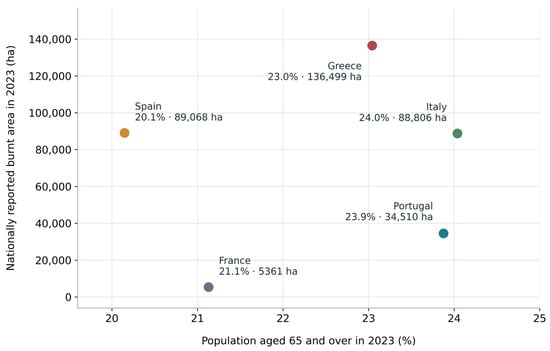
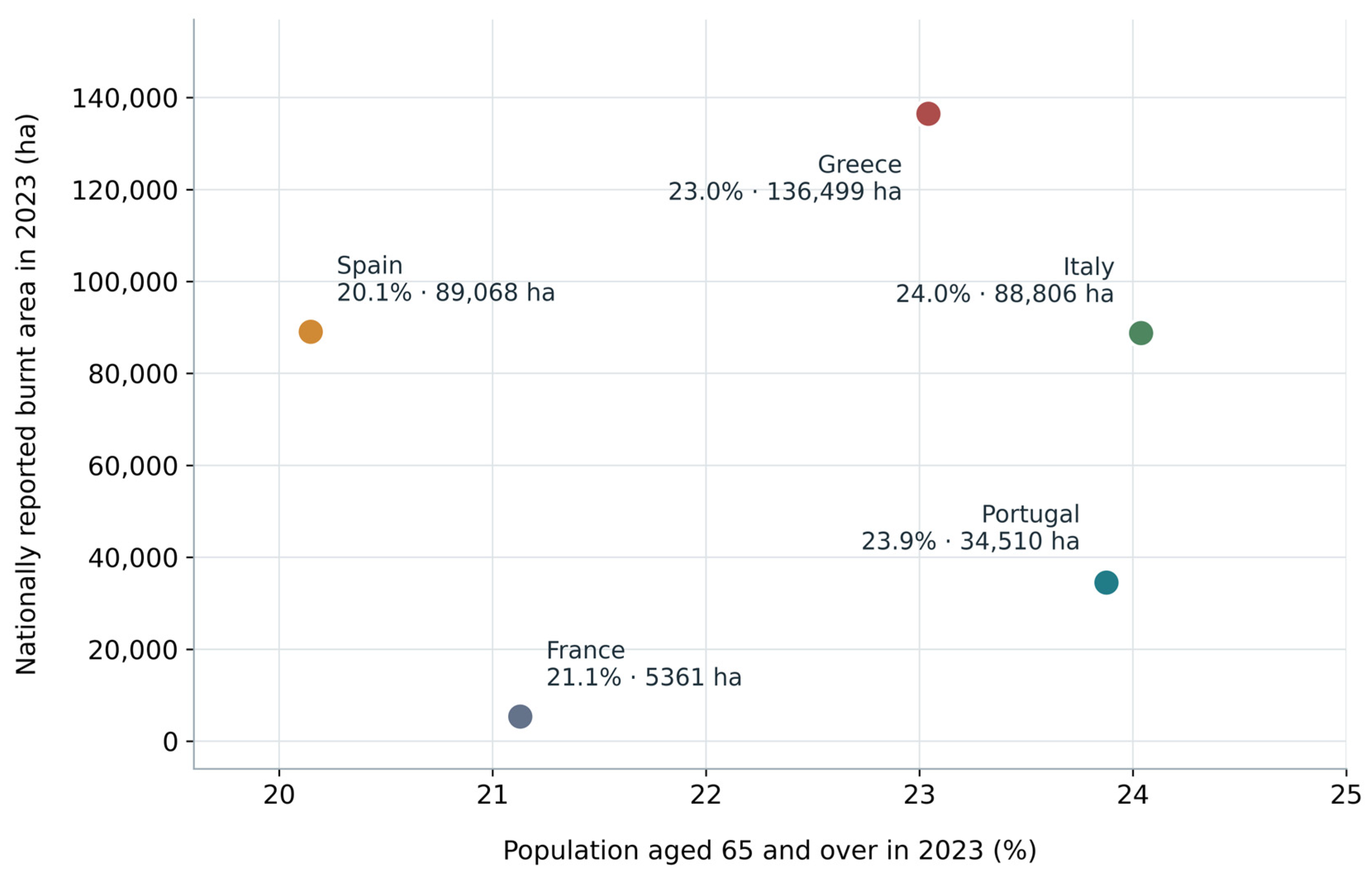
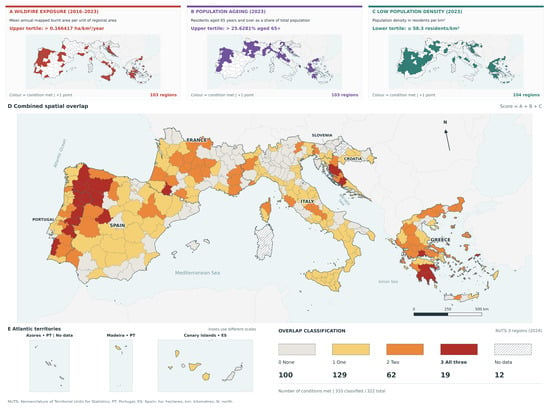
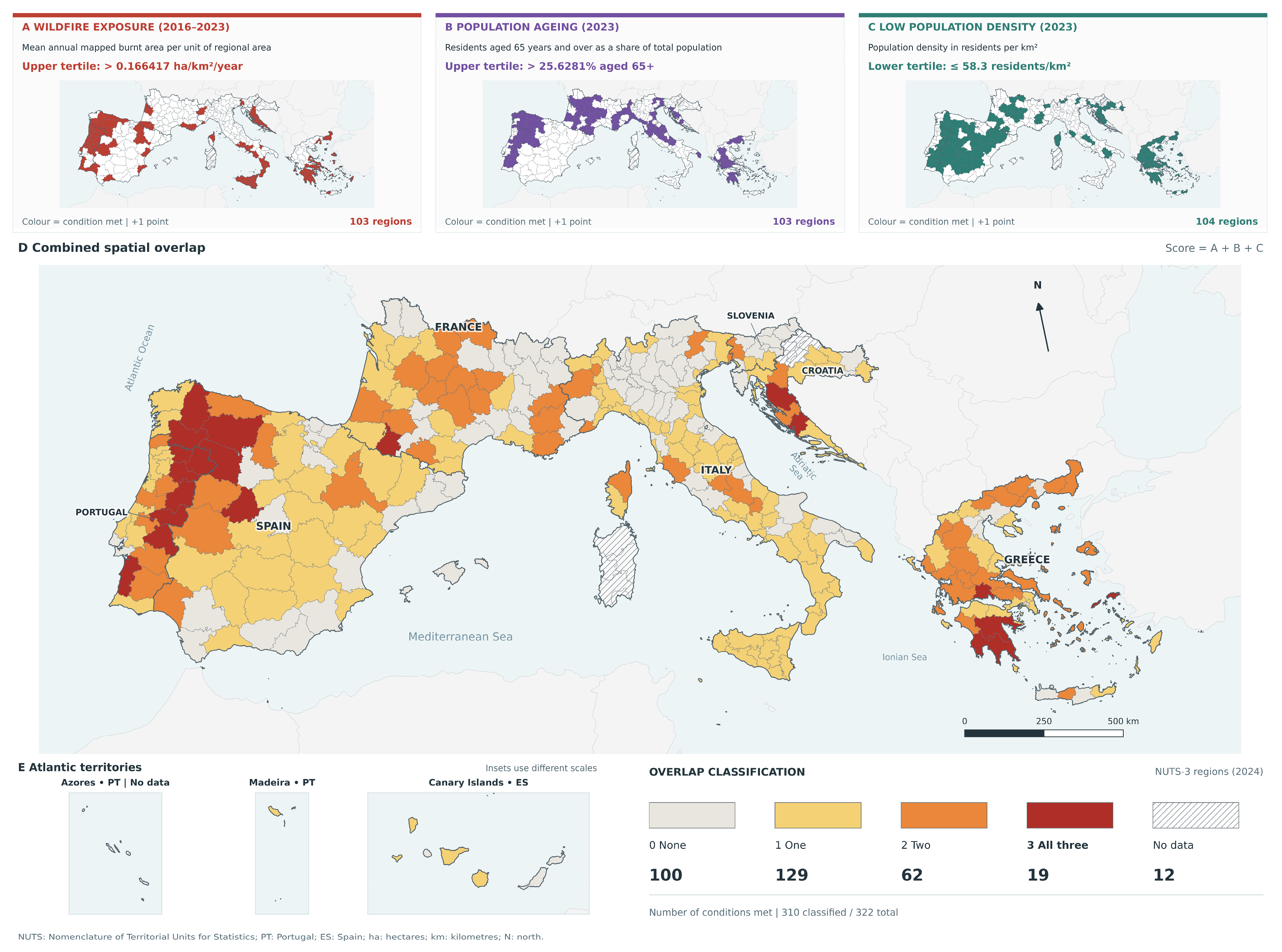
Figure 1 provides a national-level comparison of reported burnt area and population ageing across five southern European countries in 2023. The countries display substantial differences in both indicators, highlighting the diversity of demographic and wildfire-related conditions within the broader southern European context. However, these national aggregates cannot establish how wildfire activity and population ageing coincide within individual territories. Figure 2 addresses this limitation through a spatially disaggregated NUTS-3 analysis, identifying regional patterns that cannot be inferred from country-level observations. The two figures therefore provide complementary geographical perspectives, although they rely on distinct reporting approaches, geographical units and observation periods.
Figure 1.
Nationally reported burnt area and population ageing in five southern European countries in 2023. Note. Population ageing represents the proportion of residents aged 65 years and over, based on Eurostat data. Burnt-area figures are from San-Miguel-Ayanz et al. (2024); the French estimate covers forest fires only. Each coloured marker represents a different country; marker colours are used solely for visual differentiation and do not represent an additional variable. Differences in geographical coverage and reporting methods limit direct comparisons. The figure provides national context, whereas Figure 2 examines regional co-occurrence. Source: author’s calculations; numerical inputs and limitations are documented in Supplementary Files S1 and S2.
Figure 2.
Spatial co-occurrence of mapped burnt-area intensity, population ageing and low population density across selected southern European NUTS-3 regions. Note. Panels (A–C) identify regions satisfying the respective burnt-area, ageing and population-density tertile criteria; Panel (D) shows the number of conditions met (0–3); and Panel (E) depicts the Atlantic territories, including Madeira and the Azores. Of 322 regions, 310 had complete data. Rounded thresholds were 0.17 ha/km2/year, 25.6% aged 65 years and over, and 58.3 residents/km2. Madeira was classified, whereas the Azores remained unclassified because EFFIS archive coverage could not be verified. The classification is descriptive and does not constitute a validated risk or vulnerability index. Source: author’s analysis of EFFIS, Eurostat and GISCO. Administrative boundaries: © EuroGeographics. Exact thresholds, regional exclusions and analytical procedures are documented in Supplementary Table S1 and Files S1 and S2.
Figure 1 provides national context, whereas Figure 2 examines regional co-occurrence using the analytical procedures described in Section 2. Of the 322 NUTS-3 regions included in the selected domain, 310 had complete observations for all three indicators: 100 met none of the selected conditions, 129 met one, 62 met two and 19 met all three. The upper-tertile thresholds were 0.17 ha/km2/year for mean annual mapped burnt-area intensity and 25.6% for the population aged 65 years and over, whereas the lower-tertile population-density threshold was 58.3 residents/km2. The three individual conditions were met by 103, 103 and 104 regions, respectively. The 19 regions meeting all three conditions were located in Portugal (seven: Alto Tâmega e Barroso, Douro, Terras de Trás-os-Montes, Beira Baixa, Beiras e Serra da Estrela, Alentejo Litoral and Alto Alentejo), Spain (five: Lugo, Ourense, Ávila, León and Zamora), Greece (four: Ikaria–Samos, Fokida, Argolida–Arkadia and Lakonia–Messinia), Croatia (two: Ličko-senjska županija and Šibensko-kninska županija) and France (one: Hautes-Pyrénées). Twelve regions remained unclassified. Eleven lacked 2023 population-density observations under their NUTS 2024 identifiers: six in Croatia (HR050 and HR061–HR065) and five in Sardinia, Italy (ITG2D–ITG2H). The remaining unclassified region was the Azores (PT200), for which EFFIS archive coverage could not be established. None of the 102 Italian regions with complete data met all three conditions; however, the exclusion of five Sardinian regions limits the geographical completeness of this finding. Madeira (PT300) was included with complete observations and met only the upper-tertile burnt-area condition, resulting in an overlap score of one. These classifications describe the co-occurrence of conditions relative to the selected geographical domain and do not represent validated measures of wildfire risk, individual exposure or vulnerability.
The European dimension is particularly relevant because demographic ageing and population decline can alter the social and territorial conditions under which wildfire preparedness, emergency response and recovery take place. Older adults may face heightened difficulties associated with evacuation, mobility, chronic health conditions, social isolation and the disruption of essential services during and after wildfire events (Melton et al., 2023; Winkler & Mockrin, 2025). More broadly, the capacity of older adults to recover from disasters is influenced by the interaction between individual resources, social networks, access to services and the characteristics of the communities in which they live (Kwan & Walsh, 2017; Parker et al., 2016). In territories affected simultaneously by demographic ageing and population decline, the erosion or concentration of local services may therefore have consequences that extend beyond everyday accessibility and become particularly significant during emergency and recovery periods.
Transfer to European low-density territories requires attention to welfare systems, housing, family support, service provision and territorial governance (Kwan & Walsh, 2017; Lambrou et al., 2023). The national and regional figures therefore contextualise the review rather than validate mechanisms derived from other settings. They support questions for comparative research on preparedness, social recovery, material security and the capacity to remain in place after wildfire.
2. Methodological Approach
This review adopts a critical narrative synthesis rather than a systematic or scoping protocol. Narrative reviews remain valuable when the evidence base is heterogeneous in design, geography and disciplinary orientation, and when the analytical goal is interpretive integration rather than exhaustive aggregation or effect-size estimation (Greenhalgh et al., 2018; Sukhera, 2022). The present synthesis prioritises depth, critical interrogation of underlying assumptions, and attention to structural and place-based dimensions of vulnerability rather than formal quality scoring or meta-analysis.
The literature was identified through purposive, iterative searches of PubMed/MEDLINE, Web of Science, Scopus and Google Scholar conducted between April and July 2026, with the final database search on 12 July 2026. The database search framework combined wildfire-related terminology, including wildfire, bushfire and forest fire, with older-age concepts and, in complementary formulations, rural or low-density territorial characteristics and social, economic or psychological outcomes. During targeted reference-list examination, additional attention was given to terminology identifying Indigenous Elders and their experiences of wildfire-related evacuation. Publications predating April 2026 were eligible; April–July 2026 refers to the literature-identification period rather than a publication-date restriction. During manuscript development and revision, previously selected sources were reassessed for their relevance to the review’s population, geographical, hazard-related and outcome domains, and additional primary investigations were examined through targeted citation follow-up, including references identified in Melton et al. (2023). This process was purposive rather than exhaustive and did not involve a complete rescreening of the original database records, independent duplicate screening or a new comprehensive database search. Supplementary Table S2 documents the database-specific search formulations, complementary citation-follow-up terminology, relevance criteria and qualitative appraisal domains. Accordingly, the review does not claim exhaustive retrieval or comprehensive screening counts.
Selection prioritised primary studies addressing later-life wildfire experiences and social, economic or psychological consequences; rural, remote and regional contexts were evaluated from the original study reports. Mixed-age wildfire studies, professional proxy accounts and cross-hazard contextual research were included with their directness identified. Studies of fire-related health or fatalities were used as complementary evidence rather than assumed to measure older-rural financial or psychological recovery. Critical appraisal considered population, hazard and territorial directness, sampling, outcome measurement, timing, confounding and transferability. No systematic certainty grading, pooled estimation or exhaustive literature census was attempted.
The thematic synthesis encompasses social, economic and psychological outcomes. A core traceability matrix comprises 17 purposively selected primary investigations, including direct research with Indigenous Elders during the Sandy Lake First Nation wildfire evacuation (Asfaw et al., 2020), a related broader community investigation of the same evacuation (Asfaw et al., 2019), older Australians affected by bushfires, mixed-age wildfire research and post-fire housing reconstruction. Study populations, territorial settings, designs, principal findings and limitations are summarised in Table 1 and Supplementary Table S3. The two Sandy Lake studies address the same evacuation and are not treated as independent replications. The wider scoping review by Melton et al. (2023) identified 75 publications across several domains, including biomedical and fire-management research; the present matrix focuses on investigations directly informing the three themes and does not purport to be an exhaustive inventory. Direct older-adult evidence is therefore differentiated from mixed-age, professional proxy and cross-hazard evidence. Longitudinal, territorially characterised research integrating social, economic and psychological recovery outcomes, particularly in Europe, remains limited.
Table 1.
Core empirical studies and territorial relevance.
The spatial analysis used EFFIS mapped burnt-area perimeters for 2016–2023 (European Commission & Joint Research Centre, n.d., 2026), Eurostat population ageing and density indicators for 2023 (Eurostat, 2026a, 2026b) and NUTS 2024 GISCO boundaries (Eurostat, 2024). The purposively selected domain comprises Portugal, Spain, Italy, Slovenia, Croatia, Greece and southern French NUTS-1 areas FRI, FRJ, FRK, FRL and FRM. The domain was defined purposively rather than as a census of Mediterranean EU territories. Portugal, Spain, Italy, Greece and the southern French regions were included as principal southern European territories in which wildfire and population ageing are both salient policy concerns, and Slovenia and Croatia extend the comparison to the northern and eastern Adriatic. Northern French regions were not included. Cyprus and Malta were not included because they comprise only one and two NUTS-3 units, respectively, which cannot support regional tertile comparison, and other EU Member States fall outside the stated focus. Because tertiles are calculated within this domain, thresholds and scores are relative to it and would change if the domain changed; the results do not compare included regions with excluded territories. Overlapping mapped perimeters were united within each region-year. Tertile thresholds were calculated from the 310 regions with complete observations, assigning equal weight to each region and using NumPy’s linear quantile method, mathematically equivalent to R quantile type 7. Calculations retained full numerical precision, with rounded thresholds reported in the main text for interpretative clarity. The score sums upper-tertile burnt-area and ageing conditions with a lower-tertile density condition. The source measures mapped burnt footprints, not a complete wildfire inventory or individual exposure. The geographical extracts were retrieved on 7 October 2026; the regional indicators and classifications are provided in Supplementary Table S1, the analytical methodology and limitations are documented in Supplementary File S1, and the scripts, software dependencies, frozen source records, provenance information and numerical outputs are supplied in Supplementary File S2.
This purposive narrative review is limited by uneven age and territorial coverage, heterogeneous designs, inconsistent outcome measures and potential omissions. Some relevant older-adult studies concern successive hazards; other studies concern mixed ages, professional perspectives or geographically aggregated exposure. The three-domain core matrix is not an exhaustive inventory of wildfire health research. Housing reconstruction results cannot establish older-rural household financial outcomes. The regional map is descriptive and depends on its selected source products, boundaries and thresholds. The EFFIS MODIS-based burnt-area product historically mapped fires of approximately 30 hectares or larger, and Sentinel-2 integration since 2018 improved detection of smaller fires; smaller fires are therefore likely to be under-represented, particularly in 2016–2017, so regions where fires are typically small may appear to have lower burnt-area intensity and comparability across years is limited. These boundaries inform interpretation without denying the direct older-adult evidence identified.
3. Social Effects
Wildfires can interrupt social connections, routines, healthcare and community services. Direct evidence from older adults in south-eastern Australia identifies disruption to everyday activities, treatment and self-care during bushfires and successive emergencies (Halcomb et al., 2023; Thompson et al., 2024). These experiences may be especially consequential where services and transport are geographically dispersed, but older residents also act as contributors to preparedness and reciprocal assistance.
Historical Australian evidence provides additional context concerning emergency behaviour and the circumstances surrounding wildfire fatalities. Haynes et al. (2010) examined 552 recorded civilian bushfire fatalities between 1901 and 2008, identifying circumstances relevant to protective action, sheltering and evacuation decisions. Although this investigation does not measure social or psychological recovery among older adults, it highlights the importance of examining the circumstances in which residents respond to imminent wildfire threats. Its contribution is therefore most relevant to preparedness and evacuation planning rather than to estimates of longer-term older-rural recovery.
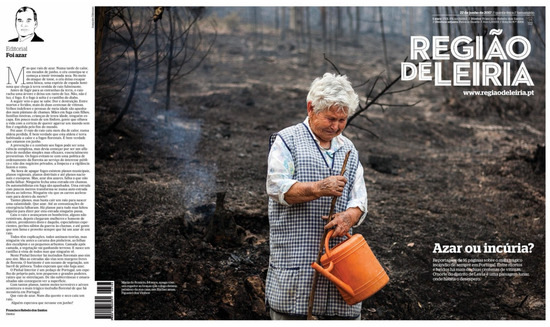
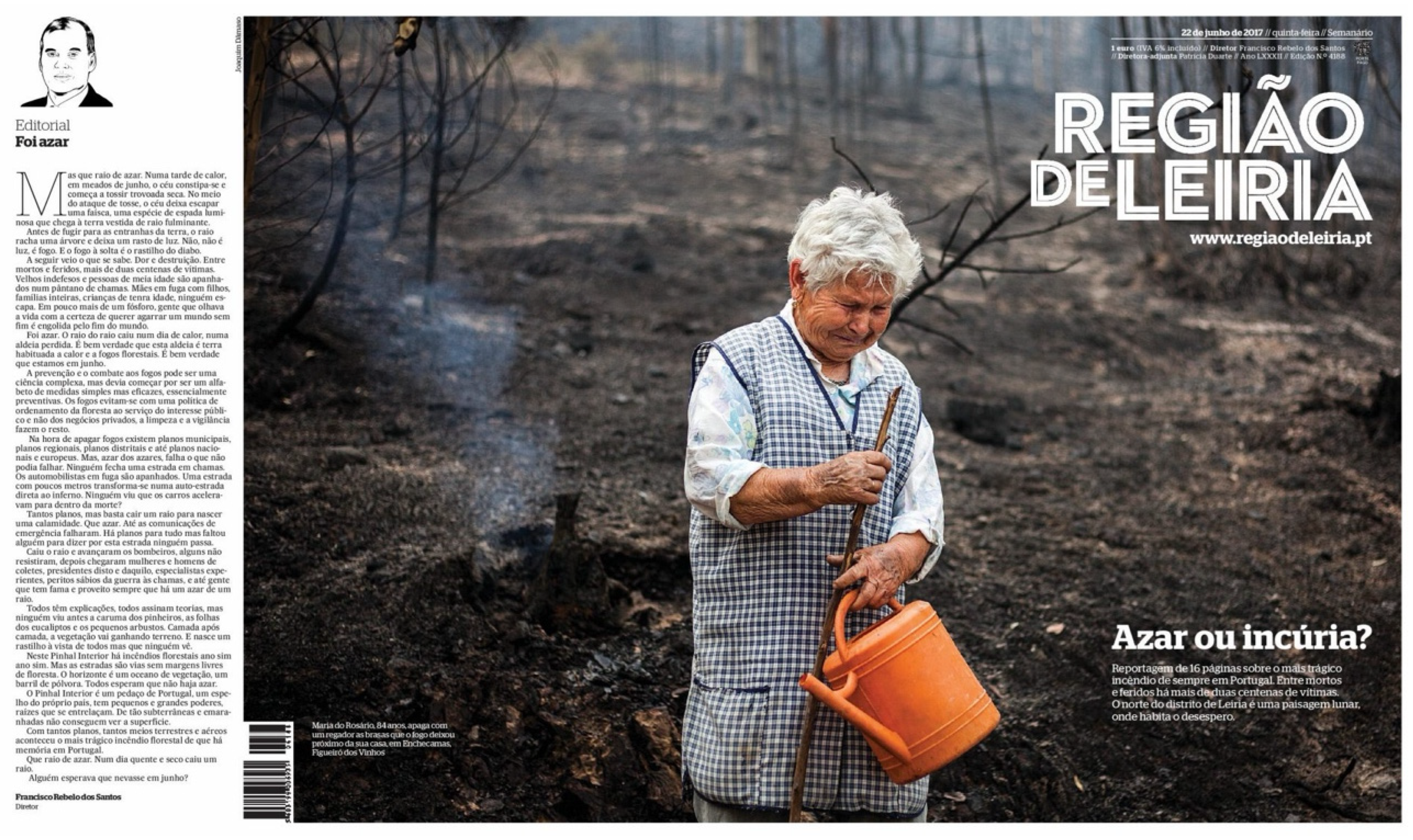
Figure 3 provides documentary and place-based context by depicting an older resident acting in a familiar environment following the Pedrógão Grande wildfire. The image does not independently establish the resident’s psychological state, social relationships or longer-term recovery.
Figure 3.
Maria do Rosário attending to embers after the June 2017 Pedrógão Grande wildfire. Note. The photograph depicts Maria do Rosário, aged 84, near her home in Enchecamas, Figueiró dos Vinhos, as described by the original press caption. It illustrates human and place-based context, not individual health or recovery outcomes. Photograph by Joaquim Dâmaso, first published by Região de Leiria on 22 June 2017 and subsequently reproduced by Público on 24 February 2018. Reproduced with permission from Joaquim Dâmaso and Região de Leiria. Source: https://www.publico.pt/2018/02/24/sociedade/noticia/capa-do-regiao-de-leiria-sobre-incendios-vence-premio-internacional-de-design-1804391 (accessed on 10 July 2026).
Direct older-adult research in a remote Indigenous setting provides particularly relevant evidence. Asfaw et al. (2020) investigated Indigenous Elders’ experiences during the 2011 Sandy Lake First Nation wildfire evacuation, documenting preparedness challenges, disrupted access to care, language and food-related barriers, and the importance of family and community support. These findings provide direct evidence of older adults’ experiences during wildfire-related evacuation in remote communities.
A related Sandy Lake First Nation community study analysed preparedness and communication difficulties during evacuation, drawing on 56 interviews and a focus group (Asfaw et al., 2019). This broader community investigation is not a separate age-specific effect estimate and concerns the same 2011 event as Asfaw et al. (2020). Together, these studies support attention to culturally appropriate evacuation planning, social continuity and the needs of remote communities without treating their observations as independent quantitative replications.
Rural qualitative research from the Methow Valley documents restricted activities and social interaction during wildfire smoke, alongside interpersonal coping resources (Humphreys et al., 2022). These experiences are relevant but originate from a small mixed-age sample. Professional accounts likewise emphasise partnerships and older adults’ participation, without measuring intervention effectiveness (Drolet & Choudhury, 2024). The interruption of familiar routines and attachment to place described in wildfire research (Humphreys et al., 2022) may also be interpreted through the concept of subjective anomie (Alves Ferreira, 2025). Ecological grief foregrounds distress associated with environmental loss (Cunsolo & Ellis, 2018), whereas the proposed subjective-anomie perspective would focus on perceived disconnection from everyday social orientation, familiar roles and sources of meaning following displacement. This distinction is a conceptual proposition: neither the connection nor its incremental explanatory value has been empirically tested in the reviewed studies of older wildfire survivors.
Older adults’ agency is evident in Howard et al. (2017), which documented local knowledge and reciprocal help in three regional Australian communities. Social connectedness and support were also investigated among 155 older adults following the Australian bushfires (Halcomb et al., 2023). These findings challenge exclusively deficit-oriented accounts of older age, although neither establishes that informal support is universally available.
Structural conditions may modify social recovery. Income, housing, gender, disability, mobility, transport and access to services may intersect with later life and geographical setting. Broader vulnerability research identifies these as potentially important dimensions without providing a universal older-rural wildfire effect (Davies et al., 2018; Flanagan et al., 2011; Lambrou et al., 2023). This issue is revisited in the discussion of future research priorities.
European empirical evidence is not absent: Oliveira et al. (2020) investigated Portuguese wildfire knowledge, risk perceptions and preparedness in a mixed-age sample. However, preparedness is distinct from long-term social recovery of older survivors in explicitly characterised low-density communities. This distinction also informs the research priorities discussed later in the manuscript.
Social continuity should therefore be examined through everyday functioning, healthcare access, reciprocal relationships, community participation and the availability of formal services. Indigenous Elders’ experiences also demonstrate the need to respect culturally specific knowledge and support systems (Asfaw et al., 2020).
4. Economic Effects
Economic recovery following wildfire extends beyond immediate property damage to encompass housing reconstruction, insurance settlements, livelihood disruption and continuity of essential services. These processes may generate substantial administrative and financial demands over extended periods, particularly where household resources, local reconstruction capacity and access to assistance are constrained. However, their distribution and cumulative consequences among older adults in low-density territories remain insufficiently quantified.
Mockrin et al. (2015) examined housing reconstruction following the 2010 Fourmile Canyon Fire in Colorado. At 34 months after the wildfire, approximately 30% of destroyed homes had been rebuilt and occupied, 20% were undergoing reconstruction and approximately 50% had not entered the rebuilding process. The investigation identified several factors contributing to delayed recovery, including underinsurance, delays in insurance settlements, subsequent flooding and reconstruction expenses associated with local building requirements. These findings demonstrate that the recovery of residential property may involve prolonged financial and administrative difficulties extending substantially beyond the immediate disaster. Although the study provides relevant evidence concerning reconstruction mechanisms, its reported rebuilding proportions do not constitute age-specific estimates for older-rural households.
Alexandre et al. (2015), examining rebuilding and new residential development following wildfires across the contiguous United States, reported that approximately one-quarter of destroyed homes were rebuilt within five years. Together, these investigations identify substantial delays and geographical variation in post-fire reconstruction, while also demonstrating the need to distinguish rebuilding outcomes from household financial recovery. For older residents, the relevance of these processes may depend on housing tenure, insurance coverage, access to savings, income security, mobility and the availability of administrative support. These factors should be examined as potential modifiers rather than presumed determinants of recovery.
The Beyond Bushfires programme provides complementary evidence concerning the relationship between post-disaster socioeconomic stressors and psychological adjustment. Pacella et al. (2024) reported that negative changes in income and interpersonal relationships were associated with a greater likelihood of probable adjustment disorder relative to the absence of psychiatric disorder at the assessment conducted approximately three to four years after the 2009 Victorian bushfires. In particular, negative income changes were associated with approximately 2.3-fold greater odds of probable adjustment disorder in the relevant comparison. However, income-related stressors and probable adjustment disorder were assessed within the same study wave, preventing determination of the temporal direction or causal nature of this association. Furthermore, these findings were not reported as separate estimates for older adults residing in explicitly defined low-density territories.
Economic disruption may also occur in the absence of residential destruction. Rural qualitative research has described restrictions on everyday activities and associated economic pressures during periods of wildfire smoke (Humphreys et al., 2022). Investigations involving older Australians have documented disruptions to healthcare, treatment routines and self-care during bushfires and successive emergencies (Halcomb et al., 2023; Thompson et al., 2024). These findings identify plausible pathways through which additional transport, accommodation, care-related or household expenses might arise, although the studies do not provide direct estimates of these costs among older-rural residents.
The relationship between wildfire-related health effects and economic recovery further warrants investigation. Research on respiratory and cardiovascular consequences of wildfire smoke supports the importance of health-related demands following exposure (Aguilera et al., 2021; Delfino et al., 2009). Nevertheless, clinical service utilisation should not be equated with household expenditure without accounting for differences in healthcare financing, insurance arrangements and social protection systems.
Future research should therefore distinguish insured and uninsured losses, income changes, reconstruction costs, household debt, housing tenure and access to recovery assistance. Longitudinal investigations with explicit age and territorial stratification are particularly necessary to determine whether economic insecurity contributes to persistent psychological difficulties, whether psychological symptoms affect recovery capacity, and how these relationships vary across welfare and housing systems. Accessible insurance procedures, practical claims assistance and targeted material support warrant prospective evaluation, but the available evidence does not establish the effectiveness of any specific financial assistance or pension reform for older-rural wildfire survivors.
5. Psychological Effects
Wildfire exposure, evacuation, smoke and environmental loss may affect psychological well-being. Direct research involving older adults reports substantial perceived effects, while mixed-age longitudinal studies show heterogeneous trajectories rather than universal decline. Symptom scores and self-reports should not be conflated with psychiatric diagnoses.
Halcomb et al. (2023) found that, among respondents to relevant items, 86.2% reported anxiety or worry about the fires and 57.2% perceived adverse mental-health effects. Zheng (2023) analysed US BRFSS observations from 2000 to 2010 among adults aged 65 years and over, linked to FIRESTAT records of wildfires above 50 acres within 20 km of the respondent’s county, using a two-way fixed-effect design. The alternative differences-in-differences estimator in Table 8 of that paper reported an average treatment effect on treated of 2.073 additional self-reported poor mental-health days in the preceding month (SE = 0.645, p < 0.01; 105,263 model observations). These observations do not denote 105,263 unique participants or diagnosed psychiatric illness; no corresponding low-density-specific estimate is provided.
Thompson et al. (2024) described older Australians’ experiences of disrupted healthcare and routines during successive emergencies; bushfire effects cannot be cleanly separated from floods and the COVID-19 pandemic. In mixed-age wildfire research, Belleville et al. (2021) and Silveira et al. (2021) documented post-fire psychological symptoms, while Pacella et al. (2024) identified different trajectories over ten years. Scoping reviews provide broader context but are not counted as additional primary observations (Melton et al., 2023; To et al., 2021).
Cross-hazard investigations provide additional context for interpreting age-related differences in psychological responses to disasters. Cherry et al. (2021), examining 223 predominantly middle-aged and older adults following major flooding in Louisiana, identified associations between disaster-related stressors and symptoms of depression and post-traumatic stress. Older age was associated with fewer depressive and worry symptoms, suggesting that age-related psychological responses cannot be characterised exclusively through greater vulnerability. Similarly, Zhou and Kwan (2024), analysing longitudinal data from 11,633 adults in rural China, reported associations between cumulative natural-hazard exposure and depressive symptoms, with particularly pronounced effects among middle-aged participants. Although these investigations concern hazards other than wildfire or combined hazard exposure, their findings support a differentiated interpretation of ageing, resilience and psychological vulnerability. Neither study provides a wildfire-specific longitudinal estimate for older adults residing in low-density territories.
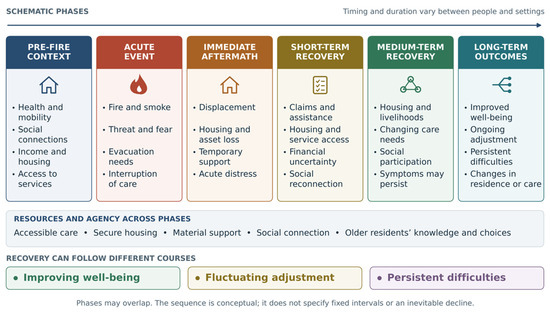
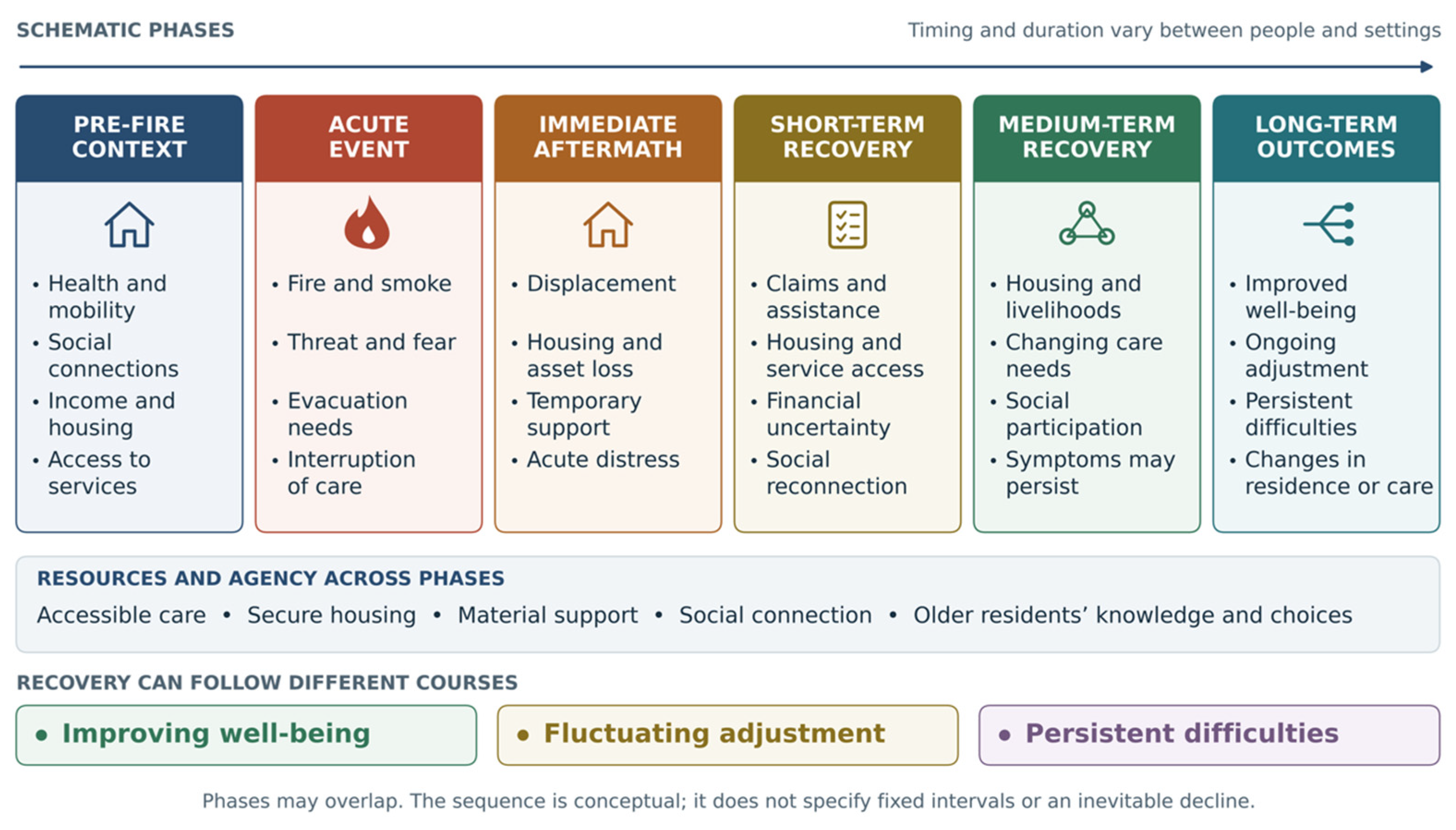
The PATH Through Life project provides additional evidence concerning the experiences of older populations during the 2019–2020 Australian bushfires. Lian (2023) examined health outcomes among 1069 participants aged 59–65 years, drawing on longitudinal assessment data and complementary bushfire-exposure information. The report identified variation in psychological and physical health outcomes according to exposure and assessment timing, while indicating that average psychological functioning could return towards pre-bushfire levels following the disaster period. A separate qualitative report by Kim (2023) examined accounts from participants in two PATH cohorts, aged 59–65 and 78–87 years. This investigation documented diverse experiences involving environmental loss, psychological distress, community support, gratitude and dissatisfaction with institutional responses. Importantly, the inclusion of participants in their eighties demonstrates that evidence concerning advanced age is not entirely absent from the wildfire literature. Nevertheless, neither report establishes a separate longitudinal recovery trajectory specifically for adults aged 85 years and over residing in explicitly characterised low-density territories. These complementary findings therefore refine the identification of remaining evidence gaps without implying uniformly adverse psychological outcomes in later life. Environmental loss may also be interpreted in relation to place attachment and ecological grief (Cunsolo & Ellis, 2018), although these concepts should remain distinct from clinical diagnoses. Figure 4 illustrates possible temporal pathways without asserting fixed stages or inevitable deterioration. Age-specific longitudinal investigation is necessary to clarify psychological functioning, support and adaptation across different geographical settings.
Figure 4.
Temporal trajectory of wildfire impacts and recovery among older adults. Note. The schematic presents potential pathways, not empirically established stages, durations or inevitable outcomes. Longitudinal research reports heterogeneous adjustment (Pacella et al., 2024), while direct older-adult studies document disruptions and perceived impacts (Halcomb et al., 2023; Thompson et al., 2024).
Population-level findings must be considered alongside individual circumstances. Chronic illness, transport access, social relationships and material resources may modify recovery, but neither older age nor low population density alone determines psychological harm. Population-level research on wildfire smoke and suicide also addresses a different outcome and scale from older-rural individual recovery (Molitor et al., 2023).
The principal findings and their inferential boundaries are summarised in the consolidated evidence table (Table 2). Further research should integrate psychological symptoms, everyday functioning, healthcare access, material security and community participation, using explicit age and territorial definitions and repeated follow-up.
Table 2.
Social, economic and psychological consequences of wildfires: evidence, contributions and inferential boundaries.
6. Discussion: An Integrated Critical Analysis
The evidence supports a multidimensional understanding of later-life wildfire recovery, without establishing a uniform vulnerability pathway. Direct research documents older residents’ experiences of healthcare and social disruption, psychological concern and contributions to community recovery (Asfaw et al., 2020; Halcomb et al., 2023; Howard et al., 2017; Thompson et al., 2024).
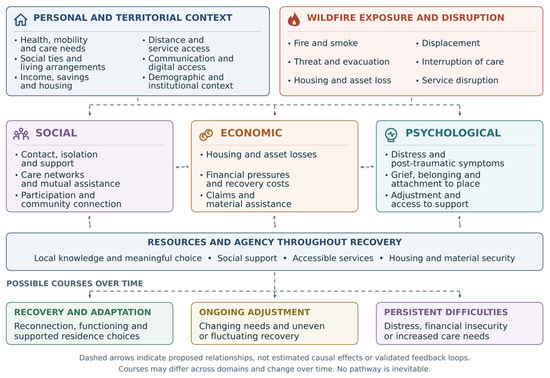
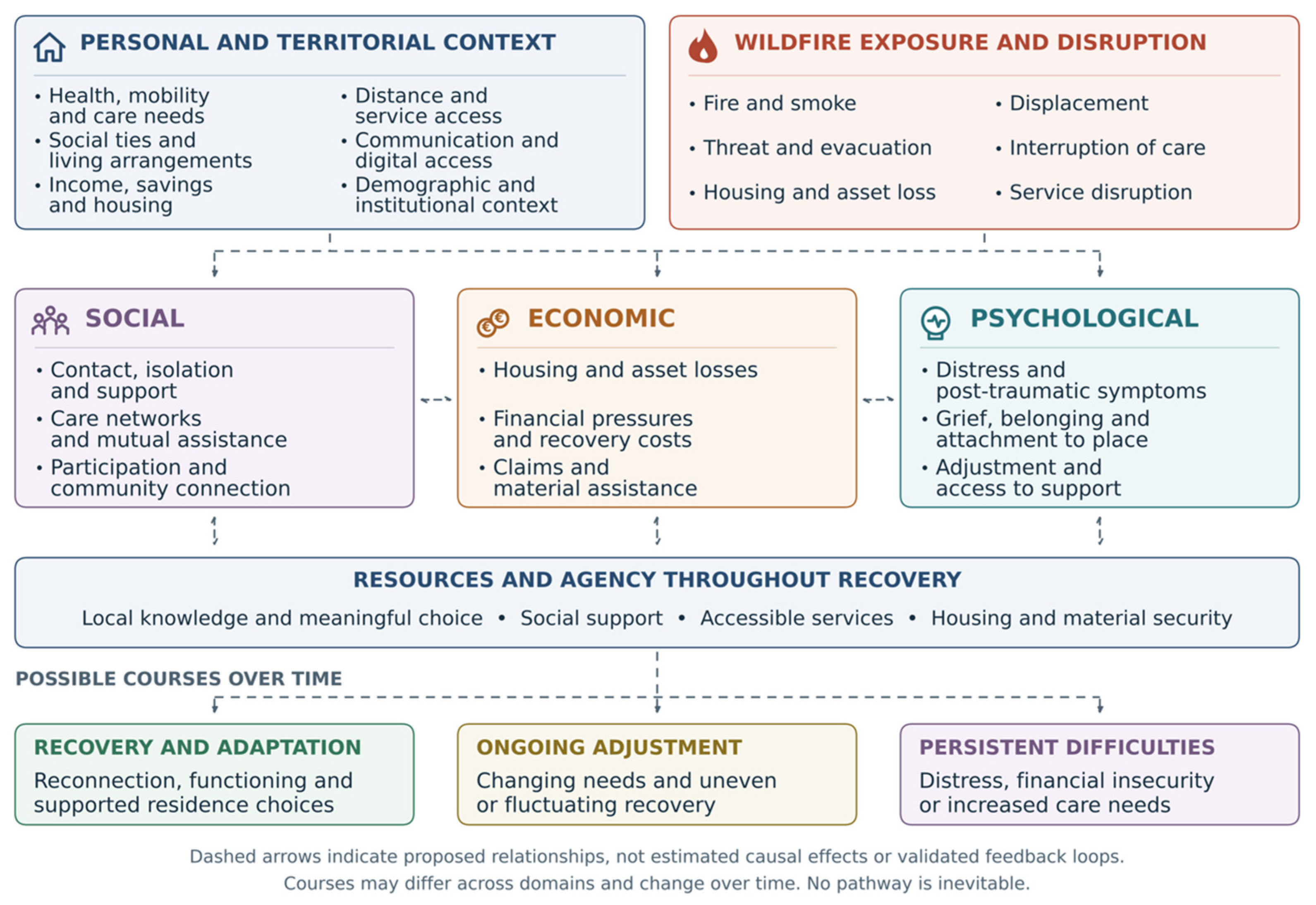
Figure 5 presents proposed connections between individual circumstances, territorial resources and recovery domains. Its arrows organise hypotheses rather than validated causal relationships or estimated feedback effects.
Figure 5.
Conceptual framework of wildfire vulnerability and recovery among older adults in low-density territories. Note. Author’s synthesis of possible social, economic and psychological pathways; arrows represent proposed relationships, not estimated causal effects. Sources include Asfaw et al. (2020), Halcomb et al. (2023), Howard et al. (2017), Humphreys et al. (2022), Kwan and Walsh (2017), Mockrin et al. (2015), Pacella et al. (2024) and Thompson et al. (2024).
The geographical analysis classified 310 NUTS-3 regions, of which 19 met all three selected conditions. Figure 1 identifies differences in nationally reported burnt area and population ageing across five southern European countries, while Figure 2 reveals the geographical co-occurrence of these conditions at regional level. The latter analysis adds spatial detail that national aggregates cannot provide, although its results remain dependent on the selected geographical domain, EFFIS mapping characteristics, population indicators and relative tertile thresholds. In particular, incomplete population-density observations for five Sardinian regions require caution when interpreting the absence of Italian regions among those meeting all three conditions. Neither figure establishes individual exposure, psychological harm, service deprivation or a validated territorial vulnerability classification.
The European evidence gap concerns longitudinal, age-specific recovery rather than an absence of all wildfire-related studies. Portuguese empirical research on wildfire risk perception and preparedness exists (Oliveira et al., 2020), but it does not provide a separate estimate of post-fire recovery among older survivors in low-density settings. Among the studies identified and examined for this purposive review, the author did not identify an empirical investigation reporting social, economic or psychological recovery outcomes separately for older survivors of the 2017 Pedrógão Grande or 2018 Mati wildfires in an explicitly characterised rural or low-density setting. This statement refers to the identified corpus; it does not establish that no such research exists outside it. The gap therefore concerns directly comparable older-adult recovery evidence, rather than European wildfire research in general.
Direct research with Indigenous Elders during the Sandy Lake First Nation wildfire evacuation adds culturally and territorially specific evidence on healthcare continuity, communication and family or community support (Asfaw et al., 2020). A related community-level investigation examined preparedness and evacuation challenges across a broader sample rather than providing a separate older-adult outcome estimate (Asfaw et al., 2019). Both studies concern the same 2011 event. Melton et al. (2023) reviewed 75 publications spanning a wider range of wildfire-related topics, including biomedical outcomes. The 17-study matrix in Table 1 is a purposive selection centred on social, economic and psychological experiences and should not be interpreted as the entire wildfire and ageing evidence base. The principal evidence gaps and corresponding priorities for future research identified through this critical synthesis are summarised in Table 3.
Table 3.
Research gaps and priorities for future research.
Structural disadvantage and resilience should be examined together rather than attributed solely to age. Income, gender, housing, disability and service access may intersect with geography. Direct accounts from Indigenous Elders demonstrate culturally specific relationships between family networks, evacuation communication and place (Asfaw et al., 2020); the related broader community-level study supplies contextual evidence on preparedness rather than an independent older-adult sample (Asfaw et al., 2019).
Housing-reconstruction evidence and psychological outcome studies originate from different samples and designs. Their co-occurrence across the literature does not establish that material loss inevitably causes persistent distress or institutionalisation. Prospective investigation is required to estimate the nature and direction of such associations.
Figure 5 integrates the social, economic and psychological dimensions of wildfire recovery into a conceptual framework. Empirical research documents disruptions to healthcare and everyday functioning, culturally and geographically specific experiences of evacuation, and the importance of social relationships and community support (Asfaw et al., 2020; Halcomb et al., 2023; Thompson et al., 2024). Housing reconstruction studies identify prolonged rebuilding processes and barriers associated with insurance settlements, reconstruction costs and administrative demands (Mockrin et al., 2015; Alexandre et al., 2015). Research from the Beyond Bushfires cohort further indicates that post-fire income-related stressors and interpersonal difficulties are associated with probable adjustment disorder, although the direction of these relationships remains unresolved (Pacella et al., 2024). Taken together, these findings provide a basis for examining whether social relationships facilitate material recovery, whether financial insecurity and psychological difficulties are reciprocally associated, and how these processes interact with access to services and community participation. These relationships remain hypotheses requiring longitudinal and mixed-method investigation rather than demonstrated causal mediation pathways. Their interpretation must account for differences in population characteristics, geographical settings, hazard exposure and outcome measurement.
The principal limitations of this review include purposive evidence selection, heterogeneous age thresholds, uneven geographical coverage, cumulative hazard exposure, inconsistent territorial definitions and the scarcity of directly comparable longitudinal outcomes among older residents of low-density territories. The regional geographical analysis is descriptive, dependent on its selected domain and source products, and ecological rather than individual-level. These limitations define the appropriate boundaries of interpretation without diminishing the value of the direct older-adult wildfire evidence identified. The recommendations that follow are evidence-informed, place-sensitive proposals; their feasibility, reach, distributional consequences and outcomes require evaluation with older residents and relevant services.
7. Recommendations
The recommendations are evidence-informed proposals rather than interventions demonstrated effective for older-rural wildfire survivors. Implementation should involve local adaptation and evaluation of accessibility, feasibility, participation, equity and outcomes. Table 4 identifies priority measures and the evidence informing their development and evaluation.
Table 4.
From vulnerability to action: age-sensitive wildfire policy measures.
7.1. Research and Knowledge Production
Longitudinal mixed-method studies should measure social networks, finances, housing, psychological symptoms and service access, with pre-event data where feasible and multi-year follow-up. Findings should be disaggregated by age, health, gender, income, tenure and living arrangements. Participatory work can identify outcomes important to older residents and improve the relevance of measures. Proposed instruments for place-based grief or administrative burden require validation before routine use.
7.2. Disaster Risk Governance and Emergency Management
Preparedness plans should provide accessible warnings, assisted evacuation, transport and continuity of medication and mobility support. Contact arrangements for isolated residents should be voluntary, regularly updated and governed by appropriate consent and data protection. Shelter and temporary accommodation should address accessibility and continuity of care. After-action reviews should examine whether support reached residents with differing needs and resources, rather than assume an age threshold adequately identifies those requiring assistance.
7.3. Social and Health Systems
Primary care, social services and community organisations should consider coordinated follow-up and accessible referral pathways after wildfire. Outreach and home visits are plausible ways to reach residents facing travel or mobility barriers, but their coverage and effects should be evaluated. Assessment should recognise distress without treating all grief as disorder or attributing symptoms to age alone. The availability of appropriate ongoing care is as important as initial detection.
7.4. Economic and Financial Instruments
Simplified claims, practical application support and accessible recovery information merit consideration where administrative barriers are identified. Targeted grants, temporary income supplements and assistance with uninsured losses are policy options requiring local financial analysis and evaluation; the reviewed evidence does not establish their effectiveness for older-rural households. Evaluation should measure material hardship, housing security, service access and distributional effects rather than rely only on aggregate reconstruction totals.
7.5. Territorial and Landscape Planning
Territorial planning should consider wildfire exposure alongside transport, communications, water and access to health and social services. Older residents’ knowledge and preferences should inform feasible protective measures and decisions about reconstruction or relocation. Continued residence should be supported where safe and desired, without treating remaining in place as the only legitimate recovery outcome. The effects of service restoration and land-management programmes on older residents require direct assessment.
7.6. Community Engagement and Rights-Based Practice
Older residents and their organisations should participate in preparedness and recovery decisions through accessible formats that accommodate differences in literacy, mobility, communication and digital access. Supportive relationships and collaboration are relevant resources, although professional accounts do not establish the effects of any particular participation programme (Drolet & Choudhury, 2024). Evaluation should examine whose perspectives are represented, who receives assistance and whether disparities narrow over time.
These proposals require adaptation to local conditions and prospective evaluation. Coordination should support older adults’ choices and access to resources without assuming either passive dependence or unlimited informal resilience.
8. Conclusions
This critical narrative review identifies social disruption, psychological concern and material recovery demands as interconnected issues in later-life wildfire experiences. Direct studies involving older adults in Australia and Indigenous Elders in remote Canada establish that the evidence base is not limited to mixed-age or proxy accounts. Nevertheless, available investigations do not demonstrate uniform harm at older ages, inevitable decline or quantified long-term older-rural financial losses.
The five figures provide complementary forms of national, regional, documentary and conceptual understanding. Among 310 classified NUTS-3 regions, 19 met all three selected territorial conditions; this co-occurrence is descriptive, not a validated vulnerability index. The documentary photograph illustrates place and human agency and does not independently establish individual outcomes. The temporal and recovery frameworks propose pathways for future research, not causal results.
Future research should integrate age-disaggregated longitudinal evidence with older residents’ accounts of housing, health, social support, material resources and psychological well-being. European preparedness studies exist, but comparable long-term recovery evidence remains limited. Participation, accessible services and interventions should be designed with older adults and evaluated for reach, equity and meaningful outcomes.
Supplementary Materials
The following supporting information can be downloaded at: https://www.mdpi.com/article/10.3390/psycholint8040067/s1. Supplementary Table S1 contains regional indicators and overlap classifications for 322 NUTS-3 regions. Supplementary File S1 documents the spatial analysis, national descriptive comparison, analytical procedures, results, and limitations, including the national burnt-area source (San-Miguel-Ayanz et al., 2024). Supplementary File S2 contains the analytical code, frozen source extracts, software requirements, provenance records, and numerical outputs underlying Figure 1 and Figure 2. Supplementary Table S2 documents the literature-search framework, source eligibility criteria, and qualitative appraisal domains. Supplementary Table S3 presents the 17-study primary-evidence traceability matrix and contextual research sources. The publications documented in Supplementary Table S3 are included in the main reference list (Alexandre et al., 2015; Asfaw et al., 2019, 2020; Belleville et al., 2021; Cherry et al., 2021; Drolet & Choudhury, 2024; Halcomb et al., 2023; Haynes et al., 2010; Howard et al., 2017; Humphreys et al., 2022; Kim, 2023; Kwan & Walsh, 2017; Lambrou et al., 2023; Lian, 2023; Melton et al., 2023; Mockrin et al., 2015; Oliveira et al., 2020; Pacella et al., 2024; Parker et al., 2016; Silveira et al., 2021; Thompson et al., 2024; To et al., 2021; Winkler & Mockrin, 2025; Zheng, 2023; Zhou & Kwan, 2024). An editable evidence matrix is also provided.
Funding
This research received no external funding.
Institutional Review Board Statement
Not applicable.
Informed Consent Statement
This article is a critical narrative review and did not involve the recruitment of human participants or the collection of primary personal data. Figure 3 reproduces a previously published journalistic photograph from the Portuguese newspaper Região de Leiria, dated 22 June 2017. The original photojournalist, Joaquim Dâmaso, has explicitly confirmed in writing that the individual depicted consented to being photographed and voluntarily cooperated with the journalistic reporting at the time. Consent was obtained in the context of the original journalistic activity, although no formal written consent document was produced. Written permission to reproduce the newspaper cover in the present scientific publication was subsequently obtained from the Director of Região de Leiria, Dr Francisco Rebelo dos Santos, who also confirmed the agreement of the original photojournalist, Joaquim Dâmaso.
Data Availability Statement
Publicly available third-party datasets were analysed in this study. Mapped burnt-area data for 2016–2023 were obtained from the European Forest Fire Information System (EFFIS; https://doi.org/10.2905/JRC.TB3JJQG). Population data by age group for 2023 were obtained from Eurostat (dataset demo_r_pjanaggr3; https://doi.org/10.2908/DEMO_R_PJANAGGR3), and population-density data for 2023 were obtained from Eurostat (dataset demo_r_d3dens; https://doi.org/10.2908/DEMO_R_D3DENS). Geographical boundaries were obtained from the GISCO NUTS 2024 dataset (https://gisco-services.ec.europa.eu/distribution/v2/nuts/nuts-2024-files.html). The geographical source extracts used in the analysis were retrieved on 7 October 2026. Supplementary Table S1 provides the regional source values, derived indicators, missing-data information, and overlap classifications. Supplementary File S1 documents the methodological procedures, assumptions, and analytical limitations, while Supplementary File S2 provides the frozen source extracts, computational scripts, software requirements, provenance records, and numerical outputs supporting reproducibility. The literature-identification framework is documented in Supplementary Table S2, and the evidence traceability matrix and contextual sources are provided in Supplementary Table S3 and the accompanying editable evidence matrix. No new participant-level data were collected. The supporting analytical materials are provided with the article as Supplementary Materials.
Acknowledgments
This work is dedicated to the memory of all those who have lost their lives to wildfires in Portugal and across the world, and to the countless families and communities whose lives have been forever changed by these tragedies. It honours not only those who perished in the flames, but also those who survived carrying the enduring burden of grief, loss and displacement, particularly older people whose homes, memories and sense of belonging were irreversibly affected. May the memory of those who are no longer with us endure, and may the suffering of those who remain never be forgotten. For every life lost, every home destroyed and every future interrupted, this work stands as a humble tribute to remembrance, human dignity and the enduring responsibility to care for one another. The author used artificial intelligence (AI)-based tools during manuscript preparation for language refinement and punctuation. OpenAI ChatGPT and Codex, using the GPT-6 Sol model (model identifier: gpt-6-sol; OpenAI, 2026), were also used as AI-assisted tools during the conceptual and visual development of figures, programming, and data analysis. The computational analysis was conducted using Python 3.12.14, NumPy 2.3.5, pandas 2.2.3, Shapely 2.1.2, and pyproj 3.8.0, as documented in Supplementary File S1. All AI-assisted outputs were critically reviewed, revised, and validated by the author. The author retains full responsibility for the accuracy, integrity, interpretation, originality, and final content of the manuscript, including all text, analyses, conceptual interpretations, and figures.
Conflicts of Interest
The author declares no conflicts of interest.
References
- Aguilera, R., Corringham, T., Gershunov, A., & Benmarhnia, T. (2021). Wildfire smoke impacts respiratory health more than fine particles from other sources: Observational evidence from Southern California. Nature Communications, 12, 1493. [Google Scholar] [CrossRef] [Scilit] [PubMed]
- Alexandre, P. M., Mockrin, M. H., Stewart, S. I., Hammer, R. B., & Radeloff, V. C. (2015). Rebuilding and new housing development after wildfire. International Journal of Wildland Fire, 24, 138–149. [Google Scholar] [CrossRef] [Scilit]
- Alves Ferreira, J. M. (2025). The theory of boredom as a sign of existential disconnection—Alves Ferreira’s theory of subjective anomie. Philosophies, 10(6), 138. [Google Scholar] [CrossRef] [Scilit]
- Asfaw, H. W., McGee, T. K., & Christianson, A. C. (2020). Indigenous Elders’ experiences, vulnerabilities and coping during hazard evacuation: The case of the 2011 Sandy Lake First Nation wildfire evacuation. Society & Natural Resources, 33(10), 1273–1291. [Google Scholar] [CrossRef] [Scilit]
- Asfaw, H. W., Sandy Lake First Nation, McGee, T. K., & Christianson, A. C. (2019). Evacuation preparedness and the challenges of emergency evacuation in Indigenous communities in Canada: The case of Sandy Lake First Nation, Northern Ontario. International Journal of Disaster Risk Reduction, 34, 55–63. [Google Scholar] [CrossRef] [Scilit]
- Belleville, G., Ouellet, M. C., Lebel, J., Ghosh, S., Morin, C. M., Bouchard, S., Guay, S., Bergeron, N., Campbell, T., & MacMaster, F. P. (2021). Psychological symptoms among evacuees from the 2016 Fort McMurray wildfires: A population-based survey one year later. Frontiers in Public Health, 9, 655357. [Google Scholar] [CrossRef] [Scilit] [PubMed]
- Cherry, K. E., De Vito, A. N., Calamia, M. R., Elliott, E. M., Yu, S., Sampson, L., Galea, S., Mansoor, M., McKneely, K. J., & Nguyen, Q. P. (2021). Disaster stressors and psychological well-being in older adults after a flood. Psychology and Aging, 36(5), 660–666. [Google Scholar] [CrossRef] [Scilit] [PubMed]
- Cunsolo, A., & Ellis, N. R. (2018). Ecological grief as a mental health response to climate change-related loss. Nature Climate Change, 8, 275–281. [Google Scholar] [CrossRef] [Scilit]
- Davies, I. P., Haugo, R. D., Robertson, J. C., & Levin, P. S. (2018). The unequal vulnerability of communities of color to wildfire. PLoS ONE, 13(11), e0205825. [Google Scholar] [CrossRef] [Scilit] [PubMed]
- Delfino, R. J., Brummel, S., Wu, J., Stern, H., Ostro, B., Lipsett, M., Winer, A., Street, D. H., Zhang, L., Tjoa, T., & Gillen, D. L. (2009). The relationship of respiratory and cardiovascular hospital admissions to the southern California wildfires of 2003. Occupational and Environmental Medicine, 66(3), 189–197. [Google Scholar] [CrossRef] [Scilit] [PubMed]
- Drolet, J. L., & Choudhury, M. (2024). Promoting older adults’ engagement in disaster recovery through supportive relationships, partnerships, and collaboration: Perspectives of social work practitioners and human service professionals. International Journal of Disaster Risk Science, 15, 265–276. [Google Scholar] [CrossRef] [Scilit]
- European Commission & Joint Research Centre. (n.d.). Rapid damage assessment. European Forest Fire Information System (EFFIS). Available online: https://forest-fire.emergency.copernicus.eu/about-effis/technical-background/rapid-damage-assessment (accessed on 7 October 2026).
- European Commission & Joint Research Centre. (2026). Burnt area maps—EFFIS Damage Assessment [Dataset]. Available online: https://data.jrc.ec.europa.eu/dataset/4bd142ce-1baa-4a84-85c5-b5c676309d3a (accessed on 7 October 2026).
- European Commission: Eurostat. (2021). Applying the degree of urbanisation: A methodological manual to define cities, towns and rural areas for international comparisons (2021st ed.). Publications Office of the European Union. [Google Scholar] [CrossRef]
- Eurostat. (2024). NUTS 2024 geographical reference data [Geospatial data]. European Commission, GISCO. Available online: https://gisco-services.ec.europa.eu/distribution/v2/nuts/nuts-2024-files.html (accessed on 7 October 2026).
- Eurostat. (2026a). Population density by NUTS 3 region [Data set]. European Commission. Available online: https://ec.europa.eu/eurostat/databrowser/product/page/DEMO_R_D3DENS (accessed on 7 October 2026).
- Eurostat. (2026b). Population on 1 January by broad age group, sex and NUTS 3 region [Data set]. European Commission. Available online: https://ec.europa.eu/eurostat/databrowser/product/page/DEMO_R_PJANAGGR3 (accessed on 7 October 2026).
- Flanagan, B. E., Gregory, E. W., Hallisey, E. J., Heitgerd, J. L., & Lewis, B. (2011). A social vulnerability index for disaster management. Journal of Homeland Security and Emergency Management, 8(1), 0000102202154773551792. [Google Scholar] [CrossRef] [Scilit]
- Greenhalgh, T., Thorne, S., & Malterud, K. (2018). Time to challenge the spurious hierarchy of systematic over narrative reviews? European Journal of Clinical Investigation, 48(6), e12931. [Google Scholar] [CrossRef] [Scilit] [PubMed]
- Halcomb, E., Thompson, C., Morris, D., James, S., Dilworth, T., Haynes, K., & Batterham, M. (2023). Impacts of the 2019/20 bushfires and COVID-19 pandemic on the physical and mental health of older Australians: A cross-sectional survey. Family Practice, 40(3), 449–457. [Google Scholar] [CrossRef] [Scilit] [PubMed]
- Haynes, K., Handmer, J., McAneney, J., Tibbits, A., & Coates, L. (2010). Australian bushfire fatalities 1900–2008: Exploring trends in relation to the ‘Prepare, stay and defend or leave early’ policy. Environmental Science & Policy, 13(3), 185–194. [Google Scholar] [CrossRef] [Scilit]
- Howard, A., Blakemore, T., & Bevis, M. (2017). Older people as assets in disaster preparedness, response and recovery: Lessons from regional Australia. Ageing & Society, 37(3), 517–536. [Google Scholar] [CrossRef] [Scilit]
- Humphreys, A., Walker, E. G., Bratman, G. N., & Errett, N. A. (2022). What can we do when the smoke rolls in? An exploratory qualitative analysis of the impacts of rural wildfire smoke on mental health and wellbeing, and opportunities for adaptation. BMC Public Health, 22(1), 41. [Google Scholar] [CrossRef] [Scilit] [PubMed]
- Intergovernmental Panel on Climate Change (IPCC). (2023). Sections. In Core Writing Team, H. Lee, & J. Romero (Eds.), Climate change 2023: Synthesis report. Contribution of working groups I, II and III to the sixth assessment report of the Intergovernmental Panel on Climate Change (pp. 35–115). Intergovernmental Panel on Climate Change. [Google Scholar] [CrossRef] [Scilit]
- Kim, S. (2023). Older adults’ experiences during the 2019/2020 bushfires: The PATH through life project. ACT Health Directorate. Available online: https://www.act.gov.au/__data/assets/pdf_file/0011/2258426/Older-adults-experiences-during-the-2019-2020-bushfires,-the-PATH-through-life-project-2023.pdf (accessed on 3 July 2026).
- Kwan, C., & Walsh, C. A. (2017). Seniors’ disaster resilience: A scoping review of the literature. International Journal of Disaster Risk Reduction, 25, 259–273. [Google Scholar] [CrossRef] [Scilit]
- Lambrou, N., Kolden, C., Loukaitou-Sideris, A., Anjum, E., & Acey, C. (2023). Social drivers of vulnerability to wildfire disasters: A review of the literature. Landscape and Urban Planning, 237, 104797. [Google Scholar] [CrossRef] [Scilit]
- Lian, J. (2023). The path through life project: Impact of the 2019/2020 bushfires on a cohort of older adults. ACT Health Directorate. Available online: https://www.act.gov.au/__data/assets/pdf_file/0010/2258461/PATH_Impact-of-2019-20-Bushfires-on-a-Cohort-of-Older-Adults.pdf (accessed on 5 July 2026).
- Melton, C. C., De Fries, C. M., Smith, R. M., & Mason, L. R. (2023). Wildfires and older adults: A scoping review of impacts, risks, and interventions. International Journal of Environmental Research and Public Health, 20(13), 6252. [Google Scholar] [CrossRef] [Scilit] [PubMed]
- Mockrin, M. H., Stewart, S. I., Radeloff, V. C., Hammer, R. B., & Alexandre, P. M. (2015). Adapting to wildfire: Rebuilding after home loss. Society & Natural Resources, 28(8), 839–856. [Google Scholar] [CrossRef] [Scilit]
- Molitor, D., Mullins, J. T., & White, C. (2023). Air pollution and suicide in rural and urban America: Evidence from wildfire smoke. Proceedings of the National Academy of Sciences of the United States of America, 120(38), e2221621120. [Google Scholar] [CrossRef] [Scilit] [PubMed]
- Oliveira, R., Oliveira, S., Zêzere, J. L., & Viegas, D. X. (2020). Uncovering the perception regarding wildfires of residents with different characteristics. International Journal of Disaster Risk Reduction, 43, 101370. [Google Scholar] [CrossRef] [Scilit]
- Pacella, B. J., Cowlishaw, S., Gibbs, L., Bryant, R. A., Brady, K., Gallagher, C., Molyneaux, R., Gibson, K., Block, K., Harms, L., Forbes, D., & O’Donnell, M. L. (2024). Trajectory of adjustment difficulties following disaster: 10-year longitudinal cohort study. BJPsych Open, 10(2), e57. [Google Scholar] [CrossRef] [Scilit] [PubMed]
- Parker, G., Lie, D., Siskind, D. J., Martin-Khan, M., Raphael, B., Crompton, D., & Kisely, S. (2016). Mental health implications for older adults after natural disasters—A systematic review and meta-analysis. International Psychogeriatrics, 28(1), 11–20, (Erratum in 2016, International Psychogeriatrics, 28, 21). [Google Scholar] [CrossRef] [Scilit] [PubMed]
- Prohaska, T. R., & Peters, K. E. (2019). Impact of natural disasters on health outcomes and cancer among older adults. The Gerontologist, 59(Suppl. S1), S50–S56. [Google Scholar] [CrossRef] [Scilit] [PubMed]
- San-Miguel-Ayanz, J., Durrant, T., Boca, R., Maianti, P., Libertà, G., Oom, J. F., Branco, A., de Rigo, D., Suarez-Moreno, M., Ferrari, D., Roglia, E., Scionti, N., Broglia, M., Onida, M., Tistan, A., & Löffler, P. (2024). Forest fires in Europe, Middle East and North Africa 2023. Publications Office of the European Union. [Google Scholar] [CrossRef]
- Silveira, S., Kornbluh, M., Withers, M. C., Grennan, G., Ramanathan, V., & Mishra, J. (2021). Chronic mental health sequelae of climate change extremes: A case study of the deadliest Californian wildfire. International Journal of Environmental Research and Public Health, 18(4), 1487. [Google Scholar] [CrossRef] [Scilit] [PubMed]
- Sukhera, J. (2022). Narrative reviews: Flexible, rigorous, and practical. Journal of Graduate Medical Education, 14(4), 414–417. [Google Scholar] [CrossRef] [Scilit] [PubMed]
- Thompson, C., Dilworth, T., James, S., Haynes, K., Batterham, M., & Halcomb, E. (2024). The self-care of older Australians during bushfires and COVID-19: A qualitative study. Disaster Medicine and Public Health Preparedness, 18, e219. [Google Scholar] [CrossRef] [Scilit] [PubMed]
- To, P., Eboreime, E., & Agyapong, V. I. O. (2021). The impact of wildfires on mental health: A scoping review. Behavioral Sciences, 11(9), 126. [Google Scholar] [CrossRef] [Scilit] [PubMed]
- Winkler, R. L., & Mockrin, M. H. (2025). Aging and wildfire risk to communities (Report No. EIB-284). United States Department of Agriculture, Economic Research Service. Available online: https://www.ers.usda.gov/publications/111028 (accessed on 7 July 2026).
- Xu, R., Yu, P., Abramson, M. J., Johnston, F. H., Samet, J. M., Bell, M. L., Haines, A., Ebi, K. L., Li, S., & Guo, Y. (2020). Wildfires, global climate change, and human health. The New England Journal of Medicine, 383(22), 2173–2181. [Google Scholar] [CrossRef] [Scilit] [PubMed]
- Zheng, J. (2023). Exposure to wildfires and health outcomes of vulnerable people: Evidence from US data. Economics & Human Biology, 51, 101311. [Google Scholar] [CrossRef] [Scilit] [PubMed]
- Zhou, S., & Kwan, C. (2024). Cumulative exposure to natural hazards and mental health in China: Are older people more vulnerable or more resilient than younger and middle-aged adults? International Journal of Disaster Risk Science, 15(2), 277–289. [Google Scholar] [CrossRef] [Scilit]

Disclaimer/Publisher’s Note: The statements, opinions and data contained in all publications are solely those of the individual author(s) and contributor(s) and not of MDPI and/or the editor(s). MDPI and/or the editor(s) disclaim responsibility for any injury to people or property resulting from any ideas, methods, instructions or products referred to in the content. |
© 2026 by the author. Licensee MDPI, Basel, Switzerland. This article is an open access article distributed under the terms and conditions of the Creative Commons Attribution (CC BY) license.