


Abstract
Given the moral barriers that hinder critical analysis of pornography, this study aims, through a qualitative approach with 15 participants, to examine its impacts on the construction of masculinity and the social relationships of men from the semi-arid region of Paraíba, Brazil. Data were collected via an online form, which included a sociodemographic questionnaire and open-ended questions on the topic. The data were analyzed using dialogical maps within the framework of discourse analysis. Results show that pornography is a constant and influential presence in the participants’ lives, often beginning at an early age and reinforced by social interaction. Its consumption goes beyond personal satisfaction, also serving as a tool for social comparison, shaping male subjectivity and relational dynamics. In sum, the study highlights the cultural impact of pornography in a context where critical discussions about sexuality remain limited due to the prevalence of traditional gender norms and male chauvinism.
1. Introduction
Pornography occupies a controversial yet increasingly unavoidable place in contemporary social life and scholarly inquiry (Miller & McBain, 2022). Although the term is often treated as self-evident, its definition remains analytically unstable. As interdisciplinary work has shown, pornography may be understood either in a narrow sense (e.g., as sexually explicit material intended to arouse) or in a broader one, as a historically and culturally contingent category rather than an object with fixed intrinsic features (McKee et al., 2020). This definitional instability is not merely a semantic dispute, given that pornography can also be considered a social phenomenon through which sexual norms, moral boundaries, and power relations are debated, reproduced, and contested (Grigoropoulos, 2023; Huțul et al., 2025). While erotic representation long predates modernity, the twentieth and twenty-first centuries transformed pornography into a large-scale industry whose circulation has been intensified by audiovisual and digital technologies (Burke, 2015; Regan, 2021; Wang, 2024).
In contemporary sexual cultures, pornography often becomes an important reference point for sexual and affective experience, with exposure beginning early in life in many cases (D’Abreu, 2013; Pathmendra et al., 2023). Under these conditions, pornography does more than entertain: it also operates as a socializing device that intersects with subjectivity (Setty, 2021). Prior research has associated its consumption with the objectification of women for male satisfaction (Barros et al., 2020; Chaise et al., 2023), the reinforcement of patriarchal arrangements (Bourdieu, 2005), the hypersexualization of Black male bodies (Thorpe et al., 2024), and the consolidation of gendered attitudes that may reverberate in broader social relations (Bhuptani et al., 2024). From this angle, pornography is not simply a matter of private consumption, but a cultural site in which gendered meanings are learned, negotiated, and reproduced (Hellemans, 2026).
Yet the literature remains far from a consensus. A substantial body of work has been organized around a logic of harmful effects, frequently emphasizing possible links between pornography and sexual aggression, sexist beliefs, or unrealistic sexual expectations (Mestre-Bach et al., 2024). Other strands of research, however, argue that its meanings and consequences are neither uniform nor reducible to a single moral or causal script. Recent studies suggest that what pornography does, and how it matters, depends on context, prior values, sexual scripts, and the norms through which it is interpreted (Grigoropoulos, 2023; Huțul et al., 2025). Systematic reviews likewise caution that the evidence base is heterogeneous and that causal inference remains limited even where certain associations recur (Litsou et al., 2021; Pathmendra et al., 2023). When pornography is treated only as an isolated stimulus producing direct effects, the discursive and relational environments, through which it becomes meaningful in everyday life, tend to be neglected (Healy-Cullen et al., 2022).
These questions become even more pressing when the focus shifts to the interplay between masculinity and sexuality. Pornography does not merely depict sexual acts; it stages bodies, hierarchies, roles, and expectations that may resonate with dominant models of manhood (Camacho-Ruiz et al., 2025; Nolin et al., 2025). Research on men’s sexuality has increasingly emphasized the need to examine how hegemonic masculine norms structure desire, intimacy, emotional expression, and sexual conduct, especially in qualitative work attentive to lived experience and social context (Camacho-Ruiz et al., 2025). Nor are attitudes toward pornography formed in a vacuum. Religiosity, moral regulation, peer norms, and broader sociocultural pressures shape how pornography is consumed, justified, criticized, or silenced (Grigoropoulos, 2023). In this sense, pornography may operate simultaneously as a mirror and as an amplifier of socially valorized forms of masculinity, often reinforcing machismo while also exposing tensions, contradictions, and fractures within masculine identity itself (Yu et al., 2021).
A Foucauldian approach is particularly useful here because it displaces the analytical emphasis from interiority to processes of subjectivation (Foucault, 2010, 2020a, 2020b). Rather than imagining the subject as a self-contained interior essence, Foucault understands subjects as historically constituted through discourses, practices, and relations of power (Foucault, 2010, 2020a, 2020b). Subjectivity, from this standpoint, is neither private substance nor purely inner truth, but a relational and historically situated process (Foucault, 2010; Ferreira Neto, 2017). Ferreira Neto (2017) notes that this perspective departs from psychological traditions that privileged consciousness and introspection as the privileged routes to the self. What Foucauldian analyses foreground instead is the manner in which norms, truths, and social practices participate in the formation of subjects, even as they leave room for tension, negotiation, and resistance (Ferreira Neto, 2017; Moreira & Januzzi, 2023).
Through Foucauldian analysis, sexuality is not a natural domain later expressed in language, but a historical field constituted through discourse, regulation, and the production of truth (Foucault, 2020a, 2020b). In modernity, sex becomes something to be incessantly spoken about, classified, examined, and normalized; through these operations, subjects are invited to recognize themselves, evaluate themselves, and govern themselves as sexual beings (Foucault, 2020a, 2020b). Seen from this angle, pornography is more than explicit representation. It forms part of a broader dispositif of sexuality in which bodies, pleasures, desires, performances, and hierarchies are rendered visible, evaluated, and made socially intelligible (Foucault, 2020a, 2020b; Moreira & Januzzi, 2023). Its importance lies not only in what it depicts, but also in the norms and truths it helps organize regarding masculine conduct, sexual desirability, and the acceptable boundaries of pleasure and intimacy (Foucault, 2020a, 2020b; Yu et al., 2021; Grigoropoulos, 2023).
Read in these terms, pornography can be treated less as a neutral object with fixed effects than as a historically situated practice implicated in the production of masculine subjectivities (Foucault, 2010, 2020a, 2020b; Moreira & Januzzi, 2023). It becomes intelligible as part of broader regimes of truth through which masculinity, desire, and sexual conduct are organized, regulated, and contested (Foucault, 2020a, 2020b; Moreira & Januzzi, 2023). That analytical move matters especially in contexts still underexplored in the literature, such as the hinterland of Paraíba, Brazil. What makes this setting relevant is not merely its geographic specificity, but the opportunity it offers to examine how pornography becomes entangled with locally situated norms of gender, morality, respectability, and sexual conduct (Foucault, 2020a, 2020b; Grigoropoulos, 2023).
The Brazilian scientific literature has repeatedly called attention to the relative invisibility of sexuality and gender in rural and interior contexts, while also warning against treating such settings as simple absences or delayed versions of urban sexual cultures (Schwendler & Vieira, 2022). Studies on Brazilian masculinities likewise indicate that male identity is shaped by broader arrangements involving gender hierarchy, honour-related expectations, religiosity, and normative pressures surrounding sexual conduct (Souza et al., 2023; Dengah et al., 2024). Work conducted within the same context further suggests that gender and sexuality in the region are traversed by invisibilities, stigmas, and political–moral arrangements that cannot be reduced to metropolitan models or to a fixed cultural essence (Tota, 2021). Under such conditions, pornography may circulate less as an openly discussable cultural object than as an informal and often silenced repertoire through which sexual knowledge, masculine performance, and moral boundaries are negotiated in everyday life. For that reason, the hinterland of Paraíba is relevant not as a residual or exceptional case, but as a situated setting in which pornography, masculinity, morality, and respectability intersect in socially specific ways.
Against this backdrop, the present study adopts a qualitative approach with 15 participants to analyze pornography consumption and its relations to masculinity and social life among men living in the hinterland of Paraíba. More specifically, it examines the prevalence of pornography use, its perceived repercussions for affective and sexual relationships, and its role in participants’ understandings of identity and masculinity. By treating pornography as a phenomenon mediated by dominant social norms and discourses, the article seeks to show how it becomes implicated in the reproduction, negotiation, and occasional contestation of patriarchal masculinity in a specific cultural setting (Foucault, 2020a, 2020b; Grigoropoulos, 2023; Yu et al., 2021).
2. Materials and Methods
2.1. Study Design
This study adopted a qualitative research design aimed at examining pornography consumption and its relation to subjectivity and masculinity among men living in the hinterland region of Paraíba, Brazil. The study was exploratory and knowledge-oriented, aiming to contribute to theoretical and empirical understanding of pornography, subjectivity, and masculinity in a culturally situated context, rather than to evaluate or implement an intervention.
2.2. Participants
The final sample consisted of 15 participants. Participants were predominantly cisgender men (93.3%), heterosexual (60%), self-identified as mixed-race (60%), single/not in a relationship (66.7%), Catholic (40%), with a family income between BRL 1201.00 and BRL 2400.00 (53.3%), and reporting more than four hours of average daily internet use (66.7%). Participants ranged in age from 18 to 32 years (mean (M) = 24.87; standard deviation (SD) = 4.09).
Participants were recruited after an initial screening with potential respondents. Eligibility criteria included being 18 years or older and agreeing to participate voluntarily after reading the informed consent form. Because the study focused on the relation between pornography, subjectivity, and masculinity, participants were invited to contribute only if they were willing to answer questions regarding their experiences, perceptions, and meanings associated with pornography consumption.
The sample included fourteen cisgender men and one participant who did not identify as cisgender. This participant was retained in the analysis because the study approached masculinity as a discursive, relational, and socially situated construction, rather than as an experience restricted exclusively to cisgender men. Their responses were analyzed within the same interpretive framework and contributed to the categories insofar as they engaged with the analytical dimensions examined across the corpus, including pornography, sexual scripts, body standards, sexual performance, comparison, and masculinity. However, given that this was a single case, no subgroup analysis or generalization regarding non-cisgender experiences was conducted.
Sample adequacy was considered in light of the principle of information power proposed by Malterud et al. (2016), according to which qualitative sample size depends on the specificity of the study aim, the specificity of the sample, the use of established theory, the quality of the empirical material, and the analytical strategy. In the present study, the sample was considered adequate because the research aim was specific, the participants shared a situated sociocultural context directly relevant to the research questions, and the analysis was guided by an established theoretical framework and oriented toward interpretive depth rather than statistical representation or cross-group comparison. At the same time, because the material consisted of written online responses, the sample size and data format were considered when defining the scope, depth, and transferability of the findings.
Participants’ sociodemographic characteristics are presented in Table 1.
Table 1.
Sociodemographic characteristics of participants.
2.3. Measures
Data were collected using an online questionnaire administered through Google Forms (Google LLC, Mountain View, CA, USA). The instrument comprised three main components.
First, a sociodemographic questionnaire was used to characterize participants in terms of age, gender identity, sexual orientation, skin color, social class, relationship status, religious affiliation, level of religiosity, city of residence, and internet use.
Second, participants responded to a set of open- and closed-ended questions designed to explore their understandings and experiences related to pornography (Marconi & Lakatos, 2021). These questions addressed: (a) what participants understood to be pornography; (b) when they first had contact with pornographic material; (c) their motivations for consuming pornography; (d) how they perceived the masculinity of porn actors; and (e) how they understood pornography’s influence on their affective and romantic relationships. Taken together, these questions were intended to examine how pornography was experienced and signified in relation to participants’ subjectivity and everyday social life.
Third, participants also answered a single closed-ended item assessing their perceived sexual satisfaction over the previous year. Responses were given on a Likert-type scale ranging from 0 (“not at all satisfied”) to 4 (“very satisfied”). This item was included as contextual information to support the interpretation of participants’ accounts regarding affective-sexual life, rather than as a measure intended for inferential analysis.
2.4. Procedures
Participants were recruited through a non-probabilistic convenience sampling strategy with purposive eligibility criteria. Potential participants were initially identified through the first author’s local networks in the hinterland region of Paraíba and contacted via WhatsApp after a preliminary assessment of eligibility. This strategy was chosen because the study addressed a sensitive topic and required participants who were both eligible and willing to provide written accounts of their experiences and perceptions regarding pornography consumption.
They first received a text message explaining the aims of the research, the voluntary nature of participation, and the ethical principles governing data collection and storage, including confidentiality and anonymity.
Those who agreed to participate were then provided with a link to the online questionnaire hosted on Google Forms. The form was organized into three sections: (1) the Informed Consent Form; (2) questions concerning pornography and subjectivity; and (3) the sociodemographic questionnaire. Participation took place remotely, and responses were recorded directly on the platform.
2.5. Researchers’ Reflexivity and Positionality
Consistent with the constructionist and Foucauldian orientation of this study, we understood the analytical process as situated rather than neutral. The research team’s theoretical commitments, social locations, and interpretive assumptions were therefore considered part of the production and interpretation of the data, especially given the sensitivity of pornography, masculinity, and sexuality in the sociocultural context examined.
All researchers involved in the study currently live or have lived in the hinterland region of Paraíba, Brazil. This proximity provided familiarity with local norms related to gender, religiosity, respectability, and the public regulation of sexuality. At the same time, we recognized that such familiarity could make certain assumptions appear self-evident. For this reason, the regional context was not treated as a homogeneous cultural essence, but as a situated field in which meanings about pornography, masculinity, and sexuality are produced, negotiated, and contested.
The research team has academic experience in studies on gender, identity, sexuality, inequality, and processes of subjectivation. These commitments informed an analytical stance attentive to the discursive production of masculinity, rather than to moral evaluation or individual pathology. Throughout the analysis, participants’ accounts were interpreted as situated discursive productions potentially shaped by embarrassment, social desirability, masculine norms, and the perceived legitimacy of discussing pornography in an academic study. Interpretive decisions were discussed among the authors to reduce moralizing readings and to examine how our own assumptions could shape the meanings foregrounded in the analysis.
2.6. Data Analysis
The material was analyzed using discourse analysis, based on an adapted version of the Dialogical Maps proposed by Spink (2013). Because the data were collected online through open- and closed-ended questions rather than through face-to-face interviews, some adaptations to the original procedure were necessary. The Dialogical Maps can be accessed in the Table S1.
It is important to acknowledge that this adaptation involves an epistemological shift that warrants explicit discussion. The Dialogical Maps methodology was originally developed for the analysis of oral discourse, with particular attention to the polyphonic, intersubjective, and emergent properties of spoken interaction, including prosodic features, turn-taking dynamics, and the co-construction of meaning in face-to-face contexts (Spink, 2013). Applying this framework to written questionnaire responses necessarily transforms some of these properties: the spontaneity and prosody of speech are absent, intersubjectivity is mediated by the instrument rather than by live dialogue, and the emergent quality of oral exchange gives way to the structured conditions of online form completion. Studying topics related to sexuality, especially those linked to pornography consumption, presents researchers with the difficulty of collecting honest information: Given the sensitivity of sexuality-related topics, written and anonymous questionnaires may facilitate disclosure by reducing embarrassment and perceived judgment, although they also limit the dialogical and interactional richness of the material (Braun et al., 2021).
However, the core analytical logic of the Dialogical Maps, the organization of participants’ accounts into a cartographic table that enables the identification of recurring meanings, thematic repertoires, and discursive positions across the corpus, is not contingent on orality per se. What the method preserves in its written adaptation is the relational and comparative dimension of analysis: the possibility of tracing how similar or contradictory formulations circulate across different accounts, and of identifying the social and cultural resources participants draw upon to make sense of their experiences (Spink, 2013). Written responses, rather than diminishing the discursive character of the material, offer a different modality of language in use: one that is already organized, reflective, and available in full without the need for transcription.
Alternative frameworks were also considered. Reflexive thematic analysis (Braun & Clarke, 2019) would have been equally applicable to the written material and is increasingly well suited to online data; however, it does not carry the same emphasis on the social and historical dimensions of meaning-making that is central to Spink’s (2013) dialogical approach. Foucauldian discourse analysis, which is more directly aligned with the study’s theoretical framework, could have provided a tighter integration between method and theory; nonetheless, the Dialogical Maps were retained because they offered a structured and transparent procedure for organizing a relatively small corpus of written responses, enabling the identification of recurring discursive repertoires that could subsequently be read through a “Foucauldian lens” in the Discussion.
In the original method, analysis is typically supported by full transcriptions and line-by-line organization of verbal material. In the present study, however, full transcription was not required because participants’ responses were already available in written form. Accordingly, the analytical organization was based on participants’ responses as provided in the online questionnaire. Instead of line-by-line numbering, responses were organized by question.
Fifteen sequential transcriptions were then constructed, one for each participant, in order to identify recurring meanings and thematic contents circulating in their answers. Next, the researcher examined the material in terms of relevance, recurrence, and alignment with the study objectives, allowing analytical categories to be progressively developed from the corpus.
A single dialogical map was subsequently produced in table format. In this map, themes/categories were presented in the columns, whereas participants were arranged in the rows and identified by the letter “S” followed by the corresponding form number. Participants’ answers were inserted in full and identified by the letter “Q” followed by the question number. Ellipses (“[…]”) were used only when shortening excerpts without altering their core meaning. The final categories were defined according to their interpretive relevance to the research questions and to the study’s broader objective of understanding how pornography consumption was articulated with masculinity, subjectivity, and social life.
3. Results
Before presenting the qualitative categories, Table 2 summarizes contextual, digital-use, and affective-sexual indicators that help characterize the participants and situate the interpretation of their accounts. These indicators were not used for inferential analysis, but as descriptive information relevant to the qualitative interpretation of pornography consumption, religiosity, digital media use, and affective-sexual experience.
Table 2.
Descriptives of the contextual, digital-use, and affective-sexual indicators.
The qualitative analysis resulted in six analytical categories. To enhance transparency in the presentation of the analytical process, Table 3 presents a synthesized version of the Dialogical Map, including the analytical categories, empirical focus, main discursive focus, and illustrative excerpts. The complete Dialogical Map is available as Supplementary Materials.
Table 3.
Synthesized Dialogical Map.
3.1. Conceptualization and Prevalence of Consumption
Participants defined pornography primarily as explicit sexual content or production, whether in video, photographic, or literary form: this definition was not neutral. For some, pornography was associated with age restriction or excess, as in “It’s something addictive” (S1) and “Films for adults” (S8). For others, it was more directly linked to pleasure and sexual satisfaction, as reflected in statements such as “Material for sexual satisfaction” (S10), “Sexual content aimed at satisfying the viewer” (S11), and “It encompasses many things, but among them is individual pleasure” (S12).
These responses indicate that pornography was understood both as a type of media product and as a means of sexual gratification. At the same time, the category was marked from the outset by ambivalence, since some participants already framed pornography as potentially excessive or harmful.
When asked whether they had ever consumed pornography and how often they consumed it, all participants reported previous exposure, and most indicated a frequency of more than three times per week. This finding suggests that pornography was not peripheral to participants’ everyday lives, but rather a recurrent practice. Therefore, in this first category, pornography appeared simultaneously as ordinary, pleasurable, and potentially problematic.
Discursively, participants’ definitions of pornography were not neutral descriptions of an object, but active constructions that positioned the speaker in relation to it. Formulations such as “It’s something addictive” (S1) and “Films for adults” (S8) introduced moral distance or regulatory framing even before any direct question about harm was posed. This suggests that the category “pornography” was already culturally loaded with normative implications that shaped how participants could speak about their own consumption. Conversely, descriptions such as “individual pleasure” (S12) and “material for sexual satisfaction” (S10) drew on a privatizing discourse that framed consumption as legitimate, autonomous, and bounded, thereby reducing potential moral exposure. The coexistence of these positions within the same corpus indicates the availability, in this cultural context, of two competing repertoires for speaking about pornography: one organized around regulation and risk, and another around personal freedom and pleasure. The fact that participants mobilized both, sometimes within the same account, points to a discursive structure marked by ambivalence.
3.2. First Contact
Most participants reported first contact with pornography during childhood or adolescence, despite the formal age restriction attached to such material. These early encounters often occurred through figures in participants’ immediate social environment, as illustrated by statements such as “I found a porn magazine belonging to my father” (S1), “Yes, around 11 years old. I found an erotic magazine, probably my father’s” (S10), and “Yes, through photos on my brother’s computer” (S11).
Other accounts emphasized the role of peer culture in facilitating access and legitimizing consumption. Statements such as “All my friends consumed it too” (S2) and “I was a child, curious because I heard all my friends talking about it” (S7) suggest that early contact with pornography was not experienced as an isolated event, but as part of a broader male social environment in which consumption circulated as something expected or normalized.
Curiosity emerged as the most frequent motivation for this first contact, as reflected in excerpts such as “Curiosity” (S6), “Yes, out of curiosity, I was young and entering adolescence” (S8), and “In adolescence, out of curiosity” (S13). Taken together, these accounts suggest that pornography functioned early on as a socially mediated script for sexual discovery. Rather than appearing only as forbidden content, it also operated as an informal reference for what sex was supposed to look like and, by extension, for what masculine sexual experience might entail.
What is significant here is not only the fact of early exposure, but also the way participants narrated that exposure. The recurrent invocation of “curiosity” operated as a legitimating resource, constructing first contact as natural, age-appropriate, and driven by individual development rather than by social pressure or transgression. This formulation normalized the experience while positioning the speaker as innocent rather than fully agentic, reducing moral accountability for the encounter with pornography. References to male family members and peers as mediators of access, such as “my father’s magazine” and “all my friends,” further inscribed early consumption within a discourse of masculine socialization, implicitly constructing pornography as something circulated among men. Also relevant is what does not appear in these accounts: references to female peers, adult guidance, or alternative forms of sexual knowledge. These silences mark the pornographic script as a masculine, normative, and homosocial inheritance. The unspoken boundary around who introduces whom to pornography, and in which relational context, reveals a gendered regime of sexual knowledge that participants reproduced even as they narrated it retrospectively.
3.3. Current Motivations and Representations
Current motivations for pornography consumption were organized around two main clusters. The first was associated with recreation and convenience, as seen in responses such as “Boredom” (S1), “Little bureaucracy” (S2), “Pastime” (S3), and “Entertainment” (S13). The second was more directly related to pleasure, bodily relief, or arousal: “Help with erection and to relieve arousal” (S7), “To relax” (S8), “Personal satisfaction” (S11), “Stimulation of pleasure” (S12), and “Need to ejaculate” (S15).
Alongside these accounts, some participants explicitly referred to addiction or compulsion, while others linked consumption to the absence of a partner, as in “Physical desire. Lack of a romantic partner” (S14). These responses suggest that pornography was not consumed for a single reason, but occupied a range of functions, from entertainment to immediate sexual regulation.
When participants were asked what pornography represented to them, ambivalence again became central. Some minimized its relevance, framing it as “just momentary pleasure” (S1), “easy and quick pleasure” (S2), or “nothing special” (S3). Others described it in more critical terms, emphasizing possible harm or distortion: “Depending, it conveys an unhealthy view” (S4), “Addiction, waste of time” (S6), “Regression and failure” (S10), and “Something worrying if not moderated” (S11).
This category therefore revealed a tension between normalization and problematization. Pornography was often treated as ordinary and accessible, yet it was also described as something capable of producing excess, dissatisfaction, or dependency. The same object that was framed as a source of momentary pleasure was, in other responses, portrayed as something that required limits.
Responses organized around convenience and leisure, such as “boredom,” “low effort,” and “pastime,” employed a discourse of rationality and control in which pornography was framed as an ordinary activity. This framing helped distance consumption from pathologizing interpretations. In contrast, formulations such as “need to ejaculate” (S15) and “help with erection” (S7) attributed consumption to bodily imperatives rather than deliberate decisions, shifting responsibility to the body itself. The language of addiction that appeared in some accounts, such as “Addiction, waste of time” (S6) and “Regression and failure” (S10), is also relevant. Rather than producing a coherent rejection of pornography, this vocabulary coexisted with continued consumption, suggesting that pathologizing language functioned as a way of morally positioning the speaker in relation to a practice that remained familiar and recurrent. Taken together, these discursive positions reveal a field in which participants negotiated competing subject positions: the controlled consumer, the man driven by bodily impulse, and the morally concerned subject. This occurred within a cultural context in which pornography carried both normative legitimacy and moral stigma.
3.4. Scene Aspects
Participants’ evaluations of pornographic scenes were largely organized around the notion of artificiality. Many described pornography as “fiction” (S2), “exaggerated” (S3), “superficial” (S8), or “not natural” (S10). In this sense, participants generally recognized that pornography did not faithfully represent real sexual encounters.
At the same time, this recognition was not absolute in its effects. Some responses suggested that even scenes understood as unrealistic could still shape expectations and comparisons. This appeared clearly in the statement: “They act perfectly, but in reality it’s not like that, since people have sex by making comparisons and end up frustrated” (S12). Thus, participants did not simply dismiss pornography as false; rather, they acknowledged that its falsehood could still have consequences in real life.
With regard to the appearance of actors and actresses, participants unanimously pointed to the existence of aesthetic standards. Porn actors were described as “standardized” (S3), as “follow[ing] a pattern” (S5), or as “people with beauty well above average” (S10). One participant noted that pornography was “feeding beauty stereotypes that are far removed from reality” (S13). These accounts suggest that the sexual bodies made visible and desirable in pornography were perceived as narrow, idealized, and socially patterned.
Regarding how actors and actresses were treated during the scenes, some participants explicitly referred to violence, disrespect, or excess: “Sometimes even portraying violence” (S4) and “Some films cross the line” (S8). Yet others described what they saw as acceptable or even normal, as in “It depends on what I watch, but normally I think they are treated well” (S1) and “I think it’s normal” (S11). This contrast is important because it indicates that participants were not only critical observers of pornographic scripts; in some cases, they also reproduced a degree of normalization in relation to those same scripts.
Taken together, these findings suggest that pornography was viewed simultaneously as exaggerated and as socially influential. Participants recognized its fictional and standardized character, but also indicated that its bodies, performances, and power relations could become reference points for real expectations and judgments.
By classifying pornography as “fiction,” “exaggerated,” or “unnatural,” participants constructed a protective distance between themselves and the content they consumed. The assertion of critical media literacy functioned both as a claim of discernment and as a defense against the suggestion that pornographic content might influence the speaker. S12’s account is especially relevant because it unsettles this defensive logic: “They act perfectly, but in reality, it’s not like that, since people have sex making comparisons and end up frustrated”. Here, the participant shifts from a position of critical detachment to an impersonal formulation, using “people” to acknowledge influence while depersonalizing it. This grammatical shift suggests a form of recognition that remains difficult to fully assume in the first person. In addition, S1’s statement that performers are “well treated” and S11’s assertion that such treatment is “normal” indicate that pornographic practices were sometimes evaluated as acceptable. The term “normal” is particularly important because it naturalizes the treatment of bodies in pornographic scenes, anchoring it to a baseline that may help reproduce the same scripts whose artificiality participants elsewhere claimed to recognize.
3.5. Impacts on Affective-Sexual Life
To explore perceived impacts on affective-sexual life, participants were asked to rate their perceived sexual satisfaction over the previous year and to report how pornography influenced their romantic relationships. Thirteen participants provided valid responses, while two did not answer this item. Scores ranged from 0 to 4 (M = 2.62; SD = 1.26): one participant selected 0, one selected 1, four selected 2, three selected 3, and four selected 4. Thus, responses were distributed across all scale points, indicating heterogeneity in perceived sexual satisfaction. Given the qualitative design and the contextual purpose of this item, these ratings were not used to infer a direct association between pornography consumption and sexual satisfaction, but rather to situate participants’ accounts of affective-sexual life.
However, when directly asked about pornography’s influence on romantic relationships, two broad discursive positions emerged. Some participants denied any relevant influence, as in “No influence” (S3), “Pornography consumption shouldn’t be connected to sexual life; they are totally different things” (S4), and “It doesn’t influence me, I know how to differentiate” (S12). Others, by contrast, described negative effects, often linked to sexual functioning or reduced desire: “Sometimes it’s not easy to get an erection” (S2), “I believe it causes delayed ejaculation” (S7), “Decreased libido and impotence” (S10), and “Excessive use reduces the desire to have sex” (S15).
A further pattern involved the transposition of pornographic expectations into real sexual and affective relationships. Participants referred to comparison, projection, and unrealistic standards, as in “We look for something similar and end up comparing it with reality” (S11), “Projecting fetishes” (S13), and “Maybe I expect someone closer to those behavioral and bodily standards” (S14).
This category therefore did not point to a single, uniform outcome. Instead, it revealed a persistent tension: pornography was described as pleasurable and accessible, yet also as something that could interfere with desire, performance, and relational expectations. The strongest pattern here was not simple causality, but the coexistence of gratification and dissatisfaction within the same field of experience.
The accounts in this category reveal two main discursive strategies for managing the relationship between pornography and intimate life. The first is categorical separation. Statements such as “Pornography consumption should not be associated with sexual life; they are totally different things” (S4) and “I know how to differentiate” (S12) affirm that pornography and real sexuality belong to separate domains. This strategy protects the speaker from acknowledging that consumption may shape desire or relational behavior. It also relies on a liberal subject position: the rational and self-regulated individual who can consume media without being constituted by it. The second strategy is partial disclosure through medical or technical language. Expressions such as “delayed ejaculation” (S7), “decreased libido and impotence” (S10), and “reduces sexual desire” (S15) allow participants to acknowledge effects while detaching them from the broader organization of their everyday experience. The problem is framed at the level of bodily performance rather than as part of relational or subjective life. Notably, the accounts that most directly recognized influence, such as projection of fetishes (S13) and expectations of bodily and behavioral standards (S14), did so through cautious and hypothetical formulations, including “maybe” and “I think”. This hesitation reflects the difficulty of admitting that pornography may shape desires and expectations in relation to others. These patterns indicate that what is at stake in this category is not simply the reporting of effects, but the discursive management of responsibility, self-image, and male adequacy.
3.6. Notions of Performed Masculinity
Participants’ views of the masculinity performed by porn actors were again marked by ambivalence. Several responses emphasized artificiality or exaggeration, with porn actors described as “forced” (S1), “unrealistic” (S2), “a bit out of the ordinary” (S8), or “staged” (S11). At the same time, some participants associated these actors with potency or idealized performance, as in “Perfect” (S10) and “Generally, porn actors don’t have fragile masculinity” (S12). Others adopted a more critical tone, describing such masculinity as “toxic” (S13) or as “always emphasizing the dominant male” (S14).
These responses suggest that participants did not perceive pornographic masculinity in a homogeneous way. Even when they recognized it as exaggerated or unrealistic, the figures on screen still appeared as embodiments of virility, dominance, and performance. In this sense, pornography did not merely present sexual acts; it also offered stylized images of what masculine sexual competence was supposed to look like.
Interestingly, when asked whether they compared themselves with porn actors, most participants (86.7%) answered negatively. On the surface, this could suggest that pornographic masculinity was not directly incorporated into self-evaluation. However, the broader set of responses in this section points to a more complex picture. Although explicit comparison was frequently denied, other categories revealed repeated references to frustration, bodily standards, and expectations imported from pornography. This suggests that comparison may not always operate in a direct or consciously acknowledged form.
Overall, the category indicates that pornographic discourse contributed to the circulation of idealized and often dominant models of masculinity, even among participants who explicitly rejected those models as unrealistic.
The discursive structure of participants’ accounts of pornographic masculinity is especially relevant when read in terms of subject positioning. The pairing of explicit disavowal with implicit valuation, in which actors are described as “unrealistic” and “forced,” but also as “perfect” and as lacking “fragile” masculinity, performs a double movement. It protects the speaker from appearing naïve while preserving the normative force of the pornographic image as a reference for masculinity. S12’s formulation illustrates this tension: “Generally, porn actors don’t have fragile masculinity”. The concept of “fragile masculinity” is culturally loaded because it organizes a hierarchy of masculinities, with fragility positioned as its negative pole. By attributing the absence of fragility to porn actors, the speaker draws on a discourse in which potency, dominance, and sexual self-assurance appear as normative masculine ideals. These ideals retain evaluative force even when participants describe pornographic performances as artificial. The denial of explicit comparison, reported by 86.7% of participants, can also be read as a discursive act. It enacts a subject position of autonomy and critical distance, but this position depends on recognizing pornographic masculinity as a standard from which one must differentiate oneself. In this sense, the statement “I do not compare myself” presupposes that comparison is already socially intelligible and that pornographic masculinity occupies a recognizable position in the normative landscape.
4. Discussion
The present study examined the relationship between pornography consumption and processes of subjectivation among men from the hinterland region of Paraíba, Brazil. Across the material, pornography appeared not merely as part of private sexual consumption, but also as an ordinary and ambivalent repertoire through which participants organized meanings about desire, pleasure, performance, intimacy, and masculinity. Consumption was described as frequent and often starting early, commonly mediated by male family members and peers, while participants also portrayed pornography as both accessible and pleasurable and as a possible source of frustration, excess, and distorted expectations. More than a matter of isolated exposure, the findings suggest that pornography is woven into broader social processes through which sexual norms are learned, negotiated, and normalized (Grigoropoulos, 2023; Healy-Cullen et al., 2022).
One of the most salient findings concerns first contact with pornography. Participants commonly reported exposure during childhood or adolescence, frequently through informal male networks within family and peer contexts. This suggests that pornography entered participants’ lives not simply through an isolated act of curiosity, but as part of a process of gendered sexual socialization. That interpretation is consistent with research indicating that pornography-related meanings are shaped not only by individual use but also by peer norms and broader cultural scripts (Bhuptani et al., 2024; Gunnoo & Powell, 2023). In the present study, curiosity was often described as the immediate motive for early access, yet these accounts also revealed how such curiosity was socially organized, authorized, and sustained within masculine environments. In this sense, pornography seems to have functioned not only as a source of stimulation, but also as an informal pedagogical resource: a repertoire through which men were introduced to assumptions about what sex should look like, how bodies should perform, and what masculine sexual competence might entail (Healy-Cullen et al., 2022; Setty, 2021).
A second important finding concerns the coexistence of critical distance and practical influence. Participants frequently described pornography as exaggerated, artificial, or far removed from everyday sexual life, yet they also reported comparison, frustration, projected fetishes, and expectations imported into real relationships. Importantly, recognizing pornography as fictional did not prevent it from functioning as a reference point for evaluating bodies, performances, and sexual encounters. The recent literature on perceived realism suggests that pornography’s social force does not depend solely on whether it is taken as literally real, but also on the extent to which its scripts become cognitively and relationally available in sexual life (Gunnoo & Powell, 2023). The present findings point in the same direction. Even when the scene was described as “false,” its forms of desirability, bodily adequacy, and performance could still acquire practical truth value in participants’ accounts, becoming benchmarks against which real encounters were compared and judged (Grigoropoulos, 2023; Healy-Cullen et al., 2022).
This becomes especially relevant when the focus shifts to masculinity. Participants described porn actors as exaggerated, staged, dominant, strong, and sexually efficient, even when they explicitly rejected these portrayals as unrealistic. Such responses suggest that pornography offered stylized images of masculine sexual competence that remained socially intelligible even under critique. This finding resonates with recent work showing that sexuality is shaped by gender-differentiated socialization and by the pressures of hegemonic heterosexuality (Camacho-Ruiz et al., 2025), as well as with evidence linking pornography to the objectification of women and the reinforcement of gender hierarchy in young people’s sexual imaginaries (Navarro-Mantas & Sáez-Lumbreras, 2025). Pornographic masculinity therefore appeared less as a neutral representation than as a normative arrangement around which virility, dominance, initiative, and bodily adequacy were organized (Yu et al., 2021; Camacho-Ruiz et al., 2025). The fact that participants often denied explicit comparison with porn actors does not cancel this effect; rather, it suggests that normative models may operate even when they are not fully acknowledged as such (Gunnoo & Powell, 2023).
From a Foucauldian perspective, these findings can be read as evidence that pornography participates in processes of subjectivation by offering discourses, images, and practical scripts through which men come to understand themselves and others as sexual subjects (Foucault, 2010, 2020a, 2020b; Moreira & Januzzi, 2023). This does not mean that participants were simply determined by what they watched, nor that pornography should be treated as a single causal force. Pornography appears here as part of a broader dispositif of sexuality: a site in which pleasures, bodies, hierarchies, and performances are rendered visible and made available as objects of judgment, imitation, critique, and self-evaluation (Foucault, 2020a, 2020b; Moreira & Januzzi, 2023). In that sense, its role is not exhausted by arousal; it also furnishes scenes of intelligibility (i.e., ways of seeing what counts as desirable, adequate, dominant, excessive, or deficient in sexual life; Foucault, 2020a, 2020b; Yu et al., 2021). What emerges from the data, then, is not straightforward media influence, but a field in which participants negotiate their relation to prevailing truths about masculinity, desire, and performance (Foucault, 2020a, 2020b; Grigoropoulos, 2023).
This helps clarify why ambivalence is one of the most important contributions of the study. Participants did not describe pornography in uniformly celebratory or uniformly pathological terms. Instead, their accounts oscillated between ordinary use, bodily gratification, moral concern, and relational unease. In the older version of the analysis, this oscillation was read more strongly in terms of care of the self and subjection. The present data, however, support an interpretation in which, rather than demonstrating a simple absence of self-care, they reveal a troubled and unstable negotiation with norms of pleasure and self-regulation (Foucault, 2020a, 2020b; Moreira & Januzzi, 2023). Participants often recognized comparison, excess, or dissatisfaction, yet this recognition did not necessarily translate into a coherent distancing from pornography. What appears is therefore not a stable moral position but an unsettled relation to oneself, one marked by tension between gratification and concern, familiarity and critique, adherence and discomfort. This pattern converges with recent work showing that attitudes toward pornography are often shaped by contradictory experiential and normative pressures rather than by a single evaluative logic (Grigoropoulos, 2023).
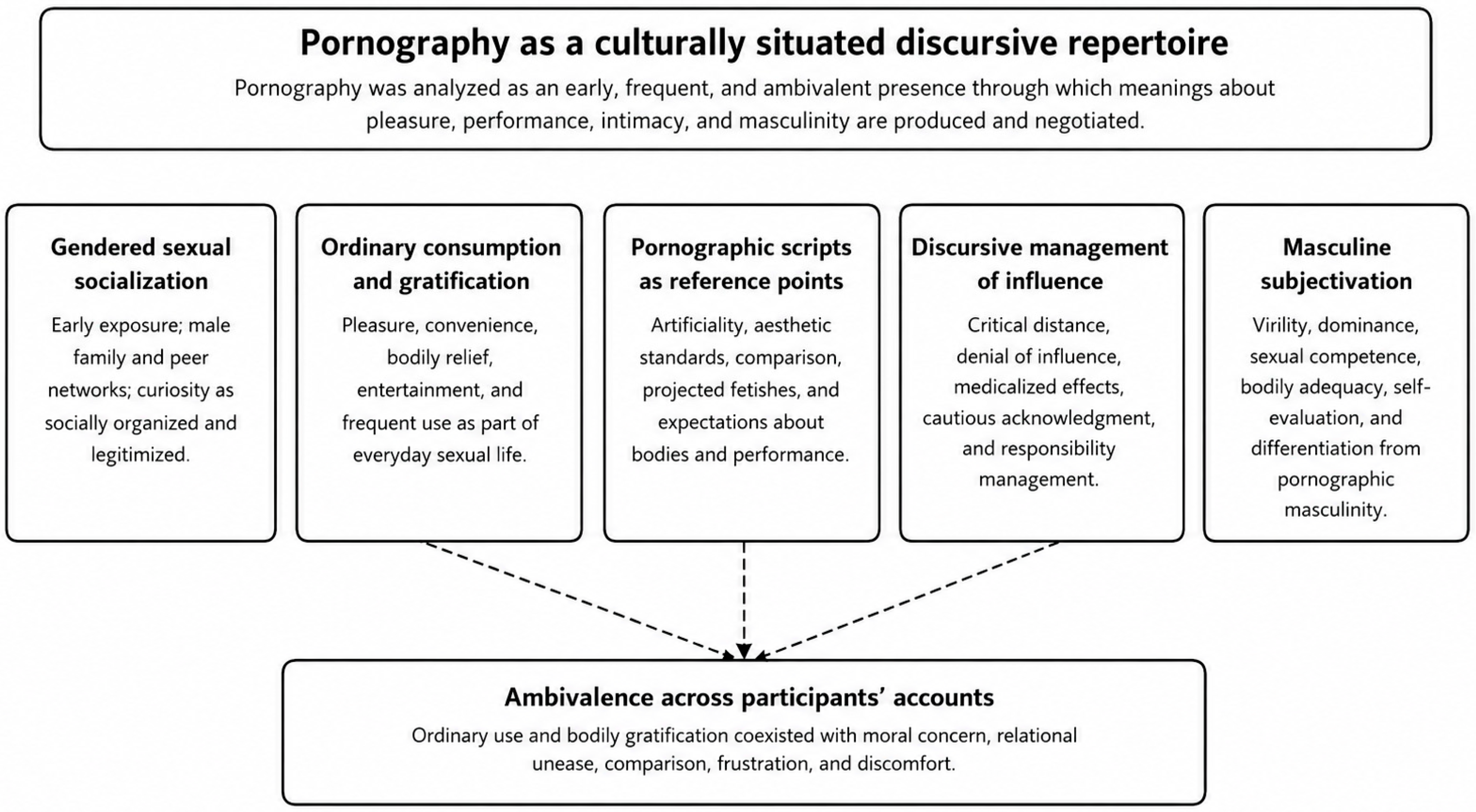
Figure 1 summarizes the interpretive synthesis developed from the findings, emphasizing pornography as a culturally situated discursive repertoire and highlighting the ambivalence identified across participants’ accounts.
Figure 1.
Conceptual synthesis of pornography, masculinity, and subjectivation. The figure summarizes the interpretive synthesis developed from the Results and Discussion. Pornography is represented as a culturally situated discursive repertoire through which participants negotiated meanings about pleasure, performance, intimacy, bodily adequacy, and masculinity. The dashed lines indicate convergence toward the ambivalence identified across participants’ accounts. The figure should not be interpreted as a linear or causal model.
This reading also helps explain why pornography can be simultaneously criticized and normalized. Some participants explicitly identified violence, exaggeration, and unrealistic bodily standards, while others described those same elements as acceptable or even normal. Here again, the issue is not merely whether pornography is “true” or “false,” but how certain pornographic scripts become naturalized enough to appear ordinary (Foucault, 2020a, 2020b; Healy-Cullen et al., 2022). In that respect, the findings suggest that pornography does not simply mirror pre-existing gender norms; it may also reinforce them by repeatedly staging recognizable ways of doing masculinity, femininity, hierarchy, and sexual performance (Yu et al., 2021; Navarro-Mantas & Sáez-Lumbreras, 2025). This is especially important in a context where sexuality remains strongly moralized in public discourse, since moral silence does not prevent circulation; it may instead intensify the role of pornography as an informal source of sexual knowledge and comparison (Wang, 2024; Grigoropoulos, 2023).
Regarding practical application and repercussions, the participants’ accounts connected pornography to aesthetic standards, sexual performance, relationship expectations, and gendered power; the findings support the inclusion of critical discussions of pornography in sexuality education and community-based interventions, particularly in contexts where the topic remains strongly moralized and therefore poorly debated in public settings (Healy-Cullen et al., 2022; Navarro-Mantas & Sáez-Lumbreras, 2025). Such discussions may be especially relevant in regions like the hinterland of Paraíba, where socially shared norms around gender, sexuality, and respectability may intensify silence while still allowing pornography to circulate in everyday life (Schwendler & Vieira, 2022). A critical educational approach would not depend on simply condemning pornography, but on creating conditions for reflection about the sexual scripts, body standards, and gender hierarchies that participants themselves identified in their accounts (Healy-Cullen et al., 2022; Camacho-Ruiz et al., 2025).
Some limitations should be acknowledged. First, the sample was small and geographically specific, and it consisted predominantly of cisgender and heterosexual men, which limits the transferability of the findings to other groups and settings. Second, the study relied on self-report responses collected online, which may have constrained the depth of some narratives and may also have shaped what participants felt comfortable disclosing about a morally sensitive topic. Third, because the study addressed pornography in broad terms, it was not possible to differentiate analytically between specific genres or levels of violent content, an issue that has become increasingly relevant in recent research because different contents may be associated with different sexual scripts and relational outcomes (Sanz-Barbero et al., 2026). Additionally, it is also important to state that because recruitment relied primarily on social media and local networks, the sample may overrepresent participants who were accessible to the researchers, digitally connected, and sufficiently comfortable discussing pornography in an academic study.
Future research should examine pornography consumption not as a homogeneous exposure variable, but as a culturally situated repertoire whose meanings vary according to content, context, and biography. Comparative studies across Brazilian regions, including rural, interior, peri-urban, and metropolitan settings, could clarify how local configurations of gender, religiosity, respectability, and moral regulation shape the ways pornography is interpreted and incorporated into masculine subjectivities. Further work should also distinguish between pornographic genres, aesthetic conventions, relational scripts, and degrees of violent or coercive content, since different materials may organize different expectations about bodies, pleasure, performance, and intimacy. Methodologically, future studies would benefit from designs capable of producing more dialogic and interactional data, such as in-depth interviews or focus groups combined with Foucauldian discourse analysis. Such approaches would allow researchers to examine not only what participants report about pornography, but how they justify, qualify, resist, or rework available discourses while speaking about pleasure, comparison, moral discomfort, and masculinity. This would be especially relevant for studies using dialogical maps, as more interactive forms of data collection may better capture the polyphonic, relational, and situated character of meaning-making. Longitudinal or multi-method designs could further clarify how early exposure, peer circulation, intimate relationships, and self-perceptions of masculinity become articulated over time.
In sum, the present study suggests that pornography should be understood not only as sexually explicit content consumed in private, but as a cultural and discursive practice implicated in the production of masculine subjectivities. Among men from the hinterland of Paraíba, pornography appeared as an early, frequent, and ambivalent presence through which norms of pleasure, performance, hierarchy, and relationality were negotiated. Its relevance lies less in a single direct effect than in its capacity to furnish scripts, comparisons, and truths through which masculinity is continuously reproduced, contested, and lived (Foucault, 2020a, 2020b; Grigoropoulos, 2023; Yu et al., 2021).
5. Conclusions
This study examined pornography consumption in relation to processes of subjectivation among men from the hinterland region of Paraíba, Brazil. The findings suggest that pornography should not be understood merely as private sexually explicit content, but as a socially mediated and discursive practice through which meanings about desire, pleasure, performance, intimacy, and masculinity are produced and negotiated.
Participants’ accounts revealed that pornography was often present from an early age, circulated through male social environments, and remained embedded in everyday sexual and relational life. At the same time, their narratives were marked by ambivalence: pornography was described as ordinary, pleasurable, and accessible, but also as exaggerated, potentially excessive, and capable of fostering unrealistic expectations regarding bodies, sexual performance, and intimate relationships.
Taken together, these findings indicate that pornography may operate as an important cultural repertoire in the constitution of masculine subjectivities, particularly in contexts where the topic remains moralized and underexamined in academic and public debate. By focusing on men from the hinterland of Paraíba, this study contributes to expanding the literature beyond large urban centers and highlights the value of context-sensitive qualitative approaches for understanding how pornography becomes entangled with gender norms and everyday social experience.
Supplementary Materials
The following supporting information can be downloaded at: https://www.mdpi.com/article/10.3390/psycholint8020036/s1, Table S1. Complete Dialogical Map.
Author Contributions
Conceptualization, M.F., C.S. and W.A.D.S.; methodology, M.F., C.S. and W.A.D.S.; validation, W.A.D.S. and S.S.; formal analysis, M.F.; investigation, M.F., W.A.D.S. and S.S.; resources, M.F.; data curation, M.F. and C.S.; writing—original draft preparation, M.F., W.A.D.S. and C.S.; writing—review and editing, S.S. and W.A.D.S. visualization, S.S. and W.A.D.S.; supervision, W.A.D.S. and C.S.; project administration, M.F., W.A.D.S., C.S. and S.S. All authors have read and agreed to the published version of the manuscript.
Funding
This research was supported by a research grant from Fundação para a Ciência e a Tecnologia (FCT; 2022.1190.BD) awarded to W.A.D.S.
Institutional Review Board Statement
The study was conducted in accordance with the Declaration of Helsinki, and Resolution No. 510/2016 of the Brazilian National Health Council, which regulates research involving human participants in the human and social sciences. The study protocol was reviewed and approved by the Research Ethics Committee of Centro Universitário de Patos—UNIFIP, under Certificate of Presentation for Ethical Consideration (CAAE) No. 58828522.0.0000.5181 on 9 June 2022. All participants provided informed consent prior to participation. Confidentiality and anonymity were assured throughout data collection, storage, and analysis.
Informed Consent Statement
All participants provided informed consent prior to participation. Confidentiality and anonymity were assured throughout data collection, storage, and analysis.
Data Availability Statement
The data supporting the findings of this study are available from the corresponding author upon reasonable request. Because the dataset contains sensitive qualitative material related to sexuality and personal experiences, it is not publicly deposited in order to preserve participant confidentiality.
Conflicts of Interest
The authors declare no conflicts of interest.
References
- Barros, E. A., Machado, L. M. A., Biá, M. G. d. S., & Guerreiro, R. A. (2020). A mulher como produto de satisfação masculina na pornografia: Uma análise histórico-social. REVES—Revista Relações Sociais, 3(4), 17001–17014. [Google Scholar] [CrossRef] [Scilit]
- Bhuptani, P. H., Kenney, S. R., Napper, L. E., & Orchowski, L. M. (2024). Pornography use, perceived peer norms, and attitudes toward women: A study of college men. American Journal of Sexuality Education, 19(3), 280–301. [Google Scholar] [CrossRef] [Scilit]
- Bourdieu, P. (2005). A dominação masculina [The male domination]. Bertrand Brasil. [Google Scholar]
- Braun, V., & Clarke, V. (2019). Reflecting on reflexive thematic analysis. Qualitative Research in Sport, Exercise and Health, 11(4), 589–597. [Google Scholar] [CrossRef] [Scilit]
- Braun, V., Clarke, V., Boulton, E., Davey, L., & McEvoy, C. (2021). The online survey as a qualitative research tool. International Journal of Social Research Methodology, 24(6), 641–654. [Google Scholar] [CrossRef] [Scilit]
- Burke, J. (2015). Erotic cultures of renaissance. The English Historical Review, 130(543), 434–435. [Google Scholar] [CrossRef] [Scilit]
- Camacho-Ruiz, J. A., Galvez-Sánchez, C. M., Galli, F., & Limiñana-Gras, R. M. (2025). Exploring the intersection of hegemonic masculinity, sexuality, and addiction in men: A qualitative study. Healthcare, 13(1), 5. [Google Scholar] [CrossRef] [Scilit] [PubMed]
- Chaise, R. F., Marques, I. Z., Wingert, F. F., & Rocha, K. B. (2023). Factors associated with the use of sexually explicit internet materials among adolescents. Paidéia (Ribeirão Preto), 33, e3325. [Google Scholar] [CrossRef] [Scilit]
- D’Abreu, L. C. F. (2013). Pornografia, desigualdade de gênero e agressão sexual contra mulheres. Psicologia & Sociedade, 25(3), 592–601. [Google Scholar] [CrossRef] [Scilit]
- Dengah, H. J. F., II, Dressler, W. W., & Falcão, A. (2024). The domestication of machismo in Brazil: Motivations, reflexivity, and consonance of religious male gender roles. Behavioral Sciences, 14(2), 132. [Google Scholar] [CrossRef] [Scilit] [PubMed]
- Ferreira Neto, J. L. (2017). A analítica da subjetivação em Michel Foucault. Revista Polis e Psique, 7(3), 7–25. [Google Scholar] [CrossRef] [Scilit]
- Foucault, M. (2010). A hermenêutica do sujeito [The hermeneutics of the subject] (3rd ed.). Martins Fontes. [Google Scholar]
- Foucault, M. (2020a). História da sexualidade Vol. 1—A vontade de saber [The history of sexuality Vol. 1—The will to knowledge]. Paz & Terra. [Google Scholar]
- Foucault, M. (2020b). História da sexualidade Vol. 2—O uso dos prazeres [The history of sexuality Vol. 2—The use of pleasures]. Paz & Terra. [Google Scholar]
- Grigoropoulos, I. (2023). Normative pressure affects attitudes toward pornography. Sexuality & Culture: An Interdisciplinary Quarterly, 27(3), 739–760. [Google Scholar] [CrossRef] [Scilit]
- Gunnoo, A., & Powell, C. (2023). The association between pornography consumption and perceived realism in adolescents: A meta-analysis. Sexuality & Culture, 27, 1880–1893. [Google Scholar] [CrossRef] [Scilit]
- Healy-Cullen, S., Morison, T., Ross, K., & Taylor, J. E. (2022). How do youth, parents, and educators use discursive sexual scripts to make sense of youth engagement with internet pornography? Porn Studies, 9(4), 445–463. [Google Scholar] [CrossRef] [Scilit]
- Hellemans, L. (2026). Conforming, challenging, countering: An exploration on interpersonal scripts of porn and sex through focus groups with Flemish young adults. Sexualities. [Google Scholar] [CrossRef] [Scilit]
- Huțul, T. D., Huțul, A., & Holman, A. C. (2025). The social representations of pornography consumers among individuals in romantic relationships: Exploring the roles of gender, relationship satisfaction, and sexual satisfaction in a Romanian sample. Archives of Sexual Behavior, 54(2), 761–774. [Google Scholar] [CrossRef] [Scilit] [PubMed]
- Litsou, K., Byron, P., McKee, A., & Ingham, R. (2021). Learning from pornography: Results of a mixed methods systematic review. Sex Education, 21(2), 236–252. [Google Scholar] [CrossRef] [Scilit]
- Malterud, K., Siersma, V. D., & Guassora, A. D. (2016). Sample size in qualitative interview studies: Guided by information power. Qualitative Health Research, 26(13), 1753–1760. [Google Scholar] [CrossRef] [Scilit]
- Marconi, M. A., & Lakatos, E. M. (2021). Fundamentos de metodologia científica (9th ed.). Atlas. [Google Scholar]
- McKee, A., Byron, P., Litsou, K., & Ingham, R. (2020). An interdisciplinary definition of pornography: Results from a global Delphi panel. Archives of Sexual Behavior, 49(3), 1085–1091. [Google Scholar] [CrossRef] [Scilit]
- Mestre-Bach, G., Villena-Moya, A., & Chiclana-Actis, C. (2024). Pornography use and violence: A systematic review of the last 20 years. Trauma, Violence, & Abuse, 25(2), 1088–1112. [Google Scholar] [CrossRef] [Scilit]
- Miller, D. J., & McBain, K. A. (2022). The content of contemporary, mainstream pornography: A literature review of content analytic studies. American Journal of Sexuality Education, 17(2), 219–256. [Google Scholar] [CrossRef] [Scilit]
- Moreira, J. O., & Januzzi, M. E. (2023). Processos de subjetivação: Fundamentos e movimentos [Subjectivation processes: Foundations and movements]. Editora PUC Minas. [Google Scholar]
- Navarro-Mantas, L., & Sáez-Lumbreras, A. (2025). Sexuality construction, pornography, and gender violence: A qualitative study with spanish adolescents. Sexuality & Culture, 29, 1339–1387. [Google Scholar] [CrossRef] [Scilit]
- Nolin, M. C., Daspe, M. È., Bőthe, B., Brassard, A., Joyal, C., & Vaillancourt-Morel, M. P. (2025). Associations between contents of pornography and sexual satisfaction and function among young adults. The Journal of Sex Research, 62(4), 568–581. [Google Scholar] [CrossRef] [Scilit] [PubMed]
- Pathmendra, P., Raggatt, M., Lim, M. S., Marino, J. L., & Skinner, S. R. (2023). Exposure to pornography and adolescent sexual behavior: Systematic review. Journal of Medical Internet Research, 25, e43116. [Google Scholar] [CrossRef] [Scilit] [PubMed]
- Regan, H. (2021). Playboy and pornification: 65 Years of the playboy centerfold. Sexuality & Culture, 25(1), 1058–1075. [Google Scholar] [CrossRef] [Scilit]
- Sanz-Barbero, B., Cerdán-Torregrosa, A., Otero-García, L., Pérez-Martínez, V., Rico, A., Fernández-López, M., & Vives-Cases, C. (2026). Association between exposure to pornography involving physical violence and risky sexual behaviors in young adults. BMC Public Health, 26, 110. [Google Scholar] [CrossRef] [Scilit]
- Schwendler, S. F., & Vieira, E. R. P. (2022). Diversidade de gênero e educação nas áreas rurais do Brasil [Gender diversity and education in rural areas of Brazil]. Cadernos Pagu, 64, e226404. Available online: https://periodicos.sbu.unicamp.br/ojs/index.php/cadpagu/article/view/8668849 (accessed on 22 January 2026). [CrossRef] [Scilit]
- Setty, E. (2021). Pornography as a cultural resource for constructing and expressing gendered sexual subjectivities among students in a co-educational boarding school. Porn Studies, 9(2), 159–175. [Google Scholar] [CrossRef] [Scilit]
- Souza, C. V. B. S., Lima, M. E. O., & Ferreira, D. C. S. (2023). Conceptions of hegemonic masculinity as a mediator of sexism directed at women. Psicologia: Teoria e Pesquisa, 39, e39506. [Google Scholar] [CrossRef] [Scilit]
- Spink, M. J. (2013). Práticas discursivas e produção de sentidos no cotidiano [Discursive practices and meaning-making in everyday life]. Centro Edelstein de Pesquisas Sociais. [Google Scholar]
- Thorpe, S., Malone, N., Peterson, R. L., Iyiewuare, P., Mizelle, D. L., & Hargons, C. N. (2024). The influence of pornography on heterosexual black men and women’s genital self-image & grooming. Body Image, 48, 101669. [Google Scholar] [CrossRef] [Scilit]
- Tota, M. (2021). A via-crúcis de Jonas no Sertão da Paraíba: Interseccionalidade, diferença e o Brasil atual. Cadernos Pagu, 62, e216209. [Google Scholar] [CrossRef] [Scilit]
- Wang, Y. Y. (2024). Erotic art in world history. In M. E. Wiesner-Hanks, & M. Kuefler (Eds.), The cambridge world history of sexualities (pp. 410–442). Cambridge University Press. [Google Scholar]
- Yu, C., Kågesten, A. E., De Meyer, S., Moreau, C., van Reeuwijk, M., & Lou, C. (2021). Pornography use and perceived gender norms among young adolescents in urban poor environments: A cross-site study. The Journal of Adolescent Health, 69(1S), S31–S38. [Google Scholar] [CrossRef] [Scilit]

Disclaimer/Publisher’s Note: The statements, opinions and data contained in all publications are solely those of the individual author(s) and contributor(s) and not of MDPI and/or the editor(s). MDPI and/or the editor(s) disclaim responsibility for any injury to people or property resulting from any ideas, methods, instructions or products referred to in the content. |
© 2026 by the authors. Licensee MDPI, Basel, Switzerland. This article is an open access article distributed under the terms and conditions of the Creative Commons Attribution (CC BY) license.