
Assessing Childhood Development: Systematic Review and Meta-Analysis on the Validation of Local Assessment Tools in the Context of Developing Countries

 ,
,  ,
,  , and
, and
Abstract
1. Introduction
2. Materials and Methods
2.1. Objectives
2.2. Eligibility Criteria
2.2.1. Study Selection
2.2.2. Participants
2.2.3. Study Design
2.2.4. Study Setting
2.2.5. Literature Search and Screening
2.2.6. Data Extraction
2.2.7. Data Analysis
2.2.8. Risk of Bias Assessment
3. Results
3.1. Description of Included Studies
3.2. Methodological Quality of Included Studies
3.3. Meta-Analysis
3.4. Descriptive Analysis
3.4.1. Low-Income Countries
3.4.2. Low- and Middle-Income Countries
Overall Neurodevelopmental Skills
Motor Skills
Cognitive Skills
Behavioral Skills
3.4.3. Upper–Middle-Income Countries
Overall Neurodevelopmental Skills
Cognitive Skills
4. Discussion
5. Conclusions
Author Contributions
Funding
Data Availability Statement
Acknowledgments
Conflicts of Interest
Appendix A
Search Strategy
Appendix B
PRISMA Checklist
| Section and Topic | Item # | Checklist Item | Location Where Item Is Reported |
| TITLE | |||
| Title | 1 | Identify the report as a systematic review. | Title Page |
| ABSTRACT | |||
| Abstract | 2 | See the PRISMA 2020 for Abstracts checklist. | Abstract |
| INTRODUCTION | |||
| Rationale | 3 | Describe the rationale for the review in the context of existing knowledge. | Introduction |
| Objectives | 4 | Provide an explicit statement of the objective(s) or question(s) the review addresses. | Objectives |
| METHODS | |||
| Eligibility criteria | 5 | Specify the inclusion and exclusion criteria for the review and how studies were grouped for the syntheses. | Study Selection |
| Information sources | 6 | Specify all databases, registers, websites, organisations, reference lists and other sources searched or consulted to identify studies. Specify the date when each source was last searched or consulted. | Study Selection |
| Search strategy | 7 | Present the full search strategies for all databases, registers and websites, including any filters and limits used. | Literature Search and Screening |
| Selection process | 8 | Specify the methods used to decide whether a study met the inclusion criteria of the review, including how many reviewers screened each record and each report retrieved, whether they worked independently, and if applicable, details of automation tools used in the process. | Data Extraction |
| Data collection process | 9 | Specify the methods used to collect data from reports, including how many reviewers collected data from each report, whether they worked independently, any processes for obtaining or confirming data from study investigators, and if applicable, details of automation tools used in the process. | Data Extraction |
| Data items | 10a | List and define all outcomes for which data were sought. Specify whether all results that were compatible with each outcome domain in each study were sought (e.g., for all measures, time points, analyses), and if not, the methods used to decide which results to collect. | Study Selection |
| 10b | List and define all other variables for which data were sought (e.g., participant and intervention characteristics, funding sources). Describe any assumptions made about any missing or unclear information. | Study Selection | |
| Study risk of bias assessment | 11 | Specify the methods used to assess risk of bias in the included studies, including details of the tool(s) used, how many reviewers assessed each study and whether they worked independently, and if applicable, details of automation tools used in the process. | Risk of Bias Assessment |
| Effect measures | 12 | Specify, for each outcome, the effect measure(s) (e.g., risk ratio, mean difference) used in the synthesis or presentation of results. | Data Analysis |
| Synthesis methods | 13a | Describe the processes used to decide which studies were eligible for each synthesis (e.g., tabulating the study intervention characteristics and comparing against the planned groups for each synthesis (item #5)). | Data Extraction |
| 13b | Describe any methods required to prepare the data for presentation or synthesis, such as handling of missing summary statistics, or data conversions. | Data Extraction | |
| 13c | Describe any methods used to tabulate or visually display the results of individual studies and syntheses. | Meta-analysis | |
| 13d | Describe any methods used to synthesize results and provide a rationale for the choice(s). If a meta-analysis was performed, describe the model(s), method(s) to identify the presence and extent of statistical heterogeneity, and software package(s) used. | Meta-analysis | |
| 13e | Describe any methods used to explore possible causes of heterogeneity among study results (e.g., subgroup analysis, meta-regression). | Meta-analysis | |
| 13f | Describe any sensitivity analyses conducted to assess robustness of the synthesized results. | Meta-analysis | |
| Reporting bias assessment | 14 | Describe any methods used to assess risk of bias due to missing results in a synthesis (arising from reporting biases). | N/A |
| Certainty assessment | 15 | Describe any methods used to assess certainty (or confidence) in the body of evidence for an outcome. | N/A |
| RESULTS | |||
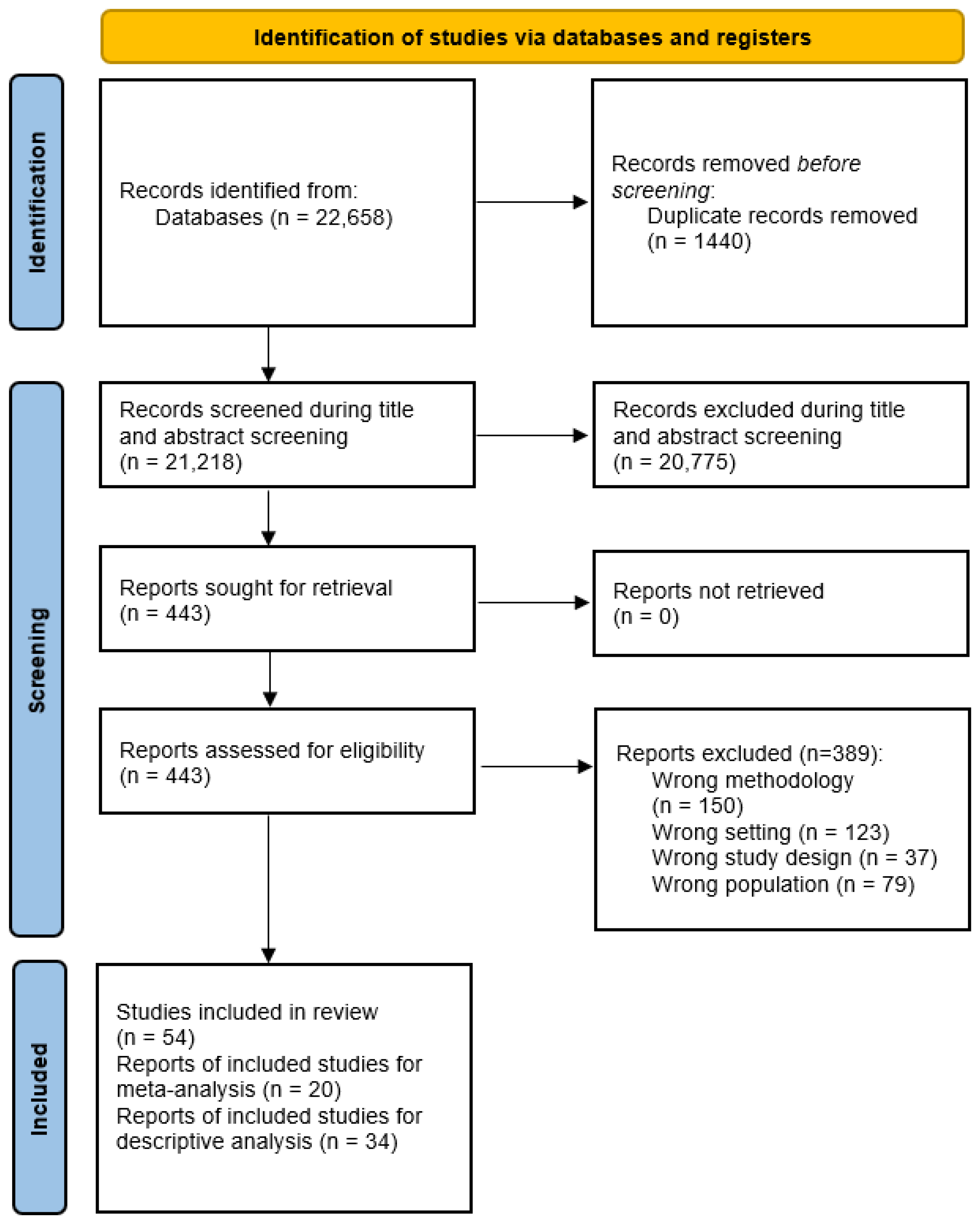
| Study selection | 16a | Describe the results of the search and selection process, from the number of records identified in the search to the number of studies included in the review, ideally using a flow diagram. | Figure 1: PRISMA diagram |
| 16b | Cite studies that might appear to meet the inclusion criteria, but which were excluded, and explain why they were excluded. | N/A | |
| Study characteristics | 17 | Cite each included study and present its characteristics. | Table 1: Description of Included Studies |
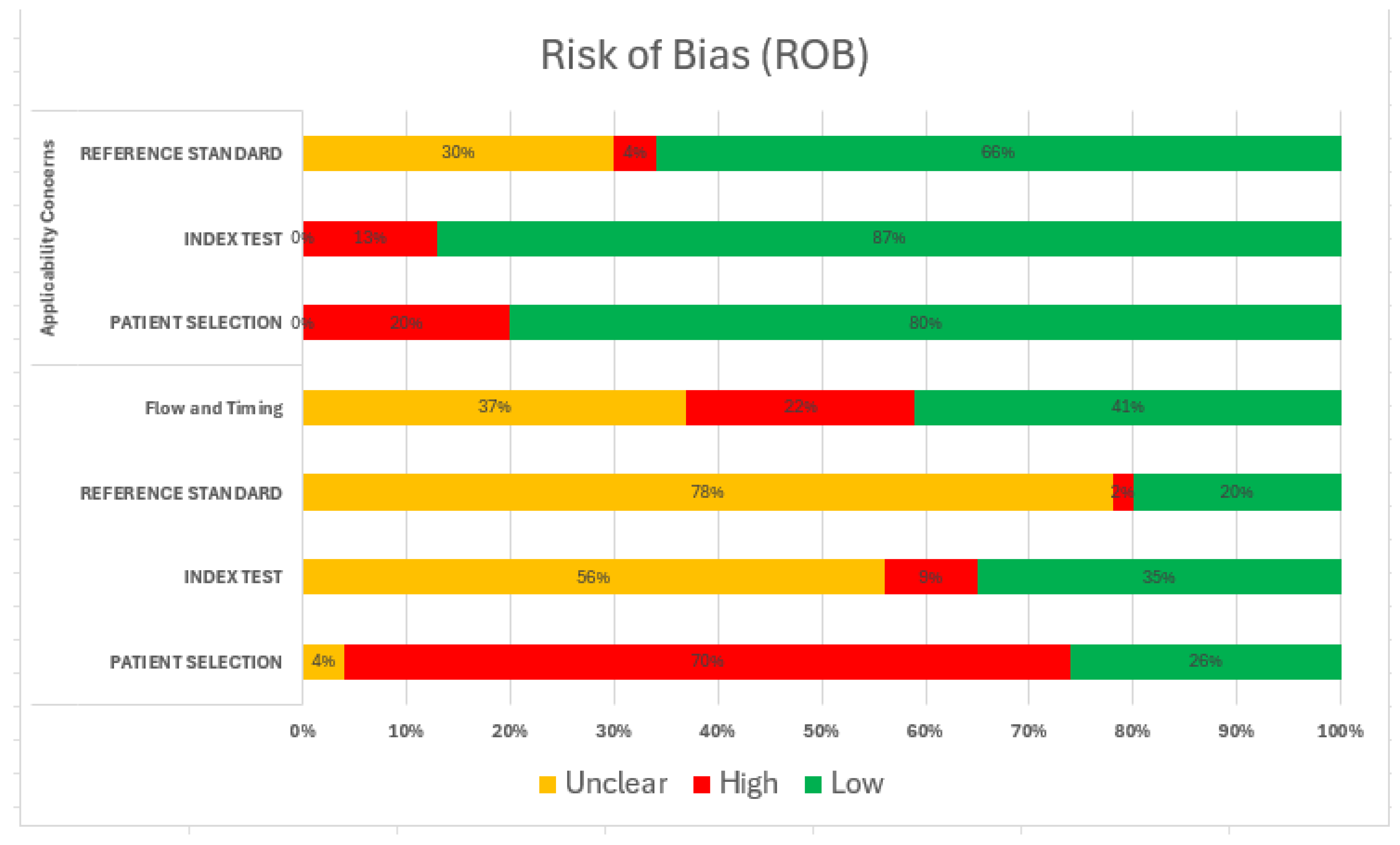
| Risk of bias in studies | 18 | Present assessments of risk of bias for each included study. | Risk of bias assessment |
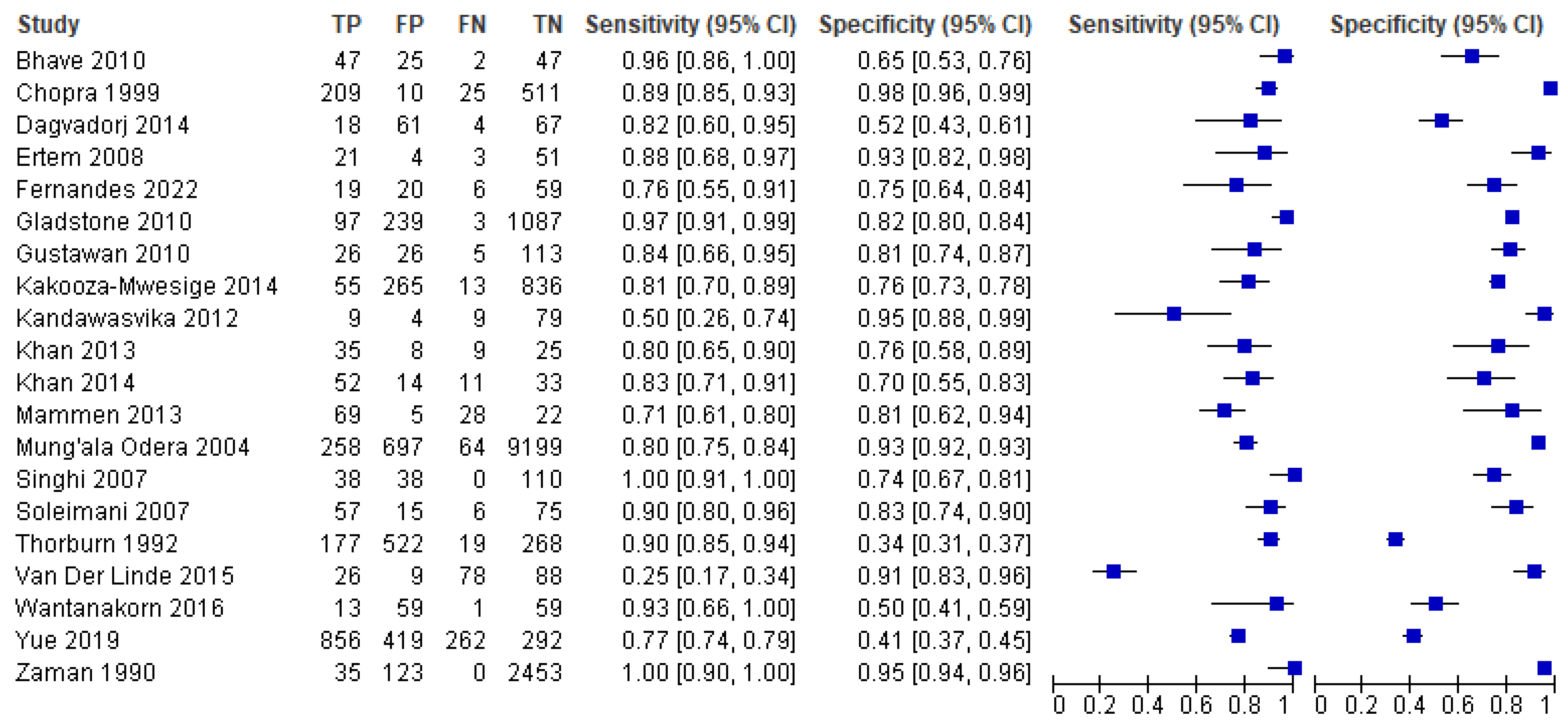
| Results of individual studies | 19 | For all outcomes, present for each study: (a) summary statistics for each group (where appropriate) and (b) an effect estimate and its precision (e.g., confidence/credible interval), ideally using structured tables or plots. | Table 1: Full table attached |
| Results of syntheses | 20a | For each synthesis, briefly summarise the characteristics and risk of bias among contributing studies. | Risk of Bias Assessment |
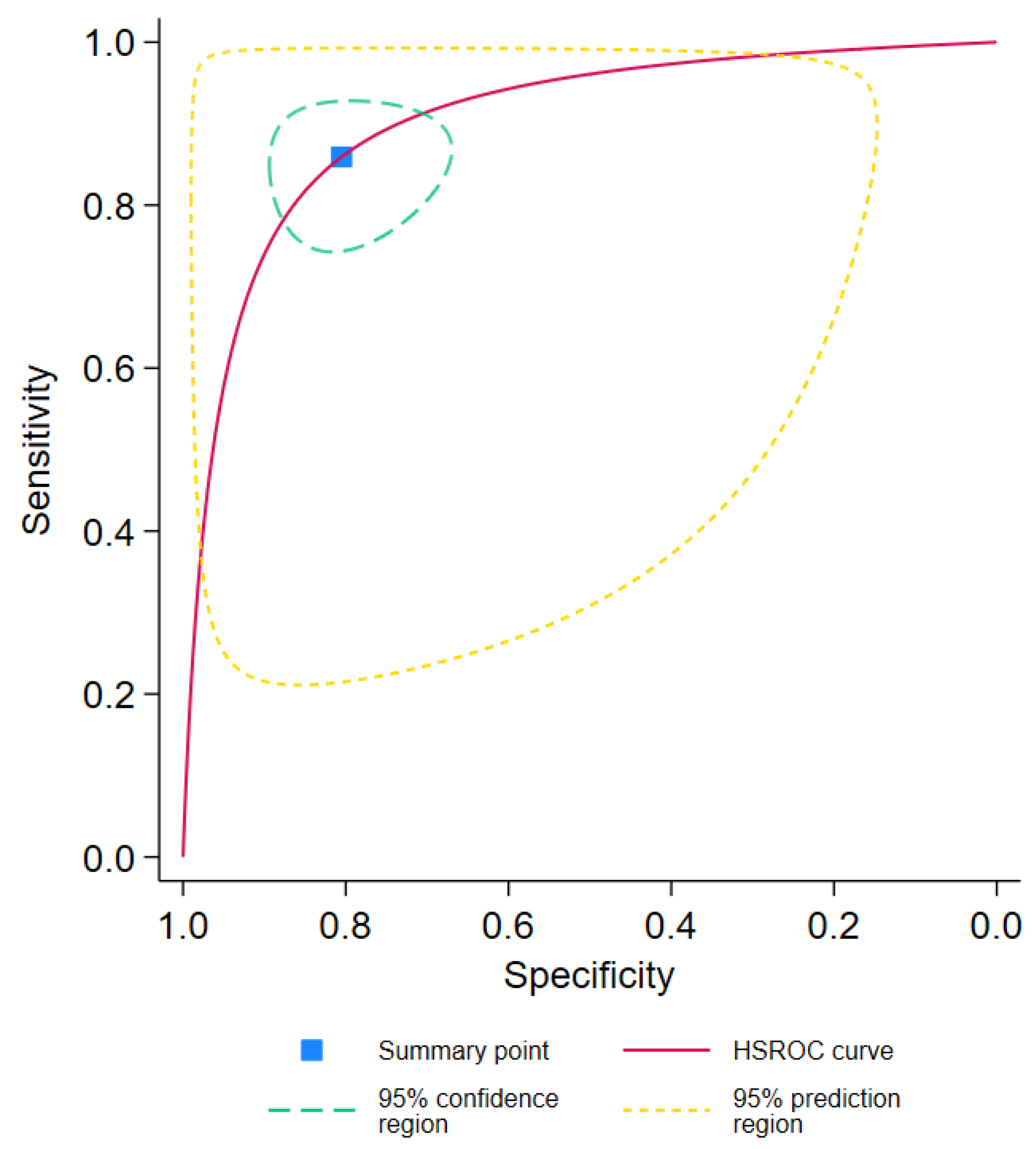
| 20b | Present results of all statistical syntheses conducted. If a meta-analysis was conducted, present for each the summary estimate and its precision (e.g., confidence/credible interval) and measures of statistical heterogeneity. If comparing groups, describe the direction of the effect. | Meta-analysis | |
| 20c | Present results of all investigations of possible causes of heterogeneity among the study results. | Meta-analysis | |
| 20d | Present the results of all sensitivity analyses conducted to assess the robustness of the synthesized results. | Meta-analysis, Appendix B | |
| Reporting biases | 21 | Present assessments of risk of bias due to missing results (arising from reporting biases) for each synthesis assessed. | Risk of Bias Assessment |
| Certainty of evidence | 22 | Present assessments of certainty (or confidence) in the body of evidence for each outcome assessed. | N/A |
| DISCUSSION | |||
| Discussion | 23a | Provide a general interpretation of the results in the context of other evidence. | Discussion Paragraph 3 |
| 23b | Discuss any limitations of the evidence included in the review. | Discussion paragraph 4 | |
| 23c | Discuss any limitations of the review processes used. | Discussion paragraph 4 | |
| 23d | Discuss implications of the results for practice, policy, and future research. | Conclusion | |
| OTHER INFORMATION | |||
| Registration and protocol | 24a | Provide registration information for the review, including register name and registration number, or state that the review was not registered. | Methodology |
| 24b | Indicate where the review protocol can be accessed, or state that a protocol was not prepared. | Methodology | |
| 24c | Describe and explain any amendments to information provided at registration or in the protocol. | N/A | |
| Support | 25 | Describe sources of financial or non-financial support for the review, and the role of the funders or sponsors in the review. | Patents |
| Competing interests | 26 | Declare any competing interests of review authors. | Patents |
| Availability of data, code and other materials | 27 | Report which of the following are publicly available and where they can be found: template data collection forms; data extracted from included studies; data used for all analyses; analytic code; any other materials used in the review. | Data extracted from included studies |
Appendix C
Sensitivity Analysis

References
- Abubakar, A., Holding, P., van Baar, A., Newton, C. R. J. C., & van de Vijver, F. J. R. (2008). Monitoring psychomotor development in a resource-limited setting: An evaluation of the Kilifi developmental inventory. Annals of Tropical Paediatrics, 28(3), 217–226. [Google Scholar] [CrossRef] [PubMed]
- Abubakar, A., Holding, P., Van De Vijver, F., Bomu, G., & Van Baar, A. (2010). Developmental monitoring using caregiver reports in a resource-limited setting: The case of Kilifi, Kenya. Acta Paediatrica, 99(2), 291–297. [Google Scholar] [CrossRef]
- Aina, O. F. (2001). The validation of developmental screening inventory (DSI) on Nigerian children. Journal of Tropical Pediatrics, 47(6), 323–328. [Google Scholar] [CrossRef]
- Amani, M., Asady Gandomani, R., & Nesayan, A. (2018). The reliability and validity of behavior rating inventory of executive functions tool teacher’s form among Iranian primary school students. Iranian Rehabilitation Journal, 16(1), 25–34. [Google Scholar] [CrossRef]
- American Psychiatric Association. (n.d.). Neurodevelopmental disorders. American Psychiatric Association. Available online: https://www.psychiatry.org/patients-families/neurodevelopment-disorders (accessed on 22 February 2025).
- Anderson, K. J., Henning, T. J., Moonsamy, J. R., Scott, M., Du Plooy, C., & Dawes, A. R. L. (2021). Test–retest reliability and concurrent validity of the South African early learning outcomes measure (ELOM). South African Journal of Childhood Education, 11(1), a881. [Google Scholar] [CrossRef]
- Angrist, N., Djankov, S., Goldberg, P. K., & Patrinos, H. A. (2021). Measuring human capital using global learning data. Nature, 592(7854), 403–408. [Google Scholar] [CrossRef]
- Beaton, D. E., Bombardier, C., Guillemin, F., & Ferraz, M. B. (2000). Guidelines for the process of cross-cultural adaptation of self-report measures. Spine, 25(24), 3186–3191. [Google Scholar] [CrossRef]
- Bhave, A., Bhargava, R., & Kumar, R. (2010). Development and validation of a new Lucknow development screen for Indian children aged 6 months to 2 years. Journal of Child Neurology, 25(1), 57–60. [Google Scholar] [CrossRef]
- Black, M. M., Walker, S. P., Fernald, L. C. H., Andersen, C. T., DiGirolamo, A. M., Lu, C., McCoy, D. C., Fink, G., Shawar, Y. R., Shiffman, J., Devercelli, A. E., Wodon, Q. T., Vargas-Barón, E., & Grantham-McGregor, S. (2017). Early childhood development coming of age: Science through the life course. The Lancet, 389(10064), 77–90. [Google Scholar] [CrossRef] [PubMed]
- Burgess, A., Luke, C., Jackman, M., Wotherspoon, J., Whittingham, K., Benfer, K., Goodman, S., Caesar, R., Nesakumar, T., Bora, S., Honeyman, D., Copplin, D., Reedman, S., Cairney, J., Reid, N., Sakzewski, L., & Boyd, R. N. (2025). Clinical utility and psychometric properties of tools for early detection of developmental concerns and disability in young children: A scoping review. Developmental Medicine and Child Neurology, 67(3), 286–306. [Google Scholar] [CrossRef]
- Burkey, M. D., Adhikari, R. P., Ghimire, L., Kohrt, B. A., Wissow, L. S., Luitel, N. P., Haroz, E. E., & Jordans, M. J. D. (2018). Validation of a cross-cultural instrument for child behavior problems: The disruptive behavior international scale—Nepal version. BMC Psychology, 6(1), 51. [Google Scholar] [CrossRef]
- Charafeddine, L., Sinno, D., Ammous, F., Yassin, W., Al-Shaar, L., & Mikati, M. A. (2013). Ages and stages questionnaires: Adaptation to an Arabic speaking population and cultural sensitivity. European Journal of Paediatric Neurology, 17(5), 471–478. [Google Scholar] [CrossRef]
- Chopra, G., Verma, I. C., & Seetharaman, P. (1999). Development and assessment of a screening test for detecting childhood disabilities. The Indian Journal of Pediatrics, 66(3), 331–335. [Google Scholar] [CrossRef] [PubMed]
- Dagvadorj, A., Takehara, K., Bavuusuren, B., Morisaki, N., Gochoo, S., & Mori, R. (2015). The quick and easy mongolian rapid baby scale shows good concurrent validity and sensitivity. Acta Paediatrica, 104(3), e94–e99. [Google Scholar] [CrossRef] [PubMed]
- Dang, H.-M., Nguyen, H., & Weiss, B. (2017). Incremental validity of the child behavior checklist (CBCL) and the strengths and difficulties questionnaire (SDQ) in Vietnam. Asian Journal of Psychiatry, 29, 96–100. [Google Scholar] [CrossRef]
- Durkin, M. S., Wang, W., Shrout, P. E., Zaman, S. S., Hasan, Z. M., Desai, P., & Davidson, L. L. (1995). Evaluating a ten questions screen for childhood disability: Reliability and internal structure in different cultures. Journal of Clinical Epidemiology, 48(5), 657–666. [Google Scholar] [CrossRef]
- Ertem, I. O., Dogan, D. G., Gok, C. G., Kizilates, S. U., Caliskan, A., Atay, G., Vatandas, N., Karaaslan, T., Baskan, S. G., & Cicchetti, D. V. (2008). A guide for monitoring child development in low- and middle-income countries. Pediatrics, 121(3), e581–e589. [Google Scholar] [CrossRef]
- Fernandes, M., Bassani, D., Albernaz, E., Bertoldi, A. D., Silveira, M. F., Matijsevich, A., Anselmi, L., Cruz, S., Halal, C. S., Tovo-Rodrigues, L., Cruz, G. I. N., Metgud, D., & Santos, I. S. (2022). Construction and validation of the Oxford Neurodevelopment Assessment (OX-NDA) in 1-year-old Brazilian children. BMC Pediatrics, 22(1), 733. [Google Scholar] [CrossRef]
- Filgueiras, A., Pires, P., Maissonette, S., & Landeira-Fernandez, J. (2013). Psychometric properties of the Brazilian-adapted version of the ages and stages questionnaire in public child daycare centers. Early Human Development, 89(8), 561–576. [Google Scholar] [CrossRef]
- Geisinger, K. F. (1994). Cross-cultural normative assessment: Translation and adaptation issues influencing the normative interpretation of assessment instruments. Psychological Assessment, 6(4), 304–312. [Google Scholar] [CrossRef]
- Gjersing, L., Caplehorn, J. R., & Clausen, T. (2010). Cross-cultural adaptation of research instruments: Language, setting, time and statistical considerations. BMC Medical Research Methodology, 10(1), 13. [Google Scholar] [CrossRef]
- Gladstone, M., Lancaster, G. A., Umar, E., Nyirenda, M., Kayira, E., Van Den Broek, N. R., & Smyth, R. L. (2010). The malawi developmental assessment tool (MDAT): The creation, validation, and reliability of a tool to assess child development in rural African settings. PLoS Medicine, 7(5), e1000273. [Google Scholar] [CrossRef] [PubMed]
- Gladstone, M. J., Lancaster, G. A., Jones, A. P., Maleta, K., Mtitimila, E., Ashorn, P., & Smyth, R. L. (2008). Can Western developmental screening tools be modified for use in a rural Malawian setting? Archives of Disease in Childhood, 93(1), 23–29. [Google Scholar] [CrossRef]
- Goldberg, M. R., Dill, C. A., Shin, J. Y., & Nhan, N. V. (2009). Reliability and validity of the Vietnamese vineland adaptive behavior scales with preschool-age children. Research in Developmental Disabilities, 30(3), 592–602. [Google Scholar] [CrossRef] [PubMed]
- Gustawan, I. W., Soetjiningsih, S., & Machfudz, S. (2016). Validity of parents’ evaluation of developmental status (PEDS) in detecting developmental disorders in 3–12 month old infants. Paediatrica Indonesiana, 50(1), 6. [Google Scholar] [CrossRef]
- Hanlon, C., Medhin, G., Worku, B., Tomlinson, M., Alem, A., Dewey, M., & Prince, M. (2016). Adapting the Bayley scales of infant and toddler development in Ethiopia: Evaluation of reliability and validity. Child: Care, Health and Development, 42(5), 699–708. [Google Scholar] [CrossRef]
- Holding, P. A., Taylor, H. G., Kazungu, S. D., Mkala, T., Gona, J., Mwamuye, B., Mbonani, L., & Stevenson, J. (2004). Assessing cognitive outcomes in a rural African population: Development of a neuropsychological battery in Kilifi District, Kenya. Journal of the International Neuropsychological Society, 10(2), 246–260. [Google Scholar] [CrossRef]
- Hsiao, C., Richter, L., Makusha, T., Matafwali, B., Van Heerden, A., & Mabaso, M. (2017). Use of the ages and stages questionnaire adapted for South Africa and Zambia. Child: Care, Health and Development, 43(1), 59–66. [Google Scholar] [CrossRef]
- Huda, E., Hawker, P., Cibralic, S., John, J. R., Hussain, A., Diaz, A. M., & Eapen, V. (2024). Screening tools for autism in culturally and linguistically diverse paediatric populations: A systematic review. BMC Pediatrics, 24(1), 610. [Google Scholar] [CrossRef]
- Jeong, J., McCann, J. K., Onyango, S., & Ochieng, M. (2025). Validation of the global scales of early development (GSED) tool in rural western Kenya. BMC Public Health, 25(1), 535. [Google Scholar] [CrossRef]
- Kakooza-Mwesige, A., Ssebyala, K., Karamagi, C., Kiguli, S., Smith, K., Anderson, M. C., Croen, L. A., Trevathan, E., Hansen, R., Smith, D., & Grether, J. K. (2014). Adaptation of the “ten questions” to screen for autism and other neurodevelopmental disorders in Uganda. Autism, 18(4), 447–457. [Google Scholar] [CrossRef]
- Kandawasvika, G. Q., Mapingure, P. M., Nhembe, M., Mtereredzi, R., & Stray-Pedersen, B. (2012). Validation of a culturally modified short form of the McCarthy scales of children’s abilities in 6 to 8 year old Zimbabwean school children: A cross section study. BMC Neurology, 12(1), 147. [Google Scholar] [CrossRef]
- Khan, I., & Leventhal, B. L. (2023). Developmental delay. In StatPearls. StatPearls Publishing. Available online: http://www.ncbi.nlm.nih.gov/books/NBK562231/ (accessed on 15 March 2025).
- Khan, N. Z., Muslima, H., Begum, D., Shilpi, A. B., Akhter, S., Bilkis, K., Begum, N., Parveen, M., Ferdous, S., Morshed, R., Batra, M., & Darmstadt, G. L. (2010). Validation of rapid neurodevelopmental assessment instrument for under-two-year-old children in Bangladesh. Pediatrics, 125(4), e755–e762. [Google Scholar] [CrossRef] [PubMed]
- Khan, N. Z., Muslima, H., El Arifeen, S., McConachie, H., Shilpi, A. B., Ferdous, S., & Darmstadt, G. L. (2014). Validation of a rapid neurodevelopmental assessment tool for 5 to 9 year-old children in Bangladesh. The Journal of Pediatrics, 164(5), 1165–1170.e6. [Google Scholar] [CrossRef]
- Khan, N. Z., Muslima, H., Shilpi, A. B., Begum, D., Parveen, M., Akter, N., Ferdous, S., Nahar, K., McConachie, H., & Darmstadt, G. L. (2013). Validation of rapid neurodevelopmental assessment for 2- to 5-year-old children in Bangladesh. Pediatrics, 131(2), e486–e494. [Google Scholar] [CrossRef]
- Koura, K. G., Boivin, M. J., Davidson, L. L., Ouédraogo, S., Zoumenou, R., Alao, M. J., Garcia, A., Massougbodji, A., Cot, M., & Bodeau-Livinec, F. (2013). Usefulness of child development assessments for low-resource settings in francophone Africa. Journal of Developmental & Behavioral Pediatrics, 34(7), 486–493. [Google Scholar] [CrossRef]
- Kvestad, I., Silpakar, J. S., Hysing, M., Ranjitkar, S., Strand, T. A., Schwinger, C., Shrestha, M., Chandyo, R. K., & Ulak, M. (2023). The reliability and predictive ability of the test of infant motor performance (TIMP) in a community-based study in Bhaktapur, Nepal. Infant Behavior and Development, 70, 101809. [Google Scholar] [CrossRef] [PubMed]
- Lassi, S., Niaz, M., Ansari, Z. N., Iftikar, H., Rizvi, S., Amir, H., Hasnain, Z., Jafri, S., & Das, J. K. (2026). Assessing childhood development: Systematic review and meta-analysis on validation of local assessment tools in the context of developing countries. OSF Registries. [Google Scholar] [CrossRef]
- Malda, M., Van De Vijver, F. J. R., Srinivasan, K., Transler, C., & Sukumar, P. (2010). Traveling with cognitive tests: Testing the validity of a KABC-II adaptation in India. Assessment, 17(1), 107–115. [Google Scholar] [CrossRef] [PubMed]
- Maleka, B. K., Van Der Linde, J., Glascoe, F. P., & Swanepoel, D. W. (2016). Developmental screening—Evaluation of an m-health version of the parents evaluation developmental status tools. Telemedicine and E-Health, 22(12), 1013–1018. [Google Scholar] [CrossRef]
- Mammen, P., Russell, P. S. S., Nair, M. K. C., Russell, S., Kishore, C., & Shankar, S. (2013). Development and psychometric validation of the brief intellectual disability scale for use in low–health resource, high-burden countries. Journal of Clinical Epidemiology, 66(1), 30–35. [Google Scholar] [CrossRef] [PubMed]
- Mashhadi, A., Maleki, Z. H., Hasani, J., & Rasoolzadeh Tabatabaei, S. K. (2021). Psychometric properties of Persian version of the Barkley deficits in executive functioning scale–children and adolescents. Applied Neuropsychology: Child, 10(4), 369–376. [Google Scholar] [CrossRef]
- McCoy, D. C., Sudfeld, C. R., Bellinger, D. C., Muhihi, A., Ashery, G., Weary, T. E., Fawzi, W., & Fink, G. (2017). Development and validation of an early childhood development scale for use in low-resourced settings. Population Health Metrics, 15(1), 3. [Google Scholar] [CrossRef] [PubMed]
- McInnes, M. D. F., Moher, D., Thombs, B. D., McGrath, T. A., Bossuyt, P. M., PRISMA-DTA Group, Clifford, T., Cohen, J. F., Deeks, J. J., Gatsonis, C., Hooft, L., Hunt, H. A., Hyde, C. J., Korevaar, D. A., Leeflang, M. M. G., Macaskill, P., Reitsma, J. B., Rodin, R., Rutjes, A. W. S., … Willis, B. H. (2018). Preferred reporting items for a systematic review and meta-analysis of diagnostic test accuracy studies: The PRISMA-DTA statement. JAMA, 319(4), 388. [Google Scholar] [CrossRef]
- Morse, K., Tatham, C., Saliwe, B., Gwampi, B., Sidloyi, L., Sherr, L., & Toska, E. (2026). Assessing cognitive development in a diverse age child cohort using the Mullen scales of early learning and the Kaufman assessment battery for children II: A correlational study among children of adolescent mothers in South Africa. Child Neuropsychology, 32(2), 178–193. [Google Scholar] [CrossRef]
- Mung’ala-Odera, V., Meehan, R., Njuguna, P., Mturi, N., Alcock, K., Carter, J. A., & Newton, C. R. J. C. (2004). Validity and reliability of the ‘ten questions’ questionnaire for detecting moderate to severe neurological impairment in children aged 6–9 years in rural Kenya. Neuroepidemiology, 23(1–2), 67–72. [Google Scholar] [CrossRef]
- Munir, S. Z., Zaman, S., & McConachie, H. (1999). Development of an independent behaviour assessment scale for Bangladesh. Journal of Applied Research in Intellectual Disabilities, 12(3), 241–252. [Google Scholar] [CrossRef]
- Muslima, H., Khan, N. Z., Shilpi, A. B., Begum, D., Parveen, M., McConachie, H., & Darmstadt, G. L. (2016). Validation of a rapid neurodevelopmental assessment tool for 10- to 16-year-old young adolescents in Bangladesh. Child: Care, Health and Development, 42(5), 658–665. [Google Scholar] [CrossRef]
- Nair, M. K. C., Russell, P. S., Rekha, R. S., Lakshmi, M. A., Latha, S., & Rajee, K. (2009). Validation of developmental assessment tool for Anganwadis (DATA). Indian Pediatrics, 46, s27–s36. [Google Scholar]
- Pallanti, S., & Salerno, L. (2023). Neurodevelopmental disorders (NDDs): Beyond the clinical definition and translational approach. Children, 10(1), 99. [Google Scholar] [CrossRef] [PubMed]
- Pisani, L., Borisova, I., & Dowd, A. J. (2018). Developing and validating the international development and early learning assessment (IDELA). International Journal of Educational Research, 91, 1–15. [Google Scholar] [CrossRef]
- Richard’s, M. M., Vernucci, S., Stelzer, F., Introzzi, I., & Guàrdia-Olmos, J. (2020). Exploratory data analysis of executive functions in children: A new assessment battery. Current Psychology, 39(5), 1610–1617. [Google Scholar] [CrossRef]
- Rubio-Codina, M., Araujo, M. C., Attanasio, O., Muñoz, P., & Grantham-McGregor, S. (2016). Concurrent validity and feasibility of short tests currently used to measure early childhood development in large scale studies. PLoS ONE, 11(8), e0160962. [Google Scholar] [CrossRef]
- Semrud-Clikeman, M., Romero, R. A. A., Prado, E. L., Shapiro, E. G., Bangirana, P., & John, C. C. (2017). Selecting measures for the neurodevelopmental assessment of children in low- and middle-income countries. Child Neuropsychology, 23(7), 761–802. [Google Scholar] [CrossRef] [PubMed]
- Singhi, P., Kumar, M., Malhi, P., & Kumar, R. (2007). Utility of the WHO ten questions screen for disability detection in a rural community the north Indian experience. Journal of Tropical Pediatrics, 53(6), 383–387. [Google Scholar] [CrossRef]
- Soleimani, F., & Dadkhah, A. (2007). Validity and reliability of infant neurological international battery for detection of gross motor developmental delay in Iran. Child: Care, Health and Development, 33(3), 262–265. [Google Scholar] [CrossRef]
- StataCorp. (2023). Stata statistical software (version 18.5) [Computer software]. StataCorp LLC.
- The Cochrane Collaboration. (2020). Review manager (version 5.4.1) [Computer software]. The Cochrane Collaboration. Available online: https://revman.cochrane.org (accessed on 3 February 2025).
- Thorburn, M., Desai, P., Paul, T. J., Malcolm, L., Durkin, M., & Davidson, L. (1992). Identification of childhood disability in Jamaica: The ten question screen. International Journal of Rehabilitation Research, 15(2), 115–128. [Google Scholar] [CrossRef]
- Vameghi, R., Sajedi, F., Kraskian Mojembari, A., Habiollahi, A., Lornezhad, H. R., & Delavar, B. (2013). Cross-cultural adaptation, validation and standardization of ages and stages questionnaire (ASQ) in Iranian children. Iranian Journal of Public Health, 42(5), 522–528. [Google Scholar]
- Van Der Linde, J., Swanepoel, D., Glascoe, F., Louw, E., & Vinck, B. (2015). Developmental screening in South Africa: Comparing the national developmental checklist to a standardized tool. African Health Sciences, 15(1), 188. [Google Scholar] [CrossRef]
- Veritas Health Innovation. (n.d.). Covidence systematic review software [Computer software]. Veritas Health Innovation Ltd. Available online: www.covidence.org (accessed on 25 August 2024).
- Waechter, R., Evans, R., Hanna, S., Murray, T., Mobley, C., Holmes, S., Isaac, R., Wolfe, R., Andrew, E., Landon, B., & Fernandes, M. (2022). Adaptation of the INTERGROWTH-21st neurodevelopment assessment (INTER-NDA) to the context of the English-speaking Caribbean. BMC Pediatrics, 22(1), 21. [Google Scholar] [CrossRef] [PubMed]
- Wantanakorn, P., Sawangworachart, K., Roongpraiwan, R., & Chuthapisith, J. (2016). Parents’ evaluation of developmental status (PEDS) in screening for developmental delay in Thai children aged 18–30 months. Indian Pediatrics, 53(12), 1110–1112. [Google Scholar] [PubMed]
- Whiting, P. F., Rutjes, A. W. S., Westwood, M. E., Mallett, S., Deeks, J. J., Reitsma, J. B., Leeflang, M. M. G., Sterne, J. A. C., Bossuyt, P. M. M., & QUADAS-2 Group. (2011). QUADAS-2: A revised tool for the quality assessment of diagnostic accuracy studies. Annals of Internal Medicine, 155(8), 529–536. [Google Scholar] [CrossRef]
- World Bank. (2023). World Bank country and lending groups. Available online: https://datahelpdesk.worldbank.org/knowledgebase/articles/906519-world-bank-country-and-lending-groups (accessed on 25 August 2024).
- Xie, H., Clifford, J., Squires, J., Chen, C.-Y., Bian, X., & Yu, Q. (2017). Adapting and validating a developmental assessment for Chinese infants and toddlers: The ages & stages questionnaires: Inventory. Infant Behavior and Development, 49, 281–295. [Google Scholar] [CrossRef]
- Yuan, H., Ocansey, M., Adu-Afarwuah, S., Sheridan, M., Hamoudi, A., Okronipa, H., Kumordzie, S. M., Oaks, B. M., & Prado, E. (2022). Evaluation of a tablet-based assessment tool for measuring cognition among children 4–6 years of age in Ghana. Brain and Behavior, 12(10), e2749. [Google Scholar] [CrossRef] [PubMed]
- Yue, A., Jiang, Q., Wang, B., Abbey, C., Medina, A., Shi, Y., & Rozelle, S. (2019). Concurrent validity of the ages and stages questionnaire and the Bayley scales of infant development III in China. PLoS ONE, 14(9), e0221675. [Google Scholar] [CrossRef] [PubMed]
- Zaman, S. S., Khan, N. Z., Islam, S., Banu, S., Dixit, S., Shrout, P., & Durkin, M. (1990). Validity of the ‘ten questions’ for screening serious childhood disability: Results from urban Bangladesh. International Journal of Epidemiology, 19(3), 613–620. [Google Scholar] [CrossRef]



| Author/Year | Country | Country Classification | Population | Sample Size | Setting | Development Tool | Tool Measures | Gold Standard | |
|---|---|---|---|---|---|---|---|---|---|
| 1 | Aina (2001) | Nigeria | LMIC | 2–30 months | 128 children | Clinic and Community | DSI | Fields of development—adaptive, personal–social, language, fine motor and gross motor | BSID |
| 2 | Abubakar et al. (2008) | Kenya | LMIC | 6–35 months 24–35 months | 319 = rural l104 = urban | Community | KDI | Two functional areas—locomotor skills and eye–hand coordination | Kilifi Developmental Checklist |
| 3 | Abubakar et al. (2010) | Kenya | LMIC | 2–10 months | 95 children | Clinic and Community | Developmental Milestone Checklist (DMC) | Child functioning: motor, language and personal–social development | Kilifi Developmental Inventory (KDI) |
| 4 | Amani et al. (2018) | Iran | UMIC | 5–18 years | 360 students | Community | BRIEF Persian version | Executive functions—inhibit, shift, working memory, emotional control, planning, and organizing of material, initiate, and monitor | BRIEF English version |
| 5 | Anderson et al. (2021) | South Africa | UMIC | 55–69 months | Study 1: 49 Study 2: 62 | Community | ELOM | Gross motor development (GMD), fine motor coordination and visual motor integration (FMC & VMI), emergent numeracy and mathematics (ENM), cognition and executive functioning (CEF), and emergent literacy and language (ELL) | WPPSI-IV |
| 6 | Bhave et al. (2010) | India | LMIC | 6–24 months | 142 children | Clinic | LDS | 27 milestones—gross motor, fine motor, language and social domains | Developmental Assessment Scale for Indian Infants |
| 7 | Burkey et al. (2018) | Nepal | LMIC | 5–15 years | 268 children | Community | DBIS-N | Common behavior-related problems | ECBI |
| 8 | Chopra et al. (1999) | India | LMIC | 0–6 years | 3560 children | Community | DSS | Screen for all major disabilities, physical, motor, sensory and mental retardation | NIMH Development Screening Schedule NIMH Development Assessment Schedule TQ CDQ |
| 9 | Charafeddine et al. (2013) | Lebanon | LMIC | 4–60 months | 733 children | Clinic and Community | ASQ-2 | Aspects of development communication, gross motor, fine motor, problem solving, and personal–social skills | ASQ |
| 10 | Durkin et al. (1995) | Bangladesh Jamaica Pakistan | LMIC UMIC LMIC | 2–9 years | 22,125 children | Community | TQQ | Neurodevelopmental abilities—cognitive, motor and seizure | TQ |
| 11 | Dagvadorj et al. (2015) | Mongolia | UMIC | 0 months 16 days—42 months 15 days | 150 children | Clinic | MORBAS | Developmental domains—cognitive, gross motor, fine motor, social–emotional, expressive communication, receptive communication, adaptive behavior | BSID-III |
| 12 | Dang et al. (2017) | Vietnam | LMIC | 6–16 years | 208 children 1314 children | Hospitals Community | CBCL—Vietnamese version, SDQ—Vietnamese version | Internalizing and externalizing problems, social, conduct and hyperactivity | |
| 13 | Ertem et al. (2008) | Turkey | UMIC | 0–24 months | 510 children | Clinic | Guide for monitoring child development | Developmental milestones—Expressive language and communication Receptive language Fine and gross motor Relationship (social–emotional) Play (social–emotional, cognitive) Self-help skills | DDST-II Vineland Brigance Screening Test ASQ BSID-II |
| 14 | Filgueiras et al. (2013) | Brazil | UMIC | 4–60 months | 45,640 children | Community | ASQ-BR | Developmental delays | ASQ-3 |
| 15 | Fernandes et al. (2022) | Brazil | UMIC | 12 months | 104 children | Community | OX-NDA | Cognition, motor, language, positive and negative behavior | BSID-III |
| 16 | M. J. Gladstone et al. (2008) | Malawi | LIC | 0–6 years | 1130 children | Clinic | DDST | Gross motor, fine motor, language, and social domains | Denver II |
| 17 | Goldberg et al. (2009) | Vietnam | LMIC | 3–6 years | 120 mothers of pre-school aged children | Community | VVABS | Communication, daily living skills, socialization and motor skills | VABS |
| 18 | M. Gladstone et al. (2010) | Malawi | LIC | 0–6 years | 1426 children | Community | MDAT | Domains of development—gross motor, fine motor, language, and social | Denver II |
| 19 | Gustawan et al. (2016) | Indonesia | UMIC | 3–12 months | 170 infants | Clinic | PEDS | Global/cognitive, speech/expressive language, receptive language, behavior, social–emotional, school, self-help, fine motor, gross motor and other | BSID-II |
| 20 | Holding et al. (2004) | Kenya | LMIC | 5–7 years (Phase 1) 5 years 7 months–6 years 11 months (Phase 2) | >100 (Phase 1) 56 (Phase 2) | Community | K-ABC—Kilifi | Mental Processing Index and Fluid-Crystallised Index | K-ABC |
| 21 | Hanlon et al. (2016) | Ethiopia | LIC | 30–42 months | n= 440 (30 months) n= 456 (42 months) | Community | Adapted version of BSID-III | Developmental functioning and delay: cognitive, expressive and receptive language, and fine and gross motor | BSID-III |
| 22 | Hsiao et al. (2017) | South Africa Zambia | UMIC LMIC | 2 months–60 months | 853 | Clinic/community | ASQ-3 | Five developmental domains: communication, gross motor, fine motor, problem solving and personal–social | |
| 23 | Jeong et al. (2025) | Kenya | LMIC | 0–24 months | 647 children | Community | GSED | Domains of cognitive, language, and motor development | Bayley-II, CREDI |
| 24 | N. Z. Khan et al. (2010) | Bangladesh | LMIC | Sample A: 0–3 months Sample B: 3–24 months | Sample A: 50 children Sample B: 30 children | Clinic and Community | RNDA | Functional status—primitive reflexes, gross motor, fine motor, vision, hearing, speech, cognition, behavior and seizures | BSID-II |
| 25 | Kandawasvika et al. (2012) | Zimbabwe | LMIC | 6–8 years | 101 children | Community | Short form MSCA | Intelligence and motor abilities | Educational psychologists’ assessment |
| 26 | N. Z. Khan et al. (2013) | Bangladesh | LMIC | 2–5 years | 77 children | Community | RNDA | Neurodevelopmental impairments (NDIs)—gross motor, fine motor, vision, hearing, speech, cognition, behavior, and seizures | IBAS BSID-II SB5 WPPSI |
| 27 | Koura et al. (2013) | Benin | LMIC | 12 months | 357 children | Clinic and Community | MSEL French Translation TQQ | Childhood development—gross motor, fine motor, visual reception, receptive language, and expressive language | MSEL |
| 28 | Kakooza-Mwesige et al. (2014) | Uganda | LIC | 2–9 years | 1169 children | Community | TQQ | Neurodevelopmental abilities | |
| 29 | N. Z. Khan et al. (2014) | Bangladesh | LMIC | 5–9 years | 121 children | Community | RNDA | Neurodevelopmental impairments (NDIs)—gross motor, fine motor, vision, hearing, speech, cognition, behavior, and seizures | IBAS (Gold Standard I) IQ tests (WPPSI and WISC, or Gold Standard II) |
| 30 | Kvestad et al. (2023) | Nepal | LMIC | 8–12 weeks and 6 months | 705 infants | Community | TIMP | Linear growth and neurodevelopment | BSID-III |
| 31 | Munir et al. (1999) | Bangladesh | LMIC | 2–9 years | 1404 children | Community | IBAS | Adaptive behavior skills—motor skills, socialization, communication and daily living skills | |
| 32 | Mung’ala-Odera et al. (2004) | Kenya | LMIC | 6–9 years | 10,218 children | Community | TQQ | Impairment in cognitive, motor, epilepsy, hearing and vision domains | |
| 33 | Malda et al. (2010) | India | LMIC | 6–10 years | 598 children | Community | KABC-II | Psychological and visual spatial memory, speed of processing, number processing and spatial and non-verbal abilities | |
| 34 | Mammen et al. (2013) | India | LMIC | 4–18 years | 124 children | Clinic | BIDS | Intellectual disability | BKT GDS VSMS |
| 35 | Maleka et al. (2016) | South Africa | UMIC | 6–18 years | 207 | Clinic | PEDS—m-Health version PEDS:DM—m-Health version | Developmental domains: expressive language, receptive language, fine motor, gross motor, social–emotional, self-help, and academics | PEDS tool operated by professionals |
| 36 | Muslima et al. (2016) | Bangladesh | LMIC | 10–16 years | 47 young adolescents | Community | RNDA | Neurodevelopmental domains: gross motor, fine motor, vision, hearing, expressive language, cognition, behavior, self-care and unprovoked seizures | WISC, R |
| 37 | McCoy et al. (2017) | Tanzania | LMIC | 18–36 months | 2481 children | Community | ECDS | Motor, cognitive and social–emotional domains | BSID-III |
| 38 | Mashhadi et al. (2021) | Iran | UMIC | 6–18 years | Parents of 2295 children and adolescents | Clinic and Community | BDEFS-CA | Deficit in executive functioning | CHEXI |
| 39 | Morse et al. (2026) | South Africa | UMIC | 4–5 years | 59 children | Community | MSEL KABC-II | Fine motor, visual reception, receptive language, and expressive language | |
| 40 | Nair et al. (2009) | India | LMIC | 1.6–3 years | 429 | Community | DATA | Six domains of gross motor, fine motor, cognitive, personal–social, expressive language, and receptive language | |
| 41 | Pisani et al. (2018) | Bangladesh Bhutan Egypt Ethiopia Indonesia Malawi Mali Mozambique Pakistan Rwanda Zambia | LIC LMIC UMIC | 3.5–6 years | 138 children | Community | IDELA | Four developmental domains: physical development, language/literacy, numeracy/cognitive development and social–emotional development | ASQ |
| 42 | Rubio-Codina et al. (2016) | Colombia | UMIC | 6–42 months | 1311 children | Clinic and Community | ASQ-3 DDST-II BDI-2 SFI and SFII WHO-Motor | Early childhood development—cognitive, receptive and expressive language, and fine and gross motor development | BSID-II |
| 43 | Richard’s et al. (2020) | Argentina | UMIC | 9–12 years | 103 | Community | TAC | Perceptual inhibition tasks, WM tasks, and cognitive flexibility tasks | |
| 44 | Singhi et al. (2007) | India | LMIC | 2–9 years | 1763 | Community | TQS–translated to Hindi and Punjabi | Detection of common disabilities (physical, mental, speech, hearing, visual and epilepsy) | Pre-structured Medical and Neurodevelopment Assessment Form Malin’s adaptation of WPPSI |
| 45 | Soleimani and Dadkhah (2007) | Iran | UMIC | 4–18 months | 6150 children | Clinic | INFANIB | Gross motor developmental delay | CDI PEDS BINS ASQ |
| 46 | Thorburn et al. (1992) | Jamaica | UMIC | 2–9 years | 5478 children | Community | TQQ | Childhood disabilities (motor, hearing, visual, speech, cognitive and fits) | ADLQ DDST |
| 47 | Vameghi et al. (2013) | Iran | UMIC | 1–66 months | 11,740 | Community | ASQ-3—Persian | Five developmental domains—communication, gross motor skills, fine motor skills, problem solving, and personal–social (30 items) | |
| 48 | Van Der Linde et al. (2015) | South Africa | UMIC | 6–12 months | 201 | Clinic | RTHB developmental checklist | Developmental domains, including sensory functioning such as sight and hearing, communication and gross motor and fine motor development | PEDS |
| 49 | Wantanakorn et al. (2016) | Thailand | UMIC | 18–30 months | 137 children | Clinic | PEDS | Developmental delays—fine motor, gross motor, self-help, receptive language, expressive language, social–emotional and academic | MSEL |
| 50 | Waechter et al. (2022) | Grenada | UMIC | 22–30 months | Inter-rater and test–retest reliability (n = 21) Internal consistency (n = 145) | Community | INTER-NDA | Cognitive, language, motor and behavioral outcomes | |
| 51 | Xie et al. (2017) | China | UMIC | 1–25 months | 812 | Clinic | ASQ-3—translated to Chinese (ASQ-C) | Five developmental domains: communication, gross motor, fine motor, problem solving, and personal–social | ASQ |
| 52 | Yue et al. (2019) | China | UMIC | 5–24 months | 1831 | Community | ASQ-3 | Domains—problem solving, communication, fine motor, gross motor, and personal–social skills | BSID-III |
| 53 | Yuan et al. (2022) | Ghana | UMIC | 4–6 years | 966 | Community | RACER | Assessing inhibitory control (e.g., slower responses on inhibition trials), declarative memory (e.g., higher accuracy on previously seen items), and procedural memory (e.g., faster responses on sequence blocks) | |
| 54 | Zaman et al. (1990) | Bangladesh | LMIC | 2–9 years | 2576 children | Community | TQQ | Disabilities—gross motor, fine motor, vision, hearing, seizures, cognition, speech, nutritional status, psychiatric status, and other |
Disclaimer/Publisher’s Note: The statements, opinions and data contained in all publications are solely those of the individual author(s) and contributor(s) and not of MDPI and/or the editor(s). MDPI and/or the editor(s) disclaim responsibility for any injury to people or property resulting from any ideas, methods, instructions or products referred to in the content. |
© 2026 by the authors. Licensee MDPI, Basel, Switzerland. This article is an open access article distributed under the terms and conditions of the Creative Commons Attribution (CC BY) license.
Share and Cite
Lassi, S.; Niaz, M.; Ansari, Z.N.; Iftikar, H.; Rizvi, S.; Amir, H.; Hasnain, Z.; Jafri, S.K.; Das, J.K. Assessing Childhood Development: Systematic Review and Meta-Analysis on the Validation of Local Assessment Tools in the Context of Developing Countries. Psychol. Int. 2026, 8, 35. https://doi.org/10.3390/psycholint8020035
Lassi S, Niaz M, Ansari ZN, Iftikar H, Rizvi S, Amir H, Hasnain Z, Jafri SK, Das JK. Assessing Childhood Development: Systematic Review and Meta-Analysis on the Validation of Local Assessment Tools in the Context of Developing Countries. Psychology International. 2026; 8(2):35. https://doi.org/10.3390/psycholint8020035
Chicago/Turabian StyleLassi, Seep, Maira Niaz, Zoya Navid Ansari, Hamza Iftikar, Shanzay Rizvi, Hamna Amir, Zain Hasnain, Sidra Kaleem Jafri, and Jai K. Das. 2026. "Assessing Childhood Development: Systematic Review and Meta-Analysis on the Validation of Local Assessment Tools in the Context of Developing Countries" Psychology International 8, no. 2: 35. https://doi.org/10.3390/psycholint8020035
APA StyleLassi, S., Niaz, M., Ansari, Z. N., Iftikar, H., Rizvi, S., Amir, H., Hasnain, Z., Jafri, S. K., & Das, J. K. (2026). Assessing Childhood Development: Systematic Review and Meta-Analysis on the Validation of Local Assessment Tools in the Context of Developing Countries. Psychology International, 8(2), 35. https://doi.org/10.3390/psycholint8020035