


Abstract
Student employment is an increasingly common feature of higher education, yet psychological research on students who combine paid work and study remains conceptually and methodologically fragmented. This scoping review mapped the extent, range, and nature of empirical evidence on working students’ psychological experiences, summarized key psychosocial correlates, and identified gaps for future research. Consistent with PRISMA-ScR guidance, we searched EBSCOhost, Scopus, and Web of Science using tailored Boolean title-field strategies without year limits, screened records against eligibility criteria, and charted and thematically synthesized extracted data. Forty-two peer-reviewed English-language studies were included. Evidence clustered into six recurrent domains, such as work–study interface processes, resources and supports, health, stress and recovery, academic engagement and performance, career development and employability, and identity and social relations. The literature was predominantly quantitative and cross-sectional, with comparatively few intervention studies. Findings suggest that psychological outcomes are frequently examined through, and may be more closely contingent on, the quality of the work–study interface and contextual supports than on employment intensity alone, highlighting the potential value of interventions and institutional/employer practices that enhance role fit, flexibility, and supportive climates, alongside more longitudinal and multi-level research.
1. Introduction
Student employment has become a pervasive feature of contemporary higher education systems. Increasing tuition fees, changing labor market expectations, and broader participation in tertiary studies have contributed to a growing proportion of students who combine paid work with academic commitments (Calderwood & Gabriel, 2017; Headrick & Park, 2024). Although this population is large and continues to expand, psychological research has examined their experiences in a relatively piecemeal manner. Empirical studies addressing the working students’ experience span several domains—including well-being, role conflict, boundary management, identity, and career development—but these lines of inquiry remain conceptually and methodologically fragmented. Consequently, the broader psychological profile of working students and the mechanisms underlying their outcomes are not yet comprehensively described.
1.1. Rationale
The existing literature demonstrates that combining work and study is associated with a distinct constellation of demands and resources. Several studies focus on role-related demands, showing that the simultaneous management of academic and occupational responsibilities may engender strain. For instance, paid work can heighten work-to-school conflict, with psychological detachment from work serving as an important mediating factor (Andrade, 2018). Research also indicates that academic burnout tends to exceed work-related burnout among working students, with maladjustment further moderated by factors such as anxiety and individual differences (Drăghici & Cazan, 2022; Wang et al., 2022). Findings regarding recovery processes are mixed. Daily diary work suggests that psychological detachment may not uniformly enhance well-being, and its effects vary depending on the domain and level of stress involved (W. D. Taylor et al., 2020). These heterogeneous findings illustrate ongoing inconsistencies within the evidence base.
At the same time, working students access resources that may support their functioning. Work–study boundary congruence is associated with higher levels of engagement and well-being (Chu et al., 2021a, 2021b). Work-related benefits—such as enabling resources, skill development, and psychological rewards—have been found to facilitate academic engagement (Creed et al., 2015). Certain individual dispositions, including polychronicity, may further reduce emotional exhaustion by promoting work–school facilitation (Grogan & Lilly, 2023). Access to job and study resources also appears relevant for the satisfaction of basic psychological needs and the development of career optimism (Nerona et al., 2024).
Working students’ experiences are additionally shaped by their social contexts. Research grounded in identity theory suggests that employed students can experience a sense of distinctiveness relative to both non-working peers and workplace colleagues, with implications for belonging and psychological outcomes (Grozev & Easterbrook, 2022, 2024a, 2024b). Studies of workplace dynamics report that working students may encounter both supportive behaviors and negative treatment, including interpersonal mistreatment (Jacoby & Monteiro, 2014). Within the academic context, institutional and interpersonal forms of support—such as teacher–student relations, peer networks, and university services—are associated with lower dropout intentions (Toyon, 2024). Socioeconomic factors also play a role in shaping employment patterns among students, though sometimes to a limited extent (Jacob et al., 2020).
A small but growing body of research highlights the heterogeneity of working students. Mature students and those with caregiving responsibilities report distinct challenges and draw on specific strategies to navigate multiple roles (Andrade et al., 2024). Working student parents may experience both enrichment and conflict, depending on the availability of support resources (Andrade & Fernandes, 2023). International students who engage in paid work face additional cultural and structural demands, and their psychological well-being is influenced by the balance between work and study as well as by institutional support (Koech et al., 2025). Furthermore, natural experiments, such as COVID-19 lockdown conditions, reveal that increased discretionary time can alter engagement patterns and perceptions of the academic workload (Lup, 2021).
Despite these contributions, the literature remains conceptually dispersed. Researchers have approached working-student experiences using diverse theoretical perspectives, including the Job Demands–Resources model (Calderwood & Gabriel, 2017), Conservation of Resources theory (Grogan & Lilly, 2023; Nerona et al., 2024), boundary theory (Chu et al., 2021a, 2021b), role conflict frameworks (Creed et al., 2015; Lenaghan & Sengupta, 2007), and the Social Identity Approach (Grozev & Easterbrook, 2022). While these frameworks provide valuable insights, they also produce findings that vary across studies, including inconsistent evidence regarding psychological detachment, enrichment, and facilitation. As a result, the cumulative understanding of working students’ psychological functioning remains limited, and there is no comprehensive mapping of the scope of existing work. To the best of the authors’ knowledge, the only exception is constituted by Owen et al.’s (2017) critical review of work–study conflict and work–study facilitation models, which is still narrowed and non-systematic.
Given these limitations, a scoping review is warranted to systematically consolidate the psychological literature on working students, organize the field’s theoretical and empirical contributions, and outline priorities for future investigation.
1.2. Objectives
Based on the above, the present study aims to (1) map the extent, range, and nature of empirical research addressing the psychology of working students across relevant domains; (2) examine the psychological and psychosocial factors that shape working students’ experiences and outcomes; (3) highlight conceptual and methodological gaps to inform future research directions and practice. By fulfilling these objectives, this article intends to provide a comprehensive overview of the psychological literature on working students, offering a foundation for subsequent theoretical refinement and empirical work.
2. Materials and Methods
This scoping review was conducted and reported in accordance with the Preferred Reporting Items for Systematic reviews and Meta-Analyses extension for Scoping Reviews (PRISMA-ScR; Tricco et al., 2018). The complete checklist is included in Appendix A. The purpose of a scoping review is to systematically map the breadth, nature, and characteristics of the existing research (Arksey & O’Malley, 2005; Levac et al., 2010; Munn et al., 2018; Peters et al., 2015). The methodology was developed by an assistant professor of work and organizational psychology (D.G.) and a master’s student in school psychology (G.d.B). The methodological procedures adhered to established guidance for scoping reviews, including transparent eligibility criteria, comprehensive search strategies, systematic selection processes, and structured data extraction and synthesis. All materials used in the review—including search strings and data extraction templates—are detailed in the following sections. This study did not involve human or animal participants and therefore did not require ethical approval. Generative artificial intelligence was used during manuscript preparation to support drafting and language refinement, based on author-provided instructions. Specifically, we used ChatGPT (GPT-5.2 Thinking; extended reasoning mode) to generate text segments and alternative phrasings. Human authors retained full responsibility for the manuscript, as outputs were substantially edited for accuracy, completeness, scientific tone, and consistency with the extracted evidence, and all interpretations and final wording were determined by the authors.
2.1. Protocol and Registration
The protocol of the present scoping review was registered and made publicly available on the Open Science Framework (OSF): 10.17605/OSF.IO/7YGBS. This is a good practice to enhance research transparency and reproducibility.
2.2. Eligibility Criteria
Eligibility criteria for the present study were developed using the Population–Concept–Context (PCC) framework recommended for scoping reviews (Higgins et al., 2023). Studies were eligible if they (a) included working university/college students in their sample or explicitly focused on the population of working university/college students, (b) reported empirical quantitative, qualitative, or mixed-methods data, (c) were published as peer-reviewed journal articles, (d) were available in English, and (e) were published in any year. These criteria were selected to capture the full range of psychological and psychosocial research on working students across methodological traditions and publication periods. We defined psychological evidence as studies examining working students’ mental and behavioral experiences, processes, or outcomes, whereas psychosocial evidence was defined as studies examining relational and role-based processes that shape these experiences at the work–study interface, assessed quantitatively and/or qualitatively. Studies focusing solely on structural, administrative or policy indicators without a direct link to psychological experiences or psychosocial mechanisms were excluded.
2.3. Information Sources
The search strategy was implemented in three major search systems, namely EBSCOhost, Scopus, and Web of Science (WoS). Scopus and WoS functioned both as search engines and bibliographic databases, whereas EBSCOhost provided access to six databases relevant to the topic area, such as APA PsycInfo, APA PsycArticles, PSYNDEX Literature with PSYNDEX Tests, MEDLINE, ERIC, and the EBSCOhost eBook Collection. No restrictions were applied with respect to publication year. The final search was conducted on 8 September 2025.
2.4. Search
Search strategies were tailored to each information source and involved constructing Boolean queries designed to balance precision with breadth, given the exploratory scope of the review. Searches were restricted to title fields to enhance the relevance of retrieved records without limiting the conceptual scope of the review. Also, to balance breadth with feasibility in this broad scoping review, title-field searches were adopted to increase precision and maintain a manageable screening workload for the two-coder team. All searches were pilot-tested and iteratively refined to ensure the returned records were relevant to the review’s objectives while remaining feasible for dual screening. Moreover, the title terms included multiple population descriptors (e.g., “working students”, “employed students”, “student employment”) to capture common variations in terminology. Subject areas were restricted to psychological disciplines. Full search strings for each database are presented in Table 1 to ensure replicability. Search strategies were adapted to each database’s query language (e.g., field tags, wildcard conventions, and phrase-handling rules), while preserving the same underlying conceptual structure across sources. Specifically, each search combined conceptually equivalent term blocks for the target population and focal psychological constructs, using Boolean logic and parentheses to maintain consistent nesting. Table 1 reports the exact strings as executed in each information source (including field restrictions and any platform-required syntax), thereby enabling reproducibility despite database-specific formatting differences. Apparent redundancy across some strings reflects intentional inclusion of closely related variants (e.g., hyphenation and alternative labels) to accommodate differences in database indexing and parsing.
Table 1.
Search strategy.
2.5. Selection of Sources of Evidence
Study selection followed a structured and sequential screening process. Titles and abstracts were first screened against the eligibility criteria using a stacked screening form, whereby subsequent criteria were only assessed if preceding criteria were met. Records deemed potentially eligible proceeded to full-text screening, where final inclusion decisions were made based on the complete set of criteria. Only studies that met all inclusion requirements at the full-text stage were included for data charting and synthesis. Screening was conducted manually by two independent researchers (G.d.B. and D.G.) and any disagreement was resolved through discussion and reaching consensus.
2.6. Data Charting Process
Data charting was conducted using a pre-structured Excel spreadsheet developed for this review. The charting process was carried out collaboratively by two researchers (D.G. and G.d.B.). Charting forms were calibrated through pilot extraction on a subset of studies to ensure consistency in data interpretation. No additional data were sought from study authors.
2.7. Data Items
The variables extracted from each included study comprised authors, article title, year of publication, journal, publisher, keywords, country of data collection, sample size, theoretical framework, methodological approach, study design, data collection techniques, data analysis procedures, and key findings. These items were selected to enable comprehensive mapping of the conceptual, methodological, and contextual characteristics of the existing literature.
2.8. Critical Appraisal of Individual Sources of Evidence
Although critical appraisal is not mandatory in scoping reviews, it was conducted in this study to contextualize the strength and limitations of the available evidence and to support a more informed interpretation of the findings. The methodological quality of all included studies was evaluated using the Joanna Briggs Institute (JBI) Critical Appraisal Tools (Aromataris et al., 2024). Quantitative studies were assessed using the eight-item JBI Critical Appraisal Checklist for Analytical Cross-Sectional Studies, whereas qualitative studies were appraised using the ten-item JBI Critical Appraisal Checklist for Qualitative Research. For mixed-methods studies, each methodological component was examined separately using the corresponding JBI checklist. The appraisal was conducted by two independent researchers (D.G. and G.d.B.) and any disagreement was resolved through discussion and reaching consensus. The full set of appraisal criteria is provided in Appendix B. No studies were excluded based on their methodological quality. Instead, appraisal results were used to interpret the findings with appropriate caution and to highlight areas where the evidence base may be methodologically constrained.
To explore the possibility of common publication source bias (Campbell & Fiske, 1959), descriptive analyses were conducted to examine the distribution of journals and publishers represented in the included sample.
2.9. Synthesis of Results
Extracted data were synthesized using descriptive statistics and narrative synthesis. Quantitative summaries were used to map publication trends, methodological choices, and conceptual foci across the body of literature. Narrative synthesis was employed to integrate findings, with results described thematically to provide a structured overview of current knowledge on working students.
3. Results
Consistent with PRISMA-ScR guidance (Tricco et al., 2018), this section reports a descriptive mapping of the included evidence.
3.1. Selection of Sources of Evidence
The database search yielded a total of 147 records. After the removal of 50 duplicates, 97 unique records underwent title and abstract screening. Of these, no records were excluded for not meeting the eligibility criteria. A total of 97 full-text articles were then assessed for eligibility. During this stage, 55 articles were excluded, with reasons including, among others, non-working-student samples and non-psychological focus. The complete list of excluded studies and the corresponding reasons for exclusion is provided in Appendix C. Ultimately, 42 studies (Akos et al., 2021, 2022a, 2022b; Andrade, 2018; Andrade & Fernandes, 2021, 2023; Andrade et al., 2024; Barber & Santuzzi, 2017; Barone, 2017; Butler et al., 2010; Calderwood & Gabriel, 2017; Ceneciro, 2023; Cheng & Alcántara, 2007; Chu et al., 2019, 2021a, 2021b; Creed et al., 2015; Drăghici & Cazan, 2022; Fernandez et al., 2025; Franzoi et al., 2021; Gannon et al., 1986; Grogan & Lilly, 2023; Grozev & Easterbrook, 2022, 2024a, 2024b; Headrick & Park, 2024; Jacoby & Monteiro, 2014; Johansson & Hart, 2023; Koech et al., 2025; Lenaghan & Sengupta, 2007; Lup, 2021; Nerona et al., 2024; Raboca & Cărbunărean, 2024; Rahayu et al., 2024; Saulius & Malinauskas, 2024; Schulte-Frankenfeld & Trautwein, 2022; Simón et al., 2017; W. D. Taylor et al., 2020; Toyon, 2024; Valentine & Elias, 2005; Wang et al., 2022; Ziskin et al., 2014) met all inclusion criteria and were retained for data charting, critical appraisal, and synthesis. The full selection process is illustrated in the PRISMA-ScR flow diagram (Page et al., 2021) presented in Figure 1.
Figure 1.
PRISMA-ScR flow diagram.
3.2. Characteristics of Sources of Evidence
The included studies were published between 1986 and 2025. One study appeared in 1986, two were published in 2025, and the majority (k = 25) were published between 2021 and 2024. This distribution indicates that most of the available empirical evidence on working students has been produced within the last five years. In terms of geographical origin, a substantial proportion of studies were conducted in English-speaking contexts, including the United States (k = 16), Australia (k = 5), and the United Kingdom (k = 4). Among the European studies, Portugal (k = 4) and Romania (k = 3) constituted the most frequent locations of data collection. Sample sizes ranged from 64 (Schulte-Frankenfeld & Trautwein, 2022) to 181,612 (Franzoi et al., 2021) among quantitative studies (M = 968.5, SD = 3358.8), and from 8 (Andrade & Fernandes, 2021) to 114 (Ziskin et al., 2014) among qualitative studies (M = 28.5, SD = 33.4).
The theoretical frameworks guiding the included studies were heterogeneous. Several investigations (e.g., Andrade & Fernandes, 2021; Andrade et al., 2024; Chu et al., 2021a) adopted boundary- and role-management perspectives (Ashforth et al., 2000; Kreiner et al., 2009), most frequently drawing on role boundary theory to conceptualize the permeability and management of work–study boundaries, including instrument-development work (Chu et al., 2019) linking boundary concepts to measurement theory (Nunnally & Bernstein, 1994) and extensions (Chu et al., 2021b) incorporating person–environment fit (Su et al., 2015) and resource perspectives (e.g., Hobfoll et al., 1990). A further set of studies (Andrade, 2018; Creed et al., 2015; Headrick & Park, 2024; Lenaghan & Sengupta, 2007) relied on role-based conflict, facilitation, and balance frameworks, including role conflict and facilitation theory (e.g., Frone et al., 1992; Greenhaus & Beutell, 1985; Voydanoff, 2008) and related depletion/enrichment arguments (Goode, 1960; Greenhaus & Beutell, 1985; Kahn et al., 1964; Marks 1977) to explain inter-role strain and positive spillover processes, as well as role scarcity/role expansion and segregation hypotheses (Dubin, 1956; Dubin & Champoux, 1977; Edwards & Rothbard, 2000; Greenhaus & Powell, 2006; Marks, 1977) to model the co-occurrence and temporal variability of conflict and facilitation. Resource-oriented models were also represented. These included explicit applications of Conservation of Resources theory (Halbesleben et al., 2014; Hobfoll et al., 2018) to account for stressor–strain dynamics and resource-related mechanisms in working students (Chu et al., 2021b; Grogan & Lilly, 2023; Wang et al., 2022), including combinations with Self-Determination Theory (Deci & Ryan, 2013; Ryan & Deci, 2017, 2020) to examine needs-based pathways (Nerona et al., 2024; Raboca & Cărbunărean, 2024). Broader work and occupational health models were applied in a smaller number of studies (e.g., Calderwood & Gabriel, 2017), such as the Job Demands–Resources (Bakker & Demerouti, 2007) and Work–Home Resources models (Ten Brummelhuis & Bakker, 2012) to examine cross-domain demands and resources. Identity-focused frameworks were used to examine working students’ self-definition and intergroup relations (Grozev & Easterbrook, 2022, 2024a, 2024b), including the Social Identity Approach (Tajfel et al., 2001; Turner et al., 1987) and Motivated Identity Construction Theory (Vignoles, 2011; Vignoles et al., 2006), alongside a social reproduction perspective (Bourdieu, 1984, 1990; Bourdieu & Wacquant, 1992; Reay, 2004) to situate working student experiences in broader structural processes (Ziskin et al., 2014). In addition to these recurring approaches, several studies were grounded in more construct-specific or context-specific frameworks, including career readiness scholarship (Akos et al., 2021, 2022a, 2022b), school–family interaction models (Andrade & Fernandes, 2023), time poverty (Lup, 2021; Williams et al., 2016), work recovery theory (Bennett et al., 2018; Meijman & Mulder, 1998; Sonnentag & Fritz, 2007; W. D. Taylor et al., 2020), telepressure (Barber & Santuzzi, 2017), health capital (Barone, 2017; Blaxter, 2003; Wadsworth, 1996), tension reduction theory (Butler et al., 2010; Greeley & Oei, 1999), rhythmanalysis (Ceneciro, 2023; Lefebvre, 2013; A. Taylor, 2022), burnout models (Drăghici & Cazan, 2022; Maslach & Leiter, 2017), mobbing (Barreto, 2003; Jacoby & Monteiro, 2014), organizational citizenship behavior (Johansson & Hart, 2023; Organ, 1988, 1997), student engagement and academic achievement (Rahayu et al., 2024; Simón et al., 2017), corporate ethical values (Hunt et al., 1989; Valentine & Elias, 2005), emotion regulation theory (Gross, 2015; Saulius & Malinauskas, 2024), theories on active mechanisms of mindfulness-based interventions (Lindsay & Creswell, 2017; Schulte-Frankenfeld & Trautwein, 2022), and institutional social capital perspectives (Toyon, 2024).
The methodological approaches represented in the evidence base were predominantly quantitative. Thirty studies employed quantitative designs, nine used qualitative methodologies, and three adopted mixed-methods approaches. Regarding research design, cross-sectional studies were most frequent (k = 31), while longitudinal studies accounted for 11 investigations. Data collection techniques were largely consistent with these methodological choices. Questionnaire-based surveys constituted the principal method in quantitative studies, which applied statistical analyses. Qualitative studies primarily used interview-based data collection, supplemented in some cases by solicited diaries or focus groups (i.e., Andrade & Fernandes, 2021; Cheng & Alcántara, 2007; Saulius & Malinauskas, 2024; Ziskin et al., 2014), and relied on forms of thematic or content analysis. Mixed-methods studies combined both quantitative and qualitative procedures according to their respective designs.
An overview of the descriptive characteristics for each included source of evidence is provided in Table 2.
Table 2.
Characteristics of included sources of evidence.
3.3. Critical Appraisal Within Sources of Evidence
The methodological quality of the included studies was assessed using the JBI Critical Appraisal Tools. Quantitative studies and the quantitative components of mixed-methods studies were appraised using the JBI Critical Appraisal Checklist for Analytical Cross-Sectional Studies, with results summarized in Table 3.
Table 3.
Methodological quality assessment of the reviewed studies (quantitative studies/components).
Qualitative studies and qualitative components of mixed-methods studies were evaluated using the JBI Critical Appraisal Checklist for Qualitative Research, with corresponding results presented in Table 4.
Table 4.
Methodological quality assessment of the reviewed studies (qualitative studies/components).
Overall, the quantitative evidence base met most JBI criteria consistently, particularly regarding clear inclusion criteria (Q1), adequate description of settings and participants (Q4), and use of appropriate statistical analyses (Q8). The most recurrent limitations in quantitative studies concerned confounding, with a subset of studies showing incomplete identification of potential confounders (Q5) and/or limited strategies to address them analytically (Q6). In the qualitative evidence base, congruity between research questions, methodology, and analytic approach was generally satisfied (Q1–Q5), whereas reporting was comparatively less consistent for researcher positioning and reflexivity (Q6–Q7) in a minority of studies; ethical reporting was present in most studies, with occasional omissions (Q8).
The studies were published across 29 distinct journals and 17 different publishers. The most frequently represented journal was Education Sciences (k = 4), followed by Analyses of Social Issues and Public Policy (k = 2), Applied Psychology (k = 2), Career Development Quarterly (k = 2), Environment and Social Psychology (k = 2), Frontiers in Psychology (k = 2), International Journal for Educational and Vocational Guidance (k = 2), Journal of Career Development (k = 2), Journal of Occupational Health Psychology (k = 2), Journal of Vocational Behavior (k = 2), and Psychological Reports (k = 2). The remaining journals (Acta Psychologica, Applied Psychology: Health and Well-Being, Assessment & Evaluation in Higher Education, Behavioral Sciences, Current Psychology, Electronic Journal of Research in Educational Psychology, European Journal of Investigation in Health, Psychology and Education, International Journal of Environmental Research and Public Health, Islamic Guidance and Counseling Journal, Journal of Behavioral and Applied Management, Journal of Career Assessment, Paidéia, PSICOLOGIA, Psychology, Society, & Education, Review of Higher Education, Revista de Cercetare si Interventie Sociala, Stress and Health, The Social Science Journal) contributed one study each. At the publisher level, Wiley (k = 8), MDPI (k = 7), Sage (k = 5) and Elsevier (k = 4) were the most represented. All remaining publishers (APA, APP, Expert Projects, Frontiers, IAIMNU, IBAM, Johns Hopkins University Press, Routledge, SciELO, Springer, UCOPress, Universidad de Almería, Whioce) contributed one to three studies. Overall, the distributions indicate that, although some journals and publishers appear more frequently than others, no single journal or publisher dominates the evidence base to an extent that would suggest substantial common-source bias.
3.4. Results of Individual Sources of Evidence
The included studies addressed a broad set of psychological and psychosocial phenomena relevant to working students. Below, results are summarized for each source of evidence, organized by substantive focus.
First of all, career development and employability-related outcomes were addressed. Three studies examined Federal Work–Study (FWS) programs as a career-development context. Using multi-year survey data from FWS participants, Akos et al. (2021) reported that most respondents perceived growth across several career-readiness competencies, with comparatively lower perceived gains in career management and global/intercultural fluency. In archival survey data comparing FWS participants to non-participants, Akos et al. (2022a) found that FWS participation was associated with higher career clarity, certainty, and satisfaction, while also being associated with lower career curiosity and showing limited differences on broader adaptability-related outcomes. Focusing on the COVID-19 period, Akos et al. (2022b) reported largely comparable career-development trajectories across in-person, hybrid, and virtual FWS modalities, with some modality-specific patterns (e.g., relatively stronger digital-technology gains among virtual placements and declines on career adaptability indices across modalities). In a separate line of work, Nerona et al. (2024) tested a two-wave model in which study resources showed a direct positive association with later career optimism, whereas job resources were indirectly related via autonomy satisfaction (and not directly). Simón et al. (2017), using survey data linked to university records, found that regular employment was not significantly associated with academic performance indicators after adjustment for a broad set of covariates, despite participants’ perceptions that work compromised study time and grades.
Another relevant topic was work–study interface. Several quantitative studies examined role conflict and facilitation processes. In a path-analytic model of work-to-school conflict among Portuguese working master’s students, Andrade (2018) reported that professional workload was associated with reduced psychological detachment from work, which in turn was associated with higher work-to-school conflict, consistent with an indirect-only (fully mediated) pattern. Creed et al. (2015) tested a depletion/enrichment model and found that work-based benefits were associated with higher work–university facilitation and that time demands and fewer rewards were associated with higher work–university conflict; facilitation related to academic dedication and general well-being, while conflict related to more negative feelings toward universities, without mediation effects. Lenaghan and Sengupta (2007) reported support for a structural model in which role balance and role conflict related to well-being through affective pathways, with role overload and work-interfering-with-school linked to negative affect and lower well-being, and role ease linked to positive affect and higher well-being.
A set of studies focused specifically on boundary congruence. Chu et al. (2019) reported the development and initial validation of a Work–Study Congruence Scale, supporting a multi-domain structure and strong reliability, with evidence that the total score was most interpretable. In structural equation modeling, Chu et al. (2021a) found that greater boundary congruence was associated with lower work–study conflict and higher facilitation; conflict and facilitation partially mediated associations with well-being, and facilitation (more consistently than conflict) related to university engagement. Extending this work, Chu et al. (2021b) reported that family and workplace support were associated with higher boundary congruence, which in turn related to well-being, academic performance, and perceived employability; indirect paths via congruence were stronger among students lower in proactivity.
Person-centered evidence also addressed within-person variability in conflict and facilitation. Headrick and Park (2024) identified multiple week-level profiles combining work–school conflict and facilitation and reported that supervisor work–school support predicted profile membership; profiles differed in weekly outcomes such as job satisfaction, well-being, and school preparedness.
Qualitative accounts of boundary management further documented work–study–family role coordination. Andrade and Fernandes (2021) reported themes of role blurring among working-student mothers during COVID-19 restrictions, including pervasive spillover, coping through continuous micro-adjustments, and sustained strain. In interviews with mature working student parents, Andrade et al. (2024) described role integration as simultaneously meaningful and effortful, with planning, flexibility, and social support (particularly from family) frequently described as enabling sustained participation in study alongside work and caregiving. In a survey of working student parents, Andrade and Fernandes (2023) found that school–family enrichment was positively associated with school/peer support, family support, satisfaction with academic performance, and satisfaction with role management, whereas work support was not a significant predictor; for family–school enrichment, family support and role-management satisfaction were significant predictors.
Health, well-being, stress, and recovery-related processes were also examined. Multiple studies addressed mental health and strain indicators. Using Italian national health survey data, Franzoi et al. (2021) compared students, workers, and working students and reported elevated risk of poor mental health indicators among working students relative to workers, with fewer differences for physical health indices. Drăghici and Cazan (2022) reported that academic burnout exceeded work-related burnout among Romanian employed students and that academic burnout predicted maladjustment, with test anxiety operating as a mediating mechanism and employment status moderating parts of the model. In a multi-wave design, Wang et al. (2022) found within-person associations between increases in work–school conflict and increases in burnout and physical symptoms as well as decreases in psychological health; core self-evaluations were associated with lower initial strain, and self-esteem/emotional stability moderated the work–school conflict–burnout association.
Several studies examined specific stressors and recovery-related mechanisms. W. D. Taylor et al. (2020), using a daily diary design, reported limited direct associations between detachment (from work or school) and next-day well-being; however, detachment from school showed stronger associations with vigor and fatigue on days characterized by higher school-related stress. Andrade (2018) similarly positioned detachment as a mechanism linking workload to conflict (via reduced detachment). Barber and Santuzzi (2017) reported that telepressure predicted higher subsequent burnout, perceived stress, and poorer sleep hygiene, and that associations between telepressure and negative outcomes were stronger among employed (vs. non-employed) students. Barone (2017) described qualitative evidence that working students often treated sleep as a flexible resource that is deferred to manage role demands, alongside explicit awareness of negative health consequences.
Interventionary evidence was limited. Schulte-Frankenfeld and Trautwein (2022) reported that an app-based mindfulness program (relative to a wait-list control) reduced perceived stress and improved self-regulation, mindfulness, and cognitive reappraisal, with mediation results indicating that increases in mindfulness explained gains in self-regulation.
Other health-related outcomes were addressed in domain-specific designs. Butler et al. (2010), using a daily diary approach, found that hours worked were positively associated with alcohol consumption, whereas workload was not; work–school conflict was negatively associated with drinking, particularly when tension-reduction expectancies were high. Koech et al. (2025) reported that work–study–life balance and motives for working were positively associated with WHO-5 well-being among international student workers in Hungary, with balance showing the stronger association.
Demands and resources in workplace and academic contexts were also analyzed. Calderwood and Gabriel (2017) tested a demands–resources model in part-time working students with multi-wave, multi-source data and reported that work-domain demands and resources were more consistently associated with work outcomes than school-domain variables; supervisor support and occupational self-efficacy related to engagement, and work hindrances related to exhaustion, while school demands/resources showed limited direct associations with work outcomes and supervisor-rated performance.
Workplace mistreatment and negative treatment were examined in two studies. Jacoby and Monteiro (2014) reported high levels of exposure to negative workplace acts among working students using an objective measure, alongside much lower self-identification as having been mobbed, suggesting divergence between exposure and labeling. In an earlier organizational comparison, Gannon et al. (1986) reported that student employees were characterized by more negative job attitudes and lower supervisory performance ratings than nonstudent employees in a retail context, alongside shorter tenure.
Social relations were another relevant topic, mostly framed in terms of identity, belonging, and structural constraints. Grozev and Easterbrook (2022) reported that employed students described distinctiveness from both non-employed students and non-student work colleagues, with experiences of lack of empathy, differential treatment, and social exclusion shaping belonging at work and university; integration was facilitated by supportive attitudes and common-fate experiences. In a mixed-methods study, Grozev and Easterbrook (2024a) identified identity-content categories associated with the employed-student identity and reported that aspects perceived as more suitable for employed students were rated as more central/important than aspects perceived as more distinctive from non-employed peers. Across three studies, Grozev and Easterbrook (2024b) examined multiple identity foci (e.g., student, employee, discipline) and reported selective associations with academic and social outcomes, including links between discipline identification and deep approaches to learning as well as between student identification and perceived social status. Structural and financial context was foregrounded in qualitative work by Ziskin et al. (2014), who reported that working students often construed employment as a controllable strategy for financing education amid uncertainty and misinformation about financial aid, with low-income participants describing stronger mismatch between policy assumptions and lived constraints. Ceneciro (2023), in a qualitative narrative study with current and former working students and curriculum designers, reported that participants emphasized chronic time scarcity and endorsed institutional flexibility (e.g., adaptable assessment and scheduling) as a central support need for economically constrained working students.
Toyon (2024), using Eurostudent VII data, reported that indicators of university social capital were associated with lower dropout intentions, with employability trust operating as a mediating pathway for some institutional factors. Raboca and Cărbunărean (2024) reported that perceived faculty support was positively associated with academic motivation among working master’s students, with psychological support showing relatively stronger associations and links to lower amotivation. Rahayu et al. (2024) reported that social support was directly associated with student engagement and indirectly associated via resilience, while self-esteem showed an indirect (but not direct) association with engagement through resilience. Valentine and Elias (2005) reported that perceived corporate ethical values were negatively associated with cynicism among working students after accounting for covariates. Organizational citizenship behavior was also examined, with evidence that OCB was positively associated with work–university and work–leisure conflict and showed divergent associations with job stress and job satisfaction compared to patterns commonly reported in full-time employee samples (Johansson & Hart, 2023). Finally, Fernandez et al. (2025), in qualitative interviews, reported that working students described applying economics/business concepts to budgeting, time allocation, and longer-term planning for work–study balance and income strategies.
3.5. Synthesis of Results
Figure 2 presents a word cloud based on the author-provided keywords extracted from the included sources of evidence. In this visualization, the relative size of each term reflects its frequency of occurrence across the included studies, thereby providing a high-level indication of the most recurrent conceptual foci within the mapped literature. Overall, the figure suggests that the evidence base has predominantly addressed issues related to the work–study interface, particularly work–study/work–school conflict and facilitation, boundary congruence, and associated demands and resources, as well as student well-being outcomes (e.g., stress, burnout, and broader well-being). Additional, but comparatively less frequent, clusters of keywords point to research strands on career development and career readiness, social and contextual supports, and specific psychological processes or individual differences. Taken together, the word cloud offers a concise thematic overview that complements the narrative synthesis by highlighting the domains that are most prominently represented in the current psychological literature on working students.
Figure 2.
Word cloud based on keywords from the included sources of evidence.
Moreover, Figure 3 shows a thematic evidence map of the six main recurrent thematic domains found in working students’ psychological literature. Work–study interface processes (conflict, facilitation, congruence, role management) were covered in eight studies (Andrade & Fernandes, 2021; Andrade et al., 2024; Chu et al., 2019, 2021a, 2021b; Creed et al., 2015; Headrick & Park, 2024; Lenaghan & Sengupta, 2007). Resources and supports (contextual and personal) were addressed by six studies (Andrade & Fernandes, 2023; Chu et al., 2021b; Grogan & Lilly, 2023; Raboca & Cărbunărean, 2024; Rahayu et al., 2024; Wang et al., 2022). Health, stress, and recovery-related outcomes were studies in 10 sources of evidence (Andrade, 2018; Barber & Santuzzi, 2017; Barone, 2017; Butler et al., 2010; Drăghici & Cazan, 2022; Franzoi et al., 2021; Koech et al., 2025; Schulte-Frankenfeld & Trautwein, 2022; W. D. Taylor et al., 2020; Wang et al., 2022). Five studies examined academic engagement, performance, and persistence (Chu et al., 2021a; Headrick & Park, 2024; Rahayu et al., 2024; Simón et al., 2017; Toyon, 2024) as well as career development and employability-related outcomes (Akos et al., 2021, 2022a, 2022b; Chu et al., 2021b; Nerona et al., 2024). Finally, 9 studies analyzed identity, social relations, and structural constraints (Ceneciro, 2023; Grozev & Easterbrook, 2022, 2024a, 2024b; Gannon et al., 1986; Jacoby & Monteiro, 2014; Johansson & Hart, 2023; Valentine & Elias, 2005; Ziskin et al., 2014).
Figure 3.
Thematic evidence map of working students’ psychological literature.
4. Discussion
This scoping review was conducted to map the scope and nature of empirical research on working students’ psychological experiences, summarize key psychological and psychosocial correlates of working while studying, and identify conceptual and methodological issues.
4.1. Summary and Interpretation of Key Findings
Across the identified thematic domains, a key interpretive implication is that working students’ outcomes appear to be consistently associated with the quality and structure of the work–study interface. Quantitative models conceptualizing the interface through conflict and facilitation supported dual pathways in which work-based demands aligned with higher conflict and less favorable affective experiences of university, whereas work-based benefits aligned with facilitation and more favorable engagement or well-being (Creed et al., 2015; Lenaghan & Sengupta, 2007). Consistent with this, boundary/work–study congruence emerged as a central mechanism, whereby higher congruence between work and study roles was associated with lower conflict and higher facilitation, with indirect associations observed for well-being and, in some models, engagement (Chu et al., 2021a, 2021b). Scale-development work further supports the prominence of perceived fit (Chu et al., 2019). Methodologically, person-centered and intensive longitudinal evidence suggests that conflict and facilitation can co-occur and fluctuate over short time frames (e.g., Headrick & Park, 2024). Qualitative evidence complements these models by illustrating how boundary permeability is experienced in context, including pronounced role blurring among working-student mothers during COVID-19 restrictions (Andrade & Fernandes, 2021) and role-integration strategies among mature working student parents (e.g., planning and flexibility), often enabled by informal social support (Andrade et al., 2024).
However, evidence directly comparing work–study interface indicators with employment intensity remains limited. Across the included quantitative studies, employment intensity (e.g., hours worked) was operationalized heterogeneously and showed outcome-specific associations. For example, working more hours was associated with higher daily alcohol consumption (Butler et al., 2010), and part-time working hours related to academic self-efficacy in one set of cross-sectional studies (Grozev & Easterbrook, 2024b), whereas analyses combining survey and administrative data reported no statistically significant effects of regular (or long-hours) employment on multiple academic performance indicators once relevant covariates were controlled (Simón et al., 2017). By contrast, work–study interface constructs—particularly conflict, facilitation, and boundary congruence—were more consistently associated with well-being and engagement outcomes across studies (Chu et al., 2021a; Creed et al., 2015; Wang et al., 2022). Taken together, the available evidence suggests that employment intensity is neither uniformly detrimental nor uniformly benign, and that psychological outcomes may be contingent on interface quality and contextual supports; nonetheless, more primary studies explicitly modeling both predictor sets are required before strong comparative claims can be made.
A second cross-cutting theme concerns resources and supports as enabling conditions for adaptive functioning. Studies examined contextual supports (e.g., family, faculty, supervisor, institutional) and personal resources (e.g., resilience, proactivity, polychronicity, core self-evaluations) as determinants of engagement and well-being. Among working student parents, family support and satisfaction with role management were associated with positive cross-domain spillover, whereas work support was weaker or non-significant in some models (Andrade & Fernandes, 2023). Faculty support was positively associated with academic motivation among working master’s students (Raboca & Cărbunărean, 2024), and social support was linked to engagement both directly and indirectly via resilience (Rahayu et al., 2024). In a moderated-mediation model, contextual supports related to well-being, academic performance, and perceived employability partly through boundary congruence, with stronger indirect associations among students lower in proactive personality (Chu et al., 2021b). Personal resources were similarly implicated. Polychronicity was associated with lower emotional exhaustion indirectly through work–school facilitation (Grogan & Lilly, 2023), and core self-evaluation facets (e.g., self-esteem and emotional stability) buffered within-person associations between increases in work–school conflict and increases in burnout (Wang et al., 2022). Overall, these patterns align with resource-oriented interpretations as operationalized in the included evidence (e.g., Chu et al., 2021b; Nerona et al., 2024).
The most densely represented thematic domain concerned health, stress, and recovery. Cross-sectional, multi-wave, and diary designs converged in indicating that work–study experiences relate to psychological strain indicators (stress, burnout, distress), health-relevant behaviors, and sleep (Barber & Santuzzi, 2017; W. D. Taylor et al., 2020; Wang et al., 2022). National survey evidence suggests that, compared with same-age workers, students and working students may show elevated vulnerability in mental health indicators (Franzoi et al., 2021). In Romanian samples, academic burnout exceeded work-related burnout, and test anxiety was identified as a mechanism linking burnout to academic maladjustment (Drăghici & Cazan, 2022). Technology-related demands constituted a distinct stressor. Telepressure predicted burnout, stress, and poorer sleep hygiene, with stronger associations among employed students than non-employed peers (Barber & Santuzzi, 2017). Qualitative accounts further described sleep sacrifice as a common response to time scarcity, despite awareness of adverse health consequences (Barone, 2017). Evidence on recovery processes was mixed rather than uniformly supportive of classic detachment assumptions. Detachment from work mediated the association between workload and work-to-school conflict in working master’s students (Andrade, 2018), whereas a daily diary study reported limited average benefits of detachment from work or school for next-day vigor and fatigue, with conditional benefits of school detachment on high stress days (W. D. Taylor et al., 2020). Although rare, intervention evidence suggests potential leverage points. An app-based mindfulness program reduced perceived stress and improved self-regulation (Schulte-Frankenfeld & Trautwein, 2022). Health behavior evidence was comparatively limited, but one diary study linked greater hours worked to greater alcohol consumption, while work–school conflict related to less drinking when tension-reduction expectancies were high (Butler et al., 2010). Among international student workers, work–study–life balance and motives for working were positively associated with WHO-5 well-being (Koech et al., 2025).
Evidence relevant to academic engagement, performance, and persistence was present but less extensive. Engagement was linked to congruence/facilitation pathways and resilience mechanisms (Chu et al., 2021a; Rahayu et al., 2024), and week-level profiles of conflict/facilitation differentiated “school preparedness” alongside well-being fluctuations (Headrick & Park, 2024). However, academic performance findings were not uniformly negative. Using survey data linked to administrative records and extensive covariate controls, one study reported no statistically significant effects of regular or intensive employment on multiple performance indicators (Simón et al., 2017). Persistence-related outcomes were primarily examined through dropout intentions, with evidence that university social capital (e.g., teacher–student relationships, peer networks) was associated with lower dropout intentions and that employability trust partially mediated institutional effects (Toyon, 2024). These findings suggest that academic outcomes may depend on contextual and institutional conditions that are often not captured by hours worked alone.
Studies focusing on career development and employability were concentrated in Federal Work–Study (FWS) contexts and resource-based models of future-oriented outcomes. FWS participation was generally associated with more favorable career development indicators (Akos et al., 2021, 2022a), and early evidence suggested broadly comparable trajectories across in-person, virtual, and hybrid placements during COVID-19 on several career readiness indicators (Akos et al., 2022b). However, effects varied across constructs, including lower career curiosity among FWS participants in one study and declines in career adaptability indices over time in another (Akos et al., 2022a, 2022b). Beyond FWS, study resources predicted later career optimism directly, while job and study resources both related indirectly through autonomy satisfaction (Nerona et al., 2024).
Finally, research on identity, social relations, and structural constraints highlights that working while studying is also shaped by social positioning and institutional arrangements. Qualitative evidence indicates that employed students may experience an “in-between” status relative to non-employed students and non-student coworkers, including stigma, lack of empathy, and conditional social integration (Grozev & Easterbrook, 2022). Mixed-methods work suggests identity aspects perceived as suitable for employed students are rated as more central than aspects perceived as distinctive from non-employed peers (Grozev & Easterbrook, 2024a), and that different identification foci show selective associations with learning approaches and perceived status (Grozev & Easterbrook, 2024b). Structural accounts emphasized time scarcity and institutional inflexibility, including calls for more adaptable curricular arrangements for socioeconomically constrained working students (Ceneciro, 2023) and financial aid sensemaking characterized by uncertainty and anxiety, with paid work construed as a comparatively controllable strategy to finance education (Ziskin et al., 2014). Organizational context was also addressed through evidence of negative acts consistent with workplace mobbing (Jacoby & Monteiro, 2014), differences in job attitudes and supervisor-rated performance between student and nonstudent employees (Gannon et al., 1986), and associations between perceived ethical values and lower cynicism (Valentine & Elias, 2005). Organizational citizenship behavior was associated with work–university and work–leisure conflict and showed mixed associations with job stress and satisfaction (Johansson & Hart, 2023).
4.2. Implications for Research, Institutions, and Practice
Several gaps emerge from the distribution of themes and methods. First, future work would benefit from integrative models that connect interface constructs (conflict/facilitation/congruence) with identity and structural variables (e.g., time poverty, financial aid constraints) in the same designs (Chu et al., 2021b; Grozev & Easterbrook, 2022; Lup, 2021; Ziskin et al., 2014). Although theoretical fragmentation is evident across the included studies, the present scoping review was not designed to develop an integrative meta-theoretical framework. Rather, it maps how distinct traditions have been applied and where empirical density and gaps are located. Future work would benefit from theory-focused integrative reviews that explicitly examine how demands/resources processes, boundary management mechanisms, resource gain–loss dynamics, and identity-based meaning-making may operate jointly—potentially specifying boundary conditions (e.g., institutional context, cultural norms, job quality) under which working while studying is more likely to predict strain, engagement, or longer-term developmental outcomes. Second, there is a need for more temporally sensitive and causal evidence, including longitudinal studies across semesters and transitions, as well as quasi-experimental designs that can test whether changes in job conditions or institutional supports produce changes in conflict, facilitation, and mental health (Akos et al., 2022b; Headrick & Park, 2024; Wang et al., 2022). Third, the field would benefit from more granular operationalizations of employment beyond hours worked, including job quality and schedule control, given that outcomes likely depend on the developmental and organizational characteristics of work (Akos et al., 2021; Calderwood & Gabriel, 2017; Simón et al., 2017). Fourth, intervention research is sparse relative to the prominence of stress and burnout outcomes; scalable interventions and policy evaluations represent a clear opportunity (Schulte-Frankenfeld & Trautwein, 2022). Finally, equity-oriented research is warranted, as multiple studies point to structural constraints (time poverty, socioeconomic disadvantage, financing education) that may shape exposure to demands and access to supports (Ceneciro, 2023; Lup, 2021; Ziskin et al., 2014).
Additionally, the included evidence base offers only limited leverage to draw systematic inferences about how macro-contextual shocks—such as the COVID-19 pandemic—may have altered working students’ psychological experiences over time. In the present scoping map, only one included study approximated a quasi-experimental contrast by comparing career-development trajectories across in-person, virtual, and hybrid Federal Work–Study placements during the pandemic period (Akos et al., 2022b). Other COVID-19–relevant contributions in the included set were primarily descriptive, focusing on role boundary challenges under lockdown conditions (Andrade & Fernandes, 2021) or on time-allocation and well-being during lockdown through a time-poverty lens (Lup, 2021). As a result, the current review cannot provide a robust pre–post comparison of psychological processes before versus after the pandemic. Nevertheless, evidence from the broader student literature indicates that pandemic-related isolation and the rapid shift to online education can be associated with meaningful variation in psychological difficulties and support needs as a function of contextual and individual factors (e.g., grade level, family background, academic field, and digital competence; Xu et al., 2023). Although this work is not specific to working students, it underscores the plausibility that working students—whose time constraints and role demands may intensify under disrupted learning and labor-market conditions—could exhibit distinct vulnerability and adaptation profiles. Future research would therefore benefit from designs that explicitly exploit macro-contextual discontinuities (e.g., longitudinal cohorts spanning pre-/post-shock periods, multi-site comparisons, and quasi-experimental approaches) to test whether, and for whom, pandemic-era institutional arrangements (e.g., remote learning, altered work schedules, digital support infrastructures) shift work–study interface quality, resource access, and downstream well-being and academic outcomes.
The mapped evidence has practical relevance for multiple stakeholders. For higher education institutions, qualitative and structural findings indicate that time scarcity and boundary constraints are recurrent, particularly among socioeconomically challenged students and working student parents (Andrade et al., 2024; Ceneciro, 2023). Policies and practices that increase role fit—for example, predictable assessment scheduling, flexible learning formats, and explicit recognition of working-student status—appear aligned with the needs articulated in qualitative accounts (Andrade & Fernandes, 2021; Ceneciro, 2023) and with social-capital evidence linking teacher–student relationships and peer networks to lower dropout intentions (Toyon, 2024). The observed links between faculty support and academic motivation also suggest that institutional actors can be proximal drivers of motivation-related outcomes (Raboca & Cărbunărean, 2024). For employers, the literature indicates that supervisory practices and workplace climate can matter for work–study functioning and well-being. Supervisor work–school support predicted more adaptive weekly work–study profiles (Headrick & Park, 2024), while organizational stressors (e.g., telepressure) and negative social treatment (e.g., hostile acts or mobbing) were associated with strain-relevant outcomes (Barber & Santuzzi, 2017; Jacoby & Monteiro, 2014). Ethical climate may also be relevant, given associations with cynicism (Valentine & Elias, 2005). These findings collectively imply that work scheduling, respectful treatment, and supportive supervision may be psychologically consequential for student employees. For students and practitioners (e.g., counselors, advisors), results suggest that emphasizing resource-building and boundary competence may be more informative than focusing solely on hours worked. Multiple studies identified mechanisms through which supports and personal resources relate to engagement and well-being (Chu et al., 2021b; Rahayu et al., 2024; Wang et al., 2022), and early intervention evidence indicates that low-burden approaches (e.g., digital mindfulness) can improve stress and self-regulation (Schulte-Frankenfeld & Trautwein, 2022). However, mixed evidence on detachment suggests that recommendations may need to be individualized, with attention to whether detachment targets work or school and to situational stress levels (Andrade, 2018; W. D. Taylor et al., 2020).
4.3. Limitations
Several limitations should be considered when interpreting this review. First, inclusion was restricted to peer-reviewed journal articles in English, potentially underrepresenting evidence published in other languages and relevant gray literature. Second, the search strategy prioritized title-field retrieval for precision, which may have reduced sensitivity and led to missed studies where working-student content was indexed primarily in abstracts or keywords. Although such omissions are unlikely to alter the main thematic domains identified, they may affect estimates of the relative density of evidence across domains. This decision may also underrepresent studies that examine work–study interface constructs in employed student samples but do not signal the population in the title. Future evidence syntheses could adopt a stepped strategy (e.g., searching titles, abstracts, and keywords) and/or use automation-assisted screening to balance sensitivity and feasibility. Third, while we conducted methodological quality appraisal using JBI tools to contextualize findings (Aromataris et al., 2024), scoping reviews are not designed to produce pooled effect estimates; consequently, the present synthesis maps themes and patterns rather than quantifying overall magnitudes of association (Arksey & O’Malley, 2005; Munn et al., 2018). That is, although we conducted a structured JBI appraisal, the present work remains a scoping review and therefore does not provide certainty-of-evidence grading or sensitivity analyses, which are better suited for effect-focused systematic reviews and meta-analyses. Fourth, the evidence base is dominated by cross-sectional self-report designs, limiting causal inference and increasing vulnerability to common method and confounding-related biases; consequently, conclusions should be interpreted as descriptive of available research patterns rather than as estimates of effect strength. Additionally, because the review was limited to peer-reviewed publications and did not synthesize effect sizes, formal assessment of publication bias (e.g., funnel-plot asymmetry) was not applicable, and selective outcome reporting within primary studies cannot be ruled out. Accordingly, conclusions about the relative importance of work–study interface quality versus employment intensity are presented as provisional. Finally, thematic mapping necessarily involves judgment, and some studies span multiple domains; although charting was structured, alternative categorizations are possible. Notably, most included studies were conducted in Anglophone and Western European contexts, with relatively few studies from other regions (e.g., Brazil, China, and the Philippines); therefore, the global generalizability of the thematic map is uncertain. The geographic skew toward Anglophone and Western European settings reflects the available peer-reviewed evidence captured by our eligibility criteria and search strategy, rather than an assumption of universality. Consequently, our thematic synthesis should be interpreted primarily as a map of what has been studied most frequently in the current literature, not as a definitive account of working students’ psychological experiences globally.
5. Conclusions
This scoping review mapped the psychological literature on working students, synthesizing 42 empirical studies published between 1986 and 2025. Across the evidence base, findings clustered into six recurrent domains, such as work–study interface processes, resources and supports, health, stress and recovery, academic engagement and performance, career development and employability, and identity and social relations alongside structural constraints. Overall, included studies more often operationalized working students’ experiences through work–study interface constructs than through employment-intensity indicators, and interface quality was recurrently linked to well-being and related outcomes. However, evidence directly comparing interface indicators with work intensity was limited and associations with hours worked were heterogeneous and outcome-specific.
Implications follow for multiple stakeholder groups. Higher education institutions and employers may be able to improve outcomes by targeting modifiable features of the work–study interface (e.g., boundary congruence, instructor/faculty and supervisor work–school support, predictable scheduling and flexibility, and conditions that enable recovery), with particular attention to time-poor and structurally constrained subgroups (e.g., student parents, low-income/first-generation students, and international students). Building on the gaps mapped in this review, future research should prioritize (a) stronger causal and temporal evidence through intensive longitudinal and within-person designs (e.g., diary and multiwave approaches) and multilevel models that situate students within jobs and institutions, enabling explicit tests of whether interface quality explains variance beyond employment intensity and other job characteristics; (b) intervention and policy-evaluation studies—ideally randomized or quasi-experimental—targeting modifiable levers such as supervisor/faculty support, flexible learning arrangements, and digital well-being interventions, alongside natural experiments around macro-contextual shocks or institutional reforms; (c) comparative and culturally inclusive research that expands evidence from non-Western contexts and formally examines cultural and institutional heterogeneity (including measurement invariance of key constructs) to strengthen the global interpretability of findings. Future research would also benefit from more theoretical integrative reviews. Addressing these priorities would clarify when employment constitutes a psychological risk versus a developmental opportunity and would support more operationally specified guidance for universities and employers. It would also provide evidence-based supports for the growing population of working students.
Author Contributions
Conceptualization, G.d.B. and D.G.; methodology, D.G.; software D.G.; validation, G.d.B. and D.G.; formal analysis, G.d.B. and D.G.; investigation, G.d.B. and D.G.; resources, D.G.; data curation, D.G. and G.d.B.; writing—original draft preparation, D.G.; writing—review and editing, G.d.B.; visualization, D.G.; supervision, D.G.; project administration, D.G.; funding acquisition, D.G. All authors have read and agreed to the published version of the manuscript.
Funding
This research received no external funding. Across the included sources of evidence, funding statements were inconsistently reported. In 25 studies, it was unclear whether external funding had been received. Eleven studies stated that they had not received external funding. Among the remaining studies, one reported funding from the CRT Foundation (Franzoi et al., 2021), one from the General Research Board of the University of Maryland and the German-American Fulbright Commission (Gannon et al., 1986), one from the Ministry of Economy and Competitiveness (Simón et al., 2017), one from the National Social Science Fund of China (Wang et al., 2022), one from the Public Administration Department of the Faculty of Political, Administrative and Communication Sciences at Babeș-Bolyai University (Raboca & Cărbunărean, 2024), and one from the University of Sheffield Institutional Open Access Fund (Grozev & Easterbrook, 2024b).
Institutional Review Board Statement
Not applicable.
Informed Consent Statement
Not applicable.
Data Availability Statement
The raw data supporting the conclusions of this article will be made available by the authors on request.
Acknowledgments
During the preparation of this manuscript/study, the authors used ChatGPT (GPT-5.2 Thinking; extended reasoning mode) for the purposes of generating text. The authors have reviewed and edited the output and take full responsibility for the content of this publication.
Conflicts of Interest
The authors declare no conflicts of interest.
Appendix A
Preferred Reporting Items for Systematic Reviews and Meta-Analyses Extension for Scoping Reviews (PRISMA-ScR) Checklist
Table A1.
Preferred reporting items for systematic reviews and meta-analyses extension for scoping reviews (PRISMA-ScR) checklist.
Appendix B
Appendix B.1. JBI Critical Appraisal Checklist for Analytical Cross-Sectional Studies
Table A2.
JBI critical appraisal checklist for analytical cross-sectional studies.
Appendix B.2. JBI Critical Appraisal Checklist for Qualitative Research
Table A3.
JBI critical appraisal checklist for qualitative research.
Appendix C
List of Excluded Studies with Rationale
Table A4.
List of excluded studies with rationale.
References
- Akos, P., Hutson, B., & Leonard, A. J. (2022a). The relationship between work study and career development for undergraduate students. Journal of Career Development, 49(5), 1097–1107. [Google Scholar] [CrossRef] [Scilit]
- Akos, P., Leonard, A. J., & Bugno, A. (2021). Federal work-study student perceptions of career readiness. The Career Development Quarterly, 69(1), 78–83. [Google Scholar] [CrossRef] [Scilit]
- Akos, P., Leonard, A. J., & Hutson, B. (2022b). Virtual federal work-study and student career development. The Career Development Quarterly, 70(1), 16–26. [Google Scholar] [CrossRef] [Scilit]
- Andrade, C. (2018). Professional work load and work-to-school conflict in working-students: The mediating role of psychological detachment from work. Psychology, Society, & Education, 10(2), 215–224. [Google Scholar] [CrossRef] [Scilit]
- Andrade, C., & Fernandes, J. L. (2021). Role boundary management during COVID-19 pandemic: A qualitative analysis of focus group data with working-student mothers. Psicologia, 35(1), 157–162. [Google Scholar] [CrossRef] [Scilit]
- Andrade, C., & Fernandes, J. L. (2023). School-family and family-school enrichment: A study with Portuguese working student parents. Education Sciences, 13(10), 1024. [Google Scholar] [CrossRef] [Scilit]
- Andrade, C., Fernandes, J. L., & Almeida, L. S. (2024). Mature working student parents navigating multiple roles: A qualitative analysis. Education Sciences, 14(7), 786. [Google Scholar] [CrossRef] [Scilit]
- Arksey, H., & O’Malley, L. (2005). Scoping studies: Towards a methodological framework. International Journal of Social Research Methodology, 8(1), 19–32. [Google Scholar] [CrossRef] [Scilit]
- Aromataris, E., Lockwood, C., Porritt, K., Pilla, B., & Jordan, Z. (2024). JBI manual for evidence synthesis. Available online: https://synthesismanual.jbi.global (accessed on 1 August 2025).
- Ashforth, B. E., Kreiner, G. E., & Fugate, M. (2000). All in a day’s work: Boundaries and micro role transitions. Academy of Management Review, 25, 472–491. [Google Scholar] [CrossRef] [Scilit]
- Bakker, A. B., & Demerouti, E. (2007). The job demands–resources model: State of the art. Journal of Managerial Psychology, 22(3), 309–328. [Google Scholar] [CrossRef] [Scilit]
- Barber, L. K., & Santuzzi, A. M. (2017). Telepressure and college student employment: The costs of staying connected across social contexts. Stress and Health, 33(1), 14–23. [Google Scholar] [CrossRef] [Scilit]
- Barone, T. L. (2017). “Sleep is on the back burner”: Working students and sleep. The Social Science Journal, 54(2), 159–167. [Google Scholar] [CrossRef] [Scilit]
- Barreto, M. M. S. (2003). Violência, saúde e trabalho: Uma jornada de humilhações. EDUC. [Google Scholar]
- Bennett, A. A., Bakker, A. B., & Field, J. G. (2018). Recovery from work-related effort: A meta-analysis. Journal of Organizational Behavior, 39, 262–275. [Google Scholar] [CrossRef] [Scilit]
- Blaxter, M. (2003). Biology, social class and inequalities in health: Their synthesis in health capital. In S. J. Williams, L. Birke, & G. A. Bendelow (Eds.), Debating biology: Sociological reflections on health, medicine and society (pp. 69–83). Routledge. [Google Scholar]
- Bourdieu, P. (1984). Distinction. Harvard University Press. [Google Scholar]
- Bourdieu, P. (1990). In other words: Essays towards a reflexive sociology. Stanford University Press. [Google Scholar]
- Bourdieu, P., & Wacquant, L. J. D. (1992). An invitation to reflexive sociology. University of Chicago Press. [Google Scholar]
- Butler, A. B., Dodge, K. D., & Faurote, E. J. (2010). College student employment and drinking: A daily study of work stressors, alcohol expectancies, and alcohol consumption. Journal of Occupational Health Psychology, 15(3), 291–303. [Google Scholar] [CrossRef] [Scilit]
- Calderwood, C., & Gabriel, A. S. (2017). Thriving at school and succeeding at work? A demands-resources view of spillover processes in working students. Journal of Vocational Behavior, 103, 1–13. [Google Scholar] [CrossRef] [Scilit]
- Campbell, D. T., & Fiske, D. W. (1959). Convergent and discriminant validation by the multitrait-multimethod matrix. Psychological Bulletin, 56(2), 81. [Google Scholar] [CrossRef] [Scilit]
- Ceneciro, C. C. (2023). Integrating narratives of working students into higher education curriculum: Equalizer for the socio-economically challenged. Environment and Social Psychology, 8(2), 1736. [Google Scholar] [CrossRef] [Scilit]
- Cheng, D. X., & Alcántara, L. (2007). Assessing working students’ college experiences: A grounded theory approach. Assessment & Evaluation in Higher Education, 32(3), 301–311. [Google Scholar] [CrossRef] [Scilit]
- Chu, M. L., Conlon, E. G., & Creed, P. A. (2021a). Work–study boundary congruence: Its relationship with student well-being and engagement. International Journal for Educational and Vocational Guidance, 21(1), 81–99. [Google Scholar] [CrossRef] [Scilit]
- Chu, M. L., Creed, P. A., & Conlon, E. G. (2019). Development and initial validation of a work-study congruence scale for university students. International Journal for Educational and Vocational Guidance, 19(2), 257–274. [Google Scholar] [CrossRef] [Scilit]
- Chu, M. L., Creed, P. A., & Conlon, E. G. (2021b). Work–study boundary congruence, contextual supports, and proactivity in university students who work: A moderated-mediation model. Journal of Career Development, 48(2), 166–181. [Google Scholar] [CrossRef] [Scilit]
- Creed, P. A., French, J., & Hood, M. (2015). Working while studying at university: The relationship between work benefits and demands and engagement and well-being. Journal of Vocational Behavior, 86, 48–57. [Google Scholar] [CrossRef] [Scilit]
- Deci, E. L., & Ryan, R. M. (2013). Intrinsic motivation and self-determination in human behavior. Springer Science & Business Media. [Google Scholar]
- Drăghici, G. L., & Cazan, A. M. (2022). Burnout and maladjustment among employed students. Frontiers in Psychology, 13, 825588. [Google Scholar] [CrossRef] [Scilit]
- Dubin, R. (1956). Industrial workers’ worlds: A study of the “central life interests” of industrial workers. Social Problems, 3, 131–142. [Google Scholar] [CrossRef] [Scilit]
- Dubin, R., & Champoux, J. E. (1977). Central life interests and job satisfaction. Organizational Behavior and Human Performance, 18, 366–377. [Google Scholar] [CrossRef] [Scilit]
- Edwards, J. R., & Rothbard, N. P. (2000). Mechanisms linking work and family: Clarifying the relationship between work and family constructs. Academy of Management Review, 25, 178–199. [Google Scholar] [CrossRef] [Scilit]
- Fernandez, C. M. B., Chavez, J. V., Calibay, R. F., Jr., & Hayudini, M. A. A. (2025). Assessing the utilitarian value of economics and business on personal beliefs and practices among working students. Environment and Social Psychology, 10(5), 1–16. [Google Scholar] [CrossRef] [Scilit]
- Franzoi, I. G., D’Ovidio, F., Costa, G., d’Errico, A., & Granieri, A. (2021). Self-rated health and psychological distress among emerging adults in Italy: A comparison between data on university students, young workers and working students collected through the 2005 and 2013 national health surveys. International Journal of Environmental Research and Public Health, 18(12), 6403. [Google Scholar] [CrossRef] [Scilit]
- Frone, M., Russell, M., & Cooper, M. (1992). Antecedents and outcomes of work-family conflict: Testing a model of the work-family interface. Journal of Applied Psychology, 77, 65–78. [Google Scholar] [CrossRef] [PubMed]
- Gannon, M. J., Gannon, D. H., & Kaufman, A. (1986). Comparison of student and nonstudent employees. Psychological Reports, 58(1), 131–137. [Google Scholar] [CrossRef] [Scilit]
- Goode, W. J. (1960). A theory of role strain. American Sociological Review, 25, 483–496. [Google Scholar] [CrossRef] [Scilit]
- Greeley, J., & Oei, T. (1999). Alcohol and tension reduction. In K. E. Leonard, & H. T. Blake (Eds.), Psychological Theories of Drinking and Alcoholism (2nd ed., pp. 14–53). Guilford Press. [Google Scholar]
- Greenhaus, J. H., & Beutell, N. J. (1985). Sources of conflict between work and family roles. Academy of Management Review, 10(1), 76–88. [Google Scholar] [CrossRef] [Scilit]
- Greenhaus, J. H., & Powell, G. N. (2006). When work and family are allies: A theory of work-family enrichment. Academy of Management Review, 31, 72–92. [Google Scholar] [CrossRef] [Scilit]
- Grogan, A., & Lilly, J. (2023). Everything, everywhere, all at once: A study of polychronicity, work-school facilitation, and emotional exhaustion in working students. Frontiers in Psychology, 14, 976874. [Google Scholar] [CrossRef] [Scilit]
- Gross, J. J. (2015). Emotion regulation: Current status and future prospects. Psychological Inquiry, 26(1), 1–26. [Google Scholar] [CrossRef] [Scilit]
- Grozev, V. H., & Easterbrook, M. J. (2022). The relationships of employed students to non-employed students and non-student work colleagues: Identity implications. Analyses of Social Issues and Public Policy, 22(2), 712–734. [Google Scholar] [CrossRef] [Scilit]
- Grozev, V. H., & Easterbrook, M. J. (2024a). The identities of employed students: Striving to reduce distinctiveness from the typical student. Analyses of Social Issues and Public Policy, 24(3), 1252–1273. [Google Scholar] [CrossRef] [Scilit]
- Grozev, V. H., & Easterbrook, M. J. (2024b). Can social identities improve working students’ academic and social outcomes? Lessons from three studies. Education Sciences, 14(9), 939. [Google Scholar] [CrossRef] [Scilit]
- Halbesleben, J. R. B., Neveu, J.-P., Paustian-Underdahl, S. C., & Westman, M. (2014). Getting to the “COR”: Understanding the role of resources in conservation of resources theory. Journal of Management, 40(5), 1334–1364. [Google Scholar] [CrossRef] [Scilit]
- Headrick, L., & Park, Y. A. (2024). How do working students fare? A person-centric approach to understanding patterns of work–school conflict and facilitation. Applied Psychology, 73(2), 648–674. [Google Scholar] [CrossRef] [Scilit]
- Higgins, J. P. T., Thomas, J., Chandler, J., Cumpston, M., Li, T., Page, M. J., & Welch, V. A. (2023). Cochrane handbook for systematic reviews of interventions–Version 6.4. Cochrane. Available online: www.training.cochrane.org/handbook (accessed on 1 August 2025).
- Hobfoll, S. E., Freedy, J., Lane, C., & Geller, P. (1990). Conservation of social resources. Journal of Social & Personal Relationships, 7, 465–478. [Google Scholar] [CrossRef] [Scilit]
- Hobfoll, S. E., Halbesleben, J., Neveu, J.-P., & Westman, M. (2018). Conservation of resources in the organizational context: The reality of resources and their consequences. Annual Review of Organizational Psychology and Organizational Behavior, 5(1), 103–128. [Google Scholar] [CrossRef] [Scilit]
- Hunt, S. D., Wood, V. R., & Chonko, L. B. (1989). Corporate ethical values and organizational commitment in marketing. Journal of Marketing, 53(3), 79–90. [Google Scholar] [CrossRef] [Scilit]
- Jacob, M., Gerth, M., & Weiss, F. (2020). Social inequalities in student employment and the local labour market. KZfSS Kölner Zeitschrift für Soziologie und Sozialpsychologie, 72(1), 55–80. [Google Scholar] [CrossRef] [Scilit]
- Jacoby, A. R., & Monteiro, J. K. (2014). Mobbing of working students. Paidéia (Ribeirão Preto), 24(57), 39–47. [Google Scholar] [CrossRef] [Scilit]
- Johansson, E., & Hart, R. (2023). The Outcomes of organizational citizenship behaviors in part-time and temporary working university students. Behavioral Sciences, 13(8), 697. [Google Scholar] [CrossRef] [Scilit] [PubMed]
- Kahn, R., Wolfe, D. M., Quinn, R. P., Snoek, J. D., & Rosenthal, R. A. (1964). Organizational stress studies in role conflict and ambiguity. Wiley. [Google Scholar]
- Koech, D. K., Degago, E. D., Okore, L. A., & Molnár, E. (2025). Internationalization in higher education: Motives, challenges, support options, and work study balance on WHO-5 wellbeing among international students in Hungary. Acta Psychologica, 258, 105184. [Google Scholar] [CrossRef] [Scilit]
- Kreiner, G. E., Hollensbe, E. C., & Sheep, M. L. (2009). Balancing borders and bridges: Negotiating the work-home interface via boundary work tactics. Academy of Management Journal, 52, 704–730. [Google Scholar] [CrossRef] [Scilit]
- Lefebvre, H. (2013). Rhythmanalysis: Space, time and everyday life. Bloomsbury Academic. [Google Scholar]
- Lenaghan, J. A., & Sengupta, K. (2007). Role conflict, role balance and affect: A model of well-being of the working student. Journal of Behavioral and Applied Management, 9(1), 88–109. [Google Scholar] [CrossRef] [Scilit]
- Levac, D., Colquhoun, H., & O’Brien, K. K. (2010). Scoping studies: Advancing the methodology. Implementation Science, 5(1), 69. [Google Scholar] [CrossRef] [Scilit]
- Lindsay, E. K., & Creswell, J. D. (2017). Mechanisms of mindfulness training: Monitor and acceptance theory (MAT). Clinical Psychology Review, 51, 48–59. [Google Scholar] [CrossRef] [Scilit] [PubMed]
- Lup, O. L. (2021). How employed students lived the COVID-19 lockdown in Romania. Revista de Cercetare şi Intervenţie Socială, 75, 53–73. [Google Scholar] [CrossRef] [Scilit]
- Marks, S. R. (1977). Multiple roles and role strain: Some notes on human energy, time and commitment. American Sociological Review, 42, 921–936. [Google Scholar] [CrossRef] [Scilit]
- Maslach, C., & Leiter, M. P. (2017). Understanding burnout: New models. In C. L. Cooper, & J. C. Quick (Eds.), The handbook of stress and health (pp. 36–56). John Wiley & Sons. [Google Scholar] [CrossRef] [Scilit]
- Meijman, T. F., & Mulder, G. (1998). Psychological aspects of workload. In P. J. D. Drenth, H. Thierry, & C. de Wolff (Eds.), Handbook of work and organizational psychology, vol. 2: Work psychology (pp. 5–33). Psychology Press. [Google Scholar] [CrossRef] [Scilit]
- Munn, Z., Peters, M. D., Stern, C., Tufanaru, C., McArthur, A., & Aromataris, E. (2018). Systematic review or scoping review? Guidance for authors when choosing between a systematic or scoping review approach. BMC Medical Research Methodology, 18, 143. [Google Scholar] [CrossRef]
- Nerona, R. R., Hood, M., Bialocerkowski, A., & Creed, P. A. (2024). Optimistic about the future: How job and study resources facilitate career optimism in working students. Journal of Career Assessment, 33(3), 530–548. [Google Scholar] [CrossRef] [Scilit]
- Nunnally, J. C., & Bernstein, I. H. (1994). Psychometric theory. McGraw-Hill. [Google Scholar]
- Organ, D. W. (1988). Organizational citizenship behavior: The good soldier syndrome. DC Heath and Com. [Google Scholar]
- Organ, D. W. (1997). Organizational citizenship behavior: It’s construct clean-up time. Human Performance, 10, 85–97. [Google Scholar] [CrossRef] [Scilit]
- Owen, M. S., Kavanagh, P. S., & Dollard, M. F. (2017). An integrated model of work-study conflict and work-study facilitation. Journal of Career Development, 45(5), 504–517. [Google Scholar] [CrossRef] [Scilit]
- Page, M. J., McKenzie, J. E., Bossuyt, P. M., Boutron, I., Hoffmann, T. C., Mulrow, C. D., Shamseer, L., Tetzlaff, J. M., Akl, E. A., Brennan, S. E., & Moher, D. (2021). The PRISMA 2020 statement: An updated guideline for reporting systematic reviews. BMJ, 372, 71. [Google Scholar] [CrossRef] [Scilit]
- Peters, M. D., Godfrey, C. M., Khalil, H., McInerney, P., Parker, D., & Soares, C. B. (2015). Guidance for conducting systematic scoping reviews. JBI Evidence Implementation, 13(3), 141–146. [Google Scholar] [CrossRef] [Scilit]
- Raboca, H. M., & Cărbunărean, F. (2024). Faculty support as part of faculty strategy on the academic motivation of the working students. Education Sciences, 14(7), 746. [Google Scholar] [CrossRef] [Scilit]
- Rahayu, A., Fachmi, T., & Burhanudin, M. D. (2024). Exploring student engagement predictors for working students: The role of self-esteem and social support with resilience as mediator. Islamic Guidance and Counseling Journal, 7(2), 1–13. [Google Scholar] [CrossRef] [Scilit]
- Reay, D. (2004). “It’s all becoming a habitus”: Beyond the habitual use of habitus in educational research. British Journal of Sociology of Education, 25(4), 431–444. [Google Scholar] [CrossRef] [Scilit]
- Ryan, R. M., & Deci, E. L. (2017). Self-determination theory: Basic psychological needs in motivation, development, and wellness. The Guilford Press. [Google Scholar] [CrossRef] [Scilit]
- Ryan, R. M., & Deci, E. L. (2020). Intrinsic and extrinsic motivation from a self-determination theory perspective: Definitions, theory, practices, and future directions. Contemporary Educational Psychology, 61, 101860. [Google Scholar] [CrossRef] [Scilit]
- Saulius, T., & Malinauskas, R. (2024). Working students’ perceptions of the emotion regulation process. A qualitative study. Current Psychology, 43(12), 10825–10838. [Google Scholar] [CrossRef] [Scilit]
- Schulte-Frankenfeld, P. M., & Trautwein, F. M. (2022). App-based mindfulness meditation reduces perceived stress and improves self-regulation in working university students: A randomised controlled trial. Applied Psychology: Health and Well-Being, 14(4), 1151–1171. [Google Scholar] [CrossRef] [Scilit] [PubMed]
- Simón, H., Díaz, J. M. C., & Costa, J. L. C. (2017). Analysis of university student employment and its impact on academic performance. Electronic Journal of Research in Educational Psychology, 15(2), 281–306. [Google Scholar] [CrossRef] [Scilit]
- Sonnentag, S., & Fritz, C. (2007). The recovery experience questionnaire: Development and validation of a measure for assessing recuperation and unwinding from work. Journal of Occupational Health Psychology, 12, 204–221. [Google Scholar] [CrossRef] [Scilit]
- Su, R., Murdock, C. D., & Rounds, J. (2015). Person-environment fit. In P. J. Hartung, M. L. Savickas, & W. B. Walsh (Eds.), APA handbook of career intervention (vol. 1, pp. 81–98). American Psychological Association. [Google Scholar]
- Tajfel, H., Turner, J., Austin, W. G., & Worchel, S. (2001). An integrative theory of intergroup conflict. In M. A. Hogg, & D. Abrams (Eds.), Intergroup relations: Essential readings (pp. 94–109). Psychology Press. [Google Scholar]
- Taylor, A. (2022). ‘Being there’: Rhythmic diversity and working students. Journal of Education and Work, 35(5), 572–584. [Google Scholar] [CrossRef] [Scilit]
- Taylor, W. D., Snyder, L. A., & Lin, L. (2020). What free time? A daily study of work recovery and well-being among working students. Journal of Occupational Health Psychology, 25(2), 113–125. [Google Scholar] [CrossRef] [Scilit]
- Ten Brummelhuis, L. L., & Bakker, A. B. (2012). A resource perspective on the work–home interface: The work–home resources model. American Psychologist, 67(7), 545–556. [Google Scholar] [CrossRef] [Scilit]
- Toyon, M. A. S. (2024). Effect of university social capital on working students’ dropout intentions: Insights from Estonia. European Journal of Investigation in Health, Psychology and Education, 14(8), 2417. [Google Scholar] [CrossRef] [Scilit] [PubMed]
- Tricco, A. C., Lillie, E., Zarin, W., O’Brien, K. K., Colquhoun, H., Levac, D., Moher, D., Peters, M. D., Horsley, T., Weeks, L., & Hempel, S. (2018). PRISMA extension for Scoping Reviews (PRISMA-ScR): Checklist and explanation. Annals of Internal Medicine, 169, 467–473. [Google Scholar] [CrossRef] [Scilit] [PubMed]
- Turner, J. C., Hogg, M. A., Oakes, P. J., Reicher, S. D., & Wetherell, M. S. (1987). Rediscovering the social group: A self-categorization theory. Basil Blackwell. [Google Scholar]
- Valentine, S., & Elias, R. Z. (2005). Perceived corporate ethical values and individual cynicism of working students. Psychological Reports, 97(3), 932–934. [Google Scholar] [CrossRef] [Scilit]
- Vignoles, V. L. (2011). Identity motives. In S. J. Schwartz, K. Luyckx, & V. L. Vignoles (Eds.), Handbook of identity theory and research (pp. 403–432). Springer. [Google Scholar] [CrossRef] [Scilit]
- Vignoles, V. L., Regalia, C., Manzi, C., Golledge, J., & Scabini, E. (2006). Beyond self-esteem: Influence of multiple motives on identity construction. Journal of Personality and Social Psychology, 90(2), 308–333. [Google Scholar] [CrossRef] [Scilit] [PubMed]
- Voydanoff, P. (2008). A conceptual model of the work-family interface. In K. Korabik, D. S. Lero, & D. L. Whitehead (Eds.), Handbook of work-family integration: Research, theory, and best practices (pp. 37–55). Academic Press. [Google Scholar] [CrossRef] [Scilit]
- Wadsworth, M. (1996). Family and education as determinants of health. In D. Blane, E. Brunner, & R. Wilkinson (Eds.), Health and social organisation (pp. 152–168). Routledge. [Google Scholar]
- Wang, Q., Burns, G. N., & Zhang, Y. (2022). Longitudinal tests of stressor–strain relationships among employed students: The role of core self-evaluations. Applied Psychology, 71(1), 197–218. [Google Scholar] [CrossRef] [Scilit]
- Williams, J. R., Masuda, Y. J., & Tallis, H. (2016). A measure whose time has come: Formalizing time poverty. Social Indicators Research, 128(1), 265–283. [Google Scholar] [CrossRef] [Scilit]
- Xu, C., Wang, X., & Zou, Y. (2023). Exploration of college students’ psychological problems based on online education under COVID-19. Psychology in the Schools, 60(10), 3716–3737. [Google Scholar] [CrossRef] [Scilit]
- Ziskin, M., Fischer, M. A., Torres, V., Pellicciotti, B., & Player-Sanders, J. (2014). Working students’ perceptions of paying for college: Understanding the connections between financial aid and work. The Review of Higher Education, 37(4), 429–467. [Google Scholar] [CrossRef] [Scilit]
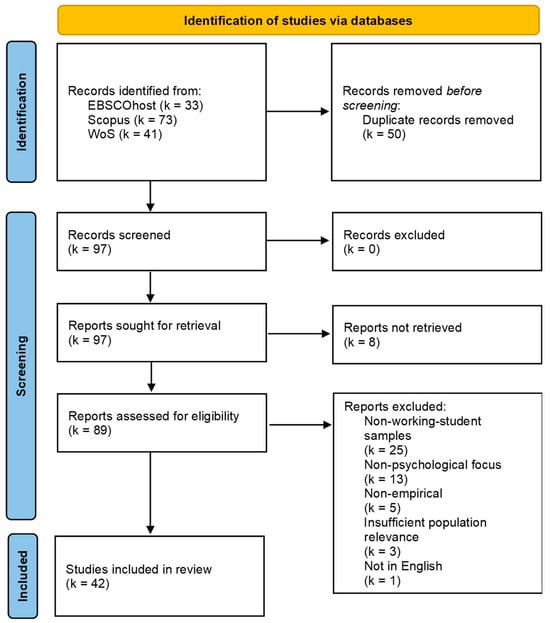
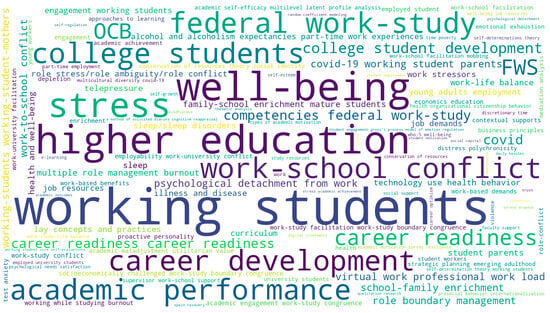
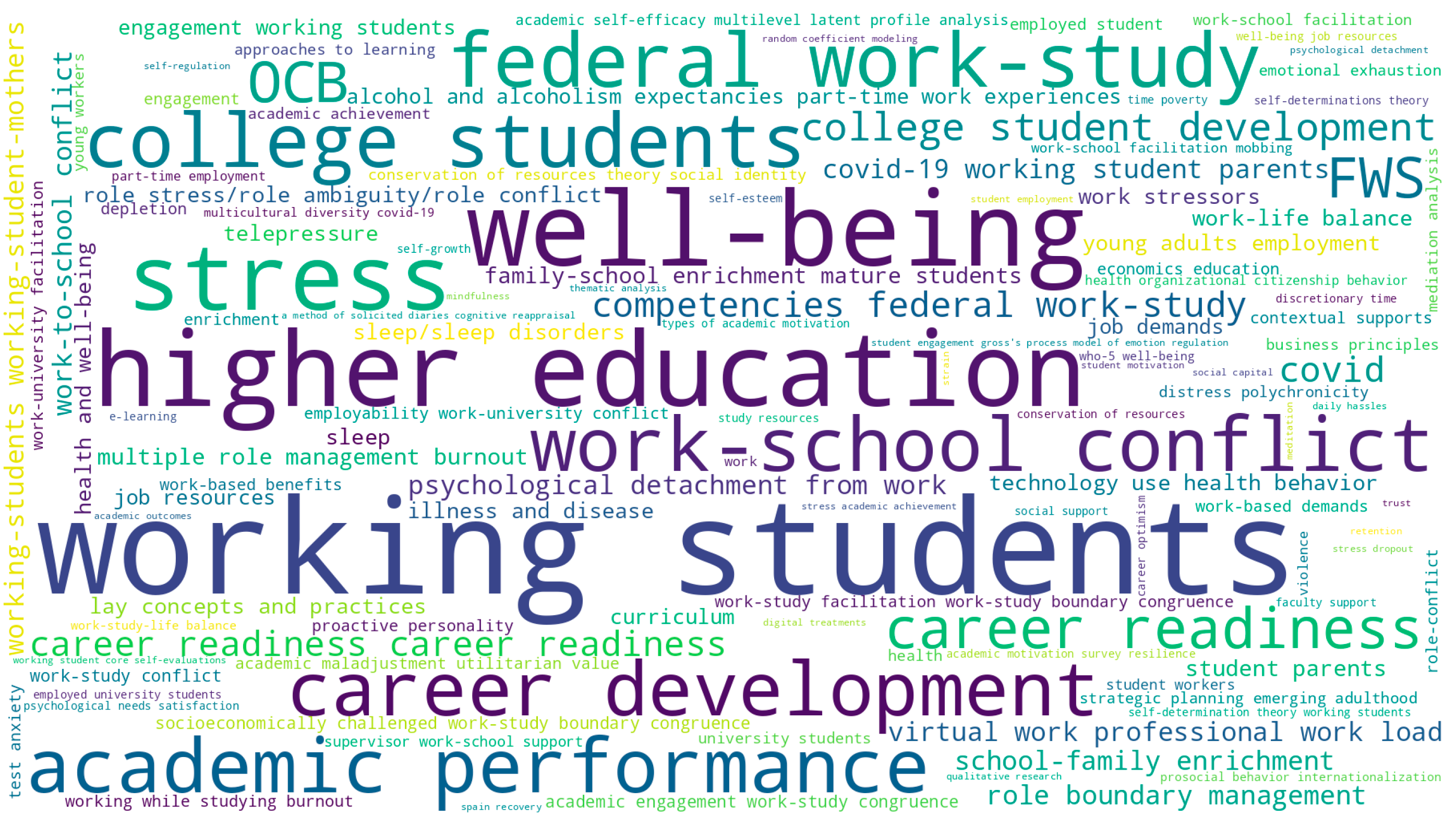
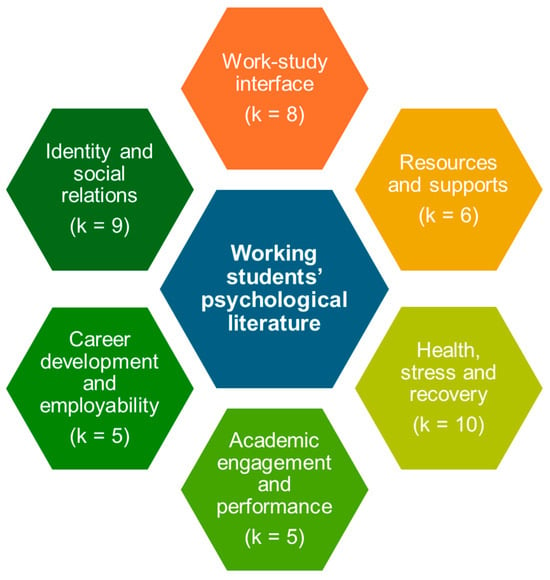
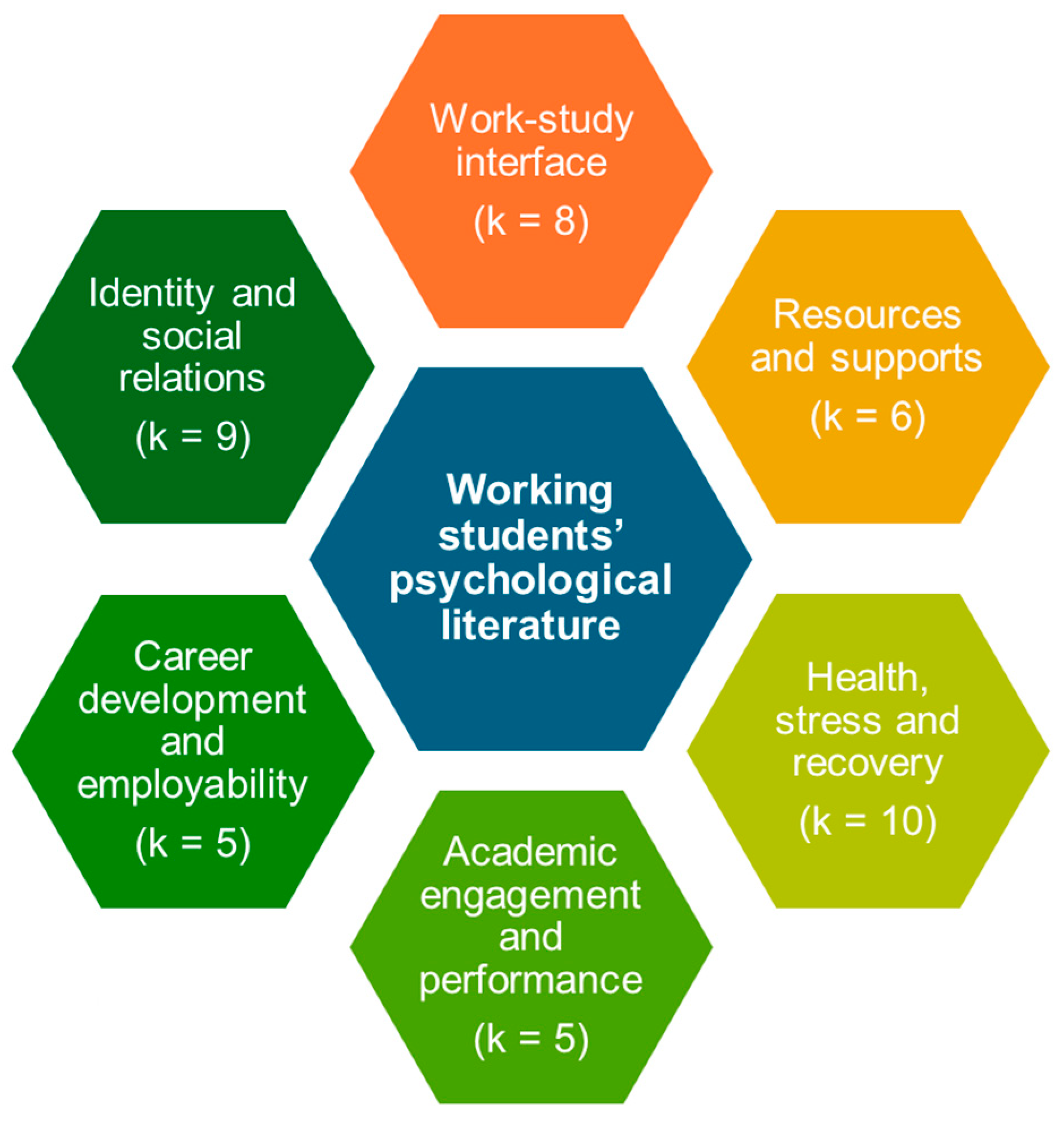

Disclaimer/Publisher’s Note: The statements, opinions and data contained in all publications are solely those of the individual author(s) and contributor(s) and not of MDPI and/or the editor(s). MDPI and/or the editor(s) disclaim responsibility for any injury to people or property resulting from any ideas, methods, instructions or products referred to in the content. |
© 2026 by the authors. Licensee MDPI, Basel, Switzerland. This article is an open access article distributed under the terms and conditions of the Creative Commons Attribution (CC BY) license.