


Abstract
The real estate sector has increasingly shifted toward digital platforms, where content sentiment plays a crucial yet understudied role in driving user engagement. While sentiment analysis has been widely applied in retail and finance, its impact on real estate web traffic remains poorly understood, particularly in competitive digital marketplaces. This study examines the relationship between sentiment in web content and the traffic it attracts on residential real estate websites in South Africa. Specifically, it examines how different sentiments associated with the type of content (articles versus property listings) influence total monthly web traffic and user engagement. A quantitative analysis of six years (2017–2023) of scraped data from Property24, Remax, and Private Property employed R (rvest, sentimentr, and stats packages) for web scraping, sentiment analysis, and ANOVA testing to evaluate relationships between content sentiment, type (listings vs. articles), and web traffic metrics. The analysis revealed a significant impact of sentiment on web traffic, indicating that the sentiment of web content influences visitor numbers. Specifically, property listings generated a total of 16,780,623 monthly visitors, significantly surpassing the 13,407,521 visitors attracted by articles. This study contributes empirical evidence regarding the influence of content sentiment and content type on web traffic within the South African real estate market. It highlights the critical role of sentiment in shaping web traffic and potentially user engagement and provides actionable insights for real estate developers and marketers seeking to optimize their content strategies to improve user attraction and retention.
1. Introduction
1.1. Background
The residential real estate sector in South Africa has undergone a significant transformation in recent years, largely driven by advancements in technology and the increasing reliance on digital platforms for marketing properties [1,2,3]. Websites have evolved from mere listings into dynamic, interactive platforms that provide potential buyers with valuable resources, including detailed property information, virtual tours, and immersive experiences [4,5,6]. This evolution reflects a broader global trend in which the real estate market is adapting to the digital age, emphasizing the importance of a robust online presence. In addition to this technological shift, recent legislative reforms such as the 2023 amendments to the Property Practitioners Act have introduced stricter consumer protection and transparency standards, further transforming how real estate services are delivered and perceived.
In the South African context, the real estate market is not only dynamic but also highly competitive, characterized by diverse consumer preferences and varied regional characteristics [7,8]. Real estate companies continually strive to enhance their digital marketing strategies to attract web traffic and convert online visitors into prospective homebuyers [9,10]. As most property searches commence online, understanding the multifaceted factors that drive web traffic to real estate websites becomes crucial for companies seeking a competitive edge. These factors encompass website design, user experience, marketing strategies, and, importantly, the quality and sentiment of the content presented. Emerging trends such as fractional property ownership and tokenization of assets are also gaining traction, presenting new challenges and opportunities for online engagement.
One critical element influencing web traffic is the sentiment expressed in the website content [11]. Sentiment analysis, a specialized field within natural language processing (NLP), enables the assessment of emotional tone and attitude within textual content [12]. This analytical approach has found extensive applications in various domains, including marketing and customer feedback analysis [13]. For instance, positive sentiment such as “charming family home with ample natural light and secure parking” may attract users more than neutral or negative phrasing like “two-bedroom house with limited amenities.” Content types commonly found on real estate websites include listing descriptions, blog articles, customer testimonials, and area guides. For real estate websites in South Africa, the attributes of property listings and articles can significantly impact visitor perceptions and engagement [14]. Positive sentiment about the attributes of companies’ websites can create an inviting atmosphere that encourages inquiries and potential sales, while negative sentiment may deter potential buyers, leading to lost opportunities [15]. These dynamics have become increasingly important in the post-COVID-19 environment, where consumer behaviour has shifted toward cautious and research-intensive online interactions [16], influenced by macroeconomic pressures such as rising interest rates and inflation [17,18].
Unlike other industries, such as retail, finance, and hospitality, where sentiment analysis is widely adopted as a tool for managing consumer perceptions and optimizing customer engagement [11,19], sentiment’s influence on web traffic in the South African real estate sector remains underexplored. In the retail sector, sentiment analysis is used to gauge customer satisfaction and adjust marketing strategies based on real-time feedback [13]. The finance industry leverages sentiment analysis to monitor market trends and investor confidence, directly informing investment strategies [20]. Hospitality businesses apply sentiment insights to manage online reviews and enhance guest experiences, tailoring services to better meet customer expectations [13]. While these sectors have embraced sentiment analysis, real estate research has traditionally focused more on price forecasting, market cycles, and investor behaviour, with less attention to digital engagement dynamics such as user traffic and interaction. This pattern is especially pronounced in Africa, where sentiment-related real estate research remains scarce. Most existing studies are concentrated in developed economies such as the U.S., U.K., and Europe [21,22], with Africa and South Africa in particular, largely underrepresented in this area.
Focusing on South Africa is, therefore, both timely and necessary. As one of the continent’s most advanced real estate markets with robust digital infrastructure, South Africa offers a relevant testing ground for examining how digital content sentiment affects consumer engagement in an African context [23]. The interplay between evolving policy, shifting consumer preferences, and economic volatility highlights a unique confluence of factors that warrants urgent scholarly attention.
Although the results may not generalize across all African countries due to socioeconomic and infrastructural diversity, they offer critical insights into the emerging dynamics of digital real estate marketing on the continent. This study, thus, contributes to bridging a geographic and methodological gap in the global literature.
The objective of this research is to investigate how the emotional tone and types of online real estate content influence web traffic and user engagement, and by extension, contribute to potential sales conversions. By analyzing sentiment impact, the research seeks to uncover insights into how positive or negative content influences web traffic and subsequently impacts property sales.
1.2. Research Problem
Many studies have reviewed and explored the effect of sentiment on real estate returns both from investor and occupier perspectives [20,21,22]. As noted by [20], market sentiment is a driver of asset prices, and since the advent of artificial neural networks and other machine learning algorithms, emphasis has been placed on how content sentiment also affects the price of real estate.
However, much of this research has concentrated on financial markets or macroeconomic-level data, with little focus on how sentiment in digital property content influences micro-level user behaviours, such as web traffic or site engagement. Despite the growing relevance of sentiment analysis in digital marketing, a notable gap exists in understanding its specific impact on web traffic within the South African residential real estate sector. While existing literature has highlighted the importance of web traffic in determining the success of real estate companies [15,24], there is limited research focusing on how the sentiment of online content shapes traffic patterns and influences potential sales.
More importantly, the global research landscape reveals a strong bias toward developed economies, with Africa and South Africa in particular, often excluded from sentiment-focused real estate studies [23]. Where African markets are included, findings suggest sentiment plays a relatively smaller but potentially growing role compared to economic fundamentals [11]. South Africa, with its relatively mature real estate sector and increasing digital penetration, represents a critical stepping stone for examining sentiment-related dynamics in African contexts.
To address this gap, this study explores the relationship between website content sentiment and web traffic in the South African residential real estate market. Recent studies have demonstrated the effectiveness of sentiment analysis in predicting user behaviour and preferences across various digital platforms [11,13]. However, the extent to which sentiment influences web traffic and ultimately affects property sales remains an area that warrants further exploration. There is also a methodological gap in local research that incorporates NLP-driven sentiment scoring in conjunction with actual web traffic analytics from South African real estate firms. This research aims to quantify the impact of content sentiment on web traffic in real estate companies, equipping real estate companies with the insights necessary to optimize their content strategies and enhance their outreach to a broader online audience.
1.3. Research Questions
The research questions derived from the defined objectives are as follows:
- What is the impact of website content sentiment on web traffic of real estate companies in South Africa?
- How do different content types (articles or property listings) affect web traffic on real estate websites?
1.4. Hypotheses
Hypothesis 1 (H1).
Website content sentiment has a significant impact on web traffic for real estate websites.
Hypothesis 2 (H2).
Different content categories have a significant influence on web traffic for real estate websites.
1.5. Significance of the Research
This study holds significant value both academically and practically, particularly in the realm of digital marketing for real estate. Academically, it addresses gaps in understanding how website content sentiment and content types (articles or property listings) influence web traffic, offering a deeper insight into user behaviour in the South African real estate market. By examining these factors, the research contributes to the broader knowledge of content optimization and digital engagement strategies in real estate marketing. Practically, the study provides real estate companies and marketers with actionable insights to refine their content strategies, boost user engagement, and improve business performance through more targeted and data-driven decision-making. These findings can guide companies in enhancing user experiences and driving higher traffic to their websites, ultimately contributing to business growth.
2. Literature Review
2.1. Overview of the Real Estate Industry in South Africa
The real estate industry in South Africa holds a pivotal role in the national economy, contributing approximately 11.4% to the Gross Domestic Product (GDP) in 2023 [24,25]. The sector encompasses various market segments, each catering to distinct property types and investor preferences.
The historical evolution of the South African real estate market can be traced back to colonial times, with significant transformations occurring over the years. The sector was notably influenced by apartheid-era policies, which enforced land restrictions and created racially segregated neighbourhoods [22]. The post-apartheid era has ushered in significant changes, promoting more inclusive property ownership and opening new avenues for investors and homebuyers [10,26].
Despite its resilience, the real estate market in South Africa faces several challenges, including affordability issues, disputes over property rights, urbanization pressures, housing shortages, and market inequality. Addressing these challenges requires innovative solutions and proactive policy measures to ensure sustainable growth [14,17]. The legal framework in South Africa robustly supports property rights, with constitutional guarantees for secure property ownership and protection against arbitrary expropriation, fostering a stable investment environment [23]. This supportive legal landscape provides a foundation for market confidence, encouraging both domestic and foreign investment. However, the evolving economic conditions and socio-political dynamics necessitate continuous adaptation within the sector. Understanding these factors is crucial for stakeholders seeking to navigate the complexities of the South African real estate market and capitalize on emerging opportunities while addressing existing challenges [11]. A matrix of key empirical literature reviewed in this section is presented in Table 1.
Table 1.
Summary of key literature reviewed.
2.2. The Significance of Real Estate Websites in Real Estate Marketing and Sales
Real estate websites play a crucial role in modern marketing strategies by leveraging digital technologies to enhance the visibility, appeal, and accessibility of properties, thereby transforming how real estate is marketed and sold [24]. Studies [15,21,23] show that increased online activity on business websites directly influences buyer interest, engagement, and ultimately, sales and overall market performance.
- Enhanced Visual and Interactive Experience
Real estate websites provide high-quality images, videos, drone shots, and 3D walkthroughs, which create compelling visual narratives of properties. These elements help potential buyers visualize the space and its potential, making the house-hunting experience more engaging and informative [27,32]. Advanced technologies like virtual reality (VR) and augmented reality (AR) are increasingly used to offer virtual tours, allowing users to explore properties remotely, which is particularly beneficial in the current digital age [14].
- Broader Reach and Accessibility
Real estate websites serve as comprehensive online platforms that provide 24/7 accessibility to property listings, making it easier for a diverse audience to explore real estate options [10,26]. These online platforms enable real estate agents and developers to reach a wider audience beyond geographical limitations. Social media and search engine optimization (SEO) are critical tools for increasing visibility and driving traffic to real estate websites [7,9,29]. The use of mobile applications and responsive web design ensures that property listings are accessible on various devices, enhancing user convenience and engagement [14].
- Data-Driven Marketing Strategies
Real estate websites collect valuable data on user behaviour and preferences, which can be analyzed to tailor marketing strategies and improve customer targeting. This data-driven approach helps in creating more personalized and effective marketing campaigns [8]. These data insights can be further enhanced by integrating deep learning models to uncover patterns in user engagement over time, enabling more accurate forecasting and personalization strategies [30]. The integration of algorithms and interaction design on these platforms provides users with customized property recommendations, enhancing the overall user experience and increasing the likelihood of successful transactions [13].
The following table provides a synthesis of key academic studies that inform the broader research landscape on digital real estate marketing. These foundational works explore critical themes such as the strategic framing of property listings, the use of online marketing tools, and evolving consumer engagement patterns. The findings summarized below in Table 1 below offer valuable theoretical and methodological insights relevant to understanding the dynamics of web traffic and visitor sentiment in residential real estate markets.
- Social Media and Online Advertising
Social media platforms are extensively used for real estate marketing, allowing agents to engage with potential buyers through targeted ads and interactive content. This approach not only increases brand awareness but also fosters a sense of community and trust [9,29]. Online advertising, including pay-per-click (PPC) campaigns and classified ads, remains a dominant method for promoting real estate listings. These ads are often complemented by high-quality visual content to attract and retain user interest [32,33].
- Adaptation to Market Trends
The real estate market is continuously evolving, and digital marketing strategies must adapt to these changes. For instance, the COVID-19 pandemic has accelerated the shift towards online marketing, with real estate agents becoming more creative in their digital outreach efforts [29]. The need to cater to younger, tech-savvy customers has driven the adoption of new media sources and technologies, ensuring that marketing efforts remain relevant and effective [7].
Real estate websites have, therefore, revolutionized the marketing landscape by providing enhanced visual experiences, broader reach, data-driven strategies, and effective use of social media and online advertising. These platforms are essential for modern real estate marketing, offering innovative tools and methods to attract and engage potential buyers and sellers.
- Increased Sales Success Rates
Online listing portals have been shown to increase the success rate of converting listings into sales. This is attributed to the reduced market frictions and enhanced information efficiency provided by these platforms [21].
- Price Premiums
Properties listed online tend to sell at a premium. In Singapore, real estate agents using online listings achieved an average price premium of 3.26%, which remained significant at 1.98% even when controlling for property and location attributes [21].
- Enhanced Agent Performance
The use of online listings has been linked to improved performance of real estate agents, including higher price gaps and shorter time on the market. This improvement is driven by better effort, information presentation, and portal selection [21].
- Predictive Power of Web Searches
The intensity of internet searches, as measured by Google Trends, can predict changes in real estate prices. This predictive power can help in making informed decisions regarding property purchases or sales [20,25].
- Impact of Online Communities
Consumer visits to online real estate communities positively impact offline sales. However, the breadth of visiting different online communities can have a negative moderating effect, while the depth of visits does not show a significant moderating effect [13].
- Digital Marketing Influence
Digital marketing significantly influences customer buying behaviour in residential real estate. Customers are increasingly using digital channels to book site visits and make purchase decisions, indicating a strong preference for digital engagement in the buying process [11].
Web traffic and online activities, therefore, have a profound impact on residential real estate sales. Online listings increase sales success rates and property prices, while digital marketing and online communities play crucial roles in shaping consumer behaviour and purchase decisions. Additionally, web search trends can serve as valuable predictors for real estate market changes, aiding in strategic decision-making.
2.3. Sentiment Analysis in Digital Marketing
Sentiment analysis, or opinion mining, has emerged as a transformative force in digital marketing, revolutionizing how businesses interpret and respond to customer sentiments. This approach relies on advanced computational linguistics and machine learning techniques to distil subjective information from text, categorizing sentiments into positive, negative, or neutral. Refs. [27,34] elucidate the principles of natural language processing (NLP), showing how algorithms discern emotional nuances in written language. In digital marketing, sentiment analysis serves as a strategic asset, providing insights into consumer sentiments. Ref. [9] details how applying sentiment analysis to customer reviews, social media interactions, and textual content enables marketers to understand audience perceptions and tailor their strategies accordingly.
A key application of sentiment analysis lies in tracking brand perception. Ref. [26] emphasize its significance in gauging public sentiments toward a brand, guiding marketers in maintaining a positive image and addressing potential issues. The role of sentiment analysis in social media listening strategies is paramount. Ref. [29] highlight that real-time monitoring and analysis of social media sentiments allow marketers to respond swiftly to emerging trends, ensuring agility in adapting marketing strategies. Furthermore, understanding the sentiment associated with various content types informs content strategy optimization [35]. Refs. [8,35] demonstrate how sentiment analysis assists marketers in identifying content that resonates positively with audiences, guiding content creation and distribution.
Sentiment analysis is instrumental in analyzing customer feedback. Ref. [23] emphasizes that categorizing sentiments in customer reviews helps businesses identify strengths and weaknesses, facilitating targeted improvements in products or services. Additionally, sentiment analysis extends to competitor analysis. Ref. [13] show how businesses can gain insights into consumer perceptions of competitors, informing benchmarking strategies and identifying unique selling points for strategic positioning in the market. As a dynamic analytical tool, sentiment analysis empowers marketers to navigate the emotional landscape of their audience, enabling data-driven decision-making and fostering proactive engagement.
2.4. Data-Driven Content Optimization
Data-driven recommendations involve systematically analyzing quantitative and qualitative data to derive actionable insights [15]. In real estate website content, these recommendations are tailored suggestions based on empirical evidence and patterns identified through comprehensive data analysis. In the dynamic landscape of digital marketing, data-driven recommendations are crucial for optimizing real estate website content to enhance web traffic [24]. Understanding target audience preferences and behaviours is fundamental [7]. Data-driven recommendations enable real estate companies to tailor content effectively for specific demographic groups [10]. By identifying patterns in user interactions, companies can create content that aligns with potential clients’ interests and needs. Advanced AI-based approaches, including persistent homology and deep learning, are increasingly being explored to analyze unstructured and temporal web activity data. Such models offer a robust framework for tracking user sentiment and behaviour across digital real estate platforms [30,31] search engine algorithms play a pivotal role in determining the visibility of real estate websites [14]. Emerging AI-integrated models provide a new layer of precision in optimizing for search visibility by incorporating both structural and behavioural web metrics [31]. Data-driven recommendations assist in optimizing content for search engines, ensuring that articles and property listings are strategically crafted to enhance organic search rankings [22]. This involves keyword analysis, content structuring, and other SEO strategies based on data-driven insights. User experience also critically influences web traffic and engagement [25] by analyzing user behaviour data, real estate companies can make informed recommendations to enhance the overall user experience [17], including optimizing navigation, improving load times, and creating a seamless browsing experience.
Real estate markets are dynamic, and consumer preferences evolve [21]. Data-driven recommendations empower companies to adapt content strategies in response to changing trends and market demands [32]. Whether shifting focus between article topics or adjusting emphasis on specific property features, these recommendations ensure content remains relevant and impactful. Metrics such as click-through rates, time spent on pages, and social media shares indicate content engagement [20]. Data-driven recommendations guide real estate companies in refining their content to boost these metrics [11] through strategies like A/B testing of headlines and experimenting with multimedia content.
The integration of data-driven recommendations in content optimization is instrumental in navigating the competitive landscape of real estate digital marketing [21]. By harnessing the power of data, companies can attract increased web traffic and cultivate a more meaningful online presence in residential real estate marketing [21]. In the competitive realm of digital marketing within the real estate sector, implementing best practices in content optimization is vital for attracting and retaining web traffic [21,36]. Strategic keyword use is integral to content optimization [32]. Keyword research, as demonstrated by [24], enables real estate companies to align content with terms potential clients use during searches, enhancing website discoverability and organic traffic.
Crafting compelling headlines and meta descriptions is endorsed by content marketing experts [26]. These elements improve search engine ranking and entice users to click on links, driving traffic to websites [27]. Optimizing these components for relevance and clarity aligns with user expectations, encouraging higher click-through rates. Visual content, including images, infographics, and videos, significantly contributes to content optimization [8]. High-quality visuals enhance user engagement and dwell time, recognized factors in search engine algorithms [24]. Recent studies [8,11] show that real estate websites featuring visually appealing content are more likely to attract and retain visitors.
Ensuring the responsiveness of real estate websites across devices, particularly mobile devices, is fundamental [14]. Mobile optimization caters to the growing number of users accessing websites through smartphones and is acknowledged by search engines as a ranking factor [25]. Adopting a mobile-first approach enhances the user experience, positively impacting web traffic. Personalizing content based on user preferences resonates with contemporary digital marketing strategies [9]. Utilizing data-driven insights to tailor content to target audience interests enhances relevance and encourages return visits [13]. Personalization contributes to increased engagement and web traffic.
Incorporating interactive elements, such as quizzes, polls, and calls-to-action (CTAs), encourages user participation [32]. Engaged users are more likely to explore multiple pages, positively impacting dwell time and overall web traffic [15]. Strategically placed CTAs guide visitors through the conversion funnel, increasing the likelihood of meaningful interactions. Regularly updating content is crucial [26]. Search engines favour fresh and relevant content, leading to improved rankings [32]. Studies [8,24,26] demonstrate that real estate websites consistently providing valuable and up-to-date information experience sustained increased web traffic.
Implementing best practices in content optimization forms a holistic approach to enhancing web traffic for real estate websites. By combining keyword strategies, engaging visuals, mobile optimization, personalized content, interactive elements, and maintaining relevance through regular updates, real estate companies can create an online presence that effectively attracts, retains, and converts visitors. The landscape of real estate marketing has shifted, with digital platforms central to outreach strategies. A review of existing studies reveals the multifaceted relationship between content optimization strategies and increased web traffic for real estate websites. Research by [21] underscores the pivotal role of content optimization in enhancing search engine visibility. The study reveals a direct correlation between strategic keyword use, meta descriptions, and improved search rankings, leading to increased organic web traffic.
The impact of visual appeal on user engagement has also been investigated [27]. The study illustrates how high-quality images and visually appealing content contribute to extended engagement, consequently driving higher web traffic. Real estate websites incorporating such visuals witness a significant increase in their visitor base. Regular updates and fresh content are imperative for maintaining relevance and attracting returning visitors [26]. Consistently refreshed content signals to search engines that the website is active, which enhances visibility and attracts ongoing web traffic.
2.5. IT Governance in Developing Economies and Digital Real Estate in South Africa
In developing economies like South Africa, IT governance plays a critical role in structuring and enhancing digital real estate platforms. IT governance frameworks offer mechanisms to manage risks, ensure compliance, and optimize digital platform operations, all essential for meeting the unique demands of emerging markets [26,31]. South Africa’s real estate market, shaped by its local economic context and technological adoption rates, faces distinct challenges in web traffic and user engagement dynamics. The high levels of inequality and income diversity within South Africa create a varied consumer base, which is further influenced by disparities in technological infrastructure across regions, affecting digital platform access and engagement [15,23].
IT governance frameworks such as COBIT (Control Objectives for Information and Related Technologies) and ITIL (Information Technology Infrastructure Library) have been adapted in various sectors in South Africa to address challenges in technology-driven industries, including real estate. These frameworks emphasize data security, compliance with local and international regulations, and customer-centric policies, which collectively enhance user trust and engagement on digital platforms [17,24]. Ref. [17] underscores the importance of robust data protection and transparent policies in fostering customer loyalty and boosting platform traffic in digital real estate markets.
Operational efficiency, security, and content quality are central components of IT governance in digital platforms, significantly impacting user retention and traffic. A seamless user experience, which involves enhanced security protocols, optimized site performance, and easy navigation, is vital for attracting and retaining diverse users in the South African real estate market [8,14]. These measures are crucial for real estate platforms in managing online user interactions, particularly in contexts with varying levels of digital literacy and access [31].
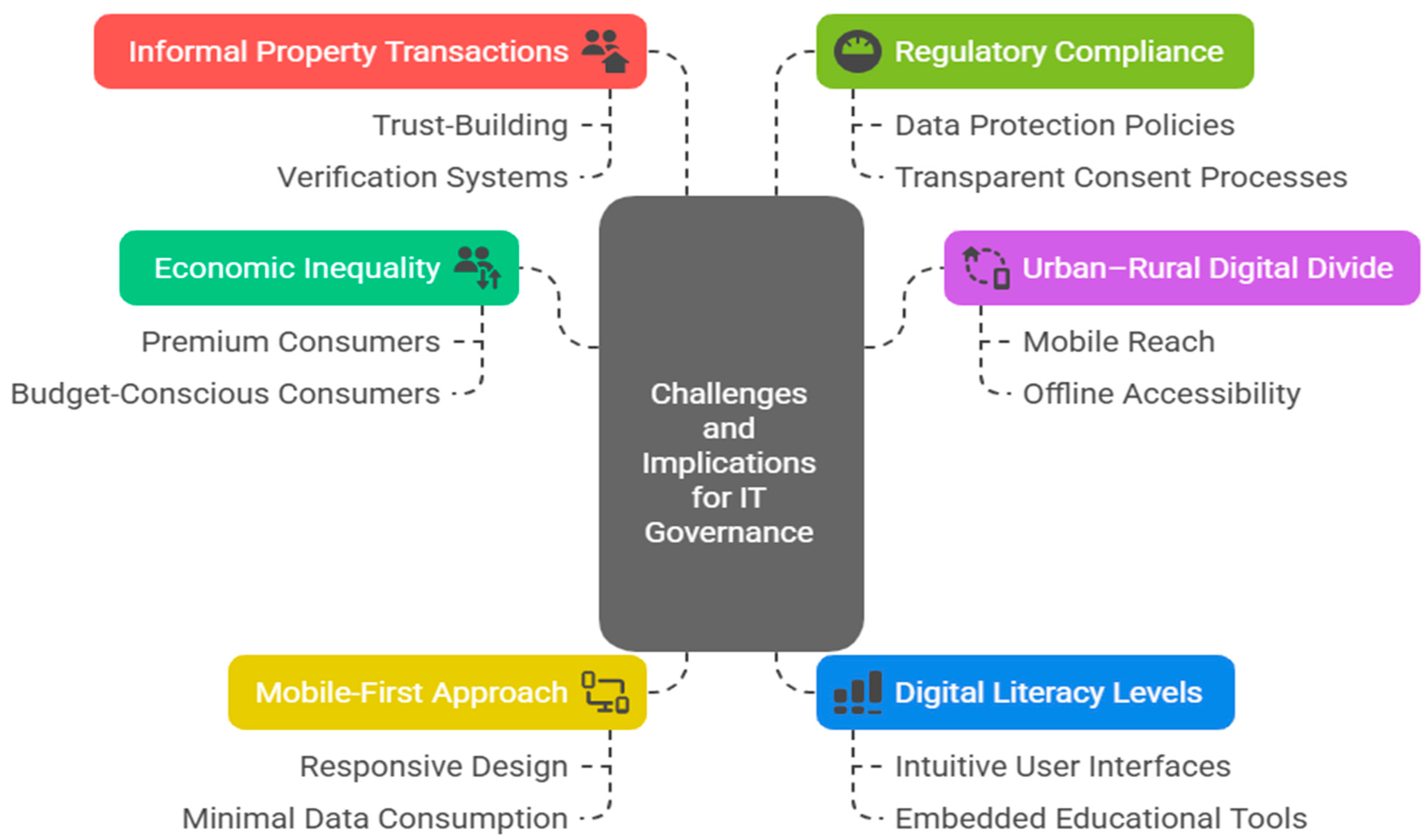
Furthermore, applying global IT governance frameworks to fit local economic and technological realities can position South African digital real estate platforms to better address their user base’s needs. This approach provides a competitive edge in the digital marketplace, enabling platforms to navigate regulatory landscapes while promoting equitable access and a trustworthy online environment [15,25]. As displayed in Figure 1, addressing local challenges such as economic inequality, urban-rural digital divide, reliance on mobile internet, and low levels of digital literacy, is necessary for enhancing inclusive engagement. Research by [31] highlights that customized IT governance strategies support not only compliance and security but also address specific market challenges like inconsistent internet access, thus fostering sustainable digital engagement. Incorporating deep learning techniques and AI-driven governance frameworks can further enhance predictive capabilities and platform resilience, especially when tailored to local infrastructural realities [30,31].
Figure 1.
Local factors shaping web traffic and implications for IT Governance.
Figure 1 highlights key local factors shaping digital real estate engagement in South Africa and their implications for IT governance. Economic inequality calls for content and pricing strategies that serve both premium and budget users. The urban–rural divide demands mobile reach and offline accessibility, while the dominance of mobile internet use requires a mobile-first design with low data usage. Varying digital literacy levels necessitate intuitive interfaces and embedded learning tools. Informal property transactions highlight the need for trust-building and verification systems, and compliance with POPIA requires strong data protection and transparent consent policies. Together, these factors underline the need for localized, adaptive IT governance to ensure inclusive and sustainable digital real estate platforms.
2.6. Theoretical Framework
In this study, two key theoretical frameworks are used to explore how website content sentiment impacts web traffic in real estate marketing: Information Foraging Theory and the Elaboration Likelihood Model (ELM).
Information Foraging Theory, proposed by [37] views users as adaptive foragers seeking valuable information, much like animals searching for food. In the context of real estate websites, this theory is relevant as it explains how users are drawn to different types of content, such as property listings or articles, based on perceived value. The theory provides insights into how content attributes can be optimized to guide users through the site more effectively, thereby increasing engagement and web traffic.
The Elaboration Likelihood Model (ELM), developed by [38], distinguishes between two routes of persuasion: central and peripheral. In this study, sentiment serves as a peripheral cue that influences user engagement. The model’s relevance lies in its ability to explain how the emotional tone of real estate listings or articles affects users’ cognitive responses and behaviours. By understanding how sentiment impacts users’ decision-making processes, the study can offer strategies for improving content that drives higher traffic to real estate websites. Both theories provide a comprehensive lens through which to analyze and optimize the impact of content on user engagement and web traffic.
2.7. Conceptual Framework
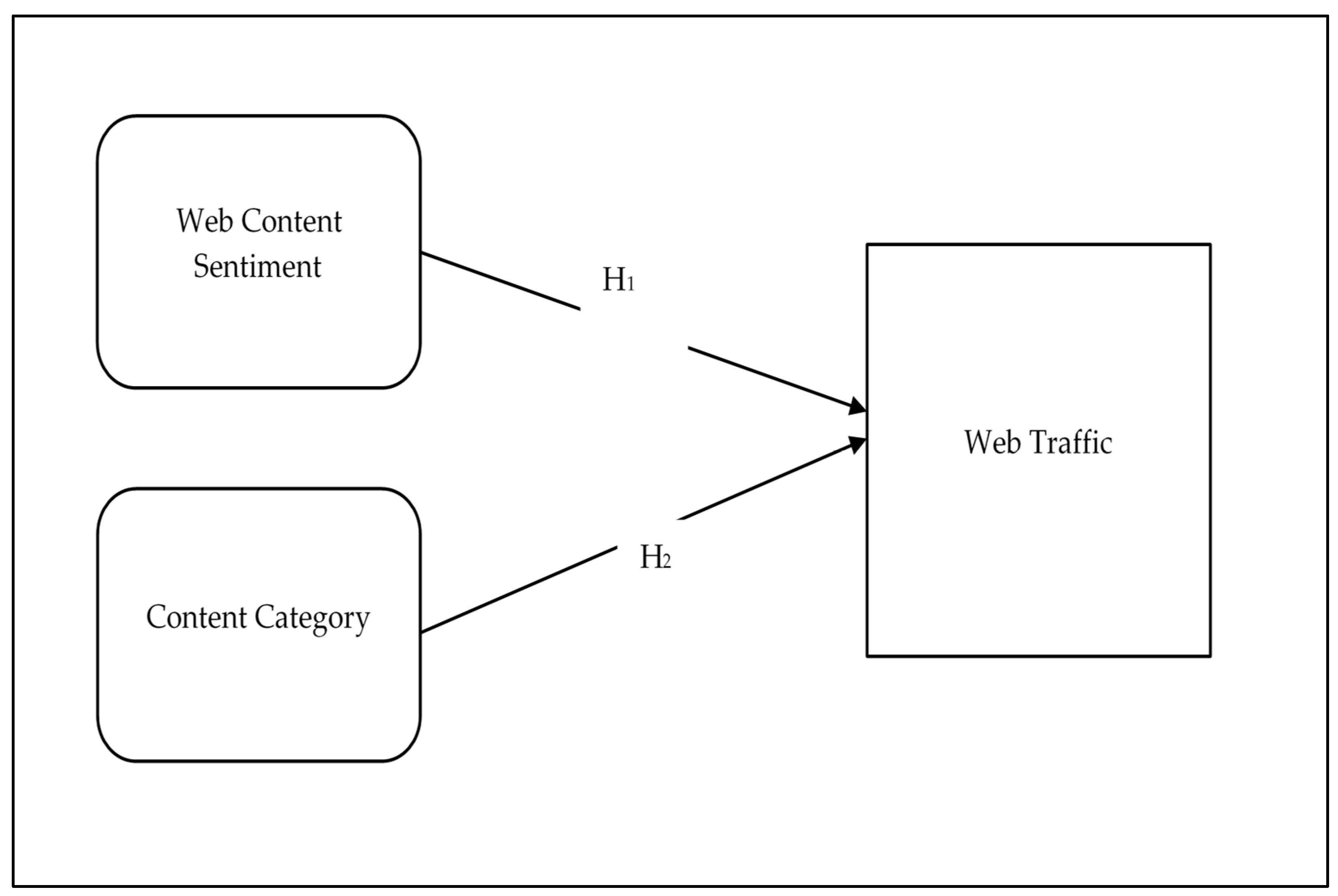
Figure 2 presents a conceptual framework illustrating the hypothesized relationship between web content features and digital engagement, specifically web traffic. The model proposes that two independent variables, Web Content Sentiment and Content Category influence the dependent variable, Web Traffic.
Figure 2.
Conceptual Diagram.
Hypothesis H1 suggests that the sentiment expressed in online content (positive, neutral, or negative) has a significant effect on the amount of traffic the web page receives. This could relate to emotional tone, user perception, and content relatability.
Hypothesis H2 posits that the category of content, such as news, promotional listings, or informational articles also plays a key role in attracting visitors and shaping online behaviour.
3. Methodology
This section outlines the research methodologies, encompassing research design, data collection, and analysis, aimed at understanding the influence of website content sentiment on web traffic within the residential real estate sector.
3.1. Research Design
A quantitative approach was adopted, leveraging statistical tools to discern patterns, trends, and correlations in large datasets. This approach is justified by its capacity to provide an objective perspective on the relationships being examined [20]. Specifically, the study employed various statistical techniques, including chi-square tests, linear regression, and analysis of variance (ANOVA), to examine the relationship between sentiment and content type on web traffic. ANOVA was selected to determine statistically significant differences in web traffic among different content categories, allowing a detailed assessment of how various types of content, such as property listings and articles, affect website engagement. Chi-square tests were utilized to analyze the association between content sentiment and category type, aiding in understanding distribution patterns. Linear regression analysis quantified the influence of content sentiment on total monthly visitors, providing insights into how sentiment impacts web traffic over time. These methods are well-established in sentiment analysis and web traffic studies for their capacity to handle large datasets and accurately model relationships between categorical and continuous variables [15,30].
3.2. Data Collection and Pre-Processing
Data was collected using R (version 4.5.1) through web scraping from prominent real estate websites, such as Property24, Remax, and Private Property, from 30 June 2017 to 30 June 2023. This six-year timeframe was selected to capture evolving trends in web traffic and sentiment in the South African real estate market, ensuring that the dataset reflects contemporary behaviours and patterns [22]. Scraping was performed using R packages such as rvest and httr, employing versions that were fully compatible with R version 4.5.1 at the time of analysis, which enabled automated extraction of data from structured HTML elements.
The dataset included four key variables:
- Title: the headline or description of a listing or article;
- Category: the content type (e.g., “Property Listing”, “Real Estate Blog”, “News Update”);
- Sentiment: the tone of the content (classified as Positive, Neutral, or Negative);
- Total Monthly Visitors: a numeric field representing the estimated monthly traffic for the specific page or content piece, derived from SimilarWeb, a site analytics tool.
Content categories were assigned based on the context and structure of each webpage or article. For instance, pages containing specific property features were categorized as Property Listings, while longer-form editorial content about buying tips or market trends was grouped under Articles.
For sentiment classification, they were as follows:
- Text data (title + description body) was processed using the textdata, tidytext, and sentimentr packages in R.
- Sentiment scores were calculated based on polarity dictionaries and tokenized text, and then mapped into three broad categories:
- ο
- Positive (e.g., “charming”, “spacious”, “secure”);
- ο
- Neutral (e.g., “located in the heart of the city”, “three bedrooms”);
- ο
- Negative (e.g., “requires renovation”, “limited access”).
- This categorization was validated manually for a sample of entries to improve label accuracy and account for contextual variations in real estate language.
Data preprocessing involved the following steps:
- Removing duplicates and null values;
- Normalizing text (lowercasing, removing HTML tags, punctuation);
- Handling outliers (especially extremely high or low visitor counts);
- Encoding categorical variables numerically for modelling purposes.
This rigorous preprocessing ensured high data quality and model-readiness for statistical analysis.
3.3. Analytical Framework and Tools
The analysis followed the CRISP-DM (Cross-Industry Standard Process for Data Mining) framework, a structured and widely used approach in data mining projects [39]. The CRISP-DM framework’s phases—Business Understanding, Data Understanding, Data Preparation, Modelling, Evaluation, and Deployment provided a comprehensive approach to handling the dataset systematically. In line with approaches by [32], this study employs sentiment analysis techniques to evaluate user engagement with digital real estate content. This approach facilitated a deeper understanding of the data, aiding in the identification of relevant patterns and trends.
In the Modelling phase, several R packages were utilized to enhance model performance and ensure robust statistical analysis aligned with the chosen techniques of chi-square tests, linear regression, and analysis of variance (ANOVA). These packages include the following:
- stats: This base R package provides functions for performing core statistical techniques, including chi-square tests, linear regression (lm function), and ANOVA (aov function). These tools are fundamental for examining the relationships among sentiment, content type, and web traffic.
- car: The Companion to Applied Regression package (version 3.1-2) is used for diagnostic tests and enhancements in linear models. It aids in performing ANOVA analyses with Anova () and enables post hoc tests, which are useful for understanding detailed differences in content type and sentiment categories.
- MASS: Provides robust linear regression tools and diagnostics for assessing model assumptions. It is particularly valuable for handling potential outliers or heteroscedasticity issues that may arise in web traffic data analysis.
- caret: Used for managing model training and validation processes, particularly helpful for setting up the data into training and testing sets, optimizing model parameters, and performing cross-validation, which ensures the reliability of linear and ANOVA models in predictive analysis.
- sentimentr, tidytext, and textdata: Applied during the sentiment analysis stage to score and classify textual data into sentiment categories.
The choice of these tools was informed by their efficacy in statistical computing, and their specific suitability to regression tasks commonly used in sentiment analysis and web traffic modelling. This analytical framework allowed the study to accurately assess the impact of sentiment and content type on web traffic, contributing valuable insights into user engagement dynamics in the digital real estate market.
4. Results
The study explores the relationship between sentiments on web content of real estate websites and the traffic it attracts. This chapter presents the analysis of the data in line with the objectives.
4.1. Data Exploration
4.1.1. Analysis of Missing Values
The dataset’s “Total Monthly Visitors” variable was assessed for missing values using the is.na function, and the result indicated that there are no missing values. The output “Number of missing values: 0” affirms that the column is complete, with no instances of missing data, and each observation includes a numeric value for the total monthly visitors.
The “Category” and “Sentiment” variables were converted to factors, and the dataset was checked for missing values using the any(is.na()) function. The result, denoted by FALSE, signifies that each observation in these categorical variables has been successfully converted, and there are no missing values in the entire dataset after these conversions.
The absence of missing values in the key variables is a positive indication of data completeness. The successful conversion of categorical variables to factors further ensures the dataset’s readiness for subsequent analyses or visualizations. This robustness in data quality contributes to the reliability of any findings or insights drawn from the dataset.
4.1.2. Summary Statistics
The summary statistics for the key variables have been compiled and presented in Table 1. This table encapsulates essential information about the dataset, providing insights into its characteristics and central tendencies.
The “Title” variable, representing the titles of web pages, has a length of 14,907 entries. The data type is characterized as a character, emphasizing the diverse and textual nature of the titles. The “Category” variable, indicating the category types of the titles, also has a length of 14,907 entries. Similarly to “Title,” the data type is a character, highlighting the categorical and diverse nature of the content. In the case of the “Sentiment” variable, reflecting the emotional tone of the titles and content, the length aligns with the overall dataset at 14,907 entries. The data type remains character, emphasizing the qualitative nature of sentiment categorization. The “Total Monthly Visitors” variable, quantifying the number of monthly visitors to each web page, is characterized by numeric values. The summary statistics reveal the minimum monthly visitors as 105, the maximum as 3,017,000, with a mean of approximately 2,279,380. This numeric representation offers a quantitative perspective on web traffic across the dataset.
4.1.3. Traffic Summary per Category
Table 2 presents a summary of the total monthly visitors based on the category of the titles, revealing key patterns in web traffic for real estate websites.
Table 2.
Total Monthly visitors per Title category.
Property listings attract significantly higher traffic, with a total of 16,780,623 monthly visitors compared to articles, which receive 13,407,521 visitors. This indicates that property listings are more effective in driving web traffic compared to articles, highlighting the preference of users for direct property-related content over informational articles.
4.2. Impact of Sentiment of Web Traffic
The aim of this analysis was to assess the impact of sentiment (Positive, Neutral, Negative) on the number of total monthly visitors to real estate websites in South Africa from June 2017 to June 2023. Table 3 below presents the ANOVA results.
Table 3.
ANOVA Results for Sentiments and Web Traffic.
The ANOVA results shown in Table 3 indicate that sentiment has a statistically significant effect on total monthly visitors to real estate websites, as shown by the high F-value (103.9) and an extremely low p-value (<0.001). The asterisks (***) next to the p-value (<2 × 10⁻¹⁶) for Sentiment indicate a highly statistically significant finding. These findings allow us to reject the null hypothesis, which posited that sentiment in real estate listings has no impact on web traffic. Therefore, we conclude that the sentiment of real estate listings significantly influences user engagement on digital platforms, with different sentiments (positive, neutral, and negative) attracting varying levels of visitor traffic.
This finding is consistent with previous studies, such as those by [15,29], which found that positive content generally enhances user engagement across digital platforms. Additionally, ref. [17] observed that sentiment in e-commerce platforms can drive user behaviour and engagement, a result mirrored in the South African context, where users respond meaningfully to sentiment in real estate listings.
In global digital behaviour literature, positive sentiments are often linked to increased engagement, as seen in sectors like e-commerce and social media [11,13,29]. Interestingly, South African users also respond to negative sentiment, potentially as a form of information-seeking behaviour. This nuanced reaction may reflect the unique socioeconomic environment in South Africa, where consumers engage with content not only to identify attractive opportunities but also to remain informed about market conditions [22].
4.3. Impact of Content Category on User Engagement for Real Estate Websites
An analysis of variance (ANOVA) was conducted to evaluate the effect of category (article or property listing) on the total monthly visitors to real estate websites. The model focused on the category as the explanatory variable, with residuals accounting for the unexplained variance in the model.
The high F-statistic of 426.9 and a p-value of less than 0.001 as shown in Table 4 indicate a strong, statistically significant effect of content category on total monthly visitors. These results confirm that the category (whether an article or property listing) significantly impacts user engagement, measured by the volume of web traffic, allowing us to reject the null hypothesis. Therefore, we conclude that content type has a critical role in shaping user interaction with real estate websites. This finding aligns with global research that emphasizes the role of content type in driving user engagement. For instance, previous studies e.g., refs. [10,21] have shown that detailed, product-oriented content, such as property listings, tends to attract more focused engagement than general articles. Specifically, research in the real estate sector by [23] supports the idea that property listings tend to generate higher user interaction, as they directly address the information needs of users in the market. In contrast to regions where real estate content may equally balance informational articles and property listings, the strong preference for property listings in South Africa reflects a unique market orientation toward actionable content. As noted in studies of emerging economies, consumer engagement often prioritizes practical and transaction-related information [9]. This preference suggests that, in South Africa, users primarily seek content that facilitates decision-making rather than general market insights.
Table 4.
ANOVA test result for Influence of category listing on web traffic.
5. Conclusions
The analysis of sentiment and content category on web traffic for real estate websites in South Africa provides key insights with practical implications for real estate marketers, web developers, and business strategists. First, sentiment was found to significantly influence monthly web traffic, as listings categorized by positive, neutral, or negative sentiments had a measurable impact on user engagement, as evidenced by the significant F-statistic (103.9) and a p-value less than 0.001. This suggests that the emotional tone conveyed through listings plays a crucial role in attracting users, with positive or strong sentiments likely resonating more deeply with users seeking relevant information.
Similarly, the category of content, whether article or property listing, significantly affected user engagement, with property listings consistently attracting higher web traffic than articles. This finding, supported by an F-statistic of 426.9 and an extremely low p-value, points to a clear preference among users for transactional, property-oriented content over general informational articles. The hypothesis that content category does not influence web traffic was, therefore, rejected, emphasizing the importance of tailored content strategies.
In practical terms, these insights suggest several applications for the South African real estate sector. Real estate marketers can enhance web traffic by optimizing listing content to reflect strong, clear sentiment, especially positive tones, which could capture user attention more effectively. Incorporating sentiment analysis tools into content development processes could help tailor messages that emotionally resonate with diverse market segments, from first-time buyers to luxury investors. By analyzing user sentiment and engagement patterns, marketers can create targeted strategies that resonate with audience emotions and needs. Web developers and business strategists can also leverage these findings to structure websites with a greater emphasis on property listings, which are shown to drive higher engagement, rather than relying equally on articles. This could involve prioritizing listing content on landing pages, integrating smarter search and filter functions, and enabling mobile-responsive listing views to meet the high mobile internet usage in South Africa. Developing streamlined, visually appealing listing pages could capitalize on users’ preference for direct property information, thereby improving user experience and engagement rates. Additionally, integrating features that simplify navigation for users with lower digital literacy, and providing offline accessibility options for under-connected regions, could further broaden audience reach and inclusion.
This study contributes to digital marketing research by demonstrating that both sentiment and content category are integral to influencing web traffic on real estate platforms. By showing that emotional tone and content type significantly impact user engagement, it highlights how strategic content structuring can optimize user interactions. For business strategists, these findings present actionable insights for aligning content strategy with user behaviour trends, thereby supporting data-driven decisions on partnership development for investment and content prioritization. Beyond real estate, these insights have broader applications for digital content optimization across industries where sentiment and content type affect user behaviour.
Future research could expand on this study by exploring longitudinal analyses to understand how trends in sentiment and engagement evolve over time in response to market conditions. Additionally, replicating this research in other developing economies would offer comparative insights into the role of sentiment and content type in digital engagement, which could enrich understanding of cultural and economic differences in user behaviour across various regions. This research provides a foundation for further studies on how digital content can be refined to meet user expectations, thereby enhancing engagement and contributing to strategic business growth.
Author Contributions
Conceptualization, K.I. and C.C.; methodology, K.I.; and C.C.; formal analysis, K.I.; writing—original draft preparation, K.I.; writing—review and editing, C.C. All authors have read and agreed to the published version of the manuscript.
Funding
This research received no external funding.
Data Availability Statement
The data supporting the findings of this study were collected through web scraping of publicly accessible real estate websites (Property24, Remax, and Private Property) between 30 June 2017 and 30 June 2023 using R (version 4.5.1). The compiled dataset includes processed variables such as sentiment scores, content categories, and estimated monthly visitor metrics derived from SimilarWeb. Due to the terms of service of the source websites and third-party traffic estimation platforms, the raw scraped data and derived dataset cannot be publicly shared. However, the R scripts used for data collection, preprocessing, sentiment classification, and statistical analysis are available from the corresponding author upon reasonable request.
Conflicts of Interest
The authors declare no conflict of interest.
References
- SAPOA. Proptech: Shaping the Future of the South African Property Market Through Technology; REdimension Capital: Johannesburg, South Africa, 2023. [Google Scholar]
- Çevik, H. The Role of Digital Applications in the Real Estate Industry. Bilge Int. J. Sci. Technol. Res. 2025, 9, 23–35. [Google Scholar] [CrossRef] [Scilit]
- Jeza, S.; Mpele Lekhanya, L. The influence of digital transformation on the growth of small and medium enterprises in South Africa. Probl. Perspect. Manag. 2022, 20, 297–309. [Google Scholar] [CrossRef] [Scilit]
- Lin, R.F.-Y.; Wu, J.; Tseng, K.; Tang, Y.; Liu, L. Applied sentiment analysis on a real estate advertisement recommendation model. Enterp. Inf. Syst. 2022, 17, 2037158. [Google Scholar] [CrossRef] [Scilit]
- Civilcharran, S.; Maharaj, M. Digital skills requirements of the Real Estate, Finance and Business Services sector in South Africa. S. Afr. J. High. Educ. 2023, 37, 73–99. [Google Scholar] [CrossRef] [Scilit]
- Moropane, I.V.; Nenzhelele, T.; Tshabalala, B.D. Information ethics enforcement challenges in the real estate industry: A study of the emerging economy. J. Gov. Regul. 2023, 12, 61–71. [Google Scholar] [CrossRef] [Scilit]
- Zatwarnicka-Madura, B. Gender roles and online marketing communications in real estate markets. Ekon. Prawo 2018, 17, 459. [Google Scholar] [CrossRef] [Scilit]
- Belniak, M.; Radziszewska-Zielina, E. Effectiveness of Applying Marketing Tools in Real Estate Trading. IOP Conf. Ser. Mater. Sci. Eng. 2019, 471, 112074. [Google Scholar] [CrossRef] [Scilit]
- Venugopal, H.M.; Devaru, S.D.B. Digital marketing strategies in real estate for propertypistol realty PVT. LTD, bengaluru. EPRA Int. J. Econ. Bus. Manag. Stud. 2023, 10, 32–38. [Google Scholar] [CrossRef] [Scilit]
- Munirah, A.G.S.; Ezdihar, H.; Malaysia, U.T. Learning the Real Estate Market Resilience: The Effectiveness of Internet Platforms in Marketing Strategy. Int. J. Sustain. Constr. Eng. Technol. 2022, 13, 185–191. [Google Scholar] [CrossRef] [Scilit]
- Madhuyella, M.; Daniel, D. Impact of Digital Marketing on Customer Buying Behavior (Residential Real Estate). Int. J. Res. Appl. Sci. Eng. Technol. 2022, 10, 543–553. [Google Scholar] [CrossRef] [Scilit]
- Mathebula, M.; Modupe, A.; Marivate, V. ChatGPT as a Text Annotation Tool to Evaluate Sentiment Analysis on South African Financial Institutions. IEEE Access 2024, 12, 144017–144043. [Google Scholar] [CrossRef] [Scilit]
- Sun, Y.; Zhong, Y.; Li, Q. Online communities and offline sales: Considerations on visiting behavior dimensions and online community types. Ind. Manag. Data Syst. 2022, 122, 1620–1644. [Google Scholar] [CrossRef] [Scilit]
- Fei, W. Construction of Real Estate Network Marketing System based on mobile Internet. In Proceedings of the International Conference on Information Economy, Data Modeling and Cloud Computing (ICIDC 2022), Qingdao, China, 17–19 June 2022. [Google Scholar]
- Spitsina, L.; Kretinin, A.; Spitsin, V. Internet traffic and firm performance in big-ticket sectors: There are two sides of the coin. Retos 2022, 12, 95–110. [Google Scholar] [CrossRef] [Scilit]
- Mauri, M.; Rancati, G.; Riva, G.; Gaggioli, A. Comparing the effects of immersive and non-immersive real estate experience on behavioral intentions. Comput. Hum. Behav. 2024, 150, 107996. [Google Scholar] [CrossRef] [Scilit]
- Zhu, D. Research and Analysis of a Real Estate Virtual E-Commerce Model Based on Big Data Under the Background of COVID-19. J. Organ. End User Comput. 2021, 33, 1–16. [Google Scholar] [CrossRef] [Scilit]
- Akinsomi, O.; Mkhabela, N.; Taderera, M. The role of macro-economic indicators in explaining direct commercial real estate returns: Evidence from South Africa. J. Prop. Res. 2018, 35, 28–52. [Google Scholar] [CrossRef] [Scilit]
- Alaei, A.; Becken, S.; Stantic, B. Sentiment Analysis in Tourism: Capitalizing on Big Data. J. Travel Res. 2019, 58, 175–191. [Google Scholar] [CrossRef] [Scilit]
- Rizun, N.; Baj-Rogowska, A. Can Web Search Queries Predict Prices Change on the Real Estate Market? IEEE Access 2021, 9, 70095–70117. [Google Scholar] [CrossRef] [Scilit]
- Thanh, L.N.; Le, M.A.; Cao, D.A.N.; Duong, N.M.N. Website Quality and Intention to Use Real Estate Website in Housing Market. Eur. J. Bus. Manag. 2021, 13, 78–87. [Google Scholar] [CrossRef] [Scilit]
- Zhang, W.; Chen, S.; Guo, D.; Li, B. The Impact of Internet Real Estate Intermediary Platform on the Real Estate Market. In Proceedings of the 4th International Conference on Crowd Science and Engineering, Jinan, China, 18–21 October 2019; pp. 132–139. [Google Scholar]
- Bamidele, A.O.; Adenusi, R.D.; Osunsanmi, T.O. Towards Improved Performance in Marketing: The Use of Property-based websites by Estate Surveyors and Valuers in Lagos, Nigeria. J. Afr. Real Estate Res. 2018, 3, 81–93. [Google Scholar] [CrossRef] [Scilit]
- Petermann, J. Development of real estate marketing—Trends for the future. Mark. Sci. Inspir. 2021, 16, 10–19. [Google Scholar] [CrossRef] [Scilit]
- Li, J.; Deng, Z.; Wu, X.; Tang, S.; Li, D. Research on the Impact of the Internet Economy on the Development of the Real Estate Industry. Sci. J. Technol. 2023, 5, 1–5. [Google Scholar] [CrossRef] [Scilit]
- Vasudevan, S.; Peter Kumar, F.J. Changing realty: Altering paths of brand discovery for real estate websites in India. Prop. Manag. 2019, 37, 346–366. [Google Scholar] [CrossRef] [Scilit]
- Chesher, C. Lifestyle, opportunity and attraction images: Real estate platforms and the digital remediation of space. Continuum 2022, 36, 316–331. [Google Scholar] [CrossRef] [Scilit]
- Ullah, F.; Al-Turjman, F.; Qayyum, S.; Inam, H.; Imran, M. Advertising through UAVs: Optimized path system for delivering smart real-estate advertisement materials. Int. J. Intell. Syst. 2021, 36, 3429–3463. [Google Scholar] [CrossRef] [Scilit]
- Shi, H.; Ma, Z.; Chong, D.; He, W. Impact of Social Media on Real Estate Sales. In The Ecosystem of e-Business: Technologies, Stakeholders, and Connections; Xu, J.J., Zhu, B., Liu, X., Shaw, M.J., Zhang, H., Fan, M., Eds.; Lecture Notes in Business Information Processing; Springer International Publishing: Cham, Switzerland, 2019; Volume 357, pp. 3–14. ISBN 978-3-030-22783-8. [Google Scholar]
- Kannadasan, T. Deep Learning based Seasonality and Trend Detection in Sales Forecasting. Int. J. Data Inform. Intell. Comput. 2025, 4, 16–29. [Google Scholar] [CrossRef] [Scilit]
- Onyango, A.; Okelo, B.; Omoke, P. Artificial Intelligence integrated framework for stability of functions in persistent homology. Int. J. Data Inform. Intell. Comput. 2025, 4, 53–76. [Google Scholar] [CrossRef] [Scilit]
- Ullah, F.; Sepasgozar, S.; Thaheem, M.J.; Wang, C. It’s all about perceptions: A DEMATEL approach to exploring user perceptions of real estate online platforms. Ain Shams Eng. J. 2021, 12, 4297–4317. [Google Scholar] [CrossRef] [Scilit]
- Aytekin, Ç.; Demirli, S.M.K. The Role of Social Media in Real Estate Marketing: A Research on the Transformation of Real Estate Marketing in Turkey. Öneri Derg. 2017, 12, 17–36. [Google Scholar] [CrossRef] [Scilit]
- Bax, D.; Zewotir, T.; North, D. A Machine Learning Web Application to Estimate Listing Prices of South African Homes. J. Afr. Real Estate Res. 2020, 4, 1–23. [Google Scholar] [CrossRef] [Scilit]
- Balabash, O.; Ilin, V.; Poprozman, N.; Kuznetsova, I.; Shushpanov, D.; Slavina, N. Content Strategy in Management of Communications. Indep. J. Manag. Prod. 2021, 12, s232–s242. [Google Scholar] [CrossRef] [Scilit]
- Ayodele, T.; Oladeji, J.; Olaleye, A. Real Estate Research Trends and Directions in Africa. J. Afr. Real Estate Res. 2024, 8, 88–107. [Google Scholar] [CrossRef] [Scilit]
- Jaiswal, A.K.; Liu, H.; Frommholz, I. Utilising Information Foraging Theory for User Interaction with Image Query Auto-Completion. In Advances in Information Retrieval; Jose, J.M., Yilmaz, E., Magalhães, J., Castells, P., Ferro, N., Silva, M.J., Martins, F., Eds.; Lecture Notes in Computer Science; Springer International Publishing: Cham, Switzerland, 2020; Volume 12035, pp. 666–680. ISBN 978-3-030-45438-8. [Google Scholar]
- Petty, R.E.; Cacioppo, J.T. The Elaboration Likelihood Model of Persuasion. In Advances in Experimental Social Psychology; Elsevier: Amsterdam, The Netherlands, 1986; Volume 19, pp. 123–205. ISBN 978-0-12-015219-3. [Google Scholar]
- Martinez-Plumed, F.; Contreras-Ochando, L.; Ferri, C.; Hernandez-Orallo, J.; Kull, M.; Lachiche, N.; Ramirez-Quintana, M.J.; Flach, P. CRISP-DM Twenty Years Later: From Data Mining Processes to Data Science Trajectories. IEEE Trans. Knowl. Data Eng. 2021, 33, 3048–3061. [Google Scholar] [CrossRef] [Scilit]
- R Core Team. R: A Language and Environment for Statistical Computing. 2024. Available online: https://www.r-project.org/ (accessed on 1 August 2025).

Disclaimer/Publisher’s Note: The statements, opinions and data contained in all publications are solely those of the individual author(s) and contributor(s) and not of MDPI and/or the editor(s). MDPI and/or the editor(s) disclaim responsibility for any injury to people or property resulting from any ideas, methods, instructions or products referred to in the content. |
© 2026 by the authors. Licensee MDPI, Basel, Switzerland. This article is an open access article distributed under the terms and conditions of the Creative Commons Attribution (CC BY) license.