


Abstract
Health systems face pressure to strengthen resilience against supply chain disruptions while maintaining cost-effective service delivery. This mixed-methods study describes a pilot project that integrated 3D printing services into a Canadian provincial health authority. Quantitative data were derived from internal clinical engineering work orders, where a scenario-based economic analysis compared original equipment manufacturer (OEM) procurement with modelled 3D-printed parts. Using conservative assumptions, selected non-electronic structural parts were assigned a fixed unit cost. Qualitative data were collected from two focus groups with clinical engineers and other end-users. Results from an exploratory scenario-based economic analysis suggest that substituting selected structurally simple clinical engineering parts with 3D-printed alternatives would be associated with modelled cost impacts ranging from a 67.4% net increase (OEM prices halved and 3D-printing costs doubled) to a 69.6% cost reduction (OEM prices increased by 10% and 3D-printing costs decreased by 20%). Demand changes affected absolute savings but not the percent difference (58.1% under ±50% quantity changes), and a pessimistic procurement scenario (OEM prices decreased by 30% and 3D-printing costs increased by 50%) reduced savings to 10.3%. Focus groups highlighted perceived benefits and implementation challenges associated with integrating additive manufacturing. Implementation was facilitated through an outsourcing model, which was perceived to shift certain responsibilities and risk-management functions to the vendor. Long-term adoption will require clearer communication and targeted education. This pilot study suggests that, under constrained regulatory scope and scenario-based assumptions, additive manufacturing may contribute to supply chain resilience and may be associated with modelled cost advantages for selected low-risk components.
1. Introduction
The vulnerabilities associated with a globally distributed supply chain have garnered attention in recent years. These vulnerabilities have at times resulted in delays in key supplies used clinically. It has been recommended that health systems explore solutions to increase resilience against uncertain logistical conditions [1,2,3].
Additive manufacturing (AM), or 3D printing, can enable on-demand manufacturing supplies and may reduce reliance on complex, global supply chains [4]. The COVID-19 pandemic illustrated the benefits of this approach, as healthcare facilities rapidly deployed 3D printers to produce personal protective equipment (PPE) and ventilator components locally, improving resilience during critical periods [5,6]. By supporting a decentralized model of production, additive manufacturing can minimize transportation needs and lead times, potentially resulting in a more streamlined supply chain that may be faster and more adaptable to the dynamic needs of healthcare systems [7].
In addition, additive manufacturing can enhance supply chain efficiency by enabling virtual warehousing where digital files of components are maintained instead of physical stock, and products are manufactured as needed. This approach can reduce storage costs. Since materials are added layer by layer, 3D printing can reduce waste; this means there is a reduction in excess compared to traditional manufacturing [8].
The technology has also been argued to allow for customization and improved innovation capacity, making it possible to produce patient-specific implants and medical devices rapidly and cost-effectively tailored to individual needs [9,10]. These advantages have been argued to suggest that integrating additive manufacturing into healthcare supply chains may support more responsive and sustainable solutions, offering flexibility in addressing the demands of healthcare environments and improving readiness for unforeseen system stressors (like a global pandemic) [11]. To leverage the benefits of additive manufacturing, Nova Scotia Health (NSH) partnered with a private vendor providing 3D printing solutions through a CANHealth funding opportunity as part of a pilot project. CANHealth is a national network in Canada that aims to build an integrated marketplace for Canadian health technology companies to develop, test, and scale innovative health solutions.
For this pilot, the scope was limited to low-risk devices. This was done to simplify implementation, solution screening, and to avoid the use of 3D-printed parts being implemented in unsuitable situations during the trial. Health Canada’s class system was used to structure our additive manufacturing scope [12]. We limited use to non-medical devices, class 1 medical devices, and non-functional components of class 2 medical devices. These scope limitations were intentionally selected to reduce regulatory risk, avoid post-market medical device modification concerns, and operate within areas where regulatory expectations for 3D-printed components are comparatively better established.
Table 1 summarizes the in-scope and out-of-scope device classifications with examples. All devices of higher risk classes were excluded from participation in the pilot. All designs, either custom or already established in the vendor’s catalogue, were approved for use within NSH by both clinical engineering and Infection Prevention and Control (IPAC) to ensure they met the above criteria and infection control policies. Table 2 provides a detailed description of the considerations taken into account for the functionality and materials of the parts used in this test and try. During a permanent deployment, additional clinical engineering resources may be implemented to provide ongoing risk assessments of 3D-printed solutions.
Table 1.
Summary of in-scope and out-of-scope Health Canada medical device classifications for the 3D-printing test and try at NSH with examples.
Table 2.
Summary of considerations taken into account for the test and try with regard to object performance characteristics and material requirements.
From September 2024 to April 2025, NSH used additive manufacturing services to streamline the design, creation, and ordering of essential components for repairing and extending the functional lifespan of health system equipment and provide personalized solutions to patients. This study sought to understand the implementation context and potential cost savings of additive manufacturing in NSH through a convergent mixed-methods design [13].
2. Materials and Methods
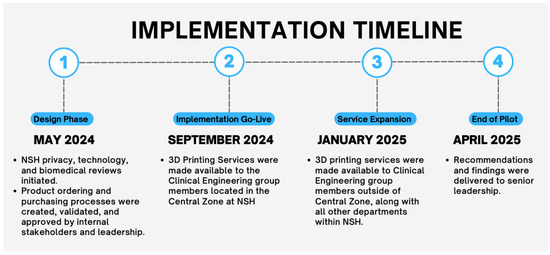
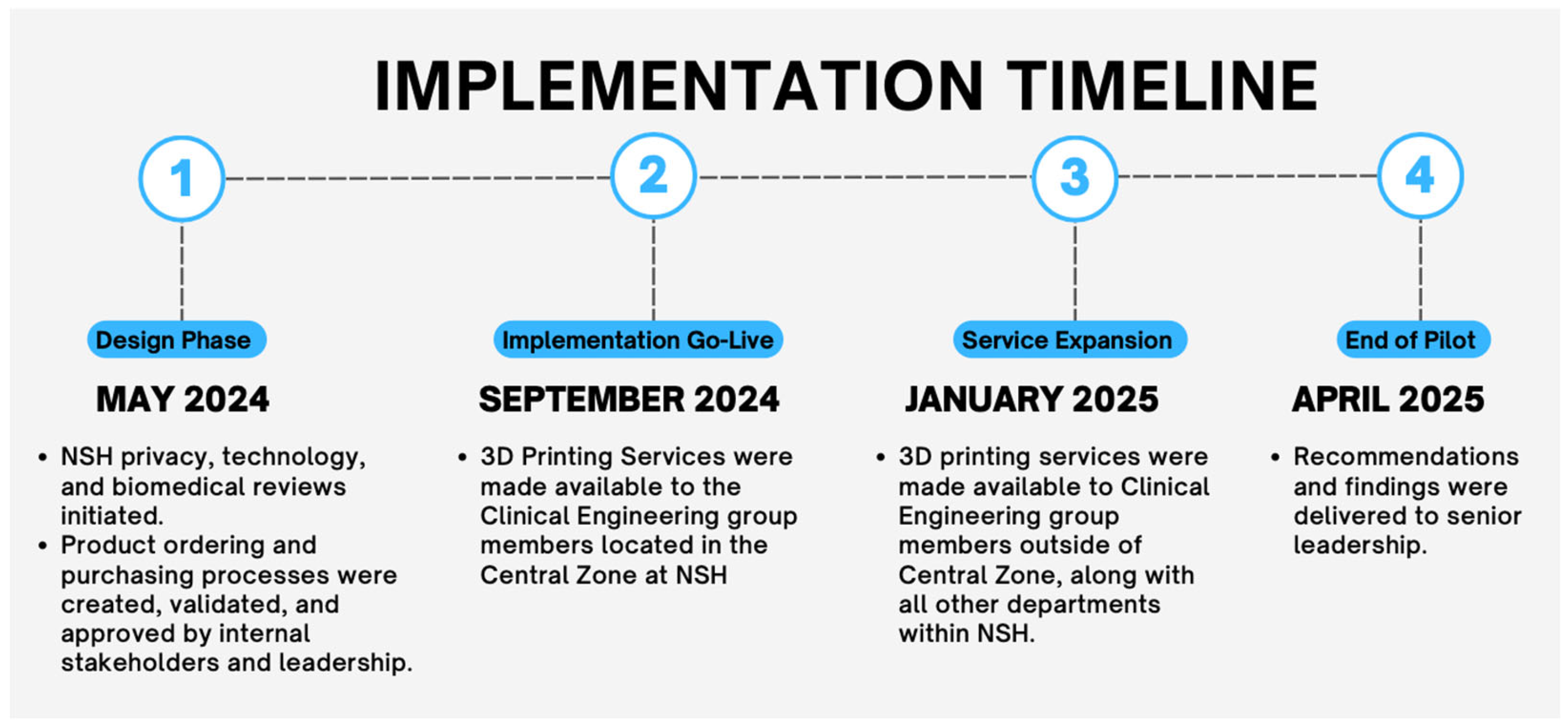
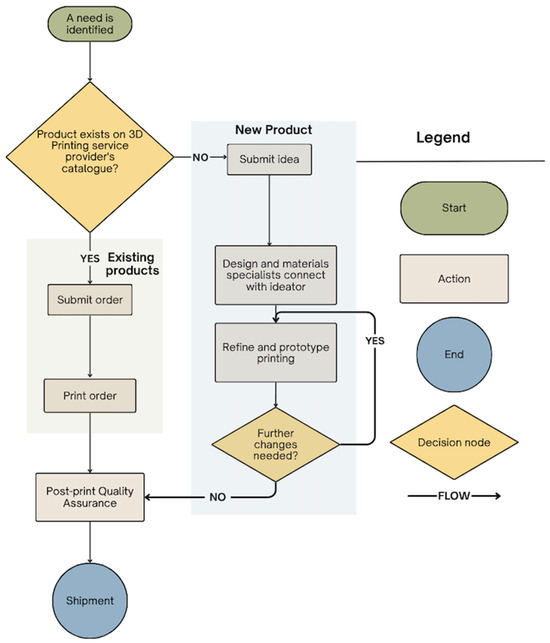
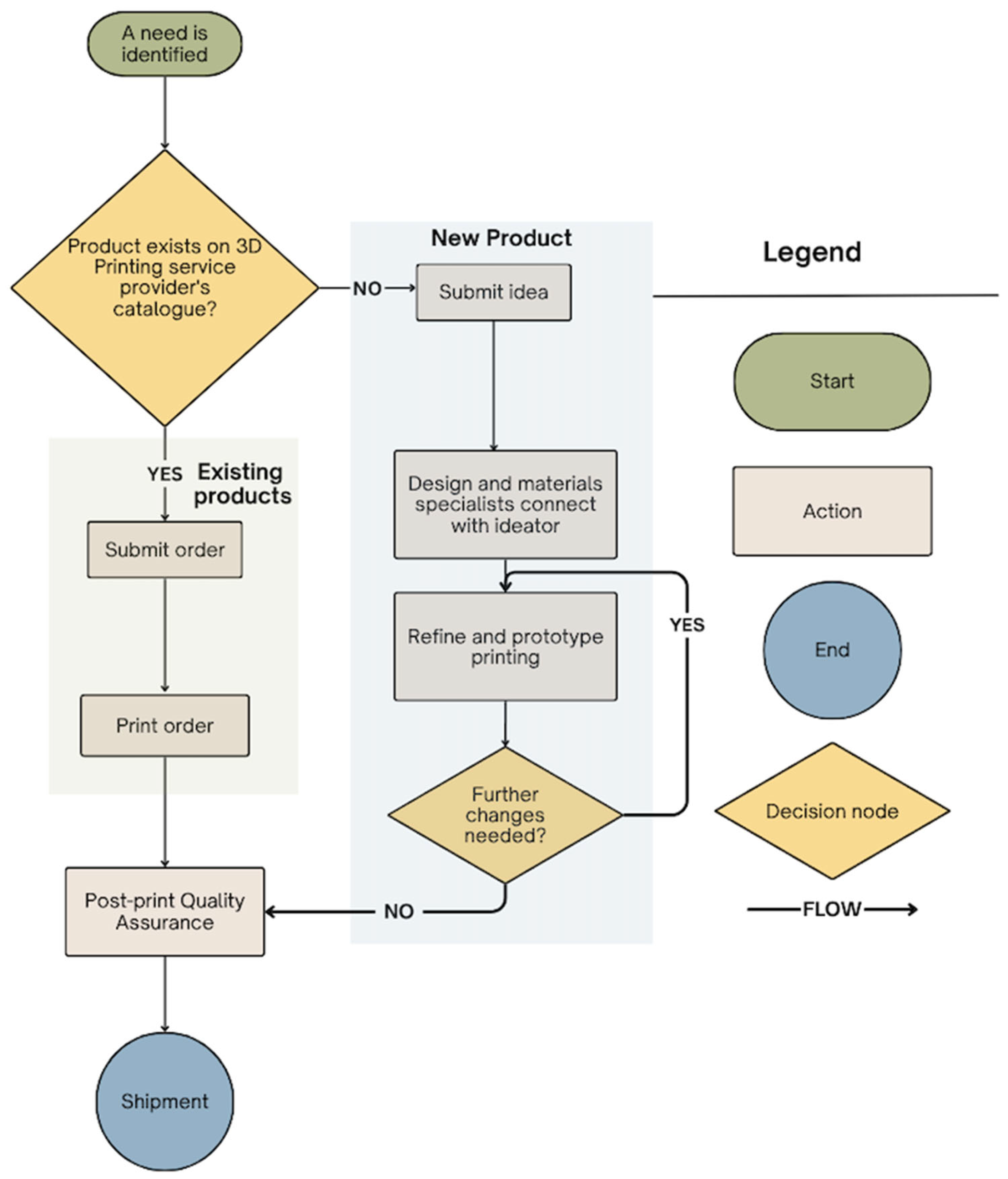
This evaluation featured an economic analysis (the effect of additive manufacturing on costs for the clinical engineering team) as well as a qualitative exploration of implementation strategy (designing and integrating additive manufacturing workflows within the clinical engineering team, as well as other end-users of the system). A convergent mixed-methods approach was employed [13]. Qualitative data collection explored formative (i.e., implementation) considerations, including elements of communication, feedback, settings, and perceived utility of additive manufacturing, and was grounded in relevant domains of the Consolidated Framework for Implementation Research (CFIR) [14]. Together, the data elucidated the value proposition of additive manufacturing as a service and its potential in the NSH context. Figure 1 and Figure 2 provide a summary of the implementation timeline and the AM part ordering workflow.
Figure 1.
Summary of key implementation events for the 3D printing service pilot at NSH.
Figure 2.
Process flow chart for ordering 3D-printed parts. The process starts from a need being identified. Depending on the availability of the part in the 3D printing service provider’s online catalogue, an order or a design idea would be submitted to the vendor. In case of availability, the order would be printed, quality-checked, and shipped to the requestor at NSH. In the absence of an existing part, additional information will be acquired by the vendor, a prototype will be developed, and upon finalization of the prototype and quality assurance, the final product will be shipped to the requestor at NSH. All designs, either custom or already established in the vendor’s catalogue, were approved for use within NSH by both clinical engineering and Infection Prevention and Control (IPAC) to ensure they met the above criteria and infection control policies. For more information about the limitations and in-scope vs. out-of-scope parts, refer to Table 1 and Table 2.
2.1. Economic Analysis
The economic analysis employed a retrospective, exploratory scenario-based design to explore the potential cost savings that could be realized if select clinical engineering parts were substituted with 3D-printed alternatives within NSH. While actual substitution may not yet be widespread, the analysis modelled a plausible real-world implementation scenario using data from this pilot implementation. The analysis was conducted from the perspective of NSH, serving as the payer of the service. The analysis modelled a scenario in which structurally simple, frequently used clinical engineering parts are hypothetically replaced with 3D-printed alternatives, components considered potentially amenable to additive manufacturing.
Work order data were extracted from the service management system of NSH and included part names, quantities, unit costs, work order identifiers, labour hours, and facility information. In total, 546 internal clinical engineering work orders were reviewed during the study period. Records with incomplete cost or part information were excluded prior to screening. The remaining records were screened to identify structurally simple, non-electronic components potentially amenable to additive manufacturing. This process yielded a final set of 19 unique parts that were deemed suitable for inclusion in the scenario-based economic analysis.
Candidate parts were identified using a two-step screening process. In the first step, a keyword-based screen was applied to work order part names to flag structurally simple, non-electronic components potentially amenable to additive manufacturing. Keywords included ‘tray’, ‘holder’, ‘clip’, ‘mount’, ‘bracket’, ‘rail’, ‘cover’, ‘panel’, ‘door’, ‘cap’, ‘label’, ‘enclosure’, ‘tab’, and ‘funnel’. Second, flagged items were manually reviewed using a predefined rubric to remove false positives, specifically, parts indicating electronic or electromechanical content, moving assemblies or mechanisms, and items whose functional requirements, based on the available description, were unlikely to be compatible with AM. A manual review also confirmed alignment with the pilot’s observed printing use cases. To reduce the likelihood of false negatives, we also reviewed a small subset of high frequency unflagged items, with the view of adding any qualifying candidates identified through this review. The comparator scenario reflected the continued use of original equipment manufacturer (OEM) parts, while the intervention scenario modelled hypothetical replacement with 3D-printed equivalents.
Cost assumptions for the 3D printing scenario were derived from the pilot implementation, which reported 3478 h of print time at a total cost of CAD 55,654, corresponding to CAD 16 per print hour, inclusive of materials, machine time, and vendor-managed post-processing. For the reference case, 5 print hours per unit (CAD 80/unit) was used, selected as a pragmatic central estimate for mid-sized maintenance parts (e.g., mounts, trays) while recognizing that smaller items (e.g., caps and labels) typically require fewer hours and larger covers and enclosures may require more. To reflect this heterogeneity and uncertainty, one-way sensitivity analyses were conducted by varying print time per unit to 2 and 8 h (CAD 32 and CAD 128 per unit).
Design and prototyping costs were excluded to represent a steady-state substitution scenario in which suitable digital files already exist or require only minor adaptation. Installation labour cost was assumed to remain unchanged between scenarios as a conservative simplification; in practice, additive manufacturing could plausibly increase installation labour cost in cases of fit adjustment, troubleshooting, and reprints.
Functional equivalence between original equipment manufacturer (OEM) and 3D-printed components was assumed for modelling purposes only. Importantly, this study does not attempt to establish clinical, mechanical, or safety equivalence, and this was an assumption made for the economic analysis. We later discuss real-world decision constraints that persist in the Regulatory Environment subsection within the Discussion. The primary outcome was the total cost per part, defined as the sum of procurement and labour costs, while the secondary outcome was the absolute and percentage savings realized through 3D printing.
Descriptive statistics were used to summarize costs, quantities, and savings, with incomplete records excluded, and no discounting or inflation adjustments were applied, given the one-year modelled time horizon. We conducted deterministic, scenario-based sensitivity analyses and one-way sensitivity analyses to assess the sensitivity of the economic findings to plausible variations in OEM pricing, 3D printing costs, demand, and per unit print time to bracket plausible cost outcomes. The scenarios were (in addition to the reference case):
- Optimistic: OEM costs increased by 10%, 3D-printing costs decreased by 20%, and quantities remained unchanged.
- Pessimistic: OEM costs decreased by 30%, 3D-printing costs increased by 50%, and quantities remained unchanged.
- Demand increases: Quantities increased by 50% with OEM and 3D unit prices held constant.
- Demand decreases: Quantities decreased by 50% with OEM and 3D unit prices held constant.
- Shock: OEM costs halved, and 3D-printing costs doubled, quantities unchanged.
Table 3 summarizes the economic analysis cost components and assumptions.
Table 3.
Summary of the cost components and assumptions of the economic analysis.
2.2. End-User Focus Groups
To solicit interest in focus groups, the evaluation team engaged in purposive sampling [15]. The implementation project team (clinical engineers within NSH) was consulted for relevant names of individuals who used the service and would be willing to discuss their experiences. Additionally, end-users outside of the clinical engineering department (including but not limited to laboratory, rehabilitation, and home care nursing) were solicited using a list of users who had submitted design ideas or print orders to the service. Using this list increased the likelihood that informants were familiar with the service, allowing for robust discussion. Recruitment occurred via email, with assenting participants invited to a Microsoft Teams meeting.
Two focus groups were held with the end users of the 3D printing service (one with NSH clinical and mechanical engineers and technologists, and the other with NSH clinical stakeholders). Focus groups were structured to gather information regarding the implementation and perceptions of additive manufacturing. The Consolidated Framework for Implementation Research (CFIR) informed the semi-structured focus group guides (Appendix A) [14]. The focus groups were facilitated by SP and MoH, who were members of the independent evaluation team assigned to assess the pilot programme. Neither facilitator was part of the implementation team responsible for developing or delivering the 3D printing service. While this evaluative role may have shaped the framing of the interview prompts and interpretation of findings toward programme improvement, reflexive discussions within the team were used to mitigate potential bias and ensure that participants’ perspectives were represented as faithfully as possible. The role of the aforementioned facilitators was limited to evaluation activities, including data collection and analysis, in order to reduce potential social desirability bias and encourage candid discussion among participants.
The composition of the sample reflects purposive recruitment of individuals with direct experience using or attempting to use the AM service, rather than a representative cross-section of all potential users. Qualitative findings are most reflective of individuals with exposure to the service to articulate concrete experiences and may underrepresent perspectives of disengaged or minimally involved users. As such, the findings included in this study should be interpreted as informative but not statistically or experientially exhaustive.
Qualitative data were analyzed using a structured thematic analysis approach combining deductive and inductive strategies. Initial coding was guided deductively by the CFIR, enabling systematic categorization of data across predefined implementation domains [14,16,17]. In parallel, inductive coding was undertaken to identify patterns, tensions, and concepts not fully captured by CFIR. These inductive codes were iteratively refined and consolidated into higher-order themes through repeated engagement with the transcripts [16,17]. This process emphasized pattern recognition across participants rather than exhaustive enumeration of individual perspectives.
Primary coding of all transcripts was conducted by one evaluation team member (SP) using NVivo 14. Following the initial coding phase, a second evaluation team member (MoH) conducted a structured analytic review of the coded data, emerging themes, and interpretive summaries. This review focused on interrogating theme boundaries, identifying alternative interpretations, and strengthening analytic abstraction beyond descriptive accounts.
Iterative discussions and analytic memos between analysts (SP and MoH) were used to resolve differences in interpretation and refine theme definitions, with the final thematic structure reflecting consensus [18]. An explicit audit trail of coding decisions, theme definitions, and analytic memos was maintained within Microsoft Word to document the evolution of the analysis across iterative rounds of review (CFIR informed deductive analysis to final synthesized themes). While formal inter-rater reliability testing was not conducted, the analytic approach prioritized transparency, reflexivity, and coherence, consistent with qualitative methodological guidance for exploratory and implementation-focused studies [16,19].
Given the limited number of focus groups and the formative, evaluation scope of the project, thematic saturation was not an analytic goal [19]. Instead, the analysis aimed to generate contextually grounded insights into implementation dynamics, barriers, and enablers associated with integrating AM within a provincial health system. While thematic saturation was not an analytic goal, the focus group guides (Appendix A) were intentionally designed to elicit disconfirming and critical perspectives. Both clinical engineering and clinical end-user focus groups included explicit questions and probes regarding perceived challenges, concerns, and scepticism. Participants were also asked to reflect on what they would do differently if the service were reimplemented and to identify barriers to sustainability and scalability, thereby encouraging reflection on limitations alongside perceived benefits.
Ethics approval exemption was granted by the Nova Scotia Health Research Ethics Board (REB Approval #: 1031321).
3. Results
3.1. Usage and Adoption Metrics
During the pilot, an increase in the uptake of the AM service was observed, particularly among localized champions and early adopters. Over the implementation period, 37 unique 3D-printed products were ordered. These included functional components ranging from equipment mounts to lab infrastructure and clinical supports.
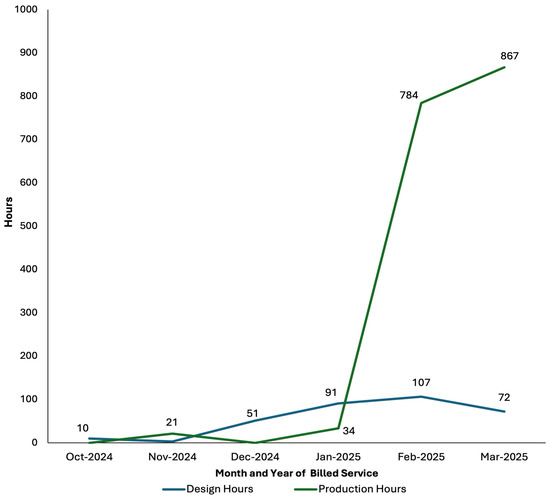
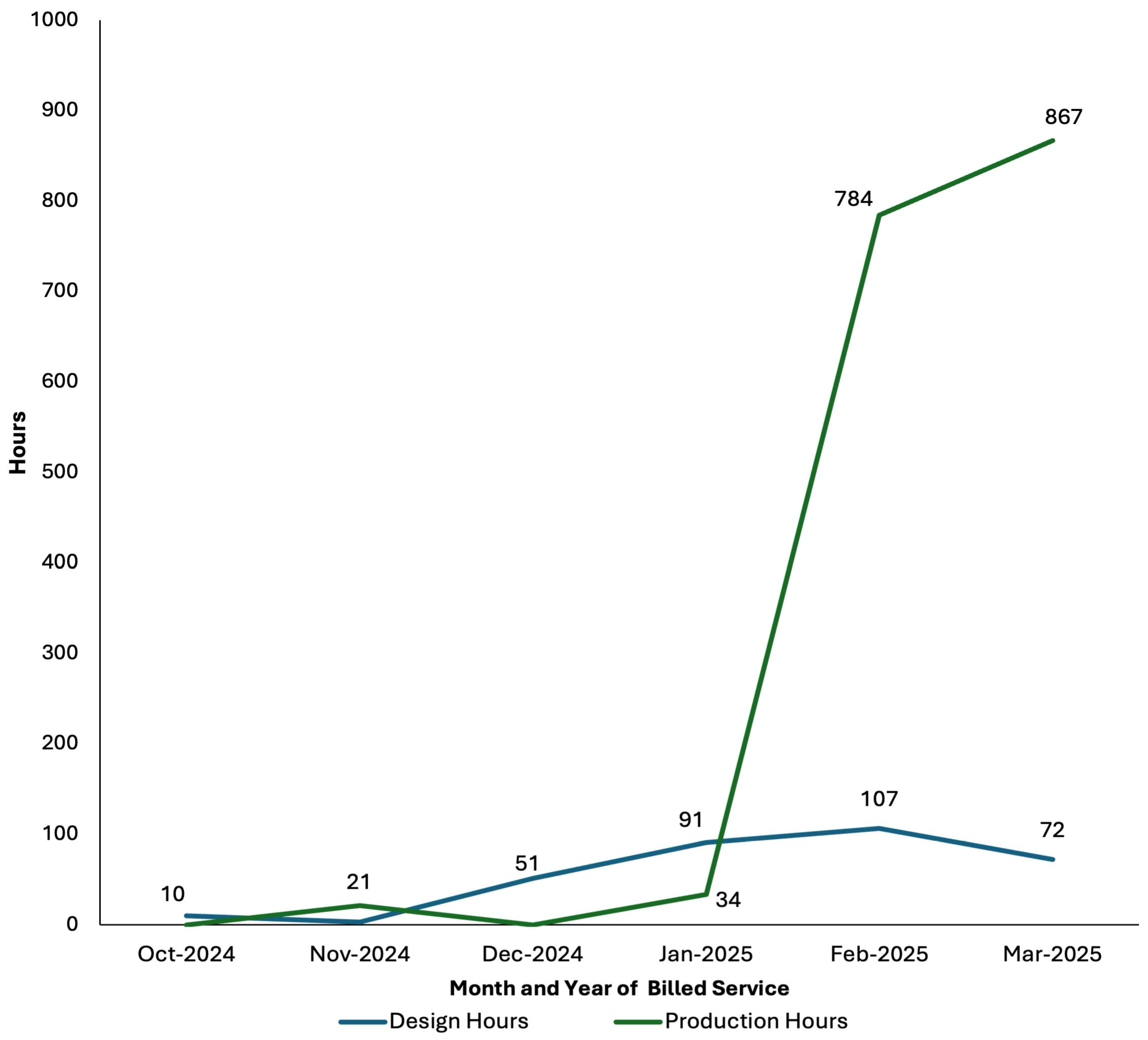
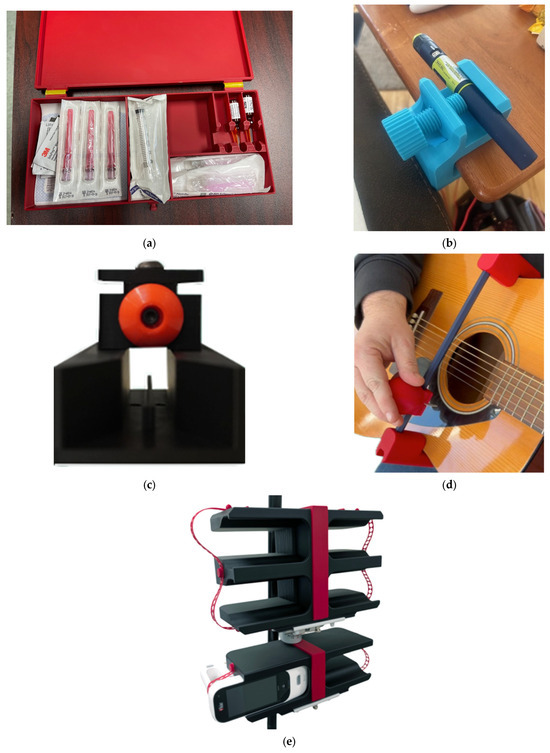
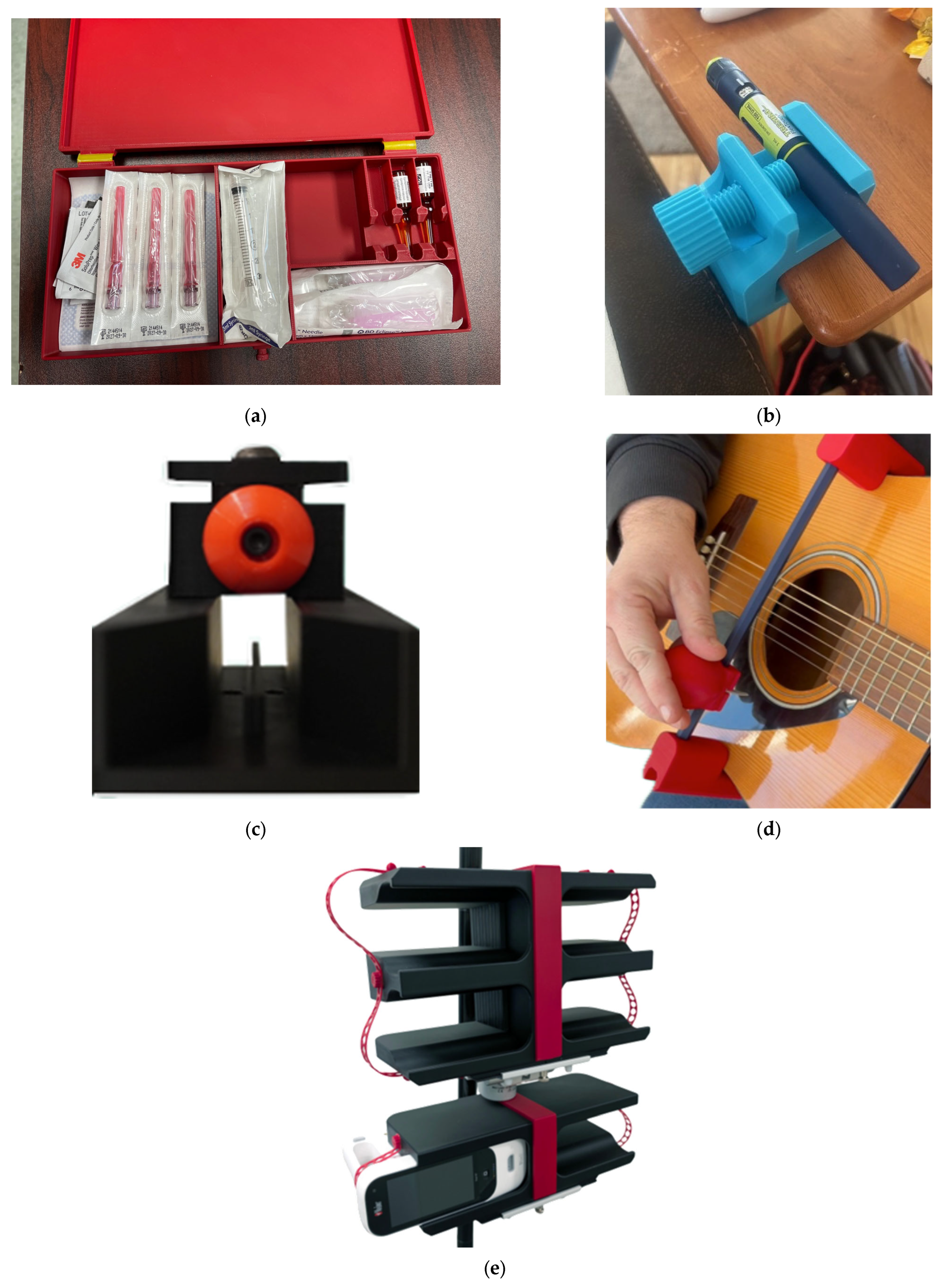
The programme logged 3478 h of print time. Four departments engaged directly with the additive manufacturing system through ordering parts or submitting design requests. Figure 3 depicts the trends of design and production hours from October 2024 to March 2025 and shows the impact of wider dissemination across NSH starting in January 2025. Figure 4a–e depicts a subset of printed products used within NSH.
Figure 3.
Time trends of 3D printing design and production hours.
Figure 4.
Examples of 3D-printed items: (a) Anaphylaxis kit container is an organizer that helps secures kit contents and helps simplify access to essential items during an emergency; (b) adaptive clamp for medical pen dialling is a table-mounted solution that helps patients recovering from stroke to insert and adjust insulin pens with one hand; (c) patient lift charger port that was discontinued by the OEM, challenging charging and operation of lifts that impacted patient mobility. The 3D-printed solution reportedly assisted in decreasing equipment downtime; (d) strum assist is a lightweight, ergonomic tool for people with limited hand dexterity who are unable to strum with precise finger control, intended to help them to strum using simple arm movements; (e) bespoke holder for Masimo patient monitors in the emergency department that allows for organized configuration.
3.2. Overview of Part Use and Printability
From the 546 internal clinical engineering work orders reviewed, a subset of structurally suitable and commonly used parts that could be amenable to 3D printing were identified. Based on a structured screening process and 3D-printed parts data, 19 unique parts were flagged as viable candidates for additive manufacturing. These were grouped into four functional categories that reflect common 3D printing use cases in healthcare maintenance: Brackets and Mounts, Covers and Enclosures, Trays, Holders and Clips, and Caps and Labels (Table 4).
Table 4.
Mapping of original 3D-printable parts to functional categories used in the economic analysis.
These parts appeared across multiple work orders, suggesting potentially high-impact opportunities for cost-effective substitution. While they represent only a small portion of all components used across the Nova Scotian system, they collectively accounted for a non-trivial cost burden and aligned with real-world use cases observed during pilot implementation.
3.3. End-User Focus Groups
3.3.1. Participants
Between February and April 2025, one clinical engineering and technologist (n = 3) and one clinical end-user focus group (n = 4) were conducted. Participation rates differed across groups, with two of the five (40%) clinical engineering and six of the ten clinical end-users (60%) unable to participate. Reported reasons for non-participation included time constraints and self-assessed insufficient familiarity with the service.
3.3.2. Overview of Qualitative Findings
Qualitative analysis yielded five analytically distinct but interrelated themes describing how participants experienced, interpreted, and engaged with the AM service during the pilot period. These themes represent recurrent patterns across participants rather than isolated anecdotes and were identified through iterative engagement with the transcripts guided by CFIR domains and inductive pattern recognition. Rather than presenting participant narratives sequentially, results are organized to foreground the analytic meaning of each theme with illustrative quotations used selectively to exemplify—not substitute for—thematic interpretation.
Overall, participants described value in having access to the 3D printing service. Table 5 describes the five central themes that were captured within the focus groups. The access was primarily helpful for clinical end-users, who described designing and printing solutions as supporting what they perceived to be a more personalized care for patients (e.g., a personalized guitar strummer for a rehabilitating patient) or improved care provider organization (e.g., a medication kit for home-visit nurses). Clinical engineers and technologists struggled to more readily see how the service could be used in their workflows, with some unclear about how the 3D printing process is completed. There was a variance in participants’ experience with using the service with regard to communication about suggested designs. From an implementation process perspective, it was acknowledged that the initial roll-out of the service with NSH was too narrow, and earlier engagement with a more diverse group of interest holders might have improved awareness of the service and may have supported engagement.
Table 5.
Overview of themes captured in the end-user focus groups, as well as some of the enabling and challenging elements of each, described by FG participants.
3.3.3. Theme 1: Access and Design
Access and Design refer to the ability of users of the AM service to access a digital repository of bespoke parts as well as design parts that are fit for purpose and personalized to their/their patients’ needs. Participants appreciated the creative flexibility afforded to them by having access to additive manufacturing. Clinical end-users emphasized design flexibility as an enabler of patient-centred care, particularly for adaptive or assistive devices requiring individualized form or function. In contrast, clinical engineering participants framed access primarily in terms of functional substitution, especially where OEM parts were unavailable, discontinued, or economically unjustifiable due to departmental and organizational budgetary constraints. Across both groups, design access was interpreted not merely as a technical novelty but as a mechanism for expanding the solution space available to clinicians and technologists. However, the perceived benefits were conditional. Participants with clear use cases articulated strong value, whereas others struggled to translate abstract capability into an actionable application. As a clinical engineer and clinical end-user describe below:
We were creating something that was not available otherwise… because you get customizable, specific things.
My brain just started swimming with all the ideas. Because there is a lot of customization in my job… The first thing I thought of was like an aid to help people strum [a] guitar.
Once an OEM part is no longer accessible, the monetary considerations of obtaining one through custom manufacturing may be prohibitive. As described by two clinical engineering and technologist participants:
The original idea I had is like a dead-end technology, and I cannot find the parts for it anymore. That’s why I thought [the AM service would] be great to build it for me.
Something that always irked me as a tech ordering replacement parts for anything in the healthcare industry was the cost. I don’t know what the cost of that handle was [through the OEM], but I wouldn’t be surprised if it was CAD 300.00 for a simple handle.
Access to AM parts to replace functional OEM parts, like handles, as well as the ability to design AM parts to personalize approaches to patient care, were both commonly cited benefits identified in the focus groups.
3.3.4. Theme 2: Culture and Knowledge
Culture and Knowledge refer to the ingrained mental models of end-users regarding AM parts and their function in a health setting. Knowledge of the in-scope and out-of-scope purposes of AM parts was also variable. For example, some participants were not as enthusiastic to use the service, mostly owing to a lack of perceived use cases. As a clinical engineering participant recounted:
Yeah, it feels like magic to me. Like…making something out of thin air… It’s a hard [thing to understand] and is a big learning curve.
Additive manufacturing also must unseat entrenched workflows and routines. In the case of clinical engineering and technologists, existing inventory practices and standardized ordering systems were repeatedly described as structurally easier and cognitively less demanding than engaging in design-based problem solving. Two engineering and technologist participants described this further:
I think it’s a challenge for the 3D printing service because manufacturers make it easy for us to identify parts, so the service has to kind of replace that [through] education [and] availability.
Inventory parts…it’s easy just to go and grab them off the shelf. Speaking from a techs’ perspective, a lot of [OEM] parts are parts that a tech is going to keep on hand in high volume because they break a lot. It’s so easy to order 10 battery covers from the manufacturer and just have 10 on hand.
In contrast to theme 1: Access and Design, theme 2: Culture and Knowledge was described as a barrier to the uptake of AM within NSH, in part due to perceptions of the quality of AM parts as well as established workflows (i.e., ordering processes) that were described as challenging to revise. Theme 2 reflects a tension between innovation potential and institutional inertia. Participants did not reject AM outright. Rather, AM service uptake was constrained by entrenched habits, limited experiential learning, and uncertainty about when AM was preferable to traditional procurement.
3.3.5. Theme 3: Regulatory Environment
Regulatory Environment refers to perceptions around the policy and medico-legal constraints of using AM in healthcare. Participants consistently framed AM adoption within a landscape of perceived medico-legal risk, liability uncertainty, and regulatory ambiguity, particularly for medical devices beyond the lowest risk classification. A key analytic insight was that externalizing manufacturing, quality assurance, and regulatory compliance to a third-party vendor was described as an important enabling condition. This model was perceived to reduce individual and departmental exposure to liability and reassign certain compliance-related tasks away from end-users. As a clinical participant said:
We’ve got all these different pieces, and [the AM service] …they did all the checking. I didn’t have to do anything else…because for me, it’s, you know, a time management kind of thing.
Having the 3D printing service manage the multifaceted checks was a key enabler to using the service. The identification of the time-requirements is also worth noting, as this was viewed as an important element of using an additive manufacturing service. Other risks of having additive manufacturing in-house were addressed by a participant:
I know a colleague of mine was at a [regulatory] committee meeting and they had touched upon the hazards of having 3D printing in house. You know, not only with the exhaust, but like the porousness of the materials. That obviously is a big concern for Class 2 devices.
In the context of printing replacement parts, liability regarding the printed parts was front of mind for FG participants. Another engineering participant put it clearly:
Liability and manufacture warranty. If the tech replaces a part on a stretcher and that 3D-printed part fails and it cracks where it’s a hard plastic, somebody cuts himself wide open…who is liable?
The tension between adhering to non-negotiable regulatory requirements of medical devices and realizing the benefits of AM, such as personalized design, was addressed through externalizing quality assurance and medico-legal obligations to the vendor. While externalization enabled engagement, it did not fully resolve underlying concerns about responsibility, warranty, and regulatory interpretation.
3.3.6. Theme 4: Communication
Communication quality appeared to influence participants’ engagement. This theme encompassed awareness of service availability, clarity of design workflows, responsiveness of the vendor interface, and continuity of feedback during iterative design. Participants described divergent experiences, ranging from rapid, enthusiastic engagement to complete disengagement following perceived breakdowns in communication. Analytically, these differences highlight that communication often acts as a gatekeeping mechanism, amplifying or suppressing willingness to persist with the service. As a clinical participant recounts:
I don’t have [the part] yet, so I guess my take-away was I don’t consider myself terribly apt in navigating around websites, but I did go through the bother of creating an initial idea with getting the specifics copy and pasted over into the portal and whatnot. And then it just went into thin air, and then they asked me to recreate it. And I was like, you know what? No.
Due to challenges navigating the design process, having to go back to re-designing the part over again was not worth further time or effort for this participant, and they disengaged from the service. Alternatively, another clinical participant had a different experience:
Heard back from [the AM service] within 12 h and they were so excited to do something that was out of the ordinary and actually had like a truly functional intervention…on the patient level.
Timely communication empowered a participant to pursue their design and further iterate on it. On the other hand, the other participant’s negative experience led to complete disengagement with the AM service. Ensuring consistency in communication with end-users is an opportunity for future implementations.
3.3.7. Theme 5: Implementation Model
The implementation model, specifically the outsourcing structure and block-funded pilot design, appeared to shape both perceived value and actual uptake. Participants frequently described the service as “free,” reflecting how budgetary abstraction influenced behavioural engagement during the pilot phase. As one participant describes:
I think at this point it was all free… so who’s ever going to talk bad about that?
Of course, the service was not free, but the model used in the pilot project (spending CAD 100,000 upfront and then filling that budget) influenced the perception of the service for end users. Beyond monetary cost, time emerged as a critical but often unaccounted-for resource. Participants emphasized that effective use of AM required protected time for design iteration and conceptual exploration, activities not easily accommodated within existing workloads. As a participant described:
It takes time. [It] doesn’t take time to find the problem. You bump into it, but it takes time to be able to… sit down and dive in.
It is noteworthy that, while having the option to use AM to solve problems is a benefit, without protected time to sit down and dive into the problem, additive manufacturing may be underutilized. Clear identification of a use case for additive manufacturing was not clear to some participants. Two participants explored this:
We didn’t have that use case to say like, yeah, this is a thing we did to put on a poster.
From that perspective, I think it would be far more useful for the mechanical techs where you’re ordering plastic bumpers or plastic handles that break more often.
The implementation model used in this pilot project had a variable impact on the uptake of AM. Participants recounted that more targeted engagement and identification of use cases would have improved the perception of AM. The purchase of a CAD 100,000 block of AM services facilitated uptake as users perceived the service as free. Reserving time to design a bespoke part was also identified as an important augment to costs, beyond simple monetary considerations. Without structural support for this work, AM risks remaining underutilized despite recognized potential.
3.4. Economic Analysis
Potential Cost Savings from Additive Manufacturing
In the modelled reference scenario, assuming a fixed 3D printing cost of CAD 80 per unit, the total projected cost associated with 3D-printed equivalents of selected parts was CAD 4000, compared to CAD 9556 under traditional OEM procurement (Table 6). In the model, this hypothetical substitution yields CAD 5556 in cost savings, a mean reduction of 58.1% across all amenable parts (Table 6).
Table 6.
Scenario-based and one-way sensitivity analysis of total cost differences between OEM procurement and modelled 3D-printed substitution.
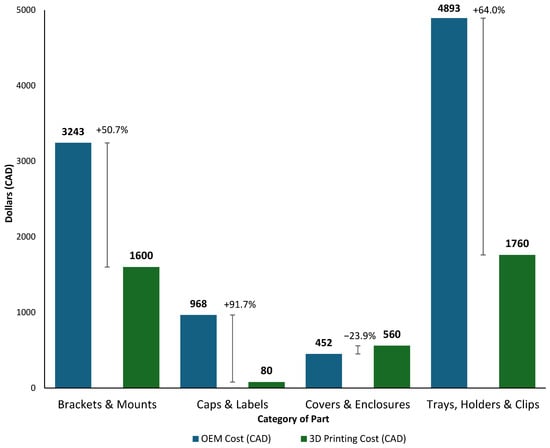
Before presenting the scenario-based sensitivity analysis, we first examine how cost impacts vary across part categories, independent of procurement and demand scenarios. By category, Trays, Holders and Clips show the largest modelled absolute savings (CAD 3133), Caps and Labels achieve the highest percentage reduction (91.7%), Brackets and Mounts remain favourable (50.7%), and Covers and Enclosures turn negative at this per-unit 3D cost (−23.9%), highlighting where 3D printing may not be cost-advantaged at CAD 80/unit (Figure 5).
Figure 5.
Percent savings of amenable 3D-printable parts by item category.
Sensitivity analyses bracketing plausible procurement conditions indicated the following: Under an Optimistic case (OEM costs rise 10%, 3D-printing costs fall 20%), savings increased to CAD 7312 (69.6%). Under a Pessimistic case (OEM costs drop 30%, 3D-printing costs rise 50%), savings narrowed to CAD 689 (10.3%), indicating vulnerability to simultaneous OEM discounting and 3D cost inflation. Pure demand swings scaled total dollars while leaving efficiency unchanged: a 50% increase in quantity resulted in CAD 8334 in savings (58.1%), whereas a 50% decrease resulted in CAD 2778 in savings (58.1%). A Shock test (OEM prices cut in half, 3D-printing costs doubled) reversed the modelled cost advantage, with a net deficit of CAD 3222 (−67.4%). Overall, the reference and optimistic scenarios are consistent with a bounded and highly context-dependent case that may warrant further investigation for 3D printing. In contrast, the pessimistic and shock conditions highlight where the potential, modelled savings can erode (Table 6). One-way sensitivity analyses on print time per unit showed that reducing print time from 5 to 2 h increased savings to CAD 7956 (83.3%), whereas increasing print time to 8 h reduced savings to CAD 3156 (33.0%) (Table 6).
4. Discussion
This convergent mixed-methods evaluation explored whether additive manufacturing could potentially generate operational cost savings within clinical engineering by modelling the hypothetical substitution of structurally simple components that are high-cost, frequently replaced, or difficult to source (Table 1 and Table 2). The qualitative findings should be interpreted as contextually bounded implementation insights rather than representative accounts of all potential users. The themes identified reflect patterned experiences among participants who engaged directly with the service during the pilot period and are most appropriately understood as explanatory mechanisms, highlighting how regulatory uncertainty, organizational culture, communication quality, and time constraints shaped adoption behaviours within this specific institutional context.
The exploratory scenario-based economic analysis suggested that many candidate parts could yield modelled savings under certain conditions. The projected savings were scenario dependent. Across pre-specified procurement scenarios, the model estimated cost impacts ranging from a 67.4% net cost increase under adverse conditions (OEM prices halved and 3D-printing costs doubled) to a 69.6% cost reduction under favourable conditions (OEM prices increase by 10% and 3D-printing costs decrease by 20%), with the reference case indicating a 58.1% reduction. This range suggests that the modelled savings are strongest for certain part categories and procurement conditions and can erode, or reverse, when OEM pricing falls, and additive manufacturing unit costs rise. However, the feasibility and scalability of additive manufacturing adoption are strongly mediated by regulatory uncertainty, post-market device modification constraints, and institutional risk tolerance within safety-critical healthcare environments. Observed uptake and perceived utility should not be interpreted as evidence of mechanical or safety equivalence, but rather as indicators of contextual feasibility under constrained scope conditions.
The estimated modelled savings in this scenario analysis are driven entirely by part replacement, with no assumed change to labour time. The model did not require labour savings to produce cost advantages, but real-world implementation may still entail workflow change. Parts such as the Battery Door and Tray, Dialyzer Holder, and Mount Rail and Pull Tab emerged as high-impact candidates in the model with potential economic advantage and practical plausibility under hypothetical substitution. These results are consistent with the potential for additive manufacturing to support supply chain resilience, especially for expensive, custom-built, or discontinued components [20]. As Canada’s expenditure on health continues to climb as a percentage of GDP, introducing manufacturing efficiencies could help mitigate increasing costs [9].
There is limited literature regarding the structured or coordinated implementation of an additive manufacturing service in a hospital setting. Many articles discussing additive manufacturing in health are reviews, educational articles, or descriptive in nature [20]. Our study contributes to the existing, relevant implementation considerations for realizing the potential of additive manufacturing, as well as economic indicators which suggest available cost savings for specific parts. Outside of fragmented case-studies in the literature, our findings suggest the possible benefits of a centralized service—one that can manage the extensive regulatory environment of medical engineering in Canada [21].
Specific to this pilot project, there are several implementation findings which are relevant to future efforts to integrate additive manufacturing services within NSH or other health systems or hospitals. While the original vision for the service was to supplement engineering services across NSH, engaging other interest holders earlier in the implementation may have yielded better engagement at the outset of the implementation. For example, lab services, technologists, and mechanical engineering teams were potential populations who would benefit from additive manufacturing who should have been consulted earlier through targeted engagement. Figure 3 is consistent with a temporal association with broader education and engagement, with design and print hours significantly increasing after dedicated education was implemented as part of this pilot project. This is consistent with published implementation guidance [22,23]. As seen in other research, relating an innovation to workflows through education has been associated with improved uptake [24]. Integrating case studies—relevant to the populations or departments being engaged—is one way to leverage education and help NSH staff conceptualize the ‘art of the possible’. Considering collaborative design ‘retreats’ [25] or otherwise protecting time for NSH staff to engage in ideation and design phases of creating a part would also benefit the use of the service, as a key challenge to using additive manufacturing is the time to ‘dive in’ to the problem.
Another finding of the qualitative component of the evaluation is the strict regulatory environment which dictates uptake of novel products, manufacturing techniques, or innovative practices (Section 3.3.5). Medical device regulations are purposefully strict to maintain patient safety, which may unintentionally impede the integration of AM at scale due to their conservative nature [26,27]. Several participants highlighted the external regulatory conditions which limit the implementation of additive manufacturing at scale. Using the 3D printing service in some ways mitigated these challenges, because it externalizes these concerns or ‘checks’, which the end-user is responsible for taking into consideration throughout the process.
4.1. Regulatory Environment
The implementation of additive manufacturing services in hospitals is complicated by a fragmented and evolving regulatory environment, particularly with respect to post-market medical devices. In Canada, Health Canada regulates medical devices under a risk-based classification framework (Classes 1–4), with regulatory obligations increasing as device risk increases, but current guidance offers limited specificity on the permissibility of 3D-printed replacement parts for devices already on the market [12,27]. While Health Canada provides clear expectations for manufacturers placing new devices on the market, the regulatory status of replacement or modified components introduced post-market, especially when produced outside the original manufacturer, is not consistently articulated in formal guidance [21,27]. This regulatory ambiguity has been noted in the medical device and additive manufacturing literature, where post-market modification, repair, and customization remain areas of regulatory uncertainty [21,26,27].
Recent legislative developments in Canada, including amendments to the Copyright Act and the passage of “right-to-repair”-oriented bills (e.g., Bills C-244 and C-294), have expanded device owners’ legal ability to repair or reproduce parts [28,29]. Importantly, these legislative changes are focused on intellectual property constraints and appear not to alter existing medical device safety, performance, or regulatory compliance requirements [27]. As a result, while hospitals may now face fewer copyright-related barriers to reproducing parts, the regulatory acceptability of installing non-OEM components, particularly those produced by third-party manufacturers, remains largely undefined within Canada’s medical device regulatory framework [21].
This lack of clarity is especially consequential in the context of medical electrical equipment. Canadian Standards Association (CSA) and International Electrotechnical Commission (IEC) certification requirements are typically tied to the original device configuration, meaning that the addition or replacement of components, including components that are non-functional or external to the device’s primary operation, may invalidate existing electrical safety certifications [27]. Health technology regulators and standards bodies have cautioned that post-market modification of medical devices can shift regulatory responsibility and liability to the modifying entity [26,27]. Accordingly, alterations to device housings, mounts, or enclosures are typically approached following consultation with the OEM or a certified manufacturer, a precaution that is reflected in international discussions of medical device modification and risk allocation [21,27].
In the absence of explicit national guidance, decision-making around the use of 3D-printed replacement parts is often deferred to individual healthcare institutions, where it is shaped by local risk tolerance, institutional expertise, and legal interpretation [21,26]. Such institutional discretion has been observed in other jurisdictions facing similar regulatory gaps and has been associated with heterogeneous adoption patterns and conservative implementation strategies, particularly within safety-critical clinical environments [26,27].
Within NSH, limited internal experience with medical device design, validation, and manufacturing further constrained the feasibility of in-house additive manufacturing for regulated components. Prior studies have shown that healthcare organizations without mature quality management systems (QMS) may face heightened regulatory and liability risks when undertaking device manufacturing activities internally [21,27]. Consequently, contracting an external additive manufacturing provider with an established quality assurance and quality control framework may have allowed NSH to leverage existing regulatory infrastructure while reducing institutional exposure to liability and patient safety risks [9,21].
The outsourcing model is also broadly consistent with approaches described in international best practices, observed in centralized hospital-based additive manufacturing programmes, where regulatory compliance, documentation, and traceability are managed by specialized entities rather than frontline clinical teams [9,21]. While the long-term economic and operational sustainability of externally delivered additive manufacturing services remains insufficiently studied, the existing literature suggests externalization can be a pragmatic short-term strategy for navigating regulatory uncertainty, enabling controlled adoption, and familiarizing healthcare organizations with additive manufacturing workflows under managed risk conditions [21].
4.2. Limitations
This mixed-methods evaluation has several limitations which should be acknowledged. The qualitative component of this evaluation has several methodological limitations that should be explicitly considered when interpreting the findings. Purposive sampling prioritized participants with direct experience using or attempting to use the AM service, introducing selection bias and limiting representativeness. Additionally, a high non-participation rate, particularly among invited clinical end-users, suggests that perspectives of less engaged or more sceptical staff may be underrepresented. These limitations constrain the generalizability of the findings. The qualitative results are intended to illuminate implementation dynamics, decision-making processes, and perceived barriers within a real-world health system context, rather than to estimate prevalence or consensus.
The exploratory economic analysis has limitations consistent with early implementation modelling. We assumed functional equivalence between OEM and 3D-printed components for the subset of structurally simple, non-electronic parts considered; formal comparative durability testing and failure-rate tracking were not available for all items and should be incorporated in future evaluations. The reference-case costing represents a steady-state substitution scenario and excludes one-time design, prototyping, internal quality assurance, and regulatory overhead, which may be material for novel parts or low-volume items. Furthermore, for discontinued OEM parts, reverse engineering, iterative prototyping, and verification may be non-trivial and could reduce or delay cost savings during initial implementation.
Although installation labour time was conservatively assumed to be unchanged, future work should quantify potential rework, scrap, and quality-related time costs and incorporate these into cost estimates. Future work should also prospectively track part-level outcomes (for example, failures, reprints, time-to-install, rework, and service-life) and incorporate these parameters into a formal cost model.
The deliberate focus on low-risk devices and the use of an external additive manufacturing provider limit the generalizability of findings to higher-risk medical devices or in-house additive manufacturing models operating under different regulatory conditions.
5. Conclusions
This study describes the organizational experience and the observed outputs of a pilot additive manufacturing service within hospitals. While findings indicate potential modelled cost advantages and increased innovation capacity, more robust and longitudinal analysis is needed to better understand the impacts of the service over time. Adoption and uptake of additive manufacturing appeared stronger among clinical teams with clear use cases. Expansion will require strategic targeting of high-yield applications, consistent communication, and proactive management of regulatory and operational challenges. With these conditions in place, additive manufacturing may have the potential to improve personalized care for patients, facilitate innovative solutions to challenges in engineering and clinical settings, and potentially reduce costs.
Author Contributions
Conceptualization, S.P., P.K. and M.H. (Mohammad Hassani); methodology, S.P. and P.K.; software, S.P. and P.K.; validation, M.H. (Mohammad Hassani); formal analysis, S.P. and P.K.; investigation, S.P.; resources, A.S. and P.K.; data curation, A.S., M.H. (Michael Hamilton) and M.H. (Mohammad Hassani); writing—original draft preparation, S.P. and M.H. (Mohammad Hassani); writing—review and editing, A.S., S.P. and M.H. (Mohammad Hassani); visualization, M.H. (Mohammad Hassani); supervision, N/A; project administration, M.H. (Mohammad Hassani); funding acquisition, A.S., M.H. (Michael Hamilton) and D.K. All authors have read and agreed to the published version of the manuscript.
Funding
This study received partial (implementation) funding from the CANHealth Network for the amount of CAD 5036.01. The CANHealth Network is a national Canadian initiative that supports health technology innovation by funding real-world validation and commercialization pilots within public health system sites.
Institutional Review Board Statement
Ethical review and approval were waived for this study after assessment by the NSH Research Ethics Board because the proposal met the requirements outlined in the Tri-Council Policy Statement Chapter 2, being exempt from research ethics board review (REB file number: 1031321; date of approval: 21 January 2025).
Informed Consent Statement
Verbal consent was used as this was a low-risk evaluation discussing the experience of using 3D printed parts. Ethics approval exemption was granted by the NSH REB (REB file number: 1031321). Focus group participants were informed about the goal and scope of the evaluation, and asked if they consented to the conversation being recorded for line-by-line qualitative analysis purposes. Please see the below script regarding obtaining verbal consent. Upon consent, the conversations were recorded and transcribed using Microsoft Teams. The transcripts were cleaned by comparing the auto-generated contents with the video recordings and reconciling differences wherever there was a discrepancy between the auto-generated transcript content and the statements being verbalized in the video component. The transcripts were de-identified through the replacement of the participants’ names with pseudonyms. Informed consent was obtained using the script provided in the Appendix A.3.
Data Availability Statement
All data supporting the results reported in this manuscript are stored at Nova Scotia Health on secure electronic platforms. Requests for access to this data should be directed to Nova Scotia Health, Research, and Innovation. All data sharing is subject to Nova Scotia Health’s policies and procedures to ensure data security and confidentiality.
Acknowledgments
The authors acknowledge CANHealth for funding the pilot initiative that enabled this evaluation, and PolyUnity Inc. (St. John’s NFLD, Canada) for providing 3D printing services to NSH users who requested their services. PolyUnity did not provide any funding to the evaluation team members who conducted this study. We also acknowledge PolyUnity for sharing images of the 3D-printed parts included in Figure 4c,d via an internal report.
Conflicts of Interest
The authors declare no conflicts of interest. PolyUnity solely provided 3D printing services and had no involvement in study design or the manuscript. PolyUnity did not fund this study, nor did they have any role in the analyses or interpretation of the data, in the writing of the manuscript, or in the decision to publish the results.
Abbreviations
The following abbreviations are used in this manuscript:
| CFIR | Consolidated Framework for Implementation Research |
| IPAC | Infection Prevention and Control |
| NSH | Nova Scotia Health |
| OEM | Original Equipment Manufacturer |
| PPE | Personal Protective Equipment |
| QC | Quality Control |
| QA | Quality Assurance |
Appendix A
Appendix A.1. Clinical Engineering End-User Focus Group Guide
Demographic Information
- Going around the table, could you tell us your role, and the number of years of experience you have in this role with Nova Scotia Health?Consolidated Framework for Implementation Research DomainsIntervention Characteristics
- How does using this service compare to your traditional methods of obtaining and/or ordering replacement parts?
- How well does the services/products provided by PolyUnity adapt to your department’s specific needs?Outer Setting
- How do the Nova Scotian regulatory requirements outside of the organization (i.e., external to NSH) affect the implementation?
- How did you address compliance requirements during implementation?
- What external support or resources facilitated the implementation?Inner Setting
- How was the implementation championed in NSH?
- How were challenges and barriers to implementation, if anything, managed?
- a.
- Probe: What organizational changes were/are needed to (better) support the implementation?
- b.
- Probe: What were the key concerns from those who were sceptical about the implementation and if anything what were the key strategies employed to change their opinion?
- How confident are you in using the PolyUnity service?
- How confident are you in the quality of the products manufactured by PolyUnity?Process
- How did you handle troubleshooting during the implementation?
- a.
- Probe: Were the appropriate support staff (technical, engineering) clearly identified and made available.
- What implementation strategies needed adjustment along the way?
- How adequate was the training you received on how to use the platform?
- How has the services/products provided by PolyUnity affected your job satisfaction?
- Has there been a perceptible difference in the cost of parts using an additive manufacturing service, compared to before the service was implemented?Miscellaneous Implementation Questions
- Walk us through the activities you partook in to maintain staff engagement during the implementation?
- What do you see as key barriers to the sustainability and scalability of the intervention?
- What aspects of the 3D printing/additive manufacturing service are most valuable to your facility?
- What additional features or improvements to the service would you like to see?
- If you could reimplement PolyUnity in your team, what would you do differently?
- a.
- How could the service better meet your department’s needs?
- b.
- What additional materials or capabilities would you like to see offered?
Appendix A.2. Clinical End-User Focus Group Guide
Demographic Information
- Going around the table, could you tell us your role, and the number of years of experience you have in this role with Nova Scotia Health?Consolidated Framework for Implementation Research DomainsIntervention Characteristics
- How did using this service empower you to personalize your care to the individual needs and challenges of your patient or client?
- a.
- Probe: What problems does having access to services provided by PolyUnity solve for you (or if applicable, for those you care for)?
- Have you received any finished products from the idea(s) you had submitted?
- How did you become aware that 3D Printing was a service you could use/what were your initial thoughts/reaction?Outer Setting
- How do the Nova Scotian regulatory requirements outside of the organization (i.e., external to NSH) affect the implementation?
- How did you address compliance requirements during implementation?
- What external support or resources facilitated the implementation and use of the PolyUnity service?Inner Setting
- How was the implementation championed in NSH?
- How were challenges and barriers to implementation and utilization of the service managed?
- a.
- Probe: What organizational changes were/are needed to (better) support the implementation?
- b.
- Probe: What were the key concerns from those who were skeptical about the implementation and if anything what were the key strategies employed to change their opinion?
- How confident are you in using the PolyUnity service?
- a.
- Probe: How confident are you in the quality of the products manufactured by PolyUnity?
- Do you foresee any challenges or concerns using 3D-printed parts in your work?
- a.
- Probe: What do your other colleagues think about having access to this service?
Process - How did you handle troubleshooting during the implementation?
- a.
- Probe: Were the appropriate support staff (technical, engineering) clearly identified and made available.
- What implementation strategies needed adjustment along the way?
- How adequate was the training you received on how to use the platform?Miscellaneous Implementation Questions
- What do you see as key barriers to the sustainability and scalability of the intervention?
- What aspects of the 3D printing/additive manufacturing service are most valuable to your facility?
- If you could reimplement PolyUnity in your team, what would you do differently?
- a.
- Probe: How could the service better meet your department’s needs?
- b.
- Probe: What additional materials or capabilities would you like to see offered?
- Is there anything else you would like to share about your expectations, hesitations, or experiences having access to 3D printing services?
Appendix A.3. Consent
This study complies with the Tri-Council Policy Statement: Ethical Conduct for Research Involving Humans (TCPS 2) to ensure ethical standards are met in protecting your rights, safety, and well-being as a participant.
What Participation Involves
If you agree to participate:
- You will be part of a focus group discussion lasting approximately 60–90 min.
- The session will be audio-recorded and will involve note-taking to accurately capture your responses.
- Participation is voluntary, and you may choose not to answer specific questions or withdraw from the study at any time without penalty.Confidentiality
We are committed to protecting your confidentiality. Measures include:
- Audio recordings and notes will be stored securely on encrypted, password-protected devices.
- Any identifiable information will be anonymized in transcripts and reports.
- Only the research team will have access to raw data.
- Data will be retained for 3 years and securely destroyed afterward.
While every effort will be made to ensure your anonymity, please note that confidentiality cannot be guaranteed in a group setting due to the presence of other participants. We kindly ask all participants to respect the privacy of others by not sharing information discussed during the focus group outside the session. Do you have any questions before we continue?
References
- OECD. Ready for the Next Crisis? Investing in Health System Resilience; OECD Health Policy Studies; OECD: Paris, France, 2023; ISBN 978-92-64-79463-4. [Google Scholar]
- Hossain, M.K.; Thakur, V.; Kazancoglu, Y. Developing a Resilient Healthcare Supply Chain to Prevent Disruption in the Wake of Emergency Health Crisis. Int. J. Emerg. Mark. 2023, 18, 1307–1329. [Google Scholar] [CrossRef] [Scilit]
- Zamiela, C.; Hossain, N.U.I.; Jaradat, R. Enablers of Resilience in the Healthcare Supply Chain: A Case Study of U.S Healthcare Industry during COVID-19 Pandemic. Res. Transp. Econ. 2022, 93, 101174. [Google Scholar] [CrossRef] [Scilit]
- Amaya-Rivas, J.L.; Perero, B.S.; Helguero, C.G.; Hurel, J.L.; Peralta, J.M.; Flores, F.A.; Alvarado, J.D. Future Trends of Additive Manufacturing in Medical Applications: An Overview. Heliyon 2024, 10, e26641. [Google Scholar] [CrossRef] [Scilit] [PubMed]
- Musso, F.; Murmura, F.; Bravi, L. Organizational and Supply Chain Impacts of 3D Printers Implementation in the Medical Sector. Int. J. Environ. Res. Public Health 2022, 19, 7057. [Google Scholar] [CrossRef] [Scilit] [PubMed]
- Rupesh Kumar, J.; Mayandi, K.; Joe Patrick Gnanaraj, S.; Chandrasekar, K.; Sethu Ramalingam, P. A Critical Review of an Additive Manufacturing Role in COVID-19 Epidemic. Mater. Today Proc. 2022, 68, 1521–1527. [Google Scholar] [CrossRef] [Scilit]
- Attaran, M. 3D Printing Role in Filling the Critical Gap in the Medical Supply Chain during COVID-19 Pandemic. Am. J. Ind. Bus. Manag. 2020, 10, 988–1001. [Google Scholar] [CrossRef]
- Coban, D. The Impact of 3D Printing on Supply Chains: A Systematic Literature Review. Master’s Thesis, University College Dublin, Dublin, Ierland, 2020. [Google Scholar] [CrossRef]
- Hellman, S.; Frisch, P.; Platzman, A.; Booth, P. 3D Printing in a Hospital: Centralized Clinical Implementation and Applications for Comprehensive Care. Digit. Health 2023, 9, 20552076231221899. [Google Scholar] [CrossRef] [Scilit]
- Mamo, H.B.; Adamiak, M.; Kunwar, A. 3D Printed Biomedical Devices and Their Applications: A Review on State-of-the-Art Technologies, Existing Challenges, and Future Perspectives. J. Mech. Behav. Biomed. Mater. 2023, 143, 105930. [Google Scholar] [CrossRef] [Scilit]
- Mobarak, M.H.; Abid, A.S.; Munna, M.S.; Dutta, M.; Rimon, M.I.H. Additive Manufacturing in Biomedical: Applications, Challenges, and Prospects. Hybrid Adv. 2025, 10, 100467. [Google Scholar] [CrossRef] [Scilit]
- Canada, H. About Medical Devices. Available online: https://www.canada.ca/en/health-canada/services/drugs-health-products/medical-devices/about-medical-devices.html (accessed on 30 October 2025).
- Fetters, M.D.; Curry, L.A.; Creswell, J.W. Achieving Integration in Mixed Methods Designs—Principles and Practices. Health Serv. Res. 2013, 48, 2134–2156. [Google Scholar] [CrossRef] [Scilit]
- Damschroder, L.J.; Reardon, C.M.; Widerquist, M.A.O.; Lowery, J. The Updated Consolidated Framework for Implementation Research Based on User Feedback. Implement. Sci. 2022, 17, 75. [Google Scholar] [CrossRef] [Scilit]
- Palinkas, L.A.; Horwitz, S.M.; Green, C.A.; Wisdom, J.P.; Duan, N.; Hoagwood, K. Purposeful Sampling for Qualitative Data Collection and Analysis in Mixed Method Implementation Research. Adm. Policy Ment. Health Ment. Health Serv. Res. 2015, 42, 533–544. [Google Scholar] [CrossRef] [Scilit] [PubMed]
- Miles, M.B.; Huberman, A.M.; Saldaña, J. Qualitative Data Analysis: A Methods Sourcebook, 3rd ed.; SAGE Publications, Inc.: Thousand Oaks, CA, USA, 2014; ISBN 978-1-4522-5787-7. [Google Scholar]
- Braun, V.; Clarke, V. Using Thematic Analysis in Psychology. Qual. Res. Psychol. 2006, 3, 77–101. [Google Scholar] [CrossRef] [Scilit]
- Olmos-Vega, F.M.; Stalmeijer, R.E.; Varpio, L.; Kahlke, R. A Practical Guide to Reflexivity in Qualitative Research: AMEE Guide No. 149. Med. Teach. 2023, 45, 241–251. [Google Scholar] [CrossRef] [Scilit] [PubMed]
- Morse, J.M. “Perfectly Healthy, but Dead”: The Myth of Inter-Rater Reliability. Qual. Health Res. 1997, 7, 445–447. [Google Scholar] [CrossRef] [Scilit]
- Jung, S.; Kara, L.B.; Nie, Z.; Simpson, T.W.; Whitefoot, K.S. Is Additive Manufacturing an Environmentally and Economically Preferred Alternative for Mass Production? Environ. Sci. Technol. 2023, 57, 6373–6386. [Google Scholar] [CrossRef] [Scilit]
- Singh, A.B. Transforming Healthcare: A Review of Additive Manufacturing Applications in the Healthcare Sector. In Proceedings of the IECMA 2024, Online, 18–20 June 2024; MDPI: Basel, Switzerland, 2024; p. 2. [Google Scholar]
- Peters, D.H.; Bhuiya, A.; Ghaffar, A. Engaging Stakeholders in Implementation Research: Lessons from the Future Health Systems Research Programme Experience. Health Res. Policy Syst. 2017, 15, 104. [Google Scholar] [CrossRef] [Scilit]
- Potthoff, S.; Finch, T.; Bührmann, L.; Etzelmüller, A.; Van Genugten, C.R.; Girling, M.; May, C.R.; Perkins, N.; Vis, C.; Rapley, T.; et al. Towards an Implementation-STakeholder Engagement Model (I-STEM) for Improving Health and Social Care Services. Health Expect. 2023, 26, 1997–2012. [Google Scholar] [CrossRef] [Scilit]
- Scott, S.D.; Plotnikoff, R.C.; Karunamuni, N.; Bize, R.; Rodgers, W. Factors Influencing the Adoption of an Innovation: An Examination of the Uptake of the Canadian Heart Health Kit (HHK). Implement. Sci. 2008, 3, 41. [Google Scholar] [CrossRef] [Scilit]
- van Helden, G.; Zandbergen, B.T.C.; Specht, M.; Gill, E. Collaborative Learning in Engineering Design Education: A Systematic Literature Review. IEEE Trans. Educ. 2023, 66, 509–521. [Google Scholar] [CrossRef] [Scilit]
- Aghion, P.; Bergeaud, A.; Van Reenen, J. The Impact of Regulation on Innovation. Am. Econ. Rev. 2023, 113, 2894–2936. [Google Scholar] [CrossRef] [Scilit]
- Guerra-Bretaña, R.M.; Flórez-Rendón, A.L. Impact of Regulations on Innovation in the Field of Medical Devices. Res. Biomed. Eng. 2018, 34, 356–367. [Google Scholar] [CrossRef] [Scilit]
- C-244 (44-1)—LEGISinfo—Parliament of Canada. Available online: https://www.parl.ca/legisinfo/en/bill/44-1/c-244 (accessed on 30 October 2025).
- C-294 (44-1)—LEGISinfo—Parliament of Canada. Available online: https://www.parl.ca/legisinfo/en/bill/44-1/c-294 (accessed on 30 October 2025).

Disclaimer/Publisher’s Note: The statements, opinions and data contained in all publications are solely those of the individual author(s) and contributor(s) and not of MDPI and/or the editor(s). MDPI and/or the editor(s) disclaim responsibility for any injury to people or property resulting from any ideas, methods, instructions or products referred to in the content. |
© 2026 by the authors. Licensee MDPI, Basel, Switzerland. This article is an open access article distributed under the terms and conditions of the Creative Commons Attribution (CC BY) license.