


Abstract
Nowadays, the use of active methodologies in higher education has become increasingly important, particularly in fields such as sports science and physical education, as they place students at the centre of the teaching and learning process. The aim of this review is to analyze the impact of active methodologies on learning aspects and educational variables among students of physical education and sports sciences in higher education. The guidelines set out in the PRISMA statement were followed, with a search conducted on the Web of Science, Scopus, SPORTDiscus, PubMed and Dialnet databases, analyzing studies published between 1 January 2021 and 31 May 2026. This review was registered in PROSPERO (CRD420261387580). The selection and assessment of the methodological quality of the chosen articles were carried out using standardized tools. Twenty-four studies met the inclusion criteria. The results highlighted that pedagogical approaches such as service learning, the flipped classroom, cooperative learning, and gamification, amongst others, had a positive impact on students’ social, motivational, procedural and cognitive development, and that technological support is increasingly being used in conjunction with these pedagogical models. In conclusion, active methodologies are an effective strategy in higher education within the field of sport, although their positive impact can only be maximized through rigorous and context specific pedagogical application.
1. Introduction
Higher education is currently undergoing a transformation driven by the need for social, technological and economic change [1,2]. Consequently, university education cannot be limited to the transmission of purely theoretical and practical content; rather, it requires the development of cross-cutting skills, critical thinking, problem-solving and teamwork [3,4]. Furthermore, within the fields of sports science and physical education (PE), this transformation calls for the adoption of pedagogical approaches that prioritize reflection, autonomy and meaningful learning [5,6,7].
Within this context, active methodologies emerge as a key tool. These are defined as pedagogical strategies in which the student’s active participation is the central element, prioritizing the construction of knowledge and the development of competences [8,9,10]. In this regard, active methodologies contribute positively to the holistic development of students, particularly by fostering their cognitive, motivational, social and procedural dimensions [11,12,13].
With respect to this, active methodologies promote the cognitive aspect by encouraging the use of critical thinking, greater understanding and the construction of knowledge [14,15,16]. Moreover, they promote the motivational aspect by increasing students’ interest, engagement and autonomy in relation to the subjects [10,17]. At the same time, various studies have highlighted how the social dimension also improves with the use of these models, as they foster the development of social interaction amongst peers and teamwork [18,19]. Similarly, the more practical aspects of the teaching–learning process are also positively affected, as the implementation of active methodologies leads to the acquisition of various skills, particularly within the field of sport [20,21].
In the field of sports science and PE, various active methodologies, such as gamification, cooperative learning, service learning, and the flipped classroom, improve educational outcomes [22,23]. Gamification incorporates game mechanics to enhance motivation, participation, cognitive development, peer cooperation, and enjoyment [24,25,26,27,28]. Cooperative learning fosters positive interdependence, individual responsibility, and peer interaction [29,30], which reinforces intrapersonal skills, teamwork, self-confidence, and emotional regulation, provided that the interventions are ongoing rather than one-time events [20,31,32,33]. Service learning connects academic content with community needs [34,35], promoting meaningful learning, civic engagement, and the application of knowledge in the real world when learning objectives are closely aligned with the service provided [34,36,37]. Finally, the flipped classroom shifts theoretical instruction outside the classroom to maximize active practice during class [38,39], which increases active participation, autonomy, student satisfaction [40,41,42], and academic performance [43,44], although its success depends largely on rigorous instructional design and a balanced workload [41]. In addition to these models, other active strategies, such as game-based learning, Teaching Games for Understanding (TGfU), Sports Education (SEM) and project-based learning, amongst others, offer new ways of tailoring teaching to specific learning objectives and contexts [22,45].
One of the most significant aspects of the use of active methodologies is the influence of Information and Communication Technologies (ICT), as these have established themselves as a highly significant pedagogical resource [46,47]. Within this technological framework, these tools facilitate a wide range of scenarios, such as the combination of practical motor skills and theoretical aspects, immediate feedback, and independent work, whether in face-to-face, digital or blended learning settings [48,49]. In addition, the use of ICT is associated with improvements in motivation, engagement and performance, particularly when mobile apps, videos or social media are used [46,50]. However, the actual impact depends not so much on the presence of technology as on its correct application by the teacher, on teacher training in the use of these resources, and on the characteristics of each group in which the intervention takes place [50,51]. For all these reasons, ICTs broaden the range of methodological options available to teaching staff and facilitate the adaptation of university teaching to digital contexts [47,52,53].
Despite the scientific evidence, the implementation of active methodologies in higher education is inconsistent and is influenced by the tendency of teaching staff to favour a traditional model [54,55,56]. Additionally, there are other difficulties, such as a lack of pedagogical training, a limited time to design the various interventions, limitations in teachers’ digital competence, and institutional barriers [57,58,59]. Although several reviews have examined specific active methodologies in Physical Education and sport, most have focused on single models or on non-university populations [60,61]. This review therefore synthesizes evidence across multiple active methodologies implemented specifically in higher-education sport sciences and PE programmes, organizing findings according to cognitive, motivational, social and procedural learning dimensions. Consequently, the main objective of this review is to analyze the impact of active methodologies on learning aspects and educational variables among students of physical education and sports sciences in higher education.
2. Materials and Methods
This study is based on a systematic review that followed the PRISMA methodological guidelines [62], with the aim of providing an overview of the current scientific literature on the application of active methodologies in higher education, and specifically in the context of sports science and PE. Furthermore, to ensure transparency, reduce bias and avoid overlap with other systematic reviews, the protocol was registered with PROSPERO (CRD420261387580). The review was conducted and reported in accordance with the PRISMA 2020 checklist [62].
With regard to the methodological design, this is a systematic review based on the PICO model [63]; however, no comparators were included. Based on this scope, the research question was formulated as follows: to what extent do active teaching methodologies influence the cognitive, motivational, social and procedural dimensions of higher education students studying sport science and PE?
With respect to the search strategy, terms relating to active methodologies, the context of higher education and the fields of physical activity and sport science and PE were combined in order to identify relevant studies and minimize the loss of relevant records (Table 1).
Table 1.
Search strategy and Boolean search terms.
Moreover, in order to precisely define the search and selection of studies, a set of eligibility criteria was established. These criteria made it possible to narrow down the relevant research, ensuring consistency with the subject of the study and facilitating the screening process for the identified registers (Table 2).
Table 2.
Inclusion and exclusion criteria.
Taking all of the above into account, the search was carried out in reference databases, limiting the time period to between 1 January 2021 and 31 May 2026, yielding a total of 3525 articles (Table 3).
Table 3.
Databases and information sources used in the systematic search.
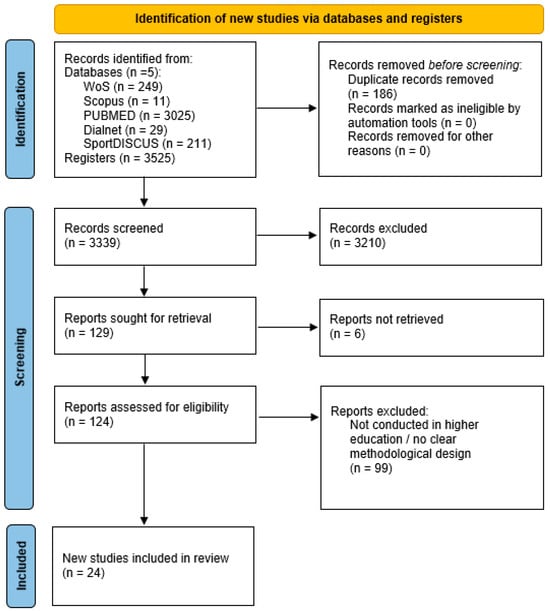
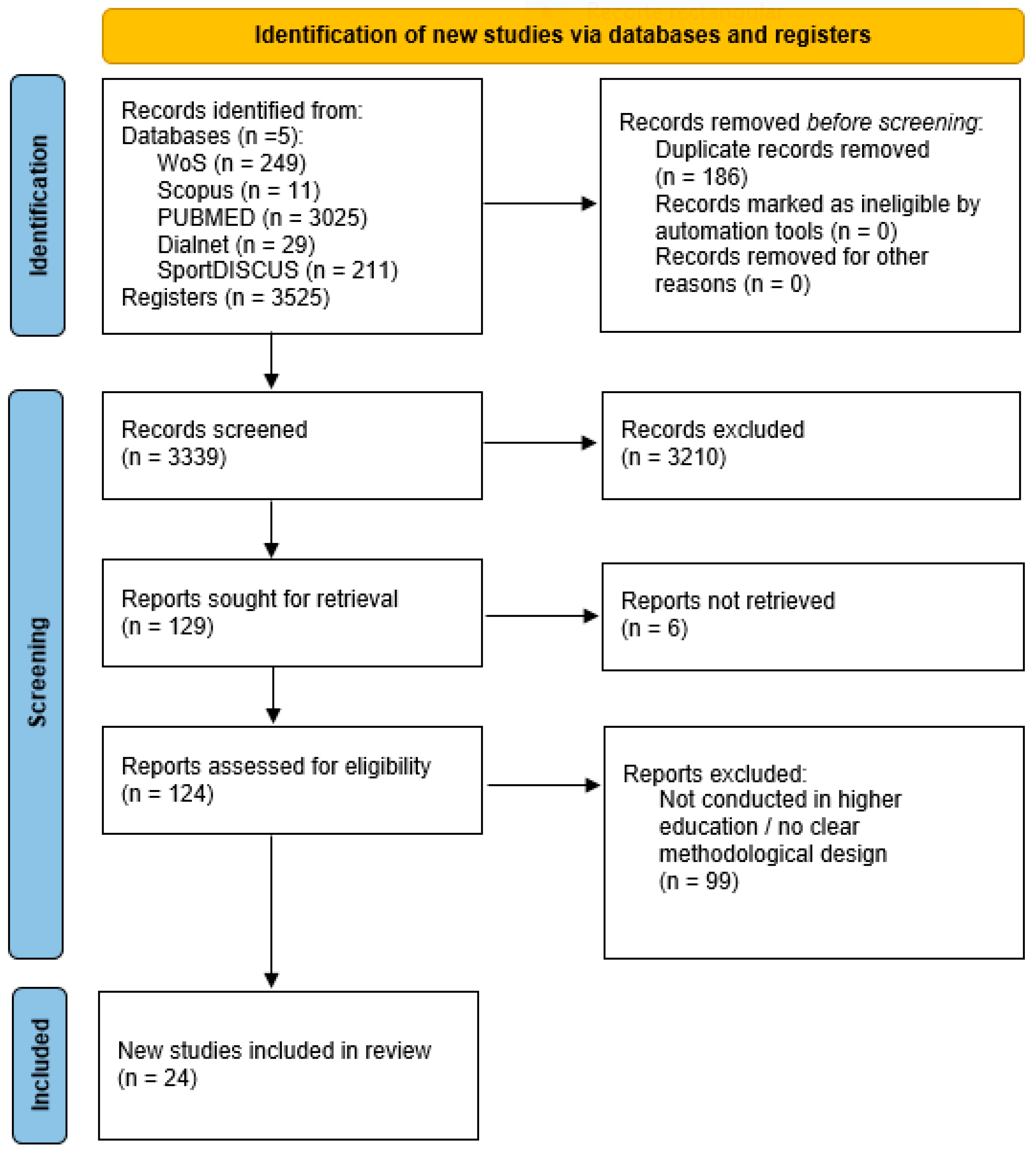
Firstly, 186 duplicate articles were excluded, leaving 3339 studies for selection. Next, two reviewers independently screened the titles and abstracts, resulting in the exclusion of 3209 records. The main reasons for exclusion at this stage were: (1) studies conducted in non-university educational settings (elementary, secondary, or vocational education); (2) studies not focused on physical education or sports science; (3) studies describing teaching experiences without explicit reference to active methodologies; (4) reviews, theoretical proposals, editorials, or methodological articles rather than empirical studies; and (5) studies published outside the established time frame. Following the screening of titles and abstracts, 129 articles were selected for full-text evaluation.
A second selection was then conducted, this time of the full-text articles. After reviewing the full texts, 105 articles were excluded for the following reasons: (1) lack of empirical data or insufficient methodological description to assess the quality of the study; (2) participants not enrolled in institutions of higher education; (3) a primary focus not centred on physical education or sports science; (4) teaching experiences without a clear application of active methodologies; and (5) inability to access the full-text versions. Finally, the search was concluded by selecting a total of 24 articles, which met the inclusion and exclusion criteria for data extraction. The process described is detailed in the following PRISMA flowchart (Figure 1).
Figure 1.
PRISMA flow diagram.
Once the selection process was complete, the methodological quality of the included studies was assessed using the 2018 version of the Mixed Methods Appraisal Tool (MMAT), which incorporates design-specific criteria [64]. Each study was assessed criterion by criterion according to its methodological design (qualitative, quantitative non-randomized, quantitative descriptive or mixed methods). The results of the methodological appraisal are reported in Table 4.
Table 4.
Methodological quality appraisal of included studies using the MMAT (2018).
Four researchers specializing in active methodologies independently assessed the methodological quality of the included studies. Agreement among the reviewers in their quality assessments was substantial (Fleiss kappa > 0.70). Disagreements were resolved through discussion. In addition, inter-rater reliability was calculated for the title/abstract screening and full-text eligibility assessment stages. Two reviewers independently screened all titles and abstracts, and the same procedure was followed for full-text assessment. Disagreements at all stages were resolved through discussion and, when necessary, consultation with a third reviewer.
Finally, a coding manual was developed to record the main characteristics of the selected studies.
3. Results
In order to address the research question, a coding manual was drawn up to record and organize the most relevant data from the 25 selected articles. Ten categories were established, including authorship, publication date, article title, sample size (small, medium, large and very large), objective, design (qualitative, randomized controlled trials, non-randomized quantitative, descriptive quantitative or mixed methods), methodology used, dimension analyzed (cognitive, motivational, social, procedural), results/conclusions and quality (Table 5).
Table 5.
Categories established for the analysis of the articles in the systematic review.
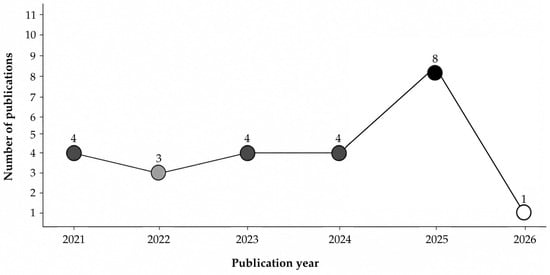
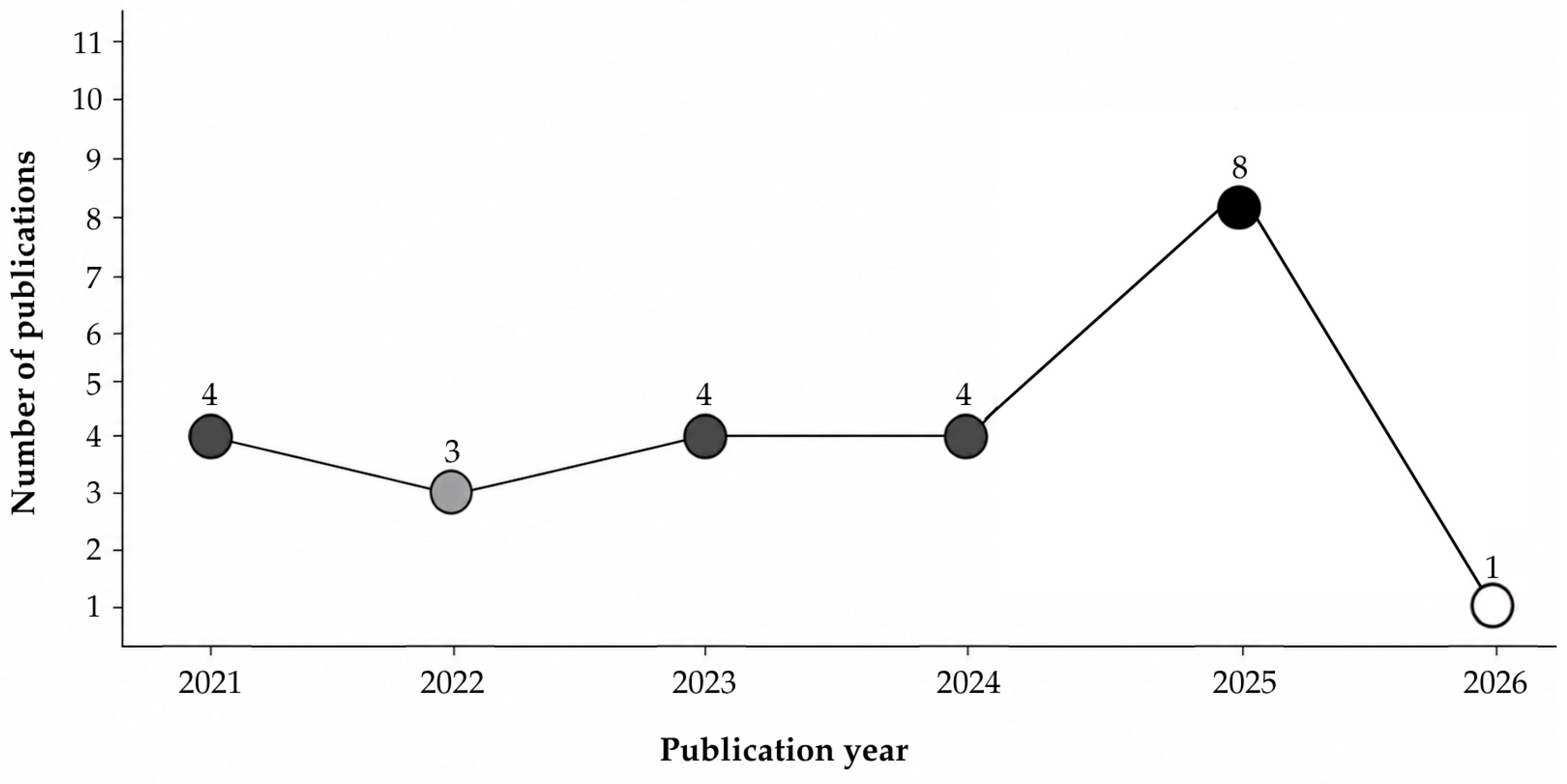
Firstly, with regard to the year of publication, it can be seen that there was a higher volume of scientific output in 2025, with a total of eight publications, followed by 2021, 2023 and 2024, with four studies each. Meanwhile, 2022 recorded three manuscripts and 2026 just one, although this latter figure relates only to research published up to June (Figure 2).
Figure 2.
Distribution of studies by year of publication.
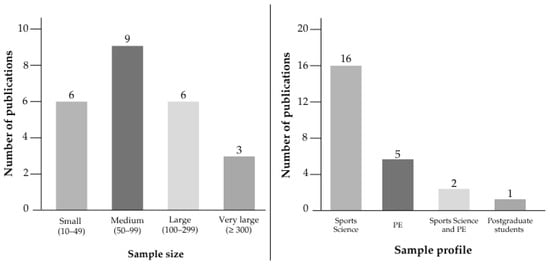
Secondly, taking into account the characteristics of the sample, six studies had a small sample size (10–49 participants), nine included medium-sized samples (50–99 participants), seven used large samples (100–299 participants) and three worked with very large samples (≥300 participants). Furthermore, regarding the participants’ profile, most of the studies involved sports science students (n = 16), five studies involved PE students, two articles involved combined samples of sports science and PE students and one study involved postgraduate students (PE) (Figure 3).
Figure 3.
Distribution of studies based on sample characteristics.
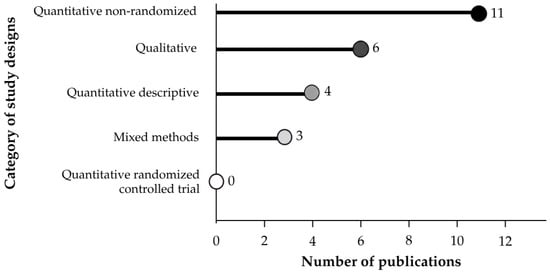
Thirdly, based on the study design, eleven studies with a non-randomized quantitative design were analyzed, six with a qualitative design, four with a descriptive quantitative approach, and three using mixed methods. No clinical trials were identified (Figure 4).
Figure 4.
Distribution based on the methodological design of the included studies.
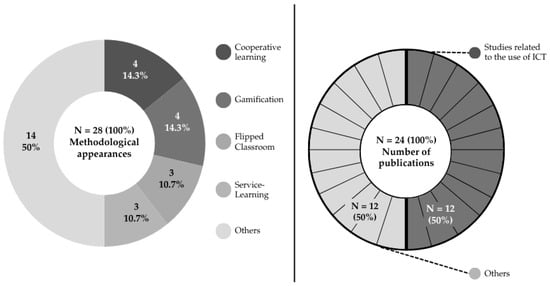
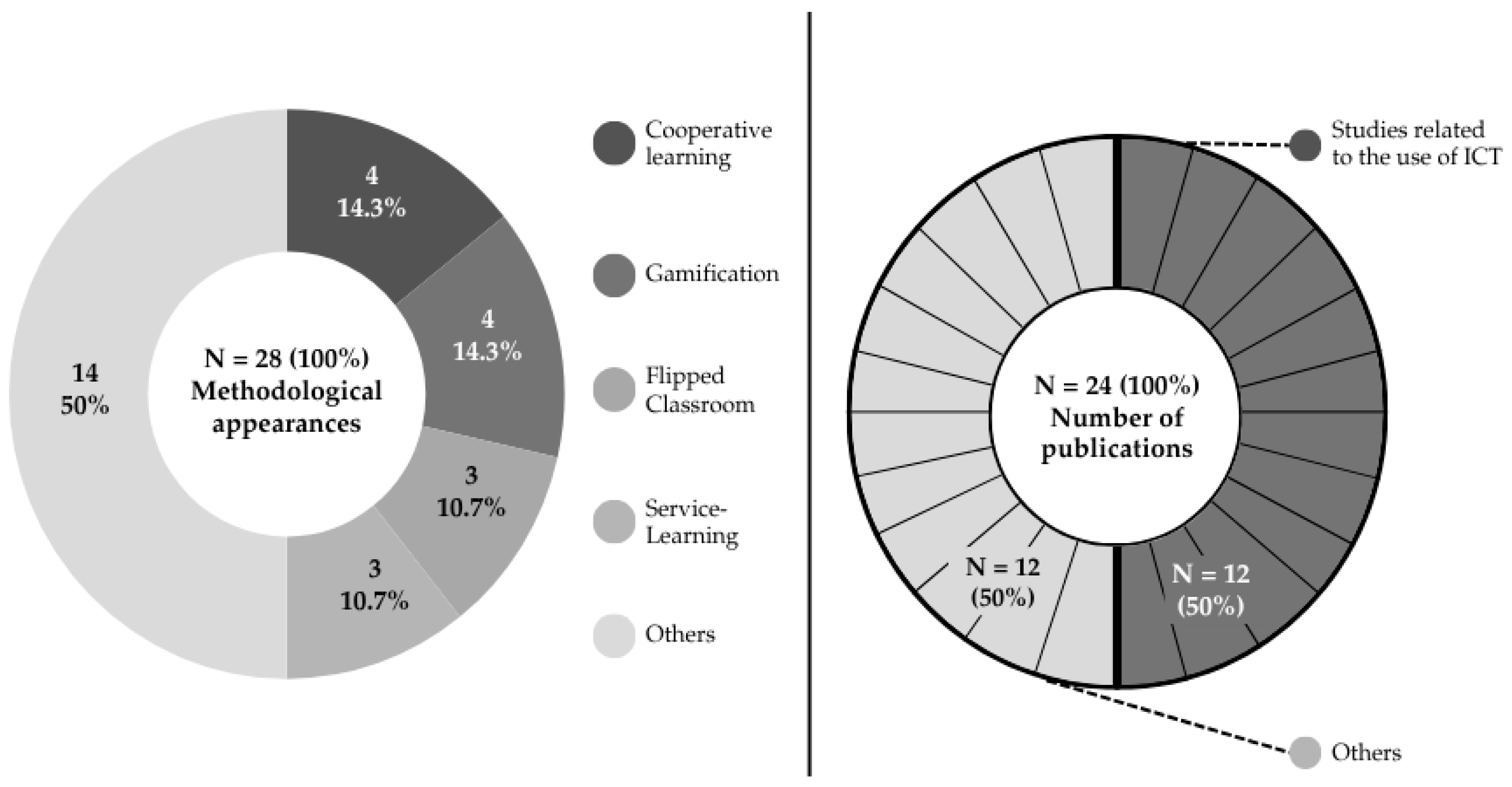
Fourthly, the articles were analyzed based on the methodologies used; a total of 28 methodological strategies were recorded, as four studies were identified that combined strategies, an aspect considered to be a hybridisation of methodologies. The most common pedagogical models were gamification (n = 4), cooperative learning (n = 4), service learning (n = 3) and the flipped classroom (n = 3), accounting 50 per cent of the articles. Another interesting aspect regarding methodologies is that 12 studies explicitly related to the use of ICT (Figure 5).
Figure 5.
Distribution of studies according to the active methodologies present in the studies.
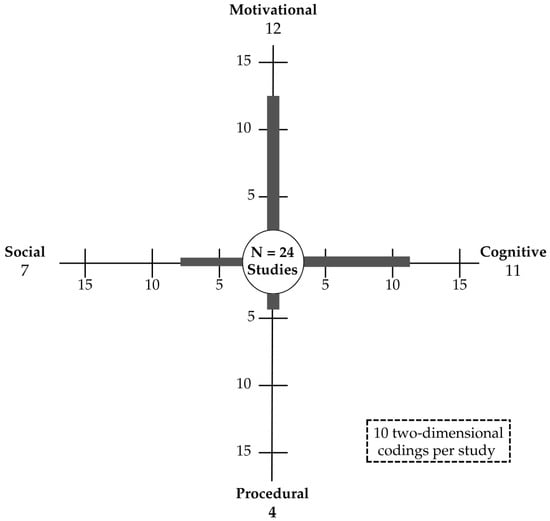
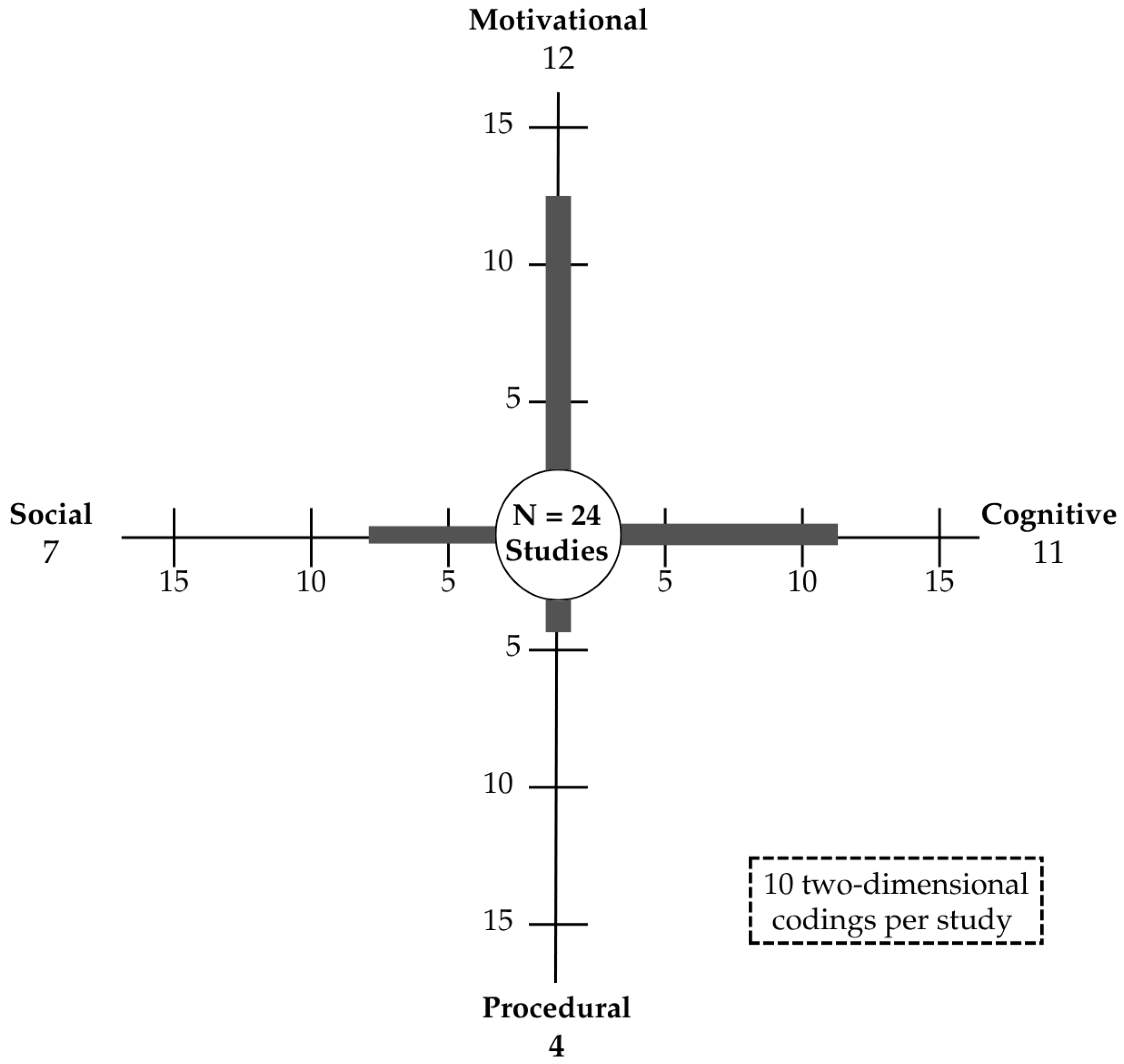
Finally, with regard to the dimension analyzed, a total of 36 codings were recorded, as some studies addressed more than one dimension. Twelve studies analyzed the motivational dimension, eleven the cognitive dimension, seven studies the social dimension, and four the procedural dimension. Furthermore, 10 codes involved simultaneous analysis of multiple dimensions (two dimensions per study), which explains why the number of codes exceeds the number of articles (Figure 6).
Figure 6.
Distribution of studies according to the dimensions identified in the included studies.
Based on this process, a summary was drawn up to provide an overview of the body of studies (Table 6).
Table 6.
Characteristics of the studies included in this systematic review on the use of active methodologies in PE and sports science in higher education.
4. Discussion
The aim of this systematic review was to analyze the impact of active methodologies on learning aspects and educational variables among students of physical education and sports sciences in higher education.
Overall, the included studies reported generally favourable associations between active methodologies and academic performance, skills acquisition, motivation and practical competencies [65,67,68,71]. Nevertheless, these findings should be interpreted cautiously because most of the included studies were non-randomized, descriptive, qualitative or mixed methods studies. With this in mind, the findings are consistent with the existing literature across various educational contexts and disciplinary fields, confirming the effectiveness of these pedagogical models not only in sports science but also in other areas of knowledge [11,83,84]. In this regard, other studies have also highlighted robust results at primary and secondary school levels, reinforcing the cross-curricular nature and applicability of these methodologies [85,86].
With regard to the research question, the results were organized according to four dimensions, with the aim of identifying the educational impact of active methodologies. With regard to the cognitive dimension, several studies reported improvements associated with these models in academic performance, comprehension, reflection, problem-solving and decision-making [16,65,68,70,72,73,76,79,81,82,83]. Similarly, these findings are consistent with other research in the field which has highlighted the usefulness of active methodologies in enhancing cognitive skills such as analysis, comprehension, reflection and decision-making [14,16,61].
With regard to the motivational dimension, the included studies reported higher levels of interest in the subject, satisfaction with the learning experience and student engagement when active methodologies were implemented [12,16,27,66,68,74,75,76,80,81,82,83]. Other studies concur with this finding, highlighting that these improvements are due to the fact that these pedagogical models place students in a more active and central role within the teaching–learning process [22,55,87].
In the social dimension, several studies reported favourable outcomes related to collaboration, teamwork, communication and social engagement, particularly in service-learning interventions [13,19,67,69,71,75,78]. However, some studies noted that this positive impact must be interpreted with caution, as there is limited clarity regarding which components of the methodological approaches underpin this effectiveness [88,89].
With regard to the procedural dimension, the studies suggested that active methodologies may support the acquisition and consolidation of practical skills. However, this dimension is also the least developed in isolation, as it is usually linked to other dimensions [21,71,74,78]. In addition, models involving the use of digital resources enable learners to translate theoretical content into practical application, a highly relevant aspect in the field of PE and sports science [12,20].
Additionally, with regard to the methodologies used, the most common are gamification, cooperative learning, service learning and the flipped classroom [13,16,19,21,27,65,67,68,69,71,72,74,78,81]. Taken together, these models share a common focus on the learner as the centre of learning and on teamwork [29,38,40]. However, each one emphasizes different aspects of learning, suggesting that their selection also responds to specific pedagogical objectives [11,90]. Generally speaking, this review is consistent with other studies, which also identified active methodologies as collaborative, motivating and practice-oriented approaches [20,24,33].
In addition to the active methodologies mentioned above, the review also identified other active approaches, including simulation-based learning, game-based learning, SEM, TGfU, MOOCs, interactive scenarios, project-based learning, student-centred learning, student-coach role and social-network-based learning [12,16,45,66,68,70,71,73,75,76,78,79,80,81,82]. Although these methodologies appeared less frequently, their inclusion highlights the diversity of active pedagogical approaches applied in higher education programmes in sports science and PE. Taken together, these approaches broaden our understanding of how active methodologies can be applied in accordance with different learning objectives, student profiles and educational contexts [68,70,73,76,79,81].
With regard to the characteristics of the sample, it was observed that the majority of studies involved medium (50–99 participants) and large (50–299 participants) sample sizes, which can be considered a positive factor as it lends greater consistency to the results and facilitates their generalization [91]. Furthermore, the vast majority of studies were conducted with sport science students, whereas fewer focused specifically on PE students. This concentration limits the transferability of the findings to other higher education programmes and to different institutional or educational contexts [34,35]. However, this concentration on a specific participant profile appears to stem, to a large extent, from the fact that the evidence has been developed mainly in very specific contexts, which may influence the way in which the results are interpreted and applied in other higher education settings [92,93].
Another important aspect is the prominent role played by the use of new technologies, or the combination of methodologies and technological resources, in a considerable proportion of the studies analyzed [16,21,65,66,68,71,72,76,79,81,82,83]. Various studies have indicated that this combination meets the needs of students, thereby promoting a more participatory teaching–learning process [94,95]. In the context of higher education, and particularly in degree programmes related to sport, the use of ICT appears to be well suited to the characteristics of teaching [96]. Consequently, the increasing use of technology suggests its gradual integration into this educational field. However, digital resources should be understood as complementary tools, since their educational value depends on their alignment with learning objectives, teacher training, accessibility and their coherent integration into instructional design [52].
With regard to trends in the use of active methodologies, the review carried out highlights a growing interest in the use of such approaches, which appears to be linked to a consolidation of learner-centred approaches or to a trend towards more innovative educational initiatives [97,98]. On this point, not only has higher education seen an increase in the use of active methodologies, but this can also be seen as part of a much broader movement encompassing the entire education system, in response to the need to promote more meaningful learning [99]. However, there is greater evidence of the application of these models at other educational stages, such as primary and secondary education [20,97]. It is worth noting that the application of these approaches in sports education is one of the most developed areas, with specific models from the field of sports sciences, such as the SEM or TGfU [20,100].
Furthermore, the findings suggest that the renewal of PE in higher education could be oriented toward more active, practical, and contextualized approaches [12,19,101]. However, the evidence supports this possibility primarily based on students’ perceptions, the educational experiences described, and the observed associations, rather than on conclusive evidence of its causal effectiveness [12,102]. In this context, active methodologies are associated with greater student participation, reflection, decision-making, and the integration of theory with practice, although their implementation requires careful planning, specific teacher training, and appropriate institutional conditions [10,103]. Consequently, it is possible to consider these pedagogical models as a promising framework for reorienting the content and activities of university physical education and sports instruction toward more authentic experiences, especially when they incorporate principles of inclusion, assessment, safety, and collaboration with real-world practice contexts [104,105,106].
Finally, the rise of active methodologies in higher education, particularly in the field of sports science and PE, reflects a trend amongst lecturers towards seeking a teaching and learning process that is transferable to their practice and more meaningful. However, the available evidence does not allow the effectiveness or causal impact of these approaches to be established definitively. Moreover, the role of technology is becoming increasingly important in today’s educational context, characterized by digitalisation and the integration of technological resources into everyday life, as well as their combination with these new pedagogical models. However, it is important to continue exploring the educational effects of these approaches, as well as their feasibility and potential limitations, in order to develop relevant teaching proposals for university education in the field of sports science.
5. Conclusions
Based on the evidence analyzed, it can be concluded that the implementation of learner-centred pedagogical approaches, such as cooperative learning, the flipped classroom, service learning and gamification, was generally associated with favourable outcomes across several dimensions of learning. In particular, these pedagogical approaches foster motivation, social skills, cognitive development and the acquisition of procedural skills, suggesting their potential as useful approaches for promoting meaningful, active and participatory learning in the university context.
Although cooperative learning, the flipped classroom, service learning, and gamification were the most frequently used approaches, this does not necessarily indicate that the other active methodologies are less relevant or effective; rather, it reflects the diversity of the available evidence.
The results highlight the increased use of technological resources as complementary elements to active methodologies. In relation to this, it is worth noting that the appropriate use of digital tools may support continuous feedback, student autonomy and the creation of more dynamic and interactive learning environments. However, the educational value of active methodologies does not depend solely on the incorporation of technology, but rather in their appropriate alignment with learning objectives and their coherent integration into the instructional design.
Despite the positive findings of this review, variations in the implementation of different strategies, as well as differences in teacher training or institutional conditions may significantly influence the results obtained from one study to another. It is therefore essential to prioritize adequate teacher training and pedagogical planning to ensure that these methodologies lead to improvements in the teaching and learning process.
Furthermore, in the context of higher education, the findings of this review reinforce the strategic role of active methodologies as a cornerstone of pedagogical innovation geared towards the development of students’ competences. Additionally, they contribute to the transformation of the teaching role and of the university system itself, promoting more flexible and collaborative learning environments. In this regard, the adoption of these methodological approaches is presented as a sound pathway towards more innovative, inclusive and lifelong learning-centred university models, thereby enhancing the quality and relevance of higher education in the field of sport.
However, some limitations of the review are, firstly the methodological diversity of the included studies makes direct comparison difficult. Second, the predominance of non-randomized, descriptive, qualitative and mixed methods studies limits the possibility of drawing firm causal conclusions. Third, all included studies reported favourable findings, and no null, negative or contradictory results were identified. This homogeneity may reflect a genuine tendency, but it may also indicate possible publication or selection bias. Fourth, no specific search for grey literature was conducted; consequently, unpublished theses, conference proceedings, institutional reports and other non-commercial sources may have been missed. Finally, the concentration of research in specific sport science contexts and the smaller number of studies focused specifically on physical education may limit the transferability of the findings to other higher education programmes.
Finally, based on the results obtained, several avenues for future research are proposed: a) the development of experimental studies to establish more robust relationships between the use of active methodologies, learning outcomes and their respective dimensions; b) a comparative analysis of the effectiveness of different pedagogical models depending on the context, the student profile or the specific discipline; and c) a more in-depth examination of the role of technology as a mediating factor in learning within higher education, particularly in relation to the development of competences and academic performance.
Author Contributions
Conceptualization, D.N.-S. and A.R.-C.; methodology, D.N.-S., S.P.-M., F.H.-M. and A.R.-C.; formal analysis, D.N.-S., S.P.-M., F.H.-M. and A.R.-C.; writing—original draft preparation, D.N.-S. and A.R.-C.; writing—review and editing, D.N.-S., S.P.-M. and A.R.-C.; supervision, S.P.-M., F.H.-M. and A.R.-C. All authors have read and agreed to the published version of the manuscript.
Funding
This research received no external funding.
Institutional Review Board Statement
Not applicable.
Informed Consent Statement
Not applicable.
Data Availability Statement
The raw data supporting the conclusions of this article will be made available by the authors on request.
Acknowledgments
The authors would like to express their gratitude for the institutional support received during the course of this work, which forms part of a doctoral thesis based on a collection of publications at the Pontifical University of Salamanca, and would like to thank the Ministry of Science, Innovation and Universities for awarding an FPU pre-doctoral grant (FPU24/03560), under the terms of which this research was carried out.
Conflicts of Interest
The authors declare no conflicts of interest.
Abbreviations
The following abbreviations are used in this manuscript:
| ICT | Information and Communication Technologies |
| MMAT | Mixed Methods Appraisal Tool |
| PE | Physical Education |
| SEM | Sport Education Model |
| TGfU | Teaching Games for Understanding |
| WoS | Web of Science |
References
- Marshall, S.; Blaj-Ward, L.; Dreamson, N.; Nyanjom, J.; Bertuol, M.T. The reshaping of higher education: Technological impacts, pedagogical change, and future projections. High. Educ. Res. Dev. 2024, 43, 521–541. [Google Scholar] [CrossRef] [Scilit]
- Pante-Salas, G.G.; Quiñones-Colchado, E.R.; Cuya-Candela, E.R.; López-Sánchez, M.; Coqui, P.M.; Alvarez, C. Demands and Challenges in Higher Education Today. J. Ecohumanism 2025, 4, 1126. [Google Scholar] [CrossRef] [Scilit]
- Álvarez, M.; Prieto, P. Presentation of the thematic dossier: “Higher education in the digital age”. Educ. Sup. Soc. 2023, 35, 28–45. [Google Scholar] [CrossRef] [Scilit]
- Fidalgo-Blanco, Á.; Séin-Echaluce, M.L.; García-Peñalvo, F.J. Education 4.0-based Method to Improve Learning: Lessons Learned from COVID-19. RIED-Rev. Iberoam. Educ. Distancia 2022, 25, 37–55. [Google Scholar] [CrossRef] [Scilit]
- Aartun, I.; Walseth, K.; Standal, Ø.; Kirk, D. Pedagogies of embodiment in physical education—A literature review. Sport Educ. Soc. 2020, 27, 1–13. [Google Scholar] [CrossRef] [Scilit]
- Fletcher, T.; Chróinín, N.D. Pedagogical principles that support the prioritisation of meaningful experiences in physical education: Conceptual and practical considerations. Phys. Educ. Sport Pedagog. 2021, 27, 455–466. [Google Scholar] [CrossRef] [Scilit]
- Volshøj, E.; Aggerholm, K.; Beni, S.; Madsen, K. Meaningful physical education: Towards an embodied pedagogy. Eur. Phys. Educ. Rev. 2024, 31, 638–654. [Google Scholar] [CrossRef] [Scilit]
- Bell-Rodríguez, R.F.; Cachinell, A.N.; Martin-Álvarez, Y.M. Integration of teaching and active learning in higher education. Methodologies, components and actors. Prohominum 2024, 6, 97–105. [Google Scholar] [CrossRef] [Scilit]
- Cardoso, F.M.; Rosa, C.G.; Ferreira, S.B.; De Oliveira-Carvalho, R.; Basniak, S.A. Active Methodologies In Higher Education. IOSR J. Humanit. Soc. Sci. 2024, 29, 24–28. [Google Scholar] [CrossRef] [Scilit]
- León-Díaz, Ó.; Muñoz, L.F.; Santos-Pastor, M.L. Active methodologies in Physical Education. A look from practical reality. Retos 2023, 48, 647–656. [Google Scholar] [CrossRef] [Scilit]
- Costa, L.M.G.; Reis, M.J.C.S. Motivational Teaching Techniques in Secondary and Higher Education: A Systematic Review of Active Learning Methodologies. Digital 2025, 5, 40. [Google Scholar] [CrossRef] [Scilit]
- Crisol-Moya, E.; Caurcel-Cara, M.J. Active Methodologies in Physical Education: Perception and Opinion of Students on the Pedagogical Model Used by Their Teachers. Int. J. Environ. Res. Public Health 2021, 18, 1438. [Google Scholar] [CrossRef] [Scilit] [PubMed]
- Solera-Alfonso, A.; Delfa-de-la-Morena, J.M.; Marconnot, R.; Mijarra-Murillo, J.J.; García-González, M.; Romero-Parra, N.; Bores-García, D. University students’ perception of the application of a cooperative methodology in the initial training of Physical Education teachers: A qualitative study. Retos 2024, 63, 306–316. [Google Scholar] [CrossRef] [Scilit]
- Farwa, U.; Riaz, M.; Ullah, A. Developing Critical Thinking Skills Through Active Learning: Strategies for Higher Secondary and Undergraduate Education. Soc. Sci. Rev. Arch. 2026, 4, 3485–3494. [Google Scholar] [CrossRef] [Scilit]
- Harris, N.A.; Bacon, C. Developing Cognitive Skills Through Active Learning: A Systematic Review of Health Care Professions. Athl. Train. Educ. J. 2019, 14, 135–148. [Google Scholar] [CrossRef] [Scilit] [PubMed]
- Rakha, A.H. Promoting online teaching through active learning strategies: Applications and innovations. Front. Educ. 2025, 10, 1546208. [Google Scholar] [CrossRef] [Scilit]
- Gaitán-Hernández, M.A.; de la Cruz-Hernández, R. Impact of active methodologies on motivation and academic performance of secondary education students. Pedagog. Constell. 2024, 3, 127–146. [Google Scholar] [CrossRef] [Scilit]
- Qureshi, M.A.; Khaskheli, A.; Qureshi, J.A.; Raza, S.A.; Yousufi, S.Q. Factors affecting students’ learning performance through collaborative learning and engagement. Interact. Learn. Environ. 2023, 31, 2371–2391. [Google Scholar] [CrossRef] [Scilit]
- Ribeiro-Silva, E.; Amaral-da-Cunha, M.; Batista, P. Educating Teachers for Sustainability and Social Justice: A Service-Learning Project in Physical Education Initial Teacher Education. Educ. Sci. 2023, 13, 1173. [Google Scholar] [CrossRef] [Scilit]
- Caracuel-Cáliz, R.F.; Ubago-Jiménez, J.L.; Alonso-Vargas, J.M.; Melguizo-Ibáñez, E. Impact of Active Methodologies Involving Physical Activity on Primary School Students: A Systematic Review (2018–2024). Sports 2025, 13, 358. [Google Scholar] [CrossRef] [Scilit] [PubMed]
- Yousef, I.; Kayed, M.; Liftawi, S.; Hamdan, S.; Alnuaimi, J.; Al-Kilani, H. Impact of flipped classroom strategy and learning on the acquisition of basic skills among students in the basketball 1 course at Birzeit University. Front. Sports Act. Living 2025, 7, 1660007. [Google Scholar] [CrossRef] [Scilit] [PubMed]
- Arufe-Giráldez, V.; Sanmiguel-Rodríguez, A.; Ramos-Álvarez, O.; Navarro-Patón, R. Gamification in Physical Education: A Systematic Review. Educ. Sci. 2022, 12, 540. [Google Scholar] [CrossRef] [Scilit]
- Parra-González, M.E.; López-Belmonte, J.; Segura-Robles, A.; Fuentes-Cabrera, A. Active and Emerging Methodologies for Ubiquitous Education: Potentials of Flipped Learning and Gamification. Sustainability 2020, 12, 602. [Google Scholar] [CrossRef] [Scilit]
- Jaramillo-Mediavilla, L.; Basantes-Andrade, A.; Cabezas-González, M.; Casillas-Martín, S. Impact of Gamification on Motivation and Academic Performance: A Systematic Review. Educ. Sci. 2024, 14, 639. [Google Scholar] [CrossRef] [Scilit]
- Richter, K.; Kickmeier-Rust, M. Gamification in Physics Education: Play Your Way to Better Learning. Int. J. Serious Games 2025, 12, 59–81. [Google Scholar] [CrossRef] [Scilit]
- Camacho-Sánchez, R.; Serna-Bardavío, J.; Rillo-Albert, A.; Lavega-Burgués, P. Enhancing motivation and academic performance through gamified digital game-based learning methodology using the ARCS model. Interact. Learn. Environ. 2024, 32, 6868–6885. [Google Scholar] [CrossRef] [Scilit]
- Flores-Aguilar, G.; Prat-Grau, M.; Fernández-Gavira, J.; Muñoz-Llerena, A. “I Learned More Because I Became More Involved”: Teacher’s and Students’ Voice on Gamification in Physical Education Teacher Education. Int. J. Environ. Res. Public Health 2023, 20, 3038. [Google Scholar] [CrossRef] [Scilit] [PubMed]
- Sal-de-Rellán, A.; Hernández-Suárez, Á.; Hernaiz-Sánchez, A. Gamification and motivation in adolescents. Systematic review from Physical Education. Front. Psychol. 2025, 16, 575104. [Google Scholar] [CrossRef] [Scilit] [PubMed]
- Boke, H.; Aygun, Y.; Tufekci, S.; Yagin, F.H.; Canpolat, B.; Norman, G.; Prieto-González, P.; Ardigò, L.P. Effects of cooperative learning on students’ learning outcomes in physical education: A meta-analysis. Front. Psychol. 2025, 16, 1508808. [Google Scholar] [CrossRef] [Scilit] [PubMed]
- León, B.; Fernandez-Rio, J.; Rivera-Pérez, S.; Iglesias, D. Cooperative Learning, Emotions, and Academic Performance in Physical Education: A Serial Multiple Mediation Model. Psicol. Educ. 2023, 29, 75–82. [Google Scholar] [CrossRef] [Scilit]
- Bjørke, L.; Mordal-Moen, K. Cooperative learning in physical education: A study of students’ learning journey over 24 lessons. Phys. Educ. Sport Pedagog. 2020, 25, 600–612. [Google Scholar] [CrossRef] [Scilit]
- Fernández-Espínola, C.; Abad-Robles, M.T.; Collado-Mateo, D.; Almagro, B.J.; Castillo Viera, E.; Giménez-Fuentes, F.J. Effects of Cooperative-Learning Interventions on Physical Education Students’ Intrinsic Motivation: A Systematic Review and Meta-Analysis. Int. J. Environ. Res. Public Health 2020, 17, 4451. [Google Scholar] [CrossRef] [Scilit] [PubMed]
- Bores-García, D.; Hortigüela-Alcalá, D.; Fernandez-Rio, F.J.; González-Calvo, G.; Barba-Martín, R. Research on Cooperative Learning in Physical Education: Systematic Review of the Last Five Years. Res. Q. Exerc. Sport 2021, 92, 146–155. [Google Scholar] [CrossRef] [Scilit] [PubMed]
- Chiva-Bartoll, O.; Fernández-Rio, J. Advocating for Service-Learning as a pedagogical model in Physical Education: Towards an activist and transformative approach. Phys. Educ. Sport Pedagog. 2022, 27, 545–558. [Google Scholar] [CrossRef] [Scilit]
- Pérez-Ordás, R.; Nuviala, A.; Grao-Cruces, A.; Fernández-Martínez, A. Implementing Service-Learning Programs in Physical Education; Teacher Education as Teaching and Learning Models for All the Agents Involved: A Systematic Review. Int. J. Environ. Res. Public Health 2021, 18, 669. [Google Scholar] [CrossRef] [Scilit] [PubMed]
- Capella-Peris, C.; Gil-Gómez, J.; Chiva-Bartoll, Ò. Innovative Analysis of Service-Learning Effects in Physical Education: A Mixed-Methods Approach. J. Teach. Phys. Educ. 2020, 39, 102–110. [Google Scholar] [CrossRef] [Scilit]
- Miletić, Đ.; Jadrić, I.; Miletić, A. Influence of motivation climate on service-learning benefits among physical education students. Eur. J. Educ. Res. 2024, 13, 1031–1041. [Google Scholar] [CrossRef] [Scilit]
- Jensen, J.L.; Kummer, T.A.; Godoy, P.D. Improvements from a Flipped Classroom May Simply Be the Fruits of Active Learning. CBE Life Sci. Educ. 2015, 14, ar5. [Google Scholar] [CrossRef] [Scilit] [PubMed]
- Van-Alten, D.C.; Phielix, C.; Janssen, J.; Kester, L. Effects of flipping the classroom on learning outcomes and satisfaction: A meta-analysis. Educ. Res. Rev. 2019, 28, 100281. [Google Scholar] [CrossRef] [Scilit]
- Felgueras-Custodio, N.; Delgado-Pintor, M. Empirical didactic experience about flipped classroom on Physical Education area. Retos 2021, 42, 189–197. [Google Scholar] [CrossRef] [Scilit]
- Østerlie, O.; Sargent, J.; Killian, C.; Garcia-Jaen, M.; García-Martínez, S.; Ferriz-Valero, A. Flipped learning in physical education: A scoping review. Eur. Phys. Educ. Rev. 2023, 29, 125–144. [Google Scholar] [CrossRef] [Scilit]
- Zainuddin, Z.; Perera, C.J. Exploring students’ competence, autonomy and relatedness in the flipped classroom pedagogical model. J. Furth. High. Educ. 2019, 43, 115–126. [Google Scholar] [CrossRef] [Scilit]
- Naing, C.; Whittaker, M.A.; Aung, H.H.; Chellappan, D.K.; Riegelman, A. The effects of flipped classrooms to improve learning outcomes in undergraduate health professional education: A systematic review. Campbell Syst. Rev. 2023, 19, e1339. [Google Scholar] [CrossRef] [Scilit] [PubMed]
- Strelan, P.; Osborn, A.; Palmer, E. The flipped classroom: A meta-analysis of effects on student performance across disciplines and education levels. Educ. Res. Rev. 2020, 30, 100314. [Google Scholar] [CrossRef] [Scilit]
- Jingxia, G.; Qichao, Y.; Malik, Z. A network meta-analysis of pedagogical models in physical education: Evaluating multidimensional learning outcomes and instructional duration effects. Front. Psychol. 2026, 17, 1766890. [Google Scholar] [CrossRef] [Scilit] [PubMed]
- Cojocaru, A.M.; Bucea-Manea, R.; Jianu, A.; Dumangiu, M.A.; Alexandrescu, L.U.; Cojocaru, M. The Role of Physical Education and Sports in Modern Society Supported by IoT-A Student Perspective. Sustainability 2022, 14, 5624. [Google Scholar] [CrossRef] [Scilit]
- Tohănean, D.I.; Vulpe, A.M.; Mijaica, R.; Alexe, D.I. Embedding Digital Technologies (AI and ICT) into Physical Education: A Systematic Review of Innovations, Pedagogical Impact, and Challenges. Appl. Sci. 2025, 15, 9826. [Google Scholar] [CrossRef] [Scilit]
- Müller, J.; Wagner, I. Formative assessment of motor learning through digital tools in physical education: A systematic literature review. Eur. Phys. Educ. Rev. 2026, 32, 383–403. [Google Scholar] [CrossRef] [Scilit]
- Zheng, G.; Wang, Y.; Du, J. A dual-path framework for enhancing student engagement and learning outcomes in sports education: Integrating technology acceptance, self-regulation, and self-efficacy. PLoS ONE 2026, 21, e0345809. [Google Scholar] [CrossRef] [Scilit] [PubMed]
- Ansari, J.A.; Khan, N.A. Exploring the role of social media in collaborative learning the new domain of learning. Smart Learn. Env. 2020, 7, 9. [Google Scholar] [CrossRef] [Scilit]
- Valverde-Berrocoso, J.; Fernández-Sánchez, M.R.; Revuelta-Domínguez, F.I.; Sosa-Díaz, M.J. The educational integration of digital technologies preCovid-19: Lessons for teacher education. PLoS ONE 2021, 16, e0256283. [Google Scholar] [CrossRef] [Scilit] [PubMed]
- Carranza-Alcántar, M. Use of active methodologies with ICT in teacher training. Salud Cienc. Tecnol.-Ser. Conf. 2024, 3, 702. [Google Scholar] [CrossRef] [Scilit]
- Gudoniene, D.; Staneviciene, E.; Huet, I.; Dickel, J.; Dieng, D.; Degroote, J.; Rocio, V.; Butkiene, R.; Casanova, D. Hybrid Teaching and Learning in Higher Education: A Systematic Literature Review. Sustainability 2025, 17, 756. [Google Scholar] [CrossRef] [Scilit]
- Børte, K.; Nesje, K.; Lillejord, S. Barriers to student active learning in higher education. Teach. High Educ. 2020, 28, 597–615. [Google Scholar] [CrossRef] [Scilit]
- Mondragón, N.I.; Beloki, N.; Yarritu, I.; Zarrazquin, I.; Artano, K. Active methodologies in Higher Education: Reasons to use them (or not) from the voices of faculty teaching staff. High. Educ. 2023, 88, 919–937. [Google Scholar] [CrossRef] [Scilit]
- Røe, Y.; Wojniusz, S.; Bjerke, A.H. The Digital Transformation of Higher Education Teaching: Four Pedagogical Prescriptions to Move Active Learning Pedagogy Forward. Front. Educ. 2022, 6, 784701. [Google Scholar] [CrossRef] [Scilit]
- Abildinova, G.; Abdykerimova, E.; Assainova, A.; Mukhtarkyzy, K.; Abykenova, D. Preparing educators for the digital age: Teacher perceptions of active teaching methods and digital integration. Front. Educ. 2024, 9, 1473766. [Google Scholar] [CrossRef] [Scilit]
- Basilotta-Gómez, V.; Matarranz, M.; Casado-Aranda, L.; Otto, A. Teachers’ digital competencies in higher education: A systematic literature review. Int. J. Educ. Technol. High. Educ. 2022, 19, 8. [Google Scholar] [CrossRef] [Scilit]
- Fernández-Batanero, J.M.; Román-Graván, P.; Montenegro-Rueda, M.; López-Meneses, E.; Fernández-Cerero, J. Digital Teaching Competence in Higher Education: A Systematic Review. Educ. Sci. 2021, 11, 689. [Google Scholar] [CrossRef] [Scilit]
- Fernandez-Rio, J.; Iglesias, D. What do we know about pedagogical models in physical education so far? An umbrella review. Phys. Educ. Sport Pedagog. 2022, 29, 190–205. [Google Scholar] [CrossRef] [Scilit]
- Rodríguez-García, L.; de la Cruz-Campos, J.C.; Martín-Moya, R.; González-Fernández, F.T. Active Teaching Methodologies Improve Cognitive Performance and Attention-Concentration in University Students. Educ. Sci. 2022, 12, 544. [Google Scholar] [CrossRef] [Scilit]
- Page, M.J.; McKenzie, J.E.; Bossuyt, P.M.; Boutron, I.; Hoffmann, T.C.; Mulrow, C.D.; Shamseer, L.; Tetzlaff, J.M.; Akl, E.A.; Brennan, S.E.; et al. The PRISMA 2020 statement: An updated guideline for reporting systematic reviews. Rev. Esp. Cardiol. 2021, 74, 790–799. [Google Scholar] [CrossRef]
- Richardson, W.S.; Wilson, M.C.; Nishikawa, J.; Hayward, R.S. The well-built clinical question: A key to evidence-based decisions. ACP J. Club 1995, 123, A12–A13. [Google Scholar] [CrossRef] [Scilit] [PubMed]
- Hong, Q.N.; Fàbregues, S.; Bartlett, G.; Boardman, F.; Cargo, M.; Dagenais, P.; Gagnon, M.P.; Griffiths, F.; Nicolau, B.; O’Cathain, A.; et al. The Mixed Methods Appraisal Tool (MMAT) version 2018 for information professionals and researchers. Educ. Inf. 2018, 34, 285–291. [Google Scholar] [CrossRef] [Scilit]
- Cebrián-Cifuentes, S.C.; Ros, C.; Fernández-Piqueras, R.; Guerrero-Valverde, E. Analysis of the teaching digital skills and the use of ICT resources after a university intervention process, which was based on the implementation of an innovative gamification methodology. Bordon. Rev. Pedagog. 2021, 73, 41–61. [Google Scholar] [CrossRef] [Scilit]
- Navandar, A.; Frías-López, D.; Alejo, L.B. The Use of Instagram in the Sports Biomechanics Classroom. Front. Psychol. 2021, 12, 711779. [Google Scholar] [CrossRef] [Scilit] [PubMed]
- Ruiz-Montero, P.J.; Corral-Robles, S.; García-Carmona, M.; Leiva-Olivencia, J.J. Development of prosocial competencies in PETE and Sport Science students. Social justice, Service-Learning and Physical Activity in cultural diversity contexts. Phys. Educ. Sport Pedagog. 2021, 28, 244–258. [Google Scholar] [CrossRef] [Scilit]
- Camacho-Sánchez, R.; Rillo-Albert, A.; Lavega-Burgués, P. Gamified Digital Game-Based Learning as a Pedagogical Strategy: Student Academic Performance and Motivation. Appl. Sci. 2022, 12, 11214. [Google Scholar] [CrossRef] [Scilit]
- Ortuondo-Bárcena, J.; Hortigüela-Alcalá, D.; Bidaurrazaga-Letona, I.; Zulaika-Isasti, L.M. Effects of a cooperative learning based intervention on the physical self-concept of pre-service Physical Education teachers. Retos 2022, 44, 827–836. [Google Scholar] [CrossRef] [Scilit]
- Peña-González, I.; Javaloyes, A.; Moya-Ramón, M. Role of Student-Coach as active learning method in higher education: A longitudinal study. RICYDE-Rev. Int. Cienc. Deport. 2022, 70, 235–246. [Google Scholar] [CrossRef] [Scilit]
- Hu, T.; Liu, H.; Xia, F. Research on the design and application of “MOOC + flipped classroom” for basketball courses in colleges and universities from the perspective of education modernization. Front. Psychol. 2023, 14, 1060257. [Google Scholar] [CrossRef] [Scilit] [PubMed]
- Peña-Gónzalez, I.; Javaloyes, A.; Moya-Ramón, M. The effect of a combination of flipped classroom and gamification on university student’s perceived teach-ing quality, subject satisfaction and academic performance. Retos 2023, 50, 403–407. [Google Scholar] [CrossRef] [Scilit]
- Casterad-Seral, J.; Murillo-Lorente, V.; Poblador-Vallés, J.A.; Pueyo-Romeo, L.; Álvarez-Medina, J. Participatory evaluation in higher education: Trends and their impact on sports science training. Cult. Cienc. Deporte 2024, 19, 2072. [Google Scholar] [CrossRef] [Scilit]
- Temirkhanov, Y.; Iskakov, T.; Iralina, M.; Zhumagulov, A.; Atagulova, G.; Boztayeva, S. Investigating the conception of collaborative learning (CL) and student engagement in the acquisition of practical skills (SEPSA) among prospective physical education and sports students. PLoS ONE 2024, 19, e0288568. [Google Scholar] [CrossRef] [Scilit] [PubMed]
- Zach, S.; Avugos, S. Co-teaching inhigher education: Implications for teaching, learning, engagement, and satisfaction. Front. Sports Act. Living 2024, 6, 1424101. [Google Scholar] [CrossRef] [Scilit] [PubMed]
- Ceballos-Bernal, E.A.; Correa-Bautista, J.E. Effectiveness of an interactivescenario-based educational intervention to improve attitudes toward sports statistics: A quasi-experimental study. Retos 2025, 72, 470–481. [Google Scholar] [CrossRef] [Scilit]
- Lobo-de-Diego, F.; Manrique-Arribas, J.C.; Monjas-Aguado, R. Service-Learning and the promotion of physical activity in community centres during the initial training of physical education teachers. Psychol. Soc. Educ. 2025, 17, 51–59. [Google Scholar] [CrossRef] [Scilit]
- López-Carril, S.; Carpenter, J.P.; Watanabe, N.M.; González-Serrano, M.H. Pinterest in Higher Education: Insights From a Sport Management Course. J. Manag. Educ. 2025, 50, 8–36. [Google Scholar] [CrossRef] [Scilit]
- Pizarro-Mateo, D.; Siquier-Coll, J.; Quilez-Maimón, A.; Práxedes, A. Effects of a hybrid module (MED/TGfU) on the NPB and autonomy of trainee physical education teachers. Sportis 2025, 11, 1–29. [Google Scholar] [CrossRef] [Scilit]
- Rakha, A.H. Cooperative learning with QR codes technology: Enhancing cognitive achievement and attitudes among students. Front. Educ. 2025, 10, 1655913. [Google Scholar] [CrossRef] [Scilit]
- Sotoca-Orgaz, P.; Arévalo-Baeza, M.; Pérez-López, I.J. Impact of a Serious Board Game on the Academic Performance of Future Physical Education Teachers. Int. J. Serious Games 2025, 12, 149–169. [Google Scholar] [CrossRef] [Scilit]
- Montoro-Pérez, N.; Montejano-Lozoya, R.; Rocamora-Rodríguez, C.; Perpiñá-Galvañ, J. Simulation-Based Educational Practices and Their Relationship with Emotional Intelligence and Stress Coping Skills: An Exploratory Case Study in First Aid Training for Physical Activity and Sports Sciences Students. Trends High. Educ. 2026, 5, 8. [Google Scholar] [CrossRef] [Scilit]
- Sahito, Z.H.; Khoso, F.J.; Phulpoto, J. The Effectiveness of Active Learning Strategies in Enhancing Student Engagement and Academic Performance. JSSR 2025, 5, 110–127. [Google Scholar] [CrossRef] [Scilit]
- Alberti, S.; Motta, P.; Ferri, P.; Bonetti, L. The effectiveness of team-based learning in nursing education: A systematic review. Nurse Educ. Today 2021, 97, 104721. [Google Scholar] [CrossRef] [Scilit] [PubMed]
- Mat, N.C.; Jamaludin, K.A. Effectiveness of Practices and Applications of Student-Centered Teaching and Learning in Primary Schools: A Systematic Literature Review. Int. J. Acad. Res. Progress. Educ. Dev. 2024, 13, 1025–1044. [Google Scholar] [CrossRef] [Scilit] [PubMed]
- Fredriksen, P.M.; Bjerva, T.; Mamen, A. The effect of active learning on academic performance in a Norwegian primary school setting–the Health Oriented Pedagogical Project (HOPP). Front. Educ. 2025, 10, 1562387. [Google Scholar] [CrossRef] [Scilit]
- Valero-Valenzuela, A.; Cuartas, L.A.; Heredia-León, D.A.; León-Guereño, P. Active methodologies: Exploring the impact on motivation and psychological variables in physical education. Front. Psychol. 2024, 15, 1476430. [Google Scholar] [CrossRef] [Scilit] [PubMed]
- Mendo-Lázaro, S.; León, B.; Felipe-Castaño, E.; Polo, M.I.; Iglesias-Gallego, D. Cooperative Team Learning and the Development of Social Skills in Higher Education: The Variables Involved. Front. Psychol. 2018, 9, 1536. [Google Scholar] [CrossRef] [Scilit] [PubMed]
- Nguyen, T.N.; Oanh, D.T. Cooperative learning and its influences on student engagement. Cogent Educ. 2025, 12, 2513414. [Google Scholar] [CrossRef] [Scilit]
- Arteaga-Marín, M.; Sánchez-Rodríguez, A.; Olivares-Carrillo, P.; Maurandi-López, A. Systematic Review and Proposal for the Implementation of Active Methodologies in STEM Education. EDUTEC 2022, 30, 35–76. [Google Scholar] [CrossRef] [Scilit]
- Ahmed, S. Research Methodology Simplified: How to Choose the Right Sampling Technique and Determine the Appropriate Sample Size for Research. Oral Oncol. 2024, 12, 100662. [Google Scholar] [CrossRef] [Scilit]
- Ercikan, K.; Roth, W. Limits of Generalizing in Education Research: Why Criteria for Research Generalization Should Include Population Heterogeneity and Uses of Knowledge Claims. Teach. Coll. Rec. 2014, 116, 1–28. [Google Scholar] [CrossRef] [Scilit]
- Jaciw, A.P.; Unlu, F.; Nguyen, T. A Within-Study Approach to Evaluating the Role of Moderators of Impact in Limiting Generalizations from “Large to Small”. Am. J. Eval. 2021, 43, 108–131. [Google Scholar] [CrossRef] [Scilit]
- Pinto, M.; Leite, C. Digital technologies in support of students learning in Higher Education: Literature review. Digit. Educ. Rev. 2020, 37, 343–360. [Google Scholar] [CrossRef] [Scilit]
- Aparicio-Gómez, O.Y.; Ostos-Ortiz, O.; Abadía-García, C. Convergence between emerging technologies and active methodologies in the university. J. Technol. Sci. Educ. 2024, 14, 31–44. [Google Scholar] [CrossRef] [Scilit]
- García-Tascón, M.; Meroño, L.; Maciá-Andreu, M.J.; Abenza-Cano, L.; Gallardo, A.M. Perception of Sports Science Students in Higher Education on Basic Digital Competences: Spanish Case. Educ. Sci. 2023, 13, 1095. [Google Scholar] [CrossRef] [Scilit]
- González-López, A.M.; Pascual-Sevillano, M.Á.; Sorzio, P. Use of Active Methodologies in Basic Education: An Umbrella Review. Educ. Sci. 2025, 15, 1536. [Google Scholar] [CrossRef] [Scilit]
- Ayubovna, M.N. Student Centered Learning Methods. Int. J. Pedagog. 2025, 5, 66–74. [Google Scholar] [CrossRef] [Scilit]
- Cabanillas-García, J.L. The Application of Active Methodologies in Spain: An Investigation of Teachers’ Use, Perceived Student Acceptance, Attitude, and Training Needs Across Various Educational Levels. Educ. Sci. 2025, 15, 210. [Google Scholar] [CrossRef] [Scilit]
- Hortigüela-Alcalá, D.; Hernando-Garijo, A. Teaching Games for Understanding: A Comprehensive Approach to Promote Student’s Motivation in Physical Education. J. Hum. Kinet. 2017, 59, 17–27. [Google Scholar] [CrossRef] [Scilit] [PubMed]
- Pérez-Restrepo, T.; Grisales, N.M.; González-Palacio, E. The Meaning of Pedagogical and Research Practice in Physical Education and Sports Degree Programs in the City of Medellín. Teor. Metod. Fiz. Vikhov. 2025, 25, 1153–1162. [Google Scholar] [CrossRef] [Scilit]
- Diloy-Peña, S.; Abós, Á.; Sevil-Serrano, J.; García-Cazorla, J.; García-González, L. Students’ perceptions of physical education teachers’ (de)motivating styles via the circumplex approach: Differences by gender, grade level, experiences, intention to be active, and learning. Eur. Phys. Educ. Rev. 2024, 30, 563–583. [Google Scholar] [CrossRef] [Scilit]
- Gong, Y.; MacPhail, A.; Guberman, A. Professional learning and development needs of Chinese university-based physical education teacher educators. Eur. J. Teach. Educ. 2023, 46, 154–170. [Google Scholar] [CrossRef] [Scilit]
- Fierro-Saldaña, B.; Velásquez-Salazar, A. Supporting to Educate: Experiences and Reflections of Faculty Mentors in Physical Education Internships. Retos 2026, 74, 880–890. [Google Scholar] [CrossRef] [Scilit]
- Hodges, M.; Liu, X.; Hamilton, X.D.; Doherty, B.; Phelps, A.; Colburn, J.; Knipe, R. A qualitative examination on the preparation of preservice physical education teachers for assessment in secondary teaching methods courses in the US. Phys. Educ. Sport Pedagog. 2024, 29, 636–651. [Google Scholar] [CrossRef] [Scilit]
- Alfrey, L.; Jeanes, R. Challenging ableism and the ‘disability as problem’ discourse: How initial teacher education can support the inclusion of students with a disability in physical education. Sport Educ. Soc. 2023, 28, 286–299. [Google Scholar] [CrossRef] [Scilit]

Disclaimer/Publisher’s Note: The statements, opinions and data contained in all publications are solely those of the individual author(s) and contributor(s) and not of MDPI and/or the editor(s). MDPI and/or the editor(s) disclaim responsibility for any injury to people or property resulting from any ideas, methods, instructions or products referred to in the content. |
© 2026 by the authors. Licensee MDPI, Basel, Switzerland. This article is an open access article distributed under the terms and conditions of the Creative Commons Attribution (CC BY) license.