


Abstract
This study investigates the integration of Generative AI (GenAI) in architectural design education, focusing on its potential benefits, challenges, and implications across the different stages of the architectural design process. This study employed a mixed-method approach including a questionnaire survey of practicing architects and structured interviews with architecture faculty. The findings highlighted a growing acceptance of GenAI’s role in architectural design education, with more preference given to the conceptual design phase. However, this faces multiple challenges including the lack of technical knowledge and training as the most pressing issue, followed by the absence of clear guidelines, resistance to change, and the high cost of the required infrastructure. This study proposed a framework that summarizes the required actions concluded from the collected data to ensure responsible integration of GenAI into architectural design education. Further research is needed to explore the long-term impacts of GenAI on students’ manual skills and critical design thinking.
1. Introduction
Artificial intelligence (AI) is widely defined as replicating human intelligence in machines, allowing them to think and act like humans, including understanding, learning, and problem-solving skills [1]. Generative AI (GenAI) is a form of AI that could produce different types of content, such as text and images, in response to user prompts by analyzing and learning patterns from large data models [2]. GenAI has undergone remarkable development since its introduction in 1956 by John McCarthy at the Dartmouth Conference [3]. It has rapidly progressed and become a research field with significant influence across various sectors of human life, including transportation, agriculture, healthcare, energy, entertainment, and social life [4]. This also includes education, where GenAI has multiple impacts on teaching, learning, and educational administration [5]. By enabling the development of machines and tools with human-like intelligence, GenAI has the potential to revolutionize teaching methodologies and significantly enhance students’ learning experiences [6].
This has opened up new possibilities for integrating GenAI into disciplines such as architecture, where design products constitute a main output that requires creativity and advanced problem-solving skills [7]. Integration of GenAI into architectural design education has the potential to significantly impact the design process, which typically includes the stages of design data analysis, conceptual design, design development, and design production. This could effectively enhance creativity and improve building performance, leading to more innovative and creative solutions [8]. It helps analyze and understand complex design data, enabling students to make informed design decisions. However, several challenges and risks of misuse should not be ignored, including changes in educators’ roles, impacts on academic quality, and ethical concerns such as academic integrity and intellectual property rights [9].
There is currently an ongoing debate on how architecture institutions should respond to this substantial development when designing and implementing academic programs, and how such programs can remain flexible and adaptable to the accelerating developments in this field. This study aims to explore the implications of integrating GenAI into architectural design education by examining the perspectives of practicing architects and architecture faculty members. It focuses on how GenAI is perceived in relation to the architectural design process, its potential benefits, and the challenges associated with its responsible integration into architecture schools. While students are not direct participants in the empirical data collection for the present study, their perspectives are considered in the Discussion through reference to a previously published student-focused study by the authors. In this way, this study positions professional and academic perspectives as the primary empirical basis while using the student perspective as a complementary source to broaden the interpretation of the findings.
2. Literature Review
Architectural design is a problem-solving process that deals with spatial, environmental, and social needs through the systematic organization of materials and resources, utilizing tools such as modeling and optimization to achieve practical, efficient, and meaningful spatial solutions [10]. In recent years, there has been growing emphasis on equipping students with the ability to engage with emerging design tools and methods that align with the advanced professional practices. This should be done while leveraging the collaborative nature of design studios as spaces where students learn through peer interaction with each other and with their instructors [11]. Design studio experience makes students active participants in their learning journey, where critique sessions are used as tools for ideation and reflection. These critique sessions develop not only design competences but also social awareness among students [12].
However, some studies suggest that conventional design studios often suffer from rigid, linear structures that fail to reflect the iterative and dynamic nature of architectural design [13,14]. This has affected students’ readiness for the complex, interdisciplinary challenges of the profession, where their digital literacy remains underdeveloped [15]. Recent studies have highlighted the necessity of educational reforms that position technology not merely as a tool, but as a catalyst for fundamentally rethinking pedagogical strategies, including the integration of AI technologies into design practices [16,17]. One of the most impactful developments in this regard is the rise of GenAI, which is capable of producing new content, such as text, images, 3D models, or code, by recognizing and replicating patterns within large datasets [18]. It operates through an ecosystem of technologies, including Deep Learning (DL), Machine Learning (ML), Natural Language Processing (NLP), Artificial Neural Networks (ANNs), and Large Language Models (LLMs), all contributing to its generative capacities [3]. Within architectural design education, GenAI can be understood as part of a broader digital ecosystem that includes AI-driven analysis, machine learning, and immersive technologies. GenAI extends these capacities by enabling rapid content generation, design iteration, and the exploration of multiple alternatives across the design stages [19]. Therefore, its integration requires pedagogical guidance, clear policies, and critical engagement from students and educators.
The integration of GenAI into architectural education has created significant opportunities to enhance design outcomes by reshaping design processes to be more effective [20]. It has the potential to amplify creativity, streamline data analysis, and enhance performance-based strategies while helping students manage complex datasets [21,22,23]. Its integration has also increased the demand for educators with relevant technical background and highlighted the need to train others who do not have GenAI background so that they could guide students to effectively utilize these technologies [24]. Despite these benefits, the adoption of GenAI in architectural education also brings notable challenges and risks. This includes concerns over students’ attainment of the essential manual design skills and their creative independence [25,26]. Ethical concerns related to GenAI integration have also been raised, particularly regarding data privacy and biases within AI models. These biases can reinforce cultural stereotypes and lead to designs lacking diversity and inclusivity [27,28]. Cost may also be a barrier to GenAI adoption, where institutions and individuals with limited resources may struggle to afford necessary software, hardware, and training [29].
The existing literature highlights the transformative role of AI and GenAI in architectural education, particularly in enhancing creativity, efficiency, and innovation within design studios. Several related studies were selected and summarized in Table 1 because they address the main domains relevant to this research, including GenAI applications across design stages, AI-supported creativity and visualization, design–process transformation, and pedagogical implications in architectural education. For example, Cooper [8] emphasized the potential of GenAI to amplify creativity and support performance-based design strategies in educational settings. Similarly, Ayman et al. [30] conducted a comparative analysis of generative and non-generative AI applications in architectural design, examining their underlying technologies, use cases, and implications on the design process. Extending this line of inquiry, Li et al. [31] proposed a GenAI-driven workflow for converting hand sketches into 3D models, showcasing practical applications of AI in specific design tasks. A significant contribution of their study is showing how AI can rapidly transform simple hand-drawn sketches into conceptual floorplans and volumetric 3D models, thus accelerating early-stage ideation and enabling more efficient exploration of design alternatives.
Table 1.
A summary of similar previous studies.
Furthermore, Zwangsleitner et al. [32] documented how students iteratively employed tools like ChatGPT and Midjourney to visualize conceptual design alternatives within a hybrid analog–digital workflow. This approach illustrated the potential of generative AI to support early-stage conceptual exploration and enhance creative engagement in design education, encouraging students to assess and rework AI-generated outcomes within iterative creative processes critically. Following this direction, Cheung et al. [33] introduced a collaborative conversational framework utilizing multimodal GenAI agents to support students during the pre-design phase, enabling peer learning and seamless tutor interaction with a minimal learning curve, thus broadening participation in early-stage design ideation. In a related context, Rodriguez et al. [34] demonstrated how combining GenAI with Virtual Reality can facilitate immersive spatial evaluations. Their study empirically shows that combining AI-generated imagery with VR enhances users’ spatial perception and emotional engagement, supporting more informed design decisions. These studies highlight patterns of creative engagement and technical potential but remain limited to early design stages or focus primarily on the tools’ technical aspects while overlooking their structured integration into broader instructional environments.
The literature review was organized around four main thematic areas that guided the structure of this study: GenAI applications across architectural design stages, AI-supported creativity and visualization, design–process transformation, and pedagogical implications in architectural education. The studies summarized in Table 1 were selected using a targeted thematic selection approach, rather than random or convenience sampling. The selection was informed by the broader body of literature identified in a previously published PRISMA-guided systematic review by the authors [19], which was conducted in Scopus and Google Scholar using combinations of terms such as “Artificial Intelligence”, “Generative AI”, “AI”, “Design Studio”, “Architectural Design”, “Design Process”, “Architectural Design Education”, and “Architectural Education”. Studies were included in Table 1 when they directly addressed one or more of these thematic areas. This selection was used to position this study conceptually and to inform the development of the questionnaire and interview themes.
However, there is a disconnect between the rapid development of GenAI technologies and the response of academic institutions, which has increased uncertainty among students and educators about how to appropriately use these technologies and integrate them into academic programs. A noticeable gap remains in the literature concerning the pedagogical changes required to update the conventional architectural design process and accommodate GenAI tools responsibly. Existing studies have primarily focused on specific tools, individual applications, or selected stages of the design process, while giving limited attention to the broader educational implications of GenAI integration in architectural design education. Therefore, there is a need to connect these fragmented findings into a more integrated educational framework that addresses the pedagogical, technical, institutional, and ethical dimensions of GenAI integration.
To address this gap, the present study provides a comprehensive educational perspective by triangulating the views of practicing architects and architecture faculty members. Its novel contribution lies in examining the perceived effectiveness of GenAI across the main stages of the architectural design process, identifying areas of convergence and difference between professional and academic perspectives, and translating the findings into a structured framework of recommended actions for architecture schools. As this study is exploratory in nature, it does not test a single formal hypothesis. Instead, it investigates the potential benefits, challenges, and implications of incorporating GenAI into architectural design education. A mixed-method approach was employed, combining a questionnaire survey of practicing architects with structured interviews conducted with subject-matter experts. Findings from both methods were triangulated to develop a framework outlining the necessary steps for the responsible integration of GenAI into architectural design education.
This thematic mapping shows that most of the selected studies focused on creativity, visualization, and selected design stages, while fewer studies addressed broader pedagogical implications and design–process transformation. This supports the need for the present study, which connects these fragmented areas through empirical input from practicing architects and architecture faculty members.
3. Materials and Methods
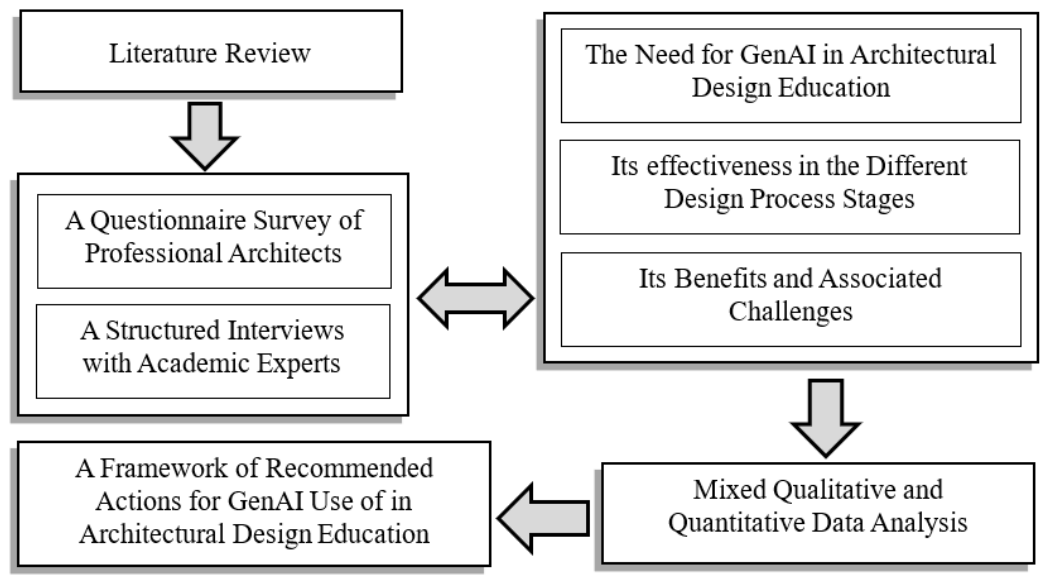
This study implemented two research methods: a questionnaire survey targeting practicing architects with varying levels of professional experience, and structured interviews with architecture professors from different universities. Both methods were conducted in parallel and were designed around the same organizing logic: the benefits, challenges, and pathways/recommendations associated with GenAI integration in architectural design education. The questionnaire captured architects’ perceptions of GenAI use in practice and education, while the interviews explored academic perspectives on similar issues. This parallel design enabled the triangulation of professional and academic viewpoints and supported the development of the proposed framework. The results from both methods were analyzed and triangulated using both qualitative and quantitative analysis techniques to enhance the validity of results. Figure 1 illustrates the methodology framework implemented in this study.
Figure 1.
Methodology framework.
The research methodology involved conducting a questionnaire survey among practicing architects currently working in Saudi Arabia, representing varying levels of professional experience. The survey aimed to explore their perceptions and views on the use of GenAI in architectural design, its potential effects on architects’ productivity and creativity, and the associated opportunities and risks. The feedback obtained from practitioners was essential for developing recommendations for GenAI utilization in architecture schools. The sample size was calculated considering a population size of 10,000 architects [42], a confidence level of 95%, and a margin of error of ±6%. This resulted in a required sample size of 260, which was achieved in this study [43].
The survey was distributed digitally using a Google Form through utilizing professional platforms such as LinkedIn, as well as through direct emails to architecture firms in Riyadh. The collected data were analyzed using Excel and Statistical Package for the Social Sciences (SPSS v.16.0) software. Cronbach’s Alpha was used to assess internal consistency data. The independent-sample t-test and ANOVA were used to compare the means of the different groups in this study. Additionally, the Relative Importance Index (RII) was calculated to rank the benefits and challenges of GenAI integration into the architectural design process. As for the structure of the questionnaire, it included four sections covering sample characteristics, the effectiveness of GenAI utilization across the different stages of the architectural design process, the potential benefits of GenAI integration, and the associated challenges. The questionnaire items were developed based on the main themes identified in the literature review. The questionnaire included closed-ended questions using a 5-point Likert scale, where responses ranged from 1 to 5.
The second phase involved conducting online one-to-one interviews through digital meeting platforms with architecture professors from various universities worldwide, as presented in Figure 2. The primary objective was to gather insights and recommendations on the integration of GenAI into architectural design education, and the related opportunities and challenges in this regard. A total of 18 interviews were conducted including 10 participants from the Middle East, 3 from North America, 2 from Europe, 2 from South and Southeast Asia, and one participant from Australia. The interviewees were selected to capture diverse academic perspectives rather than to provide proportional regional representation or support regional comparisons. The higher representation from the Middle East reflects participant accessibility. These experts were selected based on their knowledge, research contributions, and professional experience in architectural education, innovation, and utilization of AI. They occupy a variety of professorial ranks and academic leadership roles, and many of them serve as program directors. The interview questions were designed to explore the potential impact of GenAI on architectural design education. The same interview guide was used with all participants to maintain consistency, while follow-up questions were added when needed to clarify participants’ responses. The questions were developed from the main themes identified in the literature review and organized into four parts.
Figure 2.
The geographic distribution of the interviewees (circle size reflects number of interviewees).
The first part focused on understanding participants’ perspectives on the current role of AI in educational settings and its development over time. The second part was about the impact of GenAI on the different stages of the typical design process, highlighting where GenAI has the most noticeable impact. The third part explored how GenAI may influence the design process and student learning outcomes, particularly in relation to creativity, innovation, problem-solving, and productivity within studio-based learning. The final part of the interview addressed the potential challenges and ethical concerns involved in adopting GenAI in architecture programs, such as limited technical knowledge, lack of training, cost, and the risk of over-reliance on AI tools. Open-ended questions enabled valuable insights to be obtained during these interviews, while follow-up questions were added based on participants’ responses to investigate deeper into certain perceptions. The interviews were recorded and transcribed. The collected data were analyzed qualitatively to identify repeated themes and categorize the different views. Quantitative analysis was also carried out using frequencies and RII method.
4. Results
4.1. Questionnaire Analysis
4.1.1. Sample Characteristics
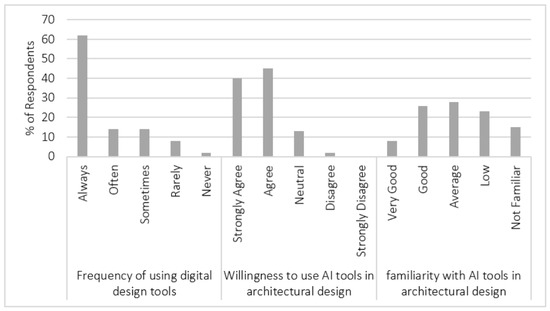
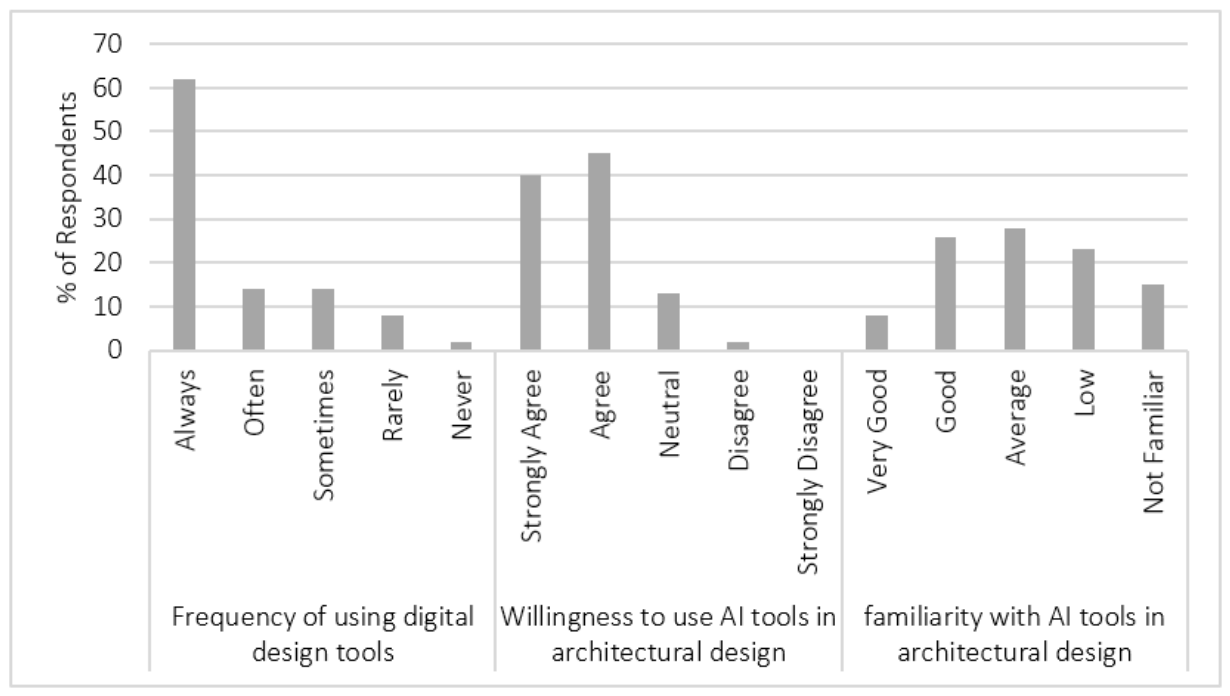
Table 2 presents the characteristics of the study sample, highlighting diversity in gender and years of professional experience. As presented in Figure 3, most participants regularly use digital design tools. Regarding the willingness to use AI, the results demonstrated a positive attitude toward the use of AI-based tools in architectural design, with 85% of respondents agreeing to use them currently or in the future. In addition, the results indicated a moderate level of familiarity with AI tools among participants. As for familiarity with AI tools in architectural design, 8% of the respondents rated it as very good. Conversely, 15% indicated that they are unfamiliar with AI tools and were therefore directed to the end of the questionnaire. The remaining respondents reported good, average, and low levels of familiarity, accounting for 26%, 28%, and 23% of the sample, respectively.
Table 2.
Characteristics of the study sample.
Figure 3.
Respondents’ familiarity with digital and AI design tools.
4.1.2. The Need for GenAI Utilization in Architectural Design Education
The results showed that respondents in general agree that GenAI should be incorporated into architectural design education, where the weighted mean of their agreement on this statement was 4.03 out of 5.0. However, they did not accept the notion that it should fully replace the traditional design methods adopted in architecture schools, as the weighted mean of their agreement on this statement was 2.24. Alternatively, they accepted the notion that the integration of GenAI into architectural design education should observe a balance between the traditional design methods and the emerging AI ones. The respondents agreed that this requires a substantial update of the traditional design process followed in the design studio courses as many design tasks could be automated. It also requires continuous training of faculty members on AI tools and technologies. Weighted means of these two recommendations were 3.75 and 4.34 out of 5.0, respectively.
4.1.3. Effectiveness of GenAI Utilization in the Different Stages of Architectural Design Process
As presented in Table 3, the highest agreement level was given to the conceptual design stage (4.22 out of 5.0). This suggests that participants recognize GenAI’s potential to foster creativity during the early design phases, where innovative design concepts and alternatives could be generated. The use of GenAI in the design production stage for rendering, design refining, and presentation was ranked second, reflecting the growing acceptance of GenAI visualization tools in enhancing the presentation quality of architectural projects. This was followed by the pre-design analysis stage, which serves as a preparatory stage for data collection and analysis. While these top three stages received similarly high evaluations (above 4.0 out of 5.0), the design development stage lagged behind with a weighted mean of 3.60. This suggests that respondents believe that GenAI utilization in this stage is less effective and technically developed.
Table 3.
Respondents’ agreement level on the effectiveness of GenAI utilization in the different design stages of architectural design process.
4.1.4. Benefits and Challenges of GenAI Integration into Architectural Design
This section identifies and ranks the benefits and challenges of GenAI integration into architectural design from the respondents’ viewpoint (Table 4). Reliability analysis using Cronbach’s Alpha was conducted first to assess the internal consistency of the questionnaire sections related to respondents’ perception of AI benefits and challenges. This test examines the covariance among perception items relative to the total variance. A high reliability (α = 0.83) was observed in respondents’ perception of AI benefits, while an acceptable one (α = 0.70) was observed in respondents’ perception of the challenges associated with AI use in architectural design.
Table 4.
Benefits and challenges of GenAI integration into architectural design from the respondents’ viewpoint.
As for the benefits, the results showed that the highest agreement level was given to time saving and productivity enhancement, which scored an agreement weighted average of 4.31 out of 5.0. This was followed by the advantage of exploring more innovative design variations, which helps improve design aesthetics (4.10 out of 5.0). This leads to the third benefit, which is fostering creativity and innovation (4.06 out of 5.0). On the other hand, lower agreement levels were observed in the following suggested benefits: optimization of design functionality (3.63), and enhancement in teamwork collaboration (2.88). The latter issue is the only one that received an agreement level below 3.0, indicating respondents’ disagreement, and therefore was ranked the last. This indicates that there is an uncertainty about GenAI’s impact on communication and collaboration skills among architects, which requires an in depth investigation on how to properly integrate GenAI into the design process without compromising the need for teamwork and collaboration.
As for challenges, the most significant challenge identified by the respondents is the lack of AI-related knowledge and training, which scored 4.09 out of 5.0. This was followed by the absence of clear regulations and guidelines for GenAI use (3.94) and the resistance to change among stakeholders (3.61). The fear of job loss was almost on the mid-scale, which indicates some concern among architects. The high cost of GenAI tools scored the lowest agreement weighted average (2.79). This was the only issue that received an agreement level below 3.0, indicating respondents’ disagreement, and therefore was ranked the last. This shows that while financial constraints exist, they may not be the primary barrier to GenAI adoption in architectural design.
To compare the means of the different groups, the independent-sample t-test was conducted to examine the impact of gender on respondents’ agreement level on the benefits and challenges of GenAI utilization in architectural design. A statistically significant difference at α ≤ 0.05 was observed between male and female respondents only in the case of challenges. As presented in Table 5, the mean agreement levels of male and female respondents were 3.57 and 3.39, respectively, suggesting that females tend to have a slightly more positive perception of GenAI integration into architectural design. ANOVA test was also conducted to examine the influence of educational level and work experience on respondents’ agreement level on the benefits and challenges of GenAI utilization in architectural design. A significant difference was identified only in GenAI benefits based on work experience, with more experienced professionals viewing GenAI more positively. Further analysis using the Tukey HSD test revealed that those with nine or more years of experience reported higher perception of GenAI benefits compared to those with less than 3 years of experience (mean difference = 0.40, p-value = 0.006).
Table 5.
The independent-sample t-test to compare the average agreement level of male and female respondents about the benefits and challenges of GenAI use in architectural design.
4.2. Interviews with Experts
4.2.1. The Need for GenAI Utilization in Architectural Design Education
There is a consensus among the 18 interviewees that GenAI is rapidly evolving, transitioning from a specialized tool to a core component of architectural design education. However, the extent of GenAI’s integration and its future trajectory remains a subject of debate. One interviewee mentioned that: “AI was initially viewed negatively, with many educators considering its use equivalent to academic dishonesty. However, AI is now more widely accepted, and students increasingly give credit to AI-generated contributions.” On the other hand, about one third of the interviewees argued that AI is still in an exploratory phase, and further structured research is required before it can be fully integrated into architectural education.
In addition, the respondents recognized the potential of GenAI to transform teaching and learning. Most of them (83%) observed a clear shift in pedagogical approaches, where GenAI has become a valuable design tool in architecture that is widely available. They also anticipated a deeper integration of GenAI into architectural design curricula, predicting it will become a core competency for future architects. However, they also emphasized the need for guided implementation to ensure meaningful learning experience and outcomes. While it holds a significant promise, its integration is still in progress and lacks a well-defined, standardized framework. One interviewee predicted that “A shift from tool-centric applications to methodology-driven approaches is needed, where AI supports human creativity rather than replacing it.”
4.2.2. Effectiveness of GenAI Utilization in the Different Stages of Architectural Design Process
As presented in Table 6, the conceptual design stage was ranked the highest, with almost all interviewees supporting AI use in this stage. The least supported stage was the design development stage, with about 39% of interviewees supporting AI use in this stage. One interviewee pointed out that: “Utilizing of the GenAI tools in later design stages, such as design development and design production, is more sophisticated and requires more experience, advanced technical knowledge, higher costs, and more advanced technology”.
Table 6.
Interviewees’ responses on which stage of the design process the GenAI tools have the most significant impact.
Interviewees’ responses indicated different views on the stages in which GenAI could be most effectively used. Overall, GenAI was most frequently associated with the early and exploratory stages of the architectural design process, particularly pre-design analysis and conceptual design, where it can support data collection, precedent analysis, ideation, visualization, and the rapid exploration of design alternatives. Some interviewees also suggested that GenAI could be used across all design stages, including design development and final presentation, especially for idea testing, rendering, and generating multiple alternatives. However, others preferred limiting GenAI use to later stages, allowing students to first develop their ideas through manual sketching before using AI-powered tools to refine and enhance their designs. This approach may support a balanced integration of manual and digital design skills, although it requires more experience and advanced technical knowledge due to the complexity of GenAI tools used in later design stages.
4.2.3. Benefits of GenAI Utilization in Architectural Design Education
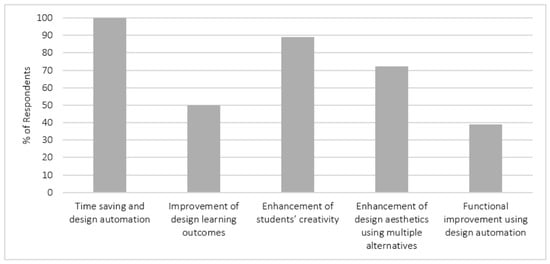
Most participants agreed that GenAI positively influence the architectural design education by saving time, enhancing creative ideation, and supporting rapid design production as presented in Figure 4. The first benefit highlighted by the interviewees was time saving. Interviewees agreed unanimously that GenAI tools effectively accelerate the architectural design process leading to a significant time saving. One interviewee noted that: “Interviewees suggested that GenAI can help students generate multiple design concepts and explore different ideas within a short time, thereby enhancing the efficiency and speed of the design process. Rather than spending excessive time on manual processes, students can focus more on developing their ideas, allowing for more time on critical positioning of their work.” AI helps students quickly collect data, compare and analyze information, and highlight key aspects of design tasks, allowing for more focus on creativity and critical thinking. The design iteration process may also be extended to enable faster analysis of spatial configurations, materials, and sustainability, enabling more data-driven design decisions.
Figure 4.
Interviewees’ responses on the benefits of GenAI utilization in architectural design education.
In addition, half of the interviewees added the benefit of enhancing learning outcomes and students’ performance. Interviewees emphasized that GenAI, when combined with traditional methods, deepens students’ understanding of the design rationale and processing. This requires a structured guidance and clear educational frameworks. As a direct result of this benefit, most interviewees (about 90%) stated that AI enhances creativity by enabling quick iterations and opening new possibilities in the design process. As one interviewee explained: “AI enhances human creativity, giving them more chances to improve imagination, and rapidly materialize conceptual possibilities that might otherwise remain unexplored”.
Moreover, about two-thirds of the interviewees highlighted the benefit of exploring more innovative design variations, which could effectively enhance design aesthetics. Offering numerous design alternatives could enhance students’ design thinking and allow them to develop more advanced and innovative concepts. GenAI tools can be used for visual representation, such as sketch-to-render or model-to-render processes, which significantly compresses visualization workflow. Finally, around half of the interviewees noted that GenAI is increasingly seen as a powerful tool for optimizing design functionality in architectural education. GenAI enables students to analyze and refine their work more effectively by offering feedback on the architecture design and performance evaluations based on pre-defined criteria. This helps students make informed and functionally sound design decisions. One interviewee said that: “AI-powered programs have the potential to become a fundamental part of project evaluation by enabling analysis of different design aspects”.
4.2.4. Challenges Associated with the Utilization of GenAI in Architectural Design Education
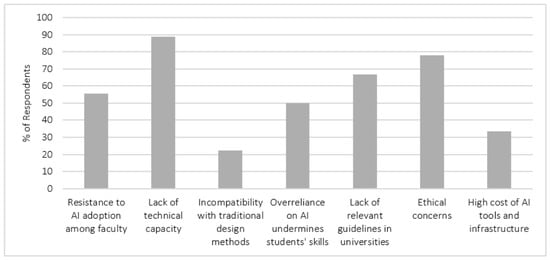
As presented in Figure 5, one main challenge in this regard is the resistance to GenAI utilization among faculty, which was pointed out by about half of the interviewees. They emphasized that ignoring AI is not an option, and it is professors’ responsibility to adapt their teaching and evaluation methods to benefit from these disruptive technologies rather than resisting them. The most frequently cited challenge in the interviews was the lack of technical knowledge and GenAI-focused training among educators, which was mentioned by 90% of the interviewees. The interviewees emphasized the need for qualified faculty members who can guide students through the complexities of GenAI. From their perspective, there is a growing gap between educators and students that may hinder the effective integration of GenAI tools into architectural education. One interviewee stated that: “The most significant challenge would be educating educators so that they can effectively evaluate the AI-assisted work presented by students. However, they must first be convinced that AI has a positive impact on architecture and architectural education”.
Figure 5.
Interviewees’ responses on the challenges associated with GenAI utilization in architectural design education.
Incompatibility of GenAI tools with the traditional design methods is another challenge that was raised by about a quarter of the interviewees. One interviewee mentioned that “Students who rely heavily on AI-generated images often struggle to translate their designs into tangible, buildable models, suggesting a fundamental gap between traditional methods and new AI-generated techniques.” Another common challenge is the impact of GenAI use on students’ creative and critical thinking skills. Half of the interviewees mentioned that excessive reliance on GenAI may hinder students’ cognitive skills, including problem solving and independent exploration and experimentation, which requires further investigation. To mitigate this, one interviewee suggested that students should be trained to critically evaluate GenAI outputs, encouraging active engagement rather than passive acceptance. Another suggestion was to avoid GenAI utilization at the early levels of education. If GenAI tools are introduced at the early stages of education prior to the required architectural fundamentals, they may negatively impact their creativity by providing solutions without a strong foundational understanding. About two-thirds of the interviewees expressed the need for clear AI regulations and guidelines to govern the use of AI in education. Universities must take responsibility for establishing clear guidelines on AI ethical use and best practices.
Ethical challenges were also raised by about 80% of the interviewees, particularly the issues of intellectual property, academic integrity, and responsible deployment of GenAI tools. Students should also learn how to properly declare in their project submissions whether AI tools were used or not. Another risk in this regard is data bias, which was raised by half of the interviewees. They mentioned that they have noticed a bias that skews knowledge toward specific perspectives, creating a gap that needs to be addressed. Finally, the issue of cost was raised by about third of the interviewees. Although several GenAI tools available for free or at affordable cost, advanced tools may not be available for all. In addition, transformation towards AI-friendly teaching environment including the design studio incurs some cost for educational infrastructure development. This could significantly restrict access to advanced and effective AI tools, particularly in the developing regions.
5. Discussion
5.1. Summary and Comparison of Findings
This section summarizes and compares the questionnaire and the interview findings. In this context, it should be noted that students were not direct participants in the empirical data collection of the present study. Therefore, references to students in the present manuscript mainly reflect the perceptions of practicing architects and interviewed faculty members. To broaden the discussion and provide a complementary student perspective, the findings are discussed in relation to a previously published student-focused study by the authors [44]. In general, the findings from the questionnaire and the interview strongly support the need to integrate GenAI into architectural design education and the conclusion that resisting this disruptive technology is no longer acceptable. A high agreement level among architects (4.03 out of 5) was observed in this regard. There was also a consensus among the interviewees that GenAI is rapidly transitioning to a core component of architectural design education.
As for the effectiveness of GenAI utilization in the different stages of the architectural design process, Table 7 compares the viewpoints of surveyed practicing architects and faculty members. It indicates that the conceptual design stage received the highest rank in both cases, suggesting that this phase is widely perceived as the most suitable and impactful for integrating GenAI in the architectural design process. This may be related to the availability of multiple conceptual design tools that fit the design needs of this stage. However, another approach identified in the interview was that GenAI use is better placed in the later design stages, so that students could start developing their ideas through sketching and then utilize AI-powered digital tools to further refine and enhance their designs. This approach has the advantage of integrating manual and digital design methods and therefore deserves further investigation. Conversely, the design development stage was ranked last in both research methods. This suggests that participants view design tasks in this stage as less compatible with the technical development of GenAI tools. This includes detailed technical and spatial decisions that need refinement by the design team. The second and third ranks were assigned to the pre-design analysis and design production stages, with a disagreement between practicing architects and faculty members over which stage is more appropriate for GenAI use. The architects believe that the use of GenAI in the design production stage is more needed in the job market, while the faculty members believe that pre-design data collection is more important.
Table 7.
Respondents’ ranking of the effectiveness of GenAI utilization in the different design stages of the architectural design process.
As for the benefits and challenges of GenAI utilization in architectural design, Table 8 shows the findings of the questionnaire and interviews. Regarding the benefits, both groups ranked time saving and productivity enhancement first. This finding should not be understood only as a matter of completing design tasks faster. Rather, it suggests a potential shift in how time is distributed within the architectural design process. By accelerating data collection, precedent analysis, visualization, and the generation of multiple conceptual alternatives, GenAI may allow students and educators to allocate more time to interpretation, critical evaluation, design refinement, and decision-making. In this sense, productivity enhancement is not limited to efficiency, but also relates to expanding the range of explored design options and supporting more iterative design thinking. This interpretation helps explain why GenAI was perceived as particularly effective in the conceptual design stage, where rapid exploration and comparison of alternatives are central to the learning process. Optimization of design functionality ranked lowest in both methods, possibly due to the limited efficiency of the available GenAI tools in this regard.
Table 8.
Respondents’ ranking of the common benefits and challenges of GenAI integration into architectural design education.
As for the challenges, there is an agreement between the surveyed practicing architects and faculty members in their rankings of the four identified common challenges. The most pressing challenge was the lack of technical knowledge and training in AI in general and in the use of GenAI in architectural design. This highlights the urgent need for multi-level training programs to develop the skills of both educators and students. The absence of clear guidelines and policies was ranked second, highlighting the need to develop such guidelines to ensure the ethical and appropriate use of AI. The third and fourth ranks were given to resistance to change and the high cost of the required AI infrastructure.
5.2. A Proposed Framework for GenAI Integration into Architectural Design Education
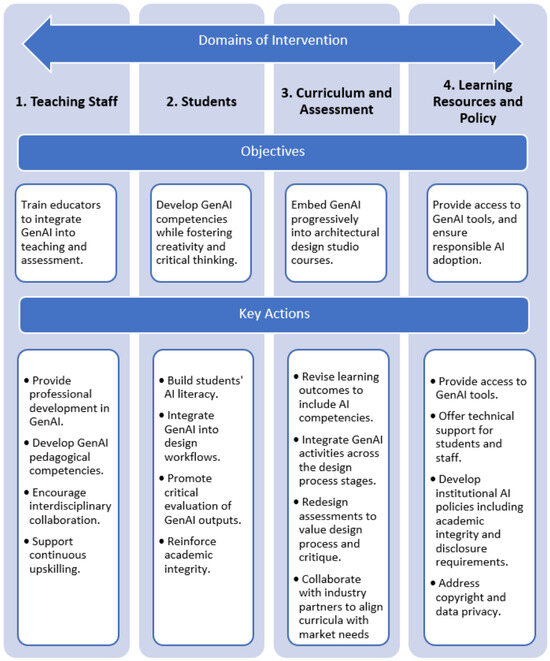
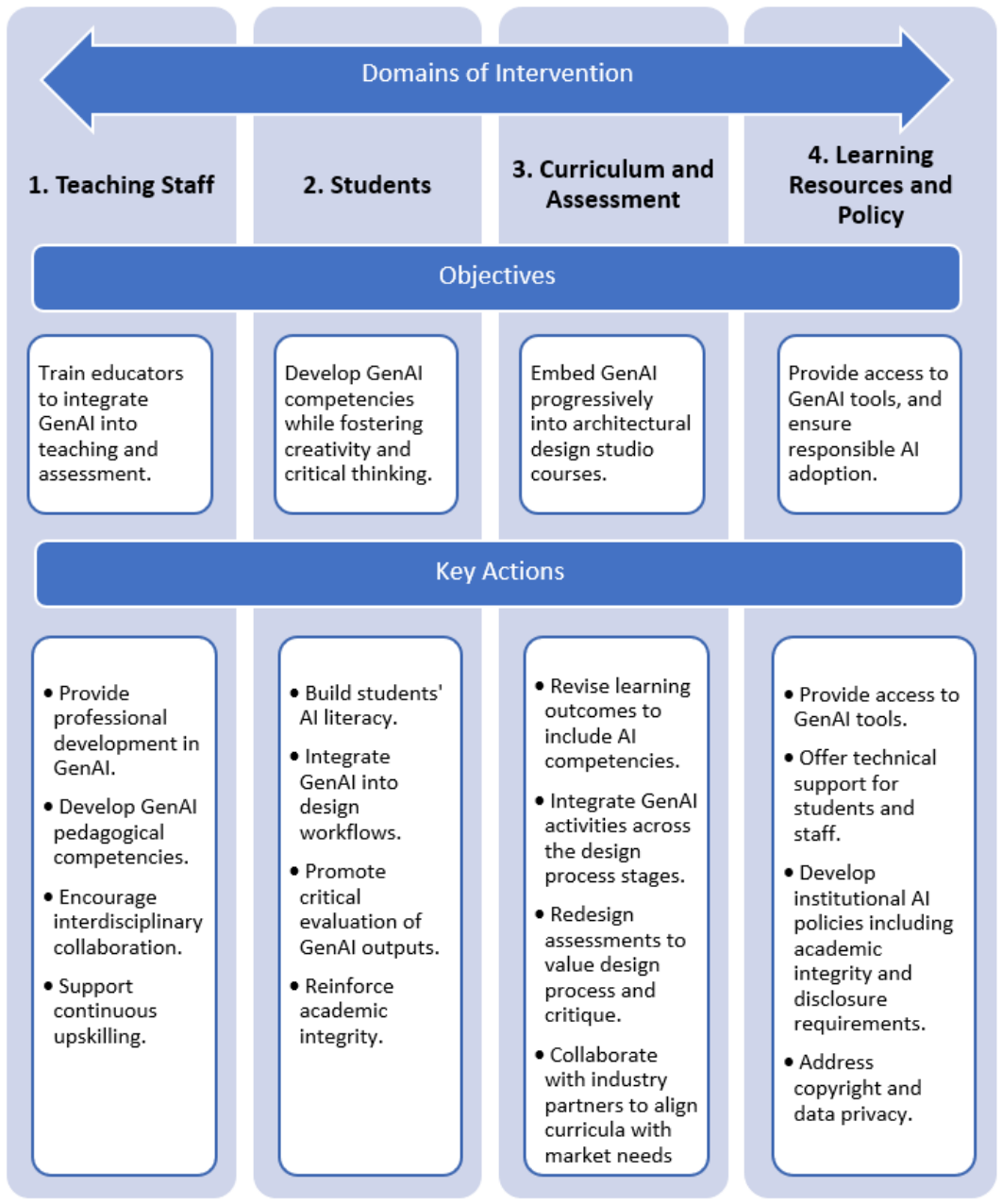
The recommendations concluded from this study were used to propose an intervention framework to guide educators on how to effectively integrate GenAI into architectural design education. Existing studies have addressed GenAI in architectural design education from different but often partial perspectives. Some studies focused on specific tools or applications, such as text-to-image generation, sketch-to-3D transformation, ideation, visualization, or pre-design analysis [31,33,40,41]. Others discussed broader transformations in design practice, authenticity, human–AI collaboration, or the pedagogical potential of AI in design studios [24,30,38]. While these contributions are valuable, many of them remain focused on particular tools, isolated design stages, or general educational implications. The proposed framework extends these contributions by providing a holistic overview that is structured around four interconnected dimensions: teaching staff, students, curriculum and assessment, and learning resources and policy, as presented in Figure 6.
Figure 6.
A proposed framework to facilitate GenAI integration into architectural design education.
In this way, the framework responds directly to the research question by explaining not only the opportunities and challenges of GenAI, but also how architecture schools can structure their responsible integration within the design studio context. The framework emphasizes equipping educators with the pedagogical knowledge and technical competencies needed to integrate GenAI into teaching, assessment, and interdisciplinary collaboration through continuous professional development. It also focuses on developing students’ AI literacy by embedding GenAI into design workflows while fostering critical thinking, ethical decision-making, and academic integrity. At the curriculum level, the framework highlights the need for a progressive incorporation of AI competencies across design studios considering the different needs at the different stages of architectural design process. This should be supported by assessment strategies that prioritize design processes and reflective practice rather than final design outputs. Finally, it highlights the importance of providing equitable access to GenAI tools, prompt libraries, and technical support, alongside institutional policies addressing academic integrity, transparency, copyright, and data privacy, thereby creating a supportive and ethically responsible learning environment for AI-enhanced architectural education.
6. Conclusions
This study investigated the potential benefits, challenges, and implications of the integration of GenAI into architectural design education considering its importance in the different design stages. This study employed a mixed-method approach to investigate respondents’ perception in this regard using a questionnaire survey of practicing architects and structured interviews with faculty members in the field of architecture. The findings support the notion that a substantial shift from traditional studio-based methods to GenAI-enhanced approaches is expected in the near future, which necessitates some fundamental pedagogical changes. However, a clear gap remains in understanding how to apply these approaches in the architectural design studios at the various stages of the design process, which requires future in-depth investigation. Additionally, the long-term impacts of GenAI tools on students’ skills, such as problem-solving skills, requires further investigation as well.
The findings from the questionnaire and interviews collectively indicated a growing acceptance and recognition of GenAI role in architectural design among educators, students, and architects. The highest impact of GenAI effective utilization in the design studio was seen by experts and architects in the conceptual design phase. They also agreed that GenAI utilization in the design development stage is least influential due to the limited availability of tools that could offer the required technical refinement of design in this stage. An alternative approach emerging from the interviews suggested that GenAI is more effective when introduced in the later stages of the design process, allowing students to begin with manual sketching to develop their ideas before using AI tools to refine and enhance their designs, which promotes a balanced integration of traditional and digital design methods.
As for the benefits and challenges of using GenAI in architectural design, the findings from both the questionnaire and interviews indicated that the most highly ranked benefits were time saving and productivity enhancement. This benefit is not limited to faster task completion; it also reflects the potential of GenAI to enable faster exploration of alternatives and to allow for more time for critical evaluation and design refinement. Conversely, optimizing design functionality was seen as the least significant benefit. Regarding challenges, both groups identified a lack of technical knowledge and training as the most critical issue, followed by the absence of clear guidelines, resistance to change, and the high cost of AI infrastructure. Several interventions are needed to address these challenges, including conducting structured training programs for faculty members, developing clear guidelines on the ethical use of GenAI, and updating teaching methods to integrate GenAI with traditional design methods, where educators should foster a culture of inquiry, experimentation, and ethical responsibility. The main contribution of the proposed framework is that it translates the findings into studio-specific requirements for GenAI integration, rather than presenting general recommendations for AI use in higher education. The uneven geographical distribution of the interviewees is a limitation of this study, and future research may consider a more geographically balanced sample.
Author Contributions
Conceptualization, R.A. and O.S.A.; methodology, R.A. and O.S.A.; formal analysis, R.A.; investigation, R.A.; resources, R.A. and O.S.A.; writing—original draft preparation, R.A. and O.S.A.; writing—review and editing, R.A. and O.S.A. All authors have read and agreed to the published version of the manuscript.
Funding
This study received no funding.
Institutional Review Board Statement
This study was conducted in accordance with the Declaration of Helsinki, and the protocol was approved by the Institutional Review Board (IRB) at King Fahd University of Petroleum and Minerals (KFUPM) (Ref. IRB-KFUPM-2025-003) on [10 September 2025].
Informed Consent Statement
Informed consent for participation was distributed to all participants and signed.
Data Availability Statement
Data available on request due to privacy restrictions.
Conflicts of Interest
The authors declare no conflicts of interest.
References
- Tripathi, S. Artificial Intelligence: A Brief Review. In Analyzing Future Applications of AI, Sensors, and Robotics in Society; Musiolik, T., Cheok, A., Eds.; IGI Global Scientific Publishing: Hershey, PA, USA, 2021; pp. 1–16. [Google Scholar] [CrossRef] [Scilit]
- Bordas, A.; Le Masson, P.; Thomas, M.; Weil, B. What is generative in generative artificial intelligence? A design-based perspective. Res. Eng. Des. 2024, 35, 427–443. [Google Scholar] [CrossRef] [Scilit]
- Kılınç, H.K.; Keçecioğlu, Ö.F. Generative artificial intelligence: A historical and future perspective. Acad. Platf. J. Eng. Smart Syst. 2024, 12, 47–58. [Google Scholar] [CrossRef] [Scilit]
- Ilyas, M. Emerging role of artificial intelligence. J. Syst. Cybern. Inform. 2022, 20, 58–65. [Google Scholar] [CrossRef] [Scilit]
- Long, D.; Magerko, B. What is AI literacy? Competencies and design considerations. In Proceedings of the 2020 CHI Conference on Human Factors in Computing Systems (CHI ’20), Honolulu, HI, USA, 25–30 April 2020; Association for Computing Machinery: New York, NY, USA, 2020; pp. 1–16. [Google Scholar] [CrossRef] [Scilit]
- Martinez-Maldonado, R.; van Leeuwen, A.; Swiecki, Z. Artificial intelligence techniques for supporting face-to-face and online collaborative learning. In Sociology, Social Policy and Education 2023; Wasson, B., Ludvigsen, S., Hoppe, U., Eds.; Edward Elgar Publishing: Cheltenham, UK, 2023; pp. 422–439. [Google Scholar] [CrossRef] [Scilit]
- Ceylan, S. Adapting sustainability and energy efficiency principles to architectural education: A conceptual model proposal for the design studio sequence. E3S Web Conf. 2021, 329, 01070. [Google Scholar] [CrossRef] [Scilit]
- Cooper, G. Examining science education in ChatGPT: An exploratory study of generative artificial intelligence. J. Sci. Educ. Technol. 2023, 32, 444–452. [Google Scholar] [CrossRef] [Scilit]
- Chen, L.; Chen, P.; Lin, Z. Artificial intelligence in education: A review. IEEE Access 2020, 8, 75264–75278. [Google Scholar] [CrossRef] [Scilit]
- Canestrino, G. Considerations on optimization as an architectural design tool. Nexus Netw. J. 2021, 23, 919–931. [Google Scholar] [CrossRef] [Scilit]
- Salama, A.M. Spatial Design Education: New Directions for Pedagogy in Architecture and Beyond, 1st ed.; Routledge: Abingdon, UK, 2015. [Google Scholar] [CrossRef] [Scilit]
- Szewczenko, A.; Widzisz-Pronobis, S. Implementing inclusive design in architectural education and design practice. IOP Conf. Ser. Mater. Sci. Eng. 2020, 960, 022015. [Google Scholar] [CrossRef] [Scilit]
- Milošević, J. Implementing a blended design studio model in architectural engineering education. Int. J. Eng. Educ. 2021, 37, 1300–1312. [Google Scholar]
- Desouki, M.A.; Elboshy, B.; Desouki, M.; Salah, A.; Shiba, E. An effective architectural criticism teaching framework link and enhance design skills. Adv. Eng. Sci. 2022, 54, 1595–1605. [Google Scholar] [CrossRef]
- Shi, Y.; Xu, C.; Xu, Y. Research on the practice of the new education mode reform based on the teaching of architectural design course and the thinking of future architectural education. Nanotechnol. Environ. Eng. 2021, 6, 49. [Google Scholar] [CrossRef] [Scilit]
- Grover, R.; Wright, A. Shutting the studio: The impact of the Covid-19 pandemic on architectural education in the United Kingdom. Int. J. Technol. Des. Educ. 2023, 33, 1173–1197. [Google Scholar] [CrossRef] [Scilit] [PubMed]
- Mahmoud Saleh, M.; Abdelkader, M.; Sadek Hosny, S. Architectural education challenges and opportunities in a post-pandemic digital age. Ain Shams Eng. J. 2023, 14, 102027. [Google Scholar] [CrossRef] [Scilit]
- Kalota, F. A Primer on generative artificial intelligence. Educ. Sci. 2024, 14, 172. [Google Scholar] [CrossRef] [Scilit]
- Alamasi, R.; Asfour, O.S. Applications of Generative AI in Architectural Design Education: A Systematic Review and Future Insights. Digital 2026, 6, 6. [Google Scholar] [CrossRef] [Scilit]
- Ceylan, S. Artificial intelligence in architecture: An educational perspective. In Proceedings of the 13th International Conference on Computer Supported Education—Volume 1: CSEDU, Virtual Event, 23–25 April 2021; SciTePress: Setúbal, Portugal, 2021; pp. 100–107. [Google Scholar] [CrossRef] [Scilit]
- Khogali, H.A. The effect of applying artificial intelligence in architecture college developing design process. J. Sustain. Dev. 2024, 17, 35–49. [Google Scholar] [CrossRef] [Scilit]
- Kee, T.; Kuys, B.; King, R. Generative Artificial Intelligence to Enhance Architecture Education to Develop Digital Literacy and Holistic Competency. J. Artif. Intell. Archit. 2024, 3, 24–41. [Google Scholar] [CrossRef] [Scilit]
- Rane, N. Potential role and challenges of ChatGPT and similar generative artificial intelligence in architectural engineering. Int. J. Artif. Intell. Mach. Learn. 2023, 4, 22–47. [Google Scholar] [CrossRef] [Scilit]
- Cudzik, J.; Nyka, L. Artificial intelligence in architectural education—Green campus development research. Glob. J. Eng. Educ. 2024, 26, 20–25. [Google Scholar]
- Rafsanjani, H.; Nabizadeh, A.H. Towards human-centered artificial intelligence (AI) in architecture, engineering, and construction (AEC) industry. Comput. Hum. Behav. Rep. 2023, 11, 100319. [Google Scholar] [CrossRef] [Scilit]
- Borglund, C. Artificial Intelligence in Architecture and Its Impact on Design Creativity: A Study on How Artificial Intelligence Affects Creativity in the Design Process; KTH Royal Institute of Technology: Stockholm, Sweden, 2022. [Google Scholar]
- Sukkar, A.W.; Fareed, M.W.; Yahia, M.W.; Mushtaha, E.; de Giosa, S.L. Artificial intelligence Islamic architecture (AIIA): What is Islamic architecture in the age of artificial intelligence? Buildings 2024, 14, 781. [Google Scholar] [CrossRef] [Scilit]
- Hegazy, M.; Saleh, A. Evolution of AI role in architectural design: Between parametric exploration and machine hallucination. MSA Eng. J. 2023, 2, 262–288. [Google Scholar] [CrossRef] [Scilit]
- Karadag, I.; Yıldız, A. Artificial intelligence in architecture: Innovations, challenges, and ethical considerations. In Making Art with Generative AI Tools; Hai-Jew, S., Ed.; IGI Global Scientific Publishing: Hershey, PA, USA, 2024; pp. 215–225. [Google Scholar] [CrossRef] [Scilit]
- Ayman, A.; Mansour, Y.; Eldaly, H. Generative vs. non-generative AI: Analyzing the effects of AI on the architectural design process. Eng. Res. J. 2024, 53, 119–128. [Google Scholar] [CrossRef] [Scilit]
- Li, P.; Li, B.; Li, Z. Sketch-to-architecture: Generative AI-aided architectural design. In Proceedings of Pacific Graphics 2023, Huangshan, China, 13–16 October 2024; The European Association for Computer Graphics: Goslar, Germany, 2024. [Google Scholar] [CrossRef] [Scilit]
- Zwangsleitner, F.; Habjanič, G.; Knegendorf, A. AI as a Tool in the Landscape Architecture Design Process. J. Digit. Landsc. Archit. 2024, 2024, 987–994. [Google Scholar] [CrossRef]
- Cheung, L.H.; Wang, L.; Lei, D. Conversational, agentic AI-enhanced architectural design process: Three approaches to multimodal AI-enhanced early-stage performative design exploration. Archit. Intell. 2025, 4, 10. [Google Scholar] [CrossRef] [Scilit]
- Rodriguez, J.K.C.; Arzapalo Yali, J.B.; Montoya Torres, V.S. Technology and architecture: Impact of artificial intelligence and virtual reality on the perception of architectural design. Civ. Eng. Archit. 2025, 13, 637–652. [Google Scholar] [CrossRef] [Scilit]
- Belaroussi, R.; Martín-Gutierrez, J. Architectural ambiance: ChatGPT versus human perception. Electronics 2025, 14, 2184. [Google Scholar] [CrossRef] [Scilit]
- Braiden, H.; Chamberlain, B.; George, B.H.; Fernberg, P. AI in Practice: Professional Survey Findings from Landscape Architects in North America. J. Digit. Landsc. Archit. 2025, 2025, 626–633. [Google Scholar] [CrossRef]
- El Moussaoui, M. Architectural practice process and artificial intelligence—An evolving practice. Open Eng. 2025, 15, 20240098. [Google Scholar] [CrossRef] [Scilit]
- Asfour, O.S. How Artificial Intelligence Could Affect the Future of Architectural Design Education. In Proceedings of the 8th International Conference on Green Urbanism, Sapienza University, Rome, Italy, 7–9 October 2024; Resourceedings: Alexandria, Egypt, 2024; Volume 4, pp. 1–5. [Google Scholar] [CrossRef] [Scilit]
- Çınar Kalenderoğlu, S.; Demiröz, M. Integrating Text-to-Image AI in Architectural Design Education: Analytical Perspectives from a Studio Experience. J. Des. Studio 2024, 6, 247–258. [Google Scholar] [CrossRef] [Scilit]
- Montenegro, N. Integrative analysis of Text-to-Image AI systems in architectural design education: Pedagogical innovations and creative design implications. J. Archit. Urban. 2024, 48, 109–124. [Google Scholar] [CrossRef] [Scilit]
- Paananen, V.; Oppenlaender, J.; Visuri, A. Using text-to-image generation for architectural design ideation. Int. J. Archit. Comput. 2024, 22, 458–474. [Google Scholar] [CrossRef] [Scilit]
- Alyaum. Architects in Saudi Arabia. 2022. Available online: https://www.alyaum.com/articles/6412459 (accessed on 30 July 2025). (In Arabic)
- ABS (Australian Bureau of Statistics). Sample Size Calculator. 2024. Available online: https://www.abs.gov.au/websitedbs/D3310114.nsf/home/Sample+Size+Calculator (accessed on 1 February 2025).
- Alamasi, R.; Asfour, O.S.; Ashmeel, R. The impact of generative AI on architectural design education: Insights from hands-on experience with architecture students. Ain Shams Eng. J. 2026, 17, 103879. [Google Scholar] [CrossRef] [Scilit]



Disclaimer/Publisher’s Note: The statements, opinions and data contained in all publications are solely those of the individual author(s) and contributor(s) and not of MDPI and/or the editor(s). MDPI and/or the editor(s) disclaim responsibility for any injury to people or property resulting from any ideas, methods, instructions or products referred to in the content. |
© 2026 by the authors. Licensee MDPI, Basel, Switzerland. This article is an open access article distributed under the terms and conditions of the Creative Commons Attribution (CC BY) license.