


Abstract
This article explores how fashion, as a culture-intensive industry, can act as a testbed for ecosystem-centred sustainability transitions. Building on debates on the Triple Transition (green, digital, resilience) and the four pillars of sustainability (environmental, social, economic, cultural), the study addresses a theoretical and methodological gap: while transition agendas and sustainability frameworks are well developed at policy and conceptual levels, there is limited empirical integration of these frameworks into design-oriented methods capable of guiding situated organisational decisions in fashion and cultural and creative industries. It proposes a design- and futures-driven methodology that combines intuitive-logics scenario building, horizon scanning and a customised three-axis Polar Map. The Polar Map translates the Triple Transition into three composite orientations: Bios, Techné and Resilience, used to structure four narrative scenarios applied to the fashion ecosystem: Trailblazing Agency, Other-than-Human Agency, Constructive Agency and Normative Agency. Each scenario assembles concepts, weak signals and case examples into plausible configurations of the fashion value chain and its ecosystem. The results show how these scenarios act as meta-narratives, orienting devices and boundary objects that support futures literacy, make the cultural and intangible consequences of design decisions explicit and reveal interdependencies across value chains. Conceptually, the work operationalises combined transitions and the four pillars of sustainability in a flagship CCI; methodologically, it advances a design-oriented adaptation of scenario practices; and practically, it offers organisations narrative tools to rehearse ecosystem-centred innovation pathways. The conclusion reflects on structural constraints and methodological directions for further hybridisation within foresight methods.
1. Introduction
Changes in our current social, cultural and environmental context evidence the need for a sustainable way of life, where design and its creative power are important innovation drivers. Typically design-oriented, companies in creative industries are responsible for envisioning and channelling future scenarios. Within design, fashion stands out as a consolidated cultural and creative industry (CCI) that organises large parts of contemporary everyday life through products, images and narratives [1,2,3]. As a CCI [4], it contributes to cultural ecosystems where multiple actors co-produce artefacts, services and strategies [5]. Yet, dominant business models remain strongly consumer-oriented and self-referential, concentrating innovation and communication on tightly curated brand–consumer experiences across physical and digital channels [6,7]. In this configuration, the wider constellation of actors, infrastructures and territories that sustain fashion, from globalised supply chains to local manufacturing and logistics networks, remains largely invisible as a shared field of design and innovation, despite evidence that most environmental and social impacts occur along these distributed value chains [6,8,9].
Sustainability agendas in fashion are often framed through greener products, efficiency measures and more responsible consumption choices, leaving relatively untouched the relational patterns that connect brands, suppliers, logistics providers, digital platforms, financial actors, cities and regions. Global reports on textiles and apparel underline how systemic issues such as supply chain opacity, structural overproduction and land-use impacts cannot be addressed by product-focused interventions alone [7,8]. At the same time, cultural analyses highlight how fashion normalises resource-intensive lifestyles and aspirational narratives across social and digital spaces [10,11]. This misalignment between ambitious sustainability discourses and persistent structural arrangements opens a space for rethinking how fashion relates to wider ecosystems. Recent systemic and data-informed approaches show the importance of treating processes, services and actors as a dynamic whole, and of understanding how data, logistics and culture intertwine in the fashion system [12]. Fashion intersects with logistics and mobility systems, digital services and data infrastructures, media and education, regulatory frameworks and civic initiatives that shape both production conditions and cultural meanings; reports on circular textiles and e-commerce-related emissions reinforce the need to consider these interdependencies when designing transitions in fashion [6,8].
The research is situated within the European debate on combined transitions and within the four pillars of sustainability. European policies and recent research stress the need to align green, digital and resilience transitions to transform industrial ecosystems and value chains beyond sectoral silos [13,14,15]. In parallel, international discussions have extended the classic triad of environmental, social and economic dimensions by arguing for culture as a fourth pillar that recognises diversity, symbolic values and heritage as integral to sustainable development [16,17]. These two frameworks provide a policy and conceptual horizon but remain abstract when confronted with the situated decisions of organisations in culture-intensive industries. This reveals (i) a theoretical gap in the integration of transition frameworks with cultural and design-oriented perspectives, and (ii) a methodological gap in the absence of tools capable of translating these agendas into scenario-based decision frameworks for CCIs. The paper addresses this gap by translating the Triple Transition and the four pillars into four design-oriented scenarios that make visible interdependencies across value chains and publics in the fashion ecosystem.
The literature on design for sustainability and transition design argues that designers can act as agents of change who work across scales and time horizons, connect heterogeneous actors and help to reorient sociotechnical systems toward more sustainable futures [18,19,20]. Within fashion, systemic design and data-informed approaches highlight how design can address processes, infrastructures and relations, fostering sustainable production and circular practices [12,21]. Building on this, the research advances a design-for-innovation perspective in which design futures methodologies are mobilised to foreground the cultural and intangible consequences of innovation strategies and to expand the space of imaginable transitions for fashion organisations. Futures literacy and design futures literacies are increasingly discussed in design education and research as key capacities for engaging with complex futures [22,23].
This manuscript presents the main output of a project that sought to promote sustainable evolution in fashion through narrative design scenarios. Four scenarios act as archetypes that navigate sustainability challenges and describe possible contexts for behavioural shifts. The research asks how narrative design scenarios can connect the Triple Transition and the four pillars of sustainability using fashion as a driver, and how these narratives can orient organisations toward futures- and ecosystem-centred innovation by providing shared design languages that are adaptable across sectors.
The work was developed within a design research laboratory focused on culture-intensive industries, which produce products, services and systems with strong symbolic and cultural content and mediate how people relate to each other and to their environments through everyday practices and lifestyles. Embedded in routines, institutions and shared histories, their artefacts and experiences carry layered narratives that sustain familiarity, identity and belonging. The laboratory brings together an interdisciplinary team with expertise in design for innovation, futures studies, sustainability and fashion, and works primarily with qualitative methods within a design framework. For the purposes of this study, the analytical work was conducted exclusively by the members of this research team, who are also the authors of the present article. The specific methods of inquiry used in this project are detailed in the Materials and Methods section.
The article is structured as follows. The Materials and Methods section presents the conceptual framework, introducing the Triple Transition (Section 2.1), the four pillars of sustainability (Section 2.2) and a design-driven approach (Section 2.3). Moreover, in Section 2.4, it situates the work within futures studies, design and narrative scenarios, while, in Section 2.5 and Section 2.6, it details the scenario creation process and evaluation criteria. The Results section presents the four narrative scenarios applied to the fashion ecosystem, and the Discussion section discusses their implications for ecosystem-centred innovation, methodological contributions and limitations, and directions for further research.
2. Materials and Methods
2.1. The Triple Transition Through Design
The update of the EU Industrial Strategy after the COVID 19 crisis stresses that the green transition and the digital transition must proceed together and that resilience has become a strategic concern for value chains that proved fragile [24,25]. This policy framing is often summarised as a Triple Transition that connects environmental objectives, technological transformation and the capacity of societies and organisations to absorb shocks and adapt [26]. The Organisation for Economic Co-operation and Development (OECD) has recently adopted a similar language and treats green, digital and social transitions as intertwined drivers for European development [15]. These efforts pursue sustainable development, defined by Brundtland’s Report [27] as “development that meets the needs of the present without compromising the ability of future generations to meet their own needs,” serving as the cornerstone for achieving long-term societal and environmental well-being in the face of critical times and their wicked problems [28].
The green dimension builds on the long-standing debate on sustainable development and climate policy. It involves decarbonisation, circular use of resources and the protection of ecosystems, with the European Green Deal and the commitment to climate neutrality by 2050 as central reference points [15,24]. The digital dimension involves the spread of data infrastructures, artificial intelligence (AI), platforms and automation across sectors and territories, together with the development of digital skills and governance frameworks transforming industries’ operational modalities, providing new jobs and integrating digital solutions [24,26]. The resilience dimension addresses the need for societies and industrial systems to withstand uncertainties and recover from crises such as pandemics, geopolitical instability or energy shocks and to redesign value chains in ways that reduce vulnerabilities through supportive and adaptable policy frameworks and workforces [15].
Beyond high-level climate commitments, the European regulatory landscape is increasingly structured through binding instruments that directly reshape industrial ecosystems. Recent frameworks such as the Ecodesign for Sustainable Products Regulation [29], the Corporate Sustainability Due Diligence Directive (CSDDD) [30], the Corporate Sustainability Reporting Directive (CSRD) [31] and Extended Producer Responsibility (EPR) schemes move sustainability from voluntary corporate responsibility to enforceable compliance. These instruments redefine market access conditions, standardise reporting metrics and redistribute accountability across value chain tiers.
Figure 1 adapts Bertola and Colombi’s theoretical model [3] of the Triple Transition through design, where four forces of change—cultural revolution, societal transformation, technological/digital innovation and environmental change—act jointly on value and supply chains. The intersection between cultural and societal change reshapes the value chain by shifting collective meanings and consumer expectations, while the intersection between technological/digital innovation and environmental change drives structural renewal in the supply chain, for instance, through the digitalisation of processes that make low-impact solutions economically viable [32]. Value and supply chains are treated as reciprocally interdependent, immaterial shifts in values and meanings feed into how business models are reorganised, and changes in production logics influence what is culturally perceived as desirable. Design-driven innovation sits at the centre of the framework as the practice that reads these drivers, reframes political, economic, social, environmental, legal and ethical issues, and orients decisions toward more sustainable trajectories on business model and product and process innovations [3].
Figure 1.
Triple Transition through design. (Source: [3]).
In hand with the European Union’s Green Deal, which provides funding for sustainable initiatives, numerous complementary efforts are underway on both a global and a local scale. The United Nations’ Sustainable Development Goals (SDGs) [33] set a universal framework for tackling various issues, from poverty to climate change. The Net Zero 2030 Coalition [34] focuses on speeding the transition to a low-carbon economy across multiple sectors. On a sectorial level, the UK’s Fashion Task Force [35] aims to make the fashion industry more sustainable by addressing issues like fast fashion and waste.
For fashion, this combined agenda has direct implications since the sector is a major resource user (raw materials and energy, digital technologies, production and distribution activities) while it is also exposed to supply chain disruptions and changing consumer expectations around ethics and sustainability. Reports on sustainable fashion and circular textiles argue that green objectives such as emissions reduction and circularity cannot be separated from digital capabilities such as traceability and data sharing, and from social concerns such as decent work and regional development [21,36]. Treating fashion as a testbed for the Triple Transition makes it possible to examine how these dimensions interact in one of the flagship CCIs.
2.2. The Four Pillars of Sustainability and the Role of Culture
Sustainability debates in policy and industry have often been organised around three dimensions: environmental integrity, social equity, and economic viability; these are treated as pillars that must be balanced or integrated. This triadic model, codified in many corporate and public frameworks since the 1990s, has been critiqued for its anthropocentric focus and for its tendency to treat culture as a residual element [37]. In response, international networks and scholars have argued for culture as a fourth pillar of sustainability. The policy statement “Culture is the Fourth Pillar of Sustainable Development” by United Cities and Local Governments [16] calls on governments to integrate cultural considerations in all public policies and to recognise cultural expressions, heritage and diversity as fundamental conditions for sustainable societies. UNESCO has developed a similar line by treating culture and CCIs as driver and dimension of development [17]. In fashion specifically, Bertola and Colombi [3] argue for a holistic understanding of sustainability that integrates organizational, product-and-process and socio-cultural dimensions, positioning culture as a mediating force across the other pillars.
The four pillars (Figure 2) can be summarised as follows: The environmental pillar concerns the capacity of ecological systems to sustain life and to absorb pressures without crossing critical thresholds, as articulated in work on planetary boundaries [37,38]. It is informed by our responsibility to respect and exist within our biosphere and builds on ecological principles committed to preserving the natural world long-term [39]. The economic pillar concerns the organisation of production, distribution and finance in ways that support livelihoods, reduce structural inequalities and respect environmental limits. This includes parameters like wages concerning living costs, wage disparity, access to investment and a healthy interplay between productivity, employment, and economic status [40]. The social pillar concerns social cohesion, rights, participation and the ability of communities to organise collective life, recognising resources, opportunities, and challenges that organizations and communities face [41]. The cultural pillar describes the necessity of systems that recognise and cultivate diversity, reflecting a spectrum of communities, locations and belief systems. This aspect seeks to safeguard Indigenous communities’ heritage, practices and histories, honor their integrity, and restitute the status quo [16,40].
Figure 2.
The four pillars of sustainability. (Graphic elaboration by the authors).
Culture interacts with the other three pillars in at least two ways, as depicted in the authors’ representational model (Figure 2): it intersects with environmental, social and economic issues whenever ways of life, aesthetic codes or collective imaginaries influence people’s behaviours. At the same time, cultural practices and institutions have their own logics and forms of value that cannot be fully reduced to economic or social categories [16]. Fashion is an exemplary case where the cultural pillar comes to the foreground: it expresses aesthetic and symbolic values, negotiates identities and lifestyles and mobilises narratives about bodies, gender, status and place [36]. At the same time, fashion operates through complex economic structures and has significant environmental and social impacts; it is a key area where cultural, environmental, social and economic issues collide [3]. The four-pillar framework allows the presented paper to keep these dimensions together and to argue that cultural factors are part of the infrastructure that sustains unsustainable patterns and that can be reoriented through design.
2.3. A Design-Driven Approach to Ecosystem Innovation
Design research has developed a rich body of approaches that address sustainability challenges [37]. Reviews of designs for sustainability show a progression from product-focused eco-design toward approaches that work on product service systems, spatial and social arrangements, and finally socio-technical systems and transitions [42]. This progression reflects an expanding understanding of how design can influence patterns of production and consumption and the need to engage with infrastructures, institutions and everyday practices. In this paper, design is proposed as the mediating space in which the Triple Transition and the four pillars of sustainability can be jointly operationalised as shown on the authors’ representative model (Figure 3); a design-driven approach offers a shared framework that reads environmental, social, economic and cultural pillars through the lenses of green, digital and resilience transitions. Transition Design extends this trajectory by placing societal transitions at the centre of design practice and education, calling for long-term visions of sustainable futures, attention to everyday life as a leverage point, and transdisciplinary collaboration across scales and time horizons [18]. Systemic design has also been applied to fashion and circular economy initiatives; recent work shows how systemic design methods can act on circular fashion projects and value chains and identify leverage points for change [3,21], demonstrating that designers can intervene in processes, relations and governance.
Figure 3.
Sustainability pillars in the framework of the Triple Transition. (Graphic elaboration by the authors).
Design is treated as a practice that can connect heterogeneous actors, articulate shared expectations and materialise alternative configurations of services and relations [37,42]. This approach responds to two gaps: First, sustainability discussions in fashion often privilege environmental and social indicators and technological solutions while paying less attention to cultural dynamics and to the relational patterns that tie different actors together [3,21,36]. Second, design for sustainability and transition design provide powerful concepts, yet they are less explicit on how CCIs can use futures-oriented design methods to reframe their role in wider ecosystems. The four scenarios developed (i) illustrate visualization and strategic planning as a valid method of exploring possible futures, while (ii) their rich qualitative content inspires actions to put these strategies into practice, (iii) proving design scenarios as versatile toolkits that guide the implementation of effective strategies that address the complexities of sustainability [43].
2.4. Futures Methods and Narrative Design Scenarios
The methodology employed draws on futures studies through design. Classic foresight emerged in strategic and geopolitical settings such as RAND during the Cold War, with scenarios used to support prediction and control in military and corporate strategy [44,45,46], before being reframed as tools to detect early signals and guide strategic adaptation [47,48,49]. Later work has argued for futures as multiple, complex and politically contested, calling for participatory, culturally grounded approaches that explore preferable futures rather than a single business-as-usual trajectory [50,51,52]; from this perspective, scenarios “broaden mental frontiers” and constitute interdisciplinary, multicultural exercises that challenge dominant images of the future [53] (p. 51). In recent decades, scenario work has diversified into a wide repertoire: Transformative Innovation Policy projects combine participatory visioning with experimentation and governance [54]; Story-and-simulation methods link qualitative narratives with quantitative models [55]; intuitive-logics approaches develop small sets of qualitative scenarios to frame strategic choices under deep uncertainty [48,56,57]; transition management and visioning processes work with long-term sustainability visions and iterative pathways [58]; and backcasting scenarios start from a desirable future state and reason backwards to identify interventions [59,60].
Design scenarios embody a nuanced adaptation of futurist practices, crafting narratives of possible futures through design approaches [49]. Design possesses an inherent foresight agency through its ethical responsibilities, concern for product longevity and capacity to materialise new values and outlooks [61]; although design and futures studies are only gradually recognising their shared interest in future-oriented inquiry, they already intersect around transdisciplinary methods such as trend analysis, narratives and prototyping [61,62]. In the fuzzy front-end of innovation [63], design scenarios operate as strategic tools that inform, validate and orient design decisions, presenting alternative images [47], placing unexplored questions at the centre, fostering collective sense-making and a shared language among stakeholders [64], and connecting technological options with socio-cultural and economic meanings [49,65]. In this research, design scenarios enable a multidimensional analysis that creates an environment for infinite possible solutions to design problems, and supports the communication and inclusion of diverse stakeholders, providing an evolving device through which to explore, interpret and convey the intersections between the Triple Transition and the four pillars of sustainability.
Taking inspiration from their theatrical origins, scenarios can be understood as narratives of potential future contexts in which present decisions unfold. Schwartz [47] characterises them as stories that help people navigate complexity and explore plural perspectives, while Colombi and Zindato [49] describe scenarios as compositions of visions, aims, values, requirements and aesthetic features arranged into internally consistent and plausible configurations. Narrative scenarios link causes and consequences over time in ways that allow people to re-perceive their situation and reason about change; they provide an accessible way of ordering perceptions and thinking through cause–effect relationships [66]. Raven and Elahi [67] frame both scenarios and design as “narratives of futurity”, a meta-category of speculative depictions that can be analysed with tools from narratology. In policy and business contexts, narrative form enhances communicability because quantitative insights and model outputs need to be embedded in a “more complete narrative” that sets context and presents findings in ways decision-makers can engage with [68] (p. 7). Narrative scenarios can act as boundary objects that translate qualitative storylines into indicator-based, model-compatible futures [69]. This combination increases trust and uptake, transporting readers from familiar short-term concerns toward broader views of the future [66] (p. 49) on [70]. The narrative scenarios developed in this research are structured stories that assemble visions, values, weak signals and drivers into plausible situations.
2.5. Scenario Methodology
2.5.1. Overall Approach: Intuitive Logics and Design Scenarios
The scenario work follows the intuitive-logics tradition in futures studies, where scenarios are constructed as qualitative, internally consistent narratives that help decision-makers explore how different drivers and uncertainties may interact over time [47,48,56]. In this school, scenarios are hypothetical sequences of events that foreground causal processes and decision points, aiming to improve sense-making and decision quality rather than prediction [48,71]. In the intuitive-logics literature, scenarios are often developed by a small internal team and may involve consultation with selected external experts, resulting in a limited set of descriptive, equally plausible futures organised around explicit “scenario logics” and assessed for coherence, internal consistency, novelty and coverage of key drivers [48]. In this research, however, the scenarios were developed by the research team through internal analysis and synthesis of the horizon scanning material. Intuitive logics were combined with design-oriented narrative scenarios structured through a three-axis Polar Map. Evans and Somerville [64]’s three-step articulation—reading the present, selecting a focal future and exploring pathways—guides the subsequent development of the narratives.
2.5.2. Step 1: Core Issue and Time Frame
The starting point was to define the core issue and temporal horizon, the guiding question asks how fashion, as a CCI, might evolve when actors collectively redesign relations, infrastructures and services across chains and publics. The scenarios are descriptive rather than normative, i.e., they explore a range of plausible configurations that could emerge over a medium-to-long-term horizon.
2.5.3. Step 2: Horizon Scanning and Drivers
The second step consisted of horizon scanning to identify key driving forces and uncertainties that influence this core issue. Horizon scanning extended inquiry across social, technological, economic, environmental, political, legal and ethical dimensions in order to detect early signals of emerging change [47,72]. The scan combined desk research, existing reports on fashion, circular economy and transitions, and qualitative insights from cultural and creative sectors. It included:
- Predetermined and uncertain factors such as demographics, regulation, technological developments and public opinion [47];
- Socio-political dynamics that redefine values and behaviours;
- The role of core cultural industries in shaping symbolic and experiential landscapes [73];
- Consumption goods and fashion practices that codify aesthetic and perceptive developments [49].
This step sought weak signals—early indicators of potentially significant change [74,75], macro-trends and drivers for change [76]. The outcome was a qualitative set of factors describing how environmental pressures, data infrastructures, labour and production models, territorial dynamics and cultural imaginaries intersect around fashion. Table 1 summarises the horizon scanning protocol, including sources, selection criteria, coding scheme and clustering process.
Table 1.
Horizon scanning protocol.
2.5.4. Step 3: Defining the Polar Map’s Axes
The third step translated this set of drivers into a Polar Map that structures the scenario space. At this stage, the research operates at the level of metadesign, understood as the “design of the design process” [77,78]: it establishes the conceptual architecture that organises how the problem is framed before specific narrative configurations are articulated. In futures research, several approaches have been developed to accommodate multiple drivers and test internal plausibility, including Fuzzy Cognitive Maps [48,79], morphological analysis [80] and cross-impact analysis [48]. While these methods provide formal mechanisms to model interactions, explore combinatorial spaces and identify critical chains of influence, the Polar Map functions here as a qualitative structuring device: it delimits the field of possible combinations, condenses a broader driver set into composite orientations aligned with the Triple Transition and defines the tensions through which alternative futures can be explored. In contrast to the classic 2 × 2 matrix based on two orthogonal high-impact uncertainties [47,76], the present configuration adopts three interrelated axes, aligned with the Triple Transition:
- Bios: The vertical axis groups orientations related to living systems, material cycles and ecological relations and is used as a translation of the Green Transition. Drawing on the Greek term “bíos” as “way of life”, the axis treats ecology in a broad, ecosystemic sense: it foregrounds environmental processes while accounting for the social and cultural practices through which fashion organises ways of living.
- Techné: the horizontal axis groups orientations related to digital infrastructures, data practices and sociotechnical production, used as a translation of the Digital Transition. Also derived from ancient Greek, Techné embodies production concepts as poiesis, covering manual skills, technique, art and craft. It symbolises two activities: the transformative agency to execute a task, and the application of theoretical or general knowledge to practice, i.e., technique.
- Resilience: a transversal disposition toward uncertainty, disturbance and systemic change. This axis corresponds to the “Resilient” pillar. Its etymology stems from the classical Latin term “resilire”, meaning to leap back or recoil [81], this axis is central to understanding the system’s capacity to recover, resist, adjust, or adapt and return to a state of equilibrium after being disrupted or changed by a crisis or failure [82]. It influences the internal logic of the scenarios through differences in supply chain design, decision-making dynamics, risk management approaches and the ability to reallocate resources under stress. In this research resilience is operationalised through interrelated dimensions:
- Supply chain resilience, including sourcing diversification, modular value chain design and regionalisation options;
- Financial resilience, concerning cost absorption capacity, revenue diversification and governance of risk;
- Digital infrastructure resilience, addressing interoperability, cybersecurity and traceability systems; and
- Social and organisational resilience, involving labour conditions, skill adaptability and participatory governance structures.
Bios and Techné structure the four quadrants of the map, while Resilience adds depth by shaping how each quadrant responds to disruption.
2.5.5. Step 4: Deriving Polarities
The axes’ polarities were derived from the horizon-scanning material through an iterative clustering process. For each axis, polarities were constructed by examining how the axes manifest at opposing extremes in both the literature and empirical material. Figure 4 depicts the author’s theoretical model. The polarities describing Bios derive from the agency exerted upon nature and life:
Figure 4.
Narrative scenarios—Polar Map. (Source: Graphic elaboration by the authors).
- Bio-preserving: Preserves natural and social life in its original or current state. It emphasises the prevention of decay and protection from potential harm;
- Bio-hacking: Represents manipulating the environment and the human species. It involves scientific experiments on natural organisms, altering their biological systems, or monitoring their actions to optimise performance, aiming for an augmented evolution.
The polarities of Techné indicate divergent approaches that converge towards a shared objective:
- Tech-integrating: Involves merging any available technology to enhance its efficacy. This approach leans towards a synergistic perspective, forging new applications that boost performance by altering designated uses, resources, practices or processes;
- Tech-envisioning: Imagines future potential applications of existing but emerging technologies. This is realised through a scouting exercise that diligently monitors and visualises these developments.
These poles are heuristic extremes that help articulate a spectrum of practices in between them; for instance, in the case of Bios, many initiatives in sustainable biotechnology or adaptive conservation occupy intermediate positions that combine preservation with controlled intervention. In scenario work, polarities serve to sharpen contrasts between quadrants while acknowledging that real-world projects may traverse or hybridise them. The derivation of axes and polarities was refined through internal analytical sessions conducted by the research team, in which different combinations were iteratively tested to verify that the resulting quadrants were conceptually distinct and non-redundant, capable of hosting multiple examples from the horizon scanning material, and meaningful for stakeholders in fashion and related sectors.
2.6. Scenario Evaluation and Validity
The four scenarios were internally assessed against qualitative criteria drawn from the scenario literature. Following Wilson’s criteria [48,83], the authors of this article checked for plausibility (being capable of happening given current trends and constraints), consistency (absence of internal contradictions between underlying logics), utility/relevance (providing specific insights for decisions around fashion, sustainability and ecosystem innovation), challenge/novelty (questioning business-as-usual assumptions) and differentiation (structurally distinct rather than minor variations on a single theme). As an additional plausibility and relevance check, each scenario was anchored in a small number of contemporary case studies and weak signals identified during horizon scanning, used to test whether the logics could accommodate existing initiatives and to ground the narratives in observable practices.
The study does not report empirical validation involving external organisations or expert participants. Nevertheless, the team acknowledges that the empirical validation of scenarios remains a contested issue in futures research. Harries [84] distinguishes evaluations based on single case reports, multiple case studies and experimental research, and notes that many positive assessments of scenario planning rely on self-reported single cases that tend to emphasise process satisfaction [85]. Given the metadesign orientation of the project, this phase concentrates on constructing and refining the anticipatory framework rather than documenting its uptake in specific organisations. In this research, we therefore limit claims to the analytical and design qualities of the scenarios as judged against the criteria above, and treat their use of case studies as a form of conceptual and face validity.
As a subsequent phase of the broader research programme, a structured two-round expert consultation is planned to further examine the clarity and plausibility of the scenarios. This validation phase would involve a small panel of external experts (3) with complementary expertise in fashion production systems, sustainability governance and digital infrastructures. In the first round, participants would receive a validation dossier including the Polar Map, the clustered drivers and concise scenario summaries, and would provide structured feedback on clarity of the axes, plausibility under current industry constraints, internal consistency, differentiation and potential blind spots. Responses would be collected individually and synthesised by the research team. A second round would present the anonymised synthesis to the same experts, inviting them to reassess their evaluations in light of the collective feedback. The aim of this iterative procedure is to identify areas of convergence and divergence across professional perspectives, thereby strengthening the analytical grounding and practical relevance of the scenario architecture. As this consultation has not yet been conducted, it does not form part of the present study.
3. Results: Narrative Scenarios for the Fashion Ecosystem
The initial phase of the research concluded with relevant factors and trends that were weaved into the narratives. This way, the scenarios address a plausible course from the current state to the potential futures, speculating on possible events that might transpire to make the endpoint of each scenario believable. Each scenario is structured as follows; an introduction sets the scenario’s title and conceptual foundation. Next, an approach and a strategic stance are drawn up, inspired by bibliographical references. Key concepts provide context to the scenario and help readers navigate it. An applicative example from the fashion ecosystem is introduced, serving as possible initiatives that spark thinking and support behavioral change. Finally, previously examined weak signals are presented as case studies—practical instances of the scenario themes manifesting in our current environment.
3.1. Scenario 1: Trailblazing Agency—Reconfiguring Technology Toward Sustainability Through Entrepreneurial Actions
The first scenario is located in the quadrant defined by Bio-hacking and Tech-integrating; Table 2 outlines its working assumptions, risks and gains. It is navigated by audacious pioneers who reconfigure technologies and value chains through entrepreneurial action for others to follow. Trailblazing Agency [86] signals a break from the status quo and experimenting with new configurations of products, services and organisational arrangements. These actors are characterised by an affinity for serendipity; they are able to recognise and mobilise unexpected opportunities thanks to their skills, experience and networks. Within this scenario, entrepreneurial initiatives become a key mechanism for safeguarding ecosystems while generating economic and non-economic benefits for investors, entrepreneurs and society [87].
Table 2.
Four-pillar and resilience configuration in Scenario 1.
Conceptually, this scenario combines a Spaceship Earth view of the planet as a shared vessel that requires coordinated action, long-term planning and careful resource management to safeguard liveability for all [88], with a technoethical concern for steering science and technology away from new forms of harm. Within this framing, Trailblazing Agency is understood as an exploratory stance: entrepreneurs engage in problem-finding and hypothesis-testing in situations where issues are not yet clearly defined, using experiments with products, services and organisational arrangements to probe what might work. Compatibility, in turn, refers to the need for these innovations to coexist with diverse actors, infrastructures and practices, and to adjust towards new equilibria rather than creating new forms of exclusion or disruption. Taken together, these notions present Trailblazing Agency as an entrepreneurial and experimental way of using technological integration to “hack” existing ways of living and producing so that they move closer to planetary limits.
In the fashion ecosystem, weak signals aligned with this scenario can be seen in entrepreneurial platforms that restructure ownership through use of digital infrastructures. Global resale and rental services for fashion goods exemplify how tech-integrating trailblazers leverage data, logistics and mobile interfaces to extend the life of garments, redistribute surplus and normalise second-hand luxury as a desirable option. Garments become assets that circulate between users, material throughput per wearer decreases, and the environmental burden associated with new production is partially displaced. These fashion initiatives use subscriptions, peer-to-peer lending and dynamic pricing to test hypotheses about consumption and status, contributing to an emerging access over ownership paradigm that coexists with established infrastructures while gradually reshaping expectations around possession and use.
The digital fashion platform DressX [89] offers 3D- and AI-generated garments that can be “worn” in augmented-reality filters, virtual environments and e-commerce try-ons, enabling expressive outfits without physical production and hinting at identity work that partly decouples from material garments. Initiatives such as Coachtopia [90] embed NFC chips and digital product passports in leather goods so that items can be scanned to access repair, resale and take-back services through partner marketplaces; these products are designed from the outset to move across multiple owners within a circular system. As entrepreneurial actors build infrastructures that track product histories, user behaviour and supplier information, control over data flows becomes a strategic asset. Platform operators and lead brands may accumulate detailed knowledge about consumption patterns and supply chain performance, while upstream suppliers and smaller partners have limited access to aggregated analytics or decision-making power. Without shared governance arrangements, such data asymmetries risk reinforcing existing hierarchies in the value chain and normalising forms of commercial surveillance under the banner of circular innovation.
3.2. Scenario 2: Other-than-Human Agency—Actioning Alternative Perspectives and Visions Through a Collective Distributed Strategy
The second scenario stems from the intersection of the Bio-hacking and Tech-envisioning polarities; Table 3 outlines its working assumptions, risks and gains. Other-than-Human Agency speaks to a world where alternative perspectives and visions become realities, fostered by a collectively distributed strategy [91]. This scenario seeks to establish more ethical relations between humans, the environment and nonhuman life forms. It draws on many critical, theoretical and philosophical approaches across the humanities and social sciences, known as the nonhuman turn. These perspectives focus on decentring the human and emphasising the importance and role of the nonhuman; be it animals, bodies, technology, materiality or organic systems [92].
Table 3.
Four-pillar and resilience configuration in Scenario 2.
A pivotal concept in this scenario is Terrestrial Ecology, which addresses the political and philosophical challenges of an age defined by environmental and socio-economic crises. It highlights the contradictions and deficiencies of modernity and calls for a re-evaluation of the role of human societies in a world that increasingly “reacts back” [93]. Nomadic Ethics [94] prioritises relationality and embraces otherness to mobilise affirmative flows of values and forces, acknowledging the plurality of voices and the dependence of human societies on more-than-human worlds. An Anticipatory Approach focuses on how anticipation shapes behaviours and can be embedded in artificial systems to navigate uncertainty. Finally, the principle of Stigmergy [95] provides an organisational metaphor for systems made of equally relevant agents whose actions leave traces that guide subsequent actions, enabling indirect coordination, self-organisation and distributed cognition.
In the fashion ecosystem, this scenario can be illustrated through supply chains where responsibility and decision-making are shared between brands, local communities and the ecosystems that provide materials. Instead of a single company controlling the whole process, farmer cooperatives, fibre producers, dyeing workshops and repair services coordinate through shared data and common rules. Information on soil health, water use and biodiversity is tracked and used to decide how much to produce, which materials to use and when to pause extraction in a given area. In practice, this means, for example, limiting harvests in seasons of ecological stress, redirecting orders to regions where ecosystems are recovering better, or prioritising repair and reuse when environmental indicators worsen. Agency is thus distributed across many human and nonhuman actors, and fashion is reframed as a shared stewardship task rather than a one-way extraction of resources.
Existing weak signals in fashion and textiles resonate with this scenario. One example is the development of algae-based fibres and materials in collaboration with ocean ecologies, such as projects that transform invasive sargassum seaweed into bio-based textiles while supporting coastal communities and restoring degraded marine environments, e.g., Origin by Ocean’s [96] work with fashion partners, and seaweed-based fibres like OceanThix used in capsule collections by high- and mass market-fashion brands. These initiatives treat marine biomass as a living partner whose dynamics shape material availability and design choices. A second example can be found in experimental garments and accessories grown from bio-fabricated materials, such as algae-derived bioplastics or mycelium-based “leathers”, where designers work with the growth patterns, sensitivities and constraints of nonhuman organisms to co-create form and texture [97].
3.3. Scenario 3: Constructive Agency—Developing a Sustainability Strategy Based on Natural and Artificial Hybridisation
The third scenario results from the polarities of Bio-preserving and Tech-envisioning; Table 4 outlines its working assumptions, risks and gains. Constructive Agency describes a world striving to enhance current conditions through a dynamic blend of natural and artificial elements. It is characterised by a pragmatic effort to improve existing systems rather than replace them outright, building on experience and accumulated knowledge. The outcome is a hybrid configuration in which diverse components coexist, reflecting the relationship between society and nature within an ecosystem full of tensions and contradictions [98]. These may include the naturalisation of industry versus the industrialisation of nature, or the tensions between genetic engineering and bacterial labour, where preservation-oriented goals are pursued through carefully framed technological intervention.
Table 4.
Four-pillar and resilience configuration in Scenario 3.
Key to this scenario are the Gaia Hypothesis and the Novacene. The Gaia Hypothesis [99] posits that living organisms and their inorganic environment form a synergistic, self-regulating system that maintains the biochemical conditions necessary for life. As we move from the Anthropocene, an era marked by large-scale human alteration of planetary systems, toward the Novacene [100], artificial intelligences and technical systems are imagined as potential allies in sustaining habitable conditions. Anthropo-ethics [101] adds a humanistic perspective centred on responsibility at the levels of individual, society and species, calling for conscious stewardship of humanity’s future. In Constructive Agency, these ideas support a generative approach that studies natural behaviours and feedback to design rule-based systems capable of producing rich, adaptive outcomes, while homeostasis operates as a metaphor for self-regulating processes that maintain dynamic equilibrium under changing conditions.
In the fashion ecosystem, Constructive Agency is visible in initiatives that combine low-impact or circular materials with advanced production and control technologies to gradually reconfigure existing infrastructures. Examples include mills and manufacturing partners that couple recycled or bio-based fibres with digital process monitoring, water-saving equipment and renewable energy contracts, so that energy flows, emissions and material yields are continuously tracked and adjusted. Brands experiment with on-demand digital printing, 3D knitting and small-batch automated cutting to align production volumes more closely with real demand, while prioritising fibres that can be mechanically or chemically recycled and integrating environmental indicators into sourcing and planning.
Concrete weak signals illustrate how this hybrid logic is beginning to take shape. Circulose [102], a chemically recycled pulp made from cotton-rich textile waste and piloted by fashion brands, combines recovered natural fibres with proprietary technologies to preserve the performance of cellulose-based textiles while reducing pressure on forests and primary cotton cultivation. In parallel, a new generationof highly automated microfactories, such as Rodinia Generation’s [103] waterless digital-printing sites, use software, sensors and data to optimise fabric use, energy and lead times in small-footprint, nearshore facilities. Together, these cases show how hybrid strategies that link low-impact materials with tightly controlled, on-demand production can incrementally reorient fashion’s material and technical systems toward sustainability.
3.4. Scenario 4: Normative Agency—Adapting Iteratively to Normative Standards to Reach a Positive Sustainability Impact
The fourth scenario, Normative Agency, is located in the quadrant defined by Bio-preserving and Tech-integrating; Table 5 outlines its working assumptions, risks and gains. It focuses on how organisations recognise emerging environmental and social norms and iteratively adapt their practices to align with them. Normative Agency treats legal frameworks, voluntary standards and social expectations as powerful coordinating mechanisms: they codify what counts as responsible behaviour, shape incentives and sanctions, and influence how actors justify their choices [104]. These instruments reflect a shift from voluntary CSR regimes toward hybrid regulatory architectures combining binding regulation, delegated standards and digital enforcement mechanisms. The EU’s emerging sustainability governance model increasingly relies on data-driven verification, third-party certification and interoperable reporting systems to operationalise accountability across borders. At the same time, norm dynamics can have unintended consequences, for example when compliance leads to narrow box-ticking rather than substantive change, or when global standards marginalise local practices.
Table 5.
Four-pillar and resilience configuration in Scenario 4.
A primary concept in this scenario is Industrial Symbiosis [105], where waste and by-products from one process become inputs for another, mirroring the cyclical functioning of biological ecosystems. In an ideal symbiotic system, materials circulate rather than being depleted, and technological strategies are mobilised to minimise leakage and pollution. Duty-based ethics complement this by emphasising obligations toward others and toward the environment: organisations act not only because regulations demand it, but because they recognise a responsibility embedded in shared rules and principles. An Adaptive Approach reinforces this orientation by framing sustainability as an iterative decision-making process under uncertainty, where policies, metrics and infrastructures are continuously adjusted in light of new information.
In the fashion ecosystem, Normative Agency appears where regulation and technology together redefine acceptable practice. The Ecodesign for Sustainable Products Regulation [29] introduce digital product passport requirements for textiles, linking market access to transparency on composition, origin, repairability and recyclability. Extended producer responsibility schemes, due diligence laws and circularity targets push companies to account for impacts along the full garment life cycle. Tech-integrating actors respond with digital traceability platforms that connect data from tier-1 (manufacturing), tier-2 (materials) and, where possible, tier-3 (raw material) suppliers, combining factory, certification and logistics information to demonstrate compliance, identify hotspots and redesign supply chains.
Traceability and digital product passport providers are partnering with fashion brands to encode product-level information in QR codes, NFC tags or serialised IDs that link garments to cloud-based records of materials, suppliers and care or take-back options. Many fashion and product brands are already using digital product passports, complying with EU requirements and using these digital product passports to trace material and production processes, communicate care guidance and make circular options visible while generating data for regulatory reporting. In parallel, pilots in textile-to-textile recycling and extended producer responsibility are creating shared systems for collecting, sorting and reintegrating pre- and post-consumer waste into new fibres.
However, a compliance-led model of sustainability also carries structural limitations. When regulatory alignment becomes the primary driver of transformation, sustainability risks being reduced to procedural conformity. Digital product passports and reporting systems may function primarily as instruments of market access, without necessarily altering production volumes, sourcing logics or growth imperatives. At the same time, while regulatory frameworks require transparency across value chains, the technical architectures that store, verify and circulate compliance data are often controlled by lead firms or specialised service providers. This concentration of infrastructural control may generate asymmetries in data access and interpretative power between brands and tiered suppliers, particularly small- and medium-sized enterprises with limited digital capacity. Without clear rules on data ownership, interoperability and shared access, compliance-driven transparency risks consolidating informational hierarchies rather than redistributing accountability across the supply chain. Furthermore, global standards can marginalise locally embedded manufacturing practices that do not easily translate into harmonised metrics, while lobbying pressures and uneven enforcement may dilute regulatory ambition over time.
4. Discussion
This discussion reflects on the main outputs of the research. First, it synthesises the four scenario archetypes as distinct yet complementary configurations of Bios, Techné and Resilience that operationalise the Triple Transition and the four pillars of sustainability in fashion. Second, it examines how these scenarios function as orienting devices and boundary objects that build futures literacy by giving diverse stakeholders shared narratives through which to rehearse ecosystem-centred innovation. Third, it outlines the methodological contribution of a design- and futures-driven approach that combines intuitive-logics scenario building, a three-axis Polar Map and metadesign. Finally, it positions fashion as a testbed for ecosystem innovation, showing how scenario work can foreground interdependencies across value chains and publics and suggest spillovers to other sectors.
4.1. Four Scenarios as Orienting Devices for Ecosystem Innovation
Taken together, the four scenarios articulate distinct yet complementary configurations of Bios, Techné and Resilience and, in doing so, make visible how environmental, social, economic and cultural dimensions are entangled in fashion ecosystems. Trailblazing Agency foregrounds entrepreneurial experiments that “hack” existing value chains through new ownership and access models, platform-based services and traceability infrastructures, opening alternative relations between brands, users and intermediaries. Other-than-Human Agency brings more-than-human perspectives to the foreground by treating marine and terrestrial ecologies, biomaterials and local communities as active partners in fashion systems, distributing responsibility and decision-making beyond the brand. Constructive Agency explores hybrid socio-technical arrangements in which low-impact or circular materials are combined with advanced production, monitoring and automation, incrementally reconfiguring existing infrastructures rather than replacing them outright. Normative Agency engages with regulatory frameworks, voluntary standards and due-diligence regimes as levers that gradually push fashion practices toward bio-preserving norms, using traceability systems and circular infrastructures to operationalise emerging expectations.
4.2. Scenarios as Boundary Objects and Contributions to Futures Literacy
The scenarios also work as orienting devices and boundary objects that can travel across organisational and disciplinary boundaries. In line with work on boundary objects in science and design, they offer shared referents that are robust enough to keep a stable identity across different “social worlds”, yet flexible enough to be interpreted locally [106]. In co-design and participatory practices, such artefacts help build a “common language” among heterogeneous stakeholders [107]. In this project, each scenario assembles concepts, weak signals and case examples into a narrative configuration that designers, sustainability officers, policymakers and educators can use to explore interdependencies across value chains and publics without forcing agreement on a single preferred future. This boundary function is closely linked to futures literacy as the capacity to imagine and use multiple futures in the present to interrogate assumptions and expand possible action [108,109]. Design futures literacies extend this into design practice, where futures are explored through making, speculative composition and reflexive pedagogies [23]. Read through this lens, the narrative scenarios and the Polar Map operate as literacy devices: they help teams read signals and drivers, articulate situated imaginaries and rehearse ecosystem-centred reasoning in formats that can be embedded in design education, strategic conversations and organisational learning.
4.3. Metadesign as a Futures-Driven Methodology
The manuscript contributes to design research by operationalising a design- and futures-driven methodology grounded in metadesign, understood here as the “design of the design process”: a project-of-the-project that organises the preparatory framings, problem settings and trajectories through which later design work unfolds [77,78]. Just as proposed within FUEL4Design, metadesign is identified as a core component of futures work because it focuses on contemplating the totality of a project and orienting it toward longer time spans and multiple possible futures, emphasising problem finding and problem setting before solution development [61,76]. In this research, the Polar Map acts as a metadesign device that structures how the fashion ecosystem is “read”, which questions are asked, which interdependencies are foregrounded and which hypotheses about change are considered plausible before any specific interventions are designed. The combination of intuitive-logics scenario building, the three-axis Polar Map and narrative scenarios is explicitly framed as an anticipatory repertoire; it enables the research team to read signals and drivers and articulate situated imaginaries. This responds directly to gaps in design for sustainability and transition design literature, where examples on how CCIs can use futures-oriented design methods to reframe their role in wider ecosystems are missing.
4.4. Fashion as a Testbed for Ecosystem Innovation
Fashion is a paradigmatic cultural and creative industry: it orchestrates products, images and narratives that shape everyday life and identities [1,10], while operating through globalised value chains with significant environmental and social impacts [8,110]. This dual condition—strong cultural agency and heavy material footprint—makes fashion a strategic testbed to observe how cultural, social, economic and environmental dimensions interact in practice. Our scenarios extend sustainability research that shows the limits of focusing only on “greener” materials or more efficient products when logics of speed, growth and overproduction remain intact [11], by explicitly treating fashion as an ecosystem in which relations among brands, suppliers, logistics providers, digital platforms, territories and publics are the primary object of design and innovation. Because fashion is highly trend-sensitive and visible at the intersection of culture, technology and everyday life, innovations tested here have potential spillovers for other CCIs and industrial ecosystems, offering a transferable narrative and methodological repertoire to explore how cultural meanings, data infrastructures and territorial relations co-evolve in transition processes [111].
4.5. Limitations, Structural Constraints, and Further Research Directions
This research presents some limitations that open directions for further research. Empirically, the scenarios would benefit from a future testing phase in which they could be adapted and refined in collaboration with specific organisations in fashion and adjacent sectors. Methodologically, the narrative, design-led approach could be hybridised with more formal tools such as morphological analysis, cross-impact balances or Fuzzy Cognitive Maps to strengthen rigour, traceability and sensitivity testing while retaining communicative richness. Conceptually, deeper engagement with structural critiques of growth and consumption—including degrowth-oriented perspectives on fashion—would help interrogate assumptions about scale, demand and desirability embedded in the scenarios. Across these dimensions, structural conditions may limit the applicability of the proposed pathways; economic pressures, tight margins and power asymmetries along supply chains, as well as risks of greenwashing or narrative capture, can blunt the transformative potential of ecosystem-oriented visions; digital infrastructures that enable traceability and new ownership models raise questions of data governance, surveillance and uneven access; and ambitious regulatory initiatives can be weakened by lobbying or fragmented implementation, reducing possible actions as compliance exercises.
5. Conclusions
This research shows how narrative design scenarios can simultaneously act as boundary objects, future literacy tools and metadesign devices that help organisations explore alternative configurations of value chains, infrastructures and cultural imaginaries. By structuring weak signals, conceptual drivers and case examples through a Polar Map, the study demonstrates how these scenarios function as orienting devices that connect the Triple Transition and the four pillars of sustainability within the fashion ecosystem. Fashion emerges as a strategic testbed for examining ecosystem-centred innovation, given its dual role as a cultural mediator and a materially intensive industry. At the same time, this research highlights the need for further empirical validation and methodological hybridisation in future research, including possible expert consultation and the integration of formal foresight tools to strengthen scenario robustness and operationalisation. Future work should also engage more deeply with structural constraints around some of the concepts used, such as power asymmetries in supply chains, data governance challenges and regulatory dynamics that shape the conditions of transition. By situating design future methods within these broader systemic dynamics, the paper contributes a transferable methodological repertoire for exploring sustainability transitions across cultural and creative industries.
Author Contributions
Conceptualisation, P.B. and C.C.; methodology, P.B., C.C. and M.C.; validation, P.B. and C.C.; investigation, P.B., C.C., M.C. and V.R.S.; writing—original draft preparation, V.R.S.; writing—review and editing, C.C.; visualisation, P.B. and C.C.; supervision, P.B. and C.C.; project administration, C.C. All authors have read and agreed to the published version of the manuscript.
Funding
This research received no external funding.
Institutional Review Board Statement
Not applicable.
Informed Consent Statement
Not applicable.
Data Availability Statement
No new data were created or analyzed in this study. Data sharing is not applicable to this article.
Conflicts of Interest
The authors declare no conflicts of interest.
References
- Kawamura, Y. Fashion-ology: An Introduction to Fashion Studies; Bloomsbury Publishing: London, UK, 2006. [Google Scholar]
- World Bank. Understanding Cultural and Creative Industries and Designing Approaches for Its Development; Deutsche Gesellschaft für Internationale Zusammernarbeit GmbH: Bonn, Germany, 2024; Available online: https://thedocs.worldbank.org/en/doc/111a11b5ff7ce45ffbe4b78c7e96ee5d-0460012024/original/Understanding-Cultural-and-Creative-Industries-and-Designing-Approaches-for-its-Development-A-Guide.pdf (accessed on 19 December 2025).
- Bertola, P.; Colombi, C. Can fashion be sustainable? Trajectories of change in organizational, products and processes, and socio-cultural contexts. Sustain. Sci. Pract. Policy 2024, 20, 2312682. [Google Scholar] [CrossRef] [Scilit]
- UNESCO. Culture as Catalyst: UNESCO Creative Cities Advancing Sustainable Development; Canadian Commission for UNESCO: Ottawa, ON, Canada, 2025; Available online: https://en.ccunesco.ca/idealab/culture-as-catalyst-unesco-creative-cities (accessed on 23 September 2025).
- Vacca, F. Living Cultural Heritage: Exploring Fashion Heritage within Corporate Archives. Zonemoda J. 2024, 14, 1–17. [Google Scholar] [CrossRef]
- UNCTAD (United Nations Conference on Trade and Development). Creative Economy Outlook 2024; United Nations Publications: Geneva, Switzerland, 2024. [Google Scholar]
- Burnstine, A.P.; Ghattas, R. Assessing the Sustainable Circular Fashion Supply Chain as a Model for Achieving Economic Growth in the Global Market. Sustainability 2025, 17, 9855. [Google Scholar] [CrossRef] [Scilit]
- UNEP (United Nations Environment Programme). Sustainability and Circularity in the Textile Value Chain—A Global Roadmap; UNEP: Nairobi, Kenya, 2023. [Google Scholar]
- Vacca, F.; Vandi, A. Fashioning cultural entrepreneurship. The role of heritage in dissemination, didactic and research activities among stakeholders. Eur. J. Cult. Manag. Policy. 2025, 14, 13577. [Google Scholar] [CrossRef] [Scilit]
- Buckley, C.; Clark, H. Fashion and Everyday Life: London and New York; Bloomsbury Academic: London, UK, 2017. [Google Scholar]
- Fletcher, K.; Tham, M. Earth Logic: Fashion Action Research Plan; Routledge: Abington, UK, 2019. [Google Scholar] [CrossRef] [Scilit]
- Marino, C. Data Design for Sustainable Fashion. Processes and Strategies for Systemic Innovation Design; FrancoAngeli: Milano, Italy, 2024. [Google Scholar]
- European Commission. Directorate General for Research and Innovation. Horizon Europe Strategic Plan 2025–2027; Publications Office: Brussels, Belgium, 2024; Available online: https://data.europa.eu/doi/10.2777/092911 (accessed on 20 December 2025).
- European Commission. Cultural and Creative Sectors; Culture and Creativity, Publications Office: Brussels, Belgium, 2024; Available online: https://culture.ec.europa.eu/cultural-and-creative-sectors/cultural-and-creative-sectors (accessed on 20 December 2025).
- OECD (Organisation for Economic Co-operation and Development). Towards a Triple Transition: Strategies for Transformational European Development Action; OECD Publishing: Paris, France, 2023. [Google Scholar] [CrossRef] [Scilit]
- UCLG (Committee on Culture of United Cities and Local Governments). United Cities and Local Governments Policy Statement: Culture: Fourth pillar of sustainable development. J. Cent. Gov. 2011, 3, 161–164. [Google Scholar] [CrossRef] [Scilit]
- Sabatini, F. Culture as Fourth Pillar of Sustainable Development: Perspectives for Integration, Paradigms of Action. Eur. J. Sustain. Dev. 2019, 8, 31. [Google Scholar] [CrossRef] [Scilit]
- Irwin, T.; Kossoff, G.; Tonkinwise, C. Transition Design Provocation. Des. Philos. Pap. 2015, 13, 3–11. [Google Scholar] [CrossRef] [Scilit]
- Irwin, T.; Kossoff, G.; Tonkinwise, C.; Scupelli, P. Transition Design; Carnegie Mellon Design: Pittsburgh, PA, USA, 2015. [Google Scholar]
- D’Itria, E.; Pei, X.; Bertola, P.; D’Itria, E.; Pei, X.; Bertola, P. Designing Sustainability Today: An Analytical Framework for a Design for Sustainability Model in European Fashion and Furniture Industries. Sustainability 2024, 16, 3240. [Google Scholar] [CrossRef] [Scilit]
- Sbordone, M.; Orlacchio, M.; Amato, I.; De Toro, S. Systemic Approach for Sustainable Fashion Design. In Advances in Fashion and Design Research III, Proceedings of the 7th International Fashion and Design Congress, CIMODE 2024, Caserta, Italy, 11–13 November 2024; Springer: Berlin/Heidelberg, Germany, 2025; pp. 235–245. [Google Scholar] [CrossRef] [Scilit]
- Clèries, L.; Morrison, A. Design Futures Now: Literacies & Making. Temes Disseny 2020, 36, 8–15. [Google Scholar] [CrossRef] [Scilit]
- Morrison, A. (Ed.) Design Futures Literacies. Practices Prospects; FUEL4DESIGN Project; Oslo School of Architecture and Design: Oslo, Norway, 2023; Volume 1, Available online: https://fuel4design.org/index.php/design-futures-manual/#dfl-ebooks (accessed on 20 November 2025).
- European Commission, Directorate-General for Internal Market, Industry, Entrepreneurship and SMEs. Transition Pathway for Retail: A Transition Pathway for a More Resilient, Digital and Green Retail Ecosystem [Report]; Publications Office of the European Union: Luxembourg, 2024. [Google Scholar]
- De Propris, L.; Labory, S. An industrial strategy for EU cohesion in an era of transformation. Contemp. Soc. Sci. 2025, 20, 249–271. [Google Scholar] [CrossRef] [Scilit]
- European Commission. Towards a Green, Digital and Resilient Economy: Our European Growth Model; European Commission: Brussels, Belgium, 2022. [Google Scholar]
- World Commission on Environment and Development. Our Common Future; Oxford University Press: Oxford, UK, 1987. [Google Scholar]
- Rittel, H.W.J.; Webber, M.M. Dilemmas in a general theory of planning. Policy Sci. 1973, 4, 155–169. [Google Scholar] [CrossRef] [Scilit]
- European Parliament and Council of the European Union. Regulation (EU) 2024/1781 of the European Parliament and of the Council of 13 June 2024 Establishing a Framework for the Setting of Ecodesign Requirements for Sustainable Products, Amending Directive (EU) 2020/1828 and Regulation (EU) 2023/1542 and Repealing Directive 2009/125/EC. Official Journal of the European Union. 2024. Available online: https://eur-lex.europa.eu/eli/reg/2024/1781/oj/eng (accessed on 13 December 2025).
- European Parliament and Council of the European Union. Directive (EU) 2024/1760 on Corporate Sustainability Due Diligence and Amending Directive (EU) 2019/1937 and Regulation (EU) 2023/2859 (Text with EEA Relevance). Available online: https://eur-lex.europa.eu/eli/dir/2024/1760/oj (accessed on 13 December 2025).
- European Parliament and Council of the European Union. Directive (EU) 2022/2464 amending Regulation (EU) No 537/2014, Directive 2004/109/EC, Directive 2006/43/EC and Directive 2013/34/EU, as Regards Corporate Sustainability Reporting (Text with EEA Relevance). Available online: https://eur-lex.europa.eu/legal-content/EN/TXT/?uri=CELEX:32022L2464 (accessed on 14 December 2025).
- Casciani, D.; Chkanikova, O.; Pal, R. Exploring the Nature of Digital Transformation in the Fashion Industry: Opportunities for Supply Chains, Business Models, and Sustainability-Oriented Innovations. Sustain. Sci. Pract. Policy 2022, 18, 773795. [Google Scholar] [CrossRef] [Scilit]
- UN. The 17 Goals. Sustainable Development. Available online: https://sdgs.un.org/goals (accessed on 13 December 2025).
- UN. Integrity Matters: Net Zero Commitments by Businesses, Financial Institutions, Cities and Regions Report from the United Nation’s High-Level Expert Group on the Net Zero Emissions Commitments of Non-State Entities. Available online: https://www.un.org/sites/un2.un.org/files/high-levelexpertgroupupdate7.pdf (accessed on 13 December 2025).
- Sustainable Markets Initiative. Fashion Task Force. Sustainable Markets Initiative. 2026. Available online: https://www.sustainable-markets.org/taskforces/fashion-taskforce/ (accessed on 20 December 2025).
- Schiaroli, V.; Dangelico, R.M.; Fraccascia, L. Mapping sustainable options in the fashion industry: A systematic literature review and a future research agenda. Sustain. Dev. 2024, 33, 431–464. [Google Scholar] [CrossRef] [Scilit]
- Ceschin, F.; Gaziulusoy, İ. Design for Sustainability: A Multi-Level Framework from Products to Socio-Technical Systems, 1st ed.; Routledge: Abington, UK, 2019. [Google Scholar] [CrossRef] [Scilit]
- Sbordone, M.A. Il design estensione degli spazi della narrazione dei luoghi. In Il Sesto Senso del Design. La Capacità di Mediare e Connettere Territori e Sistemi Locali, Conoscenze e Nuove Forme di Innovazione; Fiesoli, I., Ed.; Altralinea Edizioni; Università degli Studi di Firenze: Florence, Italy, 2024; pp. 36–45. [Google Scholar]
- Rockström, J.; Steffen, W.; Noone, K.; Persson, Å.; Chapin, F.S., III; Lambin, E.F.; Lenton, T.M.; Scheffer, M.; Folke, C.; Schellnhuber, H.J.; et al. A safe operating space for humanity. Nature 2009, 461, 472–475. [Google Scholar] [CrossRef] [Scilit]
- OECD. Sustainable Development: Critical Issues; Organization for Economic Cooperation and Development: Paris, France, 2001. [Google Scholar]
- Diesendorf, M. Sustainability and sustainable development. In Sustainability: The Corporate Challenge of the 21st Century; Dunphy, D., Benveniste, J., Griffiths, A., Sutton, P., Eds.; Allen & Unwin: Crows Nest, Australia, 2000; pp. 19–37. [Google Scholar]
- Ceschin, F.; Gaziulusoy, I. Evolution of design for sustainability: From product design to design for system innovations and transitions. Des. Stud. 2016, 47, 118–163. [Google Scholar] [CrossRef] [Scilit]
- European Economic and Social Committee. Annual Sustainable Growth Survey 2022. 2021. Available online: https://dm-publicapi.EESC.europa.eu/v1/documents/eesc-2021-06074-01-00-ams-tra-en.docx/content (accessed on 13 December 2025).
- Khan, H.; Wiener, A.J. The Year 2000: A Framework for Speculation on the Next Thirty Five Years; MacMillan: London, UK, 1967. [Google Scholar]
- Bishop, P.; Hines, A.; Collins, T. The current state of scenario development. Foresight 2007, 9, 5–25. [Google Scholar] [CrossRef] [Scilit]
- Curry, A. A Critical History of Scenario Planning. In Routledge Handbook of Social Futures; López Galviz, C., Spiers, E., Eds.; Routledge: Abington, UK, 2022; pp. 72–113. [Google Scholar]
- Schwartz, P. The Art of the Long View: Planning for the Future in an Uncertain World; Doubleday/Currency Puclishing: New York, NY, USA, 1991. [Google Scholar]
- Amer, M.; Daim, T.U.; Jetter, A. A review of scenario planning. Futures 2013, 46, 23–40. [Google Scholar] [CrossRef] [Scilit]
- Colombi, C.; Zindato, D. Design Scenarios and Anticipation. In Handbook of Anticipation: Theoretical and Applied Aspects of the Use of Future in Decision Making; Poli, R., Ed.; Springer International Publishing: Berlin/Heidelberg, Germany, 2019. [Google Scholar] [CrossRef] [Scilit]
- Slaughter, R. The Foresight Principle: Cultural Recovery in the 21st Century; Praeger: Westport, CT, USA, 1995. [Google Scholar]
- Sardar, Z. Welcome to postnormal times. Futures 2010, 42, 435–444. [Google Scholar] [CrossRef] [Scilit]
- Dator, J. Jim Dator: A Noticer in Time: Selected Work, 1967–2018; Springer: Berlin/Heidelberg, Germany, 2019. [Google Scholar]
- Masini, E.B.; Vasquez, J.M. Scenarios as Seen from a Human and Social Perspective. Technol. Forecast. Soc. Change 2000, 65, 49–66. [Google Scholar] [CrossRef] [Scilit]
- Schot, J.; Steinmueller, W.E. Three frames for innovation policy: R&D, systems of innovation and transformative change. Res. Policy 2018, 47, 1554–1567. [Google Scholar] [CrossRef] [Scilit]
- Alcamo, J. Scenarios as Tools for International Environmental Assessments; (Experts’ Corner Report: Prospects and Scenarios No. 5); European Environment Agency: Copenhagen, Denmark, 2001. [Google Scholar]
- Wack, P. Scenarios: Uncharted waters ahead. Harv. Bus. Rev. 1985, 63, 73–89. [Google Scholar]
- Schoemaker, P.J.H. Scenario planning: A tool for strategic thinking. Sloan Manag. Rev. 1995, 36, 25–40. [Google Scholar]
- Rotmans, J.; Kemp, R.; van Asselt, M. More evolution than revolution: Transition management in public policy. Foresight 2001, 3, 15–31. [Google Scholar] [CrossRef] [Scilit]
- Dreborg, K.H. Essence of backcasting. Futures 1996, 28, 813–828. [Google Scholar] [CrossRef] [Scilit]
- Van Notten, P.W.F.; Rotmans, J.; Van Asselt, M.B.A.; Rothman, D.S. An updated scenario typology. Futures 2003, 35, 423–443. [Google Scholar] [CrossRef] [Scilit]
- Celi, M.; Colombi, C. Trends as Future Prompts in the Anticipatory Design Practice. Futures 2020, 121, 102564. [Google Scholar] [CrossRef] [Scilit]
- Celi, M.; Formia, E. Advanced Design Practices for Sharing Futures: A Focus on Design Fiction. In Proceedings of the 11th European Academy of design Conference, Paris, France, 22–24 April 2015; pp. 1–13. [Google Scholar]
- Smith, P.G.; Reinertsen, D.G. Developing Products in Half the Time; Wiley: Hoboken, NJ, USA, 1991. [Google Scholar]
- Evans, M.; Somerville, S. Designing Tomorrow: A Methodology for Future Orientated Product Design. Global Chinese Industrial Design Conference 2005. Chang Gung University: Taoyuan City, Taiwan, 2005. Available online: http://www.academia.edu/203838/Evans_M_and_Sommerville_S_2005_Designing_Tomorrow_A_Methodology_for_Future_Orientated_Product_Design._Global_Chinese_Industrial_Design_Conference_2005_Chang_Gung_University_Taiwan_November_2005 (accessed on 20 November 2025).
- Celaschi, F. Dentro al progetto: Appunti di merceologia contemporanea. In Design e Innovazione; Deserti, A., Celaschi, F., Eds.; Strumenti e pratiche per la ricerca applicata; Carocci Editore: Rome, Italy, 2007; pp. 1–50. [Google Scholar]
- Burnam-Fink, M. Creating narrative scenarios: Science fiction prototyping at Emerge. Futures 2015, 70, 48–55. [Google Scholar] [CrossRef] [Scilit]
- Raven, P.G.; Elahi, S. The New Narrative: Applying narratology to the shaping of futures outputs. Futures 2015, 74, 49–61. [Google Scholar] [CrossRef] [Scilit]
- Townend, I.; Baden, D.; Baker, J.; Buermann, J.; Dawson, I.; Dbouk, W.; Dearing, J.; Doncaster, P.; Eigenbrod, F.; Hellmann, T.; et al. Anticipating Futures: Understanding the Fundamental Importance of Narratives Through an Integrative Interdisciplinary Approach. Futures 2024, 173, 103649. [Google Scholar] [CrossRef] [Scilit]
- Colin, L.; Cédric, B.; Corinne, C.; Christophe, F.; Franck, T. From narratives to indicator-based future scenarios of urban mobility. Futures 2024, 162, 103431. [Google Scholar] [CrossRef] [Scilit]
- Selin, C. Trust and the illusive force of scenarios. Futures 2006, 38, 1–14. [Google Scholar] [CrossRef] [Scilit]
- Huss, W.R.; Honton, E.J. Alternative methods for developing business scenarios. Technol. Forecast. Soc. Change 1987, 31, 219–238. [Google Scholar] [CrossRef] [Scilit]
- Raymond, M. The Trend Forecaster’s Handbook, 2nd ed.; Laurence King Publishing: London, UK, 2019. [Google Scholar]
- Hesmondhalgh, D. The Cultural Industries; Sage: New York, NY, USA, 2007. [Google Scholar]
- Nasbitt, J. Megatrends: Ten New Directions Transforming Our Lives; Warner Books: Boston, MA, USA, 1982. [Google Scholar]
- Hiltunen, E. Was it a wild card or just our blindness to gradual change? J. Futures Stud. 2006, 11, 61–74. [Google Scholar]
- Morrison, A. (Ed.) Design Futures Literacies. Practices Prospects; FUEL4DESIGN Project; Oslo School of Architecture and Design: Oslo, Norway, 2023; Volume 2, Available online: https://fuel4design.org/dfl/DesignFuturesLiteracies_Vol2_EssaysReflections.pdf (accessed on 20 November 2025).
- Schön, D.A. The Reflective Practitioner: How Professionals Think in Action; Basic Books: New York, NY, USA, 1984. [Google Scholar]
- Celi, M. Design, metadesign and the importance of vision. Strateg. Des. Res. J. 2012, 5, 84–90. [Google Scholar] [CrossRef]
- Kosko, B. Fuzzy cognitive maps. Int. J. Man-Mach. Stud. 1986, 24, 65–75. [Google Scholar]
- Zwicky, F. Morphology of Propulsive Power, 1st ed.; Society for Morphological Research: Stockholm, Sweden, 1962. [Google Scholar]
- Bacon, F. Sylva Sylvarum: Or a Naturall Historie in Ten Centuries, 3rd ed.; William Rawley: London, UK, 1631. [Google Scholar]
- Oxford English Dictionary. Resilience. In OED Online; Oxford University Press: Oxford, UK, 2023; Available online: https://www.oed.com (accessed on 21 December 2025).
- Wilson, I. Mental maps of the future: An intuitive logics approach to scenarios. In Learning from the Future: Competitive Foresight Scenarios; Fahey, L., Randall, R.M., Eds.; John Wiley & Sons: Hoboken, NJ, USA, 1998; pp. 81–108. [Google Scholar]
- Harries, C. Correspondence to what? Coherence to what? What is good scenario-based decision making. Technol. Forecast. Soc. Change 2003, 70, 797–817. [Google Scholar] [CrossRef] [Scilit]
- Cordova-Pozo, K.; Rouwette, E.A.J.A. Types of scenario planning and their effectiveness: A review of reviews. Futures 2023, 149, 103153. [Google Scholar] [CrossRef] [Scilit]
- Shepherd, D.A.; Patzelt, H. (Eds.) Trailblazing in Entrepreneurship: Creating New Paths for Understanding the Field; Palgrave Macmillan: London, UK, 2017. [Google Scholar] [CrossRef] [Scilit]
- van Rozelaar, S. Comparing Pathways Towards Sustainability: Lessons on Transformative Agency from Three Pioneering Farms in Europe. (Unpublished Master’s Thesis, RSO 80436), Wageningen University & Research, Wageningen, The Netherlands, 2021. Available online: https://edepot.wur.nl/540931 (accessed on 21 December 2025).
- Fuller, R.B. Operating Manual for Spaceship Earth; Lars Muller Publishers: Zurich, Switzerland, 1969. [Google Scholar]
- DressX. DressX. 2024. Available online: https://dressx.com/ (accessed on 21 December 2025).
- Coach. Coachtopia. Available online: https://coach-us-prestaging.vercel.app/shop/coachtopia/all/bags (accessed on 21 December 2025).
- Bateson, G. Steps to an Ecology of Mind; Chandler Publishing Company: Cambridge, NY, USA, 1972. [Google Scholar]
- Grusin, R. (Ed.) The Nonhuman Turn; University of Minnesota Press: Minneapolis, MN, USA, 2015; Available online: http://www.jstor.org/stable/10.5749/j.ctt13x1mj0 (accessed on 21 December 2025).
- Latour, B. Down to Earth: Politics in the New Climatic Regime; Polity: Cambridge, UK, 2018. [Google Scholar]
- Braidotti, R. Transpositions: On Nomadic Ethics; Polity: Cambridge, UK, 2006. [Google Scholar]
- Heylighen, F. Stigmergy as a universal coordination mechanism I: Definition and components. Cogn. Syst. Res. 2016, 38, 4–13. [Google Scholar] [CrossRef] [Scilit]
- Origin by Ocean Our Products. 2026. Available online: https://www.originbyocean.com/our-products (accessed on 21 December 2025).
- MycoWorks. The Future of Materials. 2026. Available online: https://www.mycoworks.com/our-heritage#the-future-of-materials (accessed on 21 December 2025).
- Schneider, D. Hybrid Nature. Sewage Treatment and the Contradictions of the Industrial Ecosystem; The MIT Press: Cambridge, MA, USA, 2011. [Google Scholar]
- Lovelock, J.E. Gaia as seen through the atmosphere. Atmos. Environ. 1972, 6, 579–580. [Google Scholar] [CrossRef] [Scilit]
- Lovelock, J.E. Novacene: The Coming Age of Hyperintelligence; Penguin Group: London, UK, 2019. [Google Scholar]
- Morin, E. Seven Complex Lessons in Education for the Future; UNESCO Publishing: Paris, France, 1999. [Google Scholar]
- Circulose. Circulose. 2026. Available online: https://www.circulose.com/en/ (accessed on 21 December 2025).
- Rodinia Generation. Rodinia Generation. 2025. Available online: https://www.rodiniageneration.io/ (accessed on 21 December 2025).
- Frosch, R.A.; Gallopoulos, N.E. Strategies for manufacturing. Sci. Am. 1989, 261, 144–152. [Google Scholar] [CrossRef] [Scilit]
- Chertow, M.R. Industrial symbiosis: Literature and taxonomy. Annu. Rev. Energy Environ. 2000, 25, 313–337. [Google Scholar] [CrossRef] [Scilit]
- Carlile, P.R. A Pragmatic View of Knowledge and Boundaries: Boundary Objects in New Product Development. Organ. Sci. 2002, 13, 442–455. Available online: http://www.jstor.org/stable/3085976 (accessed on 21 December 2025). [CrossRef] [Scilit]
- Sanders, E.B.-N.; Stappers, P.J. Co-creation and the new landscapes of design. CoDesign 2008, 4, 5–18. [Google Scholar] [CrossRef] [Scilit]
- Miller, R. (Ed.) Transforming the Future. Anticipation in the 21st Century; Routledge: Abington, UK, 2018. [Google Scholar]
- Poli, R. Introduction to Anticipation Studies; Springer: Berlin/Heidelberg, Germany, 2017. [Google Scholar]
- Niinimäki, K.; Peters, G.; Dahlbo, H.; Perry, P.; Rissanen, T.; Gwilt, A. The environmental price of fast fashion. Nat. Rev. Earth Environ. 2020, 1, 189–200. [Google Scholar] [CrossRef] [Scilit]
- Lazzeretti, L. (Ed.) Creative Industries and Innovation in Europe: Concepts, Measures and Comparative Case Studies; Routledge: Abington, UK, 2012. [Google Scholar] [CrossRef] [Scilit]
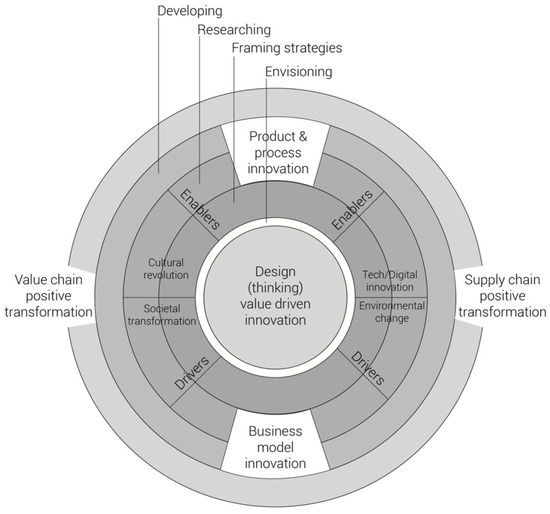
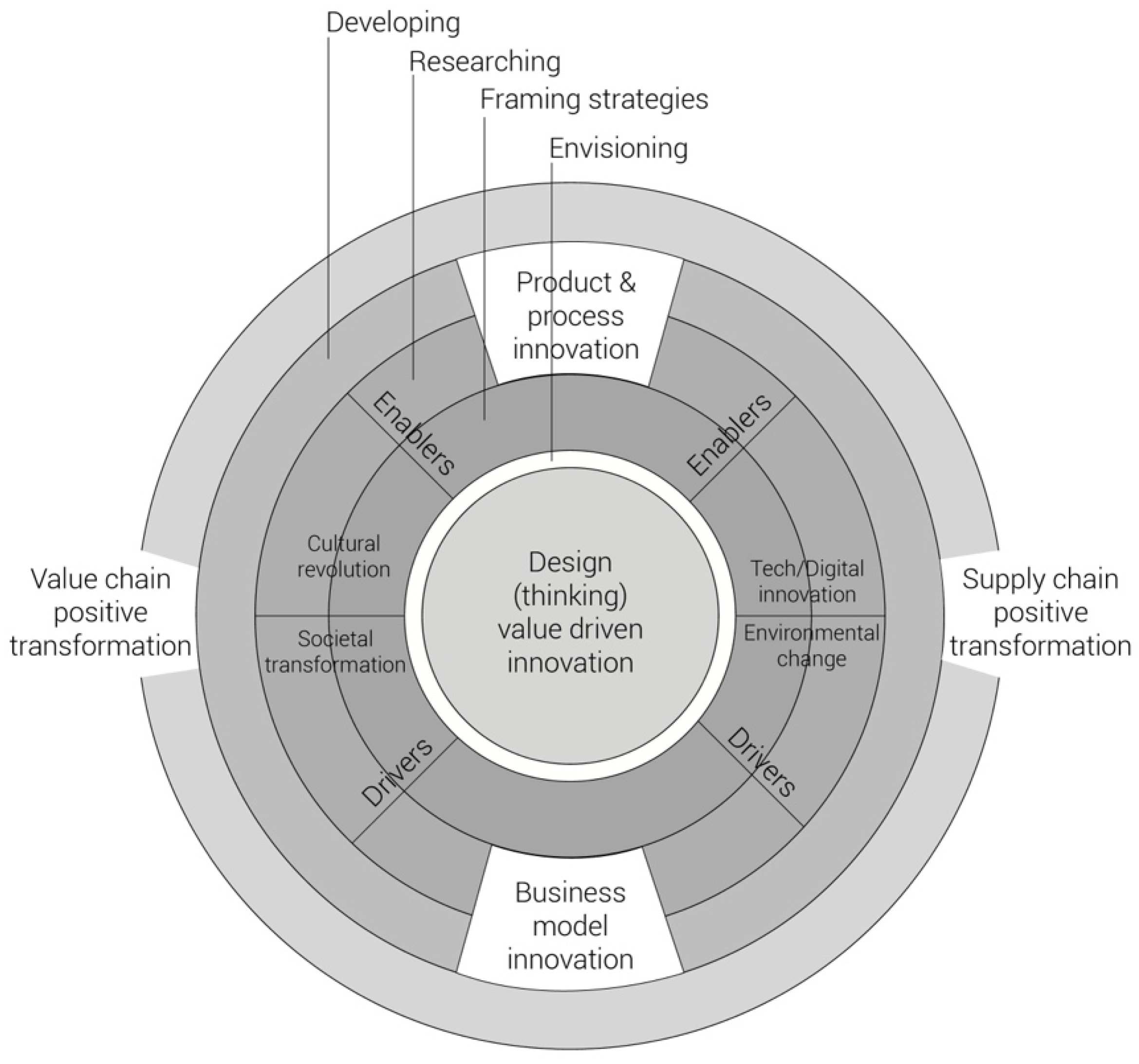
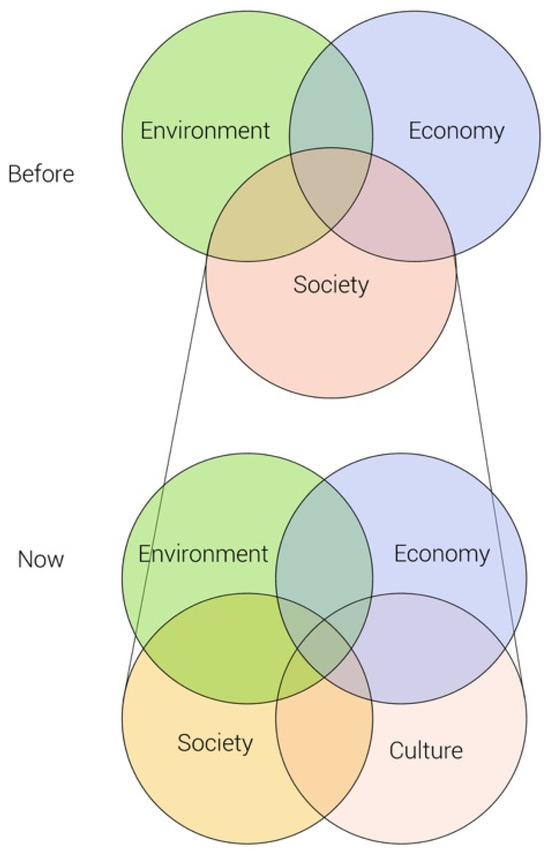
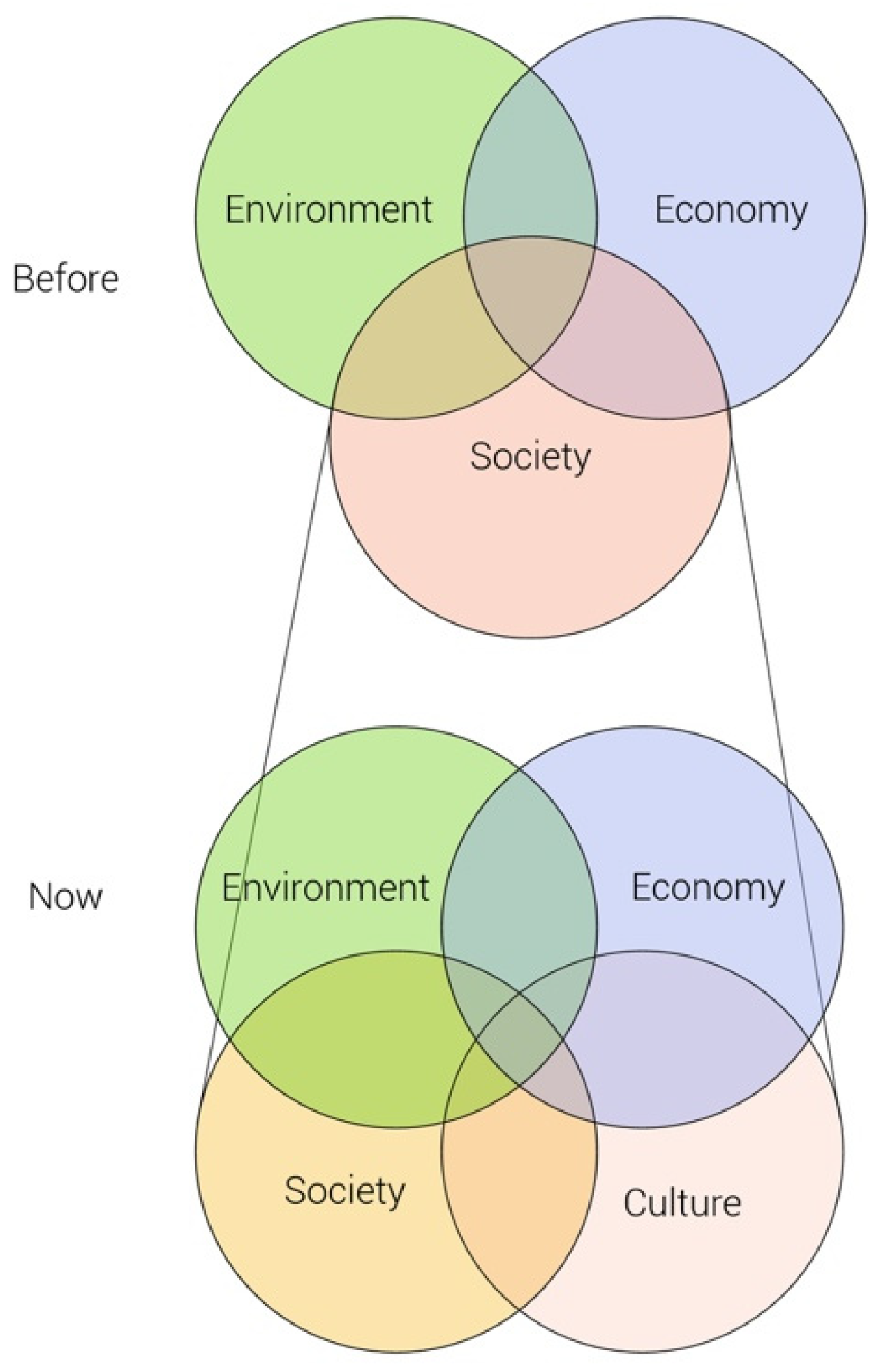
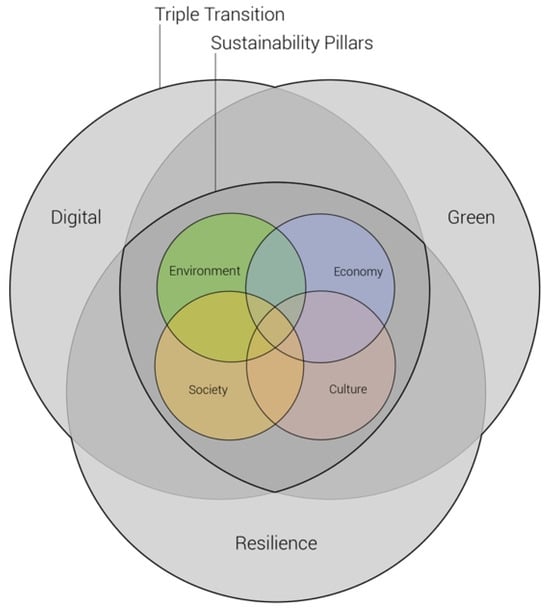
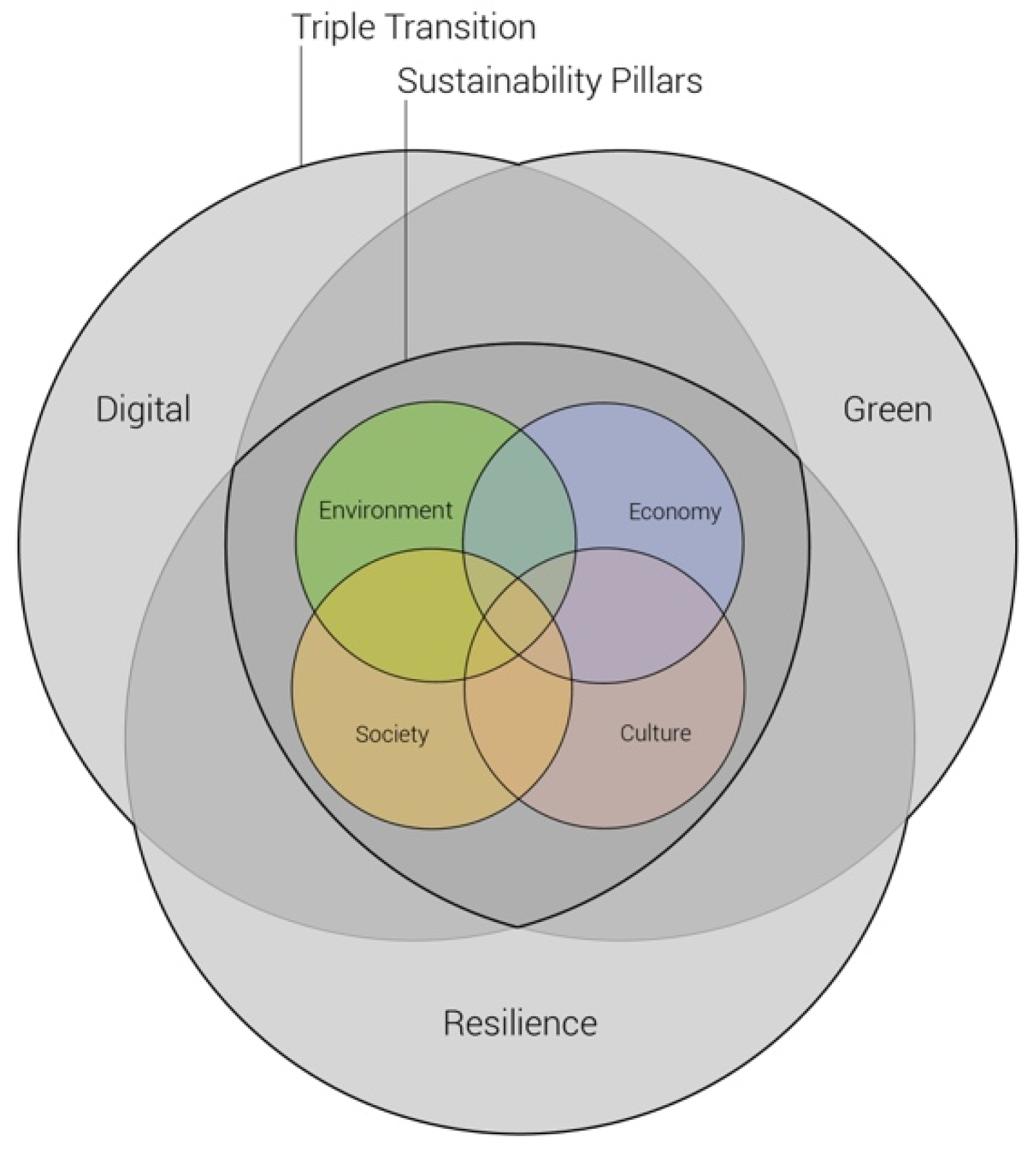
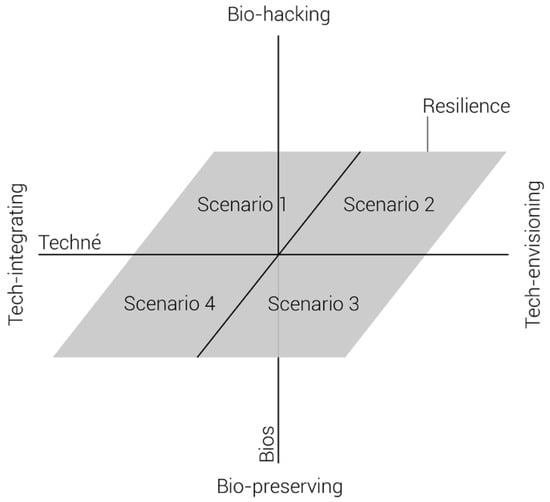
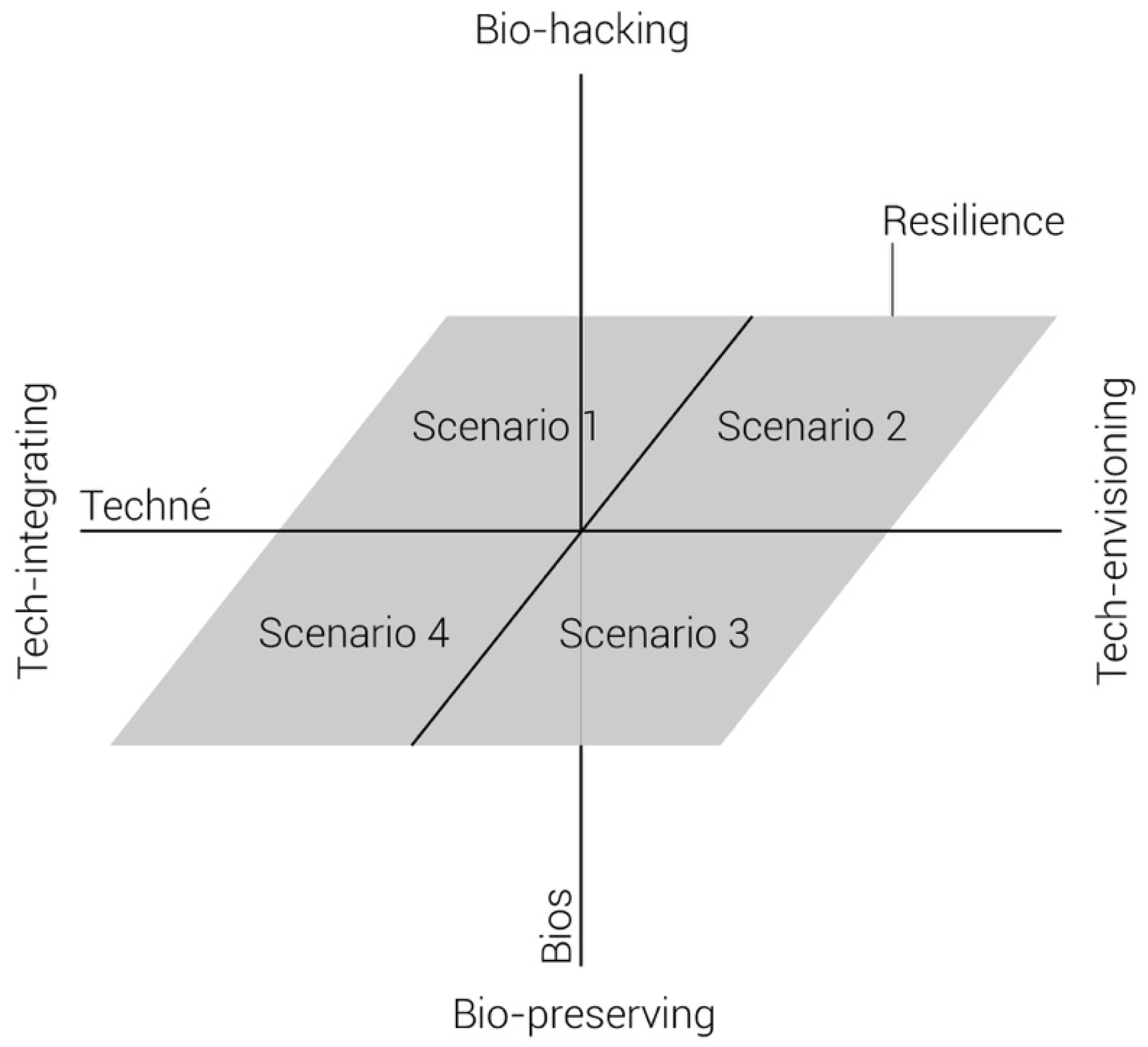

Disclaimer/Publisher’s Note: The statements, opinions and data contained in all publications are solely those of the individual author(s) and contributor(s) and not of MDPI and/or the editor(s). MDPI and/or the editor(s) disclaim responsibility for any injury to people or property resulting from any ideas, methods, instructions or products referred to in the content. |
© 2026 by the authors. Licensee MDPI, Basel, Switzerland. This article is an open access article distributed under the terms and conditions of the Creative Commons Attribution (CC BY) license.