Review

Beyond Reality—How Are Virtual Reality and the Metaverse Shaping Tourism?

1
GREDEG-CNRS, University Côte d’Azur, EUR ELMI, 24 Avenue des Diables Bleus, 06300 Nice, France
2
Department of Management, Kedge Business School, 13001 Marseille, France
*
Author to whom correspondence should be addressed.
Platforms 2026, 4(2), 6; https://doi.org/10.3390/platforms4020006
Submission received: 31 December 2025 / Revised: 20 February 2026 / Accepted: 10 March 2026 / Published: 26 March 2026
(This article belongs to the Special Issue Exploring Digital Transformation and Sustainability)

Abstract

This study aims to systematically analyze scholarly research on virtual reality (VR), augmented reality (AR), and the metaverse in the tourism and hospitality sectors, offering insights into publication patterns, key contributors, thematic evolution, and potential research directions from 2016 to mid-2025. It maps how the literature evolved in response to technological maturation and changing tourism constraints. A systematic literature review and comprehensive bibliometric analysis were conducted using the Scopus database. The analysis encompassed bibliographic metrics, thematic clustering, and content analysis techniques to identify influential journals, authors, and evolving research themes. The results reveal a pronounced acceleration in research activity post-2020, reflecting heightened interest due to the COVID-19 pandemic’s push towards digital and immersive solutions. Core journals identified include Tourism Management, Current Issues in Tourism, and Journal of Travel Research. Influential contributors such as Timothy H. Jung, M. Claudia tom Dieck, and Dimitrios Buhalis significantly shaped the field. The thematic trajectory demonstrates a shift from initial exploration and application of VR and AR technologies toward comprehensive integration into metaverse ecosystems, with emerging themes such as digital twins, synthetic experiences, immersive storytelling, and growing emphasis on ethical and sustainability considerations. By synthesizing nearly a decade of research, this study provides valuable insights into immersive technologies’ evolution in tourism and hospitality, identifying critical areas for future investigation aligned with enterprise information management strategies.

1. Introduction

Immersive technologies, particularly VR, AR, and the increasingly prominent concept of the metaverse, have rapidly emerged as pivotal innovations within the tourism and hospitality industries [1,2]. The advent of Industry 4.0 has catalyzed the evolution of these technologies, profoundly impacting how tourists engage with experiences, redefining destination marketing approaches, and revolutionizing operational practices across the sector [3,4]. The tourism industry has undergone a series of digital advancements, including the implementation of AI, robotics, the Internet of Things, and big data analytics [5,6,7]. However, VR and AR have emerged as particularly impactful due to their ability to enhance consumer engagement, enrich experiential offerings, and optimize promotional activities [8,9,10]. The extensive application of these immersive technologies has not only improved the quality and depth of tourist interactions but has also generated novel opportunities for tourism providers to differentiate themselves in increasingly competitive marketplaces.
This trajectory accelerated sharply during COVID-19 when destinations and firms relied on digital substitutes to sustain engagement under mobility constraints [11,12,13]. The pandemic highlighted the immediate practical utility and longer-term strategic potential of immersive technologies, given their capacity to maintain consumer engagement, sustain destination promotion, and support consumer well-being during periods of disruption [14,15]. The forced experimentation and rapid adoption observed during this period generated empirical evidence of the value of immersive solutions for tourism and hospitality, and it subsequently influenced both academic research agendas and industry practices.
More recently, academic and industry attention has converged on the metaverse, a persistent and interactive digital ecosystem integrating VR, AR, AI, blockchain, and IoT technologies [16,17]. Unlike earlier stand-alone VR and AR applications, the metaverse enables integrated digital environments that can reshape customer interactions, support dynamic co-creation, and transform tourism consumption patterns [18,19,20]. This shift toward persistent virtual environments signals a move from episodic virtual experiences toward sustained digital engagement, with implications for strategy and business models in hospitality and tourism [1,21,22]. At the same time, the speed of expansion in this literature makes it difficult to track where conceptual development is occurring and where empirical evidence is converging.
Despite the considerable independent scholarly attention devoted to VR and AR technologies, systematic bibliometric analyses explicitly addressing the metaverse within the tourism and hospitality context remain noticeably scarce. Concurrent bibliometric research has focused on broader digital technology themes, including AI, the IoT, and generalized virtual tourism applications [23,24,25,26]. However, a comprehensive, integrated bibliometric examination that explores the intersections and synergistic potentials of VR, AR, and the metaverse as interconnected domains has yet to be thoroughly undertaken. Addressing this significant gap is imperative for a holistic understanding of academic advancements, thematic evolutions, and future research trajectories concerning immersive technologies.
Accordingly, this review maps the intellectual structure of the field and explains how themes and theoretical lenses evolve over time. To address this research gap, the study combines an extensive bibliometric analysis with a systematic literature review, focusing on VR, AR, and metaverse applications in tourism and hospitality. It examines publication trends, identifies influential journals and authors, delineates thematic clusters, and proposes directions for future research. In addition, it develops an integrated research agenda that highlights emerging issues including sustainable and regenerative tourism, digital twins, ethical considerations, inclusivity, and consumer engagement in immersive environments.
The novelty of this research lies primarily in its explicit analytical segmentation of immersive technology research evolution into three distinct and clearly delineated phases, initial explorations from 2016 to 2019, conceptual consolidation and empirical advancements from 2020 to 2023, and specialization, integration, and sustainability transformation from 2024 to 2025. This structured categorization facilitates a deeper understanding of how scholarly research on VR, AR, and the metaverse has progressively evolved in alignment with technological maturity, emerging societal demands, and shifting industry priorities.
The remainder of this paper is structured as follows. Section 2 offers a comprehensive review of the extant scholarly literature. Section 3 delineates the methodological framework employed. Section 4 is devoted to the discussion of the bibliometric results. In Section 5, an analysis is conducted of the clusters according to the three phases. Finally, Section 6 presents key conclusions and research gaps and provides actionable recommendations for future research endeavors.

2. Literature Review

2.1. Historical Emergence and Evolution of VR in Tourism

The use of VR in tourism was initially explored in the early 1990s, when visionary scholars proposed its potential to fundamentally alter traditional tourism dynamics by offering virtual alternatives to physical travel [27,28,29]. These pioneering studies highlighted VR’s early potential to create virtual substitutes for real-world tourism experiences, suggesting implications ranging from enriching physical travel to fully substituting it. This early conceptual groundwork laid the foundation for subsequent empirical explorations, which significantly advanced understanding of VR’s capabilities and limitations in tourism contexts. In the ensuing decades, research expanded substantially, emphasizing VR’s role in influencing consumer attitudes, enhancing destination image, and supporting innovative marketing strategies. Guttentag (2010), in a foundational review, underscored the multifaceted applications of VR in tourism, considering how virtual environments might complement or even supplant actual travel experiences [8]. Later empirical studies provided robust evidence of VR’s psychological effects, particularly its ability to induce presence, the realistic feeling of “being there” within virtual environments, thus enhancing the overall tourist experience [10,30]. Studies [31,32,33] reinforced this by demonstrating how immersive VR content influences consumer behavior, improves tourist satisfaction, and shapes future travel intentions. Recently, researchers have delved deeper into VR’s specific capabilities, emphasizing its utility in sustainability-oriented tourism contexts. For instance, ref. [34] illustrated how the medium type (VR 360° versus Screen 360°) and story framing (ecological versus recreational) significantly impacted travelers’ sustainable travel intentions. Furthermore, ref. [35] explored innovative technological advancements, such as AI-driven VR displays integrated with high-precision depth image registration, significantly enriching visitor experiences at heritage sites. Such recent studies highlight VR’s evolving sophistication and continuing relevance as a dynamic, influential, and versatile tool within tourism marketing and management strategies.

2.2. Integration and Complementary Role of AR in Tourism and Hospitality

Alongside VR, AR emerged as another transformative technology within tourism and hospitality, uniquely combining digital content with real-world environments to enhance visitor experiences. Early research on AR focused on improving interpretive services at heritage sites, museums, and cultural attractions, enhancing visitor engagement and satisfaction through enriched informational content [36,37]. Recent studies [38] demonstrated that AR experiences significantly shape visitor behaviors, reinforcing AR’s value as a tool for destination management and customer relationship management. AR’s distinct advantage lies in its ability to augment rather than replace the physical experience, creating deeper emotional and cognitive connections between tourists and destinations. Studies by Tsang et al. (2023) [39] and Hadi et al. (2025) [40] underscored AR’s effectiveness in group tour settings and educational tourism contexts, enhancing experiential value, perceived authenticity, and learning outcomes. Additionally, AR has been leveraged innovatively for digital storytelling, allowing visitors to engage interactively with cultural narratives and enhancing their overall travel experience [41]. Such capabilities position AR as an indispensable complementary technology within the broader tourism technology ecosystem, seamlessly integrating virtual enhancements into real-world travel contexts.

2.3. Emergence of the Metaverse as a New Frontier for Tourism

The concept of the metaverse, a persistent, immersive, and interactive digital space enabling real-time social interaction, has recently emerged as a paradigm shifting innovation within tourism and hospitality. Unlike traditional, standalone VR and AR experiences, the metaverse integrates multiple technologies into a comprehensive virtual ecosystem, reshaping customer engagement and business models across tourism sectors [1,18,42]. Recent empirical studies highlight the influence of metaverse experiences on consumers’ travel decisions, revisit intentions, and destination loyalty, facilitated by enhanced telepresence and immersive storytelling [43,44,45]. Moreover, emerging research underlines the metaverse’s unique potential for sustainable tourism. For example, Petrova et al. (2025) [46] discussed how virtual platforms could regenerate and sustainably redevelop damaged tourism destinations, reducing overtourism pressures by offering high-quality virtual alternatives. Similarly, other studies [47,48] revealed how metaverse-driven initiatives support the Sustainable Development Goals (SDGs), promoting environmentally friendly practices and sustainable consumer behaviors. The metaverse also facilitates unprecedented levels of customer interaction and co-creation, as demonstrated by [49,50], who explored travelers’ deep experiential engagements within immersive metaverse environments. These findings indicate a significant shift toward more interactive, personalized, and sustainable travel experiences, positioning the metaverse as a central innovation within contemporary tourism research and practice.

2.4. Technological Advancements and Methodological Innovations

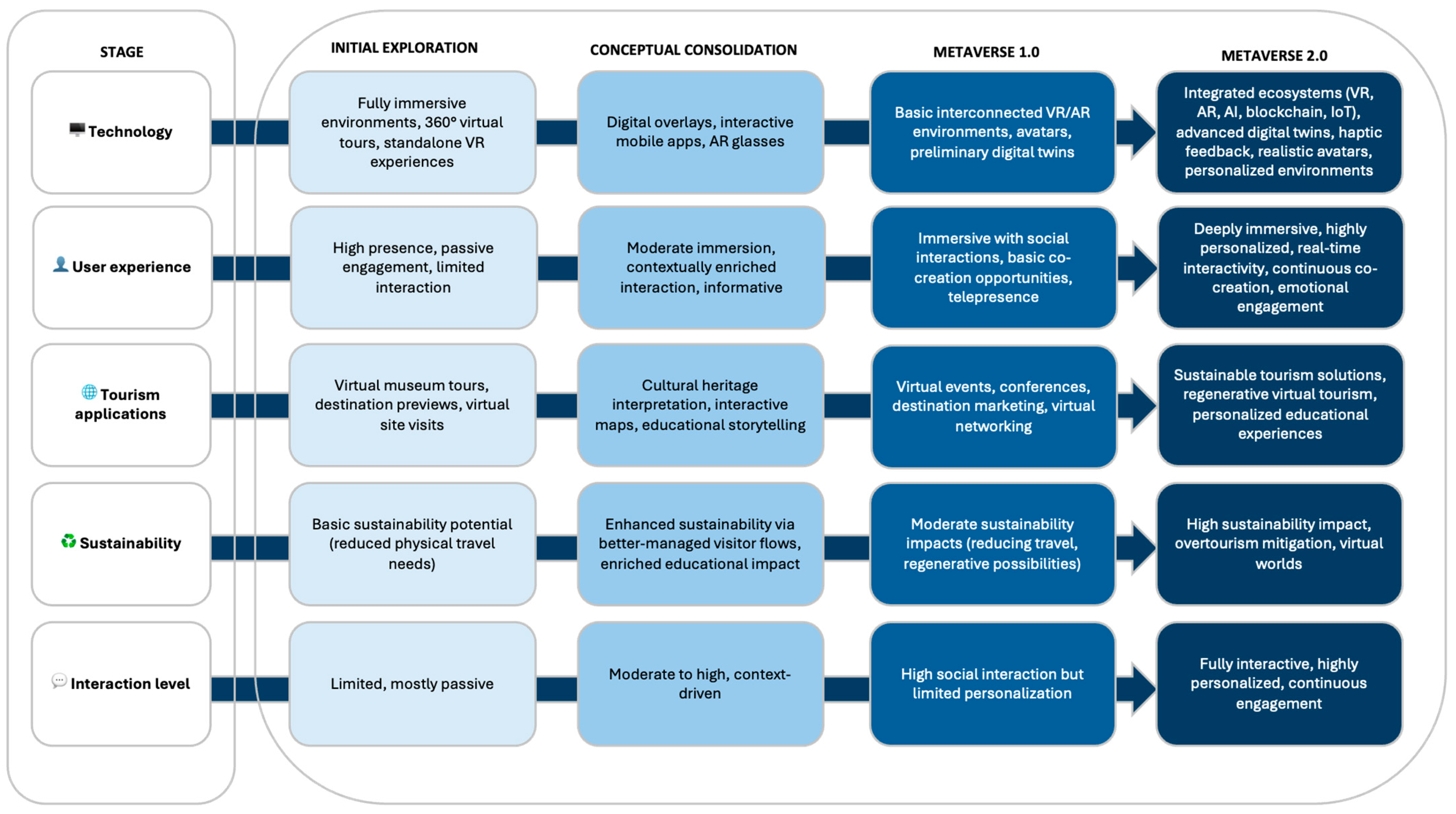
The rapid progression of immersive technologies has introduced notable technological and methodological innovations within tourism research. For instance, recent advancements in AI-driven VR technologies [35] have allowed exceptionally realistic recreations of heritage sites, significantly increasing user immersion, cognitive engagement, and educational outcomes. Concurrently, 360-degree VR video technologies have been optimized for web-based platforms, substantially enhancing navigability and user experience, ultimately increasing user engagement and satisfaction [51]. Methodologically, tourism researchers increasingly employ interdisciplinary frameworks, such as the Stimulus–Organism–Response model, to assess the impact of media type, interactivity, and content quality on user behaviors and intentions [52,53]. These methodological developments provide deeper insights into the psychological mechanisms underlying virtual engagement, enabling more effective experiential design and marketing strategies. Additionally, sophisticated studies into metaverse environments have begun integrating aspects of consumer identity formation and psychological responses, significantly enriching the theoretical foundations of tourism technology research [54,55]. To visually summarize this progression, Figure 1 synthesizes the technological evolution of immersive tourism from initial exploratory tools toward fully integrated digital ecosystems.

2.5. Identified Research Gaps and Directions for Future Inquiry

Despite extensive advancements, several critical gaps in tourism technology research persist. Notably, there is limited longitudinal research exploring how VR and AR experiences impact long-term consumer wellbeing, sustained behavioral change, and travel intentions beyond initial engagements [56,57]. Additionally, research specifically addressing niche consumer segments such as senior travelers and culturally diverse populations remains underexplored, highlighting a need for more inclusive research to better understand different demographic groups’ technology adoption and usage patterns [55,58,59]. Further theoretical development is required regarding the consumer identity, ethical considerations, and sustainable engagement mechanisms within immersive technologies, particularly the metaverse [17,60]. Research into the sustainability implications of VR, AR, and metaverse tourism remains limited, calling for comprehensive assessments of their environmental impacts and their potential roles in reducing tourism-related emissions and overtourism pressures [20,46].

3. Methodology

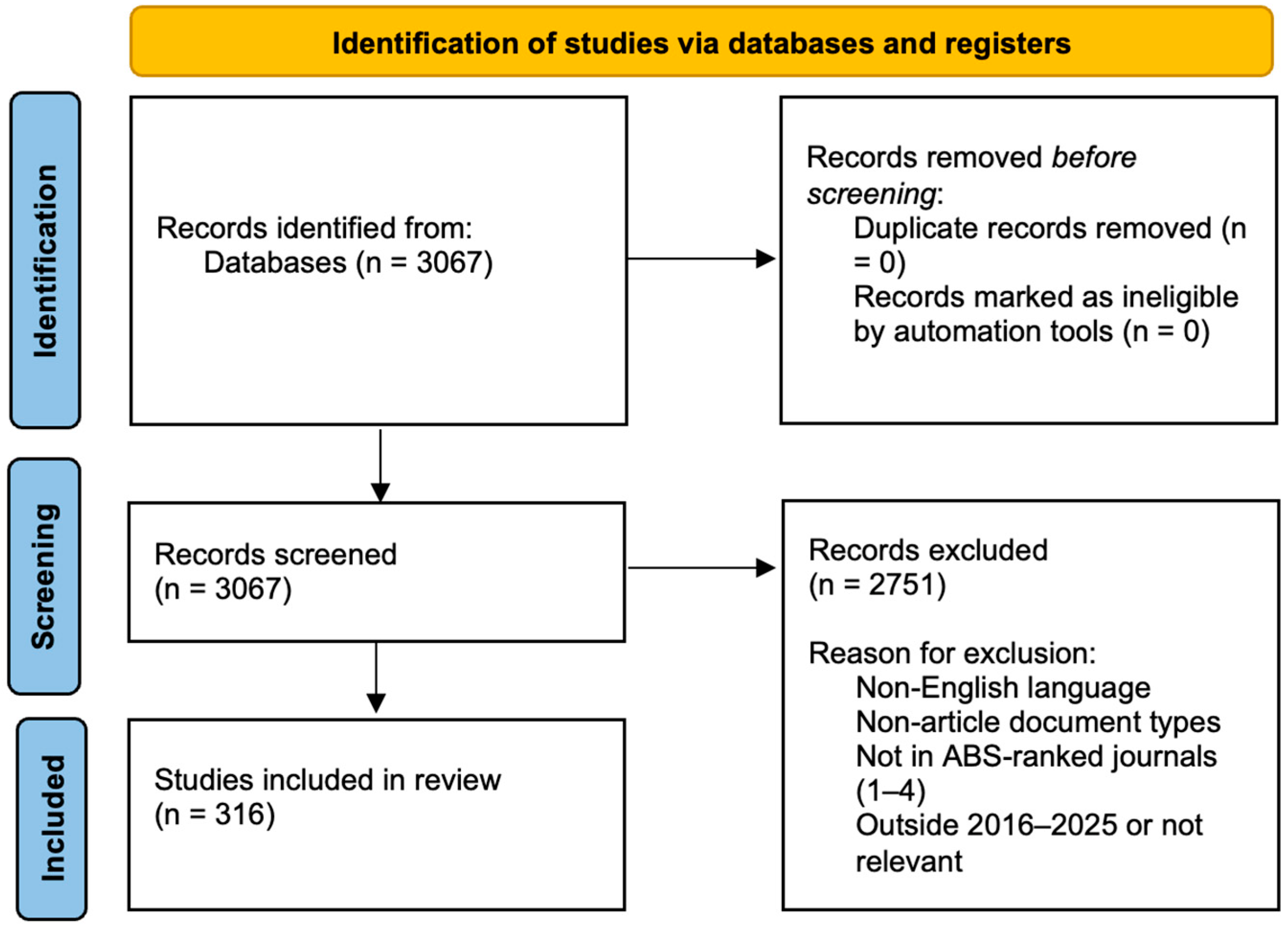
This study combines bibliometric analysis with a systematic literature review to map immersive technology research in tourism and hospitality. Bibliometrics provides a quantitative profile of publications and citation structures and helps identify influential papers, authors, and thematic trends [61,62]. The systematic review complements this by coding and interpreting the literature to explain how themes, methods, and theoretical approaches evolve over time [63,64]. This review was conducted and reported in accordance with the PRISMA 2020 guidelines (Supplementary Materials). The review was registered in PROSPERO (CRD420261331504). The PRISMA flow diagram is presented in Figure 2.

3.1. Sample Selection and Data Extraction

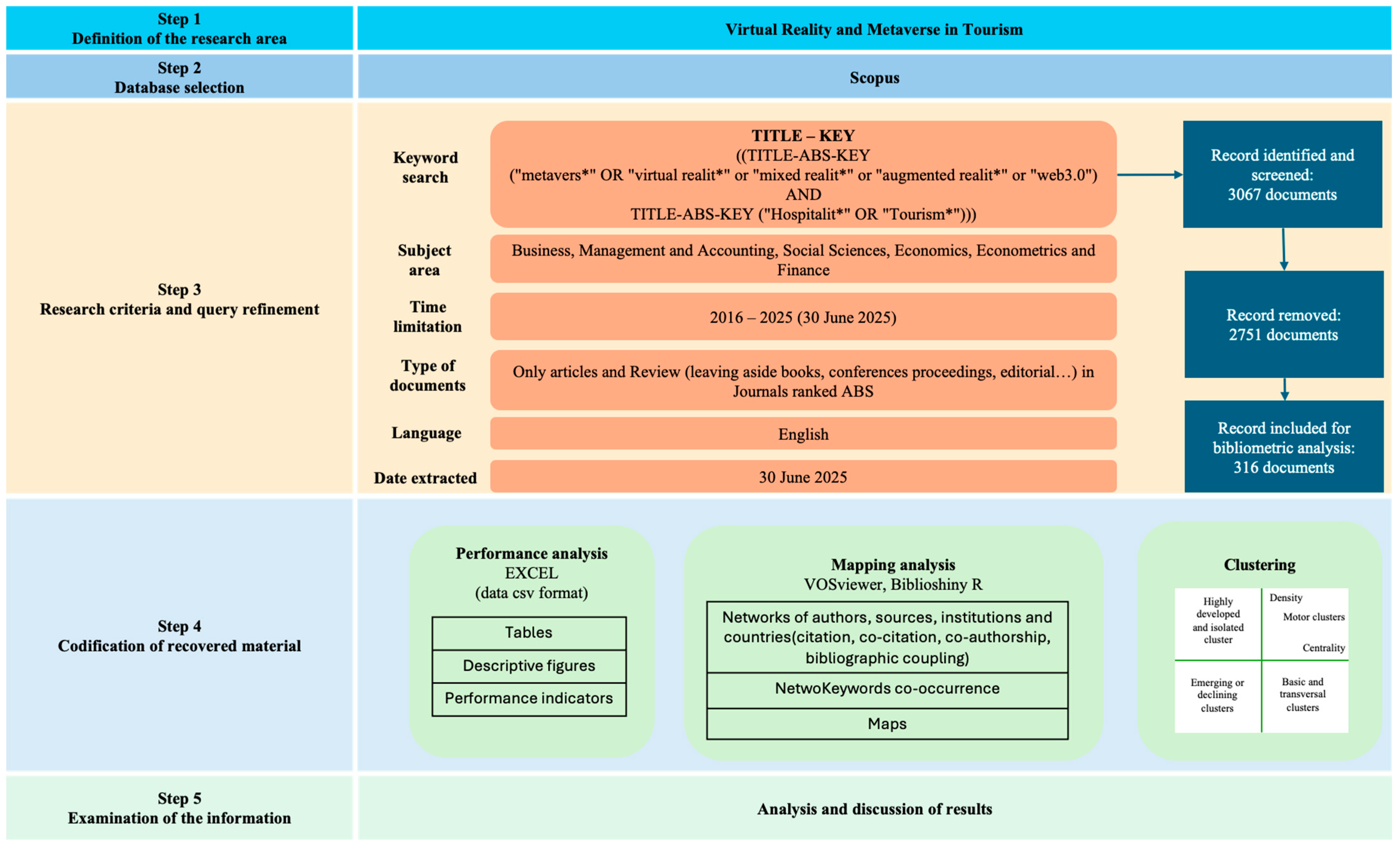
A two-stage procedure was used to build the sample. Scopus was searched on 20 June 2025 using a query that combined tourism and hospitality terms with immersive technology terms. Scopus was selected because it provides strong coverage of tourism and hospitality outlets within the social sciences and offers consistent bibliographic metadata that supports reproducible bibliometric mapping. Many bibliometric studies combine Scopus and Web of Science to maximize coverage, yet for this discipline Scopus provides adequate coverage of the core tourism and hospitality journals while a single-database design avoids duplicate handling and metadata harmonization issues that can arise when merging indexes. The query was ((“Hospitality” OR “Tourism”) AND (“metaverse*” OR “virtual reality” OR “augmented reality” OR “mixed reality” OR “Web 3.0”)). Titles, abstracts, and keywords were searched, and the asterisk captured variations of the term metaverse. The dataset is a mid-2025 snapshot and includes only items indexed in Scopus by the search date, with no projected metadata.
The screening applied predefined inclusion criteria. The sample includes English-language journal articles and review articles published in ABS-ranked journals at levels 1 to 4 to focus on peer-reviewed outlets that anchor tourism and hospitality management research and match the manuscript’s disciplinary scope. This choice can underrepresent technical advances reported in engineering and computer science venues, including IEEE outlets, which is acknowledged as a limitation and motivates the platform interoperability research directions proposed later. The period covers 1 January 2016 to June 2025 (mid-2025 snapshot) to capture the rise of metaverse research in tourism and hospitality. The search returned 3067 records. After screening for relevance, 316 publications were retained for the bibliometric and content analyses. Figure 3 summarizes the selection process.
Title/abstract screening and full-text eligibility assessment were conducted independently by two reviewers; disagreements were resolved through discussion and, when necessary, adjudication by the third author. Bibliographic metadata (e.g., authors, affiliations, abstracts, references, and citations) were exported from Scopus on 20 June 2025 and cleaned and standardized prior to analysis. For the content analysis, two reviewers independently coded the included papers using a predefined codebook; coding discrepancies were resolved by consensus. Given the descriptive bibliometric design, no study risk-of-bias assessment was performed.

3.2. Bibliometric Analysis

Bibliometric analysis combines performance analysis and bibliometric mapping [62,65]. Performance analysis profiles productivity and impact by examining leading journals, authors, institutions, and countries. Bibliometric mapping visualizes relationships among publications and identifies thematic structures through co-citation analysis, co-authorship analysis, and keyword co-occurrence analysis. VOSviewer version 1.6.20 and Bibliometrix were used for the analysis. Performance analysis examined publication counts and citation impact at the journal, author, and paper levels. Mapping focused on co-citation networks and keyword co-occurrence to identify clusters and collaboration patterns. A complementary content analysis then coded and interpreted the articles within the identified themes. All bibliographic fields, including citations, were exported on 20 June 2025 to ensure a consistent snapshot across years.
Table 1 summarizes the dataset, which covers publications from January 2016 to June 2025. Earlier work on virtual tourism dates to the 1990s [29], but the selected window captures the rise of metaverse research in tourism and hospitality. The final dataset includes 316 articles and reviews from 74 sources, with an annual growth rate of 48.44 percent and an average of 57.31 citations per document. These patterns reflect a fast-moving stream shaped by pandemic-era disruption and accelerated investment in immersive platforms. The content analysis then interpreted the phase-specific clusters by coding the included studies for technology focus, theory used, method, focal outcomes, and sustainability and ethics orientation.

4. Bibliometric Results

Bibliometric analysis helps map a research field by profiling productivity and visualizing intellectual structures [61,62]. This section reports the performance analysis and mapping results for immersive technologies in tourism and hospitality.

4.1. Performance Analysis of Publications and Citations

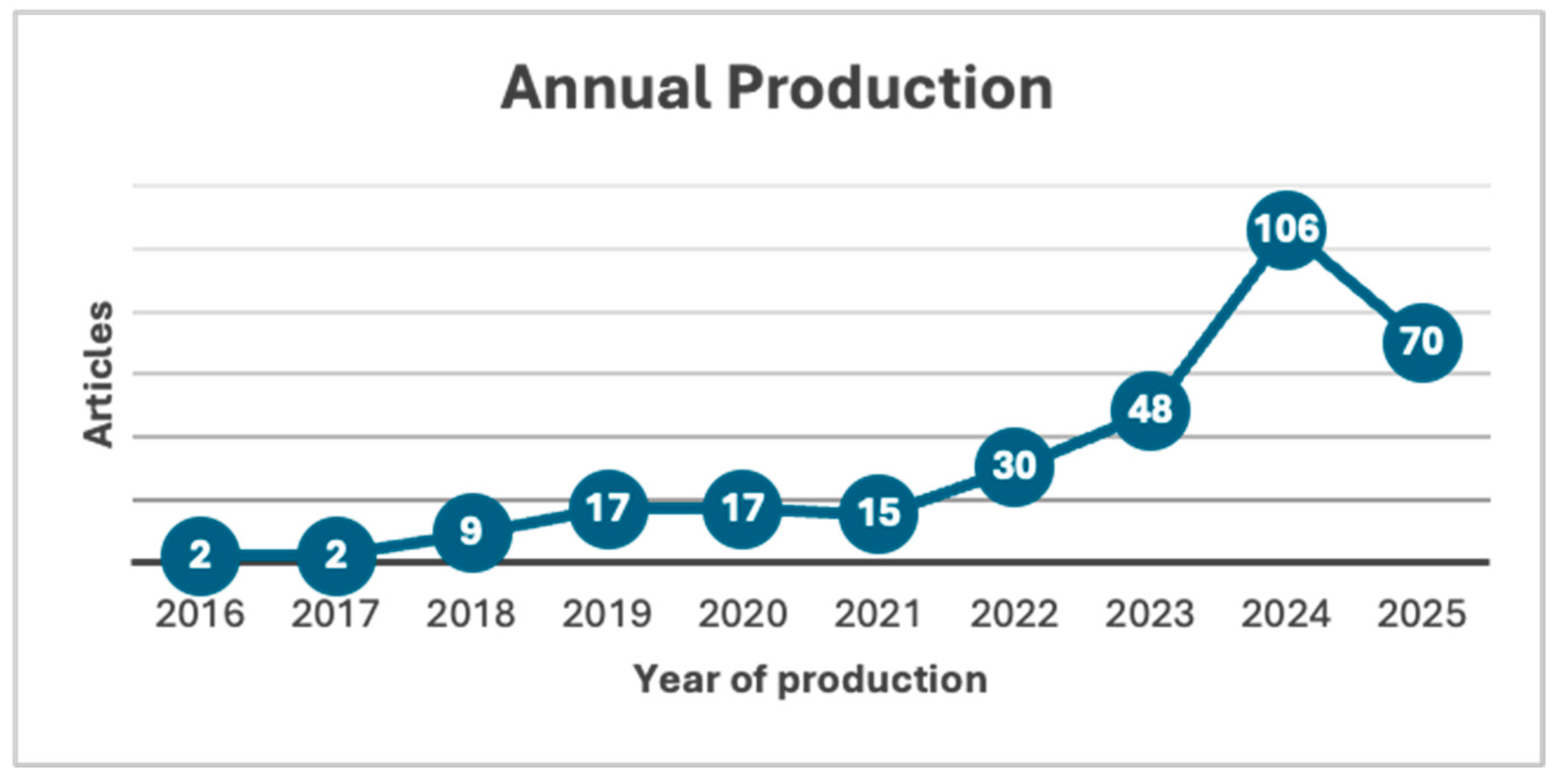
Research on VR, AR, and metaverse applications in tourism and hospitality increases sharply after 2017, with a pronounced acceleration after 2020 (Figure 4). Early work in the 1990s and 2000s focused mainly on VR applications and developed slowly [8,29]. From 2017 to 2024, and into early 2025, publication growth aligns with the emergence of the metaverse as a focal concept and with wider Industry 4.0 adoption in tourism. The COVID-19 disruption further increased both practical uptake and academic attention to immersive services as alternatives to restricted travel [1,12,14,18,19]. Because the search was conducted on 20 June 2025, the 2025 value in Figure 4 reflects partial year records indexed up to that date and may be affected by indexing lag, so it should not be interpreted as a decline in research interest.
Table 2 reports leading journals using total citations and number of publications. Tourism Management has the highest citation count at 4084, followed by Current Issues in Tourism at 2122, Journal of Travel Research at 2058, and Tourism Review at 960. In publication volume, Current Issues in Tourism leads with 32 articles, followed by International Journal of Contemporary Hospitality Management with 30, Tourism Review with 20, and Tourism Management with 19. These outlets anchor the research stream on immersive technologies in tourism and hospitality. Table 3 profiles influential authors using publication and citation indicators. Jung and tom Dieck show sustained output and high citation impact, while Buhalis has gained strong influence in a shorter period, reflecting the rapid rise of metaverse-focused work. The list also includes authors with fewer publications but highly cited contributions, indicating that both sustained programs and landmark papers shape the field.
The citation profile is reported in Appendix A. Table A1 lists the thirty most cited papers in the dataset and shows that a small group of contributions anchors the field. The most cited item is Guttentag’s review in Tourism Management, followed by highly cited empirical work on presence and attitude change by Tussyadiah et al., and influential consumer behavior work in the Journal of Travel Research by Kim et al. The list also includes highly cited heritage and AR studies and synthesis papers, indicating that both application-oriented research and consolidation studies shape the intellectual structure of immersive tourism research. Citation counts reflect the Scopus export of 20 June 2025.
Because many documents are recent, citation counts for newer studies are mechanically lower because citations accumulate over time. Appendix A therefore also reports a recent subset. Table A2 lists the five most cited papers published between 2019 and 2023 and highlights the contributions shaping the latest wave of research, with Kim et al. leading this subset, followed by Yung and Khoo Lattimore and Loureiro et al. The remaining papers confirm the continuing prominence of presence-related mechanisms, mental imagery, and hedonic motivation and well-being outcomes in recent immersive tourism studies.

4.2. Bibliometric Mapping

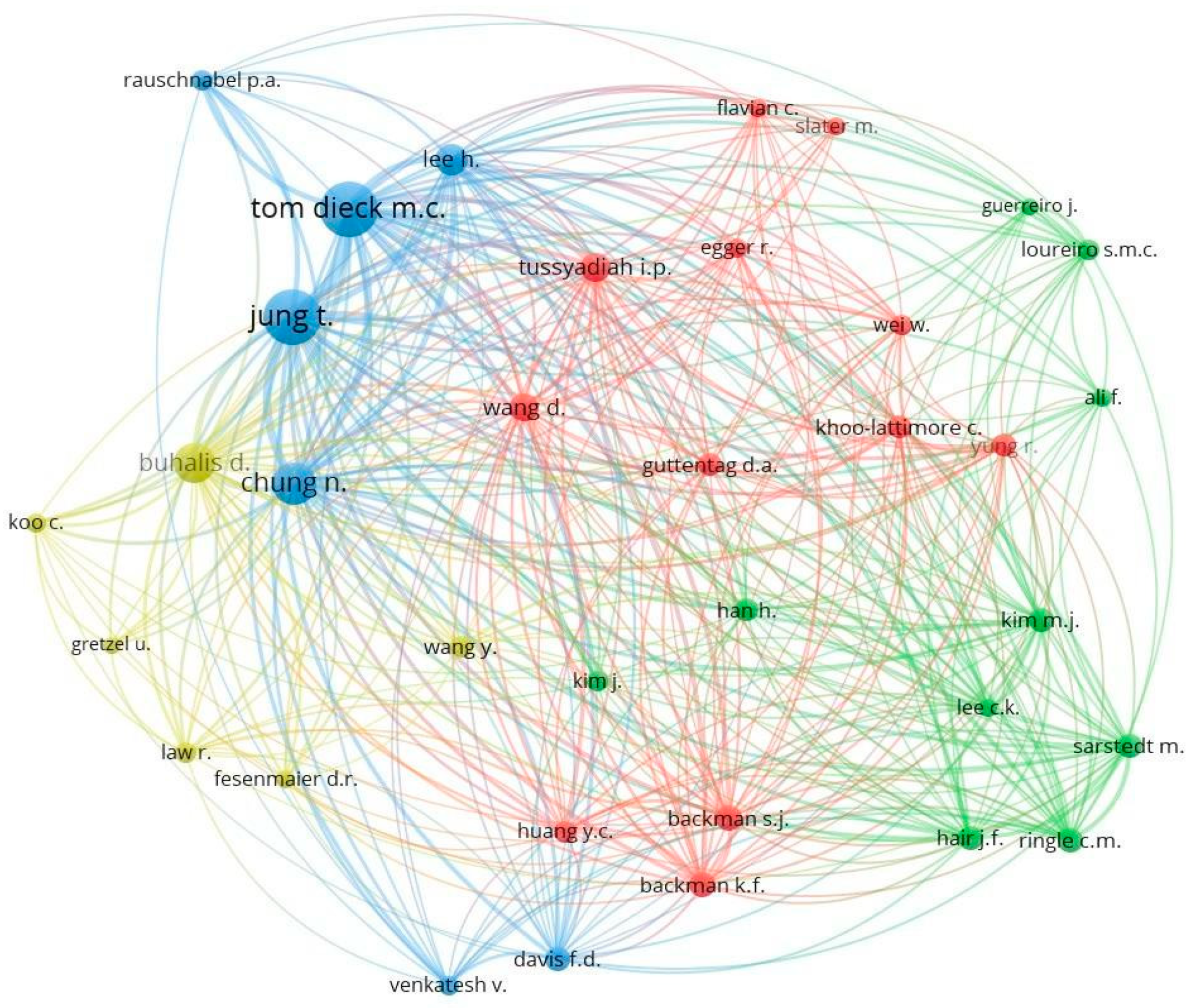
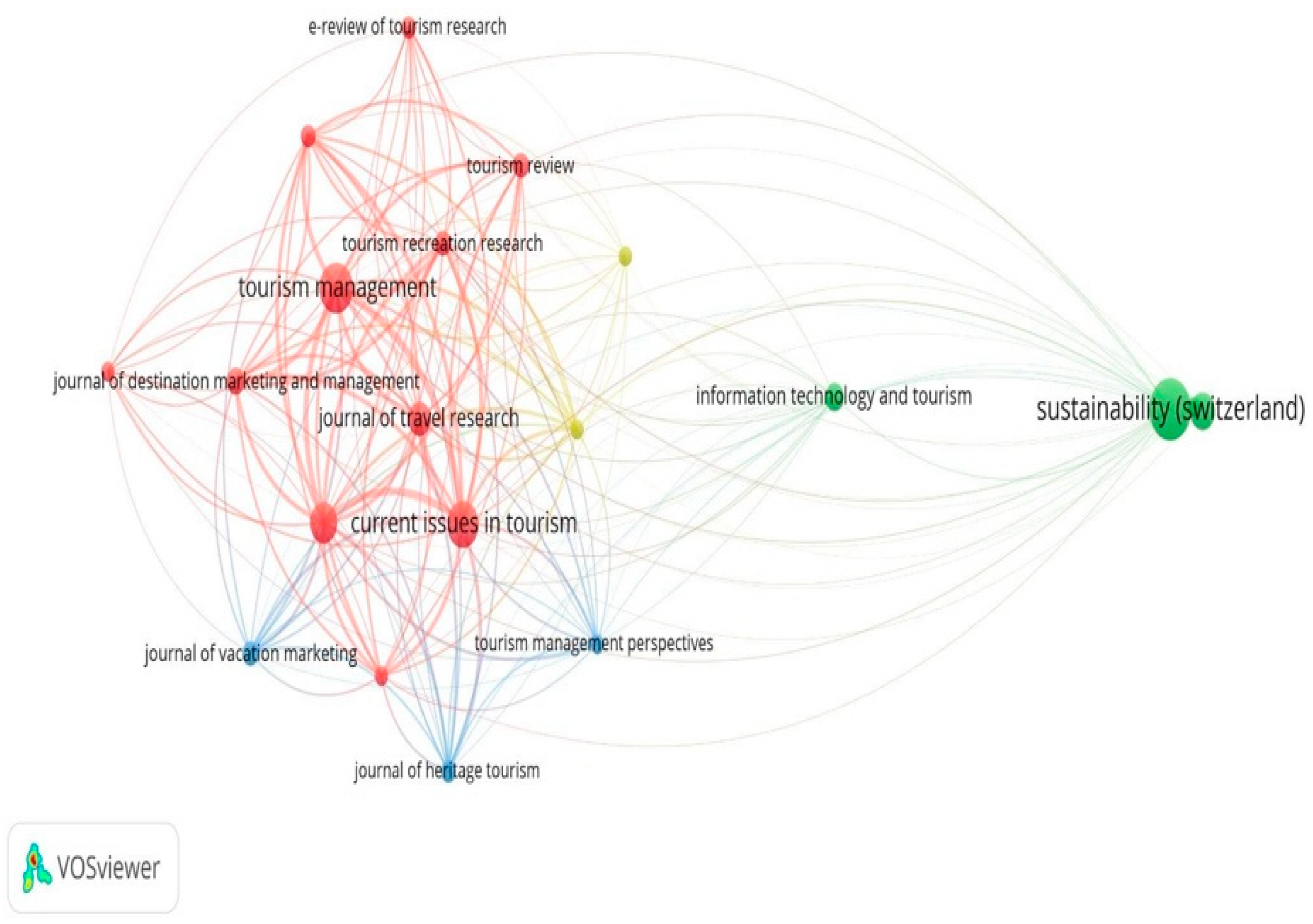
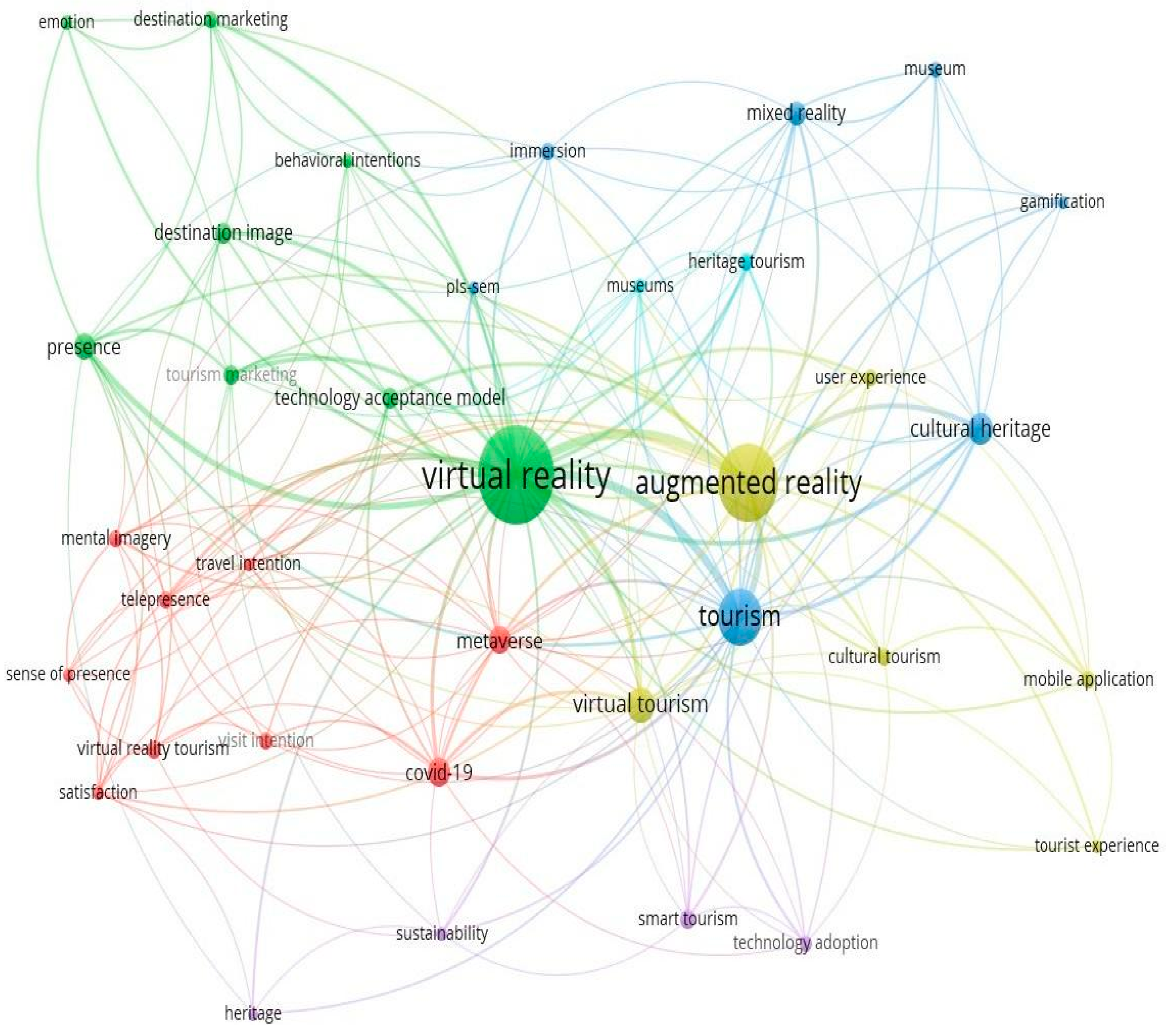
VOSviewer mapping provides a clear overview of both the intellectual foundations and the thematic vocabulary of immersive technology research in tourism and hospitality, as summarized in Figure 5, Figure 6 and Figure 7. Figure 5 presents the author co-citation network and highlights the most frequently co-cited scholars and their related research communities, with influential contributions from tom Dieck, Buhalis, and Jung, and four visually distinct clusters that reflect different collaborative and citation-based groupings, including a blue cluster anchored by Jung and tom Dieck, a yellow cluster centered on Buhalis, a red cluster that includes Tussyadiah together with Khoo Lattimore and Yung, and a green cluster led by Loureiro that connects tourism marketing to emerging technologies such as VR, AR, and AI. Figure 6 reports the co-occurrence network of author keywords using a minimum threshold of six occurrences, which retains 40 keywords from 1443 and ranks them by total co-occurrence link strength, with VR showing the strongest connectivity, followed by AR and tourism, and the map identifies seven clusters with the red and green clusters being the largest. Figure 7 shows the bibliographic coupling of sources based on shared references using a threshold of at least five documents, yielding four source clusters that align with Table 2 and place Tourism Management, Current Issues in Tourism, and the Journal of Travel Research in central positions, while also indicating a broad journal base that includes outlets such as the International Journal of Tourism Research, Journal of Destination Marketing and Management, and Sustainability.

5. Thematic Cluster Identification and Content Analysis

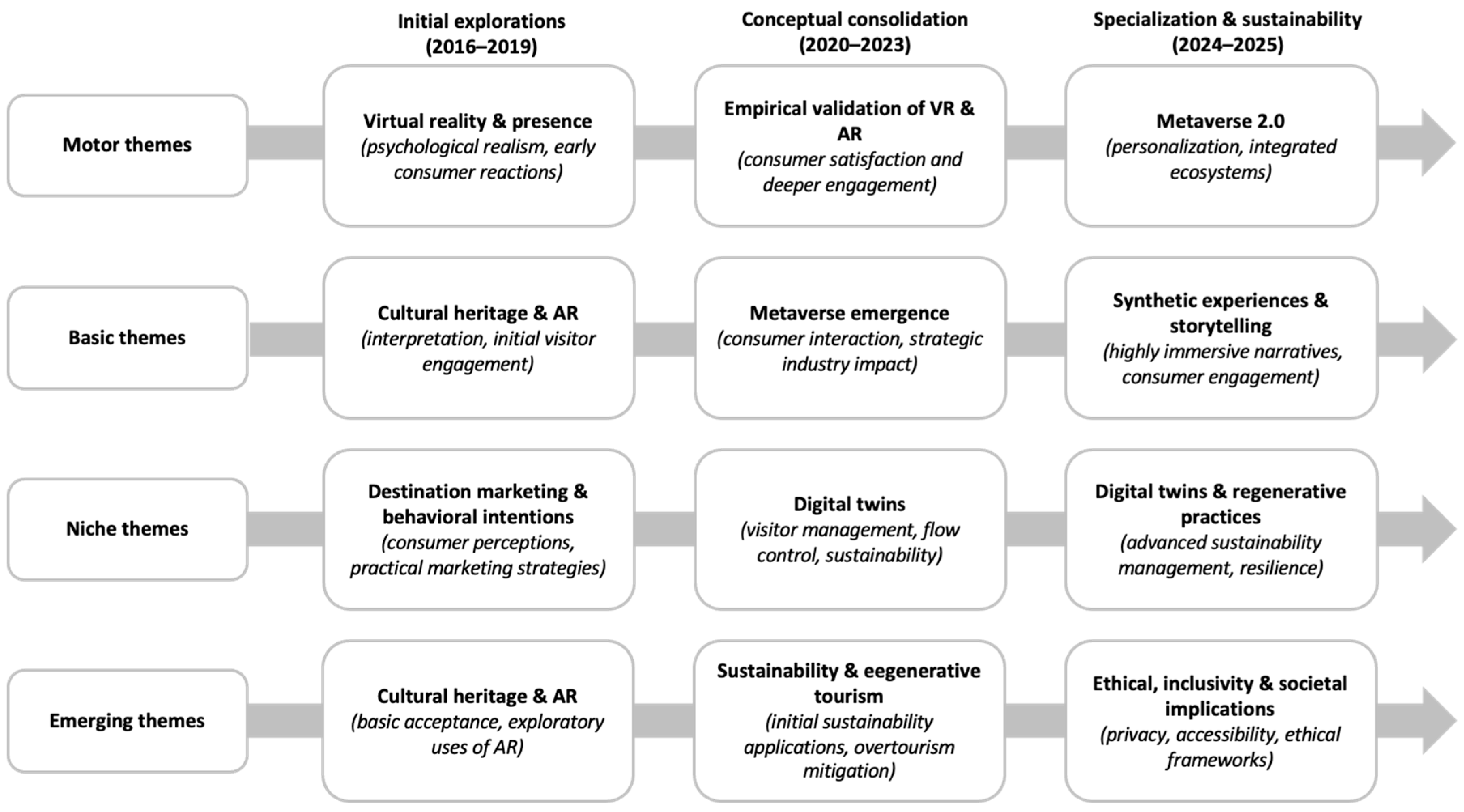
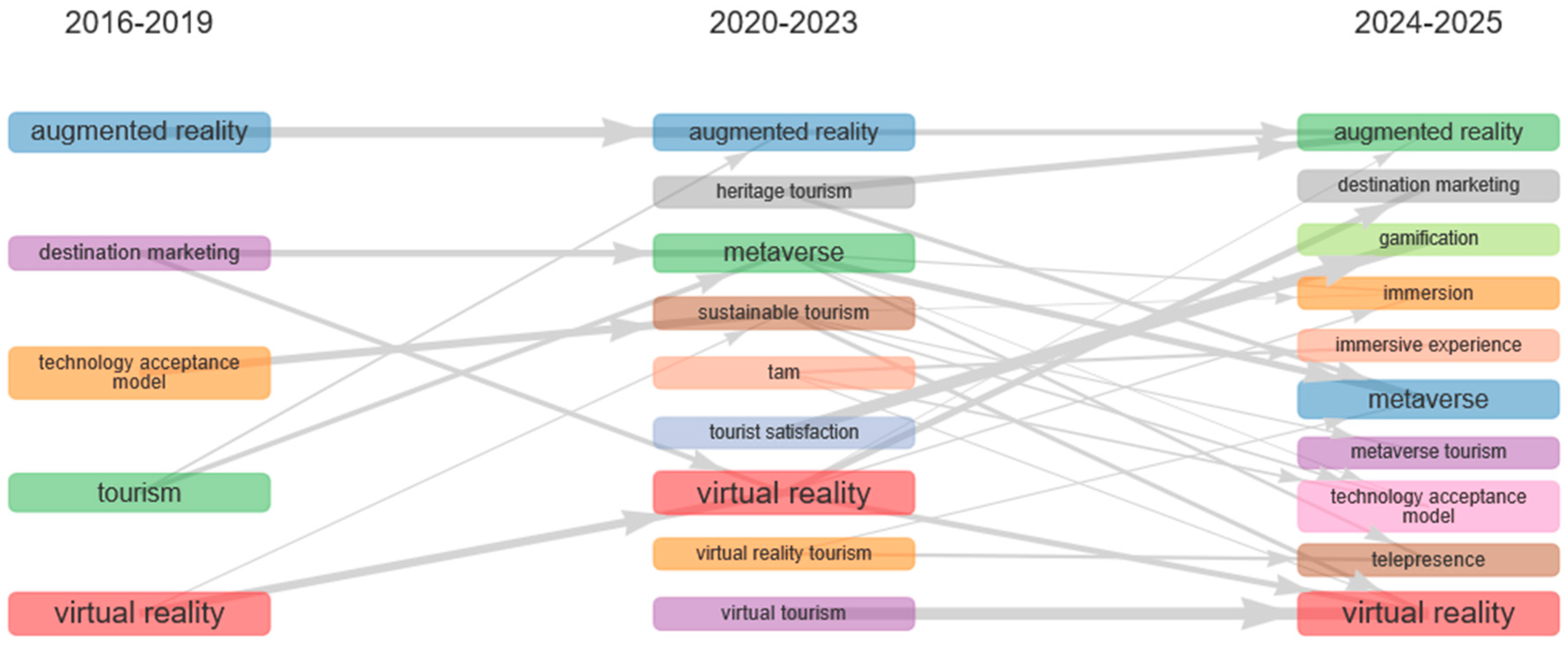
This section synthesizes the thematic content of the corpus across three chronological phases aligned with Figure 8, Figure 9 and Figure 10. Section 5.1, Section 5.2 and Section 5.3 report descriptive findings for each phase, while Section 5.4 provides an interpretive synthesis of thematic evolution and clarifies the manuscript contribution. Figure 8 summarizes continuity and shifts in themes across periods using a Sankey diagram.

5.1. Phase 1 (2016–2019): Initial Explorations of Immersive Technologies in Tourism

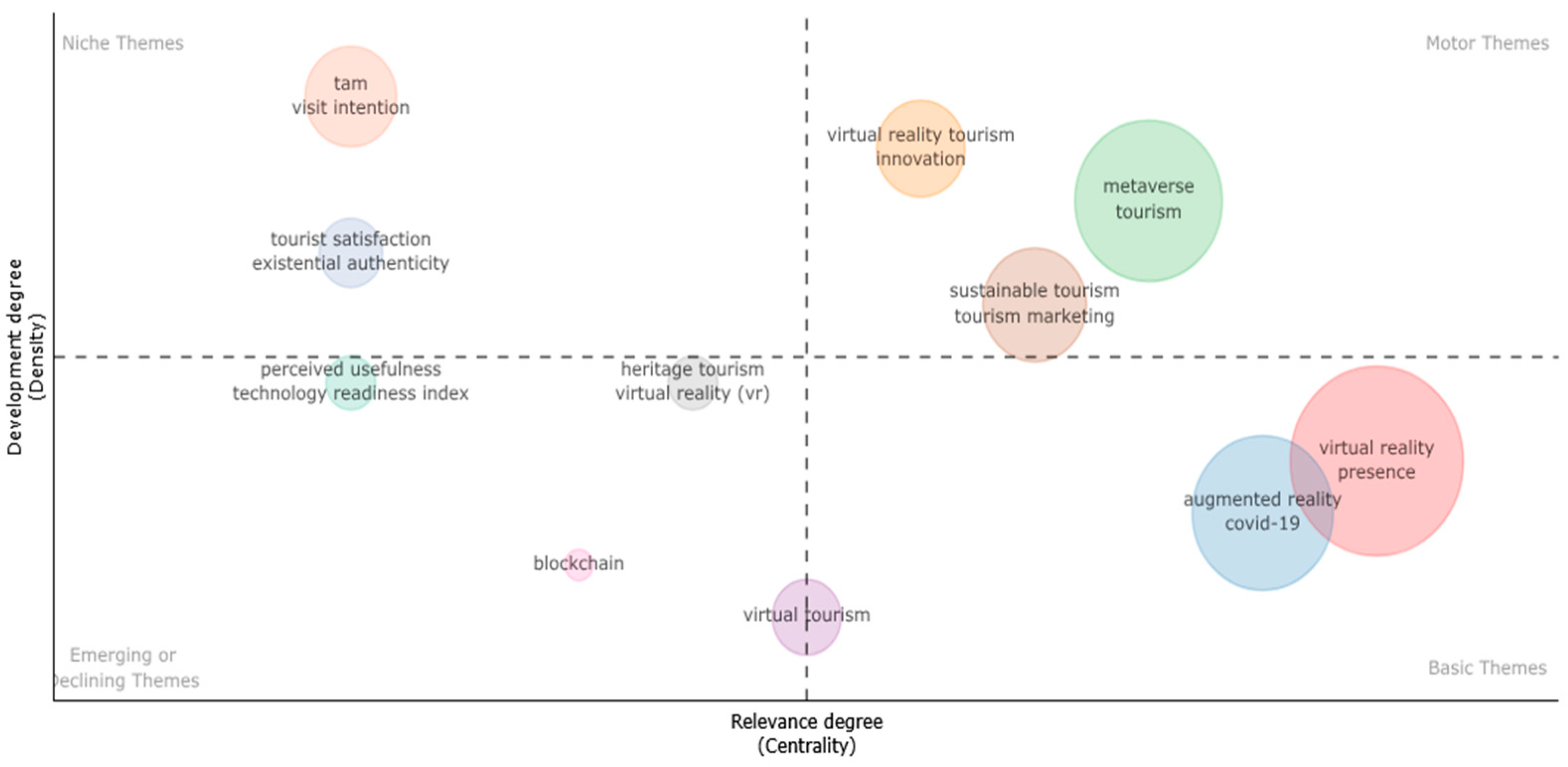
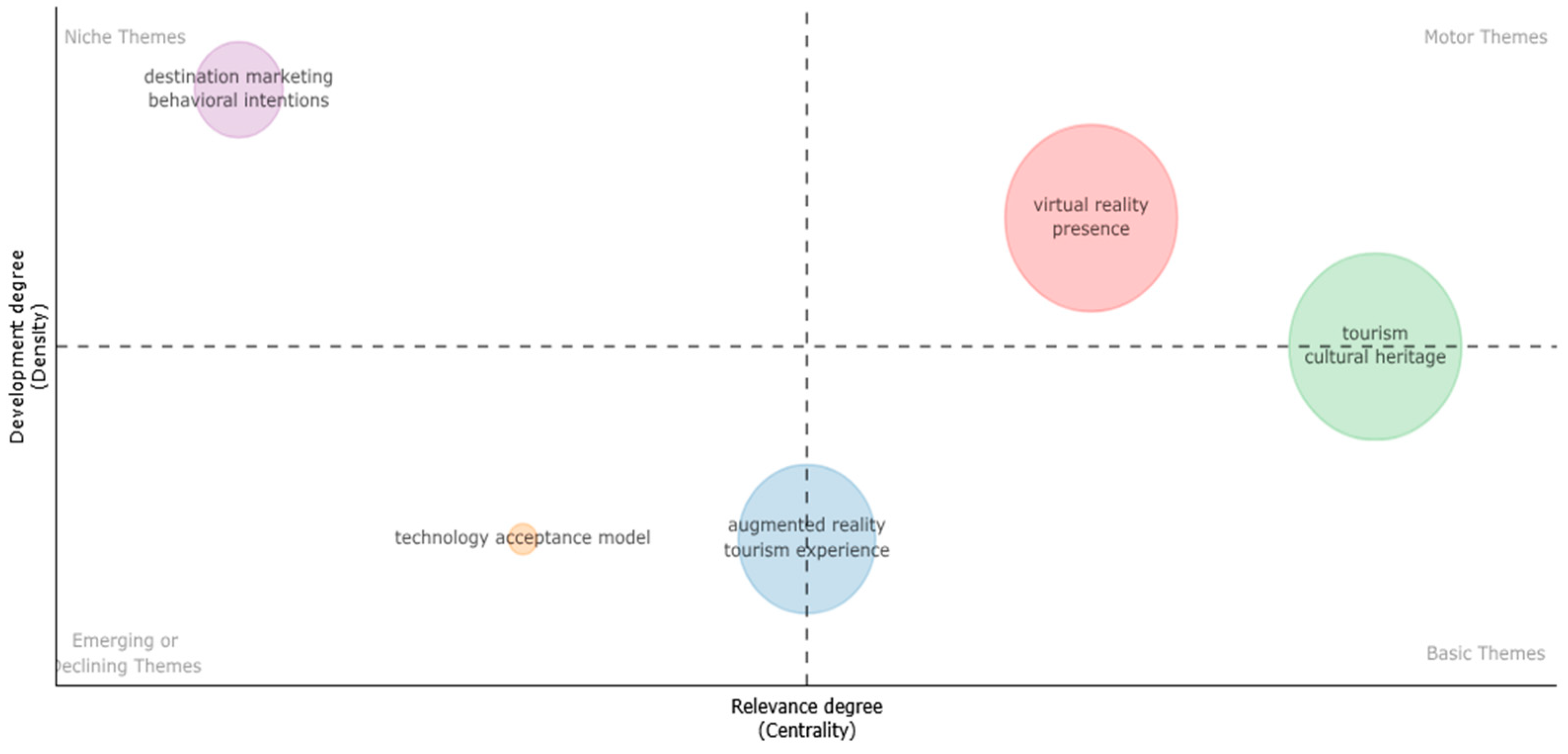
Between 2016 and 2019, research on VR, AR, and related immersive technologies in tourism and hospitality emerged as a developing stream with limited conceptual convergence and uneven empirical maturity [8,9,32]. The thematic map for this period (Figure 9) indicates four clusters that organize the literature and reflect different levels of centrality and development. Motor themes centered on VR and presence and examined whether immersive environments can generate a compelling sense of being in a destination and thereby shape affective responses, satisfaction, and behavioral intentions, with early work also considering how virtual environments might complement selected elements of travel through perceived realism and interactivity [8,10,31]. Basic themes focused on tourism and cultural heritage and explored virtual reconstructions and augmented interpretive layers to support storytelling, education, and access in museums and heritage sites, though much of this work relied on descriptive accounts and offered limited evaluation of learning and engagement over time [66,67,68,69]. Niche themes adopted a marketing orientation and assessed how immersive previews influence destination image, trust in promotional content, and intentions such as booking and revisiting, providing early evidence that perceived realism and interactivity can strengthen persuasion and engagement [30,31,70]. Emerging or declining themes brought together Technology Acceptance Model-based adoption studies and early AR applications, which remained more peripheral and often emphasized initial acceptance patterns and novelty-driven guides and maps rather than integrated behavioral mechanisms [71].

5.2. Phase 2 (2020–2023): Conceptual Consolidation and Empirical Advancements

Between 2020 and 2023, research on VR and AR in tourism and hospitality moved from early proof of concept studies toward clearer theoretical framing and stronger empirical validation, while the metaverse emerged as a unifying concept that shifted attention toward integrated digital environments (Figure 10). Motor themes research increasingly tested how immersive stimuli shape experience outcomes such as presence, emotions, satisfaction, and destination image using more rigorous designs and more explicit behavioral frameworks [15,72], and AR studies also became more substantively integrated into visitor experience analysis through learning, engagement, and on-site value creation rather than novelty effects [39]. Basic themes expanded rapidly around the metaverse as a persistent networked environment that enables social interaction, co-creation, and new business models, with acceleration linked to the COVID-19 context and the search for alternatives to restricted travel and new forms of digital engagement [1,13,14,17,18,19]. Niche themes crystallized around digital twins as virtual replicas of destinations used for scenario testing and flow management, connecting immersive services to operational questions in destination planning and visitor management [73,74]. Emerging themes made sustainability more explicit by examining whether immersive services can reduce pressure on sensitive sites, support pro-environmental intentions, and contribute to regenerative strategies, positioning environmental performance as a central evaluative dimension rather than a background concern [75,76,77,78,79].

5.3. Phase 3 (2024–2025): Specialization, Integration, and Sustainability Transformation

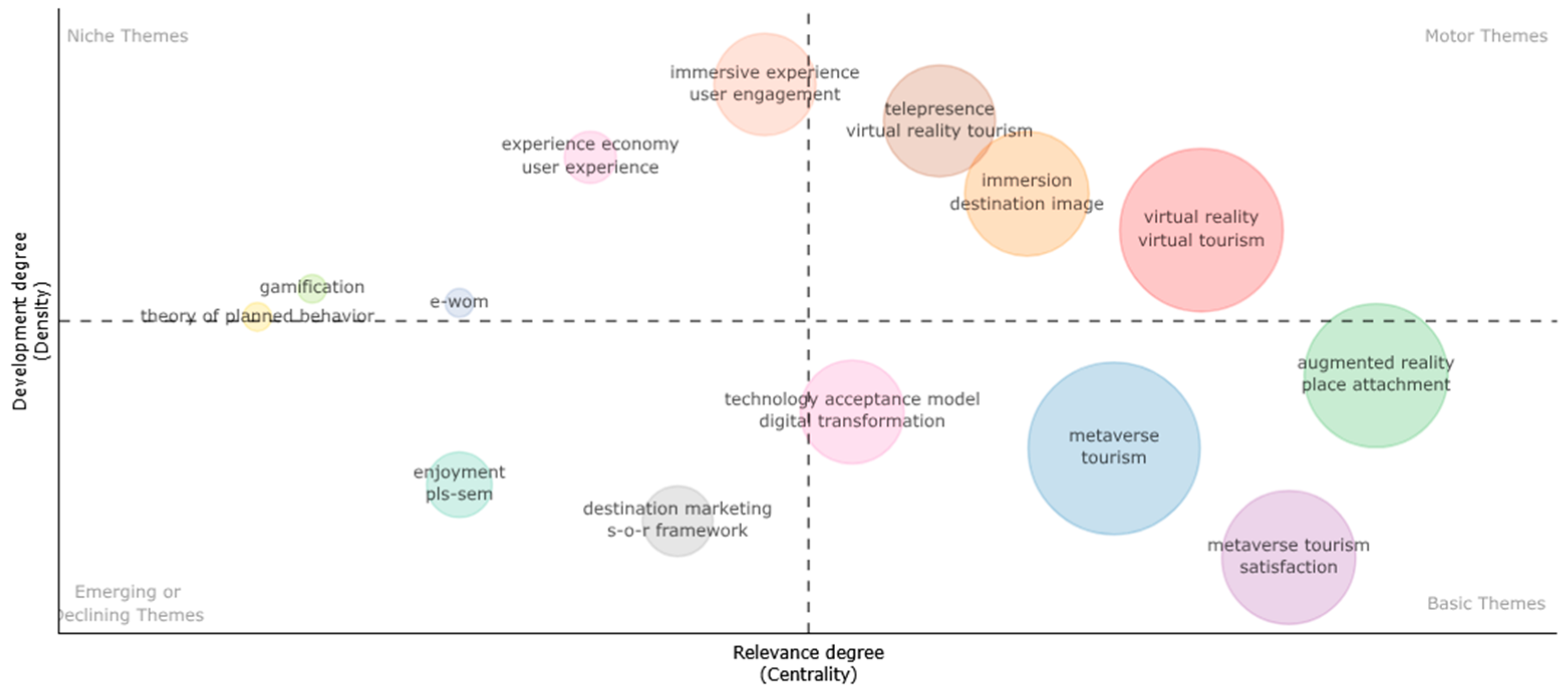
Between 2024 and mid-2025, immersive technology research in tourism and hospitality reflects a more mature stage characterized by sharper thematic specialization, stronger interdisciplinary integration, and more explicit attention to sustainability, governance, and strategic value creation (Figure 11). In this phase, the metaverse is increasingly treated as an ecosystem rather than a stand-alone application layer, with analyses focusing on integrated architectures that combine AI, blockchain, and IoT and support richer forms of personalization and real-time co-creation. Motor themes therefore concentrate on advanced metaverse ecosystems, sometimes framed as Metaverse 2.0, with studies evaluating how these environments shape experience value, satisfaction, and loyalty and how they can be leveraged for competitive positioning and destination strategy [16,17,20,21,54]. Adoption at scale remains contingent on constraints that shape tourist readiness and destination investment. Key barriers include high hardware and content production costs, usability frictions and motion sickness, digital fatigue, privacy and cybersecurity risks, and limited interoperability across competing virtual platforms. These factors suggest that diffusion of Metaverse 2.0 will be uneven across destinations and market segments, especially where broadband capacity, digital skills, and device affordability remain binding constraints [17,55,80,81]. Basic themes consolidate around synthetic experiences and immersive storytelling, with a growing emphasis on how narrative quality and AI generated content influence destination image, persuasion, and behavioral intentions, positioning content design as a central mechanism of immersive tourism strategy rather than a peripheral feature [22,35,41,51,53]. Niche themes deepen the analysis of digital twins by treating them as decision support tools that simulate ecological, social, and economic dynamics, enabling scenario testing, carrying capacity management, and regenerative planning in sensitive sites, and linking immersive systems to measurable destination stewardship objectives [46,47,73,74]. Emerging themes foreground ethical and inclusivity concerns, including privacy, digital identity, accessibility, and equity in access to immersive services, with increasing calls for ethical frameworks, inclusive design principles, and regulatory guidance that can support innovation while reducing risks associated with pervasive immersion [55,60,80,81,82,83].

5.4. Interpretive Synthesis of Thematic Evolution

The thematic evolution across three defined phases (2016–2019, 2020–2023, and 2024–2025) indicates significant conceptual deepening and specialization (Figure 12). This progression indicates that the field is shifting from evaluating immersive tools in isolation to analyzing platform-based systems that reshape value creation, co-creation, and destination stewardship. The manuscript’s contribution lies in linking bibliometric structures to this phase-based interpretation, which clarifies where theory has advanced and where gaps remain, particularly around consumer identity, long-term engagement, and the environmental and ethical externalities of immersive infrastructures. The evolution of Stimulus–Organism–Response applications is illustrative. Early work operationalized stimuli primarily through presence, immersion, and perceived realism in VR settings, while later studies extend the framework to metaverse contexts where social interaction, avatar-mediated identity, and platform-enabled co-creation become salient stimuli that shape engagement, trust, and sustained intention outcomes [30,37,52].

6. Conclusions, Limitations and Future Research

6.1. Conclusions

This study presents a detailed bibliometric and systematic analysis of research on VR, AR, and the metaverse within the tourism and hospitality industries. By employing both quantitative bibliometric techniques and qualitative systematic reviews, we have synthesized key research trends, influential contributors, thematic developments, and identified critical gaps. Four main conclusions can be drawn from our analysis. Firstly, there has been substantial growth in scholarly output in recent years, especially after 2020, largely accelerated by the COVID-19 pandemic. This expansion reflects increasing recognition of immersive technologies’ strategic value in reshaping tourist experiences, destination marketing, and industry practices. Secondly, the study underscores the critical role of key journals, notably Tourism Management, Current Issues in Tourism, and the Journal of Travel Research, as pivotal platforms driving academic discourse on these technologies. Additionally, researchers such as Timothy H. Jung, M. Claudia tom Dieck, and Dimitrios Buhalis have emerged as highly influential, significantly advancing theoretical and empirical insights in this domain. Thirdly, the bibliometric mapping reveals clearly defined thematic clusters, underscoring a pronounced shift from initial exploratory studies toward sophisticated empirical analyses and integration into broader conceptual frameworks. Central themes include VR and AR’s roles in shaping consumer experiences, the emergence and strategic application of the metaverse, and innovative developments like digital twins that offer practical tools for sustainable tourism management. Fourthly, recent thematic developments have increasingly aligned with sustainability objectives, ethical considerations, and inclusivity, indicating that immersive technologies have transformative potential far beyond traditional commercial applications. From an environmental perspective, immersive tourism solutions can contribute to decarbonization by substituting part of physical travel demand, protecting fragile sites through virtual access, and smoothing visitor flows through digital twin-enabled demand management. Yet these potential benefits should be assessed alongside digital externalities associated with metaverse infrastructures, including electricity demand for rendering, streaming, cloud storage, and AI-intensive services, and embodied impacts related to devices and supporting hardware. The net environmental effect depends on whether virtual experiences displace or stimulate additional travel and on the carbon intensity of the electricity and cloud architecture that power these services.

6.2. Theoretical Implications

From a theoretical standpoint, this research extends existing knowledge on immersive technologies (VR, AR, and the metaverse) by clearly delineating the evolution and maturation of these fields through systematic phases (initial exploration, conceptual consolidation, and sustainability transformation). The identification and categorization of thematic clusters provide scholars with a nuanced conceptual framework that clarifies how these technologies interact with consumer behavior, business strategy, and sustainability goals. Moreover, by systematically combining bibliometric and qualitative analysis, this study contributes methodologically by demonstrating the utility and robustness of such integrated analytical approaches for capturing complex technological phenomena. This research also advances theoretical discussions surrounding the Stimulus–Organism–Response (S-O-R) model by applying and extending it explicitly within immersive technological contexts. It highlights how virtual environments influence consumer experiences, psychological outcomes, and behavioral intentions, thereby enriching current theoretical debates in consumer psychology and marketing.

6.3. Managerial Implications

This paper shows how immersive technologies in tourism have evolved from stand-alone VR and AR applications to metaverse-oriented ecosystems that reshape experience design, consumer decision processes, and destination governance, while refining the Stimulus–Organism–Response model by clarifying how presence, interactivity, and embodiment influence visitor states and behaviors. Destination managers should treat VR, AR, and metaverse initiatives as strategic capabilities, using immersive previews to steer expectations and segment markets, and applying AR layers and digital twins to manage flows through dispersion, virtual queuing, and capacity-sensitive routing, supported by clear rules for interoperability, partnerships, privacy, cybersecurity, content governance, and accessibility. Destination management organizations can use the three-phase model as a readiness audit by mapping current initiatives to phase characteristics and identifying gaps in content production, data governance, interoperability, and sustainability reporting, which supports sequencing from stand-alone pilots to integrated visitor management use cases and then to persistent social virtual worlds only when platform governance capacity and long-term partnership arrangements are in place. Sustainability performance should be assessed by tracking whether immersive services displace or stimulate physical visitation and by prioritizing energy-efficient delivery and renewable-powered hosting where feasible. Regulators should adopt anticipatory governance through consumer protection, transparency for data use and personalization, enforceable accessibility standards, clear rules for digital replicas of heritage, and reporting expectations for energy use and emissions in high-intensity immersive services. Developers and tourism businesses should prioritize user-centric and accessible design and privacy by design, linking immersive storytelling to measurable outcomes such as engagement quality, satisfaction, conversion, and flow management so that immersive services support destination stewardship rather than intensifying demand.

6.4. Limitations and Future Research Agenda

While this study provides a comprehensive bibliometric and systematic review of research on VR, AR, and the metaverse in tourism and hospitality, several limitations should be acknowledged. The analysis was restricted to English-language journal articles and reviews indexed in Scopus and filtered to ABS-ranked journals, which may exclude relevant studies published in other languages, in books or conference proceedings, or in technical outlets in engineering and computer science that inform interoperability and system design. Bibliometric mapping also involves interpretive choices when labeling clusters and reading network structures, so some subjectivity cannot be fully eliminated even under a systematic protocol. The field evolves rapidly and the dataset represents a snapshot exported on 20 June 2025, so late-indexed 2025 publications and subsequent citations are not fully captured.
Building on these limitations, the future research agenda prioritizes seven directions that remain insufficiently developed (Table 4). First, ethical and privacy considerations require more implementable guidance on consent, auditability, accountability, moderation and redress, as well as data sovereignty and ownership of destination data and digital twins, with particular attention to risks such as virtual harassment and the digital divide in developing destinations. Second, longitudinal studies are needed to assess sustained effects on loyalty, well-being, consumer identity, and long-term behavioral change under repeated immersive engagement. Third, inclusivity and accessibility research should address adoption barriers and design principles for senior travelers, culturally diverse groups, and people with disabilities. Fourth, sustainability research should quantify net effects by comparing avoided mobility emissions with the energy and hardware footprint of immersive infrastructures and by clarifying conditions under which virtual tourism mitigates overtourism and supports regenerative strategies aligned with the Sustainable Development Goals. Fifth, work on business models should examine how integrated platforms and virtual marketplaces reshape co-creation, revenue models, and competitive dynamics. Sixth, research on technological integration should test the effectiveness of metaverse ecosystems that combine VR, AR, AI, blockchain, and IoT, including the roles of immersive storytelling and synthetic experiences in driving engagement and satisfaction. Seventh, platform governance research should compare decentralized and proprietary virtual platforms and specify interoperability standards and contracting practices that support data portability and fair value sharing across platforms, firms, and public authorities.

Supplementary Materials

The following supporting information can be downloaded at: https://www.mdpi.com/article/10.3390/platforms4020006/s1. Ref. [86] has been cited in the PRISMA checklist.

Author Contributions

Conceptualization, A.Z., I.M. and A.B.Y.; methodology, A.Z., I.M. and A.B.Y.; software, A.Z., I.M. and A.B.Y.; validation, A.Z., I.M. and A.B.Y.; formal analysis, A.Z., I.M. and A.B.Y.; investigation, A.Z., I.M. and A.B.Y.; resources, A.Z., I.M. and A.B.Y.; data curation, A.Z., I.M. and A.B.Y.; writing—original draft preparation, A.Z., I.M. and A.B.Y.; writing—review and editing, A.Z., I.M. and A.B.Y.; visualization, A.Z., I.M. and A.B.Y.; supervision, A.B.Y. All authors have read and agreed to the published version of the manuscript.

Funding

This research received no external funding.

Institutional Review Board Statement

Not applicable.

Informed Consent Statement

Not applicable.

Data Availability Statement

No new data were created or analyzed in this study. Data sharing is not applicable to this article.

Conflicts of Interest

The authors declare no conflicts of interest.

Appendix A. Supplementary Citation Rankings

Table A1. Top thirty papers ordered by citation score.
Ref.YearArticlesSourceTCTC/Year
[8]2010Virtual reality: Applications and implications for tourismTourism Management81057.85
[10]2018Virtual reality, presence, and attitude change: Empirical evidence from tourismTourism Management48981.5
[30]2018Exploring Consumer Behavior in Virtual Reality Tourism Using an Extended Stimulus-Organism-Response ModelJournal of Travel Research448112
[32]2019New realities: a systematic literature review on virtual reality and augmented reality in tourism researchCurrent Issues in Tourism39779.4
[87]2015Tourists’ intention to visit a destination: The role of AR application for a heritage siteComputers in Human Behavior32836.44
[31]2016Exploring the Implications of Virtual Reality Technology in Tourism Marketing: An Integrated Research FrameworkInternational Journal of Tourism Research32240.25
[66]2012Enhancing the Tourism Experience through Mobile Augmented Reality: Challenges and ProspectsInternational Journal of Engineering Business Management26622.16
[88]202020 years of research on virtual reality and augmented reality in tourism context: A text-mining approachTourism Management26065
[89]2018A theoretical model of mobile augmented reality acceptance in urban heritage tourismCurrent Issues in Tourism25242
[84]2019Virtual reality presence as a preamble of tourism experience: The role of mental imageryTourism Management21242.4
[90]2013Exploring user acceptance of 3D virtual worlds in travel and tourism marketingTourism Management21219.27
[91]2018When art meets tech: The role of augmented reality in enhancing museum experiences and purchase intentionsTourism Management19933.16
[92]2019A hedonic motivation model in virtual reality tourism: Comparing visitors and non-visitorsInternational Journal of Information Management19539
[93]2019Effects of virtual reality on theme park visitors’ experience and behaviors: A presence perspectiveTourism Management18436.8
[94]2015Apply an Augmented Reality in a Mobile Guidance to Increase Sense of Place for Heritage PlacesEducational Technology & Society17719.66
[95]2018Embodiment of Wearable Augmented Reality Technology in Tourism ExperiencesJournal of Travel Research17729.5
[78]2018The Role of Augmented Reality for Experience-Influenced Environments: The Case of Cultural Heritage Tourism in KoreaJournal of Travel Research17529.16
[96]2017Value of augmented reality at cultural heritage sites: A stakeholder approachJournal of Destination Marketing & Management17525
[97]2012Overview of Smartphone Augmented Reality Applications for Tourisme-Review of Tourism Research16713.91
[98]1995Virtual reality and tourism: fact or fantasy?Tourism Management1625.58
[9]2019Virtual reality in tourism: a state-of-the-art reviewTourism Review15631.2
[27]1995The virtual threat to travel and tourismTourism Management1525.24
[99]2018Exploring the role of next-generation virtual technologies in destination marketingJournal of Destination Marketing & Management15225.33
[100]2012Virtual destination image: Testing a telepresence modelJournal of Business Research14412
[101]2018User experience model for augmented reality applications in urban heritage tourismJournal of Heritage Tourism14424
[102]2019Management of immersive heritage tourism experiences: A conceptual modelTourism Management13927.8
[103]2020Experiencing immersive virtual reality in museumsInformation & Management13533.75
[104]2018Cross-cultural differences in adopting mobile augmented reality at cultural heritage tourism sitesInternational Journal of Contemporary Hospitality Management13021.66
[105]2021Light at the end of the tunnel: Visitors’ virtual reality (versus in-person) attraction site tour-related behavioral intentions during and post-COVID-19Tourism Management12742.33
[106]2017A multisensory virtual experience model for thematic tourism: A Port wine tourism application proposalJournal of Destination Marketing & Management12117.28
Table A2. Top five papers published in the last five years (2019–2023) ordered by citation score.
Ref.TitleYearSource TitleCited byAuthor Keywords
[30]Exploring Consumer Behavior in Virtual Reality Tourism Using an Extended Stimulus-Organism-Response Model2020Journal of Travel Research448attachment; authentic experience; stimulus-organism-response theory; VR tourism; visit intention
[32]New realities: a systematic literature review on virtual reality and augmented reality in tourism research2019Current Issues in Tourism397Augmented Reality; methodology; systematic quantitative literature review; tourism development; VR; virtual tourism
[88]20 years of research on virtual reality and augmented reality in tourism context: A text-mining approach2020Tourism Management260Augmented reality; SOR; TAM; Tourism management; Tourism promotion; VR
[84]Virtual reality presence as a preamble of tourism experience: The role of mental imagery2019Tourism Management212Interactivity; Mental imagery; Presence; Tourism brand experience; Tourism marketing; VR
[92]A hedonic motivation model in virtual reality tourism: Comparing visitors and non-visitors2019International Journal of Information Management195Flow state; Hedonic motivation system adoption model; Subjective well-being; VR tourism; Visitors and non-visitors

References

  1. Buhalis, D.; Lin, M.S.; Leung, D. Metaverse as a driver for customer experience and value co-creation. Implications for hospitality and tourism management and marketing. Int. J. Contemp. Hosp. Manag. 2023, 35, 701–716. [Google Scholar] [CrossRef]
  2. Zeqiri, A. From traditional to digital. The evolution of business models in hospitality through platforms. Platforms 2024, 2, 221–233. [Google Scholar] [CrossRef]
  3. Buhalis, D.; Harwood, T.; Bogicevic, V.; Viglia, G.; Beldona, S.; Hofacker, C.F. Technological disruptions in services. Lessons from tourism and hospitality. J. Serv. Manag. 2019, 30, 484–506. [Google Scholar] [CrossRef]
  4. Peceny, U.S.; Urbančič, J.; Mokorel, S.; Kuralt, V.; Ilijaš, T. Tourism 4.0. Challenges in marketing a paradigm shift. In Consumer Behavior and Marketing; Reyes, M.G., Ed.; IntechOpen: London, UK, 2020; pp. 1–19. [Google Scholar] [CrossRef]
  5. Ivanov, S.; Webster, C.; Berezina, K. Adoption of robots and service automation by tourism and hospitality companies. Rev. Tur. Desenvolv. 2017, 27/28, 1501–1517. [Google Scholar]
  6. Kansakar, P.; Munir, A.; Shabani, N. Technology in the hospitality industry. Prospects and challenges. IEEE Consum. Electron. Mag. 2019, 8, 60–65. [Google Scholar] [CrossRef]
  7. Li, J.; Xu, L.; Tang, L.; Wang, S.; Li, L. Big data in tourism research. A literature review. Tour. Manag. 2018, 68, 301–323. [Google Scholar] [CrossRef]
  8. Guttentag, D.A. Virtual reality. Applications and implications for tourism. Tour. Manag. 2010, 31, 637–651. [Google Scholar] [CrossRef]
  9. Beck, J.; Rainoldi, M.; Egger, R. Virtual reality in tourism. A state of the art review. Tour. Rev. 2019, 74, 586–612. [Google Scholar] [CrossRef]
  10. Tussyadiah, I.P.; Wang, D.; Jung, T.H.; tom Dieck, M.C. Virtual reality, presence, and attitude change. Empirical evidence from tourism. Tour. Manag. 2018, 66, 140–154. [Google Scholar] [CrossRef]
  11. Zeqiri, A.; Dahmani, M.; Ben Youssef, A. Digitalization of the tourism industry. What are the impacts of the new wave of technologies. Balk. Econ. Rev. 2020, 2, 63–82. [Google Scholar]
  12. Zeqiri, A. Virtual tourism as a substitute for physical tourism during COVID-19 pandemic. Environ. Econ. Policy Stud. 2024, 26, 125–144. [Google Scholar] [CrossRef]
  13. Akhtar, N.; Khan, N.; Mahroof Khan, M.; Ashraf, S.; Hashmi, M.S.; Khan, M.M.; Hishan, S.S. Post-COVID 19 tourism. Will digital tourism replace mass tourism. Sustainability 2021, 13, 5352. [Google Scholar] [CrossRef]
  14. Fernández Calvo, V.; Rühl, A.; Kubus, R. Virtual tourism in the post-pandemic reality. Economic-financial flows. Merc. Neg. 2022, 23, 57–84. [Google Scholar] [CrossRef]
  15. Alyahya, M.; McLean, G. Examining tourism consumers’ attitudes and the role of sensory information in virtual reality experiences of a tourist destination. J. Travel Res. 2022, 61, 1666–1681. [Google Scholar] [CrossRef]
  16. Buhalis, D.; Leung, D.; Lin, M.S. Metaverse as a disruptive technology revolutionising tourism management and marketing. Tour. Manag. 2023, 97, 104724. [Google Scholar] [CrossRef]
  17. Koohang, A.; Nord, J.H.; Ooi, K.-B.; Tan, G.W.-H.; Al-Emran, M.; Aw, E.C.-X.; Baabdullah, A.M.; Buhalis, D.; Cham, T.-H.; Dennis, C.; et al. Shaping the metaverse into reality. Multidisciplinary perspectives on opportunities, challenges, and future research. J. Comput. Inf. Syst. 2023, 63, 735–765. [Google Scholar] [CrossRef]
  18. Filimonau, V.; Ashton, M.; Stankov, U. Virtual spaces as the future of consumption in tourism, hospitality and events. J. Tour. Futures 2024, 10, 110–115. [Google Scholar] [CrossRef]
  19. Gürsoy, D.; Malodia, S.; Dhir, A. The metaverse in the hospitality and tourism industry. An overview of current trends and future research directions. J. Hosp. Mark. Manag. 2022, 31, 527–534. [Google Scholar] [CrossRef]
  20. Chon, K.K.S.; Hao, F. Technological evolution in tourism. A horizon 2050 perspective. Tour. Rev. 2025, 80, 313–325. [Google Scholar] [CrossRef]
  21. Chen, Z. Beyond boundaries. Exploring the Metaverse in tourism. Int. J. Contemp. Hosp. Manag. 2025, 37, 1257–1275. [Google Scholar] [CrossRef]
  22. Miao, L.; Yang, F.X.; Zhang, Q.; Wang, K.Y. Synthetic tourist experience. Ann. Tour. Res. 2025, 113, 103977. [Google Scholar] [CrossRef]
  23. Knani, M.; Echchakoui, S.; Ladhari, R. Artificial intelligence in tourism and hospitality. Bibliometric analysis and research agenda. Int. J. Hosp. Manag. 2022, 107, 103317. [Google Scholar] [CrossRef]
  24. Rosário, A.T.; Dias, J.C. Exploring the landscape of smart tourism. A systematic bibliometric review of the literature of the Internet of Things. Adm. Sci. 2024, 14, 22. [Google Scholar] [CrossRef]
  25. Ha, T.N.; Tučková, Z.; Doan, N.N.Q. Bibliometric analysis of virtual reality in tourism and hospitality. Int. Conf. Tour. Res. 2023, 6, 418–424. [Google Scholar] [CrossRef]
  26. Sousa, N.; Alén, E.; Losada, N.; Melo, M. Virtual reality in tourism promotion. A research agenda based on a bibliometric approach. J. Qual. Assur. Hosp. Tour. 2024, 25, 313–342. [Google Scholar] [CrossRef]
  27. Cheong, R. The virtual threat to travel and tourism. Tour. Manag. 1995, 16, 417–422. [Google Scholar] [CrossRef]
  28. Dewailly, J.-M. Sustainable tourist space. From reality to virtual reality. Tour. Geogr. 1999, 1, 41–55. [Google Scholar] [CrossRef]
  29. Hobson, J.S.P.; Williams, A.P. Virtual reality. A new horizon for the tourism industry. J. Vacat. Mark. 1995, 1, 124–135. [Google Scholar] [CrossRef]
  30. Kim, M.J.; Lee, C.-K.; Jung, T. Exploring consumer behavior in virtual reality tourism using an extended Stimulus-Organism-Response model. J. Travel Res. 2020, 59, 69–89. [Google Scholar] [CrossRef]
  31. Huang, Y.-C.; Backman, K.F.; Backman, S.J.; Chang, L.-L. Exploring the implications of virtual reality technology in tourism marketing. An integrated research framework. Int. J. Tour. Res. 2016, 18, 116–128. [Google Scholar] [CrossRef]
  32. Yung, R.; Khoo-Lattimore, C. New realities. A systematic literature review on virtual reality and augmented reality in tourism research. Curr. Issues Tour. 2019, 22, 2056–2081. [Google Scholar] [CrossRef]
  33. Griffin, T.; Guttentag, D.; Lee, S.H.; Giberson, J.; Dimanche, F. Is VR always better for destination marketing. Comparing different media and styles. J. Vacat. Mark. 2023, 29, 119–140. [Google Scholar] [CrossRef]
  34. Meenakshy, M.; Chaudhary, V.; Kumar, A.; Bhattacharyya, S.S. Virtual reality 360° vs. screen 360° medium and ecological vs. recreational story type impact on sustainable travel intention. Int. J. Hum.-Comput. Interact. 2025, 41, 12434–12448. [Google Scholar] [CrossRef]
  35. Chu, X.; Chen, H. Enhancing the immersive display of the Song Mausoleum site. Integrating AI-driven virtual reality and high-precision depth image registration. GeoJournal 2025, 90, 131. [Google Scholar] [CrossRef]
  36. Singh, P.; Sharma, M.; Daim, T. Envisaging AR travel revolution for visiting heritage sites. A mixed-method approach. Technol. Soc. 2024, 76, 102439. [Google Scholar] [CrossRef]
  37. Wen, X.; Sotiriadis, M.; Shen, S. Determining the key drivers for the acceptance and usage of AR and VR in cultural heritage monuments. Sustainability 2023, 15, 4146. [Google Scholar] [CrossRef]
  38. Hadj Salah, F.; Bahri-Ammari, N.; Soliman, M.; Hassoumi, I.; Sharma, S. The nexus between augmented reality experiences and visitor behaviour in tourist destinations. J. Hosp. Tour. Insights 2025, 8, 3280–3301. [Google Scholar] [CrossRef]
  39. Tsang, S.-S.; Kuo, C.; Hu, T.-K.; Wang, W.-C. Exploring impacts of AR on group package tours. Destination image, perceived certainty, and experiential value. J. Vacat. Mark. 2023, 29, 84–102. [Google Scholar] [CrossRef]
  40. Hadi, W.; Tansliova, L.; Hutagalung, T.; Saputra, S.K. Augmented reality as an innovative tool for digitizing North Sumatran folklore. Enhancing educational tourism media literacy for children with special needs in Indonesia. Theory Pract. Lang. Stud. 2025, 15, 2009–2020. [Google Scholar] [CrossRef]
  41. Li, N.; Li, L.; Chen, X.; Wong, I.A. Digital destination storytelling. Narrative persuasion effects induced by story satisfaction in a VR context. J. Hosp. Tour. Manag. 2024, 58, 184–196. [Google Scholar] [CrossRef]
  42. Kılıçarslan, Ö.; Yozukmaz, N.; Albayrak, T.; Buhalis, D. The impacts of Metaverse on tourist behaviour and marketing implications. Curr. Issues Tour. 2025, 28, 622–642. [Google Scholar] [CrossRef]
  43. Shin, H.; Kang, J. How does the metaverse travel experience influence virtual and actual travel behaviors. Focusing on the role of telepresence and avatar identification. J. Hosp. Tour. Manag. 2024, 58, 174–183. [Google Scholar] [CrossRef]
  44. Alkhozaim, S.; Gull, M.; Bashir, I.; Alshiha, A.; Alnasser, E. From virtual to reality. The role of cognitive processing in fostering destination evangelism and revisit intentions. J. Hosp. Tour. Insights 2024, 8, 1665–1686. [Google Scholar] [CrossRef]
  45. Su, Z.; Lei, B.; Liang, S.; Khotphat, T.; Hu, Q. Avatar influence. How form realism and message appeal shape Generation Z’s travel intentions. J. Hosp. Tour. Manag. 2025, 64, 101257. [Google Scholar] [CrossRef]
  46. Petrova, M.; Sushchenko, O.; Dekhtyar, N.; Shalbayeva, S. The Prospects of Sustainable Development of Destroyed Tourism Areas Using Virtual Technologies. Sustainability 2025, 17, 3016. [Google Scholar] [CrossRef]
  47. Zeqiri, A.; Ben Youssef, A.; Maherzi Zahar, T. The Role of Digital Tourism Platforms in Advancing Sustainable Development Goals in the Industry 4.0 Era. Sustainability 2025, 17, 3482. [Google Scholar] [CrossRef]
  48. Hui, X.; Raza, S.H.; Khan, S.W.; Zaman, U.; Ogadimma, E.C. Exploring Regenerative Tourism Using Media Richness Theory. Emerging Role of Immersive Journalism, Metaverse-Based Promotion, Eco-Literacy, and Pro-Environmental Behavior. Sustainability 2023, 15, 5046. [Google Scholar] [CrossRef]
  49. Natarajan, T.; Pragha, P.; Dhalmahapatra, K.; Veera Raghavan, D.R. Exploring tourist’s metaverse experience using destination spatial presence quality and perceived augmentation. Metaverse exploration, physical expedition (MEPE). Curr. Issues Tour. 2025, 28, 2343–2365. [Google Scholar] [CrossRef]
  50. Talay, Ö. Examining metaverse experiences of people traveling to Turkey amid massive migration waves. J. Hosp. Tour. Technol. 2025, 16, 871–889. [Google Scholar] [CrossRef]
  51. Rafi, K.N.; Gani, M.O.; Nik Hashim, N.M.H.N.; Rahman, M.S.; Masukujjaman, M. The influence of 360-degree VR videos on tourism web usage behaviour. The role of web navigability and visual interface design quality. Tour. Rev. 2025, 80, 725–741. [Google Scholar] [CrossRef]
  52. Dutta, S.; Dixit, S. Examining the impact of media type and perceived interactivity on virtual tour intentions. Empirical evidence using S-O-R framework. Asia Pac. J. Tour. Res. 2025, 30, 1157–1176. [Google Scholar] [CrossRef]
  53. Bano Adeel, H.; Lodhi, R.N.; Lee, M.; Ali, F. Virtual travel experience and destination marketing. Do well-crafted contents of virtual reality matter for authentic customer experience and user satisfaction? Tourism 2025, 73, 251–263. [Google Scholar] [CrossRef]
  54. Jin, X.-L.; Wang, B.; Yang, L.; Wang, Y.; Zhou, Z. Sense of presence in metaverse tourism experiences. Scale development and validation. Ind. Manag. Data Syst. 2025, 125, 1732–1766. [Google Scholar] [CrossRef]
  55. Nazli, M.; Bulut, C.; Ozarslan, Y. Gen Z travel intentions and museum visits in the metaverse. Case of Egypt, Scotland, and Turkey. Curr. Issues Tour. 2025, 28, 2447–2465. [Google Scholar] [CrossRef]
  56. Aldossary, M.; McLean, G. Prolonging the influence of a vacation experience on consumers’ wellbeing. Is there a role for virtual reality? Ann. Tour. Res. 2022, 97, 103500. [Google Scholar] [CrossRef]
  57. Nguyen, T.B.T.; Le, T.B.N.; Chau, N.T. How VR technological features prompt tourists’ visiting intention. An integrated approach. Sustainability 2023, 15, 4765. [Google Scholar] [CrossRef]
  58. Zhang, Q.; Khan, S.; Khan, S.U.; Mehmood, S.; Khan, I.U. Unraveling the barriers contributing to senior travelers’ non-adoption intention of virtual reality. Leis. Sci. 2024, 46, 1–23. [Google Scholar] [CrossRef]
  59. Gursoy, I.T.; Aktas, E.; Tecim, V.; Kurgun, O.A. Beta tourist world. A conceptual framework for organizing an event in the metaverse. Inf. Technol. Tour. 2023, 25, 529–548. [Google Scholar] [CrossRef]
  60. Ariza-Montes, A.; Quan, W.; Radic, A.; Yu, J.; Han, H. Human values and traveler behaviors. Metaverse for conferences and meetings. J. Travel Tour. Mark. 2023, 40, 490–511. [Google Scholar] [CrossRef]
  61. Donthu, N.; Kumar, S.; Mukherjee, D.; Pandey, N.; Lim, W.M. How to conduct a bibliometric analysis. An overview and guidelines. J. Bus. Res. 2021, 133, 285–296. [Google Scholar] [CrossRef]
  62. Zupic, I.; Čater, T. Bibliometric methods in management and organization. Organ. Res. Methods 2015, 18, 429–472. [Google Scholar] [CrossRef]
  63. Tranfield, D.; Denyer, D.; Smart, P. Towards a methodology for developing evidence-informed management knowledge by means of systematic review. Br. J. Manag. 2003, 14, 207–222. [Google Scholar] [CrossRef]
  64. Xiao, Y.; Watson, M. Guidance on conducting a systematic literature review. J. Plan. Educ. Res. 2019, 39, 93–112. [Google Scholar] [CrossRef]
  65. Noyons, E.C.M.; Moed, H.F.; Luwel, M. Combining mapping and citation analysis for evaluative bibliometric purposes. A bibliometric study. J. Am. Soc. Inf. Sci. 1999, 50, 115–131. [Google Scholar] [CrossRef]
  66. Kounavis, C.D.; Kasimati, A.E.; Zamani, E.D. Enhancing the tourism experience through mobile augmented reality. Challenges and prospects. Int. J. Eng. Bus. Manag. 2012, 4, 10. [Google Scholar] [CrossRef]
  67. Wiltshier, P.; Clarke, A. Virtual cultural tourism. Six pillars of VCT using co-creation, value exchange and exchange value. Tour. Hosp. Res. 2017, 17, 372–383. [Google Scholar] [CrossRef]
  68. Mura, P.; Tavakoli, R.; Pahlevan Sharif, S. “Authentic but not too much”: Exploring perceptions of authenticity of virtual tourism. Inf. Technol. Tour. 2017, 17, 145–159. [Google Scholar] [CrossRef]
  69. Nayyar, A.; Mahapatra, B.; Le, D.N.; Suseendran, G. Virtual reality (VR) and augmented reality (AR) technologies for tourism and hospitality industry. Int. J. Eng. Technol. 2018, 7, 156–160. [Google Scholar] [CrossRef]
  70. Guttentag, D.; Griffin, T.; Lee, S.H. The future is now. How virtual reality and augmented reality are transforming tourism. In The SAGE Handbook of Tourism Management; Cooper, C., Volo, S., Gartner, W.C., Scott, N., Eds.; SAGE Publications: Thousand Oaks, CA, USA, 2018; pp. 443–462. [Google Scholar] [CrossRef]
  71. Stankov, U.; Gretzel, U. Tourism 4.0 technologies and tourist experiences. A human-centered design perspective. Inf. Technol. Tour. 2020, 22, 477–488. [Google Scholar] [CrossRef]
  72. Bigne, E.; Maturana, P. Does virtual reality trigger visits and booking holiday travel packages? Cornell Hosp. Q. 2023, 64, 226–245. [Google Scholar] [CrossRef]
  73. Zaman, U.; Koo, I.; Abbasi, S.; Raza, S.H.; Qureshi, M.G. Meet your digital twin in space? Profiling international expat’s readiness for metaverse space travel, tech-savviness, COVID-19 travel anxiety, and travel fear of missing out. Sustainability 2022, 14, 6441. [Google Scholar] [CrossRef]
  74. Deng, B.; Wong, I.A.; Lian, Q.L. From metaverse experience to physical travel. The role of the digital twin in metaverse design. Tour. Rev. 2024, 79, 1076–1087. [Google Scholar] [CrossRef]
  75. Go, H.; Kang, M. Metaverse tourism for sustainable tourism development. Tourism agenda 2030. Tour. Rev. 2022, 78, 381–394. [Google Scholar] [CrossRef]
  76. Ben Youssef, A.; Zeqiri, A. Hospitality industry 4.0 and climate change. Circ. Econ. Sustain. 2022, 2, 1043–1063. [Google Scholar] [CrossRef] [PubMed]
  77. Valencia-Arias, A.; Quiroz-Fabra, J.; Londoño, W.; Garcia-Pineda, V.; Rodríguez-Correa, P.; García Arango, D. Technological strategies for knowledge apprehension in tourism-oriented natural environments. A bibliometric approach. In Proceedings of the ADVED 2022, 8th International Conference on Advances in Education, Istanbul, Turkey, 10–12 October 2022; pp. 204–212. [Google Scholar] [CrossRef]
  78. Chung, N.; Lee, H.; Kim, J.-Y.; Koo, C. The role of augmented reality for experience-influenced environments: The case of cultural heritage tourism in Korea. J. Travel Res. 2018, 57, 627–643. [Google Scholar] [CrossRef]
  79. Garanti, Z. Value co-creation in smart tourism destinations. Worldw. Hosp. Tour. Themes 2023, 15, 468–475. [Google Scholar] [CrossRef]
  80. Anshari, M.; Syafrudin, M.; Fitriyani, N.L.; Razzaq, A. Ethical responsibility and sustainability development in a metaverse business model. Sustainability 2022, 14, 15805. [Google Scholar] [CrossRef]
  81. Xu, M.; Ng, W.C.; Lim, W.Y.B.; Kang, J.; Xiong, Z.; Niyato, D.; Yang, Q.; Shen, X.; Miao, C. A full dive into realizing the edge-enabled metaverse. Visions, enabling technologies, and challenges. IEEE Commun. Surv. Tutor. 2023, 25, 656–700. [Google Scholar] [CrossRef]
  82. Plechatá, A.; Makransky, G.; Böhm, R. Can extended reality in the metaverse revolutionise health communication? npj Digit. Med. 2022, 5, 132. [Google Scholar] [CrossRef]
  83. Zhong, L.; Zhu, M.; Li, M.; Morrison, A.M.; Yang, L. Play alone or play together? A comparative study of single- and multi-person interactions in virtual tourism. J. Hosp. Tour. Technol. 2025, 16, 346–368. [Google Scholar] [CrossRef]
  84. Bogicevic, V.; Seo, S.; Kandampully, J.A.; Liu, S.Q.; Rudd, N.A. Virtual reality presence as a preamble of tourism experience. The role of mental imagery. Tour. Manag. 2019, 74, 55–64. [Google Scholar] [CrossRef]
  85. Zhang, J.; Quoquab, F. Metaverse in the urban destinations in China. Some insights for the tourism players. Int. J. Tour. Cities 2023, 9, 1016–1024. [Google Scholar] [CrossRef]
  86. Page, M.J.; McKenzie, J.E.; Bossuyt, P.M.; Boutron, I.; Hoffmann, T.C.; Mulrow, C.D.; Shamseer, L.; Tetzlaff, J.M.; Akl, E.A.; Brennan, S.E.; et al. The PRISMA 2020 statement: An updated guideline for reporting systematic reviews. BMJ 2021, 372, n71. [Google Scholar] [CrossRef] [PubMed]
  87. Chung, N.; Han, H.; Joun, Y. Tourists’ intention to visit a destination: The role of augmented reality (AR) application for a heritage site. Comput. Hum. Behav. 2015, 50, 588–599. [Google Scholar] [CrossRef]
  88. Loureiro, S.M.C.; Guerreiro, J.; Ali, F. 20 years of research on virtual reality and augmented reality in tourism context: A text-mining approach. Tour. Manag. 2020, 77, 104028. [Google Scholar] [CrossRef]
  89. tom Dieck, M.C.; Jung, T. A theoretical model of mobile augmented reality acceptance in urban heritage tourism. Curr. Issues Tour. 2018, 21, 154–174. [Google Scholar] [CrossRef]
  90. Huang, Y.-C.; Backman, S.J.; Backman, K.F.; Moore, D. Exploring user acceptance of 3D virtual worlds in travel and tourism marketing. Tour. Manag. 2013, 36, 490–501. [Google Scholar] [CrossRef]
  91. He, Z.; Wu, L.; Li, X. When art meets tech: The role of augmented reality in enhancing museum experiences and purchase intentions. Tour. Manag. 2018, 68, 127–139. [Google Scholar] [CrossRef]
  92. Kim, M.J.; Hall, C.M. A hedonic motivation model in virtual reality tourism: Comparing visitors and non-visitors. Int. J. Inf. Manag. 2019, 46, 236–249. [Google Scholar] [CrossRef]
  93. Wei, W.; Qi, R.X.; Zhang, L. Effects of virtual reality on theme park visitors’ experience and behaviors: A presence perspective. Tour. Manag. 2019, 71, 282–293. [Google Scholar] [CrossRef]
  94. Chang, Y.-L.; Hou, H.-T.; Pan, C.-Y.; Sung, Y.-T.; Chang, K.-E. Apply an Augmented Reality in a Mobile Guidance to Increase Sense of Place for Heritage Places. Educ. Technol. Soc. 2015, 18, 166–178. [Google Scholar]
  95. Tussyadiah, I.P.; Jung, T.H.; tom Dieck, M.C. Embodiment of wearable augmented reality technology in tourism experiences. J. Travel Res. 2018, 57, 597–611. [Google Scholar] [CrossRef]
  96. tom Dieck, M.C.; Jung, T.H. Value of augmented reality at cultural heritage sites: A stakeholder approach. J. Destin. Mark. Manag. 2017, 6, 110–117. [Google Scholar] [CrossRef]
  97. Yovcheva, Z.; Buhalis, D.; Gatzidis, C. Smartphone augmented reality applications for tourism. e-Rev. Tour. Res. (eRTR) 2012, 10, 63–66. [Google Scholar]
  98. Williams, P.; Hobson, J.S.P. Virtual reality and tourism: Fact or fantasy? Tour. Manag. 1995, 16, 423–427. [Google Scholar] [CrossRef]
  99. Marasco, A.; Buonincontri, P.; van Niekerk, M.; Orlowski, M.; Okumus, F. Exploring the role of next-generation virtual technologies in destination marketing. J. Destin. Mark. Manag. 2018, 9, 138–148. [Google Scholar] [CrossRef]
  100. Hyun, M.Y.; O’Keefe, R.M. Virtual destination image: Testing a telepresence model. J. Bus. Res. 2012, 65, 29–35. [Google Scholar] [CrossRef]
  101. Han, D.-I.; tom Dieck, M.C.; Jung, T.H. User experience model for augmented reality applications in urban heritage tourism. J. Herit. Tour. 2018, 13, 46–61. [Google Scholar] [CrossRef]
  102. Bec, A.; Moyle, B.; Timms, K.; Schaffer, V.; Skavronskaya, L.; Little, C. Management of immersive heritage tourism experiences: A conceptual model. Tour. Manag. 2019, 72, 117–120. [Google Scholar] [CrossRef]
  103. Lee, H.; Jung, T.H.; tom Dieck, M.C.; Chung, N. Experiencing immersive virtual reality in museums. Inf. Manag. 2020, 57, 103229. [Google Scholar] [CrossRef]
  104. Jung, T.H.; Lee, H.; Chung, N.; tom Dieck, M.C. Cross-cultural differences in adopting mobile augmented reality at cultural heritage tourism sites. Int. J. Contemp. Hosp. Manag. 2018, 30, 1621–1645. [Google Scholar] [CrossRef]
  105. Itani, O.S.; Hollebeek, L.D. Light at the end of the tunnel: Visitors’ virtual reality (versus in-person) attraction site tour-related behavioral intentions during and post-COVID-19. Tour. Manag. 2021, 84, 104290. [Google Scholar] [CrossRef] [PubMed]
  106. Martins, J.; Gonçalves, R.; Branco, F.; Barbosa, L.; Melo, M.; Bessa, M. A multisensory virtual experience model for thematic tourism: A Port wine tourism application proposal. J. Destin. Mark. Manag. 2017, 6, 103–109. [Google Scholar] [CrossRef]
Figure 1. Evolution of immersive technologies in tourism. Source: Authors’ own elaboration. Note: An illustrative example is the use of digital reconstruction to support rehabilitation of damaged heritage sites such as Notre-Dame Cathedral or Palmyra.
Platforms 04 00006 g001
Figure 2. PRISMA diagram flow 2020.
Platforms 04 00006 g002
Figure 3. Article selection and screening flow. Note: The asterisk (*) is a truncation operator in Scopus that captures all word variants (e.g., “metavers*” retrieves “metaverse,” “metaverses,” etc.). Source: Authors’ own elaboration.
Platforms 04 00006 g003
Figure 4. Annual number of publications on VR, AR, and the metaverse in tourism and hospitality (2016–mid 2025) (Source: Authors’ plot from the data). Note: The search date is 20 June 2025 and the 2025 value reflects partial year records indexed up to that date and may be affected by indexing lag. The Scopus dataset includes n equal to 316.
Platforms 04 00006 g004
Figure 5. Author co-citation network (VOSviewer) for the analyzed corpus (n = 316). Note: Node size reflects total co-citations; link thickness represents co-citation strength; colours indicate clusters, with proximity reflecting relatedness.
Platforms 04 00006 g005
Figure 6. Co-occurrence network of author keywords (VOSviewer; minimum occurrence threshold = 6). Note: node size indicates keyword frequency; link thickness reflects co-occurrence strength; colors represent thematic clusters within the corpus (n = 316).
Platforms 04 00006 g006
Figure 7. Bibliographic coupling of sources (journals) (VOSviewer; threshold ≥ 5 documents). Note: Node size indicates number of documents per source; link thickness reflects coupling strength based on shared references; colors denote source clusters within the corpus.
Platforms 04 00006 g007
Figure 8. Thematic evolution of immersive technologies in tourism research (2016–2025). Note: blocks represent themes derived from keyword clustering; flows connect themes sharing keywords across periods; flow width represents the relative volume of documents associated with each thematic transition.
Platforms 04 00006 g008
Figure 9. Thematic map of research trends in tourism and immersive technologies (2016–2019). Note: Clusters are built from co-word analysis of author keywords; the x-axis indicates centrality (relevance) and the y-axis density (development); bubble size is proportional to the number of documents; quadrants correspond to motor, basic, niche, and emerging/declining themes.
Platforms 04 00006 g009
Figure 10. Thematic map of research trends in tourism and immersive technologies (2020–2023). Note: clusters are built from co-word analysis of author keywords; the x-axis indicates centrality (relevance) and the y-axis density (development); bubble size is proportional to the number of documents; quadrants correspond to motor, basic, niche, and emerging/declining themes.
Platforms 04 00006 g010
Figure 11. Thematic map of research trends in tourism and immersive technologies (2024–2025). Note: Clusters are built from co-word analysis of author keywords; the x-axis indicates centrality (relevance) and the y-axis density (development); bubble size is proportional to the number of documents; quadrants correspond to motor, basic, niche, and emerging/declining themes.
Platforms 04 00006 g011
Figure 12. Evolution of thematic clusters in tourism and immersive technology research (2016–2025).
Platforms 04 00006 g012
Table 1. Main information about data.
DescriptionResults
Timespan2016–2025
Sources (Journals, Books, etc.)74
Documents316
Annual Growth Rate %48.44
Document Average Age2.01
Average citations per doc57.31
References19,202
DOCUMENT CONTENTS
Keywords Plus (ID)367
Author’s Keywords (DE)972
AUTHORS
Authors847
Authors of single-authored docs22
AUTHOR COLLABORATION
Single-authored docs22
Co-Authors per Doc3.54
International co-authorships %42.41
DOCUMENT TYPES
Article298
Review18
Table 2. List of the journals with the greatest number of publications and impact.
RSourceTCSourceTPSourceH IndexG IndexFirst Year of Publication
1Tourism Management4084Current Issues in Tourism32Current Issues in Tourism16322018
2Current Issues in Tourism2122International Journal of Contemporary Hospitality Management30Tourism Management15192018
3Journal of Travel Research2058Tourism Review20Tourism Review13202019
4Tourism Review960Tourism Management19Journal Of Hospitality and Tourism Technology13192016
5Journal of Hospitality and Tourism Technology869Journal Of Hospitality and Tourism Technology19International Journal of Contemporary Hospitality Management11292018
6International Journal of Contemporary Hospitality Management866Information Technology and Tourism18Information Technology and Tourism11182020
7International Journal of Tourism Research837Asia Pacific Journal of Tourism Research16Journal of Travel Research10122018
8Journal of Destination Marketing and Management656Journal of Travel Research12Asia Pacific Journal of Tourism Research7122020
9Information Technology and Tourism529International Journal of Tourism Research10International Journal of Tourism Research7102016
10Tourism Management Perspectives479Tourism Management Perspectives9Tourism Management Perspectives792019
Table 3. Top-ranked authors based on the highest impact.
RAuthorUniversityCountryTCTPH IndexG IndexFirst Year of Publication
1Jung, Timothy H.Manchester Metropolitan UniversityUK36671616162016
2Tom Dieck, M. ClaudiaManchester Metropolitan UniversityUK28701411142016
3Buhalis, DimitriosBournemouth UniversityUK12657772023
4Kim, Myung Ja Kyung Hee UniversityKorea12642222019
5Yung, RyanGriffith UniversityAustralia11555552019
6Tussyadiah IisSurrey Business SchoolUK11062222018
7Khoo-Lattimore, C.Griffith UniversityAustralia10584442019
8Lee, Choong-Ki Kyung Hee UniversityKorea8961112020
9Leung, DanielHong Kong Polytechnic UniversityHong Kong8542222023
10Wang, DanHong Kong Polytechnic UniversityHong Kong8511112018
Table 4. Summary of the future research agenda on immersive technologies in tourism.
Research ThemeSpecific Research QuestionsKey References
1. Ethical and privacy considerations
-
How do tourists perceive data privacy, security, and consent in VR, AR, and metaverse experiences?
-
What platform governance mechanisms, including moderation and redress, reduce risks such as virtual harassment and harmful content in immersive tourism?
-
How should data sovereignty and ownership be defined for destination data, including digital twins of heritage sites, across public authorities, communities, and platform operators?
[17,80,81,82]
2. Longitudinal impact on consumer behavior and well-being
-
How do long-term VR and AR engagements influence tourist loyalty and sustained behaviors?
-
What are the long-term psychological effects of immersive technologies on well-being?
-
How do consumer expectations evolve over sustained virtual interactions?
[12,30,84]
3. Inclusive and accessible virtual tourism
-
What accessibility barriers do diverse tourist groups face in immersive tourism experiences?
-
How can inclusive and equitable immersive tourism be effectively designed?
-
Which immersive applications best support marginalized and culturally diverse groups?
[55,81,85]
4. Sustainability and regenerative tourism through immersive technologies
-
Can immersive technologies effectively reduce overtourism and environmental impacts?
-
Do immersive experiences enhance sustainable behaviors and eco-literacy?
-
How can immersive platforms practically support regenerative tourism strategies?
[46,47,75]
5. Emerging business models and strategic innovations
-
How are traditional tourism business models reshaped by immersive technologies?
-
What monetization strategies emerge from immersive tourism platforms?
-
How do immersive technologies alter competitive dynamics within tourism?
[2,16,18]
6. Technological integration and innovation dynamics
-
How do advanced metaverse ecosystems affect tourist engagement and satisfaction?
-
What roles do immersive storytelling and synthetic experiences play in influencing tourist behaviors?
-
What are the implications of technological interoperability within immersive tourism ecosystems?
[17,22,35]
7. Platform governance and destination data ownership
-
How do decentralized virtual worlds and proprietary tourism platforms differ in governance, pricing, and accountability?
-
Who owns and controls destination data generated on immersive platforms, and how can data portability be ensured for destination organizations and local stakeholders?
-
What interoperability standards and contracting practices support fair value sharing and long-term destination stewardship
[16,17,18,81]
Disclaimer/Publisher’s Note: The statements, opinions and data contained in all publications are solely those of the individual author(s) and contributor(s) and not of MDPI and/or the editor(s). MDPI and/or the editor(s) disclaim responsibility for any injury to people or property resulting from any ideas, methods, instructions or products referred to in the content.