


Abstract
The occurrence of Biffarius biformis (Biffar, 1971) and Fragillianassa fragilis (Biffar, 1970) in the Southwestern Atlantic is based on previous literature record from Pernambuco. Here, we question this report due to the physical absence of all lots reported in the original publication as deposited in the Museum of Zoology, University of São Paulo (MZUSP). The search for the lots revealed that they were never sent to the MZUSP collection and are therefore unavailable for analysis. To contribute to the clarification of the presence of both species on the coast of Brazil, new lots from Casa Caiada (Olinda, Pernambuco)—one of the sites reported in the original study—were examined, provided by the lead author of the aforementioned study. Morphological analysis revealed that the specimens correspond to Biffarius delicatulus Rodrigues and Manning, 1992, constituting its first record for Pernambuco. A comparison between our material and the illustrations in the original study suggests misidentification; notably, male pleopod 2 is absent in B. biformis but present in the specimens figured in the original study. While this confirms the misidentification of B. biformis, newly examined incomplete material (1 male, 1 female) and literature records confirm the physical presence of the genus Fragillianassa in northeastern Brazil; however, the specific occurrence of F. fragilis remains uncorroborated due to the lack of complete, fully diagnostic adult voucher specimens. Consequently, we suggest omitting both species from the Brazilian carcinofauna list until verifiable evidence emerges. This study underscores the crucial role of curatorial verification in preventing the cascade of unverified records into regional biodiversity databases and providing reliable baseline data for coastal conservation policy.
1. Introduction
The ghost shrimp family Callianassidae Dana, 1852 [1] is represented by seven species along the Brazilian coast [2], although some of these records still require the necessary taxonomic validation to obtain stable data on biodiversity. Biffarius biformis (Biffar, 1971) [3] and Fragillianassa fragilis (Biffar, 1970) [4] are two callianassid species originally described for the coasts of Georgia and Puerto Rico, respectively. These species were recorded in northeastern Brazil by Botter-Carvalho et al. [5] based on specimens collected at Praia do Forte Orange (Itamaracá Island) and Praia da Casa Caiada (Olinda), in the State of Pernambuco. Since their original report, these records have been subsequently cited in some biological studies [6], forming part of the list of ghost shrimps of Brazil [2]. However, a search for the original lots in the crustacean collection of the Museu de Zoologia, Universidade de São Paulo (MZUSP), revealed that the lots cited by Botter-Carvalho et al. [5]—specifically MZUSP 19072 to 19074 for B. biformis and MZUSP 19066 to 19071 for F. fragilis—were never incorporated into the physical material of the museum and, consequently, are non-existent in the aforementioned collection. Unverified species records in regional checklists rapidly cascade into global biodiversity databases (e.g., GBIF, OBIS) and environmental policy frameworks, underscoring the critical necessity of curatorial verification to prevent distorted richness metrics.
To help resolve this taxonomic uncertainty, material of the genus Biffarius Manning and Felder, 1991 [7] from Casa Caiada, one of the original localities sampled by Botter-Carvalho et al. [5], was analyzed. This material was kindly provided for identification by the lead author of that study (Mônica Botter-Carvalho), as the original specimens were considered lost. By comparing these specimens with the type series of Biffarius delicatulus Rodrigues and Manning, 1992 [8]—specifically focusing on the morphology of the male second pleopod and the telson armature—the identity of this population is clarified. In parallel, the material from Casa Caiada is compared with the illustrations of Botter-Carvalho et al. [5] and the holotypes of B. biformis and F. fragilis to clarify these records on the Brazilian coast. This comparison highlights the indispensable role of curatorial rigor and voucher specimen deposition in maintaining reliable biodiversity data.
2. Materials and Methods
The present study is based on the morphological examination of ghost shrimp specimens collected in Northeastern Brazil and comparative material deposited in the following institutions: Museu de Oceanografia da Universidade Federal de Pernambuco, Recife (MOUFPE); Museu de Zoologia da Universidade de São Paulo, São Paulo (MZUSP); and National Museum of Natural History, Smithsonian Institution, Washington DC (USNM).
Taxonomic identification followed the original descriptions and subsequent revisions of the genera Biffarius by Manning and Felder [7] and Fragillianassa Poore, Dworschak, Robles, Mantelatto and Felder, 2019 by Poore et al. [9]. Morphological analysis was performed using a stereomicroscope equipped with a camera lucida for technical illustrations. Drawings were digitally inked using specialized software following the methods described by Hernáez et al. [2].
To verify the status of previous records, a physical audit of the MZUSP crustacean collection was conducted by the lead author to locate the lots cited by Botter-Carvalho et al. [5]. Measurements provided include carapace length (cl), measured from the tip of the rostrum to the posterior margin of the carapace, and total length (tl), from the tip of the rostrum to the posterior margin of the telson. Carapace length (cl) is herein adopted as the primary metric for size comparison in all newly examined material, as it represents the standard and most reliable dimension in callianassid taxonomy, avoiding preservation artifacts associated with abdominal contraction or stretching. Total length (tl) is cited exclusively for historical type specimens (e.g., USNM lots of B. biformis and F. fragilis) whose original descriptions and catalog records strictly provided this measurement.
3. Results
Taxonomy
Infraorder Axiidea de Saint Laurent, 1979 [10]
Family Callianassidae Dana, 1852 [1]
Genus Biffarius Manning and Felder, 1991 [7]
(Figure 1)
Biffarius delicatulus Rodrigues and Manning, 1992 [8]
Biffarius delicatulus Rodrigues and Manning [8]: 324, fig. 1a–w.
Biffarius biformis—Botter-Carvaho et al. [5]: 89 [not B. biformis (Biffar, 1971)]; Pachelle et al. [11]: 26, fig. 19a,b [not B. biformis (Biffar, 1971)]; Hernáez et al. [2]: 384 [not B. biformis (Biffar, 1971)].
Callianassa biformis—Coelho et al. [12]: 447 [not C. biformis Biffar, 1971].
Material examined. Biffarius delicatulus Rodrigues and Manning, 1992 [8]: holotype, male, cl 6.8 mm, Praia do Araçá, 23°40′S, 45°20′W, São Sebastião, São Paulo, Brazil, S.A. Rodrigues coll., 18 May 1985, MZUSP 10582; male, cl 3.1 mm, Praia do Tremembé, 04°44′05″ S, 37°17’24″ W, Icapuí, Ceará, P. Pachelle coll., 19 August 2012, MZUSP 27620; 3 males, cl 4.5–5.0 mm and 2 females, cl 4.4–4.7 mm, Praia da Casa Caiada, 07°58′59.8″ S, 34°50′06″ W, Olinda, Pernambuco, Brazil, M. Botter-Carvalho coll., 27 February 2013, MOUFPE 22337; 1 male, cl 4.8 mm and 2 females, cl: 4.4–4.9 mm, same locality and collector, 17 September 2013, MOUFPE 22338; 1 male, cl 1.7 mm, same locality and collector, 30 January 2014, MOUFPE 22339; 1 female, cl 4.5 mm, same locality and collector, 9 August 2014, MOUFPE 22340; 1 male, cl 3.8 mm, same locality and collector, 29 October 2014, MOUFPE 22341; 1 male, cl 3.9 mm, same locality and collector, 22 December 2014, MOUFPE 22342.
Comparative material. Callianassa biformis Biffar, 1971 [3]: holotype, male, tl 24 mm, mouth of Doboy Sound, lower intertidal, south end of Sapelo Island, McIntosh County, Georgia, USA, R. W. Heard coll., 1 June 1969, USNM 135052. Paratypes, 18 males, tl 15–29 mm and 14 females, tl 20–26.5 mm, same locality data as holotype, USNM 135053; 4 males, tl 27–32 mm and 1 ovigerous female, tl 26 mm, same locality as holotype, R.W. Heard coll., July 1969, USNM 135054. Biffarius botterae Hernáez, Miranda and Tavares, 2020 [13]: holotype, male, cl 4.6 mm, tl 20.3 mm, pereiopods detached, Praia de Tutóia, 02°45′40″ S, 42°15′45″ W, lower intertidal, Tutóia, Maranhão, Brazil, P. Hernáez coll., 7 July 2017, MZUSP 39002. Paratypes, 2 males, cl 4.0–4.6 mm and 1 female, cl 4.1 mm, same locality data as holotype, MZUSP 40375; 1 male, cl 5.6 mm, 1 female, cl 5.0 mm, mangrove, 04°40′55″ S, 37°21′30″ W, lower intertidal, Icapuí, Ceará, P. Hernáez coll., 16 July 2016, MZUSP 40376. Callianassa fragilis Biffar, 1970 [4]: holotype, male, tl 27 mm, sand flat, lower intertidal, Punta Arenas, Puerto Rico, H. G. Hewatt coll., 12 June 1946, USNM 82367. Paratype, female, tl 16.5 mm, Black’s Point, Falmouth Bay, Antigua, Smithsonian Bredin Expedition, 30 April 1959, USNM 135397. Fragillianassa sp. 1 male, cl 2.7 mm (without chelipeds), 1 female, tl 32.7 mm, (without carapace and chelipeds partially damaged), Praia de Mangue Seco, 07°50′13″ S, 34°50′42″ W, Igarassu, Pernambuco, Brazil, coll. J. Vera-Caripe, 7 September 2026, MOUFPE 22496.
Remarks. The specimens examined from Casa Caiada (MOUFPE 22337–22342) strictly conform to the original diagnosis and description of Biffarius delicatulus by Rodrigues and Manning, 1992 [8] notably in possessing a uniramous male Plp2, a distinct spiniform seta on each distolateral margin of the telson, and a digitiform Mxp3 dactylus. Because these specimens were collected at the exact same locality sampled by Botter-Carvalho et al. [5], they represent the same regional population and confirm that previous records of B. biformis in northeastern Brazil—including the specimens reported by Pachelle et al. [11] from Ceará and by Botter-Carvalho et al. [5] from other localities in Pernambuco—were based on misidentifications of B. delicatulus.
4. Discussion
At present, three out of the four species of the genus Biffarius [7] are known from Brazil, viz. B. biformis, B. botterae, and B. delicatulus [2], with the latter two being endemic to the Brazilian coast. Until the present study, B. delicatulus was recorded from São Paulo and Paraná [8,14], whereas B. biformis had been reported from Ceará and Pernambuco [5,11]. Our study represents the first record of B. delicatulus for Pernambuco. Additionally, F. fragilis was only recorded for Pernambuco [5]. However, the validity of the B. biformis and F. fragilis records are highly questionable. As mentioned, a physical audit of the MZUSP collection confirmed that the lots cited by Botter-Carvalho et al. [5] for both species (MZUSP 19072–19074 for B. biformis and MZUSP 19066–19071 for F. fragilis) were never incorporated into the museum’s holdings (M. Tavares, pers. comm. 2020) and are currently unavailable for study. The latter is also confirmed by Pachelle and Tavares [15] in the revision of axiidean ghost shrimps from the Trindade and Martin Vaz Archipelago, Vitória-Trindade Seamounts Chain and Abrolhos, off southeastern Brazil.
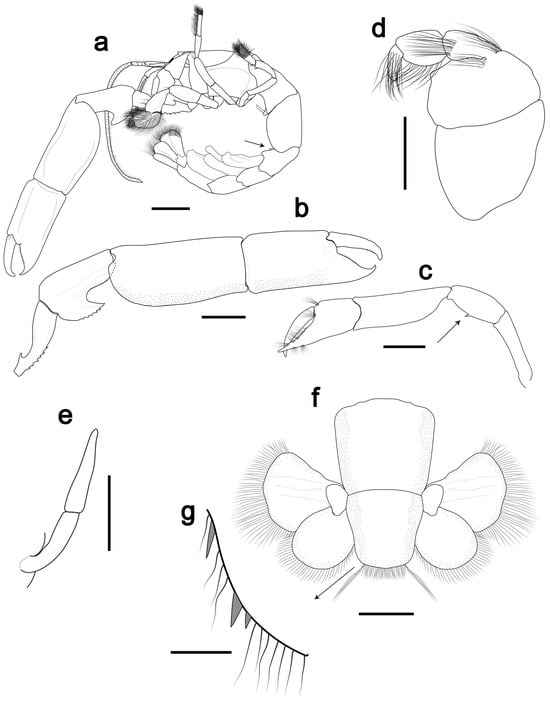
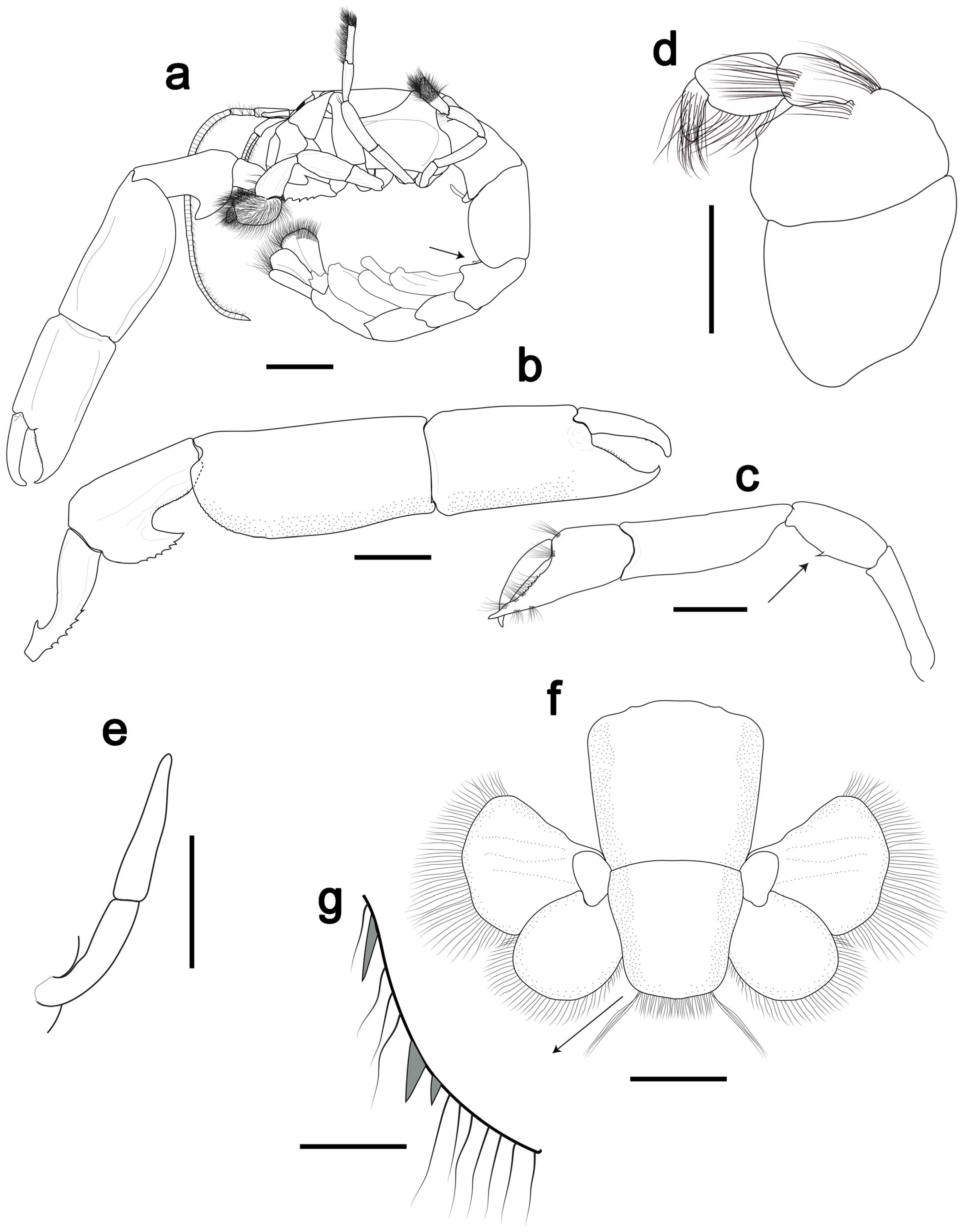
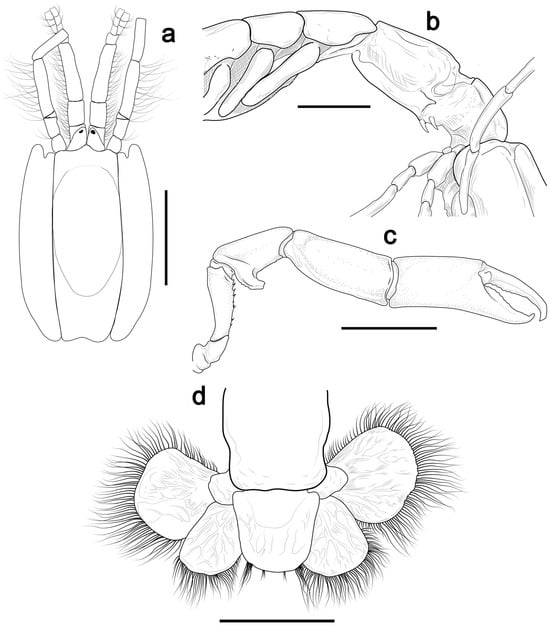
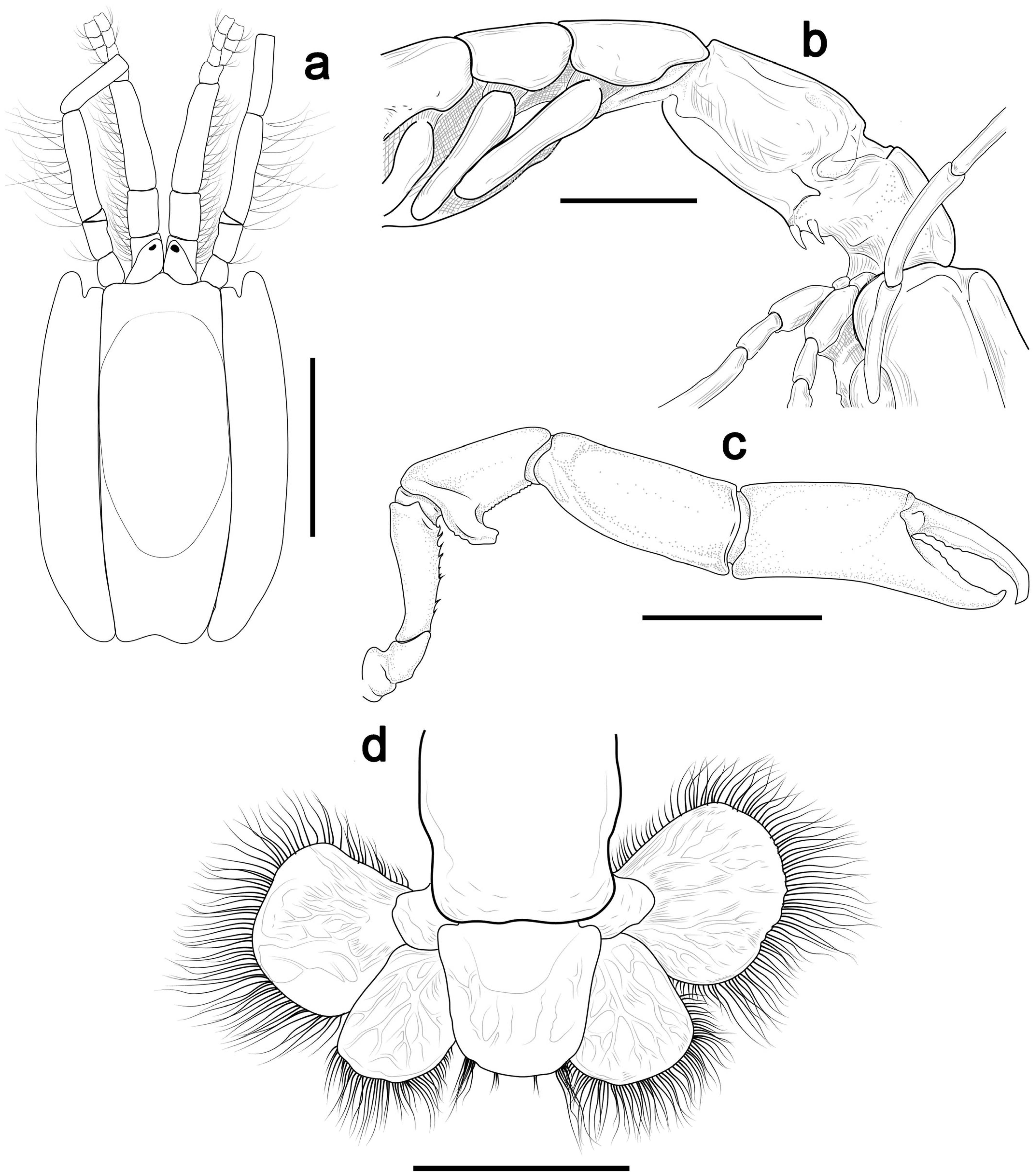
In the absence of the original vouchers, the only verifiable physical evidence from these populations consists of the specimens examined herein from Praia da Casa Caiada (MOUFPE 22337–22342) (Figure 1). Because these specimens were collected directly by the lead author of the original study at the exact same intertidal habitat of Praia da Casa Caiada and submitted for taxonomic determination, they unequivocally represent the same local population previously reported as B. biformis. Our analysis shows that all individuals belong to B. delicatulus and not to B. biformis or F. fragilis. These specimens perfectly match the holotype of B. delicatulus (MZUSP 10582) in key diagnostic features, such as the shape of the telson (Figure 1f) and the armature of the major cheliped (Figure 1b). Furthermore, a review of the illustrations provided by Botter-Carvalho et al. [5] supports this re-identification: the telson of the material assigned to B. biformis bears a spiniform seta on the distolateral margin—a feature present in B. delicatulus (Figure 1g) but absent in the holotype of B. biformis (Figure 2d)—and the males possess uniramous second pleopods (Figure 1a,e). Direct examination of the type series of B. biformis (USNM 135052) and F. fragilis (USNM 82367) confirms the absence of this appendage in males (Figure 2b), clearly distinguishing these North Atlantic species from the Brazilian B. delicatulus and B. botterae. These and other critical morphological differences are summarized in Table 1, such as the antennular peduncle (A1) being notably longer than the antennal peduncle (A2) in B. biformis (Figure 2a) and the markedly robust major cheliped of its holotype (Figure 2c), providing a robust framework for the identification of Western Atlantic species of Biffarius and the differentiation of the Brazilian congeners from F. fragilis. Importantly, key diagnostic traits across all evaluated species in Table 1—specifically the presence or absence of male Plp2, the distolateral spiniform seta of the telson, the relative length of antennular/antennal peduncles, and the Mxp3 dactylus shape—were confirmed to be stable across all examined specimens of different size classes (including the type series of B. biformis, B. botterae, and F. fragilis, as well as the examined material of B. delicatulus), showing no sexual or ontogenetic variation among adults and confirming their reliability for species identification.
Figure 1.
Biffarius delicatulus Rodrigues and Manning, 1992 [8]. (a–g), male (cl 5.0 mm), MOUFPE 22337. (a), body, lateral view (arrows indicate the position of the pleopod 2 on the ventral margin of the second abdominal somite; see panel (e); (b,c), major and minor chelipeds, lateral view (arrow indicate hook on central half of minor cheliped merus); (d), left maxilliped 3, external surface; (e), pleopod 2, external surface; (f), sixth pleomere, uropods and telson, dorsal view; (g), detail of the spiniform seta on the distolateral margin of the telson. Scale bars: (a–c) = 2 mm; (d,e) = 0.5 mm; (f) = 1 mm; (g) = 0.3 mm.
Figure 2.
Biffarius biformis (Biffar, 1971) [3]. (a–d), holotype, male (tl 24 mm), USNM 135052. (a), carapace and cephalic appendages, dorsal view; (b), anterior abdominal somites, lateral view; (c), major cheliped, lateral view; (d), sixth pleomere, uropods and telson, dorsal view. Scale bars: (a,c,d) = 5 mm; (b) = 4 mm.
Table 1.
Comparative diagnostic characters separating Biffarius delicatulus from other Western Atlantic species of Biffarius (B. biformis and B. botterae) and Fragillianassa fragilis, based on examination of type material and newly collected specimens.
The generic placement of the specimens from Pernambuco is further clarified by the morphology of the third maxilliped (Mxp3). In the examined material, the Mxp3 dactylus is digitiform (Figure 1d), which is consistent with the diagnosis of the genus Biffarius. In contrast, Fragillianassa is uniquely diagnosed by possessing an ovate Mxp3 dactylus with a dense brush of setae (Poore et al. [9]: 94). This anatomical evidence, combined with the absence of a median notch on the telson (Figure 1f)—a feature present in the holotype of F. fragilis but lacking in our specimens—moreover reinforces the correct identification of specimens from Casa Caiada as B. delicatulus and not as F. fragilis.
This evidence, combined with the re-identification of the Ceará material (MZUSP 33463, 33465) as B. delicatulus, suggests that several records of B. biformis along the Brazilian coast [5,11,16] are misidentifications. Notably, the inclusion of B. biformis in the foundational manual of Brazilian decapods by de Melo (1999) [16] reflects how these unverified records were historically perpetuated across regional taxonomic literature. Accordingly, we recommend that the name B. delicatulus be applied to Brazilian populations formerly treated as B. biformis. Until verifiable evidence proves otherwise, the latter should be excluded from the Brazilian carcinofauna list.
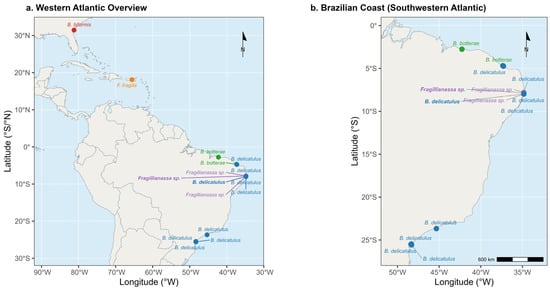
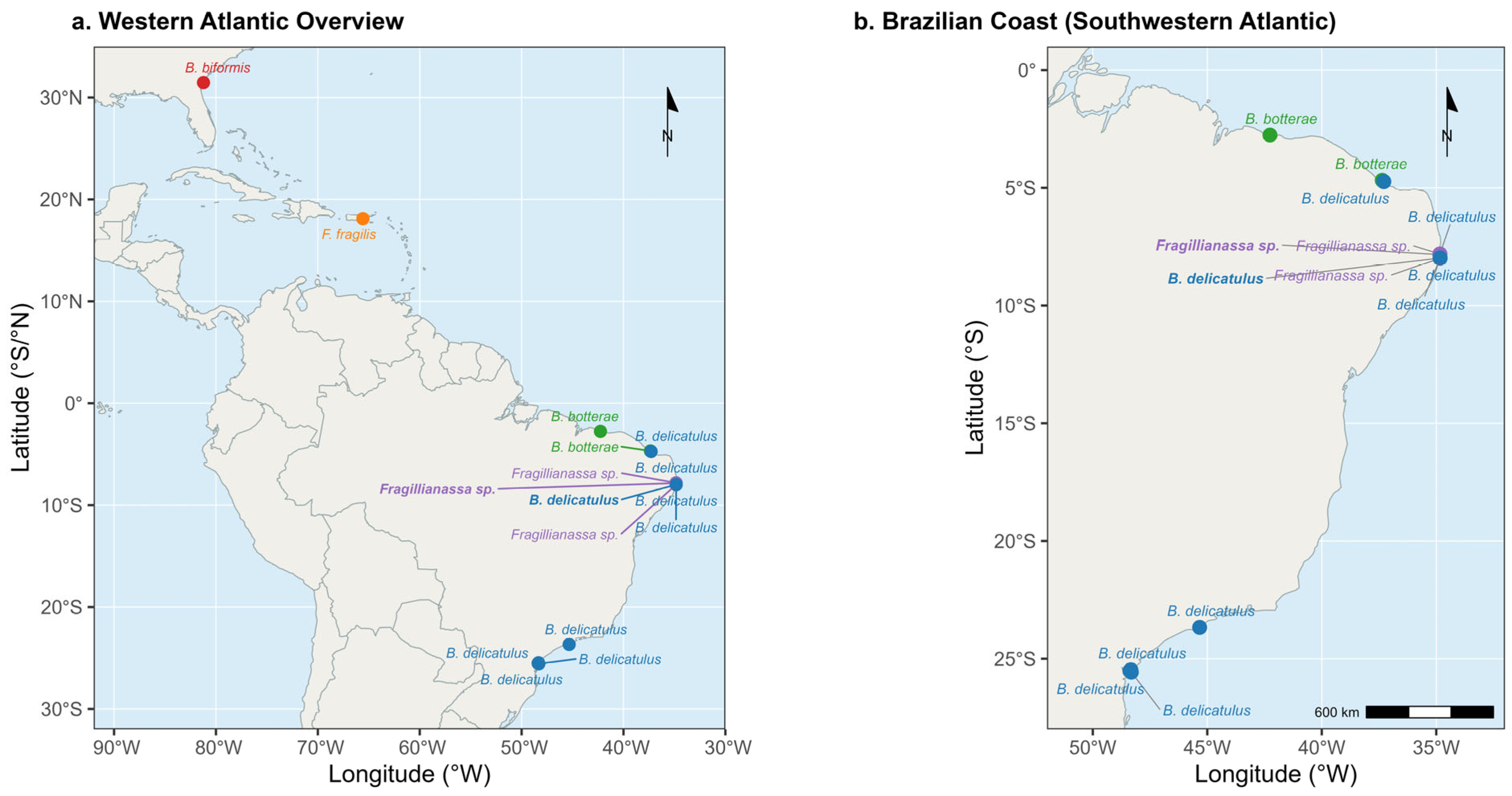
The geographical distribution of Biffarius and Fragillianassa in the Western Atlantic is herein updated to reflect verified voucher material versus uncorroborated literature reports (Figure 3). Our findings demonstrate that B. delicatulus is not restricted to Southeastern Brazil (São Paulo and Paraná), but extends continuously along the Southwestern Atlantic coast to Northeastern Brazil (Pernambuco and Ceará) (Figure 3b). Conversely, records of the North Atlantic species B. biformis and F. fragilis in Brazil represent unvouchered or misidentified reports that must be formally removed from regional biodiversity inventories (Figure 3a,b).
Figure 3.
Geographic distribution of Biffarius and Fragillianassa species in the Western Atlantic. (a) Broad overview of the Western Atlantic showing type localities and comparative records for Biffarius biformis (Georgia, USA), Fragillianassa fragilis (Puerto Rico), Biffarius botterae, Biffarius delicatulus, and Fragillianassa sp. (b) Detailed zoom of the Southwestern Atlantic along the Brazilian coast, highlighting the records for B. delicatulus, B. botterae, and Fragillianassa sp. Colored circles represent species occurrences (B. delicatulus in blue, B. biformis in red, B. botterae in green, F. fragilis in orange, and Fragillianassa sp. in purple). Species labels in bold italic indicate voucher specimens examined in the present study; labels in standard italic represent literature records.
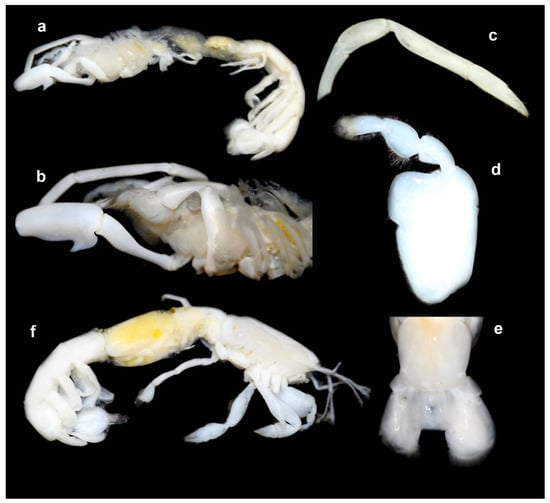
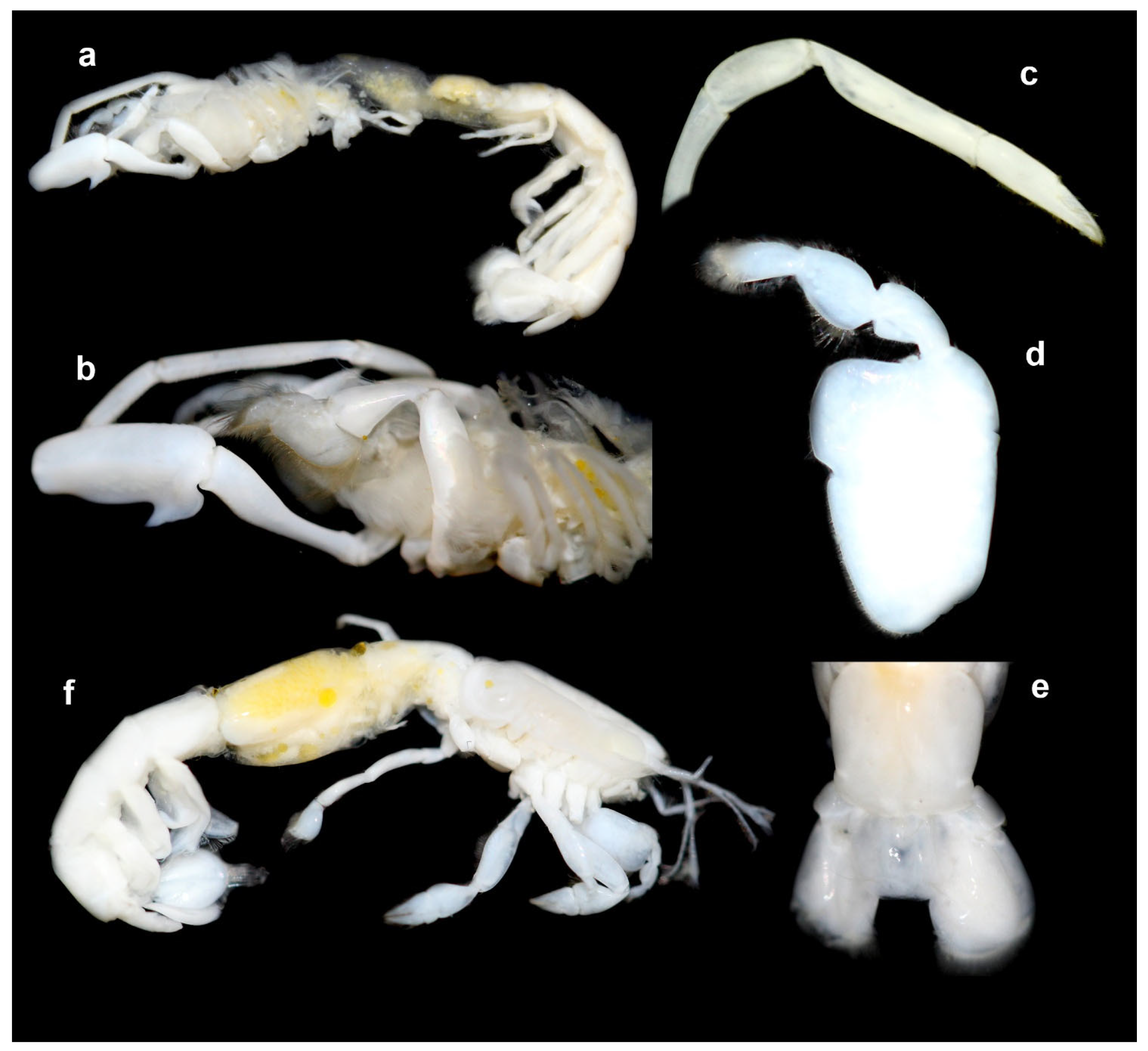
On the other hand, the physical occurrence of the genus Fragillianassa in Northeastern Brazil is here formally demonstrated by newly examined comparative material (1 male, 1 female; MOUFPE 22496; Figure 4a–f) collected from Mangue Seco, Pernambuco, alongside literature records and photo and illustrations from Ceará by Pachelle et al. [11] and Pernambuco by Botter-Carvalho et al. [5]. Although both specimens are partially damaged, they unequivocally display the generic diagnostic features of Fragillianassa, most notably the ovate dactylus of maxilliped 3 bearing a dense brush of setae (Figure 4d). However, due to the incomplete condition of key diagnostic structures in these vouchers (e.g., major cheliped and telson armature), a definitive species-level assignment to F. fragilis or an undescribed congener cannot be made. Therefore, while the presence of the genus Fragillianassa on the Brazilian coast is now firmly established by physical material, its specific identity remains uncorroborated (Fragillianassa sp.) until complete adult vouchers with intact major chelipeds and telson armature are evaluated or molecular data become available. The deposition of the material reported in the recent study by Marinho et al. [6: 498 males and 489 females] remains crucial to determine whether these populations represent F. fragilis or an undescribed species.
Figure 4.
Fragillianassa sp. from Mangue Seco, Pernambuco, Brazil (MOUFPE 22496). (a–d) female (tl 32.7 mm), (e,f) male (cl 2.7 mm). (a,f) habitus, lateral view; (b) anterior region of carapace and pereiopods, lateral view; (c) detail of pereiopod/antenna; (d) left maxilliped 3 (Mxp3), external view, showing the diagnostic ovate dactylus with a dense brush of setae; (e) sixth abdominal somite, telson, and uropods, dorsal view. Scale bars: (a,f) = 5 mm; (b,c,e) = 2 mm; (d) = 0.5 mm.
5. Conclusions
The misidentification of B. biformis highlights a recurrent issue in Southwestern Atlantic carcinology: The historical tendency to assign North Atlantic names to Brazilian taxa without direct comparison with type material. This practice has led to the perpetuation of erroneous records that obscure the true levels of endemism and biodiversity along the Brazilian coast. As demonstrated here, the lack of curatorial rigor and the absence of accessible voucher specimens further exacerbate this problem, creating ‘ghost records’ that persist in the literature for decades. Regardless of the actual presence of these two Northern Hemisphere species in Brazilian waters, a more concerning issue is that biological material never deposited in a formal zoological collection continues to be cited in recent studies [6], even after the lead author of the original report were notified of the non-existence of these lots.
Regardless of whether the non-deposition stemmed from administrative oversights or a failure to adhere to institutional protocols prior to manuscript submission, publishing unverified catalog numbers compromises curatorial traceability and generates ‘ghost records’ that corrupt regional biodiversity databases. This problematic practice must be addressed with gravity to prevent conflicting interpretations of the true biodiversity of ghost shrimps in the Southwestern Atlantic. While mandatory voucher deposition in accredited collections should be a non-negotiable baseline for any taxonomic study, strict editorial enforcement remains essential. We emphasize that scientific journals must strictly require official museum accession receipts prior to final manuscript acceptance to permanently prevent the generation of ‘ghost records’. Accordingly, this study serves as a call for a more rigorous taxonomic approach, emphasizing that the stability of regional biodiversity data depends strictly on the physical verification of specimens and the critical use of public scientific collections.
Author Contributions
Conceptualization, P.H. and J.F.S.-F.; methodology, P.H. and J.V.-C.; formal analysis, P.H., J.F.S.-F. and J.V.-C.; investigation, P.H. and J.V.-C.; resources, J.F.S.-F. and P.H.; data curation, P.H., J.F.S.-F. and J.V.-C.; writing—original draft preparation, P.H.; writing—review and editing, P.H., J.F.S.-F. and J.V.-C.; visualization, P.H., J.F.S.-F. and J.V.-C. All authors have read and agreed to the published version of the manuscript.
Funding
We are grateful to the Coordenação de Aperfeiçoamento de Pessoal de Nível Superior—Brasil (CAPES) and the Conselho Nacional de Desenvolvimento Científico e Tecnológico (CNPq) for providing funding in the form of a Postgraduate Student Agreement Program (PEC-PG) fellowship for J. Vera-Caripe (grant no. 23038.002870/2024-77, Finance Code 001) and a research productivity grant (grant no. 307767/2025-6) for J. Souza-Filho, respectively.
Institutional Review Board Statement
Ethical committee approval (IRB/CEUA) was not required for this study as it involves exclusively wild marine invertebrates (Crustacea: Decapoda: Axiidea), in accordance with Brazilian national legislation (Federal Law No. 11.794/2008—CONCEA/CEUA) and international animal welfare standards.
Data Availability Statement
The original contributions presented in this study are included in the article. Further inquiries can be directed to the corresponding author.
Acknowledgments
The author is grateful to Fabiola Couto (MOUFPE) for her assistance with the deposition of the examined material in the Crustacea Collection of the Museu de Oceanografia da Universidade Federal de Pernambuco. Special thanks are also due to Marcos Tavares (MZUSP) for his crucial support during the audit of the crustacean collection and for clarifying the status of the lots previously cited in the literature. All necessary permits for sampling and observational field studies were obtained by the authors from the competent authorities. Licenses to collect zoological material issued to PH (#51,578-1, #58,845-1) were provided by the Brazilian Institute of the Environment and Renewable Natural Resources (SISBIO/IBAMA-MMA).
Conflicts of Interest
The authors declare no conflicts of interest.
References
- Dana, J.D. Conspectus Crustaceorum, etc. conspectus of the Crustacea of the exploring expedition under Capt. Wilkes, U.S.N. including the Crustacea Cancroidea Corystoidea. Proc. Acad. Nat. Sci. Phila. 1852, 6, 73–86. Available online: http://biodiversitylibrary.org/page/1779546 (accessed on 15 August 2024).
- Hernáez, P.; Pinheiro, M.A.A.; Alves-Junior, F.A.; Santana, W. Intertidal burrowing shrimps (Axiidea: Callianassidae, Callichiridae; Gebiidea: Axiannassidae, Upogebiidae) collected along the Brazilian coast. Mar. Biol. Res. 2022, 18, 380–408. [Google Scholar] [CrossRef] [Scilit]
- Biffar, T.A. New species of Callianassa (Decapoda, Thalassinidea) from the western Atlantic. Crustaceana 1971, 21, 225–236. [Google Scholar] [CrossRef] [Scilit]
- Biffar, T.A. Three new species of callianassid shrimp (Decapoda, Thalassinidea) from the western Atlantic. Proc. Biol. Soc. Wash. 1970, 83, 35–50. [Google Scholar]
- Botter-Carvalho, M.L.; Carvalho, P.V.V.C.; Santos, P.J.P. New records confirming the occurrence of the ghost shrimps Biffarius biformis (Biffar, 1970) and B. fragilis (Biffar, 1971) (Decapoda, Callianassidae) in Brazil and the southwestern Atlantic. Biota Neotrop. 2012, 12, 88–93. [Google Scholar] [CrossRef] [Scilit]
- Marinho, N.C.M.; Carvalho, P.V.V.C.; Botter-Carvalho, M.L. Population dynamics and reproduction of the ghost shrimp Fragillianassa fragilis (Biffar, 1970) (Axiidea: Callianassidae) in a sand-mud bank on the northeastern coast of Brazil. Biologia 2023, 78, 2463–2472. [Google Scholar] [CrossRef] [Scilit]
- Manning, R.B.; Felder, D.L. Revision of the American Callianassidae (Crustacea: Decapoda: Thalassinidea). Proc. Biol. Soc. Wash. 1991, 104, 764–792. [Google Scholar]
- Rodrigues, S.D.A.; Manning, R.B. Two new callianassid shrimps from Brazil (Crustacea: Decapoda: Thalassinidea). Proc. Biol. Soc. Wash. 1992, 105, 324–330. [Google Scholar]
- Poore, G.C.B.; Dworschak, P.C.; Robles, R.; Mantelatto, F.L.; Felder, D.L. A new classification of Callianassidae and related families (Crustacea: Decapoda: Axiidea) derived from a molecular phylogeny with morphological support. Mem. Mus. Vic. 2019, 78, 73–146. [Google Scholar] [CrossRef] [Scilit]
- de Saint Laurent, M. Vers une nouvelle classification des Crustaces Decapodes Reptantia. Bull. Off. Natl. Pêch. Tunis. 1979, 3, 15–31. [Google Scholar]
- Pachelle, P.P.G.; Anker, A.; Mendes, C.B.; Bezerra, L.E.A. Decapod crustaceans from the state of Ceará, northeastern Brazil: An updated checklist of marine and estuarine species, with 23 new records. Zootaxa 2016, 4131, 1–63. [Google Scholar] [CrossRef] [Scilit]
- Coelho, P.A.; dos Santos, M.A.C.; Torres, M.F.A.; Monteiro, B.R.; de Almeida, V.A.K. Reino Animalia: Filo (ou Subfilo) Crustacea no estado de Pernambuco. In Diagnóstico da Biodiversidade de Pernambuco; Tabarelli, M., da Silva, J.M.C., Eds.; Secretaria de Ciência, Tecnologia e Meio Ambiente; Massangana Press: Recife, Brazil, 2002; pp. 429–482. [Google Scholar]
- Hernáez, P.; Miranda, M.S.; Tavares, M. A new species of Biffarius Manning and Felder, 1991 (Decapoda: Axiidea: Callianassidae) from the intertidal coast of northeastern Brazil. Zootaxa 2020, 4759, 575–583. [Google Scholar] [CrossRef] [Scilit]
- Souza, J.R.B.; Borzone, C.A. Distribuição de Calianassídeos (Crustácea: Decapoda: Thalassinidea) em praias do litoral paranaense, com especial referência a Callichirus major (Say, 1818). Arq. Biol. Tecnol. Curitiba 1996, 39, 553–565. [Google Scholar]
- Pachelle, P.P.G.; Tavares, M. Axiidean ghost shrimps (Decapoda: Axiidae, Callianassidae, Callichiridae, Micheleidae) of the Trindade and Martin Vaz Archipelago, Vitória-Trindade Seamounts Chain and Abrolhos, off southeastern Brazil. Zootaxa 2020, 4758, 103–126. [Google Scholar] [CrossRef] [Scilit]
- de Melo, G.A.S. Manual de identifiçãco do Crustacea Decapoda do Litoral Brasileiro: Anomura, Thalassinidea; Palinuridea, Astacidea; Pleiâde/FAPESP: São Paulo, Brazil, 1999; pp. 1–551. [Google Scholar]

Disclaimer/Publisher’s Note: The statements, opinions and data contained in all publications are solely those of the individual author(s) and contributor(s) and not of MDPI and/or the editor(s). MDPI and/or the editor(s) disclaim responsibility for any injury to people or property resulting from any ideas, methods, instructions or products referred to in the content. |
© 2026 by the authors. Licensee MDPI, Basel, Switzerland. This article is an open access article distributed under the terms and conditions of the Creative Commons Attribution (CC BY) license.