


Highlights
- Thiamin stimulated a progressive increase in flower betalain content, with maximum gains of 22.04% in betacyanins, 25.97% in betaxanthins, and 23.55% in total betalains, highlighting its potential for improving natural pigment production.
- Principal component and multivariate analyses revealed distinct physiological responses according to thiamin concentration, with lower doses favoring growth-related traits and higher doses enhancing pigment synthesis and the accumulation of specialized metabolites.
- Thiamin application induced concentration-dependent responses in Celosia argentea, with 50–100 mg L−1 enhancing CO2 assimilation, carboxylation efficiency, flower production, and biomass accumulation, while higher concentrations shifted plant metabolism toward increased flavonoid synthesis and the accumulation of bioactive and antioxidant compounds.
Abstract
(1) Background: Natural pigments and bioactive compounds have attracted increasing interest as sustainable alternatives to synthetic colorants in food and industrial applications. This study evaluated the effects of foliar-applied thiamin (vitamin B1) on the physiological, growth, and biochemical responses of Celosia argentea L. var. cristata. (2) Methods: Plants are exposed to different concentrations of thiamin (0, 50, 100, 150, and 200 mg L−1) and cultivated under protected conditions, in a semi-hydroponic system. (3) Results: Increases of 17.53% in CO2 assimilation rate, 34.0% in carboxylation efficiency, 15.06% in flower fresh weight, and 14.63% in flower dry weight were observed under lower concentrations (50–100 mg L−1). In contrast, higher concentrations (150–200 mg L−1) stimulated the accumulation of flavonoid content, increased by 9.93%. At 200 mg L−1, betacyanin, betaxanthin, and total betalain contents increased by 22.04%, 25.97%, and 23.55%, respectively. (4) Conclusions: Thiamin application induces concentration-dependent responses in Celosia argentea L. Concentrations up to 100 mg L−1 enhance flower production and biomass accumulation, while higher doses stimulate the accumulation of bioactive compounds, antioxidant metabolites, and betalains in flowers. These effects highlight thiamin’s potential to improve ornamental quality and support natural colorant production for food, pharmaceutical, cosmetic, and textile applications.
1. Introduction
Natural pigments have a wide range of industrial applications, including their use in food production, textile dyeing, and the formulation of pharmaceuticals and cosmetics [1]. Among the most sought-after pigments are betalains, a class of compounds primarily composed of red (betacyanins) and yellow pigments (betaxanthins). These pigments are predominantly obtained from plant species exhibiting this coloration, particularly purple beetroot [2,3]. However, other plant species, including Celosia argentea L., also show considerable potential as alternative sources of betalains.
Belonging to the family Amaranthaceae, Celosia argentea L. is widely cultivated as an ornamental species and exhibits notable resilience, allowing for successful growth under moderate environmental stress conditions [4]. In addition to its ornamental value, this species has significant industrial and medicinal relevance due to the bioactive compounds present, especially in its inflorescences. These compounds exhibit antioxidant, antimicrobial, hepatoprotective, anticancer, anti-inflammatory, and antidiabetic properties [5]. Furthermore, C. argentea contains other bioactive metabolites, including flavonoids, and terpenes, which substantially contribute to its antioxidant capacity [6].
The accumulation of these bioactive compounds can be modulated through the exogenous application of elicitors to enhance the nutritional and functional value of the final product [3]. Among these elicitors, B-complex vitamins have attracted increasing attention due to their successful use as physiological biostimulants in several plant species [7,8].
In plants, thiamin is synthesized from pyrimidine and thiazole moieties, which are produced within chloroplasts. Thiamin pyrophosphate (TPP), the biologically active form of thiamin, functions as an essential coenzyme for enzymes involved in photosynthesis within chloroplasts, the pentose phosphate pathway, and alcoholic fermentation in the cytoplasm, as well as ATP synthesis, oxidative decarboxylation of pyruvate, and the tricarboxylic acid cycle in central mitochondrial metabolism [9]. Thiamin (vitamin B1) plays a fundamental role in plant metabolism, acting as a precursor of coenzymes required for energy production, while also contributing directly and indirectly to the suppression of reactive oxygen species (ROS) [10,11].
Based on our hypothesis that thiamin may modulate the biosynthesis of bioactive compounds and influence plant morphophysiological processes, this study aimed to evaluate the physiological, morphological, and biochemical characteristics of Celosia argentea L. plants subjected to increasing concentrations of thiamin.
2. Materials and Methods
2.1. Experimental Site and Growing Conditions
The experiment was conducted in a climate-controlled greenhouse measuring 14.64 m × 6.40 m × 3.50 m (93.70 m2), connected to an antechamber measuring 3.66 m × 3.20 m (11.71 m2), resulting in a total area of 105.41 m2. The greenhouse roof and sidewalls were covered with a 150 µm low-density polyethylene (LDPE) double-layered light-diffusing film. Environmental control was provided by a Humil Cool (CELDEX®, Boxtel, The Netherlands) pad-and-fan cooling system (1.20 m × 0.15 m) in the greenhouse. A movable 35% shading aluminized thermal-reflective screen (ALUMINET®, Leme, Brazil) was installed beneath the polyethylene cover. During the experimental period, the average minimum, mean, and maximum air temperatures were 21.9, 25.5, and 28.9 °C, respectively, whereas the average relative humidity was 65%.
2.2. Experimental Design and Treatments
A randomized complete block design was employed, with five thiamin concentrations (0, 50, 100, 150, and 200 mg L−1) and four biological replications. Blocking was used to minimize the effects of potential environmental gradients within the greenhouse, such as variations in light intensity and temperature. Each experimental unit consisted of a single plant grown in an individual pot.
The concentration range was selected based on previous studies evaluating foliar vitamin application in horticultural crops, which commonly use concentrations between 50 and 200 mg L−1, together with preliminary observations indicating no phytotoxic effects within this interval.
2.3. Plant Cultivation and Treatment Application
Pink cockscomb (Celosia argentea L. var. cristata) seedlings were initially grown in 128-cell trays and transplanted into a semi-hydroponic cultivation system when they had developed four pairs of true leaves. Each seedling was transferred to an individual black polyethylene pot containing 3 L of a commercial substrate (Carolina Soil®, Pardinho, Brazil). Plants were supplied with a nutrient solution three times daily, with the application frequency and volume adjusted according to the crop requirements at each growth stage.
Treatments were applied once, ten days after transplanting, via foliar spraying using a directed spray onto the leaves, at a volume of 2 mL plant−1. The nutrient solution used in the cultivation system contained 18% N, 8% P, 30% K, 3% S, 3% Mg, 15% Ca, 0.14% Fe, 0.04% B, 0.04% Mn, 0.03% Cu, 0.019% Mo, 0.006% Ni, and 0.002% Co.
2.4. Physiological, Morphological, and Biochemical Assessments
2.4.1. Gas Exchange
At 68 days after transplanting, when the plants were at full flowering, gas exchange parameters were evaluated during the morning period (08:00–10:00 h, GMT−4). Measurements included the CO2 assimilation rate (A), stomatal conductance (gs), intercellular CO2 concentration (Ci), and transpiration rate (E), using a portable infrared gas analyzer (LCi, ADC BioScientific, Hertfordshire, UK). Subsequently, the water-use efficiency (A/E) and instantaneous carboxylation efficiency (A/Ci) were calculated. During the measurement, the average leaf temperature was 32 °C, the average ambient CO2 concentration was 430 μmol mol−1, and the light intensity was 873 μmol m−2 s−1 of photosynthetic photochemical flux density.
2.4.2. Growth Parameters
Seventy days post-transplantation, the plants were assessed for the fresh weight of stems, leaves, and flowers. Subsequently, the number of leaves and flowers was determined. Subsequently, the plant organs were separated and placed in a forced-air drying oven at 65 °C for 72 h. After reaching a constant weight, the dried material was weighed to determine the dry weights of the stems, leaves, and flowers.
2.4.3. Bioactive Compounds and Antioxidant Potential
The dried plant material (dried and ground leaves and flowers) was extracted using 70% (v/v) aqueous ethanol at a 10% (w/v) plant material proportion. Extraction was carried out at room temperature (20 ± 1 °C) for 48 h. Subsequently, the sample was subjected to filtration. The liquid fraction obtained was directly subjected to analysis. All analyses were performed in analytical triplicates. Each analytical triplicate consisted of taking an aliquot from a composite sample prepared from the biological samples, thereby ensuring that the analysis was representative of the respective treatment.
Spectrophotometric methods provide broad information on the metabolites pre-sent in the extract, without defining the specific compound present in the ex-tracts. Nevertheless, these methods remain valuable and practical for rapid and economical screening in phytochemical analysis.
The total phenolic content was determined using the Folin–Ciocalteu method [12]. The reaction mixture consisted of 1 mL of the sample, 0.5 mL of commercial Folin–Ciocalteu reagent (1:10, v/v), and 1 mL of distilled water. Following a reaction period of 1 min, 1.5 mL of 20% (w/v) sodium carbonate was introduced. The mixture was incubated at room temperature for 120 min, and the absorbance was measured at 760 nm using a spectrophotometer (Global Trade Technology, Jaboticabal, Brazil). Quantification was based on a gallic acid calibration curve (10–1000 µg mL−1; y = 0.0015x + 0.0008, R2 = 0.9875), and results were expressed as µg gallic acid equivalents per mL of extract (µg GAE mL−1). The blank was prepared by replacing the sample with an extraction solvent.
The total flavonoid content was determined using an aluminum chloride colorimetric assay [12]. Equal volumes (1 mL) of 2% (w/v) aqueous AlCl3 solution and sample extract were mixed. After incubation for 15 min at room temperature, absorbance was measured at 430 nm using a spectrophotometer. Quantification was based on a rutin calibration curve (10–50 µg mL−1; y = 0.0105x + 0.0019, R2 = 0.9990), and results were expressed as µg rutin equivalents per mL of extract (µg RE mL−1). The blank was prepared by replacing the sample with the extraction solvent.
Tannin content was determined using the Folin–Denis method [13]. Equal volumes (0.5 mL) of Folin–Denis reagent and sample extract were mixed, and after 3 min, 0.5 mL of 8% sodium carbonate solution (w/v) was added to the reaction mixture. Following incubation at room temperature for 120 min, absorbance was measured at 725 nm using a spectrophotometer. Quantification was based on a tannic acid calibration curve (0.5–80 µg mL−1; y = 0.0090x + 0.03837, R2 = 0.99826), and results were expressed as µg tannic acid equivalents per mL of extract (µg TAE mL−1). The blank was prepared by replacing the sample with the extraction solvent.
Antioxidant activity was evaluated using a DPPH radical scavenging assay, following the methodology of Blois (1958) with adaptations by Capanoglu et al. [14]. Briefly, 2000 µL of a 0.1 mmol L−1 DPPH solution in methanol was added to 100 µL of sample extract. The reaction mixture was incubated for 30 min in the dark, after which absorbance was measured at 517 nm using a spectrophotometer. The percentage inhibition of DPPH radicals was calculated according to the following equation: %I = 100 × (AbsC − AbsA)/AbsC, where %I represents the percentage inhibition, AbsC is the absorbance of the control, and AbsA is the absorbance of the sample after reaction. The control was prepared by replacing the sample with an extraction solvent.
2.4.4. Pigments
Pigment extracts were spectrophotometrically analyzed at 470, 649, and 665 nm. The contents of chlorophyll a (Ca), chlorophyll b (Cb), and total carotenoids (Cx + c) were quantified using Equations (1), (2), and (3), respectively, as outlined by Lichtenthaler and Wellburn [15].
Chla = 13.95 × A665 − 6.88 × A649
Chlb = 24.96 × A649 − 7.32 × A665
Cx + c = (1000 × A470 − 2.05 × Chla − 114.8 × Chlb)/245
Spectral scans of the extracts were performed using a spectrophotometer in the wavelength range of 290–320 nm, with readings taken at 5 nm intervals. The sun protection factor (SPF) was determined using Equation (4), where CF is the correction factor, EEλ × Iλ represents the erythemal effectiveness multiplied by the solar intensity at each wavelength, and Absλ is the absorbance of the sample at the corresponding wavelength [16].
The betalain content of Celosia argentea L. flowers was determined according to Mueangnak et al. [3]. Distilled water was used as the extraction solvent at a concentration of 10% (w/v) plant material. Betacyanin (BC), betaxanthin (BX), and total betalain content were quantified using direct spectrophotometric analysis of the extracts. The absorbance (A) for betacyanins was measured at a wavelength of 535 nm, while for betaxanthins, it was measured at 483 nm. Pigment concentrations were calculated according to Equation (5), adapted from Mueangnak et al. [3].
where
A = absorbance measured at 535 nm for betacyanins (BC) or 483 nm for betaxanthins (BX);
DF = dilution factor (set to 1, as no dilution was performed);
MW = molecular weight, corresponding to 550 g mol−1 for betacyanins and 308 g mol−1 for betaxanthins;
V = final extract volume (0.01 L);
1000 = conversion factor from grams to milligrams;
ε = molar extinction coefficient, corresponding to 60,000 L mol−1 cm−1 for BC and 48,000 L mol−1 cm−1 for BX;
L = optical path length of the cuvette (1 cm);
m = initial dry plant material mass (0.2 g).
Total betalain content was calculated as the sum of betacyanin and betaxanthin contents according to Equation (6):
Total betalain content (mg g−1 DW) = BC + BX
2.5. Statistical Analysis
The data were initially subjected to normality and homoscedasticity tests. Following the treatment, a regression analysis was performed with a significance level of 5%. Linear and quadratic models were compared, and the model with the highest adjusted R2 was selected, provided that the regression coefficients were statistically significant (p < 0.05).
Multivariate analysis was performed using Principal Component Analysis (PCA) with the ggplot2, factoextra, and ggrepel packages. Multivariate visualization was further conducted using radar charts (spider plots) generated using the fmsb, dplyr, and scales packages. Data were first grouped according to treatment, and the mean values of all evaluated variables were calculated. Subsequently, the data were normalized to a percentage scale (0–100%) to facilitate comparisons between variables with different measurement units.
All statistical analyses were performed using R software version 4.3.3.
3. Results
3.1. Gas Exchange
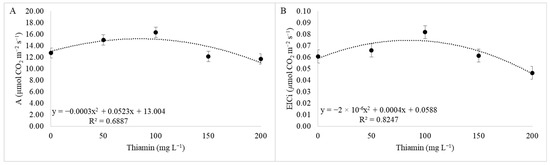
Elevated thiamin concentrations resulted in notable enhancements in both the CO2 assimilation rate and instantaneous carboxylation efficiency. The maximum estimated responses were observed at concentrations of 87.17 mg L−1 and 100 mg L−1, respectively (Figure 1A and Figure 1B). At these optimal concentrations, plants exhibited gains of 17.53% in CO2 assimilation and 34.0% in carboxylation efficiency compared to the untreated control.
Figure 1.
CO2 assimilation rate (A) and instantaneous carboxylation efficiency (B) of Celosia argentea L. plants as affected by increasing thiamin concentrations (0, 50, 100, 150 and 200 mg L−1). Each point represents the mean of four biological replicate experiments ± SE. Significant regression models were fitted at the 5% probability level.
Thiamin concentration did not significantly affect intercellular CO2 concentration (Ci), stomatal conductance (gs), transpiration rate (E), or water-use efficiency (WUE). The mean values recorded were 219.9 μmol CO2 mol−1 for Ci, 0.15 mol H2O m−2 s−1 for gs, 3.62 mmol H2O m−2 s−1 for E, and 3.84 μmol CO2 mmol−1 H2O for WUE, respectively.
3.2. Growth Parameters
Mean measurements recorded include a plant height of 71.80 cm, an average of 122.85 leaves per plant, and 28.10 flowers per plant. However, these variables did not exhibit significant linear or quadratic responses to increasing thiamin concentrations.
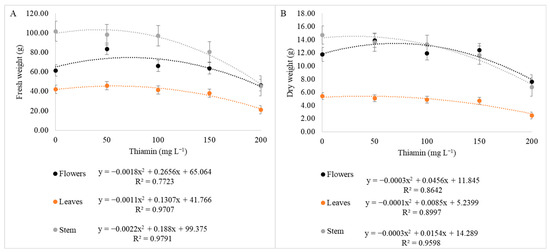
Fresh weight accumulation in flowers, leaves, and stems increased with thiamin application up to estimated maximum concentrations of 73.78, 59.41, and 42.73 mg L−1, respectively. At these concentrations, increases of 15.06%, 9.30%, and 4.04%, respectively, were observed compared with the control treatment. Beyond these optimum concentrations, fresh weight accumulation declined sharply in all evaluated organs (Figure 2A).
Figure 2.
Fresh weight (A) and dry weight (B) of stems, leaves, and flowers of Celosia argentea L. plants in response to increasing thiamin concentrations (0, 50, 100, 150 and 200 mg L−1). Values represent the means of four biological replicates ± SE. Significant regression models were fitted at the 5% probability level.
A similar response pattern was observed for dry weight accumulation. Positive responses were detected up to estimated maximum thiamin concentrations of 76.00, 42.50, and 25.67 mg L−1 for flowers, leaves, and stems, respectively, corresponding to increases of 14.63%, 3.45%, and 1.38% relative to the control group. Above these concentrations, dry weight accumulation decreased substantially (Figure 2B).
3.3. Bioactive Compounds and Antioxidant Potential
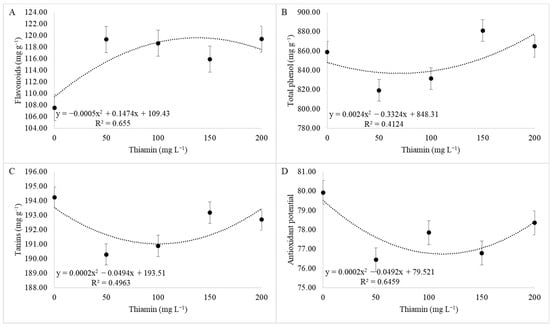
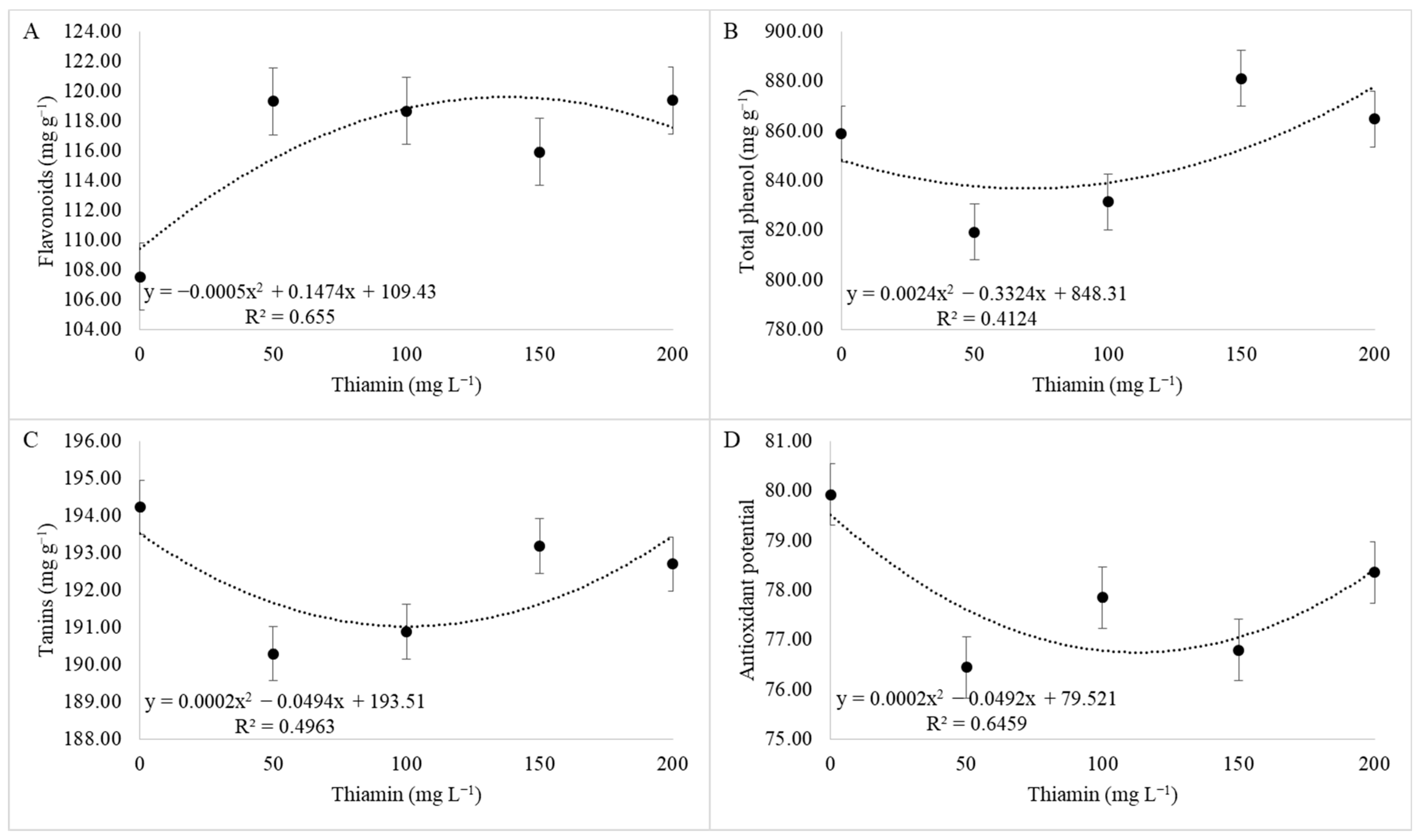
Among the bioactive compounds evaluated in the flowers, flavonoid content increased in response to thiamin application (Figure 3A), reaching a maximum gain of 9.93% at an estimated concentration of 147 mg L−1. In contrast, total phenolic and tannin contents (Figure 3B and Figure 3C) decreased with increasing thiamin concentrations up to 69 and 124 mg L−1, respectively, resulting in reductions of 1.36% and 1.58% compared with the control.
Figure 3.
Flavonoid content (A), total phenolic content (B), tannin content (C), and antioxidant potential (D) in flowers of Celosia argentea L. plants subjected to different thiamin concentrations (0, 50, 100, 150 and 200 mg L−1). Values represent the mean of three analytical replicates ± SE. Significant regression models were fitted at the 5% probability level.
A similar trend was observed for antioxidant potential, which declined by up to 3.81% as thiamin concentrations increased to 123 mg L−1 (Figure 3D). Conversely, the sun protection factor (SPF) of the flowers, which averaged 35.96, was not significantly affected by thiamin application.
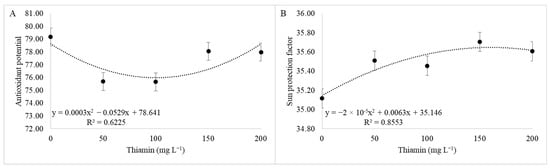
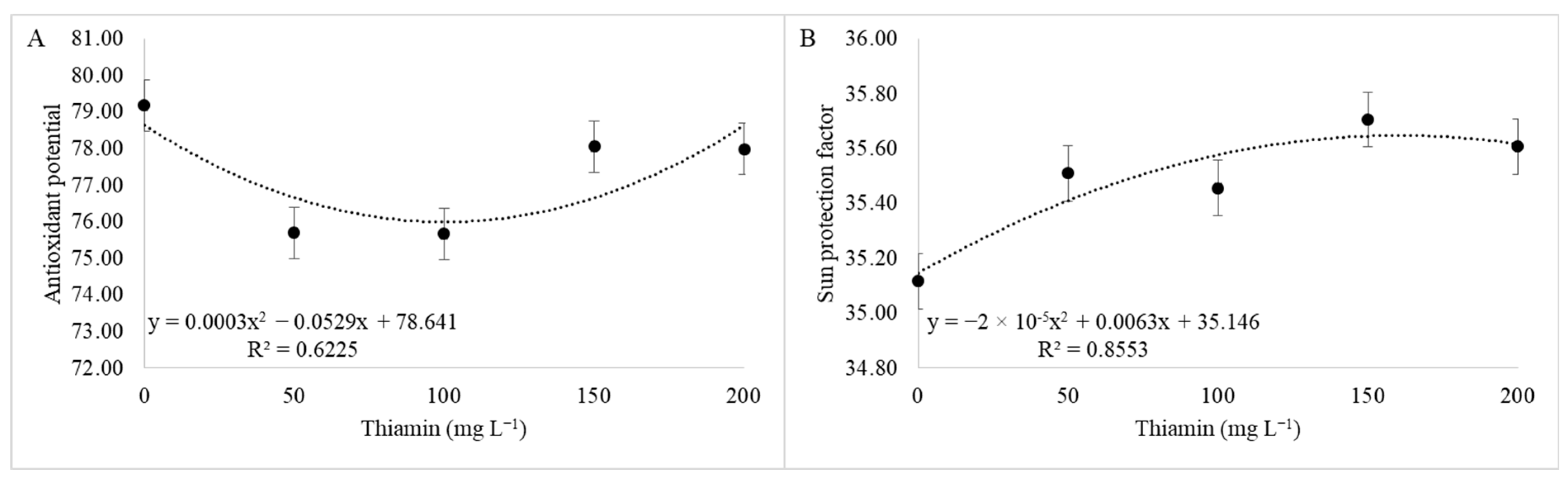
In the leaves, antioxidant potential decreased with increasing thiamin concentrations up to 88 mg L−1, resulting in a 2.97% reduction relative to the control, followed by a subsequent increase up to the highest concentration evaluated (Figure 4A). Also, SPF increased with thiamin application, reaching a maximum response at 158 mg L−1 and resulting in a 1.41% increase compared with the control (Figure 4B).
Figure 4.
Antioxidant potential (A) and sun protection factor (SPF) (B) in leaves of Celosia argentea L. plants subjected to different thiamin concentrations (0, 50, 100, 150 and 200 mg L−1). Values represent the means of three analytical replicates ± SE. Significant regression models were fitted at the 5% probability level.
Thiamin treatment did not lead to any notable changes in the levels of bioactive compounds present in the leaves (Figure S1).
3.4. Pigments
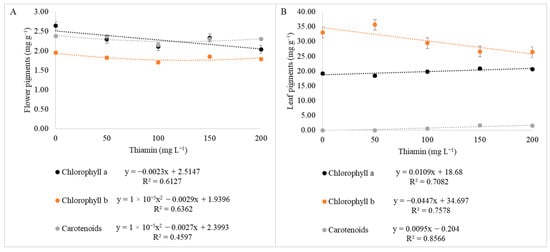
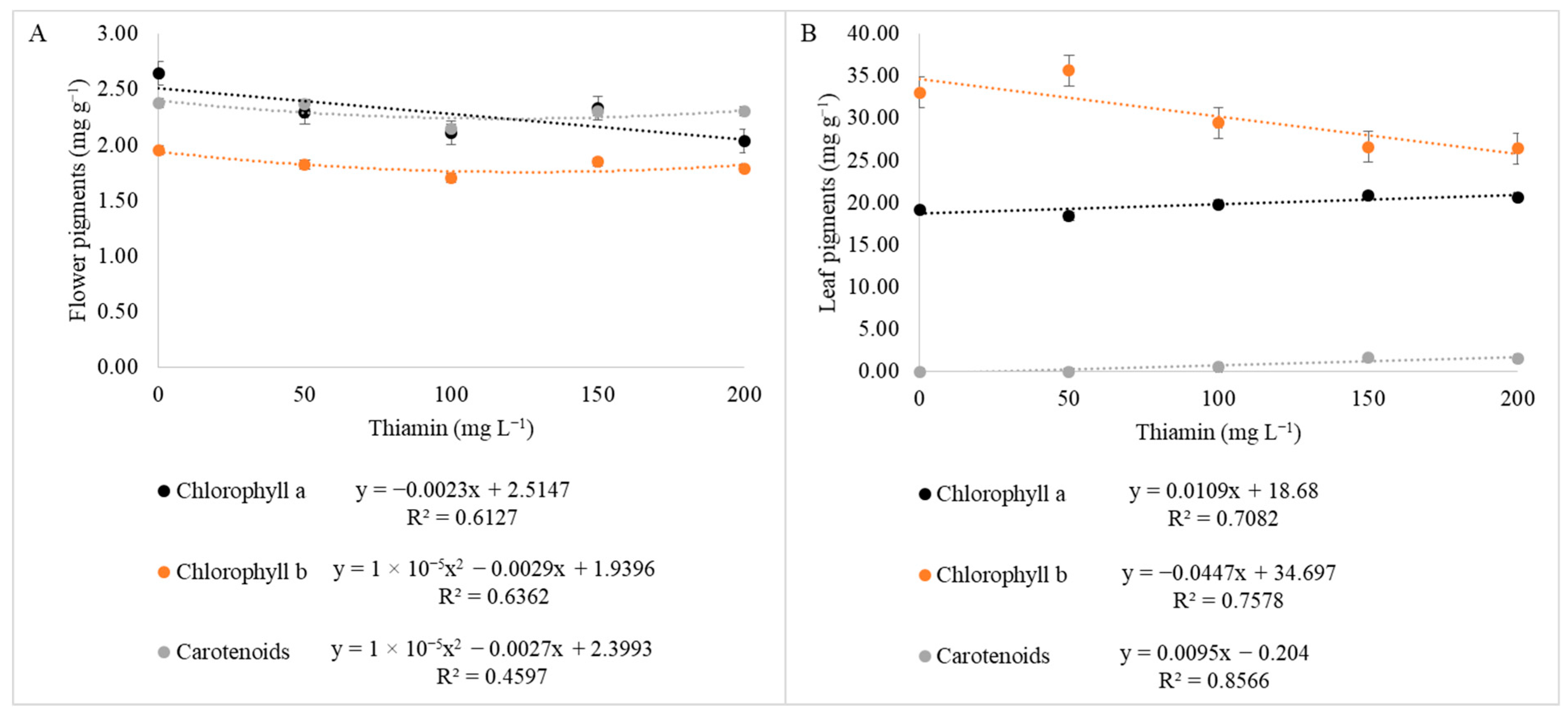
Pigment content in the flowers was significantly affected by thiamin concentration. Chlorophyll a content decreased linearly with increasing thiamin application, resulting in an overall reduction of 18.29% at the highest concentration. Likewise, chlorophyll b and carotenoid contents declined by up to 10.84% and 7.60%, respectively, at estimated thiamin concentrations of 145 and 135 mg L−1, respectively (Figure 5A).
Figure 5.
Chlorophyll a, chlorophyll b, and carotenoid contents in the flowers (A) and leaves (B) of Celosia argentea L. plants affected by increasing thiamin concentrations (0, 50, 100, 150 and 200 mg L−1). Values represent the means of three analytical replicates ± SE. Significant regression models were fitted at the 5% probability level.
In contrast, leaf chlorophyll a content increased with thiamin application, reaching a maximum gain of 11.67% at the highest concentration tested. Carotenoids, which were not detectable in the control treatment or in plants receiving 50 mg L−1 thiamin, exhibited substantial increases from 100 mg L−1. At this concentration, carotenoid content increased by 63.67% for each additional 50 mg L−1 increment in thiamin concentration (Figure 5B).
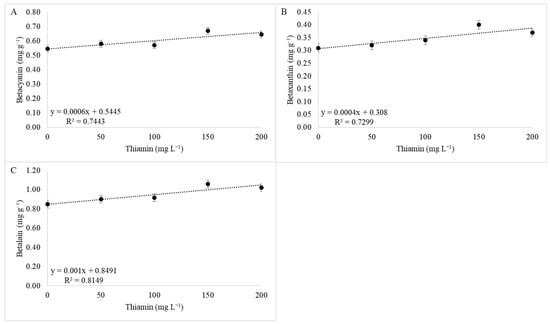
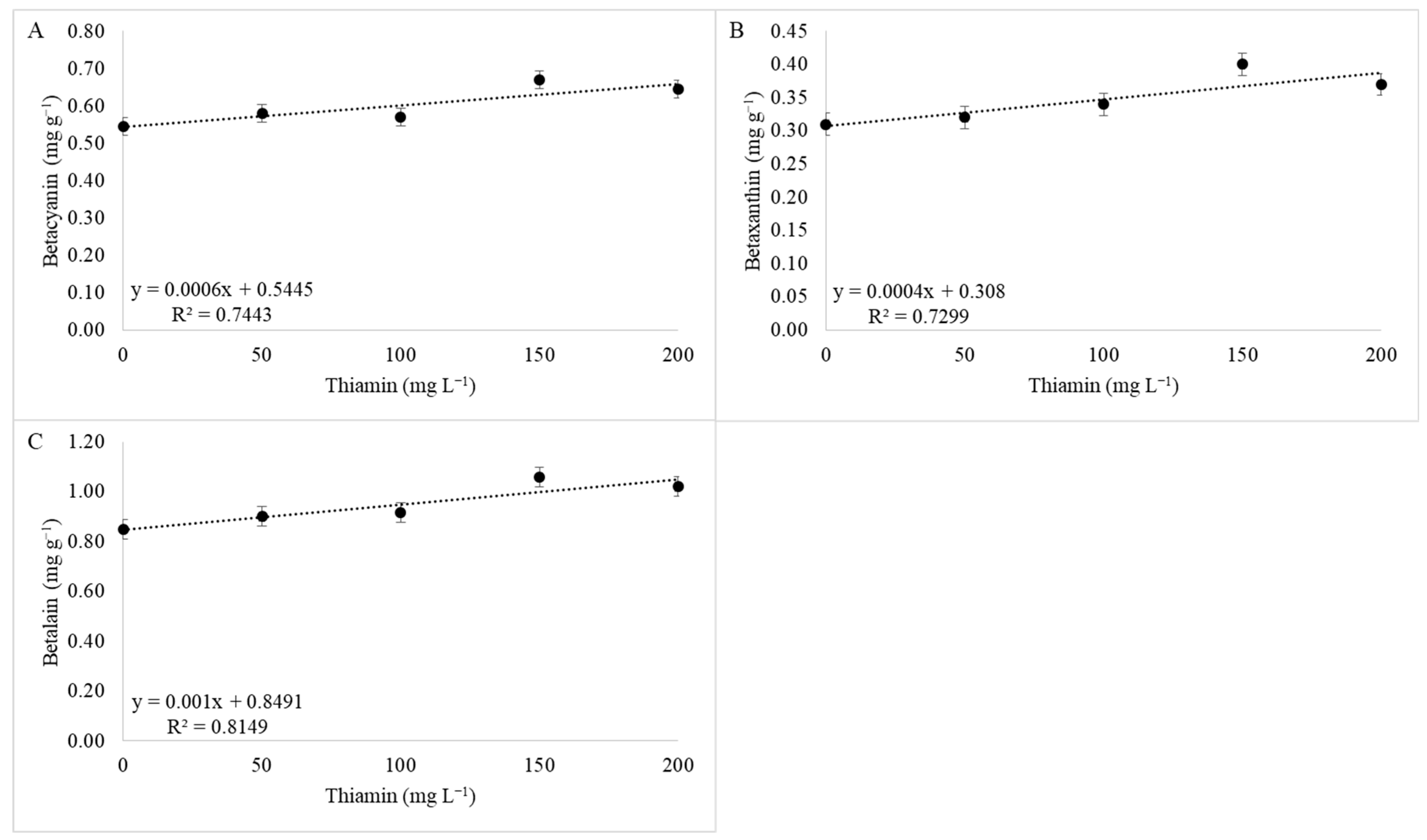
Thiamin application promoted a progressive increase in flower betalain accumulation, positively affecting betacyanin (Figure 6A), betaxanthin (Figure 6B), and total betalain content (Figure 6C). At 200 mg L−1, the highest concentration tested, increases of 22.04%, 25.97%, and 23.55% were recorded for betacyanins, betaxanthins, and total betalains, respectively, compared to the untreated control.
Figure 6.
Betacyanin (A), betaxanthin (B), and total betalain (C) contents in flowers of Celosia argentea L. plants subjected to different thiamin concentrations (0, 50, 100, 150 and 200 mg L−1). Values represent the mean of three analytical replicates ± SE. Significant regression models were fitted at the 5% probability level.
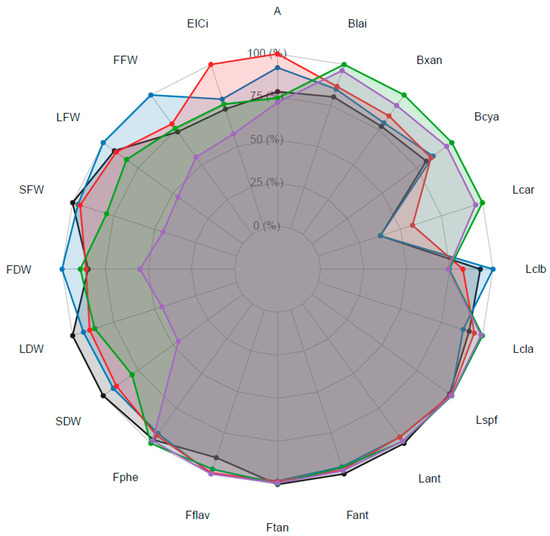
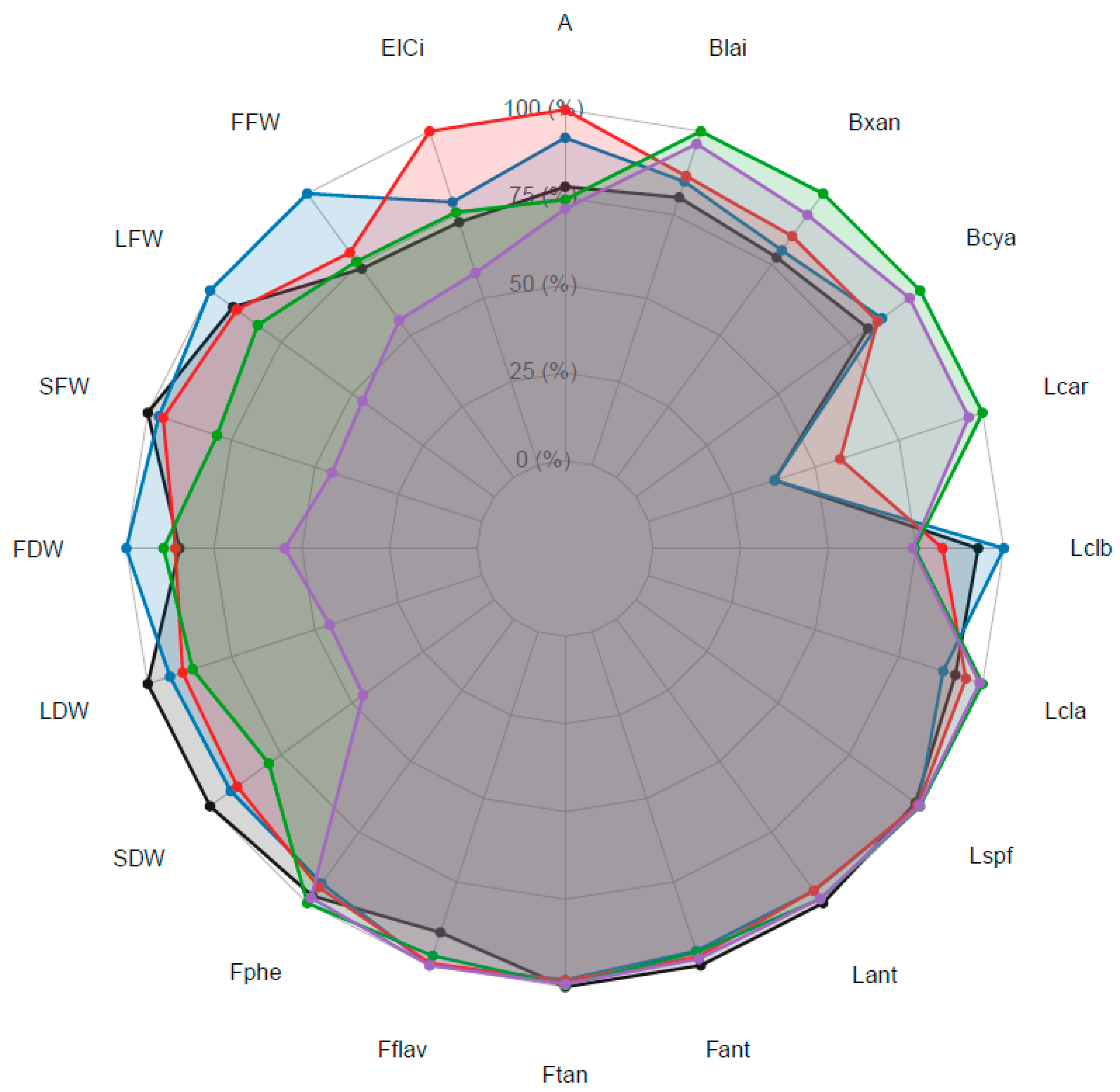
Figure 7 illustrates the differential influence of thiamin concentrations on the evaluated physiological, growth, and biochemical traits. The 50 and 100 mg L−1 treatments exhibited greater dominance for variables related to plant growth, fresh weight accumulation, and gas exchange performance. Conversely, the 150 and 200 mg L−1 treatments were more strongly associated with enhanced betalain production in flowers and increased carotenoid accumulation in leaves, indicating a shift in plant responses from growth-related processes to secondary metabolite production at higher thiamin concentrations (Figure 7).
Figure 7.
Radar chart showing the normalized responses of growth, physiological, and biochemical variables in Celosia argentea L. plants subjected to different thiamin concentrations. Variables include flower fresh weight (FFW), leaf fresh weight (LFW), stem fresh weight (SFW), flower dry weight (FDW), leaf dry weight (LDW), stem dry weight (SDW), CO2 assimilation rate (A), instantaneous carboxylation efficiency (EICi), leaf chlorophyll a content (LChla), leaf chlorophyll b content (LChlb), leaf carotenoid content (LCar), leaf sun protection factor (LSPF), leaf antioxidant potential (LAnt), flower flavonoid content (FFlav), flower total phenolic content (FPhe), flower tannin content (FTan), betacyanin content (BCya), betaxanthin content (BXan), total betalain content (BLAI), and flower antioxidant potential (FAnt).
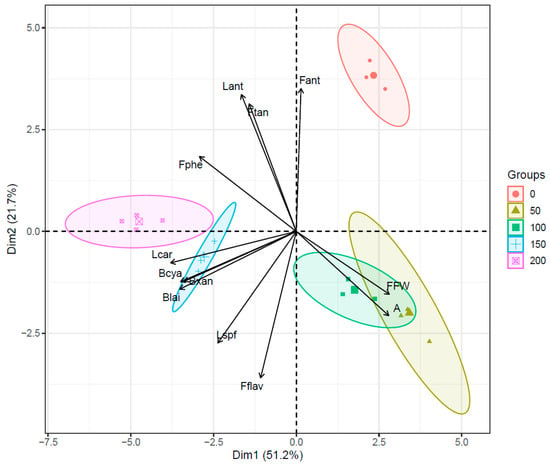
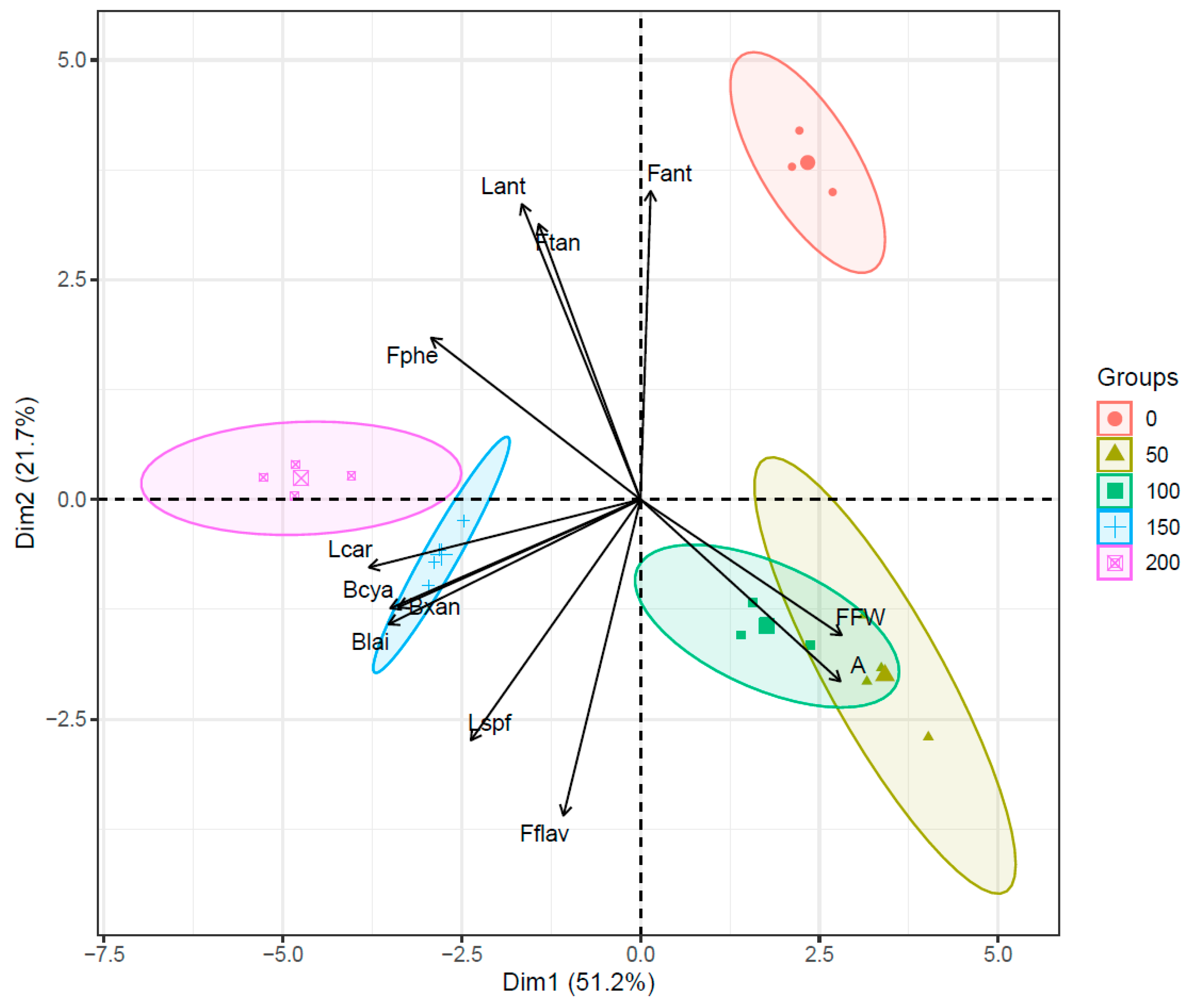
Principal Component Analysis distinguished three distinct treatment groups. The control treatment was clearly separated from the other treatments and was positively associated only with flower antioxidant potential (Figure 8).
Figure 8.
Principal Component Analysis (PCA) of growth, physiological, and biochemical variables in Celosia argentea L. plants subjected to different thiamin concentrations. Variables included flower fresh weight (FFW), CO2 assimilation rate (A), leaf carotenoid content (LCar), leaf sun protection factor (LSPF), leaf antioxidant potential (LAnt), flower flavonoid content (FFlav), flower total phenolic content (FPhe), flower tannin content (FTan), betacyanin content (BCya), betaxanthin content (BXan), total betalain content (BLAI), and flower antioxidant potential (FAnt).
A second group, comprising the 50 and 100 mg L−1 thiamin treatments, showed a strong positive association with traits related to fresh weight accumulation and gas exchange, particularly CO2 assimilation rate and flower fresh weight. The variables exhibited a strong negative correlation with the total phenolic content of flowers, as well as with the antioxidant potential in both flowers and leaves.
The third group consisted of the 150 and 200 mg L−1 thiamin treatments, which were positively associated with variables related to the accumulation of bioactive compounds and antioxidant potential. These treatments demonstrated the most significant correlation with the production of betacyanins, betaxanthins, and total betalains, underscoring the stimulatory effect of elevated thiamin concentrations on the accumulation of secondary metabolites (Figure 8).
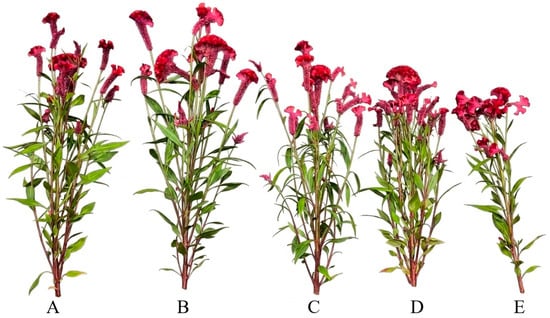
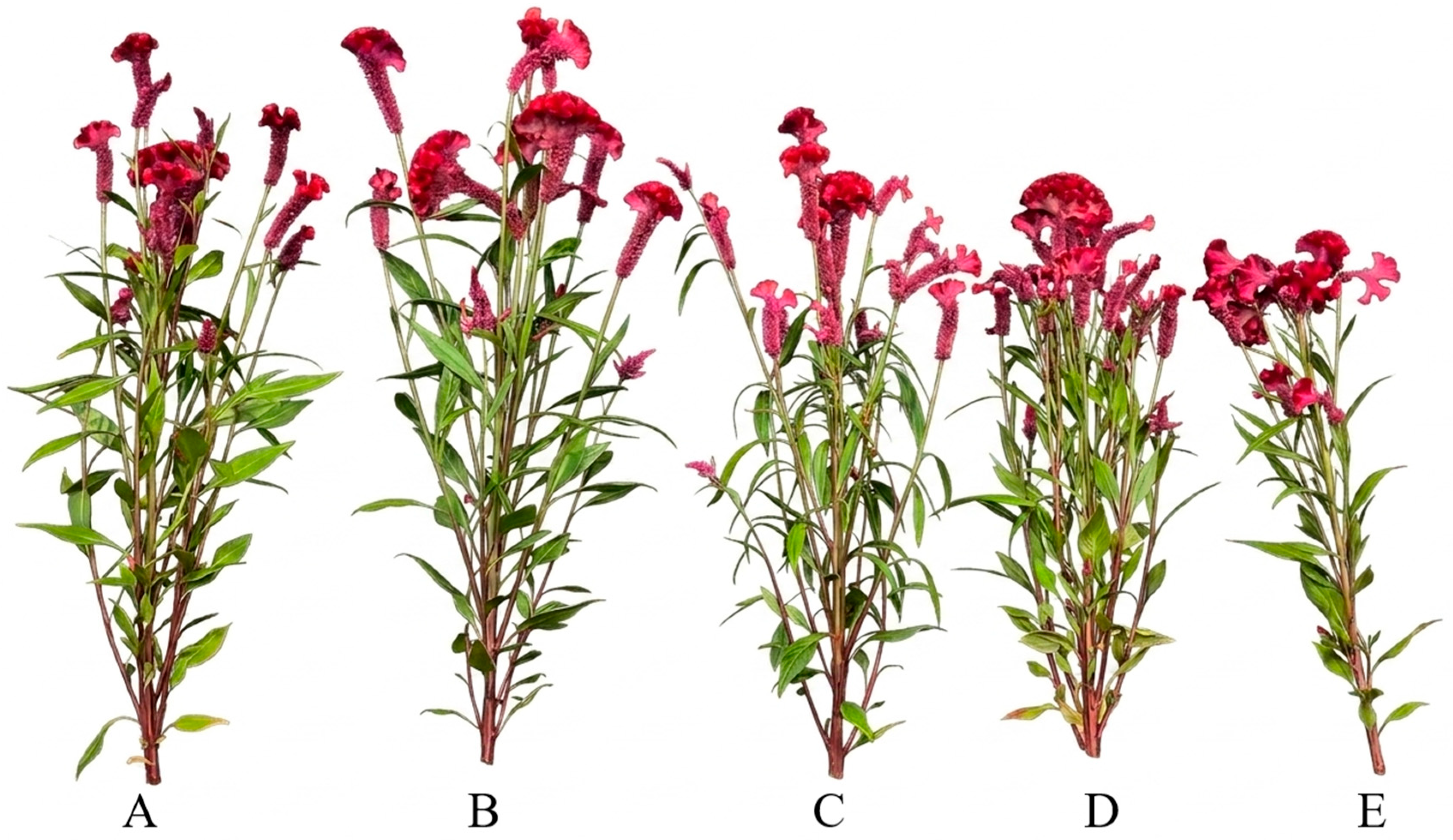
Visual assessment revealed a marked increase in plant growth at the 50 mg L−1 thiamin treatment. Nevertheless, progressive reductions in plant size were observed as thiamin concentration increased, with the smallest plants recorded at 200 mg L−1 (Figure 9).
Figure 9.
Representative images of Celosia argentea L. plants treated with 0, 50, 100, 150, and 200 mg L−1 thiamin, corresponding to individuals (A,B,C,D,E), respectively.
4. Discussion
The results obtained in the present study reveal several promising applications of thiamin, either for enhancing antioxidant potential in production systems or for increasing the accumulation of bioactive compounds of interest to the pharmaceutical and food industries. These compounds possess medicinal properties and may serve as natural alternatives to synthetic additives, particularly colorants [17,18]. Thiamin has also been reported to play an important role in plant acclimation to abiotic stress and photoperiodic responses. It acts directly as an antioxidant by scavenging ROS and indirectly by supporting cellular energy metabolism and maintaining energy reserves [9].
The improvements observed in gas exchange parameters (Figure 1) and in fresh and dry weight accumulation across different plant organs (Figure 2) under lower thiamin concentrations, up to approximately 100 mg L−1, were closely associated with the protective and metabolic functions of this vitamin. Consequently, reductions were observed in secondary metabolites, such as tannins and total phenolic compounds, in flowers (Figure 3), as well as in the antioxidant potential of both flowers and leaves (Figure 3 and Figure 4). Accordingly, photosynthetic activity and biomass accumulation were positively correlated and strongly associated with the 50 and 100 mg L−1 treatments, whereas these variables exhibited antagonistic relationships with flower tannin and phenolic contents and with antioxidant potential in leaves and flowers (Figure 7 and Figure 8).
The antioxidant action of thiamin is associated with two main mechanisms. The first involves the direct suppression of ROS formation under stress conditions, whereas the second is related to improvements in metabolic efficiency that prevent excessive free-radical generation before stress exposure occurs [10]. In addition, thiamin is involved in nitrogen metabolism and acts as a coenzyme in key processes of cellular energy production [11]. Under environmental conditions that induce abiotic stress responses, the application of 100 mg L−1 thiamin was effective in enhancing pigment contents in different coffee cultivars, an effect attributed to its protective action on photosynthetic organs [19].
Considering that the plants in the present study were grown under non-stressful conditions, the observed responses were primarily associated with metabolic optimization rather than stress mitigation. The increase in flavonoid content (Figure 3A) suggests an enhancement of the plant’s preventive defense capacity against potential environmental stresses, allowing greater biomass accumulation without the need for substantial investment in photosynthetic pigment production (Figure 5) when thiamin concentrations up to 100 mg L−1 were applied. Furthermore, the increase in leaf sun protection factor (Figure 4B) highlights the potential biotechnological application of these extracts as future photoprotective ingredients.
At the higher concentrations assessed (150 and 200 mg L−1), a distinct pattern of physiological response was observed. These treatments were associated with marked increases in bioactive compounds, including tannins and phenolic compounds, as well as the recovery of antioxidant potential in both leaves and flowers (Figure 3 and Figure 4), accompanied by an increase in carotenoid accumulation in leaves. Previous studies have shown that endogenous thiamin levels increase under stress conditions, particularly under oxidative stress, highlighting the role of thiamin metabolism in environmental stress responses [20]. Therefore, the elevated thiamin concentrations supplied through foliar application may act as a biostimulatory signal, promoting the synthesis of phenolic compounds and antioxidant metabolites while simultaneously increasing betacyanin, betaxanthin, and total betalain contents in flowers.
Excessive thiamin concentrations may also alter thiamin diphosphate homeostasis, resulting in disturbances in carbon–nitrogen balance [11]. Such imbalances can negatively affect plant growth, as previously reported for young sugarcane plants [21]. This mechanism likely explains the reduction in biomass accumulation observed at thiamin concentrations above 100 mg L−1.
Regardless of concentration, thiamin promoted a linear increase in betacyanin, betaxanthin, and total betalain content in flowers (Figure 6). This response is associated with the role of thiamin pyrophosphate as an essential coenzyme in several energy-producing metabolic pathways [22], including processes linked to the shikimate pathway, through which plants synthesize aromatic amino acids such as tyrosine, the principal precursor of betalain biosynthesis [23].
Beyond the potential effects of thiamin on carbon—nitrogen balance, the concentration—dependent responses observed in the present study suggest that thiamin may modulate carbon allocation between primary growth and secondary metabolism. At moderate concentrations (50–100 mg L−1), thiamin likely stimulated primary metabolic activity, as evidenced by enhanced CO2 assimilation, carboxylation efficiency, and biomass accumulation. This observation is consistent with evidence that optimal thiamin levels restore photosynthetic performance and promote vegetative growth parameters, including leaf area and dry weight [23,24]. Whereas, higher concentrations promoted a progressive increase in betalain accumulation while growth-related responses declined. This shift may is consistent with a redistribution of carbon resources from structural biomass toward specialized metabolites, a phenomenon often described as a growth—defense trade-off where plants optimize limited energy and carbon skeletons [25,26]. Such a transition is physiologically plausible given that TPP serves as a cofactor for key multi-enzyme complexes in central carbon metabolism, specifically those involved in the tricarboxylic acid (TCA) cycle, the pentose phosphate pathway, and the Calvin–Benson cycle [23,24]. Enhanced flux through these pathways may increase the availability of reducing power and the carbon skeletons, such as tyrosine, required for betalain biosynthesis [27,28]. Furthermore, the dose -dependent nature of this response aligns with findings that excessive TPP levels or constitutive secondary metabolite accumulation can disrupt energy metabolism and impair photosynthetic efficiency [22,28].
The substantial increase in betalain content suggests the potential of this technology for producing natural colorants. The maximum values obtained in the present study are comparable to those reported for certain beetroot genotypes, which are currently considered the primary commercial source of plant-derived betalains [29,30]. Moreover, the average betacyanin-to-betaxanthin ratio of 1.76 may indicates the suitability of Celosia argentea flowers as a source of natural pigments for the food industry [2,3]. This industrial feasibility is further strengthened by the use of water as the extraction solvent, a clean extraction approach that is fully aligned with the principles of green chemistry and sustainability.
Determining the appropriate concentration of physiological and biochemical stimulants is essential because plant responses are strongly influenced by cultivation conditions. In general, plants grown under stressful environments, such as open-field cultivation, tend to require higher vitamin concentrations, whereas protected cultivation systems, particularly hydroponic production systems, generally benefit from lower concentrations [8].
Lower thiamin concentrations favor flower productivity and biomass accumulation, whereas concentrations above 100 mg L−1 reduce growth but enhance the accumulation of bioactive and antioxidant compounds (Figure 7 and Figure 8), creating opportunities for various industrial applications. The increased concentration of these metabolites may improve industrial efficiency by generating a product enriched in betalains that can be utilized as a natural colorant for foods and textiles, as well as in pharmaceutical and cosmetic formulations because of its antioxidant, antimicrobial, hepatoprotective, anticancer, anti-inflammatory, and antidiabetic properties [5].
These findings are pertinent not only to industrial applications but also to ornamental horticulture. The ornamental plant sector plays a significant socioeconomic role because of its high labor demand. In this context, the enhancement of red and yellow pigmentation in flowers contributes directly to improved market value, whereas increased biomass accumulation is associated with larger floral structures, another highly desirable trait for consumers [31,32]. Both characteristics were significantly influenced by thiamin application (Figure 9).
5. Conclusions
Thiamin application promotes concentration-dependent responses in Celosia argentea L. plants treated with concentrations up to 100 mg L−1 exhibit enhanced flower production and biomass accumulation, whereas higher concentrations stimulate the accumulation of bioactive compounds and antioxidant metabolites.
Supplementary Materials
The following supporting information can be downloaded at: https://www.mdpi.com/article/10.3390/agrochemicals5030037/s1, Figure S1: Flavonoid content (A), total phenolic content (B), and tannin content (C) in leaves of Celosia argentea L. plants subjected to different thiamin concentrations (0, 50, 100, 150 and 200 mg L−1). Values represent the mean of three analytical replicates ± SE. Significant regression models were fitted at the 5% probability level.
Author Contributions
E.P.V.: Writing—original draft, Supervision, Software, Methodology, Validation, Investigation, Funding acquisition, Data curation, Conceptualization. G.R.S.: Writing—original draft, Software, Methodology, Investigation, Data curation, Conceptualization. F.F.d.S.B.: Writing—review and editing, Supervision, Methodology, Investigation, Formal analysis, Conceptualization. R.G.: Writing—review and editing, Visualization, Validation, Investigation. H.E.B.-L.: Writing—review and editing, Visualization, Validation, Investigation. C.A.L.C.: Writing—review and editing, Methodology, Data curation. S.M.d.S.: Writing—review and editing, Methodology, Data curation. E.D.C.B.: Writing—review and editing, Supervision, Investigation. G.C.: Writing—review and editing, Validation, Investigation. E.C.: Writing—review and editing, Validation, Resources, Methodology. All authors have read and agreed to the published version of the manuscript.
Funding
This research was partially funded by Coordination for the Improvement of Higher Education Personnel—Brazil (CAPES)—Financing Code 001, and by the Foundation for the Support of the Development of Education, Science, and Technology of the State of Mato Grosso do Sul (FUNDECT), through the PAPOS Program (FUNDECT/UEMS Special Call No. 12/2024; FUNDECT No. 403/2024; SIAFIC No. 229).
Institutional Review Board Statement
Not applicable.
Informed Consent Statement
Not applicable.
Data Availability Statement
The original contributions presented in this study are included in the article/Supplementary Material. Further inquiries can be directed to the corresponding author.
Acknowledgments
We are grateful to the State University of Mato Grosso do Sul, to the Research Group for Innovation and Advancement of Agriculture—INNOVA, to the Centro de Desenvolvimento Sustentável do Bolsão Sul-Mato-Grossense—CEDESU, to the Financier of Studies and Projects (FINEP) for the availability of structure and technical personnel, and to Alderia Pradi, for donating the plant material.
Conflicts of Interest
The authors declare no conflicts of interest.
References
- Di Salvo, E.; Lo Vecchio, G.; De Pasquale, R.; De Maria, L.; Tardugno, R.; Vadalà, R.; Cicero, N. Natural Pigments Production and Their Application in Food, Health and Other Industries. Nutrients 2023, 15, 1923. [Google Scholar] [CrossRef] [Scilit]
- Garcia-Campoy, A.H.; De León-Rodríguez, A.; Espitia-Rangel, E.; Barba-de La Rosa, A.P. Comparison of Traditional and Modern Techniques for Betalains Extraction from Amaranth Agro-Industrial Waste: The Recovery of High Value By-Products. Waste Biomass Valor 2024, 15, 4325–4336. [Google Scholar] [CrossRef] [Scilit]
- Mueangnak, K.; Kitwetcharoen, H.; Thanonkeo, S.; Klanrit, P.; Apiraksakorn, J.; Klanrit, P.; Klanrit, P.; Thanonkeo, P. Enhancing Betalains Production and Antioxidant Activity in Celosia argentea Cell Suspension Cultures Using Biotic and Abiotic Elicitors. Sci. Rep. 2025, 15, 376. [Google Scholar] [CrossRef] [Scilit]
- Freitas, A.G.S.; Sales, J.R.D.S.; Pinto, C.D.M.; Pinto, O.R.D.O.; Silva, L.G.C.D.; Lacerda, C.F.D. Emergence and Initial Growth of Celosia argentea L. Cultivated under Irrigation with Brackish Water. Ornam. Hortic. 2024, 30, e242661. [Google Scholar] [CrossRef] [Scilit]
- Klanrit, P.; Thanonkeo, S.; Klanrit, P.; Klanrit, P.; Mueangnak, K.; Thanonkeo, P. Celosia argentea: Towards a Sustainable Betalain Source—A Critical Review and Future Prospects. Plants 2025, 14, 1940. [Google Scholar] [CrossRef] [Scilit]
- Adegbaju, O.D.; Otunola, G.A.; Afolayan, A.J. Effects of Growth Stage and Seasons on the Phytochemical Content and Antioxidant Activities of Crude Extracts of Celosia argentea L. Heliyon 2020, 6, e04086. [Google Scholar] [CrossRef] [Scilit]
- Ferreira, E.S.; Binotti, F.F.D.S.; Binotti, E.D.C.; Costa, E.; Vendruscolo, E.P.; Lima, S.F.D.; Coli Neto, F.A. Potentiating Chlorella Vulgaris Bioinput as a Growth Biostimulant in the Production of Basil Seedlings with the Addition of Vitamin B3. Algal Res. 2024, 83, 103706. [Google Scholar] [CrossRef] [Scilit]
- Vendruscolo, E.P.; Seron, C.D.C.; Leonel, E.A.S.; Lima, S.F.D.; Araujo, S.L.; Martins, M.B.; Sant’ Ana, G.R.; Oliveira, J.J.D. Do Vitamins Affect the Morphophysiology of Lettuce in a Hydroponic System? Rev. Bras. Eng. Agríc. Ambient. 2023, 27, 698–703. [Google Scholar] [CrossRef] [Scilit]
- Rosado-Souza, L.; Fernie, A.R.; Aarabi, F. Ascorbate and Thiamin: Metabolic Modulators in Plant Acclimation Responses. Plants 2020, 9, 101. [Google Scholar] [CrossRef] [Scilit]
- Tunc-Ozdemir, M.; Miller, G.; Song, L.; Kim, J.; Sodek, A.; Koussevitzky, S.; Misra, A.N.; Mittler, R.; Shintani, D. Thiamin Confers Enhanced Tolerance to Oxidative Stress in Arabidopsis. Plant Physiol. 2009, 151, 421–432. [Google Scholar] [CrossRef] [Scilit]
- Fitzpatrick, T.B.; Chapman, L.M. The Importance of Thiamine (Vitamin B1) in Plant Health: From Crop Yield to Biofortification. J. Biol. Chem. 2020, 295, 12002–12013. [Google Scholar] [CrossRef] [Scilit]
- Djeridane, A.; Yousfi, M.; Nadjemi, B.; Boutassouna, D.; Stocker, P.; Vidal, N. Antioxidant Activity of Some Algerian Medicinal Plants Extracts Containing Phenolic Compounds. Food Chem. 2006, 97, 654–660. [Google Scholar] [CrossRef] [Scilit]
- Pansera, M.R.; Santos, A.C.A.; Paese, K.; Wasum, R.; Rossato, M.; Rota, L.D.; Pauletti, G.F.; Serafini, L.A. Análise de Taninos Totais Em Plantas Aromáticas e Medicinais Cultivadas No Nordeste Do Rio Grande Do Sul. Rev. Bras. Farmacogn. 2003, 13, 17–22. [Google Scholar] [CrossRef] [Scilit]
- Capanoglu, E.; Beekwilder, J.; Boyacioglu, D.; Hall, R.; De Vos, R. Changes in Antioxidant and Metabolite Profiles during Production of Tomato Paste. J. Agric. Food Chem. 2008, 56, 964–973. [Google Scholar] [CrossRef] [Scilit]
- Lichtenthaler, H.K.; Wellburn, A.R. Determinations of Total Carotenoids and Chlorophylls a and b of Leaf Extracts in Different Solvents. Biochem. Soc. Trans. 1983, 11, 591–592. [Google Scholar] [CrossRef] [Scilit]
- Mansur, J.; Breder, M.N.R.; Mca, M. Determinacao Do Fator de Protecao Solar Por Espectrofotometria. An. Bras. Dermatol. 1986, 61, 121–124. [Google Scholar]
- Narayanankutty, A.; Famurewa, A.C.; Oprea, E. Natural Bioactive Compounds and Human Health. Molecules 2024, 29, 3372. [Google Scholar] [CrossRef] [Scilit]
- Nieto, G.; Martínez-Zamora, L.; Peñalver, R.; Marín-Iniesta, F.; Taboada-Rodríguez, A.; López-Gómez, A.; Martínez-Hernández, G.B. Applications of Plant Bioactive Compounds as Replacers of Synthetic Additives in the Food Industry. Foods 2023, 13, 47. [Google Scholar] [CrossRef] [Scilit]
- Vendruscolo, E.P.; De Souza, M.I.; Bastos, A.A.; Bortolheiro, F.P.D.A.P.; Seron, C.D.C.; Martins, M.B.; De Lima, S.F.; Alves, V.C.D. Vitamins Enhance the Physiological Characteristics of Coffee Cultivated in the Brazilian Cerrado. Vegetos 2024, 38, 1093–1099. [Google Scholar] [CrossRef] [Scilit]
- Rapala-Kozik, M.; Kowalska, E.; Ostrowska, K. Modulation of Thiamine Metabolism in Zea Mays Seedlings under Conditions of Abiotic Stress. J. Exp. Bot. 2008, 59, 4133–4143. [Google Scholar] [CrossRef] [Scilit]
- Lisboa, L.A.M.; Combinato, G.; Scavacini, L.B.; da Silva, L.H.; Monteiro-de Figueiredo, P.A. Thiamine as a Promoter on Initial Development in Varieties of Sugarcane. Cultiv. Trop. 2018, 39, 58–69. [Google Scholar]
- Lou, Q.; Zhuang, Q.; Qu, Y.; Wang, Y. Red-Emissive Copper–Gold Bimetallic Metal–Organic Gel Nanozyme as a Highly Sensitive and Selective Ratiometric Photoluminescent Probe for Cellular Thiamine Detection. Anal. Chem. 2026, 98, 16140–16151. [Google Scholar] [CrossRef] [Scilit]
- Luo, Y.; Liu, Y.; Liu, J.; Liu, X.; Li, H.; Wu, Y.; Zhao, J.; Wang, Y.; Fang, W.; Jian, L.; et al. Optimizing Thiamine Pyrophosphate Metabolism Enhances Crop Yield and Quality. Nat. Commun. 2025, 17, 165. [Google Scholar] [CrossRef] [Scilit]
- Shaaban, M.M.; Sameea, A.A.; El-Mahdy, M.T. Thiamine and Salicylic Acid Ameliorate Drought Stress in Three Citrus Rootstocks: In Vitro Study. Russ. J. Plant Physiol. 2026, 73, 34. [Google Scholar] [CrossRef] [Scilit]
- Jin, L.; Guo, W.-Q.; Liu, D.-C.; Wang, L.; Jiang, L.; Han, X.-Y.; Zhang, P.-T.; Yin, J.-M. Leaf Physiological and Transcriptomic Analyses Provide Insights into the Regulatory Network Underlying High Yield in Yam under Directional Cultivation. BMC Plant Biol. 2026, 26, 703. [Google Scholar] [CrossRef] [Scilit]
- Akbarifard, Z.; Sharifi, M.; Samari, E. Antioxidant and Metabolic Responses of Linum Album Cell Culture to Polyethylene Glycol-Induced Drought Stress. BMC Plant Biol. 2026, 26, 529. [Google Scholar] [CrossRef] [Scilit]
- Hanamghar, S.S.; Russo, D.A.; Mellor, S.B.; Zedler, J.A.Z. Establishing Heterologous Betaxanthin Pigment Biosynthesis in Cyanobacteria. Metab. Eng. 2026, 94, 264–272. [Google Scholar] [CrossRef] [Scilit]
- Xue, Y.; Deng, Q.; Chai, N.; Li, X.; Li, T.; Luo, W.; Yan, X.; Chen, L.; Tan, J.; Liu, Y.-G.; et al. Development of eRUBY Maize with Betalain-Enriched Endosperm Using a Push-and-Pull Synthetic Metabolic Engineering Strategy. Crop J. 2026, 14, 129–140. [Google Scholar] [CrossRef] [Scilit]
- Sokolova, D.V.; Shvachko, N.A.; Mikhailova, A.S.; Popov, V.S.; Solovyeva, A.E.; Khlestkina, E.K. Characterization of Betalain Content and Antioxidant Activity Variation Dynamics in Table Beets (Beta vulgaris L.) with Differently Colored Roots. Agronomy 2024, 14, 999. [Google Scholar] [CrossRef] [Scilit]
- López-Solórzano, E.; Muro, C.; Perez, Y.A.; Guadarrama-Lezama, A.Y.; Gutiérrez-Cortez, E.; Urrieta, J.M. Conservation Analysis and Colorimetric Characterization of Betalain Extracts from the Peel of Red Beetroot, Golden Beetroot, and Prickly Pear Applied to Cottage Cheese. Foods 2025, 14, 228. [Google Scholar] [CrossRef] [Scilit]
- Sumi, C.; Sugiura, S.; Ishimori, M.; Tabayashi, Y.; Higuchi, Y.; Shibata, M. Flower Color Variations Are Determined by Betalain Biosynthetic Genes in Portulaca umbraticola. Plant Cell Physiol. 2025, 66, 1061–1075. [Google Scholar] [CrossRef] [Scilit]
- Guan, Y.; Wong, C.E.; Zhang, Q.; Peng, D.; Lan, S.; Chen, F.; Liu, Z.-J.; Yu, H. Sizing up Beauty: Mechanisms of Petal Size Regulation in Ornamental Plants. Plant Physiol. 2025, 198, kiaf198. [Google Scholar] [CrossRef] [Scilit]
Disclaimer/Publisher’s Note: The statements, opinions and data contained in all publications are solely those of the individual author(s) and contributor(s) and not of MDPI and/or the editor(s). MDPI and/or the editor(s) disclaim responsibility for any injury to people or property resulting from any ideas, methods, instructions or products referred to in the content. |
© 2026 by the authors. Licensee MDPI, Basel, Switzerland. This article is an open access article distributed under the terms and conditions of the Creative Commons Attribution (CC BY) license.