


Abstract
In Mexico, pecan (Caria illinoienensis Wangenh K. Koch) cultivation is considered a primary agricultural activity of great importance, particularly in the state of Chihuahua. Due to the region’s climatic conditions, the soils used for this crop present several limitations that may restrict their agricultural use, as they often exhibit low or null fertility, classifying them as marginal soils. However, these soils can be rehabilitated through appropriate management practices. Among the main recovery strategies are the application of mineral and organic amendments and the use of plant-growth-promoting microorganisms, all of which are considered environmentally friendly alternatives. Therefore, the objective of this study was to identify the types of mineral and organic amendments suitable for the recovery of marginal soils in the agronomic management of pecan cultivation. This study was conducted in the San Cristóbal pecan orchard, located in the municipality of Jiménez, Chihuahua, using a 56 factorial design, reduced to 25 treatments through the Taguchi L25 method. Statistical analysis was performed using response surface methodology, and the evaluated parameters included basic, physical, fertility, and cation-exchange properties of the soil. The results showed that zeolite (19.30 t ha−1) and calcium carbonate (12.70 t ha−1) were amendments that produced the greatest effect on the evaluated parameters. The use of these amendments can significantly complement annual fertilization programs, contributing to meeting the crop’s nutritional demands under a sustainable management approach for pecan production.
1. Introduction
Soil is a finite natural resource that provides various ecosystem services. However, some factors contribute to its degradation—such as dry climate conditions, high temperatures, and low relative humidity—which lead to regions with characteristics of soils with alkaline pH, low organic-matter content, and high salt and carbonate contents. This leads to soils classified as marginal, thereby restricting their optimal agricultural productivity [1,2]. Based on the aforementioned points, amendments and plant-growth-promoting microorganisms are currently used as an established practice with excellent results, as they improve the physical, chemical, and biological properties of the soil [3].
Previous studies have reported that the use of organic amendments—such as green manure, sewage sludge, vermicompost, and various types of animal manure (cattle, goat, among others)—obtained from the decomposition of plant and/or animal residues, constitutes an important source of nutrients. When applied to soils, they improve their physicochemical and biological properties; this benefit is mainly attributed to the increase in organic-matter content and soil temperature, which facilitates nutrient absorption, as well as increasing water-retention capacity and the infiltration process [4,5].
Other research studies carried out by [6] evaluated the use of semi-compost produced from pecan nut shells (considered highly toxic waste) and horse manure in the production of jalapeño pepper seedlings, which concluded that the use of nut shells in the formulation is a viable alternative since this process reduces their toxic effect and accumulation; this semi-compost is considered a high-quality organic fertilizer.
Alternatively, ref. [7] mentioned that mineral amendments are products of geological origin—derived from rock dust, synthetic minerals, and natural materials rich in nutrients—that modify the pH, structure, and porosity of the soil, among other things. These mineral amendments include zeolite and calcium carbonate. Zeolite is an aluminosilicate mineral with a high cation-exchange capacity that promotes water retention, the release of essential nutrients, and aeration, thereby reducing water stress in plants [8]. Calcium carbonate can be found in the form of agricultural lime or ground limestone, whose main function is to neutralize acidic soils as it aids in phosphorus absorption and improves soil biological activity [7].
Another alternative that allows for the recovery of the physical, chemical, and biological properties of the soil is the use of microorganisms, such as fungi and bacteria, that promote the recovery of its fertility, improving its structure and nutrient cycling, in addition to being able to adapt to adverse environmental conditions [9]. Similarly, the use of mycorrhizal fungi promotes the absorption of water and some essential nutrients such as N, P, K, Ca, Mg, Cu, Mn, and Zn [10]. Previous studies with bacteria showed that the use of Bacillus spp. SSAU-2 improved soil fertility and promoted plant growth under various abiotic stress conditions, such as the presence of chromium, high salinity, and drought conditions, making these microorganisms an alternative for sustainable agricultural practices [11].
Furthermore, the pecan tree is considered a deciduous fruit tree, endemic to the southern United States and northern Mexico, growing in alluvial soils (loamy or sandy) that are highly fertile and have a high capacity to retain water and nutrients [12]. However, pecan plantations are in arid and semi-arid regions where the soil characteristics differ from those in which the trees grow naturally. These soils have low organic-matter content and alkaline pH conditions, among other characteristics, which limit the availability of nutrients such as N, P, Fe, and Zn [13].
In relation to the above, and considering that the state of Chihuahua is the main producer of walnuts, it is necessary to use organic and mineral amendments, as well as microorganisms that improve soil structure, permeability, and fertility [14]. Therefore, the objective of this study was to identify the type of mineral and organic amendments and plant-growth-promoting microorganisms for the recovery of marginal soils in the agronomic management of pecan orchard cultivation.
2. Materials and Methods
2.1. Area of Study
The study was conducted in the San Cristóbal pecan tree orchard in the municipality of Jiménez, Chihuahua, located at N 27°13′ 14.56″, W 104° 54′ 20.58″ at an altitude of 1365 m above sea level. The orchard covers an area of approximately 100 hectares, which is divided into seven sections. Depending on the area, one, two, or three sites were sampled. From each site, five trees were selected in the middle: one tree in the center and the remaining four equidistantly spaced five trees toward each of the cardinal points. The planting distances for sections 4 and 5 were 15 × 15 m in a 45-year-old real frame, with 40 ha planted with four sampling sites, two per lot. Three sites were sampled in the road section: 30 ha planted at 10 × 10 m; a poplar Section 10 ha planted at 12 × 12 m in a 30-year-old actual frame with one sampling site; a pillar Section 10 ha planted at 12 × 12 m in a 30-year-old actual frame with one sampling site; a 5 ha plot planted at 12 × 12 m in a 30-year-old real frame with one sampling site; and a 5 ha plot planted at 12 × 12 m in a 30-year-old real frame with one sampling site. Irrigation was achieved by drip, with tape buried at a depth of 30 cm, two tapes on each side of the trunk—the first separated by 1.5 m and the second by 2 m, respectively; soil sampling was carried out between the two tapes. Ten kilograms of soil (2.5 kg per orientation) were collected from each tree at a depth of 0–40 cm. The experiment was conducted in the field under drought conditions at an approximate temperature of 26 °C. The soil samples were left to dry and mixed in batches according to soil color to form 3.0 kg samples, which were placed in No. 2 buckets with a capacity of 6.5 L—measuring 28.0 cm long, 19.0 cm wide, and 13.0 cm high—that were previously labeled. Next, the corresponding treatments were placed in each container according to the Taguchi L25 design, bringing them to the saturation point (the average volume consumed was 853.4 mL; the maximum and minimum values were 950 and 750 mL, respectively, with a standard error of 11.93 mL). They were then hermetically sealed and incubated at 22 °C for 15 days; afterward, they were uncovered and allowed to dry to constant weight over a period of 20 days. Finally, the samples were saved for further analysis. This analysis was conducted at the Soil, Plant, and Water Analysis Laboratory of the Faculty of Agrotechnological Sciences (UACH) under controlled-temperature conditions (22–24 °C).
The variables evaluated in the analysis were divided into three categories for better structure and data management, each composed as follows: basic and physical properties (organic matter, calcium carbonates, texture, pH, pH in saturated paste extract, and percentage of saturation); fertility properties [nitrate -N content, available phosphorus, potassium, calcium, magnesium, sodium, and micronutrients (Cu, Fe, Mn, and Zn)]; and cation relationships and cation-exchange capacity.
The irrigation water used for incubation in this experiment had the following characteristics: cations (meq L−1)—Ca, 2.51; Mg, 0.70; Na, 3.66; and K, 0.04; anions (meq L−1)—CO3, 0.38; HCO3, 3.29; SO4, 1.61; and Cl, 1.62; sodium adsorption ratio (RAS), 2.97; percentage of sodium (PS), 53.55; percentage of possible sodium (PSP), 98.07; residual sodium carbonate (CSR), −0.29; effective salinity (SE), 3.55; potential salinity (SP), 2.69; precipitable sodium percentage (PSP), 55.08; pH, 7.65; electrical conductivity, 600 mScm3; classification C2S1—medium salinity with low sodium.
Likewise, the initial characteristics of the soil considered in the experiment are presented, which showed high values of pH, EC, and CaCO3. In contrast, low values of organic matter (OM), PSBC, and micronutrients, such as Cu, Fe, and Mn, were observed, as shown in Table 1. This classifies the soil as marginal, with limitations in its basic and physical properties, as well as low fertility for pecan cultivation.
Table 1.
Basic, physical, and fertility properties of the soil in plots.
It is important to note that the scales used for classifying soil characteristics were developed through the Integrated Differential Diagnosis (IDD) approach and determined based on the historical soil-analysis data from different productive regions in the state of Chihuahua, conducted at the Soil, Plant, and Water Analysis Laboratory of the Faculty of Agrotechnological Sciences at the Autonomous University of Chihuahua.
2.2. Experimental Design and Treatments
To evaluate the effects of the amendments on basic, physical, and fertility soil properties, as well as on cation relationships and cation-exchange capacity, a reduced factorial design 56 was applied using a Taguchi L25 orthogonal array 56 (Table 2). This approach enabled the simultaneous evaluation of six factors at five levels each, generating only 25 experimental combinations through the statistical software Minitab (version 17, 2016) (Table 3). Compared with a full design 56 (15,626 treatments), the reduced Taguchi design resulted in a substantial decrease in the number of experimental runs, allowing efficient resource optimization without compromising the analytical capability to identify main effects and interactions, given that the evaluated variables may be influenced by multiple factors simultaneously.
Table 2.
Treatment design and factors in a Taguchi L25 array.
Table 3.
Distribution of treatments.
It is important to note that, to obtain the optimal response surface, a wide range of each factor must be evaluated. In this study, all the factors were assessed at the same concentration levels (0, 1, 5, 10, and 20), taking level 1 as the reference, which corresponds to the agronomic recommendation provided by suppliers of these amendments. This procedure should be carried out continuously for at least five years (concentration level 5), additionally evaluating two lower levels (0 and 1) and two higher levels (10 and 20) based on the recommended dose.
The individual weights of each amendment were grouped according to each treatment and assigned randomly. Subsequently, water and soil were added, and the mixture was continuously stirred with a spatula until adequate moistening was achieved. Once this condition was reached, the corresponding amendments were incorporated according to each treatment, continuing vigorous mixing until a uniform soil paste was obtained.
The mixture was brought to the saturation point, indicated by a glossy, mirror-like surface and a consistency that allowed easy division with the spatula. Finally, the containers were sealed hermetically and arranged randomly on the laboratory benches.
The zeolite mineral amendments (Table 4) were obtained from natural open-pit deposits in the municipality of Satevó, located 60 km northwest of the city of Chihuahua, and the calcium carbonate (Table 5) was obtained as a by-product of cement production by the company Chihuahua Cements, in the city of Chihuahua, from natural open-pit deposits. The organic amendments of bovine and caprine manure came from the Faculty of Zootechnics and Ecology (UACH) (Table 6). The mycorrhizal fungi (Acaulospora scobiculata, Gigaspora margarita, Glomus fasciculatum, G. constrictum, G. tortuosum, and G. geosporum with 20,000 viable spores kg−1) and Bacillus subtilis (1 × 10⁷ CFU) were from the commercial brand Sehumic-VamMR.
Table 4.
Properties of zeolite.
Table 5.
Properties of calcium carbonate.
Table 6.
Properties of manure.
2.3. Basic and Physical Properties of the Soil
These properties were routinely determined at the Soil, Plant, and Water Analysis Laboratory of the Faculty of Agrotechnological Sciences at the Autonomous University of Chihuahua. The organic-matter content was determined using the Walkley and Black method, and the pH was determined using the 0.01 M CaCl2 saline solution method [15]. Calcium carbonate was determined using the open-end manometer methodology [16]. Texture was determined using a Bouyoucos densimeter [17], and the pH in the saturated paste extract and the saturation percentage were also determined.
2.4. Fertility Properties
Like the basic and physical properties of the soil, these were determined in the same laboratory. The N-nitrate content was determined using the Brucine colorimetric technique, and the assimilable phosphorus using the Olsen technique [15], while for the major elements (potassium, calcium, magnesium, and sodium), the DTPA extraction method was used [18]. For the minor elements (Cu, Fe, Mn, and Zn), the 1.0 N ammonium acetate extraction method at a pH of 7.0 [19] was used. Both elements were determined by atomic absorption spectrophotometry.
2.5. Cation Ratio and Cation-Exchange Capacity
The calcium, magnesium, potassium, and sodium determinations, expressed in ppm, were converted to meq 100 g−1 of soil—the sum of these constitutes the percentage of saturation of basic cations (PSBC); subsequently, each cation is expressed relative to PSBC [20].
2.6. Statistical Analysis Response Surface
Although the Taguchi L25 design is conceptually based on the assumption of additive effects, in this study, it was used exclusively as a tool for generating treatment combinations. Statistical analysis was performed using response surface methodology, including both linear and quadratic models to identify factor levels that optimize response variables. Model fitting was conducted through least-squares regression using the SAS statistical software package (SAS 9.4 TS Level 1M3 X_64_8HOME Platform).
The statistical procedure was carried out in three sequential stages: (1) multiple regression analysis, in which the individual contribution of each factor—considering linear, quadratic, and interaction effects—on the responses variables was quantified; (2) canonical response surface analysis, applied to factors exhibiting statistically significant effects to characterize the shape of the response surface; (3) optimization, where predicted minimum or maximum values were estimated within the original experimental data range [21].
Subsequently, the overall system response was integrated into a general behavior matrix, allowing for the identification of the most influential factors based on eigenvalues, using a threshold of ≥70% cumulative explained variability. Eigenvectors were classified according to their relative magnitude into four intensity categories (octadecyls starting from the fifth octadecyl: ±1 (0.500–0.625), ± 2 (0.625–0.750), ±3 (0.750–0.875), and ±4 (0.875–1.00). Factors with contributions ≥ 20% and variables with contributions ≥ 10% of the total positive eigenvector contribution were considered, after statistical analysis, as having the greatest weighting and, therefore, the greatest agronomic implication.
Likewise, based on these criteria, optimal application rates were selected for the most relevant factors, prioritizing those with the greatest simultaneous impact on the largest number of response variables. In cases of similar weighting, prioritization was based on the response range and mean value. Representative graphical outputs of the main effects and the most relevant linear and quadratic interactions were generated. Finally, an integrative meta-summary encompassing all analyzed categories was developed, enabling the formulation of robust and well-supported conclusions to guide agronomic decision-making [22].
3. Results and Discussion
The results highlight the pecan tree production process. An imbalance in the aforementioned properties can give rise to marginal soils and, as a result, cause adverse effects on the soil itself. It is therefore necessary to use mineral amendments (zeolite and CaCO3), organic amendments (bovine and goat manure), and plant-growth-promoting microorganisms (mycorrhizal fungi and Bacillus subtilis) to improve the natural conditions of the crop, which has been degraded by continuous and intensive use of the soil, or in new areas that are being incorporated into the crop and have limitations. In both cases, the aim is to recover productive capacity using a sustainable approach, which should be part of annual crop management as a feasible alternative to inorganic fertilization, since this type of fertilization is applied excessively, causing degraded, eroded soils with limitations for the proper development of pecan trees. The response surface analysis for each of the variable categories (basic and physical properties, fertility, cation ratio) is presented in the Supplementary File (Tables S1, S2 and S3, respectively) whose summaries generated Table 7.
Table 7.
Influence of organic amendments and fertility-promoting microorganisms on the physical, chemical, and fertility properties of soil in pecan orchards.
3.1. Basic and Physical Properties of Soil
The variables that showed a response effect were ranked as follows according to their degree of influence: electrical conductivity, organic matter, saturation percentage, carbonates (CaCO3), cation-exchange capacity, pH in CaCl2, and pH in EPS (Table 7).
The total number of eigenvectors was 61, of which 53 were positive, and eight were negative. The results of the evaluation of the basic and physical properties of the soil under the application of mineral amendments (zeolite and CaCO3), organic amendments (bovine and goat manure), and MPDV (mycorrhizal fungi and Bacillus subtilis) showed that the factor with the greatest influence was zeolite (11.6 t ha−1), with a value of 20, affecting 7 of the 7 variables analyzed. This was followed by CaCO3 (5.1 t ha−1) with a value of 15, affecting 5 of the 7 variables. To improve their effect, they can be distributed over a three-year period at a rate of approximately 4 and 1.8 t ha−1 per year.
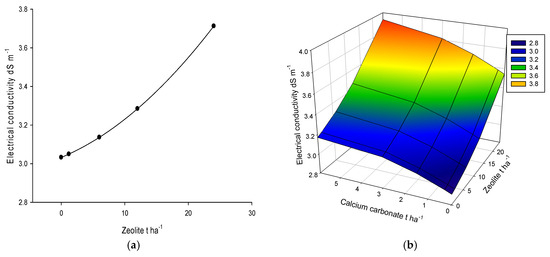
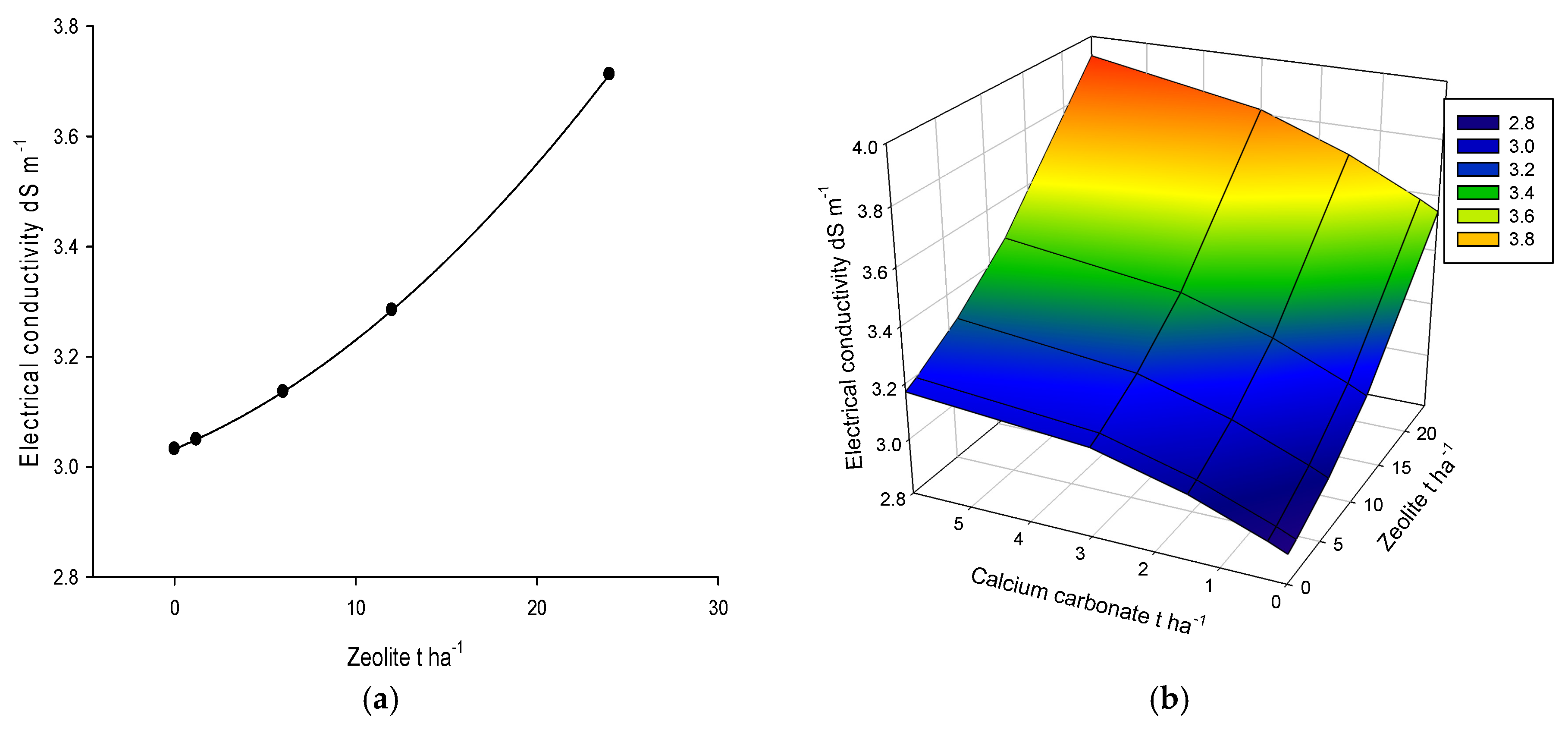
Electrical conductivity was the variable with the most significant response, showing linear (L) and quadratic regression. With respect to zeolite and CaCO3, its optimal value was 2.2 dS m−1, which falls within the suggested interpretation range of 1:20 to 2.5 dS m−1 (emphasizing that pecan trees are tolerant to these salinity levels without affecting development and production). The optimal doses were 6.3 and 1.7 t ha−1 for zeolite and calcium carbonate, respectively. As mentioned previously, splitting the dose can improve the soil’s buffering capacity, which can be observed in the graph of the individual effect of zeolite (linear) and its significant interaction with calcium carbonate (Figure 1a,b).
Figure 1.
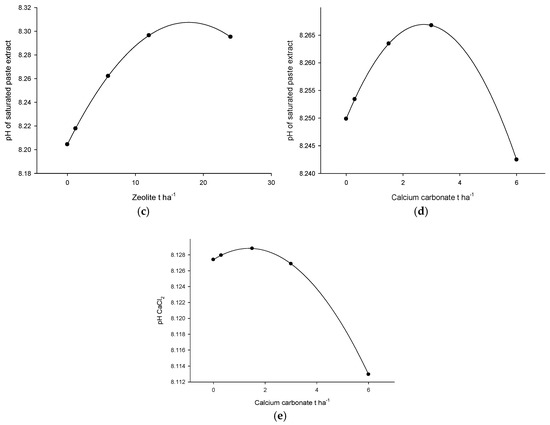
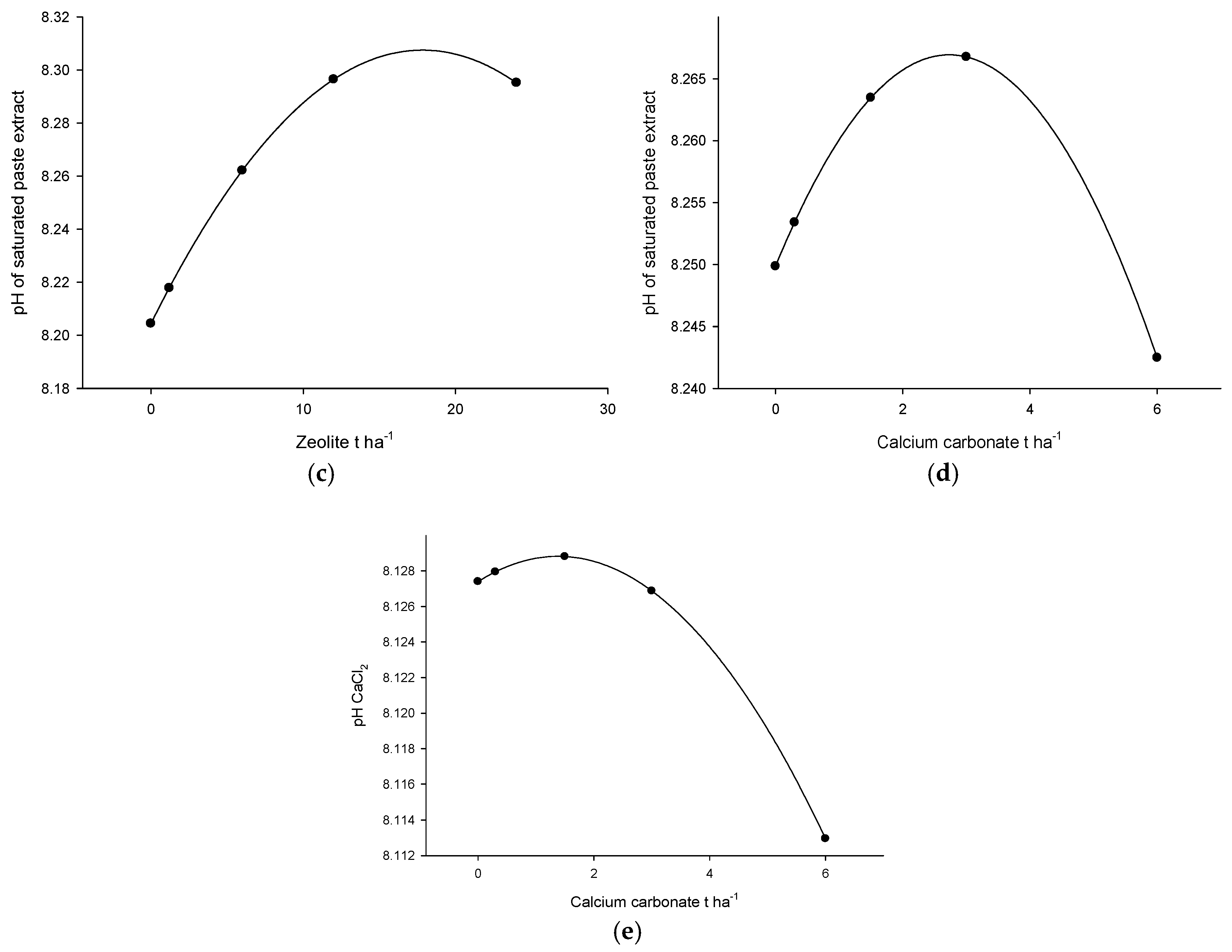
Effects of mineral amendments: effect of zeolite (a) and effect of the interaction between zeolite and CaCO3 (b) on electrical conductivity; effect of zeolite (c) and effect of CaCO3 (d) on pH in saturated paste (pH in EPS); and effect of CaCO3 (e) on pH in CaCl2.
The next variable in order of importance was organic-matter content, with an optimal value of 1:22% (desirable value 1:20%), achieved with 4.0 and 4.6 t ha−1 of zeolite and calcium carbonate, respectively, reaffirming the need to divide the generalized optimal dose. In this case, no significant regression responses or factor contributions were recorded; however, these two mineral amendments helped achieve the sufficiency range. These results highlight the importance of indirectly improving organic-matter content through mineral amendments, which reduced the pH in the saturated paste extract to an optimal value of 7.4 with the generalized dose, showing significant individual quadratic responses for CaCO3 and zeolite (Figure 1c,d). Meanwhile, pH in CaCl2 showed a value of 7.4 and a quadratic relationship with CaCO3 (Figure 1e).
Studies conducted by [23] have also shown that the use of soil amendments, such as agricultural lime (calcium carbonate), increased the percentage of organic matter by 3.23%, which is higher than the 1.22% found in this study; this can be attributed to the fact that CaCO3 concentrations were higher, thereby increasing the percentage. In another study, the use of amendments increased the organic-matter content by up to 49% in the soils analyzed in the municipality of Delicias, Chihuahua [24]. This corroborates the results obtained in this study for zeolite and CaCO3.
Meanwhile, ref. [25] used compost obtained from dairy bovine manure at a concentration of 20 and 30 t ha−1, which showed the highest organic matter values of 2.475% and 2.425%, respectively, at the end of the cycle—higher than those reported in this study, at a value of 1.22%—and as the concentration of compost increased, the organic-matter content increased in forage corn crops. Studies currently being conducted using compost made from plant residues and bovine–goat manure in a 2:1 ratio, respectively, in combination with Bacillus subtilis at 10% and Trichoderma sp. with an initial concentration of 1 × 10¹² CFU, obtained the following results regarding the physicochemical properties of the soil collected 100 days after the application of the treatments: the organic-matter content was 2.76%, similar to the results obtained by [25] in the treatments with the highest concentration of compost, but in this study, this value corresponds to the control treatment, being the lowest in comparison with the other treatments [26].
Alternatively, the study by [27] conducted in pecan orchards of the northern region of Coahuila evaluated the nutritional quality of the crop through soil analysis across three profiles under two different management systems (organic and conventional). Regarding organic-matter content, an average of 1.07% was reported, which is slightly lower than the value obtained in this study (1.22%). Organic matter decreased with increasing depth under both management systems (organic and conventional), and the orchards with the highest percentage of organic matter were those under organic management (compost or manure).
3.2. Fertility Properties
These properties vary in the soil and can be manipulated annually to continuously improve walnut production and quality, as this determines the capacity for recovery and reinvestment. It is, therefore, very easy to fall into nutritional excesses and imbalances that ultimately affect the basic properties of the soil and even its fertility. The annual fertilization dose should consider the soil’s reserves, their degree of availability, the harvest forecast (high-harvest “on” year, low-harvest “off” year), and the contribution of amendments in terms of improving nutrient availability, as they themselves become nutritional sustenance.
The results of the evaluation of soil fertility properties under the application of mineral amendments (zeolite and CaCO3), organic amendments (bovine and caprine manure), and plant-growth-promoting microorganisms (mycorrhizal fungi and Bacillus subtilis) showed that the factor with the greatest influence was zeolite, with a value of 20, affecting five of the six variables evaluated. In second place was mycorrhizal fungi, with a value of 18, followed by CaCO3, with 13, which affected four of the six variables.
This category of analysis (Table 7) was composed of nitrate content N-NO3− (kg ha−1), phosphorus (kg ha−1), and the micronutrients iron, manganese, zinc, and copper expressed in ppm; cations were analyzed separately. The total number of eigenvectors was 59–55 positive and four negative; therefore, the selected and ranked factors were zeolite (20), mycorrhizal fungi (18), and calcium carbonate (13). Unlike the basic properties, an effect was also observed here for mycorrhizal fungi, with a high score slightly below that of zeolite; these three factors were composed of positive eigenvectors. The doses were 11.8 t ha−1 for zeolite, 58.4 kg ha−1 for mycorrhizal fungi, and 12.7 t ha−1 for calcium carbonate. These are considered higher than those required to improve basic soil properties, as mentioned previously. According to the selection criteria, the variables with values ≥ 8 were chosen as follows: copper had the highest weighting with a score of 11, with an optimal soil content of 1.75 ppm, this was followed by soil nitrates with 152.9 kg ha−1, then zinc with 3.5 ppm; iron (4.31 ppm) and phosphorus (15.9 kg ha−1) had the lowest scores with 9 and 8, respectively. Nitrates, phosphorus, manganese, zinc, and copper showed significant linear and quadratic responses within the selected factors.
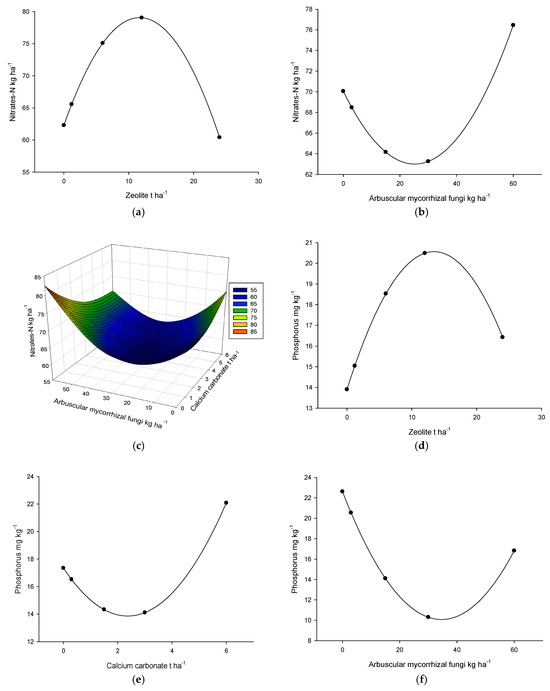
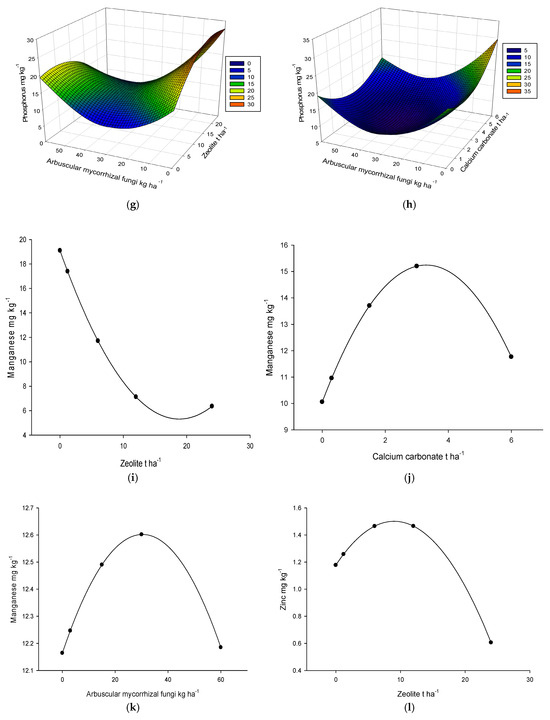
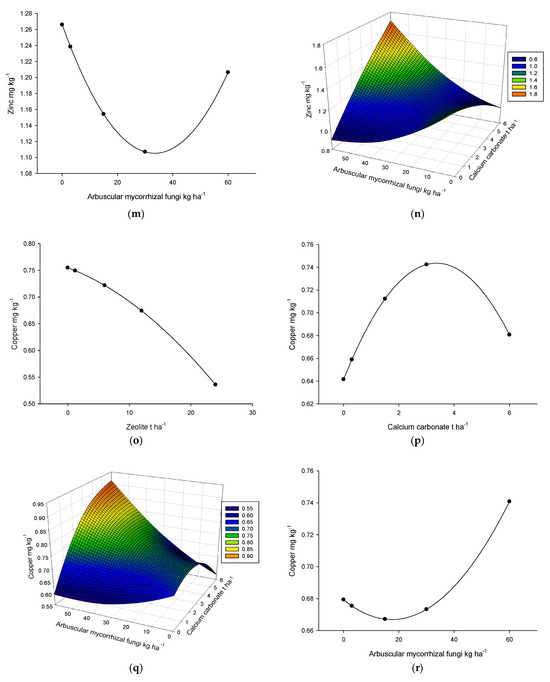
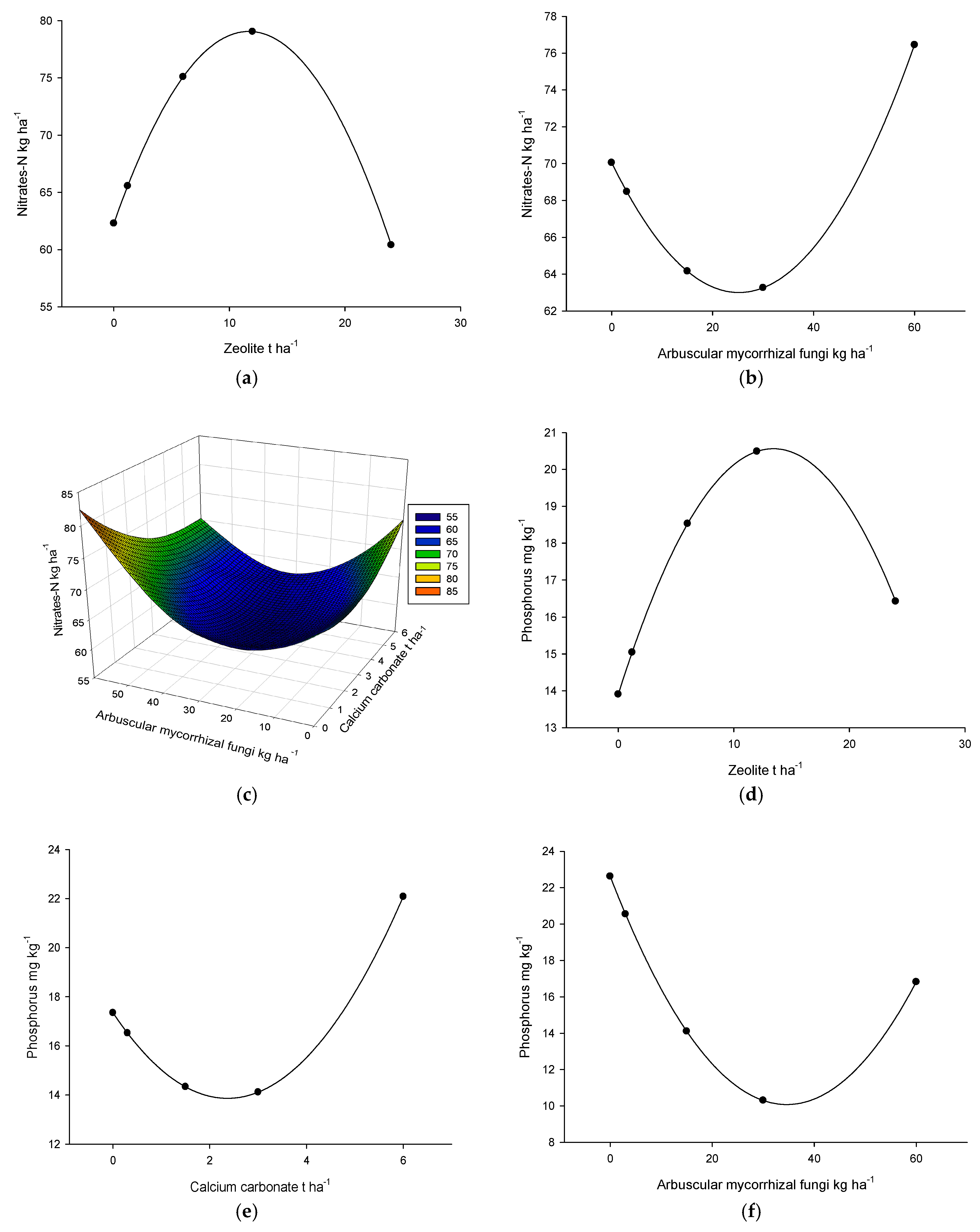
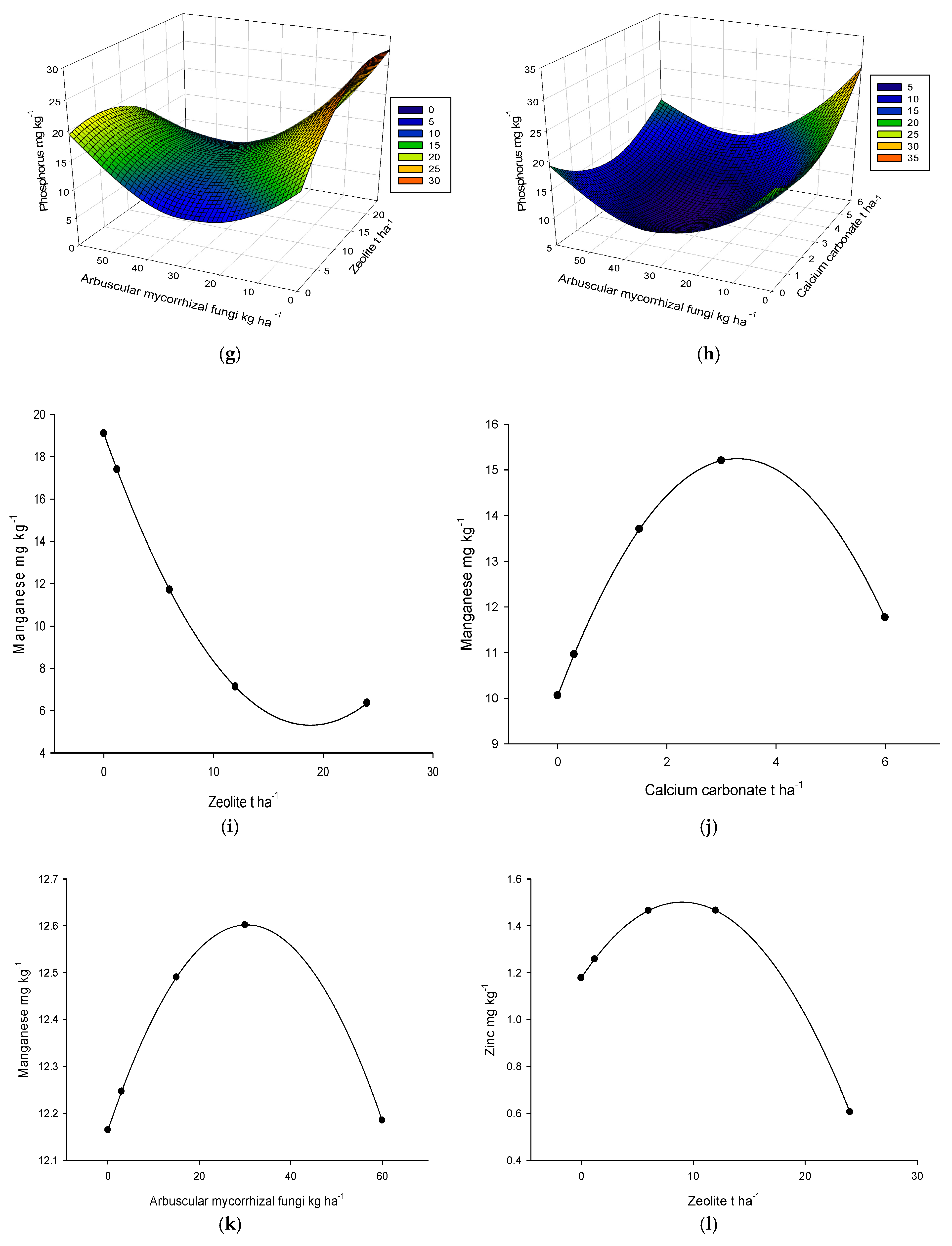
The regressions for N-NO3− showed that an optimum is achieved with zeolite at approximately 12.5 t ha−1, reaching nearly 80 kg ha−1. Although there are initial decreases, as the dose of mycorrhizal fungi increases, the nitrate content in the soil also increases (Figure 2a,b), likewise reaching 80 kg ha−1, and the interaction between calcium carbonate and mycorrhizal fungi suggests antagonism (Figure 2c). For phosphorus, now zeolite and calcium carbonate (Figure 2d,e), it presented a response very similar to that observed for N-NO3: an optimal value around 12.5 t ha−1 with zeolite, an initial decrease, followed by an increase up to 6 t ha−1 with CaCO3, in both cases reaching approximately 23 kg ha−1. In the case of mycorrhizal fungi in relation to phosphorus, the maximum value was reached at the lowest concentrations, and as the concentration of fungi increased, the concentration of phosphorus decreased (Figure 2f); thus, the interactions of zeolite with mycorrhizal fungi and calcium carbonate with mycorrhizal fungi showed antagonism (Figure 2g,h).
Figure 2.
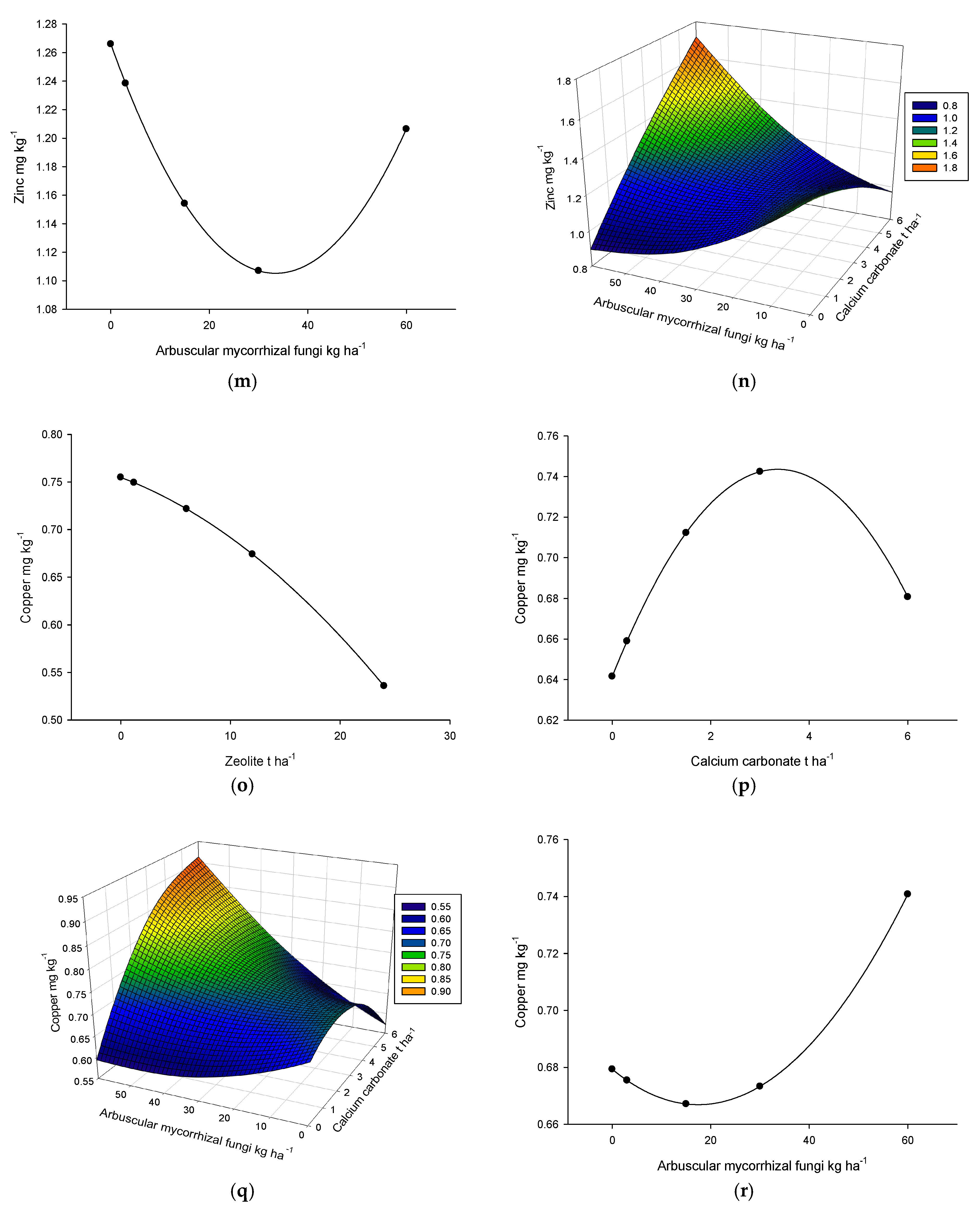
Effects of mineral amendments and mycorrhizal fungi: effect of zeolite (a), effect of mycorrhizal fungi (b), and effect of the interaction between CaCO3 and mycorrhizal fungi (c) on N-NO3; effect of zeolite (d), effect of CaCO3 (e), effect of mycorrhizal fungi (f), effect of the interaction between zeolite and mycorrhizal fungi (g), and effect of the interaction between CaCO3 and mycorrhizal fungi (h) on phosphorus; effect of zeolite (i), effect of CaCO3 (j), and effect of mycorrhizal fungi (k) on manganese; effect of zeolite (l), effect of mycorrhizal fungi (m), and effect of the interaction between mycorrhizal fungi and CaCO3 (n) on zinc; effect of zeolite (o), effect of CaCO3 (p), effect of the interaction between CaCO3 and mycorrhizal fungi (q), and effect of mycorrhizal fungi (r) on copper.
In the case of manganese, the optimal levels of zeolite and calcium carbonate were shown as 0 and 3 t ha−1 (Figure 2i,j), respectively, and mycorrhizal fungi (Figure 2k) as 30 kg ha−1, reaching values from 15.2 to 12.6 ppm; in contrast, zeolite substantially reduced manganese content, decreasing from 19 ppm without application to 6 ppm at 20 t ha−1. For zinc, the optimal range was very narrow, at about 1.5 ppm with 10 t ha−1; beyond this point, zinc content decreased drastically to 0–6 ppm at 25 t ha−1 (Figure 2l). With respect to mycorrhizal fungi, the optimal zinc value occurred without application, reaching a maximum value at approximately 30 kg ha−1, after which zinc concentration recovered at the maximum application rate of mycorrhizal fungi, 60 kg ha−1 (Figure 2m). The effect of the interaction between CaCO3 and mycorrhizal fungi on zinc is shown in Figure 2m. The response patterns described above support the fractional application of the predicted optimal doses of mineral amendments, including mycorrhizal fungi. A behavior similar to that of manganese was observed for copper, and in the case of zeolite, calcium carbonate, and mycorrhizal fungi, the optimal value was around 0.75 mg kg−1. A considerable decrease was observed with zeolite application, and declined markedly to 0.53 mg kg−1 at 25 t ha−1, whereas the optimal value for calcium carbonate was around 3 t ha−1 (Figure 2o,p). Mycorrhizal fungi showed an opposite behavior to that described above, as the optimal value corresponded to the maximum application rate of 60 kg ha−1 (Figure 2q,r).
Some of the variables showed linear and quadratic regression, as well as interaction effects, as in the cases of nitrates, manganese, zinc, and copper. Studies conducted by [28] evaluated the influence of zeolite on soil properties and lettuce growth yield when zeolite was added under nitrogen fertilization. The results revealed that the use of zeolite (5.0 tons) increased nitrogen, phosphorus, and potassium levels after harvest, whereas the lowest levels were observed in the control treatment.
Similarly, studies carried out by [13] evaluated the use of calcium and organic amendments, as well as microorganisms, on nutrient content. The results showed that the concentrations that had effects on these nutrients (nitrates, phosphate, potassium, calcium, magnesium, and sodium) were Ca/CaCO3 at 75.0 and 147.4 kg ha−1 and mycorrhizal fungi at 20.7 and 17.2 kg ha−1, with effects of 35% and 28%, respectively. With regard to the values obtained for phosphorus at 19.8 mg kg−1 and nitrates at 123.1 kg ha−1, these are similar to those obtained in this study, which reported concentrations of 15.9 kg ha−1 for phosphorus and 152.9 kg ha−1 for nitrates; this similarity may be due to the higher concentrations used in the case of mycorrhizal fungi (30 kg ha−1) and, based on these results, it is concluded that the addition of mineral amendments and microorganisms is important to improve the conditions of pecan orchard cultivation areas that have adverse characteristics, such as water scarcity, high sodium content, and low organic-matter content. On the other hand, in 2021, zeolite was applied at rates of 0.5 and 10 t ha−1 in three vineyard soils. Its effect on the chemical properties was evaluated, and soil fertility was determined through soil organic-matter content. The results showed that vineyards amended with zeolite, compared to the control, exhibited greater nutrient availability and higher dehydrogenase activity. Those findings were attributed to the mineralization of soil organic carbon, as well as to chemical and structural changes observed in soil organic matter. Therefore, it was concluded that the use of natural zeolites improves fertilizer efficiency and increases nutrient availability [29].
3.3. Cation Relationship and Cation-Exchange Capacity
The percentage of saturation of basic cations (PSBC) is becoming increasingly relevant, not only because of the soil’s inherent capacity to store nutrients, but also because the production of high-quality nuts, expressed as kernel percentage, depends strongly on potassium. Calcium, in turn, is closely associated with the prevalence of physiological disorders such as nut cracking, which has increased in intensity in recent years. Moreover, the balance among calcium, potassium, and magnesium in relation to sodium is critical, especially given the increasing concentration of sodium in irrigation water; for this reason, irrigation water can also be described as “marginal irrigation” for pecan cultivation, and this issue must be addressed from the perspective of basic soil properties and fertility.
Regarding the results for cation-exchange capacity, the factor with the greatest influence was calcium carbonate (CaCO3), with a value of 21, affecting six of eight variables analyzed. In second place was zeolite, with a value of 18, followed by goat manure with a value of 15, and finally bovine manure with a value of 14. All variables showed a response, displaying eigenvector values ranging from 6 to 12, with calcium being the highest, followed by % Mg, % K, % Na, and % Ca.
The results for this category of analysis are presented in Table 7. A total of 80 eigenvectors were obtained, of which 62 were positive; therefore, the criterion for factor selection was ≥12. Accordingly, the ranked factors were calcium carbonate with a score of 21, zeolite with 18, goat manure with 15, and bovine manure with 14. Mycorrhizal fungi, with a weighting of 11, were one eigenvalue short of being considered; therefore, their participation is discussed with caution. Regarding the variables, the selection criterion was nine. Only potassium did not reach this value; however, it was the amount of potassium in the cation relationship ratio that practically determined all the optimal response doses for the factors: zeolite, 12.3 t ha−1; calcium carbonate, 2.5 t ha−1; bovine manure, 33.7 t ha−1; goat manure, 3.5 t ha−1; and mycorrhizal fungi at 33.9 kg ha−1—this variable was the only one that showed significant contributions of the factors to the fit of their regressions. It is also noteworthy that the doses for this category of analysis are very similar to those recorded for basic and fertility properties, which reflects the consistency of the analysis.
Soil calcium content showed the highest score, with 12 eigenvalues and a predicted optimal value of 20.68 meq 100 g−1. This was followed by the amounts relative to cation-exchange capacity, with a score of 11 for potassium (predicted 4.98 meq 100 g−1), magnesium (predicted 11.1 meq 100 g−1), and sodium (predicted 5.6 meq 100 g−1). Next, with a score of 10, were the amounts of calcium (69.6 meq 100 g−1) and sodium (2.38 meq 100 g−1). Finally, magnesium displayed a score of 9 and a predicted value of 3.93 meq 100 g−1. It is important to note that, apart from sodium percentage, all other cations and their ratios fall within the suggested interpretation range; therefore, special attention must be given to this element. Incidentally, sodium is already addressed in the analysis of basic soil properties, where the objective is to reduce the predicted hydraulic conductivity from 3.24 to 2.2 dS m−1, carbonate content from 22.4 to 6.3%, CaCl2 pH from 8.12 to 7.4, and ESP from 8.26 to 7.4 while increasing organic-matter content from 0.88 to 1.22% and cation-exchange capacity from 22.5 to 30.7 meq 100 g−1 of soil. With regard to cations and their relationships, the aim is to increase calcium content from 15.15 to 20.68 meq 100 g−1, which would in turn be reflected as an increase in the percentage of calcium in the cation-exchange capacity from 66.89 to 69.6%; this could be accompanied by a decrease in the amount of magnesium from 15.38 to 11.1 meq 100 g−1, sodium from 13.86 to 5.6 meq 100 g−1, and an increase in potassium from 3.85 to 4.98 meq 100 g−1. An additional advantage is that calcium carbonate can be injected into the irrigation system, which would help to neutralize excess sodium in irrigation water. Foliar applications can also be carried out due to the characteristics of calcium carbonate. It is precisely in cation relationships where the addition of organic matter plays a role, using goat manure at a rate of 3.5 t ha−1 and bovine manure at 33.7 t ha−1, as indicated in the summary of Table 7—prorated over three years as previously mentioned—these organic matter sources should be treated with sanitizing agents to eliminate the risks of pests such as white grubs, wireworms, and nematodes, enriched with plant-growth-promoting microorganisms such as the mycorrhizae mentioned here, and fortified with small doses of nutrients using fertilizers with low pH and low electrical conductivity, given the characteristics of the manures used.
In addition, the application of amendments would also have direct effects on soil fertility: The content of N-NO3 would increase from 63.48 kg ha−1 (Table 7) to 152.9, which is the lower limit of the suggested interpretation range. Iron would increase from 0.15 to 4.31 ppm, manganese from 12.34 to 23.6 ppm, zinc from 1.19 to 3.5 ppm, and copper from 0.69 to 1.75 ppm. This would be reflected by an improvement in the nutritional status of the pecan tree, and with a complementary program of soil fertilization and foliar applications of nutrients and growth regulators, it would be possible to increase both yield and quality aspects that have been critical since 2020; moreover, it would help reduce the alternate bearing index, another limiting factor in pecan production.
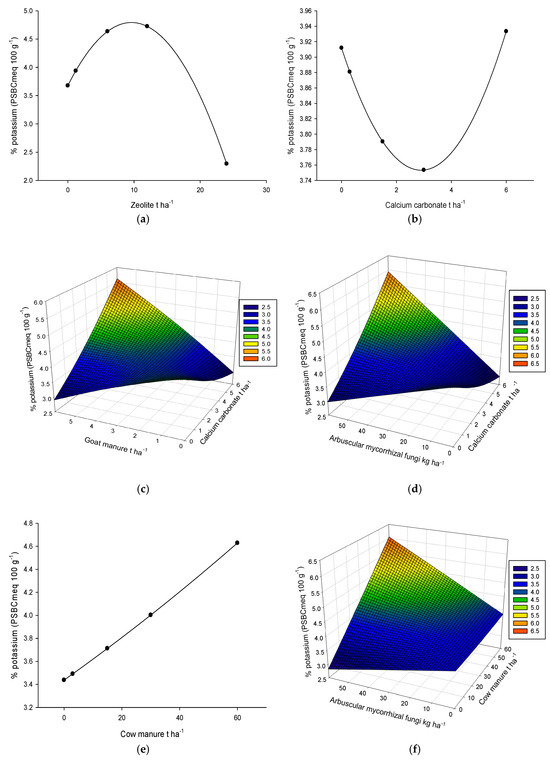
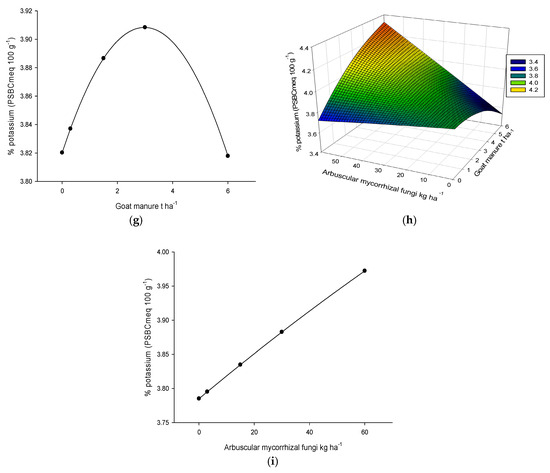
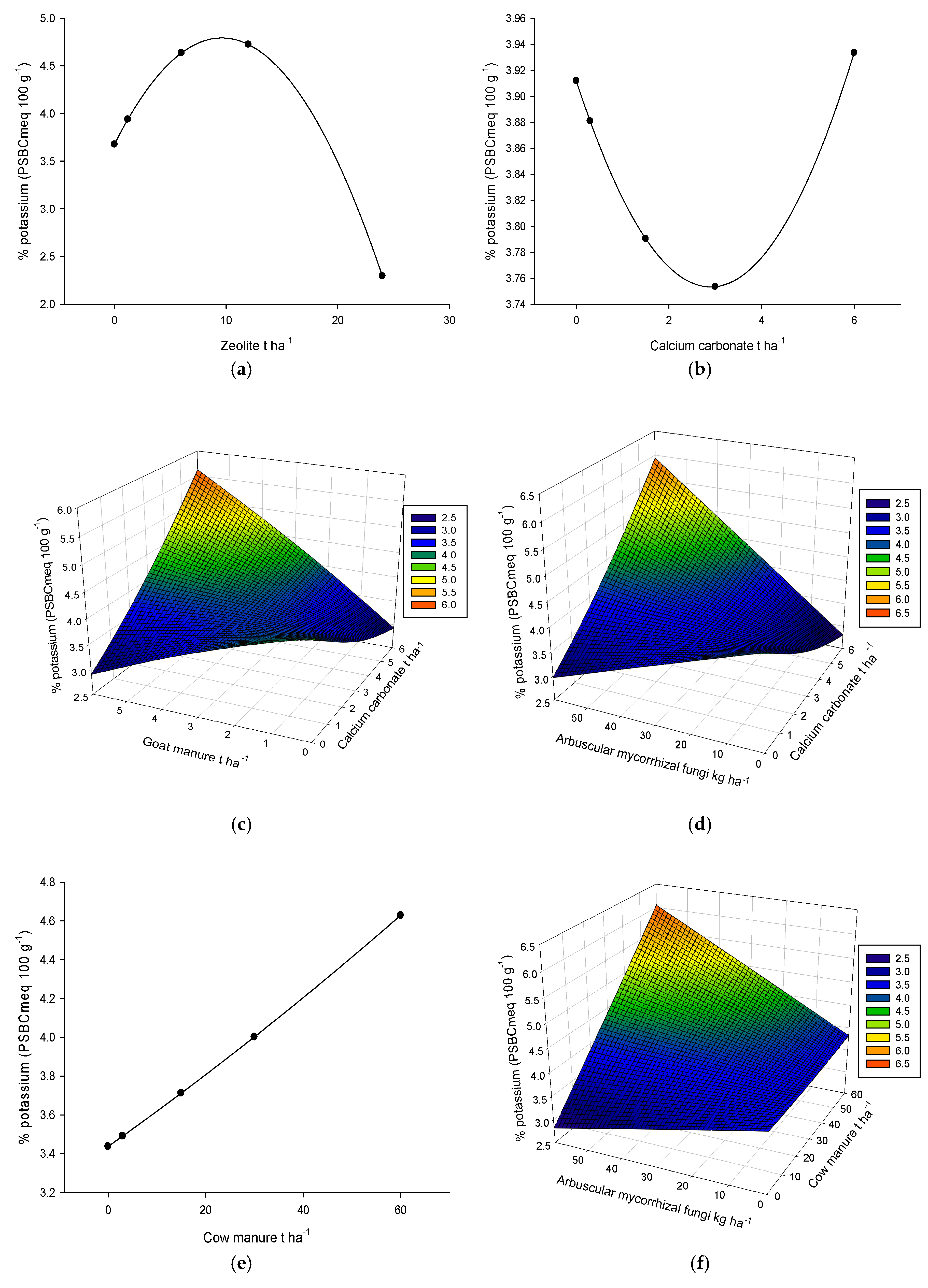
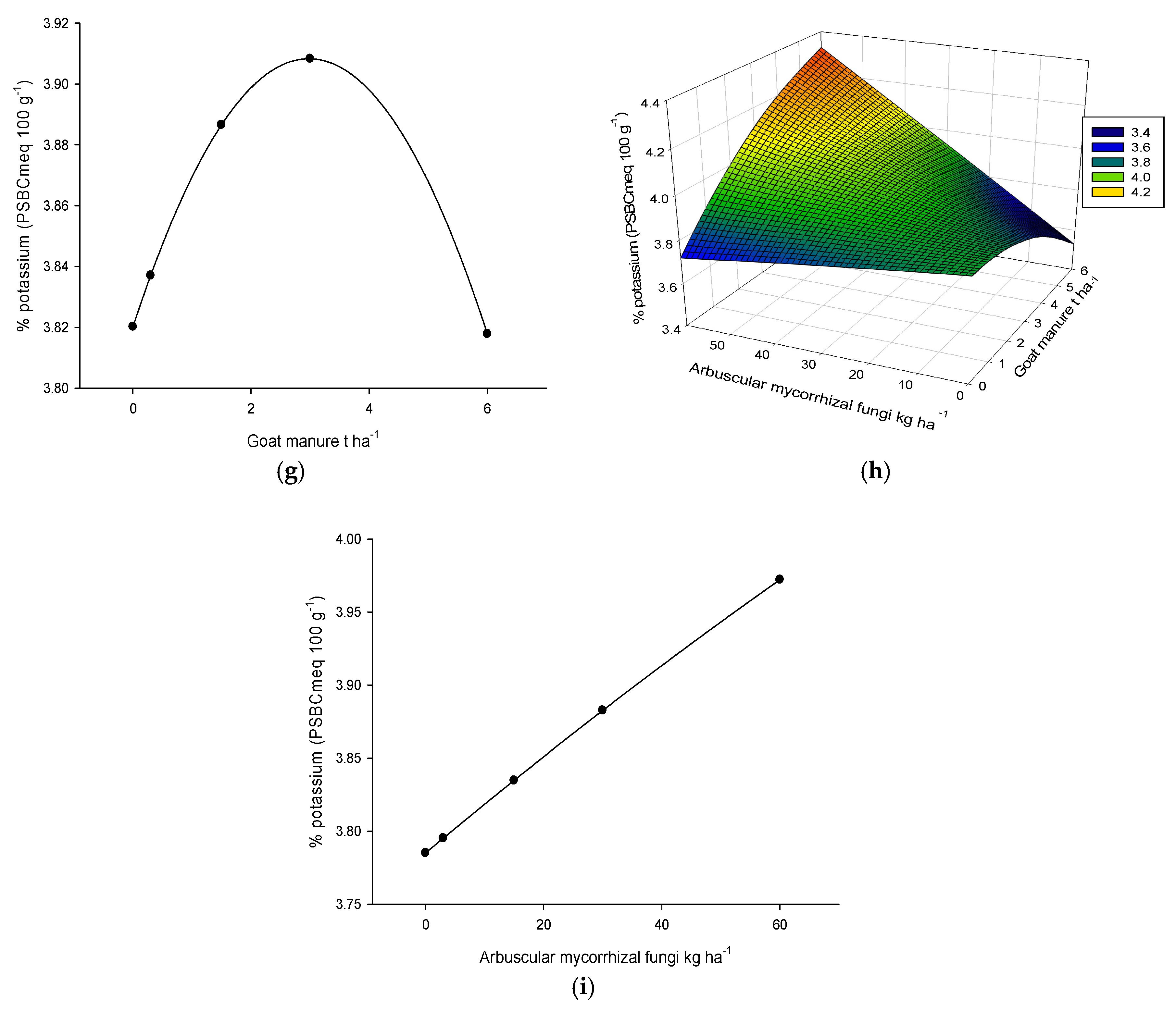
The response surface of potassium percentage in relation to the percentage of basic cation saturation is shown in Figure 3: zeolite and calcium carbonate show opposite responses (Figure 3a,b), with a more intense effect for zeolite, whose spectrum of action exhibits a direct quadratic response and an optimum of 4.6% at 12.5 t ha−1—hence the importance of splitting the optimal dose to complete it over three years. However, at a high dose of 25 t ha−1, the value may decrease to as low as 2.2%, which is undesirable for this cation. In the case of calcium carbonate, its response range is much narrower, with an inverse quadratic relationship; in this case, a dose of 5.0 t ha−1 ensures a value of 4.0% for the potassium percentage. Notably, a very pronounced and homogeneous synergy of calcium carbonate with goat manure (Figure 3c) and arbuscular mycorrhizal fungi (Figure 3d) is observed: at the highest doses, both combinations exceed 6.0% potassium. With the optimal dose of 5 t ha−1 of calcium carbonate, 3.5 of goat manure, and 35 kg of mycorrhizal fungi, the optimal potassium percentage can be reached. This interaction also allows for better modulation of the potassium response; however, it requires two amendments interacting with calcium carbonate, an effect that zeolite can achieve individually. Bovine manure (Figure 3e) showed a linear increasing response with a slight tendency toward a quadratic pattern; at the maximum dose of 60 t ha−1, it reached 4.7% potassium, and when it interacted with mycorrhizal fungi (Figure 3f), it was possible to reach 5.0% potassium with the 35 t ha−1–35 kg ha−1 combination. However, without the effect of zeolite alone, the same occurred with goat manure (Figure 3g), which exhibited a quadratic increasing response with an optimum 3.9% of potassium at approximately 3.5 t ha−1; this could reach up to 4.4% potassium with the maximum doses of goat manure and mycorrhizal fungi (Figure 3h). Similarly, mycorrhizal fungi alone (Figure 3i) showed a linear response, reaching approximately 3.98% at the maximum dose of 60 kg ha−1. These results indicate the relevance of the concurrent use of manures and mycorrhizal fungi, and differences in the type of response are noteworthy: bovine manure showed a more intense linear increase, whereas mycorrhizae were less intense in terms of reaching the optimal potassium percentage value of 5.0%. Goat manure, with its quadratic response, only reached 3.9%, and when combined with mycorrhizal fungi, this response intensity still prevailed, suggesting that lowering the doses of both could help achieve the 5% potassium target. In contrast, with goat manure alone, higher doses of up to 5.0 t ha−1 would be required; therefore, there is a margin of maneuver and a potential replacement for zeolite if necessary.
Figure 3.
Effects of mineral amendments, organic amendments, and mycorrhizal fungi: effect of zeolite (a), effect of CaCO3 (b), effect of the interaction between goat manure and CaCO3 (c), effect of the interaction between mycorrhizal fungi and CaCO3 (d), and effect of bovine manure (e) on potassium percentage; effect of the interaction between bovine manure and mycorrhizal fungi (f), effect of goat manure (g), effect of the interaction between goat manure and mycorrhizal fungi (h), and effect of mycorrhizal fungi (i) on potassium percentage (K/PSBC).
The factors showed only linear and quadratic regression for % of K, as well as the interaction between calcium carbonates and goat manure, in addition to the interaction between bovine and goat manure. Likewise, carbonates and goat manure showed only linear and quadratic regression, respectively. Regarding the mean values of the cations, the following were recorded: Ca (20.68 meq 100 g−1), K (5.6%), Na (2.38 meq 100 g−1), Mg (11.1%), Ca percentage (69.6%), Mg percentage (3.93 meq 100 g−1), and K percentage (0.61 meq 100 g−1). These results indicate that the application of CaCO3 and zeolite favored the availability and balance of exchangeable cations, contributing to improved soil structure and stability.
On the other hand, only the variables of sodium percentage and potassium percentage showed linear and quadratic regression as well as interaction effects.
Regarding the studies conducted by [27], the results concluded that soils in northern Coahuila are highly saline, with a cation-exchange capacity of 27.5 meq 100 g−1. Deficiencies in nitrogen, phosphorus, iron, and zinc were also observed. Nitrate values showed an average of 11.5 mg kg−1; however, these values differed among soil profiles, with higher values found in the 0–30 cm profile, and this was attributed to the type of fertilization used. In 2021, a study by [30] used organic amendments and evaluated soil properties in soils cultivated with native potatoes from the Andean region of Peru across three zones. Cation-exchange capacity increased by 88%, 100%, and 60% in the high, medium, and low zones, respectively, leading the authors to conclude that the use of organic amendments improves soil fertility in Andean soils. Calcium values in the three zones (high, medium, and low) were approximately 25 meq 100 g−1, which is similar to the value obtained in this experiment at 20.68 meq 100 g−1, while Mg, K, Na, and Al showed decreasing values. This differs from the order of the results obtained in this study, which were as follows: K (5.6%), Na (2.38 meq 100 g−1), Mg (11.1%), Ca percentage (69.6%), Mg percentage (3.93 meq 100 g−1), and K percentage (0.61 meq 100 g−1).
Experiments conducted by [31] evaluated the effect of exchangeable cations (Ca, Na, Mg, and K) in soils treated with zeolite (0, 10, 20, and 30%) in a Swiss chard crop. The study was carried out in pots under greenhouse conditions over a two-season period. The results from the first season showed cation-exchange values of 5.83, 0.11, 0.39, and 0.12 cmol kg−1 for Ca, Na, Mg, and K, respectively. In the second season, all cations decreased under 20% and 30% zeolite treatments, while Ca increased across all treatments except 30%. Based on these results, the inherent capacity of zeolite to act as an ion-exchange site is highlighted, positively influencing soil fertility in sandy soils.
In 2021, ref. [32] conducted an innovative study on blueberry production using a soilless substrate composed of coconut fiber and perlite in a 3:1 ratio under greenhouse conditions. Due to the limitations associated with the low buffering capacity of the medium, agricultural CaCO3 was applied at a rate of 6.18 Kg m−3 to act as a buffer, maintain pH stability, and supply cations to support optimal plant growth and development. The results showed that after 75 days, the application of CaCO3 did not induce stress in the crop and enhanced the availability of Ca (1293.33 mg kg−1), Mg (307.50 mg kg−1), and K (99.17 mg kg−1) for plant uptake. It was concluded that the use of low concentrations of lime represents a feasible alternative for soilless blueberry production systems.
Table 8 presents a comparison of the soil properties before and after the application of amendments. The percentage of organic matter (OM) showed an increase of 27.86%, rising from an initial value of 0.88% to 1.22%, shifting from a low to a medium classification. In the case of calcium carbonate, an approximate reduction of 300% was observed, decreasing from 24.51% to 6.30%. Regarding pH, it decreased from 7.9 to 7.4, changing from a moderate alkaline condition (7.9) to a slightly alkaline condition (7.4).
Table 8.
Changes in basic, physical, and fertility soil properties, as well as cation dynamics, following the application of mineral amendments (zeolite and calcium carbonate) in pecan trees.
On the other hand, the percentage of saturation increased from a moderately low level (32.64%) to a medium level (36.40%). Electrical conductivity decreased slightly; in both cases, the soil was classified as slightly saline.
Regarding fertility properties, nitrogen content increased by 33.11%, rising from 102.27 kg ha−1 to 152.90 kg ha−1, shifting from a moderately low to a sufficient classification. Phosphorus increased from 6.95 kg ha−1 to 15.90 kg ha−1, moving from low to a sufficient classification. Similarly, copper showed an increase of 72.57%, rising from 0.48 kg ha−1 to 1.75 kg ha−1, also transitioning from low to a sufficient classification. Iron, with an initial content of 0.39 mg kg−1 considered deficient, increased to 4.31 mg kg−1, reaching a moderately low classification. Manganese increased from a deficient level of 1.10 mg kg−1 to 23.60 mg kg−1, achieving 95.33% sufficiency. Finally, zinc, which initially presented a low value of 0.88 mg kg−1, increased to 3.50 mg kg−1, reaching a moderately high classification [33].
The previously mentioned results suggest that the application of amendments may represent a turning point in the management of marginal soils. The incubation technique described in this study proved to be an efficient tool for evaluating soil response under controlled conditions, allowing for the optimization of time and space. In this regard, it facilitates the preliminary identification of treatments with the greatest potential for soil improvement prior to field validation.
Therefore, it emerges as a highly promising strategy, with the potential to accelerate the adoption of sustainable practices in soils with productive limitations.
4. Conclusions
The integrated application of mineral amendments (zeolite and calcium carbonate), organic amendments (bovine and goat manure), and plant-growth-promoting microorganisms (arbuscular mycorrhizal fungi and Bacillus subtilis) significantly improved the basic, physical, fertility, and cation balance properties of marginal soil used for pecan cultivation. Overall, the amendments adjusted soil conditions toward ranges considered optimal for pecan tree growth, demonstrating their effectiveness as a sustainable strategy for soil restoration and long-term orchard management.
From a practical soil management perspective, zeolite and calcium carbonate emerged as the most influential amendments across the evaluated categories, particularly improving electrical conductivity, organic-matter content, pH regulation, cation-exchange capacity, and nutrient availability. Optimal doses were identified at approximately 19.3 and 12.7 t ha−1 for zeolite and calcium carbonate, although response surface analyses clearly indicated that fractional application over three to five years is agronomically preferable. This practice enhances soil buffering capacity, minimizes the risk of nutrient antagonism, and promotes more stable physicochemical conditions.
Arbuscular mycorrhizal fungi showed high relevance, especially for soil fertility and micronutrient dynamics, with an optimal dose of 58.4 kg ha−1, highlighting their role as a key biological tool in improving cation relationships and soil structure, with goat manure (3.5 t ha−1) and bovine manure (39 t ha−1) proving effective when properly sanitized, biologically enriched, and integrated into amendment programs.
The combined use of these amendments allows for measurable improvements in nitrate availability, phosphorus, micronutrients (Fe, Mn, Zn, and Cu), and exchangeable calcium while simultaneously reducing sodium-related constraints. These changes directly support improved tree nutrition, soil structural stability, and water-use efficiency, which are critical under arid and semi-arid conditions with marginal irrigation water quality.
In practical terms, the results support the inclusion of mineral, organic, and biological amendments as routine components of soil management programs in pecan orchards, not only as corrective measures but also as preventive strategies to maintain soil health. Their adoption can reduce excessive reliance on inorganic fertilizer, mitigate soil degradation processes, and contribute to more resilient, productive, and sustainable pecan production systems.
Supplementary Materials
The following supporting information can be downloaded at: https://www.mdpi.com/article/10.3390/agrochemicals5020017/s1, Table S1: Basic and physical properties of soil under mineral and organic amendments and fertility-promoting microorganisms in soils cultivated with pecan trees; Table S2: Soil fertility properties under mineral and organic amendments and fertility-promoting microorganisms in soils cultivated with pecan trees; Table S3: Cations and their relationships meq 100 g−1 of soil under mineral and organic amendments and fertility promoting microorganisms in soils cultivated with pecan trees.
Author Contributions
Conceptualization, J.M.S.-P.; data curation, J.M.S.-P.; incubation and formal analysis, Y.P.-R.; funding acquisition, J.M.S.-P.; investigation, Y.P.-R.; methodology, J.M.S.-P., N.G.T.-B. and O.C.P.-G.; project administration, J.M.S.-P.; writing—original draft, Y.P.-R.; writing—review and editing, J.M.S.-P., N.G.T.-B., R.P.-L. and L.R.O.-M. All authors have read and agreed to the published version of the manuscript.
Funding
This research received no external funding.
Institutional Review Board Statement
Not applicable.
Informed Consent Statement
Not applicable.
Data Availability Statement
The original contributions presented in this study are included in the article. Further inquiries can be directed to the corresponding author.
Acknowledgments
This research was made possible thanks to the determined participation in each and every stage of the Project of Lic. Luis Fernando Mesta Soule, owner of the San Cristóbal orchard and Ing. Gonzalo Javier Sáenz Contreras, facilitator of the process. The authors acknowledge that the Universidad Autónoma de Chihuahua supported this investigation.
Conflicts of Interest
The authors declare no conflicts of interest.
References
- Elbl, J.; Maková, J.; Javoreková, S.; Medo, J.; Kintl, A.; Lošák, T.; Lukas, V. Response of Microbial Activities in Soil to Various Organic and Mineral Amendments as an Indicator of Soil Quality. Agronomy 2019, 9, 485. [Google Scholar] [CrossRef] [Scilit]
- Csikós, N.; Tóth, G. Concepts of agricultural marginal lands and their utilisation: A review. Agric. Syst. 2023, 204, 103560. [Google Scholar] [CrossRef] [Scilit]
- Delgado-Londoño, D.M. Aplicación de enmiendas orgánicas para la recuperación de propiedades físicas del suelo asociadas a la erosión hídrica. Lámpsakos 2017, 1, 77. [Google Scholar] [CrossRef] [Scilit]
- Betancourt, D.; Rodríguez, C.; Benavides, O.L. Producción de un mejorador de suelos a partir de la transformación biológica de la pulpa de café (Coffea arabica), cepa de plátano (Musa paradisiaca) y estiércol de cuy (Cavia porcellus). Rev. Vitae 2016, 23, S522–S525. [Google Scholar]
- Murillo Montoya, S.A.; Mendoza Mora, A.; Fadul Vásquez, C.J. The importance of organic amendments in soil conservation and agricultural production. Rev. Colomb. Investig. Agroindustriales 2020, 7, 58–68. [Google Scholar] [CrossRef] [Scilit]
- Reza-Solis, H.A.; Ojeda-Barrios, D.L.; Rivera-Figueroa, C.; Martínez-Rosales, A.F.; Terrazas-Gómez, A.; Hernán-dez-Rodríguez, O.A. Evaluation of Pecan Nutshell (Carya illinoensis [Wangenh.] K. Koch) in the Production of Jalapeño Pepper (Capsicum annuum L.) Seedlings. Rev. Terra Latinoam. 2025, 43, e2027. [Google Scholar] [CrossRef] [Scilit]
- Méndez-Argüello, B.; Lira-Saldivar, R.H. Uso potencial de la zeolita en la agricultura sustentable de la nueva revolución verde. Ecosistemas Y Recur. Agropecu. 2019, 6, 191–193. [Google Scholar] [CrossRef] [Scilit]
- Hernández-Francisco, A.; López-Lara, T.; Hernández-Zaragoza, J.B.; Horta-Rangel, J.M. Zeolita natural proveniente de Puebla como tratamiento de suelos de la región de Querétaro en vías terrestres: Efectos en su comportamiento plástico. Ing. Investig. Y Tecnol. 2021, 22, 8. [Google Scholar] [CrossRef] [Scilit]
- Backer, R.; Rokem, J.S.; Ilangumaran, G.; Lamont, J.; Praslickova, D.; Ricci, E.; Subramanian, S.; Smith, D.L. Plant growth-promoting rhizobacteria: Context, mechanisms of action, and roadmap to commercialization of biostimulants for sustainable agriculture. Front. Plant Sci. 2018, 871, 1473. [Google Scholar] [CrossRef] [Scilit]
- Soto Parra, J.M.; Piña Ramírez, F.J.; Sánchez Chávez, E.; Pérez Leal, R.; Basurto Sotelo, M. Alternativas orgánicas para disminuir la aplicación de nitrógeno en nogal pecanero. Nova Sci. 2016, 8, 140–161. [Google Scholar] [CrossRef] [Scilit]
- Sharma, A.; Agrawal, M.; Singh, A.; Sundaram, S.; Jaiswal, S. A Mechanistic Insight in Cr (VI) Bioremediation by Bacillus spp. SSAU-2 Under Multi-Heavy Metal Contamination. Curr. Microbiol. 2025, 82, 293. [Google Scholar] [CrossRef] [Scilit] [PubMed]
- Olivas-Tarango, A.L.; Tarango-Rivero, S.H.; Ávila-Quezada, G.D. Pecan production improvement by zinc under drip irrigation in calcareous soils. Rev. Terra Latinoam. 2021, 39, e992. [Google Scholar] [CrossRef] [Scilit]
- Piña-Ramírez, F.J.; Soto-Parra, J.M.; García-Muñoz, S.A.; Yañez-Muñoz, R.M.; Pérez-Leal, R. Aplicaciones de enmiendas orgánicas y microorganismos para optimizar parámetros del suelo y rendimiento del nogal pecanero. Rev. Biológico Agropecu. Tuxpan 2019, 7, 22–32. [Google Scholar] [CrossRef] [Scilit]
- Flores-Cordova, M.A.; Soto-Parra, J.M.; Javier-Piña, F.; Pérez-Leal, R.; Sánchez-Chavez, E. Contribución de nutrientes, enmiendas orgánicas y micorrizas, sobre los componentes de rendimiento en nogal pecanero (Carya ilinoinensis). Cultiv. Trop. 2018, 39, 35–42. [Google Scholar]
- Aguilar Santelises, A.; Etchevers Barra, J.D.; Castellanos Ramos, J.Z. Chemical Analysis to Evaluate Soil Fertility; Mexican Society of Soil Science, Ed.; Soil Department, Edition of the Autonomous University of Chapingo: Chapingo, Mexico, 1987; Volume I, p. 214. ISBN 968-6201-00-9. [Google Scholar]
- Presley, B.J. A simple method for determining calcium carbonate in sediment samples. J. Sediment. Petrol. 1975, 45, 745–746. [Google Scholar] [CrossRef] [Scilit]
- Gee, G.W.; Bauder, J.W. Particle size density. In Methods of Soil Analysis. Part 1. Physical and Mineralogical Methods; Klute, A., Ed.; SSSA: Madison, WI, USA, 1986. [Google Scholar]
- Thomas, G.W. Exchangeable cations. In Methods of Soil Analysis, 2nd ed.; Agronomy No. 9, part 2; Page, A.L., Ed.; American Society of Agronomy Inc.: Madison, WI, USA, 1982. [Google Scholar]
- Lindsay, W.L.; Norvell, W.A. Development of a Dtpa Soil Test for Zinc, Iron, Manganese, and Copper. Soil Sci. Soc. Am. J. 1978, 42, 421–428. [Google Scholar] [CrossRef] [Scilit]
- Rhoades, J.D. Cation exchange capacity. In 2Methods of Soils Analysis, 2nd ed.; Agronomy No. 9, part 2; Page, A.L., Ed.; American Society of Agronomy Inc.: Madison, WI, USA, 1982. [Google Scholar]
- Vargas, H.M.; Zarate, D.L.G.P.; Burguete, H.F. Factoriales fraccionados y superficie de respuesta, uso de paquetes estadísticos para microcomputadoras. Monogr. Man. Estadística Cómputo 1991, 10, 79–88. [Google Scholar]
- SAS. SAS/STATR User’s Guide, Version 6, 4th ed.; SAS Institute Inc.: Cary, NC, USA, 1989; Volume 2, pp. 1457–1478. [Google Scholar]
- Calero Bravo, G.K.; Villaseñor Ortiz, D.R.; Chabla Carrillo, J.E.; Rodríguez Delgado, I.; Luna Romero, Á.E. Efecto de la aplicación de tres enmiendas edáficas en las características químicas de dos suelos ácidos. Acta Agronómica 2023, 72, 209–216. [Google Scholar] [CrossRef] [Scilit]
- Gutiérrez González, L.S.; Iveth Ortega, F.; Guerrero Morales, S.; Palacios, A.; Rivas Lucero, B.A. Análisis del Suelo y su Importancia en el Cultivo del Nogal Pecanero en el Distrito de Riego 05 Delicias. Rev. Biológico Agropecu. Tuxpan 2022, 10, 8–16. [Google Scholar] [CrossRef] [Scilit]
- Zaragoza-Lira, M.M.; Preciado-Rangel, P.; Figueroa-Viramontes, U.; García-Hernández, J.L.; Fortis-Hernández, M.; Segura-Castruita, M.A.; Lagarda-Murrieta, A.; Madero-Tamargo, E. Aplicación de composta en la producción del nogal pecanero. Rev. Chapingo. Ser. Hortic. 2011, 17, 33–37. [Google Scholar] [CrossRef] [Scilit]
- Luna-Fletes, J.A.; Mancilla-Villa, O.R.; Cruz-Crespo, E.; Can-Chulím, Á.; Martínez-Rodríguez, O.G.; Guevara-Gutiérrez, R.D. Enmiendas orgánicas En Las características edáficas Y El Rendimiento De melón. Rev. Mex. Cienc. Agrícolas 2025, 16, e3773. [Google Scholar] [CrossRef] [Scilit]
- López, E.S.; Sánchez, I.V.L.; Wong, J.A.C.; Hernández, M.S.; Méndez, J.G.P.; Silva, S.O. Propiedades del suelo y follaje del nogal pecanero en la región norte de Coahuila, México/Soil and foliar properties in walnut trees in the region of northern of Coahuila, Mexico. Braz. J. Anim. Environ. Res. 2022, 5, 2050–2060. [Google Scholar] [CrossRef] [Scilit]
- El-Awady, R.A.; El-Sherpiny, M.A.; El-Kafrawy, M.M. Can foliar application of Titanium and Zeolite Soil Addition Enhance Crisphead Lettuce Production, and Reduce N-Leaching or/and Volatilization? Egypt. J. Soil Sci. 2024, 64, 699–714. [Google Scholar] [CrossRef] [Scilit]
- Doni, S.; Gispert, M.; Peruzzi, E. Impact of natural zeolite on chemical and biochemical properties of vineyard soils. Soil Use Manag. 2021, 37, 832–842. [Google Scholar] [CrossRef] [Scilit]
- Mendoza-Dávalos, K.; Sanabria-Quispe, S.; Pérez-Porras, W.; Cosme-DeLaCruz, R. Enmiendas orgánicas y su efecto en las propiedades de suelos alto andinos cultivados con papa nativa (Solanum goniocalyx Juz.et Buk.). Agroindustrial Sci. 2021, 11, 221–229. [Google Scholar] [CrossRef]
- Sindesi, O.A.; Lewu, M.N.; Ncube, B.; Meyer, A.; Mulidzi, A.R.; Lewu, F.B. Residual effect of zeolite on soil exchangeable cations and cation exchange capacity in sandy soil cultivated with Swiss Chard. In Proceedings of the 35th International Conference on Chemical, Biological and Environmental Engineering (ICCBEE-22), Johannesburg, South Africa, 28–29 November 2023; pp. 36–39. [Google Scholar]
- Schreiber, M.J.; Nunez, G.H. Calcium carbonate can be used to manage soilless substrate pH for blueberry production. Horticulturae 2021, 7, 74. [Google Scholar] [CrossRef] [Scilit]
- Soto Parra, J.M.; Uvalle–Bueno, J.X.; Sánchez Chávez, E.; Yáñez Muñoz, R.M.; Montes Domínguez, F. Diagnóstico diferencial integrado: Una herramienta para el uso racional de fertilizantes. Frutic. Prof. 2003, 7, 152–156. [Google Scholar]

Disclaimer/Publisher’s Note: The statements, opinions and data contained in all publications are solely those of the individual author(s) and contributor(s) and not of MDPI and/or the editor(s). MDPI and/or the editor(s) disclaim responsibility for any injury to people or property resulting from any ideas, methods, instructions or products referred to in the content. |
© 2026 by the authors. Licensee MDPI, Basel, Switzerland. This article is an open access article distributed under the terms and conditions of the Creative Commons Attribution (CC BY) license.