


Abstract
Cannabis use among adolescents and young adults has increased alongside legalization, commercialization, and higher product potency. However, evidence regarding the effectiveness of interventions to prevent or reduce cannabis use remains heterogeneous. To systematically synthesize evidence from randomized controlled trials (RCTs) evaluating behavioral, educational, psychosocial, family-based, and digital interventions targeting cannabis use among adolescents and young adults. Following PRISMA guidelines, MEDLINE, PsycINFO, CINAHL, Embase, and Web of Science were searched for randomized or cluster-randomized controlled trials involving participants aged 12–25 years. Study characteristics, intervention approaches, outcomes, and effectiveness were synthesized qualitatively. Of 973 records, 15 RCTs met the inclusion criteria. Studies varied in setting, intervention characteristics, delivery modality, and follow-up duration (2 months–7 years). School-based cognitive-behavioral interventions demonstrated the most consistent reductions in cannabis use and related harms by strengthening emotional regulation, problem-solving, coping skills, and social competence. Motivational interviewing, family-based, and digital interventions showed beneficial but variable effects. Behavioral interventions, particularly school-based cognitive-behavioral approaches, provide the strongest and most consistent evidence for reducing cannabis use and related harms among adolescents and young adults. However, methodological heterogeneity limits direct comparisons. Future well-powered RCTs with standardized outcome measures, longer follow-up, and implementation evaluations are needed to strengthen evidence-based prevention strategies.
Keywords:
adolescents; cannabis use; interventions; prevention; public health; systematic review; youth 1. Introduction
Cannabis use remains one of the most common substance use behaviors among adolescents and young adults, posing an ongoing and significant public health concern [1,2]. According to the United Nations Office on Drugs and Crime (UNODC) World Drug Report 2025, cannabis continues to be the most widely used illicit drug globally, with an estimated 244 million people reporting use in the past 12 months [3]. In the United States (US), cannabis use among adults continues to pose a major public health challenge [2,4]. Data from the Monitoring the Future (MTF) 2025 report indicate that approximately 26% of 12th-grade students, 16% of 10th-grade students, and 8% of 8th-grade students reported cannabis use in the past year, while 44% of adults aged 19–30 years reported use in the past 12 months, highlighting the persistence of cannabis use from adolescence into young adulthood [2,5].
The cannabis landscape has changed markedly due to the rise in high-potency products, expanding commercialization, and accelerating legalization, contributing to evolving patterns of use and growing public health problems [2,6]. As of 2024, recreational cannabis had been legalized in 24 U.S. states and the District of Columbia [7], while the average tetrahydrocannabinol (THC) potency of cannabis products has increased dramatically from approximately 1–4% in the mid-20th century to more than 19% in recent years, with cannabis concentrates containing THC levels as high as 60–90% [7,8,9].
High-potency THC products have been associated with a greater risk of cannabis use disorder, as well as adverse health outcomes such as cannabinoid hyperemesis syndrome and acute mental health effects, including anxiety, paranoia, and psychosis-related symptoms [10,11,12]. The adolescent brain is particularly susceptible to the effects of high-dose THC exposure, with evidence suggesting associations with impaired neurodevelopment and potential declines in cognitive functioning, including reductions in IQ [13,14]. Brain imaging studies have shown that even a single exposure to cannabis can produce measurable changes in brain activity and connectivity that may persist for days or, in some cases, weeks after use [15]. The duration cannabis remains in the body varies based on factors such as frequency of use, THC potency, metabolism, and hydration, with THC accumulating in heavy, long-term users and remaining detectable in urine for up to 102 days [16].
Despite growing concern, the evidence base guiding youth-focused cannabis prevention and intervention remains fragmented. Rapid policy changes, expanding legalization, and increasing product potency have reshaped the cannabis landscape, creating a need for an updated synthesis of intervention effectiveness within this evolving context [17,18]. Many earlier reviews were conducted before widespread commercialization and, therefore, may not adequately reflect current patterns of use, product diversity, or changing risk perceptions among youth [19].
Moreover, substantial gaps remain in youth-focused experimental research. Although numerous school- and community-based interventions have been implemented, relatively few studies utilize rigorous randomized controlled designs, and real-world implementation research remains limited [20,21]. Existing interventions also vary considerably in their theoretical foundations, delivery approaches, and outcome measures, making it difficult to determine the most effective strategies. In addition, emerging approaches, including digital, family-based, and multi-component behavioral interventions, have been insufficiently examined in youth populations, underscoring the need for systematic evaluation of both their effectiveness and methodological quality [22,23].
The purpose of this systematic review is to synthesize and critically evaluate behavioral, educational, and psychosocial interventions designed to prevent or reduce cannabis use among adolescents and young adults. Given the continuum between prevention and early intervention in substance use research, this review adopts a broad conceptualization of interventions, including universal, selective, and indicated approaches targeting cannabis-related knowledge, attitudes, and behaviors.
By focusing on randomized controlled trials (RCTs), this review aims to provide high-quality evidence on the effectiveness of interventions delivered through school, community, digital, family-based, and clinical-adjacent settings. Specifically, the review examines (1) the types of interventions evaluated to prevent or reduce cannabis use among youth (defined in this review as adolescents and young adults aged approximately 12–25 years), (2) their effectiveness in influencing cannabis use behaviors and related psychosocial outcomes, and (3) the methodological strengths and limitations of the existing evidence base. The findings are intended to inform public health practice, support the development of theory-driven youth interventions, and identify priorities for future research in the context of evolving cannabis policies and changing patterns of use.
2. Materials and Methods
2.1. Protocol
This systematic review was designed and reported in accordance with the Preferred Reporting Items for Systematic Reviews and Meta-Analyses (PRISMA) guidelines [24]. As this study synthesized findings from previously published literature, it did not involve human participants. To ensure methodological rigor and minimize selection bias, the study protocol was finalized a priori before the review’s start date (16 February 2026), formally submitted to PROSPERO on 23 April 2026, and officially registered under registration number CRD420261377828.
2.2. Eligibility Criteria
Studies were considered eligible for inclusion if they met several predefined criteria. Only randomized controlled trials (RCTs), including both individual-level and cluster-randomized designs, were included to ensure a high level of methodological rigor. The target population comprised adolescents and young adults aged approximately 12 to 25 years. In recognition of the continuum between prevention and early intervention in substance use research, studies were eligible regardless of prevention level, including those targeting general populations (universal prevention), at-risk groups (selective prevention), or individuals reporting current cannabis use or early-stage problematic use (indicated prevention).
Eligible studies evaluated behavioral, educational, digital, or psychosocial interventions aimed at preventing or reducing cannabis use. Interventions were defined broadly to capture the diversity of approaches in youth substance use research. They included school-based or curriculum-based programs, digital and mobile health interventions (e.g., web-based, app-based, or text message–delivered interventions), life-skills or social competence programs, family-based or multi-component interventions, and brief interventions. Motivational interviewing (MI) and motivational enhancement therapy (MET)-based interventions were eligible for inclusion if they incorporated behavioral or educational components targeting cannabis-related knowledge, attitudes, or behaviors or were designed to promote behavior change in a prevention or early intervention context. This approach reflects the widespread use of motivational strategies as tools for behavior change in youth substance use interventions. Conversely, interventions designed strictly as tertiary, intensive clinical treatments (e.g., multi-session clinical psychotherapy, inpatient substance use rehabilitation, or intensive family therapy detached from public health, school, or digital outreach settings) fell outside the scope of this review and were excluded. Consequently, our search strategy was purposefully optimized around public health, educational, and broad behavioral prevention terminology to align precisely with this population-level focus.
Studies were required to report cannabis-specific outcomes, including measures of cannabis use (e.g., frequency, quantity, or days of use), initiation or abstinence, cannabis-related harms or dependence symptoms, or psychosocial outcomes directly related to cannabis use, such as attitudes, intentions, perceived risk, or resistance skills. Only peer-reviewed articles published in English between approximately 2015 and 2026 were included, and full-text availability was required. Studies were excluded if they did not employ a randomized controlled design, did not assess cannabis-specific outcomes, or were non-intervention studies, qualitative studies, or observational in nature. In addition, non-peer-reviewed publications, including conference abstracts, editorials, commentaries, dissertations, and other forms of grey literature, were excluded. Studies focusing primarily on pharmacological treatments or intensive inpatient or clinical rehabilitation programs for diagnosed substance use disorders were also excluded.
2.3. Information Sources and Search
A comprehensive literature search was conducted to identify relevant studies examining interventions targeting cannabis use among adolescents and young adults. Electronic databases searched included MEDLINE (via PubMed), PsycINFO, CINAHL, Embase, and Web of Science. The search strategy combined controlled vocabulary (e.g., MeSH terms) and free-text keywords related to cannabis use, youth populations, and intervention-based research. Specifically, search terms included combinations of “cannabis use” OR “marijuana use” AND “educational strategies” OR “educational intervention” OR “public health intervention” AND “adolescents” OR “teenagers” OR “youth.” Boolean operators (AND, OR) were used to structure the search across databases. A full description of the search strategies, including complete search strings for each database, is presented in Appendix A.
Although the primary search terms emphasized educational and public health interventions, the screening process applied broader eligibility criteria to include behavioral, psychosocial, and digital interventions aimed at preventing or reducing cannabis use among youth. In addition, reference lists of included studies were reviewed to identify any additional relevant articles that may not have been captured through the initial database search.
2.4. Study Selection Procedures
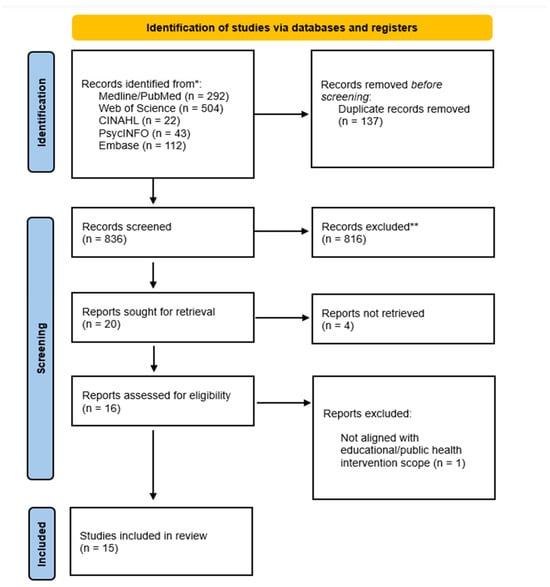
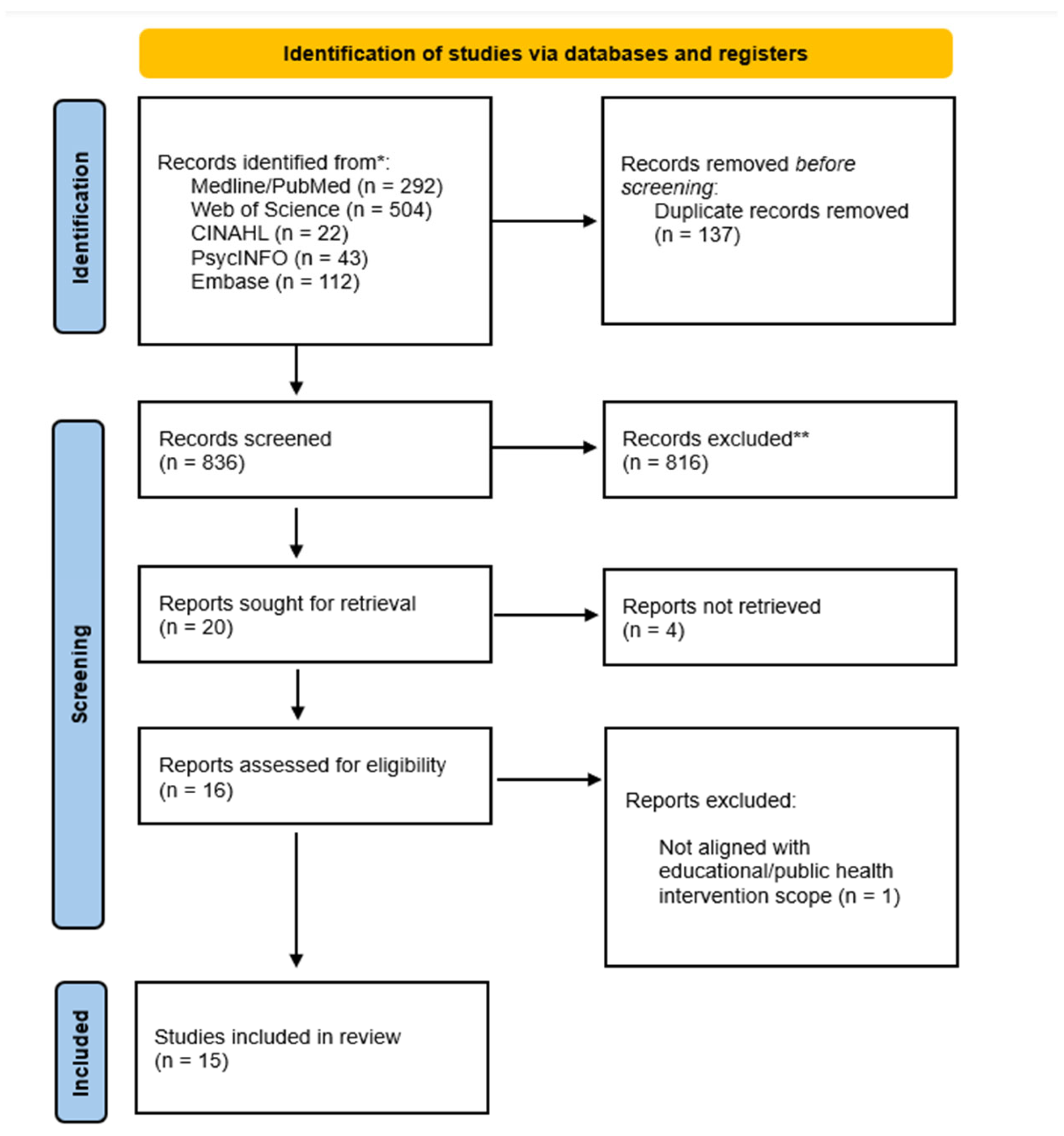
All records identified through database searching and reference list screening were imported into reference management software, and duplicate entries were removed before screening. The study selection process was conducted in two stages: initial screening of titles and abstracts, followed by full-text review of potentially eligible studies. Three reviewers independently screened all records against the predefined eligibility criteria. During all screening stages, disagreements were resolved through discussion and consensus. This process ensured consistency and minimized selection bias. The overall study selection process, including the number of records identified, screened, excluded, and included, is presented in the PRISMA flow diagram (Figure 1). A total of 973 records were identified across five databases. After removing 137 duplicates, 836 records were screened at the title and abstract level. Of these, 20 reports were sought for retrieval, and 4 could not be obtained. Sixteen full-text articles were assessed for eligibility. Only one full-text report was excluded because it did not align with the educational or public health intervention scope. Fifteen studies met all inclusion criteria and were included in the final review.
Figure 1.
PRISMA 2020 flow diagram for selection of studies. Note: * Records identified from databases refer to all citations retrieved through systematic searches of MEDLINE/PubMed, Web of Science, CINAHL, PsycINFO, and Embase. ** Records excluded refer to citations excluded during title and abstract screening because they did not meet the predefined eligibility criteria.
2.5. Data Extraction
Key study information was systematically extracted and summarized for all included articles using a standardized data extraction form. Extracted variables included authors and year of publication, study location, study design, sample characteristics, type of intervention, intervention duration and delivery mode, outcome measures, follow-up period, and key findings. Reported study limitations were also recorded. Primary outcomes related to cannabis use (e.g., frequency, quantity, abstinence, and related behavioral outcomes) were emphasized within the findings. The characteristics and results of the included studies are presented in summary tables, which provide an overview of study design, sample, intervention features, and main outcomes (Table 1, Table 2 and Table 3). Data extraction was conducted independently by two reviewers to ensure accuracy and consistency. Any discrepancies were resolved through discussion and consensus.
2.6. Risk of Bias Assessment
The methodological quality of the included randomized controlled trials was evaluated using the revised Cochrane Risk of Bias tool (RoB 2) [24]. This tool evaluates potential sources of bias across key domains, including the randomization process, deviations from intended interventions, missing outcome data, outcome measurement, and selective reporting. To ensure methodological accuracy, the standard RoB 2 tool was applied to individually randomized trials, while the specialized RoB 2 extension was utilized for cluster-randomized trials.
The risk-of-bias assessment was initially conducted by MP, and S.R. independently verified the evaluations across all domains by utilizing the official standardized signaling questions. Any discrepancies or disagreements during the review process were systematically checked for consistency and accuracy and resolved through consensus. The overall risk of bias for each study was classified as “low risk,” “some concerns,” or “high risk” in accordance with official Cochrane guidance. The findings of the quality assessment are summarized according to key methodological domains, including study authorship, randomization procedures, intervention characteristics, outcome measurement, and reported results. These evaluations are presented in detail in Table 4. In addition, the overall strength and certainty of the evidence across studies were considered using the GRADE framework (Table 5), which provides a structured approach to evaluating the quality of evidence and the confidence in the estimated effects [25].
2.7. Data Synthesis
A narrative synthesis approach was employed to summarize and interpret the findings of the included randomized controlled trials. Given the variability across studies in terms of intervention type, delivery mode, outcome measures, and follow-up periods, a quantitative meta-analysis was not conducted. During the analysis, quantitative pooling was explicitly considered for specific outcome domains (primarily past-30-day cannabis use frequency), intervention types (digital/mHealth platforms), and uniform follow-up periods (3- and 6-month post-intervention). However, formal meta-analysis remained unfeasible because even within these sub-groups, data structures were fundamentally incompatible. For example, studies assessing past-30-day use mixed continuous counts of use-days with binary ‘any use’ metrics, while control conditions ranged from passive assessment to active alternative education. The included studies demonstrated substantial clinical and methodological heterogeneity, including differences in participant populations (adolescents and young adults aged approximately 12–25 years), intervention approaches (ranging from brief motivational and behavioral interventions to multi-session and multi-component programs), and outcome assessment methods. This level of heterogeneity limited the comparability of effect estimates and precluded pooling of results, supporting a structured narrative synthesis.
Consistent with the eligibility criteria, interventions were conceptualized broadly as behavioral, educational, digital, and psychosocial approaches aimed at preventing or reducing cannabis use among youth. The synthesis was conducted descriptively, focusing on identifying patterns and trends in intervention effectiveness across studies. To facilitate structured comparison, studies were grouped according to intervention delivery mode and approach, including: (1) digital interventions (e.g., web-based programs, mobile applications, and text message–delivered interventions), (2) school- and community-based interventions (e.g., classroom-based programs, curriculum-based approaches, and brief interventions delivered in institutional settings), and (3) family-based and multi-component interventions (e.g., interventions integrating youth and parent components or combining multiple behavioral strategies). This categorization reflects the diversity of intervention approaches included in the review and allows for comparison across a broader prevention and early intervention framework.
Findings were synthesized within and across these categories, with attention to the direction and statistical significance of reported outcomes, including cannabis use initiation, frequency, quantity, dependence, abstinence, and related harms, as well as relevant psychosocial outcomes such as attitudes and intentions. Differences in effectiveness were examined in relation to intervention characteristics, population subgroups, and follow-up duration, including both short-term and longer-term outcomes. Although a meta-analysis was initially considered, it was deemed inappropriate due to substantial clinical and methodological heterogeneity across studies, including differences in intervention content, outcome measures, and follow-up periods. Future research with more standardized outcome reporting and comparable intervention designs may enable quantitative synthesis.
3. Results
3.1. Study Selection
The study selection process followed the PRISMA 2020 guidelines and is illustrated in Figure 1. A total of 973 records were identified through systematic database searches, including MEDLINE (via PubMed) (n = 292), Web of Science (n = 504), CINAHL (n = 22), PsycINFO (n = 43), and Embase (n = 112). After removing 137 duplicate records, 836 studies remained for title and abstract screening. Of these, 816 records were excluded based on predefined inclusion and exclusion criteria. Twenty full-text articles were sought for retrieval, of which four reports could not be retrieved. The remaining 16 studies were assessed for eligibility, and one was excluded because it did not align with the scope of educational or public health interventions. Ultimately, 15 randomized controlled trials (RCTs) were included in the final systematic review.
3.2. Study Characteristics
The characteristics of the included studies are presented in Table 1. The 15 included studies were published between 2015 and 2025 and were conducted across diverse geographic settings, including the United States, Canada, the Netherlands, Switzerland, Spain, Israel, Australia, and Guatemala. Sample sizes ranged from 83 to 1670 participants, with study populations primarily composed of adolescents and young adults aged approximately 12 to 25 years. All included studies employed randomized controlled or cluster-randomized controlled designs.
The interventions demonstrated substantial heterogeneity in theoretical orientation and delivery modality. Intervention approaches included motivational interviewing (MI), motivational enhancement therapy (MET), cognitive-behavioral therapy (CBT), school-based prevention programs, family-based interventions, positive psychology interventions, and digital or mobile-delivered interventions. Follow-up durations ranged from 2 months to 7 years, allowing evaluation of both short-term and long-term intervention outcomes. Cannabis-related outcomes were commonly assessed using validated self-report instruments and standardized behavioral measures, including the Timeline Follow-Back (TLFB), Marijuana Problems Inventory (MPI), CRAFFT, WHO-5, PANAS-C, PHQ-8, GAD-7, and theory-based behavioral scales. Secondary outcomes frequently include intention to abstain, readiness to change, peer influence, cravings, mental health symptoms, behavioral determinants, and protective behavioral strategies.
Table 1.
Characteristics of Included Studies (n = 15).
3.3. Outcome Measurement and Study Evaluation
A summary of outcome measures, process evaluation, and intervention fidelity is presented in Table 2 [26,27,28,29,30,31,32,33,34,35,36,37,38,39,40]. Across studies, cannabis-related outcomes were primarily assessed using validated self-report instruments and standardized survey measures. Multiple studies included repeated follow-up assessments, ranging from short-term post-intervention evaluations to multi-year longitudinal follow-ups. Sample size calculations were reported more frequently in larger trials. Process evaluation and intervention fidelity were reported in most included studies, although the level of detail varied substantially. Several studies documented intervention adherence, participant engagement, provider monitoring, usability assessment, and fidelity monitoring procedures [26,27,30,40], whereas others provided more limited descriptions of implementation procedures and process-related measures [32,33]. Table 3 provides a consolidated overview of the intervention characteristics across included studies, summarizing the intervention type, duration, session structure, facilitator qualifications, and implementation setting [26,27,28,29,30,31,32,33,34,35,36,37,38,39,40].
Table 2.
Outcome Measures, Measurement Tools, and Evaluation Characteristics of Included Studies (n = 15).
Table 3.
Intervention Type, Duration, Sessions, Facilitator, and Setting.
3.4. Intervention Categories and Outcomes
3.4.1. School-Based and Cognitive-Behavioral Interventions
School-based and CBT-oriented interventions generally demonstrated reductions in cannabis use behaviors and cannabis-related harms among adolescents and young adults [30,36,38,40]. Kulis et al. (2019) reported reductions in cannabis use (p < 0.05), while Kor and Shoshani (2023) observed significant reductions in cannabis use prevalence within the intervention group compared with controls (p < 0.001) [30,36]. Komro et al. (2025) similarly demonstrated reductions in cannabis use during a 3-year follow-up period (RR = 0.89, 95% CI: 0.80–1.00, p = 0.04) [39].
CBT-based interventions also demonstrated favorable outcomes across studies. Alarcó-Rosales et al. (2021) reported statistically significant reductions in cannabis use at 12-month follow-up (p < 0.001) [31]. Champion et al. (2024) observed reductions in cannabis-related harms (OR = 0.78, 95% CI: 0.65–0.92), although reductions in cannabis use prevalence were not statistically significant (OR = 0.84, 95% CI: 0.69–1.02) [37]. These findings indicate that school-based and CBT-oriented interventions were associated with reductions in cannabis-related harms and cannabis use behaviors, particularly among adolescent populations.
3.4.2. Motivational Interviewing and Family Based Interventions
Motivational interviewing and motivational enhancement interventions generally demonstrated favorable short-term effects on cannabis use outcomes [28,29,30,38]. Dupont et al. (2016) reported reductions in cannabis expenditure (p < 0.05) and joints consumed per week (p = 0.004) [27]. Mason et al. (2018) demonstrated reductions in heavy-use days and cannabis-related problems (p < 0.05) [29]. Murphy et al. (2024) similarly reported reductions in cannabis use during short-term follow-up (p < 0.05), although these effects were not consistently sustained at later assessments [38].
Family based interventions demonstrated mixed findings across studies. Piehler and Winters (2015) reported that parent-involved interventions produced superior outcomes compared with adolescent-only approaches (β about −0.14 to −0.15, p < 0.05), whereas baseline dependence severity predicted poorer outcomes (β = 0.32, p < 0.001) [26]. In contrast, Kemp et al. (2023) reported no statistically significant reductions in cannabis use outcomes (p > 0.05) [35]. These findings suggest variability in the effectiveness of family-based interventions across study settings and intervention designs.
3.4.3. Digital and Mobile-Based Interventions
Digital and mobile-delivered interventions demonstrated heterogeneous findings across studies (Côté et al., 2018; Mason et al., 2018; Haug et al., 2021; Bonar et al., 2022; Castro et al., 2022; Mason et al., 2025) [28,29,32,33,34,40]. Several studies reported reductions in cannabis use frequency, heavy-use behaviors, and cannabis-related harms. Mason et al. (2018) demonstrated reductions in heavy cannabis-use days and cannabis-related problems (p < 0.05) [29]. Castro et al. (2022) observed reductions in cannabis use prevalence (OR = 0.55, 95% CI: 0.39–0.76, p < 0.001) and cannabis use days [34]. Other digital interventions demonstrated more limited or indirect effects. Haug et al. (2021) reported no statistically significant changes in cannabis use days at 6 months (p > 0.05) [32]. Bonar et al. (2022) did not observe statistically significant reductions in overall cannabis use outcomes, although reductions in cannabis vaping days were reported (p = 0.020) [33]. Mason et al. (2025) reported no direct effect on cannabis use [40].
However, indirect effects were observed through increased readiness to change and protective behavioral strategies (β = −0.41, 95% CI: −0.75 to −0.19, p < 0.01). Côté et al. (2018) also demonstrated reductions in cannabis use frequency (10.8% vs. 5.1%, p = 0.007) alongside increased intention to abstain (p = 0.005) [28]. Digital interventions demonstrated variable effectiveness across studies, with outcomes varying by intervention intensity, participant engagement, delivery modality, and follow-up duration. Several interventions demonstrated reductions in cannabis-related harms even when statistically significant reductions in cannabis use prevalence were not observed. Champion et al. (2024) reported reductions in cannabis-related harms (OR = 0.78, 95% CI: 0.65–0.92) despite no statistically significant reduction in cannabis use prevalence (OR = 0.84, 95% CI: 0.69–1.02) [37]. Mason et al. (2025) similarly reported indirect improvements through increased readiness to change and protective behavioral strategies (β = −0.41, 95% CI: −0.75 to −0.19, p < 0.01) [40].
3.5. Effectiveness of Interventions
Intervention effectiveness varied according to intervention duration, delivery modality, and targeted outcomes. Short-term interventions (≤6 months) commonly demonstrated immediate reductions in cannabis use frequency and intensity, as observed in Dupont et al. (2016 [27]), Mason et al. (2018 [29]), and Murphy et al. (2024 [38]). However, these effects were not always sustained over time. Longer-duration interventions (>12 months) demonstrated more sustained outcomes. Castro et al. (2022) reported reductions in cannabis use prevalence at 18 months, while Komro et al. (2025) observed reductions in cannabis use during long-term follow-up [34,39]. Kor and Shoshani (2023) similarly demonstrated sustained reductions in cannabis use prevalence within a school-based intervention framework [36]. Across studies, reductions in cannabis use frequency and cannabis-related harms were the most consistently reported outcomes, whereas fewer studies specifically targeted abstinence or prevention of initiation. Important effect estimates included an OR of 0.55 for a reduction in cannabis use prevalence (Castro et al., 2022) and an RR of 0.89 for a reduction in long-term cannabis use (Komro et al., 2025) [34,39].
3.6. Most Promising Interventions
Across the 15 included RCTs, several intervention modalities demonstrated effectiveness in reducing cannabis use behaviors and cannabis-related harms among adolescents and young adults. However, despite considerable heterogeneity in intervention characteristics, populations, outcome measures, and follow-up durations, behavioral interventions, particularly cognitive-behavioral approaches implemented within structured school-based settings, demonstrated the most consistent evidence of effectiveness.
School-based and curriculum-based interventions showed sustained benefits, particularly for prevention of cannabis initiation and reduction in long-term cannabis-related harms. Kulis et al. (2019) reported a statistically significant reduction in cannabis use among adolescents following the culturally adapted Mantente REAL drug resistance skills program (p < 0.05) [30]. Similarly, Kor and Shoshani (2023) demonstrated a significant reduction in cannabis use prevalence over a three-year longitudinal follow-up using the Positive Psychology Addiction Prevention program (p < 0.001) [36]. Champion et al. (2024) further reported sustained reductions in cannabis-related harms over seven years through the personality-targeted PreVenture program (p < 0.01) [37].
Another important finding was that cognitive-behavioral interventions (CBT) demonstrated consistently strong effects, particularly when implemented within structured school-based settings and among high-risk populations. Alarcó-Rosales et al. (2021) reported a significant reduction in cannabis use following 12 sessions of the Reasoning and Rehabilitation V2 (R&R2) program among Spanish adolescents at risk of academic failure, with effects sustained at 12-month follow-up [31]. These CBT programs targeted emotional regulation, problem-solving, impulse control, and social competence, which are important behavioral determinants of cannabis use among young populations. Therefore, the available evidence suggests that cognitive-behavioral approaches represent one of the strongest-supported intervention strategies currently available for reducing cannabis use and related harms [41,42,43].
Multi-component and family-involved interventions demonstrated additive benefits when parental engagement was meaningfully integrated. Piehler and Winters (2015) found that a brief motivational intervention (Teen Intervene) involving a parental session (BI-AP) significantly outperformed the adolescent-only condition (BI-A) in cannabis use outcomes [26]. Komro et al. (2025) demonstrated that a combined school-based motivational interviewing plus family-based intervention (Connect) produced a modest but sustained reduction in cannabis use frequency over three years [39]. However, findings across family-based interventions were variable, suggesting that effectiveness may depend on the level of parental involvement, intervention intensity, and characteristics of the target population.
Digital and mobile interventions showed growing promise, particularly for young adults in community or clinical settings. Mason et al. (2018) reported moderate but significant reductions in heavy cannabis-use days and cannabis-related relationship problems through a 30-day text message–delivered motivational interviewing program (PNC-txt) [29]. Similarly, at 18-month follow-up, Castro et al. (2022) found that the SmartCoach mobile life-skills intervention produced significant reductions in cannabis use prevalence and cannabis use frequency [34]. Mason et al. (2025) further demonstrated that although PNC-txt did not produce a direct effect on cannabis use, significant indirect effects were observed through increased readiness to change and adoption of protective behavioral strategies, contributing to downstream reductions in cannabis use at six months [40]. These findings suggest that digital interventions may provide scalable approaches for supporting behavior change; however, their effectiveness remains dependent on user engagement, intervention intensity, delivery modality, and sustained behavioral reinforcement.
Overall, motivational interviewing, family-based, and digital interventions demonstrated beneficial effects across several studies. However, their outcomes were less consistent compared with cognitive-behavioral and structured school-based behavioral approaches. This variability may reflect differences in intervention duration, delivery strategies, participant characteristics, and follow-up periods. Despite these limitations and substantial heterogeneity across studies, the available evidence indicates that cognitive-behavioral approaches, particularly when integrated into structured behavioral prevention settings, demonstrate the strongest and most consistent support for reducing cannabis use behaviors and related harms among adolescents and young adults.
3.7. Mixed-Result Interventions
Our systematic review has explained several interventions that demonstrated null or mixed results, leaving a latent aspect for mixed and composite models for interventions. Côté et al. (2018) showed a higher proportion of users reducing cannabis use in the intervention vs. control arm (10.8% vs. 5.1%) and increased intention to abstain (Group by time) [28]. Still, these mixed effects and results were rated at high risk of bias, limiting confidence in these findings [28]. Kemp et al. (2023) reported no significant effect on cannabisuse outcomes in a pilot trial [35]. The trial incorporated an electronic MET program combined with a brief parental text-based intervention among justice-involved youth–parent dyads, suggesting that single-session intensity and population complexity may limit effectiveness.
Haug et al. (2021) similarly found no significant effect on cannabis use prevalence at six-month follow-up in the SmartCoach mobile intervention, highlighting that early engagement without sustained reinforcement may be insufficient [32]. Bonar et al. (2022) reported limited cannabis use reductions in a social media–delivered MI/CBT pilot intervention, with only cannabis vaping days achieving significance at six months (p = 0.020) [33]. In the same vein, Murphy et al. (2024) observed short-term reductions in cannabis use among college students at one month [38]. Still, these effects dissipated by six months, indicating that brief motivational interventions alone may not sustain behavior change without booster components [38].
3.8. Quality Assessment
The methodological quality of the included studies was assessed using the Cochrane Risk of Bias Tool (RoB 2) for randomized controlled trials (Table 4). Most studies demonstrated low risk or some concerns across individual bias domains, whereas Côté et al. (2018), Alarcó-Rosales et al. (2021), and Champion et al. (2024) were classified as high risk [28,31,37]. Low risk ratings for the randomization process were reported in several studies [27,32,34,35,36,39,40], including Dupont et al. (2016), Haug et al. (2021), Castro et al. (2022), Kemp et al. (2023), Kor and Shoshani (2023), Komro et al. (2025), and Mason et al. (2025). Some concerns persisted in other studies due to insufficient reporting of allocation procedures. Bias related to deviations from intended interventions varied across studies. Côté et al. (2018) and Alarcó-Rosales et al. (2021) were rated as high risk due to concerns about intervention adherence and implementation procedures [28,31]. Most studies demonstrated low risk or some concerns regarding missing outcome data [28,31].
However, Alarcó-Rosales et al. (2021) and Champion et al. (2024) were rated as high risk because of attrition and incomplete follow-up data [31,37]. Outcome measurement was frequently rated as having some concerns because cannabis-related outcomes primarily relied on self-reported behavioral measures, which may be susceptible to recall and social desirability bias. Several studies also raised concerns about the selection of reported results due to limited transparency in reporting and incomplete specification of analytic procedures. Despite these limitations, the included studies demonstrated acceptable methodological standard supported by randomized study designs, validated outcome measures, and structured intervention protocols.
Table 5 presents the GRADE summary of evidence evaluating the certainty of findings across all primary and secondary outcomes.
Table 4.
RCTs evaluated using RoB 2 (n = 15).
Table 5.
GRADE summary of evidence.
4. Discussion
4.1. Summary of Main Findings
This systematic review synthesized and critically evaluated evidence from 15 randomized controlled trials (RCTs), published between 2015 and 2025 across eight countries. Examining behavioral, educational, digital, and psychosocial interventions designed to prevent or reduce cannabis use among adolescents and young adults aged approximately 12–25 years [26,27,28,29,30,31,32,33,34,35,36,37,38,39,40]. Conducted within a rapidly evolving cannabis landscape characterized by expanding legalization, increasing product potency, and changing youth risk perceptions, this review identified intervention approaches with the strongest evidence for improving cannabis-related behavioral outcomes. Overall, the findings indicate that behavioral interventions, particularly cognitive-behavioral approaches implemented within structured school-based settings, demonstrated the most consistent evidence for reducing cannabis use behaviors and related harms. These interventions appeared effective because they targeted key mechanisms underlying cannabis use, including emotional regulation, problem-solving, coping skills, social competence, and behavioral decision-making. School-based prevention programs also demonstrated sustained benefits, particularly for reducing initiation and long-term cannabis-related harms (Table 1, Table 2 and Table 3).
Motivational interviewing, family-based interventions, and digital/mobile interventions demonstrated beneficial effects across several studies; however, their effectiveness was more variable and influenced by intervention intensity, participant characteristics, engagement, and follow-up duration. Although digital interventions provide promising opportunities for scalable prevention and harm reduction, current evidence remains less consistent compared with cognitive-behavioral and structured school-based approaches.
The findings should be interpreted considering important methodological limitations, including heterogeneity in intervention characteristics, outcome measures, follow-up periods, and reliance on self-reported cannabis outcomes. Nevertheless, the inclusion of randomized controlled trials, assessment of multiple intervention modalities, and evaluation of both short- and long-term outcomes provide valuable evidence to guide future cannabis prevention strategies among adolescents and young adults.
4.2. Comparison with Prior Reviews
The findings of this review are broadly consistent with prior systematic reviews and meta-analyses that have evaluated youth cannabis interventions. Norberg et al. (2013) conducted an earlier systematic review of primary cannabis prevention RCTs [20]. Similarly, they found modest but meaningful effects for school-based and motivational interventions, while noting substantial methodological heterogeneity [20]. More recently, Côté et al. (2024) published a systematic review and meta-analysis of digital interventions for recreational cannabis use among young adults and found that web-based and mobile interventions produced statistically significant but small effects on cannabis use frequency, aligning with the digital intervention findings of the current review [22]. Therefore, our systematic review extends these earlier syntheses by incorporating more recent RCTs published through 2026, including studies conducted in the context of expanded cannabis legalization and high-potency product availability, factors that were not adequately addressed in earlier reviews [19]. Furthermore, this review provides a more comprehensive cross-modal comparison by incorporating school-based, family-based, CBT, MI/MET, digital, and harm-reduction approaches into a unified synthesis framework.
Recent evidence from pharmacological intervention research indicates that medication-based approaches for cannabis use disorder remain limited. A recent Cochrane review of 37 RCTs found insufficient evidence that investigated pharmacotherapies, including THC preparations, N-acetylcysteine, cannabidiol, and other medications, improve cannabis abstinence or reduction outcomes compared with placebo, with several outcomes showing low or uncertain certainty of evidence [43]. In contrast, the current review found more consistent evidence supporting behavioral interventions, particularly cognitive-behavioral and structured school-based approaches, for reducing cannabis use behaviors and related harms among adolescents and young adults. These differences may reflect distinct mechanisms, as pharmacological interventions primarily target neurobiological pathways, whereas behavioral interventions address cognitive, emotional, social, and environmental factors influencing cannabis use [43].
Technology-based psychosocial interventions have also shown variable effectiveness. Tatar et al. (2020) reported that technology-based motivational, psychoeducational, and cognitive enhancement interventions among individuals with psychosis and cannabis misuse demonstrated limited effects on abstinence or frequency of use, although the field remains emerging [44]. In comparison, our review identified promising effects of digital interventions among adolescents and young adults, particularly when combined with behavioral change strategies and sustained engagement components. Differences may be explained by variations in target populations, clinical severity, intervention design, and outcome measures [44].
Although this review focused on non-pharmacological interventions, it is important to consider how these findings compare with pharmacological approaches. Unlike medications that primarily target neurobiological mechanisms underlying substance use, behavioral interventions address cognitive, emotional, social, and environmental determinants of cannabis use. Cognitive-behavioral interventions aim to modify maladaptive thoughts, improve coping skills, enhance emotional regulation, and strengthen behavioral self-control. Motivational interviewing focuses on increasing readiness for change through collaborative and patient-centered communication, whereas family-based approaches target social and environmental factors influencing cannabis use behaviors. Digital interventions provide scalable platforms for delivering behavioral support, self-monitoring, and reinforcement strategies [45].
Previous reviews of pharmacological interventions have highlighted limited and inconsistent evidence for medication-based approaches to cannabis use disorder, particularly among adolescents and young adults. Therefore, the current findings support the continued importance of behavioral and psychosocial interventions as primary prevention and harm-reduction strategies. However, intervention effectiveness may vary according to population characteristics, including baseline severity of cannabis use, risk profile, and social context. Future research should prioritize integrated approaches that combine evidence-based behavioral strategies with targeted clinical interventions for high-risk populations. Consistent with the broader behavioral intervention literature, our findings further suggest that cognitive-behavioral approaches represent one of the most strongly supported strategies for adolescent cannabis prevention and harm reduction, despite variability in intervention designs and outcome assessments across studies.
4.3. Patterns Across Demographic or Cultural Subgroups
The included studies demonstrated variability in effectiveness across demographic and cultural subgroups. Kulis et al. (2019) specifically targeted Latino early adolescents in Guatemala using the culturally adapted Mantente REAL program [30]. They observed significant reductions in Cannabis use, suggesting that cultural tailoring of drug resistance skill curricula enhances their applicability and effectiveness across diverse populations [30]. Kor and Shoshani (2023) conducted their longitudinal RCT in Israel among children and adolescents aged 10–16, demonstrating the utility of positive psychology frameworks in culturally distinct non-Western contexts [36]. Champion et al. (2024) targeted high-risk personality subgroups (impulsive, sensation-seeking, anxiety-sensitive, and negatively thinking youth) in Australia, finding that personality-targeted CBT approaches are particularly effective at reducing harms among adolescents with identified risk profiles [37].
Mason et al. (2018) found greater effects of the text-delivered MI intervention among participants with lower cannabis use disorder (CUD) severity, indicating that treatment-matching by severity may optimize outcomes [29]. These findings collectively suggest that intervention effectiveness is moderated by cultural context, risk profile, and baseline severity of use, reinforcing the need for targeted, tailored approaches rather than universal programs.
4.4. Strengths of Existing Interventions
The interventions included in this review demonstrate several notable strengths with meaningful implications for public health practice. Digital and mobile interventions offer advantages in scalability, accessibility, and cost-effectiveness, enabling delivery to geographically dispersed youth populations without the resource constraints of in-person programming [30,35,41]. The text-delivered PNC-txt program, for instance, achieved 97% message delivery and 96% session completion [30], demonstrating the feasibility of high-fidelity automated delivery at scale. Motivational interviewing has demonstrated consistent effectiveness as a behavior change technique across settings, age groups, and delivery modalities, including individual sessions [27,28], combined school-family programs [30], and digital platforms [41]. However, compared with other intervention modalities, cognitive-behavioral approaches demonstrated the most consistent evidence across included studies, particularly when integrated into structured school-based programs targeting behavioral regulation and psychosocial skills.
School-based interventions benefit from their ability to reach large numbers of adolescents within institutional structures, circumventing access barriers that limit clinical or community-based programming. The PreVenture program (Champion et al., 2024) and PPAP program (Kor & Shoshani, 2023) both achieved broad reach within school systems while demonstrating sustained effects at multi-year follow-ups [36,37]. Several interventions also incorporated validated, standardized outcome measures (e.g., TLFB, CUDIT-R, MPI) and robust process evaluation frameworks, including fidelity monitoring, adherence tracking, and participant satisfaction assessment, strengthening confidence in reported findings.
4.5. Limitations of Existing Interventions
Despite these strengths, the existing evidence base is characterized by several recurring limitations. Short follow-up periods were common, with several studies reporting only 2 to 6 months of post-intervention data [28,29,38] (Côté et al., 2018; Mason et al., 2018; Murphy et al., 2024), making it impossible to assess whether the observed behavioral changes were sustained for clinically meaningful durations. Small sample sizes, particularly among pilot trials, also limited the statistical power and generalizability [34,36,38].
Absence of biochemical verification of self-reported cannabis use was a near-universal limitation in the 15 included studies. Only Mason et al. (2018, 2025) incorporated urine THC metabolite testing, leaving most findings vulnerable to recall and social desirability bias [29,40]. The lack of rigorous blinding, a structural challenge in behavioral research, was consistently noted across studies, with no study achieving blinding of participants, while assessor blinding was reported in only a minority.
In addition, limited demographic diversity was also noted, as most studies were conducted in high-income, Western settings (USA, Switzerland, Netherlands, Australia, Canada, Spain, Israel), with limited representation of low- and middle-income countries and underserved populations. Heterogeneous outcome measurement, including the use of different instruments, time intervals, and operational definitions of cannabis use across studies, precluded meta-analytic pooling and complicated cross-study comparisons. These limitations should be considered when interpreting the apparent effectiveness of cognitive-behavioral and other behavioral interventions, as the current evidence supports their effectiveness while also indicating the need for more rigorous evaluation using standardized methodologies. Finally, limited theoretical grounding was observed in several interventions, with some programs failing to explicitly articulate the behavioral change mechanisms driving observed effects, reducing their replicability and scalability.
4.6. Strengths of the Review
This systematic review offers several methodological and substantive strengths. The adoption of strict RCT-only inclusion criteria ensures a high internal validity standard, distinguishing this review from prior syntheses that incorporated observational or quasi-experimental designs. The application of both the RoB 2 Cochrane Risk of Bias Tool and the GRADE framework provide a dual outcome for quality and certainty evaluation, enabling nuanced characterization of evidence strength across studies and intervention modalities. The compliant protocol and prospective registration enhance transparency and reproducibility. The review provided a broad conceptualization of interventions spanning universal, selective, and prevention levels. The aggregated interventions, particularly those encompassing school-based, digital, family-based, MI/MET, CBT, and harm reduction modalities, have provided a comprehensive panorama of the intervention landscape that is particularly timely, while also reflecting the diversification of cannabis prevention programming in response to evolving legalization policies [18,19].
4.7. Limitations of the Review
Several limitations of the review itself should be acknowledged. The restriction to English-language publications may have introduced language bias by excluding potentially relevant studies published in other languages, particularly from Latin American, Asian, or European contexts where cannabis intervention research is increasingly active. The search term’s emphasis on educational and public health interventions, while broadened during full-text screening, may have inadvertently under-captured some behavioral or clinical intervention studies that did not prominently feature educational terminology. Publication bias remains a concern, as studies reporting null or negative findings are less likely to be published, potentially inflating the apparent effectiveness of included interventions, which would be needed research as a meta-analysis.
Publication bias remains a concern, as studies reporting null or negative findings are less likely to be published, potentially inflating the apparent effectiveness of included interventions. Future research incorporating meta-analytic approaches will be needed as the evidence base expands. Additionally, the majority of included RCTs were conducted in countries with legalized or more permissive cannabis policies, which may limit the generalizability of findings to regions where cannabis remains prohibited or associated with different cultural and social perceptions. Future reviews should incorporate region-specific databases, including CNKI, and broader non-English literature sources to better capture global variations in cannabis prevention and intervention approaches.
The prohibition on grey literature, including dissertations, reports, and conference abstracts, while standard for systematic reviews, may have excluded pilot or implementation data that could have informed the synthesis. The narrative synthesis approach, necessitated by clinical and methodological heterogeneity across studies, does not permit quantitative effect size pooling and may be more susceptible to interpretive subjectivity than formal meta-analysis. However, this limitation is inherent given the current state of evidence-based interventions.
4.8. Implications for Practice
For schools and educational settings, the evidence strongly supports the integration of structured, multi-session prevention programs that combine cognitive-behavioral skill-building with motivational strategies. Programs such as the PPAP (Kor & Shoshani, 2023) and PreVenture (Champion et al., 2024) demonstrate that school-based platforms can effectively reduce cannabis use and related harms when interventions are theoretically grounded, delivered by trained facilitators, and sustained across multiple academic years [36,37]. Attention should be paid to cultural adaptation, as evidenced by the effectiveness of Mantente REAL in a Guatemalan youth context [31]. Schools should consider universal prevention for the general student body alongside indicated interventions for students identified as high-risk based on personality traits or behavioral indicators.
For healthcare providers, brief motivational interventions offer a feasible and evidence-based tool for reducing cannabis use among youth presenting in clinical, community, or emergency settings. MI-based approaches, whether delivered in person (Dupont et al., 2016; Piehler & Winters, 2015) or via digital platforms (Mason et al., 2018; 2025), have demonstrated effectiveness in reducing use frequency and cannabis-related harms [26,27,29,40]. Providers should be trained in MI techniques and should routinely integrate cannabis-specific screening (e.g., CRAFFT, CUDIT-R) into adolescent health assessments [26,27,29,40]. Involving parents or guardians in intervention delivery significantly amplifies outcomes particularly among younger adolescents or those with baseline dependence [26,43,44].
For public health programs, digital and mobile interventions represent a scalable and cost-effective modality that can extend reach to youth populations not typically engaged by traditional prevention programs. Text-delivered programs like PNC-txt (Mason et al., 2025) demonstrate that behavioral change can be achieved through automated platforms with high adherence and retention, making them viable for population-level deployment [40]. Harm reduction strategies should be incorporated alongside abstinence-focused messaging, particularly for youth with established use patterns, as evidence supports meaningful reductions in cannabis-related harms even in the absence of complete cessation [38,41,46,47].
Implementation considerations include the need for adequate facilitator training, fidelity monitoring infrastructure, and sufficient program duration to sustain behavioral effects. Studies such as Kor and Shoshani (2023) and Champion et al. (2024) demonstrate that multi-year programs with longitudinal follow-up produce the most durable outcomes [36,37]. Implementation science frameworks should be applied to facilitate scale-up of evidence-based programs, with attention to organizational readiness, resource allocation, and community-level contextual factors [36,37].
4.9. Implications for Policy
4.9.1. Impact of Legalization Regimes
The findings of this review must be interpreted within the broader context of rapidly evolving cannabis policy. As of 2024, recreational cannabis has been legalized in 24 U.S. states and the District of Columbia, and the global cannabis regulatory landscape continues to shift [7]. Legalization has been associated with changing youth risk perceptions, greater product availability, and the emergence of high-potency formulations, including concentrates with THC levels as high as 60–90% [8,9,12]. These developments have important implications for the content and framing of youth-targeted interventions, which must be updated to address contemporary product forms, potency concerns, and evolving normalization narratives. Earlier reviews conducted before widespread commercialization may no longer adequately reflect current risk contexts [17,19].
Policymakers should recognize that legalization does not inherently reduce youth access or use; rather, it necessitates robust regulatory frameworks specifically designed to protect minors, including age verification requirements, restrictions on marketing to youth, mandated warning labels on high-potency products, and public health-funded prevention campaigns. The evidence from this review supports the integration of evidence-based prevention programming as a complement to regulatory measures, rather than treating regulation and behavioral intervention as mutually exclusive strategies.
4.9.2. Need for Youth-Targeted Regulation and Public Health Campaigns
The persistent prevalence of cannabis use among adolescents, with approximately 26% of 12th-grade students reporting past-year use, underscores the urgent need for dedicated youth-targeted public health infrastructure [5]. Investment in school-based prevention programs, clinician training in adolescent cannabis screening and MI, digital health platforms, and public awareness campaigns should be prioritized in public health budgets. Evidence-based campaigns should explicitly address the risks of high-potency THC exposure on adolescent neurodevelopment [13,14], the association between early-onset use and cannabis use disorder [10,11], and the vulnerability of the developing brain to cannabis-related cognitive impairment.
4.10. Recommendations for Future Research
The findings of this review highlight several important priorities for the future research agenda. Longer-term follow-up is critically needed across all intervention modalities. Most included studies assessed outcomes at six months or less [27,28,29,38], including Côté et al. (2018), Mason et al. (2018), Murphy et al. (2024), and Dupont et al. (2016), thereby providing insufficient evidence on the durability of behavioral change. Future RCTs should incorporate follow-up periods of at least 12–24 months, with studies such as Champion et al. (2024) and Kor and Shoshani (2023) illustrating the value of multi-year longitudinal designs [36,37]. Integration of neurocognitive markers and biological outcomes (e.g., THC urine metabolites, neuroimaging endpoints) alongside behavioral self-report would strengthen the validity and objectivity of future trials, reducing reliance on self-reported cannabis use measures that are susceptible to social desirability bias.
Tailored interventions for high-risk groups, including justice-involved youth, youth with comorbid mental health conditions, racial and ethnic minority populations, sexual and gender minority youth, and youth in cannabis-legalized jurisdictions, are urgently needed. Current evidence is disproportionately derived from majority populations in high-income Western settings, limiting generalizability. More culturally grounded and adapted intervention models are needed, particularly for Latin American, African, Asian, and indigenous contexts where cannabis use is increasing but evidence-based prevention programming remains scarce. The Mantente REAL experience (Kulis et al., 2019) provides a useful proof-of-concept for culturally adapted school-based programming [30].
Standardized outcome reporting is essential to enable future meta-analytic synthesis. The adoption of common data elements, including harmonized definitions of cannabis use frequency, quantity, and dependence, and standard follow-up intervals, would dramatically improve cross-study comparability and support pooled analyses. Rigorous process evaluation frameworks, including formal fidelity coding, implementation monitoring, and economic evaluations, should be embedded within future trial designs to assess not only whether interventions work, but how and under what conditions they are most effective.
5. Conclusions
This systematic review of 15 randomized controlled trials provides an updated synthesis of behavioral, educational, digital, and psychosocial interventions targeting cannabis use among adolescents and young adults aged approximately 12–25 years. Overall, the findings indicate that behavioral interventions, particularly cognitive-behavioral approaches implemented within structured school-based settings, showed the strongest and most consistent signals of benefit for reducing cannabis use frequency, prevalence, and related harms across diverse populations and settings. Although the evidence remains heterogeneous, these interventions demonstrated promising effects, likely because they target key behavioral mechanisms, including emotional regulation, problem-solving, coping skills, social competence, and readiness for behavior change. Motivational interviewing and family-involved interventions also demonstrated beneficial effects; however, their effectiveness varied across studies and follow-up periods. Digital and mobile-delivered interventions also showed promising effects as scalable public health approaches, although their effectiveness remains dependent on user engagement, intervention intensity, delivery modality, and sustained behavioral reinforcement.
The overall evidence base should be interpreted considering important methodological limitations, including heterogeneity in intervention characteristics, outcome measurement approaches, follow-up durations, reliance on self-reported outcomes, and limited demographic diversity among study populations. These factors reduce the ability to directly compare intervention effectiveness and highlight the need for more rigorous evaluation. Nevertheless, the inclusion of randomized controlled trials, evaluation of diverse intervention modalities, and synthesis of both short- and long-term outcomes represent important strengths of this review.
Future research should prioritize larger, adequately powered randomized controlled trials with standardized outcome measures, longer follow-up periods, biological verification where feasible, and culturally tailored intervention designs. As cannabis legalization, product potency, and youth exposure environments continue to evolve, strengthening evidence-based prevention and harm-reduction strategies remains an important public health priority. Investment in school-based prevention programs, cognitive-behavioral intervention delivery, clinician training in brief behavioral approaches, and scalable digital health platforms may contribute to reducing the long-term burden of cannabis-related harms among adolescents and young adults.
Author Contributions
Conceptualization, M.S.; Methodology, M.P., A.A., S.R., R.M. and M.S.; Software, M.P., A.A. and S.R.; Validation, A.A. and M.S.; Formal Analysis, M.P., A.A., S.R. and R.M.; Investigation, M.P., A.A., S.R. and R.M.; Resources, M.S.; Data Curation, M.P., A.A., S.R. and R.M.; Visualization, M.P., A.A., S.R. and R.M.; Supervision, M.S.; Project Administration, M.S. All authors have read and agreed to the published version of the manuscript.
Funding
This research received no external funding.
Institutional Review Board Statement
Not applicable.
Informed Consent Statement
Not applicable.
Data Availability Statement
Data are available upon request from the corresponding author.
Acknowledgments
The authors would like to thank their department, school, and university (Social and Behavioral Health and the School of Public Health at the University of Nevada) for their support.
Conflicts of Interest
The authors declare no conflicts of interest.
Appendix A. Search Strategies and Resources
Table A1.
Search Strategies and Resources
Appendix B. Abbreviations and Full Term
Table A2.
Abbreviations and Full Term
References
- Amrock, S.M.; Sajkiewicz, A.J. Trends in US adolescent cannabis use, 1991–2023. Addict. Behav. 2026, 176, 108634. [Google Scholar] [CrossRef] [Scilit] [PubMed]
- Bhangu, G.K.; Singh, A.; Shah, A.; Malhi, N. Cannabis Use in Adolescents. Del. J. Public Health 2025, 11, 6–13. [Google Scholar] [CrossRef] [Scilit] [PubMed]
- United Nations Office on Drugs and Crime. Key Findings—World Drug Report 2025; United Nations Office on Drugs and Crime: Vienna, Austria, 2025; Available online: https://www.unodc.org/documents/data-and-analysis/WDR_2025/WDR25_B1_Key_findings.pdf (accessed on 11 June 2026).
- Chan, O.; Daudi, A.; Ji, D.; Wang, M.; Steen, J.P.; Parnian, P.; Li, C.; Xiong, A.; Zhang, W.; Lopes, L.C.; et al. Cannabis use during adolescence and young adulthood and academic achievement: A systematic review and meta-analysis. JAMA Pediatr. 2024, 178, 1280. [Google Scholar] [CrossRef] [Scilit] [PubMed]
- Miech, R.; Leventhal, A.; Patrick, M.; Rodriguez, N. Trends in use of cigarettes and e-cigarettes among young adults who had smoked in adolescence: 2017–2022. Tob. Control 2026, 35, 345–350. [Google Scholar] [CrossRef] [Scilit] [PubMed]
- Hill, K.P.; Gold, M.S.; Nemeroff, C.B.; McDonald, W.; Grzenda, A.; Widge, A.S.; Rodriguez, C.; Kraguljac, N.V.; Krystal, J.H.; Carpenter, L.L. Risks and benefits of cannabis and cannabinoids in psychiatry. Am. J. Psychiatry 2022, 179, 98–109. [Google Scholar] [CrossRef] [Scilit] [PubMed]
- Alam, T.; Riegal, C.; Saadeh, N.; Gushken, F.; Snyder, H.; Jenks, B.; Anand, A. Recreational cannabis legalization: Potential implications for individual and community health. Cleve. Clin. J. Med. 2025, 92, 407–413. [Google Scholar] [CrossRef] [Scilit] [PubMed]
- ElSohly, M.A.; Mehmedic, Z.; Foster, S.; Gon, C.; Chandra, S.; Church, J.C. Changes in cannabis potency over the last 2 decades (1995–2014): Analysis of current data in the United States. Biol. Psychiatry 2016, 79, 613–619. [Google Scholar] [CrossRef] [Scilit] [PubMed]
- Stuyt, E. The problem with the current high-potency THC marijuana from the perspective of an addiction psychiatrist. Mo. Med. 2018, 115, 482–486. [Google Scholar] [PubMed]
- Di Forti, M.; Marconi, A.; Carra, E.; Fraietta, S.; Trotta, A.; Bonomo, M.; Bianconi, F.; Gardner-Sood, P.; O’Connor, J.; Russo, M.; et al. Proportion of patients in South London with first-episode psychosis attributable to use of high potency cannabis: A case-control study. Lancet Psychiatry 2015, 2, 233–238. [Google Scholar] [CrossRef] [Scilit] [PubMed]
- Gobbi, G.; Atkin, T.; Zytynski, T.; Wang, S.; Askari, S.; Boruff, J.; Ware, M.; Marmorstein, N.; Cipriani, A.; Dendukuri, N.; et al. Association of cannabis use in adolescence and risk of depression, anxiety, and suicidality in young adulthood: A systematic review and meta-analysis. JAMA Psychiatry 2019, 76, 426. [Google Scholar] [CrossRef] [Scilit] [PubMed]
- Lake, S.; Murray, C.H.; Henry, B.; Strong, L.; White, K.; Kilmer, B.; Cooper, Z.D. High-potency cannabis use and health: A systematic review of observational and experimental studies. Am. J. Psychiatry 2025, 182, 616–638. [Google Scholar] [CrossRef] [Scilit] [PubMed]
- Blest-Hopley, G.; Colizzi, M.; Giampietro, V.; Bhattacharyya, S. Is the adolescent brain at greater vulnerability to the effects of cannabis? A narrative review of the evidence. Front. Psychiatry 2020, 11, 859. [Google Scholar] [CrossRef] [Scilit] [PubMed]
- Jacobus, J.; Tapert, S. Effects of cannabis on the adolescent brain. Curr. Pharm. Des. 2014, 20, 2186–2193. [Google Scholar] [CrossRef] [Scilit] [PubMed]
- Lege, K.S.; Mallaroni, P.; Mortaheb, S.; Mason, N.L.; Theunissen, E.L.; Tse, D.H.; Ramaekers, J.G. Cannabis Perturbs Dynamic Brain States. Biol. Psychiatry 2025, 100, 219–229. [Google Scholar] [CrossRef] [Scilit] [PubMed]
- Bourdon, J.L.; Francis, M.W.; Jia, L.; Liang, C.; Robinson, H.I.; Grucza, R.A. The effect of cannabis policies on treatment outcomes for cannabis use among U.S. adults. J. Subst. Abuse Treat. 2021, 131, 108535. [Google Scholar] [CrossRef] [Scilit] [PubMed]
- Pawson, M.; Kelly, B.C. Hemp-based psychoactive use and risk among young adults: Trend theory, policy, and regulation beyond legality. Int. J. Drug Policy 2024, 130, 104523. [Google Scholar] [CrossRef] [Scilit] [PubMed]
- Farrelly, K.N.; Wardell, J.D.; Marsden, E.; Scarfe, M.L.; Najdzionek, P.; Turna, J.; MacKillop, J. The impact of recreational cannabis legalization on cannabis use and associated outcomes: A systematic review. Subst. Abuse Res. Treat. 2023, 17, 11782218231172054. [Google Scholar] [CrossRef] [Scilit] [PubMed]
- Griffin, K.W.; Botvin, G.J.; Scheier, L.M.; Williams, C. Long-term behavioral effects of a school-based prevention program on illicit drug use among young adults. J. Public Health Res. 2023, 12, 22799036221146914. [Google Scholar] [CrossRef] [Scilit] [PubMed]
- Norberg, M.M.; Kezelman, S.; Lim-Howe, N. Primary prevention of cannabis use: A systematic review of randomized controlled trials. PLoS ONE 2013, 8, e53187. [Google Scholar] [CrossRef] [Scilit] [PubMed]
- Adella, G.A.; Gete, D.G.; Hoque, Z.; Khanam, R. Causal pathways from social media use to adolescent cannabis use: An instrumental variable mediation analysis of behavioral problems. J. Subst. Use Addict. Treat. 2026, 185, 209928. [Google Scholar] [CrossRef] [Scilit] [PubMed]
- Côté, J.; Chicoine, G.; Vinette, B.; Auger, P.; Rouleau, G.; Fontaine, G.; Jutras-Aswad, D. Digital interventions for recreational cannabis use among young adults: Systematic review, meta-analysis, and behavior change technique analysis of randomized controlled studies. J. Med. Internet Res. 2024, 26, e55031. [Google Scholar] [CrossRef] [Scilit] [PubMed]
- Page, M.J.; Moher, D.; Bossuyt, P.M.; Boutron, I.; Hoffmann, T.C.; Mulrow, C.D.; McKenzie, J.E. PRISMA 2020 explanation and elaboration: Updated guidance and exemplars for reporting systematic reviews. BMJ 2021, 372, n160. [Google Scholar] [CrossRef] [PubMed]
- Sterne, J.A.C.; Savović, J.; Page, M.J.; Elbers, R.G.; Blencowe, N.S.; Boutron, I.; Cates, C.J.C.; Cheng, H.Y.; Corbett, M.S.; Eldridge, S.M.; et al. RoB 2: A revised tool for assessing risk of bias in randomised trials. BMJ 2019, 366, l4898. [Google Scholar] [CrossRef] [Scilit] [PubMed]
- Murad, M.H.; Verbeek, J.; Schwingshackl, L.; Filippini, T.; Vinceti, M.; Akl, E.A.; Morgan, R.L.; Mustafa, R.A.; Zeraatkar, D.; Senerth, E.; et al. GRADE guidance 38: Updated guidance for rating up certainty of evidence due to a dose–response gradient. J. Clin. Epidemiol. 2023, 164, 45–53. [Google Scholar] [CrossRef] [Scilit] [PubMed]
- Piehler, T.F.; Winters, K.C. Parental involvement in brief interventions for adolescent marijuana use. Psychol. Addict. Behav. 2015, 29, 512. [Google Scholar] [CrossRef] [Scilit] [PubMed]
- Dupont, H.B.; Candel, M.J.; Kaplan, C.D.; Van de Mheen, D.; de Vries, N.K. Assessing the efficacy of MOTI-4 for reducing the use of cannabis among youth in the Netherlands: A randomized controlled trial. J. Subst. Abuse Treat. 2016, 65, 6–12. [Google Scholar] [CrossRef] [Scilit] [PubMed]
- Côté, J.; Tessier, S.; Gagnon, H.; April, N.; Rouleau, G.; Chagnon, M. Efficacy of a web-based tailored intervention to reduce cannabis use among young people attending adult education centers in Quebec. Telemed. e-Health 2018, 24, 853–860. [Google Scholar] [CrossRef] [Scilit] [PubMed]
- Mason, M.J.; Zaharakis, N.M.; Moore, M.; Brown, A.; Garcia, C.; Seibers, A.; Stephens, C. Who responds best to text-delivered cannabis use disorder treatment? A randomized clinical trial with young adults. Psychol. Addict. Behav. 2018, 32, 699. [Google Scholar] [CrossRef] [Scilit] [PubMed]
- Kulis, S.S.; Marsiglia, F.F.; Porta, M.; Arévalo Avalos, M.R.; Ayers, S.L. Testing the keepin’ it REAL substance use prevention curriculum among early adolescents in Guatemala City. Prev. Sci. 2019, 20, 532–543. [Google Scholar] [CrossRef] [Scilit] [PubMed]
- Alarcó-Rosales, R.; Sánchez-SanSegundo, M.; Ferrer-Cascales, R.; Albaladejo-Blázquez, N.; Lordan, O.; Zaragoza-Martí, A. Effects of a school-based intervention for preventing substance use among adolescents at risk of academic failure: A pilot study of the Reasoning and Rehabilitation V2 program. Healthcare 2021, 9, 1488. [Google Scholar] [CrossRef] [Scilit] [PubMed]
- Haug, S.; Paz Castro, R.; Meyer, C.; Filler, A.; Kowatsch, T.; Schaub, M.P. A mobile phone-based life skills training program for substance use prevention among adolescents: Pre-post study on acceptance and potential effectiveness. JMIR Mhealth Uhealth 2017, 5, e143. [Google Scholar] [CrossRef] [Scilit] [PubMed]
- Bonar, E.E.; Goldstick, J.E.; Chapman, L.; Bauermeister, J.A.; Young, S.D.; McAfee, J.; Walton, M.A. A social media intervention for cannabis use among emerging adults: Randomized controlled trial. Drug Alcohol Depend. 2022, 232, 109345. [Google Scholar] [CrossRef] [Scilit] [PubMed]
- Castro, R.P.; Haug, S.; Wenger, A.; Schaub, M.P. Longer-term efficacy of a digital life-skills training for substance use prevention. Am. J. Prev. Med. 2022, 63, 944–953. [Google Scholar] [CrossRef] [Scilit] [PubMed]
- Kemp, K.; Micalizzi, L.; Becker, S.J.; Cheaito, A.; Suazo, N.C.; Fox, K.; Spirito, A. Intervention for marijuana-using, court-involved non-incarcerated youth. J. Subst. Use Addict. Treat. 2023, 152, 209100. [Google Scholar] [CrossRef] [Scilit] [PubMed]
- Kor, A.; Shoshani, A. Moderating the impact of the COVID-19 pandemic on children’s and adolescents’ substance use, digital media use, and mental health: A randomized positive psychology addiction prevention program. Addict. Behav. 2023, 139, 107660. [Google Scholar] [CrossRef] [Scilit] [PubMed]
- Champion, K.E.; Debenham, J.; Teesson, M.; Stapinski, L.A.; Devine, E.; Barrett, E.L.; Newton, N.C. Effect of a selective personality-targeted prevention program on 7-year illicit substance-related outcomes: A secondary analysis of a cluster randomized controlled trial. Drug Alcohol Depend. 2024, 258, 111266. [Google Scholar] [CrossRef] [Scilit] [PubMed]
- Murphy, J.G.; Dennhardt, A.A.; Utzelmann, B.; Borsari, B.; Ladd, B.O.; Martens, M.P.; Witkiewitz, K. A pilot trial of a brief intervention for cannabis use supplemented with a substance-free activity session or relaxation training. Psychol. Addict. Behav. 2024, 38, 255. [Google Scholar] [CrossRef] [Scilit] [PubMed]
- Komro, K.A.; Livingston, M.D.; Skinner, J.R.; Livingston, B.J.; Kominsky, T.K.; Jagtiani, A.; Talavera-Brown, S.L. Primary prevention of drug overdoses in rural low-resource and tribal communities: A cluster randomized trial. Am. J. Public Health 2025, 115, 1508–1517. [Google Scholar] [CrossRef] [Scilit] [PubMed]
- Mason, M.J.; Coatsworth, J.D.; Riggs, N.R.; Russell, M.; Mennis, J.; Zaharakis, N.; Brown, A. Text message-delivered cannabis use disorder treatment with young adults: A large randomized clinical trial. J. Subst. Use Addict. Treat. 2025, 170, 209611. [Google Scholar] [CrossRef] [Scilit] [PubMed]
- Nassif, Y.B.; Rahioui, H.; Varescon, I. Psychological interventions for cannabis use among adolescents and young adults: A systematic review. Int. J. Environ. Res. Public Health 2023, 20, 6346. [Google Scholar] [CrossRef] [Scilit] [PubMed]
- Connor, J.P.; Manthey, J.; Hall, W.; Stjepanović, D. Effectiveness of cannabis use and cannabis use disorder interventions: A European and international data synthesis. Eur. Arch. Psychiatry Clin. Neurosci. 2025, 275, 327–339. [Google Scholar] [CrossRef] [Scilit] [PubMed]
- Spiga, F.; Parkhouse, T.; Tang, V.M.; Savović, J.; Le Foll, B.; Nielsen, S. Pharmacotherapies for Cannabis Use Disorder. Cochrane Database Syst. Rev. 2025, 9, CD008940. [Google Scholar] [CrossRef] [Scilit] [PubMed]
- Tatar, O.; Bastien, G.; Abdel-Baki, A.; Huỳnh, C.; Jutras-Aswad, D. A Systematic Review of Technology-Based Psychotherapeutic Interventions for Decreasing Cannabis Use in Patients with Psychosis. Psychiatry Res. 2020, 293, 112940. [Google Scholar] [CrossRef] [Scilit] [PubMed]
- Roy, S.; Biswas, A.K.; Sharma, M. Stress, anxiety, and depression as psychological distress among college and undergraduate students: A scoping review of reviews guided by the socio-ecological model. Healthcare 2025, 13, 1948. [Google Scholar] [CrossRef] [Scilit] [PubMed]
- Roy, S.; Biswas, A.K.; Sharma, M. Multilevel mental health determinants among college students: A social ecological scoping review. Ment. Health Prev. 2026, 42, 200500. [Google Scholar] [CrossRef] [Scilit]
- Roy, S.; Biswas, A.K.; Sharma, M. Suicidal Ideation, Suicide Attempts, and Non-Suicidal Self-Injury Associated with Opioid Misuse among Adolescents and Young Adults in the USA: A Scoping Review of Emerging Patterns and Risks. Psychoactives 2025, 4, 38. [Google Scholar] [CrossRef] [Scilit]
Disclaimer/Publisher’s Note: The statements, opinions and data contained in all publications are solely those of the individual author(s) and contributor(s) and not of MDPI and/or the editor(s). MDPI and/or the editor(s) disclaim responsibility for any injury to people or property resulting from any ideas, methods, instructions or products referred to in the content. |
© 2026 by the authors. Licensee MDPI, Basel, Switzerland. This article is an open access article distributed under the terms and conditions of the Creative Commons Attribution (CC BY) license.