


Abstract
Background: The global shortage of qualified nursing faculty continues to challenge schools of nursing by limiting program capacity and contributing to difficulties in recruiting and retaining new educators. Although mentoring has been widely recognized as an effective strategy for supporting novice faculty, comparatively little attention has been devoted to coaching as an intentional approach for facilitating the transition from clinical practice to academia. Aim: To describe the development of the Coach–Player Relationship Framework, a conceptual coaching framework designed to support the successful transition, confidence, and retention of new nursing faculty in higher education. Methodology: The Coach–Player Relationship Framework was developed through a conceptual model development process informed by a structured literature synthesis, the Growing Together mentoring framework, and reflective analysis of a shared faculty coaching experience involving two nursing educators teaching multiple sections of an undergraduate nursing course. Literature, theory, and practical experience were integrated to construct a coaching framework that translates mentoring principles into an operational faculty development strategy. Results: The resulting framework identifies three foundational elements—clear expectations, willingness to serve, and balance—that underpin successful coaching relationships between experienced and novice faculty. These principles are operationalized through the Coach–Player Model, which illustrates how reciprocal coaching interactions evolve across the Field of Play, Sidelines, End Zones, and Red Zones to foster instructional confidence, collaborative learning, and progressive professional independence. Conclusions: The Coach–Player Relationship Framework extends existing mentoring theory by providing a coaching-oriented approach to faculty transition into higher education. The framework offers nursing programs a practical strategy for onboarding novice educators while promoting collaboration, reflective practice, instructional confidence, and faculty retention. Future empirical investigation is needed to evaluate the framework across diverse educational settings and determine its effectiveness in improving faculty development outcomes.
1. Introduction
1.1. Background
Preparing and retaining qualified nursing faculty has become one of the most pressing challenges confronting higher education worldwide. Although student demand for nursing education continues to increase, shortages of qualified faculty continue to restrict enrollment capacity, limit program expansion, and threaten the preparation of the future nursing workforce [1]. Aging faculty populations (the youngest ranking 49.6 years), rising retirement rates (33% expected to retire), competition with higher-paying clinical positions (registered nurse roles’ salary $129,480 compared to professors’ at $93,958), and expanding expectations associated with academic practice have collectively intensified this challenge [2,3]. Consequently, institutions must look beyond recruitment alone and develop effective strategies that support the successful transition and long-term retention of novice educators [4].
Transitioning from expert clinician to effective educator represents a profound professional transformation. While many newly appointed nursing faculty possess extensive clinical expertise, relatively few begin academic careers with formal preparation in curriculum design, instructional methodology, learner assessment, educational scholarship, or academic governance [5]. As a result, novice educators frequently encounter uncertainty as they adapt to unfamiliar teaching responsibilities while simultaneously developing a new professional identity as faculty members [6]. Without structured developmental support, these challenges may contribute to diminished confidence, reduced job satisfaction, and premature departure from academic positions [7]. Successful faculty transition is therefore not accomplished through orientation alone but through relationships intentionally designed to transform experience into confidence, confidence into competence, and competence into collegial partnership [8].
1.2. Coaching and Mentoring in Faculty Development
Mentoring has long been recognized as a cornerstone of faculty development within nursing education [9,10]. Numerous mentoring initiatives have demonstrated positive outcomes related to professional socialization, scholarly productivity, career advancement, organizational commitment, and faculty satisfaction [11,12,13,14,15,16,17,18,19]. Through supportive relationships with experienced educators, novice faculty gain insight into institutional culture, promotion expectations, educational responsibilities, and long-term professional development [20,21]. These mentoring relationships remain an essential component of successful academic careers and continue to serve as a valuable strategy for strengthening the nursing faculty workforce.
Although mentoring provides broad professional guidance, coaching represents a complementary approach that addresses a different stage of faculty development. Whereas mentoring typically emphasizes long-term career progression, coaching focuses on improving performance during specific developmental periods through collaborative goal setting, reflective practice, continuous feedback, and reciprocal learning [8]. Coaching is therefore less concerned with directing professional careers and more concerned with developing confidence and competence in the immediate responsibilities facing novice educators [22,23].
This distinction is particularly relevant during the transition from clinical practice to academia [24]. New faculty frequently possess extensive clinical expertise but comparatively limited experience designing curricula, facilitating classroom learning, developing examinations, interpreting student performance data, managing academic policies, and coordinating complex educational activities [5]. This identity shift takes time and great effort to achieve, as the full transition can take up to two to four years to accomplish [6,25]. New nurse educators often feel vulnerable, lack an understanding of institutional policies in the academic setting, and experience real imposter syndrome as they take on the daunting task of teaching student nurses rather than caring for patients in a hospital setting [6]. Coaching provides an opportunity for experienced educators to guide these instructional processes while encouraging novice faculty to develop their own educational philosophies, decision-making abilities, and teaching identities [23,24,26].
Rather than functioning as separate or competing strategies, mentoring and coaching should be viewed as complementary components of faculty development. Mentoring provides longitudinal professional guidance throughout an academic career, whereas coaching offers structured performance support during periods of significant transition. Together, these approaches create a continuum of faculty development that supports educators from their initial appointment through long-term academic leadership [8,23].
1.3. Literature Gap
Despite substantial evidence supporting mentoring within nursing education, comparatively little scholarship has examined coaching as a structured strategy specifically designed to facilitate faculty transition into higher education [8]. Existing mentoring frameworks emphasize professional socialization, scholarly development, leadership, and long-term career progression [9,10]. Less attention has been directed toward coaching relationships that intentionally promote instructional confidence, collaborative course development, reflective teaching practice, and progressive instructional independence during the earliest stages of an academic appointment [23].
This gap is noteworthy because transition into academia represents one of the most vulnerable periods in a faculty member’s career [27]. During this time, novice educators must simultaneously master institutional expectations, develop effective teaching practices, establish collegial relationships, and cultivate confidence within unfamiliar educational environments [5]. Orientation programs provide important institutional information; however, they seldom offer the sustained, relationship-centered support necessary to navigate the day-to-day complexities of academic teaching [20,28].
Accordingly, there remains a need for a conceptual framework that translates established mentoring theory into an operational coaching strategy to support faculty transition through reciprocal learning, structured reflection, and collaborative instructional development. The proposed Coach–Player Relationship Framework was developed to address this need by providing a practical yet theoretically grounded approach to faculty coaching that complements existing mentoring initiatives.
1.4. Aim and Objectives
The aim of this paper is to describe the development of the Coach–Player Relationship Framework, a conceptual coaching framework designed to support the successful transition of new nursing faculty into higher education.
Specifically, this paper seeks to:
- Synthesize current literature related to coaching, mentoring, and faculty transition within nursing education.
- Describe the conceptual development of the Coach–Player Relationship Framework.
- Explain how the Growing Together mentoring framework informed the development of a coaching-oriented faculty development framework.
- Illustrate how the Coach–Player Relationship Framework may promote instructional confidence, collaboration, reflective practice, and faculty retention within higher education.
2. Methodology
2.1. Conceptual Framework Development
The Coach–Player Relationship Framework was developed through a structured conceptual model-development process integrating literature synthesis, educational theory, and reflective analysis of authentic faculty coaching experiences. Rather than reporting findings from an empirical investigation, this manuscript presents the systematic development of a conceptual framework intended to guide the transition of novice nursing faculty into higher education.
Conceptual frameworks provide organized ways of understanding complex educational phenomena by synthesizing existing theory, empirical evidence, and professional experience into coherent explanatory structures [29]. The present framework was developed to address an identified gap in the faculty development literature: the absence of a coaching-oriented framework specifically designed to facilitate instructional transitions into academic nursing. Framework development proceeded through four sequential phases.
2.2. Phase One: Literature Exploration
The first phase involved a structured exploration of the literature on mentoring, coaching, faculty onboarding, transition into academia, and faculty development in nursing education. Although coaching was the primary concept of interest, the literature showed that mentoring remains the predominant strategy reported for supporting novice nurse educators and has at times been used interchangeably with coaching [30].
Rather than viewing this as a limitation, mentoring literature was examined to identify theoretical principles applicable to coaching relationships. Particular attention was given to characteristics associated with successful faculty transition, collaborative learning, professional identity formation, reflective practice, and organizational support. Collectively, these concepts provided the educational foundation upon which the Coach–Player Relationship Framework was developed.
2.3. Phase Two: Theoretical Integration
Following literature exploration, theoretical integration was undertaken using the Growing Together: Mentors’ Perspectives on Mentoring framework developed by Busby and Draucker [31]. This framework was selected because it conceptualizes faculty development as a reciprocal relationship characterized by trust, collaboration, shared learning, and progressive independence rather than hierarchical supervision. The goal of the interactions was to foster an open, respectful, and meaningful working relationship that built knowledge for both parties and created a sense of camaraderie among peers. Genuine back-and-forth dialogue allowed the new nurse educator to understand processes and the coach to provide insights; both learned similar concepts from one another, so the hierarchy dissolved and a relationship facilitated by continuous learning ensued. These relational characteristics closely align with contemporary coaching philosophy and thus provide an appropriate theoretical foundation for developing the Coach–Player Relationship Framework. Importantly, the present framework does not replace or modify the Growing Together framework [31]. Instead, it extends its relational principles by translating mentoring concepts into operational coaching behaviors specifically designed to support instructional transition within higher education.
2.4. Phase Three: Experiential Reflection
The third phase incorporated a reflective analysis of a semester-long coaching relationship between two nursing faculty members who collaboratively taught multiple sections of an undergraduate nursing course at a public doctoral university in the southeastern United States. One faculty member had extensive experience teaching the course and served as a coach. The second faculty member was teaching the course for the first time and assumed the role of player.
Throughout the semester, structured weekly coaching meetings were held to facilitate knowledge-building, supportive communication, and question-and-answer sessions to deepen understanding for classroom application. These meetings were routinely held virtually to allow for open dialogue about how the course was progressing. These formal meetings were supplemented by activities to build the relationship. Frequent informal communication via text allowed for more dialogue when possible. Collaborative lesson preparation allowed the new nurse educator to practice the lesson with the experienced coach before pre-work meetings. Instructional resources were shared by both, including PowerPoint presentations, assignments, grading rubrics, lab agendas, lab documents, lecture notes, and tests with answer banks and rationales. Reflective debriefings allowed the new nurse educator to discuss how the weekly lecture went and enabled the coach to provide feedback on what worked well and what could be improved. Finally, discussions of educational challenges and successes continued throughout the semester, fostering collegiality. Rather than serving as research data, these authentic experiences informed the refinement of the conceptual framework by illustrating how coaching principles manifested in everyday academic practice.
2.5. Phase Four: Framework Construction
Insights generated through literature exploration, theoretical integration, and experiential reflection were synthesized to construct the Coach–Player Relationship Framework.
Three recurring characteristics consistently emerged throughout framework development:
- clear expectations;
- willingness to serve;
- balance.
These characteristics became the conceptual foundation of the framework and collectively formed The Victory Formation, representing the relational conditions necessary for successful coaching relationships. The framework was subsequently operationalized through the Coach–Player Relationship Model, which illustrates how coaching interactions evolve throughout faculty transition within authentic educational environments.
2.6. Institutional Context
The Coach–Player Relationship Framework was developed within a prelicensure Bachelor of Science in Nursing program at a public doctoral university in the southeastern United States. Although originating from a single institutional experience, the framework was intentionally developed to emphasize relational principles that may be transferable across nursing programs and other health professions education settings. Readers are therefore encouraged to interpret the framework within their own educational contexts and to adapt implementation strategies to local institutional cultures and faculty development needs.
2.7. Ethical Considerations
This manuscript presents the development of a conceptual framework informed by literature synthesis, educational theory, and reflective analysis of faculty experiences.
No human participants were recruited, no identifiable information was collected, and no interventions were implemented for research purposes. Accordingly, the work did not constitute human subjects research requiring institutional review board approval under institutional policy.
3. Theoretical Foundation of the Coach–Player Relationship Framework
The Coach–Player Relationship Framework is grounded in the Growing Together: Mentors’ Perspectives on Mentoring framework [31]. Although originally conceptualized to explain mentoring relationships between experienced and novice nursing faculty, the framework provides an appropriate theoretical foundation for coaching by emphasizing reciprocal learning, mutual trust, collaboration, and progressive development rather than hierarchical supervision.
This distinction is fundamental to understanding the present framework. Traditional mentoring relationships frequently emphasize career guidance, professional socialization, and long-term academic development [32]. Coaching, by comparison, emphasizes performance improvement, reflective practice, collaborative problem solving, and progressive instructional independence during defined developmental periods [23]. Although these approaches differ in emphasis, both are grounded in relationship-centered learning in which professional growth emerges through reciprocal interaction rather than unilateral transmission of expertise [20,21]. The differences between mentoring and coaching are illustrated in Table 1.
Table 1.
Comparison of Mentoring, Coaching, and the Coach–Player Relationship Framework.
Accordingly, the Coach–Player Relationship Framework does not seek to replace mentoring theory. Instead, it extends mentoring principles by translating them into coaching behaviors specifically designed to support faculty in transitioning into academic teaching.
3.1. From Mentoring to Coaching
The Growing Together framework conceptualizes faculty development as an evolving relationship progressing through four interrelated phases: Getting Together, Getting Going, Going Together, and Going Beyond [31]. These phases describe the progressive development of trust, collaboration, and professional partnership between experienced and novice educators. Within the Coach–Player Relationship Framework, these phases provide the relational architecture upon which coaching interactions are built.
3.1.1. Getting Together
The coaching relationship begins through intentional partnership. During this phase, the coach and player establish expectations, define responsibilities, determine communication strategies, and begin developing psychological safety. The emphasis is not on transferring knowledge but on establishing a relationship that supports collaborative learning throughout the transition to academia [31].
3.1.2. Getting Going
As regular coaching interactions develop, trust increases through frequent communication, reflective dialogue, and shared instructional planning. The coach provides guidance while encouraging the player to question, analyze, and independently solve educational challenges. Confidence develops through supported practice rather than observation alone [23].
3.1.3. Going Together
This phase represents the maturation of the coaching relationship [31]. Instructional conversations increasingly become reciprocal as the player contributes ideas, instructional innovations, and alternative perspectives [20]. Coaching shifts from direct guidance toward collaborative consultation, illustrating that professional growth benefits both participants [21].
During this stage, three characteristics consistently emerge as essential to successful coaching relationships:
- clear expectations;
- willingness to serve;
- balance.
Collectively, these characteristics form the conceptual foundation of the Coach–Player Relationship Framework.
3.1.4. Going Beyond
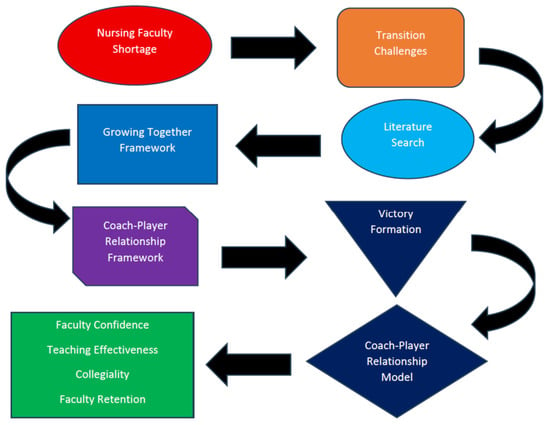
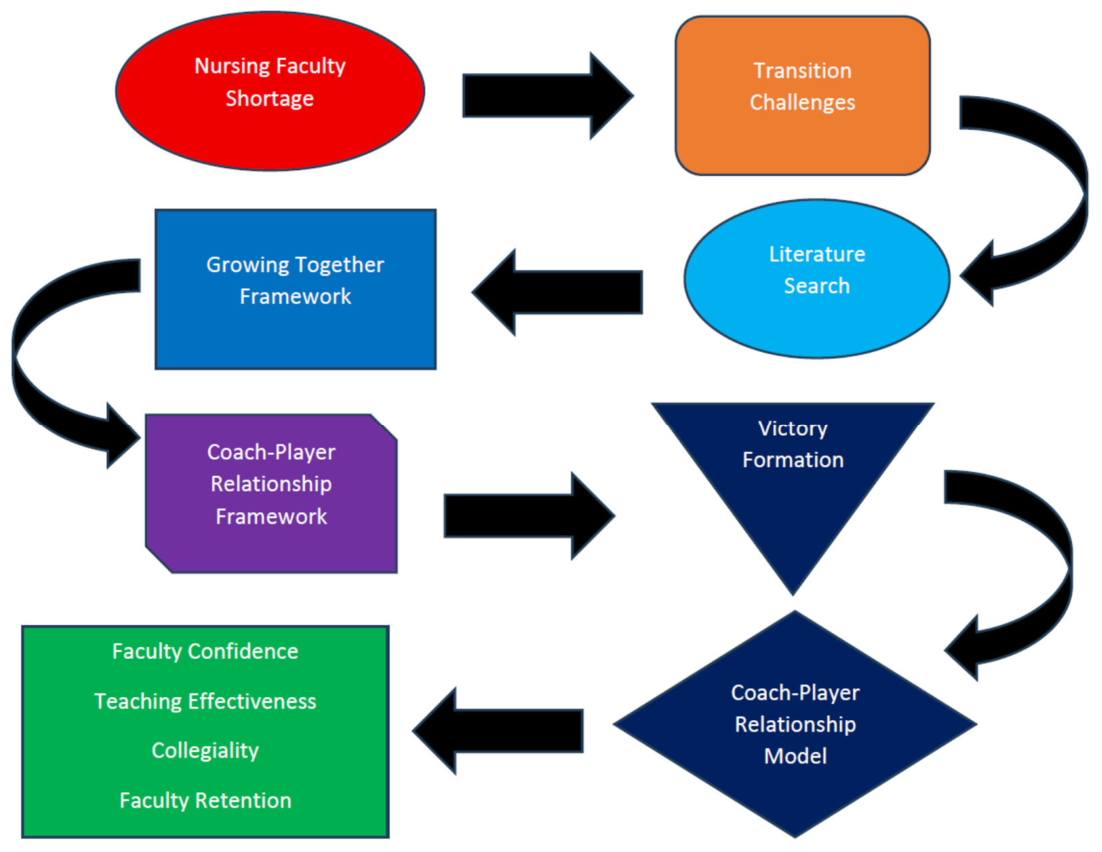
The final phase represents evolution rather than completion [31]. Distinctions between coach and player gradually diminish as both educators function as collaborative colleagues. The relationship continues through shared reflection, instructional innovation, and mutual professional support rather than formal coaching alone. This progression illustrates that successful coaching ultimately seeks independence rather than dependence. Figure 1 illustrates the development of the framework.
Figure 1.
Conceptual Development of the Coach–Player Relationship Framework.
Development of the Coach–Player Relationship Framework from identification of the nursing faculty transition challenge through literature synthesis, theoretical integration, conceptual framework development, and anticipated faculty outcomes.
3.2. The Victory Formation
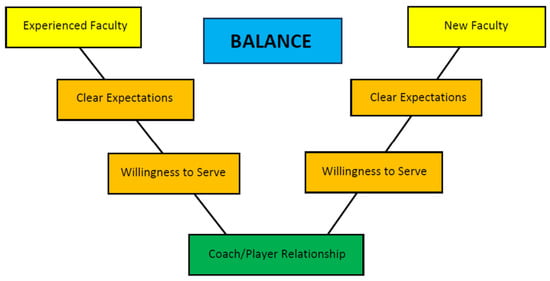
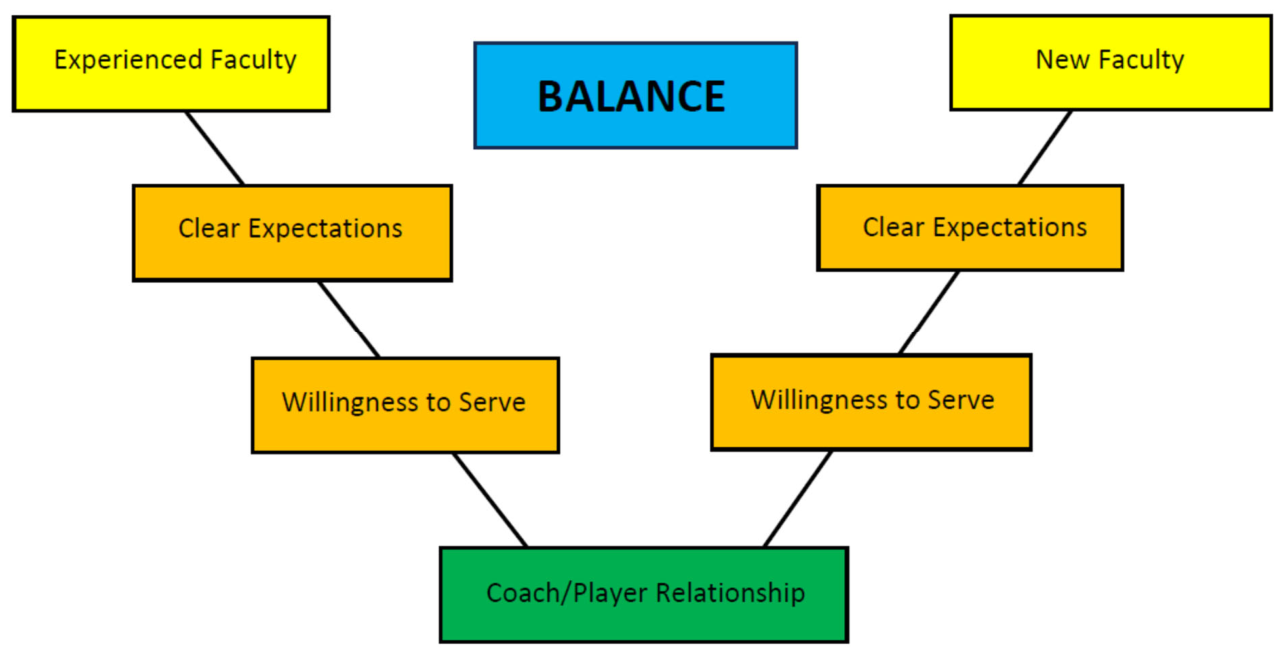
The three foundational characteristics identified during framework development—clear expectations, willingness to serve, and balance—collectively form what this framework terms the Victory Formation, illustrated in Figure 2. Borrowing terminology from American football, the Victory Formation symbolizes intentional preparation, coordinated teamwork, shared responsibility, and deliberate execution that lead to successful performance. Within the Coach–Player Relationship Framework, it represents the relational conditions necessary for effective coaching rather than a sequence of isolated behaviors.
Figure 2.
The Victory Formation: Foundational Elements of the Coach–Player Relationship Framework. The Victory Formation illustrates the three interdependent elements that establish successful coaching relationships: clear expectations, willingness to serve, and balance. Together, these elements create the relational foundation necessary for faculty transition, instructional confidence, and collaborative professional growth.
The Victory Formation creates relational conditions characterized by transparency, mutual respect, and trust. These characteristics also support psychologically safe learning environments in which novice educators may openly discuss uncertainty, seek guidance, and learn from instructional experiences without fear of judgment [33].
3.2.1. Clear Expectations
Successful coaching relationships begin with mutually understood expectations regarding communication, instructional responsibilities, availability, feedback, and professional accountability [34]. Transparent expectations establish psychological safety and reduce uncertainty during faculty transitions.
3.2.2. Willingness to Serve
Coaching requires reciprocal commitment to one another’s professional success. Coaches demonstrate service through accessibility, adaptability, encouragement, and thoughtful guidance [34]. Players demonstrate service through preparation, curiosity, reflection, responsiveness to feedback, and active participation in shared learning.
3.2.3. Balance
Balance sustains coaching relationships over time by maintaining equilibrium among guidance and independence, experience and innovation and structure and flexibility. Neither participant dominates the relationship. Instead, both contribute unique expertise while remaining open to continuous learning [32,34]. Together, these three characteristics establish the relational environment from which instructional confidence, professional growth, and collegial partnership naturally emerge.
4. Operationalizing the Coach–Player Relationship Framework
The Coach–Player Relationship Framework is translated into educational practice through intentional coaching relationships between experienced and novice faculty members. Whereas the theoretical foundation explains why coaching facilitates successful faculty transitions, the operational framework illustrates how these relationships function in authentic academic environments.
Unlike traditional faculty development models that emphasize hierarchical supervision, the Coach–Player Relationship Framework conceptualizes coaching as a reciprocal partnership in which both participants contribute to professional growth [30]. Although the coach provides experience, institutional knowledge, and instructional guidance, the player contributes contemporary clinical expertise, innovative perspectives, and reflective insight. Consequently, professional development becomes a shared endeavor rather than a one-directional transfer of expertise. Operationalization of the framework is guided by the three foundational elements of the Victory Formation—clear expectations, willingness to serve, and balance—which collectively shape the behaviors, interactions, and communication strategies characterizing successful coaching relationships.
4.1. Clear Expectations
The coaching relationship begins by establishing mutually understood expectations regarding communication, instructional responsibilities, meeting frequency, availability, and professional accountability. Transparent expectations reduce uncertainty and create a psychologically safe environment in which novice faculty can openly discuss successes, uncertainties, and educational challenges.
For the coach, clear expectations include maintaining consistent availability, providing timely access to instructional resources, facilitating reflective discussion, and offering constructive feedback that encourages independent thinking rather than dependence. For the player, clear expectations include active preparation, thoughtful questioning, reflective listening, responsiveness to feedback, and increasing ownership of instructional responsibilities throughout the coaching process. Importantly, these expectations are not imposed unilaterally by the coach. Instead, they are negotiated collaboratively to establish a relationship characterized by transparency, trust, and mutual respect.
4.2. Willingness to Serve
The second component of the Victory Formation reflects a reciprocal commitment to one another’s professional success. Within the Coach–Player Relationship Framework, service extends beyond providing assistance; it represents an intentional investment in developing another educator while simultaneously strengthening the academic community. The coach demonstrates willingness to serve by sharing instructional resources, remaining accessible during periods of uncertainty, adapting coaching strategies to individual learning needs, and encouraging reflective dialogue rather than prescribing solutions. Similarly, the player demonstrates willingness to serve through professional curiosity, engagement in continuous learning, openness to constructive feedback, and active contribution to instructional improvement. As confidence develops, the player increasingly contributes innovative ideas, alternative teaching strategies, and fresh perspectives that enhance both the coaching relationship and the educational environment. Thus, willingness to serve is understood as reciprocal rather than directional. Both coach and player contribute to one another’s continued professional growth.
4.3. Balance
Balance represents the sustaining element of the Coach–Player Relationship Framework. Successful coaching requires equilibrium between structure and flexibility, guidance and independence, experience and innovation. Experienced educators possess valuable institutional knowledge and teaching expertise; however, effective coaching avoids excessive control or authoritarian supervision. Likewise, novice educators contribute valuable clinical perspectives and contemporary practice experience while recognizing the importance of institutional expectations and established educational practices.
Maintaining this balance enables coaching relationships to evolve naturally throughout faculty transition. As instructional confidence increases, coaching interactions progressively shift from direct guidance toward collegial consultation, reflecting the player’s developing instructional autonomy. Balance also promotes psychological safety by encouraging respectful disagreement, collaborative problem solving, and shared reflection. Rather than discouraging differing viewpoints, balanced coaching relationships recognize diversity of thought as essential to educational innovation.
4.4. From Coaching Relationship to Collegial Partnership
The ultimate objective of the Coach–Player Relationship Framework is not prolonged coaching but progressive independence. As novice educators gain confidence, instructional competence, and professional identity, distinctions between coach and player gradually diminish [8]. Coaching conversations increasingly emphasize collaborative curriculum development, educational innovation, scholarship, and continuous quality improvement rather than routine instructional guidance.
At this stage, both educators function as professional colleagues who continue learning from one another while jointly advancing educational excellence. The coaching relationship, therefore, evolves into a sustained collegial partnership, illustrating that successful faculty transition benefits not only the novice educator but also the experienced faculty member, the academic program, and ultimately the students they serve [35]. This evolution distinguishes the Coach–Player Relationship Framework from many traditional faculty development models by emphasizing reciprocal professional growth rather than finite completion of a mentoring process.
4.5. Transition
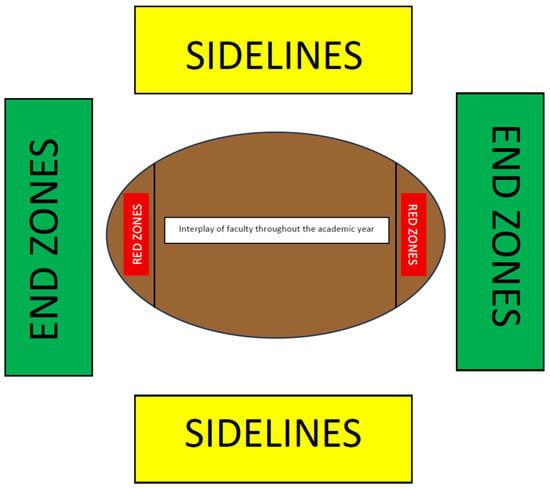
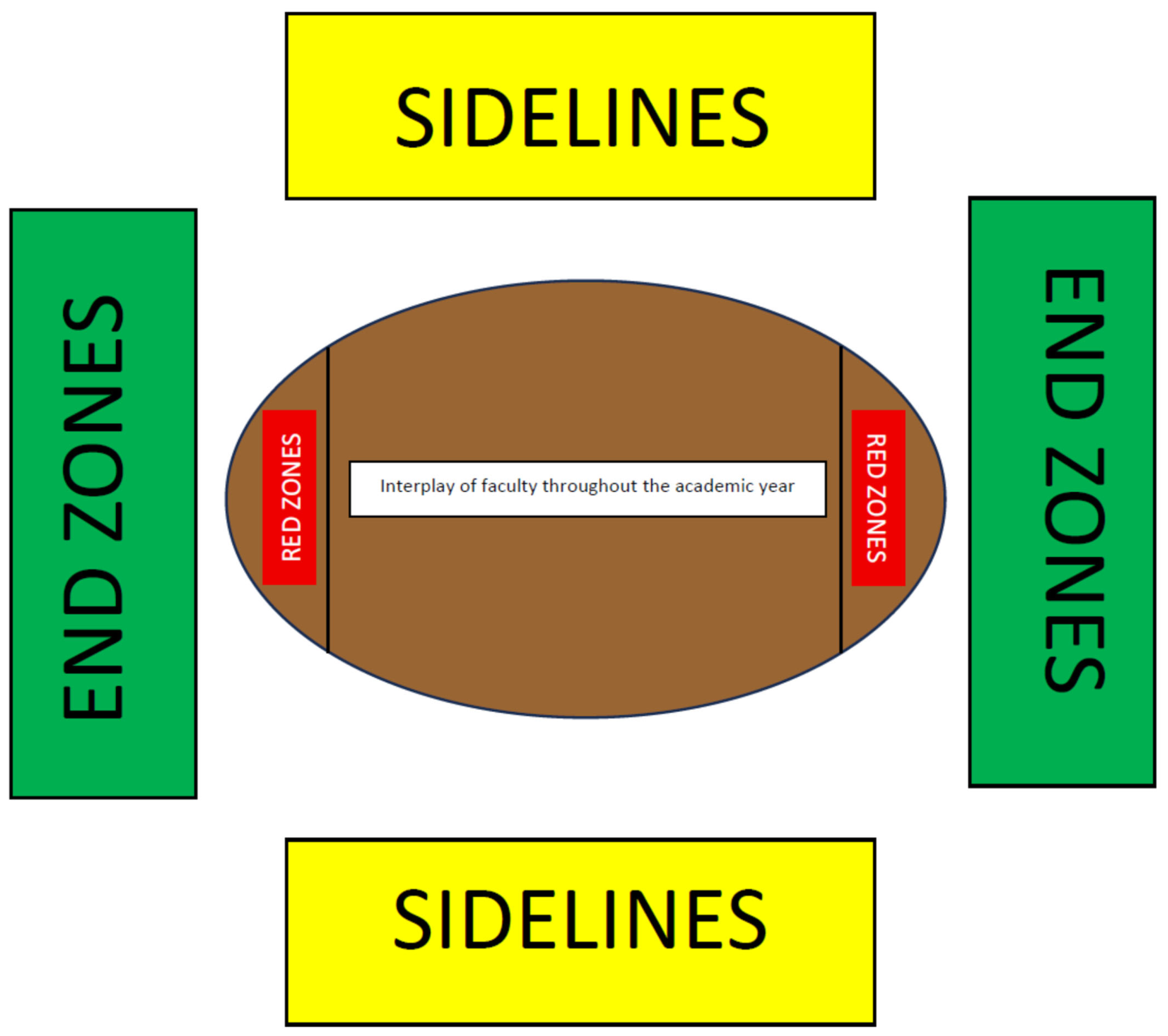
Having established the relational characteristics that operationalize the Coach–Player Relationship Framework, the model through which these coaching interactions occur is presented below. The Coach–Player Relationship Framework is operationalized through the Coach–Player Relationship Model (Figure 3). Whereas the framework describes the philosophical and relational principles underpinning successful coaching, the model provides a visual representation of how those principles function within everyday academic practice.
Figure 3.
Operational Model of the Coach–Player Relationship Framework. The Coach–Player Relationship Model illustrates the dynamic implementation of the framework within academic practice. The Field of Play represents the educational environment, while the Sidelines, End Zones, and Red Zones symbolize reflective practice, instructional success, and potential barriers encountered during faculty transition.
5. The Coach–Player Relationship Model
The model employs the familiar analogy of an American football field to illustrate the dynamic nature of faculty transition. Rather than representing competition, the football field symbolizes a shared environment in which coach and player pursue common educational goals through continuous communication, reflective practice, collaborative learning, and progressive professional development. Within the model, movement among the Field of Play, Sidelines, End Zones, and Red Zones reflects the evolving experiences encountered throughout faculty transition. These environments are not sequential stages but interconnected spaces that educators revisit repeatedly as instructional responsibilities, challenges, and opportunities change over time.
Consequently, the Coach–Player Relationship Model should be interpreted as an implementation framework that illustrates how coaching behaviors support faculty development throughout authentic educational practice, rather than as a linear sequence of prescribed activities. The Coach–Player Relationship Framework emphasizes reciprocal learning through collaborative participation between experienced and novice educators. This relationship-centered approach is consistent with Communities of Practice theory, which posits that professional identity develops through active participation in collaborative learning communities rather than through passive knowledge acquisition [36,37]. Within the present framework, coaching relationships provide opportunities for novice faculty to progressively participate in the academic community while simultaneously contributing their own expertise.
6. Discussion
6.1. Advancing Faculty Development Through Coaching
The Coach–Player Relationship Framework extends the existing faculty development literature by translating established mentoring theory into a structured coaching approach specifically designed to support faculty transition into higher education. While mentoring has long been recognized as an essential strategy for developing novice educators, comparatively little scholarship has examined how coaching principles can be intentionally operationalized to strengthen instructional confidence in the earliest stages of academic practice.
Rather than replacing mentoring, the present framework positions coaching as a complementary faculty development strategy. Mentoring remains essential for long-term professional growth, scholarly productivity, leadership development, and academic socialization [8]. Coaching addresses a different developmental need by emphasizing instructional performance, reflective dialogue, collaborative problem solving, and progressive independence during periods of significant professional transition [30].
Viewing mentoring and coaching as complementary components of faculty development creates opportunities for institutions to design more comprehensive support systems that accompany educators throughout their academic careers. New faculty may initially benefit from structured coaching relationships while simultaneously participating in broader mentoring initiatives that foster long-term professional development.
6.2. A Relationship-Centered Philosophy of Faculty Development
Perhaps the most distinctive contribution of the Coach–Player Relationship Framework is its emphasis on relationships rather than individual characteristics. Many faculty development models describe desirable mentor attributes or expected mentee behaviors. The present framework instead conceptualizes successful faculty transition as emerging from reciprocal interaction between experienced and novice educators. Professional growth is understood not as the transmission of expertise but as a collaborative developmental process in which both participants contribute to continuous learning [30]. The relationship-centered philosophy of the Coach–Player Relationship Framework also aligns with Communities of Practice theory, which suggests that professional identity develops through participation in collaborative communities rather than through the isolated acquisition of knowledge [36,37].
This philosophy is reflected throughout the Victory Formation. Clear expectations, willingness to serve, and balance function not as isolated competencies but as interdependent relational conditions that foster trust, transparency, and mutual accountability. Collectively, these characteristics create an environment in which instructional confidence and professional identity may develop through authentic educational practice. Understanding faculty development from a relationship-centered perspective broadens the conversation beyond onboarding alone. Coaching becomes less about preparing individuals to teach and more about cultivating collaborative academic communities that support continuous professional growth [24].
6.3. Psychological Safety and Reflective Practice
An important feature of the Coach–Player Relationship Framework is the intentional creation of psychologically safe learning environments. Throughout the framework, coaching interactions encourage novice educators to ask questions, acknowledge uncertainty, discuss mistakes, and seek guidance without fear of criticism or judgment. Such environments are essential during faculty transition because instructional confidence develops most effectively when reflective practice occurs within relationships characterized by trust and mutual respect [30,35].
The Sidelines illustrate this concept particularly well. Rather than representing periods of inactivity, the Sidelines serve as protected spaces for reflection, dialogue, feedback, and collaborative problem-solving. The Sidelines function as intentional spaces for reflective practice in which coach and player examine instructional experiences, discuss alternative approaches, and refine educational decision-making. Such structured reflection aligns with Schön’s concept of the reflective practitioner, whereby professionals continuously improve practice through critical examination of authentic experiences [38].
These characteristics are consistent with Edmondson’s (1999) [33] work on psychologically safe learning environments and may help explain why coaching relationships facilitate instructional confidence. Regular debriefing following classroom instruction allows both coach and player to celebrate successes while openly examining opportunities for improvement. Consequently, reflective practice becomes an expected component of faculty development rather than a response to educational difficulties. Weekly coaching conversations provide opportunities for reflective practice, allowing educators to examine their teaching experiences and refine their instructional decision-making [38]. Psychological safety, therefore, emerges not as an independent component of the framework but as a natural consequence of coaching relationships grounded in the principles of the Victory Formation.
6.4. Implications Beyond Nursing Education
Although developed within undergraduate nursing education, the Coach–Player Relationship Framework has potential relevance across the broader landscape of health professions education. Many disciplines—including medicine, pharmacy, dentistry, physician assistant education, physical therapy, occupational therapy, and allied health—face similar challenges as experienced clinicians transition into academic teaching roles [39]. These educators frequently possess extensive professional expertise while simultaneously navigating unfamiliar instructional responsibilities, institutional cultures, and educational expectations.
Because the Coach–Player Relationship Framework emphasizes universal relational principles rather than discipline-specific teaching practices, its underlying philosophy may be transferable across educational contexts while allowing local adaptation to institutional cultures and professional expectations. This potential transferability strengthens the framework’s contribution by positioning it not solely as a nursing education initiative but as a conceptual approach to faculty transition across the health professions.
6.5. A Foundation for Future Faculty Development
The Coach–Player Relationship Framework should be viewed as a conceptual foundation rather than a completed faculty development program. Its principal contribution lies in organizing existing educational theory, mentoring literature, and authentic faculty experiences into a coherent coaching framework that can guide future implementation and empirical investigation. Future studies are now needed to determine how coaching relationships influence instructional confidence, professional identity formation, organizational commitment, psychological safety, faculty satisfaction, and long-term retention. Such work will not only evaluate the framework itself but also contribute to a broader understanding of relationship-centered faculty development within higher education.
7. Limitations
Every conceptual framework possesses boundaries that define both its strengths and opportunities for future development. The Coach–Player Relationship Framework is no exception, and several considerations should inform its interpretation and implementation.
First, the framework represents a conceptual contribution derived through integration of educational theory, literature synthesis, and reflective analysis of authentic faculty coaching experiences. Consequently, it should not be interpreted as an empirically validated intervention. Rather, it provides a theoretically informed structure intended to guide future implementation, evaluation, and refinement.
Second, development of the framework was informed by experiences occurring within a prelicensure Bachelor of Science in Nursing program at a public doctoral university in the southeastern United States. Although the relational principles underpinning the framework were intentionally designed to be broadly applicable, institutional culture, faculty expectations, organizational resources, and national educational systems vary considerably across higher education. Successful implementation will therefore require thoughtful adaptation to local contexts.
Third, the framework has not yet undergone systematic empirical evaluation. Outcomes proposed within the framework—including instructional confidence, professional identity development, psychological safety, teaching effectiveness, organizational commitment, faculty satisfaction, and faculty retention—remain theoretical propositions requiring formal investigation through qualitative, quantitative, and mixed-methods research.
Finally, the Coach–Player Relationship Framework should not be viewed as a replacement for existing mentoring initiatives. Mentoring continues to provide essential long-term guidance related to scholarship, leadership development, promotion, and professional socialization. The present framework instead complements mentoring by focusing specifically on instructional transition during the earliest stages of academic practice. Recognizing these limitations establishes an appropriate context for interpreting the framework while providing direction for subsequent empirical inquiry.
8. Future Directions
The Coach–Player Relationship Framework establishes a foundation for a comprehensive program of faculty development research. The initial investigation should focus on the feasibility of implementation across diverse nursing education settings. Multi-site pilot studies involving experienced and novice faculty would provide valuable insights into the acceptability, practicality, and barriers associated with structured coaching relationships during faculty onboarding [40].
Subsequent investigations should examine measurable educational outcomes associated with the framework’s implementation. Potential outcomes include instructional self-efficacy, teaching effectiveness, professional identity formation, psychological safety, organizational commitment, faculty satisfaction, resilience, burnout, and long-term faculty retention. Mixed-methods approaches that integrate quantitative outcome measures with qualitative exploration of participants’ experiences would provide a particularly valuable understanding of how coaching relationships evolve throughout the academic transition.
Development of a standardized evaluation instrument derived from the Victory Formation represents another important direction for future scholarship. Such an instrument would permit systematic assessment of coaching relationships while facilitating multi-institutional implementation studies and continuous quality improvement initiatives. Establishing psychometric properties, including validity, reliability, and responsiveness, would further strengthen empirical evaluation of the framework.
Although developed within nursing education, adaptation of the Coach–Player Relationship Framework across medicine, pharmacy, dentistry, physician assistant education, allied health, and other professional disciplines should also be explored. Comparative investigation across educational contexts may identify universal principles of relationship-centered faculty development while simultaneously informing discipline-specific adaptations.
Finally, the framework provides opportunities for scholarly exploration extending beyond faculty transition. Coaching relationships may influence leadership development, faculty well-being, collaborative teaching cultures, organizational resilience, and educational innovation. These broader applications represent promising avenues for continued theoretical refinement and practical implementation.
9. Conclusions
Preparing and retaining qualified nursing faculty represents one of the most significant challenges confronting contemporary higher education. While recruitment remains essential, long-term workforce sustainability depends equally upon the successful transition of novice educators into confident, competent academic professionals.
The Coach–Player Relationship Framework extends existing mentoring literature by translating relationship-centered mentoring principles into an operational coaching approach specifically designed to support instructional transition. Grounded in clear expectations, willingness to serve, and balance, the framework provides educators with a practical strategy for fostering reflective practice, instructional confidence, collegiality, and continuous professional growth.
Rather than conceptualizing faculty transition as an individual challenge requiring isolated orientation activities, the framework positions successful onboarding as a shared developmental process intentionally cultivated through reciprocal coaching relationships. In doing so, it emphasizes that effective faculty development depends not only upon institutional resources but also upon purposeful professional relationships that transform experience into confidence, confidence into competence, and competence into enduring collegial partnership.
Although further empirical investigation is required, the Coach–Player Relationship Framework provides a theoretically grounded foundation to guide future scholarship, educational innovation, and faculty development across nursing and the broader health professions.
Ultimately, faculty transition is not an event to be managed but a relationship to be cultivated. The Coach–Player Relationship Framework offers one pathway through which experienced educators can intentionally cultivate that relationship, strengthening not only individual faculty members but also the academic communities in which they teach, mentor, and lead.
Funding
This research received no external funding.
Data Availability Statement
No new data were created or analyzed in this study. Data sharing is not applicable to this article.
Acknowledgments
I would like to thank the faculty colleagues that I have worked with who inspired me to develop this model to benefit new faculty entering higher education. During the preparation of this work, the author used Scite_ and Open Evidence to refine the literature review and create a summary of the articles used, and ChatGPT 5.5 to edit, reorganize, update, and revise the manuscript. After using this tool/service, the author reviewed and edited the content as needed and took full responsibility for the content within the published article.
Conflicts of Interest
The author declares no conflicts of interest.
References
- Ephraim, N. Mentoring in nursing education: An essential element in the retention of new nurse faculty. J. Prof. Nurs. 2021, 37, 306–319. [Google Scholar] [CrossRef] [Scilit]
- American Association of Colleges of Nursing. Nursing Faculty Shortage Fact Sheet. 2026. Available online: https://www.aacnnursing.org/Portals/0/PDFs/Fact-Sheets/Faculty-Shortage-Factsheet.pdf (accessed on 20 July 2026).
- Keyt, J.; Herrington, M. Survey on Vacant Faculty Positions for Academic Year 2025–2026. 2025. Available online: https://www.aacnnursing.org/Portals/0/PDFs/Reports/Faculty-Vacancy-Report-2025.pdf (accessed on 20 July 2026).
- Patterson, B.J.; Brewington, J.; Krouse, A.; Hall, M. Building Academic Leadership Capacity Through Coaching. Nurs. Educ. Perspect. 2022, 43, 222–227. [Google Scholar] [CrossRef] [Scilit] [PubMed]
- Costeira, C.; Dixe, M.A.; Querido, A.; Vitorino, J.; Laranjeira, C. Coaching as a model for facilitating the performance, learning, and development of palliative care nurses. SAGE Open Nurs. 2022, 8, 23779608221113864. [Google Scholar] [CrossRef] [Scilit] [PubMed]
- Hill, B.; Wilkinson, J.; Diamond-Fox, S.; Burton-Gow, H. Transition from advanced clinician to academic. Br. J. Nurs. 2025, 34, 404–405. [Google Scholar] [CrossRef] [Scilit] [PubMed]
- Jayanth, T.; Widdowfield, M. The transition of clinical nurses to academic roles: An interpretative phenomenological inquiry into identity development. Teach. Learn. Nurs. 2026, 21, e726–e732. [Google Scholar] [CrossRef] [Scilit]
- Jensen, R.D.; Price, I.; Eva, K.W. How can I help at this moment? Outlining three generations of coaching for health professions educators. Med. Educ. 2026, 60, 865–872. [Google Scholar] [CrossRef] [Scilit] [PubMed]
- Mokel, M.J.; Behnke, L.M.; Gatewood, E.; Mihaly, L.K.; Newberry, E.B.; Lovence, K.; Ro, K.; Bellflower, B.B.; Tabi, M.; Kuster, A. Mentoring and support for underrepresented nursing faculty: An integrative research review. Nurs. Educ. 2022, 47, 81–85. [Google Scholar] [CrossRef] [Scilit] [PubMed]
- Rivera, R.R.; Gallagher, K.A.; Fitzpatrick, J.J.; Carter, E.J.; Manzano, W.M. Leadership Through Scholarly Dissemination: The NYP Nursing Experience. Nurse Lead. 2016, 14, 142–143. [Google Scholar] [CrossRef] [Scilit]
- Bergeron, P.; Irons, A.; Hall, C. Collaborative Mentorship: Two Innovative Approaches for New Faculty Success. J. Nurs. Educ. 2025, 64, 125–127. [Google Scholar] [CrossRef] [Scilit] [PubMed]
- Busby, K.; Draucker, C.; Reising, D. Exploring Mentoring Relationships Among Novice Nurse Faculty: A Grounded Theory. Nurs. Educ. Perspect. 2022, 44, 36–42. [Google Scholar] [CrossRef] [Scilit] [PubMed]
- Costa, C.; Smith, J. Career Satisfaction and Advancement Related to Mentorship Experiences of Underrepresented Nursing Faculty. Nurs. Educ. Perspect. 2023, 44, 291–294. [Google Scholar] [CrossRef] [Scilit] [PubMed]
- Dahlke, S.; Raymond, C.; Penconek, T.; Swaboda, N. An Integrative Review of Mentoring Novice Faculty to Teach. J. Nurs. Educ. 2021, 60, 203–208. [Google Scholar] [CrossRef] [Scilit] [PubMed]
- Fernández-Lorente, L.; Rodríguez-Almagro, J.; Hernández-Martínez, A. Enhancing support for new nursing faculty: An extensive scoping review of mentoring practices. Nurse Educ. Today 2025, 147, 106595. [Google Scholar] [CrossRef] [Scilit] [PubMed]
- Jacobson, S.; Sherrod, D. Transformational Mentorship Models for Nurse Educators. Nurs. Sci. Q. 2012, 25, 279–284. [Google Scholar] [CrossRef] [Scilit] [PubMed]
- Lambert, K.; Dorris, D.; Williams, A. The Effects of Structured Mentorship and Onboarding of Novice Nursing Faculty. J. Nurs. Educ. 2024, 63, 405–408. [Google Scholar] [CrossRef] [Scilit] [PubMed]
- Slimmer, L. A Teaching Mentorship Program to Facilitate Excellence in Teaching and Learning. J. Prof. Nurs. 2012, 28, 182–185. [Google Scholar] [CrossRef] [Scilit] [PubMed]
- Tufano, V.C.; Summers, E.J. The nurse educator mentoring dilemma: Novice nurse faculty needs and outcomes. J. Nurs. Educ. 2025, 64, 177–184. [Google Scholar] [CrossRef] [Scilit] [PubMed]
- Mau, A.; Limbong, K.; Yetti, K. The effect of coaching and mentoring towards nurse’s caring and patient satisfaction. Enferm. Clínica 2020, 30, 18–22. [Google Scholar] [CrossRef] [Scilit]
- Petty, G.M.; Lingham, T. Coaching Teamwork in the Classroom Using an Innovative Team-Coaching Process. Nurs. Educ. Perspect. 2019, 40, 118–120. [Google Scholar] [CrossRef] [Scilit] [PubMed]
- Sachdeva, A.K. Preceptoring, proctoring, mentoring, and coaching in surgery. J. Surg. Oncol. 2021, 124, 711–721. [Google Scholar] [CrossRef] [Scilit] [PubMed]
- Kowalski, K. Differentiating Mentoring From Coaching and Precepting. J. Contining Educ. Nurs. 2019, 50, 493–494. [Google Scholar] [CrossRef] [Scilit] [PubMed]
- Grant, A.M.; O’Connor, S. Goals in coaching practice. In International Handbook of Evidence-Based Coaching: Theory, Research and Practice; Greif, S., Möller, H., Scholl, W., Passmore, J., Müller, F., Eds.; Springer Nature: Cham, Switzerland, 2022; pp. 391–406. [Google Scholar] [CrossRef] [Scilit]
- Hunter, J. Moving on: The Transition from Experiences Nurse to Novice Academic. 2018. Available online: https://blogs.bmj.com/ebn/2018/01/28/moving-on-the-transition-from-experienced-nurse-to-novice-academic/ (accessed on 20 July 2026).
- Whitmore, J. Coaching for Performance The Principles and Practice of Coaching and Leadership, 5th ed.; John Murray Business: London, UK, 2017. [Google Scholar]
- McMillian-Bohler, J.; Tornwall, J. Trends, future directions, and questions for preparing successful nurse faculty. J. Nurs. Educ. 2023, 62, 661–667. [Google Scholar] [CrossRef] [Scilit] [PubMed]
- Han, H.-R.; D’Aoust, R.; Gross, D.; Szanton, S.; Nolan, M.; Campbell, J.; Davidson, P. Preparing future nursing faculty: Integrating enhanced teaching and leadership development curricula into PhD education. J. Adv. Nurs. 2022, 78, e3–e5. [Google Scholar] [CrossRef] [Scilit] [PubMed]
- Jabareen, Y. Building a conceptual framework: Philosophy, definitions, and procedure. Int. J. Qual. Methods 2009, 8, 49–62. [Google Scholar] [CrossRef] [Scilit]
- Richardson, C.; Wicking, K.; Biedermann, N.; Langtree, T. Coaching in nursing: An integrative literature review. Nurs. Open 2023, 10, 6635–6649. [Google Scholar] [CrossRef] [Scilit] [PubMed]
- Busby, K.R.; Draucker, C.B. Mentoring in Academic Nursing from the Perspectives of Faculty Mentors. Nurs. Educ. Perspect. 2024, 45, 213–218. [Google Scholar] [CrossRef] [Scilit] [PubMed]
- Sezer, H.; Sahin, H. Faculty development program for coaching in nursing education: A curriculum development process study. Nurse Educ. Pract. 2021, 55, 103165. [Google Scholar] [CrossRef] [Scilit] [PubMed]
- Edmondson, A. Psychological safety and learning behavior in work teams. Adm. Sci. Q. 1999, 44, 350–383. [Google Scholar] [CrossRef] [Scilit]
- Huggins, D. Enhancing nursing students’ education by coaching mentors. Nurs. Manag. 2016, 23, 30–32. [Google Scholar] [CrossRef] [Scilit] [PubMed]
- Busby, K.; Draucker, C.; Reising, D. Mentoring-as-Partnership: The Meaning of Mentoring Among Novice Nurse Faculty. J. Nurs. Educ. 2023, 62, 83–88. [Google Scholar] [CrossRef] [Scilit] [PubMed]
- Lave, J.; Wenger, E. Situated Learning: Legitimate Peripheral Participation; Cambridge University Press: Cambridge, UK, 1991. [Google Scholar] [CrossRef] [Scilit]
- Wenger, E. Communities of Practice: Learning, Meaning, and Identity; Cambridge University Press: Cambridge, UK, 1998. [Google Scholar] [CrossRef] [Scilit]
- Schön, D. The Reflective Practitioner; Temple Smith: Cambridge, MA, USA, 1983. [Google Scholar]
- Raymond, C.; Penconek, T.; Dahlke, S. Nurse Educators’ Experiences With a Faculty Navigator Program: A Mixed-Methods Study. J. Nurs. Educ. 2022, 61, 587–590. [Google Scholar] [CrossRef] [Scilit] [PubMed]
- Kroning, M.; Northrup, A. Increase nurse faculty salaries to reduce the nursing shortage. Nursing 2023, 53, 48–51. [Google Scholar] [CrossRef] [Scilit] [PubMed]

Disclaimer/Publisher’s Note: The statements, opinions and data contained in all publications are solely those of the individual author(s) and contributor(s) and not of MDPI and/or the editor(s). MDPI and/or the editor(s) disclaim responsibility for any injury to people or property resulting from any ideas, methods, instructions or products referred to in the content. |
© 2026 by the author. Published by MDPI on behalf of the Academic Society for International Medical Education. Licensee MDPI, Basel, Switzerland. This article is an open access article distributed under the terms and conditions of the Creative Commons Attribution (CC BY) license.