


Abstract
The Orofacial Myofunctional Evaluation with Scores (OMES) protocol is a standardized clinical instrument developed to assess orofacial myofunctional disorders (OMD); however, diagnostic cut-off values have not previously been established for different age groups. This study aimed to strengthen the validity and psychometric evidence supporting the OMES protocol and to establish diagnostic cutoff values for OMD across different age groups. A cross-sectional observational study based on a retrospective database review was conducted with 302 participants, including children, young adults, and adults with clinical conditions associated with a high probability of OMD or healthy controls matched by age and sex. All participants were assessed using the OMES protocol. Instrument performance was examined using a known-groups approach, internal consistency analysis, and receiver operating characteristic (ROC) curve analysis. Internal consistency was high across all age groups (Cronbach’s alpha: 0.91 for children, 0.87 for young adults, and 0.84 for adults). All OMES categories and the total OMES score discriminated between individuals with and without OMD. ROC analyses demonstrated high diagnostic accuracy. The OMES protocol demonstrated strong psychometric performance and can be applied across different age groups, supporting the identification of OMD, informed clinical decision-making, therapeutic planning, and treatment outcome evaluation.
1. Introduction
The muscles of the craniofacial complex and the behaviors in which they are involved, communicative or non-communicative orofacial gestures such as speech, chewing, and swallowing, should hold a prominent place within the context of stomatognathic system assessment. This is justified by the fact that impaired orofacial functions are common in conditions such as open bite, dentofacial deformities (DFD), mouth breathing, obstructive sleep apnea (OSA), and temporomandibular disorders (TMD). Alterations or dysfunctions in the appearance, posture, and/or mobility of the lips, tongue, mandible, and cheeks, as well as in the stomatognathic functions, are referred to as orofacial myofunctional disorders (OMD) [1].
Despite the widespread use of instrumental methods, clinical evaluation through direct observation and analysis of craniofacial components and behaviors remains essential for the diagnosis of OMD. Thus, clinical orofacial myofunctional assessment and instrumental methods are not conflicting but complementary approaches for understanding problems affecting the stomatognathic system, with the potential to address key questions regarding functional and dysfunctional processes [2,3,4,5,6,7].
Previously, findings from orofacial myofunctional evaluation were expressed using semantic descriptors. The replacement of these with numerical codes such as zero and one, as used in evaluation proposals [8], did not introduce meaningful changes, because a dichotomous (nominal) scale allows only the calculation of the number of alterations.
Protocols with numerical scales at ordinal or interval levels of measurement, that is, numerical values that allow quantitative analysis and express the severity of OMD, have been developed in subsequent research [9,10], as well as versions designed for specific populations of previous instruments, among them the orofacial scale for OSA and protocols for infants [11,12].
The Orofacial Myofunctional Evaluation with Scores (OMES) protocol [1,9] was developed to provide sufficient information for the detection of OMD while allowing findings to be quantified through numerical scales, without being excessively long or overly comprehensive. This protocol was originally developed and validated for children [1] and was subsequently validated for young people and adults [9]. The scales follow pre-established rules to reflect the physical characteristics and orofacial behaviors of the subjects according to the psychophysical methodology. Evidence supporting its validity has contributed to the characterization of orofacial myofunctional conditions in healthy individuals without craniofacial impairments [13], to the identification of alterations associated with different health conditions [1,3,5,14,15,16,17,18,19], and to the evaluation of treatment outcomes following therapeutic interventions [1,2,4,20,21,22,23,24,25].
Despite its extensive use, refinements of the OMES protocol are warranted to strengthen its construct validity (known-groups validity) across diverse conditions and to define cutoff scores capable of differentiating individuals with and without OMD, to support decisions regarding the indication of orofacial myofunctional therapy (OMT), as well as identifying treatment changes. Furthermore, results should be readily available and accessible, providing scientific support for clinical decision-making. As validation should be viewed as a cumulative process that integrates new evidence of reliability, validity, and applicability across contexts and populations [26], a known-groups validity analysis can be an effective approach, since it allows verification of the measurement performance [27].
Thus, this study aims to provide further validity evidence for the OMES protocol for stomatognathic system evaluation and to establish scores for diagnosis of OMD and severity values in children, young people, and adults.
2. Materials and Methods
This work is a cross-sectional observational study based on a retrospective database review, with the sample selected from the Craniofacial Research Support Center database at the University of São Paulo, São Paulo, Brazil. A known-groups construct validity design was used to assess the OMES protocol’s ability to discriminate between individuals with and without OMD.
The study followed the Standards for Reporting Diagnostic Accuracy Studies (STARD) [28] to ensure completeness and transparency and was approved by the institution’s Human Research Ethics Committee (CAAE: 013768.3.0000.5440; protocol no. 1211/2018, 15 August 2018).
Given the retrospective nature of this observational study using an existing institutional database, prospective registration in a public trial registry was not applicable. The data supporting the findings of this study are available from the corresponding author upon reasonable request, due to ethical and institutional restrictions.
2.1. Sample Selection
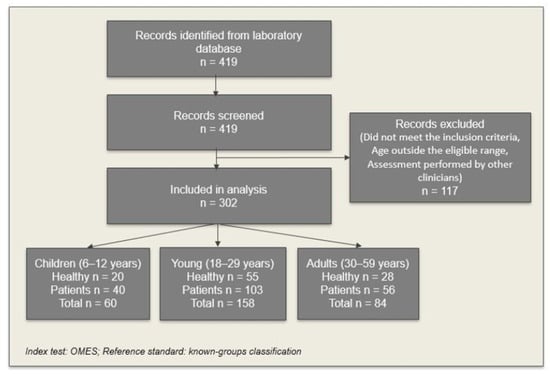
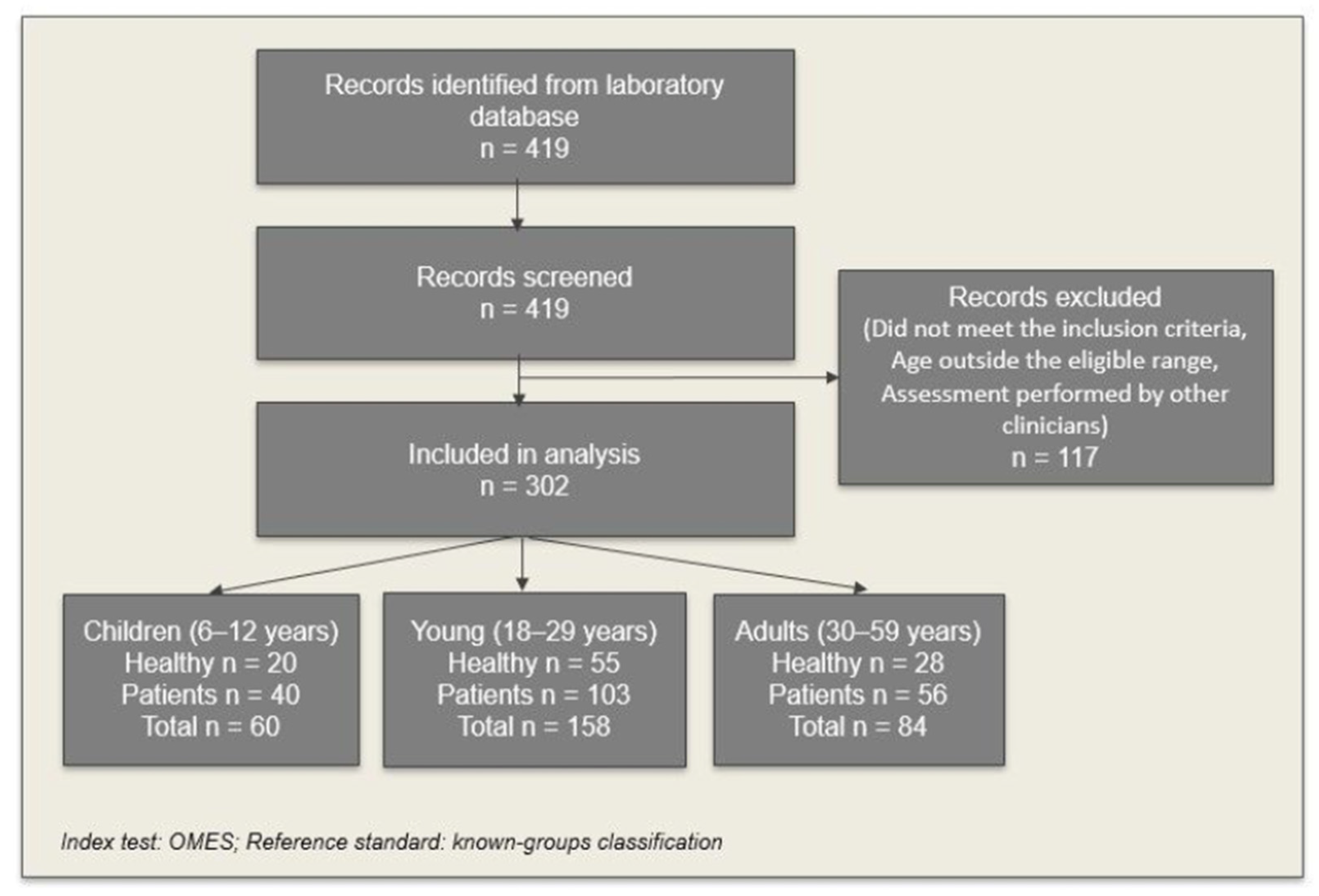
Three hundred and two records were selected from a total of 419 in our laboratory database. Records included individuals with baseline conditions associated with a high probability of OMD (patients) and individuals without such conditions (healthy controls).
The sample comprised 60 children (6–12 years), 158 young adults (18–29 years), and 84 adults (30–59 years), of both sexes. The age groups classification was established to represent distinct developmental stages of the stomatognathic system and adult life course. Children were defined as individuals aged 6–12 years because this age range corresponds to the mixed dentition stage, a period characterized by substantial craniofacial growth and maturation of orofacial functions [29] and is also consistent with the age range evaluated in the original validation studies of the OMES protocol [9]. Young adults (18–29 years) and adults (30–59 years) were analyzed separately because previous developmental literature recognizes young adulthood as a distinct stage, with functional characteristics that may differ from those observed in later adulthood [30].
To ensure sufficient validity across diverse oral conditions [27], the database included six condition-specific patient groups. Children from the following diagnostic groups were selected: malocclusion (anterior open bite [AOB]), OSA, and healthy pediatric controls. In the young adults and adult groups, the diagnoses were: TMD, DFD class II or class III (skeletal malocclusion = SM), and healthy controls. For comparisons between patients and healthy controls, participants were matched by age and sex. Figure 1 shows the flow of participants according to the STARD guidelines [28]. These conditions were selected because the database contained sufficiently sized and clinically well-characterized samples assessed under standardized conditions and because previous studies have consistently demonstrated a high frequency of OMD in these populations [1,5,6,7,11,15,21,23,31,32]. The clinical diagnoses were not used as surrogate diagnoses of OMD; rather, they defined known groups expected to differ from healthy controls in orofacial myofunctional status. The known-groups approach was therefore used to test whether OMES scores discriminated between groups expected to present different levels of OMD, not whether OMES could distinguish among the underlying clinical diagnoses.
Figure 1.
Flow of participants according to the STARD guidelines.
The use of a known-groups construct validity design was intended not to determine whether the instrument could distinguish between underlying diagnostic conditions [27], but rather to verify whether individuals did or did not present OMD.
2.2. Sample Size
Previously obtained descriptive statistics of the total score of the OMES protocol (TSOMES) [31,32] were used to estimate the minimum number of participants by group required for the planned statistical analyses, assuming 80% statistical power (1 − β) and a Type I error (α) of 5%. The estimated sample size required for comparisons between healthy and patient groups ranged from 9 in children to 15 in adults, with intermediate values for young adults. However, all eligible cases available in the database that met the inclusion criteria were included in the study, resulting in a substantially larger sample, in order to increase statistical power and to improve the precision of the estimated cutoff values and diagnostic accuracy measures.
2.3. Eligibility Criteria
2.3.1. Inclusion Criteria
To be included, the primary eligibility requirements were based on age range: children from 6 to 12 years, young adults from 18 to 29 years, and adults from 30 to 59 years. In addition, children were required to be in the mixed dentition phase. All examinations and diagnoses were performed at the same university under standardized conditions. Additionally, a group-specific inclusion criteria were defined as follows:
- Healthy children (H-c): present a satisfactory anteroposterior and transverse maxillomandibular relationship, with vertical and horizontal overlap of the incisor teeth between 1 and 4 mm, no evidence of OSA and without dentofacial deformities, including crossbite and open bite.
- Healthy young adults (H-y) and adults (H-a): be free of signs or symptoms of TMD, OSA, or SM; have at least 28 permanent teeth; present good general health with no history of TMD, OSA, or SM; and without dentofacial deformities, including crossbite and open bite.
- Child patients (P-c): composed of children with anterior open bite malocclusion (AOB-c) and with OSA (OSA-c), according to the following criteria:
- o
- AOB-c, presenting dental or skeletal anterior open bite, previously determined in the dental clinical examination, complemented by lateral cephalograms to determine the craniofacial growth pattern, performed prior to the initiation of orthodontic treatment;
- o
- OSA-c: diagnosed by full-night polysomnography (Obstructive Apnea–Hypopnea Index, OAHI > 1.0 event/hour), according to the criteria of the American Academy of Sleep Medicine and the International Classification of Sleep Disorders, Third Edition (ICSD-3) [33].
- Young adult (P-y) and adult (P-a) patients: composed of patients with TMD, and skeletal malocclusion (SM), whose diagnoses were based on:
- o
- TMD: diagnostic criteria for TMD (DC/TMD) [34];
- o
- SM: radiographic and clinical examination. The SM groups (SM-ya and SM-a) included patients with class II dentofacial deformity (ANB angle > 4°, characterized by mandibular retrognathism, excessive maxillary growth, or both, and an overjet > 4 mm), and patients with class III dentofacial deformity (ANB angle < 0°, characterized by mandibular prognathism and/or maxillary deficiency and an overjet ≤ 0 mm).
2.3.2. Exclusion Criteria
Individuals classified as obese according to World Health Organization criteria [35], those under chronic use of analgesics, anti-inflammatory drugs, or psychotropic medications, and those with systemic or genetic syndromes, multiple disabilities, or a history of central or peripheral neurological disorders were excluded. Individuals with a history of surgeries, tumors, or trauma in the head and neck region; presenting tooth loss, except for third molars; dental pain or periodontal disease; denture use; and pregnant individuals were also excluded.
Participants undergoing treatment for craniofacial-related problems that could interfere with the results, such as dental treatment, physical therapy, or speech-language therapy, were also excluded. Exceptions were made for the use of removable orthodontic appliances for the correction of anterior open bite in children or fixed appliances during the pre-surgical phase in participants with dentofacial deformities, provided that the underlying condition was present prior to treatment initiation.
2.4. Orofacial Myofunctional Evaluation
The OMES protocol, comprising the appearance/posture, mobility, and function categories, was administered in person to all participants. The protocol uses predetermined scores, with higher scores indicating patterns closer to normality. The appearance/posture of the face (symmetry), lips, tongue, cheeks, jaw, and hard palate were evaluated using a 3-point scale (3 = normal, 2 = mild alteration, and 1 = severe alteration).
To assess mobility, participants were asked to perform four or six isolated movements of the lips, tongue, cheeks, and jaw, depending on the structure evaluated. Each movement was scored as follows: 3 = normal performance, 2 = insufficient ability with or without tremor, and 1 = severe inability to perform the movement.
Breathing was observed throughout the evaluation and classified as nasal (score 3); oronasal (score 2), when the participant predominantly breathed through the mouth but was able to inspire exclusively through the nose without signs of fatigue or dyspnea; or severely altered (score 1), when the participant, while attempting nasal-only inspiration, showed signs of fatigue or dyspnea and opened the mouth to breathe.
Swallowing was assessed using both liquid (water) and solid (chocolate-filled cookie, Bono®, Nestlé, São Paulo, Brazil) boluses. Lip behavior was scored from 1 to 4, and tongue behavior from 1 to 3. Additional signs of alteration, including head movements, facial muscle tension, and food escape, were also analyzed. The presence of each sign was scored 0, whereas its absence was scored 1.
The same type of cookie was used to assess mastication, and participants were instructed to chew in their habitual manner. The parameters evaluated included the teeth used for biting (scores ranging from 1 to 4) and the masticatory pattern: bilateral alternating (score 4), bilateral simultaneous (score 3), unilateral preference, defined as masticatory strokes occurring on the same side of the oral cavity in 66–94% of cycles (score 2), and chronic unilateral mastication, defined as masticatory strokes occurring on the same side in 95–100% of cycles, or anterior mastication in the incisor and canine region (score 1). During mastication, additional behaviors and signs of alteration were also observed and scored using the same criteria as for deglutition.
The maximum possible scores for each category are 18 for appearance/posture, 57 for mobility, and 29 for functions, comprising breathing (maximum score = 3), deglutition (maximum score = 16), and mastication (maximum score = 10). The total OMES score (TSOMES) ranges from 32 to 104, with higher scores indicating better orofacial myofunctional conditions and lower scores indicating greater severity of orofacial myofunctional disorder.
We used this protocol to evaluate all participants in person. The assessments were video-recorded for complementary analyses in addition to those performed during the sessions, as recommended by the method [1,9,31].
Experienced speech-language pathologists conducted all evaluations, with previously tested intra-examiner reliability ranging from 0.92 to 0.98. Inter-examiner absolute agreement values were 0.89 for appearance/posture, 0.95 for mobility, 0.98 for functions, and 0.96 for the total OMES score (TSOMES), calculated using intraclass correlation coefficients (ICCs).
2.5. Data Analysis
2.5.1. Internal Consistency
The internal consistency of the OMES protocol was assessed using Cronbach’s alpha, a coefficient that assesses the internal consistency of scale items and ranges from 0 to 1 [34]. When all items reliably measure the orofacial myofunctional condition, they tend to be highly correlated, which is reflected in higher alpha values. According to Cronbach’s alpha coefficients, internal consistency can be interpreted as excellent (>0.90), adequate (0.70–0.90), or weak (<0.70) [36]. Considering the use of different numerical scales within the protocol, results were expressed as standardized Cronbach’s alpha coefficients.
2.5.2. Construct Validity
The construct validity was tested by analysis of the ability of the OMES to differentiate healthy subjects from patients, who frequently have OMD (known-groups construct validity). To compare patients and control groups, the Mann–Whitney test was used, with Bonferroni correction for multiple comparisons.
Additionally, comparisons among the different diagnostic groups were performed by age range using the Kruskal–Wallis ANOVA by ranks test, followed by post hoc analyses with Bonferroni correction.
All records included in the analysis had complete OMES data and reference standard classification; consequently, analyses were performed using complete cases only.
2.5.3. Determination of Cutoff Points for the Diagnosis of OMD
The cutoff points for identifying OMD were determined using receiver operating characteristic (ROC) curve analysis. This method allows for the assessment of the sensitivity (the probability that a test result will be positive when the disease is present) and specificity (the probability that a test result will be negative when the disease is not present) of the OMES protocol scores in distinguishing individuals with and without OMD and the cutoff value. MedCalc Statistical Software, version 23.4.8 (MedCalc Software Ltd., Ostend, Belgium) shows a list of criterion values corresponding to the coordinates of the ROC curve, with associated sensitivity, specificity, likelihood ratio (LR), and 95% confidence intervals. Thus, the cutoff point was selected according to well-balanced sensitivity and specificity, as well as the corresponding LRs. These compare the probability that the index test will be positive (LR+) or negative (LR−) in someone with and without OMD (yes or possible) [37].
The Youden index also was calculated (J = sensitivity + specificity − 1), which indicates if a tool/exam is useful for diagnostic, i.e., if its index is significantly greater than zero. The closer the value is to 1, the better the test [38].
2.5.4. Participant Classification Based on Cutoff Scores
The classification of participants’ OMD severity was based on the TSOMES cutoff score established for each age group. Thus, starting from the cutoff score, each severity grade corresponded to a fixed 5-point interval, approximating the average standard deviation (SD = 4.87). The lower the TSOMES, the greater the degree of OMD severity.
Myofunctional conditions with scores above the cutoff value were classified as grade I and termed “without relevant OMD”. The rationale is that, between this score and the maximum possible score of the protocol, deviations in muscles and/or functions may be present but, in most cases, do not require immediate intervention. Clinical judgment should consider the relevance of these deviations in relation to other manifestations presented by the patient when making management decisions.
It is important to emphasize that the objective of this classification is not to determine whether the instrument can distinguish individuals from one underlying diagnostic condition from another [27], but rather to identify whether individuals do or do not present orofacial myofunctional disorders.
2.6. Statistical Analysis
Statistical analyses were performed using Statistica version 14.0.0.15 (TIBCO Software Inc., Palo Alto, CA, USA) and MedCalc Statistical Software version 23.4.8 (MedCalc Software Ltd., Ostend, Belgium). The level of significance was set at 0.05.
To calculate the magnitude of differences between healthy control and patient groups, independent of sample size effects, effect sizes (ES) were estimated using Rosenthal’s r [39] and interpreted as small (r = 0.1), moderate (r = 0.3), or large (r = 0.5). The ES reflects the magnitude of the difference and may inform the clinical relevance of the findings.
3. Results
3.1. Internal Consistency of the OMES Protocol
The standardized Cronbach’s alpha coefficients were 0.91 for the pediatric sample (n = 60), 0.87 for the young sample (n = 158), 0.84 for the adult sample (n = 84), and 0.87 for the total sample (n = 302), indicating adequate to excellent internal consistency of the OMES protocol.
3.2. Construct Validity of the OMES Protocol
The findings support the validity of the OMES protocol for the evaluation and identification of orofacial myofunctional conditions in children (6–12 years), young adults, and adults. Patient groups across the three age ranges (P-c, P-y, and P-a), when compared with their corresponding healthy groups (H-c, H-y, and H-a), presented significantly lower scores in the appearance/posture, mobility, and functional categories, as well as in the TSOMES.
According to Rosenthal’s r, the magnitude of the differences between groups of children (H-c vs. P-c), as well as groups of adults (H-a vs. P-a), indicated large effect sizes across all categories and TSOMES. Between young groups (H-y vs. P-y), effect sizes were moderate for the appearance category and large for the mobility and functional categories, as well as for TSOMES.
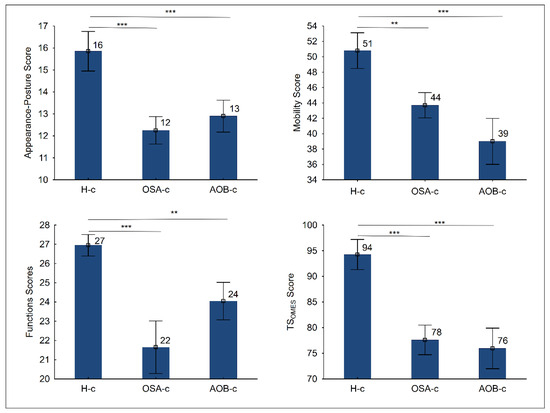
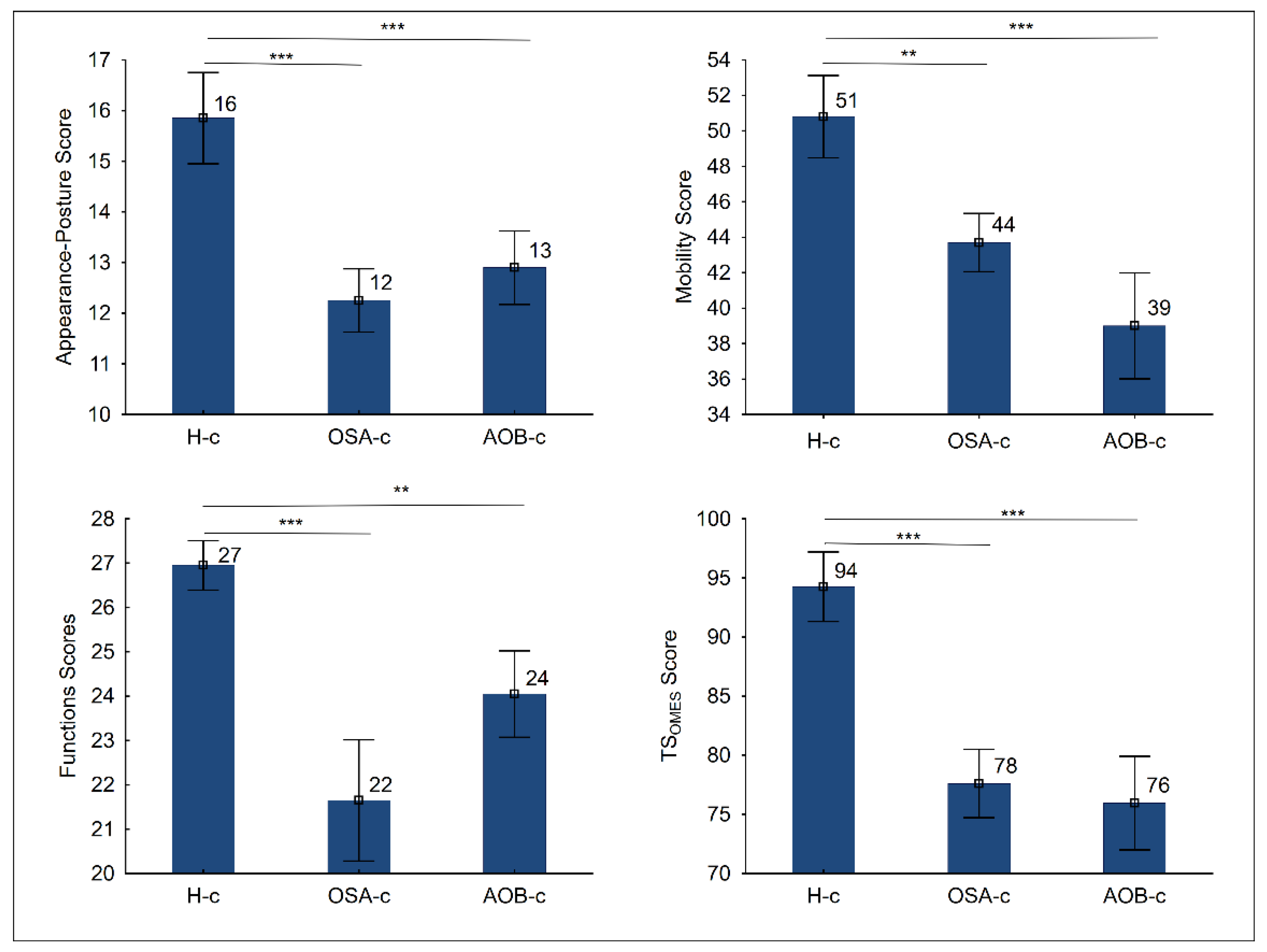
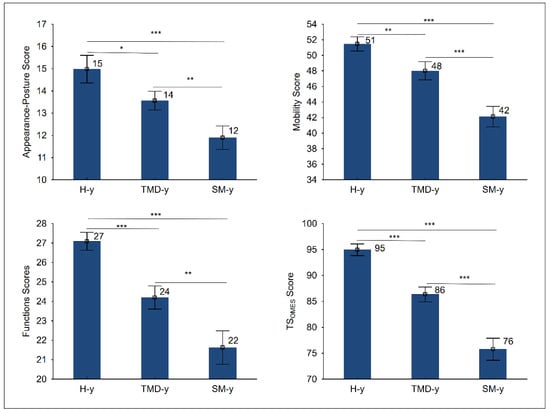
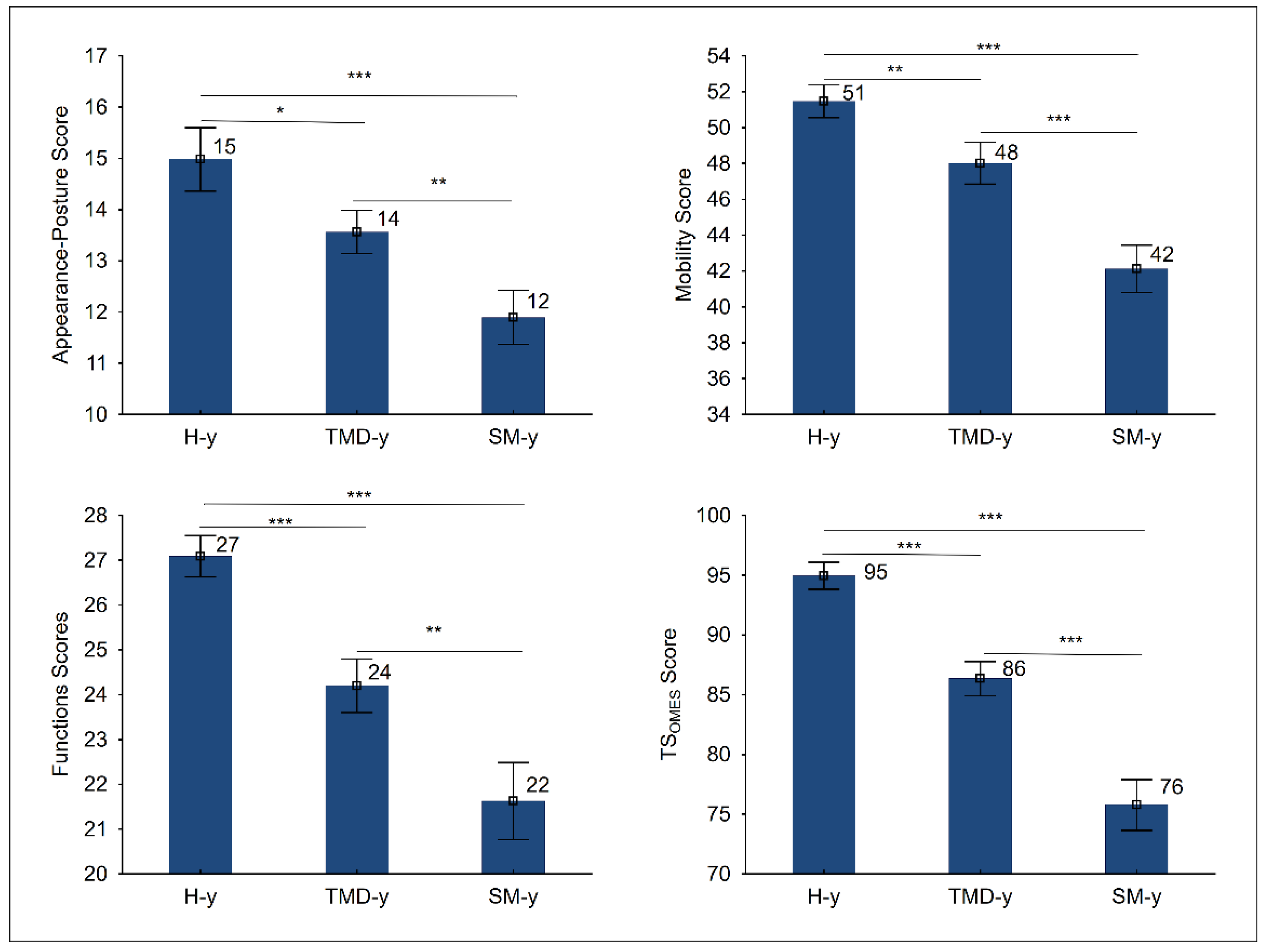
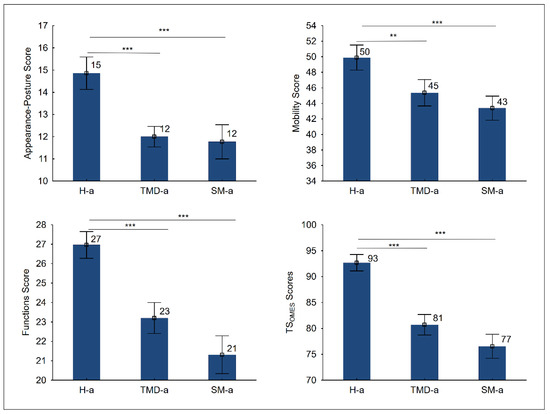
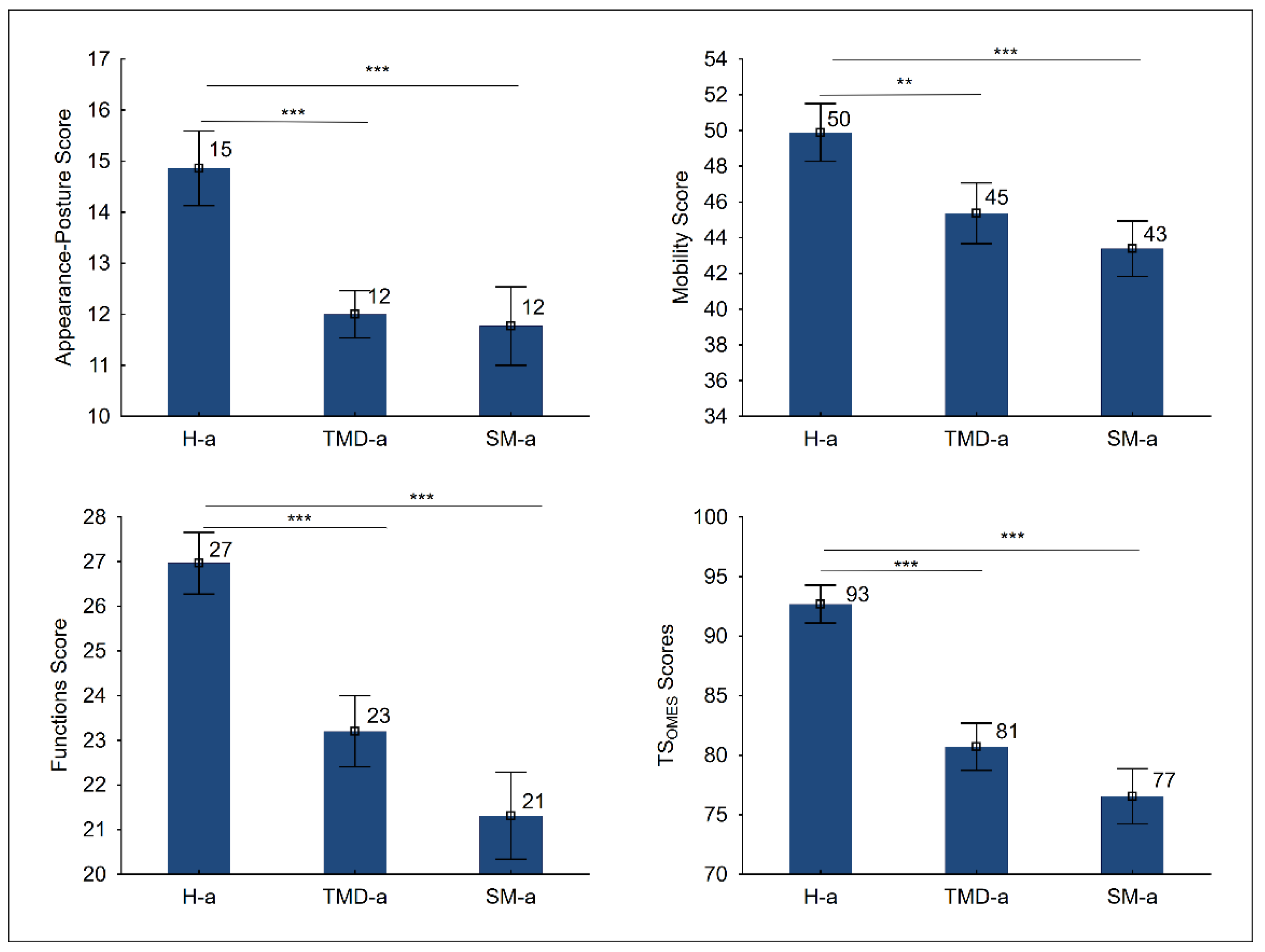
Table 1 presents the characteristics and evaluation results of the child groups. Figure 2 illustrates the results for the H-c (n = 20), OSA-c (n = 20), and AOB-c (n = 20) groups. The characteristics and results of the young and adult groups are shown in Table 2 and Table 3, respectively. OMES evaluation results for H-y (n = 55), TMD-y (n = 55), and SM-y (n = 48) are shown in Figure 3, and for H-a (n = 28), TMD-a (n = 30), and SM-a (n = 26) in Figure 4. The classification of orofacial myofunctional disorder (OMD) according to TSOMES cutoff scores is presented in Table 4.
Table 1.
Demographic data and orofacial myofunctional evaluation results in children according to OMES protocol items, categories, and total score.
Figure 2.
Means of orofacial myofunctional evaluation of children (c): healthy (H-c), patients with OSA (OSA-c) and with anterior open bite (AOB-c). TSOMES: Total score in the OMES protocol. The error bars correspond to the 95% confidence interval of the means. Probability in the Kruskal–Wallis test for all categories p < 0.0001. Significant difference in post-test: ** p < 0.01, *** p < 0.001.
Table 2.
Demographic data and orofacial myofunctional evaluation results in young individuals according to OMES protocol items, categories, and total score.
Table 3.
Demographic data and orofacial myofunctional evaluation results in adults according to OMES protocol items, categories, and total score.
Figure 3.
Means of orofacial myofunctional evaluation of young adults (y): Healthy (H-y), patients with TMD (TMD-y) and with skeletal malocclusion (SM-y). TSOMES: Total score in the OMES protocol. The error bars correspond to the 95% confidence interval of the means. Probability in the Kruskal-Wallis test for all categories p < 0.0001. Significant difference in Post-test: * p < 0.05, ** p < 0.01, *** p < 0.001.
Figure 4.
Means of orofacial myofunctional evaluation of adults (a): healthy (H-a), patients with TMD (TMD-a) and with skeletal malocclusion (SM-a). TSOMES: Total score in the OMES protocol. The error bars correspond to the 95% confidence interval of the means. Probability in the Kruskal–Wallis test for all categories p < 0.0001. Significant difference in post-test: ** p < 0.01, *** p < 0.001.
Table 4.
Classification of orofacial myofunctional disorder (OMD) according to TSOMES cutoff scores.
Based on ROC curve analysis, TSOMES values were significantly greater than chance for identifying the presence of OMD in children (AUC = 0.964, p < 0.001, CI: 0.88–0.99). A TSOMES cutoff score of <89 was adopted. Accordingly, individuals with scores below the cutoff were classified as presenting a relevant degree of OMD.
In the pediatric sample, sensitivity and specificity were 95.0% (CI: 83.1–99.4%) and 85.0% (CI: 62.1–96.8%), respectively. The positive and negative likelihood ratios (LR+ and LR−) were 6.33 and 0.06, respectively, and the Youden index (J) was 0.80 (CI: 0.66–0.93, p < 0.0001).
For young adults, the AUC was 0.945 (CI: 0.90–0.97, p < 0.001). Using a TSOMES cutoff score of <90, sensitivity was 89.3% (CI: 83.3–95.3%) and specificity was 83.6% (CI: 73.9–93.4%). The LR+ and LR− were 5.46 and 0.13, respectively, and the Youden index (J) was 0.73 (CI: 0.64–0.81, p < 0.0001).
For adults, the AUC was 0.98 (CI: 0.92–0.99, p < 0.001). Using a TSOMES cutoff score of <87, sensitivity was 92.9% (CI: 82.7–98.0%) and specificity was 85.7% (CI: 67.3–96.0%). The LR+ and LR− were 6.50 and 0.08, respectively, and the Youden index (J) was 0.78 (CI: 0.67–0.90, p < 0.0001).
These results indicate good diagnostic performance of the OMES protocol for identifying OMD across all three age groups.
3.3. Classification According to the TSOMES Cutoff
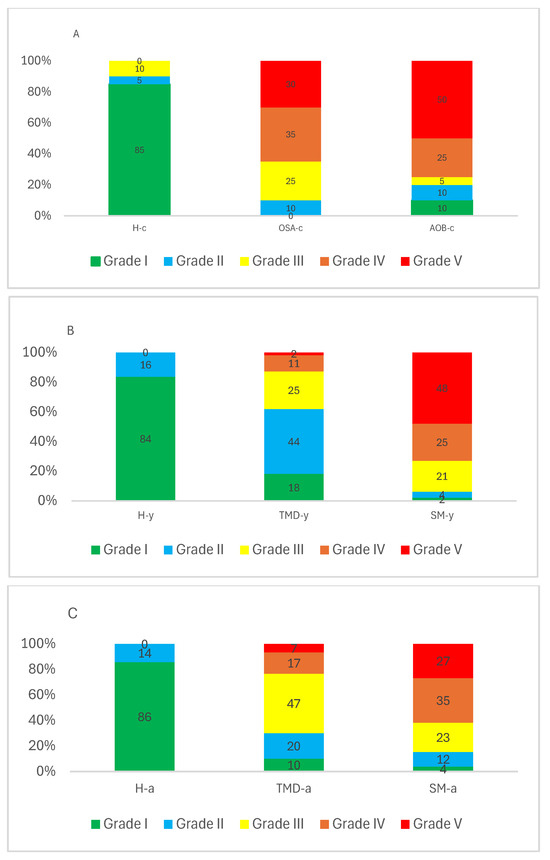
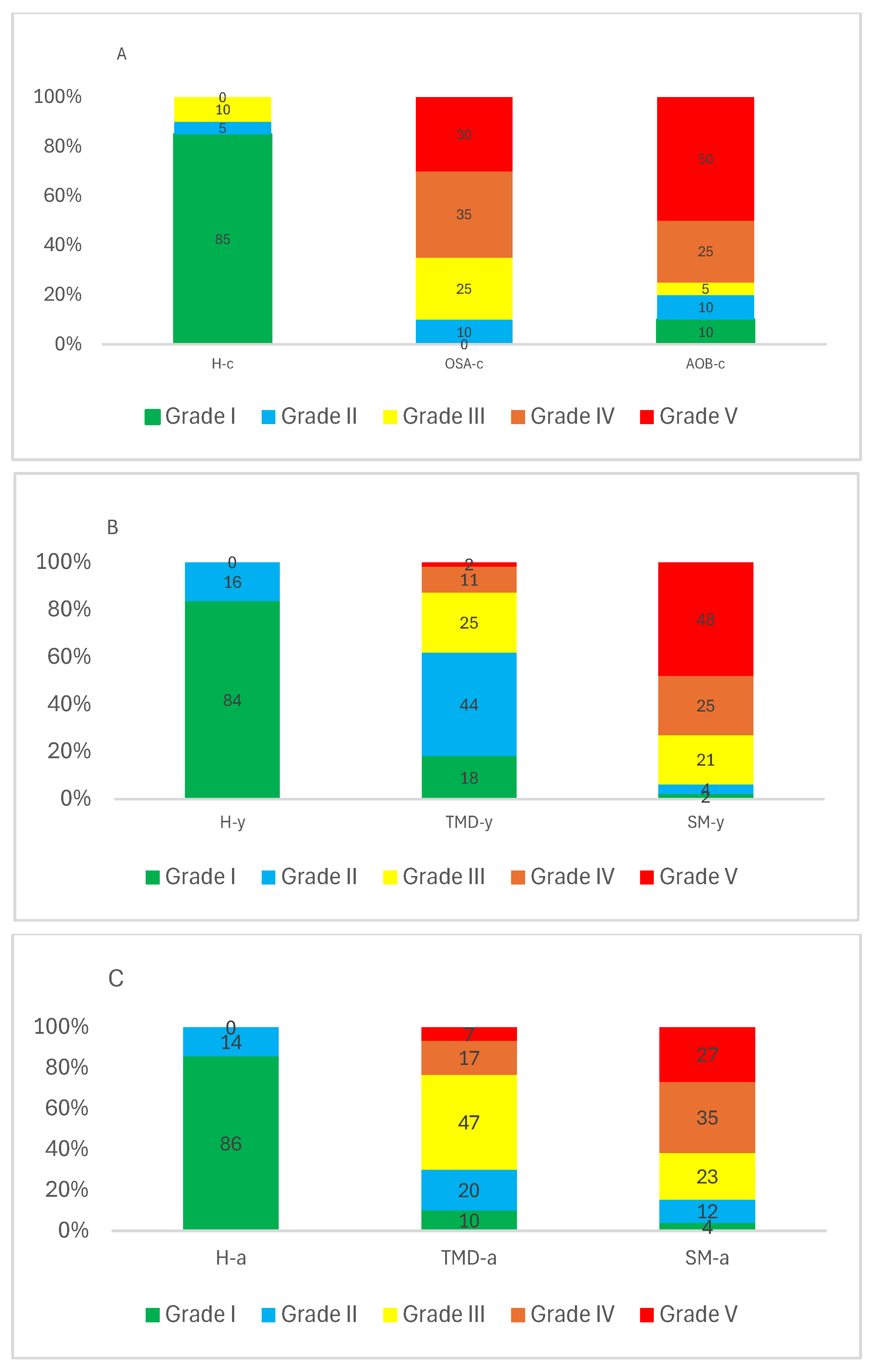
Based on the age-specific TSOMES cutoff scores, OMD classifications are presented in Table 4. The distribution of classifications for children, young individuals, and adults is shown in Figure 5A–C.
Figure 5.
Distribution of groups according to TSOMES-based classification: (A) children, (B) young adults, and (C) adults. H-c: health children; OSA: OSA-c: children with OSA and AOB-c with AOB; H-y: healthy young adults, young adult patients with (TMD-y), with SM (SM-y); H-a: healthy adults; adult patients with (TMD-a), and with SM (SM-a), according to classification by TSOMES.
4. Discussion
The results confirmed that the OMES protocol presents good sensitivity and adequate specificity for assessing orofacial myofunctional conditions in children, young adults, and adults. In addition, the findings support its validity for identifying orofacial myofunctional disorders, with adequate internal consistency and the establishment of age-specific cutoff scores for each of the analyzed age groups.
The main advantage of the present study, compared with previous investigations demonstrating the validity and reproducibility of the OMES protocol [1,9], was the use of a known-groups design. This analytical approach is useful for examining instrument performance and assessing the generalizability of results [27]. Sensitivity, specificity, and likelihood ratios are not dependent on the prevalence of the condition being investigated; therefore, the results may apply to other clinical contexts. However, these parameters may vary depending on the disease spectrum of the studied group and if the disease definition is modified [39,40].
Therefore, the OMES protocol showed that it can be considered a measure of orofacial myofunctional condition related to OMD across different underlying conditions affecting the stomatognathic system.
Healthy groups presented significantly higher scores across all categories and in the TSOMES compared with patient groups. The magnitude of the between-group differences indicated large effect sizes, reinforcing the discriminative capacity of the instrument and supporting its applicability in identifying OMD across different age groups.
It is worth noting that, across the three age ranges, the majority of individuals in the healthy groups presented no relevant OMD (>83%). The absence of OMD was not an eligibility criterion for the healthy groups, because preselecting controls on the basis of OMES findings would have introduced incorporation bias and likely overestimated specificity. Consequently, some individuals classified as healthy according to the predefined medical, dental, and functional eligibility criteria could still present OMD. In the H-c group, the few grade III classifications may reflect factors not captured by those criteria, including variation or delay in orofacial motor development It is important to note that the absence of OMD was not a criterion for selecting the healthy groups, as this would likely have resulted in an overestimation of specificity. Furthermore, the lower cutoff score obtained for the adult group may be related to minor orofacial impairments that may occur in this age group, including those associated with aging. Conversely, the higher cutoff score observed in the young adults group may be attributed to better occlusal stability.
Researchers have used the OMES protocol to assess and characterize orofacial myofunctional conditions in patients with a variety of underlying pathologies, even though its prior validation for young individuals and adults had been conducted only in individuals with temporomandibular disorders and healthy controls [1]. Among these studies, in patients with myotonic dystrophy type 1 (mean age: 36.05 ± 8.32), a mean TSOMES of 69.35 ± 10.15 was reported, compared with 90.15 ± 3.91 in healthy individuals [14]. Similarly, in patients with Sjögren’s syndrome (mean age: 33.2 ± 8.7), a mean TSOMES of 71.7 ± 6.2 was observed, with scores ranging from 63 to 83 [3]. In both studies, differences relative to control groups were statistically significant, reinforcing the sensitivity of the OMES protocol to detect clinically meaningful orofacial myofunctional impairments across distinct systemic conditions affecting the stomatognathic system.
In patients with glycogen storage disease, an inborn error of metabolism, significant differences in OMES protocol scores were found according to feeding behavior characteristics [18]. Notably, the median TSOMES was 84, below the cutoff value established in the present study, in participants who had received tube feeding for more than one year, as well as in those presenting feeding difficulties such as selective intake, preference for liquids and semi-solids, prolonged mealtime duration, and mealtime-related stress.
Recently, it was reported that 71.4% of patients with postburn facial and neck contractures presented OMD, as assessed using the OMES protocol [19]. These findings further support the sensitivity of the OMES protocol to capture functional impairments associated with both systemic conditions and maladaptive feeding behaviors, highlighting its clinical utility across different ages and etiological contexts.
The OMES scores also enabled the identification of associations between myofunctional conditions and breathing-related symptoms, daytime sleepiness, and developmental and behavioral symptoms in children [15]. A recent study in adults with OSA reported a significant negative relationship between OMES scores and health indices, including apnea–hypopnea index, lowest and mean arterial oxygen saturation, respiratory disturbance index, oxygen desaturation index, percentage of total recorded time with oxygen saturation below 90%, and OSA severity [17].
Another advantage of the present study was the establishment of age-specific cutoff scores. Based on TSOMES, it is therefore possible to distinguish individuals with and without clinically relevant OMD with adequate accuracy. In addition, the use of fixed 5-point intervals to grade OMD severity allows a coherent and clinically interpretable stratification around the age-specific cut-offs. However, these severity categories should be regarded as preliminary and exploratory and require validation in future studies.
It is important to clarify that OSA, TMD, and malocclusion were not used in this study as surrogate diagnoses of OMD. Rather, these clinical conditions were used as known groups because previous studies have consistently demonstrated a higher prevalence of OMD in these populations [1,5,6,7,11,15,21,23,31,32].
According to the results, the OMES protocol demonstrated good sensitivity and specificity for identifying individuals with and without OMD, supporting decisions regarding the indication of orofacial myofunctional therapy. This is particularly applicable when the protocol is used to select individuals for referral to therapeutic intervention. Nevertheless, based on a detailed analysis of the assessment, developmental considerations, and the course or outcomes of other ongoing treatments, clinical judgment remains essential to determine whether therapy is indicated at a given time and for the specific orofacial myofunctional condition presented.
Other researchers have employed the OMES protocol to analyze treatment effects on orofacial myofunctional condition in children, as well as in adolescents and adults [2,4,20,21,22,23,24,25]. Taken together, these studies confirm the feasibility of the generalized use of the OMES protocol across different populations, both for identifying orofacial myofunctional disorders and for measuring treatment effects, thereby contributing to the construct validity of the OMES protocol through the accumulation of converging evidence.
An important point to highlight is that the results of the present study allow a more accurate indication of orofacial myofunctional therapy, as the availability of cutoff values is essential for clinical decision-making and resource optimization. In research settings, the inclusion of participants who do not differ meaningfully from control groups may obscure treatment effects or reduce their apparent magnitude.
In the study by Ibrahim et al. [24], patients with Down syndrome were divided into two groups. One group, with a median TSOMES of 80 (range: 70–93), received OMT, whereas the other group, with a median score of 77 (range: 61–92), received OMT plus spirometer training. After intervention, median scores increased to 88 (range: 77–104) and 85 (range: 72–97), respectively. In another study involving adolescents and young adults with atypical swallowing, the mean TSOMES increased from 88 ± 8.41 before therapy to 96.33 ± 4.30 after OMT [2]. In both studies, significant improvements were reported. However, the absence of established cutoff scores may have led to therapy indications for individuals who required it less or not at all.
In a recent study, no significant changes were observed in post-intervention or follow-up OMES scores or in tongue and lip strength and endurance measures. This finding is understandable, as participants were healthy young adults with high baseline TSOMES (95.2 ± 2.38) and optimal strength and endurance values [25]. Such conditions limit the detection of change and further reinforce the importance of cutoff scores for clinical and research decision-making.
In the present cross-sectional study, although different age groups were included, the design does not allow inferences regarding longitudinal changes in orofacial myofunctional condition or therapeutic response over time. In addition, the absence of a specific adolescent group from 13 to 17 years old limits the direct extrapolation of cutoff scores to this population. Additionally, the sample was derived from a single Brazilian center, but the participants were recruited from specialized public referral services within the Brazilian Unified Health System (SUS), including reference centers for temporomandibular disorders, dentofacial deformities, and obstructive sleep apnea. Therefore, the sample encompassed individuals referred from different geographic areas and clinical backgrounds, which may partially mitigate concerns regarding sample homogeneity. Nevertheless, caution is warranted when generalizing the findings to populations with different demographic, cultural, and healthcare characteristics. Future multicenter studies involving diverse populations are warranted to further validate the proposed cutoff scores and investigate their applicability across additional clinical subgroups. Longitudinal and multicenter studies should also examine the stability and predictive value of these cutoff scores, as well as their sensitivity to changes following orofacial myofunctional therapy.
5. Conclusions
The OMES protocol demonstrated evidence of construct validity through the known-groups approach and showed adequate psychometric performance across different clinical conditions affecting the stomatognathic system in children, young adults, and adults. Age-specific cutoff scores for the identification of orofacial myofunctional disorders were established, and preliminary severity categories were proposed based on OMES total scores. The findings suggest that OMES scores may provide clinically relevant information regarding morphological and functional aspects of the stomatognathic system, supporting the assessment of orofacial myofunctional status and contributing to clinical decision-making, treatment planning, outcome monitoring, and research applications. Further studies are needed to externally validate the proposed cutoff scores and severity classifications in independent populations.
Author Contributions
C.M.d.F.: Conceptualization, Methodology, Validation, Resources, Writing—review and editing, Supervision, Project administration, Funding acquisition. M.C.G.A.: Investigation, Data curation, Validation. L.V.V.T.: Investigation, Data curation, Writing—original draft preparation, Writing—review and editing, Visualization. G.A.F.: Conceptualization, Methodology, Validation, Formal analysis, Investigation, Data curation, Writing—original draft preparation, Writing—review and editing, Visualization. All authors have read and agreed to the published version of the manuscript.
Funding
This work was supported partially by resources from Higher Education Personnel (CAPES—Coordenação de Pessoal de Nível Superior), Brazil (CNPq Process 404918/2006-6).
Institutional Review Board Statement
The study was conducted in accordance with the Declaration of Helsinki and was approved by the Human Research Ethics Committee of the Ribeirão Preto School of Medicine, University of São Paulo, Ribeirão Preto, SP, Brazil (approval number 1211/2018).
Informed Consent Statement
Informed consent was obtained from all subjects involved in the study.
Data Availability Statement
The data supporting the findings of this study are not publicly available due to ethical and privacy restrictions. The datasets are available from the corresponding author upon reasonable request, subject to the submission of a formal request describing the intended use of the data and an appropriate scientific justification.
Acknowledgments
The authors would like to thank the Clinics Hospital of the Ribeirão Preto School of Medicine, University of São Paulo, particularly the Centro Especializado de Otorrinolaringologia e Fonoaudiologia (CEOF), for their support in conducting this study.
Conflicts of Interest
The authors declare no conflicts of interest.
Abbreviations
The following abbreviations are used in this manuscript:
| AOB | Anterior open bite |
| AOB-c | Group composed of children with anterior open bite malocclusion |
| DFD | Dentofacial deformitie |
| H-c | Healthy children |
| H-y | Healthy young adults |
| OAHI | Obstructive Apnea–Hypopnea Index |
| OMD | Orofacial myofunction disorders |
| OMES | Orofacial Myofunctional Evaluation with Scores protocol |
| OSA | Obstructive sleep apnea |
| OSA-c | Group composed by children with OSA |
| P-c | Children patients |
| ROC | Receiver operating characteristic |
| SM | Skeletal malocclusion |
| STARD | Reporting Diagnostic Accuracy Studies |
| SUS | Brazilian Unified Health System |
| TMD | Temporomandibular disorders |
References
- de Felício, C.M.; Medeiros, A.P.; de Oliveira Melchior, M. Validity of the “protocol of oro-facial myofunctional evaluation with scores” for young and adult subjects. J. Oral Rehabil. 2012, 39, 744–753. [Google Scholar] [CrossRef] [Scilit] [PubMed]
- Begnoni, G.; Dellavia, C.; Pellegrini, G.; Scarponi, L.; Schindler, A.; Pizzorni, N. The efficacy of myofunctional therapy in patients with atypical swallowing. Eur. Arch. Otorhinolaryngol. 2020, 277, 2501–2511. [Google Scholar] [CrossRef] [Scilit] [PubMed]
- Zanin, M.C.; Garcia, D.M.; Rocha, E.M.; de Felício, C.M. Orofacial motor functions and temporomandibular disorders in patients with Sjögren’s syndrome. Arthritis Care Res. 2020, 72, 1057–1065. [Google Scholar] [CrossRef] [Scilit] [PubMed]
- Mozzanica, F.; Pizzorni, N.; Scarponi, L.; Crimi, G.; Schindler, A. Impact of oral myofunctional therapy on orofacial myofunctional status and tongue strength in patients with tongue thrust. Folia Phoniatr. Logop. 2021, 73, 413–421. [Google Scholar] [CrossRef] [Scilit] [PubMed]
- de Lima, A.C.D.; Albuquerque, R.C.; da Cunha, D.A.; de Lima, C.A.D.; Lima, S.J.H.; da Silva, H.J. Relation of sensory processing and stomatognical system of oral respiratory children. CoDAS 2021, 34, e20200251. [Google Scholar] [CrossRef] [Scilit] [PubMed]
- Fassicollo, C.E.; Machado, B.C.Z.; Garcia, D.M.; de Felício, C.M. Swallowing changes related to chronic temporomandibular disorders. Clin. Oral Investig. 2019, 23, 3287–3296. [Google Scholar] [CrossRef] [Scilit] [PubMed]
- Nascimento-Moraes, K.S.G.; Giglio, L.D.; de Mello-Filho, F.V.; de Felício, C.M.; Trawitzki, L.V.V. Tongue myofunctional performance, strength and functionality index in Class II and Class III dentofacial deformities. Eur. J. Orthod. 2025, 48, cjaf110. [Google Scholar] [CrossRef] [Scilit] [PubMed]
- Bakke, M.; Bergendal, B.; McAllister, A.; Sjögreen, L.; Åsten, P. Development and evaluation of a comprehensive screening for orofacial dysfunction. Swed. Dent. J. 2007, 31, 75–84. [Google Scholar] [PubMed]
- de Felício, C.M.; Ferreira, C.L.P. Protocol of orofacial myofunctional evaluation with scores. Int. J. Pediatr. Otorhinolaryngol. 2008, 72, 367–375. [Google Scholar] [CrossRef] [Scilit] [PubMed]
- Genaro, K.F.; Berretin-Felix, G.; Rehder, M.I.B.C.; Marchesan, I.Q. Orofacial myofunctional evaluation—MBGR protocol. Rev. CEFAC 2009, 11, 237–255. [Google Scholar]
- Folha, G.A.; Valera, F.C.P.; de Felício, C.M. Diagnostic accuracy of an orofacial scale for the detection of orofacial myofunctional disorders in patients with obstructive sleep apnoea. J. Oral Rehabil. 2025, 52, 1343–1350. [Google Scholar] [CrossRef] [Scilit] [PubMed]
- Matos, A.L.S.; Berretin-Felix, G.; Barreto, Í.D.C.; Gurgel, R.Q.; Medeiros, A.M.C. MMBGR protocol—Diagnostic accuracy of clinical examination in infants. CoDAS 2025, 37, e20240315. [Google Scholar] [CrossRef] [Scilit]
- Giglio, L.D.; de Felício, C.M.; Trawitzki, L.V.V. Orofacial functions and forces in male and female healthy young and adults. CoDAS 2020, 32, e20190045. [Google Scholar] [CrossRef] [Scilit] [PubMed]
- Ercolin, B.; Sassi, F.C.; Mangilli, L.D.; Mendonça, L.I.; Limongi, S.C.O.; de Andrade, C.R.F. Oral motor movements and swallowing in patients with myotonic dystrophy type 1. Dysphagia 2013, 28, 446–454. [Google Scholar] [CrossRef] [Scilit] [PubMed]
- Hoang, D.A.; Le, V.N.T.; Nguyen, T.M.; Jagomägi, T. Orofacial dysfunction screening examinations in children with sleep-disordered breathing symptoms. J. Clin. Pediatr. Dent. 2023, 47, 25–34. [Google Scholar] [CrossRef] [Scilit] [PubMed]
- Verbeke, J.; Alighieri, C.; Hodges, A.; Kestens, K.; Albite, R.; Tan, R.M.; Bettens, K.; Van Lierde, K. Orofacial strength and functions in Filipino adults with delayed palatal (and lip) closure. J. Craniofacial Surg. 2025, 36, 3080–3087. [Google Scholar] [CrossRef] [Scilit] [PubMed]
- Yang, X.; Xie, S.; Wen, Y.; Chen, J. Obstructive sleep apnea and orofacial myofunctional profile in adults: A cross-sectional study. Nat. Sci. Sleep 2025, 17, 2185–2199. [Google Scholar] [CrossRef] [Scilit] [PubMed]
- Martinez, C.C.; Tonon, T.; Nalin, T.; Refosco, L.F.; de Souza, C.F.M.; Schwartz, I.V.D. Feeding difficulties and orofacial myofunctional disorder in patients with hepatic glycogen storage diseases. JIMD Rep. 2019, 45, 21–27. [Google Scholar] [CrossRef] [Scilit] [PubMed]
- Vijayalakshmi, V.D.; Chandran, S.; Friji, M.T.; Mohapatra, D.P.; Mohapatra, M. Oro-motor function in patients with postburn facial and neck contractures. J. Indian Speech Lang. Hear. Assoc. 2025, 39, 53–58. [Google Scholar] [CrossRef] [Scilit] [PubMed]
- Maffei, C.; Garcia, P.; de Biase, N.G.; Camargo, E.d.S.; Vianna-Lara, M.S.; Grégio, A.M.T.; Azevedo-Alanis, L.R. Orthodontic intervention combined with myofunctional therapy increases electromyographic activity of masticatory muscles in patients with skeletal unilateral posterior crossbite. Acta Odontol. Scand. 2014, 72, 298–303. [Google Scholar] [CrossRef] [Scilit] [PubMed]
- Machado, B.C.; Mazzetto, M.O.; da Silva, M.A.M.R.; de Felício, C.M. Effects of oral motor exercises and laser therapy on chronic temporomandibular disorders: A randomized study with follow-up. Lasers Med. Sci. 2016, 31, 945–954. [Google Scholar] [CrossRef] [Scilit] [PubMed]
- Carvalho Lima, V.L.; Collange Grecco, L.A.; Marques, V.C.; Fregni, F.; Brandão de Ávila, C.R. Transcranial direct current stimulation combined with integrative speech therapy in a child with cerebral palsy: A case report. J. Bodyw. Mov. Ther. 2016, 20, 252–257. [Google Scholar] [CrossRef] [Scilit] [PubMed]
- Melchior, M.O.; Machado, B.C.; Magri, L.V.; Mazzetto, M.O. Effect of speech-language therapy after low-level laser therapy in patients with temporomandibular disorders: A descriptive study. CoDAS 2016, 28, 818–822. [Google Scholar] [CrossRef] [Scilit] [PubMed]
- Ibrahim, A.F.; Salem, E.E.; Gomaa, N.E.; Abdelazeim, F.H. The effect of incentive spirometer training on oromotor and pulmonary functions in children with Down’s syndrome. J. Taibah Univ. Med. Sci. 2019, 14, 405–411. [Google Scholar] [CrossRef] [Scilit] [PubMed]
- Van der Straeten, C.; Verbeke, J.; Bettens, K.; De Pauw, G.; Van Lierde, K. The OMA-project—Orofacial myofunctional behaviour in adults: Effectiveness of orofacial myofunctional therapy protocols in healthy young adults with orofacial myofunctional disorders. J. Oral Rehabil. 2026, 53, 945–959. [Google Scholar] [CrossRef] [Scilit] [PubMed]
- Pernambuco, L.; Espelt, A.; Magalhães Junior, H.V.; Lima, K.C. Recommendations for elaboration, transcultural adaptation and validation process of tests in speech, hearing and language pathology. CoDAS 2017, 29, e20160217. [Google Scholar] [CrossRef] [Scilit] [PubMed]
- Ohrbach, R.; Larsson, P.; List, T. The Jaw Functional Limitation Scale: Development, reliability, and validity of 8-item and 20-item versions. J. Orofac. Pain 2008, 22, 219–230. [Google Scholar] [PubMed]
- Cohen, J.F.; Korevaar, D.A.; Altman, D.G.; Bruns, D.E.; Gatsonis, C.A.; Hooft, L.; Irwig, L.; Levine, D.; Reitsma, J.B.; de Vet, H.C.W.; et al. STARD 2015 guidelines for reporting diagnostic accuracy studies: Explanation and elaboration. BMJ Open 2016, 6, e012799. [Google Scholar] [CrossRef] [Scilit] [PubMed]
- Almotairy, N.; Kumar, A.; Trulsson, M.; Grigoriadis, A. Development of the jaw sensorimotor control and chewing—A systematic review. Physiol. Behav. 2018, 194, 456–465. [Google Scholar] [CrossRef] [Scilit] [PubMed]
- Almotairy, N.; Kumar, A.; Noirrit-Esclassan, E.; Grigoriadis, A. Developmental and age-related changes in sensorimotor regulation of biting maneuvers in humans. Physiol. Behav. 2020, 219, 112845. [Google Scholar] [CrossRef] [Scilit] [PubMed]
- de Felício, C.M.; da Silva Dias, F.V.; Folha, G.A.; de Almeida, L.A.; de Souza, J.F.; Anselmo-Lima, W.T.; Trawitzki, L.V.V.; Valera, F.C.P. Orofacial motor functions in pediatric obstructive sleep apnea and implications for myofunctional therapy. Int. J. Pediatr. Otorhinolaryngol. 2016, 90, 5–11. [Google Scholar] [CrossRef] [Scilit] [PubMed]
- Marim, G.C.; Machado, B.C.Z.; Trawitzki, L.V.V.; de Felício, C.M. Tongue strength, masticatory and swallowing dysfunction in patients with chronic temporomandibular disorder. Physiol. Behav. 2019, 210, 112616. [Google Scholar] [CrossRef] [Scilit] [PubMed]
- American Academy of Sleep Medicine. International Classification of Sleep Disorders, 3rd ed.; text revision; American Academy of Sleep Medicine: Darien, IL, USA, 2023. [Google Scholar]
- Schiffman, E.; Ohrbach, R.; Truelove, E.; Look, J.; Anderson, G.; Goulet, J.-P.; List, T.; Svensson, P.; Gonzalez, Y.; Lobbezoo, F.; et al. Diagnostic Criteria for Temporomandibular Disorders (DC/TMD) for clinical and research applications: Recommendations of the International RDC/TMD Consortium Network and Orofacial Pain Special Interest Group. J. Oral Facial Pain Headache 2014, 28, 6–27. [Google Scholar] [CrossRef] [Scilit] [PubMed]
- World Health Organization. Obesity: Preventing and Managing the Global Epidemic; Report of a WHO Consultation; WHO Technical Report Series 894; World Health Organization: Geneva, Switzerland, 2000.
- Jensen, M.P. Questionnaire validation: A brief guide for readers of the research literature. Clin. J. Pain 2003, 19, 345–352. [Google Scholar] [CrossRef] [Scilit] [PubMed]
- King, L.K.; Stanaitis, I.; Hung, V.; Koppikar, S.; Waugh, E.J.; Lipscombe, L.; Hawker, G.A. National Institute of Health and Care Excellence clinical criteria for the diagnosis of knee osteoarthritis: A prospective diagnostic accuracy study in individuals with type 2 diabetes. Arthritis Care Res. 2025, 77, 623–630. [Google Scholar] [CrossRef] [Scilit] [PubMed]
- Silveira, P.S.P.; Rocha, F.T.; Vieira, J.E.; Siqueira, J.O. From blue November to broader diagnosis: The Youden index to evaluate the performance of any diagnostic tests. Clinics 2025, 80, 100804. [Google Scholar] [CrossRef] [Scilit] [PubMed]
- Rosenthal, R. Meta-Analytic Procedures for Social Research, 1st ed.; Sage Publications: Newbury Park, CA, USA, 1991. [Google Scholar]
- Šimundić, A.M. Measures of diagnostic accuracy: Basic definitions. EJIFCC 2009, 19, 203–211. [Google Scholar] [PubMed]

Disclaimer/Publisher’s Note: The statements, opinions and data contained in all publications are solely those of the individual author(s) and contributor(s) and not of MDPI and/or the editor(s). MDPI and/or the editor(s) disclaim responsibility for any injury to people or property resulting from any ideas, methods, instructions or products referred to in the content. |
© 2026 by the authors. Published by MDPI on behalf of the International Association of Orofacial Myology. Licensee MDPI, Basel, Switzerland. This article is an open access article distributed under the terms and conditions of the Creative Commons Attribution (CC BY) license.