
Article

Tongue and Jaw Movement Characteristics During Speech in Individuals with Down Syndrome
1
Department of Communication Sciences and Disorders, The Pennsylvania State University, University Park, PA 16802, USA
2
Department of Mathematics, The Pennsylvania State University, University Park, PA 16802, USA
3
Department of Computer Science, The Pennsylvania State University, University Park, PA 16802, USA
*
Author to whom correspondence should be addressed.
Int. J. Orofac. Myol. Myofunct. Ther. 2026, 52(2), 12; https://doi.org/10.3390/ijom52020012
Submission received: 29 May 2026 / Revised: 23 July 2026 / Accepted: 27 July 2026 / Published: 30 July 2026

Abstract

Previous research in speech acoustics has suggested that individuals with Down syndrome may have reduced tongue movement during speech, particularly in the anterior–posterior dimension. However, this has not been confirmed by direct articulatory kinematic examination. The current study examined tongue and jaw movement in adults with Down syndrome (DS) compared to typical adults. The study used the target words “whip” and “bib.” These words were chosen as a previous study showed that “whip” elicits a large tongue movement trajectory in the anterior–posterior dimension compared to “bib.” Eighteen adults with DS and 13 typical adults produced the target words in a carrier phrase “I say a ___ again” while tongue and jaw kinematic data were collected using electromagnetic articulography. Results showed reduced anterior–posterior tongue movement in the Down syndrome (DS) group during “whip” compared to typical adults but not in “bib.” In addition, greater vertical jaw movement in “bib” and reduced articulatory speed were observed in the DS group. The findings confirmed the reduced tongue movement in the anterior–posterior dimension in “whip” but not in “bib.” This suggests that individuals with DS may experience greater articulatory difficulties in words or sentences that elicit greater tongue excursion in the anterior–posterior dimension.

1. Introduction

Down syndrome (DS), a genetic condition resulting from trisomy 21, is among the most prevalent congenital chromosomal disorders [1]. Among many challenges faced by individuals with DS, reduced speech intelligibility has been widely reported [2,3,4,5]. Kumin (1994) reported that children with DS experience reduced intelligibility based on parental reports [4]. A study by Wilson and colleagues showed that adolescents with DS experience reduced intelligibility [5], and another study from the same group found that most (97.8%) present with motor speech disorders [6]. Even though the types of speech sound disorders that individuals with DS experience may vary [3], sufficient evidence has accumulated confirming reduced speech intelligibility in individuals with DS.
Previous speech intelligibility studies in individuals with DS showed that particular sounds are more challenging for listeners to understand when produced by individuals with DS [2,7]. For example, Wild and colleagues (2018) examined speech intelligibility of single words containing four corner vowels in 62 individuals with DS [7]. The study demonstrated greater errors in low vowels /ɑ/ and /æ/compared to high vowels /i/ and /u/ in individuals with DS. To understand the underpinnings of reduced speech intelligibility in individuals with DS, previous studies have examined speech production characteristics in individuals with DS [8,9,10].
Based on speech acoustic studies, increased variability in low vowel production, reduced acoustic vowel space, and reduced second formant (F2) range have been observed in individuals with DS [9,10,11]. Moura and colleagues (2008) examined vowel acoustic characteristics of 66 Portuguese children with DS and found a significant reduction in F2 distance between the high front vowel /i/ and the high back vowel /u/ compared to the typically developing controls [11]. Vorperian and colleagues (2023) showed vowel centralization and F2 reduction in the front−back dimension among American English-speaking individuals with DS [10]. In addition, this F2 reduction was associated with reduced intelligibility [7,10].
The reduced F2 observed in individuals with DS has been interpreted as resulting from reduced tongue movement in the anterior–posterior dimension [10]. Formants, including F2, are resonant frequencies of the vocal tract. As the tongue plays a key role in shaping the vocal tract during speech production, previous studies have examined and shown how tongue movements influence formants in specific ways. First formant (F1) values are associated with changes in tongue height [12,13], and this relationship was found to be strong in typical individuals [14]. F2 values are associated with tongue movement in the anterior–posterior dimension within the oral cavity [12,13]. Although the relationship between F2 and tongue advancement is weaker than that observed between F1 and tongue height, there is a general consensus that changes in tongue advancement lead to systematic changes in F2 in typical individuals [14].
However, the relationship between tongue movement and formants has been shown to be weaker in individuals with motor speech disorders [15]. Mefferd (2015) demonstrated that individuals with dysarthria, a type of motor speech disorder, have weaker acoustic−tongue articulatory mapping than typical individuals [15]. In other words, tongue movement contributes less to formant changes in this population. Thus, the interpretation or speculation based on acoustic findings would have a greater limitation when pertaining to underlying tongue movement characteristics in individuals with motor speech disorders. As individuals with DS experience speech sound disorders including motor speech disorders [3,5], direct examination of tongue movement is necessary to confirm the interpretation drawn from acoustic findings: tongue movement in the anterior–posterior dimension is reduced in individuals with DS.
Limited evidence is available regarding tongue movement characteristics for speech production in individuals with DS. To our knowledge, only one articulatory kinematic study has examined tongue movement characteristics in this population. Bunton and Leddy (2011) examined tongue articulatory working space, collected using X-ray microbeam, and acoustic vowel space in two individuals with DS and two controls based on four corner vowels [8]. The data included four pellets placed along the tongue in the sagittal plane. The findings descriptively showed that individuals with DS have reduced articulatory working space and reduced acoustic vowel space compared to controls. In addition, slower tongue movement speed was observed in individuals with DS, while vowel duration was similar between the groups. Among the four tongue pellets, the second (T2) and third (T3) pellets showed greater differences in articulatory working space compared to the first (T1) and fourth (T4) pellets. This previous study is groundbreaking in that it directly examined tongue movement in individuals with DS to shed light on the unique characteristics of speech movement in this population. However, although acoustic evidence such as reduced F2 range has been interpreted as reflecting reduced tongue movement in the anterior–posterior dimension, direct kinematic evidence of articulatory movement remains lacking and warrants further investigation with larger sample sizes.
Previous research in articulatory kinematics has shown that tongue movements are highly dependent on the phonetic targets being produced [16]. Thus, to effectively examine tongue movement in the anterior–posterior dimension, target stimuli must be carefully selected. In typical adults, words such as “whip” and “bib” have been used effectively to examine differences in tongue movement in the anterior–posterior dimension [17,18]. Lee and her colleagues (2016) demonstrated, using electromagnetic articulography, that typical individuals (19 males) advance their tongue to a greater extent when producing “whip” than when producing “bib.” In addition, tongue speed was faster in “whip” than “bib,” though duration did not differ significantly between the two words [17]. As articulatory kinematic data vary across individuals due to many factors, including anatomical characteristics, employing words with these inherent contrasts allows for the examination of specific articulatory characteristics and the amount of movement contrast between words. Therefore, utilizing these words provides a framework for investigating tongue movement characteristics in the anterior–posterior dimension in individuals with DS.
The purpose of the current study was to examine tongue movement in adults with DS compared to typical adults, with a focus on the anterior–posterior dimension, using the target words “whip” and “bib.” In addition to the tongue, we examined the jaw movement, as the tongue and jaw are anatomically coupled. The findings will advance our understanding of speech production challenges in individuals with Down syndrome and inform clinical practice.

2. Materials and Methods

2.1. The Participants

Speakers included 18 individuals with DS between ages 18 and 39 (mean age = 25.9 years, SD = 5.8; 10 males, 8 females) and 13 typical speakers (TS) between ages 20 and 27 (mean age = 21.3 years, SD = 2.2; 6 males, 7 females). The participants with DS were part of a larger project examining swallowing, language, cognition, and speech function in individuals with DS. Eligibility criteria for participants with DS included the following: (a) having a diagnosis of DS, (b) being between 18 and 40 years of age, (c) being able to produce single-word stimuli, (d) having hearing within normal limits (established through participants’ trusted support partners), (e) being native speakers of American English, and (f) not having a pacemaker (this was due to the use of an electromagnetic field in the current study). Typical speakers were required to meet the following criteria: (a) being native speakers of American English; (b) having no known speech, language, or hearing disorders per self-report; (c) having hearing within normal limits per self-report; (d) matching the sex, age, and dialect of participants with DS; and (e) not having a pacemaker. Table 1 shows demographic information and characteristics of the participants with DS. Individuals with DS exhibit heterogeneity in bite type, open mouth posture, and drooling, all of which can impact their speech production [7]. To provide a clear understanding of participant characteristics, these variables are presented in Table 1. Open mouth posture and drooling (Table 1) were assessed via visual inspection during the warm-up period, when rapport was established and demographic information collected. “State” (Table 1) refers to each participant’s state of current residence. Our participants with DS and their trusted support partner noted that this was also their hometown state, or where they had spent most of their lives. Thus, to closely match the dialect of participants with DS, control speakers were recruited to match hometown state, sex, and age. The current study is approved by the Pennsylvania State University Institutional Review Board.

2.2. Stimuli

Participants produced the target words “whip” and “bib” in the carrier phrase “I say a ____ again” twice in random order. To enhance adherence to the protocol and ease task demands for participants with DS, only two repetitions of each word were collected. The word “whip” was selected because it elicits greater tongue movement distance in the anterior–posterior dimension compared to “bib” in typical individuals [17]. This phonetic sensitivity reflects the articulatory composition of the two words. “Whip” begins with the labio-velar glide /w/, which requires coordinated lip rounding and tongue-body retraction and elevation toward a velar constriction, followed by a front vowel that requires active tongue advancement. In contrast, “bib” consists of a vowel flanked by bilabial stops (/b/), consonants produced primarily with the lips that do not require a specified tongue position. Thus, “whip” involves an articulatory sequence with clear, specified tongue movement demands, whereas “bib” does not inherently require independent tongue movement beyond what the vowel dictates. This makes “whip” sensitive to tongue movement differences in the anterior–posterior dimension and suitable for the purpose of the current study. Due to anatomical variability across individuals, the word “bib” was selected as a comparison word, as it elicits more neutral and limited tongue movement compared to “whip” as reported in a previous study.
Stimuli were presented visually (picture and orthographic word) alongside pre-recorded audio model samples on a laptop monitor. Participants were instructed to repeat the stimuli after a single presentation of the target. To support engagement, participants were provided breaks as needed.

2.3. Procedures

Tongue and jaw movement data were collected using electromagnetic articulography (EMA; AG501, Carstens Medizinelektronik, Germany). Participants wore a lapel microphone and three head reference sensors placed on goggles to correct movement sensor data for head movements. Kinematic data were recorded from the tongue and jaw. As tongue movement reflects the orchestrated movement between the jaw and the tongue, jaw kinematic data were included to better interpret the tongue movement findings. Given well-documented oral sensitivity and heightened gag reflex [19,20], only one tongue sensor was attached to the tongue body. A tongue sensor was attached using dental glue (PeriAcryl High Viscosity, GlueStitch, Canada) to the tongue blade area, 25 mm posterior to the tongue apex. To determine sensor placement, participants were asked to protrude their tongue. We observed that sustained tongue protrusion was difficult for some participants with DS to maintain. Even if they could not maintain the protruded position for long, the primary instruction given to participants was to open their mouth to allow sensor attachment. The sensor was placed along the lingual midline. This location was strategically chosen to avoid the tongue dorsum, thereby minimizing the gag reflex and maximizing tolerance with respect to sensor placement. Furthermore, as this location approximated that of the T2 and T3 pellets used in Bunton and Leddy [8], movement data from this sensor were expected to be sensitive to group differences. In addition, one jaw sensor was attached using bio-tape on the midsagittal plane of the jaw externally (chin), rather than intraorally (e.g., gums), to maximize participant comfort and tolerance. Tongue and jaw data were not decoupled, as this location does not allow the conventional method for decoupling [21]. Thus, the tongue movement data in the current study reflect a combination of tongue and jaw movements.
Even with a single tongue sensor, participants with DS demonstrated signs of reduced tolerance compared to controls, as evidenced by verbal statements regarding sensor attachment (e.g., “I’m just a little bit anxious”). To support participation, the EMA device was decorated with participants’ favorite characters. In addition, adequate time prior to sensor attachment was incorporated to allow participants to familiarize themselves with the equipment, including opportunities to examine and touch example sensors and bio-tape. We also observed that residual glue from the tongue sensor was less well tolerated in individuals with DS compared to controls. As a result, additional time was allotted for sensor detachment, during which participants were encouraged to drink water, consume a snack, loosen residual glue using the wooden end of a sterilized cotton swab, and wipe their tongues with gauze as needed. Prior to stimulus presentation, a bite plane (small plastic plate) was briefly inserted into the participant’s mouth to measure the bite plane angle.

2.4. Analysis

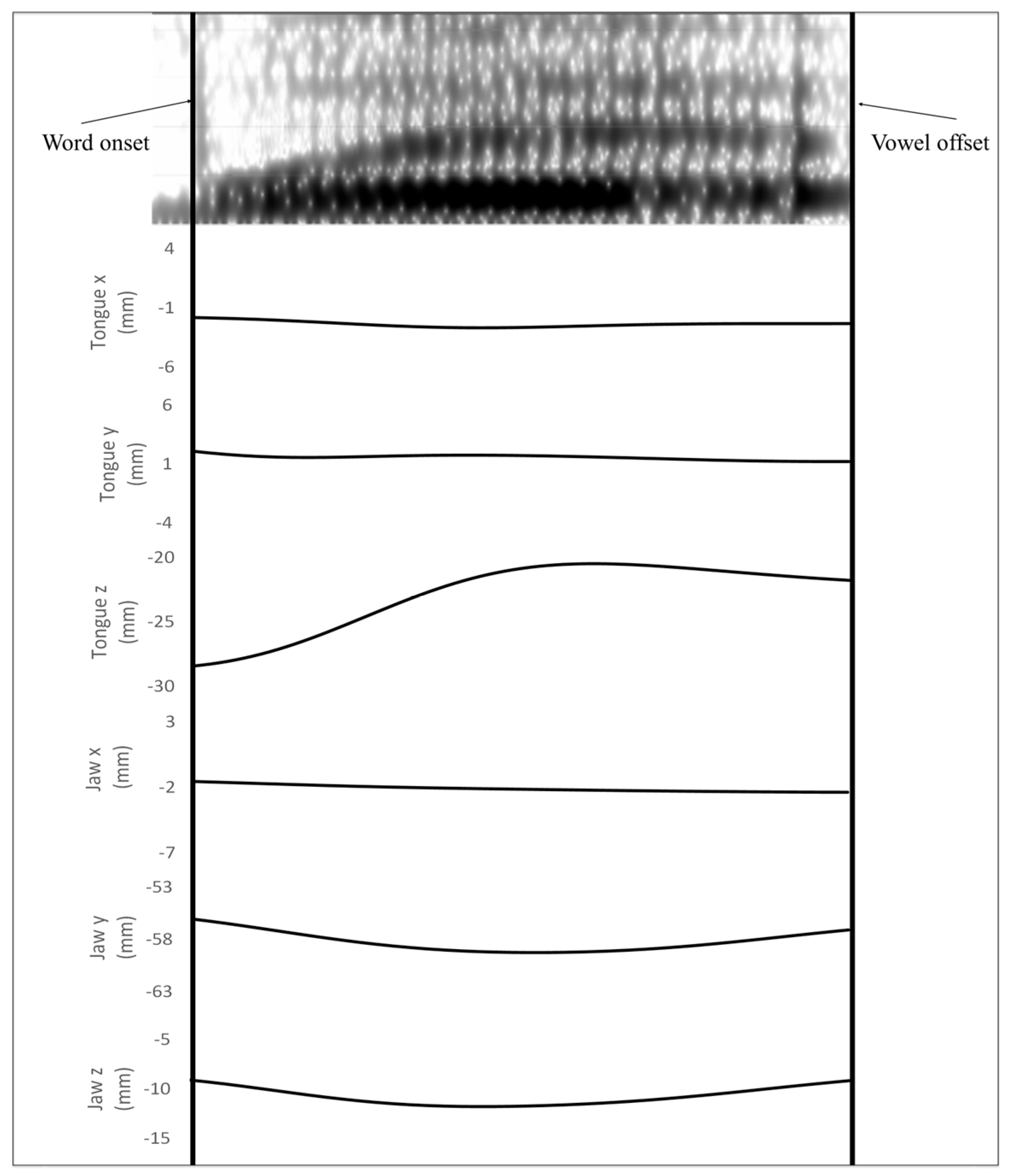
A total of 128 tokens were analyzed: 31 participants (18DS + 13Control) × 2 words (whip and bib) × 2 repetitions, plus 4 additional repetitions from 2 participants with DS. To identify the target segment for kinematic data extraction, temporal boundaries were first determined based on acoustic data. Temporal boundaries for the target segments of “whip” and “bib” were identified using TF32 software [22]. The analyzed segment included the onset of the word to the offset of the vowel, specifically from the beginning of the word to the end of the /ɪ/ vowel (i.e., /wɪ/ for “whip” and /bɪ/ for “bib”), replicating the analysis in Lee et al. [17,18]. Segment identification was guided by both waveform and spectrogram displays in TF32. The onset of /w/ in “whip” was defined where the lowest F2 was observed [18]. The vowel /ɪ/ was intentionally included in the target segment to ensure reliable temporal boundary measurement [17], while the final consonant was excluded from the analysis. Vowel offset was defined as the point at which F1 and/or F2 decayed and no longer were visible on the spectrogram [23] (see the top panel in Figure 1).
Using the bite plane data, the kinematic data were rotated so that the z-axis was aligned with the bite plane, and the data were translated so that the midline of the two upper incisors became the origin (0, 0, 0). Based on the temporal boundaries obtained from the acoustic data, 3D kinematic data were extracted along the x-, y-, and z-axes using SMASH [24]. Figure 1 shows an example of movement time histories with synchronized acoustic signals. An original Python script (version 3.12.10) was then developed to extract the following target variables from the trimmed kinematic data: overall movement distance (3D Euclidean distance), movement range in the anterior–posterior dimension and in the superior–inferior dimension, advancement and retraction movement distance, and raising and lowering movement distance. The SciPy [25] and Pandas [26] programming libraries were used in the script. Movement speed of the tongue and jaw was measured by dividing the overall movement distance by the movement duration. In this coordinate system, z-values increase as the articulator moves anteriorly (anterior–posterior dimension), y-values increase with upward movement (superior–inferior dimension), and x-values increase as the articulator moves laterally. Thus, advancement and retraction movement distances were measured as positive and negative cumulative changes in the z-dimension (anterior–posterior), respectively. Raising and lowering movement distances were measured as positive and negative cumulative changes in the y-dimension (superior–inferior), respectively. Movement range was calculated as the difference between the maximum and minimum values in each movement dimension.

2.5. Statistical Analyses

Linear mixed-effects models were used in R to examine the effects of Group (Down syndrome vs. controls), Word (“whip” vs. “bib”), and their interaction on the tongue and jaw kinematic variables [27]. The lemerTest package [28] in R was used to obtain statistical significance for the fixed effects. Fixed effects included Group, Word, and their interaction. By-speaker random intercepts were included to account for repeated measures (tokens). When a significant interaction was observed, Bonferroni-corrected post hoc tests were conducted using the emmeans package [29] in R to identify the source of the interaction effect. An alpha level of 0.05 was used for all analyses.

3. Results

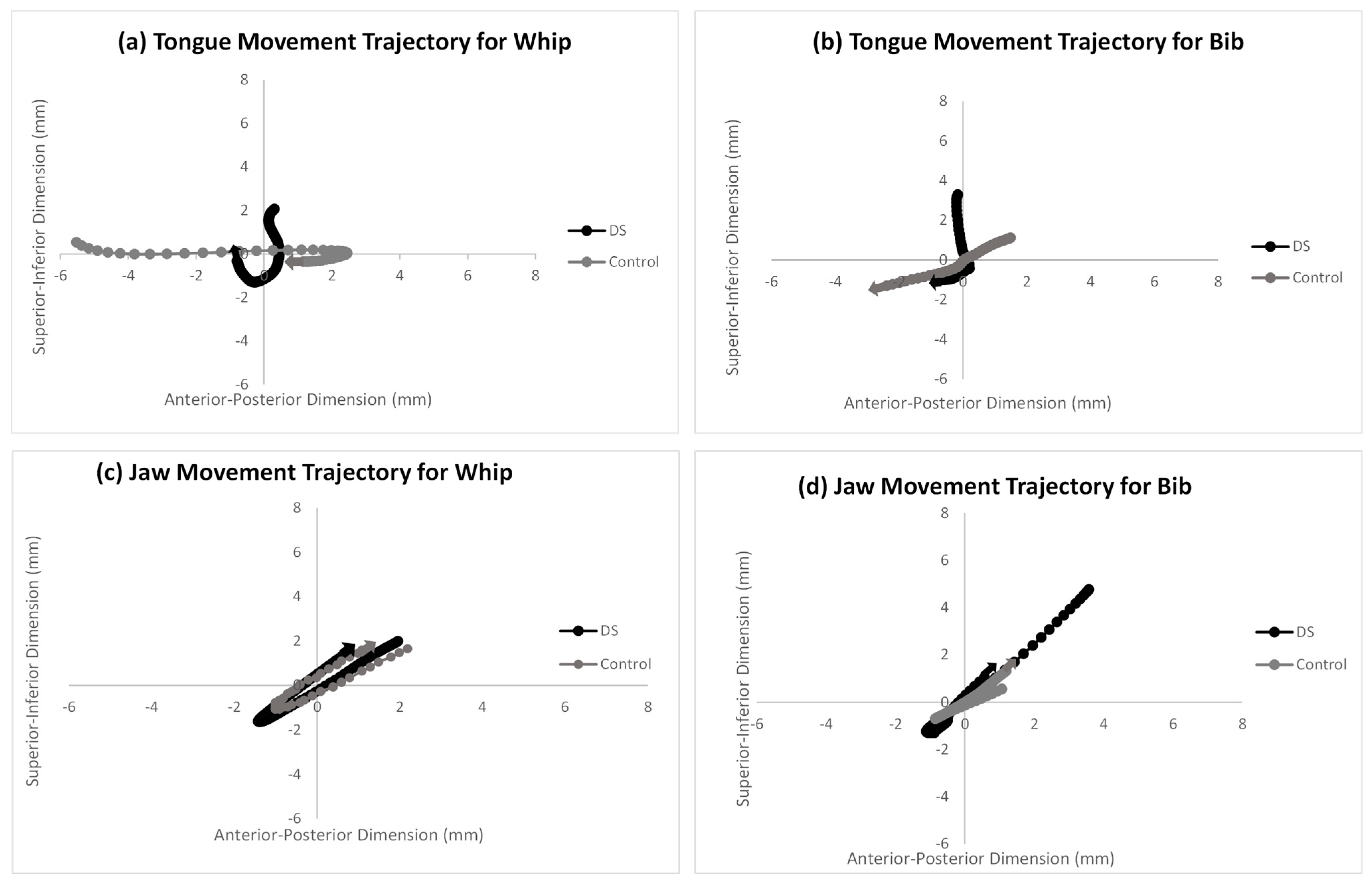
Figure 2 shows examples of tongue and jaw movement trajectories for the target words “whip” and “bib.” These examples are from a single participant in each group, with all four panels based on the same participant pairing. Table 2 presents the fixed effects results for tongue and jaw movement. Asterisks in the result Tables indicate significant statistical effects of the respective variables. For the variables with a significant Group × Word interaction, Table 3 summarizes the post hoc test findings examining group differences for each word. Table 4 summarizes the post hoc test findings examining word differences for each group. In the following section, the statistical findings are presented for each articulator.

3.1. Tongue Movement Distance

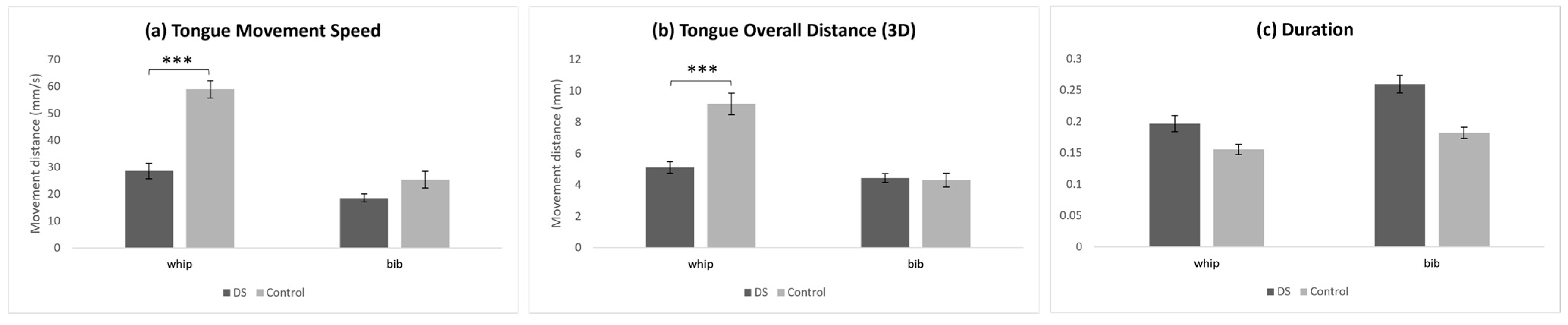
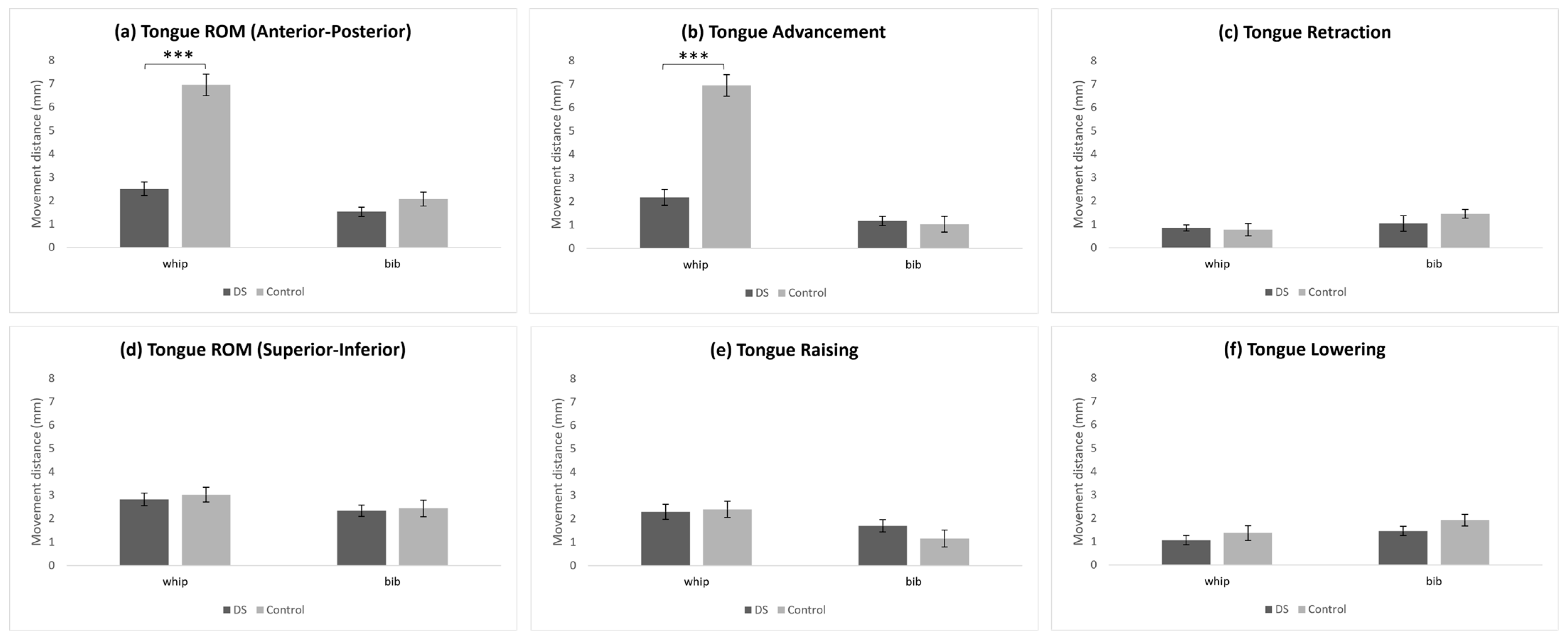
Figure 3 and Figure 4 show the descriptive tongue movement data and significant group differences. In Figure 3 and Figure 4, the x-axis shows words, and the y-axis shows the respective variables. Dark gray bars represent data from participants with DS, and light gray bars represent data from the control group. The bracket with asterisks indicates a significant group difference. As expected, Figure 4 (panel a) shows that the word “whip” elicited greater tongue movement in the anterior–posterior dimension compared to the word “bib” in the control group. A significant main effect of Word and a significant Group × Word interaction were observed across several tongue movement variables (Table 2). In terms of significant word effect, tongue retraction and tongue lowering movement distance showed a word effect only, which was due to greater tongue movement in “bib” than in “whip.” Tongue raising movement distance also showed a word effect only, due to greater tongue movement in “whip” than in “bib.” No significant effects were observed in tongue movement range in the superior–inferior dimension or in tongue raising and lowering movement distance. Movement duration did not differ significantly between the groups.
In the section below, the significant interaction is decomposed in two ways to clearly present the tongue movement findings: group difference by word, and word differences for each group.

3.1.1. Tongue Movement: Group Difference by Word

A significant Group × Word interaction was observed in tongue overall movement distance, tongue movement range in the anterior–posterior dimension, tongue advancement distance, and tongue movement speed. As shown in Table 3, the DS group produced reduced movement distance compared to the control group. Interestingly, these differences were observed only in the word “whip” but not in “bib.” As seen in Figure 4b, the primary tongue movement elicited for the target word “whip” was tongue advancement. Significantly reduced tongue movements were observed in the DS group in this variable, consequently yielding reduced movement range in the anterior–posterior dimension (Figure 4a) and overall tongue movement distances as well (Figure 3b). Descriptively, six of 18 participants with DS (33.3%) scored within one standard deviation of the typical group mean for tongue overall movement distance, one of 18 (5.6%) for tongue movement range in the anterior–posterior dimension, one of 18 (5.6%) for tongue advancement, and three of 18 (16.7%) for tongue movement speed.

3.1.2. Tongue Movement: Word Differences for Each Group

In addition to the word-specific group difference findings, the post hoc tests showed the group-specific word differences (Table 4). The results showed that the control group produced a significantly different movement distance between “whip” and “bib,” and the DS group produced the difference as well, but to a lesser degree (see mean difference in Table 4). Statistically, the DS group did not produce a significantly different tongue overall movement distance between the words, unlike the control group. This could be influenced by the absence of a significant movement difference in the superior–inferior dimension between the words.

3.2. Jaw Movement Distance

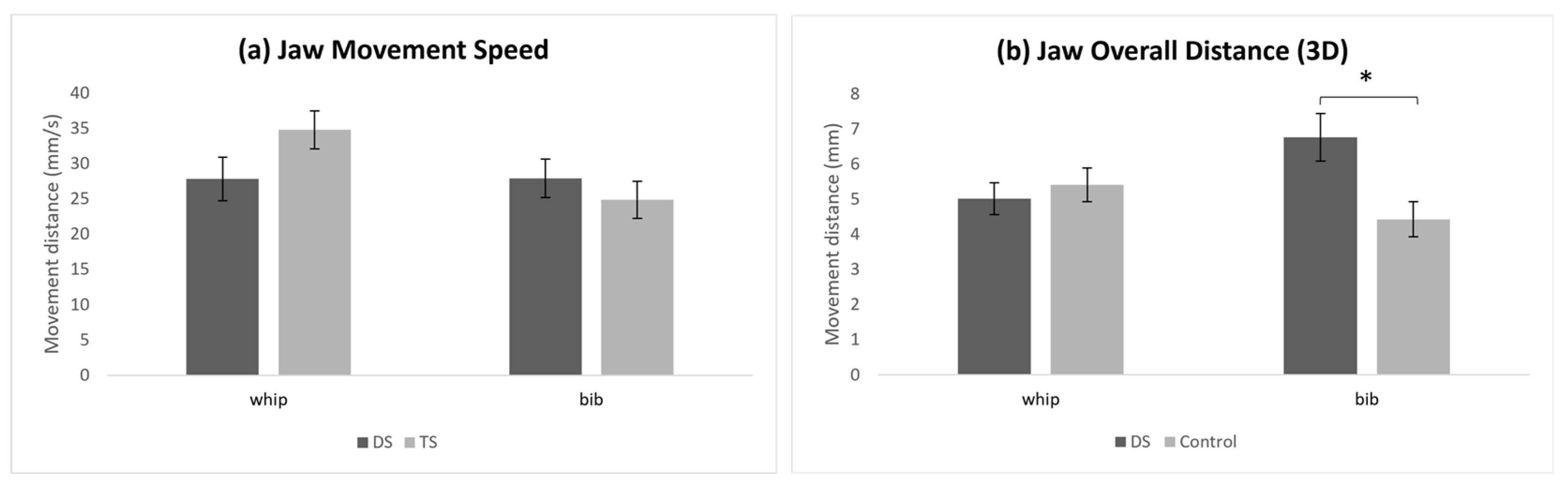
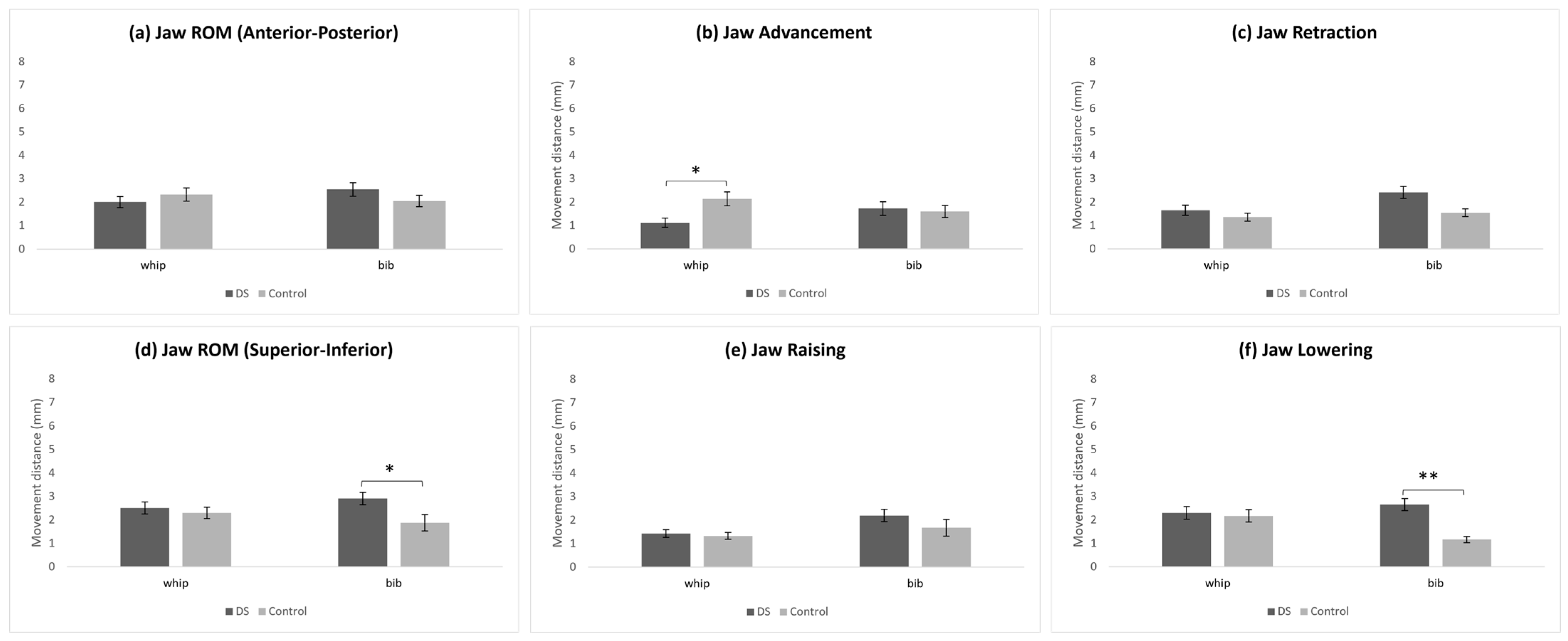
Figure 5 and Figure 6 show the descriptive jaw movement data and significant group differences. In terms of significant main effects, jaw retraction movement distance showed a group effect only, which was due to greater jaw movement in the DS group compared to the control group. No significant effects were observed in jaw raising movement distance. As seen in Table 2, a significant Group × Word interaction was observed in a number of jaw movement variables. In the section below, the significant interaction is decomposed in two ways to clearly present the jaw movement findings: group difference by word, and word differences for each group.

3.2.1. Jaw Movement: Group Difference by Word

A significant Group × Word interaction was observed in jaw overall movement distance, jaw movement range in the anterior–posterior and in the superior–inferior dimensions, jaw advancement and lowering movement distance, and jaw movement speed. In jaw overall movement distance and jaw movement range in the superior–inferior dimension, the DS group produced significantly greater movement in “bib,” but not in “whip.” This is the opposite pattern observed in tongue movement distance variables, where the difference was observed in “whip”, but not in “bib.” In jaw advancement, the DS group showed significantly reduced movement distance compared to the control group in the word “whip” but not in “bib” (Table 3). Jaw movement speed was not significantly different between the groups in both words in the post hoc test. Descriptively, three of 18 (16.7%) for jaw overall movement distance, four of 18 (22.2%) for jaw movement range in the superior–inferior dimension, and 10 of 18 participants with DS (55.6%) scored within one standard deviation of the typical group mean for jaw advancement, and three of 18 (16.7%) for jaw lowering.

3.2.2. Jaw Movement: Word Differences for Each Group

The post hoc analysis of word differences for each group indicated that the DS group showed a greater jaw movement difference between the words “whip” and “bib” compared to the control group (Table 4). Specifically, this difference was observed in jaw overall movement distance, jaw movement range in the anterior–posterior dimension, and jaw advancement movement distance. As seen in Figure 6, the control group did not use their jaw as much in these variables. In jaw lowering and jaw movement speed, the control group showed significantly greater movement and faster speed in “whip,” not in “bib.” Unlike the control group, the DS group did not show the word difference in jaw lowering movement distance and jaw movement speed.

4. Discussion

Previous studies speculated on articulatory kinematic characteristics in individuals with DS indirectly based on speech acoustic and intelligibility studies. To provide evidence for the articulatory kinematic characteristics of this population, the current study examined tongue and jaw movement distance in adults with DS and compared them to typical adults. When individuals with DS produced “whip,” a target word that elicits a larger tongue advancement movement, significantly reduced movement was observed. Thus, the current study confirms the previous speculation regarding the reduced tongue movement in the anterior–posterior dimension. Specifically, the study reveals that tongue advancement movement is reduced for individuals with DS. A significant group difference was not observed when they produced “bib,” a word that does not elicit large tongue advancement movement. Thus, depending on the target words, the unique challenges that individuals with DS experience may or may not be detected. When comparing their production of these two words, a reduced tongue movement distance contrast was observed in individuals with DS compared to the controls. As the tongue movement is an outcome of the coordinated movement between the tongue and jaw, the jaw movement was also examined in this study. The findings suggested that individuals with DS produced more exaggerated jaw movement than typical individuals when they produced the word “bib.” These findings are discussed in the section below with a focus on each articulator.

4.1. Tongue Movement Characteristics in Individuals with DS

Consistent with previous speculation on reduced tongue movement in the anterior–posterior dimension, the current findings showed that individuals with DS produced limited tongue range of motion in this dimension. Due to the characteristics of the target word “whip,” this reduced tongue range of motion was driven by the reduced tongue advancement movement in individuals with DS. When producing a word that does not elicit much movement in the anterior–posterior dimension, “bib,” this difference was not observed (Figure 4). In fact, no significant group difference in tongue movement distance was observed for the word “bib.” This suggests that individuals with DS may experience different amounts of articulatory challenges depending on the words they produce during speech production. Broadly, this finding aligns with the previous literature regarding phonetic intelligibility in individuals with DS, where different error rates were observed depending on the sound categories [2]. Similarly, in Hebrew-speaking individuals with DS, this differential error rate has been observed, showing that more complex consonants have higher error rates than simpler consonants such as /b/ [30]. The current study confirms that producing sounds that elicit large tongue movement in the anterior–posterior dimension is challenging for individuals with DS. There are a few potential underpinnings of the reduced tongue movement in the anterior–posterior dimension in individuals with DS, including both structural and motor control-related factors.
First, structural differences in the oral cavity length could lead to the limited tongue advancement in individuals with DS. A previous study showed that vocal tract characteristics such as hard palate shape are correlated with speech distortions in individuals with DS [31]. Previous vocal tract MRI studies in individuals with DS showed smaller oropharyngeal volume [32], shorter anterior–posterior tongue diameter, and shorter mental−spine distance [33], which could be partly due to hypoplasia of the maxilla and midface [34,35]. This indicates a shorter oral cavity length in individuals with DS. Thus, a physical limit for tongue movement in the anterior–posterior dimension would challenge individuals with DS to produce the large tongue movement observed in typical speakers. In addition, a more advanced tongue position in individuals with DS [3,34,36] could limit further tongue advancement movement in individuals with DS. As the tongue retraction movement is not the main tongue movement elicited to produce the target word “whip,” the current findings cannot confirm the reduced tongue retraction movement distance. Future studies should examine tongue movement characteristics using various target words that elicit each tongue movement direction to comprehensively understand the potential direction-specific articulatory challenges in individuals with DS [37].
Secondly, speech motor control impairment may also contribute to the reduced tongue movement observed in the current study. Reduced tongue movement is a hallmark of dysarthria, a type of motor speech disorder [16]. Speech impairment in individuals with DS is complex, and it has been speculated that many factors could contribute to it [3], with motor speech disorder identified as one such contributing factor [6]. Based on currently available evidence, it appears that speech motor control is compromised secondary to DS. Consistent with the findings in the current study, individuals with dysarthria secondary to amyotrophic lateral sclerosis have also been shown to produce reduced tongue advancement when they produce the word “whip” [18]. Given that reduced tongue movement is a hallmark of dysarthria, future studies are warranted to examine the underpinnings of the articulatory kinematic challenges in individuals with DS.

4.2. Jaw Movement Characteristics in Individuals with DS

Previous research has shown jaw-related characteristics in individuals with DS. This includes a smaller mandible size (i.e., shorter ramus) [38], weaker bite force [39,40], reduced jaw range of motion [34], and reduced jaw movement distance when marking a stressed syllable [41]. In the current study, greater jaw lowering in “bib” was observed among individuals with DS, which resulted in greater jaw range of movement in the superior–inferior dimension and a greater overall jaw movement distance (Figure 5 and Figure 6). A few explanations may support the interpretation of these findings, including jaw height regulation impairment and the use of compensatory movement patterns.
First, the exaggerated jaw movement in the production of “bib” among participants with DS may indicate jaw height regulation challenges. Because the target word “bib” contains an initial and final bilabial stop and a high vowel, exaggerated jaw lowering movement would not be considered beneficial for word production. Due to the required bilabial release after the closure interval, some lip opening is necessary. However, since it is combined with a high vowel, it does not require a large vocal tract opening or jaw opening, as demonstrated by the control group (Figure 6f). In a previous study, limited jaw movement in individuals with DS was observed when they produced a low vowel /ɑ/ [41]. In another study, greater acoustic variability in low vowels compared to high vowels was observed, as reflected by large formant ellipses in individuals with DS [9]. Furthermore, other studies demonstrated that individuals with DS experience difficulties in the production of low vowels [7,10]. Together, these findings suggest that regulating both tongue and jaw height could be compromised in individuals with DS.
Secondly, the exaggerated jaw movement in individuals with DS may potentially be interpreted as a compensatory mechanism. The target word “bib” has initial and final bilabial stops, requiring lip movement to achieve and release the bilabial seal. Given previous evidence of unique lip morphology and reduced lip muscle strength, endurance, and range of motion in this population [34,42,43], individuals with DS may have relied on jaw movement, to some extent, to compensate for limited lip movement. In addition, the jaw may also have been used to help compensate for limited tongue movement. This is particularly relevant given that, unlike “whip,” the tongue movement distance for “bib” did not differ between the groups. Because the tongue and jaw movements were not decoupled in the current study, tongue movement data inherently include both tongue and jaw movements. Thus, the comparable tongue movement distances observed for “bib” may reflect exaggerated jaw movements compensating for limited tongue movement in individuals with DS. Exaggerated jaw movements in individuals with dysarthria have previously been interpreted in two ways: as a manifestation of impaired jaw movement due to loss of control, or as a potential compensatory mechanism [37]. Given that jaw movement has the potential to support tongue movement, jaw articulatory kinematics in individuals with DS warrant further examination in future studies.

4.3. Limitations and Future Direction

First, the current study utilized within-word articulatory movement to examine tongue movement specifically in the anterior–posterior dimension. However, the focus is on tongue advancement, not tongue retraction. Furthermore, as discussed, the stimuli are not suitable to examine articulatory movement in the superior–inferior dimension. More importantly, as the target word production represents a smaller area in the articulatory working space, utilizing speech stimuli that cover a more comprehensive articulatory working space will advance our understanding of articulatory kinematic characteristics in individuals with DS. Second, the current study does not provide vocal tract-related structural data in individuals with DS. As noted in the Discussion, this is critical information to understand whether and to what extent articulatory characteristics in individuals with DS are shaped by structural characteristics and/or speech motor control impairment. Considering the heterogeneity of individuals with DS, the extent of the contribution of structural characteristics vs. speech motor control impairment to speech production would vary across individuals’ profiles. However, future studies involving both elements (i.e., structural measures, articulatory kinematic measures) would be essential to understand the uniqueness of speech production in individuals with DS. Third, although the current study focuses on articulatory kinematics, linking the findings to functional communication is essential. Connecting articulatory kinematic studies with acoustic and intelligibility outcomes would help us move forward in developing an effective intervention tailored for individuals with DS. Related to this, future studies should incorporate acoustic measures, such as F2, to directly examine the relationship between articulatory kinematics and acoustic outputs in this population. Fourth, sensor placement was standardized at 25 mm posterior to the tongue apex across participants. While this fixed-distance approach is consistent with placement conventions used in prior research, it does not guarantee functional equivalence across participants, particularly given known anatomical differences in tongue and oral cavity size in individuals with DS. It is possible that a fixed placement distance corresponds to a relatively more posterior tongue position in individuals with a shorter oral cavity; however, the extent of this effect remains unclear. Last, although Weismer and Bunton (1999) found minimal acoustic effects of microbeam pellet placement in typical speakers, it remains unclear whether similar findings extend to individuals with DS, given potential differences in oral sensory and motor function [44]. Future studies should examine the extent to which sensor placement may differentially affect speech production in this population.

5. Conclusions

Previous acoustic studies in individuals with DS speculated on reduced tongue movement in the anterior–posterior dimension. The current study is the first study to examine tongue articulatory kinematics in individuals with DS with a sample size allowing statistical analysis. The study revealed reduced tongue movement in the anterior–posterior dimension in individuals with DS when tested using a word that elicits large tongue advancement movement (“whip”). The finding confirms the previous speculations on the tongue movement characteristics in individuals with DS. This difference was not detected in a word that does not elicit large tongue movement in the anterior–posterior dimension (“bib”). Thus, the findings also suggest that depending on the target words/stimuli, individuals with DS may experience a different extent of articulatory challenges. In addition, the current study revealed exaggerated jaw movement in the word “bib.” The finding suggests potential jaw height regulation challenges and compensatory mechanisms that need to be examined in future studies.

Author Contributions

Conceptualization, J.L.; methodology, J.L., S.W., C.B. and K.M.S.; software, K.M.S.; validation, S.W., C.B. and K.M.S.; formal analysis, J.L.; investigation, J.L. and S.W.; resources, J.L.; data curation, S.W. and K.M.S.; writing—original draft preparation, J.L., S.W., C.B. and K.M.S.; writing—review and editing, J.L., S.W., C.B. and K.M.S.; visualization, S.W.; supervision, J.L.; project administration, J.L.; funding acquisition, J.L. All authors have read and agreed to the published version of the manuscript.

Funding

This research was funded by NIH INCLUDE (Investigation of Co-occurring conditions across the Lifespan to Understand Down syndrome) project (PI: Krista Wilkinson), grant number 1R01DC020622-01A1 and Penn State Research Incentive Funds.

Institutional Review Board Statement

The study was conducted in accordance with the Declaration of Helsinki and approved by the Institutional Review Board of the Pennsylvania State University (protocol code Study00022373 and date of approval 23 May 2023).

Informed Consent Statement

Informed consent was obtained from all subjects involved in the study.

Data Availability Statement

Requests for data should be sent to the corresponding author for consideration.

Acknowledgments

We thank the participants with Down syndrome and their families, as well as the typical adult participants. We are grateful to Krista Wilkinson and Gwen Davis for their support, Carter Price and Sunanda Paulraj for their assistance with data collection, and the students in the Speech Production Laboratory at Penn State for their contributions to data analysis. We also thank Leslie Purcell and Maegan Mapes, audiologists at the Penn State Speech, Language, and Hearing Clinic.

Conflicts of Interest

The authors declare no conflicts of interest.

Abbreviations

The following abbreviations are used in this manuscript:
DSDown syndrome
EMAElectromagnetic articulography
SMASHSpeech Movement Analysis for Speech and Hearing research
F1First formant
F2Second formant
ROMRange of motion

References

  1. Antonarakis, S.E.; Skotko, B.G.; Rafii, M.S.; Strydom, A.; Pape, S.E.; Bianchi, D.W.; Sherman, S.L.; Reeves, R.H. Down syndrome. Nat. Rev. Dis. Primers 2020, 6, 9. [Google Scholar] [CrossRef] [PubMed]
  2. Bunton, K.; Leddy, M.; Miller, J. Phonetic intelligibility testing in adults with Down syndrome. Down’s Syndr. Res. Pract. J. Sarah Duffen Cent. Univ. Portsm. 2007, 12, 1. [Google Scholar]
  3. Kent, R.D.; Vorperian, H.K. Speech impairment in Down syndrome: A Review. J. Speech Lang. Hear. Res. 2013, 56, 178–210. [Google Scholar] [CrossRef] [PubMed]
  4. Kumin, L. Intelligibility of speech in children with Down syndrome in natural settings: Parents’ perspective. Percept. Mot. Ski. 1994, 78, 307–313. [Google Scholar] [CrossRef]
  5. Wilson, E.M.; Abbeduto, L.; Camarata, S.M.; Shriberg, L.D. Speech and motor speech disorders and intelligibility in adolescents with Down syndrome. Clin. Linguist. Phon. 2019, 33, 790–814. [Google Scholar] [CrossRef] [PubMed]
  6. Wilson, E.M.; Abbeduto, L.; Camarata, S.M.; Shriberg, L.D. Estimates of the prevalence of speech and motor speech disorders in adolescents with Down syndrome. Clin. Linguist. Phon. 2019, 33, 772–789. [Google Scholar] [CrossRef] [PubMed]
  7. Alyssa, W.; Vorperian Houri, K.; Kent Ray, D.; Bolt Daniel, M. Austin Diane Single-word speech intelligibility in children and adults with Down syndrome. Am. J. Speech Lang. Pathol. 2018, 27, 222–236. [Google Scholar] [CrossRef] [PubMed]
  8. Bunton, K.; Leddy, M. An Evaluation of articulatory working space area in vowel production of adults with Down syndrome. Clin. Linguist. Phon. 2011, 25, 321–334. [Google Scholar] [CrossRef] [PubMed]
  9. Micalle, C.; Kent Raymond, D.; Levy Erika, S.; Whalen, D.H. Vowel acoustics and speech intelligibility in young adults with Down syndrome. J. Speech Lang. Hear. Res. 2020, 63, 674–687. [Google Scholar] [CrossRef] [PubMed]
  10. Vorperian, H.K.; Kent, R.D.; Lee, Y.; Buhr, K.A. Vowel production in children and adults with Down syndrome: Fundamental and formant frequencies of the corner vowels. J. Speech Lang. Hear. Res. 2023, 66, 1208–1239. [Google Scholar] [CrossRef] [PubMed]
  11. Moura, C.P.; Cunha, L.M.; Vilarinho, H.; Cunha, M.J.; Freitas, D.; Palha, M.; Pueschel, S.M.; Pais-Clemente, M. Voice parameters in children with Down syndrome. J. Voice 2008, 22, 34–42. [Google Scholar] [CrossRef] [PubMed]
  12. Fant, G. Acoustic Theory of Speech Production: With Calculations Based on X-Ray Studies of Russian Articulations; Description and analysis of contemporary standard Russian; Mouton: The Hague, The Netherlands, 1970. [Google Scholar]
  13. Stevens, K.N.; House, A.S. Development of a quantitative description of vowel articulation. J. Acoust. Soc. Am. 1955, 27, 484–493. [Google Scholar] [CrossRef]
  14. Lee, J.; Shaiman, S.; Weismer, G. Relationship between tongue positions and formant frequencies in female speakers. J. Acoust. Soc. Am. 2016, 139, 426–440. [Google Scholar] [CrossRef] [PubMed]
  15. Mefferd, A. Articulatory-to-acoustic relations in talkers with dysarthria: A first analysis. J. Speech Lang. Hear. Res. 2015, 58, 576–589. [Google Scholar] [CrossRef] [PubMed]
  16. Yana, Y.; Gary, W.; Westbury John, R.; Lindstrom Mary, J. Articulatory movements during vowels in speakers with dysarthria and healthy controls. J. Speech Lang. Hear. Res. 2008, 51, 596–611. [Google Scholar] [CrossRef] [PubMed]
  17. Lee, J.; Pond, A.L.; Sincavage, J. Tongue and lower lip movement in semivowel /w/ production. Folia Phoniatr. Logop. 2016, 68, 46–51. [Google Scholar] [CrossRef]
  18. Lee, J.; Bell, M.; Simmons, Z. Articulatory kinematic characteristics across the dysarthria severity spectrum in individuals with amyotrophic lateral sclerosis. Am. J. Speech-Lang. Pathol. 2018, 27, 258–269. [Google Scholar] [CrossRef] [PubMed]
  19. Stein Duker, L.I.; Martinez, M.; Lane, C.J.; Polido, J.C.; Cermak, S.A. Association between oral care challenges and sensory over-responsivity in children with Down syndrome. Int. J. Paediatr. Dent. 2022, 32, 546–557. [Google Scholar] [PubMed]
  20. Hennequin, M.; Faulks, D.; Veyrune, J.; Bourdiol, P. Significance of oral health in persons with Down syndrome: A literature review. Dev. Med. Child Neurol. 1999, 41, 275–283. [Google Scholar] [CrossRef] [PubMed]
  21. Westbury, J.R.; Lindstrom, M.J.; McClean, M.D. Tongues and lips without jaws. J. Speech Lang. Hear. Res. 2002, 45, 651–662. [Google Scholar] [CrossRef] [PubMed]
  22. Milenkovic, P. TF32 [Computer Software]; University of Wisconsin-Madison: Madison, WI, USA, 2001. [Google Scholar]
  23. Lee, J.; Dickey, E.; Simmons, Z. Vowel-specific intelligibility and acoustic patterns in individuals with dysarthria secondary to amyotrophic lateral sclerosis. J. Speech Lang. Hear. Res. 2019, 62, 34–59. [Google Scholar] [CrossRef] [PubMed]
  24. Green, J.R.; Wang, J.; Wilson, D.L. SMASH: A Tool for Articulatory Data Processing and Analysis; Interspeech: Lyon, France, 2013; pp. 1331–1335. [Google Scholar]
  25. Virtanen, P.; Gommers, R.; Oliphant, T.E.; Haberland, M.; Reddy, T.; Cournapeau, D.; Burovski, E.; Peterson, P.; Weckesser, W.; Bright, J. SciPy 1.0: Fundamental algorithms for scientific computing in Python. Nat. Methods 2020, 17, 261–272. [Google Scholar] [CrossRef] [PubMed]
  26. McKinney, W.; van der Walt, S.; Millman, J. Data Structures for Statistical Computing in Python. In Proceedings of the 9th Python in Science Conference, Austin, TX, USA, 28 June–3 July 2010. [Google Scholar]
  27. R Core Team. R: A Language and Environment for Statistical Computing; R Foundation for Statistical Computing: Vienna, Austria, 2025. [Google Scholar]
  28. Kuznetsova, A.; Brockhoff, P.B.; Christensen, R.H.B. lmerTest Package: Tests in linear mixed effects models. J. Stat. Soft. 2017, 82, 1–26. [Google Scholar] [CrossRef]
  29. Lenth, R.V.; Piaskowski, J. Emmeans: Estimated Marginal Means, Aka Least-Squares Means. R Package Version 1.8.5. 2023. Available online: https://CRAN.R-project.org/package=emmeans (accessed on 27 April 2026).
  30. Carl, M.; Icht, M. Perceptual and acoustic predictors of speech intelligibility among Hebrew-speaking young adults with Down syndrome. J. Commun. Disord. 2025, 115, 106529. [Google Scholar] [CrossRef] [PubMed]
  31. Ferraz, A.; Ghirello-Pires, C.S.A. Linguistic problems caused by anatomical alterations of the hard palate of speakers with Down syndrome. Int. J. Adv. Eng. Res. Sci. 2022, 9, 272–276. [Google Scholar] [CrossRef]
  32. Uong, E.C.; McDonough, J.M.; Tayag-Kier, C.E.; Zhao, H.; Haselgrove, J.; Mahboubi, S.; Schwab, R.J.; Pack, A.I.; Arens, R. Magnetic resonance imaging of the upper airway in children with Down syndrome. Am. J. Respir. Crit. Care Med. 2001, 163, 731–736. [Google Scholar] [CrossRef] [PubMed]
  33. Guimaraes, C.V.; Donnelly, L.F.; Shott, S.R.; Amin, R.S.; Kalra, M. Relative rather than absolute macroglossia in patients with Down syndrome: Implications for treatment of obstructive sleep apnea. Pediatr. Radiol. 2008, 38, 1062–1067. [Google Scholar] [CrossRef] [PubMed]
  34. Beck, J.M. Organic variation of the vocal apparatus. In The Handbook of Phonetic Sciences; Blackwell: Oxford, UK, 1997; pp. 256–297. [Google Scholar]
  35. Macho, V.; Coelho, A.; Areias, C.; Macedo, P.; Andrade, D. Craniofacial features and specific oral characteristics of Down syndrome children. Oral Health Dent. Manag. 2014, 13, 408–411. [Google Scholar] [PubMed]
  36. Gisel, E.G.; Lange, L.J.; Niman, C.W. Tongue movements in 4-and 5-year-old Down’s syndrome children during eating: A comparison with normal children. Am. J. Occup. Ther. 1984, 38, 660–665. [Google Scholar] [CrossRef] [PubMed]
  37. Lee, J.; Rodriguez, E.; Mefferd, A. Direction-specific jaw dysfunction and its impact on tongue movement in individuals with dysarthria secondary to amyotrophic lateral sclerosis. J. Speech Lang. Hear. Res. 2020, 63, 499–508. [Google Scholar] [CrossRef] [PubMed]
  38. Suri, S.; Tompson, B.D.; Cornfoot, L. Cranial base, maxillary and mandibular morphology in Down syndrome. Angle Orthod. 2010, 80, 861–869. [Google Scholar] [CrossRef] [PubMed]
  39. Gomes, M.F.; Giannasi, L.C.; Fillietaz-Bacigalupo, E.; de Mancilha, G.P.; de Carvalho Silva, G.R.; Soviero, L.D.; da Silva, G.Y.S.; Nazario, L.d.M.; Dutra, M.T.d.S.; Silvestre, P.R. Evaluation of the masticatory biomechanical function in Down syndrome and its influence on sleep disorders, body adiposity and salivary parameters. J. Oral Rehabil. 2020, 47, 1007–1022. [Google Scholar] [CrossRef] [PubMed]
  40. Szyszka-Sommerfeld, L.; Sycińska-Dziarnowska, M.; Machoy, M.; Wilczyński, S.; Maglitto, M.; Cernera, M.; Spagnuolo, G.; Woźniak, K. Electromyographic study of masticatory muscle function in children with Down syndrome. J. Clin. Med. 2022, 11, 506. [Google Scholar] [CrossRef] [PubMed]
  41. Connaghan, K.P.; Moore, C.A. Indirect estimates of jaw muscle tension in children with suspected hypertonia, children with suspected hypotonia, and matched controls. J. Speech Lang. Hear. Res. 2013, 56, 123–136. [Google Scholar] [CrossRef] [PubMed][Green Version]
  42. Farpour, H.R.; Moosavi, S.A.; Mohammadian, Z.; Farpour, S. Comparing the tongue and lip strength and endurance of children with Down syndrome with their typical peers using IOPI. Dysphagia 2022, 37, 966–972. [Google Scholar] [PubMed]
  43. Ferrario, V.F.; Dellavia, C.; Colombo, A.; Sforza, C. Three-dimensional assessment of nose and lip morphology in subjects with Down syndrome. Ann. Plast. Surg. 2004, 53, 577–583. [Google Scholar] [CrossRef] [PubMed]
  44. Weismer, G.; Bunton, K. Influences of pellet markers on speech production behavior: Acoustical and perceptual measures. J. Acoust. Soc. Am. 1999, 105, 2882–2894. [Google Scholar] [CrossRef] [PubMed]
Figure 1. An example of movement time histories (tongue x, y, z; jaw x, y, z) with synchronized acoustic signals shown on a spectrogram for the word “whip”.
Ijom 52 00012 g001
Figure 2. Examples of tongue and jaw movement trajectories for the words “whip” (left panels, a,c) and “bib” (right panels, b,d). The speakers were facing right. Each trajectory was centered at the origin (0, 0) to illustrate movement distance differences between the DS and control group.
Ijom 52 00012 g002
Figure 3. Tongue overall movement distance and tongue movement speed for the target words. The left panel illustrates tongue movement speed (a), the middle panel illustrates the overall tongue movement distance (b), and the right panel illustrates the duration of the target segments (c). Brackets with asterisks indicate significant differences between the DS and control groups. Note. Only group differences by word are marked with brackets; word differences within each group are not shown to maintain clarity. Error bars represent standard errors. *** p < 0.001.
Ijom 52 00012 g003
Figure 4. Dimension- and direction-specific tongue movement distance for the target words. The top panel (ac) shows the tongue range of motion (ROM) in the anterior–posterior dimension and relevant direction-specific movement distances. The bottom panel (df) shows the tongue ROM in the superior–inferior dimension and relevant direction-specific movement distances. Brackets with asterisks indicate significant differences between the DS and control groups. Note. Only group differences by word are marked with brackets; word differences within each group are not shown to maintain clarity. Error bars represent standard errors. *** p < 0.001.
Ijom 52 00012 g004
Figure 5. Jaw overall movement distance and jaw movement speed for the target words. Brackets with asterisks indicate significant differences between the DS and control groups. Note. Only group differences by word are marked with brackets; word differences within each group are not shown to maintain clarity. Error bars represent standard errors. * p < 0.05.
Ijom 52 00012 g005
Figure 6. Dimension- and direction-specific jaw movement distance for the target words. The top panel (ac) shows the jaw range of motion (ROM) in the anterior–posterior dimension and relevant direction-specific movement distances. The bottom panel (df) shows the jaw ROM in the superior–inferior dimension and relevant direction-specific movement distances. Brackets with asterisks indicate significant differences between the DS and control groups. Note. Only group differences by word are marked with brackets; word differences within each group are not shown to maintain clarity. Error bars represent standard errors. * p < 0.05, ** p < 0.01.
Ijom 52 00012 g006
Table 1. Demographic information and characteristics of the participants with DS.
SpeakerSexAge (Years)StatePrior SL TxFocus of Prior SL TxBite TypeOpen Mouth PostureDrooling
DS01M35GAYes--TypicalPresentNone
DS02F23NJYesArticulation, languageEdge-to-edgeNoneNone
DS03M23PAYesArticulationSlight crossbiteNoneNone
DS04M34PAYesLiteracySlight crossbiteNoneNone
DS05M30PAYesArticulation, languageOpen biteNoneNone
DS06F18PAYesArticulationTypicalNoneNone
DS07M36PAYesArticulation, literacy, fluencySlight crossbiteNoneNone
DS08M27PAYesArticulation, literacySlight underbiteNoneNone
DS09M23PAYesArticulation, literacyEdge-to-edgePresentNone
DS10F25PAYesFluencyOpen biteNoneNone
DS11M28PAYes--Open bitePresentNone
DS12M22PAYes--Slight underbiteNoneNone
DS13F29PAYes--TypicalNoneNone
DS14M20MIYes--Slight Open biteNoneNone
DS15F32PAYesArticulationUnderbiteNoneNone
DS16F19PAYesArticulation, literacySlight OverbitePresentSlight
DS17F20MIYesArticulationOpen biteNoneNone
DS18F22VAYesArticulation, language, literacyUnderbiteNoneNone
Note. M = male; F = female; Prior SL Tx = prior history of speech and/or language treatment; Edge-to-edge = bite type with top-to-bottom teeth alignment; -- indicates that the participant and their caregiver do not recall the intervention target.
Table 2. Fixed effects for tongue and jaw movement.
ArticulatorVariablesEffectEstimateSE
DurationGroup (DS)0.167.14
Word (Whip)−0.036.80
Group × Word 9.518.83
TongueTongue Overall Distance (3D)Group (DS)0.170.70
Word (Whip)4.86 ***0.61
Group × Word−4.18 ***0.61
Tongue ROM in the Anterior–Posterior DimensionGroup (DS)−0.550.49
Word (Whip)4.88 ***0.42
Group × Word−3.86 ***0.55
Tongue AdvancementGroup (DS)0.120.51
Word (Whip)5.92 ***0.47
Group × Word−4.88 ***0.62
Tongue RetractionGroup (DS)−0.380.28
Word (Whip)−0.68 **0.23
Group × Word0.480.3
Tongue ROM in the Superior–Inferior DimensionGroup (DS)−0.080.46
Word (Whip)0.590.42
Group × Word−0.120.54
Tongue RaisingGroup (DS)0.550.54
Word (Whip)1.25 **0.41
Group × Word−0.660.54
Tongue LoweringGroup (DS)−0.43040.39
Word (Whip)−0.55 *0.27
Group × Word0.1540.35
Tongue Movement SpeedGroup (DS)−6.8624.52
Word (Whip)33.61 ***3.24
Group × Word−22.84 ***4.21
JawJaw Overall Distance (3D)Group (DS)2.42 *1.06
Word (Whip)0.980.55
Group × Word−2.778 ***0.72
Jaw ROM in the Anterior–Posterior DimensionGroup (DS)0.540.50
Word (Whip)0.280.27
Group × Word−0.84 *0.35
Jaw AdvancementGroup (DS)0.150.47
Word (Whip)0.530.29
Group × Word−1.14 **0.37
Jaw RetractionGroup (DS)0.90 *0.40
Word (Whip)−0.190.25
Group × Word−0.610.32
Jaw ROM in the Superior–Inferior DimensionGroup (DS)1.06 *0.50
Word (Whip)0.410.31
Group × Word−0.85 *0.40
Jaw RaisingGroup (DS)0.540.40
Word (Whip)−0.350.33
Group × Word−0.430.42
Jaw LoweringGroup (DS)1.50 **0.47
Word (Whip)1.01 ***0.25
Group × Word−1.38 ***0.32
Jaw Movement SpeedGroup (DS)3.125.33
Word (Whip)9.94 **2.98
Group × Word−9.45 *3.88
Note: ROM: range of motion; * p < 0.05, ** p < 0.01, *** p < 0.001.
Table 3. Summary of significant kinematic variables on group comparison Bonferroni-corrected post hoc test results.
VariablesWordDirection of Group Comparison EffectMean
Difference
p-Value
Tongue Overall Distance (3D)WhipDS < Control ***4.01<0.0001
Bib--0.170.807
Tongue ROM in the Anterior–Posterior DimensionWhipDS < Control ***4.41<0.0001
Bib--0.550.273
Tongue AdvancementWhipDS < Control ***4.76<0.0001
Bib--0.120.807
Tongue Movement SpeedWhipDS < Control ***29.70<0.0001
Bib--6.860.136
Jaw Overall Distance (3D)Whip--0.360.736
BibDS > Control *2.420.028
Jaw AdvancementWhipDS < Control *0.990.043
Bib--0.150.752
Jaw ROM in the Superior–Inferior DimensionWhip--0.220.671
BibDS > Control *1.060.041
Jaw LoweringWhip--0.120.801
BibDS > Control **1.500.003
Jaw Movement SpeedWhip--−6.330.2420
Bib--3.120.5623
Note: ROM: range of motion; -- indicates no significant group difference within word; * p < 0.05, ** p < 0.01, *** p < 0.001.
Table 4. Summary of significant kinematic variables on word comparison Bonferroni-corrected post hoc test results.
VariablesGroupDirection of Word
Comparison Effect
Mean
Difference
p-Value
Tongue Overall Distance (3D)DS--0.690.1782
ControlWhip > Bib ***4.86<0.0001
Tongue ROM in the Anterior–Posterior DimensionDSWhip > Bib **1.020.0046
ControlWhip > Bib ***4.88<0.0001
Tongue AdvancementDSWhip > Bib *1.040.0100
ControlWhip > Bib ***5.92<0.001
Tongue Movement SpeedDSWhip > Bib ***10.80.0001
ControlWhip > Bib ***33.6<0.0001
Jaw Overall Distance (3D)DSWhip < Bib ***1.800.0002
Control--0.980.0807
Jaw ROM in the Anterior–Posterior DimensionDSWhip < Bib *0.560.0155
Control--0.280.3087
Jaw AdvancementDSWhip < Bib *0.610.0131
Control--0.530.0668
Jaw LoweringDS--0.380.0742
ControlWhip > Bib ***1.010.0001
Jaw Movement SpeedDS--0.490.8457
ControlWhip > Bib **9.940.0012
Note: ROM: range of motion; -- indicates no significant word difference within group; * p < 0.05, ** p < 0.01, *** p < 0.001.
Disclaimer/Publisher’s Note: The statements, opinions and data contained in all publications are solely those of the individual author(s) and contributor(s) and not of MDPI and/or the editor(s). MDPI and/or the editor(s) disclaim responsibility for any injury to people or property resulting from any ideas, methods, instructions or products referred to in the content.