


Abstract
Antimicrobial resistance [AMR] is a silent yet intensifying global threat, with particularly severe consequences in tropical and subtropical ecosystems, where high ecological connectivity, extensive antimicrobial use, and inadequate sanitation create ideal conditions for the persistence and spread of antimicrobial resistance genes [ARGs]. Within the One Health framework, migratory birds warrant special attention because they traverse tropical AMR hotspots, linking contaminated aquatic, agricultural, and peri-urban environments along established flyways. Evidence from tropical and subtropical regions indicates that migratory birds frequently carry clinically relevant AMR-associated pathogens, including extended-spectrum β-lactamase-producing Escherichia coli, multidrug-resistant Salmonella enterica, and fluoroquinolone- and macrolide-resistant Campylobacter spp. These findings suggest that migratory birds primarily function as ecological sentinels and geographic redistributors of antimicrobial resistance, reflecting environmental contamination and ecological connectivity between human-dominated and natural ecosystems, while evidence for long-term reservoir status remains context-dependent. Addressing the complex interface among AMR, migratory birds, and ARGs requires integrative surveillance strategies that explicitly incorporate wildlife into existing health systems. Genomic and metagenomic monitoring of migratory bird populations, combined with cross-sectoral data sharing, can provide early warning signals of emerging resistance patterns and inform evidence-based interventions. Understanding the ecological role of migratory birds in tropical ecosystems is therefore essential for designing effective One Health strategies to mitigate transboundary AMR risks and preserve the long-term efficacy of antimicrobial therapies.
1. Introduction
Antimicrobial resistance [AMR] has emerged as one of the most critical global health challenges of the 21st century, undermining the efficacy of antibiotics that revolutionized modern medicine [1]. The World Health Organization has characterized AMR as a ‘silent pandemic’ with the potential to reverse decades of therapeutic progress and drive global mortality rates beyond those of tuberculosis, HIV/AIDS, and malaria by 2050 [2,3]. Although AMR is a global phenomenon, its effects are particularly severe in tropical and subtropical regions, where high population density, unregulated antimicrobial use, and weak sanitation infrastructure create ideal conditions for the emergence and dissemination of resistant pathogens [4,5]. In addition, tropical ecosystems sustain warm temperatures, high microbial diversity, and year-round aquatic productivity—environmental characteristics known to accelerate bacterial growth, horizontal gene transfer [HGT], and the persistence of antimicrobial resistance genes [ARGs] [6,7].
The persistence and global spread of ARGs are driven by complex ecological and evolutionary processes that extend beyond clinical environments [8]. Mobile genetic elements [MGEs], including plasmids, transposons, integrons, and bacteriophages, facilitate HGT and enable bacteria to acquire resistance traits across taxonomic and ecological boundaries [8,9]. Through this genetic mobility, hospitals, farms, wastewater systems, and natural habitats become linked within a single, interconnected global resistome [10]. Importantly, tropical regions often exhibit higher ARG and MGE abundance than temperate regions, reflecting climatic and ecological conditions that favor rapid microbial turnover and gene exchange [11].
The burden of antimicrobial resistance (AMR) is increasingly apparent across a wide range of infectious diseases affecting both humans and animals [12]. According to the Centers for Disease Control and Prevention (CDC), elevated levels of various antibiotic-resistant bacteria have been documented across numerous infectious diseases; specifically, respiratory tract infections caused by Streptococcus pneumoniae and Staphylococcus aureus increasingly involve multidrug-resistant strains, with over 30% of Streptococcus pneumoniae isolates exhibiting resistance to one or more antibiotics [12]. Furthermore, a study conducted in China found that 46.1% of invasive clinical S. pneumoniae isolates are multidrug-resistant [13]. Urinary Tract Infections (UTIs), particularly those caused by extended-spectrum β-lactamase (ESBL)-producing strains of Escherichia coli, Klebsiella pneumoniae, and Proteus mirabilis, have exhibited high resistance rates to commonly used antibiotics, ranging from 52.9% to 90% in a study involving females of all age groups [14]. The antibiotic resistance profiles of uropathogens, including Klebsiella pneumoniae, Escherichia coli, and Proteus mirabilis, also demonstrate resistance to eight to sixteen different antibiotics [15]. Gram-negative isolates such as K. pneumoniae, Acinetobacter baumannii, and P. mirabilis also show high resistance to ampicillin, carbapenems, and fosfomycin [16]. Similarly, Gram-positive isolates such as Staphylococcus aureus, Streptococcus, and Enterococcus have demonstrated resistance to cefoxitin, clindamycin, and oxacillin [16]. Campylobacter spp. isolated from bird carcasses have exhibited resistance levels of up to 68% against various antimicrobials [17]. Bacteria such as A. baumannii have been classified as WHO critical priority pathogens owing to their remarkable capacity to develop resistance to multiple last-resort antibiotics. This resistance increases the risk of morbidity and mortality and contributes to poor therapeutic outcomes [18,19]. Significant mortality rates have been associated with hypervirulent K. pneumoniae, especially those that are ESBL-linked, which have been demonstrated to cause high morbidity, especially in immunocompromised patients [20]. Other pathogenic bacteria, including methicillin-resistant Staphylococcus aureus, carbapenem-resistant Pseudomonas aeruginosa, P. mirabilis, macrolide-resistant S. pneumoniae, and Brucella abortus are also highly virulent due to their capacity to effectively evade the immune system and induce morbidity and mortality [18,19,20,21,22,23,24,25].
Within this interconnected resistome, wildlife represents an often overlooked yet critical component of AMR ecology [26,27,28]. Among wildlife taxa, migratory birds warrant particular attention because they routinely traverse multiple ecological zones, including many of the world’s most contaminated tropical wetlands, rice paddies, deltas, and coastal lagoons—environments where exposure to ARGs is consistently high [26,29,30]. Through the ingestion of contaminated food or water, migratory birds may transiently carry antimicrobial-resistant bacteria within their gastrointestinal tracts. Depending on ecological context and exposure intensity, migratory birds may function as sentinels reflecting environmental contamination, as vectors redistributing resistant bacteria across regions, or, less frequently, as reservoirs when stable colonization occurs [31].
Each year, billions of migratory birds travel along major flyways spanning Africa, Asia, Europe, and the Americas, frequenting wetlands, agricultural landscapes, and urban waste sites often contaminated with antibiotic residues and resistant microorganisms [32,33,34]. Studies conducted along tropical flyways report widespread detection of clinically relevant ARGs through fecal shedding, environmental contamination, or interface with human-dominated ecosystems [32]. These observations indicate ecological connectivity between migratory birds, environmental reservoirs, and resistance determinants, rather than definitive transmission pathways. Through their transcontinental movements, migratory birds link distant ecosystems and may contribute to the long-range redistribution of resistant bacteria and genetic material across ecological and geopolitical boundaries [31,33,34].
Despite this growing body of evidence, the role of migratory in antimicrobial resistance dynamics remains inadequately represented in global surveillance systems. Within a One Health conceptual framework, antimicrobial resistance can be viewed as emerging from anthropogenic sources, undergoing environmental amplification, being acquired by wildlife at contaminated interfaces, and redistributed across regions through ecological connectivity. While the One Health paradigm emphasizes the interconnectedness of human, animal, and environmental health [35], Wildlife, particularly migratory birds traversing heavily impacted tropical ecosystems, remains largely excluded from national and international AMR reporting frameworks such as WHO-GLASS [28]. Ecological and anthropogenic pressures converge at key tropical interfaces, including wetlands, rice paddies, and coastal lagoons, promoting bidirectional transfer of resistant bacteria and genes among wildlife, livestock, and human populations [36]. Surveillance efforts addressing these interfaces remain fragmented and geographically uneven. This is because most are disproportionately focused on high-income regions, despite the fact that many major migratory flyways intersect tropical areas where ARG contamination is most intense [28,37].
Against this backdrop, the present review consolidates current evidence on the role of migratory birds as ecological sentinels and potential redistributors of antimicrobial-resistant bacteria and ARGs, with a specific focus on tropical and subtropical flyways [33]. It addresses three guiding questions: [i] What evidence demonstrates that migratory birds in tropical ecosystems carry clinically relevant ARGs? [ii] Which ecological interfaces and anthropogenic drivers facilitate ARG acquisition and dispersal? [iii] How can migratory birds be effectively integrated into One Health-oriented AMR surveillance frameworks [38,39]? By synthesizing findings from surveillance studies and molecular epidemiology, this review highlights critical knowledge gaps and underscores the urgent need for harmonized, wildlife-inclusive AMR monitoring strategies that capture the transboundary flow of resistance across tropical ecosystems.
2. Antimicrobial Resistance [AMR] and Antimicrobial Resistance Genes [ARGs]
2.1. Mechanisms of Resistance
Antimicrobial resistance in bacteria associated with migratory birds results from a limited set of well-characterized mechanisms depending on the bacteria species and genetic makeup. These mechanisms include enzymatic inactivation of antibiotics, modification of antimicrobial targets, decreased membrane permeability, and active efflux [36,37,38,39,40,41]. In tropical aquatic environments, where resistant bacteria are prevalent, these mechanisms support bacterial persistence and ecological association with avian gastrointestinal tracts and contribute to the maintenance of antimicrobial resistance genes [ARGs] across interconnected environmental compartments [42] (Table 1). Enzymatic Degradation and β-Lactamases.
Enzymatic degradation mediated by β-lactamases represents one of the most frequently documented resistance mechanisms in bacteria isolated from migratory birds [43,44]. These enzymes confer resistance to widely used β-lactam antibiotics and have been commonly reported in Enterobacteriaceae recovered from avian fecal samples, particularly in birds inhabiting or frequenting contaminated aquatic environments [45]. From an ecological perspective, the relevance of β-lactamases in migratory birds lies primarily in their environmental mobility rather than in their biochemical diversity [46]. β-lactamase-producing bacteria, including those carrying extended-spectrum β-lactamases [ESBLs] and carbapenem-resistant genes, are consistently detected in tropical wetlands, wastewater-impacted waters, and agricultural runoff—key foraging and roosting habitats for migratory birds [47]. These environments facilitate the acquisition and persistence of clinically relevant resistance genes within environmental bacterial communities that are ecologically connected to migratory bird habitats.
2.1.1. Target Modification and Efflux Systems
Resistance in bacteria associated with migratory birds can also arise through modification of antimicrobial target sites and activation of efflux systems, mechanisms that reduce antibiotic susceptibility by limiting effective drug binding or intracellular accumulation [48]. Such resistance traits have been reported in bacteria recovered from avian fecal samples and from contaminated aquatic environments frequented by migratory birds, where persistent antibiotic pressure favors their maintenance [49,50]. In polluted tropical habitats, including wetlands, wastewater-impacted waters, and agricultural runoff, these mechanisms enhance bacterial persistence and contribute to the acquisition and retention of multidrug-resistant strains within avian hosts. Through repeated exposure at key foraging and roosting sites, migratory birds may act as ecological carriers reflecting the presence and geographic connectivity of these resistance traits along established flyways.
2.1.2. Mobile Genetic Elements: Plasmids, Integrons, and Transposons
Mobile genetic elements [MGEs] play a central role in shaping antimicrobial resistance profiles in bacteria associated with migratory birds by facilitating the transfer of antimicrobial resistance genes [ARGs] across environmental and host-associated microbial communities [51,52]. In tropical aquatic and terrestrial habitats frequently used by migratory birds, plasmid- and transposon-mediated gene exchange supports the persistence of resistance traits within bacterial populations exposed to sustained antimicrobial inputs [53]. Warm temperatures, high microbial diversity, and the presence of antibiotic residues in soil and water further enhance ARGs retention and recombination, increasing the likelihood that migratory birds acquire and subsequently disseminate ARG-bearing bacteria along their migratory flyways [54,55,56].
2.2. Diminished Permeability and Limited Uptake
Reduced membrane permeability contributes to intrinsic antimicrobial resistance by limiting the entry of antibiotics into bacterial cells [57]. Such traits have been reported in enterobacteriaceae isolated from tropical aquatic environments impacted by human and livestock wastewater, habitats commonly used by migratory birds for foraging and roosting [58]. Exposure to these contaminated systems may therefore facilitate the transient carriage or persistence of intrinsically resistant bacteria within avian hosts, reflecting ongoing exposure along migratory flyways.
2.3. Horizontal Gene Transfer [HGT]
HGT is a key driver of antimicrobial resistance gene [ARG] dissemination within environmental bacterial communities and underlies the emergence of multidrug-resistant bacteria encountered by migratory birds [10,59,60,61,62]. In tropical aquatic and sedimentary environments frequented by migratory birds, conditions such as high nutrient loads, warm temperatures, and dense microbial assemblages promote frequent gene exchange and the persistence of ARGs over long-term periods [6,63,64,65,66]. These settings increase the likelihood that migratory birds encounter bacteria carrying transferable resistance determinants, highlighting ecological connectivity between contaminated environments and migratory flyways rather than confirming directional redistribution across geographic regions through migratory movement.
Table 1.
Central mechanisms of antimicrobial resistance [AMR], molecular basis, mechanism of action, and representative antibiotics affected.
3. Environmental Interface and Migratory Birds in AMR Dissemination
Antimicrobial resistance [AMR] extends beyond clinical settings and has become a pervasive ecological challenge shaped by interactions among humans, animals, and the environment within the One Health continuum [78,79]. The natural environment functions as both a reservoir and conduit for ARGs, continually enriched by antibiotic residues, resistant bacteria, and mobile genetic elements released from hospitals, livestock operations, aquaculture systems, and municipal wastewater [6,49,80]. These anthropogenic inputs generate intense selective pressures that accelerate bacterial adaptation and horizontal gene transfer within environmental microbial communities [81,82,83,84]. Tropical wetlands, estuaries, and wastewater-impacted habitats are particularly vulnerable to AMR enrichment. Warm temperatures, high organic loads, and continuous water availability support dense microbial populations, enhancing the persistence of ARGs and allowing these ecosystems to function as ecological mixing zones where resistant strains emerge and circulate [85,86,87,88,89,90]. Such conditions amplify ARG mobility and increase exposure risk for wildlife species that rely on these habitats.
At the wildlife–environment interface, migratory birds serve as biological connectors, linking human-impacted environments across continents [91,92,93]; specifically, species that have stopover sites to feed, roost, or nest near landfills, sewage lagoons, aquaculture ponds, and agricultural fields risk acquiring multidrug-resistant bacteria that harbor clinically relevant resistance determinants, such as β-lactamase and colistin resistance genes, reflecting exposure to anthropogenically contaminated environments [26,28,31,32,33,92,94,95,96,97,98,99,100,101]. Following acquisition, these birds may carry resistant microorganisms during migration, with fecal shedding reflecting ecological connectivity between highly contaminated tropical sites and distant ecosystems, although the directionality and epidemiological impact of such movement remain uncertain [31,37,102].
Recent genomic studies conducted across Africa, Europe, and Asia have identified antimicrobial resistance gene [ARG] signatures in migratory birds that closely resemble those observed in local wastewater isolates, indicating a close ecological association between anthropogenic sources and wildlife along tropical flyways [26,92,103,104,105]. This genomic overlap suggests interaction between migratory birds and contaminated tropical wetlands, wastewater-impacted waters, and other human-influenced aquatic environments, although the direction and frequency of ARG transfer cannot be established without temporally resolved genomic and longitudinal studies. The detection of Class I integrons integrase gene (intI1) gene, a major marker of AMR, encoding distinct gene cassettes and conferring resistance to different antibiotics and disinfectants, has been reported in migratory birds, which indicates environmental exposure to anthropogenically influenced resistomes rather than confirmed dissemination pathways [26]. Species such as gulls, waterfowl, and shorebirds that forage in these habitats frequently harbor extended-spectrum β-lactamase-producing Escherichia coli and carbapenemase-producing Enterobacterales, mirroring resistance profiles reported in human and livestock populations [38,87,88,104,106,107,108,109,110].
Within avian gastrointestinal tracts, microbiome analyses indicate that ARGs can persist and undergo horizontal transfer, supporting the carriage of resistant bacteria during migration [26,34,37,111]. However, the extent to which such carriage results in stable colonization or meaningful environmental release remains uncertain. The ecological plasticity of migratory birds, combined with their broad habitat use and long-distance movements, highlights their potential role as connectors of environmental reservoirs rather than definitive amplifiers of antimicrobial resistance. In this context, tropical ecosystems function not only as hotspots for the emergence of antimicrobial resistance but also as critical nodes in a feedback loop linking environmental reservoirs, migratory birds, and anthropogenic AMR sources, facilitating a potential two-way exchange, particularly in regions where porous ecological boundaries, high human–wildlife contact, and limited biosecurity amplify opportunities for ARG transmission [112,113,114].
Migratory birds may increase opportunities for spillover through repeated use of anthropogenically impacted habitats such as landfills, aquaculture ponds, and irrigated agricultural fields, where exposure to resistant bacteria is elevated [115]. During migration, fecal deposits from these birds may introduce novel microorganisms into new environments where frequent contact with other wildlife, livestock, and humans occurs [116]. This loop increases the opportunities for potential cross-sectoral transmission to food production systems or human populations through irrigation, livestock watering, and occupational exposure.
To assess spillover risk, a holistic, integrated and strategic framework was created that combines environmental exposure and the potential to transmit. Central components of this framework include identification of habitats, migratory birds and wildlife species with high risks, quantification of resistance capacity and influence in the environment, and evaluation of potential routes of contact between wildlife, livestock, and humans [117]. Also, strengthening risk attribution factors through genomic surveillance enables near-accurate comparison of determinants of resistance, mobile genetic elements, and bacterial lineages across different isolates from different origins such as the environment, wildlife, livestock, and clinics [118]. Further dynamics such as temporal factors (seasonal migration, rainfall, flooding) and an increase in land use further mold the risks associated with spillovers and create an avenue for targeted surveillance along migratory flyways and wetland networks [119].
4. Evidence of AMR in Migratory Birds and Associated Pathogens
4.1. Extended-Spectrum Β-Lactamase [ESBL] Producers
ESBL-producing Escherichia coli and other Enterobacteriaceae are among the most frequently reported antimicrobial-resistant organisms detected in migratory birds [28,34] (Table 2). Since the first identification of ESBL-producing E. coli in pigeons in 1975, wild birds have increasingly been recognized as carriers and ecological sentinels of clinically relevant ESBL genes [28]. A major concern is that ESBL-producing E. coli frequently harbor mobile genetic elements that facilitate horizontal gene transfer, enabling this species to function as both a donor and recipient of antimicrobial resistance within microbial communities. ESBL-producing E. coli, once confined to clinical settings, are now increasingly found in wild birds [34]. Exposure to agricultural fields treated with antimicrobials, wastewater-impacted wetlands, and urban refuse sites represents a plausible pathway through which migratory birds may encounter resistant strains [34,92].
As a widely used indicator organism for environmental AMR surveillance, E. coli has been extensively investigated in avian populations across multiple regions [93]. In Egypt, Ahmed et al., 2019, reported the presence of plasmid-mediated colistin resistance genes in migratory birds, with mcr-1 detected in 20% and mcr-2 in 3.6% of the isolates [95]. In Pakistan, Mohsin et al., 2017, found that 17.3% of wild birds carried fecal ESBL-producing E. coli, of which 88.4% exhibited multidrug resistance [96]. Similarly, in Europe, Vergara et al., 2017, reported E. coli in 54.5% of fecal samples collected from gulls in Barcelona, with more than half of these isolates identified as ESBL producers [97].
4.2. Other Clinically Relevant Pathogens
4.2.1. Carbapenem-Resistant Enterobacteriaceae [CRE]
Although less frequently reported than ESBL producers, carbapenem-resistant Enterobacteriaceae [CRE] have been identified in migratory birds, raising concern regarding the potential mobility of high-risk resistance determinants across ecologically connected migratory routes [115]. A notable example involved Salmonella enterica serovar Corvallis isolated from a black kite (Milvus migrans) in Germany carrying blaNDM-1, conferring resistance to cefotaxime and reduced susceptibility to carbapenems [118]. Phylogenetic analyses revealed a genetic similarity to isolates reported in South or Southeast Asia, suggesting ecological connectivity across regions potentially linked by migratory flyways, although direct transmission pathways cannot be inferred [117]. Supporting this hypothesis, Villa et al., 2015, demonstrated that plasmid pRH-1738 carried by Salmonella enterica recovered from avian isolates closely resembled a human-associated plasmid from Afghanistan, indicating a possible ecological overlap between wildlife- and anthropogenically associated resistome, although the chain of transmission events cannot be determined from phylogenetic analyses alone [116]. These findings underscore the ecological significance of migratory birds as potential carriers and indicators of carbapenemase-producing bacteria, and highlight their role in linking geographically distant AMR reservoirs through environmental connectivity rather than through confirmed directional movement.
4.2.2. Colistin Resistance [mcr Genes]
Colistin represents a last-resort antimicrobial for the treatment of infections caused by carbapenem-resistant Gram-negative bacteria. The emergence of plasmid-mediated mcr genes therefore poses a substantial public-health concern. Multiple studies have reported mcr-positive Enterobacteriaceae in migratory birds, including detection of mcr-1 in European herring gulls (Larus argentatus) and in kelp gulls sampled in Ushuaia, Argentina [118,119]. In these cases, mcr-1 was frequently carried on IncI2 plasmids lacking ESBL genes, suggesting the circulation of resistance lineages detected in wildlife-associated settings, although whether these lineages originated in wildlife or were acquired from other sources, such as the environment, requires further investigation. The detection of mcr genes in migratory birds highlights their potential role as sentinels of environmental contamination with last-resort resistance determinants and as indicators of ecological connectivity across geographic regions.
4.2.3. Zoonotic Pathogens
Salmonella enterica remains a zoonotic pathogen of major relevance to both human and livestock health and frequently exhibits antimicrobial-resistant phenotypes [120]. Migratory birds have been frequently reported to carry ESBL-producing and multidrug-resistant Salmonella during migration, reflecting exposure at shared environmental interfaces [98]. Prevalence studies have reported Salmonella isolation rates of 28.26% in migratory birds sampled in Egypt and 21.21% in Bangladesh [99]. Evidence of overlapping Salmonella serotypes between migratory birds and poultry farms in the Middle East further suggests an ecological overlap at the wildlife–livestock interface, where opportunities for interspecies contact may occur [100].
Table 2.
Evidence of antimicrobial resistance [AMR] in migratory birds and associated pathogens.
5. Risk Factors for Antimicrobial Resistance Genes [ARGs] Dissemination
The presence and movement of antimicrobial resistance genes (ARGs) in association with migratory birds are shaped by an interconnected system of anthropogenic, agricultural, and environmental factors that create ecological hotspots for exposure and acquisition of antimicrobial-resistant bacteria (ARB) [124]. These interfaces are particularly prevalent in tropical and subtropical ecosystems, where inadequate sanitation, high antimicrobial use, and intense interactions among humans, animals, and the environment exist. Within such settings, migratory birds frequently encounter ARG-enriched habitats, acquire resistant microorganisms, and reflect ecological connectivity across continents along major flyways (Figure 1).
Figure 1.
Schematic representation of significant risk factors driving antimicrobial resistance gene [ARG] dissemination.
5.1. Human Activity
Extensive and often inappropriate antibiotic use in clinical settings significantly contributes to the persistence and amplification of resistant bacteria in the environment [125,126]. Between 30% and 90% of administered antibiotics are excreted in biologically active forms and enter hospital wastewater systems [127]. Consequently, hospital effluents contain concentrated mixtures of antimicrobial residues, ARGs, and pathogenic bacteria [128,129]. Studies from China, the Netherlands, and Nepal have documented tetracycline, quinolone, carbapenemase, and last-resort resistance genes, including blaNDM and mcr, in untreated or partially treated hospital wastewater [128]. When discharged into municipal sewage systems or natural water bodies, these effluents create heavily contaminated aquatic zones that migratory birds frequently use for feeding and resting [130,131].
Also, loads of industrial, domestic, and hospital effluents commonly converge in wastewater treatment plants [WWTPs] or are discharged directly into natural waterways, often with incomplete removal of ARB and ARGs despite multiple treatment stages [132]. ARGs and resistant bacteria have been detected throughout wastewater processing chains [127], and resistance determinants may persist for up to 20 km downstream of treated effluent discharge points [133]. Migratory birds frequently exploit these anthropogenic water bodies, where ARG concentrations remain elevated [32]. Studies from Europe and Asia report that gulls and other migratory species using wastewater-impacted habitats have been reported to harbor ESBL genes, carbapenemases, aminoglycoside resistance genes, and quinolone resistance determinants [85,134].
Furthermore, the expansion of ecotourism activities, including birdwatching, hiking, and nature-based recreation, has intensified direct and indirect interactions between humans and wild birds [135,136]. Human presence in previously undisturbed habitats can introduce resistant bacteria into wildlife environments and increase opportunities for interspecies bacterial contact [137]. In China and Egypt, Escherichia coli, Campylobacter, and Salmonella strains harboring ARGs have been isolated from migratory birds nesting near heavily visited tourist sites [123,138]. These contact zones increase opportunities for bidirectional ARG spillover between humans and wildlife, highlighting ecotourism as a setting where ecological overlap between humans and wildlife may occur.
5.2. Livestock and Agricultural Practices
Antimicrobial use in livestock production and aquaculture remains a major contributor to environmental contamination with AMR [112,139,140]. Up to 90% of administered antibiotics are excreted unmetabolized in manure and urine [141], introducing AMR residues and ARB into soils and aquatic systems. Manure application as fertilizer adds ARGs to agricultural fields, where they may spread to soil microbiota or enter surface waters through runoff [142,143,144]. Slaughterhouse effluents also contain clinically significant ARGs and persistent pathogens [145,146]. Downstream river systems have also been shown to harbor multidrug resistance determinants that accumulate in fish and other aquatic organisms [144,147,148].
Furthermore, farmlands frequently serve as stopover sites for migratory birds because of the availability of food and water [114]. Shared access to irrigation channels, harvested crop fields, and livestock watering points creates opportunities for ARG exchange among birds, domestic animals, and agricultural landscapes [114]. These interactions reinforce One Health linkages and facilitate the circulation of resistance determinants between wildlife and livestock populations. Therefore, ARGs pose food safety risks by contaminating crop and livestock environments. Bird fecal deposition can introduce resistant bacteria into soil, irrigation water, and animal feed [114,148]. Livestock exposed to ARG-contaminated water or feed may subsequently transmit resistant bacteria to humans through meat, milk, feces, or direct contact [139,149]. Fresh produce may also be affected; resistant E. coli and multidrug-resistant Acinetobacter baumannii have been isolated from fruits and vegetables irrigated with contaminated water [150,151]. These pathways highlight the role of migratory birds in linking environmental AMR reservoirs with food production systems.
6. One Health Implications
The carriage of antimicrobial resistance by migratory birds exemplifies the interconnectedness of human, animal, and environmental health central to the One Health paradigm [4,5,26,35,37]. By moving between natural wetlands, tropical agricultural landscapes, coastal estuaries, and densely populated urban areas, migratory birds create opportunities for ecological exchange of antimicrobial-resistant bacteria [ARB] and antimicrobial resistance genes [ARGs] across geographic and political boundaries [85,109,134]. This transboundary connectivity highlights that AMR is not sustained within isolated sectors but through continuous biological exchange among wildlife, humans, livestock, and the environment [5,35,152,153,154]. Understanding these linkages is essential for developing One Health strategies that address the emerging role of migratory birds in the dissemination of ARB and ARGs [8,28,155,156].
6.1. Human Health
Migratory birds function as biological bridges connecting distant ecosystems and human populations [26]. Long-distance migrants using the American, African–Eurasian, and East Asian–Australasian flyways have been shown to harbor human-associated resistant pathogens, including Escherichia coli, Salmonella enterica, and Campylobacter jejuni [157,158,159,160,161]. Urban expansion intensifies bird–human interactions, particularly at peri-urban wetlands, garbage dumps, and wastewater-adjacent communities, increasing opportunities for pathogen exchange and indirect human exposure [162,163]. However, current AMR surveillance systems remain heavily biased toward clinical and livestock settings, with limited integration of wildlife reservoirs. As climate change and land-use modification alter migratory routes and stopover sites, bird–human contact zones are shifting in ways that existing surveillance frameworks fail to capture [154]. Addressing these gaps requires wildlife-inclusive One Health surveillance, including AMR screening at significant migratory stopovers, coordinated public health alerts along flyways, genomic monitoring of avian isolates, and the integration of GPS tracking and remote-sensing data to identify high-risk ecological nodes [153]
6.2. Animal Health
Migratory birds interact with resident birds, livestock, and wildlife at shared water sources, crop fields, and coastal wetlands, creating opportunities for interspecies exchange of ARB and ARGs [104,109,110]. Overlapping use of aquatic habitats and foraging grounds facilitates microbial exchange through direct contact and environmental contamination, potentially contributing to the local persistence of resistance within resident animal populations [104,164]. Over time, these processes blur traditional boundaries between wildlife and domestic animal reservoirs of AMR [164]. These exposures may be associated with the detection of ARGs in previously unexposed wildlife populations, which can disrupt ecological equilibria and facilitate the emergence of novel pathogen lineages, although further investigation is essential to understand the relative contribution of migratory birds versus resident domestic and wildlife species to local resistance dynamics. [155,165,166]. Widespread antimicrobial use in livestock, aquaculture, and companion-animal medicine contributes to environmental contamination with resistant bacteria [167], which are subsequently encountered by migratory birds foraging at waste sites, ponds, and agricultural interfaces [92]. Migratory birds may also carry resistant parasites and associated microbiota into new wildlife populations, which could facilitate potential exchange, while limited therapeutic options for wildlife infections amplify AMR-related risks to biodiversity and veterinary medicine [162,166].
6.3. Environmental Health
Each year, billions of migratory birds traverse diverse ecological zones while carrying bacteria that may harbor clinically relevant ARGs [19,138,154]. Owing to their ecological flexibility, many species, particularly waterbirds, connect environmental reservoirs across different continents [33,39,168,169]. Fecal shedding during migration and stopovers results in continuous deposition of ARB and ARGs into wetlands, estuaries, and agricultural landscapes, where there might be possible interaction with local microbial populations [119,170]. Escherichia coli, a key indicator organism for AMR surveillance, is frequently isolated in these contexts due to its high capacity for gene exchange and environmental persistence [124,169]. In addition, migratory birds are repeatedly associated with environments where ARGs persist and circulate at a global scale, reinforcing a dynamic “global resistome” shaped by repeated introduction, amplification, and ecological redistribution across continents [28,34,106,171]. Resident avian species further amplify these processes by sustaining ARGs within local environments [28]. Within these ecological networks, avian-associated microbial communities may undergo local adaptation, co-selection, and recombination, generating novel resistance profiles that may ultimately exchange with human and livestock microbiomes.
7. Perspective Piece: Recommendations and Future Directions
AMR has evolved from a primarily clinical challenge into an ecological and transboundary crisis, particularly across tropical regions where environmental contamination, dense human–animal interfaces, and shifting migratory pathways converge. Migratory birds, due to their intercontinental mobility and regular use of human-modified tropical environmental microbiology, affect veterinary medicine, conservation biology, and public health. We present three priority action areas, explicitly distinguishing short-term, feasible interventions from longer-term research and policy goals, with particular attention to resource-limited tropical settings. Habitats function as both biological vectors and sentinels of ARGs within the One Health framework. Addressing this complexity requires integrated surveillance, targeted interventions, and the linking of coordinated policies.
7.1. Establishing Baseline Surveillance
Current AMR surveillance systems remain heavily focused on human and livestock sectors, which leaves migratory birds and wildlife reservoirs barely surveilled [28,107]. To address this gap, immediate and low-cost sampling initiatives and integration into global platforms is quite pertinent. There should be routine sampling that target high-risk ecological interfaces where migratory birds, humans, and livestock converge such as the wetlands, rice paddies, landfills, sewage lagoons, and agricultural water bodies [108]. These sites can be sampled using methods such as cloacal swabs, fecal collection, and environmental water sampling, with culture-based ARB detection. Before any sampling commences, there should be standardized protocols for sample collection, bacterial isolation, and phenotypic resistance profiling. These protocols should be disseminated through regional networks, to ensure avenues for comparing data across the various tropical flyways. Furthermore, national wildlife health agencies should provide immediate platforms for integrating AMR monitoring. Data from AMR in migratory birds’ surveillance should be integrated into WHO GLASS and WOAH WAHIS, through dedicated sections for wildlife reservoirs and environmental sampling. These data can support predictive models to identify emerging ARG dissemination routes and inform early-warning systems integrated with ecological metadata (such as migratory routes and habitat characteristics) [102,111].
7.2. Practical Biosecurity and Environmental Mitigation
Interventions that are affordable, scalable, and compatible with smallholder farming systems are essential to reducing selective pressure and transmission pathways in tropical ecosystems. Simple, low-cost biosecurity measures can significantly reduce wildlife–livestock ARB and ARG exchange [36,92]. These include, but are not limited to, covering livestock feed and water troughs to restrict wild bird access and ensuring there are limited shared water points between domestic poultry and migratory wild birds [164,172,173]. These measures are particularly important in regions where there is high wildlife–livestock interaction and they have been shown to reduce contamination from the environment and transmission across multiple species. To ensure that simple methods like this reach farmers, national agricultural extension services can disseminate these practices through existing training programs and veterinary stewardship programs [139,140].
7.3. Integrated One Health Policies for AMR Control
Effective AMR mitigation in migratory birds requires coordinated governance that explicitly incorporates wildlife into national and regional action plans for AMR and One Health, with contextualized frameworks for fast and real-time data exchange and joint response [5,35]. These AMR action plans should include dedicated wildlife components with clear roles assigned to the relevant ministries such as ministries of health, agriculture, and environment. Furthermore, establishing regional partnerships in tropical flyway regions (e.g., East Asian–Australasian Flyway, Central Asian Flyway, and West African coastal routes) can facilitate shared context-relevant surveillance protocols, transboundary data exchange, and coordinated responses and investigations. Existing platforms such as avian influenza surveillance networks and wetland conservation partnerships provide immediate frameworks for AMR collaboration. In addition, the development of national and regional One Health (integrated animal–environment–human) AMR databases, duly supported by WHO, FAO, WOAH, and UNEP, will help strengthen the methodological tracking of ARG emergence and dissemination across these sectors [4]. Strengthening capacity and collaboration among microbiologists, veterinarians, ornithologists, ecologists, and other relevant professionals ensures that AMR surveillance is grounded and responsive to unpredictable and changing environmental and climatic conditions. These collaborations can be further sustained through investment in laboratory capacity and interdisciplinary training programs
8. Limitations
The current evidence linking migratory birds to antimicrobial-resistant bacteria and antimicrobial resistance genes (ARGs) is constrained by important methodological and geographic limitations. Most studies are cross-sectional and rely on single-time-point fecal or cloacal sampling, which restricts the ability to differentiate transient carriage from stable colonization and to assess persistence across migratory stages or seasons [26,29,37]. Methodological heterogeneity further complicates synthesis, as culture-based approaches may underestimate resistome diversity, while metagenomic studies vary widely in sequencing depth, analytical pipelines, and resistance databases, limiting comparability across regions and host species [11,37,93]. In addition, surveillance remains disproportionately concentrated in Europe and parts of East Asia, whereas many tropical and subtropical flyways, where environmental antimicrobial pressure from wastewater discharge, agriculture, and inadequate sanitation is highest, remain underrepresented [6,28,80,82]. Critically, the detection of shared resistance genes, plasmid types, or bacterial lineages among migratory birds, environmental samples, livestock, and humans does not establish transmission directionality or confirm spillover pathways. Without temporally resolved whole-genome sequencing, plasmid reconstruction, and gene-flow or source-attribution analyses, phylogenetic similarity is best interpreted as evidence of ecological connectivity and shared exposure rather than direct dissemination by birds [11,52,104]. The limited integration of synchronized sampling across wildlife, environmental, and clinical compartments further restricts attribution of relative contributions within One Health systems [6,7,8,35,37]. These limitations contextualize the postulated conclusions and underscore that AMR associated with migratory birds should be viewed within a broader eco-evolutionary and environmental framework rather than as evidence of unidirectional transmission.
9. Conclusions
Antimicrobial resistance (AMR) constitutes a worldwide ecological crisis that transcends clinical boundaries, encompassing environmental and geographic dimensions. Within the framework of One Health, migratory birds serve as both sentinels and potential vectors of antimicrobial resistance genes (ARGs), connecting human settlements, agricultural systems, and natural ecosystems along continental flyways [33,103,152]. Their recurrent exposure to human-modified habitats subjects them to resistant bacteria originating from wastewater effluents, agricultural runoff, and landfill waste, thereby reinforcing the connectivity between clinical and environmental resistomes. Regional evidence indicates that bacteria associated with avian species often harbor extended-spectrum β-lactamases, carbapenemases, and mcr genes—resistance determinants of considerable clinical concern [96,122]. These findings highlight that AMR is not merely a biomedical issue, but an ecological and evolutionary phenomenon influenced by interactions among species, ecosystems, and human activities. Effective responses necessitate integrated molecular surveillance, contextual environmental considerations, and coordinated policy measures. Genomic and metagenomic tools should form the foundation of global AMR monitoring efforts, complemented by enhanced antimicrobial stewardship and cross-sectoral collaboration. Recognizing migratory birds not solely as passive carriers but as ecological indicators of emerging resistance pathways is vital. Protecting avian and environmental health is thus fundamental to maintaining microbial equilibrium and safeguarding long-term human health [8,28,107]. Beyond surveillance and stewardship, addressing the mounting threat of antimicrobial resistance also requires the development of innovative therapeutic strategies capable of bypassing current resistance mechanisms. Emerging approaches, such as “Trojan Horse” antibiotics that utilize bacterial nutrient uptake systems to improve intracellular drug delivery, and novel antimicrobial agents targeting bacterial metallophores and metal acquisition pathways, present promising avenues for combating multidrug-resistant pathogens [20,22,174,175,176,177]. Integrating these advanced antimicrobial strategies with ecological surveillance and One Health–oriented interventions is essential for mitigating the transboundary dissemination of resistance and preserving the long-term efficacy of antimicrobial therapies [22,23].
Author Contributions
B.I.O.: Conceptualization, validation, visualization, supervision, writing—original draft, writing—review and editing. M.E.Z.: Validation, visualization, writing—original draft, writing—review and editing. N.O.I.: Writing—review and editing. A.O.A.: Writing—review and editing. T.R.O.: Writing—review and editing. A.-A.A.O.: Writing—review and editing. A.A.A.: Writing—review and editing. A.A.A.-A.: Writing—review and editing. H.I.M.: Writing—review and editing, visualization. All authors have read and agreed to the published version of the manuscript.
Funding
This research received no external funding.
Institutional Review Board Statement
Not applicable.
Informed Consent Statement
Not applicable.
Data Availability Statement
No new data were created or analyzed in this study.
Acknowledgments
We want to acknowledge all authors who have contributed with high-quality reviews.
Conflicts of Interest
The authors declare that the research was conducted in the absence of any commercial or financial relationships that could be construed as a potential conflict of interest. The author[s] declare that no Generative AI was used in the creation of this manuscript.
References
- Salam, M.A.; Al-Amin, M.Y.; Salam, M.T.; Pawar, J.S.; Akhter, N.; Rabaan, A.A.; Alqumber, M.A.A. Antimicrobial Resistance: A Growing Serious Threat for Global Public Health. Healthcare 2023, 11, 1946. [Google Scholar] [CrossRef] [Scilit]
- Barron, M. The Antimicrobial Resistance Pandemic: Breaking the Silence. Available online: https://asm.org/articles/2024/october/antimicrobial-resistance-pandemic-breaking-silence (accessed on 25 December 2025).
- Naghavi, M.; Vollset, S.E.; Ikuta, K.S.; Swetschinski, L.R.; Gray, A.P.; Wool, E.E. Global burden of bacterial antimicrobial resistance 1990–2021: A systematic analysis with forecasts to 2050. Lancet 2024, 404, 1199–1226. [Google Scholar] [CrossRef] [Scilit]
- Horefti, E. The Importance of the One Health Concept in Combating Zoonoses. Pathogens 2023, 12, 977. [Google Scholar] [CrossRef] [Scilit]
- Horvat, O.; Kovačević, Z. Human and Veterinary Medicine Collaboration: Synergistic Approach to Address Antimicrobial Resistance Through the Lens of Planetary Health. Antibiotics 2025, 14, 38. [Google Scholar] [CrossRef] [Scilit] [PubMed]
- Bengtsson-Palme, J.; Kristiansson, E.; Larsson, D.G.J. Environmental factors influencing the development and spread of antibiotic resistance. FEMS Microbiol. Rev. 2018, 42, 68–80. [Google Scholar] [CrossRef] [Scilit] [PubMed]
- James, R.; Hardefeldt, L.Y.; Ierano, C.; Charani, E.; Dowson, L.; Elkins, S.; Thursky, K. Antimicrobial stewardship from a One Health perspective. Nat. Rev. Microbiol. 2025, 24, 146–162. [Google Scholar] [CrossRef] [Scilit] [PubMed]
- Bustamante, M.; Mei, S.; Daras, I.M.; Doorn, G.S.; Falcao Salles, J.; Vos, M.G.J. An eco-evolutionary perspective on antimicrobial resistance in the context of One Health. iScience 2024, 28, 111534. [Google Scholar] [CrossRef] [Scilit]
- Tokuda, M.; Shintani, M. Microbial evolution through horizontal gene transfer by mobile genetic elements. Microb. Biotechnol. 2024, 17, 14408. [Google Scholar] [CrossRef] [Scilit]
- Goh, Y.X.; Anupoju, S.M.B.; Nguyen, A. Evidence of horizontal gene transfer and environmental selection impacting antibiotic resistance evolution in soil-dwelling Listeria. Nat. Commun. 2024, 15, 10034. [Google Scholar] [CrossRef] [Scilit]
- Johansson, M.H.K.; Aarestrup, F.M.; Petersen, T.N. Importance of mobile genetic elements for dissemination of antimicrobial resistance in metagenomic sewage samples across the world. PLoS ONE 2023, 18, 0293169. [Google Scholar] [CrossRef] [Scilit]
- Sfeir, M.M. Diagnosis of Multidrug-Resistant Pathogens of Pneumonia. Diagnostics 2021, 11, 2287. [Google Scholar] [CrossRef] [Scilit]
- Wang, C.Y.; Chen, Y.H.; Fang, C.; Zhou, M.M.; Xu, H.M.; Jing, C.M.; Deng, H.L.; Cai, H.J.; Jia, K.; Han, S.Z. Antibiotic resistance profiles and multidrug resistance patterns of Streptococcus pneumoniae in pediatrics: A multicenter retrospective study in mainland China. Medicine 2019, 98, e15942. [Google Scholar] [CrossRef] [Scilit]
- Hassan, S.; Ghssein, G.; Kassem, Z.; Alarab, S.; El Aris, J.; Ezzeddine, Z. Antimicrobial Resistance Patterns of Escherichia coli Isolates from Female Urinary Tract Infection Patients in Lebanon: An Age-Specific Analysis. Microbiol. Res. 2025, 16, 240. [Google Scholar] [CrossRef] [Scilit]
- Sokhn, E.S.; Salami, A.; El Roz, A.; Salloum, L.; Bahmad, H.F.; Ghssein, G. Antimicrobial Susceptibilities and Laboratory Profiles of Escherichia coli, Klebsiella pneumoniae, and Proteus mirabilis Isolates as Agents of Urinary Tract Infection in Lebanon: Paving the Way for Better Diagnostics. Med. Sci. 2020, 8, 32. [Google Scholar] [CrossRef] [Scilit]
- Kawtharani, I.; Ghssein, G.; Mcheimeche, H.; Hassan, M.; Salameh, P.; Sadier, N. Prevalence and antibiotic susceptibility patterns of bacteria causing surgical site infections in a tertiary care centers in Lebanon. PLoS Glob. Public Health 2026, 6, e0005783. [Google Scholar] [CrossRef] [Scilit]
- Ibrahim, J.N.; Eghnatios, E.; El Roz, A.; Fardoun, T.; Ghssein, G. Prevalence, antimicrobial resistance and risk factors for campylobacteriosis in Lebanon. J. Infect. Dev. Ctries. 2019, 13, 11–20. [Google Scholar] [CrossRef] [Scilit]
- Murray, C.J.L.; Ikuta, K.S.; Sharara, F.; Swetschinski, L.; Robles, A.G.; Gray, A. Global burden of bacterial antimicrobial resistance in 2019: A systematic analysis. Lancet 2022, 399, 629–655. [Google Scholar] [CrossRef] [Scilit] [PubMed]
- World Health Organization. Antimicrobial Resistance. WHO News-Room Fact Sheets. 21 November 2023. Available online: https://www.who.int/news-room/fact-sheets/detail/antimicrobial-resistance (accessed on 25 December 2025).
- Yehya, A.; Ezzeddine, Z.; Chakkour, M.; Dhaini, Z.; Bou Saba, M.S.; Bou Saba, A.S.; Nohra, L.; Nassar, N.B.; Yassine, M.; Bahmad, H.F.; et al. The intricacies of Acinetobacter baumannii: A multifaceted comprehensive review of a multidrug-resistant pathogen and its clinical significance and implications. Front. Microbiol. 2025, 16, 1565965. [Google Scholar] [CrossRef] [Scilit] [PubMed]
- Abbas, R.; Chakkour, M.; Zein El Dine, H.; Obaseki, E.F.; Obeid, S.T.; Jezzini, A.; Ghssein, G.; Ezzeddine, Z. General Overview of Klebsiella pneumonia: Epidemiology and the Role of Siderophores in Its Pathogenicity. Biology 2024, 13, 78. [Google Scholar] [CrossRef] [Scilit] [PubMed]
- Ghssein, G.; Ezzeddine, Z.; Tokajian, S.; Khoury, C.A.; Kobeissy, H.; Ibrahim, J.N.; Iskandar, C.; Hassan, H.F. Brucellosis: Bacteriology, pathogenesis, epidemiology and role of the metallophores in virulence: A review. Front. Cell. Infect. Microbiol. 2025, 15, 1621230. [Google Scholar] [CrossRef] [Scilit]
- Chakkour, M.; Hammoud, Z.; Farhat, S.; El Roz, A.; Ezzeddine, Z.; Ghssein, G. Overview of Proteus mirabilis pathogenicity and virulence. Insights into the role of metals. Front. Microbiol. 2024, 15, 1383618. [Google Scholar] [CrossRef] [Scilit] [PubMed]
- El Roz, A.; Chaaban, T.; Issa, H.; Ibrahim, J.N.; Ezzeddine, Z.; Ghssein, G. Assessment of Methicillin-Resistant Staphylococcus aureus (MRSA) knowledge and awareness among healthcare workers in South-Lebanon. Infect. Prev. Pract. 2025, 7, 100451. [Google Scholar] [CrossRef] [Scilit] [PubMed]
- Yang, A.F.; Huang, V.; Samaroo-Campbell, J.; Augenbraun, M. Multi-drug resistant Pseudomonas aeruginosa: A 2019–2020 single center retrospective case control study. Infect. Prev. Pract. 2023, 5, 100296. [Google Scholar] [CrossRef] [Scilit] [PubMed]
- Jarma, D.; Sánchez, M.I.; Green, A.J.; Peralta-Sánchez, J.M.; Hortas, F.; Sánchez-Melsió, A.; Borrego, C.M. Faecal microbiota and antibiotic resistance genes in migratory waterbirds with contrasting habitat use. Sci. Total Environ. 2021, 783, 146872. [Google Scholar] [CrossRef] [Scilit]
- Franklin, A.B.; Ramey, A.M.; Bentler, K.T.; Barrett, N.L.; McCurdy, L.M.; Ahlstrom, C.A.; Bonnedahl, J.; Shriner, S.A.; Chandler, J.C. Gulls as Sources of Environmental Contamination by Colistin-resistant Bacteria. Sci. Rep. 2020, 10, 4408. [Google Scholar] [CrossRef] [Scilit]
- Mbuthia, C.W.; Hoza, A.S. Wild birds as potential reservoirs of antimicrobial-resistant Escherichia coli: A systematic review. Front. Microbiol. 2025, 16, 1615826. [Google Scholar] [CrossRef] [Scilit]
- Ramey, A.M. Antimicrobial resistance: Wildlife as indicators of anthropogenic environmental contamination across space and through time. Curr. Biol. 2021, 31, R1385–R1387. [Google Scholar] [CrossRef] [Scilit]
- Łopińska, A.; Nowak-Zaleska, A.; Kosicki, J.Z.; Jerzak, L.; Węgrzyn, A.; Węgrzyn, G. Reassessing the role of wild birds in the spread of antibiotic resistance: The white stork as a model species in studying populations from Central European River valley. Microbiol. Spectr. 2025, 13, e0099025. [Google Scholar] [CrossRef] [Scilit]
- Lisovski, S.; Hoye, B.J.; Conklin, J.R.; Battley, P.F.; Fuller, R.A.; Gosbell, K.B.; Klaassen, M.; Benjamin, L.C.; Murray, N.J.; Bauer, S. Predicting resilience of migratory birds to environmental change. Proc. Natl. Acad. Sci. USA 2024, 121, 2311146121. [Google Scholar] [CrossRef] [Scilit]
- Elsohaby, I.; Samy, A.; Elmoslemany, A.; Alorabi, M.; Alkafafy, M.; Aldoweriej, A.; Al-Marri, T.; Elbehiry, A.; Fayez, M. Migratory Wild Birds as a Potential Disseminator of Antimicrobial-Resistant Bacteria around Al-Asfar Lake, Eastern Saudi Arabia. Antibiotics 2021, 10, 260. [Google Scholar] [CrossRef] [Scilit]
- Lin, Y.; Dong, X.; Sun, R.; Wu, J.; Tian, L.; Rao, D.; Zhang, L.; Yang, K. Migratory birds-one major source of environmental antibiotic resistance around Qinghai Lake, China. Sci. Total Environ. 2020, 739, 139758. [Google Scholar] [CrossRef] [Scilit]
- Yuan, Y.; Liang, B.; Jiang, B.W.; Zhu, L.W.; Wang, T.C.; Li, Y.G.; Liu, J.; Guo, X.J.; Ji, X.; Sun, Y. Migratory wild birds carrying multidrug-resistant Escherichia coli as potential transmitters of antimicrobial resistance in China. PLoS ONE 2021, 16, 0261444. [Google Scholar] [CrossRef] [Scilit]
- Danasekaran, R. One Health: A Holistic Approach to Tackling Global Health Issues. Indian J. Community Med. 2024, 49, 260–263. [Google Scholar] [CrossRef] [Scilit] [PubMed]
- Jiménez-Ruiz, S.; Santos, N.; Barasona, J.A.; Fine, A.E.; Jori, F. Pathogen transmission at the domestic-wildlife interface: A growing challenge that requires integrated solutions. Front. Vet. Sci. 2024, 11, 1415335. [Google Scholar] [CrossRef] [Scilit] [PubMed]
- Guardia, T.; Varriale, L.; Minichino, A.; Balestrieri, R.; Mastronardi, D.; Russo, T.P. Wild birds and the ecology of antimicrobial resistance: An approach to monitoring. J. Wildl. Manag. 2024, 88, e22588. [Google Scholar] [CrossRef] [Scilit]
- Skarżyńska, M.; Zaja̧c, M.; Bomba, A.; Bocian, Ł.; Kozdruń, W.; Polak, M.; Wia̧cek, J.; Wasyl, D. Antimicrobial Resistance Glides in the Sky-Free-Living Birds as a Reservoir of Resistant Escherichia coli With Zoonotic Potential. Front. Microbiol. 2021, 12, 656223. [Google Scholar] [CrossRef] [Scilit]
- Zeballos-Gross, D.; Rojas-Sereno, Z.; Salgado-Caxito, M.; Poeta, P.; Torres, C.; Benavides, J.A. The Role of Gulls as Reservoirs of Antibiotic Resistance in Aquatic Environments: A Scoping Review. Front. Microbiol. 2021, 12, 703886. [Google Scholar] [CrossRef] [Scilit]
- Reygaert, W.C. An overview of the antimicrobial resistance mechanisms of bacteria. AIMS Microbiol. 2018, 4, 482–501. [Google Scholar] [CrossRef] [Scilit]
- Christaki, E.; Marcou, M.; Tofarides, A. Antimicrobial resistance in bacteria: Mechanisms, evolution, and persistence. J. Mol. Evol. 2020, 88, 26–40. [Google Scholar] [CrossRef] [Scilit]
- Varela, M.F.; Stephen, J.; Lekshmi, M.; Ojha, M.; Wenzel, N.; Sanford, L.M.; Hernandez, A.J.; Parvathi, A.; Kumar, S.H. Bacterial Resistance to Antimicrobial Agents. Antibiotics 2021, 10, 593. [Google Scholar] [CrossRef] [Scilit]
- Liu, Y.; Luo, J.; Chen, X.; Liu, W.; Chen, T. Cell Membrane Coating Technology: A Promising Strategy for Biomedical Applications. Nano-Micro Lett. 2019, 11, 100. [Google Scholar] [CrossRef] [Scilit]
- Mora-Ochomogo, M.; Lohans, C.T. β-Lactam Antibiotic Targets and Resistance mechanisms: From Covalent Inhibitors to Substrates. RSC Med. Chem. 2021, 12, 1623–1639. [Google Scholar] [CrossRef] [Scilit] [PubMed]
- Sawa, T.; Kooguchi, K.; Moriyama, K. Molecular Diversity of extended-spectrum β-lactamases and carbapenemases, and Antimicrobial Resistance. J. Intensive Care 2020, 8, 13. [Google Scholar] [CrossRef] [Scilit] [PubMed]
- Bush, K.; Jacoby, G.A. Updated Functional Classification of -Lactamases. Antimicrob. Agents Chemother. 2010, 54, 969–976. [Google Scholar] [CrossRef] [Scilit] [PubMed]
- Philippon, A.; Arlet, G.; Labia, R.; Iorga, B.I. Class C β-Lactamases: Molecular Characteristics. Clin. Microbiol. Rev. 2022, 35, e0015021. [Google Scholar] [CrossRef] [Scilit]
- Lin, J.; Zhou, D.; Steitz, T.A.; Polikanov, Y.S.; Gagnon, M.G. Ribosome-Targeting Antibiotics: Modes of Action, Mechanisms of Resistance, and Implications for Drug Design. Annu. Rev. Biochem. 2018, 87, 451–478. [Google Scholar] [CrossRef] [Scilit]
- Partridge, S.R.; Kwong, S.M.; Firth, N.; Jensen, S.O. Mobile Genetic Elements Associated with Antimicrobial Resistance. Clin. Microbiol. Rev. 2018, 31, e00088-17. [Google Scholar] [CrossRef] [Scilit]
- Galgano, M.; Pellegrini, F.; Catalano, E.; Capozzi, L.; Sambro, L.D.; Sposato, A.; Lucente, M.S.; Vasinioti, V.I.; Catella, C.; Odigie, A.E.; et al. Acquired Bacterial Resistance to Antibiotics and Resistance Genes: From Past to Future. Antibiotics 2025, 14, 222. [Google Scholar] [CrossRef] [Scilit]
- Vrancianu, C.O.; Popa, L.I.; Bleotu, C.; Chifiriuc, M.C. Targeting Plasmids to Limit Acquisition and Transmission of Antimicrobial Resistance. Front. Microbiol. 2020, 11, 761. [Google Scholar] [CrossRef] [Scilit]
- Castañeda-Barba, S.; Top, E.M.; Stalder, T. Plasmids, a molecular cornerstone of antimicrobial resistance in the One Health era. Nat. Rev. Microbiol. 2023, 22, 18–32. [Google Scholar] [CrossRef] [Scilit]
- Bhat, B.A.; Mir, R.A.; Qadri, H.; Dhiman, R.; Almilaibary, A.; Alkhanani, M.; Mir, M. Integrons in the development of antimicrobial resistance: Critical review and perspectives. Front. Microbiol. 2023, 14, 1231938. [Google Scholar] [CrossRef] [Scilit] [PubMed]
- Hegazy, E.E.; ElNaghy, W.S.; Shalaby, M.M.; Shoeib, S.M.; Abdeen, N.S.M.; Fouda, M.H.; Elshora, O.A.; Elnaggar, M.H.; Elrefaey, W.; Hagag, R.Y.; et al. Study of Class 1, 2, and 3 Integrons, Antibiotic Resistance Patterns, and Biofilm Formation in Clinical Staphylococcus aureus Isolates from Hospital-Acquired Infections. Pathogens 2025, 14, 705. [Google Scholar] [CrossRef] [Scilit] [PubMed]
- Babakhani, S.; Oloomi, M. Transposons: The agents of antibiotic resistance in bacteria. J. Basic Microbiol. 2018, 58, 905–917. [Google Scholar] [CrossRef] [Scilit] [PubMed]
- Shintani, M.; Vestergaard, G.; Milaković, M.; Kublik, S.; Smalla, K.; Schloter, M.; Udiković-Kolić, N. Integrons, transposons and IS elements promote diversification of multidrug resistance plasmids and adaptation of their hosts to antibiotic pollutants from pharmaceutical companies. Environ. Microbiol. 2023, 25, 3035–3051. [Google Scholar] [CrossRef] [Scilit]
- Sinha, S.; Upadhyay, L.S. Understanding antimicrobial resistance [AMR] mechanisms and advancements in AMR diagnostics. Diagn. Microbiol. Infect. Dis. 2025, 113, 116949. [Google Scholar] [CrossRef] [Scilit]
- Nazir, A.; Nazir, A.; Zuhair, V.; Aman, S.; Sadiq, S.U.R.; Hasan, A.H.; Tariq, M.; Rehman, L.U.; Mustapha, M.J.; Bulimbe, D.B. The Global Challenge of Antimicrobial Resistance: Mechanisms. Case Studies, and Mitigation Approaches. Health Sci. Rep. 2025, 8, 71077. [Google Scholar] [CrossRef] [Scilit]
- Atmakuri, A.; Yadav, B.; Tiwari, B.; Drogui, P.; Tyagi, R.D.; Wong, J.W. Nature’s architects: A comprehensive review of extracellular polymeric substances and their diverse applications. Waste Dispos. Sustain. Energy 2024, 6, 529–551. [Google Scholar] [CrossRef] [Scilit]
- Liu, W.; Huang, Y.; Zhang, H.; Liu, Z.; Huan, Q.; Xiao, X.; Wang, Z. Factors and Mechanisms Influencing Conjugation In Vivo in the Gastrointestinal Tract Environment: A Review. Int. J. Mol. Sci. 2023, 24, 5919. [Google Scholar] [CrossRef] [Scilit]
- Boyd, S.E.; Holmes, A.; Peck, R.; Livermore, D.M.; Hope, W.W. OXA-48-Like β-Lactamases: Global Epidemiology, Treatment Options, and Development Pipeline. Antimicrob. Agents Chemother. 2022, 66, e0021622. [Google Scholar] [CrossRef] [Scilit]
- Xia, C.; Yan, R.; Liu, C.; Zhai, J.; Zheng, J.; Chen, W.; Cao, X. Epidemiological and genomic characteristics of global blaNDM-carrying Escherichia coli. Ann. Clin. Microbiol. Antimicrob. 2024, 23, 58. [Google Scholar] [CrossRef] [Scilit]
- Baquero, F.; Martínez, J.L. Interventions on metabolism: Making antibiotic-susceptible bacteria. mBio 2017, 8, e01950-17. [Google Scholar] [CrossRef] [Scilit] [PubMed]
- Kraemer, M.U.G.; Reiner, R.C., Jr.; Brady, O.J.; Messina, J.P.; Gilbert, M.; Pigott, D.M.; Yi, D.; Johnson, K.; Earl, L.; Marczak, L.B. Past and future spread of the arbovirus vectors Aedes aegypti and Aedes albopictus. Nat. Microbiol. 2019, 4, 854–863. [Google Scholar] [CrossRef] [Scilit] [PubMed]
- Zhuang, M.; Yan, W.; Xiong, Y.; Wu, Z.; Cao, Y.; Sanganyado, E.; Siame, B.A.; Chen, L.; Kashi, Y.; Leung, K.Y. Horizontal plasmid transfer promotes antibiotic resistance in selected bacteria in Chinese frog farms. Environ. Int. 2024, 190, 108905. [Google Scholar] [CrossRef] [Scilit] [PubMed]
- Allen, R.; Yokota, T. Endosomal Escape and Nuclear Localization: Critical Barriers for Therapeutic Nucleic Acids. Molecules 2024, 29, 5997. [Google Scholar] [CrossRef] [Scilit]
- Paudel, R.; Shrestha, E.; Chapagain, B.; Tiwari, B.R. Carbapenemase producing Gram negative bacteria: Review of resistance and detection methods. Diagn. Microbiol. Infect. Dis. 2024, 110, 116370. [Google Scholar] [CrossRef] [Scilit]
- Halat, D.H.; Moubareck, C.A. The Current Burden of Carbapenemases: Review of Significant Properties and Dissemination among Gram-Negative Bacteria. Antibiotics 2020, 9, 186. [Google Scholar] [CrossRef] [Scilit]
- Nishino, K.; Yamasaki, S.; Nakashima, R.; Zwama, M.; Hayashi-Nishino, M. Function and Inhibitory Mechanisms of Multidrug Efflux Pumps. Front. Microbiol. 2021, 12, 737288. [Google Scholar] [CrossRef] [Scilit]
- Huang, Y.S.; Zhou, H. Breakthrough Advances in Beta-Lactamase Inhibitors: New Synthesized Compounds and Mechanisms of Action Against Drug-Resistant Bacteria. Pharmaceuticals 2025, 18, 206. [Google Scholar] [CrossRef] [Scilit]
- Gaurav, A.; Bakht, P.; Saini, M.; Pandey, S.; Pathania, R. Role of bacterial efflux pumps in antibiotic resistance and strategies to discover novel efflux pump inhibitors. Microbiology 2023, 169, 001333. [Google Scholar] [CrossRef] [Scilit]
- Sharma, A.; Gupta, V.K.; Pathania, R. Efflux pump inhibitors for bacterial pathogens. Indian J. Med. Res. 2019, 149, 129–145. [Google Scholar] [CrossRef] [Scilit]
- Brown, C.J.; Sen, D.; Yano, H.; Bauer, M.L.; Rogers, L.M.; Van der Auwera, G.A.; Top, E.M. Diverse Broad-Host-Range Plasmids from Freshwater Carry Few Accessory Genes. Appl. Environ. Microbiol. 2013, 79, 7684–7695. [Google Scholar] [CrossRef] [Scilit]
- Ramsay, J.P.; Kwong, S.M.; Murphy, R.J.T.; Yui Eto, K.; Price, K.J.; Nguyen, Q.T.; O’Brien, F.G.; Grubb, W.B.; Coombs, G.W.; Firth, N. An updated view of plasmid conjugation and mobilization in Staphylococcus. Mob. Genet. Elem. 2016, 6, e1208317. [Google Scholar] [CrossRef] [Scilit] [PubMed]
- Tokuda, M.; Suzuki, H.; Yanagiya, K.; Yuki, M.; Inoue, K.; Ohkuma, M.; Kimbara, K.; Shintani, M. Determination of Plasmid pSN1216-29 Host Range and the Similarity in Oligonucleotide Composition Between Plasmid and Host Chromosomes. Front. Microbiol. 2020, 11, 1187. [Google Scholar] [CrossRef] [Scilit] [PubMed]
- Foley, S.L.; Kaldhone, P.R.; Ricke, S.C.; Han, J. Incompatibility Group I1 [IncI1] Plasmids: Their Genetics, Biology, and Public Health Relevance. Microbiol. Mol. Biol. Rev. 2021, 85, e00031-20. [Google Scholar] [CrossRef] [Scilit] [PubMed]
- Virolle, C.; Goldlust, K.; Djermoun, S.; Bigot, S.; Lesterlin, C. Plasmid Transfer by Conjugation in Gram-Negative Bacteria: From the Cellular to the Community Level. Genes 2020, 11, 1239. [Google Scholar] [CrossRef] [Scilit]
- Liu, Y.; Li, R.; Xiao, X.; Wang, Z. Molecules that Inhibit Bacterial Resistance Enzymes. Molecules 2018, 24, 43. [Google Scholar] [CrossRef] [Scilit]
- Muteeb, G.; Rehman, T.; Shahwan, M.; Aatif, M. Origin of Antibiotics and Antibiotic Resistance, and Their Impacts on Drug Development: A Narrative Review. Pharmaceuticals 2023, 16, 1615. [Google Scholar] [CrossRef] [Scilit]
- Wellington, E.M.H.; Boxall, A.B.A.; Cross, P.; Feil, E.J.; Gaze, W.H.; Hawkey, P.M.; Johnson-Rollings, A.S.; Jones, D.L.; Lee, N.M.; Otten, W.; et al. The role of the natural environment in the emergence of antibiotic resistance in Gram-negative bacteria. Lancet Infect. Dis. 2013, 13, 155–165. [Google Scholar] [CrossRef] [Scilit]
- Zhang, S.; Huang, J.; Zhao, Z.; Cao, Y.; Li, B. Hospital Wastewater as a Reservoir for Antibiotic Resistance Genes: A Meta-Analysis. Front. Public Health 2020, 8, 574968. [Google Scholar] [CrossRef] [Scilit]
- Huijbers, P.M.C.; Blaak, H.; De Jong, M.C.M.; Graat, E.A.M.; Vandenbroucke-Grauls, C.M.J.E.; De Roda Husman, A.M. Role of the Environment in the Transmission of Antimicrobial Resistance to Humans: A Review. Environ. Sci. Technol. 2015, 49, 11993–12004. [Google Scholar] [CrossRef] [Scilit]
- Rizzo, L.; Manaia, C.; Merlin, C.; Schwartz, T.; Dagot, C.; Ploy, M.C.; Michael, I.; Fatta-Kassinos, D. Urban wastewater treatment plants as hotspots for antibiotic resistant bacteria and genes spread into the environment: A review. Sci. Total Environ. 2013, 447, 345–360. [Google Scholar] [CrossRef] [Scilit]
- Karkman, A.; Pärnänen, K.; Larsson, D.G.J. Fecal pollution can explain antibiotic resistance gene abundances in anthropogenically impacted environments. Nat. Commun. 2019, 10, 80. [Google Scholar] [CrossRef] [Scilit] [PubMed]
- Atterby, C.; Börjesson, S.; Ny, S.; Järhult, J.D.; Byfors, S.; Bonnedahl, J. ESBL-producing Escherichia coli in Swedish gulls-A case of environmental pollution from humans? PLoS ONE 2017, 12, e0190380. [Google Scholar] [CrossRef] [Scilit] [PubMed]
- Meradji, S.; Basher, N.S.; Sassi, A.; Ibrahim, N.A.; Idres, T.; Touati, A. The Role of Water as a Reservoir for Antibiotic-Resistant Bacteria. Antibiotics 2025, 14, 763. [Google Scholar] [CrossRef] [Scilit] [PubMed]
- Adekanmbi, A.O.; Akinpelu, M.O.; Olaposi, A.V.; Oyelade, A.A. Extended spectrum beta-lactamase encoding gene-fingerprints in multidrug resistant Escherichia coli isolated from wastewater and sludge of a hospital treatment plant in Nigeria. Int. J. Environ. Stud. 2020, 78, 140–150. [Google Scholar] [CrossRef] [Scilit]
- Ibrahim, E.; Mkwanda, C.; Masoambeta, E.; Scudeller, L.; Kostyanev, T.; Twabi, H.H.; Diness, Y.K.; Chinkhumba, J.; Musaya, J.; Mkakosya, R.S.; et al. Prevalence of Extended-Spectrum β-Lactamase-Producing Escherichia coli, Klebsiella pneumoniae and Enterobacter cloacae in Wastewater Effluent in Blantyre, Malawi. Antibiotics 2025, 14, 562. [Google Scholar] [CrossRef] [Scilit]
- Nwankwoala, H.O.; Okujagu, D.C. A Review of Wetlands and Coastal Resources of the Niger Delta: Potentials, Challenges and Prospects. Environ. Ecosyst. Sci. 2021, 5, 37–46. [Google Scholar] [CrossRef] [Scilit]
- Monsalves, N.; Leiva, A.M.; Gómez, G.; Vidal, G. Antibiotic-Resistant Gene Behavior in Constructed Wetlands Treating Sewage: A Critical Review. Sustainability 2022, 14, 8524. [Google Scholar] [CrossRef] [Scilit]
- Mei, X. Effect of Climate Change and Loss of Habitat on Migratory Birds. Trans. Environ. Energy Earth Sci. 2024, 3, 288–293. [Google Scholar] [CrossRef] [Scilit]
- Blanco, G.; López-Hernández, I.; Morinha, F.; López-Cerero, L. Intensive farming as a source of bacterial resistance to antimicrobial agents in sedentary and migratory vultures: Implications for local and transboundary spread. Sci. Total Environ. 2020, 739, 140356. [Google Scholar] [CrossRef] [Scilit]
- Anjum, M.F.; Schmitt, H.; Börjesson, S.; Berendonk, T.U.; Donner, E.; Stehling, E.G. The potential of using E. coli as an indicator for the surveillance of antimicrobial resistance [AMR] in the environment. Curr. Opin. Microbiol. 2021, 64, 152–158. [Google Scholar] [CrossRef] [Scilit] [PubMed]
- Anjum, M.F.; Duggett, N.A.; AbuOun, M.; Randall, L.; Nunez-Garcia, J.; Ellis, R.J.; Rogers, J.; Horton, R.; Brena, C.; Williamson, S.; et al. Colistin resistance in Salmonella and Escherichia coli isolates from a pig farm in Great Britain. J. Antimicrob. Chemother. 2016, 71, 2306–2313. [Google Scholar] [CrossRef] [Scilit] [PubMed]
- Ahmed, Z.S.; Elshafiee, E.A.; Khalefa, H.S.; Kadry, M.; Hamza, D.A. Evidence of colistin resistance genes [mcr-1 and mcr-2] in wild birds and its public health implication in Egypt. Antimicrob. Resist. Infect. Control 2019, 8, 197. [Google Scholar] [CrossRef] [Scilit] [PubMed]
- Mohsin, M.; Raza, S.; Schaufler, K.; Roschanski, N.; Sarwar, F.; Semmler, T.; Schierack, P.; Guenther, S. High prevalence of CTX-M-15-Type ESBL-Producing E. coli from migratory avian species in Pakistan. Front. Microbiol. 2017, 8, 285845. [Google Scholar] [CrossRef] [Scilit]
- Vergara, A.; Pitart, C.; Montalvo, T.; Roca, I.; Sabaté, S.; Hurtado, J.C.; Planell, R.; Marco, F.; Ramírez, B.; Peracho, V.; et al. Prevalence of Extended-Spectrum-β-Lactamase- and/or Carbapenemase-Producing Escherichia coli Isolated from Yellow-Legged Gulls from Barcelona, Spain. Antimicrob. Agents Chemother. 2017, 61, e02071-16. [Google Scholar] [CrossRef] [Scilit]
- Card, R.M.; Chisnall, T.; Begum, R.; Sarker, M.S.; Hossain, M.S.; Sagor, M.S.; Mahmud, M.A.; Uddin, A.S.M.A.; Karim, M.R.; Lindahl, J.F.; et al. Multidrug-resistant non-typhoidal Salmonella of public health significance recovered from migratory birds in Bangladesh. Front. Microbiol. 2023, 14, 1162657. [Google Scholar] [CrossRef] [Scilit]
- Shalaby, A.G.; Erfan, M.; Nasef, S. Surveillance for Salmonella in migratory, feral and zoo birds. Suez Canal Vet. Med. J. 2014, 19, 85–101. [Google Scholar] [CrossRef] [Scilit]
- Al-baqir, A.; Hussein, A.; Ghanem, I.; Megahed, M. Characterization of Paratyphoid Salmonellae Isolated from Broiler Chickens at Sharkia Governorate, Egypt. Zagazig Vet. J. 2019, 47, 183–192. [Google Scholar] [CrossRef] [Scilit]
- Dreyer, S.; Globig, A.; Bachmann, L.; Schütz, A.K.; Schaufler, K.; Homeier-Bachmann, T. Longitudinal Study on Extended-Spectrum Beta-Lactamase-E. coli in Sentinel Mallard Ducks in an Important Baltic Stop-Over Site for Migratory Ducks in Germany. Microorganisms 2022, 10, 1968. [Google Scholar] [CrossRef] [Scilit]
- Segawa, T.; Takahashi, A.; Kokubun, N.; Ishii, S. Spread of antibiotic resistance genes to Antarctica by migratory birds. Sci. Total Environ. 2024, 923, 171345. [Google Scholar] [CrossRef] [Scilit]
- Cheng, Z.; Chen, Y.; Li, M.; Lv, C.; Zhou, N.; Chen, W. An Unusual “Gift” from Humans: Third-Generation Cephalosporin-Resistant Enterobacterales in migratory birds along the East Asian-Australasian Flyway. Environ. Int. 2025, 197, 109320. [Google Scholar] [CrossRef] [Scilit] [PubMed]
- Ahlstrom, C.A.; Bonnedahl, J.; Woksepp, H.; Hernandez, J.; Olsen, B.; Ramey, A.M. Acquisition and dissemination of cephalosporin-resistant E. coli in migratory birds sampled at an Alaska landfill as inferred through genomic analysis. Sci. Rep. 2018, 8, 7361. [Google Scholar] [CrossRef] [Scilit] [PubMed]
- Wang, L.; Jia, R.; Ma, R.; Li, J.; Wu, S.; Fan, Y. High throughput screening for human disease associated-pathogens and antimicrobial resistance genes in migratory birds at ten habitat sites in China. BMC Microbiol. 2025, 25, 355. [Google Scholar] [CrossRef] [Scilit] [PubMed]
- Rapi, M.C.; Filipe, J.; Filippone Pavesi, L.; Raimondi, S.; Addis, M.F.; Franciosini, M.P. Resisting the Final Line: Phenotypic Detection of Resistance to Last-Resort Antimicrobials in Gram-Negative Bacteria Isolated from Wild Birds in Northern Italy. Animals 2025, 15, 2289. [Google Scholar] [CrossRef] [Scilit]
- Benavides, J.A.; Salgado-Caxito, M.; Torres, C.; Godreuil, S. Public Health Implications of Antimicrobial Resistance in Wildlife at the One Health Interface. Med. Sci. Forum 2024, 25, 1. [Google Scholar] [CrossRef] [Scilit]
- Ahlstrom, C.A.; Toor, M.L.; Woksepp, H.; Chandler, J.C.; Reed, J.A.; Reeves, A.B. Evidence for continental-scale dispersal of antimicrobial resistant bacteria by landfill-foraging gulls. Sci. Total Environ. 2021, 764, 144551. [Google Scholar] [CrossRef] [Scilit]
- Atterby, C.; Ramey, A.M.; Hall, G.G.; Järhult, J.; Börjesson, S.; Bonnedahl, J. Increased prevalence of antibiotic-resistant E. coli in gulls sampled in Southcentral Alaska is associated with urban environments. Infect. Ecol. Epidemiol. 2016, 6, 32334. [Google Scholar] [CrossRef] [Scilit]
- Stedt, J.; Bonnedahl, J.; Hernandez, J.; McMahon, B.J.; Hasan, B.; Olsen, B. Antibiotic resistance patterns in Escherichia coli from gulls in nine European countries. Infect. Ecol. Epidemiol. 2014, 4, 21565. [Google Scholar] [CrossRef] [Scilit]
- Cao, J.; Hu, Y.; Liu, F.; Wang, Y.; Bi, Y.; Lv, N. Metagenomic analysis reveals the microbiome and resistome in migratory birds. Microbiome 2020, 8, 26. [Google Scholar] [CrossRef] [Scilit]
- Katale, B.Z.; Misinzo, G.; Mshana, S.E.; Chiyangi, H.; Campino, S.; Clark, T.G. Genetic diversity and risk factors for the transmission of antimicrobial resistance across human, animals and environmental compartments in East Africa: A review. Antimicrob. Resist. Infect. Control 2020, 9, 127. [Google Scholar] [CrossRef] [Scilit]
- Laborda, P.; Sanz-García, F.; Ochoa-Sánchez, L.E.; Gil-Gil, T.; Hernando-Amado, S.; Martínez, J.L. Wildlife and Antibiotic Resistance. Front. Cell. Infect. Microbiol. 2022, 12, 873989. [Google Scholar] [CrossRef] [Scilit] [PubMed]
- Blount, J.D.; Horns, J.J.; Kittelberger, K.D.; Neate-Clegg, M.H.C.; Şekercioğlu, Ç.H. Avian Use of Agricultural Areas as Migration Stopover Sites: A Review of Crop Management Practices and Ecological Correlates. Front. Ecol. Evol. 2021, 9, 650641. [Google Scholar] [CrossRef] [Scilit]
- Carattoli, A. Plasmids and the spread of resistance. Int. J. Med. Microbiol. 2013, 303, 298–304. [Google Scholar] [CrossRef] [Scilit] [PubMed]
- Martín-Maldonado, B.; Vega, S.; Mencía-Gutiérrez, A.; Lorenzo-Rebenaque, L.; de Frutos, C.; González, F.; Revuelta, L.; Marin, C. Urban birds: An important source of antimicrobial resistant Salmonella strains in Central Spain. Comp. Immunol. Microbiol. Infect. Dis. 2020, 72, 101519. [Google Scholar] [CrossRef] [Scilit]
- Shan, T.; Yang, S.; Wang, H.; Wang, H.; Zhang, J.; Gong, G. Virome in the cloaca of wild and breeding birds revealed a diversity of significant viruses. Microbiome 2022, 10, 60. [Google Scholar] [CrossRef] [Scilit]
- Leston, L.; Dénes, F.V.; Docherty, S.; Tremblay, J.A.; Boulanger, Y.; Van, S.L. A framework to support the identification of critical habitat for wide-ranging species at risk under climate change. Biodivers. Conserv. 2024, 33, 603–628. [Google Scholar] [CrossRef] [Scilit]
- Liu, C.S.C.; Pandey, R. Integrative genomics would strengthen AMR understanding through ONE health approach. Heliyon 2024, 10, e34719. [Google Scholar] [CrossRef] [Scilit]
- Htay, T.; Htoo, K.K.; Røskaft, E.; Ringsby, T.H.; Ranke, P.S. Environmental Factors Affecting Spatio-Temporal Distribution of Crop-Exploiting Species: Implications for Coexistence Between Agricultural Production and Avifauna Conservation in Wetlands. Environ. Manag. 2024, 74, 664–683. [Google Scholar] [CrossRef] [Scilit]
- Villa, L.; Guerra, B.; Schmoger, S.; Fischer, J.; Helmuth, R.; Zong, Z. IncA/C Plasmid Carrying blaNDM-1, blaCMY-16, and fosA3 in a Salmonella enterica Serovar Corvallis Strain Isolated from a Migratory Wild Bird in Germany. Antimicrob. Agents Chemother. 2015, 59, 6597–6600. [Google Scholar] [CrossRef] [Scilit]
- Llaberia-Robledillo, M.; Balbuena, J.A.; Sarabeev, V.; Llopis-Belenguer, C. Changes in native and introduced host–parasite networks. Biol. Invasions 2022, 24, 543–555. [Google Scholar] [CrossRef] [Scilit]
- Oteo, J.; Menciá, A.; Bautista, V.; Pastor, N.; Lara, N.; González-González, F. Colonization with Enterobacteriaceae-Producing ESBLs, AmpCs, and OXA-48 in Wild Avian Species, Spain 2015–2016. Microb. Drug Resist. 2018, 24, 932–938. [Google Scholar] [CrossRef] [Scilit] [PubMed]
- Van Boeckel, T.P.; Brower, C.; Gilbert, M.; Grenfell, B.T.; Levin, S.A.; Robinson, T.P. Global trends in antimicrobial use in food animals. Proc. Natl. Acad. Sci. USA 2015, 112, 5649–5654. [Google Scholar] [CrossRef] [Scilit] [PubMed]
- Liakopoulos, A.; Mevius, D.J.; Olsen, B.; Bonnedahl, J. The colistin resistance mcr-1 gene is going wild: Table 1. J. Antimicrob. Chemother. 2016, 71, 2335–2336. [Google Scholar] [CrossRef] [Scilit] [PubMed]
- Chatterjee, P.; Chauhan, N.; Jain, U. Confronting antibiotic-resistant pathogens: Distinctive drug delivery potentials of progressive nanoparticles. Microb. Pathog. 2024, 187, 106499. [Google Scholar] [CrossRef] [Scilit]
- Fashae, K.; Engelmann, I.; Monecke, S.; Braun, S.D.; Ehricht, R. Molecular characterisation of extended-spectrum ß-lactamase producing Escherichia coli in wild birds and cattle, Ibadan, Nigeria. BMC Vet. Res. 2021, 17, 33. [Google Scholar] [CrossRef] [Scilit]
- Luangtongkum, T.; Jeon, B.; Han, J.; Plummer, P.; Logue, C.M.; Zhang, Q. Antibiotic Resistance in Campylobacter: Emergence, Transmission and Persistence. Future Microbiol. 2009, 4, 189–200. [Google Scholar] [CrossRef] [Scilit]
- Smith, J.L.; Fratamico, P.M. Fluoroquinolone Resistance in Campylobacter. J. Food Prot. 2010, 73, 1141–1152. [Google Scholar] [CrossRef] [Scilit]
- Koutsoumanis, K.; Allende, A.; Álvarez-Ordóñez, A.; Bolton, D.; Bover-Cid, S.; Chemaly, M. Role played by the environment in the emergence and spread of antimicrobial resistance [AMR] through the food chain. EFSA J. 2021, 19, 06651. [Google Scholar] [CrossRef] [Scilit]
- Lan, L.; Wang, Y.; Chen, Y.; Wang, T.; Zhang, J.; Tan, B. A Review on the Prevalence and Treatment of Antibiotic Resistance Genes in Hospital Wastewater. Toxics 2025, 13, 263. [Google Scholar] [CrossRef] [Scilit]
- Gao, P.; Munir, M.; Xagoraraki, I. Correlation of tetracycline and sulfonamide antibiotics with corresponding resistance genes and resistant bacteria in a conventional municipal wastewater treatment plant. Sci. Total Environ. 2012, 421, 173–183. [Google Scholar] [CrossRef] [Scilit]
- Zhu, L.; Shuai, X.Y.; Lin, Z.J.; Sun, Y.J.; Zhou, Z.C.; Meng, L.X. Landscape of genes in hospital wastewater breaking through the defense line of last-resort antibiotics. Water Res. 2022, 209, 117907. [Google Scholar] [CrossRef] [Scilit] [PubMed]
- Huang, J.; Wang, Z.; Chen, Z.; Liang, H.; Li, X.; Li, B. Occurrence and Removal of Antibiotic Resistance in Nationwide Hospital Wastewater Deciphered by Metagenomics Approach—China, 2018–2022. China CDC Wkly. 2023, 5, 1023. [Google Scholar] [CrossRef] [Scilit] [PubMed]
- Majumder, A.; Gupta, A.K.; Ghosal, P.S.; Varma, M. A review on hospital wastewater treatment: A special emphasis on occurrence and removal of pharmaceutically active compounds, resistant microorganisms, and SARS-CoV-2. J. Environ. Chem. Eng. 2020, 9, 104812. [Google Scholar] [CrossRef] [Scilit] [PubMed]
- Venter, H.; Henningsen, M.L.; Begg, S.L. Antimicrobial resistance in healthcare, agriculture and the environment: The biochemistry behind the headlines. Essays Biochem. 2017, 61, 1. [Google Scholar] [CrossRef] [Scilit]
- Singer, A.C.; Shaw, H.; Rhodes, V.; Hart, A. Review of antimicrobial resistance in the environment and its relevance to environmental regulators. Front. Microbiol. 2016, 7, 219380. [Google Scholar] [CrossRef] [Scilit]
- Sabri, N.A.; Schmitt, H.; Zaan, B.; Gerritsen, H.W.; Zuidema, T.; Rijnaarts, H.H.M. Prevalence of antibiotics and antibiotic resistance genes in a wastewater effluent-receiving river in the Netherlands. J. Environ. Chem. Eng. 2020, 8, 102245. [Google Scholar] [CrossRef] [Scilit]
- Ikuta, L.A.; Blumstein, D.T. Do fences protect birds from human disturbance? Biol. Conserv. 2003, 112, 447–452. [Google Scholar] [CrossRef] [Scilit]
- Steven, R.; Pickering, C.; Guy Castley, J. A review of the impacts of nature based recreation on birds. J. Environ. Manag. 2011, 92, 2287–2294. [Google Scholar] [CrossRef] [Scilit]
- Muehlenbein, M.P. Human-Wildlife Contact and Emerging Infectious Diseases. Hum.-Environ. Interact. 2012, 1, 79. [Google Scholar] [CrossRef] [Scilit]
- Tawakol, M.M.; Nabil, N.M.; Samir, A.; Hassan, H.M.; Reda, R.M.; Abdelaziz, O. Role of migratory birds as a risk factor for the transmission of multidrug resistant Salmonella enterica and Escherichia coli to broiler poultry farms and its surrounding environment. BMC Res. Notes 2024, 17, 314. [Google Scholar] [CrossRef] [Scilit]
- Wu, S.; Jia, R.; Wang, Y.; Li, J.; Li, Y.; Wang, L. Prevalence, Diversity, and Virulence of Campylobacter Carried by Migratory Birds at Four Major Habitats in China. Pathogens 2024, 13, 230. [Google Scholar] [CrossRef] [Scilit] [PubMed]
- Allcock, S.; Young, E.H.; Holmes, M.; Gurdasani, D.; Dougan, G.; Sandhu, M.S. Antimicrobial resistance in human populations: Challenges and opportunities. Glob. Health Epidemiol. Genom. 2017, 2, 4. [Google Scholar] [CrossRef] [Scilit] [PubMed]
- Rahman, A.U.; Valentino, V.; Sequino, G.; Ercolini, D.; Filippis, F. Comparative analysis of antibiotic-administered vs. antibiotic-free farming in meat production: Implications for health, environment, and antibiotic resistance. Food Microbiol. 2025, 133, 104877. [Google Scholar] [CrossRef] [Scilit] [PubMed]
- Berendsen, B.J.A.; Wegh, R.S.; Memelink, J.; Zuidema, T.; Stolker, L.A.M. The analysis of animal faeces as a tool to monitor antibiotic usage. Talanta 2015, 132, 258–268. [Google Scholar] [CrossRef] [Scilit]
- Karami, N.; Martner, A.; Enne, V.I.; Swerkersson, S.; Adlerberth, I.; Wold, A.E. Transfer of an ampicillin resistance gene between two Escherichia coli strains in the bowel microbiota of an infant treated with antibiotics. J. Antimicrob. Chemother. 2007, 60, 1142–1145. [Google Scholar] [CrossRef] [Scilit]
- Zhao, H.; Sun, R.; Yu, P.; Alvarez, P.J.J. High levels of antibiotic resistance genes and opportunistic pathogenic bacteria indicators in urban wild bird feces. Environ. Pollut. 2020, 266, 115200. [Google Scholar] [CrossRef] [Scilit]
- Cong, X.; Krolla, P.; Khan, U.Z.; Savin, M.; Schwartz, T. Antibiotic resistances from slaughterhouse effluents and enhanced antimicrobial blue light technology for wastewater decontamionation. Environ. Sci. Pollut. Res. Int. 2023, 30, 109315. [Google Scholar] [CrossRef] [Scilit]
- Savin, M.; Bierbaum, G.; Hammerl, J.A.; Heinemann, C.; Parcina, M.; Sib, E. ESKAPE Bacteria and Extended-Spectrum-β-Lactamase-Producing Escherichia coli Isolated from Wastewater and Process Water from German Poultry Slaughterhouses. Appl. Environ. Microbiol. 2020, 86, e02748-19. [Google Scholar] [CrossRef] [Scilit]
- Huang, J.; Mi, J.; Yan, Q.; Wen, X.; Zhou, S.; Wang, Y. Animal manures application increases the abundances of antibiotic resistance genes in soil-lettuce system associated with shared bacterial distributions. Sci. Total Environ. 2021, 787, 147667. [Google Scholar] [CrossRef] [Scilit]
- Vezeau, N.; Kahn, L. Spread and mitigation of antimicrobial resistance at the wildlife-urban and wildlife-livestock interfaces. J. Am. Vet. Med. Assoc. 2024, 262, 741–747. [Google Scholar] [CrossRef] [Scilit]
- Osińska, A.; Korzeniewska, E.; Harnisz, M.; Felis, E.; Bajkacz, S.; Jachimowicz, P. Small-scale wastewater treatment plants as a source of the dissemination of antibiotic resistance genes in the aquatic environment. J. Hazard. Mater. 2020, 381, 121221. [Google Scholar] [CrossRef] [Scilit]
- Founou, L.L.; Founou, R.C.; Essack, S.Y. Antibiotic resistance in the food chain: A developing country-perspective. Front. Microbiol. 2016, 7, 232834. [Google Scholar] [CrossRef] [Scilit]
- O’Flaherty, E.; Solimini, A.G.; Pantanella, F.; De Giusti, M.; Cummins, E. Human exposure to antibiotic resistant-Escherichia coli through irrigated lettuce. Environ. Int. 2019, 122, 270–280. [Google Scholar] [CrossRef] [Scilit]
- Carvalheira, A.; Silva, J.; Teixeira, P. Lettuce and fruits as a source of multidrug resistant Acinetobacter spp. Food Microbiol. 2017, 64, 119–125. [Google Scholar] [CrossRef] [Scilit]
- Ramey, A.M.; Hernandez, J.; Tyrlöv, V.; Uher-Koch, B.D.; Schmutz, J.A.; Atterby, C. Antibiotic-Resistant Escherichia coli in Migratory Birds Inhabiting Remote Alaska. EcoHealth 2018, 15, 72–81. [Google Scholar] [CrossRef] [Scilit]
- Jindal, M.; Stone, H.; Lim, S.; MacIntyre, C.R. A Geospatial Perspective Toward the Role of Wild Bird Migrations and Global Poultry Trade in the Spread of Highly Pathogenic Avian Influenza H5N1. GeoHealth 2025, 9, 1296–2024. [Google Scholar] [CrossRef] [Scilit] [PubMed]
- Mourkas, E.; Valdebenito, J.O.; Marsh, H.; Hitchings, M.D.; Cooper, K.K.; Parker, C.T. Proximity to humans is associated with antimicrobial-resistant enteric pathogens in wild bird microbiomes. Curr. Biol. 2024, 34, 3955–3965. [Google Scholar] [CrossRef] [Scilit] [PubMed]
- Perrin, A.; Glaizot, O.; Christe, P. Migratory birds spread their haemosporidian parasites along the world’s major migratory flyways. Oikos 2025, 2025, e11012. [Google Scholar] [CrossRef] [Scilit]
- Farkas, K.; Knight, M.E.; Woodhall, N.; Williams, R.C.; Seerung, W.; Silvester, R. Monitoring of antimicrobial resistance genes and influenza viruses in avian-populated water bodies. Sustain. Microbiol. 2025, 2, 013. [Google Scholar] [CrossRef] [Scilit]
- Blagodatski, A.; Trutneva, K.; Glazova, O.; Mityaeva, O.; Shevkova, L.; Kegeles, E. Avian Influenza in Wild Birds and Poultry: Dissemination Pathways, Monitoring Methods, and Virus Ecology. Pathogens 2021, 10, 630. [Google Scholar] [CrossRef] [Scilit]
- Gómez, C.; Hobson, K.A.; Bayly, N.J.; Rosenberg, K.V.; Morales-Rozo, A.; Cardozo, P. Migratory connectivity then and now: A northward shift in breeding origins of a long-distance migratory bird wintering in the tropics. Proc. R. Soc. B Biol. Sci. 2021, 288, 20210188. [Google Scholar] [CrossRef] [Scilit]
- Kiat, Y.; Izhaki, I.; Sapir, N. The effects of long-distance migration on the evolution of moult strategies in Western-Palearctic passerines. Biol. Rev. Camb. Philos. Soc. 2019, 94, 700–720. [Google Scholar] [CrossRef] [Scilit] [PubMed]
- Ramey, A.M.; Hill, N.J.; DeLiberto, T.J.; Gibbs, S.E.J.; Camille Hopkins, M.; Lang, A.S. Highly pathogenic avian influenza is an emerging disease threat to wild birds in North America. J. Wildl. Manag. 2022, 86, 22171. [Google Scholar] [CrossRef] [Scilit]
- Shi, X.; Soderholm, J.; Chapman, J.W.; Meade, J.; Farnsworth, A.; Dokter, A.M. Distinctive and highly variable bird migration system revealed in Eastern Australia. Curr. Biol. 2024, 34, 5359–5365. [Google Scholar] [CrossRef] [Scilit] [PubMed]
- Qiu, Y.; Lv, C.; Chen, J.; Sun, Y.; Tang, T.; Zhang, Y. The global distribution and diversity of wild-bird-associated pathogens: An integrated data analysis and modeling study. Med 2025, 6, 100553. [Google Scholar] [CrossRef] [Scilit]
- Zurfluh, K.; Albini, S.; Mattmann, P.; Kindle, P.; Nüesch-Inderbinen, M.; Stephan, R. Antimicrobial resistant and extended-spectrum β-lactamase producing Escherichia coli in common wild bird species in Switzerland. MicrobiologyOpen 2019, 8, 845. [Google Scholar] [CrossRef] [Scilit]
- Lee, N.H.; You, S.; Taghizadeh, A.; Taghizadeh, M.; Kim, H.S. Cell Membrane-Cloaked Nanotherapeutics for Targeted Drug Delivery. Int. J. Mol. Sci. 2022, 23, 2223. [Google Scholar] [CrossRef] [Scilit]
- Poulin, R.; Angeli Dutra, D. Animal migrations and parasitism: Reciprocal effects within a unified framework. Biol. Rev. 2021, 96, 1331–1348. [Google Scholar] [CrossRef] [Scilit]
- Islam, M.S.; Nayeem, M.M.H.; Sobur, M.A.; Ievy, S.; Islam, M.A.; Rahman, S. Virulence Determinants and Multidrug Resistance of Escherichia coli Isolated from Migratory Birds. Antibiotics 2021, 10, 190. [Google Scholar] [CrossRef] [Scilit]
- Esposito, E.; Scarpellini, R.; Celli, G.; Marliani, G.; Zaghini, A.; Mondo, E. Wild birds as potential bioindicators of environmental antimicrobial resistance: A preliminary investigation. Res. Vet. Sci. 2024, 180, 105424. [Google Scholar] [CrossRef] [Scilit]
- Islam, S.; Paul, A.; Talukder, M.; Roy, K.; Sobur, A.; Ievy, S.; Nayeem, M.H.; Rahman, S.; Nazir, K.N.H.; Hossain, M.T.; et al. Migratory birds travelling to Bangladesh are potential carriers of multi-drug resistant Enterococcus spp., Salmonella spp., and Vibrio spp. Saudi J. Biol. Sci. 2021, 28, 5963–5970. [Google Scholar] [CrossRef] [Scilit]
- Zeballos, C.A.M.; Gaj, T. Next-Generation CRISPR Technologies and Applications. Trends Biotechnol. 2021, 39, 692–705. [Google Scholar] [CrossRef] [Scilit]
- Ahmed, N.A.; Gulhan, T. Campylobacter in Wild Birds: Is It an Animal and Public Health Concern? Front. Microbiol. 2022, 12, 812591. [Google Scholar] [CrossRef] [Scilit]
- Tillotson, G.S. Trojan Horse Antibiotics–A novel way to circumvent Gram-Negative bacterial resistance? Infect. Dis. Res. Treat. 2016, 9, 45–52. [Google Scholar] [CrossRef] [Scilit]
- Ezzeddine, Z.; Ghssein, G. Towards new antibiotics classes targeting bacterial metallophores. Microb. Pathog. 2023, 182, 106221. [Google Scholar] [CrossRef] [Scilit]
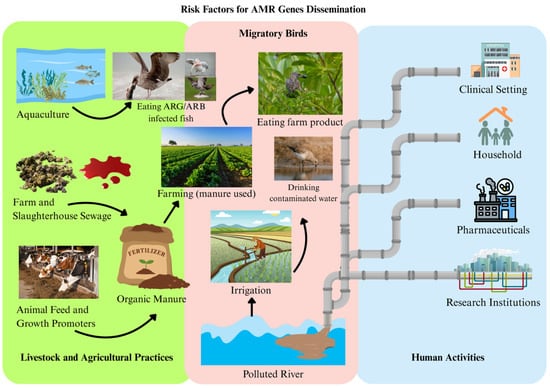
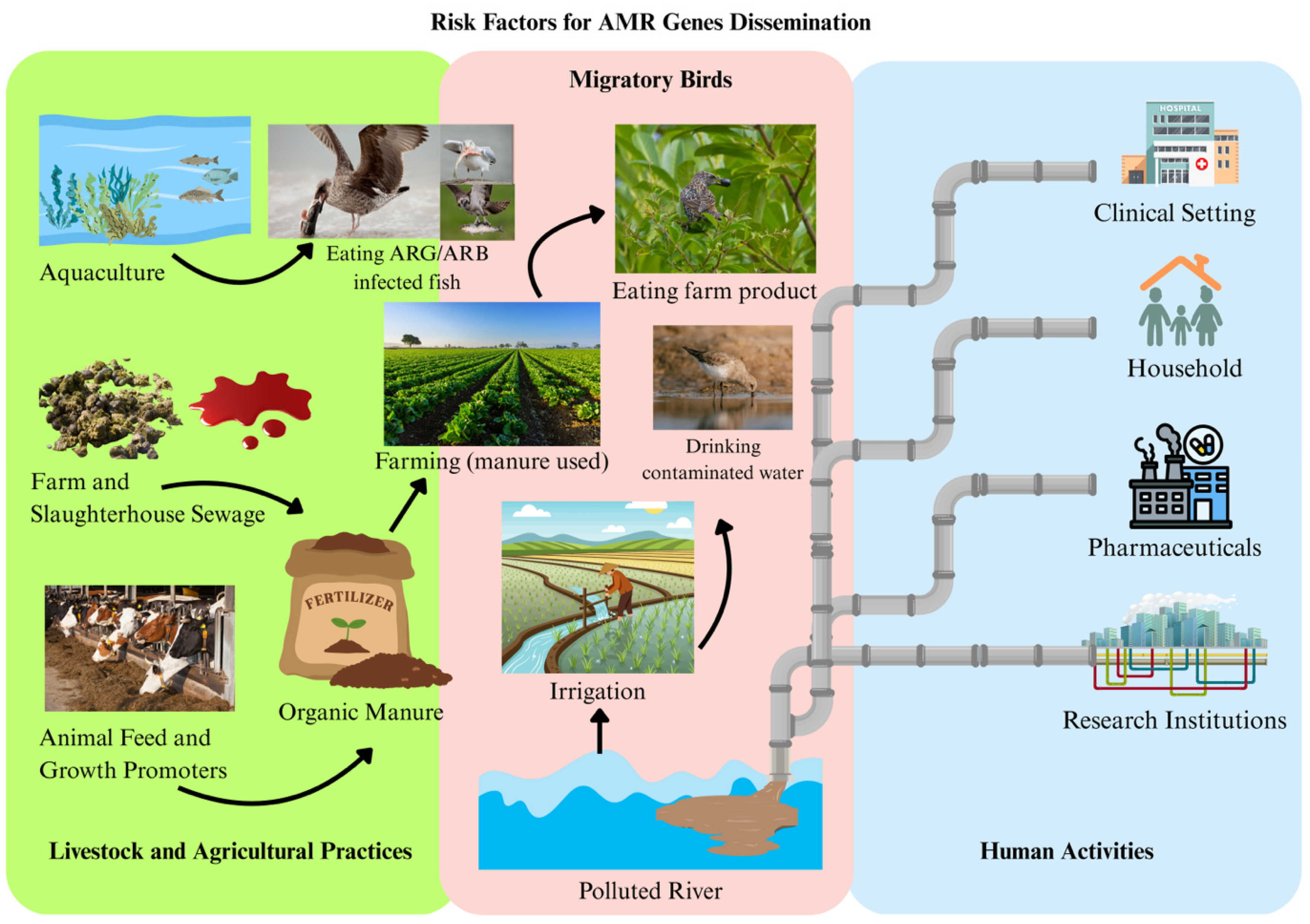
Disclaimer/Publisher’s Note: The statements, opinions and data contained in all publications are solely those of the individual author(s) and contributor(s) and not of MDPI and/or the editor(s). MDPI and/or the editor(s) disclaim responsibility for any injury to people or property resulting from any ideas, methods, instructions or products referred to in the content. |
© 2026 by the authors. Licensee MDPI, Basel, Switzerland. This article is an open access article distributed under the terms and conditions of the Creative Commons Attribution (CC BY) license.