


Abstract
Children and youth face unprecedented environmental health challenges. Despite their heightened vulnerability, they are essential to shaping sustainable futures. Yet youth engagement in environmental health is uneven globally, reflecting broader environmental inequities. Indeed, the Middle East and North Africa (MENA) offer limited opportunities for youth participation. In contrast, Europe has fostered visible youth leadership. Comparing youth co-creation approaches across Europe and the MENA region offers an opportunity to examine how environmental health initiatives are shaped by differing contextual conditions. Thus, this scoping review aims to (1) map and classify youth co-creation approaches in environmental health initiatives across Europe and the MENA region and (2) analyze lessons from both regions, highlighting effective strategies, challenges, and opportunities for cross-regional learning to strengthen youth engagement in environmental health initiatives. We conducted a comprehensive search across three databases, grey literature, and organizational websites. In total, 18 studies met the inclusion criteria; 15 studies were conducted in Europe, while 3 studies were situated in the MENA region. Four key themes emerged: (1) creating space for youth collaboration, dialogue and engagement, which underscores the importance of providing learning opportunities for children and youth; (2) no one-size-fits-all approach to co-creation, which underscores the need for diverse approaches, including innovative methods to engage with children and youth; (3) recruitment and retention challenges and contextual barriers to co-creation, which include social norms that may present additional barriers for girls to participate in co-creation initiatives; and (4) outcomes (such as environmental knowledge, behavioural change, skill development, and participation in decision-making) in co-creation. Several research, policy, and practice recommendations were outlined.
Keywords:
youth; co-creation; MENA region; Europe; environmental health; scoping review; climate change 1. Introduction
Nearly half of the world’s children, approximately 1.1 billion, face at least three overlapping climate hazards (including drought, extreme heat, and heatwaves) that threaten their health, wellbeing, and survival (UNICEF, 2026). Indeed, the future of childhood is increasingly shaped by global environmental crises. Projections indicate that by the 2050s, substantially more children will be exposed to extreme heatwaves, river flooding, droughts, wildfires, and other climate-related hazards compared to previous generations (UNICEF, 2024). These exposures are linked to adverse physical, mental, and social health outcomes, including infectious disease, food and water insecurity, displacement, and disruptions to education and community life (Arpin et al., 2021; Proulx et al., 2024; UNICEF, 2024).
Although environmental health challenges affect children globally, their impacts are not distributed equally, with significant regional variation driven by differences in environmental conditions, socioeconomic resources, governance structures, and adaptive capacity (Sheffield & Landrigan, 2011). For example, children in low-income regions face a higher risk of severe climatic events, compounded by ‘socio-political stratifiers’ (such as housing conditions and conflicts), reinforcing inequity and negatively affecting health and wellbeing outcomes (Diep et al., 2025).
As environmental threats intensify, there is a growing need for approaches that not only protect children and youth’s health but also actively involve them in shaping responses to the environmental challenges that will define their futures (Gasparri et al., 2022). Children and youth need to be recognized as important stakeholders and agents of change in efforts to address environmental and public health challenges (Arnot et al., 2024). Engaging children and youth in environmental health initiatives can enhance the relevance, responsiveness, and sustainability of interventions by incorporating the lived experiences and perspectives of those most directly impacted by environmental change (Cardarelli et al., 2021). Moreover, participation can improve environmental literacy, civic engagement, a sense of agency, and leadership among young people (Trott, 2020). As a result, interest has grown in participatory approaches that position youth as active partners in research (Cardarelli et al., 2021; Gasparri et al., 2022).
One such approach is co-creation, a collaborative process in which researchers, practitioners, policymakers, and community members work together to develop knowledge, solutions, and actions that address complex societal challenges (Vargas et al., 2022). In the context of youth engagement, co-creation moves beyond traditional models of participation by positioning youth as key knowledge users in decision-making and by emphasizing shared power throughout the design, implementation, and evaluation of initiatives (World Health Organization, 2026). The literature also describes several similar approaches, including co-design, co-production, and citizen science, which are often used interchangeably (Lee et al., 2024). For example, citizen science is defined as collaborating with the public in order to increase knowledge (L. Marks et al., 2026). Co-design involves the meaningful involvement of end-users throughout the process, and, similarly, co-production emphasizes engagement (Lee et al., 2024; L. Marks et al., 2026). While these approaches differ, a key similarity is the active collaboration among key knowledge users (L. Marks et al., 2026). Therefore, youth co-creation has the potential to be a valuable strategy for promoting both effective environmental health action and meaningful youth engagement.
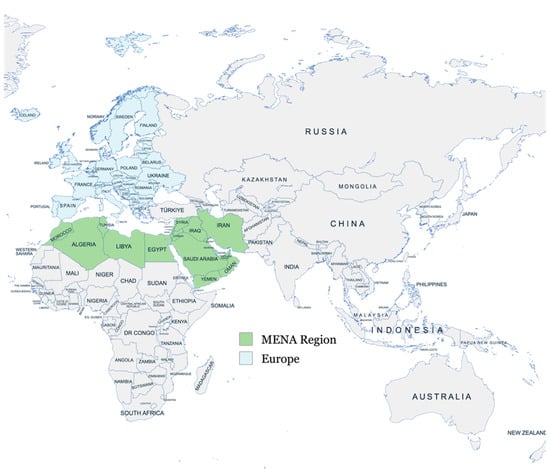
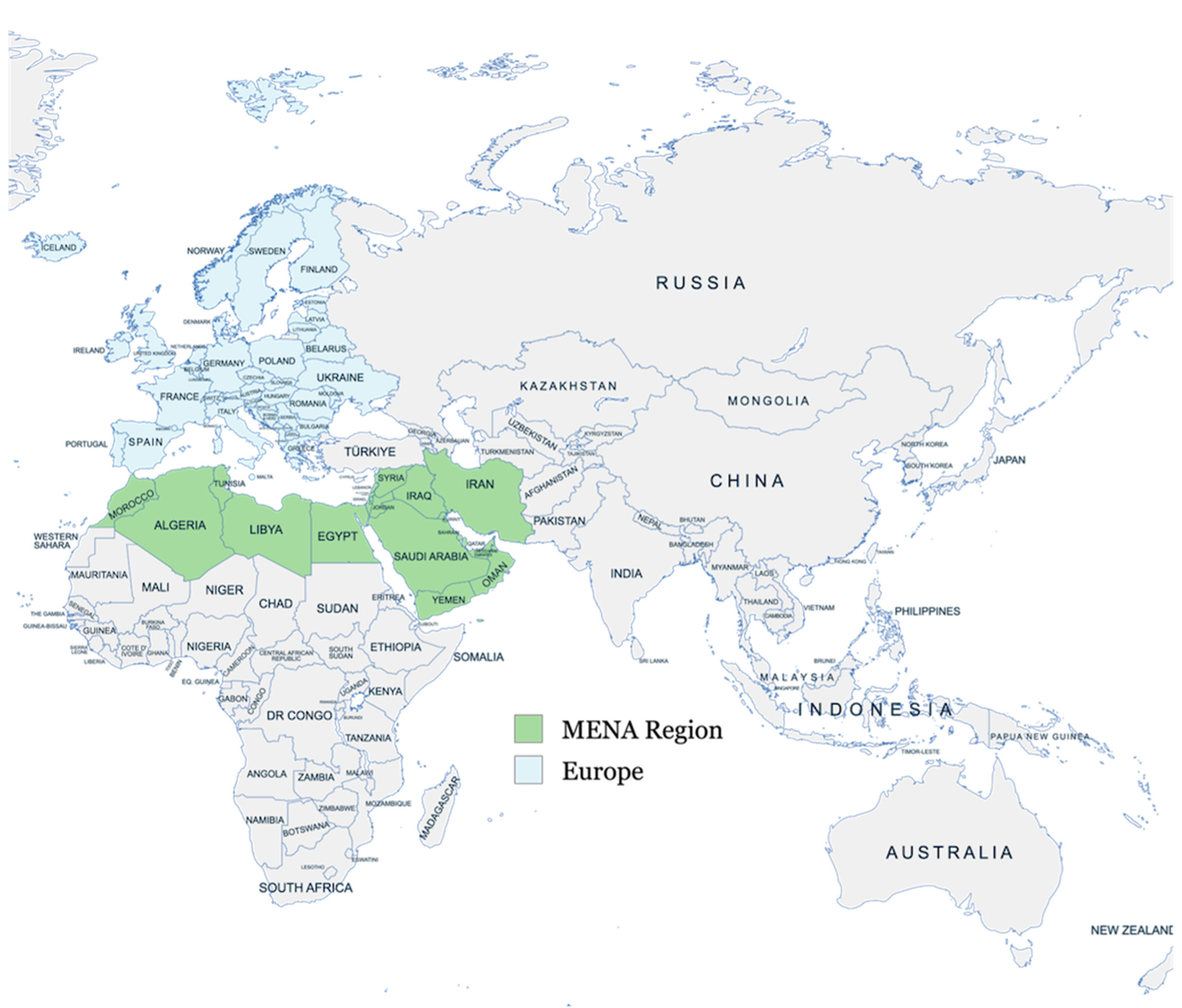
However, opportunities for youth engagement in environmental health initiatives are uneven globally, reflecting broader environmental, social, and political inequities. The Middle East and North Africa (MENA) region (see Figure 1) is home to one of the world’s youngest and fastest-growing populations, with individuals aged 15 to 29 accounting for roughly 30 percent of the population (Raz, 2019). Educational attainment rates vary across the region, with Qatar and the United Arab Emirates ranking highest and Oman, Palestine, Egypt, and Algeria ranking lowest (American Caldwell, 2026). In contrast, Europe’s youth population is shrinking, with youth representing 16.4% of Europe’s population (Data Army Intel, 2026). Of note, educational systems differ across Europe. For example, the Nordic countries provide near-universal, low-cost early childhood education, and countries such as Finland use a centralized educational system (Campos et al., 2025). In terms of environmental health challenges, the MENA region faces some of the world’s most pressing issues, including water scarcity, air pollution, extreme heat, and rising climate-related risks (Aloui et al., 2026). At the same time, limited institutional capacity, fragmented governance structures, political instability, limited access to high-quality education, and inadequate civic engagement mechanisms often constrain youth participation in environmental decision-making (Labkir et al., 2026; UNICEF Middle East and North Africa, 2026). Of note, these challenges are not spread evenly across the region. Higher-income countries, such as Saudi Arabia and the United Arab Emirates, have higher adaptive capacity compared to other countries (i.e., Jordan and Egypt) (Osman, 2024). For example, Saudi Arabia has established a Climate Change Center, which studies climate variability and projects future changes in partnership with international collaborators (Hoteit et al., 2025). Comparatively, Europe is currently facing several environmental public health challenges, including air pollution, traffic noise, road injuries, heatwaves and cold spells (European Environment Agency, 2026; Mitsakou et al., 2019). Notably, many countries across Europe (see Figure 1) have established participatory governance and youth engagement, supported by policy frameworks, institutional resources, and democratic structures that facilitate youth involvement in public decision-making (Nederlands Jeugdinstituut, 2023). As a result, young people in Europe may have greater opportunities to contribute to environmental health initiatives and influence policy and practice. These regional differences suggest that social, political, cultural, and institutional contexts shape youth co-creation. Existing discussions of co-creation often emphasize principles such as stakeholder participation, shared decision-making, knowledge exchange, and partnership, but we still need to understand how these principles translate into practice across different geographical and institutional contexts. Comparing Europe and MENA is particularly informative because differences in research infrastructures, governance arrangements, stakeholder relationships, and environmental-health contexts may shape who participates in co-creation, how knowledge and decision-making authority are shared, and which barriers or facilitators emerge. Further, comparing these two regions offers a unique case study because of their geographical proximity and the historical exchange of ideas, cultures, and practices (Bowden, 2020). Hence, by comparing the two regions, this review seeks to identify both recurring principles and context-specific adaptations. In doing so, it addresses an important gap in the literature and in practice and contributes to developing more context-sensitive approaches to co-creation in environmental health. In sum, comparing youth co-creation approaches across Europe and the MENA region offers a unique opportunity to examine how environmental health initiatives are shaped by differing contextual conditions. These differences provide a valuable basis for exploring how youth co-creation is conceptualized, implemented, and supported under distinct environmental, social, and governance conditions. Therefore, the objectives of this scoping review were to (1) map and classify youth co-creation approaches in environmental health initiatives across Europe and the MENA region and (2) analyze lessons from both regions, highlighting effective strategies, challenges, and opportunities for cross-regional learning to strengthen youth engagement in environmental health initiatives. By examining experiences across both regions, opportunities may emerge for cross-regional learning, enabling researchers, practitioners, and policymakers to identify transferable strategies, address common challenges, and strengthen meaningful youth engagement in environmental health initiatives.
Figure 1.
Map of MENA Region and Europe. Created using mapchart.net by S.D.
2. Materials and Methods
- Search Strategy
The scoping review follows the methodology proposed by Arksey and O’Malley (2005) and the updated version by Levac et al. (2010). The protocol has been registered on the Open Science Framework and is available here: https://osf.io/k5wuv/overview (accessed on 31 August 2026).
A detailed search for published articles was conducted on 17 January 2026, using Scopus, Web of Science, and PsycInfo, with the search terms listed in Table 1. Search strategies for each database are included in the Supplementary Materials.
Table 1.
Search Strategy for Scoping Review.
A grey literature search was also conducted using the World Health Organization database, the United Nations Development Programme, the United Nations Environment Programme, and Google Advanced. For the grey literature databases, we used a combination of the search terms described in Table 1 (such as “youth-led” AND “environment”) and the inclusion/exclusion criteria described in Table 2. The grey literature search was conducted on 18 May.
Table 2.
Inclusion and Exclusion Criteria.
The authors generated search terms using the previous literature and knowledge from the research team.
- Citation Management
After completing the peer-reviewed literature search, the results were exported to Covidence. During title and abstract screening and full-text screening, each article was screened by S.D. and J.H. against the predetermined inclusion and exclusion criteria (see Table 2). Any conflicts were then resolved through discussion between the two reviewers. For the grey literature search, sources were recorded manually in a Microsoft Excel database, and both reviewers (S.D. and J.H.) were responsible for title/abstract and full-text screening.
- Data extraction and analysis
Data extraction was captured in Covidence and in an Excel document. Bibliographic information, study objective, geographic location, and sample size were extracted from the included studies. We also extracted the environmental health outcome, definition of co-creation, data collection tools, and key outcomes. We piloted the standardized data extraction form with a small subset of articles (n = 3) to ensure both data extractors were on the same page. Afterward, S.D. and J.H. independently extracted data from 8 articles. Questions and disagreements were discussed at our regular meetings and resolved with the support of C.B.
We used an inductive thematic synthesis approach to analyze the data. Both the peer-reviewed and grey literature sources were analyzed using the same coding approach and all sources were coded for recurring concepts related to our research objectives. These codes were then compared across sources and grouped into broader thematic categories, from which the final themes were developed. S.D. was primarily responsible for the data analysis process, with input from J.H. and C.B.
3. Results
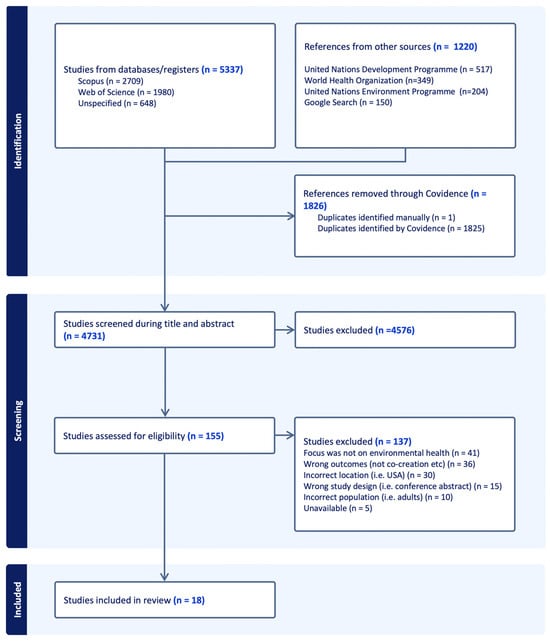
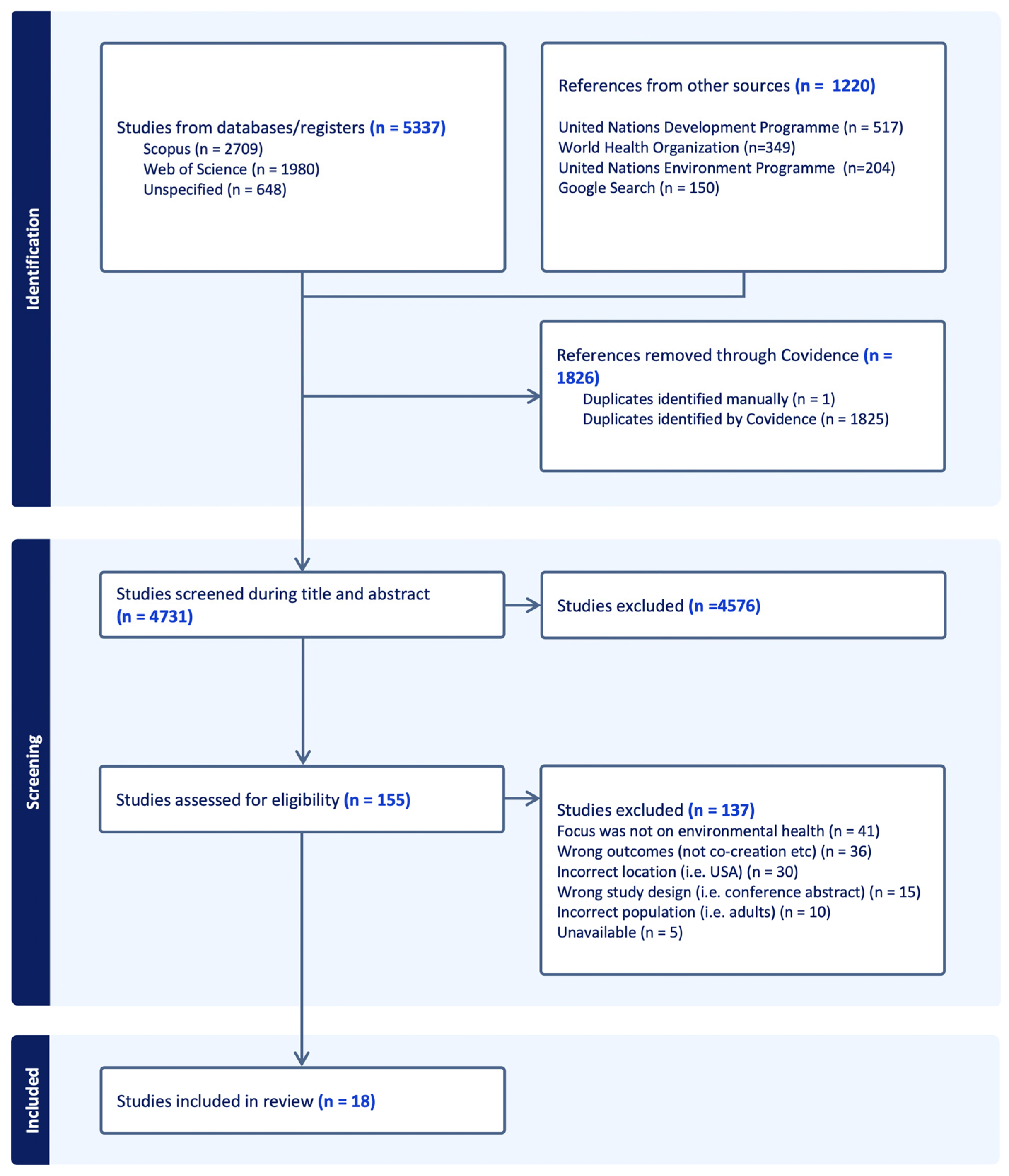
The search identified 5337 articles from 3 databases (Scopus, Web of Science, and PsycInfo) and 1220 articles through grey literature searches. After 1826 duplicates were removed by Covidence, 4731 articles underwent title and abstract screening by two reviewers (S.D. & J.H.), resulting in the exclusion of 4576 articles. The remaining 155 articles were screened for full-text eligibility, of which 137 were excluded based on the predefined inclusion and exclusion criteria. Figure 2 presents a summary of the study selection process using the PRISMA flow diagram.
Figure 2.
PRISMA Flow Diagram.
- Key attributes of included studies
In total, 18 studies met the inclusion criteria, comprising 16 peer-reviewed articles and 2 grey literature documents. Apart from 1 study published before 2020, all included sources were published between 2020 and 2026, highlighting the growing importance and interest in co-creating environmental health research and projects with youth.
The majority of studies (n = 15) were conducted in Europe. Well-represented countries in the European region included Norway, Portugal, Ireland, and the United Kingdom, whereas only 3 studies focused on the MENA region. Detailed characteristics of the included studies are presented in Table 3 and Table 4. A table focusing on the themes in more detail can be found in the Supplementary Materials.
Table 3.
Characteristics of Included Studies Conducted in Europe.
Table 4.
Characteristics of Included Studies Conducted in the MENA Region.
- Theme: Creating space for youth collaboration, dialogue and engagement
Across the included studies, co-creation was consistently emphasized, echoing the slogan, “Nothing about us without us.” Although originally rooted in the fight for disability rights and justice (Charlton, 2004), this principle also applies to involving youth in co-creating environmental health initiatives. The studies highlighted the importance of creating opportunities for children and youth to engage in the process, as they can both learn from and contribute to these initiatives (Ferreira et al., 2025; E. Marks et al., 2023; Nielsen et al., 2026; Padwick et al., 2025; Yerkes & Uakkas, 2025).
The included studies used various terms to describe the process of involving youth, such as co-production, participatory action research, citizen science, and co-design. For example, Marques et al. (2020) applied a participatory research framework that involved collaboration with young people and local communities to promote social change. Castell et al. (2021) described a co-production process in which children contributed across multiple stages of the research process, whereas SAMHE Project Consortium et al. (2023) used co-design as ongoing involvement of participants to design an innovation, create prototypes, and receive feedback. Although the terminology and degree of youth involvement varied, the key similarity is the necessity of involving the participants, in this case, children and youth, in a meaningful manner.
- Theme: No one-size-fits-all approach to co-creation
The included studies used diverse approaches to engage children and youth in environmental health. These approaches included school-based educational programs, citizen science projects, participatory research, and the co-design of educational resources and games. For example, Castell et al. (2021) used a citizen science approach to involve primary school children in air pollution monitoring by having them select monitoring locations, build and use low-tech air pollution monitors, collect data, and help interpret results. Similarly, Varaden et al. (2021) evaluated the effectiveness of a program in which children were given a backpack with a small air pollution sensor to monitor air pollution in their community. They were also given a badge that read “I am an air quality scientist.” Following participation, children reported increased awareness and understanding of air pollution and its potential health implications (Varaden et al., 2021).
Other studies adopted participatory educational and co-design approaches. For example, Marques et al. (2020) described the development of a school-based educational program designed to engage students in discussions about environmental challenges and to encourage them to become advocates within their communities. In Italy, Gizzi et al. (2019) co-designed and tested an educational waste management game with children, parents, and teachers, ensuring the final product reflected the needs and perspectives of its intended users.
A varied range of environmental health issues were discussed in the included studies. All three of the studies from the MENA region focused solely on climate change (n = 3), while studies conducted in Europe focused primarily on air pollution (n = 6), climate change (n = 5), biodiversity (n = 1), waste management (n = 1) and general environmental initiatives (n = 1). These differences reflect the environmental topics addressed in the included sources; however, the limited number and geographical coverage of MENA sources prevent broader conclusions about regional research priorities.
Collectively, these findings demonstrate that co-creation was operationalized through a wide range of participatory methods. Rather than serving solely as recipients of environmental education, children and youth were engaged as collaborators who contributed to the development, implementation, and refinement of environmental health initiatives.
- Theme: Recruitment and retention challenges and contextual barriers to co-creation
While co-creation offers numerous benefits and there are effective strategies for engaging youth, studies have identified barriers to implementing meaningful youth engagement in environmental health initiatives. Practical challenges include recruiting and retaining youth participants. For example, some youth opportunities require substantial time commitments and are unpaid, potentially limiting participation among those from lower socio-economic backgrounds (Portus et al., 2025). Further, some opportunities raise concerns about tokenistic participation, in which young people are unsure about the extent to which their perspectives are considered in ongoing projects (Portus et al., 2025). Additionally, collaborations between youth and academic researchers may inherently create power imbalances and a space where youth may not feel comfortable sharing their opinions (Portus et al., 2025).
The limited literature from the MENA region identifies additional contextual barriers that may further constrain youth participation. Cultural and gender norms, which may limit girls to participating only during school hours or not at all, were reported to restrict girls’ opportunities to engage in environmental health initiatives in Jordan (Nielsen et al., 2026). More broadly, several countries in the MENA region are experiencing a profound polycrisis of interlinked challenges, including political instability and economic pressures, leaving youth feeling hopeless, apathetic, and unwilling to participate in environmental health initiatives (Hassan, 2023; Yerkes & Uakkas, 2025). A lack of institutional trust and competing priorities in this region, such as in Morocco, Tunisia and Egypt, leads to a lack of dedicated environmental health initiatives for youth (Hassan, 2023; Yerkes & Uakkas, 2025).
These findings suggest that meaningful co-creation required more than participatory methods alone. Structural, socioeconomic, and sociocultural factors shape who is able to participate and the extent to which youth can meaningfully influence environmental health initiatives.
- Theme: Outcomes of Youth Engagement in Co-Creation
Studies emphasized the key learning benefits as outcomes of co-creation for the children and youth involved. These outcomes include environmental knowledge, behavioural change, skill development, participation in decision-making, and environmental health. Regarding environmental knowledge, Castell et al. (2021) and Varaden et al. (2021) reported increased awareness and understanding of air pollution and its potential health implications following children’s participation in citizen science initiatives, highlighting the potential of co-creation to support environmental learning. Skill development was another reported outcome. Portus et al. (2025) found that engagement in co-productive research supported the development of communication and collaborative skills while fostering relationships and a sense of community among participants. Similarly, Doyle et al. (2024) reported that participants developed and refined their climate communication skills and strategies. These findings suggest that co-creation can provide opportunities for youth to develop transferable skills through collaboration and active participation. Regarding behavioural change, Doyle et al. (2024) reported that a four-day in-person retreat focused on climate change helped youth develop and refine their climate communication skills and strategies and led to behavioural changes, such as reduced meat consumption. Co-creating environmental health initiatives also created a space for dialogue and improved understanding of environmental health concerns, such as air pollution and climate change (Castell et al., 2021; Padwick et al., 2025; Varaden et al., 2021). Participation in decision-making was reflected in opportunities for children and youth to contribute to the development of environmental health initiatives. For example, SAMHE Project Consortium et al. (2023) involved students in co-designing air quality monitoring resources, while Gizzi et al. (2019) engaged children in developing and testing an educational waste management game. Environmental health outcomes were primarily addressed through environmental exposure monitoring rather than direct assessments of health improvements. For example, Varaden et al. (2021) involved children in measuring personal exposure to air pollution, providing information about environmental conditions without establishing improvements in health outcomes. Collectively, these findings suggest that meaningful youth participation can contribute both to the development of environmental health initiatives and to young people’s knowledge, skills, agency, and social connections.
4. Discussion
This scoping review aimed to synthesize evidence on youth co-creation approaches in environmental health initiatives across Europe and the MENA region. Overall, the findings demonstrate that co-creation is increasingly used to engage children and youth through participatory approaches such as citizen science, co-design, participatory research, and educational interventions. Although these approaches were associated with improvements in environmental knowledge, communication skills, agency, and community engagement, barriers to meaningful participation remain, particularly in the MENA region.
A key finding of this review was the value of co-creation as a strategy for engaging children and youth in environmental health initiatives. Previously published research has demonstrated that co-creation can reduce depressive and anxiety symptoms by strengthening young people’s sense of agency and social connections (Tao et al., 2025). Similarly, the included studies underscored that meaningful participation can yield benefits beyond individual projects’ environmental outcomes. Indeed, studies in this review using qualitative methods found that co-created initiatives improved communication skills, strengthened peer relationships, and created opportunities for youth to share concerns about environmental issues such as climate change, resulting in a sense of community among those with similar feelings (Doyle et al., 2024; E. Marks et al., 2023). Those involved in the air pollution citizen science projects showed increased knowledge and awareness of air pollution and fewer misconceptions as assessed through a pre-post evaluation using self-reported multiple-choice questionnaires (Castell et al., 2021). Collectively, these findings suggest that co-creation not only improves the relevance of environmental health initiatives by incorporating young people’s lived experiences (Madsen et al., 2025), but also supports broader developmental outcomes for youth.
Another key theme emerging from the included studies is that while co-creating environmental health initiatives with youth offers many benefits, it also faces limitations and barriers. Other peer-reviewed studies have acknowledged that, at times, co-creation approaches may seem transactional, and it is essential for youth’s perspectives to be incorporated into practice (Mendes et al., 2025; Paterson-Young et al., 2024). Other studies, situated in the MENA region, included in our review, underscored examples of other barriers to youth engagement, such as power dynamics, lack of information, and income poverty (Nesrallah et al., 2023; Yerkes & Uakkas, 2025). Of note, Nesrallah et al. (2023) designed a framework to support meaningful youth engagement that increasingly emphasizes principles such as respect, inclusivity, voluntariness, and accountability while encouraging collaboration with existing community organizations and youth leaders.
One notable finding was the substantial geographic imbalance in the evidence included in our review. In total, 15 of the 18 included studies were conducted in Europe, and 3 focused on the MENA region. The evidence from the MENA region may suggest that youth co-creation is shaped by unique contextual challenges. For example, ongoing environmental crises, water insecurity, regional and international conflicts, and limited employment opportunities often compete with climate change as immediate priorities for governments and young people in several MENA countries, such as Iraq, Palestine and Egypt (Hassan, 2023). Crises that demand immediate attention (such as regional conflict) may take precedence over other concerns. In addition, limited institutional trust and gendered social norms may further restrict opportunities for meaningful youth participation, particularly among those living in the MENA region (Yerkes & Uakkas, 2025). Studies in Jordan have found that women are less likely to participate in research studies because of social and cultural norms (Z. A. Al Subeh & Alzoubi, 2020; Z. Y. Al Subeh & Alzoubi, 2021). These findings highlight the importance of adapting co-creation approaches to local cultural, political, and environmental contexts rather than directly transferring models developed elsewhere. Hence, at conferences such as the Conference of Youth (COY17) in Sharm el-Sheikh, youth developed several key recommendations, including increased “adaptation finance and equitable and concessional funding and enhancing resilience strategies tailored to local contexts” (Yerkes & Uakkas, 2025). Further, the International Association for Adolescent Health at a recent meeting in the MENA region published a declaration which focused “on youth and included commitments to address: the neglect of youth in humanitarian and fragile settings; comprehensive school-based adolescent health services; developing expertise in research and data collection; the safety and identity of women through combating gender-based violence, forced early marriage and trafficking; improving mental health; increasing physical activity; working with families, and promoting a culture of evidence-based development of policies, programs, plans, services and initiatives targeting adolescents and youth.” All of this speaks to the attention that is being paid to youth and environmental health initiatives that may not yet be reflected in available sources.
Notably, European studies covered a wide range of environmental health issues, including biodiversity, air pollution, and recycling. Surprisingly, there was no direct focus on heatwaves, despite the continent experiencing record-breaking heatwaves (Croft, 2026). The European region can model their environmental health initiatives on work already conducted in the MENA region on rising temperatures. For example, a district cooling system can distribute cooling to multiple buildings, improving energy efficiency and reducing costs (Mante, 2026). While these initiatives do not involve youth and this initiative was not included in this particular review, these strategies offer a strong solution to current environmental health issues and could be improved by involving key knowledge users in a co-creation model. Knowledge users, such as policymakers in the MENA region, should also learn from Europe’s co-creation work to engage youth in a meaningful way. Many European initiatives successfully engaged children and other key knowledge users (such as parents and teachers), creating supportive environments for sustained participation. This approach may help knowledge users in the MENA region mitigate social and cultural barriers. Similar multi-knowledge user approaches may offer valuable lessons for policymakers and practitioners seeking to strengthen youth engagement in environmental health initiatives within the MENA region. However, these approaches should be adapted to reflect local priorities, governance structures, and cultural contexts to ensure that participation remains meaningful and equitable. For example, both regions can utilize trusted community organizations, religious institutions, and community gathering spots to engage youth in a non-tokenistic, respectful manner. This will also help ensure diversity in the sample. Overall, both regions can draw on best practices from each other to improve their own approaches to environmental health initiatives.
- Limitations
Our review focused on the MENA and European regions, enabling an in-depth analysis of the included studies. However, we recognize that a global review would enable cross-regional comparisons among regions with differing socio-economic and climatic conditions. Further, our search focused primarily on English, which may have excluded relevant evidence published in Arabic or other languages, particularly within the MENA region. The relatively limited evidence identified from MENA countries and the methodological heterogeneity across sources and differences between peer-reviewed studies and grey literature may limit comparability across findings. In addition, classifying levels of youth participation based on the information reported by authors may have introduced some misclassification. Importantly, the absence of identified publications from particular countries should not be interpreted as evidence that youth co-creation initiatives are not occurring, as such activities may be undocumented, unpublished, or not captured by our search strategy. Further, the lack of studies from the MENA region may have been due to not using specialized Arabic databases or to not employing an Arabic/French search strategy. The limited number of studies from the MENA region may also reflect the inequities embedded in the global publishing system (Bol et al., 2023; Nature, 2023).
5. Conclusions
Our study underscored that co-creation is a valuable strategy for engaging children and youth in environmental health research and action, with reported benefits including improved communication skills, agency, and community connectedness. Several of the included studies underscored that the initiatives implemented with youth improved environmental knowledge and awareness and helped with behavioural change. However, meaningful youth participation requires more than simply involving young people in research or interventions; it depends on authentic partnerships that promote decision-making, address power imbalances, and ensure that youth perspectives meaningfully inform project development.
Despite growing interest in youth co-creation, the majority of studies in our review focused on Europe. While this geographic imbalance may reflect limitations in our review, it does underscore the need for greater investment in research, policy, and practice that support contextually appropriate approaches to youth engagement in underrepresented regions.
We have several future areas of research, including conducting an updated search using Arabic scholarly databases (such as Al Manhal). Doing so would ensure we capture papers written in Arabic and French. We would also be interested in interviewing knowledge users in the MENA region and Europe to hear their perspectives on co-creating environmental health initiatives with youth. Future research should also prioritize developing and evaluating co-creation approaches that are culturally responsive, locally relevant, and designed in collaboration with young people to strengthen environmental health initiatives across various settings.
Supplementary Materials
The following supporting information can be downloaded at: https://www.mdpi.com/article/10.3390/youth6040158/s1, Table S1. Aligning the themes with relevant European and MENA studies.
Author Contributions
Conceptualization, S.D. and C.B.; methodology, S.D., J.H.-P. and C.B.; software, S.D. and J.H.-P.; formal analysis, S.D. and J.H.-P.; investigation, S.D. and J.H.-P.; data curation, S.D. and J.H.-P.; writing—original draft preparation, S.D. and J.H.-P.; writing—review and editing, S.D., J.H.-P. and C.B.; visualization, S.D.; supervision, C.B. All authors have read and agreed to the published version of the manuscript.
Funding
We received funding from the 2025-26 Discretionary Fund Research Seed 2025, Faculty of Health Sciences, Ontario Tech University. The funder had no role in study design, data collection and analysis, decision to publish, or preparation of the manuscript.
Institutional Review Board Statement
Not applicable.
Informed Consent Statement
Not applicable.
Data Availability Statement
No new data were created or analyzed in this study. Data sharing is not applicable to this article.
Conflicts of Interest
The authors declare no conflicts of interest.
Abbreviation
The following abbreviation is used in this manuscript:
| MENA | Middle East and North Africa |
References
- Aloui, Z., Hamdaoui, M., Sahraoui, W., & Maktouf, S. (2026). Political stability and the health effects of climate change in MENA countries. Discover Public Health, 23(1), 1005. [Google Scholar] [CrossRef] [Scilit]
- Al Subeh, Z. A., & Alzoubi, K. (2020). Cultural and religious barriers influencing the participation of women in research: A study from Jordan. Gender Issues, 37, 173–186. [Google Scholar] [CrossRef] [Scilit]
- Al Subeh, Z. Y., & Alzoubi, K. H. (2021). Researchers’ ethical perspective about women participation in research studies in Jordan. Heliyon, 7(12), e08492. [Google Scholar] [CrossRef] [Scilit]
- American Caldwell. (2026). Most educated in the Middle East. American Caldwell. Available online: https://americancaldwell.com/mena (accessed on 15 August 2026).
- Andrade, B., Crowley, S., Cocco, C., & McNally, B. (2024). A videogame for architectural design? Minecraft for young people to imagine desirable climate futures (Volume 1984, pp. 150–165). Springer. [Google Scholar] [CrossRef] [Scilit]
- Arksey, H., & O’Malley, L. (2005). Scoping studies: Towards a methodological framework. International Journal of Social Research Methodology, 8(1), 19–32. [Google Scholar] [CrossRef] [Scilit]
- Arnot, G., Pitt, H., McCarthy, S., Warner, E., & Thomas, S. (2024). ‘You can’t really separate these risks, our environment, our animals and us’: Australian children’s perceptions of the risks of the climate crisis. Health Promotion International, 39(2), daae023. [Google Scholar] [CrossRef] [Scilit]
- Arpin, E., Gauffin, K., Kerr, M., Hjern, A., Mashford-Pringle, A., Barros, A., Rajmil, L., Choonara, I., & Spencer, N. (2021). Climate change and child health inequality: A review of reviews. International Journal of Environmental Research and Public Health, 18(20), 10896. [Google Scholar] [CrossRef] [Scilit]
- Bol, J. A., Sheffel, A., Zia, N., & Meghani, A. (2023). How to address the geographical bias in academic publishing. BMJ Global Health, 8(12), e013111. [Google Scholar] [CrossRef] [Scilit]
- Bowden, B. (2020). Different experiences: Europe, Africa, and the Middle East: An introduction. In The palgrave handbook of management history (pp. 1–8). Palgrave Macmillan. [Google Scholar] [CrossRef] [Scilit]
- Campos, D. G., Koskinen, A., Munkácsy, B., Rolfe, V., Patsis, P., Tóth, E., Olsen, R. V., Scherer, R., Söldner, L., Danek, A. H., Greiff, S., & Vainikainen, M.-P. (2025). Educational inequalities in Europe: A scoping review of longitudinal studies in K-12 education. Studies in Educational Evaluation, 87, 101523. [Google Scholar] [CrossRef] [Scilit]
- Cardarelli, K. M., Ickes, M., Huntington-Moskos, L., Wilmhoff, C., Larck, A., Pinney, S. M., & Hahn, E. J. (2021). Authentic youth engagement in environmental health research and advocacy. International Journal of Environmental Research and Public Health, 18(4), 2154. [Google Scholar] [CrossRef] [Scilit]
- Castell, N., Grossberndt, S., Gray, L., Fredriksen, M., Skaar, J., & Hoiskar, B. (2021). Implementing citizen science in primary schools: Engaging young children in monitoring air pollution. Frontiers in Climate, 3, 639128. [Google Scholar] [CrossRef] [Scilit]
- Charlton, J. I. (2004). Nothing about us without us: Disability oppression and empowerment (3. Dr.). University of California Press. [Google Scholar]
- Christodoulou, A., & Grace, M. (2025). Becoming “wild citizens”: Children’s articulation of environmental citizenship in the context of biodiversity loss. Science & Education, 34(3), 969–997. [Google Scholar] [CrossRef] [Scilit]
- Croft, A. (2026). European wildfires in numbers: How record-breaking heatwaves have scorched the continent. Independent. Available online: https://www.independent.co.uk/news/world/europe/europe-wildfires-in-numbers-heatwave-mapped-b3029483.html (accessed on 10 August 2026).
- Data Army Intel. (2026). The state of European youth: Five trends shaping the next generation. Data Army Intel. Available online: https://dataarmyintel.io/knowledge-article/the-state-of-european-youth-five-trends-shaping-the-next-generation/ (accessed on 10 August 2026).
- Deane, A., Reid, K., Torney, D., Reid, C., Gallachóir, B., & Harris, C. (2025). Finding your Tribe! Participatory evaluation of Co-creation with children and young people in support of environmental action. International Journal of Qualitative Methods, 24. [Google Scholar] [CrossRef] [Scilit]
- Diep, L., Godfrey, S., Tunhuma, F., Campos, L. C., Lakhanpaul, M., & Parikh, P. (2025). Cascading impacts of climate change on child survival and health in Africa. Nature Climate Change, 15(3), 254–261. [Google Scholar] [CrossRef] [Scilit]
- Doyle, J., Chiari, S., Pearl, P., Ellis, K., Völler, S., Shaw, C., & Hezel, B. (2024). Transforming young adults’ climate learning and actions through a co-created climate communication retreat. Environmental Education Research, 30(12), 2340–2358. [Google Scholar] [CrossRef] [Scilit]
- European Environment Agency. (2026, April 30). Environmental health impacts. Available online: https://www.eea.europa.eu/en/topics/in-depth/environmental-health-impacts (accessed on 10 August 2026).
- Ferreira, L., Dias, L., Seixas, J., & Schmidt, L. (2025). Co-creating innovative climate policy frameworks for urban decarbonization: High school engagement in carbon pricing. Frontiers in Environmental Science, 13, 1635633. [Google Scholar] [CrossRef] [Scilit]
- Gasparri, G., Imbago-Jácome, D., Lakhani, H., Yeung, W., & Omrani, O. E. (2022). Adolescents and youth are prioritising human rights in the climate change agenda. BMJ, 379, o2401. [Google Scholar] [CrossRef] [Scilit]
- Gizzi, V., Di Dio, S., & Schillaci, D. (2019). Junkbox, a waste management educational game for preschool kids. Interaction Design and Architectures, 40(40), 46–56. [Google Scholar] [CrossRef] [Scilit]
- Hassan, Y. (2023). Meaningful climate action: Young people as changemakers in the MENA region. Save the Children Middle East, North Africa and Eastern Europe Regional Office. Available online: https://resourcecentre.savethechildren.net/pdf/StC_Meaningful-Climate-Action_Final-report_Oct2023.pdf (accessed on 26 August 2026).
- Hoteit, I., Abualnaja, Y., Afzal, S., Aman, C., Antony, C., Ashok, K., Asiri, M. I., Attada, R., Al-Azemi, M. A., Bavera, D., Al-Boqami, S., Castro, C., Chang, H.-I., Cornuelle, B., Cui, W., Dasari, H. P., Desamsetti, S., Dougherty, W., Ehsan, A., … Zhan, P. (2025). New climate change center of Saudi Arabia: Advancing understanding and prediction for the arabian peninsula climate. Earth’s Future, 13(12), e2025EF006296. [Google Scholar] [CrossRef] [Scilit]
- Jones, L., Parsons, K., Halstead, F., & Wolstenholme, J. (2024). Reimaging activism to save the planet: Using transdisciplinary and participatory methodologies to support collective youth action. Children & Society, 38(3), 823–838. [Google Scholar] [CrossRef] [Scilit]
- Key, K. D., Furr-Holden, D., Lewis, E. Y., Cunningham, R., Zimmerman, M. A., Johnson-Lawrence, V., & Selig, S. (2019). The continuum of community engagement in research: A roadmap for understanding and assessing progress. Progress in Community Health Partnerships: Research, Education, and Action, 13(4), 427–434. [Google Scholar] [CrossRef] [Scilit]
- Labkir, S.-E., Loumani, L. E., & Harmouzi, N. E. (2026). E-government, institutional quality and economic growth in the MENA region: Theoretical analysis and empirical evidence. Journal of Governance and Regulation, 15(1), 117. [Google Scholar] [CrossRef] [Scilit]
- Lee, D., Feiertag, P., & Unger, L. (2024). Co-production, co-creation or co-design of public space? A systematic review. Cities, 154, 105372. [Google Scholar] [CrossRef] [Scilit]
- Levac, D., Colquhoun, H., & O’Brien, K. K. (2010). Scoping studies: Advancing the methodology. Implementation Science: IS, 5, 69. [Google Scholar] [CrossRef] [Scilit]
- Madsen, L., Westerskov Dalgas, B., & Pawlowski, C. S. (2025). Understanding co-creation processes with adolescents in YoPA Denmark. International Journal of Adolescence and Youth, 31(1), 2608769. [Google Scholar] [CrossRef] [Scilit]
- Mante, L. (2026). Building a heat resilience roadmap for the gulf region. Observer Research Foundation. Orfonline.Org. Available online: https://www.orfonline.org/research/building-a-heat-resilience-roadmap-for-the-gulf-region (accessed on 15 August 2026).
- Marks, E., Atkins, E., Garrett, J., Abrams, J., Shackleton, D., Hennessy, L., Mayall, E., Bennett, J., & Leach, I. (2023). Stories of hope created together: A pilot, school-based workshop for sharing eco-emotions and creating an actively hopeful vision of the future. Frontiers in Psychology, 13, 1076322. [Google Scholar] [CrossRef] [Scilit]
- Marks, L., Rowbotham, S., Smith, B. J., Singh, S. K., Mitchell, J., & Laird, Y. (2026). Understanding citizen science as a participatory approach in public health research and practice. Journal of Prevention and Health Promotion. [Google Scholar] [CrossRef] [Scilit]
- Marques, R., Malafaia, C., Faria, J., & Menezes, I. (2020). Using online tools in participatory research with adolescents to promote civic engagement and environmental mobilization: The WaterCircle (WC) project. Environmental Education Research, 26(7), 1043–1059. [Google Scholar] [CrossRef] [Scilit]
- Mendes, J. A. d. A., Mahamud, A., Doherty, S., Lucassen, M., Lockwood, J., Townsend, E., Hollis, C., & Jirotka, M. (2025). ‘Co-Production is caring’: Young people’s reflections on responsible and dialogic co-production in youth mental health. Health Expectations: An International Journal of Public Participation in Health Care and Health Policy, 28(6), e70488. [Google Scholar] [CrossRef] [Scilit]
- Mitsakou, C., Dimitroulopoulou, S., Heaviside, C., Katsouyanni, K., Samoli, E., Rodopoulou, S., Costa, C., Almendra, R., Santana, P., Dell’Olmo, M. M., Borrell, C., Corman, D., Zengarini, N., Deboosere, P., Franke, C., Schweikart, J., Lustigova, M., Spyrou, C., de Hoogh, K., … Vardoulakis, S. (2019). Environmental public health risks in European metropolitan areas within the EURO-HEALTHY project. Science of the Total Environment, 658, 1630–1639. [Google Scholar] [CrossRef] [Scilit]
- Morand, S., & Lajaunie, C. (2018). 1—A brief history on the links between health and biodiversity. In S. Morand, & C. Lajaunie (Eds.), Biodiversity and health (pp. 1–14). Elsevier. [Google Scholar] [CrossRef] [Scilit]
- Nature. (2023). End the glaring inequity in international science collaborations. Nature, 624(7992), 473. [Google Scholar] [CrossRef] [Scilit]
- Nederlands Jeugdinstituut. (2023). Young people are in all over Europe. Available online: https://www.nji.nl/system/files/2023-06/Young-people-are-in-all-over-Europe.pdf (accessed on 12 August 2026).
- Nesrallah, S., Klepp, K.-I., Budin-Ljøsne, I., Luszczynska, A., Brinsden, H., Rutter, H., Bergstrøm, E., Singh, S., Debelian, M., Bouillon, C., & Katanasho, M. B. (2023). Youth engagement in research and policy: The CO-CREATE framework to optimize power balance and mitigate risks of conflicts of interest. Obesity Reviews, 24(S1), e13549. [Google Scholar] [CrossRef] [Scilit]
- Nielsen, K., Cameron, J., Salahat, M., Cramer, C., Gonzalez, N., Al-Shurafat, A., Alshneikat, L., Loomis, D., & Al-Delaimy, W. (2026). Building Youth Capacity for Climate-Health Science: Lessons From Implementing The DataJam in Jordan. GeoHealth, 10(4), e2026GH001834. [Google Scholar] [CrossRef] [Scilit]
- Osman, S. (2024). Assessing climate adaptation plans in the Middle East and North Africa. Available online: https://carnegieendowment.org/research/2024/04/assessing-climate-adaptation-plans-in-the-middle-east-and-north-africa (accessed on 1 August 2026).
- Otu, E., Ashworth, K., Tsekleves, E., & Ackley, A. (2024). Empowering london primary school communities to know and tackle air pollution exposure. Sustainability, 16(17), 7491. [Google Scholar] [CrossRef] [Scilit]
- Padwick, A., Hocking, E., Shimwell, J., Davenport, C., Bourne, J., Ransome, K., Baxter, C., Ramsay, A., & Blazey, E. (2025). It’s in our hands: Facilitating agency, personal connections and collective cohesion in climate education through board game play. Journal of Environmental Studies and Sciences, 16(2), 389–402. [Google Scholar] [CrossRef] [Scilit]
- Paterson-Young, C., Adhikari, J., Lee, L., Maher, M., & Wright, L. H. V. (2024). Creating ownership: Strengths and tensions in co-production with children, young people, and adults across contexts. Childhood, 31(3), 329–348. [Google Scholar] [CrossRef] [Scilit]
- Percy-Smith, B., & Burns, D. (2013). Exploring the role of children and young people as agents of change in sustainable community development. Local Environment, 18(3), 323–339. [Google Scholar] [CrossRef] [Scilit]
- Portus, R., Williams, S.-J., Mansikka-Aho, A., Reilly, K., Aarnio-Linnanvuori, E., De Vito, L., Dillon, B., Fahy, F., Gnecco, I., Palla, A., Sposito, S., & McEwen, L. (2025). Reflections on co-productive research in a youth-focused climate education project. Geographical Research, 63(1), 118–133. [Google Scholar] [CrossRef] [Scilit]
- Proulx, K., Daelmans, B., Baltag, V., & Banati, P. (2024). Climate change impacts on child and adolescent health and well-being: A narrative review. Journal of Global Health, 14, 04061. [Google Scholar] [CrossRef] [Scilit]
- Raz, D. (2019). Youth in Middle East and North Africa. Available online: https://www.arabbarometer.org/wp-content/uploads/ABV_Youth_Report_Public-Opinion_Middle-East-North-Africa_2019-1.pdf (accessed on 1 August 2026).
- SAMHE Project Consortium, Chatzidiakou, L., Archer, R., Beale, V., Bland, S., Carter, H., Castro-Faccetti, C., Edwards, H., Finneran, J., Hama, S., Jones, R., Kumar, P., Linden, P., Rawat, N., Roberts, K., Symons, C., Vouriot, C., Wang, D., Way, L., … Burridge, H. (2023). Schools’ air quality monitoring for health and education: Methods and protocols of the SAMHE initiative and project. Developments in the Built Environment, 16, 100266. [Google Scholar] [CrossRef] [Scilit]
- Sheffield, P. E., & Landrigan, P. J. (2011). Global climate change and children’s health: Threats and strategies for prevention. Environmental Health Perspectives, 119(3), 291–298. [Google Scholar] [CrossRef] [Scilit]
- Tao, Y., Adedeji, O. J., Sakuma, Y., Conklin, J., Magista, M., Aung, M. T., Septiawa, K. G. A. P., Prado, E. O., Siddique, M. K. B., Azugo, N. O., Koledowo, A. A., Walker, A., Chamouni, S., Condoy, J. S. I., Gonzales, J. E. V., Prieto, G. J., Sangucho, I. A. S., Adeboye, A., Mutisya, L., … Tucker, J. D. (2025). Youth co-creation in health interventions: A systematic review and meta-analysis. medRxiv. [Google Scholar] [CrossRef] [Scilit]
- The World Bank. (2026). World bank country and lending groups—World bank data help desk. Available online: https://datahelpdesk.worldbank.org/knowledgebase/articles/906519-world-bank-country-and-lending-groups (accessed on 23 October 2026).
- Trott, C. D. (2020). Children’s constructive climate change engagement: Empowering awareness, agency, and action. Environmental Education Research, 26(4), 532–554. [Google Scholar] [CrossRef] [Scilit]
- UNICEF. (2024). Nearly a quarter of a billion children’s schooling was disrupted by climate crises in 2024. Available online: https://www.unicef.org/press-releases/nearly-quarter-billion-childrens-schooling-was-disrupted-climate-crises-2024-unicef (accessed on 15 July 2026).
- UNICEF. (2026, June 15). The children’s climate risk report 2026. Available online: https://www.unicef.org/reports/childrens-climate-risk-report-2026 (accessed on 15 July 2026).
- UNICEF Middle East and North Africa. (2026). Adolescent development and participation (ADAP). Available online: https://www.unicef.org/mena/adolescent-development-and-participation-adap (accessed on 10 August 2026).
- Varaden, D., Leidland, E., Lim, S., & Barratt, B. (2021). “I am an air quality scientist”—Using citizen science to characterise school children’s exposure to air pollution. Environmental Research, 201, 111536. [Google Scholar] [CrossRef] [Scilit]
- Vargas, C., Whelan, J., Brimblecombe, J., & Allender, S. (2022). Co-creation, co-design, co-production for public health—A perspective on definition and distinctions. Public Health Research & Practice, 32(2), 3222211. [Google Scholar] [CrossRef] [Scilit]
- World Health Organization. (2026). Youth co-creation for health. World Health Organization. Available online: https://www.who.int/publications/b/81782 (accessed on 15 July 2026).
- Yerkes, S., & Uakkas, S. (2025). Youth and climate change in the Middle East and North Africa. Available online: https://carnegieendowment.org/research/2025/02/youth-and-climate-change-in-the-middle-east-and-north-africa (accessed on 18 May 2026).

Disclaimer/Publisher’s Note: The statements, opinions and data contained in all publications are solely those of the individual author(s) and contributor(s) and not of MDPI and/or the editor(s). MDPI and/or the editor(s) disclaim responsibility for any injury to people or property resulting from any ideas, methods, instructions or products referred to in the content. |
© 2026 by the authors. Licensee MDPI, Basel, Switzerland. This article is an open access article distributed under the terms and conditions of the Creative Commons Attribution (CC BY) license.