


Abstract
(1) Background: The integration of generative artificial intelligence (AI) into academic reading raises the question of whether such tools improve genuine comprehension or merely alter readers’ perception of it. (2) Objective: This study examined the association between generative AI use and reading performance and cognitive experience among university students reading a conceptually dense regulatory text. (3) Method: In a quasi-experimental, post-test-only design, with a single cross-sectional measurement per participant, 531 students from two Spanish higher education institutions read a Spanish-language regulatory text and were assigned to six conditions combining two systems (Microsoft Copilot Chat and ChatGPT 4 and 4.5) with varying pedagogical mediation, from unassisted reading to guided use with prior training. Literal comprehension and conceptual interpretation scores were assessed alongside perceptual measures of interest, attention, perceived learning and explanatory confidence. (4) Results: Literal comprehension did not differ across conditions (F(5, 525) = 0.85, p = 0.518, η2 = 0.008), whereas conceptual interpretation did (F(5, 525) = 3.55, p = 0.004, η2 = 0.033), although no AI condition outperformed unassisted reading. The clearest effect emerged for explanatory confidence (F(5, 525) = 12.58, p < 0.001, η2 = 0.107), followed by attention (p < 0.001, η2 = 0.027). Prior AI training was associated with the lowest interpretation and confidence scores. (5) Conclusions: Generative AI use was associated with changes in the subjective experience of reading, particularly explanatory confidence, more consistently than in actual performance. The observed pattern suggests that how students interact with generative AI may warrant at least as much attention as mere tool availability, although the present design does not permit this effect to be isolated from institutional and phase-related confounders.
1. Introduction
In recent years, the emergence of artificial intelligence (AI) has substantially changed how students access information and carry out academic tasks. Functioning as assistants, these tools can summarise texts, reformulate complex content, generate explanations and answer questions about a document instantly. As a result, they are being progressively incorporated into reading, academic writing and study. A recent systematic review of 95 studies published between 2015 and 2024 confirms this sustained growth in the integration of AI into teaching and learning contexts (Tan et al., 2025).
This gives rise to an important debate in education. On the one hand, authors such as Cunalata et al. (2025) argue that AI tools can act as cognitive support and facilitate the comprehension of complex information by generating examples, producing summaries and reformulating concepts, thereby helping students to access dense, specialised content more easily. On the other hand, Ponce et al. (2025) note that these tools are not without drawbacks, since immediate access to AI-generated explanations or interpretations may lead students to delegate cognitive processing or may produce a sense of understanding that does not always correspond to deep comprehension of the content. From this perspective, AI use could alter the way students construct meaning from texts and interact with them. A question therefore arises that is central to educational research: does the use of AI tools genuinely improve text comprehension, or does it merely alter students’ perception of their own comprehension? This concern connects with a broader debate on the ethical risks of AI in education, including the possible reduction in students’ self-regulation and independent thinking when these tools are not accompanied by adequate pedagogical mediation (Nguyen et al., 2023).
1.1. AI as a Cognitive-Support Tool
Within the current educational landscape, AI has begun to be examined as a cognitive-support tool in learning processes. Unlike other technological resources, language-model-based systems allow users to interact with content conversationally, generating examples, reformulations and explanations tailored to their needs. This capacity has led such systems to be regarded as potential mediators of learning and cognitive development. In this respect, some authors have proposed that AI systems can perform functions comparable to those of a cognitive partner, providing support during task completion and fostering the development of new cognitive skills (Gutiérrez et al., 2025).
These systems can supply additional information, reformulate complex content, suggest strategies for approaching a problem and pose guiding questions, enabling students to progress on tasks that initially exceed their individual capacity. As Vázquez and Estrella (2025) contend, interaction with AI tools may thus promote active learning and support the cognitive strategies associated with deep comprehension. These systems also differ from other educational resources in a notable respect: their capacity to generate personalised responses and adapt to the interactional context, which allows explanations to be pitched at the learner’s level of knowledge. Consistent with this, recent evidence on AI-based adaptive learning systems shows that such tools can dynamically adjust the cognitive demand of the content presented, thereby optimising individual learning (Gkintoni et al., 2025).
This opens the possibility of AI acting as an interactive teaching resource that supports autonomous learning and facilitates access to complex information through contextualised explanations and examples. Even so, whether AI constitutes a tool for cognitive enhancement remains open to debate. Studies such as that of Espinosa Zárate (2023) have noted that the mere availability of technological systems capable of processing large volumes of information does not necessarily guarantee an effective improvement in cognitive abilities. Indeed, access to extensive information sources or to automated decision-support systems may even prove counterproductive if students delegate their reasoning excessively to the technology.
In this vein, some scholars have shown that the use of AI-based support systems can encourage a more passive attitude in users, who tend to accept the system’s recommendations without critically analysing them (Mercado del Collado & Llaca Reyes, 2024). Similarly, Nguyen et al. (2023) warn that uncritical use of AI in educational settings may reduce students’ engagement with other sources of knowledge and constrain the development of metacognition, self-regulation and independent thinking. This may lead to diminished cognitive engagement in tasks and to growing dependence on technological tools for decision-making. The impact of these systems on cognitive development therefore depends largely on the conditions of use and on the degree of engagement of the user during the interaction. For this reason, several authors have stressed the importance of promoting critical, reflective use of AI in education. The potential of these tools to extend cognitive abilities depends not only on their technological features but also on the educational, social and psychological factors that shape how learners appropriate them and integrate them into their own learning (Gutiérrez et al., 2025). AI may thus act either as a tool that broadens students’ capacity for comprehension and analysis or as a resource that reduces their cognitive engagement, depending on how it is used.
1.2. Reading-Comprehension Processes in the Digital Age
The relevance of investigating reading comprehension is underscored by international assessments such as PISA 2022 (OECD, 2023), which reveal a concerning trend: a substantial proportion of students perform at basic competence levels, with marked difficulties in drawing deep inferences, contrasting sources or evaluating the credibility of complex texts. Although these reports focus on school populations, the competences they assess form the basis of the academic reading later required in higher education. The available evidence indicates that university students tend to perform better on literal comprehension tasks than on the inferential, critical and integrative processes that require building deep, coherent representations of textual content (de-la-Peña & Luque-Rojas, 2021). Such difficulties are especially salient in complex academic reading, where students must interpret, relate and evaluate information drawn from multiple sources and conceptual frameworks (de-la-Peña & Luque-Rojas, 2021). Generative AI has emerged precisely in this context, offering tools capable of summarising, explaining and interpreting complex documents, which raises questions about its impact on the comprehension and self-regulation of reading. This concern is supported by prior evidence showing that technological mediation during reading can reduce sustained attention and affect comprehension without necessarily producing an equivalent change in the reader’s metacognitive calibration (Delgado & Salmerón, 2021).
The comprehension of highly complex texts is one of the most demanding cognitive processes, as it extends well beyond linguistic decoding. Comprehension requires the reader to construct a mental representation of the content by drawing inferences, activating prior knowledge and integrating the explicit information of the text (Naranjo & Ávila, 2012). This process entails identifying core ideas, interpreting specialised terms and establishing logical relationships in order to reach a global representation of meaning.
This cognitive demand intensifies according to the nature of the text. In research, the academic text is oriented towards explanation and knowledge construction, requiring the reader to critically analyse arguments and evidence. The regulatory text poses an additional difficulty owing to its prescriptive character: according to Muñoz Calvo et al. (2013), its high conceptual density and hierarchical structure aim to order and regulate conduct through univocal technical language. In both cases, structural complexity and specialised terminology oblige students to engage in deep processing to avoid superficial or fragmented comprehension.
Unlike narrative genres, both the academic and the regulatory text belong to specialised discourse. Both require the reader to identify precise conceptual categories, grasp complex logical relationships between sections and interpret formal definitions (Naranjo & Ávila, 2012). Approaching them calls for deep processing of the information and a strategic reading that uncovers conceptual structures not evident at first sight.
In this regard, research on the reading of highly complex texts highlights the central role of metacognitive processes. Muñoz-Muñoz and Ocaña-De-Castro (2017) show that expert readers employ active strategies to verify their interpretation, such as reformulating information, synthesising and self-questioning. These strategies prove critical when a text is highly dense, whether through its argumentative rigour (in the academic text) or its hierarchical rigidity (in the regulatory text).
Analysing the comprehension of such texts allows both the reader’s objective performance and their subjective perception to be examined. Variables such as sustained attention, confidence in one’s own interpretation and perceived difficulty are relevant indicators of the metacognitive processes involved. Examining these dimensions jointly offers an integrated view of how students engage with conceptually demanding content and the extent to which support tools such as AI intervene in that process. Recent research on metacognition has emphasised that these subjective judgements of one’s own performance are inferential in nature and may diverge from actual task performance, reinforcing the need to analyse objective performance and the reader’s perceived experience independently (Fleming, 2024).
The distinction between literal comprehension and conceptual interpretation adopted in this study is grounded in classic models of text processing. According to the Construction-Integration model, readers build a mental representation of a text on two interrelated levels: a textbase, consisting of the explicit propositions and their local relations, and a situation model, in which this information is integrated with prior knowledge into a broader, coherent representation of meaning (Kintsch & van Dijk, 1978). Comprehension at the textbase level supports the retrieval of explicit content, whereas comprehension at the situation-model level requires inference, elaboration and the integration of new information with what the reader already knows. This distinction is particularly relevant for expository and regulatory texts, where McNamara and Kintsch (1996) showed that the extent to which readers rely on prior knowledge to build a coherent situation model depends on the coherence of the text itself, with high-knowledge readers benefiting differently from low-coherence material than low-knowledge readers. More broadly, constructionist accounts of reading propose that comprehension involves an active search for meaning in which readers generate inferences to explain why events, actions or, in non-narrative material, propositions and requirements, are stated as they are (Graesser et al., 1994). Taken together, these frameworks support the operational distinction, adopted in the present study, between literal comprehension of explicit content and conceptual interpretation involving inference and integration with prior knowledge.
Building on this distinction, the present study differentiates two levels of reading performance: literal comprehension, oriented towards identifying explicit ideas and details in the text, and conceptual interpretation, which requires inferring relationships, evaluating arguments and connecting content with prior knowledge (de-la-Peña & Luque-Rojas, 2021). This separation allows examination of whether technological mediation affects the two levels of processing differently.
1.3. Metacognitive and Perceptual Dimensions of the Reading Process
The comprehension of a complex text does not end with the reader’s objective performance. The process also involves a perceptual and metacognitive layer that shapes how students experience the task and appraise their own performance, as noted in the previous section (Fleming, 2024).
A first component of this experience is the reader’s perceived cognitive load, classically understood as the product of the interaction between the intrinsic complexity of the content and the way that information is presented (Sweller, 1988). Self-report questionnaires provide a reliable and valid means of measuring this load, as confirmed by the meta-analysis of Krieglstein et al. (2022) on the subjective scales used in experimental research with university populations. These principles can be extended to contexts mediated by AI (Gkintoni et al., 2025).
Interest in the content constitutes a second relevant component of the reading process. The four-phase model of Hidi and Renninger (2006) describes interest as a psychological state that is triggered by features of the environment or the task and that may consolidate into a stable disposition through re-exposure to the content. Guo and Fryer (2025) update this model by identifying six sources of situational interest, among them novelty and perceived relevance, factors that are pertinent in tasks mediated by technological tools. Monzon and Hays (2025) further note that interest and curiosity are intrinsic motivational factors shaping student engagement in interactions with generative AI systems.
Sustained attention during reading and its relationship with comprehension form a third component. In a study with university students, Bråten et al. (2022) show that behavioural engagement during the task, particularly time on task and active involvement, predicts reading-comprehension performance. As indicated above, Delgado and Salmerón (2021) show that this relationship does not necessarily carry over to the reader’s metacognitive calibration, which may remain stable even when attention and comprehension vary.
This possible dissociation leads to the fourth component: the confidence the reader places in their own comprehension. As set out in the previous section, metacognitive judgements are inferential in nature and may diverge from actual performance (Fleming, 2024). These four dimensions (cognitive load and time sufficiency, interest, attention and confidence calibration) constitute the framework from which the instrument used in this research was designed.
1.4. Objectives
General objective
To analyse the association between the use of generative AI tools and reading performance, in its dimensions of literal comprehension and conceptual interpretation, and the cognitive experience of university students while reading a complex regulatory text, according to the type of technological mediation employed.
Specific objectives
- SO1: To compare students’ reading performance across different conditions of AI use, ranging from the absence of technological mediation to use with structured pedagogical guidance.
- SO2: To examine differences in the cognitive perceptions associated with reading (interest, attention, self-perceived learning and explanatory confidence) according to the assigned experimental condition.
- SO3: To assess whether the degree of pedagogical structuring in AI use, including prior training, alters the outcomes of comprehension and interpretation and the perceptual dimensions of reading.
1.5. Hypotheses
H1.
The use of generative AI tools while reading a complex regulatory text is associated with the objective reading performance of university students relative to reading without technological mediation.
H2.
The type of technological mediation and the level of pedagogical structuring in AI use are associated with variations in students’ attention and explanatory confidence, without this relationship necessarily following a pattern of linear increase.
H3.
Prior training in the use of generative AI tools is associated with improvements in objective reading performance, in both comprehension and interpretation, and in the subjective experience of the reading process.
2. Materials and Methods
This study adopts a quasi-experimental, post-test-only design, with a single cross-sectional measurement per participant and a between-subjects structure, aimed at analysing the reading comprehension of a complex regulatory text among university students under different conditions of technological mediation. The study was conducted between April 2024 and February 2025 at Universidad Villanueva and CES Don Bosco, within courses taught by the researchers. To enhance comparability across experimental conditions, the text, the exposure time and the assessment procedure were held constant throughout all phases of data collection.
This approach responds to the need to examine the phenomenon in a real classroom setting. The study unfolded across several time phases determined by the academic calendar of each course, centre and degree programme, which precluded random assignment of the class-groups to those phases. Within each phase, however, participants were assigned to the experimental conditions available in that session through a balanced-allocation procedure assisted by a generative language model (GPT-4 and GPT-4o), based on the students’ list-order numbering. This procedure did not use a statistically validated random-number-generation algorithm, nor was the randomness of the resulting sequence subsequently verified; it is therefore described as balanced allocation rather than simple randomisation in the strict sense. The design thus combines a quasi-experimental structure at the level of assigning class-groups to study phases with an AI-assisted balanced allocation at the level of assigning participants to conditions within each phase.
2.1. Research Design
To validate the use of AI in the comprehension and interpretation of a complex regulatory text, the European Union institutional document Ethics Guidelines for Trustworthy AI (High-Level Expert Group on Artificial Intelligence [AI HLEG], 2019) was selected, chosen for its conceptual density, regulatory structure and demand for the integration of principles, requirements and internal relationships. The Spanish-language version of the document was used, consistent with the participants’ language of instruction. This selection made it possible to assess not only literal comprehension but also the global interpretation of the content, the identification of relationships between elements and the discrimination of conceptual nuances characteristic of regulatory texts.
Drawing on this material, an assessment instrument structured in three blocks was designed. The first recorded perceptual variables of the reading process (perceived difficulty, level of attention, perceived comprehension and explanatory confidence). The second, evaluative block comprised twenty multiple-choice items with four alternatives and a single correct answer, written to cover two content domains: ten items assessing literal comprehension of the text and ten assessing conceptual interpretation of its requirements and the relationships between them. The twenty items were designed and classified into these two content domains by the research team prior to data collection, as part of the instrument design process described in Section 2.1.1, and this classification was not revised after the data had been analysed. Marking was carried out separately for each domain. As the activity was embedded in the participating courses, the instrument’s instructions presented students with an academic scoring system out of 100 points with a penalty for errors. For the present analyses, performance was operationalised independently of that mark through two scores, the comprehension score and the interpretation score, each calculated as the number of correct answers in its ten-item block and expressed on a 0–10 scale, without applying any penalty for errors. In both, higher values indicate better performance. The third block included variables on the perceived usefulness of the tools employed and the experience of use in the groups with technological mediation.
Item-level psychometric properties were examined for the two ten-item blocks. Item difficulty ranged from p = 0.748 to p = 0.968 (M = 0.882) for literal comprehension and from p = 0.452 to p = 0.940 (M = 0.799) for conceptual interpretation, confirming the ceiling effect noted below. Item-rest discrimination indices were positive for all twenty items (range 0.137–0.358), indicating that each item differentiated appropriately between higher- and lower-performing students. Internal consistency, estimated using KR-20 for these dichotomously scored items, was 0.54 for the comprehension block and 0.56 for the interpretation block. These moderate values are consistent with the achievement-test nature of the instrument, in which items sample distinct content points from the text rather than repeatedly measuring a single latent trait, and are further attenuated by the restricted variance associated with the ceiling effect.
The instrument was administered digitally via Microsoft Forms under equivalent time conditions across all data-collection situations. The instrument was administered in Spanish, the participants’ language of instruction. The full questionnaire is provided in Supplementary Materials to ensure methodological transparency and the replicability of the study.
During the sessions, the researchers supervised in person to ensure that participants in the AI conditions carried out the activity with the assigned tool. However, objective usage indicators, such as the number or duration of interactions, were not recorded, so the intensity of tool use could not be quantified or incorporated into the analyses.
The experimental design comprised groups exposed to different conditions of technological mediation during reading, with the text, exposure time and assessment conditions held constant. The independent variable was determined by the type of technological support available and the degree of prior guidance or training in its use. This approach sought to enhance comparability across conditions and to partially reduce the influence of external factors, though without wholly eliminating potential confounders arising from the composition of the participating groups. It thereby allowed comparison of the effects of different forms of interaction with generative AI tools on the comprehension and interpretation of a complex regulatory text.
2.1.1. Initial Configuration of the Experimental Design
The initial configuration of the design was based on the use of generative AI tools, specifically LLMs, capable of interacting with written documents during reading. At the start of the study, Microsoft Copilot allowed real-time consultation and analysis of documents in digital format. One limitation, however, was that Copilot only worked with the Microsoft Edge browser.
Three experimental conditions were established: (1) reading without technological support; (2) reading with AI use without specific instructions; and (3) reading with AI use accompanied by guidance for structuring the interaction with the tool. This design allowed reading without technological mediation to be compared with AI-supported situations, distinguishing unguided from guided use.
2.1.2. Pilot Study
A pilot study was conducted beforehand with a sample of 21 students on the Advertising and Public Relations degree in order to test the adequacy of the experimental design and the data-collection instrument. This phase applied the three initial conditions (without AI, AI use without instructions and AI use with instructions) using Microsoft Copilot. Materials were accessed through Blackboard, and the text was presented in printed format.
The results revealed limitations in the adequacy of the procedure, particularly in the interaction with the tool, which was constrained by the use of a physical medium and by a technological environment different from that intended in the experimental design. Accordingly, adjustments were introduced to ensure coherence between text access, AI use and the application environment, opting for a fully digital format, controlled access via links and standardisation of the usage environment.
2.1.3. Design Adjustments and Evolution of the Tool
During the study, new functionalities were incorporated into generative AI tools, notably the possibility of analysing documents by uploading files in ChatGPT. In parallel, difficulties were identified in the interaction with Microsoft Copilot, stemming from students’ limited familiarity with the tool.
Later, between 23 and 28 October 2024, the experimental design was applied again using ChatGPT as the support system, maintaining the three previously defined conditions: without AI, use without instructions and use with guidance. This new application made it possible to explore the consistency of the observed patterns under a different tool and to incorporate the type of AI system as an additional dimension of comparison, albeit one associated with a different time phase.
2.1.4. Introduction of the Prior-Training Condition
In a third phase, an additional condition was incorporated to examine whether prior training in the use of generative AI tools had any bearing on the reading process, thereby introducing the level of competence in using these tools as a further experimental condition.
This condition consisted of including a group that received brief initial training focused on the basic use of these tools and on formulating prompts for text analysis. Participants then completed the same reading and assessment task under conditions equivalent to those of the other groups.
Including this condition broadened the experimental design to examine the influence of prior familiarisation with AI tools during the reading activity, making it possible to compare reading with access to the tool against reading with its structured use, under the observed study conditions.
2.1.5. Study Variables
The study was structured around a set of independent, dependent and control variables, defined in line with the quasi-experimental design and the aim of comparative analysis across conditions of technological mediation.
The main independent variable was the experimental condition of AI use, operationalised through assignment to subgroups combining two dimensions: the type of tool used (Microsoft Copilot or ChatGPT) and the level of mediation in its use (absence of AI, use without instructions, use with instructions and use with prior training). This operationalisation allowed comparative analysis of both the effect of AI use and the degree of structuring of the interaction with the tool.
The dependent variables were, first, two measures of objective performance obtained from the twenty-item multiple-choice block. The comprehension score grouped the ten items assessing literal comprehension, and the interpretation score grouped the ten items assessing conceptual interpretation and the identification of relationships. Both were calculated as the number of correct answers in their respective block and expressed on a 0–10 scale.
Second, perceptual variables linked to the reading process were included, measured on five-point Likert scales (Likert, 1932). Five of these (text difficulty, difficulty as study material, perceived comprehension, perceived time sufficiency and need for more time) characterised students’ perceptions of the text and the task conditions; they therefore served a descriptive function and fed into the exploratory principal component analysis, without being subjected to direct comparison across conditions. This decision reflects the fact that these variables capture properties of the material and the reading context, common to all groups, and not effects directly attributable to the type of technological mediation. The remaining four (interest, level of attention, perceived learning and confidence in explaining the content) were selected as secondary dependent variables, as they correspond to dimensions of the reading process on which AI mediation might differentially bear, in keeping with the metacognitive framework outlined in the Introduction, and were compared across conditions. Single-item measures were used for these constructs, rather than multi-item scales, in order to limit respondent burden: the instrument already comprised the twenty-item comprehension and interpretation test together with five additional perceptual variables, and extending each secondary construct to a multi-item scale would have substantially lengthened the assessment session. Additionally, in the groups that used AI tools, the perceived usefulness of AI was recorded as a specific variable associated with the experience of use.
Finally, prior AI use and prior knowledge of these tools were recorded by self-report, together with sociodemographic and academic variables (centre, degree programme, year and sex), in order to characterise the sample in relation to its prior technological familiarity (see Table 1).
Table 1.
Variables included in the analysis.
2.2. Sample
The sample comprised a total of 531 university students from two higher-education institutions in the Community of Madrid: 326 students from CES Don Bosco and 205 from Universidad Villanueva. The mean age of participants was 20.07 years (SD = 2.60). Regarding sex distribution, 74.4% of the sample identified as female (n = 395), 25.4% as male (n = 135) and 0.2% (n = 1) as “other”. Participants belonged to different degree programmes and academic years taught at both institutions. The full distribution of the sample by degree programme, centre and academic year is presented in Table 2.
Table 2.
Distribution of the sample by degree programme, centre and academic year.
The sample was further distributed across different experimental conditions according to AI use and the type of guidance provided during the activity, following the phases of the experimental design described in the previous section. The conditions were structured around the use of two generative AI systems, Microsoft Copilot and ChatGPT, and included, in each phase, a condition without technological mediation, a condition in which students could use AI tools without specific instructions, a condition in which tool use was accompanied by guidance for structuring the interaction with the system, and an additional condition in which participants received brief prior training on the use of generative AI tools before beginning the activity. The distribution of participants across conditions is presented in Table 3.
Table 3.
Experimental conditions and baseline comparability of the study (institution, sex and age).
To assess baseline comparability across the six effective experimental conditions, the distribution of institution, sex and age was examined by condition (see Table 3). Consistent with the phased implementation of the study (Section 2.1.2), the two ChatGPT conditions without prior training (without instructions and with instructions) were applied exclusively at CES Don Bosco (n = 80, 100%), with no participants from Universidad Villanueva in these subgroups; institution and condition are therefore fully confounded in this comparison. The remaining four conditions included participants from both institutions, though not in equal proportions. Age was broadly similar across conditions (range of condition means: 19.65–20.56 years), while the sex distribution, predominantly female across the whole sample (74.4%), showed some variation by condition, consistent with the female-dominant composition of the participating degree programmes (see Table 2).
The experimental design initially comprised seven subgroups, resulting from the combination of the type of AI tool and the level of pedagogical mediation during reading. Within this structure, two subgroups corresponded to conditions without AI use, one associated with the Copilot phase (n = 96) and the other with the ChatGPT phase (n = 39). Since in both the students read without technological mediation, the two conditions are equivalent in terms of the task actually performed and differ only in the study phase in which the data were collected. They were therefore combined into a single reference category, No AI (n = 135). This decision provided a larger control group and established six effective experimental conditions, which are those used in all the analyses reported in Section 3.
During data collection, participants were informed of the study’s aims and gave their consent voluntarily and anonymously through the instrument itself, which included a dedicated information and consent section preceding completion. All participants answered affirmatively to the consent question at the start of the instrument. The final sample corresponds to the total number of completed questionnaires: no case was excluded, and the dataset contained no missing values on the variables analysed. The Microsoft Forms instrument required a response to every item before allowing progression to the next section, which precludes item-level missingness by design. Although the reading and response phases were each allotted 35 min and the platform would have retained a partial submission had the time limit been reached, all participants completed the activity within the allotted time, so no partial or timed-out submissions occurred. The questionnaire was closed at the end of each experimental session, which prevented duplicate submissions after that point. No student began the activity without completing it, so the analysed sample reflects the full set of participants who took part.
The assessable section of the instrument, corresponding to the twenty questions on the text, was included in the marks for the participating courses in order to foster student engagement with the task, whereas the perception and activity-appraisal sections had no bearing on marks, as stated in the consent form. The transfer of data for research purposes was voluntary and anonymous and was independent of that mark. No personal identifying data were collected, and the results were analysed in aggregate for academic and research purposes only. Following completion of the study, the full procedure, including the methodology, the data-collection instrument, the information sheet and the informed-consent form, was submitted to the Research Ethics Committee of Universidad Villanueva, which issued a favourable ruling (reference 2025-48) confirming the ethical adequacy of the procedure.
2.3. Procedure
The experimental phase took place during regular class time in the participating courses at both CES Don Bosco and Universidad Villanueva. Participants were assigned to the experimental conditions individually within each class-group prior to the activity. This assignment was applied to the set of conditions available in each session and study phase, the allocation of which to the class-groups was determined by the academic calendar of each centre and degree programme, as noted in Section 2.
To this end, students’ list-order numbering was used, avoiding personal names. For each session, the research team provided the generative language model (GPT-4 or GPT-4o, depending on the phase) with the list of student numbers and the set of conditions available in that session, using an instruction of the form: “You are given a list of numbers and several conditions. Randomly assign a condition to each number, aiming to keep the number of assignments per condition as balanced as possible.” The model was asked to assign conditions randomly but balanced within each session, so that, where multiple conditions were available in a given session, participant numbers were distributed as evenly as possible across them. Allocation was generated in advance of each session, before the reading activity began, and was necessarily constrained by the set of conditions available at that phase and class-group: in the final data-collection phase, only the prior-training condition remained to be completed, so all participants in that phase’s sessions were assigned to this single condition, rather than being balanced across alternatives. This explains the comparatively large size of the prior-training condition (n = 174) relative to the other conditions, which reflects the structure of the phased design rather than a failure of the balancing procedure itself. The model-generated allocation was reviewed by the research team prior to each session and could be manually adjusted when circumstances required it (e.g., logistical constraints within a class-group), before being applied. As indicated above, this procedure did not use a statistically validated random-number-generation algorithm, nor was the randomness of the resulting sequence subsequently verified; it should therefore be understood as AI-assisted balanced allocation rather than simple randomisation in the strict sense (see Figure 1 for a summary of the phased design and allocation process).
Figure 1.
Flow diagram of the phased implementation of the study, showing data-collection phases, participating institutions, AI-assisted balanced allocation, and the resulting seven original subgroups merged into six effective experimental conditions (N = 531).
Data collection was carried out over 18 sessions across three phases: a first phase between 16 and 29 April 2024, a second between 23 and 28 October 2024, and a third between 7 and 11 February 2025, in the various participating groups at both institutions.
At the start of each session, students received a brief general explanation of the activity lasting approximately five minutes. For the group that received prior AI training, the session included an additional 35 min phase for this training, delivered after the initial explanation and before the reading. This training introduced basic principles for the critical and effective use of generative AI tools (available in Supplementary Materials).
Students then received, in their institutional email account, a password-protected message (the password being supplied by the researchers) giving access to a specific link according to the resulting experimental condition. This link provided access to the text to be read, concerning the use of AI within the European Union, together with the additional materials for each condition (available in Supplementary Materials). All participants had 35 min to read the document. During the sessions, the researchers present in the classroom ensured that participants in the AI conditions used the assigned tool. No objective usage indicators, such as the number or duration of interactions, were recorded, so usage intensity could not be quantified or incorporated into the analyses.
During this phase, and depending on the assigned condition, access to the materials and working tools was provided through different links prepared in advance by the researchers. Students in subgroups 1.1 and 2.1 received a link containing only the text to be read together with the general instructions. Subgroups 1.2 and 2.2 received a link providing both access to the text and the option to use the corresponding AI tool during reading and analysis. For subgroups 1.3 and 2.3, the link included the text together with a brief set of guidelines for using generative AI in the analysis of complex texts. These guidelines suggested identifying the author’s purpose, detecting the main themes, locating keywords, analysing the context of particular terms, examining the structure of the text, relating the content to prior knowledge, generating comprehension questions, producing summaries and requesting definitions of relevant concepts. Finally, subgroup 3 received the same set of materials as the guided-use groups, with the added option of consulting the presentation used in the prior AI training session.
Once the reading time had elapsed, the document was closed and students accessed the questionnaire designed to assess comprehension of the text. Participants had a further 35 min to complete it. During this phase, access to the original document, to notes taken during reading and to external AI tools was not permitted.
2.4. Data Analysis
Data analysis followed a sequential statistical strategy aimed at characterising the sample, exploring the relationships among the study variables and identifying possible effects associated with the different experimental conditions of AI use during reading.
In a first stage, descriptive statistics were computed to characterise the sample and describe the distribution of the main study variables. Absolute frequencies, percentages, means and standard deviations were obtained for both the sociodemographic variables and the perceptual variables associated with the reading process, described in detail in Table 1.
Associations between categorical variables were then examined using Pearson’s chi-square test (χ2). This analysis explored the relationship between variables such as participants’ degree programme, home institution and membership of the experimental groups. The results showed a significant association between degree programme and assigned condition (χ2(50, N = 531) = 314.57, p < 0.001). Likewise, the association between home institution and condition was statistically significant (χ2(5, N = 531) = 102.45, p < 0.001), indicating that the distribution of students across conditions was not homogeneous between the two centers (see Table 4). Consistent with the phased implementation described in Section 2.1.2, this association reflects the fact that the two ChatGPT conditions without prior training (without instructions and with instructions) were applied exclusively at CES Don Bosco (n = 80, 100%), with no participants from Universidad Villanueva in these subgroups.
Table 4.
Association between degree programme, university and experimental group.
In a second stage, the relationships among the perceptual variables associated with the reading experience were explored by computing Pearson correlations, in order to identify possible patterns of association between variables such as perceived text difficulty, time perceived as sufficient or insufficient, interest in the content, level of attention during reading, perceived learning and confidence in explaining the content.
To identify possible underlying structure in students’ cognitive perceptions after reading, an exploratory principal component analysis (PCA) was conducted on nine ordinal variables relating to difficulty, comprehension, time, interest, attention, learning and confidence. This analysis was exploratory in nature and was not prespecified in a pre-registered analysis plan; it was conducted after the perceptual variables had been collected, with the aim of summarising their internal structure rather than confirming a predefined model. Principal component analysis (PCA), rather than a common-factor extraction method, was used for this purpose, following the widespread practice of applying PCA to five-point Likert-type items treated as approximately continuous; Pearson correlations were used on this same basis. This choice is addressed further as a limitation below. Prior to extraction, the adequacy of the data was assessed using the Kaiser–Meyer–Olkin (KMO) measure and Bartlett’s test of sphericity, which yielded an acceptable sampling adequacy (KMO = 0.647) and high statistical significance (χ2(36) = 1367.70, p < 0.001), confirming the suitability of the analysis for the set of variables.
Component extraction was performed using principal component analysis with oblique rotation (Oblimin), on the assumption that the cognitive dimensions involved in the reading experience might be correlated. Components were retained on the basis of eigenvalues greater than 1, which led to three components jointly explaining 64.30% of the total variance.
Finally, to analyse the possible effect of the experimental conditions on reading performance and the reading experience, analyses of variance were conducted with experimental condition as the independent factor. The dependent variables were the two measures of objective performance, the comprehension score and the interpretation score, and the four perceptual variables classified as secondary dependent variables: interest, attention, perceived learning and explanatory confidence.
The analytic strategy prespecified two primary confirmatory outcomes, corresponding to the study’s central research question: the comprehension score and the interpretation score, each tested via one-way ANOVA across the six experimental conditions and interpreted separately with its own effect size, with no correction for multiplicity applied between them. The four secondary perceptual variables (interest, attention, perceived learning and explanatory confidence) were treated as exploratory outcomes throughout, including their associated post hoc comparisons; results for these variables are reported and interpreted with corresponding caution, without applying global corrections for multiplicity that would substantially reduce the statistical power of the secondary analyses (Cramer et al., 2016). Only the explanatory-confidence effect, which survives a conventional Holm correction as already noted in Section 3.6, is treated as a robust finding among this exploratory set.
Homogeneity of variances was assessed using the mean-based Levene test. The assumption held for the comprehension score (W = 0.54, p = 0.748), the interpretation score (W = 1.41, p = 0.218) and explanatory confidence (W = 1.38, p = 0.231), whereas perceived learning (W = 4.87, p < 0.001), interest (W = 5.88, p < 0.001) and attention (W = 22.25, p < 0.001) showed heterogeneity of variances. For these three variables, global significance was tested using Welch’s ANOVA and pairwise comparisons using the Games–Howell test. For the variables meeting the assumption, ordinary ANOVA with Tukey comparisons was applied. All contrasts were replicated using the Kruskal–Wallis test as a robustness check given the ordinal nature of the perceptual variables, with consistent results.
All statistical analyses were performed in IBM SPSS Statistics (v.27), using a significance level of p < 0.05. The third block of the instrument, concerning the perceived usefulness of AI tools and the experience of use, was not included in the analyses reported in this article.
2.5. Use of Artificial Intelligence in Preparing the Manuscript
The AI tool Claude Sonnet 4.6 (Anthropic) was used solely to support the conceptual organisation and methodological framing of the manuscript. Specifically, its use was limited to:
- Supporting the review and conceptual alignment between the study variables and the analytical factors considered;
- Improving the clarity and coherence of the analytical model and the organisation of the manuscript;
- Providing linguistic suggestions to enhance the readability and consistency of the account of the theoretical constructs.
No generative AI system was used to generate data, perform statistical analyses, interpret empirical results or produce tables, figures or original scientific content. All theoretical decisions, the methodological design, the statistical analyses, the interpretation of results and the study’s conclusions were carried out entirely by the authors.
Methodologically, the use of these tools was confined to supporting the writing and organisation of the text, in line with current recommendations on transparency regarding the use of generative AI in preparing academic manuscripts. This use, limited to manuscript preparation, is distinct from the use of generative AI as operational support during the experimental phase, specifically in the balanced allocation of participants to conditions, described in Section 2.3.
3. Results
3.1. Perceptual Variables Associated with the Reading Experience
Descriptive statistics were computed for the perceptual variables associated with the reading experience: text difficulty, difficulty as study material, perceived comprehension, time perception (sufficient time and need for more time), interest, attention, perceived learning and explanatory confidence.
Regarding text difficulty, most students perceived the text as moderately or highly difficult. A total of 54.4% rated it as moderate, while 33.7% considered it difficult and 3.4% very difficult (see Table 5). This perception intensified when the text was appraised as study material, where 47.7% rated it as difficult or very difficult (see Table 5).
Table 5.
Perceived difficulty of the text read and perceived difficulty of the text as study material.
As for perceived comprehension, the results indicate predominantly intermediate levels. A total of 39.6% of students reported having understood the text mostly or completely, while 46.9% reported partial comprehension and 13.6% low or no comprehension (see Table 6).
Table 6.
Perceived comprehension and time perception of the reading.
Regarding the temporal dimension, 37.5% of participants considered the time allotted for reading sufficient, against 32.0% who disagreed or partly disagreed and 30.5% who were indifferent (see Table 6).
A total of 62.5% of students indicated that they had needed more time to understand the text adequately (see Table 7). As for interest, 47.3% reported partial or high levels of interest, while 52.7% were indifferent or in disagreement (see Table 7).
Table 7.
Need for more time and interest in the text.
A total of 56.7% reported having maintained high levels of attention during reading (see Table 8). Finally, regarding perceived learning and explanatory confidence, 42.2% of students indicated that they had learnt quite a lot or a great deal, while 57.7% reported low or moderate levels. As for confidence in explaining the content, 83.1% clustered at intermediate levels (little or quite a lot), against 5.1% who reported complete confidence (see Table 8).
Table 8.
Attention, perceived learning and explanatory confidence.
3.2. Component Structure of the Reading-Related Cognitive Perceptions
An exploratory principal component analysis (PCA) was conducted to identify the underlying dimensions of students’ cognitive perceptions after reading. The analysis was performed on nine ordinal variables relating to difficulty, comprehension, time, interest, attention, learning and confidence.
The adequacy of the data was satisfactory. The Kaiser–Meyer–Olkin measure returned a value of KMO = 0.647, indicating an acceptable level of intercorrelation among the variables. Likewise, Bartlett’s test of sphericity was significant (χ2(36) = 1367.70, p < 0.001), confirming the suitability of the principal component analysis (see Table 9).
Table 9.
KMO and Bartlett’s tests.
Components were extracted using principal component analysis with oblique rotation (Oblimin). Following the criterion of eigenvalues greater than 1, three components were identified that jointly explain 64.30% of the total variance (see Table 10).
Table 10.
Total variance explained.
The first component explained 30.64% of the variance and grouped the items relating to perceived difficulty, time sufficiency and perceived learning (see Table 11), configuring a dimension of perceived cognitive demand, in which lower difficulty and greater time sufficiency are associated with greater reported learning.
Table 11.
Pattern matrix of the exploratory principal component analysis of reading-related cognitive perceptions.
The second component, accounting for 21.94% of the variance, brought together variables linked to the need for additional time, interest and attention, representing a dimension of cognitive–attentional engagement.
The third component explained 11.72% of the variance and grouped the items of comprehension and explanatory confidence, identified as a dimension of conceptual mastery and confidence in explaining the content.
The correlations between the components were low to moderate in magnitude, which supports their differentiation and justifies the use of oblique rotation.
The correlation matrix (see Table 12) shows consistent patterns among the variables. Of particular note are the positive association between text difficulty and its difficulty as study material (r = 0.74) and the negative relationship between perceived difficulty and time sufficiency (r = −0.41). A positive relationship is also observed between perceived learning and explanatory confidence (r = 0.34).
Table 12.
Correlation matrix.
The PCA results identify three differentiated components that synthesise students’ cognitive experience during reading.
3.3. Effect of Experimental Condition on Objective Comprehension
Differences in objective comprehension of the text according to experimental condition were analysed using an analysis of variance (ANOVA). The overall mean comprehension score was M = 8.83 (SD = 1.39), indicating a high level of performance on the task.
The means by experimental condition fell within a narrow range, from 8.67 to 8.97 points, with no substantive differences between groups (see Table 13).
Table 13.
Comprehension score by experimental condition.
The analysis of variance showed no statistically significant differences between conditions, F(5, 525) = 0.85, p = 0.518, η2 = 0.008. The effect size indicates that experimental condition explains less than 1% of the variance in objective comprehension, a trivial effect. The Kruskal–Wallis test confirmed the absence of significant differences (H = 7.50, p = 0.186). These comprehension and interpretation scores, used throughout the Results section, correspond to the simple count of correct answers per block (0–10), without the 1.66-point error penalty applied to the course-grade scoring system (Section 2.1); this unpenalised scoring is confirmed as the basis for all statistics reported below.
3.4. Effect of Experimental Condition on Interpretation Performance
Differences in the conceptual interpretation score according to experimental condition were analysed (see Table 14). The overall mean was M = 7.99 (SD = 1.68) out of 10, placing it at an intermediate-to-high level of the scale. As this variable met the assumption of homogeneity of variances (Levene test, W = 1.41, p = 0.218), an ordinary analysis of variance was applied, which revealed statistically significant differences between conditions, F(5, 525) = 3.55, p = 0.004, η2 = 0.033, with a small effect size. The Kruskal–Wallis test confirmed this result (H = 22.69, p < 0.001).
Table 14.
Interpretation score by experimental condition.
Post hoc comparisons using the Tukey test showed that the prior-AI-training condition recorded the lowest interpretation score (M = 7.64, SD = 1.64) and differed significantly from the two Copilot conditions: Copilot without instructions (MD = 0.799, d = 0.51, p = 0.009, 95% CI [0.34, 1.26]) and Copilot with instructions (MD = 0.742, d = 0.46, p = 0.019, 95% CI [0.28, 1.20]). The remaining pairwise comparisons did not reach statistical significance.
3.5. Effect of Experimental Condition on Perceived Learning
Differences in perceived learning according to experimental condition were analysed. The overall mean for this variable was M = 2.25 (SD = 0.87), placing it at an intermediate level. The means by experimental condition ranged from 2.00 to 2.48 points (see Table 15).
Table 15.
Perceived learning by experimental condition.
As perceived learning did not meet the assumption of homogeneity of variances (Levene test, W = 4.87, p < 0.001), global significance was tested using Welch’s ANOVA, F(5, 165.5) = 2.68, p = 0.023, with a small effect size (η2 = 0.024). The Kruskal–Wallis test did not confirm this result (H = 8.75, p = 0.120). Post hoc comparisons using Games–Howell showed a single significant difference, between the ChatGPT-with-instructions condition, which recorded the highest mean (M = 2.48), and the Copilot-with-instructions condition, which recorded the lowest (M = 2.00), with MD = 0.475, d = 0.52, p = 0.031. The remaining pairwise comparisons did not reach statistical significance. An ordinal logistic regression model, which treats the ordinal nature of this variable more appropriately than ANOVA, confirmed the absence of a reliable overall effect of condition after adjusting for institution, age and sex (χ2(5) = 7.30, p = 0.199), consistent with the Kruskal–Wallis result and reinforcing that the pairwise difference reported above should be interpreted as a weak, exploratory finding rather than a robust effect of experimental condition.
3.6. Effect of Experimental Condition on Explanatory Confidence
Differences in confidence in explaining the content of the text to another person according to experimental condition were analysed using an analysis of variance (ANOVA). The means by condition showed greater variability than other study variables, ranging from 2.07 to 2.76 points on the scale used (see Table 16).
Table 16.
Explanatory confidence by group.
The analysis of variance revealed statistically significant differences between conditions, F(5, 525) = 12.58, p < 0.001, η2 = 0.107. This effect would hold under any conventional correction for multiplicity (Holm-adjusted p < 0.005), so, despite the exploratory nature of the contrast, it constitutes the most robust result among the perceptual variables. The effect size indicates that experimental condition explains 10.7% of the variance in explanatory confidence, a moderate effect. The Kruskal–Wallis test confirmed this result (H = 57.44, p < 0.001).
Tukey comparisons showed that the two Copilot conditions displayed significantly higher explanatory confidence than the prior-AI-training condition (Copilot without instructions, MD = 0.686, d = 0.83, p < 0.001; Copilot with instructions, MD = 0.658, d = 0.84, p < 0.001) and than the ChatGPT-without-instructions condition (MD = 0.536, d = 0.68, p = 0.006; and MD = 0.507, d = 0.74, p = 0.012, respectively). The No AI group also significantly exceeded the prior-training condition (MD = 0.392, d = 0.48, p < 0.001). The remaining pairwise comparisons did not reach statistical significance.
3.7. Effect of Experimental Condition on Interest and Attention
The analysis of interest in the text showed no relevant differences between conditions (see Table 17). As this variable did not meet the assumption of homogeneity of variances (Levene test, W = 5.88, p < 0.001), significance was tested using Welch’s ANOVA, which revealed no statistically significant effects, F(5, 164.3) = 1.18, p = 0.319. The Kruskal–Wallis test confirmed the absence of differences (H = 3.67, p = 0.598).
Table 17.
Interest and attention by experimental condition.
By contrast, attention during reading differed between conditions. As this variable did not meet the assumption of homogeneity of variances (Levene test, W = 22.25, p < 0.001), significance was tested using Welch’s ANOVA, F(5, 173.3) = 7.07, p < 0.001, with a small effect size (η2 = 0.027). The Kruskal–Wallis test confirmed this result (H = 16.40, p = 0.006). Games–Howell comparisons showed that the ChatGPT-with-instructions condition recorded the highest mean (M = 2.98, SD = 0.53) and significantly exceeded the Copilot-with-instructions condition (MD = 0.510, d = 0.53, SE = 0.160, p = 0.022, 95% CI [0.20, 0.82]), the prior-AI-training condition (MD = 0.561, d = 0.74, SE = 0.104, p < 0.001, 95% CI [0.36, 0.77]) and the No AI group (MD = 0.612, d = 0.54, SE = 0.138, p < 0.001, 95% CI [0.34, 0.88]). The remaining pairwise comparisons did not reach statistical significance.
Although the differences between means are not large, the results suggest that experimental condition introduces moderate variability in the level of attention, without this translating into substantial differences between groups.
Given the exploratory nature of these secondary variables and the absence of corrections for multiplicity at the level of the global effect, the significant result for attention (p < 0.001) should be interpreted with caution and requires confirmation in designs specifically targeting this variable.
4. Discussion
The present study set out from a question posed in the Introduction: whether the use of generative AI tools improves the actual comprehension of a complex text or alters the reader’s perception of their own comprehension. The results allow this question to be answered with reasonable clarity. Objective performance behaved unevenly across the dimensions assessed. Literal comprehension did not vary between conditions, whereas conceptual interpretation did show differences, though not in the direction of a superiority of AI use over reading without mediation. The most marked and stable effect appeared in explanatory confidence, followed by a smaller effect on sustained attention. This pattern is consistent with the hypothesis that AI use is associated with changes in the subjective experience of reading more consistently than with changes in objective performance. The following discussion is organised around the three hypotheses, which operationalise the study’s specific objectives: reading performance across conditions (H1/SO1), the perceptual dimensions of the reading process (H2/SO2) and the role of prior training (H3/SO3).
Testing H1 requires distinguishing the two performance measures. For literal comprehension, no differences were observed between conditions (F(5, 525) = 0.85, p = 0.518, η2 = 0.008), with a trivial effect size placing the variance explained below 1%. Given the ceiling effect documented for this measure (M = 8.83/10; Section 2.1), this null result should not be read as unequivocal evidence of equivalence between conditions, since restricted score variance may have limited sensitivity to small differences. For conceptual interpretation, the analysis of variance was significant (F(5, 525) = 3.55, p = 0.004, η2 = 0.033), although the structure of the subsequent comparisons shows that no AI condition surpassed the group without technological mediation. The prior-training condition recorded the lowest score (M = 7.64) and differed from the two Copilot conditions (M = 8.44 and M = 8.38), while the No AI group occupied an intermediate position (M = 8.07) with no significant differences from any other. H1 posited an improvement in objective performance associated with AI use relative to reading without mediation, and the data do not support it in either dimension, although the null result for literal comprehension should be interpreted with the caution noted above. The comprehension result connects with Kreijkes et al. (2026), who found that note-taking, alone or combined with the language model, outperformed exclusive use of the model in comprehension and retention measured three days later, even though most students preferred the generative tool and perceived it as more useful. Delgado and Salmerón (2021) showed, in a design with university students, that manipulating the reading medium can affect comprehension without producing equivalent changes in metacognitive calibration. Both precedents agree that objective performance and the perception of one’s own performance do not necessarily respond in parallel to the same technological mediation.
The exploratory principal component analysis offers a way of interpreting this dissociation. Perceived comprehension and explanatory confidence loaded onto the same component, indicating that both self-assessments covary at the level of individual differences. This covariation does not imply that they respond alike to an external intervention. Objective comprehension did not vary between conditions, whereas explanatory confidence did, so that a reader may maintain a stable association between what they believe they understand and the assurance with which they would explain it, without actual performance accompanying either. This aligns with the framework of metacognitive monitoring described by Fleming (2024), according to which judgements of one’s own performance are inferential in nature and may diverge from task performance. The location of perceived learning in the first component, alongside text difficulty and time sufficiency, points in the same direction. The effect of condition on perceived learning was significant but small (η2 = 0.024) and was not confirmed by the Kruskal–Wallis test, so it must be regarded as a weak result. Its association with difficulty and time sufficiency suggests that students’ learning judgements were tied more to the subjective experience of reading than to the use of an AI tool.
Regarding H2, the type of technological mediation was associated with variations in attention and explanatory confidence without following a linear pattern of increase linked to greater pedagogical structuring. The effect on attention was concentrated in the ChatGPT-with-instructions condition, which recorded the highest mean (M = 2.98) and significantly exceeded Copilot with instructions, the prior-training condition and the No AI group. Structuring the task did not raise attention uniformly, since Copilot with instructions did not differ from the conditions without guidance, which advises against attributing the effect to the presence of instructions in itself. The greater attention observed in the condition with specific guidance is consistent with Bråten et al. (2022), who found that behavioural engagement during reading predicts comprehension performance in university populations. Interest in the content, by contrast, showed no differences between conditions. Guo and Fryer (2025) offer a plausible explanation for this null result, since the sources of situational interest they identify (novelty, relevance, cognitive activation and social interaction) depend on features of the content and the task rather than on the availability of a support tool, which would explain why the mere presence of AI was insufficient to modify participants’ interest.
Explanatory confidence was the perceptual variable with the largest effect and the most robust in the block, as it holds under any conventional correction for multiplicity. The two Copilot conditions recorded the highest levels, while the ChatGPT conditions, particularly the one including prior training, recorded the lowest. This difference between tools cannot be attributed to the technical accuracy of each system. Rossettini et al. (2024), comparing the accuracy of different chatbots answering examination questions, found that ChatGPT and Copilot performed equivalently and better than Gemini, with no significant differences between the two tools used in this study. One explanation relates to the design, since the Copilot and ChatGPT conditions were implemented in different time phases and with partially different academic cohorts, so the influence of contextual factors linked to sample composition cannot be ruled out. This reflects the phased implementation of the study (Section 2.1.2): the two ChatGPT conditions without prior training were applied at a single institution, so institution and tool are fully confounded in this comparison and cannot be statistically disentangled with the present data. The differences observed between systems should therefore be interpreted with caution and not as an unequivocal effect of the tool. A complementary explanation locates the origin of the effect in the interface, the user experience or the mode of interaction with each system, rather than in the objective quality of the responses generated.
The role of the structuring of the interaction offers a further line of interpretation. Bastani et al. (2025), in a field experiment with secondary-school students, showed that unguided access to a generative language model harmed subsequent performance once the support was withdrawn, whereas a version of the same system with instructions designed to preserve learning mitigated that effect. The present study did not assess performance after the tool was withdrawn, so the comparison is partial. Even so, its results are consistent with the idea that the availability of AI does not in itself guarantee a use that favours learning; however, because tool, institution and phase are confounded in the present design, the independent contribution of interaction structure cannot be isolated.
The most counterintuitive finding concerns H3. The prior-AI-training condition showed no improvement in objective performance. It recorded the lowest interpretation score of the six conditions, with significant differences from the two Copilot conditions, and the lowest explanatory confidence in the study, below even the group without technological mediation. The convergence of both indicators in the same condition is coherent, though it does not permit a causal reading, given that prior training was concentrated in a single centre and phase. The following literature offers possible, non-causal interpretive context for this pattern, Zhai et al. (2024), in a systematic review of over-reliance on conversational systems, warn that intensive use of these tools poses risks for critical thinking, analytical capacities and independent decision-making. Fernandes et al. (2026) found, in two studies with adults solving reasoning tasks with AI support, that its use increased subjective confidence and eliminated the asymmetric overestimation characteristic of lower-performing individuals, usually associated with the Dunning–Kruger effect; in a second study, introducing financial incentives tied to the accuracy of judgements did not improve calibration. The present result runs in a different direction from that described by Fernandes et al. (2026). Whereas in their experiments AI use tended to raise confidence, the prior-training condition recorded the lowest explanatory confidence among the AI-assisted groups, together with the lowest interpretation performance. One possible interpretation is that the training fostered a more cautious attitude towards the tool’s responses. This explanation is provisional, as the study did not include a direct measure of metacognitive calibration comparable to that of Fernandes et al. (2026), so it is not possible to determine whether the lower confidence reflects a more accurate calibration or a harsher self-assessment unrelated to performance.
4.1. Limitations
The present study has several limitations that should be considered for an adequate interpretation of the results.
The principal limitation concerns the design’s internal validity. The study phase to which each class-group belonged was determined by the academic calendar of each centre and degree programme rather than by a random procedure, and within each phase, individual assignment to conditions relied on an AI-assisted balanced allocation rather than a validated random-number-generation algorithm, whose randomness was not subsequently verified. Consistent with this phased structure, two of the six conditions (ChatGPT without instructions and ChatGPT with instructions) were implemented at a single institution, so institution and experimental condition are completely confounded in these subgroups (see Section 3.1). In addition, the two original No-AI subgroups, collected in different study phases and associated with different AI tools, were pooled into a single reference category on the grounds that participants performed the same unmediated reading task in both. This pooling assumes that phase-related contextual differences did not materially affect the control condition, an assumption that cannot be verified directly with the available data. The 531 participants were further nested within 18 natural sessions or class-groups, and a session-level identifier was not recorded at the point of data collection, which precludes both reconstructing this nesting structure retrospectively and separating the prior-training condition’s effects from a possible institutional confounder, since this condition was confined to a single centre and phase. The design also lacked a pre-test or independent measure of baseline reading proficiency, which could not be added without altering instructional time, and statistical power was not formally estimated a priori, as sample size was determined by course enrolment rather than a power calculation; consequently, the study’s capacity to detect small effects, particularly among the secondary perceptual variables, cannot be precisely quantified. Future work should implement multilevel or mixed-effects models incorporating class session as a random effect, capture session identifiers and baseline reading measures at the point of data collection, and estimate power a priori.
A second limitation concerns the measurement instrument. Objective performance showed a ceiling effect, more pronounced in literal comprehension (M = 8.83) than in conceptual interpretation (M = 7.99); item-level analyses confirm this pattern quantitatively, with comprehension items showing higher difficulty (M = 0.882) and lower response variance than interpretation items (M = 0.799), consistent with the more limited discriminative capacity of the comprehension block and offering an alternative explanation for its null result. Content validity of the twenty-item test was not established through a formal expert panel, as item content was derived directly by the research team from the source text, and the pilot study (Section 2.1.1) addressed usability rather than content adequacy. Explanatory confidence and perceived learning were measured by single-item self-report, adopted to limit respondent burden given the length of the full instrument, without a direct measure of metacognitive calibration contrasting performance prediction with actual performance, as included by Delgado and Salmerón (2021) or Fernandes et al. (2026); this precludes estimating internal consistency for these constructs and determining whether the lower confidence observed in the prior-training condition reflects accurate calibration or harsher self-assessment. The PCA reported in Section 3.2 used Pearson correlations rather than a common-factor extraction method with polychoric correlations, generally considered more appropriate for ordinal data; this followed conventional practice for five-point scales treated as approximately continuous but may have affected the estimated loadings and variance explained. Future applications should incorporate a formal content-validity procedure, direct calibration measures, and a replication of the component structure using polychoric correlations.
A third limitation concerns data not captured or used. The study did not record objective indicators of tool use, such as the number or duration of interactions with each system; this was a deliberate decision, as participants accessed the AI tools through personal accounts, and capturing prompt-level logs would have raised data protection concerns under applicable privacy regulations. Researchers instead supervised sessions in person to confirm tool use, which ensured access but not a quantified measure of engagement. The perceived usefulness of the AI tools was recorded but not incorporated into the analyses reported here, so no conclusions are drawn regarding it. Finally, condition sizes were not homogeneous, ranging from 40 to 174 participants, and the perceptual variables’ exploratory contrasts constitute preliminary evidence requiring replication, a caution that applies to a lesser extent to explanatory confidence, whose effect holds under conventional multiplicity correction.
Finally, the favourable ruling of the Research Ethics Committee of Universidad Villanueva was obtained after data collection had been completed, rather than beforehand. This sequence arose because the reading and comprehension activity was originally implemented as an ordinary in-class assessment task within the participating courses, independent of any research purpose; the possibility of using the resulting data for research was considered only once part of the activity had already taken place. At that point, the full protocol, including the data-collection instrument, the information sheet and the informed-consent form, was submitted to the Committee, which reviewed the procedure and the collected data directly with the research team and raised no concerns regarding participants’ rights or data integrity. Throughout, the study adhered to the ethical principles set out in the Declaration of Helsinki, and participants had already given their informed consent voluntarily and anonymously from the outset of the study, independently of this subsequent ethical review.
4.2. Future Research
It would be advisable to replicate the study with a design allowing full randomisation of class-groups to the different experimental phases, reducing the possible confounding effect of institution and degree programme, accompanied by multilevel linear models incorporating class session as a random effect.
It would be useful to employ an instrument with a higher threshold of objective difficulty, ensuring an adequate range of discrimination at the upper end of performance and avoiding the ceiling effect observed in comprehension.
A direct measure of metacognitive calibration should be incorporated, contrasting students’ performance prediction with their actual score, in order to clarify whether the lower confidence associated with prior training reflects a more accurate calibration or a harsher self-assessment.
It would be advisable to record objective indicators of the intensity and type of tool use, including analysis of prompting patterns, in line with the interaction profiles described by Kreijkes et al. (2026), as well as to incorporate the perceived usefulness of each system into the analyses.
Adding a delayed-retention assessment is also recommended, to examine whether the observed effects hold after a period of time following reading.
Finally, future research could broaden the number of tools compared, given that the present study was limited to Microsoft Copilot and ChatGPT, in order to assess the generalisability of the results to other generative AI systems.
5. Conclusions
This study analysed the association between the use of generative AI tools and the reading performance and cognitive experience of university students while reading a complex regulatory text. In objective performance, literal comprehension showed no differences between conditions, whereas conceptual interpretation did record a significant effect. That effect does not reflect a superiority of AI use, since no tool-assisted condition surpassed reading without technological mediation, and the differences arose between AI conditions. The hypothesis of an improvement in objective performance associated with these tools relative to reading without mediation is not supported in either of the two dimensions assessed.
The type of technological mediation was associated with variations in the reading experience without following a linear pattern of improvement linked to greater pedagogical structuring. Explanatory confidence was the dimension with the clearest and most stable effect, followed by attention, whose increase was concentrated in the ChatGPT-with-instructions condition rather than across the conditions with guidance as a whole. Interest in the content did not vary between conditions, and perceived learning showed a weak effect that the non-parametric tests did not confirm. The Copilot conditions recorded higher explanatory confidence than the ChatGPT conditions.
Prior training in the use of AI showed no association with improvement in objective performance. This condition recorded the lowest interpretation score of the six and the lowest explanatory confidence in the study, below the group without technological mediation. The convergence of both indicators in the same condition does not permit a causal reading, given that prior training was concentrated in a single centre and phase, but it contradicts the improvement predicted by the corresponding hypothesis.
The results provide empirical evidence bearing on the question that opened this work. The use of generative AI while reading complex regulatory texts was associated with changes in the subjective experience of reading, particularly the confidence with which students believe they can explain the content, more consistently than in actual cognitive performance. The observed pattern suggests that how students interacted with generative AI may warrant at least as much attention as mere tool availability; however, the present design does not permit the independent effect of interaction structure to be isolated from institutional and phase-related confounders. The confidence reported by students cannot be taken as a direct indicator of their comprehension.
Supplementary Materials
The following supporting information can be downloaded at https://www.mdpi.com/article/10.3390/youth6040144/s1: Document S1: Task instructions—condition without AI; Document S2: Task instructions—AI use without guidance; Document S3: Task instructions—AI use with guidance; Document S4: Task instructions—AI use with prior training; Document S5: Reading-comprehension questionnaire; Document S6: Reading text (Ethics Guidelines for Trustworthy AI, pp. 17–25); Document S7: Research Ethics Committee approval (Universidad Villanueva, ref. 2025-48). Document S8: Presentation used in the prior AI training session delivered to the ChatGPT-with-prior-training group. Documents S1–S8 are provided in their original Spanish version.
Author Contributions
Conceptualization, A.M.-D. and J.B.-A.; methodology, A.M.-D. and J.B.-A.; validation, A.M.-D., J.B.-A. and J.C.S.-H.; formal analysis, A.M.-D.; investigation, A.M.-D., J.B.-A., M.N.-C. and J.C.S.-H.; resources, A.M.-D., J.B.-A., M.N.-C. and J.C.S.-H.; data curation, A.M.-D.; writ-ing—original draft preparation, A.M.-D., M.N.-C. and J.C.S.-H.; writing—review and editing, A.M.-D., M.N.-C. and J.C.S.-H.; visualization, A.M.-D., J.B.-A., M.N.-C. and J.C.S.-H.; supervision, A.M.-D., J.B.-A., M.N.-C. and J.C.S.-H.; project administration, A.M.-D.; funding acquisition, A.M.-D., M.N.-C. and J.C.S.-H. All authors have read and agreed to the published version of the manuscript.
Funding
This research was funded by Centro de Enseñanza Superior Don Bosco. The APC was funded by Centro de Enseñanza Superior Don Bosco (Number 004-2026).
Institutional Review Board Statement
The study was conducted in accordance with the Declaration of Helsinki. The reading and comprehension activity was originally implemented as an ordinary in-class assessment task within the participating courses. The information sheet provided to participants prior to data collection explicitly stated that the questionnaire formed part of a research study and that the resulting information would be used solely for training, educational, and academic research purposes. The full protocol, including this information sheet, the data-collection instrument, and the informed consent form, together with the data already collected, was subsequently submitted to the Research Ethics Committee of Universidad Villanueva (protocol code 2025-48, approved 16 December 2025).
Informed Consent Statement
Informed consent was obtained from all participants involved in the study, all of whom were adults (18 years of age or older), via an informed consent item included at the beginning of the questionnaire.
Data Availability Statement
The data presented in this study are available on request from the corresponding author at albert.marques@villanueva.edu. The data are not publicly available due to privacy restrictions.
Acknowledgments
During the preparation of this manuscript, the authors used Claude Sonnet 4.6 (Anthropic) for the purposes of reviewing and improving the clarity and expositional coherence of the text, and refining the linguistic formulation of certain sections. In addition, GPT-4 and GPT-4o (OpenAI) were used to support the balanced allocation of participants to the experimental conditions, as described in Section 2.3. The authors have reviewed and edited the output and take full responsibility for the content of this publication.
Conflicts of Interest
The authors declare no conflicts of interest. The funder had no role in the design of the study; in the collection, analyses, or interpretation of data; in the writing of the manuscript; or in the decision to publish the results.
Abbreviations
The following abbreviations are used in this manuscript:
| AI | Artificial Intelligence |
| LLM | Large Language Model |
| ANOVA | Analysis of Variance |
| KMO | Kaiser–Meyer–Olkin |
| SD | Standard Deviation |
| M | Mean |
| MD | Mean Difference |
| SE | Standard Error |
| CI | Confidence Interval |
| df | Degrees of Freedom |
| SO | Specific Objective |
| H | Hypothesis |
| PCA | Principal component analysis |
| PISA | Programme for International Student Assessment |
| OECD | Organisation for Economic Co-operation and Development |
| AI HLEG | High-Level Expert Group on Artificial Intelligence |
References
- Bastani, H., Bastani, O., Sungu, A., Ge, H., Kabakcı, Ö., & Mariman, R. (2025). Generative AI without guardrails can harm learning: Evidence from high school mathematics. Proceedings of the National Academy of Sciences of the United States of America, 122(26), e2422633122. [Google Scholar] [CrossRef] [Scilit] [PubMed]
- Bråten, I., Latini, N., & Haverkamp, Y. E. (2022). Predictors and outcomes of behavioral engagement in the context of text comprehension: When quantity means quality. Reading and Writing, 35(3), 687–711. [Google Scholar] [CrossRef] [Scilit]
- Cramer, A. O. J., van Ravenzwaaij, D., Matzke, D., Steingroever, H., Wetzels, R., Grasman, R. P. P. P., Waldorp, L. J., & Wagenmakers, E.-J. (2016). Hidden multiplicity in exploratory multiway ANOVA: Prevalence and remedies. Psychonomic Bulletin & Review, 23(2), 640–647. [Google Scholar] [CrossRef] [Scilit] [PubMed]
- Cunalata, G. L. G., Gonzabay, K. V. T., Noriega, J. E., & Rangel, D. R. (2025). Uso de la inteligencia artificial ChatGPT en el proceso de aprendizaje de comprensión lectora en estudiantes de 1ero de Bachillerato. Sinergia Académica, 8(8), 316–335. [Google Scholar]
- de-la-Peña, C., & Luque-Rojas, M. J. (2021). Levels of reading comprehension in higher education: Systematic review and meta-analysis. Frontiers in Psychology, 12, 712901. [Google Scholar] [CrossRef] [Scilit] [PubMed]
- Delgado, P., & Salmerón, L. (2021). The inattentive on-screen reading: Reading medium affects attention and reading comprehension under time pressure. Learning and Instruction, 71, 101396. [Google Scholar] [CrossRef] [Scilit] [PubMed]
- Espinosa Zárate, Z. (2023). ¿La inteligencia artificial como mejora cognitiva?: De los sistemas de apoyo a la decisión (DSSs) a las Reflection machines. Veritas, (55), 93–115. [Google Scholar] [CrossRef] [Scilit]
- Fernandes, D., Villa, S., Nicholls, S., Haavisto, O., Buschek, D., Schmidt, A., Kosch, T., Shen, C., & Welsch, R. (2026). AI makes you smarter but none the wiser: The disconnect between performance and metacognition. Computers in Human Behavior, 175, 108779. [Google Scholar] [CrossRef] [Scilit]
- Fleming, S. M. (2024). Metacognition and confidence: A review and synthesis. Annual Review of Psychology, 75, 241–268. [Google Scholar] [CrossRef] [Scilit] [PubMed]
- Gkintoni, E., Antonopoulou, H., Sortwell, A., & Halkiopoulos, C. (2025). Challenging cognitive load theory: The role of educational neuroscience and artificial intelligence in redefining learning efficacy. Brain Sciences, 15(2), 203. [Google Scholar] [CrossRef] [Scilit] [PubMed]
- Graesser, A. C., Singer, M., & Trabasso, T. (1994). Constructing inferences during narrative text comprehension. Psychological Review, 101(3), 371–395. [Google Scholar] [CrossRef] [Scilit] [PubMed]
- Guo, Z., & Fryer, L. K. (2025). What really elicits learners’ situational interest in learning activities: A scoping review of six most commonly researched types of situational interest sources in educational settings. Current Psychology, 44, 587–601. [Google Scholar] [CrossRef] [Scilit]
- Gutiérrez, G. F. G., Guerrero, J. A. T., Peralta, C. E. M., & Cevallos, R. C. E. (2025). Uso de inteligencia artificial generativa como herramienta de apoyo académico en la innovación pedagógica universitaria. Revista Social Fronteriza, 5(6), e955. [Google Scholar] [CrossRef] [Scilit] [PubMed]
- Hidi, S., & Renninger, K. A. (2006). The four-phase model of interest development. Educational Psychologist, 41(2), 111–127. [Google Scholar] [CrossRef] [Scilit] [PubMed]
- High-Level Expert Group on Artificial Intelligence. (2019). Ethics guidelines for trustworthy AI. European Commission. [Google Scholar] [CrossRef] [PubMed]
- Kintsch, W., & van Dijk, T. A. (1978). Toward a model of text comprehension and production. Psychological Review, 85(5), 363–394. [Google Scholar] [CrossRef]
- Kreijkes, P., Kewenig, V., Kuvalja, M., Lee, M., Hofman, J. M., Vitello, S., Sellen, A., Rintel, S., Goldstein, D. G., Rothschild, D., Tankelevitch, L., & Oates, T. (2026). Effects of LLM use and note-taking on reading comprehension and memory: A randomised experiment in secondary schools. Computers & Education, 243, 105514. [Google Scholar] [CrossRef] [Scilit]
- Krieglstein, F., Beege, M., Rey, G. D., Ginns, P., Krell, M., & Schneider, S. (2022). A systematic meta-analysis of the reliability and validity of subjective cognitive load questionnaires in experimental multimedia learning research. Educational Psychology Review, 34(4), 2485–2541. [Google Scholar] [CrossRef] [Scilit]
- Likert, R. (1932). A technique for the measurement of attitudes. Archives of Psychology, 22(140), 1–55. [Google Scholar]
- McNamara, D. S., & Kintsch, W. (1996). Learning from texts: Effects of prior knowledge and text coherence. Discourse Processes, 22(3), 247–288. [Google Scholar] [CrossRef] [Scilit]
- Mercado del Collado, R. J., & Llaca Reyes, R. A. (2024). ChatGTP como compañero cognitivo. Revista Paraguaya de Educación a Distancia (REPED), 5(2), 17–31. [Google Scholar] [CrossRef] [Scilit]
- Monzon, N., & Hays, F. A. (2025). Leveraging generative artificial intelligence to improve motivation and retrieval in higher education learners. JMIR Medical Education, 11, e59210. [Google Scholar] [CrossRef] [Scilit] [PubMed]
- Muñoz Calvo, E. M., Muñoz Muñoz, L. M., García González, M. C., & Granado Labrada, L. A. (2013). La comprensión lectora de textos científicos en el proceso de enseñanza-aprendizaje. Humanidades Médicas, 13(3), 772–804. [Google Scholar]
- Muñoz-Muñoz, Á. E., & Ocaña-De-Castro, M. (2017). Uso de estrategias metacognitivas para la comprensión textual. Cuadernos de Lingüística Hispánica, (29), 223–244. [Google Scholar] [CrossRef] [Scilit]
- Naranjo, E. S., & Ávila, K. M. V. (2012). La comprensión lectora desde una concepción didáctico-cognitiva. Didasc@lia: Didáctica y Educación, 3(1), 103–110. [Google Scholar]
- Nguyen, A., Ngo, H. N., Hong, Y., Dang, B., & Nguyen, B.-P. T. (2023). Ethical principles for artificial intelligence in education. Education and Information Technologies, 28, 4221–4241. [Google Scholar] [CrossRef] [Scilit] [PubMed]
- OECD. (2023). PISA 2022 results (Volume I): The state of learning and equity in education. OECD Publishing. [Google Scholar] [CrossRef] [Scilit]
- Ponce, L. I. A., Guayanay, A. R. V., Flores, G. E. R., & Alcivar, J. L. F. (2025). Uso de inteligencia artificial para crear resúmenes automáticos y su influencia en el proceso de comprensión lectora en estudiantes de bachillerato. Polo del Conocimiento, 10(9), 1858–1870. [Google Scholar]
- Rossettini, G., Rodeghiero, L., Corradi, F., Cook, C., Pillastrini, P., Turolla, A., Castellini, G., Chiappinotto, S., Gianola, S., & Palese, A. (2024). Comparative accuracy of ChatGPT-4, Microsoft Copilot and Google Gemini in the Italian entrance test for healthcare sciences degrees: A cross-sectional study. BMC Medical Education, 24, 694. [Google Scholar] [CrossRef] [Scilit] [PubMed]
- Sweller, J. (1988). Cognitive load during problem solving: Effects on learning. Cognitive Science, 12(2), 257–285. [Google Scholar] [CrossRef] [PubMed]
- Tan, X., Cheng, G., & Ling, M. H. (2025). Artificial intelligence in teaching and teacher professional development: A systematic review. Computers and Education: Artificial Intelligence, 8, 100355. [Google Scholar] [CrossRef] [Scilit]
- Vázquez, C. G. C., & Estrella, D. A. R. (2025). Inteligencia artificial adaptativa y procesamientos cognitivos: Impacto de los sistemas de retroalimentación inmediata en el desarrollo del pensamiento crítico estudiantil. Star of Sciences Multidisciplinary Journal, 2(2), 1–14. [Google Scholar] [CrossRef] [Scilit]
- Zhai, C., Wibowo, S., & Li, L. D. (2024). The effects of over-reliance on AI dialogue systems on students’ cognitive abilities: A systematic review. Smart Learning Environments, 11, 28. [Google Scholar] [CrossRef] [Scilit]
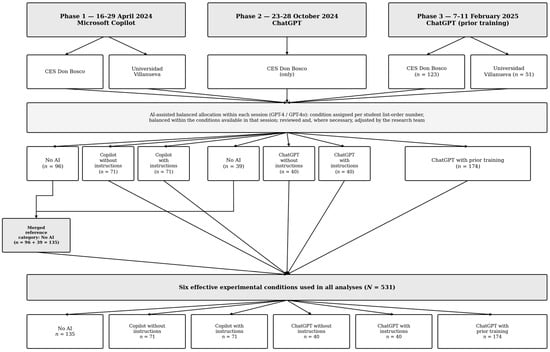
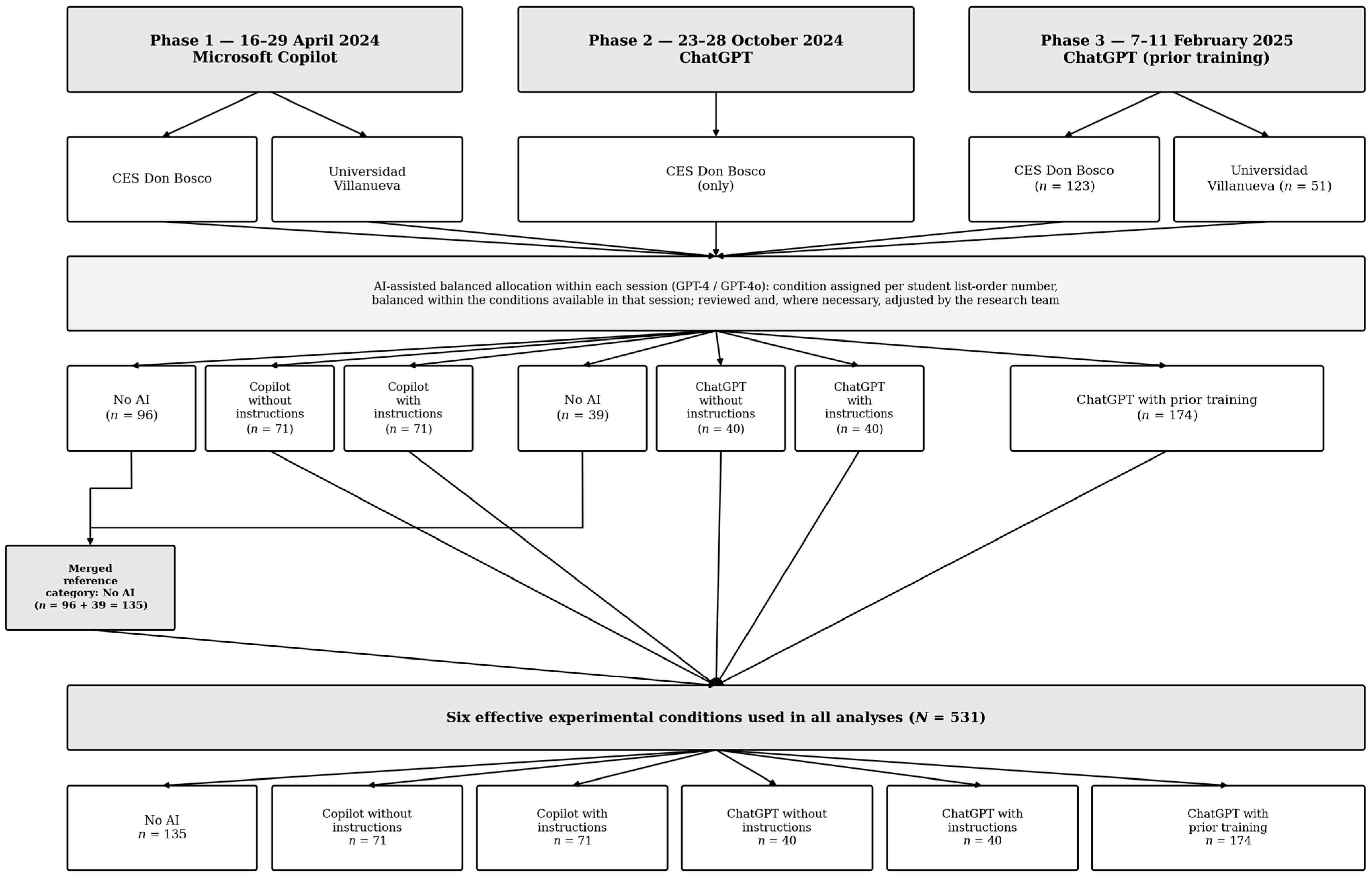

Disclaimer/Publisher’s Note: The statements, opinions and data contained in all publications are solely those of the individual author(s) and contributor(s) and not of MDPI and/or the editor(s). MDPI and/or the editor(s) disclaim responsibility for any injury to people or property resulting from any ideas, methods, instructions or products referred to in the content. |
© 2026 by the authors. Licensee MDPI, Basel, Switzerland. This article is an open access article distributed under the terms and conditions of the Creative Commons Attribution (CC BY) license.