


Abstract
Psychological resilience is a key protective factor for mental health. Reducing inequalities in access to childhood experiential activities may foster resilience across socioeconomic backgrounds. However, Japan limits policies ensuring equitable access to such activities before entering elementary school. This cross-sectional study examined the association between exposure to experiential activities before entering elementary school and psychological resilience in Japanese individuals aged 15–39 years (n = 8000). Experiential activities were classified into nature-related, social, and cultural domains and by number and combination (none, any single, any two, and all three types). Psychological resilience was assessed using the 14-item Resilience Scale (Japanese version). Multivariable linear regression models were adjusted for demographic and socioeconomic covariates with Benjamini–Hochberg (BH) correction. Exposure to one or two activity domains was significantly associated with higher psychological resilience, except for the nature-related plus social activities combination. Exposure to all three domains showed the strongest association (β = 8.06, 95% confidence interval [6.73, 9.38], BH-adjusted p < 0.001). Therefore, early childhood experiential activities may promote psychological resilience, with persistent long-term effects. Implementing social policies to reduce the disparity in access may be a key strategy for promoting psychological resilience among Japanese individuals aged 15–39 years.
1. Introduction
While the period from late adolescence (ages 15–18) to emerging adulthood (ages 18–29) is marked by major transitions in education, employment, and family formation (Arnett et al., 2014), marriage and childbearing are increasingly extending into the thirties in Japan (Wang & Li, 2025). In 2025, the mean age for first marriage was 31.0 years for men and 29.7 years for women, the mean maternal age at the first childbirth was 31.0 years, and 95.4% of women who gave birth to their first child were aged 39 or younger (Ministry of Health, Labour and Welfare, 2026b). Therefore, individuals aged 15–39 experience psychological stress associated with life transitions, making them more susceptible to mental health issues (Arnett et al., 2014). Recent national survey data indicate that the prevalence of moderate-to-severe psychological distress increases from 20.0% among those aged 15–19 years, to 35.6% among those aged 30–34 years—the highest prevalence for any five-year age cohort, except those aged 85 years or older (Ministry of Health, Labour and Welfare, 2026a). Furthermore, the incidence distribution of mental disorders among individuals aged 15–39 years increased in Japan between 1990 and 2021 (Wu et al., 2025). Given that mental health issues during this period may impair subsequent educational attainment and labor-market participation (Burger et al., 2024; de Groot et al., 2021, 2022; Porru et al., 2023; von Simson et al., 2022), it is important to adopt preventive approaches for Japanese individuals in this age group.
Preventing mental health issues associated with stressors arising from diverse transitions and adversities during this period requires strengthening psychological resilience—that is, the ability to adapt to one’s life conditions, recover initial balance, and view the adversity as a growth opportunity (Luthar et al., 2000; Rutter, 1985; Sisto et al., 2019). Meta-analyses indicate that higher psychological resilience is associated with a lower incidence of mental health issues in individuals aged 10–25 and in the general adult population (Hu et al., 2015; Luo et al., 2025). Furthermore, several studies suggest that psychological resilience among school children, adolescents, and undergraduate students is associated with better mental health outcomes spanning months to years (Cusack et al., 2022; Fritz et al., 2020; Shi et al., 2022).
Interventions initiated before onset are warranted to protect individuals from transitional stressors and adversities throughout this period. In particular, developmental psychological theories support a cumulative resource perspective, which suggests that early life experiences and environmental interactions build resilience through the accumulation of resources across subsequent developmental periods. For instance, the broaden-and-build theory of positive emotions (Fredrickson, 2001; Roth et al., 2024) proposes that positive emotions facilitate the accumulation of enduring psychological resources—such as optimism and resilience—which subsequently promote positive psychological outcomes. Moreover, the theory of equilibration suggests that experiences that cannot be fully integrated into existing schemas lead to cognitive disequilibrium, which may be resolved through accommodation, resulting in restructuring of cognitive schemas (Piaget, 1977).
From a life-course perspective, policies intended to support later psychological resilience through childhood experiences can be analytically understood as consisting of two types: (a) policies designed to strengthen specific domains or activities that support this resilience, and (b) policies intended to ensure equitable access to existing domains or activities. An example of the former in Japan is the promotion of experiential opportunities involving nature, occupation, and culture and the arts (Children and Families Agency, 2026a). The Children-Centered Action Plan 2026 positions such opportunities as a way to increase positive experiences that support the resilience and well-being of children and young people (Children and Families Agency, 2026a). This policy direction is consistent with Japanese evidence that diverse nature-related, social, and cultural experiences at age seven are associated with higher self-esteem and better mental health at age 17 (Ministry of Education, Culture, Sports, Science and Technology, 2021)—a protective factor for psychological resilience (Kocatürk & Çiçek, 2023). While this Ministry report highlights the potential of nature-based experiential activities, it has three main limitations: It evaluates outcomes only up to age 17, it does not directly assess psychological resilience, and it does not examine specific combinations of activity domains (e.g., mutually exclusive patterns of natural, social, and cultural experiences) or experiences occurring prior to entering elementary school.
Japanese policy also emphasizes equitable access to experiential activities for children (Children and Families Agency, 2026a). However, many national initiatives directly providing such opportunities primarily target children after they enter elementary school—that is, those who have reached age of six by April 1 of the relevant school year. For example, support for school-based art appreciation and field trips targets elementary, lower-secondary, and upper-secondary schools (Ministry of Education, Culture, Sports, Science and Technology, n.d.). By contrast, although 97% of five-year-olds in Japan are enrolled in kindergartens, nursery schools, or integrated early childhood education and care centers (Children and Families Agency, 2026b), preschool experiential opportunities are merely recommended (Ministry of Education, Culture, Sports, Science and Technology, 2017; Ministry of Health, Labour and Welfare, 2017). Furthermore, direct national support covering preschool-aged children includes free access to only selected performing arts events for youth aged 18 or younger (Ministry of Education, Culture, Sports, Science and Technology, n.d.). Thus, to inform policies that seek to ensure equitable access to early experiential activities as a means of supporting mental health among individuals aged 15–39, it is first necessary to establish which types of preschool experiential activities are associated with later psychological resilience.
Although prospective cohort studies beginning in early childhood would be ideal for examining this association, the substantial cost and logistical demands of such designs make exploratory investigation based on cross-sectional data a necessary first step toward assessing the plausibility of this hypothesis. Hence, to inform future policy discussions on promoting social equity and well-being, this study aimed to examine the association between exposure to experiential activities before entering elementary school and psychological resilience among individuals aged 15–39 years. Our specific research question was as follows: Which types and combinations of experiential activities before entering elementary school are associated with psychological resilience among individuals aged 15–39 years in Japan?
2. Methods
2.1. Research Design
This study employed a cross-sectional design using an online questionnaire in Japanese. Data were collected from 21 March 2025 to 31 March 2025, from Cross Marketing Inc. (Tokyo, Japan) panel. As of July 2025, the panel comprised approximately 13.06 million individuals, with 48% aged 39 years or younger (Cross Marketing Inc., 2025).
2.2. Participants and Sampling
The questionnaire was completed by Japanese individuals aged 15–39 who were registered on Cross Marketing Inc. panel. While a formal sample size was not calculated given the exploratory nature of the research, we determined a target sample size of 8000, considering implementation costs and a sufficient number of responses for a valid analysis. To minimize response bias arising from demographic characteristics, quotas were pre-set to ensure equal representation across sex (men or women), age groups (five-year intervals: 15–19, 20–24, 25–29, 30–34, and 35–39 years) and residential regions (ten regional blocks: Hokkaido, Tohoku, Kanto, Hokuriku, Tokai, Kinki, Chugoku, Shikoku, Kyushu, and Okinawa) (Cabinet Office, 2016). That is, the target sampling plan aimed for an equal 50% split between men and women, an equal 20% share across each of the five age groups, and an equal 10% share across each of the ten regional blocks. Hence, example, the target number of respondents for women aged 15–19 years residing in Hokkaido was 80—calculated as 8000 divided by two sex categories, ten regional categories, and five age categories. However, because the target number was not reached in some quota cells, shortfalls were sequentially reallocated to other cells to secure an overall analytic sample of 8000 participants. Consequently, the final analytic sample did not fully achieve the originally planned equal allocation in terms of sex, region of residence, and age group.
Survey invitations were distributed through the survey panel’s member portal or by email to registered panelists of the survey company who met the inclusion criteria for age and place of residence. Of the 16,996 individuals who participated in the screening survey for confirming sex, age and residential areas, 9996 (58.8%) completed the main survey. The total number of registered panelists who met the inclusion criteria and the number of panelists who completed eligibility screening cannot be disclosed because these data are proprietary to the survey company. A total of 1996 of the 9996 participants who completed the main survey were excluded in accordance with the survey company’s pre-specified data-quality procedures due to an exceeded quota cap after quota reallocation, having exceptionally short response time, or providing responses inconsistent with the intent of a free-text item not used in the present analysis (e.g., a repeated entry of the same character). Therefore, the remaining 8000 participants were included in the analysis. In accordance with the survey company’s data-protection policy, a breakdown of exclusions made by criterion and individual-level data for excluded respondents was not made available.
2.3. Outcome Variable: Psychological Resilience
Psychological resilience was assessed using the Japanese short version of the 14-item Resilience Scale (RS-14) (Nishi et al., 2010). Items are rated on a 7-point Likert scale (total score range; 14–98), with a higher score indicating higher resilience (Wagnild & Young, 1993). The reliability and validity of the Japanese version have been verified in general adult samples (Nishi et al., 2010).
2.4. Explanatory Variable: Experiential Activities Before Entering Elementary School
Experiential activities before entering elementary school were assessed by asking whether the respondents had engaged in each activity in that period (yes/no) (Table 1). To minimize recall bias, we did not ask about activity frequency, involved companions, and satisfaction level. Items were adapted from questionnaires used in previous research by Chance for Children (2023) and the Ministry of Education, Culture, Sports, Science and Technology (2021). Following these studies, experiential activities were classified into three domains: nature-related, social, and cultural. Nature-related experiences included camping, mountain climbing, river play, fishing, swimming in the sea, marine sports, and winter sports. Social experiences included agricultural activities, occupational experiences, and volunteering. Cultural experiences included visits to zoos, botanical gardens, aquariums, museums, and art museums; appreciation of or participation in music, theatre, and traditional performing arts; watching sports; and domestic and overseas travel. For analysis, separate dummy variables were created for each domain (engaged in at least one activity in the domain = 1; none = 0). Based on experience in these three domains, the respondents were classified into eight mutually exclusive categories: nature-related only, social-only, cultural-only, nature-related plus social, nature-related plus cultural, social plus cultural, all three domains, and no experiential activities.
Table 1.
Questionnaire items on childhood experiential activities and their categorization.
2.5. Covariates
The following covariates were selected: age, sex (male or female), educational background, subjective economic status, household material resources before entering elementary school, and adverse childhood experiences (ACEs) up to age 18 (or to date for minors). Educational background was assessed by current enrollment for students and highest educational attainment for others. Subjective economic status was assessed using the question “How satisfied are you with your current economic situation?” rated from 1 (no comfort) to 4 (good comfort). This measure was adopted considering adolescents’ lack of awareness of their family’s income.
Household material resources before entering elementary school were assessed as an indicator of childhood socioeconomic status (SES). Respondents were asked which of the following items were present in their home before entering elementary school: own room, artwork, musical instruments, more than 200 books (excluding textbooks and comics), more than 200 comics, computers, tablet, or a home security system. These items were selected based on the Japanese version of the Program for International Student Assessment questionnaire in 2018 and 2022 (National Institute for Educational Policy Research, 2018, 2022). Although the survey asked about cars and motorcycles, these were excluded because they are commonly owned regardless of income level, especially in rural areas. A dummy variable was created based on whether the respondents did not have any of the above items. Possessing at least one item indicated high SES, while possessing none indicated low SES. This “none-versus-any” threshold approach was adopted because the items differ substantially in prevalence and meaning (i.e., a simple unweighted sum could not assume childhood SES).
ACEs up to age 18 (or to date for minors) were assessed using the Adverse Childhood Experiences Japanese version (ACE-J) (Fujiwara, 2022). Respondents were asked whether they had experienced specific adversities before age 18; for those younger than 18, the instructions were adapted from the original wording, asking whether they had experienced any of the adversity to date (yes/no). The 10 adversities covered by the ACE-J are as follows: parental death, parental divorce, parental mental illness, parental substance abuse, father-to-mother violence, physical abuse, physical neglect, psychological abuse, psychological neglect, and poverty. The method of calculating ACEs as a simple additive score has been criticized (Fujiwara, 2022), including evidence that a simple summation may not reflect the actual impact of ACEs (Schilling et al., 2008) and may induce overestimation (Kessler et al., 1997). In light of this, and considering interaction effects, ACEs were categorized into two groups (“0” or “≥1”), reflecting the clear semantic differences between having no or any adversity, respectively. It should be noted that the ACE-J has not been validated in a published study. Regarding the questions and response options for the covariates, except for ACEs, which are based on an established source (Fujiwara, 2022), all items are described in the Supplementary Materials. The readability of the questionnaire was not verified through a formal pilot test. However, aside from the RS-14 and ACE-J, the items were reviewed and evaluated by the authors.
2.6. Statistical Analysis
The prevalence and distribution of all variables were summarized for the total sample. Continuous variables (i.e., age and RS-14 score) were presented as means with standard deviations (SDs), while categorical variables were expressed as percentages. To describe unadjusted group-level differences in the outcome, the mean and SD of psychological resilience scores were also calculated for each experiential activity group. Considering the study’s aim, no statistical tests were conducted to compare psychological resilience scores across experiential activity groups without any adjustment.
Multivariable linear regression analyses were used to examine the association between present psychological resilience and experiential activities in childhood; and regression coefficients (β) with 95% confidence intervals (CIs) were calculated. Three sequential models were constructed to assess the robustness of the association. Model 1 adjusted for age and sex. Model 2 additionally adjusted for contemporaneous factors that may be associated with psychological resilience, including respondents’ educational background and subjective economic status. Model 3 further adjusted for childhood-related factors that may influence both childhood exposure to experiential activities and later psychological resilience, household material resources before entering elementary school, and ACEs up to age 18 (or to date for minors). Imputation was not required as no missing data were observed.
Considering potential cohort differences in access to preschool activities—stemming from historical changes in policies and the environment surrounding children—we conducted an exploratory post hoc analysis to evaluate whether the association between preschool experiential activities and psychological resilience varied by participant age. As there is no established or objective rationale for defining specific age-group cutoffs, age was analyzed as a continuous variable. We generated a multivariable linear regression model (Model 4) by adding interaction terms between mean-centered age and activity categories to Model 3 and evaluated improvement in model fit using a partial F-test comparing Model 3 and 4.
For multiple comparisons, p-values for the primary exposure variables (childhood experiential activity groups) were adjusted using the Benjamini–Hochberg (BH) procedure to control the false discovery rate at 5%. This adjustment was performed separately for the primary analysis and the exploratory post hoc analysis, excluding the partial F-test. Multicollinearity was assessed using generalized variance inflation factors (GVIFs). A conservative cutoff of 2 for adjusted GVIF values (GVIF^(1/(2 × Df))) was prespecified. Variables exceeding this threshold would be reconsidered; however, no such cases were observed. All statistical analyses were performed using R software (version 4.5.2), and statistical significance was set at p < 0.05.
2.7. Ethical Considerations
The Medical Research Ethics Committee of Hokkaido University (Ethics Number: 024-0281) approved the study procedure. Informed consent was obtained online from all respondents before presenting the questionnaire. The research panel’s membership policies require parental/guardian consent for registrants under 16 years. However, given the non-invasive nature of this study, parental consent was not required for participants aged 15–17. Furthermore, the data were collected near the end of the Japanese academic year (March 21–31); therefore, all 15-year-old participants had already completed, or were within days of completing, lower secondary school. The Japanese Ethical Guidelines for Medical and Biological Research Involving Human Subjects state that minors who have completed lower secondary education have sufficient decisional capacity to directly provide informed consent directly in non-invasive research under specified conditions (Ministry of Education, Culture, Sports, Science and Technology et al., 2023). Thus, they were regarded as having sufficient decisional capacity to provide informed consent. To comply with the guidelines, details of the study were made publicly available online, with a point of contact established to answer any questions from participants or parents/guardians (Yokohama City University, 2025). Participants were compensated for their cooperation. The amount was confidential and set by the research panel company.
3. Results
3.1. Participant Characteristics
Table 2 presents the participant characteristics. The participants’ mean age was 28.2 years (SD = 7.04; range 15–39), and 54.8% were women. The mean RS-14 score was 56.4 (SD = 15.9). Regarding experiential activities before entering elementary school, 37.1% reported none. In terms of experiential domain, 37.5% reported nature-related activities, 12.2% social; and 57.0% cultural. Classified by combinations of domains, 22.1% reported cultural activities only; 4.0%, nature-related activities only; and 1.2%, social activities only. Dual-domain exposure was most commonly nature-related plus cultural (24.5%), followed by social plus cultural (2.1%) and nature-related plus social (0.6%). Finally, 8.3% reported exposure to all three experiential domains.
Table 2.
Participant characteristics.
Table 3 presents the mean psychological resilience scores according to experiential activity patterns before entering elementary school. Participants who reported no experiential activities had the lowest mean resilience score of 52.3 (SD = 16.2). By domain (including overlaps), mean resilience scores were 59.9 (SD = 15.5) for nature-related activities, 60.9 (SD = 16.2) for social, and 59.0 (SD = 15.4) for cultural. Based on mutually exclusive exposure patterns, participants reporting a single domain had mean resilience scores of 56.4 (SD = 14.4) for nature-related activities only, 57.6 (SD = 13.7) for social-only; and 57.0 (SD = 15.0) for cultural-only. Of those reporting two domains, mean scores were 54.8 (SD = 14.8) for nature-related plus social activities, 59.7 (SD = 15.1) for nature-related plus cultural, and 57.8 (SD = 14.7) for social plus cultural. Participants exposed to all three experiential domains had the highest mean resilience score (62.6, SD = 16.7).
Table 3.
Present Psychological Resilience Scores by Presence of Experiential Activities Before Entering Elementary School.
3.2. Association Between Experiential Activities Before Entering Elementary School and Psychological Resilience
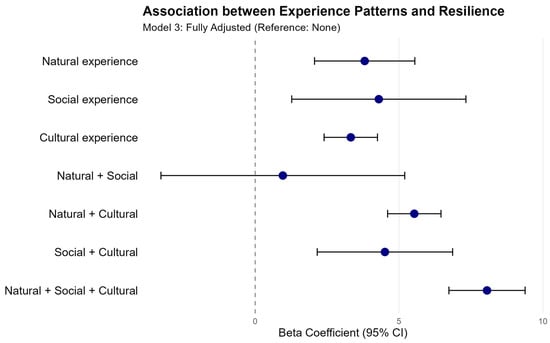
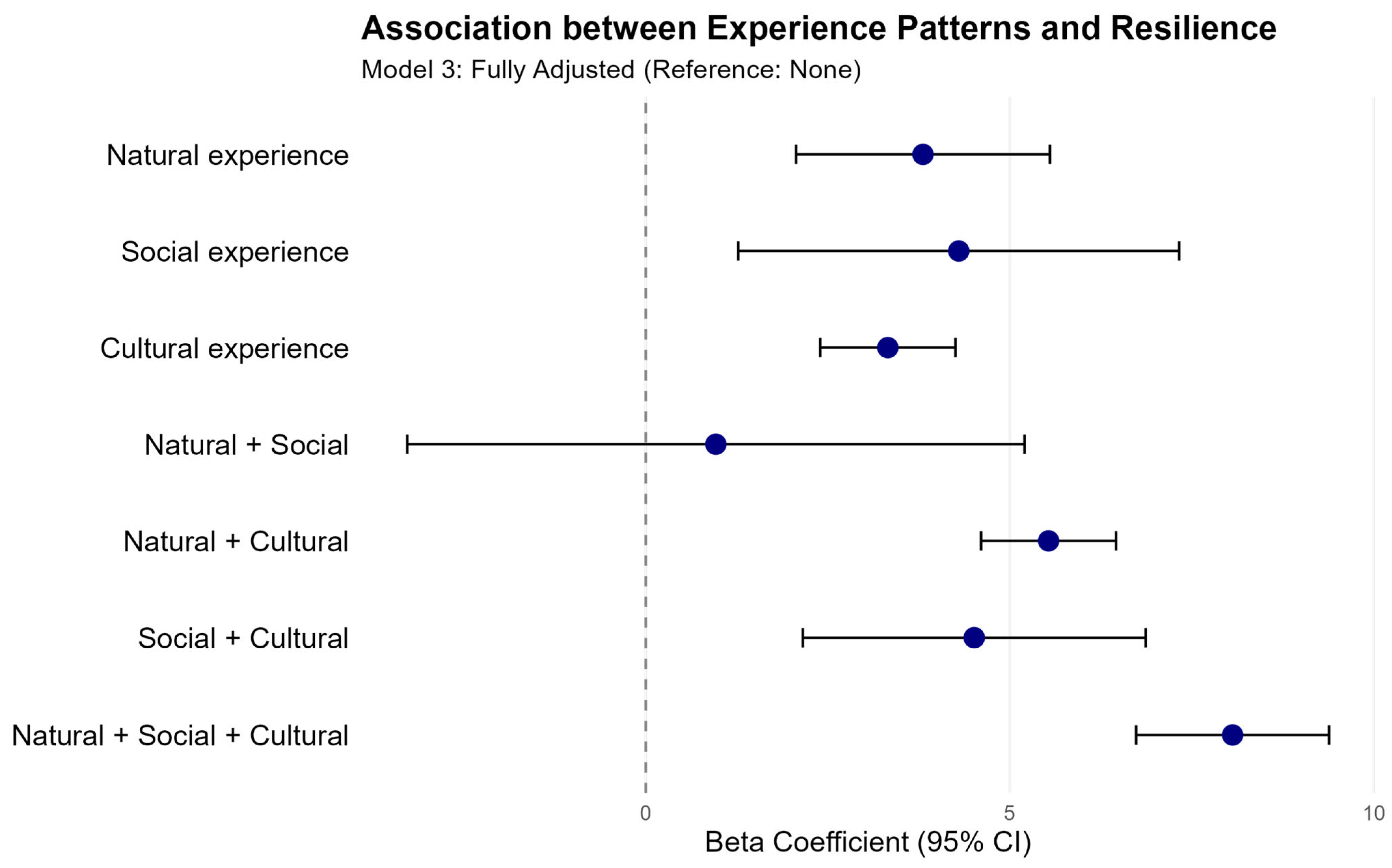
Table 4 summarizes the multivariable linear regression analyses results; Figure 1 illustrates the fully adjusted estimates from Model 3.
Table 4.
Association between presence or absence of experiential activities before entering elementary school and present psychological resilience.
Figure 1.
Association between presence or absence of experiential activities before entering elementary school and psychological resilience among individuals aged 15–39 Years (Model 3). Note. The figure displays unstandardized regression coefficients (β) and 95% confidence intervals (CIs) derived from the fully adjusted linear regression model. The reference group is “None” (no experiential activities). The vertical dashed line at 0 indicates the point of no effect. The model is adjusted for age, sex, education level, subjective economic status, adverse childhood experiences, and household material resources before entering elementary school.
For single-domain exposure, nature-related activities were associated with higher psychological resilience in Model 1 (β = 4.25, 95% CI [2.47, 6.03]), Model 2 (β = 3.71, 95% CI [1.96, 5.45]), and Model 3 (β = 3.81, 95% CI [2.06, 5.55]; all BH-adjusted p < 0.001). Cultural activities were likewise associated with higher psychological resilience in Model 1 (β = 4.50, 95% CI [3.59, 5.42]), Model 2 (β = 3.36, 95% CI [2.45, 4.27]), and Model 3 (β = 3.32, 95% CI [2.40, 4.25]; all BH-adjusted p < 0.001). Social activities were associated with higher psychological resilience in Model 1 (β = 5.01, 95% CI [1.89, 8.13], BH-adjusted p = 0.002), Model 2 (β = 3.81, 95% CI [0.78, 6.85], BH-adjusted p = 0.014), and Model 3 (β = 4.30, 95% CI [1.27, 7.33], BH-adjusted p = 0.005).
For dual-domain exposure, nature-related plus cultural activities were associated with higher psychological resilience in Model 1 (β = 7.49, 95% CI [6.61, 8.38]), Model 2 (β = 5.88, 95% CI [4.99, 6.77]), and Model 3 (β = 5.53 (95% CI [4.60, 6.46]; all BH-adjusted p < 0.001). Similarly, social plus cultural activities were associated with higher psychological resilience in Model 1 (β = 5.19, 95% CI [2.78, 7.60]), Model 2 (β = 4.30, 95% CI [1.95, 6.65]), and Model 3 (β = 4.51, 95% CI [2.16, 6.86]; all BH-adjusted p < 0.001). By contrast, nature-related plus social activities were not significantly associated in Model 1 (β = 2.36, 95% CI [−2.01, 6.73], BH-adjusted p = 0.290), Model 2 (β = 0.63, 95% CI [−3.63, 4.88], BH-adjusted p = 0.773), and Model 3 (β = 0.96, 95% CI [−3.28, 5.20], BH-adjusted p = 0.656). The presence of all three experiential domains demonstrated the largest coefficients (Model 1: β = 9.88 [8.57, 11.19]; Model 2: β = 8.16 [6.87, 9.45]; Model 3: β = 8.06 [6.73, 9.38]; all BH-adjusted p < 0.001).
3.3. Post Hoc Analysis of Interactions Between Age and Preschool Experiential Activities in Psychological Resilience
Table 5 presents the multivariable linear regression analysis results, considering age-by-preschool experiential activity interactions. The addition of the seven interaction terms yielded no significant improvement in model fit compared with the main-effects model (partial F-test: F(7, 7969) = 0.296, p = 0.956). Moreover, none of the age-by-activity interaction terms were statistically significant after BH adjustment (BH-adjusted p = 0.542–0.904).
Table 5.
Multivariable linear regression analysis of the association of experiential activities before entering elementary school with psychological resilience, including interactions between age and preschool experiential activity categories.
4. Discussion
4.1. Summary of the Findings
This study examined the association between the presence or absence of experiential activities before entering elementary school and psychological resilience in Japanese individuals aged 15–39 years. Those exposed to six of the seven experiential activity patterns—excluding the combination of nature-related and social activities—tended to report significantly higher levels of current psychological resilience than those who were not exposed to any experiential activities. Particularly, the largest difference was observed in participants who reported experiences in all three experiential domains (i.e., nature-related, social, and cultural) before entering elementary school. No statistically significant effect modification by age was observed in the association between experiential activity categories and psychological resilience.
4.2. Interpretation of the Results
The association between experiential activities before entering elementary school and psychological resilience among individuals aged 15–39 is consistent with the theoretical frameworks outlined in the Introduction, although the present study did not test their underlying mechanisms. In terms of the broaden-and-build theory of positive emotions (Fredrickson, 2001; Roth et al., 2024), the observed association may indicate that positive experiences through experiential activities before entering elementary school may have contributed to the development of psychological resilience over time. Furthermore, based on the theory of equilibration (Piaget, 1977), experiential activities that exposed individuals to novel and non-routine situations before entering elementary school may have fostered accommodative restructuring of cognitive schemas, which contributed to psychological resilience development in individuals aged 15–39 years.
The absence of a significant association in the group that experienced only the combination of nature-related and social activities may be attributable to the relatively small number of respondents. Considering the wider 95% CI for the estimate, the lack of statistical significance may reflect limitations in statistical power rather than the absence of an effect.
The strongest association was observed in the group with all three types of experiential activities. Notably, the lower bound of the 95% CI for this group exceeded the upper bounds of that for the groups with nature-related only, cultural-only, and the combination of nature-related and cultural experiences. This suggests that engaging in all three types of experiential activities may be more strongly associated with psychological resilience than engaging in either nature-related or cultural activities alone or in combination. This finding can be interpreted from three perspectives. First, the families or preschools of children who had engaged in all three domains might have more proactively promoted experiential learning, leading to a higher frequency and longer duration of such activities. This sustained exposure may have contributed to the strengthening of psychological resilience among individuals aged 15–39. Second, this pattern may reflect parents’ tendency to actively organize diverse activities to foster their children’s talents and social skills (Lareau, 2011). Such parents may also engage more broadly in resilience-nurturing behaviors—such as providing emotional support and promoting autonomy—which could, in turn, account for the observed association with later resilience in their children. Third, the presence of qualitatively different types of activities during early childhood may itself play a formative role. Engaging in diverse experiential domains may extensively stimulate children’s cognitive and emotional development, thereby supporting the development of psychological resilience.
Our exploratory post hoc analysis provided no clear evidence that the association between experiential activity patterns and resilience varies by age cohort, and the model including interaction terms did not yield a statistically significant improvement in model fit. This finding suggests that this association may remain relatively robust across generations. Admittedly, during the period when participants were of preschool age (1991–2016), the specific content of accessible experiential activities likely shifted alongside changes in children’s environments. For example, access to winter sports may have been altered by climate change, and traditional community events may have declined owing to falling birth rates and weakening local social ties. However, when evaluated across broader domains—natural, social, and cultural—the fundamental psychological functions fostered by diverse childhood experiences and interpersonal interactions appear to be relatively resilient to contextual shifts in specific activities, thereby playing a consistent role in subsequent psychological resilience across generations.
4.3. Limitations and Strengths
This study has several limitations. First, recall bias regarding childhood-related variables could not be avoided. Second, the mechanisms underlying the identified associations remain unclear because the frequency of, duration of, and satisfaction with the experiential activities were not assessed. Third, potential confounders such as residential prefecture during childhood and parental educational attainment during early childhood were not included in the models and may have been associated with both access to experiential activities and later psychological resilience. Fourth, the respondents were limited to self-selected panel members with internet access and compensation-based motivation to answer the questionnaire. Therefore, the external validity of the findings for all Japanese individuals aged 15–39 is limited. Fifth, without a priori sample size calculation, the precision of the estimates (e.g., width of CIs) may be limited. Sixth, the binary measurement (yes/no) of exposure to pre-elementary school experiential activities may have led respondents who had engaged in such activities but could not clearly recall them to conservatively select “no”, potentially underestimating the association with current psychological resilience. Seventh, the operational categorization of variables (e.g., experiential activities and ACEs) may have introduced misclassification. Lastly, as 1996 participants who completed the main survey were excluded by the survey company and no information on excluded respondents was available, the direction and magnitude of potential selection bias could not be assessed.
Nevertheless, the sample characteristics seemed not to substantially deviate from those reported in other Japanese studies. Although population-level data are unavailable for experiential activities before entering elementary school in Japan, the observed mean and SD of the RS-14 score and the proportion of participants reporting no ACEs were comparable to those reported in previous Japanese studies of adult populations (Shibaoka et al., 2023; Wataya et al., 2024). Furthermore, the strategic recruitment of participants across diverse regions and a broad age range enhanced sample heterogeneity, allowing for an examination of associations across varied sociodemographic backgrounds and developmental stages.
4.4. Policy Implications
Although this cross-sectional study cannot support causal inference, the findings suggest that Japanese policies aimed at reducing inequalities in preschool experiential opportunities could be expanded beyond existing financial support for performing arts appreciation to include opportunities for nature-based and social experiences from a youth mental health perspective. Furthermore, given that all types of activities were associated with psychological resilience later in life (ages 15–39), we emphasize that rather than prioritizing specific activity types, policies should promote low-cost, locally accessible community programs to reduce economic and geographical barriers to participation.
Moreover, our findings highlight the need for longitudinal research that collects data from both children (e.g., frequency and duration of and subjective satisfaction with experiential activities) and parents (e.g., household income, parental education, and other family background factors) to enable a more comprehensive examination of these associations and their underlying mechanisms. Furthermore, future research should examine the cost-effectiveness of experiential activity programs, weighing their developmental and psychological benefits against the time and financial investments required from families and institutions. Such cost–benefit analyses could help policymakers prioritize resource allocation and design scalable, sustainable interventions, particularly for families with limited economic means. Evidence derived from such research could provide valuable guidance for health, cultural, educational, and environmental policymaking aimed at promoting the well-being of individuals aged 15–39.
5. Conclusions
This cross-sectional survey of Japanese individuals aged 15–39 years found that engagement in experiential activities before entering elementary school—across nature-related, social, and cultural domains—was associated with higher psychological resilience in those aged 15–39. The strongest association was observed in those exposed to all three domains. Although causal inference is limited owing to retrospective reporting and the cross-sectional design, these findings provide population-level evidence consistent with the potential role of experiential activities before entering elementary school as a scalable approach to support later resilience. Future longitudinal research measuring frequency, duration, and subjective quality of activities is needed to clarify mechanisms and causality.
Supplementary Materials
The following supporting information can be downloaded at: https://www.mdpi.com/article/10.3390/youth6030119/s1.
Author Contributions
Conceptualization, M.S. and Y.I.; Methodology, M.S., Y.I., T.K. and A.T.; Software, M.S. and Y.I.; Validation, M.S. and Y.I.; Formal analysis, M.S. and Y.I.; Investigation, M.S., Y.I., M.I., T.K., K.M., A.S., A.K., K.N., T.M. and A.T.; Resources, M.S. and Y.I.; Data curation, M.S., Y.I. and K.M.; Writing—original draft, M.S.; Writing—review and editing, M.S., Y.I., M.I., T.K., K.M., A.S., A.K., K.N., T.M. and A.T.; Visualization, M.S.; Supervision, M.S., Y.I., M.I., T.K., A.S., A.K., K.N., T.M. and A.T.; Project administration, K.M.; Funding acquisition, T.M. and A.T. All authors have read and agreed to the published version of the manuscript.
Funding
This work was supported by Japan Science and Technology Agency (JPMJPF2203 and JPMJPF2108).
Institutional Review Board Statement
The Medical Research Ethics Committee of Hokkaido University (Ethics Number: 024-0281, approval date 21 February 2025) approved the study procedure.
Informed Consent Statement
Informed consent was obtained online from all respondents before presenting the questionnaire. The research panel’s membership policies require parental/guardian consent for registrants under 16 years. However, due to the non-invasive nature of this study, parental consent was not required for participants aged 15–17 years. Furthermore, the data were collected near the end of the Japanese academic year (March 21–31); therefore, all 15-year-old participants had already completed, or were within days of completing, lower secondary school. The Japanese Ethical Guidelines for Medical and Biological Research Involving Human Subjects state that minors who have completed lower secondary education have sufficient decisional capacity to provide informed consent directly in non-invasive research under specified conditions (Ministry of Education, Culture, Sports, Science and Technology et al., 2023). Thus, they were regarded as having sufficient decisional capacity to provide informed consent. To comply with the guidelines, details of the study were made publicly available online, with a contact point to clarify any questions from the participants and parents/guardians (Yokohama City University, 2025). The participants were compensated for their cooperation. The amount was confidential and set by the research panel company. Informed consent confirmed participant’s understanding that the data would be analyzed and published and that no individual could be identified from the reported results.
Data Availability Statement
The raw data supporting the conclusions of this article will be made available by the authors on request.
Conflicts of Interest
The authors declare no conflicts of interest.
Abbreviations
The following abbreviations are used in this manuscript:
| ACEs | Adverse childhood experiences |
| ACE-J | Adverse Childhood Experiences Japanese version |
| BH | Benjamini–Hochberg |
| CI | Confidence Interval |
| GVIF | Generalized variance inflation factor |
| RS-14 | 14-item Resilience Scale |
| SD | standard deviation |
| SES | Socioeconomic status |
References
- Arnett, J. J., Žukauskienė, R., & Sugimura, K. (2014). The new life stage of emerging adulthood at ages 18–29 years: Implications for mental health. The Lancet Psychiatry, 1(7), 569–576. [Google Scholar] [CrossRef] [Scilit]
- Burger, K., Becker, M., & Schoon, I. (2024). Mental health and educational attainment: How developmental stage matters. Developmental Psychology, 60(1), 108–123. [Google Scholar] [CrossRef] [Scilit]
- Cabinet Office. (2016). Chiiki kubun [Regional classification]. Available online: https://www5.cao.go.jp/j-j/cr/cr16/chr16_04.html (accessed on 23 August 2026).
- Chance for Children. (2023). Kodomo no ‘taiken kakusa’ jittai chōsa saishū hōkoku-sho [Final report on the survey on children’s “experience gaps”]. Available online: https://cfc.or.jp/wp-content/uploads/2023/07/cfc_taiken_report2307.pdf (accessed on 23 August 2026).
- Children and Families Agency. (2026a). Kodomo man’naka jikkō keikaku [Children-centered action plan 2026]. Available online: https://www.cfa.go.jp/assets/contents/node/basic_page/field_ref_resources/f3e5eca9-5081-4bc9-8d64-e7a61d8903d0/403da3cd/20260609_policies_kodomo-taikou_58.pdf (accessed on 23 August 2026).
- Children and Families Agency. (2026b). Sankō dēta [Reference data]. Available online: https://www.cfa.go.jp/assets/contents/node/basic_page/field_ref_resources/e4b817c9-5282-4ccc-b0d5-ce15d7b5018c/5f243d8c/20260401_policies_hoiku_215.pdf (accessed on 23 August 2026).
- Cross Marketing Inc. (2025). Panel. Available online: https://www.cross-m.co.jp/en/monitor (accessed on 23 August 2026).
- Cusack, S. E., Bountress, K. E., Denckla, C. A., Spit for Science Working Group, Vassileva, J., Dick, D. M., & Amstadter, A. B. (2022). A longitudinal investigation of resilience as a protective factor during the COVID-19 pandemic. Traumatology, 28(3), 403–410. [Google Scholar] [CrossRef] [Scilit]
- de Groot, S., Veldman, K., Amick, B. C., III, & Bültmann, U. (2022). Work functioning among young adults: The role of mental health problems from childhood to young adulthood. Occupational and Environmental Medicine, 79(4), 217–223. [Google Scholar] [CrossRef] [Scilit]
- de Groot, S., Veldman, K., Amick, B. C., III, Oldehinkel, T. A. J., Arends, I., & Bültmann, U. (2021). Does the timing and duration of mental health problems during childhood and adolescence matter for labour market participation of young adults? Journal of Epidemiology and Community Health, 75(9), 896–902. [Google Scholar] [CrossRef] [Scilit]
- Fredrickson, B. L. (2001). The role of positive emotions in positive psychology. The broaden-and-build theory of positive emotions. American Psychologist, 56(3), 218–226. [Google Scholar] [CrossRef] [Scilit]
- Fritz, J., Stochl, J., Goodyer, I. M., van Harmelen, A. L., & Wilkinson, P. O. (2020). Embracing the positive: An examination of how well resilience factors at age 14 can predict distress at age 17. Translational Psychiatry, 10(1), 272. [Google Scholar] [CrossRef] [Scilit]
- Fujiwara, T. (2022). Impact of adverse childhood experience on physical and mental health: A life-course epidemiology perspective. Psychiatry and Clinical Neurosciences, 76(11), 544–551. [Google Scholar] [CrossRef] [Scilit]
- Hu, T., Zhang, D., & Wang, J. (2015). A meta-analysis of the trait resilience and mental health. Personality and Individual Differences, 76, 18–27. [Google Scholar] [CrossRef] [Scilit]
- Kessler, R. C., Davis, C. G., & Kendler, K. S. (1997). Childhood adversity and adult psychiatric disorder in the US National Comorbidity Survey. Psychological Medicine, 27(5), 1101–1119. [Google Scholar] [CrossRef] [Scilit]
- Kocatürk, M., & Çiçek, İ. (2023). Relationship between positive childhood experiences and psychological resilience in university students: The mediating role of self-esteem. Journal of Psychologists and Counsellors in Schools, 33(1), 78–89. [Google Scholar] [CrossRef] [Scilit]
- Lareau, A. (2011). Unequal childhoods: Class, race, and family life (2nd ed.). University of California Press. [Google Scholar]
- Luo, S., Hu, J., Zhang, J., Mei, Z., Tang, Z., & Luo, S. (2025). The correlation between resilience and mental health of adolescents and young adults: A systematic review and meta-analysis. Frontiers in Psychiatry, 16, 1536553. [Google Scholar] [CrossRef] [Scilit] [PubMed]
- Luthar, S. S., Cicchetti, D., & Becker, B. (2000). The construct of resilience: A critical evaluation and guidelines for future work. Child Development, 71(3), 543–562. [Google Scholar] [CrossRef] [Scilit]
- Ministry of Education, Culture, Sports, Science and Technology. (n.d.). Jidō seito no taiken katsudō no jūjitsu no tame no torikumi ni tsuite [Initiatives to enhance experiential learning activities for students]. Available online: https://www.mext.go.jp/mext_02347.html (accessed on 23 August 2026).
- Ministry of Education, Culture, Sports, Science and Technology. (2017). Yōchien kyōiku yōryō [Kindergarten educational guidelines]. Available online: https://www.mext.go.jp/content/1384661_3_2.pdf (accessed on 23 August 2026).
- Ministry of Education, Culture, Sports, Science and Technology. (2021). Seishōnen no taiken katsudō no suishin ni kansuru chōsa kenkyū hōkoku-sho [Research report on promoting youth experiential activities]. Available online: https://www.mext.go.jp/content/20210908-mxt_chisui01-100003338_2.pdf (accessed on 23 August 2026).
- Ministry of Education, Culture, Sports, Science and Technology, Ministry of Health, Labour and Welfare & Ministry of Economy, Trade and Industry. (2023). Ethical guidelines for life science and medical research involving human subjects (Amended 27 March 2023). Available online: https://www.mext.go.jp/content/20250325-mxt_life-000035486-01.pdf (accessed on 23 August 2026).
- Ministry of Health, Labour and Welfare. (2017). Hoikusho hoiku shishin [Nursery school guidelines]. Available online: https://www.mhlw.go.jp/web/t_doc?dataId=00010450&dataType=0&pageNo=1 (accessed on 23 August 2026).
- Ministry of Health, Labour and Welfare. (2026a). 2025-Nen kokumin seikatsu kiso chōsa [2025 comprehensive survey of living conditions]. Available online: https://www.e-stat.go.jp/stat-search/files?page=1&layout=normal&toukei=00450061&tstat=000001244376&metadata=1&data=1 (accessed on 23 August 2026).
- Ministry of Health, Labour and Welfare. (2026b). Reiwa 7 (2025)-nen jinkō dōtai tōkei geppō nenkei (gaisū) no gaikyō [Overview of the Monthly report on population dynamics statistics for 2025 (Preliminary figures)]. Available online: https://www.mhlw.go.jp/toukei/saikin/hw/jinkou/geppo/nengai25/dl/gaikyouR7.pdf (accessed on 23 August 2026).
- National Institute for Educational Policy Research. (2018). Seito shitsumon chōsa [Student questionnaire survey]. Available online: https://www.nier.go.jp/05_kenkyu_seika/pisa/pdf/2018/questionnaire_stu.pdf (accessed on 23 August 2026).
- National Institute for Educational Policy Research. (2022). Seito shitsumon chōsa (pisa 2022) [Student questionnaire survey (PISA 2022)]. Available online: https://www.nier.go.jp/05_kenkyu_seika/pisa/pdf/2022/questionnaire_stu_1.pdf (accessed on 23 August 2026).
- Nishi, D., Uehara, R., Kondo, M., & Matsuoka, Y. (2010). Reliability and validity of the Japanese version of the Resilience Scale and its short version. BMC Research Notes, 3, 310. [Google Scholar] [CrossRef] [Scilit]
- Piaget, J. (1977). The development of thought. Equilibration of cognitive structures. The Viking Press. [Google Scholar]
- Porru, F., Schuring, M., Hoogendijk, W. J. G., Burdorf, A., & Robroek, S. J. W. (2023). Impact of mental disorders during education on work participation: A register-based longitudinal study on young adults with 10 years follow-up. Journal of Epidemiology and Community Health, 77(9), 549–557. [Google Scholar] [CrossRef] [Scilit]
- Roth, L. H. O., Bencker, C., Lorenz, J., & Laireiter, A. R. (2024). Testing the validity of the broaden-and-build theory of positive emotions: A network analytic approach. Frontiers in Psychology, 15, 1405272. [Google Scholar] [CrossRef] [Scilit]
- Rutter, M. (1985). Resilience in the face of adversity. Protective factors and resistance to psychiatric disorder. The British Journal of Psychiatry: The Journal of Mental Science, 147, 598–611. [Google Scholar] [CrossRef] [Scilit]
- Schilling, E. A., Aseltine, R. H., & Gore, S. (2008). The impact of cumulative childhood adversity on young adult mental health: Measures, models, and interpretations. Social Science and Medicine, 66(5), 1140–1151. [Google Scholar] [CrossRef] [Scilit]
- Shi, W., Zhao, L., Liu, M., Hong, B., Jiang, L., & Jia, P. (2022). Resilience and mental health: A longitudinal cohort study of Chinese adolescents before and during COVID-19. Frontiers in Psychiatry, 13, 948036. [Google Scholar] [CrossRef] [Scilit]
- Shibaoka, M., Masuda, M., Iwasawa, S., Ikezawa, S., Eguchi, H., & Nakagome, K. (2023). Relationship between objective cognitive functioning and work performance among Japanese workers. Journal of Occupational Health, 65(1), e12385. [Google Scholar] [CrossRef] [Scilit]
- Sisto, A., Vicinanza, F., Campanozzi, L. L., Ricci, G., Tartaglini, D., & Tambone, V. (2019). Towards a transversal definition of psychological resilience: A literature review. Medicina, 55(11), 745. [Google Scholar] [CrossRef] [Scilit]
- von Simson, K., Brekke, I., & Hardoy, I. (2022). The impact of mental health problems in adolescence on educational attainment. Scandinavian Journal of Educational Research, 66(2), 306–320. [Google Scholar] [CrossRef] [Scilit]
- Wagnild, G. M., & Young, H. M. (1993). Development and psychometric evaluation of the Resilience Scale. Journal of Nursing Measurement, 1(2), 165–178. [Google Scholar]
- Wang, Q., & Li, T. (2025). A comparative study of marriage and fertility changes in Japan, South Korea, and China. China Population and Development Studies, 9(2), 195–214. [Google Scholar] [CrossRef] [Scilit]
- Wataya, K., Ujihara, M., Kawashima, Y., Sasahara, S., Takahashi, S., Matsuura, A., Lebowitz, A., & Tachikawa, H. (2024). Development of the Japanese version of Rushton Moral Resilience Scale (RMRS) for healthcare professionals: Assessing reliability and validity. Journal of Nursing Management, 2024, 7683163. [Google Scholar] [CrossRef] [Scilit]
- Wu, S. N., Liu, R., Chen, L., Wang, S. P., Chen, X. D., Qin, D. Y., Yan, B., Guo, S. J., Huang, C. H., Hu, J., & Liu, Z. (2025). Global burden of early-onset mental disorders in adolescents and young adults: A systematic analysis based on the Global Burden of Disease study 2021. BMC Psychiatry, 25(1), 1136. [Google Scholar] [CrossRef] [Scilit]
- Yokohama City University. (2025). Kenkyu no gosetsumei [Explanation of research]. Available online: https://yokohama-cu.bvits.com/rinri/publish_document.aspx?PROJECT_ID=5164 (accessed on 23 August 2026).

Disclaimer/Publisher’s Note: The statements, opinions and data contained in all publications are solely those of the individual author(s) and contributor(s) and not of MDPI and/or the editor(s). MDPI and/or the editor(s) disclaim responsibility for any injury to people or property resulting from any ideas, methods, instructions or products referred to in the content. |
© 2026 by the authors. Licensee MDPI, Basel, Switzerland. This article is an open access article distributed under the terms and conditions of the Creative Commons Attribution (CC BY) license.