


Abstract
Interest is increasing to restore riparian buffer zones using native long-lived species, and black walnut trees (Juglans nigra) appear attractive candidates across a wide biogeographic range of the eastern United States of America. However, little research has investigated the potential unintended consequences of juglone (the allelopathic chemicals produced by these deciduous trees) on proximate stream communities. Our current investigation examined the colonization of stream macroinvertebrates into leaf packs containing chlorophyllous (spring canopy) leaves of one of four deciduous tree species differing in the levels of juglone and structural stiffness: black walnut, shagbark hickory, tulip poplar, and red oak. To evaluate the consistency of stream invertebrate community response across local streams, we deployed leaf packs for a week in a total of three different streams over three successive summers, then identified and enumerated the invertebrates within the packs. While there were significant differences across streams, the invertebrate communities colonizing the leaves of the different tree species was typically not different, and any differences present were unlikely caused by the level of juglones in the leaves. Thus, increased levels of juglones entering streams due to local plantings of black walnut are not likely to negatively affect the aquatic macroinvertebrates. However, the more rapid fragmentation of black walnut leaves compared with the other species examined suggests that the longevity of allochthonous coarse particulate material resources may be negatively impacted if other tree species are not interspersed with the black walnuts.
1. Introduction
Riparian forest plantings are a well-established restoration technique commonly used to stabilize streambanks and reduce erosion, increase stream shading, and abate non-point sources of pollution [1,2]. In choosing plantings, using native species when possible is typically ideal. Black walnut (Juglans nigra L.) is a hardwood tree species native to most of the eastern United States across a wide variety of habitats (open fields, forests, and well-drained river bottoms; [3,4,5]) that tolerates a wide range of stressors, including aerosol salts, temperature, sediment size and pH [6]. While usually scattered among other hardwoods and seldom abundant, black walnut is common along stream banks in its native habitat [3,7,8], and survival rates of planted black walnut can exceed 90% [3].
However, before augmenting local densities of walnut through extensive plantings along riparian buffer zones in this region of the United States (or using congeners of this widely-distributed genus in other temperate and subtropical areas of the world), potential unintended impacts should be considered. The chemical juglone (5-hydroxy-1,4-napthoquinone) is found in considerable amounts in all green and growing parts of black walnut trees [9,10]. Juglone possesses one of the highest toxicity levels tested in natural product biocides [11], with even low concentrations exerting broad toxic effects [12] across a surprisingly wide range of protists, fungi, and animals [11,13]. Insecticidal effects of juglone on phytophagous terrestrial insects have been widely reported [3,11,13,14,15,16]. Other species in the family Juglandaceae produce lower concentrations of juglone than does black walnut, but these lower levels are still effective insect feeding deterrents (e.g., Juglans cinerea/butternut and Carya ovata/shagbark hickory; [11,17,18].
The dominant energy source of low-order woodland streams is allochthonous input, especially leaf accumulations [19,20,21], so trees adjacent to stream channels may be the single most important factor altered by humans that affects stream macroinvertebrate communities [1]. The most striking biological features in headwater streams are the paucity of primary producers and the abundance of invertebrates (predominantly larval insects) that feed on coarse particulate organic matter (CPOM); a majority of benthic lotic species ingesting detritus [21,22]. In addition to serving as food, CPOM also provides shelter for macroinvertebrates. Deciduous leaf drop (in autumn and in response to drought [6]) and the increasing occurrences of severe summer storms causing extensive tree damage [23] make it likely that black walnut leaves will enter local stream ecosystems. Therefore, while planting black walnut near streams may be attractive for many reasons, purposefully increasing the presence of this deciduous tree may have unintended consequences.
There are very few studies examining the acceptability of black walnut or shagbark hickory leaves to colonization by stream macroinvertebrates (although see [19,22]). Juglone is not highly soluble, so it likely does not pose a large risk to aquatic communities downstream of tree materials [24]. However, the low solubility also suggests that intact leaves will retain potentially-toxic juglone. The slowed water flow within accumulations of leaves may elevate localized juglone concentrations when leaves of Juglandaceae species are present, perhaps affecting colonization and use of those leaves by macroinvertebrates. Unfortunately, the impacts of juglone may be species-specific. This chemical negatively affects some cyanobacteria and diatoms in aquatic systems, but it stimulates the growth of other diatoms and some green algae ([25], and see [26] for a terrestrial example).
While lotic systems traditionally receive a large autumnal influx of deciduous leaves, the main food resource in spring and summer is typically fine detritus with low nutritional and energy value [27]. Climate-change driven increases in severe summer storms elevate the probability of wind damage stripping fresh, green leaves from trees in some forests and increase the likelihood that flooding will move even larger branches into streams during a season when there is not a large amount of other nutritious allochthonous material available [23,28,29]. Experiments with green leaves have received little study to date, as most riparian leaf pack studies use autumn-shed leaves [30]. But senescing leaves withdraw nutrients, lowering C:N ratios and the concentrations of juglone in black walnut [31,32], so macroinvertebrate utilization of types of leaves may dramatically differ between green and autumnal leaves.
We investigated the patterns of colonization by stream macroinvertebrates into mono-specific packs of green leaves in three low-order urban streams over the course of three summers. We compared leaves varying in levels of juglone concentration (as reported in the literature): black walnut = high, shagbark hickory = low, tulip poplar and red oak = none, although red oak has high tannins and lignin. We expected the greatest density and diversity of macroinvertebrates, especially members of pollution-sensitive EPT (Ephemeroptera, Plecoptera, and Trichoptera) to inhabit the tulip poplar leaf packs, due to the thin, flexible leaves and lack of juglone or tannins. We predicted a medium density of invertebrates would colonize red oak and shagbark hickory leaves in a trade-off of deterrence due to high levels of lignin (oak) or low levels of potent juglone (hickory), and that almost no animals would colonize black walnut leaves. Identifying whether aquatic taxa will move into packs of these leaves is key to forming predictions about possible unintended consequences of any increased plantings of juglone-containing trees (walnuts and hickories) near aquatic ecosystems.
2. Methods
To examine the impact of leaves from tree species producing various levels of juglone on colonization by local aquatic invertebrates, we deployed experimental leaf packs within three different streams across three summers: Jordan Creek (JC), Little Lehigh (LL), and Cedar Creek (CC). Each is a limestone-influenced low-order urban stream that is a tributary of the Lehigh River and is located in proximity to the major city of Allentown, Pennsylvania, United States. Jordan Creek (at Jordan Creek Parkway, 40.62° N, 75.50° W) was used in all three years, Little Lehigh was sampled at Pool Wildlife Sanctuary (40.54° N, 75.51° W) in 2023 and 2024, but at the upstream site of Camp Olympic Park (40.53° N, 75.52° W) in 2025 due to problems with site access at the initial location. Cedar Creek in Cedar Beach Park (40.60° N, 75.51° W) was sampled only in 2025. We deployed arrays of packs containing single-species leaves of native tree species: black walnut (Juglans nigra; producing high levels of juglone), shagbark hickory (Carya ovata; producing comparatively low levels of juglone), and tulip poplar (Liriodendron tulipifera) and red oak (Quercus rubra) that do not produce juglone, though red oak contains deterrent tannins and tough leaves [33]. All four of these native species commonly co-occur along local streams.
2.1. Creation of Experimental Leaf Mats
The experimental design of the leaf packs and their deployment was adapted from Hoffman and Iyengar [34]. On the same day, green leaves were collected from each tree species. Mature leaves with damage (herbivory, tears or galls) contain lower levels of juglone than intact younger leaves [35], so we used smaller, undamaged leaves that were still large enough to be easily retained by the mesh of the experimental packs. To minimize wilting, leaves remained on the branches until immediately before they were placed into experimental packs. Harvested branches were kept at 20 °C for less than 24 h before deployment, and within plastic bags if they were held more than 6 h before processing. The highest concentration of juglones in black walnut leaves occurs in June and decreases through the growing season [11,13,36], so our experimental dates (June and July) likely provided leaves with some of the highest possible concentrations of juglone. Juglone content is not significantly different between leaves collected from the upper and lower portions of black walnut trees [36,37], so we harvested leaves from lower levels of the crown using a pole saw to remove branches.
To attain enough undamaged leaves from reachable heights, multiple trees often sourced the collected leaves, with the multiple trees and all the species used collected on the same location/property in each year, but the sites of leaf collections varied across years. For shagbark hickory, we collected from three trees in 2023, two other trees in 2024, and the same two trees as 2024 in the first deployment of 2025, with a single other tree used in the second deployment of 2025 and this was collected on campus, a site different from all the other leaf collections. Black walnut, tulip poplar, and red oak leaves were collected from at least three trees per species in each year, each collection was made at a different site, except that 2024 and the first deployment of 2025 were from the same property. No effort was made to standardize the number of leaves coming from a given tree, nor were leaves from a tree maintained separately, unless collected on the same branch. All leaves of the same species were placed within the same bag during collections, with separate bags for separate species. Because leaves were cut from the branches as leaf packs were made, it is likely, but not necessary, that most leaf packs contained leaves from the same individual tree. We made no effort to mix leaves from different trees of the same species, but due to the number of leaves required for each deployment, leaves from multiple trees were likely utilized across the leaf packs present in each deployment.
Each leaf was cut at the petiole-blade juncture to reduce the impact of denser petiole weight on the per pack leaf mass. While past studies of leaf pack processing using leaves of black walnut, red oak, and pignut hickory (Carya glabra) found no correlation between the number of animals in the leaf pack and the weight or area of leaf packs [19], we still attempted to standardize the amount of leaf material per pack. A similar mass of leaves (between 11.5 g and 12.5 g, with the intended weight of 12.0 g) was placed within each leaf pack, so the number of leaves varied by pack and tree species. However, we spread the leaves across the entire pack, to standardize the surface area presented to the macroinvertebrate community on the stream bed. Additionally, while it was impossible to control for the absolute surface area of the leaves available for colonization, due to the three-dimensional nature of the leaves within the packs and the different sizing of the leaves, each pack contained multiple layers of leaves. Removing the petioles greatly aided the standardization of leaf area across species. Each leaf pack (15 × 15 cm) was a plastic mesh pouch (Vexar hardware cloth; 1.27 × 1.27 cm pore size) filled with the leaves of one species. This pore size was small enough to reduce leaf attrition through factors other than consumption, but large enough to enable plentiful water flow and easy access/egress for all local invertebrates but crayfish.
Nine leaf packs were arranged in a square design, with each pack 30 cm apart from any other, attached at the corners using plastic cable ties (this unit is hereafter referred to as a “mat”, n = 3 leaf packs per tree species per mat). To control for positional effects within a mat, the leaf species in the uppermost left-hand corner was rotated across mats, and each row within a mat began with a different species, with the leaf species at every other position within each mat then shifted accordingly. The mats were affixed tightly against the streambed using metal tent stakes to ensure continuity with the typical benthic habitat. Because the mats could only contain three leaf species, typically we deployed mats with black walnut, shagbark hickory, and tulip poplar. However, in one of the deployments in 2025, we used red oak leaves instead of shagbark hickory. Because mat location could be crucial in determining potential colonists, data from mats including red oak (deployed in two streams on a single date) were analyzed separately from the majority of the data set.
On various dates in June and July (see Table 1), three to six mats were deployed in riffles at each site, with at least three meters between each pair of mats. Macroinvertebrate diversity does not differ significantly among same-species leaf packs that are placed on different substrata, suggesting that leaf packs are treated by invertebrates as a habitat separate from the sediment [20,38]. Therefore, the small differences in sediment size across riffles was unlikely to have affected our results, especially as treatments were interspersed within each mat.
Table 1.
Summary of the various experimental deployments. JP = Jordan Creek Parkway, -U = upper location, -L = lower location. PW = Pool Wildlife Sanctuary site; CO = Camp Olympic site, CB = Cedar Beach Park site.
Black walnut leaves become very weak within 7 days of immersion in a stream ([31]; our observations) so we collected the leaf packs one week after deployment. Leaf mats were disassembled at the site, with each leaf pack freed from the mat and placed individually within a plastic bag while still submerged in the stream. In the laboratory, typically on the same day as retrieval (and always within 36 h of retrieval), the contents of each bag were placed in separate white tubs. The leaves were removed from the pack and submerged within the tub so that animals would move for easier viewing. All macroscopic animals were removed from each leaf and the plastic mesh pack, then all the sample water was poured through a fiberglass mesh (pore size = 1 mm). The sample retained on the mesh was immediately preserved in its entirety in 70% ethanol.
Later, specimens within each sample were separated by kind without using microscopes, and then identified to the lowest taxonomic level possible using microscopes. In 2024 and 2025 we identified insects to the family-level, and crustaceans, planaria, and snails to the level of taxonomic order, although one species of invasive snails (the invasive New Zealand mud snail, Potamopyrgus antipodarum) was enumerated and considered separate from the other taxa. In 2023, specimens were only identified to order-level, except for chironomidae and the invasive New Zealand mud snail (Potamopyrgus antipodarum), which were enumerated separately. We did not collapse taxa into functional feeding groups because most aquatic insects are opportunistic feeders and so do not rigidly adhere to one group [21]. Planktonic, vertebrate, and terrestrial species were not considered, as they were collected incidentally.
2.2. Data Analysis
To holistically examine the colonization tendencies of the benthic community, we compared the average diversity indices across the species of leaves incubated in the same stream. However, a potential problem of such analyses is the large influence of rare species on the diversity measurements of H’ (Shannon-Wiener) and S (species richness), as well as the fact that individual taxa may be distributed in species-specific patterns that do not follow the “community” pattern [38]. Therefore, we also examined individual patterns among the most common taxa at each stream. To minimize the impacts of stream, seasonal, and annual variation, only data from taxonomic categories with an average of at least five individuals across all leaf packs of a particular stream and collection date were considered “common,” and only data from the stream*date combinations that met the minimum requirement were included.
Using data from all deployments, Permutational Multivariate Analysis of Variance (PERMANOVA) analyses were conducted (except as noted below) using R studio (version 4.6.1 [39], with the packages vegan, permute, car, and pairwiseAdonis). Each response variable (with each “leaf pack” as an independent replicate) was tested in separate PERMANOVAs. Each PERMANOVA model (using adonis2) was a split-plot design with “leaf species” as the main effect, “mat” incorporated as a blocking factor that was nested within “stream,” and “year” also utilized as a blocking factor. For each predictor variable that showed a significant effect in the overall model (p < 0.05), pairwise post-hoc PERMANOVA tests were calculated (averaged over “mat” and “stream”) using the pairwise.adonis2 function to examine differences between pairs of leaf species.
The assumption of equal variance across groups was tested for each PERMANOVA using homogeneity of multivariate dispersions (betadisper function in the vegan package). There is no assumption of normality in PERMANOVA. The density of all invertebrates within each pack of a leaf species for mats containing shagbark hickory in Jordan Creek and Little Lehigh possessed deviations from homogeneity of variance that data transformations could not resolve. Therefore, instead of a PEMANOVA for this dependent variable, we utilized a linear mixed-effects model (via the nmle package), using mat nested within stream, with year and leaf species as fixed factors and residual variances were explicitly modeled separately for each leaf species using a varIdent variance structure to account for severe heteroscedasticity across treatments.
When calculating PERMANOVAs on the density of the most common taxonomic orders in mats containing shagbark hickory, the data collections spanned all three years and two streams, so the experimental design inherently introduced variability. Therefore, the raw counts were subjected to a variance-stabilizing fourth-root transformation to reduce heteroscedasticity before calculating Euclidean distances for the PERMANOVA. The other response variables did not require such blanket data transformations because they typically involved fewer years and/or sites. In contrast, when examining the same analyses on the most common taxa at the family level, the taxon needed to be present at high levels within a stream in a particular year to be considered from that collection, and often this requirement was not met across all years or all streams. These analyses therefore could not use mat as a blocking variable nested within stream, but instead required stream to be the lowest level for the blocking variable, which still isolates the variance of Leaf species from the variance across streams.
Mats containing shagbark hickory leaves were deployed in Cedar Creek only in one year (2025), and with much lower sample sizes than in the other two streams, causing a very uneven block distribution if this stream were considered within the same statistical analysis as the other two streams in the holistic per pack metrics (Density of animals, Shannon Wiener diversity index, Total number of species, and %EPT). Therefore, these data from Cedar Creek were analyzed separately using a one-way ANOVA with “leaf species” as the independent variable, mat as a random blocking variable, and confirming adherence to ANOVA assumptions using the Shapiro-Wilk normality test and the Levene test for homogeneity of variance. All of the ANOVAs met both assumptions (p > 0.05 in each analysis) without requiring transformation.
Furthermore, the mats containing red oak leaves, instead of shagbark hickory leaves, were only present in two streams within one year, in a slightly different area of the stream than the mats containing hickory leaves. Therefore, to account for mat-to-mat variance, all the data from the mats containing red oak leaves were analyzed separately from the mats containing hickory leaves in Cedar Creek, using the same statistical model except that the blocking variable of year was unnecessary.
3. Results
Our data showed an extremely consistent result: juglones, even at the levels present in black walnut leaves containing their highest possible natural concentrations, do not deter colonization by the local urban stream invertebrates. Regardless of response variable, the macroinvertebrates typically did not significantly differentiate between the species of leaves used in these experiments.
We also conducted statistical analyses, using the same data sets, that considered data from each stream*year separately (and nested mat within the random blocking variable of stream). These separate analyses were examined to account for the slight difference in methodology between 2023 and 2024/2025, as members of the EPT (Ephemeroptera, Plecoptera, Trichoptera) were only identified to the taxonomic level of order in 2023 but to family level in the latter two years, and there were multiple families present in 2024 and 2025 samples (non-EPT taxa, were comprised of a single family, as far as we could determine, except a very few individual snails and oligochaetes across collections). We were concerned that the shift in taxonomic identification level may have impacted the results of our Shannon-Wiener diversity indices (SW) and the total number of taxa present (R), and so considered each site*year separately. However, those analyses contained much smaller sample sizes for each treatment (risking elevated Type II errors and reduced statistical power), while simultaneously risking elevated Type I error rates due to many separate analyses. Therefore, the PERMANOVAs described in the Section 2 are reported herein. However, considering each stream*year combination separately yielded the same results as reported herein for the combined data sets. Additionally, Cedar Creek’s SW and R results (which only contain data from 2025 and so are at consistent taxonomic levels of family for EPT) mirrored the results of the other two streams. Thus, we are confident that incorporating data from 2023, with its higher lowest-level of taxonomic distinction, did not skew our overall conclusions. (These results separately examining each stream*collection year combination can be provided upon request).
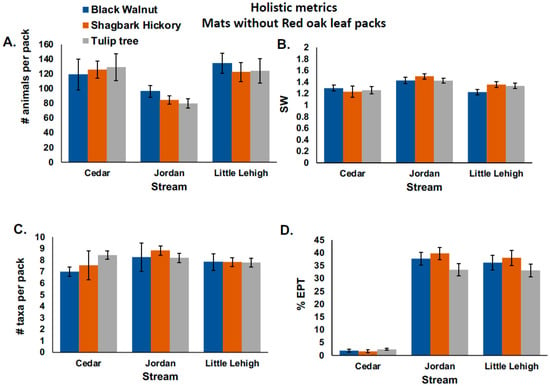
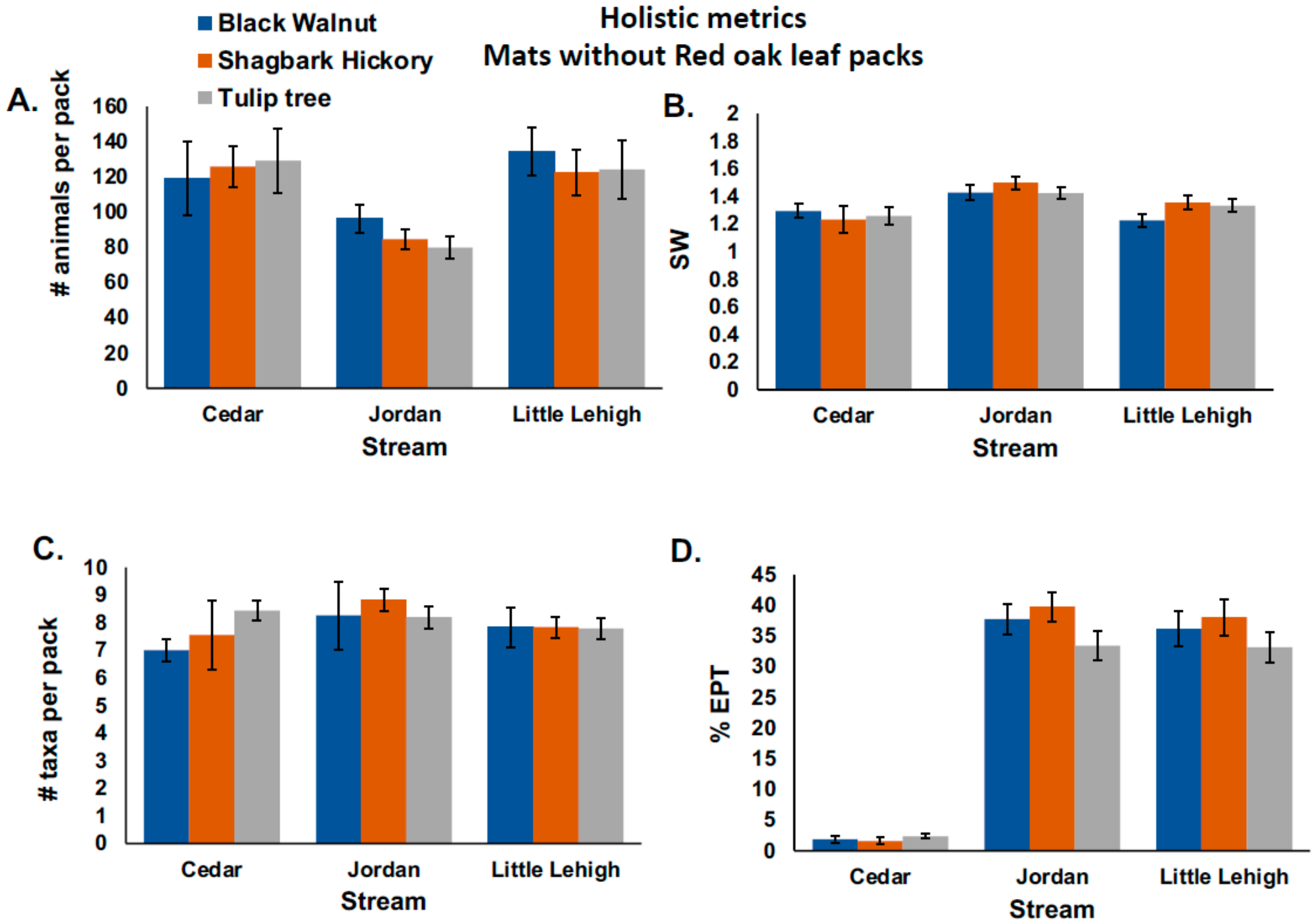
For mats in Jordan Creek and Little Lehigh that contained shagbark hickory leaves, there was a significant effect of year but not of leaf species on the total number of animals within a pack (Figure 1; Table 2A), with 2023 having lower values than 2024, but no other significant pairwise comparisons. With respect to the Shannon-Wiener diversity index, there was no significant effect of year, but there was a significant effect of leaf species (Figure 1; Table 2A), with black walnut promoting a significantly lower diversity value than shagbark hickory, but no other significant pairwise interactions. Leaf species did not exert a significant effect on the total number of taxa present (R) within packs, but the percent of the sample (%EPT) composed by individuals from the taxonomic orders that are typically most sensitive to pollution (Ephemeroptera, Plecoptera, and Trichoptera) was significantly impacted by both leaf species and year (Figure 1; Table 2A), with tulip poplar supporting lower values than either shagbark hickory or black walnut, and a pattern of decreasing %EPT values across the years of our study, from 2023 to 2025. Examining mats in Cedar Creek containing shagbark hickory (examined separate from the other two streams due to restrictions from uneven sampling across streams), there was no significant effect of leaf species on any of the holistic community metrics: the total number of animals within a pack, the Shannon-Wiener diversity index, the total number of taxa present (R) within packs, or %EPT (Figure 1; Table 2B).
Figure 1.
The averages (±1SE) of (A) the total density of invertebrates, (B) the Shannon-Wiener diversity index, (C) the total types of taxa, and (D) the %EPT in each pack within mats that do not contain red oak leaf packs. Sample sizes are reported in Table 2. The x-axis provides the order and the sampled stream.
Table 2.
Outcomes of the statistical analyses performed at the level of the entire experimental pack: the total number of animals (N), the Shannon-Weiner index (SW), the total number of taxa (R), and the percent of the sample composed by individuals from the taxonomic orders Ephemeroptera, Plecoptera, or Trichoptera (%EPT). Mats contained black walnut (bw), shagbark hickory (sh), and tulip tree (tt) leaves. Part A utilized the data from Jordan Creek (JC) and Little Lehigh (LL). Part B utilized only the data from Cedar Creek (CC). n.s. indicates no significant effect of any variables; * (with bolding) indicates a significant effect of that factor in the model (p < 0.05). As these are holistic metrics, each collected leaf pack contributed a value. Therefore, the sample size for each treatment in the statistical models in Part A was 84 for bw and sh, but 83 for tt; in Part B the sample size was 8 for bw, and 9 for sh and tt. The assumption of homogeneity of variance was valid without transformation unless noted otherwise (^), and then the corrective statistical procedure is explained in the Section 2.
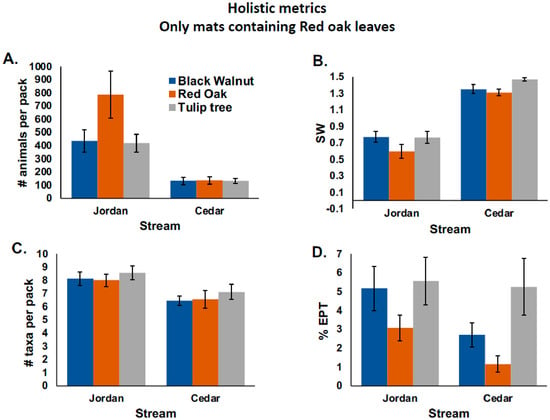
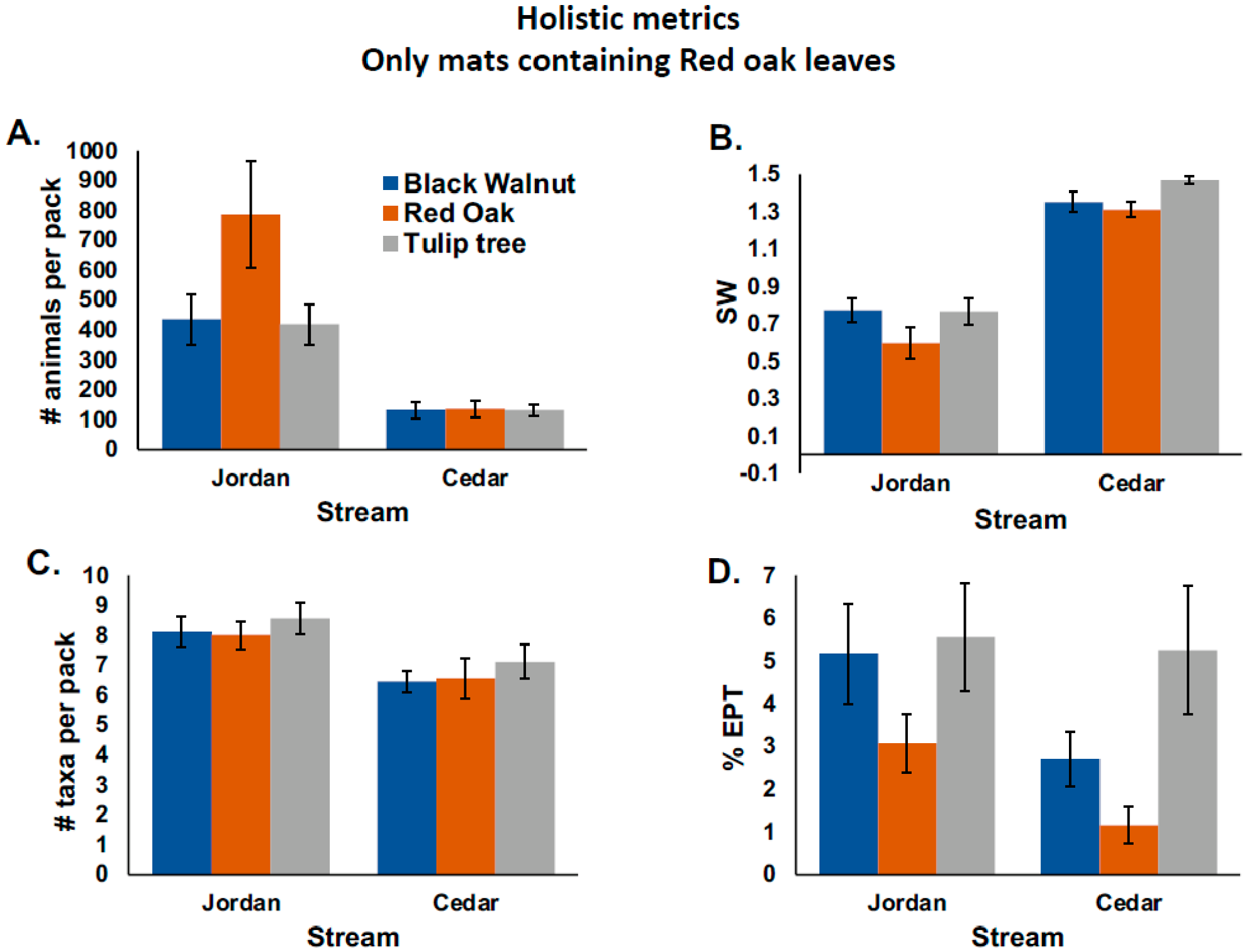
For mats in Jordan Creek and Cedar Creek that contained red oak leaves (e.g., not including mats containing shagbark hickory), there was no significant effect of leaf species on the total number of animals or the total number of taxa present within a pack (Figure 2; Table 3). However, leaf species had significant effects on both the Shannon-Wiener diversity index and %EPT, with red oak promoting significantly lower values than tulip tree for the former response variable, and significantly lower %EPT than either tulip tree or black walnut (Figure 2; Table 3).
Figure 2.
The averages (±1SE) of (A) the total density of invertebrates, (B) the Shannon-Wiener diversity index, (C) the total types of taxa, and (D) the %EPT in each pack within mats that contain red oak, rather than hickory, leaf packs. Sample sizes are reported in Table 3. The x-axis provides the order and the sampled stream.
Table 3.
Outcomes of the statistical analyses performed at the level of the entire experimental pack, containing the same holistic dependent variables as in Table 2, but the mats contributing data here contained black walnut (bw), red oak (ro), and tulip tree (tt) leaves, evenly spread across two streams (CC and JC), collected on one date in 2025. Acronyms are as identified in Table 2. n.s. indicates no significant effect of any variables; * (with bolding) indicates a significant effect of that factor in the model (p < 0.05). Data came from 9 total packs for each species of leaves in each of JC and CC. The assumption of homogeneity of variance was valid without transformation unless noted otherwise (^), and then the response variable was transformed using a fourth-root transformation to meet the model assumption.
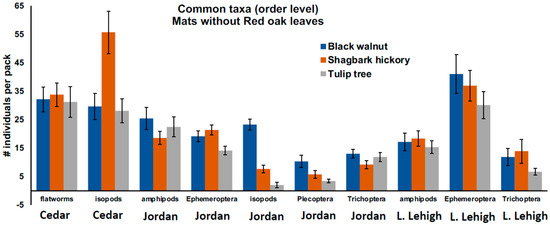
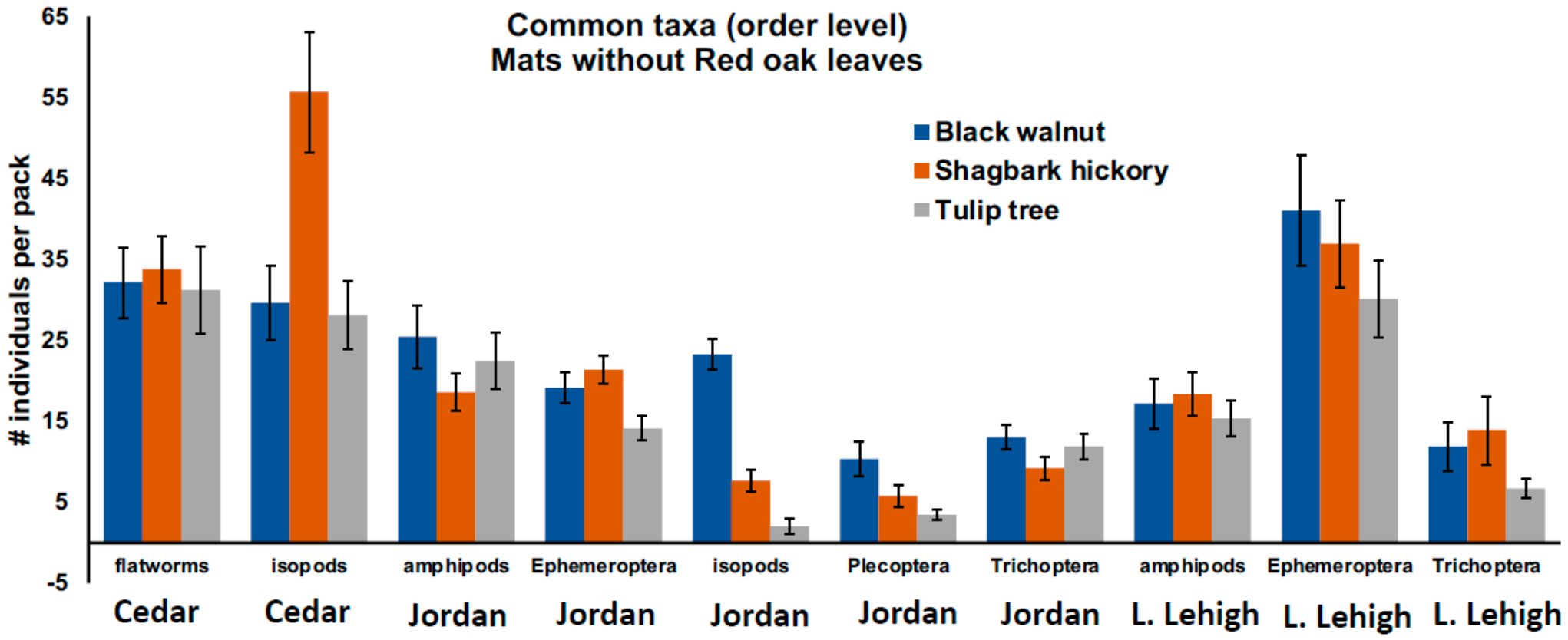
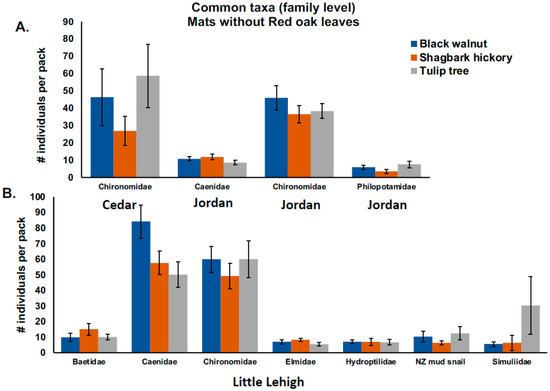
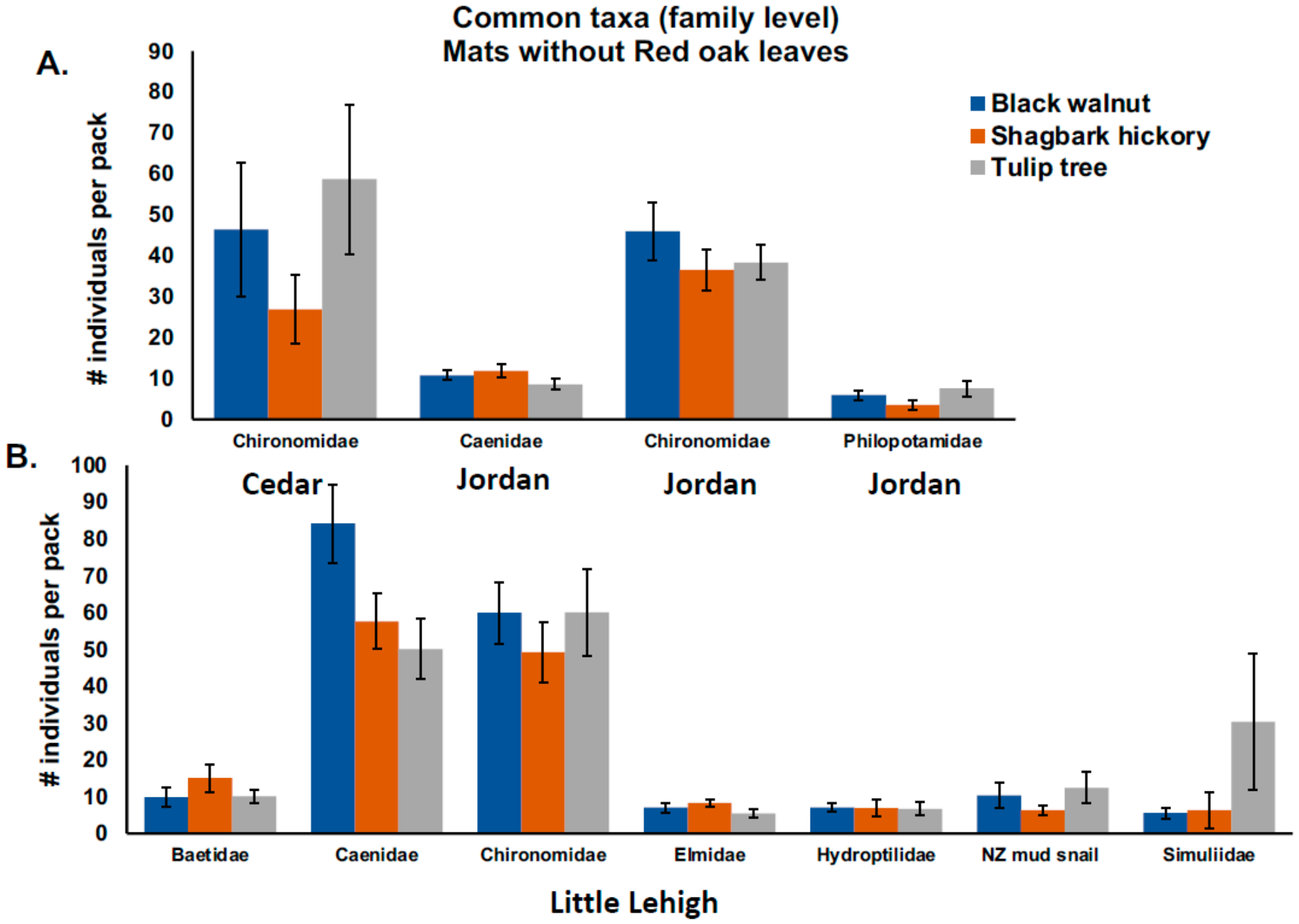
The densities of the “common” taxa examined at or higher than the taxonomic order level typically did not show a significant effect of leaf species within mats containing shagbark hickory; there was no significant effect of leaf species on the density of amphipods, Ephemeroptera, flatworms, or Trichoptera (Figure 3; Table 4). However, leaf species did significantly affect the density of both isopods and stoneflies (Figure 3; Table 4). Black walnut and tulip tree leaves contained fewer isopod colonists than did packs of shagbark hickory at Cedar Creek, but there was no significant pairwise interaction among leaf species on the isopod colonists at Jordan Creek. Significantly more stoneflies (Plecoptera) colonized black walnut leaves than moved into tulip tree leaves, but there were no other significant comparisons. None densities of colonists of the “common taxa” that were examined at the level of taxonomic family were significantly affected by leaf species: not the mayflies in Baetidae or Caenidae, nor the true flies in Chironomidae or Simuliidae, the caddisflies in Hydroptilidae or Philopotamidae, or the Elmidae beetles or New Zealand mud snails (Figure 4; Table 4).
Figure 3.
Average densities of the most common taxonomic orders present in mats without red oak leaf packs. Determination of most common is explained in the text. Error bars are ±1SE. Sample sizes are reported in Table 4. The x-axis provides the order and the sampled stream.
Table 4.
Outcomes of the statistical analyses performed on taxa that were “common” (>5 individuals on average per leaf pack) in particular streams on certain sample dates. Mats contained black walnut (bw), shagbark hickory (sh), and tulip tree leaves (tt). n.s. indicates no significant effect of any variables; * (with bolding) indicates a significant effect of that factor in the model (p < 0.05). The remaining acronyms are as listed in Table 2. Note: raw counts in Figure 3 were fourth-root transformed before statistical analyses, but Figure 3 presents averages and standard error of the raw data.
Figure 4.
Average densities of the taxonomic families that were most common in mats that did not contain red oak leaf packs for samples deployed in either (A) Cedar Creek or Jordan Creek, as indicated on the x-axis, and (B) in the Little Lehigh. Error bars are ±1SE. Sample sizes are reported in Table 4. The x-axis provides the taxonomic family and the sampled stream.
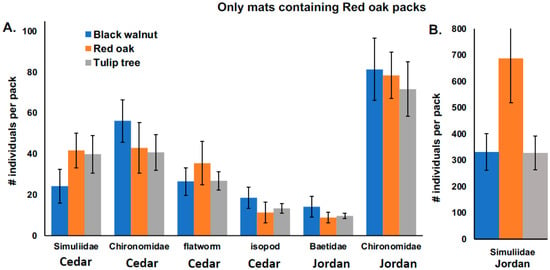
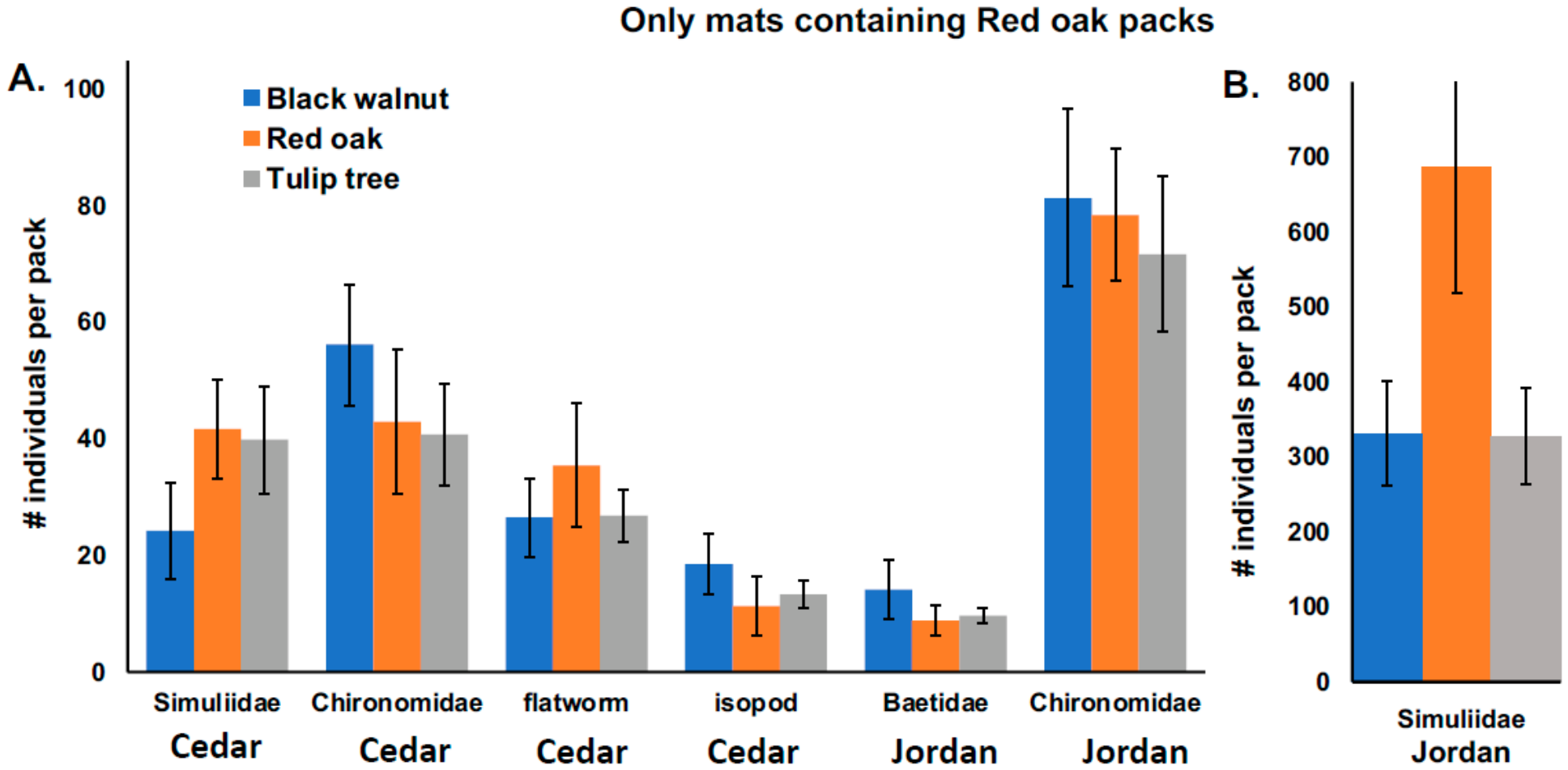
For mats in Jordan Creek and Cedar Creek that contained red oak leaves, leaf species did not exert a significant effect on the within-pack density of any of the “common taxa”: not for Baetidae, Chironomidae, flatworms, isopods, or Simuliidae (Figure 5; Table 5).
Figure 5.
Average densities of the most common taxa present in mats containing red oak leaf packs. In (A) Cedar Creek and Jordan Creek. Due to the high densities compared with other taxa, (B) Simuliidae for Jordan Creek were graphed with a separate y-axis scale. Error bars are ±1SE. The sample sizes are reported in Table 5. The x-axis provides the taxon and the sampled stream.
Table 5.
Outcomes of the statistical analyses performed on taxa that were “common” (>5 individuals on average in every leaf pack) in CC and JC on the one sample date in 2025 when we deployed mats containing black walnut (bw), red oak (ro), and tulip tree leaves (tt). The remaining acronyms are as listed in Table 2.
4. Discussion
Leaf litter inputs to streams can provide habitat diversity for macroinvertebrates, as well as impacting energy & nutrient flow [31]. But the identity of the trees planted can have key impacts on the aquatic ecosystem. Therefore, selecting riparian plants for stream rehabilitation projects can have important, long-term consequences on more than the local terrestrial ecosystem. We aimed to assess the level of risk of unintended consequences of planting many deciduous juglone-containing trees streamside, as the majority of benthic lotic insect species use detritus in the stream for shelter and are opportunistic feeders that ingest detritus to some degree [21]. Our current study is the first to our knowledge of a field examination as to whether stream macroinvertebrates would colonize juglone-containing fresh leaves.
Across all three streams and all three years, the packs containing shagbark hickory and black walnut leaves were colonized to a similar degree as leaves without juglone (tulip tree or red oak), suggesting that, if juglone remains in stream detritus, it does not deter aquatic detritivores more than characteristics of the other tree species examined. Black walnut actually may provide a nutritious food resource for detritivores because it has a relatively low C:N ratio [22]. Juglone, while possibly an effective biocide against some terrestrial weeds and pests, either rapidly degrades or leaches from leaves when submerged in streams, or apparently does not deter colonization by aquatic macroinvertebrates, which are mostly comprised of larval insects. Indeed, examining the densities of stoneflies and mayflies, two taxa that are typically most sensitive to pollutants, the stoneflies were significantly less dense within the juglone-free tulip poplar leaves than within the black walnut leaf packs, and mayfly colonist densities did not differ significantly among the three types of leaves.
Our finding that leaves from trees that produce juglones were still acceptable for habitation by macroinvertebrates, despite their known pesticidal effects on many terrestrial insects, is consistent with previous studies of aquatic macroinvertebrate growth and feeding. Swan and Palmer [22] demonstrated that aquatic shredders grew at similar rates in the laboratory when provided black walnut leaves as when provided any of the four other leaf species they examined. When fed shagbark hickory leaves, some species of craneflies, caddisflies, mayflies, and even stoneflies will grow more rapidly than when fed autotrophic material without juglone [1,40]. Amphipods preferred to consume hickory leaves as compared with five other species of leaves without juglone [41]. While consumption of leaves is determined by many attributes in addition to the chemicals contained within the leaves, black walnut and shagbark hickory are palatable to some macroinvertebrates from a range of pollution-sensitivities, and can even promote fast growth. Therefore, our current finding that, after a week of submersion of the leaves, the benthic macroinvertebrate community colonized packs of walnut and hickory to a similar degree as non-juglone-containing leaves is well supported.
Colonization of the leaf packs as shelters, rather than use of the leaves as food, may eliminate the importance of any potential negative impact caused by juglone on the growth of bacteria and fungi (causing “leaf conditioning”). Cabrini et al.’s [42] studies in impaired streams suggested that the macroinvertebrate assemblages colonizing leaf packs are more influenced by water quality than by leaf types. Beiser et al. [43] noted the apparent lack of discrimination among leaf species by the majority of colonizing invertebrates, with the majority of macroinvertebrate taxa collected occurring in similar numbers across leaf types, which included hickory, tulip tree, and oak leaves. Our findings suggest that leaf type does not significantly directly impact the macroinvertebrate assemblage, even if some leaves contain deterrent chemicals such as juglones and tannins while the trees retain the leaves. Thus, the improvement of water quality in urban areas (especially through more filtering of run-off before it enters the stream, which can be achieved through plantings) is likely more important than the specific identities of the species of riparian vegetation.
Our experiments, conducted over three summers, using leaves from multiple different individual trees placed within three streams, suggest that the leaves from black walnut and shagbark hickory trees will be colonized by stream macroinvertebrates across large areas of the riparian community. However, all three of the streams we studied were limestone-influenced streams in proximity to a large urban area (Allentown, PA, USA). Limestone springs have different, much lower, assessment threshold values of biotic indices than do freestone streams [44]. In Pennsylvania, 50% of reference limestone stream sites have Shannon-Wiener indices ranging from 1.5 to 2.0, and 50% of impaired sites range from 0.8 to 1.5, while the average %EPT for limestone streams in general in this area is 15.96% [44]. Most of our samples had Shannon-Wiener indices that would categorize them as impaired, and while the %EPT indices of Jordan Creek and Little Lehigh were well above the average of local limestone springs (which comprise a range of health categorizations; [44]), the values of Cedar Creek were well below that average. Therefore, it is not known whether the equivalent utilization of leaves from species that differ in levels of juglone would generally hold true in freestone streams not influenced by limestone or in pristine headwaters of limestone streams, both of which would likely contain a larger number of pollution-sensitive taxa than our sites. However, our current studies contained mayflies and caddisflies in each of the three streams we studied, and Jordan Creek even contained stoneflies within our sample areas. Thus, the pattern of use of green leaves from trees that synthesize juglones, as evidenced by colonization, appears robust, even among some pollution-sensitive taxa. Future studies in freestone streams would be of great interest.
But Are Black Walnut Leaves Equivalent to Other Species?
While our initial intention was to categorically score the level of decay of leaves upon recollection, there was never a notable degree of leaf skeletonization. The leaves of each species remained relatively intact after a week’s deployment, except for the black walnut. The black walnut leaves in our experiments fractured into a plethora of small pieces within a week of deployment, which was substantially more rapid than any of the other three species of leaves used. Indeed, the extensive degree of fragmentation of black walnut leaves precluded pack deployment for longer than a week, for fear of losing equivalence across leaf packs in terms of surface areas and biomass for colonization. Only retention by the structural support of the stiff mesh of the packs prevented the leaf pieces from black walnut from sweeping downstream after one week of submersion.
Alterations in the rate of leaf litter fragmentation can affect the physical habitat present within the leaf packs, and thus the resident macroinvertebrate community. The degree of invertebrate colonization may depend not only on the chemical substances contained within the leaves, but also on the shelter structure, degree of fragmentation, available surface area for colonization, and water flow through the pack. For instance, if elevated flow rates through smaller leaf fragments led to local elevated oxygen levels while still allowing cover from visually-oriented predators, that may have compensated for potential deterrence by juglone, resulting in equivalent colonization rates across the different types of leaves. Our current study did not allow us to distinguish any possible effects of juglone from alterations in the physical structure of the leaf packs.
Elevated fragmentation rates of the leaves that are not contained within artificial leaf packs can affect the longevity of leaf shelters within-stream. Small pieces typically have less of a chance of snagging at spots within the stream and forming leaf packs. Rapid exportation of leaves due fragmentation can impact the diversity and biomass of shredders as less food may be locally available, and these changes can potentially cause bottom-up effects through the food web [45]. The rapid physical fragmentation of the black walnut leaves within-stream may be a greater concern than the impact of the juglone chemical compounds embedded in the leaves., if black walnut leaves are unlikely to provide long-term sustenance or shelter for the stream community of detritivores. Indeed, our studies could only assess short-term colonization patterns by early colonizers due to the short duration of integrity of the green leaves of black walnut. Shagbark hickory leaves, which also have juglone but do not fragment at rates nearly as quickly as black walnut, may be a better choice for stabilizing stream banks if the goal is to provide long-lasting shelters and food resources to the macroinvertebrates within the streams.
Leaves from trees that produce and deposit juglones in their leaves apparently do not deter colonization by macroinvertebrates in our local limestone-influenced urban streams. Species such as black walnut and shagbark hickory may present opportunities for tree plantings for conservation efforts in the United States. However, black walnut should remain interplanted with species producing slow-fragmenting deciduous leaves, as black walnut leaves alone may not provide long-lived shelters [46,47]. Our current single-species leaf pack experiments should now be followed by similar studies in freestone streams, and related studies using mixed-species assemblages, to determine the widespread applicability of our findings and examine whether certain combinations of leaf species that include black walnut will affect colonization patterns over longer-term observations than a single week.
Supplementary Materials
The following supporting information can be downloaded at: https://www.mdpi.com/article/10.3390/hydrobiology5040041/s1.
Author Contributions
Conceptualization: E.V.I.; resources: E.V.I.; methodology: E.V.I. and K.J.S.T.; investigation: E.V.I. and K.J.S.T.; formal analysis: E.V.I.; initial draft writing: E.V.I.; editing E.V.I. and K.J.S.T. All authors have read and agreed to the published version of the manuscript.
Funding
Both authors received faculty summer research grants from Muhlenberg College for supplies and their time, and all research assistants (listed in the Acknowledgments) were funded through either the James R. Vaughan, the John Trainer, or the REBECs student summer research grants, all administered by Muhlenberg College.
Data Availability Statement
Summary data are provided as a Supplemental file and additional data will be provided upon receipt by the corresponding author of reasonable requests.
Acknowledgments
This project would not have been possible without the assistance of many undergraduate summer researchers, and funding for them from Muhlenberg College (through the Trainer, Vaughn, and REBECs grants). In 2023, lab group Macronerdz: T. Brandt, L. DeCristofaro, A. Doubleday, A. Erickson, M. Forman, C. Licopoli, J. Pizolato, K. Reis, and K. Wiener; in 2024, lab group Too Macronerdy: K. Barnett, A. Curnow, L. DeCristofaro, E. Forster, C. Licopoli, A. Lundy, A. Madrigal, J. Pilet, M. Richwine, and Q. Walker; and in 2025, lab group Trichopt3ra: J. Bradley, A. Caban, S. Campisi, G. Chopra, V. Diaz, D. Forkpah, K. Gelb, A. Lundy, S. Morrill, J. Morrison, M. Tompkins, S. Winter, and D. Zalot. We would also like to thank the City of Allentown, Lehigh County, Lower Macungie township, and Wildlands Conservancy for access to sites.
Conflicts of Interest
The authors declare no conflicts of interest.
References
- Sweeney, B.W. Effects of streamside vegetation on macroinvertebrate communities of White Clay Creek in eastern North America. Proc. Acad. Nat. Sci. Phila. 1993, 144, 291–340. [Google Scholar]
- Jones, J.A.; Swan, C.M. Community composition and diversity of riparian forests regulate decomposition of leaf litter in stream ecosystems. Restor. Ecol. 2016, 24, 230–234. [Google Scholar] [CrossRef] [Scilit]
- Williams, R.D. Juglans nigra L., Black walnut. In Silvics of North America: Vol. 2. Hardwoods; Burns, R.M., Honkala, B.H., Coords.; Agriculture Handbook 654; U.S. Department of Agriculture Forest Service: Washington, DC, USA, 1990; pp. 391–399. [Google Scholar]
- Michler, C.H.; Woeste, K.E.; Pijut, P.M. Ch. 6 Black walnut. In Genome Mapping and Molecular Breeding in Plants, Volume 7 Forest Trees; Kole, C., Ed.; NHBS: Totnes, UK, 2007; pp. 189–198. [Google Scholar]
- Nix, K.; Lambdin, P.; Grant, J.; Coots, C.; Merten, P. Concentration levels of imidacloprid and dinotefuran in five tissue types of black walnut, Juglans nigra. Forests 2013, 4, 887–897. [Google Scholar] [CrossRef] [Scilit]
- Gilman, E.F.; Watson, D.G. Juglans Nigra Black Walnut; Document adapted from Fact Sheet ST-320, a series of the Environmental Horticulture Department, Florida Cooperative Extension Service, Institute of Food and Agricultural Sciences, University of Florida; U.S. Forest Service, Department of Agriculture: Washington, DC, USA, 1993.
- Dudek, D.M.; McClenahen, J.R.; Mitsch, W.J. Tree growth responses of Populus deltoides and Juglans nigra to streamflow and climate in a bottomland hardwood forest in central Ohio. Am. Midl. Nat. 1998, 140, 233–244. [Google Scholar] [CrossRef] [Scilit]
- Shifley, S.R. The black walnut resource in the United States. In Black Walnut in a New Century, Proceedings of the 6th Walnut Council Research Symposium; 2004 July 25–28; Michler, C.H., Pijut, P.M., Van Sambeek, J.W., Coggeshall, M.V., Seifert, J., Woeste, K., Overton, R., Ponder, F., Jr., Eds.; Lafayette, IN. Gen. Tech. Rep. NC243; U.S. Department of Agriculture, Forest Service, North Central Research Station: St. Paul, MN, USA, 2004; 188p. [Google Scholar] [CrossRef] [Scilit]
- Omar, S.; Lalonde, M.; Marcotte, M.; Cook, M.; Proulx, J.; Goel, K.; Durst, T.; Philogène, B.J.R.; Arnason, J.T. Insect growth-reducing and antifeedant activity in eastern North America hardwood species and bioassay-guided isolation of active principles from Prunus serotina. Agric. For. Entomol. 2000, 2, 253–257. [Google Scholar] [CrossRef] [Scilit]
- Cosmulescu, S.; Trandafir, I.; Achim, G.; Baciu, A. Juglone content in leaf and green husk of five walnut (Juglans regia L.) cultivars. Not. Bot. Horti Agrobot. Cluj-Napoca 2011, 39, 237–240. [Google Scholar] [CrossRef] [Scilit]
- Strugstad, M.P.; Despotovski, S. A summary of extraction, synthesis, properties, and potential uses of juglone: A literature review. J. Ecosyst. Manag. 2012, 13, 1–16. [Google Scholar] [CrossRef] [Scilit]
- Wright, D.A.; Dawson, R.; Cutler, S.J.; Cutler, H.G.; Orano-Dawson, C.E.; Graneli, E. Napthaquinones as broad spectrum biocides for the treatment of ship’s ballast water: Toxicity to phytoplankton and bacteria. Water Res. 2007, 41, 1294–1302. [Google Scholar] [CrossRef] [Scilit] [PubMed]
- Islam, A.K.M.M.; Widhalm, J.R. Agricultural uses of juglone: Opportunities and challenges. Agronomy 2020, 10, 1500. [Google Scholar] [CrossRef] [Scilit]
- Thiboldeaux, R.L.; Lindroth, R.L.; Tracy, J.W. Differential toxicity of juglone (5-hydroxy-1,4- naphthoquinone) and related naphthoquinones to saturniid moths. J. Chem. Ecol. 1994, 20, 1631–1641. [Google Scholar] [CrossRef] [Scilit] [PubMed]
- Thiboldeaux, R.L.; Lindroth, R.L.; Tracy, J.W. Effects of juglone (5-hydroxy-1,4-naphthoquinone) on midgut morphology and glutathione status in Saturniid moth larvae. Comp. Biochem. Physiol. Part C Pharmacol. Toxicol. Endocrinol. 1998, 120, 481–487. [Google Scholar] [CrossRef] [Scilit] [PubMed]
- Sorokin, N.; Whitaker, J. Ch. 12. The impacts of selected natural plant chemicals on terrestrial invertebrates. In Secondary Metabolites in Soil Ecology; Karlovsky, P., Ed.; Springer: Berlin/Heidelberg, Germany, 2008; pp. 255–268. [Google Scholar]
- Gilbert, B.L.; Baker, J.E.; Norris, D.M. Juglone (5-hydroxy-1, 4-naphthoquinone) from Carya ovata, a deterrent to feeding by Scolytus multistriatus. J. Insect Physiol. 1967, 13, 1453–1454. [Google Scholar] [CrossRef] [Scilit]
- Joy, A.; Hudelson, B.; Jull, L. Black Walnut Toxicity. University of Wisconsin-Madison, Wisconsin Horticulture Division of Extension. 2024. Available online: https://hort.extension.wisc.edu/articles/black-walnut-toxicity (accessed on 31 March 2026).
- Petersen, R.C.; Cummins, K.W. Leaf processing in a woodland stream. Freshw. Biol. 1974, 4, 343–368. [Google Scholar] [CrossRef] [Scilit]
- Reice, S.R. The role of animal associations, current velocity and sediments in lotic litter decomposition. Oikos 1977, 29, 357–365. [Google Scholar] [CrossRef] [Scilit]
- Anderson, N.H.; Sedell, J.R. Detritus processing by macroinvertebrates in stream ecosystems. Annu. Rev. Entomol. 1979, 24, 351–377. [Google Scholar] [CrossRef] [Scilit]
- Swan, C.M.; Palmer, M.A. Composition of speciose leaf litter alters stream detritivore growth, feeding activity and leaf breakdown. Oecologia 2006, 147, 469–478. [Google Scholar] [CrossRef] [Scilit] [PubMed]
- Dale, V.H.; Joyce, L.A.; McNulty, S.; Neilson, R.P.; Ayres, M.P.; Flannigan, M.D.; Hanson, P.J.; Irland, L.C.; Lugo, A.E.; Peterson, C.J.; et al. Climate change and forest disturbances: Climate change can affect forests by altering the frequency, intensity, duration, and timing of fire, drought, introduced species, insect and pathogen outbreaks, hurricanes, windstorms, ice storms, or landslides. Bioscience 2001, 51, 723–734. [Google Scholar]
- Mahr, S. Landscaping in Spite of Black Walnuts; University of Wisconsin-Madison, Wisconsin Horticulture Division of Extension: Madison, WI, USA, 2026; Available online: https://hort.extension.wisc.edu/articles/landscaping-in-spite-of-black-walnuts (accessed on 31 March 2026).
- Park, M.-H.; Kim, K.; Hwang, S.-J. Differential effects of the allelochemical juglone on growth of harmful and non-target freshwater algae. Appl. Sci. 2020, 10, 2873. [Google Scholar] [CrossRef] [Scilit]
- Gilbert, B.L.; Norris, D.M. A chemical basis for bark beetle (Scolytus) distinction between host and non-host trees. J. Insect Physiol. 1968, 14, 1063–1066. [Google Scholar] [CrossRef] [Scilit]
- Willoughby, L.G.; Earnshaw, R. Gut passage time in Gammarus pulex (Crustacea, Amphipoda) and aspects of summer feeding in a stony stream. Hydrobiologia 1982, 97, 105–117. [Google Scholar] [CrossRef] [Scilit]
- Blennow, K.; Andersson, M.; Sallnäs, O.; Olofsson, E. Climate change and the probability of wind damage in two Swedish forests. For. Ecol. Manag. 2010, 259, 818–830. [Google Scholar] [CrossRef] [Scilit]
- Lindner, M.; Maroschek, M.; Netherer, S.; Kremer, A.; Barbati, A.; Garcia-Gonzalo, J.; Seidl, R.; Delzon, S.; Corona, P.; Kolströma, M.; et al. Climate change impacts, adaptive capacity, and vulnerability of European forest ecosystems. For. Ecol. Manag. 2010, 259, 698–709. [Google Scholar] [CrossRef] [Scilit]
- Stout, R.J.; Taft, W.H.; Merritt, R.W. Patterns of macroinvertebrate colonization on fresh and senescent alder leaves in two Michigan streams. Freshw. Biol. 1985, 15, 573–580. [Google Scholar] [CrossRef] [Scilit]
- Quinn, J.M.; Burrell, G.P.; Parkyn, S.M. Influences of leaf toughness and nitrogen content on in-stream processing and nutrient uptake by litter in a Waikato, New Zealand, pasture stream and streamside channels. N. Z. J. Mar. Freshw. Res. 2000, 34, 253–271. [Google Scholar] [CrossRef] [Scilit]
- Cosmulescu, S.; Trandafir, I.; Nour, V. Seasonal variation of the main individual phenolics and juglone in walnut (Juglans regia) leaves. Pharm. Biol. 2014, 52, 575–580. [Google Scholar] [CrossRef] [Scilit] [PubMed][Green Version]
- Barbehenn, R.V.; Constabel, C.P. Tannins in plant-herbivore interactions. Phytochemistry 2011, 72, 1551–1565. [Google Scholar] [CrossRef] [Scilit] [PubMed]
- Hoffman, A.R.; Iyengar, E.V. Effects of leaf species and conditioning state of fresh leaves on colonization by stream and pond macroinvertebrates. Hydrobiology 2024, 3, 85–99. [Google Scholar] [CrossRef] [Scilit]
- Cline, S.; Neely, D. Relationship between juvenile-leaf resistance to anthracnose and the presence of juglone and hydrojuglone glucoside in black walnut. Phytopathology 1984, 74, 185–188. [Google Scholar] [CrossRef] [Scilit]
- Coder, K.D. Seasonal changes of juglone potential in leaves of black walnut (Juglans nigra L.). J. Chem. Ecol. 1983, 9, 1203–1212. [Google Scholar] [CrossRef] [Scilit] [PubMed]
- Lee, K.C.; Campbell, R.W. Nature and occurrence of juglone in Juglans nigra L. HortScience 1970, 4, 297–298. [Google Scholar] [CrossRef] [Scilit]
- Reice, S.R. The role of substratum in benthic macroinvertebrate microdistribution and litter decomposition in a woodland stream. Ecology 1980, 61, 580–590. [Google Scholar] [CrossRef] [Scilit] [PubMed]
- R Core Team. R: A Language and Environment for Statistical Computing, version 4.6.1; R Foundation for Statistical Computing: Vienna, Austria, 2026. [Google Scholar] [CrossRef] [Scilit]
- Smock, L.A.; MacGregor, C.M. Impact of the American Chestnut Blight on aquatic shredding macroinvertebrates. J. N. Am. Benthol. Soc. 1988, 7, 212–221. [Google Scholar] [CrossRef] [Scilit] [PubMed]
- Krumholz, L.A.; Lambert, R.G.; Liston, C.R.; Woodward, H.H. Degradation of riparian leaves and the recycling of nutrients in a stream ecosystem. KWRRI Res. Rep. 1972, 138. Available online: https://uknowledge.uky.edu/kwrri_reports/138 (accessed on 20 October 2026). [CrossRef]
- Cabrini, R.; Canobbio, S.; Sartori, L.; Fornaroli, R.; Mezzanotte, V. Leaf packs in impaired streams: The influence of leaf type and environmental gradients on breakdown rate and invertebrate assemblage composition. Water Air Soil Pollut. 2013, 224, 1697. [Google Scholar] [CrossRef] [Scilit]
- Beiser, M.C.; Testa, S.; Aumen, N.G. Macroinvertebrate trophic composition and processing of four leaf species in a Mississippi stream. J. Freshw. Ecol. 1991, 6, 23–33. [Google Scholar] [CrossRef] [Scilit]
- Botts, W. An Index of Biological Integrity (IBI) for “True” Limestone Streams. Pennsylvania Department of Environmental Protection, Bureau of Water Standards and Facility Regulation. 2009. Available online: https://www.google.com/url?sa=t&source=web&rct=j&opi=89978449&url=https://files.dep.state.pa.us/water/Drinking%2520Water%2520and%2520Facility%2520Regulation/WaterQualityPortalFiles/Technical%2520Documentation/freestoneIBImarch2012.pdf&ved=2ahUKEwi3woOZj9KXAxXBTvUHHWLtItcQFnoECCEQAQ&usg=AOvVaw2HL-jNnOaKebiE8oETEwKP (accessed on 20 October 2026).
- Imberger, S.J.; Walsh, C.J.; Grace, M.R. More microbial activity, not abrasive flow or shredder abundance, accelerates breakdown of labile leaf litter in urban streams. J. N. Am. Benthol. Soc. 2008, 27, 549–561. [Google Scholar] [CrossRef] [Scilit]
- Sanpera-Calbet, I.; Lecerf, A.; Chauvet, E. Leaf diversity influences in-stream litter decomposition through effects on shredders. Freshw. Biol. 2009, 54, 1671–1682. [Google Scholar] [CrossRef] [Scilit]
- Jabiol, J.; Cornut, J.; Danger, M.; Jouffroy, M.; Elger, A.; Chauvet, E. Litter identity mediates predator impacts on the functioning of an aquatic detritus-based food web. Oecologia 2014, 176, 225–235. [Google Scholar] [CrossRef] [Scilit] [PubMed]

Disclaimer/Publisher’s Note: The statements, opinions and data contained in all publications are solely those of the individual author(s) and contributor(s) and not of MDPI and/or the editor(s). MDPI and/or the editor(s) disclaim responsibility for any injury to people or property resulting from any ideas, methods, instructions or products referred to in the content. |
© 2026 by the authors. Licensee MDPI, Basel, Switzerland. This article is an open access article distributed under the terms and conditions of the Creative Commons Attribution (CC BY) license.