


Abstract
Green synthesis methods offer an environmentally friendly and alternative approach for the development of silver nanoparticles (AgNPs). These methods utilize natural and renewable resources such as plant extracts or deep eutectic solvents (DESs) while minimizing the use of hazardous chemicals. Nanoparticles, characterized by their dimensions within the 1–100 nm range, exhibit unique properties that enable their diverse applications in medicine, diagnostics, drug delivery systems, cosmetics, sensing, catalysis, food and agricultural technologies. This review summarizes recent advancements in the biogenic synthesis of AgNPs using plant extracts prepared via deep eutectic solvents (DESs) or natural deep eutectic solvents (NaDESs), as well as individual plant extracts or DESs/NaDESs. The research highlights the strategic synergy in which DES-based media and their different bioactive compounds of plant extracts play a crucial role as both reducing and stabilizing agents. Furthermore, the physicochemical properties of the synthesized AgNPs, including core diameter, morphology, and long-term stability, are critically evaluated in relation to eutectic composition, and plant species utilized. This review demonstrates that DESs actively modulate the biosynthesis of AgNPs: functioning as green extraction media and steric/electrostatic stabilizing agents, while selectively serving as direct reducing agents in compositions containing reducing sugars, polyols, organic acids, and bioactive plant compounds.
1. Introduction
Silver nanoparticles (AgNPs) represent one of the most widely utilized classes of nanomaterials, recognized for their unique optical, electrical, and catalytic properties [1], as well as their wide range of biological activities including antimicrobial [1], antifungal [2], anticancer [3] and antiviral effects [4]. Consequently, they present extensive applications across medicine, drug delivery, cosmetics, sensing, catalysis [5], wastewater treatment, food technologies, and agriculture [3]. AgNPs can be synthesized through various physical, chemical, biological, and hybrid methods [6]. Physical methods utilize mechanical, thermal, or electrical energy rather than chemical reagents, including both top–down breaking of bulk silver and bottom–up vapor-phase condensation (e.g., physical vapor deposition) [7]. In contrast, chemical methods rely on bottom–up molecular reactions, where silver ions () are reduced to metallic silver () in solution, regulated by reducing agents and capping ligands [2]. However, conventional physical methods often require high energy input, while chemical methods present significant environmental and toxicological hazards due to toxic reducing agents and organic solvents [8,9]. As a safer alternative, green biogenic synthesis has gained wide attention [10,11]. These eco–friendly approaches harness naturally derived biomass, such as plant extracts and microorganisms, to serve as dual reducing and capping agents. In biogenic synthesis, the reduction of silver precursor ions (Ag+ to Ag0) is driven by secondary plant metabolites, collectively known as phytochemicals, including flavonoids, phenolics, tannins, terpenoids, and proteins [12]. These bioactive compounds possess a high density of functional hydroxyl and carboxyl groups, which facilitate sacrificial electron donation to Ag+ under ambient conditions, while simultaneously forming a protective phytochemical capping agent that prevents nanoparticle accumulation through steric and electrostatic repulsion [13]. Despite these advantages of biogenic synthesis, conventional extraction protocols relying on conventional aqueous or organic solvents, such as methanol, ethanol, acetone for phytochemical extraction often limits the yield of poorly water-soluble bioactive compounds [14,15]. To overcome these extraction limitations, the application of Deep Eutectic Solvents (DESs) and Natural Deep Eutectic Solvents (NaDESs) in biogenic synthesis has attracted particular research interest. DESs are mixtures of two or more components, a hydrogen bond acceptor (HBA), like choline chloride or betaine and a hydrogen bond donor (HBD), like glycerol, organic acids, or sugars. DESs exhibit highly tunable physicochemical properties and are characterized by their efficiency, low toxicity, and biodegradability [16,17]. Their unique hydrogen-bonded architecture not only enables the highly efficient extraction of bioactive phytochemicals from raw biomass but also directly modulates nanoparticle crystallization [18]. Specifically, the high viscosity and ionic strength of the eutectic system impose strong mass-transfer and diffusion-controlled limitations that regulate nucleation and growth kinetics, thereby yielding highly uniform, monodisperse nanoparticles with long-term stability. While the individual applications of plant extracts [19,20] and DESs in nanotechnology have been reported [21,22], their strategic synergy in fabricating functional AgNPs remains a rapidly evolving field of research. Hence, this review evaluates the synergetic mechanisms operating at the interface of green biosynthesis and next-generation green solvents. We explore how DES-based plant extracts serve as a multi-functional reagent, simultaneously as the extraction solvent, the primary reducing and capping agent, and the electrostatic stabilizer of AgNPs. Particular emphasis is placed on the mechanisms by which phytochemicals mediate AgNP formation, DES-mediated mixture effects, and the efficacy that this technology offers for a fully green approach to nanomaterials manufacture.
2. Aim, Scope and Overview of the Review
This review provides a critical overview of the synergistic green synthesis of silver nanoparticles (AgNPs) mediated by Deep Eutectic Solvents (DESs) and Natural Deep Eutectic Solvents (NaDESs) combined with plants extracts. While existing literature has largely examined plants extracts or green solvents independently, this work specifically highlights the integrated framework in which DES–based plant extracts serve as multi-functional systems: acting as extraction media, stabilizing agents, and reaction modulators, while functioning as direct reducing agents in specific formulations. The scope includes a comparative classification of biogenic synergistic synthesis, against conventional methods. Next, the fundamental supramolecular chemistry of eutectic mixtures is evaluated to explain its role in regulating mass transfer and crystallization kinetics. In this context, the discussion addresses how key operational parameters such as pH, temperature, precursor concentration, and hydration, on particle size and stability is systematically analyzed. Furthermore, downstream biomedical and environmental applications are systematically evaluated alongside current engineering challenges regarding industrial scalability and solvent recovery. A systematic literature review was performed across Web of Science, Scopus, PubMed, and Google Scholar. Foundational studies were used to the introduction of DES and provide the theoretical background (2003), whereas the quantitative analysis emphasizes recent advances published between 2018 and 2026. The search utilized targeted keyword combinations, including Silver Nanoparticles, AgNPs, Deep Eutectic Solvents, NaDES, Plant Extracts, and Green Biosynthesis.
3. Classification of Silver Nanoparticle (AgNP) Synthesis Approaches
There are three main approaches for developing silver nanoparticles (AgNPs): physical, chemical, and green methods [5,7,23]. The choice of reducing and capping agents governs the mechanism of silver ion reduction, directly influencing colloidal stability, production costs, and suitability for specific downstream applications. As one of the foundational approaches for silver nanoparticle synthesis, the physical method relies on high-energy inputs to top-down reduce bulk metal into nanoscale structures [5]. Because these techniques operate without chemical reducing agents, they yield ultra-pure nanoparticles free from residual contaminants [24]. Chemical synthesis is a well-known method for developing AgNPs, because of its ease, scalability, and precise control over particle size, shape, and distribution. This method involves the chemical reduction of silver ions (Ag+) to elemental silver (Ag0) with potent reducing agents in either an aqueous or organic medium [2,25]. The nucleation of AgNPs is typically initiated through electrons on Ag+ ions in solution, utilizing reducing agents such as sodium borohydride (NaBH4) [5], alanine/sodium hydroxide [26], trisodium citrate, and hydrazine. Stabilizing or capping agents, including polyvinylpyrrolidone (PVP), polyethylene glycol (PEG), and different surfactants, are frequently employed to inhibit nanoparticle aggregation, alter growth kinetics, and control shape and surface characteristics [5]. However, these conventional protocols frequently require stringent purification steps to eliminate unreacted reagents and secondary byproducts, which significantly escalates both the duration and capital expenditure of production [17]. In contrast, green synthesis avoids these hazardous chemicals by utilizing biological extracts, thereby streamlining the process and minimizing environmental toxicity [4,27].
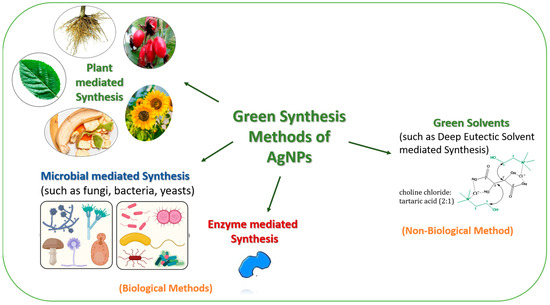
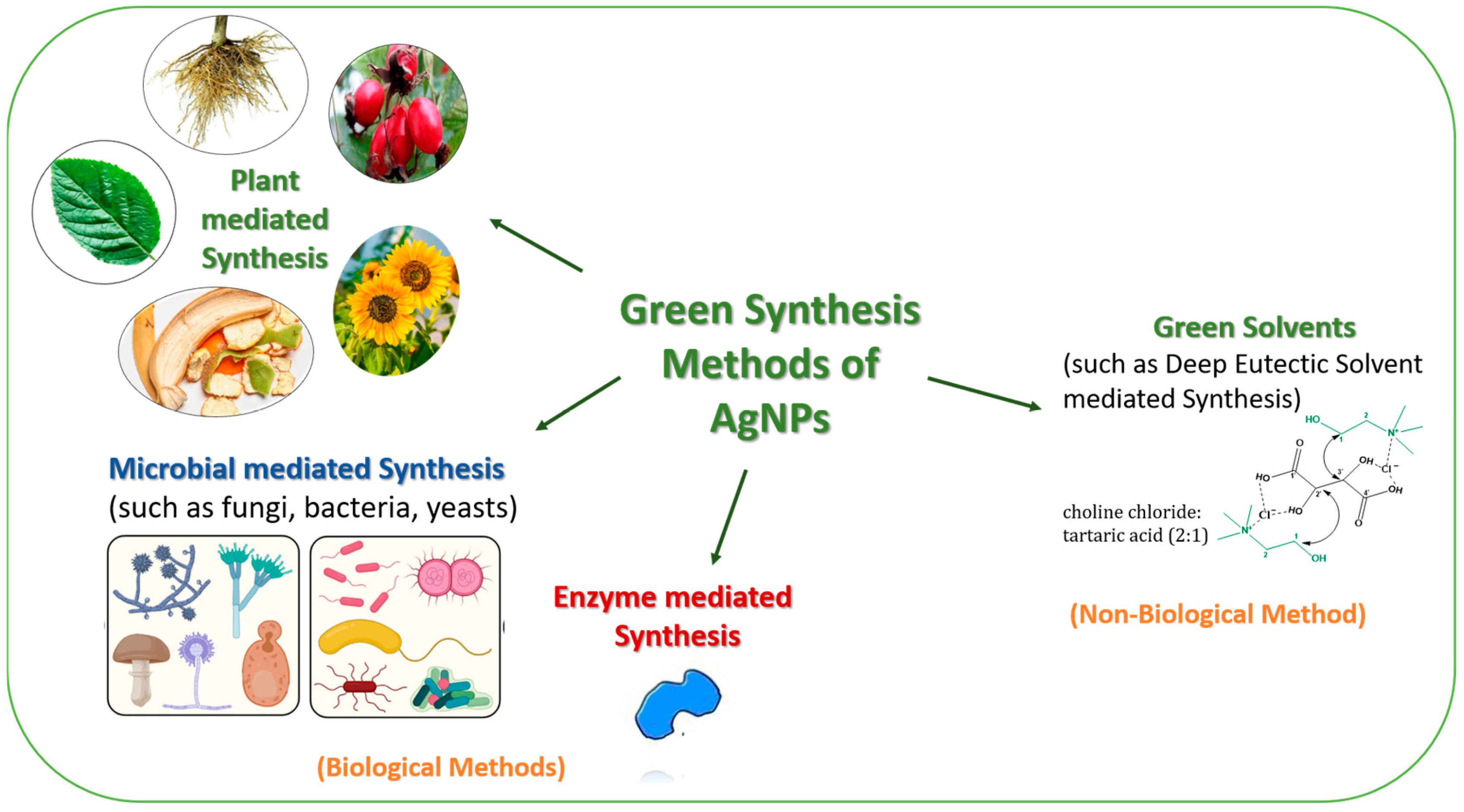
The adoption of green synthesis as a method in nanotechnology has become rapid due to its compatibility with sustainability and biomedical safety requirements. Green methods utilize biological systems, such as plant extracts, microorganisms, green solvents as both reducing and capping agents. Unlike chemical methods, this approach eliminates the need for toxic chemicals and offers a natural method for producing AgNPs that are environmentally friendly [5,28]. These biological frameworks effectively stabilize nanoparticles against aggregation while maintaining a high yield, thereby addressing the limitations often observed in conventional physical and chemical methods [24]. Furthermore, the incorporation of plant-based secondary metabolites, such as flavonoids, proteins, and phenolic compounds, serves to enhance the long-term stability of the resulting particles, frequently yielding AgNPs with superior biological activity compared to those generated through conventional synthetic routes [19,29]. The primary benefits of green synthesis are that it is simple, cost-effective, and environmentally friendly [28,29]. Moreover, the bioactive compounds involved, such as polyphenols, proteins, enzymes, sugars reduce the silver ions Ag+ to Ag0 and maintain their stability for nanoparticles interaction. There are two main types of green synthesis, each categorized by the source of the green solvents or biological reducing agents, as illustrated in Figure 1. These categories are primarily distinguished by the utilization of plant-based extracts versus microbial fermentation processes, both of which harness intrinsic metabolites to facilitate rapid bio–reduction under ambient conditions. While microbial-mediated routes often benefit from the precise enzymatic control of metabolite secretion, plant-based methods are frequently prioritized for their superior cost-effectiveness and ease of material preparation [30,31]. In addition, plant–derived synthesis eliminates the requirement for specialized infrastructure or complex culture media, significantly reducing the overall cost of large–scale production [32].
Figure 1.
Classification of green synthesis methods for silver nanoparticles (AgNPs).
Among green synthesis approaches, plant-mediated synthesis has gained significant attention due to scalability and versatility. It harnesses plant extracts rich in bioactive phytochemicals, including flavonoids, polyphenols, alkaloids, terpenoids, and tannins which act synergistically to reduce silver ions and form a protective “phytochemical surface” around the nanoparticles. This capping layer prevents aggregation, optimizing the stability of the colloids and enhancing their biological efficacy. Nevertheless, parameters such as extraction protocols and conditions significantly affect the concentration of phytochemicals, often introducing inconsistencies in the morphological characteristics and stability of the nanoparticles [26]. In addition to plant-assisted methods, microorganisms such as bacteria (like Escherichia coli, Bacillus subtilis, and Streptococcus thermophilus), fungi (like Aspergillus fumigatus, Aspergillus flavus, and Fusarium oxysporum) and yeast (like Saccharomyces cerevisiae, Candida sp., and Meyerozyma guilliermondii) can facilitate the development of silver nanoparticles [26]. This biogenic process is driven by metabolic and enzymatic complexes, which actively reduce silver ions into stable Ag0 nanoparticles [5,26]. In recent years, in addition to biological methods, the green synthesis of silver nanoparticles has also involved the use of green solvents, such as deep eutectic solvents, acting as reducing and stabilizing/capping agents [21,22,33], which are analyzed in the following section.
3.1. Synthesis of AgNPs Using Deep Eutectic Solvents (DESs)
Deep eutectic solvents (DESs) are gaining significant traction as eco-friendly alternative solvents due to their biodegradability, low volatility, non-flammability, and high thermal stability, presenting characteristics similar to those of ionic liquids (ILs) [34]. DESs are generally preferred over traditional ionic liquids because of their capacity to be derived from a variety of available components [35]. Generally, DESs are defined as mixtures that can be prepared from at least two components, one as a hydrogen bond donor (HBD), including urea, carboxylic acids, amino acids, polyols, and sugars, and another one as a hydrogen bond acceptor (HBA), including ammonium salts (such as choline chloride), amphoteric ions (such as betaine), or their hydrochloride salts [16,35]. The versatility of DESs has been demonstrated across a wide range of advanced applications, including the extraction of bioactive compounds from plants sources [16], targeted drug delivery systems, metal recovery [36], synthesis of nanoparticles, and electro-chemistry [35].
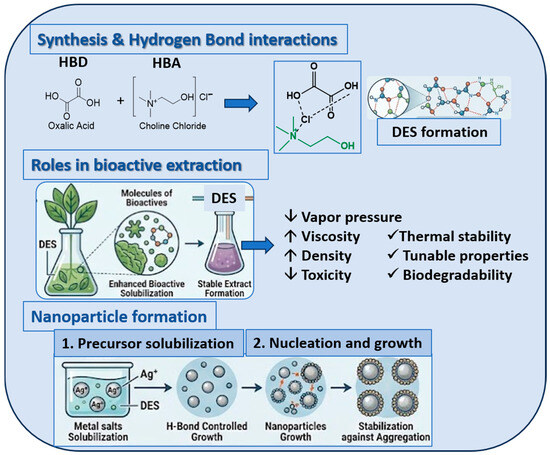
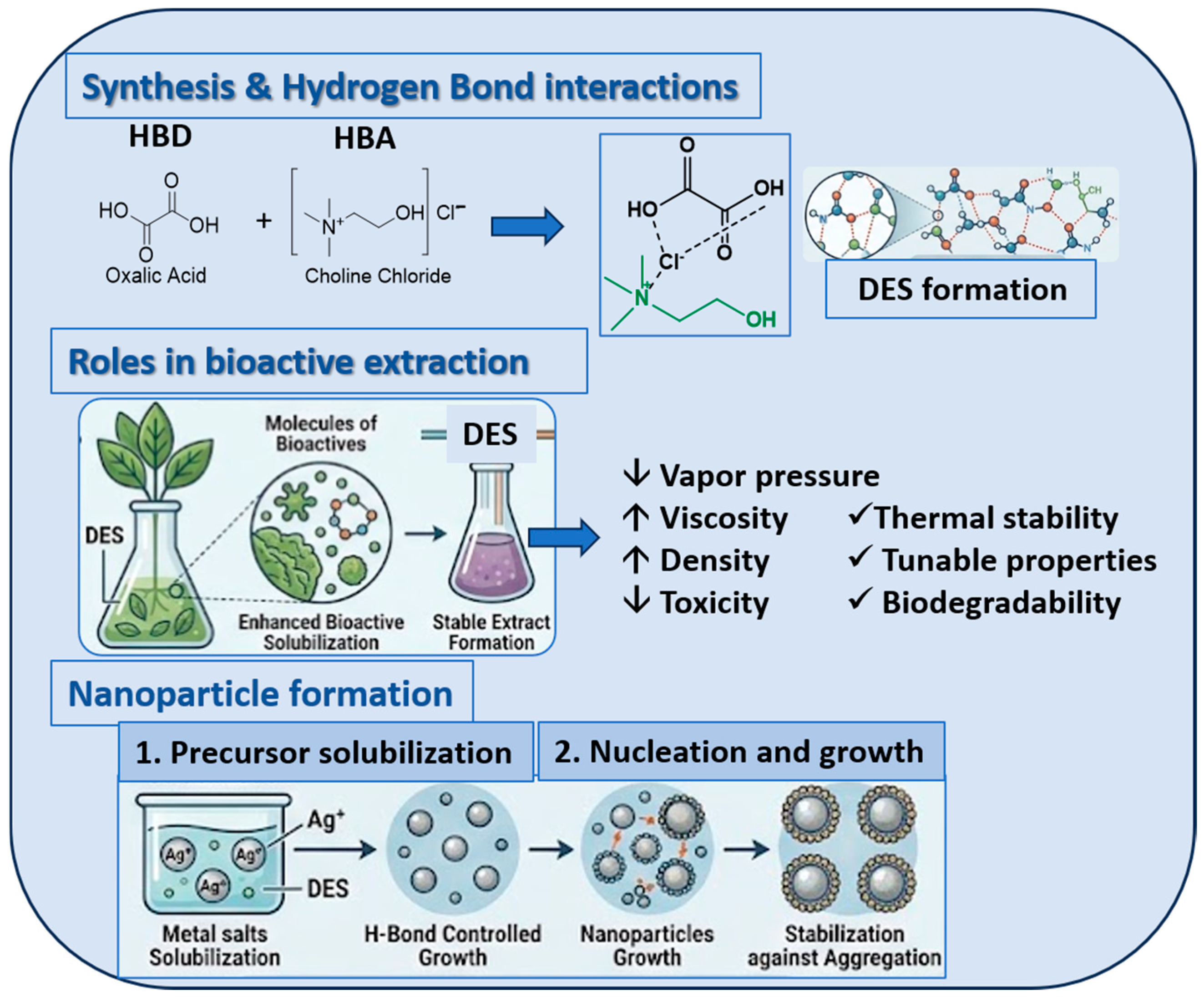
The foundational principles of DESs in biogenic nanomaterial synthesis are schematically summarized in Figure 2. As illustrated, DESs are formed by tailoring the molar ratios of hydrogen bond donors (HBDs), such as lactic acid, and hydrogen bond acceptors (HBAs), like choline chloride. Beyond serving as sustainable reaction media, DESs exhibit a dual functionality: they act as highly efficient media for solubilizing and extracting bioactive plant metabolites including polyphenols, flavonoids, alkaloids, while simultaneously modulating Ag+ reduction kinetics, nucleation, and steric/electrostatic stabilization during nanoparticle growth.
Figure 2.
Fundamental principles of Deep Eutectic Solvents (DESs), including (1) synthesis via hydrogen bond donor (HBD) and acceptor (HBA), (2) key physicochemical properties, (3) roles in the extraction and stabilization of plant bioactive compounds, and (4) facilitation of silver nanoparticle nucleation, growth, and stabilization, where downward and upward arrows indicate decrease and increase, respectively, and check marks denote favorable properties.
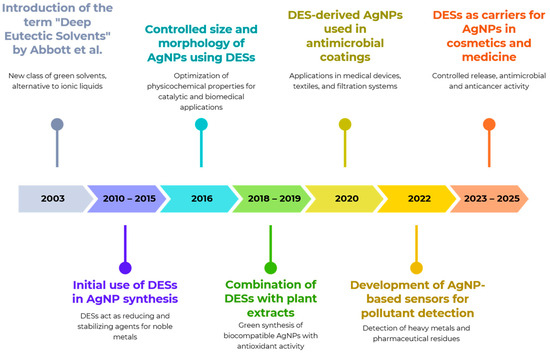
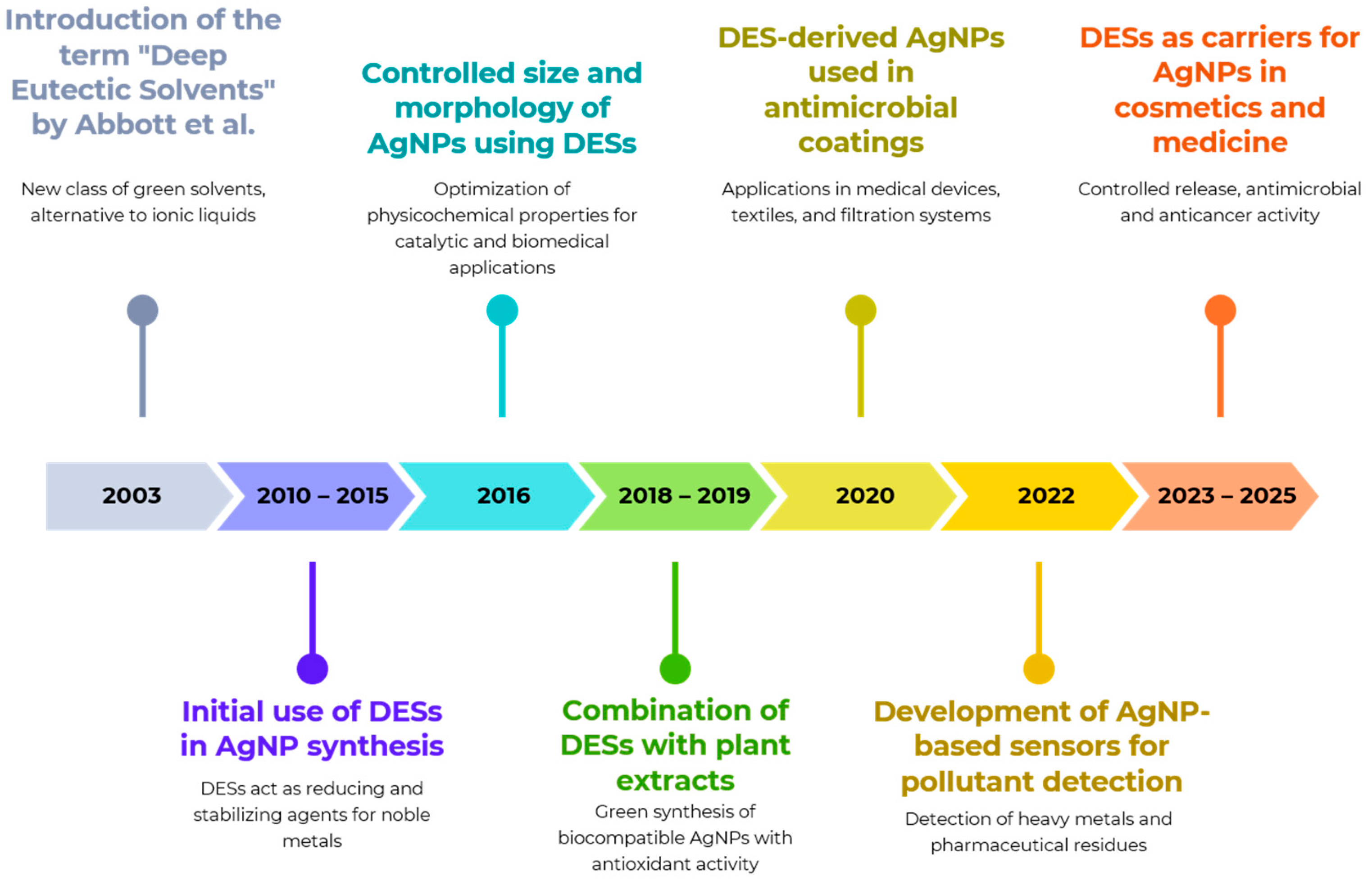
In 2003, Abbott et al. introduced DESs as a novel class of green solvents, offering a sustainable alternative to conventional ionic liquids (ILs) [37]. Their pioneering research demonstrated that choline chloride, as HBA, and urea, as HBD, could be mixed in a 1:2 molar ratio to form a stable eutectic mixture [35]. Between 2010 and 2015, DESs were recognized for their immense capacity in noble metal nanoparticle synthesis, acting as reducing agents and stabilizers for noble metal nanoparticles like AuNPs, AgNPs [38,39]. By 2016, the research focus shifted toward controlling the morphology and size of AgNPs by manipulating the specific composition of DESs. Physicochemical properties of DESs, such as viscosity, polarity, and ionic strength, can be precisely tuned to directly influence nucleation and growth kinetics, offering fine control of nanoparticle characteristics and optimizing their performance in catalysis and biomedicine [38]. In 2018 and 2019, DES integrated with extracts of plants opened a new area to green nanotechnology [40,41]. The combination of DESs and phytochemicals enhanced both the biocompatibility and antioxidant properties of the resulting AgNPs. This approach merely made the sustainable synthesis of AgNPs more robust and widened their applications in pharmaceutical and cosmetic formulations. During 2020, AgNPs synthesized via DESs were applied in antimicrobial coatings for medical devices, textiles, and filtration systems [14,38,42], establishing a synergistic interrelationship between DES and AgNPs to ensure long-lasting antimicrobial activity. In 2022, the area of application of the DES–AgNPs technology was extended to environmental sensing incorporating DES–mediated AgNPs into sensor systems designed to detect heavy metals and pharmaceutical residues in water and biological samples [33,43,44]. Recently, DESs have been explored as carriers for AgNPs in targeted drug delivery, wound healing, and skin-rejuvenating cosmetic formulations, leveraging the controlled release profiles and the inherent antimicrobial and anticancer properties of the nano-silver complexes. The milestones observed in using these green solvents for silver nanoparticle synthesis and their subsequent use in next-generation technologies and environmental remediation are schematically represented in Figure 3, which provides insight into the chronology of DES–based milestones and advancements in an ever-evolving research field. Several barriers still exist and overcoming them will be critical to effectively using the potential within these systems. Primary challenges involve optimizing the long-term stability of DES–based metallic nanostructures and ensuring their regulatory compliance for large-scale industrial manufacturing [42]. Furthermore, current research is actively focusing on the development of novel three-component deep eutectic solvents with inherent antimicrobial properties that can simultaneously act as both reducing and capping agents to further streamline the synthesis process.
Figure 3.
Milestones in the green synthesis of silver nanoparticles (AgNPs) using Deep Eutectic Solvents (DESs): introduction of DESs by Abbott et al. [37]; initial use in AgNPs synthesis [38,39]; controlled size and morphology [38]; combination with plant extracts [40,41]; antimicrobial coatings [14,38,42]; sensor development for pollutant detection [33,43,44]; and applications as carriers in cosmetics and medicine.
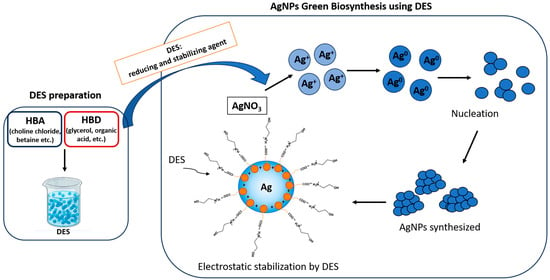
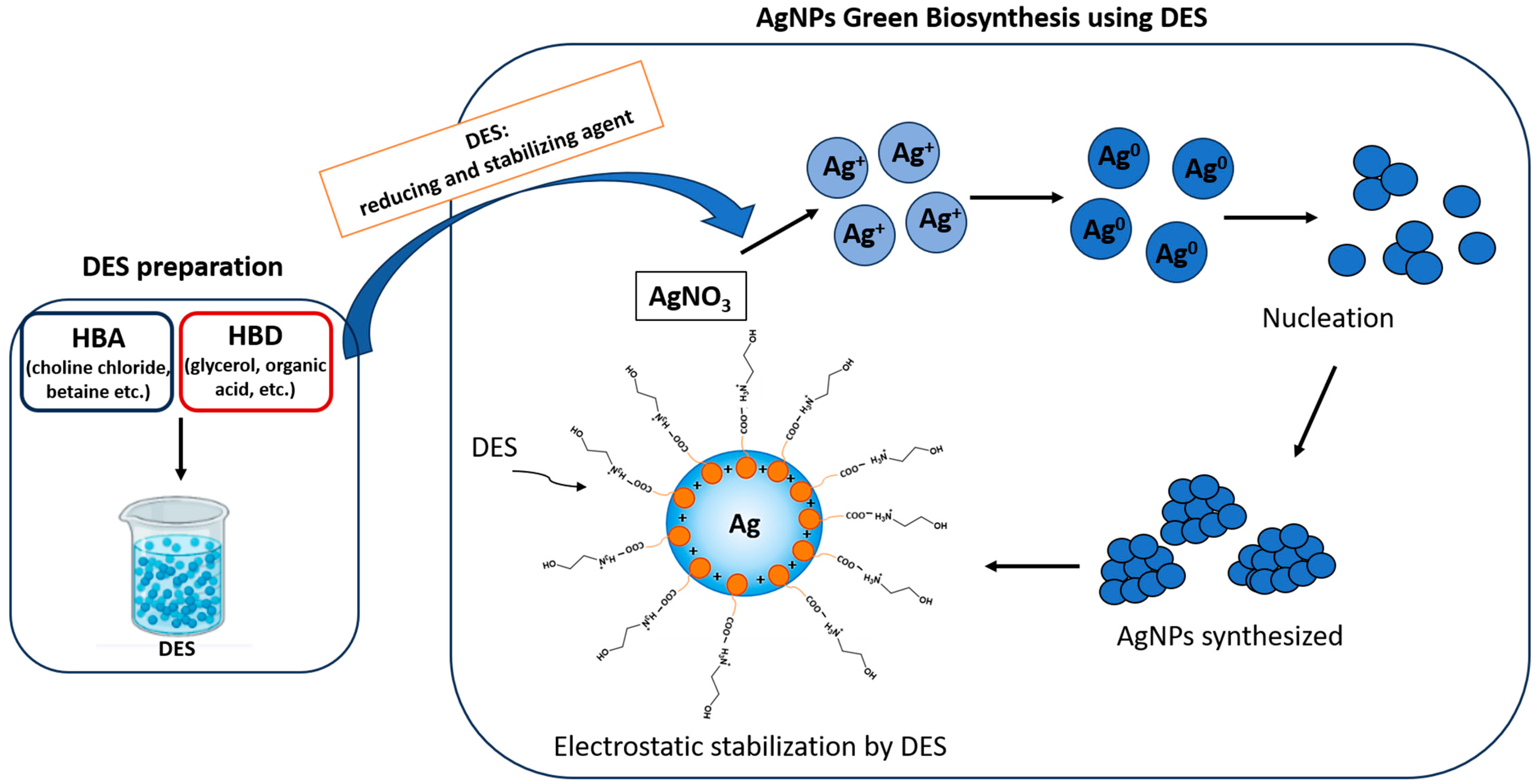
The general mechanism governing the DES-mediated synthesis of AgNPs is schematically illustrated in Figure 4. In DES–mediated systems, the eutectic mixture exhibits dual or singular functional behavior depending on its constituents. When composed of non-reducing HBAs and HBDs (such as choline chloride: urea), the DES acts primarily as a structured reaction medium, shape-directing agent, and electrostatic capping matrix [21,35]. Conversely, when functionalized with intrinsically reducing HBDs (like D–glucose, fructose, ascorbic acid), the eutectic matrix directly participates in the reduction of to , precluding the need for exogenous reducing additives [45,46].
Figure 4.
Green synthesis of silver nanoparticles (AgNPs) from AgNO3 as the silver ion precursor, illustrating the dual role of the deep eutectic solvent (DES) as both a reducing and stabilizing agent leading to electrostatic stabilization.
Gold nanoparticles (AuNPs) were the earliest noble metals synthesized using NaDESs; for instance, Liao et al. (2008) reported a simple synthesis route using choline chloride-urea (ChCl:Urea) as a stabilizing agent [47]. Table 1 provides a selected overview of green synthesis of silver nanoparticles using Deep Eutectic Solvents, highlighting how their unique physicochemical profiles yield distinct nanostructures.
Table 1.
Selected examples of green synthesis of silver nanoparticles using Deep Eutectic Solvents (DESs).
In 2025, Dlugosz et al. demonstrated that in glucose-betaine-ethylene glycol mixtures, AgNPs ranging from 2.5 to 24.3 nm are achievable, whereas betaine-ascorbic acid-ethylene glycol systems result in larger particle sizes ranging from 28 nm up to 230 nm. Betaine-glucose-glycol DES yields AgNPs of 3–10 nm with >180 days of stability. The use of glucose-betaine-ethylene glycol yields highly stable nanoparticles [49]. The gradual reduction of silver ions with glucose, which acts as a reducing agent, is performed with a highly favorable stabilization rate relative to the newly formed nanoparticles, resulting in an average diameter of 3–10 nm [49]. Depending on the specific compounds included in their composition, NaDESs allow the morphology of the produced nanomaterials to be directed [21,49]. In particular, the selected glucose serves a dual functional role, it actively participates in the development of the eutectic system with betaine, while simultaneously acting as a reducing agent for the synthesis of AgNPs [50]. This controlled reaction kinetics prevents rapid, uncontrolled crystal growth, thereby favoring the formation of numerous small nuclei over crystal growth. Furthermore, owing to the abundant hydroxyl groups in its chemical structure, glucose acts as a capping agent that forms a protective steric barrier around the nanoparticles, effectively suppressing agglomeration [45,46]. Crucially, NaDES parameters such as viscosity, conductivity and surface tension prevent aggregation and agglomeration of the nanoparticles, ensuring that their stability within the NaDES system is maintained over time [21,51]. The chemical reduction of within DES media produces distinct reaction by-products governed by the specific hydrogen bond donor (HBD) oxidized during nucleation. When reducing sugars such as D-glucose serve as the functional HBD, the reduction of to is coupled with the selective two-electron oxidation of the aldehyde moiety to carboxylate species, primarily yielding gluconic acid along with its corresponding lactone forms [45,52]. In polyol-based systems, including glycerol, and ethylene glycol operating under elevated thermal or microwave conditions, partial sacrificial oxidation generates trace aldehydes and ketones, such as glyceraldehyde and dihydroxyacetone [49,50]. Concurrently, the nitrate ions () originating from standard precursors remain solubilized within the ionic matrix or undergo minor thermal dissociation.
3.2. Synthesis of AgNPs Using Plant Extracts
Plant-assisted pathways to AgNPs have been established as sustainable alternatives to conventional physical and chemical synthesis methods [24,25]. Using plant extracts as the reducing, capping and stabilizing agent can minimize energy demand, avoid toxic reagents, and instill a biologically compatible surface corona that often improves colloidal stability and cellular interactions. Phytochemicals play a crucial role in the green synthesis of AgNPs, providing an environmentally friendly alternative to conventional methods. Among the most suitable phenolic compounds for this purpose are polyphenols, most notably flavonoids and tannins. These bioactive compounds found in high yield in many plant sources, with strong antioxidant properties and demonstrate high efficiency as reducing agents [24]. Flavonoids are particularly effective in developing AgNPs while tannins reduce metal ions and facilitate the stabilization of the synthesized nanoparticles [24,53]. Furthermore, another key class includes terpenoids which have demonstrated their ability to facilitate the formation of AgNPs, while alkaloids through nitrogen-containing functional groups provide complementary electron-transfer routes [53,54]. By their amphiphilic structure, saponins act as naturally occurring surface-active agents that reduce surface tension, optimize colloidal dispersibility, and prevent aggregation through steric stabilization. Their integration substantially contributes to colloidal stability and the uniformity of the synthesized nanoparticles. Proteins offer amino, carboxyl, and thiol groups that facilitate metal ion binding, reduction, and strong coordination interactions with nanoparticle surfaces, while polysaccharides act as biocompatible capping agents, forming a hydrophilic protective system that inhibits aggregation and promotes homogeneous dispersion [53]. The overall efficiency of these phytochemicals depends on parameters such as reducing power, stabilizing capability, biocompatibility, and specificity for AgNPs. Often, plant extracts contain a mixture of these compounds which can operate synergistically to develop nanoparticles with tailored physicochemical properties.
Table 2 summarizes the latest literature on AgNPs synthesis using plant extracts, indicating, their role and characteristics in the synthesis. For example, P. edulis leaf extracts are rich in phenolic compounds such as C-glycosyl flavones (vitexin, isovitexin, orientin, isoorientin) and other phenolics characterized as reducing agents (donating electrons to convert Ag+ → Ag0) and as capping ligands that selectively passivate expanding crystal facets, reflecting core principles established throughout plant-mediated AgNP synthesis. Phenolic compounds accelerate nucleation over crystal growth, thereby producing smaller cores at a given AgNO3 concentration, whereas polysaccharides provide steric stabilization that slows growth while suppressing agglomeration, often accompanied by more negative zeta potentials and improved shelf stability [12,55]. Reaction pH is also a key point of nano-synthesis: while mildly alkaline conditions (≈8–10) accelerate reduction to yield small, monodisperse quasi-spherical nanoparticles, acidic conditions retard reduction kinetics and broaden particle size distributions. According to the reaction mechanism, P. edulis leaf extracts are enriched in flavonoids and drive the formation of smaller silver cores, whereas pectin-rich peel extracts furnish a robust protective network that yields slightly larger, highly stable nanostructures. Tural et al. investigated P. khinjuk plant extracts for the green synthesis of AgNPs, emphasizing the significant influence of gender-specific phytochemical differences on nanoparticle properties. Female root extracts facilitated the synthesis of smaller and more stable AgNPs with superior antioxidant and antibacterial activities compared to male root extracts. The synthesized AgNPs exhibited distinct properties based on the gender of the root extracts. Female root-derived AgNPs had a more negative zeta potential, smaller particle size, and higher phenolic content, which collectively enhanced their stability and bioactivity. These nanoparticles demonstrated stronger antioxidant and antibacterial activities, as evidenced by superior performance in DPPH, ABTS+, and FRAP assays and larger inhibition zones against bacterial strains. Additionally, the slightly higher yield of AgNPs from female root extracts highlights their efficiency in nanoparticle production. The findings underline the importance of leveraging gender-specific phytochemical differences in plants for sustainable nanoparticle synthesis. The superior properties of female root-derived AgNPs make them promising candidates for biomedical and industrial applications. This research provides a sustainable and eco-friendly alternative to conventional methods while promoting the innovative use of agricultural byproducts [56]. In 2024, Mojela et al. analyzed aqueous extracts derived from Citrus Limon peels, Aloe vera leaves, Capsicum annuum fruits, Salix alba bark, Crinum asiaticum Linn leaves, and Crinum macowanii bulbs, which were successfully utilized in a green chemistry procedure to synthesize silver nanoparticles (AgNPs). These local plant components were strategically selected due to their high content of bioactive phytochemicals, including flavonoids, alkaloids (such as rutin and tryptamine), tannins, polyphenols, and amides. Within the water solvent framework, these organic compounds played a dual role, functioning both as reducing and stabilizing/capping agents. Specifically, polyols, phenolic compounds, and amide groups within the extracts facilitated the chemical reduction of silver ions from Ag+ to Ag0. Concurrently, these phytochemicals formed an encapsulating coating layer around the newly developed metallic crystals, effectively stabilizing the AgNPs and preventing undesirable agglomeration and aggregation [57]. Despite the sustainability and simplicity of plant-assisted synthesis, standalone plant-based extracts present notable inherent constraints [24,26]. First, significant batch-to-batch phytochemical variability is driven by temporal, geographic, and climatic factors, as well as plant maturity, which often compromises the reproducibility of nanoparticle size, polydispersity, and batch yield [26,56]. Second, standard aqueous extractions exhibit poor recovery efficiency for hydrophobic and poorly water-soluble secondary metabolites (like specific aglycones, non-polar flavonoids, and terpenoids), consequently limiting the full reducing capacity of the biomass [14,15]. Third, aqueous phyto-synthesized colloidal suspensions frequently suffer from limited long-term shelf stability; the low viscosity of water permits rapid mass transport/diffusion, secondary aggregation, and progressive precipitation over extended storage [18,58].
Table 2.
Selected recent examples of synthesis of silver nanoparticles (AgNPs) using plant extracts.
3.3. Synergetic AgNP Synthesis in DES-Based Plant Extracts
The synergistic integration of Deep Eutectic Solvents (DESs) combined with biological plant extracts represents a strategic approach that maximizes the efficiency and sustainability of the green synthesis of silver nanoparticles (AgNPs). As demonstrated in Table 3, although the literature is recent and limited, the choice of DES composition does not function merely as a solvent, but rather as a eutectic system that enhances the recovery of bioactive compounds. These systems notably enhance the extraction of poorly water-soluble bioactive components like flavonoids and terpenes, which are frequently inaccessible through conventional aqueous processing [69]. The hydrogen-bonding framework of eutectic system effectively solubilizes these bioactive phytochemicals, where they can directly participate in nanoparticle nucleation and growth [15,70]. Consequently, DES-based plant extracts provide three main roles: acting simultaneously as the extraction solvent, the primary reducing agent for silver ions (Ag+), and the capping/stabilizing agent that dictates colloidal integrity. A systematic evaluation of the literature compiled in Table 3 reveals clear mechanistic correlations between the chemical architecture of the DES system, the biological origin of the extract, and the resulting physicochemical profiles of the synthesized AgNPs. The utilization of diverse plant-derived systems, such as Camellia sinensis (green tea) [71], and agro-industrial residues like peach pomace [70], and grape pomace [14], supplies a wide variety of secondary metabolites, including polyphenols, catechins, anthocyanins, and organic acids. Upon reaction, these bioactive compounds donate electrons to reduce Ag+ silver ions to Ag0 stable silver. Simultaneously, their functional moieties bind to the emerging metallic surfaces, establishing robust steric and electrostatic repulsion barriers that suppress uncontrolled crystal growth and secondary particle agglomeration [33].
Table 3.
Selected examples of synergetic biogenic synthesis of silver nanoparticles using DES-based plant extracts.
This synergistic interaction between DES and biological reductants offers a significant advantage over conventional methods, enabling the production of highly stable and biocompatible silver nanoparticles [71]. The AgNP sizes observed ranged from 10–20 nm to maximum 53–161 nm in the betaine: glycerol (1:2) eutectic system, with predominantly spherical morphologies. Smaller nanoparticles (10–20 nm) are typically obtained using peach pomace [15] and grape pomace extracts [14] or DESs containing lactic acid, or lactic acid and glucose, whereas larger and more irregular nanoparticles (53–161 nm) are usually formed with green tea extracts in DESs based on betaine and glycerol or urea [48]. Analysis of the data indicates that DES-mediated biogenic AgNPs have multiple applications, including antimicrobial, catalytic, environmental remediation, and other functional uses. This versatility underscores the potential for developing advanced materials for diverse sectors, from medicine to industrial catalysis [72].
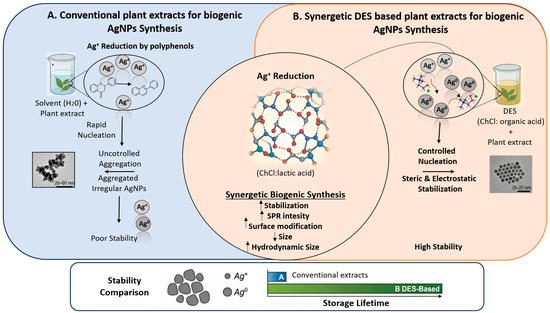
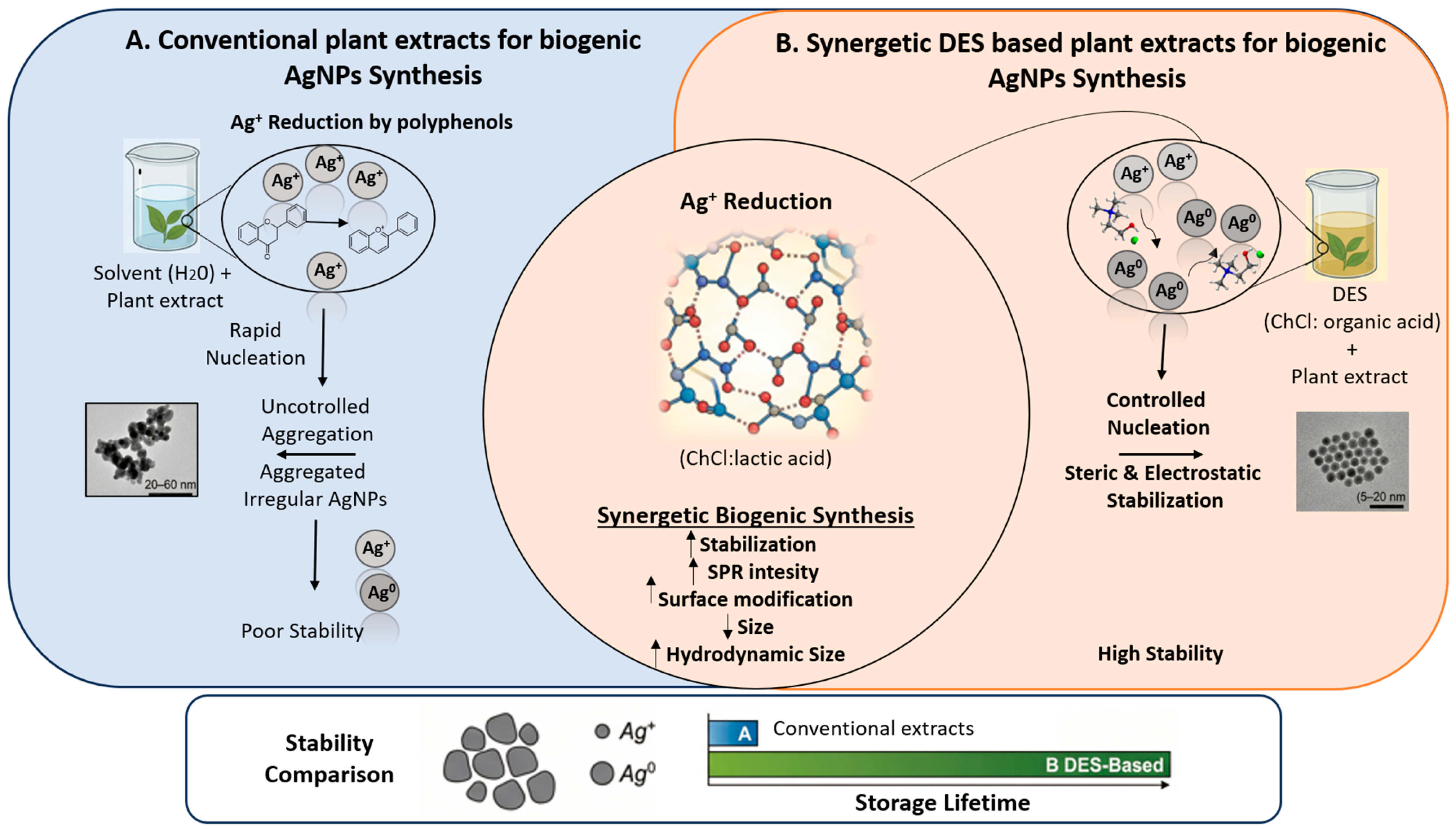
To provide comprehensive insight into the chemical and structural enhancements offered by this synergistic approach, the distinct nucleation and stabilization pathways of conventional plant extractions are directly contrasted against DES-mediated systems in Figure 5. While traditional aqueous extractions often struggle with limited stability and uncontrolled particle growth, the application of DES-based environments facilitates a more uniform reduction process, ultimately refining the physicochemical properties of the synthesized nanoparticles [73]. This strategic integration of green chemistry principles not only minimize harmful reagents to synthetic precursors but also promote scalable, reproducible synthesis protocols for advanced nanomaterial fabrication [74,75]. Furthermore, the precise modulation of synthesis parameters, such as precursor concentration and temperature, is key to establishing large-scale commercial production processes that maximize the conversion of these reagents into high-quality nanoproducts [76]. Ultimately, optimizing these factors remains a critical requirement for scaling production and ensuring the long-term chemical stability of nanoparticles intended for specialized clinical or industrial utility [77].
Figure 5.
Comparative representation of the biogenic synthesis of silver nanoparticles (AgNPs): (A) Conventional method using plant extracts, which is characterized by rapid nucleation and uncontrolled aggregation. This process typically results in aggregated, irregular AgNPs with poor stability. (B) Synergistic approach using DES-based plant extracts, which achieves controlled nucleation and enhanced steric/electrostatic stabilization, where upward and downward arrows indicate an increase and decrease of the parameters, respectively.
As illustrated in Figure 5A, conventional biogenic synthesis utilizing complex aqueous plant extracts often suffers from rapid, unhindered nucleation pathways. In this approach, the high kinetic rate of silver reduction Ag+ to Ag0 is not sufficiently balanced by structural stabilization, leading to uncontrolled particle aggregation and the formation of irregular, polydisperse AgNP architectures characterized by poor long-term colloidal stability. Alternatively, the innovative DES-mediated approach (Figure 5B) exhibits a regulated, two-fold synergetic mechanism. Firstly, the extensive hydrogen-bonding network and high viscosity of the deep eutectic mixture impose strict mass transfer and diffusion limitations [21,22,39], effectively constraining the kinetics of crystal nucleation and preventing rapid growth. Secondly, the functional groups of the DES from secondary metabolites (such as sugars, organic acids) organize symmetrically around the newly formed silver cores. This architecture establishes powerful electrostatic and steric barriers, imparting superior colloidal stabilization and providing highly uniform, monodisperse spherical AgNPs with enhanced chemical stability [21,44,48]. Several environmental factors influence the yield, size, morphology, and stability of AgNPs during synthesis. Optimizing these factors is essential to achieving desired physicochemical properties. Variables such as concentration of the plant extract, temperature, pH, AgNO3 concentration, and reaction time can greatly influence the physicochemical properties and activity of AgNPs [33,44,46]. Notably, the stability of AgNPs is highly affected by the pH and temperature, as their extreme levels negatively influence the nanoparticle formation and long-term storage time. For instance, while higher temperatures can accelerate the formation of AgNPs (with optimum levels typically around 40 °C), lower temperatures can help maintain their long-term stability during storage. Similarly, pH is also a key point of synthesis of AgNPs: while mildly alkaline conditions (≈8–10) accelerate reduction to yield small, monodisperse quasi-spherical nanoparticles, acidic conditions retard reduction kinetics and broaden particle size distributions. Consequently, the synergy between polyphenolic electron release and eutectic-controlled mass transfer establishes the fundamental basis for structural homogeneity and long-term colloidal stability. Additionally, the chemical interaction between phenolic aromatic rings and metal ions facilitates an effective complexation process that controls the ultimate core size [78]. Coordinating functional groups, including -OH and -NH2 groups, bind directly to the nanoparticle surface [79], modulating interfacial electron density and inhibiting the tendency of newly formed particles to grow into larger, less stable nanoparticles [58,80]. The wide variety of functional groups provided by plant extracts thus enables a synergistic stabilization system, where both electrostatic repulsion and steric hindrance act synergistically with the eutectic solvent to maintain a highly uniform particle size distribution [18]. The synergistic mechanism operating in DES–plant extract systems is driven by a clear division of roles between the plant extract and the eutectic mixture. The plant extract acts as the primary electron donor, where phenolic hydroxyl groups donate electrons to reduce to [58,81]. At the same time, the DES acts as a reaction template that regulates diffusion. The high dynamic viscosity of deep eutectic solvents imposes severe diffusion limitations on dissolved silver cations. It is observed that the diffusion coefficient of silver ions is reduced by one to two orders of magnitude in eutectic media compared to aqueous solutions [21,82]. This suppressed mass transfer slows the crystal growth rate relative to the nucleation rate, effectively decoupling nucleation from subsequent particle growth [18,21]. Consequently, the system favors the rapid formation of numerous small nuclei while preventing uncontrolled secondary growth, resulting in monodisperse, spherical nanoparticles (10–20 nm) with enhanced colloidal stability [15,71]. A critical synthesis of the physicochemical characterization data summarized in Table 3 highlights the direct structure–property relationships governed by the eutectic mixture. Morphologically, the synergistic interaction between DES components and plant secondary metabolites yields mainly spherical and near-spherical nanoparticles, with particularly narrow core diameters typically falling within the 10–20 nm range for agro-waste extracts (like grape and peach pomace), in contrast to the broader polydisperse structures often obtained via conventional aqueous routes [14,70]. Finally, the evaluation of colloidal stability demonstrates the superior shelf life of AgNPs prepared with DES, which maintain stable surface plasmon resonance (SPR) profiles and resist aggregation or sedimentation for extended periods (>1 to 2 months). This durability is due to the strong electrosteric stabilization, which is caused by high negative surface charges (zeta potentials often exceeding −25 to −32 mV) and the physical capping barrier exerted by the surrounding supramolecular DES system [15,71].
4. Applications, Challenges, and Scalability
AgNPs synthesized via synergistic DES - extract synthesis demonstrate potent broad-spectrum antibacterial efficacy against both Gram-negative (E. coli, P. aeruginosa) and Gram-positive (S. aureus, B. subtilis) strains, often exhibiting improved biocidal performance at nanomolar concentrations compared to conventional aqueous analogs [14,15]. In biomedical therapeutics, DES-stabilized AgNPs have demonstrated selective, dose-dependent cytotoxicity against human cancer cell lines (such as HepG2 and HeLa) through the production of intracellular reactive oxygen species (ROS) and apoptotic induction [3,71]. Furthermore, in environmental remediation and sensing, these nanostructures provide high catalytic degradation rates for persistent organic pollutants and serve as sensitive SERS/electrochemical sensor platforms for the detection of trace pharmaceutical and antibiotics [6,33]. Despite these advantages, transferring DES-assisted nanosynthesis to an industrial scale requires overcoming key mechanical barriers [44]. The high viscosity of eutectic solvents can hinder mass transfer on a large scale, requiring elevated operating temperatures or controlled dilution with benign antisolvents (like water, ethanol) to optimize mixing in continuous-flow reactors [42,43]. Downstream purification and solvent recovery remain critical for the overall economics of the process. Methods such as ultrafiltration, centrifugation, and antisolvent-induced precipitation have shown promising results for the isolation of AgNPs, while allowing the recycling of DES in multiple operational cycles [42,44]. From a life cycle assessment (LCA) perspective, eutectic synthesis significantly reduces environmental E-factors by replacing hazardous reducing agents (NaBH4, hydrazine) and volatile organic solvents with biodegradable, non-volatile components, supporting the completion of the circular economy through the valorization of agro-industrial by-products [16,44].
5. Conclusions
The integration of Deep Eutectic Solvents (DESs) and Natural Deep Eutectic Solvents (NaDESs) with biogenic plant extracts represents an eco-friendly and alternative green synthesis of silver nanoparticles. This review highlights that DES systems do not act merely as sustainable extraction solvents, but function as active, tailored reaction media that enhance the extraction of bioactive phytochemicals and cooperatively direct nanoparticle nucleation, morphology, and long-term colloidal stability. Furthermore, by successfully utilizing agro-industrial by-products, such as grape pomace and peach pomace, this synergistic technology aligns perfectly with the principles of the circular economy, effectively upcycling organic waste into high-added-value nanomaterials. Future research must systematically investigate the engineering aspects of scaling up these processes, addressing the high intrinsic viscosity of certain DES systems, optimizing mass transfer limitations in large-scale reactors, and developing cost-effective solvent recovery and recycling approaches to ensure long-term economic viability. Additionally, further comprehensive investigations into the specific molecular mechanisms driving the interactions between constituent DES components and phytochemicals during nucleation are highly necessary to refine current synthetic methodologies and customize AgNP properties for targeted applications. These significant breakthroughs are particularly crucial given the rapidly growing demand for biocompatible silver nanoparticles in advanced biomedical applications, including advanced antifungal, antiviral, and antibacterial agents, where parameters like surface morphology, core diameter, and surface charge determine clinical efficacy and toxicological safety.
Author Contributions
Conceptualization, N.K. and M.B.; validation, M.B.; investigation and analysis, M.B. and N.K.; writing—original draft preparation, M.B. and N.K.; writing—review and editing, M.B. and N.K.; supervision, N.K. All authors have read and agreed to the published version of the manuscript.
Funding
This research received no external funding.
Institutional Review Board Statement
Not applicable.
Informed Consent Statement
Not applicable.
Data Availability Statement
All data and analysis are available within the manuscript or upon request to the corresponding author.
Conflicts of Interest
Author Maria Bairaktari and Nikolaos Karountzos were employed by the company Green Metrics. The author declares that the research was conducted in the absence of any commercial or financial relationships that could be construed as a potential conflict of interest.
References
- Majeed, M.; Hakeem, K.R.; Rehman, R.U. Synergistic effect of plant extract coupled silver nanoparticles in various therapeutic applications- present insights and bottlenecks. Chemosphere 2022, 288, 132527. [Google Scholar] [CrossRef] [Scilit]
- Duman, H.; Eker, F.; Akdaşçi, E.; Witkowska, A.M.; Bechelany, M.; Karav, S. Silver Nanoparticles: A Comprehensive Review of Synthesis Methods and Chemical and Physical Properties. Nanomaterials 2024, 14, 1527. [Google Scholar] [CrossRef] [Scilit]
- Eker, F.; Duman, H.; Akdaşçi, E.; Witkowska, A.M.; Bechelany, M.; Karav, S. Silver Nanoparticles in Therapeutics and Beyond: A Review of Mechanism Insights and Applications. Nanomaterials 2024, 14, 1618. [Google Scholar] [CrossRef] [Scilit]
- Hosny, S.; Gaber, G.A.; Ragab, M.S.; Ragheb, M.A.; Anter, M.; Mohamed, L.Z. A Comprehensive Review of Silver Nanoparticles (AgNPs): Synthesis Strategies, Toxicity Concerns, Biomedical Applications, AI-Driven Advancements, Challenges, and Future Perspectives. Arab. J. Sci. Eng. 2026, 51, 13667–13714. [Google Scholar] [CrossRef] [Scilit]
- Abbas, R.; Luo, J.; Qi, X.; Naz, A.; Khan, I.A.; Liu, H.; Yu, S.; Wei, J. Silver Nanoparticles: Synthesis, Structure, Properties and Applications. Nanomaterials 2024, 14, 1425. [Google Scholar] [CrossRef] [Scilit]
- Alsaiari, N.S.; Alzahrani, F.M.; Amari, A.; Osman, H.; Harharah, H.N.; Elboughdiri, N.; Tahoon, M.A. Plant and Microbial Approaches as Green Methods for the Synthesis of Nanomaterials: Synthesis, Applications, and Future Perspectives. Molecules 2023, 28, 463. [Google Scholar] [CrossRef] [Scilit]
- Ahmed, S.; Ahmad, M.; Swami, B.L.; Ikram, S. A review on plants extract mediated synthesis of silver nanoparticles for antimicrobial applications: A green expertise. J. Adv. Res. 2016, 7, 17–28. [Google Scholar] [CrossRef] [Scilit]
- Tarannum, N.; Divya; Gautam, Y.K. Facile green synthesis and applications of silver nanoparticles: A state-of-the-art review. RSC Adv. 2019, 9, 34926–34948. [Google Scholar] [CrossRef] [Scilit]
- Abdelmoneim, H.M.; Taha, T.H.; Alhudhaibi, A.M.; Afifi, F.M.; Faqihi, A.A.; Alsalamah, S.A.; Bendif, H. Green Synthesis of Silver Nanoparticles and Polymeric Nanofiber Composites: Fabrications, Mechanisms, and Applications. Polymers 2025, 17, 2327. [Google Scholar] [CrossRef] [Scilit]
- Juzer, T.; Soundharajan, R.; Srinivasan, H. Camellia sinensis mediated silver nanoparticles: Eco-friendly antimicrobial agent to control multidrug resistant Gram-positive Staphylococcus aureus. Discov. Nano 2025, 20, 178. [Google Scholar] [CrossRef] [Scilit]
- Rupanshi; Kumar, V.; Yadav, N.; Singh, D.; Beniwal, V.; Chhabra, J.; Singh, B. Biogenic Silver Nanoparticles as Next-Generation Green Catalysts for Multifaceted Applications. Trans. Tianjin Univ. 2025, 31, 145–178. [Google Scholar] [CrossRef] [Scilit]
- Vanlalveni, C.; Lallianrawna, S.; Biswas, A.; Selvaraj, M.; Changmai, B.; Rokhum, S.L. Green synthesis of silver nanoparticles using plant extracts and their antimicrobial activities: A review of recent literature. RSC Adv. 2021, 11, 2804–2837. [Google Scholar] [CrossRef] [Scilit]
- Hosseinzadeh, E.; Foroumadi, A.; Firoozpour, L. What is the role of phytochemical compounds as capping agents for the inhibition of aggregation in the green synthesis of metal oxide nanoparticles? A DFT molecular level response. Inorg. Chem. Commun. 2023, 147, 110243. [Google Scholar] [CrossRef] [Scilit]
- Vorobyova, V.; Skiba, M.; Horodniuk, O.; Khrokalo, L.; Vasyliev, G. Betaine-Based Deep Eutectic Grape Pomace Extract Mediated Synthesis of Silver Nanoparticles with Antibacterial Activities. BioNanoScience 2023, 13, 1726–1740. [Google Scholar] [CrossRef] [Scilit]
- Vorobyova, V.I. Plant Extract Based on Deep Eutectic Solvent-Mediated Biosynthesis of Silver Nanoparticles: Cytotoxicity and Antibacterial Effects. Bioinorg. Chem. Appl. 2023, 2023, 9672432. [Google Scholar] [CrossRef] [Scilit]
- Bairaktari, M.; Konstantopoulou, S.M.; Malisova, O.; Gioxari, A.; Stratakos, A.C.; Panoutsopoulos, G.I.; Argyri, K. Natural Deep Eutectic Solvents for Agro-Industrial By-Product Valorization: Emerging Strategies for the Development of Functional Foods Targeting Diabetes. Appl. Sci. 2025, 15, 11596. [Google Scholar] [CrossRef] [Scilit]
- Rodríguez-Álvarez, M.J.; García-Garrido, S.E.; Perrone, S.; García-Álvarez, J.; Capriati, V. Deep eutectic solvents and heterogeneous catalysis with metallic nanoparticles: A powerful partnership in sustainable synthesis. Curr. Opin. Green Sustain. Chem. 2023, 39, 100723. [Google Scholar] [CrossRef] [Scilit]
- Wirwis, A.; Sadowski, Z. Green Synthesis of Silver Nanoparticles: Optimizing Green Tea Leaf Extraction for Enhanced Physicochemical Properties. ACS Omega 2023, 8, 30532–30549. [Google Scholar] [CrossRef] [Scilit]
- Siddiqi, K.S.; Husen, A.; Rao, R.A.K. A review on biosynthesis of silver nanoparticles and their biocidal properties. J. Nanobiotechnol. 2018, 16, 14. [Google Scholar] [CrossRef] [Scilit]
- Rajan, R.; Chandran, K.; Harper, S.L.; Yun, S.I.; Kalaichelvan, P.T. Plant extract synthesized silver nanoparticles: An ongoing source of novel biocompatible materials. Ind. Crops Prod. 2015, 70, 356–373. [Google Scholar] [CrossRef] [Scilit]
- Długosz, O. Natural Deep Eutectic Solvents in the Synthesis of Inorganic Nanoparticles. Materials 2023, 16, 627. [Google Scholar] [CrossRef] [Scilit]
- Wagle, D.V.; Zhao, H.; Baker, G.A. Deep eutectic solvents: Sustainable media for nanoscale and functional materials. Acc. Chem. Res. 2014, 47, 2299–2308. [Google Scholar] [CrossRef] [Scilit]
- Sati, A.; Ranade, T.N.; Mali, S.N.; Ahmad Yasin, H.K.; Pratap, A. Silver Nanoparticles (AgNPs): Comprehensive Insights into Bio/Synthesis, Key Influencing Factors, Multifaceted Applications, and Toxicity—A 2024 Update. ACS Omega 2025, 10, 11045. [Google Scholar] [CrossRef] [Scilit]
- Sadia, S.I.; Shishir, K.H.; Ahmed, S.; Alam, A.; Al-Reza, S.M.; Afrin, S.; Pappu, A.A.; Jahan, S.A. Green synthesis of crystalline silver nanoparticle by bio-mediated plant extract: A critical perspective analysis. Nano-Struct. Nano-Objects 2024, 39, 101272. [Google Scholar] [CrossRef] [Scilit]
- Mutlag, F.; Elaibi, H.; Halvaci, E.; Sen, F. Green synthesis of silver nanoparticles from Passiflora edulis: Comparison with conventional methods and biomedical applications. Int. J. Environ. Sci. Technol. 2026, 23, 145. [Google Scholar] [CrossRef] [Scilit]
- Almatroudi, A. Unlocking the Potential of Silver Nanoparticles: From Synthesis to Versatile Bio-Applications. Pharmaceutics 2024, 16, 1232. [Google Scholar] [CrossRef] [Scilit]
- Vidyasagar, N.; Patel, R.R.; Singh, S.K.; Singh, M. Green synthesis of silver nanoparticles: Methods, biological applications, delivery and toxicity. Mater. Adv. 2023, 4, 1478–1500. [Google Scholar] [CrossRef] [Scilit]
- Zahoor, M.; Nazir, N.; Iftikhar, M.; Naz, S.; Zekker, I.; Burlakovs, J.; Uddin, F.; Kamran, A.W.; Kallistova, A.; Pimenov, N.; et al. A review on silver nanoparticles: Classification, various methods of synthesis, and their potential roles in biomedical applications and water treatment. Water 2021, 13, 2216. [Google Scholar] [CrossRef] [Scilit]
- Arshad, F.; Naikoo, G.A.; Hassan, I.U.; Chava, S.R.; El-Tanani, M.; A Aljabali, A.; Tambuwala, M.M. Bioinspired and Green Synthesis of Silver Nanoparticles for Medical Applications: A Green Perspective. Appl. Biochem. Biotechnol. 2024, 196, 3855–3883. [Google Scholar] [CrossRef] [Scilit]
- Fares, A.; Mahdy, A.; Ahmed, G. Unraveling the mysteries of silver nanoparticles: Synthesis, characterization, antimicrobial effects and uptake translocation in plant—A review. Planta 2024, 260, 38. [Google Scholar] [CrossRef] [Scilit]
- Kiarashi, M.; Mahamed, P.; Ghotbi, N.; Tadayonfard, A.; Nasiri, K.; Kazemi, P.; Badkoobeh, A.; Yasamineh, S.; Joudaki, A. Spotlight on therapeutic efficiency of green synthesis metals and their oxide nanoparticles in periodontitis. J. Nanobiotechnol. 2024, 22, 16. [Google Scholar] [CrossRef] [Scilit]
- Rizwana, H.; Aljowaie, R.M.; Al Otibi, F.; Alwahibi, M.S.; Alharbi, S.A.; Al Asmari, S.A.; Aldosari, N.S.; Aldehaish, H.A. Antimicrobial and antioxidant potential of the silver nanoparticles synthesized using aqueous extracts of coconut meat (Cocos nucifera L). Sci. Rep. 2023, 13, 19339. [Google Scholar] [CrossRef] [Scilit]
- Cezar Valeriano, M.; Morais Neto, A.; Augusto, C.C.; Paschoal, V.H.; Mamián-López, M.B. Deep Eutectic Solvent Ag Nanoparticle Plasmonic Platform for Sensing in Hydrophobic Media. ACS Appl. Nano Mater. 2026, 9, 1829–1836. [Google Scholar] [CrossRef] [Scilit]
- Bairaktari, M. Reduction Food Loss and Waste: The Role of Deep Eutectic Solvents (DESs). Ann. Chem. Sci. Res. 2024, 4, 1000592. [Google Scholar] [CrossRef] [Scilit]
- Jančíková, V.; Jablonský, M. The Future of Green Chemistry: Evolution and Recent Trends in Deep Eutectic Solvents Research. Appl. Sci. 2026, 16, 654. [Google Scholar] [CrossRef] [Scilit]
- Bairaktari, M. Deep Eutectic Solvents (DESs) in Waste Reduction, By-Product Valorization, and Advancing the Circular Economy. Sustain. Chem. Eng. 2025, 6, 218–228. [Google Scholar] [CrossRef] [Scilit]
- Abbott, A.P.; Capper, G.; Davies, D.L.; Rasheed, R.K.; Tambyrajah, V. Novel solvent properties of choline chloride/urea mixtures. Chem. Commun. 2003, 39, 70–71. [Google Scholar] [CrossRef] [Scilit]
- Ponce, S.; Murillo, H.A.; Alexis, F.; Alvarez-Barreto, J.; Mora, J.R. Green Synthesis of Nanoparticles Mediated by Deep Eutectic Solvents and Their Applications in Water Treatment. Sustainability 2023, 15, 9703. [Google Scholar] [CrossRef] [Scilit]
- Abo-Hamad, A.; Hayyan, M.; AlSaadi, M.A.H.; Hashim, M.A. Potential applications of deep eutectic solvents in nanotechnology. Chem. Eng. J. 2015, 273, 551–567. [Google Scholar] [CrossRef] [Scilit]
- Adhikari, L.; Larm, N.E.; Baker, G.A. Argentous Deep Eutectic Solvent Approach for Scaling up the Production of Colloidal Silver Nanocrystals. ACS Sustain. Chem. Eng. 2019, 7, 11036–11043. [Google Scholar] [CrossRef] [Scilit]
- Adhikari, L.; Larm, N.E.; Bhawawet, N.; Baker, G.A. Rapid Microwave-Assisted Synthesis of Silver Nanoparticles in a Halide-Free Deep Eutectic Solvent. ACS Sustain. Chem. Eng. 2018, 6, 5725–5731. [Google Scholar] [CrossRef] [Scilit]
- Rente, D.; Bubalo, M.C.; Panić, M.; Paiva, A.; Caprin, B.; Redovniković, I.R.; Duarte, A.R.C. Review of deep eutectic systems from laboratory to industry, taking the application in the cosmetics industry as an example. J. Clean. Prod. 2022, 379, 135147. [Google Scholar] [CrossRef] [Scilit]
- Gomes-Junior, P.C.; Augusto, K.K.d.L.; Longatto, G.P.; Gonçalves, R.d.O.; Cavalheiro, É.T.G.; Fatibello-Filho, O.; Piccin, E. Green synthesis of silver nanoparticles in deep eutectic solvent and their application in an electrochemical sensor for famotidine determination in pharmaceutical and biological samples. Talanta 2026, 298, 128779. [Google Scholar] [CrossRef] [Scilit]
- Brandão, A.T.S.C.; State, S. Electrochemical Synthesis of Nanomaterials Using Deep Eutectic Solvents: A Comprehensive Review. Nanomaterials 2026, 16, 15. [Google Scholar] [CrossRef] [Scilit]
- Mansee, A.H.; Abdelgawad, D.M.; Ebrahim, A.M. Influence of glucose as a natural reductant on silver nanoparticles synthesis for decontamination of p-nitrophenol and methylene blue from wastewater. Sci. Rep. 2025, 15, 11974. [Google Scholar] [CrossRef] [Scilit]
- Eka Putri, G.; Rahayu Gusti, F.; Novita Sary, A.; Zainul, R. Synthesis of silver nanoparticles used chemical reduction method by glucose as reducing agent. J. Phys. Conf. Ser. 2019, 1317, 012027. [Google Scholar] [CrossRef] [Scilit]
- Liao, H.G.; Jiang, Y.X.; Zhou, Z.Y.; Chen, S.P.; Sun, S.G. Shape-controlled synthesis of gold nanoparticles in deep eutectic solvents for studies of structure-functionality relationships in electrocatalysis. Angew. Chem. Int. Ed. 2008, 47, 9100–9103. [Google Scholar] [CrossRef] [Scilit]
- Tho, L.H.; Khuyen, B.X.; Mai, N.X.D.; Tran, N.H.T. Potential of a deep eutectic solvent in silver nanoparticle fabrication for antibiotic residue detection. Beilstein J. Nanotechnol. 2024, 15, 426–434. [Google Scholar] [CrossRef] [Scilit]
- Długosz, O.; Żebracka, A.; Chmielowiec-Korzeniowska, A.; Laskowska, B.; Zielina, M.; Banach, M. Cleaner synthesis of betaine-based natural deep eutectic solvents and the effect of their composition on silver nanoparticle suspensions. Ind. Crops Prod. 2025, 233, 121354. [Google Scholar] [CrossRef] [Scilit]
- Liu, K.; Li, X.; Shi, R.; Yang, C.; Li, D. Preparation and antibacterial activity of silver nanoparticles in deep eutectic solvent. J. Mol. Liq. 2025, 424, 127031. [Google Scholar] [CrossRef] [Scilit]
- Azzouz, A.; Hayyan, M. Potential applications of deep eutectic solvents in nanotechnology: Part II. Chem. Eng. J. 2023, 468, 143563. [Google Scholar] [CrossRef] [Scilit]
- Peng, H.; Yang, A.; Xiong, J. Green, microwave-assisted synthesis of silver nanoparticles using bamboo hemicelluloses and glucose in an aqueous medium. Carbohydr. Polym. 2013, 91, 348–355. [Google Scholar] [CrossRef] [Scilit]
- Dube, E. From Plant Metabolites to Functional Nanomaterials: Advances in Phytochemical-Mediated Silver Nanoparticle Synthesis and Applications. Microorganisms 2026, 6, 40. [Google Scholar] [CrossRef] [Scilit]
- Mashwani, Z.u.R.; Khan, M.A.; Khan, T.; Nadhman, A. Applications of plant terpenoids in the synthesis of colloidal silver nanoparticles. Adv. Colloid Interface Sci. 2016, 234, 132–141. [Google Scholar] [CrossRef] [Scilit]
- Dhir, R.; Chauhan, S.; Subham, P.; Kumar, S.; Sharma, P.; Shidiki, A.; Kumar, G. Plant-mediated synthesis of silver nanoparticles: Unlocking their pharmacological potential—A comprehensive review. Front. Bioeng. Biotechnol. 2023, 11, 1324805. [Google Scholar] [CrossRef] [Scilit]
- Tural, B.; Ertaş, E.; Batıbay, H.; Tural, S. The Impact of Pistacia khinjuk plant gender on silver nanoparticle synthesis: Are extracts of root obtained from female plants preferentially used? Biochem. Biophys. Res. Commun. 2025, 746, 151257. [Google Scholar] [CrossRef] [Scilit]
- Mojela, N.L.; Pillay, K.; Komane, P.P. Synthesis and application of silver nanoparticles from lemon peel extract and other local plant extracts for detection of ‘blood’ at crime scene. Forensic Sci. Int. 2024, 365, 112257. [Google Scholar] [CrossRef] [Scilit]
- Azad, A.; Zafar, H.; Raza, F.; Sulaiman, M. Factors Influencing the Green Synthesis of Metallic Nanoparticles Using Plant Extracts: A Comprehensive Review. Pharmacogn. Res. 2023, 5, e117–e131. [Google Scholar] [CrossRef] [Scilit]
- da Silva Mota, G.; Nery, F.C.; Jardim, B.F.; Santos, M.E.d.S.; Zin, L.C.; Guimarães, L.G.d.L.; Neto, A.R.d.C.; dos Reis, M.V.; Mori, F.A. Green synthesis of silver nanoparticles using Plathymenia reticulata bark extract and toxicological assessment in Allium cepa. J. Toxicol. Environ. Health Part A 2026, 89, 602–615. [Google Scholar] [CrossRef] [Scilit]
- Martínez-Cisterna, D.; Rubilar, O.; Bardehle, L.; Chacón-Fuentes, M.; Chen, L.; Silva, B.; Lizama, M.; Parra, P.; Matamala, I.; Barra, O.; et al. Characterization and Insecticidal Efficacy of Green-Synthesized Silver Nanoparticles Against Four Stored Product Insect Species. Insects 2026, 17, 143. [Google Scholar] [CrossRef] [Scilit]
- Lokuge, C.M.P.; Weeratunge, H.D.; De Silva, H.I.C.; Premakumara, G.A.S.; Ranasinghe, P. Green synthesis of silver nanoparticles using Cinnamomum zeylanicum Blume post-distillation waste for antibacterial, antioxidant, anti-inflammatory and cytotoxicity activities. Biocatal. Agric. Biotechnol. 2026, 72, 103936. [Google Scholar] [CrossRef] [Scilit]
- Ahmad, S.; Ahmad, I.; Anwar, Y.; Mohammed, S.; Al-Maaqar, S.M.; Ali, H.M.; Suhail, M.; Abujamel, T.; Zughaibi, T.A.; Oves, M.; et al. Green synthesis of alginate-encapsulated silver nanoparticles and its utilization as anticancer and antimicrobial therapeutics. Nanotechnol. Rev. 2026, 15, 270. [Google Scholar] [CrossRef] [Scilit]
- Vargas-Caicedo, J.D.; Roa-Cordero, M.V.; Romero, M.F.; Ortiz, J.G.L.; Leal-Pinto, S.M. Plant-mediated synthesis of silver nanoparticles from Moringa oleifera against ESKAPE pathogens. Microb. Pathog. 2026, 218, 108626. [Google Scholar] [CrossRef] [Scilit]
- Anju, T.R.; Jose, R.; Narayanan, D.P.; George, R.R. Bio-synthesis of silver nanoparticles using Azadirachta indica leaf extract and its effects on plant and microbial growth. Next Res. 2026, 8, 101551. [Google Scholar] [CrossRef] [Scilit]
- Madheslu, M.; Prabhakaran, D.; Sadasivam, N.; Sankar, M.; Muthupandian, S.; Al-Amer, O.M.; Altemani, F.; Alharbi, Z. Engineering optimization of silver nanoparticle synthesis using Clitoria ternatea leaf extract: Response surface methodology approach and biocompatibility assessment. Chem. Phys. Impact 2026, 10, 100995. [Google Scholar] [CrossRef] [Scilit]
- James, J.M.; Yagoo, A.; Vilvest, J.; Jessie, A.A.A. Green synthesis of silver nanoparticles using Boerhavia diffusa plant and the potential of its antioxidant and anticancer efficacy. Pharmacol. Res.-Nat. Prod. 2025, 6, 100142. [Google Scholar] [CrossRef] [Scilit]
- Kumar Singh, R.; Nallaswamy, D.; Rajeshkumar, S.; Varghese, S.S. Green synthesis of silver nanoparticles using neem and turmeric extract and its antimicrobial activity of plant mediated silver nanoparticles. J. Oral Biol. Craniofac. Res. 2025, 15, 395–401. [Google Scholar] [CrossRef] [Scilit]
- Rajalakshmi, R.; Mukesh Babu, N.; Doss, A.; Praveen Pole, R.P.; Kumari Pushpa Rani, T.P.; Mary Kensa, V. Eco-friendly synthesis and characterization of silver nanoparticles from an endemic plant and their antibacterial potency—A sustainable approach. Chem. Inorg. Mater. 2024, 4, 100070. [Google Scholar] [CrossRef] [Scilit]
- Patel, J.; Kumar, G.S.; Roy, H.; Maddiboyina, B.; Leporatti, S.; Bohara, R.A. From nature to nanomedicine: Bioengineered metallic nanoparticles bridge the gap for medical applications. Discov. Nano 2024, 19, 124. [Google Scholar] [CrossRef] [Scilit]
- Skiba, M.; Vorobyova, V. Green synthesis and characterization of silver nanoparticles using Prunus persica L. (peach pomace) with natural deep eutectic solvent and plasma-liquid process. Chem. Pap. 2022, 76, 5789–5806. [Google Scholar] [CrossRef] [Scilit]
- Liu, Y.; Kang, S.; Li, K.; Chen, J.; Bae, B.; Hwang, I.; Ahn, E.-Y.; Park, Y.; Chun, K.-H.; Lee, J. Ecofriendly and enhanced biogenic synthesis of silver nanoparticles using deep eutectic solvent-based green tea extracts. J. Clean. Prod. 2022, 379, 134655. [Google Scholar] [CrossRef] [Scilit]
- Singh, J.; Dutta, T.; Kim, K.H.; Rawat, M.; Samddar, P.; Kumar, P. ‘Green’ synthesis of metals and their oxide nanoparticles: Applications for environmental remediation. J. Nanobiotechnol. 2018, 16, 84. [Google Scholar] [CrossRef] [Scilit]
- Sherpa, L.; Nimmala, A.; Rao, S.V.S.N.; Khan, S.A.; Pathak, A.P.; Tripathi, A.; Tiwari, A. Refining shape and size of silver nanoparticles using ion irradiation for enhanced and homogeneous SERS activity. Discov. Nano 2024, 19, 94. [Google Scholar] [CrossRef] [Scilit]
- Zanbili, F.; Poursattar Marjani, A. Innovative green and bio-based approaches for photosensitive nanoparticle synthesis: A review on methodologies, characterization, and applications. Micro Nano Syst. Lett. 2025, 13, 23. [Google Scholar] [CrossRef] [Scilit]
- Shahzadi, S.; Fatima, S.; Ul Ain, Q.; Shafiq, Z.; Janjua, M.R.S.A. A review on green synthesis of silver nanoparticles (SNPs) using plant extracts: A multifaceted approach in photocatalysis, environmental remediation, and biomedicine. RSC Adv. 2025, 15, 4751–4773. [Google Scholar] [CrossRef] [Scilit]
- Kim, D.Y.; Kim, M.; Sung, J.-S.; Koduru, J.R.; Nile, S.H.; Syed, A.; Bahkali, A.H.; Seth, C.S.; Ghodake, G.S. Extracellular synthesis of silver nanoparticle using yeast extracts: Antibacterial and seed priming applications. Appl. Microbiol. Biotechnol. 2024, 108, 12920. [Google Scholar] [CrossRef] [Scilit]
- Kulkarni, D.; Sherkar, R.; Shirsathe, C.; Sonwane, R.; Varpe, N.; Shelke, S.; More, M.P.; Pardeshi, S.R.; Dhaneshwar, G.; Junnuthula, V.; et al. Biofabrication of nanoparticles: Sources, synthesis, and biomedical applications. Front. Bioeng. Biotechnol. 2023, 11, 1159193. [Google Scholar] [CrossRef] [Scilit]
- El-Seedi, H.R.; El-Shabasy, R.M.; Khalifa, S.A.M.; Saeed, A.; Shah, A.; Shah, R.; Iftikhar, F.J.; Abdel-Daim, M.M.; Omri, A.; Hajrahand, N.H.; et al. Metal nanoparticles fabricated by green chemistry using natural extracts: Biosynthesis, mechanisms, and applications. RSC Adv. 2019, 9, 24539–24559. [Google Scholar] [CrossRef] [Scilit]
- Hazman, Ö.; Khamidov, G.; Yilmaz, M.A.; Bozkurt, M.F.; Kargioğlu, M.; Tukhtaev, D.; Erol, I. Environmentally friendly silver nanoparticles synthesized from Verbascum nudatum var. extract and evaluation of its versatile biological properties and dye degradation activity. Environ. Sci. Pollut. Res. 2024, 31, 33482–33494. [Google Scholar] [CrossRef] [Scilit]
- Habibullah, G.; Viktorova, J.; Ulbrich, P.; Ruml, T. Effect of the physicochemical changes in the antimicrobial durability of green synthesized silver nanoparticles during their long-term storage. RSC Adv. 2022, 12, 30386–30403. [Google Scholar] [CrossRef] [Scilit]
- Baba, I.A.; Awe, O.B.; Mustapha, S.; Abubakar, M.A.; Abdulkareem, A.S.; Tijani, J.O.; Obayomi, K.S. Influence of plant-derived extracts on the synthesis, physicochemical properties, and applications of metal and metal oxide nanoparticles. Hybrid Adv. 2026, 6, 100666. [Google Scholar]
- Hammond, O.S.; Edler, K.J.; Bowron, D.T.; Torrente-Murciano, L. Deep eutectic-solvothermal synthesis of nanostructured ceria. Nat. Commun. 2017, 8, 14150. [Google Scholar] [CrossRef] [Scilit]

Disclaimer/Publisher’s Note: The statements, opinions and data contained in all publications are solely those of the individual author(s) and contributor(s) and not of MDPI and/or the editor(s). MDPI and/or the editor(s) disclaim responsibility for any injury to people or property resulting from any ideas, methods, instructions or products referred to in the content. |
© 2026 by the authors. Licensee MDPI, Basel, Switzerland. This article is an open access article distributed under the terms and conditions of the Creative Commons Attribution (CC BY) license.