Article

Learning Pathways and Credential Signals in Online Graduate Micro-Credentialing: An OpenAlex Evidence Map


by
Justin C. Pettijohn
Department of Earth Science & Environmental Change, School of Earth, Society & Environment, College of Liberal Arts & Sciences, University of Illinois Urbana-Champaign, 3081 Natural History Building, 1301 W. Green Street, Urbana, IL 61801, USA
Knowledge 2026, 6(2), 11; https://doi.org/10.3390/knowledge6020011

Submission received: 6 March 2026 / Revised: 14 April 2026 / Accepted: 11 May 2026 / Published: 27 May 2026
(This article belongs to the Special Issue Knowledge Management in Learning and Education)

Abstract

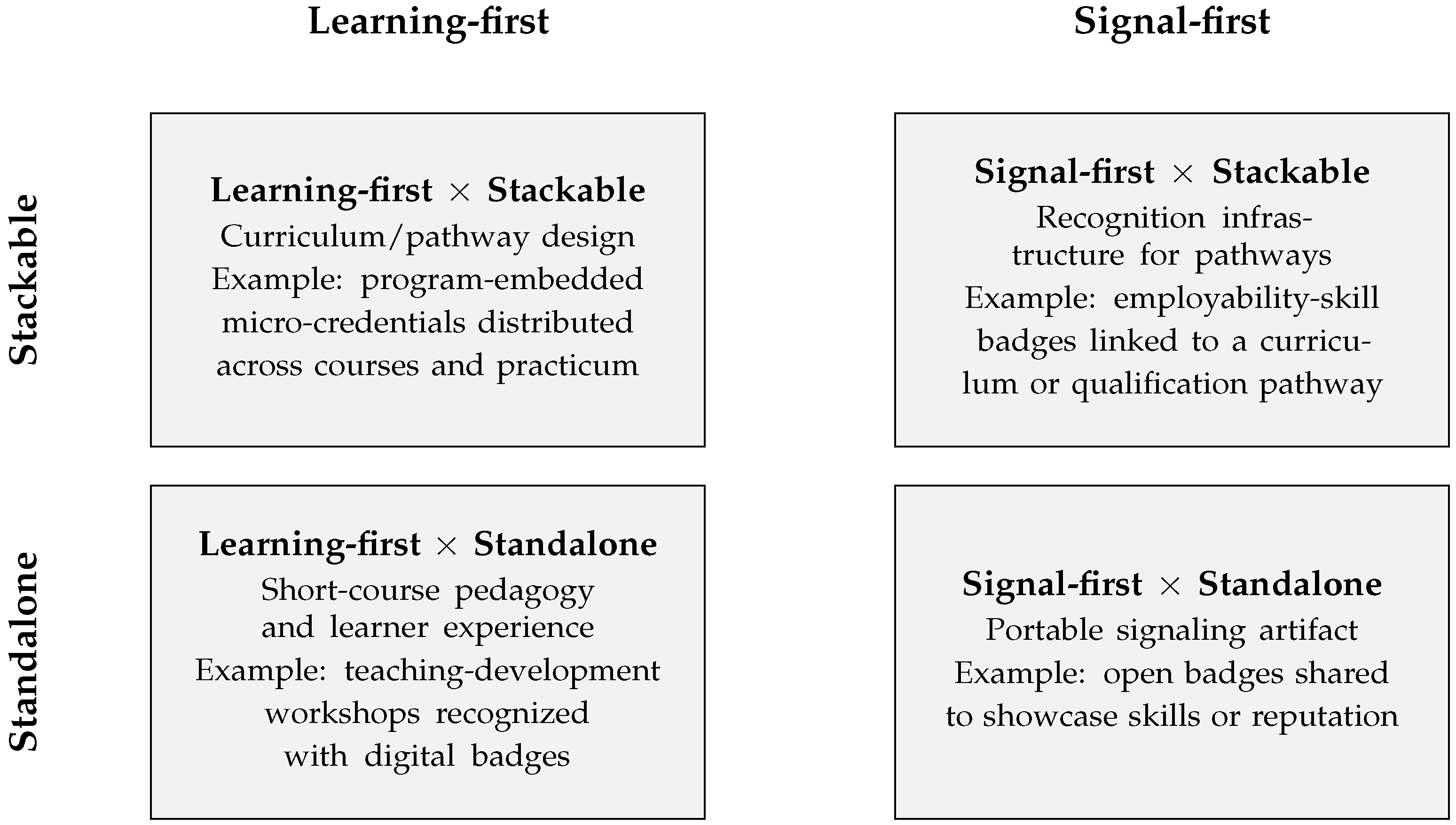
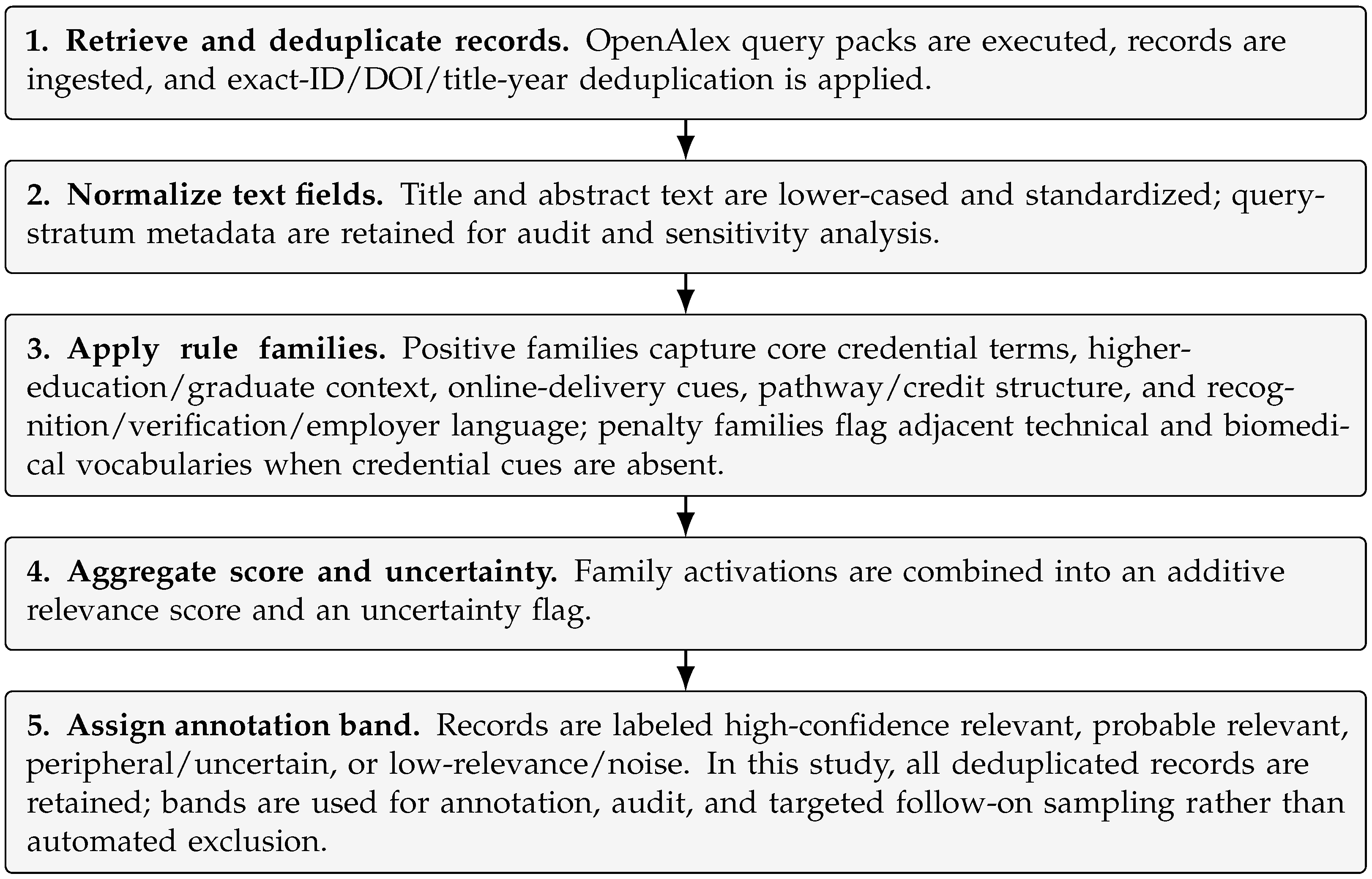
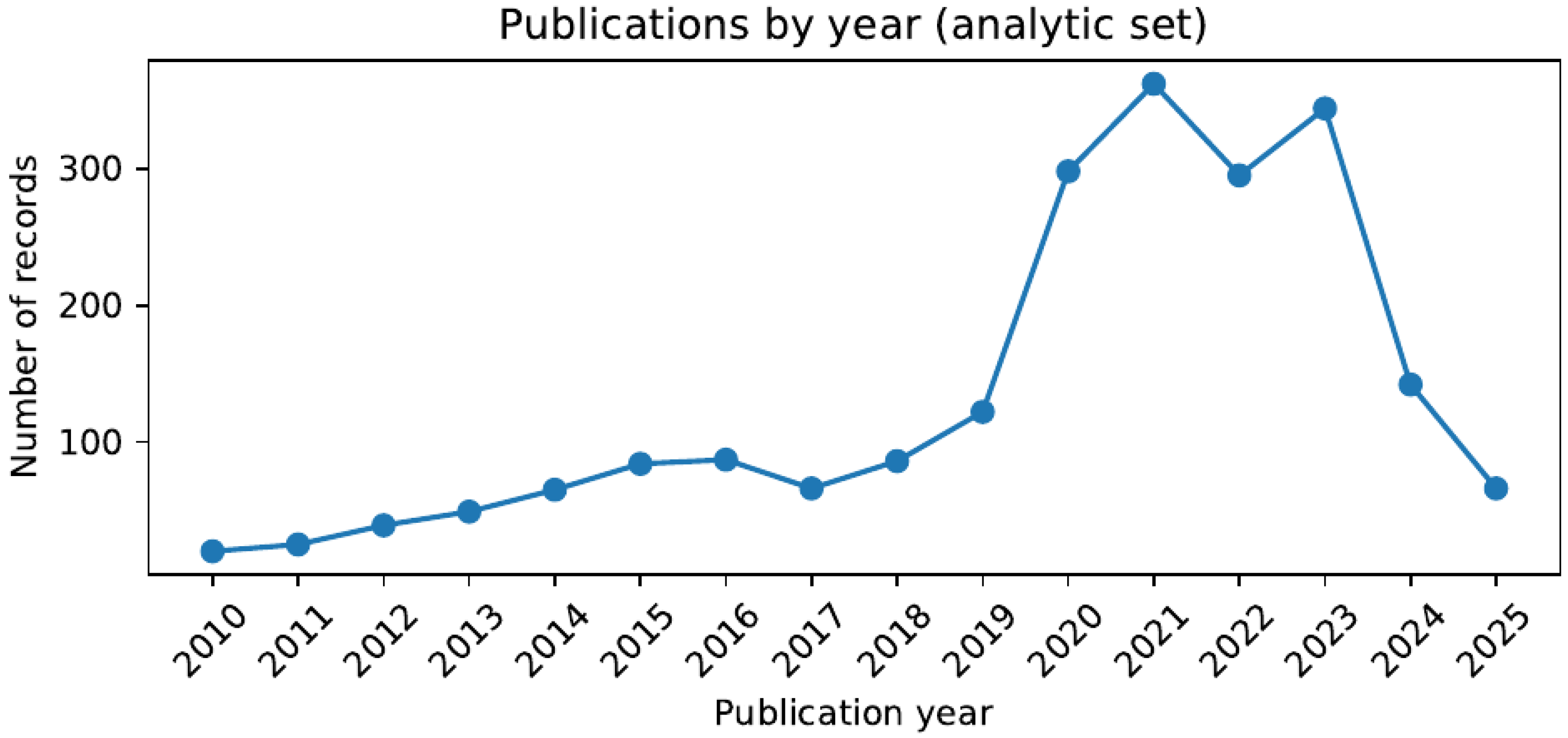
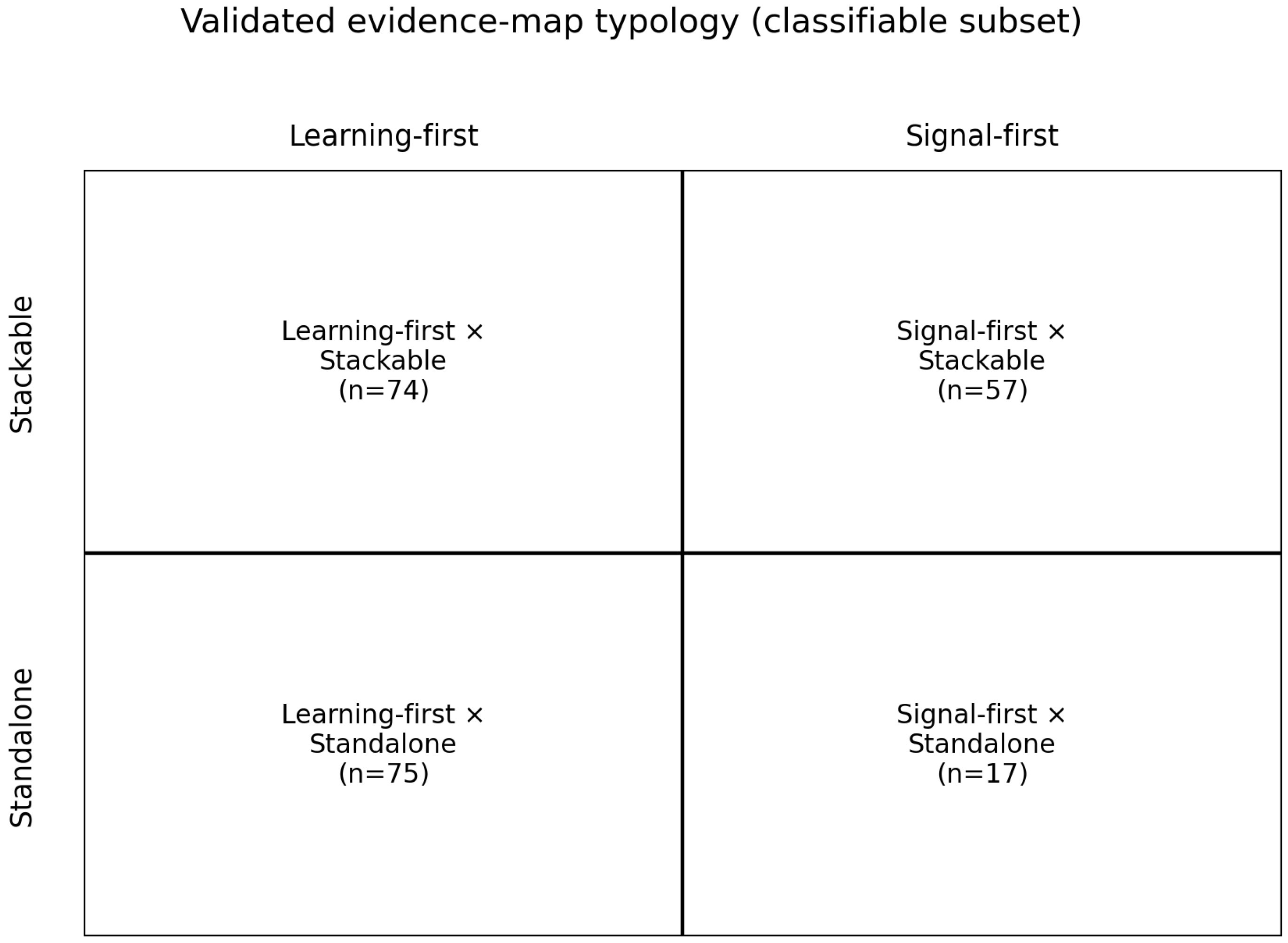
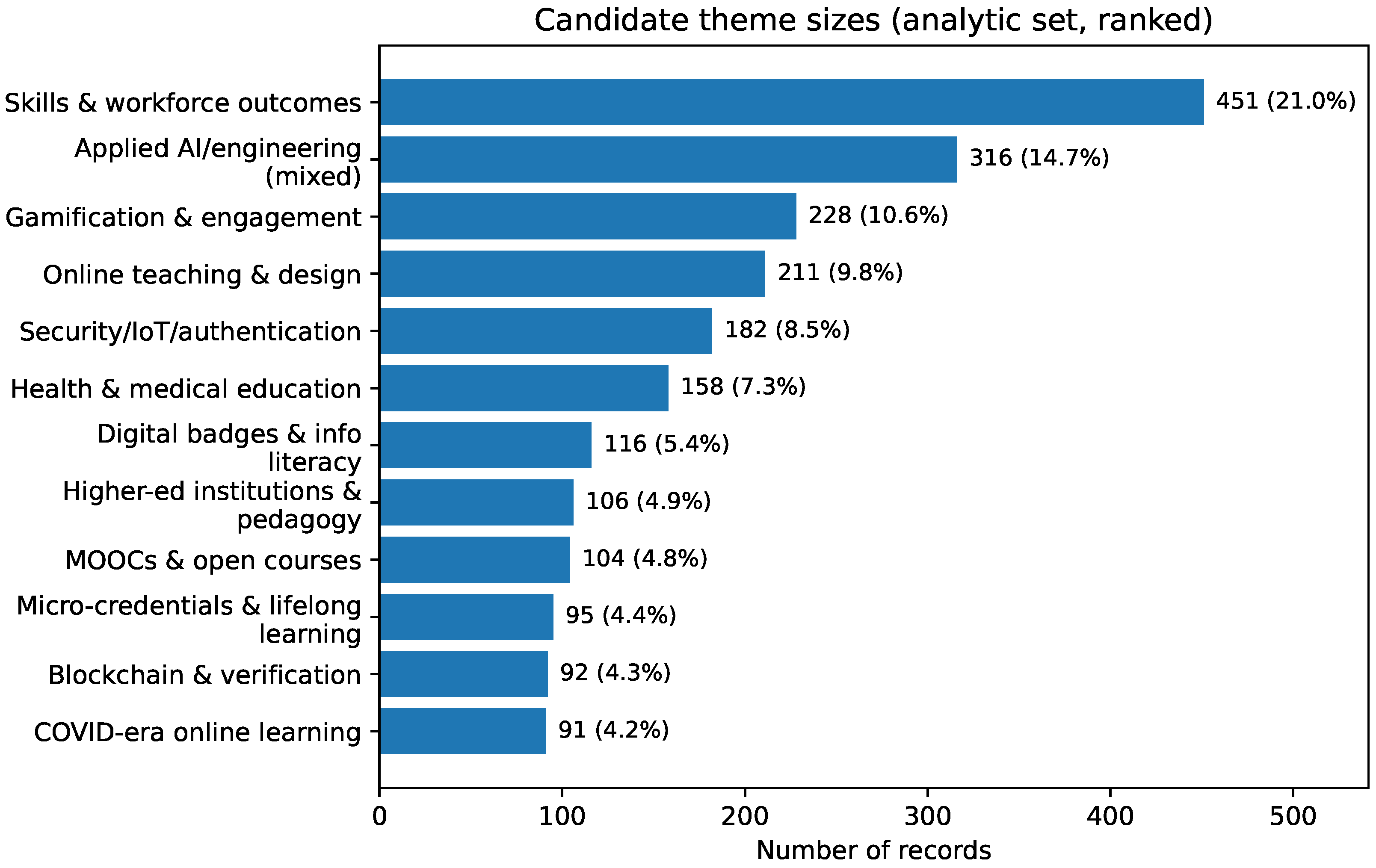
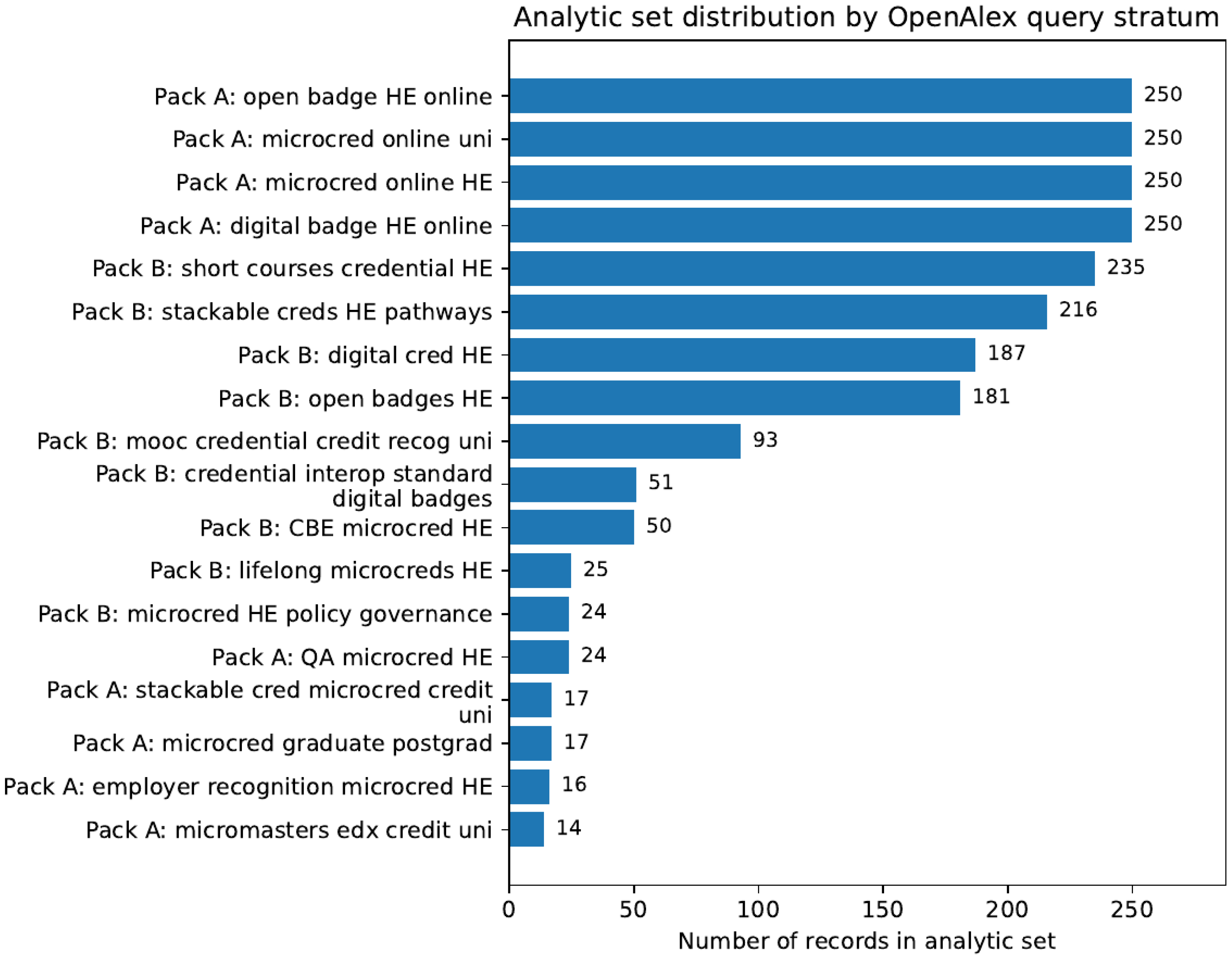
Online graduate micro-credentials are promoted both as flexible learning pathways for working professionals and as portable signals of capability for employers and professional communities. Yet, scholarship on these credentials is dispersed across policy, education, technology, and workforce literatures, making it difficult to see how the field is framed and where evidence is accumulating. This study uses OpenAlex to build an updateable evidence map of online graduate micro-credentialing. A total of 2535 records (2010–2026) were retrieved and deduplicated to 2150 works. The corpus was annotated with a transparent seedless triage step. A conservatively revised keyword typology was then applied to a typology-eligible subset, and topic modeling was used to surface candidate themes. Within the typology-eligible subset, 223 records were classifiable. Learning-first framings (66.8%) and stackable framings (58.7%) remained more common, and a 100-record hand-coded audit supported the revised rules (80.0% full-quadrant agreement). Large thematic clusters concern workforce/economic skills, engagement-oriented digital learning, and broad online teaching/learning, while smaller badge-related, infrastructure, and adjacent-domain clusters require cautious interpretation. The map points to a literature still weighted toward pathway design and implementation, but typology validation also indicates that structural framing is more mixed than the earlier always-assigned counts suggested. By making the search space and annotation logic transparent, this study provides a rerunnable baseline for cumulative qualitative synthesis and a clearer agenda for future research on how online graduate micro-credentials function as both learning experiences and credential signals.
Keywords: micro-credentials; online learning; graduate education; evidence mapping; OpenAlex; weak supervision; topic modeling micro-credentials; online learning; graduate education; evidence mapping; OpenAlex; weak supervision; topic modeling