


Abstract
Cricket meal is increasingly considered a sustainable alternative to fishmeal in aquaculture, although its performance depends on the effective use of nutritional and functional components. This review examines evidence on including cricket meal in aquafeeds and the factors that may limit or enhance its application. Species-dependent responses to fishmeal replacement are discussed in relation to polyunsaturated fatty acid imbalance and chitin content. Strategies to improve lipid functionality include defatting, enriching the cricket’s rearing substrate to promote ω-3 fatty acid bioaccumulation, microbial fatty acid biotransformation, and enzymatic interesterification. The review also evaluates chitin and chitosan as health-promoting compounds with prebiotic, immunomodulatory, antimicrobial, antioxidant, and water-quality-related functions. Finally, fermentation and enzymatic hydrolysis are considered as tools to improve nutrient bioavailability. Overall, the integrated utilization of cricket meal components may increase its nutritional value, functional performance, and suitability as an aquaculture feed ingredient.
1. Introduction
Global demand for fishery products continues to rise, and aquaculture plays a central role in meeting it. Between 2021 and 2024, total production increased from 171 to 235 million tons, with aquaculture accounting for 60% [1]. Because current fishmeal production cannot satisfy aquaculture’s growing protein requirements, plant- and insect-based meals have been proposed as alternative ingredients. Among insects, crickets (Orthoptera) and cricket meals stand out because of their high protein content, which ranges from 50% to 70% of dry weight (Table 1); their favorable amino acid profile; and their rapid reproductive cycles [2,3,4,5]. Their use in aquafeeds has been approved by European Union Regulation 2017/893, and their effects as feed ingredients for aquatic organisms have previously been reviewed [6,7]. Cricket meal production also has a substantially lower environmental impact than conventional poultry and livestock production [8,9]. The combination of rapid reproductive cycles and low environmental impact may therefore support continuous and sustainable production. In addition, agricultural by-products can be used as rearing substrates for crickets [10,11,12], creating a circular-economy pathway in which agricultural production supports aquaculture. Despite these advantages, chitin in the cricket exoskeleton can limit the inclusion of cricket meal in aquafeeds. Chitin is widely regarded as an antinutritional factor because it can bind nutrients and impair their digestibility, bioavailability, and subsequent utilization [13,14]. The amount of dietary chitin that a species can digest depends largely on its gut physiology and on the presence of chitin-hydrolyzing enzymes [15,16]. Nevertheless, low dietary chitin levels may stimulate immune function and modulate the gut microbiota, thereby exerting a prebiotic effect [17,18].
Table 1.
Nutritional composition of two cricket species commonly used for meal production compared with fishmeal and soybean meal, the principal protein sources used in aquafeeds (Adapted from Fraijo-Valenzuela et al. [7]).
This review addresses the knowledge gap concerning the potential of crickets and their components as functional aquafeed ingredients beyond their nutritional value. It places particular emphasis on chitin’s dual role as both a constraint on nutrient utilization and a potential source of health benefits. The review also examines how lipid modification, chitin and chitosan recovery, fermentation, and enzymatic hydrolysis may improve the utilization of cricket-derived materials.
Literature search and selection: Relevant publications were identified through searches of ScienceDirect, MDPI, Wiley Online Library, Springer Nature, and Frontiers, supplemented by screening the reference lists of pertinent reviews and primary studies. Search terms combined cricket-related descriptors, including “Acheta domesticus” and “cricket,” with aquaculture-related terms such as “aquaculture,” “fishmeal replacement,” “fatty acid,” “chitin,” “chitosan,” “fermentation,” and “protein hydrolysate.” Primary studies were prioritized when they reported the experimental species and life stage, ingredient-processing method, dietary dose or inclusion level, experimental duration, and measurable nutritional, productive, physiological, or health outcomes. Evidence was classified according to whether it was obtained from cricket-based aquaculture trials, cricket-derived materials evaluated in vitro or in terrestrial animals, or studies of other insect ingredients used to support prospective applications. The last research date was October 14, 2026, in accordance with the requested modifications. No restrictions were applied regarding publication period or language; this work is described as a narrative review.
2. Crickets in Aquaculture
The capacity to utilize cricket meal varies among aquaculture species and is influenced by chitin content, gut chitinase activity, feeding ecology, ingredient processing, and overall diet formulation [21,30]. Meeting species- and life-stage-specific nutrient requirements remains essential for maintaining growth and feed efficiency (Table 2). Fraijo-Valenzuela et al. [30] emphasized that cricket-based feeds must be balanced with complementary ingredients to achieve an appropriate protein content and amino acid profile while limiting anti-nutritional effects. They also reported that cricket meal may mitigate some adverse responses associated with high soybean-meal inclusion by supporting immune-related responses. Recent studies have evaluated the partial or complete replacement of fishmeal with cricket meal in feeds for fish and crustaceans (Table 3).
Furthermore, insect chitin can act as a prebiotic, promoting the richness and diversity of beneficial intestinal microbiota while simultaneously inhibiting pathogenic bacterial growth [31]. The quality of cricket meal can be improved through several biotechnological processes, including enzymatic hydrolysis, fermentation, defatting, probiotic supplementation, and ultrasound treatment, which may enhance protein digestibility and solubility and improve functional and sensory properties [16,32,33,34,35].
Crickets have a high fat content and an ω-3/ω-6 fatty acid profile characterized by deficiencies in eicosapentaenoic acid (EPA) and docosahexaenoic acid (DHA). Their high fat content increases the susceptibility of the resulting cricket meal to lipid peroxidation, thereby compromising its quality and reducing its shelf life [36,37]. The lipid content of cricket meal should be considered when formulating aquaculture feeds to prevent excessive dietary fat intake. In Nile tilapia (Oreochromis niloticus), high-fat diets can alter hepatic lipid metabolism and increase serum triglyceride and cholesterol concentrations, accompanied by biochemical indicators of liver damage [38]. Furthermore, deficiencies in EPA and DHA compromise nutritional quality and adversely affect the development of aquatic organisms [39].
Pre-processing methods can be applied to enhance the quality of cricket-derived products. In particular, initial blanching can reduce microbial contamination and inactivate enzymes that contribute to oxidative deterioration, potentially limiting lipid peroxidation during subsequent processing and storage [40]. Studies have reported the effect of defatting insects and its positive impact when used as a replacement in aquaculture diets; however, these studies utilize insects such as black soldier fly (Hermetia illucens) larvae and silkworm (Bombyx mori) pupae [41,42]. These studies may inform hypotheses, but they do not demonstrate that cricket meal itself produces the same response or that defatting cricket meal necessarily improves health.
Except for defatting, most of these approaches have not been evaluated extensively in cricket meal intended for aquaculture. Evidence is available for fermented cricket products and cricket-derived hydrolysates in food or terrestrial-animal applications, as well as for comparable processes applied to other insect meals. These findings support hypothesis generation but do not establish efficacy in aquatic organisms. The effects of fermentation, enzymatic hydrolysis, probiotic supplementation, and ultrasound treatment on the physicochemical properties, nutrient availability, palatability, safety, and biological performance of cricket-based aquafeeds should therefore be evaluated in controlled processing studies and feeding trials.
Table 2.
Nutritional requirements of the most widely cultured aquaculture species.
Table 3.
Analysis of partial or total replacement of fishmeal with cricket meals in an aquaculture feeding trial.
3. Lipid Functionality in Crickets
3.1. The ω-3/ω-6 Ratio in Crickets
Fish oil and fishmeal provide long-chain ω-3 polyunsaturated fatty acids, particularly eicosapentaenoic acid (EPA; 20:5ω-3) and docosahexaenoic acid (DHA; 22:6ω-3), which support growth, health, and fillet quality [39]. The capacity to synthesize EPA and DHA from shorter-chain precursors varies among fish species and depends on their complement and expression of elongase and desaturase enzymes. Many marine species have limited biosynthetic capacity and therefore require dietary EPA and DHA. In contrast, several freshwater species can convert α-linolenic acid (α-LNA) to longer-chain ω-3 fatty acids [60,61]. Consequently, aquafeed formulations should account for species-specific fatty acid requirements and their metabolic capacity to synthesize long-chain ω-3 fatty acids rather than relying solely on habitat-based classifications.
Crickets and their derived meals contain primarily ω-6 and ω-3 polyunsaturated, saturated, and monounsaturated fatty acids [39,62]. House crickets (Acheta domesticus) contain trace amounts of EPA. Table 1 shows that the ω-3/ω-6 ratio in crickets is very low, at just 0.03 (g/100 g). The α-linolenic acid (ALA; 18:3 ω-3) content of crickets depends on dietary intake and is generally low. Furthermore, linoleic acid (LA) can account for up to 40% of the total fatty acid profile of cricket meal [63]. In aquaculture, LA supports energy production, growth, and liver health [39,64]. However, partially replacing fishmeal with cricket meal increases ω-6 and decreases the proportion of ω-3 supplied by fishmeal [64]. Therefore, sustainable strategies are needed to modulate the ω-3/ω-6 ratio in cricket meal to enhance basal feed nutritional quality and impact fillet quality, shelf life, and the health and metabolism of aquatic organisms [65,66].
3.2. Defatting Process
The high lipid content of cricket meal may contribute to hepatic damage, including fatty liver. Moreover, it may reduce feed digestibility, nutrient utilization, and nutrient retention in aquatic organisms [56]. A previous defat process for Gryllus bimaculatus meal allowed for partial and total replacement of fishmeal in Ictalurus punctatus diets without adversely affecting growth, with positive effects on whole-body protein composition and a positive shift in gut microbiota [67].
Cricket lipid content ranges from 4.30% to 33.4%, depending on the species and processing method [68]. Defatting cricket meal could reduce its lipid content, increase protein availability, and improve feed quality. Nevertheless, a substantial research gap remains because studies of defatted insect meal have focused mainly on species other than crickets. Defatting should be evaluated directly in cricket meal to determine whether it can improve the quality and acceptance of cricket-based aquafeeds.
Karapanagiotidis et al. [69] replaced fishmeal with defatted black soldier fly (Hermetia illucens) meal in feeds for gilthead seabream (Sparus aurata). Compared with full-fat black soldier fly meal, the defatted ingredient increased muscle and whole-body protein content and improved feed acceptability and palatability. Defatted insect meals may also reduce hepatic lipid deposition, thereby reducing the risk of hepatosis and fatty liver and potentially improving fillet quality and shelf life by limiting lipid peroxidation [65,70]. In ornamental swordtail (Xiphophorus helleri), defatted house cricket (Acheta domesticus) meal prevented fatty liver relative to a fishmeal-based feed, indicating a potential benefit for hepatic health [57]. House cricket meal is also rich in LA [7]; therefore, defatting could produce both a protein-enriched meal and an LA-rich oil fraction. Because several freshwater fish use LA as a precursor for long-chain PUFAs [70], recovering both fractions may support the integral utilization of cricket biomass in aquafeed formulations.
3.3. Fatty Acid Bioaccumulation
The cricket fatty acid composition varies with species, developmental stage, rearing substrate, and processing conditions [64]. During the rearing stage, the inclusion of specific dietary ingredients can promote the accumulation of target compounds in cricket body composition [71]. This approach has been widely investigated in the black soldier fly (Hermetia illucens), where the use of oils and residues rich in EPA and DHA has been shown to enhance the content of long-chain ω-3 fatty acids [72,73]. A similar strategy could be applied to crickets by incorporating ω-3-rich ingredients into their diets during rearing to modulate their fatty acid profile. Accordingly, Ferreira et al. [73] fed house crickets (Acheta domesticus) diets containing 5% or 10% DHA derived from microalgal biomass and successfully increased the ω-3 content of the resulting cricket biomass. Similarly, macroalgae such as Ascophyllum nodosum have been shown to enrich house cricket meal with EPA and DHA [74]. This approach resembles the dietary route through which marine fish obtain EPA and DHA; however, it does not necessarily result in accumulation levels comparable to those found in fishmeal.
Bioaccumulation may contribute not only to the deposition of dietary ω-3 fatty acids but also to the accumulation of metabolic precursors and regulatory compounds that support endogenous EPA and DHA biosynthesis in aquaculture species. The capacity to convert α-LNA into long-chain ω-3 polyunsaturated fatty acids varies among aquaculture species. Some freshwater and diadromous fishes, including salmonids, retain substantial biosynthetic capacity, whereas many marine fishes exhibit more limited conversion and rely more heavily on dietary ω-3 fatty acids [75]. Plant oils rich in α-LNA may upregulate hepatic elongase and Δ6-desaturase expression and support endogenous fatty acid bioconversion [76].
However, the magnitude of this response does not necessarily maintain tissue EPA and DHA at nutritionally adequate levels. Moreover, the incorporation of fatty acid precursors into cricket diets may enhance the nutritional value of insect biomass for aquaculture, Oonincx et al. [77] reported that enriching cricket-rearing substrates with flaxseed oil containing 57% α-LNA increased ω-3 content in the resulting cricket biomass. These findings suggest that the fatty acid composition of crickets can be modified to enhance their potential as ingredients in aquafeeds. Although the nutritional benefits for aquaculture species depend on their capacity to synthesize EPA and DHA.
3.4. Fatty Acid Biotransformation
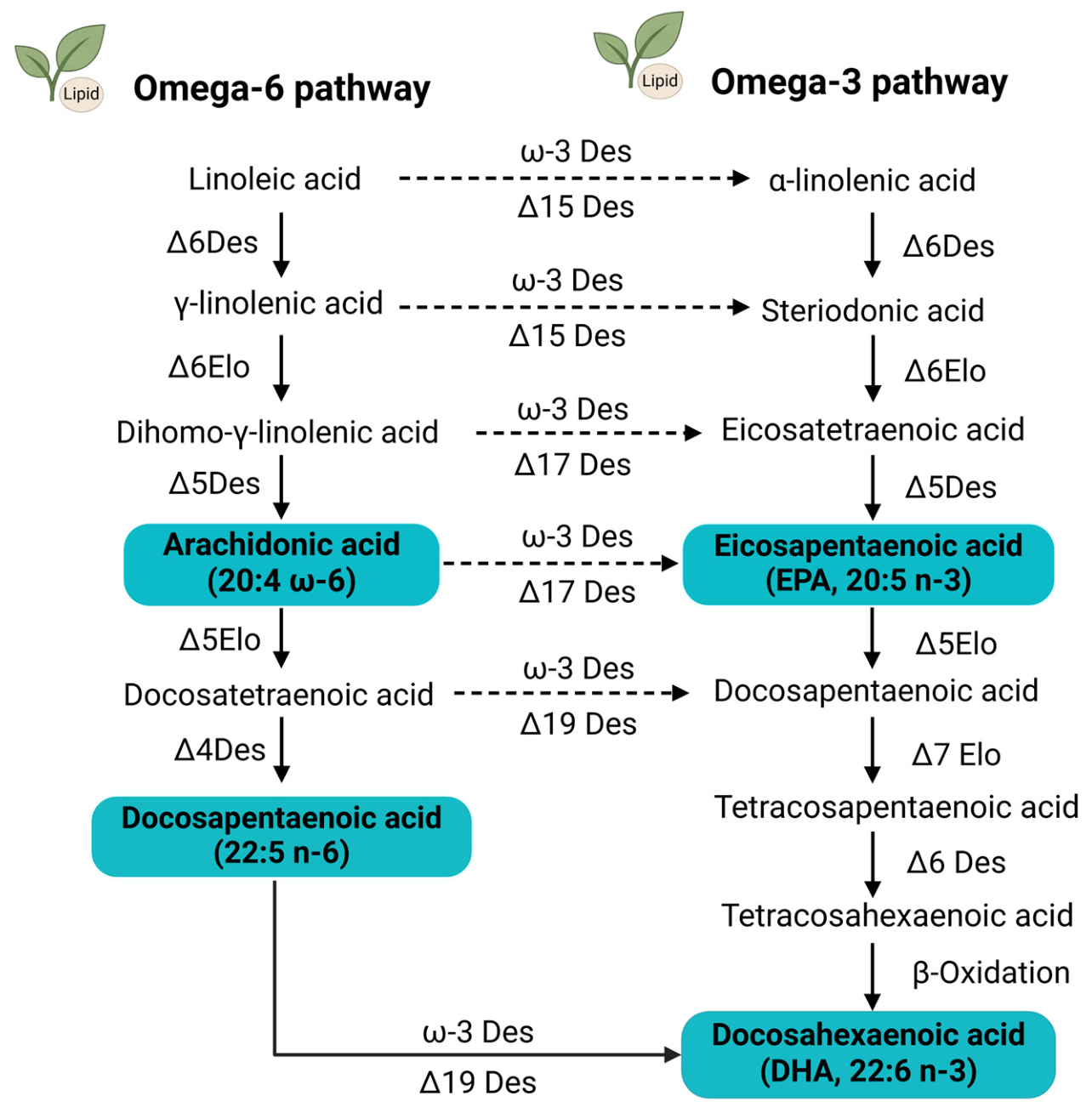
EPA and DHA biosynthesis begins with α-LNA. α-LNA is first converted to stearidonic acid (SDA) through desaturation reactions mediated by Δ6-desaturases. Subsequent desaturation and elongation reactions, catalyzed by desaturases and very-long-chain fatty acid elongases (ELOVLs), produce EPA, docosapentaenoic acid (DPA), DHA, and other ω-3 polyunsaturated fatty acids. ELOVLs contributes to the elongation of intermediate fatty acids, while successive desaturation steps convert LNA-derived intermediates to EPA and subsequently to DHA. Alternatively, EPA can be converted to DHA through the Sprecher pathway, which involves sequential chain elongation, Δ6-desaturation, and β-oxidation. Together, these enzymatic reactions enable the endogenous synthesis of long-chain ω-3 polyunsaturated fatty acids from dietary α-LNA [78].
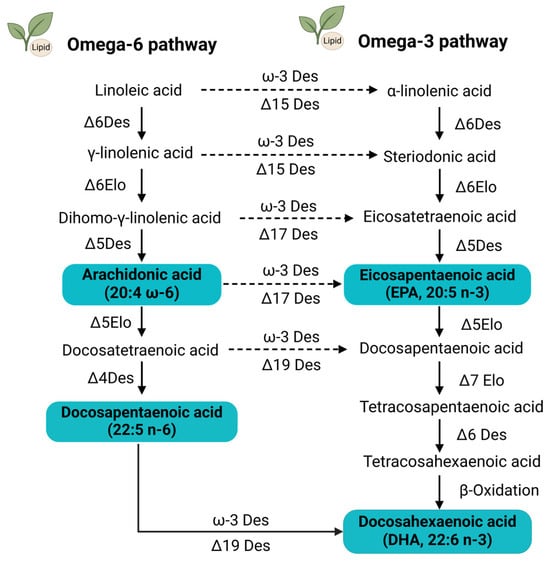
Biotechnological approaches could be used to convert the LA present in crickets into EPA and DHA or to produce lipid fractions enriched in these fatty acids. Figure 1 summarizes the aerobic pathways involved in in ω-3 and ω-6 fatty acid bioconversion and the associated enzymes. It also depicts the conversion of arachidonic acid (ARA) to EPA by ω-3 desaturases, a reaction that is not known to occur naturally in crickets or fish. In contrast, some marine bacteria, microalgae, and fungi have enzymes that can catalyze this conversion. Microalgal desaturase genes have been expressed heterologously in microorganisms to support ARA and EPA production [79], and external promoters have been used to regulate ω-3 desaturase expression [80]. These findings support developing microbial production systems for EPA- and DHA-rich ingredients and their application to cricket enrichment or aquafeed formulation. However, it remains a prospective strategy that requires validation of conversion efficiency, product stability, safety, sustainability, and nutritional efficacy.
Figure 1.
Aerobic ω-6/ω-3 pathways (Des: desaturase) (Elo: elongase).
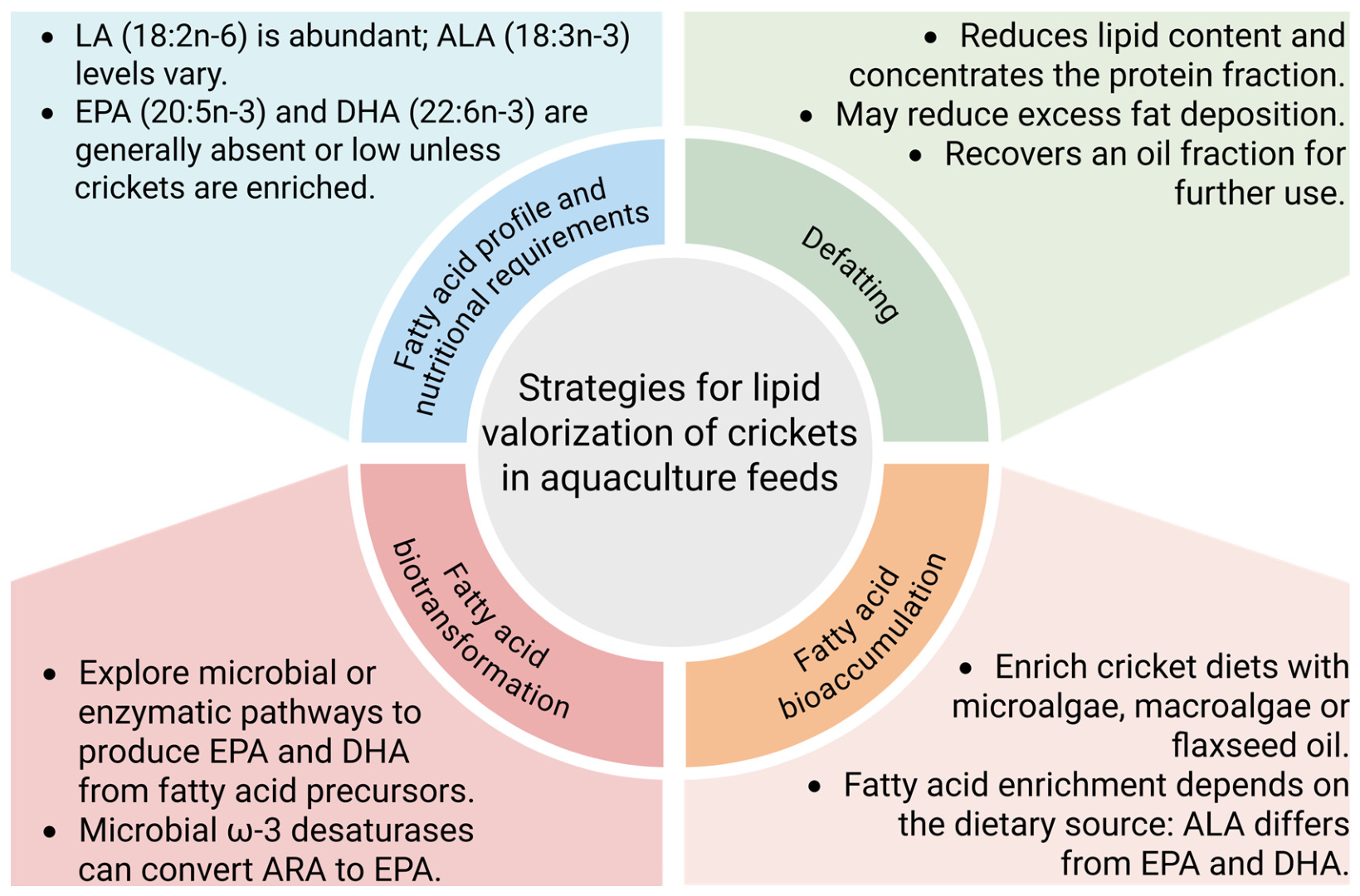
The positional distribution of fatty acids in cricket triglycerides should also be examined because it influences fatty acid bioavailability in aquafeeds. In fish, the sn-2 position of triglycerides exhibits greater stability and facilitates fatty acid absorption [81]. During digestion, fatty acids at the sn-1 and sn-3 positions are preferentially hydrolyzed, whereas the fatty acid at the sn-2 position remains bound to glycerol and forms 2-monoacylglycerol, often containing DHA or EPA [82]. Therefore, the sn-2 position may facilitate fatty acid absorption and potentially influence the assimilation of ω-3 fatty acids from cricket-derived lipids in aquafeeds [83]. Cricket triglycerides are primarily composed of glycerol esterified with oleic, palmitic, linoleic, and stearic acids, whereas ω-3 polyunsaturated fatty acids such as α-linolenic acid are associated with phospholipids [84]. Enzymatic interesterification using fungal or yeast lipases could potentially redistribute α-linolenic acid among the sn-1, sn-2, and sn-3 positions and place them in positions more effectively utilized by fish [85,86]. This approach may improve fatty acid assimilation, but it remains an underexplored application of lipidomics in aquaculture. Figure 2 presents the proposed strategies for the valorization of cricket-derived lipids and their potential applications in aquaculture.
Figure 2.
Strategies for lipid valorization of crickets in aquaculture feeds.
4. Chitin and Chitosan as Health-Promoting Agents
Chitin is a polysaccharide composed of N-acetyl-D-glucosamine units. It is present in arthropod exoskeletons, including those of crabs, shrimp, and insects, as well as in the cell walls of fungi and yeasts [87,88]. The exoskeleton may account for 10% to 15% of insect body mass, making its inclusion in aquafeeds nutritionally relevant [16,89]. Chitin can modulate the gut microbiota but may impair digestibility at high dietary concentrations [90]. Its interaction with the intestinal microbiota may also involve chitinase secretion and shifts in microbial community composition [91]. In juvenile Chinese mitten crab (Eriocheir sinensis), an eight-week feeding trial evaluated crab-shell chitin with a reported purity of 99.9%. Dietary inclusion levels of 1.4% and 2.1% improved growth performance, feed conversion ratio, antioxidant status, and several nonspecific immune parameters relative to the control, while the 2.1% treatment also improved selected indicators of intestinal health [92]. In rainbow trout (Oncorhynchus mykiss), a ten-week feeding trial showed that dietary chitin levels of up to 3% did not impair growth performance or apparent nutrient digestibility, whereas 4.5% negatively affected these responses [93]. In another study, chitin supplementation at 2–10% in tiger shrimp (Penaeus monodon) diets improved performance and nutrient utilization [94]. Together, these findings show that a tolerated dose is not necessarily an effective dose and that optimal inclusion levels must be established for each species and variable responses.
Chitin can positively affect health and productivity; therefore, controlling its concentration in cricket meal is essential. Deacetylation converts chitin into chitosan, a derivative that has been extensively studied for its antibacterial activity [95]. Chitosan also exhibits antimicrobial, antioxidant, biocompatible, and functional properties [96], generating considerable interest in aquaculture. Numerous studies have reported beneficial effects in fish and crustaceans [97], including enhanced immunity and resistance to Aeromonas hydrophila infection in common carp (Cyprinus carpio) and Nile tilapia (Oreochromis niloticus) [98,99].
Obtaining chitosan involves three steps: demineralization, deproteinization, and deacetylation. The first two steps of chitosan extraction focus on extracting pure chitin from raw material, typically crustacean exoskeletons [100]. Like crustaceans, cricket exoskeletons are made of chitin; however, because they have lower mineral content, chitin extraction is easier [101,102]. Chitin extraction yields of approximately 4–8% and chitosan yields of 2–6% have been reported for house crickets [103]. Likewise, chitosan obtained from crickets can achieve deacetylation levels of around 72%, 76%, and 80% through concentrated alkaline treatments [104]. Furthermore, chitosan derived from the house cricket (Acheta domesticus) has demonstrated antimicrobial activity in in vitro assays. Malm and Liceaga [105] reported that, at 0.50 mg/mL and with a degree of deacetylation close to 80%, this biopolymer inhibited approximately 90% of Escherichia coli growth. Inhibitory activity decreased as the degree of deacetylation was reduced, highlighting the importance of this property for antimicrobial efficacy.
Chitosan’s functional characteristics depend on its degree of deacetylation, which generally remains above 60% [100,106]. The extraction process can alter the degree of deacetylation and, in turn, influence antioxidant and antimicrobial activity [99]. Dietary dosage is also a key consideration [107]. Reported optimal levels range from 1 to 50 g/kg, depending on the target organism; for example, optimal doses of 10–40 g/kg have been reported for mud crab (Scylla paramamosain), whereas 1–2 g/kg has been reported for white shrimp (Penaeus vannamei) [108]. Therefore, further research should evaluate cricket-derived chitosan in aquaculture to establish appropriate dosages and species-specific effects.
When applied directly to water, chitosan functions as a coagulant and flocculant, promoting the aggregation and removal of suspended particles through charge neutralization and polymer bridging. Depending on water composition, chitosan characteristics, dosage, and treatment pH, this process can reduce turbidity and suspended solids, thereby improving water clarity and facilitating the removal of particulate organic matter [109,110]. When incorporated into aquafeeds, chitosan may indirectly affect water quality by modifying nutrient utilization, intestinal function, and waste release into the culture system. In African catfish (Clarias gariepinus), dietary chitosan supplementation was associated with increased water pH and reduced ammonium concentrations [111]. In Japanese flounder (Paralichthys olivaceus), feeding chitosan-coated pellets reduced chemical oxygen demand and suspended solids compared with uncoated feed [112]. Decreases in pH or conductivity should not automatically be interpreted as beneficial because their significance depends on the initial water chemistry and the tolerance range of the cultured species. Similarly, an increase in pH is beneficial only when it moves the system toward an appropriate range without increasing ammonia-related risks.
While cricket meal has been evaluated in aquaculture, research on cricket-derived chitosan in aquatic organisms remains scarce. Most available studies examine the production and physicochemical properties of cricket chitosan or its use as a functional ingredient in terrestrial-animal models, including poultry [113,114]. Biotechnological processing may help to regulate the chitin content of cricket meal and recover chitosan as a separate functional fraction [115]. However, proposed benefits for growth, feed utilization, antioxidant capacity, immunity, gut health, and resistance to stress or disease must be confirmed specifically for cricket-derived chitin and chitosan in aquatic species. The environmental performance of these processes should also be evaluated, not assumed.
5. Fermentation and Enzymatic Hydrolysis in Cricket Meals
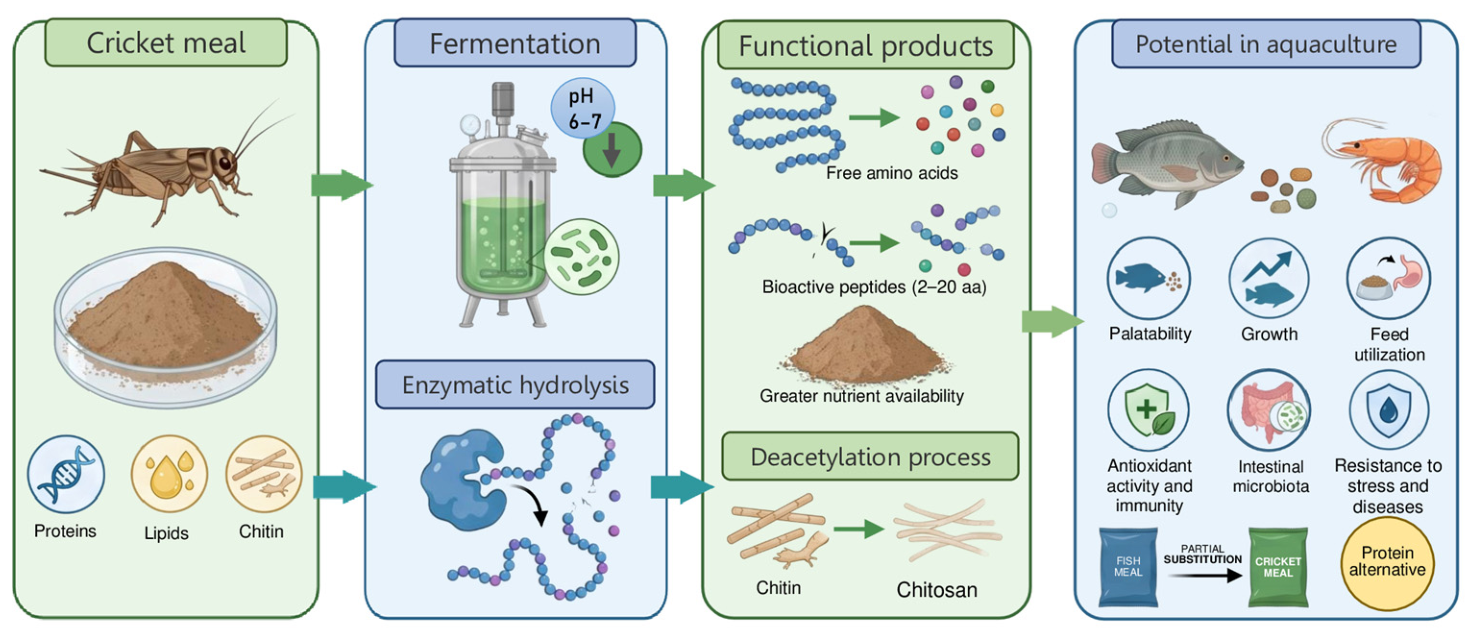
To obtain chitin, demineralization removes inorganic minerals, while deproteinization removes associated proteins through chemical, enzymatic, or microbial treatments. Subsequently, deacetylation converts chitin into chitosan by removing acetyl groups from its structure. Although fermentation and enzymatic hydrolysis can facilitate deproteinization and chitin recovery, neither process alone necessarily produces chitosan, which requires a specific deacetylation step [115]. During fermentation, fatty acids transform, reducing PUFAs; protein hydrolysis increases levels of free amino acids such as glutamic acid, serine, threonine, leucine, isoleucine, and methionine, which act as attractants and enhance the feed’s attractiveness [116,117]. Furthermore, fermentation changes pH and flavor, increasing the feed’s palatability [118].
As of the publication of this review, evidence on using fermented or hydrolyzed cricket meal in aquatic organisms remains limited, although studies involving black soldier fly larvae have reported improvements in feed palatability, growth, feed utilization, survival, and immune response [119,120].
Mauro-Félix et al. [121] evaluated acid silage derived from Acheta domesticus in diets for Penaeus vannamei through two experiments with contrasting outcomes. In the first experiment, replacing cricket meal with acid cricket silage significantly improved apparent dry matter digestibility and revealed a significant trend toward increased growth as the proportion of silage increased. In the second experiment, increasing the replacement of fishmeal with acid cricket silage reduced overall shrimp performance, although digestibility remained above 70%. Taken together, these findings indicate that acid ensiling can improve cricket digestibility, but this benefit does not necessarily translate into improved performance when the silage is used to replace fishmeal. Therefore, its application requires determining appropriate dietary inclusion levels and assessing the nutritional balance of the resulting diets.
Studies on terrestrial animals have also reported palatability and antimicrobial potential [122]. In summary, fermentation and enzymatic hydrolysis enhance nutrient bioavailability and confer bioactive properties by releasing antimicrobial and immunostimulatory components. One outcome of enzymatic hydrolysis and fermentation is the release of peptides from protein breakdown, some of which exhibit functional and biological activities [123]. However, the evidence for these activities must be distinguished according to the experimental model and protein source. In aquatic organisms, dietary supplementation with fish protein hydrolysates has been associated with improvements in growth, nutrient utilization efficiency, antioxidant and immune parameters, and gut microbiota in largemouth bass (Micropterus salmoides) [124]. These findings support the potential application of protein hydrolysates in aquaculture but cannot be directly extrapolated to cricket-derived products. In insects, hydrolysates obtained from the two-spotted cricket (Gryllus bimaculatus) have demonstrated bioactive properties in in vitro assays [125]. Similarly, peptides derived from house cricket (Acheta domesticus) proteins have exhibited antioxidant activity and functional properties, including solubility, water absorption, and stability [123,126]. Low-molecular-weight peptides isolated from the two-spotted cricket have also shown antioxidant activity, free radical scavenging capacity, and metal-chelating properties [127].
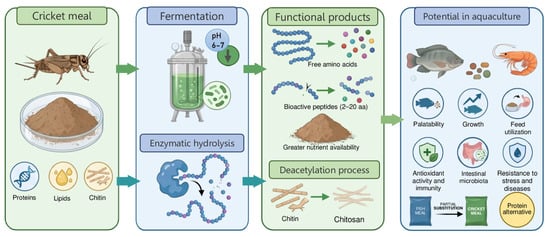
These findings indicate that cricket protein hydrolysates may provide functional benefits in aquaculture by improving nutritional value and potentially supporting animal health. However, most demonstrated effects remain limited to biochemical and in vitro evaluations, and their efficacy in aquatic organisms must be confirmed through controlled feeding trials. Figure 3 presents the functional valorization of cricket meal through fermentation and enzymatic hydrolysis for aquaculture applications.
Figure 3.
Functional valorization of cricket meal through fermentation and enzymatic hydrolysis for aquaculture applications.
6. Conclusions
This review highlights the potential for the integral utilization of cricket meal through the recovery and application of its main components, either individually or in combination. Protein recovery through meal processing or hydrolysis, lipid extraction for oil recovery, and chitin isolation followed by deacetylation to obtain chitosan could be integrated into a sequential biorefinery approach. Defatting could yield a lipid fraction for further characterization and potential use. In contrast, the remaining solid fraction could be processed to recover proteins and subsequently isolate chitin from the exoskeletal material. However, the feasibility and optimal sequence of these operations depend on their effects on component quality, recovery yields, and compatibility among processing steps. In aquaculture, cricket-derived protein ingredients and hydrolysates may be useful in feed formulation.
In contrast, chitin and chitosan may serve as functional ingredients depending on their physicochemical properties and inclusion levels. The fatty acid profile of cricket oil and meal may also influence their nutritional suitability, and strategies such as defatting, dietary manipulation during cricket production, and fatty acid biotransformation could improve lipid quality. Nevertheless, further validation is needed to confirm the effectiveness and practical applicability of these strategies. Although integral cricket valorization may improve resource efficiency by generating multiple products from a single biomass, its sustainability and economic feasibility should not be assumed without evaluating processing yields, energy and water requirements, chemical inputs, waste generation, and production costs. Crickets and cricket meal therefore represent promising raw materials for multifunctional aquafeed ingredients. However, comparative process assessments and controlled feeding trials are still needed to determine whether integral utilization can improve aquaculture production, reduce dependence on fishmeal, and deliver environmental and economic benefits. Closing this gap between existing knowledge, available technologies, and practical implementation should be a priority for future research.
Author Contributions
O.R.A.-A., J.G.G.-C. and A.F.-V.: conceptualization, investigation, visualization, writing—original draft; L.Z.R.-A., L.M.D.-T. and P.G.-M.: methodology, validation, writing—review and editing; J.R.G.-G.: funding acquisition, project administration, supervision, validation, writing—review and editing. All authors have read and agreed to the published version of the manuscript.
Funding
This research was financed by SECIHTI through the Programa Investigadoras e Investigadores por México (project no. 1037) and the Instituto Tecnológico de Sonora through the Programa de Fomento y Apoyo a Proyectos de Investigación (PROFAPI No. 2026_104).
Institutional Review Board Statement
As this manuscript is a review and does not involve any research on animals or human subjects, ethical approval from an Institutional Review Board was not required.
Informed Consent Statement
Not applicable.
Data Availability Statement
No new data were created or analyzed in this study. Data sharing is not applicable to this article.
Acknowledgments
O.R.A.-A., J.G.G.-C. and A.F.-V. are grateful to SECIHTI for the scholarship support.
Conflicts of Interest
The authors declare no conflicts of interest.
Abbreviations
The following abbreviations are used in this manuscript:
| PUFA | Polyunsaturated fatty acid |
| MUFA | Monounsaturated fatty acids |
| EPA | Eicosapentaenoic acid |
| DHA | Docosahexaenoic acid |
References
- FAO. The State of World Fisheries and Aquaculture 2026; FAO: Rome, Italy, 2026. [Google Scholar]
- Yadav, S.; Kumar, S.; Batta, K.; Joia, S.; Bawa, Y.; Mishra, S.S.; Mehta, L.; Khatkar, P.; Ruliya, R.; Rustagi, S.; et al. A Comprehensive Overview of Edible Crickets: Nutritional Composition, Health Benefits, and Safety Considerations. Food Mater. Res. 2026, 6, e005. [Google Scholar] [CrossRef] [Scilit]
- Dossey, A.T. Insects and Their Chemical Weaponry: New Potential for Drug Discovery. Nat. Prod. Rep. 2010, 27, 1737–1757. [Google Scholar] [CrossRef] [Scilit] [PubMed]
- Jantzen da Silva Lucas, A.; Menegon de Oliveira, L.; da Rocha, M.; Prentice, C. Edible Insects: An Alternative of Nutritional, Functional and Bioactive Compounds. Food Chem. 2020, 311, 126022. [Google Scholar] [CrossRef] [Scilit] [PubMed]
- Kim, T.K.; Yong, H.I.; Chun, H.H.; Lee, M.A.; Kim, Y.B.; Choi, Y.S. Changes of Amino Acid Composition and Protein Technical Functionality of Edible Insects by Extracting Steps. J. Asia. Pac. Entomol. 2020, 23, 298–305. [Google Scholar] [CrossRef] [Scilit]
- European Commission. Regulation 2017/893/EC, 2017 Commission Regulation (EU) 2017/893—Of 24 May 2017—Amending Annexes I and IV to Regulation (EC) No 999/2001 of the European Parliament and of the Council and Annexes X, XIV and XV to Commission Regulation (EU) No 142/2011 as Regards the Provision. Off. J. Eur. Union 2017, 60, 92–116. [Google Scholar]
- Fraijo-Valenzuela, A.; Arias-Moscoso, J.L.; García-Pérez, O.D.; Rodriguez-Anaya, L.Z.; Gonzalez-Galaviz, J.R. The Biotechnological Potential of Crickets as a Sustainable Protein Source for Fishmeal Replacement in Aquafeed. BioTech 2024, 13, 51. [Google Scholar] [CrossRef] [Scilit] [PubMed]
- van Huis, A.; Oonincx, D.G.A.B. The Environmental Sustainability of Insects as Food and Feed. A Review. Agron. Sustain. Dev. 2017, 37, 43. [Google Scholar] [CrossRef] [Scilit]
- Oonincx, D.G.A.B.; van Itterbeeck, J.; Heetkamp, M.J.W.; van den Brand, H.; van Loon, J.J.A.; van Huis, A. An Exploration on Greenhouse Gas and Ammonia Production by Insect Species Suitable for Animal or Human Consumption. PLoS ONE 2010, 5, e14445. [Google Scholar] [CrossRef] [Scilit] [PubMed]
- Farkas, V.I.; Máté, M.; Takács, K.; Jánosi, A. The House Cricket (Acheta domesticus Linnaeus) in Food Industry: Farming, Technological Challenges, and Sustainability Considerations. Appl. Sci. 2025, 15, 9494. [Google Scholar] [CrossRef] [Scilit]
- Pomari Fernandes, A.; Cazarolli, L.H.; Pigatto, T.; Trento, E.; Retcheski, M.C.; Quast, L.B.; Romão, S.; Tormen, L.; Pinto, V.Z. Exploring Side Streams Upcycling for Crickets Farming: Insects Biology and Chemical Composition. Food Biosci. 2025, 68, 106431. [Google Scholar] [CrossRef] [Scilit]
- Kasdorf, S.Y.; Bertram, S.M.; MacMillan, H.A. Farmed Cricket Performance Remains Stable over Five Generations of Rearing on a Waste-Based Diet. J. Econ. Entomol. 2026, 119, 1688–1698. [Google Scholar] [CrossRef] [Scilit] [PubMed]
- Gasco, L.; Renna, M.; Oddon, S.B.; Far, A.R.; El Deen, S.N.; Veldkamp, T. Insect Meals in a Circular Economy and Applications in Monogastric Diets. Anim. Front. 2023, 13, 81–90. [Google Scholar] [CrossRef] [Scilit] [PubMed]
- Borland, M.; Riesenbach, C.; Shandilya, U.; Chiasson, M.A.; Karrow, N.A.; Huyben, D. Growth Performance, Hepatic Gene Expression, and Plasma Biochemistry of Rainbow Trout Fed Full-Fat Meal, Defatted Meal, Oil and Chitin from Black Soldier Flies. Comp. Immunol. Rep. 2024, 6, 200149. [Google Scholar] [CrossRef] [Scilit]
- Gutowska, M.A.; Drazen, J.C.; Robison, B.H. Digestive Chitinolytic Activity in Marine Fishes of Monterey Bay, California. Comp. Biochem. Physiol.—A Mol. Integr. Physiol. 2004, 139, 351–358. [Google Scholar] [CrossRef] [Scilit] [PubMed]
- Hasan, I.; Gai, F.; Cirrincione, S.; Rimoldi, S.; Saroglia, G.; Terova, G. Chitinase and Insect Meal in Aquaculture Nutrition: A Comprehensive Overview of the Latest Achievements. Fishes 2023, 8, 607. [Google Scholar] [CrossRef] [Scilit]
- Karlsen, Ø.; Amlund, H.; Berg, A.; Olsen, R.E. The Effect of Dietary Chitin on Growth and Nutrient Digestibility in Farmed Atlantic Cod, Atlantic Salmon and Atlantic Halibut. Aquac. Res. 2017, 48, 123–133. [Google Scholar] [CrossRef] [Scilit]
- Kamilya, D.; Khan, M.I.R. Chitin and Chitosan as Promising Immunostimulant for Aquaculture; Elsevier: Amsterdam, The Netherlands, 2020. [Google Scholar]
- Udomsil, N.; Imsoonthornruksa, S.; Gosalawit, C.; Ketudat-Cairns, M. Nutritional Values and Functional Properties of House Cricket (Acheta domesticus) and Field Cricket (Gryllus bimaculatus). Food Sci. Technol. Res. 2019, 25, 597–605. [Google Scholar] [CrossRef] [Scilit]
- Tran, G.; Heuzé, V.; Makkar, H.P.S. Insects in Fish Diets. Anim. Front. 2015, 5, 37–44. [Google Scholar] [CrossRef] [Scilit]
- Pilco-Romero, G.; Chisaguano-Tonato, A.M.; Herrera-Fontana, M.E.; Chimbo-Gándara, L.F.; Sharifi-Rad, M.; Giampieri, F.; Battino, M.; Vernaza, M.G.; Álvarez-Suárez, J.M. House Cricket (Acheta domesticus): A Review Based on Its Nutritional Composition, Quality, and Potential Uses in the Food Industry. Trends Food Sci. Technol. 2023, 142, 104226. [Google Scholar] [CrossRef] [Scilit]
- Rodríguez-Rodríguez, M.; Barroso, F.G.; Fabrikov, D.; Sánchez-Muros, M.J. In Vitro Crude Protein Digestibility of Insects: A Review. Insects 2022, 13, 682. [Google Scholar] [CrossRef] [Scilit] [PubMed]
- Shin, J.; Lee, K.J. Digestibility of Insect Meals for Pacific White Shrimp (Litopenaeus vannamei) and Their Performance for Growth, Feed Utilization and Immune Responses. PLoS ONE 2021, 16, e0260305. [Google Scholar] [CrossRef] [Scilit] [PubMed]
- Prachom, N.; Yuangsoi, B.; Pumnuan, J.; Ashour, M.; Davies, S.J.; El-Haroun, E. Effects of Substituting the Two-Spotted Cricket (Gryllus bimaculatus) Meal for Fish Meal on Growth Performances and Digestibility of Striped Snakehead (Channa striata) Juveniles. Life 2023, 13, 594. [Google Scholar] [CrossRef] [Scilit] [PubMed]
- Rossi, G.; Psarianos, M.; Ojha, S.; Schlüter, O.K. Review: Insects as a Novel Feed Ingredient: Processing Technologies, Quality and Safety Considerations. Animal 2025, 19, 101495. [Google Scholar] [CrossRef] [Scilit] [PubMed]
- Kaiser, F.; Harbach, H.; Schulz, C. Rapeseed Proteins as Fishmeal Alternatives: A Review. Rev. Aquac. 2022, 14, 1887–1911. [Google Scholar] [CrossRef] [Scilit]
- Yu, H.; Zhang, X.; Yu, L.; Zhang, J.; Yan, R.; Li, L.; Sattanathan, G.; Rahman, A. Apparent Digestibility Coefficients of Seven Animal Protein Ingredients for Coho Salmon (Oncorhynchus kisutch) Post-Smolts. Aquac. Nutr. 2025, 2025, 6645799. [Google Scholar] [CrossRef] [Scilit] [PubMed]
- Villarreal-Cavazos, D.A.; Ricque-Marie, D.; Nieto-López, M.; Tapia-Salazar, M.; Lemme, A.; Gamboa-Delgado, J.; Cruz-Suárez, L.E. Apparent Digestibility of Amino Acids in Feedstuffs Used in Diets for the Pacific White Shrimp, Penaeus vannamei. Cienc. Mar. 2019, 45, 91–100. [Google Scholar] [CrossRef] [Scilit]
- Eid, A.E.; Matty, A.J. A Simple in Vitro Method for Measuring Protein Digestibility. Aquaculture 1989, 79, 111–119. [Google Scholar] [CrossRef] [Scilit]
- Fraijo-Valenzuela, A.; Arias-Moscoso, J.L.; Cadena-Cadena, F.; Aboites-Martínez, B.; Casillas-Hernández, R.; Rodriguez-Anaya, L.Z.; Gortáres-Moroyoqui, P.; Gonzalez-Galaviz, J.R. Effects of Fishmeal Substitution with House Cricket Meal (Acheta domesticus) on Productive Performance and Nutrient Metabolism of Blue Tilapia (Oreochromis aureus). Fishes 2026, 11, 254. [Google Scholar] [CrossRef] [Scilit]
- Li, X.; Chen, Y.; Chen, X.; Pu, H.; Zhang, W.; Ye, T.; Gu, X.; Liao, Z.; Zhao, W.; Niu, J. Effects of Chitin Derived from Black Soldier Fly Larvae on Growth Performance, Antioxidant Capacity, Hepatopancreas Morphology, Intestine Microbiota, Immune Capacity, and Lipid Metabolism of Pacific White Shrimp (Litopenaeus vannamei). Anim. Nutr. 2026, 27, 180–194. [Google Scholar] [CrossRef] [Scilit] [PubMed]
- Ismat, N.; Hayat, S. Substituting Fishmeal with Insect Protein: Impact on Growth and Growth Hormone Gene Expression in Labeo Rohita. Regul. Mech. Biosyst. 2025, 16, e25168. [Google Scholar] [CrossRef] [Scilit]
- Fotodimas, I.; Vidalis, K.L.; Theodorou, J.A.; Logothetis, P.; Kanlis, G. Sustainable Aquaculture Through Enzymatic Hydrolysis of Raw Chitin from Crab By-Products: Functional Fish Feeds Targeting Fish Health with Implications for Human Health. Fishes 2025, 10, 514. [Google Scholar] [CrossRef] [Scilit]
- Patrignani, F.; Parrotta, L.; Del Duca, S.; Vannini, L.; Camprini, L.; Dalla Rosa, M.; Schlüter, O.; Lanciotti, R. Potential of Yarrowia lipolytica and Debaryomyces hansenii Strains to Produce High Quality Food Ingredients Based on Cricket Powder. LWT 2020, 119, 108866. [Google Scholar] [CrossRef] [Scilit]
- Yao, W.; Liu, Q.; Zhang, C.; Zhao, S.; Hua, G.; Zhao, S.; Wang, J.; Wang, Q. Effects of Dietary Chitinase on Growth, Non-Specific Immunity, Antioxidative Capacity and Intestinal Health of Juvenile Chinese Mitten Crab (Eriocheir sinensis). Isr. J. Aquac.—Bamidgeh 2026, 78, 39–55. [Google Scholar] [CrossRef] [Scilit]
- Marzoli, F.; Tata, A.; Zacometti, C.; Malabusini, S.; Jucker, C.; Piro, R.; Ricci, A.; Belluco, S. Microbial and Chemical Stability of Acheta domesticus Powder during One Year Storage Period at Room Temperature. Front. Sustain. Food Syst. 2023, 7, 1179088. [Google Scholar] [CrossRef] [Scilit]
- Orkusz, A.; Dymińska, L.; Prescha, A. Assessment of Changes in the Fat Profile of House Cricket Flour during 12 Months of Storage in Various Conditions. Foods 2024, 13, 2566. [Google Scholar] [CrossRef] [Scilit] [PubMed]
- Jia, R.; Hou, Y.; Zhou, L.; Zhang, L.; Li, B.; Zhu, J. Comparative Transcriptome Analysis Reveals the Impact of a High-Fat Diet on Hepatic Metabolic Function in Tilapia (Oreochromis niloticus). Animals 2024, 14, 3204. [Google Scholar] [CrossRef] [Scilit] [PubMed]
- Lutfi, E.; Berge, G.M.; Bæverfjord, G.; Sigholt, T.; Bou, M.; Larsson, T.; Morkore, T.; Evensen, O.; Sissener, N.H.; Rosenlund, G.; et al. Increasing Dietary Levels of the N-3 Long-Chain PUFA, EPA and DHA, Improves the Growth, Welfare, Robustness and Fillet Quality of Atlantic Salmon in Sea Cages. Br. J. Nutr. 2023, 129, 10–28. [Google Scholar] [CrossRef] [Scilit] [PubMed]
- Mohd Zaini, N.S.; Lim, E.J.; Ahmad, N.H.; Gengatharan, A.; Wan-Mohtar, W.A.A.Q.I.; Abd Rahim, M.H. The Review of Cooking, Drying, and Green Extraction Methods on General Nutritional Properties of Mealworms and Locusts. Food Bioprocess Technol. 2023, 16, 1904–1918. [Google Scholar] [CrossRef] [Scilit] [PubMed]
- Marasca, N.S.; Carvalho, A.; Araújo, D.S.; Noda, S.; De Farias, B.S.; Paula, A.; Resem, D.; Fernandes, S.S. Effect of Defatting Method on the Nutritional, Functional, and Bioactive Properties of Black Soldier Fly (Hermetia illucens) Larvae. Insects 2025, 16, 844. [Google Scholar] [CrossRef] [Scilit] [PubMed]
- Rahimnejad, S.; Hu, S.; Song, K.; Wang, L.; Lu, K.; Wu, R.; Zhang, C. Replacement of Fish Meal with Defatted Silkworm (Bombyx mori L.) Pupae Meal in Diets for Pacific White Shrimp (Litopenaeus vannamei). Aquaculture 2019, 510, 150–159. [Google Scholar] [CrossRef] [Scilit]
- Jobling, M. National Research Council (NRC): Nutrient Requirements of Fish and Shrimp. Aquac. Int. 2012, 20, 601–602. [Google Scholar] [CrossRef] [Scilit]
- Emerenciano, M.G.C.; Rombenso, A.N.; Vieira, F.D.N.; Martins, M.A.; Coman, G.J.; Truong, H.H.; Noble, T.H.; Simon, C.J. Intensification of Penaeid Shrimp Culture: An Applied Review of Advances in Production Systems, Nutrition and Breeding. Animals 2022, 12, 236. [Google Scholar] [CrossRef] [Scilit] [PubMed]
- Liao, Z.; Wang, L.; Yun, B.; Dong, X.; Niu, F.; Wang, J.; Qian, X.; Hua, X. Effects of the Dietary Protein-to-Energy Ratio on the Growth Performance, Body Composition, and Health Status of Large-Sized Grass Carp, Ctenopharyngodon Idella. Front. Physiol. 2025, 16, 1665511. [Google Scholar] [CrossRef] [Scilit] [PubMed]
- Liang, H.; Xu, H.; Ge, X.; Zhu, J.; Ren, M.; Mi, H. Water Temperature Affects the Protein Requirements, Growth Performance, and Nutritional Metabolism of Grass Carp (Ctenopharyngodon Idella) Juveniles. Aquac. Rep. 2022, 25, 101267. [Google Scholar] [CrossRef] [Scilit]
- Jin, Y.; Tian, L.X.; Zeng, S.L.; Xie, S.W.; Yang, H.J.; Liang, G.Y.; Liu, Y.J. Dietary Lipid Requirement on Non-Specific Immune Responses in Juvenile Grass Carp (Ctenopharyngodon Idella). Fish Shellfish Immunol. 2013, 34, 1202–1208. [Google Scholar] [CrossRef] [Scilit] [PubMed]
- Abdel-Ghany, H.M.; Salem, M.E.S.; Ezzat, A.A.; Essa, M.A.; Helal, A.M.; Ismail, R.F.; El-Sayed, A.F.M. Effects of Different Levels of Dietary Lipids on Growth Performance, Liver Histology and Cold Tolerance of Nile Tilapia (Oreochromis niloticus). J. Therm. Biol. 2021, 96, 102833. [Google Scholar] [CrossRef] [Scilit] [PubMed]
- Chen, C.; Sun, B.; Li, X.; Li, P.; Guan, W.; Bi, Y.; Pan, Q. N-3 Essential Fatty Acids in Nile Tilapia, Oreochromis niloticus: Quantification of Optimum Requirement of Dietary Linolenic Acid in Juvenile Fish. Aquaculture 2013, 416–417, 99–104. [Google Scholar] [CrossRef] [Scilit]
- Edwards, P.; Allan, G.L. Feeds and Feeding for Inland Aquaculture in Mekong Region Countries; Australian Centre for International Agricultural Research (ACIAR): Canberra, Australia, 2004.
- Ardra, M.; Rahman, R.P.K.; Krishnan, R.; Pradhan, C. House Cricket (Acheta domesticus) Meal as an Alternative Protein Source in Pangasius (Pangasianodon hypophthalmus) Diets: Effects on Growth Performance and Health Status. Anim. Feed Sci. Technol. 2026, 337, 116715. [Google Scholar] [CrossRef] [Scilit]
- De Cruz-Alvarado, F.J.; Frías, B.C.; López-cerino, M.G.; Álvarez-gonzález, C.A.; Gaxiola-cortés, G.; Arias-moscoso, J.L.; Bautista-ortega, J.; Hernández-garcía, S.; Palma-cancino, D.J. Modulation of Gene Expression in the Digestive Tract of the Tropical Gar (Atractosteus Tropicus) in Response to Cricket Meal (Acheta domesticus). Fishes 2025, 10, 469. [Google Scholar] [CrossRef] [Scilit]
- Elyne, K.; Soriano, C.; Pablo, J.; Corvera, L. Effects of Fishmeal Replacement with Insect Meals (Hermetia illucens and Acheta domesticus) on Growth Performance, Digestibility, Digestive Enzyme Activity, and Fatty Acid Profile of Juvenile Totoaba Macdonaldi. Aquac. Int. 2025, 33, 519. [Google Scholar] [CrossRef] [Scilit]
- Perera, G.S.C.; Perera, A.D.; Piyavorasakul, C.; Pumpuang, S. Fishmeal Replacement by House Cricket (Acheta domesticus) and Field Cricket (Gryllus bimaculatus) Meals in Nile Tilapia (Oreochromis niloticus) Fingerling Feed. Aquac. Stud. 2023, 23, AQUAST1187. [Google Scholar]
- Isea-león, F.; Cedeño-zambrano, G.; Carlos, J.; Parra, P.; Castro, L.U.; Bernal-zambrano, J.; Panta-vélez, R.P.; Cedeño-zambrano, G.; Carlos, J.; Parra, P.; et al. Cricket Meal In The Diet Of Penaeus Vannamei Postlarvae in Raceways. Int. J. Environ. Sci. 2025, 11, 5211–5222. [Google Scholar] [CrossRef] [Scilit]
- Peh, K.L.; Shapawi, R.; Lim, L.S. Black Cricket (Gryllus bimaculatus) Meal as a Protein Source in the Practical Diets for Juvenile Whiteleg Shrimp (Litopenaeus Vannamei). Iran. J. Fish. Sci. 2021, 20, 731–740. [Google Scholar] [CrossRef] [Scilit]
- Perera, G.S.C.; Senanayake, S.A.D.N.; Sandaruwani, D.R.; Salgadu, M.C.K.S.; Rajapakshe, A.D.W.R.; Athauda, S. Replacement of Fishmeal by Three Cricket Meals (Acheta domesticus, Gryllus bimaculatus, Teleogryllus mitratus) in Swordtail (Xiphophorus helleri) Fry Feed: Effect of Growth, Stress Tolerance, Pigmentation and Histopathological Alterations. Turk. J. Fish. Aquat. Sci. 2025, 25, TRJFAS26460. [Google Scholar] [CrossRef] [Scilit]
- Concha Frías, B.; Jiménez Martínez, L.D.; Arias Moscoso, J.L.; Gaxiola Cortés, G.; Arias Moscoso, J.L.; Álvarez González, C.A.; Javier Aguilar, J.A.; Palma Cancino, D.J.; De La Cruz Alvarado, F.J.; Da Silva, A. Optimal Growth in Juvenile Tilapia (Oreochromis niloticus), Using Different Levels of Fish Meal Replacement with Cricket Meal (Acheta Domesticus). Agro Product. 2026, 19, 137–147. [Google Scholar] [CrossRef] [Scilit]
- Fraijo-Valenzuela, A.; Aboites-Martínez, B.; Arias-Moscoso, J.L.; Casillas-Hernández, R.; Salazar-Anduro, J.T.; Rodriguez-Anaya, L.Z.; Gonzalez-Galaviz, J.R.; Fraijo-Valenzuela, A.; Aboites-Martínez, B.; Arias-Moscoso, J.L.; et al. Effect of Cricket Meal on Transcriptional Response of Immune-Related Genes in Blue Tilapia (Oreochromis aureus). In Proceedings of the 3rd International Electronic Conference on Animals; MDPI: Basel, Switzerland, 2025; pp. 12–14. [Google Scholar]
- Delarue, J.; Guriec, N. Opportunities to Enhance Alternative Sources of Long-Chain n-3 Fatty Acids within the Diet. Proc. Nutr. Soc. 2014, 73, 376–384. [Google Scholar] [CrossRef] [Scilit] [PubMed]
- Mitchell, J.; Thompson, S. Comparative Analysis of Omega-3 Polyunsaturated Fatty Acid Profiles Including EPA and DHA in Freshwater versus Marine Fish Species. Int. J. Adv. Biochem. Res. 2025, 9, 59–62. [Google Scholar] [CrossRef] [Scilit]
- Magara, H.J.O.; Niassy, S.; Ayieko, M.A.; Mukundamago, M.; Egonyu, J.P.; Tanga, C.M.; Kimathi, E.K.; Ongere, J.O.; Fiaboe, K.K.M.; Hugel, S.; et al. Edible Crickets (Orthoptera) Around the World: Distribution, Nutritional Value, and Other Benefits—A Review. Front. Nutr. 2021, 7, 537915. [Google Scholar] [CrossRef] [Scilit] [PubMed]
- Umebara, I.; Akutsu, K.; Kubo, M.; Iijima, A.; Sakurai, R.; Masutomi, H.; Ishihara, K. Analysis of Fatty Acid Composition and Volatile Profile of Powder from Edible Crickets (Acheta domesticus) Reared on Apple By-Products. Foods 2024, 13, 1668. [Google Scholar] [CrossRef] [Scilit] [PubMed]
- Álvarez, P.-J.; Mateo, J.; Giráldez, J. Harina de Grillo Acheta domesticus: Composición Lipídica y Posibilidades Sobre Su Modificación Por Medio de La Dieta. Bistua Rev. Fac. Cienc. Basicas 2021, 18, 38–43. [Google Scholar] [CrossRef] [Scilit]
- Dai, Y.J.; Jiang, G.Z.; Liu, W.B.; Abasubong, K.P.; Zhang, D.D.; Li, X.F.; Chi, C. Evaluation of Dietary Linoleic Acid on Growth as Well as Hepatopancreatic Index, Lipid Accumulation Oxidative Stress and Inflammation in Chinese Mitten Crabs (Eriocheir sinensis). Aquac. Rep. 2022, 22, 100983. [Google Scholar] [CrossRef] [Scilit]
- Xu, H.; Liao, Z.; Zhang, Q.; Wei, Y.; Liang, M. Effects of Dietary N-6 Polyunsaturated Fatty Acids on Growth Performance, Body Composition, Haematological Parameters and Hepatic Physiology of Juvenile Tiger Puffer (Takifugu rubripes). Aquac. Nutr. 2019, 25, 1073–1086. [Google Scholar] [CrossRef] [Scilit]
- Fan, K.; Liu, H.; Pei, Z.; Brown, P.B.; Huang, Y. A Study of the Potential Effect of Dietary Fishmeal Replacement with Cricket Meal (Gryllus bimaculatus) on Growth Performance, Blood Health, Liver Antioxidant Activities, Intestinal Microbiota and Immune-Related Gene Expression of Juvenile Channel Catfish. Anim. Feed Sci. Technol. 2023, 295, 115542. [Google Scholar] [CrossRef] [Scilit]
- Siddiqui, S.A.; Zhao, T.; Fitriani, A.; Rahmadhia, S.N.; Alirezalu, K.; Fernando, I. Acheta domesticus (House Cricket) as Human Foods—An Approval of the European Commission—A Systematic Review. Food Front. 2024, 5, 435–473. [Google Scholar] [CrossRef] [Scilit]
- Karapanagiotidis, I.T.; Neofytou, M.C.; Asimaki, A.; Daskalopoulou, E.; Psofakis, P.; Mente, E.; Rumbos, C.I.; Athanassiou, C.G. Fishmeal Replacement by Full-Fat and Defatted Hermetia illucens Prepupae Meal in the Diet of Gilthead Seabream (Sparus aurata). Sustainability 2023, 15, 786. [Google Scholar] [CrossRef] [Scilit]
- Suárez, M.D.; García-Gallego, M.; Trenzado, C.E.; Guil-Guerrero, J.L.; Furné, M.; Domezain, A.; Alba, I.; Sanz, A. Influence of Dietary Lipids and Culture Density on Rainbow Trout (Oncorhynchus mykiss) Flesh Composition and Quality Parameter. Aquac. Eng. 2014, 63, 16–24. [Google Scholar] [CrossRef] [Scilit]
- Dragojlović, D.; Sedlar, T.; Petrović, M.; Pezo, L.; Vidosavljević, S.; Bajić, A.; Milković, M. Optimization of Rearing Conditions for House Cricket (Acheta domesticus) to Produce Nutrient-Rich Flour as a Novel Food and Feed Ingredient. J. Insects Food Feed. 2026, 12, 719–735. [Google Scholar] [CrossRef] [Scilit]
- Ceccotti, C.; Bruno, D.; Tettamanti, G.; Branduardi, P.; Bertacchi, S.; Labra, M.; Rimoldi, S.; Terova, G. New Value from Food and Industrial Wastes—Bioaccumulation of Omega-3 Fatty Acids from an Oleaginous Microbial Biomass Paired with a Brewery by-Product Using Black Soldier Fly (Hermetia illucens) Larvae. Waste Manag. 2022, 143, 95–104. [Google Scholar] [CrossRef] [Scilit] [PubMed]
- Ferreira, J.; Henriques, P.; Bispo, P.; Ruivo, P.; Cunha, N.; Andrade, V.; Bandarra, N.; de Lima, G.B. Enhancing the Nutritional Profile of Acheta domesticus with DHA-Rich Microalgae Supplementation. Proceedings 2025, 133, 6. [Google Scholar] [CrossRef] [Scilit]
- Ajdini, B.; Biancarosa, I.; Cardinaletti, G.; Illuminati, S.; Annibaldi, A.; Girolametti, F.; Fanelli, M.; Tulli, F.; Pinto, T.; Truzzi, C. Modulating the Nutritional Value of Acheta domesticus (House Cricket) through the Eco-Sustainable Ascophyllum Nodosum Dietary Supplementation. J. Food Compos. Anal. 2025, 140, 107263. [Google Scholar] [CrossRef] [Scilit]
- Arslan, M.; Yıldız, M.; Metin, Ö.; Engin, K.; Ofori-mensah, S. Lipids in Aquaculture. In Present-Day Turkish Aquaculture and Trends in International Research; Istanbul University: Istanbul, Türkiye, 2024; pp. 215–227. [Google Scholar]
- Arslan, M.; Tacer-Tanas, S.; Akgul, I.; Korkmaz, F.; Topal, A.; Ceyhun, S.B. Dietary Plant Oils vs. Fish Oil throughout a Long-Term Feeding Trial in Rainbow Trout: Growth, Fatty Acid Metabolism, Oxidative Stress, and Histology. Aquac. Int. 2026, 34, 269. [Google Scholar] [CrossRef] [Scilit]
- Oonincx, D.G.A.B.; Laurent, S.; Veenenbos, M.E.; van Loon, J.J.A. Dietary Enrichment of Edible Insects with Omega 3 Fatty Acids. Insect Sci. 2020, 27, 500–509. [Google Scholar] [CrossRef] [Scilit] [PubMed]
- Chen, Z.; Kong, Y.; Huang, Z.; Zheng, X.; Zheng, Z.; Yao, D.; Yang, S.; Zhang, Y.; Aweya, J.J. Exogenous Alpha-Linolenic Acid and Vibrio Parahaemolyticus Induce EPA and DHA Levels Mediated by Delta-6 Desaturase to Enhance Shrimp Immunity. Int. J. Biol. Macromol. 2024, 257, 128583. [Google Scholar] [CrossRef] [Scilit] [PubMed]
- Thiyagarajan, S.; Khandelwal, P.; Senthil, N.; Vellaikumar, S.; Arumugam, M.; Dubey, A.A.; Kathiresan, S. Heterologous Production of Polyunsaturated Fatty Acids in E. Coli Using Δ5-Desaturase Gene from Microalga Isochrysis sp. Appl. Biochem. Biotechnol. 2021, 193, 869–883. [Google Scholar] [CrossRef] [Scilit] [PubMed]
- Wang, M.; Chen, H.; Gu, Z.; Zhang, H.; Chen, W.; Chen, Y.Q. Ω3 Fatty Acid Desaturases from Microorganisms: Structure, Function, Evolution, and Biotechnological Use. Appl. Microbiol. Biotechnol. 2013, 97, 10255–10262. [Google Scholar] [CrossRef] [Scilit] [PubMed]
- Tengku-Rozaina, T.M.; Birch, E.J. Positional Distribution of Fatty Acids on Hoki and Tuna Oil Triglycerides by Pancreatic Lipase and 13C NMR Analysis. Eur. J. Lipid Sci. Technol. 2014, 116, 272–281. [Google Scholar] [CrossRef] [Scilit]
- Ruiz-Lopez, N.; Stubhaug, I.; Ipharraguerre, I.; Rimbach, G.; Menoyo, D. Positional Distribution of Fatty Acids in Triacylglycerols and Phospholipids from Fillets of Atlantic Salmon (Salmo salar) Fed Vegetable and Fish Oil Blends. Mar. Drugs 2015, 13, 4255–4269. [Google Scholar] [CrossRef] [Scilit] [PubMed]
- Silalahi, Y.C.E.; Masfria, M.; Sinaga, S.M.; Siburian, R.A.F. Determination of Nutritional Quality of Marine Fish Based on Fatty Acids in The Sn-2 Position of Triglycerides. Curr. Nutr. Food Sci. 2025, 22, 111–127. [Google Scholar] [CrossRef] [Scilit]
- Ktil, N.; Park, Y.L.; Shen, C.; Matak, K.E.; Jaczynski, J. Characterization, Extraction, and Functional-Nutritional Properties of Insect Proteins and Lipids for Food Applications. Futur. Foods 2026, 13, 100904. [Google Scholar] [CrossRef] [Scilit]
- Singh, P.K.; Chopra, R.; Garg, M.; Dhiman, A.; Dhyani, A. Enzymatic Interesterification of Vegetable Oil: A Review on Physicochemical and Functional Properties, and Its Health Effects. J. Oleo Sci. 2022, 71, 1697–1709. [Google Scholar] [CrossRef] [Scilit] [PubMed]
- Mills, C.E.; Hall, W.L.; Berry, S.E.E. What Are Interesterified Fats and Should We Be Worried about Them in Our Diet? Nutr. Bull. 2017, 42, 153–158. [Google Scholar] [CrossRef] [Scilit]
- Rinaudo, M. Chitin and Chitosan: Properties and Applications. Prog. Polym. Sci. 2006, 31, 603–632. [Google Scholar] [CrossRef] [Scilit]
- Nowak, V.; Persijn, D.; Rittenschober, D.; Charrondiere, U.R. Review of Food Composition Data for Edible Insects. Food Chem. 2016, 193, 39–46. [Google Scholar] [CrossRef] [Scilit] [PubMed]
- Izadi, H.; Asadi, H.; Bemani, M. Chitin: A Comparison between Its Main Sources. Front. Mater. 2025, 12, 1537067. [Google Scholar] [CrossRef] [Scilit]
- Eggink, K.M.; Pedersen, P.B.; Lund, I.; Dalsgaard, J. Chitin Digestibility and Intestinal Exochitinase Activity in Nile Tilapia and Rainbow Trout Fed Different Black Soldier Fly Larvae Meal Size Fractions. Aquac. Res. 2022, 53, 5536–5546. [Google Scholar] [CrossRef] [Scilit]
- Mengkrog Holen, M.; Tuveng, T.R.; Kent, M.P.; Vaaje-Kolstad, G. The Gastric Mucosa of Atlantic Salmon (Salmo salar) Is Abundant in Highly Active Chitinases. FEBS Open Bio 2024, 14, 23–36. [Google Scholar] [CrossRef] [Scilit] [PubMed]
- Zhang, C.; Sun, N.; Hua, G.; Zhao, S.; Yang, Y.; Zhao, S.; He, D.; Wang, Q.; Yao, W. Chitin Can Enhance the Growth Performance and Immune Function of Juvenile Chinese Mitten Crabs (Eriocheir sinensis). Isr. J. Aquac.—Bamidgeh 2026, 78, 300–317. [Google Scholar] [CrossRef] [Scilit]
- Pascon, G.; Cardinaletti, G.; Daniso, E.; Bruni, L.; Messina, M.; Parisi, G.; Tulli, F. Effect of Dietary Chitin on Growth Performance, Nutrient Utilization, and Metabolic Response in Rainbow Trout (Oncorhynchus mykiss). Aquac. Rep. 2024, 37, 102244. [Google Scholar] [CrossRef] [Scilit]
- Shiau, S.Y.; Yu, Y.P. Chitin but Not Chitosan Supplementation Enhances Growth of Grass Shrimp, Penaeus Monodon. J. Nutr. 1998, 128, 908–912. [Google Scholar] [CrossRef] [Scilit] [PubMed]
- Younes, I.; Rinaudo, M. Chitin and Chitosan Preparation from Marine Sources. Structure, Properties and Applications. Mar. Drugs 2015, 13, 1133–1174. [Google Scholar] [CrossRef] [Scilit] [PubMed]
- Rusadi, I.S.; Phonpoem, W. Hamim Chitosan Extracted from Cricket (Gryllus bimaculatus) Induced Bioactive Compound and Pigment Content in Centella Asiatica. IOP Conf. Ser. Earth Environ. Sci. 2023, 1271, 012069. [Google Scholar] [CrossRef] [Scilit]
- Mohan, K.; Rajan, D.K.; Ganesan, A.R.; Divya, D.; Johansen, J.; Zhang, S. Chitin, Chitosan and Chitooligosaccharides as Potential Growth Promoters and Immunostimulants in Aquaculture: A Comprehensive Review. Int. J. Biol. Macromol. 2023, 251, 126285. [Google Scholar] [CrossRef] [Scilit] [PubMed]
- Alishahi, M.; Rad, E.; Zarei, M.; Ghorbanpour, M. Effect of Dietary Chitosan on Immune Response and Disease Resistance in Cyprinus Carpio. Iran. J. Vet. Med. IJVM 2014, 8, 125–133. [Google Scholar] [CrossRef] [Scilit]
- Zhang, Q.; Xie, Y.; Tang, J.; Meng, L.; Huang, E.; Liu, D.; Tong, T.; Liu, Y.; Guo, Z. Effects of Dietary Chitosan on Growth Performance, Serum Biochemical Indices, Antioxidant Capacity, and Immune Response of Juvenile Tilapia (Oreochromis niloticus) under Cadmium Stress. Animals 2024, 14, 2259. [Google Scholar] [CrossRef] [Scilit] [PubMed]
- Ibitoye, E.B.; Lokman, I.H.; Hezmee, M.N.M.; Goh, Y.M.; Zuki, A.B.Z.; Jimoh, A.A. Extraction and Physicochemical Characterization of Chitin and Chitosan Isolated from House Cricket. Biomed. Mater. 2018, 13, 25009. [Google Scholar] [CrossRef] [Scilit] [PubMed]
- Marei, N.H.; El-Samie, E.A.; Salah, T.; Saad, G.R.; Elwahy, A.H.M. Isolation and Characterization of Chitosan from Different Local Insects in Egypt. Int. J. Biol. Macromol. 2016, 82, 871–877. [Google Scholar] [CrossRef] [Scilit] [PubMed]
- Luo, Q.; Wang, Y.; Han, Q.; Ji, L.; Zhang, H.; Fei, Z.; Wang, Y. Comparison of the Physicochemical, Rheological, and Morphologic Properties of Chitosan from Four Insects. Carbohydr. Polym. 2019, 209, 266–275. [Google Scholar] [CrossRef] [Scilit] [PubMed]
- Malm, M.; Liceaga, A.M.; San Martin-Gonzalez, F.; Jones, O.G.; Garcia-Bravo, J.M.; Kaplan, I. Development of Chitosan Films from Edible Crickets and Their Performance as a Bio-Based Food Packaging Material. Polysaccharides 2021, 2, 744–758. [Google Scholar] [CrossRef] [Scilit]
- Pellis, A.; Guebitz, G.M.; Nyanhongo, G.S. Chitosan: Sources, Processing and Modification Techniques. Gels 2022, 8, 393. [Google Scholar] [CrossRef] [Scilit] [PubMed]
- Malm, M.; Liceaga, A.M. Physicochemical Properties of Chitosan from Two Commonly Reared Edible Cricket Species, and Its Application as a Hypolipidemic and Antimicrobial Agent. Polysaccharides 2021, 2, 339–353. [Google Scholar] [CrossRef] [Scilit]
- Jantzen da Silva Lucas, A.; Quadro Oreste, E.; Leão Gouveia Costa, H.; Martín López, H.; Dias Medeiros Saad, C.; Prentice, C. Extraction, Physicochemical Characterization, and Morphological Properties of Chitin and Chitosan from Cuticles of Edible Insects. Food Chem. 2021, 343, 128550. [Google Scholar] [CrossRef] [Scilit] [PubMed]
- Abdel-Ghany, H.M.; Salem, M.E.S. Effects of Dietary Chitosan Supplementation on Farmed Fish; a Review. Rev. Aquac. 2020, 12, 438–452. [Google Scholar] [CrossRef] [Scilit]
- Chen, X.; Lin, E.; Zhang, K.; Hao, S. Effects of Dietary Chitosan on Growth, Antioxidant Capacity, Non-Specific Immunity, and Intestinal Health of the Mud Crab, Scylla Paramamosain. Animals 2026, 16, 987. [Google Scholar] [CrossRef] [Scilit] [PubMed]
- Al-Manhel, A.J.; Al-Hilphy, A.R.S.; Niamah, A.K. Extraction of Chitosan, Characterisation and Its Use for Water Purification. J. Saudi Soc. Agric. Sci. 2018, 17, 186–190. [Google Scholar] [CrossRef] [Scilit]
- Farinelli, G.; Baldo, H.; Soussan, L.; Lefèbvre, F.; Sénéchal-David, K.; Rebilly, J.N.; Banse, F.; Quemener, D. Novel Chitosan-Based Materials to Promote Water Disinfection and Degradation of Contaminants. Water 2025, 17, 3077. [Google Scholar] [CrossRef] [Scilit]
- Imefon Udo, U. Effects of Chitosan and Chitosan Nanoparticles on Water Quality, Growth Performance, Survival Rate and Meat Quality of the African Catfish, Clarias Gariepinus. Nanoscience 2018, 1, 12. [Google Scholar] [CrossRef] [Scilit]
- Cha, S.H.; Lee, J.S.; Song, C.B.; Lee, K.J.; Jeon, Y.J. Effects of Chitosan-Coated Diet on Improving Water Quality and Innate Immunity in the Olive Flounder, Paralichthys Olivaceus. Aquaculture 2008, 278, 110–118. [Google Scholar] [CrossRef] [Scilit]
- Ibitoye, E.B.; Lokman, I.H.; Hezmee, M.N.M.; Goh, Y.M.; Zuki, A.B.Z.; Jimoh, A.A.; Danmaigoro, A.; Nicholas, N.P. Gut Health and Serum Growth Hormone Levels of Broiler Chickens Fed Dietary Chitin and Chitosan from Cricket and Shrimp. Poult. Sci. 2019, 98, 745–752. [Google Scholar] [CrossRef] [Scilit] [PubMed]
- Lokman, I.H.; Ibitoye, E.B.; Hezmee, M.N.M.; Goh, Y.M.; Zuki, A.B.Z.; Jimoh, A.A. Effects of Chitin and Chitosan from Cricket and Shrimp on Growth and Carcass Performance of Broiler Chickens. Trop. Anim. Health Prod. 2019, 51, 2219–2225. [Google Scholar] [CrossRef] [Scilit] [PubMed]
- Psarianos, M.; Ojha, S.; Schneider, R.; Schlüter, O.K. Chitin Isolation and Chitosan Production from House Crickets (Acheta domesticus) by Environmentally Friendly Methods. Molecules 2022, 27, 5005. [Google Scholar] [CrossRef] [Scilit] [PubMed]
- Ayllón-Parra, N.; Castellari, M.; Gou, P.; Ribas-Agustí, A. Effects of Solid-State Fermentation with Pleurotus ostreatus on the Nutritional and Techno-Functional Properties of Alternative Protein Ingredients. Food Chem. 2025, 490, 145090. [Google Scholar] [CrossRef] [Scilit] [PubMed]
- Haghayeghi, S.M.H.; Osimani, A.; Aquilanti, L. Fermentation of House Crickets (Acheta domesticus): Boosting Quality and Functionality in Cricket-Based Food Ingredients. Foods 2025, 14, 4003. [Google Scholar] [CrossRef] [Scilit] [PubMed]
- Sun, H.; Nie, L.; Huang, M.; Zou, W.; Hu, Y.; Luo, X.; You, W.; Ke, C. Fermentation Technology in Aquafeeds: A Review. Microorganisms 2026, 14, 416. [Google Scholar] [CrossRef] [Scilit] [PubMed]
- Terrey, D.; James, J.; Tankovski, I.; Dalim, M.; van Spankeren, M.; Chakraborty, A.; Schmitt, E.; Paul, A. Palatability Enhancement Potential of Hermetia illucens larvae Protein Hydrolysate in Litopenaeus Vannamei Diets. Molecules 2021, 26, 1582. [Google Scholar] [CrossRef] [Scilit] [PubMed]
- Xiang, Y.; Gao, S.; Luo, Y.; Tang, G.; Zou, X.; Xie, K.; Niu, W.; Li, X.; Xiang, J.; Zhang, L.; et al. Fermented Black Soldier Fly Larvae as a Sustainable Replacement for Marine Fish in Asian Swamp Eel Diets. Vet. World 2025, 18, 1002–1013. [Google Scholar] [CrossRef] [Scilit] [PubMed]
- Mauro-Félix, A.K.; Molinero, M.; del-Rio-Zaragoza, O.B.; Tinajero-Chavez, A.; Arambul-Muñoz, E.; Peña-Marín, E.S.; Viana, M.T. Effect of Cricket Meal and Acid Cricket Silage from Acheta domesticus in Diets and as a Substitute for Fish Meal and Fish Oil on the Productive Performance of Litopenaeus vannamei. Aquac. Int. 2025, 33, 105. [Google Scholar] [CrossRef] [Scilit]
- Saejiem, N.; Bunchasak, C.; Poungpong, K. Cricket Protein Hydrolysate as a Sustainable Functional Ingredient in Dog Diets: Effects on Palatability, Health Parameters, and Antioxidant Shelf-Life Stability. Vet. World 2025, 18, 2678–2688. [Google Scholar] [CrossRef] [Scilit] [PubMed]
- Chotphruethipong, L.; Senphan, T.; Sigh, A.; Hutamekalin, P.; Nuthong, P.; Benjakul, S. Characteristics and Bioactivities of Protein Hydrolysate from Cricket (Acheta domesticus) Powder Defatted Using Ethanol with Aid of Vacuum Impregnation. Foods 2024, 13, 3250. [Google Scholar] [CrossRef] [Scilit] [PubMed]
- Fan, Z.; Wu, D.; Li, J.; Zhang, Y.; Cui, Z.; Li, T.; Zheng, X.; Liu, H.; Wang, L.; Li, H. Assessment of Fish Protein Hydrolysates in Juvenile Largemouth Bass (Micropterus salmoides) Diets: Effect on Growth, Intestinal Antioxidant Status, Immunity, and Microflora. Front. Nutr. 2022, 9, 816341. [Google Scholar] [CrossRef] [Scilit] [PubMed]
- Chaiongkarn, A.; Kendkwasingh, P.; Saman, P.; Ruengsomwong, S. Characterization and Bioactive Protein Hydrolysates from Two-Spotted Cricket (Gryllus bimaculatus de geer) and Short-Tail Cricket (Brachytrupes portentosus lichtenstein). J. Appl. Res. Sci. Technol. 2024, 23, 257207. [Google Scholar] [CrossRef] [Scilit]
- Fetriyuna, F.; Nushrotina, R.; Iwansyah, A.C.; Sukri, N.; Purwestri, R.C. Enhancing Consumer Acceptance of Cricket (Acheta domesticus) Protein Hydrolysate Through ProteAX-Mediated Enzymatic Hydrolysis to Improve Techno-Functional and Organoleptic Properties. Food Sci. Nutr. 2026, 14, e72033. [Google Scholar] [CrossRef] [Scilit] [PubMed]
- Fashakin, O.O.; Tangjaidee, P.; Unban, K.; Klangpetch, W.; Khumsap, T.; Sringarm, K.; Rawdkuen, S.; Phongthai, S. Isolation and Identification of Antioxidant Peptides Derived from Cricket (Gryllus bimaculatus) Protein Fractions. Insects 2023, 14, 674. [Google Scholar] [CrossRef] [Scilit] [PubMed]

Disclaimer/Publisher’s Note: The statements, opinions and data contained in all publications are solely those of the individual author(s) and contributor(s) and not of MDPI and/or the editor(s). MDPI and/or the editor(s) disclaim responsibility for any injury to people or property resulting from any ideas, methods, instructions or products referred to in the content. |
© 2026 by the authors. Licensee MDPI, Basel, Switzerland. This article is an open access article distributed under the terms and conditions of the Creative Commons Attribution (CC BY) license.