


Abstract
Background/Objectives: Firefighters may be at an elevated risk for cardiovascular disease due to occupational stressors, including shift work, overnight emergency responses, and sleep disruption. This cross-sectional pilot study conducted within a single career fire department examined the associations among sleep quality, daytime sleepiness, and resting cardiovascular strain in full-time firefighters. Methods: Thirty-five full-time firefighters (38.3 ± 13.1 years, one female) completed the Pittsburgh Sleep Quality Index (PSQI), Epworth Sleepiness Scale (ESS), and resting blood pressure assessments. A subset of 20 male firefighters completed additional arterial health assessments, including subendocardial viability ratio (SEVR), resting heart rate (HR), mean arterial pressure (MAP), and pulse wave velocity (PWV). Pearson partial correlations, adjusted for age and BMI, were used to examine relationships between sleep measures and cardiovascular outcomes. Results: No significant associations were observed between PSQI or ESS scores and systolic blood pressure, diastolic blood pressure, pulse pressure, SEVR, HR, MAP, or PWV after adjustment for multiple comparisons (all q > 0.05). Conclusions: Sleep quality and daytime sleepiness were not significantly associated with resting cardiovascular strain measures in this sample of firefighters. Although subjective sleep disturbances are recognized as occupational concerns in the fire service, no statistically significant relationships were detected between sleep questionnaire scores and the cardiovascular outcomes examined in this exploratory pilot study. Larger studies incorporating objective sleep assessments and additional occupational and lifestyle factors are warranted.
1. Introduction
Firefighters are at a high risk of cardiovascular disease. Although there have been improvements in medical screening programs, sudden cardiac events continue to be the leading cause of on-duty death in United States firefighters, making up approximately 40–45% of line-of-duty fatalities [1,2,3]. These cardiac events often occur when responding to emergencies, which suggests that exposure to occupational stressors may elevate cardiovascular risk. Extreme occupational-related stressors, including physical exertion, heat exposure, and psychological strain, are experienced daily and often under pressure such as performing time-sensitive rescues and/or working in life-threatening conditions [4,5,6]. These factors may increase cardiovascular risk via traditional mechanisms and potentially through non-traditional mechanisms, including autonomic dysregulation, hemodynamic strain, and impaired myocardial perfusion [7,8,9].
Sleep disruption is an underrecognized yet persistent occupational risk factor in the fire service. Full-time firefighters often work lengthy shifts (i.e., 24 h on duty, 48 h off), which often include overnight emergency calls, leading to circadian misalignment and chronic sleep disruptions [10,11,12]. Thus, many firefighters exhibit poor sleep quality and excessive daytime sleepiness as estimates suggest that over half of career firefighters obtain insufficient sleep [13,14,15]. Sleep disturbances in the general population have been associated with elevated resting heart rate, increased blood pressure, impaired nocturnal dipping, and altered autonomic balance via increased sympathetic activity [16,17,18,19]. These may be early signs of cardiovascular strain that precede the development of cardiovascular disease. Although numerous studies have reported associations between poor sleep and adverse cardiovascular outcomes, findings have not been entirely consistent across populations and outcome measures [17,18,20,21,22,23]. Differences in study design, sleep assessment methods, participant characteristics, and cardiovascular outcome measures have contributed to uncertainty regarding the strength and consistency of these relationships [20,22]. Consequently, additional research is needed to determine whether associations observed in the general population are also present in specific occupational groups such as firefighters.
Sleep has been identified as a modifiable cardiovascular risk factor; however, research on sleep and cardiovascular health in firefighters remains limited. Sleep studies in firefighters have focused on sleep duration, self-reported sleep disorders, or injury and performance outcomes, with comparatively few examining the relationship with cardiovascular health outcomes [13,24]. Recent reviews continue to identify cardiovascular disease and sleep disruption as major occupational health concerns in firefighters and demonstrate the need for additional longitudinal research in this population [25]. Subclinical markers of cardiovascular strain that may precede the development of cardiovascular disease, such as hemodynamic load, arterial waveform characteristics, and myocardial perfusion indices, are rarely assessed in firefighters [26,27,28]. The identification of early physiological alterations associated with sleep disruptions may provide awareness of the mechanisms involved in elevated cardiovascular risk experienced by this population.
A subclinical marker of cardiovascular strain that may be useful to assess in firefighters is the myocardial oxygen supply-demand balance. The subendocardial viability ratio (SEVR) estimates myocardial oxygen supply relative to myocardial oxygen demand by comparing diastolic and systolic pressure-time integrals [29,30]. SEVR can be measured with arterial pulse waveform analysis. A reduced SEVR has been shown to be linked to impaired coronary perfusion, increased ischemic vulnerability, and adverse cardiovascular outcomes in both clinical and subclinical populations [31,32,33]. It is common for firefighters to have elevated resting heart rates, increased arterial pressure load, and prolonged exposure to physiological stressors that can shorten diastolic perfusion time and increase myocardial oxygen demand, thus making SEVR a relevant measure for this population [6,9]. Sleep disruption may alter autonomic balance by increasing sympathetic activation and reducing parasympathetic activity, thereby impairing cardiovascular responses [17,18,19,34]. These physiological responses may elevate myocardial oxygen demand while simultaneously shortening diastolic filling time. This may reduce myocardial perfusion and SEVR [29,30,31]. Since firefighters experience frequent overnight call interruptions, SEVR may provide insight into whether sleep disruption contributes to early cardiovascular strain [10,11,12,13].
Another subclinical marker of cardiovascular health relevant to firefighters is pulse wave velocity (PWV). PWV is a commonly used measure of arterial stiffness. Increased arterial stiffness has been associated with elevated cardiovascular disease risk and adverse cardiovascular outcomes [26,27]. Sleep disturbances have been linked to increased arterial stiffness through multiple mechanisms, which include sympathetic nervous system activation, inflammation, endothelial dysfunction, and impaired vascular remodeling [17,20,22]. PWV may be a useful measure for determining whether chronic sleep disruption and excessive daytime sleepiness are associated with early vascular alterations in firefighters.
Although sleep disturbances have been associated with adverse cardiovascular outcomes in the general population, firefighters represent a unique occupational group as they are exposed to recurring overnight emergency calls, shift work, circadian disruption, psychological stress, heat exposure, and strenuous physical demands. Ongoing firefighter-specific investigations continue to examine how work schedules, sleep disruption, and occupational stress may contribute to cardiovascular risk in the fire service [35]. These occupational factors may influence both sleep quality and cardiovascular function in ways that differ from other populations. Also, firefighters are often required to meet physical fitness standards for duty, which may alter cardiovascular responses to sleep disruption compared with the general population. Thus, firefighter-specific investigations are needed, as findings from the general population may not be directly applicable to firefighters.
Therefore, the purpose of this study was to examine the association between sleep quality, daytime sleepiness, and resting cardiovascular strain in full-time firefighters. By evaluating sleep characteristics in relation to resting hemodynamic and myocardial oxygen supply–demand measures, this study aims to address an important gap in the literature and improve understanding of how occupational sleep disruption may contribute to early cardiovascular risk in the fire service. The primary outcomes of interest were PWV and SEVR, while blood pressure, pulse pressure, heart rate, and mean arterial pressure were evaluated as secondary cardiovascular outcomes. We hypothesized that poorer sleep quality and greater daytime sleepiness would be associated with less favorable cardiovascular profiles, including higher blood pressure, greater arterial stiffness, and lower SEVR values. However, given the pilot nature of the study and the limited literature in this area, all analyses should be considered exploratory and hypothesis-generating.
2. Results
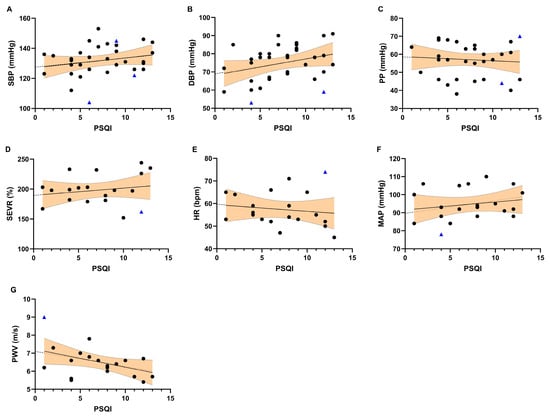
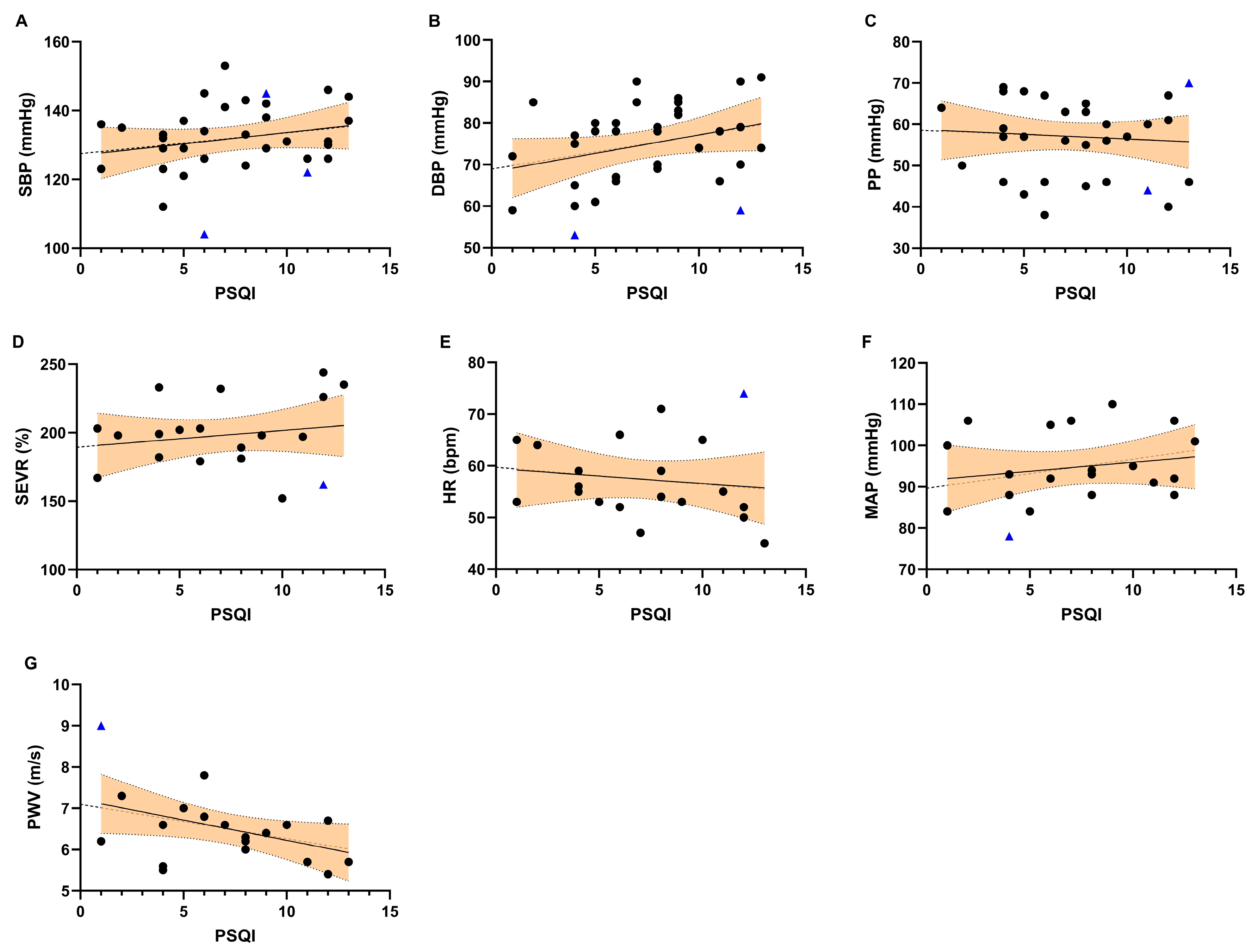
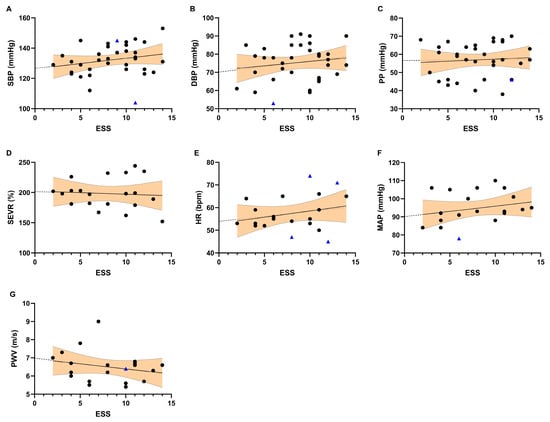
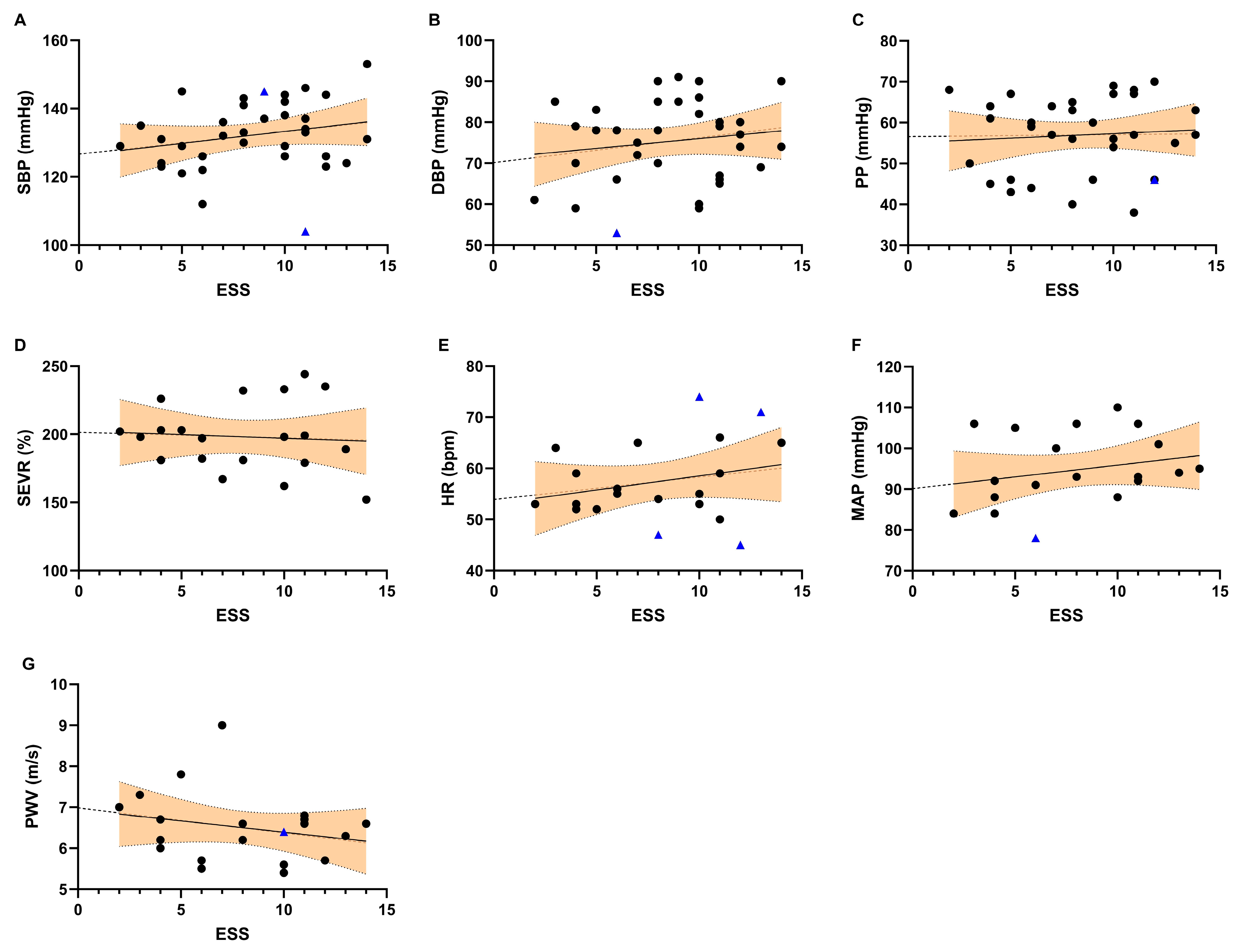
Demographic variables for the participants and the descriptive data for each variable measured are presented in Table 1. Table 1 also includes the number of observations for each variable that were collected. Statistical results for PSQI and ESS analyses are located in Table 2 and Table 3, respectively. These tables indicate sample size and degrees of freedom which differed based on missing data points and whether the variable was collected only in the subset of 20 participants. The written results are reported with the q-values which are p-values adjusted for multiple correlations. Scatterplots of the raw scores with unadjusted and adjusted trendlines are presented for PSQI analyses (Figure 1) and for ESS analyses (Figure 2).
Table 1.
Participant characteristics and descriptive data for all participants and the subset that completed additional cardiovascular tests.
Table 2.
Statistical results of all Pearson partial correlation analyses between the Pittsburgh Sleep Quality Index (PSQI) and Epworth Sleep Scale (ESS), and the cardiovascular variables systolic blood pressure (SBP), diastolic blood pressure (DBP), pulse pressure (PP), subendocardial viability ratio (SEVR), resting heart rate (HR), mean arterial pressure (MAP), and raw pulse wave velocity (PWV). Results include sample size (n), degrees of freedom to account for covariates age and BMI (df), partial correlation coefficient (r), 95% confidence interval of the partial correlation coefficient (95%CI), the unadjusted significance level (p), and significance level following Benjamini-Hochberg adjustment for multiple comparisons (q).
Table 3.
Statistical results of all Pearson partial correlation analyses between the Epworth Sleepiness Scale (ESS), and the cardiovascular variables systolic blood pressure (SBP), diastolic blood pressure (DBP), pulse pressure (PP), subendocardial viability ratio (SEVR), resting heart rate (HR), mean arterial pressure (MAP), and raw pulse wave velocity (PWV). Results include sample size (n), degrees of freedom to account for covariates age and BMI (df), partial correlation coefficient (r), 95% confidence interval of the partial correlation coefficient (95%CI), the unadjusted significance level (p), and significance level following Benjamini-Hochberg adjustment for multiple comparisons (q).
Figure 1.
Scatterplots of Pittsburgh Sleep Quality Index (PSQI; X-axis) and cardiovascular variables (Y-axis). (A) Systolic blood pressure (SBP); (B) diastolic blood pressure (DBP); (C) pulse pressure (PP); (D) subendocardial viability ratio (SEVR); (E) resting heart rate (HR); (F) mean arterial pressure (MAP); and (G) pulse wave velocity (PWV). Solid black lines represent unadjusted trendlines of the scatterplot data, orange bands represent the 95% confidence interval bands of the unadjusted trendlines, dashed black lines represent trendlines adjusted for age and BMI, and blue triangles represent influential observations identified using Cook’s D scores.
Figure 2.
Scatterplots of Epworth Sleepiness Scale (ESS; X-axis) and cardiovascular variables (Y-axis). (A) Systolic blood pressure (SBP); (B) diastolic blood pressure (DBP); (C) pulse pressure (PP); (D) subendocardial viability ratio (SEVR); (E) resting heart rate (HR); (F) mean arterial pressure (MAP); and (G) pulse wave velocity (PWV). Solid black lines represent unadjusted trendlines of the scatterplot data, orange bands represent the 95% confidence interval bands of the unadjusted trendlines, dashed black lines represent trendlines adjusted for age and BMI, and blue triangles represent influential observations identified using Cook’s D scores.
The variable PWV violated the assumption of normality and therefore underwent a square root transformation to achieve a normal distribution. Given that there were no outliers in the PWV data, the partial correlation coefficient analyses between PSQI and PWV and between ESS and PWV were performed with untransformed data. Additional sensitivity analyses with the transformed PWV data (PWVsqrt) were performed to evaluate the statistical outcome of analyzing non-normal data. The assumptions of linearity and homoscedasticity were met for all pairs of variables that were analyzed.
2.1. PSQI
PSQI scores ranged from 1–13. Of the entire sample, 23 participants (67.6%) were identified as poor sleepers (global PSQI score > 5). One participant did not complete the PSQI and was removed from all analyses involving that variable in pairwise fashion. For this reason, the sample size of the PSQI analyses is different than those for the ESS. No outliers were detected and no data points were excluded from the planned analyses.
Complete statistical results for correlation analyses with PSQI are presented in Table 2. There was no significant relationship between PSQI and any of the variables SBP (r = 0.214, q = 0.420), DBP (r = 0.301, q = 0.219), or PP (r = −0.079, q = 0.668). In the subset of 20 participants, there were no significant relationships between PSQI and SEVR (r = 0.181, q = 0.659), HR (r = −0.165, q = 0.599), MAP (r = 0.410, q = 0.219), or PWV (r = −0.417, q = 0.219).
2.2. ESS
ESS scores ranged from 2–14. Of the entire sample, 11 participants (31.4%) were identified as having excessive daytime sleepiness (global ESS score > 10). There were no missing responses for the ESS among the sample of participants. No outliers were detected and no data points were excluded from the planned analyses.
Complete statistical results for correlation analyses with ESS are presented in Table 2. There was no significant relationship between ESS and any of the variables SBP (r = 0.217, q = 0.427), DBP (r = 0.209, q = 0.427), or PP (r = −0.018, q = 0.922). In the subset of 20 participants, there was no significant relationship between ESS and SEVR (r = −0.056, q = 0.922), HR (r = 0.210, q = 0.566), MAP (r = 0.311, q = 0.427), or PWV (r = −0.289, q = 0.427).
2.3. Post Hoc and Sensitivity Analyses
The variable PWV was not normally distributed, which could impact the statistical outcome and validity of test results involving that variable. To overcome this limitation, the variable PWV was transformed by using the square root of each data point (all of which were greater than 1.0). The resulting set of data for the transformed PWV scores (PWVsqrt) was normally distributed and used for the same partial correlation analyses as the unadjusted PWV scores in Section 2.1 and Section 2.2. The Benjamini-Hochberg adjustment was made to account for the inflated error of multiple correlation analyses, with q-values presented. As with the unadjusted PWV scores, there was no significant partial correlation between PWVsqrt and PSQI [n = 20, df = 16, r = −0.411, 95%CI = (−0.751, 0.223), p = 0.091, q = 0.182] or between PWVsqrt and ESS [n = 20, df = 16, r = −0.290, 95%CI = (−0.595, 0.018), p = 0.243, q = 0.243] when controlling for age and BMI of participants.
The sample of participants in this study included a subgroup of 20 participants from whom arterial data (SEVR, HR, MAP, and PWV) were collected. To ensure that the participants in the subgroup and the remaining participants (n = 15) equally represented the target population, analyses of the demographic and blood pressure variables available for all participants (SBP, DBP, and PP) were completed. A series of two-tailed independent samples t-tests was used to make these comparisons, with Benjamini-Hochberg adjustments for the False Discovery Rate applied. There were significant differences between the subset and remaining participants for DBP (70.55 ± 9.53 vs. 81.53 ± 6.90 mmHg, p < 0.001, q = 0.003) and PP (61.65 ± 6.82 vs. 50.73 ± 8.57 mmHg, p < 0.001, q = 0.002). There was no significant difference between the subset and the remaining participants for age (39.40 ± 12.46 vs. 36.0 ± 14.09 years, p = 0.455, q = 0.585), weight (100.17 ± 17.97 vs. 92.86 ± 19.62 kg, p = 0.464, q = 0.521), height (179.85 ± 7.11 vs. 177.29 ± 8.81 cm, p = 0.347, q = 0.521), BMI (30.96 ± 5.21 vs. 29.24 ± 4.00 kg/m2, p = 0.298, q = 0.521), SBP (132.20 ± 8.65 vs. 132.27 ± 12.23 mmHg, p = 0.985, q = 0.985), PSQI (7.15 ± 3.79 vs. 7.71 ± 2.92, p = 0.643, q = 0.723), or ESS (7.95 ± 3.58 vs. 9.13 ± 2.66, p = 0.145, q = 0.521). Although significant differences were observed in DBP and PP, the groups were similar in age, weight, height, BMI, SBP, PSQI, and ESS, suggesting that the arterial health subgroup was generally comparable to the larger sample across several key demographic and sleep-related variables.
3. Discussion
The purpose of this study was to examine the relationship between sleep quality, daytime sleepiness, and resting cardiovascular strain in full-time firefighters. No statistically significant associations were detected between PSQI or ESS scores and resting blood pressure, pulse pressure, heart rate, mean arterial pressure, SEVR, or PWV. Future studies with larger samples and objective sleep assessments are warranted.
The findings from this study differ somewhat from studies conducted in the general population, which show a relationship between poor sleep quality and elevated blood pressure, autonomic dysfunction, impaired vascular function, and increased cardiovascular disease risk [17,20,21]. However, the population samples in these studies are typically larger, more heterogeneous, and often include individuals with existing cardiometabolic disease. The degree of cardiovascular dysfunction in the present may have been limited, as the sample included relatively young, actively employed firefighters. Also, cardiovascular assessments were performed in the morning after at least 10 min of rest; this resting measurement may not be sufficient to capture physiological impairments resulting from sleep disruptions. These impairments may be more apparent during emergency response activities, periods of acute stress, or following repeated overnight call sleep interruptions [35].
No significant association was detected between sleep quality and PWV in the present study. This finding differs from previous investigations that report associations between poor sleep quality and greater arterial stiffness. For example, a recent systematic review and meta-analysis by Saz-Lara et al. (2022) concluded that poor sleep quality is generally associated with greater arterial stiffness [22]. Similarly, Del Brutto et al. (2019) reported that poor sleep quality was associated with higher PWV in older adults [36]. Also, Hu et al. (2020) demonstrated that hypertensive adults with poor sleep quality had higher PWV values than those with better sleep quality [23]. Potential mechanisms by which vascular dysfunction may occur from sleep disturbances include sympathetic activation, inflammation, endothelial dysfunction, and impaired vascular remodeling [17,20]. However, these relationships were not observed in the present sample of career firefighters.
Furthermore, full-time firefighters are a relatively healthy occupational group as they must maintain a minimum level of physical fitness and overall health to safely perform their job duties [37]. The “healthy worker effect” is a phenomenon that may occur in this population and may reduce associations between risk factors and health outcomes observed in the general population [38,39]. Poor sleep quality among firefighters is often due to occupational factors, such as overnight emergency calls, shift schedules, and circadian disruption, rather than chronic disease processes [13,34]. As a result, the relatively healthy nature of this occupational cohort may have contributed to the absence of detectable associations in the present study. However, this possibility was not directly evaluated and should be explored in future research.
SEVR is an indicator of myocardial oxygen supply-demand balance and a useful assessment of cardiovascular strain, with lower values suggesting reduced myocardial perfusion relative to oxygen demand [20,40]. No significant association was detected between sleep quality and SEVR in the present study, despite firefighters being exposed to physical and psychological stressors that increase workload and have been linked to adverse cardiovascular responses [25,41,42]. An association between these variables may not have been found because sleep disturbances may not substantially influence the resting myocardial oxygen supply-demand balance in relatively healthy firefighters, or because any sleep-related cardiovascular effects may be too small to be detected under resting conditions. Future studies should explore additional factors that may influence both sleep and cardiovascular health in firefighters, including sleep apnea, years of service, cardiorespiratory fitness, call volume, occupational stress exposure, and shift-related sleep disruption.
Multiple limitations should be noted when interpreting the results. First, this study used self-reported sleep questionnaires to assess sleep quality, which depends on participants’ sleep recall accuracy. In addition, subjective sleep measures may not fully correspond with objective indicators of sleep duration, sleep efficiency, and sleep fragmentation, particularly in shift-working populations such as firefighters. Self-reported sleep measures may also be influenced by social desirability bias or by underreporting of fatigue, particularly among emergency service personnel, who may perceive sleep difficulties as a normal occupational expectation. As a result, subjective questionnaire scores may not fully capture the extent of sleep disruption experienced by firefighters. Second, the statistical power in this study was reduced by a relatively small sample size, especially in the arterial health assessment subgroup. Third, the study was conducted in a predominantly male sample drawn from a single fire department, and only men participated in the arterial health assessments. This limits the generalizability of the findings to female, volunteer, and other firefighter populations. Fourth, we controlled for age and BMI but not years in service, which has recently been shown to be associated with cardiovascular indices [43]. Fifth, several potential confounding variables were not measured, including diagnosis of obstructive sleep apnea, caffeine consumption, tobacco use, alcohol use, detailed medication histories, and timing of recent shift work. These factors may influence both subjective sleep measures and cardiovascular outcomes and should be considered when interpreting the present findings. Additionally, psychosocial factors such as perceived stress, occupational fatigue, and burnout were not assessed. These variables may influence both sleep-related outcomes and cardiovascular responses and should be considered in future studies of firefighter health. Sixth, because data collection occurred across two calendar years, potential cohort effects cannot be completely excluded. However, identical protocols, equipment, and procedures were used during both data collection periods, and all arterial health assessments were conducted in 2024. Seventh, although the Benjamini-Hochberg procedure was applied to reduce inflation of the Type I error rate, the study involved multiple statistical comparisons, and the findings should be interpreted within the context of an exploratory pilot investigation. Lastly, the timing of assessments relative to recent work shifts and exposure to overnight emergency calls was not recorded. Because shift-related sleep disruption may influence cardiovascular measures, this factor should be considered when interpreting the findings. Future explorations should include a larger sample size, including both males and females, and the addition of objective sleep measurements, such as actigraphy [44], to better characterize sleep disruption and its potential relationship with cardiovascular health.
4. Methods and Materials
4.1. Study Design
A cross-sectional study design was used to determine the relationship between sleep quality and cardiovascular health in full-time firefighters. This cross-sectional pilot study was designed to generate preliminary data regarding potential associations between subjective sleep measures and cardiovascular indices in career firefighters. Since the literature examining these relationships among firefighters is limited, an exploratory cross-sectional approach was considered appropriate to identify potential associations and inform future study design. However, due to the cross-sectional nature of the study, causality or temporal relationships between sleep characteristics and cardiovascular outcomes cannot be determined. Reporting of this cross-sectional observational study follows the Strengthening the Reporting of Observational Studies in Epidemiology (STROBE) guidelines. Study procedures were approved by the institutional review board and conducted in accordance with the Declaration of Helsinki (IRBnet #: 2095651). All participants provided written informed consent. No modifications to the approved study protocol were required for the extension of data collection into 2025. The approved protocol designated arterial health testing as an optional component conducted as resources and investigator availability permitted.
4.2. Participants
A total of 35 firefighters (one female) from a career fire department in the southeastern United States completed subjective sleep assessments and resting brachial blood pressure measurements between 2024 and 2025. Participants were recruited through announcements distributed by the fire department and volunteered to participate during data collection periods in July of 2024 and 2025. The participating fire department workforce was predominantly male, with women representing approximately 1% of department personnel. Therefore, the study sample reflected the sex distribution of this fire department. Firefighters in the department commonly worked a 24-h on-duty/48-h off-duty shift schedule, which may include overnight emergency responses and sleep disruptions characteristic of the occupation. A subset of 20 male firefighters also completed cardiovascular tests in 2024, including arterial health assessments. These laboratory-based assessments were not conducted during the 2025 data collection period because investigator availability did not permit completion of the laboratory testing within the required two-week timeframe following Visit 1. Analyses involving SBP, DBP, and PP were conducted in the full sample, whereas analyses involving arterial measurements were limited to the arterial health subset. Only one female firefighter participated in the initial assessment, and no female firefighters participated in the laboratory-based arterial health assessment; therefore, all arterial health analyses were conducted in males only.
Exclusionary criteria included pregnancy and/or taking vasoactive medication such as catecholamines, phosphodiesterase inhibitors, calcium sensitizers, and vasopressors. Information regarding diagnosed obstructive sleep apnea, habitual caffeine consumption, tobacco use, alcohol use, and detailed medication histories was not systematically collected. Sleep medication use was assessed using the Pittsburgh Sleep Quality Index; however, comprehensive medication histories were not obtained. All participants were employed by the same fire department.
4.3. Protocol
4.3.1. Data Collection Visit 1 (Full Sample)
Data collection occurred during the second week of July in both 2024 and 2025 using identical protocols, equipment, and procedures to minimize potential seasonal influence on study outcomes. Participants completed study assessments according to the procedures described below.
All participants met with a certified nurse at the fire station for resting blood pressure, height, and weight measurements in the morning before 10 am. They also completed the subjective sleep questionnaires during this visit. Preparatory instructions for this visit included fasting for 8 h and drinking only water. Participants received standardized instructions regarding fasting, exercise restriction, and avoidance of caffeine, nicotine, and alcohol prior to testing. However, compliance with these instructions was not formally verified using a diary, questionnaire, or activity log. Measurements were obtained in a quiet room at the fire department headquarters during morning hours. Access to the room was restricted during testing, and only study personnel and participants were present to minimize distractions and interruptions during data collection.
Participants were provided with their assessment results and had the opportunity to meet virtually with a registered nurse following testing. In the event of clinically concerning findings, including elevated blood pressure values or abnormal cardiovascular measurements, participants were encouraged to follow up with the fire department’s affiliated physician or their personal healthcare provider for further evaluation and management.
Blood Pressure
Brachial blood pressure was measured with the ZOLL X Series Monitor/Defibrillator (ZOLL Medical Corporation, Chelmsford, MA, USA), a clinical-grade monitoring system that provides automated noninvasive oscillometric blood pressure measurements and is commonly used in emergency medical settings. An adult-sized cuff was used for all measurements. Participants were seated for at least 5 min prior to the blood pressure measure, with feet flat on the floor and the measured arm supported at heart level. No additional standardized acclimatization period was required beyond this seated rest period. A single blood pressure measurement was obtained for analysis. Pulse pressure (PP) was calculated as systolic blood pressure minus diastolic blood pressure.
Sleep Questionnaires
Participants completed the Pittsburgh Sleep Quality Index (PSQI), a validated 19-item questionnaire that evaluates sleep quality and disturbances over the previous month. Participants rate 7 components on a 4-point scale (0–3), and these scores are summed to obtain the overall PSQI score, which ranges from 0 to 21. Higher scores indicate poorer sleep quality; scores greater than 5 indicate sleep difficulties. The PSQI has demonstrated good internal consistency (Cronbach’s α ≈ 0.83), good reliability, and distinguishes between good and poor sleepers with a sensitivity of 89.6% and specificity of 86.5% [40].
Daytime sleepiness was assessed using the Epworth Sleepiness Scale (ESS). The ESS is a validated subjective questionnaire comprising 8 questions rated on a 4-point scale (0–3) to assess the likelihood of falling asleep while engaging in 8 activities. The overall score can range from 0 to 24, with higher scores indicating greater daytime sleepiness. The ESS is used in both clinical and research settings and has demonstrated acceptable reliability and validity [45].
The investigator was not blinded to questionnaire results; however, vascular measurements were obtained using standardized automated procedures, reducing the likelihood of investigator bias. Subjective sleep questionnaires were selected for this pilot study because they are practical, low-cost, and widely used tools for assessing perceived sleep quality and daytime sleepiness in occupational and clinical populations. The PSQI and ESS provide information on sleep experiences relevant to firefighter health and are feasible to administer during workplace-based data collection. As an exploratory pilot study, subjective measures were used to establish preliminary associations and inform the design of future studies incorporating objective sleep assessments such as actigraphy or polysomnography.
4.3.2. Data Collection Visit 2 (Subset of Sample)
A subset of 20 male firefighters recruited during the 2024 data collection period completed additional laboratory-based cardiovascular assessments. These assessments were conducted within two weeks of the initial fire station visit and included arterial health measurements. Firefighters recruited during the 2025 data collection period completed only the Visit 1 assessments. Preparatory instructions for this visit included fasting on only water for 12 h, avoiding nicotine and antioxidant vitamins for 12 h, refraining from alcohol for 24 h, and avoiding moderate-to-vigorous-intensity exercise for 8 h before the visit. Laboratory assessments were conducted in a university-based human performance research laboratory approved for human participant testing. All measurements were obtained using standardized operating procedures, manufacturer-recommended testing protocols, and trained research personnel.
Arterial Health and Function
Resting measures of arterial health and function were assessed via pulse wave velocity and pulse wave analysis (PWV and PWA; Vicorder, 80 Beats Medical GmbH, Kantstrasse, Berlin, Germany). For the pulse wave analysis procedure, a pressure cuff was placed around the brachial artery while the participants rested in a supine position. Recorded measurements included mean arterial pressure, heart rate, subendocardial viability ratio (SEVR). SEVR is a non-invasive indicator of myocardial oxygen supply-demand balance derived from arterial pulse wave analysis, with lower values suggesting reduced myocardial perfusion relative to myocardial oxygen demand [28].
PWV was assessed using the carotid-femoral PWV methodology. Participants rested supine with the head and shoulders elevated approximately 30°. A pressure sensor was positioned over the right carotid artery and secured with a neck band, and a cuff was placed around the upper right thigh to obtain pulse wave recordings. The distance between the carotid and mid-femoral measurement sites was measured manually using a flexible tape measure according to the manufacturer’s recommendations. PWV (m/s) was calculated from the measured distance and pulse transit time between recording sites. The Vicorder system has demonstrated acceptable agreement with established methods of pulse wave velocity assessment and has been used extensively for non-invasive evaluation of arterial stiffness [46]. One acceptable PWV recording was obtained for each participant and used for analysis. Measurements were collected by trained research personnel using manufacturer-recommended procedures. No additional device-specific quality-control criteria were applied. Mean arterial pressure (MAP) and subendocardial viability ratio (SEVR) were generated by the Vicorder pulse wave analysis software from the recorded arterial waveform data.
4.4. Statistical Analysis
To determine the linear relationships between sleep scores and the cardiovascular measures of interest, while controlling for the effects of age and BMI, a series of two-tailed Pearson partial correlation analyses was conducted. The predictor variables included the sleep quality score measured by the PSQI questionnaire and the daytime sleepiness score measured by the ESS questionnaire. The outcome variables were the cardiovascular variables SBP, DBP, and PP, along with SEVR, HR, MAP, and PWV in a subset of participants. An alpha level of 0.05 was used for all analyses, which were carried out using SPSS version 30.
The data for predictor variables and outcome variables were screened for abnormal scores and outliers based on standard scores (|z| > 3.0). Remaining data were assessed for normality using the Shapiro-Wilk test. Any variable which failed the assumption of normality was transformed to achieve a normal distribution before statistical analysis. Linearity of relationships between each pair of examined variables was determined by visual inspection of Loess lines. Homoscedasticity for each correlation analysis was verified by visual examination of the distribution of residual scores for each pair of variables examined. Scatterplots which showed a potential for heteroscedasticity were further evaluated with the Breusch-Pagan test to verify homoscedasticity (p > 0.05).
Following the removal of any outliers and achievement of a normal distribution among all predictor and outcome variables, a series of bivariate Pearson partial correlation coefficient analyses was completed between each predictor variable and all outcome variables, controlling for the variables age and BMI. To limit the inflation of familywise Type I error, the Benjamini-Hochberg procedure was manually applied to the results of the PSQI analyses and the ESS analyses. Resulting q-values are compared to the predetermined alpha level to determine if relationships between variables were significant. Partial correlation coefficients (r) were interpreted according to Cohen as small (r = 0.10), moderate (r = 0.30), and large (r = 0.50) [47]. Observations of influence were determined by calculating Cook’s D scores for each set of partial correlation analyses conducted. Observations with a D score > 4/n were considered influential observations and labeled as such on figures in Section 2.
5. Conclusions
In conclusion, no statistically significant associations were detected between subjective sleep quality, daytime sleepiness, and resting cardiovascular strain measures in this sample of full-time firefighters. While sleep disruption remains an important occupational health concern in the fire service, additional research is needed to determine whether sleep-related cardiovascular effects are present in larger firefighter populations or when objective sleep measures are used. Because the study was conducted in a predominantly male sample of career firefighters from a single fire department, the findings should not be generalized to female firefighters, volunteer firefighters, or individuals with pre-existing cardiovascular disease. Future studies should include objective sleep assessments and additional occupational and lifestyle variables to better understand the role of sleep disruption in cardiovascular risk among firefighters. In the meantime, firefighter health programs may benefit from incorporating periodic sleep screenings with validated questionnaires and, when feasible, objective sleep assessments to help identify potential sleep-related health concerns in firefighters.
Author Contributions
Conceptualization, A.M.W.; methodology, A.M.W.; software, A.M.W.; formal analysis, A.R.M.; investigation, A.M.W.; resources, A.M.W.; data curation, A.M.W., M.M.Z., T.J.O.; visualization, A.R.M.; writing—original draft preparation, A.M.W., A.R.M.; writing—review and editing, A.M.W., A.R.M., M.M.Z., T.J.O.; supervision, A.M.W.; project administration, A.M.W. All authors have read and agreed to the published version of the manuscript.
Funding
This research received no external funding.
Institutional Review Board Statement
The study was conducted in accordance with the Declaration of Helsinki, and approved by the Institutional Review Board of Augusta University (IRBnet #: 2095651 approved on 29 September 2023).
Informed Consent Statement
Informed consent was obtained from all subjects involved in the study.
Data Availability Statement
To protect the anonymity of participants and the confidentiality of private health information, the data collected and analyzed for this study are not publicly accessible. The datasets used are available from the authors upon reasonable request. https://osf.io/vfy6j/overview?view_only=5312986fb149497b8f2ae82bc8fa63d0 (accessed on 1 August 2026).
Conflicts of Interest
The authors declare no conflicts of interest.
References
- Kales, S.N.; Soteriades, E.S.; Christophi, C.A.; Christiani, D.C. Emergency duties and deaths from heart disease among firefighters in the United States. N. Engl. J. Med. 2007, 356, 1207–1215. [Google Scholar] [CrossRef] [Scilit]
- Fahy, R.F.; Petrillo, J.T.; Molis, J.L. Firefighter Fatalities in the United States—2023; National Fire Protection Association: Quincy, MA, USA, 2024. [Google Scholar]
- Soteriades, E.S.; Smith, D.L.; Tsismenakis, A.J.; Baur, D.M.; Kales, S.N. Cardiovascular disease in US firefighters: A systematic review. Cardiol. Rev. 2011, 19, 202–215. [Google Scholar] [CrossRef] [Scilit]
- Smith, D.L.; Barr, D.A.; Kales, S.N. Extreme sacrifice: Sudden cardiac death in the US Fire Service. Extrem. Physiol. Med. 2013, 2, 6. [Google Scholar] [CrossRef] [Scilit]
- Horn, G.P.; Blevins, S.; Fernhall, B.; Smith, D.L. Core temperature and heart rate response to repeated bouts of firefighting activities. Ergonomics 2013, 56, 1465–1473. [Google Scholar] [CrossRef] [Scilit]
- Farioli, A.; Christophi, C.A.; Quarta, C.C.; Kales, S.N. Incidence of sudden cardiac death in a young active population. J. Am. Heart Assoc. 2015, 4, e001818. [Google Scholar] [CrossRef] [Scilit]
- Adetona, O.; Reinhardt, T.E.; Domitrovich, J.; Broyles, G.; Adetona, A.M.; Kleinman, M.T.; Ottmar, R.D.; Naeher, L.P. Review of the health effects of wildland fire smoke on firefighters and the public. Inhal. Toxicol. 2016, 28, 95–139. [Google Scholar] [CrossRef] [Scilit]
- Soteriades, E.S.; Hauser, R.; Kawachi, I.; Liarokapis, D.; Christiani, D.C.; Kales, S.N. Obesity and cardiovascular disease risk factors in firefighters: A prospective cohort study. Obes. Res. 2005, 13, 1756–1763. [Google Scholar] [CrossRef] [Scilit]
- Steinhubl, S.R.; Muse, E.D.; Topol, E.J. The emerging field of mobile health. Sci. Transl. Med. 2015, 7, 283rv3. [Google Scholar] [CrossRef] [Scilit]
- Barger, L.K.; Rajaratnam, S.M.W.; Wang, W.; O’BRien, C.S.; Sullivan, J.P.; Qadri, S.; Lockley, S.W.; Czeisler, C.A. Common sleep disorders increase risk of motor vehicle crashes and adverse health outcomes in firefighters. J. Clin. Sleep Med. 2015, 11, 233–240. [Google Scholar] [CrossRef] [Scilit]
- McArdle, N.; King, S.; Shepherd, K.; Baker, V.; Ramanan, D.; Ketheeswaran, S.; Bateman, P.; Wimms, A.; Armitstead, J.; Richards, G.; et al. Study of a Novel APAP Algorithm for the Treatment of Obstructive Sleep Apnea in Women. Sleep 2015, 38, 1775–1781. [Google Scholar] [CrossRef] [Scilit]
- Rajaratnam, S.M.W.; Barger, L.K.; Lockley, S.W.; Shea, S.A.; Wang, W.; Landrigan, C.P.; O’bRien, C.S.; Qadri, S.; Sullivan, J.P.; Cade, B.E.; et al. Sleep disorders, health, and safety in police officers. JAMA 2011, 306, 2567–2578. [Google Scholar] [CrossRef] [Scilit]
- Carey, M.G.; Al-Zaiti, S.S.; Dean, G.E.; Sessanna, L.; Finnell, D.S. Sleep problems, depression, substance use, social bonding, and quality of life in professional firefighters. J. Occup. Environ. Med. 2011, 53, 928–933. [Google Scholar] [CrossRef] [Scilit]
- Haddock, C.K.; Jahnke, S.A.; Poston, W.S.C.; Jitnarin, N.; Kaipust, C.M.; Tuley, B.; Hyder, M.L. Alcohol use among firefighters in the central United States. Occup. Med. 2012, 62, 661–664. [Google Scholar] [CrossRef] [Scilit]
- Lim, J.; Dinges, D.F. A meta-analysis of the impact of short-term sleep deprivation on cognitive variables. Psychol. Bull. 2010, 136, 375–389. [Google Scholar] [CrossRef] [Scilit]
- Mullington, J.M.; Haack, M.; Toth, M.; Serrador, J.M.; Meier-Ewert, H.K. Cardiovascular, inflammatory, and metabolic consequences of sleep deprivation. Prog. Cardiovasc. Dis. 2009, 51, 294–302. [Google Scholar] [CrossRef] [Scilit]
- Javaheri, S.; Redline, S. Insomnia and risk of cardiovascular disease. Chest 2017, 152, 435–444. [Google Scholar] [CrossRef] [Scilit]
- Palagini, L.; Bruno, R.M.; Gemignani, A.; Baglioni, C.; Ghiadoni, L.; Riemann, D. Sleep loss and hypertension: A systematic review. Curr. Pharm. Des. 2013, 19, 2409–2419. [Google Scholar] [CrossRef] [Scilit]
- Tobaldini, E.; Costantino, G.; Solbiati, M.; Cogliati, C.; Kara, T.; Nobili, L.; Montano, N. Sleep, sleep deprivation, autonomic nervous system and cardiovascular diseases. Neurosci. Biobehav. Rev. 2017, 74, 321–329. [Google Scholar] [CrossRef] [Scilit]
- Covassin, N.; Singh, P. Sleep duration and cardiovascular disease risk: Epidemiologic and experimental evidence. Sleep Med. Clin. 2016, 11, 81–89. [Google Scholar] [CrossRef] [Scilit]
- Dettoni, J.L.; Consolim-Colombo, F.M.; Drager, L.F.; Rubira, M.C.; Souza, S.B.; Irigoyen, M.C.; Mostarda, C.; Borile, S.; Krieger, E.M.; Moreno, H., Jr.; et al. Cardiovascular effects of partial sleep deprivation in healthy volunteers. J. Appl. Physiol. 2012, 113, 232–236. [Google Scholar] [CrossRef] [Scilit]
- Saz-Lara, A.; Lucerón-Lucas-Torres, M.; Mesas, A.E.; Notario-Pacheco, B.; López-Gil, J.F.; Cavero-Redondo, I. Association between sleep duration and sleep quality with arterial stiffness: A systematic review and meta-analysis. Sleep Health 2022, 8, 663–670. [Google Scholar] [CrossRef] [Scilit]
- Hu, H.; Li, H.; Huang, X.; Bao, H.; Song, Y.; Wang, B.; Liu, C.; Xu, R.; Liu, L.; Wang, X.; et al. Association of self-reported sleep duration and quality with BaPWV levels in hypertensive patients. Hypertens. Res. 2020, 43, 1392–1402. [Google Scholar] [CrossRef] [Scilit]
- Wolkow, A.; Aisbett, B.; Reynolds, J.; Ferguson, S.A.; Main, L.C. The impact of sleep restriction while simulating wildfire suppression on firefighters’ physical task performance. Appl. Ergon. 2016, 57, 49–57. [Google Scholar] [CrossRef] [Scilit]
- Gonzalez, D.E.; Lanham, S.N.; Martin, S.E.; Cleveland, R.E.; Wilson, T.E.; Langford, E.L.; Abel, M.G. Firefighter Health: A Narrative Review of Occupational Threats and Countermeasures. Healthcare 2024, 12, 440. [Google Scholar] [CrossRef] [Scilit]
- Vlachopoulos, C.; Xaplanteris, P.; Aboyans, V.; Brodmann, M.; Cífková, R.; Cosentino, F.; De Carlo, M.; Gallino, A.; Landmesser, U.; Laurent, S.; et al. The role of vascular biomarkers for primary and secondary prevention. Atherosclerosis 2015, 241, 507–532. [Google Scholar] [CrossRef] [Scilit]
- Laurent, S.; Boutouyrie, P. Arterial stiffness and hypertension in the elderly. Front. Cardiovasc. Med. 2020, 7, 544302. [Google Scholar] [CrossRef] [Scilit]
- Nichols, W.W.; O’Rourke, M.; Edelman, E.R.; Vlachopoulos, C. (Eds.) McDonald’s Blood Flow in Arteries: Theoretical, Experimental and Clinical Principles, 7th ed.; CRC Press: Boca Raton, FL, USA, 2022. [Google Scholar]
- Buckberg, G.D.; Fixler, D.E.; Archie, J.P.; Hoffman, J.I.E. Experimental subendocardial ischemia in dogs with normal coronary arteries. Circ. Res. 1972, 30, 67–81. [Google Scholar] [CrossRef] [Scilit]
- Westerhof, N.; Stergiopulos, N.; Noble, M.I.M. Snapshots of Hemodynamics, 2nd ed.; Springer: New York, NY, USA, 2010. [Google Scholar]
- Watanabe, H.; Ohtsuka, S.; Kakihana, M.; Sugishita, Y. Coronary circulation in dogs with an experimental decrease in aortic compliance. J. Am. Coll. Cardiol. 1993, 21, 1497–1506. [Google Scholar] [CrossRef] [Scilit]
- Chirinos, J.A.; Segers, P.; Hughes, T.; Townsend, R. Large-artery stiffness in health and disease. J. Am. Coll. Cardiol. 2019, 74, 1237–1263. [Google Scholar] [CrossRef] [Scilit]
- McEniery, C.M.; Yasmin; Hall, I.R.; Qasem, A.; Wilkinson, I.B.; Cockcroft, J.R. Normal vascular aging: Differential effects on wave reflection and aortic pulse wave velocity. J. Am. Coll. Cardiol. 2005, 46, 1753–1760. [Google Scholar] [CrossRef] [Scilit]
- Thosar, S.S.; Butler, M.P.; Shea, S.A. Role of the circadian system in cardiovascular disease. J. Clin. Investig. 2018, 128, 2157–2167. [Google Scholar] [CrossRef] [Scilit]
- Abdelmoaty, W.F.; Watkins, S.L.; Ayeni, A.; Hurtado, D.A.; McHill, A.W.; Biggs, J.J.; Hegmann, K.T.; Shea, S.A.; Bodner, T.; Bowles, N.P. Impact of Firefighters’ Work Schedule on Cardiovascular Disease Risk, Wellbeing and Safety in Firefighters: Protocol for the SWIFT Study, a Multidisciplinary Prospective and Cross-Sectional Study. BMJ Public Health 2025, 3, e002427. [Google Scholar] [CrossRef] [Scilit]
- Del Brutto, O.H.; Mera, R.M.; Peñaherrera, E.; Costa, A.F.; Peñaherrera, R.; Castillo, P.R. On the association between sleep quality and arterial stiffness: A population study in community-dwelling older adults living in rural Ecuador (The Atahualpa Project). J. Clin. Sleep Med. 2019, 15, 1101–1106. [Google Scholar] [CrossRef] [Scilit]
- Ras, J.; Kengne, A.P.; Smith, D.L.; Soteriades, E.S.; Leach, L. Association between cardiovascular disease risk factors and cardiorespiratory fitness in firefighters: A systematic review and meta-analysis. Int. J. Environ. Res. Public Health 2023, 20, 2816. [Google Scholar] [CrossRef] [Scilit]
- McMichael, A.J. Standardized mortality ratios and the healthy worker effect: Scratching beneath the surface. J. Occup. Med. 1976, 18, 165–168. [Google Scholar] [CrossRef] [Scilit]
- Li, C.Y.; Sung, F.C. A review of the healthy worker effect in occupational epidemiology. Occup. Med. 1999, 49, 225–229. [Google Scholar] [CrossRef] [Scilit]
- Buysse, D.J.; Reynolds, C.F., III; Monk, T.H.; Berman, S.R.; Kupfer, D.J. The Pittsburgh Sleep Quality Index: A new instrument for psychiatric practice and research. Psychiatry Res. 1989, 28, 193–213. [Google Scholar] [CrossRef] [Scilit] [PubMed]
- Smith, D.L.; Haller, J.M.; Korre, M.; Sampani, K.; Porto, L.G.; Fehling, P.C.; Christophi, C.A.; Kales, S.N. The relation of emergency duties to cardiac death among US firefighters. Am. J. Cardiol. 2019, 123, 736–741. [Google Scholar] [CrossRef] [Scilit]
- Townsend, R.R.; Wilkinson, I.B.; Schiffrin, E.L.; Avolio, A.P.; Chirinos, J.A.; Cockcroft, J.R.; Heffernan, K.S.; Lakatta, E.G.; McEniery, C.M.; Mitchell, G.F.; et al. Recommendations for improving and standardizing vascular research on arterial stiffness. Hypertension 2015, 66, 698–722. [Google Scholar] [CrossRef] [Scilit]
- Malone, G.T.; Adams, T.L.; LeMense, A.T.; Schafer, E.A.; Winchester, L.J.; MacDonald, H.V. Occupational aging: The influence of age and firefighting experience on cardiovascular health indices. Appl. Ergon. 2026, 138, 104851. [Google Scholar] [CrossRef] [Scilit]
- Ancoli-Israel, S.; Martin, J.L.; Blackwell, T.; Buenaver, L.; Liu, L.; Meltzer, L.J.; Sadeh, A.; Spira, A.P.; Taylor, D.J. The SBSM guide to actigraphy monitoring: Clinical and research applications. Behav. Sleep Med. 2015, 13, S4–S38. [Google Scholar] [CrossRef] [Scilit]
- Johns, M.W. A new method for measuring daytime sleepiness: The Epworth Sleepiness Scale. Sleep 1991, 14, 540–545. [Google Scholar] [CrossRef] [Scilit]
- Van Bortel, L.M.; Laurent, S.; Boutouyrie, P.; Chowienczyk, P.; Cruickshank, J.K.; De Backer, T.; Filipovsky, J.; Huybrechts, S.; Mattace-Raso, F.U.; Protogerou, A.D.; et al. Expert consensus document on the measurement of aortic stiffness in daily practice using carotid-femoral pulse wave velocity. J. Hypertens. 2012, 30, 445–448. [Google Scholar] [CrossRef] [Scilit]
- Cohen, J. Statistical Power Analysis for the Behavioral Sciences, 2nd ed.; Erlbaum: Hillsdale, NJ, USA, 1988. [Google Scholar]

Disclaimer/Publisher’s Note: The statements, opinions and data contained in all publications are solely those of the individual author(s) and contributor(s) and not of MDPI and/or the editor(s). MDPI and/or the editor(s) disclaim responsibility for any injury to people or property resulting from any ideas, methods, instructions or products referred to in the content. |
© 2026 by the authors. Licensee MDPI, Basel, Switzerland. This article is an open access article distributed under the terms and conditions of the Creative Commons Attribution (CC BY) license.