


Abstract
Background/Objectives: This systematic review examined whether oral vitamin D supplementation improves vitamin D status, health, and exercise outcomes in indoor-training aquatic athletes. Methods: We systematically reviewed randomized, placebo-controlled trials (>2 weeks) investigating vitamin D supplementation in competitive swimmers and divers. Six eligible trials (n = 246) were included and summarized descriptively. Results: Supplementation (2000–5000 IU/day for 12 weeks to 6 months) consistently increased serum 25(OH)D compared with placebo, with average increases up to 9.3 ng/mL. While higher doses occasionally improved muscle strength and lean mass, evidence showed no consistent benefits for swimming performance, immune function, or bone turnover. Additionally, higher body mass index (BMI) correlated with smaller 25(OH)D increases. Conclusions: Vitamin D effectively corrects deficiencies in aquatic athletes but lacks consistent ergogenic benefits. Therefore, in practice, supplementation should serve primarily as a targeted corrective measure for deficiency to support fundamental musculoskeletal health, rather than a generalized strategy for performance enhancement.
1. Introduction
Vitamin D is a fat-soluble vitamin essential not only for calcium homeostasis and bone health but also for regulating immune function and skeletal muscle performance [1,2,3]. In athletic populations, suboptimal serum 25-hydroxyvitamin D [25(OH)D] concentrations increase the susceptibility to impaired bone mineral density, muscle weakness, and respiratory illnesses [2,3,4,5]. Athletes engaged in indoor sports, particularly competitive swimmers, represent a highly vulnerable group [1,4]. Their intensive indoor training schedules drastically restrict ultraviolet B (UVB) sunlight exposure across seasons, leading to a well-documented high prevalence of vitamin D insufficiency within this population [4,5,6,7].
Beyond basic physiological maintenance, vitamin D interacts with metabolic pathways to influence body composition, while an athlete’s body mass index (BMI) and fat mass can bidirectionally affect vitamin D status [8,9]. Because vitamin D is highly lipophilic (fat-soluble), excess adipose tissue acts as a physiological “sink.” This sequestration mechanism dictates that in individuals with higher adiposity or BMI, a larger proportion of synthesized or supplemented vitamin D is absorbed and trapped within lipid droplets in fat cells [8,10,11]. Consequently, the vitamin is isolated from the systemic circulation, significantly reducing its bioavailability in the blood. This bidirectional relationship highlights BMI as a critical modifier of an athlete’s biochemical response to supplementation [12].
Furthermore, to align with the emphasis on performance outcomes, it is essential to explicitly define the physiological mechanisms by which vitamin D may enhance skeletal muscle function. Vitamin D exerts direct effects by binding to the vitamin D receptor (VDR), regulating cellular calcium transport and mitochondrial ATP production, both of which are critical for optimal neuromuscular excitation-contraction coupling [13]. Crucially, research indicates a preferential effect on Type II (fast-twitch) muscle fibers [14]. For competitive swimmers, the efficient recruitment of Type II fibers dictates the explosive power required for block starts, underwater turns, and short-distance sprints [15]. Therefore, evaluating supplementation efficacy requires the specific assessment of diverse variables, including maximal muscle strength (e.g., squat, deadlift), power (e.g., vertical jump height), and swimming-specific speed metrics [16,17].
Despite the strong physiological rationale, substantial uncertainty persists regarding the actual efficacy of vitamin D3 supplementation in swimming populations, as randomized controlled trials remain limited and their findings highly heterogeneous [16,17,18]. Therefore, the primary objective of this systematic review is to synthesize current evidence from randomized, placebo-controlled trials to clarify the effects of oral vitamin D3 supplementation on serum 25(OH)D status, body composition, immune recovery, and specific athletic performance variables in competitive swimming athletes. We hypothesize that while supplementation will effectively correct biochemical vitamin D insufficiency, its translation into measurable physiological and performance enhancements will be inconsistent, heavily modified by individual factors such as baseline vitamin D status, intervention dosage, and BMI. To achieve this, a systematic review was conducted following the PRISMA guidelines [19], involving a comprehensive search of seven major electronic databases to identify all relevant randomized, placebo-controlled trials investigating vitamin D3 supplementation in swimming and diving athletes.
2. Method
This was a systematic review of randomized, placebo-controlled trials published before 30 July 2025 that investigated the effect of supplementation of vitamin D in swimming athletic populations. This study followed the PRISMA (Preferred Reporting Items for Systematic Reviews and Meta-Analyses) guidelines for reporting systematic reviews, and the protocol was registered on PROSPERO (CRD420251245735) [19]. This systematic review was conducted in accordance with the pre-specified protocol, and no amendments were made to the initial plan after registration in PROSPERO.
2.1. Search Strategy
A comprehensive and systematic literature search was conducted to identify all relevant published studies examining the effects of vitamin D3 supplementation in swimming athletes. This search encompassed seven major electronic databases to ensure thorough coverage of the biomedical, scientific, and sports sciences literature: PubMed, Web of Science, Embase, SPORTDiscuss, Scopus, Cochrane Library, and ProQuest. The search strategy was developed iteratively in collaboration with a subject-specialist librarian to enhance both sensitivity and specificity. It included a combination of controlled vocabulary terms (e.g., MeSH in PubMed, Emtree in Embase) and free-text keywords pertinent to the core concepts of the review: (1) Vitamin D3 and (2) Athletic Population. The final key search terms were: (“Vitamin D” OR “Calciol” OR “Cholecalciferol” OR “Cholecalciferols”) AND (“athlete” OR “sport” OR “athletic performance” OR “swim” OR “swimmer”). The asterisk (*) served as a truncation symbol to capture variations in word endings. To refine the search to the relevant population, these terms were strategically combined with a set of swimming-specific terms (e.g., “swim”, “swimmer”, “collegiate swimmer”, “adolescent swimmer*”) within the title, abstract, or keywords fields, depending on the functionality of each database.
The specific search algorithms and the number of records retrieved from each database are presented in Table 1. To further ensure comprehensive literature coverage, the reference lists of all included studies and pertinent systematic reviews were manually screened for additional eligible publications. All retrieved records were imported into the reference management software EndNote 2025 (Clarivate Analytics), where duplicates were identified and removed both automatically and manually. The subsequent screening process was conducted independently by two authors according to the pre-defined PICOS inclusion and exclusion criteria, first evaluating titles and abstracts, followed by a full-text assessment of the remaining articles. Any discrepancies between the reviewers were resolved through discussion or, if necessary, by consulting a third author.
Table 1.
PICOS inclusion and exclusion criteria.
2.2. Study Selection
Study selection was performed independently by two reviewers (Liu and Bao). After removal of duplicate records, titles and abstracts were screened against the predefined PICOS criteria. Full texts of potentially eligible studies were subsequently assessed for final inclusion. Any discrepancies between reviewers were resolved through discussion until consensus was achieved.
Studies were included if they were randomized, placebo-controlled trials conducted in competitive or collegiate swimmers, employed oral vitamin D3 supplementation as the sole intervention for a duration of more than two weeks, and reported changes in serum 25-hydroxyvitamin D [25(OH)D] concentrations. Studies were excluded if they involved non-oral vitamin D administration, combined supplementation protocols, non-athletic populations, non-randomized study designs, unpublished grey literature, or non-English publications.
A minimum intervention duration of two weeks was established a priori as an inclusion criterion. The physiological justification for this threshold is that while achieving a steady-state serum 25(OH)D concentration often requires several months of continuous supplementation, initial and measurable biochemical responses in circulating 25(OH)D levels can be reliably detected within two to four weeks. Although all ultimately included trials featured intervention periods of 12 weeks or longer, the 2-week threshold was retained to ensure the initial search captured any acute supplementation protocols capable of eliciting a valid biochemical response.
2.3. Data Extraction
Two reviewers (X.L. and J.B.) independently extracted data from the included studies using a standardized Microsoft Excel spreadsheet. Extracted data included author names, publication year, study design, participant characteristics, intervention details, and primary/secondary outcomes. Any disagreements were resolved through discussion or by consulting a third reviewer (X.J.).
2.4. Assessment of Study Quality
The methodological quality of the included randomized controlled trials (RCTs) was evaluated using the revised Cochrane Risk of Bias Assessment Tool (RoB 2.0). Two authors (Liu and Jiang) conducted the assessment independently, and the findings were summarized at the conclusion of the evaluation, following the standard RoB 2.0 protocol, which encompasses five specific aspects:
- Bias arising from the randomization process.
- Bias due to deviations from the intended interventions.
- Bias due to missing outcome data.
- Bias in measurement of the outcome.
- Bias in selection of the reported result.
For each domain, a judgment of “Low risk,” “Some concerns,” or “High risk” of bias was assigned based on the responses to the signaling questions from the Cochrane Risk of Bias tool (RoB 2.0). These domain-level assessments were subsequently utilized to derive an overall risk of bias judgment for each study result. The inter-rater reliability for the overall risk of bias assessment was evaluated using Cohen’s Kappa, yielding a score of k = 0.82, indicating substantial agreement between the two independent reviewers. Initial disagreements were minimal, occurring in only 3 domain assessments across all included studies. All such discrepancies were documented and successfully resolved; 2 were settled through direct discussion and re-evaluation of the full text by the two primary reviewers, while consultation with the third author acting as an arbiter was required in only 1 instance to achieve final consensus.
2.5. Certainty of Evidence Assessment
The certainty of evidence for each primary and secondary outcome was evaluated using the GRADE (Grading of Recommendations Assessment, Development and Evaluation) approach. The quality of evidence was classified into four levels: high, moderate, low, or very low. The assessment was based on five specific domains: risk of bias, inconsistency, indirectness, imprecision, and publication bias. Two reviewers independently performed the GRADE assessment, and any discrepancies were resolved through consensus or consultation with a third author.
3. Result
3.1. Study Selection
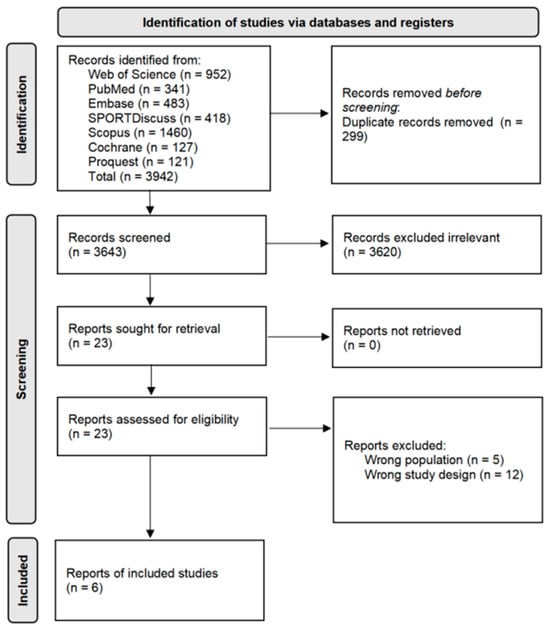
A total of 3942 records were identified through database searching, including Web of Science (n = 952), PubMed (n = 341), Embase (n = 483), SPORTDiscuss (n = 418), Scopus (n = 1460), Cochrane Library (n = 127), and ProQuest (n = 121). Before screening, 299 duplicate records were identified and removed, leaving 3643 records for title and abstract screening. During the screening stage, 3620 records were excluded as irrelevant, primarily because they did not involve swimming populations, did not examine vitamin D supplementation, or did not meet the predefined study design or outcome criteria. A total of 23 reports were subsequently sought for full-text retrieval, all of which were successfully retrieved (reports not retrieved, n = 0) and assessed for eligibility. Following full-text assessment, 17 reports were excluded, including 5 studies excluded due to wrong population and 12 studies excluded due to inappropriate study design (e.g., non-randomized or non–placebo-controlled trials). Ultimately, six randomized, placebo-controlled studies met all inclusion criteria and were included in the final systematic review. The study selection process is illustrated in the PRISMA flow diagram (Figure 1).
Figure 1.
PRISMA flow chart for inclusion and exclusion of studies.
3.2. Study Characteristics
The six randomized, placebo-controlled trials included in this systematic review comprised a total of 246 competitive swimmers, including both adolescent and collegiate athletes, with sample sizes ranging from 19 to 55 participants per study. Across all studies, male athletes constituted the majority of participants, reflecting the sex distribution reported in the original trials.
The included studies were conducted primarily in the United States and Israel and were implemented during periods of reduced natural sunlight exposure, including winter or fall-to-spring training seasons. The geographic latitudes of study locations ranged from approximately 31° N to 38° N, representing environments in which endogenous vitamin D synthesis may be limited during substantial portions of the training year.
Participants across studies were actively engaged in competitive aquatic programs, including adolescent competitive swimmers and NCAA Division I collegiate swimmers, with some trials also including competitive divers. Notably, because the original trials that included divers reported physiological and performance outcomes in aggregate without sport-specific stratification, data from swimmers and divers were pooled for descriptive synthesis in this review rather than analyzed separately.
All interventions involved oral vitamin D3 (cholecalciferol) supplementation as the sole experimental treatment, administered either in capsule or liquid drop form. Daily supplementation doses ranged from 2000 to 5000 IU, and intervention durations varied between 12 weeks and 6 months. Baseline serum 25-hydroxyvitamin D [25(OH)D] concentrations were assessed in all studies prior to supplementation. The baseline vitamin D status of participants varied considerably across the included trials. Certain studies explicitly targeted and recruited athletes who were already classified as vitamin D deficient or insufficient at baseline, whereas other trials included a mixed cohort of athletes with normal (sufficient), insufficient, or deficient levels without restricting inclusion based on initial 25(OH)D concentrations. Follow-up measurements were obtained at the end of the intervention periods to assess biochemical responses.
All included trials identified changes in serum 25(OH)D concentration as a primary outcome measure. Secondary outcomes differed across studies and included assessments of body composition and body mass index (BMI), bone turnover markers and bone mineral density, immune-related indicators (e.g., upper respiratory tract infection incidence and thymic activity), and athletic performance measures, such as muscular strength, power, balance, and swimming performance metrics. The distribution of outcome measures across studies is summarized in Table 2 and Table 3.
Table 2.
Basic information included in the study.
Table 3.
Summary of Key Findings from Included Studies.
3.3. Outcome Overview
Across the six included randomized, placebo-controlled trials, changes in serum 25-hydroxyvitamin D [25(OH)D] concentration were consistently designated as the primary outcome measure and were assessed at baseline and post-intervention in all studies. In contrast, secondary outcomes varied substantially across trials, reflecting differences in study aims and methodological focus [12,16,17,20,21,22].
All included studies reported both baseline and follow-up serum 25(OH)D concentrations, allowing for direct comparison between vitamin D3 supplementation and placebo conditions. Secondary outcomes encompassed multiple physiological and performance-related domains, including body composition and body mass index (BMI), immune-related markers, musculoskeletal health indicators, and athletic performance measures. However, not all secondary outcomes were assessed uniformly across studies. The distribution of primary and secondary outcomes assessed in each study is summarized in Table 3.
Specifically, two studies examined outcomes related to body composition and BMI, including fat-free mass, body fat percentage, and associations between BMI and changes in serum 25(OH)D concentrations [12,17]. Two studies evaluated immune-related outcomes, focusing on upper respiratory tract infection incidence, symptom severity, duration, and thymic activity assessed via T cell receptor excision circles (TREC) [20,22]. Two studies investigated musculoskeletal health outcomes, including bone turnover markers, site-specific bone mineral density, and lean mass indicators [12,21]. Three studies assessed athletic performance outcomes, such as muscular strength, power, balance, and swimming performance metrics [16,17,20].
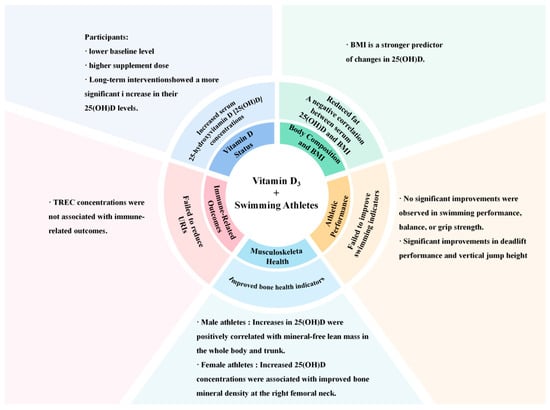
The type and number of outcome measures differed notably across trials, and several studies reported multiple secondary outcomes within the same domain. Given this heterogeneity in outcome selection and measurement, a quantitative synthesis was not performed. Instead, results were synthesized qualitatively and are presented below according to outcome domain, beginning with vitamin D status and followed by body composition, immune-related outcomes, musculoskeletal health, and athletic performance (Figure 2).
Figure 2.
Qualitative Synthesis of Outcome Domains.
3.3.1. Vitamin D Status
All included trials reported significant elevations or the successful maintenance of serum 25(OH)D concentrations following supplementation compared to placebo groups [12,16,17,20,21,22]. To provide quantitative context, the magnitude of these increases demonstrated a clear dose–response relationship. For instance, intervention protocols utilizing a moderate dose of 2000 IU/day yielded approximate mean increases of 9.3 ng/mL in serum 25(OH)D levels. Conversely, higher supplementation doses, such as 5000 IU/day over a 12-week period, resulted in substantially greater mean elevations of approximately 12.4 ng/mL. Furthermore, the baseline status significantly dictated the response magnitude; athletes presenting with clinical deficiency at baseline exhibited the most rapid and pronounced biochemical improvements.
In contrast, serum 25(OH)D concentrations in placebo groups remained unchanged or declined over the intervention period. The magnitude of change in serum 25(OH)D varied across studies, with larger increases observed in trials employing higher daily doses or longer intervention durations.
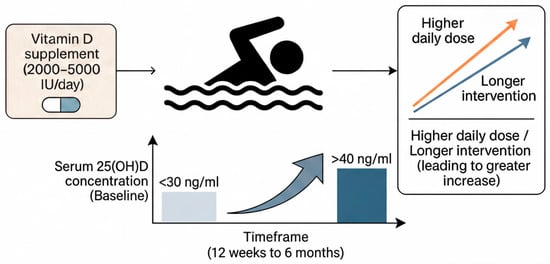
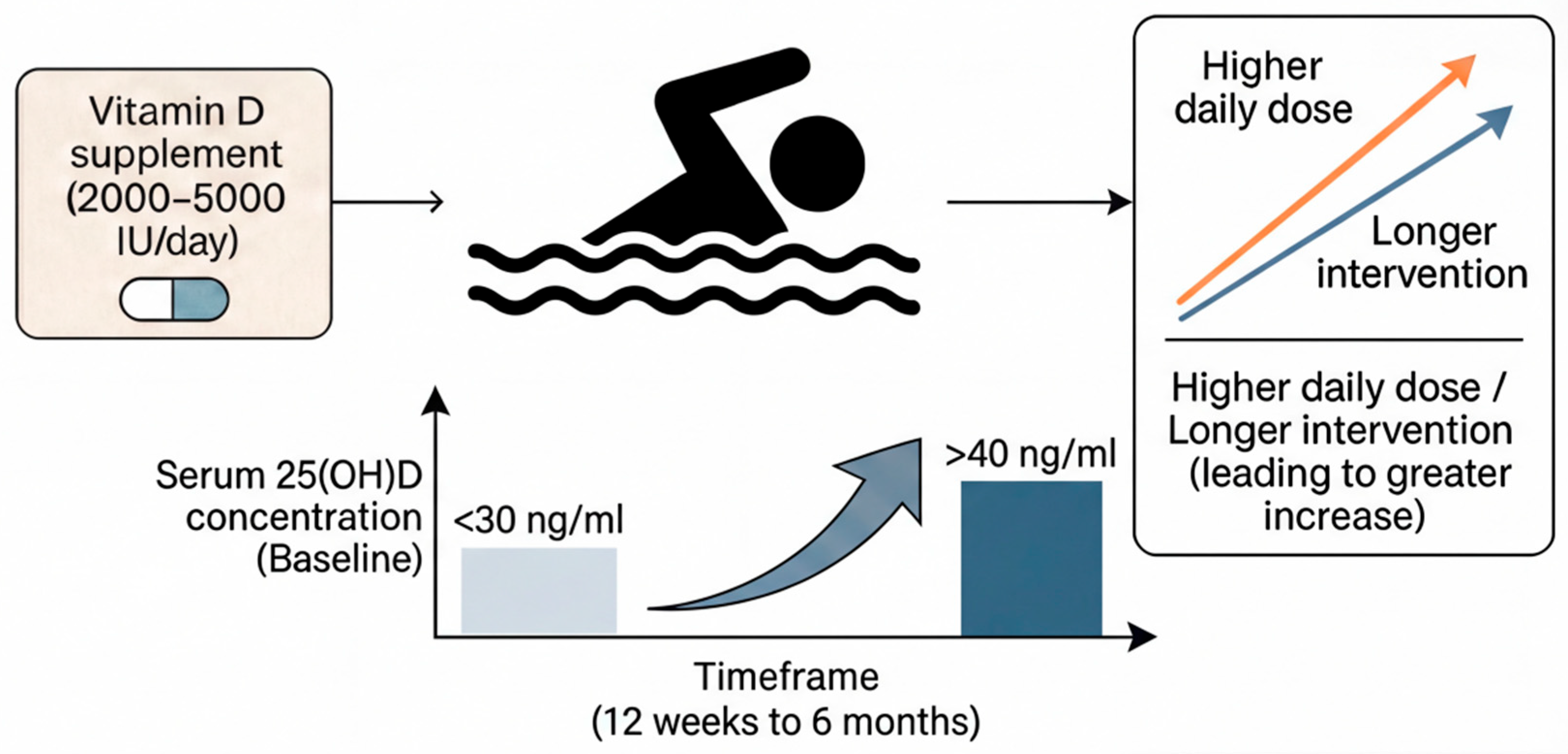
Daily supplementation doses ranging from 2000 to 5000 IU administered over 12 weeks to 6 months were sufficient to elevate serum 25(OH)D concentrations in both adolescent and collegiate swimmers. Several studies reported that participants with lower baseline 25(OH)D concentrations exhibited greater absolute increases following supplementation compared with those with higher baseline values (Figure 3) [23,24,25].
Figure 3.
The mechanism principle of the increase in 25(OH)D concentration.
3.3.2. BMI and Body Composition
Two randomized, placebo-controlled trials examined the effects of vitamin D3 supplementation on body composition and BMI-related outcomes in competitive swimmers [12,21]. Although both studies consistently reported significant increases in serum 25(OH)D concentrations in the supplementation groups, findings related to body composition differed by outcome measure and supplementation protocol.
In a 12-week intervention employing a daily dose of 5000 IU, vitamin D3 supplementation was associated with a significant increase in fat-free mass and improvements in selected strength-related measures compared with placebo (p < 0.05), whereas no significant changes in body composition were observed in the control group. Changes in body fat percentage were also reported within the supplementation group over the intervention period [17].
In contrast, a season-long supplementation study using 4000 IU/day over six months did not report significant between-group differences in bone turnover markers or overall body composition measures. However, this study identified a significant negative correlation between BMI and the magnitude of increase in serum 25(OH)D concentration following supplementation (r = −0.496, p = 0.03), indicating that athletes with higher BMI exhibited smaller increases in circulating vitamin D levels [21].
Taken together, the included trials indicate that vitamin D3 supplementation was associated with heterogeneous body composition outcomes, while BMI consistently emerged as a factor associated with inter-individual variability in serum 25(OH)D response. No consistent relationship between changes in serum 25(OH)D concentrations and body composition outcomes was observed across studies.
3.3.3. Immune Recovery
Two randomized, placebo-controlled trials evaluated immune-related outcomes following vitamin D3 supplementation in competitive swimmers. Immune outcomes included the incidence, duration, and severity of upper respiratory tract infections (URIs), as well as thymic activity assessed using T cell receptor excision circles (TREC) [20,22].
In both studies, vitamin D3 supplementation resulted in significant increases in serum 25-hydroxyvitamin D [25(OH)D] concentrations compared with placebo (p < 0.001).
Despite the well-documented immunomodulatory role of vitamin D, no significant between-group differences were observed in URI-related outcomes (including infection incidence, symptom severity, or illness duration) or thymic activity following supplementation [20,22]. However, this lack of observable effect requires careful interpretation. It is highly plausible that the baseline vitamin D status of the athletic cohorts was already sufficient to support fundamental immune defenses, thereby rendering additional supplementation redundant for this specific outcome. Furthermore, the overall event rates of URIs during the relatively short intervention periods were inherently low across both the treatment and placebo groups. This low baseline incidence likely underpowered the studies, making it statistically unfeasible to detect a significant prophylactic effect.
3.3.4. Musculoskeletal Health
Two randomized, placebo-controlled trials assessed musculoskeletal health outcomes following vitamin D3 supplementation in competitive swimmers [12,21]. Musculoskeletal outcomes included bone turnover markers, bone mineral density (BMD) at site-specific skeletal regions, and lean mass indicators. Regarding causal intervention effects, no significant between-group differences were observed in acute bone turnover markers following supplementation [12]. When interpreting these findings, it is crucial to explicitly distinguish between observational associations and causal treatment effects. While cross-sectional data within these trials demonstrated positive epidemiological associations between higher serum 25(OH)D concentrations and structural measures—such as total body lean mass in males and site-specific bone mineral density in females [21]—short-term vitamin D3 supplementation did not produce acute, causal alterations in bone remodeling markers. This indicates that while adequate vitamin D status is strongly associated with better musculoskeletal profiles, the causal benefits of supplementation on bone turnover may require longer intervention periods to become detectable. Finally, no consistent causal effects were observed regarding overall injury incidence during the intervention periods.
3.3.5. Athletic Performance
Three randomized, placebo-controlled trials evaluated athletic performance outcomes following vitamin D3 supplementation in competitive swimmers [16,17,20]. Performance-related outcomes included swimming performance metrics, muscular strength and power, balance, and neuromuscular function, with considerable variation in assessment methods across studies.
In trials involving adolescent swimmers receiving 2000 IU/day of vitamin D3 for approximately three months, no significant between-group differences were observed in swimming performance, balance ability, or strength-related measures compared with placebo [16].
In contrast, one study employing a higher daily dose of 5000 IU over a longer intervention duration reported significant improvements in selected strength and power measures, including squat and deadlift performance and vertical jump height, in the supplementation group compared with placebo. However, no consistent improvements were observed in swimming-specific performance outcomes across studies [17].
Overall, findings related to athletic performance were inconsistent across trials, and improvements, when observed, were limited to non–sport-specific strength and power measures under higher-dose supplementation protocols.
3.4. Risk of Bias
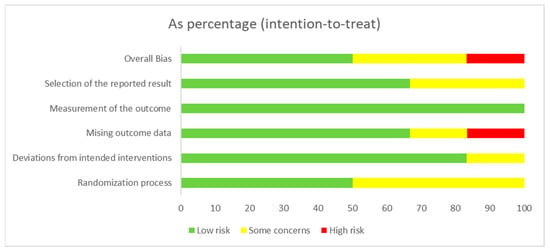
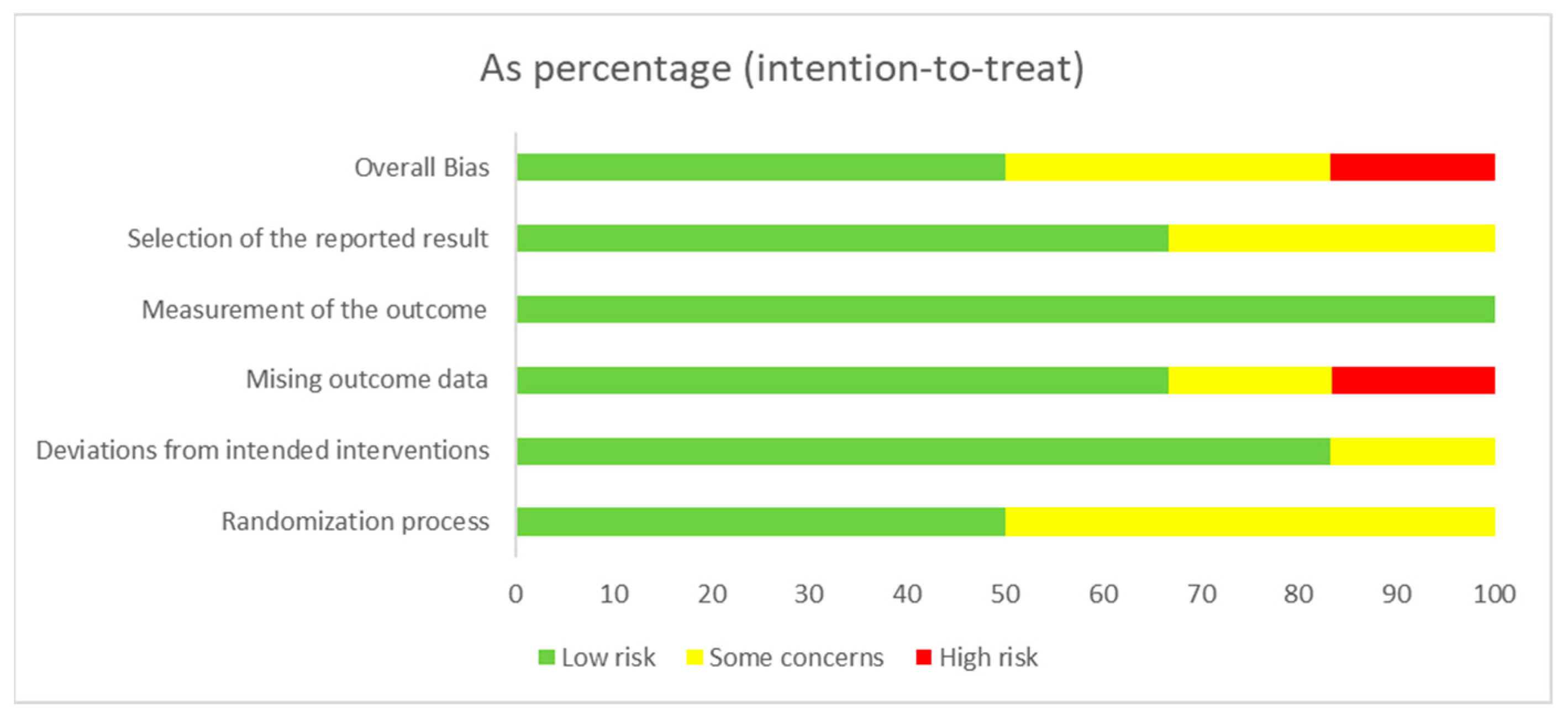
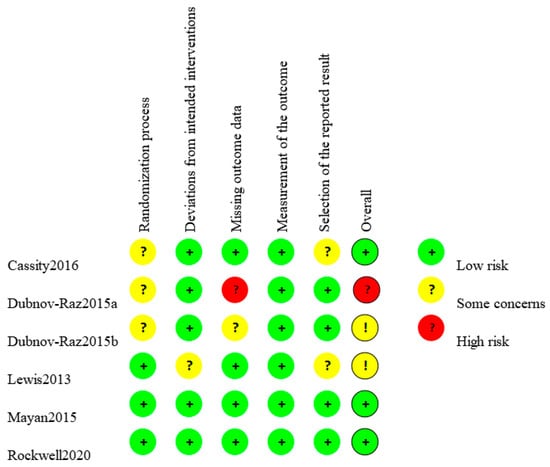
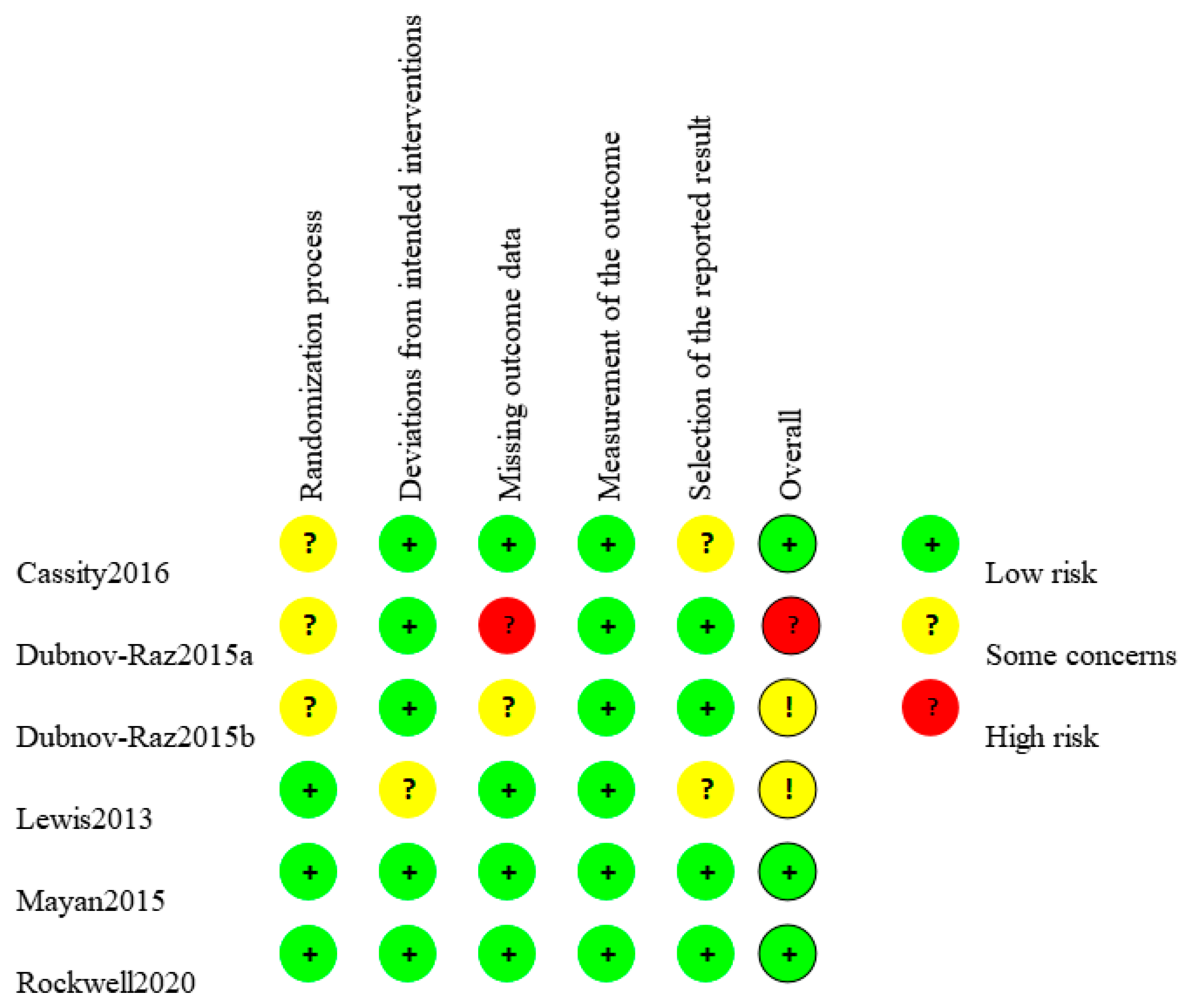
The risk of bias assessment for the included studies is summarized in Figure 4 and Figure 5. Overall, 50% of the trials (3 out of 6) were judged to have a low risk of bias, 33.3% (2 out of 6) raised some concerns, and 16.7% (1 out of 6) was assessed as having a high risk of bias. The limited availability of high-quality, low-risk trials highlights a persistent methodological gap in this area of investigation.
Figure 4.
Risk of bias graph.
Figure 5.
Risk of bias summary [12,16,17,20,21,22].
Domain-specific assessments revealed several recurrent methodological issues. Regarding the randomization process (Domain 1), 50% of the studies (3 out of 6) were rated as having “some concerns.” This was primarily driven by inadequately detailed reporting of random sequence generation methods and a lack of explicit information regarding allocation concealment procedures.
Deviations in outcome measurement (Domain 4) also introduced bias. For instance, in one trial [21], blood samples were collected at varying diurnal intervals across different assessment points. Because specific biomarkers, such as bone turnover markers (NTx and BSAP), are subject to diurnal variation, this methodological inconsistency resulted in “some concerns” for the measurement of the outcome domain.
Most notably, bias due to missing outcome data (Domain 3) heavily influenced the overall quality ratings. Specifically, one study [20] was classified as having a “high risk of bias” in this domain. A substantial proportion of daily illness questionnaires were not returned by participants. Because the absence of these questionnaire data may be directly related to the true health status of the athletes (e.g., participants failing to report precisely because they were experiencing symptoms, or conversely, because they were entirely healthy), this missing data significantly compromises the reliability of the immune-related findings.
3.5. Certainty of Evidence (GRADE)
The summary of the certainty of evidence for all evaluated outcomes is presented in Table 4. The certainty of evidence for serum 25(OH)D concentrations was rated as moderate, downgraded one level primarily due to imprecision associated with the relatively small total sample size across trials. Conversely, the certainty of evidence for athletic performance, immune recovery, and musculoskeletal health was rated as low to very low. These downgrades were primarily attributed to significant imprecision (small sample sizes), inconsistency in findings across different supplementation protocols, and identified risks of bias in several included studies.
Table 4.
GRADE summary of findings for Vitamin D3 supplementation in swimming athletes.
4. Discussion
The findings of this review should be interpreted within the context of the GRADE assessment. While there is moderate-certainty evidence supporting the efficacy of vitamin D3 supplementation in increasing serum 25(OH)D levels in swimmers, the evidence for functional improvements in sports performance and immune function remains of low to very low certainty. This discrepancy emphasizes that biochemical normalization does not automatically translate into consistent ergogenic benefits in this population, likely due to the multifactorial nature of athletic performance and the methodological limitations of current pilot-scale trials.
The present systematic review synthesizes randomized controlled evidence on vitamin D3 supplementation in swimming athletes and interprets the findings within the broader context of sport-specific physiology, contemporary endocrine guideline frameworks, and emerging concepts regarding nutrient–exercise interactions. Across the included studies, vitamin D3 supplementation consistently increased serum 25-hydroxyvitamin D [25(OH)D] concentrations, whereas effects on swimming performance, immune-related outcomes, and functional adaptations were inconsistent. These findings reflect not only limitations of the swimmer-specific evidence base but also broader conceptual constraints in translating biochemical normalization into complex functional outcomes [16,17,20,22].
Before interpreting the physiological and performance-related findings, it is crucial to evaluate the overall quality of the available evidence. Although approximately half of the included trials were assessed as having a low overall risk of bias, the evidence base remains methodologically constrained and limited in independence. Several recurrent concerns were identified across multiple domains, including incomplete reporting of randomization procedures, potential bias due to missing outcome data, and variability in outcome measurement protocols. Dubnovs-Raz noted in his research that non-returned illness questionnaires, which reflect the absence of symptoms, introduce the possibility that missing data may depend on true health status, thereby influencing immune-related results [20]. Furthermore, inconsistent blood sampling time points across assessment phases may have contributed to measurement variability in biomarkers subject to diurnal fluctuation [21]. This methodological heterogeneity amplifies uncertainty regarding effect estimates, especially in small sample trials where even slight biases can significantly influence results. Therefore, the inconsistencies noted in swimming performance, immune outcomes, and musculoskeletal indicators must be understood within this methodological framework. The current variability in findings likely represents not only genuine biological uncertainty but also residual bias, limited statistical power, and measurement noise present in the existing literature.
Swimming athletes and individuals who engage in frequent swimming training represent a population with a distinct vitamin D risk profile [12]. Training is predominantly performed indoors, substantially reducing exposure to ultraviolet B radiation and limiting endogenous vitamin D synthesis [21,26,27,28]. This exposure pattern applies not only to elite swimmers but also to sub-elite and habitual swimmers who accumulate large indoor training volumes throughout the year. Accordingly, the consistent elevation of serum 25(OH)D observed across trials primarily reflects correction of a lifestyle-associated insufficiency rather than evidence of downstream physiological efficacy.
Despite robust biochemical responses, sport-specific performance outcomes remained highly inconsistent. To understand this discrepancy, it is necessary to contrast the neuromuscular and metabolic demands of swimming. Vitamin D primarily influences the neuromuscular pathway. It regulates calcium-dependent excitation-contraction coupling and preferentially targets Type II (fast-twitch) muscle fibers, which govern maximal strength and explosive power [14,29]. However, competitive swimming is predominantly governed by metabolic pathways (aerobic and anaerobic endurance) and hydrodynamic efficiency [30,31]. Consequently, while supplementation may successfully enhance isolated neuromuscular metrics such as deadlift strength or vertical jump [17,32], these raw power gains do not automatically translate into faster swimming times. Swimming performance relies far more on oxygen delivery, metabolic efficiency, and stroke mechanics than on maximal skeletal muscle force alone [33].
From a musculoskeletal standpoint, vitamin D may play a more contextually relevant role [21]. Swimming is characterized by low mechanical loading and minimal osteogenic stimulus compared with land-based sports. Under these conditions, vitamin D3 supplementation may contribute to maintaining skeletal integrity and muscle function over prolonged training periods rather than producing acute performance gains [21]. Subtle adaptations in bone or muscle-related outcomes reported in some studies are consistent with this interpretation, even when performance outcomes remain unchanged.
The specific biomechanical demands of competitive swimming expose the shoulder complex to substantial repetitive mechanical loading. During stroke execution, swimmers perform a large number of overhead movements, and each stroke involves thousands of repeated shoulder actions within a single training session [34]. During the mid-stroke phase of the front crawl, the shoulder reaches maximal internal rotation and adduction, with significant force generation from the pectoralis major, latissimus dorsi, subscapularis, serratus anterior, and rhomboid muscles [34]. Such high-frequency, load-intensive movement patterns increase cumulative stress within the rotator cuff and subacromial structures and may promote microtrauma at the tendon–bone interface.
This repetitive and high-intensity loading profile makes the shoulder the most frequently injured anatomical site in swimmers [35]. Shoulder pain is a leading cause of training modification or interruption in competitive swimming populations [36]. Consequently, the ability of shoulder tissues to tolerate, repair, and adapt to chronic mechanical stress is central to long-term training sustainability.
The vitamin D receptor (VDR) is widely recognized for its role in skeletal muscle and bone health [32,37,38]. VDR exhibits anti-inflammatory properties and may influence tissue repair and adaptation through the regulation of cytokines and growth factors [39,40,41]. Repetitive mechanical loading is known to activate local inflammatory and extracellular matrix remodeling pathways; therefore, VDR signaling may contribute to modulating the balance between tissue injury and recovery under chronic load exposure. In theory, VDR activation could mitigate excessive inflammation and fibroblast activity associated with prolonged shoulder overuse, thereby influencing structural adaptation.
At the skeletal muscle level, VDR activation has been associated with enhanced muscle strength and performance capacity [37,38]. Given that repetitive overhead activity depends on coordinated rotator cuff and peri-scapular muscle function to maintain load distribution and joint stability, VDR-mediated pathways may plausibly interact with mechanical loading to influence neuromuscular adaptation. However, direct evidence clarifying the regulatory role of VDR within the shoulder microenvironment of swimming athletes exposed to high-frequency mechanical stress remains absent.
When examining the relationship between vitamin D and athletic performance, as well as its effects on the muscular and skeletal systems, it is crucial to consider the role of calcium. A fundamental physiological mechanism of vitamin D is its function in maintaining calcium and phosphorus homeostasis within the body. It achieves this by promoting calcium absorption in the intestines, thereby ensuring adequate calcium concentrations in the blood and intercellular matrix. For athletes, calcium serves not only as a vital component for the construction and remodeling of the skeletal matrix but also as a key signaling molecule in excitation-contraction coupling at neuromuscular junctions. A deficiency in vitamin D can result in hypocalcemia or a reduced rate of calcium ion release from the sarcoplasmic reticulum, which directly disrupts action potential transmission and diminishes the contractility and power output of muscle fibers, particularly type II fast-twitch fibers. This neuromuscular dysfunction is reflected in decreased explosive power and maximum strength, as well as an accelerated onset of muscle fatigue. Consequently, the benefits of vitamin D in enhancing athletic performance and preventing skeletal muscle injuries are largely contingent upon maintaining adequate calcium levels and optimizing neuromuscular conduction efficiency. The interplay between these two elements is essential in exercise physiology, as neither can be overlooked [29,42].
Sunlight exposure characteristics inherent to swimming environments exert a significant influence on vitamin D status in swimmers, primarily by increasing the risk of vitamin D deficiency or insufficiency, particularly during seasons with reduced daylight duration. Endogenous vitamin D synthesis depends largely on cutaneous exposure to ultraviolet B (UVB) radiation. When swimmers train in indoor facilities, architectural structures and roofing systems effectively block UVB radiation, thereby limiting dermal vitamin D production. Even during outdoor training, scheduling outside peak sunlight hours or the routine use of sunscreen may substantially reduce effective UVB exposure, subsequently impairing vitamin D synthesis efficiency. For example, a three-year longitudinal investigation of world-class swimmers in the United Kingdom demonstrated that extensive indoor training exposure was associated with an increased risk of vitamin D deficiency, defined as serum 25-hydroxyvitamin D [25(OH)D] concentrations below 50 nmol·L−1 [6]. The study further emphasized that this risk was exacerbated during winter months when daylight duration was reduced [6].
Similarly, an observational study of elite adolescent swimmers in the United Kingdom reported seasonal fluctuations in circulating 25(OH)D concentrations, with a decline observed during autumn and winter under conditions of restricted sunlight exposure [43]. These findings suggest that training environments that limit UVB exposure may predispose swimmers to inadequate vitamin D status regardless of age group [6,43].
It is important to note that approximately 90% of the vitamin D required by the human body is synthesized endogenously in the skin following exposure to ultraviolet B (UVB) rays from sunlight. Consequently, the concentration of vitamin D in the body is directly influenced by the number of hours of sunshine and geographical location. In regions situated at latitudes above 35 to 40 degrees, the low solar altitude angle, particularly during the winter months, results in minimal UVB radiation penetrating the atmosphere, thereby rendering it nearly impossible for the skin to produce adequate vitamin D. This phenomenon elucidates the significantly heightened risk of vitamin D deficiency among athletes in high-latitude areas or those training during the shorter daylight hours of winter and early spring. Therefore, when evaluating an athlete’s vitamin D levels and developing supplementation strategies, it is crucial to avoid conducting an isolated analysis that neglects their geographical context, seasonal variations, and the actual cumulative daily duration of sunlight exposure [44,45].
From a mechanistic perspective, persistently reduced 25(OH)D concentrations may influence vitamin D receptor (VDR) activation across skeletal muscle, bone, and immune tissues [46,47]. Given that VDR-mediated signaling participates in inflammatory regulation, tissue remodeling, and neuromuscular function, chronic sunlight restriction in swimming populations may not only alter biochemical vitamin D status but also modulate downstream adaptive pathways [48]. However, direct evidence linking seasonal UVB limitation, altered VDR signaling, and functional outcomes in swimmers remains lacking.
Beyond musculoskeletal considerations, long-term vitamin D insufficiency may have implications for psychological well-being in swimming populations. Although no studies included in this review assessed mental health outcomes, emerging evidence from non-athletic populations suggests an association between vitamin D deficiency and depressive symptoms. A recent systematic review and meta-analysis focusing on South Asian adults reported that individuals with depression had significantly higher odds of vitamin D deficiency, albeit with substantial regional heterogeneity and important contextual limitations [49]. While these findings cannot be directly generalized to athletes or to broader populations, they provide biologically plausible insight into potential non-skeletal consequences of prolonged vitamin D deficiency.
Several contextual parallels warrant cautious consideration. Similar to certain South Asian populations characterized by cultural, environmental, or occupational restrictions on sun exposure, swimmers experience chronic limitation of ultraviolet B exposure due to indoor training environments [49,50]. Over extended training careers, such exposure patterns may predispose swimmers to sustained vitamin D insufficiency. Vitamin D functions as a neurosteroid hormone involved in neuroinflammation regulation, neuroprotection, and monoaminergic neurotransmission—mechanisms relevant to mood regulation [50,51,52]. Although exercise is generally protective against depressive symptoms, high training loads, competitive stress, and recovery imbalance may attenuate these protective effects [49]. It is therefore reasonable to hypothesize that chronic vitamin D deficiency could represent a subtle, under-recognized modifier of mental health resilience in swimming populations, particularly during periods of high training volume or limited sunlight exposure.
Importantly, this inference remains speculative and should not be interpreted as evidence of causality. The observational nature of existing vitamin D–depression literature, including the South Asian meta-analysis, precludes directional conclusions, and confounding factors such as physical activity, diet, and body composition remain incompletely addressed [49]. Nevertheless, the absence of mental health outcomes in swimmer-specific vitamin D trials represents a notable gap, especially given the growing recognition of psychological well-being as a critical component of athletic health and performance sustainability. There is growing recognition within sport psychology that understanding athletes’ mental health is increasingly important, as mental health—an essential component of psychological well-being and not merely the absence of illness—plays a crucial role in maintaining peak performance [53,54,55], thereby highlighting the need for further research to clarify how specific mental health problems may affect athletic performance.
The 2024 Endocrine Society guideline concluded that available clinical trial evidence does not support establishing distinct serum 25(OH)D thresholds to define vitamin D sufficiency, insufficiency, or deficiency, and, therefore, no longer endorses the previously suggested target of ≥75 nmol/L [56]. In contrast, the recommended daily intake values established by the Institute of Medicine in 2011 were not questioned, despite being informed by an approximate serum 25(OH)D threshold of 50 nmol/L [57]. This coexistence of intake-based recommendations without validated outcome-specific biochemical targets represents a fundamental methodological tension and contributes to the inability to define precise supplementation schemes in athletic populations [58].
For swimming athletes and habitual swimmers, these considerations support a principle-based rather than threshold-driven approach to vitamin D management [58]. Strategies should prioritize identification of individuals at higher risk of deficiency—such as those with year-round indoor training exposure, seasonal sunlight restriction, or higher adiposity—and aim to correct clearly low vitamin D status rather than target arbitrary serum concentrations. Incorporating psychological well-being as a secondary or exploratory outcome in future trials may further enhance the relevance of vitamin D research in this population.
Future research should move beyond reductionist supplementation paradigms and integrate exercise context as a central design component. Trials examining vitamin D3 supplementation in conjunction with defined training stimuli, such as dry-land loading, strength training, or intensified training phases, may clarify whether vitamin D modulates adaptation to mechanical or metabolic stress [59,60].
Furthermore, the variability in functional outcomes can be largely explained by the threshold effect hypothesis [24]. This physiological principle posits that vitamin D supplementation exerts clinical or ergogenic benefits only when correcting a baseline deficiency. Once an athlete achieves systemic vitamin D sufficiency (a specific biochemical threshold), additional supplementation provides no further physiological advantage [56,57]. In the included trials, the most pronounced biochemical and functional improvements were consistently observed in athletes presenting with clinical deficiency at baseline [20]. Conversely, athletes with sufficient baseline levels exhibited blunted responses [12,21]. This threshold effect explains why indiscriminate, generalized supplementation across an entire swimming team often yields negligible average performance gains. Baseline vitamin D status and body composition, particularly adiposity, fundamentally dictate biochemical responsiveness, with higher body mass indices associated with attenuated increases in serum 25(OH)D due to sequestration in adipose tissue [11,61].
In conclusion, vitamin D supplementation reliably increases serum 25(OH)D concentrations in swimmers who are prone to low vitamin D status and more in need of excellent vitamin D status due to indoor training environments and limited mechanical loads [62,63]. However, sustained benefits on swimming performance or immune-related outcomes have not been demonstrated. These findings should be explained in light of overlapping cohorts, the lack of recent randomized controlled trials, evolving guidelines, and emerging evidence that the potential long-term effects of vitamin D deficiency extend beyond performance, including mental health. Addressing these conceptual and methodological gaps is critical to advancing vitamin D research for swimmers.
In light of the heterogeneous findings observed across performance and immune-related outcomes, routine vitamin D3 supplementation for all swimming athletes cannot be justified based on current evidence. A more prudent strategy is to begin with assessment rather than intervention. Periodic evaluation of serum 25-hydroxyvitamin D [25(OH)D] concentrations, particularly during seasons with limited sunlight exposure, may help identify athletes who are genuinely at risk of deficiency. For those presenting with low baseline concentrations, supplementation may be considered as a corrective measure rather than as a performance-enhancing strategy. Decisions should account for individual variability, including body mass index, habitual indoor training exposure, and baseline vitamin D status, all of which may influence biochemical responsiveness. Follow-up monitoring is advisable to determine whether supplementation achieves meaningful correction and to avoid unnecessary prolonged use. Such an individualized, evidence-informed approach appears more consistent with the present body of literature than indiscriminate supplementation across entire teams.
5. Conclusions
Current evidence does not provide consistent support that vitamin D3 supplementation directly enhances swimming performance. Although supplementation effectively increases serum 25(OH)D concentrations, translation into measurable improvements in strength, power, or competitive outcomes remains inconclusive. The variability in baseline vitamin D status, training characteristics, seasonal exposure, and methodological design limits the certainty of performance-related conclusions.
For swimming athletes, vitamin D3 supplementation should therefore be considered primarily within the context of correcting or preventing deficiency rather than as a confirmed ergogenic strategy. Future well-designed, sport-specific randomized controlled trials with standardized biochemical assessment and performance metrics are required before definitive recommendations can be established.
Practical Recommendations for Coaches and Clinicians
Based on the synthesis of current evidence and the threshold effect hypothesis, we propose the following practical, tiered dosing recommendations for sports medicine teams managing aquatic athletes:
- Test, Don’t Guess (Screening): Implement routine serum 25(OH)D screening during high-risk periods, specifically during late autumn, winter, or prior to intensive indoor training camps [6,43].
- Targeted Corrective Dosing: For athletes with confirmed clinical deficiency (<20 ng/mL or <50 nmol/L), initiate a corrective dose of 4000–5000 IU/day of oral vitamin D3 for 8 to 12 weeks, under medical supervision, to rapidly restore biochemical sufficiency [17,56].
- Maintenance Dosing: For athletes presenting with insufficiency (20–30 ng/mL), a lower maintenance dose of 2000 IU/day, combined with optimized safe outdoor sun exposure, is recommended [16,64].
- Avoid Megadosing: Athletes with sufficient status (>30 ng/mL) should not be supplemented. Excess vitamin D does not enhance performance and increases the risk of toxicity [56,57].
- Adjust for BMI: Clinicians should account for adiposity. Swimmers with higher body mass indices (BMI) may require elevated dosages or longer intervention durations due to the reduced bioavailability of vitamin D sequestered in lipid droplets [12,61].
Author Contributions
X.L.: Data curation, Software, Formal analysis, Investigation, Visualization, Methodology, Writing—original draft. J.B.: Validation, Investigation, Visualization, Writing—original draft, Writing—review and editing. Y.H.: Validation, Writing—review and editing. X.J.: Conceptualization, Formal analysis, Supervision, Validation, Methodology, Writing—review and editing, Project administration. All authors have read and agreed to the published version of the manuscript.
Funding
This research received no external funding.
Institutional Review Board Statement
This systematic review was conducted in accordance with the ethical standards of the institutional and/or national research committee and with the 1964 Helsinki Declaration and its later amendments or comparable ethical standards.
Informed Consent Statement
Since this study is a systematic review of previously published studies and does not involve direct human participants, animal subjects, or private identifiable data, informed consent was not required for this work. All included studies were approved by their respective ethical committees, and all data were obtained from publicly available sources.
Data Availability Statement
Data supporting the findings of this study can be requested from the corresponding author (X.J.) upon reasonable justification.
Conflicts of Interest
The authors declare no conflicts of interest.
Abbreviations
The following abbreviations are used in this manuscript:
| VD | Vitamin D3 supplement group |
| PL | Placebo supplement group |
References
- Ogan, D.; Pritchett, K. Vitamin D and the Athlete: Risks, Recommendations, and Benefits. Nutrients 2013, 5, 1856–1868. [Google Scholar] [CrossRef] [Scilit]
- Di Luigi, L.; Antinozzi, C.; Piantanida, E.; Sgrò, P. Vitamin D, Sport and Health: A Still Unresolved Clinical Issue. J. Endocrinol. Investig. 2020, 43, 1689–1702. [Google Scholar] [CrossRef] [Scilit]
- Wilson-Barnes, S.L.; Hunt, J.E.A.; Lanham-New, S.A.; Manders, R.J.F. Effects of Vitamin D on Health Outcomes and Sporting Performance: Implications for Elite and Recreational Athletes. Nutr. Bull. 2020, 45, 11–24. [Google Scholar] [CrossRef] [Scilit]
- Książek, A.; Zagrodna, A.; Słowińska-Lisowska, M. Vitamin D, Skeletal Muscle Function and Athletic Performance in Athletes-a Narrative Review. Nutrients 2019, 11, 1800. [Google Scholar] [CrossRef] [Scilit]
- Ksiazek, A.; Kawczynski, A.; Slowinska-Lisowska, M. Relationship between 25(Oh)D Levels and Skeletal Muscle Stiffness in Athletes—Preliminary Study. Sci. Sports 2017, 32, 229–234. [Google Scholar] [CrossRef] [Scilit]
- Newbury, J.W.; Chessor, R.J.; Evans, G.M.; Allison, R.J.; Roberts, C.J.; Gough, L.A. Annual Vitamin D Status of World-Class British Swimmers Following a Standardised Supplementation Protocol for Three Years. Nutrients 2025, 17, 1270. [Google Scholar] [CrossRef] [Scilit] [PubMed]
- Todd, J.; Madigan, S.; Pourshahidi, K.; McSorley, E.; Laird, E.; Healy, M.; Magee, P. Vitamin D Status and Supplementation Practices in Elite Irish Athletes: An Update from 2010/2011. Nutrients 2016, 8, 485. [Google Scholar] [CrossRef] [Scilit] [PubMed]
- Heller, J.E.; Thomas, J.J.; Hollis, B.W.; Larson-Meyer, D.E. Relation between Vitamin D Status and Body Composition in Collegiate Athletes. Int. J. Sport Nutr. Exerc. Metab. 2015, 25, 128–135. [Google Scholar] [CrossRef] [Scilit] [PubMed]
- de la Puente Yagüe, M.; Collado Yurrita, L.; Ciudad Cabañas, M.J.; Cuadrado Cenzual, M.A. Role of Vitamin D in Athletes and Their Performance: Current Concepts and New Trends. Nutrients 2020, 12, 579. [Google Scholar] [CrossRef] [Scilit]
- Dai, D.; Ling, Y.; Xu, F.; Li, H.; Wang, R.; Gu, Y.; Xia, X.; Xiong, A.; Sun, R.; Qiu, L.; et al. mpact of Body Composition on Vitamin D Requirements in Healthy Adults with Vitamin D Deficiency. Front. Endocrinol. 2025, 16, 1421663. [Google Scholar] [CrossRef] [Scilit]
- Wortsman, J.; Matsuoka, L.Y.; Chen, T.C.; Lu, Z.; Holick, M.F. Decreased Bioavailability of Vitamin D in Obesity. Am. J. Clin. Nutr. 2000, 72, 690–693. [Google Scholar] [CrossRef] [Scilit]
- Cassity, E.P.; Redzic, M.; Teager, C.R.; Thomas, D.T. The Effect of Body Composition and Bmi on 25(Oh)D Response in Vitamin D-Supplemented Athletes. Eur. J. Sport Sci. 2016, 16, 773–779. [Google Scholar] [CrossRef] [Scilit]
- Girgis Christian, M.; Clifton-Bligh Roderick, J.; Hamrick Mark, W.; Holick Michael, F.; Gunton Jenny, E. The Roles of Vitamin D in Skeletal Muscle: Form, Function, and Metabolism. Endocr. Rev. 2013, 34, 33–83. [Google Scholar] [CrossRef] [Scilit]
- Ceglia, L. Vitamin D and Skeletal Muscle Tissue and Function. Mol. Asp. Med. 2008, 29, 407–414. [Google Scholar] [CrossRef] [Scilit] [PubMed]
- Cannell John, J.; Hollis Bruce, W.; Sorenson Marc, B.; Taft Timothy, N.; Anderson John, J.B. Athletic Performance and Vitamin D. Med. Sci. Sports Exerc. 2009, 41, 1102–1110. [Google Scholar] [CrossRef] [Scilit] [PubMed]
- Dubnov-Raz, G.; Livne, N.; Raz, R.; Rogel, D.; Cohen, A.H.; Constantini, N.W. Vitamin D Concentrations and Physical Performance in Competitive Adolescent Swimmers. Pediatr. Exerc. Sci. 2014, 26, 64–70. [Google Scholar] [CrossRef] [Scilit]
- Rockwell, M.S.; Frisard, M.I.; Rankin, J.W.; Zabinsky, J.S.; McMillan, R.P.; You, W.; Davy, K.P.; Hulver, M.W. Effects of Seasonal Vitamin D3 Supplementation on Strength, Power, and Body Composition in College Swimmers. Int. J. Sport Nutr. Exerc. Metab. 2020, 30, 165–173. [Google Scholar] [CrossRef] [Scilit]
- Close, G.L.; Leckey, J.; Patterson, M.; Bradley, W.; Owens, D.J.; Fraser, W.D.; Morton, J.P. The Effects of Vitamin D(3) Supplementation on Serum Total 25[Oh]D Concentration and Physical Performance: A Ran-domised Dose-Response Study. Br. J. Sports Med. 2013, 47, 692–696. [Google Scholar] [CrossRef] [Scilit] [PubMed]
- Page, M.J.; Moher, D.; Bossuyt, P.M.; Boutron, I.; Hoffmann, T.C.; Mulrow, C.D.; Shamseer, L.; Tetzlaff, J.M.; Akl, E.A.; Brennan, S.E.; et al. Prisma 2020 Explanation and Elaboration: Updated Guidance and Exemplars for Reporting Systematic Reviews. BMJ 2021, 372, n160. [Google Scholar] [CrossRef]
- Dubnov-Raz, G.; Rinat, B.; Hemilä, H.; Choleva, L.; Cohen, A.H.; Constantini, N.W. Vitamin D Supplementation and Upper Respiratory Tract Infections in Adolescent Swimmers: A Randomized Controlled Trial. Pediatr. Exerc. Sci. 2015, 27, 113–119. [Google Scholar] [CrossRef] [Scilit]
- Lewis, R.M.; Redzic, M.; Thomas, D.T. The Effects of Season-Long Vitamin D Supplementation on Collegiate Swimmers and Divers. Int. J. Sport Nutr. Exerc. Metab. 2013, 23, 431–440. [Google Scholar] [CrossRef] [Scilit]
- Mayan, I.; Somech, R.; Lev, A.; Cohen, A.H.; Constantini, N.W.; Dubnov-Raz, G. Thymus Activity, Vitamin D, and Respiratory Infections in Adolescent Swimmers. Isr. Med. Assoc. J. 2015, 17, 571–575. [Google Scholar]
- Cranney, A.; Weiler, H.A.; O’Donnell, S.; Puil, L. Summary of Evidence-Based Review on Vitamin D Efficacy and Safety in Relation to Bone Health. Am. J. Clin. Nutr. 2008, 88, 513s–519s. [Google Scholar] [CrossRef] [Scilit]
- Ferrario, P.G.; Watzl, B.; Ritz, C. The Role of Baseline Serum 25(Oh)D Concentration for a Potential Personalized Vitamin D Supplementation. Eur. J. Clin. Nutr. 2022, 76, 1624–1629. [Google Scholar] [CrossRef] [Scilit] [PubMed]
- Daly, R.M.; De Ross, B.; Gianoudis, J.; Tan, S.Y. Dose-Response Effect of Consuming Commercially Available Eggs on Wintertime Serum 25-Hydroxyvitamin D Concentrations in Young Australian Adults: A 12-Week Randomized Controlled Trial. J. Nutr. 2022, 152, 1702–1710. [Google Scholar] [CrossRef] [Scilit] [PubMed]
- Beck, K.L.; Thomson, J.S.; Swift, R.J.; von Hurst, P.R. Role of Nutrition in Performance Enhancement and Postexercise Recovery. Open Access J. Sports Med. 2015, 6, 259–267. [Google Scholar] [CrossRef] [Scilit]
- Armento, A.; Heronemus, M.; Truong, D.; Swanson, C. Bone Health in Young Athletes: A Narrative Review of the Recent Literature. Curr. Osteoporos. Rep. 2023, 21, 447–458. [Google Scholar] [CrossRef] [Scilit]
- Goolsby, M.A.; Boniquit, N. Bone Health in Athletes. Sports Health 2017, 9, 108–117. [Google Scholar] [CrossRef] [Scilit]
- Patrycja, D.K.; Jacek, K.J. Mechanisms of Vitamin D on Skeletal Muscle Function: Oxidative Stress, Energy Metabolism and Anabolic State. Eur. J. Appl. Physiol. 2019, 119, 825–839. [Google Scholar] [CrossRef] [Scilit]
- Fernandes, R.J.; Ribeiro, J.; Figueiredo, P.; Seifert, L.; Vilas-Boas, J.P. Kinematics of the Hip and Body Center of Mass in Front Crawl. J. Hum. Kinet. 2012, 33, 15–23. [Google Scholar] [CrossRef] [Scilit] [PubMed]
- Nugent, F.J.; Comyns, T.M.; Warrington, G.D. Quality Versus Quantity Debate in Swimming: Perceptions and Training Practices of Expert Swimming Coaches. J. Hum. Kinet. 2017, 57, 147–158. [Google Scholar] [CrossRef] [Scilit]
- McKenna, C.F.; Salvador, A.F.; Keeble, A.R.; Khan, N.A.; De Lisio, M.; Konopka, A.R.; Paluska, S.A.; Burd, N.A. Muscle Strength after Resistance Training Correlates to Mediators of Muscle Mass and Mitochondrial Respiration in Middle-Aged Adults. J. Appl. Physiol. 2022, 133, 572–584. [Google Scholar] [CrossRef] [Scilit]
- Sadowski, J.; Mastalerz, A.; Gromisz, W.; NiŸnikowski, T. Effectiveness of the Power Dry-Land Training Programmes in Youth Swimmers. J. Hum. Kinet. 2012, 32, 77–86. [Google Scholar] [CrossRef] [Scilit] [PubMed]
- Dcosta, S.; Nair, A. Update on Rehabilitation Strategies for Swimmers’ Shoulder: A Narrative Review. J. Health Allied Sci. NU 2025, 15, 001–003. [Google Scholar] [CrossRef] [Scilit]
- Kreulen, R.T.; Spiker, A.M.; Heinlein, S.A.; Cosgarea, A.J. Evidence-Based Musculoskeletal Care for Swimmers: A Critical Analysis Review. JBJS Rev. 2022, 10, e21. [Google Scholar] [CrossRef] [Scilit]
- Yoma, M.; Herrington, L.; Mackenzie, T.A. The Effect of Exercise Therapy Interventions on Shoulder Pain and Musculoskeletal Risk Factors for Shoulder Pain in Competitive Swimmers: A Scoping Review. J. Sport Rehabil. 2022, 31, 617–628. [Google Scholar] [CrossRef] [Scilit]
- Bass, J.J.; Nakhuda, A.; Deane, C.S.; Brook, M.S.; Wilkinson, D.J.; Phillips, B.E.; Philp, A.; Tarum, J.; Kadi, F.; Andersen, D.; et al. Overexpression of the Vitamin D Receptor (Vdr) Induces Skeletal Muscle Hypertrophy. Mol. Metab. 2020, 42, 101059. [Google Scholar] [CrossRef] [Scilit]
- Risako, M.; Megumi, M.; Hitoki, Y.; Shigeaki, K.; Ritsuko, M. Locomotor Function of Skeletal Muscle Is Regulated by Vitamin D Via Adenosine Triphosphate Metabolism. Nutrition 2023, 115, 112117. [Google Scholar] [CrossRef] [Scilit]
- Al-Jaberi, F.A.H.; Kongsbak-Wismann, M.; Aguayo-Orozco, A.; Krogh, N.; Buus, T.B.; Lopez, D.V.; Rode, A.K.O.; Gravesen, E.; Olgaard, K.; Brunak, S.; et al. Impaired Vitamin D Signaling in T Cells from a Family with Hereditary Vitamin D Resistant Rickets. Front. Immunol. 2021, 12, 684015. [Google Scholar] [CrossRef] [Scilit]
- Powała, A.; Żołek, T.; Brown, G.; Kutner, A. Structure and the Anticancer Activity of Vitamin D Receptor Agonists. Int. J. Mol. Sci. 2024, 25, 6624. [Google Scholar] [CrossRef] [Scilit] [PubMed]
- Mark, L. Vitamin-Related Phenotypic Adaptation to Exposomal Factors: The Folate-Vitamin D-Exposome Triad. Mol. Asp. Med. 2021, 87, 100944. [Google Scholar]
- Al-Eisa, E.S.; Alghadir, A.H.; Gabr, S.A. Correlation between Vitamin D Levels and Muscle Fatigue Risk Factors Based on Physical Activity in Healthy Older Adults. Clin. Interv. Aging 2016, 11, 513–522. [Google Scholar] [CrossRef] [Scilit]
- Newbury, J.W.; Brown, M.A.; Cole, M.; Kelly, A.L.; Gough, L.A. An Observation of the Vitamin D Status in Highly Trained Adolescent Swimmers during the Uk Autumn and Winter Months. Physiologia 2023, 3, 442–450. [Google Scholar] [CrossRef] [Scilit]
- Holick, M.F. Sunlight and Vitamin D for Bone Health and Prevention of Autoimmune Diseases, Cancers, and Cardiovascular Disease. Am. J. Clin. Nutr. 2004, 80, 1678s–1688s. [Google Scholar] [CrossRef] [Scilit] [PubMed]
- Larson-Meyer, D.E.; Willis, K.S. Vitamin D and Athletes. Curr. Sports Med. Rep. 2010, 9, 220–226. [Google Scholar] [CrossRef] [Scilit] [PubMed]
- Sun, X.; Xiao, W.; Li, Z.; Zhou, S.; Dong, M.; Huang, C.; Ma, Y.; Gou, B. Does Vitamin D Supplementation Improve Bone Health, Body Composition and Physical Performance Beyond Endur-ance Exercise in Patients with Type 2 Diabetes: A Secondary Analysis of Randomized Controlled Trial. Front. Physiol. 2022, 13, 1003572. [Google Scholar] [CrossRef] [Scilit] [PubMed]
- Barker, T.; Schneider, E.D.; Dixon, B.M.; Henriksen, V.T.; Weaver, L.K. Supplemental Vitamin D Enhances the Recovery in Peak Isometric Force Shortly after Intense Exercise. Nutr. Metab. 2013, 10, 69. [Google Scholar] [CrossRef] [Scilit]
- McCarty, D.E.; Reddy, A.; Keigley, Q.; Kim, P.Y.; Cohen, S.; Marino, A.A. Nonspecific Pain Is a Marker for Hypovitaminosis D in Patients Undergoing Evaluation for Sleep Disorders: A Pilot Study. Nat. Sci. Sleep 2013, 2013, 37–42. [Google Scholar] [CrossRef] [Scilit]
- Mohanty, S.; Jayakrishnan, K.; Joshi, P.; Kamal, V.K.; Tiwari, S.K. Vitamin D Deficiency and Depression in South Asian Adults: A Systematic Review and Meta Analysis. Asian J. Psychiatry 2025, 114, 104763. [Google Scholar] [CrossRef] [Scilit]
- Zareef, T.A.; Jackson, R.T.; Alkahtani, A.A. Vitamin D Intake among Premenopausal Women Living in Jeddah: Food Sources and Relationship to Demographic Factors and Bone Health. J. Nutr. Metab. 2018, 2018, 8570986. [Google Scholar] [CrossRef] [Scilit]
- Zhu, D.M.; Zhao, W.; Cui, S.; Jiang, P.; Zhang, Y.; Zhang, C.; Zhu, J.; Yu, Y. The Relationship between Vitamin D, Clinical Manifestations, and Functional Network Connectivity in Female Patients with Major Depressive Disorder. Front. Aging Neurosci. 2022, 14, 817607. [Google Scholar] [CrossRef] [Scilit]
- Annweiler, C.; Schott, A.M.; Berrut, G.; Fantino, B.; Beauchet, O. Vitamin D-Related Changes in Physical Performance: A Systematic Review. J. Nutr. Health Aging 2009, 13, 893–898. [Google Scholar] [CrossRef] [Scilit]
- Bertollo, M.; Forzini, F.; Biondi, S.; Di Liborio, M.; Vaccaro, M.G.; Georgiadis, E.; Conti, C. How Does a Sport Psychological Intervention Help Professional Cyclists to Cope with Their Mental Health during the COVID-19 Lockdown? Front. Psychol. 2021, 12, 607152. [Google Scholar] [CrossRef] [Scilit] [PubMed]
- Kola-Palmer, S.; Lewis, K.; Rodriguez, A.; Kola-Palmer, D. Help-Seeking for Mental Health Issues in Professional Rugby League Players. Front. Psychol. 2020, 11, 570690. [Google Scholar] [CrossRef] [Scilit]
- Olsson, L.F.; Glandorf, H.L.; Black, J.F.; Jeggo, R.E.K.; Stanford, J.R.; Drew, K.L.; Madigan, D.J. A Multi-Sample Examination of the Relationship between Athlete Burnout and Sport Performance. Psychol. Sport Exerc. 2025, 76, 102747. [Google Scholar] [CrossRef] [Scilit] [PubMed]
- Demay, M.B.; Pittas, A.G.; Bikle, D.D.; Diab, D.L.; Kiely, M.E.; Lazaretti-Castro, M.; Lips, P.; Mitchell, D.M.; Murad, M.H.; Powers, S.; et al. Vitamin D for the Prevention of Disease: An Endocrine Society Clinical Practice Guideline. J. Clin. Endocrinol. Metab. 2024, 109, 1907–1947. [Google Scholar] [CrossRef] [Scilit] [PubMed]
- Holick, M.F.; Binkley, N.C.; Bischoff-Ferrari, H.A.; Gordon, C.M.; Hanley, D.A.; Heaney, R.P.; Murad, M.H.; Weaver, C.M. Evaluation, Treatment, and Prevention of Vitamin D Deficiency: An Endocrine Society Clinical Practice Guideline. J. Clin. Endocrinol. Metab. 2011, 96, 1911–1930. [Google Scholar] [CrossRef] [Scilit]
- Jorde, R. Why Did We End up Having So Few Vitamin D Answers and What Can We Do About It? A Provocative and Narrative Review. J. Steroid Biochem. Mol. Biol. 2026, 256, 106895. [Google Scholar] [CrossRef] [Scilit]
- de Zwart, A.H.; Dekker, J.; Roorda, L.D.; van der Esch, M.; Lips, P.; van Schoor, N.M.; Heijboer, A.C.; Turkstra, F.; Gerritsen, M.; Häkkinen, A.; et al. High-Intensity Versus Low-Intensity Resistance Training in Patients with Knee Osteoarthritis: A Randomized Controlled Trial. Clin. Rehabil. 2022, 36, 952–967. [Google Scholar] [CrossRef] [Scilit]
- Chevalley, T.; Brandi, M.L.; Cavalier, E.; Harvey, N.C.; Iolascon, G.; Cooper, C.; Hannouche, D.; Kaux, J.F.; Kurth, A.; Maggi, S.; et al. How Can the Orthopedic Surgeon Ensure Optimal Vitamin D Status in Patients Operated for an Osteoporotic Fracture? Osteoporos. Int. 2021, 32, 1921–1935. [Google Scholar] [CrossRef] [Scilit]
- Seldeen, K.L.; Pang, M.; Rodríguez-Gonzalez, M.; Hernandez, M.; Sheridan, Z.; Yu, P.; Troen, B.R. A Mouse Model of Vitamin D Insufficiency: Is There a Relationship between 25(Oh) Vitamin D Levels and Obesity? Nutr. Metab. 2017, 14, 26. [Google Scholar] [CrossRef] [Scilit] [PubMed]
- Shipton, E.E.; Shipton, E.A. Vitamin D Deficiency and Pain: Clinical Evidence of Low Levels of Vitamin D and Supplementation in Chronic Pain States. Pain Ther. 2015, 4, 67–87. [Google Scholar] [CrossRef] [Scilit]
- Grossmann, R.E.; Tangpricha, V. Evaluation of Vehicle Substances on Vitamin D Bioavailability: A Systematic Review. Mol. Nutr. Food Res. 2010, 54, 1055–1061. [Google Scholar] [CrossRef] [Scilit] [PubMed]
- Owens, D.J.; Allison, R.; Close, G.L. Vitamin D and the Athlete: Current Perspectives and New Challenges. Sports Med. 2018, 48, 3–16. [Google Scholar] [CrossRef] [Scilit] [PubMed]

Disclaimer/Publisher’s Note: The statements, opinions and data contained in all publications are solely those of the individual author(s) and contributor(s) and not of MDPI and/or the editor(s). MDPI and/or the editor(s) disclaim responsibility for any injury to people or property resulting from any ideas, methods, instructions or products referred to in the content. |
© 2026 by the authors. Licensee MDPI, Basel, Switzerland. This article is an open access article distributed under the terms and conditions of the Creative Commons Attribution (CC BY) license.