


Abstract
Food and beverage contamination by microbial and chemical hazards during product processing and handling has significant risks to quality, public health, and regulatory compliance. Cleaning and sanitation practices are essential components of food safety management systems, with their effectiveness dependent on factors such as product characteristics, residue composition, surface properties, biofilm formation, and environmental conditions during production and processing. A comprehensive analysis of cleaning agents and sanitizers, including alkaline, acidic, enzymatic, surfactants, and oxidizing compounds, as well as emerging and sustainable approaches (e.g., organic acid-based formulations, bio-based surfactants, electrolyzed water, and ozone), and their roles during the processing and handling of products, is key to minimizing risks but also to creating resilience in the entire food chain. This review highlights the importance of understanding food-soil composition when selecting appropriate cleaning solutions and methods, particularly for removing carbohydrate-, protein-, fat-, and mineral-based residues, as well as biofilms from food-contact surfaces. Sector-specific challenges, such as biofilm persistence in seafood processing, fouling in dairy operations, moisture control in low-moisture food facilities, and microbial contamination in fresh produce, meat, poultry, cereal grain, and beverage processing, are also discussed. The overall goal is to support researchers, food industry professionals, and regulatory stakeholders in selecting and optimizing cleaning and sanitizing protocols that ensure food safety and regulatory compliance across diverse food industries.
Keywords:
food soils; detergents; food safety; clean-in-place; biofilms; sanitation; food-contact surfaces 1. Introduction
Foodborne illness remains a global public health challenge, responsible for about 600 million illnesses and 420,000 deaths each year [1]. Contamination of food products by pathogenic microorganisms, such as bacteria (e.g., pathogenic Escherichia coli, Salmonella enterica, Shigella spp., Listeria monocytogenes, Bacillus cereus, Staphylococcus aureus), viruses (e.g., norovirus, hepatitis A), fungi (e.g., Fusarium spp., Penicillium spp., Aspergillus spp.), and parasites (e.g., Cryptosporidium spp.), during processing and handling, is among the leading problems associated with serious health risks [2,3]. Under this scenario, effective cleaning and sanitation procedures are, thereby, essential for maintaining food safety and quality in food and beverage processing facilities [4].
Cleaning and sanitation are complementary but distinct components of food safety management. Effective cleaning involves the removal of visible dirt, food residues, and organic matter from equipment, food-contact surfaces, and processing environments [5], while proper sanitation goes further by reducing microbial populations on cleaned surfaces to levels considered safe for food production [6]. Ultimately, ensuring surfaces and equipment used in food production are properly cleaned and sanitized helps prevent cross-contamination, limit microbial persistence, protect product quality, and support consumer health [7,8].
Currently, regulatory frameworks and industry guidelines, such as those provided by the International Organization for Standardization, the U.S. Food and Drug Administration, and Codex Alimentarius, provide guidance for hygienic design, sanitation practices, and food safety management across the food chain [9,10,11]. Still, foodborne outbreaks associated with inadequate sanitation, facility maintenance, or environmental contamination continue to occur. Notable incidents highlight gaps in hygiene practices and the consequences of inadequate sanitation, which include the 2008–2009 Salmonella typhimurium outbreak linked to peanut butter and peanut paste from the Peanut Corporation of America, which resulted in 714 illnesses and 9 deaths [12,13], and the 2011 listeriosis outbreak involving fresh whole cantaloupes from Jensen Farms, which led to 143 hospitalizations and 33 deaths [14]. Other outbreaks, such as the 2012 S. typhimurium and Salmonella Newport outbreaks across 24 states linked to cantaloupes from Chamberlain Farms Produce, Inc., in Owensville, Indiana, were also attributed to poor agricultural and sanitation practices [15,16]. Overall, these events underscore the need for rigorous, validated, and facility-specific cleaning and sanitizing protocols in food and beverage processing operations.
Nevertheless, cleaning and sanitization in food processing environments are complex due to the involvement of many factors, including the diverse composition of food soils, the type and condition of food-contact surfaces (e.g., stainless steel, plastic, concrete), equipment design, cleaning agent concentration, sanitizer efficacy, water quality, temperature, contact time, mechanical action, and biofilm formation [17,18,19]. Different sectors of the food industry present unique challenges: dairy facilities must manage fouling caused by protein-, fat-, and mineral-rich deposits [20], whereas low-moisture food processors must control residues while limiting water use to prevent microbial growth [21]. Similarly, fresh produce, meat and poultry, seafood, cereal grain, and beverage processing environments each require sanitation strategies adapted to their specific products, equipment, contaminants, and processing conditions.
In response to these challenges, various cleaning methods, cleaning agents, and sanitizers can be used in food and beverage facilities, including alkaline, acidic, enzymatic, surfactant-based, and oxidizing compounds [17,22,23,24]. Modern processing facilities also frequently use cleaning-in-place (CIP) systems, which allow cleaning solutions, rinsing water, and sanitizing agents to circulate through equipment and pipelines without disassembly [25]. However, the selection and effectiveness of these approaches depend on understanding the nature of the residues and microorganisms present, as well as the operational constraints of each processing environment.
Thus, the goal of this review is to present a comprehensive overview of cleaning and sanitizing procedures in food and beverage processing facilities. It explores factors that influence the efficacy of cleaning and sanitization, such as food-soil composition, food-contact surface characteristics, biofilm resistance, and cleaning agent selection. The objective is to provide an in-depth analysis of sector-specific cleaning challenges and sanitation strategies in fresh produce, meat and poultry, dairy, seafood, cereal grain, and beverage processing. By highlighting current practices, challenges, and considerations across food sectors, this review provides a foundation for selecting and optimizing cleaning and sanitizing protocols that enhance food safety, product quality, and operational efficiency.
2. Food Soils
Food soils are organic and inorganic residues that accumulate on food-contact surfaces, equipment, and processing environments. Their composition significantly influences the removal during cleaning processes [26]. Some residues, such as sugars, are relatively easy to remove with water, whereas fat-, protein-, and mineral-based soils often require more intensive cleaning conditions and careful selection of appropriate cleaning agents [25]. Understanding the nature of food soils is essential for selecting effective cleaning procedures and solutions, ensuring both efficiency and hygiene in food processing environments [25].
Food soils are classified based on their solubility as water-soluble, acid-soluble, alkali-soluble, or insoluble residues [17]. Common types of food soils, their solubility, cleaning challenge, and recommended cleaning agents are summarized in Table 1. Carbohydrate-based soils, including sugars and syrups, are water-soluble [26]. Simple sugars can often be removed with warm water, while complex carbohydrate residues may require detergents or enzymatic formulations to improve removal [25]. For example, Jurado-Alameda et al. [27] reported that detergent formulations containing α-amylase enhanced the removal of dried starch from stainless steel surfaces, particularly under mild cleaning conditions. In another study, Herrera-Márquez et al. [28] showed that high alkalinity improved the detergency of corn starch residues, especially when alkylpolyglucoside was added to the cleaning solution.
Table 1.
Characteristics of common food soils found on food-contact surfaces.
Protein-based soils, such as residues from meat, milk, and whey, are among the most challenging to remove because they can denature, adhere strongly to surfaces, and become less soluble after heating [17]. These residues often require highly alkaline detergents, enzymatic cleaners, oxidizing agents, or combinations of these approaches for effective cleaning [17]. Jurado-Alameda et al. [29] evaluated the use of proteases, sodium hydroxide, ozone, and surfactants to remove heat-denatured whey protein from stainless steel surfaces. The highest removal efficiency was achieved with sodium hydroxide at 0.5% (w/w), while proteases (1 g L−1) and ozone (40 NL h−1, 80 g Nm−3) showed cleaning performance comparable to sodium hydroxide under the tested conditions. These findings suggest that enzymatic and ozone-based approaches may provide alternatives or complementary strategies for removing protein deposits in food-processing environments [29].
Fat-based residues, including those from lard, vegetable oils, and butter, are difficult to remove because of their hydrophobic nature and limited interaction with aqueous cleaning solutions [25]. Their removal generally requires cleaning strategies that promote melting and displacement, emulsification, dispersion, or saponification, often through the use of surfactants and alkaline formulations [25,30]. However, surfactant performance is not uniform across fat-based soils and can be strongly influenced by surfactant charge and pH. Dunstan and Fletcher [31] reported that cationic surfactants (e.g., alkylbenzyldimethylammonium chloride) performed best at high pH; anionic surfactants (e.g., sodium octyl sulfate and sodium dodecyl sulfate) performed best at low pH; and nonionic surfactants (e.g., alkyl ethoxylate) were most effective at intermediate pH.
Mineral salt-based soils, such as milkstone and other inorganic deposits, vary in cleanability depending on their chemical composition [32]. For instance, calcium and magnesium deposits can form insoluble complexes under heat and alkaline conditions [33], while deposits containing iron or manganese can be particularly difficult to remove [17]. Acid cleaners are typically required to dissolve water-insoluble mineral films, and sequestering agents, such as phosphates or chelating agents, can accelerate the removal process by binding minerals and preventing redeposition [34].
Overall, these findings highlight that food-soil classification is a useful starting point for selecting cleaning agents, but it should not be treated as a universal guide. In commercial food-processing facilities, residues are rarely composed of a single soil type and may be altered by heating, drying, oxidation, mineral interactions, repeated processing cycles, or incomplete previous cleaning [17,25,35]. As a result, soils that appear similar in composition may differ substantially in adhesion strength, solubility, and response to cleaning agents [25]. For example, mustard contains 5% protein, 10% carbohydrates, and 5% fat, requiring a combination of cleaning agents and techniques for effective removal [17,24,32]. Similarly, Herrera-Márquez et al. [28] showed that the removal of mixed fat/starch deposits from stainless steel surfaces depended on deposit composition and cleaning conditions, with starch-rich deposits requiring alkaline solutions and fat-rich deposits showing optimal detergency at neutral pH (pH 7). These examples demonstrate that soils that appear similar in general composition may differ substantially in adhesion strength, solubility, and response to cleaning agents. Although controlled studies using defined soils and stainless-steel surfaces are valuable for comparing cleaning mechanisms, they may not fully represent aged residues, mixed deposits, damaged surfaces, or hard-to-clean equipment areas encountered in industrial settings [36]. Therefore, effective cleaning programs should combine knowledge of the dominant soil type with facility-specific evaluation of residue behavior, surface condition, equipment design, and compatibility between cleaning chemistry and food-contact materials [17,25,35]. This is particularly important because residual soils can reduce sanitizer efficacy, protect microbial cells, and create conditions that favor biofilm formation, linking soil removal directly to the biofilm-control challenges discussed in the following section [37].
3. Biofilms
Biofilms are another significant concern for the food industry because they can persist after routine cleaning and sanitization procedures [37]. Biofilms are structured communities of microorganisms, including bacteria and fungi, linked by a self-produced extracellular polymeric substance (EPS) matrix that adheres to surfaces and protects the cells from environmental stress [38]. This matrix can limit the penetration of cleaners and sanitizers, making biofilms more difficult to remove than planktonic cells [17]. For example, previous studies have demonstrated that L. monocytogenes biofilms can persist in equipment surfaces, especially in crevices, junctions, and other hard-to-access areas, even after routine cleaning and sanitation procedures [39,40].
Additional challenges arise with the age and maturity of a biofilm, as these factors influence resistance [41]. Younger biofilms are generally easier to disrupt, whereas mature biofilms are more difficult to remove because of their well-developed EPS matrix, stronger surface attachment, and more complex microbial structure [42]. Studies have shown that mature biofilms can reduce the effectiveness of common sanitizers, including quaternary ammonium compounds (quats) and chlorine-based sanitizers, requiring higher concentrations, prolonged contact, or combined treatments to achieve effective control [43,44]. However, increasing sanitizer concentration may be limited in practice by surface compatibility, corrosion, residues, worker safety, and regulatory use conditions. Thus, preventing biofilm establishment through effective routine cleaning is more practical than attempting to eliminate mature biofilms after they become established [37,45,46,47,48,49].
Residues present on food-contact surfaces can further complicate biofilm control. Organic and inorganic residues, including carbohydrates, fats, proteins, and mineral salts, can protect microbial cells and contribute to biofilm formation or persistence on food-contact surfaces [50]. Therefore, the selection of cleaners and sanitizers should consider not only antimicrobial efficacy, but also compatibility with the food soil type, food-contact surface material, and safety requirements [51]. This distinction is important because reducing viable cells does not necessarily mean that the EPS matrix, residual soils, or surface-associated cells have been fully removed.
Several chemical and physical approaches are used to control biofilms in food and beverage processing environments. Common chemical sanitizers include chlorine-based sanitizers, hydrogen peroxide, peroxyacetic acid (PAA), ozone, and quats, while physical methods include brushing, scrubbing, foam formation, water jets, and pulsed electric fields [45,47,52]. Among chemical treatments, hydrogen peroxide, sodium hypochlorite, ozone, and PAA have shown effectiveness against biofilms formed by foodborne or spoilage microorganisms [52,53,54,55]. For example, hydrogen peroxide has been reported to reduce biofilm cells and EPS produced by S. aureus [52], while the combination of hydrogen peroxide and sodium hypochlorite has proven effective for removing Pseudomonas aeruginosa biofilms [53]. Ozone and hydrogen peroxide have demonstrated efficacy in inhibiting Vibrio spp. biofilms associated with seawater distribution systems in fish-processing plants [54], and sodium hypochlorite and PAA have shown significant activity against L. monocytogenes and S. aureus biofilms [55].
The available literature suggests that biofilm control should focus on both microbial inactivation and physical removal of the biofilm structure [39,40,45,47,52]. Sanitizers may reduce viable cells, but long-term control also depends on removing residues, disrupting the EPS matrix, improving access to harborage sites, and preventing recolonization after sanitation [45,47,52]. Therefore, biofilm management in food-processing facilities should prioritize preventive cleaning, hygienic equipment design, and verification methods that evaluate not only microbial reduction, but also biofilm removal and recurrence [37,45,46,47,48,49].
4. Cleaning and Sanitation Procedures
Cleaning and sanitation are sequential and complementary procedures used to maintain hygienic conditions in food and beverage processing facilities. Cleaning involves the physical removal of food residues, organic matter, and other food soils from equipment, utensils, and food-contact surfaces. This process typically combines mechanical action, such as scrubbing or agitation, with water and cleaning agents, including detergents [5]. Sanitation, in contrast, involves the application of chemical and physical treatments to reduce microbial populations on cleaned surfaces to levels considered safe for food production [6]. Combined, cleaning and sanitation form a systematic approach to maintaining hygiene and removing harmful microorganisms from food-contact surfaces and equipment [17,56,57].
Regarding cleaning approaches, wet-cleaning is the conventional method used in environments where water use does not create a significant safety or quality concern [58]. A typical wet-cleaning workflow involves the following steps (Figure 1): (1) physical removal of gross residues using tools (e.g., brushes, brooms, scrapers, or other mechanical methods); (2) application of cleaning agents (e.g., alkaline, acidic, enzymatic, or detergent-based solutions) by foam, spray, soaking, or circulation; (3) water and acid rinsing, when needed, to improve cleaning efficacy and prevent mineral film formation; (4) a final rinse with warm or cold water to remove remaining cleaning agents and loosened residues; and (5) sanitization using an appropriate chemical sanitizer or physical treatment [59]. Proper control of water temperature is important because it can improve residue removal while also preventing food soil precipitation or surface redeposition [57].
Figure 1.
Schematic representation of the basic steps involved in cleaning and sanitizing food-processing and handling environments.
Wet-cleaning methods include clean-in-place (CIP), clean-out-of-place (COP), foam or gel cleaning, and manual cleaning [60]. In CIP systems, cleaning solutions, rinse water, and sanitizing agents are recirculated through equipment, tanks, and pipelines without disassembling the system [45]. This approach is commonly used for enclosed processing equipment and can improve efficiency, consistency, and worker safety when properly designed and validated [17,45]. In contrast, COP involves disassembling removable equipment components and cleaning them in a designated area or soak tank, which can delay production but allows intensive cleaning of parts that may be difficult to clean in place [17,61].
Another cleaning approach is the dry-cleaning method, which is essential in dry or low-moisture food processing environments, such as bakeries, confectionery facilities, flour mills, and snack-food operations, where residual moisture can promote microbial growth or affect product quality [21]. Common dry-cleaning methods include brushing and scraping to physically remove adhered residues, surface vacuuming to capture loose particles and debris, compressed-air cleaning to dislodge residues from difficult-to-reach areas, and alcohol-based wiping for targeted surface sanitization [21]. High-pressure blasting methods, including grit blasting and dry-ice blasting, may also be used [62,63]. Grit blasting employs inert abrasive materials, such as salt or sodium bicarbonate, to remove adhered residues, while dry-ice blasting uses solid carbon dioxide pellets propelled at high pressure to dislodge food soils from surfaces [62,63]. After blasting, vacuum systems are commonly used to collect residues and blasting materials to prevent recontamination of the processing environment [62].
Studies have demonstrated that the effectiveness of cleaning methods depends on the type of residue, the food-contact surface material, and the cleaning tool used. Roder et al. [64] evaluated manual scraping for allergen removal and reported that plastic scrapers alone are insufficient to completely remove hazelnut allergen residues; however, following the scraping process with hot-water cleaning at 52 °C can significantly improve allergen residue removal. Similarly, Chen et al. [65] found that the cleaning efficacy depended on the food matrix and environmental conditions. In their study, brushing was more effective than scraping for removing protein residues from nonfat dry milk and wheat flour on stainless steel surfaces. Thus, combining scraping to remove adhered layers with brushing can enhance cleaning efficiency.
While dry-cleaning methods are useful for reducing water introduction, they may need to be combined with additional strategies to achieve adequate sanitation. For example, prewetted sanitizing wipes, product purging, and pigging systems are often used with dry-cleaning procedures to improve residue removal and sanitation outcomes [34]. These strategies highlight the importance of tailoring cleaning and sanitizing protocols to specific industry requirements to ensure food safety.
5. Cleaning Agents and Sanitizers
The selection of appropriate cleaning agents and sanitizers is a critical factor for achieving effective cleaning and sanitizing in food processing environments [57]. Table 2 summarizes the commonly used cleaning agents and their respective cleaning properties in the food industry.
Table 2.
Characteristics of commonly used cleaning agents in food-processing operations.
5.1. Surfactants
Surfactants are amphiphilic compounds, containing both hydrophilic and hydrophobic portions, that enable immiscible substances, such as water and oil, to form homogeneous solutions by reducing surface and interfacial tension [66]. The non-polar moieties are typically hydrocarbon chains, while the polar moieties consist of cationic, anionic, non-ionic, or amphoteric molecules [67]. These properties allow surfactants to play a key role in various processes, including foam formation, dispersal, detergency, emulsification, and, in some cases, exerting antimicrobial activity [68].
Surfactants are classified according to the ionic nature of their head group, and they are separated into four types: anionic, cationic, nonionic, and amphoteric [69]. Anionic surfactants, including alcohol sulfates, alkyl sulfates, alkylbenzene sulfonates, phosphoric acid esters, and carboxylic acid salts, are negatively charged in aqueous solution [70,71,72]. These surfactants are highly effective as detergents but are generally ineffective as bactericides [22]. Anionic surfactants are high-foaming agents and are compatible with both alkaline and acid cleaners, but are not compatible with cationic detergents [70]. The main functions of anionic surfactants in detergents are wetting and foam formation [73].
Cationic surfactants carry a positive charge in aqueous solution [74]. Many are nitrogen-containing compounds, such as quats and fatty amine salts, that contain one or more long alkyl chains derived from fatty acids [72]. Usually considered less effective than anionic surfactants for food soil removal, they are widely used in food-processing facilities because of their antimicrobial properties [70]. Quats are very effective against L. monocytogenes and in reducing mold growth [75]. When applied to surfaces, quats can form a residual bacteriostatic film that inhibits microbial growth, although they do not kill bacterial spores [75]. However, the long-term effectiveness of cationic surfactants can be limited by biofilm formation, organic matter, and microbial tolerance or resistance. For example, L. monocytogenes biofilms can become more resistant to quats as the biofilm matures [43]. Similarly, resistance to quat-based sanitizers has also been reported in Escherichia coli O26 clinical and cattle isolates after short exposure periods [76]. Møretrø et al. [44] reported that a cationic surfactant containing alkylaminoacetate reduced four Salmonella strains by more than 5 log after 5 min of exposure at the recommended use concentration, even in the presence of bovine serum albumin. However, the same cationic surfactant achieved less than a 2-log reduction against Salmonella biofilms on stainless steel [44].
Non-ionic surfactants are electrically neutral molecules that do not dissociate in aqueous solutions, including alcohol ethoxylates, alkylphenol ethoxylates, fatty acid ethoxylates, mono-alkylamine ethoxylates, sorbitan esters ethoxylates, and fatty amine ethoxylates [17,72]. These surfactants are valued for their low-foaming characteristics, making them suitable for applications where excessive foam is undesirable [70]. While they generally lack bactericidal activity, non-ionic surfactants provide excellent wetting, penetrating, and emulsifying properties, which can improve the removal of lipid-based and mixed food soils in food-processing environments [22].
Amphoteric surfactants can exhibit cationic, anionic, or zwitterionic behavior depending on the pH of the solution [77]. At pH values of 8 or higher, amphoteric surfactants function as anionic detergents; between pH 6 and 8, they behave as non-ionic detergents; and below pH 4, they exhibit cationic detergent properties [72]. Amphoteric surfactants’ detergent activity generally increases at higher pH levels and decreases at lower pH levels [70]. The cationic portion of amphoteric surfactants is commonly an amine or quaternary ammonium group, while the anionic portion typically consists of carboxylic, sulfuric, or phosphoric acid groups [72]. Because amphoteric surfactants are compatible with anionic, non-ionic, and cationic detergents, they can be useful in formulations that require flexibility across different pH conditions [70].
5.2. Alkaline-Based Cleaners
Alkaline-based cleaning agents are very effective in removing organic soils, particularly protein- and fat-based residues, which makes them widely used in food-processing facilities [18,70]. Common components of alkaline cleaners include sodium hydroxide (caustic soda), potassium hydroxide (caustic potash), sodium carbonate (soda ash), trisodium phosphate, sodium silicate, and sodium tripolyphosphate [17,70]. These compounds promote soil removal through several mechanisms, including protein hydrolysis, fat saponification, soil swelling, dispersion, and suspension [17,78]. Proteins are hydrolyzed by alkaline reagents, breaking down into smaller and more soluble molecules, such as polypeptides and amino acids, which can be more easily removed from the surface [78]. Fats undergo saponification in the presence of an alkali, forming fatty acid salts and glycerol, thereby improving solubility and facilitating rinsing [17,78].
In general, alkaline cleaners vary in strength from mild alkaline to highly alkaline solutions, according to their pH range from 8 to 13 [22]. Highly alkaline cleaners (pH 12 to 13), such as sodium hydroxide and potassium hydroxide, are particularly effective in removing heavily adhered organic soils because of their strong dissolving and dispersing capacity [17,79]. However, these cleaners can be corrosive to equipment and surfaces and may pose safety hazards to workers; therefore, their use requires appropriate handling, concentration control, and compatibility with surface materials [80].
Moderately alkaline cleaners (pH 10 to 11), often referred to as heavy-duty alkaline detergents, provide moderate soil-removal capacity with lower corrosiveness compared with highly alkaline formulations [17,22]. Examples include sodium metasilicate, trisodium phosphate, sodium hexametaphosphate, sodium pyrophosphate, sodium carbonate, and silicates [17,22]. These cleaners are commonly used when effective removal of organic residues is needed, but a less aggressive formulation is preferred.
5.3. Acid-Based Cleaners
Acid-based cleaners are characterized by a pH below 7 when diluted in water and are primarily used to remove inorganic food soils from food-contact surfaces and processing equipment [22]. These soils include hard-water deposits (e.g., calcium and magnesium salts) and mineral films (e.g., iron, sulfates, and carbonates) [81]. Acid cleaners are also commonly used after alkaline cleaning to neutralize residual alkalinity and prevent the accumulation of mineral deposits on the equipment surface [46,82].
Inorganic acids, such as nitric, phosphoric, sulfamic, hydrochloric, and sulfuric acid, are effective in dissolving encrusted materials and mineral residues, especially in steam and heat-producing equipment [22]. However, it is important to highlight that these acids are highly corrosive to metals and hazardous to workers; therefore, their use requires careful control of concentration, ventilation, and compatibility with the surface material [22,46].
Organic acids, including hydroxyacetic, citric, tartaric, and gluconic acids, are generally less corrosive than inorganic acids and may be suitable for applications where milder cleaning conditions are needed [17,79,80]. These acids can help remove light mineral deposits, soften water, and neutralize alkaline residues. However, they are usually less aggressive than inorganic acids and may be insufficient for heavy mineral scale or strongly adhered deposits [17,80].
5.4. Oxidizing Agents
Oxidizing agents, such as hypochlorite, hydrogen peroxide, ozone, PAA, sodium percarbonate, and sodium perborate, are widely used in food-processing environments because of their ability to oxidize organic residues and microbial cellular components [83]. These compounds react with biomolecules such as lipids, amino acids, proteins, peptides, and nucleic acids, disrupting cell wall and membrane integrity and interfering with essential metabolic processes [83,84]. As a result, oxidizing agents can contribute to both soil breakdown and microbial inactivation [19].
A common example of an oxidizing agent is the chlorine-based compounds, particularly sodium hypochlorite, which is used as a sanitizer in the food industry due to its strong oxidizing capacity and broad antimicrobial activity against bacteria and molds [85,86]. The antimicrobial activity of chlorine-based compounds is attributed to the formation of hypochlorous acid upon dissolution in water, which disrupts microbial cells by oxidizing essential biomolecules, impairing metabolic functions, and compromising structural integrity [85]. Sodium hypochlorite has also been shown to interfere with bacterial adhesion to stainless steel surfaces [75,87]. For example, Tomičić et al. [87] reported that sodium hypochlorite at 500 µg ml−1 reduced adhesion by 94.02% for E. coli, 91.72% P. aeruginosa, 84.13% for S. aureus, and 92.54% for L. monocytogenes.
In addition, chlorine-based cleaners can also remove carbohydrate- and protein-containing soils by breaking chemical bonds and generating smaller and more soluble molecules [22]. However, the use of chlorine-based cleaners in food-processing facilities has several limitations, including the inactivation of active chlorine compounds when interacting with organic matter, potential degradation of product quality with excessive chlorine concentrations, and a strong dependence on maintaining an optimal pH range for effective antimicrobial activity [88,89,90]. Furthermore, low pH conditions or high chlorine concentrations can lead to metal corrosion, and low pH environments may also result in the release of chlorine gas, presenting safety risks [89].
PAA is also an oxidizing agent widely used as cleaner and sanitizer in the food-processing environment [56,89]. PAA neutralizes residual alkalinity from cleaning agents, preventing the formation of alkaline deposits, and provides effective sanitization [75,91]. The antimicrobial action of PAA involves multiple mechanisms: it denatures proteins, disrupts cell wall permeability, and oxidizes sulfhydryl and sulfur bonds in proteins, enzymes, and other cellular metabolites [56]. These combined actions contribute to the PAA efficacy as a broad-spectrum antimicrobial agent, making it an indispensable tool in food facilities [91,92]. Studies have highlighted PAA’s effectiveness against biofilms [55,93]. For example, Cabeça et al. [55] reported that a 0.5% PAA solution reduced 24 h L. monocytogenes biofilms by 5 log. Frank et al. [93] also reported that PAA at 2 mL L−1 achieved more than a 6-log reduction of L. monocytogenes biofilms on stainless steel surfaces in the presence of fat and protein soil after 10 min of exposure. Despite its effectiveness, concentrated PAA has a strong, pungent odor, requires adequate ventilation and handling precautions, and can be corrosive to soft metals such as copper, mild steel, and galvanized steel [56,89].
Hydrogen peroxide is another sanitizer with strong oxidizing capacity [45]. Previous studies have indicated that it can effectively remove biofilms from equipment surfaces by generating free radicals that disrupt the biofilm matrix [94]. Rushdy and Othman [95] evaluated the bactericidal efficacy of several disinfectants against Gram-positive and Gram-negative bacterial biofilms on stainless steel food-processing equipment. The tested treatments included 30% hydrogen peroxide, 10% sodium hydroxide, 70% ethanol, 4–6% sodium hypochlorite, isopropyl alcohol, and mixtures of hydrogen peroxide with sodium hypochlorite, ethanol, or isopropyl alcohol. Among these treatments, hydrogen peroxide showed the highest bactericidal efficacy across all bacterial species tested. Similarly, Meesilp and Mesil [96] evaluated the efficiency of two sanitizers—Oxisan (containing 25% v/v hydrogen peroxide, 5% v/v PAA, 15% v/v acetic acid, and 55 mL of distilled water) and chlorine (C5H14NO.Cl)]—against S. aureus and P. aeruginosa. Authors reported that a 4% concentration of these sanitizers effectively reduced biofilm on stainless steel surfaces by up to 82% when the bacteria were grown in UHT milk.
5.5. Enzyme-Based Cleaners
Enzyme-based cleaners are the most recent type of cleaner used in the food industry, emerging due to their ability to break down complex soils into smaller components, facilitating effective removal from surfaces [75]. The enzymes most used in detergent formulations include proteases, lipases, and amylases [97]. Proteases hydrolyze proteins into smaller peptides and amino acids, lipases break down lipid residues, and amylases degrade starches and other carbohydrate-based residues [98]. This substrate specificity allows enzyme-based cleaners to be selected based on the dominant residue present on the surface, making them useful as targeted cleaning agents or as complementary components in multi-step sanitation protocols [97,99].
In addition to removing food residues, enzyme-based cleaners can contribute to biofilm control by targeting components of the EPS matrix. Because the EPS matrix provides structural integrity and protects embedded microbial cells, enzymatic degradation can weaken the biofilm structure and increase cell exposure to subsequent sanitizing treatments [94]. For example, Kim et al. [42] demonstrated that proteinase K inhibited biofilm development and degraded the matrix of young biofilms. However, mature biofilms were more difficult to remove because of the increased complexity and stability of the EPS matrix. In S. typhimurium biofilms formed on stainless steel, treatment with proteinase K, sodium hypochlorite, and their combination resulted in reductions of 1.1, 1.5, and 3.4 log, respectively, in the biofilm cell population [39]. These results indicate that enzymatic disruption of the biofilm matrix can improve the efficacy of chemical sanitizers [42].
Mixed-enzyme formulations may further improve cleaning efficacy by targeting multiple biofilm or soil components. Iñiguez-Moreno et al. [100] reported that a mixture of alkaline protease and α-amylase removed 93–96% of Salmonella biofilms from stainless steel surfaces. Similarly, Ripolles-Avila et al. [101] observed a 2–3 log CFU/cm2 reduction in S. typhimurium biofilm cells on stainless steel using an enzyme mixture containing protease, lipase, and amylase. Together, these findings suggest that enzyme-based cleaners may be particularly useful when formulations are selected to target the dominant soil or EPS components and when enzymatic treatment is integrated with appropriate sanitizing steps [102].
5.6. Emerging and Sustainable Cleaning and Sanitation Approaches
Sustainable cleaning and sanitation strategies in food and beverage facilities aim to maintain hygiene, safety, and product quality while reducing environmental impact, chemical residues, water consumption, wastewater generation, and worker exposure to harsh chemicals [103,104,105]. In this context, increasing attention has been given to green cleaning and sanitation approaches, including organic acid-based formulations, bio-based surfactants, electrolyzed water, and ozone [103,104,106,107,108]. Electrolyzed water and ozone are attractive alternatives because they can provide antimicrobial activity with limited chemical residues; however, their effectiveness can be reduced by organic matter, surface complexity, water chemistry, biofilm maturity, and the short-lived nature of reactive species [104,107,109]. Organic acids and bio-based surfactants may also support more sustainable cleaning or sanitizing programs; however, their effectiveness remains facility-specific and depends on the target microorganism, soil composition, surface material, application conditions, and compatibility with the overall sanitation protocol [103,104,110]. Therefore, these approaches should be considered complementary tools within validated sanitation programs rather than direct replacements for conventional cleaning and sanitizing protocols [104,108].
Ultrasound-assisted cleaning is one example in which acoustic cavitation generates localized mechanical forces that can help detach food residues, disrupt biofilm structure, and improve sanitizer penetration into microbial aggregates [103]. This technology can be useful for equipment components where residues and biofilms are difficult to remove by chemical treatment alone [111]. However, ultrasound performance is strongly influenced by treatment-specific conditions, including frequency, power intensity, exposure time, and temperature, as well as surface material, equipment geometry, and the composition of the soil or biofilm [103]. In many cases, ultrasound is more effective when combined with chemical sanitizers, such as electrolyzed water, organic acids, PAA, or other oxidizing agents, than when used as a standalone treatment [103,104].
Cold plasma is another promising nonthermal sanitation technology. It generates reactive oxygen and nitrogen species, charged particles, and UV photons that can damage microbial cell membranes, proteins, nucleic acids, and biofilm matrices [112]. Because cold plasma can operate at near-room temperature and may reduce the need for liquid chemical sanitizers, it has potential applications for dry or moisture-sensitive surfaces, packaging materials, conveyor belts, and other equipment areas where water-based sanitation is challenging [107]. Nevertheless, treatment effectiveness depends on the plasma source, gas composition, distance from the target surface, exposure time, surface geometry, organic load, surface material, and target microorganism [113]. Further validation is still needed to determine its scalability, treatment uniformity on complex equipment surfaces, compatibility with food-contact materials, worker-safety requirements, and integration into routine industrial sanitation programs [103].
The design of new-generation food-processing equipment is also central to sanitation effectiveness [114]. Hygienic design principles emphasize the use of smooth, nonporous, corrosion-resistant, and cleanable materials; self-draining surfaces; accessible components; and the elimination of cracks, crevices, dead ends, rough welds, hollow areas, and other niches where food residues, moisture, and microorganisms can accumulate [105,114,115]. Equipment that is difficult to disassemble, inspect, drain, or clean can reduce the effectiveness of even well-designed chemical sanitation programs [104,114]. Therefore, modern sanitation should not rely only on stronger cleaners or sanitizers, but should also incorporate equipment and facility designs that reduce residue accumulation and microbial harborage [114,115]. Advances in automated CIP systems, sensor-based monitoring, improved spray coverage, hygienic sensors, and equipment designed for easier inspection and validation may further improve sanitation consistency and reduce the risk of persistent contamination on food-contact surfaces [104,105,114].
6. Microbial Tolerance, Cross-Resistance, and Long-Term Sanitation Effectiveness
Chemical sanitizers are essential for microbial control in food-processing facilities; however, repeated or improper use may contribute to microbial tolerance [116,117]. Disinfectant tolerance occurs when microorganisms survive sanitizer exposure that would normally reduce susceptible populations, especially when sanitizers are used at concentrations below the recommended level, applied for insufficient contact time, neutralized by organic matter, or applied to inadequately cleaned surfaces [116,118,119]. This concern is particularly relevant in food-processing environments, where residual or sublethal sanitizer concentrations may persist after sanitation, creating selective pressure for more tolerant populations [117].
Cross-resistance occurs when different antimicrobial agents share similar cellular targets, induce overlapping pathways of microbial damage, or use common routes to access their targets, whereas co-resistance occurs when different resistance genes are genetically linked and selected together [120,121,122]. Mechanisms associated with reduced susceptibility to disinfectants may include changes in cell membrane permeability, activation of multidrug efflux pumps, stress-response pathways, biofilm formation, and acquisition of mobile resistance determinants [122]. Quaternary ammonium compounds are frequently discussed in this context because reduced susceptibility has been associated with efflux systems, membrane adaptation, and resistance determinants such as qac genes and bcrABC in food-associated microorganisms, including L. monocytogenes [116]. However, the risk of disinfectant tolerance or cross-resistance is not limited to a single sanitizer class and can vary according to the microorganism, sanitizer chemistry, exposure conditions, surface characteristics, biofilm maturity, and processing environment [116,118,120,121,122].
To reduce the risk of sanitizer tolerance and cross-resistance, facilities should avoid under-dosing, follow label instructions, and routinely monitor food-contact and non-food-contact surfaces for persistent microorganisms [123,124]. When appropriate, rotating or combining sanitizers with different mechanisms of action may help reduce selective pressure, but these practices should be validated to avoid chemical incompatibility, reduced efficacy, corrosion, residues, or worker-safety hazards [125,126]. Overall, long-term sanitation effectiveness depends not only on selecting an appropriate sanitizer, but also on maintaining validated cleaning procedures, monitoring microbial trends, correcting sanitation failures, and reassessing protocols when persistent contamination or reduced sanitizer efficacy is detected [35,117].
7. Sector-Specific Cleaning Challenges and Solutions
Overall, the food industry faces unique cleaning and sanitation challenges; however, each sector has its particular problems due to the specific characteristics of the products, processing methods, and equipment involved [4]. Understanding and addressing these sector-specific issues is important for maintaining hygiene, food safety, and product quality.
7.1. Fresh Fruit and Vegetable Sector
Fresh fruit and vegetable processing presents unique cleaning and sanitation challenges because these products are highly perishable, often consumed raw or minimally processed, and vulnerable to contamination at multiple points along the supply chain [127]. Hazards associated with fresh produce can be classified into three categories: physical, chemical, and biological [128]. Physical hazards may arise from contamination with materials such as dust, sand, wood, or metal fragments. Chemical hazards can result from pesticide residues, cleaning chemicals, lubricants, packaging materials, or environmental contaminants. Biological hazards are primarily associated with pathogenic microorganisms, including E. coli, Salmonella, L. monocytogenes, and other pathogens [129].
Fresh produce can become contaminated during production, harvesting, postharvest handling, transportation, and storage [130]. During production, potential sources of contamination include irrigation water, soil amendments, wildlife intrusion, and untreated or improperly composted manure, which may contain pathogenic microorganisms such as L. monocytogenes, E. coli O157:H7, Salmonella spp., Mycobacterium spp., Brucella spp., Bacillus anthracis, Yersinia enterocolitica, Clostridium perfringens, and Klebsiella spp. [131]. During harvesting and packing, contamination can occur through contact with contaminated harvest tools, bins, conveyor belts, sorting tables, worker hands, and food-contact surfaces [132]. During postharvest washing, poorly managed wash water can become a vehicle for cross-contamination, and the reuse of water or failure to control organic load can reduce sanitizer efficacy and increase risk [133]. During transport and storage, contamination or quality deterioration may occur through contact with unclean containers, temperature abuse, condensation, or contaminated storage environments [130]. Therefore, validated cleaning and sanitation routines in packinghouses, processing facilities, transportation vehicles, and storage areas are essential to minimize the risk of contamination in fresh fruits and vegetables, though persistent challenges remain [134].
Food-safe cleaning and sanitizing agents, including chlorine-based solutions, are commonly used to reduce microbial load on surfaces, equipment, and wash water in fresh produce operations [90]. Chlorine-alkaline- and chlorine-quat-based cleaners may be used for routine environmental cleaning to remove organic residues and reduce biofilm formation, and their effectiveness is enhanced when organic matter is adequately removed prior to sanitizer application [134]. In fresh-cut operations, hypochlorous acid and hypochlorite are widely used at concentrations ranging from 50 to 200 ppm of free chlorine, but research indicates that the presence of organic matter, damaged surfaces, and short contact times can all reduce their efficacy, particularly against biofilm-associated pathogens [90,135,136]. Other agents, including hydrogen peroxide, PAA, benzalkonium chloride, organic acids, acidified sodium chlorite, sodium bicarbonate, sodium hydroxide, calcium-based solutions, potassium permanganate, essential oils, and other washing solutions, have also been evaluated for fresh produce decontamination, with PAA and chlorine dioxide showing greater resilience against organic load and persistent contaminants [137,138].
Organic matter residues, such as dirt, debris, and plant sap, present a significant challenge in the fruit and vegetable sector. These residues can increase the organic load, promote microbial growth, decrease the effectiveness of sanitizers, and degrade produce quality [139]. To reduce this risk, produce often undergoes an initial washing step, either in the field or at the processing facility, to remove bulk soil and debris, followed by one or more antimicrobial wash steps to reduce microbial load [134]. Depending on the type of produce and operation, washing may include submersion, spraying, or a combination of both to effectively remove contaminants [134]. Management practices, such as sorting, precooling, chlorination or other antimicrobial treatment of wash water, refrigerated transportation, and refrigerated storage are critical, yet not fully sufficient to address all microbial risks, especially when equipment or facility design creates harborage points for contamination [131,136].
In addition, equipment used for sorting, grading, cutting, washing, and packaging has difficult-to-clean surfaces that often contain complex geometries, porous materials, niches, joints, and hard-to-reach access areas and can harbor biofilms and persistent contaminants [132]. Studies have shown that even with improved cleaning tools and application methods, such as brushing and foaming, food contact surfaces with rough or worn materials, joints, or inaccessible areas continue to harbor microorganisms and biofilms, making routine sanitation challenging [40,138,140,141]. This persistent risk highlights the need for robust preventive controls, including hygienic equipment design, effective removal of organic matter, and careful validation of sanitation protocols under realistic conditions that include high organic loads, mixed microbial communities, and repeated use of wash water [142].
A critical evaluation of current sanitation practices in the fresh fruits and vegetables sector reveals that excessive reliance on chemical antimicrobials may foster a false sense of security, especially if organic matter is not adequately removed or if equipment design is not optimized for cleanability. Many studies focus on microbial reduction on produce or under controlled laboratory conditions, while less attention is given to persistent contamination on food-contact surfaces, conveyor belts, brushes, and other equipment components in real-world facilities [132,134,137]. This distinction is important because sanitizers that are effective in laboratory tests may perform poorly in the presence of organic matter, plant sap, biofilms, or damaged surfaces encountered in practice. There is also a risk that over-reliance on sanitizers may neglect the fundamental importance of preventive controls, such as hygienic design, effective soil removal, water quality management, and routine verification of sanitation efficacy through environmental and microbiome monitoring [139,140,141]. Therefore, future research and industry validation should place greater emphasis on realistic processing conditions, including high organic loads, repeated water use, biofilm persistence, and the diversity of microbial communities that may colonize hard-to-clean equipment areas in the fruits and vegetable facilities.
7.2. Meat and Poultry Sector
Meat and poultry processing facilities face significant cleaning challenges, primarily due to the protein-rich soils that adhere to equipment and food-contact surfaces, creating favorable conditions for microbial attachment and biofilm formation [25]. These food soils are particularly difficult to remove, and their persistence can facilitate cross-contamination if cleaning and sanitation protocols are not rigorously and properly implemented [143].
Several foodborne pathogens are relevant to meat and poultry processing environments. In meat processing, important pathogens include L. monocytogenes, E. coli, and Campylobacter spp. [144,145]. In poultry processing, Salmonella spp. and Campylobacter spp. are of particular concern [146,147,148]. L. monocytogenes is particularly concerning because of its ability to grow at refrigeration temperatures and to form robust biofilms on food-contact surfaces, making it highly resistant to both cleaning and sanitizing agents [145]. Similarly, E. coli and Campylobacter spp. are often introduced via animal gastrointestinal tracts and can be disseminated by failures in slaughter hygiene, improper handling, contaminated equipment, and the presence of unclean by-products and additives [144]. Such failures not only compromise product safety but also contribute to spoilage and quality deterioration [149,150].
Biofilm formation is an additional concern in meat and poultry facilities because microorganisms can attach to a variety of materials used in processing environments. Chia et al. [151] evaluated the attachment of 25 Salmonella strains to materials commonly used in poultry processing, including polytetrafluoroethylene, stainless steel, glass, rubber, and polyurethane. Among the strains tested, Salmonella Sofia isolates showed higher attachment levels across all materials compared with the other strains. Kim and Wei [152] also evaluated biofilm formation and attachment mechanisms of S. typhimurium on stainless steel and glass surfaces. Their findings indicated that the rfbA gene plays an important role in lipopolysaccharide synthesis and biofilm formation. Other factors, including EPS production, flagellar expression, and regulation of exoribonucleases and RNA-binding proteins, were also associated with biofilm formation and surface attachment [152].
Effective cleaning and sanitation strategies are therefore essential to reduce contamination risks in meat and poultry processing facilities [149]. Cleaning typically begins with the physical removal of coarse solid residues using dry brushes, brooms, shovels, or other mechanical tools [149,153]. High-pressure washing is also commonly used to remove debris, grease, and adhered residues from equipment and surfaces [154]. However, high-pressure water should be used carefully because it may spread contaminants through splashing or aerosolization if applied improperly [154]. After gross residues are removed, cleaning solutions are applied to remove remaining meat, fat, and protein deposits. For example, alkaline-based cleaners, such as sodium carbonate and other alkaline detergents, are commonly used because they help dissolve and disperse protein- and fat-based soils [149]. Surfactants may also be included in cleaning formulations to improve wetting, emulsification, and fat dispersion, thereby increasing overall cleaning efficiency [149].
Current literature emphasizes that sanitation protocols should never rely solely on sanitizer application [136,155]. The presence of meat and fat soils can shield microorganisms from sanitizing agents, so the effective removal of organic matter is a prerequisite for successful disinfection [145,154]. Moreover, equipment design, selection of cleaning tools, and regular verification of cleaning efficacy are all necessary to ensure that sanitation is both comprehensive and sustainable in the long term. Inadequate protocols not only allow for microbial persistence but can also facilitate the development of disinfectant-resistant biofilms, which are increasingly recognized as a critical control point in meat and poultry safety management [136,155].
7.3. Dairy Sector
Dairy processing facilities face important cleaning and sanitation challenges because dairy products are highly perishable and can support the growth of microorganisms such as Enterobacter, L. monocytogenes, Lactobacillus, Micrococcus, Streptococcus, Bacillus, and Pseudomonas [45]. In addition, dairy residues are typically rich in proteins, fats, sugars, and minerals, which can adhere to processing surfaces and require tailored cleaning chemistries for effective removal, emphasizing the limitations of generic cleaning protocols [156].
In dairy processing, fouling deposits are particularly challenging because they can accumulate on equipment surfaces, especially inside pipes, heat exchangers, tanks, and other enclosed systems, often forming under conditions of high temperature and extended processing times [20,157]. The fouling deposits reduce heat-transfer efficiency and increase energy consumption, causing pressure drops and contributing to product loss, as well as increasing the volume of wastewater generated during subsequent cleaning steps [20,48]. Fouling can also modify surface properties and create niches that support microbial attachment and biofilm development, thus raising the risk of persistent contamination and undermining both operational efficiency and food safety [158].
Cleaning strategies in dairy facilities must therefore be selected based on the specific residue composition and the equipment involved. Hot water is often used to dissolve sugars and loosen residues, while alkaline detergents are typically applied to remove fat- and protein-based soils [156,159]. Chlorinated alkaline cleaners, sometimes combined with enzymatic or oxidizing agents, may be used to improve the removal of protein deposits and biofilms [160,161]. Acid cleaners are typically applied after alkaline cleaning to remove mineral deposits, such as milkstone, and to prevent mineral film accumulation on equipment surfaces [78]. High-pressure washing systems, often combined with hot water, may be used for accessible surfaces, whereas CIP systems are widely used for internal surfaces of enclosed dairy equipment, including pipelines, tanks, and heat exchangers [156,162].
A key limitation in dairy sanitation research is that fouling, microbial attachment, and CIP performance are often evaluated separately, even though they are closely linked in industrial systems [25]. Studies focusing on isolated deposits or single cleaning agents are useful for understanding cleaning mechanisms but may not fully capture how repeated processing cycles, surface aging, incomplete cleaning, and enclosed equipment design influence long-term contamination risk in dairy production facilities. Therefore, dairy sanitation should be approached as a system-level process that integrates deposit control, microbial verification, equipment cleanability, and CIP validation, rather than treating cleaning as a series of isolated steps. Such an integrated approach is more likely to achieve both operational efficiency and improved microbiological safety over time [138,155].
7.4. Seafood Sector
The seafood processing sector faces significant cleaning and sanitation challenges because of the high perishability of seafood products, the frequent use of water and ice, and the risk of microbial contamination from raw materials, equipment, and processing environments. Maintaining equipment cleanliness and water quality is particularly important because many microorganisms associated with seafood processing environments, including Vibrio spp., L. monocytogenes, Salmonella spp., Pseudomonas spp., and Aeromonas spp., can form biofilms and contribute to persistent contamination [45,49].
Seawater is an important component in some seafood processing operations, but it can also serve as a source or vehicle of microbial contamination if not properly treated and monitored. Even treated seawater can become contaminated with Vibrio spp., particularly when biofilms develop within seawater distribution systems [54]. Biofilm formation in these systems is concerning because biofilms can protect microbial cells from disinfectants and allow repeated contamination of water, equipment, and products during processing [163]. Biofilms can also persist on seafood processing lines despite routine cleaning and sanitation. Guobjoernsdottir et al. [164] reported the presence of adhered microorganisms, including Pseudomonas spp., Aeromonas spp., Enterobacteriaceae, and yeast, in shrimp processing plants. In fish processing plants, Pseudomonas spp. and Enterobacteriaceae were identified as dominant microorganisms [164]. These organisms are particularly adept at surviving in wet, cold, and nutrient-rich environments that characterize seafood processing, often thriving in the very conditions that challenge sanitation efforts [25,165,166].
Sanitation is further complicated by the complex nature of seafood residues, which typically include proteins, fats, minerals, mucus, and other organic materials that adhere to surfaces and support microbial attachment and biofilm development [167]. Dhowlaghar et al. [168] evaluated several sanitizers, including phosphoric acid, dodecylbenzensulfonic acid, quat, hydrogen peroxide, PAA, octanoic acid, and sodium hypochlorite, in removing S. typhimurium and Salmonella Heidelberg biofilms from stainless steel surfaces containing catfish mucus extract. All sanitizers reduced Salmonella biofilm cells after 3 min at 22 °C, but the mixture of PAA, hydrogen peroxide, and octanoic acid was the most effective, reducing the bacteria to undetectable levels. However, the effectiveness of sanitizers can vary by strain or serotype, with some, such as Salmonella Agona and Salmonella Montevideo, displaying particularly robust biofilm-forming abilities and higher persistence compared to others [169].
Effective cleaning in the seafood sector relies on strong cleaning agents, with alkaline or chlorinated detergents most commonly employed. The alkalinity is adjusted according to the type and quantity of residue, and chlorine is frequently included in cleaning solutions to aid in the removal of persistent protein residues and to address difficult-to-clean surfaces [170]. Acidic detergents are used to remove mineral deposits, while enzyme-based detergents are increasingly favored for their ability to target specific organic residues and their potential effectiveness at lower temperatures [170].
A critical limitation of current sanitation practice is the tendency to focus cleaning efforts on accessible, visible surfaces, allowing persistent contamination to remain in water circuits, ice-handling equipment, drains, and other wet, hard-to-reach niches [45,49]. These overlooked areas often serve as reservoirs for microbial transfer, leading to repeated recontamination of products and surfaces [163]. Certain biofilm-forming bacteria, such as Pseudomonas and Acinetobacter, are particularly notorious for surviving and proliferating in these environments, displaying resistance to both conventional and alternative disinfectants. Studies using model surfaces or laboratory-grown residues may underestimate the true difficulty of eradicating biofilms in the wet, cold, and nutrient-rich environments characteristic of seafood processing [25,165,166]. Therefore, to improve sanitation outcomes in seafood processing facilities, research and industry practice must prioritize monitoring and controlling these persistent wet niches and validate protocols under realistic, industry-relevant conditions. Integrating advanced cleaning technologies, effective environmental monitoring, and adaptable hygiene management strategies will be essential to overcoming biofilm resilience and ensuring safe seafood production.
7.5. Cereal Grain Sector
Cereals, including wheat, rice, barley, maize, popcorn, rye, oats, quinoa, and mixed grains, are low-moisture commodities that present unique cleaning and sanitation challenges during processing [171]. Although their low water activity limits the growth of many microorganisms, cereal grains and other low-moisture foods can still become contaminated during harvesting, storage, milling, processing, or handling. In addition, cereal residues may contain proteins, fats, carbohydrates, and minerals, which can accumulate on equipment surfaces and require appropriate cleaning strategies [60].
Microbial contamination in cereal grain processing can involve bacteria, yeasts, and molds, with spore-forming bacteria such as Bacillus spp. and Clostridium spp. capable of surviving throughout production, and molds posing risks through mycotoxin production [60,172,173]. In fact, at least 54 foodborne outbreaks in the past decade have been linked to low-moisture foods, including cereals and grains, highlighting that these products are not immune to food safety incidents [174].
A critical operational consideration in cereal and low-moisture food facilities is the preference for dry cleaning methods, as water introduction can foster microbial growth or spread, particularly in areas where flour, dry milk, snacks, and other dry foods are processed [175]. Initial removal of debris typically involves the use of brushes, brooms, vacuum, and dustpans, while sticky residues may require a more intense approach, such as blowing with compressed air, dry ice blasting, and blasting with granular and crystalline food products [21,75]. However, the use of compressed air must be carefully controlled, as it can disperse dust and contaminants, necessitating subsequent effective collection or vacuuming [62].
Alcohol-based sanitizers are commonly used in low-moisture food processing environments because they evaporate rapidly and introduce minimal moisture [176]. The Codex Alimentarius recommends alcohol-based sanitizers in these environments, particularly formulations containing 60% to 90% alcohol in aqueous solution [10,21]. Studies have shown that the efficacy of alcohol-based sanitizers can vary depending on the target microorganism, surface material, biofilm state, and sanitizer formulation. Kane et al. [177] reported that a 1 min exposure to isopropyl alcohol with quat at 200 ppm reduced Salmonella by more than 6 log on conveyor belts and stainless-steel coupons. However, von Hertwig et al. [178] reported that an isopropyl alcohol-based sanitizer reduced six Salmonella strains (i.e., Muenster, Miami, Glostrup, Javiana, Oranienburg, Yoruba) by less than 2 log after 30 min of exposure. Intermediate efficacy was later observed against L. monocytogenes biofilms, with reductions of 3.4 log CFU/cm2 on stainless-steel and 2.5 log CFU/cm2 on polypropylene surfaces after treatment with an isopropyl alcohol sanitizer containing didecyldimethylammonium chloride [179]. In contrast, vegetative cells of B. cereus biofilms showed greater resistance to the same sanitizer, with a maximum reduction of 1.08 log CFU/cm2 on a stainless-steel surface after 5 min of treatment [180]. These findings underscore the importance of validating dry sanitation protocols in real-world processing environments that reflect the diversity of microorganisms, residues, and surfaces encountered in cereal grain and low-moisture food facilities.
7.6. Beverages Sector
Cleaning and sanitization practices are essential in the beverage sector to maintain both product safety and product quality [24,181]. In beverage production, microbial contamination may not always pose the same level of public health risk as in some high-risk foods, but spoilage microorganisms can compromise fermentation performance, sensory quality, shelf life, and product consistency [182,183,184]. This is particularly important in brewing and winemaking, where microorganisms associated with raw materials, processing equipment, and storage vessels can persist and affect the final product [182,183,184].
In brewing, contamination can originate from raw materials, including malt, hops, and brewing water, as well as from inadequately cleaned equipment and downstream processing environments [185]. Additional contamination risks may occur during bottling, canning, and kegging, where microbial entry or survival can affect product stability [182]. Common beer spoilage microorganisms include lactic acid bacteria, such as Lactobacillus and Pediococcus spp.; acetic acid bacteria; spoilage yeasts; and obligately anaerobic bacteria [186]. These microorganisms can produce off-flavors, undesirable aromas, turbidity, acidity, gas production, or other quality defects in the final product [184].
In winemaking, spoilage incidents are associated with yeasts, particularly Brettanomyces spp. [187]. Because grapes and grape juice are not sterilized before fermentation, wild yeasts and other microorganisms can enter the production environment and persist on grape surfaces, in must, and on processing equipment [182]. Inadequate cleaning and sanitization of oak barrels used for wine storage and maturation can also contribute to microbial spoilage [24,188]. The porous structure of oak barrels allows wine residues and microorganisms to penetrate deeply into the joints, cracks, and crevices, making sanitation more difficult than for smooth stainless-steel surfaces [24].
Barrel sanitation commonly involves sequential mechanical and thermal cleaning steps. After wine is removed, barrels are typically inverted, drained, and rinsed with high-pressure cold water using a barrel washer with a rotating spray head [189]. This step helps remove gross sediment, including yeast lees, pigments, proteins, polysaccharides, and tartrates [189]. A subsequent hot-water rinse (60–82 °C) may be used to dissolve tartrate deposits and remove residual pigments or other deposits [24]. However, because microorganisms can persist in pores and crevices, additional sanitizing treatments may be required depending on the contamination risk and intended barrel reuse.
CIP systems are widely used in the beverage sector for tanks, pipelines, bottling lines, hoses, filters, and other enclosed equipment. These systems typically involve sequential flushing with cold or hot water, alkaline detergents, acidic detergents, and sanitizing agents [190,191]. Sodium hydroxide is frequently used in brewery cleaning due to its strong protein-emulsifying capacity, while caustic potash is preferred for its superior ability to break down food soils [184]. PAA is frequently used as a sanitizer for beverage-processing surfaces and equipment, including tanks, pipelines, hoses, filters, bottles, and complete process lines [24]. Duarte et al. [192] demonstrated that a PAA-based sanitizer used at 0.1% (v/v) effectively reduced yeasts and lactic and acetic acid bacteria in stainless steel tanks. Similarly, Solis et al. [193] reported that treating wine barrels with 200 mg L−1 PAA resulted in the absence of detectable wine-spoilage microorganisms.
Ozone has also gained attention as a cleaning and sanitizing option because of its strong oxidizing capacity, rapid decomposition, and potential to reduce chemical residues and water use [194]. Although ozone has applications across the food industry, several studies have evaluated its use in beverage-processing systems. Nishijima et al. [190] reported that ozone treatment removed 87% of d-limonene from ethylene propylene diene monomer gaskets within 60 min and completely removed it from silicone gaskets within 30 min, indicating that both gasket material and ozone exposure conditions influenced cleaning efficacy [190]. Englezos et al. [191] compared aqueous ozone (3.5 mg L−1), gaseous ozone (30 μL L−1) and PAA (1%) against wine-associated microorganisms, such as Saccharomyces cerevisiae, Oenococcus oeni, Zygosaccharomyces bailii, B. bruxellensis, Acetobacter aceti, and Starmerella bacillaris in stainless steel pipes and bottling machines. Aqueous ozone was most effective for cleaning pipes, while PAA was more effective for bottling machines, achieving complete cell removal [191].
Overall, sanitation in beverage processing should be designed to control spoilage microorganisms and residues that can persist in tanks, pipelines, bottling systems, gaskets, hoses, filters, and barrels [182,183,184]. Proper selection of cleaning agents and sanitizers is essential to prevent sensory defects, maintain fermentation consistency, reduce spoilage, and preserve final product quality.
8. Conclusions
Effective cleaning and sanitation are essential for ensuring food safety and preventing contamination in food and beverage processing environments. The selection of cleaning agents and methods is influenced by the composition of food soils and the type of contaminants present. Therefore, choosing the appropriate cleaning agents, such as surfactants, alkaline, acidic, enzymatic, or oxidizing cleaners, based on the specific characteristics of the food soil, is important. Alkaline detergents are commonly used due to their strong effectiveness in removing organic soils, often in combination with surfactants to enhance food-soil removal. Acidic detergents are applied after alkaline cleaning to remove mineral deposits and prevent the formation of stone films. Oxidizing agents may also be incorporated to further improve cleaning. Furthermore, the choice of cleaning methods, including wet, dry, or hybrid approaches, should be adapted to the specific needs of different sectors in the food industry, such as meat, dairy, seafood, and produce processing. By implementing comprehensive, sector-specific sanitation practices, food producers can reduce contamination risks, improve product quality, and ensure food safety.
Author Contributions
Conceptualization, C.R., L.L.D. and A.L.B.R.d.S.; methodology, C.R. and A.L.B.R.d.S.; data curation, C.R. and J.S.P.; writing—original draft preparation, C.R. and J.S.P.; writing—review and editing, C.R., J.S.P., L.L.D. and A.L.B.R.d.S.; visualization, J.S.P.; supervision, L.L.D. All authors have read and agreed to the published version of the manuscript.
Funding
This research received no external funding.
Institutional Review Board Statement
Not applicable.
Informed Consent Statement
Not applicable.
Data Availability Statement
No new data were created or analyzed in this study. Data sharing is not applicable to this article.
Acknowledgments
The authors thank the University of Georgia and Auburn University for supporting this study.
Conflicts of Interest
The authors declare no conflicts of interest.
References
- World Health Organization. The Global Health Observatory. Foodborne Diseases Estimates. Available online: https://www.who.int/data/gho/data/themes/who-estimates-of-the-global-burden-of-foodborne-diseases (accessed on 28 October 2024).
- World Health Organization. Food Safety. Available online: https://www.who.int/news-room/fact-sheets/detail/food-safety (accessed on 28 October 2024).
- Chauret, C.P. Sanitization. In Encyclopedia of Food Microbiology, 2nd ed.; Batt, C.A., Tortorello, M.L., Eds.; Academic Press: Amsterdam, The Netherlands, 2014; pp. 360–364. [Google Scholar]
- Pakdel, M.; Olsen, A.; Bar, E.M.S. A Review of Food Contaminants and Their Pathways Within Food Processing Facilities Using Open Food Processing Equipment. J. Food Prot. 2023, 86, 100184. [Google Scholar] [CrossRef] [Scilit] [PubMed]
- de W Blackburn, C.; McClure, P.J. Foodborne Pathogens: Hazards, Risk Analysis and Control, 1st ed.; Woodhead Publishing: Cambridge, UK, 2009; Volume 2, p. 521. [Google Scholar]
- Donaghy, J.A.; Jagadeesan, B.; Goodburn, K.; Grunwald, L.; Jensen, O.N.; Jespers, A.; Kanagachandran, K.; Lafforgue, H.; Seefelder, W.; Quentin, M.-C. Relationship of sanitizers, disinfectants, and cleaning agents with antimicrobial resistance. J. Food Prot. 2019, 82, 889–902. [Google Scholar] [CrossRef] [Scilit] [PubMed]
- Gordon, A. Introduction: Effective implementation of food safety and quality systems: Prerequisites and other considerations. In Food Safety and Quality Systems in Developing Countries; Gordon, A., Ed.; Academic Press: San Diego, CA, USA, 2017; pp. 1–19. [Google Scholar]
- Meghwal, M.; Heddurshetti, U.; Biradar, R. Good manufacturing practices for food processing industries: Principles and practical applications. In Food Technology; Meghwal, M., Goyal, M.R., Kaneria, M.J., Eds.; Apple Academic Press: New York, NY, USA, 2017; pp. 3–28. [Google Scholar]
- ISO 14159:2002; Safety of Machinery—Hygiene Requirements for the Design of Machinery. ISO: Geneva, Switzerland, 2002. Available online: https://www.iso.org/standard/23748.html (accessed on 9 December 2024).
- FAO/WHO. (Food and Agriculture Organization of the United Nations/World Health Organization). Codex Alimentarius Comission. International Food Standards. Available online: https://www.fao.org/fao-who-codexalimentarius/en/ (accessed on 28 October 2024).
- Food and Drug Administration. Current Good Manufacturing Practice (CGMP) for Food and Dietary Supplements. Available online: https://www.fda.gov/food/guidance-regulation-food-and-dietary-supplements/current-good-manufacturing-practices-cgmps-food-and-dietary-supplements (accessed on 28 October 2024).
- Centers for Disease Control and Prevention. 2008–2009 Salmonella Outbreak Linked to Peanut Butter. Available online: https://archive.cdc.gov/www_cdc_gov/salmonella/2009/peanut-butter-2008-2009.html (accessed on 28 October 2024).
- Food and Drug Administration. Form FDA 483 Inspectional Observations. Peanut Corporation of America. Available online: https://www.fda.gov/media/74389/download (accessed on 28 October 2024).
- Centers for Disease Control and Prevention. 2011 Outbreak of Listeria Infections Linked to Whole Cantaloupes from Jensen Farms, Colorado. Available online: https://archive.cdc.gov/www_cdc_gov/listeria/outbreaks/cantaloupes-jensen-farms/index.html (accessed on 28 October 2024).
- Centers for Disease Control and Prevention. 2012 Salmonella Outbreak Linked to Cantaloupe. Available online: https://archive.cdc.gov/#/details?archive_url=https://archive.cdc.gov/www_cdc_gov/salmonella/typhimurium-cantaloupe-08-12/index.html (accessed on 28 October 2024).
- Food and Drug Administration. Form FDA 483 Inspectional Observations. Chamberlain Farms Inc. Available online: https://www.fda.gov/media/84322/download (accessed on 28 October 2024).
- Schmidt, R.H. Basic Elements of Equipment Cleaning and Sanitizing in Food Processing and Handling Operations. Available online: https://seafood.oregonstate.edu/sites/agscid7/files/snic/basic-elements-of-equipment-cleaning-and-sanitizing-in-food-processing-and-handling-operations.pdf (accessed on 9 December 2024).
- Rutala, W.A.; Weber, D.J. Guideline for Disinfection and Sterilization in Healthcare Facilities. 2008; Update: June 2024. Available online: https://www.cdc.gov/infection-control/hcp/disinfection-and-sterilization/index.html (accessed on 19 November 2024).
- Gerba, C.P.; Boone, S.; Nims, R.W.; Maillard, J.-Y.; Sattar, S.A.; Rubino, J.R.; McKinney, J.; Ijaz, M.K. Mechanisms of action of microbicides commonly used in infection prevention and control. Microbiol. Mol. Biol. Rev. 2024, 88, e0020522. [Google Scholar] [CrossRef] [Scilit] [PubMed]
- Guerrero-Navarro, A.E.; Ríos-Castillo, A.G.; Avila, C.R.; Hascoët, A.S.; Felipe, X.; Rodriguez Jerez, J.J. Development of a dairy fouling model to assess the efficacy of cleaning procedures using alkaline and enzymatic products. LWT 2019, 106, 44–49. [Google Scholar] [CrossRef] [Scilit]
- Moerman, F.; Mager, K. Cleaning and disinfection in dry food processing facilities. In Handbook of Hygiene Control in the Food Industry; Lelieveld, H., Holah, J., Gabrić, D., Eds.; Elsevier: Cambridge, UK, 2016; pp. 521–554. [Google Scholar]
- Marriott, N.G.; Schilling, M.W.; Gravani, R.B. Cleaning Compounds. In Principles of Food Sanitation; Marriott, N.G., Schilling, M.W., Gravani, R.B., Eds.; Food Science Text Series; Springer: Boston, MA, USA, 2018; Volume 6, pp. 151–174. [Google Scholar]
- Nitschke, M.; Silva, S.S.E. Recent food applications of microbial surfactants. Crit. Rev. Food Sci. Nutr. 2018, 58, 631–638. [Google Scholar] [CrossRef] [Scilit] [PubMed]
- Stadler, E.; Fischer, U. Sanitization of oak barrels for wine—A review. J. Agric. Food Chem. 2020, 68, 5283–5295. [Google Scholar] [CrossRef] [Scilit] [PubMed]
- Gottschalk, N.; Augustin, W.; Scholl, S.; Wilson, D.I.; Mercadé-Prieto, R. Model food soils for investigating cleaning: A review. Food Bioprod. Process. 2022, 136, 249–296. [Google Scholar] [CrossRef] [Scilit]
- Alonso, V.P.P.; Gonçalves, M.P.M.; de Brito, F.A.E.; Barboza, G.R.; Rocha, L.d.O.; Silva, N.C.C. Dry surface biofilms in the food processing industry: An overview on surface characteristics, adhesion and biofilm formation, detection of biofilms, and dry sanitization methods. Compr. Rev. Food Sci. Food Saf. 2023, 22, 688–713. [Google Scholar] [CrossRef] [Scilit] [PubMed]
- Jurado-Alameda, E.; Herrera-Márquez, O.; Martínez-Gallegos, J.F.; Vicaria, J.M. Starch-soiled stainless steel cleaning using surfactants and α-amylase. J. Food Eng. 2015, 160, 56–64. [Google Scholar] [CrossRef] [Scilit]
- Herrera-Márquez, O.; Vicaria, J.M.; Jurado-Alameda, E. Experimental Design for Optimizing the Cleaning of Starch Adhering to Stainless-Steel Surfaces Using Nonionic Surfactants and Silica Microparticles. J. Surfactants Deterg. 2019, 22, 559–569. [Google Scholar] [CrossRef] [Scilit]
- Jurado-Alameda, E.; Altmajer-Vaz, D.; García-Román, M.; Jiménez-Pérez, J.L. Study of heat-denatured whey protein removal from stainless steel surfaces in clean-in-place systems. Int. Dairy J. 2014, 38, 195–198. [Google Scholar] [CrossRef] [Scilit]
- Cuckston, G.L.; Alam, Z.; Goodwin, J.; Ward, G.; Wilson, D.I. Quantifying the effect of solution formulation on the removal of soft solid food deposits from stainless steel substrates. J. Food Eng. 2019, 243, 22–32. [Google Scholar] [CrossRef] [Scilit]
- Dunstan, T.S.; Fletcher, P.D. The removal of thermally aged films of triacylglycerides by surfactant solutions. J. Surfactants Deterg. 2014, 17, 899–910. [Google Scholar] [CrossRef] [Scilit]
- Jones, G.M. Cleaning and Sanitizing Milking Equipment. Publication 404-400. Available online: https://vtechworks.lib.vt.edu/server/api/core/bitstreams/b2fad180-4da1-4dd6-bd0c-419ab550c9fc/content (accessed on 12 December 2024).
- Fernandes, A.P.; Ferreira, A.M.; Sebastião, M.; Santos, R.; Neves, C.M.; Coutinho, J.A. First stage of the development of an eco-friendly detergent formulation for efficient removal of carbonized soil. Molecules 2022, 27, 7460. [Google Scholar] [CrossRef] [Scilit] [PubMed]
- Jackson, L.S. Allergen Cleaning: Best Practices. In Food Allergens: Best Practices for Assessing, Managing and Communicating the Risks; Fu, T.-J., Jackson, L.S., Krishnamurthy, K., Bedale, W., Eds.; Springer International Publishing: Cham, Switzerland, 2018; pp. 131–154. [Google Scholar]
- Peixoto, A.F.; de Medeiros, E.S.; Mota, R.A.; Júnior, J.W.P.; Soares, K.D.A.; da Silva, D.D.; Souza, T.M.S.S.; da Silva, T.I.B.; Peixoto, R.M. Biofilm production and in vitro susceptibility to disinfectants of staphylococcus coagulase positive isolated from bovine milk. Acta Sci. Vet. 2019, 47, 1692. [Google Scholar] [CrossRef] [Scilit]
- Ali, A.; Alam, Z.; Ward, G.; Wilson, D.I. Using the scanning fluid dynamic gauging device to understand the cleaning of baked lard soiling layers. J. Surfactants Deterg. 2015, 18, 933–947. [Google Scholar] [CrossRef] [Scilit] [PubMed]
- Carrascosa, C.; Raheem, D.; Ramos, F.; Saraiva, A.; Raposo, A. Microbial biofilms in the food industry—A comprehensive review. Int. J. Environ. Res. Public Health 2021, 18, 2014. [Google Scholar] [CrossRef] [Scilit] [PubMed]
- Kang, X.; Yang, X.; He, Y.; Guo, C.; Li, Y.; Ji, H.; Qin, Y.; Wu, L. Strategies and materials for the prevention and treatment of biofilms. Mater. Today Bio 2023, 23, 100827. [Google Scholar] [CrossRef] [Scilit] [PubMed]
- Chaturongkasumrit, Y.; Takahashi, H.; Keeratipibul, S.; Kuda, T.; Kimura, B. The effect of polyesterurethane belt surface roughness on Listeria monocytogenes biofilm formation and its cleaning efficiency. Food Control 2011, 22, 1893–1899. [Google Scholar] [CrossRef] [Scilit]
- Ohman, E.; Kilgore, S.; Waite-Cusic, J.; Kovacevic, J. Efficacy of cleaning and sanitizing procedures to reduce Listeria monocytogenes on food contact surfaces commonly found in fresh produce operations. Food Microbiol. 2024, 118, 104421. [Google Scholar] [CrossRef] [Scilit] [PubMed]
- Almatroudi, A. Biofilm resilience: Molecular mechanisms driving antibiotic resistance in clinical contexts. Biology 2025, 14, 165. [Google Scholar] [CrossRef] [Scilit] [PubMed]
- Kim, M.-J.; Lim, E.S.; Kim, J.-S. Enzymatic inactivation of pathogenic and nonpathogenic bacteria in biofilms in combination with chlorine. J. Food Prot. 2019, 82, 605–614. [Google Scholar] [CrossRef] [Scilit] [PubMed]
- Pan, Y.; Breidt, F., Jr.; Kathariou, S. Resistance of Listeria monocytogenes biofilms to sanitizing agents in a simulated food processing environment. Appl. Environ. Microbiol. 2006, 72, 7711–7717. [Google Scholar] [CrossRef] [Scilit]
- Møretrø, T.; Vestby, L.; Nesse, L.; Storheim, S.; Kotlarz, K.; Langsrud, S. Evaluation of efficacy of disinfectants against Salmonella from the feed industry. J. Appl. Microbiol. 2009, 106, 1005–1012. [Google Scholar] [CrossRef] [Scilit] [PubMed]
- Srey, S.; Jahid, I.K.; Ha, S.-D. Biofilm formation in food industries: A food safety concern. Food Control 2013, 31, 572–585. [Google Scholar] [CrossRef] [Scilit]
- Bremer, P.; Seale, B.; Flint, S.; Palmer, J. Biofilms in dairy processing. In Biofilms in the Food and Beverage Industries; Fratamico, P.M., Annous Bassam, A., Gunther, N.W., Eds.; Woodhead Publishing: Cambridge, UK, 2009; pp. 396–431. [Google Scholar]
- Galié, S.; García-Gutiérrez, C.; Miguélez, E.M.; Villar, C.J.; Lombó, F. Biofilms in the food industry: Health aspects and control methods. Front. Microbiol. 2018, 9, 898. [Google Scholar] [CrossRef] [Scilit] [PubMed]
- González-Rivas, F.; Ripolles-Avila, C.; Fontecha-Umaña, F.; Ríos-Castillo, A.G.; Rodríguez-Jerez, J.J. Biofilms in the spotlight: Detection, quantification, and removal methods. Compr. Rev. Food Sci. Food Saf. 2018, 17, 1261–1276. [Google Scholar] [CrossRef] [Scilit] [PubMed]
- Mizan, M.F.R.; Jahid, I.K.; Ha, S.-D. Microbial biofilms in seafood: A food-hygiene challenge. Food Microbiol. 2015, 49, 41–55. [Google Scholar] [CrossRef] [Scilit] [PubMed]
- Rossi, C.; Chaves-López, C.; Serio, A.; Casaccia, M.; Maggio, F.; Paparella, A. Effectiveness and mechanisms of essential oils for biofilm control on food-contact surfaces: An updated review. Crit. Rev. Food Sci. Nutr. 2022, 62, 2172–2191. [Google Scholar] [CrossRef] [Scilit] [PubMed]
- Simões, M.; Simões, L.C.; Vieira, M.J. A review of current and emergent biofilm control strategies. LWT-Food Sci. Technol. 2010, 43, 573–583. [Google Scholar] [CrossRef] [Scilit]
- Toté, K.; Horemans, T.; Berghe, D.V.; Maes, L.; Cos, P. Inhibitory effect of biocides on the viable masses and matrices of Staphylococcus aureus and Pseudomonas aeruginosa biofilms. Appl. Environ. Microbiol. 2010, 76, 3135–3142. [Google Scholar] [CrossRef] [Scilit] [PubMed]
- DeQueiroz, G.; Day, D. Antimicrobial activity and effectiveness of a combination of sodium hypochlorite and hydrogen peroxide in killing and removing Pseudomonas aeruginosa biofilms from surfaces. J. Appl. Microbiol. 2007, 103, 794–802. [Google Scholar] [CrossRef] [Scilit] [PubMed]
- Shikongo-Nambabi, M.N.N.N.; Kachigunda, B.; Venter, S.N. Evaluation of oxidising disinfectants to control Vibrio biofilms in treated seawater used for fish processing. Water 2010, 36, 215–220. [Google Scholar]
- Cabeça, T.K.; Pizzolitto, A.C.; Pizzolitto, E.L. Assessment of action of disinfectants against Listeria monocytogenes biofilms. Aliment. Nutr. 2008, 17, 121–125. [Google Scholar]
- Centers for Disease Control and Prevention. Chemical disinfectants from the Guideline for Disinfection and Sterilization in Healthcare Facilities. Available online: https://www.cdc.gov/infection-control/hcp/disinfection-sterilization/chemical-disinfectants.html#toc (accessed on 11 December 2024).
- National Science Foundation. White Paper: Seven Steps to a Clean and Sanitized Food Processing Facility. Available online: https://www.nsf.org/knowledge-library/clean-food-processing-facilities (accessed on 9 December 2024).
- Ryther, R. Development of a Comprehensive Cleaning and Sanitizing Program for Food Production Facilities. In Food Safety Management; Motarjemi, Y., Lelieveld, H., Eds.; Academic Press: San Diego, CA, USA, 2014; pp. 741–768. [Google Scholar]
- Centers for Disease Control and Prevention. When and How to Clean and Disinfect a Facility. Available online: https://www.cdc.gov/hygiene/about/when-and-how-to-clean-and-disinfect-a-facility.html (accessed on 19 November 2024).
- Dirksen, J. Sanitation for cereal product processing plants begins with a plan. Cereal Foods World 2011, 56, 148. [Google Scholar]
- Keener, L. 28—Improving Cleaning-Out-of-Place (COP). In Handbook of Hygiene Control in the Food Industry; Lelieveld, H.L.M., Mostert, M.A., Holah, J., Eds.; Woodhead Publishing: Cambridge, UK, 2005; pp. 445–467. [Google Scholar]
- Green, H.; Kidd, J.; Jackson, L.S. Novel and Emerging Cleaning and Sanitization Technologies. In Encyclopedia of Food Safety, 2nd ed.; Smithers, G.W., Ed.; Academic Press: Oxford, UK, 2024; pp. 739–745. [Google Scholar]
- Millman, L.R.; Giancaspro, J.W. Environmental evaluation of abrasive blasting with sand, water, and dry ice. Int. J. Archit. Eng. Constr. 2012, 1, 174–182. [Google Scholar] [CrossRef] [Scilit]
- Roder, M.; Baltruweit, I.; Gruyters, H.; Ibach, A.; Mucke, I.; Matissek, R.; Vieths, S.; Holzhauser, T. Allergen Sanitation in the Food Industry: A Systematic Industrial Scale Approach To Reduce Hazelnut Cross-Contamination of Cookies. J. Food Prot. 2010, 73, 1671–1679. [Google Scholar] [CrossRef] [Scilit] [PubMed]
- Chen, L.; Rana, Y.S.; Heldman, D.R.; Snyder, A.B. Environment, food residue, and dry cleaning tool all influence the removal of food powders and allergenic residues from stainless steel surfaces. Innov. Food Sci. Emerg. Technol. 2022, 75, 102877. [Google Scholar] [CrossRef] [Scilit]
- Farias, C.B.B.; Almeida, F.C.; Silva, I.A.; Souza, T.C.; Meira, H.M.; Rita de Cássia, F.; Luna, J.M.; Santos, V.A.; Converti, A.; Banat, I.M. Production of green surfactants: Market prospects. Electron. J. Biotechnol. 2021, 51, 28–39. [Google Scholar] [CrossRef] [Scilit]
- Sarubbo, L.A.; Maria da Gloria, C.S.; Durval, I.J.B.; Bezerra, K.G.O.; Ribeiro, B.G.; Silva, I.A.; Twigg, M.S.; Banat, I.M. Biosurfactants: Production, properties, applications, trends, and general perspectives. Biochem. Eng. J. 2022, 181, 108377. [Google Scholar] [CrossRef] [Scilit]
- Silva, M.d.G.C.; Medeiros, A.O.; Converti, A.; Almeida, F.C.G.; Sarubbo, L.A. Biosurfactants: Promising biomolecules for agricultural applications. Sustainability 2024, 16, 449. [Google Scholar] [CrossRef] [Scilit]
- Yonguep, E.; Kapiamba, K.F.; Kabamba, K.J.; Chowdhury, M. Formation, stabilization and chemical demulsification of crude oil-in-water emulsions: A review. Pet. Res. 2022, 7, 459–472. [Google Scholar] [CrossRef] [Scilit]
- U.S. General Services Administration. Types of Cleaning Detergents. Available online: https://www.gsa.gov/real-estate/historic-preservation/historic-preservation-policy-tools/preservation-tools-resources/technical-procedures/types-of-cleaning-detergents (accessed on 9 December 2024).
- Maia, K.C.; Densy dos Santos Francisco, A.; Moreira, M.P.; Nascimento, R.S.; Grasseschi, D. Advancements in Surfactant Carriers for Enhanced Oil Recovery: Mechanisms, Challenges, and Opportunities. ACS Omega 2024, 9, 36874–36903. [Google Scholar] [CrossRef] [Scilit] [PubMed]
- Tamjidi, S.; Moghadas, B.K.; Esmaeili, H.; Khoo, F.S.; Gholami, G.; Ghasemi, M. Improving the surface properties of adsorbents by surfactants and their role in the removal of toxic metals from wastewater: A review study. Process Saf. Environ. Prot. 2021, 148, 775–795. [Google Scholar] [CrossRef] [Scilit]
- van Eijk, H.M.J.; Majoor, F.A. Cleaning Procedures in the Factory|Types of Detergent. In Encyclopedia of Food Sciences and Nutrition; Caballero, B., Ed.; Academic Press: Oxford, UK, 2003; Volume 2, pp. 1379–1381. [Google Scholar]
- Saxena, N.; Mandal, A. Surfactants and Their Types. In Natural Surfactants: Application in Enhanced Oil Recovery; Saxena, N., Mandal, A., Eds.; Springer International Publishing: Cham, Switzerland, 2022; pp. 3–10. [Google Scholar]
- Marriott, N.G.; Schilling, M.W.; Gravani, R.B. Low-moisture food manufacturing and storage sanitation. In Principles of Food Sanitation; Marriott, N.G., Schilling, M.W., Gravani, R.B., Eds.; Food Science Texts Series; Springer: Boston, MA, USA, 2006; pp. 268–282. [Google Scholar]
- Lajhar, S.A.; Brownlie, J.; Barlow, R. Characterization of biofilm-forming capacity and resistance to sanitizers of a range of E. coli O26 pathotypes from clinical cases and cattle in Australia. BMC Microbiol. 2018, 18, 41. [Google Scholar] [CrossRef] [Scilit] [PubMed]
- Jansen, L.M.; den Bakker, P.C.; Venbrux, N.; van Rijbroek, K.W.; Klaassen-Heshof, D.J.; Lenferink, W.B.; Lücker, S.; Ranoux, A.; Raaijmakers, H.W.; Boltje, T.J. Synthesis and Performance of Bio-Based Amphoteric Surfactants. Chem. Eur. J. 2024, 30, e202400986. [Google Scholar] [CrossRef] [Scilit] [PubMed]
- Su, H.; Chai, J.; Li, X.; Kong, Y.; Zhang, Y.; Kang, J.; Dong, A. Development and trend of dairy cleaning agents. J. Surfactants Deterg. 2024, 27, 465–481. [Google Scholar] [CrossRef] [Scilit]
- Chisti, Y. Process Hygiene: Modern Systems of Plant Cleaning. In Encyclopedia of Food Microbiology; Batt, C.A., Tortorello, M.L., Eds.; Academic Press: Cambridge, MA, USA, 2014; pp. 190–199. [Google Scholar]
- Stanga, M. Sanitation: Cleaning and Disinfection in the Food Industry; John Wiley & Sons: Hoboken, NJ, USA, 2010. [Google Scholar]
- Featherstone, S. A Complete Course in Canning and Related Processes: Volume 1 Fundemental Information on Canning; Woodhead Publishing: Cambridge, UK, 2015. [Google Scholar]
- Chung, M.M.S.; Arbour, A.J.; Huang, J.-Y. Microbubble-assisted cleaning-in-place process for ultrafiltration system and its environmental performance. Membranes 2023, 13, 424. [Google Scholar] [CrossRef] [Scilit] [PubMed]
- Visconti, V.; Coton, E.; Rigalma, K.; Dantigny, P. Effects of disinfectants on inactivation of mold spores relevant to the food industry: A review. Fungal Biol. Rev. 2021, 38, 44–66. [Google Scholar] [CrossRef] [Scilit]
- Bajpai, P. The control of microbiological problems. Pulp Pap. Ind. 2015, 18, 103–195. [Google Scholar] [CrossRef] [Scilit]
- Wirtanen, G.; Salo, S. Disinfection in food processing–efficacy testing of disinfectants. Rev. Environ. Sci. Biotechnol. 2003, 2, 293–306. [Google Scholar] [CrossRef] [Scilit]
- Giaouris, E.E.; Simões, M.V. Pathogenic biofilm formation in the food industry and alternative control strategies. In Foodborne Diseases; Holban, A.M., Grumezescu, A.M., Eds.; Elsevier: Cambridge, MA, USA, 2018; pp. 309–377. [Google Scholar]
- Tomičić, R.; Tomičić, Z.; Nićetin, M.; Knežević, V.; Kocić-Tanackov, S.; Raspor, P. Food grade disinfectants based on hydrogen peroxide/peracetic acid and sodium hypochlorite interfere with the adhesion of Escherichia coli, Pseudomonas aeruginosa, Staphylococcus aureus and Listeria monocytogenes to stainless steel of differing surface roughness. Biofouling 2023, 39, 990–1003. [Google Scholar] [CrossRef] [Scilit] [PubMed]
- Olaimat, A.N.; Ababneh, A.M.; Al-Holy, M.; Al-Nabulsi, A.; Osaili, T.; Abughoush, M.; Ayyash, M.; Holley, R.A. A Review of Bacterial Biofilm Components and Formation, Detection Methods, and Their Prevention and Control on Food Contact Surfaces. Microbiol. Res. 2024, 15, 1973–1992. [Google Scholar] [CrossRef] [Scilit]
- FAO/WHO. (Food and Agriculture Organization of the United Nations/World Health Organization). Benefits and Risks of the Use of Chlorine-Containing Disinfectants in Food Production and Food Processing. Available online: https://www.fao.org/food/food-safety-quality/a-z-index/chlorine/en/ (accessed on 10 December 2024).
- Meireles, A.; Giaouris, E.; Simões, M. Alternative disinfection methods to chlorine for use in the fresh-cut industry. Food Res. Int. 2016, 82, 71–85. [Google Scholar] [CrossRef] [Scilit]
- Gawande, H.; Dhotre, A.; Shendurse, A.; Khodwe, N. Peroxyacetic acid: A potent food industry sanitizer. Indian Food Ind. Mag. 2013, 32, 26–30. [Google Scholar]
- González-Aguilar, G.; Ayala-Zavala, J.F.; Chaidez-Quiroz, C.; Heredia, J.B.; Campo, N.C.d. Peroxyacetic acid. In Decontamination of Fresh and Minimally Processed Produce; Gómez-López, V.M., Ed.; John Wiley & Sons: Hoboken, NJ, USA, 2012; pp. 215–223. [Google Scholar]
- Frank, J.F.; Ehlers, J.; Wicker, L. Removal of Listeria monocytogenes and poultry soil-containing biofilms using chemical cleaning and sanitizing agents under static conditions. Food Prot. Trends 2003, 23, 654–663. [Google Scholar]
- Wirtanen, G.; Salo, S. Cleaning and disinfection. In Meat Inspection and Control in the Slaughterhouse; Ninios, T., Lundén, J., Korkeala, H., Fredriksson-Ahomaa, M., Eds.; John Wiley & Sons, Ltd.: Hoboken, NJ, USA, 2014; Volume 1, pp. 453–471. [Google Scholar]
- Rushdy, A.A.; Othman, A.S. Bactericidal efficacy of some commercial disinfectants on biofilm on stainless steel surfaces of food equipment. Ann. Microbiol. 2011, 61, 545–552. [Google Scholar] [CrossRef] [Scilit]
- Meesilp, N.; Mesil, N. Effect of microbial sanitizers for reducing biofilm formation of Staphylococcus aureus and Pseudomonas aeruginosa on stainless steel by cultivation with UHT milk. Food Sci. Biotechnol. 2019, 28, 289–296. [Google Scholar] [CrossRef] [Scilit] [PubMed]
- Pang, X.; Hu, X.; Du, X.; Lv, C.; Yuk, H.-G. Biofilm formation in food processing plants and novel control strategies to combat resistant biofilms: The case of Salmonella spp. Food Sci. Biotechnol. 2023, 32, 1703–1718. [Google Scholar] [CrossRef] [Scilit] [PubMed]
- Siddikey, F.; Jahan, M.I.; Hormoni; Hasan, M.T.; Nishi, N.J.; Hasan, S.K.; Rahman, N.; Al Faik, M.A.; Hossain, M.A. Enzyme technology in the food industry: Molecular Mechanisms, Applications, and sustainable innovations. Food Sci. Nutr. 2025, 13, e70927. [Google Scholar] [CrossRef] [Scilit] [PubMed]
- Robinson, P.K. Enzymes: Principles and biotechnological applications. Essays Biochem. 2015, 59, 1–41. [Google Scholar] [CrossRef] [Scilit] [PubMed]
- Iñiguez-Moreno, M.; Gutiérrez-Lomelí, M.; Avila-Novoa, M.G. Removal of mixed-species biofilms developed on food contact surfaces with a mixture of enzymes and chemical agents. Antibiotics 2021, 10, 931. [Google Scholar] [CrossRef] [Scilit] [PubMed]
- Ripolles-Avila, C.; Ríos-Castillo, A.G.; Fontecha-Umaña, F.; Rodríguez-Jerez, J.J. Removal of Salmonella enterica serovar Typhimurium and Cronobacter sakazakii biofilms from food contact surfaces through enzymatic catalysis. J. Food Saf. 2019, 40, e12755. [Google Scholar] [CrossRef] [Scilit]
- Zhu, T.; Yang, C.; Bao, X.; Chen, F.; Guo, X. Strategies for controlling biofilm formation in food industry. Grain Oil Sci. Technol. 2022, 5, 179–186. [Google Scholar] [CrossRef] [Scilit]
- Ağagündüz, D.; Ayakdaş, G.; Katırcıoğlu, B.; Ozogul, F. Advances in non-thermal food processing: A comprehensive approach to nutrient retention, food quality, and safety. Sustain. Food Technol. 2025, 3, 1284–1308. [Google Scholar] [CrossRef] [Scilit]
- Du, Y.; Tian, Q.; Kuang, X.; Deng, Y.; Jiang, Y.; Yi, J. Advanced application of alkaline/basic electrolyzed water in the food and agriculture industry as cleaning, processing, preserving, and functional agents. Compr. Rev. Food Sci. Food Saf. 2025, 24, e70129. [Google Scholar] [CrossRef] [Scilit] [PubMed]
- Langsrud, S.; Heir, E.; Pedersen, M.; Moen, B.; Teixeira, P.; Corbett, K.; Rip, D.; Gouws, P.; Kovacevic, J.; Waite-Cusic, J. Managing Listeria by cleaning and disinfection: Experiences from food processing industries and from manufacturers of cleaning and disinfection agents. J. Food Prot. 2026, 89, 100793. [Google Scholar] [CrossRef] [Scilit] [PubMed]
- Kim, M.; Khatun, J.; Khan, F.; Kim, Y.-M. Lactic acid bacteria as natural antimicrobials: Biofilm control in food and food industry. Antibiotics 2026, 15, 248. [Google Scholar] [CrossRef] [Scilit] [PubMed]
- Lisboa, H.M.; Pasquali, M.B.; Dos Anjos, A.I.; Sarinho, A.M.; De Melo, E.D.; Andrade, R.; Batista, L.; Lima, J.; Diniz, Y.; Barros, A. Innovative and sustainable food preservation techniques: Enhancing food quality, safety, and environmental sustainability. Sustainability 2024, 16, 8223. [Google Scholar] [CrossRef] [Scilit]
- Jin, Y.; Adhikari, A. Emerging and innovative technologies for the sanitization of fresh produce: Advances, mechanisms, and applications for enhancing food safety and quality. Foods 2025, 14, 1924. [Google Scholar] [CrossRef] [Scilit] [PubMed]
- Panebianco, F.; Rubiola, S.; Di Ciccio, P.A. The use of ozone as an eco-friendly strategy against microbial biofilm in dairy manufacturing plants: A review. Microorganisms 2022, 10, 162. [Google Scholar] [CrossRef] [Scilit] [PubMed]
- Romero Vega, G.; Gallo Stampino, P. Bio-based surfactants and biosurfactants: An overview and main characteristics. Molecules 2025, 30, 863. [Google Scholar] [CrossRef] [Scilit] [PubMed]
- Zhou, C.; Okonkwo, C.E.; Inyinbor, A.A.; Yagoub, A.E.A.; Olaniran, A.F. Ultrasound, infrared and its assisted technology, a promising tool in physical food processing: A review of recent developments. Crit. Rev. Food Sci. Nutr. 2023, 63, 1587–1611. [Google Scholar] [CrossRef] [Scilit] [PubMed]
- Niedźwiedź, I.; Waśko, A.; Pawłat, J.; Polak-Berecka, M. The state of research on antimicrobial activity of cold plasma. Pol. J. Microbiol. 2019, 68, 153. [Google Scholar] [CrossRef] [Scilit] [PubMed]
- Acar, B.C. Impact of Different Application Parameters of Cold Atmospheric Plasma on Foodborne Pathogen Inactivation. Microsc. Res. Tech. 2025, 88, 1964. [Google Scholar] [CrossRef] [Scilit] [PubMed]
- Akdemir Evrendilek, G. The Hygiene Continuum in Seafood Processing: Integrating Design, Sanitation, and Workforce Safety for Sustainable Food Systems. Hygiene 2026, 6, 6. [Google Scholar] [CrossRef] [Scilit]
- Schmidt, R.H.; Piotter, H.M. The hygienic/sanitary design of food and beverage processing equipment. In Food Safety Engineering; Springer: Cham, Switzerland, 2020; pp. 267–332. [Google Scholar]
- Martínez-Suárez, J.V.; Ortiz, S.; López-Alonso, V. Potential impact of the resistance to quaternary ammonium disinfectants on the persistence of Listeria monocytogenes in food processing environments. Front. Microbiol. 2016, 7, 638. [Google Scholar] [CrossRef] [Scilit] [PubMed]
- Tong, C.; Hu, H.; Chen, G.; Li, Z.; Li, A.; Zhang, J. Disinfectant resistance in bacteria: Mechanisms, spread, and resolution strategies. Environ. Res. 2021, 195, 110897. [Google Scholar] [CrossRef] [Scilit] [PubMed]
- Boyce, J.M. Quaternary ammonium disinfectants and antiseptics: Tolerance, resistance and potential impact on antibiotic resistance. Antimicrob. Resist. Infect. Control 2023, 12, 32. [Google Scholar] [CrossRef] [Scilit] [PubMed]
- Møretrø, T.; Schirmer, B.C.; Heir, E.; Fagerlund, A.; Hjemli, P.; Langsrud, S. Tolerance to quaternary ammonium compound disinfectants may enhance growth of Listeria monocytogenes in the food industry. Int. J. Food Microbiol. 2017, 241, 215–224. [Google Scholar] [CrossRef] [Scilit] [PubMed]
- Murray, L.M.; Hayes, A.; Snape, J.; Kasprzyk-Hordern, B.; Gaze, W.H.; Murray, A.K. Co-selection for antibiotic resistance by environmental contaminants. npj Antimicrob. Resist. 2024, 2, 9. [Google Scholar] [CrossRef] [Scilit] [PubMed]
- Walczak, Ł.J.; Kwiatkowska, M.; Twarowski, B.; Kubacka, M.; Paluch, J.; Herbet, M. Disinfectant-induced bacterial resistance and antibiotic cross-resistance—Mechanisms and clinical relevance. Clin. Exp. Med. 2026, 26, 26. [Google Scholar] [CrossRef] [Scilit] [PubMed]
- Chapman, J.S. Disinfectant resistance mechanisms, cross-resistance, and co-resistance. Int. Biodeterior. Biodegrad. 2003, 51, 271–276. [Google Scholar] [CrossRef] [Scilit]
- Goncalves, J.; Wittry, B.; Buckley, D.; Moore, V.; Blackburn, T.; Willis, K.; Lynch, C.; Bakken, A.; Manuel, C.; Fraser, A. Cleaning: A Retail and Foodservice Perspective. Food Prot. Trends 2025, 45, 204–220. [Google Scholar] [PubMed]
- Fraser, A.M.; Anderson, J.; Goncalves, J.; Black, E.; Starobin, A.; Buckley, D.; Grinstead, D.; Manuel, C.; Hollingsworth, J. Sanitizers and disinfectants: A retail food and foodservice perspective. Food Prot. Trends 2021, 41, 358–367. [Google Scholar] [CrossRef] [Scilit]
- Elbehiry, A.; Alajaji, A.I. Next-Generation Strategies for Controlling Foodborne Pathogens: Precision Antimicrobials, Biofilm Disruption, and Emerging Molecular Interventions. Foods 2026, 15, 194. [Google Scholar] [CrossRef] [Scilit] [PubMed]
- Rahman, M.A.; Sahoo, N.; Yemmireddy, V. Analysis of sanitizer rotation on the susceptibility, biofilm forming ability and Caco-2 cell adhesion and invasion of Listeria. Pathogens 2022, 11, 961. [Google Scholar] [CrossRef] [Scilit] [PubMed]
- Karanth, S.; Feng, S.; Patra, D.; Pradhan, A.K. Linking microbial contamination to food spoilage and food waste: The role of smart packaging, spoilage risk assessments, and date labeling. Front. Microbiol. 2023, 14, 1198124. [Google Scholar] [CrossRef] [Scilit] [PubMed]
- Hussain, M.A.; Gooneratne, R. Understanding the fresh produce safety challenges. Foods 2017, 6, 23. [Google Scholar] [CrossRef] [Scilit] [PubMed]
- Bastarrachea, L.J.; Alborzi, S.; Tikekar, R.V. Control strategies for postharvest microbiological safety of produce during processing, marketing, and quality measures. In Safety and Practice for Organic Food; Biswas, D.M., Shirley, A., Eds.; Academic Press: Cambridge, MA, USA, 2019; pp. 259–270. [Google Scholar]
- Lebelo, K.; Malebo, N.; Mochane, M.J.; Masinde, M. Chemical contamination pathways and the food safety implications along the various stages of food production: A review. Int. J. Environ. Res. Public Health 2021, 18, 5795. [Google Scholar] [CrossRef] [Scilit] [PubMed]
- Aworh, O.C. Food safety issues in fresh produce supply chain with particular reference to sub-Saharan Africa. Food Control 2021, 123, 107737. [Google Scholar] [CrossRef] [Scilit]
- Leaman, S.M.; Kerr, J.; Salas, S.; Malik, A.; Suslow, T.V.; Wiedmann, M.; Davis, D.A. Fresh Produce Harvesting Equipment—A Review of Cleaning and Sanitizing Practices and Related Science. Food Prot. Trends 2023, 43, 126–143. [Google Scholar] [CrossRef] [Scilit]
- Jung, Y.; Jang, H.; Matthews, K.R. Effect of the food production chain from farm practices to vegetable processing on outbreak incidence. Microb. Biotechnol. 2014, 7, 517–527. [Google Scholar] [CrossRef] [Scilit] [PubMed]
- Food and Drug Administration. Guidance for Industry: Guide to Minimize Microbial Food Safety Hazards of Fresh-Cut Fruits and Vegetables. Available online: https://www.fda.gov/regulatory-information/search-fda-guidance-documents/guidance-industry-guide-minimize-microbial-food-safety-hazards-fresh-cut-fruits-and-vegetables (accessed on 12 December 2024).
- Goodburn, C.; Wallace, C.A. The microbiological efficacy of decontamination methodologies for fresh produce: A review. Food Control 2013, 32, 418–427. [Google Scholar] [CrossRef] [Scilit]
- Langlois, J.-P.; Jubinville, E.; Goulet-Beaulieu, V.; Jean, J. Occurrence and control challenges of biofilm-forming bacteria in industrial fresh produce processing. Food Res. Int. 2026, 239, 119551. [Google Scholar] [CrossRef] [Scilit] [PubMed]
- Bhilwadikar, T.; Pounraj, S.; Manivannan, S.; Rastogi, N.; Negi, P. Decontamination of microorganisms and pesticides from fresh fruits and vegetables: A comprehensive review from common household processes to modern techniques. Compr. Rev. Food Sci. Food Saf. 2019, 18, 1003–1038. [Google Scholar] [CrossRef] [Scilit] [PubMed]
- Chinchkar, A.V.; Singh, A.; Singh, S.V.; Acharya, A.M.; Kamble, M.G. Potential sanitizers and disinfectants for fresh fruits and vegetables: A comprehensive review. J. Food Process. Preserv. 2022, 46, e16495. [Google Scholar] [CrossRef] [Scilit]
- James, J. Microbial Hazard Identification in Fresh Fruits and Vegetables; John Wiley & Sons: Hoboken, NJ, USA, 2006. [Google Scholar]
- Boyd, R.D.; Cole, D.; Rowe, D.; Verran, J.; Paul, A.J.; West, R. Cleanability of soiled stainless steel as studied by atomic force microscopy and time of flight secondary ion mass spectrometry. J. Food Prot. 2001, 64, 87–93. [Google Scholar] [CrossRef] [Scilit] [PubMed]
- Lambrechts, A.; Human, I.; Doughari, J.; Lues, J. Efficacy of low-pressure foam cleaning compared to conventional cleaning methods in the removal of bacteria from surfaces associated with convenience food. Afr. Health Sci. 2014, 14, 585–592. [Google Scholar] [CrossRef] [Scilit] [PubMed]
- Valentino, V.; Sequino, G.; Cobo-Díaz, J.F.; Álvarez-Ordóñez, A.; De Filippis, F.; Ercolini, D. Evidence of virulence and antibiotic resistance genes from the microbiome mapping in minimally processed vegetables producing facilities. Food Res. Int. 2022, 162, 112202. [Google Scholar] [CrossRef] [Scilit] [PubMed]
- Abdallah, M.; Benoliel, C.; Drider, D.; Dhulster, P.; Chihib, N.-E. Biofilm formation and persistence on abiotic surfaces in the context of food and medical environments. Arch. Microbiol. 2014, 196, 453–472. [Google Scholar] [CrossRef] [Scilit] [PubMed]
- Hussein, H. Prevalence and pathogenicity of Shiga toxin-producing Escherichia coli in beef cattle and their products. J. Anim. Sci. 2007, 85, E63–E72. [Google Scholar] [CrossRef] [Scilit] [PubMed]
- Fagerlund, A.; Møretrø, T.; Heir, E.; Briandet, R.; Langsrud, S. Cleaning and disinfection of biofilms composed of Listeria monocytogenes and background microbiota from meat processing surfaces. Appl. Environ. Microbiol. 2017, 83, e01046-17. [Google Scholar] [CrossRef] [Scilit] [PubMed]
- Sanders, S.Q.; Boothe, D.H.; Frank, J.F.; Arnold, J.W. Culture and detection of Campylobacter jejuni within mixed microbial populations of biofilms on stainless steel. J. Food Prot. 2007, 70, 1379–1385. [Google Scholar] [CrossRef] [Scilit] [PubMed]
- Tariq, S.; Samad, A.; Hamza, M.; Ahmer, A.; Muazzam, A.; Ahmad, S.; Amhabj, A.M.A. Salmonella in poultry; an overview. Int. J. Multidiscip. Sci. Arts 2022, 1, 80–84. [Google Scholar] [CrossRef] [Scilit]
- Nair, D.V.T.; Kollanoor Johny, A. Salmonella in poultry meat production. In Food Safety in Poultry Meat Production; Venkitanarayanan, K., Thakur, S., Ricke, S., Eds.; Food Microbiology and Food Safety; Springer: Cham, Switzerland, 2019; pp. 1–24. [Google Scholar]
- Heinz, G.; Hautzinger, P. Meat Processing Technology for Small-to Medium-Scale Producers; FAO: Bangkok, Thailand, 2007. [Google Scholar]
- Rasschaert, G.; Houf, K.; Godard, C.; Wildemauwe, C.; Pastuszczak-Frak, M.; De Zutter, L. Contamination of carcasses with Salmonella during poultry slaughter. J. Food Prot. 2008, 71, 146–152. [Google Scholar] [CrossRef] [Scilit] [PubMed]
- Chia, T.; Goulter, R.; McMeekin, T.; Dykes, G.; Fegan, N. Attachment of different Salmonella serovars to materials commonly used in a poultry processing plant. Food Microbiol. 2009, 26, 853–859. [Google Scholar] [CrossRef] [Scilit] [PubMed]
- Kim, S.-H.; Wei, C.-I. Molecular characterization of biofilm formation and attachment of Salmonella enterica serovar Typhimurium DT104 on food contact surfaces. J. Food Prot. 2009, 72, 1841–1847. [Google Scholar] [CrossRef] [Scilit] [PubMed]
- Mikel, W.B.; Brashear, M. Meat Plant Sanitation. Available online: https://porkgateway.org/resource/meat-plant-sanitation/ (accessed on 12 December 2024).
- Mendoza, C.; Jones, W.; Weese, J.; Cordray, J.; Brown, P.M.; Ande, C. Sanitation and Handling Practices for Fresh Meat Retailers. Available online: https://www.aces.edu/blog/topics/food-safety/sanitation-and-handling-practices-for-fresh-meat-retailers/ (accessed on 12 December 2024).
- Yuan, L.; Sadiq, F.A.; Wang, N.; Yang, Z.; He, G. Recent advances in understanding the control of disinfectant-resistant biofilms by hurdle technology in the food industry. Crit. Rev. Food Sci. Nutr. 2021, 61, 3876–3891. [Google Scholar] [CrossRef] [Scilit] [PubMed]
- Kaylegian, K.E. Sanitation Tips for Small-Scale Cheese Plants. Available online: https://extension.psu.edu/sanitation-tips-for-small-scale-cheese-plants (accessed on 13 December 2024).
- Barish, J.A.; Goddard, J.M. Anti-fouling surface modified stainless steel for food processing. Food Bioprod. Process. 2013, 91, 352–361. [Google Scholar] [CrossRef] [Scilit]
- Pant, K.J.; Cotter, P.D.; Wilkinson, M.G.; Sheehan, J.J. Towards sustainable Cleaning-in-Place (CIP) in dairy processing: Exploring enzyme-based approaches to cleaning in the Cheese industry. Compr. Rev. Food Sci. Food Saf. 2023, 22, 3602–3619. [Google Scholar] [CrossRef] [Scilit] [PubMed]
- Flint, S.; Bremer, P.; Brooks, J.; Palmer, J.; Sadiq, F.A.; Seale, B.; Teh, K.H.; Wu, S.; Md Zain, S.N. Bacterial fouling in dairy processing. Int. Dairy J. 2020, 101, 104593. [Google Scholar] [CrossRef] [Scilit]
- Mnif, S.; Jardak, M.; Yaich, A.; Aifa, S. Enzyme-based strategy to eradicate monospecies Macrococcus caseolyticus biofilm contamination in dairy industries. Int. Dairy J. 2020, 100, 104560. [Google Scholar] [CrossRef] [Scilit]
- Thomas, A.; Sathian, C. Cleaning-in-place (CIP) system in dairy plant-review. IOSR J. Environ. Sci. Toxicol. Food Technol. 2014, 8, 41–44. [Google Scholar] [CrossRef] [Scilit]
- Jin, G.; Jiang, Z.; Sun, Y.; Liu, Z.; Liu, S.; Wu, F. Intelligent clean-in-place (CIP) system in beverage (healthy water) cleaner production. Food Control 2025, 168, 110877. [Google Scholar] [CrossRef] [Scilit]
- Shineh, G.; Mobaraki, M.; Perves Bappy, M.J.; Mills, D.K. Biofilm formation, and related impacts on healthcare, food processing and packaging, industrial manufacturing, marine industries, and sanitation—A review. Appl. Microbiol. 2023, 3, 629–665. [Google Scholar] [CrossRef] [Scilit]
- Guobjoernsdottir, B.; Einarsson, H.; Thorkelsson, G. Microbial adhesion to processing lines for fish fillets and cooked shrimp: Influence of stainless steel surface finish and presence of gram-negative bacteria on the attachment of Listeria monocytogenes. Food Technol. Biotechnol. 2005, 43, 55–61. [Google Scholar]
- Zhang, J.; Lu, Z.; Feng, L.; Qu, D.; Zhu, J. Identification of microbial communities and multi-species biofilms contamination in seafood processing environments with different hygiene conditions. Food Microbiol. 2024, 122, 104553. [Google Scholar] [CrossRef] [Scilit] [PubMed]
- Ait Said, L.; Langlois, J.-P.; Sanschagrin, L.; Jubinville, É.; Goulet-Beaulieu, V.; Jean, J. Biofilm-forming capability and susceptibility to disinfectants among bacterial isolates from aquaculture-based food processing in Québec. Food Control 2026, 183, 111974. [Google Scholar] [CrossRef] [Scilit]
- Huss, H. Cleaning and Sanitation in Seafood Processing. Available online: https://www.fao.org/4/t1768e/t1768e07.htm (accessed on 22 May 2026).
- Dhowlaghar, N.; De Abrew Abeysundara, P.; Nannapaneni, R.; Schilling, M.W.; Chang, S.; Cheng, W.-H.; Sharma, C.S. Biofilm formation by Salmonella spp. in catfish mucus extract under industrial conditions. Food Microbiol. 2018, 70, 172–180. [Google Scholar] [CrossRef] [Scilit] [PubMed]
- Vestby, L.K.; Møretrø, T.; Langsrud, S.; Heir, E.; Nesse, L.L. Biofilm forming abilities of Salmonella are correlated with persistence in fish meal-and feed factories. BMC Vet. Res. 2009, 5, 20. [Google Scholar] [CrossRef] [Scilit] [PubMed]
- HACCP. Sanitation Control Procedures for Processing Fish and Fishery Products. Available online: https://marketyourcatch.msi.ucsb.edu/sites/default/files/docs/resources/Seafood%20HACCP%20Alliance%202000%20Intro%20Sanitation%20Control%20Procedures.pdf (accessed on 17 December 2024).
- Paul, A.; Radhakrishnan, M.; Anandakumar, S.; Shanmugasundaram, S.; Anandharamakrishnan, C. Disinfestation techniques for major cereals: A status report. Compr. Rev. Food Sci. Food Saf. 2020, 19, 1125–1155. [Google Scholar] [CrossRef] [Scilit] [PubMed]
- Kyrylenko, A.; Eijlander, R.T.; Alliney, G.; Lucas-van de Bos, E.; Wells-Bennik, M.H.J. Levels and types of microbial contaminants in different plant-based ingredients used in dairy alternatives. Int. J. Food Microbiol. 2023, 407, 110392. [Google Scholar] [CrossRef] [Scilit] [PubMed]
- Los, A.; Ziuzina, D.; Bourke, P. Current and future technologies for microbiological decontamination of cereal grains. J. Food Sci. 2018, 83, 1484–1493. [Google Scholar] [CrossRef] [Scilit] [PubMed]
- Acuff, J.C.; Dickson, J.S.; Farber, J.M.; Grasso-Kelley, E.M.; Hedberg, C.; Lee, A.; Zhu, M.-J. Practice and Progress: Updates on outbreaks, advances in research, and processing technologies for low-moisture food safety. J. Food Prot. 2023, 86, 100018. [Google Scholar] [CrossRef] [Scilit] [PubMed]
- Burnett, S.L.; Hagberg, R. Dry Cleaning, Wet Cleaning, and Alternatives to Processing Plant Hygiene and Sanitation. In The Microbiological Safety of Low Water Activity Foods and Spices; Gurtler, J.B., Doyle, M.P., Kornacki, J.L., Eds.; Springer New York: New York, NY, USA, 2014; pp. 85–96. [Google Scholar]
- Prestes, F.S.; Yotsuyanagi, S.E.; Alonso, V.P.P.; Nascimento, M.S. Dry sanitization in the food industry: A review. Curr. Opin. Food Sci. 2024, 57, 101166. [Google Scholar] [CrossRef] [Scilit]
- Kane, D.M.; Getty, K.J.; Mayer, B.; Mazzotta, A. Sanitizing in dry-processing environments using isopropyl alcohol quaternary ammonium formula. J. Food Prot. 2016, 79, 112–116. [Google Scholar] [CrossRef] [Scilit] [PubMed]
- von Hertwig, A.M.; Prestes, F.S.; Pereira, A.A.M.; Pena, P.d.O.; Silva, A.C.M.; Harada, A.M.M.; Nascimento, M.S. Effect of Dry Sanitization on Biofilm of Salmonella Strains Isolated from the Peanut Supply Chain. In Proceedings of the IAFP 2019 Annual Meeting, Louisville, KY, USA, 28–31 July 2019; p. 197. [Google Scholar]
- Harada, A.M.; Nascimento, M.S. Efficacy of dry sanitizing methods on Listeria monocytogenes biofilms. Food Control 2021, 124, 107897. [Google Scholar] [CrossRef] [Scilit]
- Harada, A.M.M.; Nascimento, M.S. Effect of dry sanitizing methods on Bacillus cereus biofilm. Braz. J. Microbiol. 2021, 52, 919–926. [Google Scholar] [CrossRef] [Scilit] [PubMed]
- Guzzon, R.; Larcher, R.; Guarcello, R.; Francesca, N.; Settanni, L.; Moschetti, G. Spoilage potential of Brettanomyces bruxellensis strains isolated from Italian wines. Food Res. Int. 2018, 105, 668–677. [Google Scholar] [CrossRef] [Scilit] [PubMed]
- Seo, S.-O.; Park, S.-K.; Jung, S.-C.; Ryu, C.-M.; Kim, J.-S. Anti-contamination strategies for yeast fermentations. Microorganisms 2020, 8, 274. [Google Scholar] [CrossRef] [Scilit] [PubMed]
- Hutzler, M.; Riedl, R.; Koob, J.; Jacob, F. Fermentation and spoilage yeasts and their relevance for the beverage industry—A review. Brew. Sci. 2012, 65, 33–52. [Google Scholar] [CrossRef] [Scilit]
- Obi, C.N. Brewery contaminants challenges and remedies—A review. Niger. J. Microbiol. 2017, 31, 3926–3940. [Google Scholar]
- Ciont, C.; Epuran, A.; Kerezsi, A.D.; Coldea, T.E.; Mudura, E.; Pasqualone, A.; Zhao, H.; Suharoschi, R.; Vriesekoop, F.; Pop, O.L. Beer safety: New challenges and future trends within craft and large-scale production. Foods 2022, 11, 2693. [Google Scholar] [CrossRef] [Scilit] [PubMed]
- Roselli, G.E.; Kerruish, D.W.; Crow, M.; Smart, K.A.; Powell, C.D. The two faces of microorganisms in traditional brewing and the implications for no-and low-alcohol beers. Front. Microbiol. 2024, 15, 1346724. [Google Scholar] [CrossRef] [Scilit] [PubMed]
- Varela, C.; Borneman, A.R. Yeasts found in vineyards and wineries. Yeast 2017, 34, 111–128. [Google Scholar] [CrossRef] [Scilit] [PubMed]
- Edwards, C.G.; Cartwright, Z.M. Application of Heated Water to Reduce Populations of Brettano-myces bruxellensis Present in Oak Barrel Staves. S. Afr. J. Enol. Vitic. 2019, 40, 1–8. [Google Scholar] [CrossRef] [Scilit]
- Cowey, G. What Does the Latest Research Say About Barrel Sanitation Against Brett? Available online: https://www.awri.com.au/wp-content/uploads/2019/10/s2117.pdf (accessed on 12 December 2024).
- Nishijima, W.; Okuda, T.; Nakai, S.; Okada, M. A green procedure using ozone for Cleaning-in-Place in the beverage industry. Chemosphere 2014, 105, 106–111. [Google Scholar] [CrossRef] [Scilit] [PubMed]
- Englezos, V.; Rantsiou, K.; Cravero, F.; Torchio, F.; Giacosa, S.; Río Segade, S.; Gai, G.; Dogliani, E.; Gerbi, V.; Cocolin, L.; et al. Minimizing the environmental impact of cleaning in winemaking industry by using ozone for cleaning-in-place (CIP) of wine bottling machine. J. Clean. Prod. 2019, 233, 582–589. [Google Scholar] [CrossRef] [Scilit]
- Duarte, F.L.; López, A.; Alemão, M.F.; Santos, R.; Canas, S. Commercial sanitizers efficacy—A winery trial. Ciênc. Téc. Vitiviníc. 2011, 26, 45–52. [Google Scholar]
- Solis, M.d.L.A.A.; Gadoury, D.M.; Worobo, R.W. An in vitro and in vivo evaluation of peroxyacetic acid as an alternative sanitizer for wine barrels. Ciênc. Téc. Vitiviníc. 2016, 31, 41–50. [Google Scholar] [CrossRef] [Scilit]
- Guzel-Seydim, Z.B.; Greene, A.K.; Seydim, A. Use of ozone in the food industry. LWT 2004, 37, 453–460. [Google Scholar] [CrossRef] [Scilit]
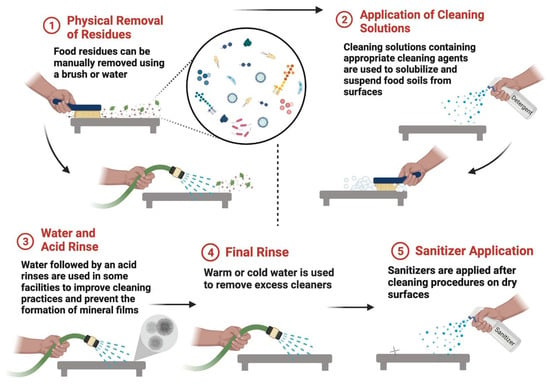
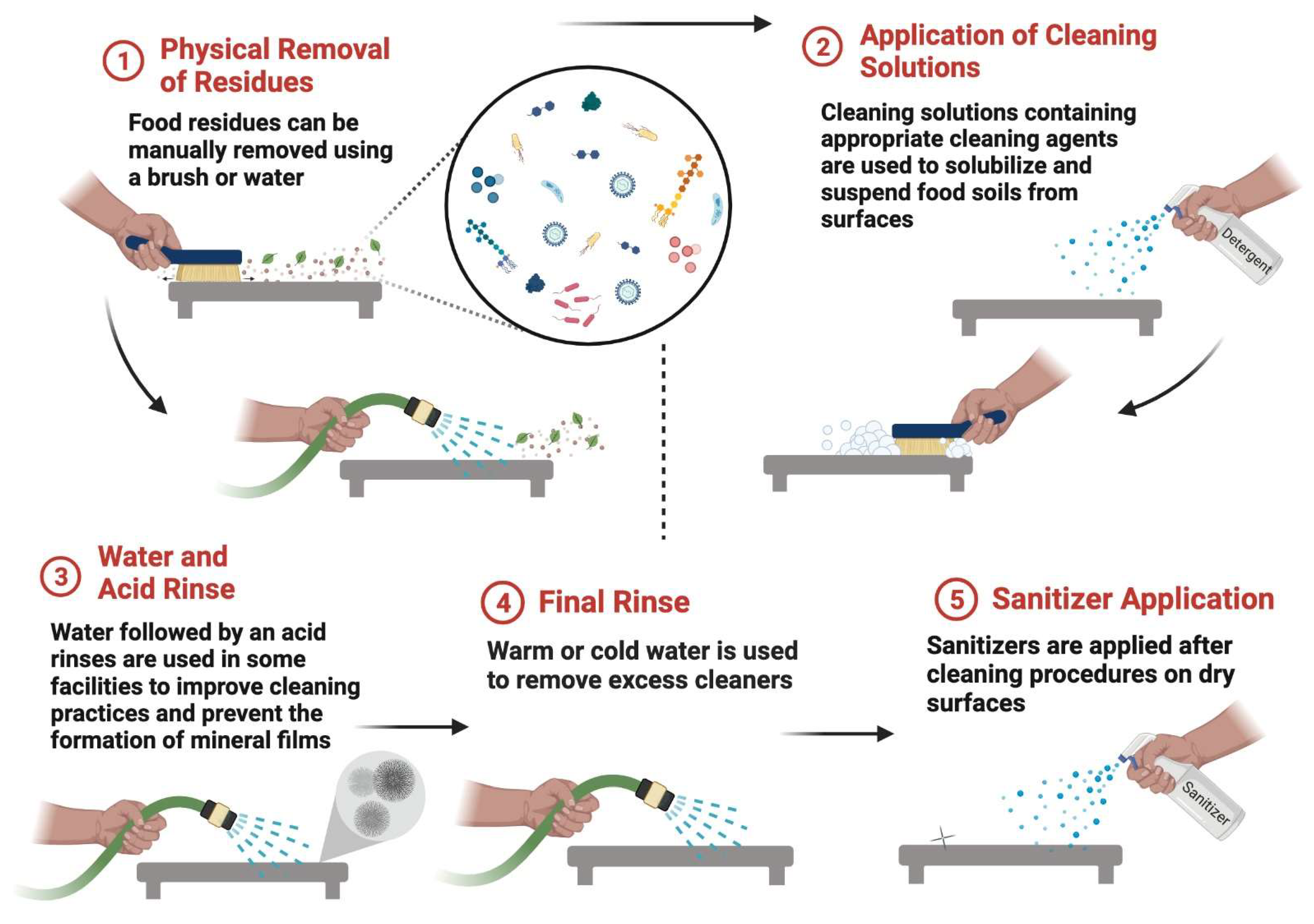

Disclaimer/Publisher’s Note: The statements, opinions and data contained in all publications are solely those of the individual author(s) and contributor(s) and not of MDPI and/or the editor(s). MDPI and/or the editor(s) disclaim responsibility for any injury to people or property resulting from any ideas, methods, instructions or products referred to in the content. |
© 2026 by the authors. Licensee MDPI, Basel, Switzerland. This article is an open access article distributed under the terms and conditions of the Creative Commons Attribution (CC BY) license.