


Simple Summary
Gastrointestinal parasites are a major concern in sheep and goats, and increasing resistance to anthelmintic drugs has encouraged the search for complementary control options. Cassia fistula contains several bioactive metabolites that have shown activity against different stages of these parasites. This review examines its potential as a source of anthelmintic compounds and highlights the main gaps that must be addressed before practical use in small ruminants can be considered.
Abstract
Gastrointestinal nematodes represent a major challenge to the health and productivity of small ruminants, particularly in the context of increasing resistance to conventional anthelmintic drugs. In this regard, medicinal plants are considered a potential source of compounds with antiparasitic activity. Cassia fistula L. (Fabaceae) is widely used in traditional medicine and contains anthraquinones, flavonoids, tannins, saponins, terpenoids, and other secondary metabolites. This narrative review summarizes the available information on its botanical characteristics, phytochemical composition, and anthelmintic potential against gastrointestinal nematodes of sheep and goats. A literature search was conducted in Scopus, Web of Science, PubMed, ScienceDirect, and Google Scholar for publications available up to August 2026. Studies addressing the phytochemical composition of C. fistula and its experimental anthelmintic activity against gastrointestinal nematodes of small ruminants were prioritized, while publications lacking relevant phytochemical or parasitological information were excluded. A total of 52 references were cited in the manuscript. Current studies report effects on egg hatching, larval development and migration, and adult survival; however, the experimental evidence remains limited and heterogeneous, with a predominance of in vitro assays and only a few in vivo studies. Differences in plant organs, extraction methods, concentrations, and parasite models make direct comparisons among studies difficult. Further research is therefore needed to standardize preparations, identify the metabolites responsible for the observed activity, and confirm their efficacy and safety in small ruminants.
1. Introduction
Gastrointestinal nematodes are among the major health problems affecting grazing ruminants because of their impact on animal health, welfare, and productivity [1]. The most important genera include Haemonchus, Trichostrongylus, Teladorsagia, Cooperia, Oesophagostomum, and Nematodirus. Infections with these nematodes can cause anemia, diarrhea, loss of body condition, and reduced weight gain or milk production [2]. In sheep and goats, severe infections with H. contortus can lead to serious and even fatal disease. In addition, both clinical and subclinical infections cause economic losses through reduced animal performance and increased costs associated with diagnosis, treatment, and control [3].
The control of these parasites relies primarily on synthetic anthelmintics, such as benzimidazoles, levamisole, and macrocyclic lactones [4]. However, their frequent use, underdosing, and repeated application of the same chemical class have favored the selection of resistant parasite populations, including resistance to multiple drug classes [5]. This situation reduces treatment efficacy and has encouraged the search for complementary strategies, including medicinal plants and their bioactive metabolites [6].
Medicinal plants represent an important source of compounds with potential activity against gastrointestinal nematodes. Several extracts have shown effects on egg hatching, larval development, and parasite motility. This activity has been particularly associated with condensed tannins, although flavonoids, saponins, and terpenoids have also been suggested to contribute [7]. The response may vary depending on the plant species and organ, the extraction procedure, the chemical composition of the preparation, and the parasite stage evaluated [8]. Therefore, in vitro findings should be complemented by chemical characterization of the extracts and controlled animal studies to confirm their efficacy and safety [9].
The Fabaceae family comprises numerous species of nutritional, medicinal, and veterinary importance, several of which have been investigated for their anthelmintic activity and for the presence of flavonoids, tannins, saponins, terpenoids, and other secondary metabolites with potential antiparasitic effects [10]. Within this family, the genus Cassia has received considerable attention because of its ethnomedicinal use and the diversity of reported bioactive compounds, including anthraquinones, flavonoids, and other phenolic constituents [11].
Within this genus, Cassia fistula L. is a deciduous tree of the Fabaceae family, native to South Asia and currently cultivated in many tropical regions for its showy clusters of yellow flowers [12]. Commonly known as the “golden shower tree”, the species has a long history of use in traditional medicine [13]. Its leaves, flowers, bark, roots, seeds, and fruits have been used to treat constipation, gastrointestinal disorders, fever, inflammation, wounds, skin conditions, and infections. Among these plant parts, the fruit pulp is particularly recognized for its traditional use as a laxative [14].
This plant species contains anthraquinones, flavonoids, tannins, saponins, terpenoids, sterols, and other phenolic compounds [15]. Some of these chemical groups may contribute to its effects on nematode egg hatching, development, and survival. Indeed, extracts and preparations obtained from C. fistula have shown activity against gastrointestinal nematodes of sheep and goats [16,17,18].
Although C. fistula has attracted interest because of its biological properties, information on its phytochemistry and anthelmintic potential against gastrointestinal nematodes of small ruminants remains scattered. Differences in plant organs, extraction methods, chemical characterization, and experimental models make it difficult to compare results and assess the magnitude of this potential. In addition, the available evidence is derived mainly from in vitro studies, whereas data on efficacy and safety in animals remain limited.
To our knowledge, the phytochemical and experimental evidence specifically related to the anthelmintic potential of C. fistula against gastrointestinal nematodes of small ruminants has not previously been integrated into a review focused on this plant–parasite interaction.
Given the currently limited in vivo evidence, C. fistula should not be considered a replacement for conventional anthelmintics. Rather, its main relevance lies in its potential as a complementary approach and as a source of bioactive compounds that may contribute to the development of new anthelmintic strategies, particularly in the context of increasing drug resistance.
Therefore, this narrative review aims to integrate and critically analyze the available information on the botany, phytochemistry, and anthelmintic potential of C. fistula against gastrointestinal nematodes of small ruminants, as well as its possible mechanisms of action, current limitations, and prospects for veterinary application.
2. Methods
This narrative review integrates the available scientific literature on Cassia fistula, with emphasis on its phytochemical composition and the experimental evidence of anthelmintic activity against gastrointestinal nematodes of small ruminants.
The literature search was conducted in Scopus, Web of Science, PubMed, ScienceDirect, and Google Scholar, considering publications available up to August 2026. The search terms included “Cassia fistula”, “phytochemistry”, “secondary metabolites”, “anthelmintic activity”, “gastrointestinal nematodes”, “small ruminants”, “sheep”, “goats”, and “Haemonchus contortus”, used individually and in different combinations. Publications written in English and Spanish were considered.
Studies were considered eligible when they provided information relevant to the botanical characteristics, phytochemical composition, secondary metabolites, anthelmintic activity, mechanisms of action, or toxicological aspects of C. fistula related to the scope of this review. For the analysis of anthelmintic activity, priority was given to experimental studies evaluating extracts, fractions, or other preparations of C. fistula against gastrointestinal nematodes of sheep and goats. Studies lacking relevant botanical, phytochemical, parasitological, or toxicological information, as well as publications unrelated to C. fistula or to gastrointestinal nematodes of small ruminants, were excluded. A total of 52 publications were included in the final review.
Records identified through the database searches were screened by title and abstract to assess their relevance to the scope of the review. Potentially relevant publications were subsequently evaluated in full text, and studies meeting the eligibility criteria were included in the qualitative synthesis. Duplicate records and publications that did not meet the inclusion criteria were excluded.
For each anthelmintic study, information was extracted on the plant organ used, the type of preparation or extract, the parasite or experimental model evaluated, the assay performed, the concentration or dose used, and the main effect observed. Because of the limited number of available studies and the heterogeneity in experimental designs, extraction methods, parasite models, and outcome measures, the results were analyzed descriptively and comparatively, without conducting a meta-analysis.
3. Botanical and Ethnomedicinal Overview
3.1. Botanical Characteristics
Cassia fistula is an accepted species belonging to the kingdom Plantae, phylum Streptophyta, class Equisetopsida, subclass Magnoliidae, order Fabales, and family Fabaceae. It belongs to the genus Cassia and was formally described by Carl Linnaeus in Species Plantarum in 1753 [12].
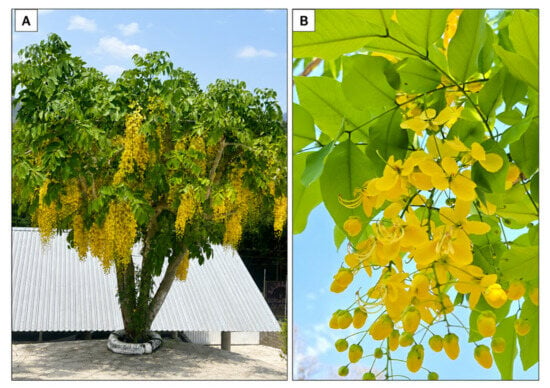
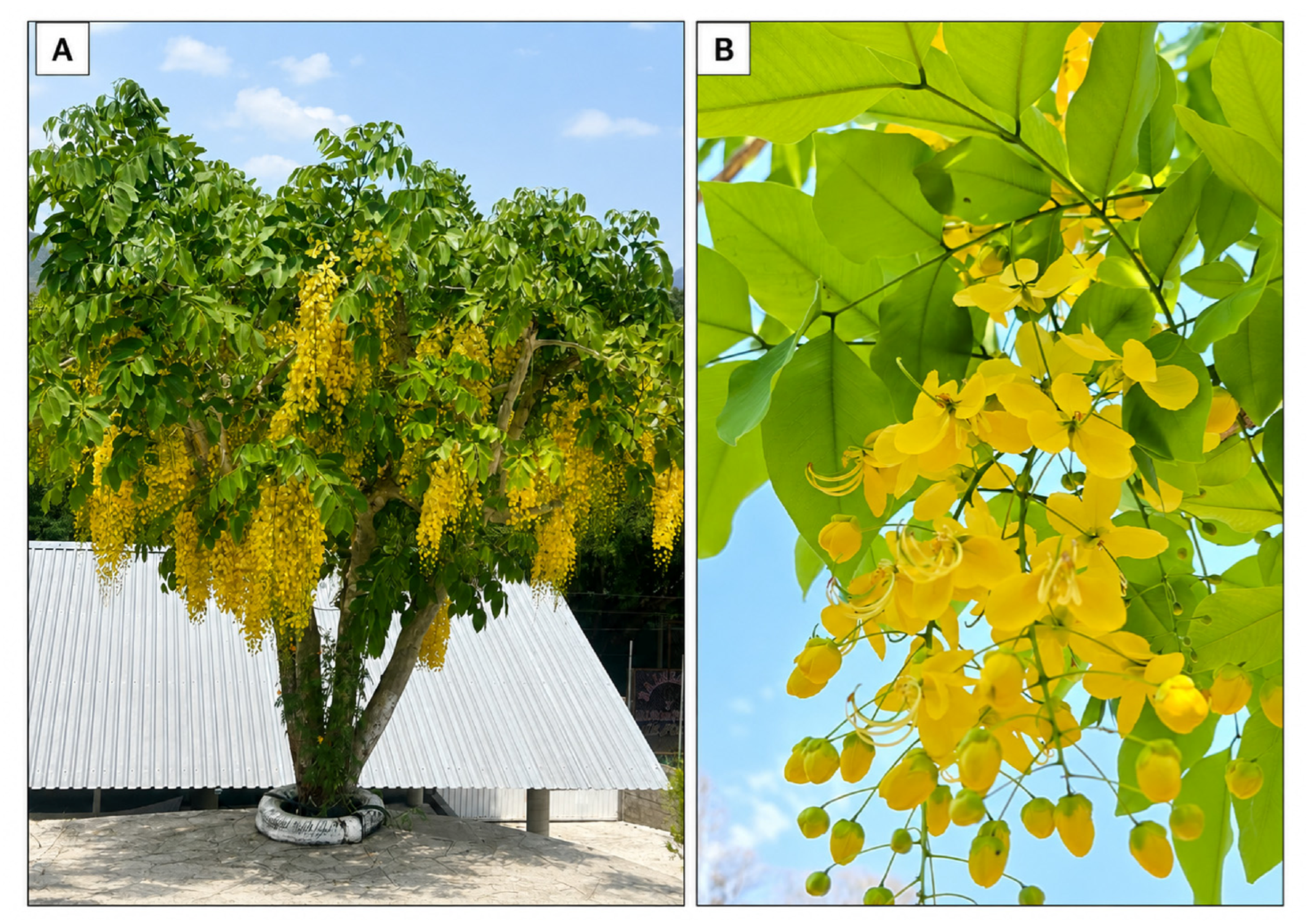
Cassia fistula is a medium-sized deciduous tree, usually reaching 6–15 m in height, with a broad crown and conspicuous yellow flowering (Figure 1A). The leaves are pinnate, while the bright yellow flowers and flower buds are arranged in long, pendulous racemes (Figure 1B). It has a straight trunk and grayish, smooth bark during the early stages of growth, which becomes darker, brown, and rough with maturity. Its branches are slender and spreading, forming an open crown [19]. During the dry season, the tree may lose much of its foliage and produce abundant flowering before or during the emergence of new leaves.
Figure 1.
Morphological characteristics of Cassia fistula: (A) general habit of the tree during flowering and (B) detail of the leaves, yellow flowers, and flower buds arranged in pendulous racemes. Photographs by the authors.
The leaves are alternate, compound, and paripinnate, generally 30–40 cm long, with three to eight pairs of opposite leaflets that are ovate to oblong–ovate in shape. The leaflets are glossy green on the upper surface and lighter on the underside. The flowers are bright yellow and arranged in long, loose, pendulous racemes. Each flower has five petals and reflexed sepals during anthesis. The flowering period varies according to climatic conditions and geographic region, but generally occurs from March to June [20].
The fruit is a cylindrical, elongated, indehiscent legume that changes from green to dark brown or black during ripening. It has hard, woody walls, may reach approximately 20–75 cm in length, and contains numerous seeds separated by transverse partitions and surrounded by a dark pulp [21]. The seeds are ovoid, slightly flattened, with a hard, shiny, and slightly rough surface. They measure approximately 8.3–9.5 mm in length, 6.9–7.7 mm in width, and 3.2–4.6 mm in thickness, with an individual mass of approximately 0.14–0.23 g [22].
3.2. Traditional Uses and Veterinary Relevance
Cassia fistula has been used for centuries in traditional medical systems of South Asia, particularly Ayurveda and Unani medicine, where different plant organs are used according to the condition being treated [23]. The pulp of ripe fruits is one of the best-known preparations because of its laxative and purgative properties. Leaves, flowers, seeds, bark, and roots have also been used to treat digestive disorders, fever, inflammation, abdominal pain, wounds, and various skin conditions [24]. This diversity of uses indicates that the medicinal value attributed to the species does not depend on a single plant organ, but rather on preparations that may differ considerably in their chemical composition and biological activity.
The selection of the plant organ and the method of preparation may vary depending on species availability, cultural practices, and knowledge transmitted within each community. In addition, factors such as the origin of the plant material, harvesting time, processing, solvent choice, and extraction conditions can influence the chemical composition and biological activity of the preparations [25]. This variability makes it difficult to compare traditional uses and reproduce their potential therapeutic effects. Therefore, ethnomedicinal information should be considered a starting point for guiding research, while any potential application requires proper identification, quality control, and standardization of the plant material [26].
In livestock production, medicinal plants continue to be used by rural communities to prevent or treat animal diseases, particularly in regions where access to commercial drugs and veterinary services is limited [27]. This knowledge may provide a valuable source for identifying therapeutic alternatives adapted to local conditions. However, its mainly oral transmission, the variability of preparations, and the lack of standardized dosing criteria make it difficult to determine their effectiveness and potential risks [28]. This limitation is especially relevant in animals raised for meat or milk production, where toxicity, residues, and the acceptability of animal-derived products must also be considered.
In the particular case of C. fistula, the available evidence does not support considering its use against gastrointestinal nematodes of ruminants as a widely established ethnoveterinary practice. Its veterinary relevance is derived mainly from experimental evaluations of extracts and fractions obtained from different plant organs against nematodes of sheep and goats [17,18]. These findings support further investigation of the species as a potential source of antiparasitic compounds, but they are still insufficient to recommend its direct use in animal production systems. Progress toward practical application will require standardized preparations, effective dose determination, safety assessment, and confirmation of activity through controlled animal studies [29].
4. Secondary Metabolites
The phytochemical composition of C. fistula is diverse and may vary depending on the plant organ and extraction procedure. Phenolic compounds, flavonoids, condensed tannins, and saponins have been quantified in the fruit, confirming the presence of several metabolite groups with potential biological activity [30]. Anthraquinones, glycosides, terpenoids, and sterols have also been reported in other plant organs, although their distribution and abundance are not uniform [31]. This variability should be considered when comparing phytochemical studies and when relating extract composition to potential anthelmintic activity.
4.1. Anthraquinones and Related Compounds
Anthraquinones are phenolic metabolites widely distributed among plant species and represent one of the most characteristic chemical groups in C. fistula. In this species, both free anthraquinones and glycosylated derivatives have been identified, mainly in leaves and fruits [32]. Among the reported compounds, rhein (1,8-dihydroxy-3-carboxyanthraquinone) is particularly noteworthy; this anthraquinone has been identified and quantified in the pod pulp of C. fistula by high-performance liquid chromatography (HPLC) [33]. These findings indicate that the distribution of this chemical group may vary among different plant tissues.
The presence of anthraquinones in C. fistula is not uniform throughout the plant’s developmental cycle. Seasonal variations in the content of hydroxyanthraquinone glycosides have been observed in leaves and flowers, with higher concentrations occurring during certain periods [34]. Rhein has also been isolated from the flowers of the species, confirming that this metabolite is not restricted to the pod pulp [35]. These differences should be considered when comparing phytochemical studies conducted with different plant organs, since extract composition may vary according to the tissue analyzed and the time of collection.
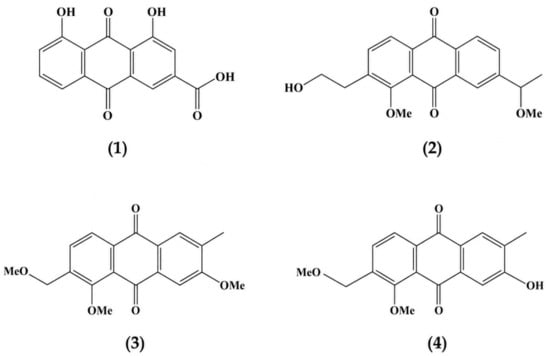
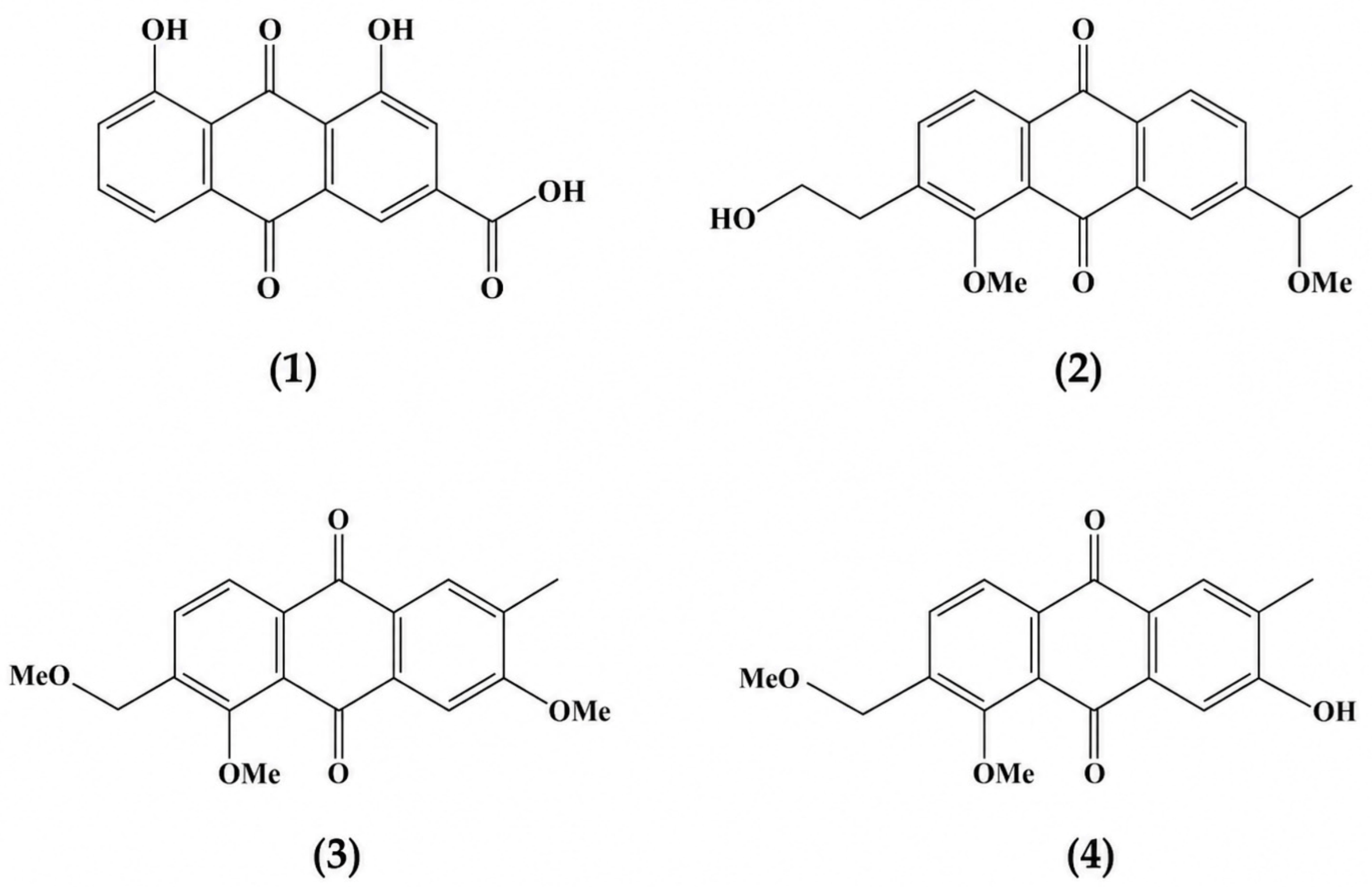
In addition to rhein and its derivatives, phytochemical studies of C. fistula have led to the identification of less common anthraquinones. Three new compounds, named fistulaquinones A–C, were isolated from the twigs together with other previously known derivatives [36]. Their structures were elucidated using spectroscopic techniques, mainly nuclear magnetic resonance and mass spectrometry. The isolation of these compounds expands current knowledge of the structural diversity of anthraquinones present in the species and shows that its chemical profile is not limited to the major compounds traditionally studied. The chemical structures of rhein and fistulaquinones A–C are shown in Figure 2. Overall, the available evidence indicates that C. fistula has a diverse anthraquinone profile that varies among plant organs. This heterogeneity should be considered when comparing extracts and when attempting to relate specific metabolites to their potential biological activities.
Figure 2.
Chemical structures of representative anthraquinones reported in C. fistula: (1) rhein; (2) fistulaquinone A; (3) fistulaquinone B; and (4) fistulaquinone C. Chemical structures were drawn by the authors based on the compounds reported in the cited literature.
4.2. Flavonoids and Other Phenolic Compounds
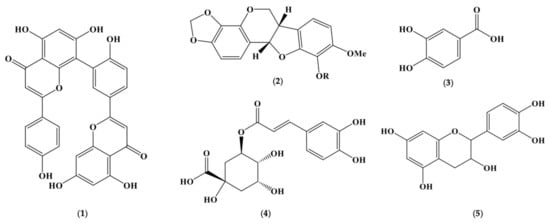
Flavonoids and phenolic compounds constitute an important fraction of the phytochemical profile of C. fistula and are distributed across both vegetative and reproductive organs. The contents of total phenolics, flavonoids, and proanthocyanidins vary considerably among bark, leaves, twigs, flowers, and fruits, confirming that the phenolic composition of the species depends on the plant tissue analyzed [37]. This variability is relevant when comparing extracts, since organs with higher phenolic contents may exhibit different chemical and biological profiles. The main flavonoids and phenolic compounds reported in C. fistula are summarized in Figure 3.
Figure 3.
Chemical structures of representative flavonoids and other phenolic compounds reported in Cassia fistula: (1) amentoflavone; (2) fistulaflavonoid B; (3) protocatechuic acid; (4) chlorogenic acid; and (5) catechin. Chemical structures were drawn by the authors based on the compounds reported in the cited literature.
Isolation studies have identified structurally diverse flavonoids in the bark and stems of C. fistula. Among them, two new compounds, fistulaflavonoids B and C, were described together with other previously known flavonoids [38]. The identification of these metabolites expanded current knowledge of the chemical diversity of woody tissues and showed that the species contains structurally more complex flavonoids than those detected through general phytochemical analyses.
The leaves also represent an important source of phenolic compounds. Amentoflavone, a biflavonoid whose structure was confirmed using spectroscopic techniques, including UV–Vis, FTIR, and nuclear magnetic resonance, has been isolated from the leaves [39]. The presence of this type of molecule, together with other flavonoids and phenolic derivatives, highlights the structural diversity of this chemical fraction in C. fistula.
In addition to flavonoids, several phenolic acids have been identified in C. fistula, particularly in flower extracts. HPLC analysis quantified protocatechuic acid, vanillic acid, gallic acid, p-coumaric acid, ferulic acid, and chlorogenic acid, with protocatechuic acid being one of the predominant components [40]. These findings show that the phenolic fraction of the species is not limited to flavonoids and includes metabolites of different chemical classes.
Phenolic compounds of interest have also been identified in other C. fistula preparations. HPLC analysis of a plant fraction showed catechin, epicatechin, and chlorogenic acid as the predominant compounds [41]. The identification of these metabolites further supports the chemical diversity of the phenolic fraction and highlights that its composition may depend on both the plant organ and the procedure used to obtain the extract.
Overall, the available evidence shows that C. fistula possesses a chemically diverse phenolic fraction comprising flavonoids, biflavonoids, proanthocyanidins, and phenolic acids. Their heterogeneous distribution among different plant organs and preparations should be considered when comparing phytochemical studies and when establishing possible relationships between chemical composition and the biological activities of the species.
4.3. Tannins, Saponins and Terpenoids
Tannins constitute an important fraction of the secondary metabolites of C. fistula, and their content varies among different plant organs. Differences in total tannin content have been quantified in extracts from bark, stems, leaves, and roots, with the bark showing one of the highest concentrations [42]. This uneven distribution should be considered when comparing extracts, particularly when attempting to relate chemical composition to a specific biological activity.
Saponins have also been detected in different preparations of C. fistula. Phytochemical analysis of aqueous and chloroform extracts of the fruit pulp confirmed their presence, with a stronger response observed in the chloroform extract [43]. Although this group has received less attention than anthraquinones and flavonoids, its presence broadens the chemical diversity of the fruit and suggests that extract composition is not determined exclusively by phenolic metabolites.
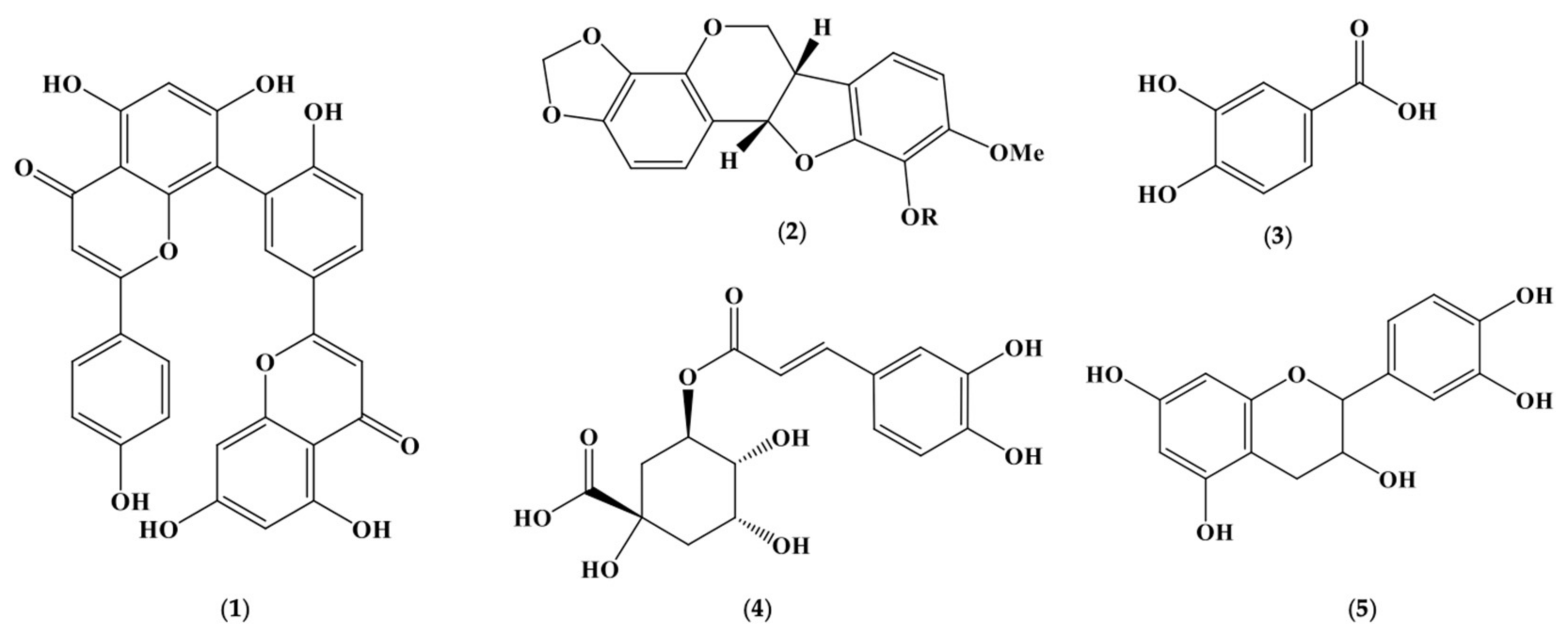
The lipophilic fraction of C. fistula also contains various terpenoids and sterols. GC–MS analysis identified β-sitosterol, stigmasterol, fucosterol, betulinic acid, lupeol, α-amyrin, friedelin, and other constituents in pulp and seed oils [44]. The proportions of these compounds differed between the two oils, further highlighting the influence of the plant organ on the chemical profile of the species (Figure 4).
Figure 4.
Chemical structures of representative terpenoids and sterols identified in Cassia fistula: (1) β-sitosterol, (2) lupeol, and (3) betulinic acid. Chemical structures were drawn by the authors based on the compounds reported in the cited literature.
Overall, tannins, saponins, and terpenoids contribute to the phytochemical diversity of C. fistula and show variable distribution among plant organs and extract types. This heterogeneity should be considered when interpreting biological studies and when attempting to associate a specific activity with particular groups of metabolites.
4.4. Phytochemical–Anthelmintic Relationships
The relationship between the phytochemical composition of C. fistula and its anthelmintic activity is still not well defined. The species contains anthraquinones, flavonoids, tannins, saponins, terpenoids, and other metabolites whose distribution varies among plant organs and according to the extraction method [30,31]. This variability may help explain why different preparations of the plant produce different responses in bioassays.
Available studies have reported activity for extracts from leaves, pods, and fruits, as well as for protein fractions, but these effects cannot yet be attributed to specific compounds [16,17,18,29]. Although some groups, such as tannins, flavonoids, and saponins, are possible candidates based on the anthelmintic activity described in other models, their direct contribution to the activity of C. fistula extracts remains to be demonstrated. Future studies should therefore integrate phytochemical profiling with bio-guided fractionation and standardized bioassays. This approach would help identify the compounds or combinations of metabolites associated with the observed activity and select more reproducible preparations for subsequent in vivo evaluation.
5. Anthelmintic Potential
The anthelmintic activity of C. fistula has been evaluated using extracts, fractions, and other preparations obtained from different plant organs. The available studies consist mainly of in vitro assays targeting different stages of gastrointestinal nematodes, together with a smaller number of in vivo evaluations in sheep and goats [16,17,18,29]. Overall, these studies indicate that the antiparasitic response may depend on the type of plant material, the extraction procedure, and the parasite stage evaluated.
Direct comparison among studies should be made with caution because they differ in the nematode species examined, experimental models, concentrations or doses used, and criteria applied to assess activity. In addition, not all extracts have been chemically characterized to the same extent, making it difficult to attribute the observed effects to specific metabolites. For this reason, the available evidence is discussed separately below for in vitro and in vivo studies.
5.1. In Vitro Evidence
As summarized in Table 1, the available in vitro studies show that C. fistula can affect different stages of gastrointestinal nematodes. Wahyuni et al. [16] reported inhibition of L3 larval migration in H. contortus using an ethanolic leaf extract, whereas Silva et al. [17] observed effects on egg hatching and larval development with leaf protein fractions. Zaragoza-Bastida et al. [18] found more moderate activity with a hydroalcoholic pod extract, while Anwer et al. [29] reported greater activity of the ethanolic fruit extract against eggs and adult H. contortus. Overall, these findings indicate that the response depends on the plant organ, type of preparation, concentration, and parasite stage evaluated.
Table 1.
Experimental evidence of the anthelmintic activity of Cassia fistula against gastrointestinal nematodes of small ruminants.
Although methodological differences prevent a direct comparison of potency among preparations, fruit extracts have shown comparatively strong anthelmintic activity in the currently available studies. However, this observation should be interpreted cautiously because direct comparisons among plant organs are limited by differences in extraction procedures, concentrations or doses, parasite populations, and experimental assays. Therefore, the available evidence does not allow the superiority of one plant organ over another to be established.
The available studies differ substantially in experimental design, parasite species and stage, plant material, extraction procedure, concentration, exposure time, and outcome measure. Consequently, larval migration inhibition, egg hatch inhibition, larval development inhibition, adult mortality, and fecal egg count reduction should not be interpreted as directly comparable measures of anthelmintic potency. Differences in replication, parasite origin, and control treatments further limit comparisons among studies. Therefore, the reported effects should be interpreted within the specific experimental context of each study.
5.2. In Vivo Evidence
The in vivo evidence remains limited and is currently based mainly on a single study. Anwer et al. [29] reported a reduction in fecal egg counts in naturally infected goats treated with an ethanolic fruit extract, with the greatest effect occurring at the highest dose evaluated (Table 1). Although this finding suggests anthelmintic activity under in vivo conditions, it should be interpreted with caution. The study involved naturally infected animals, and the parasite population may therefore have included different gastrointestinal nematode species. In addition, interpretation of the results is constrained by the study design, sample size, control treatments, and duration of follow-up. Importantly, a reduction in fecal egg count reflects a decrease in egg output and should not be interpreted directly as evidence of parasite elimination, clinical improvement, or therapeutic efficacy. Therefore, this result should be considered preliminary evidence rather than definitive confirmation of efficacy.
Overall, the available evidence suggests that C. fistula can affect different stages of gastrointestinal nematodes; however, the magnitude of the effect varies considerably among preparations and experimental models. Among the currently available studies, the ethanolic fruit extract has shown comparatively high activity, but this observation should not be interpreted as evidence of superiority because direct comparisons are limited by differences in extraction procedures, concentrations or doses, parasite populations, and experimental designs.
Although the available in vitro studies support the anthelmintic potential of C. fistula, these findings cannot be directly extrapolated to in vivo efficacy. Further controlled studies in sheep and goats are required, using adequate control groups, larger sample sizes, defined parasite populations, longer follow-up periods, and both parasitological and clinical outcome measures to confirm efficacy, establish dose–response relationships, and determine the potential application of C. fistula in veterinary practice.
6. Possible Mechanisms of Anthelmintic Action
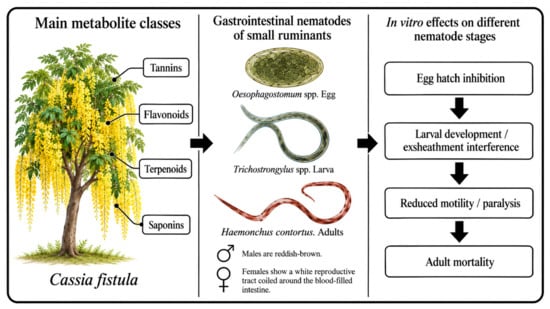
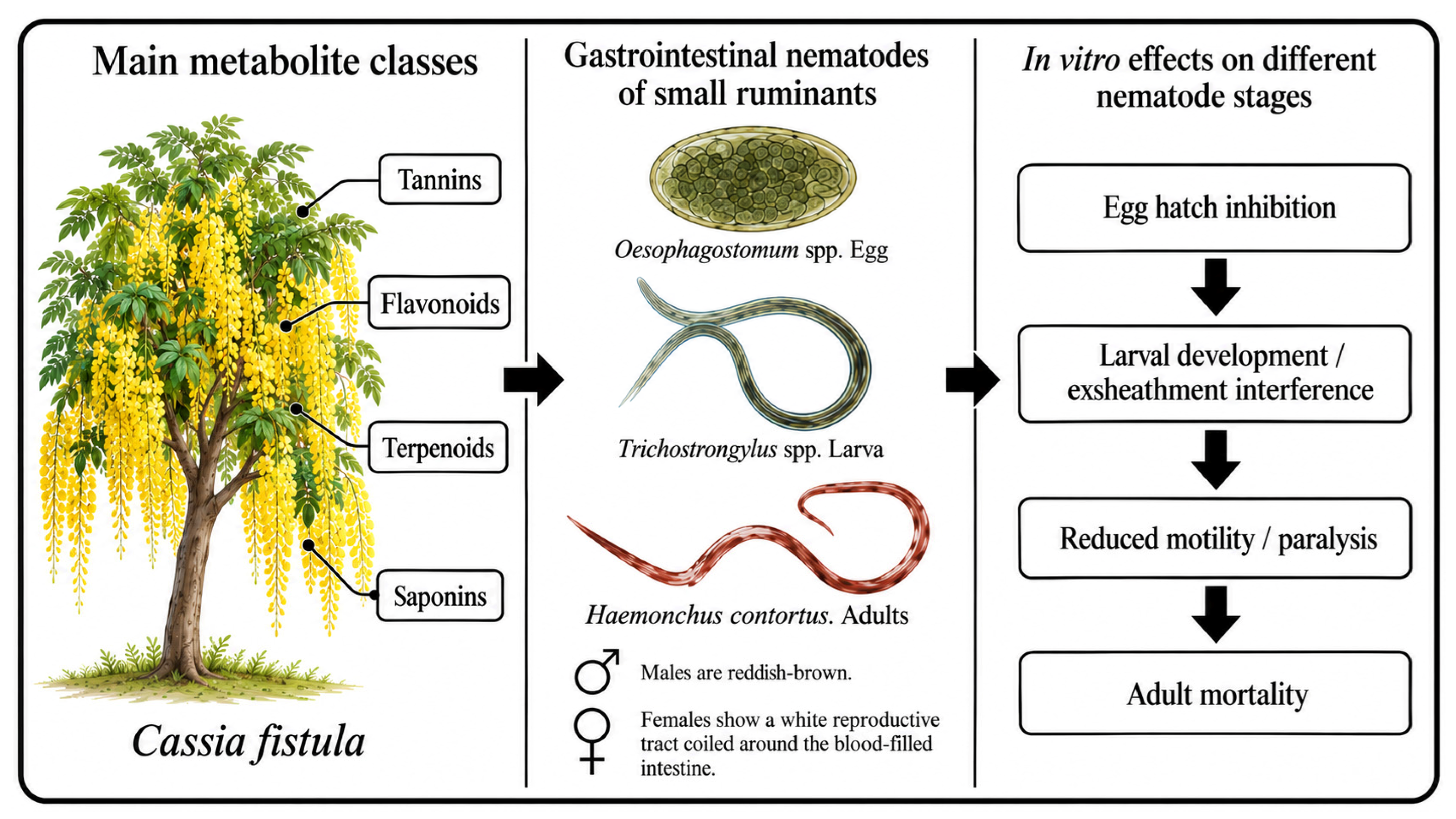
The specific mechanisms responsible for the anthelmintic effects of C. fistula have not yet been established. Therefore, the mechanisms discussed below should be considered hypothetical and are inferred mainly from studies of secondary metabolites or other plant species rather than from direct mechanistic evidence in C. fistula. However, its phytochemical composition includes tannins, flavonoids, saponins, terpenoids, and other secondary metabolites that have shown activity against different stages of gastrointestinal nematodes in other experimental models. Thus, the activity observed in C. fistula extracts may be related to the individual or combined effects of different chemical groups (Figure 5).
Figure 5.
Proposed hypothetical mechanisms of anthelmintic action associated with the main secondary metabolites reported in Cassia fistula. These mechanisms are based primarily on evidence from other plant species or isolated compounds and have not yet been directly demonstrated in C. fistula. The figure was created by the authors with the assistance of generative AI tools and subsequently reviewed for scientific accuracy.
Tannins may interact with proteins on the parasite surface and larval sheath, thereby interfering with the exsheathment of infective larvae [45]. In addition, their combination with flavonoids may produce additive or synergistic effects against H. contortus [46]. Flavonoids have also shown ovicidal and larvicidal activity; for example, isorhamnetin inhibited egg hatching and affected H. contortus larvae [47].
Saponins can disrupt biological membranes and reduce egg hatching and larval motility [48]. Likewise, mixtures of saponins from Medicago spp. have shown activity against gastrointestinal nematodes of sheep [49]. Terpenoids and other lipophilic compounds may also contribute by affecting parasite motility and surface structures.
Overall, inhibition of egg hatching, larval development and migration, reduced motility, and adult mortality have been experimentally observed with C. fistula preparations. In contrast, mechanisms involving interference with larval exsheathment, alteration of the cuticle or membranes, and interactions with parasite proteins remain hypothetical, as they are based mainly on studies involving other plant species or isolated metabolites. Therefore, bio-guided studies are still needed to identify the compounds responsible for the activity of C. fistula and their specific targets of action.
7. Safety and Toxicological Considerations
The safety of C. fistula depends on the plant organ, type of extract, dose, and duration of exposure. In acute toxicity studies, fruit and seed extracts showed low oral toxicity in rodents. An ethanolic fruit extract produced no mortality at doses up to 5000 mg/kg, and its administration for 28 days at doses of 250–1000 mg/kg caused no relevant changes in hematological, biochemical, or histological parameters [50]. Similarly, a methanolic seed extract administered at doses up to 5000 mg/kg produced no mortality or significant alterations in mice [51].
However, prolonged exposure may produce different effects. In rats treated for 90 days with an ethanolic bark extract, the 1000 mg/kg dose caused histological alterations in the liver and kidneys, although these lesions were reversible after a recovery period [52]. These findings indicate that the absence of acute toxicity does not necessarily guarantee safety during prolonged treatment.
In addition, the fruit pulp contains anthraquinone derivatives associated with its laxative effect, and therefore their concentration and potential physiological impact should be considered when developing preparations intended for veterinary use [23,33]. Consequently, before proposing C. fistula as an anthelmintic alternative for small ruminants, specific studies on toxicity, tolerability, repeated administration, and potential residues in animal-derived products are required [9].
Most of the available toxicological evidence for C. fistula has been obtained in rodents, and direct safety data in sheep and goats remain limited. Therefore, these findings cannot be extrapolated directly to food-producing small ruminants. Before veterinary application can be considered, species-specific studies should evaluate repeated administration, reproductive and developmental effects, tolerability, and potential cumulative toxicity. In addition, residue depletion studies are required to determine whether plant-derived compounds or their metabolites persist in edible tissues or milk and to establish appropriate withdrawal periods. These aspects are essential to assess not only animal safety but also the safety of products intended for human consumption.
8. Future Perspectives
The anthelmintic potential of C. fistula requires further experimental validation before its possible application in small ruminants can be considered. Given the limited number of available studies and the considerable variability in extraction methods, doses, and parasite models, its practical veterinary application remains uncertain. At the current stage of evidence, C. fistula should therefore be considered primarily as a potential complementary strategy and as a source of bioactive compounds for the development of new anthelmintic agents, rather than as a replacement for conventional anthelmintic treatments. Future studies should therefore prioritize controlled and standardized in vivo trials in sheep and goats to establish dose–response relationships, duration of effect, reproducibility, efficacy, and safety under different experimental conditions [9,29].
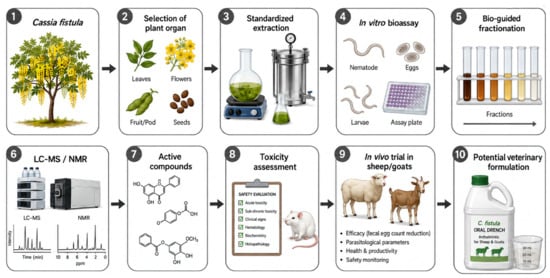
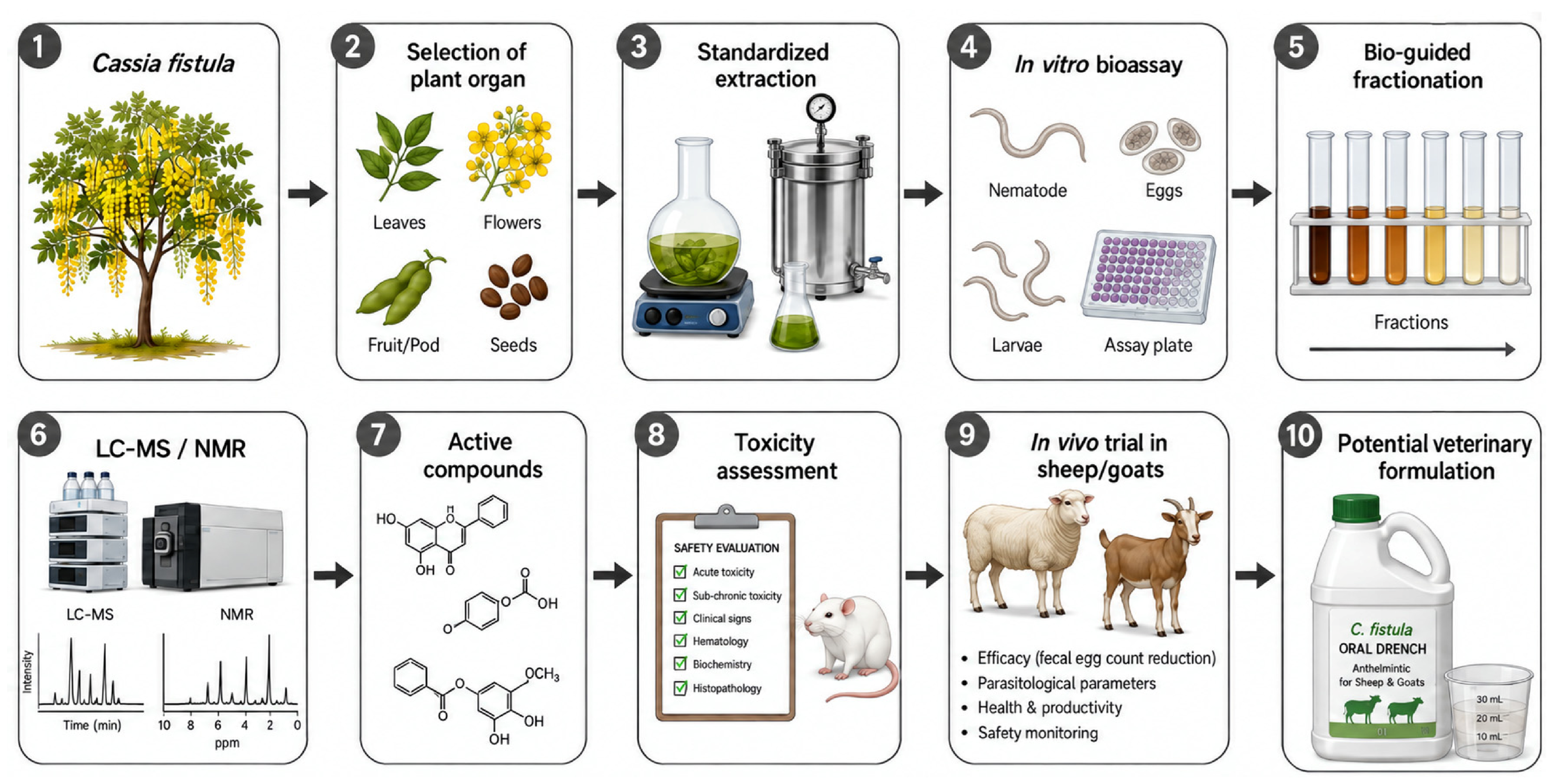
It will also be important to advance the standardization of extracts and their chemical characterization. Identifying the metabolites associated with the observed activity would allow the selection of more reproducible preparations and guide bio-guided studies aimed at isolating and evaluating active compounds. This is particularly relevant because of the phytochemical variation observed among plant organs and extraction methods in C. fistula [30,31]. In this context, a possible research pathway integrating plant organ selection, standardized extraction, in vitro bioassays, bio-guided fractionation, identification of active compounds, toxicological assessment, and in vivo validation is summarized in Figure 6.
Figure 6.
Proposed pathway for the investigation and validation of the anthelmintic potential of C. fistula, from plant material selection and standardized extraction to the identification of active compounds, toxicological assessment, and in vivo validation. The figure was created by the authors with the assistance of generative AI tools and subsequently reviewed for scientific accuracy.
Finally, future studies should integrate efficacy, mechanisms of action, and safety. In addition to confirming the antiparasitic effect, it will be necessary to evaluate tolerability during repeated treatments, potential adverse effects, and residues in animal-derived products. The integration of phytochemical, parasitological, and toxicological studies will help determine more precisely whether C. fistula can be incorporated into complementary strategies for the control of gastrointestinal nematodes in small ruminants.
9. Conclusions
Cassia fistula is a species with a diverse phytochemical composition, characterized by the presence of anthraquinones, flavonoids, tannins, terpenoids, and other secondary metabolites of potential antiparasitic interest. The available experimental evidence indicates that different preparations of the plant can affect egg hatching, larval development and migration, as well as the survival of gastrointestinal nematodes of small ruminants.
However, the available evidence remains limited and is derived mainly from in vitro studies, while in vivo evaluations are still scarce. Although the available in vitro studies support the anthelmintic potential of C. fistula, these findings cannot be directly extrapolated to efficacy under in vivo conditions. In addition, variability among plant organs, extraction methods, and chemical composition makes it difficult to determine which metabolites contribute directly to the observed effects.
Overall, C. fistula represents a plant source of interest in the search for anthelmintic agents; however, its potential application in small ruminants requires greater phytochemical standardization, identification of the active compounds, and controlled studies to confirm its efficacy and safety.
In this context, the main challenge is no longer simply to demonstrate that C. fistula possesses anthelmintic activity, but rather to identify which preparations and metabolites are responsible for the observed effects and to determine whether this activity can be reproduced safely and consistently in small ruminants.
Author Contributions
Conceptualization, B.M.M.-R., C.S.-L. and E.J.D.-N.; methodology, B.M.M.-R. and C.S.-L.; investigation, B.M.M.-R., E.T.-H., M.Á.M.-C., A.E.Z.-G., L.A.C.-A., L.J.T.-E. and M.E.-R.; data curation, B.M.M.-R., E.T.-H., M.Á.M.-C., A.E.Z.-G., L.A.C.-A., L.J.T.-E. and M.E.-R.; validation, C.S.-L., M.G.-C., A.Z., D.O.S.-S. and E.J.D.-N.; writing—original draft preparation, B.M.M.-R. and C.S.-L.; writing—review and editing, C.S.-L., E.T.-H., M.G.-C., M.Á.M.-C., A.E.Z.-G., L.A.C.-A., L.J.T.-E., M.E.-R., A.Z., D.O.S.-S. and E.J.D.-N.; visualization, B.M.M.-R. and C.S.-L.; supervision, C.S.-L. and E.J.D.-N.; project administration, C.S.-L. All authors have read and agreed to the published version of the manuscript.
Funding
This research received no external funding.
Institutional Review Board Statement
Not applicable.
Informed Consent Statement
Not applicable.
Data Availability Statement
No new data were created or analyzed in this study. Data sharing is not applicable to this article.
Acknowledgments
The authors acknowledge the institutional support provided by the Universidad Autónoma de Guerrero during the preparation of this manuscript.
Conflicts of Interest
The authors declare no conflicts of interest.
Abbreviations
The following abbreviations are used in this manuscript:
| FTIR | Fourier-Transform Infrared Spectroscopy |
| GC-MS | Gas Chromatography–Mass Spectrometry |
| HPLC | High-Performance Liquid Chromatography |
| L3 | Third-stage larvae |
| UV-Vis | Ultraviolet–Visible Spectroscopy |
References
- Playford, M.C.; Besier, R.B. Gastrointestinal nematode parasites of grazing ruminants: A comprehensive literature review of diagnostic methods for quantifying parasitism, larval differentiation and measuring anthelmintic resistance. N. Z. Vet. J. 2025, 73, 149–164. [Google Scholar] [CrossRef] [Scilit] [PubMed]
- Nolinda, N.; Ikusika, O.O.; Akinmoladun, O.F.; Mpendulo, C.T. Impact of nematode infestation in livestock production and the role of natural feed additives—A review. Open Agric. 2024, 9, 20220234. [Google Scholar] [CrossRef] [Scilit]
- de Souza Chagas, A.C.S.; Tupy, O.; Santos, I.B.; Esteves, S.N. Economic impact of gastrointestinal nematodes in Morada Nova sheep in Brazil. Rev. Bras. Parasitol. Vet. 2022, 31, e008722. [Google Scholar] [CrossRef] [Scilit] [PubMed]
- Gatitu, L.; Kasudi, M.R.; Githigia, S.; Moodley, A.; Muloi, D.M. Anthelmintic resistance in livestock in Africa: Review of the current status. BMC Vet. Res. 2025, 21, 615. [Google Scholar] [CrossRef] [Scilit] [PubMed]
- Maurizio, A.; Perrucci, S.; Tamponi, C.; Scala, A.; Cassini, R.; Rinaldi, L.; Bosco, A. Control of gastrointestinal helminths in small ruminants to prevent anthelmintic resistance: The Italian experience. Parasitology 2023, 150, 1105–1118. [Google Scholar] [CrossRef] [Scilit] [PubMed]
- Mhlongo, L.C.; Mseleku, C.; Tenza, T.; Fomum, S.W.; McGaw, L.J.; Hassen, A.; Nsahlai, I.V. A review of ethnomedicinal plants as potential anthelmintic agents to alternatively control gastrointestinal nematodes of ruminants in South Africa. J. Parasitol. Res. 2024, 2024, 7955692. [Google Scholar] [CrossRef] [Scilit] [PubMed]
- Hoste, H.; Torres-Acosta, J.F.J.; Sandoval-Castro, C.A.; Mueller-Harvey, I.; Sotiraki, S.; Louvandini, H.; Thamsborg, S.M.; Terrill, T.H. Tannin-containing legumes as a model for nutraceuticals against digestive parasites in livestock. Vet. Parasitol. 2015, 212, 5–17. [Google Scholar] [CrossRef] [Scilit] [PubMed]
- Belga, F.N.; Waindok, P.; Raulf, M.-K.; Jato, J.; Orman, E.; Rehbein, S.; Spiegler, V.; Liebau, E.; Hensel, A.; Ndjonka, D.; et al. Phytochemical analysis and anthelmintic activity of Combretum mucronatum leaf extract against infective larvae of soil-transmitted helminths including ruminant gastrointestinal nematodes. Parasit. Vectors 2024, 17, 99. [Google Scholar] [CrossRef] [Scilit] [PubMed]
- Burden, D.J.; Bartley, D.J.; Besier, R.B.; Claerebout, E.; Elliott, T.P.; Höglund, J.; Rehbein, S.; Torres-Acosta, J.F.J.; Van Wyk, J.A.; Yazwinski, T. World Association for the Advancement of Veterinary Parasitology (WAAVP): Third edition of the guideline for evaluating efficacy of anthelmintics in ruminants (bovine, ovine, caprine). Vet. Parasitol. 2024, 329, 110187. [Google Scholar] [CrossRef] [Scilit] [PubMed]
- Maroyi, A. Medicinal Uses of the Fabaceae Family in Zimbabwe: A Review. Plants 2023, 12, 1255. [Google Scholar] [CrossRef] [Scilit] [PubMed]
- Khurm, M.; Wang, X.; Zhang, H.; Hussain, S.N.; Qaisar, M.N.; Hayat, K.; Saqib, F.; Zhang, X.; Zhan, G.; Guo, Z. The genus Cassia L.: Ethnopharmacological and phytochemical overview. Phytother. Res. 2021, 35, 2336–2385. [Google Scholar] [CrossRef] [Scilit] [PubMed]
- Royal Botanic Gardens, Kew. Cassia fistula L. Plants of the World Online. Available online: https://powo.science.kew.org/taxon/urn:lsid:ipni.org:names:484507-1 (accessed on 1 July 2026).
- Rahmani, A.H. Cassia fistula Linn: Potential candidate in the health management. Pharmacogn. Res. 2015, 7, 217–224. [Google Scholar] [CrossRef] [Scilit] [PubMed]
- Mwangi, R.W.; Macharia, J.M.; Wagara, I.N.; Bence, R.L. The medicinal properties of Cassia fistula L.: A review. Biomed. Pharmacother. 2021, 144, 112240. [Google Scholar] [CrossRef] [Scilit] [PubMed]
- Bahorun, T.; Neergheen, V.S.; Aruoma, O.I. Phytochemical constituents of Cassia fistula. Afr. J. Biotechnol. 2005, 4, 1530–1540. [Google Scholar]
- Wahyuni, S.; Sunarso, S.; Prasetiyono, B.W.H.E.; Satrija, F. Exploration of anthelmintic activity of Cassia spp. extracts on gastrointestinal nematodes of sheep. J. Adv. Vet. Anim. Res. 2019, 6, 236–240. [Google Scholar] [CrossRef] [Scilit] [PubMed]
- Silva, M.T.O.; Maia, M.A.C.; Silva, M.D.C.; Torres, T.M.; Pereira, J.C.S.; Araújo, J.R.C.; Silva, R.E.; Souza, A.L.C.; Barbosa, T.N.; Bezerra, A.C.D.S. Anthelmintic effect of Cassia fistula and Combretum leprosum protein fractions against goat gastrointestinal nematodes. Rev. Bras. Parasitol. Vet. 2018, 27, 237–241. [Google Scholar] [CrossRef] [Scilit] [PubMed]
- Zaragoza-Bastida, A.; Rodríguez-Salazar, E.; Valladares-Carranza, B.; Rivas-Jacobo, M.; Herrera-Corredor, A.; Rivero-Perez, N. Cassia fistula extract as alternative treatment against gastrointestinal nematodes of sheep. Abanico Vet. 2019, 9, e92. [Google Scholar] [CrossRef] [Scilit]
- Hafez, S.; Othman, S.; Ibrahim, H.; Seida, A.; Ayoub, N. Chemical constituents and biological activities of Cassia genus: Review. Arch. Pharm. Sci. Ain Shams Univ. 2019, 3, 195–227. [Google Scholar] [CrossRef] [Scilit]
- Rojas-Rodríguez, F.; Torres-Córdoba, G. Árboles del Valle Central de Costa Rica: Reproducción caña fístula (Cassia fistula L.). Rev. For. Mesoam. Kurú 2012, 9, 49–50. [Google Scholar] [CrossRef] [Scilit][Green Version]
- CABI. Cassia fistula (Indian laburnum). In CABI Compendium; CAB International: Wallingford, UK, 2026. [Google Scholar] [CrossRef] [Scilit]
- Ubiergo, P.; Lapp, M. Caracterización morfológica de semillas de algunas especies de los géneros Cassia L. y Senna Mill. (Leguminosae Juss.). Rev. Fac. Agron. 2007, 24, 426–441. [Google Scholar]
- Bhardwaj, U.; Brar, J.; Kaur, R. Ethnomedicinal, phytochemical and pharmacological properties of Cassia fistula: A medicinal plant. Indian J. Nat. Prod. Resour. 2026, 17, 28–50. [Google Scholar] [CrossRef] [Scilit]
- Siddiqua, A.; Zahra, M.; Begum, K.; Jamil, M. The traditional uses, phytochemistry and pharmacological properties of Cassia fistula. J. Pharm. Pharmacol. Res. 2018, 2, 15–23. [Google Scholar] [CrossRef] [Scilit]
- Wang, H.; Chen, Y.; Wang, L.; Liu, Q.; Yang, S.; Wang, C. Advancing herbal medicine: Enhancing product quality and safety through robust quality control practices. Front. Pharmacol. 2023, 14, 1265178. [Google Scholar] [CrossRef] [Scilit] [PubMed]
- World Health Organization. Quality Control Methods for Herbal Materials; World Health Organization: Geneva, Switzerland, 2011. [Google Scholar]
- Aziz, M.A.; Khan, A.H.; Pieroni, A. Ethnoveterinary plants of Pakistan: A review. J. Ethnobiol. Ethnomed. 2020, 16, 25. [Google Scholar] [CrossRef] [Scilit] [PubMed]
- Uprety, Y.; Karki, S.; Poudel, R.C.; Kunwar, R.M. Ethnoveterinary use of plants and its implication for sustainable livestock management in Nepal. Front. Vet. Sci. 2022, 9, 930533. [Google Scholar] [CrossRef] [Scilit] [PubMed]
- Anwer, A.; Iqbal, K.J.; Mehmood, K.; Abdullah, M.; Noureldeen, A.; Mahjoub, H.A. LC-MS-based phytochemical analysis and anthelmintic potency of Cassia fistula (Linn.) extracts against gastrointestinal nematodes of sheep and goats. Kafkas Univ. Vet. Fak. Derg. 2026, 32, 355–369. [Google Scholar] [CrossRef] [Scilit]
- Tariq, M.; Ahmad, N.; Nisa, M.U.; Rahim, M.A.; Zongo, E. Phytochemicals profiling of Cassia fistula fruit extract and its effect on serum lipids and hematological parameters in high-fat diet-induced hyperlipidemic female rats. Food Sci. Nutr. 2024, 12, 5776–5784. [Google Scholar] [CrossRef] [Scilit] [PubMed]
- Danish, M.; Singh, P.; Mishra, G.; Srivastava, S.; Jha, K.K.; Khosa, R.L. Cassia fistula Linn. (Amulthus)—An important medicinal plant: A review of its traditional uses, phytochemistry and pharmacological properties. J. Nat. Prod. Plant Resour. 2011, 1, 101–118. [Google Scholar]
- Sakulpanich, A.; Gritsanapan, W. Determination of anthraquinone glycoside content in Cassia fistula leaf extracts for alternative source of laxative drug. Int. J. Biomed. Pharm. Sci. 2009, 3, 42–45. [Google Scholar]
- Chewchinda, S.; Wuthi-Udomlert, M.; Gritsanapan, W. HPLC quantitative analysis of rhein and antidermatophytic activity of Cassia fistula pod pulp extracts of various storage conditions. BioMed Res. Int. 2013, 2013, 821295. [Google Scholar] [CrossRef] [Scilit] [PubMed]
- Abo, K.A.; Adeyemi, A.A.; Sobowale, A.O. Microscopic evaluation and seasonal variations of anthraquinone glycosides in Cassia fistula Linn. Afr. J. Med. Med. Sci. 2001, 30, 9–12. [Google Scholar]
- Antonisamy, P.; Agastian, P.; Kang, C.-W.; Kim, N.S.; Kim, J.H. Anti-inflammatory activity of rhein isolated from the flowers of Cassia fistula L. and possible underlying mechanisms. Saudi J. Biol. Sci. 2019, 26, 96–104. [Google Scholar] [CrossRef] [Scilit] [PubMed]
- Zhou, M.; Xing, H.-H.; Yang, Y.; Wang, Y.-D.; Zhou, K.; Dong, W.; Li, G.-P.; Hu, W.-Y.; Liu, Q.; Li, X.-M.; et al. Three new anthraquinones from the twigs of Cassia fistula and their bioactivities. J. Asian Nat. Prod. Res. 2017, 19, 1073–1078. [Google Scholar] [CrossRef] [Scilit] [PubMed]
- Luximon-Ramma, A.; Bahorun, T.; Soobrattee, M.A.; Aruoma, O.I. Antioxidant activities of phenolic, proanthocyanidin, and flavonoid components in extracts of Cassia fistula. J. Agric. Food Chem. 2002, 50, 5042–5047. [Google Scholar] [CrossRef] [Scilit] [PubMed]
- Zhao, W.; Zeng, X.; Zhang, T.; Wang, L.; Yang, G.; Chen, Y.-K.; Hu, Q.; Miao, M. Flavonoids from the bark and stems of Cassia fistula and their anti-tobacco mosaic virus activities. Phytochem. Lett. 2013, 6, 179–182. [Google Scholar] [CrossRef] [Scilit]
- Srividhya, M.; Hridya, H.; Shanthi, V.; Ramanathan, K. Bioactive amentoflavone isolated from Cassia fistula L. leaves exhibits therapeutic efficacy. 3 Biotech 2017, 7, 33. [Google Scholar] [CrossRef] [Scilit] [PubMed]
- Limtrakul, P.; Yodkeeree, S.; Thippraphan, P.; Punfa, W.; Srisomboon, J. Anti-aging and tyrosinase inhibition effects of Cassia fistula flower extract. BMC Complement. Altern. Med. 2016, 16, 497. [Google Scholar] [CrossRef] [Scilit] [PubMed]
- Kaur, S.; Sharma, D.; Singh, A.P.; Kaur, S. Amelioration of hepatic function, oxidative stress, and histopathologic damages by Cassia fistula L. fraction in thioacetamide-induced liver toxicity. Environ. Sci. Pollut. Res. 2019, 26, 29930–29945. [Google Scholar] [CrossRef] [Scilit] [PubMed]
- Lai, T.K.; Liew, K.C. Total phenolics, total tannins and antioxidant activity of Cassia fistula L. extracts of bark, stem, leaf and root under different age classes. Asian J. Pharm. Res. Health Care 2013, 5, 52–57. [Google Scholar]
- Arunachalam, N.; Jayasankar, S.; Rajendran, J.; Thamilarasan, R. Phytochemicals, anti-microbial and anti-oxidant investigations on Cassia fistula fruit pulp extracts. Biomed. Pharmacol. J. 2024, 17, 2515–2525. [Google Scholar] [CrossRef] [Scilit]
- Irshad, M.; Ahmad, A.; Zafaryab, M.; Ahmad, F.; Manzoor, N.; Singh, M.; Rizvi, M.M.A. Composition of Cassia fistula oil and its antifungal activity by disrupting ergosterol biosynthesis. Nat. Prod. Commun. 2013, 8, 261–264. [Google Scholar] [CrossRef] [Scilit]
- Brunet, S.; Hoste, H. Monomers of condensed tannins affect the larval exsheathment of parasitic nematodes of ruminants. J. Agric. Food Chem. 2006, 54, 7481–7487. [Google Scholar] [CrossRef] [Scilit] [PubMed]
- Klongsiriwet, C.; Quijada, J.; Williams, A.R.; Mueller-Harvey, I.; Williamson, E.M.; Hoste, H. Synergistic inhibition of Haemonchus contortus exsheathment by flavonoid monomers and condensed tannins. Int. J. Parasitol. Drugs Drug Resist. 2015, 5, 127–134. [Google Scholar] [CrossRef] [Scilit] [PubMed]
- Delgado-Núñez, E.J.; Zamilpa, A.; González-Cortazar, M.; Olmedo-Juárez, A.; Cardoso-Taketa, A.; Sánchez-Mendoza, E.; Tapia-Maruri, D.; Salinas-Sánchez, D.O.; Mendoza-de Gives, P. Isorhamnetin: A nematocidal flavonoid from Prosopis laevigata leaves against Haemonchus contortus eggs and larvae. Biomolecules 2020, 10, 773. [Google Scholar] [CrossRef] [Scilit] [PubMed]
- Santos, A.C.V.; Santos, F.O.; Lima, H.G.; Da Silva, G.D.; Uzêda, R.S.; Dias, Ê.R.; Branco, A.; Cardoso, K.V.; David, J.M.; Botura, M.B.; et al. In vitro ovicidal and larvicidal activities of some saponins and flavonoids against parasitic nematodes of goats. Parasitology 2018, 145, 1884–1889. [Google Scholar] [CrossRef] [Scilit] [PubMed]
- Maestrini, M.; Tava, A.; Mancini, S.; Tedesco, D.; Perrucci, S. In vitro anthelmintic activity of saponins from Medicago spp. against sheep gastrointestinal nematodes. Molecules 2020, 25, 242. [Google Scholar] [CrossRef] [Scilit] [PubMed]
- Abid, R.; Mahmood, R. Acute and sub-acute oral toxicity of ethanol extract of Cassia fistula fruit in male rats. Avicenna J. Phytomed. 2019, 9, 117–125. [Google Scholar] [PubMed]
- Jothy, S.L.; Zakaria, Z.; Chen, Y.; Lau, Y.L.; Latha, L.Y.; Sasidharan, S. Acute oral toxicity of methanolic seed extract of Cassia fistula in mice. Molecules 2011, 16, 5268–5282. [Google Scholar] [CrossRef] [Scilit] [PubMed]
- Chaerunisaa, A.Y.; Susilawati, Y.; Muhaimin, M.; Milanda, T.; Hendriani, R.; Subarnas, A. Antibacterial activity and subchronic toxicity of Cassia fistula L. barks in rats. Toxicol. Rep. 2020, 7, 649–657. [Google Scholar] [CrossRef] [Scilit] [PubMed]

Disclaimer/Publisher’s Note: The statements, opinions and data contained in all publications are solely those of the individual author(s) and contributor(s) and not of MDPI and/or the editor(s). MDPI and/or the editor(s) disclaim responsibility for any injury to people or property resulting from any ideas, methods, instructions or products referred to in the content. |
© 2026 by the authors. Licensee MDPI, Basel, Switzerland. This article is an open access article distributed under the terms and conditions of the Creative Commons Attribution (CC BY) license.