


Simple Summary
Goat farming is an important activity in Peru, especially in arid coastal areas and high mountain regions where few other livestock species can adapt. Most production is based on traditional extensive systems with limited technical support, scarce production records, and persistent health problems (especially gastrointestinal parasitic infections), which restrict productivity and profitability. Despite these challenges, local Creole goats are highly adapted to harsh environmental conditions and represent a valuable genetic resource. This review analyzes the current situation of goat production in Peru and discusses how modern genetic research and reproductive techniques could help improve productivity, disease resistance, and climate resilience. However, structural limitations such as weak infrastructure, limited data collection, and unequal access to technology remain important barriers. Strengthening national data systems and adapting breeding strategies to smallholder conditions will be essential to develop more efficient and sustainable goat production systems in Peru and in other regions with similar environments.
Abstract
Goat production in Peru is primarily carried out under extensive systems shaped by climatic variability, forage seasonality, infrastructure limitations, and persistent sanitary pressure. In this context, Creole goats represent a strategic animal genetic resource due to their capacity to adapt to arid and high-Andean environments. This review integrates the available evidence on production typologies in the main goat-producing regions of the country, the major sanitary and structural bottlenecks, and the state of the art of genomic, multi-omics, and reproductive biotechnology tools applicable to goats. It discusses how the transition from traditional markers to SNP genotyping, together with functional approaches such as microbiome analysis, transcriptomics, and proteomics, can contribute to understanding the biological basis of complex traits related to resilience, feed efficiency, and reproductive performance. Likewise, the potential of precision livestock farming to generate longitudinal phenotypes and strengthen genetic improvement programs in low-input systems is highlighted. Finally, priorities and considerations are outlined to advance the integration of phenotyping, genomics, and reproductive biotechnologies in extensive contexts, with emphasis on the generation of systematic data, interinstitutional coordination, and technology transfer aimed at the sustainability and conservation of goat resources. These insights may also inform genetic improvement strategies in other developing countries facing similar environmental and structural constraints in low-input goat production systems, particularly in arid and semi-arid regions.
1. Introduction
Goat populations worldwide have grown steadily in recent decades, surpassing one billion animals, driven by increasing demand for animal protein in developing countries [1,2]. Goat production plays a key role in food security, rural livelihoods, and the resilience of livestock systems in marginal environments [3,4], yet its development remains constrained by limited technological adoption, scarce production records, and restricted access to technical assistance [5,6].
In Latin America and the Caribbean, Creole goats constitute a strategic animal genetic resource due to their adaptation to adverse environmental conditions and capacity to produce meat and milk under low-input systems [7,8]. Descended from animals introduced during the colonial period, these populations have been shaped by several centuries of natural selection under diverse and often harsh conditions, resulting in locally adapted populations with predominantly Iberian and African genetic backgrounds [9,10]. The regional population is estimated at nearly 36 million animals distributed mainly across arid, semi-arid, and mountainous areas [7,11]; however, the indiscriminate use of absorptive crossbreeding increases the risk of genetic erosion, highlighting the need for conservation and sustainable utilization strategies [12,13,14].
Recent advances in genomics and multi-omics approaches have begun to elucidate the genetic and molecular mechanisms underlying goat adaptation to extreme environments [15,16]. The development of molecular markers, SNP panels, and genome-wide association studies (GWAS) has transformed animal selection by enabling more accurate estimates of genetic merit [17], even for complex traits with low heritability or those difficult to measure directly [18]. In parallel, the availability of reference genomes, transcriptomic resources, and functional databases has accelerated the identification of variants associated with growth, reproduction, milk production, and environmental adaptation, creating new opportunities for precision genetic improvement in resilient and sustainable goat systems [19,20].
Within this framework, Peruvian goat systems—with an estimated annual milk production of 23,750 tonnes [21] and approximately 90,000 producers depending on the activity [22]—represent a characteristic model of extensive production in tropical arid and semi-arid regions, where smallholder producers predominate, production records are limited, and technological adoption remains low [5,12]. National initiatives led by INIA through research programs and collaboration with producers have recently strengthened the sector [23], yet the structural constraints that characterize Peruvian goat farming are shared by much of goat production in Africa, Asia, and Latin America [5,11]. Understanding the opportunities and limitations for integrating genomic tools and reproductive biotechnologies in Peru is therefore not only nationally relevant but also provides a reference framework for the development of breeding programs adapted to low-input goat systems in similar environments.
2. Materials and Methods
A comprehensive literature search was conducted covering goat production systems, genomic characterization, reproductive biotechnologies, and precision livestock farming in Peru and comparable low-input extensive systems. The search was carried out in the PubMed, Web of Science, and Scopus databases, encompassing publications up to December 2025, with no lower date restriction given the emerging nature of the national literature available.
Google Scholar was additionally consulted for grey literature and regional publications not indexed in major databases. The following combination of search terms was used: (“goat” OR “Capra hircus” OR “caprine” OR “Creole goat” OR “cabra criolla”) AND (“Peru” OR “Latin America” OR “developing countries” OR “extensive systems” OR “smallholder”) AND (“genomics” OR “SNP” OR “GWAS” OR “microbiome” OR “reproductive biotechnology” OR “artificial insemination” OR “embryo transfer” OR “precision livestock farming” OR “genetic diversity” OR “molecular markers”).
Only articles written in English or Spanish were considered for inclusion. Studies were selected based on their relevance to goat production systems, genomic and reproductive approaches, and their applicability to extensive or low-input conditions. Studies focusing exclusively on intensive systems without relevance to smallholder or extensive production were excluded. A total of 88 references were incorporated into the final manuscript.
3. Goat Production Systems in Peru
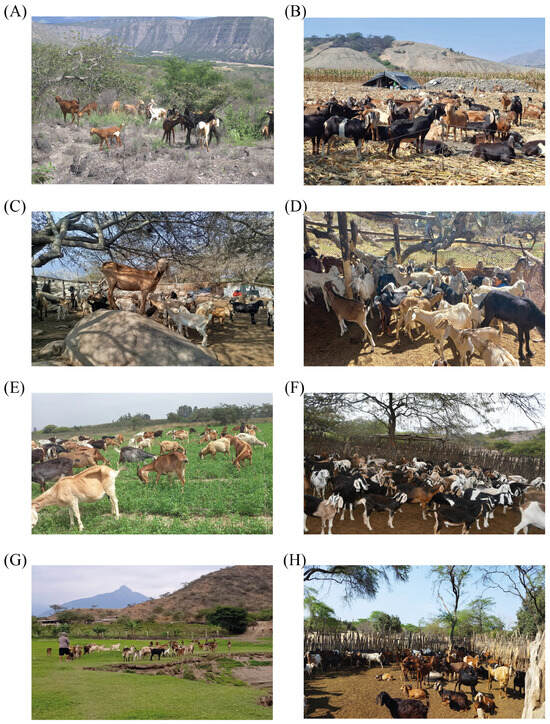
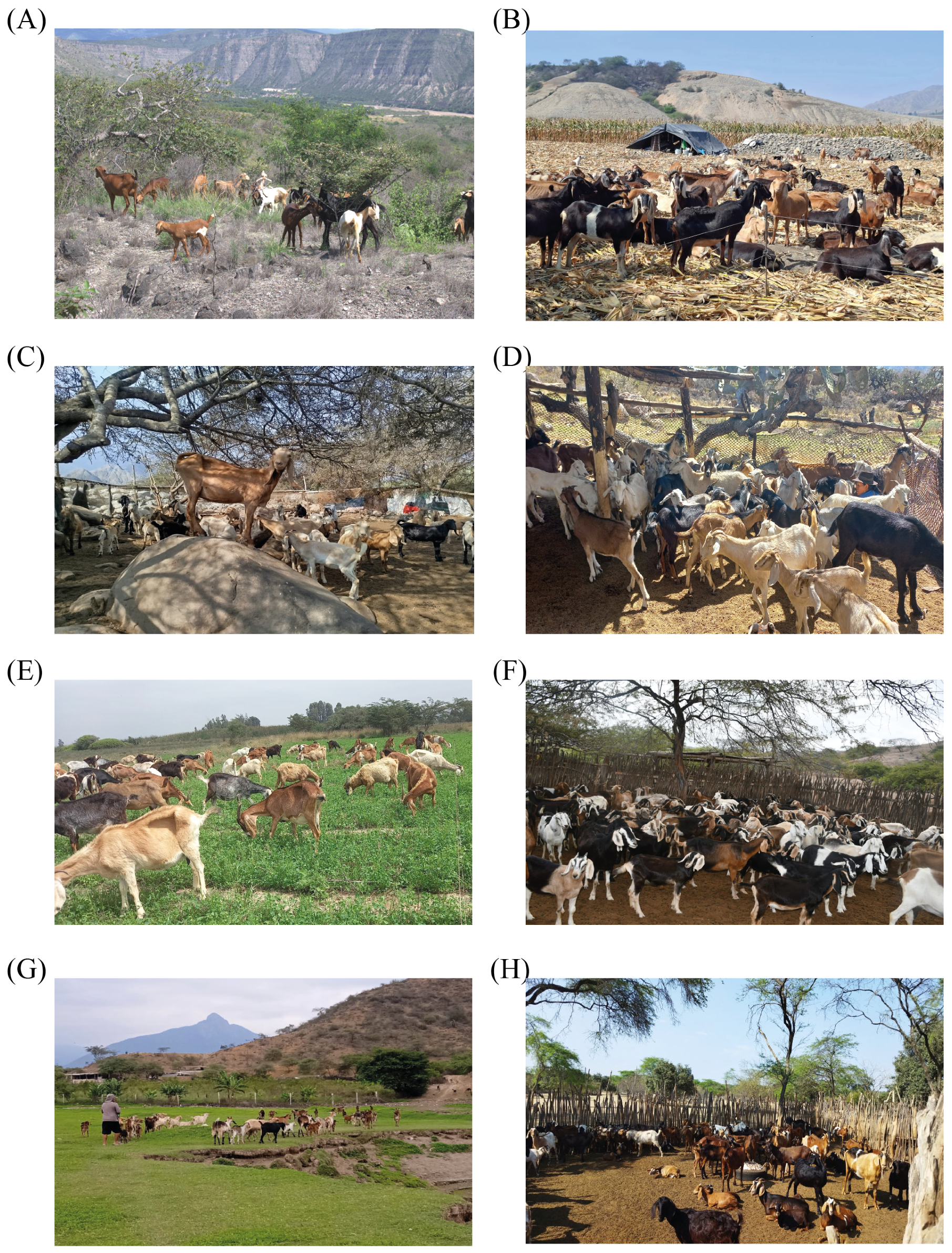
Goat production in Peru is mainly concentrated in the seasonally dry forest of the northern coast and in high-Andean areas, both characterized by restrictive environmental conditions and limited availability of agricultural resources (Figure 1) [24,25]. The Peruvian seasonally dry forest covers more than four million hectares, of which approximately 65% is located in the Piura region, which hosts about 17% of the national goat population. In this ecosystem, goat farming is predominantly carried out under extensive low-input systems that depend on native vegetation and traditional management practices, where goat production primarily functions as a subsistence strategy linked to food security and small-scale rural economies [26].
Figure 1.
Representative goat production systems in different regions of Peru: (A) Amazonas—extensive browsing system in dry inter-Andean shrubland; (B) Lima—semi-intensive system with crop residue supplementation in coastal valleys; (C) La Libertad—extensive system in seasonally dry coastal forest with native tree cover; (D) Ayacucho—traditional communal pen management in Andean highlands; (E) Ica—semi-extensive grazing on improved irrigated pastures in coastal valleys; (F) Tumbes—large herds in rustic enclosures under tropical dry forest conditions; (G) Lambayeque—low-density extensive grazing on agrosilvopastoral land; (H) Piura—extensive herd management in the northern dry forest, the principal goat-producing region of Peru.
Ecological conditions in the dry forest—prolonged dry seasons, irregular rainfall, and marked interannual variability—directly shape forage availability and limit animal productivity [27,28,29]. Under these conditions, goats are preferred over other livestock species due to their selective browsing behavior, tolerance to water scarcity, and efficient thermoregulation capacity. Creole populations stand out for their hardiness and ability to maintain productive functions under severe nutritional and climatic constraints, suggesting the presence of highly valuable adaptive genetic variation that remains poorly characterized and insufficiently integrated into formal breeding programs [26]. Overall, these elements confirm that the productive base of the Peruvian goat production system is strongly shaped by its ecological environment.
However, goat production systems in the northern region of the country are not homogeneous. Multivariate analyses in Tumbes, Piura, and Lambayeque have identified the coexistence of intensive systems with a stronger commercial orientation, semi-intensive systems with access to irrigation and diversified production, and extensive systems constrained by water scarcity and limited infrastructure [25]. These differences reflect inequalities in access to water resources, health management practices, production infrastructure, and market integration, highlighting marked structural heterogeneity within the same ecological environment.
At the local scale, in districts such as Marcavelica, Lancones (Sullana), and La Brea (Talara), goat production occurs under conditions of high climatic variability, where changes in temperature and precipitation directly influence pasture availability and productive performance. The dependence on agrosilvopastoral systems and the recurrent perception of impacts on meat and milk production associated with seasonality and pasture degradation underscore the close relationship between ecological dynamics and productive performance [30].
Within this framework, the Piura region represents the main hub of goat production in the country, concentrating more than 300,000 head and around 18% of national production. Nationwide, approximately 90,000 producers are estimated to depend on this activity, which is primarily oriented toward kid meat production linked to local markets and regional gastronomy. Nevertheless, the sector faces limitations associated with pasture degradation, environmental pressure, and sanitary risks, factors that continue to constrain the profitability and sustainability of goat production in the region [22].
In the tropical dry forest of Peru, extensive management predominates (98.3%), characterized by limited technical assistance, scarce water infrastructure, and reliance on visual selection as the main replacement criterion. Within this setting, two production typologies can be distinguished: the improved extensive system (IES), associated with producers with greater experience, larger herds, better infrastructure, and more frequent sanitary management, and the traditional extensive system (TES), linked to lower educational levels, smaller herds, lower forage diversity, and reduced implementation of sanitary measures [31]. This differentiation reveals internal gaps in technical capacity, infrastructure, and management that shape productive efficiency even within predominantly extensive systems.
A comparable scenario is observed in the southeastern highlands of Peru, where goat production takes place in hard-to-access areas with strong dependence on natural resources. Feeding is mainly based on natural pastures, shrubs, and crop residues, with limited supplementation during the dry season, while continuous mating, the absence of formal genetic improvement programs, and a subsistence-oriented production system predominate. The marked heterogeneity among producers reflects different levels of market integration and investment capacity, factors that shape the adoption of technical innovations and system modernization [24]. The heterogeneity of Peruvian goat systems across the main production regions is summarized in Table 1.
Table 1.
Regional overview of goat production systems in Peru.
In the coastal valleys of Lima, dairy goat systems maintain an extensive base, although with a greater commercial orientation in certain groups. Three producer typologies have been identified based on management practices and level of commercialization, with some prioritizing milk sales and improved production practices, while others allocate production to cheesemaking or self-consumption with lower technical levels. Average production of 1–2 L per goat reflects moderate productivity under extensive conditions [32]. Similarly, in the highlands of Chincha (Ica), four system types have been recognized based on feeding and deworming practices, with grazing predominating and low milk production levels, reflecting the persistence of traditional practices and structural constraints that limit productive efficiency [33].
Sanitary pressure represents a structural component of these systems. A gastrointestinal helminth prevalence exceeding 59% has been reported, associated with anemia and low body condition, highlighting health limitations with a direct impact on productive performance [34]. On the Peruvian coast, the high occurrence of Eimeria and gastrointestinal nematodes confirms the influence of ecological and management factors on parasite dynamics [35], a pattern consistent with studies from the southern coast documenting mixed infections associated with environmental conditions and traditional practices [36].
Creole goats from northern Peru exhibit morphostructural traits compatible with meat or dual-purpose aptitude and high phenotypic variability, reflecting populations shaped primarily by natural selection and traditional management [37]. Health status also varies among diseases: in Amazonas, Brucella melitensis was not detected in herds with limited animal movement [38], whereas at the national level, a Toxoplasma gondii seroprevalence of 28.15% has been reported, associated with environmental and management factors [39]. Likewise, fascioliasis and echinococcosis generate significant economic losses in extensive systems [40], and live weight prediction using biometrics and data mining has revealed regional variations associated with the production environment [41].
Health control faces persistent challenges, including potential anthelmintic resistance [42], exposure to pestiviruses in transhumant systems [43], Toxoplasma gondii seroprevalence in Piura [44], high Eimeria prevalence in semi-extensive systems [45], and circulation of bluetongue virus in extensive systems in northern Peru [46]. Overall, the available evidence indicates that Peruvian goat systems are shaped by environmental constraints, structural heterogeneity, and persistent sanitary pressure.
4. Genomic Tools Applied to Goats
4.1. Traditional Molecular Markers
Microsatellite-based studies have generated a substantial body of evidence on the genetic structure of Creole goat populations across the Americas, yet their findings reveal an apparent inconsistency that has not been fully resolved. At the continental scale, most genetic variation (85–93%) resides within rather than between populations [10], suggesting limited breed differentiation, a pattern consistent with extensive gene flow and shared Iberian and African ancestry resulting from colonial introductions [9,10]. However, finer-scale analyses using 21 microsatellites across 24 breeds from ten countries demonstrate clear population differentiation and high individual assignment rates [9], indicating that meaningful genetic structure emerges when analytical resolution is sufficient. This discrepancy is not contradictory but scale-dependent: broad continental comparisons may obscure the breed-level structuring that becomes evident when populations are analyzed with adequate sampling and marker density.
At the regional level, contrasting patterns complicate a unified interpretation. The Chusca Lojana goat from the Ecuadorian dry forest shows high intrapopulation variability but no genetic substructure among phenotypic biotypes [47], suggesting a single panmictic unit shaped by continuous gene flow. In contrast, native Brazilian ecotypes display clear regional differentiation despite similar extensive management conditions [48]. These divergent outcomes likely reflect differences in herd connectivity, geographic barriers, and local management history rather than inherent biological differences. This distinction has direct implications for conservation strategies, as populations that appear phenotypically distinct may not be genetically isolated.
Despite their historical utility, microsatellite markers present well-recognized limitations, including low genome coverage, inability to detect adaptive loci, and reduced resolution compared to SNP-based approaches [49,50,51]. Currently, microsatellite-based characterization of Peruvian Creole goat populations remains limited or has not been clearly reported, leaving their position within the broader American Creole goat genetic landscape unresolved. This gap is not merely descriptive; it implies that conservation decisions and breeding strategies for Peruvian goats currently lack the population genetic foundation that has guided programs in Ecuador, Brazil, and other Latin American countries.
4.2. Modern Genomics
Genomic characterization of Peruvian Creole goats has advanced in recent years, yet the available evidence reveals a persistent gap between documenting genetic diversity and understanding its functional significance. SNP-based analyses of northern Peruvian populations report relatively high heterozygosity and low inbreeding coefficients, with population structure analyses indicating clear differentiation from specialized exotic breeds but limited differentiation among Creole populations within the region [52]. Subsequent analyses confirmed moderate genetic structure with regional differentiation, rapid linkage disequilibrium decay, and patterns of homozygosity consistent with historically large populations under extensive management [53]. Together, these findings portray Peruvian Creole goats as a genetically diverse and largely outbred resource, a profile that is favorable for conservation and provides a solid foundation for future selection programs.
However, this characterization raises important unresolved questions. While shared genomic regions potentially associated with adaptation and productive traits have been identified [53], genome-wide association studies (GWAS) and selection sweep analyses remain limited or have not been clearly reported in Peruvian goat populations. This contrasts with findings from comparable semi-arid systems elsewhere. In Brazil, a comparison of the locally adapted Marota population with the Anglo-Nubian breed using the Illumina Caprine 50K chip identified 14 genomic regions under selection, including genes linked to water balance (SLC5A2, UTSB2) and skeletal development (FGF12, AMPD2, OSTN), with a global FST of 0.16 confirming meaningful adaptive divergence [54]. Given that Peruvian dry forest systems share key environmental pressures with the Brazilian semi-arid, the absence of equivalent analyses in Peru highlights an opportunity to identify adaptive variants of potential breeding value.
A further unresolved issue arises when genomic and phenotypic evidence are considered together. Morphometric evaluation of 617 Creole goats in Piura revealed significant differentiation among districts, with the Catacaos population displaying distinctively larger body dimensions [26], while wide morphostructural variability and divergent production biotypes have been described in Ayacucho [55]. Yet genomic studies consistently report low differentiation among Creole populations within Peru [52,53]. This phenotype–genotype mismatch has not been explicitly addressed in the literature and warrants further investigation. One possible explanation is that phenotypic differentiation reflects plastic responses to local environmental and nutritional conditions rather than fixed genetic divergence; however, this hypothesis remains untested. Resolving this question would require integrating genomic data with longitudinal phenotypic records and environmental covariates, a data infrastructure that does not yet exist at a national scale in Peru.
Looking forward, the transition toward whole-genome sequencing (WGS) and structural variant (SV) analyses provides greater resolution for detecting adaptive loci, copy number variations, and genomic regions under selection in goats adapted to extreme environments [15,16]. While these approaches remain largely inaccessible for resource-limited programs, their progressive adoption at the international level is expanding the reference frameworks available for comparative genomic analyses. Integration into these frameworks will be essential for Peruvian research programs to fully characterize and strategically utilize the adaptive potential of Creole goats.
4.3. Functional Omics
Functional omics approaches have expanded the analytical framework for investigating adaptation, digestive efficiency, and productive traits in goats, yet the available evidence remains fragmented across platforms and largely disconnected from the specific biological context of Peruvian extensive systems [20,56]. A critical assessment of the existing literature highlights both promising entry points and significant gaps that limit the translation of these tools into actionable breeding or management strategies.
The most direct evidence from Peru comes from intestinal microbiome characterization of Creole goats fed alternative forage resources such as cactus and Salicornia under arid coastal conditions. Using 16S rRNA gene sequencing, Firmicutes and Bacteroidetes predominated, with diet-associated shifts in microbial composition. Goats fed cactus showed higher Firmicutes abundance, consistent with enhanced fiber degradation capacity, while Akkermansia, a genus associated with intestinal mucosal integrity, was more prevalent in kids receiving alternative diets [57]. These results indicate that the gut microbiome of Peruvian Creole goats responds dynamically to non-conventional forages, suggesting a degree of microbial plasticity that may contribute to their adaptation to resource-limited environments. However, this study focused exclusively on the intestinal microbiome. In contrast, the ruminal microbiome of Peruvian Creole goats remains largely unexplored, representing a key knowledge gap in understanding microbial contributions to feed utilization and animal performance under extensive conditions.
Ruminal microbiome data from comparable extensive systems in Latin America partially address this gap, although important limitations remain. Analysis of Moxotó goats under free grazing in Brazil identified Firmicutes and Bacteroidetes as the predominant phyla, with methanogenic archaea (Methanobrevibacter, Methanosphaera) responsible for ruminal methane production [58]. Notably, uncultured methanogenic archaea related to marine environments were detected and associated with water salinity, highlighting how local environmental conditions shape microbial community composition in ways that may not be predictable from studies conducted under controlled conditions. Functional metagenomic screening of goats from the Caatinga biome further revealed a novel GH3 β-xylosidase enzyme (BGL11) with hemicellulose degradation capacity [59], confirming that the caprine rumen harbors functionally relevant microorganisms that remain largely uncharacterized. Whether analogous enzymatic diversity exists in the rumen microbiome of Peruvian Creole goats fed native dry forest vegetation remains unknown. This question has direct implications for understanding their digestive efficiency under natural grazing conditions.
Transcriptomic and proteomic approaches provide complementary insights into fetal programming and reproductive physiology, although these studies were conducted under controlled nutritional restriction protocols in non-Creole breeds, limiting their direct applicability to extensive Peruvian systems. RNA-seq analysis demonstrated that the timing of maternal nutritional restriction differentially programs gene expression in neonatal skeletal muscle: early restriction affected myogenic differentiation and lipid metabolism pathways, whereas late restriction altered mitochondrial metabolism and oxidative stress response [60]. Proteomic analysis in Saanen bucks identified sperm proteins associated with fertility, capacitation, and heat-stress response as potential reproductive biomarkers [61], while maternal restriction also modified the abundance of proteins involved in glycolysis and amino acid metabolism in neonatal muscle [62]. Overall, these findings reveal biologically plausible mechanisms linking the nutritional environment to productive outcomes, particularly in extensive systems where seasonal feed scarcity is common. However, none of these studies were conducted in Creole goats under field conditions, and the extent to which these molecular findings translate to genetically distinct, extensively managed populations remains unclear.
The broader limitation of the functional omics evidence reviewed here stems from its disciplinary fragmentation. Microbiome, transcriptomic, and proteomic studies have been conducted independently across different breeds, countries, and experimental conditions, thereby limiting cross-platform integration. Although integrative multi-omics approaches have been applied in other ruminant contexts [15,16,20], their implementation in Peruvian extensive systems has not yet been widely implemented. Advancing toward such frameworks will require coordinated sampling designs and the development of bioinformatic infrastructure at a national scale, suggesting that current constraints are primarily related to data generation capacity rather than biological complexity (Table 2).
Table 2.
Multi-omics and phenotyping approaches applied to goat research.
In summary, these limitations reinforce the need for integrative approaches linking omics data with phenotypic and environmental information, particularly under the heterogeneous conditions that characterize extensive goat systems in Peru.
5. Reproductive Biotechnologies in Goats
5.1. Basic Reproductive Biotechnologies
Basic reproductive biotechnologies, including estrus synchronization and artificial insemination, are widely used as key tools for improving reproductive efficiency and accelerating genetic dissemination in goat production systems globally [63,64]. However, their translation from controlled research settings to extensive low-input systems involves practical constraints that are rarely addressed in the primary literature and remain particularly relevant in the Peruvian context.
Hormonal synchronization protocols have been extensively evaluated in specialized dairy breeds under controlled conditions. In Saanen goats, intravaginal sponges impregnated with medroxyprogesterone acetate (MAP), combined with equine chorionic gonadotropin (eCG) and cloprostenol, achieved estrus response rates of 86.7% and 96.7% during anestrus and cyclic periods, with conception rates of 88.5% in January–February, declining to 62.1% in March–April [65]. While these results confirm protocol efficacy, they were obtained in a specialized breed under controlled management, a context substantially different from the extensive Creole goat systems of northern Peru. Furthermore, fine adjustments in protocol duration carry significant reproductive consequences. Extending intravaginal device treatment from 6 to 6.5 days increased synchrony but reduced conception rates due to advanced follicular dominance [66]. This indicates that even minor deviations from optimized protocols can compromise outcomes, a constraint particularly relevant in field settings where precise timing is difficult to guarantee.
In Peru, field applications of these technologies have yielded results reflecting the structural constraints of extensive management. Laparoscopic artificial insemination with frozen semen from Murciano–Granadina and Malagueña breeds in improved Creole goats achieved fertility rates of 32.4–48.1%, with a prolificacy of up to 2.4 kids per kidding [67]. Similarly, fixed-time artificial insemination (FTAI) in 217 crossbred females from the northern dry forest achieved an overall pregnancy rate of 47.5% over a five-year period [68]. These rates are consistent with those reported for goats under extensive management conditions in other low-input systems, where nutritional limitations and management constraints often reduce reproductive outcomes compared to controlled settings [64].
The only significant determinant of pregnancy outcome in the Peruvian FTAI program was the male factor [68], indicating that buck quality represents a key limiting factor that synchronization protocols alone cannot fully compensate for. This finding suggests that scaling FTAI programs in extensive Peruvian systems will require parallel improvements in buck evaluation, semen quality control, and cold chain infrastructure for semen distribution, components that remain underdeveloped in current production systems [25,31].
These results highlight key adoption barriers in low-input systems that extend beyond biological efficacy. In the Peruvian context, the implementation of synchronization and artificial insemination is constrained by limited infrastructure, including restricted access to cold chain systems, specialized equipment, and trained personnel, particularly in remote dry forest regions. In addition, practical constraints under field conditions—such as variability in nutritional status, difficulties in precise protocol timing, and inconsistent animal handling—are likely to reduce reproductive performance compared to controlled environments. Together, these factors help explain the gap between experimentally reported success rates and field-level outcomes and represent critical limitations for the widespread adoption of these technologies in smallholder systems.
Overall, these findings indicate that while basic reproductive biotechnologies are technically effective, their performance in extensive systems is strongly conditioned by management, nutritional status, and infrastructure limitations. This context-dependent performance indicates that their role in genetic improvement programs will depend not only on protocol optimization but also on the integration of reproductive technologies with broader system-level interventions.
5.2. Advanced Reproductive Biotechnologies
Advanced reproductive biotechnologies, such as in vitro embryo production (IVP), non-surgical embryo recovery, and cryopreservation, represent a logical next step for accelerating genetic progress and conserving locally adapted genetic resources in goat systems. However, these techniques have not yet been widely reported in Peru, reflecting not only limited institutional capacity but also constraints in the availability of prerequisite infrastructure, including specialized laboratory equipment, trained personnel, reliable cold chains, and systematic donor animal programs. Evidence from comparable Latin American contexts is therefore valuable, not as a direct model for replication, but as a reference framework for identifying the technical and institutional conditions required for implementation.
In Brazil, IVP has been applied as a conservation strategy for endangered local breeds. In the Canindé goat, laparoscopic oocyte recovery achieved a 74.3% recovery rate, with 51% viable embryos and blastocysts averaging 170 cells on day 7, enabling the establishment of the first embryo bank for this breed [69]. Although these results are technically encouraging, they were obtained under controlled laboratory conditions in a breed selected specifically due to its endangered status, a context that mobilized institutional resources unlikely to be readily available for routine application in extensive Peruvian systems. The most transferable insight from this work is methodological: IVP can be adapted to locally adapted breeds in semi-arid environments, provided that appropriate oocyte recovery protocols and culture conditions are established.
Non-surgical embryo recovery represents a more accessible alternative to laparoscopic techniques, with relevant implications for field application. In lactating Saanen goats, transcervical collection recovered more than 95% of the uterine flushing medium, yielding averages of 13.4 and 8.2 viable embryos under different hormonal protocols, with no significant differences between treatments [70]. The procedure, performed in a standing position with minimal sedation, indicates a level of operational simplicity that may facilitate implementation beyond specialized laboratory settings. However, its applicability to Creole goats in extensive Peruvian systems remains largely untested, as cervical anatomy varies considerably among goat breeds and populations, and transcervical access is more difficult in breeds not previously selected under intensive management [71].
Cryopreservation outcomes depend strongly on the choice of cryoprotectant, with direct practical implications for programs operating under resource constraints. Comparisons between conventional freezing and vitrification in caprine embryos indicate that vitrification with dimethyl sulfoxide (DMSO) achieves re-expansion rates, cellular viability, and in vivo development comparable to conventional freezing, whereas vitrification with dimethylformamide reduces viability, pregnancy rates, and birth rates [72]. This sensitivity to cryoprotectant type highlights the need for protocol standardization before cryopreservation can be reliably implemented under field conditions, where product availability and quality control may be inconsistent. Additionally, reproductive pathologies may further affect outcomes. For example, superovulation in goats treated for hydrometra has been associated with alterations in embryo development dynamics, although without changes in the expression of quality-associated genes (BAX, Bcl-2, CDX2, and NANOG) [73]. These findings emphasize the importance of donor animal health screening, particularly in extensive Peruvian systems where reproductive disorders are likely underdiagnosed.
Overall, the available evidence indicates that advanced reproductive biotechnologies are technically feasible in locally adapted goat breeds under semi-arid conditions. However, their implementation in extensive systems is constrained by significant adoption barriers, including limited infrastructure, restricted access to specialized equipment and trained personnel, and challenges in maintaining standardized protocols under field conditions. These factors help explain the gap between results obtained in controlled environments and the practical feasibility of these technologies in Peruvian smallholder systems. Rather than representing a definitive barrier, this situation highlights the need for a sequenced implementation pathway, involving the consolidation of basic reproductive programs, the strengthening of laboratory capacity through interinstitutional collaboration, and the progressive incorporation of advanced techniques.
6. Where Genomics Meets Reproduction
The integration of genomic tools and reproductive biotechnologies represents a strategic pathway for accelerating genetic improvement in Peruvian Creole goats. However, this integration remains largely theoretical in the national context, as no program combining genomic selection with assisted reproduction has been clearly reported in Peruvian goat systems [74]. Translating this potential into practice requires not only technological capacity but also the prioritization of functional traits that directly reflect the production constraints described in previous sections. Two trait complexes emerge as particularly strategic: resistance to gastrointestinal parasites, due to their documented impact on productivity across Peruvian ecosystems [34], and adaptation to heat stress and drought, reflecting the climatic conditions that define the northern dry forest where the majority of the national goat population is concentrated [26,30].
Gastrointestinal helminth resistance is one of the most urgent functional targets for genomic selection in Peruvian extensive systems. Helminth prevalence exceeding 59% has been associated with anemia and poor body condition [34], and evidence of potential anthelmintic resistance [42] suggests that pharmacological control alone may not provide a fully sustainable long-term solution. Traits related to parasite resistance and tolerance exhibit low-to-moderate heritability, meaning that phenotype-based selection under natural mating, currently the dominant practice in Peruvian systems, results in slow and often inconsistent genetic progress [42]. Genomic selection addresses this limitation by increasing the accuracy of estimated breeding values even for low-heritability traits, enabling the identification of genetically superior animals before the trait is fully expressed phenotypically. Combined with FTAI programs already being implemented in the northern dry forest [68], this strategy can accelerate the dissemination of favorable genotypes across the population. Evidence from tropical goat systems indicates that genomic selection combined with artificial insemination increases annual genetic gain compared to conventional natural mating schemes, primarily through higher selection intensity and accuracy [75]. While this evidence focuses on productive traits, the underlying principle may be transferable to health resilience traits, provided that adequate phenotypic recording systems, such as FAMACHA scoring, fecal egg counts, and body condition monitoring, are established as the phenotypic foundation for genomic evaluation.
Heat tolerance and drought resilience represent a second strategic trait complex that has received limited attention in the Peruvian genomic literature despite being ecologically central to the production environment. Peruvian dry forest systems are characterized by prolonged dry seasons, irregular rainfall, and temperatures that routinely stress animal physiology [27,28,30]. However, genomic variants associated with thermotolerance or water-use efficiency in Peruvian Creole goats remain unreported in the literature. International evidence points to specific candidate regions. In Brazilian semi-arid goats, natural selection has favored variants in genes linked to water balance regulation (SLC5A2, UTSB2) and osmotic control, with adaptive divergence detectable at a global FST of 0.16 [54]. Given the environmental parallels between Peruvian dry forest systems and the Brazilian semi-arid, these genomic regions represent plausible candidate loci for investigation in Peruvian populations. This hypothesis can be tested using the SNP data already generated by Corredor et al. [52,53] through targeted selection signature analyses. If confirmed, reproductive biotechnologies could be used to preferentially disseminate genotypes carrying adaptive variants, combining conservation of local adaptation with directed genetic improvement.
However, realizing this integrated vision depends on addressing a critical prerequisite: the limited availability of systematic phenotypic data at a national scale. Genomic selection requires not only genotypic information but also large reference populations supported by consistent phenotypic records, a data infrastructure that is currently underdeveloped in Peruvian goat systems [76]. The lack of phenotypic recording systems and data management capacity is a major constraint for the application of genomic tools in livestock breeding programs in developing countries [77]. Addressing this limitation will require coordinated phenotyping initiatives across production regions, standardized recording protocols, and sustained collaboration between INIA, universities, and producer organizations.
A sequenced approach is required: establishing phenotypic recording systems first, building genomic reference populations second, and implementing integrated selection and dissemination programs third, recognizing that the value of reproductive biotechnologies in this context depends on the quality of the genomic and phenotypic data that guide them.
7. Challenges for Implementation in Developing Countries
The barriers to implementing genomic and reproductive improvement programs in goat systems in developing countries are predominantly structural rather than biological [78]. However, their specific configuration in Peru reflects a combination of factors that distinguish it from other regional contexts and must be understood before effective implementation strategies can be designed.
The most fundamental barrier is the limited availability of systematic phenotypic recording at a national scale. Without longitudinal data on productivity, health, and reproductive performance linked to individual animals, the application of both conventional and genomic selection becomes severely constrained [68,76]. This limitation is not unique to Peru; similar constraints have been documented across goat systems in Africa, Asia, and Latin America [78]. However, the Peruvian context is particularly challenging because heterogeneity among production systems is substantial. Extensive traditional systems in Piura operate under entirely different technical and economic conditions than semi-intensive systems in the coastal valleys of Lima [25,32], making the design of a single standardized recording protocol difficult. Strategies that have shown promise in comparable contexts include community-based recording schemes, mobile data collection platforms, and the concentration of phenotyping efforts in genetic nucleus herds before scaling to the broader population [68].
A second structural barrier is the economic inaccessibility of genomic and advanced reproductive technologies for smallholder producers. SNP genotyping with commercial arrays remains economically inaccessible for individual producers managing small herds under subsistence conditions [68,78]. Similarly, laparoscopic artificial insemination requires specialized equipment, trained personnel, and cold chain infrastructure that are not available at scale in remote regions of Piura or Ayacucho [67,68]. However, these constraints do not preclude adoption but define the scale and structure at which implementation is economically feasible. Rather than individual adoption, a more realistic model involves centralized genomic evaluation and reproductive services implemented through institutional genetic nucleus herds, with costs distributed across producers via cooperative schemes, public subsidies, or producer associations. Under this framework, smallholders benefit indirectly through access to improved genetics (e.g., semen distribution or selected breeding males) without bearing the full cost of genotyping or advanced technologies.
The INIA PROCAP project illustrates this approach as a national case study. It has established sanitary authorization for goat semen production, initiated artificial insemination programs, and applied embryo transfer in specialized dairy breeds [79,80,81]. These results demonstrate that institutional-scale implementation is feasible, while also revealing the persistent gap between institutional capacity and smallholder-level adoption [23]. However, these reproductive advances have not yet been linked to genomic selection frameworks, as the phenotypic and genotypic reference infrastructure required to direct dissemination toward genetically superior animals remains underdeveloped [68,76].
Infrastructure gaps compound these economic barriers in ways specific to the Peruvian context. Reliable electricity, cold chain logistics, and veterinary services, which are prerequisites for reproductive biotechnologies, are intermittently available or absent in dry forest regions where the majority of the national goat population is concentrated. These limitations extend beyond resource constraints and reflect the limited alignment between the institutional research system and the production realities of smallholder goat farmers. Technology transfer initiatives, such as the International Goat Convention held in Ayacucho in 2025 [23], have begun to address this gap, although important challenges remain.
Finally, the human capital gap, due to the limited availability of personnel trained in genomics, bioinformatics, reproductive biotechnology, and animal breeding, represents a critical medium-term constraint that investment in equipment alone cannot solve. Addressing this limitation requires sustained interinstitutional collaboration between INIA, universities, and international research centers, combined with training programs oriented toward the technical profiles needed to support genomic selection in low-input systems. Without such efforts, capacity development is likely to remain limited in scope and continuity over time.
8. Future Perspectives
Harnessing the adaptive potential of Peruvian Creole goats will require the progressive and sequenced integration of phenotyping, genomics, and reproductive biotechnologies. Their simultaneous adoption is not feasible under current structural conditions [15,76]. A realistic roadmap should distinguish between what is immediately actionable, what requires medium-term capacity building, and what remains a long-term horizon, depending on infrastructure and institutional development.
In the near term, the most critical and feasible investment is the establishment of systematic phenotyping programs at a national scale. Standardized recording of productive, reproductive, and health traits, including body weight, fecal egg counts, FAMACHA scores, and reproductive outcomes, in genotyped nucleus herds would generate the reference population data required for effective genomic selection [68,76]. Low-cost digital recording tools and community-based schemes represent a viable entry point, as demonstrated in other developing country livestock systems [68]. Consolidating the basic reproductive programs already initiated by INIA PROCAP, particularly FTAI and semen cryopreservation, in an expanding network of producer herds would create the dissemination infrastructure needed to translate future genetic gains into production impact [23,79,80,81].
In the medium term, precision livestock farming (PLF) technologies offer substantial potential for generating the continuous longitudinal phenotypes required for modern genetic evaluations targeting traits such as climate resilience, parasite resistance, and forage-use efficiency [82,83]. Electronic identification, automated weighing platforms, and behavioral monitoring systems represent the most accessible options, given their relatively lower cost and simpler implementation compared to wearable sensors, GPS systems, or drone-based monitoring. However, their deployment in extensive systems in Peru faces real constraints. Intermittent connectivity, lack of maintenance infrastructure, and the economic capacity of smallholder producers must be considered in technology selection. While entry-level tools such as electronic identification remain relatively accessible, wearable sensors and drone-based monitoring involve substantially higher implementation and maintenance costs, limiting their practical adoption in smallholder systems, as acknowledged in the PLF literature [82,83]. A pragmatic approach would prioritize PLF tools in institutional research stations and genetic nucleus herds, generating validated protocols before attempting broader field implementation. The progressive reduction in sensor costs and the expansion of mobile connectivity in rural Peru indicate that wider adoption may become feasible, although it remains limited for most smallholder producers.
In the longer term, the consolidation of phenotypic and genomic databases will depend on strengthening international cooperation networks to facilitate technology transfer, methodological standardization, and access to genotyping and bioinformatics platforms [76,84,85]. Participation in regional genomic reference populations, pooling SNP data across Creole goat populations in Peru, Ecuador, Brazil, and other Latin American countries, could substantially increase the accuracy of genomic predictions beyond what national datasets alone can achieve [76,77]. Similarly, the progressive adoption of advanced reproductive biotechnologies, including in vitro embryo production, laparoscopic follicular aspiration, and modern embryo transfer protocols, can reduce the generation interval, multiply superior animals, and conserve local genetic resources [86,87]. Their integration with genomic selection represents a strategic long-term pathway, provided that the foundational steps of phenotyping and basic reproductive program consolidation are achieved first.
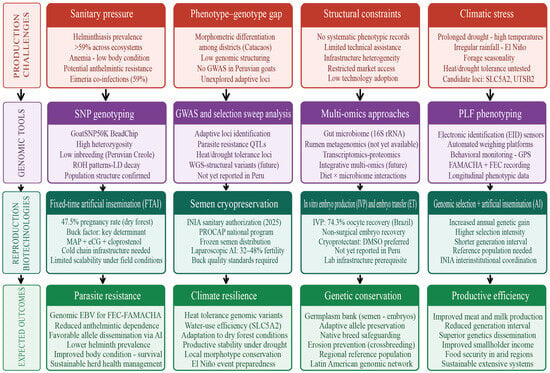
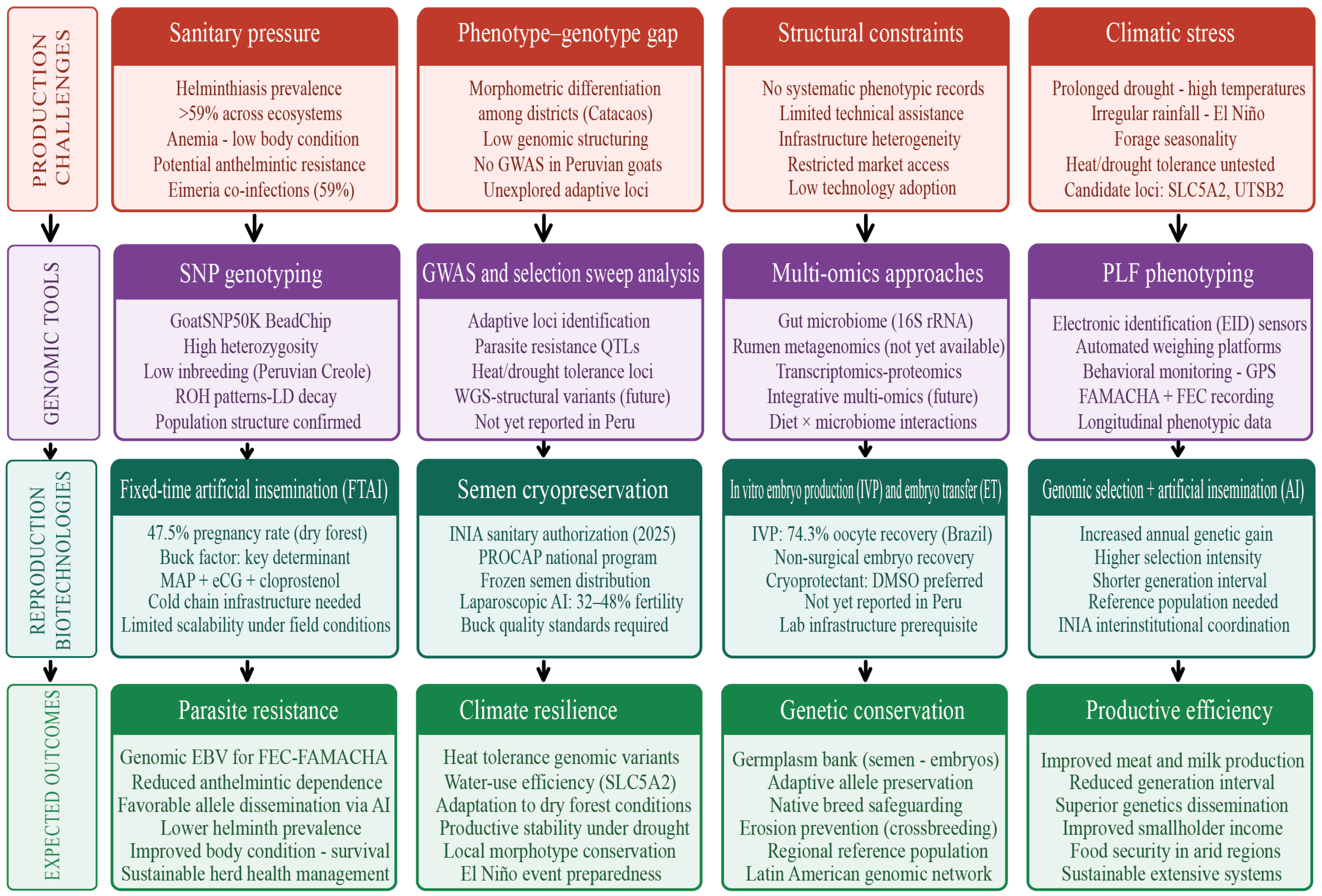
Finally, several knowledge gaps should be prioritized to advance this agenda. To date, genome-wide association studies (GWAS) and selection sweep analyses remain limited or have not been clearly reported in Peruvian Creole goats. Similarly, the ruminal microbiome of Peruvian Creole goats remains largely unexplored, representing a key gap in understanding microbial contributions to adaptation and feed utilization. Genomic variants associated with heat tolerance or drought resilience remain uncharacterized in Peruvian populations, despite the ecological relevance of these traits. Advanced reproductive biotechnologies, including in vitro embryo production (IVP), embryo transfer, and cryopreservation, remain scarcely documented in the Peruvian context. Likewise, integrative multi-omics approaches linking genomic variation with phenotypic adaptation under extensive conditions remain limited. Addressing these gaps through coordinated research efforts that integrate biological data generation with institutional capacity building will be essential for advancing goat research in Peru over the next decade. A conceptual framework summarizing these relationships and the proposed implementation pathway is presented in Figure 2.
Figure 2.
Conceptual framework linking production challenges, genomic tools, reproductive biotechnologies, and expected outcomes in Peruvian Creole goat systems. The framework illustrates how environmental and structural constraints can be addressed through the progressive integration of genomic and reproductive approaches, supporting productivity, resilience, and conservation in low-input extensive systems. Reference [80] corresponds to the INIA sanitary authorization for goat semen production (2025). Abbreviations: AI, artificial insemination; FTAI, fixed-time artificial insemination; IVP, in vitro embryo production; ET, embryo transfer.
9. Conclusions
Goat production in Peru is sustained by Creole populations with a notable capacity to thrive under environmental, nutritional, and technological constraints, yet their potential as a strategic genetic resource remains largely untapped. The central challenge is not biological but institutional: genomic diversity has been characterized but not functionally interpreted; phenotypic variability has been described but not connected to its genetic basis; and reproductive biotechnologies have been demonstrated at an institutional scale but not translated to smallholder systems. Resolving this requires a sequenced approach, with phenotypic recording first, functional genomic characterization second, and the integration of reproductive biotechnologies with selection programs third. For national agricultural agencies, investment in data generation infrastructure will deliver more durable returns than premature adoption of advanced technologies in a data-poor context. The adaptive potential of Peruvian Creole goats is real and well-documented; making it actionable will define the next decade of research and development.
Author Contributions
Y.R.: Conceptualization, methodology, investigation, writing—original draft preparation; E.A.S.: Conceptualization, methodology, writing—review and editing, funding acquisition; R.P.-H.: Supervision, writing—review and editing, visualization; J.C.-L.: Conceptualization, supervision, writing—review and editing. All authors have read and agreed to the published version of the manuscript.
Funding
This study was financially supported by the Instituto Nacional de Innovación Agraria (INIA), through Project CUI No 2506684.
Institutional Review Board Statement
Not applicable.
Informed Consent Statement
Not applicable.
Data Availability Statement
No new data were created or analyzed in this study. Data sharing is not applicable to this article.
Acknowledgments
The authors express their gratitude to the PROCAP Project team from Instituto Nacional de Innovación Agraria (INIA) for their collaboration in the development of this study.
Conflicts of Interest
The authors declare no conflicts of interest.
References
- Turk, J. Meeting Projected Food Demands by 2050: Understanding and Enhancing the Role of Grazing Ruminants. J. Anim. Sci. 2016, 94, 53–62. [Google Scholar] [CrossRef] [Scilit]
- Navarrete-Molina, C.; Meza-Herrera, C.A.; De Santiago-Miramontes, A.; Valenzuela-Núñez, L.M.; Marin-Tinoco, R.I.; Soto-Cardenas, M.A.; Sariñana-Navarrete, M.A. Dairy Goat Production: Socioeconomic, Environmental, and Cultural Importance Across Time (1970–2022) and Possible Scenarios (2050). Resources 2024, 13, 177. [Google Scholar] [CrossRef] [Scilit]
- Nair, M.R.R.; Sejian, V.; Silpa, M.V.; Fonsêca, V.F.C.; de Melo Costa, C.C.; Devaraj, C.; Krishnan, G.; Bagath, M.; Nameer, P.O.; Bhatta, R. Goat as the Ideal Climate-Resilient Animal Model in Tropical Environment: Revisiting Advantages over Other Livestock Species. Int. J. Biometeorol. 2021, 65, 2229–2240. [Google Scholar] [CrossRef] [Scilit]
- Maldonado-Jáquez, J.A.; Torres-Hernández, G.; Castillo-Hernández, G.; Cruz-Colín, L.D.L.; Jiménez-Penago, G.; González-Luna, S.; Aguilar Marcelino, L.; Arenas-Báez, P.; Granados-Rivera, L.D. Adaptation to Stressful Environments in Sheep and Goats: Key Strategies to Provide Food Security to Vulnerable Communities. Ruminants 2025, 5, 63. [Google Scholar] [CrossRef] [Scilit]
- Miller, B.A.; Lu, C.D. Current Status of Global Dairy Goat Production: An Overview. Asian-Australas. J. Anim. Sci. 2019, 32, 1219–1232. [Google Scholar] [CrossRef] [Scilit]
- Arsenos, G.; Vouraki, S.; Ragkos, A.; Theodoridis, A. Trends and Challenges for Sustainable Development of Sheep and Goat Systems; International Centre for Advanced Mediterranean Agronomic Studies (CIHEAM): Bari, Italy, 2021; pp. 13–33. [Google Scholar]
- Torres-Hernández, G.; Maldonado-Jáquez, J.A.; Granados-Rivera, L.D.; Wurzinger, M.; Cruz-Tamayo, A.A. Creole Goats in Latin America and the Caribbean: A Priceless Resource to Ensure the Well-Being of Rural Communities. Int. J. Agric. Sustain. 2022, 20, 368–380. [Google Scholar] [CrossRef] [Scilit]
- Adegbeye, M.J.; Jack, A.; Reddy, P.R.K.; Igirigi, A.; Inyang, U.; Hernández-Ruiz, P.E.; Figueroa Pacheco, E.B.; Ponce-Covarrubias, J.L.; Rivas Caceres, R.R. Adapting Ruminant Production to Changing Climate: Strategies for Smallholders. In Handbook of Climate Change Mitigation and Adaptation; Springer: Cham, Switzerland, 2025; pp. 3707–3750. [Google Scholar]
- Ginja, C.; Gama, L.T.; Martínez, A.; Sevane, N.; Martin-Burriel, I.; Lanari, M.R.; Revidatti, M.A.; Aranguren-Méndez, J.A.; Bedotti, D.O.; Ribeiro, M.N.; et al. Genetic Diversity and Patterns of Population Structure in Creole Goats from the Americas. Anim. Genet. 2017, 48, 315–329. [Google Scholar] [CrossRef] [Scilit] [PubMed]
- Sevane, N.; Cortés, O.; Gama, L.T.; Martínez, A.; Zaragoza, P.; Amills, M.; Bedotti, D.O.; Bruno De Sousa, C.; Cañon, J.; Dunner, S.; et al. Dissection of Ancestral Genetic Contributions to Creole Goat Populations. Animal 2018, 12, 2017–2026. [Google Scholar] [CrossRef] [Scilit]
- Devendra, C. Concluding Synthesis and the Future for Sustainable Goat Production. Small Rumin. Res. 2010, 89, 125–130. [Google Scholar] [CrossRef] [Scilit]
- Maldonado-Jáquez, J.A.; Salinas-González, H.; Torres-Hernández, G.; Becerril-Pérez, C.M.; Díaz-Rivera, P. Factors Influencing Milk Production of Local Goats in the Comarca Lagunera, México. Livest. Res. Rural Dev. 2018, 30, 132. Available online: http://www.lrrd.org/lrrd30/7/glat30132.html (accessed on 26 February 2026).
- Gómez-Carpio, M.M.; Toalombo-Vargas, P.A.; Avilés-Esquivel, D.F.; Mendoza, B.; Pesántez, M.; Vargas, J.C.; Aguirre, L. Local Goat Genetic Resources in Ecuador, 1st ed.; Biodiversidad Caprina Iberoamericana: Bogotá, Colombia, 2016. (In Spanish) [Google Scholar]
- Gómez-Urviola, N.; Gómez-Urviola, J.W.; Celi-Mariátegui, I.D.R.; Milan-Sendra, M.J.; Jordana, J. The Peruvian Creole Goat: Current Status and Conservation Perspectives, 1st ed.; Biodiversidad de la Cabra Iberoamericana: Bogotá, Colombia, 2016. (In Spanish) [Google Scholar]
- Lu, Y.; Ma, R.; Li, D.; Gao, Y.; Sheng, Z.; Shi, J.; Peng, Y.; Gao, Z.; Deng, W.; He, X. Genomic and Molecular Mechanisms of Goat Environmental Adaptation. Biology 2025, 14, 654. [Google Scholar] [CrossRef] [Scilit]
- Li, H.; Zhang, X.; Zhaxi, Y.; Pan, C.; Zhang, Z.; Pan, J.; Shahzad, K.; Sun, F.; Zhen, Y.; Jinmei, J.; et al. Integrative Multi-Omics Analysis Reveals Liver-Gut Axis Adaptation in High-Altitude Goats. Comp. Biochem. Physiol. Part D Genom. Proteom. 2025, 54, 101422. [Google Scholar] [CrossRef] [Scilit] [PubMed]
- Adebayo, O.M.; Popoola, M.A.; Kuusu, D.J.; Fanwo, R.R.; Shoyombo, A.J.; Ndiomu, E.P.; Egbeyan, J.A.; Moses, A.A. Application of Bioinformatics in Animal Breeding and Genetics: A Review. In Proceedings of the 2024 International Conference on Science, Engineering and Business for Driving Sustainable Development Goals (SEB4SDG); IEEE: Omu-Aran, Nigeria, 2024; pp. 1–7. [Google Scholar]
- Gipson, T.A. Recent Advances in Breeding and Genetics for Dairy Goats. Asian-Australas. J. Anim. Sci. 2019, 32, 1275–1283. [Google Scholar] [CrossRef] [Scilit]
- Zonaed Siddiki, A.M.A.M.; Miah, G.; Islam, M.D.S.; Kumkum, M.; Rumi, M.H.; Baten, A.; Hossain, M.A. Goat Genomic Resources: The Search for Genes Associated with Its Economic Traits. Int. J. Genom. 2020, 2020, 5940205. [Google Scholar] [CrossRef] [Scilit]
- Gao, Z.; Lu, Y.; Li, M.; Chong, Y.; Hong, J.; Wu, J.; Wu, D.; Xi, D.; Deng, W. Application of Pan-Omics Technologies in Research on Important Economic Traits for Ruminants. Int. J. Mol. Sci. 2024, 25, 9271. [Google Scholar] [CrossRef] [Scilit]
- Lu, C.D.; Miller, B.A. Current Status, Challenges and Prospects for Dairy Goat Production in the Americas. Asian-Australas. J. Anim. Sci. 2019, 32, 1244–1255. [Google Scholar] [CrossRef] [Scilit]
- El Regional de Piura. Piura is the Main Goat-Producing Region of Peru. El Regional de Piura. 5 February 2026. Available online: https://elregionalpiura.com.pe/index.php/region-piura/150-piura/72382-piura-es-la-principal-region-productora-de-ganado-caprino-del-peru (accessed on 26 February 2026). (In Spanish)
- Instituto Nacional de Innovación Agraria. Proceedings of the Goat Convention Ayacucho 2025; Instituto Nacional de Innovación Agraria: Lima, Perú, 2025. (In Spanish) [Google Scholar]
- Palomino-Guerrera, W.; Godoy Padilla, D.; Huaripaucar Huancahuari, J.; Sessarego Dávila, E.; Trillo Zárate, F.; Cruz Luis, J. Characterization and Typification of Small-Scale Goat Production Systems in the Highlands of Southeast Peru. Pastor. Res. Policy Pract. 2024, 14, 13035. [Google Scholar] [CrossRef] [Scilit]
- Temoche, V.; Acosta, I.; Gonzales, P.; Godoy Padilla, D.; Jibája, O.; Cruz, J.; Corredor, F.-A. Characterization of Goat Production Systems in the Northern Dry Forest of Peru Using a Multivariate Analysis. Animals 2025, 15, 567. [Google Scholar] [CrossRef] [Scilit] [PubMed]
- Haro-Reyes, J.A.; Sessarego, E.A.; Cruz, D.J.; Gonzales-Guevara, P.R.; Ruiz-Chamorro, J.A.; Cruz-Luis, J.A. Creole Goat Morphological Diversity Partially Mirrors District-Level Variation in the Seasonally Dry Forest of Piura in Peru. PLoS ONE 2025, 20, e0339584. [Google Scholar] [CrossRef] [Scilit]
- Montes-Londoño, I. Tropical Dry Forests in Multi-Functional Landscapes: Agroforestry Systems for Conservation and Livelihoods. In Integrating Landscapes: Agroforestry for Biodiversity Conservation and Food Sovereignty; Montagnini, F., Ed.; Springer International Publishing: Cham, Switzerland, 2017; pp. 47–78. [Google Scholar]
- Cueva Ortiz, J.; Espinosa, C.I.; Quiroz Dahik, C.; Aguirre Mendoza, Z.; Cueva Ortiz, E.; Gusmán, E.; Weber, M.; Hildebrandt, P. Influence of Anthropogenic Factors on the Diversity and Structure of a Dry Forest in the Central Part of the Tumbesian Region (Ecuador–Perú). Forests 2019, 10, 31. [Google Scholar] [CrossRef] [Scilit]
- Fremout, T.; Gutiérrez-Miranda, C.E.; Briers, S.; Marcelo-Peña, J.L.; Cueva-Ortiz, E.; Linares-Palomino, R.; La Torre-Cuadros, M.D.L.Á.; Chang-Ruíz, J.C.; Villegas-Gómez, T.L.; Acosta-Flota, A.H.; et al. The Value of Local Ecological Knowledge to Guide Tree Species Selection in Tropical Dry Forest Restoration. Restor. Ecol. 2021, 29, e13347. [Google Scholar] [CrossRef] [Scilit]
- Temoche, V.; Barrantes, C.; Godoy, D. Goat Producers’ Perception of Climate Change and Adaptation Strategies in the Tropical Dry Forest of Northern Peru. Sustain. Clim. Change 2024, 17, 394–406. [Google Scholar] [CrossRef] [Scilit]
- Rodríguez-Vargas, A.; Sessarego, E.A.; Castañeda-Palomino, K.; Ormachea, H.; Trillo, F.; Temoche-Socola, V.; Ruiz-Chamorro, J.A.; Alejandro Cruz, J. Seasonal and Dietary Effects on the Hematobiochemical Parameters of Creole Goats in the Peruvian Andes. Vet. Sci. 2025, 12, 687. [Google Scholar] [CrossRef] [Scilit]
- Paredes Chocce, M.E.; Ramírez-Vergara, R.; Trillo-Zárate, F.T.; Cruz Luis, J. Characterization of Dairy Goat Production Systems in Coastal Valleys of the Lima Region. Trop. Anim. Health Prod. 2024, 56, 351. [Google Scholar] [CrossRef] [Scilit]
- Sessarego, E.A.; Trillo, F.C.; Godoy, D.J.; Palomino-Guerrera, W.; Cruz, J.A. Characterization and Typology of Goat Production Systems in the Southern Highlands of Peru. Vet. World 2025, 18, 220–227. [Google Scholar] [CrossRef] [Scilit]
- Doloriert, H.C.; Chocce, M.E.P.; Vargas-Calla, A.; Noriega, K.R.; Padilla, D.G.; Berrospi, S.C.; Roldan, R.A.; Granados, I.A.; Gomez-Puerta, L.A. Cross-Sectional Study of Gastrointestinal Helminthosis in Goats from Three Ecosystems in Peru: Prevalence and Associated Factors. Parasitol. Res. 2025, 124, 122. [Google Scholar] [CrossRef] [Scilit]
- Sessarego, E.; Soca-Jorge, J.; Teran, J.; Dávalos-Almeyda, M.; Valdivia-Zevallos, J.; Ruiz, J.; Cruz, J.; Cruz, D.J. Occurrence of Endoparasites in Creole Goats Under an Extensive Production System on the Southern Coast of Peru. Pathogens 2025, 14, 437. [Google Scholar] [CrossRef] [Scilit]
- Cáceres, V.M.; Pinedo, V.R.Y.; Chávez, V.A. Gastrointestinal nematodiasis in goats from Ica, Peru. Rev. Investig. Vet. Perú 2021, 32, e21342. (In Spanish) [Google Scholar] [CrossRef] [Scilit]
- Acosta-Granados, I.C.; Carrero-Flores, J.E.; Acosta Vidaurre, R.; Cruz-Luis, J.A.; Ruíz-Chamorro, J.A. Morphometric and Phaneroptic Characteristics of Creole Goats in the Dry Forest of Peru. Nativa 2025, 13, 156–161. [Google Scholar] [CrossRef] [Scilit]
- Tafur, L.; Alva, G.; Godoy, D.J.; Frías, H.; Arista, M.A.; Bardales, W.; Encina, R.; Cruz, J.A.; Murga, N.L. Prevalence of Brucella Melitensis in Creole Goats Raised in Extensive Systems in the Tropical Dry Forest of Amazonas, Peru. Arq. Bras. Med. Veterinária E Zootec. 2025, 77, e13447. [Google Scholar] [CrossRef] [Scilit]
- Chávez, V.A.; Pinedo, V.R.; Suárez, A.F.; Villacaqui, A.E.; Pérez, C.I. Seroepidemiological study of Toxoplasma gondii in goats from Peru and its association with risk factors. Rev. Investig. Vet. Perú 2021, 32, e21711. (In Spanish) [Google Scholar] [CrossRef] [Scilit]
- Carrión-Ascarza, Y.P.; Bustinza-Cardenas, R.H.; Valderrama-Pomé, A.A. Organ condemnation due to fascioliasis and cystic echinococcosis in cattle, sheep, and goats slaughtered in Apurímac, Peru. Rev. MVZ Córdoba 2021, 26, e2056. (In Spanish) [Google Scholar] [CrossRef] [Scilit]
- Trillo-Zárate, F.; Paredes-Chocce, M.; Salinas, J.; Temoche-Socola, V.; Gutiérrez, L.; Sessarego, E.; Acosta, I.; Palomino-Guerrera, W.; Cruz-Luis, J.; Ruiz-Chamorro, J. Using Biometric Analysis to Estimate Body Weight in Creole Goats. Open Vet. J. 2025, 15, 4496. [Google Scholar] [CrossRef] [Scilit] [PubMed]
- Flores-Prado, V.; Godoy-Padilla, D.; Limaymanta-Zavala, M.; Cruz-Luis, J.; Zárate-Rendón, D. In Vitro and in Vivo Anthelmintic Activity of Artemisia absinthium against Gastrointestinal Nematodes of Free-Grazing Goats from Ayacucho, Peru. J. Adv. Vet. Anim. Res. 2025, 12, 1012. [Google Scholar] [CrossRef] [Scilit]
- Benito, F.D.; Rivera, G.H.; Castillo, E.A.; Navarro, M.D.; Gómez, M.A. Detection of antibodies against bovine viral diarrhea in goats from four provinces of Lima, Peru. Rev. Investig. Vet. Perú 2018, 29, 1508–1514. (In Spanish) [Google Scholar] [CrossRef] [Scilit]
- Fernández Rojas, M.; Suárez Aranda, F.; Chávez Velásquez, A.; Pinedo Vicente, R. Seroprevalencia de Toxoplasma gondii En Cabras Del Departamento de Piura, Perú. Rev. Investig. Vet. Perú 2023, 34, e25182. [Google Scholar] [CrossRef] [Scilit]
- Terrones, R.; Chávez, A.; Pinedo, R. Evaluation of caprine eimeriosis in four districts of the department of Ica, Peru. Rev. Investig. Vet. Perú 2020, 31, e19021. (In Spanish) [Google Scholar] [CrossRef] [Scilit]
- Escano, L.J.; Navarro, M.D.; Jurado, P.J.; Ara, G.M.; Mantilla, S.J.; Ramìrez, V.M.; Rivera, G.H. Seroprevalence of bluetongue virus in goats (Capra hircus) from the northern region of Peru. Rev. Investig. Vet. Perú 2022, 33, e24096. (In Spanish) [Google Scholar] [CrossRef] [Scilit]
- Aguirre-Riofrio, L.; Maza-Tandazo, T.; Quezada-Padilla, M.; Albito-Balcazar, O.; Flores-Gonzalez, A.; Camacho-Enriquez, O.; Martinez-Martinez, A.; Consortium, B.; Delgado-Bermejo, J.V. Genetic Characterization of the “Chusca Lojana”, a Creole Goat Reared in Ecuador, and Its Relationship with Other Goat Breeds. Animals 2020, 10, 1026. [Google Scholar] [CrossRef] [Scilit]
- Menezes, M.P.C.; Martinez, A.M.; Pimenta Filho, E.C.; Vega-Pla, J.L.; Delgado, J.V.; Arandas, J.K.G.; Rocha, L.L.D.; Ribeiro, M.N. Diversity Analysis and Genetic Relationships among Local Brazilian Goat Breeds Using SSR Markers. Animals 2020, 10, 1842. [Google Scholar] [CrossRef] [Scilit]
- Magoro, A.M.; Mtileni, B.; Hadebe, K.; Zwane, A. Assessment of Genetic Diversity and Conservation in South African Indigenous Goat Ecotypes: A Review. Animals 2022, 12, 3353. [Google Scholar] [CrossRef] [Scilit]
- Kulibaba, R.O.; Srikulnath, K.; Singchat, W.; Liashenko, Y.V.; Griffin, D.K.; Romanov, M.N. The Application of Microsatellite Markers as Molecular Tools for Studying Genomic Variability in Vertebrate Populations. Curr. Issues Mol. Biol. 2025, 47, 447. [Google Scholar] [CrossRef] [Scilit]
- Ajmone-Marsan, P.; Boettcher, P.J.; Ginja, C.; Kantanen, J.; Lenstra, J.A. Genomic Characterization of Animal Genetic Resources: Practical Guide; Food and Agriculture Organization of the United Nations; Food & Agriculture Organization: Rome, Italy, 2023. [Google Scholar]
- Corredor, F.-A.; Figueroa, D.; Estrada, R.; Burgos-Paz, W.; Salazar, W.; Cruz, W.; Lobato, R.; Injante, P.; Godoy, D.; Barrantes, C.; et al. Genome-Wide Single Nucleotide Polymorphisms Reveal the Genetic Diversity and Population Structure of Creole Goats from Northern Peru. Livest. Sci. 2024, 283, 105473. [Google Scholar] [CrossRef] [Scilit]
- Corredor, F.-A.; Godoy-Padilla, D.; Sessarego, E.A.; Temoche-Socola, V.; Paredes Chocce, M.E.; Escobar Robledo, H.; Ramírez Antaurco, M.F.; Burgos-Paz, W.; Ruiz, J.; Cruz, J.; et al. Genomic Characterization of Peruvian Creole Goats: Insights into Population Structure and Runs of Homozygosity. Animals 2025, 15, 2577. [Google Scholar] [CrossRef] [Scilit] [PubMed]
- Diniz Sobrinho, F.D.A.; Moura, J.D.O.; Bajay, M.M.; Branco, L.C.; Bezerra, R.D.S.; Araújo, A.M.D. Capra Hircus Outliers Markers in Brazil: Searching for Genomic Regions under the Action of Natural Selection. Genet. Mol. Biol. 2023, 46, e20230084. [Google Scholar] [CrossRef] [Scilit] [PubMed]
- Palomino-Guerrera, W.; Estrada, Y.; Padilla, D.; Luis, J.; Rate, F. Phaneroptic Characterization and Zoometric Indices of Creole Goats in the Ayacucho Region, Peru: First Step for Breeding Programs, Selection, and Conservation. J. Adv. Vet. Anim. Res. 2024, 11, 494. [Google Scholar] [CrossRef] [Scilit]
- Wadood, A.A.; Bordbar, F.; Zhang, X. Integrating Omics Approaches in Livestock Biotechnology: Innovations in Production and Reproductive Efficiency. Front. Anim. Sci. 2025, 6, 1551244. [Google Scholar] [CrossRef] [Scilit]
- Dominguez, F.; Crisanto, M.; Castro, R.; Rojas, L.; Cuba, V.; Santos, G.; Salazar, M.; Ramos, C.; Mialhe, E. Metagenomic Analysis of the Intestinal Microbiome in Goats on Cactus and Salicornia Based Diets. Open Vet. J. 2022, 12, 61. [Google Scholar] [CrossRef] [Scilit]
- Cunha, I.S.; Barreto, C.C.; Costa, O.Y.A.; Bomfim, M.A.; Castro, A.P.; Kruger, R.H.; Quirino, B.F. Bacteria and Archaea Community Structure in the Rumen Microbiome of Goats (Capra hircus) from the Semiarid Region of Brazil. Anaerobe 2011, 17, 118–124. [Google Scholar] [CrossRef] [Scilit]
- Souto, B.D.M.; De Araújo, A.C.B.; Hamann, P.R.V.; Bastos, A.D.R.; Cunha, I.D.S.; Peixoto, J.; Kruger, R.H.; Noronha, E.F.; Quirino, B.F. Functional Screening of a Caatinga Goat (Capra hircus) Rumen Metagenomic Library Reveals a Novel GH3 β-Xylosidase. PLoS ONE 2021, 16, e0245118. [Google Scholar] [CrossRef] [Scilit] [PubMed]
- Costa, T.C.; Mendes, T.A.O.; Fontes, M.M.S.; Lopes, M.M.; Du, M.; Serão, N.V.L.; Sanglard, L.M.P.; Bertolini, F.; Rothschild, M.F.; Silva, F.F.; et al. Transcriptome Changes in Newborn Goats’ Skeletal Muscle as a Result of Maternal Feed Restriction at Different Stages of Gestation. Livest. Sci. 2021, 248, 104503. [Google Scholar] [CrossRef] [Scilit]
- Pinto, T.M.F.; Moreira, R.F.; Matos, M.N.C.; Soares, V.V.M.; Aguiar, M.V.D.A.; Aragão, P.D.T.T.D.D.; Alves Filho, J.G.; Moreno, F.B.M.B.; Monteiro-Moreira, A.C.D.O.; Costa, C.R.R.; et al. Evaluation of the Proteomic Profiles of Ejaculated Spermatozoa from Saanen Bucks (Capra hircus). Anim. Reprod. 2019, 16, 902–913. [Google Scholar] [CrossRef] [Scilit]
- Costa, T.; Dutra, L.; Mendes, T.; Dos Santos, M.; Veroneze, R.; Gionbelli, M.; Duarte, M. Impact of Maternal Feed Restriction at Different Stages of Gestation on the Proteomic Profile of the Newborn Skeletal Muscle. Animals 2022, 12, 1011. [Google Scholar] [CrossRef] [Scilit]
- Emsen, E. Recent Advancements in Assisted Reproductive Technologies (ART) in Small Ruminants. In Encyclopedia of Livestock Medicine for Large Animal and Poultry Production; Springer: Cham, Switzerland, 2025; pp. 1–16. [Google Scholar]
- Presicce, G. Reproductive Technologies in Animals; Academic Press: Cambridge, MA, USA, 2020. [Google Scholar]
- Garcia, A.K.; Villanueva, R.E.; García, B.C.; Ara, G.M.; Delgado, C.A. Estrus response and conception rate in Saanen goats synchronized with medroxyprogesterone acetate (MAP) in two seasons of the year. Rev. Investig. Vet. Perú 2020, 31, e17839. (In Spanish) [Google Scholar] [CrossRef] [Scilit]
- Carvalho-de-Paula, C.J.; Souza-Fabjan, J.M.G.; Gonçalves, J.D.; Dias, J.H.; De Souza, G.N.; Oliveira, M.E.F.; Fonseca, J.F. Effect of a 12-h Increment in the Short-Term Treatment Regimen on Ovarian Status, Estrus Synchrony, and Pregnancy Rate in Artificially Inseminated Dairy Goats. Anim. Reprod. Sci. 2020, 221, 106571. [Google Scholar] [CrossRef] [Scilit]
- Tapia, D.; Dueñas, G.; Gallegos, A.; Sarria, J.; Mellisho, E. Laparoscopic insemination with frozen semen in Creole goats from Cañete, Lima. Spermova 2011, 1, 129–130. (In Spanish) [Google Scholar]
- Huamán-Pasco, D.-G.; Gonzales-Guevara, P.R. Factors affecting fixed-time artificial insemination in crossbred goats from the northern dry forest of Peru. Rev. Investig. Vet. Perú 2025, 36, e29535. (In Spanish) [Google Scholar] [CrossRef] [Scilit]
- Souza-Fabjan, J.M.G.; Pereira, A.F.; Melo, C.H.S.; Sanchez, D.J.D.; Oba, E.; Mermillod, P.; Melo, L.M.; Teixeira, D.I.A.; Freitas, V.J.F. Assessment of the Reproductive Parameters, Laparoscopic Oocyte Recovery and the First Embryos Produced in Vitro from Endangered Canindé Goats (Capra hircus). Reprod. Biol. 2013, 13, 325–332. [Google Scholar] [CrossRef] [Scilit]
- Fonseca, J.F.; Zambrini, F.N.; Alvim, G.P.; Peixoto, M.G.C.D.; Verneque, R.S.; Viana, J.H.M. Embryo Production and Recovery in Goats by Non-Surgical Transcervical Technique. Small Rumin. Res. 2013, 111, 96–99. [Google Scholar] [CrossRef] [Scilit]
- Menchaca, A.; Barrera, N.; Santos, P.C.D.; Cuadro, F.; Crispo, M. Advances and Limitations of in Vitro Embryo Production in Sheep and Goats. Anim. Reprod. 2016, 13, 273–278. [Google Scholar] [CrossRef] [Scilit]
- Ferreira-Silva, J.C.; Moura, M.T.; Silva, T.D.; Oliveira, L.R.S.; Chiamenti, A.; Figueirêdo Freitas, V.J.; Oliveira, M.A.L. Full-Term Potential of Goat in Vitro Produced Embryos after Different Cryopreservation Methods. Cryobiology 2017, 75, 75–79. [Google Scholar] [CrossRef] [Scilit]
- Maia, A.L.R.S.; Arrais, A.M.; Prellwitz, L.; Batista, R.I.T.P.; Figueira, L.M.; Correia, L.F.L.; Fonseca, J.F.; Souza-Fabjan, J.M.G. Embryo Development Is Impaired in Goats That Are Treated for Hydrometra and Subsequently Subjected to Superovulation. Vet. Rec. 2020, 187, e88. [Google Scholar] [CrossRef] [Scilit] [PubMed]
- Sessarego, E.; Godoy-Padilla, D.; Mendoza, Y.; Cruz-Luis, J. Phenotypic Characterization of the Creole Goat in the Southern Highlands of Peru: A First Step toward the Sustainable Use of a Lost Zoogenetic Resource. Open Vet. J. 2025, 15, 2365. [Google Scholar] [CrossRef] [Scilit]
- Gore, D.L.M.; Okeno, T.O.; Muasya, T.K.; Mburu, J.N. Improved Response to Selection in Dairy Goat Breeding Programme through Reproductive Technology and Genomic Selection in the Tropics. Small Rumin. Res. 2021, 200, 106397. [Google Scholar] [CrossRef] [Scilit]
- Mrode, R.; Tarekegn, G.M.; Mwacharo, J.M.; Djikeng, A. Invited Review: Genomic Selection for Small Ruminants in Developed Countries: How Applicable for the Rest of the World? Animal 2018, 12, 1333–1340. [Google Scholar] [CrossRef] [Scilit]
- Ducrocq, V.; Laloe, D.; Swaminathan, M.; Rognon, X.; Tixier-Boichard, M.; Zerjal, T. Genomics for ruminants in developing countries: From principles to practice. Front. Genet. 2018, 9, 251. [Google Scholar] [CrossRef] [Scilit] [PubMed]
- Demir, E.; Ceccobelli, S.; Bilginer, U.; Pasquini, M.; Attard, G.; Karsli, T. Conservation and Selection of Genes Related to Environmental Adaptation in Native Small Ruminant Breeds: A Review. Ruminants 2022, 2, 255–270. [Google Scholar] [CrossRef] [Scilit]
- Instituto Nacional de Innovación Agraria (INIA). MIDAGRI: 29 Goat Kids with High Genetic Quality are Born in Chincha Through Artificial Insemination. Gobierno del Perú. 9 January 2026. Available online: https://www.gob.pe/institucion/inia/noticias/1330340-midagri-nacen-29-crias-de-cabra-con-alta-calidad-genetica-en-chincha-por-inseminacion-artificial (accessed on 26 February 2026). (In Spanish)
- Instituto Nacional de Innovación Agraria (INIA). MIDAGRI: INIA Receives Sanitary Authorization for the Production of High-Quality Goat Semen. Gobierno del Perú. 15 August 2025. Available online: https://www.gob.pe/institucion/inia/noticias/1227323-midagri-inia-recibe-autorizacion-sanitaria-para-produccion-de-semen-caprino-de-alta-calidad-genetica (accessed on 26 February 2026). (In Spanish)
- Instituto Nacional de Innovación Agraria (INIA). MIDAGRI: INIA Achieves the Birth of Purebred Goat Kids with Good Milk Production in Huaral. Gobierno del Perú. 21 October 2025. Available online: https://www.gob.pe/institucion/inia/noticias/1269612-midagri-inia-logra-nacimiento-de-crias-de-cabras-puras-con-buena-produccion-lactea-en-huaral (accessed on 26 February 2026). (In Spanish)
- Tzanidakis, C.; Tzamaloukas, O.; Simitzis, P.; Panagakis, P. Precision Livestock Farming Applications (PLF) for Grazing Animals. Agriculture 2023, 13, 288. [Google Scholar] [CrossRef] [Scilit]
- Berckmans, D. General Introduction to Precision Livestock Farming. Anim. Front. 2017, 7, 6–11. [Google Scholar] [CrossRef] [Scilit]
- Deniskova, T.; Barbato, M. Editorial: Small Ruminant Breeding in the Age of Genomics. Front. Genet. 2022, 13, 1004445. [Google Scholar] [CrossRef] [Scilit]
- Scherf, B.; Pilling, D. The Second Report on the State of the World’s Animal Genetic Resources for Food and Agriculture; FAO Commission on Genetic Resources for Food and Agriculture assessments; FAO: Rome, Italy, 2015. [Google Scholar]
- Baldassarre, H. Laparoscopic Ovum Pick-Up Followed by In Vitro Embryo Production and Transfer in Assisted Breeding Programs for Ruminants. Animals 2021, 11, 216. [Google Scholar] [CrossRef] [Scilit] [PubMed]
- Menchaca, A. Assisted Reproductive Technologies (ART) and Genome Editing to Support a Sustainable Livestock. Anim. Reprod. 2023, 20, e20230074. [Google Scholar] [CrossRef] [Scilit] [PubMed]

Disclaimer/Publisher’s Note: The statements, opinions and data contained in all publications are solely those of the individual author(s) and contributor(s) and not of MDPI and/or the editor(s). MDPI and/or the editor(s) disclaim responsibility for any injury to people or property resulting from any ideas, methods, instructions or products referred to in the content. |
© 2026 by the authors. Licensee MDPI, Basel, Switzerland. This article is an open access article distributed under the terms and conditions of the Creative Commons Attribution (CC BY) license.