


Abstract
Concern about brain health, personal experience with cognitive risk, and demographic factors may shape how middle-aged and older adults perceive and engage in brain health activities. This study examined factors associated with perceived usefulness of 19 brain health activities and actual engagement in those activities among 761 adults aged 40 years and older. Participants completed an online survey assessing usefulness ratings, current engagement, level of concern about brain health, subjective memory loss, and family history of dementia. Linear regression models examined predictors of usefulness ratings for each activity, and ANOVAs examined group differences in concern and engagement. Concern about brain health independently predicted perceived usefulness for only a minority of the 19 activities and varied in direction. More consistently, interactions between concern and personal experience were positive, indicating that concern was more strongly associated with perceived usefulness among individuals with subjective memory loss or family history of dementia. Personal experience thus amplified rather than replaced the role of concern. These findings suggest that brain health interventions should tailor content based on concern level and personal cognitive risk experience.
1. Introduction
As the world population ages and becomes more susceptible to neurodegenerative conditions, preserving cognitive function and reducing the risk of dementia have become public health priorities. Dementia prevalence is projected to increase substantially over the coming decades [1,2]. This burden has increased interest in strategies to support brain health before the onset of clinically significant cognitive decline. Instead of viewing dementia as an inevitable consequence of aging, current evidence suggests the risk is shaped by nonmodifiable and modifiable factors [1,2]. Recent prevention frameworks appear to support that a proportion of dementia cases may be linked to modifiable exposures and behaviors, reinforcing the importance of prevention efforts that begin in midlife (or younger) and continue into older adulthood [1,2,3]. Recent data state that lifestyle and health behaviors may influence cognitive aging and dementia risk [1]. Social interactions, physical activity, cognitive stimulation, smoking cessation, and management of cardiovascular/metabolic risk factors are commonly targeted to promote healthier brain aging [1,2,4]. For example, exercising, staying mentally active, and eating healthier are behaviors that have been identified to support brain health [1,2,4]. Even though the strength of evidence varies across specific behaviors, the broader prevention literature supports the idea that brain health may be influenced by multidomain habits accumulated across the life course rather than by any specific behavior in isolation [1,2].
Addressing modifiable risk factors for dementia may be relevant for adults in midlife as well as older adults. Preventable dementia risk factors (e.g., lifestyle modifications) may become more relevant during middle age, making this an important window for risk reduction efforts [5,6]. Additionally, many individuals may not begin actively thinking about brain health until midlife, when memory concerns become more noticeable, prompting fear of developing dementia, or when severe cognitive impairment (e.g., Alzheimer’s disease) has affected a relative [5,7,8]. This creates an important gap between the period in which prevention may be most beneficial and the time when many people become motivated to act. As a result, it may be an opportunity to understand how middle-aged and older adults think about brain health, which activities they perceive as useful, and what predicts actual engagement which can inform prevention messaging and intervention design.
Public knowledge and beliefs about dementia prevention are variable. In a population survey from Australia, adults recognized dementia as an important health issue with older respondents ranking it higher compared to younger adults (17.2% vs. 2.2%) [8]. However, while 41.5% believed the risk of dementia could be reduced, only 26.9% were very confident they could reduce their own risk [8]. Other survey work has similarly found that although many adults endorse the idea dementia risk is modifiable, knowledge of specific risk and protective factors is incomplete and may favor more visible concepts such as mental activity or exercise over vascular and medical risk factors [9,10]. These results suggest general awareness of brain health may not translate into behavior change or detailed knowledge regarding specific activities to modify.
Perceptions and beliefs may be important because they may shape whether individuals engage in brain health behaviors. Health behavior theories in chronic disorders (e.g., HIV) suggest perceived susceptibility, perceived benefits, self-efficacy, and concern about illness can all affect motivation to adopt preventive actions [11,12]. For example, older adults at risk for Alzheimer’s disease reported greater self-efficacy was associated with lower perceived Alzheimer’s disease risk and greater engagement in brain health relevant activities [13]. Another study stated positive health beliefs were associated with healthier lifestyle patterns and better cognitive aging in middle-aged and older adults [14]. However, Werner and colleagues examined perceptions and engagement in behaviors to reduce dementia risk in adults 40 years and older [15]. Results stated that while increasing age and perceived susceptibility to develop dementia were correlated with greater engagement in behaviors, overall reported engagement in important activities was relatively low. These studies support the idea that attitudes toward brain health may be a target to address prevention behavior.
Subjective cognitive decline may also influence perceptions of brain health and engagement in preventive activities. Subjective cognitive decline is defined as self-reported worsening or more frequent confusion or memory loss and has received increasing attention as a public health issue [16,17]. In a CDC-supported analysis of U.S. Behavioral Risk Factor Surveillance System data (2015–2017), subjective cognitive decline was reported by adults aged 45 years and older [17]. Additionally, participants with at least one comorbid condition reported significantly higher rates of subjective cognitive decline-related functional limitations than those without comorbid conditions [17]. Other data have shown that subjective cognitive decline is relatively common in adults 45 years or older and prevalence was higher in individuals with chronic health conditions such as hyperlipidemia, hypertension, or diabetes [18]. Overall, subjective memory changes may increase concern about future cognitive decline and motivate some individuals to adopt brain health activities. However, subjective cognitive decline is also associated with worry and uncertainty [19,20]. As a result, these concerns may not always translate into greater engagement, making the direction of association less straightforward.
Family history of dementia is another factor that may shape beliefs and engagement for brain health [5,21,22]. Individuals who have seen dementia affect a relative or loved one may perceive themselves to be at greater risk and may be more attentive to prevention-oriented messaging. For example, qualitative research has suggested that family history and indirect experiences with dementia may increase awareness, concern, and receptiveness to prevention information, while contributing to uncertainty about the extent to which dementia can be prevented [21]. Additionally, a cross-sectional study in adults over 40 years of age stated that individuals with a family member who had dementia were more likely to believe and be motivated that lifestyle changes could lower their dementia risk [22]. As a result, family history is an important variable to consider when examining perceptions of and engagement in brain health activities.
Demographic factors may also influence how adults think about brain health [5,6,8]. Studies suggest that age and gender can shape perceptions to prevent severe cognitive impairment [5,6,8]. For example, one study comparing younger (18–38 years of age) and older adults (58–98 years of age) found older adults were more likely to believe Alzheimer’s disease was preventable and report engaging in activities to prevent it [6]. Another survey study stated age-related differences with older adults identifying at a higher rate in how important dementia was perceived to be as a health issue [8]. Akyol and colleagues identified that health beliefs related to dementia risk reduction were different [5]. Results suggested that men, older adults, and individuals with lower education and income may require targeted support for lifestyle and behavioral change.
Despite increasing concern about dementia prevention, gaps remain in current research. As previously noted, studies have focused on general knowledge of dementia risk factors, willingness to learn more about risk information, or beliefs about prevention in broad terms. However, limited data are available examining the perceived usefulness of specific brain health activities and actual engagement in those activities in adults aged 40 years and older. This distinction is important because individuals may endorse brain health activities as beneficial without actually or consistently engaging in them. Additionally, some individuals may participate in these activities for general wellness reasons without explicitly viewing them as brain-protective. As a result, providing additional data regarding how perceptions and behavior align may provide useful insight into targets for education and intervention. Therefore, the objective of this study was to examine factors related to ratings of brain health activity usefulness and their actual engagement in activities among adults aged 40 years and older.
2. Materials and Methods
Participants completed an online questionnaire assessing perceived usefulness and regular engagement in 19 recommended brain health activities drawn from review articles on brain health [1,2], expert professionals [23,24,25,26], and professional guidelines [27,28]. The brain health activities included: regular aerobic exercise (e.g., walking, swimming, biking, running); strength training (e.g., weightlifting, using elastic resistance bands); engaging in mentally stimulating activities (e.g., reading, working puzzles, doing crafts); using a computer several times a week (information search, play games, finances); following a balanced diet rich in fruits and vegetables (e.g., Mediterranean, MIND diet); regularly doing computer-based cognitive training, e.g., BrainHQ (Posit Science Corporation: San Francisco, CA, USA), Lumosity (Lumos Labs, Inc.: San Francisco, CA, USA), Cognifit (Cognifit, Inc., San Francisco, CA, USA), Staying Sharp section on the AARP website: (AARP, Washington, DC, USA); getting together once a month or more often with friends or family (for dinner, play a game, see a movie); engaging in creative activities (e.g., painting, music, writing); engaging in language or music activities (e.g., learning a new language or playing a musical instrument); practicing meditation or mindfulness; getting regular/adequate sleep (at least 6–7 h); reducing alcohol consumption; quitting smoking; managing stress; getting regular medical check-ups; maintaining a healthy weight; getting help for depression; getting tested or using a hearing aid for trouble hearing; and taking brain supplements.
Inclusion criteria included adults 40 years of age and older. The anonymous online 60-question survey was separated into three sections, including: (1) how useful you think brain health activities are (examples: exercise, brain training, and changing your diet) and whether you are doing them; (2) how concerned you are about your brain health and if you have family member who has dementia; and (3) if you wanted to work on your brain health, what would be helpful to you (examples: things like in-person or online classes, or apps for your phone)?
A priori sample size requirements were established in two stages, as has been reported previously [3]. The primary target came from Cochran’s formula for survey research [29], which indicated that 664 respondents would be needed for a 99% confidence level with a 5% margin of error. This target was set to ensure estimates would remain stable when the sample was partitioned by age and by gender. Secondary calculations addressed the chi-square tests planned to evaluate associations among age group, gender, and helpfulness ratings. Using PASS 16 [30], power was computed across degrees of freedom from 1 to 5, corresponding to contingency tables of varying dimensions, such as age group crossed with gender. At approximately 700 respondents, power exceeded 0.90 for effects in the small-to-moderate range (W = 0.15 to 0.20) with alpha set at 0.05.
Sample size was determined a priori for the survey estimates described above rather than for the regression models reported here. A sensitivity analysis was therefore conducted to establish the smallest effect these models could reliably detect. In the smallest model (n = 605, after listwise deletion), power of 0.80 was available to detect an individual coefficient with f2 = 0.013, and power of 0.90 to detect f2 = 0.018, at alpha = 0.05. Both values fall below Cohen’s benchmark [31] for a small effect (f2 = 0.02), corresponding to approximately 1% of variance in the outcome. The models were therefore adequately powered to detect effects of the magnitude reported.
The survey was intended to be formative index rather than a reflective scale so more formal psychometric analyses were not planned. The Cronbach’s alpha for usefulness ratings was 0.95, and the intraclass correlation was also 0.95, suggesting internal consistency across items. Content and face validity were established by ensuring that the items matched the referenced authoritative materials as described in the methods section of the paper.
The survey was distributed to paid volunteers 40 years of age and older using a survey provider (San Mateo, CA, USA: SurveyMonkey Audience). Potential participants were asked to read an online consent form explaining that they were participating in a research study and then give their consent for participation prior to answering survey questions. Although this sample was composed of individuals in the target age range, it is recognized that using persons already subscribed to receive survey requests may have introduced a bias due to their likely greater technological literacy. The sample may thus not be representative of the most vulnerable older adults.
In the first section of the survey, participants were asked to rate the usefulness of brain health activities on a five-point Likert-style scale with two additional options (i.e., don’t know, prefer not to answer). Whether participants were actually doing the activity was also queried (“I am doing this regularly 2–3 times per week”) as a binary option (“yes”/”no”) with additional options to select (“Prefer not to answer,” “I have already quit or don’t smoke tobacco,” “I am already doing this as my doctors says I should”) for some questions.
Participants were asked to rate level of concern about their brain health on a five-point scale ranging from “not concerned” to “extremely concerned.” They were also asked whether they had experienced memory loss or cognitive difficulties and whether anyone in their family had a dementing illness.
A composite “Doing” score was calculated as the sum of the number of regularly performed activities. The Doing score was constructed as an unweighted count of activities performed and is intended as a descriptive index of the breadth of engagement rather than as a risk-weighted estimate of preventive benefit. The 19 activities differ in the strength of their supporting evidence, ranging from established modifiable risk factors identified by the Lancet Commission [1] to practices with more limited or mixed trial support. No validated weighting scheme exists for these activities, and the available effect estimates derive from heterogeneous designs that are not expressed on a common scale, so any weighting would introduce assumptions the current evidence does not support. Equal weighting was therefore adopted as the conservative default, consistent with the guidelines and reviews from which the activity list was drawn, which present these recommendations without relative weights.
Linear regression models were used to assess factors related to ratings of usefulness and self-reported activity. Predictors included demographic factors (age and gender) as well as level of concern, experience of memory loss, and family history of dementia. Concern about brain health was mean-centered (M = 3.17) prior to model estimation. Because the models include product terms involving concern, the coefficients for subjective memory loss and family history of dementia represent conditional effects at the value of zero on the concern variable; centering places this reference point at the sample mean rather than outside the observed range of the scale. Centering does not alter model fit, residuals, or the interaction coefficients. All regression models were completed in the R statistical package version 4.5.1 [32] using the lm function in the core stats package (version 4.3.1). The dependent variables in models were participants’ ratings of each activity’s usefulness, while independent variables included self-reported concern about brain health, subjective memory or cognition loss, and family history of dementia. The number of participants included in each analysis is listed in Table S1. Missing data points were handled by using all available responses for each analysis.
Demographics included age and gender. The individuals were divided into three groups, early middle age (40–50 years), late middle age (51–64 years), and older adults (65 years and above), as we believed those age ranges represented potentially different life stages [33]. To examine whether level of concern about brain health differed by personal experience with cognitive risk, age group, and gender, three one-way analyses of variance (ANOVAs) were conducted with concern as the dependent variable. For the first ANOVA, a four-level personal experience variable was created by crossing subjective memory loss (yes/no) and family history of dementia (yes/no), yielding four groups: neither experience, memory loss only, family history only, and both experiences. The second and third ANOVAs examined concern by age group (40–50, 51–64, 65+ years) and gender (male, female), respectively. Where overall F tests were significant, Tukey-corrected post hoc comparisons were used to identify specific group differences. All analyses were conducted in R 4.5.1 using the aov function in the core stats (4.3.1) package.
Group differences in the composite Doing score were examined using three additional one-way ANOVAs, paralleling the analyses conducted for concern. As noted above, participants who reported performing all 19 brain health activities regularly were excluded from these analyses due to the implausibility of this response pattern for activities such as smoking cessation and alcohol reduction that are not applicable to all participants (n = 115 excluded, n = 646 retained).
This exclusion criterion was not pre-specified but emerged from inspection of the score distribution, which revealed a concentration of responses at the maximum value (n = 115, 15.1%). To evaluate the impact of this exclusion, the regression model predicting the Doing score was estimated in both the full sample (n = 761) and the restricted sample (n = 621 after listwise deletion). Parameter estimates differed substantially between them. Gender was a strong predictor in the full sample (β = −0.165, p < 0.001) but was not significant in the restricted sample (β = −0.020, p = 0.613). Conversely, the concern by family history interaction was negligible in the full sample (β = −0.001, p = 0.979) but was not significant in the restricted sample (β = −0.097, p = 0.058). The concern by memory loss interaction was significant in the full sample (β = 0.134, p = 0.006) but not in the restricted sample (β = 0.075, p = 0.139), and the main effect of subjective memory loss followed the same pattern (β = −0.122, p = 0.013 and β = −0.099, p = 0.072, respectively). Only the memory loss by family history interaction was significant in both samples, although its magnitude was substantially smaller when ceiling cases were excluded (β = 0.375 and β = 0.202, respectively). This instability suggested that the ceiling responses exerted a disproportionate influence on the model, and analyses of the Doing score were therefore reported in the restricted sample. Complete results for both samples are available from the corresponding author upon request.
The large number of regression models raises the question of Type I error inflation. Because each model examines a distinct outcome variable, this differs from the repeated-testing context in which family-wise error rate correction is crucial. These findings should be interpreted with appropriate caution, and replication in an independent sample would be helpful in assessing these outcomes.
The Doing score for the analytic sample ranged from 0 to 18 with a mean of 10.8 (SD = 3.74). The same three grouping variables were used as independent variables: personal experience group (neither factor, memory loss only, family history only, both factors), age group (40–50, 51–64, 65+ years), and gender (male, female). Where the overall F test was significant, Tukey-corrected post hoc comparisons were used to identify specific group differences. The linear regression model predicting Doing scores was also estimated in this subsample using the same predictor set as the usefulness rating models, including main effects of concern, subjective memory loss, family history of dementia, age, and gender, as well as two-way interaction terms for concern × memory loss, concern × family history, and memory loss × family history.
Regression diagnostics were evaluated for all 20 models. Linearity and constant variance were assessed by inspection of residual versus fitted plots and by the studentized Breusch–Pagan test [34,35] using the function bptest in the lmtest R package (version 0.9.40); normality of residuals by residual skewness [36]; influence by Cook’s distance using the cooks.distance function in the core stats package (version 4.3.1); and multicollinearity by variance inflation factors calculated using the vif function in the R package car (version 3.1.2). Variance inflation factors were compared to the conventional rule of thumb of values less than 5 and 10 [37], although some authors have questioned the utility of these cutoffs [38].
Because perceived usefulness was rated on a bounded five-point scale, some degree of non-constant residual variance was anticipated. All models were therefore refit using HC3 heteroscedasticity-consistent standard errors [39], and the significance of each coefficient was compared across the two estimators. Coefficient estimates are identical under the two approaches; only standard errors and the associated inferential tests differ. Sample sizes varied across models (n = 605 to 725) because of listwise deletion of missing responses on individual activity ratings. As a further check on the bounded outcome, ordinal logistic regression models were fit for the three activities with the most negatively skewed residual distributions, and the proportional odds assumption was evaluated using the Brant test [40] using the R package brant [41] (version 0.3.0).
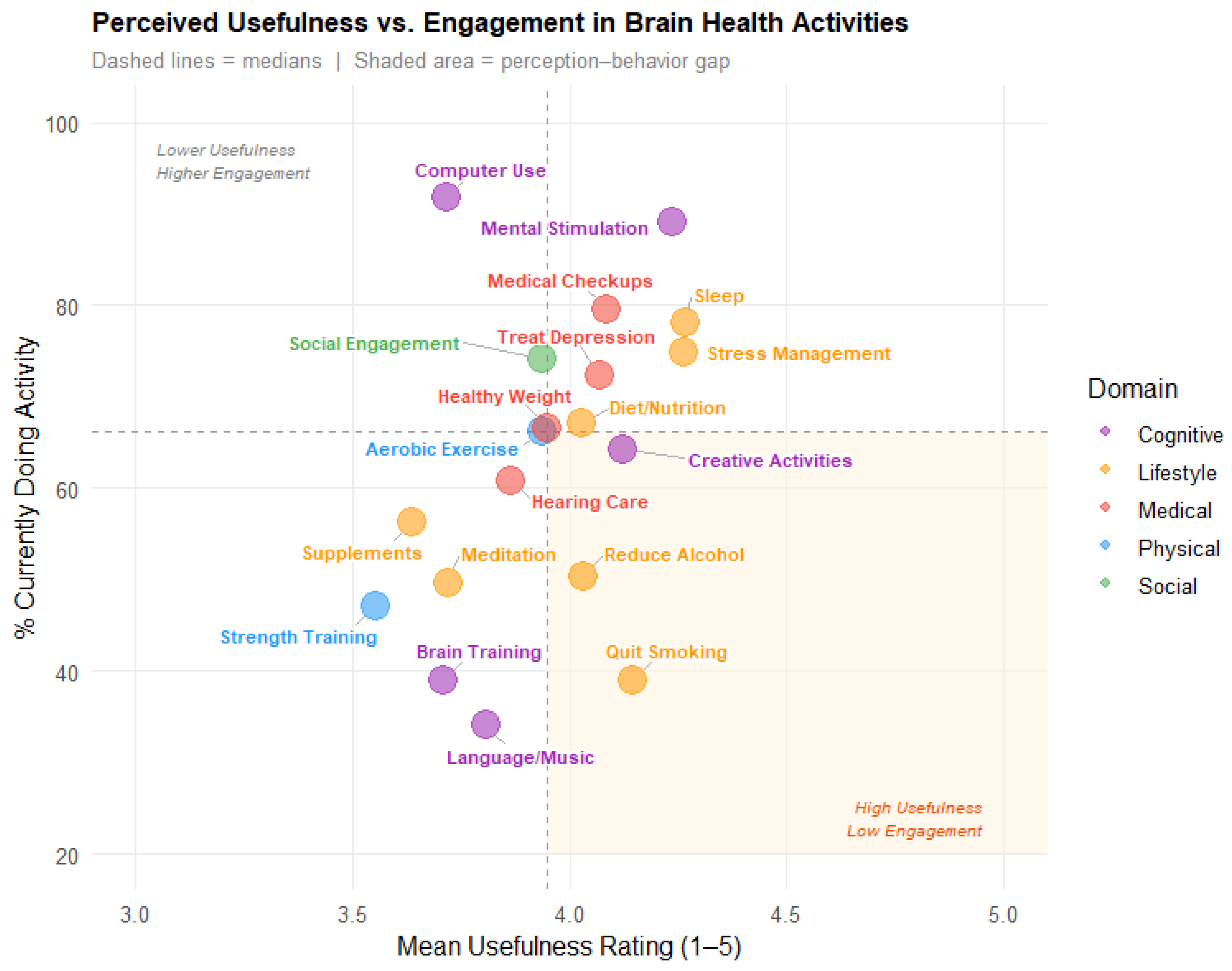
To examine the relationship between perceived usefulness and actual engagement across the 19 brain health activities, a bubble plot was constructed plotting mean usefulness ratings on the horizontal axis against the percentage of participants currently performing each activity on the vertical axis. This approach allowed simultaneous visualization of both dimensions for all activities, enabling identification of activities where perceived usefulness and engagement were well-aligned as well as activities where a perception–behavior gap existed between activities rated as highly useful but performed by few participants. Activities were color-coded by domain (physical, cognitive, social, lifestyle, and medical) to facilitate pattern recognition across activity types. Median values for both dimensions were used to define quadrants, with the upper-right quadrant representing high usefulness and high engagement, and the lower-right quadrant highlighting the perception–behavior gap of greatest intervention relevance.
All figures were produced using the ggplot2 package [42] (version 4.0.3) in R [32], with the ggrepel, (version 0.9.8) package used to optimize placement of activity labels [43]. Claude.ai Opus versions 4.6 to 5.0 were used to help generate R code, and all code was checked for accuracy against the original documentation.
Human Subjects
The study was reviewed and its conduct approved based on a protocol submitted to the Institutional Review Board of Nova Southeastern University (NSU-2024-10, approved 9 January 2024). As noted, potential participants reviewed an online informed consent form explaining the study. They were required to provide consent before answering questions on the survey.
3. Results
The sample included 761 individuals (mean age 52.6 years; 58.6% women) including early middle age (n = 380), late middle age (n = 267), and older adults (n = 114). Sample characteristics are presented in Table 1.
Table 1.
Sample Characteristics (N = 761).
3.1. Level of Concern
To examine whether level of concern about brain health differed by personal experience with cognitive risk, age group, and gender, three one-way ANOVAs were conducted. Results are summarized in Table 2.
Table 2.
Mean Concern Ratings by Personal Experience, Age Group, and Gender.
Concern differed significantly by personal experience group (F [3, 731] = 54.76, p < 0.001). Tukey-corrected post hoc comparisons indicated that participants reporting both subjective memory loss and a family history of dementia had the highest level of concern (M = 3.92, SD = 1.15), followed by those reporting memory loss only (M = 3.58, SD = 1.16), family history only (M = 2.91, SD = 1.25), and those with neither experience (M = 2.58, SD = 1.24). Participants with memory loss only (p < 0.001) and those with both experiences (p < 0.001) reported significantly greater concern than those with neither experience, while the group with family history only did not differ significantly from the group with neither experience (p = 0.057). Participants with family history only reported significantly lower concern than those with memory loss only (p < 0.001) and adding memory loss to family history was associated with a further significant increase in concern (p < 0.001).
Concern also differed significantly by age group (F [2, 750] = 12.35, p < 0.001). Contrary to expectations, younger adults (40–50 years; M = 3.38, SD = 1.32) reported significantly higher concern than both late middle-aged adults (51–64 years; M = 3.06, SD = 1.32; p = 0.006) and older adults (65+; M = 2.72, SD = 1.23; p < 0.001). The differences between the 51–64 and 65+ groups were not significant (p = 0.062).
Finally, concern differed significantly by gender (F [1, 751] = 10.06, p = 0.002), with men reporting higher concern (M = 3.35, SD = 1.39) than women (M = 3.04, SD = 1.27).
3.2. Perceived Usefulness of Brain Health Activities
Diagnostic results for all models are presented in Supplementary Table S1. Variance inflation factors did not exceed 4.35 in any model, below conventional thresholds for concern. No influential observations were identified; the maximum Cook’s distance across all models was 0.04. Residual distributions were negatively skewed (range −0.42 to −1.35), consistent with the ceiling effects evident in the usefulness ratings, but within conventionally acceptable limits.
As anticipated, the studentized Breusch–Pagan test indicated non-constant residual variance in 15 of the 19 activity models and in the model predicting the Doing score. Refitting all models with HC3 robust standard errors changed the significance status of 4 of 152 coefficients (2.6%). All four were borderline under both estimators, with p values between 0.031 and 0.067: the main effect of concern for computer use, the main effect of subjective memory loss for diet, and the concern by subjective memory loss interaction for diet and for weight management each became non-significant under robust estimation.
No coefficient became significant that had not been so under ordinary least squares, and no clearly significant coefficient became clearly non-significant. The concern by subjective memory loss and concern by family history of dementia interactions, the study’s principal findings, were not substantially changed. Substantive conclusions were therefore unchanged, and ordinary least squares results are reported throughout.
Because usefulness ratings were negatively skewed, ordinal logistic regression models were fit for the three activities with the most skewed residual distributions (sleep, quitting smoking, and stress management) as a sensitivity analysis. The proportional odds assumption was supported in all three models, with non-significant omnibus Brant tests (p = 0.15, 0.47, and 0.49, respectively) and no significant violation for the concern by subjective memory loss interaction in any model (p = 0.23, 0.40, and 0.74). That interaction remained positive and significant in all three ordinal models (p = 0.014, 0.001, and <0.001), consistent with the ordinary least squares results.
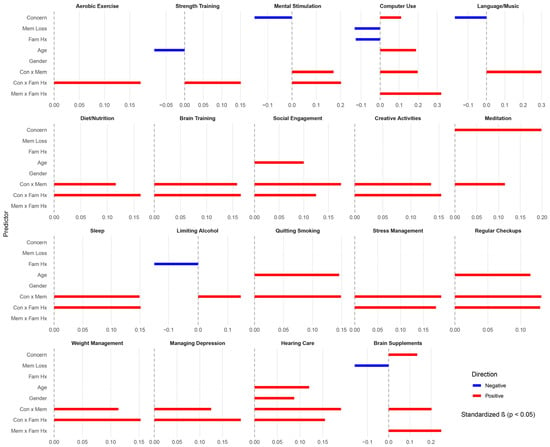
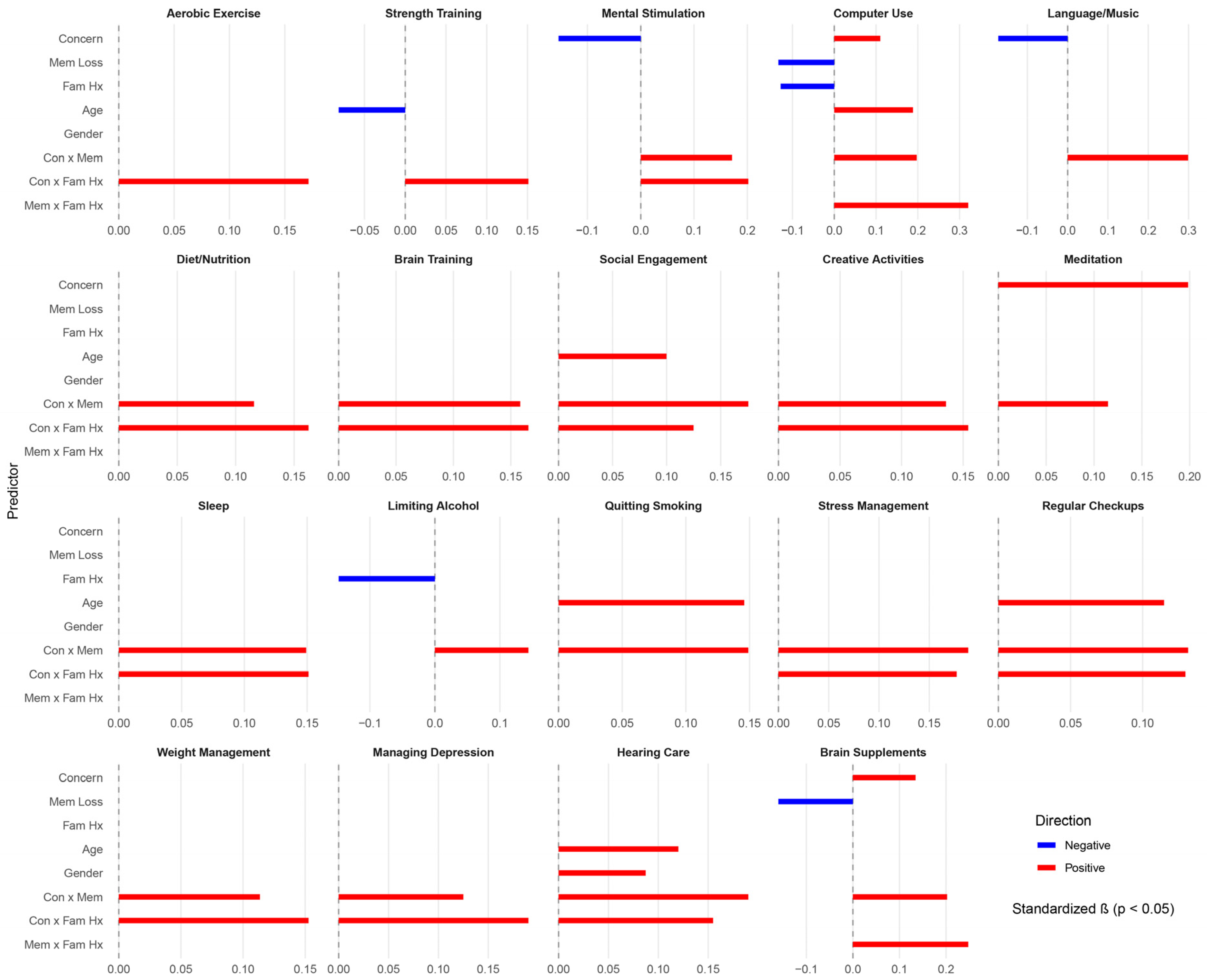
Figure 1 displays standardized regression coefficients for significant predictors of perceived usefulness ratings across all 19 brain health activities; full model results for all activities are presented in Supplementary Table S2. The main effect of concern, and its association with perceived usefulness among participants without subjective memory loss or family history of dementia, was significant for only 5 of the 19 activities and was inconsistent in direction (positive for meditation, supplements, and computer use; negative for mental stimulation and language/music), underscoring that concern alone was not a uniform predictor of perceived usefulness. In particular, the main effect for computer use was associated with a significance value of 0.49 and is one of the effects that was no longer significant in the HC3 models (see Table S2).
Figure 1.
Predictors of perceived usefulness.
Evaluated at mean levels of concern, the main effects of subjective memory loss and family history of dementia showed no consistent association with perceived usefulness. Subjective memory loss reached significance for 2 of the 19 activities and family history for 2 of the 19, with the remaining estimates distributed near zero. For mentally stimulating activities, for example, neither subjective memory loss (β = 0.001, p = 0.992) nor family history of dementia (β = 0.046, p = 0.405) was associated with usefulness ratings. The same was true for social activities (memory loss: β = −0.095, p = 0.083; family history: β = −0.047, p = 0.392). Where these main effects were significant, they were negative and confined to activities that are commercially promoted or purchasable: subjective memory loss predicted lower perceived usefulness of computer use (β = −0.134, p = 0.012) and dietary supplements (β = −0.160, p = 0.005), and family history predicted lower perceived usefulness of computer use (β = −0.128, p = 0.016) and reducing alcohol consumption (β = −0.148, p = 0.392).
The interaction terms showed a different and more consistent pattern. The concern × memory loss and concern × family history interactions were positive across nearly all activities, indicating that concern was more strongly associated with perceived usefulness among participants who also reported memory loss or a family history of dementia. This pattern was particularly prominent for cognitively oriented activities. For mentally stimulating activities, for example, both concern × memory loss (β = 0.171, p = 0.001) and concern × family history (β = 0.202, p < 0.001) were significant. It also held for lifestyle activities such as diet (concern × family history (β = 0.162, p = 0.004)) and stress management (concern × memory loss (β = 0.189, p = 0.001)).
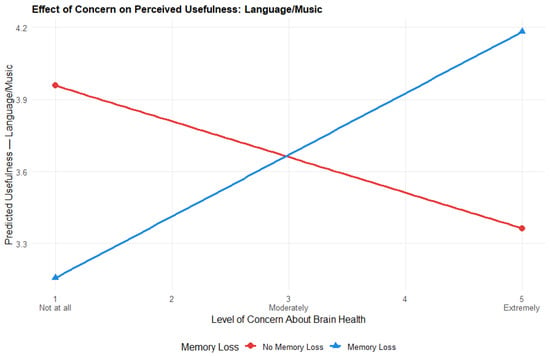
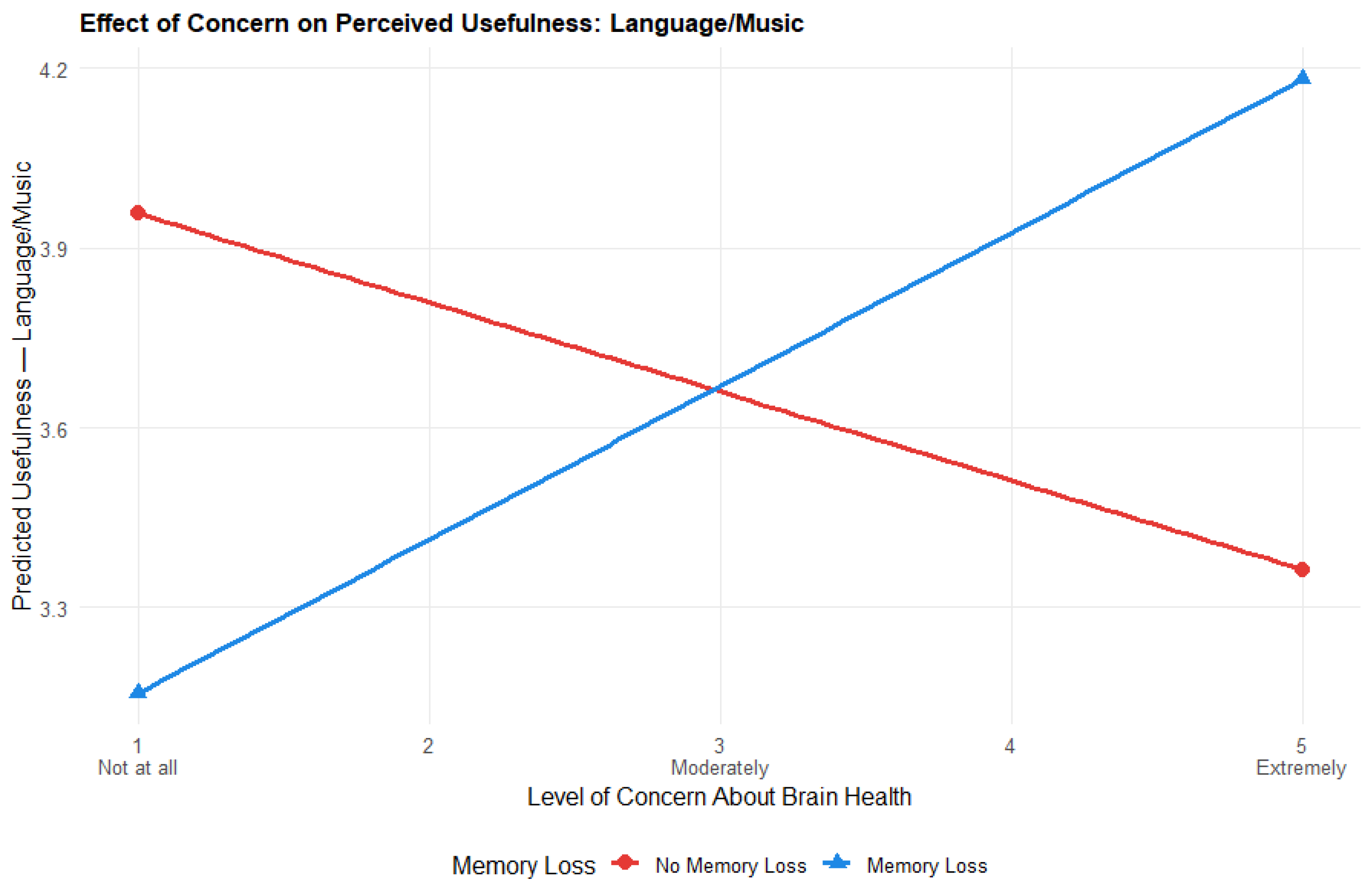
The pattern differed across activity domains. For hearing care, gender emerged as a significant positive predictor, indicating that women rated this activity as more useful than men (β = 0.087, p = 0.031). Age was a significant positive predictor for computer use (β = 0.188, p < 0.001), social engagement (β = 0.100, p = 0.008), and quitting smoking (β = 0.146, p < 0.001), indicating that older participants rated these activities as more useful. Notably, for several activities including language and music, reducing alcohol, and supplements, the interaction terms were among the strongest predictors. For language and music, concern × memory loss was the dominant predictor (β = 0.299, p < 0.001), while for supplements, the memory loss × family history interaction was also significant (β = 0.247, p = 0.001). This suggests that for these activities, perceived usefulness is driven specifically by the combination of concern and personal experience rather than by either factor alone.
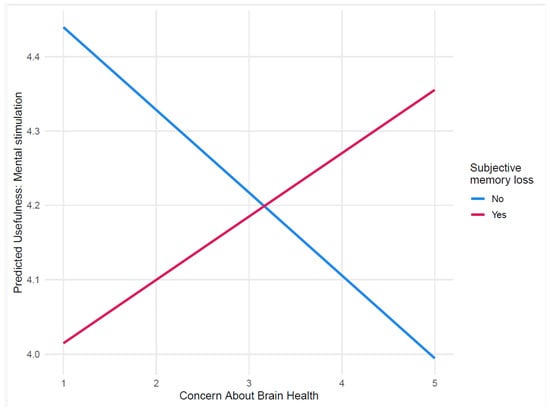
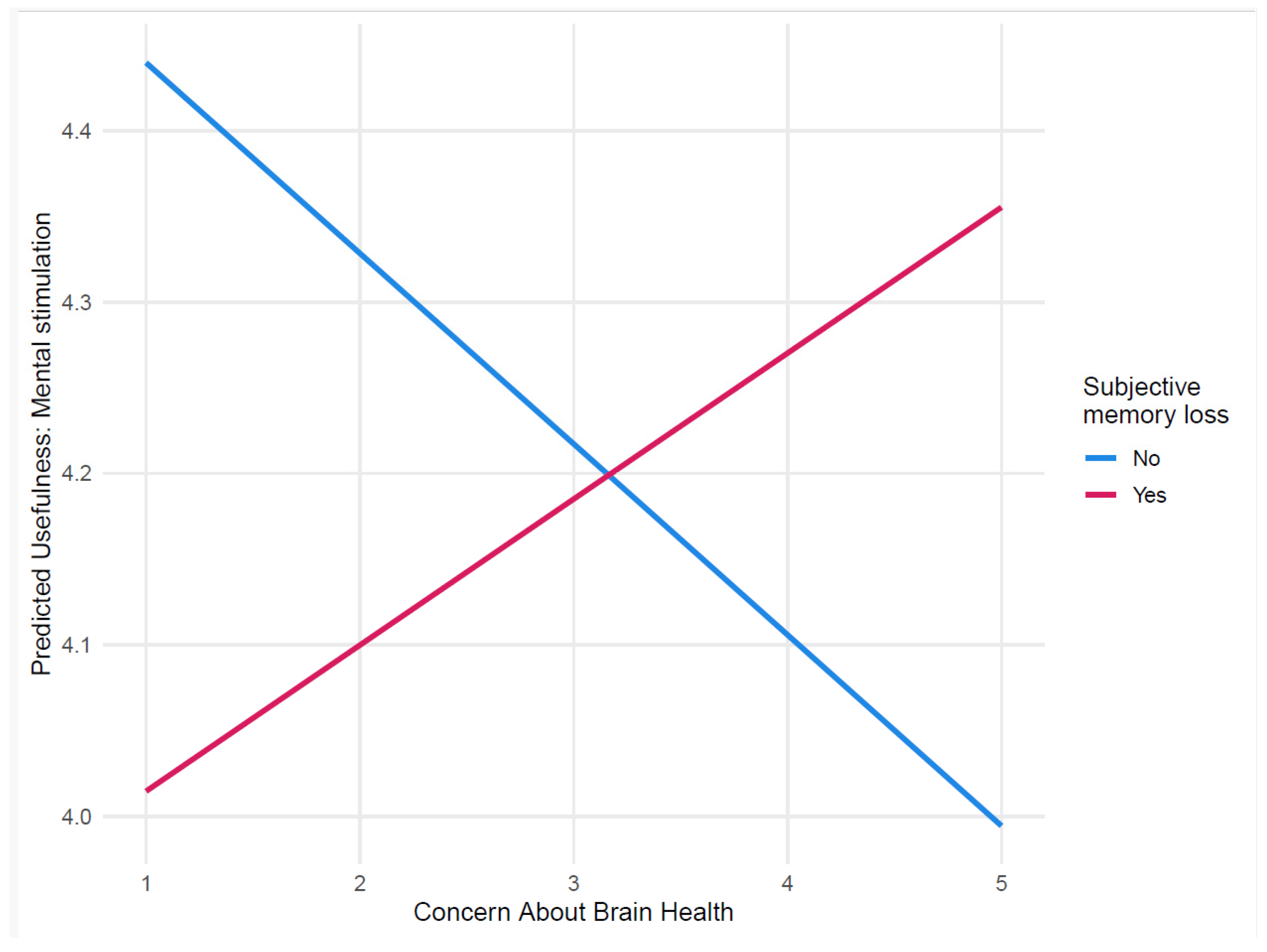
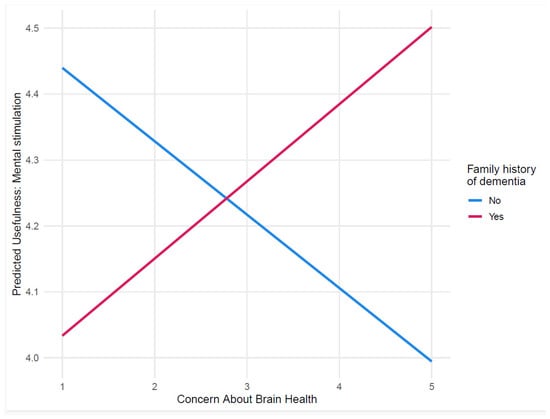
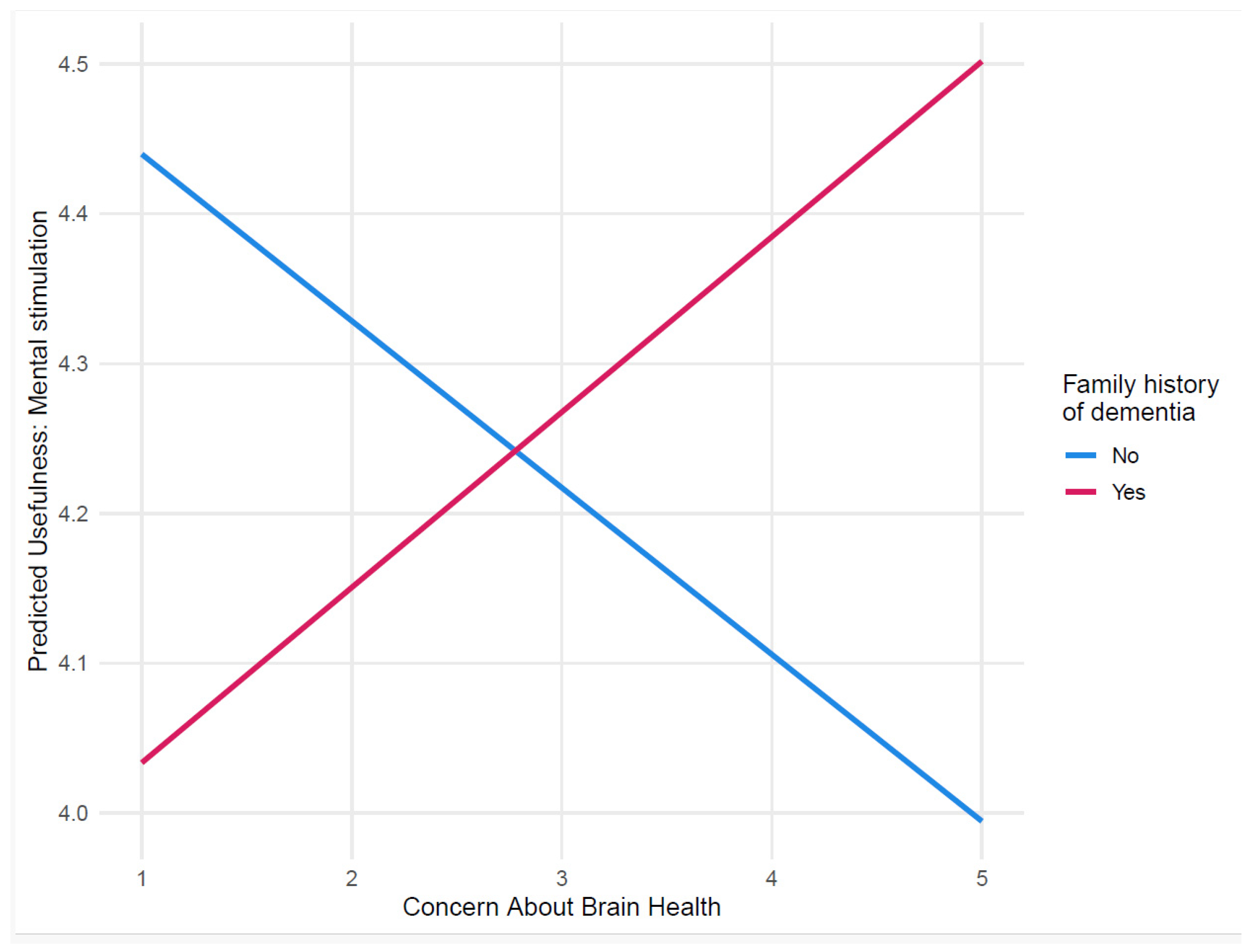
Figure 2 and Figure 3 illustrate the concern × memory loss and concern × family history interactions for mentally stimulating activities, and Figure 4 illustrates the concern × memory loss interaction for language and music. For mentally stimulating activities, participants reporting subjective memory loss showed a steeper positive relationship between concern and perceived usefulness than those without memory loss: at lower levels of concern, their usefulness ratings were lower, but increased as concern increased, with higher ratings of usefulness than ratings of participants without memory loss at higher levels of concern. A similar pattern was observed for the concern × family history interaction, in which the association between concern and perceived usefulness was stronger among participants with a family history of dementia. For language and music, concern × memory loss was the dominant predictor, showing the same crossover pattern, with participants reporting memory loss showing the steepest increase in perceived usefulness as concern rose. These findings are consistent with the interpretation that direct personal experience with cognitive risk strengthens, rather than substitutes for, the motivational role of general concern in shaping perceptions of brain health activity usefulness.
Figure 2.
Interaction of Concern with Usefulness by Experience of Memory Loss for Mentally Stimulating Activities.
Figure 3.
Interaction of Concern with Usefulness by Family History of Dementia for Mentally Stimulating Activities.
Figure 4.
Interaction of Concern with Usefulness by Family History of Dementia for Language and Music.
3.3. Brain Health Activity Engagement (Doing Scores)
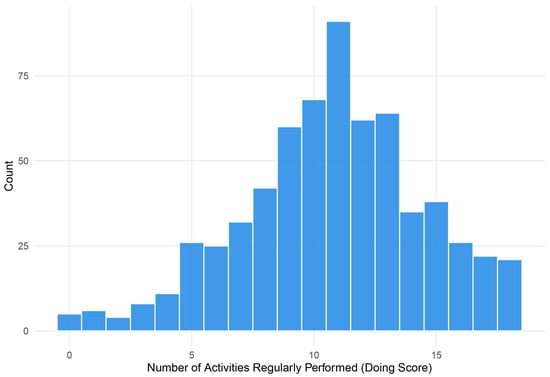
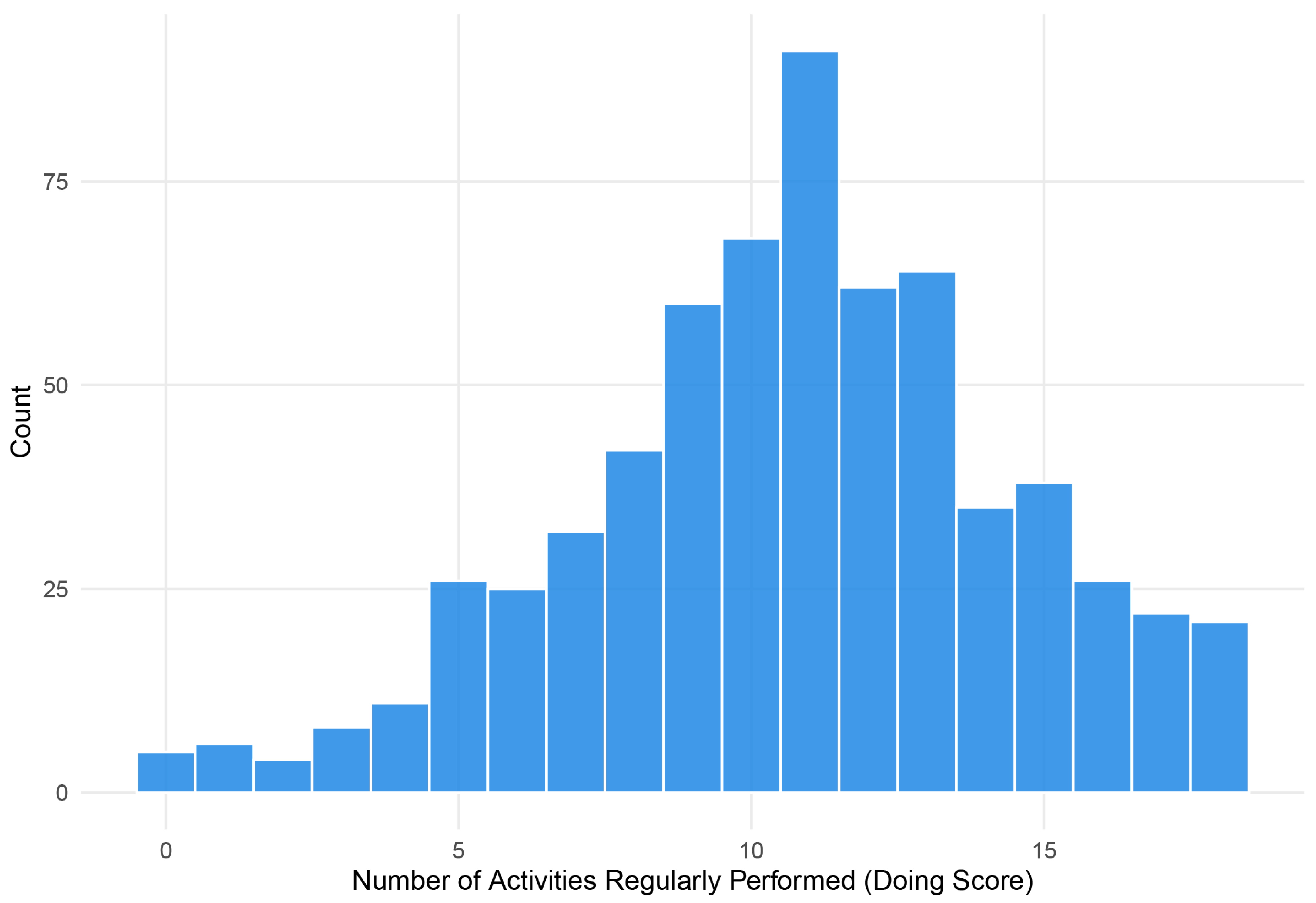
Inspection of the distribution of Doing scores revealed that 115 participants (15.1%) reported performing all 19 brain health activities regularly. This response pattern was considered implausible given that several activities quitting smoking, reducing alcohol consumption, using a hearing aid) are not applicable to all individuals. Comparison of regression results between the full and restricted samples confirmed that inclusion of these cases altered parameter estimates, supporting their exclusion from primary analyses. These 115 participants were thus excluded from all Doing score analyses, yielding an analytic sample of 621 participants with scores ranging from 0 to 18 (mean = 10.8, SD = 3.74). The distribution of Doing scores in the analytic sample is illustrated in Figure 5.
Figure 5.
Distribution of Number of Activities Performed (Participants Reporting All 19 Activities Excluded).
Group differences in Doing scores were examined using three one-way ANOVAs. Results are summarized in Table 3.
Table 3.
Mean Doing Scores by Personal Experience, Age Group, and Gender.
A linear regression model examined predictors of the Doing score in the analytic sample (n = 621). Results are presented in Table 4. No main effect reached statistical significance. The only significant predictor was the memory loss × family history interaction (β = 0.202, p = 0.003), indicating that participants reporting both subjective memory loss and a family history of dementia reported doing more brain health activities than would be predicted from either experience alone. Descriptively, mean Doing scores were similar among participants reporting neither experience (10.72), memory loss only (10.44), and family history only (10.64), but higher among those reporting both (11.86). Neither the concern × family history interaction nor the concern × memory loss interactions were significant (β = −0.097, p = 0.058 and β = 0.075, p = 0.139, respectively). The model accounted for a small proportion of variance in engagement (R2 = 0.039), suggesting that most variation in the number of activities reported was unexplained by concern, personal experience, or demographic characteristics.
Table 4.
Regression Coefficients for Predictors of Brain Health Activity Engagement (Doing Score).
3.4. Perceived Usefulness and Engagement
To synthesize the relationship between perceived usefulness and actual engagement across all 19 activities, Figure 6 displays mean usefulness ratings plotted against the percentage of participants currently performing each activity. Activities in the upper-right quadrant, including mental stimulation, sleep, stress management, and medical checkups, were both highly rated for usefulness and performed by most participants, suggesting strong alignment between beliefs and behavior in these domains. In contrast, several activities in the lower-right quadrant demonstrated a perception–behavior gap, being rated as relatively useful but performed by fewer participants; these included brain training software, language and music activities, and meditation. Computer use was notable in the opposite direction, showing high engagement despite a lower usefulness rating, suggesting participants may perform this activity for reasons unrelated to brain health. Physical activities including aerobic exercise and strength training showed moderate usefulness ratings with lower engagement, particularly strength training. Activities related to substance use and medical management, including reducing alcohol consumption, quitting smoking, and hearing care, showed lower engagement, though this reflects the fact that many participants do not smoke or drink heavily rather than a true perception–behavior gap. Overall, the figure suggests that interventions targeting brain health behavior change may be most productively focused on activities in the perception–behavior gap quadrant, particularly structured cognitive training, and mindfulness-based activities, where belief in their value has not yet translated into consistent practice.
Figure 6.
Plot of Perceived Usefulness by Level of Actual Engagement in Activities.
4. Discussion
This study examined factors associated with the perceived usefulness of brain health activities and actual engagement in those activities among middle-aged and older adults. Neither concern about brain health nor personal experience of cognitive risk was, by themselves, a consistent predictor of perceived usefulness. Concern showed a significant independent association for only 5 of the 19 activities, and the direction of the relation was inconsistent. Evaluated at mean levels of concern, subjective memory loss was significant for 2 of the 19 activities and family history of dementia for 2 of the 19, with the remaining estimates distributed near zero. Their combination, however, was consistent across nearly the full set of activities. The concern × memory loss interaction was positive for all 19 activities and significant for 17, and the concern × family history interaction was positive for 18 of 19 and significant for 13. Concern thus appears to translate into perceived value of specific preventive activities primarily among those with direct or familial experience of memory problems, and to do relatively little on its own among those without it. This pattern indicates that personal experience and concern operate synergistically rather than redundantly, with personal experience amplifying, rather than substituting for, the motivational role of concern.
Engagement, however, followed a different pattern. In the model predicting the number of activities performed, the interactions of concern with subjective memory loss and family history were not significant. The factors associated with believing that brain health activities are useful and those associated with performing them may be different. Concern shapes perceived value among those with personal experience, while engagement was associated with the accumulation of experience itself.
4.1. The Complex Role of Concern
Although health-behavior theory positions concern about illness as a central motivator of preventive action [12,44], concern’s independent association with perceived usefulness in this study was limited. Its main effect, which represents concern’s relationship to usefulness among participants without personal experience of cognitive risk, reached significance for only 5 of the 19 activities and was inconsistent in direction: positive for meditation, dietary supplements, and computer use, but negative for mentally stimulating activities and language or music activities. The association with computer use did not survive robust estimation. Concern by itself was thus not consistently related by itself to perceived usefulness. The consistent pattern was instead the positive concern × experience interactions, in which the association between concern and perceived usefulness was stronger among participants who also reported subjective memory loss or a family history of dementia. Concern appears to shape how useful people judge brain health activities to be largely in the context of personal experience with cognitive risk rather than on its own. Concern’s relationship to self-reported engagement was similarly limited. In contrast to studies reporting that perceived susceptibility and self-efficacy predict engaging in brain health behaviors [13,15], concern was not a significant independent predictor of the Doing score in the present sample (p = 0.050), reinforcing that believing activities were useful did not reliably translate into performing them. This pattern is consistent with the broader health behavior literature documenting gaps between intentions and behavior and underscores the need for interventions that address both motivational and behavioral components of brain health promotion. From an intervention standpoint, raising awareness of personal risk may be a productive first step, particularly among individuals who have not yet begun to think actively about dementia prevention. This may be especially true for the late middle-aged group (51–64 years), who reported the lowest engagement of any age group (group differences were not significant), and for older adults (65+), who reported the lowest concern despite being in an age group for which prevention efforts remain useful [5,6].
4.2. Role of Subjective Memory Loss and Family History
Considered by themselves, subjective memory loss and family history of dementia showed no consistent association with perceived usefulness once concern was held at its mean. Each reached significance for only 2 of the 19 activities, and where they did the association was negative and concentrated in commercially promoted options: computer use and dietary supplements for subjective memory loss and computer use and reducing alcohol consumption for family history. Their interactions with concern, by contrast, were consistently positive, indicating that the association between concern and perceived usefulness was stronger among participants with personal experience of cognitive risk. This pattern is consistent with prior evidence that personal experience with cognitive risk increases receptiveness to prevention-oriented information [21,22].
Rather than substituting for concern, direct personal experience with cognitive risk, whether through one’s own memory symptoms or a family member’s dementia, appears to amplify its motivational role, so that the combination of concern and personal experience was associated with the highest usefulness ratings.
The ANOVA results for concern provided additional support for this interpretation. Participants with subjective memory loss alone reported higher concern than those with neither experience (mean rating = 3.58 vs. 2.58), and those with both memory loss and family history reported the highest concern of all groups (mean rating = 3.92). By contrast, family history alone was not associated with significantly higher concern than neither experience (p = 0.057), suggesting that indirect experience with dementia through a family member raises concern less reliably than one’s own memory symptoms. This distinction has practical implications: individuals with family history may need more targeted messaging to activate concern as a motivator, while those with memory loss may already be sufficiently motivated and would benefit more from direct behavioral support.
4.3. Perception–Behavior Gap
A notable finding was the discrepancy between perceived usefulness and actual engagement for several activities, most prominently structured cognitive training software, language and music activities, and meditation. These activities were rated as moderately to highly useful by many participants yet were among the least frequently performed. This perception–behavior gap is consistent with prior survey research showing that endorsement of brain health activities as beneficial does not reliably translate into consistent engagement [15]. Several factors may contribute to this gap, including barriers related to access, cost, time, or unfamiliarity with specific programs. Cognitive training software may be perceived as useful in the abstract while remaining underutilized due to uncertainty about which programs are effective or how to incorporate them into daily routines.
The Doing score regression results further illustrated this gap. The most notable predictor of behavioral engagement was the memory loss × family history interaction—participants with both experiences performed significantly more activities than those with neither or with memory loss alone, while concern, family history, and demographic factors were not significant predictors. This suggests behavioral engagement is driven less by general attitudes and more by the cumulative weight of direct personal experience, and that the perception–behavior gap may be largest among individuals who believe in the value of brain health activities but have not yet had sufficient personal motivation to act consistently.
Conversely, computer use showed relatively high engagement despite a lower usefulness rating, suggesting that participants perform this activity for reasons unrelated to brain health and may not recognize its potential cognitive benefits. This points to an opportunity for reframing to help individuals recognize that activities they already perform regularly, such as computer use and social engagement, may have brain health value.
4.4. Implementation Strategies to Bridge Perception–Behavior Gap
The bubble plot illustrates a potential gap between perceptions about brain health activities and actual behavior, as activities perceived as useful were not necessarily those in which participants reported the greatest engagement (e.g., creative activities). Recent data suggests that favorable beliefs or motivation alone may not be enough to produce brain health behavior. For example, a recent study in 347 middle-aged adults found that self-efficacy appeared to predict engagement in dementia risk-reduction behaviors (e.g., physical and cognitive activity, sleep quality). The findings suggest that confidence in one’s ability to make lifestyle changes may be an important link between motivation and action [45].
Implementation research further indicates that engagement is affected by factors beyond individual beliefs. For example, one qualitative study identified barriers to implementing lifestyle-based dementia prevention at multiple levels, including patient stigma and technology skills, limited clinical time and resources, and broader healthcare-system barriers [46]. The authors recommended strategies including tailoring materials, reducing stigmatizing practices, and integrating prevention efforts into existing workflows and resources. Additionally, a recent systematic review identified dementia risk-reduction interventions commonly incorporated behavior-change techniques (e.g., goal setting and planning, knowledge building, social support, feedback), while emphasizing that accessibility and socioenvironmental context may influence whether behavioral changes can be successfully implemented and sustained [47]. Therefore, differences between perceived usefulness and engagement observed in the present study may reflect not only beliefs about the value of an activity, but also individuals’ self-efficacy, resources, opportunities, and ability to incorporate the activity into daily life. Overall, these findings along with the published literature appear to reinforce that even when individuals perceive brain health activities as useful, successful engagement may depend on whether appropriate support and opportunities are available.
However, successful implementation extends beyond initiating or adopting brain health behaviors to sustaining engagement over time, which may represent an even greater challenge. The BRAIN BOOTCAMP pilot study illustrates this difficulty [48]. Even though participants who completed the multidomain intervention demonstrated improvements in dementia literacy, motivation to change lifestyle behaviors, and dementia risk scores, overall program attrition was over 58% at 3 months, leading the authors to identify participant engagement and retention as key challenges for future interventions. Similar results were observed in the PRODEMOS effectiveness-implementation trial of a coach-supported mHealth dementia prevention intervention [49]. Although over 80% of intervention participants initially adopted the program and ratings of appropriateness and acceptability were favorable (>80%), only 50% remained actively engaged throughout the 12- to 18-month intervention period. Together, these studies suggest implementation efforts should focus not only on promoting initial uptake of brain health activities but also on identifying strategies that support continued participation and integration of these behaviors into everyday practice.
4.5. Demographic Differences
Demographic patterns in concern and engagement differed in noteworthy ways. Regarding concern, younger adults (40–50 years) reported significantly higher concern than both late middle-aged (51–64 years) and older adults (65+), a finding counter to the expectation that concern would increase with age as dementia risk becomes more proximal. One interpretation is that younger middle-aged adults may be at a stage of heightened health awareness and proactive orientation toward future risk, while older adults may have greater acceptance of cognitive aging or may have shifted their health priorities in other directions, though, as noted below, these patterns may equally reflect cohort differences rather than true age effects. Men also reported significantly higher concern than women (M = 3.35 vs. 3.04), which is somewhat unexpected given that women generally report higher health concern across domains [5]. This finding may reflect gender differences in how concern about cognitive decline is experienced or expressed and warrants further investigation.
In contrast to the concern findings, demographic factors were largely unrelated to behavioral engagement. Gender was not a significant predictor of Doing scores (p = 0.436), with men and women performing a similar number of activities. Age group differences in Doing scores also did not reach significance (p = 0.070), though findings suggested that older adults (65+) may perform slightly more activities than younger groups. The absence of significant demographic differences in Doing scores, combined with the significant role of personal experience (particularly the co-occurrence of memory loss and family history), suggests that behavioral engagement in brain health activities is driven more by experiential factors than by demographic characteristics. This underscores the importance of assessing personal experience with cognitive risk when designing and targeting brain health interventions.
Apparent differences across the 40–50, 51–64, and 65+ groups may reflect not how concern changes as individuals grow older, but rather generational differences in exposure to brain health messaging and in beliefs about cognitive aging. Younger middle-aged adults came of age amid increasing public attention to dementia risk reduction and modifiable lifestyle factors, which may heighten their awareness and concern, whereas older adults may have been more exposed to the view that cognitive decline is an inevitable part of aging and may therefore be more resigned to it.
4.6. Implications for Digital Brain Health Interventions
These findings are relevant for digital brain health interventions such as web-based courses and AI-assisted coaching tools. Because concern was associated with perceived usefulness mainly among individuals with personal experience of cognitive risk, effective digital interventions should assess both baseline concern and personal risk experience; where concern is low, they might incorporate content designed to raise awareness of personal risk and the modifiability of dementia risk before presenting specific behavior change strategies. For individuals already motivated by personal experience, digital tools may be most useful when they provide structured guidance, progress tracking, and support for specific activities, particularly those in the perception–behavior gap such as cognitive training and mindfulness. The finding that approximately half of adults surveyed reported openness to eHealth interventions for brain health [10] further supports the feasibility of digital delivery, though tailoring content to subgroups defined by concern level, memory symptoms, and family history may be necessary to maximize engagement and impact.
4.7. Limitations
Several limitations of this study should be noted. The sample was recruited through an online survey platform and may not be representative of the broader population of middle-aged and older adults, particularly those with limited digital literacy or internet access. The cross-sectional design precludes causal inference, and the reliance on self-reported data introduces the possibility of response bias, particularly for engagement in health behaviors. Apparent age-group differences should be interpreted with caution, because the cross-sectional design cannot distinguish true age effects from cohort effects. Longitudinal designs that follow the same individuals over time would be needed to disentangle these issues.
The Doing score, while a useful composite measure of behavioral activation, does not capture frequency, intensity, or duration of engagement and may overestimate actual adherence to brain health recommendations. Because it is unweighted, it also should not be interpreted as an index of expected risk reduction: a participant performing several activities with strong evidentiary support and one performing an equal number with weaker support receives the same score. Developing an evidence-weighted engagement index would require effect estimates on a common scale across behaviors that are not currently available and represents a useful direction for future work. Future research using longitudinal designs, objective behavioral measures, and more diverse samples will be needed to confirm and extend these findings.
5. Conclusions
This study found that concern about brain health, subjective memory loss, and family history of dementia were each associated with the perceived usefulness of brain health activities, but that none was a consistent predictor on its own. Concern showed a significant independent association for only 5 of the 19 activities and varied in direction. Evaluated at mean levels of concern, subjective memory loss and family history each reached significance for 2 of the 19 activities. Their interactions, by contrast, were positive across nearly all activities, indicating that concern was more strongly associated with perceived usefulness among participants reporting personal or familial experience of memory problems. Engagement followed a different pattern: the co-occurrence of subjective memory loss and family history was the only significant predictor of the number of activities performed, and concern was not independently associated with engagement. Perceived usefulness and reported engagement diverged for several activities, most notably structured cognitive training and meditation practice, which were rated as useful but performed by relatively few participants.
These findings have several implications for the design of brain health programs, although the cross-sectional design does not permit causal inference and the suggestions below would require prospective evaluation. Because concern was associated with perceived usefulness mainly among those with personal experience of cognitive risk, awareness-raising alone may be insufficient for individuals without such experience, and programs may need to address perceived personal relevance directly. Conversely, participants who already report both memory changes and family history may benefit less from further risk messaging and more from concrete behavioral support. The divergence between perceived usefulness and reported engagement suggests that programs targeting activities in this gap would need to address barriers to enactment rather than beliefs about value. Digital platforms are well suited to delivering both types of content, but whether tailoring on experience and concern improves engagement is an empirical question these data cannot answer.
Supplementary Materials
The following supporting information can be downloaded at: https://www.mdpi.com/article/10.3390/jal6030062/s1, Table S1. Regression diagnostics for the 19 activity models and the Doing model, and Table S2. Regression Models for Predictors of Brain Health Activity Usefulness Ratings.
Author Contributions
Conceptualization, R.L.O.; methodology, R.L.O.; validation, J.C., G.C. and R.L.O.; formal analysis, R.L.O.; investigation, R.L.O.; data curation, R.L.O.; writing—original draft preparation, J.C. and R.L.O.; writing—review and editing, S.W. and S.A.; visualization, J.C. All authors have read and agreed to the published version of the manuscript.
Funding
This research received no external funding.
Institutional Review Board Statement
This study was conducted in accordance with the Declaration of Helsinki, and approved by the Institutional Review Board of Nova Southeastern University (NSU-2024-10, 9 January 2024).
Informed Consent Statement
Informed consent was obtained from all subjects involved in the study.
Data Availability Statement
The raw data supporting the conclusions of this article will be made available by the authors on request.
Acknowledgments
During the preparation of this manuscript/study, the authors used Claude.ai Opus 4.6 to 5.0 for the purposes of generating R code for use in data analyses. All generated code was checked against the original documentation. The authors have reviewed and edited the output and take full responsibility for the content of this publication.
Conflicts of Interest
The authors declare no conflicts of interest.
Abbreviations
The following abbreviations are used in this manuscript:
| AARP | American Association of Retired Persons |
| ANOVA | Analysis of variance |
| MIND | Mediterranean–DASH Intervention for Neurodegenerative Delay |
| SD | Standard deviation |
| SE | Standard error |
References
- Livingston, G.; Huntley, J.; Liu, K.Y.; Costafreda, S.G.; Selbaek, G.; Alladi, S.; Ames, D.; Banerjee, S.; Burns, A.; Brayne, C.; et al. Dementia prevention, intervention, and care: 2024 report of the Lancet standing Commission. Lancet 2024, 404, 572–628. [Google Scholar] [CrossRef] [Scilit] [PubMed]
- Livingston, G.; Huntley, J.; Sommerlad, A.; Ames, D.; Ballard, C.; Banerjee, S.; Brayne, C.; Burns, A.; Cohen-Mansfield, J.; Cooper, C.; et al. Dementia prevention, intervention, and care: 2020 report of the Lancet Commission. Lancet 2020, 396, 413–446. [Google Scholar]
- Ownby, R.L.; Cavanaugh, G.; Weatherly, S.; Akhtarullah, S.; Caballero, J. Middle-aged and older adults’ beliefs, ratings, and preferences for receiving multicomponent lifestyle-based brain health interventions. Brain Sci. 2026, 16, 69. [Google Scholar] [CrossRef] [Scilit] [PubMed]
- Ngandu, T.; Lehtisalo, J.; Solomon, A.; Levalahti, E.; Ahtiluoto, S.; Antikainen, R.; Backman, L.; Hanninen, T.; Jula, A.; Laatikainen, T.; et al. A 2 year multidomain intervention of diet, exercise, cognitive training, and vascular risk monitoring versus control to prevent cognitive decline in at-risk elderly people (FINGER): A randomised controlled trial. Lancet 2015, 385, 2255–2263. [Google Scholar] [CrossRef] [Scilit] [PubMed]
- Akyol, M.A.; Zehirlioglu, L.; Erunal, M.; Mert, H.; Hatipoglu, N.S.; Kucukguclu, O. Determining middle-aged and older adults’ health beliefs to change lifestyle and health behavior for dementia risk reduction. Am. J. Alzheimer’s Dis. Other Dement. 2020, 35, 1533317519898996. [Google Scholar] [CrossRef] [Scilit] [PubMed]
- Anderson, L.N.; McCaul, K.D.; Langley, L.K. Common-sense beliefs about the prevention of Alzheimer’s disease. Aging Ment. Health 2011, 15, 922–931. [Google Scholar] [CrossRef] [Scilit] [PubMed]
- Kim, S.; Sargent-Cox, K.A.; Anstey, K.J. A qualitative study of older and middle-aged adults’ perception and attitudes towards dementia and dementia risk reduction. J. Adv. Nurs. 2015, 71, 1694–1703. [Google Scholar] [CrossRef] [Scilit] [PubMed]
- Smith, B.J.; Ali, S.; Quach, H. Public knowledge and beliefs about dementia risk reduction: A national survey of Australians. BMC Public Health 2014, 14, 661. [Google Scholar] [CrossRef] [Scilit] [PubMed]
- Roberts, J.S.; McLaughlin, S.J.; Connell, C.M. Public beliefs and knowledge about risk and protective factors for Alzheimer’s disease. Alzheimer’s Dement. 2014, 10, S381–S389. [Google Scholar] [CrossRef] [Scilit] [PubMed]
- Zülke, A.; Luppa, M.; Köhler, S.; Riedel-Heller, S.G. Knowledge of risk and protective factors for dementia in older German adults a population-based survey on risk and protective factors for dementia and internet-based brain health interventions. PLoS ONE 2022, 17, e0277037. [Google Scholar] [CrossRef] [Scilit] [PubMed]
- Janz, N.K.; Becker, M.H. The health belief model: A decade later. Health Educ. Q. 1984, 11, 1–47. [Google Scholar] [CrossRef] [Scilit] [PubMed]
- Simoni, J.M.; Ronen, K.; Aunon, F.M. Health behavior theory to enhance eHealth intervention research in HIV: Rationale and review. Curr. HIV/AIDS Rep. 2018, 15, 423–430. [Google Scholar] [CrossRef] [Scilit] [PubMed]
- Zakrzewski, J.J.; Davis, J.D.; Gemelli, Z.T.; Korthauer, L.E. Understanding health beliefs and health behaviors in older adults at risk for alzheimer’s disease. J. Alzheimer’s Dis. 2024, 99, 1093–1104. [Google Scholar] [CrossRef] [Scilit] [PubMed]
- Zhang, J.; Liu, X.; Gong, D.; Peng, Y.; Li, H.; Yang, Y. Health beliefs, lifestyle, and cognitive aging among Chinese community residents: A structural equation model analysis. Front. Public Health 2022, 10, 1028679. [Google Scholar] [CrossRef] [Scilit] [PubMed]
- Werner, P.; AboJabel, H. Perceptions about and engagement in behaviors to reduce the risk of dementia among adult persons in israel. J. Alzheimer’s Dis. 2020, 78, 1011–1017. [Google Scholar] [CrossRef] [Scilit] [PubMed]
- Jessen, F.; Amariglio, R.E.; Buckley, R.F.; van der Flier, W.M.; Han, Y.; Molinuevo, J.L.; Rabin, L.; Rentz, D.M.; Rodriguez-Gomez, O.; Saykin, A.J.; et al. The characterisation of subjective cognitive decline. Lancet Neurol. 2020, 19, 271–278. [Google Scholar] [CrossRef] [Scilit] [PubMed]
- Taylor, C.A.; Bouldin, E.D.; McGuire, L.C. Subjective cognitive decline among adults aged ≥ 45 years—United states, 2015–2016. MMWR Morb. Mortal. Wkly. Rep. 2018, 67, 753–757. [Google Scholar] [CrossRef] [Scilit] [PubMed]
- Gupta, S. Racial and ethnic disparities in subjective cognitive decline: A closer look, United States, 2015–2018. BMC Public Health 2021, 21, 1173. [Google Scholar] [CrossRef] [Scilit] [PubMed]
- Carter, C.; James, T.; Higgs, P.; Cooper, C.; Rapaport, P. Understanding the subjective experiences of memory concern and MCI diagnosis: A scoping review. Dementia 2023, 22, 439–474. [Google Scholar] [CrossRef] [Scilit] [PubMed]
- Mendonca, M.D.; Alves, L.; Bugalho, P. From subjective cognitive complaints to dementia: Who is at risk?: A systematic review. Am. J. Alzheimer’s Dis. Other Dement. 2016, 31, 105–114. [Google Scholar] [CrossRef] [Scilit] [PubMed]
- Rosenberg, A.; Coley, N.; Soulier, A.; Kulmala, J.; Soininen, H.; Andrieu, S.; Kivipelto, M.; Mariagnese Barbera for the MIND-AD and HATICE groups. Experiences of dementia and attitude towards prevention: A qualitative study among older adults participating in a prevention trial. BMC Geriatr. 2020, 20, 99. [Google Scholar] [CrossRef] [Scilit] [PubMed]
- Sener, M.; Kucukguclu, O.; Akyol, M.A. Does having a family member with dementia affect health beliefs about changing lifestyle and health behaviour for dementia risk reduction? Psychogeriatrics 2024, 24, 868–875. [Google Scholar] [CrossRef] [Scilit] [PubMed]
- Cattaneo, G.; Bartrés-Faz, D.; Morris, T.P.; Sánchez, J.S.; Macià, D.; Tarrero, C.; Tormos, J.M.; Pascual-Leone, A. The Barcelona Brain Health Initiative: A cohort study to define and promote determinants of brain health. Front. Aging Neurosci. 2018, 10, 321. [Google Scholar] [CrossRef] [Scilit] [PubMed]
- Tanzi, R.; Rountree, R. Science and music in support of SHIELDing the brain: A clinical conversation with Rudolph Tanzi, PhD, and Robert Rountree, MD. Altern. Complement. Ther. 2017, 23, 209–216. [Google Scholar] [CrossRef] [Scilit]
- Sherzai, D.; Sherzai, A. The Alzheimer’s Solution; Simon & Schuster UK: London, UK, 2017. [Google Scholar]
- Bredesen, D.E.; Amos, E.C.; Canick, J.; Ackerley, M.; Raji, C.; Fiala, M.; Ahdidan, J. Reversal of cognitive decline in Alzheimer’s disease. Aging 2016, 8, 1250–1258. [Google Scholar] [CrossRef] [Scilit] [PubMed]
- World Health Organization. Risk Reduction of Cognitive Decline and Dementia: WHO Guidelines; World Health Organization: Geneva, Switzerland, 2019. [Google Scholar]
- National Academies of Sciences; Engineering, and Medicine; Health and Medicine Division; Board on Health Sciences Policy; Committee on Preventing Dementia and Cognitive Impairment. Preventing Cognitive Decline and Dementia: A Way Forward; The National Academies Press: Washington, DC, USA, 2017. [Google Scholar]
- Cochran, W.G. Sampling Techniques, 3rd ed.; Wiley: New York, NY, USA, 1977. [Google Scholar]
- NCSS, LLC. PASS 16 Power Analysis and Sample Size Software; NCSS, LLC: Kaysville, UT, USA, 2018. [Google Scholar]
- Cohen, J. Statistical Power Analysis for the Behavioral Sciences, 2nd ed.; Routledge: New York, NY, USA, 1988. [Google Scholar]
- R Core Team. R: A Language and Environment for Statistical Computing; R Foundation for Statistical Computing: Vienna, Austria, 2025. [Google Scholar]
- Lachman, M.E. Development in midlife. Annu. Rev. Psychol. 2004, 55, 305–331. [Google Scholar] [CrossRef] [Scilit] [PubMed]
- Breusch, T.S.; Pagan, A.R. A simple test for heteroscedasticity and random coefficient variation. Econometrica 1979, 47, 1287–1294. [Google Scholar] [CrossRef] [Scilit]
- Koenker, R. A note on studentizing a test for heteroscedasticity. J. Econom. 1981, 17, 107–112. [Google Scholar] [CrossRef] [Scilit]
- Kim, H.Y. Statistical notes for clinical researchers: Assessing normal distribution (2) using skewness and kurtosis. Restor. Dent. Endod. 2013, 38, 52–54. [Google Scholar] [CrossRef] [Scilit] [PubMed]
- Cohen, J.; Cohen, P.; West, S.G.; Aiken, L.S. Applied Multiple Regression/Correlation Analysis for the Behavioral Sciences, 3rd ed.; Taylor and Francis: New York, NY, USA, 2003. [Google Scholar]
- O’Brien, K.K.; Davis, A.M.; Strike, C.; Young, N.L.; Bayoumi, A.M. Putting episodic disability into context: A qualitative study exploring factors that influence disability experienced by adults living with HIV/AIDS. J. Int. AIDS Soc. 2009, 12, 5. [Google Scholar] [CrossRef] [Scilit]
- Long, J.S.; Ervin, L.H. Using heteroscedasticity consistent standard errors in the linear regression model. Am. Stat. 2000, 54, 217–224. [Google Scholar] [CrossRef] [Scilit]
- Brant, R. Assessing proportionality in the proportional odds model for ordinal logistic regression. Biometrics 1990, 46, 1171–1178. [Google Scholar] [CrossRef] [Scilit]
- Schlegel, B.; Steenbergen, M. Brant: Test for Parallel Regression Assumption; R Foundation for Statistical Computing: Vienna, Austria, 2020. [Google Scholar]
- Wickham, H. ggplot2: Elegant Graphics for Data Analysis; Springer: New York, NY, USA, 2016. [Google Scholar]
- Slowikowski, K. ggrepel: Automatically Position Non-Overlapping Text Labels with ‘ggplot2’; R Foundation for Statistical Computing: Vienna, Austria, 2016. [Google Scholar]
- Carpenter, C.J. A meta-analysis of the effectiveness of health belief model variables in predicting behavior. Health Commun. 2010, 25, 661–669. [Google Scholar] [CrossRef] [Scilit] [PubMed]
- Simone, S.M.; Kaplan, M.; Giovannetti, T. Self-efficacy is key: Examining the role of motivation to engage in healthy lifestyle behaviors for dementia prevention in midlife. J. Appl. Gerontol. 2026, 45, 433–442. [Google Scholar] [CrossRef] [Scilit] [PubMed]
- Mace, R.A.; Lyons, C.; Cohen, J.E.; Ritchie, C.; Bartels, S.; Okereke, O.I.; Hoeppner, B.B.; Brewer, J.A.; Vranceanu, A.M. Optimizing the implementation of a lifestyle dementia prevention intervention for older patients in an academic healthcare system. J. Alzheimer’s Dis. 2024, 100, 1237–1259. [Google Scholar] [CrossRef] [Scilit] [PubMed]
- Dodds, L.; Deckers, K.; Harris, C.B.; Siette, J. Behaviour change techniques used in interventions targeting dementia risk factors amongst older adults in rural and remote areas: A systematic review and meta-analysis. J. Prev. Alzheimer’s Dis. 2025, 12, 100093. [Google Scholar] [CrossRef] [Scilit] [PubMed]
- Siette, J.; Dodds, L.; Deckers, K.; Köhler, S.; Heger, I.; Strutt, P.; Johnco, C.; Wuthrich, V.; Armitage, C.J. A pilot study of BRAIN BOOTCAMP a low-intensity intervention on diet, exercise, cognitive activity, and social interaction to improve older adults’ dementia risk scores. J. Prev. Alzheimer’s Dis. 2024, 11, 1500–1512. [Google Scholar] [CrossRef] [Scilit] [PubMed]
- Moll van Charante, E.P.; Hoevenaar-Blom, M.P.; Song, M.; Andrieu, S.; Barnes, L.; Birck, C.; Brooks, R.; Coley, N.; Eggink, E.; Georges, J.; et al. Prevention of dementia using mobile phone applications (PRODEMOS): A multinational, randomised, controlled effectiveness-implementation trial. Lancet Healthy Longev. 2024, 5, e431–e442. [Google Scholar] [CrossRef] [Scilit] [PubMed]

Disclaimer/Publisher’s Note: The statements, opinions and data contained in all publications are solely those of the individual author(s) and contributor(s) and not of MDPI and/or the editor(s). MDPI and/or the editor(s) disclaim responsibility for any injury to people or property resulting from any ideas, methods, instructions or products referred to in the content. |
© 2026 by the authors. Licensee MDPI, Basel, Switzerland. This article is an open access article distributed under the terms and conditions of the Creative Commons Attribution (CC BY) license.