


Abstract
Global forced displacement has reached unprecedented levels, with more than 123 million people uprooted by the end of 2024. Although older adults represent a growing proportion of refugee populations, their mental health needs remain overlooked. This scoping review synthesized current evidence on depression among older adult refugees aged 50 years and older. Guided by the Joanna Briggs Institute methodology and reported using PRISMA-ScR standards, searches were conducted in CINAHL, PsycINFO, AgeLine, and Medline for English-language publications from 2015 to 2025. A total of 1971 records were identified, with nine studies (N = 1370 participants) meeting eligibility criteria. Most studies employed cross-sectional designs and were conducted in high-income countries. Depression prevalence was consistently elevated, with rates ranging from 22% to over 70%, depending on population and measurement tools. Risk factors included female sex, widowhood, low socioeconomic status, chronic illness, functional impairment, trauma exposure, language barriers, social isolation, and limited access to care. Protective influences such as family support, higher socioeconomic status, and improved living conditions were identified but inconsistently reported. Findings indicate that older refugees are at high risk of depression, often shaped by intersecting aging- and displacement-related vulnerabilities. Findings highlight the need for culturally specific tools and longitudinal research to inform culturally safe care for older refugees.
1. Introduction
Global forced displacement has reached unprecedented levels, with over 123 million people uprooted by the end of 2024. The term refugee refers to individuals who are displaced due to conflict, persecution, violence, poverty, and climate-related disasters [1,2]. This included 32 million refugees under UNHCR’s mandate, 6 million Palestinian refugees, 8 million asylum seekers, and 72.1 million internally displaced persons [3]. The majority of refugees originate from five countries: Syria, Venezuela, Afghanistan, South Sudan, and Ukraine [4].
Older adults (individuals who are 60 years of age or older) account for approximately 12% of the global population (i.e., about one billion people), and 80% of them will live in developing nations that are disproportionately affected by conflict and climate change [5,6]. Although estimates suggest that older persons make up approximately 4% of all forcibly displaced people, the actual figure may be significantly higher due to limited research studies focused specifically on older adults and lack of age stratified data [5,7]. Their experiences of displacement are shaped by unique vulnerabilities, as many are unable or unwilling to flee due to frailty, fear of separation, or reluctance to start a life in a new country. Those who remain behind often face violence, social isolation, and the collapse of essential services [7]. For those who do flee, age-related health needs, such as mobility, sight, hearing challenges, and psychosocial functioning, intersect with displacement-related barriers, including urban resettlement challenges and disrupted access to care. These difficulties are further compounded by intersecting factors such as gender, disability, minority status, and sexual orientation, which expose older refugee adults to heightened risks of discrimination, marginalization, neglect, and abuse [5].
- Mental Health in the Refugee Populations
Refugees who are forcibly displaced from their homes are frequently exposed to multiple traumatic events, including armed conflict, persecution, and violence [8]. These adverse experiences are often compounded by additional hardships encountered during transit to host countries, such as unsafe travel conditions, uncertainties about the future, and limited access to basic needs [9]. Post-resettlement, refugees continue to face significant stressors, including language barriers, financial insecurity, experiences of discrimination, unstable employment, social isolation, and challenges with acculturation [10,11]. The cumulative impact of these pre-migration, migration, and post-migration adversities has been shown to contribute to elevated rates of mental health disorders [10,12]. Consistent with this, a substantial body of research demonstrates that refugees are significantly more likely than the general population to experience psychological distress, including depression, anxiety, and post-traumatic stress disorder (PTSD) [13,14,15]. Depression is the primary focus of the current scoping review. Prevalence of mental health data among refugee groups often vary due to study design, assessment methods, and population characteristics. However, a systematic review of 26 studies with 5143 adult refugees and asylum seekers across 15 countries reported pooled prevalence estimates of 31.5% for PTSD, 31.5% for depression, 11% for anxiety disorders, and 1.5% for psychosis [16].
Of note, data on the prevalence and characteristics of mental illness among older refugees remain limited. In the general population, older adults are disproportionately affected by depression and anxiety, which are often exacerbated by chronic comorbidities, disabilities, bereavement, social isolation, and age-related stigma [17,18]. A recent systematic review and meta-analysis involving 57,486 older adults reported a pooled prevalence of depression of 31.74% (95% CI: 27.90–35.59) [19]. For older refugees, these conditions compound and interact with displacement trauma, resettlement-related barriers and stressors exposing them to an even greater risk for mental health problems. The intersection of older age, refugee status, displacement trauma, and resettlement-related stressors, therefore, creates a uniquely compounded susceptibility to adverse mental health outcomes [20].
Despite this elevated risk, older refugees remain largely under-explored within refugee mental health research, with most studies focusing on younger adults or children [20]. This lack of attention to older adult refugees represents a critical gap, particularly within the Canadian and United States healthcare contexts, where the number of resettled refugees continues to grow and the proportion of older adult refugees is steadily increasing. It is therefore imperative to develop a better understanding of this vulnerable population and for healthcare systems to adapt to meet the needs of increasingly diverse and aging communities.
- 2.
- Study Rationale and Aim
This scoping review aims to synthesize the existing literature on depression, among older adult refugees (50+ years). The age range of 50+ was selected to align with the operational definitions used in a study included [21]. This emphasizes the earlier onset of aging-related health and psychosocial challenges reported in refugee populations. By mapping the scope of available evidence, this review seeks to highlight the prevalence and patterns of depression in this population, identify risk and protective factors, recognize knowledge gaps, and inform future practice, policy, and research.
Although the primary interest of this review lies in informing practice and policy in North America, the final set of included studies originated from a range of countries, including the US [21,22,23,24,25], Canada [21], Turkey [26,27], Finland [28], and Lebanon [29]. Inclusion of international research reflects two considerations. First, refugee populations in North America originate from diverse regions worldwide, and their mental health trajectories are shaped by migration and displacement experiences across multiple contexts; and second, findings from global studies provide transferable insights into risk factors, coping mechanisms, and barriers to care that can inform the development of culturally responsive and evidence-based mental health supports in Canada and the broader North American context.
2. Materials and Methods
This scoping review was conducted using the Joanna Briggs Institute (JBI) methodology for scoping reviews and was reported in accordance with the Preferred Reporting Items for Systematic reviews and Meta-Analyses Extension for Scoping Reviews (PRISMA-ScR) guidelines [30,31]. The completed checklist is provided in the Supplementary Materials (File S1 in Supplementary Materials). The purpose of this review was to map the current evidence on depression among older adult refugees, including prevalence, associated factors, and lived experiences.
- 3.
- Eligibility Criteria
The eligibility criteria were defined using the Population-Concept-Context (PCC) framework:
- Population: Older refugee adults aged 50 years and older. An earlier age threshold was chosen to reflect variations in the definition of older age and the earlier onset of aging-related challenges in this vulnerable population. Studies including mixed-age refugee populations were considered if findings for older adults were disaggregated or specifically discussed.
- Concept: Depression or depressive symptoms, including studies examining anxiety or stress when explicitly connected to depression.
- Context: Global, with no restrictions on the country of resettlement or host country.
- Types of Sources: full-text empirical studies (quantitative, qualitative, and mixed-methods), gray literature (dissertations, government publications, reports from reputable organizations).
- Timeframe and language: articles published in English and within the last 10 years, between 1 January 2015, and 1 August 2025.
Exclusion criteria were:
- Publication type: Reviews, editorials, commentaries, conference abstracts, book chapters, and non-peer-reviewed articles.
- Language: studies published in languages other than English.
- Population: research focusing on children, adolescents, adults under the age of 50, or where findings for older adults were not disaggregated.
- Context: Studies on internally displaced persons, immigrant populations, or where the results of refugees were not reported separately.
- 4.
- Search Strategy
Scoping searches for relevant evidence were conducted across four electronic databases: CINAHL, PsycINFO, AgeLine, and Medline. Search terms combined three key concepts: older adults, mental health conditions (depression, anxiety, PTSD), and refugee populations. They were adapted for each database’s unique indexing system and subject headings to ensure sensitivity and precision.
Filters. For CINAHL, searches were limited to articles published in English within the past 10 years. This time frame was chosen as there has been an influx of immigrants to North America in the last 10 years. PsycINFO searches used the controlled index term Refugees in combination with descriptors for older adults and mental health outcomes. AgeLine was searched without filters to maximize yield. Medline searches were limited to full-text, English-language publications.
Search terms. Controlled vocabulary (e.g., MH “Aged+” in CINAHL, DE “Older Adults” in PsycINFO and AgeLine, MeSH terms in Medline) was paired with free-text terms such as older adult, elderly, geriatrics, depression, anxiety, PTSD, refugee, asylum seeker, migrant, and displaced. In AgeLine and CINAHL, including broader terms such as immigrant, migrant, seeker, asylum seeker and displaced improved precision by reducing excessively large and less relevant retrieval. Non-refugee studies were later excluded during screening. The focus on depression, anxiety, and PTSD was chosen as these conditions are the most frequently reported mental health outcomes among older refugee populations in the literature. Boolean operators (AND/OR) were applied to combine concepts. Search strings were tailored to each database (see Table A1 in Appendix A for full strategies of each database).
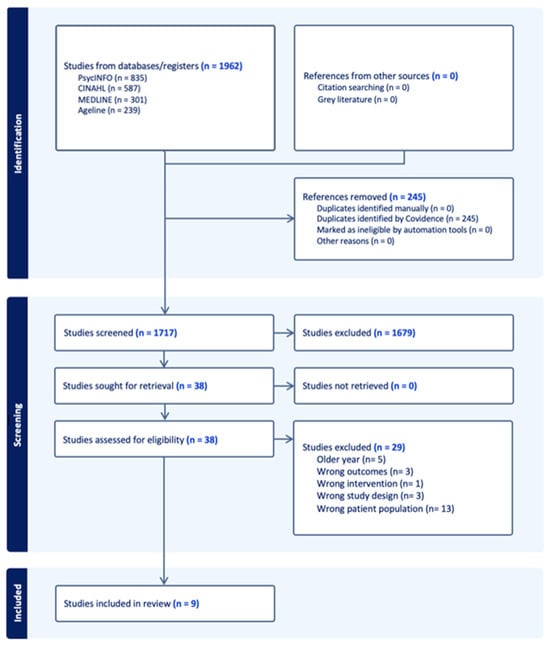
The database searches yielded a total of 1971 records: 587 from CINAHL, 844 from PsycINFO, 239 from AgeLine, and 301 from Medline. The database searches yielded a total of 1971 records: 587 from CINAHL, 844 from PsycINFO, 239 from AgeLine, and 301 from Medline. Together, these databases provided a comprehensive pool of literature addressing older refugee populations’ mental health. Search results were exported into Covidence, a systematic review management program (Veritas Health Innovation, Melbourn, Australia). After automatically removing 245 duplicates, a total of 1717 studies were subjected to abstract/title screening.
- 5.
- Selection Process
The selection of sources for this scoping review was guided by the predefined eligibility criteria and the overall research objectives, rather than by study design or methodological type. To ensure consistency and transparency, all identified records were imported into Covidence, an online systematic review management platform. Covidence facilitated duplicate removal, systematic screening, and reviewer collaboration. Two reviewers (A.S. and B.Q.W.) independently screened each study’s title and abstract, applying the eligibility criteria based on the Population, Context, and Concept framework.
Following initial screening, the full texts of potentially relevant articles were reviewed for final inclusion. Disagreements were resolved through discussion until consensus was reached, ensuring that the process remained rigorous and aligned with scoping review methodology. Although the initial aim was to explore mental health outcomes related to anxiety, depression, and PTSD, the final inclusion was refined to focus solely on depression due to the limited availability of studies reporting anxiety or PTSD outcomes within the target population. Through this structured selection process, only studies directly addressing the intersection of older age, refugee status, and mental health outcomes of depression, were retained for data extraction and synthesis.
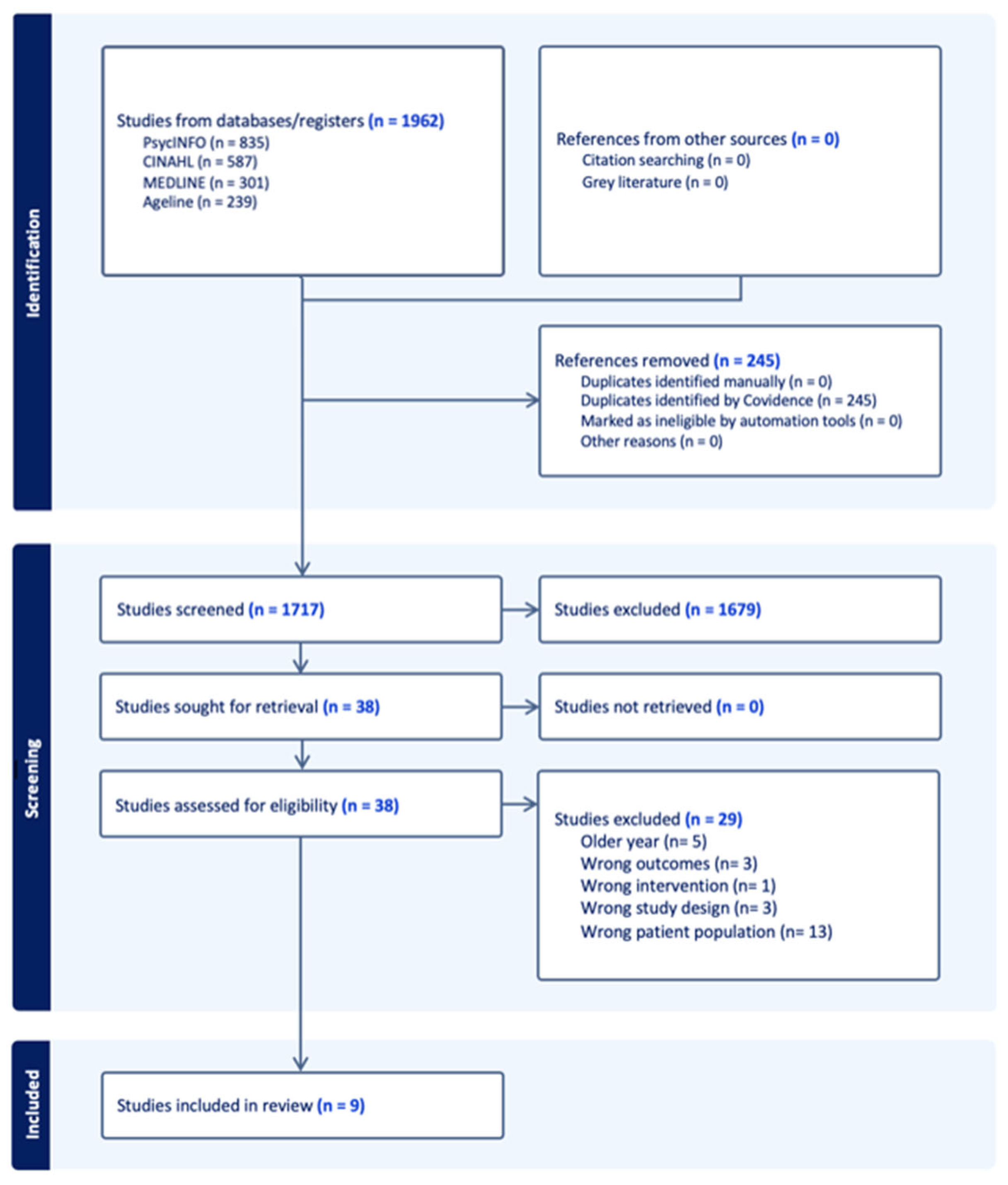
The selection process is presented in Figure 1 as below.
Figure 1.
PRISMA diagram.
- 6.
- Data Extraction
Two independent reviewers (B.Q.W. and A.S.) extracted data from the included articles using a standardized data collection chart developed for this project. Extracted information included: country, setting/principal investigator discipline, study purpose, design, population and sample size, age and gender, ethnic group, data collection and analysis methods, results, conclusions, and study limitations. The reviewers met to ensure consistency and accuracy of the extracted data. Quality assessment and appraisal were not conducted, as the purpose of this scoping review was to map and summarize evidence from all available sources.
- 7.
- Result Synthesis
Data analysis was conducted independently by two lead authors (B.Q.W. and A.S.), each of whom reviewed the extracted data in full and undertook multiple readings to gain a comprehensive understanding of the findings. The reviewers then met to compare interpretations, identify common themes, and resolve discrepancies through discussion. Extracted data were synthesized descriptively. Quantitative data, including prevalence rates, sample demographics, and associated risk and protective factors, were summarized descriptively using tables and narrative synthesis to identify patterns across studies and highlight variations by country, refugee subgroup, and measurement tools.
Qualitative data, including participants’ experiences, perceptions, coping strategies, and contextual factors, were analyzed using Braun and Clarke’s (2006) thematic analysis framework [32]. The qualitative synthesis followed Braun and Clarke’s six-phase framework for reflexive thematic analysis, treating the findings and results sections of the included manuscripts as the primary dataset. We employed an inductive, bottom-up approach, allowing themes to emerge organically from the data rather than applying a pre-existing theoretical framework or a priori codebook. This iterative process began with immersive familiarization and the generation of initial semantic and latent codes (e.g., ‘systemic barriers to healthcare access,’ ‘cultural negotiation of identity,’ and ‘resettlement-related social isolation’). These themes were then clustered into central organizing concepts, which were refined through recursive review and collaborative discussion among the research team until a shared interpretive consensus was reached. This reflexive approach ensured that the final themes captured both broad commonalities and unique outlier experiences across the literature, with specific attention to the intersectional influence of cultural, sociodemographic, and resettlement-related factors. Finally, the quantitative and qualitative findings were integrated to provide a comprehensive overview of the evidence base, highlighting key gaps, patterns and determinants of depressive symptoms, and implications for clinical practice, policy, and future research. Variations across refugee subgroups, including gender, country of origin, and host context, were noted to contextualize the findings.
3. Results
A total of 9 studies met the inclusion criteria for this review, representing 1370 participants from five countries. As shown in Table 1, the majority of studies were conducted in high-income countries (n = 6), including the US (n = 4 + 1 shared with Canada) [21,22,23,24,25], Finland (n = 1) [28], and Canada (n = 1 shared with USA) [21], while the remaining studies were conducted in low- and middle-income countries, such as Turkey (n = 2) [26,27] and Lebanon (n = 1) [29]. One study included participants from both the US and Canada [21].
Table 1.
Characteristics of included studies.
Study designs were predominantly quantitative cross-sectional (n = 5) [23,24,26,27,28], followed by mixed-methods (n = 2) [21,29], and qualitative approaches (n = 2) [22,25]. Sample sizes varied widely, ranging from small qualitative studies with fewer than nine participants to large-scale surveys that included statistical data from 432 participants [22,26]. The median and average sample size across all included studies were 128 and 152 respectively.
There was no consensus on the definition of older age, and definitions varied across studies. Most studies included participants aged 50 years and older, while a few focused exclusively on those aged 65 years and above. Participants represented diverse ethnic and cultural backgrounds, including Somali (n = 1) [28], Vietnamese (n = 1) [23], Iraqi (n = 1) [27], Syrian (n = 3) [26,27,29], Hmong (n = 2) [24,25], and Bhutanese (n = 2) [21,22].
Building on this overview of the included populations, the following section examines the prevalence, correlates, and lived experiences of depression in older adult refugee populations. A summary of included studies is included in Appendix A.
3.1. Prevalence of Depression
Across nine of the included studies that examined depression, five studies measured prevalence and consistently found an elevated rate of depression among older adult refugees [24,26,27,28,29]. To illustrate, Snoubar et al. (2025) conducted a cross-sectional study of 171 older refugees aged 60 years and above residing in Sakarya, Turkey [27]. The participants were primarily Arabic-speaking and originated from Iraq and Syria. Depression, anxiety, and stress were measured using the self-reported Depression Anxiety and Stress Scale-21 Items (DASS-21). The authors reported substantial psychological distress, with 26.9% of participants experiencing extremely severe depression, 21.1% severe depression, and 25.1% moderate depression, indicating that nearly three-quarters of the sample were affected by depressive symptoms of at least moderate severity [27].
Apak et al. (2023) evaluated 432 older Syrian refugees (60+) in Gaziantep, Turkey, using the 15-question short-form Geriatric Depression Scale (GDS-15) [26]. The mean GDS-15 score was 2.63 ± 3.84. About 22.7% of participants had depressive symptoms: 13.9% reported mild depression and 8.8% reported severe depression [26]. Similarly, Chemali et al. (2018) assessed 66 older Syrian refugees (65+) in Lebanon and found elevated depressive symptoms, with a mean Geriatric Depression Scale (GDS) score of 4.82 (cutoff >3) [29]. Cognitive impairment was also common (mean BCIS = 9.32/15) [29].
Kuittinen et al. (2017) studied 128 Somali refugees (50+) in Finland reporting that 44% of participants experienced some degree of depression, with 25% classified as mild to moderate and 19% as moderate to severe [28]. In addition, 13% of the sample reported a history of psychiatric treatment, further highlighting the significant mental health burden faced by this population [28]. In California and Minnesota states of the US, Yang and Mutchler (2020) conducted a cross-sectional survey of 127 older Hmong refugees (55+) [24]. Using the Hopkins Symptom Checklist-10 (HSCL-10), they found extremely high rates of depressive symptoms with an average score of 2.23 (SD = 0.67), well above the cutoff of 1.85. They also identified 72% of participants scoring above this threshold, indicating clinically significant depressive symptoms [24]. The authors proposed that low variability in scores reflected a strikingly high and shared burden of depression within this group, suggesting that depression remains a persistent challenge across later life of Hmong refugees [24]. Collectively, these findings demonstrate a consistently high prevalence of depressive symptoms among older adult refugees across diverse cultural and resettlement contexts, underscoring depression as a pervasive and persistent mental health concern in this population.
3.2. Risk Factors of Depression
In the current review, several interrelated factors were identified as contributing to the risk of depression among older adult refugees. These risk factors can be broadly categorized into sociodemographic characteristics, health-related conditions, pre-migration trauma and forced displacement, post-migration sociocultural challenges and structural barriers, and unmet needs and compounded vulnerabilities.
3.2.1. Sociodemographic Factors
Sociodemographic factors such as female sex, widowhood, low educational attainment, limited financial resources, older age, and longer duration of residency have been associated with elevated levels of depression among older refugees [23,24,27,28]. Snoubar et al. (2025) found that older age, being unmarried, and lower economic status significantly predicted higher levels of depression among Iraqi and Syrian refugees living in Turkey [27]. The same study also examined positive mental health using the Positive Mental Health Scale, reporting that older age, lower economic status, widowhood or lack of a partner, and prolonged displacement in Turkey were negatively associated with positive mental health [27]. In contrast, being married, younger age, having a higher economic status, and spending fewer years in Turkey were correlated with positive mental health outcomes. Gender differences were also observed, with women reporting significantly elevated levels of positive mental health compared to men [27]. Similarly, Miyawaki et al. (2025) examined the depressive symptoms of 208 Vietnamese-origin older refugees aged 65 years and older [23]. Being widowed or single was significantly associated with increased levels of clinical depression [23].
In addition, Yang and Mutchler (2020) found that among older Hmong refugees, being female, having little or no education, unemployment, illiteracy, and limited English proficiency were strongly associated with elevated depressive symptoms [24]. Kuittinen et al. (2017) further highlighted how poverty and interpersonal conflict, such as jealousy within polygamous relationships, contributed to negative effects on mental health among older Somali refugees, highlighting the influence of both financial disadvantage and culturally specific family dynamics [28].
3.2.2. Health-Related Factors
Health-related conditions, such as chronic comorbidities, poor physical health, functional dependency, and cognitive impairments [21,23,24,26,29], were consistently identified as important predictors of depression among older adult refugees. For example, Miyawaki et al. (2025) identified multiple chronic illnesses and functional impairment, including difficulties with activities of daily living, as key risk factors for depression among Vietnamese older refugees [23]. The authors also reported that having arthritis was positively associated with depressive symptoms [23]. Similarly, Frounfelker et al. (2022) examined the effects of resettlement stressors on depressive symptoms in a sample of 190 Bhutanese refugees 50 years and above residing in the US or Canada [21]. They highlighted that experiencing physical health challenges in resettled countries was associated with depression [21].
Apak et al. (2023) found that 13% of older Syrian refugees rated their health as poor, and 22.2% reported that their health had deteriorated after migration [26]. In addition, nearly all respondents (92.8%) reported relying on their children for support, and 80.6% received assistance from Kızılay (the Turkish Red Crescent), reflecting both the high burden of chronic health challenges and the functional dependency on family or aid networks in daily life [26]. Yang and Mutchler (2020) also highlighted that Hmong refugees face disproportionately high rates of sensory deficits, functional limitations, and disability compared to other Southeast Asian immigrant groups, which places them at heightened risk for the negative mental health consequences associated with poor physical health [24]. Cognitive impairment was identified as a common health concern among older Syrian refugees, noting that difficulties in this domain were strongly associated with higher depressive symptoms [29].
3.2.3. Pre-Migration Factors
Pre-migration trauma and the experiences of trauma have a profound impact on the level of depression in the older refugee populations. Frounfelker et al. (2022) reported that Bhutanese older refugees who experienced physical threats or harm in Nepal were more likely to experience increased levels of depression [21]. Similarly, Apak et al. (2023) found that older Syrian refugees frequently cited war trauma and forced displacement as central contributors [26], while Kuittinen et al. (2017) highlighted how older Somali refugees linked their mental health struggles to war-related hardship, poverty, and other difficult life experiences [28].
3.2.4. Post-Migration Factors: Sociocultural and Structural Barriers
In the post-migration context, stressors including language barriers, limited access to care, inadequate community support, unemployment, and discrimination were cited as main contributors to depression [21,22,24,26,29]. Frounfelker et al. (2022) highlighted that lower social support directly moderated the relationship between trauma and depression, emphasizing its critical role in mitigating adverse mental health outcomes [21]. In addition, Apak et al. (2023) noted that older Syrian refugees often faced persistent language barriers, dependence on family support and limited access to health services [26]. Yang and Mutchler (2020) had similar findings noting that unemployment and limited English proficiency were significant barriers to sociocultural integration and directly linked to negative mental health [24]. Chemali et al. (2018) further documented experiences of social isolation, weak community support and unmet care needs exacerbated depressive symptoms [29]. Beyond structural barriers, Guatam et al. (2018) described how older Bhutanese refugees continued to struggle with family separation, difficulties in maintaining cultural traditions, anxieties about citizenship and benefits, and profound loneliness, all of which contributed to vulnerability to depression [22].
3.2.5. Unmet Needs and Compounding Vulnerabilities
Chemali et al. (2018) found that while older refugees occasionally received food, shelter, or small necessities, many described these resources as “not sufficient” [29] (p. 1221) or even “barely nothing” [29] (p. 1221). The most pressing unmet needs were medications, health care access, food and personal care items, and financial instability [29]. These gaps highlighted both the sparsity of resource distribution and the heavy psychological toll of displacement. Adding to these findings, Apak et al. (2023) emphasized the broader biopsychosocial and sociocultural strain faced by older Syrian refugees [26]. Traumatic war losses, chronic illness, family dependence, poverty, and language barriers compounded feelings of loneliness, limited health care access and poor community support, left many elders vulnerable to worsening mental and physical health [26].
3.3. Protective Factors of Depression
Protective factors were less frequently reported compared to risk factors. However, social support, socioeconomic resources, and favorable resettlement conditions consistently emerged as protective for mental health among older refugees. Social and family support appeared most consistently. Larger household size and multigenerational living arrangements were associated with lower depressive symptoms, highlighting how close family ties can reduce the burden of resettlement [24]. Similarly, being married and having a higher economic status were associated with more positive mental health outcomes [27]. Chemali et al. (2018) noted how some older refugees identified social workers as a reliable source of support in their lives [29]. Social workers were valued for connecting families to services, aid, and moral support, but their contributions were often limited, leaving many elders still struggling with illness, poverty, and displacement [29]. Migration and resettlement context also shaped outcomes. Entering the US at an older age was linked with a lower risk of depression [24]. Beyond individual factors, older Bhutanese refugees described resettlement as a “better life” compared to refugee camps, demonstrating how improved living conditions can bring security even though sadness and loneliness often remained [22] (p. 167). Education and socioeconomic resources offered additional protection, with higher education linked to lower depression [27]. Gender differences were also noted, as women reported more positive mental health than men [27].
3.4. Qualitative Cultural Explorations of Depression
While quantitative studies documented prevalence and correlates with depression, the qualitative findings provided insights on how older refugees experience and describe their mental health status. Yang and Mutchler (2021) conducted semi-structured, in-depth interviews with 20 older Hmong refugees (55+) in California, finding that over half reported poor mental health [25]. Participants described depression through behavioral (e.g., absent-mindedness, sleep problems, appetite loss, social withdrawal), emotional (e.g., persistent crying, hopelessness, suicidal ideation), and physical expressions [25]. The authors noted how limited English proficiency further intensified depression.
Similarly, Guatam et al. (2018) interviewed nine older Bhutanese refugees (50+) resettled in the US [22]. Although depression was not clinically measured, participants described persistent sadness, isolation, and suicidal ideation that align with depressive symptomatology reported in quantitative studies. Despite improved living conditions compared to refugee camps, participants described “a better life but with little sorrows”, reflecting ongoing sadness tied to family separation and restricted travel [22] (p. 167). Additional themes included cultural tensions, language barriers limiting independence, profound isolation and loneliness, and anxieties over citizenship and benefits, leaving participants vulnerable to depression and suicidal risk [22].
Kuittinen et al. (2017) studied 125 Somali refugees (aged 50+) in Finland and found that participants often explained their emotional distress through cultural understandings, linking their struggles to interpersonal tensions, such as jealousy in polygamous relationships, or to spiritual causes, including beliefs in jinn [28].
4. Discussion
This scoping review explored the current understanding of depression in the older adult refugee population. As expected, this is an emerging field of study and only a small number of studies (n = 9) were available for further analysis. Nevertheless, meaningful patterns emerged related to the prevalence, correlates, and lived experiences of depression, offering valuable insight into both risk and protective factors shaping mental health in later life after displacement.
The prevalence of depression reported across studies varied considerably, with one Turkish study of Syrian and Iraqi refugees documenting rates as high as 73.1% [27]. These figures are notably elevated compared to broader estimates. For example, a large systematic review identified pooled prevalence rates of depression among refugee populations ranging from approximately 11% to 31.5% [15]. Such discrepancies highlight that these findings should be interpreted with caution, given the lack of standardized measures for depression, heterogeneous sample demographics, varying geographical context, and differences in pre- and post-migratory experiences across refugee subgroups. Despite these limitations, available literature indicates that mental health conditions often persist into later life, and older adult refugees may be at heightened risk of adverse mental health outcomes compared to their age-matched peers in the general population [20]. Religion was a central part of coping for many older refugees in this review. Yet Mölsä et al. (2017), found that religiosity did not consistently protect against depression among older Somali refugees when layered with heavy burden of war trauma [33]. This suggests that cultural perspectives and spiritual beliefs can provide meaning, but not universally protective.
Many studies gathered data using self-reported tools such as DASS-21, GDS, GDS-15 and HSCL-10. While these tools are commonly used in geriatric and refugee research, few studies reported thorough psychometric evaluation in older refugee populations, raising concerns about cultural validity and sensitivity. Equally important, self-reported measures do not fully capture older refugees’ experiences due to their cultural stigma and desirability bias. The use of inconsistent instruments across studies complicates the ability for comparison across studies and contributes to the variability reported in the rate of prevalence. Sample sizes also varied considerably among studies that measured prevalence, ranging from 66 to 432 participants. Smaller samples may limit generalizability and inflate prevalence estimates, while larger studies provide more stable estimates but may still be affected by self-report bias, cultural stigma, resettlement context, and heterogeneity in refugee experiences. In addition, more than half of the studies (n = 5) followed a cross-sectional design, which restricts the ability to assess the persistence and trajectory of depression into later life. Overall, older adult refugees remain underrepresented in refugee research, emphasizing their risk of being overlooked despite their vulnerability to negative mental health effects.
Older adult refugees frequently reported higher rates of depression linked to chronic illness, financial strain, language barriers, limited care and dependability of family support. In summary, these findings illustrate that the combined weight of poor physical health, functional dependency, and cognitive decline can compound the risk of depression in later life for older refugee populations. The recurrence of themes across studies further indicates that, irrespective of geographical and sociodemographic differences, older refugees exhibit shared vulnerabilities where the complex interplay of aging and migration-related stressors exacerbates risks for adverse mental health outcomes.
The role of gender in shaping mental health outcomes among older refugees remains inconclusive. In this review, Yang and Mutchler (2020) identified female gender as a risk factor for depressive symptoms [24], whereas Snoubar et al. (2025) reported that women were more likely to endorse higher levels of positive mental health [27]. Another study included here found no significant gender differences in relation to mental health outcomes [23]. This conflicting evidence reflects patterns in the broader refugee literature, where gender associations with adverse mental health outcomes are often inconsistent [34]. However, a large systematic review that included 174 studies identified male gender as a protective factor for mental health among refugees [35]. The complex interplay of pre-migration trauma, post-migration stressors, and sociocultural contexts may differentially shape men’s and women’s experiences across settings. Collectively, these findings underscore the need for further research to clarify the role of gender in mental health trajectories among older refugee populations.
Although risk factors dominated study findings, several studies identified protective factors that reduce the burden of displacement and negative mental health outcomes. Refugees with multigenerational households, marriage, familial support, education and higher socioeconomic status reported lower rates of psychological distress. However, protective factors were not studied further, and emerged as secondary findings throughout the study. This disparity highlights a significant gap in the literature, as limited attention to resilience, community support structures and coping mechanisms risks overlooking factors that enable adaptability. Greater emphasis on protective factors could assist in the development of culturally appropriate and age-appropriate interventions.
Taken together, the qualitative findings reveal that older refugees often frame and experience depression through behavioral, emotional, physical, and cultural expressions. These findings suggest that standardized clinical tools may not fully capture culturally specific manifestations, which has implications for both research and practice.
5. Limitations
There were several limitations in the current review. First, the review included only nine studies, which restricts the breadth of available evidence and limits the understanding of depression among older refugees. This narrow evidence base also reduces the generalizability of existing findings across diverse cultural and resettlement contexts. Second, the majority of included studies utilized cross-sectional designs, which do not capture changes in mental health over time or the evolving impact of resettlement. Longitudinal research is needed to better examine how pre-migration trauma, post-migration stressors, and protective factors interact across the aging and migration trajectory. Most studies were conducted in a limited number of settings, including Turkey, Lebanon, Finland, US and Canada, and involved diverse refugee ethnic groups. While the variability led to concerns about generalizability, overlapping themes consistently emerged across studies. Additionally, key refugee populations with prolonged displacement, such as Afghans and Ukrainians, were not represented in the current evidence base. This highlights a critical research gap and the need to better understand the unique mental health experiences of these high-risk groups. Further research should also investigate the mediating roles of resilience, coping strategies, religiosity, and culturally grounded supports, which remain insufficiently examined. Lastly, future studies would benefit from greater methodological diversity, including qualitative and mixed-methods approaches, to ensure the complex, context-specific realities of older refugees are fully captured beyond what quantitative measures can reflect. Improving cultural and linguistic inclusivity in study design is also essential, as current methods may not adequately detect distress among older adults who express symptoms differently. Addressing these limitations will be critical to expanding the current knowledge of mental health issues in the aging refugee populations.
6. Implications
The findings have several important implications for future research, policy, and clinical practice. There is a clear need for culturally safe and age-appropriate mental health services tailored to older refugees, whose experiences of depression are influenced by interpersonal, lifestyle, and spiritual factors, including family conflict and religious beliefs. Training and re-education initiatives for healthcare providers are essential to build understanding of how older refugees experience depression and to promote cultural awareness and safety in clinical care.
Policy development must also address inadequate resources and barriers to accessing support, as many older refugees report insufficient services to alleviate the burdens of displacement. To ensure equitable resource distribution and culturally tailored interventions, ongoing research is required to capture both risk and protective factors across diverse ethnic backgrounds.
Additionally, demographic and health-related differences among older refugees must be considered, as not all groups face the same risks. Certain subpopulations are more vulnerable to chronic illness and disability, while others may be disproportionately affected by trauma or complex family dynamics. Future service development should focus on accessible, culturally safe, and age-appropriate approaches, including the creation of standardized assessment tools that incorporate culturally specific terms. Longitudinal and mixed-methods research examining mediators, moderators, and protective factors will be critical for closing existing evidence gaps and guiding the delivery of integrated, culturally informed mental health care and social support for older refugees.
7. Conclusions
This scoping review synthesized current evidence on older adult refugees’ vulnerability to depression in relation to displacement. Across the nine included studies, depression was the most frequently evaluated mental health outcome, with older refugees showing a heightened risk due to cumulative social, cultural, and health-related factors. Protective factors, including familial support, religious spirituality, and socioeconomic resources, were identified; however, these were often variable and insufficient to fully mitigate negative mental health outcomes. Notably, older refugees often conceptualize and express depression in behavioral, emotional, and physical terms that may not be fully captured by Western diagnostic tools, highlighting the importance of integrating community-based understandings into clinical frameworks. Overall, these findings emphasize the complex interplay of cultural, interpersonal, and demographic factors in shaping mental health among older refugees and underscore the need for continued research to inform culturally safe, effective interventions.
Supplementary Materials
The following supporting information can be downloaded at: https://www.mdpi.com/article/10.3390/jal6010032/s1, File S1: Preferred Reporting Items for Systematic reviews and Meta-Analyses extension for Scoping Reviews (PRISMA-ScR) Checklist.
Author Contributions
Conceptualization, H.A. and S.G.; methodology, H.A., S.G., L.W., K.M., A.A.-H., Z.C.Z., C.C., L.Y. and Y.M.Y.; software, H.A., B.Q.W. and A.S.; validation, A.A.-H., Y.M.Y., L.Y., L.W. and Z.C.Z.; formal analysis, H.A.; investigation, H.A.; B.Q.W.; A.S.; resources, H.A.; data curation, B.Q.W. and A.S., and H.A.; writing—original draft preparation, H.A., B.Q.W. and A.S.; writing—review and editing, B.Q.W., A.S. and H.A.; visualization, H.A.; supervision, H.A. and S.G.; project administration, S.G.; funding acquisition, S.G. All authors have read and agreed to the published version of the manuscript.
Funding
This research is part of the Migrant Integration in the Mid-21st Century: Bridging Divides project that is funded by the Government of Canada through the Canada First Research Excellence Fund (CFREF). Please see further info re: the Bridging Divides research program at: https://www.torontomu.ca/bridging-divides/, access date (27 September 2025).
Institutional Review Board Statement
Not applicable.
Informed Consent Statement
Not applicable.
Data Availability Statement
No new data were created or analyzed in this study. All data used are derived from previously published studies cited in the manuscript.
Conflicts of Interest
The authors declare no conflicts of interest.
Appendix A
Table A1.
A Summary of included articles.
References
- United Nations High Commissioner for Refugees. Data and Statistics: Global Trends. Available online: https://www.unhcr.org/global-trends (accessed on 22 September 2025).
- Oxfam International. Refugee and Migrant Crisis. Available online: https://www.oxfam.org/en/what-we-do/issues/refugee-and-migrant-crisis (accessed on 22 September 2025).
- United Nations. Refugees. Available online: https://www.un.org/en/global-issues/refugees (accessed on 22 September 2025).
- United Nations High Commissioner for Refugees. Refugee Statistics. Available online: https://www.unhcr.org/refugee-statistics (accessed on 22 September 2025).
- United Nations High Commissioner for Refugees. Working with Older Persons in Forced Displacement. Available online: https://www.refworld.org/policy/opguidance/unhcr/2021/en/123481 (accessed on 22 September 2025).
- World Health Organization. Ageing and Health. Available online: https://www.who.int/news-room/fact-sheets/detail/ageing-and-health (accessed on 22 September 2025).
- United Nations High Commissioner for Refugees. Older Persons. Available online: https://www.unhcr.org/what-we-do/protect-human-rights/safeguarding-individuals/older-persons (accessed on 22 September 2025).
- Carlsson, J.; Sonne, C. Mental Health, Pre-migratory Trauma and Post-migratory Stressors among Adult Refugees. In Mental Health of Refugee and Conflict-Affected Populations; Morina, N., Nickerson, A., Eds.; Springer: Cham, Switzerland, 2018; pp. 15–35. [Google Scholar] [CrossRef] [Scilit]
- Riley, A.; Varner, A.; Ventevogel, P.; Hasan, M.M.T.; Welton-Mitchell, C. Daily Stressors, Trauma Exposure, and Mental Health among Stateless Rohingya Refugees in Bangladesh. Transcult. Psychiatry 2017, 54, 304–331. [Google Scholar] [CrossRef] [Scilit]
- Hynie, M. The Social Determinants of Refugee Mental Health in the Post-migration Context: A Critical Review. Can. J. Psychiatry 2017, 63, 297–303. [Google Scholar] [CrossRef] [Scilit] [PubMed]
- Li, S.S.; Liddell, B.J.; Nickerson, A. The Relationship between Post-migration Stress and Psychological Disorders in Refugees and Asylum Seekers. Curr. Psychiatry Rep. 2016, 18, 82. [Google Scholar] [CrossRef] [Scilit] [PubMed]
- Alemi, Q.; James, S.; Cruz, R.; Zepeda, V.; Racadio, M. Psychological Distress in Afghan Refugees: A Mixed-Method Systematic Review. J. Immigr. Minor. Health 2014, 16, 1247–1261. [Google Scholar] [CrossRef] [Scilit] [PubMed]
- Hameed, S.; Sadiq, A.; Din, A.U. The Increased Vulnerability of Refugee Population to Mental Health Disorders. Kans. J. Med. 2018, 11, 20. [Google Scholar] [CrossRef] [Scilit]
- Tinghög, P.; Malm, A.; Arwidson, C.; Sigvardsdotter, E.; Lundin, A.; Saboonchi, F. Prevalence of Mental Ill Health, Traumas and Postmigration Stress among Refugees from Syria Resettled in Sweden after 2011: A Population-Based Survey. BMJ Open 2017, 7, e018899. [Google Scholar] [CrossRef] [Scilit]
- Vu, U.T.M.; Farias, S.T.; Hinton, L.; Park, V.T.; Tiet, Q.Q.; Whitmer, R.A.; Heuer, S.; Nguyen, B.-S.; Meyer, O.L. War Trauma and Strength: A Qualitative Study of Participants in the Vietnamese Insights into Cognitive Aging Program. J. Gerontol. Ser. B Psychol. Sci. Soc. Sci. 2025, 80, gbaf019. [Google Scholar] [CrossRef] [Scilit]
- Blackmore, R.; Boyle, J.A.; Fazel, M.; Ranasinha, S.; Gray, K.M.; Fitzgerald, G.; Misso, M.; Gibson-Helm, M. The Prevalence of Mental Illness in Refugees and Asylum Seekers: A Systematic Review and Meta-analysis. PLoS Med. 2020, 17, e1003337. [Google Scholar] [CrossRef] [Scilit]
- Khan, H.T.A.; Addo, K.M.; Findlay, H. Public Health Challenges and Responses to the Growing Ageing Populations. Public Health Chall. 2024, 3, e213. [Google Scholar] [CrossRef] [Scilit]
- Reynolds, C.F.; Jeste, D.V.; Sachdev, P.S.; Blazer, D.G. Mental Health Care for Older Adults: Recent Advances and New Directions in Clinical Practice and Research. World Psychiatry 2022, 21, 336–363. [Google Scholar] [CrossRef] [Scilit]
- Zenebe, Y.; Akele, B.; W/Selassie, M.; Tola, A.; Kibret, G. Prevalence and Determinants of Depression among Old Age: A Systematic Review and Meta-analysis. Ann. Gen. Psychiatry 2021, 20, 55. [Google Scholar] [CrossRef] [Scilit] [PubMed]
- Siddiq, H.; Ajrouch, K.; Elhaija, A.; Kayali, N.; Heilemann, M. Addressing the Mental Health Needs of Older Adult Refugees: Perspectives of Multi-Sector Community Key Informants. SSM Qual. Res. Health 2023, 3, 100269. [Google Scholar] [CrossRef] [Scilit] [PubMed]
- Frounfelker, R.L.; Mishra, T.; Carroll, A.; Brennan, R.T.; Gautam, B.; Ali, E.A.A.; Betancourt, T.S. Past Trauma, Resettlement Stress, and Mental Health of Older Bhutanese with a Refugee Life Experience. Aging Ment. Health 2022, 26, 2149–2158. [Google Scholar] [CrossRef] [Scilit] [PubMed]
- Gautam, R.; Mawn, B.E.; Beehler, S. Bhutanese Older Adult Refugees Recently Resettled in the United States: A Better Life with Little Sorrows. J. Transcult. Nurs. 2018, 29, 165–171. [Google Scholar] [CrossRef] [Scilit]
- Miyawaki, C.E.; Garcia, J.M.; Medina, L.D.; Nguyen, K.N.; Meyer, O.L.; Markides, K.S. Associations between Functional Disability and Chronic Conditions with Depressive Symptoms in Vietnamese-Origin Older Refugees. Health Soc. Work 2025, 50, 121–130. [Google Scholar] [CrossRef] [Scilit]
- Yang, M.S.; Mutchler, J.E. The High Prevalence of Depressive Symptoms and Its Correlates with Older Hmong Refugees in the United States. J. Aging Health 2020, 32, 660–669. [Google Scholar] [CrossRef] [Scilit]
- Yang, M.S.; Mutchler, J.E. A Malady with No Name: Understanding Experiences of Depression Among Older Hmong Refugees. J. Cross-Cult. Gerontol. 2021, 36, 217–228. [Google Scholar] [CrossRef] [Scilit]
- Apak, E.; Artan, T.; Ozucelik, D.N. Evaluation of Bio-Psycho-Social and Socio-Cultural Problems of Syrian Elderly Living in Turkey. Int. J. Soc. Psychiatry 2023, 69, 454–466. [Google Scholar] [CrossRef] [Scilit]
- Snoubar, Y.; Turan, Z.; Abusafia, B.; Tarsuslu, B. Being an Older Refugee in Türkiye: Predictors of Mental Health and Quality of Life. Aging Ment. Health 2025, 29, 1651–1658. [Google Scholar] [CrossRef] [Scilit]
- Kuittinen, S.; Mölsä, M.; Punamäki, R.-L.; Tiilikainen, M.; Honkasalo, M.-L. Causal Attributions of Mental Health Problems and Depressive Symptoms among Older Somali Refugees in Finland. Transcult. Psychiatry 2017, 54, 211–238. [Google Scholar] [CrossRef] [Scilit]
- Chemali, Z.; Borba, C.P.C.; Johnson, K.; Khair, S.; Fricchione, G.L. Needs Assessment with Elder Syrian Refugees in Lebanon: Implications for Services and Interventions. Glob. Public Health 2018, 13, 1216–1228. [Google Scholar] [CrossRef] [Scilit] [PubMed]
- Peters, M.D.J.; Godfrey, C.; McInerney, P.; Soares, C.; Khalil, H.; Parker, D. (Eds.) 10. Scoping Reviews. In JBI Manual for Evidence Synthesis; Joanna Briggs Institute: Adelaide, Australia, 2020; pp. 1–15. [Google Scholar]
- Page, M.J.; McKenzie, J.E.; Bossuyt, P.M.; Boutron, I.; Hoffmann, T.C.; Mulrow, C.D.; Shamseer, L.; Tetzlaff, J.M.; Akl, E.A.; Brennan, S.E.; et al. The PRISMA 2020 Statement: An Updated Guideline for Reporting Systematic Reviews. BMJ 2021, 372, n71. [Google Scholar] [CrossRef] [Scilit]
- Braun, V.; Clarke, V. Using Thematic Analysis in Psychology. Qual. Res. Psychol. 2006, 3, 77–101. [Google Scholar] [CrossRef] [Scilit]
- Mölsä, M.; Kuittinen, S.; Tiilikainen, M.; Honkasalo, M.-L.; Punamäki, R.-L. Mental Health among Older Refugees: The Role of Trauma, Discrimination, and Religiousness. Aging Ment. Health 2017, 21, 829–837. [Google Scholar] [CrossRef] [Scilit]
- Mohwinkel, L.-M.; Nowak, A.C.; Kasper, A.; Razum, O. Gender Differences in the Mental Health of Unaccompanied Refugee Minors in Europe: A Systematic Review. BMJ Open 2018, 8, e022389. [Google Scholar] [CrossRef] [Scilit]
- Nickerson, A.; Mai, V.; Keegan, D.; Willoughby, C.; Humphreys, K.; Im, J.J.Y.; Sundram, S.; Procter, N.; Seidler, Z.E.; Scharpf, F.; et al. A Systematic Review of Protective and Promotive Factors in Refugee Mental Health. Nat. Ment. Health 2024, 2, 1415–1428. [Google Scholar] [CrossRef] [Scilit]

Disclaimer/Publisher’s Note: The statements, opinions and data contained in all publications are solely those of the individual author(s) and contributor(s) and not of MDPI and/or the editor(s). MDPI and/or the editor(s) disclaim responsibility for any injury to people or property resulting from any ideas, methods, instructions or products referred to in the content. |
© 2026 by the authors. Licensee MDPI, Basel, Switzerland. This article is an open access article distributed under the terms and conditions of the Creative Commons Attribution (CC BY) license.