


Abstract
Multisensory environments (MSEs) have been incorporated on college campuses to support student wellbeing, yet limited research has examined which sensory features are most effective for undergraduate students. The purpose of this study was to explore the impact of a multisensory environment grounded in play theory, attention restoration theory, and sensory design principles on undergraduate students’ perceived stress, anxiety, and restoration. A secondary purpose was to identify sensory preferences associated with stress and anxiety reduction. A 270 sq ft windowless room was converted into an experiential MSE that included auditory, visual, olfactory, and tactile stimuli incorporating features such as a water fountain, bubble tube, oil diffuser, and textural pillows. A swing chair, bean bag, fiber optic lighting, moss inspired flooring, and floral inspired mural are a few of the elements that depict play and restoration theory. A convenience sample of 48 undergraduate students at a mid-sized public university in the southeastern United States participated in a quasi-experimental study. The MSE intervention occurred between pre- and post-tests measuring perceived stress, anxiety, and restoration. While perceived stress scores decreased from pre- to post-test, there was no statistical significance (t(43) = 0.939, p = 0.353); yet 43.2% of participants experienced a decrease in stress when exposed to the MSE. Anxiety scores remained relatively consistent from pre- to post-test and were not statistically significant (t(43) = −0.356, p = 0.723). One-third of participants (38.6%) reported reduced anxiety, 27.3% had no change, and 34.1% had an increase in anxiety. Mean restoration scores ranging from 0 (not at all) to 6 (completely) were 4.34 indicating that participants generally perceived the MSE as restorative. Lighting, music and sounds, and water features were identified most frequently as supporting stress and anxiety reduction. Participants also emphasized the importance of choice and control, suggesting that the effectiveness of multisensory environments may depend as much on user autonomy as on specific sensory features.
1. Introduction
Considering the wellbeing of the end-user has never been more critical for interior designers and architects. Resilience, the ability to adapt and recover from stressors, is a predictor of psychological wellbeing and is increasingly framed as an outcome supported by environmental conditions rather than by individual coping alone [1]. This perspective aligns with emerging architectural discourse that positions interiors as active agents in supporting mental health, adaptability, and daily functioning.
Addressing wellbeing is particularly urgent within higher education. Levels of stress, anxiety, and depression among college students have increased at alarming rates, with Generation Z reporting significantly higher psychological distress than previous cohorts [2,3]. Seventy four percent of U.S. college students report burnout, over one-third experience chronic stress, 76% have moderate to serious psychological distress, and more than one-quarter are diagnosed with anxiety [4,5,6]. These trends are even more pronounced among students who experience additional stressors such as discrimination related to race, gender, or sexual orientation [7]. Despite this growing need, only 14% of students utilize campus counseling services [6].
Incorporating strategies into campus environments that reduce stress and anxiety may help foster resilience among college students. Students need easily accessible places to decompress and restore their focus given the ongoing pressures associated with higher education including academic demands, rising tuition costs, global unrest, and political uncertainty [8]. As a result, higher education institutions are increasingly exploring environmental strategies that complement clinical mental health services by supporting everyday coping. Multisensory environments (MSE) are frequently referred to in the academic literature as sensory rooms or Snoezelen rooms [9]. While MSEs have traditionally been associated with healthcare and therapeutic settings in K-12 educational environments for neurodiverse individuals [9], they are increasingly being integrated into everyday public infrastructure such as shopping centers and sporting venues and are used by individuals with diverse needs, suggesting that these spaces are increasingly conceptualized as inclusive resources that support sensory regulation and emotional wellbeing beyond traditional therapeutic populations [10]. Similarly, Seattle-Tacoma, San Francisco, and Gerald R. Ford International Airports, complex, overstimulating environments characterized by noise, crowding, and time pressure, have emerged as notable adopters of sensory rooms, which emphasize reduced auditory stimulation, soft lighting, and user control [11,12,13]. The increasing mainstream adoption of sensory design is exemplified by Turf’s Meditative Magic installation at NeoCon in 2023 where acoustic treatments and dynamic visual features were used to provide respite for event attendees [14].
These multisensory environments reflect a broader shift toward embedding restorative opportunities within routine spaces rather than limiting them to clinical contexts. Importantly, these spaces are designed for short-duration use and autonomy, qualities that closely parallel the rhythms of academic life on university campuses. Despite their proliferation, MSEs in educational contexts, particularly higher education, remain understudied.
Problem Statement and Research Gaps
While MSEs have shown promise in healthcare and K–12 settings, research to date exhibits several limitations. First, most studies focus on therapeutic or intervention-driven applications, frequently examining vulnerable populations through single-case or small-sample designs [15,16,17]. Second, limited research has examined which specific sensory features, including light, sound, touch, and scent within experiential, non-clinical interiors may be preferred for wellbeing. Third, existing studies with university populations remain scarce [18,19].
The purpose of this research study was to explore the effect of a MSE design based on play theory, attention restoration theory, and sensory features on undergraduate students’ perceived stress, anxiety, and restoration. A secondary purpose was to identify specific sensory preferences that support student wellbeing through stress and anxiety reduction.
2. Literature Review
Multisensory environments (MSEs) are defined as dedicated spaces that engage multiple sensory modalities—vision, hearing, touch, and smell—to promote emotional regulation and relaxation [20,21]. Historically rooted in sensory integration theory [22], early applications focused primarily on clinical treatment and intervention, particularly for individuals with cognitive impairment or developmental disabilities. Contemporary scholarship distinguishes three typologies of MSEs: treatment, intervention, and experiential environments [23]. For this research study, we focus explicitly on experiential multisensory environments, which prioritize autonomy, choice, and self-directed use.
2.1. Multisensory Environments in Healthcare Settings
Numerous studies have been conducted in healthcare settings and have found positive effects, albeit with small sample sizes [16,17,24,25]. For example, MSEs have been used with vulnerable populations to decrease heart rate of children recovering from brain injury [24], manipulate mood in dementia patients [15,17], reduce stress among pregnant women [16], and reduce challenging behaviors in individuals with intellectual disabilities [25]. However, McKee [26] found an increase in disruptive behaviors among autistic patients. Of the research cited above, the majority used sample sizes of less than four (e.g., [15,16,17,25]), limiting the generalizability of the results. All studies included auditory, visual, and olfactory sensory stimuli, but only Lorusso [17] incorporated auditory and olfactory sensory features that were specifically selected for each participant.
2.2. Multisensory Environments in K-12 Schools
The positive effects found in healthcare settings have led to more widespread implementation in educational environments to help with neurodiverse K-12 students. Several studies have examined the application of MSEs among children and adolescents with autism spectrum disorder (ASD) and other developmental disabilities in educational settings. Collectively, this research suggests MSEs may increase attention [21], increase gross motor skills [27], and increase emotional regulation [28].
De Domenico et al. [28] conducted a randomized controlled study involving 20 preschool children in Italy with ASD. The intervention integrated a MSE into standard neuropsychomotor therapy sessions over a four-month period. Results indicated significant improvements in taste, smell, and tactile behaviors, as well as gross motor skills. The MSE incorporated auditory, visual, tactile, olfactory, vestibular, and proprioceptive stimuli. Importantly, children were permitted to control sensory inputs through tablet-based interfaces, allowing for individualized sensory experiences.
Similarly, Unwin et al. [21] examined the effect of providing autistic children control over sensory changes within an MSE. The study included 41 autistic children aged 4–12 years attending school in Wales and compared conditions in which children either controlled sensory equipment or experienced sensory changes passively. In both cases, children spent a total of 15 min within the MSE. When children controlled the sensory stimuli, they demonstrated increased attention and reductions in repetitive motor and sensory behaviors, stereotyped speech, vocalizations, and activity levels. The MSE incorporated colored LED lighting, bubble tubes, fiber optics, touch–sound–light boards, and mirror-ball projections. A unique aspect of the intervention was the emphasis on child-directed sensory control through digital interfaces.
Park et al. [28] evaluated a 456 square foot MSE in a public high school serving neurodiverse students to identify pattern uses. Data was collected over an academic year using questionnaires and observations. The MSE was intentionally designed with active, respite, and transition zones and included sensory features such as weighted seating, tactile walls, acoustic separation, interactive media, movement-based elements, and nature-inspired imagery. Compression, proprioception, tactility, and quiet spaces were the most sought-after sensory features.
Beyond dedicated MSEs, emerging evidence suggests that sensory-responsive design features within educational settings may support neurodevelopmental outcomes. Abdou and Younis [29] examined the perceived impact of sensory and interactive design strategies in early childhood learning environments serving neurodiverse children in Egypt. Questionnaire responses from 202 parents, teachers, and educational specialists providing service to neurodevelopmental disorders indicated strong perceived benefits associated with movement-supportive spatial organization, balanced natural lighting, calming colors, natural materials, low-noise acoustics, sensory gardens, and designated calming areas. While the study did not evaluate an MSE, its findings suggest that many of the design principles incorporated within MSEs may be successfully integrated throughout educational settings to support emotional regulation, social interaction, and learning.
Despite differences in methodology and setting, these studies share several common design characteristics. Most multisensory environments incorporated combinations of auditory, visual, tactile, proprioceptive, vestibular, and, in some cases, olfactory stimulation. Frequently utilized features included adjustable lighting, tactile surfaces, weighted furnishings, movement-based equipment, fiber optics, bubble tubes, and nature-inspired imagery. A recurring theme across the literature is the importance of allowing users some degree of control over sensory inputs and providing flexible environments that can be adapted to individual sensory preferences and needs.
2.3. Multisensory Environments in Higher Education
MSEs have been implemented within higher education in an ad hoc and often inconsistent manner. Many institutions have developed sensory spaces by repurposing underutilized rooms within existing facilities, frequently constrained by limited budgets. As a result, these spaces often rely on existing furniture and layouts with few modifications to spatial elements such as walls, flooring, and ceiling planes. Examples include Casper College, Rhodes State College, College of Idaho, Indiana University, University of Minnesota, Northwestern University—Illinois, University of Wisconsin, Penn State University and Stonybrook University [30,31,32,33,34,35,36,37,38]. More recently, however, universities have begun investing greater resources in purposefully designed MSEs that are incorporated into larger campus renovation and wellbeing initiatives. Examples include the University of Cincinnati Clermont College, Georgia State University, and James Madison University [39,40,41,42,43].
Although research examining MSEs in higher education remains limited, evidence suggests that these spaces may offer meaningful benefits for student wellbeing, stress management, and emotional regulation [18,19], while highlighting the challenges universities face in operating and maintaining a MSE [44].
An intervention study by Cavanagh et al. [19] investigated the effect of an immersive MSE on a convenience sample of 224 university staff and students in Australia measuring perceived stress and subjective wellbeing using a pre–post-test methodology. The MSE housed within a darkened space featured nature inspired sensory items, such as large-scale illuminated floral sculptures, floral aromas, weighted blankets, lap cushions, and multiple seating options. Participants experienced lower levels of perceived stress and improvements in feelings of joviality, serenity, and surprise. Participants spent an average of 24 min within the space, suggesting that even brief engagement with a MSE may positively influence emotional wellbeing and stress recovery among university populations.
Similarly, Lim et al. [18] investigated the effects of Snoezelen therapy on eight university students who reported playing computer or mobile games for more than 30 h per week. Participants were randomly assigned to either an intervention or control group. Over a six-week period, participants in the intervention group attended 30-min sessions twice per week in a Snoezelen room containing optic fiber curtains, classical music, and controlled thermal conditions, while the control group occupied the same room without sensory stimulation. Results indicated significant reductions in depression and anxiety among students participating in the Snoezelen intervention. While Cavanagh et al. [19] and Lim et al. [18] focused on user outcomes, Quon et al. [44] led a consultation involving 41 participants, including disabled and neurodivergent students and accessibility professionals, to identify sensory accessibility needs and develop a framework for sensory room implementation. Participants described university campuses as overstimulating environments and emphasized the need for spaces that support both calming and activating sensory experiences. Frequently requested features included interactive sensory panels, bean bag seating, light projectors, weighted blankets, noise-canceling headphones, fiber-optic lighting, bubble lamps, floor padding, and movable partitions. A recurring theme throughout the consultation was the importance of providing users with control over sensory conditions through adjustable lighting, choice of activities, flexible zoning, and opportunities for both social interaction and solitude. Participants also emphasized accessibility, predictability, and open access as critical design considerations. The resulting framework highlighted the necessity of balancing user needs with institutional constraints such as budget, space availability, safety requirements, and ongoing maintenance.
Despite differences in methodology and participant populations, several common themes occur across the higher education literature. First, all studies highlight the role of MSEs as low-demand environments that support stress reduction, emotional regulation, and psychological wellbeing. Second, user autonomy and control consistently appear as important features, whether through the ability to select sensory experiences, choose seating locations, or utilize flexible spaces that support varying sensory needs. Third, visual, auditory, tactile, and proprioceptive sensory features were frequently incorporated across environments. Together, these findings provide preliminary evidence that MSEs may serve as valuable non-clinical resources for promoting restoration and resilience among university students while highlighting the need for additional research examining preferred sensory features.
3. Materials and Methods
3.1. Experimental Condition: The MSE Design
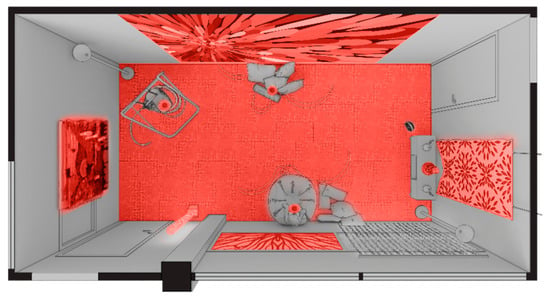
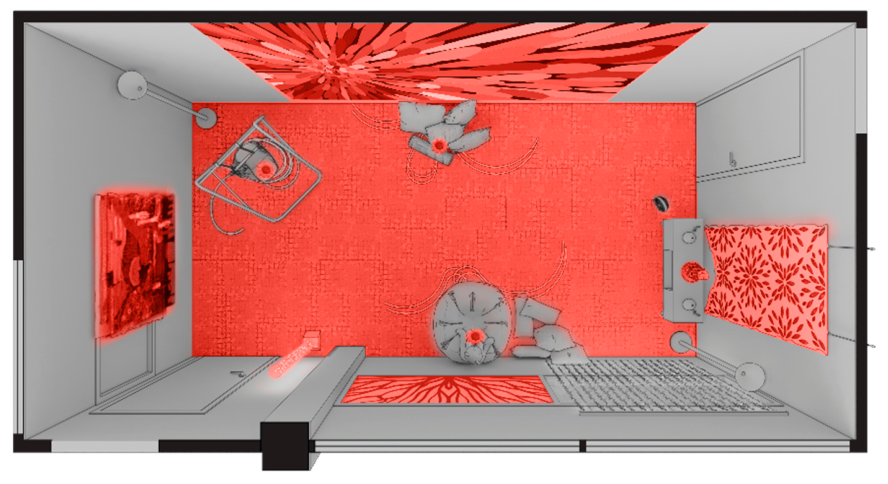
A 270 sq ft windowless interior space on a mid-sized public university campus located in the Southeast was converted into an experiential MSE using attention restoration theory and play theory as guiding frameworks. Formerly a faculty office, the room connected to both a classroom and corridor, allowing supervised access to the classroom from the office. The design incorporated visual, tactile, auditory, and olfactory stimuli, listed in descending order based on the extent to which each sensory modality was represented within the MSE. Participants were able to customize and control aspects of color, lighting, sounds, and air circulation through various applications on a tablet. Visual stimuli incorporated into the MSE include colorful or illuminated objects, such as the tabletop water fountain with integrating lighting, a bubble tube, an abstract tree wall panel, two color-changing floor lamps, and three large felt sunflowers positioned near the seating options. Additional visual features included a programmable LED curtain panel, three fiber-optic light strands of varying lengths draped along the floor, a large-scale floral-inspired wall mural, and patterned carpet (see Figure 1).
Figure 1.
Illustration depicting application of Sense of Sight (in red).
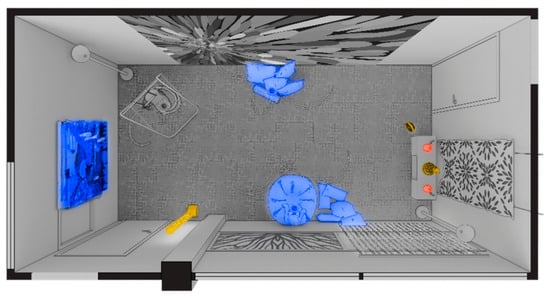
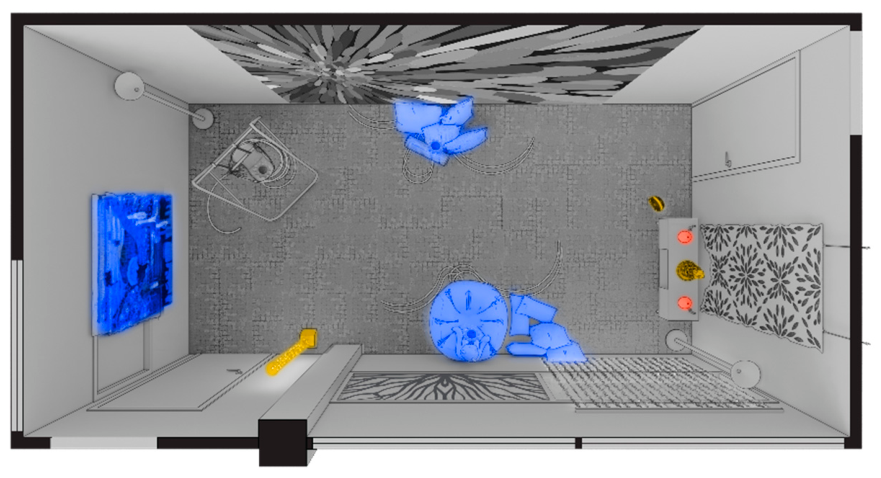
Tactile stimuli incorporated into the MSE included a tactile wall hanging, a weighted stuffed bear, and throw pillows featuring a variety of textures such as mermaid-sequin fabric. Auditory features of the environment consisted of a fan with adjustable speed settings, a bubble tube and tabletop water fountain that produced sounds of water, and two speakers that allowed participants to listen to music or nature sounds of their choosing. Olfactory stimulation was provided through the use of essential oil diffusers. Participants could select one of two scents, lavender or citrus vanilla, or opt for no scent at all. The diffuser allowed occupants to adjust the intensity of the scent by increasing or decreasing the level of diffusion (see Figure 2).
Figure 2.
Illustration depicting application of Sense of Sound (in yellow), Smell (in pink), and Touch (in blue).
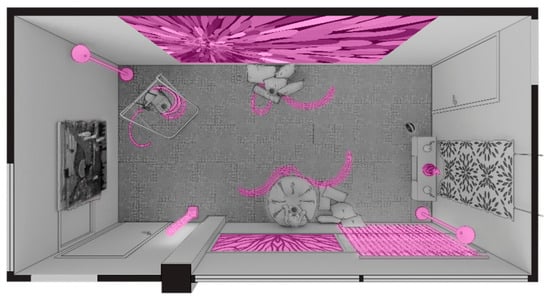
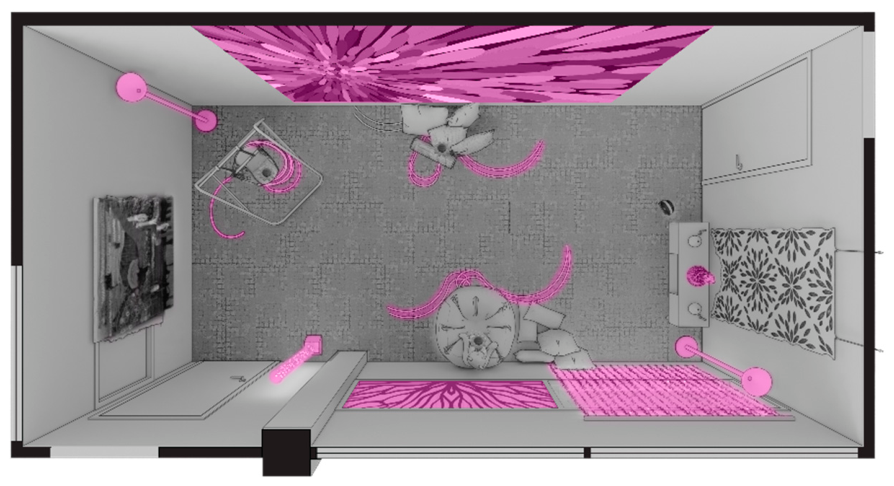
Features representative of nature were felt sun flowers, a water fountain, a bubble tube, a moss-inspired carpet, an abstract tree panel, a floral-inspired mural, and an acoustical panel (see Figure 3). Attention Restoration Theory (ART), as proposed by Stephen and Rachel Kaplan, suggests that natural environments provide a restorative experience, giving the human brain the ability to recover from mental fatigue [45]. These environments integrate aspects of nature, actual or simulated.
Figure 3.
Illustration depicting aspects of Attention Restoration Theory (in purple).
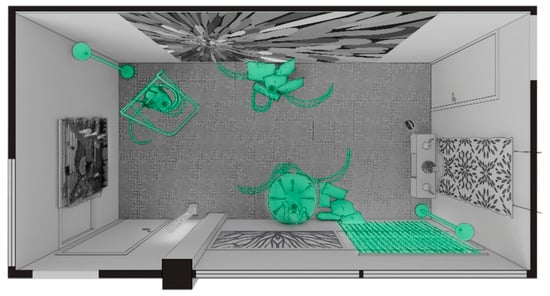
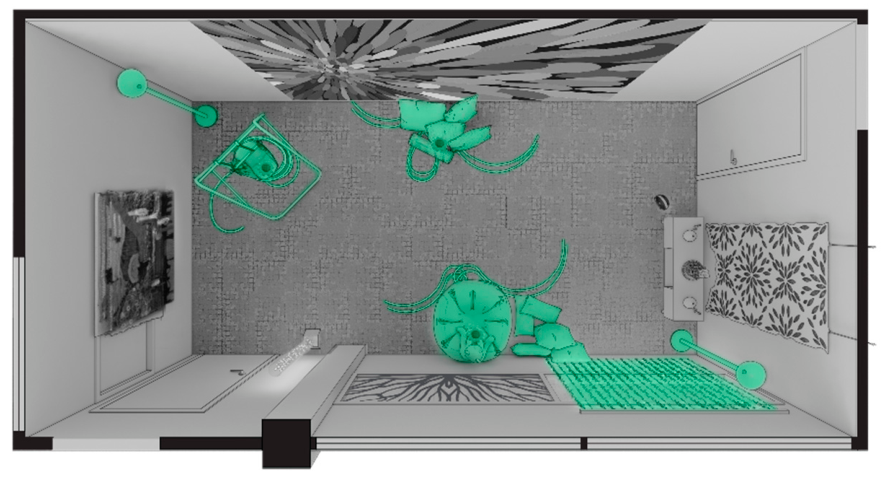
Features such as bean bag seating, floor pillows, a weighted stuffed animal, and a swing chair, reflected playful forms commonly associated with childhood environments, while the interactive digital controls functioned as play affordances by allowing users to explore, manipulate, and personalize sensory conditions such as lighting, sound, scent, and airflow via tablet-based applications (see Figure 4). Play is a form of positive distraction and can shift attention reducing the brain’s ability to focus on stress or anxiety. It is important to note that Play Theory was used to rationalize certain design features rather than as an empirically tested variable.
Figure 4.
Illustration depicting application of Play Theory (in green).
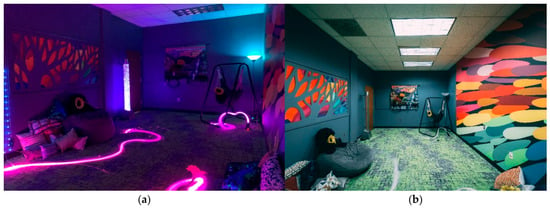
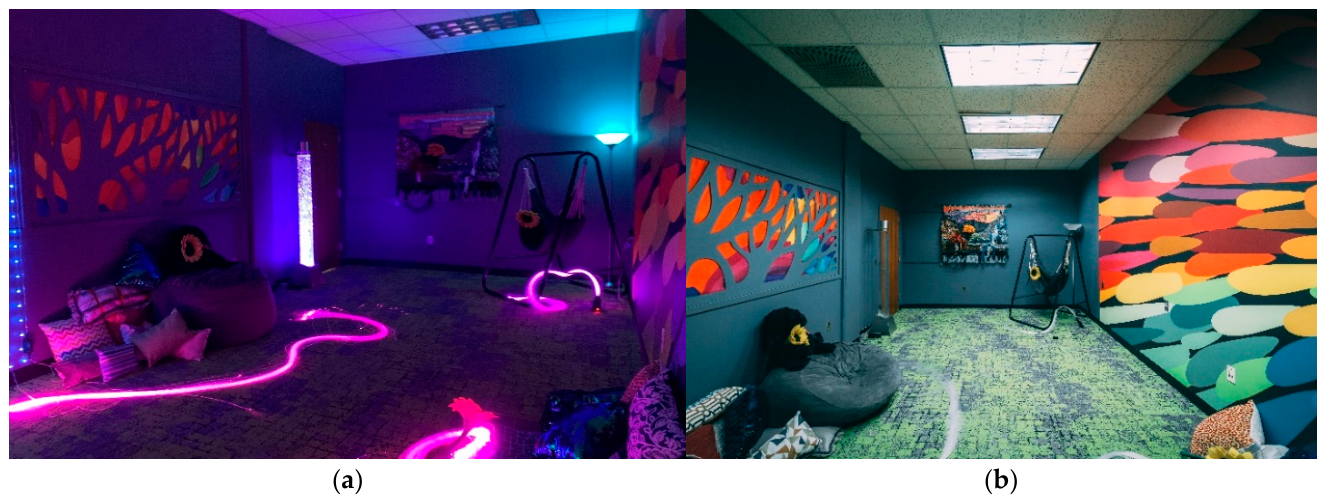
The design was intended for dim lighting to allow illuminated features such as a bubble tube, LED curtain panel, and fiber optic lighting to be viewed. Although three recessed troffer luminaires within the suspended acoustical ceiling remained in place, they were turned off during MSE use (see Figure 5).
Figure 5.
View from the hallway into the MSE: (a) with the overhead lights off as participants experienced the space, and (b) with the overhead lights on.
3.2. Instruments
Three established scales were used to gather quantitative data: the Perceived Stress Scale (PSS-10), Generalized Anxiety Disorder (GAD-7), and Perceived Environmental Restorativeness (PER) scale. The PSS-10 consisted of 10 items in a 5-point Likert format (0 = never, 4 = very often) [46]. PSS-10 is a widely used instrument for assessing stress and has a Cronbach alpha of 0.78 [47], indicating adequate reliability. Possible scores range from 0 (no stress) to 40 (high stress). GAD-7 consisted of seven items in a 4-point Likert format (0 = not at all, 3 = nearly every day). GAD-7 is a commonly used instrument to self-report anxiety and has a Cronbach α of 0.92 indicating high reliability [48]. Scores range from 0 (no anxiety) to 21 (severe anxiety). PER, consisting of 22 items, was used to measure the restorative quality of the multisensory environment [49]. The 7-point scale (0 = not at all, 6 = completely) included a range of possible scores of 0 to 132. Three open-ended questions captured sensory preferences along with determining specific elements within the MSE that helped participants feel less stressed or anxious.
3.3. Participants and Procedure
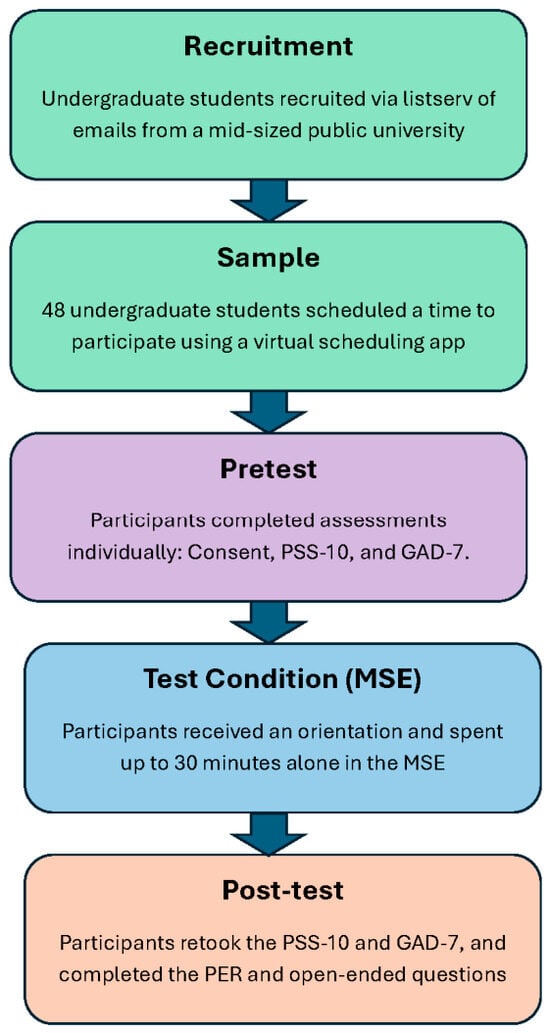
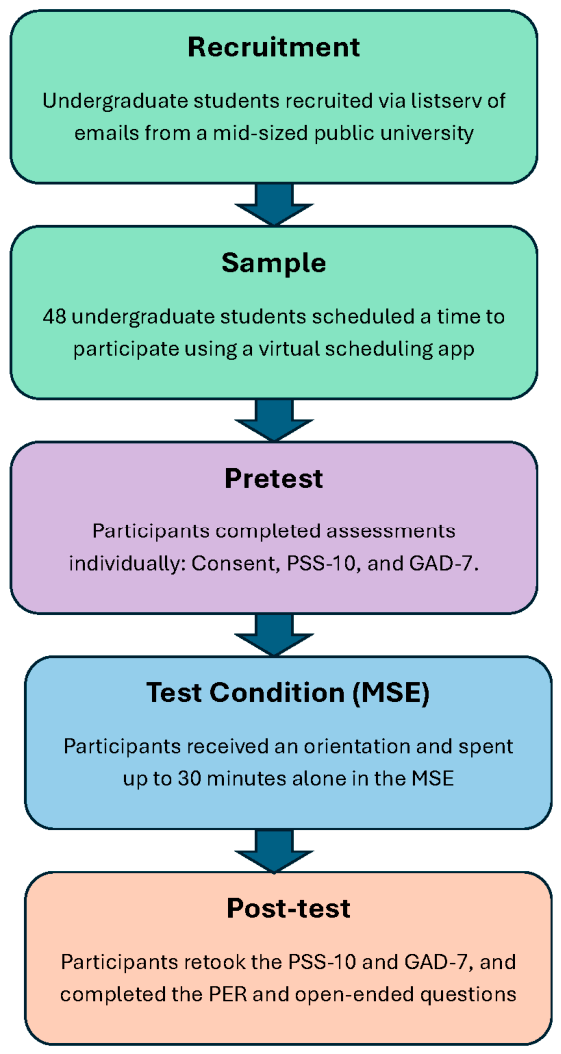
A convenience sample of 48 undergraduate students was recruited through university listservs maintained by the Departments of Interior Architecture and Community and Therapeutic Recreation at a mid-sized public university in the southeastern United States. Students self-selected a session time using a virtual scheduling application. Upon arrival, participants provided informed consent and completed the PSS-10 and GAD-7 (pretest measures) on a tablet provided by the principal investigator in the classroom adjacent to the MSE. Following completion of the pretest measures, participants entered the MSE, where they received a brief orientation from the principal investigator regarding the sensory features of the room and the operation of the tablet-based controls used to adjust lighting, sound, scent, and airflow. After the orientation, the principal investigator left the room, and participants remained alone in the MSE for the duration of their session. To encourage naturalistic interaction with the environment, no specific guidelines were provided regarding room use; however, participants were limited to a maximum exposure time of 30 min and could discontinue the session at any time or choose not to use specific sensory features. Immediately following their visit, participants completed the PSS-10 and GAD 7 again along with the PER and three open-ended questions (post-test measures) using a tablet in the adjoining classroom. The mean duration of time spent in the MSE was 26 min (see Table 1 and Figure 6).
Table 1.
Procedure for the Study.
Figure 6.
Research Flowchart. Notes: Perceived Stress Scale (PSS-10); General Anxiety Disorder (GAD-7); Multisensory Environment (MSE); Perceived Environmental Restorativeness (PER).
3.4. Data Analysis
Quantitative data was analyzed using descriptive statistics in the form of frequencies, means, and standard deviations. Paired-samples t-tests were conducted to compare pre- and post-tests scores on the PSS-10 and GAD-7. Statistical significance was evaluated at the 0.05 level. Participants with missing items on the post-test PSS-10 or GAD-7 were excluded from quantitative analyses involving those measures because complete scale scores could not be calculated.
Qualitative data from the open-ended questions followed an inductive thematic approach using Braun and Clarke’s framework [50]. The researchers read through the initial open-ended responses numerous times to become familiar with the data and generate initial codes. These codes were then organized into themes developed directly from participant narratives. The coders then met to compare codes and collaboratively discuss patterns emerging from the data. Responses were permitted to receive multiple codes when they reflected more than one concept or experience. Related codes were subsequently organized into broader themes developed directly from participant narratives. Most themes were readily apparent across responses, although the theme of control and choice required additional discussion and refinement before consensus was reached. To enhance trustworthiness, an AI-assisted review was conducted following the initial coding and theme development process. The AI was used as a secondary review tool to examine coding consistency and fit between codes, themes, and participant responses. The AI review did not result in the creation of any new themes. The researcher reviewed all AI-generated suggestions and retained responsibility for all final coding and thematic interpretations.
4. Results
More than half of the participants (52%) reported moderate to severe anxiety, a prevalence substantially higher than the national average of 33% reported in the Healthy Minds Study [2]. Similarly, 70% of participants reported moderate to high perceived stress, a rate that was comparable to, though somewhat lower than, the national average of 76.4% reported by the American College Health Association [4] (see Table 2).
Table 2.
Participant Sociodemographic Profiles.
4.1. Perceived Stress
Participants with complete pretest and post-test PSS-10 data (n = 44) were included in the analysis. Perceived stress scores decreased slightly from pre-test (M = 20.13, SD = 6.18) to post-test (M = 19.64, SD = 5.85); however, this reduction was not statistically significant, t(43) = 0.939, p = 0.353. Although no significant change was observed at the group level, individual responses varied. The largest proportion of participants (43.2%, n = 19) experienced decreased perceived stress, with scores declining by an average of 3.37 points. In contrast, 22.7% (n = 10) of participants reported no change, while 34.1% (n = 15) reported increased stress, with scores increasing by an average of 2.93 points (see Table 3).
Table 3.
t-test: Paired two sample for Means for Stress and Anxiety.
4.2. Perceived Anxiety
Participants with complete pretest and post-test GAD-7 data (n = 44) were included in the analysis. Anxiety scores remained relatively stable, increasing slightly from pre-test (M = 9.89, SD = 5.25) to post-test (M = 10.00, SD = 5.56); however, this difference was not statistically significant, t(43) = −0.356, p = 0.723. Although no significant change was observed at the group level, individual responses varied. More than one-third of participants (38.6%, n = 17) reported reduced anxiety following their visit, with scores decreasing by an average of 1.76 points. In contrast, 27.3% (n = 12) of participants experienced no change in anxiety scores, while 34.1% (n = 15) reported increased anxiety, with scores increasing by an average of 2.33 points.
4.3. Perceived Restorativeness
Restorativeness was assessed using a modified version of the Perceived Environmental Restoration Scale (PER). Participants reported a mean PER score of 4.34 (SD = 0.60) on a 7-point scale ranging from 0 (not at all) to 6 (completely). Scores ranged from 2.91 to 5.18, indicating variability in participants’ perceptions of the environment; however, the mean score was substantially above the scale midpoint of 3.0. These findings suggest that participants generally perceived the MSE play-based and restorative design features as recuperative and soothing.
4.4. Where Did You Spend the Most Time Within the Room and What Were You Doing?
The beanbag chair was the most frequently reported location (n = 18, 40%), followed by the hammock chair (n = 15, 33.3%) and floor cushions/pillows (n = 12, 26.7%). Participants frequently associated beanbag use with relaxation, observation, and interaction with comforting sensory objects. For example, several participants described sitting “on the bean bag hugging Rocky [weighted stuffed animal]” or spending time “on the bean bag looking at the bubbles and fish,” suggesting that the seating supported both comfort and sensory engagement. Conversely, the hammock chair was used for swinging, rocking, resting, and napping. Responses including “I sat in the hanging chair and just listened to my podcast” and “on the swing, swinging back and forth” illustrate how the hammock chair facilitated gentle movement. Several participants preferred floor-based seating, which appeared to support stretching, resting, and task-oriented activities. For instance, participants reported “laying down on pillows while snuggling with a weighted stuffed animal,” completing homework while seated on “the cushion on the floor,” or “checking emails” from a floor cushion. The predominance of the beanbag chair and hammock seating suggests that participants gravitated toward spaces that supported comfort, relaxation, and sensory engagement. These findings indicate that soft, flexible seating may facilitate restorative experiences by encouraging participants to disengage from external demands and focus on calming sensory stimuli.
Three themes emerged from participants’ descriptions of how they engaged with the sensory room: (1) Restorative Relaxation, (2) Kinesthetic and Tactile Engagement, and (3) Task-Oriented Use. Restorative relaxation was the most frequently identified activity theme (n = 24, 57.4%). Participants often described passively engaging with sensory stimuli by resting, deep breathing, observing visual features, and listening to calming sounds. This form of low-demand engagement implies that the MSE functioned as a restorative refuge, providing opportunities for mental recovery and emotional regulation. Participant descriptions included “watching the wall light and resting,” “watching the LED wall,” and “listening to the small water fountain and music,” activities that required little effort while encouraging attentional disengagement from everyday demands.
Kinesthetic and Tactile Engagement (n = 17, 36.2%) reflected participants’ interaction with movement-based and tactile features, including swinging, rocking, manipulating lighting, and engaging with sensory objects. These activities demonstrate that participants used the environment not only as observers of sensory stimuli but also as active participants in shaping their sensory experiences. Participants frequently described playful and interactive behaviors, such as “looking at the bubble [tube] playing with one of the reversible pillows,” sitting “on the hammock chair, swinging back and forth,” experiencing “hammock chair rocking,” and sitting “on the bean bag playing with lights.”
Task-Oriented Use was the least frequently identified activity theme (n = 6, 12.7%), yet it highlights the flexibility of the sensory room as a space that supported both restoration and productivity. Participants described engaging in academic and work-related tasks, including completing homework and responding to emails. While these activities differed from the passive and active sensory engagement identified in other themes, participants still chose to complete them within the MSE, suggesting that the environment fostered focus. This pattern is reflected in comments such as, “I was on my phone and used the time to write emails and get caught up on some work” and “I spent most of my time sitting on one of the cushions; I did homework while here.”
4.5. What Elements in the Space Helped You Feel Less Anxious?
The strongest themes were lighting, music and sound, water features, and aromatherapy (see Table 4). Lighting was the most frequently referenced element, and participants often mentioned the level of light, color of light, and ability to personalize as features that reduced anxiety. Music and sound were a separate element from water, even though the water-based features were dynamic and created sounds.
Table 4.
Environmental Characteristics Perceived as Most Supportive of Lessening Anxiety.
Participants most frequently cited sensory elements (62 references) that created a calming atmosphere, as evidenced in the sample quote, “The scent, the wall lights, the music, and the weighted gorilla”. Nature and biophilic elements were also seen (16 references) through water features, sounds of water, and refuge.
4.6. What Elements in the Space Helped You Feel Less Stressed?
Using the same inductive coding approach, responses to the stress-reduction question revealed a pattern largely consistent with that observed for anxiety reduction, although music and sound, water features, and environmental control appeared somewhat more salient (see Table 5). Counts reflect the number of responses referencing a theme, and responses could be coded into multiple themes. Participants most frequently associated stress reduction with a multisensory environment that combined visual (lighting), auditory (music and water sounds), olfactory (aromatherapy), and kinesthetic (swinging and movement-based) experiences. Opportunities for comfort, refuge, and personal control were also frequently cited, suggesting that both sensory regulation and environmental autonomy contributed to the restorative qualities of the space. Notable differences emerged between the anxiety and stress responses. Music and sound were referenced more frequently in relation to stress reduction (34 references) than anxiety reduction (22 references), indicating that auditory experiences may have played a particularly important role in participants’ perceptions of stress relief. Water features were also mentioned more frequently for stress reduction (17 references) than anxiety reduction (11 references), signifying that fountains, bubble tubes with floating fish, and water sounds contributed to participants’ experiences of relaxation.
Table 5.
Environmental Characteristics Perceived as Most Supportive of Lessening Stress.
Open-ended responses regarding both anxiety reduction and stress reduction revealed highly consistent themes (see Table 6). Across both questions, participants most frequently identified lighting, music, water-based features, aromatherapy, and comfortable seating as contributors to positive emotional experiences within the MSE. While the stress-reduction responses contained slightly more references to water features and environmental control, the overall pattern indicates that participants perceived similar environmental characteristics as beneficial for reducing both anxiety and stress.
Table 6.
Comparison of Themes.
5. Discussion
The primary finding of this study is that participants, as illustrated through qualitative analysis, generally perceived the MSE as restorative, despite the absence of statistically significant reductions in anxiety and stress following a single exposure. The discrepancy between the quantitative and qualitative findings suggests that brief exposures to MSEs may influence perceptions of wellbeing and restoration even when measurable changes in standardized anxiety and stress outcomes are not detected. Mean restorativeness scores exceeded the scale midpoint, and qualitative responses consistently described the space as calming, comfortable, and supportive of emotional wellbeing.
This interpretation is consistent with prior higher education research suggesting that MSEs may support perceived wellbeing and restoration even when measurable psychological outcomes are mixed. For example, Lim et al. reported significant reductions in anxiety but only positive trends in perceived stress, highlighting the complexity of measuring through standardized outcome measures alone [18]. Unlike other studies that examined repeated exposure to multisensory environments over multiple weeks or months (e.g., [17,18,25]), the present investigation evaluated a single session. The absence of statistically significant changes in anxiety and stress may therefore reflect differences in exposure duration rather than a lack of restorative benefit. This interpretation is further supported by participants’ positive perceptions of the environment and their frequent descriptions of calming and restorative experiences.
Auditory stimuli appeared to play a particularly important role in participants’ experiences of stress reduction. Music and sound were referenced more frequently than any other environmental characteristic in the stress-reduction responses and were consistently identified as important for anxiety reduction as well. Participants frequently described listening to music, nature sounds, and water features while relaxing in the MSE. Across the qualitative data, auditory elements were consistently identified as contributing to feelings of calmness, emotional regulation, and perceived restoration. Notably, many participants referenced combinations of sounds rather than a single auditory stimulus, indicating that layered auditory experiences may be especially effective within multisensory environments.
Biophilic elements also appeared to play an important role in participants’ perceptions of wellbeing. Water features, bubble tubes, floating fish, and water sounds were frequently identified as contributing to relaxation. Notably, water-based features were mentioned more frequently in relation to stress reduction than anxiety reduction. Although the sensory room did not provide direct access to nature, participants frequently associated visual and auditory representations of water with feelings of restoration. The prominence of these features aligns with previous research linking biophilic design to enhanced perceived restorativeness, reduced stress and anxiety, and improved psychological wellbeing [50,51].
An important finding was that participants rarely attributed stress or anxiety reduction to a single environmental feature. Instead, responses frequently described combinations of lighting, sound, scent, movement, and tactile experiences, such as “The lavender aroma, music and colored lamps helped me feel less stressed.” Participants also gravitated toward features that encouraged playful, low-stakes interaction, including flexible seating, soft furnishings, sensory objects, and interactive environmental controls. Consistent with adult play theory [52,53,54], students actively engaged with the environment through swinging, rocking, manipulating lighting, exploring sensory objects, and observing dynamic features that involved exploration and experimentation. Rather than passively observing sensory stimuli, students actively engaged with and personalized their sensory experiences. Participants frequently described their interactions as helpful in managing and enhancing comfort.
One of the strongest findings across the qualitative data was the importance of choice and control. As one participant noted, “Calming water fountain sound and lights. I really like how you can control pretty much everything in this room.” These results are consistent with prior MSE research. User-directed sensory control was associated with improved attention and reduced repetitive behaviors among autistic children [21], while participants in higher education consultations emphasized adjustable lighting, flexible activities, and personalized sensory experiences as essential design features [44].
Although the MSE was designed primarily to support restoration, relaxation, and sensory engagement, a small number of participants described using the space for task-oriented activities such as completing homework and responding to emails. Given that the sample was university students who received extra credit for participation, it is possible that some entered the space with ongoing academic responsibilities or competing demands for their attention. As a result, some participants had difficulty fully disengaging from academic demands and engaging in restorative activities. This may represent one possible explanation for the absence of statistically significant changes in stress and anxiety outcomes. According to Attention Restoration Theory, restoration is facilitated when individuals can temporarily disengage from directed attention demands [55]. Participants who continued to complete coursework or respond to emails while using the sensory room may have experienced a different degree of psychological restoration than those who engaged primarily in relaxation and sensory exploration. Future research should examine whether outcomes differ between participants who use multisensory environments primarily for restoration and those who simultaneously engage in academic or work-related activities.
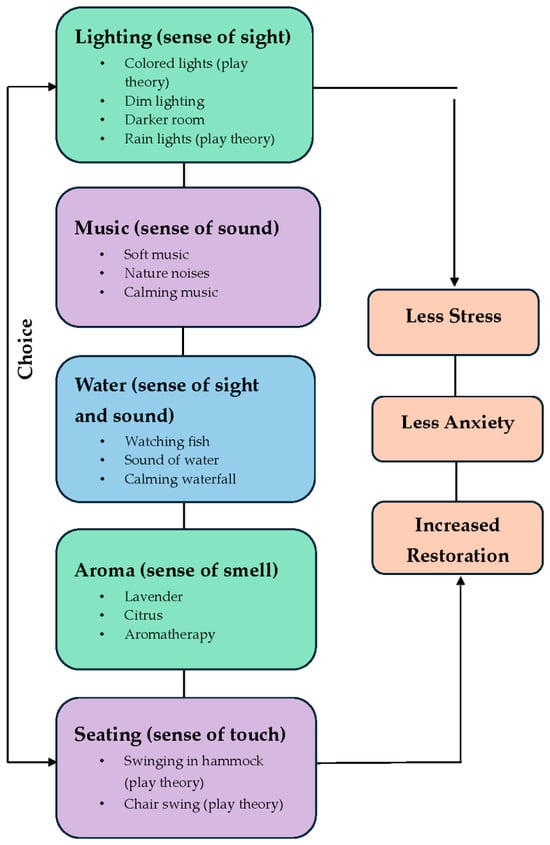
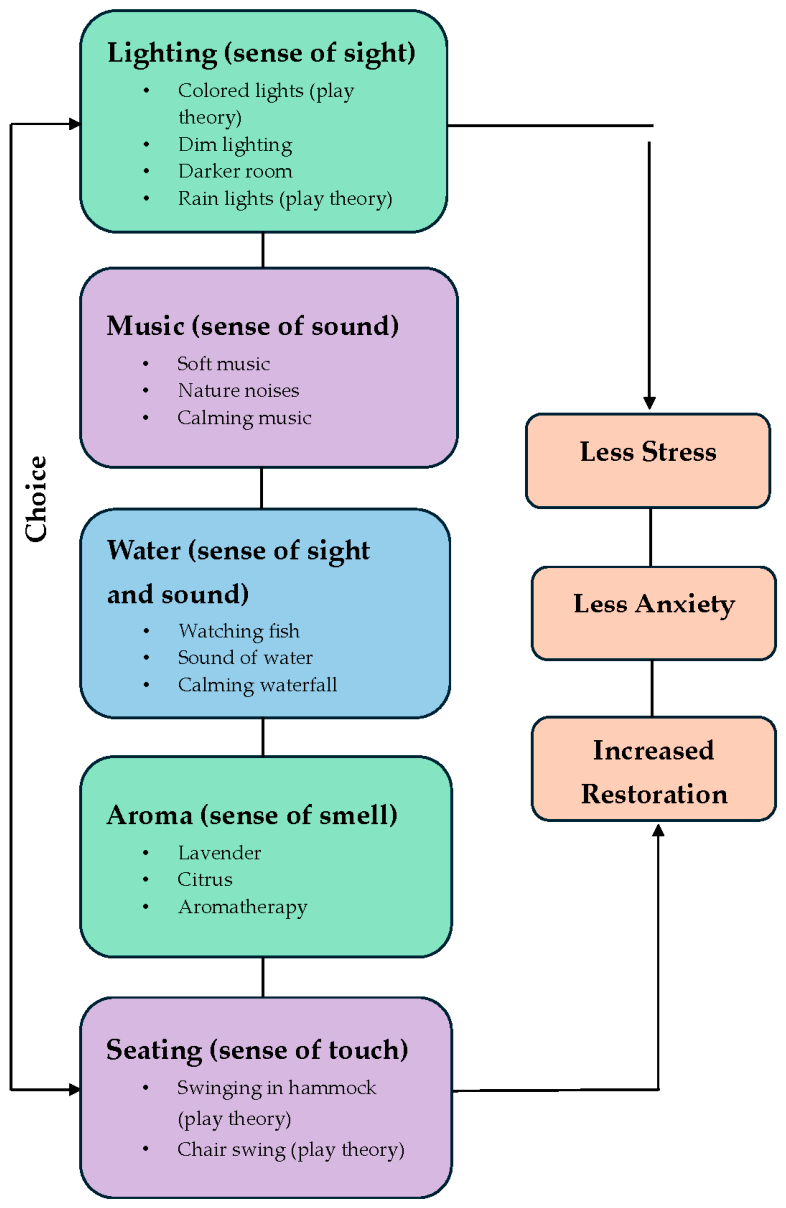
The findings also extend conceptual work linking play and restoration to resilience-building processes [56]. Participants frequently described sensory regulation, environmental choice, and playful engagement as experiences that they perceived as helpful for coping with academic and personal stressors. These findings contribute to conceptual work linking resilience-building processes to environmental conditions that support perceived restoration, self-regulation, and personal choice. The figure below illustrates the relationship between key design parameters identified by participants (lighting, auditory features, water elements, aroma, seating, and environmental controls) and perceived outcomes of restoration, reduced stress, and reduced anxiety. Based on the qualitative findings, participants consistently associated these sensory features with positive experiences and perceptions of wellbeing. A key component of this model, informed by Attention Restoration Theory, is the use of indirect natural stimuli such as rain lights, water elements, nature sounds, and natural smells, that may capture attention in a controlled manner, potentially allowing the mind to rest and reflect (see Figure 7).
Figure 7.
Conceptual Model of Restorative Features. Notes: The above model provides a concept of what a proposed restorative environment could entail based on the most important qualitative responses identified by the sample via Table 4, Table 5 and Table 6. A layered approach with a combination of sensory features that indirectly reference nature may allow participants to disengage while focusing on restorative experiences.
While the qualitative results are promising, there are limitations to this investigation. Recall that students spent an average of 26 min in the MSE, and perhaps this limited amount of time was not enough for significant quantitative differences. Yet the sample in the Cavanagh et al. study was in their sensory room for an average of 24 min and reported significant reductions in stress [19]. Additionally, participants in the present study experienced the MSE during a single visit rather than through repeated or long-term exposure. It is possible that the benefits of multisensory environments accumulate over time, and a one-time session may not be sufficient to produce measurable changes in perceived stress, anxiety, or restoration. The use of the PSS-10 to measure stress and the GAD-7 for anxiety are instruments that are often used to assess these measures over longer periods of time and may have been problematic for detecting changes after an average of 26 min of exposure to the MSE. The sample size for this investigation could also be considered small and most of the participants were female, yet several studies that focus on the MSE as an intervention have smaller samples. To illustrate, De Domenico et al. [28] had 20 preschool children, Unwin et al. [21] included 41 children, Lim et al. [18] had a sample size of eight students, and Quon et al. [44] recruited 41 participants. Clearly, more research is needed to determine the effect of MSEs on university campuses using larger, more diverse samples.
Additionally, the study employed a one-group pretest–post-test design without a control group, preventing causal interpretations regarding the effects of the multisensory environment. Participants self-selected into the study, which may have introduced selection bias, and the sample was predominantly female, limiting the representativeness of the findings. Furthermore, some students received extra credit for participation, which may have influenced decisions to participate. Incomplete survey responses resulted in some missing data, reducing the number of participants included in portions of the quantitative analyses. Finally, the study relied exclusively on self-report measures and did not include physiological or behavioral indicators of stress, anxiety, or restoration. Future research should incorporate comparison groups and multiple forms of outcome measurement, such as physiological, behavioral, and self-report data, to provide a more comprehensive understanding of university students’ experiences in multisensory environments. Future iterations could incorporate fidget objects, movement-based seating, increased tactile engagement, or other sensory tools to accommodate a broader range of regulatory preferences and create a more inclusive sensory experience at a reduced cost [28,44].
6. Conclusions
Although a single exposure to the multisensory environment did not produce statistically significant reductions in anxiety or stress, qualitative analysis demonstrated that participants consistently perceived the environment as restorative and identified a variety of sensory features as supportive of wellbeing. Findings suggest that restoration emerged through the interaction of multiple sensory modalities, opportunities for playful engagement, and the ability to personalize environmental conditions. Choice and control appeared to be particularly important, indicating that the effectiveness of multisensory environments may depend as much on user autonomy as on specific sensory features. Lighting, music and sound, water, aroma, and seating were the elements most frequently identified by participants as helpful in reducing their feelings of stress and anxiety. These results could give university administrators evidence-based findings to support the incorporation of a combination of inexpensive sensory features that may increase restoration.
Given the number of college students who are experiencing stress, addressing wellbeing has become a critical focus in higher education [2,3,6]. MSE research remains in its infancy, but by leveraging low-cost, design-driven interventions such as flexible seating, tactile materials, sensory controls, and designated zones for both stimulation and relaxation, multisensory environments may offer scalable strategies for accessible opportunities for self-regulation and recovery from everyday academic and personal stressors. Importantly, the high restorativeness scores, together with participants’ descriptions of comfort, sensory engagement, and emotional relief, suggest that perceptions of environmental restoration may be a meaningful outcome.
Author Contributions
Conceptualization, A.G.; methodology, A.G. and J.D.; software, A.G.; validation, A.G. and J.D.; formal analysis, A.G.; investigation, A.G.; resources, A.G.; data curation, A.G.; writing—original draft preparation, A.G.; writing—review and editing, A.G. and J.D.; visualization, A.G. and J.D.; funding acquisition, A.G. All authors have read and agreed to the published version of the manuscript.
Funding
This research was funded by the Interior Design Educators Council (IDEC) through the Stantec Innovation Partnership Grant, awarded in 2023.
Institutional Review Board Statement
The study was approved by the Institutional Review Board of University of North Carolina Greensboro protocol code IRB-FY23-657 13 August 2023 for studies involving humans.
Informed Consent Statement
Informed consent was obtained from all subjects involved in the study.
Data Availability Statement
The original contributions presented in this study are included in the article. Further inquiries can be directed to the corresponding author.
Conflicts of Interest
The authors declare no conflicts of interest.
Abbreviations
The following abbreviations are used in this manuscript:
| MSE | Multisensory Environments |
| ART | Attention Restoration Theory |
| PER | Perceived Environmental Restorativeness |
| PSS | Perceived Stress Scale |
| GAD | Generalized Anxiety Disorder |
References
- Rustamov, E.; Musayeva, T.; Xalilova, X.; Ismayilova, G.; Nahmatova, U. Exploring the relationship between social connectedness and mental wellbeing: The mediating role of psychological resilience among adults in Azerbaijan. Discov. Psychol. 2023, 3, 15. [Google Scholar] [CrossRef] [Scilit]
- Eisenberg, D.; Lipson, S.; Heinze, J.; Zhou, S. The Healthy Minds Study: 2024–2025 Data Report. Available online: http://healthymindsnetwork.org/wp-content/uploads/2025/09/2024-2025_HMS-National-Data-Report_Student.pdf (accessed on 6 July 2026).
- Gallup. Voices on Gen Z: Perspectives on U.S. Education, Wellbeing, and the Future. Available online: https://www.gallup.com/analytics/506663/american-youth-research.aspx#ite-544721 (accessed on 6 July 2026).
- American College Health Association (ACHA). National College Health Assessment. Available online: https://www.acha.org/wp-content/uploads/NCHA-IIIb_SPRING_2025_REFERENCE_GROUP_INSTITUTIONAL_EXECUTIVE_SUMMARY.pdf (accessed on 6 July 2026).
- Flaherty, C. Stress is hurting college students. Inside Higher Ed. 23 May 2023.
- Wiley. The Student Mental Health Landscape: Mental Health Challenges, Evolving Preferences, and the Need for More Support. Available online: https://www.wiley.com/content/dam/wiley-com/en/pdfs/teach---grow/mental-health-crisis-white-paper-students.pdf (accessed on 6 July 2026).
- Center for Collegiate Mental Health (CCMH). 2023 Annual Report: Bringing Science and Practice Together. Available online: https://ccmh.psu.edu/annual-reports. (accessed on 6 July 2026).
- Weintraub, K. Room with an “ahh”: Colleges are giving students their own space to decompress. The Washington Post, 1 February 2020.
- Cameron, A.; Burns, P.; Garner, A.; Lau, S.; Dixon, R.; Pascoe, C.; Szafraniec, M. Making sense of multi-sensory environments: A scoping review. Int. J. Disabil. Dev. Educ. 2020, 67, 630–656. [Google Scholar] [CrossRef] [Scilit]
- Watchorn, V.; Cartledge, M.; Grant, C.; Walker, A.; Hale, A. A calm space to reset: Perceptions of sensory room in Australian public buildings. Int. J. Archit. Res. 2026, 20, 545–564. [Google Scholar] [CrossRef] [Scilit]
- Port of Seattle. Sensory Rooms. Available online: https://www.portseattle.org/services-amenities/sensory-rooms (accessed on 6 July 2026).
- Mizell, M.; Fetters, R.; Sana Anta, M. Designing ‘the Quiet Airport’ at SFO. Available online: https://www.gensler.com/blog/designing-the-quiet-airport-at-sfo (accessed on 6 July 2026).
- HKS. Gerad R. Ford International Airport Sensory Room. Available online: https://www.hksinc.com/what-we-do/projects/gerald-r-ford-international-airport-sensory-room/ (accessed on 6 July 2026).
- Rigou, V. NeoCon Top 5: Embracing Design Evolution. NewCity Design, 21 June 2023. Available online: https://design.newcity.com/2023/06/21/top-5-neocon-2023-embracing-design-evolution/ (accessed on 3 July 2026).
- Pinkney, L. A comparison of the Snoezelen Environments and a music relaxation group on the mood and behaviour of patients with senile dementia. Br. J. Occup. Ther. 1997, 60, 193–237. [Google Scholar] [CrossRef] [Scilit]
- Staal, J.; Shteyhfeld, E.; Matheis, R.; Lopez, A. The Effects of Multi-Sensory Behavior Therapy (Snoezelen) on Pregnant Women with Depression and Anxiety: A Single Case Design. Available online: https://www.rompa.com/media/free-resources/snoezelen_pregnant_women.pdf (accessed on 28 July 2026).
- Lurosso, L.; Bosch, S.; Park, N.K.; Shorr, R.; Conroy, M.; Ahrentzen, S.; Freytes, M. Investigating the feasibility of multisensory environments to improve the assisted bathing experience for veterans with Dementia: A clinical trial. Health Environ. Res. Des. J. 2022, 15, 180–195. [Google Scholar] [CrossRef] [Scilit] [PubMed]
- Lim, J.-Y.; Kim, J.-H.; Lee, S.-M.; Jang, W.-H. Effects of Snoezelen therapy on stress, anxiety, depression, and quality of life of college students in game addiction. J. Korean Phys. Ther. 2021, 33, 123–130. [Google Scholar] [CrossRef] [Scilit]
- Cavanagh, B.; Haracz, K.; Lawry, M.; Wales, K.; James, C. Changes in emotions and perceived stress following time in an artistically designed multisensory environment. Med. Humanit. 2021, 47, e13. [Google Scholar] [CrossRef] [Scilit] [PubMed]
- Champagne, T. Creating sensory rooms: Environmental enhancements for acute inpatient mental health settings. Ment. Health Spec. Interest Q. 2006, 29, 1–4. [Google Scholar]
- Unwin, K.L.; Powell, G.; Jones, C.R. The use of multi-sensory environments with autistic children: Exploring the effect of having control of sensory changes. Autism 2002, 26, 1379–1394. [Google Scholar] [CrossRef] [Scilit] [PubMed]
- Ayres, A. Sensory Integration and Learning Disorders; Western Psychological Services: Los Angeles, CA, USA, 1972. [Google Scholar]
- Cavanagh, B.; Haracz, K.; Lawry, M.; James, C. Receptive arts engagement for health: A holistic and trans-disciplinary approach to creating a multisensory environment. Sage Open 2020, 10(4). [Google Scholar] [CrossRef] [Scilit]
- Hotz, G.; Castelblanco, A.; Lara, I.; Weiss, A.; Duncun, R.; Kuluz, J. Snoezelen: A controlled multi-sensory stimulation therapy for children recovering from severe brain injury. Brain Inj. 2006, 20, 879–888. [Google Scholar] [CrossRef] [Scilit] [PubMed]
- Kaplan, H.; Clopton, M.; Kaplan, M.; Messbauer, L.; McPherson, K. Snoezelen multi-sensory environments: Task engagement and generalization. Res. Dev. Disabil. 2006, 27, 443–455. [Google Scholar] [CrossRef] [Scilit] [PubMed]
- McKee, A.; Harris, G.; Rice, M.; Silk, L. Effects of a Snoezelen room on the behavior of three autistic clients. Res. Dev. Disabil. 2007, 28, 304–316. [Google Scholar] [CrossRef] [Scilit] [PubMed]
- De Domenico, C.; Di Cara, M.; Piccolo, A.; Settino, C.; Leonardi, S.; Giuffre, G.; De Cola, M.; Cucinotta, F.; Ripodi, E.; Impallomeni, C.; et al. Exploring the usefulness of a multi-sensory environment on sensory behaviors in children with autism spectrum disorder. J. Clin. Med. 2024, 13, 4162. [Google Scholar] [CrossRef] [Scilit] [PubMed]
- Park, G.; Nanda, U.; Adams, L.; Essary, J.; Hoelting, M. Creating and testing a sensory well-being hub for adolescents with developmental disabilities. J. Inter. Des. 2020, 45, 13–21. [Google Scholar] [CrossRef] [Scilit]
- Abdou, H.; Younis, N. Sensory and interactive architectural design strategies for inclusive early childhood learning environments supporting neurodevelopmental diversity. Architecture 2026, 6, 44. [Google Scholar] [CrossRef] [Scilit]
- Casper College. New Sensory Room at Casper College Library. Available online: https://library.wyo.gov/new-sensory-room-at-casper-college-library/ (accessed on 8 July 2026).
- Rhodes State College. Sensory Room. Available online: https://www.rhodesstate.edu/testing-center-and-accommodative-services/index.html (accessed on 8 July 2026).
- Campbell-Jenson, A. The Sensory Room Is a Refuge for Students. Available online: https://libnews.umn.edu/2022/10/the-sensory-room-is-a-refuge-for-students/ (accessed on 8 July 2026).
- UW-Stout Polytechnic. New Sensory Space Offers Quiet Room to Experience Stimuli, Relaxation. Available online: https://www.uwstout.edu/about-us/news-center/new-sensory-space-offers-quiet-room-experience-stimuli-relaxation (accessed on 8 July 2026).
- Wellness at Northwestern: Sensory Space. Available online: https://www.northwestern.edu/wellness/hpaw/about-hpaw/sensory-space.html (accessed on 8 July 2026).
- IUPUI Today. New Inclusive Space for Neurodiverse Students. Available online: https://today.iu.edu/live/news/3247-new-inclusive-space-for-neurodiverse-students (accessed on 8 July 2026).
- University Libraries. Libraries Piloting Sensory Rooms as Supportive Spaces for Neurodiverse Students. 2023. Available online: https://www.psu.edu/news/university-libraries/story/libraries-piloting-sensory-rooms-supportive-spaces-neurodiverse-students/ (accessed on 8 July 2026).
- Mental Health Counseling. Sensory Room. Available online: https://collegeofidaho.edu/student-life/wellness/counseling/ (accessed on 8 July 2026).
- Stony Brook University. Student Accessibility Support Center: Sensory Space. Available online: https://www.llrc.stonybrook.edu/commcms/studentaffairs/sasc/SensorySpace/SASC_Sensory_Space.php (accessed on 8 July 2026).
- Chalifoux, A. UC Clermont Celebrate New Cutting-Edge Spaces: Sensory Room First of Its King in Nation. Available online: https://www.uc.edu/news/articles/2023/10/uc-clermont-celebrates-new-cutting-edge-spaces--sensory-room-first-of-its-kind-in-nation.html (accessed on 8 July 2026).
- Rodriguez, G. Georgia State Open New Sensory Room to Support Accessibility and Mental Wellness. Available online: https://news.gsu.edu/2025/10/24/georgia-state-opens-new-sensory-room-to-support-accessibility-and-mental-wellness/ (accessed on 8 July 2026).
- Rincon, S. JMU’s New Sensory Space Features Calming Reimagined Environment. Available online: https://www.jmu.edu/news/2025/04/28_sensory_space.shtml (accessed on 8 July 2026).
- Media Center. New Sensory Room Provides Students with a Place to Help Reduce Anxiety. Available online: https://www.nwmissouri.edu/media/news/2025/02/18sensoryroom.htm (accessed on 8 July 2026).
- Degnan, A. Liberty Open First ‘Sensory Room’ Made by Students for Student. Available online: https://www.liberty.edu/news/2025/02/05/liberty-opens-first-sensory-room-made-by-students-for-students/ (accessed on 28 July 2026).
- Quon, S.; Low, S.; Nichols, E.; Zheng, K. Designing a sensory room for post-secondary institutions. J. Leaning Dev. High. Educ. 2026, 39, 2–17. [Google Scholar] [CrossRef] [Scilit]
- Kaplan, S. The restorative benefits of nature: Toward an integrative framework. J. Environ. Psychol. 1995, 15, 169–182. [Google Scholar] [CrossRef] [Scilit]
- Cohen, S.; Kamarck, T.; Mermelstein, A. A global measure of perceived stress. J. Health Soc. Behav. 1983, 24, 385–396. [Google Scholar] [CrossRef] [Scilit]
- Cohen, S.; Williamson, G. Perceived stress in a probability sample of the United States. In The Social Psychology of Health; Spacapam, S., Oskamp, S., Eds.; Sage: Newburry Park, CA, USA, 1988; pp. 31–67. [Google Scholar]
- Spitzer, R.L.; Kroenke, K.; Williams, J.B.; Löwe, B. A brief measure for assessing generalized anxiety disorder: The GAD-7. Arch. Intern. Med. 2006, 22, 1092–1097. [Google Scholar] [CrossRef] [Scilit] [PubMed]
- Hartig, T.; Korpela, K.; Evans, G.; Garling, T. Validation of a measure of perceived environmental restorativeness. Goteb. Psychol. Rep. 1996, 26, 1–64. Available online: https://kipdf.com/validation-of-a-measure-of-perceived-environmental-restorativeness-1_5ac406811723dd66fecf6d6e.html (accessed on 20 September 2026).
- Braun, V.; Clarke, V. Using thematic analysis in psychology. Qual. Res. Psychol. 2006, 3, 77–101. [Google Scholar] [CrossRef] [Scilit]
- Gillis, K.; Gatersleben, B. A review of psychological literature on health and wellbeing benefit of biophilic design. Buildings 2015, 5, 948–963. [Google Scholar] [CrossRef] [Scilit]
- Youn, C.; Kang, M.; Lee, J. Biophilic design and restorative effects: A neuropsychological study of healthy indoor workspaces in urban Ccntexts. Int. J. Environ. Res. Public Health 2005, 22, 1571. [Google Scholar] [CrossRef] [Scilit] [PubMed]
- Brown, S.L.; Vaughan, C.C. Play: How It Shapes the Brain, Opens the Imagination, and Invigorates the Soul; Avery: New York, NY, USA, 2009. [Google Scholar]
- Clarke, K.; Marrow, L. Kidding around: Using play to enhance students’ well-being and learning. Pac. North-West Libr. Assoc. Q. 2016, 81, 32–40. [Google Scholar]
- Mantzios, M.; Giannou, K. When did coloring books become mindful? Exploring the effectiveness of a novel method of mindfulness-guided instructions for coloring books to increase mindfulness and decrease anxiety. Front. Psychol. 2018, 9, 56. [Google Scholar] [CrossRef] [Scilit] [PubMed]
- Tugade, M.; Fredrickson, B. Regulation of positive emotions: Emotion regulation strategies that promote resilience. J. Happiness Stud. 2007, 8, 311–333. [Google Scholar] [CrossRef] [Scilit]

Disclaimer/Publisher’s Note: The statements, opinions and data contained in all publications are solely those of the individual author(s) and contributor(s) and not of MDPI and/or the editor(s). MDPI and/or the editor(s) disclaim responsibility for any injury to people or property resulting from any ideas, methods, instructions or products referred to in the content. |
© 2026 by the authors. Licensee MDPI, Basel, Switzerland. This article is an open access article distributed under the terms and conditions of the Creative Commons Attribution (CC BY) license.