


Abstract
Moisture is present in every feature of the anthroposphere, and its occurrence in air has a profound impact on life. It has an impact on all aspects of the built environment, inside which modern occupants spend nearly 90% of their time. While moisture’s influence on the individual aspects of functional building performance, indoor air quality (IAQ), thermal comfort, and occupant health is well recognized, holistic studies examining the interdependencies among these aspects remain lacking, with the existing literature fragmented across climate studies, building physics, thermal comfort, epidemiology, and medicine. This review adopts a critical synthesis approach to trace moisture’s role across these disciplines, from the outdoor microclimate through the building envelope to the indoor environment and occupant. The synthesis reveals moisture’s dual role as a determinant of IAQ, thermal comfort, and occupant wellness, and as a physical driver of building material durability, structural performance, and operational energy consumption, with these moisture-driven interactions across scales found to be tightly interdependent. Based on this synthesis, a multi-disciplinary framework is proposed, linking the microclimate, building, occupant, and planetary health levels through moisture, identifying key interdisciplinary research gaps and providing a foundation for practical interventions toward occupant and planetary health.
1. Introduction
Water is fundamental to life and determines the health, prosperity, and sustenance of modern society [1,2]. It is omnipresent in the form of water vapor in the air and is a crucial facilitator of planetary life. Buildings are a significant part of the modern living environment [3].
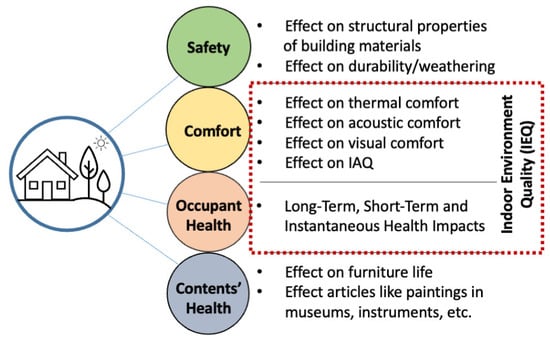
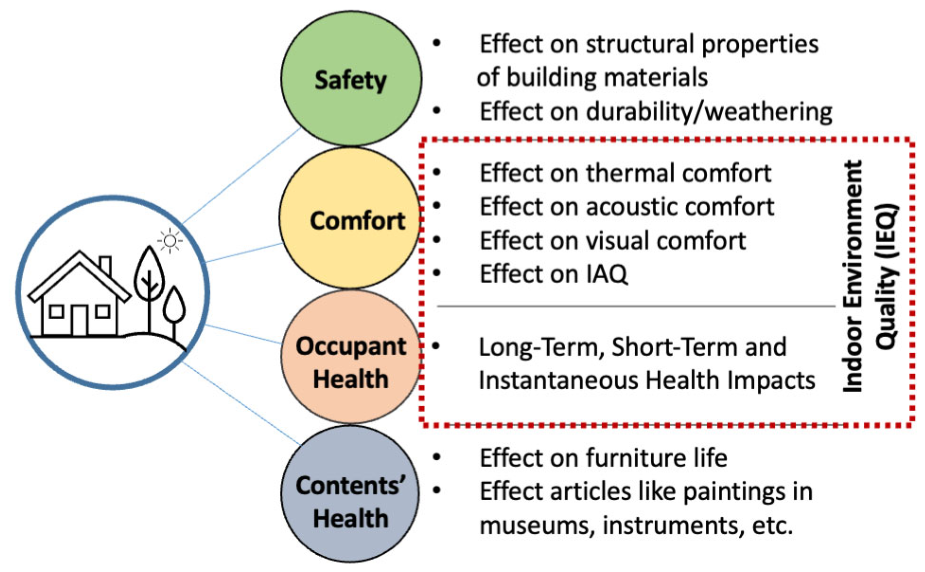
A building’s functional performance is its ability to ensure structural safety, durability, climatic response, thermal comfort, acoustics, illumination and indoor environment quality conducive to an occupant’s (and their belongings’) health and productivity. The presence of moisture in all its forms (solid, liquid, and vapor) influences every feature of a building (see Figure 1) [4,5], the properties of indoor air [6,7], and the occupants’ comfort and well-being [8,9].
Figure 1.
Determinants of functional performance of a building.
Changes in the microclimate and daily weather cause variations (ranging from as high as 35 g-wv/kg-da to as low as 5 g-wv/kg-da) in indoor humidity levels [10]. The extent of variation depends on the building’s typology, ventilation rates, etc. [10,11]. Water vapor in the indoor air, dampness, stale air and mold growth is commonly associated with Sick Building Syndrome, which has a detrimental impact on human physiological and psychological functioning and well-being. Excessive moisture is associated with microbial growth [12,13] and air contamination, while low moisture levels result in dryness of skin and eyes, breathing difficulties, etc. Headaches, depression, lack of motivation, runny nose, wheezing, coughing, respiratory tract issues, and dryness of eyes and skin are commonly reported symptoms of inhabitants of sick buildings [14].
As was evident in the COVID-19 pandemic, vapor dispersion and settlement associated with indoor humidity significantly impacted the transmission of the virus [15,16]. High humidity was associated with the faster settling of the virus on surfaces, whereas low humidity was associated with higher dispersion rates. Similarly, moisture also acts as a carrier of other particles in the air influencing exposure to chemical compounds in the air like Volatile Organic Compounds (VOCs), Endocrine Disruptive Chemicals (EDCs), dust, etc. [17,18].
In conjunction with temperature, solar radiation, and wind flow, the exposure of buildings to outdoor moisture and precipitation subjects them to physical, chemical, and biological interactions [19,20]. Physical phenomena such as heat and moisture transport determine material and structural durability and can potentially compromise structural integrity of the building, cause dampness, cracks, and deterioration of internal and/or external surfaces and also influence Indoor Environmental Quality [5]. Given the large specific heat of water, its occurrence and propagation in the building envelope largely influences its thermal performance and indoor air quality. Given the distinct thermal footprint, thermal imagers are commonly used to detect the presence/ingress/progression of moisture in building materials/envelope. Chemical reactions attributed to presence of moisture can cause efflorescence, surface bloating, peeling off paints, discoloration, etc. Biological growth on building surfaces leads to green and black patches of surface deterioration. Indoor mold growth occurs on indoor surfaces with low ventilation and high indoor humidity levels [8,21] and also aggravates deterioration.
Besides directly influencing indoor air quality, indoor diurnal/seasonal moisture variations have a direct bearing on the building’s operational energy. High peaks in varying indoor humidity levels lead to high latent heating/cooling loads, impacting energy consumption. The increased energy consumption due to moisture (latent heat) is significantly high [22,23] (~40% of building energy consumption), and further is a source of increased emissions leading to increased heating at an urban scale [24]. Air-conditioned environments are mainly maintained at low humidity to avoid equipment damage due to condensation [25], which however might not be conducive from an occupant health perspective [26]. Given India’s rising AC installations [27], there is a shift from the situation where occupants were exposed to a higher humidity level (in naturally ventilated regions) to a comparatively lower humidity environment [10,26,28,29].
All working aspects of the built environment, covering functional to aspirational requirements, like safety (structural stability, durability of buildings), environmental health (climatic response and planetary health), productive indoor environments (acoustical performance, illumination, health), and aesthetics, are impacted by moisture. While the significance of moisture on each component of the built environment is well accepted, holistic studies investigating the relationships between these aspects are lacking.
This paper examines the impact of indoor moisture on occupants’ health, noting that people spend almost 90% of their time indoors [3]. This work aims to holistically examine and collate the complex of factors associated with moisture in the built environment for human and planetary health. This review adopts a critical approach detailed in Section 2.
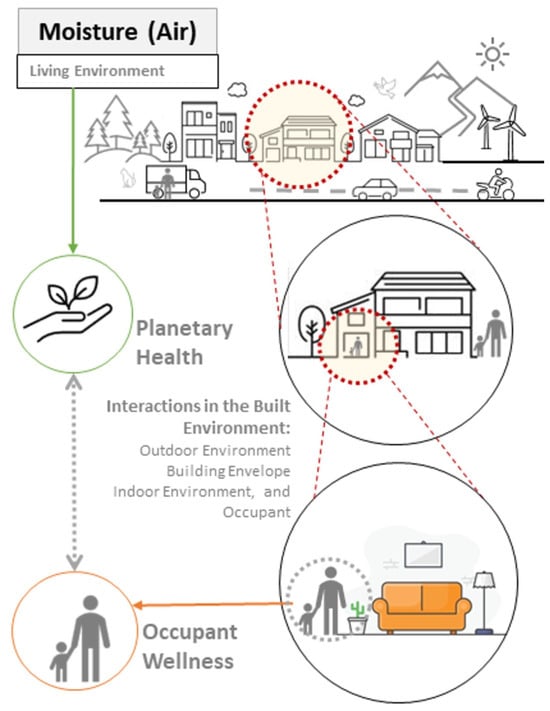
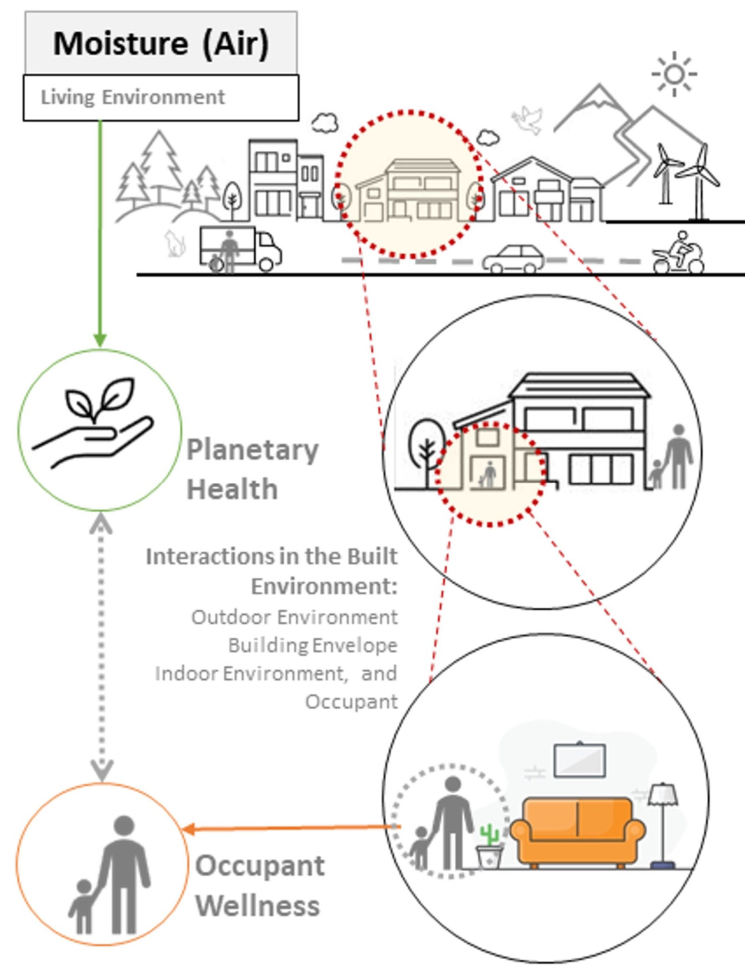
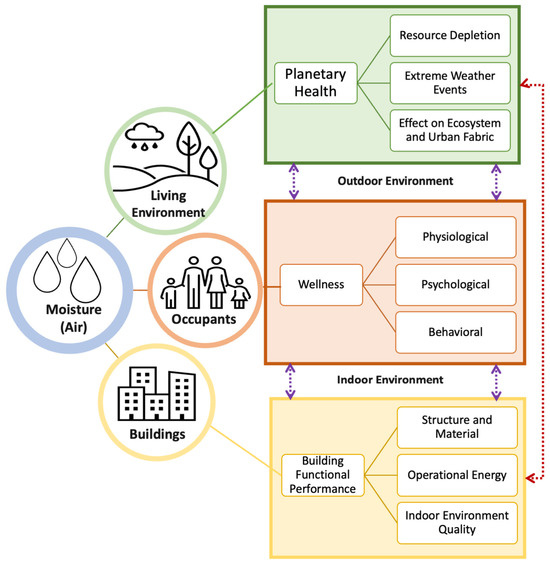
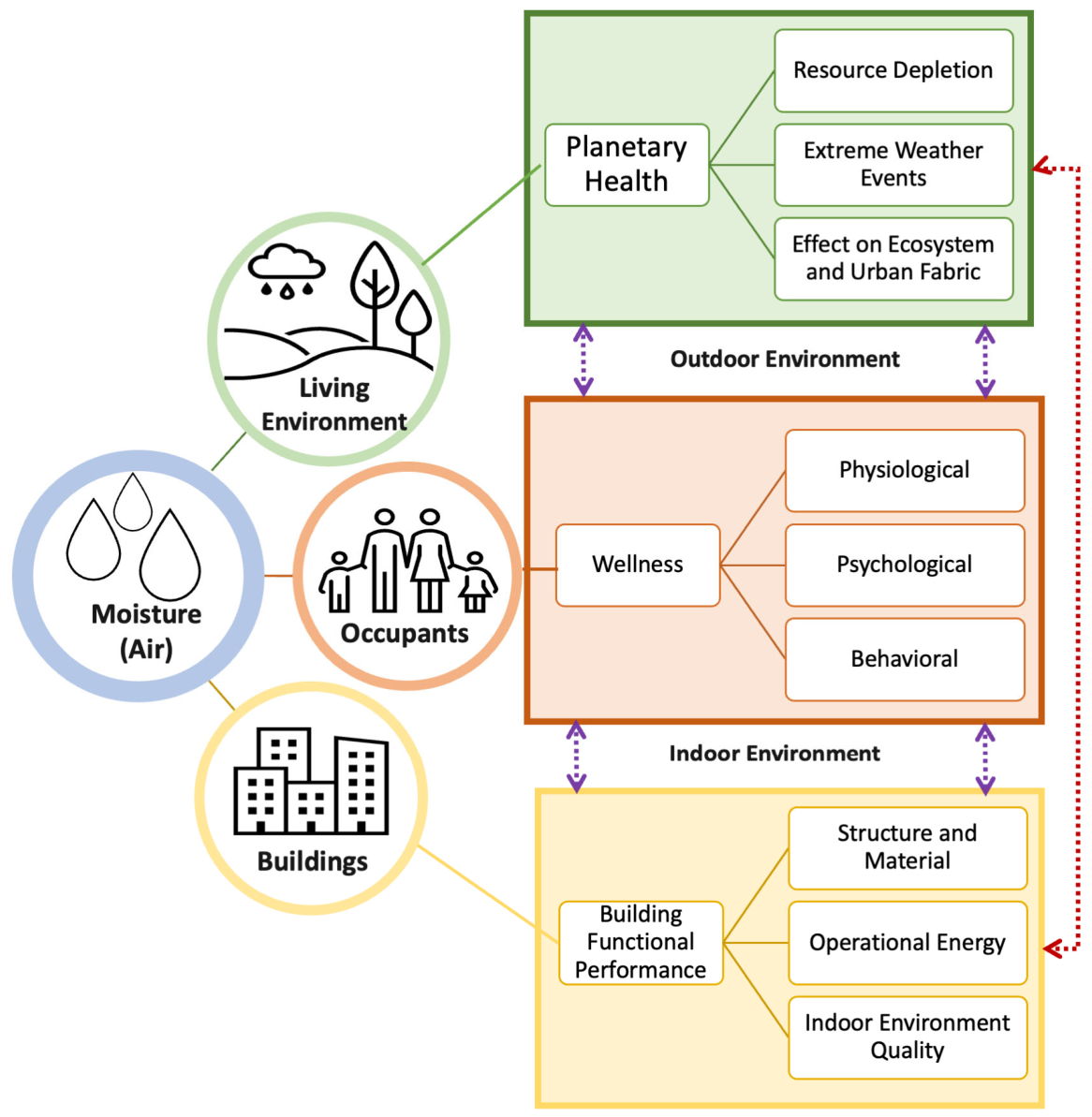
This article assimilates scientific knowledge from climate studies, building physics, thermal comfort, sports (physiology and concentration/focus), epidemiology, and medicine domains tracing the role of moisture in the indoor environment across the building envelope and discusses its role in maintaining an indoor environment conducive to occupant wellness (see Figure 2). The primary objectives of the article are:
Figure 2.
Scope of the paper.
- To highlight the role of moisture on Indoor Environmental Quality (IEQ).
- To examine and map the role of moisture in the built environment for occupant wellness, identifying relevant research challenges.
2. Methodology
Given the interdisciplinary and thematically broad scope of this review spanning climate studies, building physics, thermal comfort, epidemiology, and medicine, this paper adopts a critical review methodology, specifically drawing on review type described in Grant and Booth’s (2009) [30] typology of review methods. Unlike a systematic review, which is best suited to narrowly defined, comparable questions amenable to protocol-driven search and quality appraisal, a critical review is appropriate where the aim is to synthesize the heterogeneous, cross-disciplinary literature into a novel conceptual framework, rather than to aggregate a homogeneous evidence base for effect estimation. Given that the source literature spans physics-based studies of material and vapor transport, epidemiological studies of respiratory and cardiovascular exposure, and psychophysical studies of thermal perception whose units of analysis, exposure metrics, and outcome measures are not directly comparable, a critical review approach was adopted for this study.
2.1. Selection and Synthesis
Literature search was conducted in two phases. An initial phase (papers accessed between 2019 and 2023) used broad search terms—“moisture in buildings,” “comfort,” “health,” “climate change,” and “built environment”—across Scopus, Web of Science, PubMed, and Google Scholar, establishing the review’s foundational coverage of the building physics, thermal comfort, indoor air quality, and moisture-related health literature.
A subsequent phase (papers accessed between 2023–2025) applied targeted searches structured around the framework’s four constituent domains. For Indoor Air Quality, determinant-specific terms included “dampness and mould,” “dust mites,” “environmental tobacco smoke,” “volatile organic compounds,” “particulate matter,” “endocrine disrupting chemicals,” “carbon dioxide,” “radon,” and “bioaerosol,” each cross-referenced against occupant health outcomes (respiratory, cardiovascular, neurotoxic, dermal, and reproductive). For Thermal Comfort, terms included “relative humidity,” “humidity ratio,” “adaptive thermal comfort,” “predicted mean vote,” “effective temperature,” “wet-bulb globe temperature,” and “heat stress.” For Occupant Wellness, terms included “sick building syndrome,” “productivity,” “occupant behavior,” “thermoregulation,” and “psychological well-being.” For Planetary Health, terms included “latent heat,” “condensation,” “operational energy,” “embodied carbon,” “moisture and ecosystem,” “greenhouse gas emissions,” and “climate change adaptation.” Sources were screened for thematic relevance to these four domains by the corresponding author, with disagreements on borderline sources resolved through discussion among all authors.
2.2. Evaluation Approach
Sources were selected for thematic centrality and direct contribution to one or more of the framework’s constituent domains (Indoor Air Quality, Thermal Comfort, Occupant Wellness, and Planetary Health), rather than by threshold-based inclusion/exclusion criteria. Individual constructs were first extracted from the source literature, then clustered by functional role, and mapped into the multi-level conceptual framework presented in Section 3. This approach was deemed suited to synthesizing the heterogeneous, cross-disciplinary literature into a coherent framework. Consistent with the critical review type adopted here, this approach prioritizes thematic and conceptual significance over exhaustive coverage, drawing together the sources most central to the proposed framework rather than the complete body of published literature on moisture in the built environment. Given that the synthesized literature spans epidemiological studies, controlled experimental studies, building-physics research, and technical standards, evidence strength is differentiated by type rather than treated uniformly.
3. Conceptual Framework Development
The multi-disciplinary framework presented in this review was developed through the iterative thematic synthesis process. Individual constructs, i.e., sources/causes, IAQ determinants, occupant-level responses, and building and planetary-level outcomes were first extracted from the assimilated literature across climate studies, building physics, thermal comfort, epidemiology, and medicine, then clustered according to their functional role within the indoor environment, and finally organized into multi-level structure moving from microclimate through building envelope to occupant and, ultimately, planetary health.
3.1. Structure and Antecedents
The proposed framework is organized across four nested levels—microclimate, building, occupant, and planetary health, linked through a vicious/virtuous causality cycle anchored in Mani, Ganesh and Varghese’s sustainability framework for human settlements [31]. The cycle terminates at planetary health node which is defined following the Rockefeller Foundation–Lancet Commission [32], as the health of human civilization and the natural systems depends on it.
Within this framework, the theme Indoor Environmental Quality (IEQ) is central and affects the broader theme. IEQ itself is categorized into different components, i.e., Indoor Air Quality (IAQ), Perceived Well-being, and Thermal Comfort as parallel determinants of occupant experience (based on thematic syntheses of the reviewed literature).
3.2. Component and Linkage Selection
Within this structure, individual components were retained in the framework where at least one identified source provided direct or mechanistic support for their inclusion. Linkages between levels (e.g., microclimate → building → occupant → planetary health) reflect established physical and physiological pathways rather than statistical associations derived directly from this review’s own synthesis; the framework is therefore best read as an organizing structure for existing, independently evidenced relationships, not as a set of novel causal claims generated by this review.
4. Moisture in Indoor Environment and Occupant Wellness
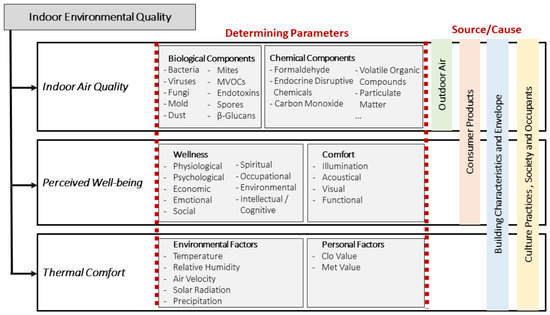
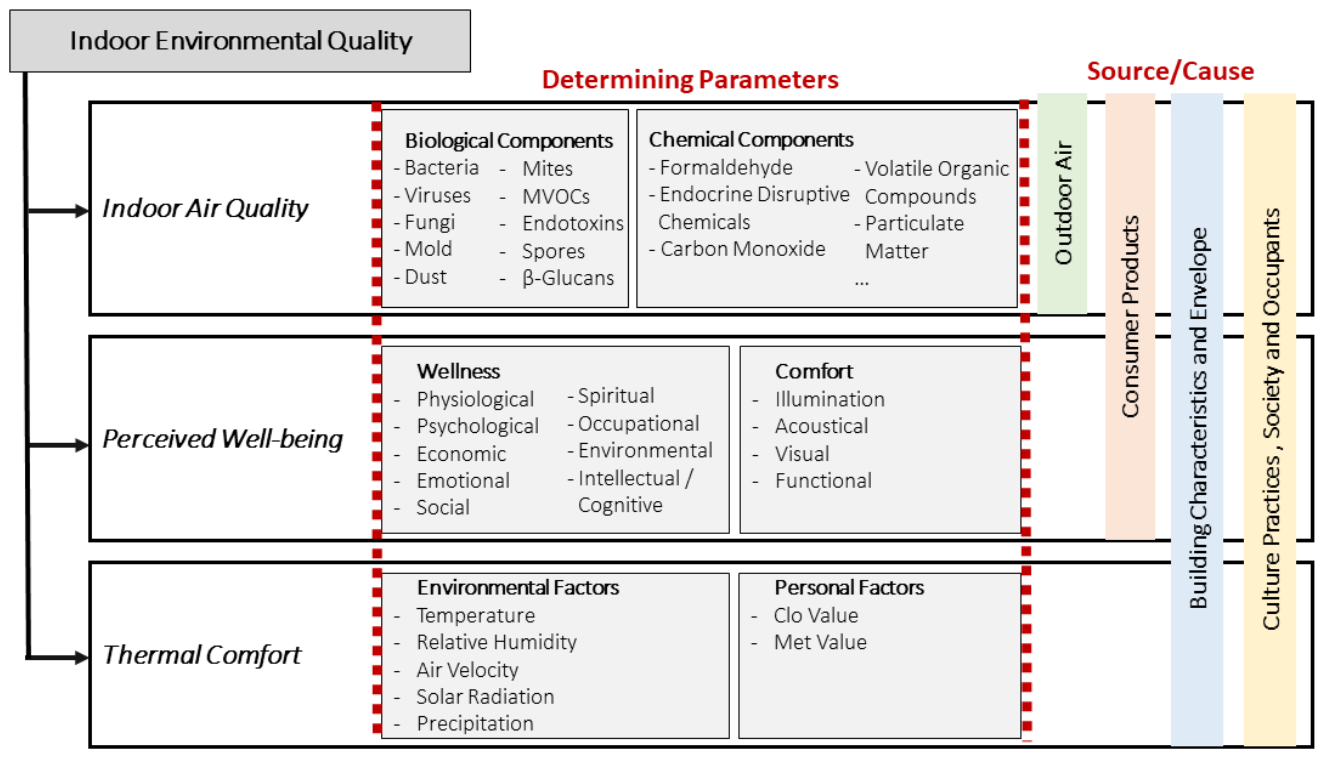
Indoor Environmental Quality (IEQ) refers to the quality of an enclosed space in terms of its air quality, thermal comfort, views, acoustics, and so on. IEQ is multi-faceted (see Figure 3) and is often defined using multiple aspects of comfort like visual, acoustic, thermal, etc. The indoor air links the building with its occupants. Indoor air quality (IAQ) is an important determinant of IEQ.
Figure 3.
Indoor Environmental Quality, its parameters, determinants, and sources. Compiled using information from [33,34].
The importance of indoor moisture and its impact on IAQ, well-being, and thermal comfort are discussed further.
4.1. Indoor Air Quality
Indoor air quality (IAQ) is defined by US EPA as the air quality within and around buildings and structures, especially as it relates to the health and comfort of building occupants [35]. IAQ is directly influenced by the moisture content in the air. Moisture acts as a solvent and carrier for several indoor air pollutants, resulting in morbidities [6,36,37]. Poorly maintained HVAC systems result in aggravated corrosion and condensation in the AC ducts, which contributes to poor indoor air quality, commonly referred to as Sick Building Syndrome (SBS). In naturally ventilated buildings, air changes help replace the air to dilute the concentration of indoor pollutants and moisture. As a result, increased ventilation reduces the stagnation and consequent interaction among the toxic substances in the air [38]. The recommendations for ventilation rates differ for different dwellings based on the pollutants’ initial concentration and permissible safe limits. Current practices in HVAC design promote recirculation for optimized heating/cooling load. Air mixing ratios are based on permissible CO2 thresholds, and can lead to high concentrations of other toxic substances (like VOCs, EDCs, Dust), negatively impacting human health and productivity [39,40].
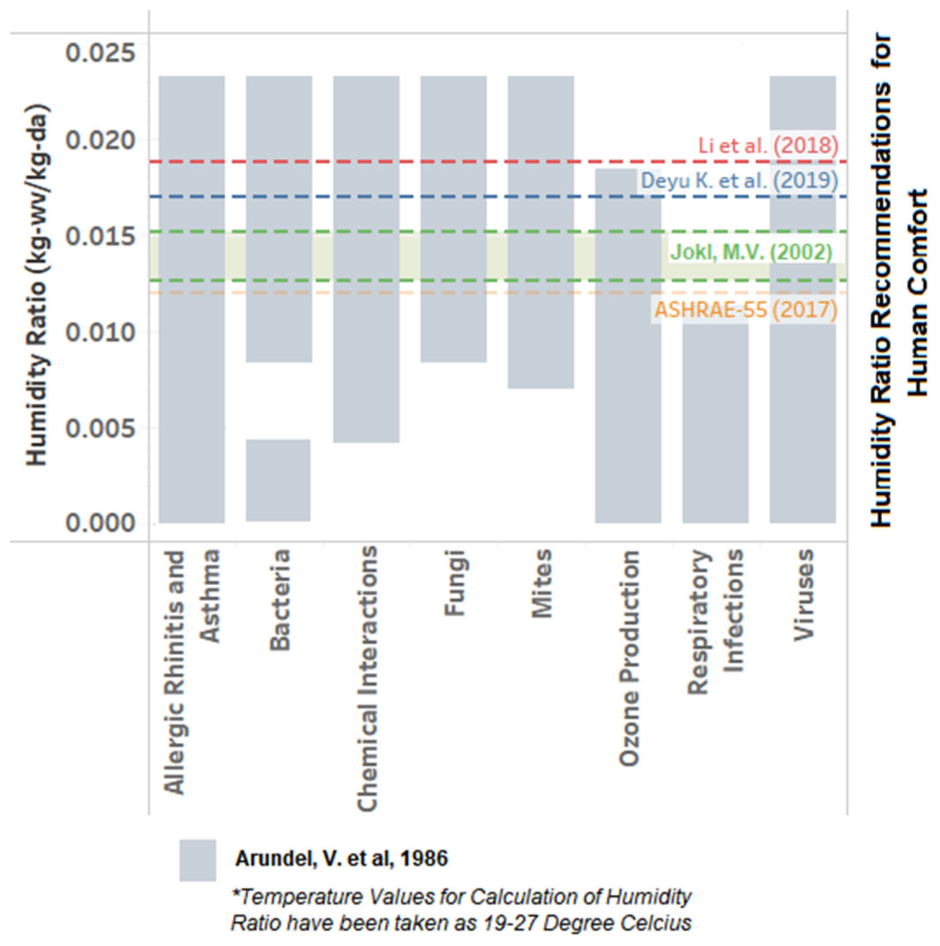
Prescribed recommendations on humidity levels to ensure optimum IAQ are not very consistent. Several studies cite the graph capturing the relation of growth of bacteria, viruses, dust mites, etc., with relative humidity [36,37] (see Figure 4). However, the corresponding temperature conditions associated with each of these ranges remain unclear. Temperature is also a crucial determinant in the prevalence and spread of pathogens [37]. Further, the linear correlation with humidity levels has not been validated experimentally [41]. In 2017, ASHRAE-55 [42] recommendations for optimum humidity levels are in terms of Humidity Ratio (HR = 0.012 kg-wv/kg-da), while earlier recommendations were made in terms of RH (40–60% RH). As Humidity Ratio factors in the effect of both temperature and RH concurrently, its adoption is more practical for implementation and assessment. Figure 4 illustrates recommended indoor Humidity Ratio values/ranges corresponding to a temperature range of 19~27 °C [21,36,37]. With growing knowledge about the indoor microbiome and its direct bearing on health, it is vital to examine the interactions between varying IAQ parameters at different temperature and humidity conditions. Experimental studies examining humidity-related impacts are limited to a few climatic zones. Despite increasing health and productivity concerns attributed to Sick Building Syndrome, there is inadequate emphasis on examining underlying causal mechanisms. It is therefore paramount to investigate indoor health characteristics across climatic zones, building typology and physiological (ethnic) adaptability and climate change [28,43].
Figure 4.
Computed comfort Humidity Ratio recommendations based on [21,36,37,44,45].
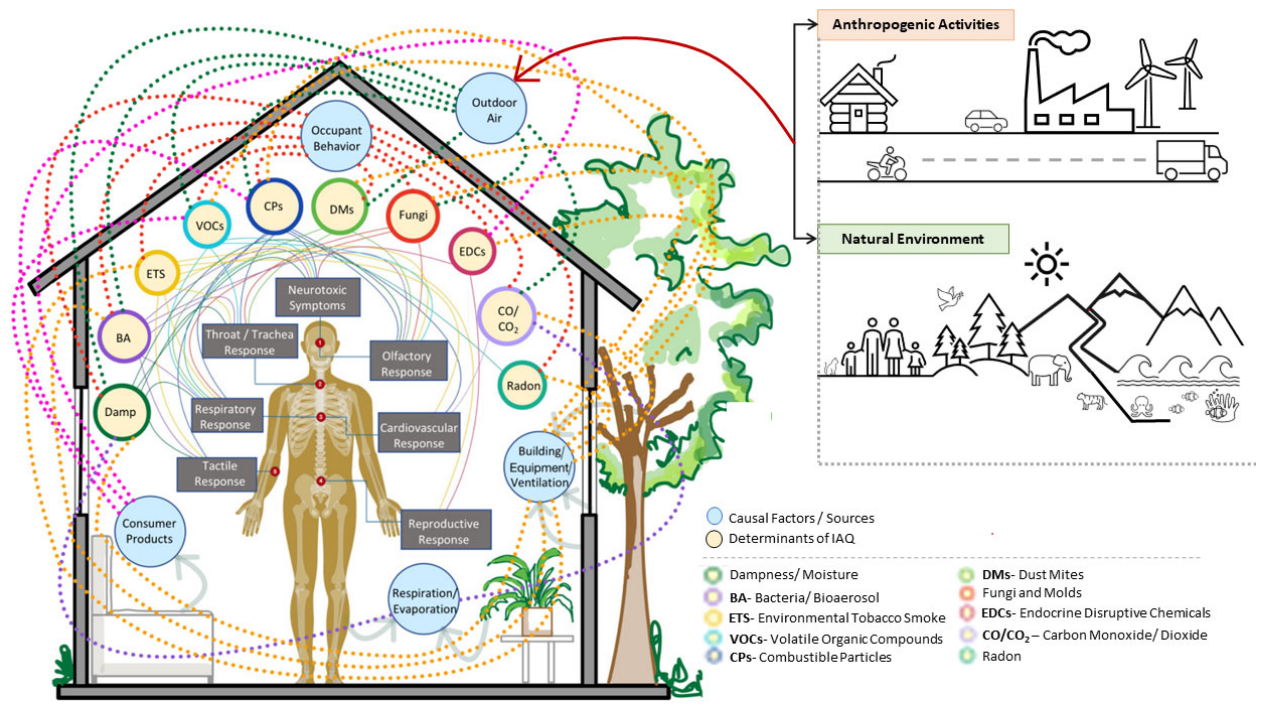
As stated earlier, moisture also impacts the effect of other biological and chemical constituents of the air. For instance, increased humidity can be helpful to allow particulate matter to effectively settle on surfaces. Water molecules in the air can also determine dispersion rates, and settlement of viruses in an indoor space. Figure 5 maps various indoor air pollutants, their sources (natural and anthropogenic), and associated health impacts.
A clear understanding of indoor air constituents, and their interaction with building envelope materials is crucial to devise passive systems to regulate IAQ. For example, dust settlement increases with moisture and participates in moisture buffering attributed to hygroscopic indoor surfaces (earthen plaster, curtains, etc.). However, the impact of indoor moisture buffering on other indoor air quality parameters (like CO2, VOCs, PM, EDCs, etc.) is presently unclear. The possible usage of surface finishes to regulate IAQ (humidity and contaminants) holds immense potential in the domain of occupant health and climate change [46,47].
Studies into the role of indoor surface finishes on indoor air quality and toxicity are emerging. In the case of conventional, standardized industrial materials, exposure assessment tools like USEtox, CMAQ, etc., are used to evaluate health impacts (categorized as cancerous and non-cancerous). These tools have yet to robustly incorporate the health impacts attributed to interactions involving multiple air-mixture constituents [48], especially at varying indoor temperatures and humidity (both diurnally, and seasonally).
Following the COVID-19 lockdown, and increasing attention on IAQ, there are concerted efforts worldwide to understand the mechanisms of dispersion and spread of various chemical, and biological pollutants indoors. Even though indoor humidity is the key to spread of these pollutants, specific humidity levels for comfort in indoor spaces still remain undefined.
Given that building materials can directly participate in regulating humidity levels, defining comfortable humidity requires examination of material properties (aging, durability/breakdown, emissions, moisture response, thermal response, etc.), which is challenging [37,49]. Preliminary studies [28,43] reveal vernacular dwellings (constructed with natural hygroscopic materials) fare better in this regard than conventional dwellings (constructed using vapor-retardant materials) in naturally ventilated dwellings, maintaining comfort. However, vernacular dwellings worldwide, adopting natural building materials derived locally, remain largely unstudied [11,50].
Figure 5.
Indoor pollutants and health effects illustrated to capture interactions discussed in [19,20,33,40,49,51,52]. Detailed interactions are provided in Appendix A. All relevant definitions have been detailed in Appendix B.
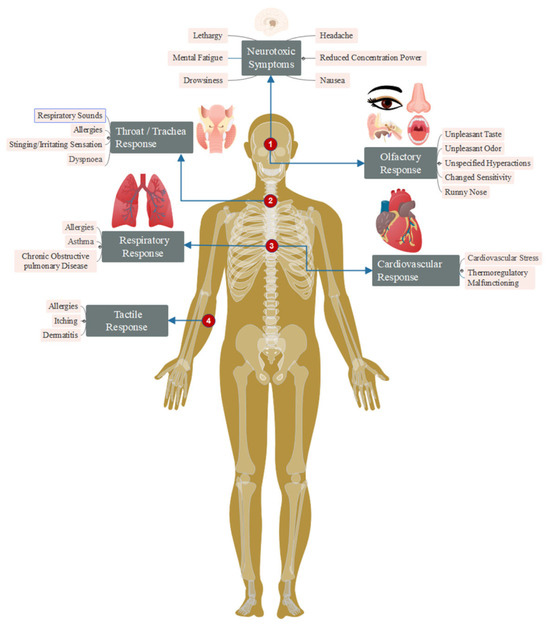
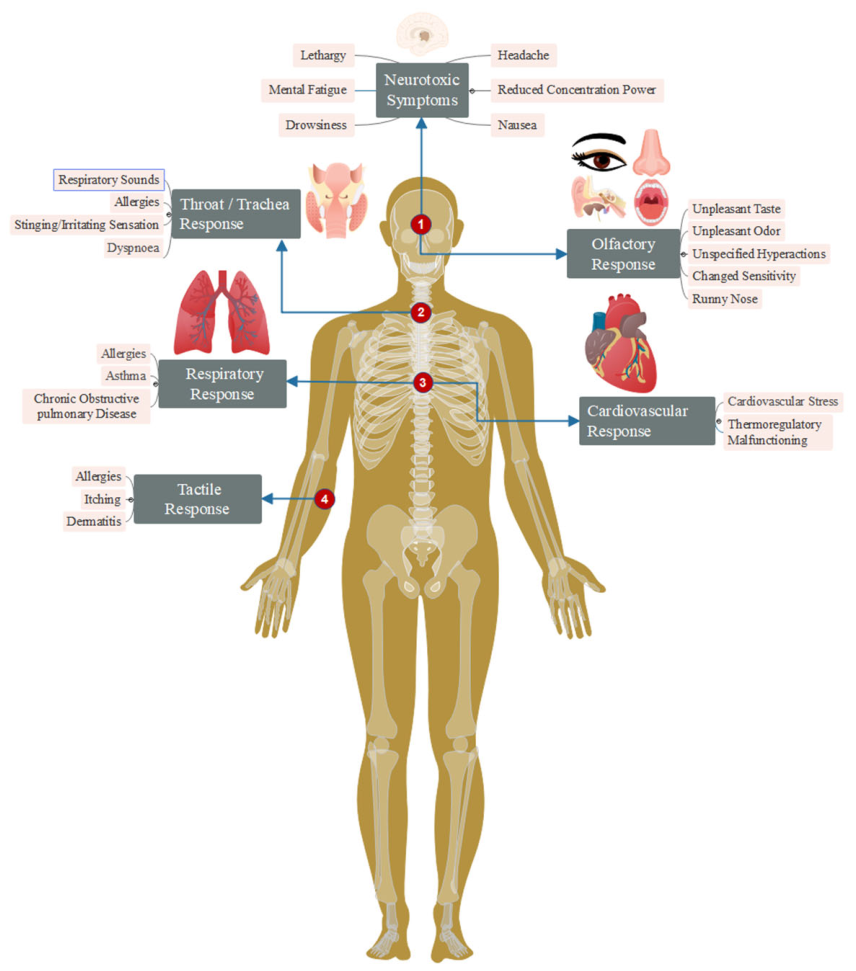
Moisture in the air is fundamental to physiological and psychological functioning. It is always in contact with the skin (critical for thermoregulatory response), eyes, and respiratory organs. Figure 6 illustrates health impacts attributed to moisture.
Figure 6.
Moisture-associated health outcomes. Compiled using information from [33,49,53,54,55,56,57,58,59,60].
A rise in moisture levels, in conjunction with elevated temperatures, could act as a cardiovascular stressor, causing heat cramps, syncope, stroke, exhaustion, etc. [61] due to a rise in core body temperature and restricted perspiration [62,63]. On the other hand, low humidity is associated with disrupted breathing and acute/chronic respiratory illnesses, including infections and asthma [12,55,57,58,64] due to drying up of mucosal lining of the respiratory tract.
High humidity indoors, under poorly ventilated conditions, could promote growth of molds and proliferation of dust mites and bioaerosols [16,65]. As illustrated in Figure 4, moisture levels have a characteristic bearing on the occurrence, prevalence and spread of different microbes, like bacteria, viruses, fungi, etc. During the COVID-19 pandemic, studies revealed that warm and high-humidity environments lowered the spread of virus by condensation restricting the dispersion of large cough droplets. On the contrary, cold and low-humidity (dry) environments aggravated the spread of virus through increased evaporation and dispersion of finer water-droplet carriers [66,67,68]. Dermal symptoms, including skin irritation, itching, and redness, may also result from exposure to pathogenic bioaerosols in the indoor environment [60,69].
Dampness in unventilated buildings can be associated with Sick Building Syndrome (SBS), causing neurotoxic symptoms like dizziness, headache, nausea, etc. [56]. Further, a prevalence of asthma is observed in dwellings with extremely low indoor humidity [45,66]. Therefore, the choice of building materials has a large bearing on occupant health as nearly 90% of time is spent indoors [3].
Studies [70,71,72] show that variability in environmental relative humidity is closely linked with increased suicide rates. An explanation for this can be derived from another study [73] that linked the mental temperament of human beings with a change in relative humidity, leading to increased hospitalizations. While the correlation between RH variability, suicide rates, and hospitalizations has been empirically derived, other social, non-climatic, personal, neurological, and seasonal factors may also play a role. This multi-disciplinary examination, with humidity as a crucial linking parameter, could provide much needed insight into climate-change resilience, at all three levels, viz., societal, built environment and the natural environment.
Physiological studies to examine the effects of moisture on occupants were originally carried out in climate chambers for subjects of a specific geographical ethnicity (acclimatization) and age group (physiological resilience) [8,9]. Such investigations, considering diverse age groups, cultures, and climatic conditions, are crucial for translational research to identify optimum moisture conditions conducive to health. Behavioral studies on the impact of indoor moisture on lifestyle habits, such as use of cosmetic products, indoor plants, and vaporizers, are crucial for exploring climate-change adaptation strategies and nature-based solutions.
The International Well Building Institute has suggested guidelines for certification of “well buildings” based on their ability to promote physiological comforts in human beings [74]. The influence of moisture, though a significant component of IEQ, has not been dealt with explicitly. With an evident increase in humidity-related morbidities (see Figure 5 and Figure 6), there is increased effort in managing dampness and chillness in buildings [75,76]. Despite this, scientific scrutiny into the underlying causalities linking humidity/moisture remains inadequately addressed [77].
Risk factors like thermoregulatory disruption and breathing issues can be intergenerationally transmitted, leading to future-generation vulnerabilities [78]. Examining occupant health traced to various building typologies, and occupancy is vital to set indoor moisture thresholds for health and productivity [21,79].
4.2. Thermal Comfort and Adaptation
Thermal comfort and adaptation studies in buildings have identified moisture as a key factor determining health and productivity [20,80,81,82]. Thermal comfort standards are based on sensation responses (votes) from occupants and examination of the corresponding heat exchanges between the human body and the ambient environment. Initial studies on thermal responses were conducted in climatically controlled chambers/environments, primarily to aid in HVAC system design and operation. Perception of humidity in the air is generally recorded as a change in the occupants’ thermal sensation vote (temperature equivalent) [8,9,83]. Moisture can also be directly perceived as a sensation of sweat on the skin due to perspiration. Physiological impacts attributed to varying moisture conditions such as clinginess, skin irritation, dehydration, stress, etc., are yet to be rigorously examined [8,9,84]. Empirical models for thermal comfort, not specifically accounting for moisture variability [85], tend to overestimate comfort heating/cooling requirements, resulting in inefficient energy utilization [22,86].
The tendency to cope or the ability to respond to a change in the environment is called adaptation. Human beings spontaneously respond to changes in environmental parameters, withstanding a broader range of thermal conditions than those prescribed by Fanger’s heat balance model [87]. Besides environmental conditions, this adaptive comfort is influenced by personal factors like clothing, metabolism, age, acclimatization, behavior, habituation, and past experiences.
From predominantly being relevant to air-conditioned spaces, thermal comfort standards have now evolved to accommodate adaptive approaches, like the ASHRAE adaptive model (ASHRAE Standard 55-2017 [88] and EN 15251 [89]) for naturally ventilated buildings. PMV (Predicted Mean Vote) and PPD (Predicted Percentage Dissatisfied) models, and also the IMAC (India Model for Adaptive Comfort) are some other models used for assessment of thermal comfort. The broader range of comfort conditions results in significant energy savings for heating or cooling. The energy saving potential could be further enhanced by customizing thermal comfort codes/requirements to accommodate physiological aspects, culture and ethnicity.
Adaptation studies have however underplayed the role of moisture, which is accounted for in terms of an effective temperature (sensation) [8,9]. Thus, humidity-specific comfort/discomfort and health/morbidities are difficult to identify/trace. This is despite the adoption of indices like WBGT, heat stress index, etc., which are extensively adopted in performance sports. The contribution of the occupant as an active participant to cope with moisture-related discomfort, specifically dry skin, breathing difficulties, etc., also remains unexplored. Impact of varying moisture conditions on health, mood and survival is just emerging, specifically in the context of climate change. Vulnerabilities attributed to moisture-related climate variability and the identification of appropriate adaptation strategies, characteristic to various geographies, require careful examination and pursuit.
5. Discussions
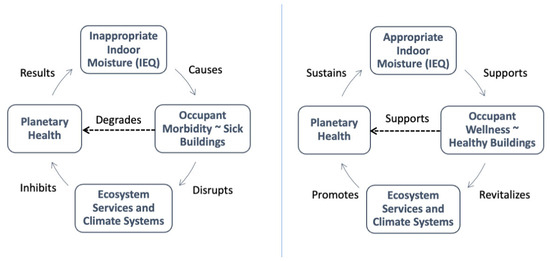
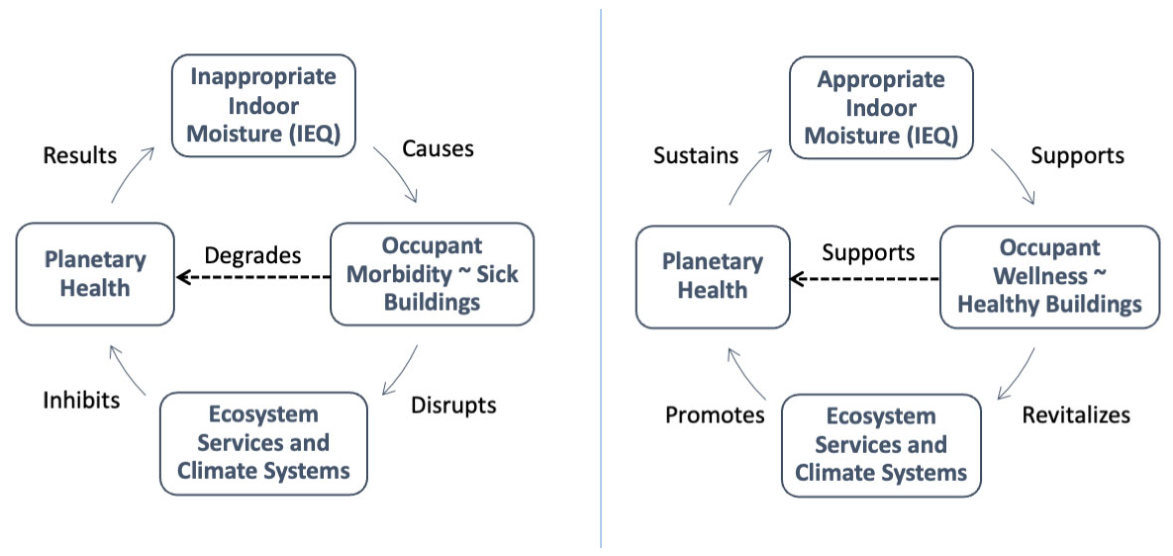
Wellness of human beings is fundamental to the built environment design. Buildings are designed to provide conducive occupational environments for occupant wellness and consume energy and resources to be built and function. Discrepancies between functional expectations and reality result in maintenance, repair, and medical costs, indirectly exploiting natural resources and energy, and impacting planetary health [32] (see Figure 7), leading to a vicious or virtual cycle illustrated in Figure 8.
Figure 7.
Moisture-influenced planetary health determinants in the built environment.
Figure 8.
Vicious (left) and virtuous (right) cycle illustrating the causality between Indoor Environmental Quality (IEQ) and planetary health, using the framework described in [31].
A holistic approach to examine moisture for effective functional performance of a built environment for planetary and occupant wellness has not been addressed adequately and is an emerging research domain.
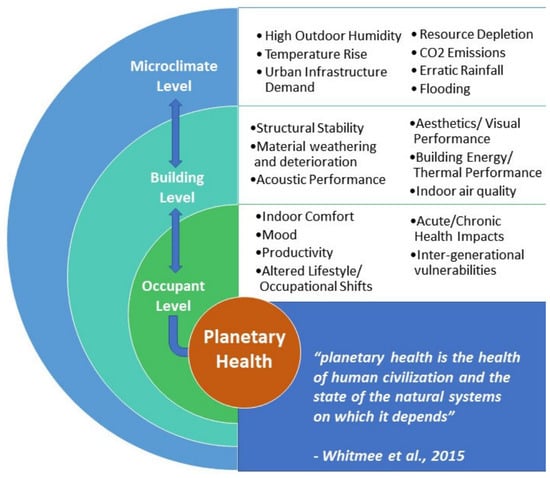
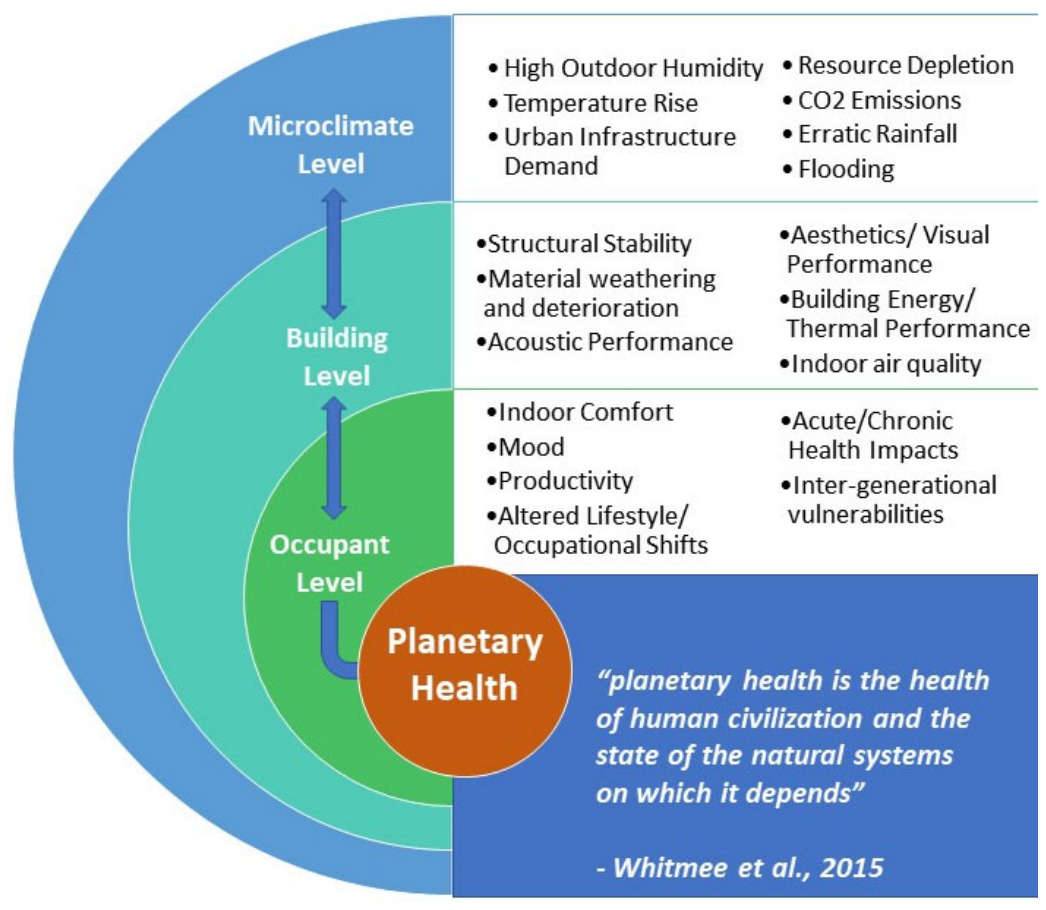
The International Well building guidelines limit to modern architectural styles and are yet to include psychological, behavioral, adaptive, and social aspects. The interplay of moisture between indoor air quality (looking at VOCs, particulate matter, etc.) and building material as influenced by moisture through various interaction mechanisms needs to be studied. Studies suggest the significant impact of these processes on total building energy. In terms of occupant comfort, the changing climate, activity patterns, preferences, and dynamic lifestyles make comfort studies highly subjective and multi-dimensional. The role of moisture in thermal comfort is analyzed in terms of its impact on the perception of equivalent temperature; however, it considerably impacts qualitative parameters like productivity, happiness, and health in an indoor space, which needs to be observed in detail. Also, with the changing global climate, the global moisture level is changing. The adaptation of occupants to cope with changing moisture levels in different building typologies has not been ventured into. A huge database of materials and construction practices used in the vernacular style of architecture still needs to be understood for its efficiency in promoting the building and occupant wellness attributed to moisture. Research challenges in the present scenario can be categorized as follows (illustrated in Figure 9):
Figure 9.
Impacts of changing moisture exposure on the climate, buildings, and occupants.
- 1.
- Occupant wellness:
- Recommendation for optimum indoor humidity levels accounting for occupation type, gender, age, etc.
- Risks associated due to intergenerational transmission of modifiable risk factors associated with poor Indoor Environmental Quality.
- Understanding the impact of moisture coupled with different indoor chemical components on IEQ, and human health with varying geographies.
- Role of indoor moisture in mitigating communicable disease risks.
- Role of different building typologies/materials in regulating indoor moisture.
- 2.
- Net-zero and energy-efficient buildings:
- Understanding building functional performance parameters (strength, durability, acoustical, IEQ, etc.) attributed to moisture in detail.
- Exploring approaches to regulate indoor thermal comfort due to moisture-related properties of building materials, resulting in reduced operational energy.
- Development of inventories for hygrothermal properties of vernacular building materials.
- Development of reliable techniques to measure in situ moisture-related parameters and defects in buildings.
- 3.
- Impacts on Planetary Health and Sustainability
- Understanding the applicability of low-carbon vernacular hygroscopic materials for widespread building applications in various geographies.
- Exploring approaches to reduce operational energy in buildings using thermal and moisture regulation properties of different building materials.
- Development of approaches to understand the functional life expectancy of buildings based on present/or possible moisture-related vulnerabilities.
6. Limitations of the Study
This review synthesizes the literature across climate studies, building physics, thermal comfort, epidemiology, and medicine into a conceptual framework linking moisture to Indoor Environmental Quality, occupant wellness, and planetary health. The boundaries that apply to this study are as follows:
- -
- Source identification prioritized thematic and conceptual significance over exhaustive coverage. As a result, the framework in Section 3 reflects the sources most central to its constituent domains.
- -
- The underlying evidence varies in study design and strength, ranging from epidemiological and experimental studies to building-physics research and technical standards. This review does not apply a formal quality-weighting scheme across these study types.
- -
- Some of the associations discussed in this review remain under active investigation in their originating fields. This review attempts to organize the existing literature into a shared framework to provide future research directions.
7. Conclusions
Despite moisture’s pervasive influence across the anthroposphere, its role in the built environment has been examined discipline-by-discipline, with the interdependencies linking building physics, indoor air quality, occupant health, and planetary health left largely unexamined. This review shows that moisture’s influence extends well beyond IAQ and thermal comfort. It directly shapes building material durability and structural performance, drives a significant share of building operational energy consumption via latent heat loads, and is closely linked—across both established and emerging evidence to a wide range of occupant health outcomes spanning respiratory, cardiovascular, neurotoxic, and dermal responses. The globally increasing wet-bulb globe temperature (WBGT) further signals a rising baseline vulnerability to combined heat–humidity stress, tying indoor moisture management directly to climate change adaptation.
These findings highlight that moisture cannot be treated as a secondary or isolated parameter in building design and occupant health research. Instead, it functions as a cross-cutting variable linking microclimate, building envelope, indoor environment, and occupant outcomes within a single interdependent system. This has direct implications for planetary health, given buildings’ substantial share of global resource and energy consumption.
The proposed framework in the study provides an organizing structure for further empirical and systematic investigation. Future research directions span the three dimensions identified through this synthesis. On occupant wellness, evidence links between moisture regimes (with its interaction with other co-founders of IEQ) and occupant health outcomes warrant further investigation across building typologies, climates, and demographic groups. On building performance and energy, the humidity-buffering contribution of surface finishes and hygroscopic materials to both operational energy consumption and indoor air quality parameters (CO2, VOCs, PM, EDCs) presents a clear opportunity for quantification, alongside reliable in situ techniques for measuring moisture-related building defects. On planetary health, inventories of hygrothermal properties for vernacular and low-carbon hygroscopic materials merit development within mainstream material databases, supporting their wider adoption as a moisture-regulation strategy with reduced embodied and operational carbon impact. As climate change reshapes indoor humidity exposure worldwide, the multi-disciplinary framework offers a structured basis for integrating moisture management into building design, occupant health protocols, and climate adaptation strategy.
Author Contributions
Conceptualization, S.P. and M.M.; data curation, S.P.; formal analysis and investigation, S.P.; methodology, S.P. and M.M.; supervision, M.M. and D.M.; visualization, S.P.; writing—original draft, S.P.; writing—review and editing, S.P., M.M. and D.M. All authors have read and agreed to the published version of the manuscript.
Funding
This work was partly supported by the Prime Minister’s Research Fellowship at Indian Institute of Science, Bangalore (India), and partly by the British Academy’s Well-being Achieved from Earthen Residence (WAFER) project (UWB190086).
Institutional Review Board Statement
Not applicable.
Informed Consent Statement
Not applicable.
Data Availability Statement
No new data were created or analyzed in this study. Data sharing is not applicable to this article.
Conflicts of Interest
The authors declare no conflicts of interest.
Appendix A
| Sl. No. | Parameter | Response | Impact (Direct/Indirect/Both) | Reference |
| 1 | Dampness/Moisture | Throat | Indirect | US EPA (2008) [87] |
| 2 | Dampness/Moisture | Respiratory | Indirect | WHO (2009) [88] |
| 3 | Dampness/Moisture | Olfactory | Indirect | WHO (2009) [88] |
| 4 | Dampness/Moisture | Tactile | Indirect | Rockwell (2005) [89] |
| 5 | BA – Bacteria/Bioaerosol | Throat | Direct | Michel (2014) [90] |
| 6 | BA – Bacteria/Bioaerosol | Respiratory | Direct | WHO (2009) [88] |
| 7 | BA – Bacteria/Bioaerosol | Cardiovascular | Indirect | Karottki (2015) [91] |
| 8 | Fungi and Molds | Throat | Direct | US EPA (2008) [87] |
| 9 | Fungi and Molds | Respiratory | Direct | WHO (2009) [88] |
| 10 | Fungi and Molds | Olfactory | Indirect | WHO (2009) [88] |
| 11 | Fungi and Molds | Both (Direct + Indirect) | Both | Rockwell (2005) [89] |
| 12 | Fungi and Molds | Cardiovascular | Indirect | Karottki (2015) [91] |
| 13 | DMs – Dust Mites | Respiratory | Direct | Calderón (2015) [92] |
| 14 | DMs – Dust Mites | Tactile | Both | Teplitsky (2004) [93]; Tupker (1996) [94] |
| 15 | ETS | Neurotoxic | Direct | Elbeeh (2023) [95] |
| 16 | ETS | Throat | Direct | US DHHS (2006) [96] |
| 17 | ETS | Respiratory | Direct | US DHHS (2006) [96] |
| 18 | ETS | Cardiovascular | Direct | US DHHS (2006) [96] |
| 19 | ETS | Reproductive | Indirect | Niu (2016) [97] |
| 20 | VOCs | Neurotoxic | Direct | Win-Shwe (2013) [98] |
| 21 | VOCs | Throat | Direct | Nag (2019) [99]; Nakaoka (2014) [100] |
| 22 | VOCs | Respiratory | Direct | Nag (2019) [99] |
| 23 | VOCs | Olfactory | Direct | Wakayama (2026) [101] |
| 24 | VOCs | Tactile | Indirect | Wakayama (2026) [101] |
| 25 | VOCs | Reproductive | Indirect | Razi (2014) [102]; Wang (2015) [103] |
| 26 | CPs (Combustible Particles/PM) | Neurotoxic | Both | Rubio (2025) [104] |
| 27 | CPs (Combustible Particles/PM) | Throat | Direct | Bayram (2024) [105] |
| 28 | CPs (Combustible Particles/PM) | Respiratory | Direct | Anderson (2012) [106] |
| 29 | CPs (Combustible Particles/PM) | Tactile | Direct | Maunjumpon (2026) [107]; Piao (2018) [108] |
| 30 | CPs (Combustible Particles/PM) | Cardiovascular | Indirect | Anderson (2012) [106] |
| 31 | EDCs | Neurotoxic | Indirect | Oh (2024) [109] |
| 32 | EDCs | Cardiovascular | Indirect | Piazza (2019) [110] |
| 33 | EDCs | Reproductive | Direct | Laws (2021) [111] |
| 34 | CO/CO2 | Neurotoxic | Both | Ndlovu (2024) [112]; Du (2020) [113] |
| 35 | CO/CO2 | Cardiovascular | Both | Ndlovu (2024) [112]; Nie (2025) [114] |
| 36 | Radon | Respiratory | Direct | Eidy (2024) [115] |
| 37 | Radon | Neurotoxic/Cardiovascular | Both | Henyoh (2024) [116] |
Appendix B
| Term | Definition |
| Acclimatization | The physiological process by which the body adjusts its thermal responses after sustained exposure to a given climate. |
| Adaptive Comfort | A thermal comfort approach recognizing that occupants adjust behaviourally and physiologically to their environment, tolerating a broader range of conditions than fixed heat-balance models predict. |
| ASHRAE Standard 55 | A technical standard (American Society of Heating, Refrigerating and Air-Conditioning Engineers) specifying thermal environmental conditions for human occupancy, including adaptive comfort provisions. |
| Bioaerosol | Airborne particles of biological origin (bacteria, fungal spores, viruses, pollen) capable of being inhaled. |
| β-Glucans | Polysaccharides found in fungal cell walls, used as a biomarker of mould/fungal contamination in indoor air. |
| Building Envelope | The physical separator (walls, roof, floor, windows) between a building’s conditioned interior and the outdoor environment. |
| Clo Value | A unit quantifying the thermal insulation provided by clothing (1 clo ≈ typical business suit). |
| CMAQ (Community Multiscale Air Quality model) | A computational model used to simulate air pollutant concentrations and assess exposure/health impacts. |
| Condensation | The phase change of airborne water vapor to liquid water upon contact with a surface at or below the dew-point temperature—a physical mechanism that can contribute to, but is mechanistically distinct from, dampness. |
| Dampness | The sustained presence of excess moisture within building materials or surfaces, typically manifesting as visible wetness, staining, or elevated material moisture content, and frequently used as a proxy indicator for microbial growth risk. |
| Comfort | A general condition of physical ease and satisfaction with one’s environment, spanning thermal, visual, acoustic, and air-quality dimensions rather than any single factor in isolation. |
| Effective Temperature | A single index combining air temperature, humidity, and air movement into an equivalent “sensation” temperature for thermal comfort assessment. |
| Efflorescence | A crystalline salt deposit that forms on masonry or concrete surfaces as moisture evaporates, carrying dissolved salts to the surface. |
| Endotoxins | Toxic compounds found in the cell walls of certain bacteria, released into the air and associated with respiratory inflammation. |
| EN 15251 | A European standard specifying indoor environmental input parameters for building design, including thermal comfort criteria. |
| Fanger’s Heat Balance Model | A thermal comfort model (P.O. Fanger) predicting occupant comfort based on the body’s heat exchange balance with its environment, underlying the PMV/PPD indices. |
| Functional Performance (of a building) | A building’s collective ability to deliver structural safety, durability, climatic response, comfort, and indoor environmental quality. |
| Health | A state of complete physical, mental, and social well-being rather than merely the absence of disease or infirmity (WHO); in the built-environment context, a condition shaped by indoor exposures such as air quality, thermal conditions, and moisture. |
| Humidity Ratio (HR) | The mass of water vapor per unit mass of dry air (kg-wv/kg-da), independent of temperature. |
| HVAC | Heating, Ventilation, and Air Conditioning; mechanical systems that regulate indoor thermal and air quality conditions. |
| Hygroscopic Material | A material capable of absorbing and releasing moisture from/to the surrounding air, buffering indoor humidity fluctuations (e.g., earthen plaster). |
| IMAC (India Model for Adaptive Comfort) | A region-specific adaptive thermal comfort model developed for Indian building and climate conditions. |
| Indoor Air Quality (IAQ) | The quality of air within and around buildings as it relates to occupant health and comfort, as defined by the US EPA. |
| Indoor Environmental Quality (IEQ) | A composite measure of indoor conditions encompassing air quality, thermal comfort, acoustics, and visual/lighting conditions. |
| Latent Heat | The energy absorbed or released during a phase change (e.g., water vapor to liquid) without a change in temperature—relevant to the energy cost of humidity control. |
| Met Value | A unit quantifying metabolic heat production, used in thermal comfort calculations (1 met ≈ seated, resting adult). |
| Microbiome (indoor) | The community of microorganisms (bacteria, fungi, viruses) present within an indoor environment. |
| Mould | Fungal colonization occurring as a biological consequence of sustained moisture availability, and therefore an outcome of dampness rather than a synonym for it. |
| MVOCs (Microbial Volatile Organic Compounds) | VOCs produced as metabolic byproducts of fungal and bacterial growth, often responsible for musty odors. |
| Outdoor Heat–Humidity Exposure | The combined ambient temperature and humidity conditions external to the building envelope, commonly quantified using indices such as wet-bulb globe temperature (WBGT) or heat index—mechanistically distinct from indoor moisture conditions, though linked to them via envelope heat and moisture transport. |
| Productivity | Within indoor environmental quality research, a measure of occupant work output and performance, often assessed via task accuracy, cognitive test scores, or absenteeism. It is affected by indoor conditions such as temperature, air quality, and lighting. |
| Psychological Well-Being | A mental and emotional state characterized by low stress, positive mood, and intact cognitive function, which indoor environmental factors (light, noise, air quality, thermal comfort) can support or undermine. |
| PMV (Predicted Mean Vote) | An index predicting the average thermal sensation vote of a large group of people, based on Fanger’s heat balance model. |
| PPD (Predicted Percentage Dissatisfied) | An index estimating the percentage of occupants likely to be thermally dissatisfied, paired with PMV. |
| Relative Humidity (RH) | The ratio of the partial pressure of water vapor in air to its saturation vapor pressure at the same temperature, expressed as a percentage. RH is temperature-dependent and does not, on its own, describe the absolute moisture content of air. |
| Sick Building Syndrome (SBS) | A condition in which building occupants experience acute health/comfort symptoms linked to time spent in the building, without a specific identifiable illness or cause. |
| Syncope | A temporary loss of consciousness caused by insufficient blood flow to the brain, often heat-related in this context. |
| Thermal Comfort | The condition of mind expressing satisfaction with the thermal environment, assessed subjectively via comfort votes. |
| Thermoregulation | The physiological process by which the body maintains its core temperature within a survivable range. |
| USEtox | A scientific consensus model used for characterizing human toxicological impacts of chemical emissions in life-cycle assessment. |
| Vapor-Retardant Material | A building material engineered to resist the diffusion of water vapor through it, used to control moisture movement in the building envelope. |
| Vernacular Architecture | Traditional, locally-derived building practices using regionally available materials, often exhibiting passive hygrothermal regulation. |
| Water Ingress | The unintended entry of liquid water into the building envelope via defects such as cracks, failed flashing, or capillary rise—a structural/hydrological pathway distinct from vapor-phase moisture accumulation. |
| WBGT (Wet-Bulb Globe Temperature) | A composite heat-stress index combining temperature, humidity, wind, and radiant heat, used to assess risk of heat-related illness. |
| Well Building Standard | A certification framework (International WELL Building Institute) evaluating buildings on their capacity to support occupant health and wellness. |
| Wellness | An active, ongoing process of making choices toward a healthy and fulfilling life, extending beyond physical health to social, emotional, and environmental dimensions; in building science, the capacity of a space to support this holistic state. |
References
- Sharma, K.N. Water in India: Spiritual and Technical Aspects. In Encyclopaedia of the History of Science, Technology, and Medicine in Non-Western Cultures; Selin, H., Ed.; Springer: Dordrecht, The Netherlands, 2008; pp. 2201–2207. [Google Scholar] [CrossRef] [Scilit]
- An Insight into the Cultural Spiritual Value of Water|IUCN. Available online: https://www.iucn.org/news/environmental-law/202104/insight-cultural-and-spiritual-value-water (accessed on 16 March 2023).
- We Spend 90% of Our Time Indoors. Says Who?|BuildingGreen. Available online: https://www.buildinggreen.com/blog/we-spend-90-our-time-indoors-says-who (accessed on 16 March 2023).
- Demo, M. Study on the effect of moisture in the building. Interdisplinary J. Res. Dev. 2017, IV, 115–120. [Google Scholar]
- Straube, J.F. Moisture in buildings. ASHRAE J. 2002, 44, 15–19. [Google Scholar]
- Salonvaara, M.; Holm, A.; Künzel, H.M.; Karagiozis, A.N. Moisture Buffering Effects on Indoor Air Quality—Experimental and Simulation Results. ASHRAE J. 2004, IX, 11. [Google Scholar]
- Wyon, D.P. The effects of indoor air quality on performance and productivity. Indoor Air 2004, 14, 92–101. [Google Scholar] [CrossRef] [Scilit] [PubMed]
- Mcintyre, D.A. Response to atmospheric humidity at comfortable air temperature: A comparison of three experiments. Ann. Occup. Hyg. 1978, 21, 177–190. [Google Scholar] [CrossRef] [Scilit] [PubMed]
- McIntyre, D.A.; Griffiths, I.D. Subjective responses to atmospheric humidity. Environ. Res. 1975, 9, 66–75. [Google Scholar] [CrossRef] [Scilit] [PubMed]
- Priyadarshani, S.; Mani, M.; Maskell, D. Discerning relative humidity trends in vernacular and conventional building typologies for occupant health. In Proceedings of the 17th International Healthy Buildings Conference, Oslo, Norway, 21–23 June 2021; Cao, G., Holøs, S.B., Kim, M.-K., Schild, P.G., Eds.; SINTEF Proceedings; SINTEF: Trondheim, Norway, 2021; pp. 587–598. ISSN 2387-4295. [Google Scholar]
- Priyadarshani, S.; Mani, M.; Maskell, D. Influence of building typology on Indoor humidity regulation. REHVA J. 2021, 6, 48–52. [Google Scholar]
- Gunnbjörnsdottir, M.I.; Norbäck, D.; Plaschke, P.; Norrman, E.; Björnsson, E.; Janson, C. The relationship between indicators of building dampness and respiratory health in young Swedish adults. Respir. Med. 2003, 97, 302–307. [Google Scholar] [CrossRef] [Scilit] [PubMed]
- Li, Y.; Plante, A.M.; Holcombe, B.V. Hygroscopicity and Perceptions of Dampness. Text. Res. J. 1995, 65, 316–324. [Google Scholar] [CrossRef] [Scilit]
- Sun, Y.; Sundell, J.; Zhang, Y. Validity of building characteristics and dorm dampness obtained in a self-administrated questionnaire. Sci. Total Environ. 2007, 387, 276–282. [Google Scholar] [CrossRef] [Scilit] [PubMed]
- Wax, R.S.; Christian, M.D. Practical recommendations for critical care and anesthesiology teams caring for novel coronavirus (2019-nCoV) patients. Can. J. Anesth. 2020, 67, 568–576. [Google Scholar] [CrossRef] [Scilit] [PubMed]
- Wang, J.; Du, G. COVID-19 may transmit through aerosol. IR. J. Med. Sci. 2020, 189, 1143–1144. [Google Scholar] [CrossRef] [Scilit] [PubMed]
- Lazovic, I.; Stevanovic, Z.; Jovasevic-Stojanovic, M.; Zivkovic, M.; Banjac, M. Impact of CO2 concentration on indoor air quality and correlation with relative humidity and indoor air temperature in school buildings in Serbia. Therm. Sci. 2016, 20, 297–307. [Google Scholar] [CrossRef] [Scilit]
- Tran Le, A.D.; Zhang, J.S.; Liu, Z. Impact of humidity on formaldehyde and moisture buffering capacity of porous building material. J. Build. Eng. 2021, 36, 102114. [Google Scholar] [CrossRef] [Scilit]
- Brambilla, A.; Sangiorgio, A. Mould growth in energy efficient buildings: Causes, health implications and strategies to mitigate the risk. Renew. Sustain. Energy Rev. 2020, 132, 110093. [Google Scholar] [CrossRef] [Scilit]
- Mendell, M.J.; Macher, J.M.; Kumagai, K. Measured moisture in buildings and adverse health effects: A review. Indoor Air 2018, 28, 488–499. [Google Scholar] [CrossRef] [Scilit] [PubMed]
- Kong, D.; Liu, H.; Wu, Y.; Li, B.; Wei, S.; Yuan, M. Effects of indoor humidity on building occupants’ thermal comfort and evidence in terms of climate adaptation. Build. Environ. 2019, 155, 298–307. [Google Scholar] [CrossRef] [Scilit]
- Woloszyn, M.; Kalamees, T.; Abadie, M.O.; Steeman, M.; Sasic Kalagasidis, A. The effect of combining a relative-humidity-sensitive ventilation system with the moisture-buffering capacity of materials on indoor climate and energy efficiency of buildings. Build. Environ. 2009, 44, 515–524. [Google Scholar] [CrossRef] [Scilit]
- Choi, Y.; Cho, W.; Ozaki, A.; Lee, H. Influence of the moisture driving force of moisture adsorption and desorption on indoor hygrothermal environment and building thermal load. Energy Build. 2021, 253, 111501. [Google Scholar] [CrossRef] [Scilit]
- O’Lenick, C.R.; Wilhelmi, O.V.; Michael, R.; Hayden, M.H.; Baniassadi, A.; Wiedinmyer, C.; Monaghan, A.J.; Crank, P.J.; Sailor, D.J. Urban heat and air pollution: A framework for integrating population vulnerability and indoor exposure in health risk analyses. Sci. Total Environ. 2019, 660, 715–723. [Google Scholar] [CrossRef] [Scilit] [PubMed]
- Algarni, S.; Saleel, C.A.; Mujeebu, M.A. Air-conditioning condensate recovery and applications—Current developments and challenges ahead. Sustain. Cities Soc. 2018, 37, 263–274. [Google Scholar] [CrossRef] [Scilit]
- Priyadarshani, S.; Mani, M. Sensory perception of humidity in the built environment for wellness: A scoping review. Curr. Sci. 2024, 127, 160–174. [Google Scholar] [CrossRef] [Scilit]
- ‘A Matter of Survival’: India’s Unstoppable Need for Air Conditioners|India|The Guardian. Available online: https://www.theguardian.com/world/2023/dec/05/india-unstoppable-need-air-conditioners (accessed on 20 March 2023).
- Priyadarshani, S.; Rao, R.R.; Mani, M.; Maskell, D. Examining Occupant-Comfort Responses to Indoor Humidity Ratio in Conventional and Vernacular Dwellings: A Rural Indian Case Study. Energies 2023, 16, 6843. [Google Scholar] [CrossRef] [Scilit]
- Priyadarshani, S.; Rao, R.R.; Mani, M. Paradigm Shifts in Building Construction Priorities. J. Indian Inst. Sci. 2024, 104, 341–360. [Google Scholar] [CrossRef] [Scilit]
- Mendes, A.; Teixeira, J.P. Sick Building Syndrome. Encyclopedia of Toxicology, 3rd ed.; Elsevier: Amsterdam, The Netherlands, 2014; Volume 4. [Google Scholar]
- Godish, T. Indoor Environmental Quality; CRC Press: Boca Raton, FL, USA, 2016; pp. 421–436. [Google Scholar] [CrossRef] [Scilit]
- Introduction to Indoor Air Quality|US EPA. Available online: https://www.epa.gov/indoor-air-quality-iaq/introduction-indoor-air-quality (accessed on 17 March 2023).
- Arundel, A.V.; Sterling, E.M.; Biggin, J.H.; Sterling, T.D. Indirect health effects of relative humidity in indoor environments. Environ. Health Perspect. 1986, 65, 351–361. [Google Scholar] [CrossRef] [Scilit]
- Sterling, E.M.; Arundel, A.; Sterling, T.D. Criteria for Human Exposure to Humidity in Occupied Buildings. ASHRAE Trans. 1985, 91, 611–622. [Google Scholar]
- Weschler, C.J. The influence of ventilation on reactions among indoor pollutants: Modeling and experimental observations. Indoor Air 2000, 10, 92–100. [Google Scholar] [CrossRef] [Scilit] [PubMed]
- Ye, W.; Zhang, X.; Gao, J.; Cao, G.; Zhou, X.; Su, X. Indoor air pollutants, ventilation rate determinants and potential control strategies in Chinese dwellings: A literature review. Sci. Total Environ. 2017, 586, 696–729. [Google Scholar] [CrossRef] [Scilit] [PubMed]
- Seppanen, O.A.; Fisk, W.J. Summary of human responses to ventilation. Indoor Air 2004, 14, 102–118. [Google Scholar] [CrossRef] [Scilit] [PubMed]
- Baughman, A.V.; Arens, E.A. Indoor humidity and human health—Part I: Literature review of health effects of humidity-influenced indoor pollutants. ASHRAE Trans. 1996, 102, 193–211. [Google Scholar]
- ASHRAE Standard 55; Thermal Environmental Conditions for Human Occupancy. ASHRAE: Peachtree Corners, GA, USA, 2004.
- Jokl, M.V. Thermal Comfort and Optimum Humidity. Acta Polytech. 2002, 42, 12–24. [Google Scholar] [CrossRef] [Scilit] [PubMed]
- Priyadarshani, S.; Mani, M.; Maskell, D. Examining respiratory comfort in vernacular and conventional buildings. J. Phys. Conf. Ser. 2023, 2600, 142011. [Google Scholar] [CrossRef] [Scilit]
- Li, C.; Liu, H.; Li, B.; Sheng, A. Seasonal effect of humidity on human comfort in a hot summer/cold winter zone in China. Indoor Built Environ. 2019, 28, 264–277. [Google Scholar] [CrossRef] [Scilit]
- Haghighat, F.; De Bellis, L. Material Emissions Rates: Literature Review, and the Impact of Indoor Air Temperature and Relative Humidity. Build. Environ. 1998, 33, 261–277. [Google Scholar] [CrossRef] [Scilit]
- Salimifard, P.; Rim, D.; Gomes, C.; Kremer, P.; Freihaut, J.D. Resuspension of biological particles from indoor surfaces: Effects of humidity and air swirl. Sci. Total Environ. 2017, 583, 241–247. [Google Scholar] [CrossRef] [Scilit] [PubMed]
- Seppänen, O.; Kurnitski, J. Moisture control and ventilation. In WHO Guidelines for Indoor Air Quality: Dampness and Mould; WHO: Geneva, Switzerland, 2009; pp. 31–61. [Google Scholar]
- Weschler, C.J. Chemical reactions among indoor pollutants: What we’ve learned in the new millennium. Indoor Air Suppl. 2004, 14, 184–194. [Google Scholar] [CrossRef] [Scilit] [PubMed]
- Du, C.; Li, B.; Yu, W. Indoor mould exposure: Characteristics, influences and corresponding associations with built environment—A review. J. Build. Eng. 2021, 35, 101983. [Google Scholar] [CrossRef] [Scilit]
- Adams, R.I.; Leppänen, H.; Karvonen, A.M.; Jacobs, J.; Borràs-Santos, A.; Valkonen, M.; Krop, E.; Haverinen-Shaughnessy, U.; Huttunen, K.; Zock, J.; et al. Microbial exposures in moisture-damaged schools and associations with respiratory symptoms in students: A multi-country environmental exposure study. Indoor Air 2021, 31, 1952–1966. [Google Scholar] [CrossRef] [Scilit] [PubMed]
- Hodgson, M. Indoor environmental exposures and symptoms. Environ. Health Perspect. 2002, 110, 663–667. [Google Scholar] [CrossRef] [Scilit] [PubMed]
- Stoops, J. A Possible Connection Between Thermal Comfort and Health; Report No. LBNL-55134; Lawrence Berkeley National Laboratory: Berkeley, CA, USA, 2004. [Google Scholar]
- Burger, H. Bioaerosols: Prevalence and health effects in the indoor environment. J. Allergy Clin. Immunol. 1990, 86, 687–701. [Google Scholar] [CrossRef] [Scilit] [PubMed]
- Mendell, M.J.; Cozen, M.; Lei-Gomez, Q.; Brightman, H.S.; Erdmann, C.A.; Girman, J.R.; Womble, S.E. Indicators of moisture and ventilation system contamination in U.S. office buildings as risk factors for respiratory and mucous membrane symptoms: Analyses of the EPA BASE data. J. Occup. Environ. Hyg. 2006, 3, 225–233. [Google Scholar] [CrossRef] [Scilit] [PubMed][Green Version]
- Sun, Y.; Zhang, Y.; Sundell, J.; Fan, Z.; Bao, L. Dampness at dorm and its associations with allergy and airways infection among college students in China: A cross-sectional study. Indoor Air 2009, 19, 174–182. [Google Scholar] [CrossRef] [Scilit] [PubMed]
- Ruotsalainen, R. Ventilation, Indoor Air Quality, and Human Health and Comfort in Dwellings and Day-Care Centers. Doctoral Dissertation, Helsinki University of Technology (TKK Monistamo), Espoo, Finland, 1995; 77p. [Google Scholar]
- Haverinen-Shaughnessy, U.; Toivola, M.; Alm, S.; Putus, T.; Nevalainen, A. Personal and microenvironmental concentrations of particles and microbial aerosol in relation to health symptoms among teachers. J. Expo. Sci. Environ. Epidemiol. 2007, 17, 182–190. [Google Scholar] [CrossRef] [Scilit]
- Norbäck, D.; Hashim, J.H.; Cai, G.-H.; Hashim, Z.; Ali, F.; Bloom, E.; Larsson, L. Rhinitis, ocular, throat and dermal symptoms, headache and tiredness among students in schools from johor bahru, Malaysia: Associations with fungal DNA and mycotoxins in classroom dust. PLoS ONE 2016, 11, e0147996. [Google Scholar] [CrossRef] [Scilit] [PubMed]
- Wolkoff, P. Indoor air humidity, air quality, and health—An overview. Int. J. Hyg. Environ. Health 2018, 221, 376–390. [Google Scholar] [CrossRef] [Scilit] [PubMed]
- Matthews, T.K.R.; Wilby, R.L.; Murphy, C. Communicating the deadly consequences of global warming for human heat stress. Proc. Natl. Acad. Sci. USA 2017, 114, 3861–3866. [Google Scholar] [CrossRef] [Scilit] [PubMed]
- Wehner, M.; Castillo, F.; Stone, D. The Impact of Moisture and Temperature on Human Health in Heat Waves. In Oxford Research Encyclopedia of Natural Hazard Science; Oxford Academic: New York, NY, USA, 2017. [Google Scholar] [CrossRef] [Scilit]
- Andersen, I.B.; Lundqvist, G.R.; Proctor, D.F. Human nasal mucosal function under four controlled humidities. Am. Rev. Respir. Dis. 1972, 106, 438–449. [Google Scholar] [CrossRef] [Scilit] [PubMed]
- Davis, R.E.; McGregor, G.R.; Enfield, K.B. Humidity: A review and primer on atmospheric moisture and human health. Environ. Res. 2016, 144, 106–116. [Google Scholar] [CrossRef] [Scilit] [PubMed]
- Mecenas, P.; da Rosa Moreira Bastos, R.T.; Rosário Vallinoto, A.C.; Normando, D. Effects of temperature and humidity on the spread of COVID-19: A systematic review. PLoS ONE 2020, 15, e0238339. [Google Scholar] [CrossRef] [Scilit] [PubMed]
- Ahlawat, A.; Wiedensohler, A.; Mishra, S.K. An overview on the role of relative humidity in airborne transmission of SARS-CoV-2 in indoor environments. Aerosol Air Qual. Res. 2020, 20, 1856–1861. [Google Scholar] [CrossRef] [Scilit]
- Feng, Y.; Marchal, T.; Sperry, T.; Yi, H. Influence of wind and relative humidity on the social distancing effectiveness to prevent COVID-19 airborne transmission: A numerical study. J. Aerosol Sci. 2020, 147, 105585. [Google Scholar] [CrossRef] [Scilit] [PubMed]
- Toftum, J.; Jørgensen, A.S.; Fanger, P.O. Upper limits for indoor air humidity to avoid uncomfortably humid skin. Energy Build. 1998, 28, 1–13. [Google Scholar] [CrossRef] [Scilit]
- Strachan, D.P.; Sanders, C.H. Damp housing and childhood asthma; Respiratory effects of indoor air temperature and relative humidity. J. Epidemiol. Community Health (1978) 1989, 43, 7–14. [Google Scholar] [CrossRef] [Scilit] [PubMed]
- Florido Ngu, F.; Kelman, I.; Chambers, J.; Ayeb-Karlsson, S. Correlating heatwaves and relative humidity with suicide (fatal intentional self-harm). Sci. Rep. 2021, 11, 22175. [Google Scholar] [CrossRef] [Scilit] [PubMed]
- Deisenhammer, E.A.; Kemmler, G.; Parson, P. Association of meteorological factors with suicide. Acta Psychiatr. Scand. 2003, 108, 455–459. [Google Scholar] [CrossRef] [Scilit] [PubMed]
- Kim, Y.; Kim, H.; Kim, D.-S. Association between daily environmental temperature and suicidal mortality in Korea (2001–2005). Psychiatry Res. 2011, 186, 390–396. [Google Scholar] [CrossRef] [Scilit] [PubMed]
- Well. The Well Building Standard; Well: New York, NY, USA, 2019. [Google Scholar]
- BS 5250:2021; Moisture Management in Buildings. British Standard Institution: London, UK, 2021.
- US Environmental Protection Agency. Moisture Control Guidance for Building Design, Construction and Maintenance; US Environmental Protection Agency: Washington, DC, USA, 2013; p. 144. [Google Scholar]
- Ade, R.; Rehm, M. Home is where the health is: What indoor environment quality delivers a “Healthy” home? Pac. Rim Prop. Res. J. 2020, 26, 1–17. [Google Scholar] [CrossRef] [Scilit]
- Goulao, C.; Perez-Barahona, A. Intergenerational Transmission of Noncommunicable Chronic Diseases. J. Public Econ. Theory 2014, 3, 467–490. [Google Scholar] [CrossRef] [Scilit]
- Spengler, J.D.; Chen, Q. Indoor Air Quality Factors in Designing a Healthy Building. Annu. Rev. Energy Environ. 2000, 25, 567–601. [Google Scholar] [CrossRef] [Scilit]
- Humphreys, M.A.; Fergus Nicol, J. The validity of ISO-PMV for predicting comfort votes in every-day thermal environments. Energy Build. 2002, 34, 667–684. [Google Scholar] [CrossRef] [Scilit]
- Indraganti, M.; Ooka, R.; Rijal, H.B. Significance of air movement for thermal comfort in warm climates: A discussion in Indian context. In Proceedings of the 7th Windsor Conference: The Changing Context of Comfort in an Unpredictable World 2012, Windsor, UK, 12–15 April 2012; pp. 12–15. [Google Scholar]
- Dias Pereira, L.; Raimondo, D.; Corgnati, S.P.; da Silva, M.G. Assessment of indoor air quality and thermal comfort in Portuguese secondary classrooms: Methodology and results. Build. Environ. 2014, 81, 69–80. [Google Scholar] [CrossRef] [Scilit]
- Andersen, I.; Lundquist, G.R.; Proctor, D.F. Human perception of humidity under four controlled conditions. Arch. Environ. Health 1973, 26, 22–27. [Google Scholar] [CrossRef] [Scilit] [PubMed]
- Winslow, C.-E.A.; Herrington, L.P.; Gagge, A.P. Physiological Reactions of the Human Body to Various Atmospheric Humidities. Am. J. Physiol.-Leg. Content 1937, 120, 288–299. [Google Scholar] [CrossRef] [Scilit][Green Version]
- Jones, B.W. Capabilities and limitations of thermal models for use in thermal comfort standards. Energy Build. 2002, 34, 653–659. [Google Scholar] [CrossRef] [Scilit]
- Indraganti, M. Thermal comfort in apartments in India: Adaptive use of environmental controls and hindrances. Renew. Energy 2011, 36, 1182–1189. [Google Scholar] [CrossRef] [Scilit]
- Shastry, V.; Mani, M.; Tenorio, R. Evaluating thermal comfort and building climatic response in warm-humid climates for vernacular dwellings in Suggenhalli (India). Arch. Sci. Rev. 2016, 59, 12–26. [Google Scholar] [CrossRef] [Scilit]
- Whitmee, S.; Haines, A.; Beyrer, C.; Boltz, F.; Capon, A.G.; de Souza Dias, B.F.; Ezeh, A.; Frumkin, H.; Gong, P.; Head, P.; et al. Safeguarding human health in the Anthropocene epoch: Report of the Rockefeller Foundation-Lancet Commission on planetary health. Lancet 2015, 386, 1973–2028. [Google Scholar] [CrossRef] [Scilit] [PubMed]
- Mani, M.; Ganesh, L.S.; Varghese, K. Sustainability and Human Settlements; Sage Publications: Thousand Oaks, CA, USA, 2005. [Google Scholar]
- Grant, M.J.; Booth, A. A typology of reviews: An analysis of 14 review types and associated methodologies. Health Inf. Libr. J. 2009, 26, 91–108. [Google Scholar] [CrossRef] [Scilit] [PubMed]
- US Environmental Protection Agency. Mold Remediation in Schools and Commercial Buildings; EPA 402-K-01-001; US EPA: Washington, DC, USA, 2008. [Google Scholar]
- World Health Organization. WHO Guidelines for Indoor Air Quality: Dampness and Mould; WHO Regional Office for Europe: Copenhagen, Denmark, 2009. [Google Scholar]
- Rockwell, W.J.; Santilli, J. Dermatitis caused by indoor mold exposure. J. Allergy Clin. Immunol. 2005, 115, S26. [Google Scholar] [CrossRef] [Scilit]
- Michel, O.; Dinh, P.H.D.; Doyen, V.; Corazza, F. Anti-TNF inhibits the airways neutrophilic inflammation induced by inhaled endotoxin in human. BMC Pharmacol. Toxicol. 2014, 15, 60. [Google Scholar] [CrossRef] [Scilit] [PubMed]
- Karottki, D.G.; Spilak, M.; Frederiksen, M.; Andersen, Z.J.; Madsen, A.M.; Ketzel, M.; Massling, A.; Gunnarsen, L.; Møller, P.; Loft, S. Indoor and outdoor exposure to ultrafine, fine and microbiologically derived particulate matter related to cardiovascular and respiratory effects in a panel of elderly urban citizens. Int. J. Environ. Res. Public Health 2015, 12, 1667–1686. [Google Scholar] [CrossRef] [Scilit] [PubMed]
- Calderón, M.A.; Linneberg, A.; Kleine-Tebbe, J.; De Blay, F.; de Rojas, D.H.F.; Virchow, J.C.; Demoly, P. Respiratory allergy caused by house dust mites: What do we really know? J. Allergy Clin. Immunol. 2015, 136, 38–48. [Google Scholar] [CrossRef] [Scilit] [PubMed]
- Teplitsky, V.; Mumcuoglu, K.Y.; Dalal, I.; Somekh, E.; Tanay, A. House dust mites on the skin and clothes of atopic dermatitis patients. J. Allergy Clin. Immunol. 2004, 113, S296. [Google Scholar] [CrossRef] [Scilit]
- Tupker, R.A.; De Monchy, J.G.R.; Coenraads, P.J.; Homan, A.; van der Meer, J.B. Induction of atopic dermatitis by inhalation of house dust mite. J. Allergy Clin. Immunol. 1996, 97, 1064–1070. [Google Scholar] [CrossRef] [Scilit] [PubMed]
- Elbeeh, M.E. Secondhand smoke’s effects on brain development: ADHD and associated behaviors in children. J. Umm Al-Qura Univ. Appl. Sci. 2023, 9, 591–608. [Google Scholar] [CrossRef] [Scilit]
- US Department of Health and Human Services. The Health Consequences of Involuntary Exposure to Tobacco Smoke: A Report of the Surgeon General; CDC, National Center for Chronic Disease Prevention and Health Promotion: Atlanta, GA, USA, 2006. [Google Scholar]
- Niu, Z.; Xie, C.; Wen, X.; Tian, F.; Yuan, S.; Jia, D.; Chen, W.-Q. Potential pathways by which maternal second-hand smoke exposure during pregnancy causes full-term low birth weight. Sci. Rep. 2016, 6, 24987. [Google Scholar] [CrossRef] [Scilit] [PubMed]
- Win-Shwe, T.-T.; Fujimaki, H.; Arashidani, K.; Kunugita, N. Indoor volatile organic compounds and chemical sensitivity reactions. Clin. Dev. Immunol. 2013, 2013, 623812. [Google Scholar] [CrossRef] [Scilit] [PubMed]
- Nag, P.K. Sick building syndrome and other building-related illnesses. In Office Buildings: Health, Safety and Environment; Springer: Singapore, 2019; pp. 53–103. [Google Scholar]
- Nakaoka, H.; Todaka, E.; Seto, H.; Saito, I.; Hanazato, M.; Watanabe, M.; Mori, C. Correlating the symptoms of sick-building syndrome to indoor VOCs concentration levels and odour. Indoor Built Environ. 2014, 23, 804–813. [Google Scholar] [CrossRef] [Scilit]
- Wakayama, T.; Miyake, M.; Ito, Y.; Oya, N.; Sato, H.; Sawada, M.; Sawamoto, K.; Kamijima, M. Chronic inhalation exposure to 0.5 ppm of 2-ethyl-1-hexanol induces histopathological changes in olfactory, respiratory, and skin tissue of mice. J. Occup. Health 2026, 68, uiag016. [Google Scholar] [CrossRef] [Scilit] [PubMed]
- Razi, M.; Malekinejad, H.; Sayrafi, R.; Hosseinchi, M.R.; Feyzi, S.; Moshtagion, S.M.; Janbaz, H. Adverse effects of long-time exposure to formaldehyde vapour on testicular tissue and sperm parameters in rats. Vet. Res. Forum 2014, 5, 285–290. [Google Scholar]
- Wang, H.-X.; Li, H.-C.; Lv, M.-Q.; Zhou, D.-X.; Bai, L.-Z.; Du, L.-Z.; Xue, X.; Lin, P.; Qiu, S.-D. Associations between occupation exposure to formaldehyde and semen quality, a primary study. Sci. Rep. 2015, 5, 15874. [Google Scholar] [CrossRef] [Scilit] [PubMed]
- Rubio, C.; López-Landa, A.; Serrano-García, N.; Romo-Parra, H.; Rubio-Osornio, M. Impact of particulate matter 2.5 on neurological diseases: Insights into pathophysiological and molecular mechanisms. J. Toxicol. 2025, 2025, 5752904. [Google Scholar] [CrossRef] [Scilit] [PubMed]
- Kayalar, Ö.; Rajabi, H.; Konyalilar, N.; Mortazavi, D.; Aksoy, G.T.; Wang, J.; Bayram, H. Impact of particulate air pollution on airway injury and epithelial plasticity; underlying mechanisms. Front. Immunol. 2024, 15, 1324552. [Google Scholar] [CrossRef] [Scilit] [PubMed]
- Anderson, J.O.; Thundiyil, J.G.; Stolbach, A. Clearing the air: A review of the effects of particulate matter air pollution on human health. J. Med. Toxicol. 2012, 8, 166–175. [Google Scholar] [CrossRef] [Scilit] [PubMed]
- Maunjumpon, P.; Thamsermsang, O.; Panich, U. Mitigating PM2.5-induced skin injury and aging: Botanical strategies targeting redox and inflammatory pathways. Redox Rep. 2026, 31, 2629079. [Google Scholar] [CrossRef] [Scilit] [PubMed]
- Piao, M.J.; Ahn, M.J.; Kang, K.A.; Ryu, Y.S.; Hyun, Y.J.; Shilnikova, K.; Zhen, A.X.; Jeong, J.W.; Choi, Y.H.; Kang, H.K.; et al. Particulate matter 2.5 damages skin cells by inducing oxidative stress, subcellular organelle dysfunction, and apoptosis. Arch. Toxicol. 2018, 92, 2077–2091. [Google Scholar] [CrossRef] [Scilit] [PubMed]
- Oh, J.; Schweitzer, J.B.; Buckley, J.P.; Upadhyaya, S.; Kannan, K.; Herbstman, J.B.; Ghassabian, A.; Schmidt, R.J.; Hertz-Picciotto, I.; Bennett, D.H. Early childhood exposures to phthalates in association with attention-deficit/hyperactivity disorder behaviors in middle childhood and adolescence in the ReCHARGE study. Int. J. Hyg. Environ. Health 2024, 259, 114377. [Google Scholar] [CrossRef] [Scilit] [PubMed]
- Piazza, M.J.; Urbanetz, A.A. Environmental toxins and the impact of other endocrine disrupting chemicals in women’s reproductive health. JBRA Assist. Reprod. 2019, 23, 154–164. [Google Scholar] [CrossRef] [Scilit] [PubMed]
- Laws, M.J.; Neff, A.M.; Brehm, E.; Warner, G.R.; Flaws, J.A. Endocrine disrupting chemicals and reproductive disorders in women, men, and animal models. Adv. Pharmacol. 2021, 92, 151–190. [Google Scholar] [CrossRef] [Scilit] [PubMed]
- Ndlovu, N.; Nkeh-Chungag, B.N. Impact of indoor air pollutants on the cardiovascular health outcomes of older adults: Systematic review. Clin. Interv. Aging 2024, 19, 1629–1639. [Google Scholar] [CrossRef] [Scilit] [PubMed]
- Du, B.; Tandoc, M.C.; Mack, M.L.; Siegel, J.A. Indoor CO2 concentrations and cognitive function: A critical review. Indoor Air 2020, 30, 1067–1082. [Google Scholar] [CrossRef] [Scilit] [PubMed]
- Nie, T.; Zhang, G.; Sun, Y.; Wang, W.; Wang, T.; Duan, H. Effects of indoor air quality on human physiological impact: A review. Buildings 2025, 15, 1296. [Google Scholar] [CrossRef] [Scilit]
- Eidy, M.; Regina, A.C.; Tishkowski, K. Radon toxicity. In StatPearls; StatPearls Publishing: Treasure Island, FL, USA, 2024. [Google Scholar]
- Henyoh, A.M.S.; Laurent, O.; Mandin, C.; Cléro, E. Radon exposure and potential health effects other than lung cancer: A systematic review and meta-analysis. Front. Public Health 2024, 12, 1439355. [Google Scholar] [CrossRef] [Scilit] [PubMed]
Disclaimer/Publisher’s Note: The statements, opinions and data contained in all publications are solely those of the individual author(s) and contributor(s) and not of MDPI and/or the editor(s). MDPI and/or the editor(s) disclaim responsibility for any injury to people or property resulting from any ideas, methods, instructions or products referred to in the content. |
© 2026 by the authors. Licensee MDPI, Basel, Switzerland. This article is an open access article distributed under the terms and conditions of the Creative Commons Attribution (CC BY) license.