


Abstract
The construction sector and the built environment generate a significant environmental impact. However, university interior furniture has received limited attention within building sustainability strategies compared to other architectural components. This study aims to develop, mechanically analyze, and environmentally evaluate a sustainable furniture prototype for the renovation of common spaces at Universidad Vasco de Quiroga (UVAQ), integrating design tools, multicriteria analysis, and Life Cycle Assessment (LCA). A sequential mixed-method approach was implemented, including spatial diagnosis, parametric design of rammed-earth furniture, structural analysis through Finite Element Analysis (FEA) under static loads of 5000 N, and a comparative LCA (wood, rammed earth, and brick). Mechanical simulations validated the feasibility of the asymmetric curved design, achieving a safety factor of 1.70, with a maximum von Mises stress of 2.939 × 10⁵ N/m2, and submillimetric deformations, ensuring resistance under intensive use conditions. The LCA revealed that although wood presents the lowest absolute carbon emissions, rammed earth significantly optimizes energy efficiency compared to brick (2100 MJ vs. 5900 MJ). The proposed rammed-earth furniture with a polished clay finish represents a disruptive innovation that promotes environmental sustainability and mechanical robustness. This solution encourages a circular economy based on local resources and mitigates long-term environmental impact due to its extended durability compared to conventional institutional furniture proposals.
1. Introduction
The construction sector and the built environment together account for approximately 40% of the total global energy consumption and nearly one third of worldwide CO2 emissions, positioning them as key elements within the sustainability agenda [1]. This situation has led, over the last decade, to architectural and interior design practices being framed within a considerable reorientation of design approaches in both architecture and interior design, increasingly emphasizing the reduction in environmental impacts throughout the entire life cycle of built spaces and their components [2]. In this context, higher education institutions, acting as hubs for knowledge production and human capital development, occupy a privileged position to lead this transformation from within their own campuses by updating management and renovation models in compliance with the principles of sustainable development [3,4,5].
University campuses contain a high density of functional furniture elements (classrooms, libraries, laboratories, and rest areas), whose periodic renovation includes design decisions that currently imply a significant environmental, economic, and social impact [6]. However, interior furniture has received considerably less attention in the scientific literature on building sustainability when compared to envelope systems, lighting, or climate control systems [7]. This gap is particularly relevant considering the substantial environmental impact generated by the manufacturing, use, and lifespan of furniture within categories such as climate change, abiotic resource depletion, eutrophication, and solid waste generation [8,9].
Nowadays, although the design of learning environments is undergoing a transformation driven by sustainability, furniture design for university educational spaces remains an underdeveloped field. Despite the growing trend toward the creation of sustainable objects, the educational context continues to reveal a significant gap between theory and practice. Current research demonstrates an increasing use of sustainable materials within interior design for learning environments. These studies, however, often address isolated elements separately, highlighting the absence of a systematic perspective in the design of furniture and architectural space; the proposals for remodeling common areas and available spaces across different university campus levels remain limited. So far, the lack of viable and attractive architectural proposals has hindered the intervention of these areas. This situation creates a clear disconnection, as it hinders the opportunity to materialize these places into true learning spaces that are fully coherent and operational for any university [10].
Life Cycle Assessment (LCA) is standardized under ISO 14040 and ISO 14044 [11]. This technique has become the most widely used method for the quantification and systematic comparison of impacts associated with the entire value chain of a product [11]. The application of Life Cycle Assessment in the context of furniture design has demonstrated its usefulness in identifying environmental hotspots and proposing ecodesign strategies capable of mitigating CO2 emissions, so as to favor an efficient use of materials, and extending product lifespan [7,12]. Recent studies applying LCA to wooden furniture, renewable composites, and recycled materials indicate that the extraction and processing of raw materials consistently represent the stage with the highest environmental impact, followed by manufacturing processes and transportation [13,14].
However, environmental assessment alone is insufficient to guide decision-making for design in highly complex contexts, such as the redesign of university spaces, where functional, aesthetic, economic, and durability-related parameters are simultaneously involved. In this regard, multicriteria analysis and multicriteria decision-making methods have emerged as complementary tools capable of integrating heterogeneous dimensions into the evaluation and selection of design alternatives [15].
The methodological combination of Life Cycle Assessment and multicriteria analysis provides a comprehensive perspective that enables the objective comparison, under a broad set of sustainability indicators, of furniture prototypes against conventional furniture alternatives [16,17,18]. Recent research has also highlighted that the integration of both methodological approaches can be particularly valuable during the early stages of product design, where decisions regarding materials and manufacturing processes have the greatest potential for impact reduction [19].
Within the specific context of university spaces, sustainable remodeling extends beyond the energy efficiency of buildings; it also involves a critical reassessment of existing furniture, since furniture redesign (grounded in principles of circularity, the use of low-impact materials, and parametric design) constitutes a direct contribution to the achievement of the Sustainable Development Goals, particularly SDG 11 (Sustainable Cities and Communities), SDG 12 (Responsible Consumption and Production), and SDG 13 (Climate Action) [20].
Despite the growing academic interest in the issues, the scientific literature still lacks studies that systematically interconnect university furniture design, environmental analysis through Life Cycle Assessment, and multicriteria analysis within a single methodological framework applied to a specific prototype. This gap should serve as a motivation for the promotion of research projects aimed at proposing and evaluating furniture solutions designed according to sustainability principles specifically intended for application in real educational environments. Accordingly, this research seeks to develop, analyze, and evaluate an interior furniture prototype for the sustainable refurbishment of university spaces at UVAQ, interconnecting design tools, multicriteria analysis, and Life Cycle Assessment as a convergent methodological framework for informed decision-making in the transformation of XXI-century educational environments.
2. Materials and Methods
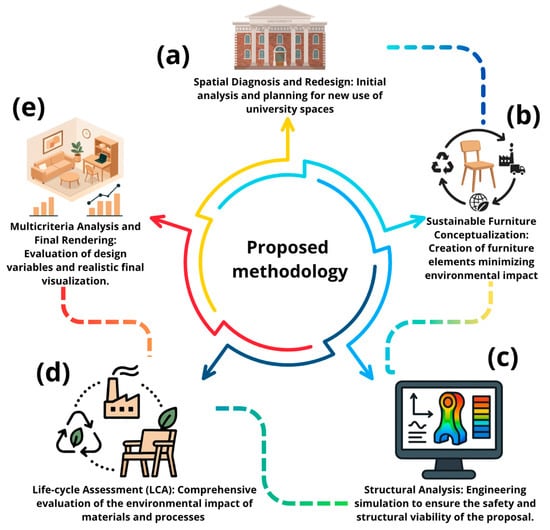
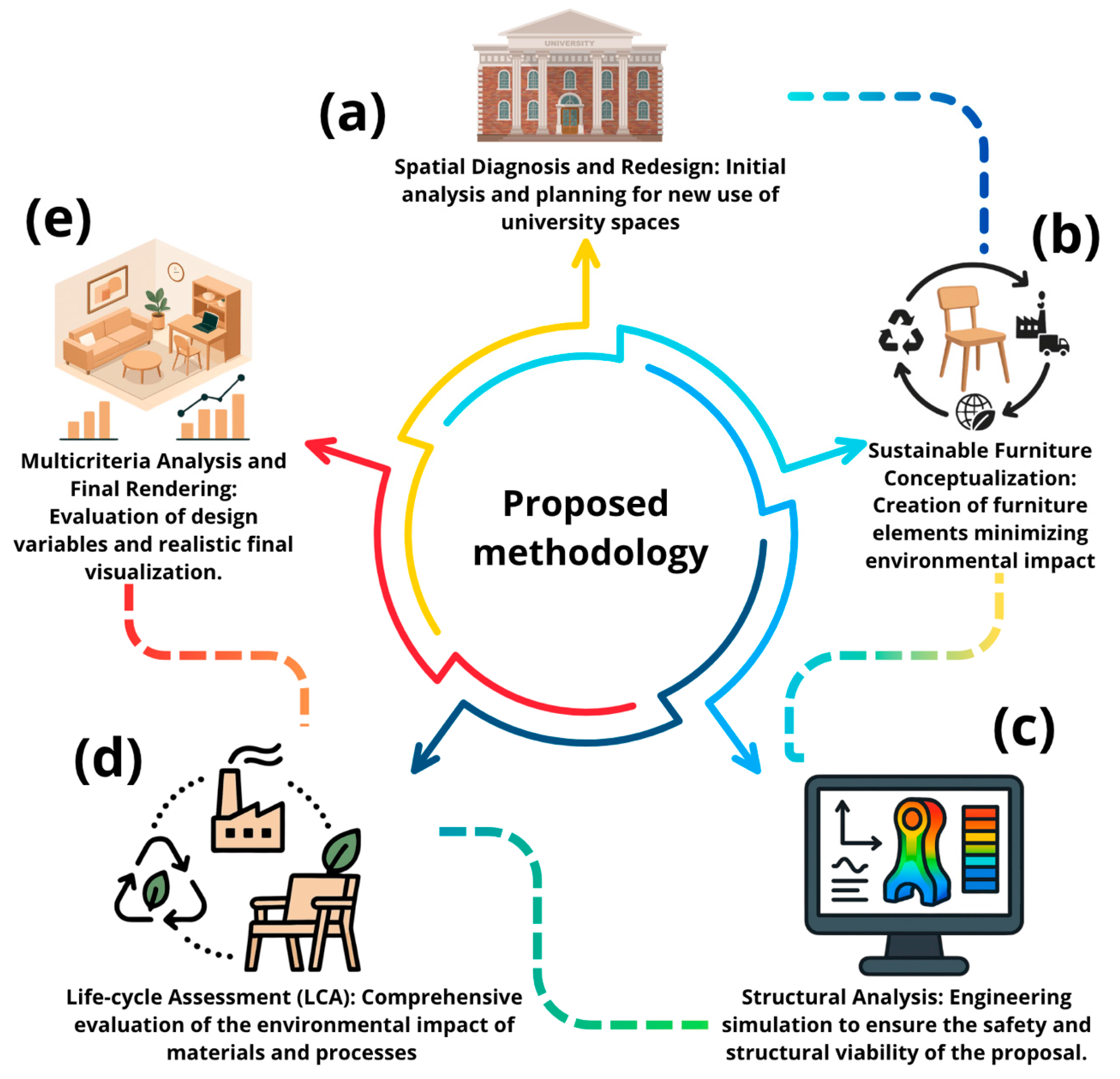
The research presented herein was developed using a mixed and sequential research approach, integrating spatial design, engineering simulation, and environmental impact assessment for the remodeling of university spaces. Accordingly, the methodology was structured into six phases: (a) spatial diagnosis and redesign, (b) sustainable furniture conceptualization, (c) structural analysis, (d) Life Cycle Assessment (LCA), and (e) multicriteria analysis of the proposed design and final rendering of the proposal, as shown in Figure 1.
Figure 1.
Proposed methodology for research.
2.1. Spatial Diagnosis and Redesign Proposal
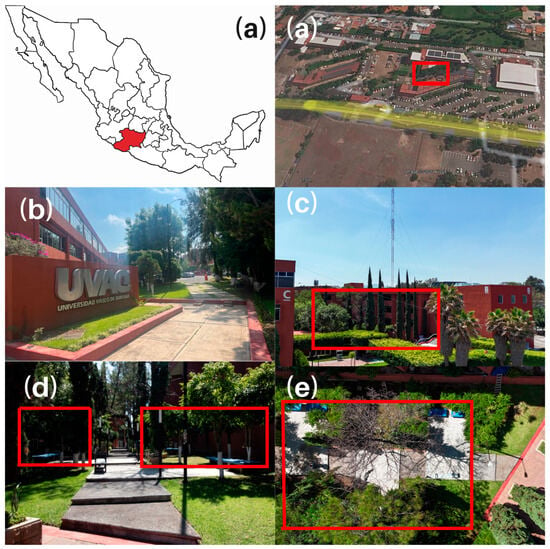
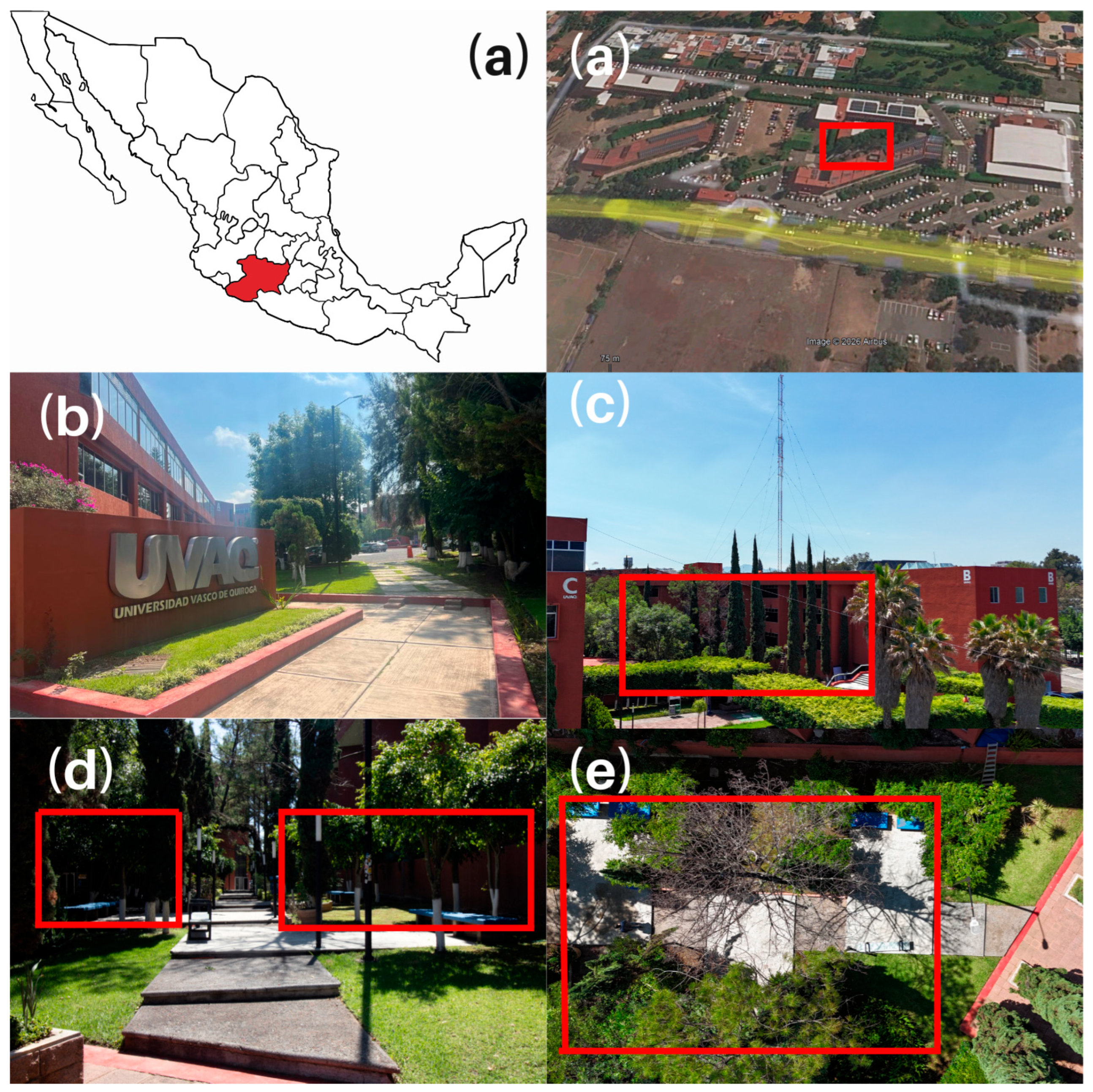
The first stage, referred to as the situational analysis of the interior space, was conducted within the facilities of the Universidad Vasco de Quiroga in Michoacán, Mexico, specifically in one of the green areas of the university, as shown in Figure 2 (19.67545626544849–101.18094953969215°).
Figure 2.
(a) Geographical location of the university, (b) school interior, (c) delimitation of the green area between buildings C and D of the university, (d) delimitation of the space where the furniture will be placed, and (e) main space where the furniture will be placed.
This phase was carried out through an architectural plan survey and an observational study aimed at identifying ergonomic deficiencies, circulation flows, and opportunity areas in terms of habitability. The spatial data record was developed through a survey process using measurement tools and zoning mapping techniques.
Based on the previous diagnosis, an interior architectural redesign proposal was developed to improve collaborative learning environments, including the modeling of the new space with the integration of the proposed furniture, using AutoCAD (version 2026) and SketchUp2025 software.
2.2. Furniture Design
The furniture was conceived as the unifying element of the new space, and its development was guided by ecodesign principles to minimize environmental impact throughout its life cycle while simultaneously optimizing its functionality. Rammed earth was selected as the primary structural material due to its lower carbon footprint compared to conventional materials, as well as its mechanical properties, previously validated through experimental testing.
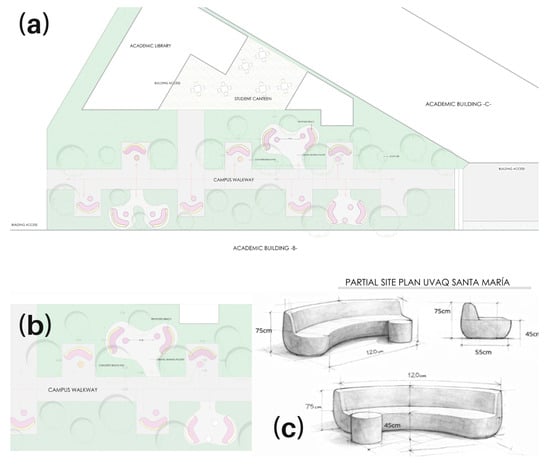
The design process considered not only environmental criteria but also various functional and ergonomic aspects, such as user comfort, overall weight, ease of cleaning and maintenance, geometric configuration, mobility, and the possibility of disassembly and disposal at the end of its useful life. Regarding the furniture’s environmental exposure, although the prototype is intended for outdoor use, the installation area borders two buildings that provide shade for most of the day, significantly reducing direct solar radiation and, consequently, the thermal and surface degradation of the material. The parametric modeling of the prototype was carried out using SolidWorks 2025 software, as shown in Figure 3.
Figure 3.
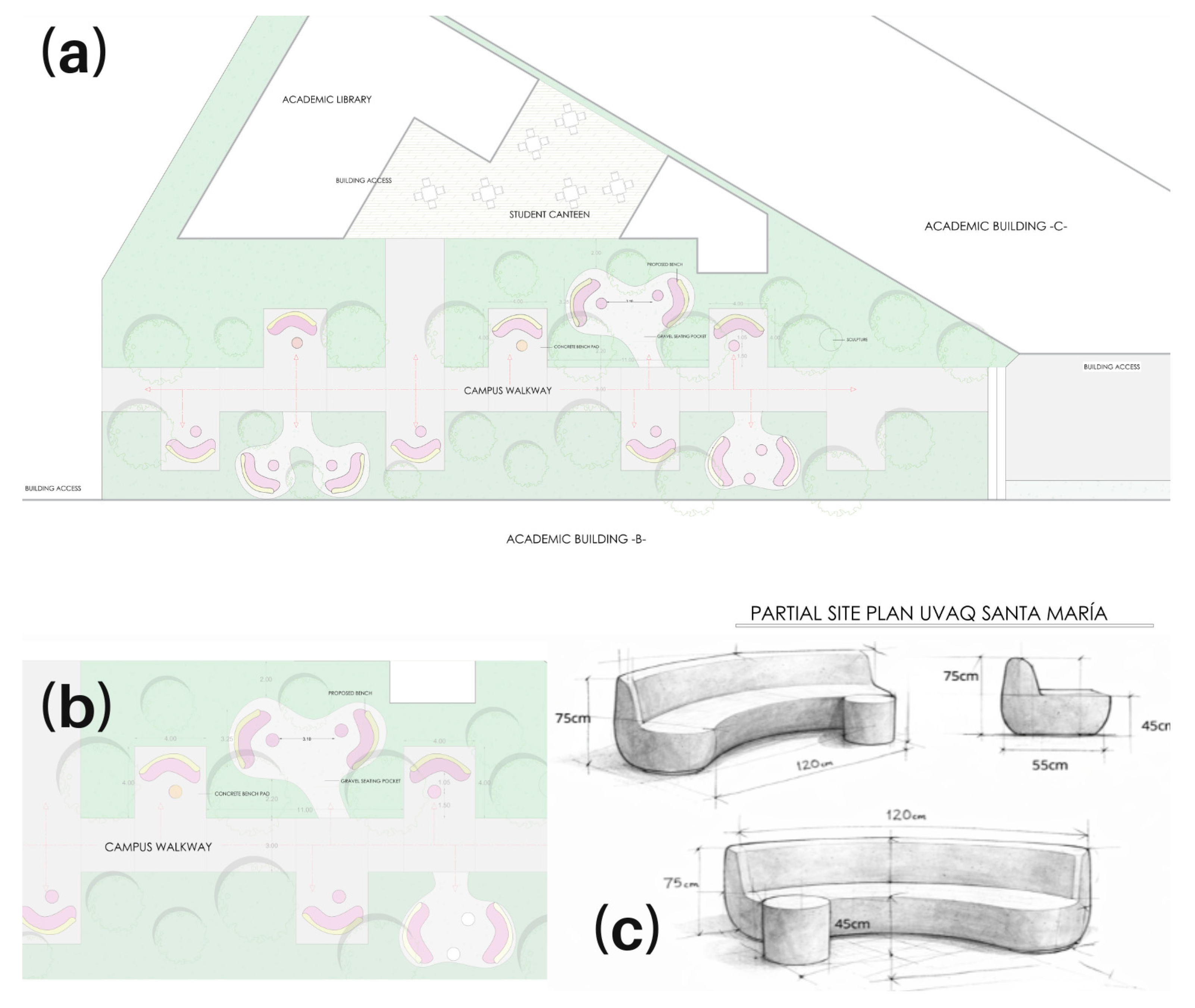
(a) Architectural view of the space, (b) tentative positioning of the proposed furniture, and (c) technical sketch and perspective of hybrid modular furniture design.
2.3. Physical and Mechanical Analysis of the Prototype
In order to ensure the suitability and safety of the furniture under intensive use within the university context, a Finite Element Analysis (FEA) was performed on the three-dimensional model [21]. The simulations were conducted using the linear static analysis module of the SolidWorks Simulation software [19].
The study evaluated the mechanical behavior of the prototype under static and dynamic load conditions, in accordance with the Mexican Standard NMX-R-083-SCFI-2019 for office and educational furniture [22]. This standard was selected because the developed prototype is intended for educational spaces, where the repetitive service loads and usage conditions are similar to those established in the standard. This standard defines standardized procedures for evaluating the strength, stability, and durability of furniture through static and dynamic load tests. These data are used to verify that the prototype meets the minimum mechanical requirements for this type of application. To this end, distributed loads of 5000 N were applied to the working and seating surfaces of the model. This value was determined based on the intended use of the space and the associated furniture, which was designed to accommodate a maximum of five users. Assuming an average weight of 100 kg per individual, a total reference mass of 500 kg was obtained. This mass was converted into force using the standard gravitational relationship, resulting in an approximate load of 5000 N, which was employed as a representative condition for the structural evaluation. Under these conditions, the von Mises displacement values, as well as the deformation and maximum displacement in the critical components, were obtained in order to validate the structural integrity of the prototype and prevent failure due to fatigue or yielding of the selected materials. In addition, the Safety Factor (SF) was calculated by applying Equation (1),
where:
= yield strength
= maximum simulated stress
In the numerical model, the definition of loads and constraints responds not only to an idealized representation for the user but also to the specific requirements of the finite element simulation procedure. In this regard, the software used requires the definition of boundary conditions that guarantee the model’s stability and prevent rigid body movements during the calculation process.
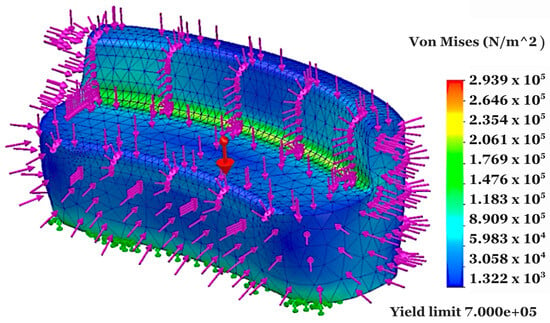
For this reason, a hybrid loading scheme was implemented. Distributed pressure was applied to the ergonomic contact surfaces to represent the transfer of body weight onto the seat, while the concentrated vector located on the central axis was incorporated as a complementary numerical condition to reproduce the point of maximum load transfer and ensure the model’s convergence under the analyzed loading scenario. Furthermore, the vectors represented in purple correspond to the constraint conditions that are necessary to adequately define the boundary conditions of the structural analysis and do not represent additional loads applied to the furniture for each simulation in Figure 4, Figure 5 and Figure 6. The parameters used for the different mechanical analyses are found in Appendix A.
Figure 4.
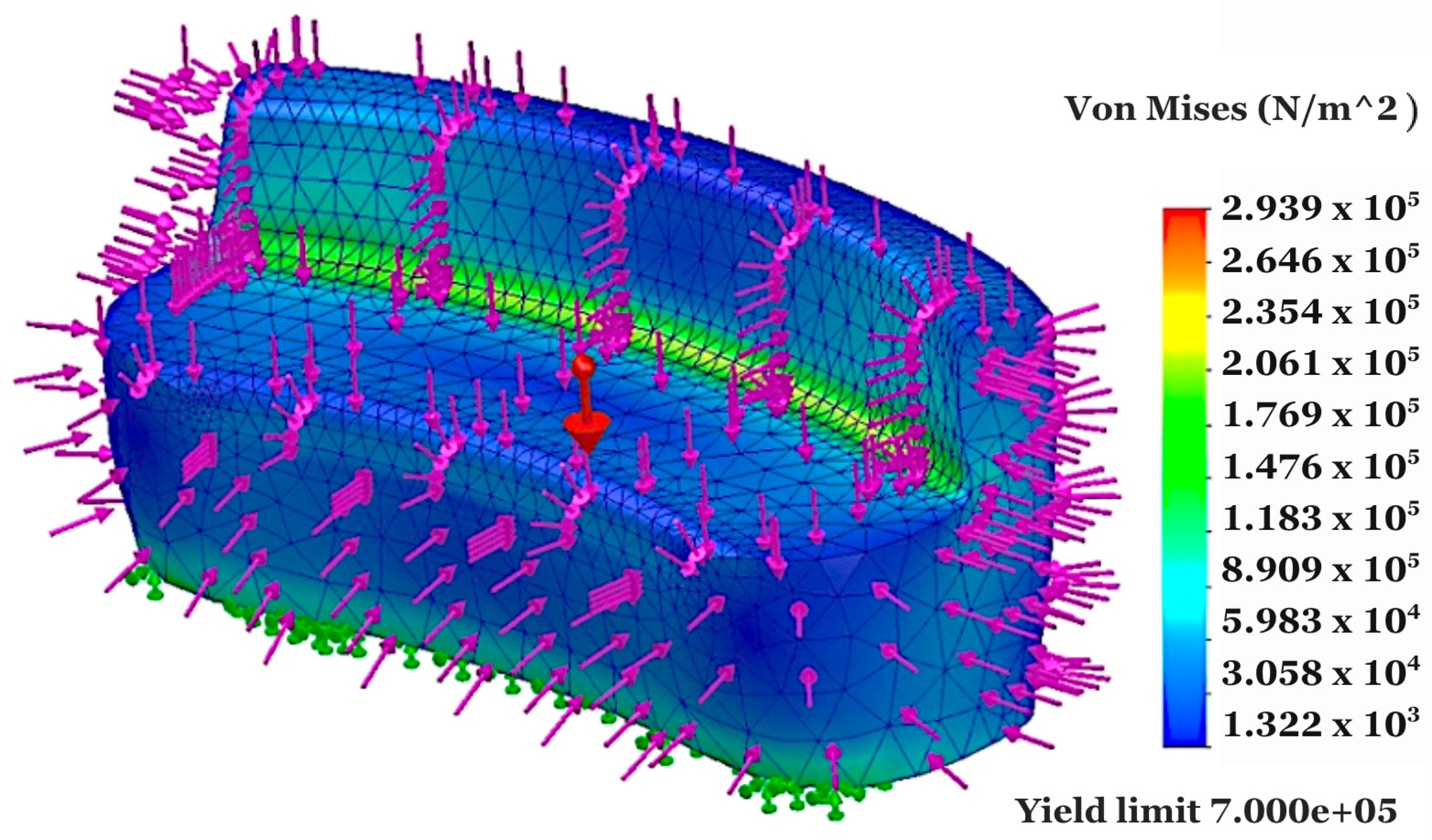
Von Mises stress analysis.
Figure 5.
Deformation analysis.
Figure 6.
Displacement analysis.
2.4. Life Cycle Assessment (LCA)
The environmental assessment of the model was carried throughout a Life Cycle Assessment (LCA), developed in strict accordance with the specifications established by the international standards ISO 14040 and ISO 14044 [23].
The Life Cycle Assessment was conducted using the proposed interior furniture model, which consists of a constant surface area of 53,673.03 cm2 and a projected service life of 5.0 years. The study also included the comparison of three manufacturing materials commonly used in interior and architectural design: pine wood, handcrafted red clay brick, and rammed-earth material reinforced with a polished clay layer for this furniture proposal. The environmental impact indicators considered in the assessment were: Carbon Footprint (kg CO2e), Total Energy Demand (MJ), Air Acidification (kg SO2e), and Water Eutrophication (kg PO4e), as proposed in previous studies [24]. Regarding the system boundaries, a “cradle-to-grave” approach was implemented, including raw material extraction, processing, manufacturing, transportation, use and end-of-life stages. To carry out the LCA, SolidWorks 2025 software was utilized. In this program, the values were obtained using the Life Cycle Assessment (LCA) module of SolidWorks Sustainability. This module integrates widely used life cycle inventory databases for the environmental assessment of materials, allowing for comparative analyses between different design alternatives. For this study, each material used in the furniture was included in the software and evaluated under the same functional unit corresponding to the furniture analyzed over a one-year period of use. Subsequently, the software calculated the environmental indicators associated with each material, and the results were consolidated for comparison and analysis. The resulting data are presented in Table 1.
Table 1.
Comparative environmental impact by construction material.
2.5. Multi-Criteria Analysis
To contrast the comprehensive viability of the proposal, a multi-criteria analysis for decision-making was conducted [15]. Designed to simultaneously integrate functional, environmental, and aesthetic-visual criteria, this methodology allows for the evaluation of the overall performance of the proposal through the combination of quantitative indicators expressed in different units of measurement. It provides an objective basis for selecting the best-performing alternative.
The criteria considered in the analysis were grouped into three dimensions: the Functional Parameter, the Environmental Parameter, and the Aesthetic-Visual Parameter, which is described later.
Because the indicators are expressed in different units and have different orders of magnitude, a normalization process was necessary before integrating them into the multi-criteria analysis. To this end, the maximum value reported in the specialized scientific literature for each evaluated indicator was identified and used as a reference value. Subsequently, the experimental value obtained in this study was multiplied by a constant of 10, corresponding to the evaluation scale used in the multi-criteria methodology (0–10), and the result was divided by the maximum reference value, yielding a normalized dimensionless index, according to Equation (2).
This procedure allowed for the standardization of all indicators within the same evaluation scale, where 0 represents the least favorable performance and 10 the optimal performance. Normalization facilitated the direct comparison between functional, environmental, and aesthetic-visual criteria, ensuring their proper integration into the multi-criteria analysis and providing a solid methodological basis for decision-making regarding the furniture alternative with the best overall performance.
This analysis enables the validation of the prototype itself and its comparison with existing furniture in the university space, including the definition of three parameters for its evaluation:
- Functional Parameter: Based on the analysis of the structural mechanisms evaluated, including strain, displacement, and deformation, as well as the integration of data reported in the specialized scientific literature.
- Environmental Parameter: Defined by indicators derived from the Life Cycle Analysis (LCA), such as an equivalent of CO2 emissions, among other relevant impacts.
- Aesthetic-Visual Parameter: The evaluation of the aesthetic-visual parameters was carried out through surveys of potential users. For data collection, an evaluation instrument was designed based on criteria established by interior design professionals. The sample consisted of 50 specialists in the field, who evaluated the aesthetic and functional aspects of the proposed furniture. Additionally, in order to understand the perception and level of acceptance of the design from the perspective of potential users, the same instrument was administered to a group of 50 students and faculty members from different academic programs at the university. Participants were selected using simple random sampling. Data collection was conducted via a digital platform using a structured questionnaire specifically designed to assess the aesthetic-visual perception of the proposed furniture. The evaluation instrument consisted of the following criteria: general appearance, furniture design, combination of materials, perceived innovation, visual functionality, and overall design acceptance. Each criterion was rated using a five-point Likert scale, where 1 = Strongly disagree, 2 = Disagree, 3 = Neither agree nor disagree, 4 = Agree, and 5 = Strongly agree.
The aesthetic-visual parameter was then determined by calculating the acceptance index, obtained from the ratio between the total score achieved by each proposal and the maximum possible score on the instrument. The result was expressed as a percentage using Equation (3).
2.6. Final Rendering of the Furniture Proposal
The volumetric validation process regarding the contextual integration of the furniture proposal was carried out through the synthesis of high-fidelity images (photorealistic rendering). The validation process was structured into two technical phases. It is important to note that the renders were produced by senior students from the university’s Interior Design program.
- Modeling and geometry: Advanced polygonal modeling techniques were employed to replicate the organic morphology of the rammed-earth elements, ensuring dimensional accuracy and scale coherence in relation to the preexisting architectural environment.
- Lighting simulation and rendering engine: A ray-tracing rendering engine was implemented through Leonardo AI using global illumination algorithms. Natural lighting conditions were configured through physical sky systems and high dynamic range maps, allowing for the evaluation of shadow interaction and the chromatic contrast of materials under different temporal scenarios.
3. Results and Discussion
3.1. Analysis and Technical Specifications of the Proposed Furniture Design
The conceptual design, architectural layout, and technical specifications of the furniture set are detailed in Figure 3. This shows an asymmetrical modular curved bench and a complementary stool designed from an organic geometric logic with vernacular and local materials. Through a meticulous process, critical dimensional constraints have been defined for proper ergonomics and the correct use of structural demands: total length of the curved bench is 120 cm, total height of the backrest is 75 cm, and seat height is 45 cm in line with the complementary stool. These dimensions allow for versatile and modular integration of the components into diverse environments.
The materiality of the design shown in Figure 3 implies a significant shift from conventional practices, opting instead for a highly effective solution, namely, a proposal with a strong sustainable impact through the use of local resources. The body of the furniture is intended to be constructed using the rammed-earth technique, combining locally sourced soil, sand, and stabilized gravel. This option not only reduces the carbon footprint associated with the transportation and manufacturing of conventional components (concrete and steel) but also provides the furniture with improved thermal inertia and a distinctive textured aesthetic. To enhance comfort and tactile quality, the seating and contact surfaces are intended to receive a very thin polished clay coating. This coating not only provides a soft and ergonomically satisfying texture but also seals the pores of the rammed earth, increasing its durability without compromising its breathability or biodegradability at the end of its service life.
When contrasting the design proposed in Figure 3 with current examples reported in the literature on sustainable and earth-based furniture design, both points of convergence and major innovative contributions can be found.
First, studies on monolithic furniture designs made from ultra-high-performance concrete [25] reveal a certain formal affinity related to the search for curved and organic geometrics for public spaces. Likewise, Bennett (2005) [26] describes monolithic and massive forms that, despite being visually appealing and capable of producing shadows and marks, are characterized by high embodied energy and a “cold” texture. The innovation presented in Figure 3 lies in achieving an analogous organic aesthetic through rammed-earth construction, but with a considerably lower carbon footprint and a warm, natural texture, in contrast to the industrialized nature of prefabricated concrete solutions.
On the other hand, the scientific literature has highlighted the advantages of using rammed earth in both furniture and interior architectural applications [27,28]. Although these studies emphasize the sustainable usage and aesthetic application of this material in architectural composition, their designs generally display angular and static forms. In contrast, the ergonomic and modular features incorporated into the curved design shown in Figure 3 provide a more dynamic and versatile form. The integration of the cylindrical stool, which counterbalances the asymmetrical curved shape of the bench, represents an innovative approach that enhances the spatial adaptability of rammed-earth furniture.
Finally, although previous studies have already explored the use of clay finishes on furniture and earthen surfaces [29,30], the application of a thin polished clay coating over a rammed-earth structure, instead of a thick plaster or monolithic clay application, represents a simplified technical innovation [31] and describes the use of pigmented clay for interior finishes; however, this contribution tends to remain independent from the supporting structure. In the design shown in Figure 3, the polished clay finish is developed as a skin intimately bonded to the rammed-earth structural core, achieving an elegant aesthetic and greater durability without increasing weight or construction complexity.
The principal contribution of this design does not lie in its aesthetics or its materiality in isolation, but rather in the interrelationship between both. The modular organic geometry (Figure 3) is achieved through a vernacular construction process (rammed earth) traditionally associated with rectilinear forms. The visual impact generated by the asymmetrical curvature together with the modularity of the stool demonstrates a new organizational approach to rammed-earth construction. Likewise, the polished clay finish, in addition to improving tactile experience and durability, exemplifies the aesthetic potential of low-impact earth-based materials. This design proposes a valid and aesthetically superior alternative for radically sustainable public and residential spaces.
3.2. Static Analysis and Von Mises Stress
The model was constrained using fixed supports at the base (green vectors) and distributed pressures representing spatial constraints and the lining in the outer border (pink vectors).
The results show that the maximum von Mises of 2.939 × 10⁵ N/m2 was highly concentrated in the geometric transition zones, particularly in the internal junction area where the seat panel, backrest, and armrests are connected (areas displaying warm gradients in orange, red, and yellow). In contrast, the stresses across most of the external volumetric structure and the base of the furniture reached minimum values as low as 1.322 × 10³ N/m2 (dark blue areas), as shown in Figure 4.
The material assigned to the component presents a yield limit of 5.000 × 10⁵ N/m2. To quantify the design feasibility margin under this static configuration, the Safety Factor (SF) was calculated using the ratio between the yield strength (σ y) and the maximum simulated stress (σmax), based on Equation (1).
Considering that the calculated safety factor was 1.70 and considering that the maximum stress remains well below the material’s yield limit, it can be concluded that the proposed design will not experience any plastic deformation or catastrophic failure under the applied load limit of 5000 N.
The numerical results and stress distributions obtained from the system are consistent with the existing literature regarding the mechanical behavior of seating furniture. The stress concentration observed at the internal junctions connecting the seat and backrest panels are consistent with the findings reported by Hajdarević and Busuladžić (2015) [32], who, through finite element simulations, determined that abrupt geometric transitions and frame joints are among the most critical points susceptible to fatigue and structural failure.
Within this research proposal, the implementation of continuous modeling allows the same forces to be dissipated throughout tetrahedral mesh, thereby avoiding dangerous stress concentrations that could compromise the structural integrity of the component.
Likewise, Ceylan et al. (2021) [33] highlight the high fidelity of simulation methods in predicting structural behavior and, consequently, in establishing permissible design loads [33]. Similar to the findings of the present study, where the furniture proposal maintains stress values below the material’s yield threshold, the furniture design included in Figure 3 demonstrates excellent resilience under impact and wear conditions, as the rotational load of 5000 N (equivalent to more than 500 kg of mass) does not exceed the structural safety threshold. This high load-bearing capacity below the safety threshold makes the furniture suitable not only for residential applications, but also for commercial use and high-impact environments.
Finally, Zhao (2026) [34] discusses the importance of integrating manufacturing constraints and ergonomic criteria within the early finite element analysis [34]. The stress analysis conducted in this research supports this argument. The correct interpretation of the von Mises stress gradient demonstrates that the furniture proposal, developed according to ergonomic principles, does not compromise structural mechanics, but, on the contrary, it aligns with the highest standards of contemporary interior architecture.
3.3. Results of the Static Deformation Analysis
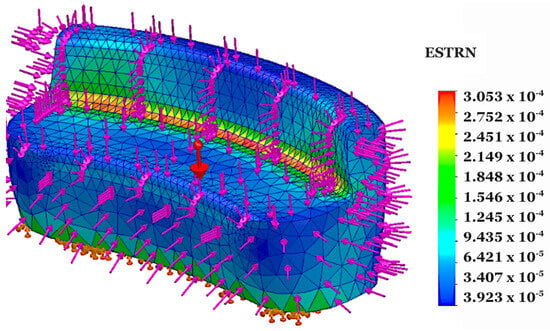
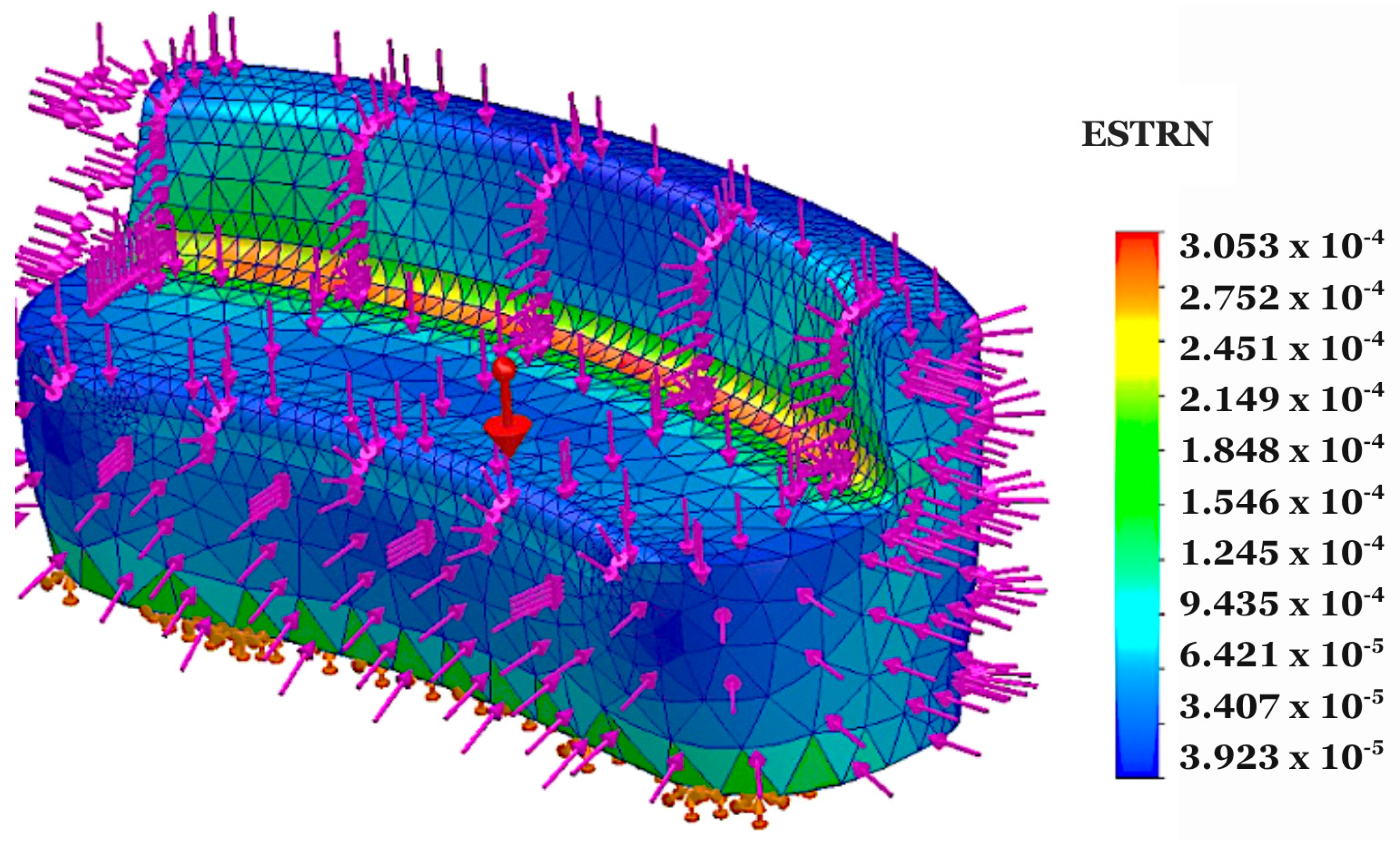
To simulate real conditions of use, fixed geometry constraints were established at the support base of the model. The vectors illustrate the directions and magnitudes of the compressive loads applied to the armrests, the upper backrest, and the seating area. Therefore, according to the static unit strain (ESTRN) scale bar generated within the simulation environment, the material deformation values fall within the following range: minimum deformation: 3.923 × 10⁻⁶ (represented by dark blue areas), and maximum deformation: 3.053 × 10⁻⁴ (represented by red areas), as shown in Figure 5.
The visualization presented in Figure 5 shows that the vast majority of the external structure of the chassis, the lateral section, and the base of the furniture exhibit negligible deformation, remaining within the lower limit of the scale.
The spatial analysis of the color scale reveals that the maximum unit deformation (3.053 × 10⁻⁴) is concentrated at the structural joint between the seat and the backrest. In this area, a critical transition band can be observed, as well as the displacement of the unit deformation and the thermal gradient (light blue, green, yellow, and red) along the internal curvature.
The evaluation of the results allows the conclusion that the proposed design presents very good rigidity and structural feasibility. The maximum unit deformation value obtained (3.053 × 10⁻⁴) may be interpreted as evidence that the material of the internal frame and upholstery operate well within their elastic limits. This means that the structure is capable of supporting a load of 5000 N (equivalent to approximately 500 kg; the load failure stress corresponds to a dynamic impact or simultaneous use by multiple heavy users) without compromising the critical limit of accumulated deformation, suggesting that the furniture component exceeds normal operational standards in residential or commercial interior architecture.
When comparing the observed mechanical behavior with the scientific literature, a strong agreement can be identified. The simulations produced results similar to those reported by Ceylan et al. (2021) [33], who determined through finite element models that, in furniture seating systems, the critical concentrations of stress and deformation occur, without exception, at the joints between the backrest and the seat, which behave as the most mechanically demanding flexural nodes.
Likewise, the results of this design are consistent with the conclusions of Merdan (2025) [35], who highlights that the transition geometry of seating systems also determines stress distribution. In the present research, the continuous curvature connecting the seat and the backrest (visible in the color gradient) contributes to dissipating the bending moment and preventing the shear failures commonly produced in conventional orthogonal joints.
Finally, the use of the ESTRN scale implies a validation of the effectiveness of the design and is supported by the methodology proposed by Tankut et al. (2014) [36], which, by maintaining unit deformation within orders of magnitude of 10−4 under loads of 5000 N, emphasizes that the design does not tend toward oversizing the structural elements. Consequently, this allows interior designers to optimize the use of sustainable or lightweight materials without compromising ergonomic safety and, ultimately, ensures a long service life for the product.
3.4. Static Displacement Analysis
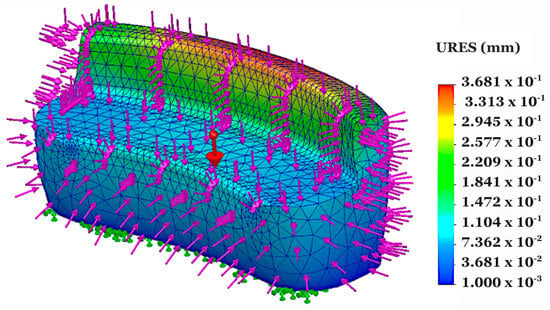
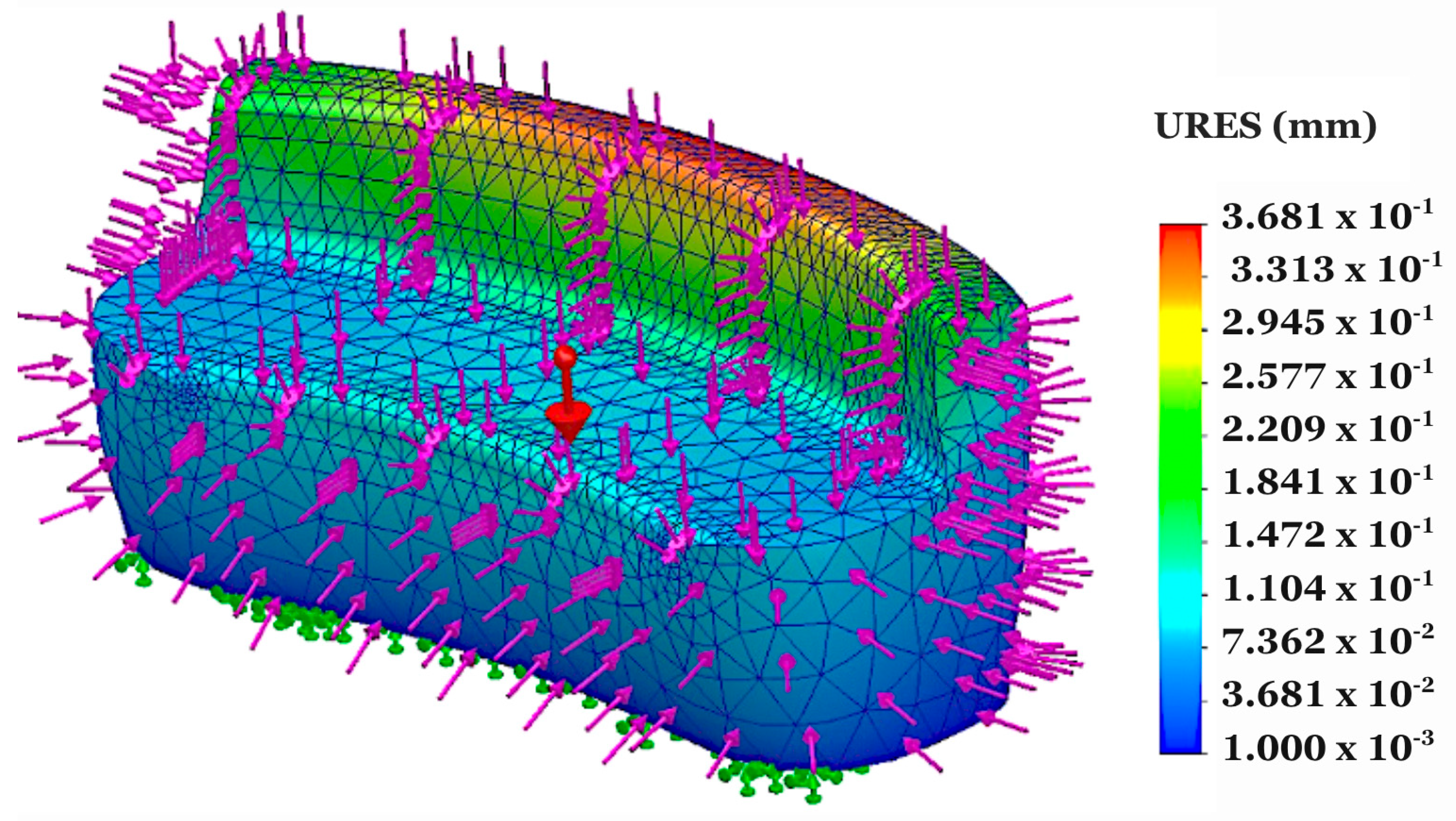
The boundary conditions, observable in the model through the green direction vectors, were defined as fixed-geometry constraints at the base of the furniture piece, so that all translational degrees of freedom within the plane associated with the contact surface with the ground could be restricted, in such a way that one part of the model remained anchored to the floor establishing a fixation point.
The load model was applied in a hybrid manner; on one hand, a uniform pressure distribution was established from the ergonomic contact surfaces, the furniture structure, and the inner perimeter (represented by the purple direction vectors); on the other hand, a concentrated load vector (red direction vector) was integrated along the central axis representing the point of maximum transverse weight transfer.
Based on the lateral colorimetric scale (URES), the computational results indicate that the material deformation range is confirmed to be very limited (see Figure 6). The minimum calculated displacement is 1.000 × 10⁻³⁰ mm in the region of the lateral supports (light blue zones), which mathematically justifies the rigidity of the fixation conditions defined in the software. Likewise, the maximum absolute displacement within the structure is located at 3.681 × 10⁻¹ mm (approximately 0.368 mm) and is exclusively situated along the upper edge of the backrest (warm gradient regions, between orange and red). It is important to clarify that the software visual representation employs a deformation scale amplified by a factor of 520.578 in order to facilitate the qualitative observation of the flexural lines; nevertheless, in quantitative terms, the maximum buckling remains submillimetric.
3.5. Comparative Life Cycle Assessment (LCA) Analysis of the Proposed Furniture
Table 1 presents the consolidated data that makes it possible to dimension the spectrum of the impact of each material on ecosystems.
Based on the results shown in Table 1, the following matrix was formulated to establish the ecological performance of the interior design alternatives:
Pine wood: Positive impacts—it offers the best overall environmental performance. By demanding a lower energy level (440 MJ), and emitting 200 kg CO2e, its extreme lightness compared to other materials allows for significant optimization of logistics and transportation processes.
Negative impacts—it presents a latent eutrophication and acidification factor, presumably linked to silvicultural processes (use of fertilizers) or to the treatment of the material used as a base, even though its values are drastically lower than ceramic or stone-based materials.
Rammed earth: Positive impacts—its manufacturing process can be highly adaptable to complex interior furniture geometries. Compared to brick, it presents a lower energy demand (2100 MJ).
Negative impacts—it greatly affects the aquatic environment, with a higher water eutrophication factor (2.2 kg PO4e). In addition, its carbon footprint is critical (1800 kg CO2e) compared to biogenic components.
Bricks: Positive impact—the material has extremely high and very inert durability. Its water eutrophication impacts (2.1 kg PO4e) are only marginally lower than concrete.
Negative impact—it is the most harmful material in energetic and atmospheric terms; brick production, depending on firing kilns, involves a critical energy demand of 5900 MJ and a carbon footprint of 1900 kg CO2e, while also presenting a higher air acidification impact (1.5 kg SO2e) than the other materials.
It is important to note that the LCA performed in this study evaluates a specific scenario, the results of which depend on the methodological scope, system boundaries, functional unit, and the database used by the modeling software. In this context, the larger carbon footprint observed for rammed earth does not necessarily imply that this material is inherently less sustainable than pine wood, but rather reflects the particular conditions of the analyzed inventory.
In the case of rammed earth, the model incorporates the impact associated with the extraction, transport, and preparation of the materials, as well as the use of stabilizers and the energy consumption required during the construction process—factors that increase the global warming potential. On the other hand, pine wood has a smaller carbon footprint in the evaluated scenario because the inventory considers the biogenic carbon stored in the biomass and a lower energy demand during its processing, aspects widely recognized in the specialized literature.
Therefore, the integration of Life Cycle Assessment (LCA) methodology makes it possible to adopt an informed approach to interior design decision-making, in which the selection of a material responds not only to the aesthetic guidelines of interior design, but also to climate awareness. The results obtained through this research proposal provide an analysis of environmental duality and compel a deeper examination of the origin and use of the material within the local context.
A key finding of this investigation is that rammed earth may be used as a viable and sustainable alternative for interior furniture. While the quantitative analysis indicates that rammed earth presents a higher environmental score than wood, rammed earth must also be considered from the perspective of resource locality and durability. By employing rammed earth in interior furniture design, it becomes possible to work with local resources and labor, thereby substantially reducing the impacts associated with long-distance transportation, an aspect that is often insufficiently examined within global LCA studies [37]. As a material that is easily sourced and processed within urban contexts, rammed earth contributes to the implementation of a “zero-kilometer” approach in interior design, aligning itself with emerging perspectives on circular economy and urban sustainability [38].
Furthermore, the proposal for rammed-earth furniture emerges as a form of enduring furniture that stands in opposition to planned obsolescence. Its high thermal inertia and mechanical resistance ensure a service life capable of greatly surpassing initial estimations, thereby diluting its environmental impact over decades of use and eliminating the need for replacement once the conventional life cycle of the furniture has concluded. This durability is particularly relevant for incorporating sustainability into interior design, since the permanence of the object constitutes a means of conserving resources [12]. As noted by Ali (2022) [39], diversifying materials (shifting away from the hegemony of wood toward well-managed stone-based or cementitious material proposals) enables the creation of spaces with a local identity that do not depend upon complex logistical supply chains. It is important to emphasize that the comparison conducted between rammed earth and brick demonstrates how the energy efficiency of concrete (2100 MJ) is considerably superior to that of brick (5900 MJ). This is one of the reasons why rammed earth is regarded as the material par excellence within the typology of heavy materials for interior applications. Adnan & Balasbaneh (2021) [40] indicate that optimizing concrete formulations and employing locally sourced materials constitute some of the most important strategies for reducing the excessive consumption of materials. Consequently, the proposed rammed-earth furniture should not be understood as a high-impact artifact, but rather as a resilient design proposal in which the use of locally available materials reduces its logistical footprint, while simultaneously expressing a language of industrial sustainability and material honesty within habitable spaces.
In conclusion, pine wood continues to serve as the benchmark in terms of minimal emissions [41]; however, rammed earth, referred to in certain Spanish-speaking regions as Tapial, emerges as a strategic alternative for designers seeking to integrate local materials, reduce dependence on imports, and propose permanent, low-maintenance furniture solutions that respond to the constructive identity of their region.
Finally, this research does not aim to establish that rammed earth is environmentally superior to pine wood, nor to refute the widely documented advantages of the latter as a renewable material with a low environmental footprint when sourced from sustainably managed forests. Rather, the purpose of this study is to explore, through a multi-criteria analysis complemented by an environmental impact simulation, the viability of different locally available materials for designing furniture for university spaces, considering environmental, mechanical, and user perception criteria.
One of the main strengths of the proposal lies in its focus on utilizing regional materials, which promotes circular economy strategies, reduces dependence on industrialized materials, and fosters design alternatives adapted to local conditions. Furthermore, the integration of environmental, structural, and aesthetic-functional indicators through a multi-criteria analysis provides a more comprehensive evaluation of the proposed furniture’s performance, preventing decision-making from relying solely on a single criterion, such as carbon footprint.
3.6. Multicriteria Analysis
For this analysis, functional, environmental, and aesthetic-visual parameters were considered, which are translated into quantifiable indicators presented in Table 2.
Table 2.
Parameters and indicators used in the multicriteria analysis.
The weighting based on maximum and minimum values makes it possible to delimit the extreme scenarios of the analysis, representing the most favorable and least favorable conditions, respectively. The maximum values are obtained from the scientific literature, whereas the minimum values are established as a reference baseline to adjust the weighting of the final value. The values used are presented in Table 3.
Table 3.
Indicators, maximum values, and minimum values.
The multicriteria analysis methodology employed in the present study does not constitute an independent approach per se. Rather, it acquires meaning and validity exclusively within a comparative context, in which the evaluated materials are analyzed jointly and systematically. This analytical framework enables multicriteria analysis to be understood as a powerful tool for the integration and weighting of variables, thereby allowing for a comprehensive assessment of the potential of the proposed furniture design (constructed with rammed earth).
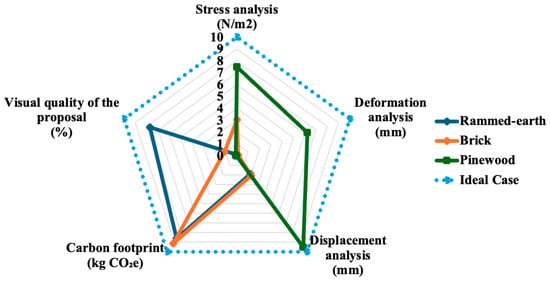
To this end, five key indicators were defined: stress analysis (N/m2), deformation analysis (mm), displacement analysis (mm), carbon footprint (kg CO2e), and the visual quality of the proposal (%). These indicators were selected according to their relevance in evaluating the mechanical performance and structural resistance of the furniture, as well as their capacity to reflect the environmental impact of the materials employed and the aesthetic quality of the proposed design.
The multicriteria evaluation constituted the result of the analyses conducted throughout this research regarding the furniture proposal presented herein. The simultaneous comparison of materials makes it possible to estimate the established and significant distinctions concerning the suitability of this type of sustainable furniture, while also enabling the extraction of the corresponding relative indicators associated with different types of design and materiality alternatives.
The results of the multicriteria evaluation are presented below in Table 4. Based on these findings, it was determined that the proposal demonstrates a high degree of feasibility, viability, and effectiveness, thereby reinforcing the implementation of this same type of sustainable furniture within university spaces.
Table 4.
Actual values of the results for each indicator of the biomass samples.
To perform a homogeneous comparison, the values in Table 4 were normalized, obtaining a standardized scale from 0 to 10 (0 being the least favorable scenario and 10 the best scenario). The normalized values are shown in Table 5.
Table 5.
Normalized values of the multicriteria analysis parameters.
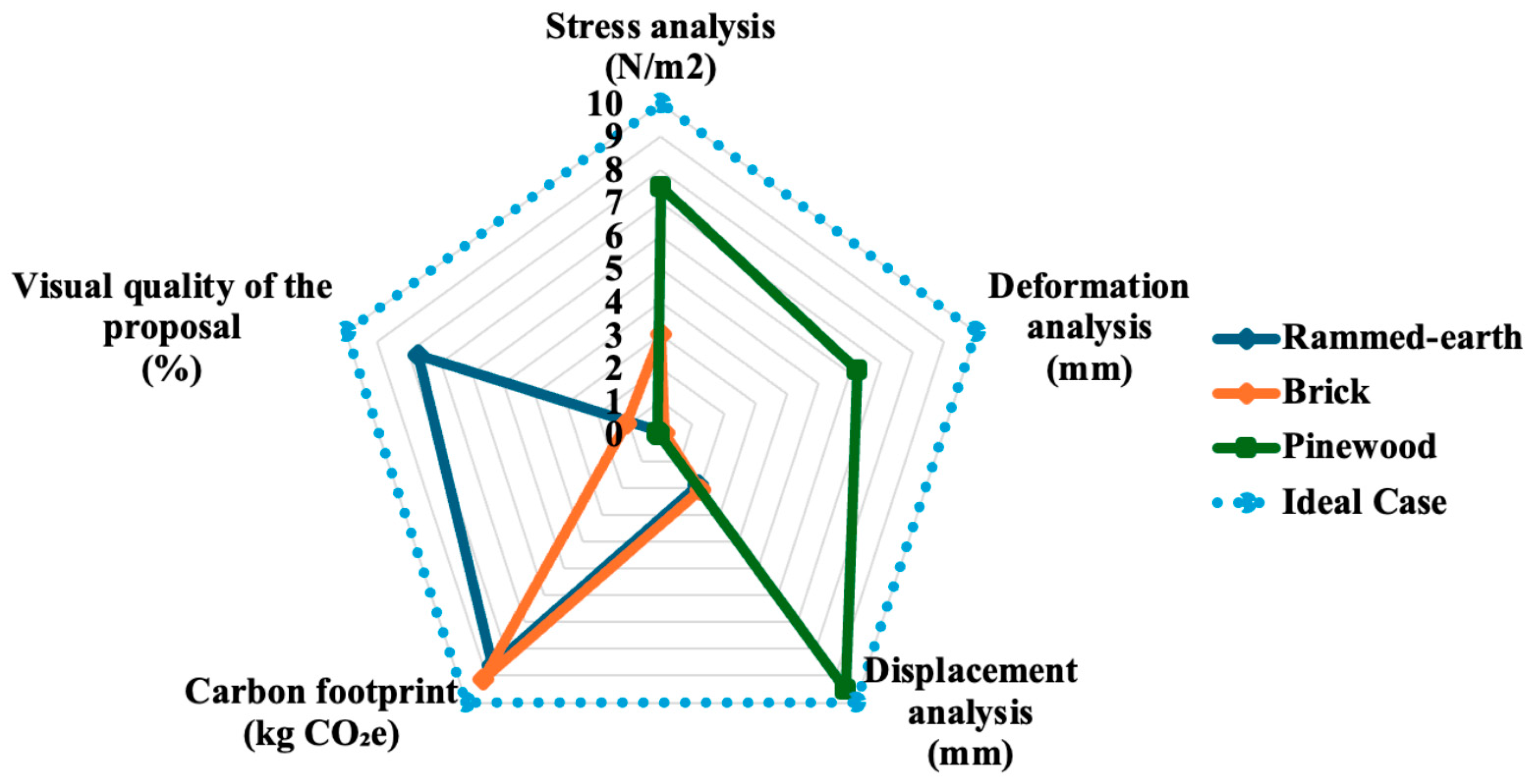
Once the information was organized, the multicriteria analysis was graphically represented, which can be observed in Figure 7.
Figure 7.
Graphic organization of the multicriteria analysis data through a diagram.
The information presented in Figure 7 indicates that the mechanical behavior (stress, deformation, and displacement) demonstrates that rammed earth provides conservative values in the stress measurement (N/m2), in addition to exhibiting low deformation parameters in comparison with pinewood, which, in these specific cases, presents a more favorable mechanical response. In the displacement analysis, rammed earth once again exhibits low values. However, within the context of the static usability and service loads of the proposed furniture, these values remain entirely functional. The material appears to possess sufficient compressive resistance and structural stability to adequately perform its intended function, thereby ensuring durability and resistance within public spaces.
Regarding environmental performance (carbon footprint) within the kg CO2e indicator (where a value closer to 10 denotes greater relevance in terms of sustainability and a lower relative ecological impact within the model), rammed earth demonstrates a highly favorable profile. Although the evaluated materials present certain variations, it is imperative to emphasize that the brick firing process generates a drastically higher environmental impact, and therefore its score should be interpreted as a negative reference in practical applications. Pinewood, in turn, exhibits a substantially lower relevance index within this comparative model. Consequently, rammed earth is consolidated as the alternative with the lowest manufacturing ecological footprint, reaffirming its viability as a sustainable material.
Finally, the indicator “Visual Quality and Social Acceptance” constitutes the most important qualitative parameter of the study. Rammed earth displays a high index, reaching the ideal case, whereas brick and pinewood practically show no preferential values. This result is based on the perception survey administered within the university community, in which the majority of the evaluated population (students in general, faculty, and professionals in the field) concluded that the integrative proposal of design, organic aesthetics, and materiality is highly appropriate for the typology of university spaces. This indicator categorically confirms the social and visual relevance of the project.
The implementation of methodologies such as multicriteria analysis in the design of interior and exterior furniture is fundamental, as it allows evaluation to extend beyond purely structural considerations by incorporating highly significant dimensions such as emission reduction and user social perception. Contemporary urban design models have shifted toward the obligation to develop infrastructure with reduced environmental impact [50,51]. Sustainable furniture within higher education spaces not only encourages spatial appropriation, but also positions campuses as paradigmatic ecosystems of innovation, ecological congruence, and climate responsibility [52,53].
In this regard, the results of the present study clearly and precisely emphasize the qualities of rammed earth as a biomaterial with strong potential for application. The findings demonstrate that, although it behaves mechanically differently to conventional materials, its overall performance within the proposed context confirms its feasibility as a sustainable, durable, and socially acceptable alternative for interior furniture design compared with industrialized materials; its physical properties are, in their entirety, more than sufficient to ensure the functionality and structural resistance of the furniture.
The principal virtue of rammed earth lies in the purity of its execution; its carbon footprint is minimal, thereby avoiding the highly pollutive processes associated with brick production, while simultaneously achieving a high degree of aesthetic acceptance. The elevated visual quality perceived by users confirms that the design solution succeeds in harmoniously integrating with the university landscape. In summary, rammed earth not only responds to environmental sustainability criteria, but also validates the identity of the space itself, thereby globally justifying the viability and significance of the proposed ecological furniture design.
3.7. Visualization of the Proposed Design and Its Integration Within the Institutional Space
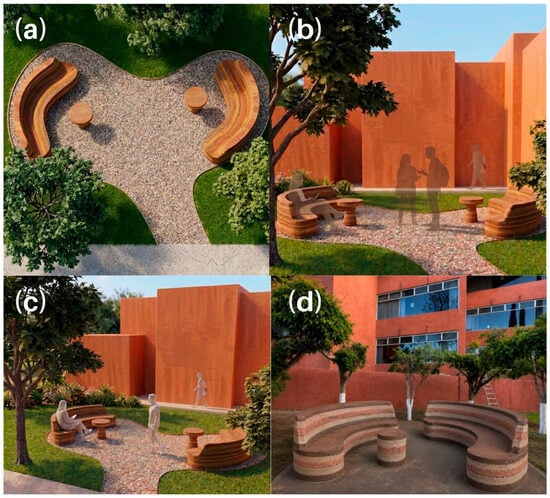
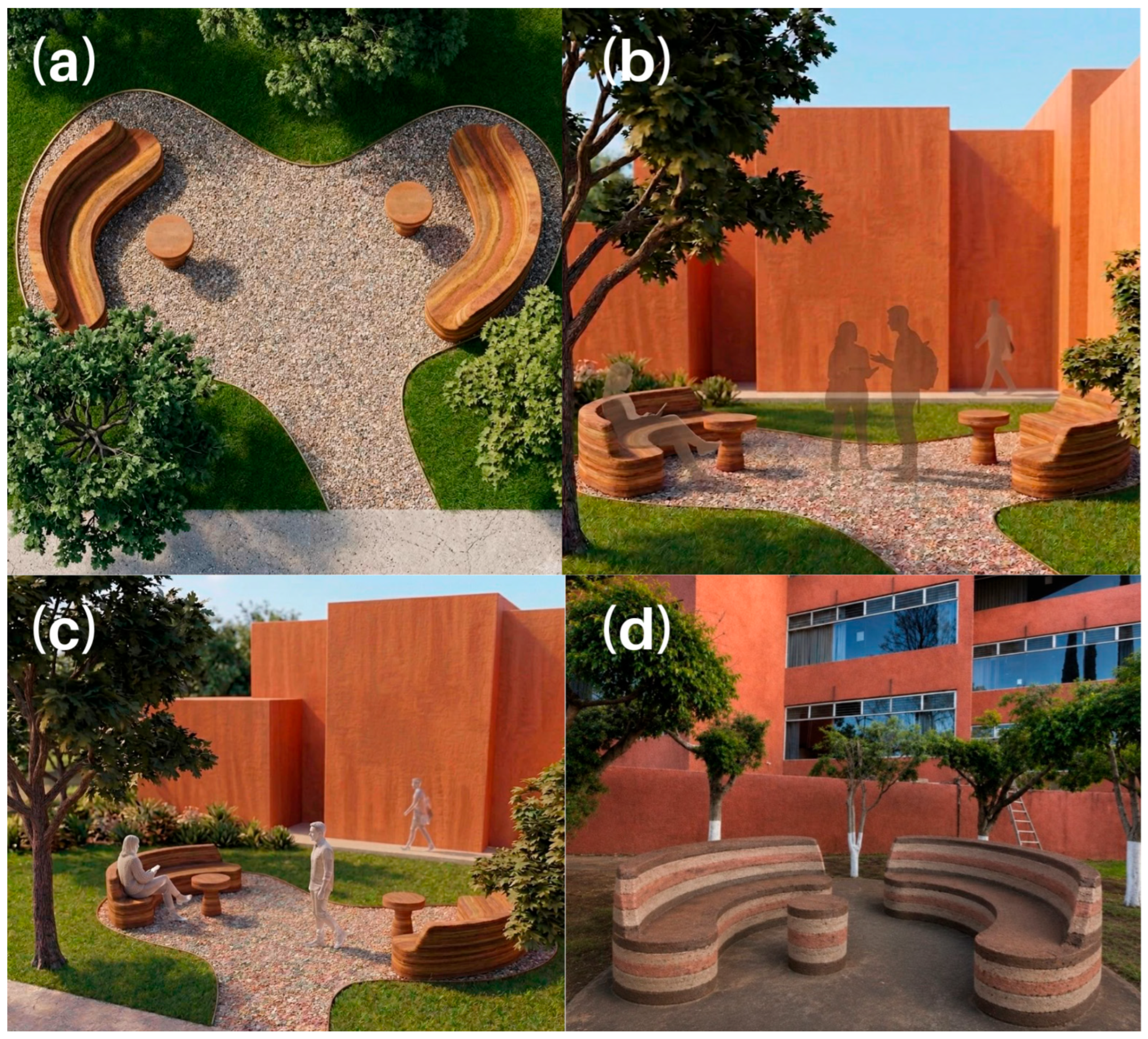
The final design of the proposed sustainable furniture for an outdoor space, derived from the functional analysis of the pre-existing conditions, is presented in the form of an in situ rendering in Figure 8, where it may be observed how the monolithic prefabricated element is appropriately integrated into the institutional courtyard while respecting the existing vegetation (for example, tree species with whitewashed trunks) and the background volumetric of the building itself.
Figure 8.
Final rendering of the proposed sustainable furniture within the institutional space. The integration of multiple prefabricated modules within the existing courtyard can be observed, configuring collaborative spaces that respectfully coexist with the surrounding natural environment. (a) The top view is shown, allowing appreciation of the spatial distribution and overall design configuration; (b) the front view, where the integration of the furniture with the wooded areas and surrounding buildings is observed; (c) a perspective view is presented, facilitating a three-dimensional understanding of the proposal within its context; and finally, (d) a photorealistic visualization of the design incorporated into the existing environment, demonstrating its integration with the building currently located on the site. Together, the four representations provide a comprehensive view of the proposed design and allow for the evaluation of both its formal characteristics and its interaction with the urban context.
Figure 8 illustrates the geometric configuration of the modules composing the ergonomic seating surface and the cylindrical table pedestal, both conceived as monolithic prefabricated rammed-earth construction elements with a smooth finish. An appropriate arrangement of several of these units enables the formation of socio-conversational nodes and study spaces, thereby allowing users to interact with electronic devices within a hybrid learning environment. This representation not only demonstrates the aesthetic feasibility of the proposed furniture design, but also guides the transformation of a transitional area into a productive and collaborative space.
In comparison with the current state of the art in rammed-earth urban furniture for university campuses [54], the principal innovation lies in the proposal of the module as a monolithic and integrated element. Traditional prefabricated rammed-earth furniture design not only separates the seat from the work surface, thereby limiting it, but also restricts spatial efficiency and flexibility of use, among other aspects [55]. By contrast, the continuous curved geometry of the present proposal optimizes both material usage and installation footprint, while allowing the table to function as a continuation of the seat, thereby enabling a broader range of working postures and improved ergonomics.
Previous studies concerning the configuration of outdoor spaces in educational environments have demonstrated that the availability of integrated work surfaces is crucial for promoting collaborative learning outside the classroom [56]. The solution proposed herein also responds to the demand for an integrated pedestal serving as support for laptops or tablets, thus significantly improving the adaptation of the institutional space to the needs of the contemporary student.
From the perspective of reducing environmental impact, the monolithic rammed-earth design proposed in this research enables the reduction in fabrication and transportation complexity by minimizing the number of components. This approach aligns with the growing interest in furniture manufacturing based on extended life cycles and, consequently, low maintenance requirements within educational institutions [57,58], thereby reducing both costs and the carbon footprint associated with the replacement of furniture made from metal, wood, or concrete.
4. Conclusions
In conclusion, the development and validation of rammed-earth interior furniture represents a key milestone in the truly sustainable restructuring of university learning spaces. The most distinctive aspect of this proposal lies in its ability to merge the innovation inherent to parametric organic geometry design with vernacular construction knowledge, resulting in a functional product that transcends the ecological and aesthetic boundaries of conventional interior design.
From the perspective of structural feasibility, the design of the modular asymmetric curved bench assembly demonstrated remarkable mechanical resistance. Finite Element Analysis (FEA) simulations confirmed the structural viability of the asymmetric curved design. The prototype is capable of withstanding static loads of 5000 N (equivalent to 500 kg) without structural failure. A Safety Factor of 1.70 was obtained. The maximum von Mises stress recorded was 2.939 × 10⁵ N/m2. Furthermore, the maximum displacements in the structure were strictly submillimetric, reaching only 0.368 mm.
Environmental Performance (LCA): Pine wood is the material with the lowest absolute emissions, presenting 200 kg CO2e and 440 MJ of energy demand. However, rammed earth significantly optimizes energy consumption, requiring only 2100 MJ, compared to the critical demand of 5900 MJ required by brick. The carbon footprint of compacted earth is 1800 kg CO2e, consolidating it as a sustainable proposal based on the use of local resources. This last point allows for reintegration at the beginning of the life cycle without significant alterations to the raw material.
The multi-criteria analysis demonstrated an 82% visual quality and social acceptance rate for the rammed-earth design. This level of acceptance significantly surpasses the metrics for brick (8%) and pine wood (10%).
Finally, aesthetic and ergonomic innovation are possibly its most perceptible characteristics for users, since the application of an ultrathin polished clay coating over the volumetric and massive skeletal rammed-earth structure does not increase construction complexity. It seals, however, the pores and maximizes surface protection. Unlike monolithic concrete furniture, which usually presents a “cold” surface temperature and a purely industrialized texture, the clay finish provides university furniture with a subtle and unparalleled warmth while simultaneously preserving fundamental properties in terms of breathability and, evidently, biodegradability at the end of its extensive life cycle. Altogether, this construction approach establishes a new standard of “radical sustainability,” formally capable of incorporating the imagery and functionality demanded by collaborative environments of the twenty-first century.
5. Limitations and Future Research Directions
Although the findings of this study demonstrate high feasibility, the research presents certain methodological limitations. First, the structural analysis was based exclusively on computer simulations under static and controlled scenarios. Furthermore, the environmental results derived from the life cycle are strictly conditioned by the geographical context and the on-site availability of the materials used. Nevertheless, the central contribution of this research lies in proposing the design and integration of sustainable furniture in university spaces as a viable alternative to conventional options, thus fostering new dynamics of responsible interaction with the environment.
To continue this work, it is imperative to move towards empirical validation through the fabrication and on-site evaluation of full-scale physical prototypes. Future research should incorporate fatigue tests to document the impact of continuous dynamic loads, as well as evaluate the wear caused by human interaction and long-term exposure to environmental factors. Finally, this study presents an opportunity for interior design and decoration specialists to transcend purely aesthetic and visual approaches, systematically integrating criteria of environmental impact, circular economy and life cycle analysis into their projects.
Author Contributions
Conceptualization, M.M.-M., C.T.-T., P.C.-G., K.M.R.-B., and V.F.-O.; methodology, M.M.-M., P.C.-G., K.M.R.-B., and V.F.-O.; software, M.M.-M., P.C.-G., K.M.R.-B., and E.M.-E.; validation, M.M.-M., C.T.-T., P.C.-G., K.M.R.-B., V.F.-O., J.R.G.-D., and E.M.-E.; formal analysis, M.M.-M., P.C.-G., K.M.R.-B., and V.F.-O.; investigation, M.M.-M., P.C.-G., K.M.R.-B., and V.F.-O.; resources, M.M.-M., K.M.R.-B., and E.M.-E.; data curation, M.M.-M., and J.R.G.-D.; writing—original draft preparation, P.C.-G., and K.M.R.-B.; writing—review and editing, M.M.-M.; visualization, M.M.-M., C.T.-T., P.C.-G., K.M.R.-B., V.F.-O., J.R.G.-D., and E.M.-E.; supervision, M.M.-M., C.T.-T., P.C.-G., K.M.R.-B., V.F.-O., J.R.G.-D., and E.M.-E.; project administration, M.M.-M., C.T.-T., J.R.G.-D., and E.M.-E.; funding acquisition, M.M.-M. and J.R.G.-D. All authors have read and agreed to the published version of the manuscript.
Funding
This research received no external funding.
Institutional Review Board Statement
Not applicable.
Informed Consent Statement
Not applicable.
Data Availability Statement
The data presented in this study are available upon request to the corresponding author.
Acknowledgments
We appreciate the valuable participation of students Diana Yeidelcol Castro-Paniagua and Joana Grasiel Fernández-Ortiz, as part of the community service program for the bachelor’s degree in Translation, Interpretation, and Languages. We also thank Luis Esteban Pérez-Villanueva, the program director. Finally, we thank the Faculty of Education at the Vasco de Quiroga University for their collaboration in translating this document.
Conflicts of Interest
The authors declare no conflicts of interest.
Appendix A
Table A1.
Values used for the different simulations of the proposed furniture.
Table A1 presents the parameters used for the computational simulation of the mechanical properties of the proposed furniture. These values were defined based on the dimensions and geometric characteristics of the design developed in this study, whereas the physical and mechanical properties of the materials used as input data were obtained from the specialized scientific literature and duly cited in the manuscript.
It should also be noted that the structural simulation was performed using SolidWorks software, as described in the Materials and Methods section. The purpose of this analysis was to evaluate the mechanical behavior of the designed furniture under the conditions established in the simulation, allowing for the estimation of parameters such as stresses, strains, and displacements of the system. To avoid any ambiguity, this explanation has been incorporated and reinforced in the manuscript.
References
- Röck, M.; Saade, M.R.M.; Balouktsi, M.; Rasmussen, F.N.; Birgisdottir, H.; Frischknecht, R.; Habert, G.; Lützkendorf, T.; Passer, A. Embodied GHG Emissions of Buildings—The Hidden Challenge for Effective Climate Change Mitigation. Appl. Energy 2020, 258, 114107. [Google Scholar] [CrossRef] [Scilit]
- Trepci, E.; Maghelal, P.; Azar, E. Urban Built Context as a Passive Cooling Strategy for Buildings in Hot Climate. Energy Build. 2021, 231, 110606. [Google Scholar] [CrossRef] [Scilit]
- Essien, A.; Ekhaese, E.; Babalola, D. Sustainable Development Strategies for Smart Sustainable Campus Operations: Global Trends, Challenges and Opportunities. Front. Sustain. Cities 2026, 8, 1747438. [Google Scholar] [CrossRef] [Scilit]
- Barnett-Itzhaki, Z.; Tifferet, S.; Berkowic, D.; Arviv, T.; Daya, A.; Carasso Romano, G.H.; Levi, A. Strategies and Challenges for Green Campuses. Front. Sustain. Cities 2025, 7, 1469274. [Google Scholar] [CrossRef] [Scilit]
- Friedman, A. Life Cycle Homes for Adaptability, Circularity, and Sustainability. Architecture 2025, 5, 22. [Google Scholar] [CrossRef] [Scilit]
- Lingegård, S.; von Oelreich, K. Implementation and Management of a Circular Public Procurement Contract for Furniture. Front. Sustain. 2023, 4, 1136725. [Google Scholar] [CrossRef] [Scilit]
- Yang, D.; Vezzoli, C.; Su, H. Comprehensive Life Cycle Assessment of 25 Furniture Pieces across Categories for Sustainable Design. Sci. Rep. 2025, 15, 13968. [Google Scholar] [CrossRef] [Scilit] [PubMed]
- Sakib, M.N.; Kabir, G.; Ali, S.M. A Life Cycle Analysis Approach to Evaluate Sustainable Strategies in the Furniture Manufacturing Industry. Sci. Total Environ. 2024, 907, 167611. [Google Scholar] [CrossRef] [Scilit] [PubMed]
- Wang, X.; Zhang, W.; Li, Y.; Tong, J.; Yu, F.; Ye, Q. Impacts of Water Constraints on Economic Outputs and Trade: A Multi-Regional Input-Output Analysis in China. J. Clean. Prod. 2024, 434, 140345. [Google Scholar] [CrossRef] [Scilit]
- Ibrahim, I.; Nasreldin, R. Investigating the Integration of Biomimicry and Eco-Materials in Sustainable Interior Design Education. Architecture 2025, 5, 39. [Google Scholar] [CrossRef] [Scilit]
- Finnveden, G.; Hauschild, M.Z.; Ekvall, T.; Guinée, J.; Heijungs, R.; Hellweg, S.; Koehler, A.; Pennington, D.; Suh, S. Recent Developments in Life Cycle Assessment. J. Environ. Manag. 2009, 91, 1–21. [Google Scholar] [CrossRef] [Scilit] [PubMed]
- Bianco, I.; Thiébat, F.; Carbonaro, C.; Pagliolico, S.; Blengini, G.A.; Comino, E. Life Cycle Assessment (LCA)-Based Tools for the Eco-Design of Wooden Furniture. J. Clean. Prod. 2021, 324, 129249. [Google Scholar] [CrossRef] [Scilit]
- Trucillo, P.; Chaouali, F.; Portioli, F.P.A. Sustainable Material Selection for Interior Design Furniture: A Simple Procedure Based on Environmental Analysis and Structural Optimization. Materials 2025, 18, 2023. [Google Scholar] [CrossRef] [Scilit] [PubMed]
- Vandervaeren, C.; Galle, W.; Stephan, A.; De Temmerman, N. More than the Sum of Its Parts: Considering Interdependencies in the Life Cycle Material Flow and Environmental Assessment of Demountable Buildings. Resour. Conserv. Recycl. 2022, 177, 106001. [Google Scholar] [CrossRef] [Scilit]
- López-Sosa, L.B.; Morales-Máximo, M. Manual de Principios Sobre Vinculación, Innovación y Diseño Para El Desarrollo de Proyectos Ecotecnológicos; Millán-Ramírez, A., Ed.; Universidad Intercultural Indígena de Michoacán: Pátzcuaro Michoacán, Mexico, 2022. [Google Scholar]
- Choi, E.J.; Choi, Y.J.; Kim, N.H.; Moon, J.W. Seasonal Effects of Thermal Comfort Control Considering Real-Time Clothing Insulation with Vision-Based Model. Build. Environ. 2023, 235, 110255. [Google Scholar] [CrossRef] [Scilit]
- Cordella, M.; Hidalgo, C. Analysis of Key Environmental Areas in the Design and Labelling of Furniture Products: Application of a Screening Approach Based on a Literature Review of LCA Studies. Sustain. Prod. Consum. 2016, 8, 64–77. [Google Scholar] [CrossRef] [Scilit]
- Theilig, K.; Lourenço, B.; Reitberger, R.; Lang, W. Life Cycle Assessment and Multi-Criteria Decision-Making for Sustainable Building Parts: Criteria, Methods, and Application. Int. J. Life Cycle Assess. 2024, 29, 1965–1991. [Google Scholar] [CrossRef] [Scilit]
- Morales-Máximo, M.; Ruíz-García, V.M.; Rutiaga-Quiñones, J.G.; López-Sosa, L.B. Design and Implementation of a Low-Pressure Briquetting Machine for the Use of Pinus Spp. Wood Residues: An Approach to Appropriate Rural Technology. Clean Technol. 2025, 7, 22. [Google Scholar] [CrossRef] [Scilit]
- Amieiro, M.A.; Careaga, S.A.; Romero, A.G.; Amieiro, M.A.; Careaga, S.A.; Romero, A.G. Agenda 2030: Claves para la Transformación Sostenible; Los Libros de la Catarata: Madrid, Spain, 2019; ISBN 978-84-9097-707-1. [Google Scholar]
- Núñez-Montiel, N.; Cira-Ramos, J.; Corral-Huacuz, J.C.; Morales-Máximo, M.; López Sosa, L.B.; García, C.A.; Aguilera-Mandujano, A.; Arias Navarrete, C.R.; Rodríguez-Magallón, M.d.C. Use of Design Thinking in the Proposal of a Multi-Compound Solar Dryer Applied to Processes of Traditional P’urhépecha Medicine. Energy Explor. Exploit. 2024, 42, 1163–1177. [Google Scholar] [CrossRef] [Scilit]
- NMX-R-083-SCFI-2019 Escuelas-Diseño y Fabricación de Mobiliario para la Infraestructura Física Educativa-Criterios y Requisitos. Available online: https://platiica.economia.gob.mx/normalizacion/nmx-r-083-scfi-2019/ (accessed on 3 April 2026).
- Massolo, L.A.; Castagnasso, G.H.; Massolo, L.A. Análisis del Ciclo de Vida; Editorial de la Universidad Nacional de La Plata (EDULP): Buenos Aires, Argentina, 2015; ISBN 978-950-34-1230-5. [Google Scholar]
- Morales-Máximo, M.; De la Torre, M.A.; López-Sosa, L.B. Diseño y análisis de un modelo de vivienda sustentable. Publ. Sem. Nac. Energ. Sol. 2018, 4, 75–80. [Google Scholar]
- Karamoozian, M.; Zhang, H. Pushing the Boundaries of Prefabricated Shell Building Design with Building Information Modeling (BIM) and Ultra-High Performance Concrete (UHPC). Eng. Constr. Archit. Manag. 2025, 33, 2564–2585. [Google Scholar] [CrossRef] [Scilit]
- Bennett, D. The Art of Precast Concrete: Colour, Texture, Expression; Walter de Gruyter: Berlin, Germany, 2005; ISBN 978-3-7643-7668-0. [Google Scholar]
- Akbulut, D.E.; Alibeyoglu, R.N. Rammed Earth Construction: From Tradition to a Sustainable Future. In Modern Masonry Construction—The Fusion of Tradition, Technology, and Sustainability; IntechOpen: London, UK, 2025; ISBN 978-1-83634-664-7. [Google Scholar]
- Guo, T.; Qiao, M.; Shu, X.; Dong, L.; Shan, G.; Liu, X.; Guo, Y.; Ran, Q. Characteristic Analysis of Air Bubbles on the Rheological Properties of Cement Mortar. Constr. Build. Mater. 2022, 316, 125812. [Google Scholar] [CrossRef] [Scilit]
- Nkeuwa, W.N.; Riedl, B.; Landry, V. UV-Cured Clay/Based Nanocomposite Topcoats for Wood Furniture: Part I: Morphological Study, Water Vapor Transmission Rate and Optical Clarity. Prog. Org. Coat. 2014, 77, 1–11. [Google Scholar] [CrossRef] [Scilit]
- Temesgen, A.G.; Kemal, S. Sustainable Recycled Cotton Fabric and Clay Powder Composites for Improved Thermal and Mechanical Performance in Home Furniture: Research Article. Clim.-Adapt. Mater. Eng. 2025, 1, 12–27. [Google Scholar] [CrossRef] [Scilit]
- Jia, Q.; Chen, W.; Tong, Y. Influence of Material Composition on Physical Performance of Earthen Plasters. Constr. Build. Mater. 2024, 417, 135219. [Google Scholar] [CrossRef] [Scilit]
- Hajdarević, S.; Busuladžić, I. Stiffness Analysis of Wood Chair Frame. Procedia Eng. 2015, 100, 746–755. [Google Scholar] [CrossRef] [Scilit]
- Ceylan, E.; Güray, E.; Kasal, A.; Ceylan, E.; Güray, E.; Kasal, A. Structural Analyses of Wooden Chairs by Finite Element Method (FEM) and Assessment of the Cyclic Loading Performance in Comparison with Allowable Design Loads. Maderas Cienc. Tecnol. 2021, 23, 19. [Google Scholar] [CrossRef] [Scilit]
- Zhao, X. A Comprehensive Framework for AI-Driven Chair Design Integrating Finite Element Analysis, Ergonomics, and Manufacturing Constraints. Des. J. 2026, 1–20. [Google Scholar] [CrossRef] [Scilit]
- Merdan, R. Finite Element Analysis of the Structural Performance of a Specific Wooden-Stool Type and Style. J. Mater. Sci. Res. Rev. 2025, 8, 286–294. [Google Scholar] [CrossRef] [Scilit]
- Tankut, N.; Tankut, A.N.; Zor, M. Finite Element Analysis of Wood Materials. Drv. Ind. 2014, 65, 159–171. [Google Scholar] [CrossRef] [Scilit]
- Eštoková, A.; Fabianová, M.; Radačovský, M. Life Cycle Assessment and Environmental Impacts of Building Materials: Evaluating Transport-Related Factors. Eng. Proc. 2023, 57, 5. [Google Scholar] [CrossRef] [Scilit]
- Naseri, A.; Fattahi, S.M.; Sarchami, A. Mechanical and Environmental Performance of Engineered Earthen Walls Reinforced with Waste Carpet Fibers. Sci. Rep. 2026, 16, 18128. [Google Scholar] [CrossRef] [Scilit] [PubMed]
- Ali, F.; Rehman, F.; Hadi, R.; Raza, G.; Khan, N.; Ibrahim, F.; Aziz, F.; Amin, M.; Khalil, B.; Mahwish, M.; et al. Environmental Sustainability Assessment of Wooden Furniture Produced in Pakistan. Braz. J. Biol. Rev. Brasleira Biol. 2022, 84, e253107. [Google Scholar] [CrossRef] [Scilit] [PubMed]
- Adnan, H.; Balasbaneh, A.T. Study of Life Cycle Assessment of Bricks and the Impacts to the Environment in Malaysia. IOP Conf. Ser. Mater. Sci. Eng. 2021, 1200, 012012. [Google Scholar] [CrossRef] [Scilit]
- Wang, S.; Su, D.; Zhu, S. A Comparative Study on Life Cycle Assessment of Typical Wood Base Furniture; Atlantis Press: Dordrecht, The Netherlands, 2016; pp. 634–640. [Google Scholar]
- Li, J.; Me, R.C.; Zhu, Q. Study on Sustainable Lightweight Design for Ming-Style Round-Backed Armchair with Laminated Bamboo Lumber Based on Finite Element Method. Preprints.org 2024. [Google Scholar] [CrossRef] [Scilit]
- Hitka, M.; Naď, M.; Klement, I.; Sydor, M. Improving Joint Strength through Controlled Wood Swelling. Wood Mater. Sci. Eng. 2026, 21, 1071–1080. [Google Scholar] [CrossRef] [Scilit]
- Liu, Y.; Wang, Y.; Wang, C.; Zhou, T.; Hu, J.; Wu, Z. Carbon Footprint Accounting and Analysis of Chinese Furniture Enterprises’ Panel Cabinets. Sustainability 2025, 17, 9267. [Google Scholar] [CrossRef] [Scilit]
- Medina-Ríos, E.; Morales-Máximo, M.; López-Sosa, L.B.; Aguilera-Mandujano, A.; Corral-Huacuz, J.C. Life Cycle Analysis (LCA) of the Production of Wood Waste Briquettes from Pinus Spp.: Case Study San Francisco Pichátaro, México. IOP Conf. Ser. Earth Environ. Sci. 2021, 912, 012011. [Google Scholar] [CrossRef] [Scilit]
- Çelik, A.; Anıl, O.; Mercimek, Ö.; Akkaya, S.T.; Turan, A.İ. Investigation of Mechanical Properties of Masonry Materials Under Compressive Loading: Experimental and Numerical Study. Politek. Derg. 2025, 28, 565–572. [Google Scholar] [CrossRef] [Scilit]
- Roman, K.; Grzegorzewska, E.; Leszczyński, M.; Pycka, S.; Hamidi, N. Evaluation of the Mechanical Properties of Pine, Larch, and Spruce Wood Subjected to Saline Treatment. Materials 2026, 19, 1108. [Google Scholar] [CrossRef] [Scilit] [PubMed]
- Baño, V.; Argüelles-Bustillo, R.; Regueira, R.; Guaita, M. Determination of the Stress-Strain Curve in Specimens of Scots Pine for Numerical Simulation of Defect Free Beams. Mater. Constr. 2012, 62, 269–284. [Google Scholar] [CrossRef] [Scilit]
- Kaushik, H.B.; Rai, D.C.; Jain, S.K. Stress-Strain Characteristics of Clay Brick Masonry under Uniaxial Compression. J. Mater. Civ. Eng. 2007, 19, 728–739. [Google Scholar] [CrossRef] [Scilit]
- Pandit, A.; Minné, E.A.; Li, F.; Brown, H.; Jeong, H.; James, J.-A.C.; Newell, J.P.; Weissburg, M.; Chang, M.E.; Xu, M.; et al. Infrastructure Ecology: An Evolving Paradigm for Sustainable Urban Development. J. Clean. Prod. 2017, 163, S19–S27. [Google Scholar] [CrossRef] [Scilit]
- Abu Qadourah, J.; Alnusairat, S.; Hiyasat, R. Demographic Patterns in the Aesthetic Acceptance of Building-Integrated Photovoltaics in Apartment Housing: Implications for Solar Energy Design and Policy. Buildings 2026, 16, 1758. [Google Scholar] [CrossRef] [Scilit]
- Qiu, Y.; Luo, J.; Yang, W.; Gao, L. An AI-Driven Framework for Furniture Design Integrating NLP and Multi-Criteria Decision Making Based on Online User Reviews. Expert Syst. Appl. 2026, 320, 132164. [Google Scholar] [CrossRef] [Scilit]
- Abu Qadourah, J.; Alnusairat, S. Integrating Aesthetics and Sustainability: Evaluating the Aesthetic Perception of Photovoltaic Installation on the Apartment Building Façade in Jordan. Archnet-IJAR Int. J. Archit. Res. 2024, 19, 584–601. [Google Scholar] [CrossRef] [Scilit]
- Grabiec, A.M.; Łacka, A.; Wiza, W. Material, Functional, and Aesthetic Solutions for Urban Furniture in Public Spaces. Sustainability 2022, 14, 16211. [Google Scholar] [CrossRef] [Scilit]
- Kadak, A.C.; Berte, M.V. Advanced Modularity Design for the MIT Pebble Bed Reactor. Nucl. Eng. Des. 2006, 236, 502–509. [Google Scholar] [CrossRef] [Scilit]
- Toomey Zimmerman, H.; Land, S.M. Sociomaterial Configurations and Resources Supporting Observations in Outdoor Learning: Results from Multiple Iterations of the Tree Investigator Project. In Emergent Practices and Material Conditions in Learning and Teaching with Technologies; Cerratto Pargman, T., Jahnke, I., Eds.; Springer International Publishing: Cham, Switzerland, 2019; pp. 231–244. ISBN 978-3-030-10764-2. [Google Scholar]
- Qadourah, J.A.; Almasarwah, N.; Alsarayreh, A.A.; Al-Falahat, A. Architectural Integration of Photovoltaic Shading Systems for Resilient and Sustainable Cities: A Multi-Criteria Decision-Making Approach. Energy Build. 2026, 351, 116731. [Google Scholar] [CrossRef] [Scilit]
- Oliveira, M.C.; Proença, J. Sustainable Campus Operations in Higher Education Institutions: A Systematic Literature Review. Sustainability 2025, 17, 607. [Google Scholar] [CrossRef] [Scilit]
- Ávila, F.; Fagone, M.; Gallego, R.; Puertas, E.; Ranocchiai, G. Gypsum Stabilization for Enhancing the Compressive Behavior of Rammed Earth: Experimental and Statistical Assessment. Front. Built Environ. 2025, 11, 1708488. [Google Scholar] [CrossRef] [Scilit]
- Chauhan, P.; Prime, N.; Plé, O. Benefit of Unsaturated Soil Mechanics Approach on the Modeling of Early-Age Behavior of Rammed Earth Building. Materials 2022, 15, 362. [Google Scholar] [CrossRef] [Scilit] [PubMed]
- Losini, A.E.; Grillet, A.-C.; Woloszyn, M.; Lavrik, L.; Moletti, C.; Dotelli, G.; Caruso, M. Mechanical and Microstructural Characterization of Rammed Earth Stabilized with Five Biopolymers. Materials 2022, 15, 3136. [Google Scholar] [CrossRef] [Scilit] [PubMed]
- Petcu, C.; Dobrescu, C.F.; Dragomir, C.S.; Ciobanu, A.A.; Lăzărescu, A.V.; Hegyi, A. Thermophysical Characteristics of Clay for Efficient Rammed Earth Wall Construction. Materials 2023, 16, 6015. [Google Scholar] [CrossRef] [Scilit] [PubMed]
- Cuitiño-Rosales, M.G.; Rotondaro, R.; Esteves, A. Análisis Comparativo de Aspectos Térmicos y Resistencias Mecánicas de Los Materiales y Los Elementos de La Construcción Con Tierra. Rev. Arquit. 2020, 22, 138–151. [Google Scholar] [CrossRef] [Scilit]
- Amede, E.A.; Aklilu, G.G.; Kidane, H.W.; Dalbiso, A.D. Examining the Viability and Benefits of Cement-Stabilized Rammed Earth as an Affordable and Durable Walling Material in Addis Ababa, Ethiopia. Cogent Eng. 2024, 11, 2318249. [Google Scholar] [CrossRef] [Scilit]

Disclaimer/Publisher’s Note: The statements, opinions and data contained in all publications are solely those of the individual author(s) and contributor(s) and not of MDPI and/or the editor(s). MDPI and/or the editor(s) disclaim responsibility for any injury to people or property resulting from any ideas, methods, instructions or products referred to in the content. |
© 2026 by the authors. Licensee MDPI, Basel, Switzerland. This article is an open access article distributed under the terms and conditions of the Creative Commons Attribution (CC BY) license.