


Abstract
Discourse on Japanese architecture relies on qualitative interpretation to link abstract concepts such as “ma” and “mu”, used here as illustrative examples of the conceptual register, with physical spaces, such as engawa, yet lacks quantitative, data-driven validation. This study addresses this gap by testing two primary hypotheses: (1) whether abstract Japanese architectural terms form a distinct, computationally recoverable conceptual layer, and (2) whether the corresponding concrete architectural devices cohere into a unified physical mesh rather than being fragmented into unrelated subclusters. We investigate this using a Natural Language Processing (NLP) framework centred on a fine-tuned BERT model, utilising an exhaustive Adjusted Rand Index (ARI) enumeration search over two-way partitions on a target vocabulary of 28 terms. Furthermore, a “definitional audit” compares a FULL corpus against a CLEAN corpus, stripped of explicit glossary-like sentences, to mitigate “shortcut learning”, allowing sensitivity at the conceptual physical boundary to be inspected. Both hypotheses are supported. A stable two-block structure appears across all evaluations, comprising a compact conceptual pocket {aware, ma, mu, wabi, sabi, and wabi_sabi} and a larger physical mesh integrating vocabulary for room, garden, and shrine. Interface structure concentrates in a narrow boundary corridor, most consistently along the engawa–shakkei linkage, with en acting as the principal physical-side interface hub under sparsified network views. In the definitional audit (FULL versus CLEAN), ikezuishi is the only recurrently unstable item, shifting sides under small, defensible changes in corpus cleaning and Japanese-aware sentence segmentation, which is best read as a sensitivity signal rather than a substantive change in macro-structure. Removing glossary-like definitions slightly tightens dispersion while preserving the backbone split, which supports definitional audits as a practical robustness check for distributional studies of architectural vocabularies.
1. Introduction
Architectural writing on Japanese architecture has described spatial atmosphere through in-between and boundary devices such as “en” (縁) or “engawa” (縁側), “ma” (間) and “mu” (無), showing how they mediate between interior, exterior and landscape [1]. This work, together with phenomenological place theory, which asks the architect to make the genius loci visible so that people can dwell, proceeds through interpretative, qualitative argument rather than corpus-based or quantitative analysis [1,2]. A distinct critical strand, reconstructed by Keyvanian, reveals how Manfredo Tafuri framed architecture as an ideological instrument of capitalism and then shifted to a historically grounded approach based on philology and microhistories [3]. Whether it is Norberg-Schulz’s insistence on dwelling as the locus of architectural meaning [2] or Tafuri’s critique of ideology in architectural historiography [3], these traditions, one phenomenological and one historically critical, map meaning through argument rather than through explicit models of lexical organisation. The question of how architectural terms cohere as a system, therefore, remains open, and it is this systemic coherence that the present study attempts to model computationally.
Recent qualitative work on contemporary Japanese architecture reveals that Yoshiji Takehara’s houses utilise in-between spaces, such as corridors, doma, and engawa, along with double-layered openings, to blur physical and psychological boundaries and create multilayered permeability [4]. Jiang, analysing recent public projects, likewise argues that the engawa and the deep eave create an ambiguous boundary between architecture and nature, allowing inside and outside to extend into one another [5]. Chapter “Ma (Interstice) and Rubble” in Arata Isozaki’s book “Japan-ness in Architecture” is the conceptual source that treats “Ma” (間) as an interstice that both links and separates spaces [6]. All three texts are purposive and interpretive and do not use corpus-based or Natural Language Processing (NLP) methods to test whether the lineages they describe are recoverable from architects’ language [4,5,6]. By contrast, Horvath builds a large corpus of computational architecture and uses natural language processing tools to map ways of speaking and identify quantitatively periodic and recurring topics [7]. In short, while Horvath [7] provides a map of the topics, this study offers a topographical and structural survey of the linguistic landscape, moving from topic identification to systemic quantification. In performance-oriented architecture, Hensel argues, based on theoretical reflection and research by design, that the architectural boundary should be understood as an extended and dynamic region of action rather than a thin partition. This idea is later generalised into a non-discrete, environment-mediating framework [8]. A separate quantitative strand, the space-syntax analysis of Edo middle and lower-class samurai houses, shows that the chanoma, or family living space, frequently has the highest integration value and thus becomes the actual topological centre, which calls into question the reception-oriented principle of Sekkyaku-honi [9]. Kim’s companion paper then proposes a Modified Carrier Space model that allows exterior, intermediate, and interior zones to be represented within a single extroverted spatial structure [10].
In parallel, an architectural informatics strand has emerged to manage the vast textual data in construction and facility management [11]. While traditional approaches focused on standardising metadata for architectural and historical archive collections [12], new methods use NLP and scientometric mapping to structure these large repositories computationally [11]. This work shows that domain corpora can be clustered and visualised, bridging the gap between computational linguistics and humanities-based interpretive traditions [13]. Digital history and computational humanities have also demonstrated that computational models can extract patterns and relationships from texts, answering questions that would be difficult to resolve through manual reading over a lifetime [14]. The development of foundational architectures like the Transformer, which relies entirely on attention mechanisms to process text in parallel, and the subsequent validation of models like Bidirectional Encoder Representations from Transformers (BERT) on large text corpora have enabled the surface of latent taxonomies and relational clusters [15,16]. This is exemplified, for instance, in the application of NLP for the automatic categorisation and identification of subject terms in art and architectural metadata [17]. However, these efforts overwhelmingly address technical or administrative data [11,17], or focus on defining the computational design terms themselves [18], rather than the philosophically thick, metaphor-heavy vocabulary of architectural theory [19]. Even ambitious computational proposals tend to treat theory as a passive application field; for instance, by attempting to quantify hedonic response [20] or engaging in what has been critiqued as non-scientific simulation or imitation “games” [21]. This sole focus on data limits design by excluding social, economic, and ecological values central to cultural concerns in architectural discourse [22]. This article addresses that gap.
A recent methodological study by the same authors established the reproducible framework and validated the core models used in the present study [23]. The report tested whether a fine-tuned BERT model, trained on a ~1.98-million-word corpus spanning architecture, history, philosophy and theology, could recover a phenomenological “gold standard” conceptual versus physical split in Japanese architectural terms. BERT successfully recovered this split (ARI = 0.852 on the FULL corpus; ARI = 0.718 on the CLEAN corpus) and was invariant across random seeds, whereas static Word2Vec (W2V) baselines performed at or near chance levels. The study also introduced and validated a “definitional audit” (comparing FULL and CLEAN corpora) as a control to check that models rely on contextual usage rather than shortcutting via glossary-like sentences. The present article uses that published, validated framework as an empirical follow-up, redeploying it to move from confirming a known split to discovering emergent, data-driven taxonomies. The novelty of the presented manuscript is threefold. First, we tested the target list as an auditable, closed-vocabulary testbed (28 terms) that deliberately mixes high-frequency anchors with low-frequency, locally specific items, so the analysis can expose where the discourse boundary is crisp and where it is structurally liminal. Second, the FULL versus CLEAN contrast is used not only as a negative-control audit but also as an explicit experimental factor to test whether the recovered structure persists once definitional boilerplate is dampened. Third, the analysis places special weight on interface behaviour, reporting which items consistently act as bridges between registers and which items behave as hinge terms whose membership is sensitive to context construction, rather than presenting the output as a single, definitive taxonomy.
The empirical problem is specific. Japanese architectural writing that treats domestic thresholds shows that elements such as “doma” (土間), “engawa” (縁側), “fusuma” (襖), “shōji” (障子) and “veranda” or “engawa-like” edges, together with occasional Shinto or garden-derived markers, are presented as working jointly to blur interior and exterior and are then re-read, in English and international discussions, through Japan-ness, weak or low-assertive architecture, and performative or non-discrete enclosure [4,5,6,8,24,25,26]. In that field, it is still not demonstrated, however, whether abstract terms like “ma” (間) actually function as a separate conceptual layer from the concrete devices, or whether the devices themselves form a single boundary transition cluster.
This study addresses the following research questions:
- RQ1: Do abstract Japanese architectural terms such as ma and mu form a distinct, computationally recoverable conceptual layer that is separable from the concrete boundary devices in the corpus-based semantic space?
- RQ2: Do the corresponding concrete physical devices cohere into a single boundary transition cluster across heterogeneous architectural, historical, and theoretical sources?
Throughout, ‘conceptual’ and ‘physical’ are treated as operational, corpus-recoverable registers (patterns of contextual usage), not as ontological claims about what the terms ‘really are’ outside discourse.
Close reading can state such relations, but demonstrating them across large, heterogeneous architectural, historical and theoretical corpora requires corpus-based, syntax-based or parameterised approaches of the kind already used in Horvath [7], in the two Kim [9,10] studies, and in Hensel’s performance-oriented framework [8]. Contemporary reinterpretations, such as those by Li et al. [4] and Ye et al. [27], remain crucial as interpretive frames because they demonstrate how current scholarship re-reads Japanese work through permeability, weak enclosure, or philosophy of science frames. However, they are not themselves corpus-based engines. Canonical studies of Japanese architectural space, such as Mitsuo Inoue’s Space in Japanese Architecture [28] and Yoshinobu Ashihara’s Exterior Design in Architecture [29], remain influential points of reference for how spatial organisation and exterior–interior relations are discussed in Japanese architectural scholarship. In this paper, these works are not treated as interpretive “ground truth” that the model is expected to reproduce, because the present contribution is methodological: an auditable, quantitative instrument for mapping discourse structure at scale. Accordingly, the introductory sources are used to specify the architectural questions that the model is asked to test, rather than to serve as an exhaustive canon of Japanese space theory.
Crucially, the argument is framed for architectural theory and history rather than for the digital humanities pipeline. The models are used as instruments for architectural seeing. Three actually existing lines of interpretation judge their output: first, the re-reading of late 20th and early 21st century Japanese houses by Sejima and Fujimoto as thin, serial, lifestyle and connectivity-based interiors that dismantle the post-war container [25]; second, the emergence of weak, fragile, careful or defeat-based design positions that make low-assertive envelopes a legitimate architectural stance [26]; and third, recent attempts to place contemporary Japanese architects, including Fujimoto, inside broader philosophical and scientific trajectories [27]. By setting those as the legibility horizon, the paper ensures that the clusters it proposes can still be read inside current Japanese and Japan-related discourse, rather than only inside NLP metrics. At the same time, by turning those readings into a reproducible, cross-checkable map of how the concepts relate, the paper contributes to wider, socially and culturally situated efforts to make architectural knowledge comparably readable across settings and scales, of the kind Dotson sketches from an urban and race-aware angle [30].
This paper treats NLP models as instruments for architectural scholarship rather than as ends in themselves. Concretely, it offers a reproducible way to test whether interpretive claims in architectural history and theory, for example, that abstract notions (ma, mu, and wabi/sabi) operate as a separate conceptual register from boundary devices (engawa, shōji, fusuma), are recoverable at the level of large-scale discourse structure. The output is not a replacement for close reading, but a quantitative map that can (i) corroborate, (ii) qualify, or (iii) problematise established readings by showing which relations persist across corpora and which depend on definitional shortcuts. In practical terms, this makes it possible to compare “interpretive horizons” across corpora, periods, languages, or authorship clusters using the same auditable pipeline, and to identify liminal bridge terms that concentrate cross-register mediation.
Two contributions follow from this framing: First, we provide an auditable, closed-vocabulary testbed (28 terms) and an explicit two-way hypothesis space that lets readers see how many near-equivalent alternatives exist within the same embedding geometry and which terms sit on the decision boundary. Second, we separate discovery from inference by treating the ARI enumeration as a boundary-mapping device, and then attaching non-parametric uncertainty summaries (bootstrap intervals) and chance exceedance checks (label-size-preserving permutation) only to the shortlist that is actually discussed, which keeps exploration comprehensive while reducing the temptation to over-read a single micro-assignment.
This paper is presented in five sections: Section 2 details the methodology, including the corpus design (FULL vs. CLEAN), the target vocabulary of 28 terms, and the computational methods used, including an exhaustive ARI enumeration, a post hoc sensitivity replication under an alternative context-construction regime, and several visual diagnostics (such as similarity webs and dendrograms). Section 3 presents the results, beginning with the exploratory findings from the ARI search and the comparison between the FULL and CLEAN corpora. It then reports on the post hoc validation checks and presents the network topology and hierarchical structure of the concepts. Section 4 provides a discussion that interprets these findings, explains the stability of the two-block structure and the boundary behaviour of “ikezuishi”, discusses the significance of the definitional audit, addresses the limitations of the study, and offers recommendations for further studies. Section 5 concludes by directly answering the paper’s initial research questions.
2. Materials and Methods
2.1. Workflow Overview
Figure 1 summarises the auditable end-to-end workflow used in this study. We construct two paired corpora (FULL and CLEAN) to operationalise the definitional audit factor, then extract contextual term representations using the previously validated fine-tuned BERT pipeline. We apply binary k-means (k = 2) for comparability, enumerate candidate partitions of the 28-term set, score agreement using ARI, and retain high-ranking candidates for non-parametric uncertainty summaries (bootstrap confidence intervals) and a chance exceedance check (a label-size-preserving permutation test). Finally, we generate visual diagnostics (t-SNE, dendrograms, and similarity-network “webs”) to support the interpretation and reporting of stable clusters and boundary terms.
Figure 1.
Workflow summary of the auditable pipeline used in this study. The method proceeds from research question specification and target vocabulary selection (28 terms) through corpus construction and a definitional audit (FULL vs. CLEAN), contextual embedding extraction (fine-tuned BERT), baseline binary clustering (k-means, k = 2), exhaustive/structured partition scoring via ARI, non-parametric uncertainty summaries (bootstrap confidence intervals) and a label size preserving permutation check, and visual diagnostics (t-SNE, dendrograms, similarity network webs) that support interpretation and reporting.
For readability, implementation-level configuration is reported in Appendix A, while the main text focuses on experimental factors (FULL versus CLEAN), evaluation logic, and interpretation.
2.2. Corpora
To ensure coverage of diverse discourse registers in the corpus, we compiled a general, argumentative snapshot to integrate Japanese architectural terms into live discourse, rather than presenting them in isolated glossaries. Sources span architecture, intellectual history, philosophy, and theology. The collection was scripted, logged, and anchored to a dated web snapshot, with crawl seeds, recursion depth, timestamps, checksums, and configuration captured for audit purposes. Corpus acquisition followed a text and data mining approach focused on publicly accessible pages and library-licenced full texts (for ProQuest), stored as a dated snapshot for audit. The pipeline retains only the textual content required for embedding extraction and reports corpus-level statistics rather than redistributing full copyrighted articles. Where licencing restricts redistribution, the released artefacts (if any) consist of term-level embeddings, derived similarity matrices, and run manifests, rather than the raw texts. To increase variability and academic-style vocabulary, ten journal articles were randomly selected from eligible J-STAGE and ProQuest hits using a focused query on “Japanese”, “space”, and “engawa”. Random selection was implemented as a reproducible draw from the eligible hit list after de-duplication, using a fixed seed recorded in the run manifest. Eligibility was evaluated before sampling (presence of at least one target term in title, abstract, or body), so the sample does not conflate ‘random’ with ‘post hoc chosen because it worked’. Inclusion required that at least one target term appear in the title, abstract, or body. These texts were treated purely as corpus material and did not influence the assignment of labels or evaluation.
Target vocabulary in this study tracks a fixed list of 28 terms that mix conceptual and physical notions, with a FULL glossary provided separately. The analysis centres on 28 terms that regularly anchor discourse on Japanese architectural space, spanning abstract notions and physical devices, ma (間), mu (無), wabi (侘), sabi (寂), wabi_sabi (わびさび/侘寂), en (縁), engawa (縁側), shōji (障子), fusuma (襖), tokonoma (床の間), chigaidana (違い棚), doma (土間), genkan (玄関), tomeishi (止石), ikezuishi (いけず石/行けず石), shakkei (借景), roji (路地), torii (鳥居), shimenawa (注連縄), tsuboniwa (坪庭), byōbu (屏風), hisashi (庇/廂), haiden (拝殿), sandō (参道), aware (哀れ), honden (本殿), chashitsu (茶室), and karesansui (枯山水). Appendix B includes a complete list of definitions for all 28 terms.
Because target terms occur in mixed scripts and orthographies, matching uses a normalised term inventory that maps common romanisation variants and Japanese spellings to the same target key (for example, shōji, shoji, 障子). Unicode normalisation is applied consistently (NFC), and term matching is performed conservatively to minimise false positives, with the mapping table and counts reported in the Appendix A to make coverage and ambiguity visible.
The target vocabulary was intentionally constructed as a stress test set for the pipeline rather than as an exhaustive canon of Japanese architectural space. It combines (i) high-salience, frequently discussed terms (e.g., ma, mu, and engawa), with (ii) lower-salience or locally specific items (e.g., ikezuishi), so that the evaluation probes whether the same computational procedure behaves coherently at both ends of the frequency and definitional spectrum. A second, pragmatic constraint is reproducibility: fixing a closed list allows the exhaustive ARI enumeration to traverse a stable, auditable hypothesis space under identical settings across FULL and CLEAN corpora. Finally, several anchor terms (notably ma and engawa) are included because they serve as controlled reference points for follow-on experiments in the project that will vary model families and architectural sub-corpora; their presence here ensures continuity of the testbed across the study sequence.
This study employs a two-version design in which the same snapshot is prepared in paired forms to serve as an explicit experimental factor. The FULL version retains all sentences after basic normalisation, whereas the CLEAN version mitigates shortcut learning by removing dictionary-like and appositive definitional frames. CLEAN removes dictionary-like and appositive definitional frames detected by patterns such as “X is a Y”, “X refers to Y”, or “X, a Y”. The removal is conservative and serves to dampen shortcuts while preserving ordinary usage. Token counts differ only marginally between FULL and CLEAN for both contextual and distributional pipelines, by construction. This FULL vs. CLEAN pairing, first introduced and validated as a definitional audit in a prior methodological study [23], is reused here as the backbone experimental contrast.
Regarding model-aware preprocessing and file layout, the contextual path preserves case and punctuation to pin the exact model revision. Outputs are BERT_Corpus.txt and BERT_Corpus_CL.txt. Conversely, the distributional path applies heavier filtering, including sentence splitting, lowercase conversion, punctuation removal, lemmatisation, POS (part-of-speech) filtering for open-class categories, and a custom stop list, to ensure parity with the previous study [23]. The outputs are W2V_Corpus.txt and W2V_Corpus_CL.txt. These file names are read directly by the analysis scripts.
2.3. Models, Embeddings, and Clustering
In all experiments, we use contextual term representations derived from a pinned multilingual BERT model fine-tuned and validated in our prior methodological study [23]. For each target term, contextual embeddings are extracted from corpus occurrences and aggregated into a single term vector per corpus condition. To maintain comparability across corpora and runs, we apply a baseline binary clustering (k-means, k = 2) to the term vectors, treating the resulting partition as the model-induced grouping against which candidate conceptual–physical assignments are evaluated. Implementation-level guards (cache integrity checks, pinned model revision, and deterministic execution settings) are documented in Appendix A.1.
The binary setting (k = 2) is used deliberately as an instrument aligned with the research questions, not because a richer structure is assumed to be absent. The aim is to test whether discourse supports a stable two-register separation before introducing multi-cluster taxonomies that are harder to validate and easier to overfit interpretively. Two scripts implement this pipeline under controlled implementation changes: the audit script constructs contexts by coarse splitting (full stops and line breaks), whereas the post hoc and visual pipeline normalises text (Unicode NFC, whitespace and line breaks) and segments with sentence-end rules that include Japanese punctuation (for example 。, !, ?), which changes the context pool and thus the averaged term vectors. In addition, a z-scoring toggle before k-means alters clustering geometry when enabled, and context “hits” are counted before tokenisation and truncation, so long segments can occasionally drop the target token from the model window, an artefact made less likely by sentence-level segmentation. Finally, removing the “ma pinned” orientation step is intended to avoid forcing label polarity, but upstream context and geometry changes can also move genuinely liminal items (notably ikezuishi), which we treat as boundary sensitivity rather than macro-instability.
2.4. Exploratory ARI Enumeration
To surface candidate conceptual–physical partitions without hard coding a theory split, we enumerate two-way assignments of the 28-term set and score each assignment by its agreement with the model-induced binary clustering using the Adjusted Rand Index (ARI). This approach is an exploratory alignment search; it does not validate a split against external ground truth. It makes the hypothesis space explicit by asking which labellings best match the partition implied by the embedding geometry under k-means (k = 2). ARI is suitable here because it measures partition agreement while correcting for chance and is invariant to label polarity, which matters because k-means cluster IDs are arbitrary. The enumeration yields a ranked list of high-agreement candidate partitions for each corpus condition (FULL and CLEAN). We retain only the highest-ranking candidates for uncertainty summaries (bootstrap intervals) and chance exceedance checks (label-size-preserving permutation), and treat those checks as evidence about non-random alignment under this pipeline rather than as proof of a unique, ontologically correct taxonomy. Full enumeration mechanics, symmetry handling, and output artefacts are reported in Appendix A.2.
2.5. Concept Alignment with Post Hoc ARI
After running the exploratory ARI enumeration, we implemented a second analysis script to address a limitation of pure ARI search: it ranks orientation-free splits using a prototype-based concept score. Then it computes the ARI post hoc for the candidates of interest. This post hoc implementation also uses language-aware context construction for Japanese, including Unicode normalisation and sentence segmentation that recognises Japanese sentence enders, which can shift the placement of boundary terms while leaving the macro two-block structure intact. In FULL mode, winners are ranked strictly by concept score, using a deterministic integer key only as a stable secondary tie-break. Degenerate splits are continuously computed and listed separately when excluded from the main ranking. Concretely, this script alters context segmentation and normalisation (NFC and Japanese-aware sentence ends), changes truncation exposure by shortening segments, and can alter clustering geometry when the optional z-scoring toggle is set differently, so it functions as a controlled-sensitivity replication rather than a new inferential target.
Seeds and configuration were managed by initialising concept prototypes from a CSV derived from a prior grouping; the provided configuration points to a CSV produced from the CLEAN-corpus top split. Key knobs were as follows: temperature τ = 0.3, margin bonus λ = 0.25, Top-K = 3000, and reporting of the 8 lowest-margin “ambiguous” words per split; degenerate in rank is false. The ARI runtime evaluates BERT only across FULL and CLEAN, with three seeds [42, 527, 777]. In addition to the CLEAN-seeded run above, a parallel run was executed using a CSV derived from the FULL-corpus top split, yielding two complete passes over both corpora.
The script streams a Top-K leaderboard by concept score, writes exemplar and grouping CSVs for candidates, and then computes post hoc ARI, along with bootstrap and permutation, where enabled, again capped at B = 2000 and R = 5000.
For transparency, the audit and post hoc scripts are intentionally not identical at the implementation level. The audit script prioritises exhaustive hypothesis-space coverage under coarse context splitting and (when enabled) z-score standardisation before k-means. In contrast, the post hoc script prioritises interpretability and Japanese-aware context fidelity via NFC normalisation and sentence-end segmentation, thereby reducing the chance that a counted “hit” is later truncated out of the model window. Orientation handling differs as well, where the audit enumeration uses a pinned-orientation convention for reporting symmetry, whereas the post hoc stage avoids forcing polarity and focuses on membership and boundary behaviour. These differences are treated as a sensitivity regime, not as additional degrees of freedom, because the vocabulary, and the binary clustering target (k = 2) remain fixed.
2.6. Visual Diagnostics and Plots
All plots are diagnostic, not inferential. Two context-construction regimes are used as a sensitivity check. They use the same fine-tuned multilingual BERT model and the same 28-term target list. Still, they do not guarantee identical averaged term vectors because they define “context” differently, which changes truncation exposure and the pool of embeddings averaged per term. When the two regimes disagree on a boundary item, we treat that disagreement as a controlled sensitivity result and report it explicitly, rather than silently privileging either regime as ‘correct’.
As a simple check that the coarse split is not an artefact of a single clustering routine, we also compute a second binary partition using a different, distance-based method on the same term vectors, and report its agreement with k-means. In practice, we use hierarchical clustering on cosine distance (Ward linkage) cut at two clusters, and (optionally) a spectral k = 2 partition as a further sensitivity view, then report agreement as ARI and membership parity. These checks are treated as internal consistency tests on the geometry rather than as independent confirmation, because all partitions are derived from the same underlying vectors. Still, they help show whether the two-block structure is method stable or method fragile.
- Audit regime (coarse, exhaustive): used for the ARI enumeration and Table 1, Table 2, Table 3, Table 4, Table 5, Table 6, Table 7, Table 8 and Table 9. Contexts are built by coarse splitting (standard delimiters), and term vectors are obtained by averaging contextual embeddings over all matched contexts. Unless explicitly stated, vectors are not z-scored before clustering. This pipeline corresponds to the “ma pinned” audit pipeline.Table 1. Summary of per-run ARI statistics (min, max, mean) for the Top-30 results across the two-pinned exploratory passes (ma pinned 0, ma pinned 1).Table 2. Overlap (canonical pairs) and score equality. Overlap matrix showing the number of shared canonical pairs among the Top-30 ARI results for the two-pinned exploratory passes.Table 3. Analysis of the tie break at the Top-30 ARI boundary (ma pinned 0 vs. ma pinned 1), showing the two distinct canonical pairs with identical ARI = 0.718919.Table 4. Comparison of ARI distribution statistics (Mean, Median, Quartiles, Min/Max, SD) for the Top-30 partitions between the CLEAN and FULL corpora.Table 5. Robustness diagnostics (Bootstrap and Permutation) for the Top-30 partitions.Table 6. Analysis of the Rank-1 partition difference, showing the change in conceptual/physical set sizes and the conceptual propensity scores for ikezuishi and karesansui in both corpora.Table 7. Structural similarity and candidate set stability (Top-30 and Top-100).Table 8. Rank-wise stability comparison, showing the count of ranks (out of 30) where the CLEAN corpus showed superior robustness metrics (higher CI_low, lower Boot_std).Table 9. Sample of rank-wise stability metrics, detailing the observed ARI, 95% CI, Bootstrap SD, and p-value for ranks 1, 5, 20, and 30 in both CLEAN and FULL corpora.
- Visual Regime (sentence-level, Japanese-aware): used for the topology figures in Section 3.3. Text is Unicode-normalised (NFC) and segmented using sentence-ending rules that include Japanese punctuation (e.g., 。, !, ?) embedded in mixed-script quotations. This pipeline corresponds to the “ma unpinned” visual pipeline.
Divergences between regimes, especially within the boundary corridor (e.g., ikezuishi), are treated as controlled sensitivity signals rather than errors, since the macro two-block structure remains stable.
Visual diagnostics include “t-distributed Stochastic Neighbour Embedding” (t-SNE) scatter plots, where embeddings are first reduced to 20 dimensions using Principal Component Analysis (PCA) before projection, then projected with t-SNE. The perplexity is set dynamically to N/2 for N words, with 1500 iterations and an early exaggeration of 8. Points are colour-coded by cluster and annotated with term labels. Additionally, we generated hierarchical dendrograms using cosine distances on L2-normalised vectors to feed average-linkage clustering. The dendrogram uses a colour threshold at 70% of maximum height; tick-label colours reflect k-means assignments. An optional horizontal cut line can be drawn for a binary view. A matching similarity clustermap (Seaborn 0.13.2) is produced from the cosine matrix, with the same linkage applied to both rows and columns.
Finally, we constructed a similarity web as a weighted graph, assigning edge weights equal to cosine similarity. Edges are pruned by a global quantile cut (q = 0.85) and a per-node top-k cap (k = 3). When the surviving graph is connected, the maximum spanning tree is merged to ensure readability; node sizes reflect degree centrality; the layout is spring-embedded with a deterministic seed and weight-aware spacing. The legend distinguishes between-cluster and inter-cluster edges.
The similarity web is a weighted graph visualisation rather than a geometric map. Edge thickness encodes cosine similarity (stronger semantic proximity, thicker tie), while node size reflects degree centrality as stated above. The 2D placement is produced by a deterministic force-directed (spring) layout influenced by edge weights, so nodes that are closer together often indicate stronger relations, but spatial distance is not a calibrated metric and should be read qualitatively. Accordingly, a web may appear visually “stretched” or non-uniform without being distorted; the informative content is carried by the weighted edges and the resulting topology (clusters, bridges, hubs), not by exact Euclidean spacing.
2.7. Statistical Procedures
The inferential aim is not to estimate population parameters, but to test whether the observed agreement between (i) model-induced clustering and (ii) candidate conceptual–physical assignments exceeds what would be expected by chance under the same label-size constraints. We therefore use non-parametric procedures. In the word-level bootstrap, the resampling unit is the set of contextual instances contributing to each term vector, so uncertainty reflects corpus evidence rather than model stochasticity alone. The permutation test keeps the cluster-size profile fixed. It randomises label assignment, so the null is, ‘a partition with the same group sizes would achieve comparable agreement with the model-induced clustering by chance’. We report the lower confidence bound as an evidence floor, because it is the most conservative summary for readers who are sceptical of point estimates in small-vocabulary studies. For shortlisted high-ranking partitions, we estimate uncertainty in ARI via a word-level bootstrap and assess chance exceedance via a label-size-preserving permutation test. Both procedures are applied post-ranking (rather than during the exhaustive search) to keep the exploratory stage comprehensive while retaining interpretable evidence of non-randomness for the candidates reported. Implementation details (resampling construction, caps, and reporting rules) are provided in Appendix A.3.
2.8. Determinism and Reproducibility
To support reproducibility, the pipeline pins model revision and key parameters, records random seeds, and logs software and device versions for each run. Deterministic execution settings are applied where available, and each run writes a manifest containing corpus hashes, configuration, and references to output artefacts. Full environmental controls and manifest fields are provided in Appendix A.4.
2.9. Output Artefacts and File Organisation
For each corpus, the pipeline writes: ranked ARI CSVs for the exploratory stage, the concept alignment leaderboard for FULL-mode runs, and the four figures used throughout the paper, namely t-SNE scatter plots, dendrograms, clustermaps, and similarity webs. Filenames and directories are standardised by script to support reuse and audit.
2.10. Use of Generative AI
During the preparation of this study, generative AI tools (OpenAI’s GPT 5.2, Google’s Gemini 3.1, and xAI’s Grok 4) were used to assist with debugging and refactoring Python 3.11.9 code, checking variable name consistency, and suggesting alternative phrasings in English. All AI-generated material was reviewed, edited, and integrated by the authors, who take full responsibility for the final content. Any factual claims and references were checked by the authors against the underlying sources.
3. Results
3.1. ARI Exploratory
3.1.1. Exploratory Pass Consistency and Statistics
During the ARI exploratory test (Audit Regime), we executed two complementary pinned passes: ma pinned 0 (forcing ma into Group 0), and ma pinned 1 (forcing ma into Group 1). For each pass, we extracted the top 30 highest-ARI partitions from the exported CSV (FULL corpus). The Top-30 results indicate that the ARI distribution is consistent across the two pinned runs (minimum 0.718919, maximum 1.000000, mean 0.851373) (Table 1).
Because ARI is invariant to a global 0 ↔ 1 label flip, we canonicalise each partition as order-free {Group 0, Group 1} for overlap checks. Under this canonicalisation, the two Top-30 lists overlap on 29/30 partitions, and all shared partitions match exactly in ARI score (max |ΔARI| = 0) (Table 2).
The single discrepancy occurs at the rank-30 threshold: ma pinned 0 recruits {chashitsu, karesansui} into the conceptual set, whereas ma pinned 1 recruits {en, engawa}; both partitions have ARI = 0.718919, indicating a boundary swap rather than a substantive divergence (Table 3).
The unpinned configuration is reported separately under the Visual Regime (Section 3.3) and is not pooled with the Audit Regime Top-30 tables.
3.1.2. Top-30 ARI Audit: Definition-Retained vs. Cleaned
Having established and labelled invariance across the two-pinned exploratory passes (ma pinned 0/1; Section 3.1.1), we proceed to examine the aggregate behaviour of the corpora. For the FULL ↔ CLEAN audit reported here (Table 4, Table 5, Table 6, Table 7, Table 8 and Table 9), we fix the configuration to ma pinned 0 (ma pinned to the conceptual drawer) and proceed to a corpus comparison. Here, definitional contexts artificially sharpen the conceptual–physical split, inflate separation metrics, or inject instability. If definitional sentences were driving the effect, we would expect higher central tendency in FULL, wider uncertainty in CLEAN, and possibly different top partitions. If they were mainly noise, cleaning should slightly improve stability without altering the backbone split.
BERT model was evaluated on the corpora with ARI computed over binary partitions of a fixed 28-term target list. The exploratory runtime was configured to generate a long list of up to the top 5000 candidate groupings, then retain the Top 30 by ARI for summary and any robust statistics, with bootstrapping and permutation tests enabled in the runtime parameters. Contextual vectors are built by averaging the last-layer non-special token embeddings over contexts (coarse sentences) that match each term via a strict word-boundary regex. The code includes a guard to fail fast if FULL and CLEAN model caches are byte-identical, to avoid spurious equality. The observed ARI distribution across the audited Top-30 partitions for each corpus is summarised in Table 4. CLEAN shows a slightly higher central tendency than FULL, with a mean of 0.854671 vs. 0.851373 and a median of 0.855024 vs. 0.852100. Its interquartile band is also tighter, 0.852100–0.855024 compared with 0.848186–0.852100, while the extremes are comparable, 0.722843–1.000000 vs. 0.718919–1.000000, and each corpus contains a single maximally separable partition at ARI = 1.000000. Dispersion is fractionally lower in CLEAN, SD 0.036462 versus 0.037040 in FULL (Table 4).
If definitional contexts systematically biassed the embeddings, these summaries would diverge more markedly and not in a consistent direction. Instead, the differences are minor yet aligned: Δ mean ARI = +0.003298 and Δ median ARI = +0.002924 in favour of CLEAN, coupled with a narrower spread and a higher lower quartile. The magnitude of Δ mean ARI is small, and it is not presented as a substantive ‘effect’ in itself. Its value is diagnostic: it shows that cleaning does not collapse the separation and, taken with the rank-wise pattern, it points to a mild reduction in variance rather than a shift in the taxonomy. This pattern suggests that removing definitional sentences does not weaken the conceptual–physical separation and, if anything, slightly stabilises it. Taken together with the original definitional audit in the methodological study [23], these results indicate that the FULL/CLEAN design is stable across both the earlier gold standard split and the present exploratory search.
Table 5 reports robustness diagnostics for the same Top-30: the bootstrap mean, s.d., and 95% CI for ARI, plus permutation counts. The bootstrap s.d. tracks stability under resampling; the lower CI bound (CI_low) is the conservative evidence floor. Permutation counts quantify how often the observed ARI would occur if cluster labels were randomly assigned. If definitional sentences had been propping up separation spuriously, FULL would show tighter bootstraps and higher CI_lows than CLEAN; instead, we evaluate whether cleaning tightens the statistics (Table 5).
Relative to FULL, CLEAN shows a slightly higher bootstrap mean, a smaller bootstrap s.d., and a higher lower CI bound (Δ CI_low ≈ +0.0246). Permutation p-values fall within a narrow band, 0.00019996 to 0.00039992, for both corpora, indicating that all audited partitions are decisively non-random. The direction of change is consistent with definitional sentences introducing mild noise rather than carrying the effect.
Moving from aggregate statistics to rank-1 partitions and structural similarity, we found that both corpora admit a rank-1 partition with ARI = 1.000, Boot_mean = 1.000, Boot_std = 0.000, 95% CI = [1.000, 1.000], p = 0.0002. In other words, the split is perfectly separable in both settings. The only membership difference is “ikezuishi” (Figure 2).
Figure 2.
Comparison of the Rank-1 (Top) ARI partitions for the FULL corpus ((left), seven conceptual terms) and the CLEAN corpus ((right), eight conceptual terms). Both achieve a perfect ARI of 1.000, with the sole membership difference being the term ikezuishi.
- CLEAN, Rank-1 [ARI = 1.0, p = 0.0002]:
- -
- Conceptual = 8 items: [aware, ikezuishi, ma, mu, sabi, shakkei, wabi, wabi_sabi].
- -
- Physical = 20 items: [byōbu, chashitsu, chigaidana, doma, en, engawa, fusuma, genkan, haiden, hisashi, honden, karesansui, roji, sandō, shimenawa, shōji, tokonoma, tomeishi, torii, tsuboniwa].
- FULL, rank-1 [ARI = 1.0, p = 0.0002]:
- -
- Conceptual = 7 items: [aware, ma, mu, sabi, shakkei, wabi, wabi_sabi].
- -
- Physical = 21 items: [byōbu, chashitsu, chigaidana, doma, en, engawa, fusuma, genkan, haiden, hisashi, honden, ikezuishi, karesansui, roji, sandō, shimenawa, shōji, tokonoma, tomeishi, torii, tsuboniwa].
Practically, this means the empirical story is not ‘FULL versus CLEAN produce different taxonomies’, it is ‘the taxonomy is stable, and one boundary term reveals where the taxonomy is sensitive’.
- Difference set at Rank-1:
“Ikezuishi” only. Everything else matches exactly.
Adding “ikezuishi” to the conceptual side in CLEAN changes the ranking-1 split from 7 conceptual and 21 physical terms in FULL to 8 Conceptual and 20 physical terms in CLEAN. The frequency pattern supports this, as ikezuishi lands on the conceptual side in 29/30 CLEAN rows (0.967) but only 1/30 FULL rows (0.033), resulting in a Δ of +0.934 towards conceptual in CLEAN. The frequency pattern in the Top-30 audit supports the same point: ikezuishi is conceptual in 29/30 CLEAN rows (0.967) but only 1/30 FULL rows (0.033), while other terms show only minor fluctuations (Table 6).
Exact duplicates across corpora are 2/30 in the Top-30 and 8/100 in the Top-100, which, at first glance, look small. Yet, the best match for each CLEAN row in FULL has a conceptual-side Jaccard score of around 0.896 in the Top-30 and 0.900 in the Top-100, with a median of 0.900, a minimum of 0.800, and a maximum of 1.000. In practice, 95% of the Top 100 rows are ≥0.875. This profile, with a floor near 0.875, strongly suggests a one-item toggle is doing most of the work. The few 0.800 cases, likely due to two-item differences, appear only lower in the ranking and do not alter the topline story (Table 7).
Because ma is pinned to the conceptual drawer in this audit (ma pinned 0), we treat the group containing ma as the conceptual side for each Top-30 partition when computing conceptual propensities and cross-corpus Jaccard matches. This avoids artefacts from arbitrary 0 ↔ 1 ordering while keeping the interpretation tied to the anchored conceptual set.
On this basis, the core conceptuals remain stable, aware, ma, mu, sabi, shakkei, wabi, wabi_sabi all show conceptual propensity ≥0.90 in both corpora. The core physicals are equally steady, with values for “byōbu”, “chashitsu”, “chigaidana”, “doma”, “en”, “engawa”, “fusuma”, “genkan”, “haiden”, “hisashi”, “honden”, “karesansui”, “roji”, “sandō”, “shimenawa”, “shōji”, “tokonoma”, “tomeishi”, and “torii” all at ≤0.10. One term merits a footnote: “karesansui” flickers near the boundary in clustering snapshots, yet in the audit, it remains physical (2/30 conceptual in both corpora) and 0.01 in both when we extend to the Top-100. This appears to be geometry near a decision surface rather than a genuine semantic change.
Figure 3 is a visual representation of these results. It plots the mean ARI for the audited Top-30, 0.851 in FULL versus 0.855 in CLEAN, Δ +0.0033, roughly +0.39%. We use the mean, not rank-1, since rank-1 hits 1.000 in both and would hide movement. The legends spell out the one membership difference, “ikezuishi,” which is conceptual in CLEAN and physical in FULL, explaining the size shift: 7/21 versus 8/20. Read alongside Table 4 and Table 5, the slightly taller CLEAN bar has a narrower spread and a higher lower confidence bound, which together suggest that removing definitional sentences slightly stabilises the conceptual–physical split rather than inflating it.
Figure 3.
Comparison of the mean ARI for the Top-30 partitions, showing the FULL corpus (0.852) versus the CLEAN corpus (0.855).
Full details are reported in the appendices. Appendix C gives the boundary analysis, where near-chance |ARI| plateaus at 0.493298 in CLEAN and 0.490866 in FULL, with the most considerable cross-corpus propensity shift at “ikezuishi” (Δ ≈ +0.88), others ≤±0.51. Appendix D lists the 30 lowest partitions for each corpus, with minima of −0.098837 (CLEAN) and −0.112685 (FULL), as well as the token overlaps that recur at the boundary, suggesting that instability is concentrated rather than diffuse. Table 7 provides the structural similarity details, with a best-match conceptual-side Jaccard score of 0.896 on the Top-30 and 0.900 on the Top-100. Notably, 95% of the Top-100 rows have a Jaccard score of ≥0.875, consistent with near-isomorphism, apart from the single mover.
Finally, we examine rank-wise stability across the Top 30. For each of the Top 30 rows, we compared ARI, bootstrap mean and standard deviation, 95% confidence bounds, and permutation p, always as CLEAN vs. FULL with a Δ column. The aggregate picture is not subtle: CLEAN tends to raise the evidence floor and to tighten dispersion (Table 8).
To anchor the counts, we include a small sample of ranks. Rank-1 is saturated in both corpora, as expected. At the other end, rank 30 still shows a mild clean advantage in the lower bound and the spread (Table 9).
Here, we must read cautiously. The advantage for CLEAN is small but broad-based. Lower CI bounds rise at most ranks, bootstrapped dispersion falls at most ranks, and p is already near the floor for both corpora. In short, removing definitional sentences does not erode the signal; it likely trims a little variance while leaving the structure intact.
3.2. ARI Post Hoc
Here, we cross-check the top exploratory partitions against the model-derived k-means clustering on the strict 28-term intersection. We report ARI for the pre-specified conceptual–physical grouping used in the prior methodological study [23] and for the exploratory Top-1 partition from Section 3.1, along with its global label flip as a parity check. For each ARI, we report N, bootstrap mean and s.d., percentile confidence intervals, and a label-size-preserving one-sided permutation p-value.
For this stage, we implemented a separate script to verify contextual alignment via post hoc analysis. We ran two seed-sourcing regimes across three seeds (42, 527, and 777) and both corpora. In the first regime, prototypes were initialised from the ARI exploratory Top-1 partition on the FULL corpus. In the second regime, prototypes were initialised from the ARI exploratory Top-1 partition on the CLEAN corpus. Because the post hoc stage also changes context construction (Japanese-aware segmentation and NFC normalisation), truncation exposure, and potentially the z-scoring setting, agreement is read as replication, and any residual membership change is itemised as boundary sensitivity rather than dismissed as mere label polarity.
For each seed-sourcing regime, outputs are numerically stable across random seeds. Seeds 42 and 777 return the same 28-term assignment, while seed 527 is the exact 0 ↔ 1 label inversion, so memberships are preserved and only polarity flips. Alignment to the exploratory source differs by seed source: the FULL-sourced initialisation differs by one boundary term (ikezuishi), giving ARI = 0.85210, whereas the CLEAN-sourced initialisation matches exactly (ARI = 1.00000). Here, “ARI parity” denotes ARI between the recovered 28-term assignment and the exploratory source partition used to initialise prototypes (evaluated on the same 28-term intersection), not the ARI of the rank-1 concept-score candidate (Table 10). For concision, we report only the parity ARI and cluster-count outcomes required to establish seed invariance and regime-dependent alignment (Table 10). Additional diagnostics on margin-based ambiguity and Top-K candidate-pool overlap were checked but are omitted here because they do not change the substantive interpretation.
Table 10.
Post hoc ARI parity and cluster counts across three random seeds (42, 527, 777) and two seed-sourcing regimes (FULL and CLEAN).
3.3. Similarity Structure and Network Topology
We now examine the geometry of the term space. The goal is simple: to check whether the conceptual–physical split visible in ARI also appears in the pairwise structure of embeddings, and whether cleaning alters the network topology in any material way.
3.3.1. Similarity Web, Bridging Edges, and Centrality
Figure 4 and Figure 5 show sparsified similarity webs derived from the BERT FT term embeddings. Node colour indicates the two-cluster partition (orange, conceptual; blue, physical). Edge thickness reflects cosine similarity, and the layout is qualitative. Because the web is a pruned view of the full similarity matrix, the presence of a specific bridge edge can change even when the underlying similarities shift only slightly. A missing bridge edge in a sparsified web does not imply that the underlying relation has vanished; it often means it fell just below the global quantile cut or the per-node top-k cap. For that reason, we interpret bridge presence across panels as a stability indicator only when the same bridge survives repeated sparsifications, and we treat single-panel bridge loss (for example, en–shakkei in FULL Ma0) as a threshold artefact unless corroborated by the full similarity matrix or the dendrogram ordering.
Figure 4.
Similarity webs (CLEAN corpus), (a) Ma0 run and (b) unpinned run. The web splits into a conceptual pocket and a physical mesh. Tokonoma is the dominant interior hub by degree, while en is the key interface hub connecting shrine/circulation vocabulary and mediating links to boundary terms. Bridging is consistent across the two CLEAN runs, with shakkei linking to the physical side via engawa and en, and ikezuishi attaching only to en.
Figure 5.
Similarity webs (FULL corpus), (a) Ma0 run and (b) unpinned run. The two-block structure persists. Tokonoma is the dominant degree hub in a tightly clustered interior-fittings knot, while en functions as the interface hub at the shrine/circulation boundary.
- Similarity web CLEAN corpus
Both CLEAN panels separate cleanly into two main clusters, a compact conceptual pocket (orange) and a denser physical mesh (blue), with cross-cluster connectivity confined to a narrow interface.
The conceptual pocket contains the same eight terms in both runs: aware, ma, mu, wabi, sabi, wabi_sabi, shakkei, and ikezuishi. The internal organisation shifts slightly with configuration. In Ma0 (Figure 4a), the pocket is more wabi-weighted, with wabi carrying the thickest within-cluster ties into sabi, wabi_sabi, and the ma/mu/aware neighbourhood. In unpinned (Figure 4b), ma becomes the clearer local hub, with a more legible chain ma → mu → wabi, and aware, positioned close to ma/mu.
The physical mesh shows two salient centres. Tokonoma acts as the dominant interior-fittings hub (high within-cluster degree), with nine connections; it tightly links with fusuma, shōji, byōbu, chigaidana, genkan, engawa, roji, hisashi, and chashitsu. On the other hand, en functions as the dominant interface hub, less embedded in that tokonoma knot, but positioned to connect shrine/approach vocabulary (torii, shimenawa, honden/haiden, sandō/tomeishi) with circulation or garden terms (chashitsu, roji, engawa) and with the liminal items across the cluster boundary.
Bridging in CLEAN is stable across Ma0 vs. unpinned. In both panels, shakkei sits on the conceptual lip and links across to the physical side via engawa, with a second, weaker but persistent inter-cluster bridge en ↔ shakkei. Ikezuishi is conceptual in CLEAN in both runs, but behaves as a tethered boundary item, attaching across clusters only through en.
- Similarity web FULL corpus, (a) Ma0 and (b) unpinned
The FULL corpus preserves the same two-block backbone, but boundary realisation is more configuration-sensitive, exactly where you would expect it, at the liminal corridor.
In Ma0 FULL (Figure 5a), the conceptual pocket contains ma, mu, wabi, sabi, wabi_sabi, aware, plus shakkei, and again reads as wabi-weighted. The physical mesh shows the same dual-centre pattern as CLEAN: tokonoma is the dominant degree hub in the dense interior knot, while en is the boundary-facing interface node that ties the shrine/approach and circulation terms together. Critically, the boundary is narrowed in this panel: the en–shakkei bridge is not retained, leaving engawa ↔ shakkei as the only explicit cross-cluster bridge. In the same run, ikezuishi clusters as physical and hangs near en as a leaflike attachment (still effectively “defined” by its relationship to en).
In unpinned FULL (Figure 5b), ma is the clear conceptual hub, and shakkei attaches to the conceptual pocket through ma. The physical side again has tokonoma as the densest degree hub and en as the cross-interface dominant node. Here, the boundary becomes more explicit: shakkei bridges to both en and engawa, and ikezuishi is conceptual yet remains boundary-adjacent because it is single-tethered to en. Overall, the similarity web generated by the Unpinned FULL is very similar to the plots generated by the CLEAN corpus.
Across all four webs, the same two-block backbone holds a tight conceptual pocket set against a denser physical fabric, with instability confined to the liminal corridor rather than the bulk structure. That corridor is anchored by shakkei and engawa, and engawa–shakkei is the only bridge that survives in every panel, while en–shakkei appears in both CLEAN runs and in FULL unpinned but drops out in FULL Ma0, where bridging effectively reduces to engawa–shakkei alone. Ikezuishi is the main hinge-term; it flips to the physical cluster only in Ma0 FULL, yet stays conceptual elsewhere, and it never becomes a true bridge because it connects across solely through en. The Ma0 versus unpinned contrast mainly shifts intra-pocket emphasis, wabi carries more local weight in Ma0 and ma in unpinned, without disturbing the overall two-community separation.
3.3.2. Clustermap and Dendrogram
The similarity clustermap heatmap resolves into two clear macro-blocks: a compact conceptual clique (wabi, sabi, and wabi_sabi) with ma, mu, aware tightly adjacent, set against a larger physical band containing the remaining architectural and shrine terms. Inside the physical band, there is a pronounced fittings cluster whose tightest core is {shōji, byōbu, fusuma}, with tokonoma joining immediately (and chigaidana/genkan nearby), while shrine and approach vocabulary (e.g., torii, shimenawa, honden/haiden, sandō, tomeishi) sits in the same broad physical block rather than forming a separate module. Boundary proximity concentrates around the corridor en–engawa–shakkei, and ikezuishi sits at the physical edge near tomeishi, consistent with a liminal, boundary-adjacent role rather than deep integration into the conceptual clique. The coldest cell in CLEAN is doma–tomeishi, with aware–tomeishi next (Figure 6).
Figure 6.
Similarity clustermap—Unpinned (CLEAN corpus). The heatmap visualises cosine similarity, showing two clear macro-blocks: a compact, highly similar conceptual cluster (top-left) and a larger, more diffuse physical cluster.
The same two-block backbone persists when testing the FULL corpus. The conceptual set remains a tight unit (again with wabi–sabi–wabi_sabi as the closest micro-clique, and ma/mu/aware closely grouped). At the same time, the physical block retains the same strong fittings island, anchored by the {shōji, byōbu, fusuma} core and joined closely by tokonoma (with surrounding fittings terms blending outward into the broader physical band). The liminal corridor, en, engawa, and shakkei again mark the main cross-block gradient, and ikezuishi sits closer to this corridor than to the conceptual core, effectively occupying the junction between the two regions. At the same time, Tomeishi remains firmly physical and peripheral. The lowest similarity in FULL is again doma–tomeishi, followed by aware–tomeishi. The Ma0 clustermaps reproduce the same two-block backbone and the same fittings core, with differences confined to minor re-ordering within the liminal band (en, engawa, shakkei) (Figure 7).
Figure 7.
Similarity clustermap (FULL corpus). The heatmap shows the same two-block backbone as the CLEAN corpus, with a tight conceptual cluster and a larger physical block, though the hierarchical separation is less pronounced.
The Ma0 clustermaps, reported separately, reproduce the same two-block backbone and the same fittings island, with a tight core {shōji, byōbu, fusuma} joined closely by tokonoma. Differences are confined to minor re-ordering within the liminal band (en, engawa, shakkei), rather than any change in macro-structure. The Ma0 clustermaps are provided in Appendix E.
- Hierarchical Clustering Dendrograms CLEAN (Ma Pinned 0 vs. Ma Unpinned)
In the CLEAN corpus, both dendrograms show the same coarse geometry on a cosine-distance scale that peaks just above 0.06: the conceptual terms fuse very early (roughly ≤0.02) and only meet the physical vocabulary at a clearly higher cut (about 0.045–0.05), preserving a strong two-block separation in the hierarchy. Within the physical half, the same micro-families recur in both runs: the screen/fittings core forms first, with shōji–byōbu–fusuma merging at very low heights and tokonoma joining shortly after, followed by nearby fittings such as chigaidana and genkan. A tea-room/garden pocket is also visible, with chashitsu clustering tightly with roji and tsuboniwa joining close by. Shrine-front items show similarly low local merges, notably honden–haiden (with hisashi attaching nearby), while torii and shimenawa sit in the same exterior/approach neighbourhood. Where the two runs diverge is in the placement of the liminal items. In Ma0 CLEAN, shakkei is absorbed into the boundary neighbourhood around engawa/shimenawa/en at moderate heights, whereas in unpinned CLEAN, it is pushed further towards the fringe. In both runs, ikezuishi and especially tomeishi attach late (near the top of the tree), signalling peripheral behaviour relative to both the tight conceptual clique and the dense interior-fittings knot (Figure 8).
Figure 8.
Hierarchical clustering dendrogram comparison (CLEAN corpus). Comparison of Ma0 (top) and unpinned (bottom) on cosine distance. The conceptual terms form a tight early-fusing block and join the physical vocabulary only at a higher cut. At the same time, differences across runs are confined to the ordering and attachment height of the liminal corridor (notably shakkei and ikezuishi).
- Hierarchical Clustering Dendrograms FULL (Ma Pinned 0 vs. Ma Unpinned)
In the FULL corpus, both dendrograms rise slightly higher (just above 0.07) and show a flatter physical hierarchy; most physical terms merge into the trunk with reduced vertical relief compared with CLEAN. One feature is invariant across runs: tomeishi is the deepest outlier, merging at the maximum height. The conceptual core still fuses locally at low heights (again with the wabi-family terms forming the tightest micro-clique). Still, the run configuration changes how the liminal items are positioned relative to that core. In Ma0 FULL, ikezuishi is labelled physical and sits immediately adjacent to the conceptual limb before the conceptual block meets the main physical trunk. At the same time, shakkei remains on the physical side within the boundary neighbourhood that also contains enga-wa/en/shimenawa/torii. In unpinned FULL, shakkei and ikezuishi are pulled into the conceptual limb. Still, they join it at higher heights than the wabi/ma core, which keeps their boundary status visible even when they are conceptually labelled. Across both runs, the same local pairings persist (e.g., the shōji–byōbu–fusuma fittings core and the honden–haiden shrine-front pair), but their separation from the rest of the physical block is less pronounced than in CLEAN (Figure 9).
Figure 9.
Hierarchical clustering dendrograms (BERT, FULL corpus). Comparison of Ma0 (top) and unpinned (bottom). The hierarchy is flatter than in CLEAN, with Tomeishi as the main outlier. Differences between runs are concentrated in the liminal corridor, especially the placement of ikezuishi and shakkei relative to the conceptual limb and the boundary neighbourhood.
Taken together, the CLEAN dendrograms preserve a high-relief hierarchy, a tight conceptual limb and a more articulated physical half that only meet at a relatively high cut, whereas the FULL dendrograms compress those distances, flattening the tree into one dominant trunk with the same local micro-cliques still visible and tomeishi persisting as the single extreme outlier; run-to-run differences (Ma0 vs. unpinned) concentrate almost entirely in the liminal corridor, especially the placement and attachment height of shakkei and ikezuishi.
3.3.3. “2-D” Embedding View Similarity Web (t-SNE)
The t-SNE views mainly triangulate the earlier diagnostics we presented above: the aesthetic core (wabi, sabi, wabi_sabi with ma, mu, aware) stays tightly grouped, the physical vocabulary breaks into recognisable neighbourhoods (fittings, garden/tea-room terms, and shrine/approach items), and the terms we have been treating as liminal do not sit deep inside either core (Figure 10).
Figure 10.
t-SNE 2-D embedding projections (BERT FT, CLEAN corpus), (a) Ma0 and (b) unpinned. Both panels show a compact geometry with a tight conceptual pocket and a more orderly physical field; shakkei and ikezuishi sit at the boundary rather than fully embedded in the conceptual core.
In the unpinned FULL plot, the geometry is unusually orderly and easy to read. The conceptual pocket forms a compact cluster in the lower-right (ma, mu, aware, wabi, sabi, wabi_sabi), while the physical terms spread into coherent neighbourhoods rather than collapsing into one mass: fittings sit to the left-lower side (shōji, byōbu, fusuma, tokonoma, and chigaidana), circulation and garden terms occupy the central band (chashitsu, roji, tsuboniwa, and karesansui, with en nearby), and shrine or approach markers rise into the upper region (torii, shimenawa, honden, haiden, sandō, and tomeishi). The boundary corridor is particularly clear here, where shakkei and engawa sit very close and almost in parallel alignment, echoing the persistent engawa–shakkei linkage in the similarity webs, while ikezuishi, although labelled conceptual, is pulled upward toward the shrine-marker region and remains visually intermediate rather than embedded in the aesthetic core (Figure 11).
Figure 11.
t-SNE 2-D embedding projections (BERT FT, FULL corpus), (a) Ma0 and (b) unpinned. Both panels show a compact geometry with a tight conceptual pocket and a more orderly physical field; shakkei and ikezuishi sit at the boundary rather than fully embedded in the conceptual core.
4. Discussion
4.1. Findings and Interpretations
The exploratory enumeration behaved more like a strict symmetry check than a source of variance. Across the two pinned passes (ma pinned 0 and ma pinned 1), ARI rankings and summary statistics are identical within each corpus, as expected because ARI is invariant under label flips. Any differences at the Top-30 boundary reflect deterministic tie-breaking among equal-scoring candidates rather than changes in the recovered structure. Degenerate splits were computed but excluded from the leaderboard. Tie bands at the cut-off are not a nuisance; they tell something about the discourse. In architectural language, they point to a region where the conceptual–physical boundary is not a sharp wall but a gradient, exactly what is expected for threshold vocabularies and mediating devices. This is why it is safer to interpret the high-ranking backbone and treat the near-equal tail as a map of ambiguity rather than as competing “true” classifications.
The definitional audit is more revealing. Removing definitional frames (CLEAN) yields a slightly higher mean ARI than retaining them (FULL), 0.854671 vs. 0.851373, with a higher median and a tighter interquartile range (IQR) in CLEAN. Dispersion is fractionally lower as well, and both corpora still admit a rank-1 split at ARI = 1.0. These shifts are small in magnitude yet consistently align, suggesting that dictionary-like sentences added low-level noise rather than advancing the conceptual–physical separation. The bootstrap view pushes in the same direction: CLEAN shows a higher bootstrap mean, a lower bootstrap s.d., and a higher lower 95% CI bound, while permutation tests are uniformly decisive at p ≤ 0.0004. This pattern fits an interpretation in which ordinary usage contexts sharpen class geometry more than definitional statements do. This difference is a genre effect with architectural consequences. Definitional sentences often share a common explanatory register, “X is a traditional element used for Y”, which can homogenise contexts across otherwise unrelated terms and compress distance structure. By contrast, usage passages tend to embed terms in scenes of practice, thresholds, movement, rooms, and approach sequences, thereby enabling the embeddings to recover a clearer spatial ecology. Definitions are useful, but they answer a different question. They tell us what a term is supposed to mean in a curated explanatory register. The method used here is to recover how terms behave in discourse, where associations, boundary work, and co-usage patterns actually show up. That is precisely why this audit is informative: it separates meaning as explication from meaning-as-use, and shows that the conceptual–physical geometry is carried more strongly by situated usage than by definitional paraphrase.
At the top of the ranking, structure is essentially identical across corpora, with one deliberate wrinkle in the ma-pinned audit runs. Both CLEAN and FULL admit a perfectly separable partition (ARI = 1.0), yet they differ by a single hinge term: ikezuishi falls on the conceptual side in CLEAN and on the physical side in FULL. The asymmetry is concentrated rather than diffuse, with 29/30 conceptual placements in the CLEAN Top-30 versus 1/30 in FULL (propensity 0.967 vs. 0.033), and the same skew persists in the Top-100 long-lists (0.99 vs. 0.07). The term itself supports this kind of behaviour. In usage, いけず carries the Kyoto dialect sense of “malicious/mean”. At the same time, the 行けず spelling foregrounds a prohibitive reading (“cannot go further”, “do not go”), so the object can function both as a material device and as an indirect boundary message. Under FULL, contexts tend to foreground the concrete device reading, a cornerstone used for deterrence and collision prevention, anchoring it as a physical boundary element [31]. Under CLEAN, with definitional framing reduced, the remaining contexts more readily privilege boundary work as tactic and signal, making conceptual placement more plausible.
Crucially, later changes to sentence fragmentation and related preprocessing do not “re-flip” ikezuishi because they act on the sentence-level visual diagnostics regime, not the ma-pinned audit regime that generates the Top-K ARI lists. Those changes alter where context boundaries fall and, therefore, which co-occurrence cues are pooled when term vectors are averaged within a sentence window. For a hinge item, small shifts in what counts as its “context”, especially in mixed-script Japanese, where punctuation and segmentation matter, can move local cosine similarities enough to change its displayed cluster colour in a sparsified, pruned web without implying a different underlying backbone. The ma-pinned audit behaves differently. It aggregates over a much larger pool of coarse contexts and fixes label orientation via the pinned anchor, so the recovered assignment is dominated by stable, high-volume evidence rather than local boundary choices. In effect, the two regimes serve different roles in the argument: the audit regime supports the quantitative claims about a reproducible two-block structure, while the sentence-level regime functions as a controlled sensitivity lens, revealing where the boundary corridor lies and which terms are genuinely liminal. For architectural interpretation, that division is useful. Macro-claims about a conceptual register versus a physical device ecology should rest on the audit regime; the figures should be read as topology and interface diagnostics, pointing to where discourse performs boundary work, rather than as a definitive micro-classification of every borderline term.
The post hoc ARI checks corroborate the exploratory picture rather than duplicating it. In both corpora, outputs are numerically stable across random seeds: seeds 42 and 777 return the same 28-term assignment, while seed 527 is a pure global 0 ↔ 1 label inversion (memberships preserved, polarity flipped). Parity to the exploratory source varies with the seed-sourcing regime rather than through stochastic drift. When prototypes are initialised from the CLEAN exploratory Top-1, parity ARI is 1.00000 in both corpora; when initialised from the FULL exploratory Top-1, it is 0.85210, with ikezuishi again the sole disagreement. The simplest reading is boundary sensitivity concentrated on a single term, not run instability. This relocates the explanation from modelling noise to discourse structure. The two-block geometry repeats under seed changes, leaving the interpretively interesting variation concentrated in a local corridor around a single hinge term.
The similarity-web view makes the stable bridges and the local sensitivities explicit. Across the corpora and both configurations shown, engawa and shakkei remain directly linked, and en serves as the main interface hub within the physical mesh. This pattern reads more like an interface ecology than a graph curiosity. A hub in the interface region suggests repeated returns to edges and transitions, rather than treating devices as isolated parts. The persistent engawa–shakkei linkage is especially telling because it ties threshold space to landscape incorporation, a recognisable motif rather than a computational accident. Ikezuishi attaches only to en in every web, which marks it as a single-channel hinge rather than a broad bridge. One edge is less stable, shakkei–en, which is absent in the ma-pinned 0 FULL web but present elsewhere. This absence should not be over-read, because the web is a sparse, pruned view of the similarity matrix (quantile cut plus per-node top-k), so small shifts in similarity can remove an edge even when neighbourhood structure is effectively unchanged.
Several alternative mechanisms could, in principle, generate an apparent conceptual versus physical separation without implying a deep theoretical bifurcation. A genre mixture can matter, for example, in critical essays and encyclopaedic pages tend to cluster around definitional paraphrase, while project descriptions cluster around devices and scenes. Translation conventions can also compress conceptual terms into a narrower band of repeated English paraphrases, especially for ma, mu, and wabi/sabi. In contrast, device terms are described with a wider range of spatial verbs and material nouns. Frequency effects remain a plausible confounder for the lowest-salience items, where a handful of contexts can dominate an averaged vector. The FULL versus CLEAN pairing reduces the most obvious definitional boilerplate. Still, it does not eliminate genre or translation effects, so the results are best read as a discourse-structural map under an explicit corpus snapshot rather than as a claim about architectural ontology.
The clustermap and dendrogram condense the same structure as two macro-blocks, a tight conceptual patch and a larger physical band that contains an interior sub-island around {shōji, fusuma, byōbu, and chigaidana, with tokonoma adjacent}. That interior island functions as an internal consistency cue rather than a separate validation step. It suggests recovery of an ensemble that plausibly co-occurs in room descriptions and interior scene narratives, not merely a generic abstract–concrete split. Still, it remains derived from the same vectors and should be read accordingly. Cross-block relations concentrate on en, engawa and shakkei. Under CLEAN, a practical cut just above ≈0.03 would yield three interpretable groups, conceptual, interior, exterior/landscape, with shakkei and “ikezuishi” joining late as liminal items; tomeishi remains a firm peripheral leaf. Under FULL, the hierarchy flattens: the conceptual block fuses into the trunk by ≈0.03–0.04, fine structure persists but with compressed relief, and shakkei and ikezuishi sit immediately adjacent to the conceptual set, weakening macro-separation. CLEAN, therefore, appears to increase inter-class contrast while FULL lowers it, which aligns with the ARI and bootstrap summaries.
The low-dimensional embedding view is a consistent, if more qualitative, diagnostic. In FULL, points are stretched, and neighbourhoods are ragged: the conceptual mini-cluster is clear, yet several semantically close physical items are further apart than expected, a pattern that usually signals mixed contexts. In CLEAN, the cloud contracts into two coherent regions: the conceptual pocket, almost co-located, and the boundary pair, shakkei and ikezuishi, occupying the interface, again matching their behaviour in the web and tree. These plots are not inferential, but the direction of change is consistent with that of every other indicator.
Read together with the methodological companion study [23], these results complete a two-stage programme. The earlier paper established that a rigorously audited BERT pipeline, evaluated against a phenomenological gold standard split, can reliably recover the conceptual–physical distinction, outperform static Word2Vec baselines, and remain invariant across seeds and corpus conditions. The present article redeployed that framework within a more exploratory framework. It shows that, when the split is treated as unknown, the same machinery recovers an equivalent two-block geometry, identifies an almost identical conceptual nucleus, and locates the same liminal items (notably shakkei and ikezuishi) at the interface. The definitional audit, first introduced as a negative-control device in [23], now appears as a substantive design choice: the CLEAN corpus not only preserves but slightly sharpens the recovered structure. At the same time, FULL flattens the hierarchy without altering its backbone. Together, the two papers indicate that the observed conceptual layer and boundary transition cluster are properties of the discourse and not artefacts of model instability, anchoring, or definitional leakage.
Although the computational pipeline is domain-agnostic and technically transferable, this study deploys it to answer architecture-specific questions about how Japanese architectural discourse differentiates an abstract conceptual register from concrete boundary devices, and where liminal ‘bridge’ terms concentrate mediation between the two. In principle, the same combination of corpus design, definitional audit (FULL/CLEAN), and ARI-based partition evaluation could be applied to other architectural vocabularies or domains, provided that a stable target list and an adequately rich textual corpus can be assembled. Here, the contribution is not domain transferability in the abstract, but a reproducible mapping instrument that allows architectural theory and history to test, contest, and refine interpretive claims against large-scale textual evidence. This supports auditing claims that are often asserted impressionistically, for example, that certain terms function as atmospheric operators rather than object labels. It also isolates which boundary terms carry mediation load, providing concrete targets for close reading or diachronic comparison.
4.2. Interpretive Synthesis: Boundaries, Liminality, and a Recoverable Conceptual Register
Across both corpora, the results recover a stable two-block geometry: a compact conceptual pocket and a larger physical mesh (Section 3.3.1 and Section 3.3.2). Architecturally, this matters because it operationalises a long-standing claim in Japanese architectural discourse, namely that terms such as ma, mu, and wabi/sabi do not merely denote objects but function as a distinct register for atmosphere, interval, and valuation [1,6,28,29]. The model’s behaviour suggests that this register is not an artefact of a single author or text, but a repeatable structure that persists across heterogeneous sources. Within the physical mesh, the densest sub-units correspond to recognisable architectural ensembles, for example, the interior “screens and alcove” set and the tea-garden triad described in the network and cluster-map results. This supports reading the “devices” cluster not as a list of independent nouns but as a boundary transition ecology in which fittings, thresholds, garden elements, and shrine markers cohere as a single field of mediation [5,8,29]. The bridge terms are the interpretive hinge. Terms such as en, engawa, and shakkei concentrate cross-block connections, which align with architectural accounts of liminality and permeable enclosure: they are simultaneously spatial devices and conceptual operators that bind interior, exterior, and landscape into a continuous experiential gradient [4,5,8]. On this reading, “liminal” items are not noise to be corrected, but the precise locations where architectural discourse performs boundary work, and where different interpretive traditions are most likely to diverge.
A potential point of confusion is why ma (間) does not sit adjacent to tokonoma (床の間) or fusuma (襖) in the similarity web (Figure 4 and Figure 5), particularly if one expects orthography (for example, shared kanji components) to drive proximity. Here, however, proximity is not defined by kanji containment, etymology, or a canon-derived semantic genealogy. It is defined distributionally, by contextual co-usage in the corpus, under the same audited pipeline (FULL versus CLEAN). As part of that pipeline, Japanese script variants are normalised to the same canonical romanised targets before counting and embedding extraction (for example, 間/ま → ma, 床の間/とこのま → tokonoma, 襖/ふすま → fusuma), so the analysis does not treat kanji structure as a similarity cue or as different tokens. Two further clarifications follow from this operationalisation. First, multi-character terms are treated as single units without decomposition, so the fact that tokonoma (床の間) contains the character 間 does not imply that its usage profile must align closely with ma (間), especially because tokonoma (床の間) denotes a specific architectural space (a recessed alcove) whereas ma (間) is a highly abstract discourse concept used across a wide range of contexts (material relations, time, and human action). Second, single-word terms are also treated as atomic units without phonetic segmentation, so fusuma (襖) is analysed as fusuma (襖), not as “FUSU” + “MA”, and apparent overlap in pronunciation (e.g., “fusu-ma”) is not a basis for similarity.
On that operational definition, ma (間) behaves as a high-level discourse term and shows its strongest retained links within the compact conceptual pocket (for example, aware (哀れ), mu (無), wabi (侘), sabi (寂), wabi_sabi (侘寂)). In contrast, tokonoma (床の間) and fusuma (襖) pattern as interior-fittings terms and emerge as high-degree cores in an ensemble tied to shōji (障子), byōbu (屏風), and chigaidana (違い棚), matching the usage-level “screens and alcove” sub-unit recovered in the physical mesh. The same usage-first account explains why en (縁) and engawa (縁側) bridge shrine or approach vocabulary, for example torii (鳥居), shimenawa (注連縄), honden (本殿), haiden (拝殿), sandō (参道), and tomeishi (止め石), with circulation or room terms, for example roji (露地) and chashitsu (茶室). The links reflect recurrent boundary and transition contexts in discourse, not orthographic overlap. Finally, the similarity web is a deliberately pruned readability view (Section 2.6, global quantile cut q = 0.85 and per-node cap k = 3). The absence of a direct edge should be read as “not among the strongest retained links under this plotting setting”, not as “no relationship exists”.
4.3. Limitations
The main findings are reproducible under the same corpus condition and fixed settings, and the two-block geometry persists across the checks reported in this paper. There are, however, limits on how finely the method can be used to read microstructure. First, results are corpus-dependent, in which the analysis relies on a single, static web-sourced corpus, so the recovered distance geometry may vary with corpus mixture, editorial style, and genre balance, even when the backbone partition remains intact. Second, the study is constrained to a predefined 28-term list, which enables exhaustive ARI auditing but restricts lexical discovery and requires generalising to larger vocabularies as a separate empirical step. Third, several defensible preprocessing choices, especially normalisation and context segmentation (including Japanese sentence boundaries), can shift the averaged contextual representations and, consequently, local distances; this primarily affects boundary-adjacent or lower-information terms and is consistent with the observed sensitivity of hinge items such as ikezuishi. Fourth, some diagnostics are deliberately simplified views of the underlying similarity structure. In particular, the similarity web is a pruned representation used for readability, so individual within-cluster links can appear or disappear near the plotting threshold (for example, the occasional absence of the shakkei–en edge) without implying a change in the macro structure. We verified that these factors do not materially alter the major trend reported here. Still, small local differences in the boundary corridor can remain, so the method is best read as a tool for robust macro-patterns rather than a guarantee of a single definitive micro-ordering.
4.4. Recommendation for Future Studies
Future work should directly address these limitations. To overcome corpus dependency, the framework should be applied to new and varied corpora, including diachronic slices, genre-controlled subcorpora (for example, architectural theory versus shrine or ritual description), and curated corpora with known editorial constraints, to test whether the two-block geometry persists under cleaner genre boundaries or shifts with discourse mix. To address the vocabulary constraint, the most critical next step is to expand the target lexicon substantially (e.g., to 100–200 terms), which would test whether the conceptual–physical split scales and allow more informative probing of whether any additional structure beyond a two-block backbone is reproducible. Finally, preprocessing sensitivity should be treated as an explicit robustness study rather than an incidental implementation choice. A small, pre-specified set of context-construction regimes (coarse versus sentence-level Japanese-aware segmentation, alternative normalisation choices, and controlled truncation handling) should be run repeatedly, with stability reported for hinge terms and local link structure, so that effects such as regime-dependent hinge placement or occasional missing within-cluster edges are quantified rather than argued from single visualisations.
5. Conclusions
This study set two tests: first, whether abstract terms such as “ma” and “mu” form a separable conceptual layer above concrete boundary devices; and second, whether those devices themselves cohere as a single boundary transition cluster across heterogeneous sources.
Both tests are met. A stable two-block structure is recovered in every evaluation: a compact conceptual pocket anchored by {aware, ma, mu, wabi, sabi, and wabi_sabi}, set off from a single, larger physical mesh. Bridges concentrate on “en” and “shakkei”, with “ikezuishi” repeatedly positioned at the boundary, which explains its occasional toggle. Interface structure concentrates in a narrow boundary corridor, with en as the main hub, with engawa and shakkei forming the most consistent bridge terms. At the same time, ikezuishi remains boundary-adjacent and is the clearest hinge-term sensitivity marker across corpus conditions.
The “devices” cluster is not fragmented. Room fittings, garden, and shrine vocabulary cohere into a single physical band with interpretable sub-structure (notably an interior “screens and alcove” ensemble), rather than separating into independent modules; evidence for a robust third block is weak in both corpus conditions.
Cleaning has a modest but consistent effect on signal quality. Removing definitional frames (CLEAN) slightly increases separation and tightens dispersion without altering the recovered backbone, whereas FULL tends to flatten local contrast while preserving the same overall geometry. Seed checks indicate that the recovered assignments are invariant up to a global label flip (Table 10), so the core findings are not driven by random initialisation.
Viewed alongside the companion methodological study [23], which showed that the audited BERT pipeline can reproducibly recover a pre-specified conceptual–physical split under controlled conditions, the present work shows that the same framework also supports exploratory recovery of a comparable two-block geometry on the same fixed 28-term vocabulary. Taken together, the two studies move from validating a known distinction to demonstrating that the backbone separation and its boundary corridor reappear when the split is treated as unknown, while leaving the micro-structure of hinge terms as a sensitivity to corpus and preprocessing choices.
In short, the initial questions are answered in the affirmative, and abstract terms appear as a distinct, recoverable conceptual layer, and concrete devices cohere into a single boundary transition cluster with bridges to the conceptual set.
Author Contributions
Conceptualisation, G.G. and S.Y.; methodology, G.G.; software, G.G.; validation, G.G. and S.Y.; formal analysis, G.G.; investigation, G.G.; resources, G.G.; data curation, G.G.; writing—original draft preparation, G.G.; writing—review and editing, G.G.; visualisation, G.G.; supervision, S.Y.; project administration, G.G.; funding acquisition, S.Y. All authors have read and agreed to the published version of the manuscript.
Funding
The APC was funded by JSPS KAKENHI Grant Number JP23K04201 (“Co-Creation Between Deep Learning-Based Generative AI and Humans”) and the Institute of Disaster Mitigation for Urban Cultural Heritage, Ritsumeikan University. The funders had no role in the design of the study, in the collection, analysis, or interpretation of data, in the writing of the manuscript, or in the decision to publish the results.
Institutional Review Board Statement
Not applicable.
Informed Consent Statement
Not applicable.
Data Availability Statement
All the codes, test logs, images, and results of this work have been uploaded to GitHub and made public for reproducibility checks and data verification in the following GitHub Public Repository: https://github.com/ArchiScrub/Quantitative-Mapping-of-Conceptual-Hierarchies-and-Data-Driven-Taxonomies-of-Japanese-Architectural (accessed on 18 November 2025).
Acknowledgments
During the preparation of this manuscript, the authors used generative AI tools (OpenAI’s GPT 5.2, Google’s Gemini 3.1, and xAI’s Grok 4) to assist with code debugging and language polishing. The authors have reviewed and edited all AI-generated content and take full responsibility for the published text.
Conflicts of Interest
The authors declare no conflicts of interest.
Abbreviations
The following abbreviations are used in this manuscript:
| 2-D | Two-dimensional |
| Adj-na | Adjectival noun (or na-adjective) |
| Adj-no | Noun functioning as an adjective with the particle no |
| AI | Artificial Intelligence |
| APC | Article Processing Charge |
| ARI | Adjusted Rand Index |
| BERT | Bidirectional Encoder Representations from Transformers |
| CBOW | Continuous Bag of Words |
| CC BY 4.0 | Creative Commons Attribution 4.0 International Licence |
| CI | Confidence interval |
| CI_high | Upper bound of the confidence interval |
| CI_low | Lower bound of the confidence interval |
| CLEAN | Corpus version with definitional and glossary-like sentences removed |
| CPU | Central Processing Unit |
| CSV | Comma-separated values |
| cuDNN | CUDA Deep Neural Network library |
| e.g. | exempli gratia (“for example”) |
| esp. | Especially |
| et al. | et alii/et aliae (“and others”) |
| etc. | et cetera (“and so on”) |
| FT | Fine-tuned (as in fine-tuned BERT model) |
| FULL | Corpus version with definitional and glossary-like sentences retained |
| IQR | Interquartile range |
| J | Jaccard index |
| J-STAGE | Japan Science and Technology Information Aggregator, Electronic |
| JSPS | Japan Society for the Promotion of Science |
| k | Number of clusters (K-Means) or neighbours (k-NN) |
| KAKENHI | Grants-in-Aid for Scientific Research (Japanese funding programme) |
| L2 | L2 norm (Euclidean norm) |
| N | Number or Count |
| n-adv | Adverbial noun |
| n-t | Temporal noun |
| NLP | Natural Language Processing |
| p | p-value (probability value in a statistical test) |
| PCA | Principal Component Analysis |
| POS | Part-of-speech |
| q | Quantile |
| Q1 | First quartile |
| Q3 | Third quartile |
| RQ | Research Question |
| SD | Standard deviation |
| suf | Suffix |
| t-SNE | t-distributed Stochastic Neighbour Embedding |
| TF32 | TensorFloat-32 |
| vs. | Versus |
| W2V | Word2Vec |
| YAML | YAML Ain’t Markup Language |
Appendix A. Methods (Implementation Details)
Appendix A.1. Implementation Guards and Model Configuration
Implementation-level safeguards ensure that repeated runs use the same cached artefacts and pinned model revision. Where enabled, scripts verify cache integrity, confirm the expected model revision, and enforce deterministic execution settings; a “fail-fast” behaviour is used when required artefacts are missing. For completeness and parity with the earlier methodological study [23], Word2Vec CBOW and Skip-gram configurations are retained in the project configuration even when analyses operate primarily over cached contextual representations. The recorded parameters are: vector size 100, window size 9, 50 epochs, minimum count 3, hierarchical softmax enabled, negative sampling disabled, and single-thread deterministic runs [23]. For downstream ARI comparisons, k-means settings are standardised (k = 2, n_init = 50, max_iter = 1000), with optional z-scoring available but disabled by default. The workflow was implemented in Python 3.11.9, using NumPy 1.26.4, pandas 2.2.2, scikit-learn 1.4.2, SciPy 1.13.1, matplotlib 3.10.6, seaborn 0.13.2, NetworkX 3.3, gensim 4.2.2, spaCy 3.8.7, PyTorch 2.2.2+cu121, HuggingFace Transformers 4.51.3, sentencepiece 0.2.1, PEFT 0.17.1, and adapter 1.2.0.
Appendix A.2. Enumeration Mechanics and Reporting Artefacts
Exploratory ARI enumeration traverses the space of possible two-way assignments of the 28 target terms and scores each candidate mask against the model-induced clustering using ARI. With 28 labelled terms, there are 228 = 268,435,456 assignments; to avoid scoring both a partition and its complement, the implementation fixes one reference term to a constant label during a pass, reducing the evaluated space to 227 = 134,217,728 non-trivial groupings per pass. Because the first YAML term is ma, two complementary pinned passes (ma = 0 and ma = 1) are used; running both passes on FULL and CLEAN yields 536,870,912 scored candidates. In addition, an unpinned symmetry-check pass is used to normalise label orientation for reporting and to verify stability under global 0 ↔ 1 label swaps (ARI is label-invariant). In tied-score cases, the unpinned pass can select a different representative mask at the decision boundary, so label-normalised reporting should not be read as enforcing a unique micro-assignment.
Regarding reporting, the script streams a Top-K leaderboard by ARI score and writes standardised CSV outputs per corpus and pass, including: (i) a long list of the top 5000 candidates, (ii) the top 30 candidates used for summary statistics, (iii) candidates closest to |ARI| = 0, and (iv) the 30 lowest-scoring candidates. Where enabled for shortlisted candidates, post-ranking robustness uses bootstrap and a label-size-preserving permutation test, capped at B = 2000 and R = 5000 to keep the procedure computationally bounded while auditable.
Appendix A.3. Non-Parametric Validation Details
Non-parametric procedures are used because the target vocabulary is small (N = 28) and the dependence structure induced by the embedding and clustering pipeline does not yield a convenient parametric sampling distribution for ARI. For shortlisted, high-ranking candidate partitions, a word-level bootstrap is applied to estimate uncertainty (mean, dispersion, and a 95% interval) for ARI under resampling. In addition, a label-size-preserving permutation test is used to obtain a one-sided p-value while holding the group cardinalities constant; this constraint is important because many candidate splits are imbalanced, and unconstrained shuffling can inflate apparent extremeness by altering label sizes. These procedures are applied only after the exhaustive ranking stage, so that exploration remains comprehensive, while inference stays bounded and auditable, rather than turning the exhaustive stage into a moving target. Caps, toggles, and reporting rules are controlled via the configuration file.
Appendix A.4. Determinism Controls and Reproducibility Trial
To support reproducibility, scripts fix process-level hash seeds, restrict numerical library threading, and enable deterministic kernels where available. TF32 is disabled for both matmul and cuDNN paths; CPU threads are capped; device and library versions are logged. A single YAML configuration governs file paths, seeds, clustering parameters, ARI caps, and the pinned HuggingFace model revision. Optional guards verify versions and cache integrity and abort on a mismatch when enabled. Each run writes a manifest for later auditing, including corpus hashes and references to output artefacts. A reproducibility trial is conducted by maintaining the corpus manifest and hashes so that the snapshot and computations can be reconstructed methodically even if specific web pages change.
Appendix B
For conceptual clarity, Appendix B lists the 28 target terms alongside their dictionary definitions. Please note that standard definitions do not exist in the dictionary for ‘ikezuishi’ and ‘tomeishi’; therefore, definitions for these terms were sourced from other online references.
- Aware (哀れ): (n) pity; sorrow; grief; misery; compassion; pathos; (adj-na) pitiable; pitiful; pathetic; miserable [32].
- Byōbu (屏風): Folding screen [32].
- Chashitsu (茶室): Tea arbour; tea arbour; tearoom [32].
- Chigaidana (違い棚): Set of staggered shelves [32].
- Doma (土間): Dirt floor; pit; parterre [32].
- En (縁): (n) fate; destiny (esp. as a mysterious force that binds two people together); relationship (e.g., between two people); bond; link; connection; family ties; affinity; opportunity; chance (to meet someone and start a relationship) [32].
- Engawa (縁側): (n) veranda; porch; balcony; open corridor [32].
- Fusuma (襖): (n) fusuma (Japanese sliding screen) [32].
- Genkan (玄関): (n, adj-no) entranceway; entry hall; vestibule; foyer; entryway; mud room [32].
- Haiden (拝殿): (n) front shrine; hall of worship [32].
- Hisashi (廂): This is defined as the eaves of a roof or a “pent roof” that extends from the main roof over a gallery [32].
- Honden (本殿): (n) main shrine; inner sanctuary [32].
- Ikezuishi (いけず石/行けず石): “Ikezu” means “malicious” in [Kyoto dialect], and “ishi” means a “stone” in Japanese [31].
- Karesansui (枯山水): (n) traditional (Chinese or Japanese) dry landscape garden [32].
- Ma (間): (n-adv, n) space (between); gap; interval; distance; (n-adv, n-t) time (between); pause; break; (n-adv, n, n-t) span (temporal or spatial); stretch; period (while); (n-adv, n) relationship (between, among); (n) space; room; time; pause; (n, suf) interval; period of time; among; between; inter- [32].
- Mu (無): (n) nothing; naught; nought; nil; zero [32].
- Roji (路地): (n) alley; alleyway; lane; bare earth (i.e., ground not covered by a roof); teahouse garden; path through a gate (or through a garden, etc.) [32].
- Sabi (寂): (n) patina; antique look; elegant simplicity [32].
- Sandō (参道): (n) road approaching a shrine [32].
- Shakkei (借景): (n) borrowed scenery (incorporation of a landscape element outside a garden in its design) [32].
- Shimenawa (注連縄): (n) (Shinto) rope used to cordon off consecrated areas or as a talisman against evil [32].
- Shōji (障子): (n) shōji (paper sliding door) [32].
- Tomeishi (止石): (n) stone [32]; “… tome ishi (stop stone) or, to use its more descriptive name, a sekimori ishi (boundary-guard stone)” [33]; “Tomeishi, also known as sekimori ishi “boundary-guard stone”, … gently signify that a particular path of entryway within a garden is closed.” [34].
- Tokonoma (床の間): (n) tokonoma (alcove where art or flowers are displayed) [32].
- Torii (鳥居): (n) torii (Shinto shrine archway) [32].
- Tsuboniwa (坪庭): (n) inner garden (esp. small, traditional); courtyard [32].
- Wabi (侘): (n) the beauty to be found in poverty and simplicity; subdued taste; quiet refinement; sober refinement; wabi [32].
- Wabi-Sabi (わびさび/侘寂): (n) aesthetic sense in Japanese art emphasising quiet simplicity and subdued refinement [32].
Appendix C. Near-Chance Region, |ARI| Minimal
We double-checked the long lists by ranking candidates on absolute ARI and taking the top 100 closest to zero for each corpus. These rows are not “noise” in any meaningful sense; they sit around the one-half band, but they are the least aligned among the high scorers, so this is where ambiguity is likely to be observed. A small quirk of the present run is worth flagging up front: within each corpus, the Top-100 near-chance rows share the same |ARI| value, which hints at a flat plateau right at the boundary.
Table A1.
Near-chance Top-100 summary by corpus.
Simple term counts are uninformative here, since every partition contains all 28 terms exactly once. What matters is which side a term lands on when we label each row using the corpus’s own top-1 snapshot. The table below ranks terms by cross-corpus deltas in conceptual propensity within the near-chance Top-100. One term dominates again, and a small set of spatial items swings modestly.
Table A2.
Conceptual propensity deltas in the near-chance region.
The near-chance slice confirms the earlier story: ikezuishi is pulled hard to the conceptual side in CLEAN and sits mainly on the physical side in FULL. A few architectural items, notably haiden and sandō, shift modestly but not in a way that overturns the backbone. This pattern appears to reflect definitional sentences acting as light contextual noise rather than as the primary source of the split.
Appendix D. Lowest-Ranking Partitions (Genuine Failures)
We then inspected the lowest 30 ARI rows per corpus. These are the genuine failures rather than borderline cases. The headline numbers remain stable, and, again, they are oddly flat within each list.
Table A3.
Lowest-30 ARI summary by corpus.
To make sense of the failures, we used the same row-wise labelling to compute conceptual propensities within the lowest 30, then contrasted CLEAN and FULL. The top deltas are small, as you would expect once we are far from the audit frontier, but they are not random.
Table A4.
Worst-30, conceptual propensity and cross-corpus Δ (Top-10 by |Δ|).
There is also a clear overlap between the tokens that appear in the near-chance Top-100 and those that populate the lowest-30. This overlap serves as a decent proxy for identifying where the model is fragile.
Table A5.
Token overlaps, near-chance Top-100 vs. lowest-30.
Taken together, the failures cluster on familiar, concrete items, with ikezuishi’s behaviour already accounted for higher up the ranking. Nothing here contradicts the Top-30 audit; it simply shows where the geometry is thinnest.
Appendix E. Visual Diagnostics (Audit Regime)
To support the sensitivity analyses described in Section 2.6 and Section 4.1, we provide visual diagnostics from the Audit Regime (ma pinned 0, coarse segmentation). In contrast to the Visual Regime (unpinned, fine segmentation) presented in the main text, the Audit Regime shows the boundary term ikezuishi clustering with the physical block in the FULL corpus.
Figure A1.
Similarity Clustermap (Ma Pinned 0, FULL Corpus). Note that ikezuishi (bottom right) is positioned on the edge of both clusters, physical and conceptual, and sits between torii and wabi_sabi.
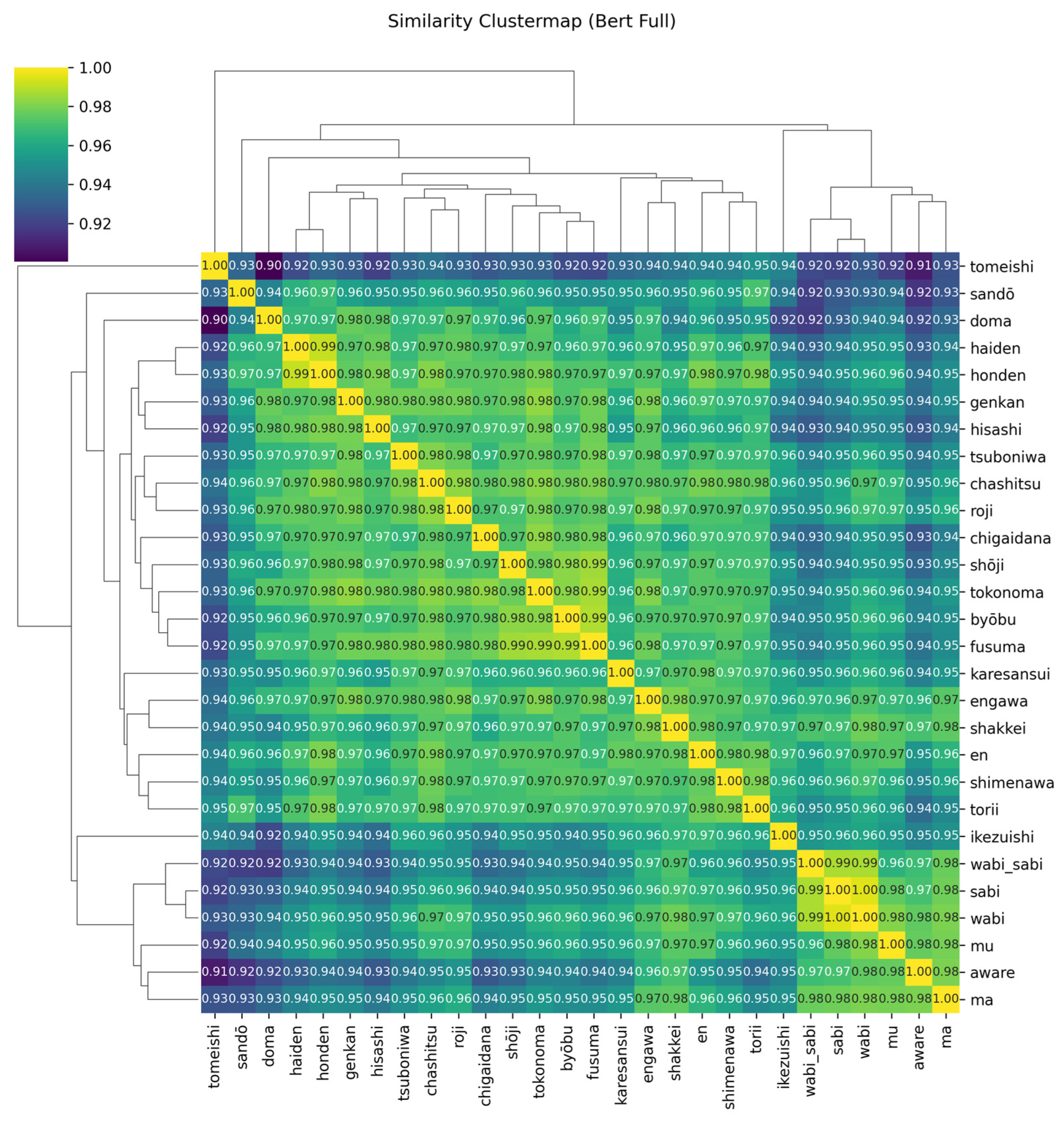
Figure A2.
Similarity Clustermap (Ma Pinned 0, FULL Corpus). The topology shows two large islands: the conceptual and the physical. Each has a smaller island in its centre. Conceptually, a smaller, strong island is created by wabi, sabi, and wabi-sabi. Meanwhile, in the physical group, the trio Byoubu, Shoji, and Fusuna creates a strong island in the centre of a larger one, which composes another intermediate island within the main physical island. Ikezuishi and Tomeishi sit next to each other outside both groups and near the edges of the heatmap.
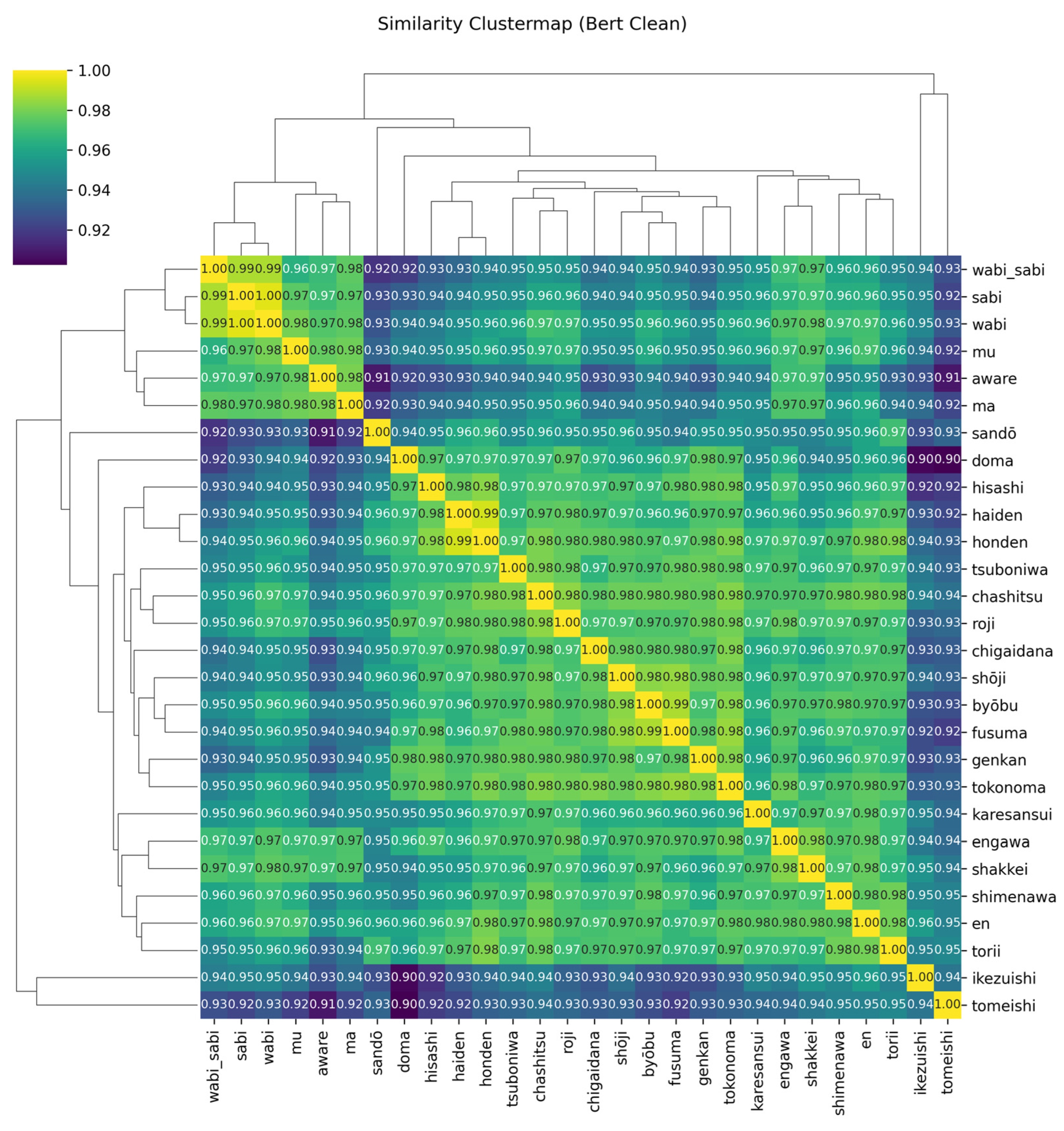
References
- Ek, F.İ. The Narration of Architectural Space as a Way of Constructing the Spatial Atmosphere: Two Readings of Contemporary Japanese Architecture. Philos. East West 2022, 72, 99–117. [Google Scholar] [CrossRef] [Scilit]
- Norberg-Schulz, C. Genius Loci: Towards a Phenomenology of Architecture; Rizzoli: New York, NY, USA, 1980. [Google Scholar]
- Keyvanian, C. Manfredo Tafuri: From the Critique of Ideology to Microhistories. Des. Issues 2000, 16, 3–15. [Google Scholar] [CrossRef] [Scilit]
- Li, L.; Chen, Y.; Li, H. Reimagining Kyokai: Layered Permeability in Yoshiji Takehara’s Modern Residences. Buildings 2025, 15, 1591. [Google Scholar] [CrossRef] [Scilit]
- Jiang, P. The Ambiguous Boundary between Buildings and Environment: Exploring the Interpretation of Traditional Aesthetic in Contemporary Japanese Architecture. Open J. Civ. Eng. 2022, 12, 415–437. [Google Scholar] [CrossRef]
- Isozaki, A. Japan-Ness in Architecture; Stewart, D.B., Ed.; Paperback; The MIT Press: London, UK, 2011. [Google Scholar]
- Horvath, A.-S. How We Talk(ed) about It: Ways of Speaking about Computational Architecture. Int. J. Archit. Comput. 2022, 20, 150–175. [Google Scholar] [CrossRef] [Scilit]
- Hensel, M.U. Performance-Oriented Architecture and the Spatial and Material Organisation Complex. Rethinking the Definition, Role and Performative Capacity of the Spatial and Material Boundaries of the Built Environment. FormAkademisk 2011, 4, 3–23. [Google Scholar] [CrossRef] [Scilit]
- Kim, J. A Reexamination of Sekkyaku-Honi (接客本位) in Edo Middle-Lower Samurai Residences from a Space Syntax Perspective: Reinterpreting Spatial Evolution in Modern Japanese Urban Housing. J. Asian Archit. Build. Eng. 2025, 1–33. [Google Scholar] [CrossRef] [Scilit]
- Kim, J. The Issue of Carrier Space and the Spatial Characteristics of Edo Middle-Lower Samurai Residences from a Space Syntax Perspective: Reinterpreting Spatial Evolution in Modern Japanese Urban Housing. J. Asian Archit. Build. Eng. 2025, 1–22. [Google Scholar] [CrossRef] [Scilit]
- Locatelli, M.; Seghezzi, E.; Pellegrini, L.; Tagliabue, L.C.; Di Giuda, G.M. Exploring Natural Language Processing in Construction and Integration with Building Information Modeling: A Scientometric Analysis. Buildings 2021, 11, 583. [Google Scholar] [CrossRef] [Scilit]
- Bekaert, J.; Van De Ville, D.; Rogge, B.; Strauven, I.; De Kooning, E.; Van de Walle, R. Metadata-based Access to Multimedia Architectural and Historical Archive Collections: A Review. Aslib Proc. 2002, 54, 362–371. [Google Scholar] [CrossRef] [Scilit]
- Kuhn, J. Computational Text Analysis within the Humanities: How to Combine Working Practices from the Contributing Fields? Lang Resour. Eval. 2019, 53, 565–602. [Google Scholar] [CrossRef] [Scilit]
- Beans, C. Historians Use Data Science to Mine the Past. Proc. Natl. Acad. Sci. USA 2025, 122, e2508428122. [Google Scholar] [CrossRef] [Scilit] [PubMed]
- Vaswani, A.; Shazeer, N.; Parmar, N.; Uszkoreit, J.; Jones, L.; Gomez, A.N.; Kaiser, Ł.; Polosukhin, I. Attention IS All You Need. In Proceedings of the Advances in Neural Information Processing Systems; Curran Associates, Inc.: New York, NY, USA, 2017; Volume 30. [Google Scholar]
- Gardazi, N.M.; Daud, A.; Malik, M.K.; Bukhari, A.; Alsahfi, T.; Alshemaimri, B. BERT Applications in Natural Language Processing: A Review. Artif. Intell. Rev. 2025, 58, 166. [Google Scholar] [CrossRef] [Scilit]
- Klavans, J.L.; Sheffield, C.; Abels, E.; Lin, J.; Passonneau, R.; Sidhu, T.; Soergel, D. Computational Linguistics for Metadata Building (CLiMB): Using Text Mining for the Automatic Identification, Categorization, and Disambiguation of Subject Terms for Image Metadata. Multimed. Tools Appl. 2009, 42, 115–138. [Google Scholar] [CrossRef] [Scilit]
- Caetano, I.; Santos, L.; Leitão, A. Computational Design in Architecture: Defining Parametric, Generative, and Algorithmic Design. Front. Archit. Res. 2020, 9, 287–300. [Google Scholar] [CrossRef] [Scilit]
- Haddad, E. Christian Norberg-Schulz’s Phenomenological Project in Architecture. Archit. Theory Rev. 2010, 15, 88–101. [Google Scholar] [CrossRef] [Scilit]
- Sardenberg, V.; Guatelli, I.; Becker, M. A Computational Framework for Aesthetic Preferences in Architecture Using Computer Vision and Artificial Neural Networks. Int. J. Archit. Comput. 2025, 23, 174–192. [Google Scholar] [CrossRef] [Scilit]
- Monaco, A.I.D. Computational Methods in Architecture from Theories to Architectural Design. In Proceedings of the International Conference on Computational Methods, Rome, Italy, 6–10 August 2018; Scientech Publisher LLC: Mason, OH, USA, 2018; Volume 5, pp. 472–485. [Google Scholar]
- Neumann, O. Technology, Context and Science in Architecture. Int. J. Archit. Comput. 2014, 12, 179–197. [Google Scholar] [CrossRef] [Scilit]
- Gjata, G.; Yamada, S. Reproducibility and Validation of a Computational Framework for Architectural Semantics: A Methodological Study with Japanese Architectural Concepts. Buildings 2025, 15, 4107. [Google Scholar] [CrossRef] [Scilit]
- Shigaki, T. GROUND HOUSE: A Case Study of a Cognitively Diverse Space. Jpn. Archit. Rev. 2023, 6, e12360. [Google Scholar] [CrossRef] [Scilit]
- Nuijsink, C. From ‘”Container”’ to ‘”Lifestyle:“’ Kazuyo Sejima, Sou Fujimoto and the Destruction of the Nuclear Family Box. Interiors 2021, 11, 132–156. [Google Scholar] [CrossRef] [Scilit]
- Bowring, J. Withdrawal, Restraint, Attention, and Repair: Strategies of Careful Design in the Landscape. Landsc. Res. 2025, 1–23. [Google Scholar] [CrossRef] [Scilit]
- Ye, N.; Zhang, M.; Su, J. Bridging the Philosophy of Science and Architecture: An Analysis Through Sou Fujimoto. Buildings 2025, 15, 1646. [Google Scholar] [CrossRef] [Scilit]
- Inoue, M. Space in Japanese Architecture; Weatherhill: New York, NY, USA, 1985. [Google Scholar]
- Ashihara, Y. Exterior Design in Architecture; Van Nostrand Reinhold: New York, NY, USA, 1970. [Google Scholar]
- Dotson, O.F. Fourth World Theory: The Evolution of …. Buildings 2014, 4, 155–194. [Google Scholar] [CrossRef] [Scilit]
- Toshiyuki, M. Ikezu-Ishi-Kyoto Guide. Available online: https://scrapbox.io/kyotoguide/Ikezu-ishi (accessed on 7 November 2025).
- Hai, B.H. English-Japanese Dictionary|RomajiDesu. Available online: http://www.romajidesu.com/dictionary/ (accessed on 7 November 2025).
- Tome Ishi-The Japan Times. Available online: https://www.japantimes.co.jp/news/2009/02/19/reference/tome-ishi/ (accessed on 7 November 2025).
- Tomeishi: The Stopping Stone. Available online: https://www.seattlejapanesegarden.org/blog/tomeishi-stop (accessed on 7 November 2025).
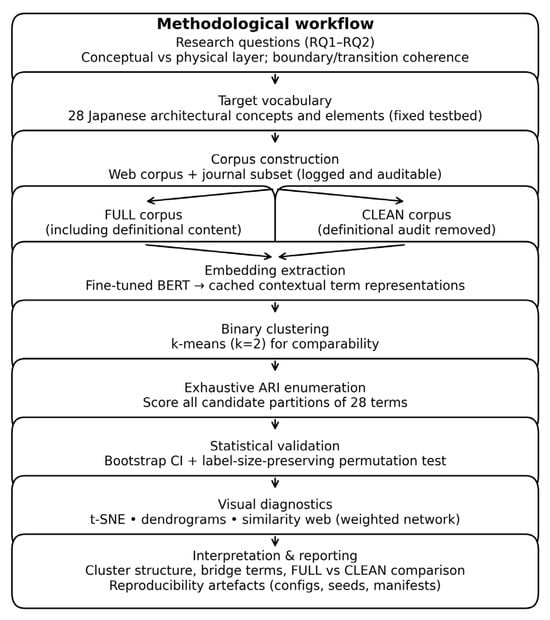
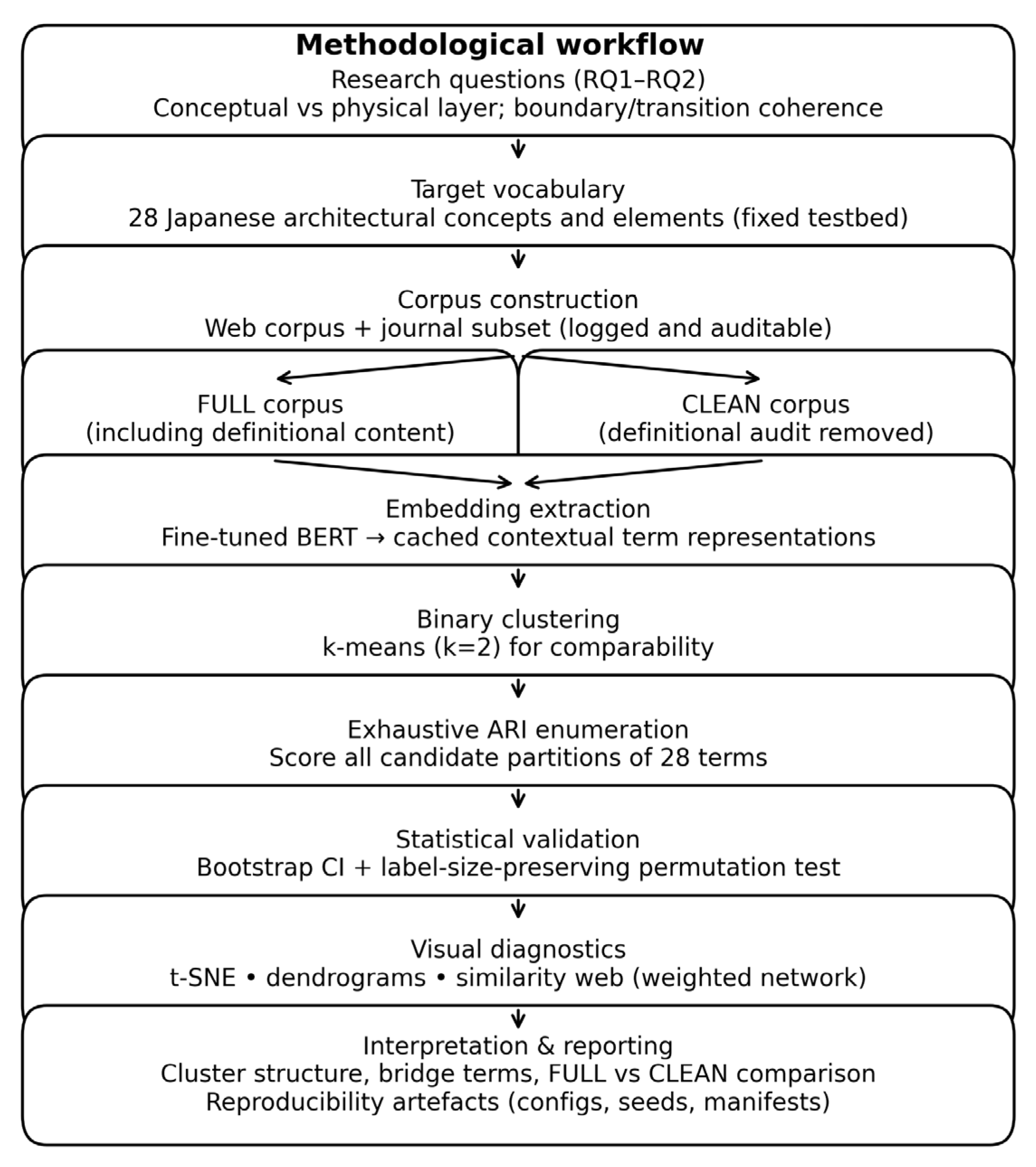
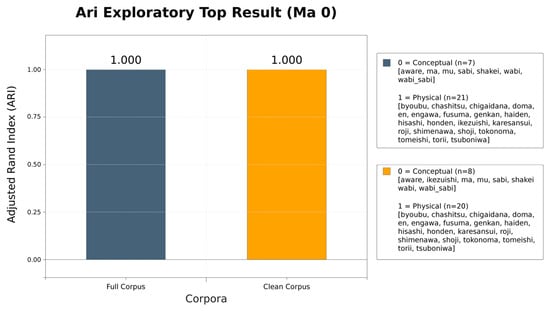
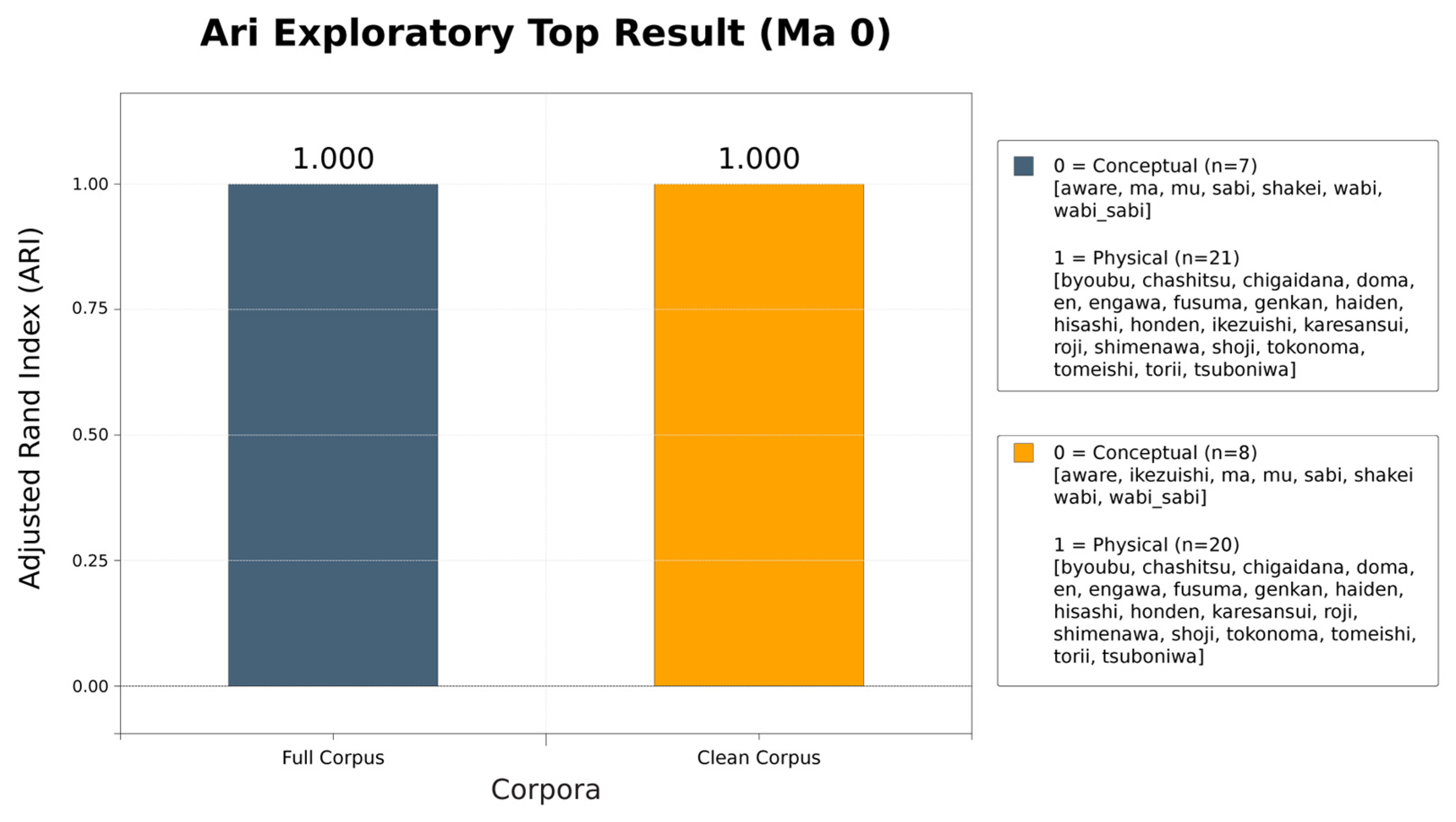
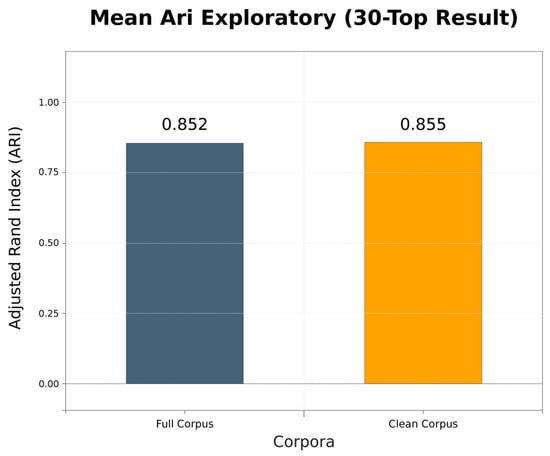
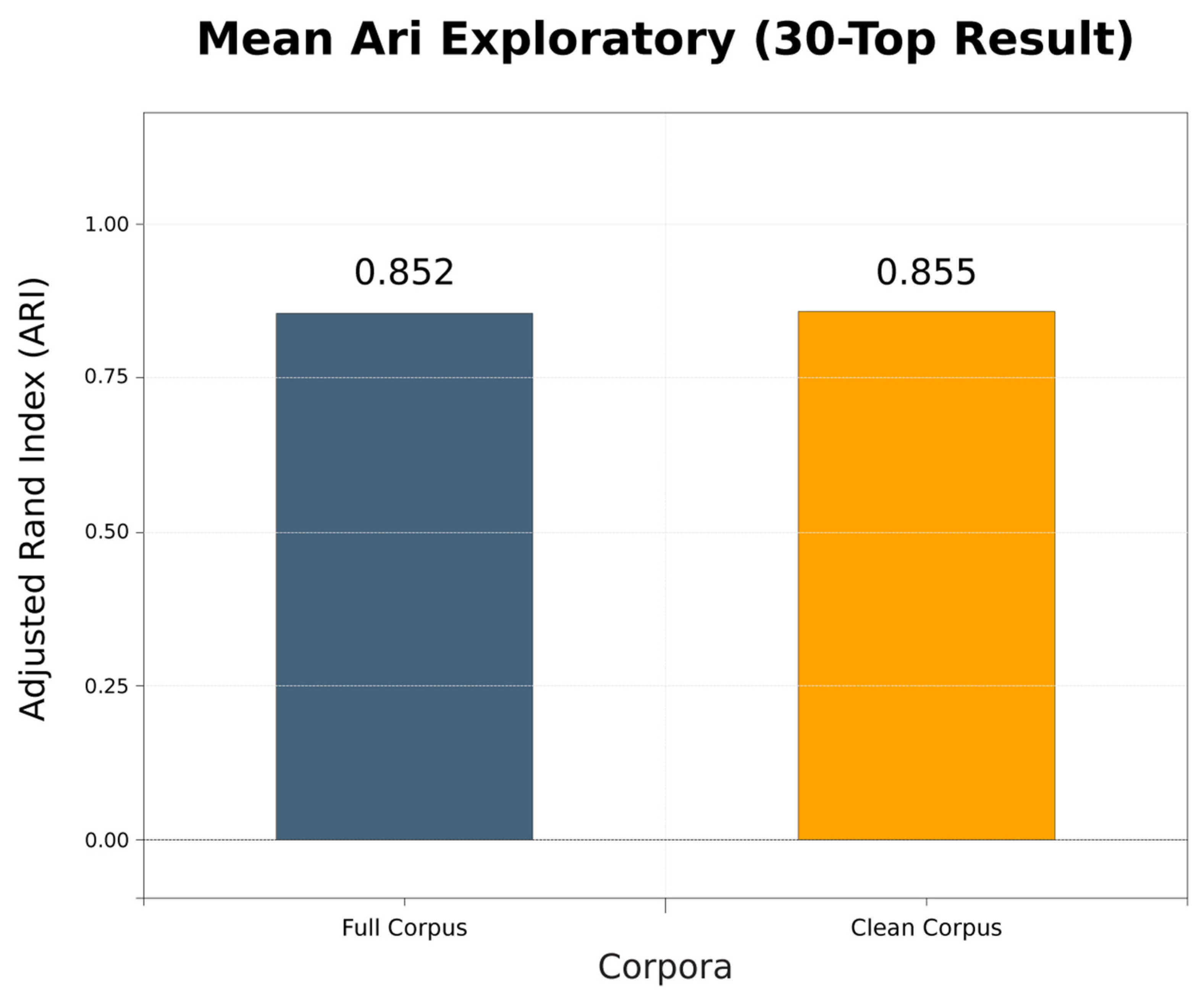
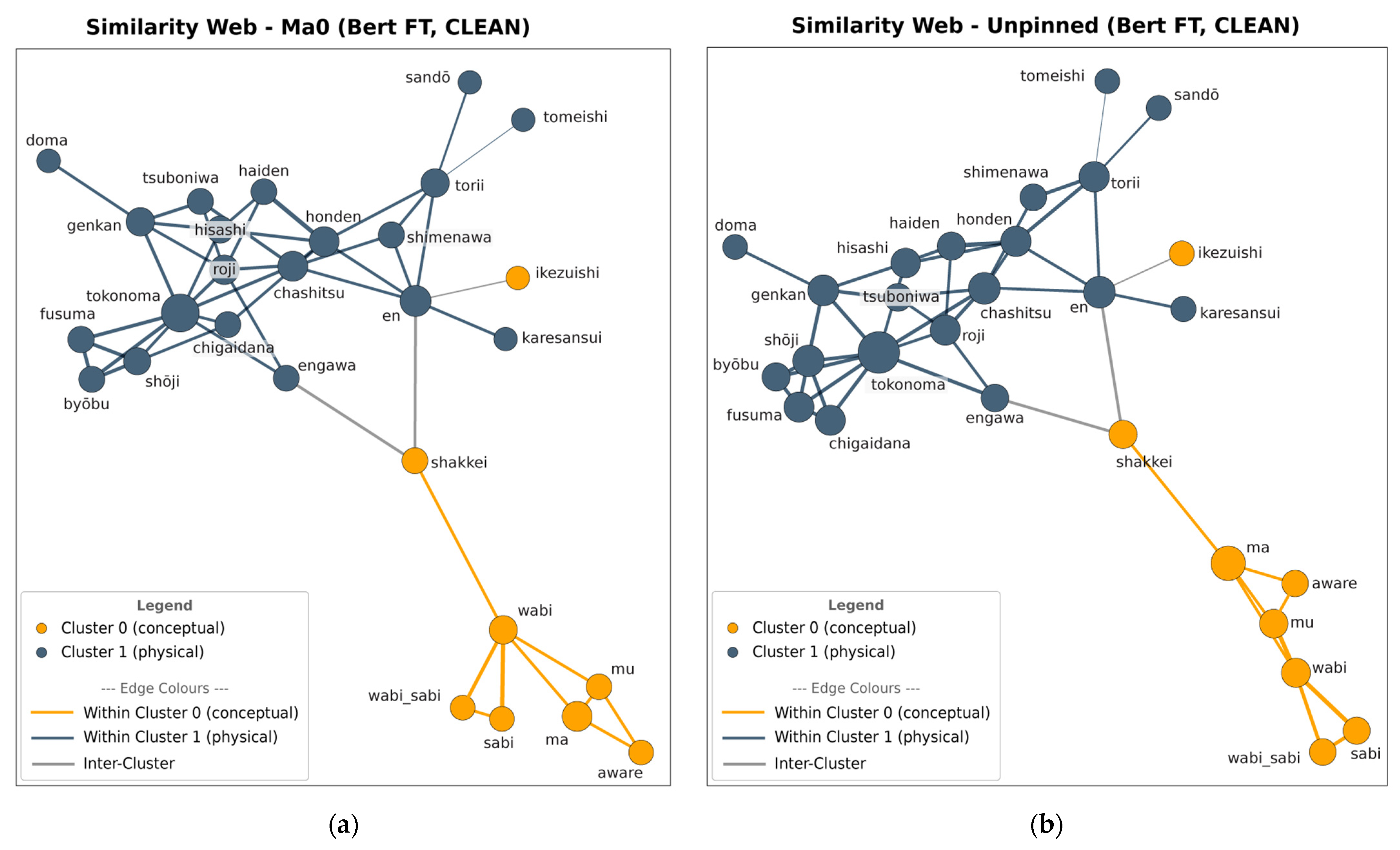
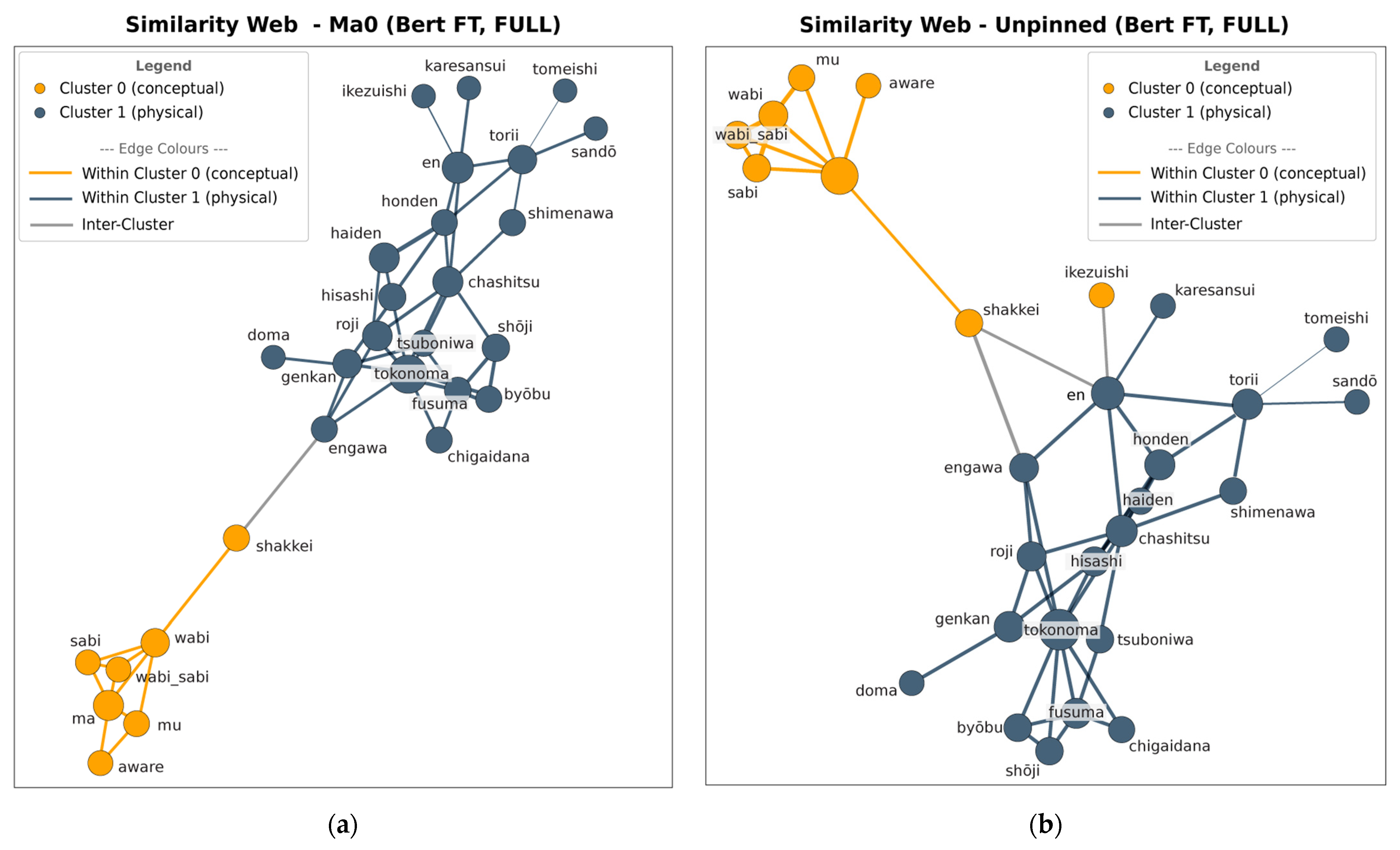
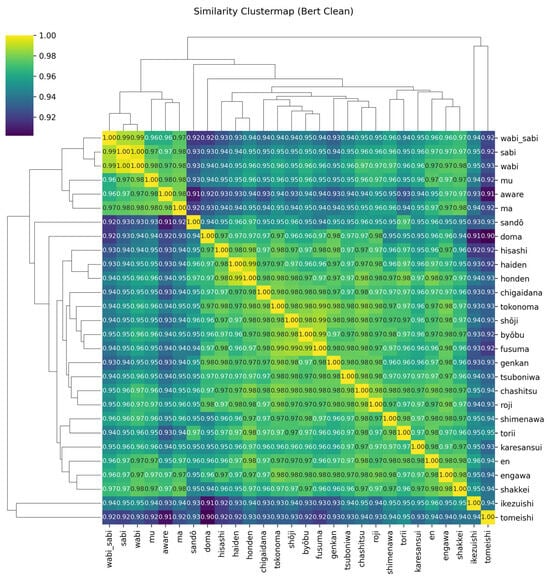
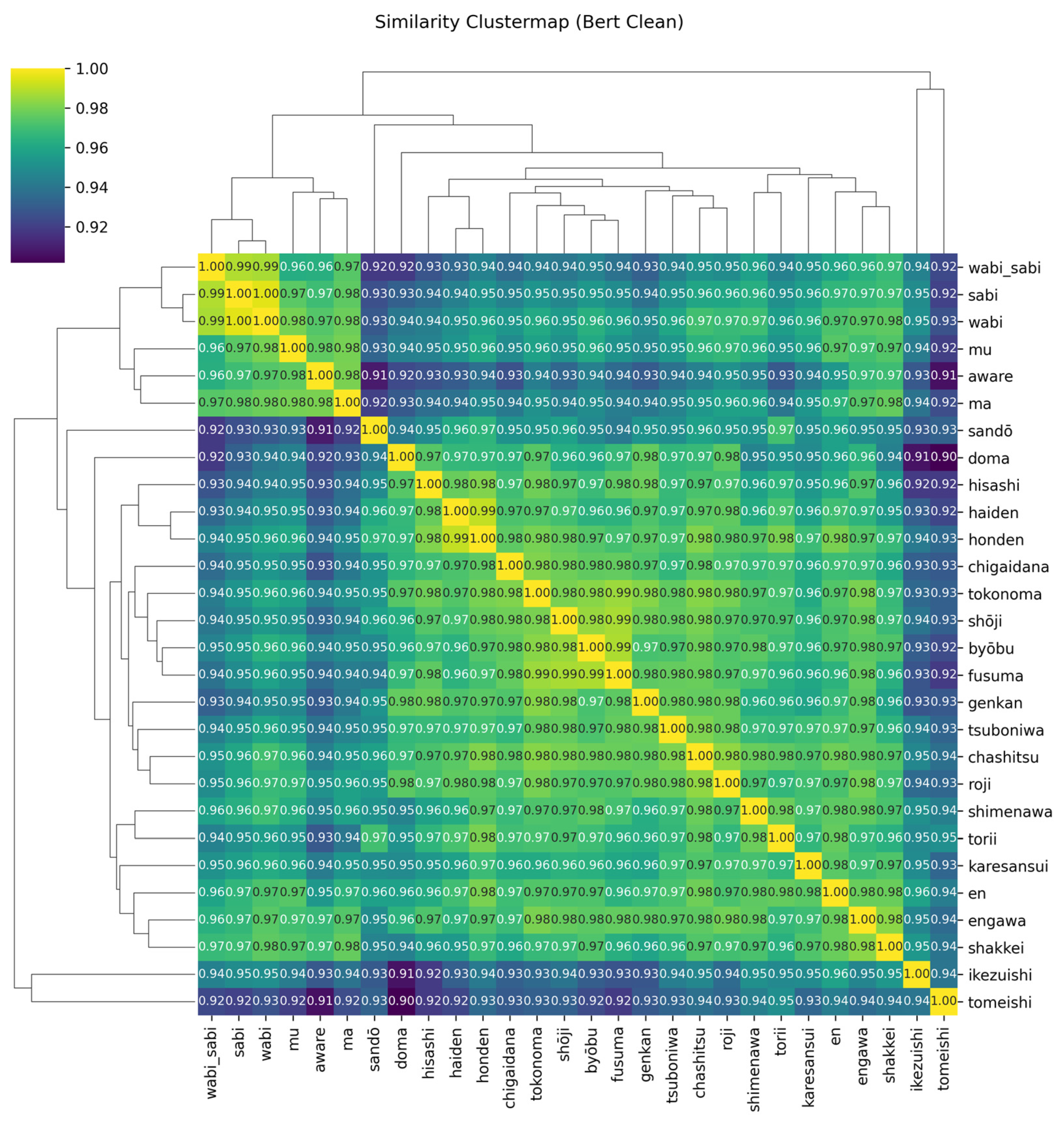
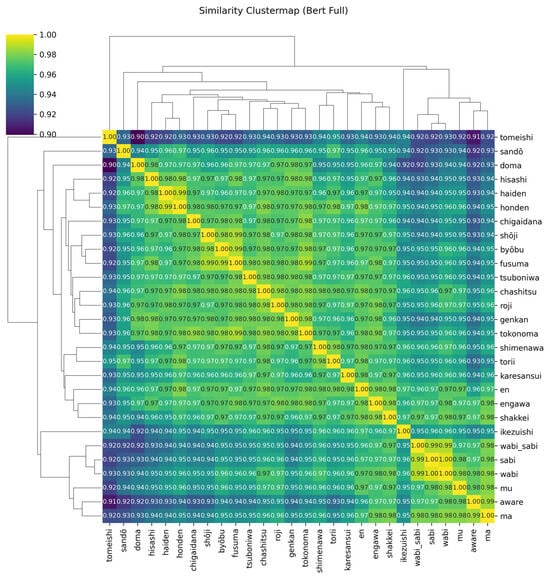
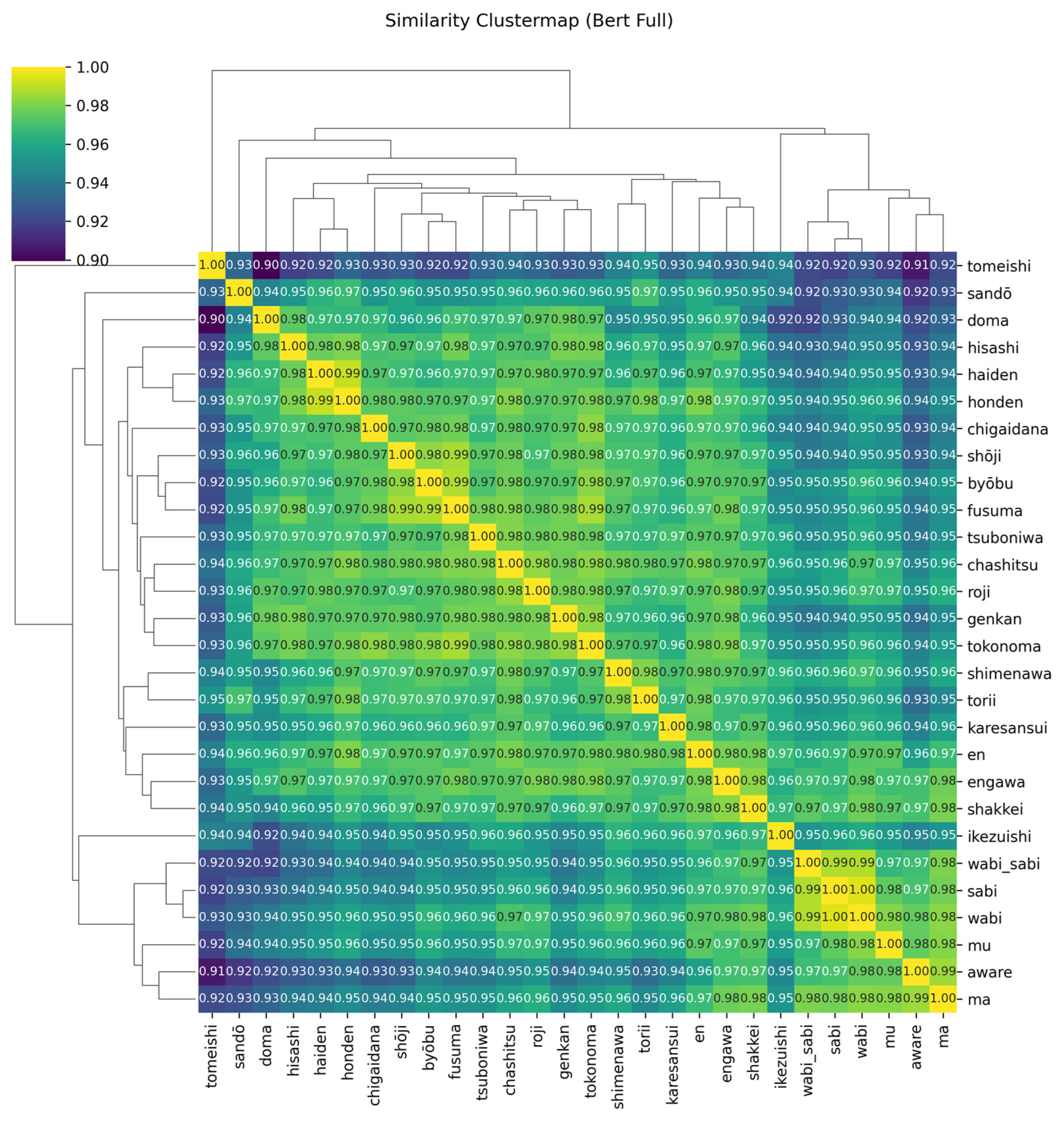
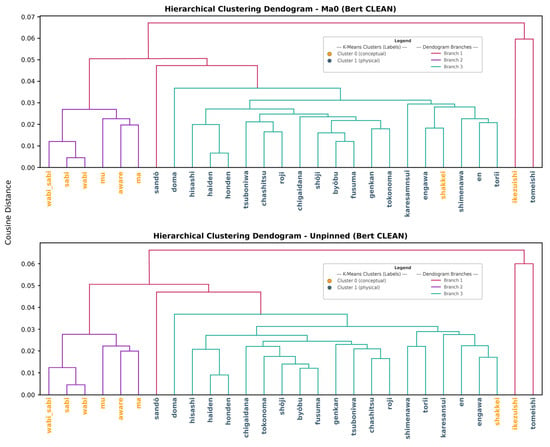
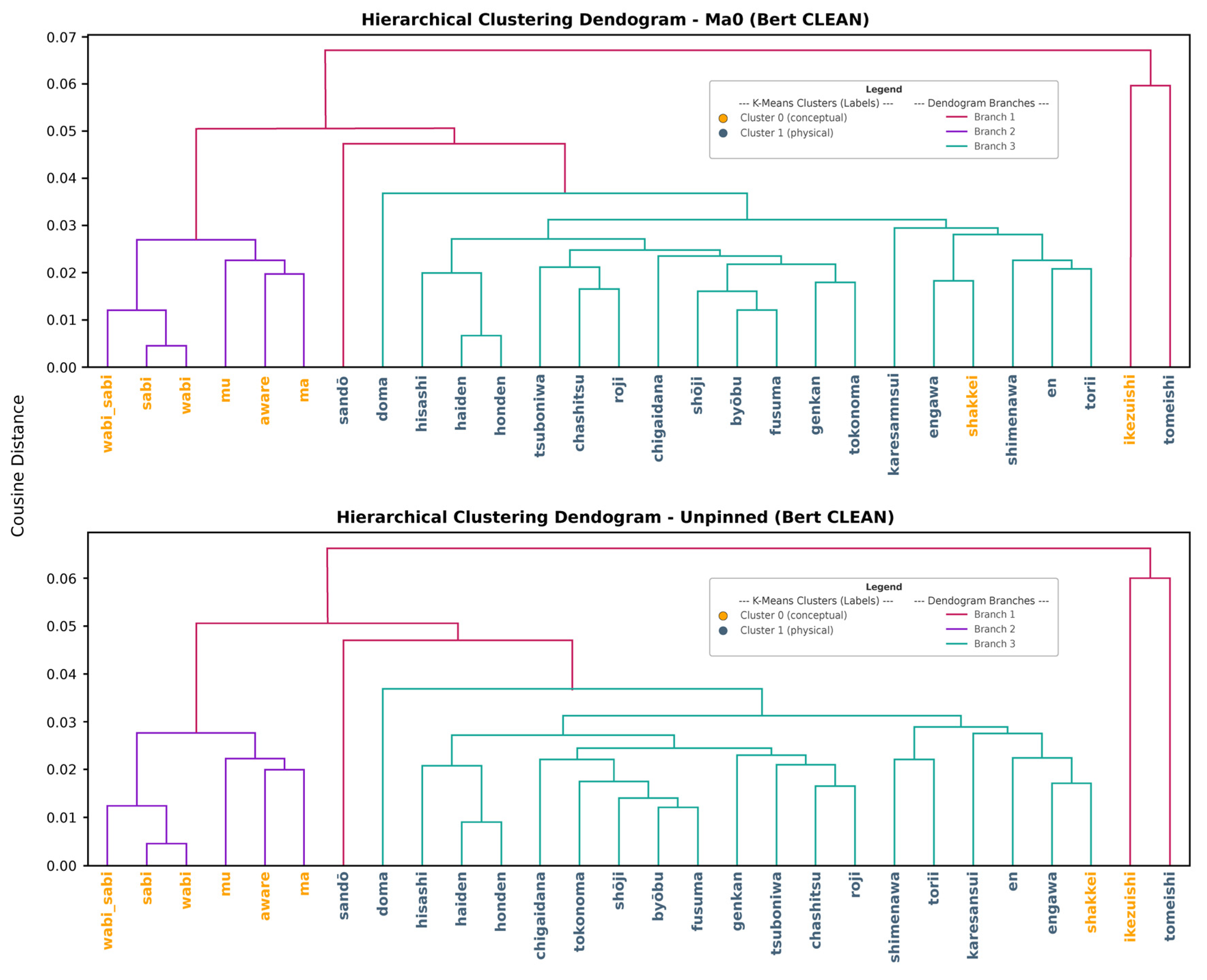
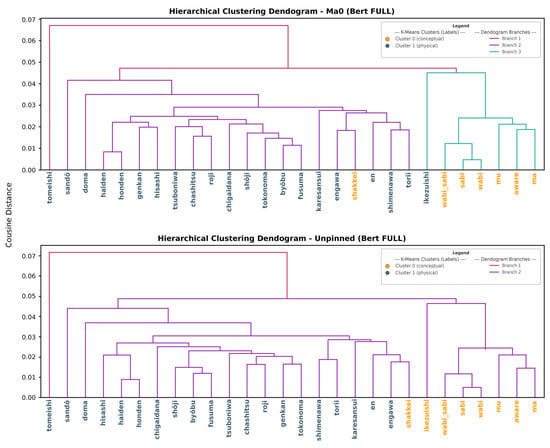
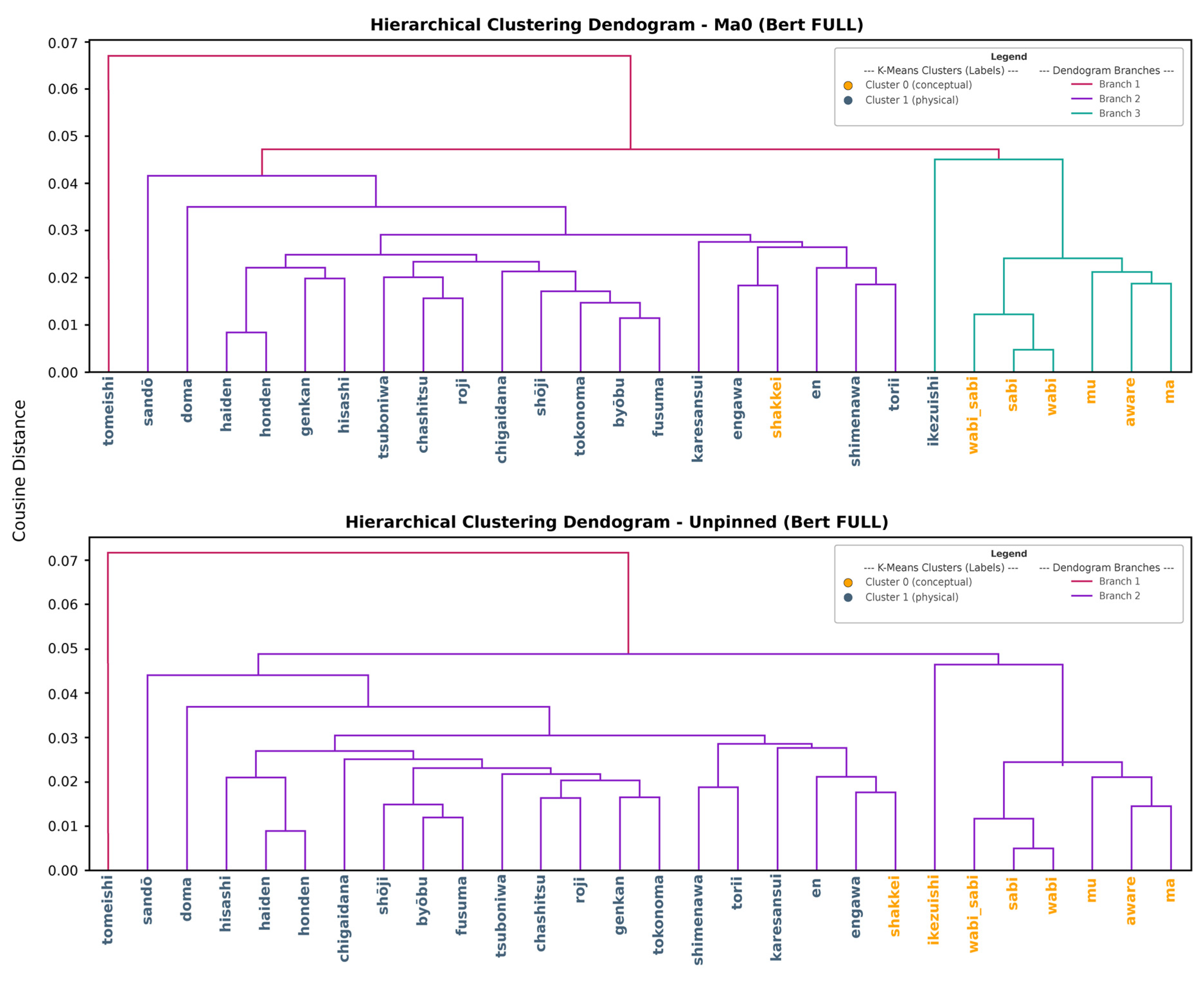
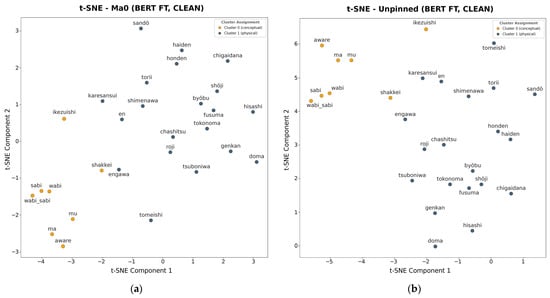
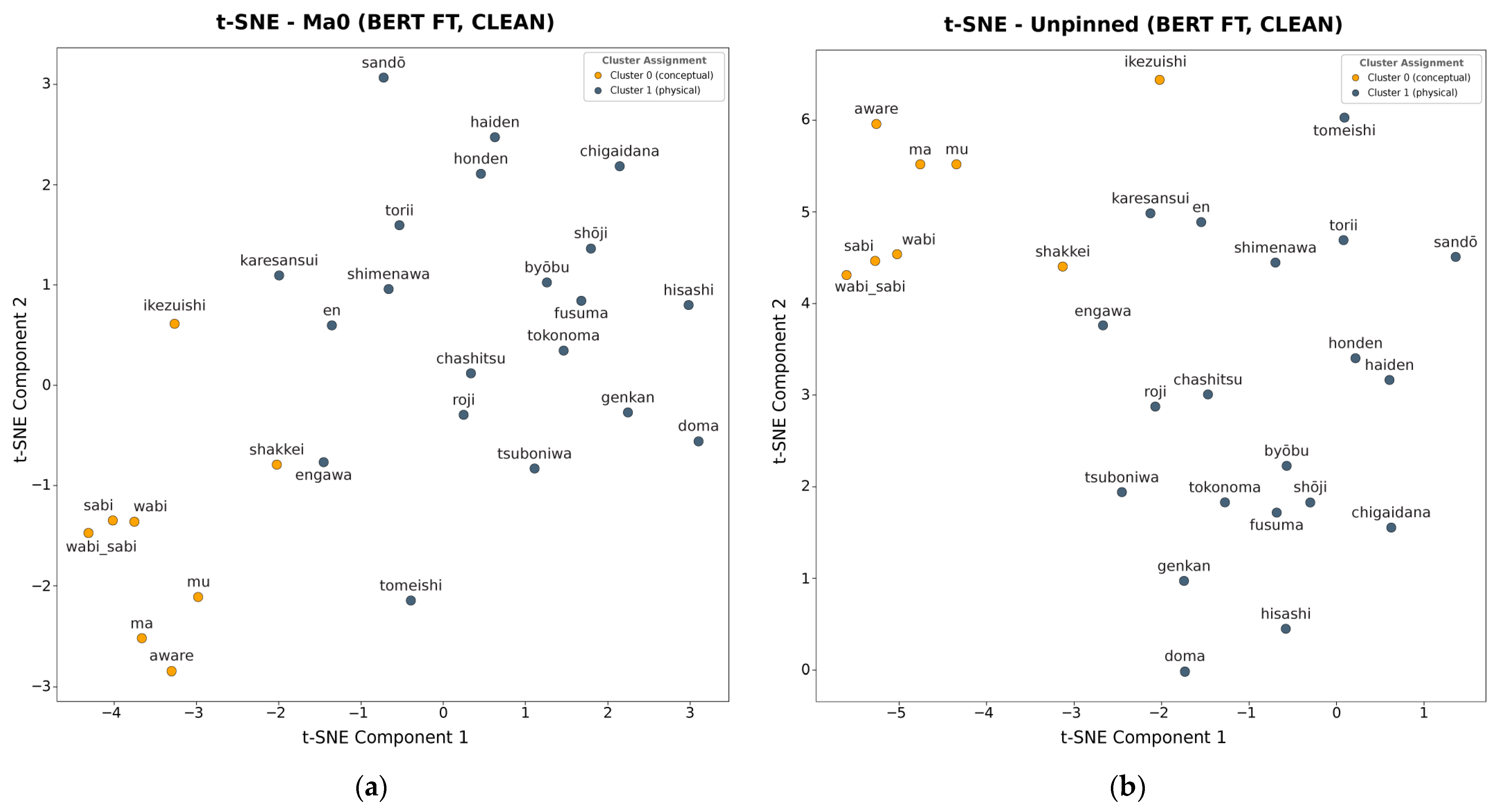
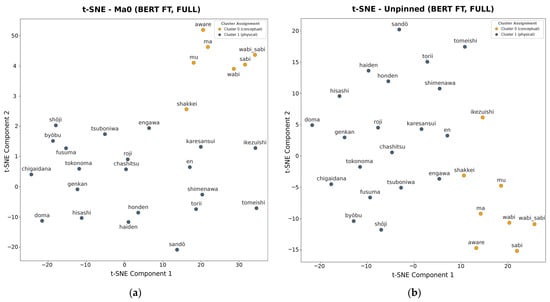
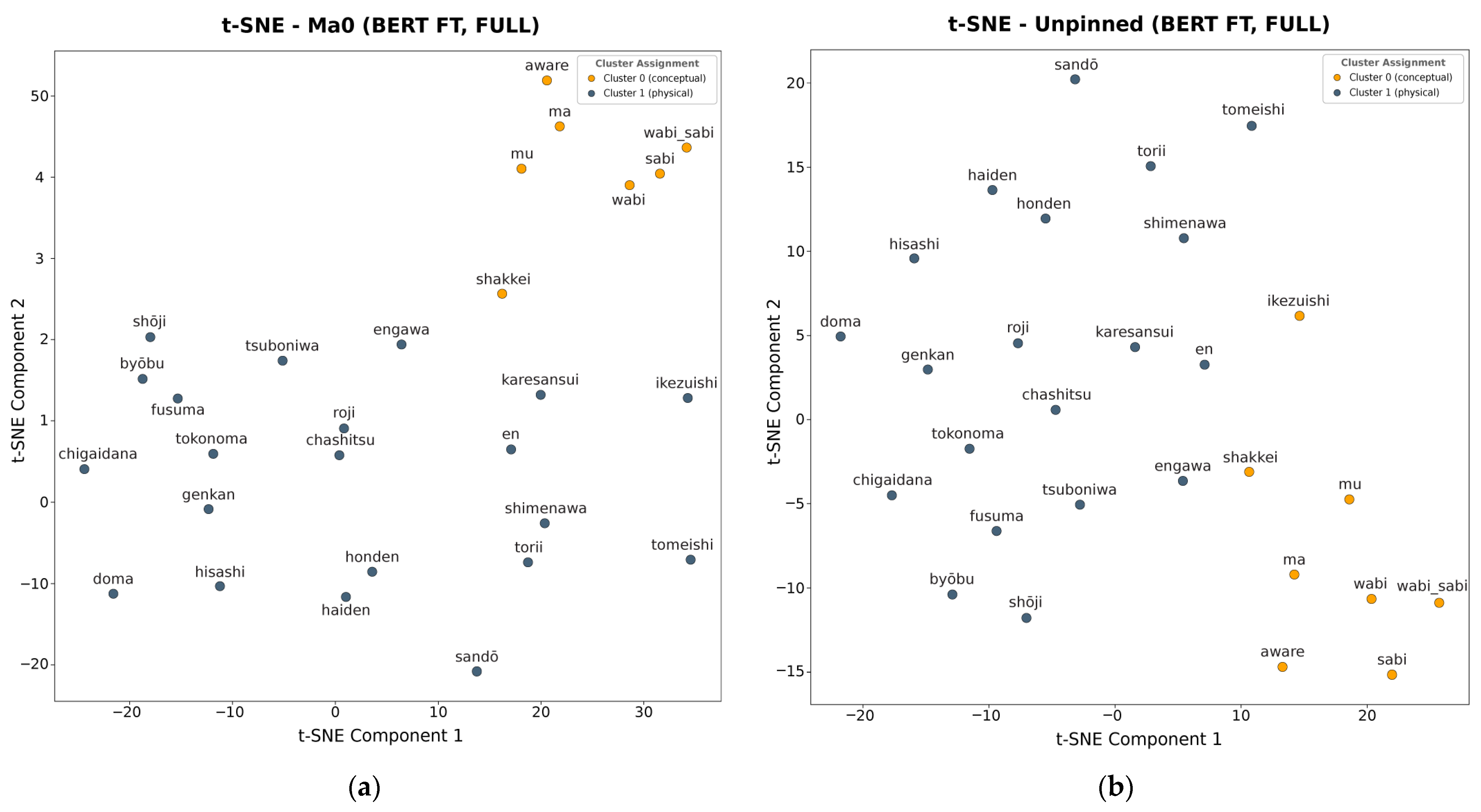

Disclaimer/Publisher’s Note: The statements, opinions and data contained in all publications are solely those of the individual author(s) and contributor(s) and not of MDPI and/or the editor(s). MDPI and/or the editor(s) disclaim responsibility for any injury to people or property resulting from any ideas, methods, instructions or products referred to in the content. |
© 2026 by the authors. Licensee MDPI, Basel, Switzerland. This article is an open access article distributed under the terms and conditions of the Creative Commons Attribution (CC BY) license.