1. Introduction
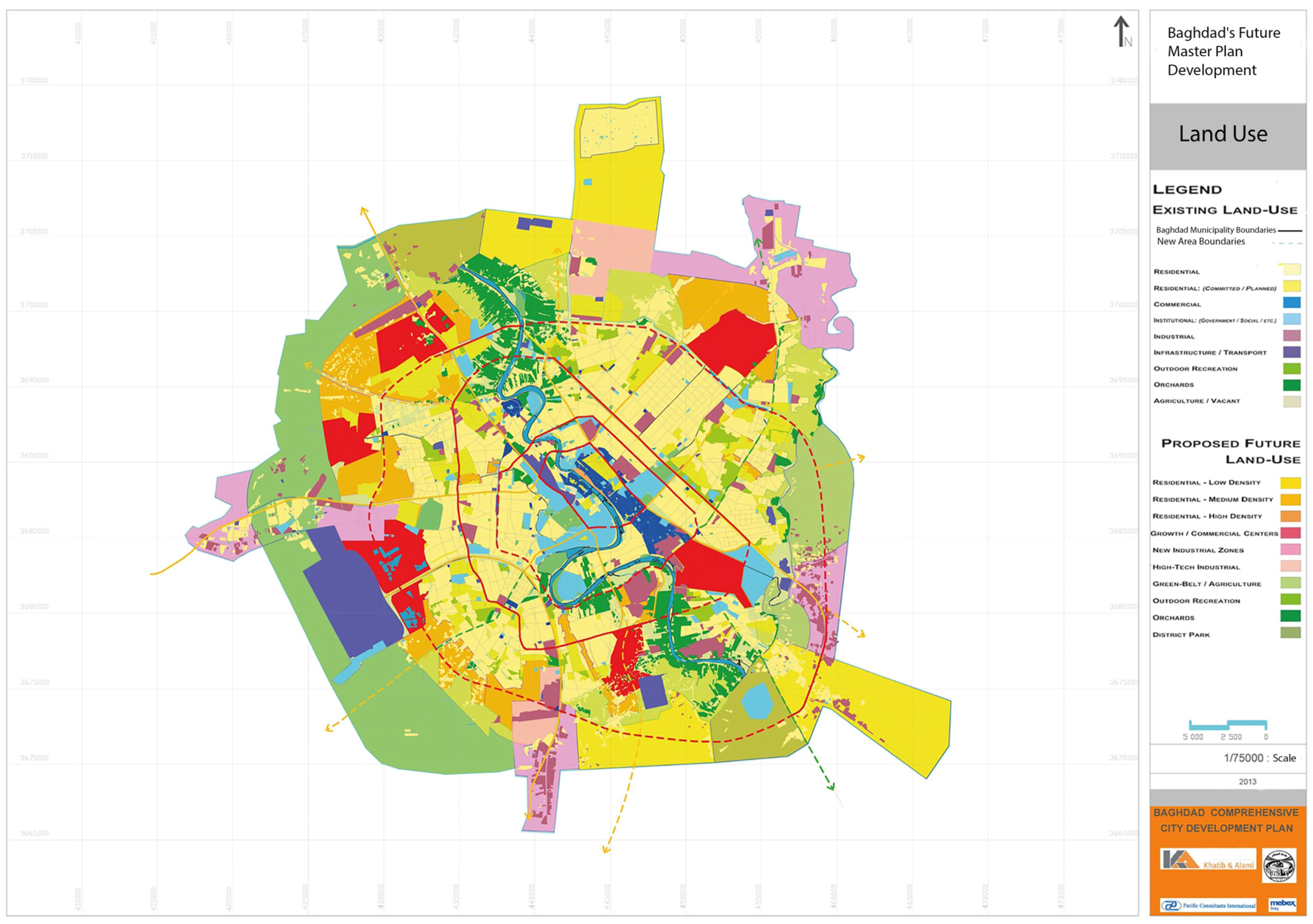
Each city possesses its own unique history, characteristics, natural environment, and cultural heritage. Baghdad is one of the leading cultural centres in the Middle East and has served as a political and economic hub since Caliph Al-Mansur selected it as the capital of the Abbasid Empire in 762 CE (
Figure 1) [
1,
2].
This research adopts Baghdad’s historic centre, Old Rusafa, as the case study area, which has a history spanning over a thousand years. The historic core contains significant heritage buildings dating from the Abbasid period (762–1258) and the Ottoman period (1638–1917). Rapid urbanisation has severely damaged both Baghdad’s natural ecosystems and its historic urban fabric [
3,
4]. In response, tools and strategies such as artificial intelligence (AI), information and communication technologies (ICT), the Internet of Things (IoT), smart governance, and sustainable socio-economic and environmental approaches can shape the city’s future heritage development [
5].
The preservation of Iraq’s, and particularly Baghdad’s, cultural heritage is highly complex and faces multiple challenges. Between 1956 and 2011, the Municipality of Baghdad appointed several international architects and planners such as P.W. Macfarlane (1956), Doxiadis (1958), Polservice (1973), and JCCF (1987) to prepare Baghdad’s future development master plan [
6,
7]. However, these initiatives did not consider cultural heritage conservation or citizens’ participation as central elements in the city’s sustainable future development [
8,
9]. These plans, instead, focused on demolishing large parts of the city’s built heritage and emulating Western countries’ urban growth models. Consequently, the research responds to the failure of the Municipality of Baghdad’s existing regulations, strategies, and conservation plans to ensure the sustainable preservation of Baghdad’s urban heritage.
This study addresses how the urban fabric and architectural heritage of Baghdad have suffered irreparable damage, weakly defined demands, and an ambiguous understanding of what should be preserved. Its significance lies in introducing a new approach to safeguarding Baghdad’s Islamic architecture and promoting the smart, sustainable reuse of its uniquely built heritage stock. The study develops a theoretical framework for the sustainable conservation of urban heritage, highlighting the need to understand existing conservation strategies, the cultural elements they protect, and the instruments they use to achieve smart, sustainable, and long-term heritage protection. This approach makes innovative contributions to knowledge on how the preservation of Baghdad’s architectural and physical built heritage can sustain conservation strategies while addressing multiple challenges, including poor management, deteriorating heritage buildings, and migration.
The originality of the research lies in providing a new perspective on how cities’ smart urban heritage depends on recognising heritage context, cultural values, smart sustainable strategies, and the influence of socio-economic and environmental forces. This study goes beyond a critical review of the existing literature by applying theoretical concepts through an empirical case study. It addresses challenges in urban cultural heritage and critically examines the role of the smart sustainable city concept in promoting architectural heritage conservation.
Table 1 summarises the research background; situates the study within current scholarship on urban heritage, smart sustainable city concepts, and conservation practice; and identifies conceptual and methodological gaps through an integrated smart urban heritage approach applied to the Old Rusafa case study.
Ultimately, the main findings of the research involve the development of a methodologically innovative Index Wheel, which serves both as a conceptual framework and as a quantitative model for the case study area. This model integrates quantitative data to define tangible performance indicators that assess urban and architectural heritage regeneration and guide future smart, sustainable development. It provides new strategies and maps unique opportunities for new infrastructure systems in Baghdad’s architectural and cultural heritage future development.
Figure 1.
Baghdad’s future Master plan 2030. Source: Author, according to [
10].
Figure 1.
Baghdad’s future Master plan 2030. Source: Author, according to [
10].
Table 1.
Research Background Source: Author, 2026.
Table 1.
Research Background Source: Author, 2026.
| Theme | Existing Knowledge/Context | Identified Gap and Limitation | Contribution of This Research |
|---|
| Urban Heritage in Historic Cities | Historic cities possess layered cultural heritage, architectural, and socio-spatial values shaped over centuries. In cities such as Baghdad, heritage areas like Old Rusafa represent Islamic, Ottoman, and modern urbanism [8,9,10,11,12,13,14,15,16,17,18,19]. | Heritage is often treated as a static asset, vulnerable to decay, conflict, and unregulated urbanisation. Limited integration with contemporary urban development strategies. | Repositions heritage as a dynamic urban system capable of adaptation within future city development. |
| Smart Sustainable City Concepts | Smart city agendas prioritise efficiency, data management, infrastructure optimisation, and sustainability performance [3,4,5,20,21,22,23,24,25,26,27,28,29,30,31,32,33,34,35,36,37,38,39,40,41,42,43,44,45,46,47,48,49,50,51,52,53,54,55]. | Cultural heritage and place identity are largely excluded from smart city frameworks, both in theory and practice. | Integrates smart sustainable city principles directly with cultural heritage conservation and regeneration. |
| Heritage Conservation Practices | Conservation methods focus on physical preservation, restoration, and regeneration [6,7,8,11,12,17,18,56]. | Limited use of digital tools, weak consideration of long-term sustainability, and minimal engagement with data-driven planning. | Introduces a smart sustainable reuse perspective, linking conservation with digital infrastructure and performance indicators. |
| Previous Studies on Baghdad and Old Rusafa | Existing studies emphasise historical documentation, architectural typologies, post-conflict damage, and traditional conservation methods
[1,6,10,14,15,17,57,58]. | Lack of analytical frameworks addressing smart technologies, sustainability indicators, or future-oriented regeneration strategies. | Provides the first integrated smart heritage analytical model applied empirically to Old Rusafa. |
| Urban Governance and Planning in Baghdad | Master plans (1956–2011) largely followed Western urban growth models, prioritising modernisation [10,14,15,59,60,61,62,63,64]. | Cultural heritage conservation and citizen participation were not central to planning strategies. | Critically evaluates planning failures and proposes governance-sensitive heritage strategies informed by smart urbanism. |
| Methodological Approaches | Many studies rely primarily on qualitative analysis or literature review [65,66,67,68,69,70,71,72,73,74,75]. | Limited use of mixed-methods or measurable indicators in heritage research. | Develops a methodologically innovative Index Wheel, combining conceptual and quantitative assessment. |
| Future Built Heritage | Growing concern about balancing development, sustainability, and heritage protection [11,12,16,76,77,78,79,80,81,82,83,84,85,86,87,88,89,90,91,92,93,94,95]. | Absence of tools to assess heritage performance within smart sustainable development agendas. | Proposes a transferable Index Wheel and framework to guide future smart sustainable heritage city development. |
1.1. Smart Sustainable City (SSC)
The smart sustainable city utilises ICT infrastructure in an adaptable, efficient, reliable, scalable, accessible, flexible, secure, safe, and resilient manner to enhance the quality of life for its citizens and promote social equity. It adopts a sustainable approach that addresses the needs of the present without compromising the requirements of future generations [
31]. Many studies have indicated that urban designers and planners are adopting integrated smart sustainable methods to manage cities as cohesive networks and enhance urban environments [
30,
53,
96]. Moreover, several studies highlight the importance of integrating sustainability into urban development and examine smart city approaches and their applications within the urban context to inform sustainable socio-economic and environmental strategies [
20,
22,
23,
28,
29,
31,
50,
51,
52]. Eight key categories have been identified as core components of smart sustainable cities. These are: (1) quality of life and lifestyle; (2) infrastructure and services; (3) ICT, communications, intelligence, and information; (4) people, citizens, and society; (5) environment and sustainability; (6) governance, management, and administration; (7) economy and finance; and (8) mobility [
96].
The smart city concept and its key aspects play a significant role in achieving sustainability. There has been growing interest in sustainability within smart cities from a quantitative perspective, with particular attention focused on the development of measurement tools and performance indicators [
20]. The smart sustainable city (SSC) should be considered a green concept, in which both local and global environmental challenges are addressed by enhancing quality of life through the strategic use of ICT within the SSC framework [
52]. Any approach that aims to advance urban systems toward becoming smart and sustainable must prioritise the enhancement of citizens’ quality of life. The smart sustainable city (SSC) is designed to address the challenges faced by urban areas, with its primary aim being to improve the quality of life of its citizens. In many countries, the concept of quality of life has been developed alongside corresponding assessment strategies. In most cases, these frameworks are grounded in the triple bottom line approach, encompassing environmental, social, and economic dimensions [
23]. The smart sustainable city concept should be linked to technological innovation to enable the efficient and integrated development of urban systems [
22].
A primary strategy for addressing climate change is the implementation of advanced technologies, which play a central role in reducing greenhouse gas emissions and enhancing cities’ energy efficiency. These technologies should be intelligent, effective, and resource-efficient, contributing to the development of a sustainable urban environment while also improving citizens’ quality of life and promoting financial sustainability.
Smart technologies can play an important role in enhancing the practical conservation of heritage and urban management in Old Rusafa. Digital tools such as Geographic Information Systems (GIS) and 3D modelling platforms can support the accurate documentation of historic buildings, enabling the early detection of structural deterioration [
34,
81]. In addition, ICT and Internet of Things (IoT)-based environmental sensors can be employed to monitor humidity, temperature, and air pollution, which directly affect the preservation of heritage structures. Smart governance platforms and digital participation tools can also improve communication between stakeholders, facilitating community engagement and more effective decision-making processes. These technologies demonstrate how smart systems can move beyond theoretical frameworks to provide practical, data-driven solutions that support the smart sustainable conservation and management of urban heritage in Old Rusafa [
79,
80,
94].
The smart city concept encourages sustainable environmental practices, with its core objective being the reduction in greenhouse gas emissions in urban areas through the deployment of advanced technological solutions [
30]. In
Table 1, definitions of smart sustainable cities according to various sources are listed, providing a platform for understanding their most common elements (
Table 2).
1.2. Smart Sustainable Urban Form
In recent years, significant global socio-economic and environmental crises have impacted cities’ cultural heritage and urban form, while increasing future challenges such as biodiversity loss, natural resource depletion, and growing socio-economic inequality. These issues have prompted professionals, policymakers, academics, and industry leaders to seek innovative solutions aimed at mitigating these impacts. Urban sustainability and city planning have focused on increasing urban development density, implementing mixed land uses, and promoting socio-economic diversity [
48]. Therefore, developing holistic and integrated approaches is necessary to address the complex interconnections between socio-economic and environmental aspects, and to understand what a smart sustainable city (SSC) should look like and how it might function [
47] (pp. 1, 7).
There is a lack of theoretical frameworks for evaluating whether a city’s urban form contributes to the smart sustainable city concept or for assessing different urban forms based on their alignment with sustainable development goals and agendas. The main objectives of smart sustainable urban forms are to reduce energy use, decrease waste and pollution, conserve natural open spaces and cultural heritage, and provide liveable, community-oriented human environments. Achieving the smart sustainable urban form concept requires high density and adequate diversity, a compact layout with mixed land uses, and a design based on smart sustainable transportation, greening, and passive solar energy [
46].
Cities aiming to become zero-carbon, eco-cities, or smart-eco cities are considered to have a smart sustainable form, differing in their methods of implementing urban sustainability. These approaches also contribute to creating environmentally friendly urban environments, promoting the efficient use of resources, and supporting smart, inclusive, and sustainable city systems [
28].
Smart sustainable cities are multifaceted, and the smart sustainable urban form is a fundamental element in enhancing cities’ quality of life. Urban forms cannot be considered fully ‘smart and sustainable’ if they are not suitable for people as places to live, work, and interact [
75]. The design strategies for the future form of cities, which should be adopted in a global economy and information age, are still being debated [
45] (p. 24). Cities’ urban forms can exhibit varying degrees of sustainability, and there is no single model of a smart sustainable urban form that is universally applicable. Urban growth in cities is often vulnerable to unsustainable development practices and the loss of traditional cultural heritage. Therefore, a smart sustainable urban form is one that effectively adapts to urban growth demands and transforms while conserving cultural heritage [
43,
44,
46,
75].
1.3. Smart Sustainable City Behaviour and Planning
The implementation of urban sustainability is multi-dimensional, requiring both top-down government decision-making and bottom-up citizen engagement to be smart, sustainable, effective, and dynamic. In a bottom-up system, citizens should play a significant role in decision-making and adopt sustainable lifestyles to promote the socio-economic and environmental aspects of sustainability. Therefore, changing citizens’ attitudes in cities is fundamental to achieving the aims of smart sustainable urbanism. Moreover, collaboration between citizens and government is vital for implementing modern governance mechanisms and ensuring the participation of all segments of society in decision-making. The smart sustainable city concept enhances the relationship between governmental and non-governmental actors by using ICT across different sectors and creating new management methods such as e-governance and e-democracy. Consequently, the deployment of advanced technologies and smart city e-services has contributed to the prosperity of urban stakeholders [
23,
41].
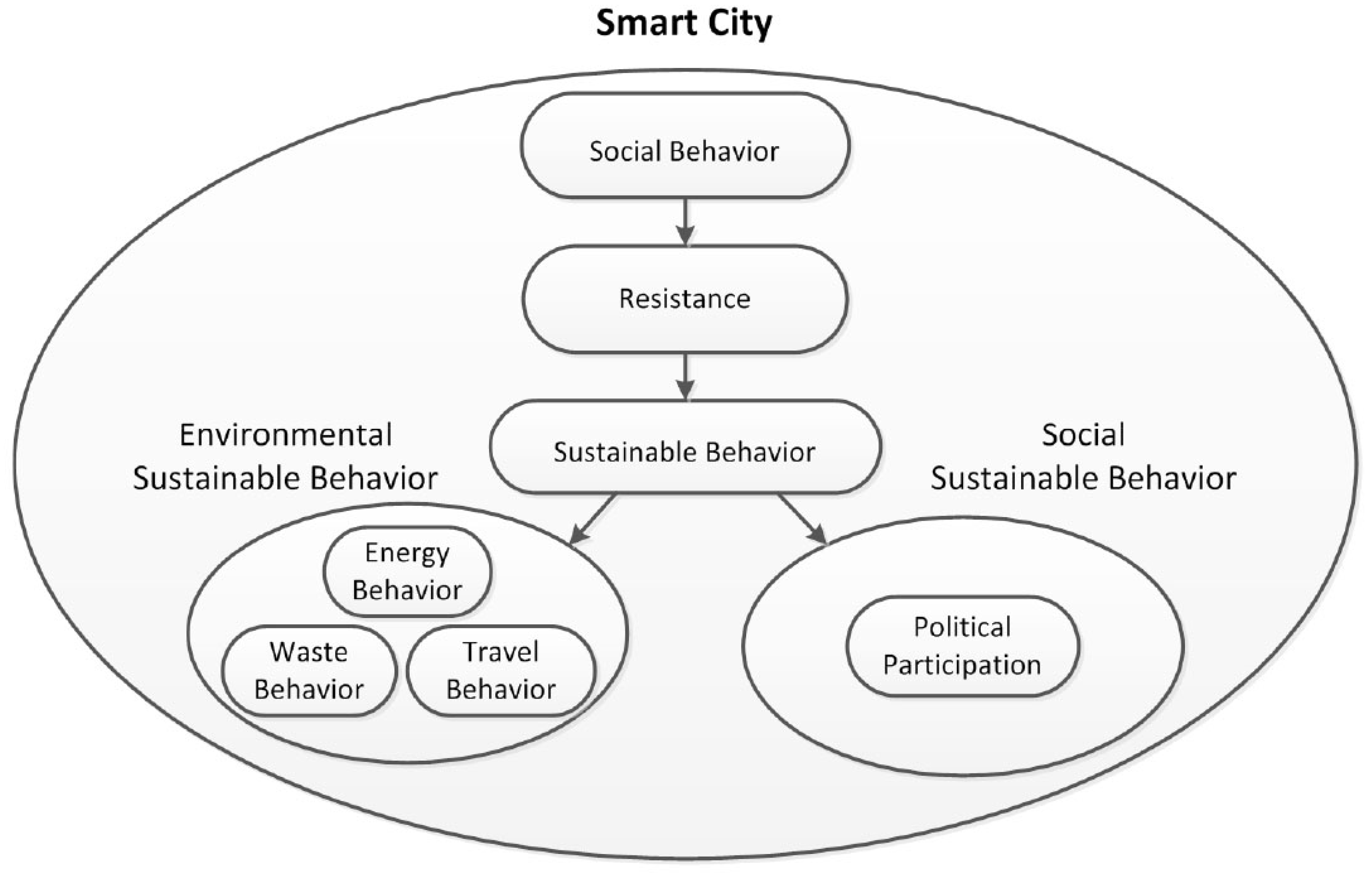
Figure 2 illustrates the influence of the smart cities concept on people’s behaviours in relation to urban infrastructures, such as mobility, waste management, and energy use, as well as socially sustainable behaviours, including political participation. Urban designers require new methods to manage, address, and assess the many challenges facing our cities, such as pollution, resource consumption, and the demands of the information age. Therefore, cities must be considered as systems of systems, comprising socio-economic and environmental aspects as interrelated subsystems.
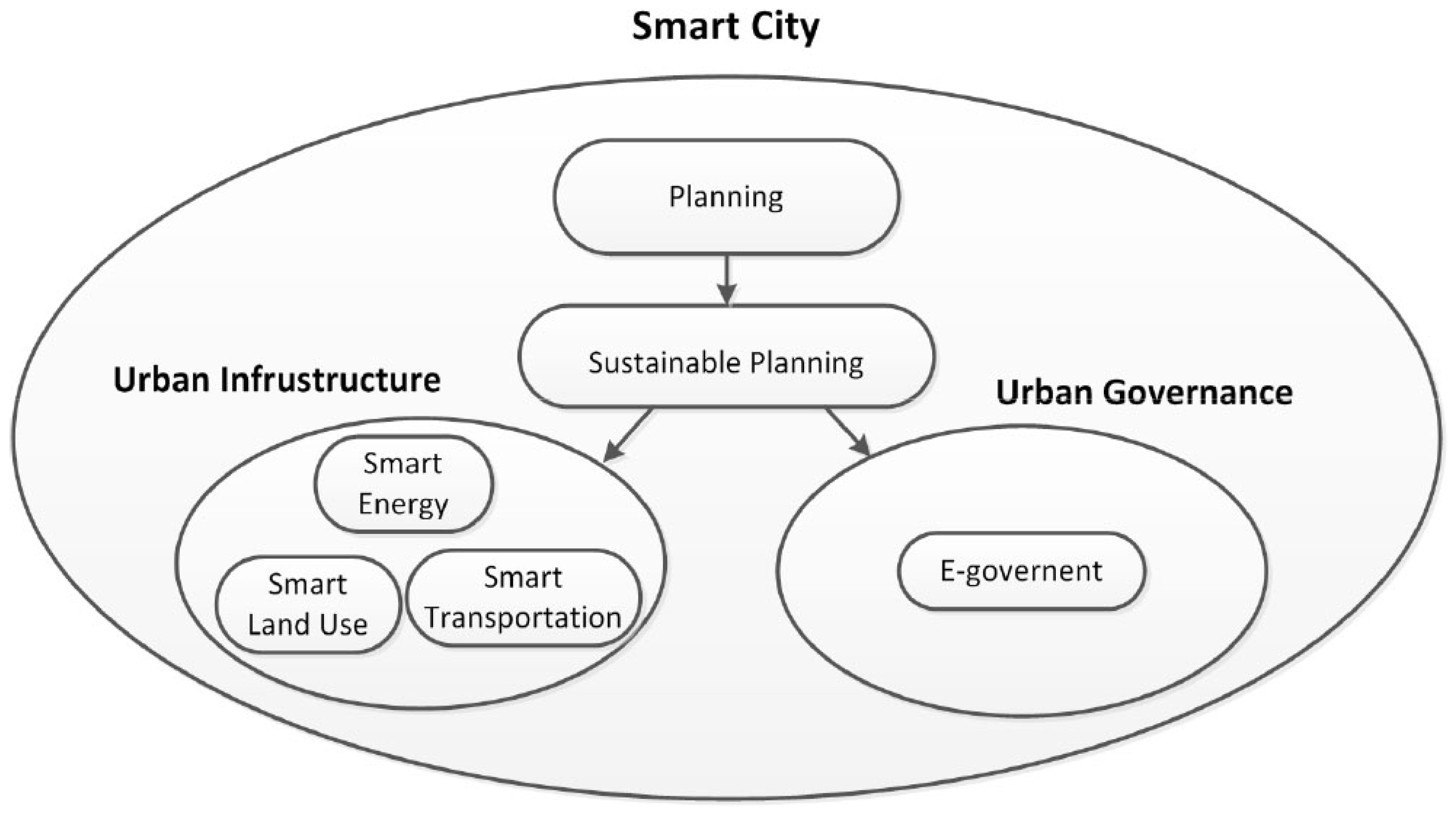
Figure 3 summarises the influence of the smart cities concept on sustainable planning through the implementation of e-government and the transformation of urban infrastructures into smart systems, such as smart energy, smart land use, and smart mobility (
Figure 3) [
53].
The relationship between stakeholders and policymakers should be smart, sustainable, and dynamic to implement urban sustainability across various dimensions. A key aspect of achieving the smart city concept is to encourage people to adopt sustainable behaviours by using advanced technologies in areas such as mobility, natural resource consumption, and waste management [
40]. The smart city concept influences sustainable planning by transforming and developing urban infrastructures to be smart. These changes in a city’s infrastructure can enhance smart sustainable urban development and support the implementation of a smart sustainable environment. Smart planning improves the ability of city governments to deliver social, health, and other public services while engaging citizens in decision-making processes.
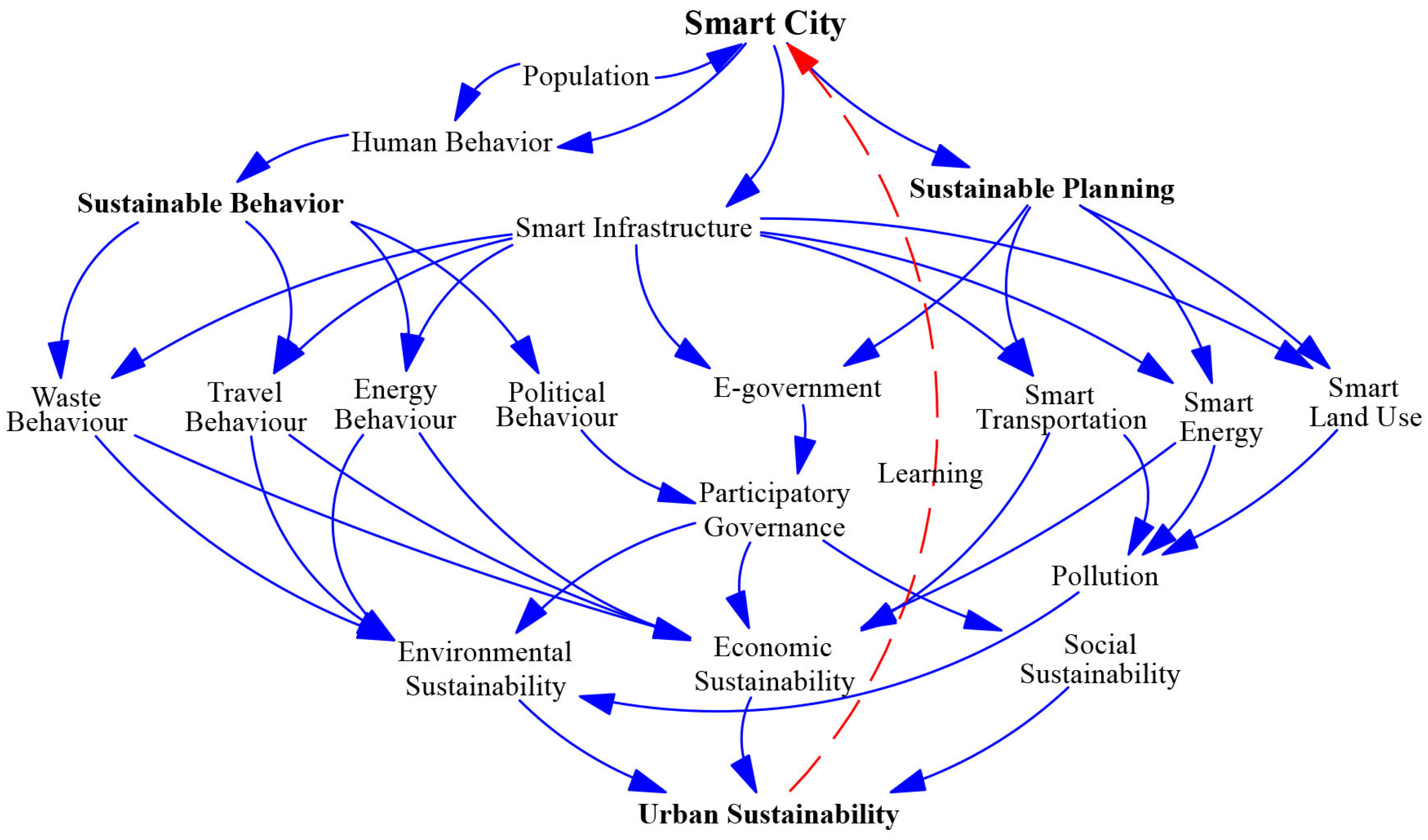
Figure 4 summarises the impact of the smart city concept on urban sustainability, highlighting how the integration of e-government, digital systems, and citizen participation is essential for achieving multi-dimensional sustainability in heritage urban contexts. It demonstrates that both community behaviour and stakeholder decision-making must evolve towards more efficient, inclusive, and sustainable practices (
Figure 4) [
53].
1.4. Smart Sustainable Cities Challenges
Nowadays, due to the increase in urban populations, cities face various problems such as pollution, traffic congestion, and socio-economic and environmental risks. Therefore, governments, experts, and companies have initiated a range of measures to address the critical challenges facing cities around the world [
18,
22,
39,
51]. Cities often struggle to do more with less, bridge silos in information and operations, use civic engagement to achieve better outcomes, and invest in infrastructure for more effective management. Tight budgets, scarce resources, and legacy systems pose challenges to implementing smart sustainable city goals; however, new and innovative technologies can help to transform these challenges into opportunities. The development of future cities requires the adoption of smart sustainable methods, effective design strategies, and the integration of advanced technologies and smart infrastructure systems to address urban challenges and minimise environmental impacts. This approach necessitates the participation of diverse disciplines and the use of ICT to achieve a sustainable built environment and an improved quality of life [
24,
52]. Moreover, managing extensive ecosystem services is a major challenge for cities, often resulting in the depletion of natural resources and biodiversity [
38].
Cities are composed of several core systems such as infrastructure, networks, the environment, transportation, communication, water, and energy. The capabilities of these systems determine how future cities function and are managed. Smart sustainable cities require urban sustainability frameworks that enable all citizens to live in prosperity [
42]. Cities cannot be smart and sustainable if they continuously increase their material and energy consumption. The challenge lies in preserving local and regional biodiversity, as well as maintaining ecosystem functioning, to support the services required for human well-being [
37].
Designing a smart sustainable city is a complex and multidisciplinary decision-making process, concerned with the management of large volumes of data from both the built and natural environment. These data typically include socio-economic and environmental information at local and national levels, which can be used in urban sustainability analysis. Sustainability and quality of life are the main criteria for evaluating this information, which is collected from various sources such as national statistics, local councils, commercial survey companies, and government departments. The multi-dimensional challenges of smart sustainable urban design are complex; therefore, cities employ advanced environmental activity models to maintain ecological balance, modify resource consumption and production patterns, improve ecological efficiency, and promote social equity. In this context, cities must ensure universal access to essential services such as waste management, energy, food, water, sanitation, and mobility, all of which are fundamental to socio-economic welfare, public health, and the urban environment [
35] (p. 243).
1.5. Smart Sustainable Urban Heritage
Smart heritage “emerged in the literature in the second decade of the 21st Century. It grew piecemeal in the smart city and heritage disciplines” [
89]. The smart sustainable urban heritage concept has been examined to investigate the advantages of integrating sustainable design strategies with built heritage conservation processes and policies [
11,
12,
87,
88]. To apply the “smart sustainable heritage” concept to cultural and urban heritage, the discussion must consider their unique tangible and intangible characteristics, which are fundamentally different from those of other types of cultural or built heritage, such as historical sites [
86].
The smart city concept, together with ICT and advanced technologies, contributes to promoting heritage conservation and environmental management [
34,
85,
94,
95]. However, although heritage-oriented smart sustainable city initiatives, ICT, and smart infrastructures have begun to be integrated into several urban conservation agendas, the specific types, functionalities, and technologies that will ultimately prevail remain uncertain [
84].
In the digital age, the integration of smart sustainable technologies in cities has become essential for addressing regeneration challenges and managing cultural heritage and the natural environment [
34,
64,
83,
86]. The increased interest in sustainable growth and heritage conservation stems from growing awareness of the pressures humanity places on global ecosystems, as well as urbanisation associated with population movement towards suburban areas [
82]. The evolution of the smart sustainable city concept has had a significant impact on how citizens live their lives and how work, leisure, and community activities are organised. Furthermore, this concept and its design strategies have facilitated the development of new products, services, and business models by reducing the cost and size of computing capacity [
52,
93]. Future built heritage in cities that utilise smart and sustainable infrastructures and digital technologies does not automatically result in better cities; rather, such approaches offer alternative ways of addressing urban heritage challenges and enhancing quality of life. Smart urban heritage can also be understood as smart sustainable heritage systems with “digital nervous systems” that collect and analyse information from diverse sources, including smartphones, smart infrastructure systems, and government institutions [
32,
84].
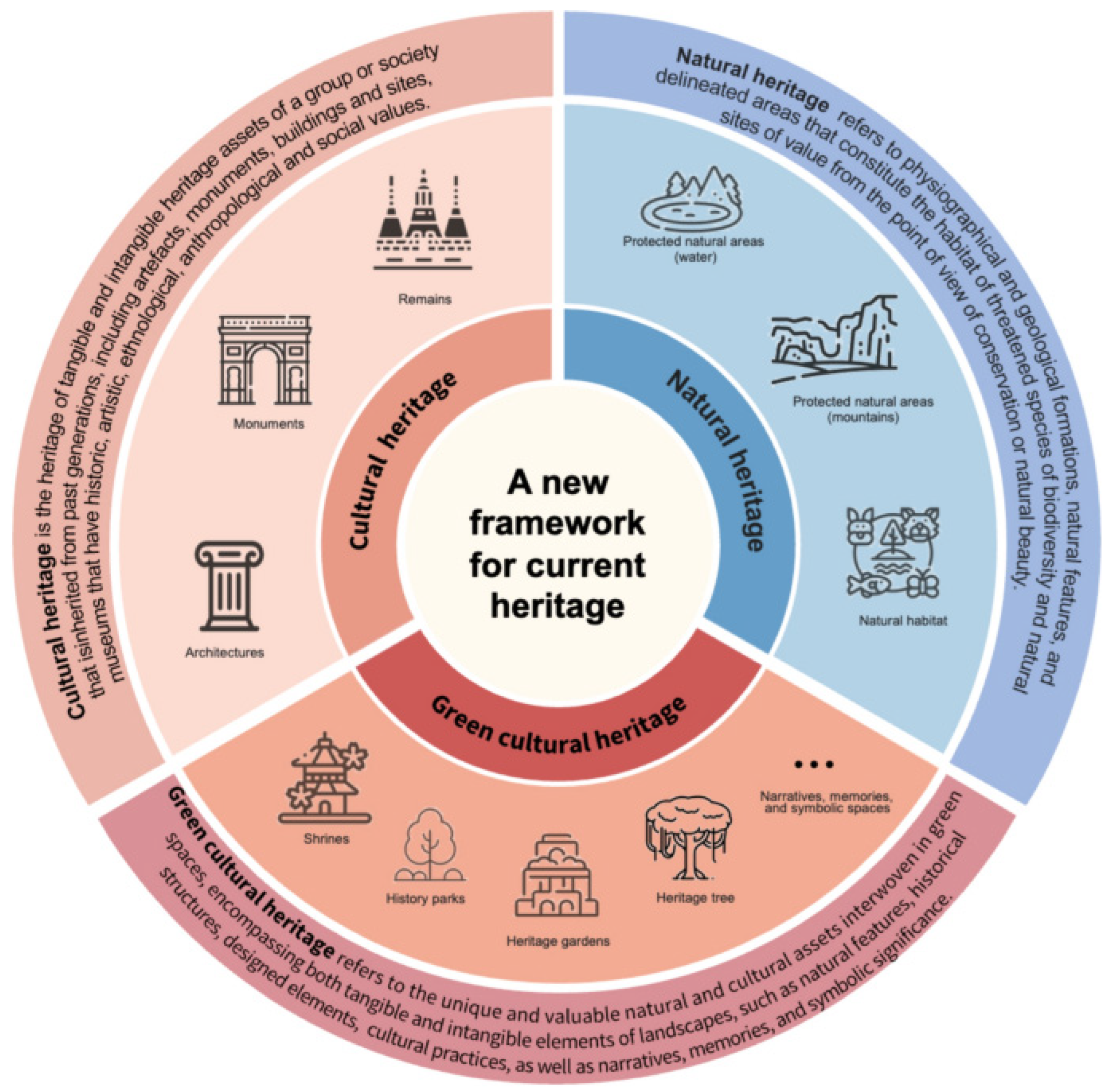
In recent years, the concept of Smart and Sustainable Cultural Heritage (SSCH) has emerged as an extension of traditional cultural heritage frameworks. During the twentieth century, the understanding of heritage expanded beyond historic monuments to include green open spaces, advanced technologies and environments shaped by human–nature interactions. Traditional heritage conservation focuses on historic buildings and natural environments, whereas smart sustainable cultural heritage emphasises environments where digital technologies, natural elements and human cultural practices are integrated [
17,
56]. The heritage framework illustrated in
Figure 5 recognises the interconnected relationships between built heritage, natural environments, and socio-cultural landscapes. Within this framework, heritage is understood as a multidimensional system, forming the conceptual basis for the Smart Sustainable Urban Heritage Index Wheel, which integrates environmental, cultural heritage, advanced technologies and urban indicators to support sustainable heritage management (
Figure 5) [
56].
Baghdad’s urban heritage has undergone unprecedented change over the last century. Numerous factors have driven changes in the urban environment, including demographic shifts, globalisation, uncontrolled development, and economic pressures, all of which directly affect urban heritage conservation [
13]. Therefore, smart sustainable cultural heritage conservation initiatives in Old Rusafa can help manage future urban challenges, promote citizen engagement, and enhance socio-economic and environmental aspects [
8,
12].
2. Methods
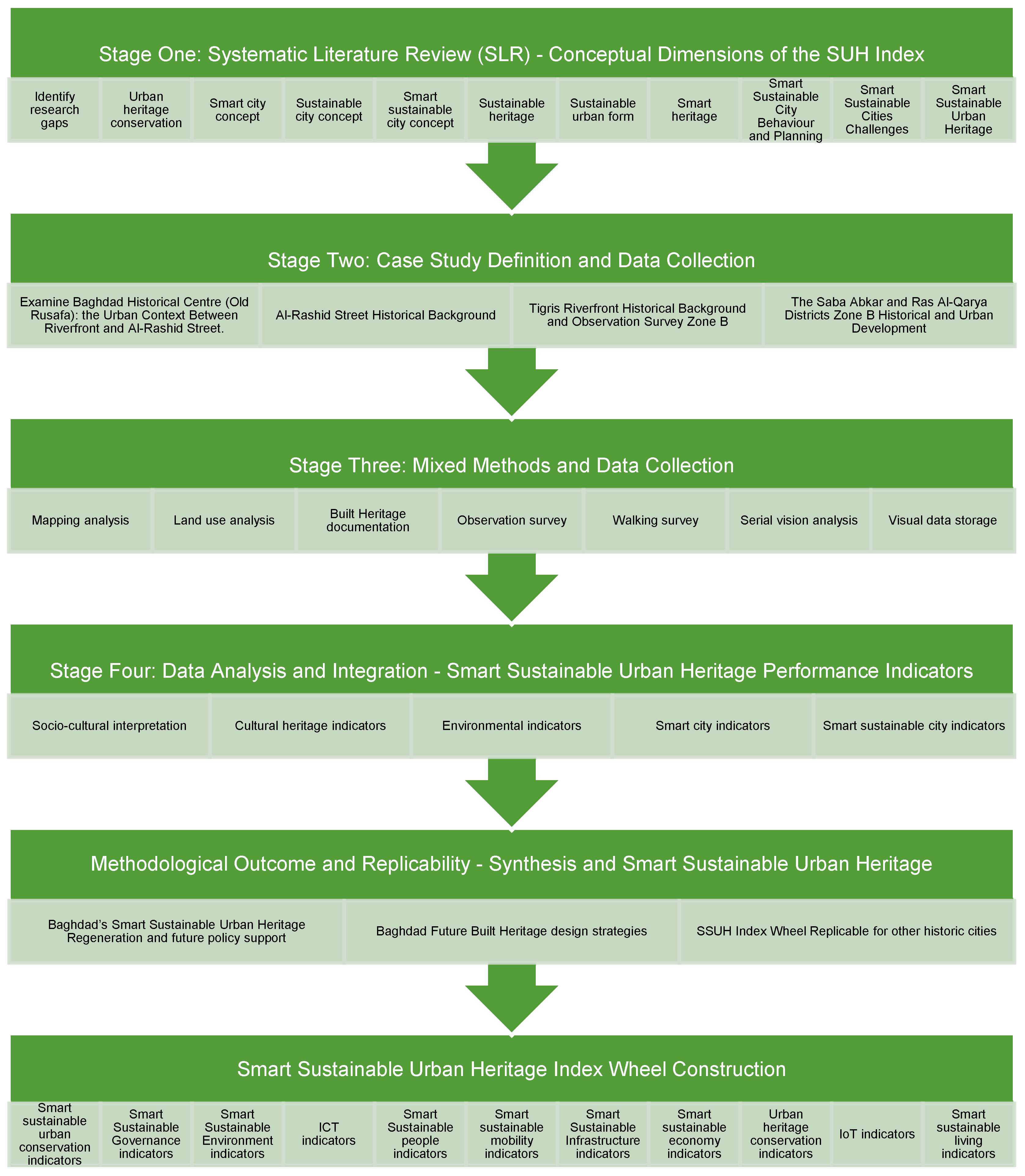
This research employs a mixed-methods case study approach to investigate how smart sustainable city principles can be integrated into cultural heritage conservation. The methodology is structured into four stages, ensuring coherence and replicability for application in other historic cities (
Figure 6).
The research employs a systematic literature review (SLR) to develop the study’s theoretical foundation and to examine existing knowledge related to smart sustainable cities, urban form, sustainable behaviour, and cultural heritage conservation, using databases such as Scopus, Web of Science, and Google Scholar [
74]. It uses an SLR to review and assess the integration of smart sustainable city initiatives and their impact on cities’ urban heritage. The SLR has three main purposes. First, it illustrates key definitions and conceptual debates on sustainable urban conservation in cities [
92]. Secondly, the SLR aims to identify the limited integration of smart city strategies with heritage conservation gaps. Thirdly, it informs the development of an Integrated Smart Sustainable Urban Heritage Development Method by introducing several original contributions that extend beyond existing literature. Qualitative thematic synthesis and quantitative mapping of concepts were used to structure and compare the findings [
65]. The outcome of this stage is the identification of key conceptual domains, such as e-governance, ICT, advanced technologies, environment, smart mobility, and socio-cultural and heritage values, which form the primary dimensions of the SSUH Index Wheel. These dimensions are presented in
Section 4.2, where they are contextualised within Baghdad’s urban heritage discourse.
The research adopts Baghdad’s Old Rusafa as a case study, due to its historical significance, dense urban heritage fabric, and as a response to the failure of previous conservation strategies to achieve sustainable urban heritage regeneration. The case study method enables in-depth contextual analysis while also supporting theory testing [
66,
91]. information was collected from multiple primary and secondary sources, including heritage and land use maps, photographs, planning documents, and archival records obtained from Iraqi governmental and academic institutions [
67,
90]. Using diverse information sources enhances data triangulation and analytical reliability [
68]. The results are presented in
Section 4.1, which documents the area’s physical condition, built heritage, and environmental characteristics.
Data were gathered from various sources, including the Baghdad Heritage Department, the Urban Planning Department, the Mayoralty of Baghdad, and the University of Baghdad. Quantitative and qualitative data were therefore collected simultaneously using ICT-based tool [
66,
91]. Quantitative methods included mapping to document the case study’s heritage buildings, infrastructure systems, land use, and natural environmental conditions. Qualitative methods included the walking method, serial vision analysis, and structured observation to analyse and assess architectural character and the condition of cultural heritage [
69]. ICT tools were used to collect, store, and process visual data, enabling the accurate documentation of Baghdad’s built heritage and natural environment [
95].
This stage represents the critical step in translating different information into measurable indicators and, ultimately, into the Smart Sustainable Urban Heritage (SSUH) Index Wheel dimensions. The process is structured into four integrated phases to ensure methodological transparency and analytical coherence.
Phase one: Quantitative data were used to assess the case study area’s urban form, land use, infrastructure systems, and environmental conditions, while qualitative data from field surveys, walking methods, serial vision analysis, and observations were analysed using thematic coding to evaluate the historic and architectural value, cultural heritage, and condition of traditional buildings in the old centre [
70,
71].
Phase two: These datasets were translated into measurable performance indicators through a structured process. Data were linked to specific indicator types; for example, field surveys informed cultural heritage and building condition indicators, mapping informed environmental and urban form indicators, and policy analysis informed governance indicators. This ensured the integration of both quantitative and qualitative dimensions of urban heritage. These indicators are discussed in
Section 4.1 and
Section 4.2.
Phase three: The SSUH Index Wheel was developed through an iterative synthesis integrating three inputs: (1) the conceptual framework from the Systematic Literature Review (Stage One), (2) empirical evidence from the Old Rusafa case study, which contributes to the development of urban heritage indicator frameworks (Stages Two and Three), and (3) established smart and sustainable city, ICT and IoT indicator frameworks from international organisations and academic sources [
3,
18,
32,
97,
98,
99,
100,
101,
102,
103,
104,
105,
106].
Phase four: Indicators were filtered, grouped, and refined through thematic coding and cross-analysis based on their relevance and alignment with smart sustainable urban heritage principles. Indicators derived from international frameworks, empirical datasets, the Systematic Literature Review (SLR), and case study analysis were systematically screened to remove redundancies and ensure relevance to the study context [
3,
18,
32,
97,
98,
99,
100,
101,
102,
103,
104,
105,
106]. Subsequently, the indicators were grouped into thematic clusters based on shared characteristics, such as smart sustainable environment, ICT, IoT, and urban heritage conservation. These clusters were then cross-referenced with the conceptual domains identified in the SLR and validated against the Old Rusafa case study findings.
Table 3 illustrates how the datasets and inputs were filtered, grouped, and ultimately translated into the ten final dimensions of the SSUH Index Wheel.
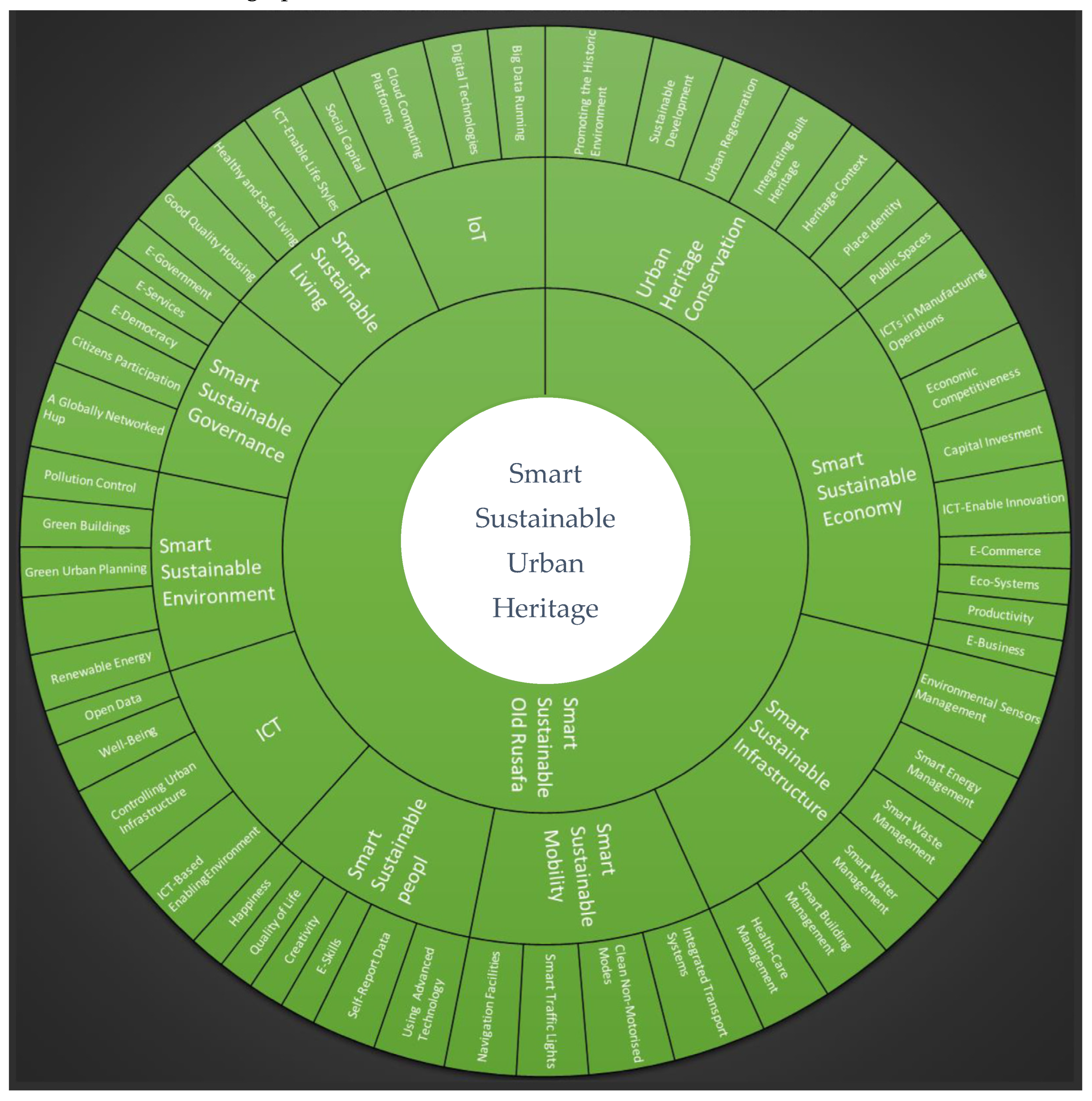
This process consolidates the indicators into ten core dimensions representing smart sustainable environment, living, governance, people, mobility, infrastructure, economy, ICT, IoT, and urban heritage conservation aspects. These form the basis of the SSUH Index Wheel, which functions as both a conceptual framework and a quantitative assessment method, providing a transparent and replicable approach for guiding smart sustainable urban heritage development.
The research outcomes demonstrate how the use of two broad methodological approaches, qualitative and quantitative, achieves the research objectives. The method translates qualitative heritage values into quantitative performance indicators, enabling application in other historic cities through smart, sustainable, and adaptable indicators, scalable datasets, and digital tools. It enables the development of an Integrated Smart Sustainable Urban Heritage (SSUH) Development Method, operationalised through a replicable Index Wheel. This highlights the significance of mixed methods in evaluating Baghdad’s built heritage stock and raising awareness of the need to safeguard the city’s natural environment and built heritage by employing the smart Index Wheel. The SSUH Index Wheel can be applied to other historic cities by adjusting its main dimensions and indicators according to each city’s cultural and urban heritage typologies, sustainability priorities, governance context, and socio-economic and environmental characteristics [
66,
68,
69,
72]. Thus, the Index Wheel acts as both a conceptual framework and a quantitative assessment tool, translating complex, multi-source data into an integrated and interpretable model.
3. Baghdad Historical Centre (Old Rusafa): The Urban Context Between Riverfront and Al-Rashid Street
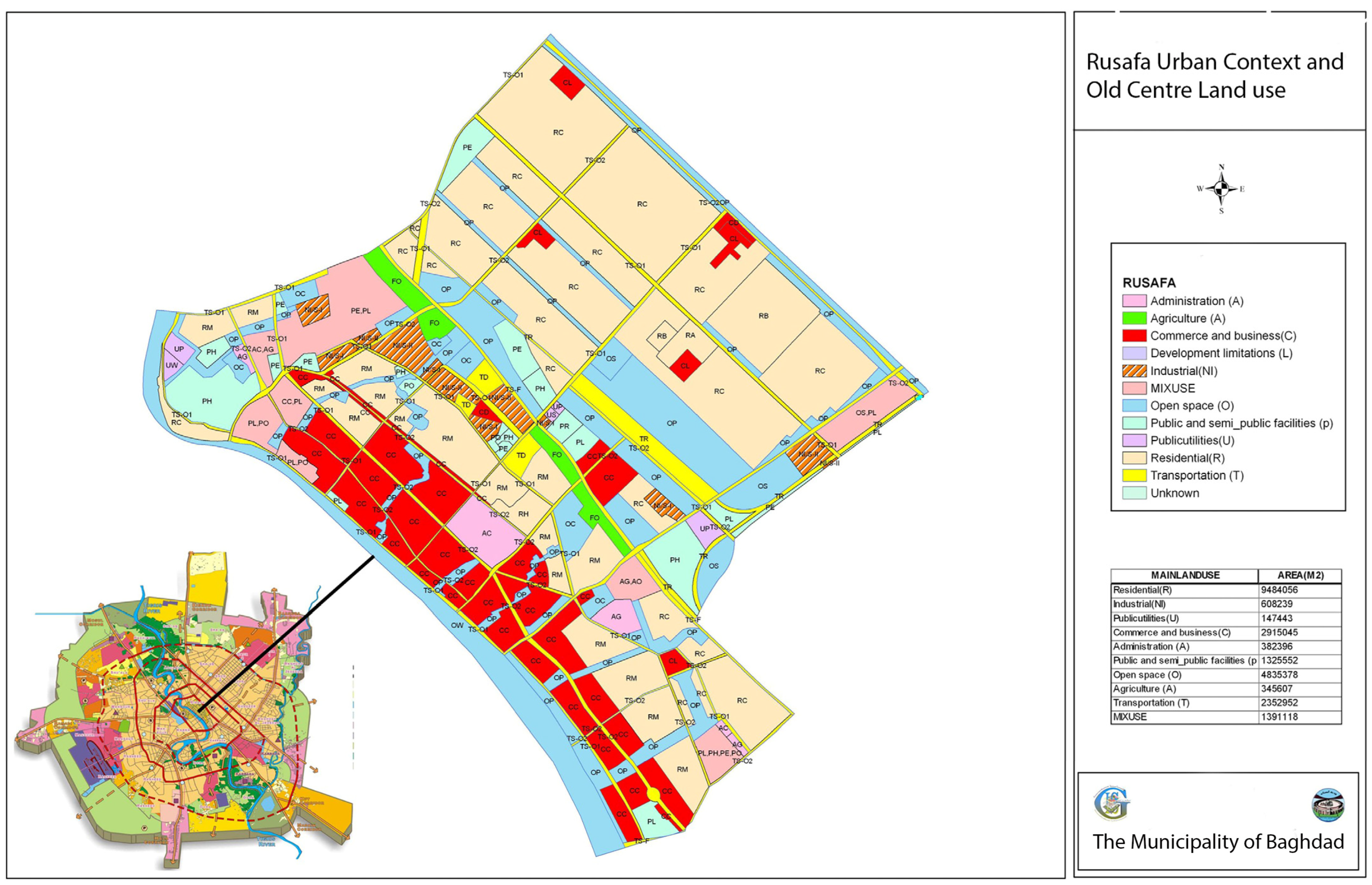
Old Rusafa is the historic centre and the largest of all traditional areas in Baghdad, including Kadhimiya, Karkh, and Adhamiya, and forms an integral part of the central business district on the eastern bank of the Tigris River (
Figure 7). The scale of the historic centre is significant not only locally but also regionally and nationally. Its urban heritage has been under pressure from modern growth, and it has suffered substantial losses in its traditional urban form. However, there remains an opportunity to conserve the remaining unique heritage by developing the area with new infrastructure systems and repairing damaged structures.
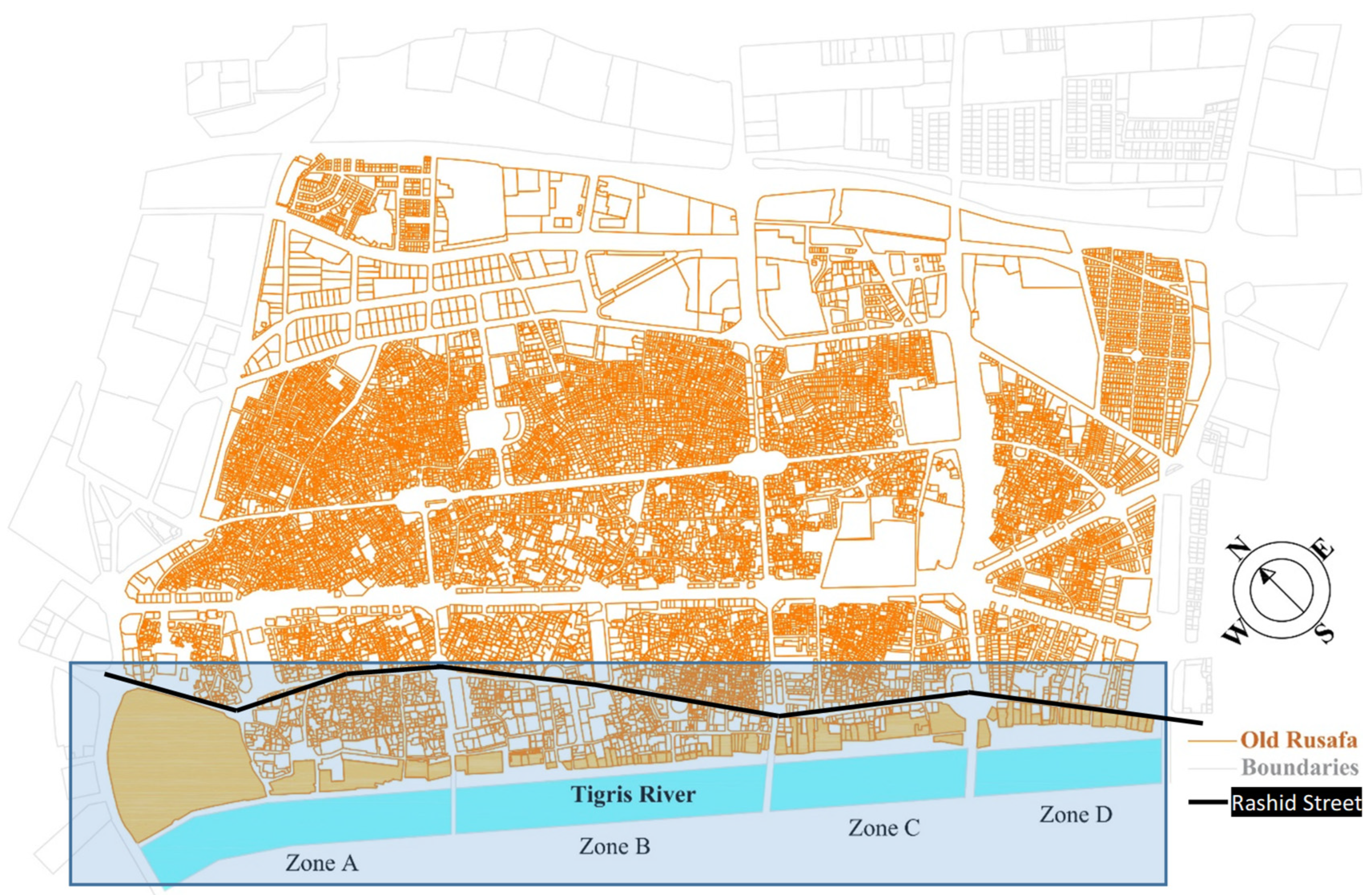
The area between Al-Rashid Street and the riverfront is a significant part of Old Rusafa and presents both conservation and smart sustainable development challenges. The Municipality of Baghdad has prepared several proposals to rehabilitate the area, which include detailed assessments of the existing architectural heritage and general design guidelines. One of the most comprehensive urban conservation master plans for Old Rusafa was submitted by JCP (Japan Planners, Architects, and Consulting Engineers) in 1984. This research examines the area between Al-Rashid Street and the Tigris Riverfront in Old Rusafa (
Figure 8). The area comprises a longitudinal strip extending approximately four kilometres between Bab Al-Moatham and Bab Al-Sharqi; accordingly, the research focuses on assessing Zone B’s built heritage as a representative example of other zones in the area [
66,
68,
90,
91].
3.1. Al-Rashid Street Historical Background
Old Rusafa experienced its first disruption of the traditional urban fabric in the late nineteenth century, when the Ottomans established the axis now known as Al-Rashid Street, which was later completed by the British in 1917 [
58,
60]. In the context of urban planning, Al-Rashid Street has been recognised not only as the first modern street in Baghdad but also in Iraq. The street is approximately 3120 m long and 12 m wide, linking the two old gates of Old Rusafa. It was characterised by its colonnaded paths, traditional two-storey buildings, human scale, architectural unity, and shaded walkways for pedestrians [
15,
17]. The street became the most significant feature and the commercial centre of Baghdad for several decades [
17].
The traditional building style on Al-Rashid Street was of a consistent type, giving the street a continuous character. However, this unique character is now threatened by numerous high-rise office blocks and the neglect of its urban fabric [
57,
60]. The traditional buildings and the variety of architectural styles on both sides of Al-Rashid Street illustrate the development of the old city over the last one hundred years. The arcade of these traditional buildings along both sides provides a colonnaded walkway approximately 3.5 m wide and 5 m high. Physically and morphologically, the street is divided into four main areas due to the construction of bridges from 1939 to the present, which effectively segmented Al-Rashid Street. Today, several modern buildings have encroached upon the traditional street of Old Rusafa, disrupting its unique character and confusing the urban scene of the historic centre. This process began in the 1950s due to a lack of effective urban design policies and development controls. Al-Rashid Street has represented the commercial and cultural heart of Baghdad for many decades and currently forms part of the city’s central business district (CBD) [
1,
2,
7,
15,
17].
3.2. Tigris Riverfront Historical Background and Observation Survey Zone B
The Tigris River has been one of the most important natural features promoting Baghdad’s prosperity from past centuries to the present. During the late Abbasid period (1055–1258), when Old Rusafa expanded into its familiar rectangular form, three boat bridges crossed the Tigris River, connecting Old Rusafa and Al-Karkh [
15]. The Old Rusafa morphology was shaped by the Tigris River, and all significant buildings were located along its banks, including the Citadel, traditional souqs, mosques, and monumental structures. The riverfront is divided into distinct areas, each characterised by different architectural features [
9]. However, the riverfront is now almost entirely neglected, and its character has been disturbed by numerous tall buildings constructed near significant landmarks, such as Al-Mustansiriyah School, built in 1227 [
17].
The Old Rusafa Tigris Riverfront’s historical buildings could constitute an attractive area that plays an essential role in promoting the city’s cultural, socio-economic, and environmental aspects. The riverfront heritage requires the implementation of smart, sustainable urban heritage design strategies to conserve its built heritage [
6,
7,
17].
3.3. The Saba Abkar and Ras Al-Qarya Districts Zone B Historical and Urban Development
The Saba Abkar area is located along the eastern banks of the Tigris River and is surrounded by several districts, including Ras Al-Qarya, Al-Morabaa, and Al-Kader Khana. At the beginning of the twentieth century, the area was historically known as Sharia Pachachi House. It contains several significant historical landmarks, such as the Numan Al-Pachachi Mosque, located in the alleyway connecting Al-Nehr Street and Al-Rasheed Street, near the former Russian Consulate building, which has since been converted into commercial shops. Other important landmarks include Mr Al-Badawi’s hospice, centrally located on Al-Rasheed Street, the Baghdad Commerce Chamber, Dar Al-Qassed, currently occupied by the Hafiz Al-Qadi Building in Al-Wathba Square, and the National Cinema.
Similarly, the Ras Al-Qarya area is situated along the Tigris River and is bordered by districts such as Bab Al-Agha, Dahana, and the Saba Abkar area. Historically, Ras Al-Qarya originated as an agricultural settlement within Baghdad’s urban fabric, later evolving into a significant urban centre with origins tracing back to the Abbasid period. From the third century A.D., the district became integrated with the Abbasid capital palaces and was surrounded by complexes and administrative buildings. The most important architectural landmark was the Crown Palace, which served as the official seat of the Abbasid Caliphate during the last three centuries of its rule. According to scholarly evidence, this building was situated near the Firefighting Building located on Al-Nahr Street in the city centre.
The urban morphology of Ras Al-Qarya retains its historic radial configuration, a defining characteristic of the district’s historic urban form. The area was also home to the House of Prince Malik, emphasising its historical significance as a locus of political and social activity. In recent centuries, Ras Al-Qarya witnessed several commercial and religious developments, including Khan al-Kandir, Khan Sayyid Kaseb, Khan al-Karaj, and the Haidar Bath, which dates back to the tenth century of the Hijri calendar (1069 AH/1658 AD). The Al-Kasqy Mosque, constructed in 1658 AD, stands as another significant religious landmark within the district, illustrating architectural continuity from the Ottoman period to the present day.
4. Results and Discussion
This section presents the findings generated through the various mixed methods outlined in the
Section 2. The results are presented alongside critical discussion to demonstrate how the case study data, qualitative analysis, and indicator assessment contribute to an understanding of Baghdad’s sustainable urban heritage. The discussion progresses from empirical site data to strategic analysis, developing a link between data collection, analytical integration, and future heritage development.
4.1. Results Obtained from Field Surveys of the Case Study Area (Old Rusafa Zone B)
The study examines Baghdad’s historic core to develop a comprehensive understanding of the need for smart, sustainable urban heritage development. This subsection reports the results of the empirical investigation stage, drawing on field surveys, spatial mapping, and qualitative assessment methods. Fieldwork served as the primary method for data collection, with information gathered from diverse sources associated with various organisations and academic institutions. The findings document the area’s physical condition, architectural and historic buildings, and environmental characteristics. In Old Rusafa, Zone B, a combination of observation, walking, and serial vision methods was adopted as a qualitative approach to gather information and evaluate the existing physical urban heritage context and form.
4.1.1. Old Rusafa Zone B Architectural and Historical Buildings Survey
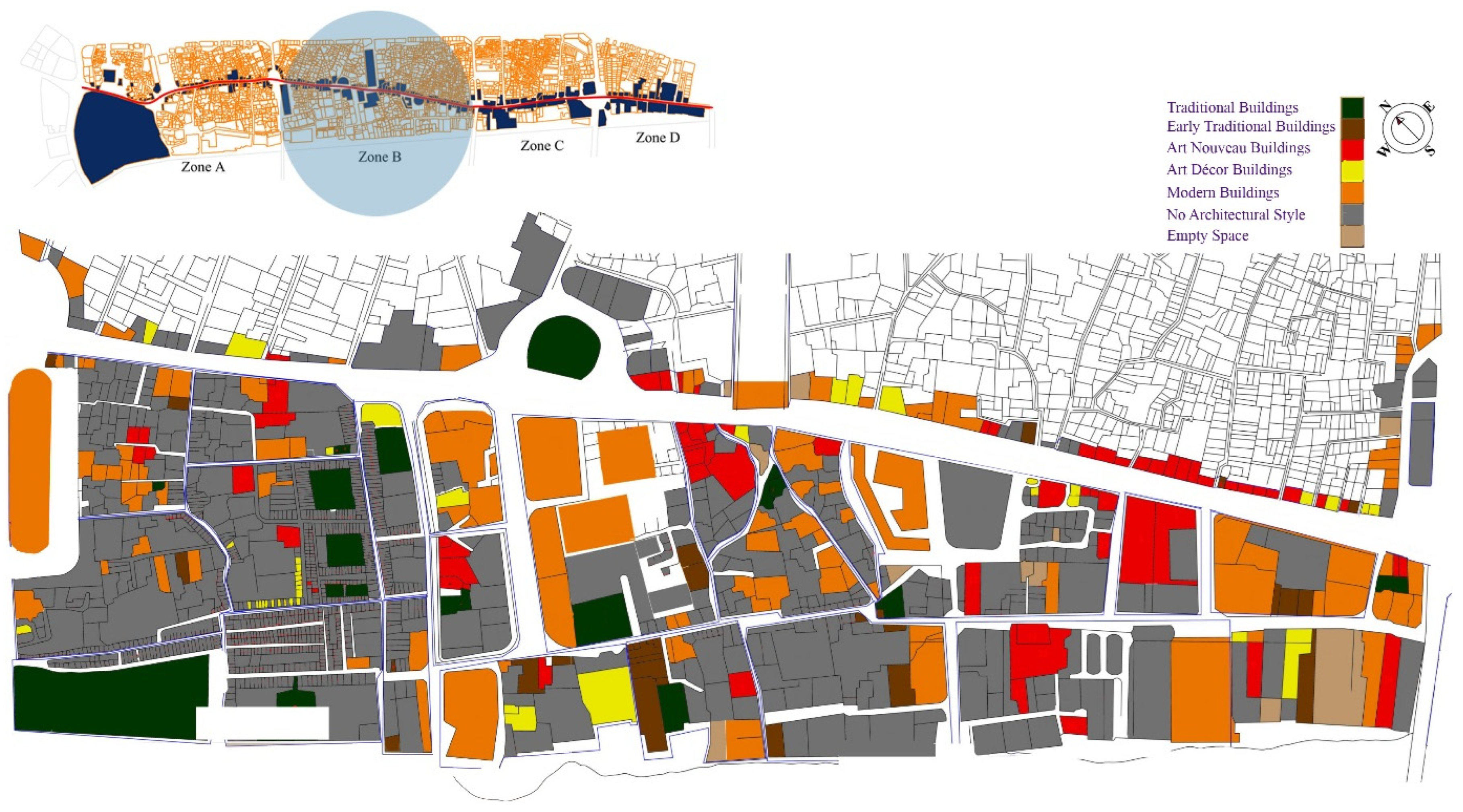
The Zone B field survey studied 1433 buildings, which were classified according to their architectural and historical significance, resulting in seven categories: historic buildings, early traditional buildings, Art Nouveau, Art Déco, modern buildings, empty spaces, and unknown (
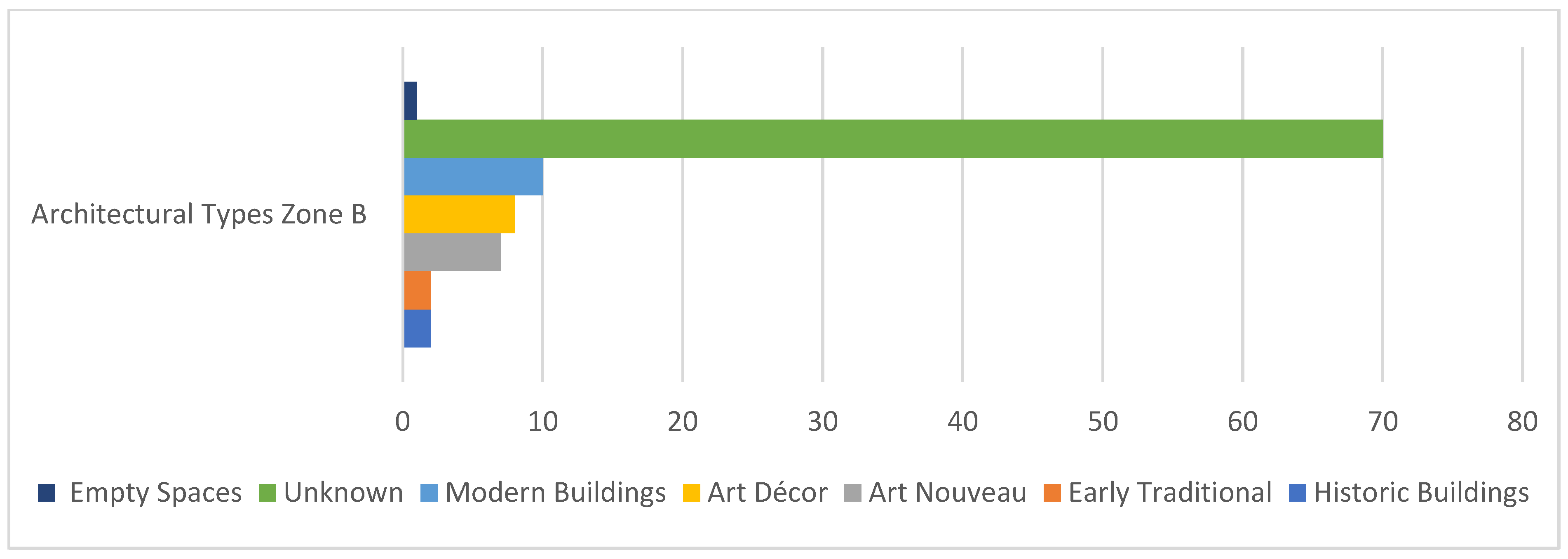
Figure 9). The architectural and historical value assessment revealed that most buildings, approximately 70%, possess no identifiable architectural value. In contrast, buildings classified as historic and early traditional each accounted for only 2% of the total buildings in Zone B.
As illustrated in
Figure 10, modern buildings represented 10% of the buildings in Zone B. Art Nouveau architecture, a distinctive feature within Baghdad’s historic centre, was identified in 7% of the surveyed buildings, while Art Déco architecture accounted for 8%. The survey further revealed that empty spaces accounted for about 1% of all plots within Al-Rashid Street, Zone B, reflecting the fragmented and discontinuous urban fabric that characterises Baghdad’s historic core.
Overall, the results indicate significant deterioration of the built heritage within Zone B, where non-significant modern infill has progressively replaced traditional buildings. This transformation highlights the critical challenges facing heritage conservation and regeneration efforts in Baghdad’s historic centre.
4.1.2. Old Rusafa Zone B Traditional and Historical Buildings Survey
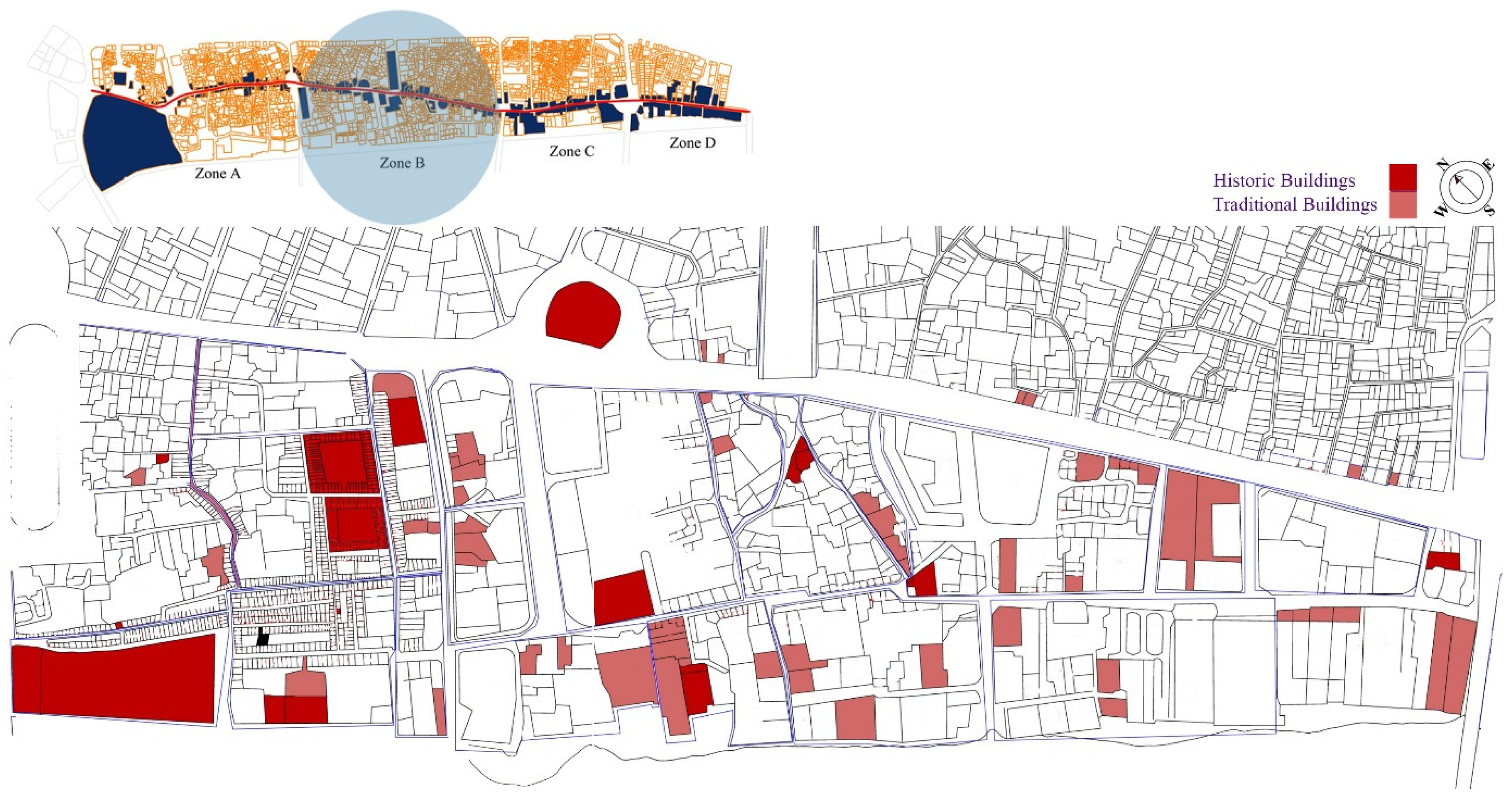
The Zone B survey assessment identified 44 buildings classified as historical and heritage structures (
Figure 11). The area comprises several significant mosques, traditional houses, historic khans, public baths (hammams), and traditional suqs (markets) that collectively define the architectural identity of Old Rusafa. The survey confirmed that the area contains several landmarks of historical significance, some of which date back to the Abbasid period. The most prominent among these is the Al-Mustansiriyah School, constructed between 1227 and 1234 AD, and considered one of the most remarkable examples of Islamic architecture in Iraq. Moreover, Shah Bandar Khan and Yassin Khudairi Khan are significant buildings that reflect the traditional khan typology historically associated with Baghdad’s commercial architecture.
Zone B also encompasses several traditional mosques that contribute to the area’s religious and cultural continuity. Examples include Al-Asifi Mosque and Tomb, built by Daud Pasha in 1825; the Qaplani Mosque, dating back to 1676; the Khafafin Mosque, whose minaret was constructed in 1202; the Ahmadi Mosque, built in 1800; and the Wifaiya Mosque, originally constructed in 1650 and rebuilt in 1885.
The investigation also documented several traditional suqs, such as Al-Saffarin Suq and Shoja Suq, located in the Bab Al-Agha area, both built around 1800 AD. These markets play a vital role in sustaining Old Rusafa’s socio-economic fabric and illustrate the interaction between commerce, architecture, and urban heritage within Baghdad’s historic core.
4.1.3. Al-Rashid Street Observation Survey Zone B
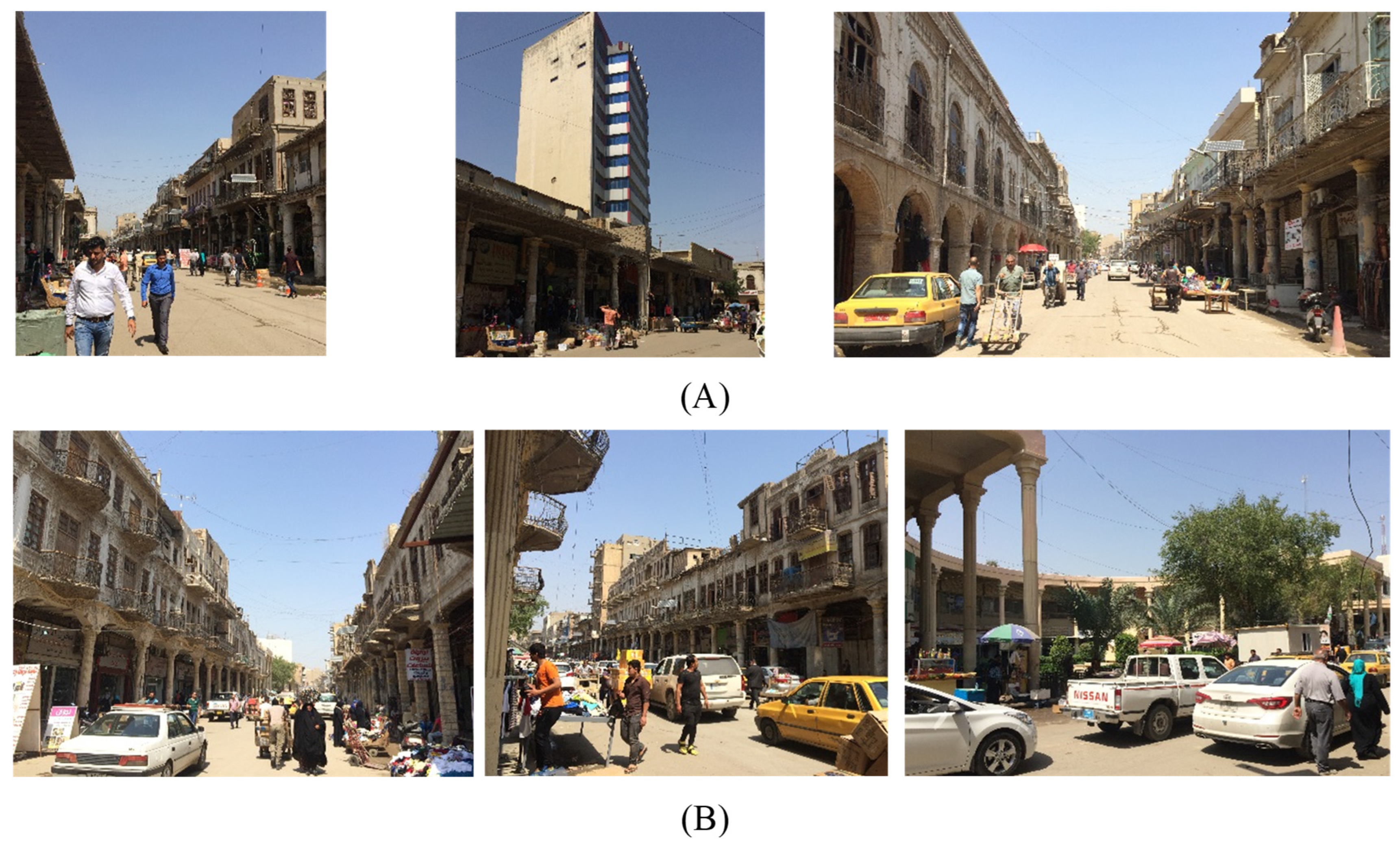
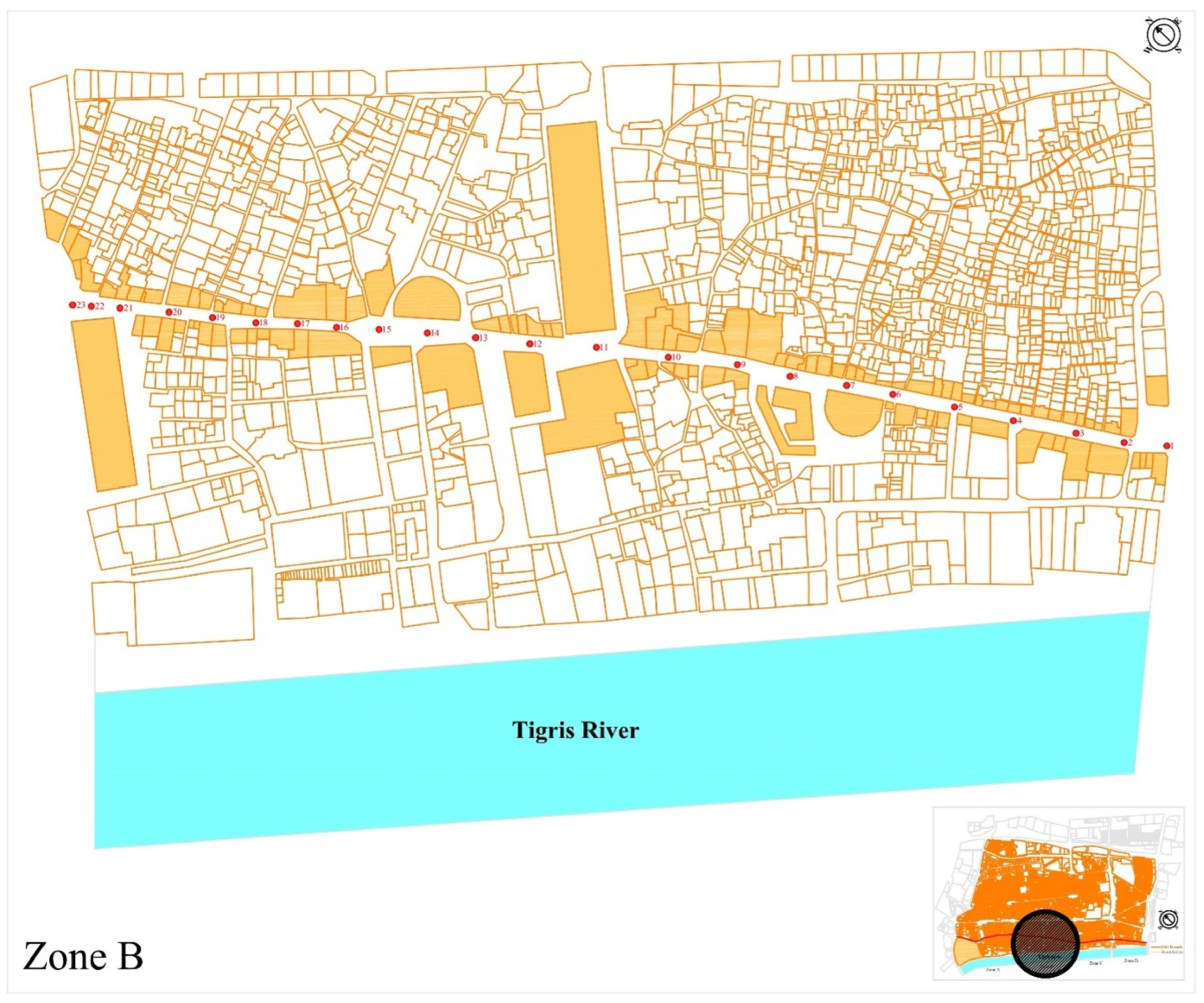
The traditional buildings and the variety of architectural styles on both sides of Al-Rashid Street illustrate the development of the old city over the last one hundred years. Field observations conducted along Al-Rashid Street, Zone B, revealed several architectural characteristics that define the current condition of the historic core. Many significant historical and traditional buildings, such as Morjan Mosque, as well as governmental buildings like the Central Bank of Iraq, are located in Zone B. The observation survey indicates that heritage buildings require both short- and long-term sustainable conservation strategies to preserve their heritage identity (
Figure 12A,B).
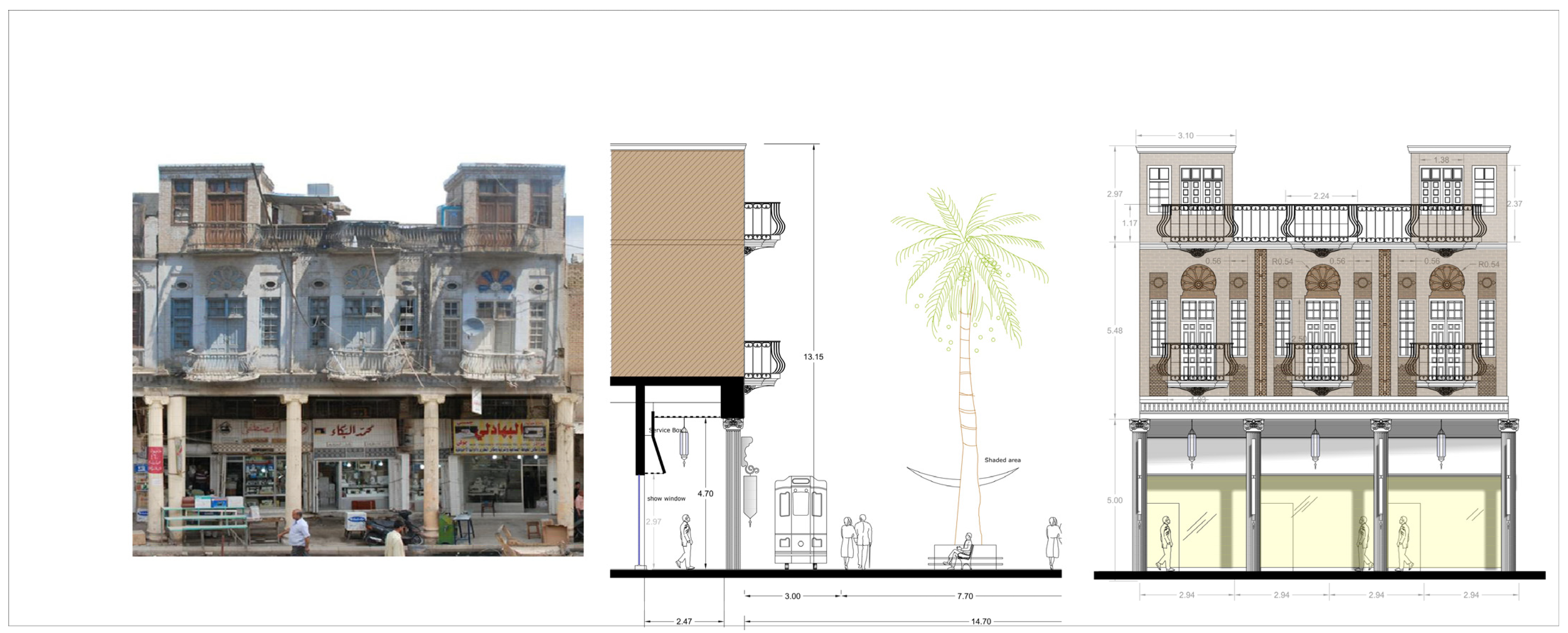
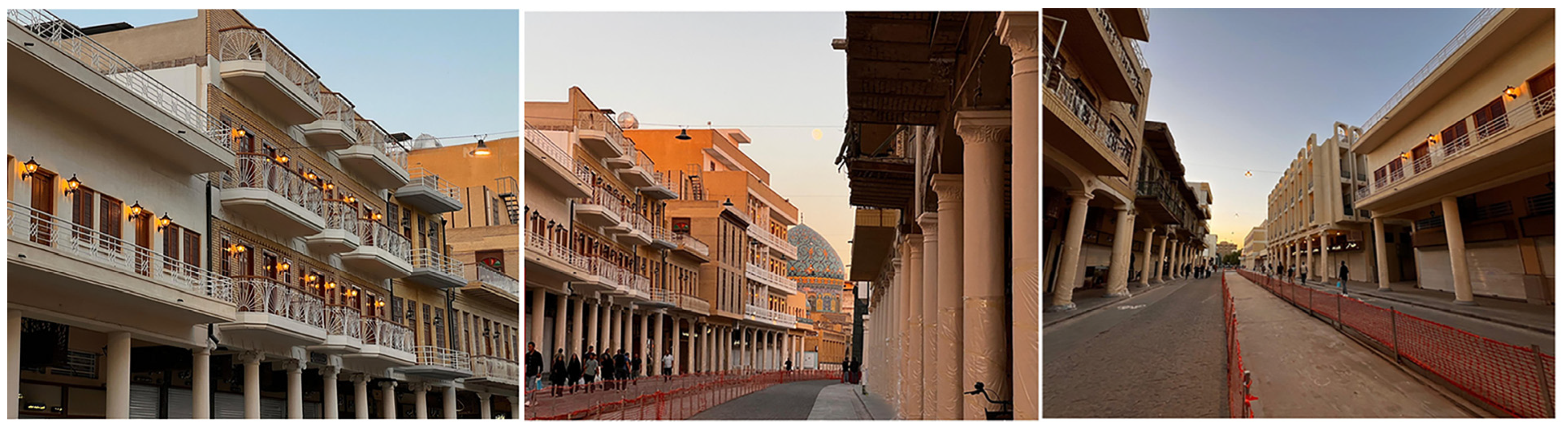
In 2025, preservation initiatives along Al-Rashid Street focused on the rehabilitation of heritage buildings, emphasising façade restoration and the conservation of architectural elements. These initiatives preserved several landmark historical identities and reintroduced their cultural value within the heritage urban context. However, despite these localised achievements, the Old Rusafa heritage urban fabric remains neglected. Many adjacent buildings and public spaces continue to suffer from inadequate maintenance and poor infrastructure, diminishing the overall coherence of the historic built environment. Al-Rashid Street therefore requires a comprehensive smart, sustainable conservation strategy to protect its historic identity (
Figure 13 and
Figure 14).
4.1.4. Old Rusafa Tigris Riverfront Observation Survey Zone B
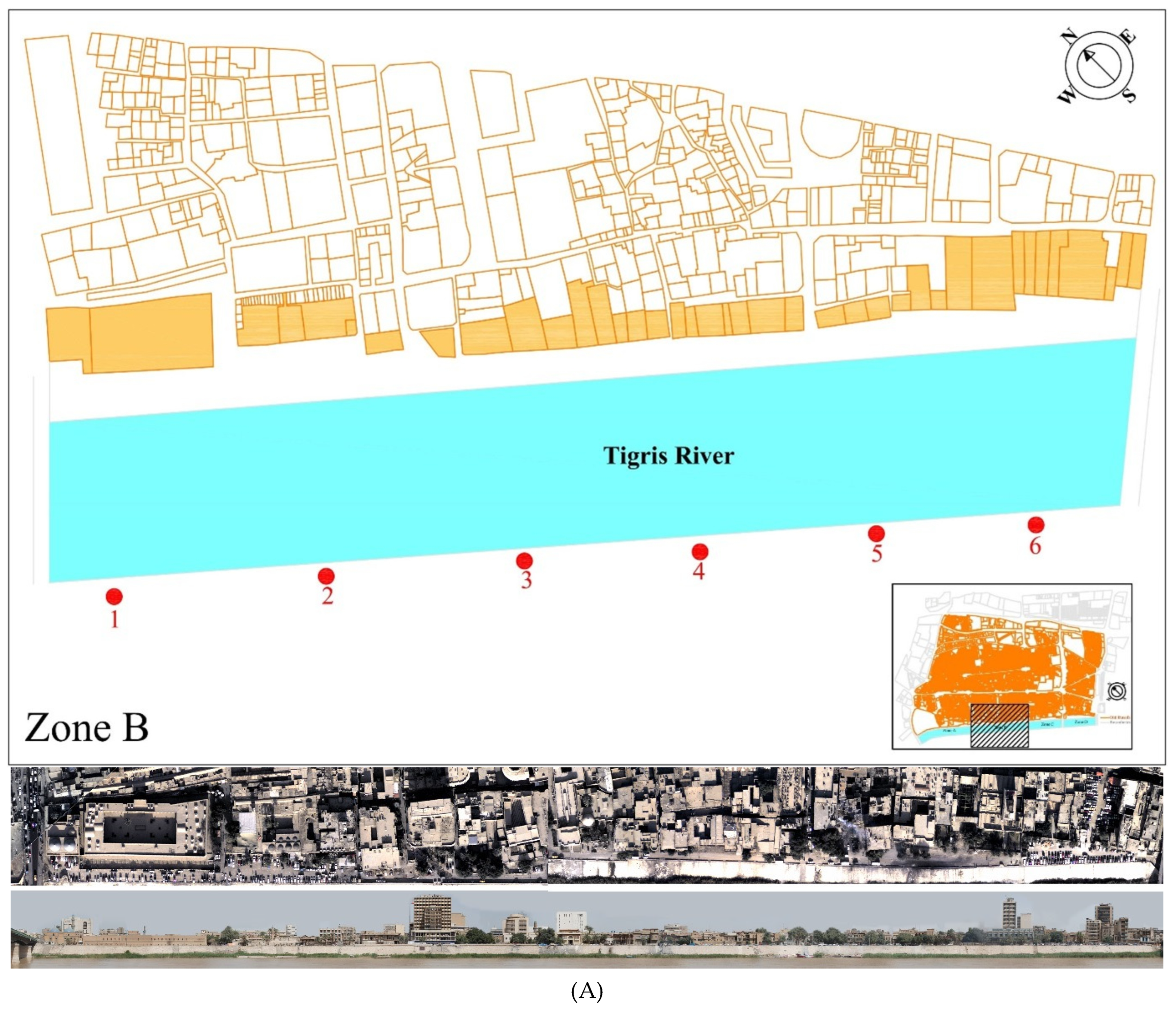
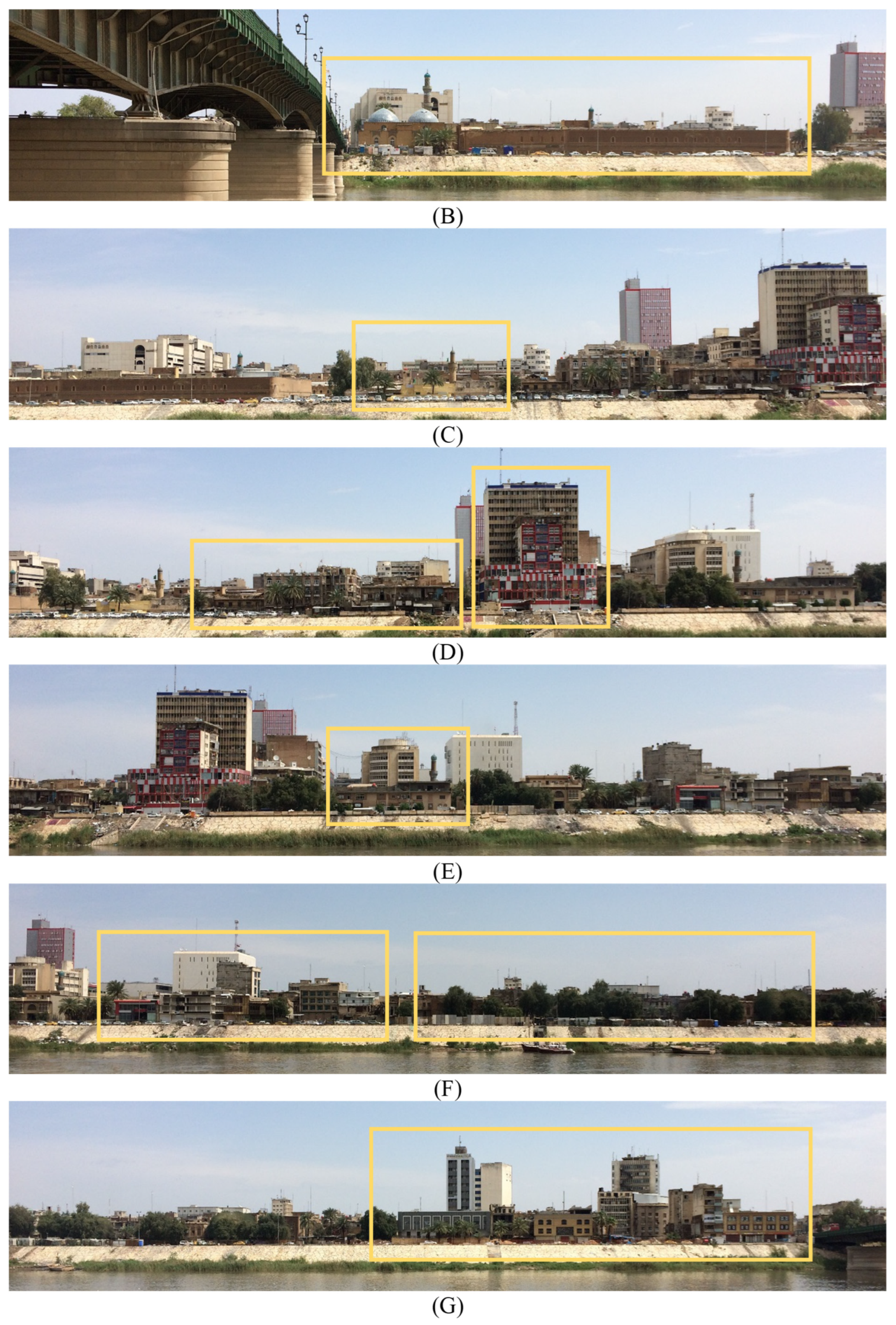
The Zone B field investigation (
Figure 15A–G) revealed a historical and architectural concentration of significant buildings that illustrate the urban evolution of Old Rusafa. Al-Asifyah Mosque is an important traditional building in the old centre, originally known as Dar al-Qur’ān and built by Daud Pasha in 1825. The mosque represents a key religious institution within the area (
Figure 15B). Adjacent to it stands the Al-Mustansiriyah School, built by Caliph Mustansir between 1227 and 1234 AD, which represents one of the most significant examples of Islamic architecture in Baghdad (
Figure 15B). Another heritage landmark is the Khafafin Mosque, located within the historic Khafafin Suq (Sandal-Makers’ Market). The mosque, built in 1202 AD by Zumurrad Khatun, mother of Caliph Al-Nasir, remains a crucial architectural testament to Baghdad’s medieval Islamic heritage (
Figure 15C).
The field survey also identified an empty area, currently utilised as a parking space. This open space surrounds several traditional buildings such as the Khafafin Mosque and the traditional Znad Café (Qahwa Znad), established in 1920. Adjacent to these traditional buildings, modern high-rise buildings have encroached upon the heritage urban context of the area (
Figure 15D).
The survey further recorded the Ihsai (or Takya Khalidya) Mosque, built around 1660 and subsequently restored by Muhammad Najib Pasha in 1846 and again by the Awqaf Department in 1940 (
Figure 15E). A variety of two-storey traditional buildings and three- to four-storey modern buildings were observed, some situated within walled concrete compounds indicating governmental use (
Figure 15F).
At the edge of Zone B, new developments have replaced several traditional Baghdadi houses, such as the Mahmud House (1890) and the Sasson House (1900) (
Figure 15G). The replacement of these heritage residences by contemporary buildings illustrates the continuing loss of traditional local architecture and emphasises the urgent need for an integrated heritage regeneration plan within Baghdad’s historic core.
The observation survey shows that no urban or cultural heritage regeneration strategies have been employed to conserve the traditional buildings of the old city. Therefore, Baghdad and the Old Rusafa area in particular requires a future development plan that adopts smart, sustainable urban heritage conservation strategies to protect the city’s built heritage in a sustainable manner.
4.2. Baghdad’s Smart Sustainable Urban Heritage Regeneration
This section reflects the interpretative and strategic stage of the methodology. It discusses how the integrated results inform Baghdad’s built heritage, linking empirical evidence to long-term conservation and regeneration policies. The discussion situates Old Rusafa within debates on future heritage cities and highlights the transferability of the proposed approach to other historic urban contexts.
Digital technologies and ICT play a significant role in conserving and enhancing the sustainability of Baghdad’s historical environment [
34,
81]. Digitisation processes allow anyone to access comprehensive data on cultural heritage, including not only the city’s heritage features but also the cultural context in which they exist [
79,
80,
94].
Baghdad can conserve its heritage and natural environment by adopting the smart sustainable city concept, leveraging digital technologies, ICT, services, and applications. This requires understanding future smart city agendas as well as the types, functionalities, and technologies likely to prevail [
84]. ICT can support Baghdad’s smart heritage development by analysing the city’s architectural and urban heritage characteristics and values [
78]. ICT can enhance smart technologies, heritage conservation, and the natural environment, fostering a creative, smart, and sustainable urban heritage context and community development [
77,
83,
89].
The integration of sustainable and smart city concepts represents a critical pathway for advancing Baghdad’s urban heritage sustainability in the digital era. This integration enhances awareness among urban designers, information technology firms, and government institutions regarding the strategic use of ICT to achieve smart, sustainable urban heritage development. Within this framework, open governance facilitates active stakeholder participation in decision-making processes to improve citizen well-being and achieve urban sustainability goals [
79,
81]. Baghdad’s smart sustainable city paradigm can promote this vision by supporting policymakers and urban stakeholders in adopting heritage sustainability-oriented planning and management practices. Emerging digital technologies play a pivotal role in transforming Baghdad citizens’ attitudes toward the efficient use of natural resources and the development of smart heritage, while enabling the city to implement efficient, technology-driven service delivery systems [
77].
For Baghdad to be genuinely “smart,” it must also be sustainable. Therefore, sustainable design strategies should form the foundation of smart city development frameworks. Integrating smart, sustainable, and heritage city strategies into a framework assessment model can ensure that both advanced technologies and smart heritage innovations are prioritised [
16,
76]. An interdisciplinary approach is required to address the complex social, historical, and environmental challenges involved in understanding sustainable urban heritage in Baghdad, which can be accomplished through creative ideas and community engagement in the city’s future urban planning. The research analysis suggests that, to tackle the deterioration of the existing built fabric, public administrators and decision-makers should adopt a variety of strategies to ensure the long-term sustainability of efforts to regenerate the historic core, including continuous mapping, damage control, identifying economic anchors, providing incentives, and developing durable policies that can mitigate the longstanding impacts of the multiple socio-economic challenges faced by the city.
Ultimately, advancing smart city strategies can safeguard sustainability considerations within Baghdad’s urban heritage and innovation agendas, fostering resilient, efficient, and inclusive urban heritage environments for future generations.
4.3. Baghdad Future Built Heritage
This section responds to the analytical integration stage of the methodology. Quantitative indicators and qualitative insights are synthesised by employing the Integrated Smart Sustainable Urban Heritage Development Method. The discussion evaluates how smart sustainable city principles, such as ICT, digital infrastructure, sustainable environment, and e-governance, can be aligned with heritage conservation objectives. The results are structured through the Index Wheel to demonstrate performance relationships and to identify strategic priorities for Baghdad’s heritage-led regeneration.
The implementation of the smart sustainable city concept within Old Rusafa’s historic environment presents significant challenges in integrating advanced technologies, smart infrastructures, and urban conservation and regeneration strategies to preserve the traditional urban fabric. The old city core faces many challenges, such as the conflict between modern development, which shows no consideration for the traditional urban context, and the large stock of abandoned, decaying, or misused traditional buildings that have led to confusion and chaos in Old Rusafa. These complex issues require smart sustainable strategies that combine ICT, IoT, AI, sensors, and data-driven management systems to enhance the urban heritage environment, social well-being, and economic vitality. This study proposes a framework comprising several core systems, such as infrastructure, networks and environment, transportation, water, and energy, to guide the future development of the case study area. The capacity and integration of these systems, together with the establishment of context-specific indicators, can determine the efficiency, adaptability, and long-term sustainable conservation of the historic urban core as it evolves toward a smart sustainable urban heritage model.
To operationalise this framework, the research creates a Smart Sustainable Urban Heritage Index Wheel, developed through a synthesis of previous studies, a literature review, and international smart city models [
3,
18,
32,
97,
98,
99,
100,
101,
102,
103,
104,
105,
106]. This Index Wheel comprises unique historical and physical characteristics, which ensure that the proposed aspects and their indicators are culturally sensitive, technologically feasible, and environmentally responsible. It also serves as a strategic urban design tool to identify future development opportunities, enhance infrastructure resilience, and articulate a comprehensive vision for Baghdad’s urban heritage transformation that harmonises advanced technologies with sustainable built heritage conservation. The proposed Smart Sustainable Urban Heritage Index Wheel indicators represent an applicable and context-sensitive set of measures designed to help policymakers and stakeholders guide the implementation of a smart sustainable heritage urbanism framework within the historic centre of Baghdad. These indicators help to evaluate future development opportunities while ensuring the protection of the city’s cultural and architectural heritage. This tool considers Old Rusafa’s unique historical and physical context, emphasising the strategies needed to deliver appropriate facilities, services, and urban systems that contribute to the future vision of Baghdad and its historic core.
The Index Wheel is divided into ten dimensions, reflecting the key components of the Smart Sustainable Urban Heritage framework (
Figure 16). It integrates multiple measurement systems designed to evaluate smart sustainable systems, infrastructure performance, and heritage regeneration initiatives within the case study area. The Index Wheel provides a comprehensive and flexible set of indicators that can be adapted to other historic urban environments seeking to achieve smart sustainable urban development. These indicators serve as essential tools for assessing how smart sustainable heritage strategies are implemented and how effectively they enhance the conservation and regeneration of Old Rusafa’s historic urban fabric. Furthermore, the Index Wheel establishes a guiding framework for the Municipality of Baghdad, policymakers, planners, urban designers, and architects, supporting them in prioritising strategic objectives, optimising resource allocation, and facilitating the effective implementation of smart sustainable urbanism within the traditional urban core.
Ultimately, these measures foster an integrated sustainable urban heritage development method that ensures smart infrastructure, digital technologies, and heritage regeneration principles are advanced jointly. The framework not only supports the evaluation of future smart sustainable urbanism within Baghdad’s historic context, but also serves as a replicable model for other heritage cities seeking to balance modern urban development with cultural heritage preservation.
5. Conclusions
This research examines how smart sustainable city principles can be applied to conserve Baghdad’s future built heritage. The study’s main objective is to develop an integrated smart sustainable urban heritage conservation method. Accordingly, the research demonstrates how advanced technologies, smart systems, and sustainable strategies can be aligned with heritage conservation principles to enhance long-term urban sustainability and improve people’s quality of life. It offers new insights into the sustainable regeneration and management of cities’ cultural heritage and natural environments by integrating ICT and digital technologies into future urban infrastructure systems.
The findings confirm that the smart sustainable city concept can play a significant role in safeguarding cities’ built heritage while addressing contemporary and future urban challenges. The investigation of Old Rusafa reveals that the historic core’s architectural, historical, and socio-cultural values are under pressure from rapid urbanisation, weak governance frameworks, and environmental degradation. Field surveys, area mapping, and qualitative assessments highlight both the vulnerabilities within the urban heritage fabric and its potential for smart sustainable regeneration.
This research’s main contribution is the development of a methodologically innovative Smart Urban Heritage Index Wheel. This method translates qualitative and quantitative data into measurable performance indicators that assess heritage condition, environmental sustainability aspects, and smart infrastructure systems. The Index Wheel provides city stakeholders with new strategies for evaluating existing cultural heritage and guiding future urban development. In the context of Baghdad, it offers a practical platform for integrating cultural heritage considerations into smart sustainable development strategies, moving beyond current urban conservation approaches.
The study also contributes to Baghdad’s smart sustainable development agenda by demonstrating that the sustainable regeneration of cities’ cultural heritage and natural environments requires the integration of ICT and digital technologies into future infrastructure systems. The findings emphasise that changing citizens’ attitudes is essential to achieving smart sustainable urban heritage objectives. Future cities require not only advanced technologies and smart infrastructure systems, but also effective conservation frameworks that integrate cultural heritage with socio-economic and environmental dimensions.
In conclusion, this research provides theoretical and practical contributions by advancing an integrated smart sustainable urban heritage development approach tailored to Baghdad’s historic context. The proposed framework methodology and Index Wheel can be adapted to other historic cities facing similar challenges, requiring the positioning of heritage as an active component of smart, sustainable city development rather than as a constraint. The study offers a robust foundation for future research, policymaking, and smart sustainable urban regeneration initiatives in Baghdad and beyond.