


Abstract
Glitter is an intentionally manufactured microplastic widely used in consumer products and industrial applications, yet public awareness of its environmental implications remains poorly investigated. This study assessed public awareness, perceptions of environmental impact, and consumer behaviour through a 14-question online survey completed by 610 respondents. A study-specific Glitter Awareness Score (GAS; theoretical range: 0–7) combined prior awareness of glitter as a microplastic with knowledge of its applications across six industrial sectors. Overall, 59.3% of respondents recognised conventional glitter as a microplastic, and the mean GAS was 5.37 ± 1.55. Despite this awareness, 90.2% of respondents providing a classifiable response reported not checking the type of material used for glitter before purchase. Most respondents perceived glitter as having a moderate or significant environmental impact, and GAS was weakly positively associated with perceived environmental impact. Age was independently associated with GAS, with respondents aged >40 years showing lower odds of being in a higher GAS category than those aged 15–20 years. Furthermore, 89.6% reported a self-perceived informational benefit from completing the questionnaire. These findings suggest that environmental awareness does not necessarily correspond to more environmentally informed self-reported purchasing behaviour, highlighting the need for improved consumer information on glitter composition and environmental implications.
1. Introduction
Glitter particles are an emerging and largely overlooked form of microplastic (MP) that has received limited scientific attention. According to ISO 24187:2023 [1], water-insoluble solid plastic particles ranging from 1 μm to 5 mm are classified into two categories: microplastics (1 μm–1 mm) and large microplastics (1–5 mm). Moreover, primary microplastics are plastic particles intentionally manufactured within this size range and found in cosmetics, medicines, plastic pellets, and aquaculture feeds containing microplastic additives [2,3]. Glitter particles fall within this classification [3]. Glitters are defined as small, flat, and reflective particles [4]. Glitter particles typically have a multilayered structure consisting of a polymer core coated with coloured and/or metallic layers [5] of titanium, iron, or bismuth resulting in a more heterogeneous composition than that observed in commonly investigated microplastic particles [6]. According to Meirelles et al. [7] glitter is a powder-like material composed of a combination of polymers, including polyethylene (PE), the most abundant polymer type, as well as acrylic polymers, poly (methyl methacrylate) (PMMA), polyvinyl chloride (PVC), plastic epoxy resin mixtures, and melamine and phenolic resin mixtures.
Like other MPs, the compositional features of glitter are influenced by the polymerization conditions and the catalytic system employed during material production. Exposure to environmental factors, including high temperatures and UV or gamma radiation, may alter the stability of some components, promoting their degradation and potential release into the environment [7].
Whereas the role of MPs as carriers of organic and inorganic contaminants is well established [8,9], glitter particles require additional attention due to their dual behaviour in metal dynamics. Indeed, they can act both as a direct source of metals through the release of elements contained in its metallic coatings and as a sorbent capable of attracting and retaining metals already present in the environment [7,10].
Among the metallic elements identified in glitter, Al, Cr, Cu, Ni, and Pb may raise toxicological concerns. While some of these elements are involved in biological processes, excessive exposure may result in toxic effects. Aluminium may induce respiratory impairment, histopathological alterations in the liver, embryotoxic effects, and growth retardation in aquatic vertebrates and invertebrates [11]. Pb has no known biological function and is recognized as a highly toxic element even at low concentrations, with documented effects on the nervous system, development, and cardiovascular health [12]. Therefore, the presence of these elements in glitter particles may contribute to increasing the potential ecological and human health risks associated with their release into the environment [5].
The effects of glitter on aquatic and terrestrial organisms depend on several factors, including glitter type, chemical composition of additives, particle size, color, and shape. In addition, leachates often exhibit higher toxicity than whole particles. Reported effects include impairment of photosynthetic processes in primary producers, with bottom-up effects across food webs. Moreover, redox imbalance, metabolic disturbances, physiological and tissue alterations have been mainly observed in invertebrates. Glitter should not be considered a uniform stressor, as its biological responses depend on a combination of physicochemical, ecological, and physiological factors [13].
The restriction introduced by Commission Regulation (EU) 2023/2055, which entered into force on 17 October 2023, has limited the marketing of loose plastic glitter composed of non-biodegradable and insoluble synthetic polymers. This regulatory change has stimulated the development and commercialization of alternative glitter materials with potentially lower environmental impacts. Currently, commercially available alternatives include glitter based on regenerated cellulose, modified regenerated cellulose (MRC), the natural mineral mica, and its synthetic and more ethically sourced counterpart, synthetic fluorphlogopite [14].
Despite recent regulatory measures introduced by the European Union to restrict the use of certain plastic glitter products, as well as the development of alternatives with reduced environmental impact, public awareness and knowledge regarding the environmental implications of glitter remain limited. Glitter is commonly associated with cosmetic and decorative applications; however, these particles are also widely used in several industrial and commercial sectors. Indeed, glitter can be found in specialized coatings, automotive and marine paints, and fishing lures [15]. This limited awareness may affect consumers’ ability to identify glitter-containing products, understand their potential environmental impacts, and adopt appropriate disposal practices. Therefore, assessing the public’s perceptions and knowledge of issues related to glitter is essential for identifying information gaps and supporting targeted environmental awareness strategies.
The present study aimed to investigate (i) public awareness of glitter as a microplastic and its potential environmental impacts; (ii) consumer habits and preferences regarding glitter-containing products; and (iii) associations between awareness, sociodemographic characteristics, and purchasing behaviour.
2. Materials and Methods
2.1. Study Design and Questionnaire Development
A cross-sectional online survey was conducted to investigate public awareness of glitter, its perceived environmental impacts, consumer behaviour, and knowledge regarding the use of glitter-containing products. The questionnaire was developed in Italian using Google Forms and subsequently translated into English to allow participation from both Italian-speaking and international respondents. The Italian and English versions were equivalent in structure and contained conceptually corresponding response options. Following data collection, responses from both versions were harmonised into a single English-language dataset before statistical analysis. Participants were recruited using a non-probability convenience sampling approach. The questionnaire was disseminated online through the authors’ institutional and professional networks and by e-mail. No population-based sampling frame or predefined sampling quotas according to age, sex, education, employment status, or geographical area were applied. Accordingly, the probability of selection of individual participants could not be determined. Because the survey link could be redistributed through the networks through which it was circulated, the total number of individuals who received or viewed the invitation could not be reliably determined; consequently, a response rate could not be calculated. The study should therefore be regarded as an exploratory cross-sectional survey of individuals reached through the aforementioned recruitment channels rather than as a population-representative survey. Participation was voluntary and anonymous. No personally identifiable information was collected, and respondents could discontinue the questionnaire at any stage.
2.2. Questionnaire Structure
The questionnaire consisted of 14 questions organised into four thematic sections (Supplementary Material; Annex S1). The first section collected general information, including questionnaire language, age group, educational level and employment status (questions 1–4).
The second section evaluated respondents’ knowledge of glitter by investigating whether they were aware that conventional glitter is a type of microplastic and by assessing awareness of industrial sectors where glitter is commonly used (questions 5–6).
The third section explored consumer behaviour, including the influence of glitter on purchasing decisions, intended glitter applications, preferred glitter colour, preferred particle shape, preferred particle size, preference for biodegradable glitter, and whether respondents checked the material composition of glitter-containing products before purchase (questions 7–12).
The final section investigated respondents’ perception of glitter’s environmental impact and evaluated whether completing the questionnaire provided information that participants had not previously known (questions 13–14). The questionnaire included single-choice questions, multiple-choice (“select all that apply”) questions and ordinal response scales (Supplementary Material; Annex S1).
2.3. Data Preprocessing
Variable names were standardized, and duplicated variables originating from the bilingual questionnaire were harmonized and merged into a single English-language dataset. Missing responses were coded as missing values (NA). For multiple-choice questions, responses were coded according to the predefined response categories of the original questionnaire. To account for minor wording differences between the Italian and English versions, conceptually equivalent response options were harmonized on the basis of their corresponding questionnaire categories rather than by exact full-string matching.
2.4. Derived Variables
2.4.1. Glitter Awareness Score (GAS)
A Glitter Awareness Score (GAS) was developed as a study-specific additive index to summarize respondents’ awareness of glitter-related issues. The score combined information from two questionnaire items representing complementary dimensions of awareness.
Question 5 assessed prior awareness that conventional glitter is a type of microplastic (No = 0; Yes = 1). Question 6 assessed awareness of six predefined sectors in which glitter is commonly used: decorations and ornaments; cosmetics and personal care products; arts and crafts products; clothing and accessories; packaging and wrapping; and paints and special coatings. One point was assigned for each sector identified by the respondent, resulting in an industrial awareness component ranging from 0 to 6. The response option “Glitter is not among my purchasing choices” was not considered an awareness item and therefore did not contribute to the score.
The GAS was calculated as the sum of the prior-awareness item and the six sector-awareness indicators, yielding a theoretical range of 0–7, with higher values indicating broader awareness. Equal weighting was used because each component represented one distinct factual aspect of glitter awareness and there was no a priori theoretical or empirical basis for assigning differential weights.
The GAS was specifically developed for the present survey and should therefore be regarded as a study-specific composite awareness index rather than a validated psychometric scale. Given its formative nature, the individual components were not assumed to measure a single latent construct or to be interchangeable. Internal consistency was nevertheless examined descriptively using the Kuder–Richardson Formula 20 (KR-20) for the seven binary components. The resulting KR-20 value was interpreted descriptively rather than as evidence of formal psychometric validation, given the formative and study-specific nature of the GAS.
2.4.2. Purchasing Influence Score
The influence of glitter on purchasing decisions (Question 7) was converted into an ordinal score ranging from 1 (“Not at all”) to 4 (“Very much”), with higher values indicating a greater self-reported influence of glitter on purchasing decisions.
2.4.3. Environmental Impact Score
Perceived environmental impact (question 13) was converted into an ordinal score ranging from 1 (“No impact”) to 4 (“Significant impact”). Responses indicating that participants were not sufficiently informed were excluded from score-based analyses.
2.4.4. Binary Variables
Binary variables were created as follows. Respondents selecting a material-specific response option (PET, PVC, or biodegradable/biocompatible materials) were classified as showing material-related purchasing attention, whereas those selecting “No, I do not check the type of material used for the glitter” were classified as not checking the material. Preference for biodegradable/biocompatible glitter was coded as “yes” when the corresponding response option was selected and “no” otherwise. Self-perceived informational benefit from completing the questionnaire was coded as “yes” when respondents answered “Yes” or “Partly” and as “no” when they answered “No” (Question 14).
2.5. Statistical Analysis
Categorical variables were summarized using absolute frequencies and percentages. Continuous and ordinal-derived variables were described using mean, standard deviation (SD), median, interquartile range (IQR), minimum, and maximum values. Associations between categorical variables were evaluated using Pearson’s chi-square test, with Fisher’s exact test applied when expected cell frequencies were below five.
Differences in the GAS, Purchasing Influence Score, and Environmental Impact Score among demographic groups were assessed using the Kruskal–Wallis rank-sum test. When a significant overall Kruskal–Wallis test was observed, post hoc pairwise comparisons were performed using Dunn’s test with Holm adjustment. Relationships among ordinal-derived numerical variables were investigated using Spearman’s rank correlation coefficient. To account for multiple exploratory comparisons, p-values from the predefined family of exploratory bivariate tests were adjusted using the Benjamini–Hochberg false discovery rate (FDR) procedure.
To investigate whether demographic characteristics were independently associated with respondents’ awareness, a proportional-odds ordinal logistic regression model was fitted using the study-specific GAS as the dependent variable. Age group and educational level were included as predictors in the primary multivariable model. Employment status was examined in a sensitivity analysis because some responses could not be unambiguously assigned to the predefined employment categories. Model results are reported as odds ratios (ORs) with corresponding 95% confidence intervals (95% CIs). The overall contribution of predictors was evaluated using likelihood-ratio tests, and model explanatory capacity was assessed using McFadden’s pseudo-R2. The proportional-odds assumption was assessed using the Brant test. Additional sensitivity analyses were performed using the six-sector awareness component of the GAS as the outcome and by including questionnaire language as an additional covariate.
No missing-data imputation was performed. Analyses were conducted using the available complete observations for the variables involved. Consequently, sample size could vary among analyses, and the corresponding valid sample size is reported where appropriate. Responses that could not be unambiguously assigned to predefined analytical categories were excluded only from the analyses involving those variables.
All statistical tests were two-sided. Statistical significance was set at p < 0.05; for the predefined family of exploratory bivariate analyses, statistical significance was evaluated using FDR-adjusted p-values. Analyses were performed using R, version 3.5.2.
3. Results
3.1. Respondent Characteristics
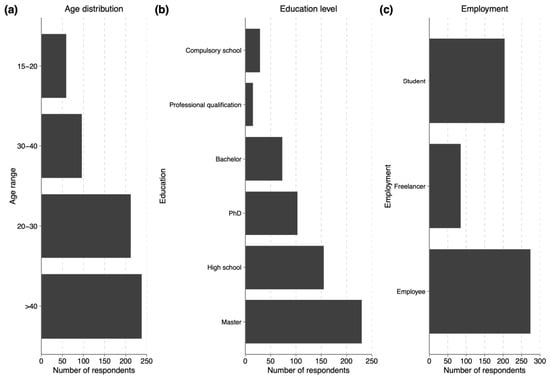
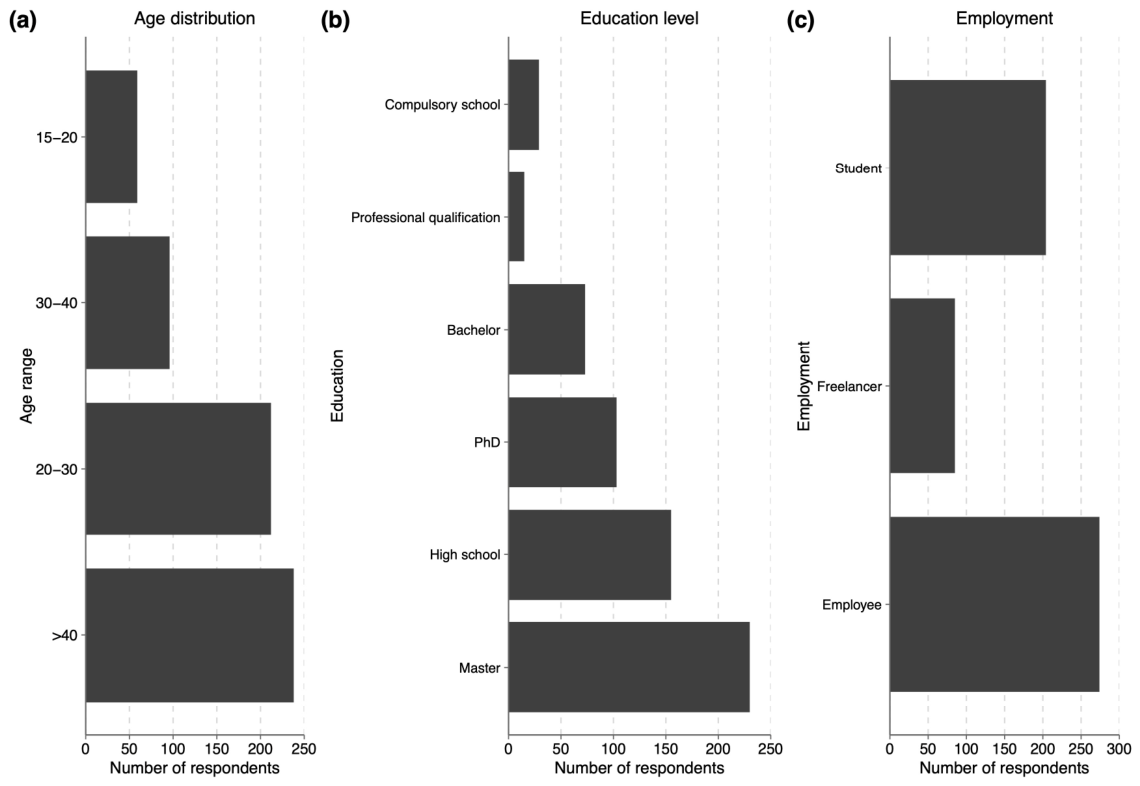
A total of 610 respondents completed the questionnaire. Age information was available for 605 participants. Respondents aged >40 years represented the largest age group (238/605, 39.3%), followed by participants aged 20–30 years (212/605, 35.0%), 30–40 years (96/605, 15.9%), and 15–20 years (59/605, 9.8%) (Figure 1a). Educational level was available for 605 respondents. A Master’s degree was the most common qualification (230/605, 38.0%), followed by high school (155/605, 25.6%), PhD (103/605, 17.0%), Bachelor’s degree (73/605, 12.1%), compulsory education (29/605, 4.8%), and professional qualification (15/605, 2.5%) (Figure 1b). Employment status could be assigned to one of the predefined categories for 569 respondents; responses that could not be unambiguously harmonized with these categories were treated as unclassified and excluded from employment-specific analyses (Figure 1c).
Figure 1.
(a) Age distribution, (b) education level, and (c) employment status. Bars represent the number of respondents in each category.
3.2. Awareness of Glitter and Its Industrial Applications
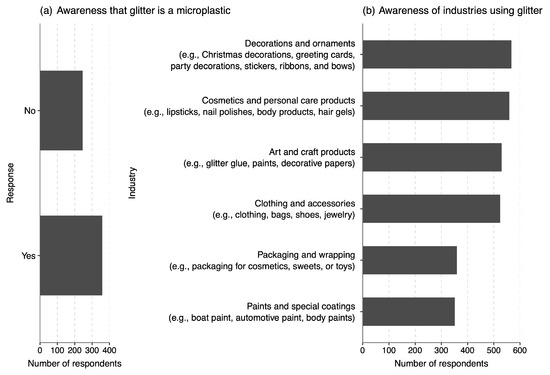
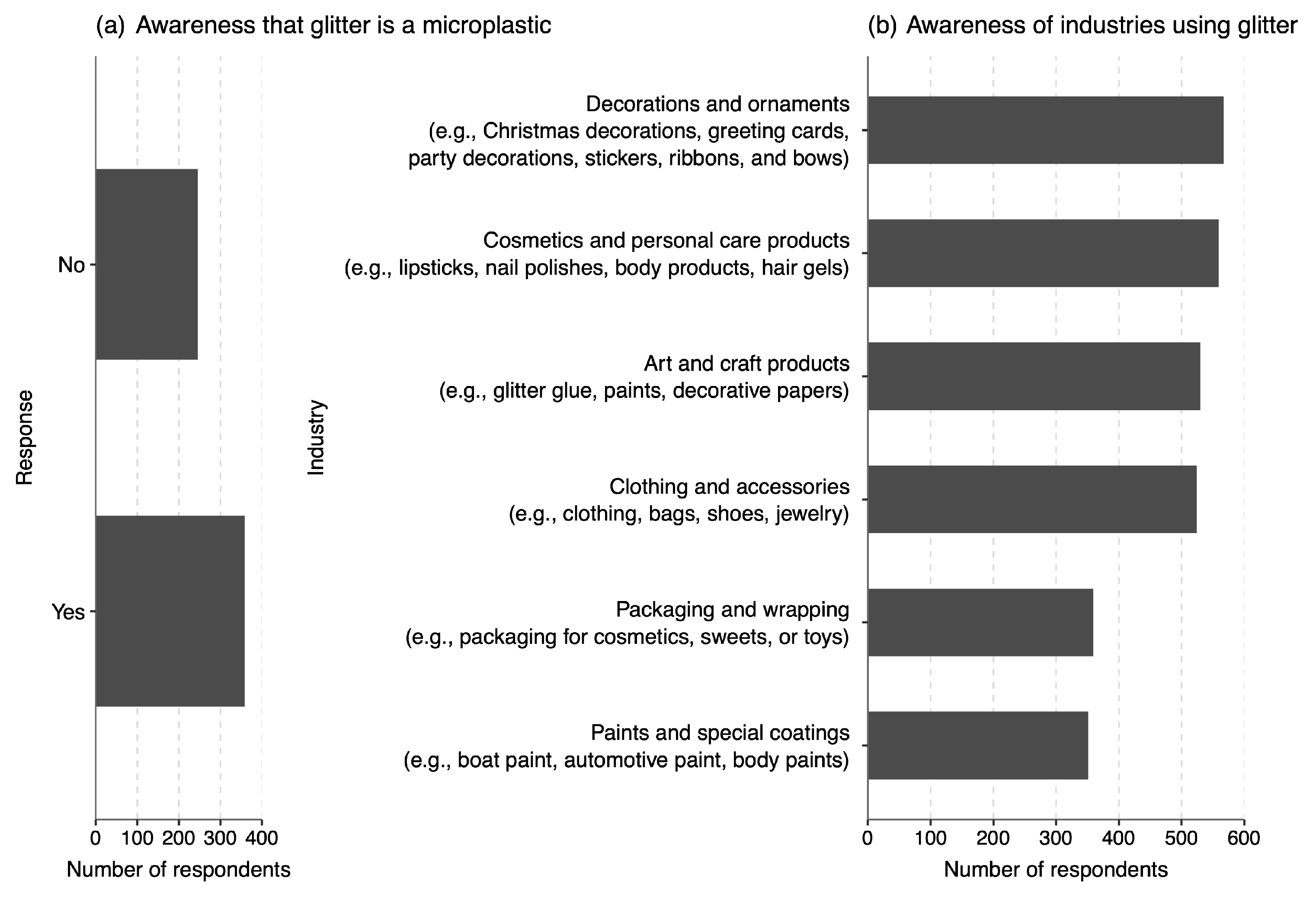
Overall, 359 of 605 respondents (59.3%) were already aware that conventional glitter is a form of microplastic, whereas 246 respondents (40.7%) reported no previous awareness (Figure 2a). Awareness of glitter applications varied among sectors. Decorations and ornaments (567/605, 93.7%) and cosmetics and personal care products (559/605, 92.4%) were the most frequently identified sectors, followed by arts and crafts products (530/605, 87.6%) and clothing and accessories (524/605, 86.6%). Packaging and wrapping were identified by 359 respondents (59.3%), while paints and special coatings were identified by 351 respondents (58.0%) (Figure 2b).
Figure 2.
Respondents’ awareness of glitter and its applications: (a) awareness that glitter is a microplastic and (b) awareness of the different industries and product categories in which glitter is used. Bars represent the number of respondents selecting each response or category.
The study-specific Glitter Awareness Score (GAS) was calculated for 605 respondents and had a mean value of 5.37 ± 1.55 (median = 6; IQR = 2; observed range = 1–7). The seven binary components included in the GAS showed moderate internal consistency (KR-20 = 0.642).
3.3. Consumer Behaviour and Purchasing Preferences
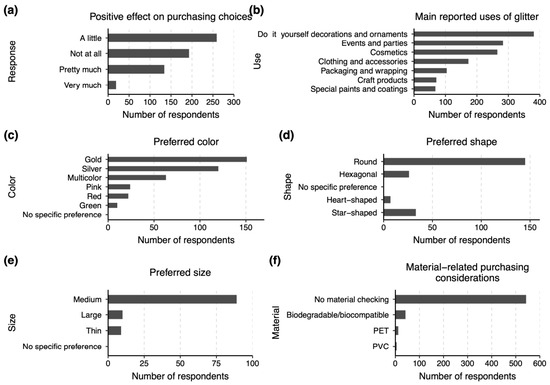
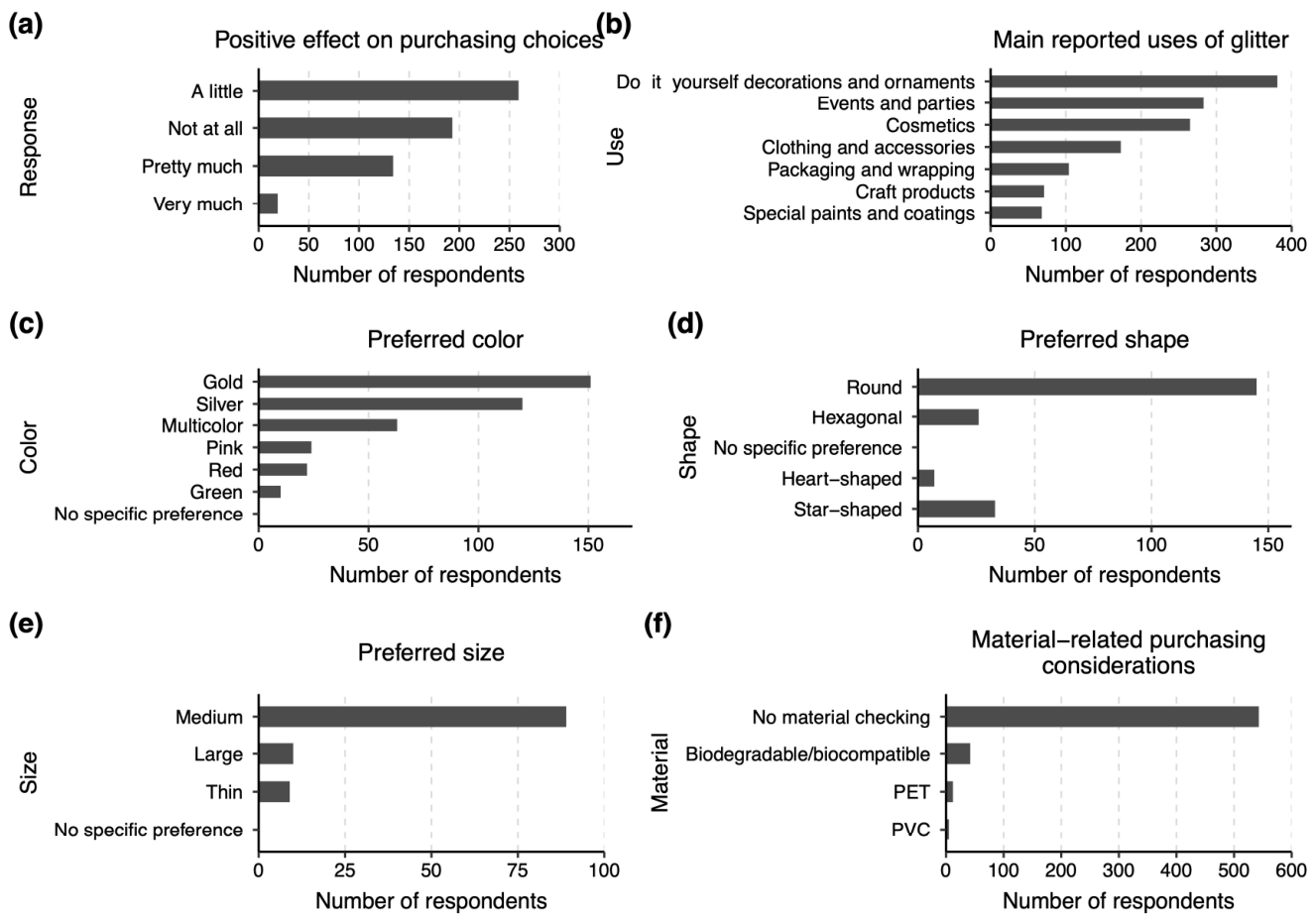
Most respondents reported that glitter had limited influence on purchasing decisions. Among 605 respondents, the most common response was “A little” (259/605, 42.8%), followed by “Not at all” (193/605, 31.9%), “Pretty much” (134/605, 22.1%), and “Very much” (19/605, 3.1%) (Figure 3a). The Purchasing Influence Score had a mean value of 1.97 ± 0.82.
Figure 3.
Respondents’ purchasing behaviour and preferences regarding glitter products: (a) perceived positive effect of glitter on purchasing choices, (b) main reported uses of glitter, (c) preferred color, (d) preferred shape, (e) preferred particle size, and (f) material-related considerations when purchasing glitter. Bars represent the number of respondents selecting each response or category.
The most commonly reported intended uses of glitter were decorations and ornaments (381/605, 63.0%), events and parties (283/605, 46.8%), and cosmetics (265/605, 43.8%). Clothing and accessories (173/605, 28.6%), packaging and wrapping (104/605, 17.2%), craft products (71/605, 11.7%), and special paints and coatings (68/605, 11.2%) were selected less frequently (Figure 3b).
Gold (37.9%) and silver (30.2%) were the most frequently reported preferred glitter colours, followed by multicolour glitter (15.8%). Only 2.0% of respondents indicated that colour was not a consideration when choosing a product (Figure 3c).
Round particles were the most frequently preferred glitter shape (74.7%), followed by hexagonal particles (13.4%), whereas heart-shaped and star-shaped glitter were each selected by fewer than 5% of respondents (Figure 3d). Among respondents expressing a preference for particle size, medium-sized glitter was the most frequently selected option (76.1%) (Figure 3e).
Regarding material-related purchasing considerations, among the 602 respondents whose answers could be assigned to one of the predefined categories, 543 (90.2%) reported that they did not check the type of material used for glitter. Preference for biodegradable/biocompatible materials was reported by 42 respondents (7.0%), while 12 respondents (2.0%) reported checking whether glitter was made of PET and 5 (0.8%) whether it was made of PVC (Figure 3f).
3.4. Perception of Environmental Impact
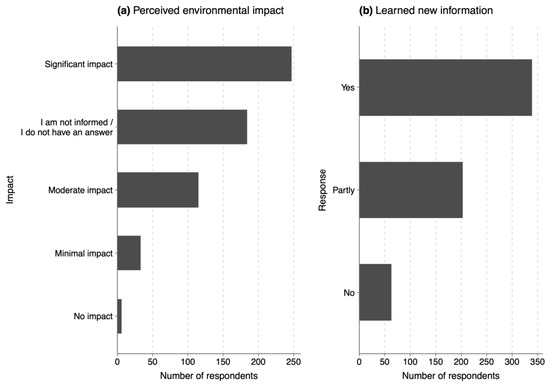
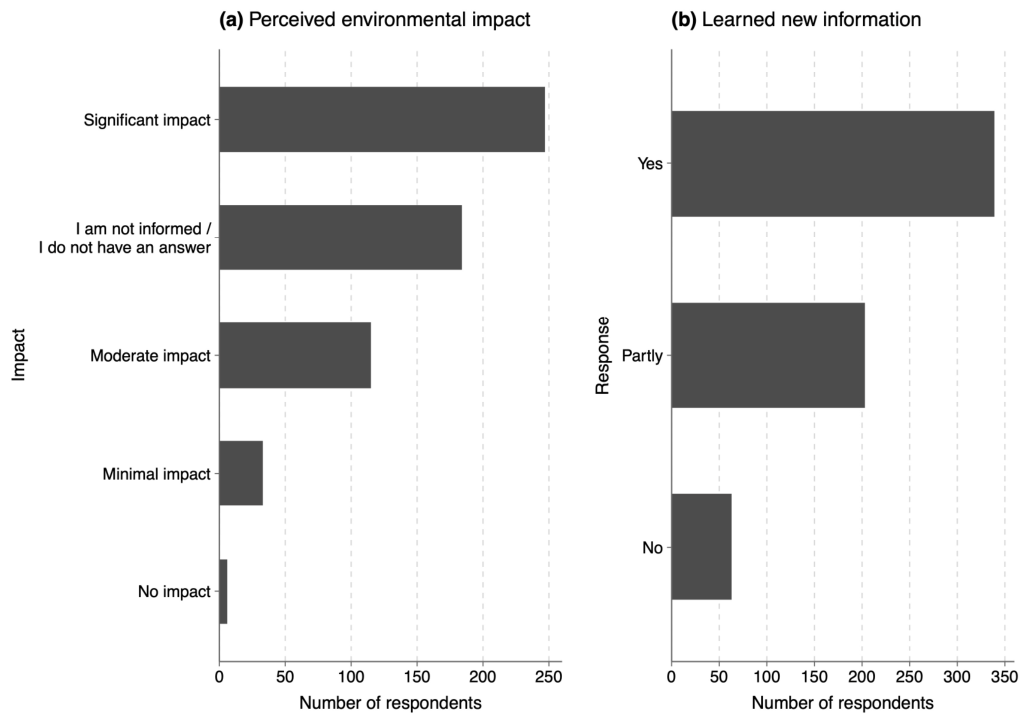
Among 585 respondents, most perceived glitter as having either a significant (42.2%) or moderate (19.7%) environmental impact. Only 6.6% considered the environmental impact to be absent or minimal, whereas 31.5% reported that they were insufficiently informed to express an opinion (Figure 4a). The Environmental Impact Score was calculated for the 401 respondents whose answers could be unambiguously assigned to one of the four ordinal impact categories and had a mean value of 3.50 ± 0.71 (median = 4; IQR = 1).
Figure 4.
Respondents’ perceptions of the environmental implications of glitter and self-perceived informational benefit from the questionnaire: (a) perceived environmental impact of glitter and (b) self-reported informational benefit after completing the questionnaire.
Overall, 339 respondents (56.0%) self-reported that the questionnaire provided information they had not previously known, while an additional 203 (33.6%) reported a partial self-perceived informational benefit (Figure 4b). Consequently, 89.6% of respondents reported some degree of self-perceived informational benefit from completing the questionnaire.
3.5. Inferential Analyses
Previous awareness that conventional glitter is a form of microplastic was not significantly associated with age group, educational level, or employment status after correction for multiple testing (all BH-FDR-adjusted p > 0.05).
The Glitter Awareness Score differed significantly among age groups (Kruskal–Wallis, raw p < 0.001; BH-FDR-adjusted p = 0.0017). Post hoc Dunn tests with Holm correction showed significantly higher GAS values in respondents aged 20–30 years than in those aged >40 years (Holm-adjusted p < 0.001). No significant differences in GAS were observed according to educational level or employment status after BH-FDR correction.
The Purchasing Influence Score differed significantly according to educational level (Kruskal–Wallis, raw p = 0.005; BH-FDR-adjusted p = 0.034). Differences according to age group were significant before correction (raw p = 0.014) but did not remain statistically significant after BH-FDR adjustment (adjusted p = 0.055), while no significant differences were observed according to employment status (adjusted p = 0.429). Although the overall difference among educational levels remained significant after BH-FDR correction, none of the post hoc pairwise comparisons remained significant after Holm adjustment.
Neither perceived environmental impact category nor the Environmental Impact Score differed significantly according to age group, educational level, or employment status after correction for multiple testing (all BH-FDR-adjusted p > 0.05).
Previous awareness that glitter is a microplastic was significantly associated with preference for biodegradable/biocompatible glitter materials (raw p = 0.009; BH-FDR-adjusted p = 0.043). In contrast, the association between previous awareness and reported checking of glitter material composition did not remain statistically significant after correction for multiple testing (raw p = 0.025; BH-FDR-adjusted p = 0.082).
Spearman’s rank correlation analysis showed a weak but significant positive association between the GAS and the Environmental Impact Score (ρ = 0.297, n = 401, raw p < 0.001; BH-FDR-adjusted p < 0.001). No significant correlations were observed between the GAS and the Purchasing Influence Score (ρ = 0.063, n = 605, raw p = 0.121; BH-FDR-adjusted p = 0.268) or between the Purchasing Influence Score and the Environmental Impact Score (ρ = 0.003, n = 401, raw p = 0.953; BH-FDR-adjusted p = 0.953).
3.6. Exploratory Multivariable Analysis
An exploratory proportional-odds ordinal logistic regression model was fitted to investigate whether demographic characteristics were independently associated with the study-specific GAS. The primary model included age group and educational level and was based on 605 respondents with complete data for these variables (99.2% of the total sample).
Age group was significantly associated with GAS in the multivariable model (likelihood-ratio test: χ2 = 17.717, df = 3, p = 0.000503), whereas educational level showed no significant independent association (χ2 = 3.434, df = 5, p = 0.633414). The reference categories were 15–20 years for age and middle school/compulsory education for educational level. Compared with respondents aged 15–20 years, those aged >40 years had significantly lower odds of being in a higher GAS category (OR = 0.52, 95% CI: 0.27–0.99, p = 0.046), whereas no significant differences were observed for respondents aged 20–30 years (OR = 1.09, 95% CI: 0.58–2.04, p = 0.793) or 30–40 years (OR = 0.86, 95% CI: 0.42–1.74, p = 0.675). None of the individual educational categories differed significantly from the reference category (Table S1; Supplementary Material).
The overall model provided a significantly better fit than the intercept-only model (likelihood-ratio test: χ2 = 23.688, df = 8, p = 0.002585), although its explanatory capacity was limited (McFadden pseudo-R2 = 0.012). The Brant test was non-significant (χ2 = 26.26, df = 35, p = 0.86), providing no evidence against the proportional-odds assumption.
A sensitivity analysis additionally including employment status was conducted among respondents whose employment could be assigned to one of the predefined categories (n = 569). Age remained significantly associated with GAS (χ2 = 14.76, df = 3, p = 0.002), whereas educational level (p = 0.399) and employment status (p = 0.099) were not significantly associated. Compared with respondents aged 15–20 years, those aged >40 years continued to show significantly lower odds of being in a higher GAS category (OR = 0.43, 95% CI: 0.20–0.96, p = 0.038), supporting the robustness of the primary finding.
4. Discussion
Glitter particles are widely used in everyday products; however, they remain largely overlooked as a potential source of environmental contamination. Their environmental relevance is further complicated by their heterogeneous composition, which may include different polymers, pigments, dyes, and metallic additives [5,16]. This compositional complexity, together with their classification as microplastics (MPs), makes the environmental assessment of glitter particularly challenging compared with contaminants characterized by a more uniform composition. In this context, the present study used an online questionnaire to investigate public awareness of glitter as a microplastic, perceptions of its environmental implications, and consumer behaviours and preferences associated with glitter-containing products.
Questionnaire-based studies investigating public awareness and perceptions of microplastics and their environmental impacts remain relatively limited [17,18,19,20,21,22], and, to the best of our knowledge, no previous survey has specifically focused on glitter. The present work therefore provides novel insights into public awareness and consumer behaviour related to this particular and often overlooked form of microplastic pollution. Given the lack of directly comparable studies specifically addressing glitter, the findings are discussed primarily in relation to previous surveys investigating public awareness and perceptions of microplastics more broadly.
A total of 610 respondents completed the questionnaire. Sociodemographic characteristics, including age, educational level, and employment status, were considered because they may contribute to differences in environmental awareness and consumer behaviour. Participants aged >40 years represented the largest age group (39.3%), followed by those aged 20–30 years (35.0%), 30–40 years (15.9%), and 15–20 years (9.8%). This distribution differed from that reported by Deng et al. [23], whose survey included respondents aged 18–60 years, with the largest proportion aged 18–30 years (48.97%), followed by those aged 31–50 years (34.1%), while 16.93% were older than 50 years. Such differences in demographic composition may reflect differences in the populations reached and in survey administration approaches. Online questionnaires may be influenced by digital accessibility and dissemination channels, while also allowing participation from respondents who can be reached through these networks. Conversely, face-to-face interviews conducted in public places may preferentially recruit individuals encountered at specific locations and times, potentially influencing the demographic composition of the resulting sample. As geographical representativeness was not an objective of the study, no specific geographical analysis was performed. Therefore, the sample should not be considered geographically representative, which limits the generalizability of the findings.
The study-specific GAS showed a mean value of 5.37 ± 1.55, with scores concentrated toward the upper part of the theoretical 0–7 range. Overall, 59.3% of participants were aware that conventional glitter is a form of microplastic, whereas awareness of its applications varied considerably across industrial sectors. Comparable findings were reported by Scatigna et al. [24] (2026), who found that 64.6% of survey participants had previously heard of MPs and nanoplastics (NPs). Higher levels of awareness have been reported in other questionnaire-based studies. For example, Dowarah et al. [20] found that 74.32% of respondents in India were aware of MPs, while studies conducted in Singapore and Malaysia reported environmental awareness levels of 70.9% and 74.4%, respectively [25,26]. However, these percentages are not directly comparable with the present findings because the current question specifically addressed awareness of glitter as a form of microplastic, whereas the cited studies assessed broader aspects of microplastic or environmental awareness. Differences in geographical context, target populations, environmental education, survey design, and the specific dimensions of environmental awareness investigated should therefore be considered when interpreting these findings.
Sociodemographic differences in awareness were also observed. In the exploratory multivariable analysis, age was significantly associated with GAS, whereas educational level showed no significant independent association. Respondents aged >40 years had significantly lower odds of being in a higher GAS category than those aged 15–20 years, whereas no significant differences were observed for respondents aged 20–30 or 30–40 years. Employment status was not included in the primary model because some responses could not be unambiguously assigned to the predefined employment categories; however, its inclusion in a sensitivity analysis did not alter the overall association between age and GAS. These findings suggest that age-related differences in awareness may exist. However, the explanatory capacity of the primary model was limited, indicating that sociodemographic characteristics explained only a small proportion of the variability in awareness. The observed age-related association should therefore be interpreted cautiously. Overall, these findings identify age as a relevant sociodemographic correlate of GAS in the present sample but also suggest that other unmeasured factors are likely to contribute to differences in awareness.
Awareness of the industrial applications of glitter varied considerably according to the type of application. Respondents were more familiar with its use in consumer-facing applications, including decorations and ornaments, art and craft products, clothing and accessories, whereas awareness was lower for packaging and wrapping and paints and special coatings. Nevertheless, both of these less immediately visible applications were recognised by more than half of the respondents, indicating that awareness was not restricted exclusively to the most familiar consumer-facing uses. A similar knowledge gap was reported by Scatigna et al. [24], who administered a questionnaire to environmentalists, beauticians, and students to assess their awareness of MPs and their environmental impacts. Although participants were generally familiar with plastic pollution, many were surprised by the widespread presence of MPs and NPs in cosmetic products. Taken together, these findings suggest that awareness may vary according to the familiarity and visibility of specific microplastic applications, although this interpretation should be considered cautiously given the differences in the topics and populations examined across studies.
Despite the relatively widespread recognition of glitter as a microplastic type, this awareness was not consistently reflected in material-related purchasing considerations, as most respondents reported that they did not check the type of material used for glitter before purchase. Previous awareness was significantly associated with preference for biodegradable/biocompatible glitter materials after correction for multiple testing, whereas the association with reported material checking did not remain statistically significant. These findings suggest that awareness may be related to specific material preferences but does not necessarily translate into broader material-checking behaviour. This pattern is consistent with observations from previous studies. Filho [27], for example, investigated European citizens’ perceptions of plastic waste and bioplastics and found that, although participants were generally aware of the environmental impacts associated with plastic use and reported responsible waste-management practices, limited information on bioplastics represented an important barrier to their wider adoption. Similarly, a survey of university students in Romania showed that adequate knowledge of biodegradable plastics did not necessarily translate directly into corresponding choices, which were also influenced by contextual factors [28]. Taken together, these observations suggest that awareness alone may not be sufficient to shape purchasing decisions, which are likely influenced by multiple informational and contextual factors.
In the context of the present study, one possible contributing factor may be limited consumer knowledge of alternative glitter products made from potentially more sustainable materials, such as mica, cellulose, or synthetic fluorophlogopite, compared with conventional glitter based on plastic polymers [29,30]. However, as access to information on sustainable alternatives was not directly investigated in the present questionnaire, this interpretation should be regarded as a possible explanation rather than a factor demonstrated by our results. More broadly, the findings indicate a complex relationship between awareness and purchasing-related considerations: previous awareness was associated with preference for biodegradable/biocompatible materials, but not with reported material checking after correction for multiple testing, while GAS was not significantly correlated with the Purchasing Influence Score. Given the cross-sectional and self-reported nature of the data, these associations should not be interpreted as evidence of causal relationships between awareness and consumer behaviour.
Beyond polymer composition, other physical characteristics of glitter may also be environmentally relevant. The environmental behaviour of MPs, including their interactions with organic and inorganic contaminants, is influenced by their physicochemical characteristics [31,32]. Contaminant adsorption may vary according to polymer type, particle size and shape, surface area and roughness, degree of environmental ageing, and the presence of functional groups, as well as environmental conditions such as pH and ionic strength [10]. Accordingly, the present survey also explored consumer preferences for specific glitter characteristics, including colour, shape, and size, together with material-related purchasing considerations. Although stated consumer preferences cannot be directly translated into market prevalence or environmental occurrence, they provide useful information on the characteristics of glitter that are particularly attractive to consumers and may therefore be relevant when characterizing consumer use patterns.
Regarding shape, round particles were preferred by 74.7% of respondents, followed by hexagonal particles (13.4%), whereas heart- and star-shaped glitter were each preferred by fewer than 5% of respondents. These findings differ from those of Piccardo et al. [33], who conducted a local market survey of products from several sectors, including cosmetics and personal care, arts and crafts, apparel, parties and events, home furnishings, toys, and pet products. In that survey, hexagonal glitter was the most common shape (77.8%), whereas stars and hearts were the least common (2.8%). The discrepancy between stated consumer preferences and the characteristics of commercially available glitter is noteworthy. Although this discrepancy cannot be resolved from the present data, the small size and reflective properties of glitter particles could potentially make their geometry difficult for consumers to distinguish. Reported preferences may therefore partly reflect perceived rather than actual particle morphology.
Colour preferences also varied among respondents, with gold being the most frequently preferred colour (37.9%), followed by silver (30.2%) and multicolour glitter (15.8%). Piccardo et al. [33] reported a somewhat different pattern in commercially available products, with multicolour glitter being the most prevalent (26.7%), while silver accounted for 17.2% of the analysed particles. These differences further indicate that stated consumer preferences do not necessarily correspond directly to the characteristics of glitter currently available on the market. Taken together, the findings for shape and colour highlight the importance of distinguishing between consumer perceptions and preferences and the actual characteristics of commercially available glitter products.
An additional finding of interest was that 89.6% of respondents reported that the questionnaire provided new information or reinforced or partially expanded their previous knowledge. This finding should be interpreted exclusively as a self-reported informational effect of completing the questionnaire rather than as evidence of actual knowledge acquisition or educational effectiveness. Because no pre-post assessment of knowledge was performed, it is not possible to determine whether completing the questionnaire resulted in a measurable increase in participants’ knowledge or awareness. Nevertheless, the high proportion of respondents reporting a perceived informational benefit suggests that glitter and its environmental implications may represent topics for which many participants perceived room for additional information.
5. Conclusions
This exploratory study provides insight into awareness of glitter as a microplastic among the surveyed respondents and into the relationships between environmental knowledge and self-reported consumer behaviour. Although 59.3% of respondents recognised conventional glitter as a microplastic and most perceived its environmental impact as moderate or significant, this awareness was not consistently reflected in purchasing practices, as 90.2% of respondents providing a classifiable response reported not checking the type of material used for glitter. Age was independently associated with the study-specific Glitter Awareness Score, although the explanatory capacity of the model was limited. Importantly, 89.6% of participants reported a perceived informational benefit from completing the questionnaire, which should not be interpreted as objectively measured knowledge acquisition. Overall, the findings suggest that awareness alone may not translate into more environmentally informed consumer behaviour. Improved information on product composition, clearer labelling, and greater communication regarding environmentally sustainable alternatives may help consumers make more informed purchasing choices.
Supplementary Materials
The following supporting information can be downloaded at https://www.mdpi.com/article/10.3390/microplastics5040187/s1, Annex S1: Glitter is Litter!—Questionnaire; Table S1: Proportional-odds ordinal logistic regression examining associations between age, educational level, and the Glitter Awareness Score (GAS).
Author Contributions
S.F.: conceptualization; investigation; methodology; writing—original draft; writing—review and editing. P.P.: conceptualization; formal analysis; investigation; methodology; supervision; writing—original draft; writing—review and editing. B.C.: conceptualization; investigation; methodology; writing—review and editing. A.J.M.D.: investigation; methodology; writing—review and editing. M.P.: investigation; methodology; supervision; writing—review and editing. M.R.: conceptualization; investigation; methodology; supervision. A.C.E.: conceptualization; investigation; methodology; project administration; supervision; writing—review and editing. All authors have read and agreed to the published version of the manuscript.
Funding
This research received no external funding.
Institutional Review Board Statement
Ethical approval was not sought prior to data collection because the study consisted exclusively of a voluntary and anonymous online questionnaire, involved no clinical intervention or experimental procedure, and collected no personally identifiable or sensitive personal information. No minimum eligibility age was explicitly defined when the questionnaire was administered. Age was collected only through predefined categories, with the youngest category spanning 15–20 years. Therefore, although 59 respondents selected this category, the available data do not allow retrospective determination of whether any respondents were younger than 18 years.
Informed Consent Statement
Participation was voluntary and anonymous. Before completing the questionnaire, respondents were informed, both in the invitation e-mail and in the questionnaire itself, about the purpose of the survey and the anonymous use of the collected data. Completion and submission of the questionnaire were regarded as consent to participate. No personally identifiable or sensitive personal information was collected.
Data Availability Statement
Data is contained within the article or Supplementary Material.
Conflicts of Interest
The authors declare no conflicts of interest.
References
- ISO 24187:2023; Principles for the Analysis of Microplastics Present in the Environment. International Organization for Standardization: Geneva, Switzerland, 2023.
- Ali, N.; Khan, M.H.; Ali, M.; Sidra; Ahmad, S.; Khan, A.; Nabi, G.; Ali, F.; Bououdina, M.; Kyzas, G.Z. Insight into microplastics in the aquatic ecosystem: Properties, sources, threats and mitigation strategies. Sci. Total Environ. 2024, 913, 169489. [Google Scholar] [CrossRef] [Scilit] [PubMed]
- Queiroz, L.G.; Maricato, G.; Gomes, E.; Lima, G.V.; Ando, R.A.; Tavares, M.; Pompêo, M.; Rani-Borges, B. First record of glitter particles in coral reefs from a remote archipelago in the Atlantic Ocean. Discov. Oceans 2026, 3, 11. [Google Scholar] [CrossRef] [Scilit]
- Yurtsever, M. Glitters as a source of primary microplastics: An approach to environmental responsibility and ethics. J. Agric. Environ. Ethics 2019, 32, 459–478. [Google Scholar] [CrossRef] [Scilit]
- Krzciuk, K.; Dołęgowska, S.; Michalik, A.; Miążek, A.; Łosak, R. Small scale and high impact: The leaching of hazardous elements from glitters. Environ. Sci. Process. Impacts 2026, 28, 2242–2255. [Google Scholar] [CrossRef] [Scilit] [PubMed]
- Provenza, F.; Anselmi, S.; Specchiulli, A.; Piccardo, M.; Barceló, D.; Prearo, M.; Pastorino, P.; Renzi, M. Sparkling plastic: Effects of exposure to glitter on the Mediterranean mussel Mytilus galloprovincialis. Environ. Toxicol. Pharmacol. 2022, 96, 103994. [Google Scholar] [CrossRef] [Scilit]
- Meirelles, J.V.; De Almeida, R.F.; Morgado, A.J.; De Castro, T.B.; Rocha, R.C.C.; Hauser-Davis, R.A.; Saint’Pierre, T.D. Metal and metalloid content, bioavailability and sorption processes in glitter and raw glitter materials and associations with human and ecological risk concerns. J. Trace Elem. Med. Biol. 2024, 82, 127350. [Google Scholar] [CrossRef] [Scilit] [PubMed]
- Cimpean, I.-A.; Stefan, D.S.; Chiriac, F.L. Interactions between microplastics and organic pollutants in aquatic systems: Impacts on environmental fate, transport, and risk assessment. Environments 2026, 13, 238. [Google Scholar] [CrossRef] [Scilit]
- Song, X.; Zhuang, W.; Cui, H.; Liu, M.; Gao, T.; Li, A.; Gao, Z. Interactions of microplastics with organic, inorganic and bio-pollutants and the ecotoxicological effects on terrestrial and aquatic organisms. Sci. Total Environ. 2022, 838, 156068. [Google Scholar] [CrossRef] [Scilit]
- Jadhav, B.; Medyńska-Juraszek, A. Use of EDTA and CaCl2 extraction methods to predict the bioavailability of heavy metals in soils polluted with microplastics. Materials 2025, 18, 760. [Google Scholar] [CrossRef] [Scilit] [PubMed]
- Botté, A.; Zaidi, M.; Guery, J.; Fichet, D.; Leignel, V. Aluminium in aquatic environments: Abundance and ecotoxicological impacts. Aquat. Ecol. 2022, 56, 751–773. [Google Scholar] [CrossRef] [Scilit]
- Lee, J.-W.; Choi, H.; Hwang, U.-K.; Kang, J.-C.; Kang, Y.J.; Kim, K.I.; Kim, J.-H. Toxic effects of lead exposure on bioaccumulation, oxidative stress, neurotoxicity, and immune responses in fish: A review. Environ. Toxicol. Pharmacol. 2019, 68, 101–108. [Google Scholar] [CrossRef] [Scilit] [PubMed]
- Futia, S.; Pastorino, P.; Solé, M.; Caldaroni, B.; Gentile, R.; Dörr, A.J.M.; Prearo, M.; Renzi, M.; Elia, A.C. Ecotoxicological effects of conventional and eco-friendly glitter: A literature review. Biology 2026, 15, 889. [Google Scholar] [CrossRef] [Scilit] [PubMed]
- Green, D.S.; Jefferson, M.; Boots, B.; Stone, L. All That Glitters Is Litter? Ecological Impacts of Conventional versus Biodegradable Glitter in a Freshwater Habitat. J. Hazard. Mater. 2021, 402, 124070. [Google Scholar] [CrossRef] [Scilit] [PubMed]
- Blackledge, R.D. Forensic Analysis on the Cutting Edge: New Methods for Trace Evidence Analysis; John Wiley & Sons: Hoboken, NJ, USA, 2007. [Google Scholar]
- Das Pramanik, D.; Lei, S.; Kay, P.; Goycoolea, F.M. Investigating on the Toxicity and Bio-Magnification Potential of Synthetic Glitters on Artemia salina. Mar. Pollut. Bull. 2023, 190, 114828. [Google Scholar] [CrossRef] [Scilit] [PubMed]
- Anderson, A.G.; Grose, J.; Pahl, S.; Thompson, R.C.; Wyles, K.J. Microplastics in personal care products: Exploring perceptions of environmentalists, beauticians and students. Mar. Pollut. Bull. 2016, 113, 454–460. [Google Scholar] [CrossRef] [Scilit] [PubMed]
- Locritani, M.; Merlino, S.; Abbate, M. Assessing the citizen science approach as tool to increase awareness on the marine litter problem. Mar. Pollut. Bull. 2019, 140, 320–329. [Google Scholar] [CrossRef] [Scilit] [PubMed]
- Raab, P.; Bogner, F.X. Conceptions of university students on microplastics in Germany. PLoS ONE 2021, 16, e0257734. [Google Scholar] [CrossRef] [Scilit] [PubMed]
- Dowarah, K.; Duarah, H.; Devipriya, S.P. A Preliminary Survey to Assess the Awareness, Attitudes/Behaviours, and Opinions Pertaining to Plastic and Microplastic Pollution among Students in India. Mar. Policy 2022, 144, 105220. [Google Scholar] [CrossRef] [Scilit]
- Situmorang, R.O.P.; Liang, T.-C.; Chang, S.-C. The Difference of Knowledge and Behavior of College Students on Plastic Waste Problems. Sustainability 2020, 12, 7851. [Google Scholar] [CrossRef] [Scilit]
- Righi, S.; Bergami, E.; Simonini, R.; Prevedelli, D. Level of Awareness and Attitudes towards Plastic Contamination by Students of an Italian University. Sustainability 2024, 16, 4637. [Google Scholar] [CrossRef] [Scilit]
- Deng, L.; Cai, L.; Sun, F.; Li, G.; Che, Y. Public Attitudes towards Microplastics: Perceptions, Behaviors and Policy Implications. Resour. Conserv. Recycl. 2020, 163, 105096. [Google Scholar] [CrossRef] [Scilit]
- Scatigna, M.; Aloisi, M.; Poma, A.M.G. Human Health and Exposure to Microplastics and Nanoplastics: A Cross-Sectional Survey on Public Risk Perception in Italian Adults. Environ. Sci. Adv. 2026, 10, D5VA00376H. [Google Scholar] [CrossRef] [Scilit]
- Aminrad, Z.; Zakariya, S.Z.B.S.; Hadi, A.S.; Sakari, M. Relationship between Awareness, Knowledge and Attitudes towards Environmental Education among Secondary School Students in Malaysia. World Appl. Sci. J. 2013, 22, 1326–1333. [Google Scholar] [CrossRef]
- Tan, G.-C.I.; Lee, C.K.-E.; Goh, K.C. A Survey of Environmental Knowledge, Attitudes and Behaviour of Students in Singapore. In Proceedings of the Humanities Educators’ Conference 1999 on Humanities Teacher in a Knowledge-Based Economy, Singapore, 2–6 March 1999. [Google Scholar]
- Leal Filho, W.; Salvia, A.L.; Bonoli, A.; Saari, U.A.; Voronova, V.; Klõga, M.; Kumbhar, S.S.; Olszewski, K.; De Quevedo, D.M.; Barbir, J. An Assessment of Attitudes towards Plastics and Bioplastics in Europe. Sci. Total Environ. 2021, 755, 142732. [Google Scholar] [CrossRef] [Scilit] [PubMed]
- Boca, G.D.; Saraçli, S. Effects of Romanian Student’s Awareness and Needs Regarding Plastic Waste Management. Sustainability 2023, 15, 6811. [Google Scholar] [CrossRef] [Scilit]
- Doval-Miñarro, M.; López-Vivancos, A.; López-Castellanos, J.; Bayo, J. Characterization of Commercial Eco-Glitters Derived from Modified Regenerated Cellulose after Laboratory Exposure in Two Aquatic Media. Environ. Sci. Process. Impacts 2025, 27, 2329–2340. [Google Scholar] [CrossRef] [Scilit] [PubMed]
- Zanini, M.L.D.O.; Fonseca, L.M.; Piecha, C.R.; Corrêa, C.D.P.L.; Dode, L.B.; Zavareze, E.D.R.; Diaz, P.S. A Review of Conventional and Environmentally Sustainable Glitter. Environ. Qual. Manag. 2024, 34, e22322. [Google Scholar] [CrossRef] [Scilit]
- Khalid, N.; Aqeel, M.; Noman, A.; Khan, S.M.; Akhter, N. Interactions and Effects of Microplastics with Heavy Metals in Aquatic and Terrestrial Environments. Environ. Pollut. 2021, 290, 118104. [Google Scholar] [CrossRef] [Scilit] [PubMed]
- Narayanan, M. Invisible Invaders: Ecotoxicological Impacts of Nano- and Microplastics in Aquatic Ecosystems. Adv. Sustain. Syst. 2026, 10, e01005. [Google Scholar] [CrossRef] [Scilit]
- Piccardo, M.; Anselmi, S.; Renzi, M. Journey into the Local Market in Search of “Glitter” Microparticles: Mini Product Investigation and Relative Chemical-Physical Characterization. Environments 2022, 9, 119. [Google Scholar] [CrossRef] [Scilit]
Disclaimer/Publisher’s Note: The statements, opinions and data contained in all publications are solely those of the individual author(s) and contributor(s) and not of MDPI and/or the editor(s). MDPI and/or the editor(s) disclaim responsibility for any injury to people or property resulting from any ideas, methods, instructions or products referred to in the content. |
© 2026 by the authors. Licensee MDPI, Basel, Switzerland. This article is an open access article distributed under the terms and conditions of the Creative Commons Attribution (CC BY) license.