


Abstract
The world is facing a triple global crisis: climate change, loss of biodiversity, and pollution. Plastics, man-made polymers from primary fossil fuel sources, have pervasively entered almost every sector and thereby caused huge environmental pollution. Microplastic (MPs) sizes range between 1 μm and 5 μm, and nanoplastics are less than 1 μm in size, respectively. Behaviour, accumulation and movement of plastics in soil, water and air depend on their size. Smaller sizes of microplastics and nannoplastics can easily enter cells, tissues, and finally, the food chain, and pose growing ecological and health concerns due to their persistence. It also acts as an adsorbent and has the ability to penetrate food webs. Their diverse shapes, especially fibres, increase their dispersal and bioavailability in aquatic ecosystems. Recent findings indicate that microalgae contribute to the mitigation of microplastic pollution. Microalgae, diverse photosynthetic microorganisms ranging from 0.5 to 200 μm, interact with microplastics through processes such as adsorption, aggregation, and potential biodegradation mechanisms, including toxin systems or enzymes produced by the microalgae, utilising plastic polymers as carbon sources. The filamentous morphology of some species, such as Spirulina sp., increases the entrapment and potential degradation of microplastic fibres. It is essential to understand these interactions to construct sustainable means of mitigating microplastic pollution and recovering the aquatic ecosystem health. Microalgae produce enzymes such as lipases, esterases, and cellulases, which facilitate the biodegradation of plastics. Microalgae form biofilm on the surface of microplastics. They also secrete sticky extracellular polymeric substances (EPS) that cause the microplastic to sink to the bottom of the water body, which helps to remove microplastics from surfaces. This review summarises knowledge on microalgae–microplastic interactions, with a focus on their potential for bioremediation of microplastics and also sustainable conservation of the environment.
1. Introduction
The world is currently facing a significant triple crisis: climate change, loss of biodiversity, and pollution. This crisis directly impacts the welfare of individuals, particularly the most vulnerable, as well as our planet and ecosystems. Plastic manufacturing and consumption, especially single-use plastics, have increased in recent decades. The resulting rise in pollution and plastic waste reinforces system-level risks and presents a serious and increasing threat to biodiversity, human rights, public health, and climate change. All plastics consist of polymers formed from monomers such as ethylene, propylene, styrene, phenol, formaldehyde, ethylene glycol, vinyl chloride, and acetonitrile. These monomers are predominantly derived from crude oil, which provides the fundamental organic hydrocarbon framework [1]. U.N.E.P. data indicate that the annual production of plastic exceeds 460 million metric tonnes. Plastics are used daily by consumers and industrial processes, including electronics, agriculture, and automobiles [2]. The National Oceanic and Atmospheric Administration (NOAA) defined microplastics as plastic particulates that are less than 5 mm in size during a 2008 workshop [3]. Parkesine is regarded as being the first synthetic plastic, but it was not derived from fossil fuels. It is a cellulose-derived thermoplastic (malleable at elevated temperatures) that was patented by Parkes in 1856 [4].
Microplastics are synthetic polymeric matrices or solid particles, exhibiting either regular or irregular forms, with sizes varying from 1 μm to 5 mm, originating from primary or secondary production, and are insoluble in water. Invisible subdivision of microplastics, smaller than 1 μm, was more recently discovered and called “nanoplastics” [5]. These are now believed to be even more abundant in the environment than the bigger particles. Microplastics can be present in many different shapes, though the most commonly found in the environment are fibres, which can be more than 5 mm long, but meet the definition as being under 5 mm in diameter [6,7,8]. Other definitions of microplastics have also been provided, and even a very idiosyncratic one (<1 cm) can be found in a recent paper published in a major journal [9]. Microplastics have a specific set of origins, distribution, and characteristics that make them potentially harmful to all ecosystems and their inhabitants. They can adsorb toxic chemicals, serve as vectors for disease-causing agents, and be ingested by a variety of organisms, possibly entering the human food chain [4,10,11]. The filamentous structure of the alga likely played a vital role in retaining microplastic fibres, given its high surface area, which facilitates the capture of tiny particles [10,11]. The current study considers a significant number of published but underutilised studies on how microalgae reduce microplastics.
Plastic pellets, microbeads in personal care products, and other sources, such as wastewater and degraded larger plastics, are major contributors to environmental microplastics [12]. Microbeads, initially introduced in the 1970s, have evolved into significant pollutants [13]. Secondary microplastics arise from the breakdown of larger plastic waste, exacerbated by poor waste management [14]. Without efforts to remove macroplastic debris, the prevalence of microplastics in oceans may increase dramatically by 2050 [14]. Plastics permeate modern life, found in electronics, packaging, and disposable items, leading to their frequent disposal and entry into ecosystems as microplastics [15].
Microplastics are prevalent in terrestrial, freshwater, and marine environments, originating from various sources such as wastewater treatment plants, industrial waste, and atmospheric deposition [16]. They accumulate in ecosystems, pose risks to organisms, and can reach humans through the food chain. Nanoplastics, smaller than 100 nm, may be released from disintegrated microplastics, presenting greater threats due to their larger surface area for toxic substance attachment [17]. Microplastics dominate ocean pollution, comprising over 90% of ocean particles, with significant accumulation in deep-sea environments [18]. Their presence disrupts soil health and affects plant and microbial life, necessitating initiatives for pollution reduction and ecosystem preservation [19]. Additionally, airborne microplastics behave differently from those in soil and water [20]; their concentration varies with environmental conditions, impacting human health through potential toxicity and contamination [21,22]. Overall, rising plastic production, inefficient disposal, and environmental persistence exacerbate the microplastic crisis [23].
Chemicals included in plastics, such as flame suppressants like PBDEs and plasticisers like phthalates, can cause lung problems and cancer. Over 80% of plasticisers used worldwide are phthalates, which are especially dangerous since they can be released from flexible polymers like PVC [24]. Furthermore, synthetic fabrics are major sources of airborne microplastics (MPs) associated with respiratory irritation, and polypropylene MPs can cause inflammatory reactions in human cells [25]. Human faecal samples and frequently consumed items like fruits have been found to contain microplastics, with apples exhibiting particularly high levels of contamination [26].
Microplastics possess the capacity to adversely affect health and may enter the body via the oral or nasal routes. Microplastics’ ability to penetrate skin, gastrointestinal, and airway epithelial barriers must be understood to reduce uncertainty in human risk assessment. Studies on human cells in vitro, rodents, and aquatic animals have demonstrated that microplastics < 10 µm may diffuse from the gut cavity to the lymphatic and circulatory systems, leading to systemic exposure and accumulation in organs such as the liver, kidney, and brain [27]. MPs adversely affect human health through mechanisms such as oxidative stress, neurotoxicity, immunological responses, metabolic disorders, impaired organ function, DNA damage, and reproductive and developmental toxicity [28]. This review compiles understanding of microalgae–microplastic interactions, with an emphasis on their potential for both sustainable environmental conservation and microplastic bioremediation.
2. Algal-Based Degradation and Reduction of Microplastics
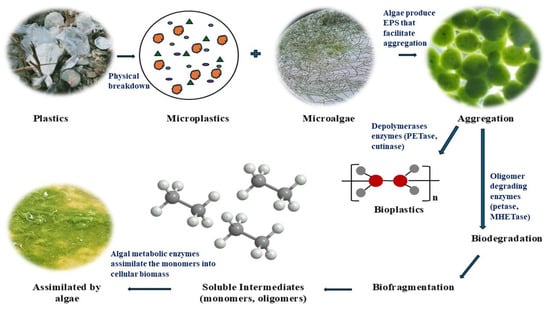
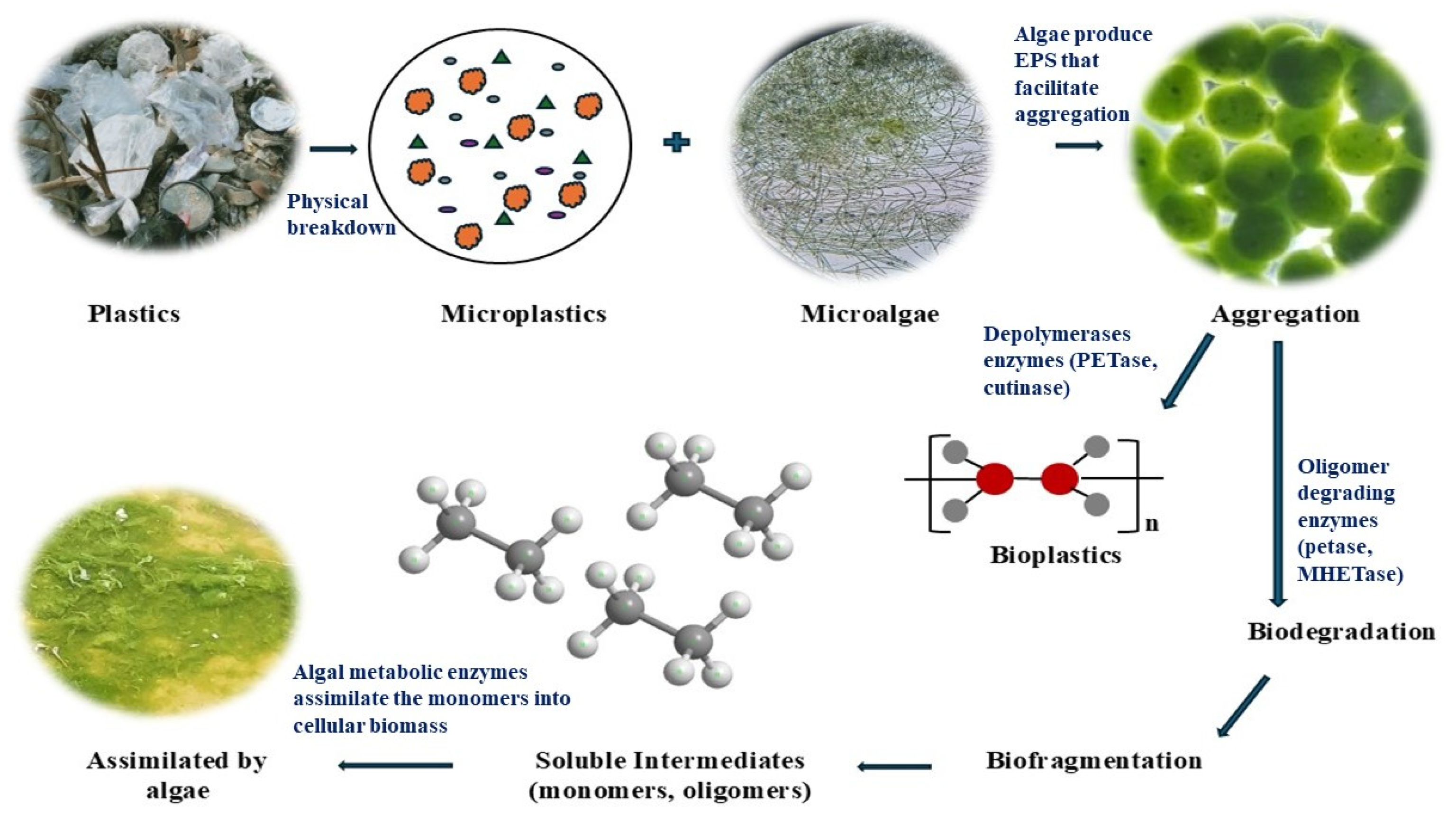
“Biodegradation” denotes any alteration, either chemical or physical, induced by biological processes. Biological agents typically use organic polymers as substrates for growth and energy, with microbial biomass as the final product of complete biodegradation. Algae can intercept, trap, and entangle microplastics found in wastewater. Moreover, they can create heterogeneous aggregates with algae, thus reducing the concentration of microplastics in the aqueous suspension [29]. Microalgae have a major advantage over bacterial and fungal strains that produce endotoxins in water treatment applications because they can photosynthesise without the need for an organic carbon source. Algae can directly or indirectly regulate the destiny of MPs in aquatic environments. Currently, retention, flocculation, deposition, and degradation are the confirmed mechanisms (Figure 1).
Figure 1.
Microplastics degradation and reduction using algae.
2.1. Retention of Microplastics by Algae
Efforts to reduce plastic use can be initiated at the production stage through the adoption of recycled or biodegradable materials, enhanced product design for longer lifespan and recyclability, and restrictions on certain single-use plastics [30]. Although some plastics, like those used in food packaging, are essential, a total ban on others, such as microbeads, is beneficial [13]. Industries must ensure the safety of plastic products and replace hazardous materials with safer alternatives [30]. Challenges related to food safety and convenience may hinder waste reduction, but consumer education and accurate labelling can promote eco-friendly choices [31]. The four R’s of waste management—Reduce, Reuse, Recycle, Recover- emphasise the need for an Integrated Waste Management System [32].
Two potential methods have been suggested to elucidate how MPs become trapped on algal surfaces. One method is that microplastics can adhere to algae through sticky biofilms [33]. In marine environments, biofilms may form on microplastics, and the spatial and temporal variations in biofilm communities might influence their adhesiveness [34,35]. An additional mechanism arises when heterotrophic epibiont species can “capture” microplastics from the water column, ultimately engulfing them due to their proliferation [33]. Due to the regional and seasonal variability in epibiont species composition [33,35], certain epibiont communities may exhibit greater proficiency in trapping microplastics than others. It is important to notice that MPs with particle sizes less than 1 mm can be encapsulated within the air sacs of certain macroalgae, such as U. prolifera, which possess tubular algal structures [36]. In fact, various mechanisms may operate concurrently to capture MPs from the surrounding environment.
Li et al. (2022) observed that Gracilaria lemaneiformis, Chondrus ocellatus, U. lactuca, U. prolifera, and Saccharina japonica may capture PS and PET microplastics, predominantly fibre microplastics measuring 1–5 mm, through mechanisms of entanglement and adhesion [37]. Both macroalgae and microalgae are present in the environment. The simultaneous presence of microalgae could boost the absorption of microplastics by macroalgae [37]. It is unclear how MPs and algae bind together in actual environments when a variety of factors are at play [37].
2.2. Algae-Induced Flocculation and Following Deposition of Microplastics
In aquatic environments, microplastics can swiftly and directly cluster around algae [38]. The aggregates may consist of a combination of algae-MPs or algae-EPS-MPs [39]. The primary constituents of EPS include proteins, polysaccharides, and nucleic acids. These different polymers possess complicated shapes and physicochemical properties, and microalgae can produce them externally to provide a protective role [40,41]. The presence of MPs can enhance the secretion of EPS by algae.
Möhlenkamp et al. (2018) noted that microplastics from cosmetic items can clump with algae, allowing even elevated concentrations of microplastics to be swiftly removed from the water column [42]. The aggregation of particles is associated with the presence of particular functional groups, including carboxyl, sulfonate, hydroxyl, and amine, in algal cell walls, enabling the algae to attract positively charged microparticles, thereby facilitating coagulation and flocculation processes [43,44]. Algae can colonise the surfaces of microplastics, particularly the larger ones, and form biofilms, hence increasing the density of microplastics [45,46,47]. This may occur from the alteration in the buoyancy of microplastics following the formation of biofilms by algae on their surfaces. According to Cheng and Wang (2022) and Nava and Leoni (2021), the EPS of algae can also cause cells, including algae and other microbes, to migrate from the surrounding environment to the aggregates [35,48]. Consequently, the volume of the aggregates was expanded. Su et al. (2022) discovered that EPS was the primary cause of the heterogeneous aggregation of MPs and Chlorella vulgaris, and that the MPs in the aggregates had accelerated withering [49]. The EPS produced by freshwater algae can vary depending on the type of MP that stimulates them [43].
2.3. Algae-Induced Biodegradation of Microplastics
The algae-mediated biodegradation of microplastics in aquatic ecosystems typically involves three successive phases: colonisation, fragmentation, and assimilation [50,51]. Initially, algae adhere to the surfaces of microplastics and establish resilient biofilms. The metabolic processes of the algae produce ligninolytic and exopolysaccharide enzymes that initiate the biodegradation of plastics, rendering microplastics brittle and compromising their structural integrity. Ultimately, water and microbial filaments infiltrate the polymer matrix, promoting the microbial breakdown of microplastics. The degrading enzymes produced by biofilms on microplastics can interact with the macromolecules of microplastics, resulting in their biodegradation [52]. Rozman and Kalčíková (2022) recorded the swift formation of biofilms on microplastics at the air-water interface, modifying the characteristics of the microplastics and validating the initiation of surface degradation visible as fissures [53].
Kim et al. (2020) detected a novel PETase in C. reinhardtii CC-124, a strain of green algae, in a lab environment, validating the enzymatic activity of PETase by observing the degradation of PET to terephthalic acid (TPA) [54]. Research has highlighted the potential function of Diatoms in promoting microplastic breakdown within aquatic ecosystems [55,56,57]. Diatoms possess extracellular enzymes, including lipases and proteases, that facilitate the disintegration of microplastics and alter their surface characteristics [56,57]. Moog et al. (2019) illustrated the enzymatic degradation of PET and polyethylene terephthalate glycol (PETG) in a saline environment utilising marine diatoms as a framework [58].
The decomposition of microplastics is a joint endeavour involving several algae, and this synergistic interaction amplifies the degradation process [59,60]. Sarmah and Rout (2018) observed the effective biodegradation of LDPE microplastics by Phormidium lucidum and Oscillatoria subbrevis without any pretreatment or pro-oxidants, leading to significant grooves on the surface of LDPE microplastics [61]. Similarly, in the coexistence system of Anabaena spiroides (Cyano-bacteria), Navicula pupula, and Scenedesmus dimorphus, Ku-mar et al. (2017) found that the induction of algal EPS led to the breakdown of both LDPE and HDPE MPs and the formation of pitted cross sections [62]. Moreover, EPS can diminish the hydrophobicity of polymers and enhance their hydrophilicity. Hadiyanto et al. (2021) observed the emergence of novel hydrophilic functional groups (carbonyl, carboxyl, hydroxyl) on the surface of microplastics during 30 days of interaction with algae (Spirulina and Cyanobacterial proteins), along with the formation of cracks [59]. The biodegradation of microplastics is affected by several aspects, including the intrinsic characteristics of the microplastics, the algal species involved, the presence of chemical agents, and the prevailing environmental conditions [38,63]. While the direct biodegradation of certain microplastic polymers by algae is improbable due to the absence of hydrolysable functional groups in their polymeric structure, biodegradation may occur for those microplastics that have undergone physical or chemical treatments, resulting in the fragmentation of polymeric structures [64]. Extensive colonisation of microplastic surfaces by algae can impede the photodegradation of microplastics by shielding them from UV radiation [51].
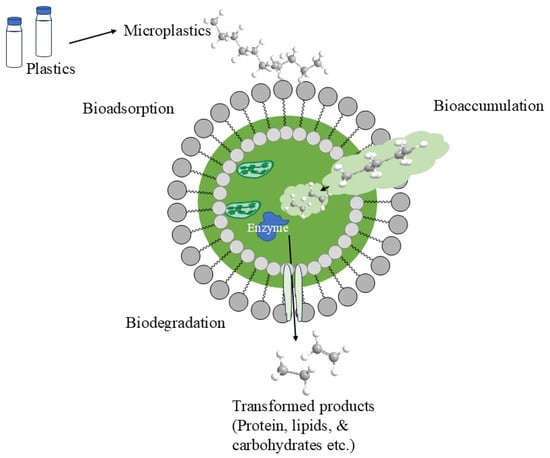
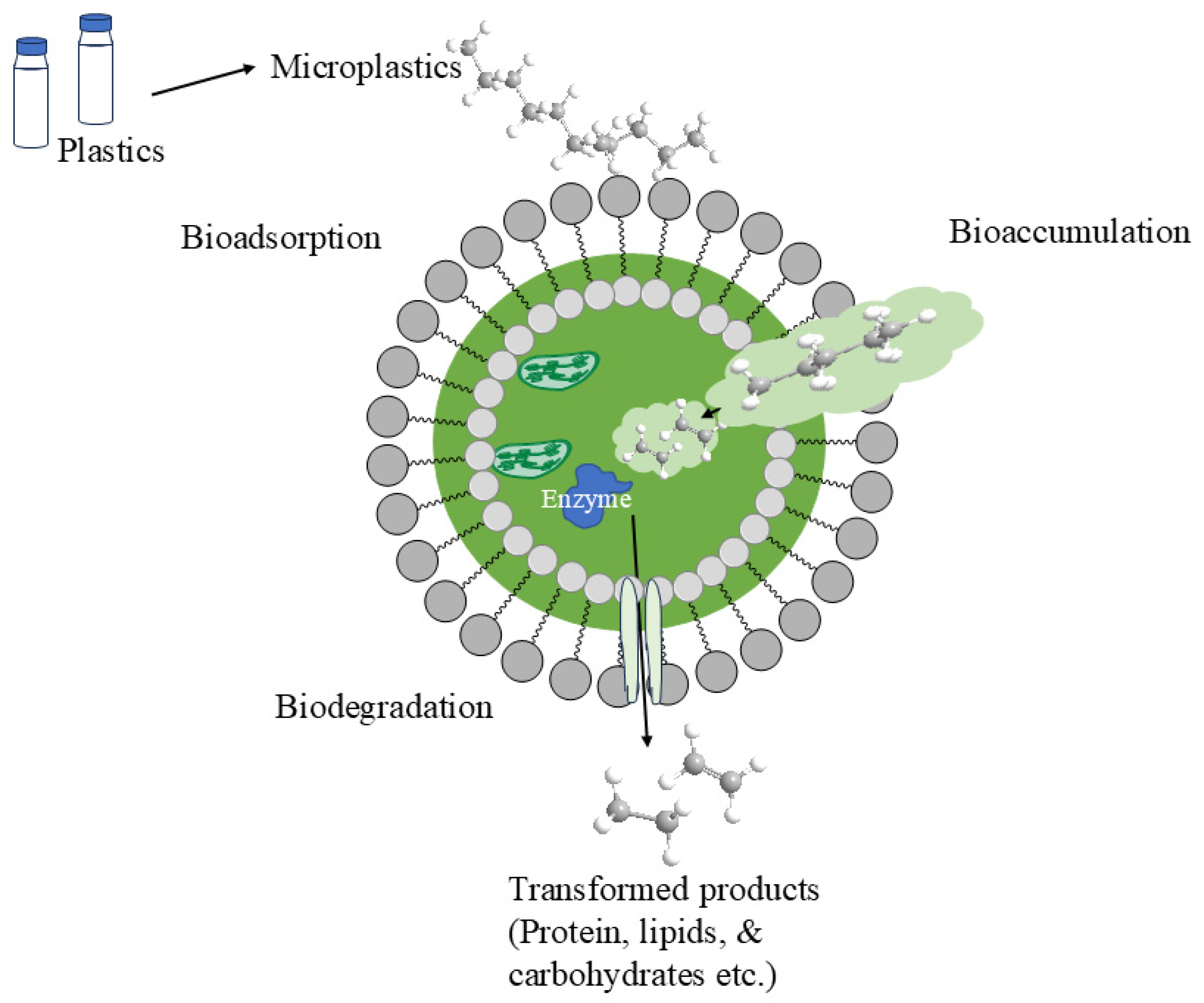
Genetic manipulation increases the ability of microalgae to digest plastics by inducing the emergence of pores and cavities on their surface. Chlamydomonas reinhardtii can be genetically modified to synthesise PETase [65]. Moreover, the widely employed polymer bisphenol A (BPA) in the plastics industry can be efficiently degraded by algae into molecules lacking oestrogenic characteristics [66]. Subsequently, microalgae adopt endocytosis to internalise microplastic particles within their cells. This sequesters microplastics within cells and reduces their prevalence, functioning as a survival mechanism for microalgae in response to microplastic threats [67]. Danso et al. (2018, 2019) identified at least 27 enzymes that may degrade synthetic oligomers or polymers, predominantly including cutinase, lipase, and esterase [68,69]. The decomposition of plastic typically requires many enzymes and metabolic pathways, rather than depending on a solitary enzyme (Figure 2 & Table 1) [70].
Figure 2.
Mechanism of Bioremediation of microplastics by microalgae.
Table 1.
Algal species in plastic degradation.
3. Conclusions and Future Prospective
The widespread prevalence of microplastics in aquatic systems, air, and land poses a threat to human health, biodiversity, and the global environment. Microalgae are excellent biological resources that can be utilised to reduce microplastics because of their high growth rates, ecological adaptability, and photosynthetic efficiency. Microalgae, including Spirulina sp., Phormidium sp., and Chlorella sp., facilitate the elimination of microplastic particles from aquatic environments by adsorbing, aggregating, and potentially biodegrading these particles. The increased retention of microplastics due to filamentous algae shape raises the possibility of their application in bioremediation technologies. The efficacy of algal performance and deterioration is significantly influenced by environmental conditions, including light intensity, nutrient availability, and microplastic concentration. The development of photobioreactors, wastewater treatment systems, and algae-based biofilters that can efficiently capture and break down microplastics is an example of future applications. By promoting the expression of plastic-degrading enzymes, genetic engineering and synthetic biology techniques may enhance algae degradation capabilities even more. The majority of current research is still focused on laboratory-scale observations, despite these promising findings. Furthermore, a closed-loop sustainable solution to plastic pollution might be offered by integrating algal bioremediation with circular bioeconomy techniques, such as turning algal biomass into biofuels, fertilisers, or bioplastics. It is also unclear which specific metabolic and enzymatic processes microalgae use to break down microplastics. Therefore, to clarify the methods and prerequisites for ideal large-scale applications, comprehensive research integrating molecular biology, environmental engineering, and ecological modelling is needed. In order to move from experimental research to practical application and eventually contribute to global efforts in restorative aquatic ecosystem health and environmental sustainability, this field will require interdisciplinary cooperation and policy support.
Author Contributions
All authors contributed to the work, K.S., P.C. and S.S. (Srishti Singh); conceptualization and writing—original draft, S.S. (Sanjay Singh) and A.K.S.; supervision and review, S.K.C., S.K.Y., S.C., J.K.N. and A.R.P., and contributed to all sections, as well as reviewed and edited the manuscript. All authors have read and agreed to the published version of the manuscript.
Funding
This research received no external funding.
Institutional Review Board Statement
Not applicable.
Informed Consent Statement
Not applicable.
Data Availability Statement
No new data were created or analyzed in this study. Data sharing is not applicable to this article.
Conflicts of Interest
The authors declare no competing interests.
Abbreviations
| EPS | Extracellular polymeric substances |
| NOAA | National Oceanic and Atmospheric Administration |
| UNEP | United Nation Environment Programme |
| PVC | Polyvinyl Chloride |
| PBDES | Polybrominated Diphenyl Ethers |
| PETG | Polyethylene terephthalate glycol |
| LDPE | Low-density polyethylene |
| PET | Polyethylene Terephthalate |
| HDPE | High-density polyethylene |
References
- Tan, E.; Saha, S.; Niebel, D. Plastics in Dermatology: A Review and Solutions. J. Eur. Acad. Dermatol. Venereol. 2025, 39, 1715–1724. [Google Scholar] [CrossRef] [Scilit] [PubMed]
- Plastics Europe. The Facts-2017. In An Analysis of European Plastics Production, Demand and Waste; Plastics Europe: Bruxelles, Belgium, 2017. [Google Scholar]
- Arthur, C.; Baker, J.E.; Bamford, H.A. Proceedings of the International Research Workshop on the Occurrence, Effects, and Fate of Microplastic Marine Debris, 9–11 September 2008; University of Washington Tacoma: Tacoma, WA, USA, 2009. [Google Scholar]
- Geyer, R.; Jambeck, J.R.; Law, K.L. Production, Use, and Fate of All Plastics Ever Made. Sci. Adv. 2017, 3, e1700782. [Google Scholar] [CrossRef] [Scilit] [PubMed]
- Gigault, J.; Ter Halle, A.; Baudrimont, M.; Pascal, P.-Y.; Gauffre, F.; Phi, T.-L.; El Hadri, H.; Grassl, B.; Reynaud, S. Current Opinion: What Is a Nanoplastic? Environ. Pollut. 2018, 235, 1030–1034. [Google Scholar] [CrossRef] [Scilit] [PubMed]
- Carr, S.A. Sources and Dispersive Modes of Micro-Fibers in the Environment. Integr. Environ. Assess. Manag. 2017, 13, 466–469. [Google Scholar] [CrossRef] [Scilit] [PubMed]
- Huang, Y.; He, T.; Yan, M.; Yang, L.; Gong, H.; Wang, W.; Qing, X.; Wang, J. Atmospheric Transport and Deposition of Microplastics in a Subtropical Urban Environment. J. Hazard. Mater. 2021, 416, 126168. [Google Scholar] [CrossRef] [Scilit] [PubMed]
- Yao, Y.; Glamoclija, M.; Murphy, A.; Gao, Y. Characterization of Microplastics in Indoor and Ambient Air in Northern New Jersey. Environ. Res. 2022, 207, 112142. [Google Scholar] [CrossRef] [Scilit] [PubMed]
- Browne, M.A.; Dissanayake, A.; Galloway, T.S.; Lowe, D.M.; Thompson, R.C. Ingested Microscopic Plastic Translocates to the Circulatory System of the Mussel, Mytilus edulis (L.). Environ. Sci. Technol. 2008, 42, 5026–5031. [Google Scholar] [CrossRef] [Scilit] [PubMed]
- Sand-Jensen, K.; Mebus, J.R. Fine-Scale Patterns of Water Velocity within Macrophyte Patches in Streams. Oikos 1996, 76, 169–180. [Google Scholar] [CrossRef] [Scilit]
- Rovira, A.; Alcaraz, C.; Trobajo, R. Effects of Plant Architecture and Water Velocity on Sediment Retention by Submerged Macrophytes. Freshw. Biol. 2016, 61, 758–768. [Google Scholar] [CrossRef] [Scilit]
- An, L.; Liu, Q.; Deng, Y.; Wu, W.; Gao, Y.; Ling, W. Sources of Microplastic in the Environment. In Microplastics in Terrestrial Environments: Emerging Contaminants and Major Challenges; He, D., Luo, Y., Eds.; Springer International Publishing: Cham, Switzerland, 2020; pp. 143–159. [Google Scholar] [CrossRef] [Scilit]
- Fendall, L.S.; Sewell, M.A. Contributing to Marine Pollution by Washing Your Face: Microplastics in Facial Cleansers. Mar. Pollut. Bull. 2009, 58, 1225–1228. [Google Scholar] [CrossRef] [Scilit] [PubMed]
- Lebreton, L.; Egger, M.; Slat, B. A Global Mass Budget for Positively Buoyant Macroplastic Debris in the Ocean. Sci. Rep. 2019, 9, 12922. [Google Scholar] [CrossRef] [Scilit] [PubMed]
- Welden, N.A.; Lusher, A. Microplastics: From Origin to Impacts. In Plastic Waste and Recycling; Elsevier: Amsterdam, The Netherlands, 2020; pp. 223–249. [Google Scholar] [CrossRef] [Scilit]
- Conley, K.; Clum, A.; Deepe, J.; Lane, H.; Beckingham, B. Wastewater Treatment Plants as a Source of Microplastics to an Urban Estuary: Removal Efficiencies and Loading per Capita over One Year. Water Res. X 2019, 3, 100030. [Google Scholar] [CrossRef] [Scilit] [PubMed]
- Agamuthu, P. Marine Debris, Plastics, Microplastics and Nano-Plastics: What Next? Waste Manag. Res. 2018, 36, 869–871. [Google Scholar] [CrossRef] [Scilit] [PubMed]
- Eriksen, M.; Lebreton, L.C.; Carson, H.S.; Thiel, M.; Moore, C.J.; Borerro, J.C.; Galgani, F.; Ryan, P.G.; Reisser, J. Plastic Pollution in the World’s Oceans: More than 5 Trillion Plastic Pieces Weighing over 250,000 Tons Afloat at Sea. PLoS ONE 2014, 9, e111913. [Google Scholar] [CrossRef] [Scilit] [PubMed]
- Coban, O.; De Deyn, G.B.; Van Der Ploeg, M. Soil Microbiota as Game-Changers in Restoration of Degraded Lands. Science 2022, 375, abe0725. [Google Scholar] [CrossRef] [Scilit] [PubMed]
- Ding, L.; Mao, R.; Ma, S.; Guo, X.; Zhu, L. High Temperature Depended on the Ageing Mechanism of Microplastics under Different Environmental Conditions and Its Effect on the Distribution of Organic Pollutants. Water Res. 2020, 174, 115634. [Google Scholar] [CrossRef] [Scilit] [PubMed]
- Mao, Y.; Li, H.; Gu, W.; Yang, G.; Liu, Y.; He, Q. Distribution and Characteristics of Microplastics in the Yulin River, China: Role of Environmental and Spatial Factors. Environ. Pollut. 2020, 265, 115033. [Google Scholar] [CrossRef] [Scilit] [PubMed]
- Song, Z.; Liu, K.; Wang, X.; Wei, N.; Zong, C.; Li, C.; Jiang, C.; He, Y.; Li, D. To What Extent Are We Really Free from Airborne Microplastics? Sci. Total Environ. 2021, 754, 142118. [Google Scholar] [CrossRef] [Scilit] [PubMed]
- Horton, A.A.; Dixon, S.J. Microplastics: An Introduction to Environmental Transport Processes. Wiley Interdiscip. Rev. Water 2018, 5, e1268. [Google Scholar] [CrossRef] [Scilit]
- Abb, M.; Heinrich, T.; Sorkau, E.; Lorenz, W. Phthalates in House Dust. Environ. Int. 2009, 35, 965–970. [Google Scholar] [CrossRef] [Scilit] [PubMed]
- Wright, S.L.; Kelly, F.J. Plastic and Human Health: A Micro Issue? Environ. Sci. Technol. 2017, 51, 6634–6647. [Google Scholar] [CrossRef] [Scilit] [PubMed]
- Conti, G.O.; Ferrante, M.; Banni, M.; Favara, C.; Nicolosi, I.; Cristaldi, A.; Fiore, M.; Zuccarello, P. Micro-and Nano-Plastics in Edible Fruit and Vegetables. The First Diet Risks Assessment for the General Population. Environ. Res. 2020, 187, 109677. [Google Scholar] [CrossRef] [Scilit] [PubMed]
- Yong, C.Q.Y.; Valiyaveettil, S.; Tang, B.L. Toxicity of Microplastics and Nanoplastics in Mammalian Systems. Int. J. Environ. Res. Public Health 2020, 17, 1509. [Google Scholar] [CrossRef] [Scilit] [PubMed]
- Zahmatkesh Anbarani, M.; Esmaeili Nasrabadi, A.; Bonyadi, Z. Aging Effect on the Adsorption Behavior of Microfibers Obtained from Cigarette Butts in Aqueous Solutions. Appl. Water Sci. 2024, 14, 30. [Google Scholar] [CrossRef] [Scilit]
- Liu, S.; Jin, R.; Zhang, J.; Zhao, Y.; Shen, M.; Wang, Y. Are Algae a Promising Ecofriendly Approach to Micro/Nanoplastic Remediation? Sci. Total Environ. 2023, 904, 166779. [Google Scholar] [CrossRef] [Scilit] [PubMed]
- Walker, T.R. Drowning in Debris: Solutions for a Global Pervasive Marine Pollution Problem. Mar. Pollut. Bull. 2018, 126, 338. [Google Scholar] [CrossRef] [Scilit] [PubMed]
- Ambrose, K.K.; Box, C.; Boxall, J.; Brooks, A.; Eriksen, M.; Fabres, J.; Fylakis, G.; Walker, T.R. Spatial Trends and Drivers of Marine Debris Accumulation on Shorelines in South Eleuthera, The Bahamas Using Citizen Science. Mar. Pollut. Bull. 2019, 142, 145–154. [Google Scholar] [CrossRef] [Scilit] [PubMed]
- Thompson, R.C.; Moore, C.J.; Vom Saal, F.S.; Swan, S.H. Plastics, the Environment and Human Health: Current Consensus and Future Trends. Phil. Trans. R. Soc. B 2009, 364, 2153–2166. [Google Scholar] [CrossRef] [Scilit] [PubMed]
- Goss, H.; Jaskiel, J.; Rotjan, R. Thalassia Testudinum as a Potential Vector for Incorporating Microplastics into Benthic Marine Food Webs. Mar. Pollut. Bull. 2018, 135, 1085–1089. [Google Scholar] [CrossRef] [Scilit] [PubMed]
- Rummel, C.D.; Jahnke, A.; Gorokhova, E.; Kühnel, D.; Schmitt-Jansen, M. Impacts of Biofilm Formation on the Fate and Potential Effects of Microplastic in the Aquatic Environment. Environ. Sci. Technol. Lett. 2017, 4, 258–267. [Google Scholar] [CrossRef] [Scilit]
- Nava, V.; Leoni, B. A Critical Review of Interactions between Microplastics, Microalgae and Aquatic Ecosystem Function. Water Res. 2021, 188, 116476. [Google Scholar] [CrossRef] [Scilit] [PubMed]
- Feng, Z.; Zhang, T.; Wang, J.; Huang, W.; Wang, R.; Xu, J.; Fu, G.; Gao, G. Spatio-Temporal Features of Microplastics Pollution in Macroalgae Growing in an Important Mariculture Area, China. Sci. Total Environ. 2020, 719, 137490. [Google Scholar] [CrossRef] [Scilit] [PubMed]
- Li, Q.; Su, L.; Ma, C.; Feng, Z.; Shi, H. Plastic Debris in Coastal Macroalgae. Environ. Res. 2022, 205, 112464. [Google Scholar] [CrossRef] [Scilit] [PubMed]
- Li, J.; Shan, E.; Zhao, J.; Teng, J.; Wang, Q. The Factors Influencing the Vertical Transport of Microplastics in Marine Environment: A Review. Sci. Total Environ. 2023, 870, 161893. [Google Scholar] [CrossRef] [Scilit] [PubMed]
- Salomone, V.N.; Passucci, V.; Areco, M.M. Microplastic Pollution in Marine Environments: Exploring Sources, Sinks, and Consequences with a Focus on Algal Interactions. Reg. Stud. Mar. Sci. 2023, 68, 103270. [Google Scholar] [CrossRef] [Scilit]
- Coburn, K.M.; Wang, Q.; Rediske, D.; Viola, R.E.; Hanson, B.L.; Xue, Z.; Seo, Y. Effects of Extracellular Polymeric Substance Composition on Bacteria Disinfection by Monochloramine: Application of MALDI-TOF/TOF–MS and Multivariate Analysis. Environ. Sci. Technol. 2016, 50, 9197–9205. [Google Scholar] [CrossRef] [Scilit] [PubMed]
- Pierre, G.; Delattre, C.; Dubessay, P.; Jubeau, S.; Vialleix, C.; Cadoret, J.-P.; Probert, I.; Michaud, P. What Is in Store for EPS Microalgae in the next Decade? Molecules 2019, 24, 4296. [Google Scholar] [CrossRef] [Scilit] [PubMed]
- Möhlenkamp, P.; Purser, A.; Thomsen, L. Plastic Microbeads from Cosmetic Products: An Experimental Study of Their Hydrodynamic Behaviour, Vertical Transport and Resuspension in Phytoplankton and Sediment Aggregates. Elem. Sci. Anth. 2018, 6, 61. [Google Scholar] [CrossRef] [Scilit]
- Das, P.; Halder, G.; Bal, M. A Critical Review on Remediation of Microplastics Using Microalgae from Aqueous System. Sci. Total Environ. 2023, 898, 166425. [Google Scholar] [CrossRef] [Scilit] [PubMed]
- Chen, X.; Xiong, X.; Jiang, X.; Shi, H.; Wu, C. Sinking of Floating Plastic Debris Caused by Biofilm Development in a Freshwater Lake. Chemosphere 2019, 222, 856–864. [Google Scholar] [CrossRef] [Scilit] [PubMed]
- Yokota, K.; Waterfield, H.; Hastings, C.; Davidson, E.; Kwietniewski, E.; Wells, B. Finding the Missing Piece of the Aquatic Plastic Pollution Puzzle: Interaction between Primary Producers and Microplastics. Limnol. Oceanogr. Lett. 2017, 2, 91–104. [Google Scholar] [CrossRef] [Scilit]
- Yang, L.; Zhang, Y.; Kang, S.; Wang, Z.; Wu, C. Microplastics in Freshwater Sediment: A Review on Methods, Occurrence, and Sources. Sci. Total Environ. 2021, 754, 141948. [Google Scholar] [CrossRef] [Scilit] [PubMed]
- Parsaeimehr, A.; Miller, C.M.; Ozbay, G. Microplastics and Their Interactions with Microbiota. Heliyon 2023, 9, e15104. [Google Scholar] [CrossRef] [Scilit] [PubMed]
- Cheng, Y.-R.; Wang, H.-Y. Highly Effective Removal of Microplastics by Microalgae Scenedesmus Abundans. Chem. Eng. J. 2022, 435, 135079. [Google Scholar] [CrossRef] [Scilit]
- Su, Y.; Cheng, Z.; Hou, Y.; Lin, S.; Gao, L.; Wang, Z.; Bao, R.; Peng, L. Biodegradable and Conventional Microplastics Posed Similar Toxicity to Marine Algae Chlorella Vulgaris. Aquat. Toxicol. 2022, 244, 106097. [Google Scholar] [CrossRef] [Scilit] [PubMed]
- Amobonye, A.; Bhagwat, P.; Singh, S.; Pillai, S. Plastic Biodegradation: Frontline Microbes and Their Enzymes. Sci. Total Environ. 2021, 759, 143536. [Google Scholar] [CrossRef] [Scilit] [PubMed]
- Priya, A.K.; Jalil, A.A.; Dutta, K.; Rajendran, S.; Vasseghian, Y.; Karimi-Maleh, H.; Soto-Moscoso, M. Algal Degradation of Microplastic from the Environment: Mechanism, Challenges, and Future Prospects. Algal Res. 2022, 67, 102848. [Google Scholar] [CrossRef] [Scilit]
- Chia, S.R.; Nomanbhay, S.B.H.M.; Chew, K.W.; Munawaroh, H.S.H.; Shamsuddin, A.H.; Show, P.L. Algae as Potential Feedstock for Various Bioenergy Production. Chemosphere 2022, 287, 131944. [Google Scholar] [CrossRef] [Scilit] [PubMed]
- Rozman, U.; Kalčíková, G. Seeking for a Perfect (Non-Spherical) Microplastic Particle–the Most Comprehensive Review on Microplastic Laboratory Research. J. Hazard. Mater. 2022, 424, 127529. [Google Scholar] [CrossRef] [Scilit] [PubMed]
- Kim, J.W.; Park, S.-B.; Tran, Q.-G.; Cho, D.-H.; Choi, D.-Y.; Lee, Y.J.; Kim, H.-S. Functional Expression of Polyethylene Terephthalate-Degrading Enzyme (PETase) in Green Microalgae. Microb. Cell Fact. 2020, 19, 97. [Google Scholar] [CrossRef] [Scilit] [PubMed]
- Jain, R.; Gaur, A.; Suravajhala, R.; Chauhan, U.; Pant, M.; Tripathi, V.; Pant, G. Microplastic Pollution: Understanding Microbial Degradation and Strategies for Pollutant Reduction. Sci. Total Environ. 2023, 905, 167098. [Google Scholar] [CrossRef] [Scilit] [PubMed]
- Sun, X.; Chen, B.; Xia, B.; Li, Q.; Zhu, L.; Zhao, X.; Gao, Y.; Qu, K. Impact of Mariculture-Derived Microplastics on Bacterial Biofilm Formation and Their Potential Threat to Mariculture: A Case in Situ Study on the Sungo Bay, China. Environ. Pollut. 2020, 262, 114336. [Google Scholar] [CrossRef] [Scilit] [PubMed]
- Zhu, H.; Fu, S.; Zou, H.; Su, Y.; Zhang, Y. Effects of Nanoplastics on Microalgae and Their Trophic Transfer along the Food Chain: Recent Advances and Perspectives. Environ. Sci. Process. Impacts 2021, 23, 1873–1883. [Google Scholar] [CrossRef] [Scilit] [PubMed]
- Moog, D.; Schmitt, J.; Senger, J.; Zarzycki, J.; Rexer, K.-H.; Linne, U.; Erb, T.; Maier, U.G. Using a Marine Microalga as a Chassis for Polyethylene Terephthalate (PET) Degradation. Microb. Cell Fact. 2019, 18, 171. [Google Scholar] [CrossRef] [Scilit] [PubMed]
- Hadiyanto, H.; Khoironi, A.; Dianratri, I.; Suherman, S.; Muhammad, F.; Vaidyanathan, S. Interactions between Polyethylene and Polypropylene Microplastics and Spirulina Sp. Microalgae in Aquatic Systems. Heliyon 2021, 7, e07676. [Google Scholar] [CrossRef] [Scilit] [PubMed]
- Jiang, J.; Cai, X.; Ren, H.; Cao, G.; Meng, J.; Xing, D.; Vollertsen, J.; Liu, B. Effects of Polyethylene Terephthalate Microplastics on Cell Growth, Intracellular Products and Oxidative Stress of Scenedesmus sp. Chemosphere 2024, 348, 140760. [Google Scholar] [CrossRef] [Scilit] [PubMed]
- Sarmah, P.; Rout, J. Efficient Biodegradation of Low-Density Polyethylene by Cyanobacteria Isolated from Submerged Polyethylene Surface in Domestic Sewage Water. Environ. Sci. Pollut. Res. 2018, 25, 33508–33520. [Google Scholar] [CrossRef] [Scilit] [PubMed]
- Kumar, R.V.; Kanna, G.R.; Elumalai, S. Biodegradation of Polyethylene by Green Photosynthetic Microalgae. J. Bioremediat. Biodegrad. 2017, 8, 2. [Google Scholar] [CrossRef]
- Li, R.; Tao, J.; Huang, D.; Zhou, W.; Gao, L.; Wang, X.; Chen, H.; Huang, H. Investigating the Effects of Biodegradable Microplastics and Copper Ions on Probiotic (Bacillus amyloliquefaciens): Toxicity and Application. J. Hazard. Mater. 2023, 443, 130081. [Google Scholar] [CrossRef] [Scilit] [PubMed]
- Miloloža, M.; Bule, K.; Ukić, Š.; Cvetnić, M.; Bolanča, T.; Kušić, H.; Bulatović, V.O.; Grgić, D.K. Ecotoxicological Determination of Microplastic Toxicity on Algae Chlorella Sp.: Response Surface Modeling Approach. Water Air Soil Pollut. 2021, 232, 327. [Google Scholar] [CrossRef] [Scilit]
- Ali, S.S.; Elsamahy, T.; Al-Tohamy, R.; Sun, J. A Critical Review of Microplastics in Aquatic Ecosystems: Degradation Mechanisms and Removing Strategies. Environ. Sci. Ecotechnol. 2024, 21, 100427. [Google Scholar] [CrossRef] [Scilit] [PubMed]
- Chia, W.Y.; Ying Tang, D.Y.; Khoo, K.S.; Kay Lup, A.N.; Chew, K.W. Nature’s Fight against Plastic Pollution: Algae for Plastic Biodegradation and Bioplastics Production. Environ. Sci. Ecotechnol. 2020, 4, 100065. [Google Scholar] [CrossRef] [Scilit] [PubMed]
- Feisal, N.A.S.; Ibrahim, T.N.B.T.; Ahmad, M.A.; Cheah, W.Y.; Kamaludin, N.H. The Potential of Using Microalgae for Microplastic Degradation in Aquatic Ecosystem. Algal Res. 2024, 85, 103825. [Google Scholar] [CrossRef] [Scilit]
- Danso, D.; Schmeisser, C.; Chow, J.; Zimmermann, W.; Wei, R.; Leggewie, C.; Li, X.; Hazen, T.; Streit, W.R. New Insights into the Function and Global Distribution of Polyethylene Terephthalate (PET)-Degrading Bacteria and Enzymes in Marine and Terrestrial Metagenomes. Appl. Environ. Microbiol. 2018, 84, e02773-17. [Google Scholar] [CrossRef] [Scilit] [PubMed]
- Danso, D.; Chow, J.; Streit, W.R. Plastics: Environmental and Biotechnological Perspectives on Microbial Degradation. Appl. Environ. Microbiol. 2019, 85, e01095-19. [Google Scholar] [CrossRef] [Scilit] [PubMed]
- Taniguchi, I.; Yoshida, S.; Hiraga, K.; Miyamoto, K.; Kimura, Y.; Oda, K. Biodegradation of PET: Current Status and Application Aspects. ACS Catal. 2019, 9, 4089–4105. [Google Scholar] [CrossRef] [Scilit]
- Wahyuningtyas, S.H.; Khoironi, A.; Bucol, L. Extracellular Polymeric Substances from Spirulina Sp. for the Bioremediation of Fishing Net–Derived Microplastics in Seawater. J. Emerg. Sci. Eng. 2026, 4, e64. [Google Scholar] [CrossRef] [Scilit]
- Lotfigolsefidi, F.; Davoudi, M.; Sarkhosh, M.; Bonyadi, Z. Removal of Microplastics by Algal Biomass from Aqueous Solutions: Performance, Optimization, and Modeling. Sci. Rep. 2025, 15, 501. [Google Scholar] [CrossRef] [Scilit] [PubMed]
- Cunha, C.; Silva, L.; Paulo, J.; Faria, M.; Nogueira, N.; Cordeiro, N. Microalgal-Based Biopolymer for Nano-and Microplastic Removal: A Possible Biosolution for Wastewater Treatment. Environ. Pollut. 2020, 263, 114385. [Google Scholar] [CrossRef] [Scilit] [PubMed]
- Esmaeili Nasrabadi, A.; Eydi, M.; Bonyadi, Z. Utilizing Chlorella Vulgaris Algae as an Eco-Friendly Coagulant for Efficient Removal of Polyethylene Microplastics from Aquatic Environments. Heliyon 2023, 9, e22338. [Google Scholar] [CrossRef] [Scilit] [PubMed]
- Suseela, M.R.; Toppo, K. Algal Biofilms on Polythene and Its Possible Degradation. Curr. Sci. 2007, 92, 285. [Google Scholar]
- Gowthami, A.; Syed Marjuk, M.; Santhanam, P.; Thirumurugan, R.; Muralisankar, T.; Perumal, P. Marine Microalgae—Mediated Biodegradation of Polystyrene Microplastics: Insights from Enzymatic and Molecular Docking Studies. Chemosphere 2025, 370, 144024. [Google Scholar] [CrossRef] [Scilit] [PubMed]
- Sarmah, P.; Rout, J. Cyanobacterial Degradation of Low-Density Polyethylene (LDPE) by Nostoc Carneum Isolated from Submerged Polyethylene Surface in Domestic Sewage Water. Energ. Ecol. Environ. 2019, 4, 240–252. [Google Scholar] [CrossRef] [Scilit]
- Sanniyasi, E.; Gopal, R.K.; Gunasekar, D.K.; Raj, P.P. Biodegradation of Low-Density Polyethylene (LDPE) Sheet by Microalga, Uronema Africanum Borge. Sci. Rep. 2021, 11, 17233. [Google Scholar] [CrossRef] [Scilit] [PubMed]
- Hadiyanto, H.; Khoironi, A.; Dianratri, I.; Huda, K.; Suherman, S.; Muhammad, F. Biodegradation of Oxidized High-Density Polyethylene and Oxo-Degradable Plastic Using Microalgae Dunaliella Salina. Environ. Pollut. Bioavailab. 2022, 34, 469–481. [Google Scholar] [CrossRef] [Scilit]

Disclaimer/Publisher’s Note: The statements, opinions and data contained in all publications are solely those of the individual author(s) and contributor(s) and not of MDPI and/or the editor(s). MDPI and/or the editor(s) disclaim responsibility for any injury to people or property resulting from any ideas, methods, instructions or products referred to in the content. |
© 2026 by the authors. Licensee MDPI, Basel, Switzerland. This article is an open access article distributed under the terms and conditions of the Creative Commons Attribution (CC BY) license.