


Abstract
The COVID-19 pandemic highlighted substantial variability in public health information environments, yet the relationship between information source, perceived credibility, and behavioral response remains incompletely understood. This study evaluated how information sources influence COVID-19-related knowledge and behaviors and whether targeted educational interventions modify these relationships. We conducted a prospective survey-based study (July–December 2021) among adults recruited from outpatient clinics in Michigan (N = 209). Participants completed pre- and post-intervention surveys assessing information sources, perceived reliability, knowledge, and behaviors, and were randomized to receive either a video or infographic. Social media was the most frequently reported source (n = 95) but had lower perceived reliability (mean 2.97/5), whereas healthcare workers (HCWs) were rated most reliable (mean 4.26/5) despite lower utilization (n = 60). Use of HCWs, print media, and websites was associated with higher baseline knowledge, while television and radio were associated with lower knowledge of vaccine side effects (p = 0.011 and p = 0.003). Educational interventions improved knowledge and attitudes, with differential effects across source groups, while infographic-based interventions were more effective among social media users (p = 0.034). Information sources and perceived credibility significantly shape health knowledge and behavior, highlighting the need for communication strategies that integrate trusted messengers, high-reach platforms, and health literacy to improve public health outcomes.
1. Introduction
Public health security relies on availability of effective interventions, as well as the public’s ability to access, interpret, and act on reliable health information. The COVID-19 pandemic highlighted substantial heterogeneity in information environments, with individuals relying on a wide range of sources, including healthcare workers (HCWs), governmental agencies, traditional media, and social media [1]. While early pandemic research extensively documented associations between information sources and vaccine attitudes, fewer studies have examined how perceived credibility and information source selection translate into actionable health behaviors within a structured educational context [2,3,4]. Moreover, the persistence of vaccine hesitancy in the post-pandemic era showcases that these dynamics are not limited to COVID-19, but instead reflect broader challenges in health communication, misinformation, and implementation of evidence-based preventive strategies [5,6,7,8,9,10].
Governmental and international organizations, such as the Centers for Disease Control and Prevention (CDC), the Food and Drug Administration (FDA), and the World Health Organization (WHO), have synthesized large bodies of peer-reviewed literature to generate recommendations grounded in scientific evidence. Despite the availability of evidence, translation into clinical practice and public behavior remain inconsistent, highlighting a critical implementation gap. The CDC’s Standards for Adult Immunization Practice outline key components of vaccine delivery, but adherence remains suboptimal across healthcare settings [11].
Thus, the central research conundrum is not simply whether information sources differ, but how differences in information credibility and exposure influence knowledge acquisition and behavioral responses, particularly in the context of targeted educational interventions. While prior studies have largely characterized static associations between information sources and vaccine attitudes, fewer have examined whether individuals embedded within different information ecosystems respond differently to targeted educational interventions. This distinction is crucial, as effective public health communication depends not only on identifying trusted sources, but also on understanding how information exposure modifiers responsiveness to intervention. This study aims to address this gap by evaluating the relationship between primary information sources and baseline COVID-19 knowledge and behaviors, and by assessing differential responsiveness to educational strategies across these groups. By framing these findings within established evidence-based communication and implementation frameworks, this study seeks to move beyond descriptive associations and contribute to the design of more effective public health communication strategies.
2. Methods
2.1. Study Design
This prospective study was conducted between 20 July and 3 December 2021, in outpatient clinics across Michigan. This study represents a secondary exploratory analysis of a previously published prospective randomized educational intervention dataset, focusing specifically on information sources and perceived reliability. We utilized a survey-based design with pre- and post-intervention assessments conducted among participants in Michigan. Research assistants obtained informed consent and administered surveys and educational materials via iPads or smartphones. Surveys were distributed by trained CMU medical students. The protocol was approved by relevant institutional review boards [12].
2.2. Participants
Participants were recruited using a convenience sampling strategy from seven outpatient clinics across four Michigan counties: Isabella, Saginaw, Sanilac, and Wayne. Eligible participants were English-speaking adults receiving care at participating clinics.
2.3. Questionnaires and Educational Interventions
Participants completed a 67-item pre-survey assessing demographics, information sources, perceived reliability, COVID-19 knowledge, vaccination status, and beliefs. They were randomized to view either a seven-minute educational video or an infographic adapted from CDC and WHO. A post-survey followed, excluding demographic questions (Figure 1). A $20 gift card was provided. Information sources included: television, radio, print media, social media, websites, HCWs, personal contacts, religious leaders, and governors. For each source, participants listed specific outlets and rated reliability on a five-point scale.
Figure 1.
Survey flow diagram. Participants completed the pre-survey, received a randomized educational intervention (video or infographic), and completed the post-survey in a single sitting.
2.4. Study Sample and Statistical Analysis
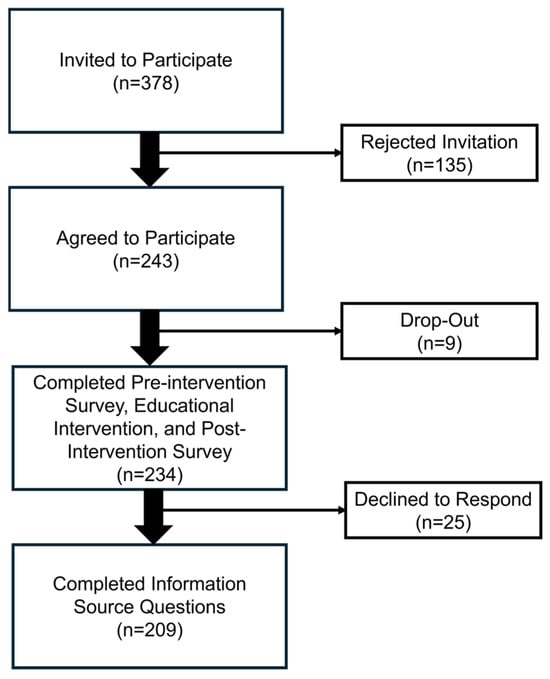
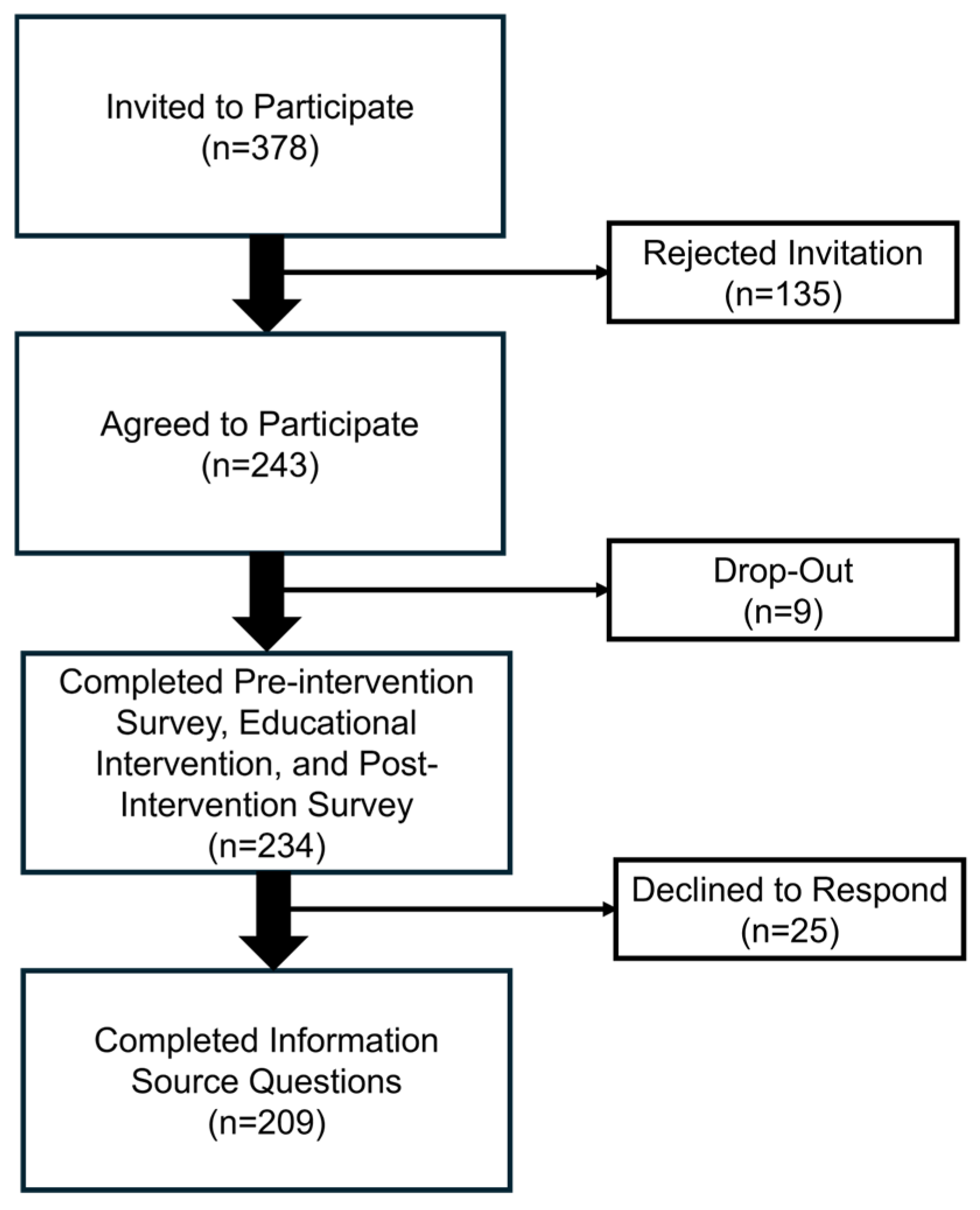
The study was designed as an exploratory analysis to identify directional relationships and generate hypotheses for larger-scale investigations, rather than to provide nationally representative estimates. The sample size was estimated using assumptions from the original study. An effect size based on increased willingness to vaccinate determined a target of 84 participants; the final sample was 209 (Figure 2). Demographic characteristics of the 209 participants who completed both the pre- and post-surveys are summarized in Table 1. Statistical analysis focused on descriptive statistics and comparative analyses to evaluate differences across information source groups and changes following the educational intervention. Whitney U, Kruskal–Wallis, and paired t-tests were used, consistent with prior methodology [12]. Given the modest sample size and exploratory objectives, multivariable modeling risked overfitting and unstable estimates; therefore, we prioritized descriptive and bivariate analyses for hypothesis generation. The analyses described in this study focus on transparency in identifying meaningful patterns for hypothesis generation. Analyses were performed in SPSS 28.0 (IBM Corp., Armonk, NY, USA). Given the number of comparisons performed, no formal adjustment for multiple testing was applied due to the exploratory nature of the study; therefore, findings should be interpreted as hypothesis-generating rather than confirmatory.
Figure 2.
Participant flow diagram. A total of 209 participants completed the study. Sample size estimation was based on detecting medium effect size differences with 95% power at α = 0.05.
Table 1.
Demographic Characteristics of Participants (N = 209). All values presented as n (%) and median (interquartile range). Valid percentages are reported excluding missing counts. Abbreviations: COVID-19 = Coronavirus Disease 2019; CDC = Centers for Disease Control and Prevention; GED = General Educational Development.
3. Results
Sources of COVID-19-related information, along with corresponding counts, mean reliability scores, and standard deviations, are reported in Table 2. Given the number of comparisons performed, the results are summarized below by key patterns, with full statistical details provided in the accompanying tables. The most frequently cited sources were social media (n = 95), television (TV; n = 89), and healthcare workers (HCWs; n = 60). Social media was the most commonly reported source, with a mean reliability score of 2.97 (standard deviation [SD] = 0.97) on a 5-point scale. Television had a mean reliability score of 3.45 (SD = 0.78), whereas HCWs, despite being the third most common source, were rated the most reliable (mean = 4.26; SD = 0.72). Religious leaders (n = 7) were the least frequently cited source and were rated lowest in reliability (mean = 2.60; SD = 1.52).
Table 2.
Mean Reliability Scores for Nine Sources of COVID-19 Information. All values are presented as sample size (n), mean, and standard deviation (S.D.). Response scoring for source reliability was defined as follows: 1 = Not at all; 2 = A little; 3 = Somewhat; 4 = A lot; 5 = Completely. Abbreviations: SD = standard deviation.
Pre-intervention differences in COVID-19-related attitudes, knowledge, and behaviors by information source are presented in Table 3. Participants who utilized print media exhibited significantly higher knowledge scores regarding post-vaccine behavior compared to non-users (user mean = 2.0; non-user mean = 1.46; p = 0.008). Similarly, individuals who obtained information from HCWs demonstrated higher knowledge scores than non-users (user mean = 1.75; non-user mean = 1.41; p = 0.009). Significant differences in knowledge of vaccine side effects were also observed: TV (user mean = 1.49; non-user mean = 1.69; p = 0.011) and radio (user mean = 1.30; non-user mean = 1.66; p = 0.003) users demonstrated lower knowledge scores, whereas website users exhibited higher scores (user mean = 1.82; non-user mean = 1.55; p = 0.004). Website users also reported following a greater number of CDC-recommended precautions, with a median of 8 precautions (interquartile range [IQR]: 6.0–10.0), compared to 7 precautions among non-users (IQR: 5.0–9.0).
Table 3.
Pre-Survey scores on attitudes, knowledge, and behaviors regarding the virus and its vaccines by information source. All values are presented as mean (standard deviation). Associated p-values were calculated using Mann–Whitney U tests and are considered statistically significant at p < 0.05; statistically significant p-values are presented in bold. Response scoring is defined as follows: 0 = no correct answer selected; 1 = partial or incomplete answer; 2 = completely correct answer.
Across analyses, three key patterns emerged. First, higher baseline knowledge and more accurate understanding of vaccine-related behaviors were observed among participants who relied on HCWs, print media, and websites. Second, reliance on television and radio was associated with lower knowledge in specific domains, particularly regarding vaccine side effects. Third, differences in baseline knowledge were accompanied by variability in behavioral practices, including adherence to recommended precautions. These patterns highlight systematic differences in information environments that extend beyond simple source utilization.
Post-intervention changes in scores, stratified by information source, are shown in Table 4. Among social media users, those who received the infographic intervention demonstrated higher knowledge scores related to post-vaccine behavior (mean = 1.78; SD = 0.63) compared to those who received the video intervention (mean = 1.43; SD = 0.90). Results from Supplementary Tables S1 and S2 indicate that both infographic and video interventions significantly improved overall attitudes. Notably, television and website users exhibited an increased likelihood of vaccination following the intervention (p = 0.04 and p = 0.03, respectively). Website users demonstrated greater knowledge of vaccine side effects (p = 0.01), whereas television and radio users demonstrated lower knowledge (p = 0.02 and p = 0.002, respectively). These findings suggest that responsiveness to educational interventions is not uniform, but varies according to individuals’ primary information environments.
Table 4.
Post-Survey Score Differences by Educational Intervention, Stratified by Information Sources. All values are presented as mean (standard deviation). Associated p-values were calculated using Mann–Whitney U tests and are considered statistically significant at p < 0.05; statistically significant p-values are presented in bold. Response scoring is defined as follows: 0 = no correct answer selected; 1 = partial or incomplete answer; 2 = completely correct answer.
Participants who relied on print media and websites demonstrated greater knowledge regarding vaccine safety (p = 0.05 and p = 0.03), more positive attitudes toward vaccine testing (p = 0.03 for both), and reduced concerns regarding the speed of vaccine development (p = 0.0007 and p = 0.002, respectively). Participants who received information from HCWs demonstrated greater awareness of vaccine limitations (p = 0.01) and decreased concerns regarding the speed of vaccine development (p = 0.003). Website and religious information source users exhibited increased concern about contracting COVID-19 (p = 0.04 and p = 0.01, respectively). In addition, participants who obtained information from HCWs were significantly more likely to report receiving an influenza vaccination (Supplementary Table S3).
Finally, no significant differences were observed in mean reliability scores across most demographic characteristics (Supplementary Table S4). However, as reported in Supplementary Table S5, television reliability scores differed significantly by religious affiliation, and radio reliability scores differed significantly by annual household income.
4. Discussion
This study examined the relationship between primary information sources, perceived credibility, and COVID-19-related knowledge and behaviors, as well as the extent to which these relationships were modified by an educational intervention. While the prior literature has established associations between information sources and vaccine attitudes, our findings both confirm these established relationships and extend them by demonstrating that responsiveness to educational interventions varies systematically across information source groups. This addresses a critical gap in the prior literature that has largely focused on static relationships rather than modifiable dynamics [13,14,15].
4.1. Information Sources, Credibility, and Technology-Enhanced Interventions
Consistent with prior studies, HCWs were perceived as the most credible source of information and were strongly associated with higher levels of COVID-19 knowledge and more consistent with adherence to recommended behaviors. This aligns with extensive evidence demonstrating that HCW recommendations remain a driver of vaccination uptake with effect sizes exceeding most other behavioral interventions [2,16,17,18]. However, our findings extend beyond this confirmation by highlighting a critical disconnect. Although HCWs are highly trusted, they are not always the most utilized source of information. This demonstrates a gap in public health communication: credibility alone is insufficient if high-quality sources are not the primary channels through which individuals receive information.
Social media was widely used, but associated with lower perceived credibility and more variable knowledge and behavioral outcomes. This finding reflects a well-documented dual role of social media as both a vector for misinformation and a scalable platform for targeted interventions [19,20,21]. Systematic reviews report that social media exposure is frequently associated with increased vaccine hesitancy, with some studies reporting up to 50% higher odds of hesitancy among individuals relying on these platforms [3,4]. However, our findings extend this literature by demonstrating that social media users are not a homogeneous group, but rather, they represent a population with greater responsiveness to targeted educational interventions, suggesting an opportunity for strategic engagement rather than simple avoidance. Emerging evidence suggests that strategically designed digital interventions, such as targeted messaging, influencer partnerships, and interactive content, can modestly but meaningfully shift beliefs and behaviors at scale [22]. This supports a reframing of social media from a purely problematic channel to a modifiable intervention space.
In contrast, traditional media and HCWs were associated with higher knowledge scores, particularly regarding vaccine-related behaviors. This aligns with prior work showing that these channels are associated with lower hesitancy and greater trust relative to social media [2,3,23,24]. However, our findings also suggest heterogeneity within traditional media, as television and radio were associated with lower knowledge regarding vaccine side effects. This may reflect differences in editorial oversight, information vetting, and audience demographics, suggesting that media type plays a role in shaping both exposure quality and downstream health behaviors.
Finally, infographic-based interventions were more effective than videos among social media users in our study, suggesting that brief, visually digestible content may better match the consumption patterns of audiences exposed to high-volume, rapid information streams. Technology-enhanced communication shows promise for improving vaccine knowledge and engagement, particularly when interventions align with users’ preferred platforms. Prior studies indicate that videos, gamified smartphone applications, and interactive or virtual reality tools can enhance comprehension, confidence, and participation [25]. These findings highlight the importance of tailoring technology-enhanced health communication to platform-specific behaviors and preferences to maximize impact.
Importantly, the primary contribution of this study lies not in confirming that HCWs are trusted or that social media is widely used, but in demonstrating that individuals embedded within different information ecosystems respond differently to targeted educational interventions. This distinction shifts the focus from descriptive associations to intervention-relevant dynamics, suggesting that effective public health strategies must account not only for where individuals obtain information, but also for how those information environments shape receptivity to behavior change efforts.
4.2. Trust and the Changing Information Landscape in the Post-Pandemic Era
Although the data were collected during an earlier phase of the COVID-19 pandemic, the underlying mechanisms identified remain relevant to current and future public health contexts. Notably, vaccine hesitancy has been shown to evolve over time rather than remain fixed.
Early vaccine hesitancy appears more modifiable through information-based interventions, whereas later hesitancy, often driven by distrust or low perceived risk, is more resistant to change and requires different engagement strategies. Longitudinal data demonstrate that a substantial proportion of initially hesitant individuals ultimately accept vaccination, particularly when concerns are rooted in safety or efficacy rather than entrenched mistrust [6]. Furthermore, recent evidence highlights a substantial decline in trust in healthcare institutions and public health authorities during and after the pandemic, with trust in HCWs decreasing by 30% between 2020 and 2024 [8]. This erosion of trust reinforces the importance of understanding how information sources influence behavior, as declining institutional credibility may amplify the impact of alternative information channels, including social media and interpersonal networks [10,26].
4.3. Implications for Practice and Policy
Our findings reinforce that HCWs should remain central to public health communication efforts, given their high credibility and demonstrated influence on behavior. However, maximizing this impact requires structural support, including implementation of evidence-based frameworks, such as the CDC Standards for Adult Immunization Practice, which emphasize routine assessment, strong recommendations, vaccine administration, and systematic documentation [27,28,29,30].
At the clinical practice level, multiple interventions have demonstrated effectiveness in improving vaccination uptake, including standing orders, reminder recall systems, and clinician prompts. Multicomponent interventions that combine these approaches consistently outperform single-strategy interventions, highlighting the importance of system-level design rather than isolated efforts [11,31,32]. Equally important is the optimization of communication strategies, such as a presumptive recommendation format and motivational interviewing techniques to address vaccine hesitancy [29,33,34]. These approaches play a relevant role in the context of evolving hesitancy, where tailored, patient-centered communication is required to address diverse concerns and levels of trust.
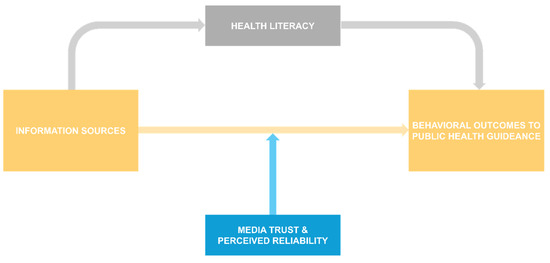
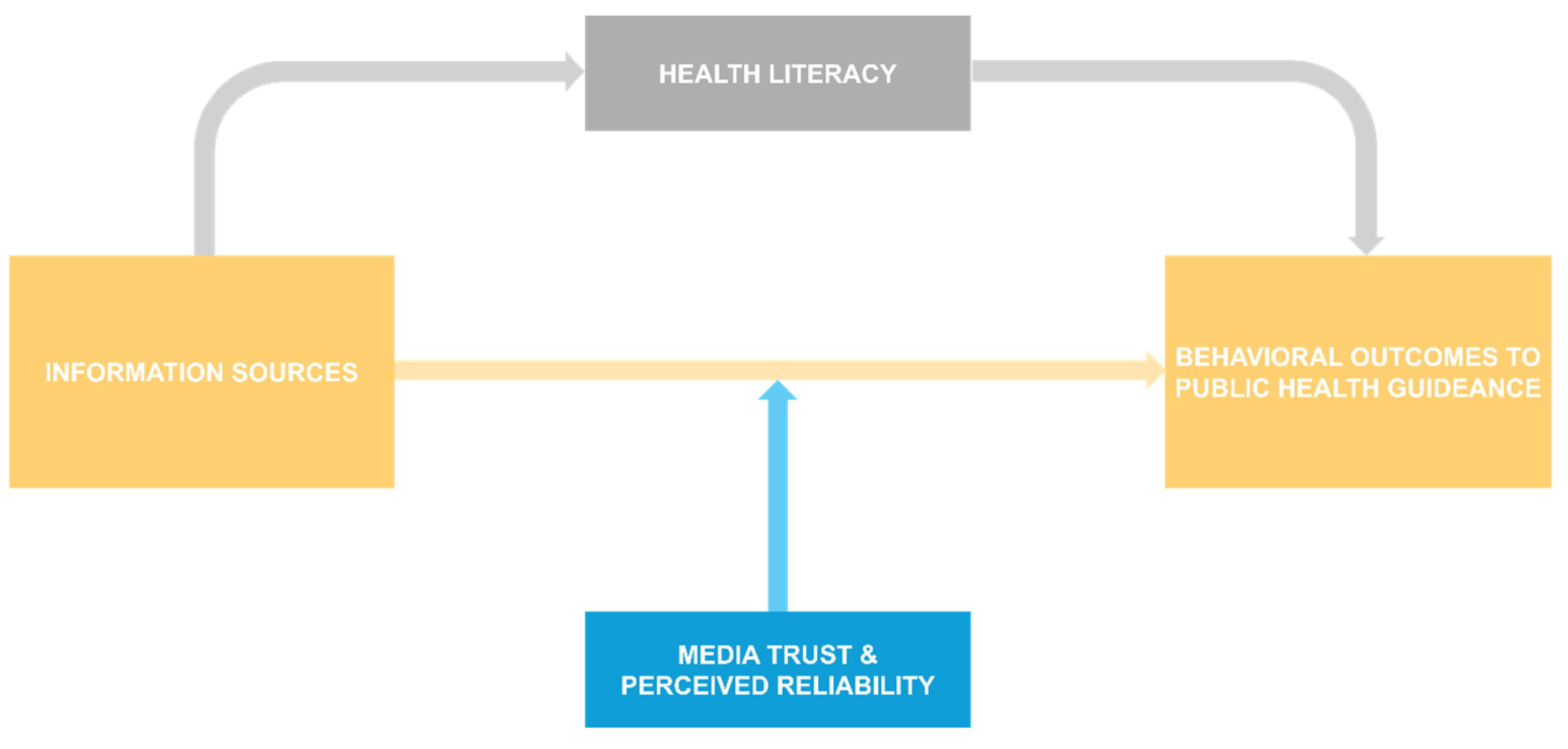
Beyond clinical settings, public health strategies must account for the dominant role of non-clinical information sources. Interpersonal communications and social networks play a substantial role in shaping beliefs, while digital platforms enable rapid dissemination of both accurate information and misinformation. In this context, health literacy emerges as a critical mediating factor, influencing whether individuals can effectively interpret, evaluate, and act upon health information. Individuals with higher health literacy and access to credible sources were more likely to translate knowledge into preventive behaviors, supporting a mediation framework in which information sources influence behavior through health literacy. Importantly, this process is further shaped by media trust, which acts as a moderating factor and varies across sociodemographic groups, suggesting that public health messaging must be tailored to account for differences in trust, access, and interpretive capacity [35].
This conceptual framework (Figure 3) provides a unifying explanation for the observed variability in knowledge and behavior across information sources, linking exposure (information source), processing (health literacy), and outcome (health behavior) within a single model. This model is informed by both study findings and prior health communication frameworks and is intended as a hypothesis-generating model for future validation. From a policy perspective, these findings support a multi-level approach to public health communication that combines trusted messengers (i.e., HCWs), high-reach platforms (i.e., social media), and targeted strategies to improve digital health literacy. Strengthening health literacy through educational interventions, improved access to credible information, and integration into early education represents a key long-term strategy for mitigating misinformation and improving population-level health outcomes [29]. Together, these results suggest that future interventions should prioritize not only what information is delivered, but how, by whom, and within which structural and social contexts it is received.
Figure 3.
Conceptual Model of Information Sources, Media Trust, Health Literacy, and Public Health Behaviors. This conceptual pathway illustrates how information sources (input factors) influence behavioral outcomes related to adherence to public health guidance (output factors), with health literacy acting as a mediating factor. Media trust and perceived reliability serve as moderating factors, shaping how individuals interact with information sources and affecting the development of health literacy. High media trust and strong health literacy promote adherence to public health initiatives, while low trust and poor health literacy increase susceptibility to misinformation and reduce compliance.
This study further advances a conceptual framework linking information source exposure, perceived credibility, and behavioral outcomes through mediating and moderating pathways. Specifically, information sources influence knowledge acquisition through differences in exposure quality, while perceived trust acts as a moderating factor that shapes receptivity to information. Health literacy functions as a mediating mechanism, determining whether individuals can effectively translate information into actionable behaviors. The observed variation in intervention effectiveness across source groups provides empirical support for this framework and suggests that these relationships are not purely associative but reflect underlying behavioral mechanisms.
4.4. Limitations
This study has several limitations. The sample size (n = 209), particularly within smaller subgroups, and the geographic focus on outpatient clinics in Michigan may limit generalizability. The requirement for English proficiency may have excluded certain populations, introducing potential selection bias. The use of self-reported data introduces recall and social desirability bias, and the clinical setting may overrepresent trust in HCWs compared to community settings. The study design was observational and primarily descriptive, limiting causal inference. Additionally, multiple statistical comparisons were conducted without formal correction, increasing the risk of type I error; thus, findings should be interpreted with caution and considered hypothesis-generating. The study timeframe (2021) reflects an earlier pandemic phase, although the underlying mechanisms identified likely remain relevant. Finally, the lack of long-term follow-up precludes assessment of sustained behavioral change.
5. Conclusions
The COVID-19 pandemic highlighted the critical importance of reliable information in shaping public health decisions and outcomes. This study revealed substantial variability in information sources, with social media emerging as the most frequently accessed yet least trusted platform, while HCWs and print media were consistently associated with higher knowledge and more accurate understanding of vaccine-related behaviors. Importantly, this study demonstrates that the effectiveness of educational interventions is shaped by individuals’ existing information environments, emphasizing the need for tailored communication strategies rather than one-size-fits-all approaches. These findings reinforce the central role of trusted sources, particularly medical HCWs, in promoting health literacy and adherence to public health recommendations. Importantly, this study extends the prior literature by integrating information source exposure, perceived credibility, and behavioral outcomes within a single framework, highlighting the interaction between access, trust, and behavioral translation. This approach helps explain why the availability of high-quality information alone does not necessarily result in optimal health behaviors. Educational interventions, including videos and infographics, improved knowledge and attitudes, particularly when aligned with individuals’ preferred information sources, although their effectiveness appeared context-dependent.
By situating these findings within the evolving information landscape of the pandemic, this study provides insight into how early information dynamics may contribute to longer-term challenges, including trust erosion and persistent hesitancy. Ultimately, strengthening trust in credible sources, improving health literacy, and leveraging both clinical and digital communication strategies will be essential to counter misinformation and optimize public health responses in future crises.
Supplementary Materials
The following supporting information can be downloaded at https://www.mdpi.com/article/10.3390/covid6050074/s1, Table S1: Mean Pre- and Post-Intervention Attitude and Knowledge Difference Scores by Television and Social Media Information Source. For each topic, the table presents Pre-Intervention and Post-Intervention mean values, the Difference between these means, and the associated p-value. The Difference column represents the change in attitude or knowledge after the intervention, calculated by subtracting the Pre-Intervention score from the Post-Intervention score. The p-value indicates the statistical significance of the change, with values less than 0.05 considered statistically significant and highlighted in the table. Likelihood of receiving the COVID-19 vaccine was rated on a scale from 1 (Definitely will not) to 6 (Definitely will), and concern about receiving the vaccine was rated from 1 (Not concerned at all) to 4 (Very concerned). Knowledge topics were scored as 0 (No correct answer selected), 1 (Partial/incomplete answer), or 2 (Completely correct answer). Statistical comparisons between pre- and post-intervention results were analyzed using paired t-tests, Table S2A: Mean Pre- and Post-Educational Intervention Attitude Difference Scores by Television, Radio, and Print Information Source. Each row in the table corresponds to a specific attitude or belief assessed before and after the intervention. The scores in the Pre-Intervention and Post-Intervention columns are coded as follows: a score of 2 indicates agreement with the statement, 1 indicates uncertainty or being unsure, and 0 indicates disagreement with the statement. The Difference column represents the change in attitude after the intervention, calculated by subtracting the “Pre-Intervention” score from the “Post-Intervention” score. The p-value indicates the statistical significance of the change in attitude. A p-value of p < 0.05 is considered statistically significant and is highlighted in the table to emphasize those results where the intervention had a notable effect on the participants’ attitudes. Statistical comparisons between pre- and post-intervention results were analyzed using paired t-tests., Table S2B: Mean Pre- and Post-Educational Intervention Attitude Difference Scores by Social Media, Website, Healthcare Workers Information Source. Each row in the table corresponds to a specific attitude or belief assessed before and after the intervention. The scores in the Pre-Intervention and Post-Intervention columns are coded as follows: a score of 2 indicates agreement with the statement, 1 indicates uncertainty or being unsure, and 0 indicates disagreement with the statement. The Difference column represents the change in attitude after the intervention, calculated by subtracting the “Pre-Intervention” score from the “Post-Intervention” score. The p-value indicates the statistical significance of the change in attitude. A p-value of p < 0.05 is considered statistically significant and is highlighted in the table to emphasize those results where the intervention had a notable effect on the participants’ attitudes. Statistical comparisons between pre- and post-intervention results were analyzed using paired t-tests, Table S2C: Mean Pre- and Post-Educational Intervention Attitude Difference Scores by Personal Relationships, Religious Leaders, Governor Information Source. Each row in the table corresponds to a specific attitude or belief assessed before and after the intervention. The scores in the Pre-Intervention and Post-Intervention columns are coded as follows: a score of 2 indicates agreement with the statement, 1 indicates uncertainty or being unsure, and 0 indicates disagreement with the statement. The Difference column represents the change in attitude after the intervention, calculated by subtracting the “Pre-Intervention” score from the “Post-Intervention” score. The p-value indicates the statistical significance of the change in attitude. A p-value of p < 0.05 is considered statistically significant and is highlighted in the table to emphasize those results where the intervention had a notable effect on the participants’ attitudes. Statistical comparisons between pre- and post-intervention results were analyzed using paired t-tests, Table S3: Chi-Square Tests of Influenza Vaccination and COVID-19 Vaccination by Information Sources. Values are presented as n (%). aP-values were calculated using Pearson’s Chi-Square test unless more than 20% of cells had expected counts less than 5, in which case the Likelihood Ratio test was used. Valid percentages are reported excluding missing counts. A p-value < 0.05 was considered statistically significant., Table S4: Mean Reliability Score of Information Sources by Gender and Age. Reliability was assessed using a 5-point Likert scale (1 = Not at all reliable, 5 = Completely reliable). Mean scores and standard deviations are reported for each information source across gender (male, female) and age categories (18–24, 25–34, 35–44, 45–54, 55–64, 65+). a p-values are derived from Mann-Whitney U tests, with statistical significance defined as p < 0.05. b p-values are derived from Kruskal-Wallis tests, with statistical significance defined as p < 0.05, Table S5A: Mean Reliability Score of Information Sources by Religious Affiliation. Reliability scores were assessed by Religious Affiliation. Mean scores and standard deviations are reported for each category of religious affiliation (Christian, Other Religion). b p-values are derived from Kruskal-Wallis tests, with statistical significance defined as p < 0.05, Table S5B: Mean Reliability Score of Information Sources by Annual Household Income. Reliability scores were assessed by Annual Household Income. Mean scores and standard deviations are reported for each category of annual household income (< $15,000, >$15,000–$45,000, >$45,000–$90,000, >$90,000–$150,000, >$150,000). b p-values are derived from Kruskal-Wallis tests, with statistical significance defined as p < 0.05.
Author Contributions
Conceptualization, M.A.T. and N.R.; methodology, M.A.T. and N.R.; software, A.R.H.; validation, M.A.T. and N.R.; formal analysis, A.R.H.; investigation, M.A.T.; resources, M.A.T. and N.R.; writing—original draft preparation, M.A.T.; writing—review and editing, A.R.H. and N.R.; visualization, M.A.T.; supervision, N.R.; project administration, N.R.; funding acquisition, M.A.T. and N.R. All authors have read and agreed to the published version of the manuscript.
Funding
This research was funded by the Michigan State Medical Society Foundation, grant number P64840.
Institutional Review Board Statement
This study was conducted in accordance with the Declaration of Helsinki and approved by the Institutional Review Board of Central Michigan University (Protocol 2021-1028 on 16 June 2021), Covenant Medical Center (Protocol 1788796-2 on 30 August 2021), and Saint Joseph Mercy Health System and Trinity Health System Level Research (Protocol E-21-978 on 2 November 2021).
Informed Consent Statement
Informed consent was obtained from all subjects involved in the study.
Data Availability Statement
The data presented in this study are available on request from the corresponding author due to privacy.
Acknowledgments
The authors wish to express their sincere gratitude to Nicholas Haddad for his expert guidance and consultation on the design and implementation of the educational intervention. We also acknowledge Donald Blubaugh for his contributions to the development and refinement of the videographic educational materials. We are appreciative of the efforts of Samantha Hess, Zachary Smith, Karissa Gawronski, Ayushi Kumar, and Jacob Horsley for their assistance with data collection. Finally, we thank Ciara Brennan and Zain Waheed for their support with data coding and preparation.
Conflicts of Interest
The authors declare no conflicts of interest.
Abbreviations
The following abbreviations are used in this manuscript:
| CDC | Centers for Disease Control and Prevention |
| CMU | Central Michigan University |
| HCWs | Healthcare workers |
| IRB | Institutional Review Board |
| IQR | Interquartile range |
| SD | Standard deviation |
| SPSS | Statistical Package for the Social Sciences |
| TV | Television |
| WHO | World Health Organization |
References
- Incze, M.A.; Kneifati-Hayek, J.Z. Where Can I Find Reliable Information About Vaccines? JAMA Intern. Med. 2026, 186, 493. [Google Scholar] [CrossRef] [Scilit]
- Jordan, S.; Böttger, S.J.; Zinn, S. The persuasiveness of different sources of information on the decision to vaccinate. A cross-sectional study in Germany during the pandemic at the turn of the year 2021/2022. PLoS ONE 2025, 20, e0333268. [Google Scholar] [CrossRef] [Scilit]
- Piltch-Loeb, R.; Savoia, E.; Goldberg, B.; Hughes, B.; Verhey, T.; Kayyem, J.; Miller-Idriss, C.; Testa, M. Examining the effect of information channel on COVID-19 vaccine acceptance. PLoS ONE 2021, 16, e0251095. [Google Scholar] [CrossRef] [Scilit] [PubMed]
- Chen, T.Y.; Piltch-Loeb, R.; Harriman, N.W.; Testa, M.; Savoia, E. A Descriptive Analysis of the Relationship between Social Media Use and Vaccine Hesitancy among a Sample of Unvaccinated Adults in Canada. Vaccines 2022, 10, 2096. [Google Scholar] [CrossRef] [Scilit] [PubMed]
- Lazarus, J.V.; Wyka, K.; White, T.M.; Picchio, C.A.; Gostin, L.O.; Larson, H.J.; Rabin, K.; Ratzan, S.C.; Kamarulzaman, A.; El-Mohandes, A. A survey of COVID-19 vaccine acceptance across 23 countries in 2022. Nat. Med. 2023, 29, 366–375. [Google Scholar] [CrossRef] [Scilit]
- Nguyen, K.H.; Bao, Y.; Mortazavi, J.; Corlin, L.; Allen, J.D. Reasons for COVID-19 Non-Vaccination from 2021 to 2023 for Adults, Adolescents, and Children. Vaccines 2024, 12, 568. [Google Scholar] [CrossRef] [Scilit]
- Whitaker, M.; Elliott, J.; Gerard-Ursin, I.; Cooke, G.S.; Donnelly, C.A.; Ward, H.; Elliott, P.; Chadeau-Hyam, M. Profiling vaccine attitudes and subsequent uptake in 1·1 million people in England: A nationwide cohort study. Lancet 2026, 407, 350–362. [Google Scholar] [CrossRef] [Scilit]
- Perlis, R.H.; Ognyanova, K.; Uslu, A.; Lunz Trujillo, K.; Santillana, M.; Druckman, J.N.; Baum, M.A.; Lazer, D. Trust in Physicians and Hospitals During the COVID-19 Pandemic in a 50-State Survey of US Adults. JAMA Netw. Open 2024, 7, e2424984. [Google Scholar] [CrossRef] [Scilit]
- Siegler, A.J.; Luisi, N.; Hall, E.W.; Bradley, H.; Sanchez, T.; Lopman, B.A.; Sullivan, P.S. Trajectory of COVID-19 Vaccine Hesitancy over Time and Association of Initial Vaccine Hesitancy with Subsequent Vaccination. JAMA Netw. Open 2021, 4, e2126882. [Google Scholar] [CrossRef] [Scilit]
- Latkin, C.A.; Dayton, L.; Strickland, J.C.; Colon, B.; Rimal, R.; Boodram, B. An Assessment of the Rapid Decline of Trust in US Sources of Public Information about COVID-19. J. Health Commun. 2020, 25, 764–773. [Google Scholar] [CrossRef] [Scilit]
- Granade, C.J.; Parker Fiebelkorn, A.; Black, C.L.; Lutz, C.S.; Srivastav, A.; Bridges, C.B.; Ball, S.W.; Devlin, R.G.; Cloud, A.J.; Kim, D.K. Implementation of the Standards for adult immunization practice: A survey of U.S. Health care providers. Vaccine 2020, 38, 5305–5312. [Google Scholar] [CrossRef] [Scilit]
- Takagi, M.A.; Hess, S.; Smith, Z.; Gawronski, K.; Kumar, A.; Horsley, J.; Haddad, N.; Noveloso, B.; Zyzanski, S.; Ragina, N. The impact of educational interventions on COVID-19 and vaccination attitudes among patients in Michigan: A prospective study. Front. Public Health 2023, 11, 1144659. [Google Scholar] [CrossRef] [Scilit]
- Vlasceanu, M.; Coman, A. The impact of information sources on COVID-19 knowledge accumulation and vaccination intention. Int. J. Data Sci. Anal. 2022, 13, 287–298. [Google Scholar] [CrossRef] [Scilit]
- Cao, A.; Ueta, M.; Uchibori, M.; Murakami, M.; Kunishima, H.; Santosh Kumar, R.; Prommas, P.; Tomoi, H.; Gilmour, S.; Sakamoto, H.; et al. Trust in governments, public health institutions, and other information sources as determinants of COVID-19 vaccine uptake behavior in Japan. Vaccine 2024, 42, 3684–3692. [Google Scholar] [CrossRef] [Scilit] [PubMed]
- Manandhar, P.; Katz, J.; Lama, T.P.; Khatry, S.K.; Moss, W.J.; Erchick, D.J. COVID-19 vaccine hesitancy, trust, and communication in Sarlahi District, Nepal. Vaccine 2024, 42, 126034. [Google Scholar] [CrossRef] [Scilit] [PubMed]
- Frietze, G.A.; Mancera, B.M.; Kenney, M.J. COVID-19 Testing, Vaccine Perceptions, and Trust among Hispanics Residing in an Underserved Community. Int. J. Environ. Res. Public Health 2023, 20, 5076. [Google Scholar] [CrossRef] [Scilit]
- Sullivan, M.C.; Mistler, C.; Copenhaver, M.M.; Wickersham, J.A.; Ni, Z.; Kim, R.S.; Shrestha, R. Race, trust, and COVID-19 vaccine hesitancy in people with opioid use disorder. Health Psychol. 2022, 41, 115–120. [Google Scholar] [CrossRef] [Scilit]
- Tan, M.; Straughan, P.T.; Cheong, G. Information trust and COVID-19 vaccine hesitancy amongst middle-aged and older adults in Singapore: A latent class analysis Approach. Soc. Sci. Med. 2022, 296, 114767. [Google Scholar] [CrossRef] [Scilit]
- Zamir, M.T.; Ullah, F.; Tariq, R.; Bangyal, W.H.; Arif, M.; Gelbukh, A. Machine and deep learning algorithms for sentiment analysis during COVID-19: A vision to create fake news resistant society. PLoS ONE 2024, 19, e0315407. [Google Scholar] [CrossRef] [Scilit] [PubMed]
- Athey, S.; Grabarz, K.; Luca, M.; Wernerfelt, N. Digital public health interventions at scale: The impact of social media advertising on beliefs and outcomes related to COVID vaccines. Proc. Natl. Acad. Sci. USA 2023, 120, e2208110120. [Google Scholar] [CrossRef] [Scilit]
- de Vere Hunt, I.; Linos, E. Social Media for Public Health: Framework for Social Media-Based Public Health Campaigns. J. Med. Internet Res. 2022, 24, e42179. [Google Scholar] [CrossRef] [Scilit]
- Miguel, L.A.; Comfort, A.B.; Riley, A.R.; Lopez, G.; Vallin, J.; Epperson, A.E.; Diamond-Smith, N. Preferences for Social Media Vaccination Messaging. JAMA Netw. Open 2026, 9, e262284. [Google Scholar] [CrossRef] [Scilit]
- Sunohara, S.; Asakura, T.R.; Kimura, T.; Saijo, M.; Tamakoshi, A. Traditional and Social Media Usage Associated with COVID-19 Vaccine Uptake in Sapporo, Japan. Asia Pac. J. Public Health 2024, 36, 358–365. [Google Scholar] [CrossRef] [Scilit] [PubMed]
- Osuagwu, U.L.; Mashige, K.P.; Ovenseri-Ogbomo, G.; Envuladu, E.A.; Abu, E.K.; Miner, C.A.; Timothy, C.G.; Ekpenyong, B.N.; Langsi, R.; Amiebenomo, O.M.; et al. The impact of information sources on COVID-19 vaccine hesitancy and resistance in sub-Saharan Africa. BMC Public Health 2023, 23, 38. [Google Scholar] [CrossRef] [Scilit]
- Panickar, R.; Aziz, Z.; Mohd Sani, N.; Kamarulzaman, A. The use of technology in vaccine safety communication: A systematic review of randomised controlled trials. Patient Educ. Couns. 2023, 112, 107707. [Google Scholar] [CrossRef] [Scilit]
- Peters, M.D.J. Addressing vaccine hesitancy and resistance for COVID-19 vaccines. Int. J. Nurs. Stud. 2022, 131, 104241. [Google Scholar] [CrossRef] [Scilit] [PubMed]
- O’Leary, S.T.; Opel, D.J.; Cataldi, J.R.; Hackell, J.M.; Committee on Infectious Diseases; Committee on Practice and Ambulatory Medicine; Committee on Bioethics. Strategies for Improving Vaccine Communication and Uptake. Pediatrics 2024, 153, e2023065483. [Google Scholar] [CrossRef] [Scilit] [PubMed]
- Heidenreich, P.A.; Bhatt, A.; Nazir, N.T.; Schaffner, W.; Vardeny, O. 2025 Concise Clinical Guidance: An ACC Expert Consensus Statement on Adult Immunizations as Part of Cardiovascular Care: A Report of the American College of Cardiology Solution Set Oversight Committee. J. Am. Coll. Cardiol. 2025, 86, 2085–2098. [Google Scholar] [CrossRef] [Scilit]
- Liu, S.; Durantini, M.R.; Calabrese, C.; Sanchez, F.; Albarracin, D. A systematic review and meta-analysis of strategies to promote vaccination uptake. Nat. Hum. Behav. 2024, 8, 1689–1705. [Google Scholar] [CrossRef] [Scilit]
- Prevention CfDCa. Adult Immunization Standards Atlanta, GA: Centers for Disease Control and Prevention; 2024 National Center for Immunization and Respiratory Diseases (NCIRD); Immunization Services Division. pp. 75–556. Available online: https://www.cdc.gov/vaccines-adults/hcp/imz-standards/index.html (accessed on 20 December 2025).
- Cataldi, J.R.; Kerns, M.E.; O’Leary, S.T. Evidence-based strategies to increase vaccination uptake: A review. Curr. Opin. Pediatr. 2020, 32, 151–159. [Google Scholar] [CrossRef] [Scilit]
- Malik, A.A.; Ahmed, N.; Shafiq, M.; Elharake, J.A.; James, E.; Nyhan, K.; Paintsil, E.; Melchinger, H.C.; Team, Y.B.I.; Malik, F.A.; et al. Behavioral interventions for vaccination uptake: A systematic review and meta-analysis. Health Policy 2023, 137, 104894. [Google Scholar] [CrossRef] [Scilit]
- Wheeler, S.G.; Beste, L.A.; Overland, M.K.; Wander, P.L. Interventions in primary care to increase uptake of adult vaccines: A systematic review. J. Public Health 2025, 47, 222–231. [Google Scholar] [CrossRef] [Scilit] [PubMed]
- Gagneur, A.; Gutnick, D.; Berthiaume, P.; Diana, A.; Rollnick, S.; Saha, P. From vaccine hesitancy to vaccine motivation: A motivational interviewing based approach to vaccine counselling. Hum. Vaccines Immunother. 2024, 20, 2391625. [Google Scholar] [CrossRef] [Scilit]
- Estrela, M.; Semedo, G.; Roque, F.; Ferreira, P.L.; Herdeiro, M.T. Sociodemographic determinants of digital health literacy: A systematic review and meta-analysis. Int. J. Med. Inform. 2023, 177, 105124. [Google Scholar] [CrossRef] [Scilit]



Disclaimer/Publisher’s Note: The statements, opinions and data contained in all publications are solely those of the individual author(s) and contributor(s) and not of MDPI and/or the editor(s). MDPI and/or the editor(s) disclaim responsibility for any injury to people or property resulting from any ideas, methods, instructions or products referred to in the content. |
© 2026 by the authors. Licensee MDPI, Basel, Switzerland. This article is an open access article distributed under the terms and conditions of the Creative Commons Attribution (CC BY) license.