1. Introduction
Child laborers in cobalt mines, domestic workers facing sexual harassment behind closed doors, garment factory workers trapped in collapsed buildings, delivery riders killed in traffic while racing against algorithmic deadlines—when these realities reach newspaper headlines, they serve as a stark reminder that decent work remains an unfulfilled promise for millions worldwide. These are not isolated incidents but symptoms of systemic failures to ensure that work provides dignity, security, and fair compensation. As global crises—pandemics, economic recessions, climate disasters, and armed conflicts—continue to reshape labor markets, the gap between decent work as an aspiration and as a lived reality has widened for many of the world’s most vulnerable workers.
The concept of decent work, introduced by the International Labour Organization (ILO) in 1999, has become a central framework for understanding employment quality and its implications for individual well-being and organizational effectiveness [
1]. Defined as productive work that provides fair income, workplace security, social protection, and opportunities for personal development, decent work encompasses both objective employment conditions and subjective experiences of work quality [
2]. Within the human resource management (HRM) literature, the concept has gained increasing attention as organizations recognize the strategic importance of offering quality employment that meets workers’ fundamental needs while supporting sustainable organizational performance. The inclusion of decent work as a core component of the United Nations Sustainable Development Goals (SDG 8: “Promote sustained, inclusive and sustainable economic growth, full and productive employment and decent work for all”) has further reinforced its relevance for researchers, practitioners, and policymakers worldwide.
The Psychology of Working Theory (PWT) [
2] has provided a particularly influential framework for understanding decent work at the individual level. It posits that access to decent work is shaped by contextual constraints (e.g., economic conditions, marginalization) and individual factors (e.g., work volition, career adaptability), and that, in turn, decent work predicts need satisfaction and well-being outcomes. This framework has generated a substantial body of empirical research examining the antecedents, correlates, and consequences of decent work across diverse populations and contexts.
Nourafkan and Tanova [
3] conducted a systematic literature review of empirical quantitative studies measuring decent work at the individual level, synthesizing 48 studies published through the end of 2021. Their review proposed an integrated framework of antecedents, outcomes, mediators, and moderators examined within this literature. It identified marginalization and economic constraints as the most frequently studied predictors, and job satisfaction, life satisfaction, and need fulfillment as key outcomes. Importantly, the authors also highlighted several critical gaps, including the predominance of cross-sectional designs, the overreliance on samples from developed countries, limited theoretical diversity beyond PWT, and the need for more research on vulnerable populations.
Since 2021, however, decent work research has expanded considerably, driven in part by increased scholarly attention to labor market disruptions associated with the COVID-19 pandemic and the continued growth of precarious work arrangements in the gig economy. A comprehensive mapping of this more recent body of evidence is therefore needed to assess whether previously identified gaps have been addressed and to identify emerging priorities for future research.
Evidence gap maps (EGMs) offer a rigorous methodological approach for achieving these objectives. As defined by Khalil et al. [
4], EGMs are systematic reviews that visually represent the state of evidence on a given topic by categorizing and mapping relationships among study characteristics. In doing so, they highlight areas with robust evidence as well as domains where knowledge remains limited. Unlike traditional systematic reviews, which typically focus on synthesizing intervention effectiveness, EGMs provide a broader overview of research activity. This makes them particularly useful for identifying patterns, trends, and gaps that can inform evidence-based decision-making [
5,
6,
7]. This approach is especially well suited to the decent work literature, given its diversity of dimensions, populations, geographic contexts, and methodological traditions.
The present study responds to the need for an updated and more focused synthesis by conducting an evidence gap map of recent empirical survey-based research on decent work published between 2022 and 2025. This temporal focus allows for direct comparison with the evidence base synthesized by Nourafkan and Tanova [
3], enabling an assessment of whether the gaps they identified have been addressed in more recent scholarship within this segment of the literature. Following the methodological framework outlined by Khalil et al. [
4], a total of 214 empirical studies were systematically identified, screened, and coded to map the evidence across five key domains: (1) decent work dimensions examined, (2) population characteristics, (3) geographic context, (4) methodological design, and (5) outcome variables. The resulting EGMs provide visual representations of both evidence concentration and gaps, offering a structured overview of recent research patterns and a roadmap for advancing decent work scholarship within this empirical domain.
The overarching research question guiding this evidence gap map is:
RQ: What is the current state of empirical survey-based evidence on decent work published between 2022 and 2025, and where do critical knowledge gaps persist within this segment of the literature?
2. Literature Review
The rapid expansion of decent work scholarship over the past decade has been accompanied by a growing number of synthesis efforts aimed at organizing and evaluating the evidence. Beyond the foundational systematic review by Nourafkan and Tanova [
3], more recent reviews—systematic, scoping, and bibliometric—have examined decent work from complementary perspectives, including conceptual foundations, empirical focus, and sectoral applications. Taken together, these syntheses converge on a common conclusion: although the volume of research has increased, the evidence base remains unevenly distributed across dimensions, populations, regions, and methodological approaches. This section selectively draws on recent reviews to justify the specific research questions guiding the present evidence gap map.
2.1. Decent Work Dimensions and Conceptualization
Decent work has been conceptualized through two dominant and partially overlapping frameworks. At the policy level, the International Labour Organization (ILO) defines decent work through four interrelated pillars: employment creation, social protection, rights at work, and social dialogue [
1]. At the individual level, the Psychology of Working Theory (PWT) operationalizes decent work through five experiential dimensions—safe working conditions, access to healthcare, adequate compensation, free time and rest, and complementary organizational values—linking these dimensions to need satisfaction and well-being [
2,
8].
Recent synthesis work suggests that empirical research has not engaged evenly across these dimensions. For example, Ralph and Arora’s [
9] bibliometric analysis of SDG 8 literature revealed a strong concentration on employment-related and economic aspects of decent work, with considerably less attention to social dialogue and collective labor relations. This imbalance raises concerns about whether recent empirical research adequately reflects the full scope of the decent work agenda, particularly its relational and institutional components. Accordingly, the present EGM examines how recent empirical studies (2022–2025) distribute attention across different decent work dimensions.
RQ1: Which decent work dimensions have been examined in recent empirical research (2022–2025), and which remain underexplored relative to the ILO framework?
2.2. Populations in Decent Work Research
A recurring limitation identified in prior reviews concerns the populations represented in decent work research. Nourafkan and Tanova [
3] noted that most individual-level studies relied on general working adult samples, often recruited through convenience or online methods. These sampling strategies may exclude workers in precarious or informal employment. This pattern is theoretically problematic, given that PWT explicitly foregrounds marginalization and structural constraints as central determinants of access to decent work.
More focused reviews reinforce this concern. For instance, Baldry et al. [
10] documented a scarcity of empirical research on blue-collar, semi-skilled, and unskilled workers. This is notable given their heightened exposure to indecent working conditions [
11]. Similarly, workers with disabilities, domestic workers, migrants, and gig economy workers—groups frequently identified in policy discourse as vulnerable—appear only sporadically, if at all, in existing empirical syntheses. Whether the post-2021 expansion of decent work research has meaningfully diversified population coverage remains unclear.
RQ2: What populations have been studied in decent work research since 2022, and which vulnerable or marginalized groups remain underrepresented?
2.3. Geographic Distribution of Evidence
The geographic distribution of decent work research reflects broader asymmetries in global knowledge production patterns. Prior reviews indicate a concentration of studies conducted in economically developed countries, particularly in North America and Western Europe [
3]. Although recent region-specific analyses—such as those focusing on post-conflict contexts [
12] or pandemic-related labor disruptions—highlight the value of context-sensitive research, they do not necessarily translate into more balanced global coverage.
Several regions where decent work deficits are especially pronounced—including parts of Eastern Europe, Central Asia, Sub-Saharan Africa, and small island developing states—remain underrepresented in the synthesized literature. A systematic mapping of recent studies is therefore needed to assess whether geographic diversification has occurred since 2022 or whether longstanding regional gaps persist.
RQ3: What is the geographic distribution of recent decent work evidence, and which regions continue to lack empirical investigation?
2.4. Methodological Approaches and Evidence Quality
Methodological limitations have consistently been identified as constraints on theory development and causal inference in decent work research. Nourafkan and Tanova [
12] reported a heavy reliance on cross-sectional survey designs, which limits the ability to assess temporal dynamics and causal pathways. Subsequent bibliometric work [
9] points to the growing use of alternative synthesis methods but provides limited insight into methodological diversification at the level of primary empirical studies.
From both theoretical and applied perspectives, the use of longitudinal, experimental, and multilevel designs is particularly consequential. Longitudinal studies are needed to examine how decent work evolves over time, while multilevel designs are essential for capturing its nested nature within organizational, sectoral, and national contexts. Whether recent empirical research has moved beyond cross-sectional designs to address these limitations warrants systematic examination.
RQ4: What methodological designs characterize decent work research in this period, and what limitations persist for establishing causal inference?
2.5. Sector-Specific Evidence and Outcome Relationships
Recent reviews focusing on specific sectors—such as tourism and hospitality—suggest that decent work research often centers on a narrow set of outcomes, particularly employee well-being and satisfaction [
13,
14]. While these outcomes are theoretically central within PWT, the framework also posits broader consequences, including work fulfillment, career development, and sustainable employment trajectories.
At the same time, sector-specific syntheses point to uneven attention to organizational and system-level outcomes, as well as limited exploration of mediating and moderating mechanisms. A comprehensive mapping of outcome variables examined in recent decent work research is therefore needed to identify which theoretically relevant relationships have been empirically tested and which remain largely unexplored.
RQ5: What outcome variables have been examined in relation to decent work since 2022, and which theoretically relevant relationships remain unexplored?
3. Methods
This evidence gap map was conducted following the methodological guidance provided by Khalil et al. [
4] for mapping reviews and EGMs, supplemented by reporting standards from PRISMA-ScR [
15], adapted for mapping review purposes. The study adhered to a pre-specified protocol outlining the eligibility criteria, search strategy, screening procedures, data extraction process, coding framework, and EGM development.
3.1. Protocol and Registration
3.2. Eligibility Criteria
Eligibility criteria were defined a priori following the PICO framework adapted for mapping reviews and are summarized in
Table 1.
The population of interest comprised working adults, including employed, self-employed, and job-seeking individuals, across all occupational sectors and geographic regions. Studies focusing exclusively on student samples without employment experience were excluded, except when explicitly addressing school-to-work transitions.
Regarding the focal concept, studies were required to explicitly examine decent work, either through established measurement instruments (e.g., the Decent Work Scale or the Decent Work Questionnaire) or through indicators aligned with the International Labour Organization’s decent work framework. Studies addressing working conditions conceptually consistent with decent work, but without explicit reference to the construct, were excluded.
Comparators were not specified, as evidence gap mapping does not require comparison groups. Eligible outcomes included any psychological, behavioral, or organizational variables examined in relation to decent work.
Finally, only empirical quantitative studies based on survey methods and published as peer-reviewed journal articles in English were included. Qualitative studies, mixed-methods research, conceptual and theoretical papers, reviews, and grey literature were excluded.
3.3. Information Sources and Search Strategy
A systematic literature search was conducted in two major bibliographic databases: Web of Science (WoS) Core Collection and Scopus. These databases were selected for their broad coverage of peer-reviewed social science literature and their advanced filtering capabilities, which allow precise restriction by document type, language, and publication period.
The search strategy followed a focused approach using the term “decent work” to identify studies explicitly engaging with this construct, as defined within the International Labour Organization (ILO) framework and its operationalizations in psychological and organizational research. This approach was intentionally designed to prioritize conceptual precision over breadth, ensuring that all included studies explicitly addressed decent work rather than related constructs (e.g., job quality or precarious work).
For transparent reporting of search strategies, the full search syntax used in each database is reported below:
In both databases, the following filters were applied:
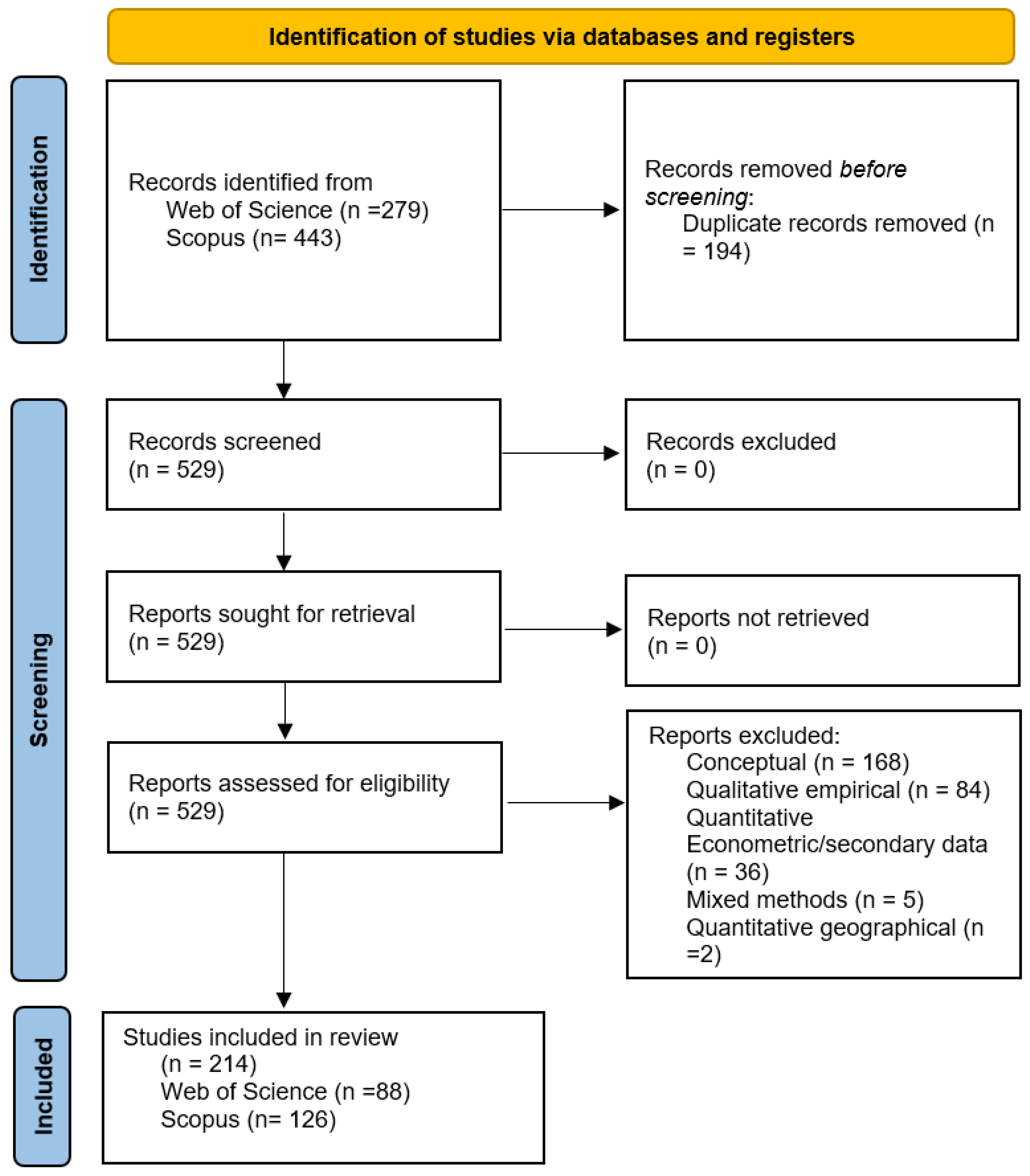
The search was conducted in January 2026. The initial retrieval yielded 723 records (Scopus = 443; Web of Science = 279). After removing 194 duplicate records using reference management software, 529 unique records remained for screening.
3.4. Study Selection
Study selection followed a two-stage screening process consistent with mapping review methodology [
4].
Stage 1 (Title and Abstract Screening): Two reviewers independently screened the titles and abstracts of all 529 unique records against the eligibility criteria. Given the specificity of the search strategy—restricted to studies explicitly using the term “decent work” in the title or abstract—this stage primarily functioned as a preliminary eligibility verification step rather than a major exclusion phase. Disagreements were resolved through discussion or third-reviewer adjudication. As a result, all records progressed to full-text assessment.
Stage 2 (Full-Text Screening and Methodological Classification): All records underwent full-text retrieval and assessment. During this stage, a comprehensive methodological classification was conducted to identify studies meeting the inclusion criterion of empirical quantitative survey-based research. The 529 records were classified as follows: quantitative survey-based (n = 214), conceptual/theoretical (n = 168), qualitative empirical (n = 84), quantitative econometric/secondary data analysis (n = 36), systematic reviews/meta-analyses (n = 21), unclear or mixed methods (n = 5), and quantitative geographic analysis (n = 2). An overview of all retrieved records and their methodological classification is provided in
Supplementary Table S1.
Following the application of all eligibility criteria, 214 empirical quantitative survey-based studies published as peer-reviewed English-language journal articles were included in the final evidence gap map. These comprised 88 records from Web of Science and 126 from Scopus. A detailed record of inclusion and exclusion decisions, along with their justifications, was maintained throughout the selection process. A complete list of included studies, with bibliographic information and coding details, is provided in
Supplementary Table S2.
Figure 1 presents the PRISMA flow diagram detailing the study selection process and reasons for exclusion at each stage. The systematic search was conducted in January 2026 in Web of Science and Scopus databases, covering publications from January 2022 to December 2025. All 529 unique records underwent full-text evaluation with methodological classification to identify empirical quantitative survey-based studies meeting the inclusion criteria.
3.5. Data Extraction and Coding
Data extraction focused on high-level categorical information consistent with mapping review objectives [
4]. The coding framework encompassed five domains:
Decent work dimensions: Career development/opportunities, safe work conditions, adequate compensation, rights and dignity, social protection, work time, employment security, and social dialogue.
Population characteristics: General employees, women, healthcare workers, education sector, manufacturing, informal workers, migrants, youth, domestic workers, persons with disabilities, and other specific groups.
Geographic context: Countries and regions coded and aggregated into East Asia, Southeast Asia, South Asia, the Middle East and North Africa, Sub-Saharan Africa, Western Europe, Eastern Europe, North America, Latin America, and Oceania.
Methodological design: Cross-sectional, longitudinal, experimental/quasi-experimental, and multi-level designs.
Outcome variables: Well-being, job satisfaction, work engagement, turnover intention, performance, commitment, career adaptability, work volition, self-efficacy, health, work–life balance, and other variables.
Coding was performed by extracting relevant information from abstracts and, where necessary, full texts. Multiple codes could be assigned within each domain (e.g., a study examining both well-being and satisfaction would receive both codes). When abstracts did not provide sufficient information to assign codes with confidence, the full text of the study was consulted to ensure accurate classification. To enhance coding consistency, a random 20% subsample of studies was independently double-coded by two reviewers. Discrepancies were discussed and resolved through consensus. In addition, the coding framework was applied systematically across all included studies, and ambiguous cases were addressed through iterative comparison with the predefined coding criteria to ensure consistency in coding decisions. Although a formal inter-rater reliability coefficient was not calculated, this approach is consistent with established practices in evidence mapping studies, where the emphasis is on broad categorization rather than fine-grained coding, and it was deemed appropriate given the descriptive and exploratory purpose of the present analysis.
The complete coding matrix for all included studies, including all assigned codes across the five domains, is available in
Supplementary Table S3.
3.6. Evidence Gap Map Development
Evidence gap maps were constructed following the visual representation techniques recommended by White et al. [
7] and Saran and White [
6]. Matrix-format EGMs were generated by crossing key domains: (1) decent work dimensions × outcome variables; (2) population groups × decent work dimensions; (3) geographic regions × decent work dimensions; and (4) study designs × outcome variables. Cell values represent the number of studies addressing each intersection, with color intensity indicating evidence density. Empty or near-empty cells signal critical gaps requiring prioritized research attention. Visualizations were created using Python 3.14.5rc1 (matplotlib, seaborn), following accessibility guidelines for scientific figures.
4. Results
4.1. Included Studies
A total of 214 empirical quantitative survey-based studies published between 2022 and 2025 were included in the evidence gap map. These studies constitute the empirical basis for all subsequent analyses and visualizations. The full list of included studies, along with their coding across all domains, is provided in
Supplementary Table S2.
4.2. Temporal and General Characteristics of the Evidence Base
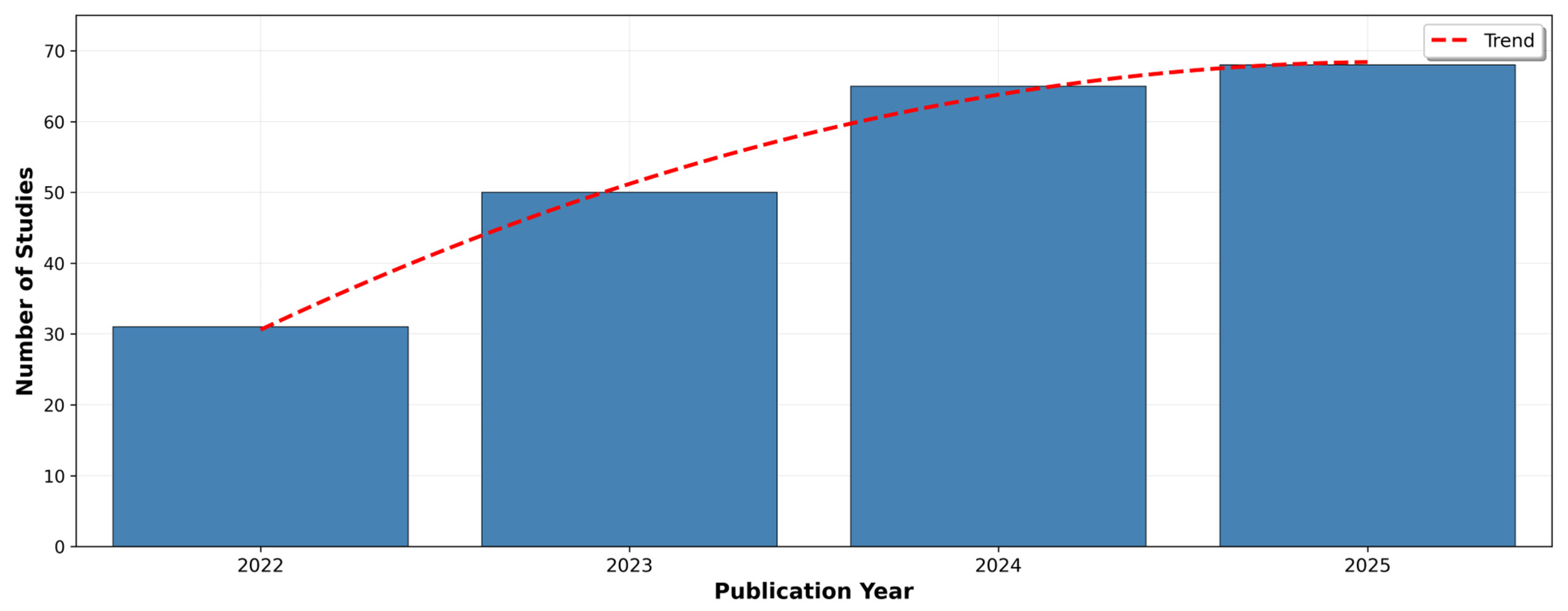
The temporal distribution of included studies is shown in
Figure 2. The volume of empirical research on decent work increased steadily over the review period, with a marked concentration of publications in the later years. As shown in
Figure 2, this growth was sustained, increasing from 31 studies in 2022 to 68 studies in 2025, representing a 119% increase.
The included studies were conducted across 52 countries, indicating broad geographic reach, although coverage was uneven across regions. Most studies relied on individual-level survey data, with cross-sectional designs predominating. Longitudinal, experimental, and multilevel designs were comparatively infrequent. These general characteristics provide important context for interpreting the findings related to the geographic distribution of evidence (RQ3) and the methodological designs used in recent decent work research (RQ4).
Figure 2. Temporal distribution of included studies (n = 214). The figure shows the number of empirical quantitative survey-based decent work studies published per year from 2022 to 2025. The dashed red line represents the polynomial trend, indicating sustained growth in research output.
4.3. Evidence Distribution Across Decent Work Dimensions and Outcome Variables
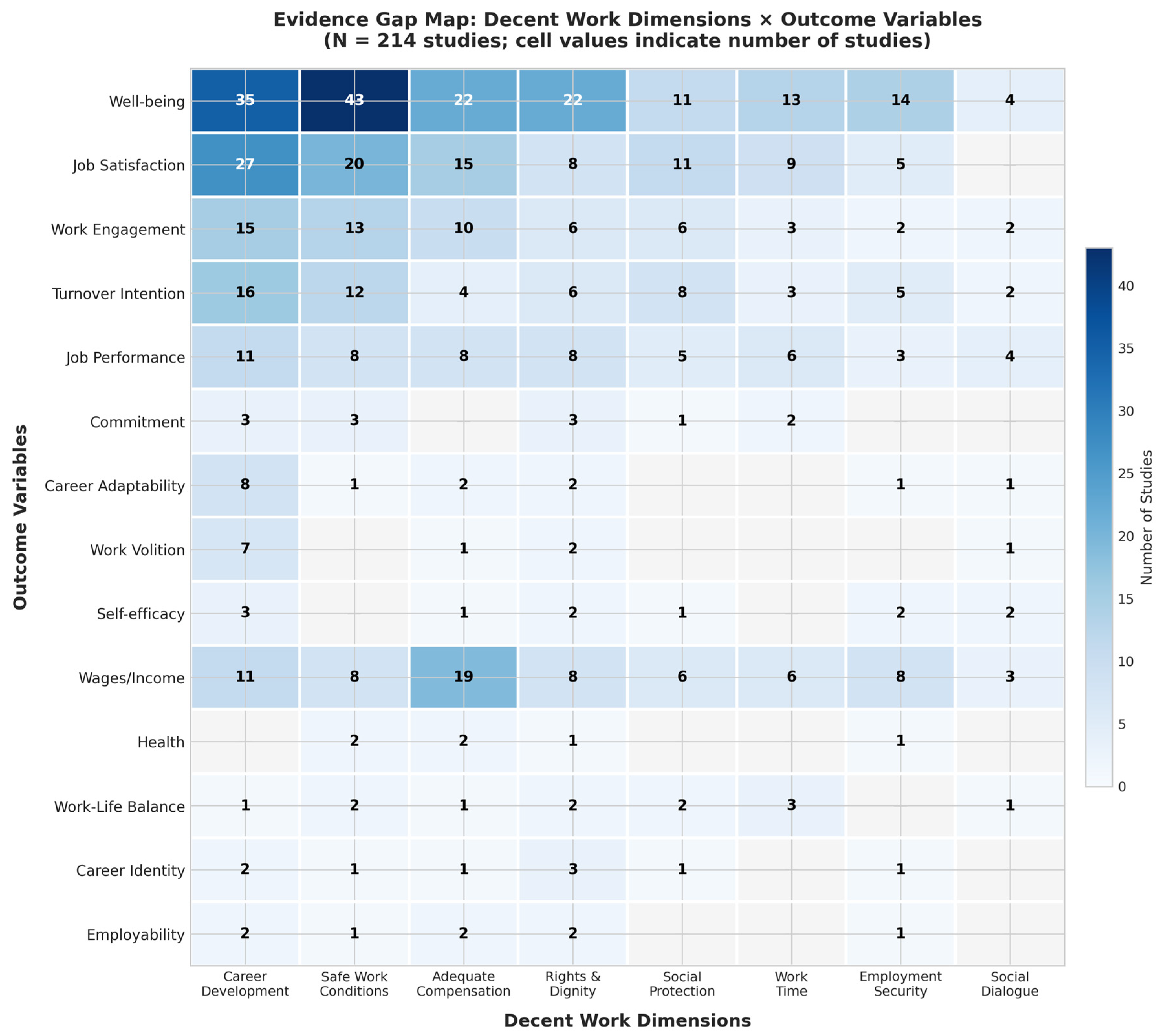
Figure 3 presents the evidence gap map crossing decent work dimensions with outcome variables. In line with RQ1, the analysis identifies which dimensions of decent work have been most frequently examined, while also highlighting those that remain underexplored. In addition, consistent with RQ5, the map captures the range of outcome variables studied and reveals important gaps in theoretically relevant relationships. The results show a highly uneven distribution of empirical attention across dimensions, with evidence concentrated in a limited subset of dimensions, while others appear only sporadically.
Similarly, outcome coverage is uneven. A small number of outcome categories account for a substantial proportion of the evidence base, whereas several theoretically relevant outcomes are represented by very few studies. Multiple dimension–outcome intersections display minimal or no empirical coverage, indicating areas where theoretically proposed relationships remain largely unexamined.
4.4. Evidence Distribution Across Population Groups and Decent Work Dimensions
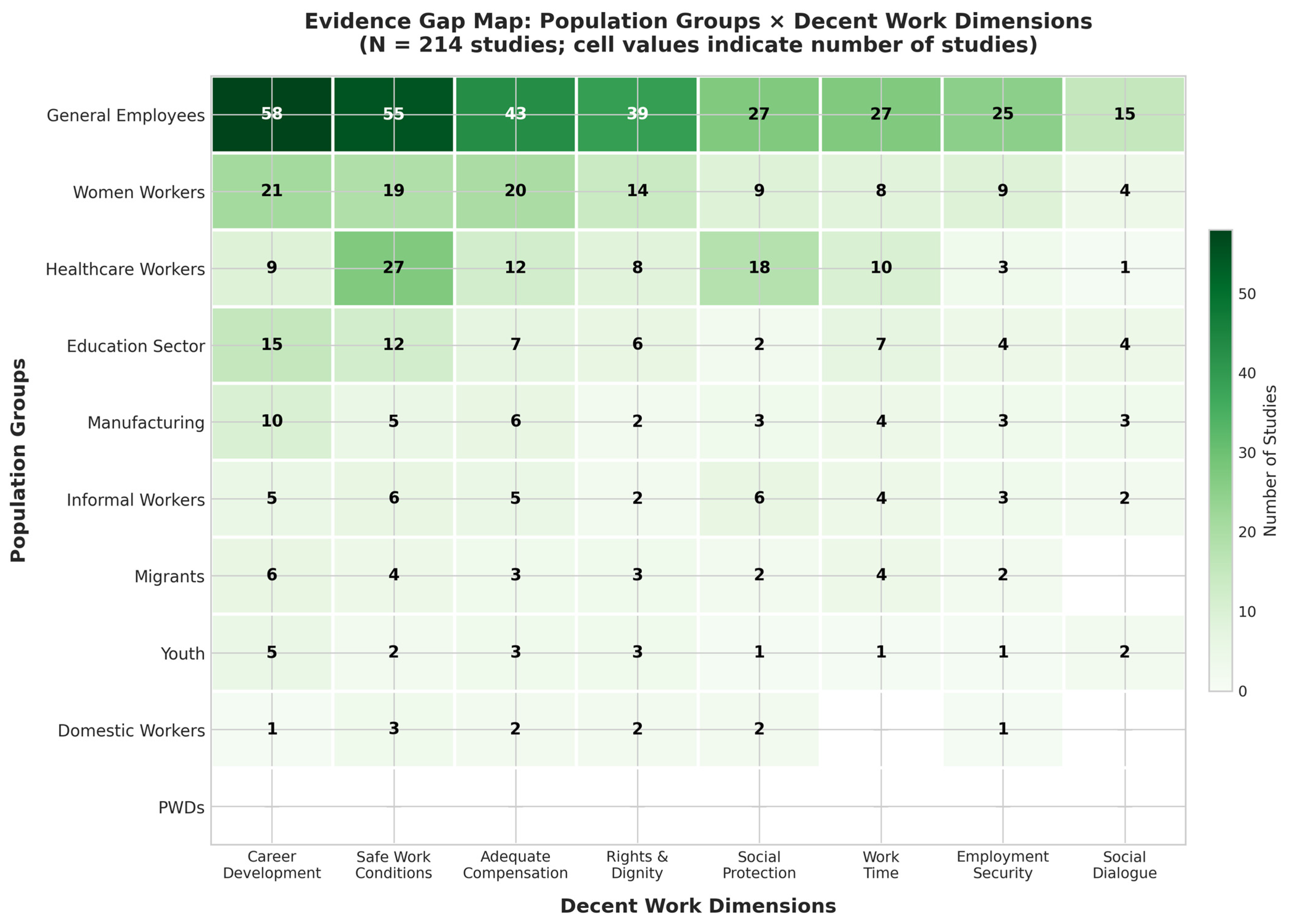
Figure 4 displays the evidence gap map crossing population groups with decent work dimensions. In relation to RQ2, the analysis identifies which population groups have been most frequently examined in recent decent work research and highlights those that remain underrepresented, particularly among vulnerable or marginalized groups. The evidence base is dominated by studies focusing on general employee samples, with far fewer studies targeting specific occupational or vulnerable populations.
Where population-specific research does exist, it tends to cluster around a narrow set of decent work dimensions. For several vulnerable groups, evidence coverage is sparse across nearly all dimensions, resulting in large areas of the map with little or no empirical representation.
4.5. Geographic Distribution of Evidence Across Decent Work Dimensions
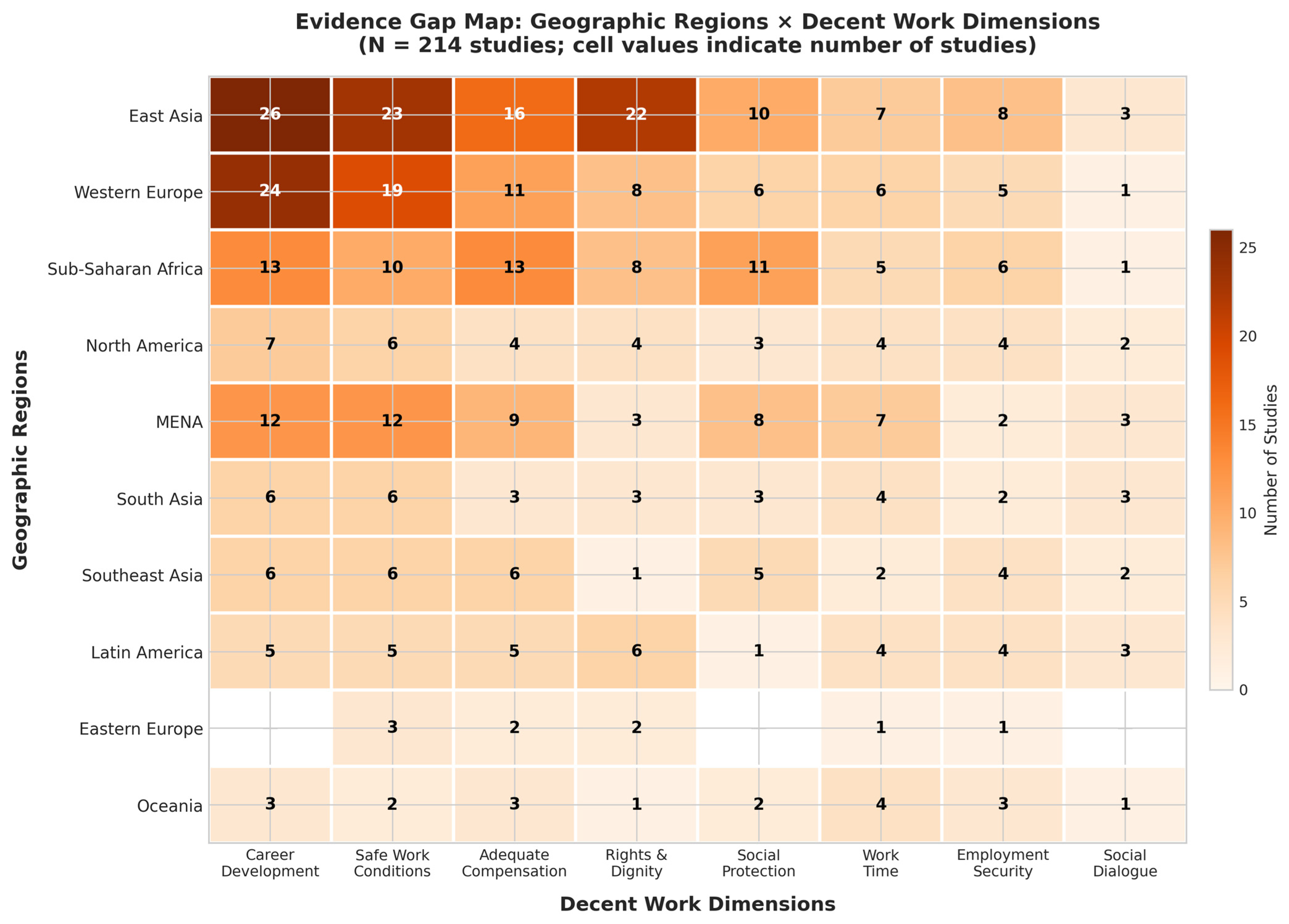
The geographic distribution of evidence is illustrated in
Figure 5, which crosses world regions with decent work dimensions. In relation to RQ3, this analysis examines the geographic distribution of recent empirical research and identifies regions that remain underrepresented in the decent work literature. Research activity is concentrated in a limited number of regions, while others are represented by relatively few studies or none at all.
Across regions, coverage of decent work dimensions is uneven. Some dimensions appear consistently across multiple regions, whereas others show limited geographic dispersion. This pattern highlights substantial regional imbalances in the empirical literature.
4.6. Methodological Designs and Outcome Coverage
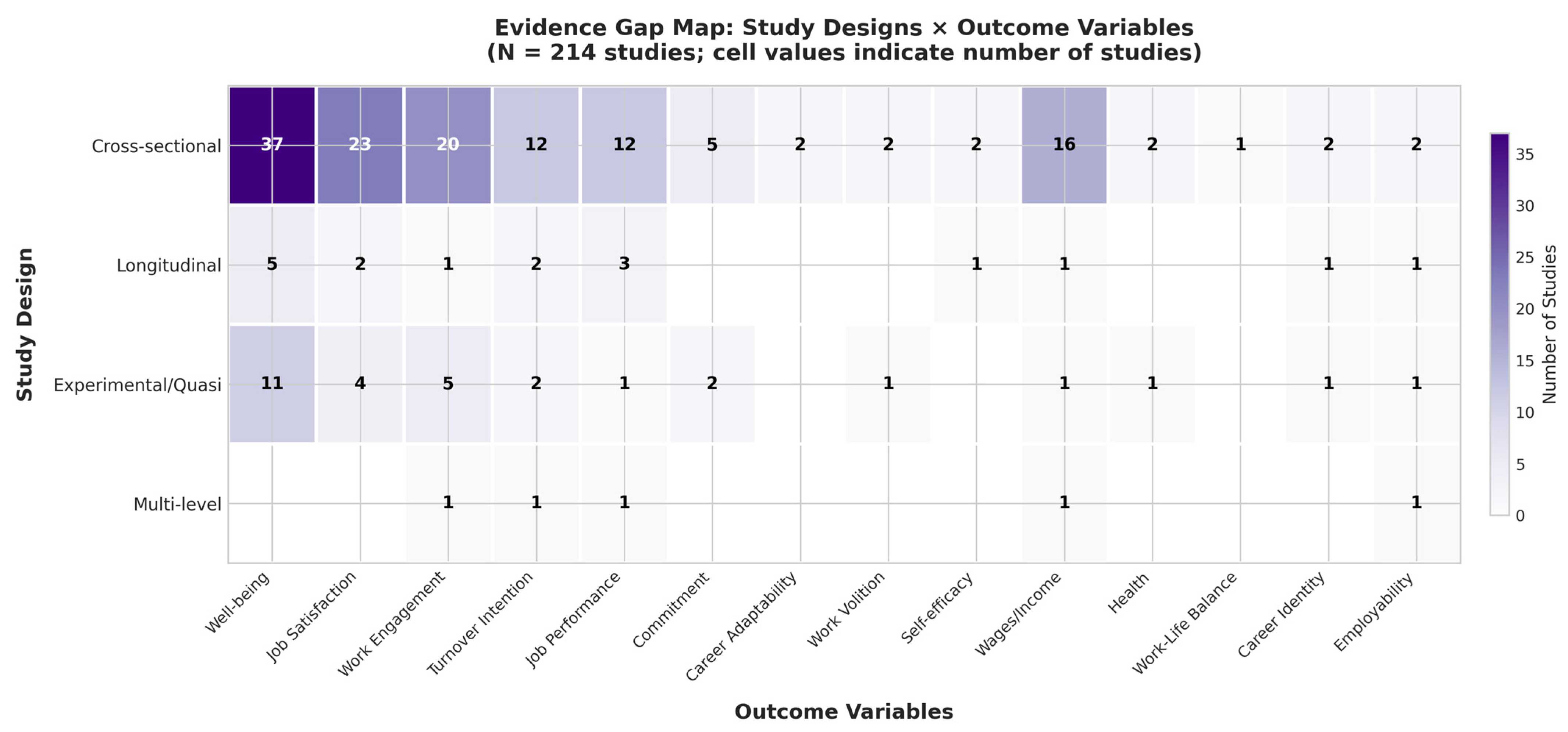
Figure 6 presents the evidence gap map crossing study design with outcome variables. In relation to RQ4, this analysis examines the methodological designs used in recent decent work research and highlights their implications for establishing causal inference. The map shows that the evidence base is heavily dominated by cross-sectional designs, which have been applied across a wide range of outcomes.
In contrast, longitudinal, multi-level, and experimental or quasi-experimental designs are sparsely represented. Many design–outcome intersections contain little or no evidence, indicating methodological gaps that constrain the types of inferences that can be drawn from the current literature.
4.7. Summary of Identified Evidence Gaps
Table 2 synthesizes the most salient evidence gaps identified across all mapped domains. Critical gaps are observed in specific decent work dimensions, among several vulnerable populations, across underrepresented geographic regions, and in the use of non-cross-sectional methodological designs. Additional areas exhibit moderate evidence coverage, suggesting emerging but still limited research attention.
Together, these results provide a structured overview of how recent empirical research on decent work is distributed and where significant gaps in the evidence base persist.
5. Discussion
5.1. Summary of Evidence
This evidence gap map provides a systematic visualization of the recent survey-based empirical research landscape on decent work, identifying areas of robust evidence as well as critical knowledge gaps within this segment of the literature. The analysis of 214 studies reveals a burgeoning field that has grown substantially in recent years, yet remains characterized by significant imbalances in research attention across dimensions, populations, regions, and methodologies. The prominence of career development and safe working conditions in the literature reflects the field’s strong grounding in the Psychology of Working Theory [
2]. This framework emphasizes individual career trajectories and workplace safety. However, the marked underrepresentation of social dialogue—a cornerstone of the ILO’s decent work agenda—points to a critical disconnect between empirical research and policy frameworks. This gap is particularly concerning given that collective bargaining and worker representation mechanisms are fundamental to achieving and sustaining decent work standards at both organizational and societal levels.
The distribution of populations studied reveals systematic biases toward accessible samples of general employees. Vulnerable and marginalized groups remain severely underrepresented. The near absence of research on persons with disabilities, domestic workers, and gig economy workers is especially problematic. These populations face some of the most acute decent work deficits and are central to achieving SDG 8’s inclusive employment objectives. This gap limits our understanding of how decent work can be effectively promoted among those who need it most.
5.2. Comparison with Previous Reviews and Evidence Syntheses
Recent evidence syntheses provide an important benchmark for interpreting the patterns identified in this evidence gap map. Bibliometric and systematic reviews consistently document a rapid expansion of the decent work literature, particularly since the mid-2010s and following the COVID-19 pandemic [
9,
16,
17]. The temporal growth observed in the present map aligns closely with these macro-level trends, confirming that decent work has become an increasingly salient construct across disciplines and policy-oriented research agendas.
However, when attention is restricted to empirical quantitative survey-based studies, the present findings suggest that this expansion has not been accompanied by a corresponding diversification of research focus. Several prior reviews have already highlighted thematic and population-level imbalances, particularly the marginalization of vulnerable worker groups and the predominance of individual-level outcomes [
10,
18]. The evidence gap map presented here shows that these patterns persist in the most recent literature. This indicates limited progress in addressing previously identified gaps.
In particular, the continued underrepresentation of social dialogue identified in this map mirrors concerns raised in bibliometric analyses of SDG 8 research, which emphasize governance, labor market outcomes, and corporate responsibility while devoting comparatively little empirical attention to collective voice and institutional mechanisms [
9,
19]. Despite repeated calls to strengthen the empirical foundation of social dialogue within the decent work agenda, survey-based research since 2022 has remained largely focused on dimensions captured at the individual level, such as career development, job quality, and well-being.
Sector-specific reviews further contextualize these findings. Systematic and bibliometric reviews in tourism and hospitality, for example, consistently report a concentration of studies on job satisfaction, well-being, and sustainability narratives, alongside limited attention to employment security, collective representation, and structural power relations [
13,
14,
20]. The present map suggests that similar clustering of outcomes and dimensions characterizes the broader decent work literature, indicating that these sectoral patterns may reflect more general tendencies within the field rather than isolated, domain-specific dynamics.
Importantly, several conceptual and policy-oriented reviews underscore the normative centrality of decent work for addressing inequality, poverty, and social justice in post-pandemic and post-crisis contexts [
21,
22]. Yet, the map reveals limited empirical coverage of populations most affected by precarious and informal employment, such as domestic workers, persons with disabilities, migrant workers, and gig economy workers. This points to a persistent disconnect between normative priorities and empirical research practice. This disconnect reinforces earlier observations. Much of the decent work literature remains anchored in accessible employee populations, even as policy discourse increasingly emphasizes inclusion and equity.
Taken together, the comparison with prior reviews suggests that the present evidence gap map does not simply replicate earlier observations. It demonstrates their persistence within the most recent wave of empirical research. By focusing specifically on survey-based quantitative studies, this map adds precision to existing syntheses, showing that long-standing gaps in dimensions, populations, and methodological approaches have not yet been systematically addressed, despite the rapid growth and conceptual maturation of the field.
5.3. Theoretical Implications
The findings of this evidence gap map have several important implications for theory development in decent work scholarship, particularly within psychological research. First, the pronounced imbalance across decent work dimensions—most notably the persistent neglect of social dialogue—highlights a structural limitation in dominant psychological frameworks. The Psychology of Working Theory (PWT) has played a central role in conceptualizing decent work as a set of material and psychological conditions that enable need satisfaction, meaningful work, and well-being at the individual level [
2,
8,
23]. However, this map reveals limited empirical attention to collective and institutional mechanisms. This suggests that individual-centered psychological models may be insufficient to capture the full complexity of decent work as a social and relational phenomenon.
Several conceptual contributions within psychology have already pointed to the importance of extending decent work theory beyond individual perceptions and outcomes. For example, some studies [
23,
24,
25] emphasize that access to decent work is structurally constrained by social, economic, and institutional factors, particularly for marginalized workers. Yet, despite these theoretical advances, the present evidence gap map shows that survey-based empirical research has not systematically operationalized collective voice, representation, or social dialogue within psychological models [
26]. These are core pillars of the ILO decent work agenda. This disconnect suggests that theoretical development in psychology has outpaced empirical implementation, especially with respect to multilevel and institutional dimensions of decent work.
From a theoretical perspective, these findings underscore the need for greater integration between psychological theories of decent work and complementary frameworks that explicitly address collective and institutional processes. While PWT provides a robust account of individual-level pathways linking working conditions to well-being and functioning, its empirical application would benefit from closer engagement with perspectives from industrial relations and institutional theory. These perspectives conceptualize social dialogue, labor regulation, and power asymmetries as constitutive elements of decent work rather than merely contextual background factors. Such integration would allow psychological theories to better account for how organizational practices, labor market institutions, and policy environments shape individual experiences of decent work.
Second, the strong concentration of empirical research on psychological well-being outcomes has implications for how decent work is theorized within psychology. Although outcomes such as well-being, job satisfaction, and engagement are theoretically central and empirically well-established [
27,
28,
29], their dominance risks narrowing the conceptual scope of decent work to an individual adjustment framework. Conceptual papers in psychology have increasingly emphasized that decent work should also be theorized in relation to agency, work volition, career sustainability, and dignity [
26,
29,
30], yet these constructs remain underrepresented in recent survey-based empirical research.
Future theoretical development would therefore benefit from positioning decent work not only as a predictor of individual well-being but also as a foundational construct linking psychological functioning to broader organizational and societal processes. This includes theorizing how decent work contributes to sustainable human resource management, long-term career development, and social sustainability. It also involves examining how its absence perpetuates precarity, exclusion, and inequality. Conceptual work from adjacent disciplines—such as human dignity–based frameworks and institutional approaches to decent work—can inform this expansion, provided that these perspectives are translated into psychologically meaningful constructs and empirically tractable models.
Taken together, these theoretical implications suggest that advancing decent work scholarship within psychology requires moving beyond a predominantly individualistic framing toward more integrative, multilevel models. The evidence gaps identified in this map thus represent not only empirical omissions but also missed opportunities for theoretical innovation. This is particularly evident in the limited integration of subjective experiences of work with collective, institutional, and normative dimensions of decent work.
5.4. Methodological Implications
The methodological profile of the mapped evidence base has direct implications for the strength, scope, and interpretability of current theory testing on decent work within psychology. Although the literature has expanded rapidly in recent years, the dominance of single-source, self-report survey designs continues to constrain inference about temporal ordering and explanatory mechanisms. A small subset of studies has begun to address these limitations using time-separated or longitudinal designs [
24,
31,
32,
33], yet such approaches remain the exception rather than the norm. Expanding longitudinal and multi-wave research is therefore critical for testing whether decent work functions as an antecedent of change in well-being and work-related outcomes. It would also allow researchers to examine whether reciprocal and dynamic processes better characterize the construct’s psychological impact.
Relatedly, the mapped evidence base indicates limited uptake of explicitly multilevel approaches, despite the conceptual logic of decent work as simultaneously individual, organizational, and institutional. Only a small number of studies operationalize cross-national or multilevel variance structures that could illuminate how broader labor market and institutional conditions shape individual experiences of decent work [
34,
35]. Future research would benefit from more systematic use of multilevel designs (e.g., employees nested within organizations, sectors, or regions). It would also benefit from integrating contextual indicators (e.g., regulatory environments, collective bargaining coverage, or social protection indices) to support theory development that incorporates institutional conditions rather than treating them as background assumptions.
In addition, the evidence base suggests that analytic sophistication has increased in some areas—particularly through person-centered approaches and typology-based modeling—yet these methods are often applied within cross-sectional frameworks. For example, profile and typology analyses have been used to capture heterogeneity in employment precarity and its correlates [
36] and to identify distinct decent work–related patterns linked to strain or burnout [
37]. These approaches represent an important step toward modeling complex configurations of work conditions. However, their theoretical value would be substantially enhanced when paired with longitudinal designs capable of testing transitions between profiles and their downstream consequences over time.
Finally, the methodological concentration on self-reported outcomes raises important measurement implications for the field. The psychological literature would benefit from greater triangulation through non-self-report indicators (e.g., administrative turnover data, supervisor ratings, objective health indicators) and from stronger alignment of measurement approaches across the ILO and PWT traditions. Without improvements in design diversity and measurement triangulation, the field risks accumulating a large but methodologically narrow evidence base. This would limit its capacity to adjudicate between competing theoretical accounts or to inform robust policy recommendations.
5.5. Implications for HRM Practice and Policy
The mapped evidence base has several implications for policy and practice aimed at advancing decent work in applied settings. First, the empirical literature remains strongly oriented toward general employee samples, even though policy frameworks emphasize prioritizing workers facing elevated vulnerability, precarity, and limited institutional protection. The existence of survey-based studies focusing on marginalized groups demonstrates that empirical research in these populations is both feasible and informative. This includes studies of domestic workers and care-related labor contexts [
38,
39], platform-based gig workers [
40,
41], and migrant workers facing structural constraints on employment quality [
42,
43,
44]. However, such work remains comparatively rare relative to the scale of need and the centrality of these groups to SDG 8’s inclusive employment mandate. Policy and organizational interventions should therefore be informed not only by evidence from stable employee populations. They should also be informed by targeted research on groups most exposed to indecent work conditions.
Second, the empirical emphasis on well-being outcomes is valuable for practice—particularly in occupational health and organizational interventions—but should be complemented by stronger attention to institutional mechanisms that enable durable improvements in work quality. For example, the lack of empirical engagement with social dialogue in the survey literature is notable. This is especially relevant given the policy importance of collective voice mechanisms for sustaining decent work standards over time. In practical terms, this implies that organizations and regulators should treat social dialogue not as an optional add-on but as an enabling infrastructure for safe working conditions, employment security, and dignity at work. Evidence from contexts characterized by informality and labor market fragmentation further underscores the importance of institutional safeguards and compliance mechanisms [
45,
46].
Third, the mapped evidence suggests that decent work is frequently linked to outcomes that are actionable for employers and policymakers—such as retention-relevant attitudes, job satisfaction, and performance-related indicators—yet the literature provides less guidance on interventions that meaningfully shift the underlying conditions of decent work [
47]. This gap points to the need for practice-oriented research that evaluates organizational and policy changes (e.g., wage standards, scheduling practices, access to healthcare, protections for platform and domestic work). Such research should use designs capable of supporting stronger inference. Even where randomized or quasi-experimental approaches are difficult to implement, well-designed longitudinal evaluations and natural experiments could substantially strengthen the evidence base for policy-relevant decision-making.
Taken together, the evidence base supports the practical relevance of decent work as a psychological and organizational construct, while also indicating that the research pipeline remains misaligned with the populations and institutional mechanisms most emphasized in policy discourse. Strengthening the link between empirical research and policy priorities will require targeted investment in studies focusing on vulnerable worker groups. It will also require greater incorporation of institutional determinants, particularly those related to collective representation and social protection.
5.6. Limitations
Despite the contributions of this evidence gap map, several limitations should be acknowledged when interpreting the findings. First, as with all mapping reviews, the classification and coding of studies necessarily involved analytic judgment. Although the coding framework was theoretically grounded and reliability procedures were implemented, some degree of subjectivity in assigning studies to dimensions, populations, and outcomes is unavoidable [
4]. Consequently, the identified evidence gaps should be interpreted as indicative patterns rather than precise quantitative estimates of absence or presence.
Second, the present map focused exclusively on peer-reviewed empirical quantitative studies based on survey methods. This decision was theoretically and methodologically justified given the aim of examining the psychological evidence base; however, it also implies that relevant insights from qualitative research, mixed-methods studies, policy evaluations, and grey literature were not captured. As a result, certain dimensions of decent work—particularly those related to institutional processes, collective action, and regulatory enforcement—may be more extensively documented in bodies of literature not included in the present synthesis.
Third, data extraction and coding relied primarily on information reported in abstracts, supplemented by full-text consultation when necessary. Although this approach is consistent with established guidance for evidence gap maps, abstracts may not always fully reflect the breadth of constructs, populations, or analytic strategies employed in the studies. Some aspects of decent work may therefore be underrepresented in the map due to reporting practices rather than substantive absence.
Fourth, the search strategy deliberately prioritized studies that explicitly used the term “decent work” in titles or abstracts. While this ensured conceptual alignment with the ILO framework and the Psychology of Working Theory, it may have excluded studies examining closely related constructs—such as job quality, employment precarity, fair work, or employment quality—without explicitly adopting the decent work terminology. This limitation is particularly relevant for interpreting the identified evidence gaps, as some areas appearing underexplored in the present map may in fact be more extensively studied under adjacent conceptual frameworks. Accordingly, the map provides a focused but not exhaustive representation of the broader landscape of work-related research relevant to decent work objectives.
Finally, the evidence gap map represents a snapshot of the literature over a defined time period (2022–2025). Given the rapid growth of research in this area, particularly in the aftermath of the COVID-19 pandemic and in response to evolving labor market transformations, the identified patterns and gaps will require periodic updating to remain current and informative.
5.7. Research Priorities
Building on the evidence gaps identified in this map, several priorities emerge for advancing psychological research on decent work. A first and overarching priority concerns the systematic incorporation of social dialogue and collective voice into empirical models. Despite their centrality within the ILO decent work agenda, these dimensions remain largely absent from survey-based psychological research. Future studies should develop and validate psychologically meaningful indicators of worker voice, participation, and collective representation. They should also examine how these mechanisms shape access to and the sustainability of decent work across organizational and national contexts.
A second priority involves targeted research on vulnerable and marginalized worker populations. The evidence base continues to rely heavily on general employee samples, leaving substantial gaps in knowledge regarding groups most exposed to indecent work conditions, including persons with disabilities, domestic workers, gig economy workers, and the self-employed. Research adopting intersectional perspectives—examining how gender, migration status, disability, and informality intersect to shape work experiences—would be particularly valuable for aligning psychological theory with equity-oriented policy goals embedded in SDG 8.
Third, advancing the field requires greater use of longitudinal and developmental designs. Cross-sectional surveys dominate the current literature, limiting insight into how decent work emerges, deteriorates, or improves over time. Panel studies and multi-wave designs are needed to capture trajectories of decent work across career stages. They are also needed to test reciprocal and cumulative effects and to examine how changes in working conditions relate to longer-term psychological and career outcomes.
A fourth priority concerns the expansion of multilevel research designs. Decent work is inherently embedded within organizational, sectoral, and institutional contexts, yet these levels are rarely modeled explicitly in psychological research. Future studies should employ hierarchical and cross-level approaches to examine how organizational practices, labor market structures, and national policy environments shape individual experiences of decent work.
Finally, the geographic distribution of evidence highlights the need for broader regional coverage and comparative research. Underrepresented regions—including Central Asia, Eastern Europe, the Caribbean, and parts of Central America—remain largely absent from the psychological decent work literature. Cross-national comparative studies that explicitly examine contextual variation would not only address geographic gaps but also strengthen theory by testing the generalizability of psychological models across diverse labor market regimes.
Taken together, these research priorities outline a forward-looking agenda aimed at deepening theoretical development, strengthening methodological rigor, and enhancing the policy relevance of psychological research on decent work.
6. Conclusions
This study set out to systematically map recent empirical survey-based evidence on decent work within the psychological literature, with the aim of identifying concentrations of research activity and persistent gaps across dimensions, populations, regions, outcomes, and methodological approaches. By synthesizing 214 quantitative survey-based studies published between 2022 and 2025, this evidence gap map provides a structured overview of how decent work has been operationalized and examined in recent survey-based psychological research. These findings describe patterns in the available evidence within this specific segment of the literature, which serve as a basis for identifying gaps and informing broader theoretical and policy-oriented interpretations.
The findings reveal a rapidly expanding yet uneven evidence base. While research attention has grown substantially in recent years, it remains concentrated on a limited set of decent work dimensions and individual-level outcomes, particularly career development, safe working conditions, and psychological well-being. In contrast, core elements of the ILO decent work agenda—most notably social dialogue and collective mechanisms—continue to receive minimal empirical attention in survey-based psychological studies. Similarly, the dominance of general employee samples and cross-sectional designs highlights enduring misalignments between theoretical ambitions, policy priorities, and empirical practice.
Beyond documenting these patterns, the present map shows that many gaps identified in earlier reviews have not been substantially reduced in the most recent wave of empirical research within this body of survey-based studies. Despite conceptual advances and growing normative emphasis on inclusion, dignity, and equity, vulnerable worker populations, underrepresented regions, and multilevel institutional processes remain peripheral in the psychological decent work literature. These findings suggest that the field’s expansion has been largely additive rather than transformative.
At the same time, the results underscore the continued relevance of decent work as a unifying construct at the intersection of psychology, labor policy, and social sustainability. The evidence synthesized here highlights both the strengths of psychological approaches—particularly their capacity to capture subjective experience and well-being—and their current limitations in addressing collective, institutional, and structural determinants of work quality within survey-based empirical designs. Addressing these limitations represents a critical opportunity for theoretical innovation, methodological diversification, and closer alignment with the equity-oriented goals embedded in SDG 8.
In sum, this evidence gap map provides a foundation for a more integrated and forward-looking research agenda on decent work. By clarifying where empirical knowledge is robust and where it remains limited in recent survey-based research, the study offers guidance for researchers, practitioners, and policymakers seeking to advance decent work as both a psychological and societal objective. As labor markets continue to evolve in response to technological change, demographic shifts, and global crises, sustained efforts to align empirical research with normative commitments will be essential to ensure that decent work is not only conceptualized but meaningfully realized.