


Abstract
Bread is a global dietary staple, but its susceptibility to fungal spoilage causes substantial food waste, economic losses, and greenhouse gas emissions. Volatile organic compounds (VOCs) produced by sourdough microorganisms can contribute to the prevention of bread spoilage; however, the specific VOCs that exert the protective effect in the bread matrix have not been precisely identified. Our study investigated the antifungal activity of sourdough lactic acid bacteria (LAB) consortia, both alone and in combination with yeast and acetic acid bacteria (AAB), as well as the VOC profiles of sourdough and sourdough bread. The consortium comprising Lactiplantibacillus plantarum 9-5 and Levilactobacillus brevis 9-2 (LAB), Monosporozyma unispora R3SD1d (yeast), and Acetobacter fabarum WB and Komagataeibacter rhaeticus Ch2 (AAB) extended the mold-free shelf life of sourdough bread by 8–20 days after challenge tests. VOC analysis revealed that sourdough bread had significantly higher concentrations of ethyl esters of hexanoic and octanoic acids with 6.3- to 9.7-fold increase in peak areas after three days of refrigerated storage, assuming their decisive role in prevention of fungal spoilage. In conclusion, the use of this consortium is promising to significantly extend bread shelf life, but also to enrich the bread VOC profile.
1. Introduction
Bread is a fundamental cereal-based staple food [1] with global annual bread production exceeding 100 million tons, a significant portion of which is wasted [2]. Indeed, a systematic review and meta-analysis by Allipour-Birgani et al. [3] indicated that global pooled bread waste has increased in recent years and accounted for 18% of total bread production. The amount of discarded bread is much higher in developed countries [2,4,5,6], especially at the consumer level, to a large extent due to bread’s limited shelf life. Beyond the loss of edible food, food waste has also significant economic, social, and environmental consequences [2,7,8].
Various interconnected factors contribute to bread waste, including overproduction, consumer behavior [9], and limited shelf life (typically 2–3 days) [10,11,12]. Regarding bread’s limited shelf life, the primary causes are staling and fungal spoilage, the latter resulting from fungal spore germination and the subsequent formation of visible thalli on the bread surface. Furthermore, the consumption of moldy bread can also impact consumer health, as certain mold species can produce mycotoxins [13].
The consumer desire for clean-label products has led to the development of complementary methods for preserving bread including active packaging, modified atmospheric packaging, and biopreservation [14,15]. Through using sourdough made with selected lactic acid bacteria (LAB) and/or yeasts [16,17,18], the bread shelf life can be prolonged by several days or weeks, depending on the LAB strains, targeted molds, or other factors [19,20,21,22]. Furthermore, the use of yeast and LAB sourdough may provide additional health benefits to consumers [23,24,25,26,27,28] and positively affect staling prevention, sensory properties, and bread texture [29,30]. Thus, microbial sourdoughs based on LAB can improve the quality and properties of bread in various ways and contribute to increasing consumer preference and reducing bread waste, not only by preventing microbial spoilage but also for other reasons.
The mechanisms of LAB antifungal action have been extensively studied; however, the exact role of specific compounds in protecting bread from fungal spoilage is not fully understood. Various studies on the compounds responsible for sourdough antifungal activity highlight the involvement of LAB-derived volatile organic compounds (VOCs), such as short- and medium-chain organic acids, alcohols, and ketones. Additionally, bioactive peptides are produced from food substrate proteins due to acidification and the consequent activation of flour enzymes [17,31,32].
Since environmental acidification is a direct consequence of LAB metabolic activity, researchers have focused heavily on LAB metabolites, particularly a wide range of organic acids. Among the antifungal organic acids produced by LAB are saturated aliphatic fatty acids (C1–C6, C10), hydroxyl- and phenyl-substituted acids (e.g., phenyllactic acid), unsaturated phenyl-substituted acids (such as caffeic and ferulic acids), and benzoic and polyphenolic (chlorogenic) acids [17]. The most common acids produced by LAB are lactic, acetic, and hexanoic (caproic) acids [20,33,34,35]. Phenyllactic acid is also frequently identified in antifungal LAB strains [34]. The fundamental importance of the undissociated form of these acids was demonstrated by Debonne et al. [22,36]. Furthermore, several alcohols and ketones originating from LAB metabolism exhibit strong antifungal activity [37]. However, their specific contribution to preventing mold growth within the bread–sourdough system remains unclear.
Concurrently, several researchers have noted the accumulation of antifungal proteinaceous compounds [32,33,34,35,36,37,38,39] alongside increasing acid concentrations in bread and sourdoughs fermented by LAB. Antifungal peptides comprising 10–53 amino acids, encrypted within wheat protein sequences, have been identified during dough fermentation by L. plantarum 1A7 [40] and in bread residues fermented by L. brevis AM7 [41]. The specific contribution of individual peptides or cyclic dipeptides [42] to extending bread shelf life remains unknown. Notably, the contribution of protein fractions to the total antifungal activity of aqueous sourdough extracts fermented by L. plantarum NRRL B-4496 against P. corylophilum and P. chrysogenum was found to be only 3.25–9.65% [41]. While the antifungal activity of individual compounds within active fractions is typically determined in vitro, these conditions often differ significantly from in situ environments. For instance, despite the proven in vitro antifungal activity of reuterin, it was found to be ineffective in actual bread systems [43].
We hypothesize that fungal contamination and subsequent mold spoilage of sourdough bread observed after storage periods of 1 to 25 days [17] may indicate a key role of VOCs in the overall antifungal effect. If non-volatile compounds such as peptides were the main contributors of preservation, the bread shelf life would not decline over time, as their concentrations in the finished loaf likely remains stable during storage. Conversely, the volatilization of active compounds reduces their concentration in the bread matrix over time. As a result, their levels eventually fall below the minimum inhibitory concentration (MIC) threshold. Therefore, it may be important to evaluate the antifungal capacity alongside VOCs formation during sourdough fermentation and their temporal evolution subsequent storage.
In addition to LAB, the use of a wider range of starter microorganisms, in particular, the addition of acetic acid bacteria (AAB), which are common components of spontaneous sourdoughs [44,45,46], can further improve the quality, shelf life, and sensorial properties of bread, which will have an even more pronounced effect on consumer choice and on reducing bread waste. Some researchers have already noted the contribution of AAB to improving texture, acidification, changing the profile of volatile compounds, and other dough parameters [44,45,46,47,48,49].
In this context, this study aimed ot investigate the antifungal activity of previously selected LAB, both alone and in combination with yeast and AAB, for sourdough applications, as well as the VOC profiles of sourdough and sourdough breads after baking and storage for 3 days.
2. Materials and Methods
2.1. Microorganisms and Media
Two LAB associations, consisting of Lactiplantibacillus plantarum 9-5 and Levilactobacillus brevis 9-2, and L. plantarum 8-5 and L. brevis 8-2, were obtained from the laboratory collection of the Research and Production Center for Microbiology and Virology (RPCMV, Almaty, Kazakhstan). They were isolated from spontaneous sourdoughs after co-cultivation with bread spoilage molds (by addition of mold fungi during the back-slopping process) [50]. These LAB were routinely grown in de Man, Rogosa and Sharpe (MRS) broth and agar (TM Media, New Delhi, India) after incubation at 30 °C for 48 h. For antagonistic activity assays, each association was grown in wheat flour hydrolysate (WFH) medium prepared according to Ouiddir et al. [51] and incubated for 48 h at 30 °C or in liquid sourdough prepared as described below.
The yeast Monosporozyma unispora R3SD1d, the AAB Acetobacter fabarum WB, previously isolated from spontaneous wheat sourdough, and Komagataeibacter raeticus Ch2, previously isolated from kombucha, were also used and were obtained from the laboratory collection of the RPCMV.
AAB were cultivated in GYC agar medium (g/L: glucose-50.0; yeast extract-10.0; CaCO3-5.0; agar-20.0; pH 6.8) supplemented with 1 mL of acetic acid and 5 mL of ethanol after autoclaving at 111 °C for 20 min, while M. unispora was grown on Sabouraud dextrose agar (TM-Media, India) at 30 °C for 48 h.
The following molds, previously isolated from moldy bread surfaces, were used as target fungi, i.e., Penicillium decumbens PS, Penicillium crustosum PZ, and Paecilomyces variotii R2. Molds were cultured on potato dextrose agar (TM-Media, New Delhi, India, g/L: dextrose-20.0; potato infusion from 200 g to 4.0; agar-15.0; pH 5.6).
Two causative agents of ropy bread spoilage, Bacillus subtilis ATCC 6633 and Bacillus mojavensis Pr2, were also used to assess LAB antagonistic activity. They were grown on Meat infusion agar (TM Media, New Delhi, India) for 24 h at 30 °C.
Microorganism cultures were stored on the above-mentioned media on slanted agar in a refrigerator at 5 °C.
2.2. Sourdough Preparation
For liquid sourdough, the suspensions from 48 h cultures of starter microorganisms were prepared using McFarland Turbidity Standard No. 3 (7.5 × 10⁸ CFU/mL for LAB and K. raeticus Ch2, 1.0 × 10⁹ CFU/mL for A. fabarum WB, and 1.5 × 10⁷ CFU/mL for M. unispora R3SD1d). These were mixed in equal proportions and added to the flour and water mixture. A liquid sourdough was prepared using 410 g of flour (premium grade, Yashkino, Russia), 60 g of sucrose, 30 g of NaCl, 460 mL of water, and 40 mL of starter microorganism mixture [52,53]. The sourdough was incubated at 30 °C for 48 h.
2.3. In Vitro Evaluation of the Antagonistic Activity of LAB Consortia
In vitro antagonistic activity of LAB consortia against fungi and Bacillus spp. was determined using a well-diffusion assay (spore pour plate method) [52]. For this purpose, 1 × 10⁵ cells or spores of the targeted microorganism suspension were added to 50 mL of molten cooled to 40 °C nutrient medium. The medium was thoroughly mixed, and 25 mL was poured into Petri dishes. After solidification, 10 mm-diameter wells were prepared using a special block cutter. Then, 0.3 mL of fermented WFH medium or liquid sourdough was added to the wells. The plates were incubated at 30 °C for 72–120 h and 48 h for molds and Bacillus spp., respectively. Antagonistic activity was expressed as the diameter of growth inhibition zones of targeted microorganisms (mm).
The pH of the fermented WFH medium and liquid sourdough was also determined using a C931P pH meter (Consort, Turnhout, Belgium).
2.4. In Situ Antifungal Activity of Sourdough Consortia in Bread
2.4.1. Bread Preparation
To prepare the control bread, the following ingredient ratio was used: flour (premium grade, Yashkino, Russia), 600 g; sterile tap water, 360 g; commercial salt, 12 g; commercial sugar, 12 g; and baker’s yeast (Pakmaya, Istanbul, Turkey), 16 g. For the sourdough breads, the recipe was as follows: 480 g flour, 300 g sourdough prepared as described above and containing different strain associations (Table 1), 180 g sterile tap water, 12 g salt, 12 g sugar, and 16 g baker’s yeast. After adding the components, the dough was mixed manually using sterile gloves for 10 min, then proofed in a ShRT-4-02 proofer (Abat, Cheboksary, Russia) at 30 °C for 90 min. The dough was then poured into 500 g loaf pans, proofed for another 90 min, and baked in a KRR-4-1/2E convection oven (Abat, Russia) at 200 °C for 40 min.
Table 1.
Microorganism associations used for sourdough bread preparation.
2.4.2. Mold Challenge Test and Shelf Life Test Under Natural Airborne Fungal Contamination
The susceptibility of bread to mold spoilage and its shelf life were evaluated using two methods: challenge tests and natural airborne contamination.
For challenge tests, spores of spoilage molds (P. decumbens PS, P. crustosum PZ, and P. variotii R2) harvested from PDA plates as described previously [53] were enumerated using a Goryaev cell counting chamber and diluted to reach 1 × 10⁴ spores/mL. Then, approximately 25 spores of the tested fungus (2.5 µL) were inoculated at the center of each bread slice (50 × 50 mm, four slices, from different loaves of one batch, per tested fungus), and slices were placed in Petri dishes. The Petri dishes were sealed in a container with water added to the bottom to maintain humidity and incubated at room temperature. Mold growth was assessed daily, and photographs were taken to assess the time-to visible growth of each tested fungus. The antifungal activity was expressed in days of bread storage without visible mold spoilage.
For the natural airborne fungal contamination test, bread slices were exposed to ambient air for 5 min on each side, packed in plastic bags, and examined daily until visible signs of mold spoilage were observed.
2.5. Headspace Solid-Phase Microextraction Coupled with Gas Chromatography–Mass Spectrometry
VOCs were determined at different time points. For sourdough LAB associations in wheat flour hydrolysate medium and liquid sourdough with LAB starter, VOCs were determined simultaneously with antifungal activity (after 3, 5, and 7 days for the collection LAB; 48 h otherwise). The control medium was also maintained at 30 °C in a thermostat along with the experimental samples. Bread samples were taken two hours after baking, placed in vials, capped, and analyzed on the same day.
VOCs were determined using solid-phase microextraction (SPME) followed by gas chromatography with mass spectrometric detection (GC-MS) as described previously [54]. A 5 mL of sample (2 g for bread) was placed in a 20 mL screw-cap vial and incubated at 30 °C for 30 min to reach equilibrium. Volatiles in the headspace were adsorbed onto an SPME fiber coated with a 50/30 μm divinylbenzene/carboxen/polydimethylsiloxane layer (Supelco, Bellefonte, PA, USA). GC analysis was performed using a 7890 gas chromatograph coupled to a 5977A MSD mass spectrometer (Agilent, Santa Clara, CA, USA). A DB-WAXetr column was used for analysis, with helium as the mobile phase. The flow rate was 1.0 mL/min. The injection volume was 0.5 μL at a split ratio of 10:1. The sample injection temperature was 250 °C in splitless mode. The oven temperature was programmed from 40 °C (hold for 5 min) by increasing by 5 °C/min to 240 °C (hold for 5 min). The analysis time was 45 min. The injector and transfer line temperatures were 250 and 280 °C, respectively. MS detection was performed at an energy of 1.12 × 10⁻¹⁷ J with a mass scanning range of m/z 34–850 amu.
Instrument control and data processing were performed using Agilent MSD ChemStation (version 1701EA). Mass spectra were identified using the libraries Wiley 7th edition and NIST 02.
Volatile compounds were expressed in arbitrary units (AU) as the mean and standard deviation of the peak area, divided by 106.
Heatmaps were constructed in RStudio (R version 4.2.2) using the pheatmap package. GenAI (Gemini) was used to write and correct the scripts. To construct the heatmap of sourdough VOCs, the data were log-transformed (log10), row scaling was not applied, and clustering was by rows. To construct a heatmap of bread VOCs, clustering was only performed within chemical classes of compounds (Supplementary File S1).
2.6. Statistical Analysis
All experiments were conducted in triplicate. At least three replicates were used to determine zones of inhibition of fungal growth. Results are presented as the mean value and standard deviation.
Statistical analysis of the results was performed using Welch’s t-test, a modification of Student’s t-test for samples with potentially unequal variances. This method was chosen due to its stability to small sample sizes (n = 3). The p-value was reported along with Cohen’s d (effect size).
Differences with a p-value < 0.05 were considered statistically significant. Calculations were performed using an online tool (StatsKingdom correlation calculator).
3. Results
3.1. Antagonistic Activity and VOCs of Antifungal LAB in WFH and Wheat Sourdoughs
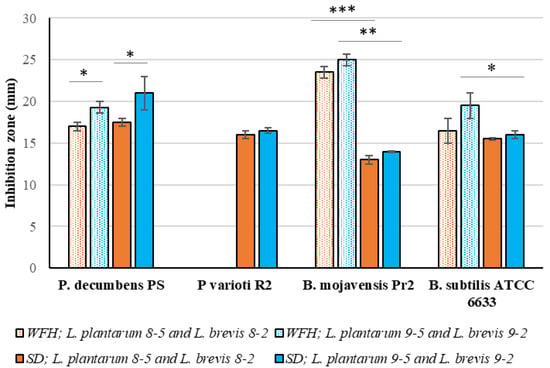
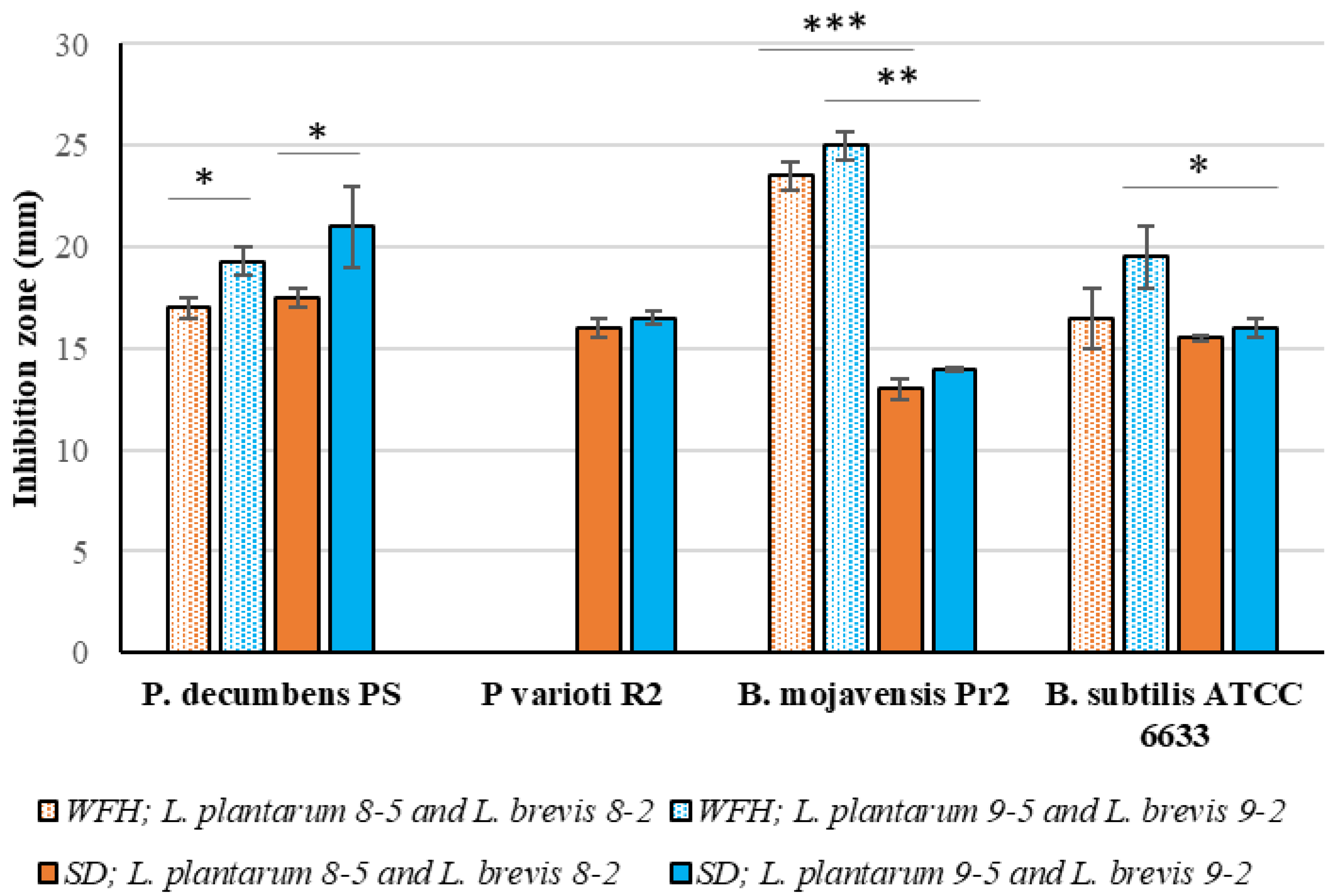
In the first part of this study, two previously selected LAB associations [50] were tested for their antagonistic activity against P. decumbens PS, P. crustosum PZ, and P. variotii R2, as well as B. subtilis ATCC 6633 and B. mojavensis Pr2 after growth in WFH medium for 48 h. After cultivation in WFH medium, these LAB associations did not inhibit P. variotii R2 and P. crustosum PZ. The L. plantarum 9-5 and L. brevis 9-2 consortium was slightly but significantly more antagonistic (p = 0.007, Cohen’s d = 7.89) against P. decumbens PS (inhibition diameter of 19.3 ± 0.4 mm) than the L. plantarum 8-5 and L. brevis 8-2 consortium (inhibition diameter of 17.0 ± 0.1 mm) when cultivated in WFH medium. Antibacterial activity against B. subtilis ATCC 6633 and B. mojavensis Pr2 was also noted with inhibition zones slightly larger for the L. plantarum 9-5 and L. brevis 9-2 consortium, but insignificant statistically (Figure 1).
Figure 1.
Antagonistic activities of L. plantarum and L. brevis consortia in wheat flour hydrolysate (WFH) and wheat sourdough (SD) against fungal and bacterial bread spoilage agents. The error bars represent the standard deviation of the mean. * p < 0.05, ** p < 0.01, *** p < 0.0001 (n = 3, Welch’s t-test).
Sourdoughs prepared with both LAB associations exhibited antagonistic activities against P. decumbens PS and P. variotii R2 but not against P. crustosum PZ. Inhibition zones for P. variotii R2 measured 16.0–16.5 mm for both consortia. In contrast, inhibition zones for P. decumbens PS were 1.2 times larger (21.0 ± 2.0 mm, p < 0.05) in the presence of the L. plantarum 9-5 and L. brevis 9-2 consortium. Both consortia also inhibited the rope disease agents with inhibition zones of 15.5–16.0 mm for B. subtilis ATCC 6633 and 13.0–14.0 for B. mojavensis Pr2 (Figure 1).
Antagonistic activity against rope disease agents was 44–45% lower in the sourdoughs than in WFH medium. In turn, P. variotii R2 was only inhibited by the sourdoughs and was unaffected when consortia were cultivated in WFH medium.
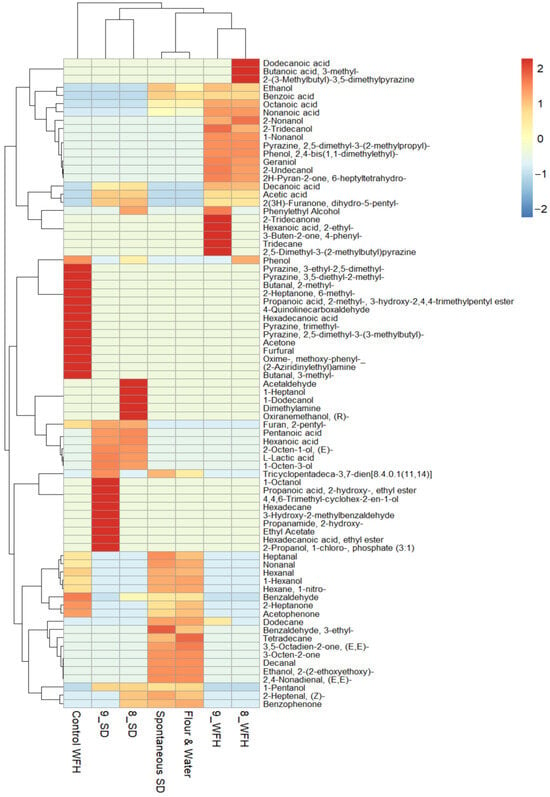
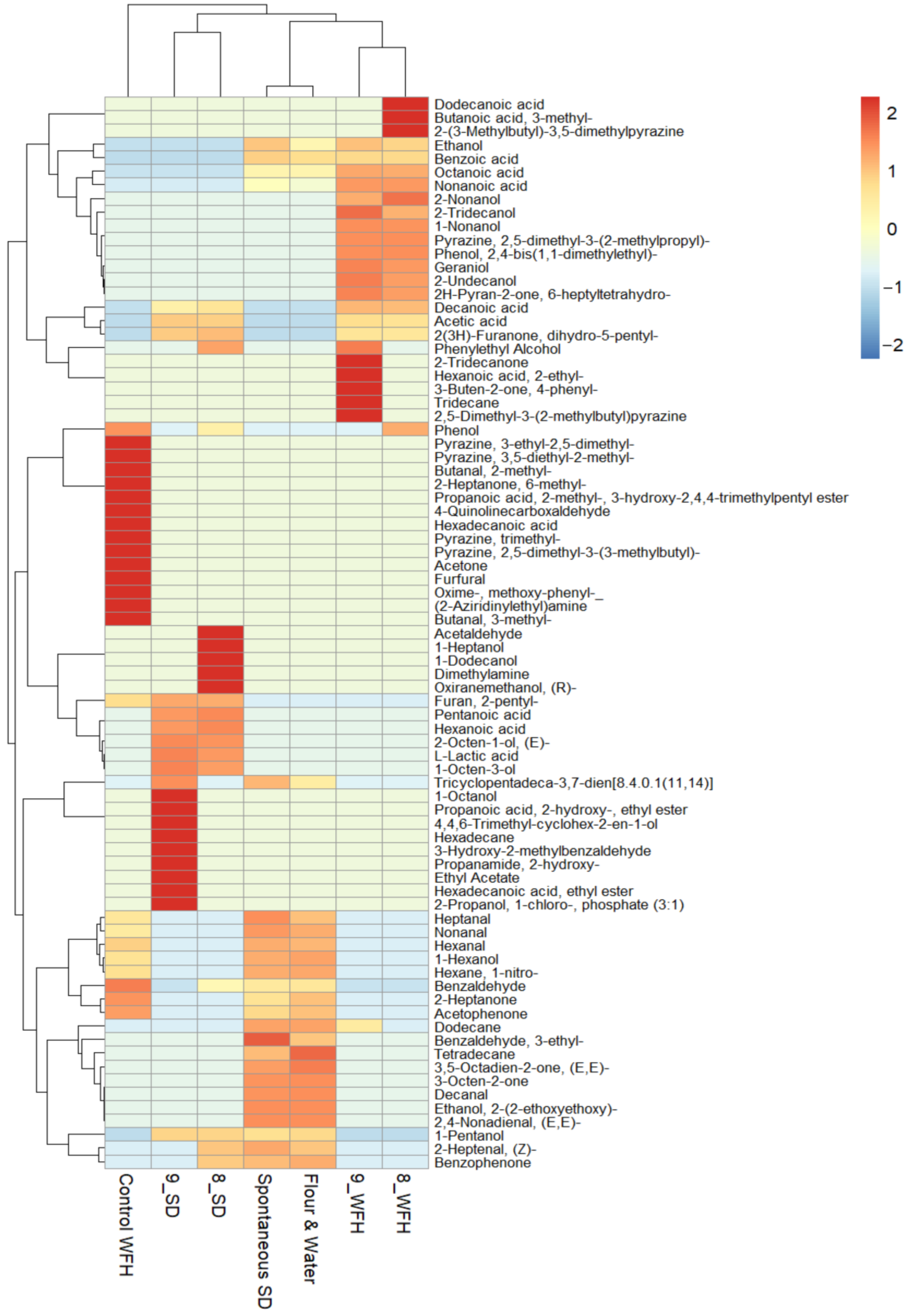
The heatmap showing VOCs of the studied associations after 48 h of incubation in WFH and liquid sourdough is shown in Figure 2.
Figure 2.
Heatmap showing volatile compounds of antifungal LAB consortia in wheat flour hydrolysate (WFH) and wheat sourdough (SD) compared to controls. 8_SD and 9_SD are sourdoughs consisting of L. plantarum 8-5 and L. brevis 8-2 and L. plantarum 9-5 and L. brevis 9-2, respectively. 8_WFH and 9_WFH are 48 h cultures of these consortia in WFH medium. Spontaneous SD is a mixture of flour and water spontaneously fermented for 48 h at 30 °C.
Twenty-four compounds were identified in the control WFH medium, 15 of which had retention times ranging from 3.487 to 20.394 min (Table S1). Conversely, 22 out of the 25 VOCs identified in WFH fermented by sourdough LAB associations had retention times above 20 min. From a qualitative point of view, the L. plantarum 9-5 and L. brevis 9-2 consortium produced more VOCs (22 VOCs) as compared to the L. plantarum 8-5 and L. brevis 8-2 consortium (18 VOCs), while 15 compounds were common between the two associations. From these common VOCs, only 2-tridecanol was present in significantly higher concentration in WFH medium fermented with L. plantarum 9-5 and L. brevis 9-2. Indeed, the peak area of 2-tridecanol was 1.96 times higher (p = 0.0076, d = 9.25) for the L. plantarum 9-5 and L. brevis 9-2 consortium as compared to the second association. L. plantarum 9-5 and L. brevis 9-2 also produced several unique compounds, i.e., dodecane, 2-ethyl-hexanoic acid, tridecane, phenylethyl alcohol, 2,5-dimethyl-3-(2-methylbutyl)pyrazine, and two ketones (4-phenyl-3-buten-2-one and 2-tridecanone). Ketones were not detected in WFH medium fermented with L. plantarum 8-5 and L. brevis 8-2 consortium.
The compounds identified in fermented liquid sourdoughs were significantly different from those in WFH medium. Ten out of the 30 identified VOCs were common to both consortia; however, only two compounds showed significantly different peak areas, i.e., (E)-2-octen-1-ol (p = 0.04, Cohen’s d = 2.46) and dihydro-5-pentyl-2(3H)-furanone (p = 0.004, d = 6.36). (E)-2-octen-1-ol was the only shared compound with significantly higher peak areas in the sourdough made with L. plantarum 9-5 and L. brevis 9-2 consortium, which also displayed more pronounced antifungal activity against P. decumbens PS. In addition, the following VOCs were unique to this consortium, i.e., 3-hydroxy-2-methylbenzaldehyde, alcohols including 1-octanol and 4,4,6-trimethyl-cyclohex-2-en-1-ol, esters including ethyl acetate, ethyl 2-hydroxy-propanoate, and ethyl hexadecanoate, hydrocarbons including hexadecane and tricyclopentadeca-3,7-diene [8.4.0.1(11.14)], and the amide 2-hydroxy-propanamide.
The total peak area for aldehydes was 5.1 times higher (p = 0.007, d = 9.52) in the sourdough made with L. plantarum 8-5 and L. brevis 8-2 consortium. Conversely, the levels of alcohols (p = 0.016, d = 5.03) and other compounds (primarily hydrocarbons and nitrogen-containing substances) (p = 0.0014, d = 5.36) were correspondingly 2.0 and 1.2-fold higher in the L. plantarum 9-5 and L. brevis 9-2 sourdough. Notably, esters were detected exclusively in the sourdough fermented with the latter, while one ketone was only found in sourdough made with the former.
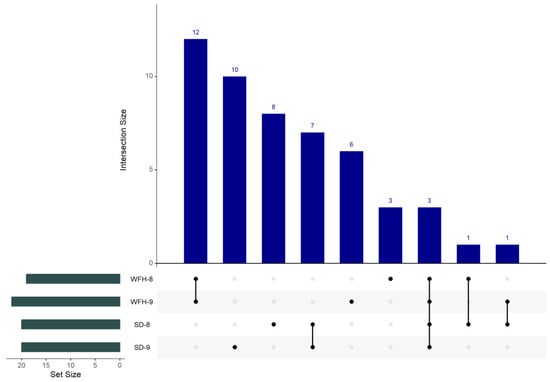
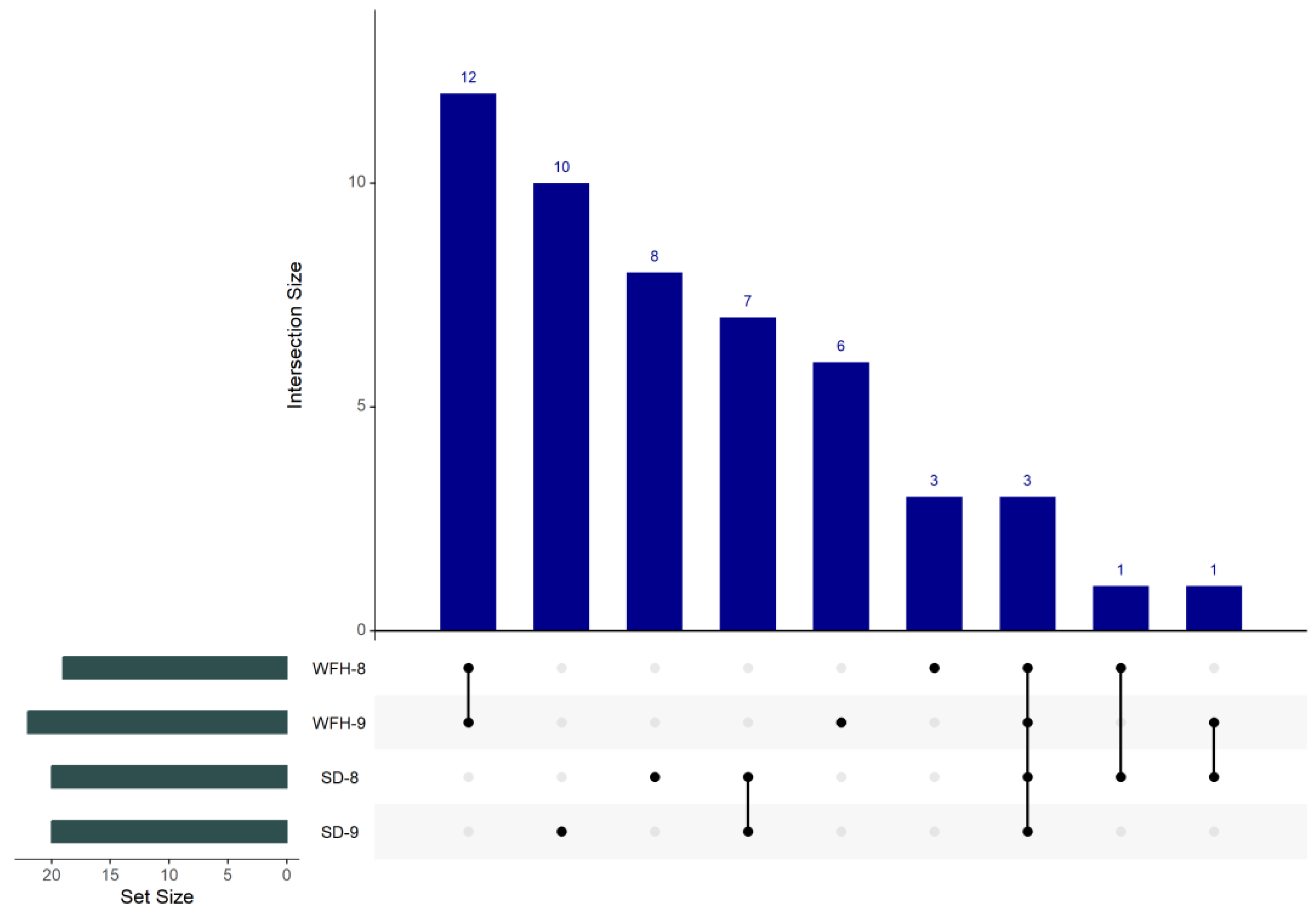
Notably, despite similar trends in antifungal activity across flour-derived media (hydrolysate and sourdough), no consistent differences in VOC profiles were observed between the two substrates. An UpSet plot summarising the shared and unique VOCs for the consortia in WFH and wheat sourdough is presented in Figure 3. These consortia shared only three compounds across both media, i.e., acetic acid, decanoic acid, and dihydro-5-pentyl-2(3H)-furanone. While consortia in the hydrolysate shared more compounds than they possessed individually, only seven common compounds were identified in the sourdoughs, alongside 18 unique VOCs. These data indicate that the metabolites produced by LAB were highly dependent on the fermentation substrate.
Figure 3.
UpSet plot showing common and individual compounds of antifungal LAB associations in wheat flour hydrolysate medium (WFH) and in sourdough (SD). 8—L. plantarum 8-5 and L. brevis 8-2 consortium, 9—L. plantarum 9-5 and L. brevis 9-2 consortium. Lines connect identical compounds between samples; individual dots represent unique compounds.
The heatmap in Figure 2 also confirmed the marked differences between the VOCs present in maximum quantities in the different flour-derived substrates, including in LAB-fermented substrates. The control WFH medium exhibited high levels of pyrazines, aldehydes, and ketones, while the fermented medium revealed a number of compounds common to both consortia, as well as several individual VOCs. The VOCs with the highest peaks were predominantly alcohols and acids. The initial flour–water mixture was similar in composition to a spontaneously fermented sourdough, with significant amounts of aldehydes and ketones, while fermentation with antifungal LAB sourdoughs resulted in increased peak areas of alcohols and acids, as well as esters for the L. plantarum 9-5 and L. brevis 9-2 association. Moreover, the dominant alcohols and acids in the sourdoughs differed from those that were prevalent in the fermented WFH medium.
3.2. In Situ Antifungal Activity of Sourdough Consortia in Bread and Sourdough Bread VOC Analysis
3.2.1. Shelf Life and Susceptibility of Bread to Mold Spoilage
Since the consortium of L. plantarum 9-5 and L. brevis 9-2 exhibited the highest antifungal activity and produced a wider range of volatile compounds, it was selected for sourdough bread making. In addition, this consortium was complemented or not with 2 AAB strains and one yeast (Table 1).
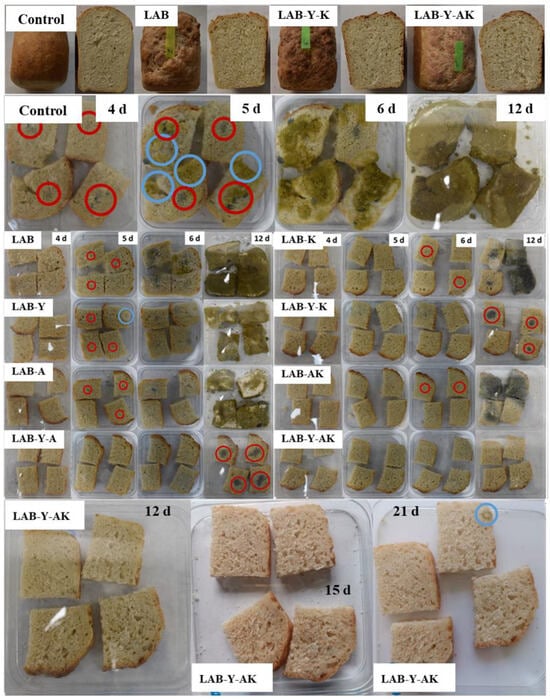
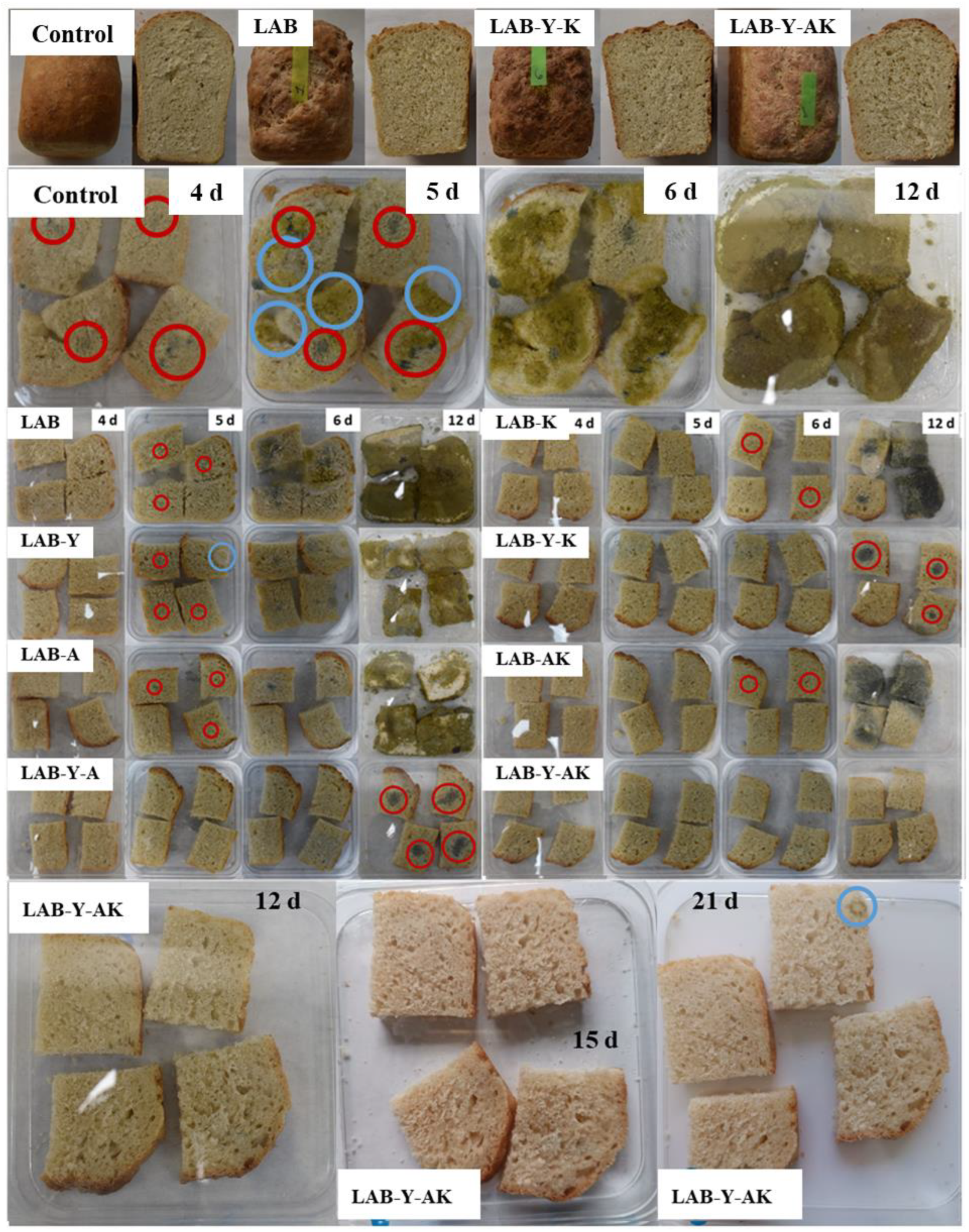
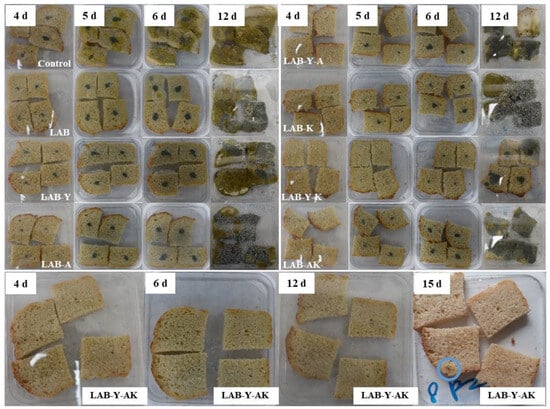
After bread making, the appearance and cross-section of the bread loaves in sourdough variants differed visibly from those of the control bread (Figure 4). Indeed, the surfaces of sourdough breads were less smooth and even than those of the control bread. The texture was also looser, but less sticky and elastic. However, the crust surface was more uniform and smooth in the LAB-Y-AK variant, which included all tested microorganisms, as compared to the other sourdough bread variants.
Figure 4.
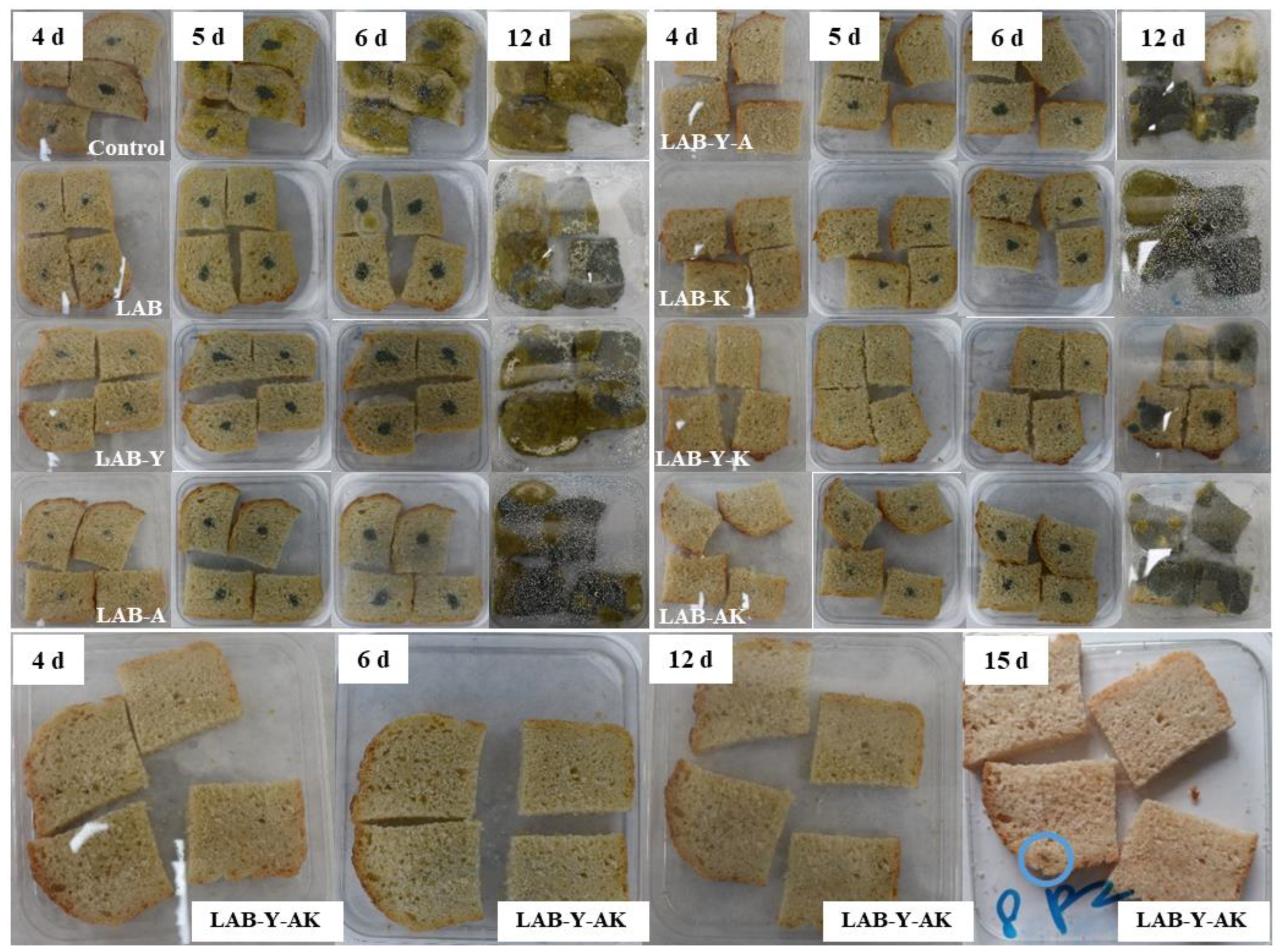
Wheat sourdough bread and its shelf life after contamination with P. decumbens PS depending on the sourdough starter composition. All sourdough breads were prepared with the addition of commercial yeasts as in the control bread. The red circle shows the beginning of P. decumbens PS growth, blue circle shows uninoculated mold contamination. LAB—L. plantarum 9-5 and L. brevis 9-2; Y—M. unispora R3SD1d; A—A. fabarum WB; K—K. raeticus Ch2, d—days.
Concerning mold challenge tests, growth of P. decumbens PS was visible in the control sample on day four. In the sourdough breads containing only LAB, LAB and yeast, or LAB and A. fabarum WB, mold growth was observed the following day (Figure 4). When the sourdough used for bread making included LAB, yeast, and at least one AAB (variants LAB-Y-A, LAB-Y-K, and LAB-Y-AK), mold growth appeared later than with other microbial combinations with time to visible growth ranging from X to 20 days. The best results were obtained with sourdough containing all microorganisms (LAB-Y-AK) as no mold growth was observed for 20 days. However, on the 21st day, a thallus from an uninoculated mold originating from the environment became visible, so further observation of bread shelf life was stopped.
All sourdough breads were prepared with the addition of commercial yeasts. The red circle shows the beginning of P. decumbens PS growth; the blue circle highlights uninoculated mold contamination. LAB—L. plantarum 9-5 and L. brevis 9-2; Y—M. unispora R3SD1d; A—A. fabarum WB; K—K. raeticus Ch2.
Inoculation of bread with P. crustosum PZ yielded similar results. However, the onset of mold growth was observed earlier. Indeed, P. crustosum PZ became visible on the third day and to varying degrees on the fourth day for all sourdough breads, with the exception of LAB-Y-AK and LAB-Y-K sourdough breads (Figure 5). In the sourdough bread made with LAB-Y-K, fungal growth occurred on the fifth day while for the LAB-Y-AK sourdough bread, P. crustosum PZ growth was not observed up to day 14. Instead, on this day, bread spoilage became visible but was associated with the growth of a fungus originating from the environment.
Figure 5.
Shelf life of wheat sourdough bread contaminated with P. crustosum PZ, depending on the sourdough composition. LAB—L. plantarum 9-5 and L. brevis 9-2; Y—M. unispora R3SD1d; A—A. fabarum WB; K—K. raeticus Ch2, d—days. All sourdough breads were prepared with the addition of commercial yeasts as in the control bread. The blue circle shows uninoculated mold contamination.
Thus, during challenge tests with P. decumbens PS and P. crustosum PZ, time-to-visible-growth was 20 and 14 days, respectively, which was 17 and 12 days longer than in the control group.
Finally, the sourdough bread shelf life was also examined under natural airborne contamination conditions. To do so, bread slices were exposed to ambient air for five min on each side. The bread shelf life in this experiment was four days for the control, five days for sourdough breads made with LAB, LAB-Y and LAB-K, six days for LAB-A, LAB-Y-A, and LAB-AK, seven days for the LAB-Y-K, and eight days for LAB-Y-AK.
3.2.2. VOCs of Sourdough Bread
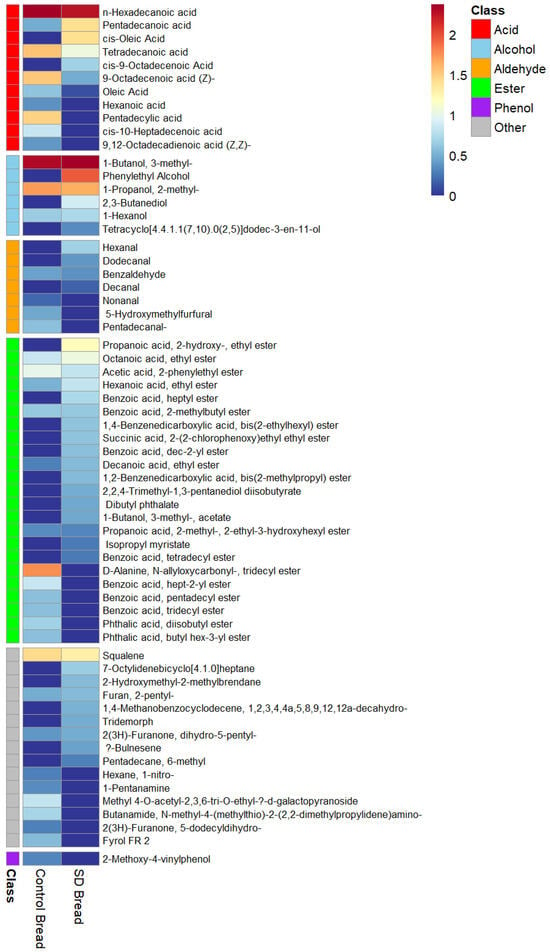
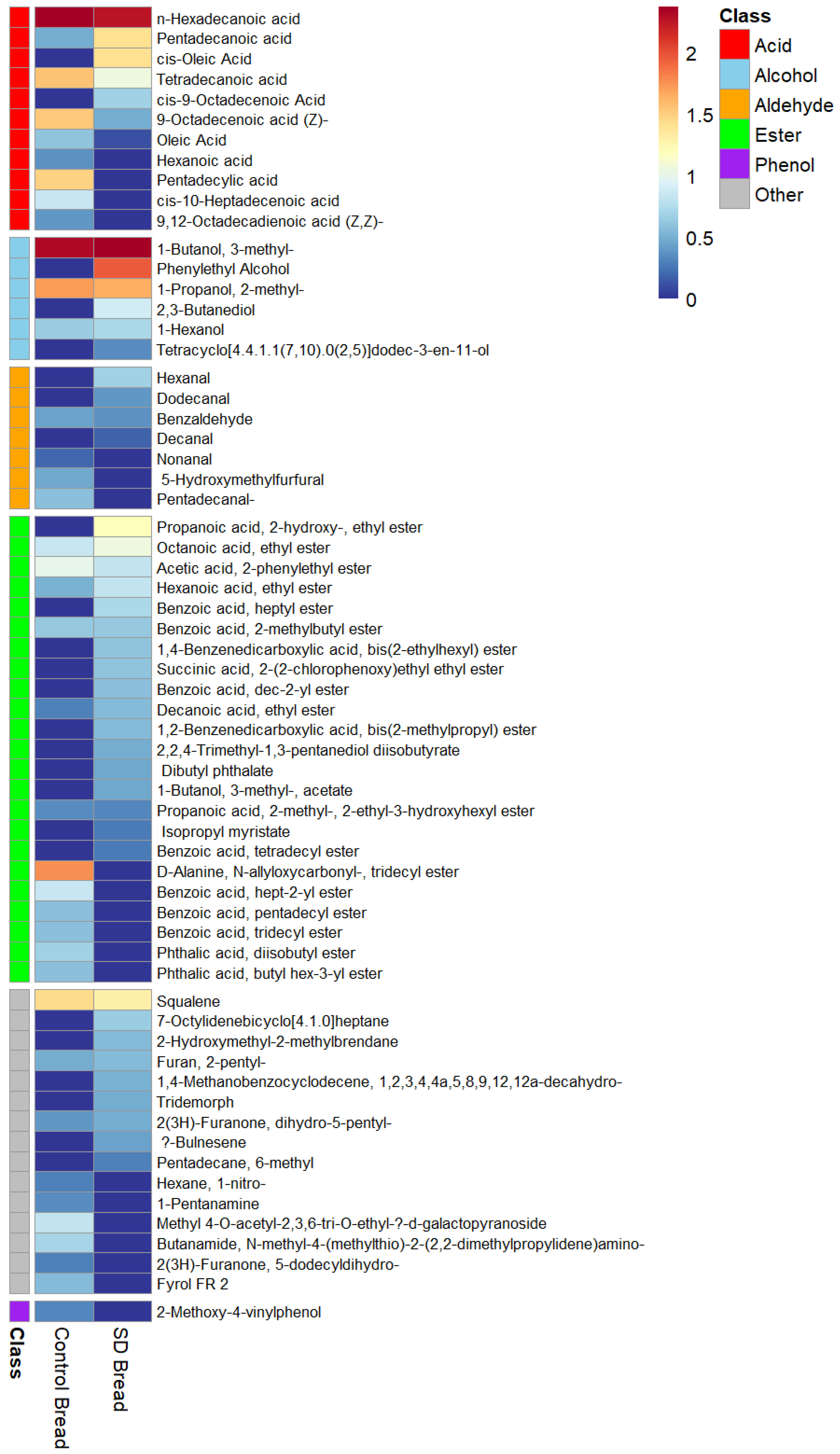
The VOC profiles of sourdough breads produced with L. plantarum 9-5, L. brevis 9-2, M. unispora R3SD1d, A. fabarum WB, and K. raeticus Ch2 were analyzed and compared with a control bread on the first day post-baking. GC-MS analysis identified 15 common compounds; additionally, the control and experimental breads contained 21 and 28 unique compounds, respectively (Figure 6 and Table S2).
Figure 6.
Heatmap showing volatile compounds of control and sourdough (SD) wheat bread.
In the sourdough bread, total alcohol peak areas were substantially higher than in the control, whereas total acid and ester peak areas were lower. However, the diversity of ester species in the sourdough bread exceeded that of the control. Among the shared compounds, a statistically significant increase in peak areas (p < 0.05) was observed in the sourdough variant for ethyl hexanoate (2.5-fold), ethyl octanoate (43%), ethyl decanoate (2.7-fold), pentadecanoic acid (11.8-fold), 1-hexanol (18%), and two furan derivatives. Conversely, the control bread exhibited significantly higher levels of benzaldehyde (25%), oleic acid (10.7-fold), n-hexadecanoic acid (30%), squalene (40%), and tetradecanoic acid (3.3-fold).
Compounds unique to the sourdough bread included aldehydes (hexanal, decanal, dodecanal), alcohols (2,3-butanediol, phenylethyl alcohol, 2-hydroxymethyl-2-methylbicyclo [3.3.1]nonane, and tetracyclo [4.4.1.1(7,10).0(2,5)]dodec-3-en-11-ol), fatty acids ((Z)-9-octadecenoic and cis-oleic acids), 14 esters, and five additional compounds. The specific esters identified were ethyl lactate, isoamyl acetate, 2-phenylethyl acetate, 2,2,4-trimethyl-1,3-pentanediol diisobutyrate, ethyl decanoate, 2-ethyl-3-hydroxyhexyl 2-methylpropanoate, isopropyl myristate, tetradecyl benzoate, 2-(2-chlorophenoxy)ethyl ethyl succinate, heptyl benzoate, dec-2-yl benzoate, diisobutyl phthalate, dibutyl phthalate, and bis(2-ethylhexyl) terephthalate. Other detected substances included tridemorph, 6-methyl-pentadecane, 7-octylidenebicycloheptane, α-bulnesene, and 1,2,3,4,4a,5,8,9,12,12a-decahydro-1,4-methanobenzocyclodecene.
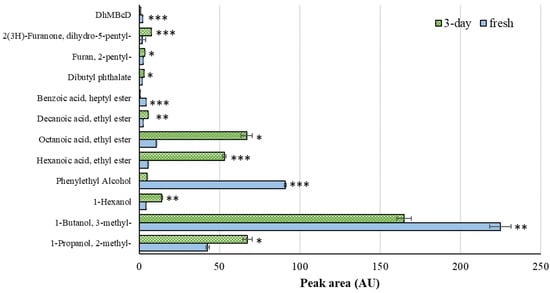
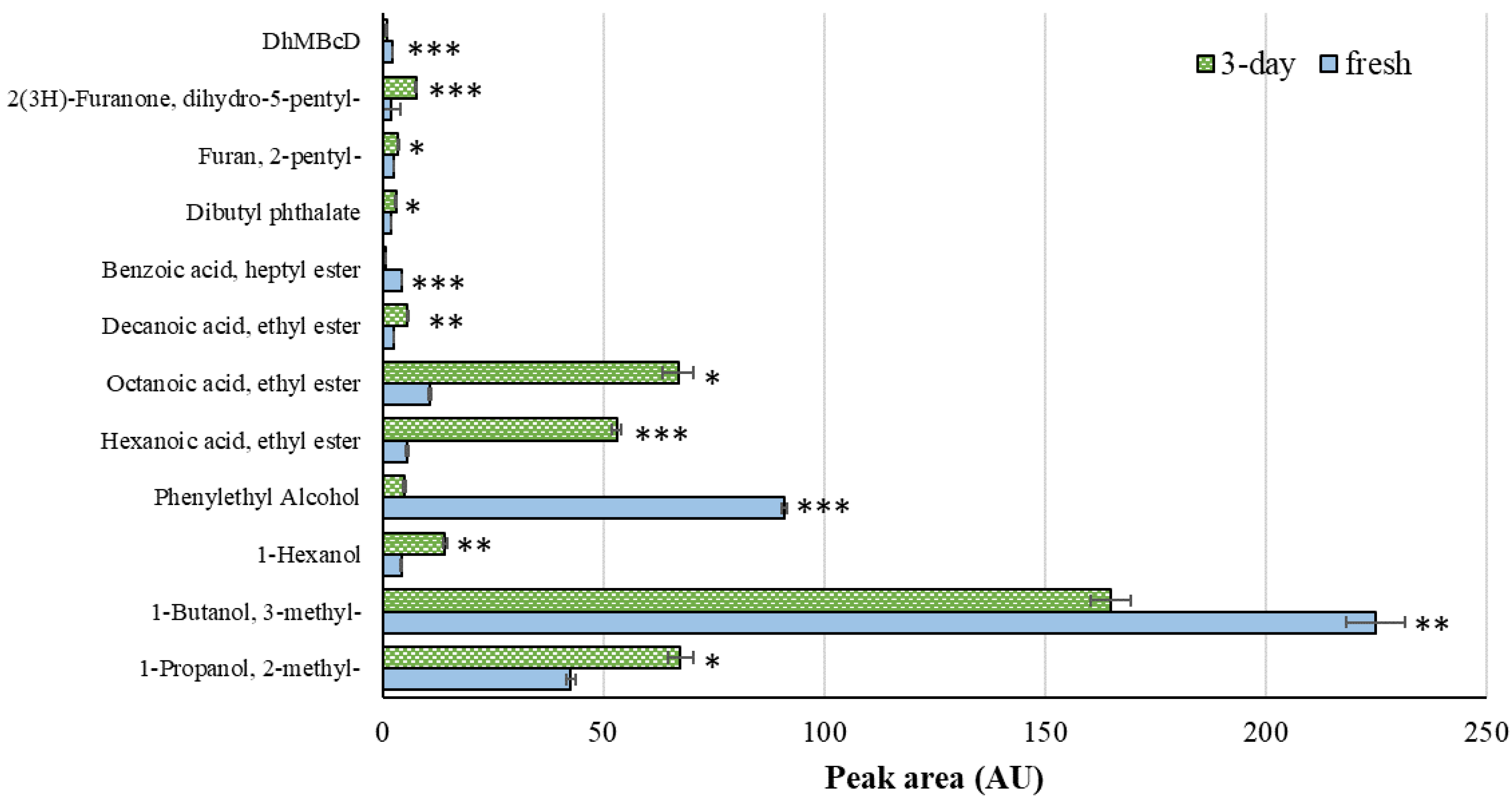
To account for temporal changes in volatile composition, sourdough breads were also analyzed after three days of refrigerated storage using a separate batch. Despite the small sample size (n = 3), high measurement reproducibility was obtained (coefficient of variation ranging from X to X%). The three-day-old bread contained 1.8 times fewer compounds (24 VOCs) than the fresh bread (43 VOCs), with the sum of total peak areas decreasing by 41%. Twelve compounds were still detected after storage, including four alcohols (isobutyl, isoamyl, 1-hexyl, and phenylethyl), five esters (ethyl hexanoate, octanoate, and decanoate, heptyl benzoate, and dibutyl phthalate), and three additional compounds (two furan derivatives and a methanobenzocyclodecene derivative). Welch’s t-test confirmed statistically significant differences (p < 0.05) for all 12 shared components (Figure 7).
Figure 7.
Total volatile compounds of fresh and three-day-old sourdough bread. DhMBcD-1,2,3,4,4a,5,8,9,12,12a-decahydro-1,4-methanobenzocyclodecene. * p < 0.01, ** p < 0.001, *** p < 0.0001.
Fresh sourdough bread showed a prevalence of 3-methyl-1-butanol and phenylethyl alcohol, while 2-methyl-1-propanol and 1-hexanol levels were at higher levels in the samples after storage. Total alcohol peak areas were 1.44–1.47 times higher in fresh bread. Interestingly, storage triggered a sharp increase in fatty acid ethyl ester concentrations. Indeed, peak areas for four out of five shared esters increased 1.5–9.7-fold, with their cumulative area increasing 5.2-fold (from 24.78 ± 0.81 AU to 129.13 ± 2.68 AU) and total ester content increasing by 2.4-fold. The most significant increases were observed for ethyl hexanoate (9.7-fold) and ethyl octanoate (6.3-fold). The proportion of shared esters relative to the total ester content rose from 37.7% in fresh bread to 81.8% after storage. Additionally, stored samples exhibited higher levels of 2-pentylfuran and dihydro-5-pentyl-2(3H)-furanone, while 1,4-methanobenzocyclodecene levels decreased.
In conclusion, the volatile profile of sourdough bread underwent significant modifications during storage, characterized by a reduction in total alcohols and a substantial increase in ester levels, particularly ethyl hexanoate and ethyl octanoate.
4. Discussion
In the present study, antagonistic activity against three bread spoilage fungi (P. decumbens PS, P. crustosum PZ, and P. variotii R2) was shown to be dependent on the fermentation substrate. Both LAB consortia inhibited only P. decumbens PS when cultured in WFH medium, while wheat sourdoughs also suppressed the growth of P. variotii. However, only the use of the sourdough containing all microorganisms (LAB L. plantarum 9-5 and L. brevis 9-2, yeast M. unispora R3SD1d, AAB A. fabarum WB and K. raeticus Ch2) preserved bread not only from the three tested molds but also from indoor environmental molds till 14–20 days.
Growth inhibition of various Penicillium spp. by selected LAB has been previously demonstrated by previous studies [22,31,55]. There are also several reports in the literature on P. crustosum growth inhibition by sourdough LAB [56,57] or their co-cultures with propionibacteria [58]. However, little is known about P. decumbens, although it was described as a bakery product spoiler agent ten years ago [59]. In Wahlstrom et al.’s [60] study, P. decumbens showed minimal to no inhibition by Latilactobacillus curvatus under conditions optimal for suppressing other studied molds. Despite a different strain being used in the present study, our work revealed growth inhibition of this fungus by both studied L. plantarum and L. brevis consortia in WFH medium and wheat sourdough and in bread using a complex sourdough consortium consisting of L. plantarum 9-5, L. brevis 9-2, M. unispora R3SD1d, A. fabarum WB, and K. raeticus Ch2, in which the inhibitory effect was maximal.
According to the literature, the antagonistic activity of LAB is primarily associated with the production of organic acids, as well as other metabolites that act synergistically [22,61,62]. However, specific compounds and doses vary greatly in each case, and the precise mechanisms of action and their regulation remains poorly understood [63].
In the present study, we identified a wide range of LAB VOCs with previously demonstrated antifungal activity, such as medium- and long-chain fatty acids, alcohols, and ketones [37,64,65,66]. The greatest number of organic acids was found in the WFH medium. One of the targeted fungi, P. variotii, is known to be preservative-resistant and capable of spoiling products with high weak acid content [67]. Resistance to weak acids is probably the main reason why no antagonism was detected against this fungus when LAB were cultivated in WFH, as acids are their main metabolic products. Likely, the predominance of organic acids among LAB metabolites in WFH contributed to the more pronounced antagonistic activity against ropy bread spoilage agents as compared to that of the liquid sourdough. In addition to acids, several VOCs, including alcohols and ketones directly related to the metabolic activity of LAB and with previously demonstrated antifungal activity, were evidenced in the present study. Alcohols and ketones were among such compounds. Several of them (2-tridecanone, 2-nonanol, and 2-tridecanol in WFH medium and 1-octen-3-ol in wheat sourdough) were revealed in the present study and previously shown to possess high antifungal activity [37,68,69]. However, our data were inconsistent with the results of De Simone et al. [37], who showed that VOCs such as 2-nonanol and 2-tridecanol were only revealed in fungus–LAB co-cultures.
The VOCs of L. plantarum and L. brevis associations varied significantly according to the fermentation media. Unlike the WFH medium, wheat sourdoughs contained higher levels of VOCs beyond acids and alcohols, including esters produced by the L. plantarum 9-5 and L. brevis 9-2 consortium. Meanwhile, the VOCs of bread differed greatly from those of the sourdough. Interestingly, the most pronounced antifungal effect was observed in bread. However, the maximum effect was only achieved with a mixed starter consisting of LAB, yeast, and AAB, while consortia with other microbial compositions only extended the shelf life of bread by a few days.
Wheat bread made with mixed sourdough was characterized by significantly higher VOC content, as well as the presence of longer-chain fatty acids, including unsaturated ones, and a large number of esters. Twelve esters were detected in the control bread, while 17 esters were present in the sourdough variant. The number of alcohols and their total peak areas were also higher in sourdough bread than in the control. Although the total sum of ester peak areas decreased in the sourdough bread compared to the control, some esters were present in significantly higher quantities. These were primarily the ethyl esters of hexanoic, octanoic, and decanoic acids. Several studies have shown that ethyl esters of medium-chain fatty acids display antagonistic activity against various target fungi [70,71]. Esters are known to be secondary products of yeast metabolism during alcoholic fermentation. Except for this, the presence of medium-chain fatty acid precursors from LAB metabolism is a key factor in the formation of the corresponding ethyl esters [72] using ethanol produced by yeast. The increase in esters may also be associated with an increased proportion of AAB in complex fermentable substrates [73]. For example, Delgado et al. [74] indicated the production of 26 volatile compounds by the consortium of AAB Gluconobacter cerinus and the yeast Hanseniaspora osmophila, of which 65% were esters. So, the higher alcohol and ester content in the sourdough bread is likely a consequence of the yeast and AAB metabolic activities.
Several researchers have demonstrated the prolonged prevention of bread spoilage using mixed starter cultures. For example, bread produced with L. plantarum NRRL B-14768T, L. brevis ATCC 14869, and yeast Candida famata, had an extended shelf life of up to 10 days [75]. According to other data, a combination of L. plantarum 1A7 and Wickerhamomyces anomalus LCF1695 contributed to the preservation of bread without spoilage for up to 28 days [40]. Water/salt-soluble extracts of sourdough fermented by this LAB and dough fermented by the yeast contained antifungal peptides encrypted into sequences of Oryza sativa proteins and ethyl acetate with ethanol, respectively. There is also a study on the properties of steamed bread prepared using various combinations of Saccharomyces cerevisiae Y5 yeast, L. brevis B1 LAB, and Acetobacter tropicalis A3 AAB [49]. Sourdough breads with all microorganisms contained more esters, aldehydes, and acids than breads from other treatment groups, which is consistent with our SPME GC-MS results.
Another interesting result was obtained when we studied bread VOCs after refrigerated storage for 3 days. Since various sourdoughs extend bread shelf life by a certain number of days, but then mold still occurs, it is most likely that an important role in bread preservation belongs to VOCs, which gradually volatilize during storage. It is known that commercial bread without the use of sourdough usually goes moldy after three days. We hypothesized that the main active VOCs should persist in bread for several days and conducted a comparative analysis of fresh and three-day-old sourdough bread. It was shown that a significant portion of the volatile compounds had evaporated by this time. Nevertheless, we detected 12 common VOCs in fresh and three-day-old samples. Comparison of the peak areas of common compounds revealed a paradoxical finding. Indeed, while the overall VOC peak areas decreased, the concentrations of several compounds increased. The greatest increases in peak areas were observed for ethyl hexanoate and octanoate, by 9.7 and 6.3 times, respectively. The reason for this phenomenon may apparently result from the ability of starch molecules to incorporate and retain smaller hydrophobic compounds into their secondary structure, forming so-called starch inclusion or starch–guest complexes [76]. Preheating to 140–160 °C converts amylose to a molecularly dispersed state, and subsequent cooling results in the formation of linear molecules that form double helices through hydrogen bonding [77]. Complexes are formed through hydrophobic interactions between the amylose helix and nonpolar guest molecules [78,79]. Amylose has been shown to form complexes with a wide range of compounds, such as fatty acids and their esters, alcohols, and other volatile compounds, which simultaneously delay starch retrogradation and bread staling [80]. Baking bread followed by cooling promotes the incorporation of sourdough-produced metabolites into amylose complexes. The release of esters and alcohols from the formed complexes during bread storage may explain the observed increase in peak areas of these compounds. Therefore, we can hypothesize that the incorporation of antifungal compounds, in our case primarily ethyl esters of hexanoic and octanoic acids, into amylose complexes is the reason for the mold-free shelf life of sourdough bread.
Wheat flour gluten is also capable of incorporating various compounds, such as phenolic compounds, into its gel structure by forming hydrogen and covalent bonds with carboxyl and hydroxyl groups [81,82]. For example, FT-IR spectroscopy revealed structural changes in the gluten network due to the incorporation of phenolic acids (cinnamic and gallic acid derivatives) [81]. Various biopolymers are widely used for the encapsulation of bioactive compounds [83,84], for example, essential oils, terpene alcohols, etc. The combination of wheat gluten with carboxymethyl cellulose was also used to obtain composite nanoparticles for loading with bioactive substances, in particular curcumin [85]. The use of AAB from the genus Komagataeibacter in a cellulose-producing consortium can also promote better retention of various compounds within the cellulose fibers. The cellulose film itself can also act as a physical barrier, preventing the spread of fungal mycelium. Furthermore, the production of prebiotic polymers can provide the strain of interest with improved survival capabilities and competitive advantages over other microorganisms, which gave rise to the study of composite materials using bacterial cellulose as a scaffold [86,87,88]. However, the contribution of bacterial cellulose to the possible prevention of bread spoilage remains to be studied.
5. Conclusions
Thus, our study confirmed the synergistic effect of various compounds produced by LAB and released by them from the substrate on the antifungal activity against different molds. At the same time, the accumulation of ethyl MCFA, produced in significant quantities by the sourdough consortium, which included not only LAB but also sourdough yeast and AAB, could be a key factor in extending bread shelf life. Furthermore, the presence of AAB A. fabarum WB and K. raeticus Ch2 and yeast M. unispora R3SD1d in the sourdough was critical for bread shelf life up to 20 days.
The most striking result of our study was that we observed an increase in the content of different ethyl esters of hexanoic and octanoic acids during 3-day refrigerated storage. The incorporation of these esters into amylose starch–guest complexes after baking and cooling of bread, and their gradual release during storage, could be the main mechanism involved in long-term bread preservation from mold spoilage. Future research could focus on further investigating and potentially validating this phenomenon. Other VOCs retained in the polymeric structures of gluten and produced by K. rhaeticus Ch2 cellulose could also contribute to improved bread shelf life. However, this issue also requires further study.
Supplementary Materials
The following supporting information can be downloaded at https://www.mdpi.com/article/10.3390/applmicrobiol6080085/s1: Table S1: Peak areas of the VOCs identified in WFH and liquid sourdoughs (48 h); Table S2: VOCs of control and sourdough bread on the first day post-baking. File S1: R script for the heatmap of bread VOCs.
Author Contributions
Conceptualization, Y.O.; methodology, M.A., K.A., S.D., and Y.O.; software, Y.O.; validation, Y.O. and J.M.; formal analysis, Y.O. and J.M.; investigation, A.A., K.A., S.D., and Z.Y.; data curation, Y.O., J.M., A.A., and M.A.; writing—original draft preparation, Y.O.; writing—review and editing, all authors; visualization, Y.O. and J.M.; supervision, A.S.; project administration, Y.O.; funding acquisition, A.S.; All authors have read and agreed to the published version of the manuscript.
Funding
The research was supported by the Science Committee of the Ministry of Science and Higher Education of the Republic of Kazakhstan (grant No. AP19674612).
Institutional Review Board Statement
Not applicable.
Informed Consent Statement
Not applicable.
Data Availability Statement
The original contributions presented in this study are included in the article/supplementary material. Further inquiries can be directed to the corresponding author.
Acknowledgments
GenAI (Gemini, https://gemini.google.com/app (12 July 2026)) was used to write and correct scripts for RStudio (R version 4.2.2).
Conflicts of Interest
The authors declare no conflicts of interest. The funders had no role in the design of the study; in the collection, analyses, or interpretation of data; in the writing of the manuscript; or in the decision to publish the results.
Abbreviations
The following abbreviations are used in this manuscript:
| SPME | Solid-phase microextraction |
| GC-MS | Gas chromatography with mass spectrometric detection |
| LAB | Lactic acid bacteria |
| AAB | Acetic acid bacteria |
| VOC | Volatile organic compound |
| WFH | Wheat flour hydrolysate |
References
- Sadowski, A.; Dobrowolska, B.; Dziugan, P.; Motyl, I.; Liszkowska, W.; Rydlewska-Liszkowska, I.; Berłowska, J. Bread consumption trends in Poland: A socio-economic perspective and factors affecting current intake. Food Sci. Nutr. 2024, 12, 7776–7787. [Google Scholar] [CrossRef] [Scilit] [PubMed]
- Narisetty, V.; Cox, R.; Willoughby, N.; Aktas, E.; Tiwari, B.; Matharu, A.S.; Kumar, V. Recycling bread waste into chemical building blocks using a circular biorefining approach. Sustain. Energy Fuels 2021, 5, 4842–4849. [Google Scholar] [CrossRef] [Scilit] [PubMed]
- Allipour-Birgani, R.; Loloei, S.; Shab-Bidar, S.; Pouraram, H. Global Magnitude of the Bread Wastes and its Reasons: A Systematic Review and Meta-analysis of Observational Studies. Nutr. Food Health Dis. 2023, 10, 19–36. [Google Scholar]
- Weber, L.; Bartek, L.; Brancoli, P.; Sjölund, A.; Eriksson, M. Climate change impact of food distribution: The case of reverse logistics for bread in Sweden. Sustain. Prod. Consum. 2023, 36, 386–396. [Google Scholar] [CrossRef] [Scilit]
- Hafyan, R.H.; Mohanarajan, J.; Uppal, M.; Kumar, V.; Narisetty, V.; Maity, S.K.; Sadhukhan, J.; Gadkari, S. Bread waste valorization: A review of sustainability aspects and challenges. Front. Sustain. Food Syst. 2024, 8, 1334801. [Google Scholar] [CrossRef] [Scilit]
- Mesiranta, N.; Mattila, M.; Eriksson, M.; Blasi, E.; Sjölund, A.; Bartek, L.; Pietrangeli, R.; Nasso, M.; Cicatiello, C.; Sulankivi, S.; et al. Reducing bread surplus and waste at the bakery-retail interface in three European countries. Clean. Waste Syst. 2025, 10, 100433. [Google Scholar] [CrossRef] [Scilit]
- USDA. U.S. Department of Agriculture. Food Waste and Its Links to Greenhouse Gases and Climate Change. Available online: https://www.usda.gov/about-usda/news/blog/food-waste-and-its-links-greenhouse-gases-and-climate-change (accessed on 10 June 2026).
- Moresi, M.; Nionelli, L.; Cimini, A. Packaged Bread and Its Carbon Footprint: Balancing Convenience and Waste. Sustainability 2025, 17, 9957. [Google Scholar] [CrossRef] [Scilit]
- Bouledroua, D.; Debbabi, H.; Khaled, M.B.; Ismail, H.B.; Jribi, S.; Doggui, D.; Sfayhi, D. Understanding Bread Consumption and Waste Patterns in Algeria and Tunisia: Insights into Consumer Practices and Challenges. North Afr. J. Food Nutr. Res. 2025, 9, 193–218. [Google Scholar] [CrossRef] [Scilit]
- Alpers, T.; Kerpes, R.; Frioli, M.; Nobis, A.; Hoi, K.I.; Bach, A.; Becker, T. Impact of storing condition on staling and microbial spoilage behavior of bread and their contribution to prevent food waste. Foods 2021, 10, 76. [Google Scholar] [CrossRef] [Scilit] [PubMed]
- Diowksz, A.; Kopeć, P.; Koziróg, A. The Inactivation of Microscopic Fungi in Bakery Products Using Hurdle Technology—A Case Study. Appl. Sci. 2024, 14, 10648. [Google Scholar] [CrossRef] [Scilit]
- Noshirvani, N.; Abolghasemi Fakhri, L. Advances in extending the microbial shelf-life of bread and bakery products using different technologies: A Review. Food Rev. Int. 2025, 41, 87–112. [Google Scholar] [CrossRef] [Scilit]
- Ollinger, N.; Malachova, A.; Sulyok, M.; Krska, R.; Weghuber, J. Mycotoxin contamination in moldy slices of bread is mostly limited to the immediate vicinity of the visible infestation. Food Chem. X 2024, 23, 101563. [Google Scholar] [CrossRef] [Scilit] [PubMed]
- Awulachew, M.T. Bread deterioration and a way to use healthful methods. CyTA—J. Food 2024, 22, 2424848. [Google Scholar] [CrossRef] [Scilit]
- Vermelho, A.B.; Moreira, J.V.; Junior, A.N.; da Silva, C.R.; Cardoso, V.d.S.; Akamine, I.T. Microbial Preservation and Contamination Control in the Baking Industry. Fermentation 2024, 10, 231. [Google Scholar] [CrossRef] [Scilit]
- Rahman, M.; Islam, R.; Hasan, S.; Zzaman, W.; Rana, M.R.; Ahmed, S.; Roy, M.; Sayem, A.; Matin, A.; Raposo, A.; et al. A Comprehensive Review on Bio-Preservation of Bread: An Approach to Adopt Wholesome Strategies. Foods 2022, 11, 319. [Google Scholar] [CrossRef] [Scilit] [PubMed]
- Oleinikova, Y.; Amangeldi, A.; Zhaksylyk, A.; Saubenova, M.; Sadanov, A. Sourdough Microbiota for Improving Bread Preservation and Safety: Main Directions and New Strategies. Foods 2025, 14, 2443. [Google Scholar] [CrossRef] [Scilit] [PubMed]
- D’Amico, V.; Gänzle, M.; Call, L.; Zwirzitz, B.; Grausgruber, H.; D’Amico, S.; Brouns, F. Does sourdough bread provide clinically relevant health benefits? Front. Nutr. 2023, 10, 1230043. [Google Scholar] [CrossRef] [Scilit] [PubMed]
- Garofalo, C.; Zannini, E.; Aquilanti, L.; Silvestri, G.; Fierro, O.; Picariello, G.; Clementi, F. Selection of Sourdough Lactobacilli with Antifungal Activity for Use as Biopreservatives in Bakery Products. J. Agric. Food Chem. 2012, 60, 7719–7728. [Google Scholar] [CrossRef] [Scilit] [PubMed]
- Hernández-Figueroa, R.H.; Mani-López, E.; Ramírez-Corona, N.; López-Malo, A. Optimizing Lactic Acid Bacteria Proportions in Sourdough to Enhance Antifungal Activity and Quality of Partially and Fully Baked Bread. Foods 2024, 13, 2318. [Google Scholar] [CrossRef] [Scilit] [PubMed]
- Lafuente, C.; de Melo Nazareth, T.; Dopazo, V.; Meca, G.; Luz, C. Enhancing bread quality and extending shelf life using dried sourdough. LWT 2024, 203, 116379. [Google Scholar] [CrossRef] [Scilit]
- Wu, X.; Liu, Y.; Guo, Z.; Ji, N.; Sun, Q.; Liu, T.; Li, Y. Antifungal activities of Pediococcus pentosaceus LWQ1 and Lactiplantibacillus plantarum LWQ17 isolated from sourdough and their efficacies on preventing spoilage of Chinese steamed bread. Food Control 2025, 168, 110940. [Google Scholar] [CrossRef] [Scilit]
- Canesin, M.R.; Cazarin, C.B.B. Nutritional quality and nutrient bioaccessibility in sourdough bread. Curr. Opin. Food Sci. 2021, 40, 81–86. [Google Scholar] [CrossRef] [Scilit]
- Akamine, I.T.; Mansoldo, F.R.P.; Vermelho, A.B. Probiotics in the Sourdough Bread Fermentation: Current Status. Fermentation 2023, 9, 90. [Google Scholar] [CrossRef] [Scilit]
- Islam, M.A.; Islam, S. Sourdough Bread Quality: Facts and Factors. Foods 2024, 13, 2132. [Google Scholar] [CrossRef] [Scilit] [PubMed]
- Kulathunga, J.; Simsek, S. Nutritional value and health benefits in the gut microbiome of sourdough-based and other baking products. In Handbook of Sourdough Microbiota and Fermentation; Academic Press: London, UK; San Diego, CA, USA; Cambridge, MA, USA, 2025; pp. 203–211. [Google Scholar] [CrossRef] [Scilit]
- Rodrigues, T.Z.; Gonçalves, I.C.D.; de Medeiros, A.R.S.; Barnabé, M.L.C.; Barbosa, G.V.P.; Vieira, P.P.F.; Garcia, E.F. Sourdough bread making: Autochthonous lactic acid bacteria to optimize fermentation and enhance functional properties. Int. J. Gastron. Food Sci. 2025, 39, 101315. [Google Scholar] [CrossRef] [Scilit]
- Ribet, L.; Dessalles, R.; Lesens, C.; Brusselaers, N.; Durand-Dubief, M. Nutritional benefits of sourdoughs: A systematic review. Adv. Nutr. 2023, 14, 22–29. [Google Scholar] [CrossRef] [Scilit] [PubMed]
- Arora, K.; Ameur, H.; Polo, A.; Di Cagno, R.; Rizzello, C.G.; Gobbetti, M. Thirty years of knowledge on sourdough fermentation: A systematic review. Trends Food Sci. Technol. 2021, 108, 71–83. [Google Scholar] [CrossRef] [Scilit]
- Mou, T.; Xu, R.; Li, Q.; Li, J.; Liu, S.; Ao, X.; Chen, S.; Liu, A. Screening of Antifungal Lactic Acid Bacteria and Their Impact on the Quality and Shelf Life of Rye Bran Sourdough Bread. Foods 2025, 14, 1253. [Google Scholar] [CrossRef] [Scilit] [PubMed]
- Lafuente, C.; Calpe, J.; Musto, L.; Nazareth, T.d.M.; Dopazo, V.; Meca, G.; Luz, C. Preparation of Sourdoughs Fermented with Isolated Lactic Acid Bacteria and Characterization of Their Antifungal Properties. Foods 2023, 12, 686. [Google Scholar] [CrossRef] [Scilit] [PubMed]
- Hernández-Figueroa, R.H.; Morales-Camacho, J.I.; Mani-López, E.; López-Malo, A. Assessment of antifungal activity of aqueous extracts and protein fractions from sourdough fermented by Lactiplantibacillus plantarum. Future Foods 2024, 9, 100314. [Google Scholar] [CrossRef] [Scilit]
- Corsetti, A.; Gobbetti, M.; Rossi, J.; Damiani, P. Antimould activity of sourdough lactic acid bacteria: Identification of a mixture of organic acids produced by Lactobacillus sanfrancisco CB1. Appl. Microbiol. Biotechnol. 1998, 50, 253–256. [Google Scholar] [CrossRef] [Scilit] [PubMed]
- Debonne, E.; Vermeulen, A.; Bouboutiefski, N.; Ruyssen, T.; Van Bockstaele, F.; Eeckhout, M.; Devlieghere, F. Modelling and validation of the antifungal activity of DL-3-phenyllactic acid and acetic acid on bread spoilage moulds. Food Microbiol. 2020, 88, 103407. [Google Scholar] [CrossRef] [Scilit] [PubMed]
- Arsoy, E.S.; Gul, L.B.; Con, A.H. Characterization and selection of potential antifungal lactic acid bacteria isolated from Turkish spontaneous sourdough. Curr. Microbiol. 2022, 79, 148. [Google Scholar] [CrossRef] [Scilit] [PubMed]
- Debonne, E.; Van Schoors, F.; Maene, P.; Van Bockstaele, F.; Vermeir, P.; Verwaeren, J.; Eeckhout, M.; Devlieghere, F. Comparison of the antifungal effect of undissociated lactic and acetic acid in sourdough bread and in chemically acidified wheat bread. Int. J. Food Microbiol. 2020, 321, 108551. [Google Scholar] [CrossRef] [Scilit] [PubMed]
- De Simone, N.; López, L.; Ciudad, C.S.; Scauro, A.; Russo, P.; Rodríguez, J.; Spano, G.; Martínez, B. Antifungal activity of Lactiplantibacillus plantarum isolated from fruit and vegetables and detection of novel antifungal VOCs from fungal-LAB co-cultures. Food Biosci. 2024, 58, 103824. [Google Scholar] [CrossRef] [Scilit]
- Muhialdin, B.J.; Hassan, Z.; Sadon, S.K. Antifungal Activity of Lactobacillus fermentum Te007, Pediococcus pentosaceus Te010, Lactobacillus pentosus G004, and L. paracasi D5 on Selected Foods. J. Food Sci. 2011, 76, M493–M499. [Google Scholar] [CrossRef] [Scilit] [PubMed]
- Muhialdin, B.J.; Hassan, Z.; Saari, N. In vitro antifungal activity of lactic acid bacteria low molecular peptides against spoilage fungi of bakery products. Ann. Microbiol. 2018, 68, 557–567. [Google Scholar] [CrossRef] [Scilit]
- Coda, R.; Cassone, A.; Rizzello, C.G.; Nionelli, L.; Cardinali, G.; Gobbetti, M. Antifungal Activity of Wickerhamomyces Anomalus and Lactobacillus Plantarum during Sourdough Fermentation: Identification of Novel Compounds and Long-Term Effect during Storage of Wheat Bread. Appl. Environ. Microbiol. 2011, 77, 3484–3492. [Google Scholar] [CrossRef] [Scilit] [PubMed]
- Nionelli, L.; Wang, Y.; Pontonio, E.; Immonen, M.; Rizzello, C.G.; Maina, H.N.; Katina, K.; Coda, R. Antifungal effect of bioprocessed surplus bread as ingredient for bread-making: Identification of active compounds and impact on shelf-life. Food Control 2020, 118, 107437. [Google Scholar] [CrossRef] [Scilit]
- Ebrahimi, M.; Sadeghi, A.; Mortazavi, S.A. The use of cyclic dipeptide producing LAB with potent anti-aflatoxigenic capability to improve techno-functional properties of clean-label bread. Ann. Microbiol. 2020, 70, 24. [Google Scholar] [CrossRef] [Scilit]
- Schmidt, M.; Lynch, K.M.; Zannini, E.; Arendt, E.K. Fundamental study on the improvement of the antifungal activity of Lactobacillus reuteri R29 through increased production of phenyllactic acid and reuterin. Food Control 2018, 88, 139–148. [Google Scholar] [CrossRef] [Scilit]
- Comasio, A.; Verce, M.; Van Kerrebroeck, S.; De Vuyst, L. Diverse Microbial Composition of Sourdoughs from Different Origins. Front. Microbiol. 2020, 11, 1212. [Google Scholar] [CrossRef] [Scilit] [PubMed]
- Landis, E.A.; Oliverio, A.M.; McKenney, E.A.; Nichols, L.M.; Kfoury, N.; Biango-Daniels, M.; Shell, L.K.; Madden, A.A.; Shapiro, L.; Sakunala, S.; et al. The diversity and function of sourdough starter microbiomes. eLife 2021, 10, e61644. [Google Scholar] [CrossRef] [Scilit] [PubMed]
- Rappaport, H.B.; Senewiratne, N.P.; Lucas, S.K.; Wolfe, B.E.; Oliverio, A.M. Genomics and synthetic community experiments uncover the key metabolic roles of acetic acid bacteria in sourdough starter microbiomes. mSystems 2024, 9, e00537-24. [Google Scholar] [CrossRef] [Scilit] [PubMed]
- He, Y.; Xie, Z.; Zhang, H.; Liebl, W.; Toyama, H.; Chen, F. Oxidative fermentation of acetic acid bacteria and its products. Front. Microbiol. 2022, 13, 879246. [Google Scholar] [CrossRef] [Scilit] [PubMed]
- Li, H.; Fu, J.; Hu, S.; Li, Z.; Qu, J.; Wu, Z.; Chen, S. Comparison of the effects of acetic acid bacteria and lactic acid bacteria on the microbial diversity of and the functional pathways in dough as revealed by high-throughput metagenomics sequencing. Int. J. Food Microbiol. 2021, 346, 109168. [Google Scholar] [CrossRef] [Scilit] [PubMed]
- Li, H.; Hu, S.; Fu, J. Effects of acetic acid bacteria in starter culture on the properties of sourdough and steamed bread. Grain Oil Sci. Technol. 2022, 5, 13–21. [Google Scholar] [CrossRef] [Scilit]
- Amangeldi, A.; Oleinikova, Y.; Maksimovich, S.; Khajayeva, M.; Potoroko, I.; Shorabayev, E.; Taubekova, G.; Moldakhanov, Y. Isolation of lactic acid bacteria-antagonists of bread spoilage agents from joint spontaneous starters with dough microorganisms. Microbiol. Virol. 2025, 2, 137–148. [Google Scholar] [CrossRef] [Scilit]
- Ouiddir, M.; Bettache, G.; Salas, M.L.; Pawtowski, A.; Donot, C.; Brahimi, S.; Mabrouk, K.; Coton, E.; Mounier, J. Selection of Algerian lactic acid bacteria for use as antifungal bioprotective cultures and application in dairy and bakery products. Food Microbiol. 2019, 82, 160–170. [Google Scholar] [CrossRef] [Scilit] [PubMed]
- Palumbo, J.D.; O’Keeffe, T.L. Method for high-throughput antifungal activity screening of bacterial strain libraries. J. Microbiol. Methods 2021, 189, 106311. [Google Scholar] [CrossRef] [Scilit] [PubMed]
- Delavenne, E.; Mounier, J.; Déniel, F.; Barbier, G.; Le Blay, G. Biodiversity of antifungal lactic acid bacteria isolated from raw milk samples from cow, ewe and goat over one-year period. Int. J. Food Microbiol. 2012, 155, 185–190. [Google Scholar] [CrossRef] [Scilit] [PubMed]
- Aitzhanova, A.; Oleinikova, Y.; Mounier, J.; Hymery, N.; Leyva Salas, M.; Amangeldi, A.; Saubenova, M.; Alimzhanova, M.; Ashimuly, K.; Sadanov, A. Dairy associations for the targeted control of opportunistic Candida. World J. Microbiol. Biotechnol. 2021, 37, 143. [Google Scholar] [CrossRef] [Scilit] [PubMed]
- Liu, A.; Xu, R.; Zhang, S.; Wang, Y.; Hu, B.; Ao, X.; Li, Q.; Li, J.; Hu, K.; Yang, Y.; et al. Antifungal mechanisms and application of lactic acid bacteria in bakery products: A review. Front. Microbiol. 2022, 13, 924398. [Google Scholar] [CrossRef] [Scilit] [PubMed]
- Nasrollahzadeh, A.; Mokhtari, S.; Khomeiri, M.; Saris, P.E.J. Antifungal Preservation of Food by Lactic Acid Bacteria. Foods 2022, 11, 395. [Google Scholar] [CrossRef] [Scilit] [PubMed]
- Verni, M.; Wang, Y.; Clement, H.; Koirala, P.; Rizzello, C.G.; Coda, R. Antifungal peptides from faba bean flour fermented by Levilactobacillus brevis AM7 improve the shelf-life of composite faba-wheat bread. Int. J. Food Microbiol. 2023, 407, 110403. [Google Scholar] [CrossRef] [Scilit] [PubMed]
- Ran, Q.; Yang, F.; Geng, M.; Qin, L.; Chang, Z.; Gao, H.; Jiang, D.; Zou, C.; Jia, C. A mixed culture of Propionibacterium freudenreichii and Lactiplantibacillus plantarum as antifungal biopreservatives in bakery product. Food Biosci. 2022, 47, 101456. [Google Scholar] [CrossRef] [Scilit]
- Le Lay, C.; Mounier, J.; Vasseur, V.; Weill, A.; Le Blay, G.; Barbier, G.; Coton, E. In vitro and in situ screening of lactic acid bacteria and propionibacteria antifungal activities against bakery product spoilage molds. Food Control 2016, 60, 247–255. [Google Scholar] [CrossRef] [Scilit]
- Wahlstrom, R.C. Metabolic Capabilities of Latilactobacillus curvatus and the Potential Use as an Adjunct Culture for Food Safety and Quality Control in Yogurt. Master’s Thesis, Utah State University, Logan, UT, USA, 2024. [Google Scholar]
- Mani-López, E.; Arrioja-Bretón, D.; López-Malo, A. The impacts of antimicrobial and antifungal activity of cell-free supernatants from lactic acid bacteria in vitro and foods. Compr. Rev. Food Sci. Food Saf. 2022, 21, 604–641. [Google Scholar] [CrossRef] [Scilit] [PubMed]
- Fugaban, J.I.I.; Jung, E.S.; Todorov, S.D.; Holzapfel, W.H. Evaluation of Antifungal Metabolites Produced by Lactic Acid Bacteria. Probiotics Antimicrob. Proteins 2023, 15, 1447–1463. [Google Scholar] [CrossRef] [Scilit] [PubMed]
- Hu, Y.; Wang, G.; Liu, Y.; Zhang, R.; Zhang, Z.; Li, F.; Liu, Z.; Li, X.; Xing, F. Antifungal mechanism of cell-free fermentation supernatant of Lacticaseibacillus paracasei L54 against Aspergillus westerdijkiae and its potential application with sorbic acid in grape preservation. Postharvest Biol. Technol. 2026, 231, 113958. [Google Scholar] [CrossRef] [Scilit]
- Pohl, C.H.; Kock, J.L.; Thibane, V.S. Antifungal free fatty acids: A review. In Science and Technology Against Microbial Pathogens: Research, Development and Evaluation; Proceedings of the International Conference on Antimicrobial Research (ICAR2010), Valladolid, Spain, 3–5 November 2010; Mendez-Vilas, A., Ed.; World Scientific Publishing Co. Pte. Ltd.: Singapore, 2011; pp. 61–71. [Google Scholar]
- Guimarães, A.; Venâncio, A. The Potential of Fatty Acids and Their Derivatives as Antifungal Agents: A Review. Toxins 2022, 14, 188. [Google Scholar] [CrossRef] [Scilit] [PubMed]
- Yoshida, M.; Terada, H.; Hayashi, S.; Haraguchi, T.; Watanabe, M.; Yamashita, M.; Yoshii, M.; Hatanaka, Y.; Nagao, T. Antifungal Activity of Four Medium-Chain Fatty Acids and γ-Undecalactone Against Candida albicans. Curr. Issues Mol. Biol. 2026, 48, 150. [Google Scholar] [CrossRef] [Scilit] [PubMed]
- Rico-Munoz, E.; Samson, R.A.; Houbraken, J. Mould spoilage of foods and beverages: Using the right methodology. Food Microbiol. 2019, 81, 51–62. [Google Scholar] [CrossRef] [Scilit] [PubMed]
- Peralta-Ruiz, Y.; Grande Tovar, C.; Sinning-Mangonez, A.; Bermont, D.; Pérez Cordero, A.; Paparella, A.; Chaves-López, C. Colletotrichum gloesporioides Inhibition Using Chitosan-Ruta graveolens L. Essential Oil Coatings: Studies in Vitro and in Situ on Carica papaya Fruit. Int. J. Food Microbiol. 2020, 326, 108649. [Google Scholar] [CrossRef] [Scilit] [PubMed]
- Peralta-Ruiz, Y.; Molina Hernandez, J.B.; Grande-Tovar, C.D.; Serio, A.; Valbonetti, L.; Chaves-López, C. Antifungal Mechanism of Ruta graveolens Essential Oil: A Colombian Traditional Alternative against Anthracnose Caused by Colletotrichum gloeosporioides. Molecules 2024, 29, 3516. [Google Scholar] [CrossRef] [Scilit] [PubMed]
- Mayser, P. Medium chain fatty acid ethyl esters–activation of antimicrobial effects by Malassezia enzymes. Mycoses 2015, 58, 215–219. [Google Scholar] [CrossRef] [Scilit] [PubMed]
- Koch, C.; Nordzieke, S.; Grieger, J.; Mayser, P. Medium-chain fatty acid esters are effective even in azole-resistant Malassezia pachydermatis. Mycoses 2022, 65, 1188–1193. [Google Scholar] [CrossRef] [Scilit] [PubMed]
- Saerens, S.M.G.; Delvaux, F.; Verstrepen, K.J.; Van Dijck, P.; Thevelein, J.M.; Delvaux, F.R. Parameters affecting ethyl ester production by Saccharomyces cerevisiae during fermentation. Appl. Environ. Microbiol. 2008, 74, 454–461. [Google Scholar] [CrossRef] [Scilit] [PubMed]
- De Roos, J.; De Vuyst, L. Acetic acid bacteria in fermented foods and beverages. Curr. Opin. Biotechnol. 2018, 49, 115–119. [Google Scholar] [CrossRef] [Scilit] [PubMed]
- Delgado, N.; Olivera, M.; Cádiz, F.; Bravo, G.; Montenegro, I.; Madrid, A.; Fuentealba, C.; Pedreschi, R.; Salgado, E.; Besoain, X. Volatile Organic Compounds (VOCs) Produced by Gluconobacter cerinus and Hanseniaspora osmophila Displaying Control Effect against Table Grape-Rot Pathogens. Antibiotics 2021, 10, 663. [Google Scholar] [CrossRef] [Scilit] [PubMed]
- Atfaoui, K.; Lebrazi, S.; Raffak, A.; Chafai, Y.; Kabous, K.E.; Fadil, M.; Ouhssine, M. Impact of Selected Starter-Based Sourdough Types on Fermentation Performance and Bio-Preservation of Bread. Fermentation 2025, 11, 449. [Google Scholar] [CrossRef] [Scilit]
- Godet, M.C.; Buleon, A.; Tran, V.; Colonna, P. Structural features of fatty acid-amylose complexes. Carbohydr. Polym. 1993, 21, 91–95. [Google Scholar] [CrossRef] [Scilit]
- Kong, L.; Perez-Santos, D.M.; Ziegler, G.R. Effect of guest structure on amylose-guest inclusion complexation. Food Hydrocoll. 2019, 97, 105188. [Google Scholar] [CrossRef] [Scilit]
- Liang, X.; Chen, L.; McClements, D.J.; Zhao, J.; Zhou, X.; Qiu, C.; Long, J.; Ji, H.; Xu, Z.; Meng, M.; et al. Starch-guest complexes interactions: Molecular mechanisms, effects on starch and functionality. Crit. Rev. Food Sci. Nutr. 2024, 64, 7550–7562. [Google Scholar] [CrossRef] [Scilit] [PubMed]
- Cui, Y.; Guo, J.; Tan, L.; Xu, B. A Comprehensive Review on the Structure, Formation, and Multidimensional Characterization of Starch–Guest Inclusion Complexes. Compr. Rev. Food Sci. Food Saf. 2026, 25, e70380. [Google Scholar] [CrossRef] [Scilit] [PubMed]
- Tan, L.; Kong, L. Starch-guest inclusion complexes: Formation, structure, and enzymatic digestion. Crit. Rev. Food Sci. Nutr. 2020, 60, 780–790. [Google Scholar] [CrossRef] [Scilit] [PubMed]
- Krekora, M.; Miś, A.; Nawrocka, A. Molecular interactions between gluten network and phenolic acids studied during overmixing process with application of FT-IR spectroscopy. J. Cereal Sci. 2021, 99, 103203. [Google Scholar] [CrossRef] [Scilit]
- Nawrocka, A.; Rumińska, W.; Szymańska-Chargot, M.; Niewiadomski, Z.; Miś, A. Effect of fluorescence dyes on wet gluten structure studied with fluorescence and FT-Raman spectroscopies. Food Hydrocoll. 2022, 131, 107820. [Google Scholar] [CrossRef] [Scilit]
- Li, J.; Sun, H.; Weng, Y. Natural Extracts and Their Applications in Polymer-Based Active Packaging: A Review. Polymers 2024, 16, 625. [Google Scholar] [CrossRef] [Scilit] [PubMed]
- Worku, B.M.; Shibeshi, N.T.; Zhiyuan, T.; Cho, J.-Y.; Eun, J.-B. Encapsulated essential oils in protein-polysaccharide biopolymers: Characteristics and applications in the biomedical and food industries. Food Sci. Biotechnol. 2025, 34, 851–869. [Google Scholar] [CrossRef] [Scilit] [PubMed]
- Zou, P.; Costas, C.; Jyakhwo, S.; Luo, Y.; Luo, L.; Wei, Z.; Otero, P. Hydrophilic composite nanoparticles of wheat gluten protein and carboxymethyl cellulose by pH cycle and its emulsification properties for loading curcumin. Food Chem. X 2025, 23, 103096. [Google Scholar] [CrossRef] [Scilit] [PubMed]
- Turlybekuly, A.; Pogrebnjak, A.D.; Sukhodub, L.F.; Sukhodub, L.B.; Kistaubayeva, A.S.; Savitskaya, I.S.; Shokatayeva, D.H.; Bondar, O.V.; Shaimardanov, Z.K.; Plotnikov, S.V.; et al. Synthesis, characterization, in vitro biocompatibility and antibacterial properties study of nanocomposite materials based on hydroxyapatite-biphasic ZnO micro-and nanoparticles embedded in Alginate matrix. Mater. Sci. Eng. C 2019, 104, 109965. [Google Scholar] [CrossRef] [Scilit] [PubMed]
- Ribeiro, A.S.; Costa, S.M.; Ferreira, D.P.; Calhelha, R.C.; Barros, L.; Stojković, D.; Soković, M.; Ferreira, I.C.; Fangueiro, R. Chitosan/nanocellulose electrospun fibers with enhanced antibacterial and antifungal activity for wound dressing applications. React. Funct. Polym. 2021, 159, 104808. [Google Scholar] [CrossRef] [Scilit]
- Zhantlessova, S.; Savitskaya, I.; Kistaubayeva, A.; Ignatova, L.; Talipova, A.; Pogrebnjak, A.; Digel, I. Advanced “Green” Prebiotic Composite of Bacterial Cellulose/Pullulan Based on Synthetic Biology-Powered Microbial Coculture Strategy. Polymers 2022, 14, 3224. [Google Scholar] [CrossRef] [Scilit] [PubMed]

Disclaimer/Publisher’s Note: The statements, opinions and data contained in all publications are solely those of the individual author(s) and contributor(s) and not of MDPI and/or the editor(s). MDPI and/or the editor(s) disclaim responsibility for any injury to people or property resulting from any ideas, methods, instructions or products referred to in the content. |
© 2026 by the authors. Licensee MDPI, Basel, Switzerland. This article is an open access article distributed under the terms and conditions of the Creative Commons Attribution (CC BY) license.