


Abstract
Cocoa bean quality is strongly influenced by microbial fermentation, which drives flavour development through enzymatic activity. Despite its importance, the specific microorganisms, particularly those producing pectinase, remain poorly characterized. This study aimed to identify and evaluate pectinase-producing microbes from fermenting cocoa mass and assess their impact on fermentation performance. In the first experiment, 9 bacterial and 14 yeast strains were isolated and screened on pectinase screening agar. Three yeast strains (FF1D3, FF2D1, and NA) showed high pectinolytic activity. FF1D3 and FF2D1 were identified as Pichia kudriavzevii, whereas NA showed only a low-confidence closest BLAST match to Candida orthopsilosis and was therefore not advanced as a starter culture candidate. These strains had the highest polygalacturonase activity at 24–48 h and pectin lyase activity at 48–72 h. In the second experiment, inoculating cocoa beans with these strains significantly enhanced fermentation kinetics, with yeast populations reaching log109, indicating enhanced fermentation via accelerated sugar utilization. Brix values (1.97–3.11) and pH reduction (p < 0.01) confirmed active microbial metabolism and effective acidification. Phenolic content varied significantly (p < 0.01), with FF2D1 and combined treatments showing elevated levels due to strain-dependent enzymatic hydrolysis. The combined starter culture showed potential to improve fermentation consistency and accelerate sugar utilization. These findings highlight the potential of targeted microbial inoculation to optimise cocoa fermentation and quality.
1. Introduction
Cocoa (Theobroma cacao L.) is the principal raw material for chocolate, a globally cherished commodity whose quality is shaped not only by genetic and agronomic factors, but critically by post-harvest processes, particularly fermentation [1]. Fermentation initiates the biochemical transformations that reduce bitterness, develop flavour precursors, and enhance the overall sensory profile of cocoa beans [2]. Microbial activity plays a central role in this process. A dynamic succession of yeasts, lactic acid bacteria (LAB), and acetic acid bacteria (AAB) metabolises the sugary pulp surrounding the beans, generating heat, lowering pH, and producing organic acids and alcohols that penetrate the cotyledons [3]. These changes trigger enzymatic reactions essential for flavour development. Pectinolytic enzymes such as polygalacturonases, pectin lyases, and pectin esterases facilitate pulp degradation, aeration, and the release of flavour precursors [4,5]. This enzymatic breakdown creates voids between beans, allowing oxygen to permeate and support microbial succession [6]. The role of pectinolytic microbes in cocoa fermentation mirrors their use in other fermented foods such as wine, cheese, and sourdough, where selected strains enhance consistency, flavour, and safety [7].
In cocoa genera, Saccharomyces, Lactobacillus, Acetobacter, and Bacillus have been identified as key contributors to fermentation dynamics. While starter cultures have been developed to standardize fermentation in Latin America and Southeast Asia, West African cocoa, particularly, cocoa beans from Ghana, has received comparatively less attention [8]. Several studies have focused on controlling cocoa fermentation parameters to improve bean quality and process consistency. Because cocoa fermentation is influenced by cultivar, pulp composition, microbial succession, temperature, aeration, and fermentation duration, selected starter cultures have been proposed as a strategy to reduce variability and improve reproducibility. Díaz-Muñoz et al. demonstrated that starter culture-initiated cocoa fermentations can effectively steer cocoa fermentation processes and influence substrate consumption, metabolite production, and volatile organic compound profiles during fermentation and drying. Their study also included Pichia kudriavzevii as a candidate yeast starter, supporting the relevance of P. kudriavzevii strains as functional organisms for controlled cocoa fermentation [9]. Contrastingly, Bhumibhamon et al. demonstrated that the addition of pectinase enzyme increased the proportion of fully fermented beans to 79% and 86%, depending on enzyme-soaking duration [10]. In Ghana, the predominant method remains traditional heap fermentation using banana or plantain leaves, widely practiced by smallholder farmers [11]. Though effective, this method is highly variable and sensitive to environmental conditions, often resulting in inconsistent bean quality. Studies have explored fermentation duration and drying techniques [12] and highlighted the importance of pectinolytic activity in accelerating fermentation and improving bean quality [13]. However, the functional roles of specific microbial strains and their enzymatic contributions remain underexplored.
This study aims to address that gap by isolating and characterizing microorganisms from fermenting cocoa in Ghana, evaluating their pectinase degradation index (PDI), enzymatic activities under laboratory conditions, and assessing their impact on fermentation when applied as single and mixed starter cultures. Additionally, this research seeks to identify the relevant role of pectinase enzymes to offer higher quality and more homogeneous cocoa for the chocolate industry. Therefore, studying the influence of pectinase microorganisms in cocoa fermentation cannot be overemphasized. In Ghana, very little work has been done on pectinase microorganisms in cocoa fermentation; thus, there is the need to isolate and identify these microorganisms during the fermentation process and determine their pectolytic activity and their effects on cocoa bean quality. By linking microbial identity to functional roles and fermentation outcomes, we aim to inform targeted microbial interventions that enhance the consistency, quality, and market value of Ghanaian cocoa.
2. Materials and Methods
2.1. The Preparation of Fresh Beans for Fermentation
Healthy cocoa pods were harvested from experimental plots of Cocoa Research Institute of Ghana (CRIG). The plots were maintained following all CRIG recommended practices for cocoa cultivation [11]. The varieties used were mixed hybrid (T60 and PA150) and fine flavour (ICS 16 and CC11) cocoa cultivars. The pods were broken at the fermentary on the same day. The fresh beans with the pulp were scooped out of the pods for fermentation [14].
2.2. Fermentation and Sampling
Eleven kilograms of fresh beans with pulp were placed into a 47 cm × 33 cm Styrofoam box. The walls of the box were insulated with banana leaves to retain the heat generated during fermentation. Holes were drilled at the base of the box to allow drainage of liquids (sweatings) produced during the fermentations process. The cocoa beans were turned (stirred) at 48 and 96 h to allow uniform fermentation [14].
Samples of cocoa beans were taken from the surface, mid-section, and bottom of the fermenting mass each day (at 24 h interval) for six day and analyzed within 2 h after sampling. A total of 7 samples were taken, and about 100 g sub-samples were collected into irradiated stomacher bags (Seward BA6141/5 standard bags, Seward Ltd., Technology Centre, Easting Close, Worthing West Sussex, BN14 8HQ, UK). This experiment was repeated thrice with three replicates.
2.3. Determination of Temperatures and pH Changes During Cocoa Bean Fermentation
Data loggers (HOBO waterproof shuttle, U-DTW-1, LI-COR Brand, 470 MacArthur Blvd., Bourne, MA 02532, USA) were placed in each Styrofoam box to measure the temperature of the fermenting mass. For pH determination, 10 g of the fermented sample was homogenized with 90 mL of sterile distilled water (SDW) and the pH recorded with a pH meter (Seven compact duo pH and conductivity meter Mettler-Toledu, Gießen, Germany) [15].
2.4. Titratable Acidity (TA)
Ten grams (10 g) of fermented bean sample was macerated with 250 mL of SDW and filtered. Then, 20 mL of the filtrate was titrated against 0.1 N NaOH using phenolphthalein as an indicator. The analysis was conducted in triplicates and the mean values reported following AOAC (1995) Method 942.15 [16].
2.5. Isolation and Purification of Microorganisms
Duplicate 10 g samples were homogenized with 90 mL sterile peptone physiological saline solution [5 g bacteriological peptone, 8.5 g NaCl, 100 mL distilled water, pH 7.0 ± 0.2]. The homogenate was serially diluted to a 10−6 concentration and 1 mL aliquots of the appropriate dilutions directly inoculated into Petri plates containing various isolation media.
Purity was checked by selecting colonies with distinct morphologies such as color, shape, size, elevation, and margin, and re-streaked successively until pure colonies were obtained. The pure isolates were stored at 4 °C until needed. Stock cultures were kept at −80 °C in 50% (v/v) glycerol at CRIG library for future studies.
2.6. Screening Pectinase Microorganisms
The pure isolates were screened for pectinase by plating them on PSAM (0.3 g/100 mL (NH4)2HPO4, 0.3 g/100 mL K2HPO4 2.5 g/100 mL agar, 0.2 g/100 mL KH2PO4, 0.01 g/100 mL MgSO4, 1 g/100 mL pectin, pH 4.5) formulated according to Bharadwaj [17]. Inoculated plates were incubated at 28 °C for 5 days and flooded with 50 mM potassium iodide-iodine solution. The plates were observed for clear zones around the isolates, indicating the presence of pectinase activity.
2.7. Pectin Degradation Index (PDI)
The diameter of colonies and the pectin degradation zones were measured. The clear zone and colony diameters were used to calculate the pectin degradation index (PDI) using the formula of Ref. [18]. Based on PDI, the most potent strains were selected for further studies. PDI = (CD + CZ)/CD, where CD is the colony diameter, and CZ is the clearing zone diameter.
2.8. Cocoa Pulp Media (CPM) Preparation
The cocoa pulp media was prepared from 400 g of cocoa pulp (plus mucilage), boiled for 10 min, and the volume adjusted to 1 L using SDW. Then, 48 h active yeast cells were added at 1.0 × 10⁴ CFU/mL. The cultures were incubated at 28 °C for 96 h at 120 rpm and sampled at 24, 48, 72, and 96 h. The supernatants were collected for polygalacturonate and pectin lyase activity for CPM growing conditions. Yeast cells, pH, and Brix were measured at 24 h intervals [18].
2.9. Pectin Lyase Activity (PL)
The reaction mixture consisted of 5 mL of 1.0% (w/v) citrus pectin (85% esterified) in 0.5 M Tris HCL, pH 6.8, and 1 mL of culture supernatant. The mixture was incubated for 2 h at 40 °C, and 0.6 mL of 9% zinc sulphate and 0.6 mL of 0.5 M sodium hydroxide were added to discontinue the reaction. After centrifuging (6000 g force for 5 min), 5 mL of the supernatant was added to 3 mL of 0.04 M thiobarbituric acid, 2.5 mL of 0.1 M HCl, and 0.5 mL SDW. The mixture was boiled for 30 min and allowed to cool to room temperature before reading the absorbance at 550 nm using a spectrophotometer [19]. One unit of pectin lyase activity was defined as the amount of enzyme required to generate 1 µmol of unsaturated product per minute under the assay conditions. Activity was expressed as U/mL of culture supernatant (International Union of Biochemistry in 1964).
2.10. Polygalacturonase Activity (PGA)
The polygalacturonase activity was examined according to the protocol of Schwan et al. [6]. A 0.1% polygalacturonase acid (w/v) was added in 0.1 M citrate buffer, and the pH adjusted to 5.0. The reaction mixture consisted of 1 mL of polygalacturonic acid from the first buffer, 1.5 mL of the sample supernatant, which was incubated for 1 h at 40 °C. The reaction was stopped by the addition of 1.5 mL of dinitrosalicyclic acid reagent (DNS). The mixture was then boiled for 5 min and cooled on ice bath. The absorbance was read at 600 nm using a spectrophotometer and measured with a proper calibration curve. One unit of polygalacturonase activity was defined as the amount of enzyme required to release 1 µmol of galacturonic acid equivalent per minute under the assay conditions. Activity was expressed as U/mL of culture supernatant [18].
2.11. Molecular Characterization and Identification of Yeasts
2.11.1. Genomic DNA Extraction
Yeast isolates with the largest clearing zone diameter were grown and their cells harvested. Genomic DNA were extracted using Yeast DNA (DNeasy, Qiagen, 9300 Germantown Road, Germantown, MD 20874, USA) isolation kit according to the manufacturer’s instructions. Briefly, 48 h culture of yeast strains were grown in yeast extract peptone dextrose (YPD) broth and centrifuged for 10 min at 5000× g. The pellet was lysed with enzymatic lysis buffer (lysozyme) and incubated at 37 °C for 30 min in an incubator. Proteinase K and extraction buffer were added, vortexed, and incubated at 56 °C for 30 min. The DNA was then precipitated with ethanol and eluted with elution buffer. The concentration and purity of the prepared DNA was checked spectrophotometrically, and the 26S ITS rRNA (D1, D2, and D3) region of resulting DNA amplified with primer (LROR as Forward Primer—ACC CGC TGA ACT TAA GC and LR7 as Reverse Primer—TAC TAC CAC CAA GAT CT). Conserved regions that are 26 ITS rRNA gene of the yeast strains was amplified by PCR means using yeast universal primers in a thermal cycler [20].
2.11.2. Polymerase Chain Reaction (PCR)
rRNA gene amplification of 26S ITS and sequencing PCR was carried out at an initial denaturation step at 94 °C for 2 min, followed by 30 cycles at 94 °C for 30 s, 52 °C for 30 s, 72 °C for 2 min, and a final extension step at 72 °C for 5 min. The quality of PCR products (amplicons) was checked through electrophoresis using 1% agarose gel, stained with ethidium bromide and visualized by UV transillumination and compared with 1 Kb ladder DNA marker. Purified PCR product was sequenced and then compared with yeast sequences available in the GenBank database using the Basic Local Alignment Search Tool (BLAST) algorithm, of the National Center for Biotechnology Information, Bethesda, MD, USA (NCBI) [20].
2.11.3. Phylogenetic Analysis
Phylogenetic analysis was performed using MEGA6 software. The tree was constructed using the neighbour-joining method with 1000 bootstrap replications [21].
2.11.4. Preparation of Cell-Free Supernatant (CFS)
Each yeast isolate was inoculated in yeast extract broth and incubated at 30 °C for 24 h. A volume of 100 µL of the 24 h culture was transferred into yeast broth and incubated at 30 °C for 16 h. A cell-free supernatant was obtained by centrifuging the yeast culture at 5000× g for 15 min at 4 °C. Finally, the collected yeast cells were washed twice using deionized distilled water (ddH2O) [22]. Single and combined starter cultures were formulated from the identified organisms and added to the fresh beans in different setups with spontaneous fermentation used as control (Supplementary Table S4).
2.12. Assessing the Impact of Characterized Pectinase Microorganism on Cocoa Bean Fermentation
2.12.1. Field Experiment
Four fermentation systems were set up in 47 cm × 33 cm polystyrene boxes with holes at the bottom for drainage. Each box contained 11 kg of cocoa bean pulp from freshly harvested hybrid cocoa pods from CRIG fermentary. The fermentation process consisted of traditional/spontaneous (S) method representing control, that is, no starter culture added, FF1D3 representing P. kudriavzevii FF1D3, FF2D1 representing P. kudriavzevii FF2D1, and combined representing a combination of P. kudriavzevii FF1D3 and P. kudriavzevii FF2D1 in a ratio of 1:1 (Supplementary Table S4). Initial cell densities were 6.0 log [colony-forming units (CFU/g)]. Samples of cocoa beans were taken from the surface, mid-section, and bottom of the fermenting mass each day (at 24 h interval) for 6 days and analyzed within 2 h after sampling. A total of 7 samples were taken and about 100 g sub-samples were collected into irradiated stomacher bags (Seward BA6141/5 standard bags). This experiment was repeated thrice with three replicates.
2.12.2. Performance Parameters
Key parameters like microbial populations, temperature, pH, Brix, titratable acidity, physical examination, cut test, total phenols, and sensory evaluation were monitored regularly during fermentation to assess the impact of the starter culture. All fermentation processes were performed for 6 days. After the fermentation step, the cocoa beans were sun dried for two weeks [23].
2.12.3. Analysis of Growth and Survival
To estimate the microbial cell densities at each timepoint of the sampling, the four cocoa fermentations setups were examined. Approximately 10 g of cocoa pulp bean mass was brought into a stomacher bag and diluted with sterile distilled water and mixed thoroughly. Ten-fold serial dilutions were made for selective plating on yeast extract agar supplemented with chloramphenicol for yeast counts. After incubation at 28 °C for 3–5 days, colonies on agar medium harboring 30–300 colonies were counted and expressed as log (CFU/g) [24].
2.12.4. Brix of Cocoa Pulp Medium
To determine the rate of sugar utilization in the cocoa pulp medium, a Portable Handheld °Brix refractometer (Milwaukee, MA871, digital Brix refractometer, Inc. 2950 Business Park Drive, Rocky Mount, NC 27804, USA) was used. Before sample measurement, the refractometer was calibrated using distilled water. Briefly, a drop of distilled water was placed on the prism surface and a reading taken. For the actual sample, a drop was placed on the refractometer prism surface and read. Readings were taken at regular intervals during the fermentation process to monitor changes in sugar concentration [25].
2.13. Bean Quality Assessment
2.13.1. Physical Examination
Beans were physically examined by determining the moisture content, bean weight, bean count, and external bean aroma analyzed (World Cocoa Excellence grading system).
2.13.2. Cut Test
Beans were cut lengthwise through the middle to expose the maximum cut surface of the cotyledons. Both halves were examined in full daylight and placed in one of the following categories: dark brown (fermented), partly brown (partly fermented, showing progression toward the desired brown coloration), partly purple (partly fermented reflecting greater retention of purple pigmentation associated with incomplete biochemical transformation, purple (under-fermented), slaty (not fermented), germinated, ivory, moldy, and insect infected. The fermentation grade of the cocoa was also analyzed (World Cocoa Excellence grading system) [26].
2.13.3. Extractable Phenolic Content
Extractable phenolic content was determined using the Folin–Ciocalteu method [27]. Based on preliminary tests, a 70% acetone solution was used as a solvent to prepare extracts. The extracts were prepared by weighing 5 g of crushed test material into 300 mL grinding conical flasks and adding 100 mL of 70% acetone (v/v). The samples were agitated on a shaker for 30 min. Next, the solution was filtered through corrugated filters into 100 mL grinding flasks. To determine the total polyphenol content, 300 µL of the extract was taken from the tubes, and 4.15 mL of deionized water, 500 µL of 20% sodium carbonate solution, and 50 µL of Folin–Ciocalteu reagent was added. The blank sample was prepared by sampling 300 µL extraction solution, 4.15 mL deionized water, 500 µL 20% sodium carbonate solution, and 50 µL Folin–Ciocalteu reagent. Absorbance was measured at 700 nm on a spectrophotometer [28].
2.13.4. Sensory Evaluation
The fermented dried cocoa beans were evaluated based on the rank of intensity on an 8-point hedonic scale by a group of trained panelists from the CRIG sensory laboratory. The parameters considered were appearance, cocoa taste, total acidity, bitterness, astringency, sweet, off flavour, and overall acceptability (World Cocoa Excellence grading system). Consumers were asked to evaluate sensory attributes and select those they considered appropriate to describe the bean quality [29].
2.14. Statistical Analysis
Normality and homogeneity of variance were assessed using the Shapiro–Wilk test before analysis of variance. ANOVA was performed on the treatments using GenStat Statistical Software version 16. Means were compared based on standard error, and where multiple comparisons were required, means were separated using the least significant difference test. To visualize differences among isolates, GraphPad Prism 5.01 was used to generate line graphs. Differences were considered statistically significant at p < 0.05, and highly significant at p < 0.01. All experiments were carried out in three independent trials with three replicates.
3. Results
3.1. Physicochemical Analysis Fermenting Mass
3.1.1. Temperature, pH, and Titratable Acidity
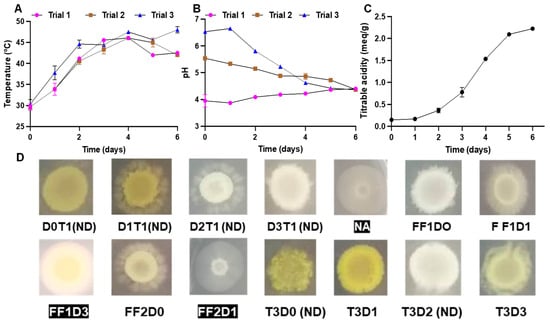
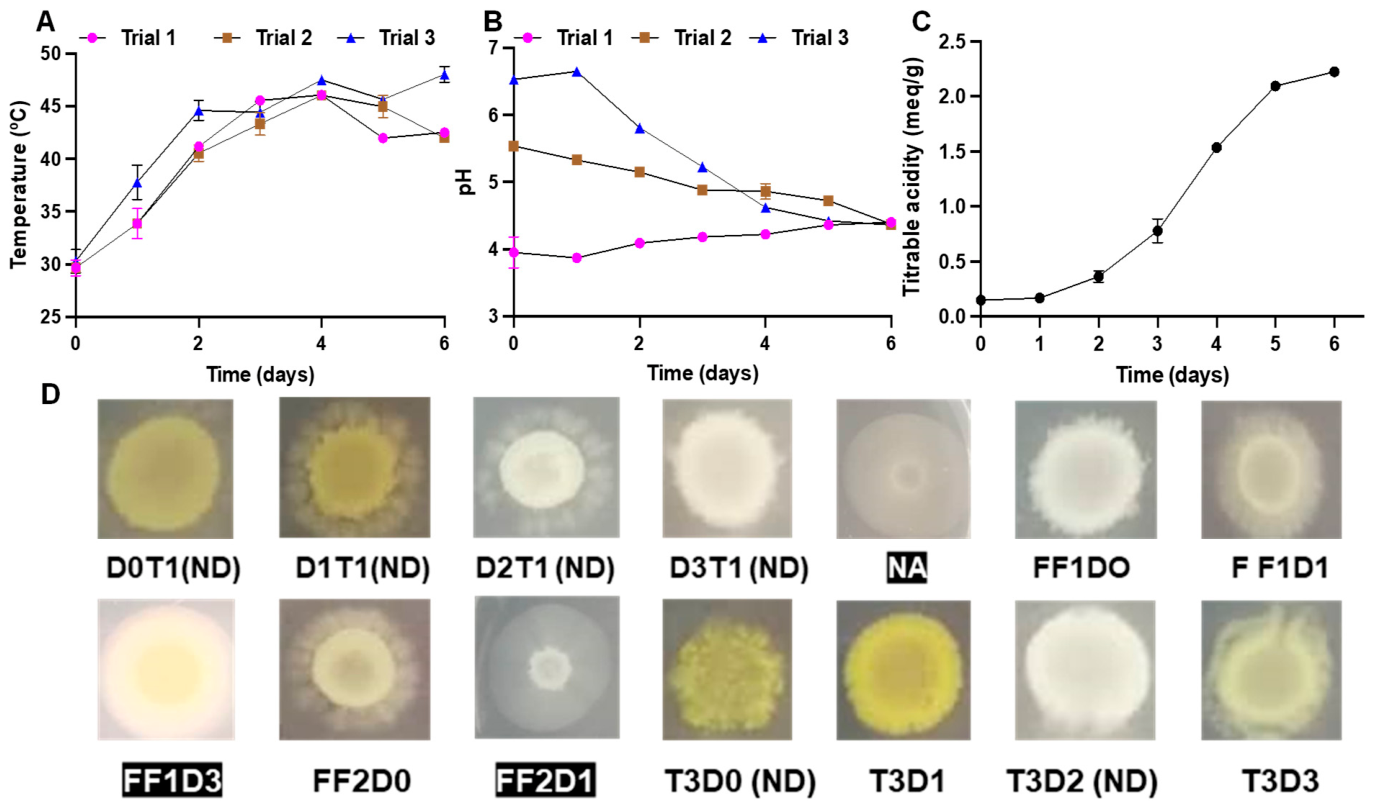
In all the three trials, there was increase in temperature of the cocoa mass from 30 to 45 °C for the 4 days of fermentation. (Figure 1A). Afterwards, there was fluctuation in the temperature for all trials. The pH in Trial 1 at the initial stage of fermentation was 3.7 and increased gradually to 4.4 at the final stage (Figure 1B). In Trial 2, however, the pH decreased from 5.4 to 4.3, and in Trial 3, decreased from 6.6 to 4.2. Fermentation caused a significant increment in the acidity levels (0.1–2.2) of the cocoa beans (Figure 1C). In this study, titratable acidity of cocoa beans at the beginning of fermentation was 0.1.
Figure 1.
(A) Evolution of temperature with time during fermentation. (B) pH variation of cocoa mass during fermentation. (C) Titratable acidity of fermenting cocoa mass. (D) Pectin degradation of yeast isolates after 7 days incubation on pectinase screening agar medium (PSAM).
3.1.2. Isolation and Identification of Isolates
A total of 23 isolates (14 yeasts and 9 bacteria strains) were obtained during the fermentation. The strains were morphologically characterized based on their shape, color, elevation surface, margin, and biochemical reactions (Supplementary Table S1). All of the isolates were circular, with 11 of them being creamy (47.8%), and the remaining white in color (Supplementary Table S1). Pure cultures of the isolates were obtained after several rounds of sub-culturing on selected media and devoid of contamination.
3.1.3. Screening
As shown in Figure 1D, the highest pectin degradation index (PDI) was derived after seven days of incubation. A total of 8 yeast strains (D2T1, FF1D0, FF1D1, FFID3, FF2D0, FF2D1, T3D1, NA) and 1 bacteria strain (D5-1) out of the 23 isolates (39.13%) showed zones of hydrolysis (Supplementary Table S3). Among these strains, NA, FF2D1, and FF1D3 (yeast) had the highest clear zones, which ranged from 8 to 14 mm (Figure 1D), and were selected for further screening. Isolate NA had the highest PDI of 251%, followed by FF1D3 (223%), then FF2D1 (171%) (Supplementary Table S3). Based on these results, downstream enzyme assays and starter culture trials focused on the yeast isolates with the highest PDI values, while bacterial isolates were not pursued further.
3.1.4. Yeast Populations During Fermentation
An increasing trend in yeast cells was also observed from the initial inoculation up to 96 h of fermentation (Table 1A). The highest yeast cell growth was found in all yeasts at 96 h. The yeast cells were counted every 24 h to understand their changes. The number of living yeast cells recorded for strain FF2D1 were higher (7.76 Log CFU m/L) as compared to that of strains FF1D3 and NA at 96 h fermentation (Table 1A).
Table 1.
(A) The CFU of fermented cocoa pulp media of selected isolates at different hours (24–96); (B) Brix of fermented cocoa pulp media (24–96). (C) pH of fermented cocoa pulp media (24–96).
3.1.5. Brix
The °Brix of the CPM was measured from beginning to end of the fermentation process. The initial CPM °Brix recorded for the strains are 1.5, 2.0, and 1.5 for FF1D3, FF2D1, and NA, respectively (Table 1B). There were significant differences among yeasts in reducing the Brix contents during each fermentation period. After 96 h fermentation, the Brix of CPM was 0 for all three isolates. The °Brix values continuously dropped in all fermentation treatments because of the metabolism of sugars into alcohols by the yeast strains. For all isolates, the Brix observed during 96 h was 0, which indicates their glucose utilization.
3.1.6. pH
Comparatively, the pH of NA strain decreased from 3.693 (24 h) to 3.537 (48 h), then stabilized at 72 and 96 h. Enzyme activity was higher at 24 and 48 h for all three isolates. The pH range for the highest enzyme production ranged between 3.54 and 3.80. The isolate NA had the highest enzyme activity (PGA) at day 48, with the lowest pH of 3.54 (Table 1C).
3.2. Enzyme Assays
3.2.1. Polygalacturonase Activity (PG)
The PG activity of the three isolated yeasts was evaluated at different fermentation hours by growing them in CPM. From Table 2A, it can be deduced that the PG activity of FF2D1 and NA were quite high at 24 h compared to FF1D3. The highest PG activity of FF1D3 was found at 24 h fermentation, and it was 19.6 U/mL (Table 2A). However, relatively, the highest PG activity of NA was obtained at 48 h fermentation, and it accounts for the 36.038 U/mL. Generally, apart from NA at 48 h, the PG activity showed a decreasing trend as the fermentation hours progressed from 24 to 96 h.
Table 2.
(A) PGA of fermented cocoa pulp media (24–96); (B) PLA of fermented cocoa pulp media (24–96).
3.2.2. Pectin Lyase Activity (PLA)
The highest PL activity was found at 72 h during the fermentation and declined by 96 h for all yeasts isolates (Table 2B). The lowest PL activity was obtained from FF2D1 at 24 h. Strain NA had a significantly higher PL activity in all the fermentation hours as compared to FF1D3 and FF2D1 strains.
3.2.3. Phylogenetic Trees
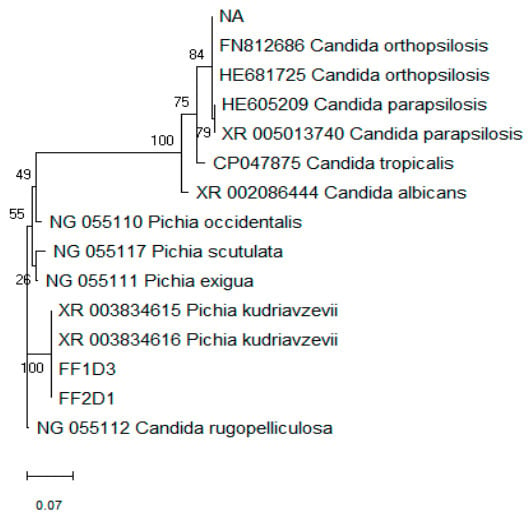
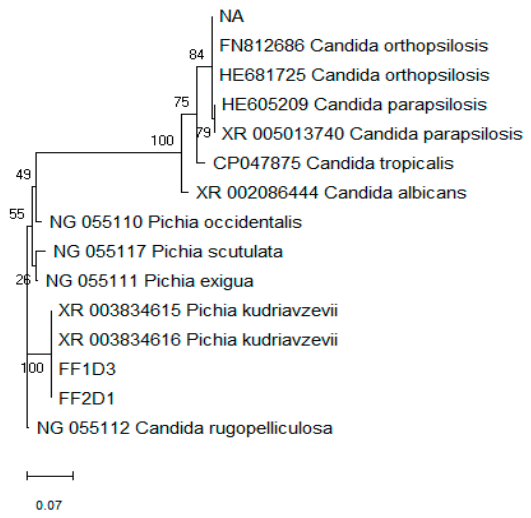
Using the internally transcribed spacer (ITS) genes, phylogenetic analysis was performed (Figure 2). Phylogenetic analysis identified FF1D3 and FF2D1 as Pichia kudriavzevii. Isolate NA showed a low-confidence closest BLAST match to Candida orthopsilosis and was therefore treated as an unresolved Candida-related isolate rather than assigned to species level. The sequences obtained from the studies have been deposited at the NCBI database with the accession numbers PP739071, PP739072, and PP739073 (Table 3).
Figure 2.
Phylogenetic relationship between three identified yeast strains and 26S ITS rRNA sequences of the published strains. Pichia kudriavzevii (strains FFID3 and FF2D1) and Candida orthopsilosis (strain NA).
Table 3.
Taxonomic identification of yeast strains based on molecular characteristics.
3.2.4. Comparative Genomics
In terms of nucleotide identity, FF1D3 and FF2D1 showed 100% homology (Figure 2) to yeast of the species Pichia kudriavzevii (NCBI database). They also showed some primary sequence similarities to other Pichia spp. such as P. occidentalis, P. scutulata, and P. exigua (Figure 3). Strain NA had an 84% homology (Figure 2) with Candida orthopsilosis (NCBI database). It showed some primary sequence similarities to C. parapsilopsis, C. tropicalis, and C. albicans. Due to this unresolved identity and the close relationship of these taxa to opportunistic human pathogens, NA was excluded from starter culture trials.
Figure 3.
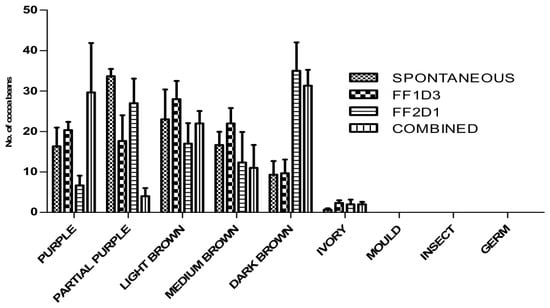
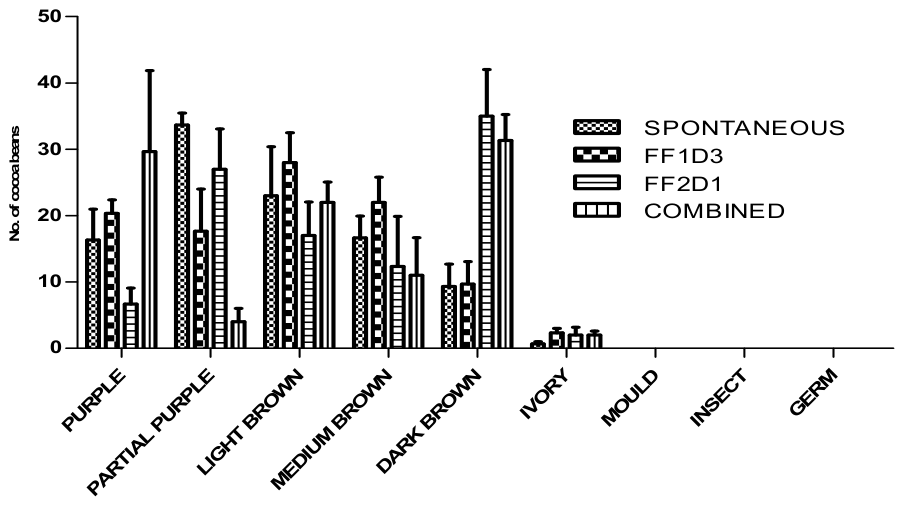
Color characteristics of dried cocoa beans based on visual observation on the surface of cocoa inoculated and non-inoculated treatment.
3.2.5. Fermentation Kinetics: °Brix, pH, and Yeast Population Dynamics
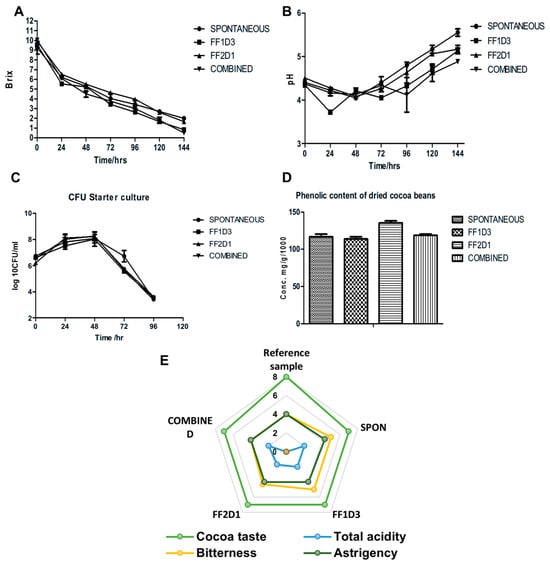
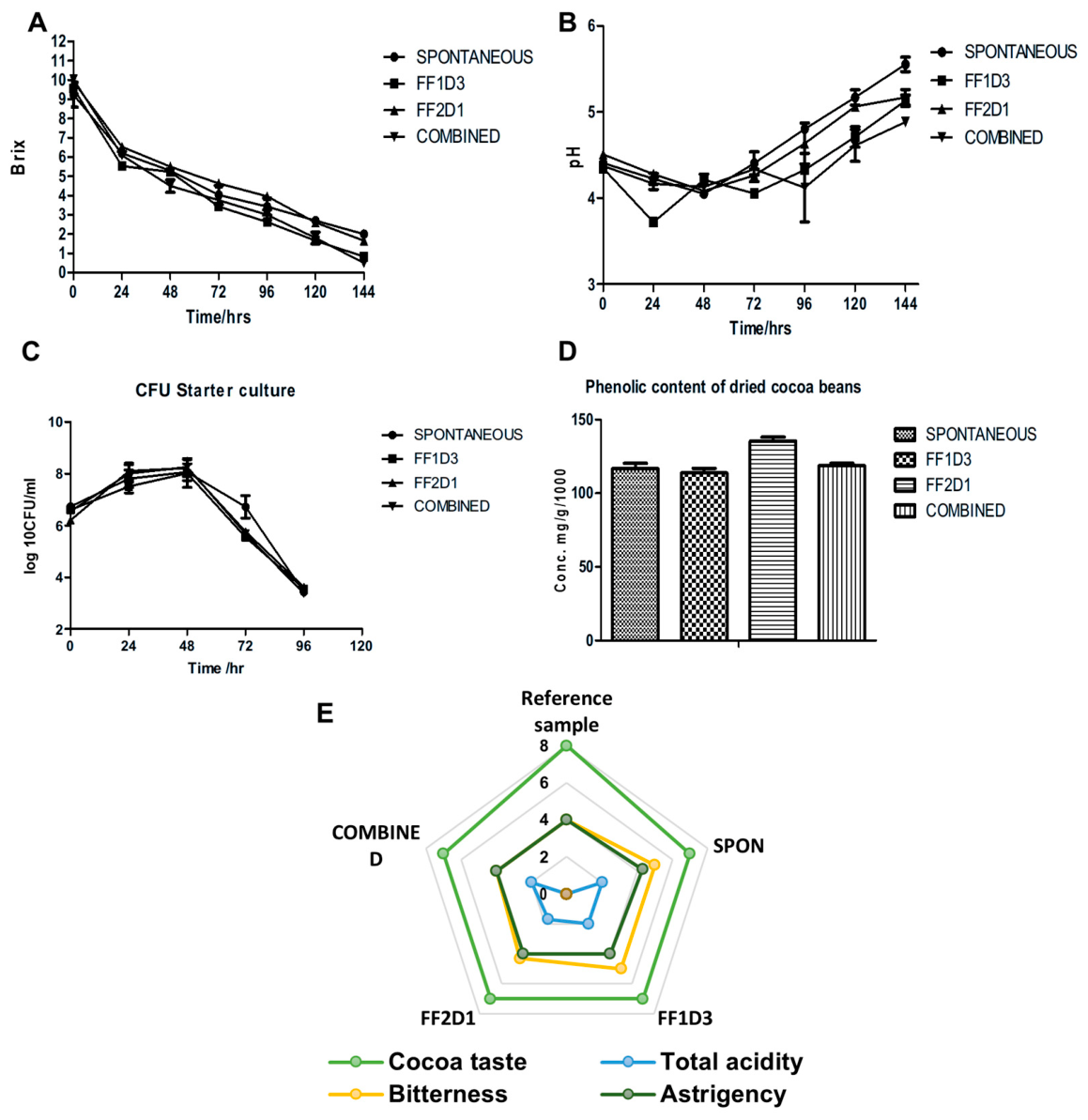
The °Brix values of cocoa beans fermented with single starter cultures (FF1D3 and FF2D1), the combined starter culture, and spontaneous fermentation ranged from 1.97 to 3.11 (Figure 4A), indicating active sugar utilization during fermentation. Among the treatments, the combined starter culture showed the greatest reduction in soluble solids, suggesting enhanced sugar metabolism by the co-inoculated yeasts.
Figure 4.
(A) °Brix content utilization during fermentation in yeast-inoculated and non-inoculated treatment. (B) pH changes during cocoa pulp fermentation using yeast-inoculated and non-inoculated treatment. (C) Microbial populations during cocoa pulp fermentation. (D) The phenolic content in yeast-inoculated and non-inoculated treatment. (E) Aroma profiles of fermented cocoa beans using pectinase starter cultures and spontaneous (control).
A significant reduction in pH was observed in both yeast-inoculated and spontaneous fermentation treatments (p < 0.01; Figure 4B), confirming acidification during fermentation. Yeast populations increased from approximately 6 log10 CFU/g to 8 log10 CFU/g in the spontaneous, FF1D3, and FF2D1 treatments, whereas the combined starter culture reached approximately 9 log10 CFU/g (Figure 4C). These results indicate that inoculation with selected pectinolytic yeasts, particularly in combination, supported yeast growth and accelerated sugar utilization during cocoa fermentation.
3.2.6. FF2D1 Maximizes Phenolic Levels in Cocoa Beans
The phenolic content of beans treated with FF2D1 was higher compared to treatments FF1D3, combined, and non-inoculated treatment (control). The phenolic content of yeast-fermented cocoa had significant differences (p < 0.05) compared to the spontaneous (Figure 4D). The highest phenolic content was observed between FF2D1 and combined treatment (FF1D3 and FF2D1). The phenolic content in the control and FF1D3 treatment was lower. Some yeast treatments may activate more efficient enzymatic hydrolysis, leading to higher levels of these beneficial and active phenolic forms.
3.3. Physical Examination/Bean Quality Assessment
3.3.1. Moisture Content
The inoculum FF1D3 produced cocoa beans with the lowest moisture level at 7.3% (Supplementary Table S5), indicating that it had the most effective drying properties among the treatments. FF2D1 followed closely with a moisture content of 7.4%. Both the spontaneous fermentation and the combination treatment resulted in a slightly higher moisture level at 7.5%.
3.3.2. Sensory Profiling
The radar chart presents six sensory attributes rated on a scale from 0 to 8 across five sample groups: COMBINED, FF2D1, FF1D3, SPON, and Reference. These attributes—cocoa taste, total acidity, sweetness, bitterness, astringency, and off-flavour—form a multidimensional sensory profile. The Reference sample consistently ranks highest across all attributes, especially cocoa taste (8/8), suggesting it serves as the benchmark for ideal sensory quality. The COMBINED sample shows moderate enhancement compared to individual fermentation treatments, especially in cocoa taste, suggesting additive or synergistic sensory effects. SPON exhibits the lowest scores across the board, potentially indicating inferior sensory quality or incomplete fermentation. Cocoa taste shows a wide range, from ~3 (SPON) to 8, implying high variance and good discriminatory power.
4. Discussion
The aim of this study is to isolate, characterize, evaluate the pectinase degradation index and pectinolytic activities of pectinase-producing microorganisms from fermenting cocoa mass, and assess their impact on fermentation when applied as single and mixed starter cultures. Among the 23 yeast and bacteria strains screened for pectinolytic activity (Supplementary Table S3), three yeast strains, namely, NA, FF1D3, and FF2D1, exhibited strong pectinase degradation index values, while strains D2-T1, FF2D0, and FF1D0 showed minimal PDI between 158 and 117 mm. Strains FF1D1 and D5-1 showed weak PDI, ranging between 104 and 100 mm, while the remaining 14 strains, consisting of 6 yeast and 8 bacteria, did not exhibit any PDI. Strain D5-1 exhibited a weak pectinolytic activity, highlighting the relatively low prevalence of pectinolytic activity among the bacteria strains. The selected three strains with the highest PDI were molecularly identified by ITS region sequencing as Pichia kudriavzevii and Candida orthopsilosis.
Previous studies on PDI indicate that various yeast species, such as Kluyveromyces marxianus [6], Wickerhamomyces anomalus, Pichia kudriavzevii, Saccharomycopsis fibuligera, Papiliotrema flavescens, and Saccharomyces cerevisiae, have been recognized for their role in pectin degradation [18]. Comparatively, Pichia kudriavzevii has been confirmed in our current study to also have PDI. Other findings have been documented in related studies exhibiting a large-scale screening of 205 yeast isolates obtained from cocoa bean fermentations, revealing that 36 strains (17.5%) exhibited pectinolytic activity. Among these, Hanseniaspora uvarum and Pichia kudriavzevii stood out as the most stress-tolerant and enzymatically active species [30]. In another study, screening of 28 yeast strains isolated from coffee beans on a citric pectin-containing medium revealed that 8 strains had pectinolytic activity (28.6%) [18].
During the enzymatic study, there was a peak rise in pectin lyase (PL) activity after 72 h of fermentation, followed by a decline at 96 h across all yeast isolates (Table 2B). The lowest PL activity was recorded in strain FF2D1 at 24 h. Notably, strain NA consistently exhibited significantly higher PL activity at every fermentation interval compared to strains FF1D3 and FF2D1. The polygalacturonase production by the isolated yeast in this study ranged from 2.55 to 36.04 U/mL, while pectin lyase ranged from 4.95 to 15.86 U/mL. Studies by Haile et al. [18] indicated that PL and PGA activity increased as the fermentation hours increased for all yeasts. Studies by Borovkova et al. examined yeast strains with high pectinolytic activity, confirming variability in enzyme output across isolates [31]. Work by Gazaloğlu et al. analyzed over 500 yeast strains, showing that certain genera (e.g., Kluyveromyces, Cryptococcus) consistently demonstrate higher pectinolytic activity compared to others [7].
These findings align with previous genetic analyses of PGU genes in S. cerevisiae, which demonstrated that certain strains exhibit significantly higher pectinolytic activity due to natural polymorphisms. Variations in pectinase enzyme production were evident among the yeast isolates tested in our experiment. These differences are likely influenced by factors such as microbial population dynamics and fluctuations in pH during the fermentation process. Indeed, pectinase synthesis is highly strain-dependent, with each microorganism exhibiting unique enzymatic potential. Among the isolates, strain NA consistently exhibited significantly higher PL activity at all fermentation time points compared to FF1D3 and FF2D1 (Table 2B). This indicates a superior enzymatic potential and suggests that NA possesses a more efficient metabolic pathway for PL production or regulation. In contrast, FF2D1 demonstrated the lowest PL activity at 24 h, highlighting its limited capacity for early enzyme synthesis [32].
Yeast populations during fermentation showed a rise in CFU from 24 h to 96 h for all isolates (Table 1A). In a study by Haile [18], they observed an increasing trend in living yeasts cell from the initial inoculation (0 h) of coffee fermentation up to 48 h of fermentation. Then, a decreasing growth was observed in all yeasts at 72 and 96 h of fermentation. The decline in cell numbers after 96 h of fermentation can be referred to as the stationary phase [33] (Table 1A). This phase is as a result of essential nutrients running out, or growth inhibition by yeast cells, waste products, or lack of physical space [34].
4.1. °Brix
The °Brix was continuously dropped in all fermentation treatments because of the metabolism of sugars into alcohols by the yeast strains. For all isolates, the Brix observed during 96 h was 0, which indicates their glucose utilization (Table 1A) [35].
4.2. Phylogenetic Trees
The tree analysis identified two clades (I and II) (Figure 2) that highlighted the genetic distance between the identified isolates and other closely related species. Clade I, demonstrated the genetic distance between NA strains and the closest species to Candida spp. This could suggest that these NA strains have diverged significantly from the Candida spp. Clade II, on the other hand, showed the distance between FF1D3 and FF2D1 and other related strains and species. The molecular characterization of these strains could lead to the discovery of novel biological roles or adaptations, as well as the identification of distinctive genetic markers and a knowledge of their evolutionary history [36]. Strain NA, which was identified to have the properties of (Figure 2) Candida orthopsilosis, was not used as a starter culture in the food industry or in the cocoa fermentation. This is because C. orthopsilosis is phenotypically indistinguishable from C. parapsilosis, C. metapsilosis, and Lodderomyces elongisporus. Ricombenni et al. identified 5700 protein-coding genes in C. orthopsilosis, of which 5570 have an ortholog in C. parapsilosis. Previous studies have shown that yeasts of these genera are related to human health problems, and can therefore not be used for starter culture [37].
4.3. Physical Examination/Bean Quality Assessment Moisture Content
In this study, the inoculum FF1D3 demonstrated superior drying properties, producing beans with the lowest moisture level at 7.3% (Supplementary Table S5). This result highlights its efficiency in facilitating water loss during fermentation and subsequent drying, thereby enhancing post-harvest quality. Inoculum FF2D1 achieved a moisture content of 7.4%. Spontaneous fermentation and the combination treatment yielded beans with a moisture level of 7.5%. Similar results were detected by Afoakwa et al. [14]. Fleet, in their studies, observed that selected yeast inoculum could enhance fermentation kinetics, resulting in beans with reduced moisture and improved post-harvest quality. This confirms our current studies highlighting superior drying qualities with the isolated strains [38].
4.4. Aroma Test
Cocoa beans treated with FF1D3 and the combined treatment developed a “dry cut” scent (Supplementary Table S5) which likely reflects a more robust or less sweet aroma profile (Supplementary Table S5). Meanwhile, the control group (spontaneous fermentation) and FF2D1 exhibited a “honey flowery” scent, suggesting a lighter, sweeter, and possibly more aromatic fragrance. This distinction in aroma could significantly influence the sensory quality of the cocoa beans, catering to different preferences [39]. Studies by Fleet et al. demonstrated how different yeast strains contribute to distinct volatile profiles, including floral and honey-like notes. These honey-flowery scents are consistent with volatile compounds (esters, higher alcohols) produced by yeasts during fermentation [40,41]. In another study by Zorro-González et al., it was discovered that microbial activity influences precursor metabolites, leading to diverse aromatic profiles such as honey-like or floral notes [39]. A critical consideration when selecting yeast strains as starter cultures is their ester-producing capacity, since this trait not only standardizes, but also enhances the flavour profile of chocolate during fermentation.
4.5. Sensory Analysis
Sensory analyses of samples from controls and inoculated fermentations were performed using a consumer acceptance test (Supplementary Table S5). The tests were conducted on trained professionals from CRIG sensory laboratory over 18 years of age, 85% male and 15% female. For the acceptance test, the consumers evaluated how much they liked each sample using an 8-point hedonic scale with 1 = dislike extremely and 8 = like extremely (Figure 4E). Through sensory analysis, it was observed that all treated cocoa beans, including Spontaneous, had a cocoa taste score of 7 compared to the standard, which had a score of 8. Additionally, total acidity was 2 for all treatments and Spontaneous, except for treatment FF2D1, which had a lower acidity score of 1.7; the standard, however, had an acidity score of 0. Acidity was significantly higher in all treated beans compared to standard, which might influence taste perception. FF2D1 stood out with lower acidity, suggesting a potential avenue for improving taste alignment with the standard [42]. Total acidity, bitterness, and astringency reflect moderate ranges (1–3), possibly linked to microbial metabolism during fermentation and correlating to sourness perception. Sweetness and off-flavour have narrow ranges (typically 0–2), suggesting low sensitivity or influence of sample treatment on those sensory features [43]. The radar profile suggests that combining fermentation methods may smooth sensory inconsistencies and bring the profile closer to the reference standard. Low scores in off flavour across all samples (including SPON) could indicate controlled contamination or effective microbial management.
While this study focused on individual or combined fermentation, future research could explore the use of these yeasts in a consortium with other beneficial microorganisms (e.g., lactic acid bacteria) to further refine and diversify the flavour profiles of cocoa, creating new and unique product characteristics. Based on the outcomes of this study, we recommend the strategic application of selected non-conventional yeast strains—particularly Pichia kudriavzevii FF1D3 and FF2D1—as functional starter cultures in cocoa fermentation. This would enable small- and large-scale cocoa producers to achieve consistent product quality, mitigate the risks associated with spontaneous fermentation, and potentially increase the market value of their cocoa beans.
5. Conclusions
There are several limitations of the present study that we should acknowledge. We observed heterogeneity in starting cocoa pulp conditions, which reflects the preliminary spontaneous fermentation trial results (i.e., variation in initial pH, etc.). The isolate NA remained unresolved at the species level, and this strain was therefore excluded from starter culture recommendations. For this study, isolate NA, which is a spp. of C. orthopsilosis, was withdrawn as a potential candidate for starter culture. This is because spp. of these genera can inflict damage on reconstituted human epithelial and epidermal tissues. Because of the possibility of being a pathogenic isolate, it is not suitable for use as a starter culture.
Cocoa is the backbone of the global chocolate industry, yet its fermentation—a crucial step in flavour development—can be unpredictable and time-consuming for farmers. This study illuminates the potential of specific yeast strains, namely, P. kudriavzevii FF1D3 and P. kudriavzevii FF2D1, in enhancing the cocoa fermentation process. These strains demonstrated a high capacity for pectinase enzyme production, which is crucial for breaking down cocoa pulp during fermentation. By harnessing these naturally occurring yeasts with strong enzymatic activity, farmers could achieve faster and more efficient fermentation processes, improving bean quality and boosting productivity. These findings offer a sustainable pathway to support smallholder farmers, strengthen cocoa value chains, and elevate the consistency and flavour of cocoa beans.
Supplementary Materials
The following supporting information can be downloaded at: https://www.mdpi.com/article/10.3390/applmicrobiol6070084/s1, Supplementary Table S1: Morphological features of bacteria isolates. Supplementary Table S2: Ability of isolated yeasts strains to utilize sugars using a Liofilchem. Supplementary Table S3: Pectin degradation index of yeast and bacteria strains. Supplementary Table S4: Description of the treatment factors used during the cocoa fermentation process. Supplementary Table S5. Physical and cut test of dried fermented beans.
Author Contributions
Conceptualization, A.G.B. and E.G.A.; methodology, A.G.B., S.Y.O. and I.A.-A.; software, A.G.B. and B.S.S.V.; validation, A.G.B., I.A.-A., S.Y.O., E.G.A. and B.S.S.V.; investigation and resources, S.Y.O. and E.G.A.; data curation, A.G.B., I.A.-A., S.Y.O. and B.S.S.V.; writing—original draft preparation, A.G.B., I.A.-A. and E.G.A.; writing—review and editing A.G.B., I.A.-A., S.Y.O. and E.G.A.; visualization, A.G.B.; supervision, I.A.-A., E.G.A. and B.S.S.V.; funding acquisition, A.G.B., I.A.-A. and B.S.S.V. All authors have read and agreed to the published version of the manuscript.
Funding
This work was funded by the Cocoa Research Institute of Ghana, P.O. Box 8 Akim Tafo, E/R, Ghana, West Africa, under the project code CRIG/PROB/01. Open access publication fees were supported by internal research funds from the Department of Foundational Sciences at East Carolina University, with additional partial support from the East Carolina University Open Access Publishing Support Fund and the ECU Libraries’ MDPI Institutional Open Access Program.
Data Availability Statement
The (26S) rRNA ITS gene amplicon raw reads were deposited at the National Center for Biotechnology Information (NCBI) database under the accession numbers PP739070 (FFID3), PP739072 (FF2D1), and PP739073 (NA), available link https://www.mdpi.com/ethics (accessed on 17 July 2026).
Acknowledgments
The authors are grateful for the support of the staff of the Physiology/Biochemistry and Plant pathology Division of the Cocoa Research Institute of Ghana in carrying out this research. This paper CRIG/05/2024/063/001 is published with the kind permission of the Executive Director, CRIG, Akim-Tafo, E/R, Ghana.
Conflicts of Interest
The authors declare no conflict of interest, regarding the research, authorship, and publication of this study. All procedures and analyses were conducted independently and transparently to ensure integrity and impartiality.
Abbreviations
The following abbreviations are used in this manuscript:
| AAB | Acetic Acid Bacteria |
| ANOVA | Analysis of Variance |
| AOAC | Association of Official Analytical Chemists |
| BLAST | Basic Local Alignment Search Tool |
| CFU | Colony-Forming Units |
| CFU/g | Colony-Forming Units per Gram |
| CFU/mL | Colony-Forming Units per Milliliter |
| CPM | Cocoa Pulp Media |
| CRIG | Cocoa Research Institute of Ghana |
| CFS | Cell-Free Supernatant |
| DNS | Dinitrosalicylic Acid |
| ITS | Internal Transcribed Spacer |
| LAB | Lactic Acid Bacteria |
| LSD | Least Significant Difference |
| NCBI | National Center for Biotechnology Information |
| PCR | Polymerase Chain Reaction |
| PDI | Pectin Degradation Index |
| PG | Polygalacturonase |
| PGA | Polygalacturonase Activity |
| PL | Pectin Lyase |
| PSAM | Pectinase Screening Agar Medium |
| SDW | Sterile Distilled Water |
| TA | Titratable Acidity |
| YPD | Yeast Extract Peptone Dextrose |
| x gS | G Force |
References
- Subroto, E.; Djali, M.; Indiarto, R.; Lembong, E.; Baiti, N. Microbiological Activity Affects Post-Harvest Quality of Cocoa (Theobroma cacao L.) Beans. Horticulturae 2023, 9, 805. [Google Scholar] [CrossRef] [Scilit]
- Gutiérrez-Ríos, H.G.; Suárez-Quiroz, M.L.; Hernández-Estrada, Z.J.; Castellanos-Onorio, O.P.; Alonso-Villegas, R.; Rayas-Duarte, P.; Cano-Sarmiento, C.; Figueroa-Hernández, C.Y.; González-Rios, O. Yeasts as Producers of Flavor Precursors During Cocoa Bean Fermentation and Their Relevance as Starter Cultures: A Review. Fermentation 2022, 8, 331. [Google Scholar] [CrossRef] [Scilit]
- De Vuyst, L.; Leroy, F. Functional Role of Yeasts, Lactic Acid Bacteria and Acetic Acid Bacteria in Cocoa Fermentation Processes. FEMS Microbiol. Rev. 2020, 44, 432–453. [Google Scholar] [CrossRef] [Scilit] [PubMed]
- Haile, S.; Ayele, A. Pectinase from Microorganisms and Its Industrial Applications. Sci. World J. 2022, 2022, 1881305. [Google Scholar] [CrossRef] [Scilit] [PubMed]
- Mojsov, K.D. Chapter 16—Aspergillus Enzymes for Food Industries. In New and Future Developments in Microbial Biotechnology and Bioengineering; Gupta, V.K., Ed.; Elsevier: Amsterdam, The Netherlands, 2016; pp. 215–222. [Google Scholar]
- Schwan, R.F.; Cooper, R.M.; Wheals, A.E. Endopolygalacturonase Secretion by Kluyveromyces marxianus and Other Cocoa Pulp-Degrading Yeasts. Enzym. Microb. Technol. 1997, 21, 234–244. [Google Scholar] [CrossRef] [Scilit]
- Gazaloğlu, M.; Camarasa, C.; Nevoigt, E. Exploring Pectinolytic Yeast Diversity: Toward Effective Polygalacturonase Producers for Applications in Wine-Making. FEMS Yeast Res. 2025, 25, foae033. [Google Scholar] [CrossRef] [Scilit] [PubMed]
- Díaz-Muñoz, C.; De Vuyst, L. Functional Yeast Starter Cultures for Cocoa Fermentation. J. Appl. Microbiol. 2022, 133, 39–66. [Google Scholar] [CrossRef] [Scilit]
- Díaz-Muñoz, C.; Van de Voorde, D.; Comasio, A.; Verce, M.; Hernandez, C.E.; Weckx, S.; De Vuyst, L. Curing of Cocoa Beans: Fine-Scale Monitoring of the Starter Cultures Applied and Metabolomics of the Fermentation and Drying Steps. Front. Microbiol. 2021, 11, 616875. [Google Scholar] [CrossRef] [Scilit] [PubMed]
- Bhumibhamon, O.; Jinda, J. Cocoa Fermentation: Effect of Enzyme Pectinase on Natural Cocoa Fermentation. Agric. Nat. Resour. 1997, 31, 206–211. [Google Scholar]
- Opoku-Ameyaw, K.; Baah, F.; Gyedu-Akoto, E.; Anchirina, V.; Obiatey, H.K.; Cudjoe, R.; Acquaye, S.; Opoku, S. Cocoa Manual: A Source Book for Sustainable Cocoa Production; Cocoa Research Institute of Ghana: New-Tafo, Ghana, 2010. [Google Scholar]
- Ackah, E.; Dompey, E. Correction to: Effects of Fermentation and Drying Durations on the Quality of Cocoa (Theobroma cacao L.) Beans During the Rainy Season in the Juaboso District of the Western-North Region, Ghana. Bull. Natl. Res. Cent. 2021, 45, 184. [Google Scholar] [CrossRef] [Scilit]
- Barnby, F.M.; Morpeth, F.F.; Pyle, D.L. Endopolygalacturonase Production from Kluyveromyces marxianus. I. Resolution, Purification, and Partial Characterisation of the Enzyme. Enzym. Microb. Technol. 1990, 12, 891–897. [Google Scholar] [CrossRef] [Scilit]
- Afoakwa, E.O.; Quao, J.; Budu, A.S.; Takrama, J.; Saalia, F.K. Effect of Pulp Preconditioning on Acidification, Proteolysis, Sugars and Free Fatty Acids Concentration During Fermentation of Cocoa (Theobroma cacao) Beans. Int. J. Food Sci. Nutr. 2011, 62, 755–764. [Google Scholar] [CrossRef] [Scilit] [PubMed]
- Senanayake, M.; Jansz, E.R.; Buckle, K.A. Effect of Different Mixing Intervals on the Fermentation of Cocoa Beans. J. Sci. Food Agric. 1997, 74, 42–48. [Google Scholar] [CrossRef]
- Chemists, Association of Official Analytical; Association of Official Agricultural Chemists. Official Methods of Analysis; AOAC: Rockville, MD, USA, 1925. [Google Scholar]
- Bharadwaj, P. Isolation, Purification and Characterization of Pectinase Enzyme from Streptomyces thermocarboxydus. J. Clin. Microbiol. Biochem. Technol. 2019, 5, 001–006. [Google Scholar] [CrossRef] [Scilit]
- Haile, M.; Kang, W.H. Isolation, Identification, and Characterization of Pectinolytic Yeasts for Starter Culture in Coffee Fermentation. Microorganisms 2019, 7, 401. [Google Scholar] [CrossRef] [Scilit] [PubMed]
- Kashyap, D.; Chandra, S.; Kaul, A.; Tewari, R. Production, Purification and Characterization of Pectinase from a Bacillus sp. Dt7. World J. Microbiol. Biotechnol. 2000, 16, 277–282. [Google Scholar] [CrossRef] [Scilit]
- Lõoke, M.; Kristjuhan, K.; Kristjuhan, A. Extraction of Genomic DNA from Yeasts for PCR-Based Applications. Biotechniques 2011, 50, 325–328. [Google Scholar] [CrossRef] [Scilit] [PubMed]
- Tamura, K.; Stecher, G.; Peterson, D.; Filipski, A.; Kumar, S. MEGA6: Molecular Evolutionary Genetics Analysis Version 6.0. Mol. Biol. Evol. 2013, 30, 2725–2729. [Google Scholar] [CrossRef] [Scilit] [PubMed]
- Rocha-Ramírez, L.M.; Hernández-Chiñas, U.; Moreno-Guerrero, S.S.; Ramírez-Pacheco, A.; Eslava, C.A. In Vitro Effect of the Cell-Free Supernatant of the Lactobacillus casei Strain Imau60214 Against the Different Pathogenic Properties of Diarrheagenic Escherichia coli. Microorganisms 2023, 11, 1324. [Google Scholar] [CrossRef] [Scilit] [PubMed]
- Streule, S.; Freimüller Leischtfeld, S.; Chatelain, K.; Miescher Schwenninger, S. Effect of Pod Storage and Drying Temperature on Fermentation Dynamics and Final Bean Quality of Cacao Nacional in Ecuador. Foods 2024, 13, 1536. [Google Scholar] [CrossRef] [Scilit] [PubMed]
- Camu, N.; De Winter, T.; Verbrugghe, K.; Cleenwerck, I.; Vandamme, P.; Takrama, J.S.; Vancanneyt, M.; De Vuyst, L. Dynamics and Biodiversity of Populations of Lactic Acid Bacteria and Acetic Acid Bacteria Involved in Spontaneous Heap Fermentation of Cocoa Beans in Ghana. Appl. Environ. Microbiol. 2007, 73, 1809–1824. [Google Scholar] [CrossRef] [Scilit] [PubMed]
- Afoakwa, E.O. Chocolate Science and Technology; Wiley-Blackwell: Hoboken, NJ, USA, 2010. [Google Scholar]
- Hernández-Hernández, C.; López-Andrade, P.A.; Ramírez-Guillermo, M.A.; Guerra Ramírez, D.; Caballero Pérez, J.F. Evaluation of Different Fermentation Processes for Use by Small Cocoa Growers in Mexico. Food Sci. Nutr. 2016, 4, 690–695. [Google Scholar] [CrossRef] [Scilit] [PubMed]
- Pérez, M.; Dominguez-López, I.; Lamuela-Raventós, R.M. The Chemistry Behind the Folin-Ciocalteu Method for the Estimation of (Poly)phenol Content in Food: Total Phenolic Intake in a Mediterranean Dietary Pattern. J. Agric. Food Chem. 2023, 71, 17543–17553. [Google Scholar] [CrossRef] [Scilit] [PubMed]
- Moreno-Arribas, M.V.; Polo, M.C. Winemaking Biochemistry and Microbiology: Current Knowledge and Future Trends. Crit. Rev. Food Sci. Nutr. 2005, 45, 265–286. [Google Scholar] [CrossRef] [Scilit] [PubMed]
- McClure, A.P.; Hopfer, H.; Grün, I.U. Optimizing Consumer Acceptability of 100% Chocolate Through Roasting Treatments and Effects on Bitterness and Other Important Sensory Characteristics. Curr. Res. Food Sci. 2022, 5, 167–174. [Google Scholar] [CrossRef] [Scilit] [PubMed]
- Samagaci, L.; Ouattara, H.; Niamké, S.; Lemaire, M. Pichia kudrazevii and Candida nitrativorans are the Most Well-Adapted and Relevant Yeast Species Fermenting Cocoa in Agneby-Tiassa, a Local Ivorian Cocoa Producing Region. Food Res. Int. 2016, 89, 773–780. [Google Scholar] [CrossRef] [Scilit] [PubMed]
- Borovkova, A.N.; Shalamitskiy, M.Y.; Naumova, E.S. Comparative Genetic Analysis of Pectinase Genes Pgu of the Yeast Saccharomyces cerevisiae: Selection of Strains with High Pectinolytic Activity. Appl. Biochem. Microbiol. 2025, 61, 1669–1678. [Google Scholar] [CrossRef] [Scilit]
- Mat Jalil, M.T.; Zakaria, N.A.; Salikin, N.H.; Ibrahim, D. Assessment of Cultivation Parameters Influencing Pectinase Production by Aspergillus niger LFP-1 in Submerged Fermentation. J. Genet. Eng. Biotechnol. 2023, 21, 45. [Google Scholar] [CrossRef] [Scilit] [PubMed]
- Navarro Llorens, J.M.; Tormo, A.; Martínez-García, E. Stationary Phase in Gram-Negative Bacteria. FEMS Microbiol. Rev. 2010, 34, 476–495. [Google Scholar] [CrossRef] [Scilit] [PubMed]
- Gonzalez, J.M.; Aranda, B. Microbial Growth Under Limiting Conditions-Future Perspectives. Microorganisms 2023, 11, 1641. [Google Scholar] [CrossRef] [Scilit] [PubMed]
- Haydar, M.; Joukhador, C.; Inaty, L.; Saliba, C.; Farah, Y.; Nakad, M.; Assaf, J.C. Evaluation of Wine Fermentation Dynamics Through Kinetic Analysis. Front. Sustain. Food Syst. 2026, 10, 1821488. [Google Scholar] [CrossRef] [Scilit]
- Francisco, E.C.; Caceres, D.H.; Brunelli, J.G.P.; Garcia-Effron, G.; Arastehfar, A.; Ribeiro Fd, C.; de Almeida, M.N.; Gonçalves, S.S.; Nóbrega de Almeida, J., Jr.; Lass-Flörl, C.; et al. An Update on Clinically Relevant, Rare, and Emerging Candida and Saccharomycotina Yeasts that Have Been Recently Reclassified from Candida. Clin. Microbiol. Rev. 2025, 38, e0006423. [Google Scholar] [CrossRef] [Scilit] [PubMed]
- Riccombeni, A.; Vidanes, G.; Proux-Wéra, E.; Wolfe, K.H.; Butler, G. Sequence and Analysis of the Genome of the Pathogenic Yeast Candida orthopsilosis. PLoS ONE 2012, 7, e35750. [Google Scholar] [CrossRef] [Scilit] [PubMed]
- Batista, N.N.; Ramos, C.L.; Dias, D.R.; Pinheiro, A.C.; Schwan, R.F. The Impact of Yeast Starter Cultures on the Microbial Communities and Volatile Compounds in Cocoa Fermentation and the Resulting Sensory Attributes of Chocolate. J. Food Sci. Technol. 2016, 53, 1101–1110. [Google Scholar] [CrossRef] [Scilit] [PubMed]
- Llano, S.; Zorro-González, A.; Santander, M.; Vaillant, F.; Boulanger, R.; Ocampo Serna, D.M.; Escobar, S. Metabolomic Insights into Flavour Precursor Dynamics During Fermentation of Cacao Beans Cultivated in Diverse Climatic Production Zones in Colombia. Food Res. Int. 2025, 205, 115978. [Google Scholar] [CrossRef] [Scilit] [PubMed]
- Ardhana, M.M.; Fleet, G.H. The Microbial Ecology of Cocoa Bean Fermentations in Indonesia. Int. J. Food Microbiol. 2003, 86, 87–99. [Google Scholar] [CrossRef] [Scilit] [PubMed]
- Camu, N.; De Winter, T.; Addo, S.K.; Takrama, J.S.; Bernaert, H.; De Vuyst, L. Fermentation of Cocoa Beans: Influence of Microbial Activities and Polyphenol Concentrations on the Flavour of Chocolate. J. Sci. Food Agric. 2008, 88, 2288–2297. [Google Scholar] [CrossRef] [Scilit]
- Schouteten, J.J.; Lemarcq, V.; Van de Walle, D.; Sioriki, E.; Dewettinck, K. Microwave Roasting as an Alternative to Convection Roasting: Sensory Analysis and Physical Characterization of Dark Chocolate. Foods 2023, 12, 887. [Google Scholar] [CrossRef] [Scilit] [PubMed]
- Sari, A.; Fahrurrozi, F.; Marwati, T.; Djaafar, T.; Hatmi, R.; Purwaningsih, H.; Wanita, Y.; Lisdiyanti, P.; Perwitasari, U.; Juanssilfero, A.; et al. Chemical Composition and Sensory Profiles of Fermented Cocoa Beans Obtained from Various Regions of Indonesia. Int. J. Food Sci. 2023, 2023, 5639081. [Google Scholar] [CrossRef] [Scilit] [PubMed]

Disclaimer/Publisher’s Note: The statements, opinions and data contained in all publications are solely those of the individual author(s) and contributor(s) and not of MDPI and/or the editor(s). MDPI and/or the editor(s) disclaim responsibility for any injury to people or property resulting from any ideas, methods, instructions or products referred to in the content. |
© 2026 by the authors. Licensee MDPI, Basel, Switzerland. This article is an open access article distributed under the terms and conditions of the Creative Commons Attribution (CC BY) license.